Korean Brisket Soybean Paste Stew
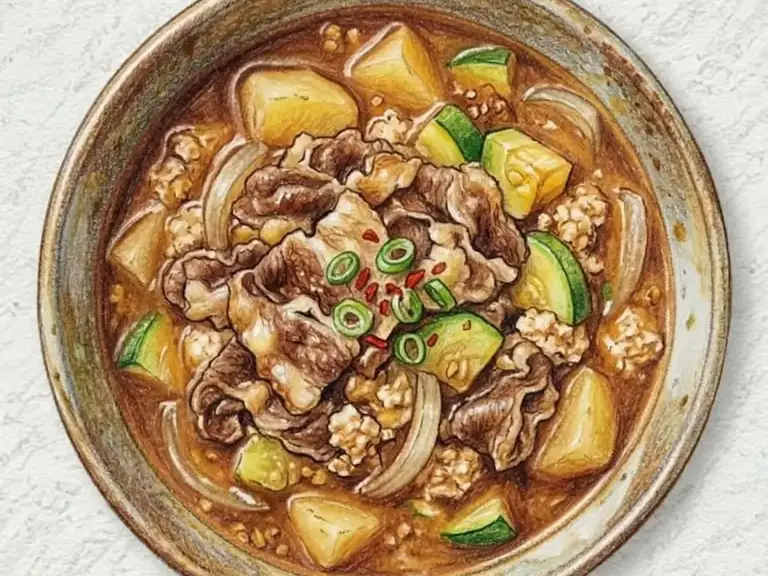
Little rounds of brisket fat float on top, and the stew tastes nuttier and heavier than a vegetable-only doenjang jjigae. The sliced cheongyang chili is there because of that fat.
1910 Korean recipes. Page 11 of 80. Compare ingredients and cooking times. Korean Brisket Soybean Paste Stew, Korean Spicy Braised Pufferfish.
Little rounds of brisket fat float on top, and the stew tastes nuttier and heavier than a vegetable-only doenjang jjigae. The sliced cheongyang chili is there because of that fat.
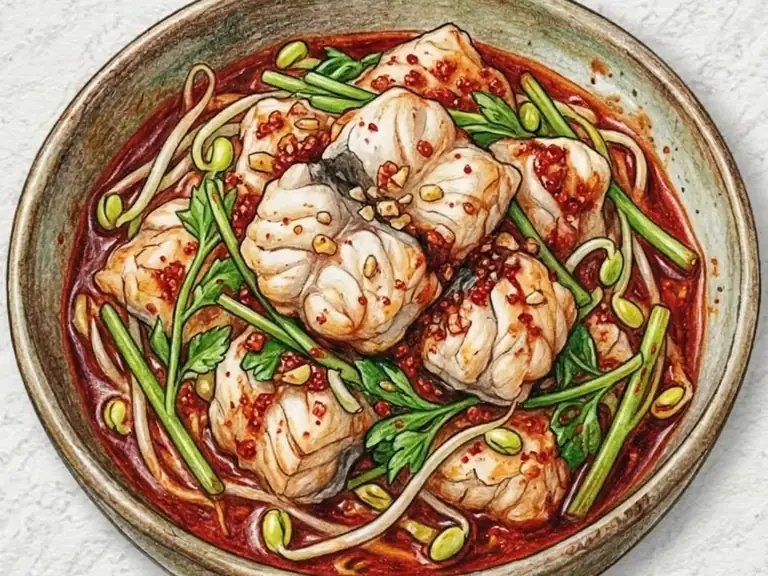
This recipe uses only pufferfish sold already cleaned by professionals for eating, never fish you prepare yourself. The lean fillets sit on a wide bed of bean sprouts and steam in a gochujang and chili flake sauce, and the sprouts soak up the spicy liquid while keeping their crunch.
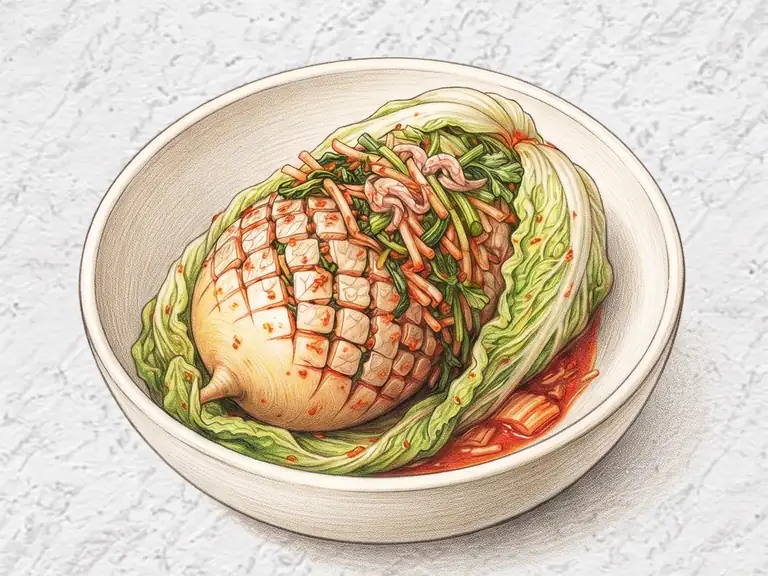
As the name says, the radish is scored on the skin side with slanted cuts that look like fish scales, and every gap is filled with a seasoning of shredded radish, mustard greens, minari and salted shrimp. The stuffed radish is wrapped in cabbage leaves salted alongside it, and it was traditionally tucked between the heads of cabbage kimchi to ripen with them.
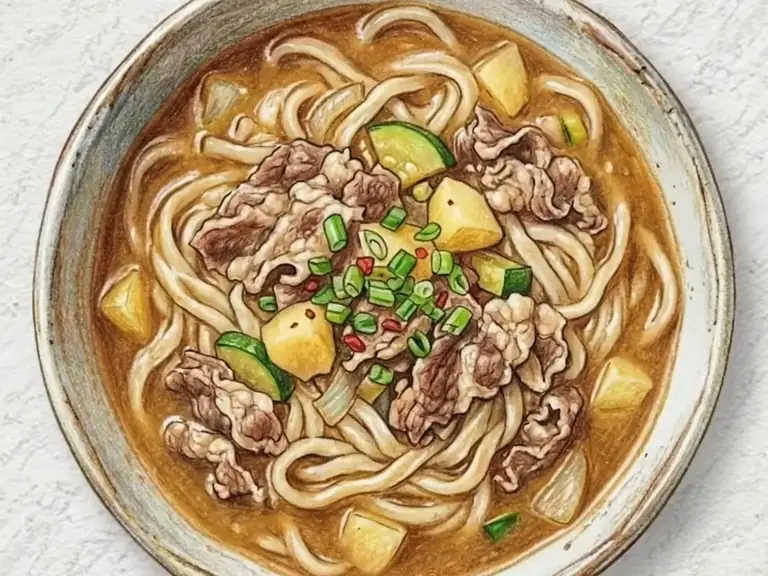
Only the foam gets skimmed from this doenjang broth, and the brisket fat left in gives the soybean-paste soup a rich, beefy body. Onion, zucchini, and oyster mushrooms simmer before the meat goes in, and their sweetness softens the salty, fermented edge of the paste. The final adjustment comes from soup soy sauce rather than more paste, since doenjang brands differ in saltiness. The thick knife-cut noodles cook right in the pot rather than separately, thickening the broth with their starch and giving it a heavier, almost creamy feel. If the soup reduces until it turns too cloudy or salty, 100 ml of water and one more boil set it right.
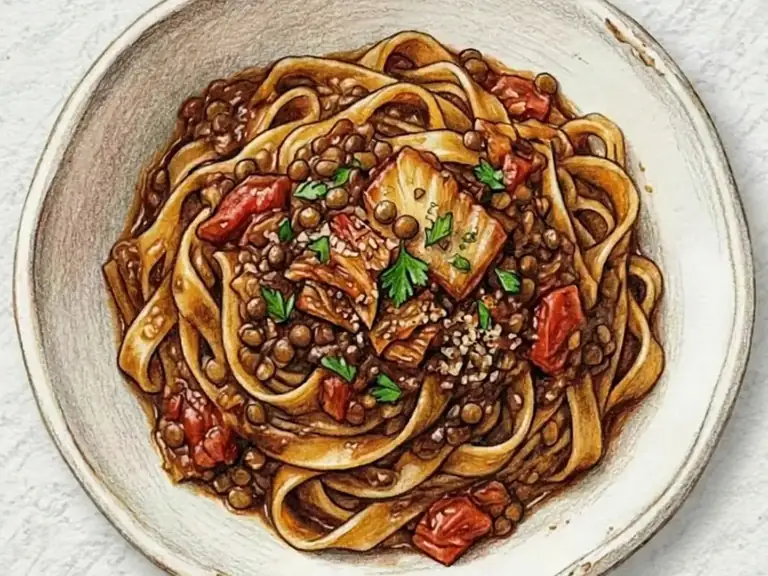
Lentils simmered for about 30 minutes in tomato and vegetable stock stand in for ground meat, giving the ragu a similar small, chewy grain without any meat at all. Finely chopped onion, carrot and celery are sweated rather than browned, and the kimchi only joins in the final minutes so its sour bite stays distinct. Broad tagliatelle carries the thick sauce.
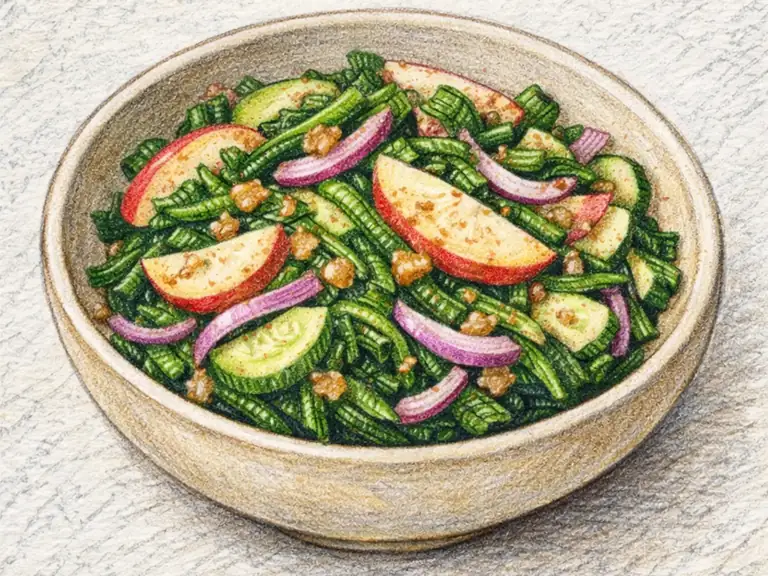
Chwinamul, a leafy Korean mountain green, gets only a 20-second blanch and an ice bath; left longer in boiling water, it loses both its herbal bitterness and its bright green color. Julienned apple and cucumber bring sweetness and juice, and thin red onion, soaked first in cold water, adds a sharp edge that keeps the plate light. The dressing loosens doenjang (Korean soybean paste) with lemon juice and thickens it with perilla oil into a nutty, tart coating rather than anything soup-like, and a salty doenjang can be thinned with a little water. The apple is cut last, after everything else is ready, to keep browning down. It sits somewhere between a seasoned namul side dish and a fruit salad, tastes clearest served cold, and is most fragrant with freshly harvested spring chwinamul.
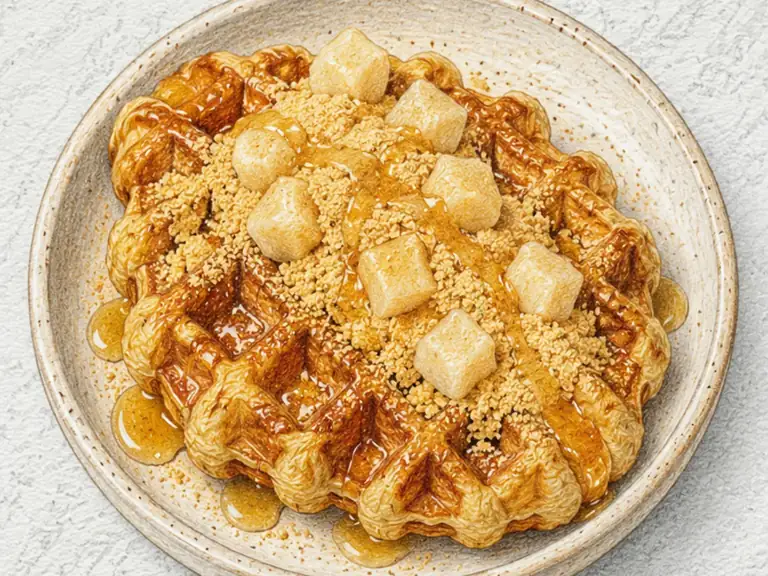
Pressed in a waffle iron, frozen croissant dough gets heat from both plates at once, and the outside turns far crisper than an oven-baked croissant while buttery layers stay inside. Honey and condensed milk go on in thin lines, and just before serving, roasted soybean powder (the nutty coating on injeolmi rice cakes) mixed with a pinch of salt is sifted over the top.
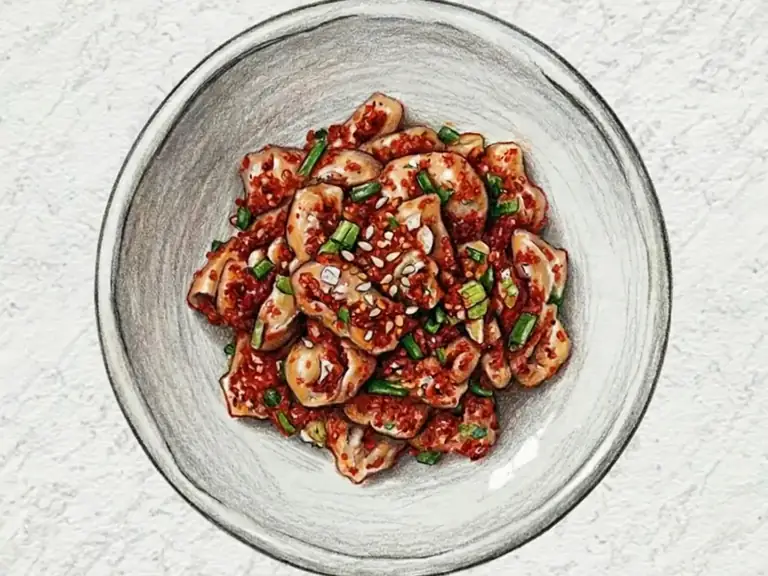
Store-bought changnanjeot, salted pollock innards, sits in a fine sieve for a minute or two while its thick brine drips away, then gets a fresh dressing of gochugaru, garlic, scallion and sesame oil. Pressing it in the sieve would dry the pieces out, so it is left alone. Covered and chilled for at least 10 minutes, it goes out in small portions. Many jars in Korean shops are labeled changranjeot; the dictionary spelling is changnanjeot, and both mean the same salted pollock intestine.
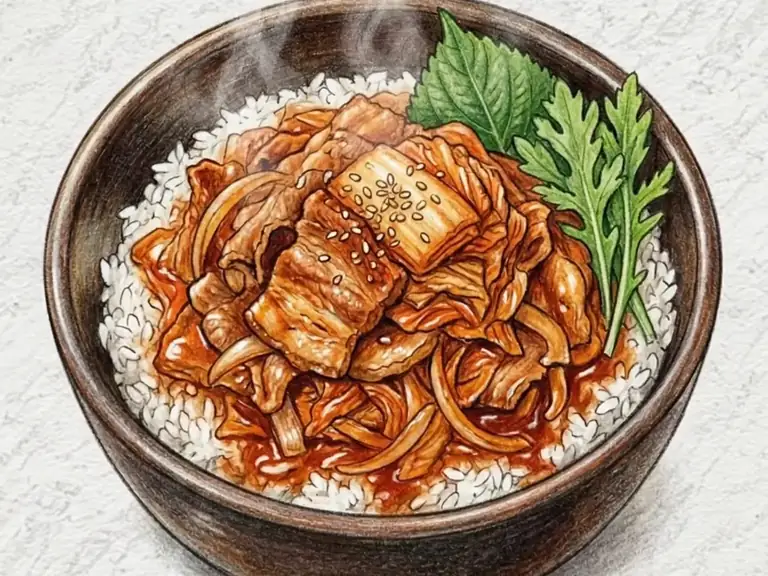
Boiled pork and bossam kimchi left over from a bossam meal get a second life here, stir-fried with onion in a gochujang sauce and spooned over rice. The kimchi is chopped coarsely with its stuffing still in it.
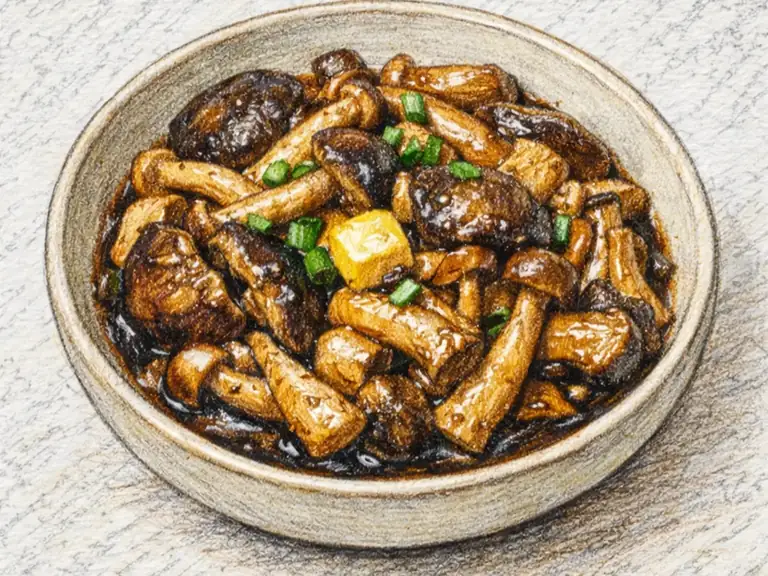
Five ingredients: oyster mushrooms, shiitake, butter, soy sauce and garlic. The garlic flavors the butter, the mushrooms fry in it, and soy sauce poured around the rim of the pan catches and reduces into a salty, faintly sweet film on each piece. A last bit of butter melted in over low heat gives it a gloss before it goes over rice.
A skewered sausage gets a log of chilled cream cheese pressed alongside, then batter and breadcrumbs before frying. The batter has to cover the cheese right to the ends, and frozen cream cheese runs even less. Under the crumb shell, the cheese melts and comes through with the sausage in each bite.
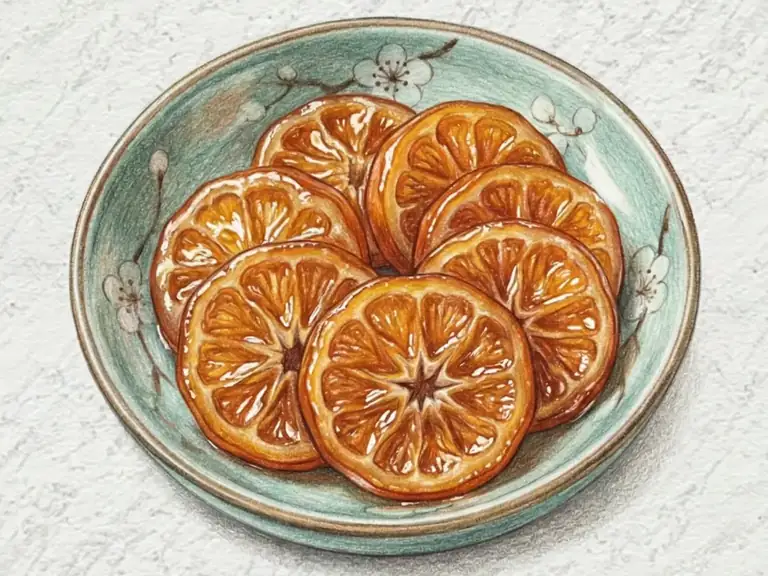
Tangerine peel simmered over low heat until translucent ends up chewy and springy, close to a soft jelly. Two blanchings in salted water take away some bitterness beforehand, but the white pith is not trimmed off completely, since stripping it all weakens the citrus aroma.
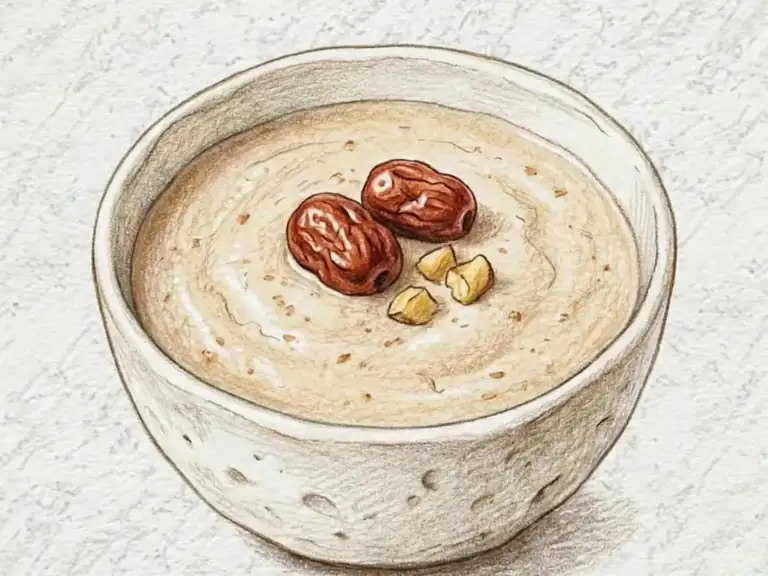
Cooked chestnuts make this cold shake thick enough to eat with a spoon, and dried jujubes give it a dense, fruity sweetness. Straight from the bag the jujubes do not break down well, so they soak in warm milk for about ten minutes until soft before going into the blender.
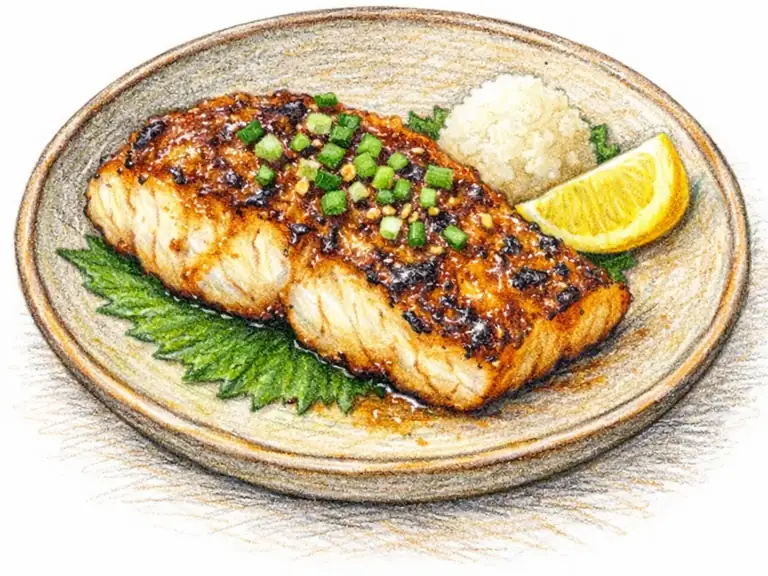
Brushed thinly with doenjang and grilled, the cod forms a thin, dark-brown skin of paste on top while the white flesh below stays moist and breaks into thick flakes. Sliced scallion or perilla leaves go alongside.
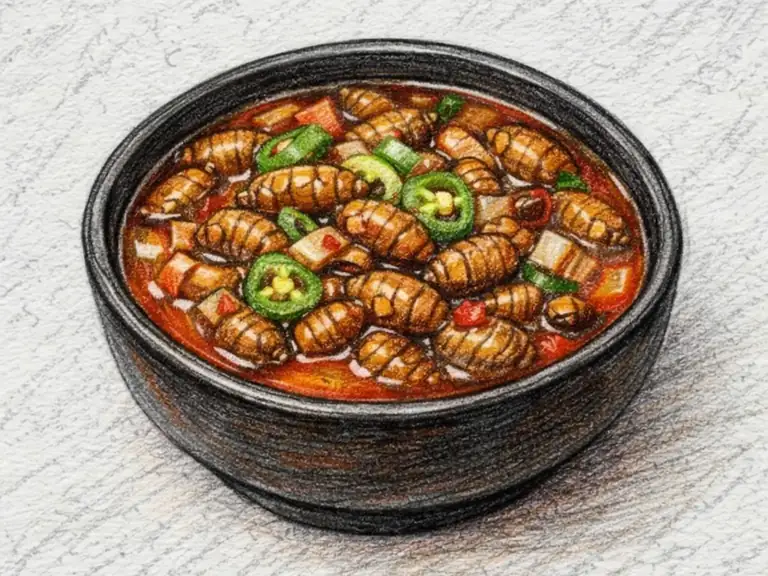
Canned silkworm pupae are drained and rinsed rather than heated in the can liquid, then simmered in fresh water. By the time chili flakes and cheongyang pepper turn the broth red, the pupae's strong smell has mellowed, and the heat depends on how many chili seeds stay in. It goes to the table steaming, as a drinking snack.
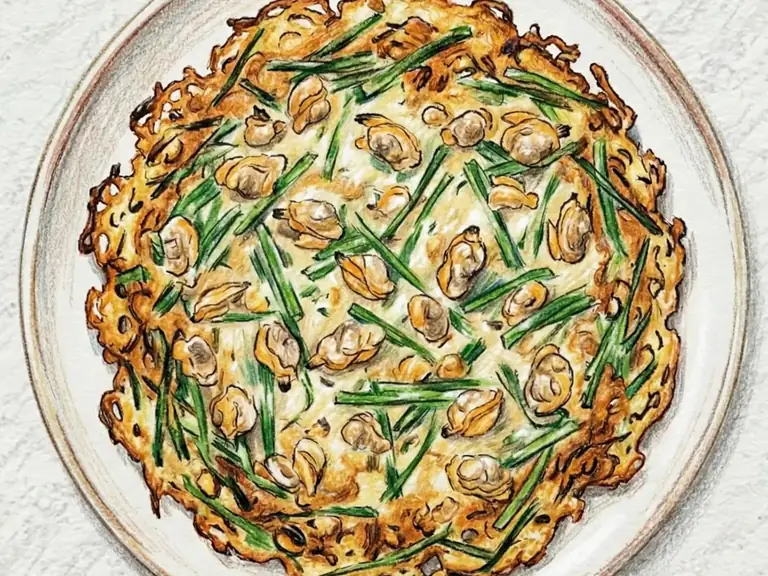
The clam meat is drained well before it goes into the batter, yet as the pancake cooks it still releases salty juice that carries a clam flavor through every part. It is made as one large round about 20 cm across and cut into six to eight pieces.
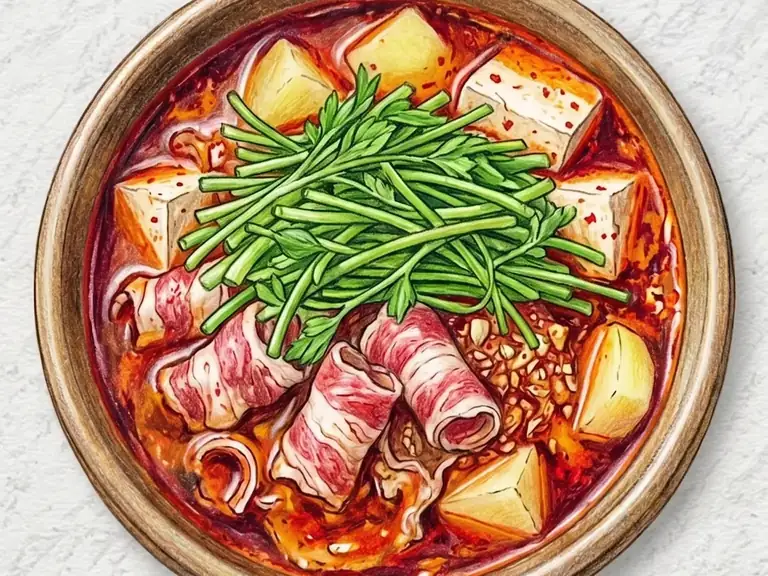
The brisket is seared first to render its fat, and the gochujang and chili flakes are fried in that fat to build the base of the broth. The minari, cut into 5 cm lengths, waits on the side until just before the heat goes off, then goes in only long enough to wilt.
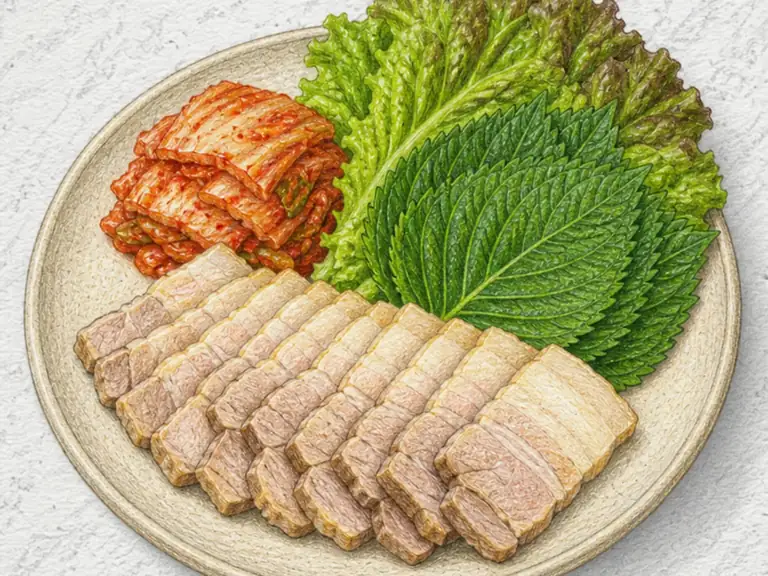
Doenjang and a pinch of instant coffee in the boiling water soften the porky smell without seasoning the meat itself. Five minutes in the broth after the heat goes off keeps the slices moist, and kimchi and fresh wrap leaves supply the seasoning at the table.
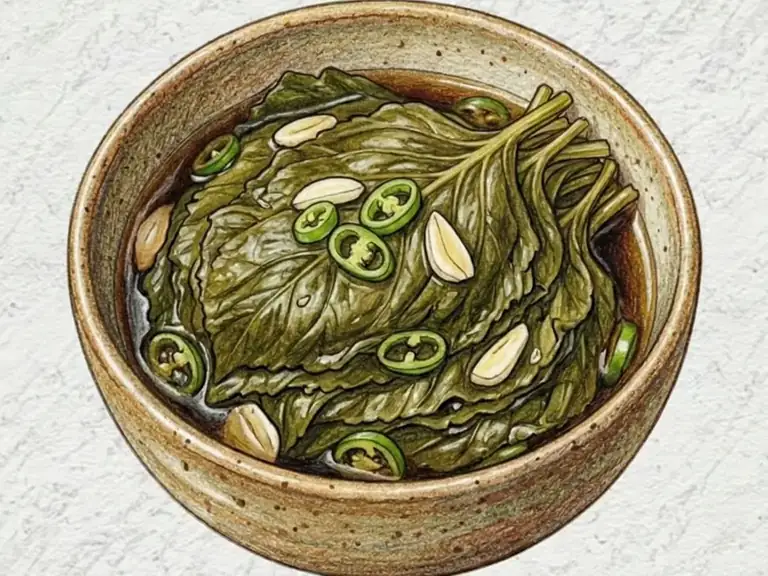
Tender amaranth leaves soak up a soy and vinegar brine quickly. The vinegar takes away their raw grassy taste, and sliced cheongyang chili and garlic leave a sharp finish. Washed greens need to air-dry completely on a rack, because leftover water clouds the brine.
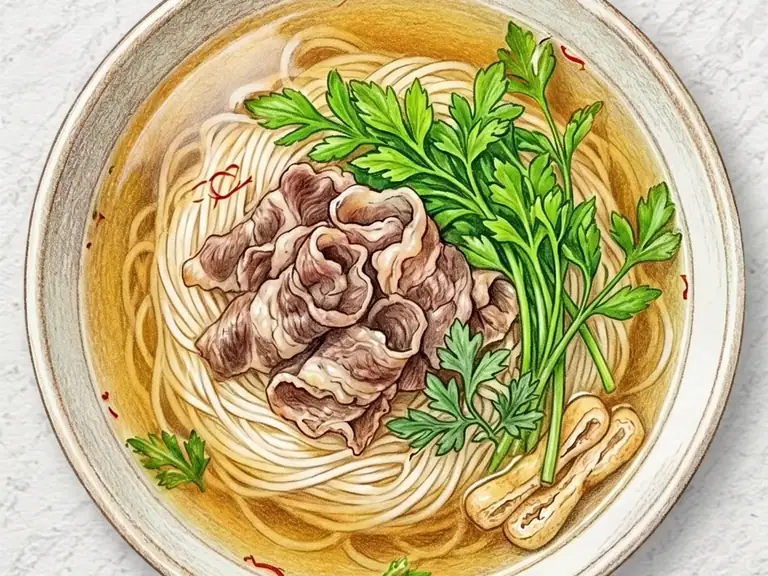
A clear, gently beefy broth carries thin somyeon, slices of brisket, and a handful of minari, the Korean water parsley whose sharp, grassy smell rises first from the bowl. Seasoning stays minimal, just soup soy sauce, garlic, salt, and pepper, and with the floating fat skimmed off, the brisket adds savoriness without making the soup greasy.
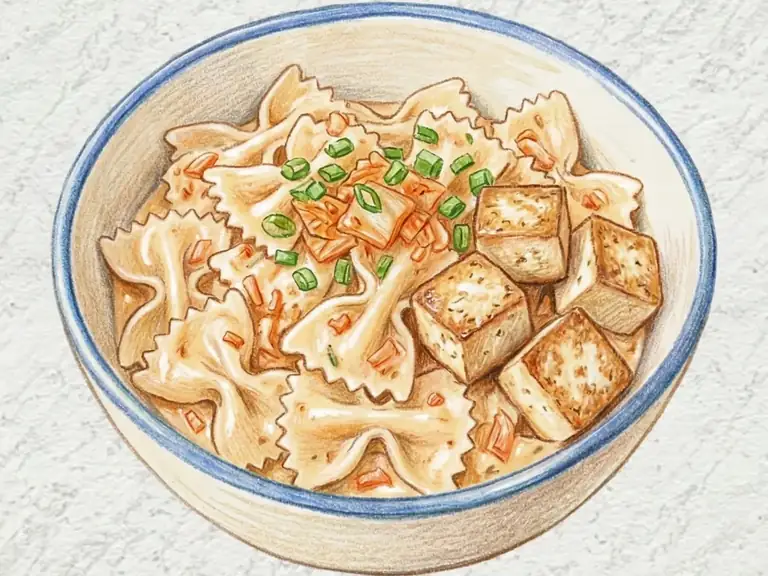
Cubes of firm tofu, browned at the edges, do the job meat usually does, while kimchi squeezed of its juice lends a sour, spicy note to a Parmigiano cream sauce. Left mostly unturned while it fries, the tofu colors at the corners without breaking apart. Bow-tie farfalle holds pockets of sauce in its pinched centers.
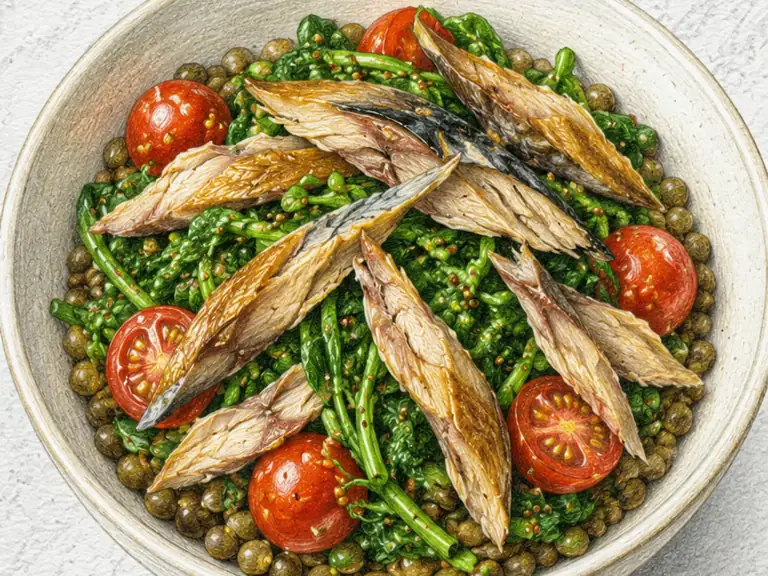
Smoked mackerel already carries smoke and oil, and it takes only blanched chwinamul greens, cooked lentils and a Dijon, cider vinegar and honey dressing to turn it into a full salad. Because the flesh flakes apart easily, it goes on last in large pieces.
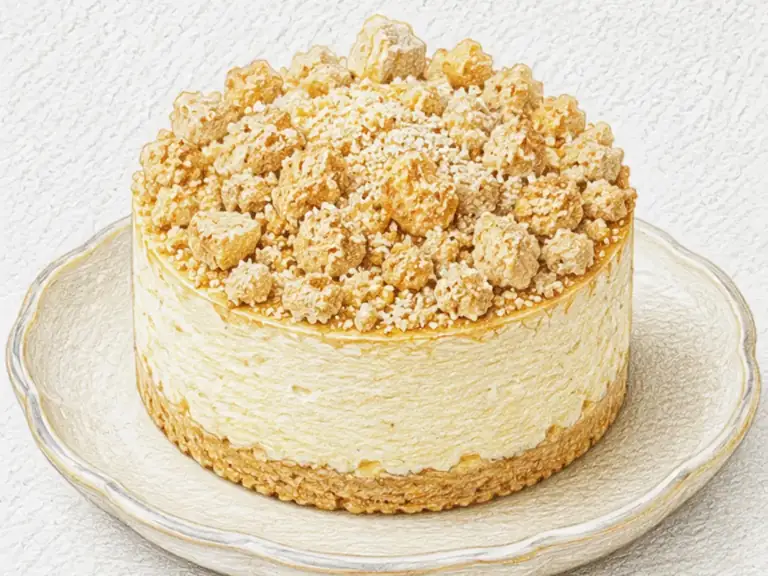
Sweet rice flour in a dense cheesecake batter gives it a faint mochi-like chew. Only part of the roasted soybean powder, the coating on injeolmi rice cakes, goes into the batter; the rest is rubbed with melted butter into a crumble that bakes crisp on top, putting the nutty flavor in two separate layers. After a full day in the fridge, the soybean aroma comes through more clearly.
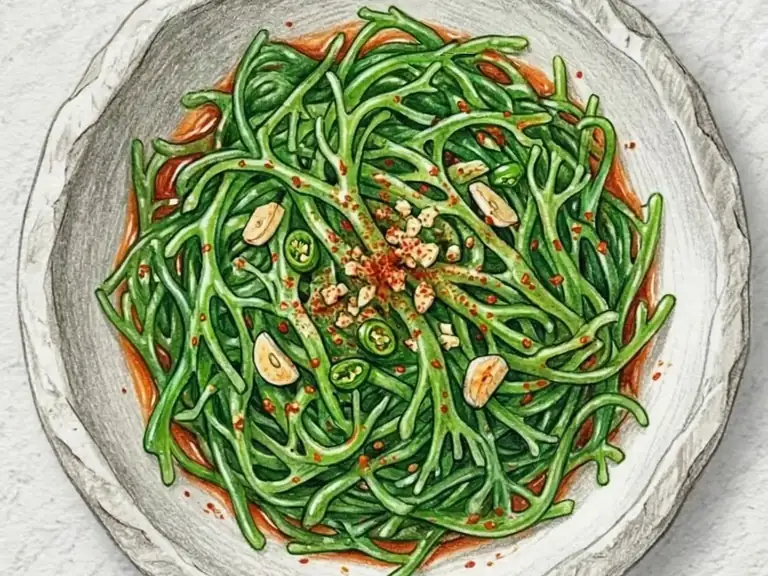
Cheonggak, a branching green seaweed, gets just ten seconds in boiling water: enough to turn it a deep green while keeping its crunchy, almost cartilage-like bite. It's dressed with plenty of vinegar and eaten right away.