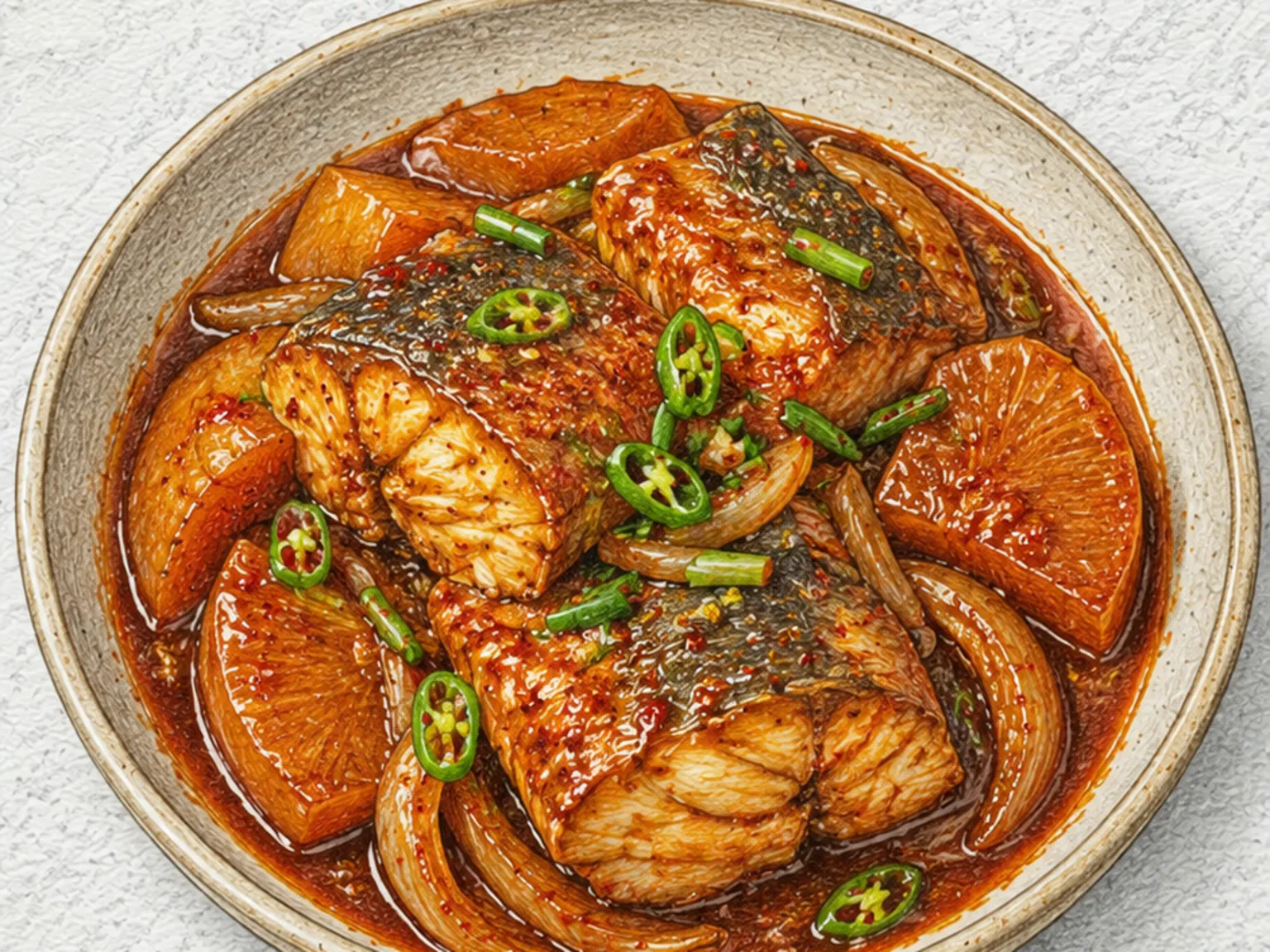
Steamed Medium
Korean Spicy Braised Cod with Radish
Cod is lean and mild, so it gets a punchy sauce of soy, gochujang and chili flakes. The radish under it soaks that sauce up and ends up as good as the fish.
Prep 18min Cook 22min 4 servings
1880 Korean recipes. Page 17 of 79. Compare ingredients and cooking times. Korean Spicy Braised Cod with Radish, Korean Cheonggak Kimchi (Seaweed Kimchi).
Cod is lean and mild, so it gets a punchy sauce of soy, gochujang and chili flakes. The radish under it soaks that sauce up and ends up as good as the fish.
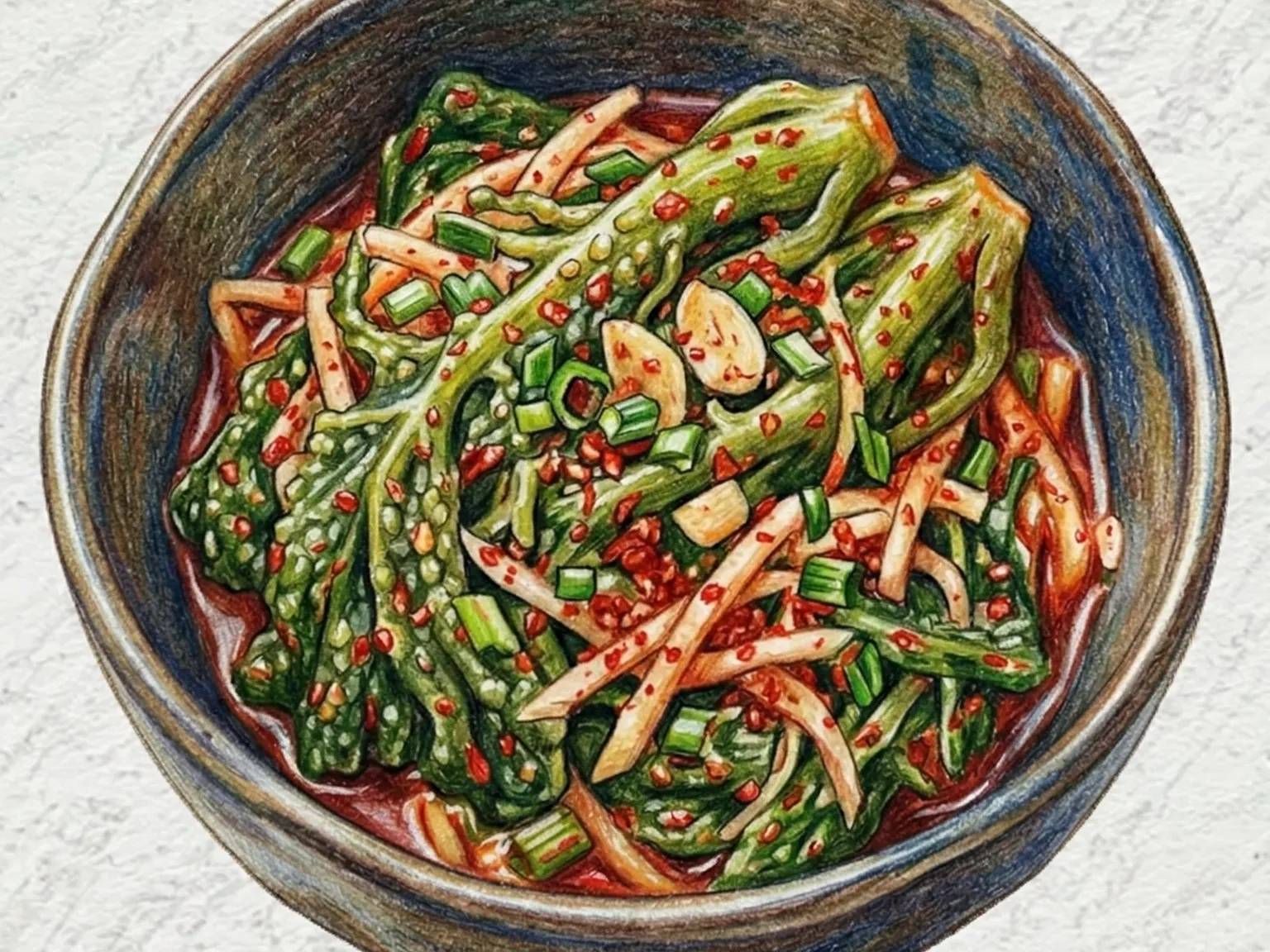
Cheonggak, a branching green seaweed, gives this radish kimchi a firm, almost crunchy chew and a marine aroma that land-vegetable kimchi lacks. Half the paste is massaged into the julienned radish first so it seasons evenly; the seaweed joins the remaining paste and is tossed quickly, because long handling toughens it. A day in the fridge lets the seaweed's salinity merge with the fish sauce paste, and the briny result sits naturally beside seafood and mild rice soups.
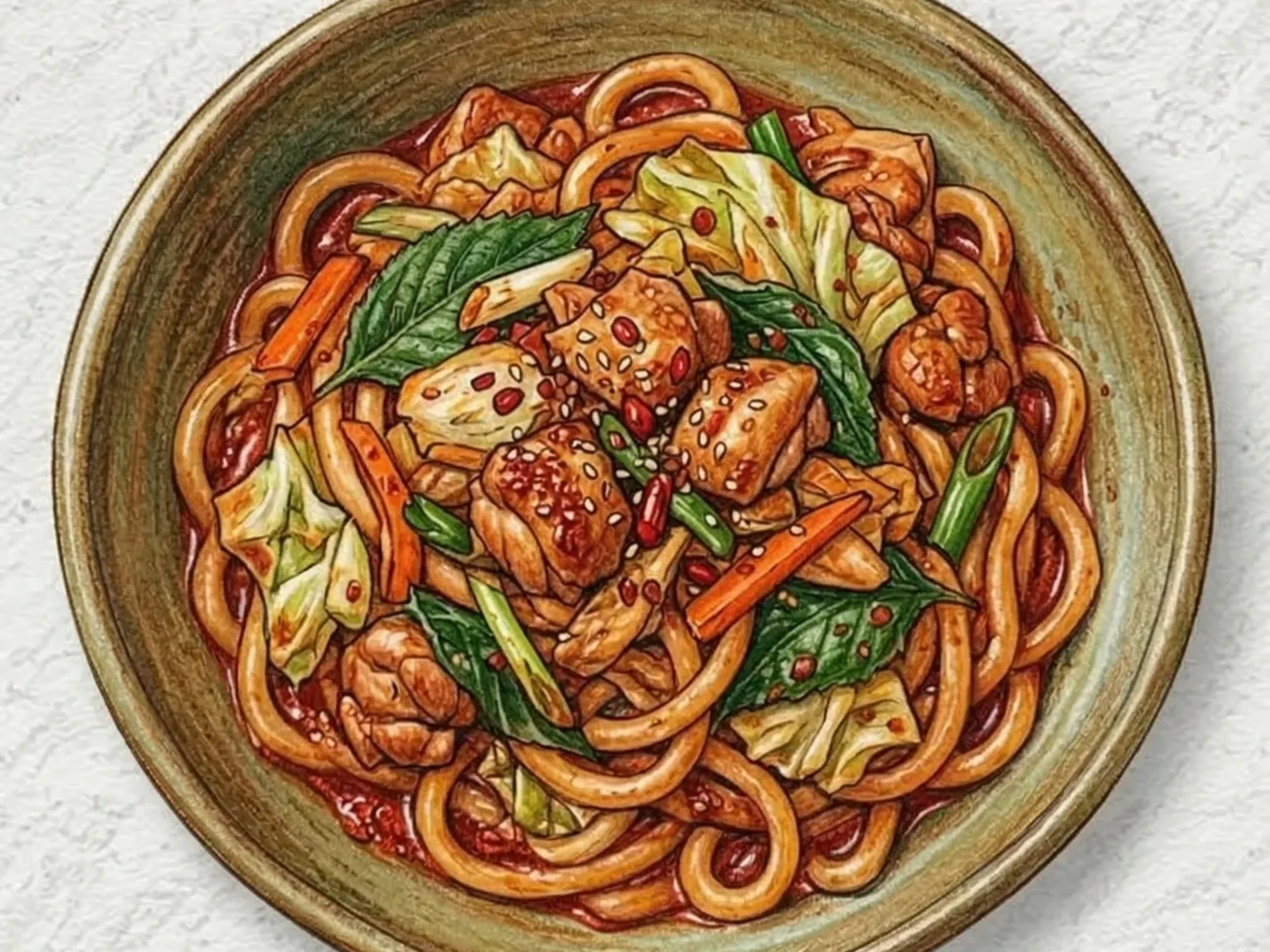
Think of a pan of dakgalbi with udon added. Gochujang-marinated chicken thigh, cabbage and thin slices of sweet potato cook first, and the thick udon then takes on a heavy coat of that sauce.
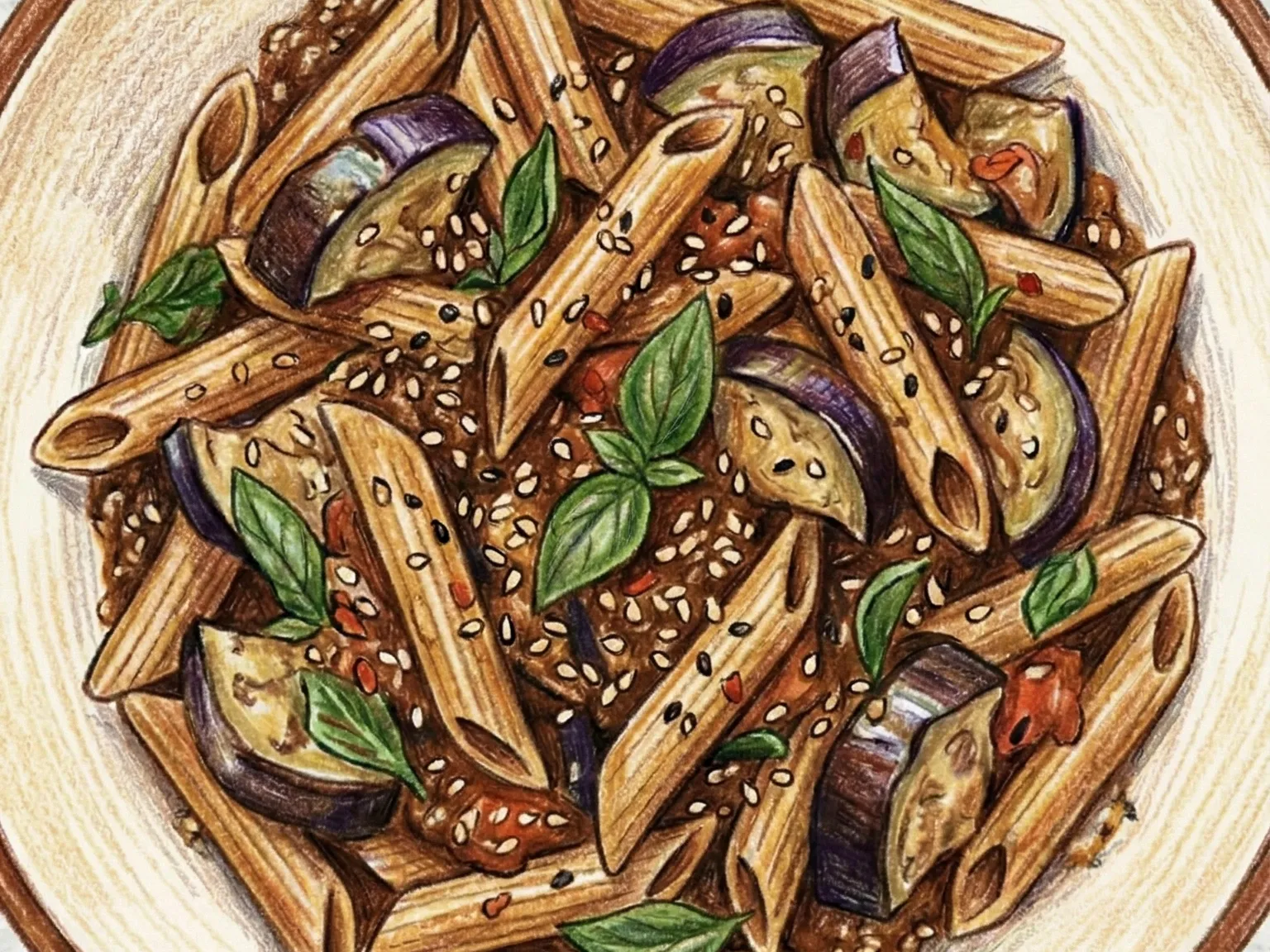
Even with no meat in the dish, each cube of eggplant, seared over high heat until just browned, soaks up tomato and soy sauce like a sponge and turns soft and savory. Sesame oil and toasted sesame seeds lend a nutty Korean finish, and fresh basil sits on top.
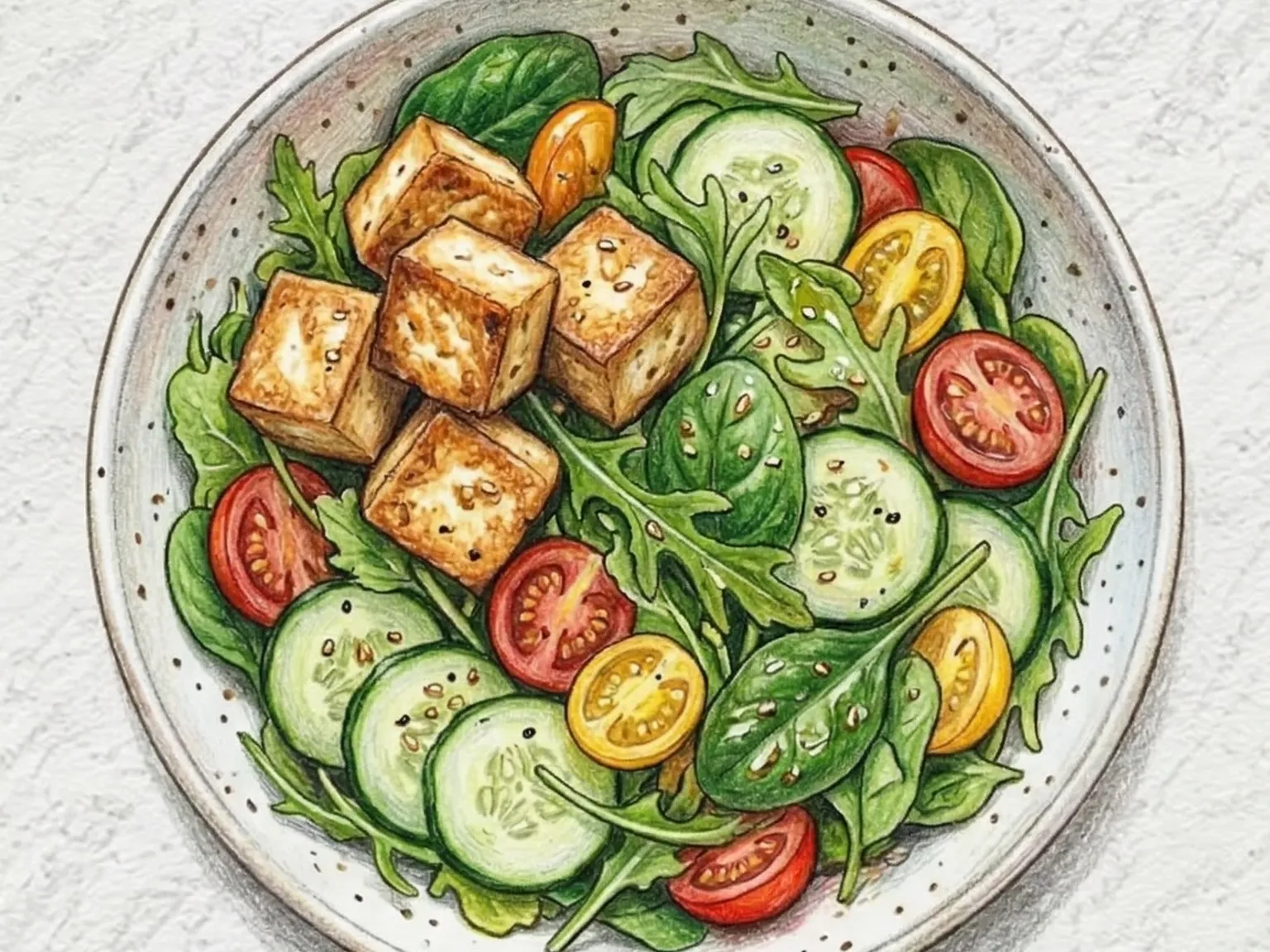
Pressed for 20 minutes and seared until golden on each side, the tofu goes onto the salad still warm, a crisp-edged contrast to cool baby greens, cucumber and cherry tomatoes. The soy sauce, lemon and sesame oil dressing brings enough salt and acidity that the tofu itself needs no separate seasoning. Only the vegetables get dressed, with the tofu sitting on top so its browned surface stays dry until the first bite.

Two flat loaves are baked separately, one filled with sweet red bean paste and one with sweet green pea paste, then stacked with whipped cream and strawberry jam between them. Cut through, it shows red bean, pea, cream, and jam in layers. The cream goes on only after both loaves have cooled right through; on warm bread it melts and runs off the edges.
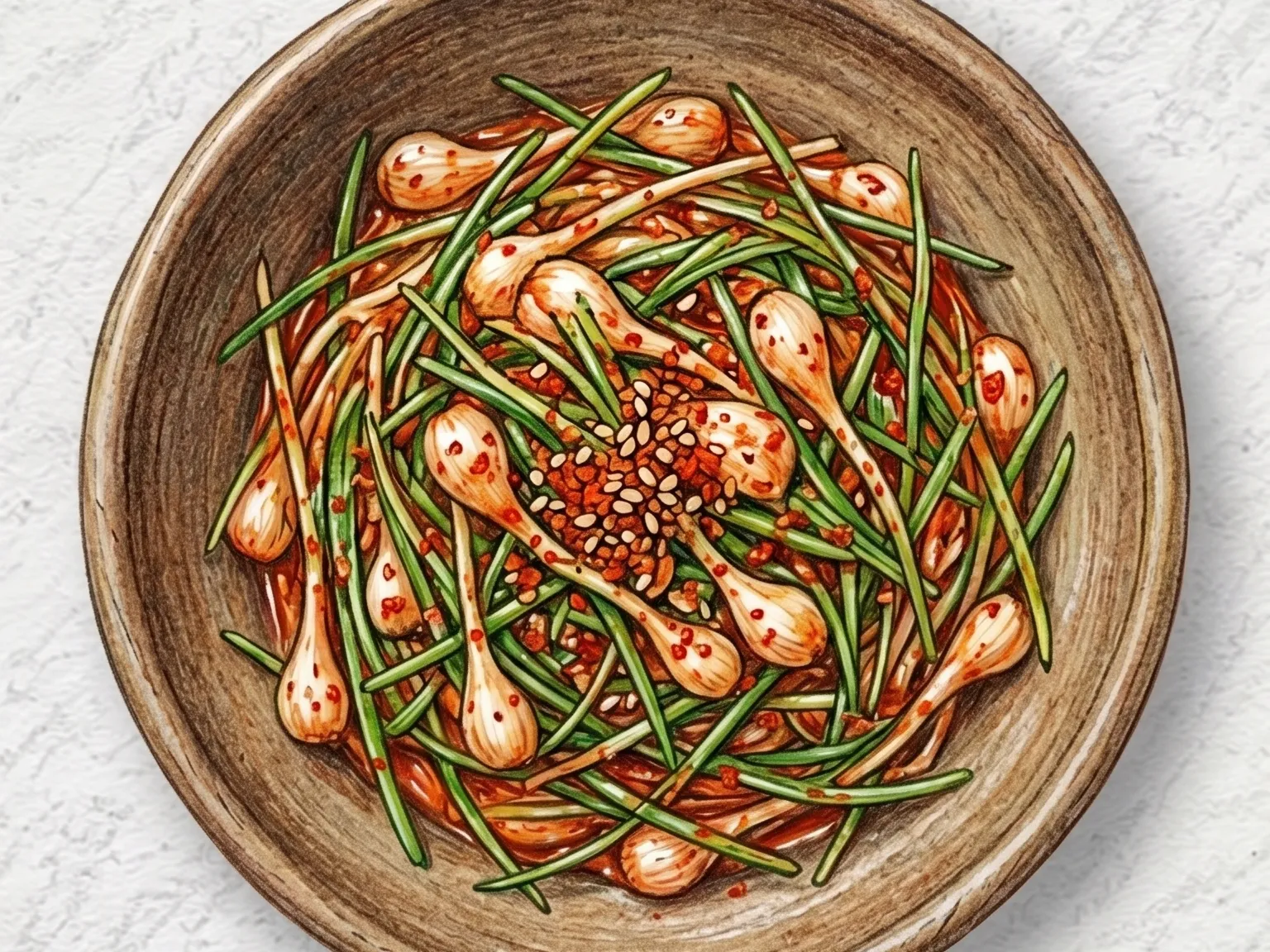
Both the small bulbs and the leaves of dallae, a Korean wild chive, go in raw, tossed in soy sauce, vinegar, gochugaru and sesame oil. Cleaning takes the longest: soil hides between the bulbs, and the dark core and loose outer skin have to come off.
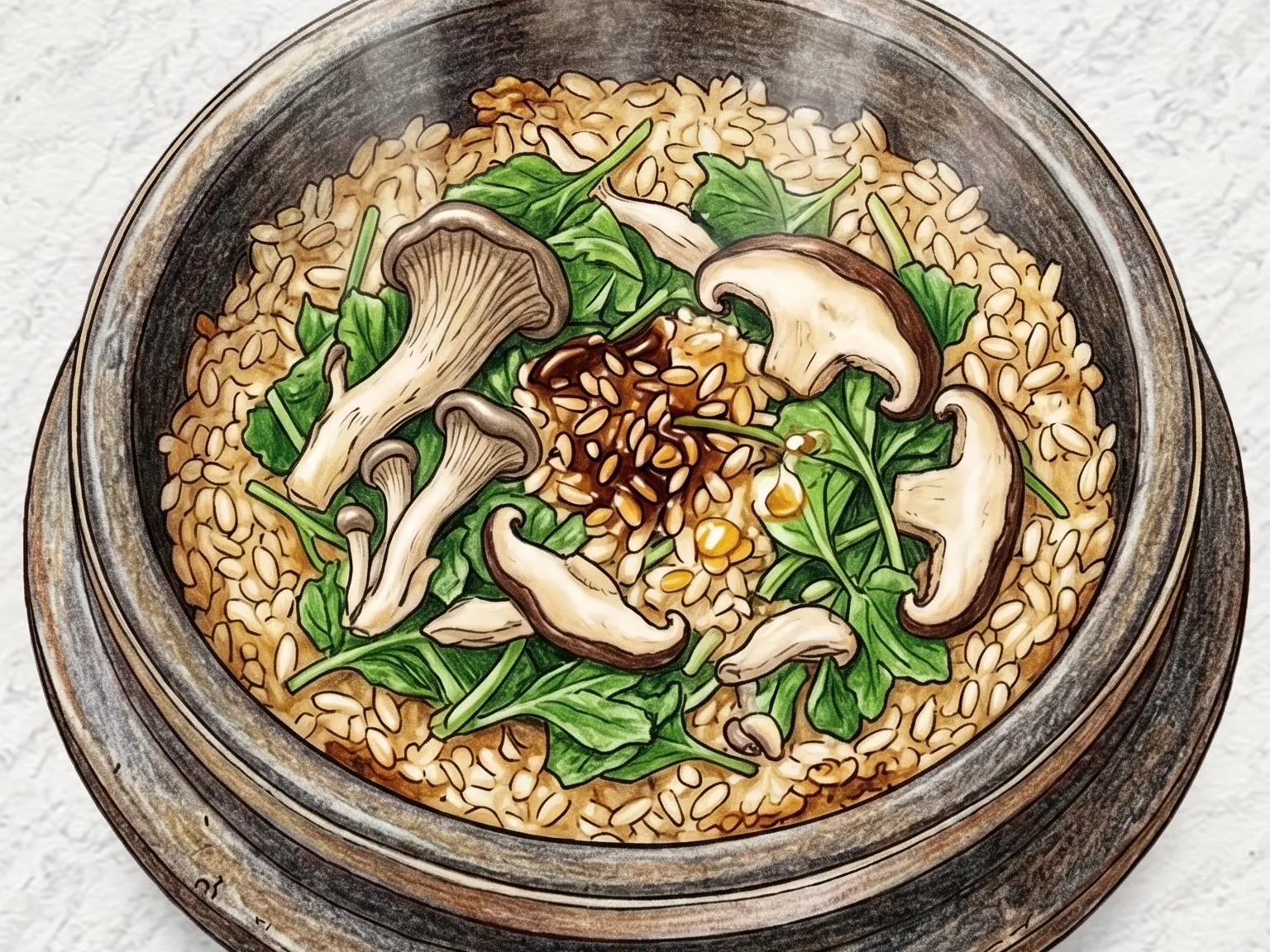
This pot rice is eaten without a dipping sauce; the seasoning, just soup soy sauce and salt, is cooked into the rice. Lift the lid and the chamnamul, a fragrant Korean wild green, hits first, while the rice itself carries the flavor of the oyster and shiitake mushrooms sautéed underneath it.
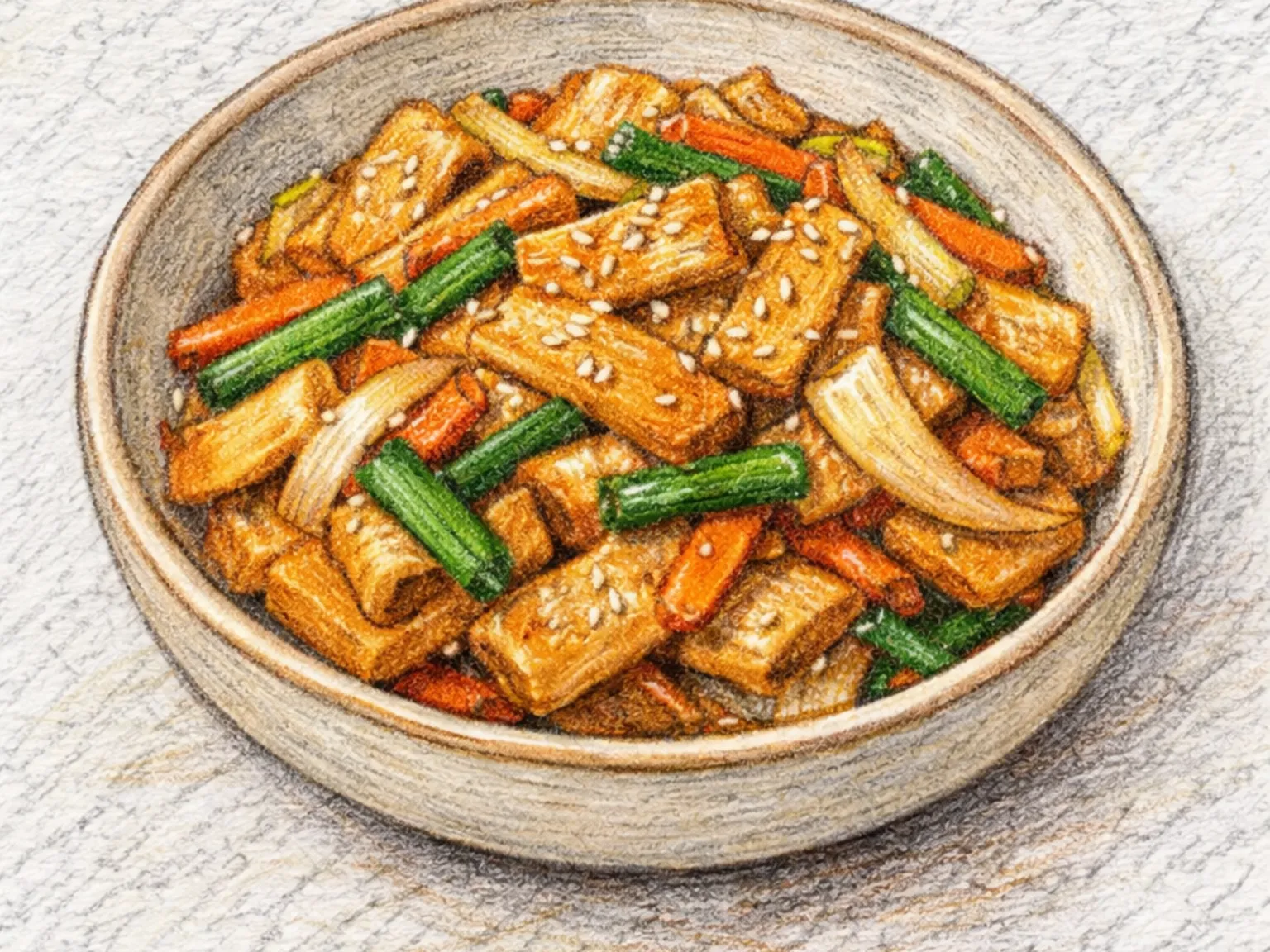
The sheet fish cakes (eomuk) start with 20 seconds in boiling water to rinse off their surface oil. Skip it and a stale, oily taste lingers after the stir-fry is done. Once the fish cake joins the onion and carrot, it is all over in about three minutes.
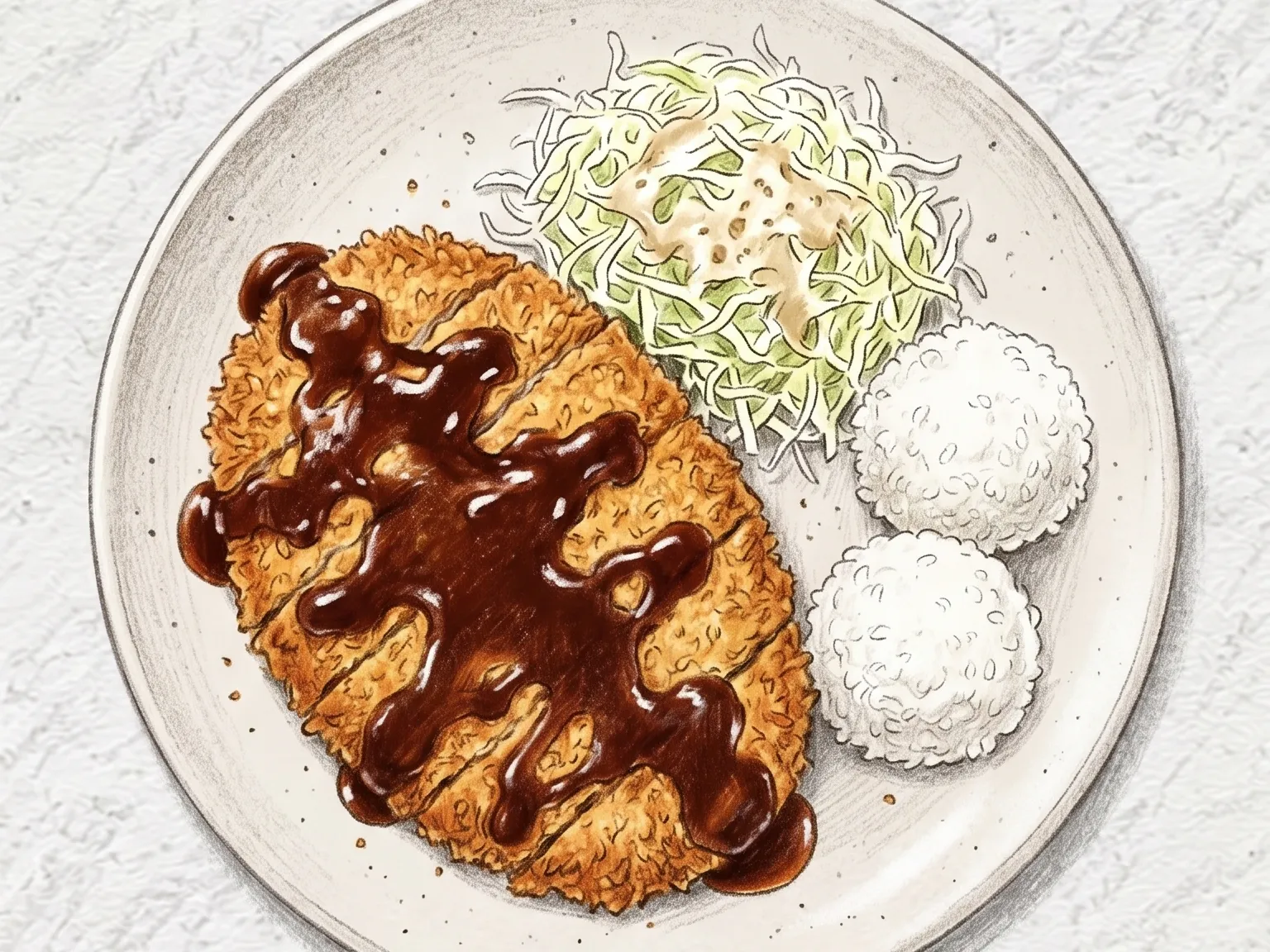
Pork loin is pounded to an even thickness, breaded and fried twice, then sliced over shredded cabbage that has been crisped in cold water. The sweet cutlet sauce is poured over the top just before eating.
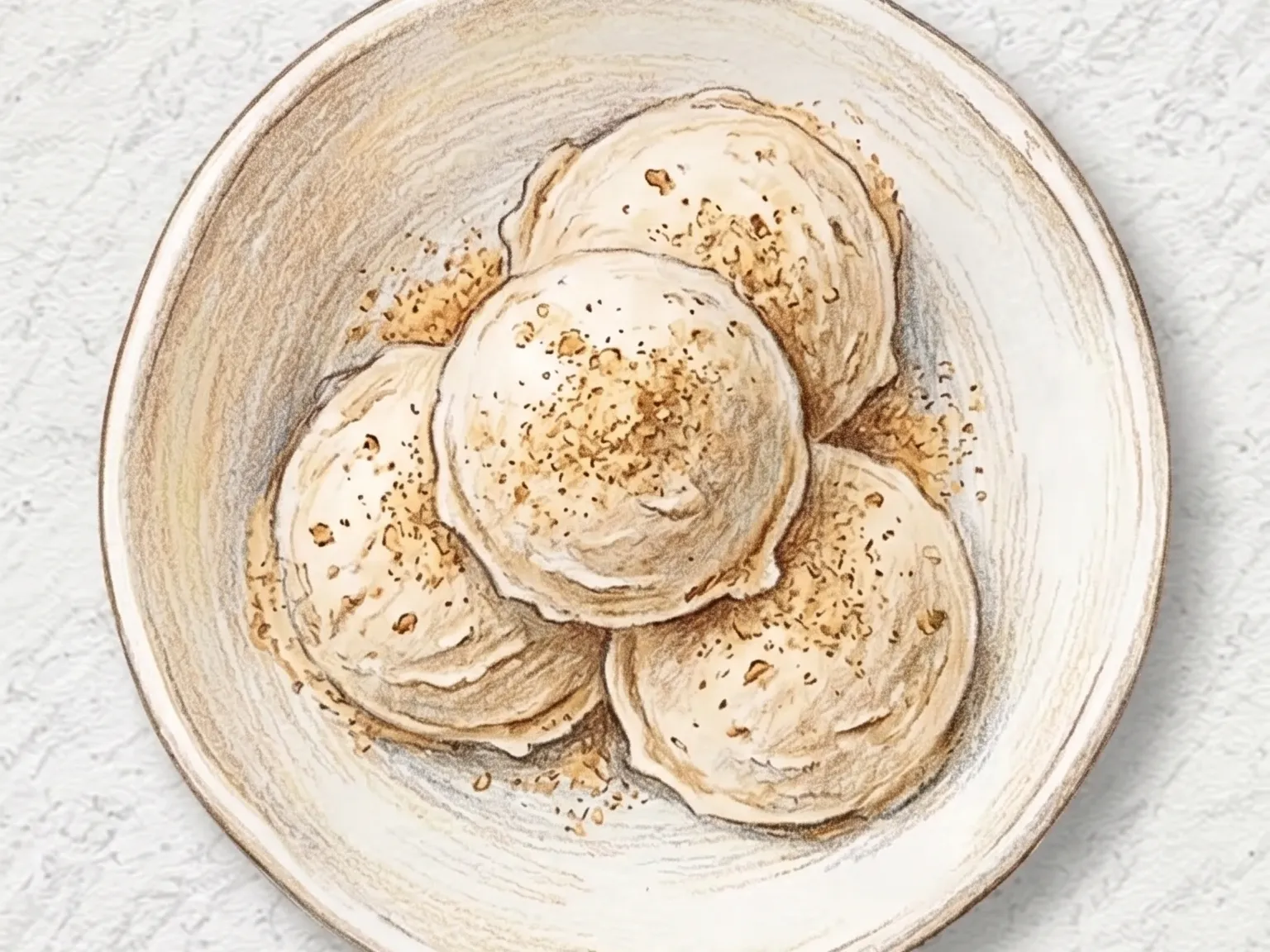
Misugaru, a roasted multigrain powder, is whisked smooth into milk, folded with whipped cream and frozen, and at a full 100g it gives the ice cream a heavy, nutty grain flavor. The freezer does not do all the work: the surface has to be scraped with a fork once an hour, three times, to break up the ice crystals, which makes this one for a day spent at home. Black bean misugaru makes it nuttier still.
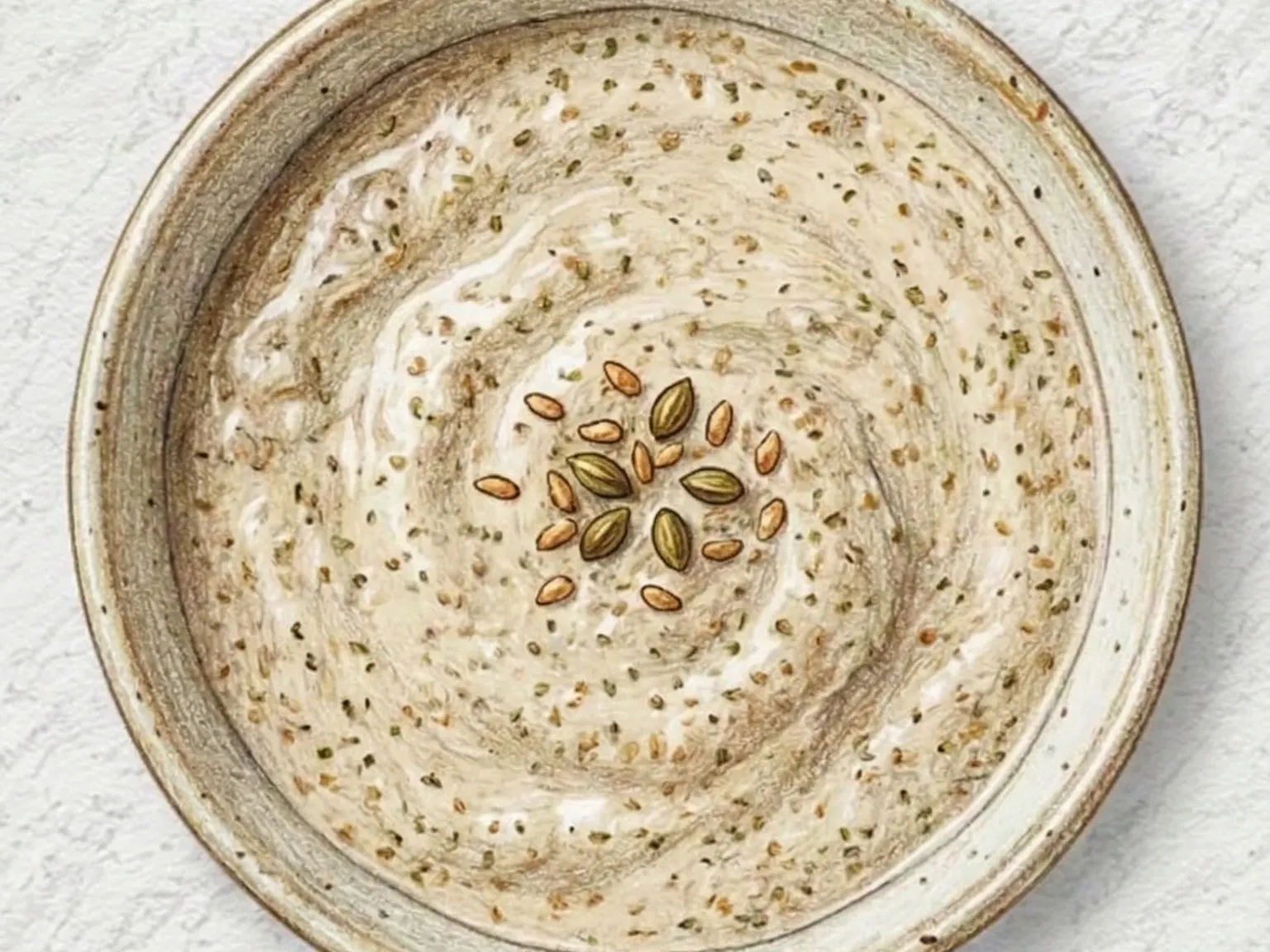
With wild soybean powder and roasted brown rice powder in it, this tastes like a thick version of misutgaru, Korea's roasted grain drink. The banana spends just ten minutes in the freezer first, and that alone gives it a shake-like body with no other thickener.
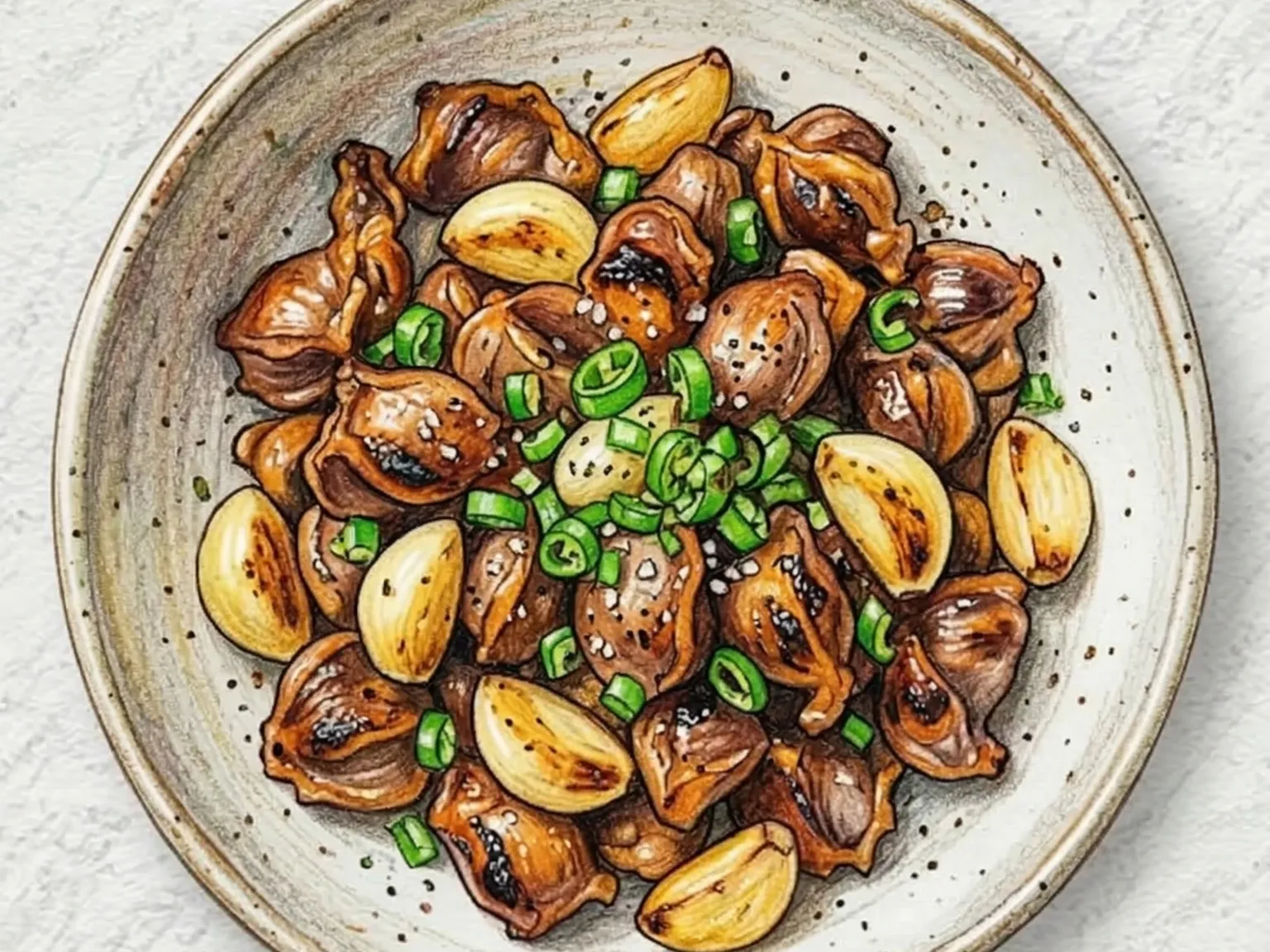
Halved garlic cloves go into the pan first and lose their raw bite, turning sweet and soft. The gizzards get nothing but salt and pepper, which leaves the garlic to do the work of a sauce.
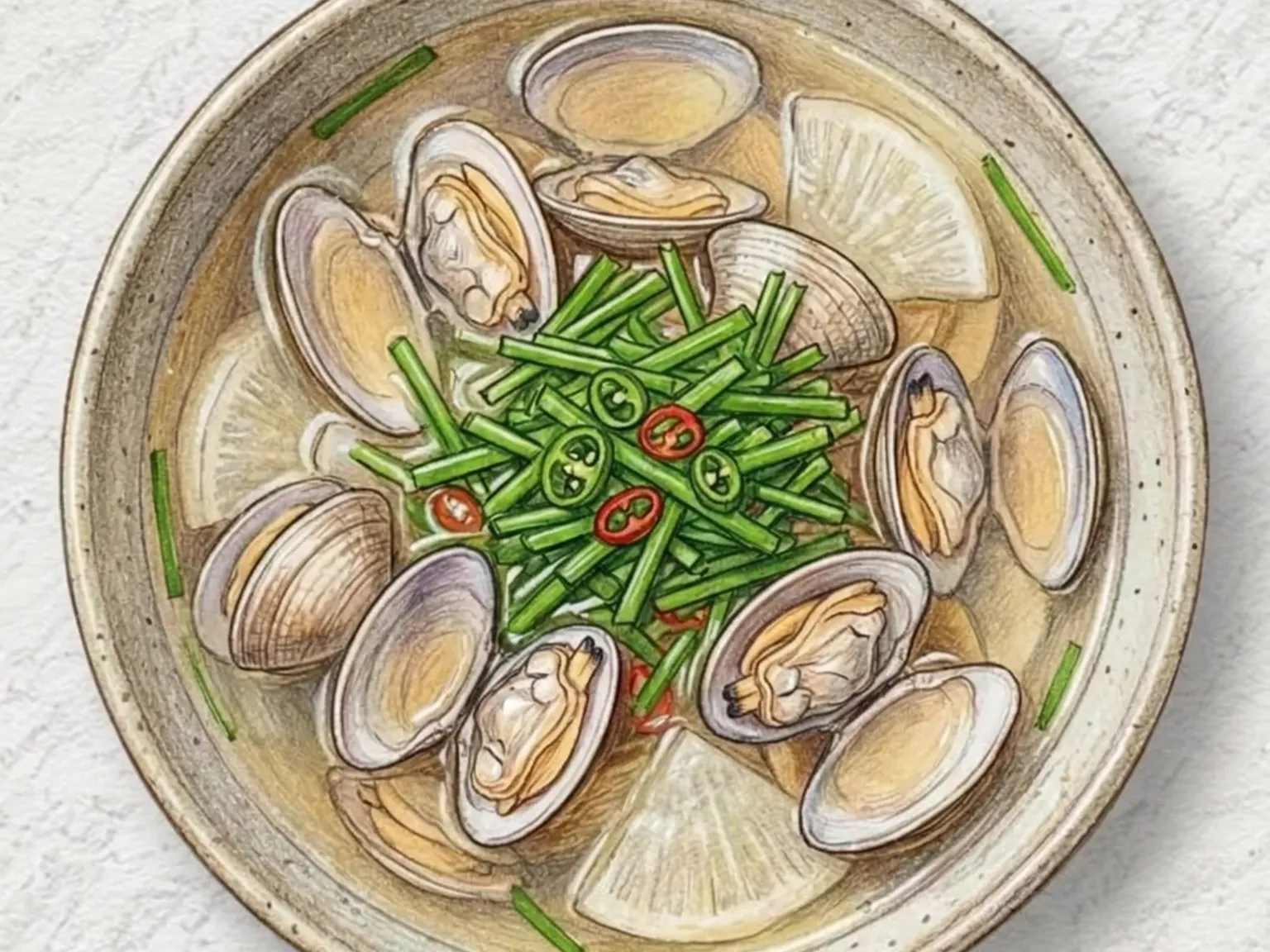
After the soup soy sauce goes in, the broth is tasted before anything more is added. The clams release salty liquor as they open, which often seasons the pot well enough, and more soy sauce goes in only if it falls short. The chives are added just before the heat is turned off and cook for a minute.
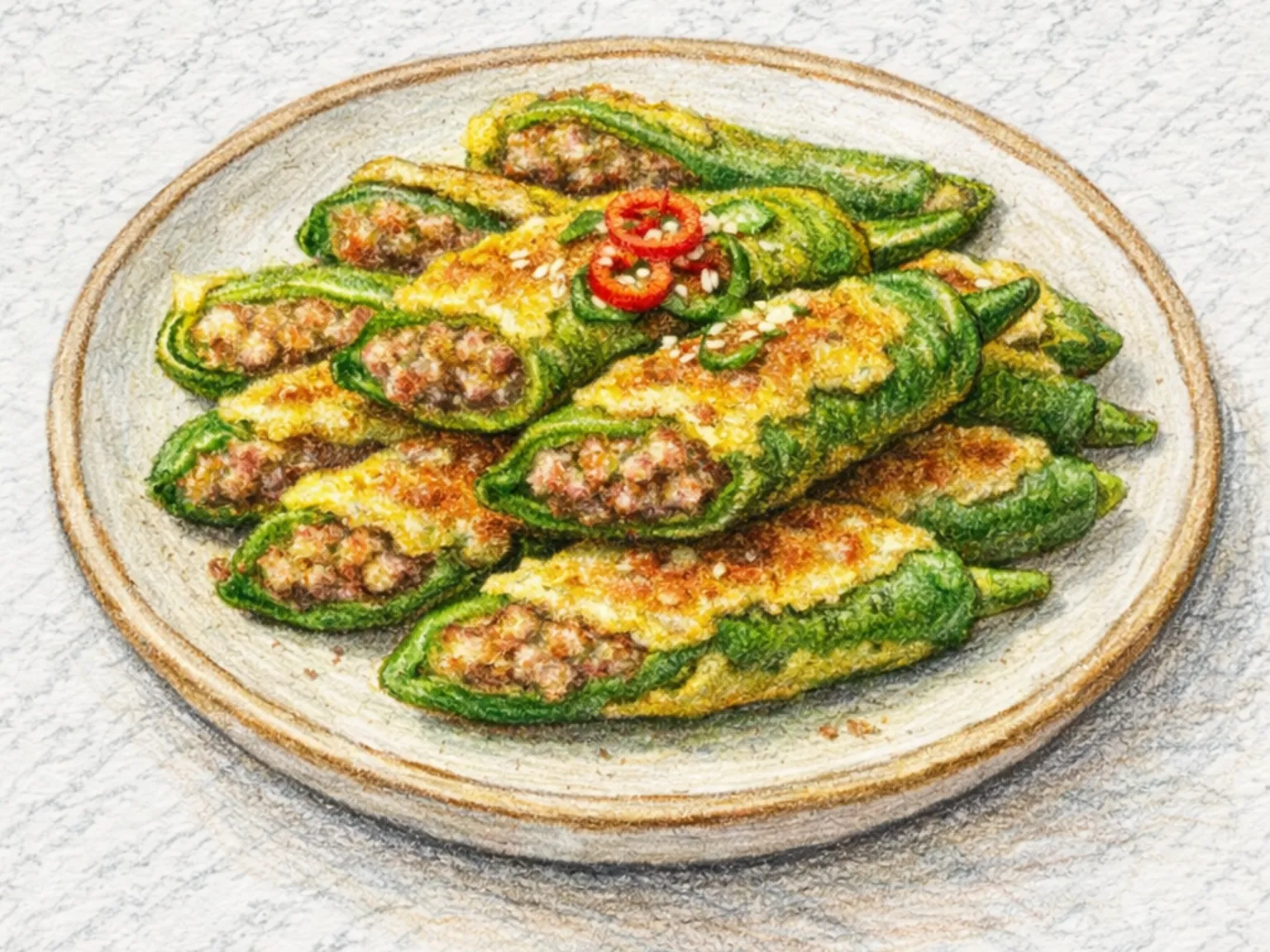
Mild green chilies split lengthwise are stuffed with ground pork, pressed tofu and garlic and fried filling side down, which browns the meat while the pepper keeps its fresh, gentle heat. Fill each half only about seventy percent of the way, because the filling swells as it cooks and an overstuffed pepper splits open.
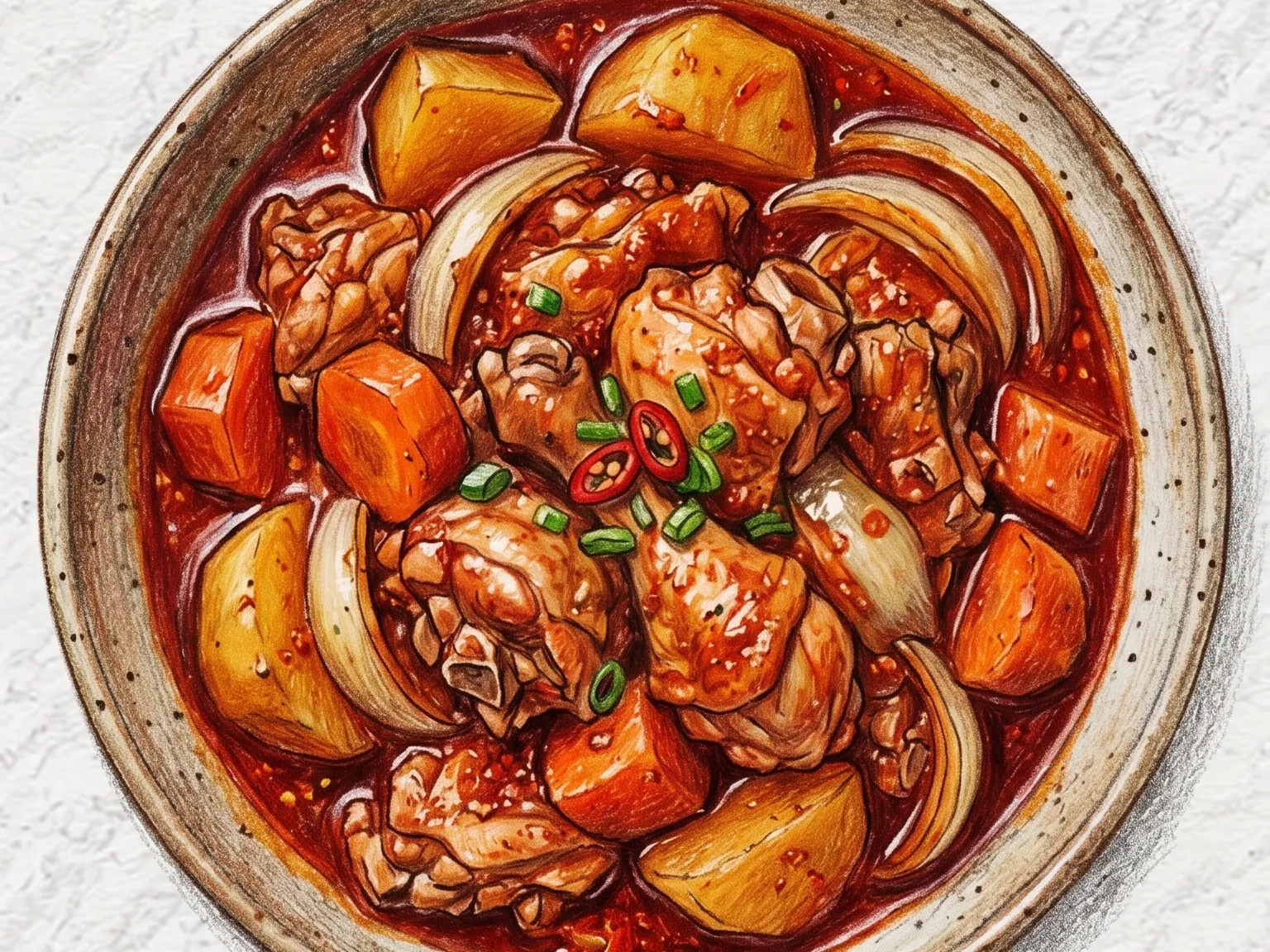
It also goes by dak bokkeumtang, and although the name ends in tang, meaning soup, it is reduced for about 25 minutes until the sauce clings to the chicken. The chicken pieces are blanched for three minutes and rinsed of bone fragments before they go into the pot. Sugar in the sauce makes the sweetness as clear as the heat.
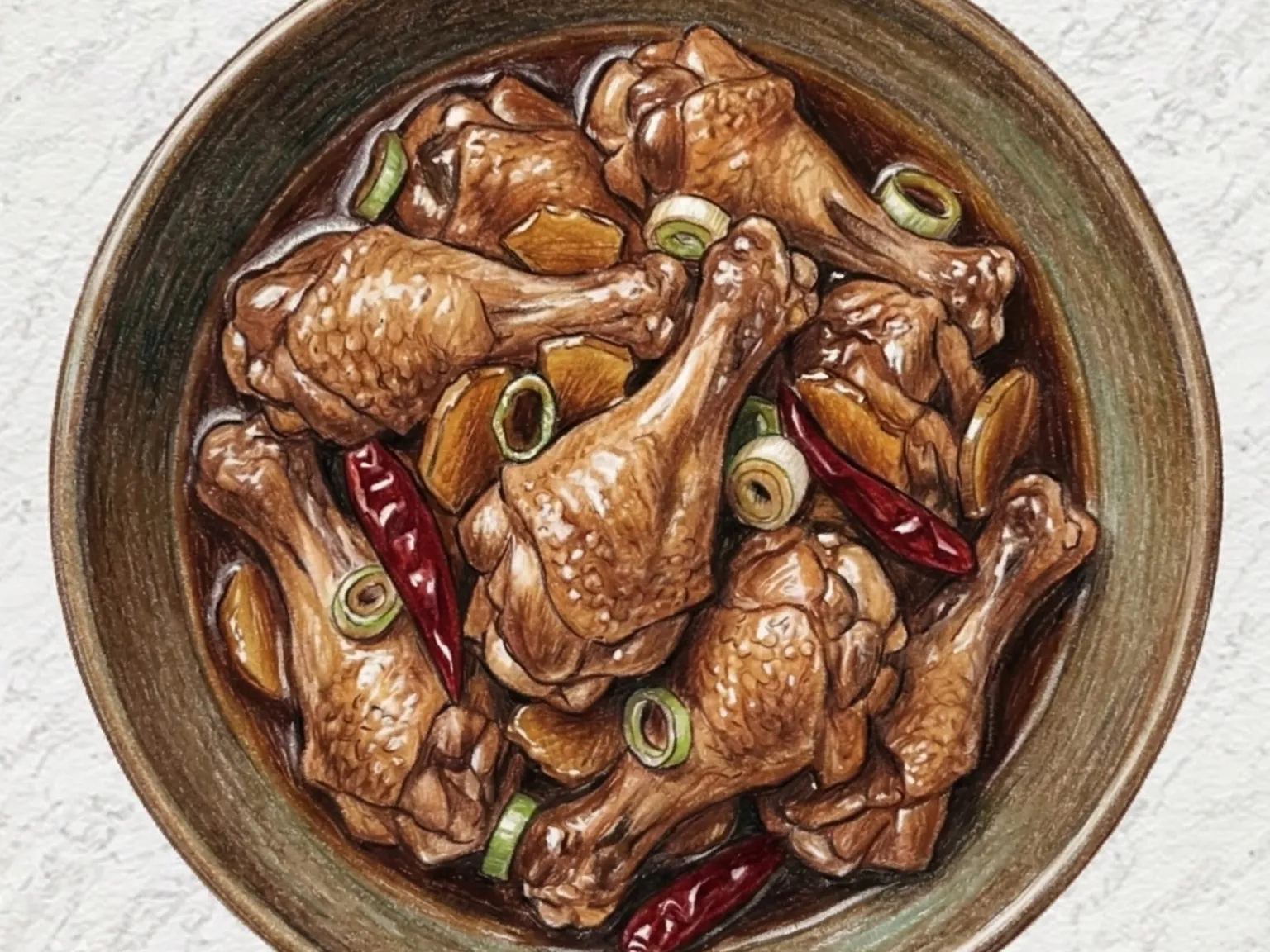
The wingettes brown in a dry pan, skin side first, before the soy sauce mixture goes in to reduce. By the time the sauce is nearly gone, the meat pulls easily off the bone.
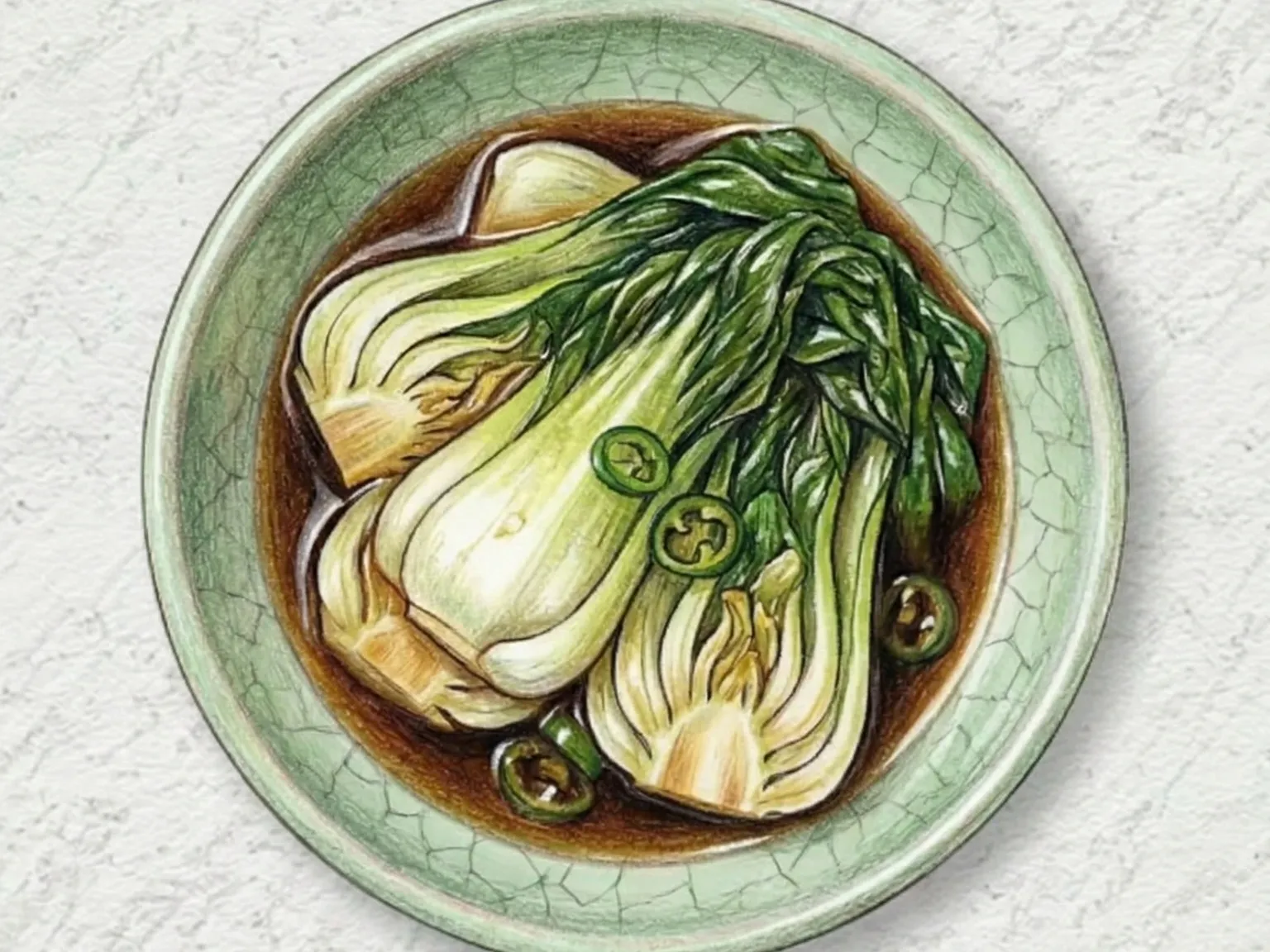
Thick white bok choy stems stay crunchy while the green leaves soak up the brine and soften, so one piece holds two textures. Cheongyang chilies are sliced with their seeds and layered through the jar, leaving a clean, lingering heat in every stem. The ginger comes out after a 2-minute rest so its scent stays faint. Well-drained heads keep the brine clear, and turning them once after two days evens out the seasoning.
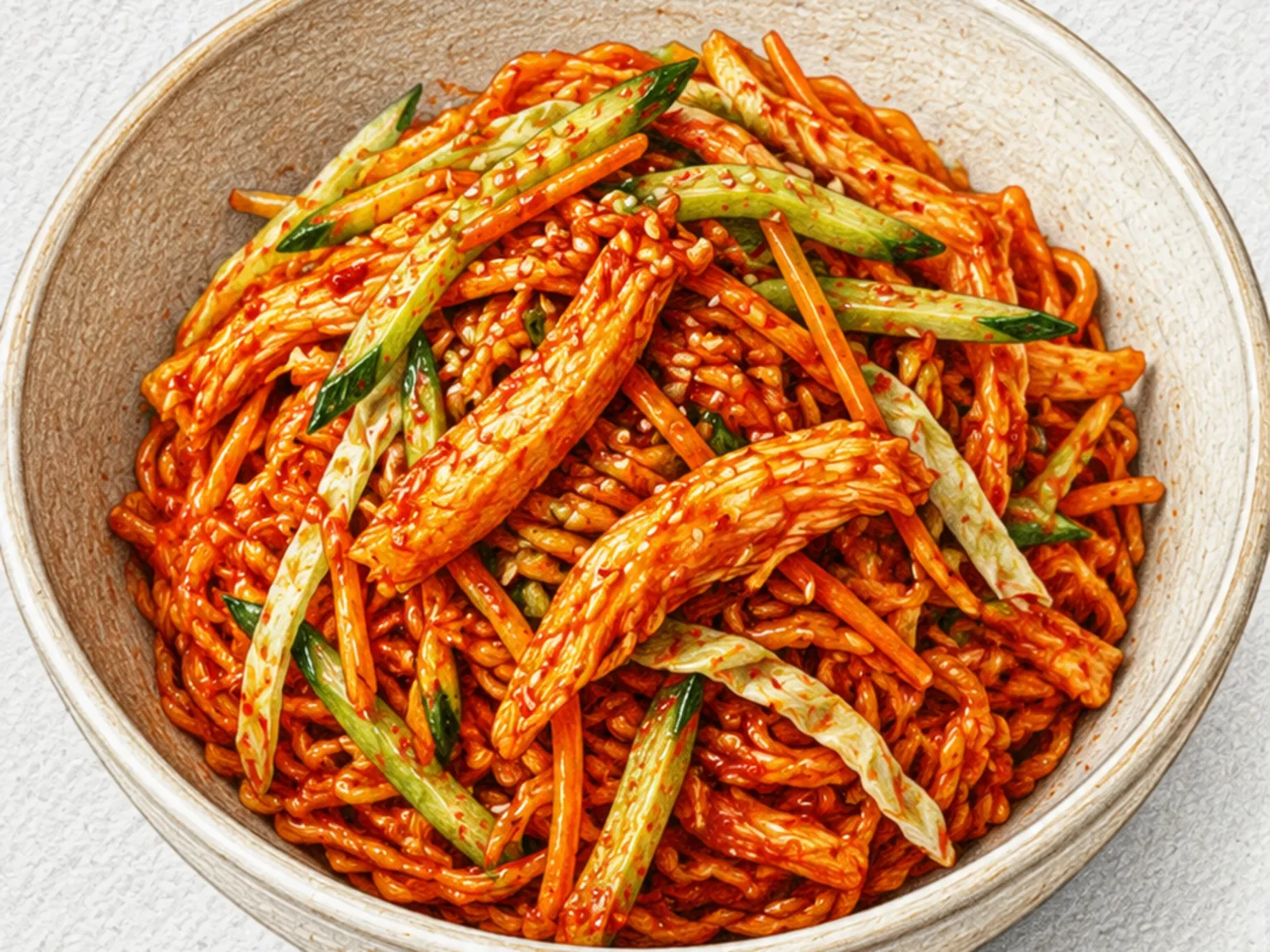
Deodeok, a bittersweet mountain root sometimes called bonnet bellflower, gets pounded with a rolling pin and torn into shreds before it joins chewy jjolmyeon noodles. Tearing instead of slicing keeps its fibrous grain, so it brings a slightly woody chew and an herbal fragrance to the sweet-sour gochujang dressing. Cabbage, carrot, and cucumber are soaked in cold water for crunch, and everything is tossed together only right before eating so the vegetables stay crisp.
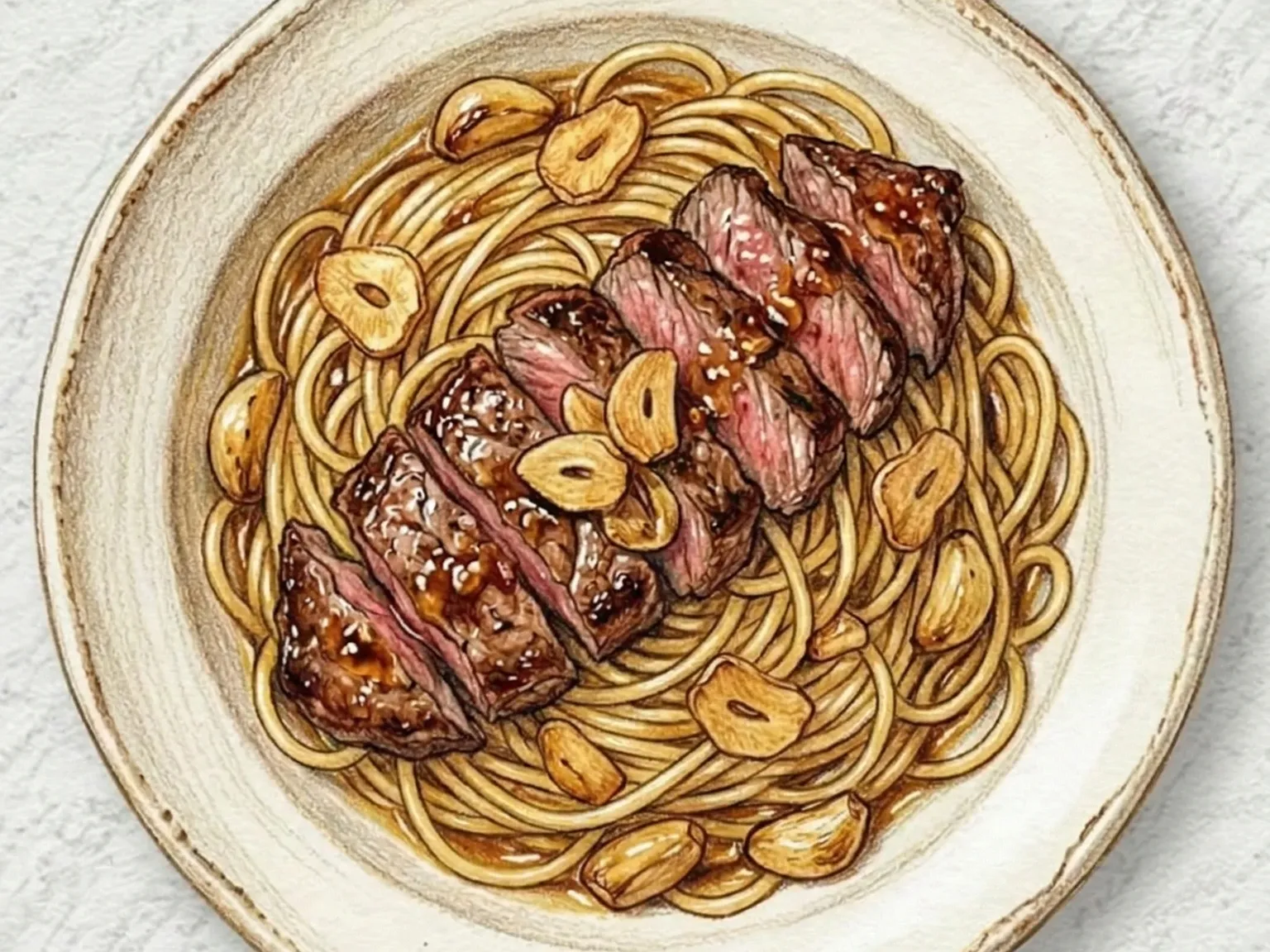
Sirloin is seared, rested for five minutes and sliced over the noodles, while the sauce comes from the same pan: meat juices, butter, sliced garlic, soy sauce and a spoon of mentsuyu, the Japanese bonito-and-kelp noodle base. The pasta water is added and emulsified quickly into a glossy coating, before long simmering can turn the soy sauce harsh and salty.
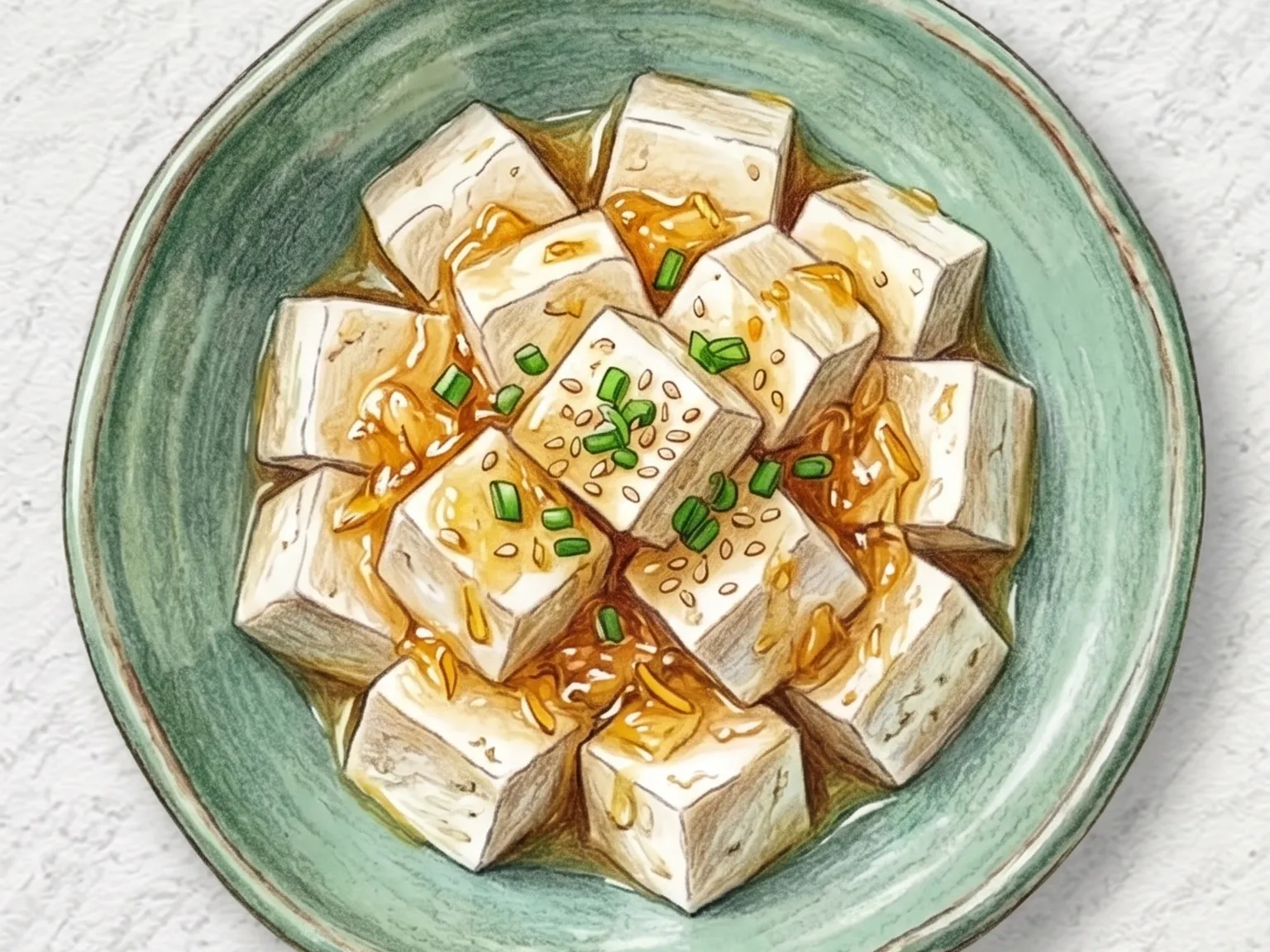
Firm tofu is seared in a dry pan until golden, then dressed with yuja-cheong, a Korean citron marmalade, mixed with soy sauce, vinegar and olive oil. The citron peel gives a faint bitterness and a fragrance that soy sauce alone never brings to plain tofu. Yuja has been grown on Korea's southern coast, around Goheung and Namhae, since the Joseon era. Tofu that still holds water thins the dressing and mutes that fragrance. Thinly sliced onion and baby greens add crunch on top. Serve it within 2 hours, while the tofu still holds its firm shape.
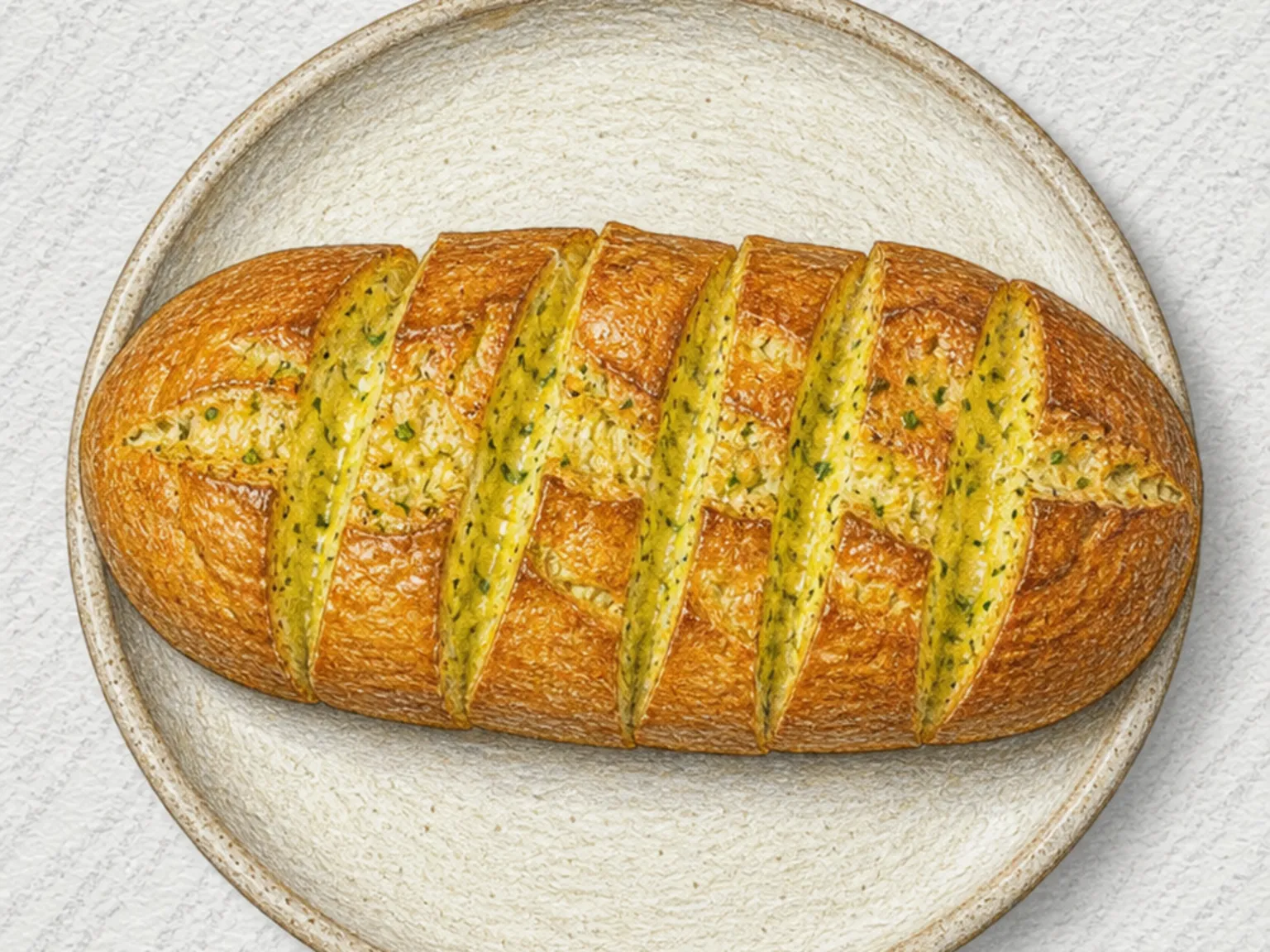
A baguette is cut almost to the base and every slit is filled with garlic butter before baking. Plenty of minced garlic goes into that butter along with condensed milk and honey, which makes this Jeju-style manong baguette sweet as well as garlicky. An air fryer at the same temperature can stand in for the oven.
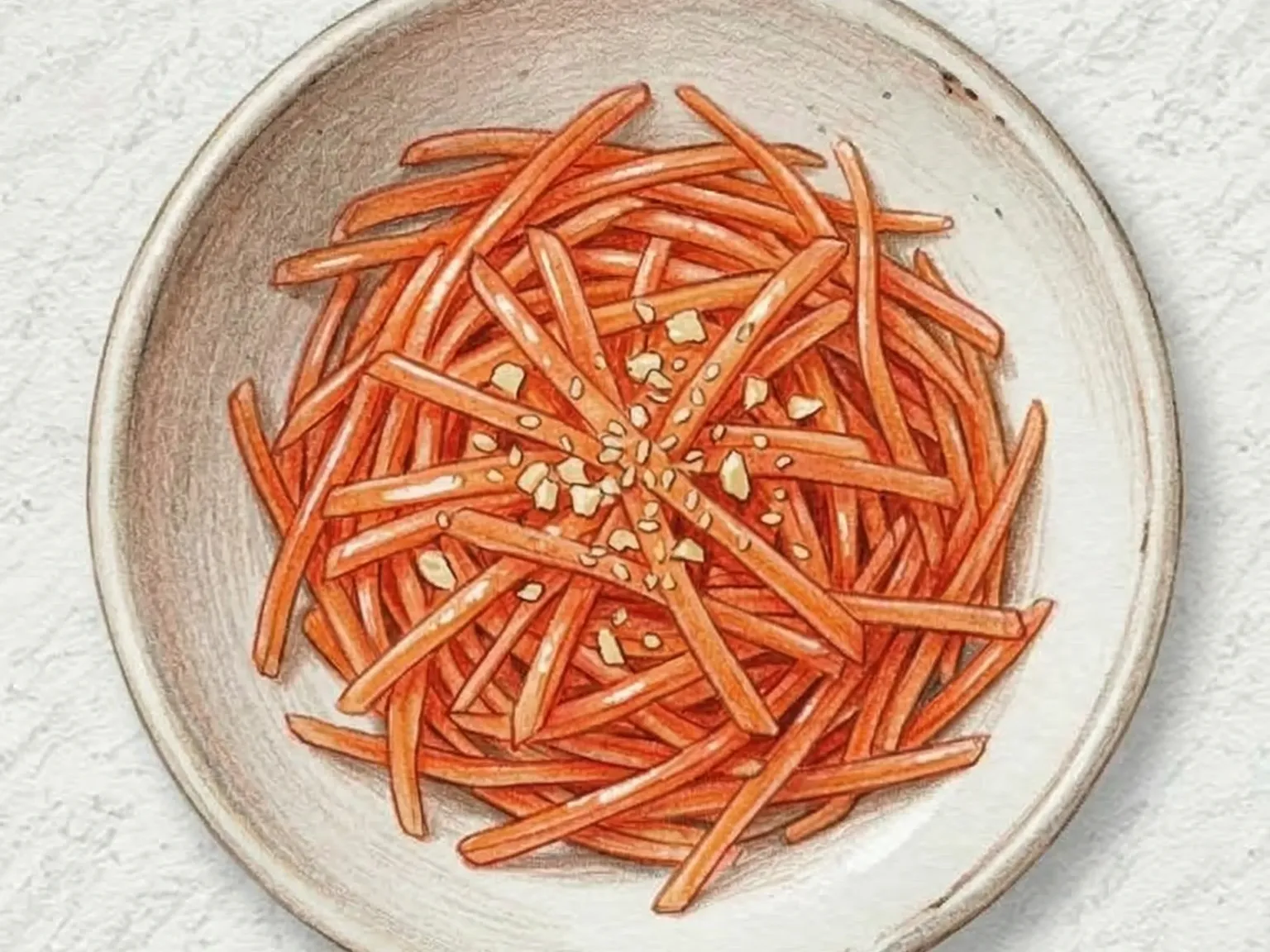
The sautéed carrot that goes into bibimbap and gimbap, served as a side dish of its own. Cut into fine matchsticks and cooked only briefly, it stays bright orange with a little crunch left.
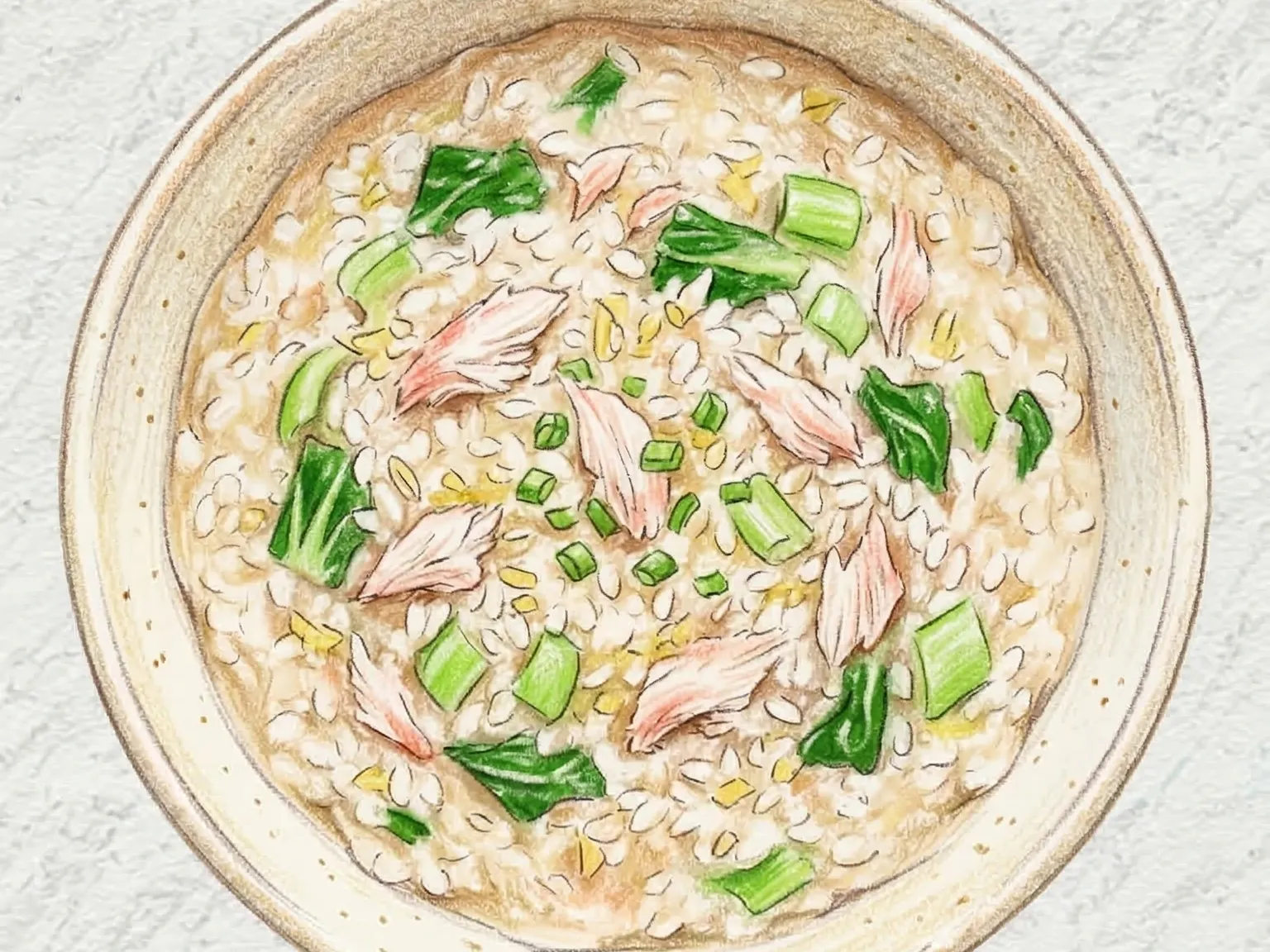
There is no stock here, only water, but onion and ginger sautéed in sesame oil before the rice goes in keep the porridge from tasting flat. Flecks of red crab and green bok choy show through the white rice.