Bok Choy Crab Porridge
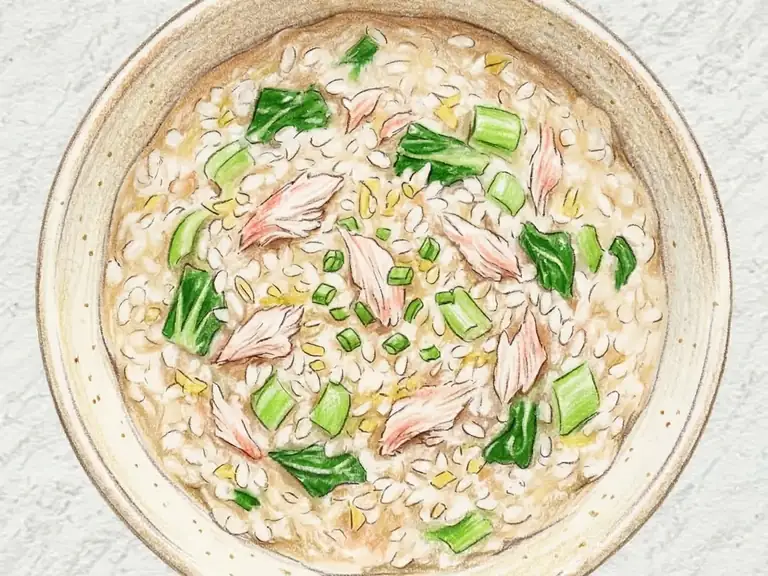
There is no stock here, only water, but onion and ginger sautéed in sesame oil before the rice goes in keep the porridge from tasting flat. Flecks of red crab and green bok choy show through the white rice.
1910 Korean recipes. Page 18 of 80. Compare ingredients and cooking times. Bok Choy Crab Porridge, Korean Busan-Style Soy Fish Cake Stir-Fry.
There is no stock here, only water, but onion and ginger sautéed in sesame oil before the rice goes in keep the porridge from tasting flat. Flecks of red crab and green bok choy show through the white rice.
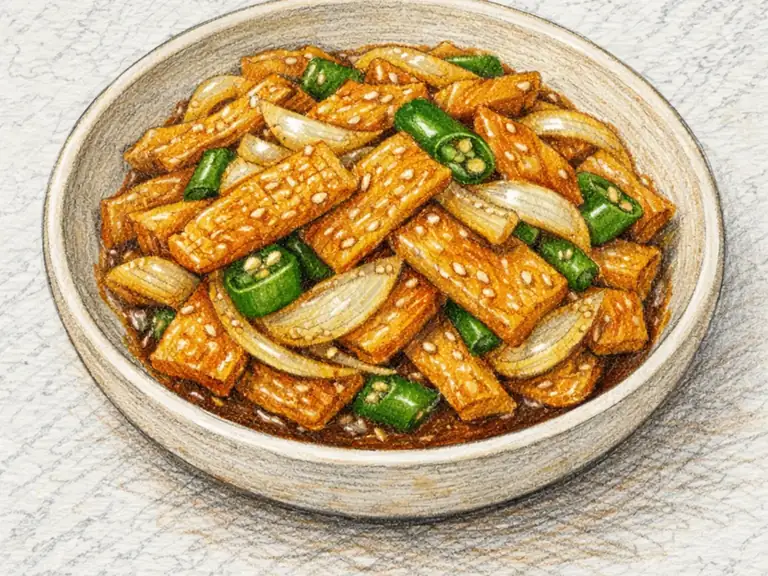
A single cheongyang chili, a hot Korean green pepper, goes into this soy-glazed fish cake. The fish cake is cut into long, thin strips and browned over high heat before any sauce goes near it, and the soy seasoning then goes on so briefly that almost none is left in the pan.
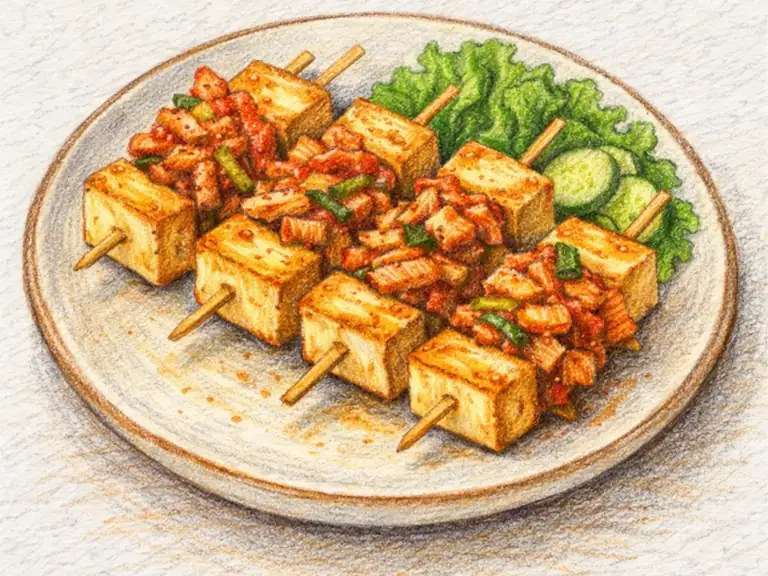
Pan-fried tofu and sour kimchi stir-fried with ground pork take turns on a skewer, turning the classic tofu-and-kimchi plate into something you hold in one hand. Leaving the tofu untouched until its underside sets gives it a crust strong enough to survive the skewer.
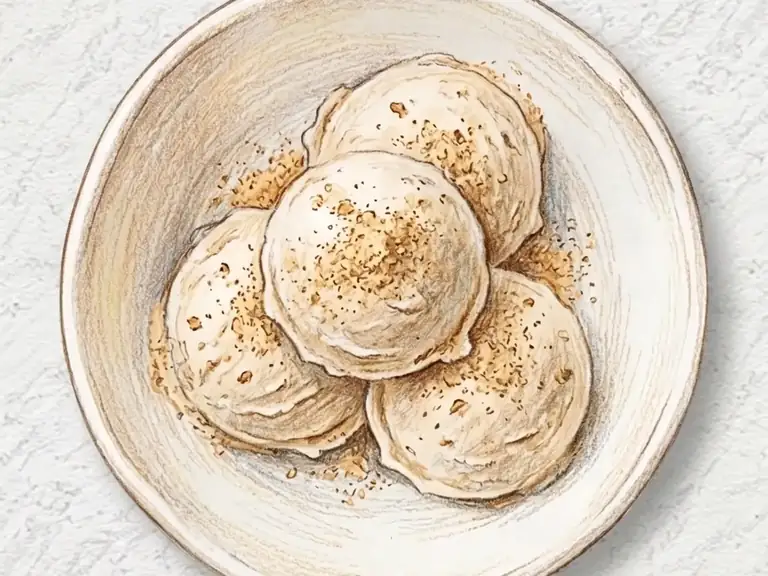
Misugaru, a roasted multigrain powder, is whisked smooth into milk, folded with whipped cream and frozen, and at a full 100g it gives the ice cream a heavy, nutty grain flavor. The freezer does not do all the work: the surface has to be scraped with a fork once an hour, three times, to break up the ice crystals, which makes this one for a day spent at home. Black bean misugaru makes it nuttier still.
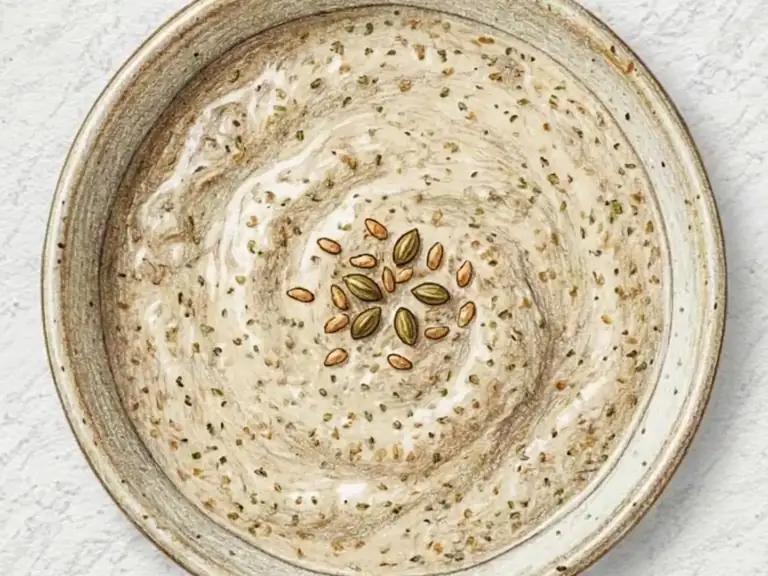
With wild soybean powder and roasted brown rice powder in it, this tastes like a thick version of misutgaru, Korea's roasted grain drink. The banana spends just ten minutes in the freezer first, and that alone gives it a shake-like body with no other thickener.
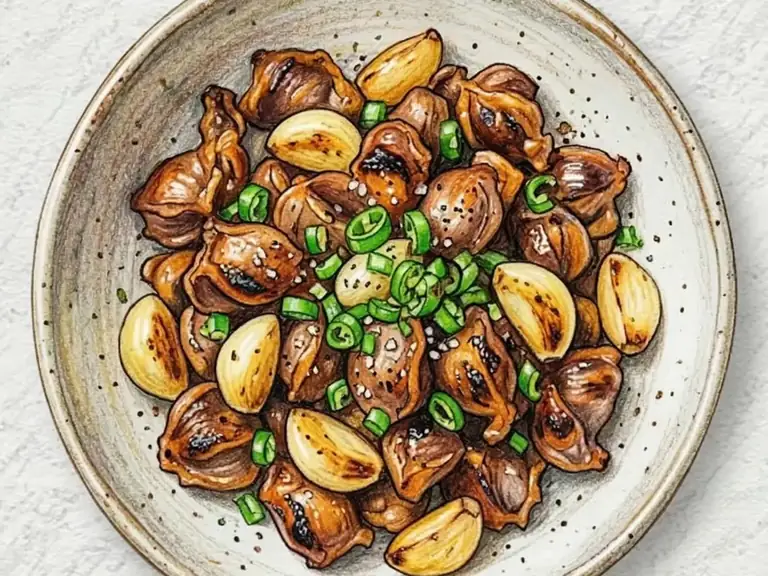
Halved garlic cloves go into the pan first and lose their raw bite, turning sweet and soft. The gizzards get nothing but salt and pepper, which leaves the garlic to do the work of a sauce.
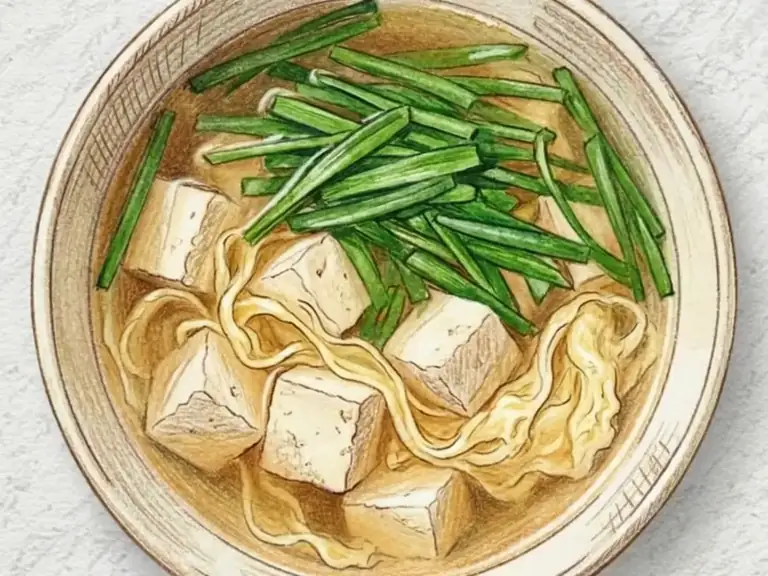
Beaten egg is poured in a circle from the edge of the pot and left unstirred for thirty seconds, so it sets into soft ribbons in the barely moving broth. Because the soup never comes to a hard boil, the even 1.5 cm tofu cubes keep their corners too.
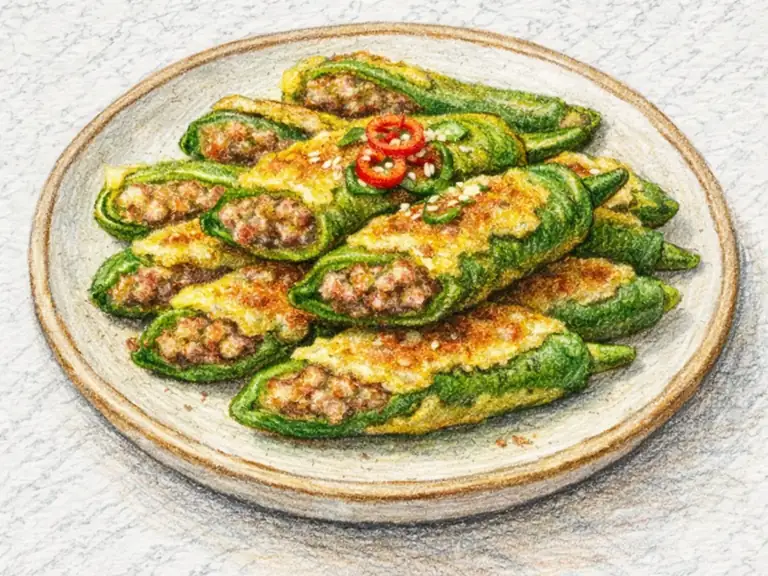
Mild green chilies split lengthwise are stuffed with ground pork, pressed tofu and garlic and fried filling side down, which browns the meat while the pepper keeps its fresh, gentle heat. Fill each half only about seventy percent of the way, because the filling swells as it cooks and an overstuffed pepper splits open.
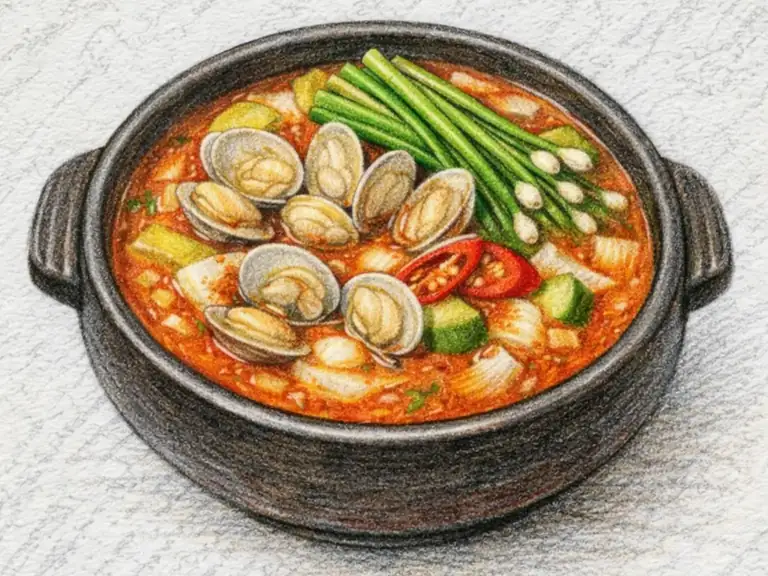
In early spring, February to April, when wild chives are around, a handful goes on top of this clam and gochujang stew. Their sharp scent takes the edge off any fishiness from the clams.
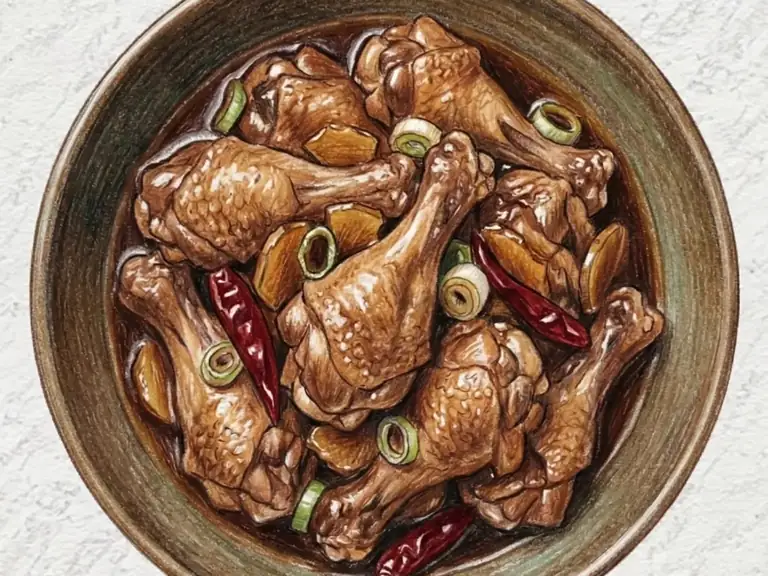
The wingettes brown in a dry pan, skin side first, before the soy sauce mixture goes in to reduce. By the time the sauce is nearly gone, the meat pulls easily off the bone.
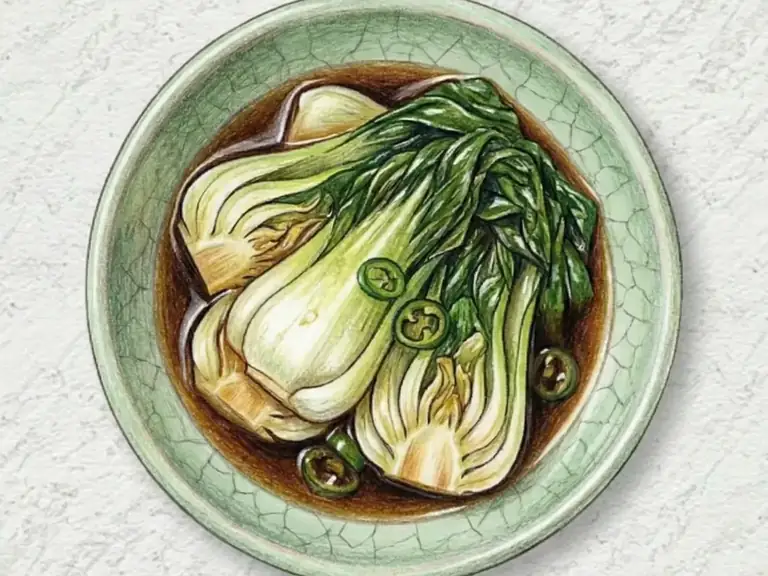
Thick white bok choy stems stay crunchy while the green leaves soak up the brine and soften, so one piece holds two textures. Cheongyang chilies are sliced with their seeds and layered through the jar, leaving a clean, lingering heat in every stem. The ginger comes out after a 2-minute rest so its scent stays faint. Well-drained heads keep the brine clear, and turning them once after two days evens out the seasoning.
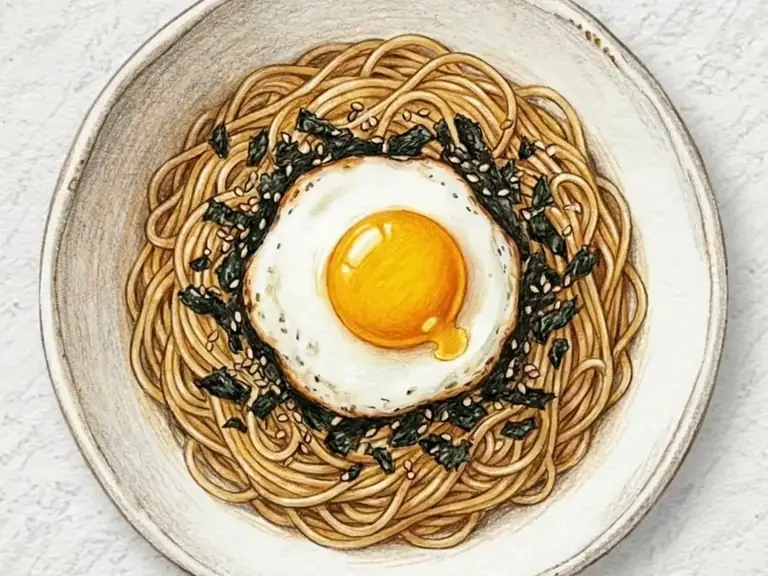
Perilla oil smells nuttier and more grassy than sesame oil, and in this cold somyeon dish it is the main flavor, with only soy sauce, a little sugar, and garlic underneath. Crumbled roasted seaweed goes on just before eating so it stays crisp, and toasted sesame seeds add a small crunch. With almost no cooking beyond boiling the noodles, it makes a quick late-night meal.
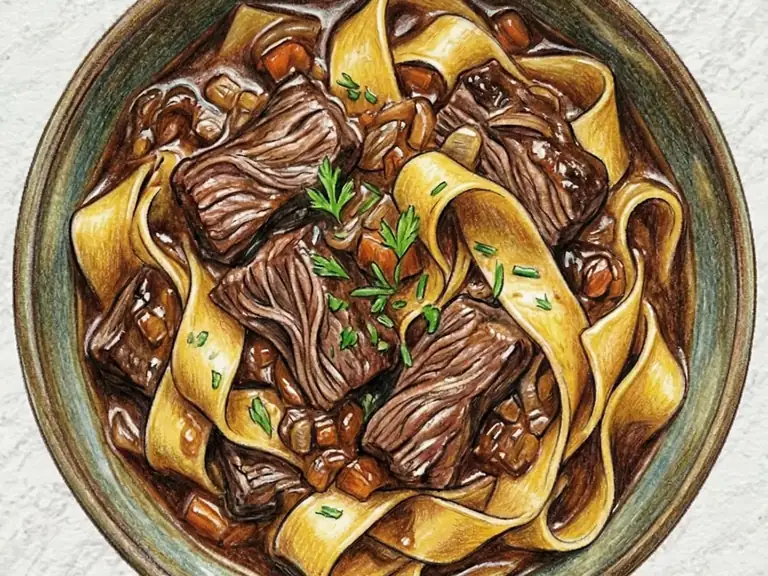
Short rib cut into 3cm pieces braises with red wine, whole tomatoes and soy sauce for an hour or more, until a spatula presses it apart into shreds. Its collagen melts into a sticky sauce that coats the wide pappardelle, and the soy brings a fermented saltiness ordinary Bolognese lacks.
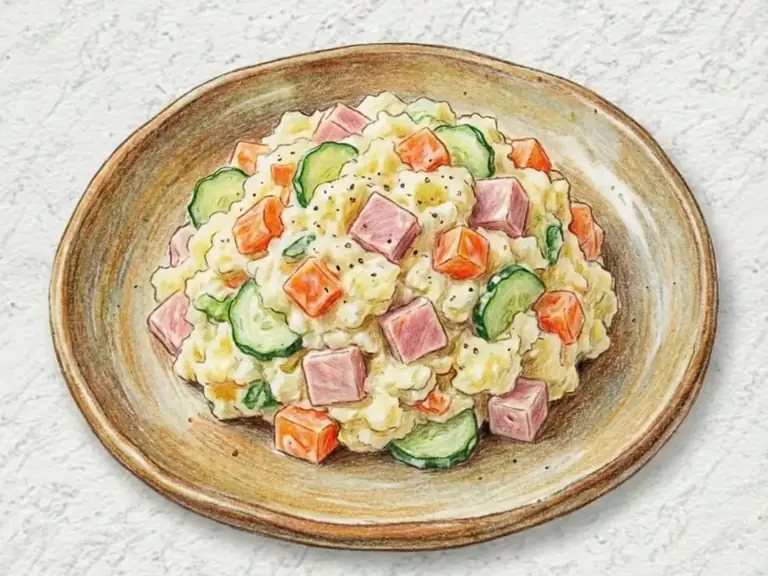
Korean potato salad leaves small lumps in the mash on purpose, putting soft potato and floury bits in the same bite. A little sugar in the mayonnaise gives it the sweet, creamy profile that separates it from Western potato salad, though it shares roots with Japanese potato salad. Diced ham is browned to render some fat, and salted, squeezed cucumber keeps the bowl from turning watery after chilling. An hour in the fridge lets the seasoning settle evenly. It goes on the table as a banchan side dish or between slices of bread as a sandwich filling.
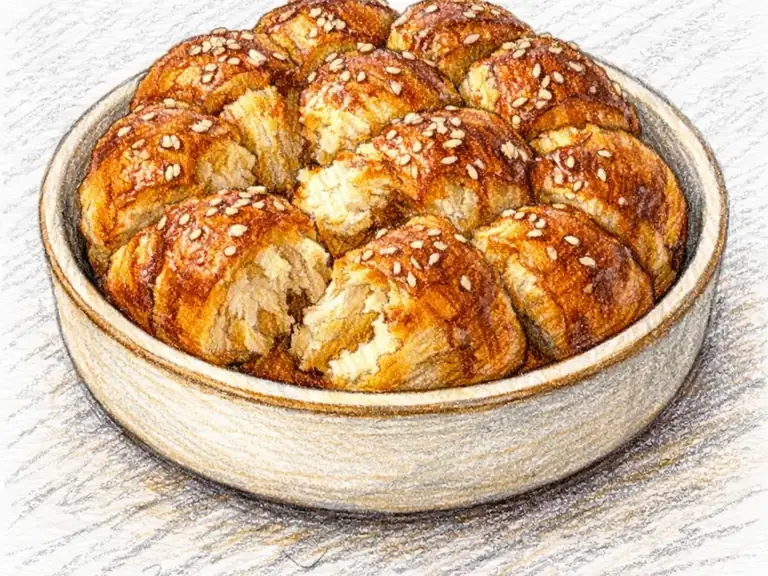
Doenjang, Korean fermented soybean paste, goes into the filling here, beaten into butter with maple syrup and spread between thin sheets of enriched dough. The slices stand upright in a loaf pan and bake into a loaf you tear apart layer by layer, each sheet carrying salty, savory paste and maple sweetness together. The bread pulls apart most easily while still warm, before the filling firms up as it cools.
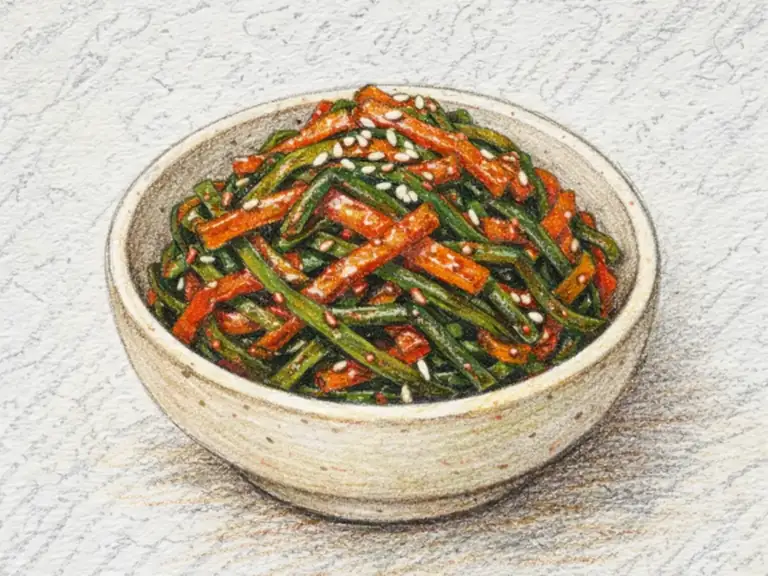
The kelp strips soak in cold water for 10 minutes to lose some salt, then get just 20 seconds in boiling water before going straight into a cold rinse. Tossed with seeded cucumber strips in a gochugaru, vinegar and soy dressing, they chill for at least 10 minutes before serving.
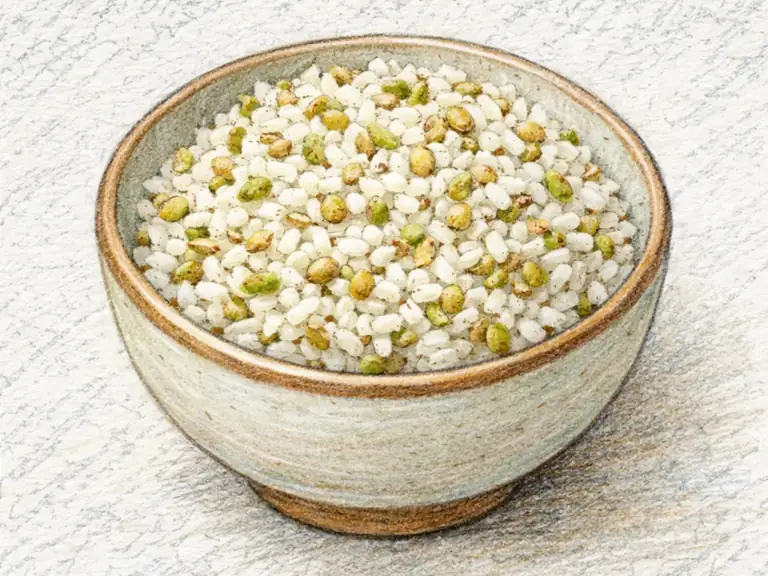
Hemp seeds toasted in a dry pan are cooked right in with white rice, adding a nutty aroma to an otherwise plain bowl. Pull them off the heat the moment they start to pop lightly and darken a shade.
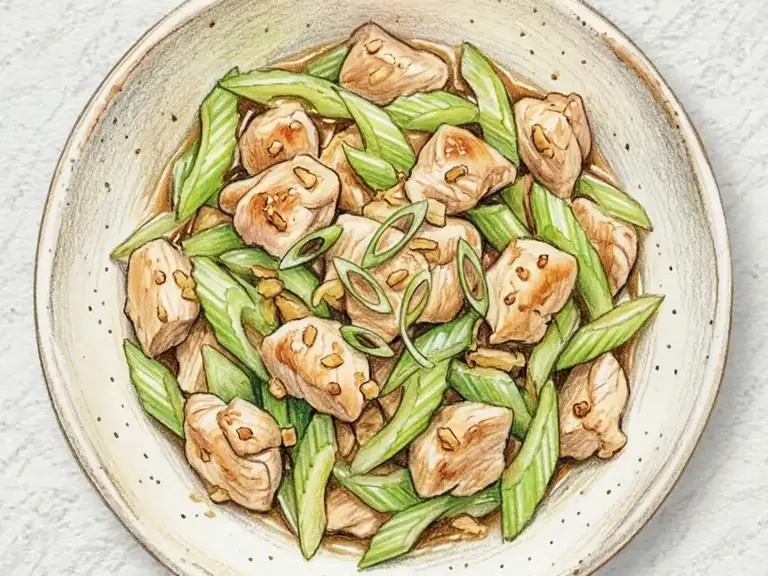
Celery leaves usually end up in the bin, but here they go into the pan with the stalks and give the chicken breast an herby smell. The stalks get only a short time on the heat, so they still crunch.
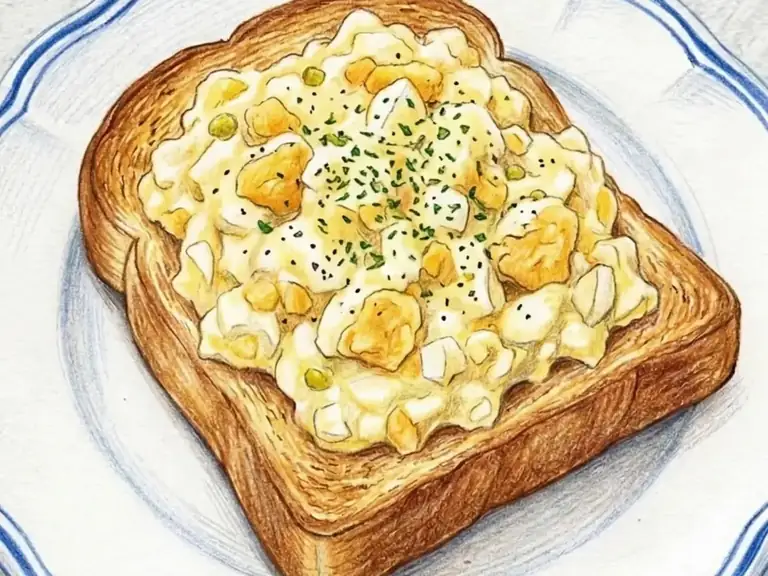
The eggs are mashed only partway, leaving small chunks among the fine crumbs so the mayo filling still has some bite. The filling goes on cold and the toast hot, either open-faced or closed with a second slice.
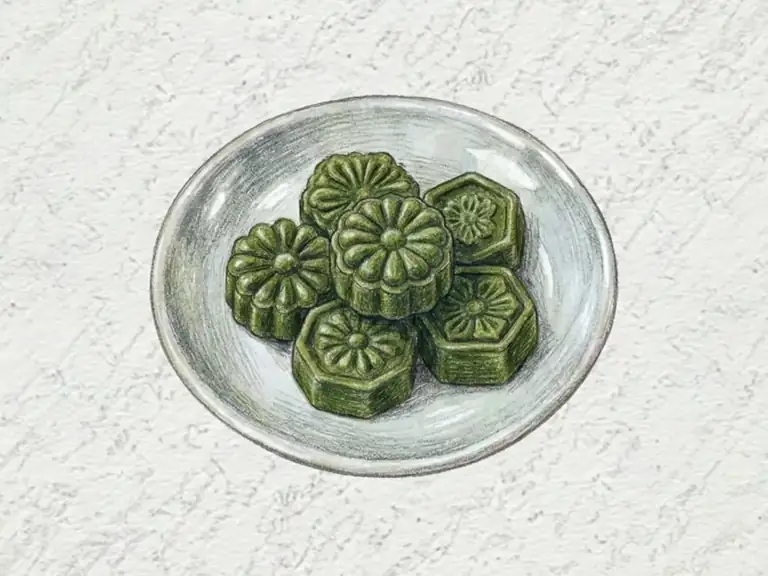
Roasted soybean powder and green tea powder, bound with honey and rice syrup and pressed into a patterned mold, melt softly on the tongue: nutty soybean first, then a light green tea bitterness. The right dough just holds together when squeezed hard. Too dry, it cracks as it leaves the mold, and too wet, the pattern smears.
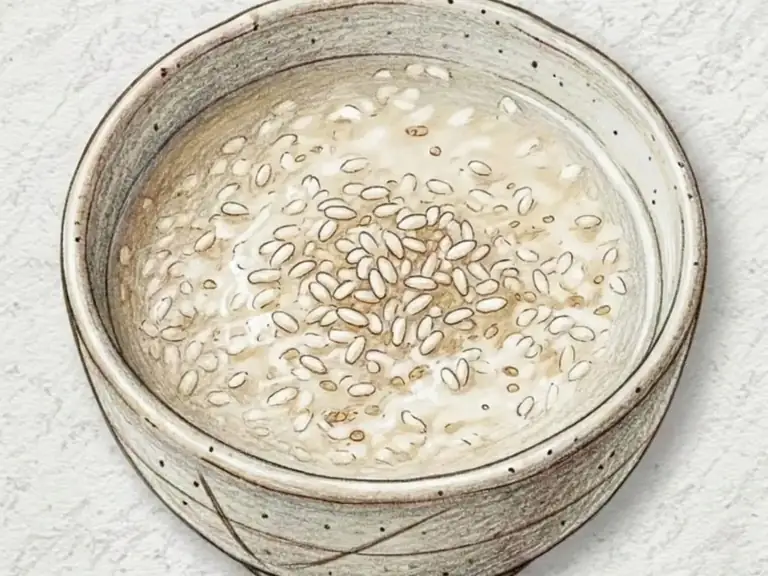
Unlike makgeolli, dongdongju is strained only once through a coarse sieve, so grains of rice float on top and give each sip a little chew, grainy sweetness and fermented tang. The steamed mix of regular and glutinous rice has to cool completely before the nuruk, a Korean fermentation starter, goes in. Home batches taste a little different depending on the day they were brewed.
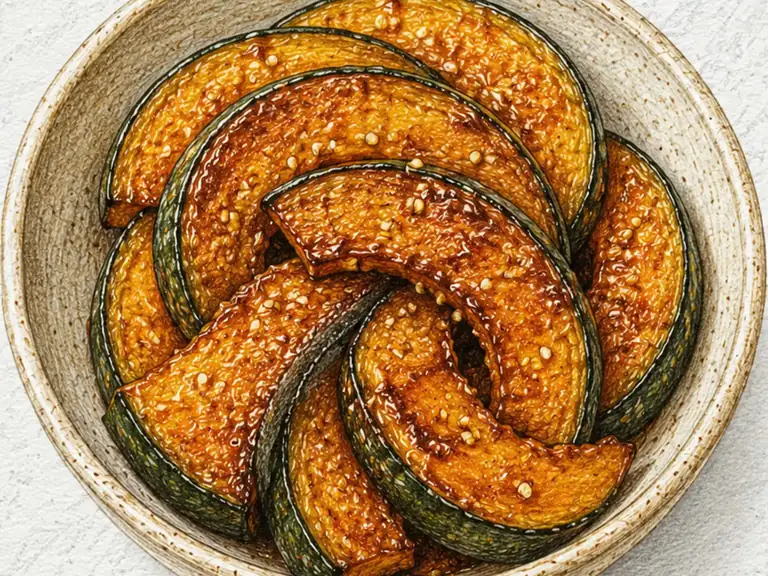
The kabocha spends 2 minutes in the microwave before it goes into the pan. That head start lets the center turn tender before the soy and corn syrup glaze has a chance to burn. The skin stays on.
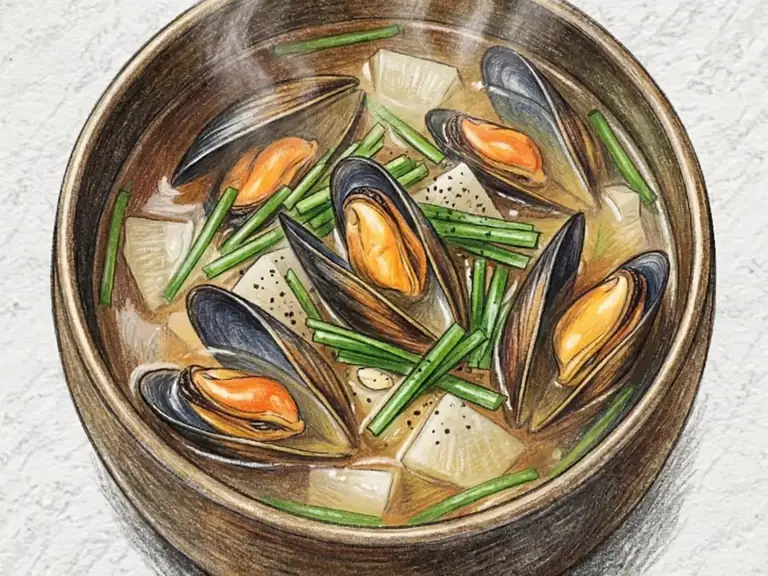
The mussels are added with a spoonful of rice wine and boiled uncovered for five minutes, letting the fishy steam escape while the taste of the sea stays in the broth. Any still closed by then are taken out and thrown away.
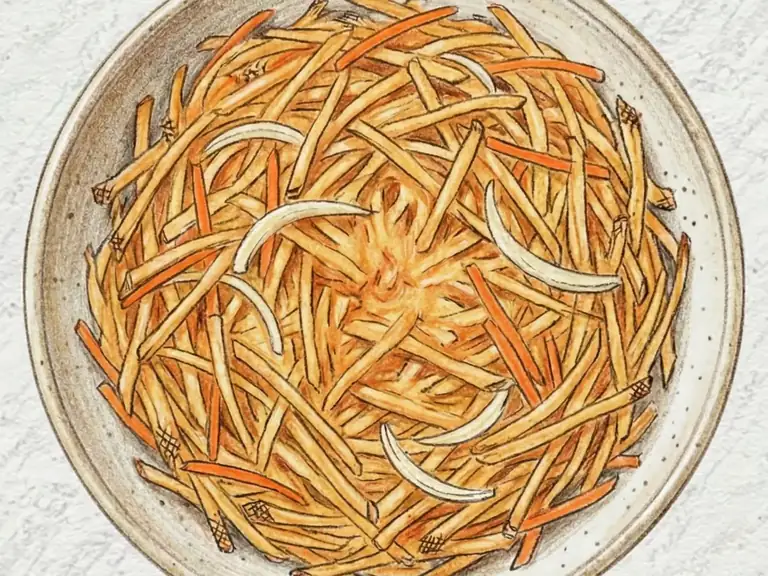
Shredded sweet potato, carrot, and onion bound in a thin tempura batter fry into two large rounds with crisp edges and sweet strands inside. Tossing the vegetables in the dry flour before any water is added is what makes the batter cling instead of sliding off.