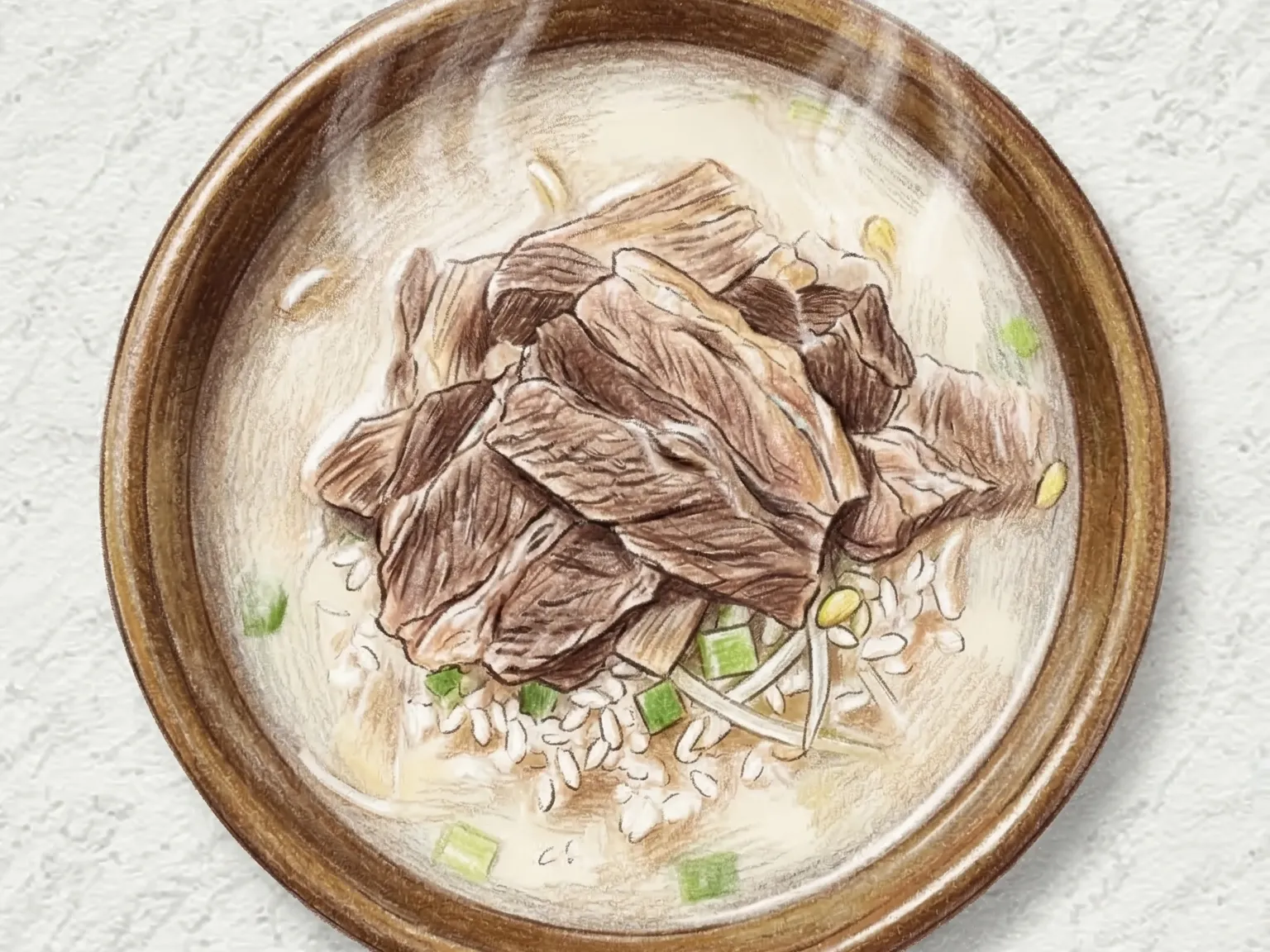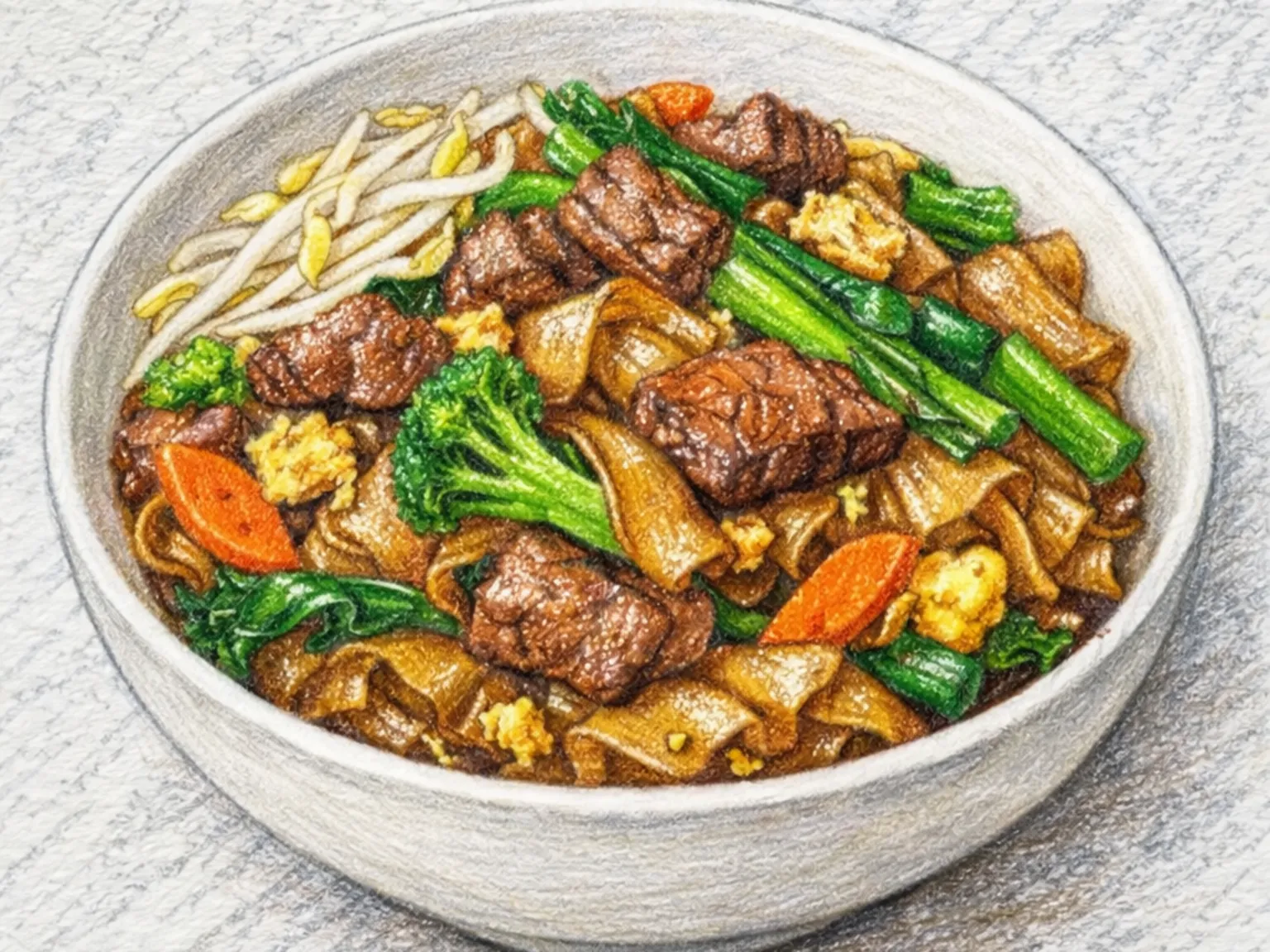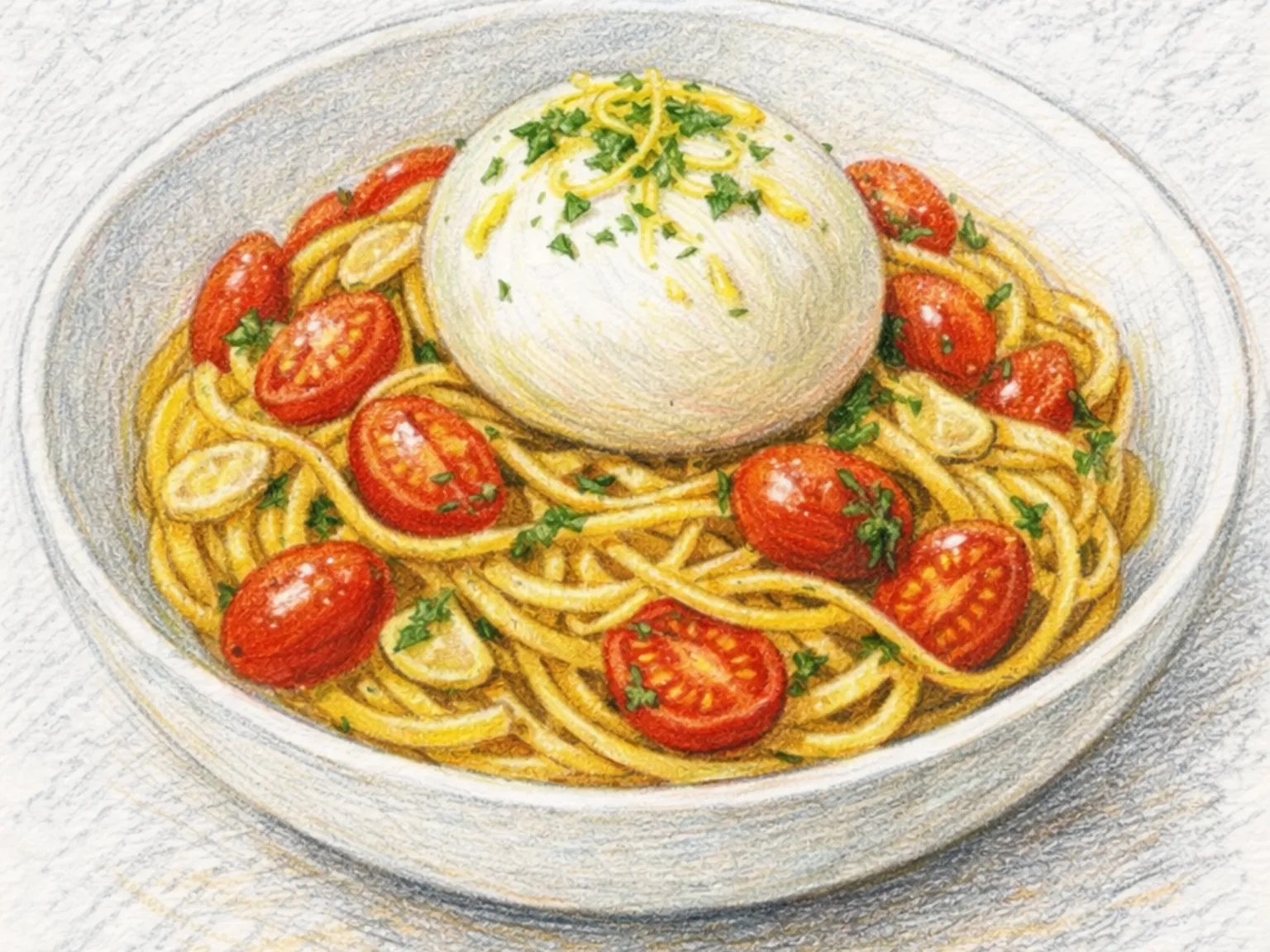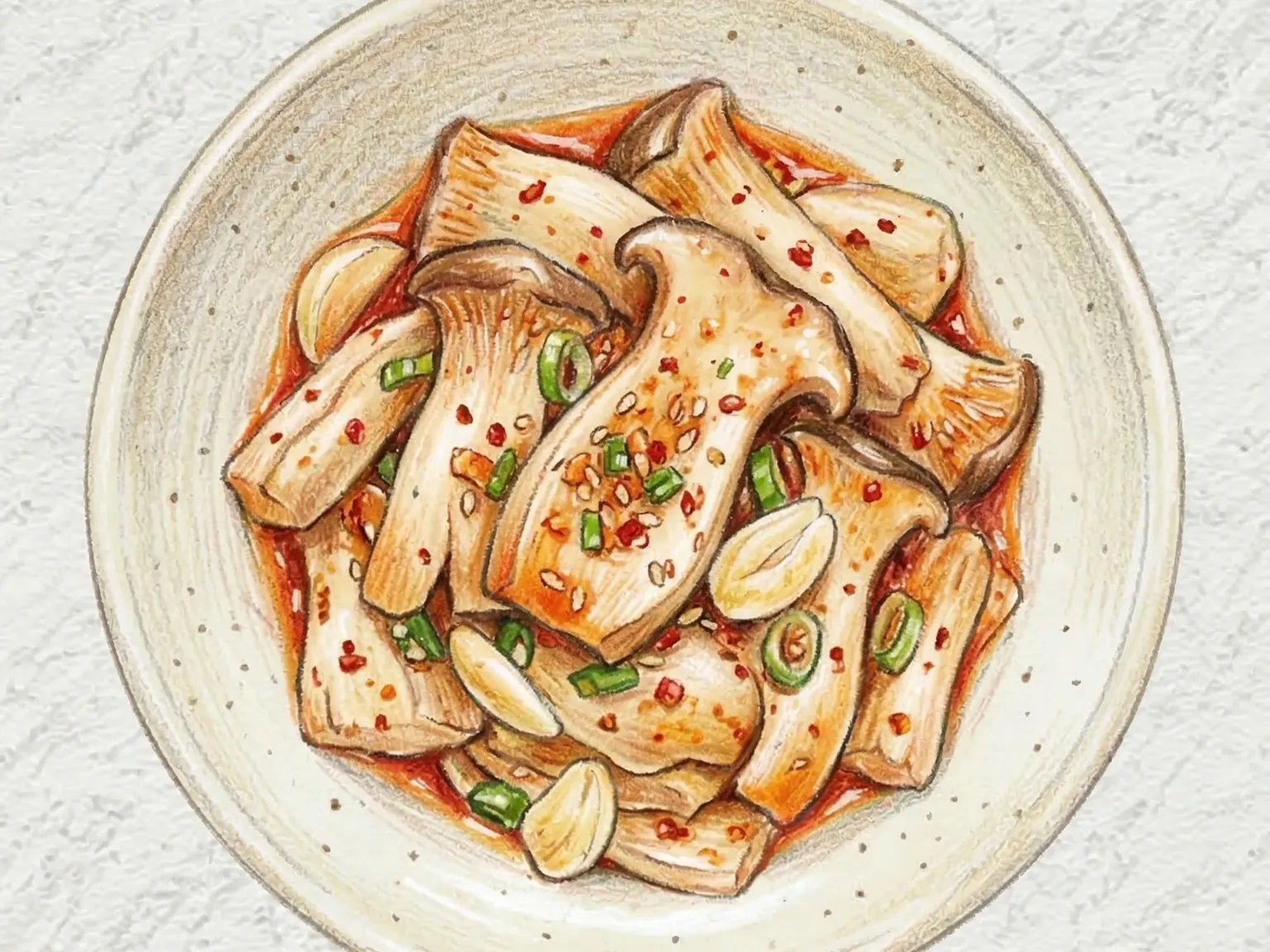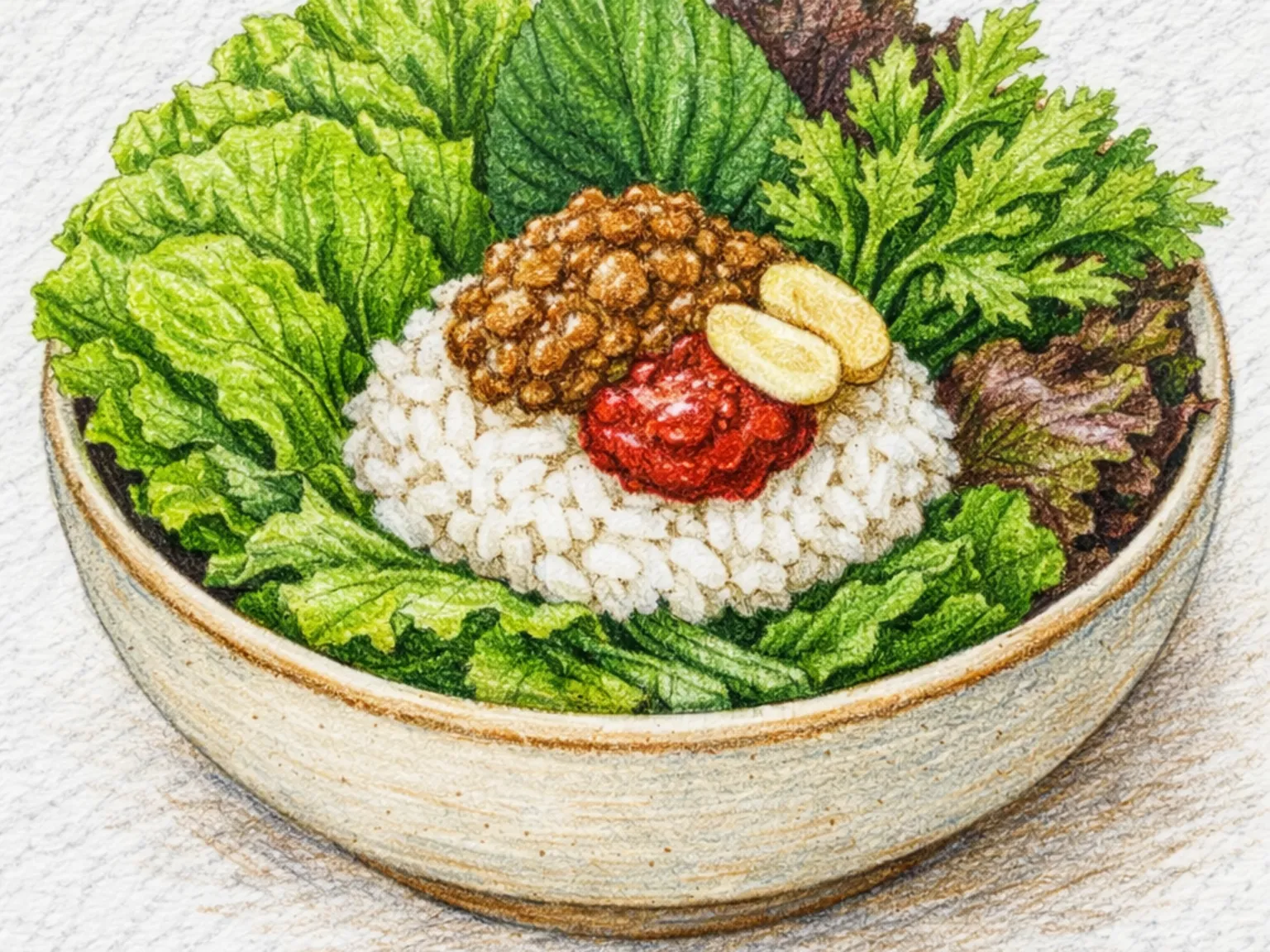
Korean Dried Pollock Egg Porridge
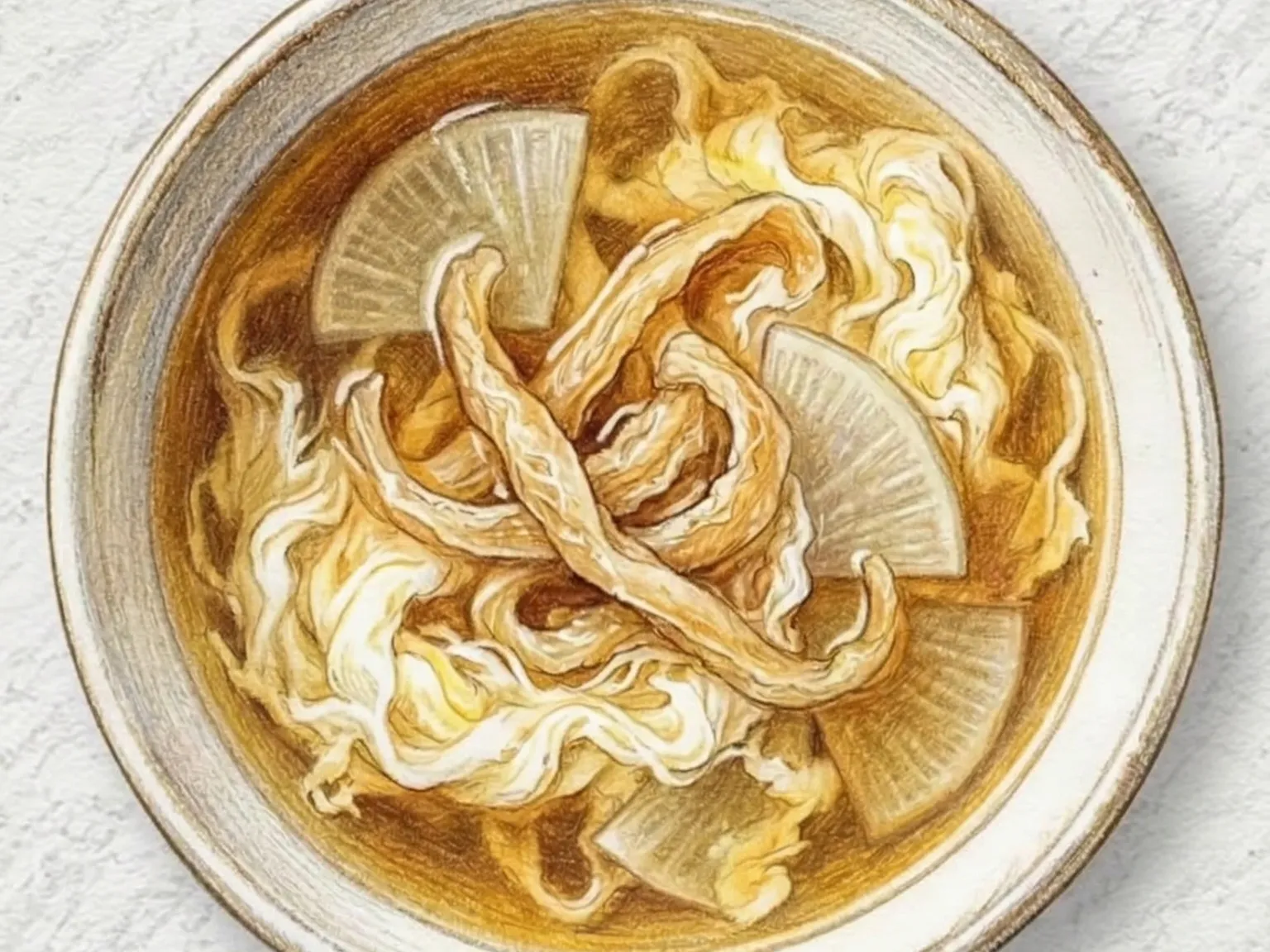
Bukeo gyeran juk is a Korean porridge made by toasting dried pollock strips in sesame oil until fragrant, then simmering them with soaked rice until the grains fully break down, and finishing with beaten egg stirred in just before the heat is turned off. Dried pollock concentrates protein during the drying process, producing a clean, direct savoriness without heaviness. Toasting it in sesame oil first coats the fish in fat, which spreads a nutty richness throughout the porridge as it cooks. Adding the egg at the very end and stirring immediately keeps it from setting into firm pieces and instead creates soft, silky ribbons through the gruel. Soup soy sauce seasons the dish without darkening the color of the broth. Mild and easy on the stomach, this porridge is a reliable choice for the morning after drinking or whenever the body wants something warm and light.

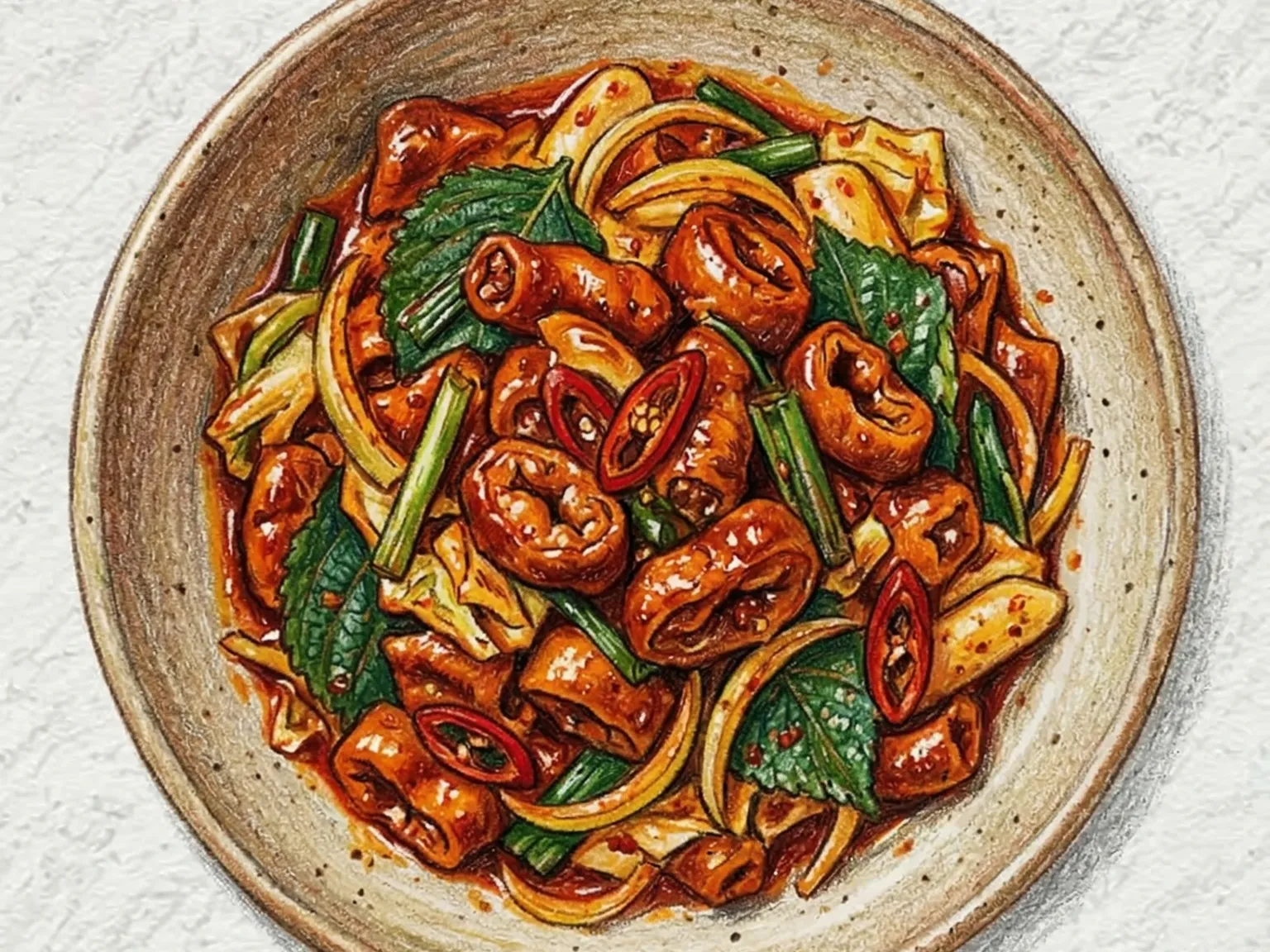
Korean Spicy Webfoot Octopus & Pork Belly Stir-fry
Jjukkumi-samgyeop-bokkeum combines chewy baby octopus and thick pork belly slices in a spicy stir-fry. The pork belly is first grilled until golden to render its fat, then the octopus and gochujang-based sauce are added for a fast, high-heat toss. Pork richness and the octopus's clean ocean flavor merge inside the chili seasoning, with onions and scallions adding sweetness. It is typically served sizzling on a hot plate, and diners often finish with fried rice made in the remaining sauce. Because baby octopus toughens rapidly with heat, adding it only after the pork is nearly cooked and pulling the pan off the heat within one to two minutes is the single most important step for keeping its signature chewy texture intact.

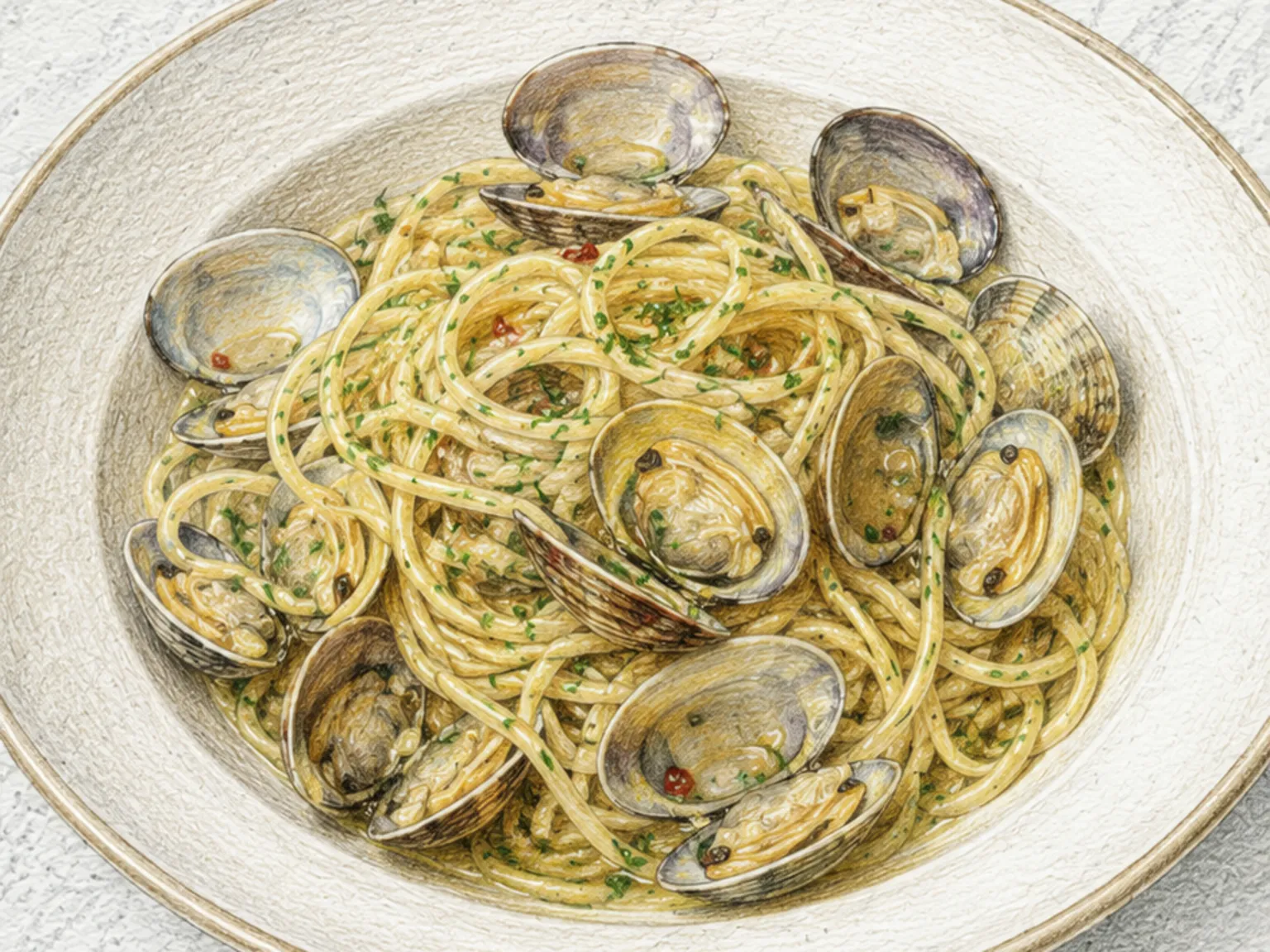
Vongole Bianco (Italian Spaghetti Dish)
This oil-based pasta uses clams, garlic, and white wine for a clean but savory profile. Briny clam juices soak into the noodles for layered flavor.

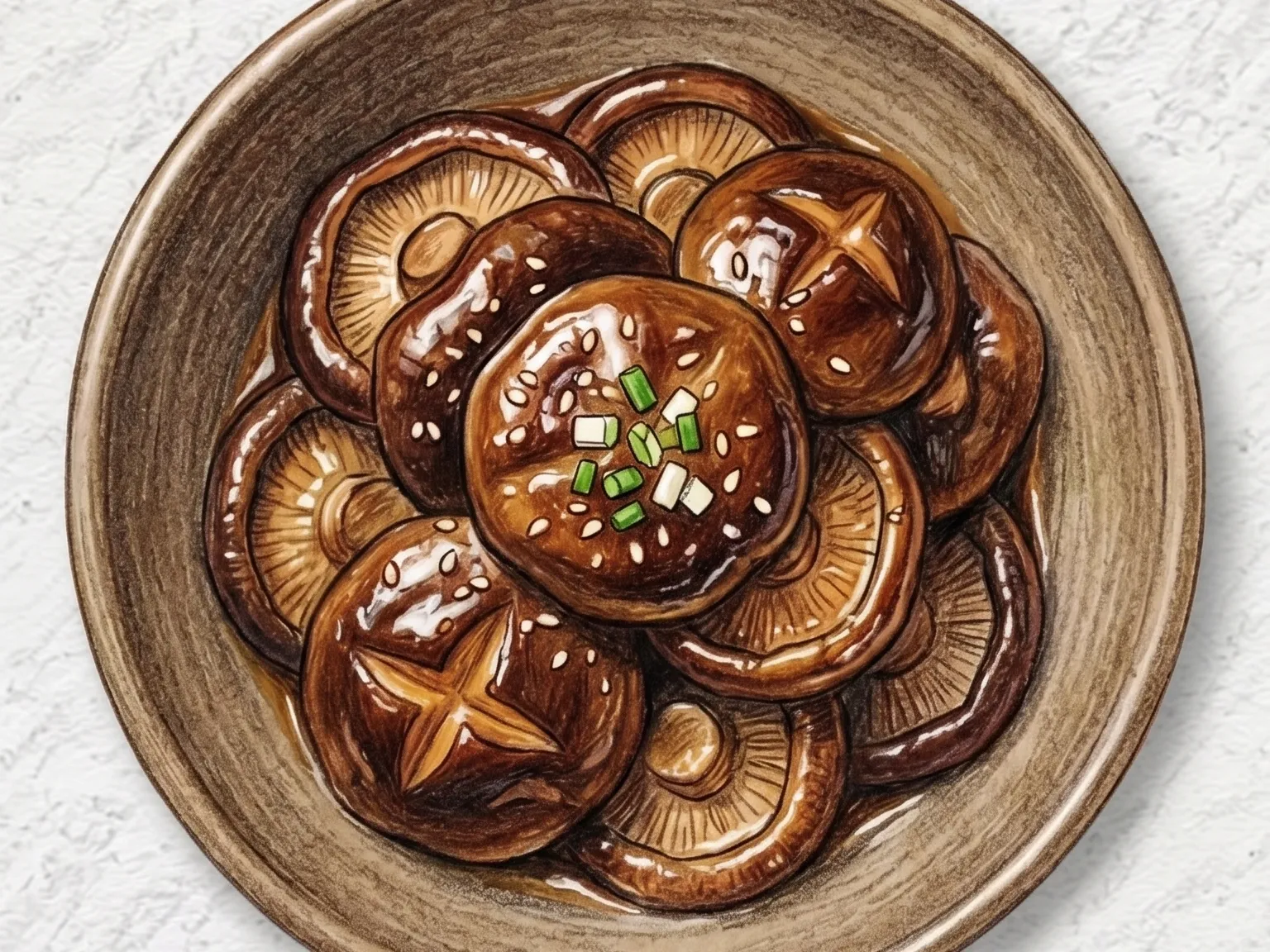
Korean Braised Shiitake Mushrooms
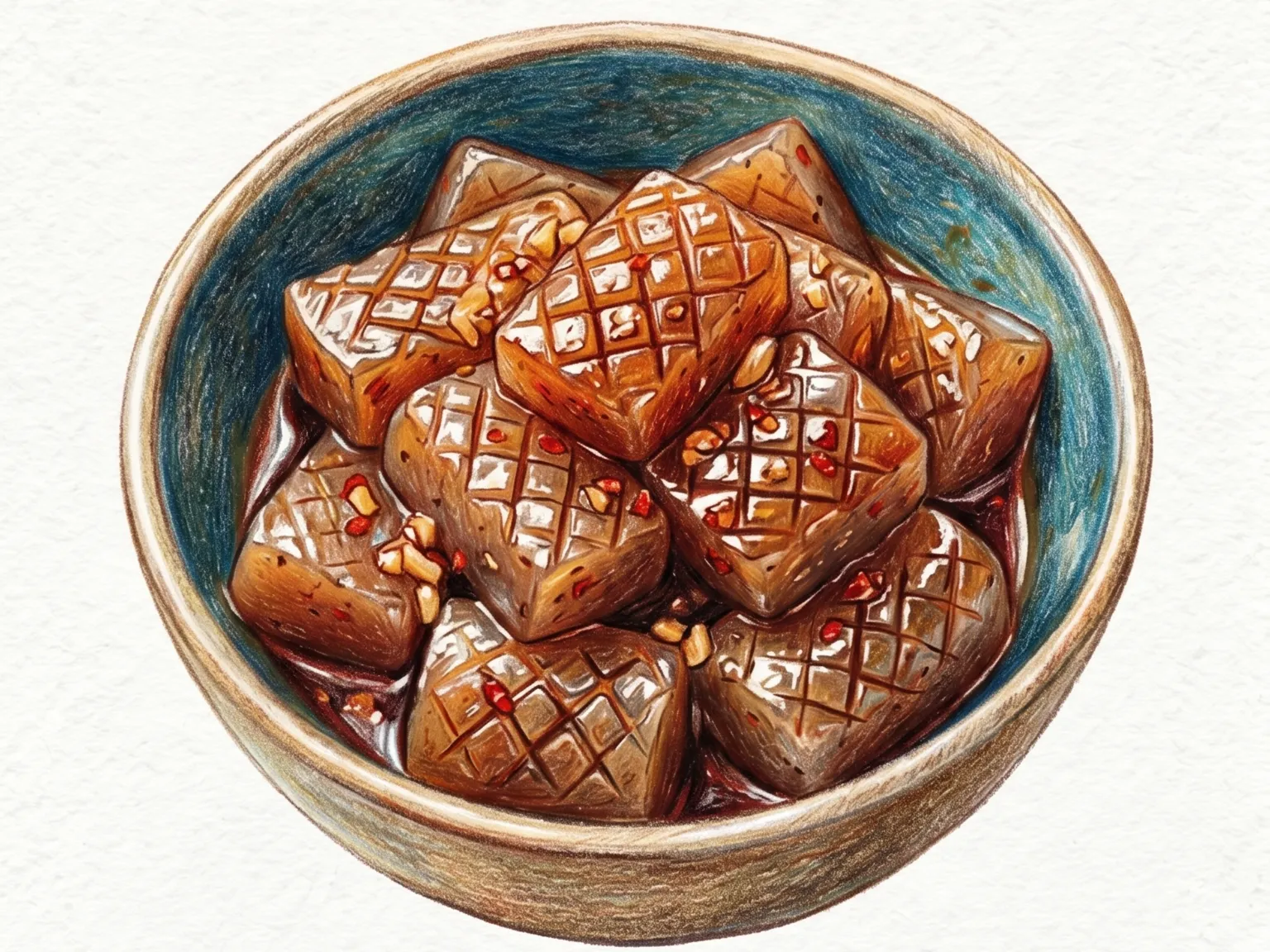
Pyogo-beoseot-jorim braises whole shiitake mushrooms in soy sauce with oligosaccharide syrup and minced garlic over low heat until glossy. The mushrooms' natural umami intensifies as they absorb the soy-based braising liquid, while the syrup caramelizes into a lacquer-like sheen on the surface. Each mushroom releases a burst of salty-sweet juice when bitten. A finishing touch of sesame oil and toasted sesame seeds adds a layer of nuttiness to the earthy base.

Korean Rockfish Soup (Whole Rockfish in Spicy Radish Broth)
Starting with a base of boiled radish to sweeten the water, this rockfish soup relies on using the entire fish to build a complex broth. Red pepper flakes, garlic, and soup soy sauce provide the seasoning before the fish and tofu go into the pot for a fifteen-minute simmer. The collagen and juices released from the rockfish bones create a physical thickness in the liquid that cannot be replicated with fillets alone. Just before the heat is turned off, a handful of water parsley adds a fresh contrast to the spicy, ocean-heavy profile of the soup. While the small bones of the rockfish require slow and careful eating, they are exactly what gives this dish its characteristic intensity. A slice of ginger added early in the process works to neutralize fishy scents. For extra heat, some sliced cheongyang chilies can be added, or a spoonful of ground perilla seeds can be stirred in at the end to introduce a nutty, creamy layer to the texture. This soup pairs naturally with a bowl of steamed rice, where the process of picking meat from the bones becomes a central part of the eating experience.

Korean Pressed Boiled Pork Slices
Pyeonyuk is a Korean chilled pork dish made by boiling pork shank with garlic, ginger, green onion, whole peppercorns, and salt for nearly an hour, then wrapping the meat tightly and refrigerating it until firm. The aromatics in the cooking water neutralize off-flavors from the pork, and the salt seasons the meat evenly throughout during the long simmer. Slicing after thorough chilling produces neat, thin pieces with a uniform grain, and the cold temperature sharpens the meat's clean, lean flavor in a way that serving it warm cannot replicate. Traditionally served with salted shrimp or anchovy paste for dipping, pyeonyuk is a staple on Korean holiday tables and a common appetizer when hosting guests. Wrapping the pork tightly while it is still hot is essential so that the shape sets as it cools, and refrigerating for at least two hours before slicing prevents the meat from crumbling under the knife.

Korean Young Napa Soft Tofu Stew
Eolgari-sundubu-doenjang-jjigae is a gentle Korean stew that pairs soft tofu with young napa cabbage (eolgari baechu) in a kelp stock base seasoned with doenjang and a small measure of gochujang. The doenjang brings fermented soybean depth to the broth, while the gochujang adds a measured spiciness that stays mild rather than sharp -- the two pastes work together to produce a broth that is simultaneously savory, slightly sweet, and lightly spiced. Potato and onion are added early to contribute their natural sugars, and the potato softens gradually into the liquid, lending slight body to the stock. Soft tofu should be spooned in gently rather than stirred, as it breaks apart easily -- rocking the pot from side to side distributes it without tearing the curds into pieces. Once in the stew, the soft tofu slowly releases some of its moisture and takes on the broth around it, spreading a silky, almost cream-like texture throughout the liquid. Young napa cabbage provides a light crunch that contrasts with the velvet texture of the tofu and the smoothness of the broth. A finishing addition of minced garlic and a drop of perilla oil deepens the savory fragrance just before serving. The stew is mild enough to work as a morning meal and substantial enough to stand as a light dinner.

Korean Shepherd's Purse Pollack Soup
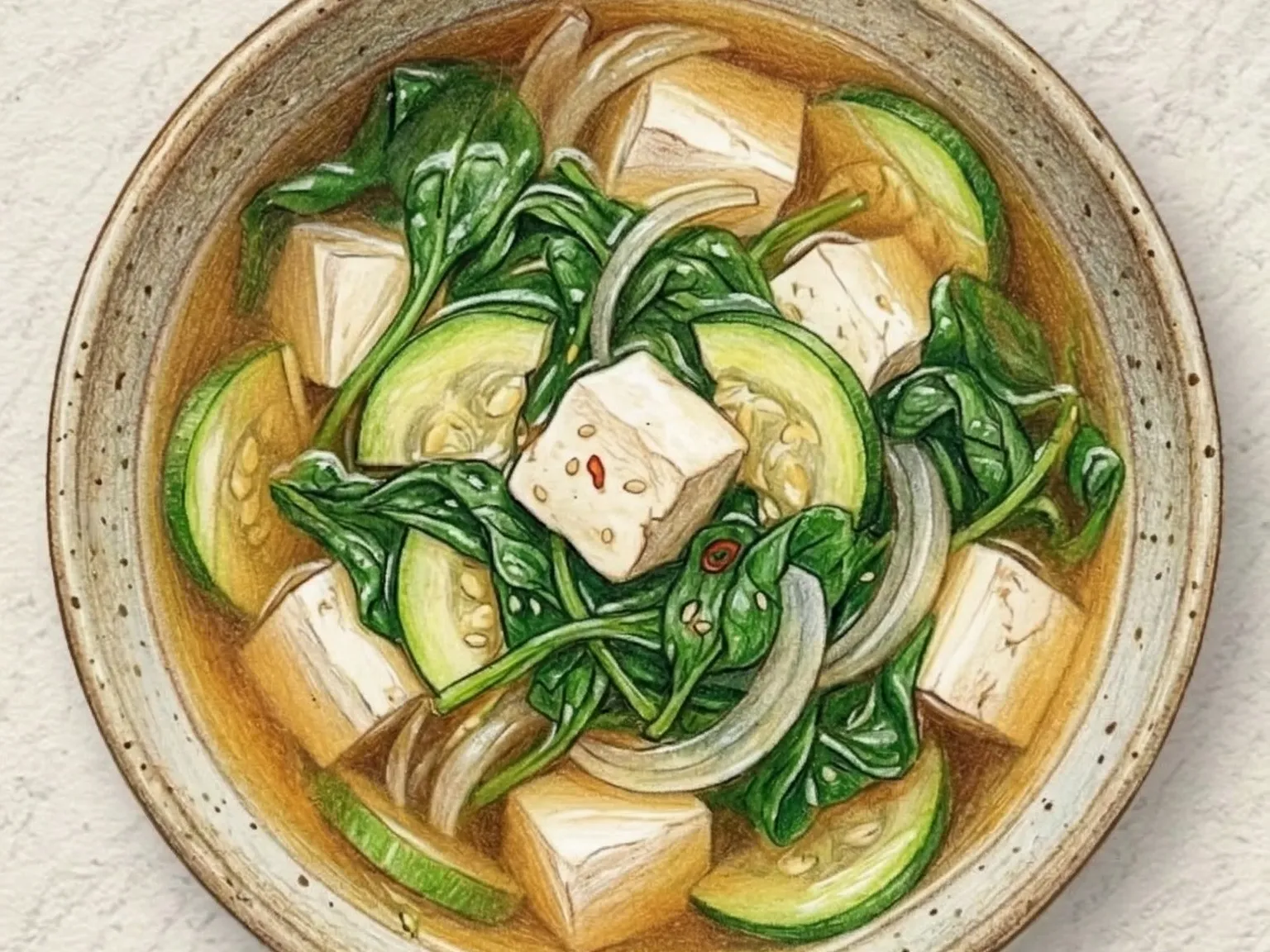
Naengi-bugeo-guk is a clear Korean soup that brings together dried pollack strips and fresh shepherd's purse, pairing the hearty depth of a winter pantry staple with the clean, herbaceous fragrance of early spring. Sautéing the pollack strips in sesame oil before adding water is the foundational step, as the dry heat coaxes a toasty, nutty aroma out of the surface proteins and primes the broth to carry deep flavor from the first minute of simmering. As the soup cooks, the concentrated umami locked inside the dried fish slowly dissolves into the liquid, building a broth that feels rich without being heavy. Cubed tofu goes in mid-cook, softening into a silky texture while keeping the overall flavor clean and mild. The shepherd's purse is added at the very end, just long enough to wilt, so that its faintly bitter, earthy spring perfume remains in the finished bowl rather than cooking off. Soup soy sauce and minced garlic season without clouding the broth. This soup is a fixture of Korean spring cooking, prized for being gentle on the stomach while delivering genuine depth.

Korean Kimchi Mandu Jjigae (Kimchi Dumpling Stew)
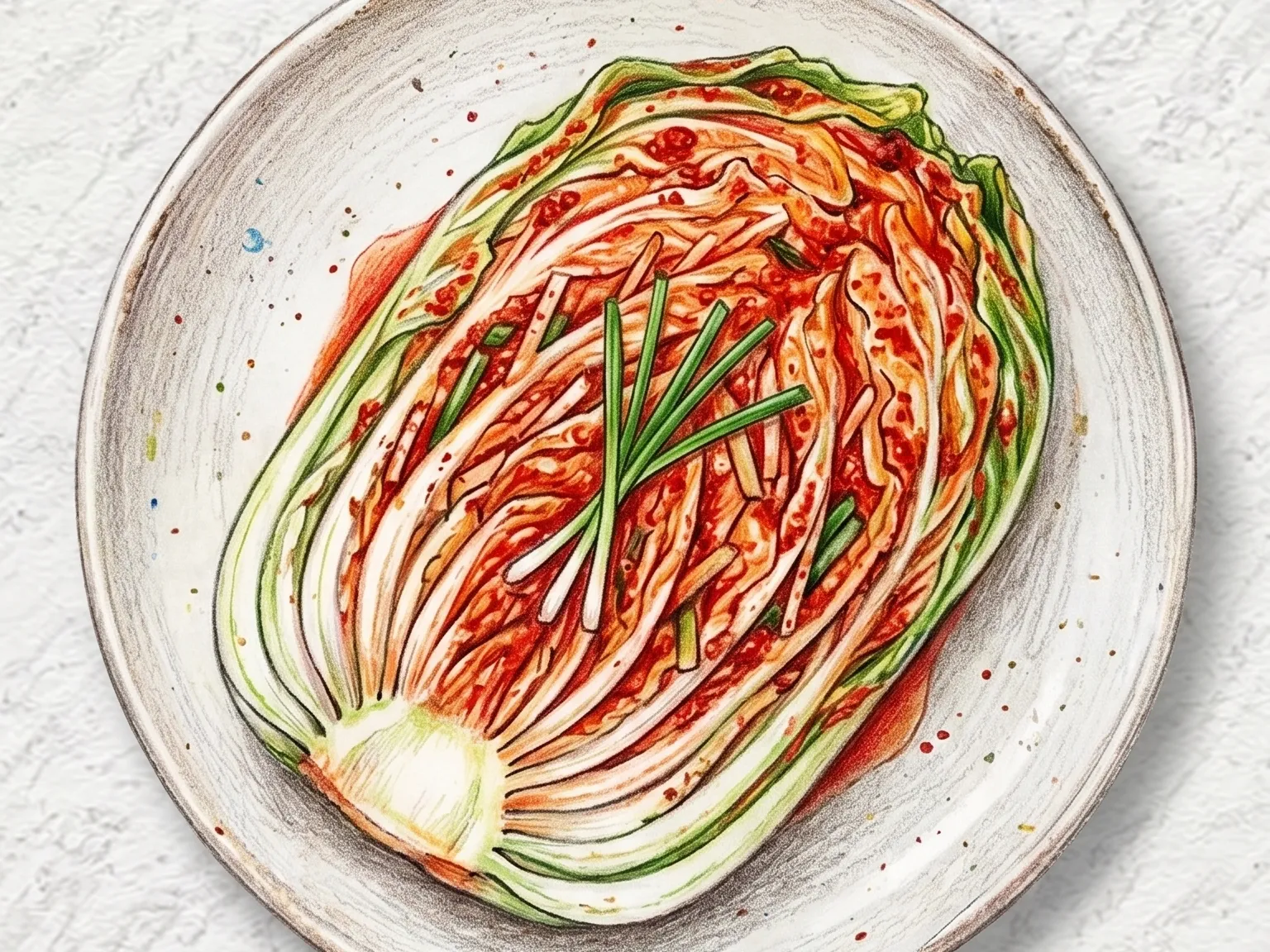
Kimchi mandu jjigae drops whole frozen kimchi dumplings straight into a simmering pot of aged kimchi, tofu, and anchovy stock. The dumpling wrappers absorb the broth as they cook, swelling plump and moist, while the kimchi filling inside echoes the stew's tangy base and doubles the fermented depth. Gochugaru and soup soy sauce add a clean chili heat, and firm tofu cubes absorb the spiced broth for a softer textural contrast. Because the dumplings themselves carry seasoning, it is better to start with less sauce and adjust after tasting the broth. This is a filling, no-fuss meal that needs nothing more than a bowl of steamed rice alongside it.

Korean Blue Crab Porridge
Kkotge-juk is a rice porridge built on a deeply flavored blue crab stock that forms the base of everything. The crab is placed in cold water and boiled for twelve minutes, during which the proteins and natural sugars from the shell and body dissolve into the liquid and create a broth that is naturally rich and faintly sweet without any additional seasoning. The cooked crab is lifted out and the meat is carefully picked from the legs and body and set aside. In the same pot, sesame oil is added and the soaked rice is toasted in it for two to three minutes, which coats the grains in a thin layer of oil that prevents them from sticking to the bottom during the long simmer and adds a gentle nutty aroma to the finished porridge. The crab stock is poured back in and the porridge cooks over medium-low heat for fifteen to twenty minutes, stirred regularly, until the grains soften and break down into the smooth, thick consistency that characterizes well-made juk. Once the porridge thickens, diced onion, zucchini, carrot, and minced garlic go in for ten more minutes, and the reserved crab meat is added only at the end so it cooks through the residual heat and stays tender rather than turning rubbery. Seasoned simply with soup soy sauce and salt, the finished bowl delivers clean, gentle ocean flavor with nothing overpowering the natural sweetness of the crab.

Korean Crispy Glazed Tofu Bites
Dubu gangjeong applies the double-coating logic of Korean fried chicken to tofu, pressing each cube dry before dredging in potato starch, frying until the shell turns shattering crisp, then tossing in a concentrated sticky glaze. The dish originated in temple cuisine as a meatless adaptation of gangjeong and has since become a staple anju in Korean bars. Pressing the tofu is non-negotiable: at least twenty minutes under a heavy weight wrapped in paper towels removes enough moisture to prevent oil from splattering and allows the starch coating to adhere evenly. Potato starch produces a noticeably thinner and more translucent crust than wheat flour, which cracks cleanly rather than bending when bitten. The glaze is made by boiling gochujang, soy sauce, sugar, and rice syrup together until large bubbles break on the surface, signaling that the mixture has concentrated and will cling rather than pool. Pouring the hot glaze over the fried tofu and tossing quickly coats every surface in an even, lacquer-like finish. The defining quality of a well-made dubu gangjeong is the contrast between the caramelized shell with its slight chew and the soft, almost custard-like interior. Once made, it must be eaten within ten minutes before the coating absorbs moisture and goes soft.

Korean Blood Sausage Perilla Stew
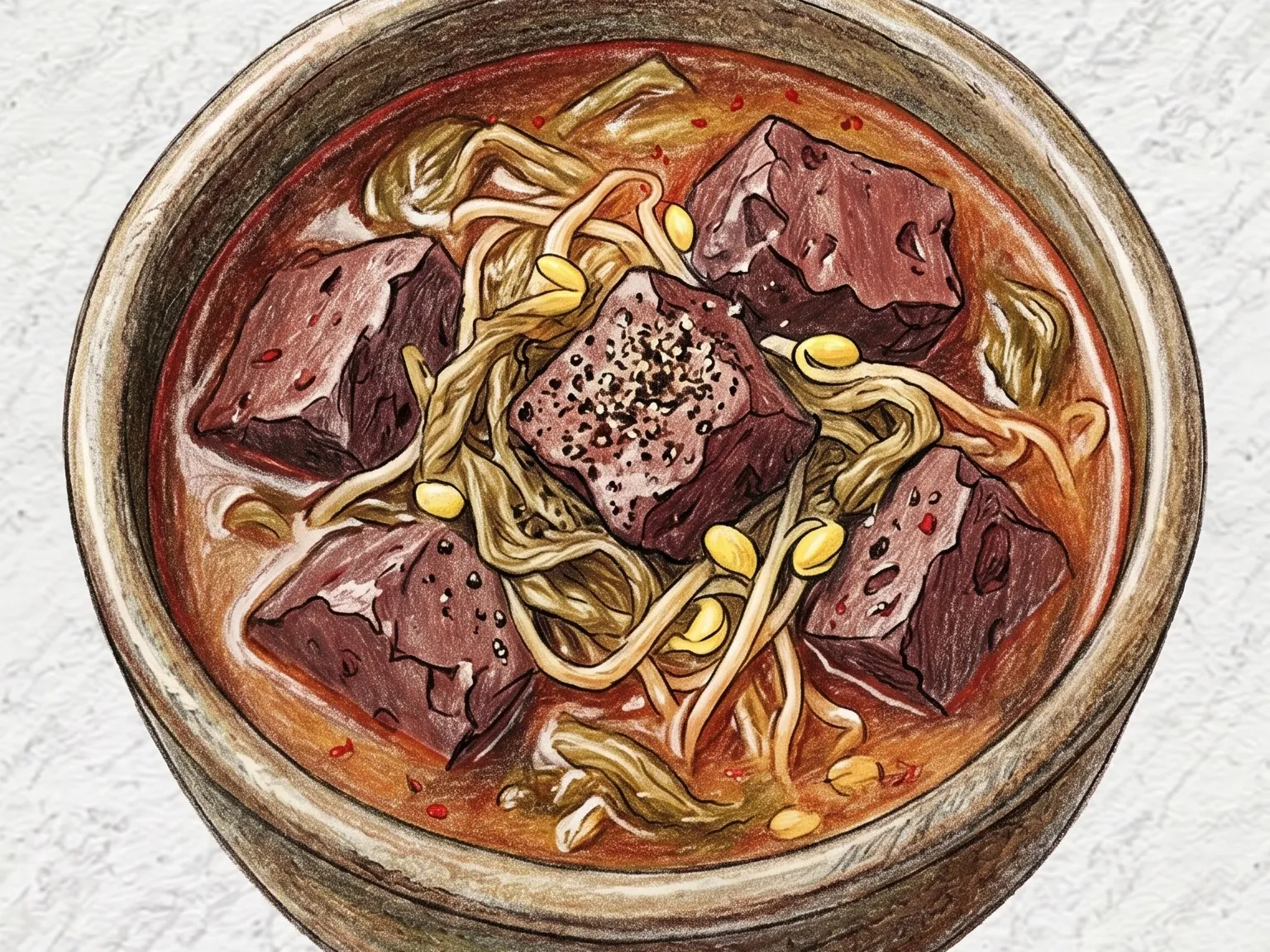
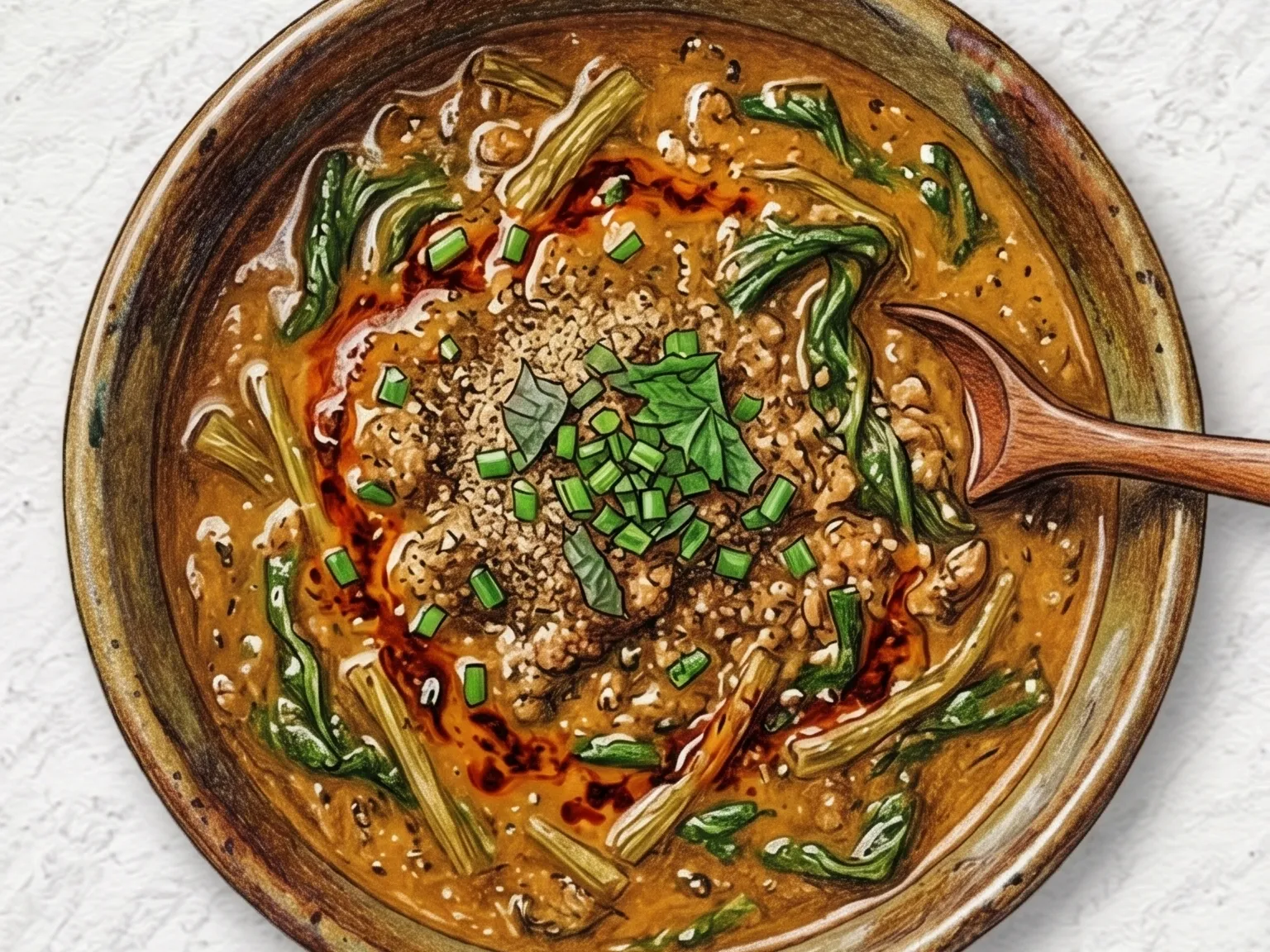
Perilla seed powder transforms beef bone broth into a thick, nutty liquid that serves as the foundation for this particular type of Korean stew. The main component, sundae, uses pork intestine as a casing to hold a mixture of glass noodles, glutinous rice, and vegetables, resulting in a chewy exterior and a multi-layered interior structure. This texture provides a different eating experience compared to stews that rely on standard cuts of meat. The oily characteristics of the ground seeds interact with the sausage filling to create a savory profile that stands apart from more common jjigae varieties. Pieces of cabbage maintain their firm texture throughout the simmering process, adding volume and a clean element that balances the heavy base. Just before the pot leaves the stove, fresh perilla leaves are added to introduce a grassy scent into the fatty broth, which helps manage the overall richness. A single spoonful of gochugaru provides enough heat to sharpen the nutty qualities of the perilla without overpowering the savory elements. Because the sausage casing can burst if boiled for too long, the pieces are only heated briefly at the very end of the cooking process. Serving the stew in a heavy stone pot ensures that the liquid remains at a boiling temperature for the duration of the meal.

Spinach Ricotta Cannelloni
Spinach ricotta cannelloni fills tube-shaped pasta with a mixture of sautéed spinach, ricotta cheese, garlic, and Parmesan, then bakes them in tomato sauce topped with mozzarella. Removing as much moisture from the spinach as possible is the most important step - excess water thins the filling and causes the tubes to split during baking. Half the Parmesan goes into the filling for depth, while the rest is scattered on top with mozzarella to build a golden, bubbling crust. Baking covered at 190 degrees Celsius for the first 25 minutes lets the sauce steam the pasta through, and uncovering for the final 10 minutes crisps the cheese surface. Resting the dish for 10 minutes after it comes out of the oven allows the sauce to thicken and the filling to set, producing cleaner portions when sliced.

Korean Stir-Fried Taro Stems
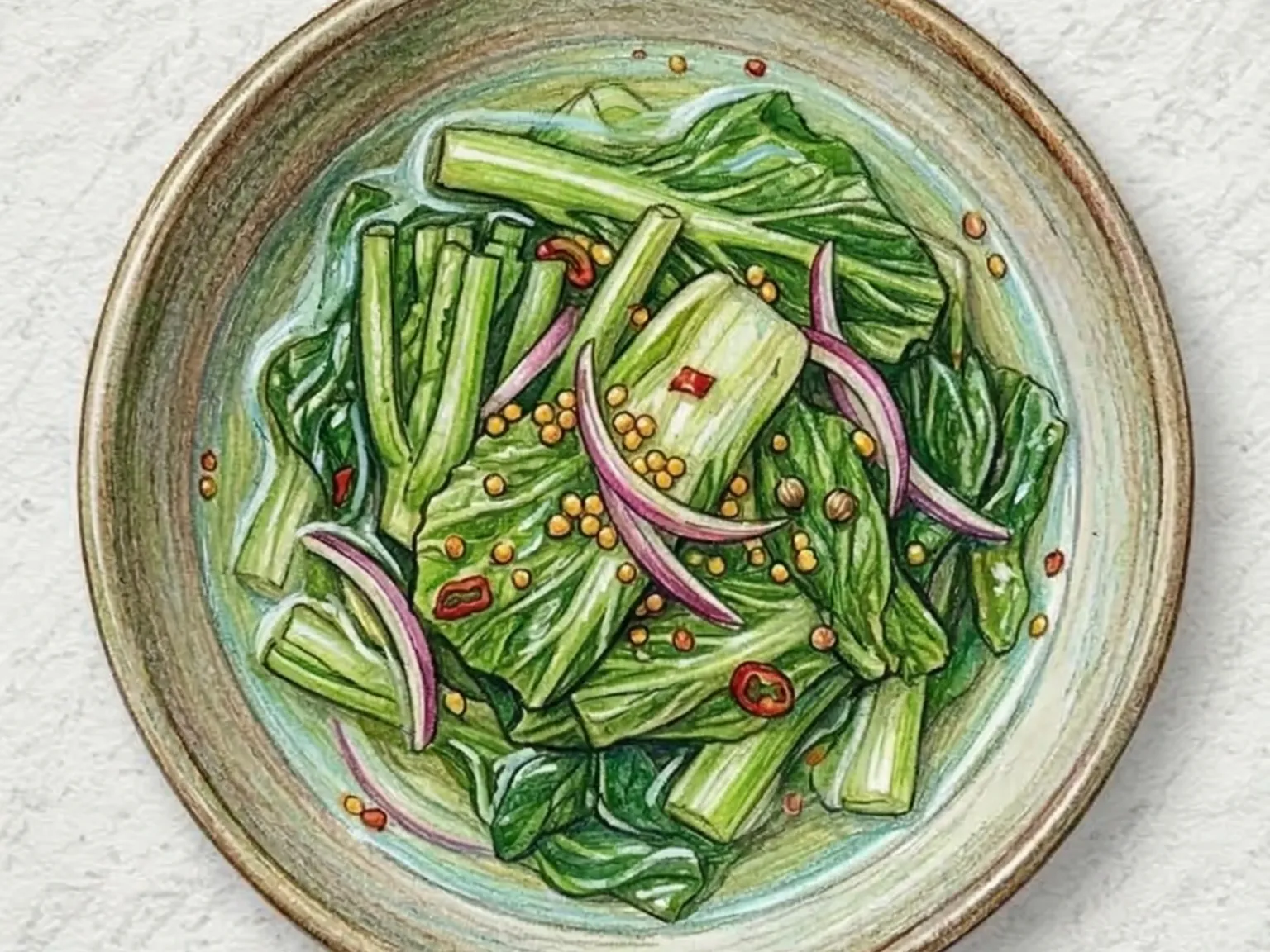
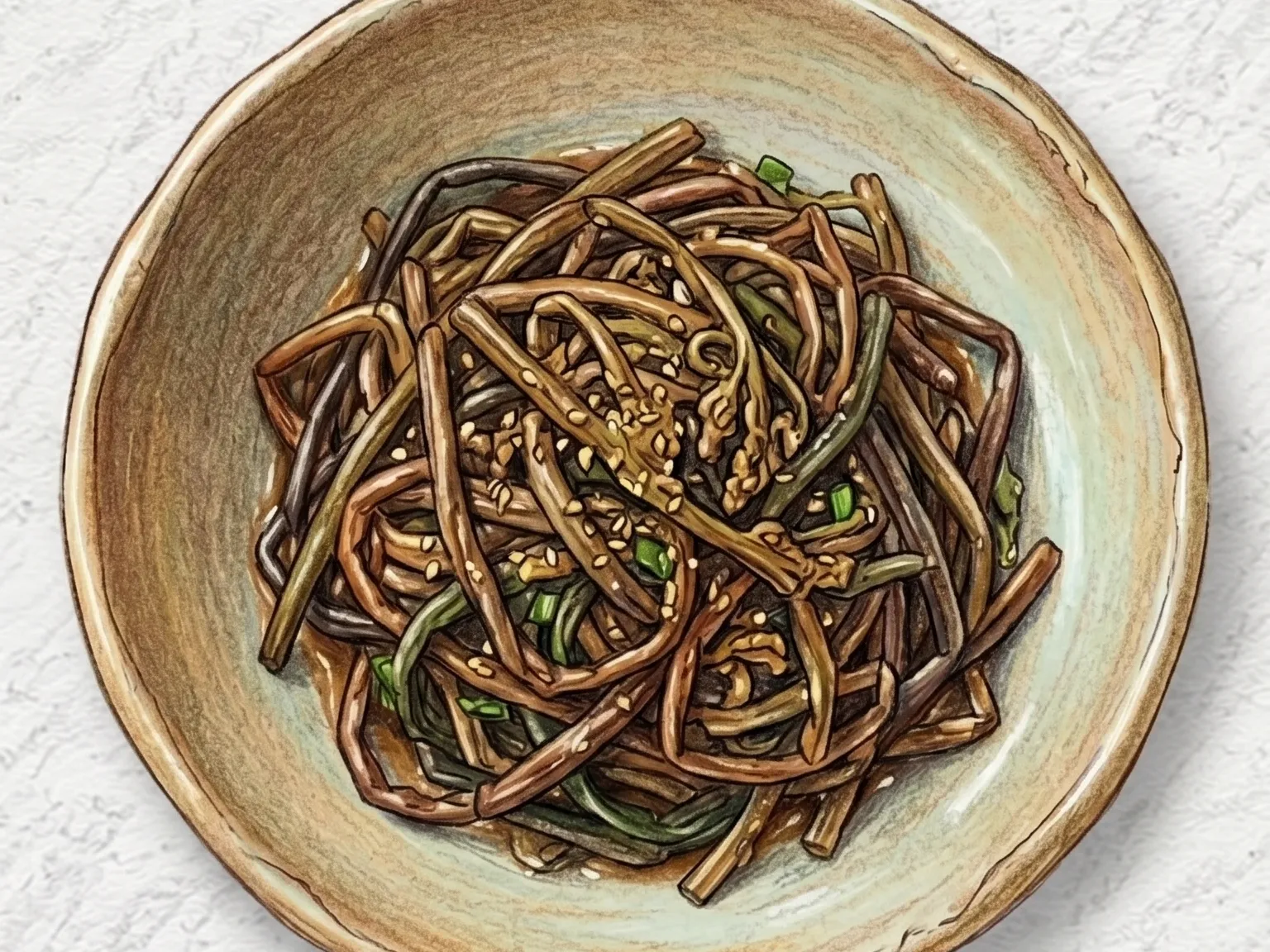
Boiled taro stems are stir-fried in perilla oil with soy sauce and garlic to create a banchan prized for its uniquely chewy texture. Dried taro stems, once soaked and simmered, lose their rawness but retain a springy, almost rubbery bite along the center of each stalk, setting them apart from softer namul greens. Stir-frying in perilla oil first builds a nutty base note, and soy sauce with minced garlic layers savory depth onto the stems' neutral flavor. A splash of stock added mid-cook allows the seasoning to penetrate the fibrous interior during a brief simmer. Sliced green onion introduces a fresh aromatic accent, and a finishing spoonful of ground perilla seeds dissolves into the residual moisture, creating a creamy coating that clings to each piece. Mixed into a bowl of steamed rice, the chewy stems provide satisfying resistance with every bite, and their mild character lets them complement bolder dishes like doenjang jjigae without competing for attention.

Blackened Chicken Caesar Salad
Blackened chicken Caesar salad starts with chicken breast coated thickly in paprika, cayenne, garlic powder, onion powder, and dried herbs before hitting a very hot, dry pan. The spice coating undergoes rapid charring at high temperature, forming a dark, smoky crust that seals in moisture and concentrates the spice aromatics on the surface of the meat. The interior of the chicken stays juicy because the charred crust acts as an insulating barrier, provided the pan is hot enough from the start. Creamy Caesar dressing, made with anchovy paste, egg yolk, lemon, and Parmesan, wraps around the cold, crisp romaine and the sliced hot chicken alike, moderating the cayenne heat without erasing the spice character entirely. Shaved Parmesan adds sharp, salty depth throughout, while croutons introduce a crunchy textural break against the tender chicken and limp lettuce. Because blackening generates substantial smoke, proper ventilation or an outdoor cooking setup is strongly recommended. The dish functions as a full main course rather than a starter salad.

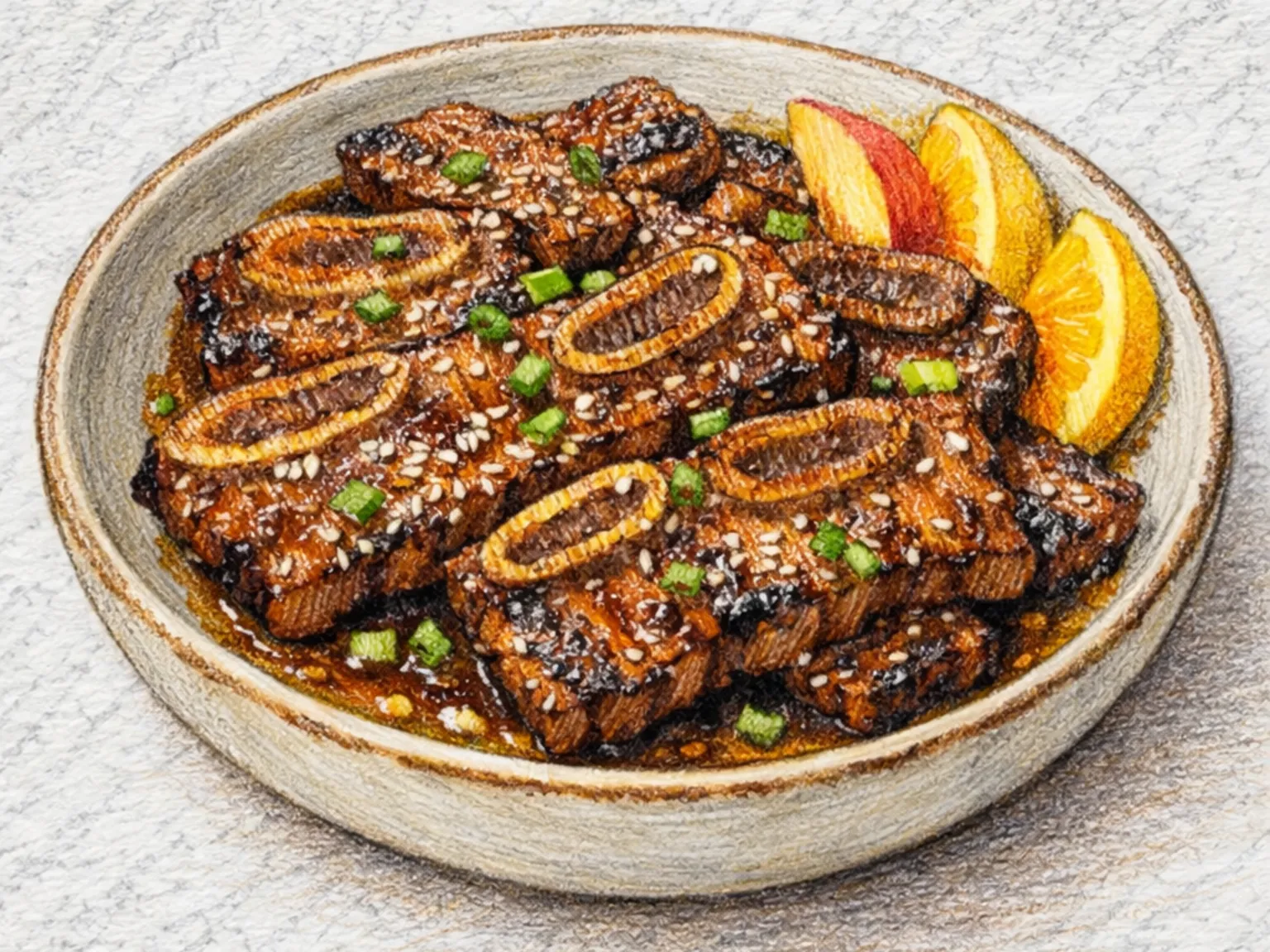
Korean Braised Beef Short Ribs with Kabocha
Danhobak-sogalbi-jjim is beef short ribs marinated in Korean pear juice, then braised with kabocha squash, radish, carrot, and onion in a soy-based sauce until deeply flavored. Pear juice works into the meat during marination, softening the muscle fibers and leaving a background fruit sweetness that comes through in the finished braise. Kabocha edges break down during cooking, releasing starchy flesh into the sauce and thickening it without any added starch. Radish and carrot spend the full braise in the soy sauce and absorb it thoroughly, becoming nearly as satisfying as the ribs themselves. A drizzle of sesame oil just before serving lifts the fragrance of the whole dish. This is a centerpiece preparation in Korean holiday and birthday cooking.

Korean Soy-braised Beef (Tender Shredded Brisket in Soy Glaze)
Jangjorim is the soy-braised beef that lives semi-permanently in Korean refrigerators - a make-ahead banchan with a shelf life of roughly two weeks. Beef eye round (hongdukkasal) is the traditional cut because its uniform grain and low fat content allow clean shredding along the fibers, producing the signature stringy texture. The process is unhurried: thirty minutes of soaking to draw out blood, forty minutes of simmering with whole garlic and peppercorns, then shredding and returning to the pot with soy sauce and sugar for another twenty minutes. Hard-boiled eggs and shishito peppers added in the final stage absorb the dark soy broth - the eggs turn mahogany and the peppers contribute a gentle heat to the sauce. Swapping in quail eggs makes each piece lunchbox-sized. Flavor deepens noticeably after a day of refrigeration as the seasoning penetrates fully.

Korean Spicy Braised Monkfish
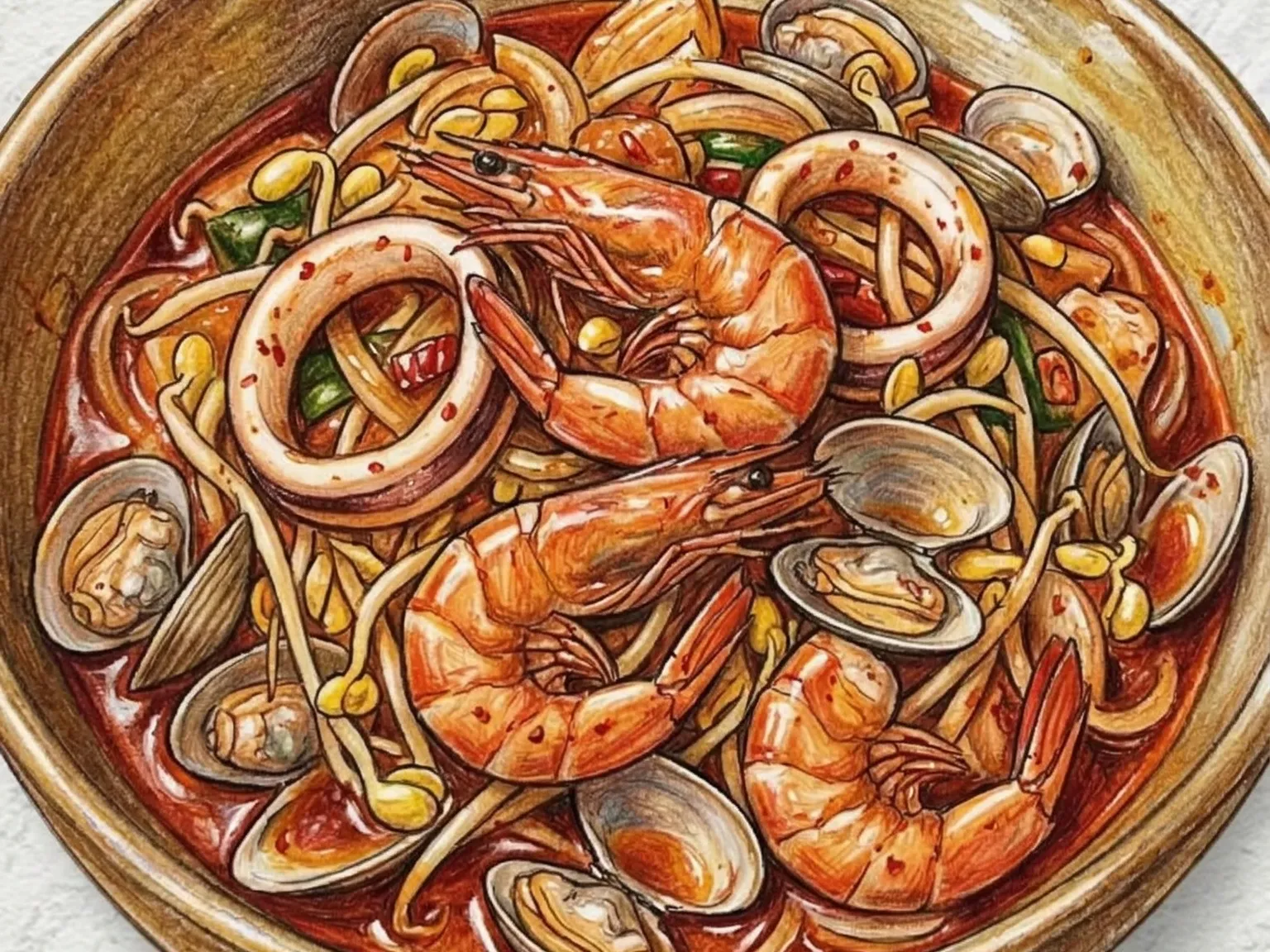
Agu-jjim originated as a specialized seafood preparation from Masan, which is a prominent port city located in the South Gyeongsang province of Korea. During the 1970s, fishmongers working in the harbor district of Odong-dong began a practice of braising unsold monkfish over high heat. They combined the fish with a substantial amount of bean sprouts and a thick chili paste, a combination that eventually led to the dish gaining recognition across the entire nation. The preparation involves coating pieces of monkfish in a heavy seasoning mixture made from gochugaru, gochujang, soy sauce, and garlic. These seasoned pieces are placed on top of a thick layer of bean sprouts and braised in a covered pot using high heat. Monkfish differs from many other types of white-fleshed fish because it possesses a firm and gelatinous texture that is particularly rich in collagen. This structural quality allows the fish to absorb the intense flavors of the seasoning without breaking into small pieces, ensuring the meat remains resilient and chewy throughout the entire cooking process. As the dish braises, the bean sprouts release their own moisture, which creates a natural braising liquid at the bottom of the pot. Water dropwort, known as minari in Korean, is introduced to the pot at the final stage of cooking. This ingredient provides an herbal flavor similar to celery that balances the heavy coating of chili and garlic while adding a certain brightness to the spice. Agu-jjim is typically served in a communal fashion on a large platter. It is considered a fundamental part of Korean social gatherings involving alcohol, where the intense heat of the spices is often paired with chilled beer or soju.

Korean Beef Vegetable Hot Pot
Soegogi jeongol is a Korean hot pot built on a soy sauce-seasoned beef broth and brought to the table with baby napa cabbage, oyster mushrooms, and bok choy arranged over the beef before cooking begins. The seasoning stays deliberately simple, just soy sauce and minced garlic, so the natural flavors of each ingredient rise through the broth cleanly. Savory depth from the beef mingles with the gentle sweetness that the cabbage and bok choy release as they soften, and the oyster mushrooms hold their springy texture through the simmer. Because the pot cooks at the table and everyone serves themselves directly from it, the dish is as much about the shared experience as it is about the food itself.

Duck Ragu Pappardelle (Braised Duck Pasta)
Duck ragu pappardelle is an Italian braised pasta that begins with a hard sear of seasoned duck legs in olive oil until the skin turns a deep, mahogany brown. The fond left on the pan base is the backbone of the sauce, so the sear must be thorough. Onion, carrot, and celery go into the same pan and cook for eight minutes until soft and faintly sweet. Garlic and tomato paste follow, stirred over heat until the paste darkens slightly, then red wine goes in to deglaze every browned bit before reducing by half. The duck returns to the pot with chicken stock and bay leaf for a slow ninety-minute braise at the lowest simmer, until the meat pulls from the bone with no resistance. Shredded duck meat goes back into the sauce, which cooks down another ten minutes to reach a coating consistency. Broad pappardelle is boiled two minutes short of al dente and tossed in the ragu for a final minute so the wide noodles fully absorb the rich, meaty sauce. The ragu deepens noticeably after resting overnight.

Korean Perilla Noodles with Aster Leaves
Chwi namul, a wild aster green gathered in spring, is blanched and rinsed in cold water to temper its bitterness before being seasoned lightly with soup soy sauce. Ground perilla seeds are stirred into the broth, turning the liquid a milky white and giving it a toasted, nutty weight that holds against the herbaceous bite of the greens. The perilla richness subdues the sharpest edge of the bitterness while leaving the wild mountain aroma intact so each mouthful reads clearly as foraged rather than cultivated. Soup soy sauce adds only enough seasoning to tie the elements without masking any of the natural fragrance. Somyeon wheat noodles, soft and fine-stranded, bridge the greens and the broth without competing with either. Spring-harvested chwi namul carries the most pronounced aroma, and a thorough rinse after blanching controls the bitterness to a palatable level. The resulting bowl is understated and seasonal, built on the flavor of a single wild ingredient.

Korean Young Radish Pork Stir-fry
Yeolmu-dwaejigogi-bokkeum is a spicy Korean stir-fry of pork shoulder marinated in gochujang, gochugaru, and soy sauce, cooked together with young radish greens (yeolmu). The pork is seared first over high heat for four minutes, then the greens are added on medium heat for another four minutes - just long enough to wilt without losing their fresh bite. The gochujang heat contrasts with the crisp, slightly grassy stems of the yeolmu, and sesame oil ties the flavors together at the end. It is a seasonal dish best made when young radish greens are in peak supply during summer.

Creamy Garlic Shrimp Pasta
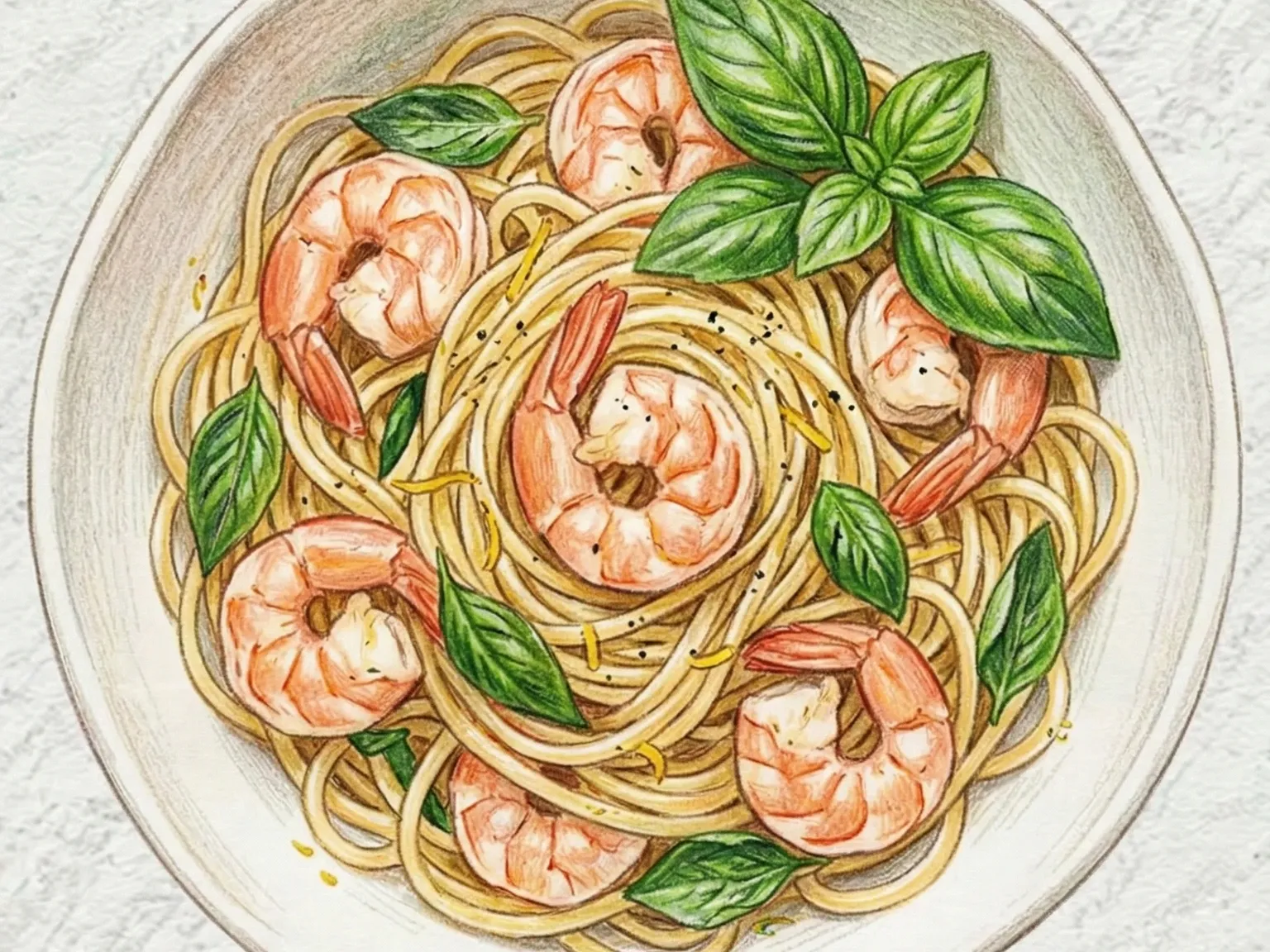
Creamy garlic shrimp pasta begins with a slow, low-heat saute of minced garlic in olive oil and butter. The garlic should be pulled when it turns pale gold rather than brown, which preserves its sweet, mellow depth without any bitterness. Shrimp go in next and cook for roughly two minutes in total, just long enough for both sides to turn pink. At that point the flesh is at its sweetest and the texture is still springy. The shrimp come out of the pan and rest while heavy cream goes in, simmering over medium-low heat for two to three minutes. During that simmer the garlic-infused fat and the shrimp juices left in the pan dissolve into the cream, building the sauce's depth without any additional flavoring. Spaghetti is boiled one minute short of the package time so it finishes cooking in the sauce rather than on its own. Grated Parmesan and a small ladle of pasta water go in together, and the mixture is tossed until the cheese melts into a smooth, silky coating that clings evenly to the noodles. The reserved shrimp return for a final thirty seconds of warming, just enough to heat through without firming up, so every bite carries both the tender sweetness of the seafood and the rich, savory garlic cream.

Korean Bamboo Shoot Beef Stir-fry
Juksun-sogogi-bokkeum is a Korean stir-fry of boiled bamboo shoots and thinly sliced beef seasoned with soy sauce, cooking wine, and sesame oil. The bamboo shoots bring a crisp, fibrous snap to each bite, while the beef, cut thin and cooked briefly over high heat, stays tender and juicy. The soy-based seasoning is kept deliberately restrained, allowing the mild natural sweetness of the bamboo shoots and the savory depth of the beef to remain the focus. Canned bamboo shoots are acceptable, but fresh spring bamboo shoots, available for a short window each year, deliver noticeably better crunch and a fragrant, grassy aroma that canned cannot replicate. Fresh shoots should be boiled in rice washing water first to remove the bitter, astringent taste before slicing and stir-frying. A finish of toasted sesame seeds and a drizzle of sesame oil added off the heat rounds out the dish with a nutty, aromatic note.