Charim

2686 Korean & World Recipes

2686+ Korean recipes, clean and organized. Ingredients to instructions, all at a glance.

Recipes with korean chili flakes

24 recipes

Buy korean chili flakes
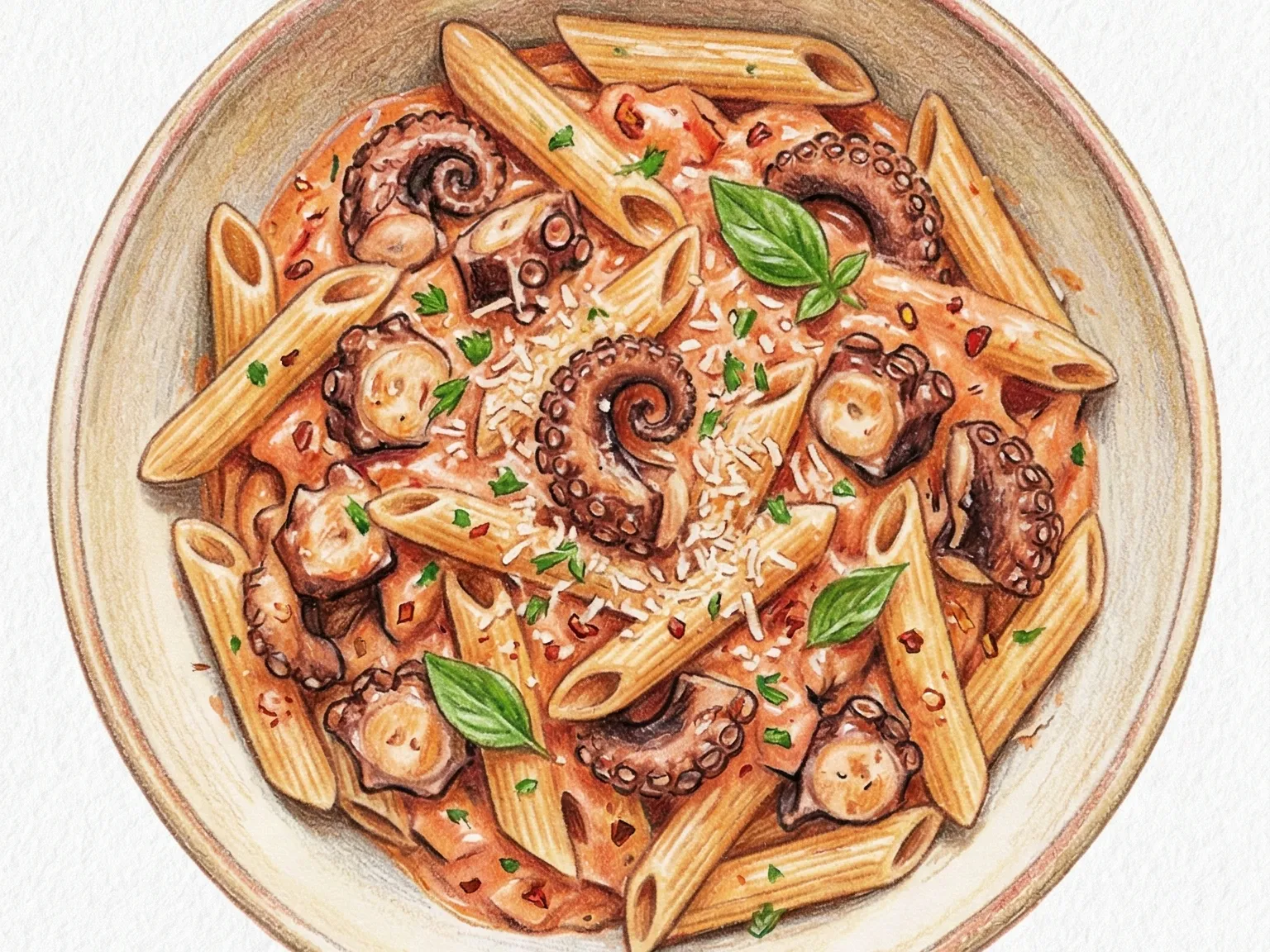
Spicy Octopus Rose Penne (Octopus Penne in Rose Sauce)
PastaMedium

Spicy Octopus Rose Penne (Octopus Penne in Rose Sauce)

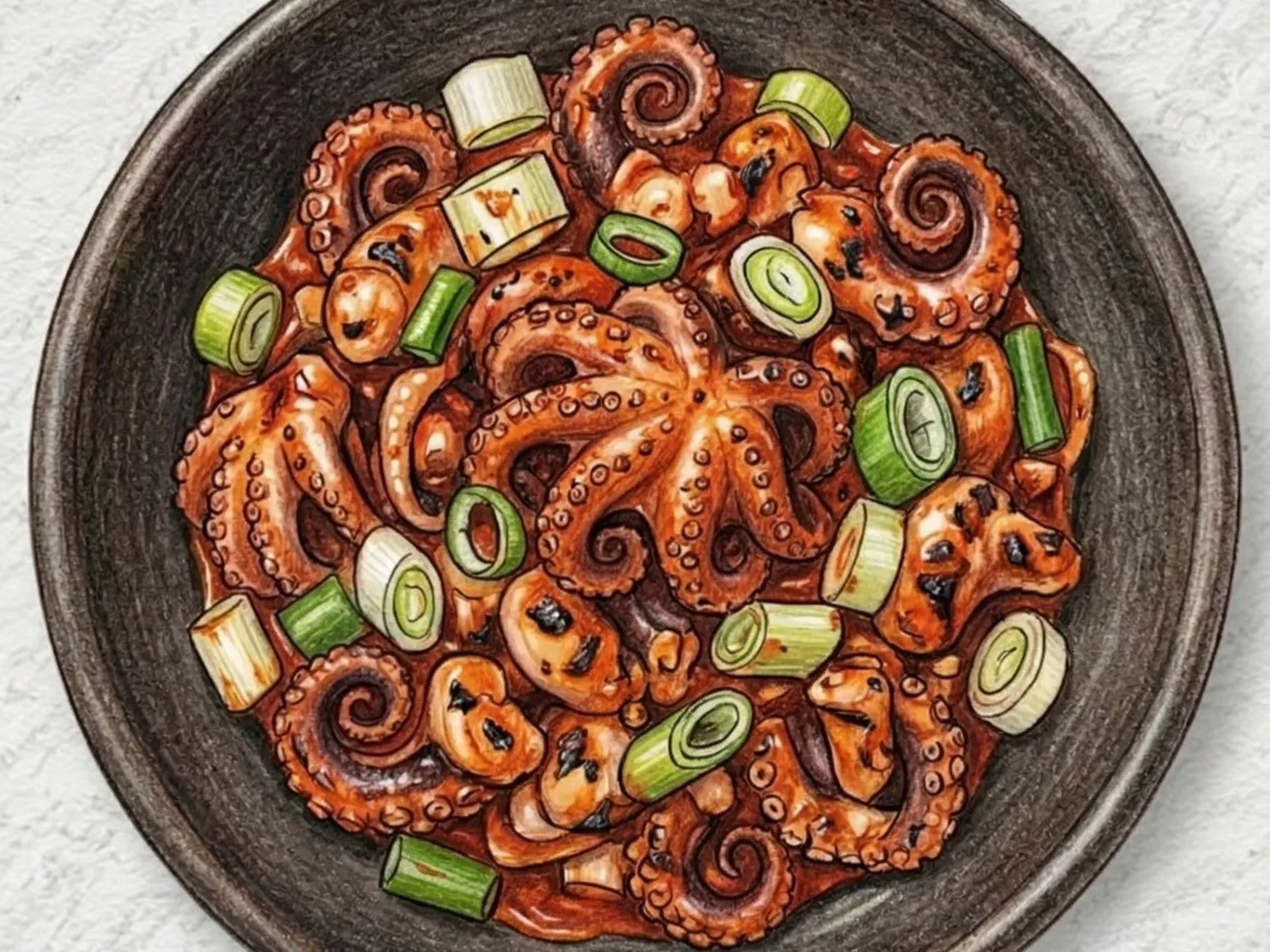
Spicy octopus rose penne starts with pre-cooked octopus that is seared in a very hot, dry pan to burn off surface moisture and trigger a Maillard crust on the skin. This step does more than remove water - it eliminates any residual fishiness and builds a firm outer layer that contrasts with the tender interior when you bite through. The rose sauce is built from tomato passata and heavy cream spiked with Korean gochugaru. The chili flakes are bloomed in oil for no more than 20 seconds, enough to coax out heat and color but not long enough to develop bitterness. Butter is added to the finished sauce to encourage emulsification, keeping the cream and tomato components cohesive and allowing the mixture to coat each piece of pasta evenly rather than pooling at the bottom of the pan. Penne holds this sauce particularly well because its tubular shape captures the thick liquid inside each piece, delivering cream and spice simultaneously with every bite. Fresh basil is stirred in off the heat at the very end, its volatile aromatics intact, providing an herbal lift that cuts the heaviness of the cream base. The natural salinity and sweetness of octopus from the sea add a briny depth that cream-only sauces cannot replicate on their own.

🍺 Bar Snacks🎉 Special Occasion
Prep 12minCook 22min2 servings
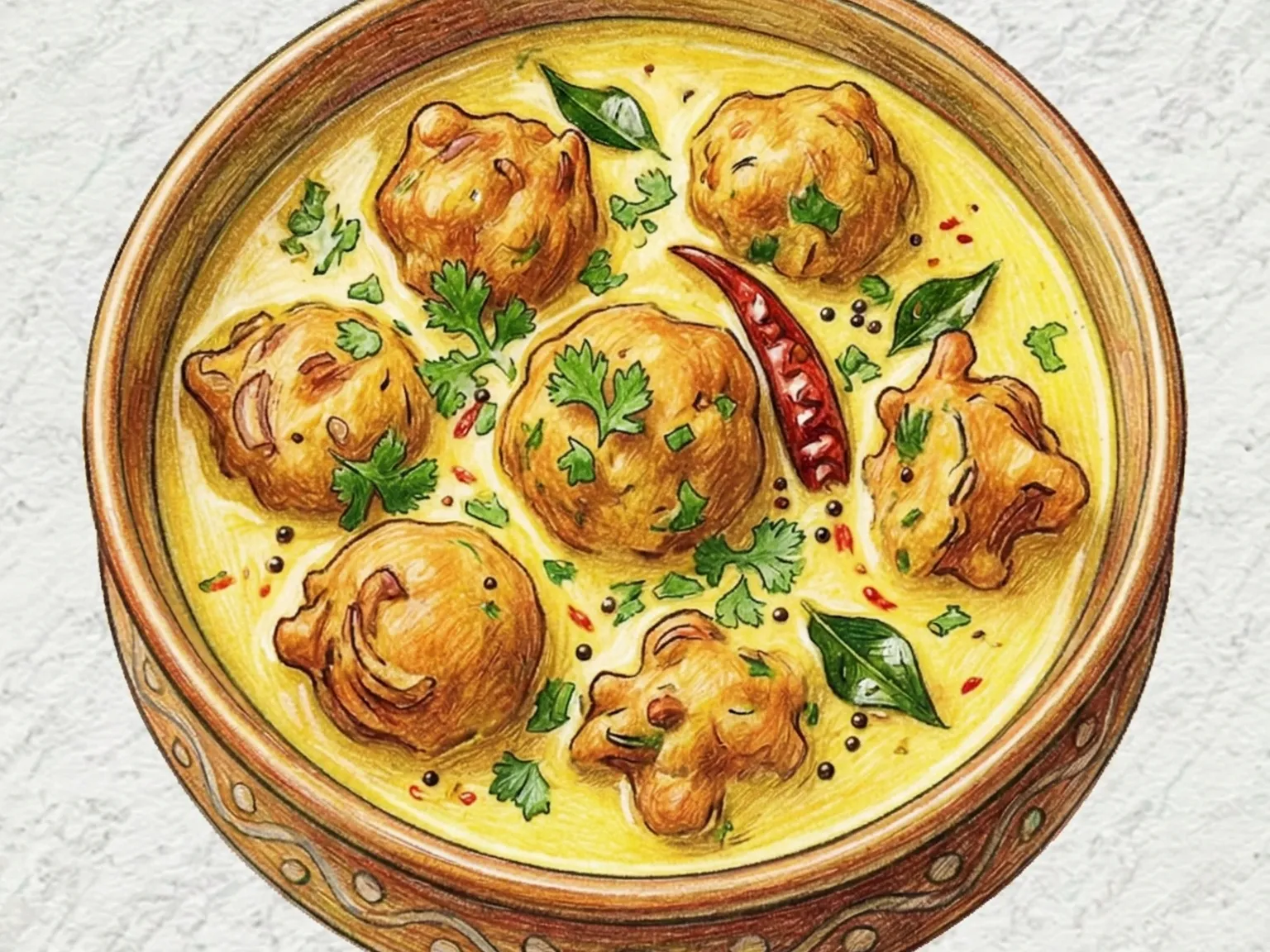
Amritsari Fish Fry (Spiced Chickpea-Batter Fish)
AsianMedium

Amritsari Fish Fry (Spiced Chickpea-Batter Fish)

Amritsari fish fry originated in Amritsar, the Punjabi city of the Golden Temple, where the narrow lanes surrounding Harmandir Sahib are still packed with fish fry stalls whose frying kadhai fill the air with spice-scented smoke. The dish moved from street corner to pub counter and became one of the most-ordered bar snacks across North India. Freshwater fish varieties such as singara, sole, or pangasius are typical; the fish is marinated in ajwain (carom seeds), chili powder, amchur (dried mango powder), and ginger-garlic paste before being dipped in a besan (gram flour) batter and fried in hot oil. Ajwain suppresses the muddy, fishy notes characteristic of freshwater varieties while depositing a herbal, thyme-adjacent aroma that is unlike any other spice in the marinade. Amchur introduces a dry tartness that cuts through the richness of the fried batter and keeps the overall flavor from becoming heavy. Besan batter adheres in a thinner, more delicate layer than wheat flour and retains its crunch for longer, allowing the fish inside to steam gently and stay moist. Squeezing lemon over the fish and dipping it into mint-coriander chutney before each bite stacks heat, sourness, and herb freshness in a single mouthful. Visiting Amritsar and stopping at one of these stalls after the Golden Temple is a ritual that has remained part of local daily life for generations.

🍺 Bar Snacks🎉 Special Occasion
Prep 20minCook 15min3 servings
Korean Seasoned Stonecrop Salad
Side dishesEasy

Korean Seasoned Stonecrop Salad

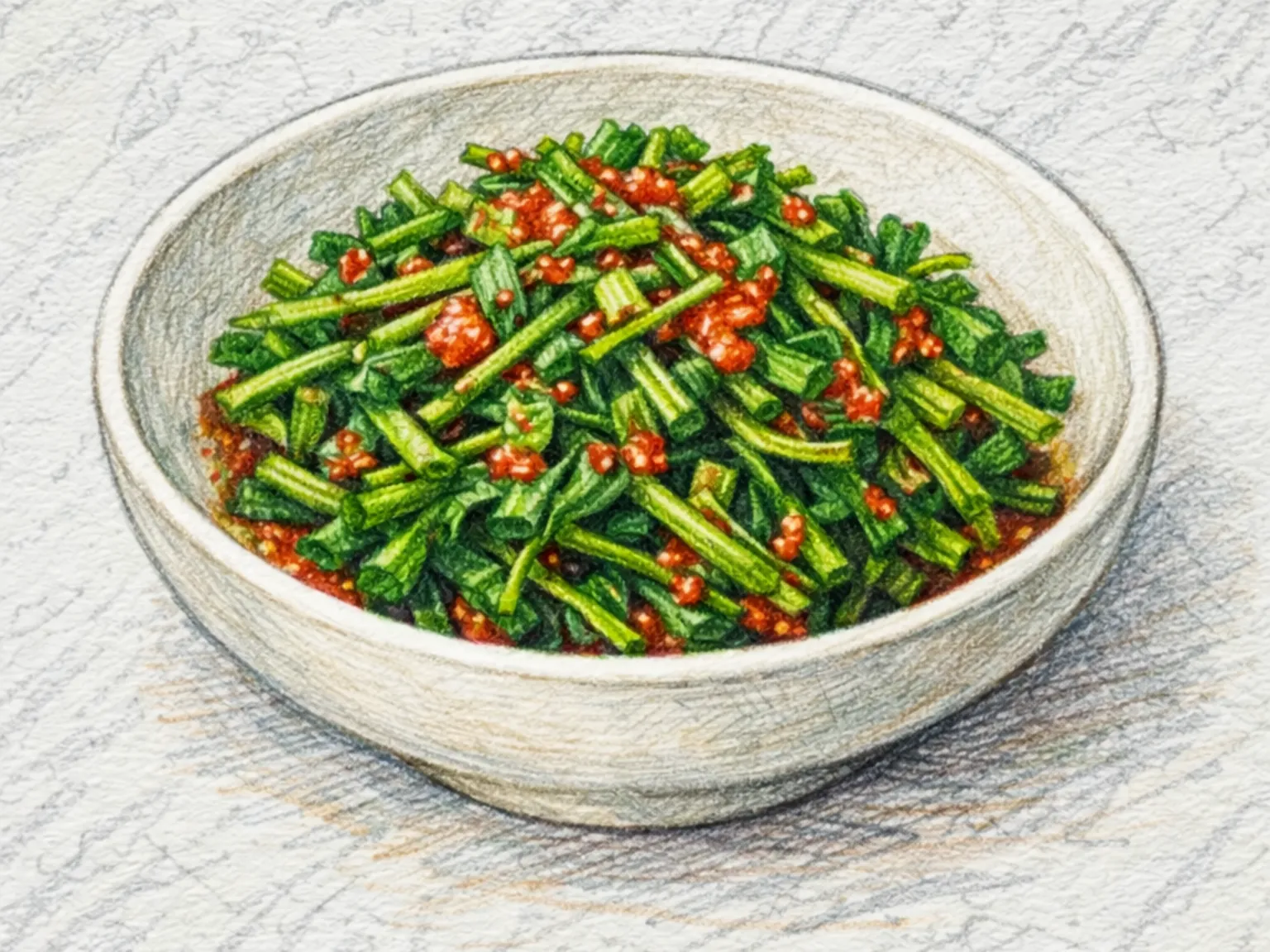
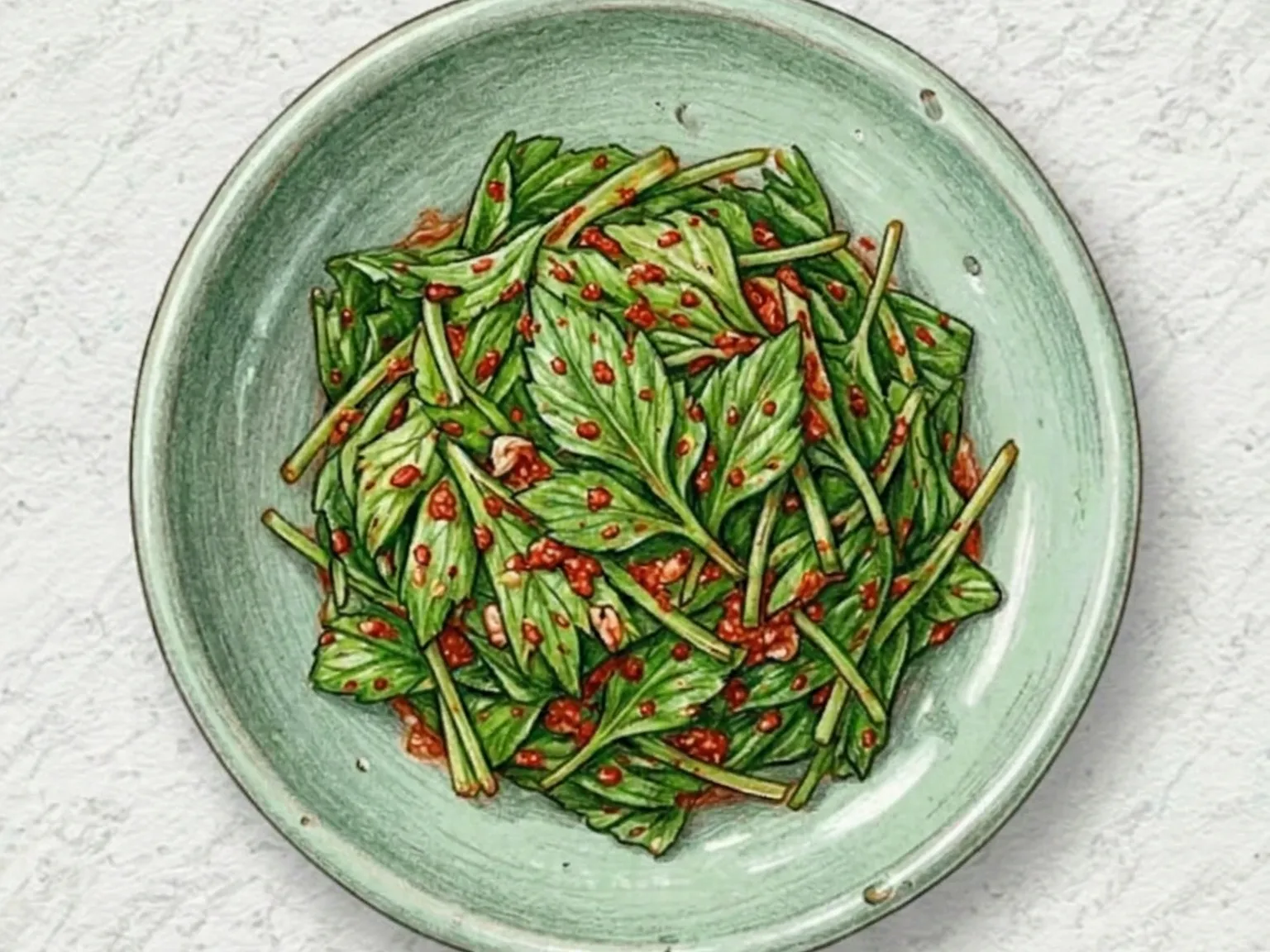
Dollnamul muchim is a spring banchan of raw stonecrop (Sedum sarmentosum) dressed in a seasoning mix of gochugaru, vinegar, fish sauce, garlic, and sugar. The plant grows on rocky stream banks and low walls across Korea; its plump, jade-green leaves carry a faintly sour, grassy juice that releases when bitten. Heat collapses the texture entirely - a few seconds of blanching is enough to destroy the crunch - so dollnamul is always dressed raw. The process is minimal: a quick rinse in cold water, a firm shake to remove excess moisture, and an immediate toss with the seasoning. The structural logic of the dressing has fish sauce providing fermented depth beneath the vinegar's sharp acidity; if either element dominates, the herb's clean, fresh aroma disappears. The dish must be eaten within minutes of dressing. Osmotic pressure begins pulling juice from the leaves almost immediately, and the texture softens to a limp mass within half an hour. Dollnamul muchim is a common addition to spring picnic lunches and is best served cold.

🏠 Everyday🍱 Lunchbox
Prep 12min4 servings
Korean Bean Sprout Rice (Pot-Steamed Rice with Soy Sprouts)
RiceEasy

Korean Bean Sprout Rice (Pot-Steamed Rice with Soy Sprouts)

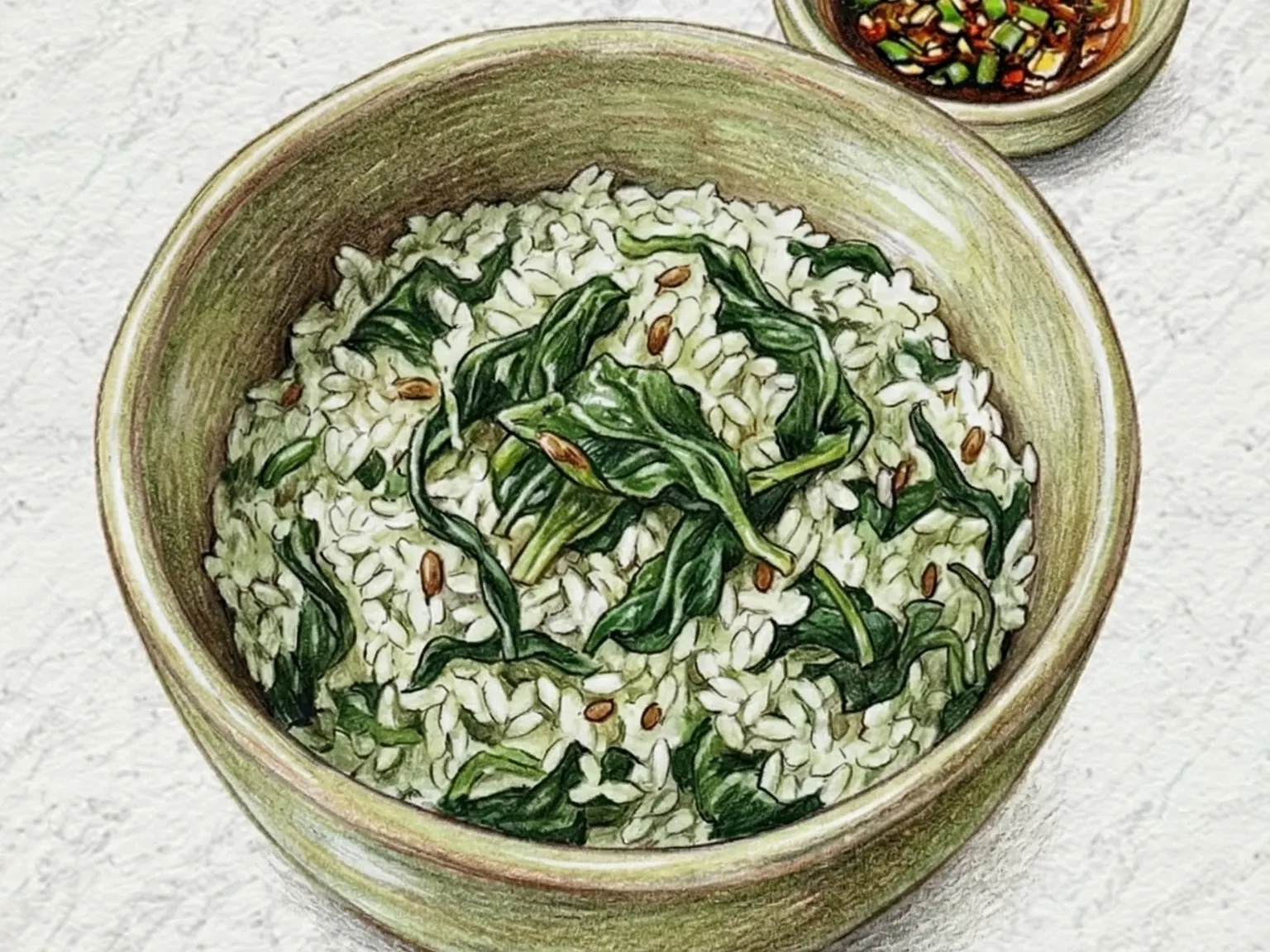
Kongnamul-bap is a simple Korean home dish of soaked rice cooked together with a generous pile of bean sprouts in a covered pot. Timing and the closed lid are the two things that define the result. The pot starts on high heat until the water boils, then drops to low for fifteen minutes of steady cooking followed by five minutes of resting. Opening the lid at any point during this process releases steam and allows a raw, beany smell to develop in the finished rice. Once the resting period is complete, the sprouts have steamed through and their moisture has been absorbed into the rice grains. The seasoning sauce is mixed directly into the bowl at the table: soy sauce, sesame oil, gochugaru, finely sliced green onion, and a scatter of sesame seeds. Each spoonful combines the soft, starchy rice with the firm snap of the sprout stems, and the soy dressing pulls everything into a coherent flavor. The dish asks very little from the cook and costs almost nothing to make, yet it produces the kind of deeply satisfying meal that is difficult to improve upon. Some versions add daikon cut into thick batons, which contribute a cool, clean sweetness to the broth that forms at the bottom of the pot.

🏠 Everyday
Prep 10minCook 25min2 servings
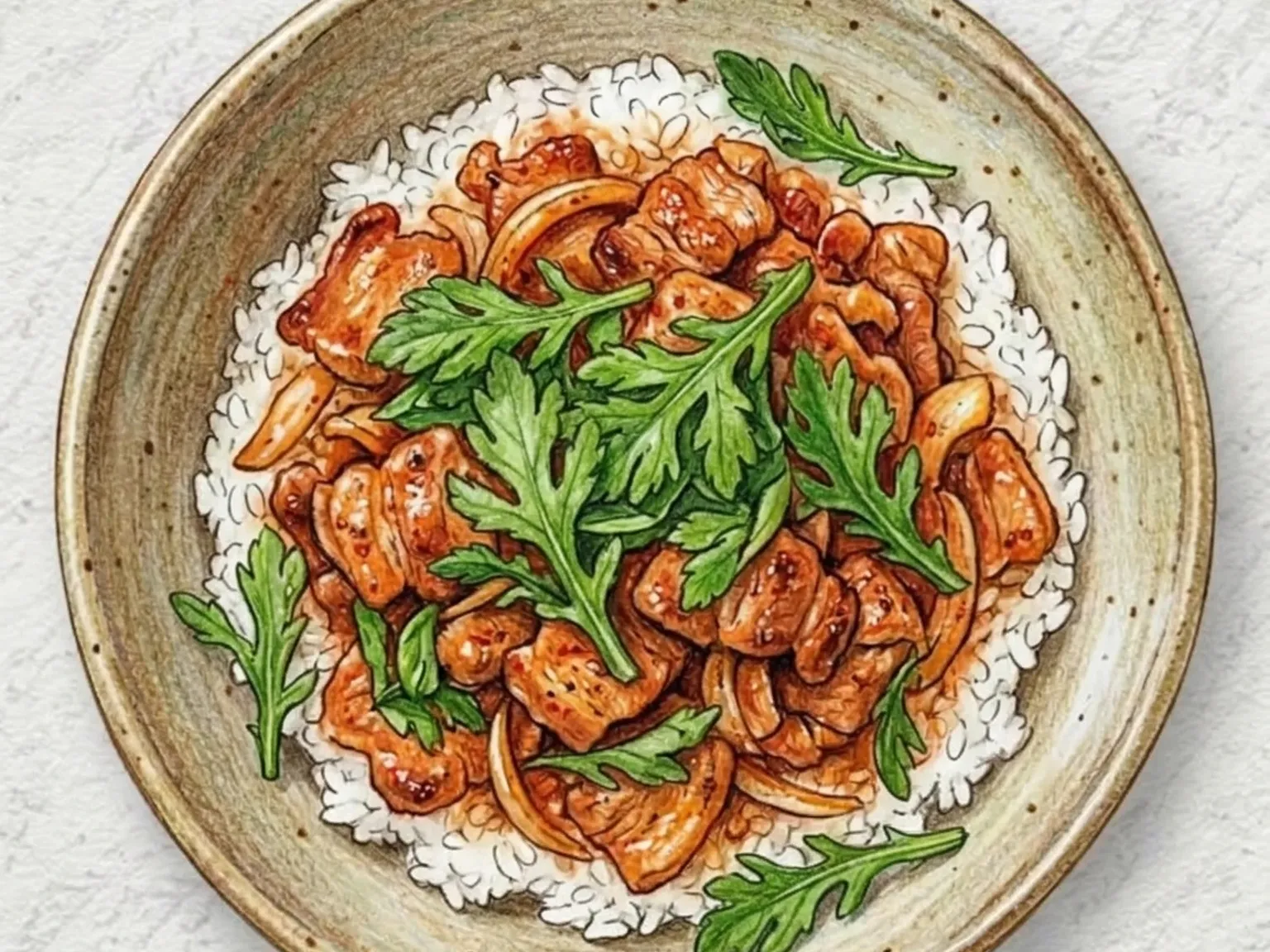
Korean Pork and Kimchi Stir-Fry
Stir-fryEasy

Korean Pork and Kimchi Stir-Fry

Dwaejigogi kimchi bokkeum is a stir-fry of pork and well-aged napa cabbage kimchi and one of the most common home-cooked dishes in Korean households. The sharp, deep acidity of the fermented kimchi meets the fat in the pork, and the longer the two cook together, the more they absorb each other and change in character. A handful of Korean chili flakes is added to intensify the color and build a second layer of heat on top of the kimchi. The dish asks for no special technique and appears on the set-meal menu of nearly every Korean restaurant as a result. The quality of the kimchi makes a noticeable difference: kimchi that has been aging in the refrigerator for several weeks produces a far richer stir-fry than freshly made kimchi.

🏠 Everyday🌙 Late Night
Prep 10minCook 15min2 servings
Korean Mala Cup Tteokbokki
Street foodMedium

Korean Mala Cup Tteokbokki

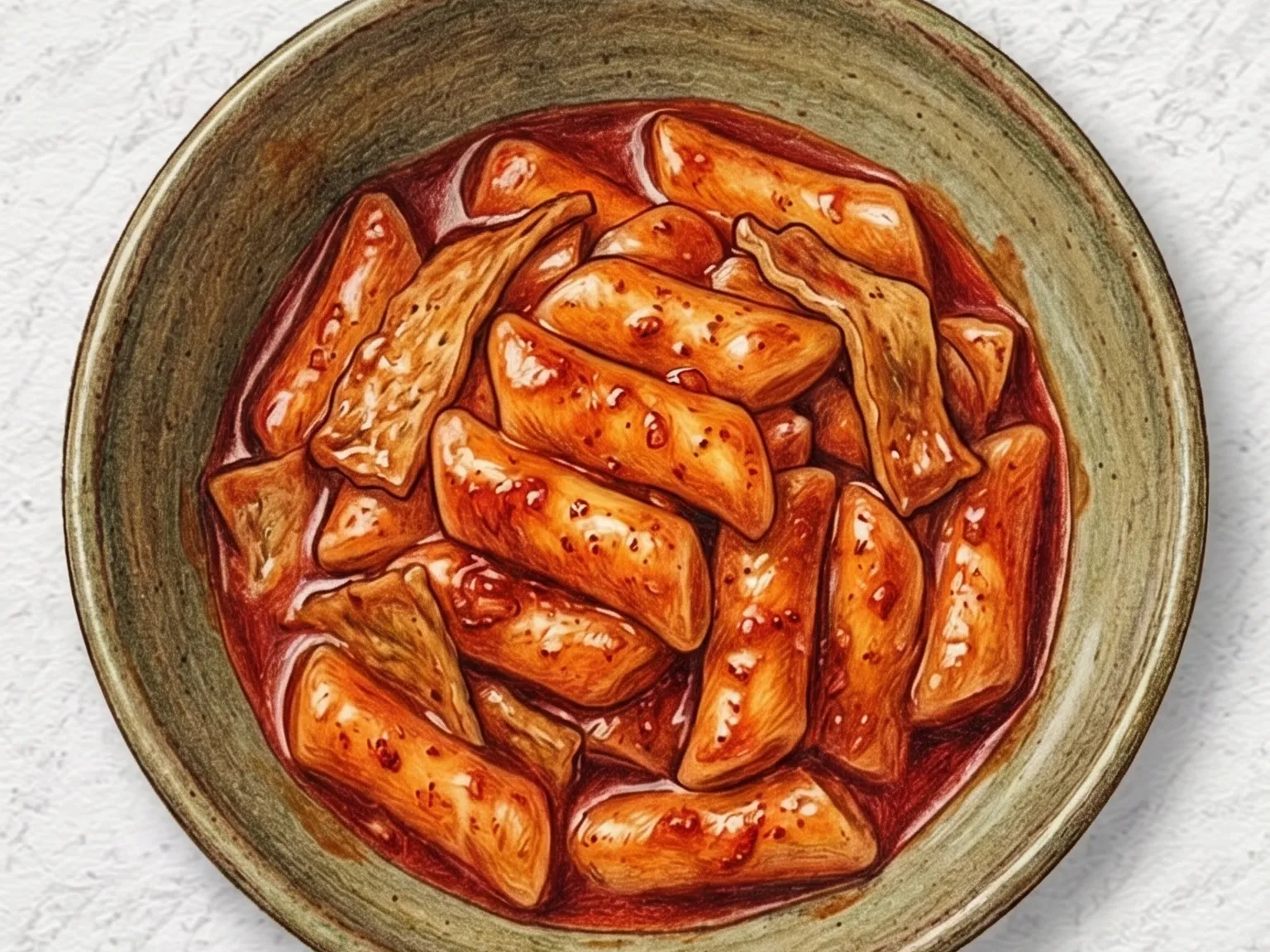
This cup-style tteokbokki blends gochujang with mala sauce to combine Korean chili heat and the numbing tingle of Sichuan peppercorn in a single dish. Rice cakes and fish cake go into the pot with the sauce, then cook over medium heat for six to seven minutes with constant stirring as the liquid reduces into a thick, clinging glaze that coats each piece heavily. Stopping to stir is not optional: the rice cakes stick and scorch on the bottom without continuous movement. Sliced green onion goes in at the end for fragrance. Because mala sauce saltiness varies considerably between brands, beginning with one tablespoon and tasting as you add more prevents overseasoning. Additional gochugaru raises the chili heat independently of the numbing sensation, while increasing the mala sauce proportion amplifies the tingle. The format mirrors the convenience-store cup tteokbokki experience and requires minimal equipment, making it a fast option when few tools are available.

🧒 Kid-Friendly
Prep 10minCook 12min2 servings
Korean Butter-Grilled Squid Beaks
DrinksMedium

Korean Butter-Grilled Squid Beaks

Ojingeo-ip-butter-gui is a Korean bar snack made by searing squid beaks in melted butter with minced garlic over high heat. Thoroughly patting the squid beaks dry with paper towels before they hit the pan is a non-negotiable step: any residual moisture causes violent splattering and prevents the butter from forming a direct, fragrant crust on the surface. Three minutes of rapid stir-frying over high heat keeps the texture springy and chewy rather than tough and rubbery, which is the line squid crosses the moment heat is applied too long. Adding soy sauce and cooking wine creates a savory glaze as the liquid rapidly evaporates and concentrates against the hot surface. A finish of red chili flakes and cracked black pepper introduces a clean, warm heat that lingers behind the buttery garlic aroma, rounding out every bite. The dish comes together in under five minutes, which makes it one of the most practical snacks to serve alongside drinks.

🍺 Bar Snacks
Prep 12minCook 10min2 servings
Korean Spicy Grilled Hagfish
GrilledHard

Korean Spicy Grilled Hagfish

Cleaned hagfish is marinated for fifteen minutes in a bold mixture of gochujang, chili flakes, soy sauce, sugar, ginger juice, and cooking wine, then grilled fast on a thoroughly preheated pan or wire rack. The high heat preserves the hagfish's distinctively chewy, elastic bite, though the sugar-heavy sauce demands frequent flipping to prevent burning. Green onion is stirred in at the end, and a final drizzle of sesame oil spreads a toasted fragrance through the fiery dish.

🍺 Bar Snacks🎉 Special Occasion
Prep 25minCook 12min2 servings
Honghap-tang (Korean Mussel Garlic Broth)
SoupsEasy

Honghap-tang (Korean Mussel Garlic Broth)

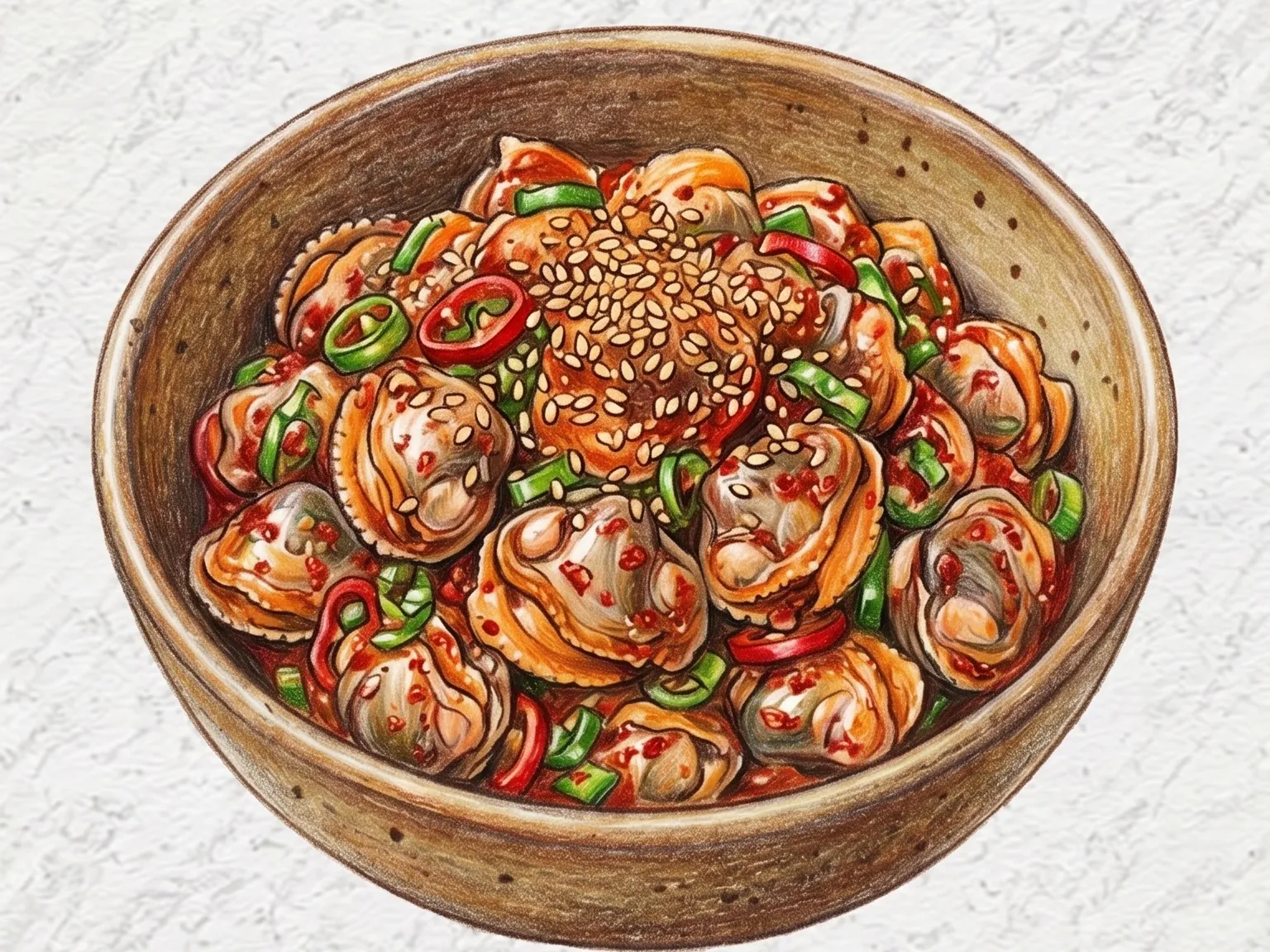
Honghap-tang is a Korean mussel soup that proves how much flavor a single shellfish can deliver with almost no help. Shell-on mussels are placed in water with sliced green onion, garlic, and a light dusting of gochugaru, then brought to a boil. As the shells open, they release a briny, faintly sweet liquor that becomes the broth itself, clear in appearance but surprisingly concentrated in taste. The entire process takes about fifteen minutes. Timing matters here: once the shells have opened and the flesh has puffed, the pot comes off the heat immediately or the meat turns rubbery. In Korea, honghap-tang is a standard drinking companion, sipped between shots of soju while the mussel meat is pulled from the shells and dipped in vinegary chojang sauce. The combination of the bold, oceanic broth and the chilled sauce creates a cycle that is hard to stop. Mussels caught during the colder months, when they are fatter and richer, produce the most intensely flavored broth.

🍺 Bar Snacks🏠 Everyday
Prep 10minCook 15min2 servings
Korean Hot Chili Anchovy Tofu Stew
StewsEasy

Korean Hot Chili Anchovy Tofu Stew

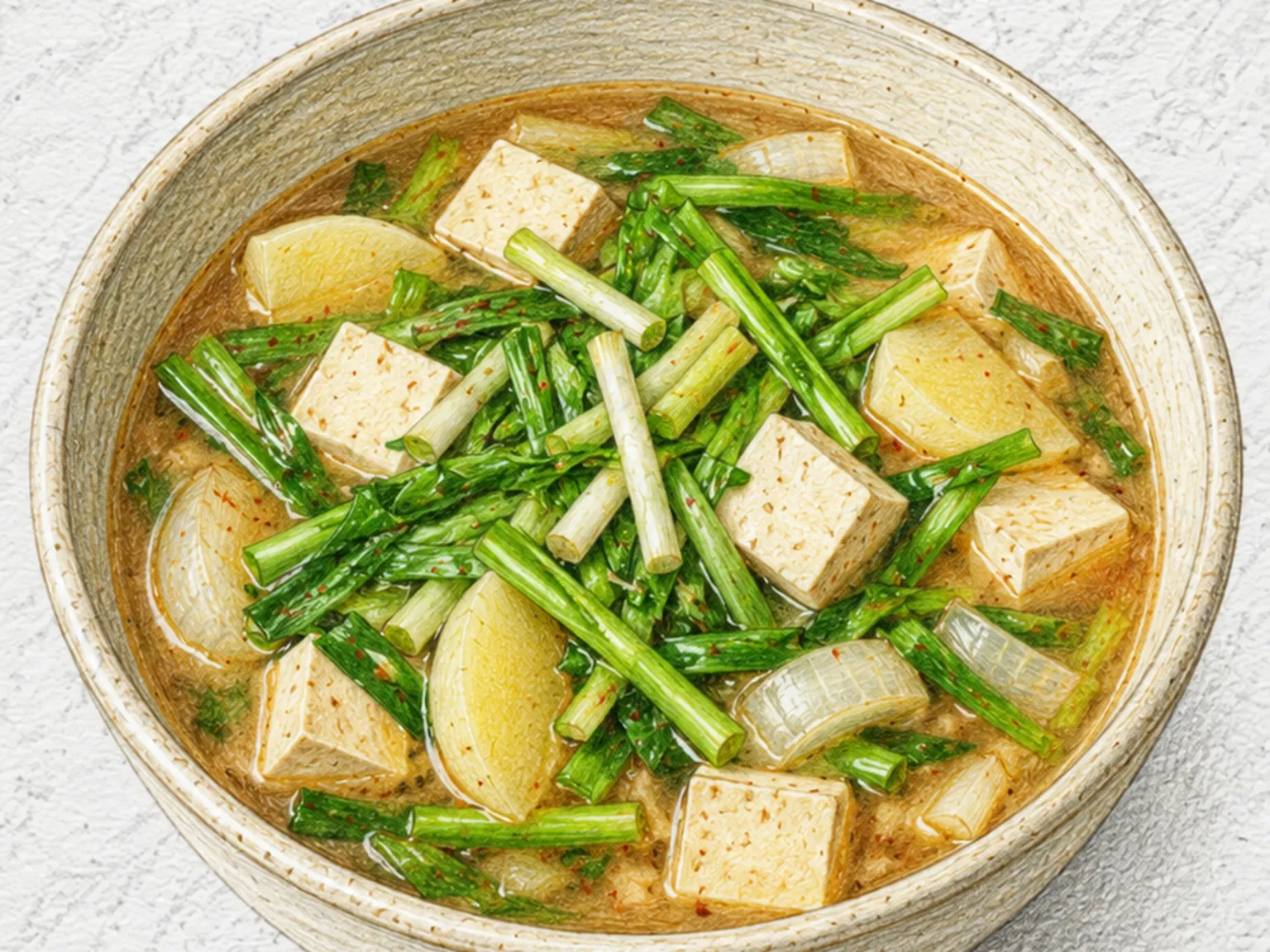
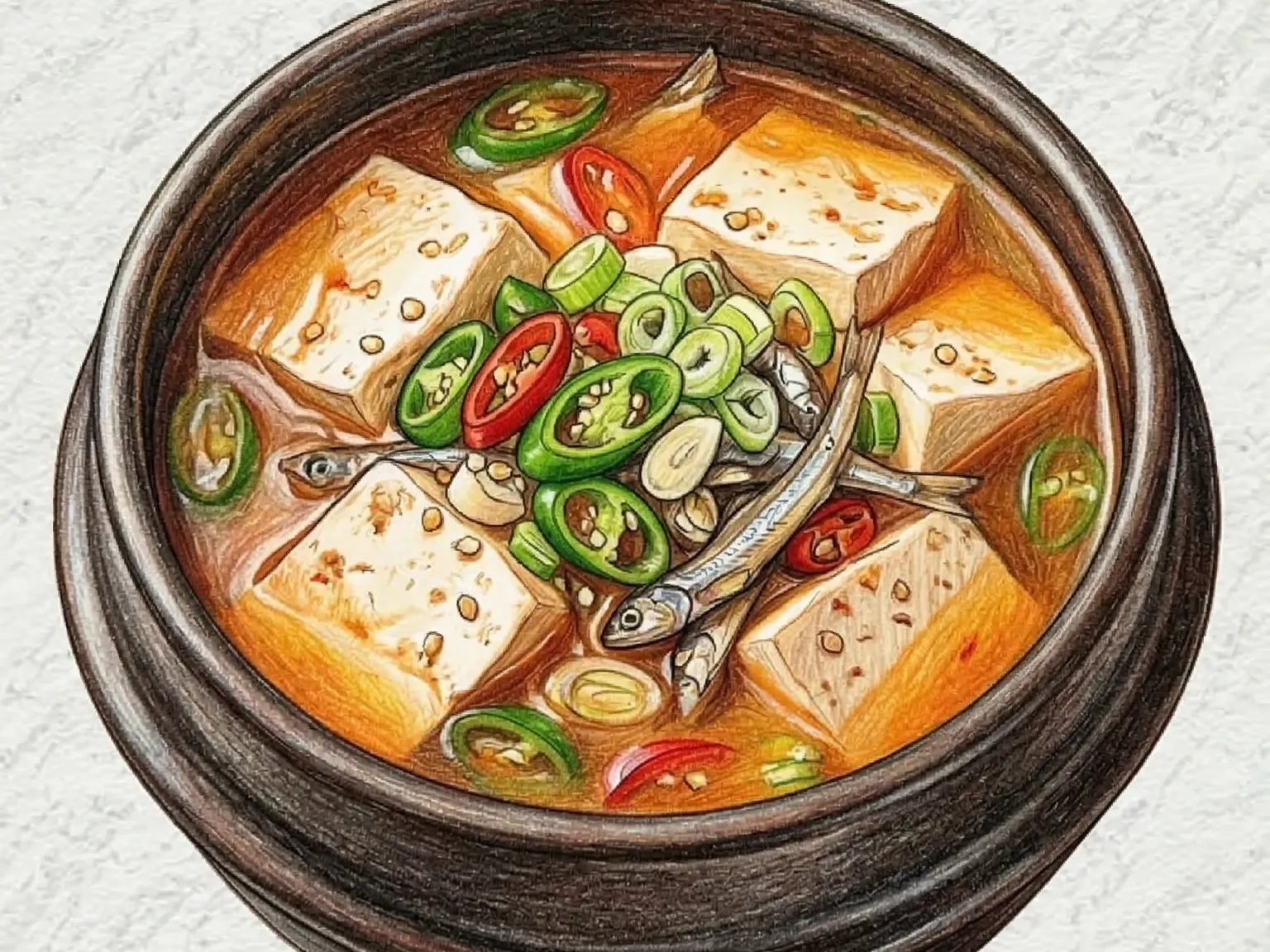
Dried anchovies and cheongyang chilies go into the pot together from the start so the broth itself absorbs the deep, pungent heat rather than the chilies simply floating on top. The anchovies are dry-roasted first to drive off any fishiness before water is added. Two whole cheongyang chilies, left uncut, release a sharp, penetrating spice that builds gradually through the simmer. Gochugaru adds color and layers the heat further, soup soy sauce keeps the seasoning clean, and tofu goes in only after the broth reaches a full boil so the cubes stay firm. The combination of anchovy-based richness and the chilies distinctive biting heat produces a broth that clears the palate without becoming salty.

🏠 Everyday
Prep 10minCook 18min2 servings
Korean Braised Pollock (Frozen Pollock with Radish in Spicy Sauce)
SteamedMedium

Korean Braised Pollock (Frozen Pollock with Radish in Spicy Sauce)

Dongtae-jjim is frozen pollock braised with Korean radish and bean sprouts in a sauce built from gochugaru, soy sauce, garlic, and ginger. Using frozen rather than fresh pollock is intentional - the freeze-and-thaw cycle gives the flesh a firm, lightly spongy texture that holds together well through braising in the spicy broth. Radish absorbs the chili-laced liquid and turns sweet against the heat, while bean sprouts retain crunch and add a clean, refreshing aftertaste. The sauce reduces to a shallow pool at the bottom of the pot, and spooning it over steamed rice is the standard way to eat this cold-weather staple. The flavor deepens the longer the ingredients sit in the braising liquid.

🎉 Special Occasion
Prep 20minCook 30min4 servings
Korean Cheonggak Kimchi (Seaweed Kimchi)
KimchiMedium

Korean Cheonggak Kimchi (Seaweed Kimchi)

Cheonggak kimchi uses cheonggak, a branching green seaweed, mixed with julienned radish and scallions in a paste of gochugaru, anchovy fish sauce, and sweet rice starch. The seaweed brings a firm, almost crunchy chew and a concentrated marine aroma absent from land-vegetable kimchi. Seasoning the radish first lets it absorb the brine, then the seaweed is tossed in briefly - prolonged handling toughens the strands. After one day of refrigeration, the seaweed's salinity merges with the fermented seasoning paste to produce a briny, sharp kimchi that sits naturally alongside seafood dishes and mild rice soups. Coastal households traditionally make this in autumn when fresh cheonggak comes into season.

🍱 Lunchbox
Prep 35min4 servings
Korean Spicy Seafood Noodle Soup
NoodlesMedium

Korean Spicy Seafood Noodle Soup

Jjamppong is a Korean-Chinese noodle soup where seafood and vegetables are stir-fried in chili oil at very high heat before broth is added, a sequence that fundamentally shapes the soup. Blooming gochugaru in hot oil instead of adding it directly to liquid extracts fat-soluble compounds that carry a smoky, toasted depth the raw powder cannot contribute. Squid, mussels, and shrimp release their own juices during the fry stage, and those juices dissolve into the chicken stock when the liquid hits the pan. Cabbage and onion caramelize in the residual oil and give off natural sugars that temper the chili heat. Soy sauce binds the seasoning and gives the broth its reddish-brown depth. Springy fresh wheat noodles absorb the concentrated broth, and by the time they reach the table the noodles are already carrying the full flavor of the soup in every strand.

🏠 Everyday🌙 Late Night
Prep 20minCook 20min2 servings
Goan Fish Curry (Tangy Coconut Fish Stew)
AsianEasy

Goan Fish Curry (Tangy Coconut Fish Stew)

Goan fish curry - known locally as xitt-kodi - is the daily centerpiece of fishing households along India's Goa coast, shaped over five centuries by the meeting of Konkani culinary tradition and Portuguese colonial influence. Freshly pressed coconut milk forms the foundation, into which a masala paste of tamarind, Kashmiri red chilies, coriander seeds, and cumin is stirred and brought to a simmer. Local fish - kingfish, pomfret, or mackerel - are added bone-in and cooked over gentle heat for no more than five minutes. That restraint is the defining technique: the flesh absorbs the sauce fully while still breaking apart in clean, moist flakes at the press of a spoon rather than turning dense and dry. Tamarind's sharp acidity slices through the coconut cream's weight, producing a broth that reads as fresh and light despite its deep orange color and creamy texture. The Kashmiri chili contributes vivid color with only moderate heat, so the sauce is bold-looking but not aggressively spicy. Goan fishermen have long followed the practice of cooking their morning catch into curry by midday and serving it over boiled parboiled rice called ukde tandull, a pairing so bound to local identity that it crosses every line of religion, caste, and neighborhood across the state.

🎉 Special Occasion
Prep 15minCook 20min2 servings
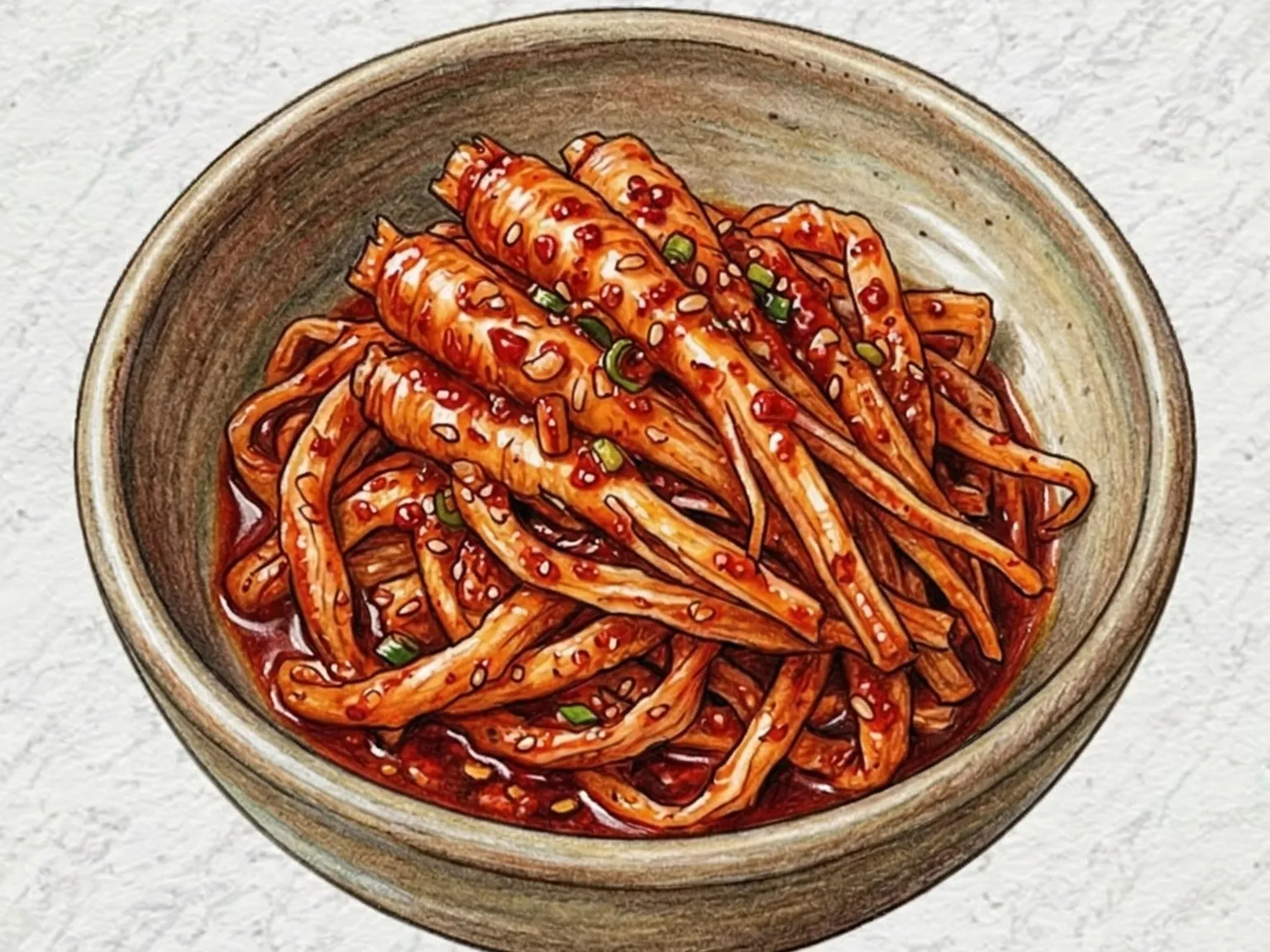
Korean Stir-fried Balloon Flower Root
Side dishesMedium

Korean Stir-fried Balloon Flower Root

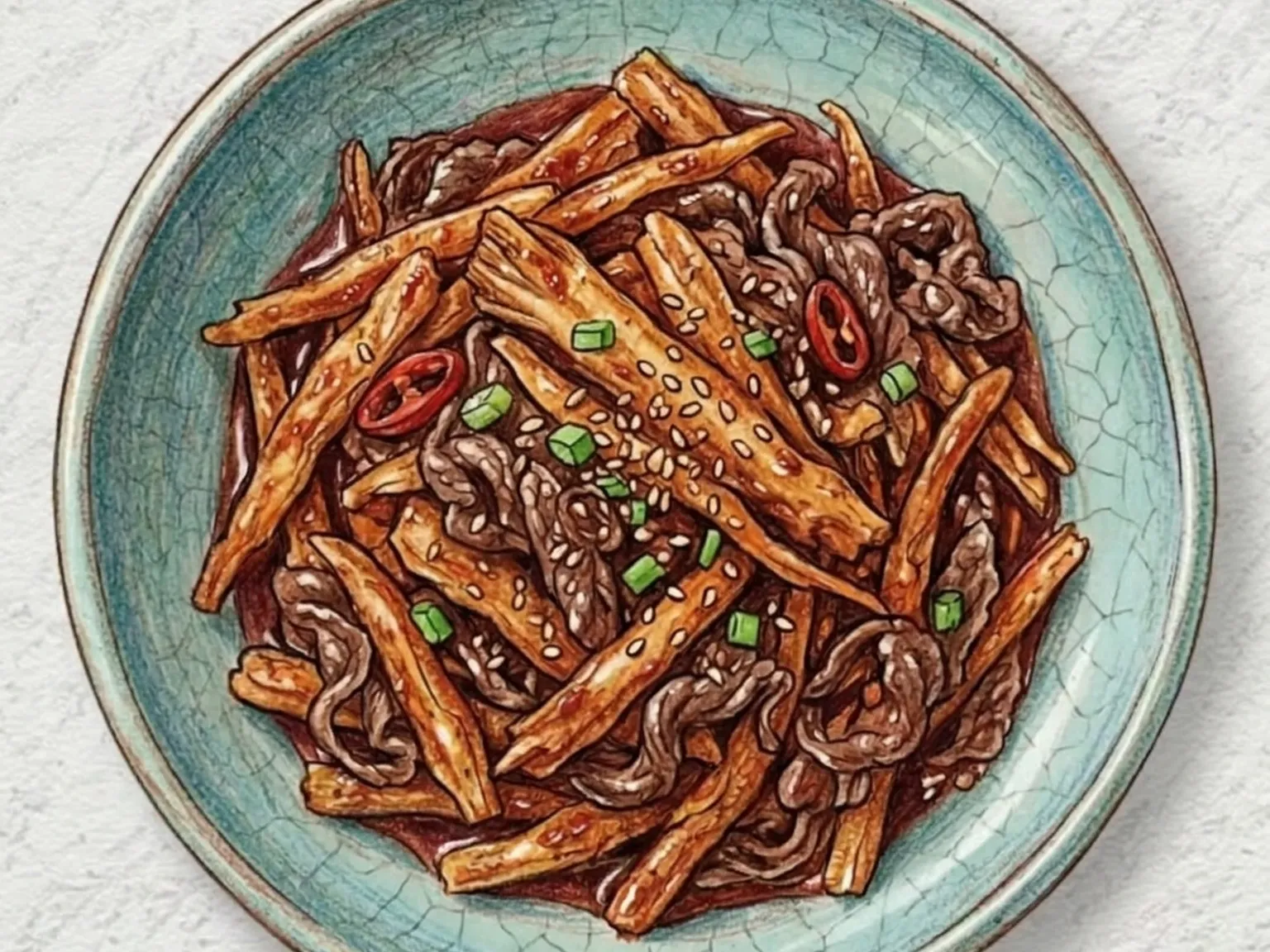
Doraji -- balloon flower root -- has been cultivated in Korea for centuries, valued in cooking and herbal medicine alike. The raw root carries a pronounced bitterness from saponins, so it must be shredded into thin strips, rubbed vigorously with salt, left for ten minutes, then rinsed twice in cold water. The salt scrub draws out the saponins while preserving the root's firm, snappy bite. A base of green onion goes into the pan first to build a fragrant oil, then the prepared doraji stir-fries for two minutes before gochujang, soy sauce, and oligosaccharide syrup go in for another three minutes. The heat is raised at the end to drive off moisture, so the sauce tightens and clings to each strip rather than pooling in the pan. The result is a glossy, sweet-spicy banchan with a distinctly chewy pull.

🏠 Everyday🍱 Lunchbox
Prep 20minCook 10min2 servings
Korean Radish Rice (Julienned Radish Steamed with Short-Grain Rice)
RiceEasy

Korean Radish Rice (Julienned Radish Steamed with Short-Grain Rice)

Mu-bap is Korean radish rice made by placing finely julienned radish directly on top of uncooked rice before steaming, so the radish releases its natural moisture and mild sweetness into each grain as it cooks. The result is rice that is slightly more moist and subtly sweeter than plain cooked rice, with softened radish distributed throughout. The dish is eaten with a seasoning sauce of soy sauce, sesame oil, sliced scallion, red pepper flakes, and sesame seeds mixed in right before eating, because adding it any earlier makes the rice clump and turn mushy. Cutting the radish into thin, uniform strips is not just about presentation: thin strips cook through in the same time as the rice, while thick pieces remain underdone when the rice is already ready. Winter radish contains more natural sugar than radish harvested at other times of year, so the same recipe tastes noticeably sweeter when made with winter produce. Served alongside fermented sides like kkakdugi or kimchi, the mild sweetness of the radish rice provides a clean, neutral contrast to the sharp acidity and salt of fermented foods.

🏠 Everyday
Prep 15minCook 25min2 servings
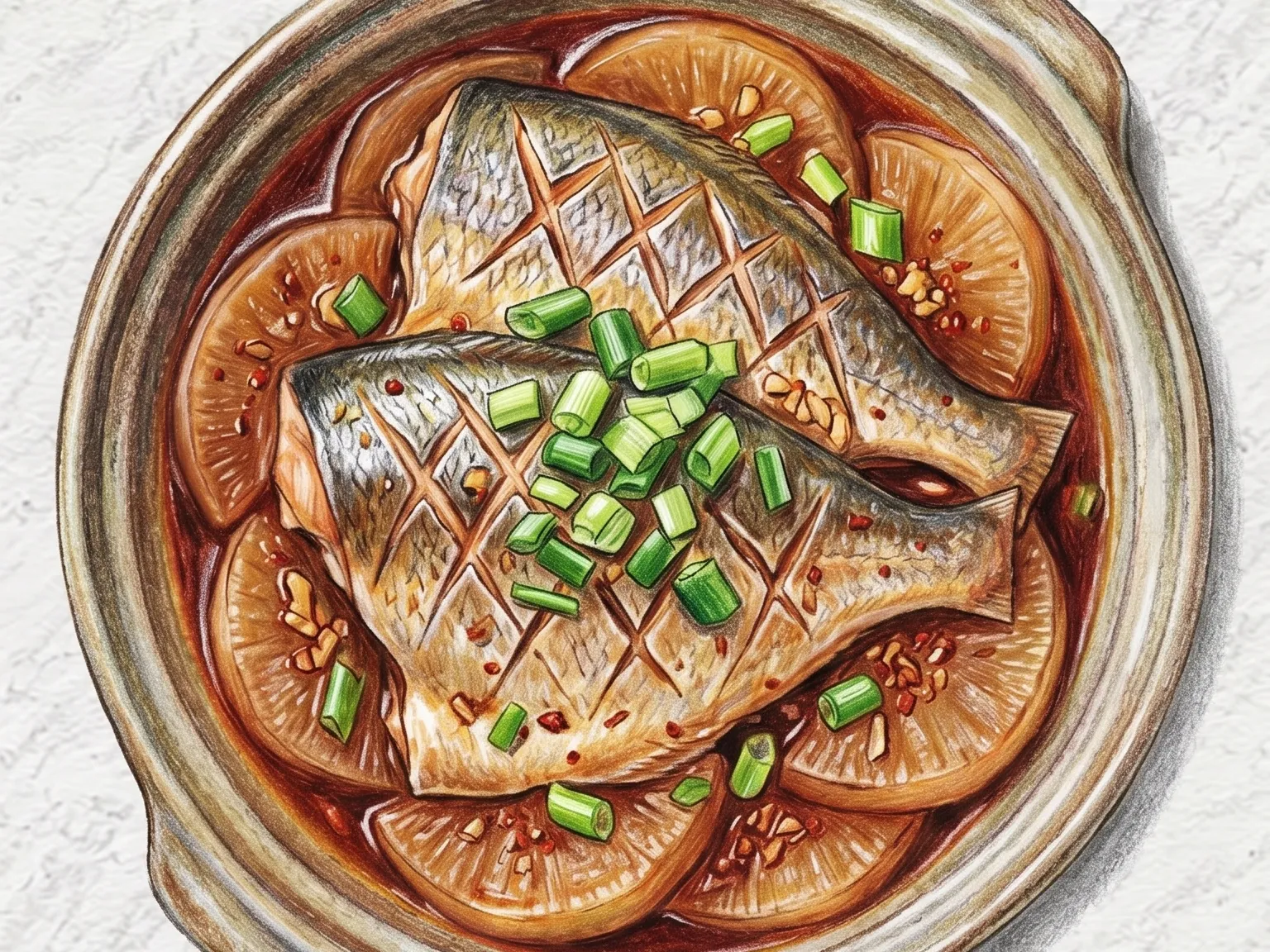
Korean Braised Flounder with Radish
Stir-fryEasy

Korean Braised Flounder with Radish

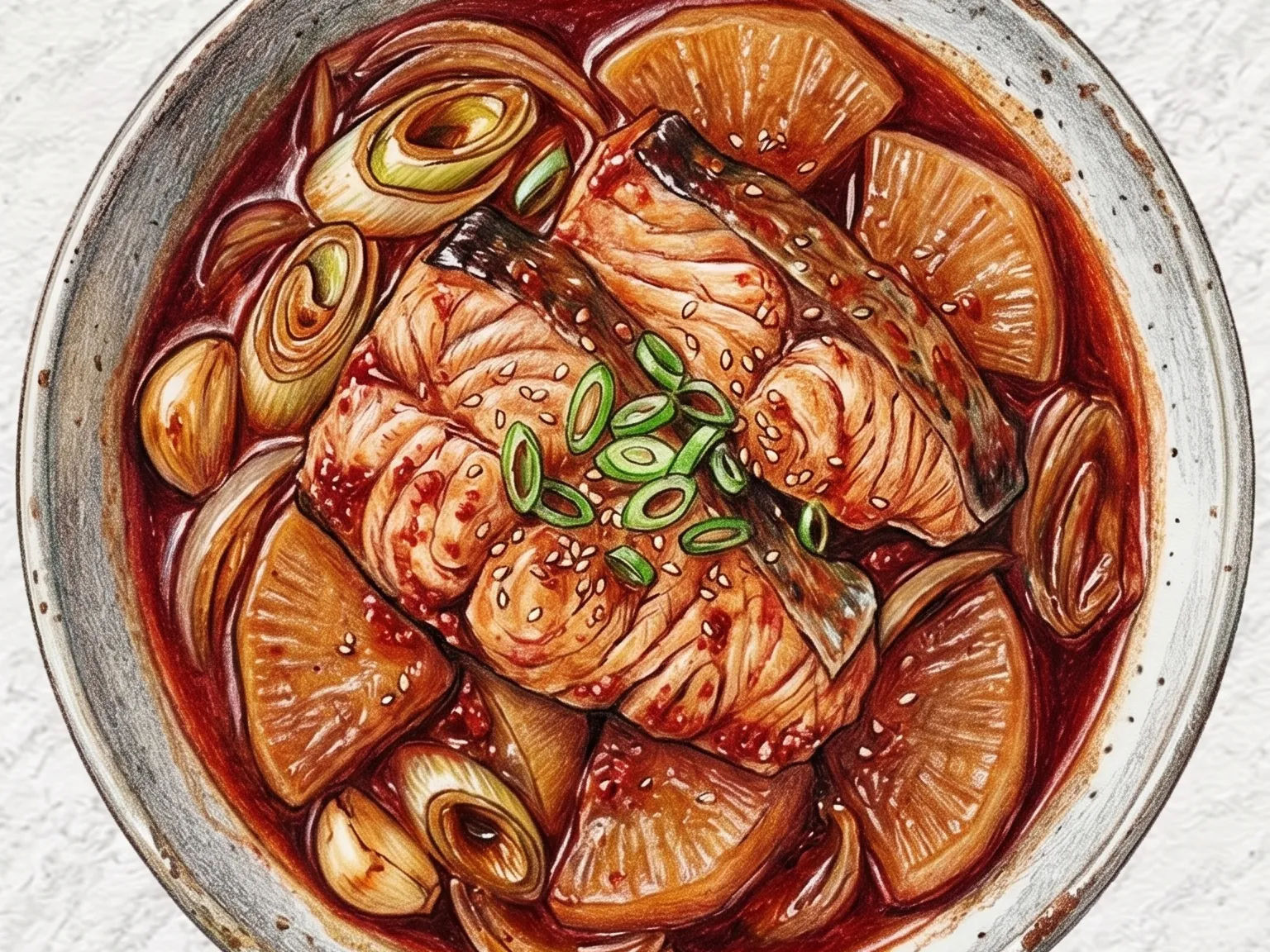
Gajami-jorim is a Korean braised flounder dish where the fish is gently simmered with Korean radish in a soy sauce and chili flake broth. The delicate flounder flesh absorbs the seasoning deeply while careful low-heat cooking prevents it from breaking apart. Radish serves a dual purpose in the dish: it draws out and neutralizes the fishy odor while contributing a clean, refreshing sweetness that adds depth to the braising liquid. Spooning the reduced sauce over rice makes it a complete, standalone meal without the need for additional side dishes. Because flounder fillets are thin, the braising time is short, and the heat should be turned off once the liquid has reduced by at least half to keep the flesh moist and tender.

🏠 Everyday🍱 Lunchbox
Prep 15minCook 25min2 servings
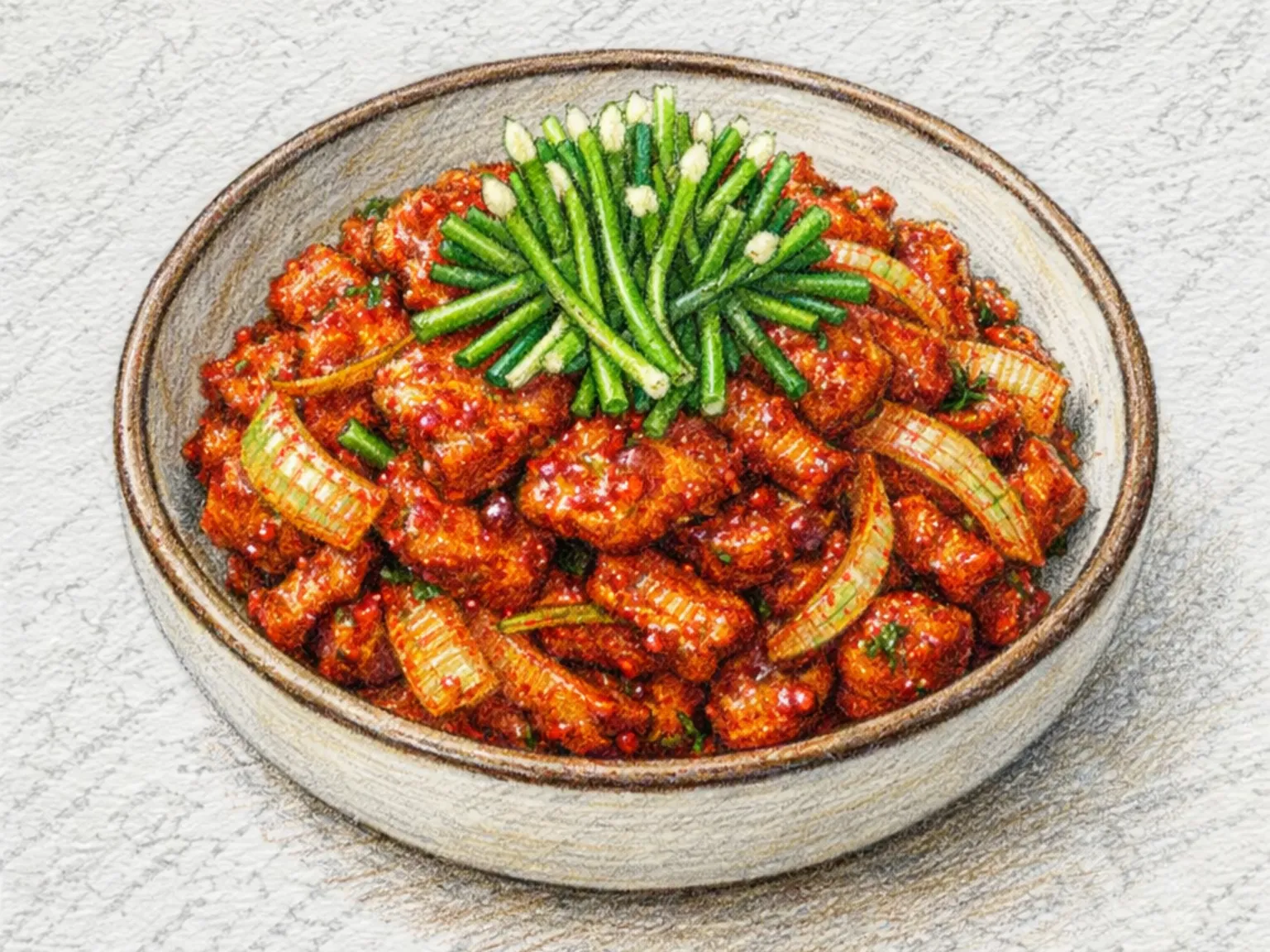
Korean Stir-Fried Fish Cake Strips
Street foodEasy

Korean Stir-Fried Fish Cake Strips

Flat fish cake is sliced into strips and quickly stir-fried with red pepper flakes, soy sauce, sugar, and minced garlic in a hot pan. Blanching the fish cake beforehand removes surface oil so the seasoning adheres more cleanly, and a final toss with sesame oil and sesame seeds brings a nutty fragrance. Despite the short ingredient list and fast cook time, the balance between sweet and spicy is well defined.

🌙 Late Night Quick
Prep 10minCook 10min2 servings
Korean Butter-Grilled Crab
GrilledMedium

Korean Butter-Grilled Crab

Kkotge-beoteo-gui refers to a Korean preparation of blue crab that is grilled with a butter glaze. To prepare this dish, the crabs are first sliced into halves and then placed on a grill set to medium-high heat. Throughout the cooking process, a mixture consisting of melted unsalted butter, finely minced garlic, soy sauce, and fresh lemon juice is applied repeatedly as a baste to ensure the flavors permeate the meat thoroughly. As the heat is applied, the butter mixture flows into the various gaps and crevices within the crab shell. This action allows the nutty flavor of the butter to coat each individual fiber of the crab meat. This richness is intended to enhance the natural sweetness inherent in blue crab without masking its original profile. The inclusion of soy sauce introduces necessary saltiness, while the lemon juice adds a sharp acidity that functions to balance the heavy fats and keep the overall profile of the dish clear. Before any grilling takes place, the cleaned crab pieces are treated with a small amount of rice wine. This liquid is rubbed directly onto the surface of the crab to neutralize the strong, briny scent that can often remain on raw seafood, preparing the meat for the application of the butter and seasonings. The grilling starts with the crabs placed shell-side down on the grate for an initial duration of four minutes. This orientation allows the heat to conduct through the hard shell, which effectively steams the meat inside in a gentle manner. After this period, the crabs are flipped over. Basting the now-exposed flesh directly is a critical step to ensure that the delicate proteins do not lose moisture or become dry under the direct heat of the grill. The total time spent on the grill should not exceed ten minutes in aggregate. If blue crab is cooked beyond this threshold, the texture of the meat undergoes a negative transformation, becoming rubbery and losing the natural juices that contribute to its tenderness. Selecting larger crabs with a higher volume of flesh is recommended, as thicker pieces of meat are capable of absorbing the butter-based basting liquid more effectively. For additional aromatic complexity, fresh herbs like rosemary or thyme can be added into the liquid mixture. These herbs introduce a subtle herbal quality that helps to further soften any lingering fishy characteristics in the finished dish.

🍺 Bar Snacks🎉 Special Occasion
Prep 20minCook 18min2 servings
Jangeo-tang (Spicy Freshwater Eel Soup)
SoupsHard

Jangeo-tang (Spicy Freshwater Eel Soup)

Jangeo-tang is a nourishing Korean eel soup in which freshwater eel is boiled, deboned, and simmered in a seasoning base of doenjang and gochugaru. Dried radish greens (sirae-gi) are added to the pot for an earthy, faintly bitter depth that grounds the overall richness. Garlic and green onion work against any fishiness, leaving behind the clean, fatty character of the eel itself. What distinguishes this broth from a straightforward spicy soup is the interaction between the fermented weight of doenjang, the direct heat of gochugaru, and the rendered fat of the eel: the three together produce a complexity that neither doenjang nor chili achieves alone. The eel meat holds its grain even with extended cooking, remaining tender without falling apart. Rich in protein and unsaturated fats, this soup has long been categorized as a stamina-restoring food in Korean culinary tradition, consumed during the three hottest periods of summer or whenever the body needs rebuilding. Sliced green chili or perilla seed powder can be stirred in to shift the broth's profile.

🏠 Everyday🎉 Special Occasion
Prep 30minCook 45min4 servings
Korean Young Radish Kimchi Stew
StewsEasy

Korean Young Radish Kimchi Stew

Chonggak kimchi jjigae uses fermented whole ponytail radishes in place of the usual napa cabbage kimchi. The radish pieces retain a firm, crunchy bite even after simmering, setting this version apart from the standard stew in both texture and flavor. Pork shoulder and a generous pour of kimchi brine build a full-bodied, sharply tangy broth, and tofu added near the end rounds out the bold, spicy flavors with a soft counterweight.

🏠 Everyday
Prep 12minCook 28min2 servings
Korean Steamed Tofu with Soy Sauce
SteamedEasy

Korean Steamed Tofu with Soy Sauce

Dubu-jjim is firm tofu steamed and topped with a seasoning sauce of soy sauce, gochugaru, chopped green onion, garlic, and sesame oil. Cutting the tofu into thick slabs before steaming lets heat penetrate evenly, producing pieces with slight resistance on the outside and a silky interior. The soy and chili sauce drizzled over the warm tofu seeps into each slice, delivering salty and mildly spicy flavors throughout. Sesame oil and seeds finish with a toasted aroma. Cooked without any added oil, it is a clean, protein-rich banchan that fits well on a vegetarian spread. Lightly salting the tofu before steaming draws out excess moisture, which allows the seasoning sauce to absorb more deeply and firms up the texture.

🥗 Light & Healthy🏠 Everyday
Prep 8minCook 10min2 servings
Korean Bok Choy Kimchi (Gochugaru Fermented Quick)
KimchiMedium

Korean Bok Choy Kimchi (Gochugaru Fermented Quick)

Cheonggyeongchae kimchi is a bok choy kimchi prepared by halving the heads lengthwise, salting them for twenty minutes, and coating each leaf layer with a paste of gochugaru, salted shrimp, anchovy fish sauce, and sweet rice paste. Keeping the salting time short preserves the crisp snap of the stems, while the leaves soften just enough to hold the seasoning. Julienned scallions and carrot add color and textural variety, and adjusting the fish sauce quantity based on the salted shrimp salinity keeps the overall salt level balanced. After four hours of room-temperature fermentation followed by refrigeration, this kimchi is ready within a day and offers a lighter, crunchier character than traditional napa cabbage kimchi.

🍱 Lunchbox
Prep 35min4 servings
Korean Buckwheat Mixed Noodles
NoodlesEasy

Korean Buckwheat Mixed Noodles

Memil makguksu is a Gangwon-do regional dish where nutty buckwheat noodles are mixed with a soy sauce, vinegar, and gochugaru dressing that balances sweet, sour, and spicy notes. Buckwheat noodles have low gluten content and break apart easily when overcooked, so precise timing is essential during boiling. Rinsing several times in cold water removes surface starch and prevents clumping. Chopped kimchi brings fermented tang and a crunchy bite, while julienned cucumber adds freshness and a crisp contrast. A touch of sesame oil gives the dressing a glossy richness, and extra vinegar can be added at the table to sharpen the acidity to individual preference.

🏠 Everyday
Prep 18minCook 6min2 servings