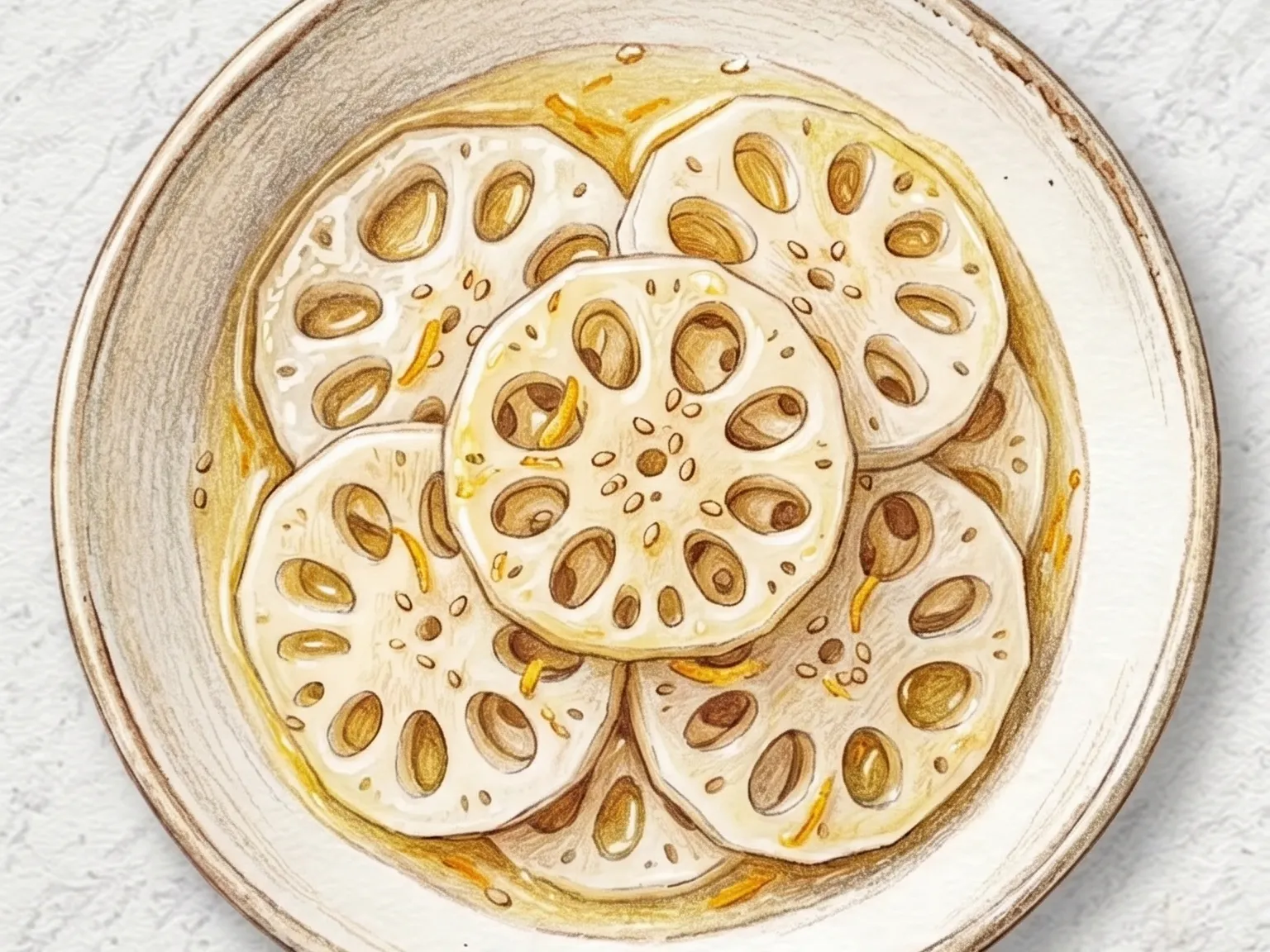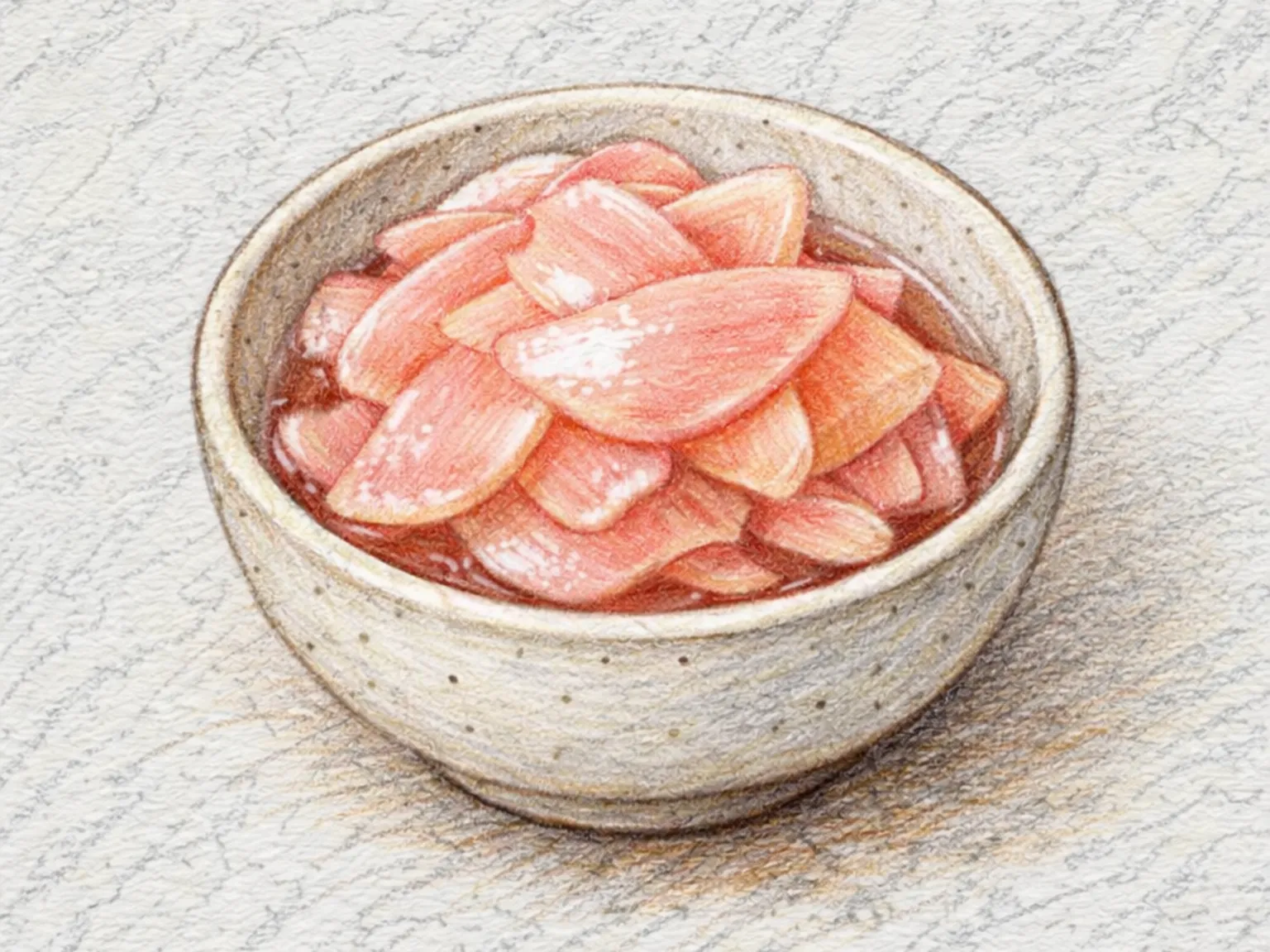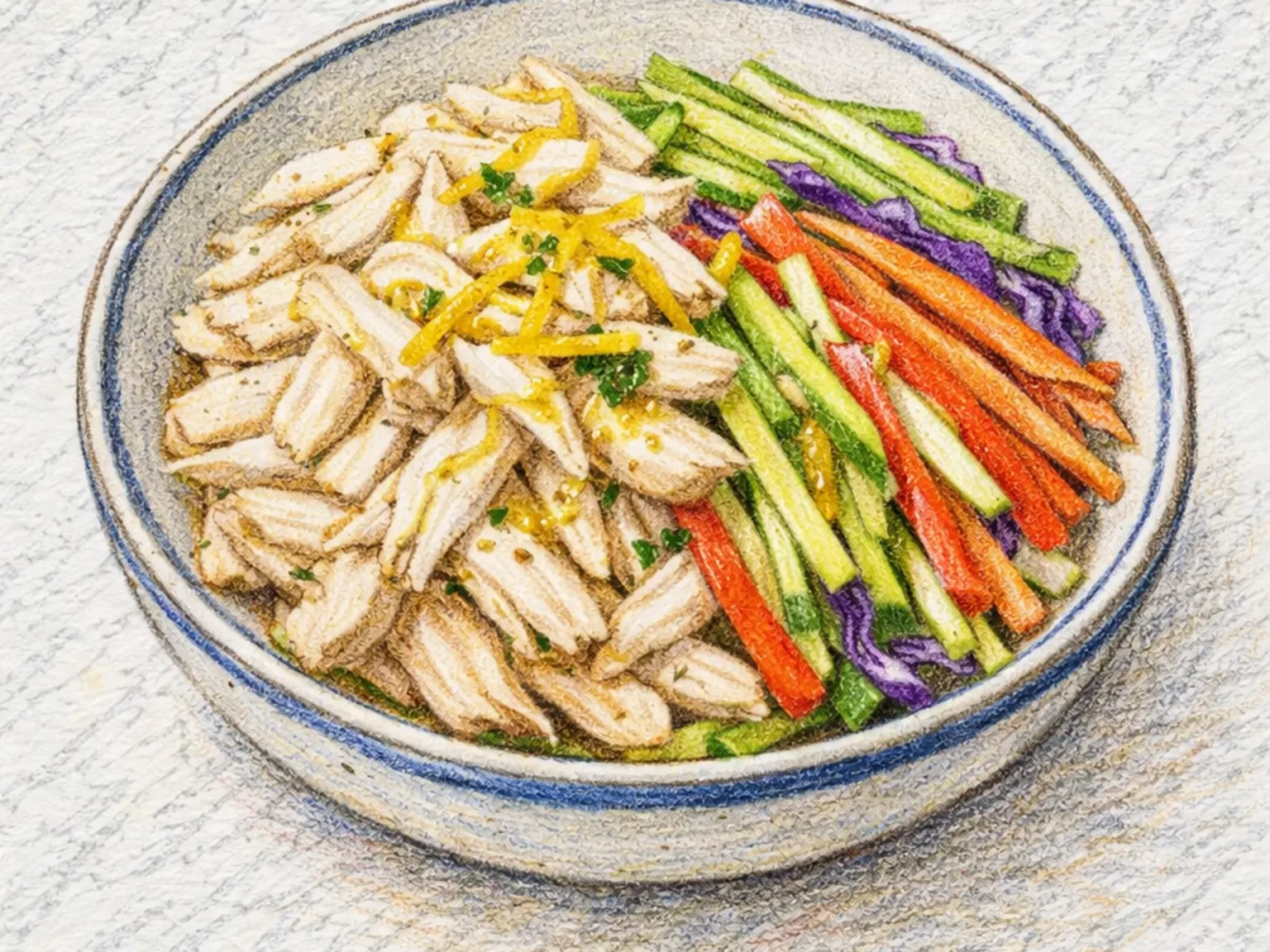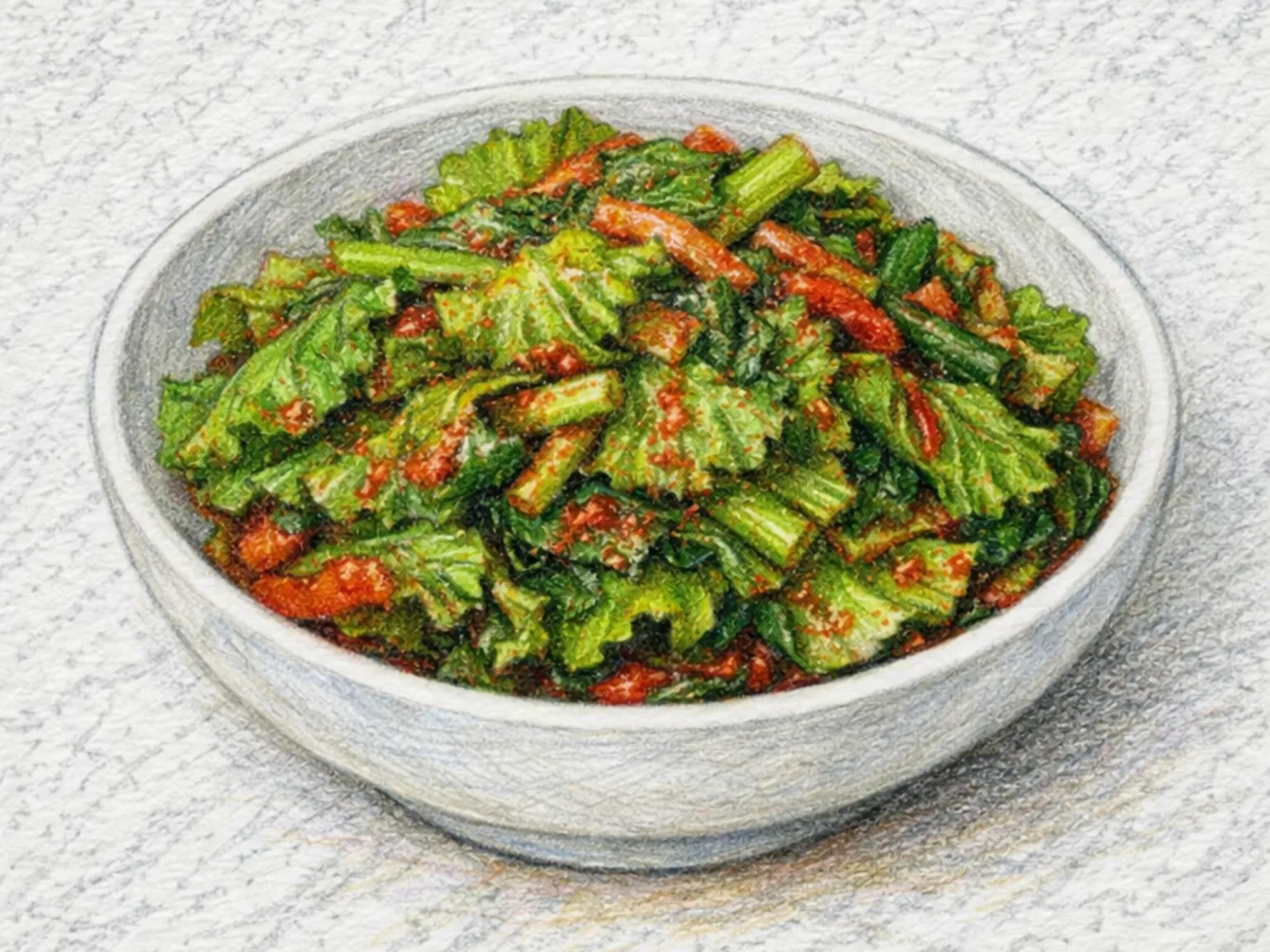
Korean Tofu and Bell Pepper Salad
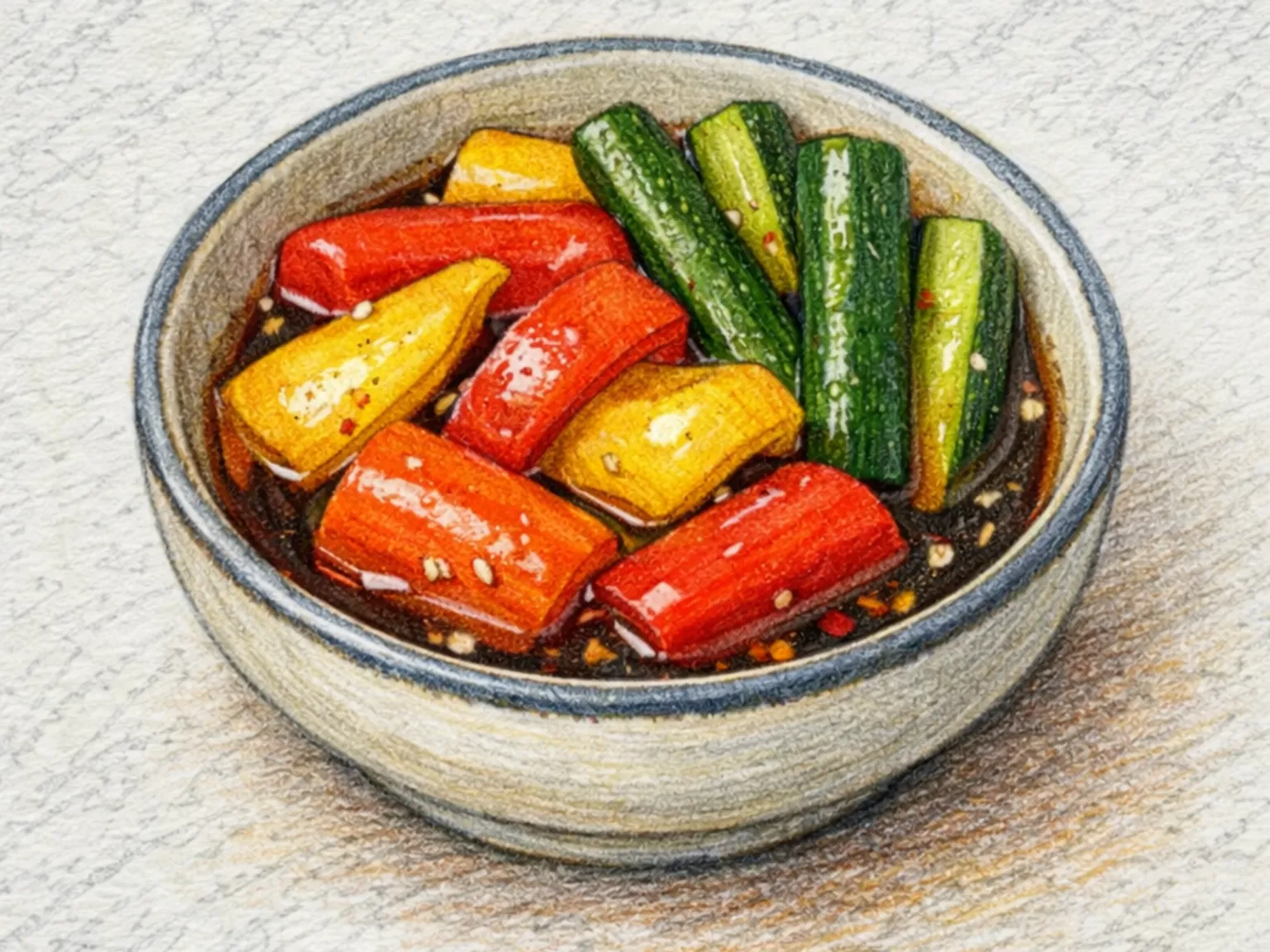
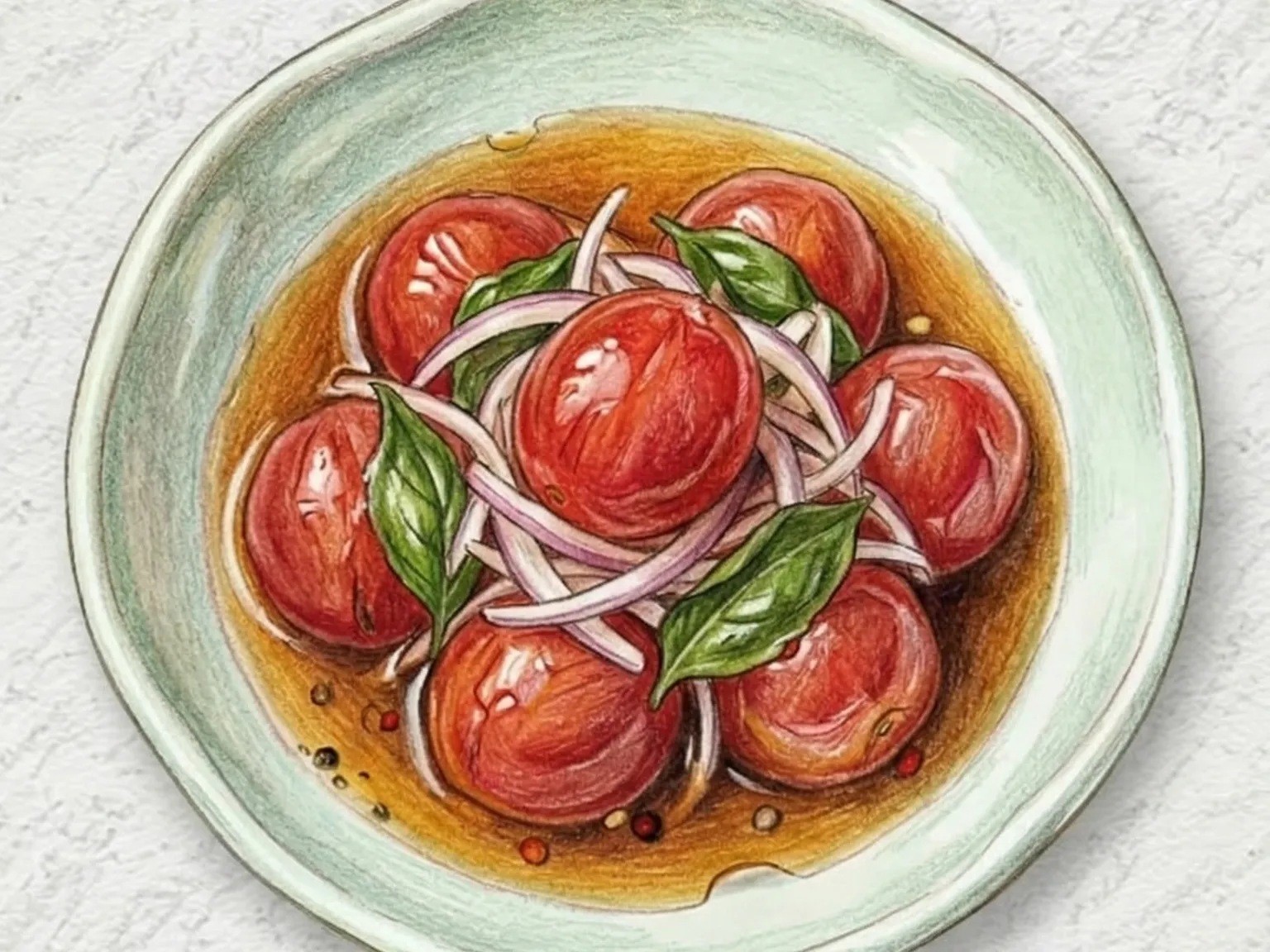
Paprika-dubu-muchim combines 300 grams of blanched firm tofu, crumbled coarsely by hand, with julienned red and yellow bell peppers, cucumber, and onion in a soy-vinegar dressing. Blanching the tofu for just one minute removes any raw bean flavor while preserving a soft, creamy texture that contrasts with the crisp, sweet snap of the peppers. The onion is soaked in cold water for three minutes to tame its bite before joining the bowl. Sesame oil and minced garlic round out the dressing, adding depth without heaviness. Chilling the finished dish for 10 minutes before serving sharpens the vegetable flavors and makes the tofu firmer to the bite.
Uri no Teppo-Zuke (Chili-Stuffed Soy-Pickled Melon)
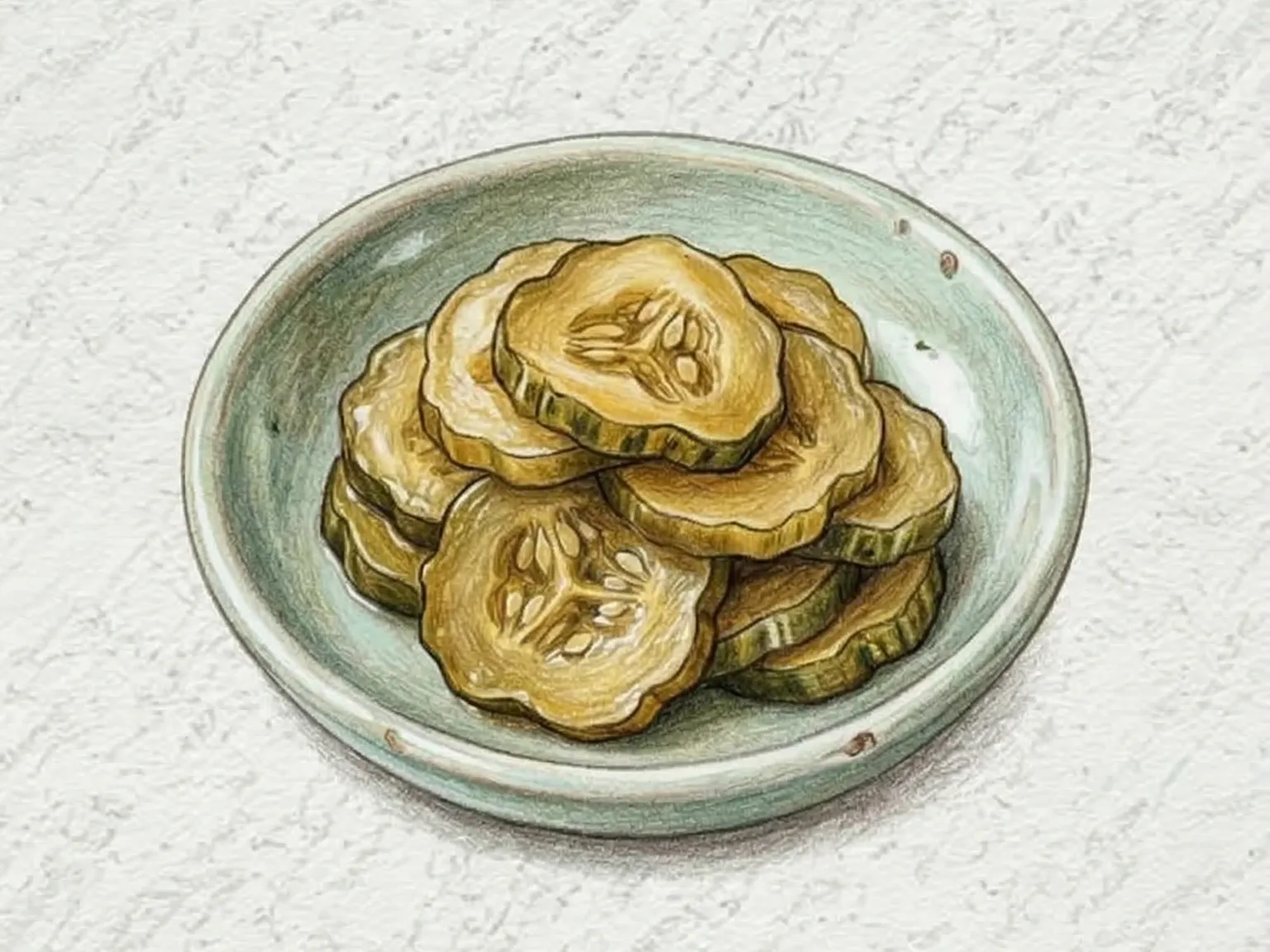
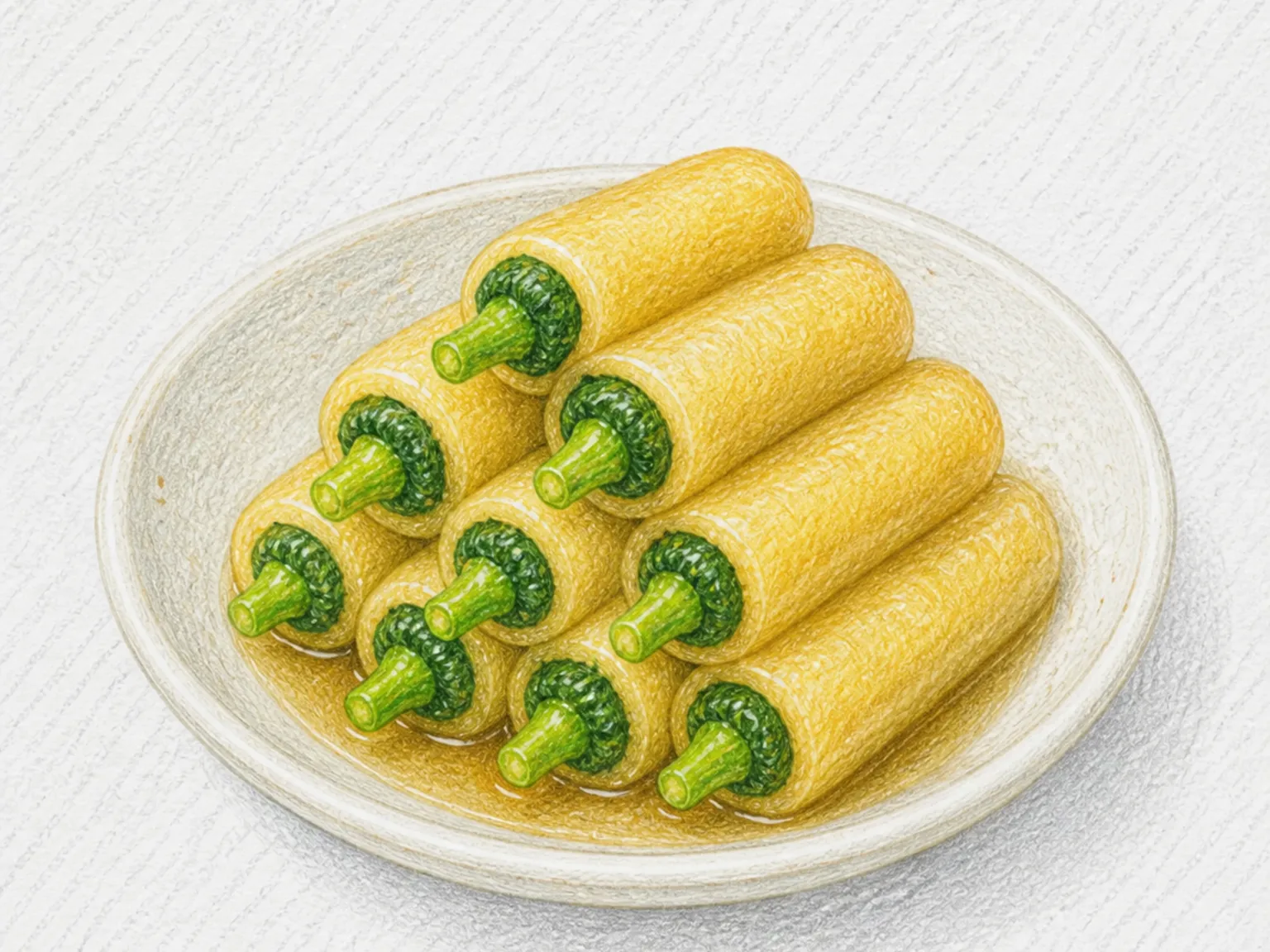
Uri no teppo-zuke is a Chiba pickle made from hollowed, salt-cured white melon. The melon is desalinated over two days with repeated water changes, squeezed thoroughly dry, and packed with green chilies wrapped in shiso leaves like ammunition inside a gun barrel. A marinade of soy sauce, coarse sugar, sake, mirin, and vinegar is boiled, cooled completely, and poured over the melon. For four to five consecutive days, the melon is removed and the liquid alone is reboiled, cooled, and returned; it is ready after about a week. The shape explains the name teppo-zuke, or gun pickle. Once a winter preserve around Narita and Katori, it remains a crisp, spicy rice side and sake accompaniment and is a well-known souvenir near Naritasan Shinshoji Temple.
Korean Seasoned Green Laver
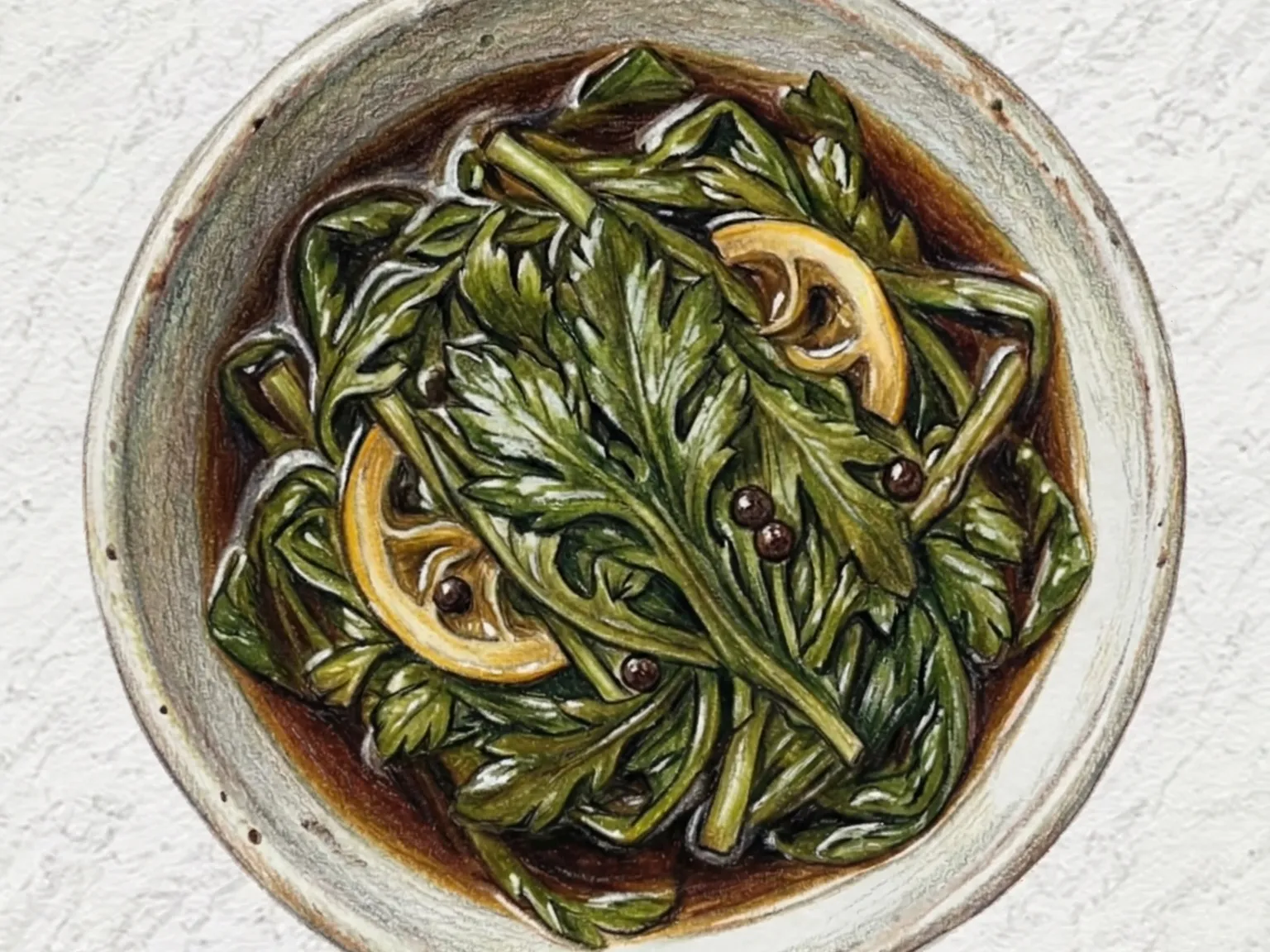
Parae-muchim dresses winter-season green laver in a vinegared gochujang sauce that balances the seaweed's natural brininess with sweet, sour, and spicy notes. The laver must be washed at least five times with fresh water to remove every grain of sand embedded in its delicate fronds. A brief 10-second blanch in boiling water tames any fishy undertone while keeping the texture soft and slippery. The dressing - gochujang, vinegar, sugar, minced garlic, and sesame oil - clings to the damp strands, coating them in a glossy, reddish glaze. Each bite delivers a wave of ocean flavor followed by the slow warmth of the chili paste.
Zuiki Sweet Vinegar Pickle
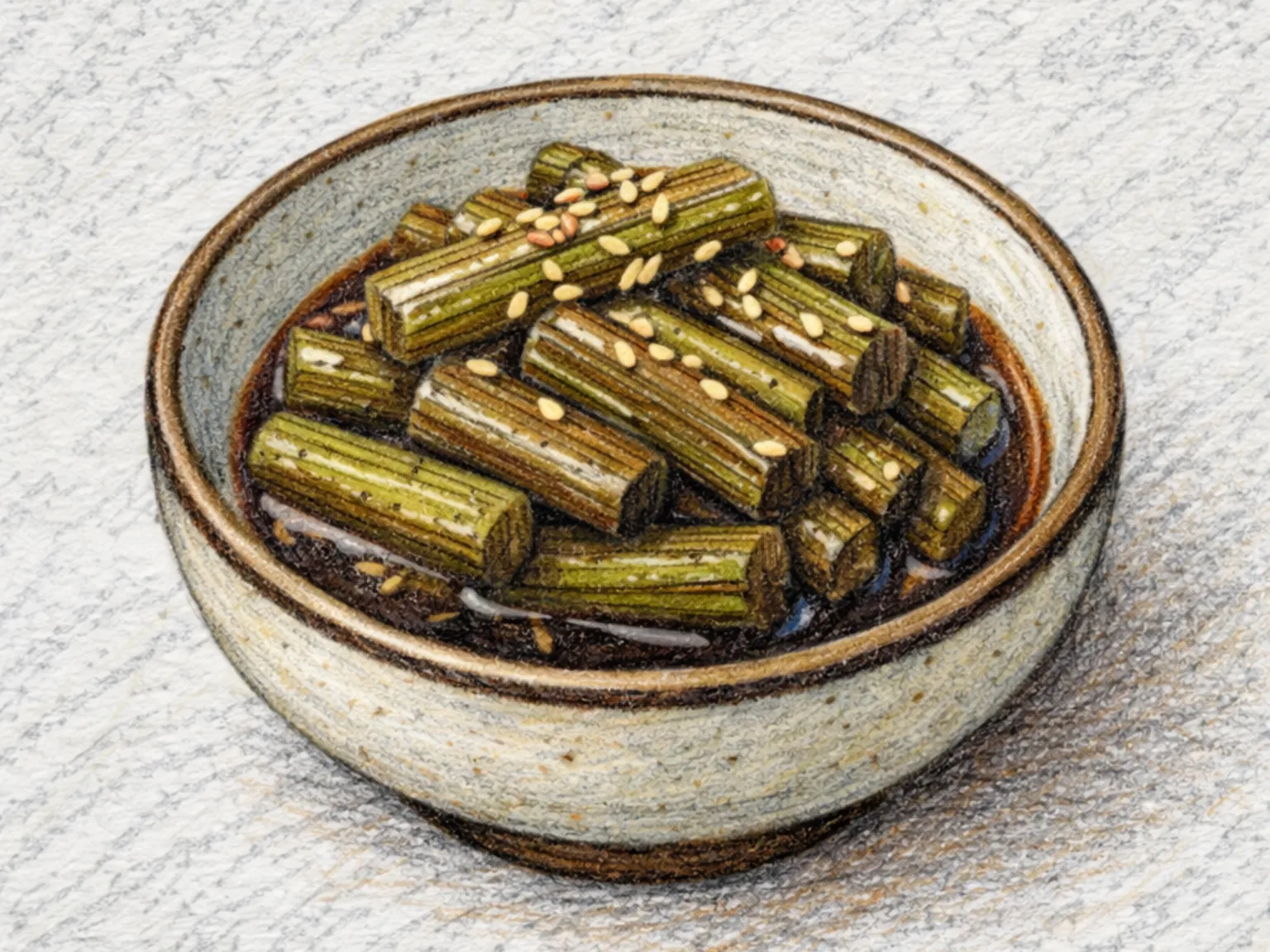
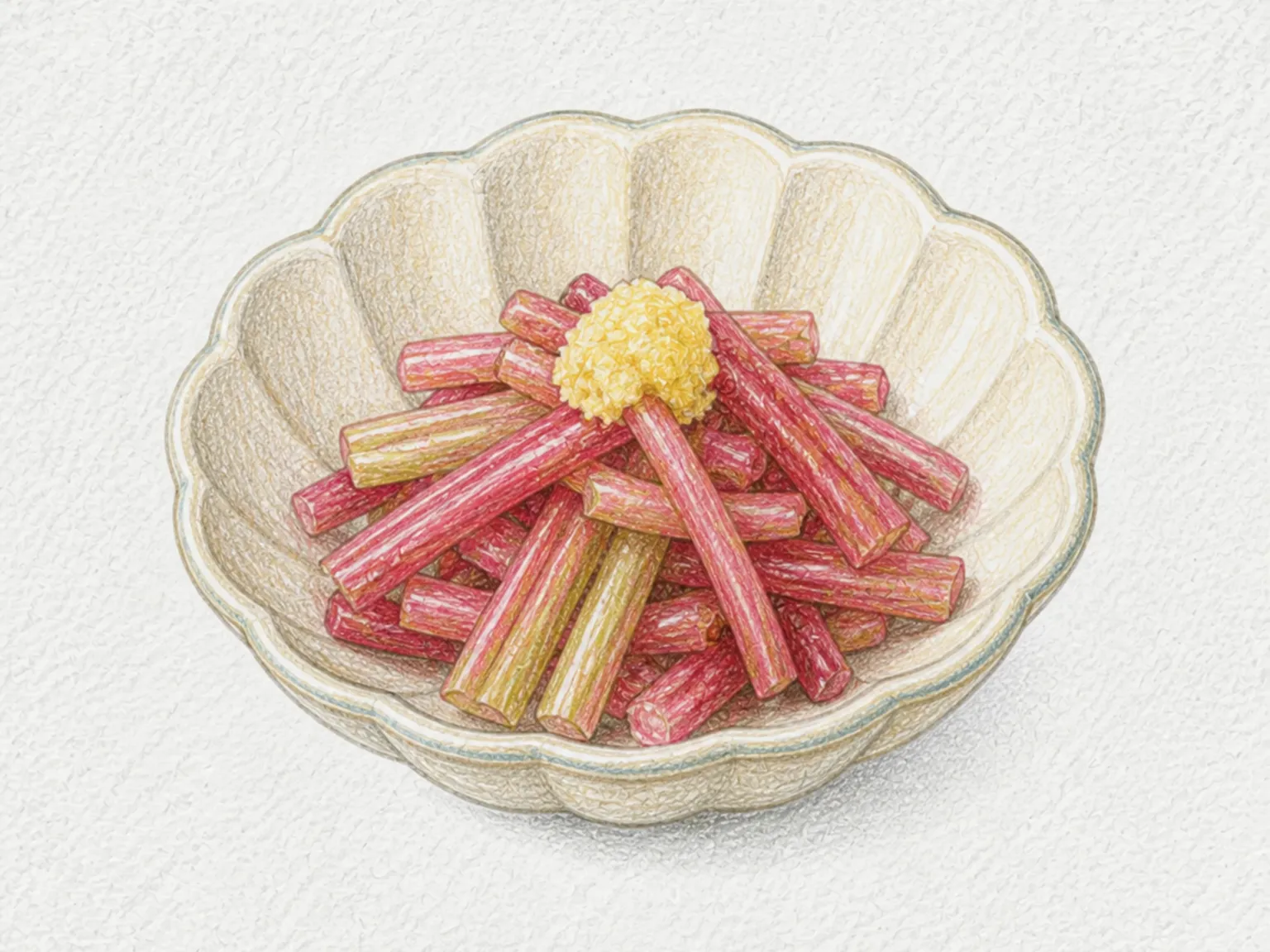
Zuiki sweet vinegar pickle is a Niigata summer side dish made from the fresh leaf stalks of Yatsugashira taro. The peeled stalks are soaked to draw out harshness, briefly boiled, and placed while hot into a cooled brine of vinegar, sugar, and salt. Zuiki is harvested from June through September, and the vinegar sharpens its natural red color while preserving a lightly crisp, fibrous bite. Boiling the brine first dissolves the sugar and salt evenly; cooling it before adding the hot stalks prevents unnecessary softening. The finished pickle is chilled thoroughly and served with freshly grated ginger for a clean, spicy finish.
Akagarei no Komaburi (Flounder Sashimi Coated with Roe)
Akagarei no komaburi is a winter celebration dish from Iwami, Tottori. White flesh from a roe-bearing female flathead flounder is sliced as sashimi, while its roe is fully cooked in vinegar water, stripped of membrane, dried in a pan, crumbled, and coated over the fish. The rich cooked roe and separate grains cling to the clean, resilient raw flesh. Use only fish verified by a professional supplier as parasite-controlled and suitable for raw consumption, and keep it at 4C or below throughout preparation. Never mix the roe in raw; cook it through, cool it fully, coat the sashimi, and eat immediately.
Korean-Style Cabbage Pickle
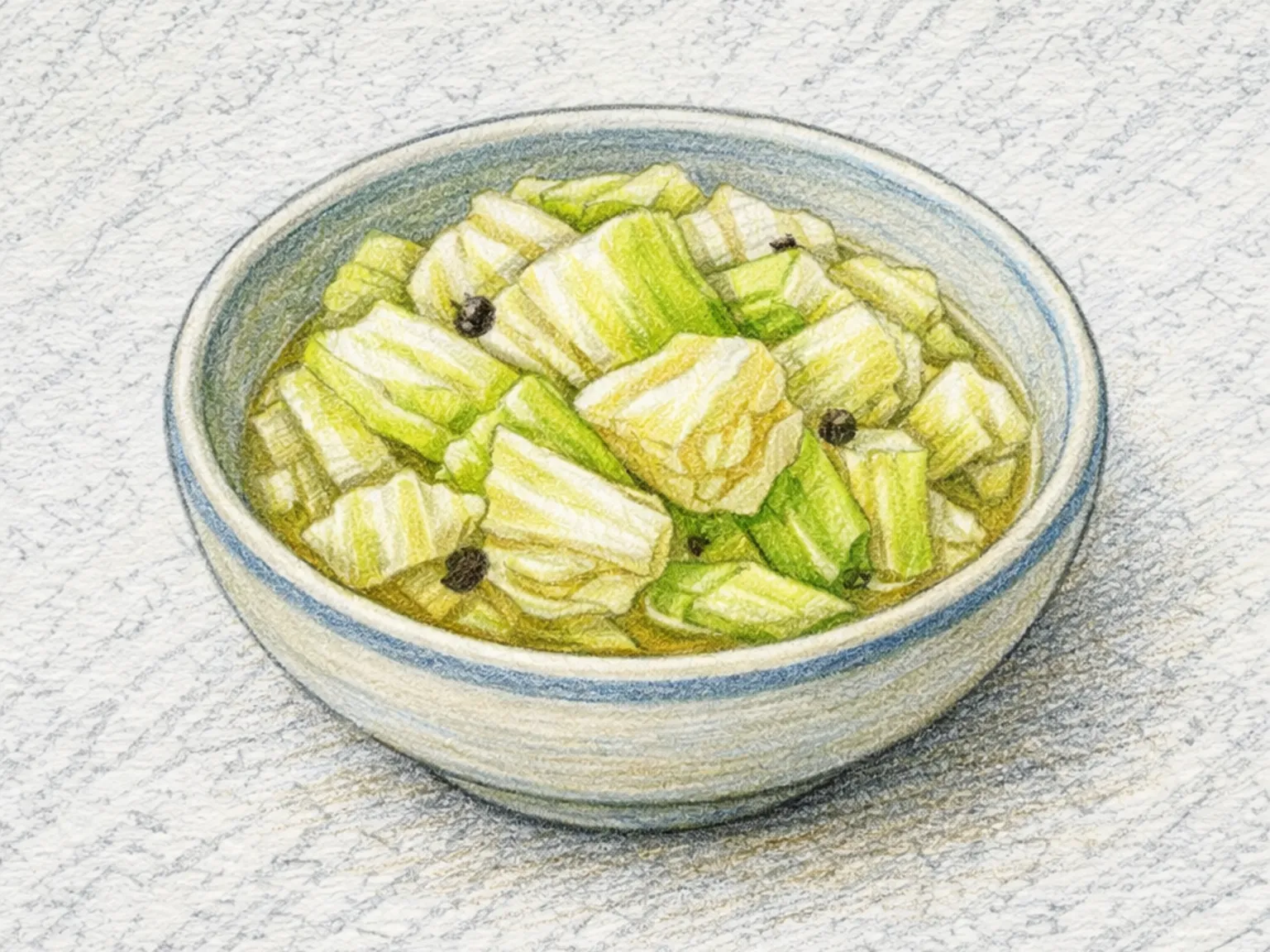
Yangbaechu pickle is a quick Korean-style vinegar pickle made by pouring a hot brine of vinegar, sugar, salt, and whole black peppercorns over bite-sized pieces of cabbage and carrot. The hot liquid wilts the vegetables just enough to help them absorb the brine while they retain a firm, snappy crunch throughout. Whole peppercorns contribute a subtle, aromatic heat that gives the finished pickle more depth than a plain vinegar soak would produce. After a single day of refrigeration the pickle is ready to eat, and it pairs especially well alongside fried cutlets, burgers, or any dish that benefits from a bright, acidic counterpoint to cut through richness. The carrot adds a note of natural sweetness and keeps the color vivid. Kept in a sealed container, the pickle is at its crunchiest within the first week, though the flavors become more rounded and pronounced as the vegetables continue to absorb the brine over time.
Korean Seasoned King Oyster Mushroom
Saesongi-beoseot-muchim steams 250 grams of king oyster mushrooms, torn into strips along the grain, for six minutes over high heat to preserve their chewy, fibrous texture better than boiling would. After cooling slightly and squeezing out excess moisture, the strips are tossed in a dressing of soy sauce, vinegar, chili flakes, garlic, and sugar. The vinegar provides a tangy lift, while the chili flakes introduce gentle warmth without overwhelming the mushroom's mild flavor. Sesame oil and sesame seeds finish the dish with a nutty aroma. It holds up well when chilled and served cold, making it a convenient banchan to prepare ahead of time.
Korean Soy Pickled Onions
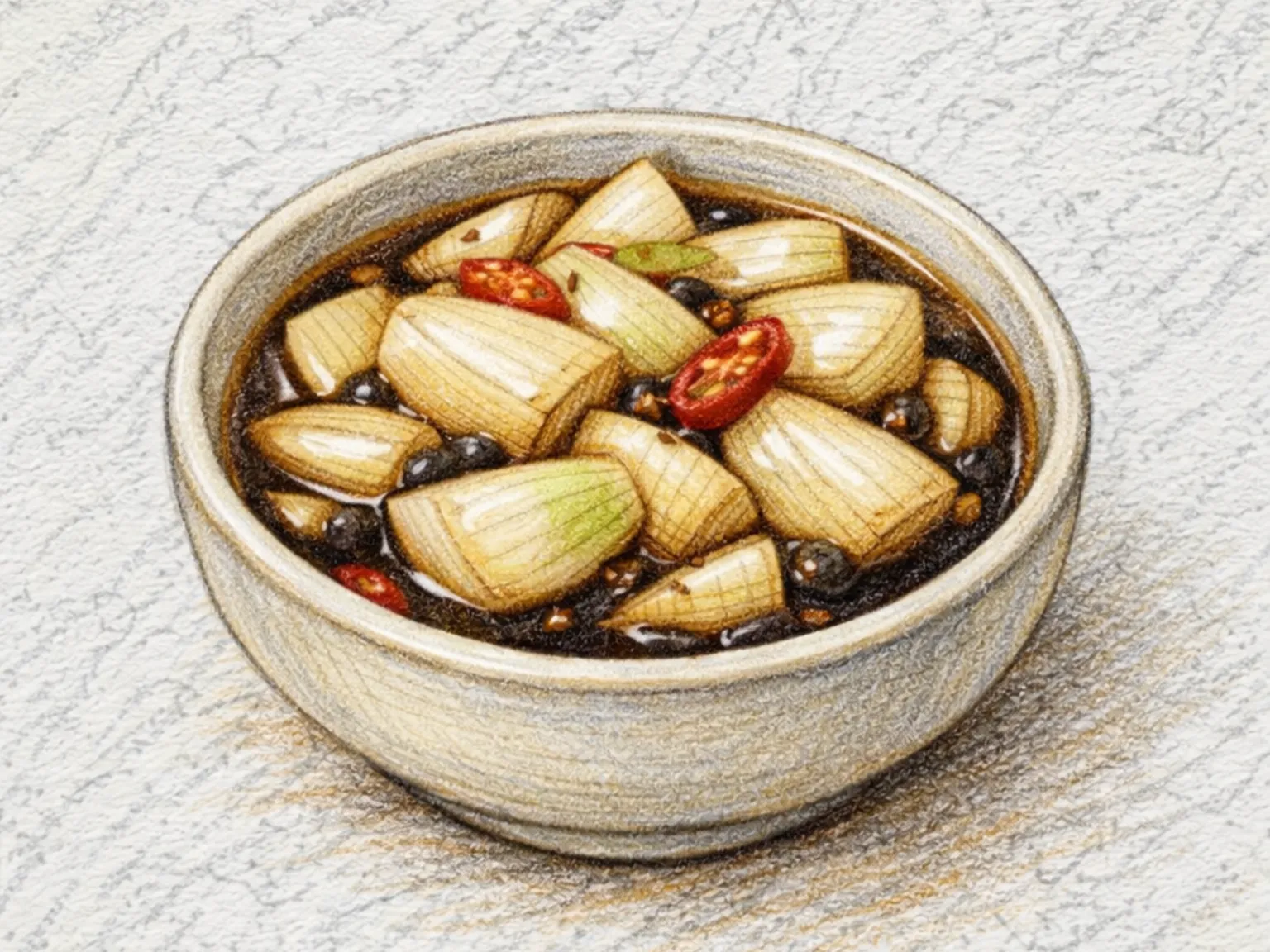
Yangpa jangajji is a soy-pickled onion made by immersing large-cut onion chunks in a boiled brine of soy sauce, vinegar, and sugar. The hot brine tempers the raw onion's sharp, pungent bite on contact, and as the pickle matures in the refrigerator the sweet-salty seasoning penetrates evenly through each piece. Cutting the onion along its fiber rather than against it keeps the texture firm and crisp after pickling, whereas thin cross-cut slices tend to soften quickly in the acidic brine. Sliced cheongyang chili peppers added to the jar gradually release their heat into the liquid, lending a gentle, lingering spiciness that offsets the sweetness and keeps the flavors from becoming one-dimensional. The pickle is ready after one day of refrigeration but improves noticeably at three days or more as the seasoning continues to deepen. It is a staple accompaniment to grilled meats like samgyeopsal, where its acidity and crunch cut through richness and refresh the palate between bites. It also works well over bibimbap or cold noodles. The brine can be brought back to a boil and reused for a second batch of onions, making this an economical pantry item.
Korean Fresh Lettuce Geotjeori
Sangchu-geotjeori is a last-minute lettuce salad where 120 grams of lettuce, torn into bite-size pieces, is tossed for no more than 20 seconds in a dressing of red pepper flakes, soy sauce, vinegar, plum syrup, minced garlic, and sesame oil. The lettuce must be thoroughly dried after washing so the dressing adheres to the leaves rather than pooling at the bottom. Thinly sliced onion adds crunch and a sharp edge that complements the mild bitterness of the lettuce. Plum syrup provides a fruity sweetness that is more subtle than granulated sugar, while the vinegar tempers the chili heat. Serving immediately is critical - within minutes the leaves begin to wilt, losing the crisp texture that defines this dish.
Korean Lotus Root Jangajji
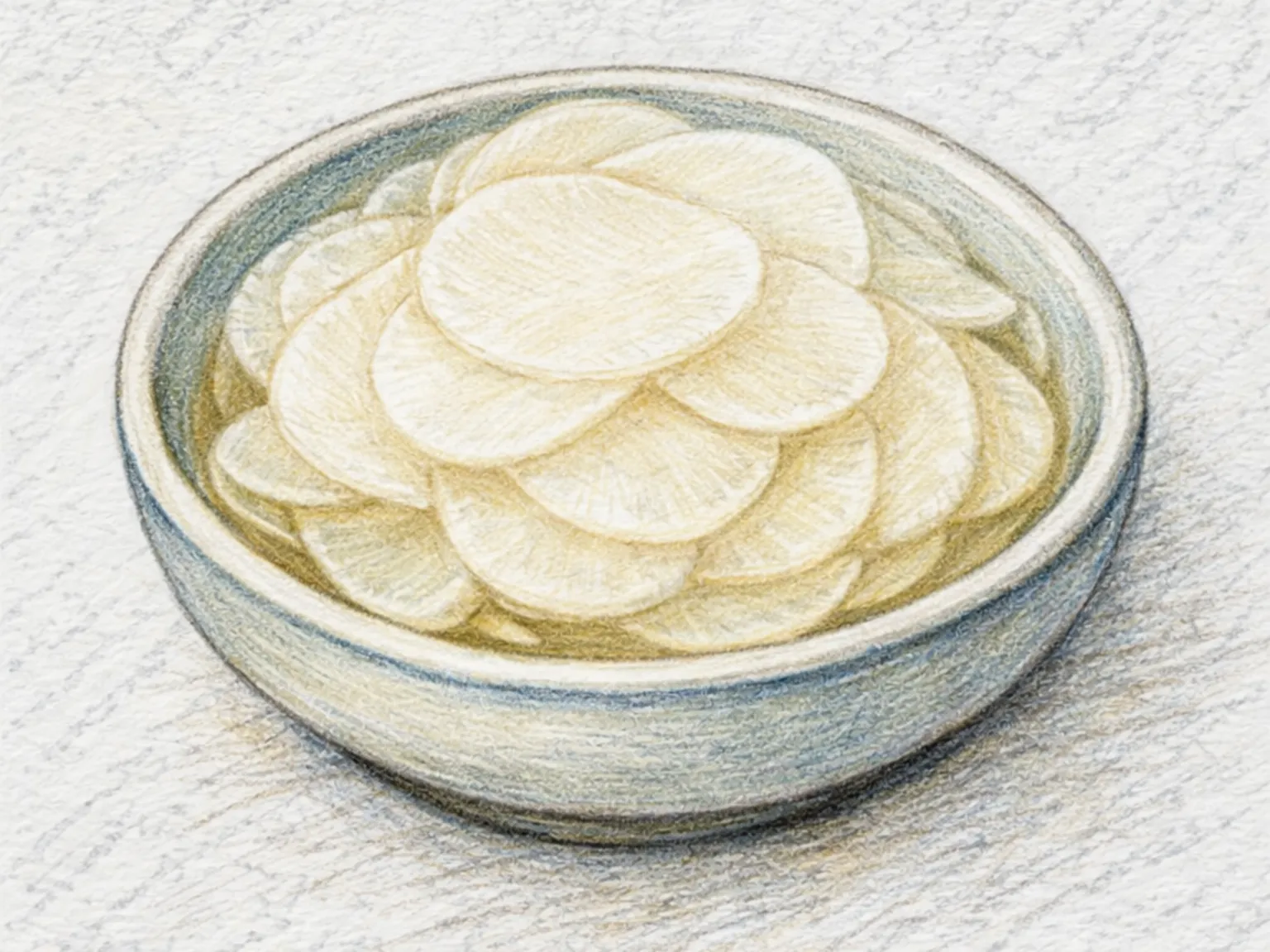
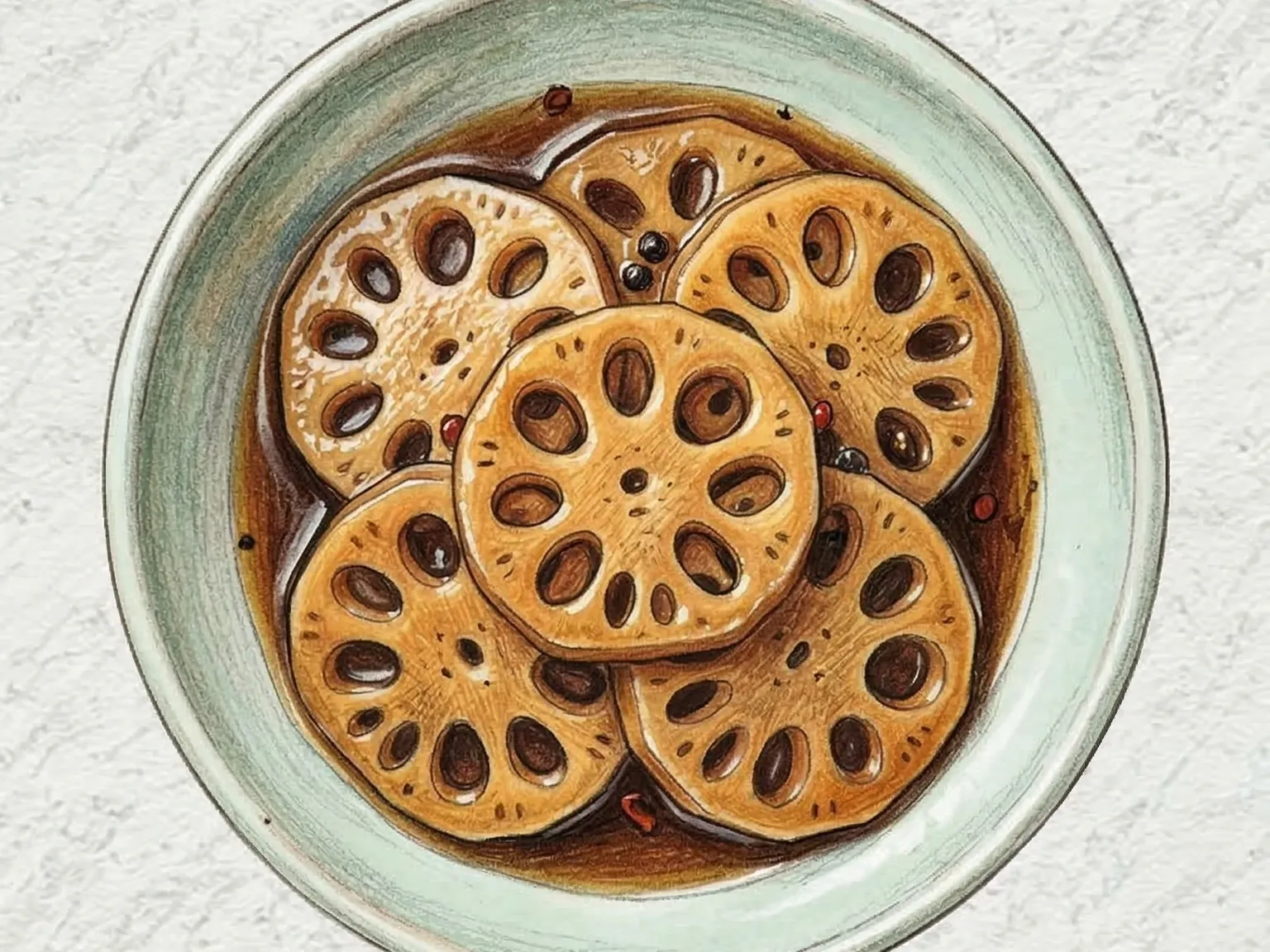
Yeongeun jangajji is a soy-pickled lotus root made by blanching sliced root in vinegar water to prevent discoloration, then soaking it in a hot brine of soy sauce, sugar, peppercorns, and bay leaf. The brine seeps through the root's characteristic holes, distributing a balanced salty-sweet flavor evenly in every bite. Bay leaf tempers the heaviness of the soy base while whole peppercorns add a mild spice undertone. The result is a pickle with a dual texture - simultaneously chewy and crisp - that keeps well for days and works as a lunchbox side or everyday banchan.
Igisu (Egonori Seaweed Gel)
Igisu is a Tottori dish made by boiling dried igisu seaweed, also called egonori, until it sets naturally into a firm gel. The seaweed is washed several times, soaked, and carefully cleared of debris before it is cooked with water and a small amount of vinegar. Steady stirring over low heat for 30 to 40 minutes breaks down the fine fibers into a smooth paste. Chilling it in a container produces neat, jelly-like blocks without a separate setting agent. The pieces are topped with sesame and dipped in soy sauce, and have long appeared in Buddhist vegetarian meals, New Year tables, memorial services, and ceremonies.
Korean Lotus Root Kimchi (Crunchy Spiced Root Kimchi)
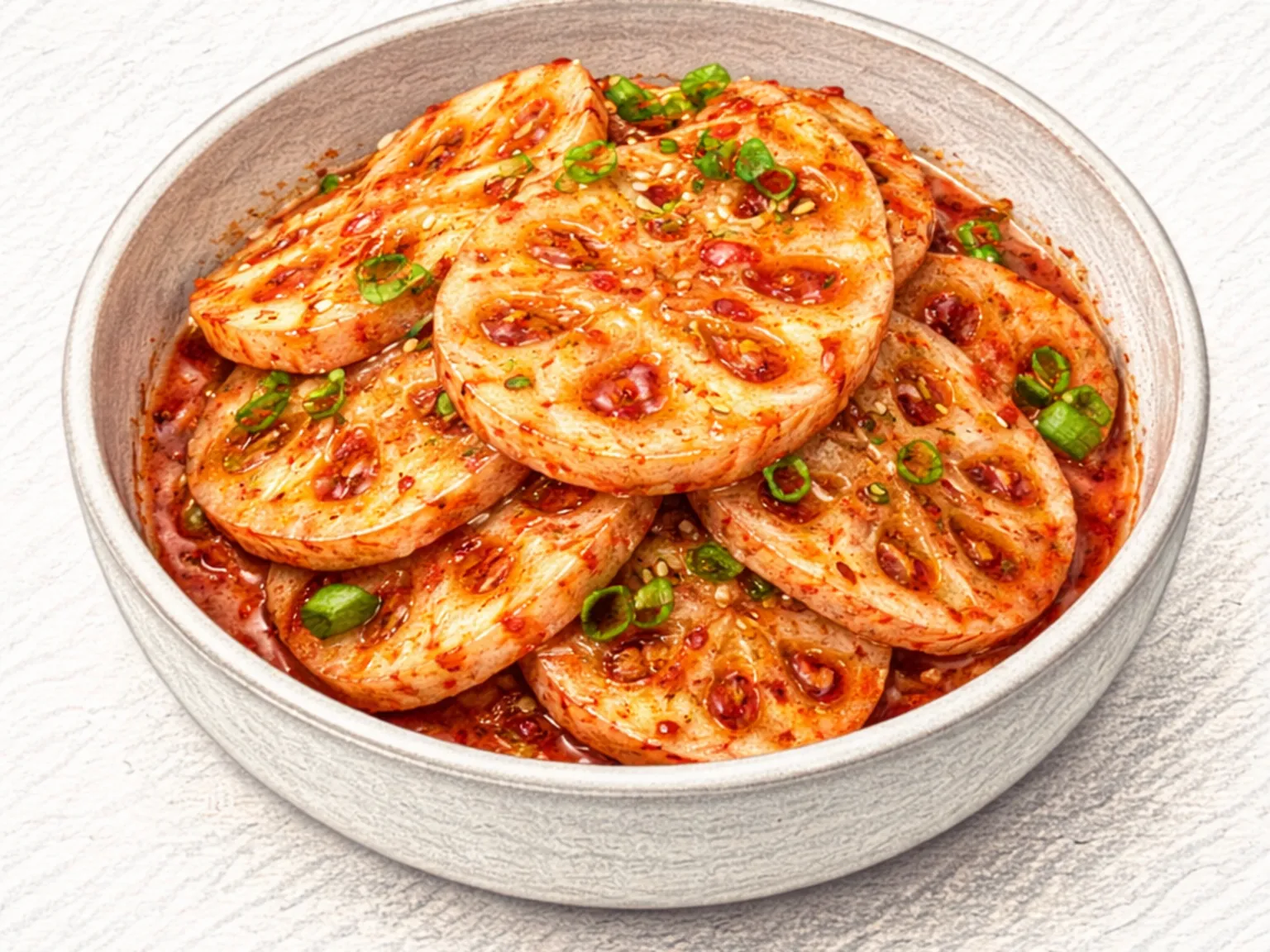
Starting with sliced lotus root boiled in vinegar water helps remove bitterness while keeping the vegetable pale and crisp. The seasoning combines gochugaru, minced garlic, and anchovy fish sauce with the addition of fresh pear juice. This pear juice provides natural sugars and necessary moisture so the chili paste coats each slice evenly without becoming dry or clumping. Even after the fermentation process begins, the lotus root maintains its signature firm and crunchy texture. Sliced scallions are tossed in to add a fresh aromatic quality that balances the spicy garlic paste. One full day of refrigeration allows the flavors to settle into the flesh before serving. Because the seasoning gets trapped inside the characteristic holes of the root, the paste should remain thick rather than watery to ensure consistent flavor. When left to ferment for a few more days, the developing acidity helps cut through the richness of grilled meats or fried dishes. A light addition of sesame oil and toasted sesame seeds at the end brings a toasted scent to every bite.
Korean Seasoned Glasswort Salad
Sebalnamul-muchim features 220 grams of glasswort, a succulent coastal plant that carries a natural salinity from the tidal flats where it grows. A 10-second blanch in boiling water is enough to barely soften the thin stems while preserving their distinctive pop when bitten. The dressing of gochugaru, vinegar, plum extract, and sesame oil coats the tender shoots without masking their inherent briny flavor. Thinly sliced onion adds a sweet crunch, and the plum extract mellows the vinegar's sharpness into a rounded tartness. Because no additional salt is needed, the final seasoning relies entirely on the balance between acid, sweetness, and the glasswort's own minerality.
Gunma Yuzu Maki
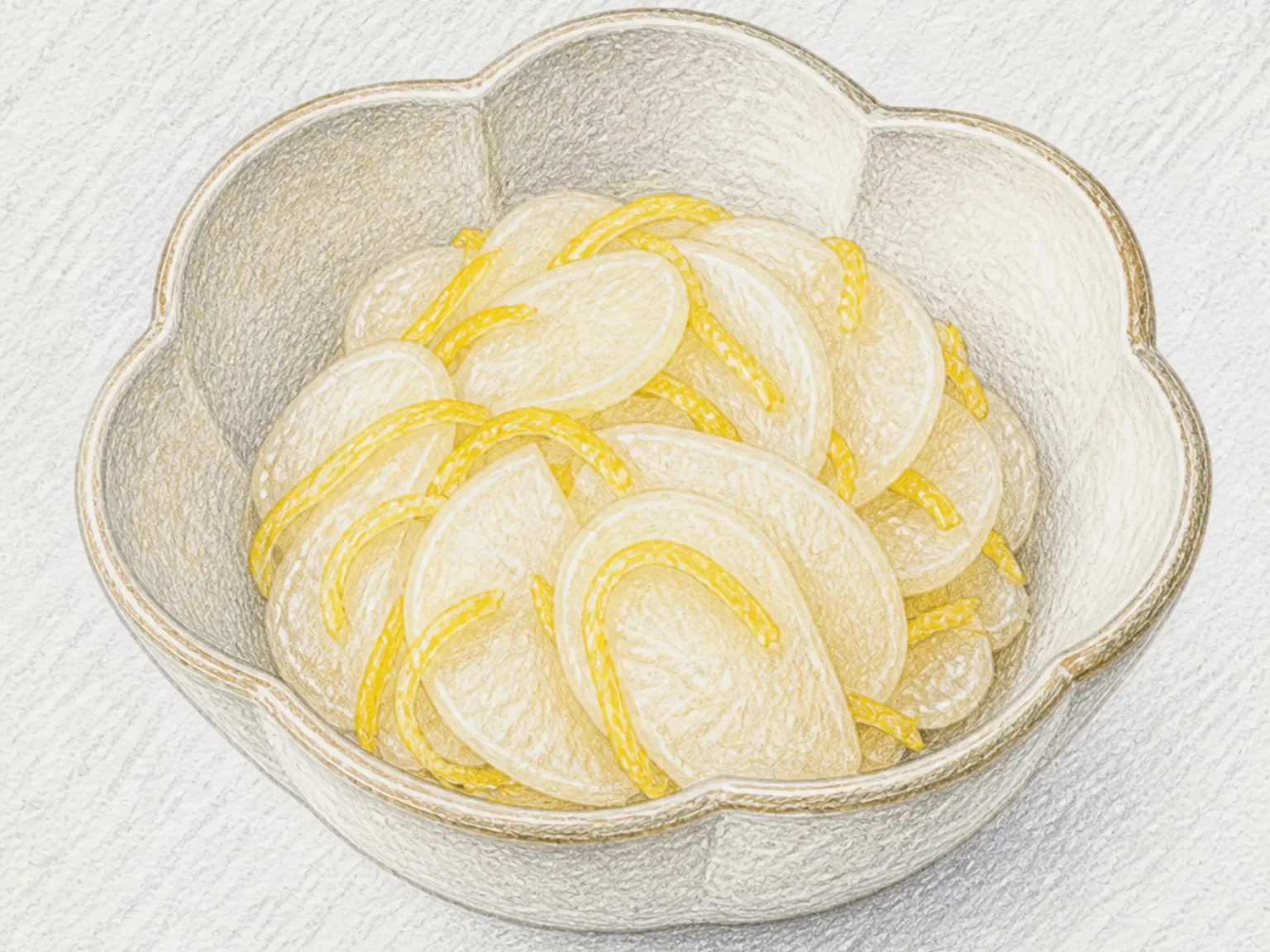
Gunma yuzu maki is a rolled winter pickle made by slicing daikon into 2mm rounds, drying them for a full day in the prefecture's dry karakkaze weather, wrapping each around fine yuzu-peel strips, and curing the rolls in sweet vinegar for about one week. Gunma's low-rain winter climate supported a broad culture of drying konjac, persimmons, daikon, and taro stalks, and this dish grew from that practice. It is served for winter celebrations and may replace red-and-white namasu in osechi. Drying makes each radish slice flexible and absorbent while preserving a pleasant chew, and yuzu perfume spreads through the vinegar as the rolls rest.
Korean Acorn Jelly Salad with Sesame Soy Sauce
Sesame-dotorimuk-muchim is an acorn jelly salad that begins by slicing 400 grams of dotorimuk into 1-centimeter-thick pieces and blanching them for 20 seconds to firm up the surface and make the jelly more resilient to tossing. Julienned cucumber and thinly sliced onion - soaked briefly in cold water to remove sharpness - join the jelly in a bowl. The dressing of soy sauce, vinegar, red pepper flakes, and sesame oil brings a sharp, tangy bite that contrasts with the neutral mildness of the acorn jelly. Generous sesame seeds are scattered on top, and the dish rests for five minutes before serving so the dressing can seep into the jelly's porous surface. The result is a light, refreshing banchan with a range of textures from springy to crisp.
Korean Konjac Noodle Salad
Silgonyak-chae-muchim tosses 250 grams of blanched konjac noodles with julienned cucumber, carrot, and onion in a gochujang-based dressing spiked with vinegar, sugar, soy sauce, and garlic. Blanching the noodles for two minutes removes their faint alkaline smell and softens their rubbery chew to a pleasant springiness. The vegetables provide crisp contrast - cucumber adds a cool snap, carrot a mild sweetness, and onion a sharp bite. The dressing clings to the translucent noodles, turning them a vivid reddish hue. At only 95 calories per serving, this banchan relies on texture and bold seasoning rather than fat for its appeal. Chilling for 10 minutes before serving firms up the noodles and intensifies the tangy-spicy flavor profile.
Korean Seasoned Bitter Lettuce
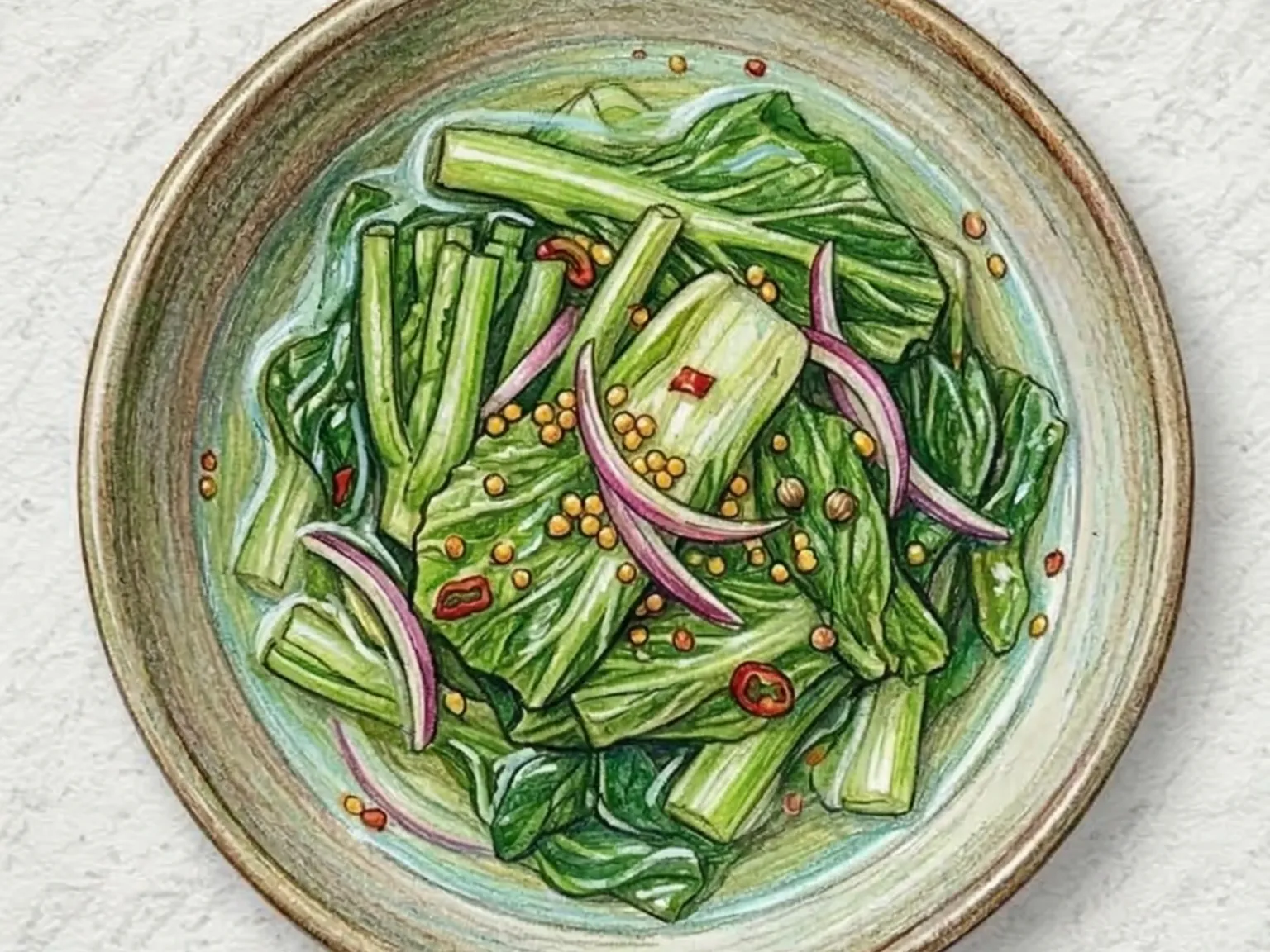
Wild sseumbagui, a bitter green foraged in Korean spring fields, is dressed in a gochujang vinaigrette that transforms its sharp bitterness into a layered, complex side dish. The intrinsic bitterness of the leaves works as a palate cleanser, and the gochujang's heat and vinegar's acidity wrap around it to build depth rather than mask it. Sugar smooths the rough edges of the combined flavors, while a drizzle of sesame oil closes each bite with a warm, nutty finish. Soaking the greens in salt water draws out enough bitterness to make them approachable without erasing the vegetal character that defines this namul. Over-soaking strips the personality entirely, leaving a flat, unremarkable green. Garlic folded into the dressing adds a pungent undercurrent, and a gentle tossing motion keeps the fragile leaves intact. The flavor progresses from bitter opening to spicy-sour middle to a sesame-scented close, a sequence that captures the taste of Korean spring.
Sudarefu Gomazu-Ae (Dried Wheat Gluten with Sesame Vinegar)
Sudarefu gomazu-ae is a Yuki City dish made by soaking heavily salted dried sudarefu overnight, rinsing out the salt, cutting it into 1 cm strips, and dressing it with toasted sesame ground halfway smooth, vinegar, sugar, and soy sauce. Pickled red ginger provides a sharp colored garnish. Yuki sudarefu is produced by adding flour back to extracted wheat gluten, kneading and rolling it thin, salting and boiling it, then drying it in sunlight over a bamboo screen. The screen pattern and salted drying method create a firmer bite and longer keeping quality than ordinary fresh fu. It was used in Buddhist vegetarian food around temples and the former castle town and was already valued by the late Edo period. Because production required extensive handwork, families reserved it for weddings, funerals, festivals, Obon, and other gatherings.
Korean Seasoned Hijiki Seaweed
Fresh hijiki seaweed is blanched and dressed in a chogochujang sauce - gochujang, vinegar, and sugar combined - that highlights the sea vegetable's briny character. Hijiki's slender, dark strands turn deeper black after blanching, and their texture firms into a distinctive pop that crunches lightly between the teeth. The dressing's tangy heat meets the seaweed's subtle ocean salinity, producing a refreshing umami interplay that makes this banchan especially appealing in warmer months. Sugar tempers the vinegar's sharpness, rounding the overall flavor into something balanced rather than aggressive. Thinly sliced raw onion mixed in adds a crisp contrast to the seaweed's softer chew, and minced garlic contributes a pungent depth beneath the sauce's bright surface. Rinsing the hijiki in cold water immediately after blanching and draining it thoroughly prevents the strands from turning tough. The finished dish is rich in iron and calcium, making it as nutritionally substantial as it is flavorful.
Korean Lotus Root Pancakes
Lotus root is sliced into rounds and coated in a light batter of buchim flour and egg before being pan-fried until golden on both sides. The root's characteristic perforations show through the thin batter, creating a lace-like appearance on each piece that makes this jeon visually distinctive. Biting through the crisp exterior reveals the lotus root's dual texture: an initial crunch from the starchy flesh followed by a slightly sticky chew that clings pleasantly to the teeth. Slicing to a thickness of five to six millimeters strikes the right balance between maintaining the crunch and ensuring the center cooks through. The egg-enriched batter adheres evenly to the root's smooth surface and sets immediately upon contact with hot oil, sealing in moisture. Minimal salt in the batter allows the lotus root's faint natural sweetness to emerge, and a dipping sauce of soy sauce and vinegar provides the acidity needed to cut through the fried exterior's richness. Commonly served during Korean holidays, this jeon is simple enough for everyday cooking as well.
Korean Braised Lotus Root
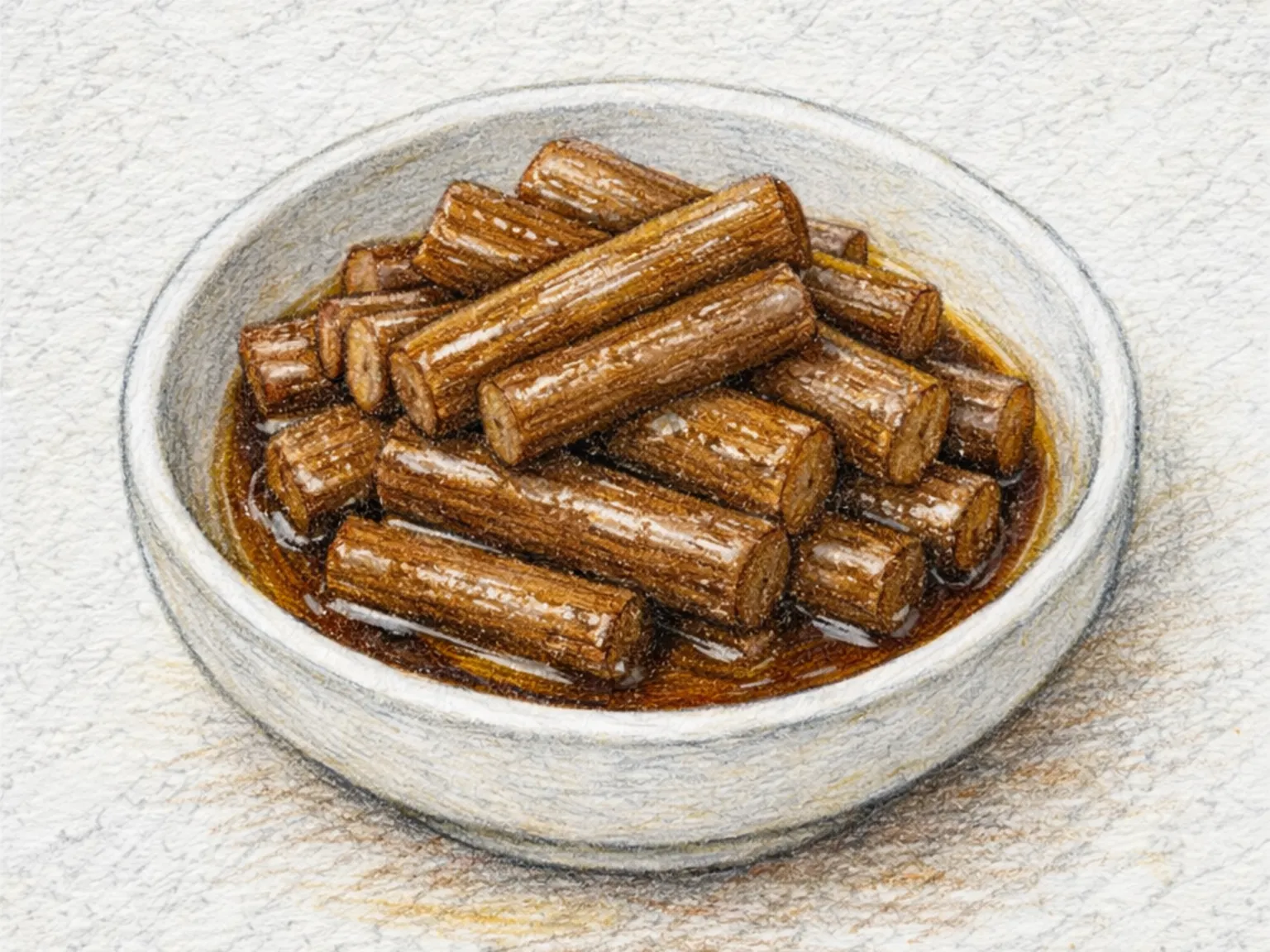
Lotus root rounds are simmered in soy sauce, sugar, and corn syrup until each slice glistens with a translucent, caramel-colored glaze. Cooking activates the starch in the lotus root, turning the exterior smooth and the interior pleasantly sticky, a texture unique to this root vegetable. As the soy sauce permeates the flesh, the ivory color deepens into a clear amber that signals the seasoning has reached the center. A splash of vinegar at the start prevents discoloration and introduces a faint tartness that prevents the sweetness from becoming cloying. The corn syrup reduces over low heat for fifteen to twenty minutes, forming a glass-like coating that catches the light on every surface. Because the liquid seeps through the root's hollow channels, every bite delivers consistent flavor regardless of angle. The finished jorim retains its crunch at the core while the outer layer yields with a gentle chew, and refrigerated in a sealed container the dish stays good for well over a week.
Korean Lotus Root Salad (Sweet and Sour Vinegar Soy Dressing)
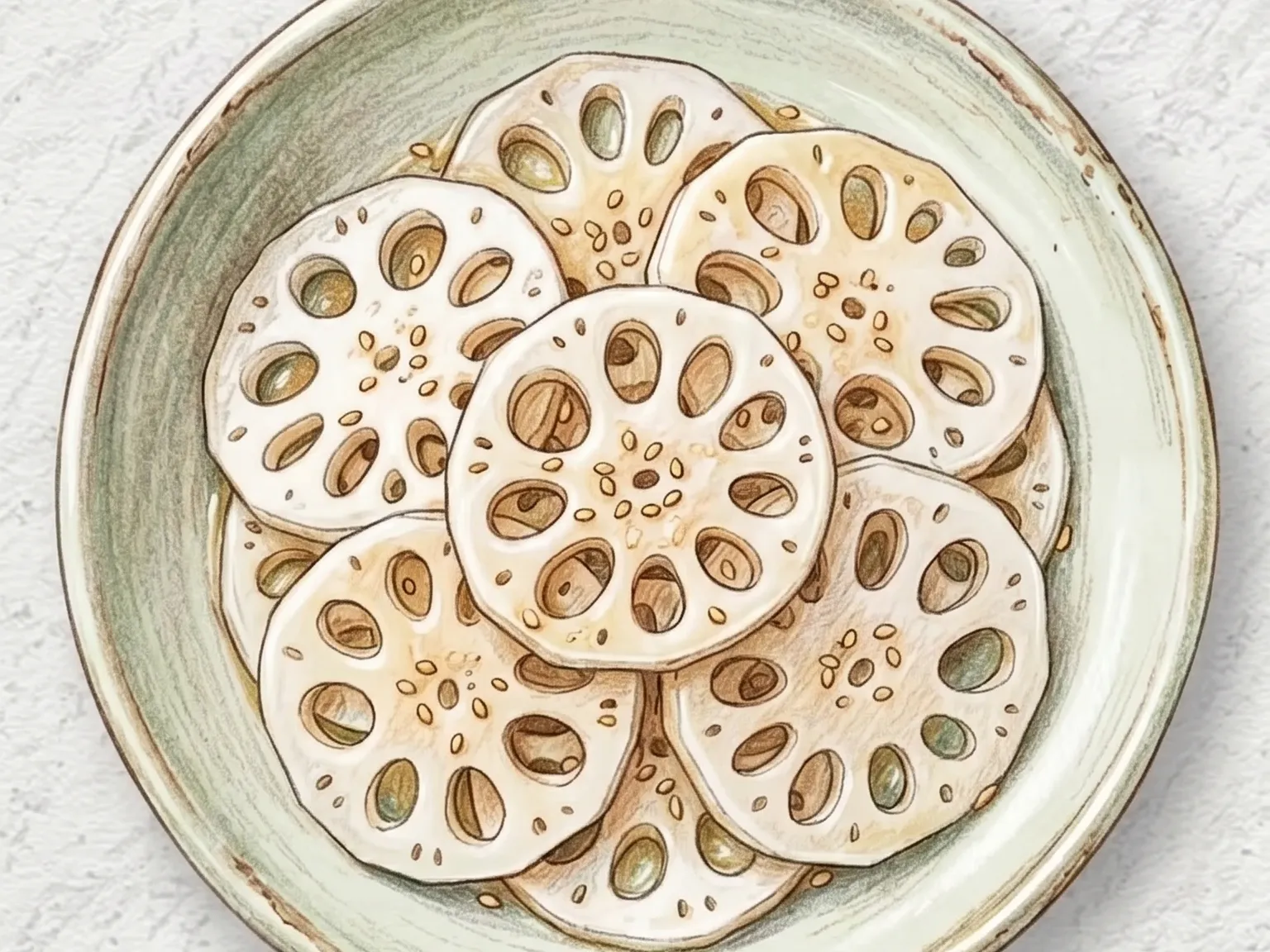
Thinly sliced lotus root is blanched in vinegar water to keep its bright white color, then tossed in a sweet-and-sour dressing of soy sauce, vinegar, and sugar. The honeycomb cross-section of each slice traps seasoning in its holes, distributing flavor evenly with every bite. A finishing sprinkle of sesame seeds adds a toasted aroma that complements the crisp, snappy texture. Because the dish stays dry rather than releasing liquid, it holds up well in packed lunches without turning soggy. Controlling texture and final seasoning helps the ingredients cook evenly while keeping the final seasoning balanced.
Korean Lotus Root Yuzu Salad
Blanched lotus root slices are dressed in a bright mixture of yuzu marmalade, rice vinegar, sesame oil, and a pinch of sugar. The citrusy yuzu lifts the otherwise neutral lotus root with floral tartness, while the 3 mm thick rounds keep a satisfying crunch even after boiling. Sesame seeds and oil round out the finish with a warm, nutty note. This banchan works especially well alongside richer main dishes, cutting through heaviness with its clean acidity. It can be served as a side dish with rice, with simple accompaniments chosen to match the sauce, broth, or topping.