🥗 Light & Healthy Recipes
Light, healthy, low-calorie dishes
712 recipes. Page 18 of 30
These low-calorie recipes prove that healthy eating does not have to be boring. High-protein meals, vegetable-forward dishes, and low-carb options - all designed to support weight management and better eating habits.
Diet-friendly does not mean small portions or bland flavors. Chicken breast, tofu, konjac, and eggs provide lasting satiety, while smart seasoning and cooking methods keep the taste appealing. Build a sustainable, healthy routine with these recipes.
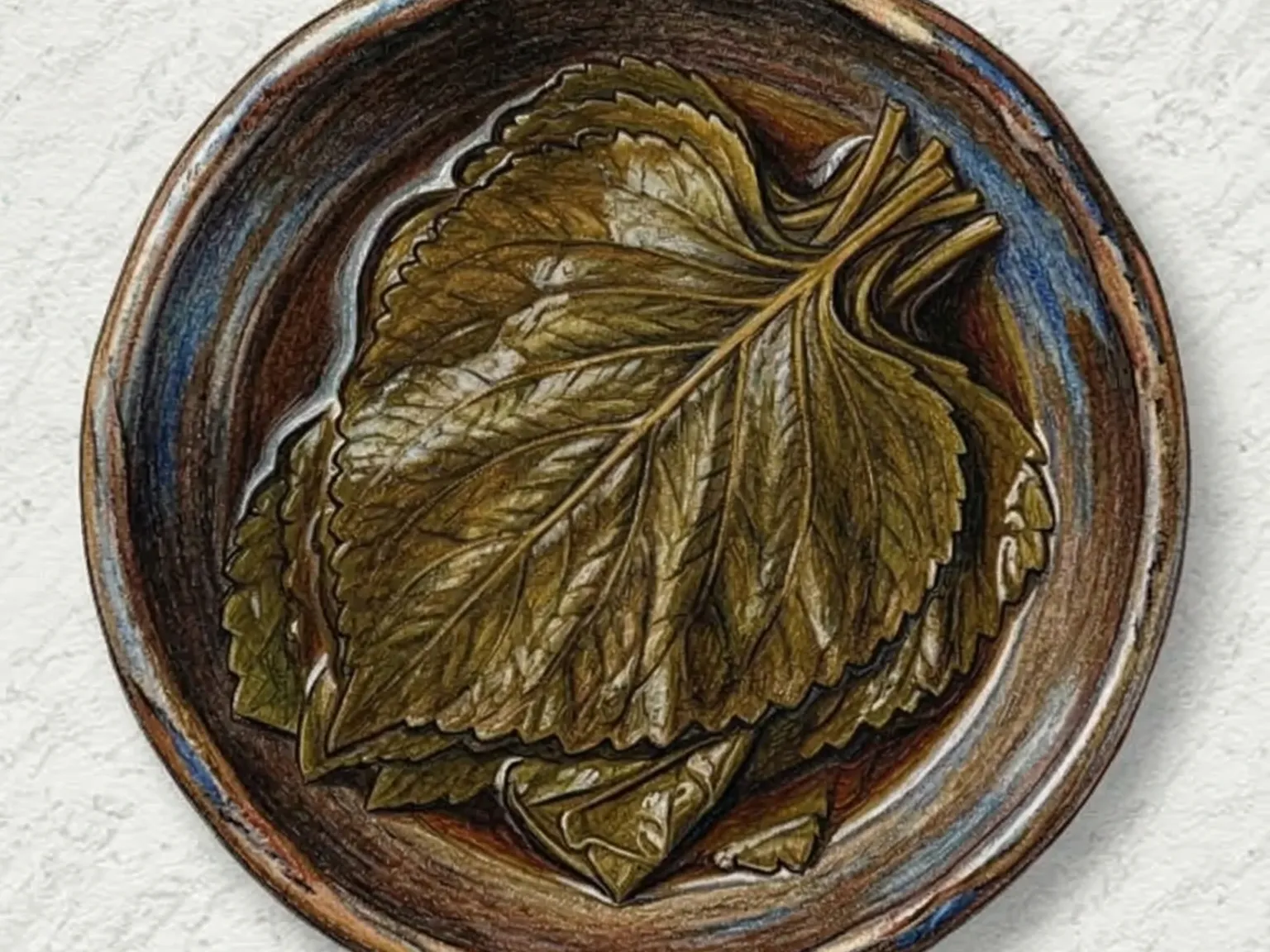
Korean Gomchwi Leaf Jangajji
Gomchwi jangajji is a Korean mountain herb pickle made by submerging gomchwi leaves - a wild member of the ligularia family - in a prepared brine of soy sauce, vinegar, and sugar. The leaves carry a powerful, distinctly wild green fragrance that intensifies rather than fades as they cure, deepening when paired with the savory weight of fermented soy. Vinegar keeps the flavor profile from becoming too heavy, cutting through the richness of the soy with a clean, acidic finish after each bite. The leaves are notably broad and thick-fleshed compared to most pickling greens, which means they absorb the brine thoroughly and evenly over a few days of curing. When draped over a bowl of rice and folded into a wrap, the leaf's pungent aroma and salty seasoning seep directly into the grains, creating a self-contained bite that requires no additional side dishes. Garlic and cheongyang chili added to the brine contribute a sharp warmth and a mild heat that prevent the deep, earthy flavor of the mountain herb from becoming monotonous across a meal.
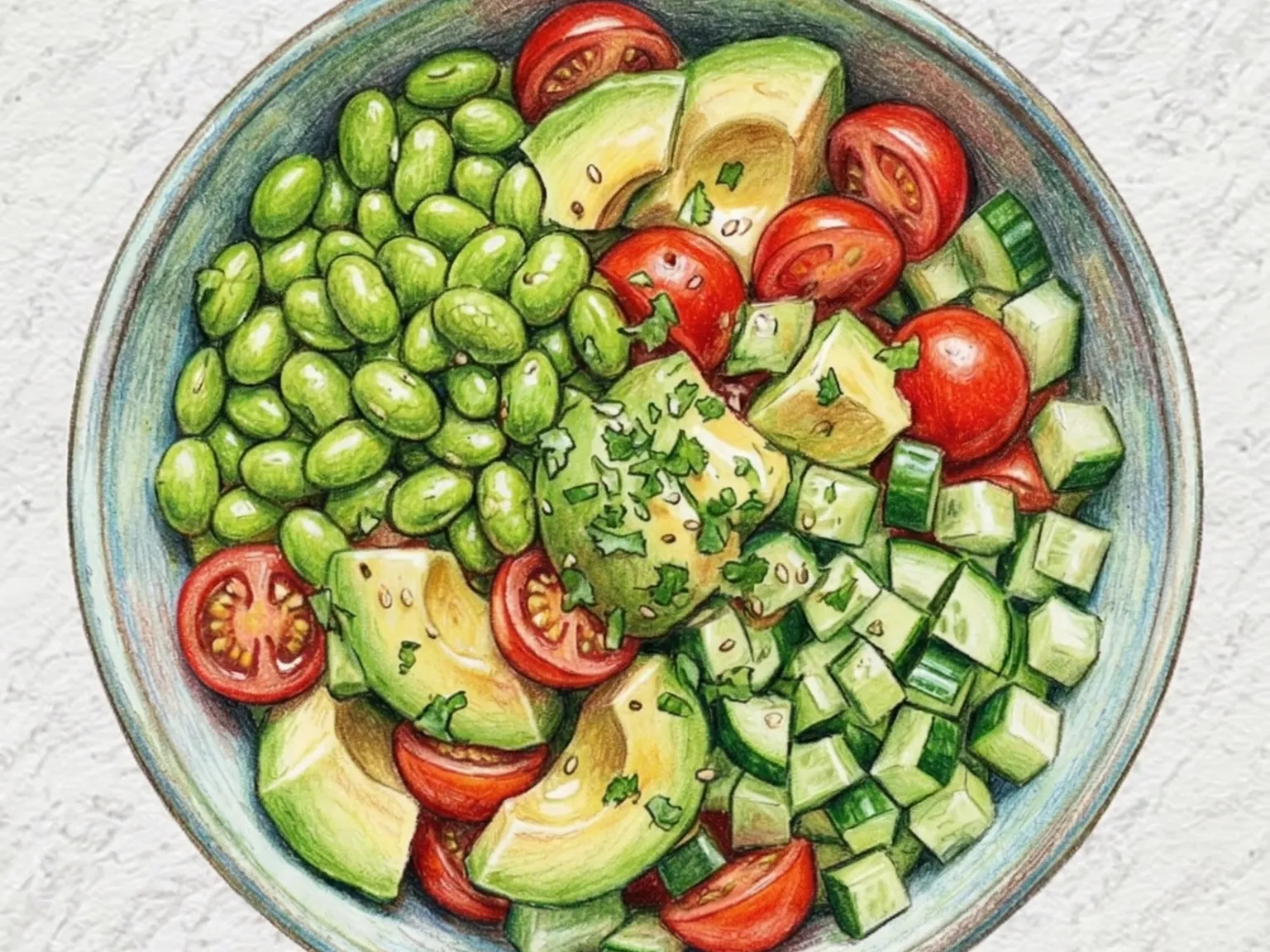
Edamame Avocado Salad
Edamame avocado salad brings together two ingredients with contrasting textures: shelled edamame, which snaps with a firm, slightly starchy bite, and ripe avocado cut into generous chunks that are smooth and buttery. The dressing is a soy-lime combination with a small pour of sesame oil - the lime cuts through the fat in the avocado, the soy adds umami depth, and the sesame oil contributes a roasted, nutty backdrop that pulls the Asian flavor profile together. Thin-sliced cucumber and halved cherry tomatoes fill out the bowl with crunch and bright acidity, keeping the whole thing fresh rather than heavy. Beyond boiling the edamame, no cooking is required: the avocado goes in raw, the dressing is whisked together in under a minute, and the whole salad is assembled cold. Total time from start to table is under 15 minutes, making it a practical option for quick lunches or side dishes.

Korean Mixed Fruit Punch
Modum hwa-chae is a Korean fruit punch assembled by dicing several types of fruit into similar-sized cubes and submerging them in honey water and sparkling water. Apple and pear contribute a firm, satisfying crunch, while green grapes add a burst of sweet juice when the skin breaks between the teeth. Cutting everything to a consistent size matters because it ensures each spoonful carries a balanced mix of textures rather than any single fruit overwhelming the others. Honey dissolved in cold water merges with the natural juices released by the fruit, building a sweetness that feels integrated rather than applied. Sparkling water is added last, its bubbles threading up through the fruit pieces to give the punch its characteristic effervescence, so the drink is best served before the carbonation fades. Generous ice keeps the bowl thoroughly cold and prevents the fruit from softening, which preserves the sharpness of each variety's flavor. The combination of fruits shifts freely with the seasons, making this one of the most adaptable summer refreshments in Korean home cooking.
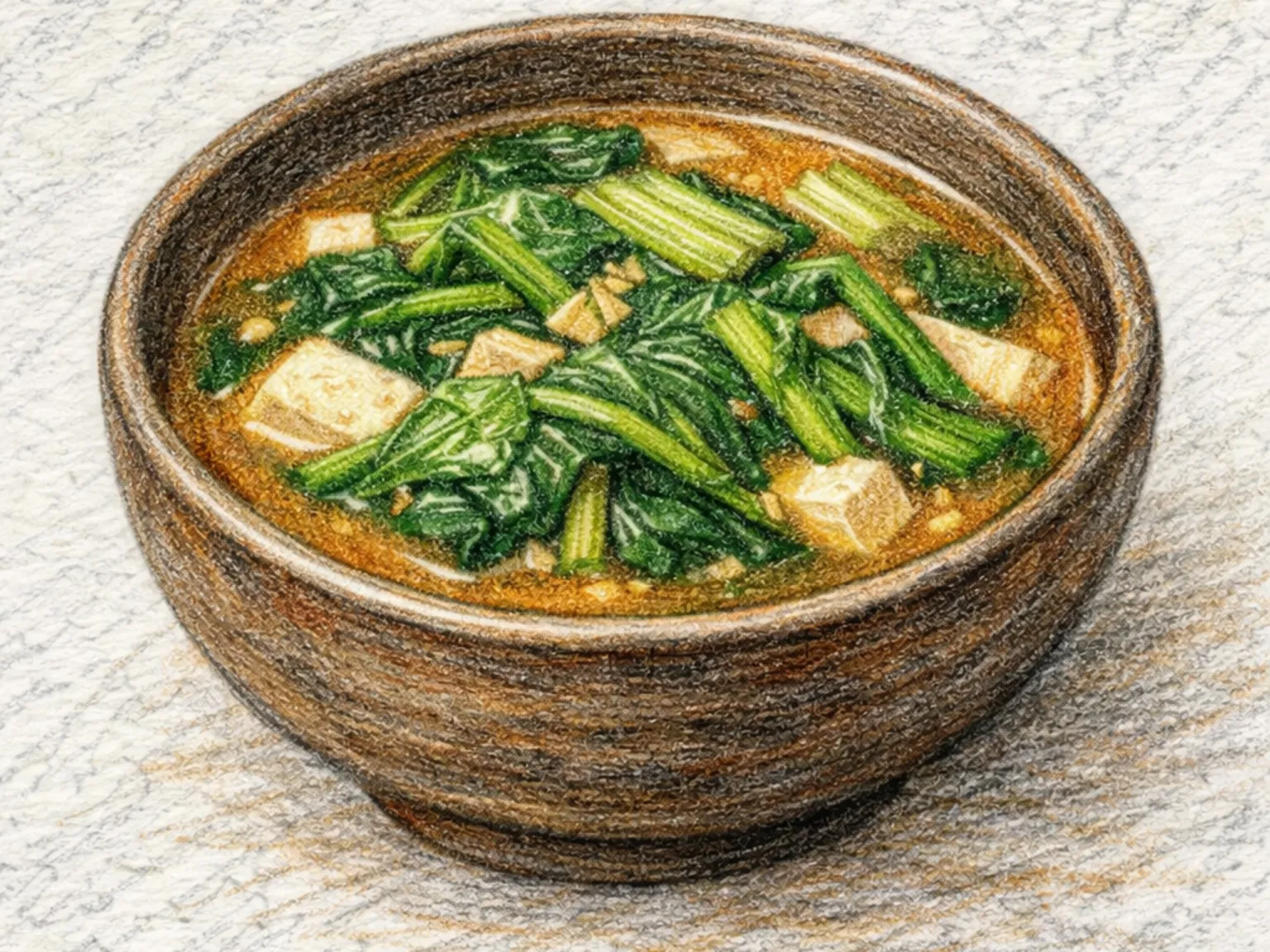
Geundae-guk (Korean Swiss Chard Doenjang Soup with Tofu)
Geundae-guk is a homestyle Korean soup made by simmering Swiss chard leaves and stems in anchovy stock seasoned with doenjang. Swiss chard, called geundae in Korean, has broader leaves and thicker stalks than spinach, giving the soup a more substantial bite, and the greens' mild bitterness pairs naturally with the fermented depth of doenjang into an earthy, grounding flavor. Cubed tofu is typically added alongside for protein and a soft contrast to the chewy greens, while minced garlic rounds out the aroma of the broth. The entire cooking process takes barely ten minutes once the stock is boiling, making this one of the quickest doenjang soups in the Korean home-cooking repertoire. In Korean households, this soup appears most often in spring and autumn when fresh chard is in season, though frozen chard works through the rest of the year without significantly changing the flavor of the broth. Overcooking the greens after adding doenjang softens the leaves until they lose their texture, so pulling the pot off the heat three to four minutes after the paste dissolves preserves the chard's pleasant chew.
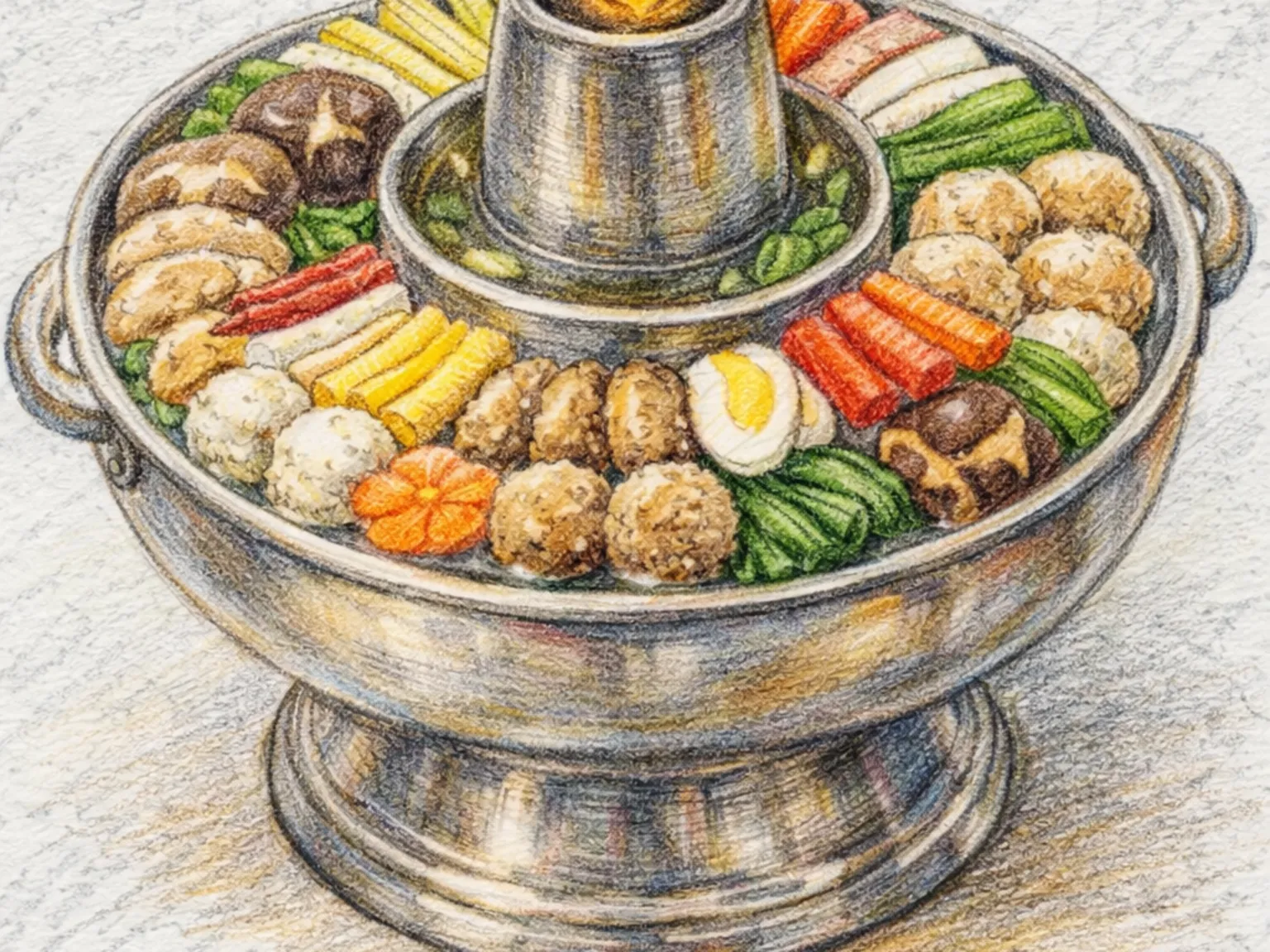
Royal Korean Hot Pot (Court-Style Beef & Tofu Banquet)
Sinseollo is a traditional Korean royal court hot pot featuring ground beef, tofu, shiitake mushrooms, carrot, and napa cabbage arranged in a rich beef broth. Seasoned with soup soy sauce and finished with beaten egg, the broth develops a velvety body. Historically served in a brass charcoal-heated vessel at the royal table, each ingredient is placed with care to showcase its color and shape. The layered umami from the diverse ingredients creates a remarkably complex flavor. Adding seasoning in stages makes it easier to adjust saltiness, sweetness, and heat without covering the base ingredients.
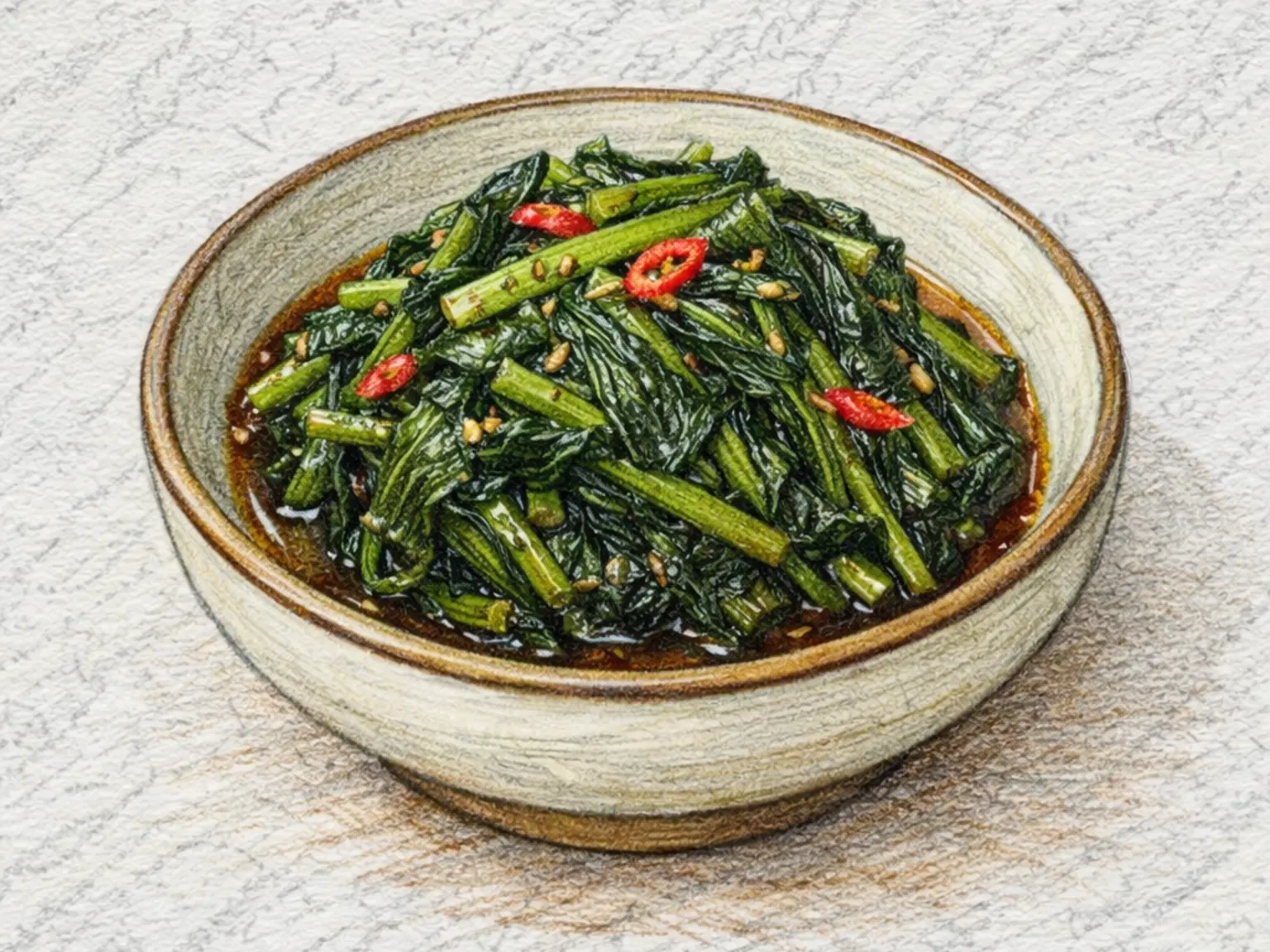
Korean Thistle Greens Pickles
Gondre-jangajji is a pickled banchan made from gondre, a Korean mountain thistle foraged in Gangwon Province each spring. The greens are blanched briefly to soften the fibrous stems before being submerged in a curing liquid of dark soy sauce, brown rice vinegar, rice syrup, minced garlic, and ginger. The blanching step is essential: raw gondre has a toughness that pickling liquid alone cannot fully penetrate, and a short time in boiling water opens the cell structure just enough to allow the marinade to work through without turning the greens limp. Rice syrup wraps the combined salt and acid in a mild sweetness that prevents the sharpness of either from dominating. A cheongyang chili adds a gentle heat at the finish that keeps the overall flavor from reading as one-dimensional. Because the fibrous texture holds the liquid within the grain of the vegetable, the jangajji stays moist and pliable throughout a week or more of refrigerated storage.

Egg Salad Lettuce Wrap
Hard-boiled eggs are roughly chopped and folded into Greek yogurt with a small amount of mayonnaise, producing a lighter take on classic egg salad. The yogurt stands in for most of the mayonnaise, cutting calories while adding a subtle tang that lifts the richness of the yolks. Crisp romaine leaves replace bread as the wrapper, reducing carbohydrates without sacrificing the satisfying structure of each bite. Diced celery provides textural contrast against the soft filling, and Dijon mustard introduces a mild sharpness that cuts through the egg's richness. A squeeze of lemon juice brightens the entire mixture and keeps the flavor from feeling heavy. Sliced green onion or a dusting of smoked paprika added at the end gives the filling a little color and rounds out the flavor. The dish comes together in under fifteen minutes and holds well in the refrigerator, making it a practical choice for meal prep or a light weekday lunch.
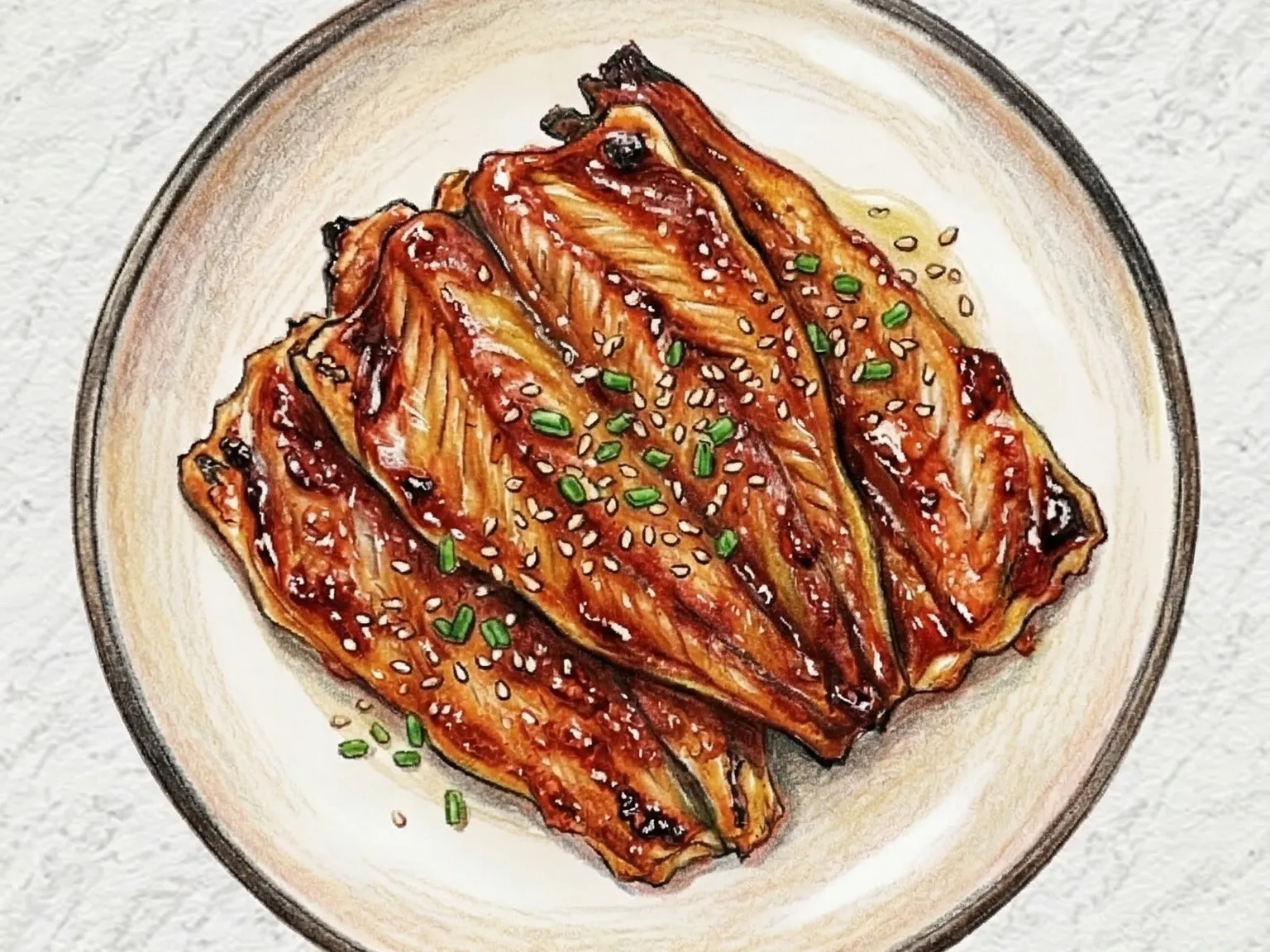
Korean Grilled Dried Pollack
Hwangtae-po-gui is a grilled dried pollack snack prepared by brushing seasoning paste onto semi-dried hwangtae fillets and cooking them over medium-low heat. Hwangtae is pollack that has been freeze-dried repeatedly through winter cycles, a process that puffs up the flesh and gives it a softer grain and chewier texture than ordinary dried fish. A paste of gochujang, soy sauce, and oligosaccharide syrup is spread on both sides and grilled slowly so the sugars caramelize into a glossy, sticky coating. Minced garlic, sesame oil, and sesame seeds add roasted richness, and each torn piece delivers alternating salty and sweet notes. Cooking over high heat is a common mistake that chars the surface while leaving the interior hard and dry, so maintaining a low, patient heat is what allows the seasoning to penetrate fully and the fillet to stay moist. The finished snack pairs well with makgeolli or soju, and dipping torn pieces into mayonnaise is a widely practiced variation that softens the saltiness with a creamy counterpoint.
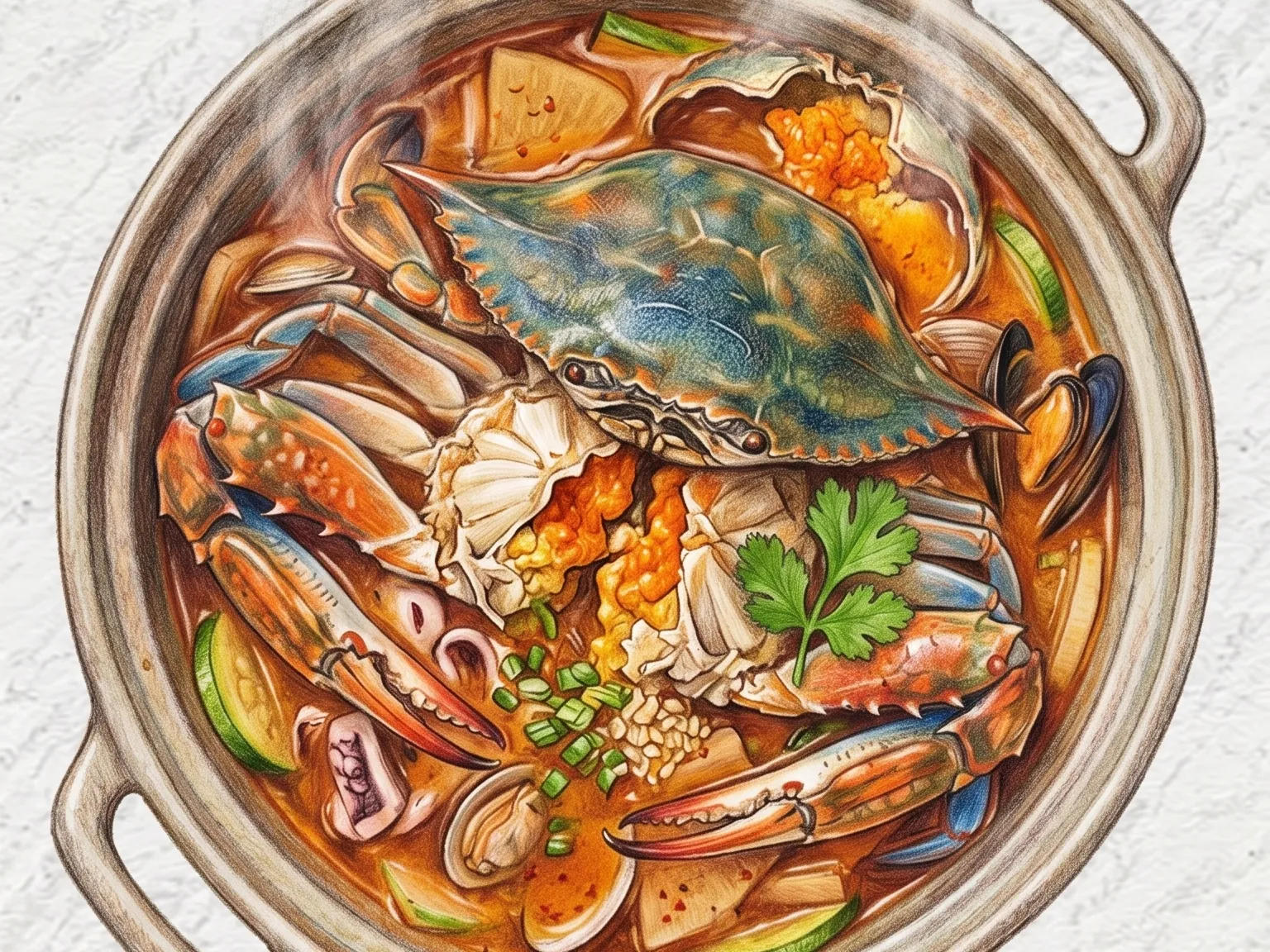
Korean Spicy Blue Crab Soup
Ggotge-tang is a spicy Korean crab soup built around whole blue crabs that infuse the broth with a concentrated, briny seafood depth. The shells release their marine richness as they crack apart during simmering, forming the structural foundation of the pot. Doenjang dissolved into the broth adds fermented complexity, while gochugaru delivers a persistent heat that compounds with each spoonful. Radish chunks sweeten and clarify the liquid, and zucchini with green onion fill the bowl with color and contrasting texture. Before cooking, the crabs should be scrubbed clean under cold water and cleaned of their sand pouches and gills, which eliminates any off-flavors. Scoring the claws lightly with the back of a knife before the pot goes on the heat makes extracting the claw meat easier at the table. Female crabs in season carry bright orange roe inside the top shell that dissolves into the broth and intensifies its richness. The real reward at the end of the meal is mixing leftover rice directly into the crab's top shell with the residual roe and braising juices, a practice Korean diners regard as the true finish of the meal. Blue crab season peaks in spring and autumn.
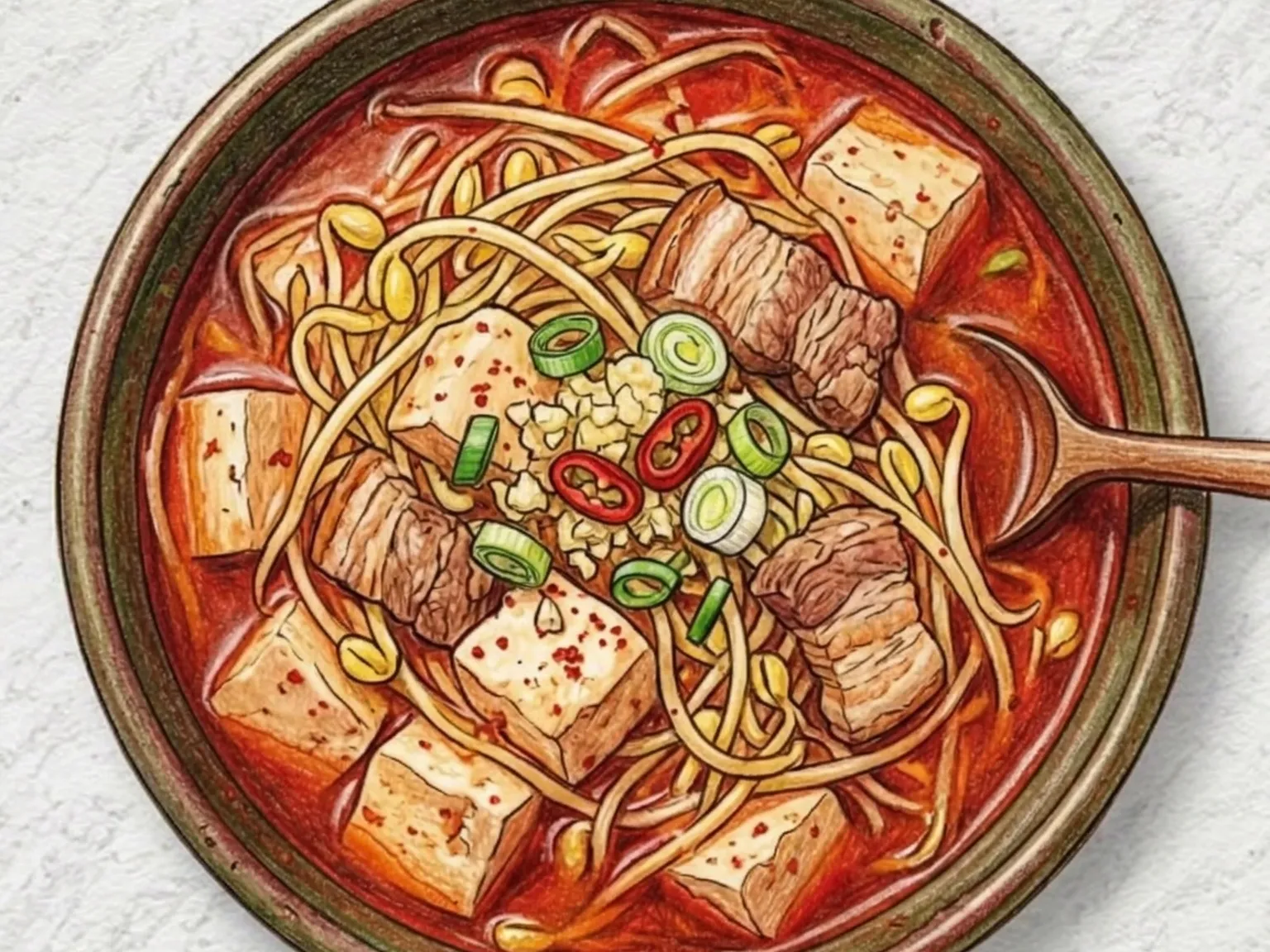
Korean Soybean Sprout Stew
Soybean sprout jjigae is a spicy home-style stew built around kongnamul, with tofu and pork adding substance to a broth seasoned with gochugaru and soup soy sauce. The sprouts release their own clean, slightly sweet liquid as they cook, and that natural base broth combines with the heat of the chili flakes to produce the sharp, refreshing character the dish is best known for. A critical technique rule applies to the sprouts: once the lid is placed, it should not be lifted during cooking. If the lid is removed and steam escapes, the sprouts develop an unpleasant grassy smell that cannot be reversed. If the lid is accidentally opened, the only correction is to leave it off and continue cooking without it until the end. Tofu absorbs the broth and provides a soft contrast to the crunchy sprouts, while the pork contributes fat and savory depth that enriches the broth. Green onion and minced garlic add aroma, and cracking a beaten egg into the pot as the broth comes to a full boil creates soft egg pieces throughout. The whole dish comes together in under twenty minutes from start to finish, making it a practical weeknight soup.
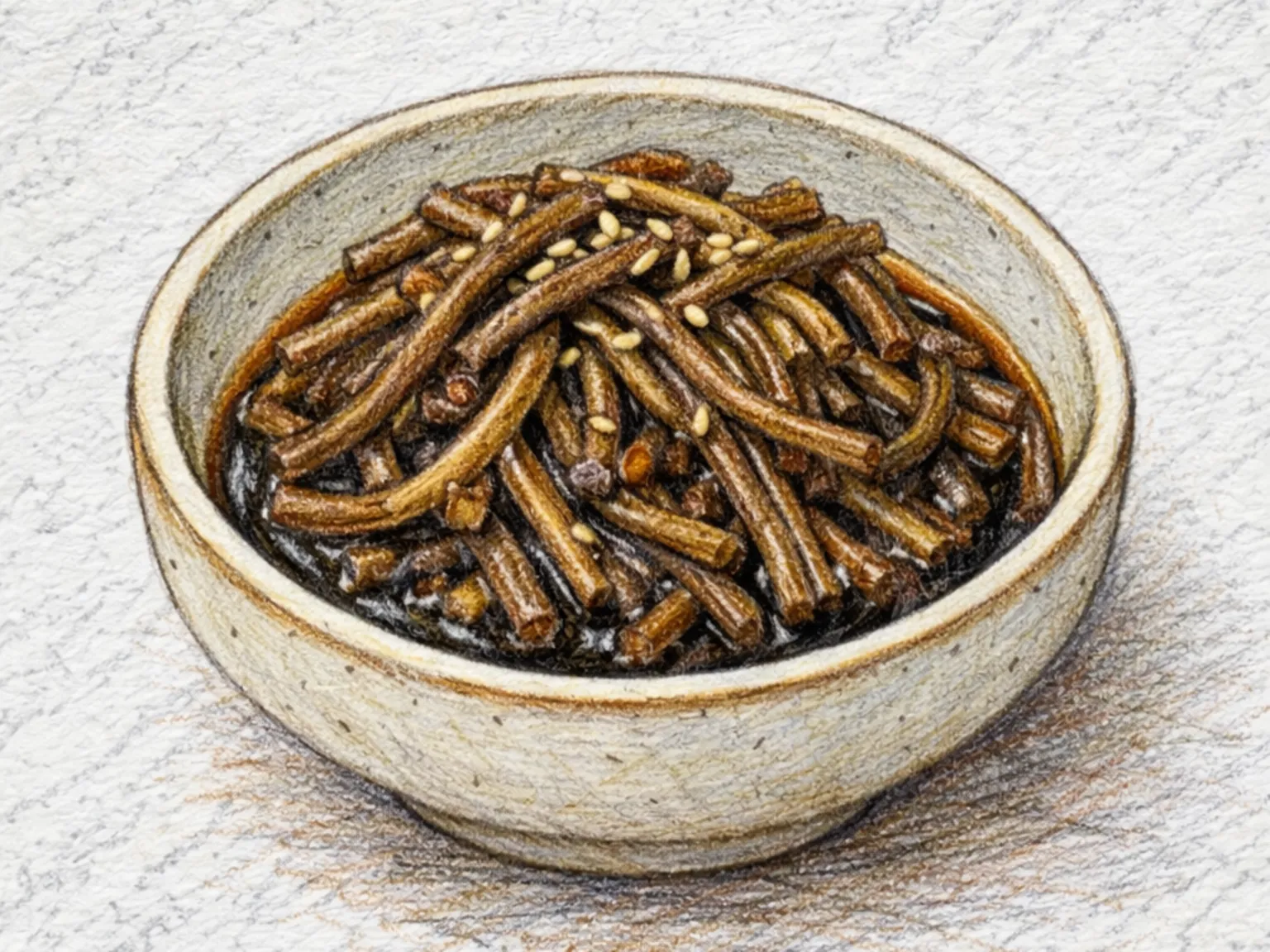
Korean Bracken Fern Pickles
Gosari jangajji is a Korean pickled bracken fern made by submerging boiled bracken stems in a brine of dark soy sauce, vinegar, sugar, and rice wine. The fern's earthy, nutty aroma weaves together with the soy umami in layers, deepening with each bite as the flavors come into focus. Though the stems are boiled until soft, the plant's natural fiber retains enough structure to give a satisfying chew, and dried chili and garlic added to the brine contribute a quiet warmth that builds gradually. Vinegar's acidity cuts through the heavier, loamy earthiness that raw bracken can carry, leaving the aftertaste clean and bright. Refrigerated, the jangajji keeps comfortably for over a week, making it a practical, ready-to-serve banchan. For anyone familiar only with gosari namul, this pickled version is a worthwhile discovery.
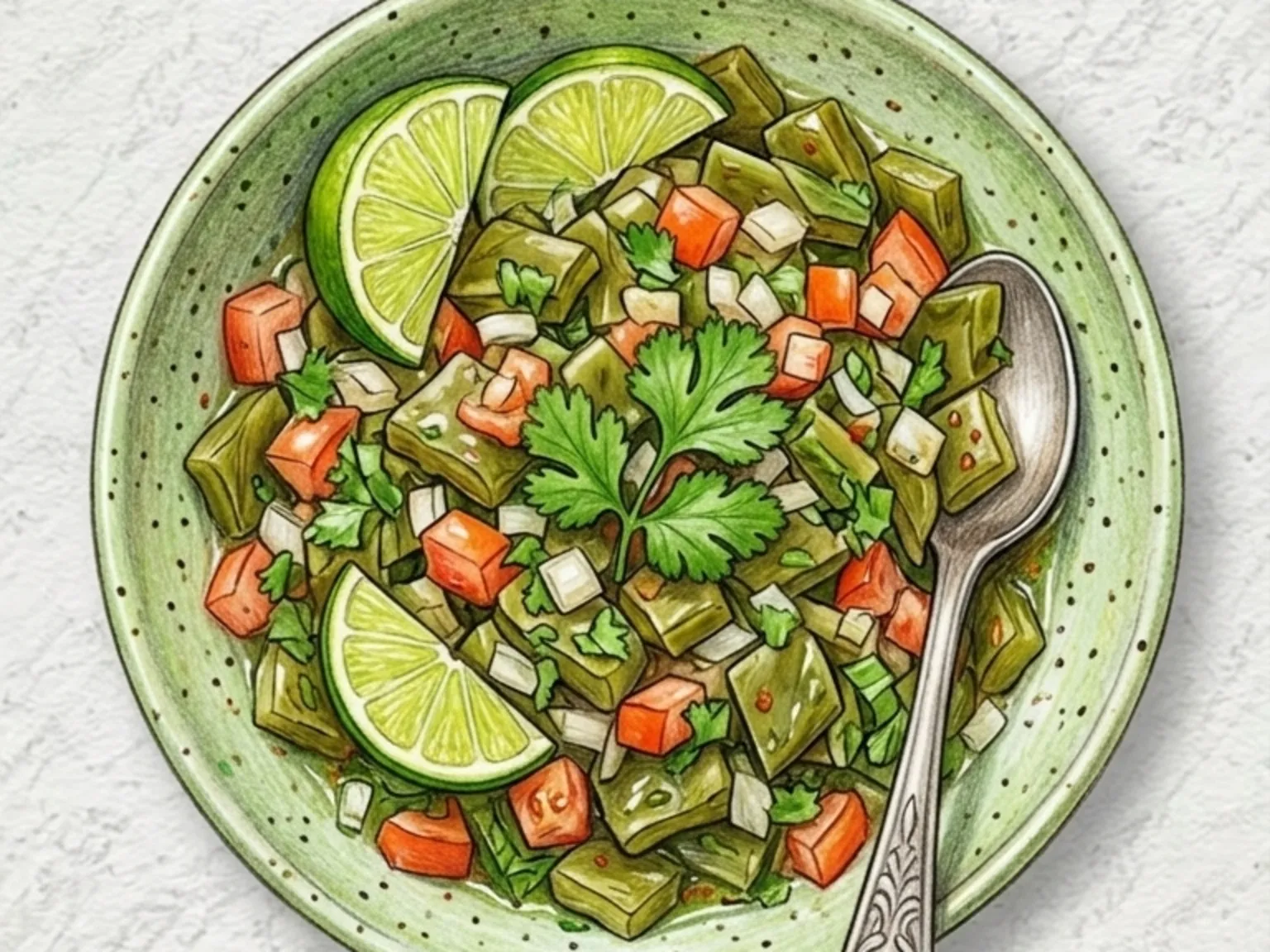
Mexican Cactus Salad (Lime-Dressed Nopal Cactus Pad)
Ensalada de nopales is a traditional Mexican salad made from cleaned and boiled prickly pear cactus pads tossed with diced tomato, onion, fresh cilantro, and lime juice. Preparing the pads requires removing the fine spines and glochids that cover the surface; wearing gloves and scraping with a knife is the standard method. Once cleaned, the pads are diced and boiled until tender. Cooking releases a mucilaginous substance similar to okra, which is the source of nopales' distinctive texture. Draining the cooked cactus thoroughly and letting it cool before dressing prevents the lime juice from becoming diluted. Even after full cooking, nopales retain a slight resistance in the bite, producing a texture that is at once tender and firm. The strong acidity of lime and the herbal quality of cilantro create contrast against the cactus's mild, neutral flavor, giving the salad a clear flavor structure. In Mexico this is a common side dish alongside tacos, grilled meats, or beans, and its high fiber and water content make it a practical addition to a balanced meal.
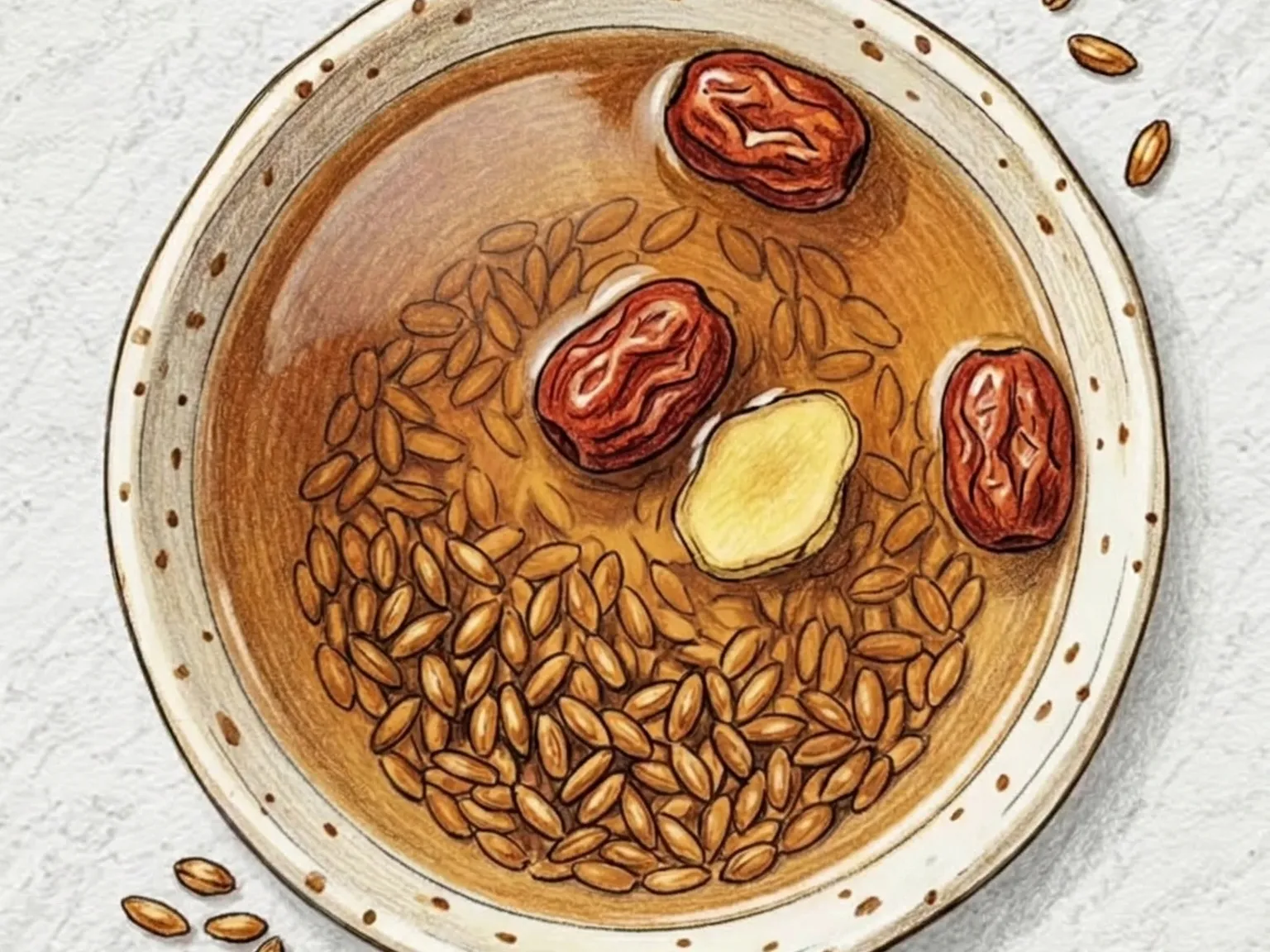
Korean Roasted Brown Rice Tea
Hyeonmi-cha is made by dry-roasting brown rice over medium heat until the grains turn golden and undergo the Maillard reaction, which intensifies their toasty, nutty aroma. The roasted rice is then steeped in water for about twenty minutes, yielding a clear amber liquid with a clean grain flavor. A slice of ginger and a few jujubes added during steeping contribute warm spice and gentle sweetness that layer over the base roasted note. Honey and a pinch of salt sharpen the overall flavor, and the tea is naturally caffeine-free, making it suitable for drinking at any hour. The degree of roasting can be adjusted to taste: a shorter roast produces a lighter, mellower infusion, while a longer roast amplifies the nuttiness but risks introducing bitterness, so stopping at a pale golden color is the safer approach. The brewed tea keeps well refrigerated for a couple of days and tastes equally good served cold over ice.
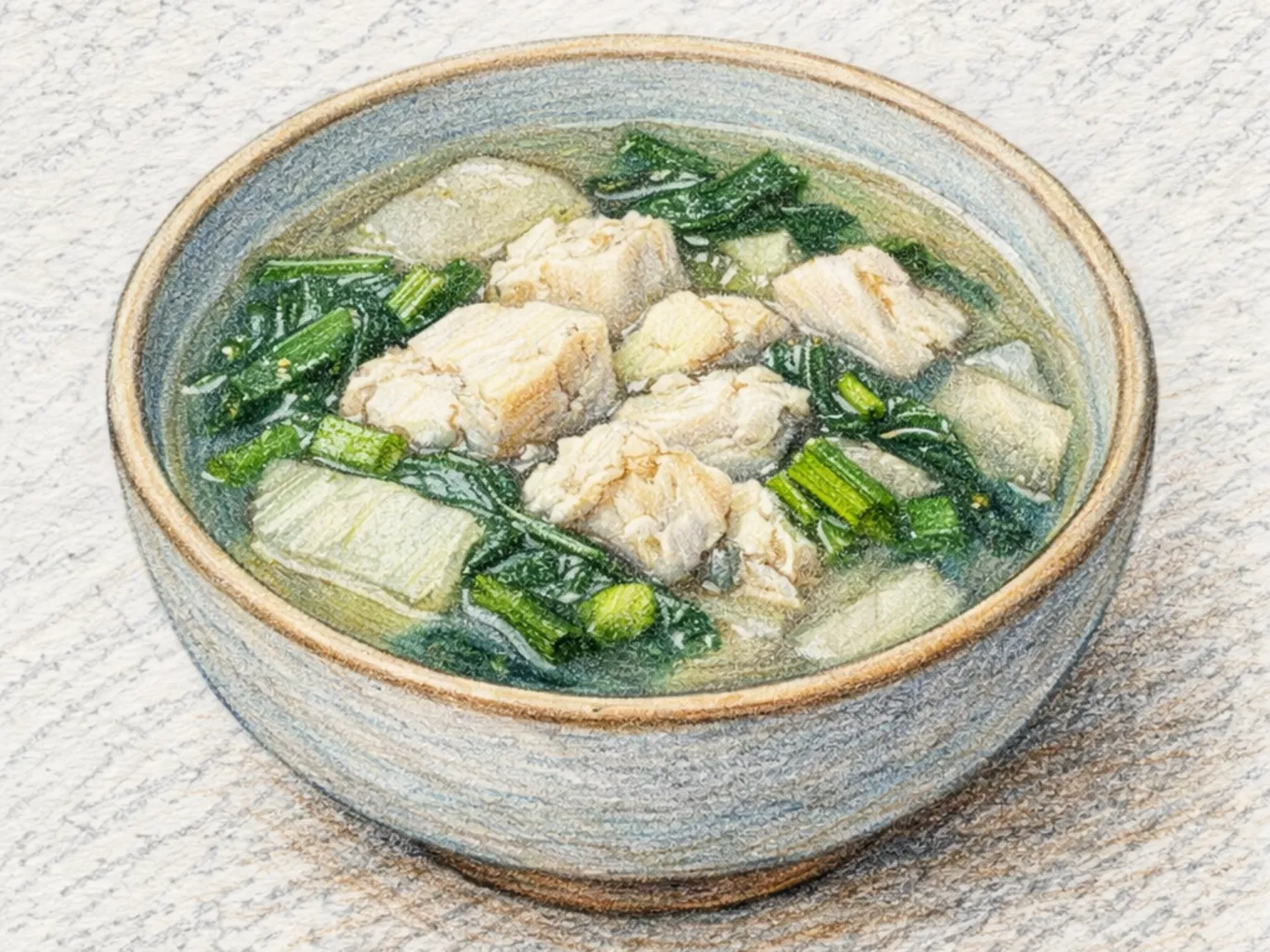
Gomchi-guk (Eelpout Fish Radish Soup)
Gomchi-guk is an East Coast Korean fish soup centered on eelpout, a deep-sea fish prized for its exceptionally soft flesh and naturally high gelatin content. The fish is cut into sections and simmered with radish in plain water, producing a broth that appears simple but carries a clean marine richness and a subtly viscous body that comes entirely from the collagen dissolving out of the fish as it cooks. Radish absorbs and neutralizes the fishiness that might otherwise dominate the soup, while also contributing a gentle sweetness that keeps the broth tasting bright. A splash of cheongju rice wine is added early in cooking to eliminate any remaining off-notes, a standard technique for Korean fish soups. As the soup simmers, the eelpout flesh gradually separates and disperses into the liquid, blurring the boundary between solid and broth and making the soup feel satisfyingly unified rather than composed of distinct parts. Garlic and green onion provide the final layer of aromatics, and seasoning is kept simple with salt or a small measure of soup soy sauce. Gomchi-guk is a regional specialty most closely associated with the coastal towns of Gangwon Province and the North Gyeongsang coastline, where it is typically served bubbling hot in a stone pot through the winter months. Frozen eelpout is available outside its native region and produces a comparable result.
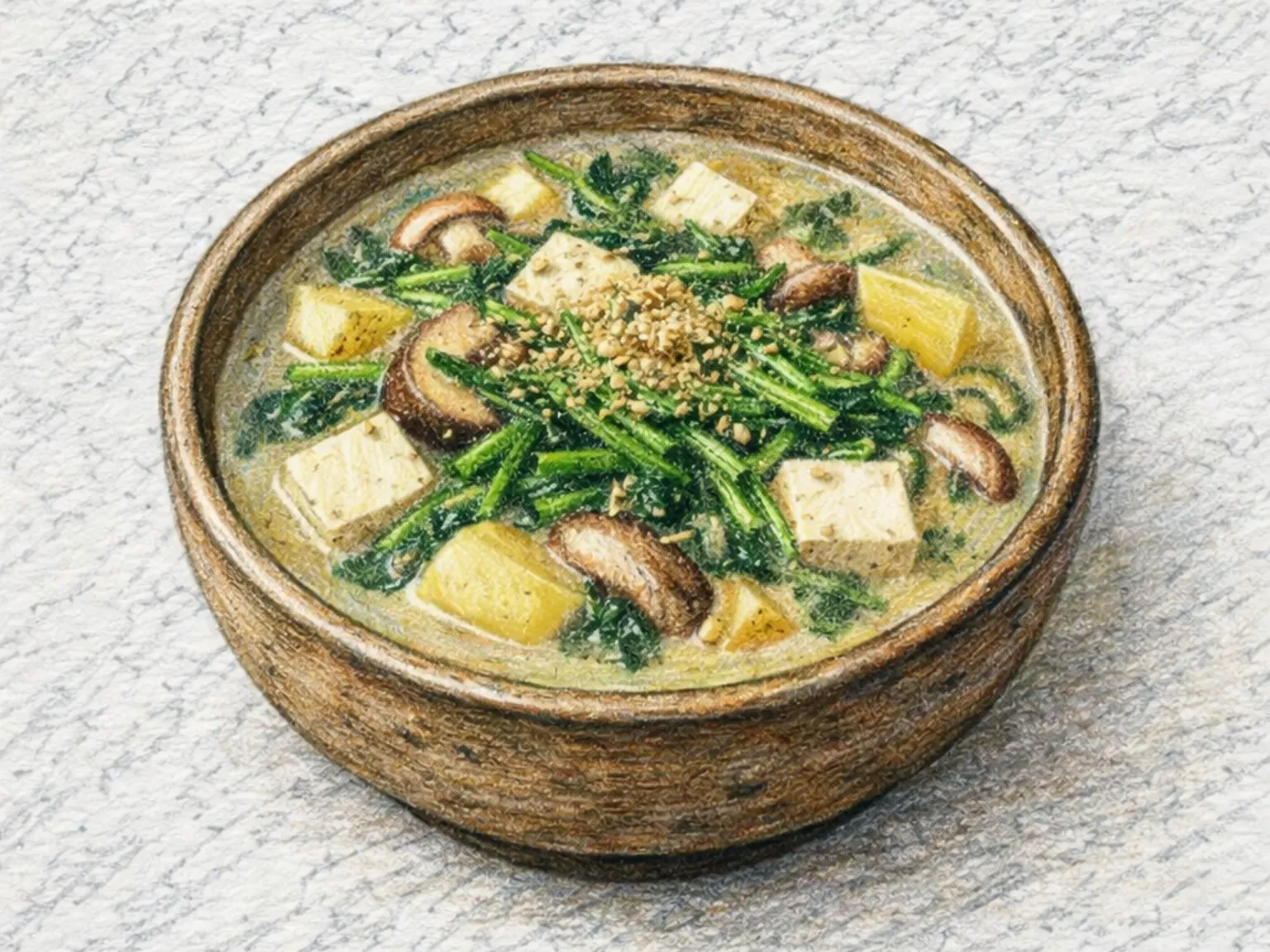
Korean Ssuk Deulkkae Jjigae (Mugwort Perilla Stew)
This seasonal Korean stew combines fresh mugwort and perilla seed powder in a base of rice-rinse water. The preparation begins by boiling cubed potatoes in the rice water to create a hearty foundation. Oyster mushrooms and firm tofu are added next, seasoned with soup soy sauce and minced garlic. To achieve a smooth consistency, the perilla seed powder is mixed with a small amount of water to form a slurry before it is stirred into the hot broth. The fresh mugwort, with its tough stems removed, is added during the final two minutes of cooking. This brief exposure to heat preserves both its green color and its aromatic, slightly bitter herbal notes. Simmering on medium-low heat at the very end ensures the delicate mugwort fragrance is not lost, resulting in a comforting dish where the nutty perilla broth balances the earthy herbs.
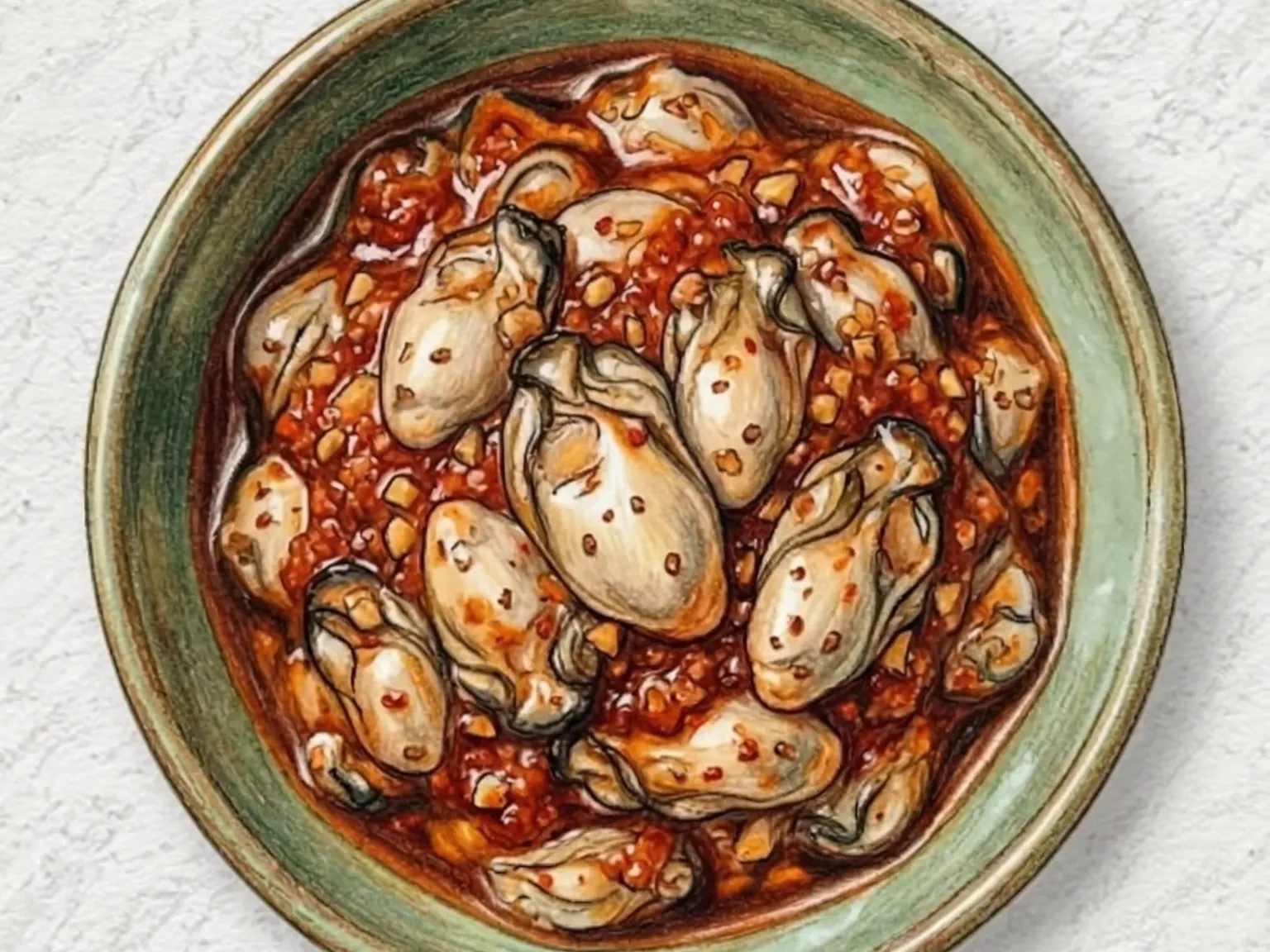
Korean Salted Oyster Jeotgal
Gul jeotgal is a traditional Korean fermented condiment made by curing fresh winter oysters in coarse solar salt with gochugaru, minced garlic, ginger, and plum extract, then aging the mixture at low temperature. As the salt draws moisture from the oyster tissue, the flesh contracts and its marine umami intensifies into something denser and more complex than a fresh oyster delivers. Gochugaru gives the condiment its characteristic red color and adds heat that balances the brininess. Plum extract plays a specific role during fermentation: it suppresses the fishy odor that naturally develops while contributing a mild acidity that keeps the overall flavor from turning flat or heavy. The longer gul jeotgal ages, the more layered and deep its character becomes. Eaten on its own over warm rice, it functions as a complete banchan, briny and bold against plain starch. Its more significant culinary role, however, is as a filling ingredient in baechu kimchi: folded into the seasoning paste, it introduces a richer source of umami than fish sauce alone provides, and the amino acids it releases during fermentation elevate the entire kimchi as it continues to ripen.
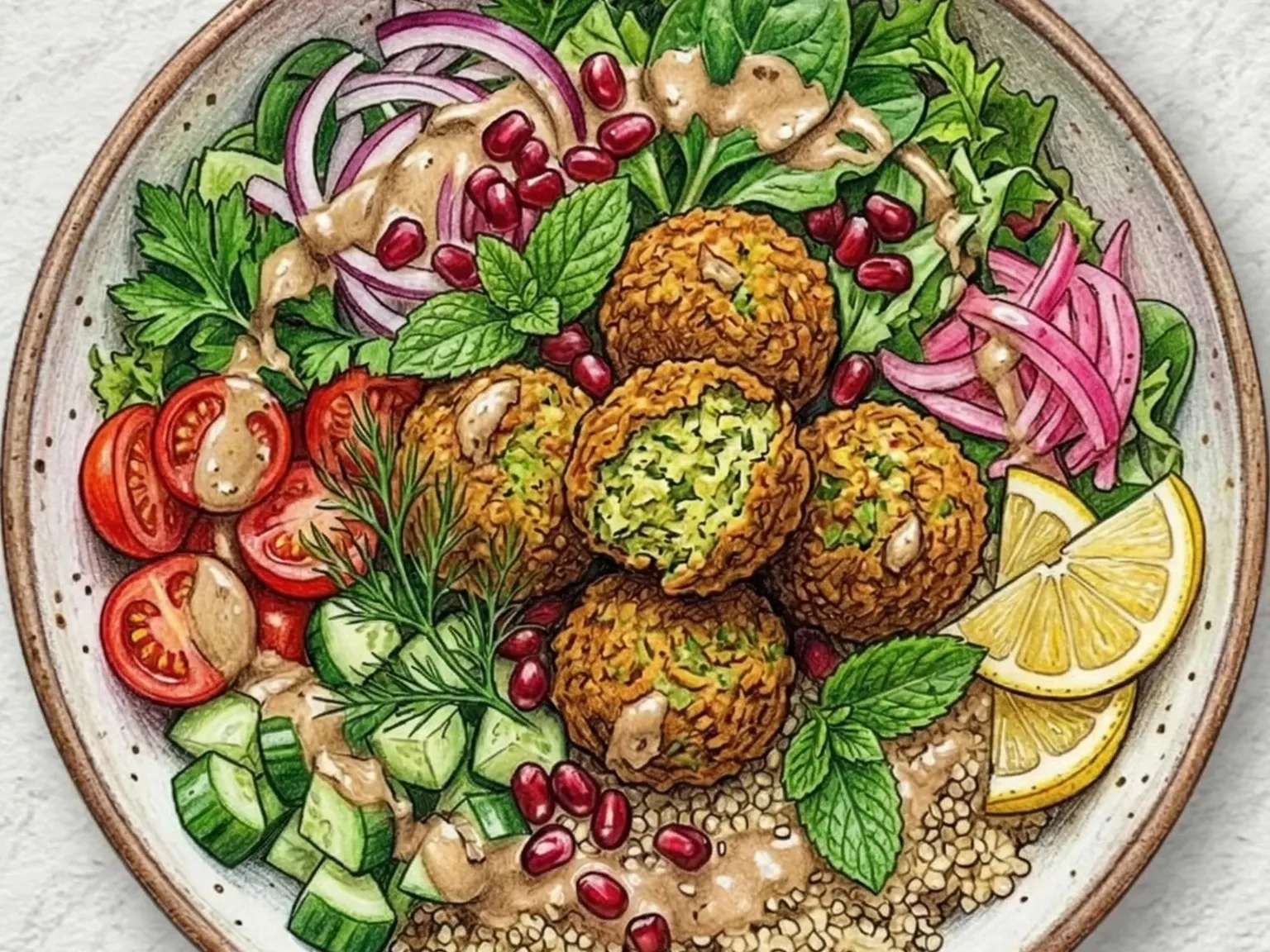
Falafel Salad Bowl
A falafel salad bowl arranges crisp, herb-packed chickpea fritters over a bed of mixed greens or grains alongside chopped cucumber, tomato, red onion, and pickled vegetables. The falafel are made from soaked raw chickpeas blended with parsley, cilantro, cumin, and garlic, then fried or baked until the exterior turns deeply golden while the interior stays bright green and moist. A generous drizzle of tahini dressing ties the bowl together with its nutty, slightly bitter sesame character, and a squeeze of fresh lemon lifts the entire dish. Adding cooked quinoa, bulgur, or couscous underneath turns it into a filling one-bowl meal. Each bite moves between crispy falafel, crunchy raw vegetables, and creamy dressing, so no two forkfuls feel the same. Originating across the Middle East, falafel has become an internationally recognized symbol of plant-based cooking, and this bowl format balances protein and fiber in a well-rounded single serving.

Korean Injeolmi Latte (Roasted Soybean Powder Milk Drink)
This beverage uses the roasted soybean powder commonly found on Korean rice cakes to create a milk based dessert drink. Pre-roasting the powder is a mandatory step to eliminate the sharp, grassy scent inherent in raw soybeans. Toasting transforms these raw qualities into a nutty fragrance similar to roasted grains. To ensure a consistent texture without clumps, the powder must be passed through a fine sieve before it meets the milk. Brown sugar syrup provides a dark, caramel sweetness that grounds the toasted base, while a small amount of honey adds a subtle floral lingering. A pinch of salt sharpens the overall profile and prevents the sweetness from feeling flat. Because the oils in roasted soybean powder remain stable across different temperatures, this drink performs well whether served over ice or heated. A final dusting of powder on the surface mimics the appearance of a traditional injeolmi cake and increases the aromatic impact of the first sip. For a variation, adding a shot of espresso introduces a bitter edge to the nuttiness, while incorporating black sesame powder creates a darker color and a more concentrated grain scent.
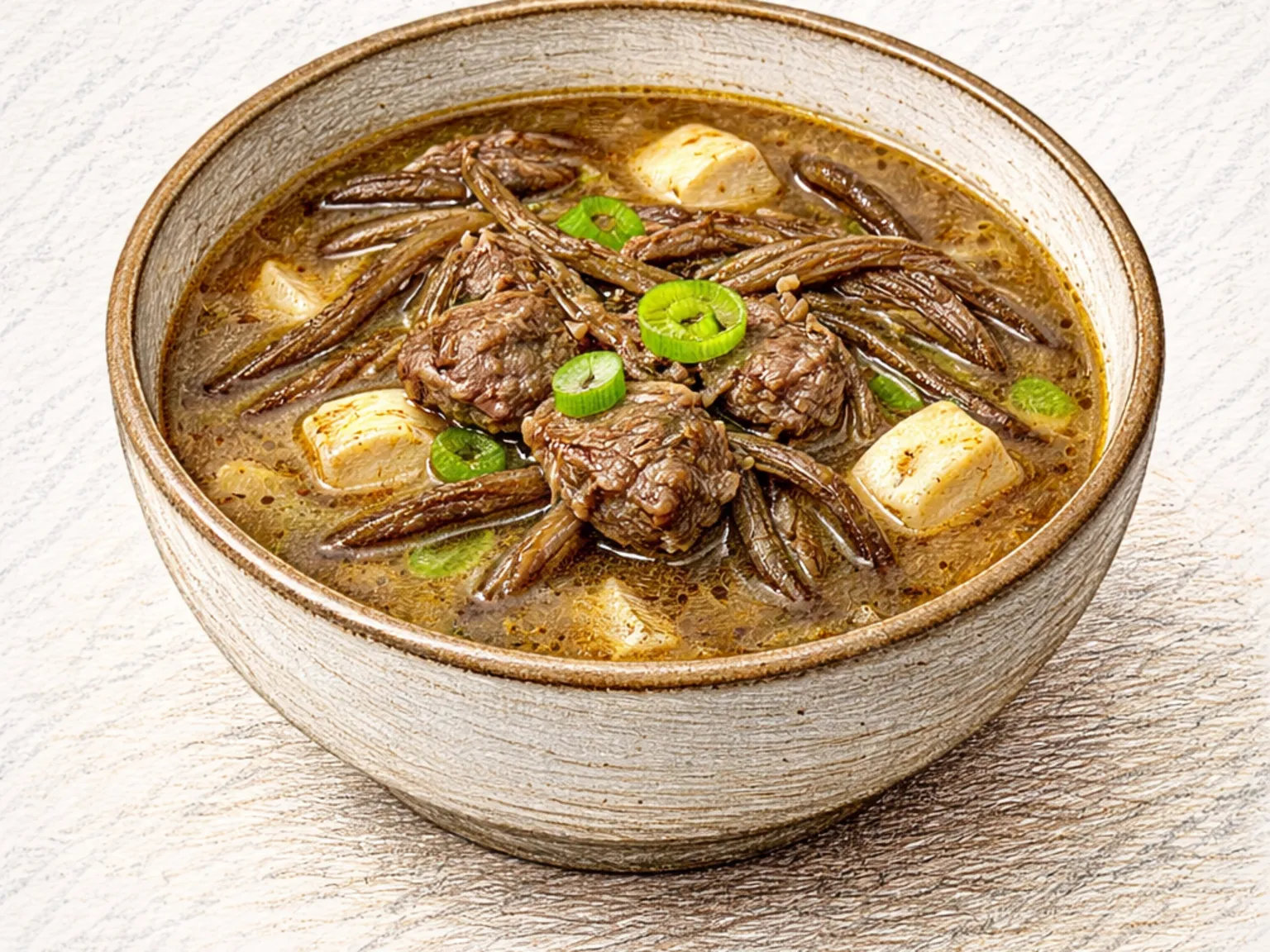
Korean Bracken and Beef Soup
Gosari sogogi-guk is a hearty Korean soup made by first stir-frying rehydrated bracken fern with beef in sesame oil, then adding water and dissolving doenjang into the broth to simmer. The bracken - dried mountain fern that must be soaked overnight until fully pliable - keeps a distinctive chewy resilience even after long soaking and simmering, setting it apart from the softer vegetables found in most doenjang soups. This chewiness is a defining quality of the ingredient and one of the main reasons the soup is valued over simpler alternatives. The stir-frying step before liquid is added is what builds the soup's character: as the bracken and beef cook together in sesame oil, their flavors dissolve into the fat and create a layered, savory base that plain boiling in water cannot achieve. Doenjang is introduced midway through rather than at the start to prevent the salt level from becoming too concentrated during the long simmer - its fermented depth and rounded umami wrap around everything in the pot. Garlic and green onion refine the aroma and cut any residual earthiness from the bracken. This soup has deep ties to Korean holidays: bracken is one of the three classic namul vegetables prepared for ancestral rites at Chuseok and Lunar New Year, and it is customary to use leftover soaked bracken from holiday namul preparation in a pot of soup the following day. Cooked bracken also freezes well, so many households keep it on hand year-round. The combination of earthy bracken, soft beef, and fermented broth produces a warmth and depth that feels distinctively rooted in Korean culinary tradition.
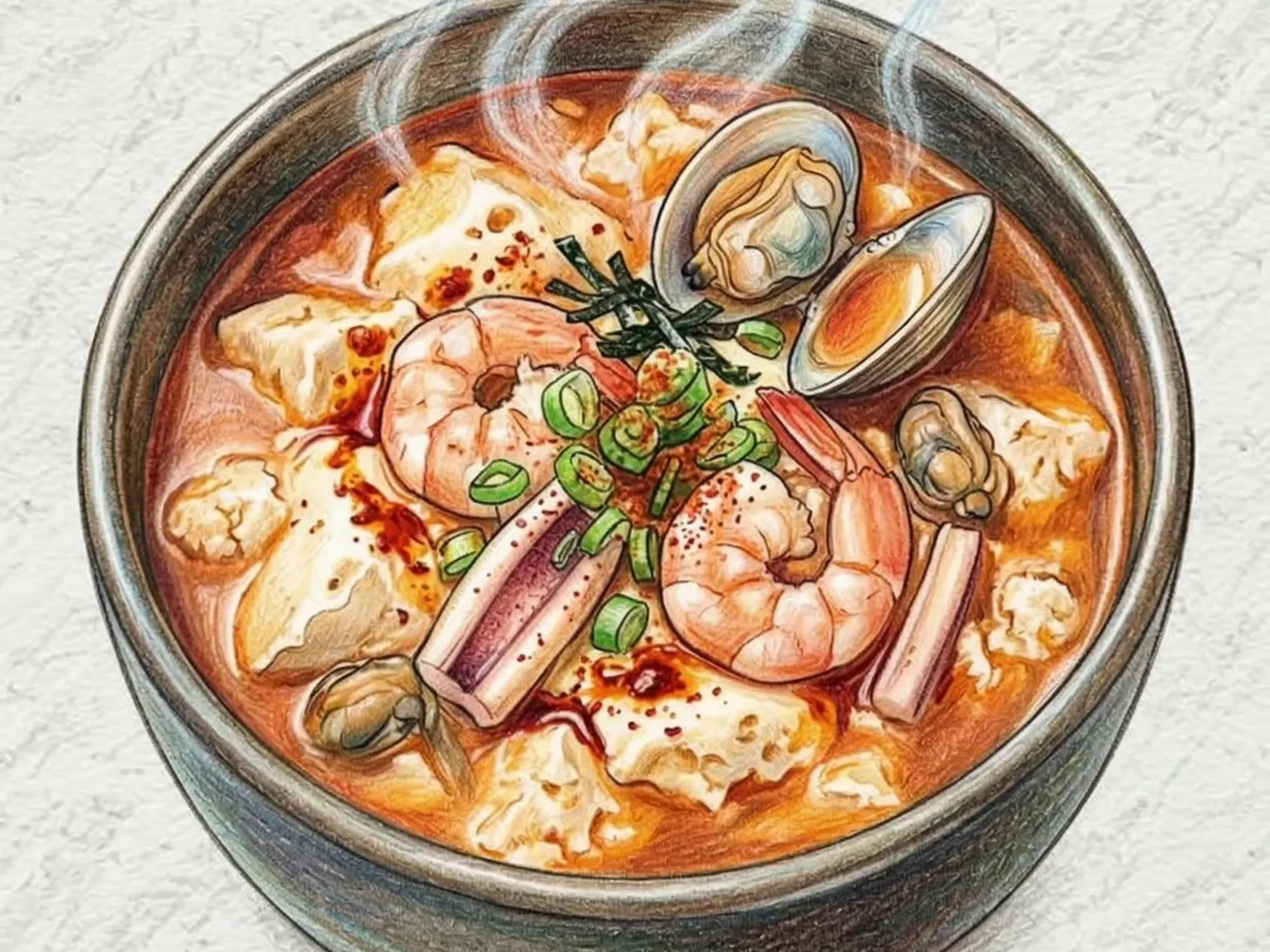
Korean Silken Tofu Seafood Stew
Sundubu haemul jjigae is a seafood soft tofu stew that combines silken tofu with shrimp and Manila clams in an anchovy stock seasoned with gochujang and Korean chili flakes. The aromatics are stir-fried in sesame oil first to build a deeper base before the stock is added. As the shrimp and clams cook through, they release their own briny juices into the spicy broth and push the umami noticeably higher. An egg cracked in at the end binds gently with the silken tofu, adding richness and a slight body to the broth. Deveining the shrimp and removing the back intestine keeps the flavor clean, and soaking the clams in lightly salted water beforehand purges any sand that would otherwise cloud the stock.
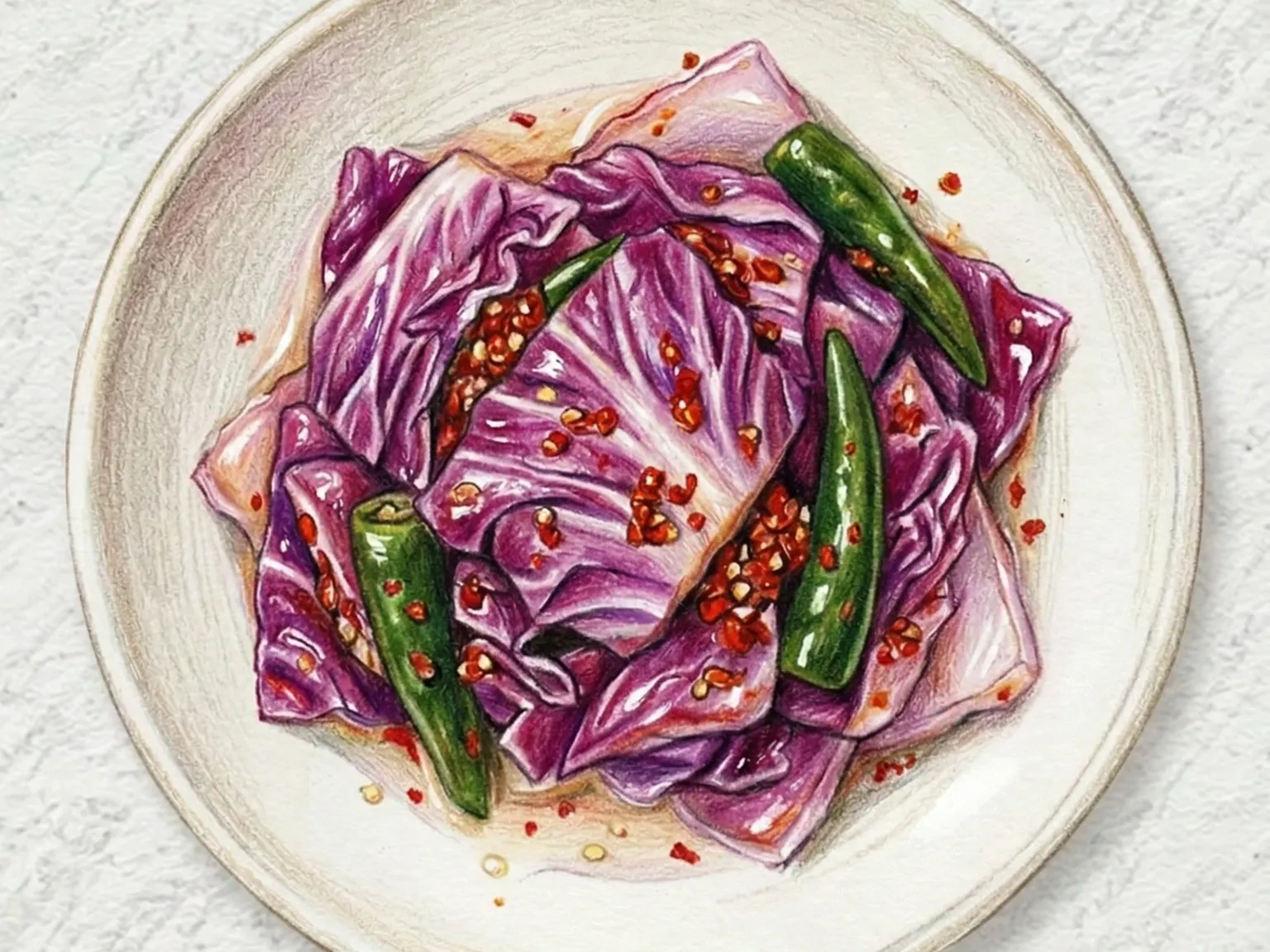
Korean Red Cabbage Kimchi
Jeokchae kimchi is made by salting red cabbage leaves, then tossing them in a seasoning of gochugaru, sand lance fish sauce, minced garlic, and Korean pear juice before a short fermentation. Red cabbage has thicker, denser leaves than napa cabbage, so it holds its crunch well after brining rather than going soft. The anthocyanin pigment in the red cabbage reacts with the chili seasoning to produce a vivid purple color rather than the typical red associated with kimchi, making it visually striking on the table. Pear juice provides a gentle fruit sweetness underneath the heat and spice, while sand lance fish sauce builds enough savory depth that even a brief fermentation yields full flavor. Scallions add a fresh, aromatic finish that ties the seasoning together. The result is a kimchi that is crunchy, spicy, and umami-rich simultaneously, with a distinctive character that sets it apart from traditional napa kimchi.

Farro Harvest Salad
Farro is an ancient Italian wheat variety that retains a satisfying chew even after boiling, making it a reliable foundation for grain salads that need to hold their texture over time. Roasting root vegetables such as butternut squash, beets, or sweet potatoes at high heat caramelizes their natural sugars and creates slightly crisp edges that contrast with the soft grain below. Toasted walnuts or pecans layered in add crunch and nutty depth. Bitter greens like arugula or kale interrupt the sweetness of the vegetables and prevent the salad from becoming one-dimensional. A dressing of apple cider vinegar, olive oil, and a small amount of honey ties the components together while allowing each ingredient to remain distinct. The salad carries enough fiber and protein to serve as a complete meal rather than a side. Farro's dense structure absorbs dressing gradually without turning soft, so the salad holds well in the refrigerator for two days, making it a practical choice for meal preparation.
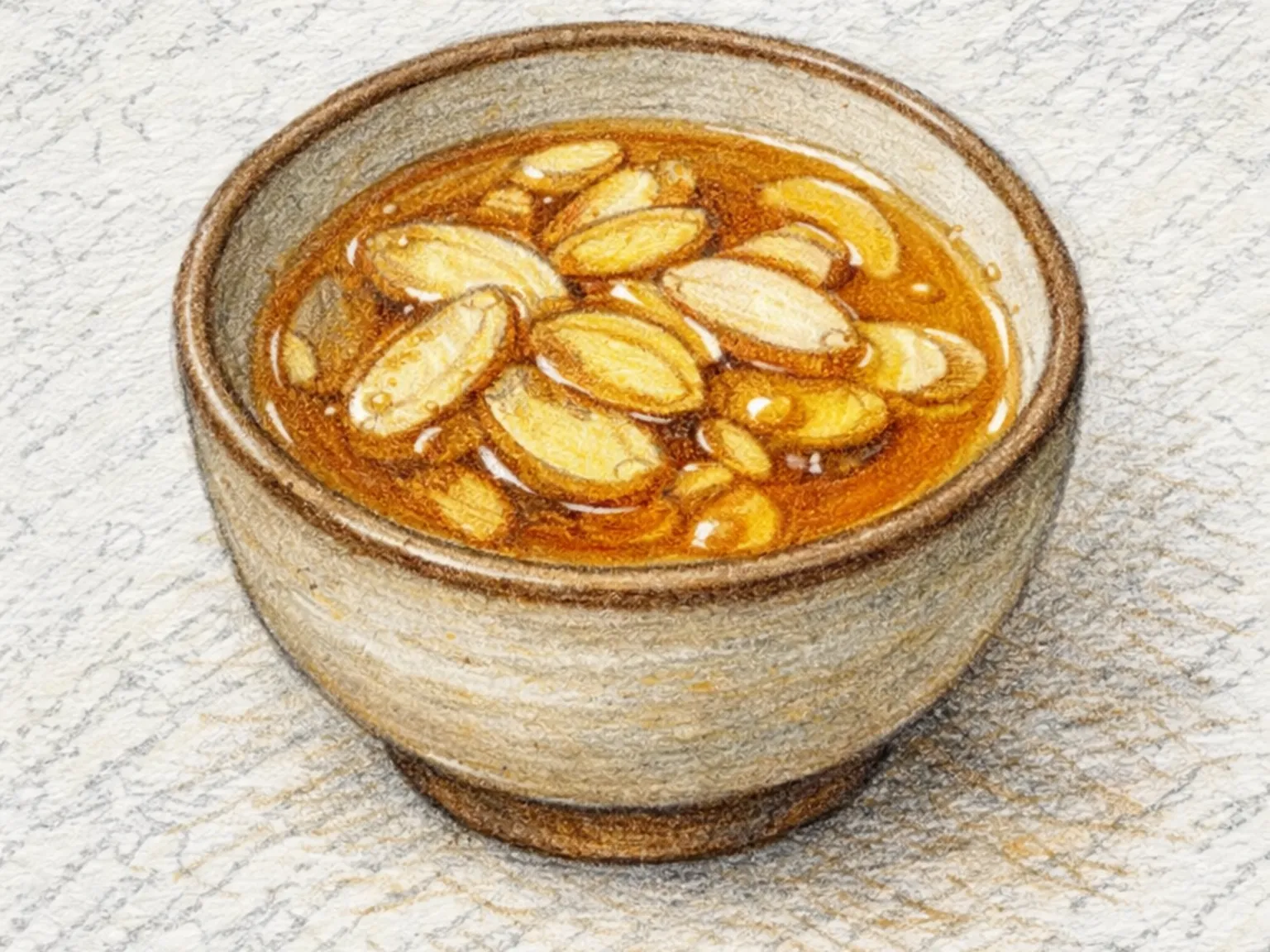
Korean Ginseng Tea (Fresh Ginseng Jujube Herbal Brew)
Insam-cha is a traditional Korean ginseng tea made by thinly slicing fresh ginseng root and simmering it with dried jujubes and ginger over low heat for twenty minutes. Fresh ginseng is milder and less bitter than dried root, but slicing it thin is essential for the active compounds to infuse efficiently, releasing the root's characteristic earthy, herbal aroma as it cooks. Jujubes naturally soften the ginseng's bitterness, and ginger introduces a sharp warmth that gives the tea its backbone and prevents it from tasting flat. Honey is added to balance the flavor, and a few pine nuts floated on the surface at serving add an oily richness that complements the herbal notes without cooking away. Adding pine nuts at the end rather than simmering them preserves their fragrance in the finished cup. The amount of ginger can be adjusted to control the intensity of the heat, and the ratio of jujubes to ginger shifts the tea toward sweeter or more pungent depending on preference.
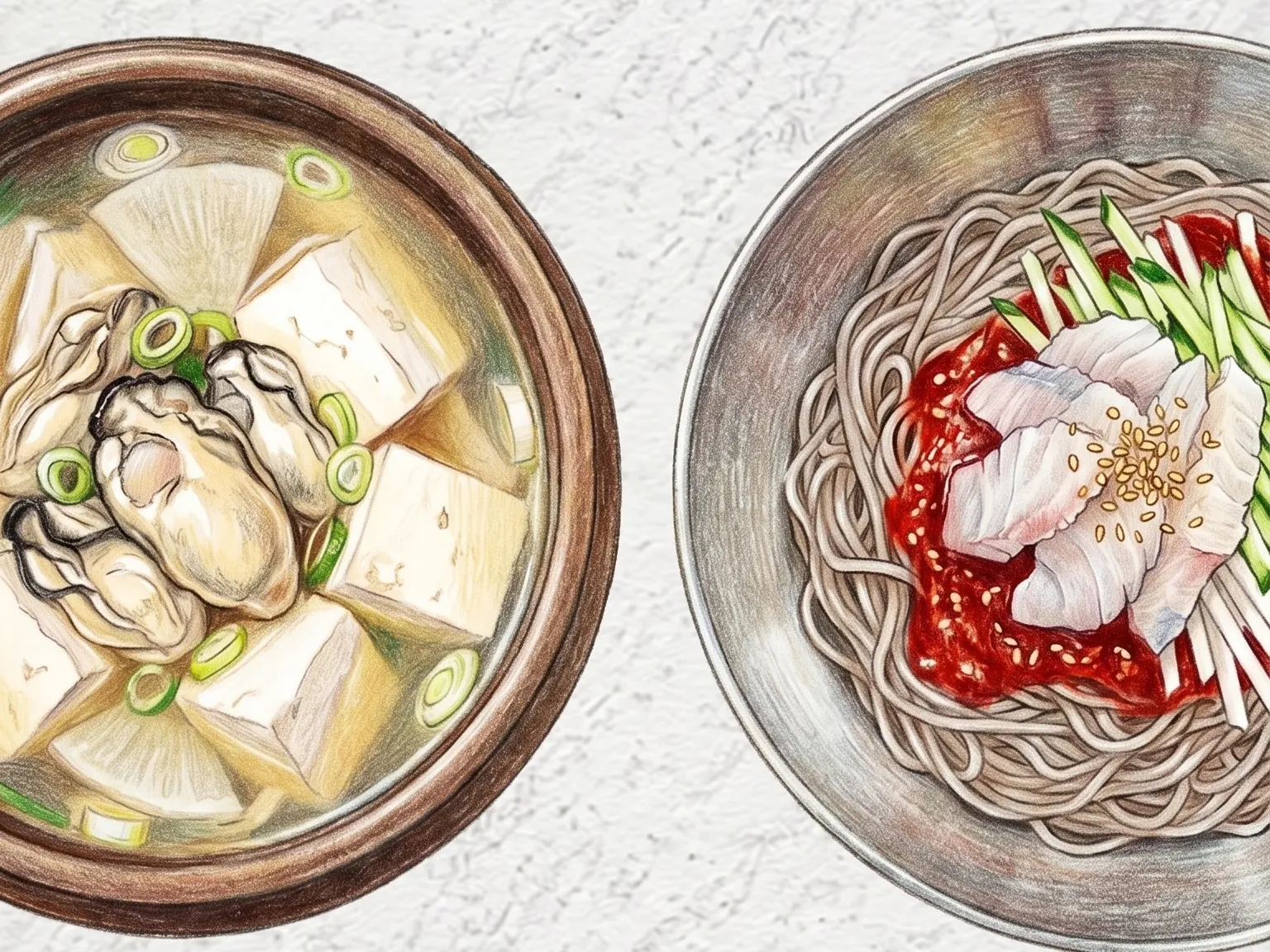
Gul Dubu Guk (Korean Oyster Tofu Soup)
Gul-dubu-guk is a Korean oyster tofu soup, a winter dubu guk that pairs plump seasonal oysters with soft tofu in a clear kelp broth. Unlike plain dubu-jangguk, this version is seafood-forward, with briny oyster aroma leading the bowl. Timing the oysters precisely is the central technique: they go in just before the broth reaches a full boil, and even a minute too long on the heat turns them tough and grainy. Large-cut tofu blocks absorb the shellfish-infused liquid as they simmer, carrying the oyster depth into each spoonful. Thinly sliced radish adds natural sweetness, while soup soy sauce and garlic keep the seasoning clean.