🥗 Light & Healthy Recipes
Light, healthy, low-calorie dishes
712 recipes. Page 2 of 30
These low-calorie recipes prove that healthy eating does not have to be boring. High-protein meals, vegetable-forward dishes, and low-carb options - all designed to support weight management and better eating habits.
Diet-friendly does not mean small portions or bland flavors. Chicken breast, tofu, konjac, and eggs provide lasting satiety, while smart seasoning and cooking methods keep the taste appealing. Build a sustainable, healthy routine with these recipes.
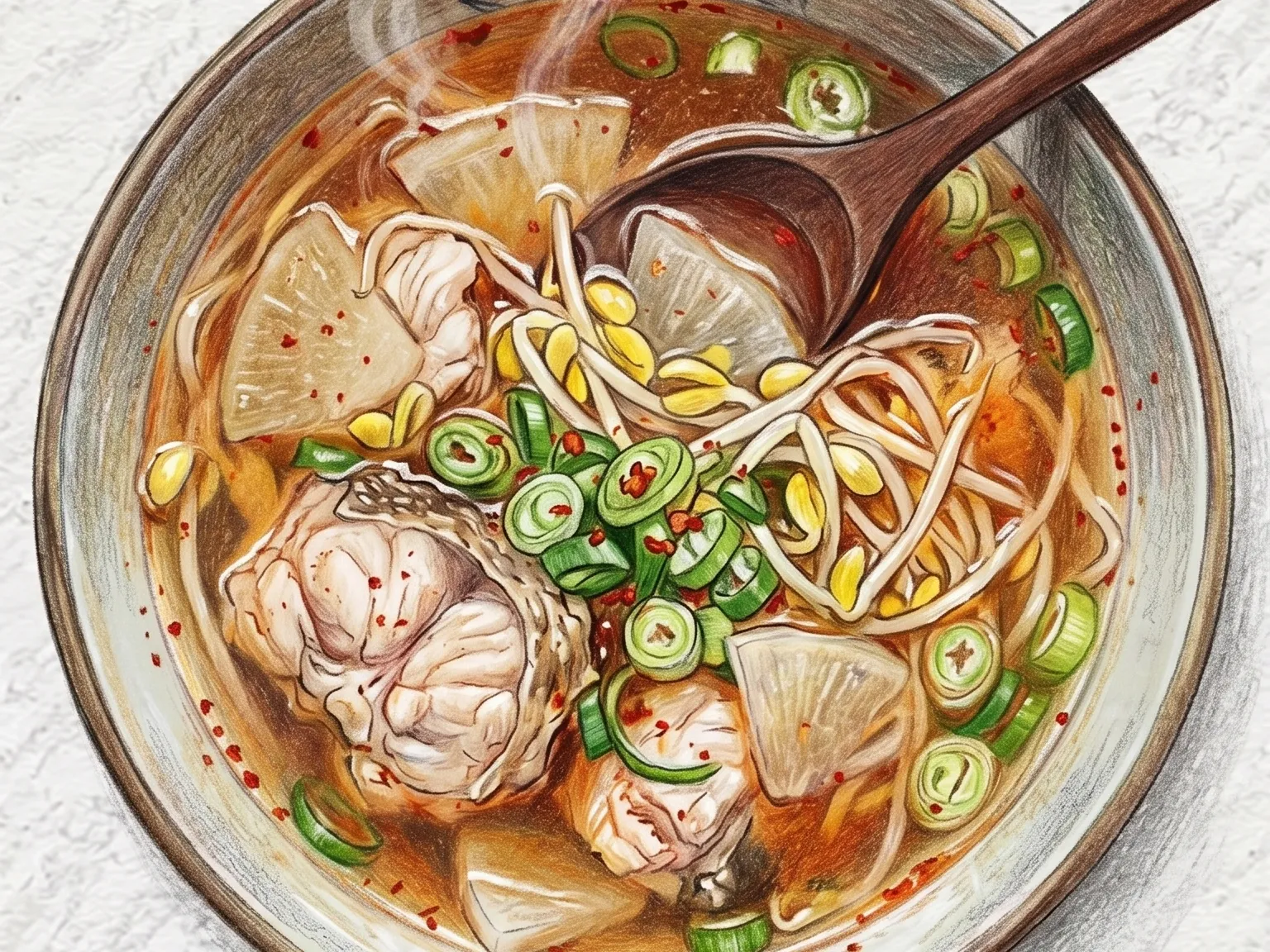
Korean Monkfish Soup (Spicy Southern Coastal Fish Broth)
Agwi-tang is the soup form of Korea's monkfish repertoire, originating along the fishing villages of the southern coast where the fish - known as agwi or agu depending on dialect - is caught and sold fresh daily. Where braised preparations like agwi-jjim build intensity through reduction and heavy sauce, the tang prioritizes the broth. Anchovy stock is the base; radish simmers in it for eight minutes to release its sweetness before the monkfish enters. As the fish cooks gently over medium heat, its collagen dissolves into the liquid and gives it body. The monkfish flesh itself is mild and gelatinous, a texture unlike most white fish. Bean sprouts go in at the end to contribute crunch against the soft fish. Sliced green onion and a hit of gochugaru cloud the broth red and add spice. In coastal towns this was morning food - hangover soup served steaming at predawn markets to fishermen and dock workers before the day started.
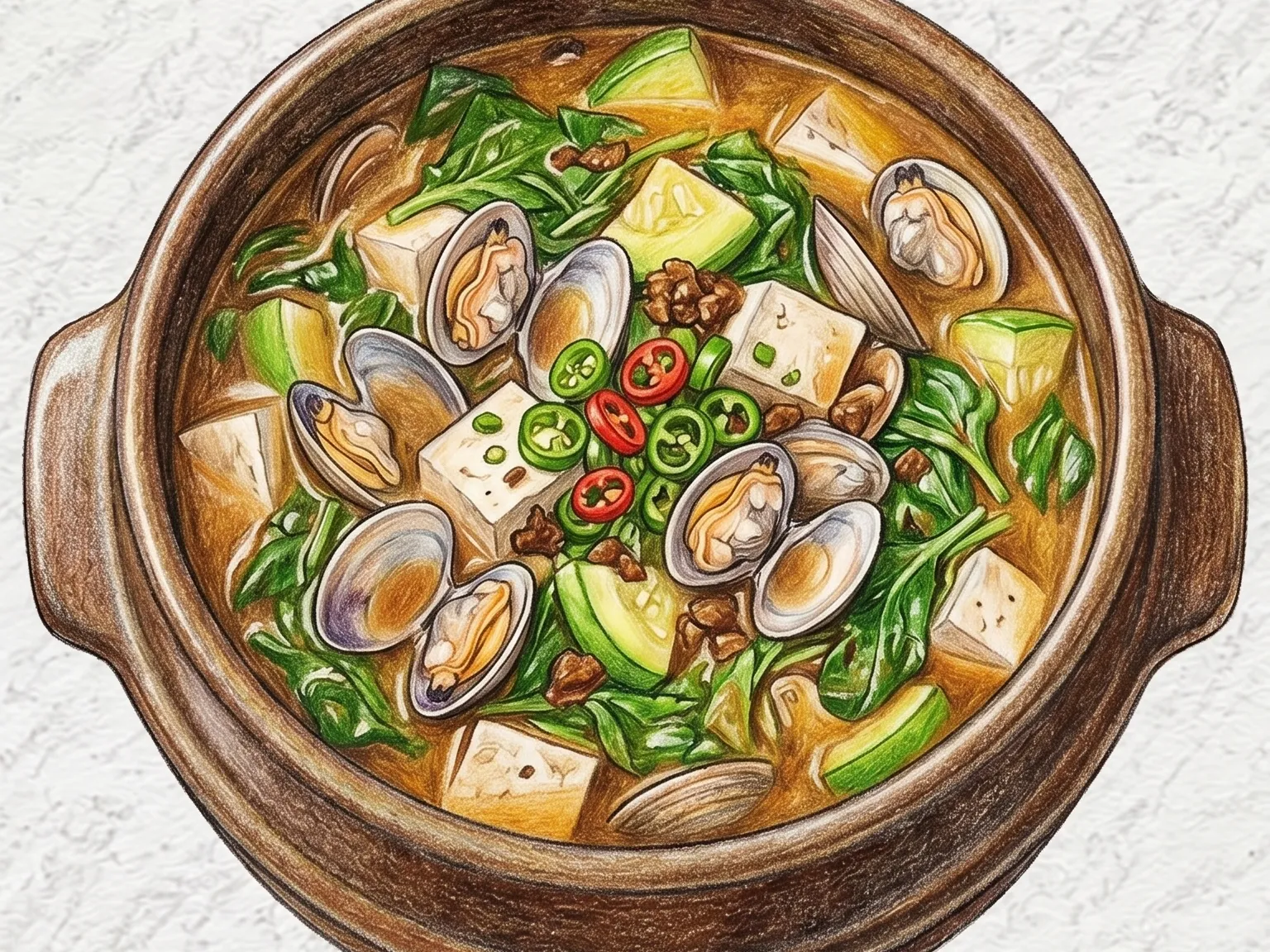
Korean Mallow & Clam Stew
Auk-bajirak-jjigae is a thick, meal-weight stew that takes the logic of the milder auk-bajirak-guk and pushes it further: more doenjang, a denser ingredient list, and cheongyang chili for heat. The clams go in first while the water is still cold, then the pot comes to a boil so the shells open slowly and release their concentrated sea juice into the base. Doenjang and gochugaru dissolve into the liquid together, creating a foundation that is simultaneously earthy, saline, and warm with chili. Cubed tofu and sliced zucchini fill out the pot and convert what might have been a soup into something substantial enough to anchor a meal with rice. Mallow leaves added at the end bring their natural mucilage, which thickens the broth and gives it a cling that plain stews lack. Sliced cheongyang chili on top cuts through the richness with a sharp, direct heat. On a cold evening eaten alongside steamed rice, this jjigae sits at the dense, deeply layered end of the Korean stew spectrum.
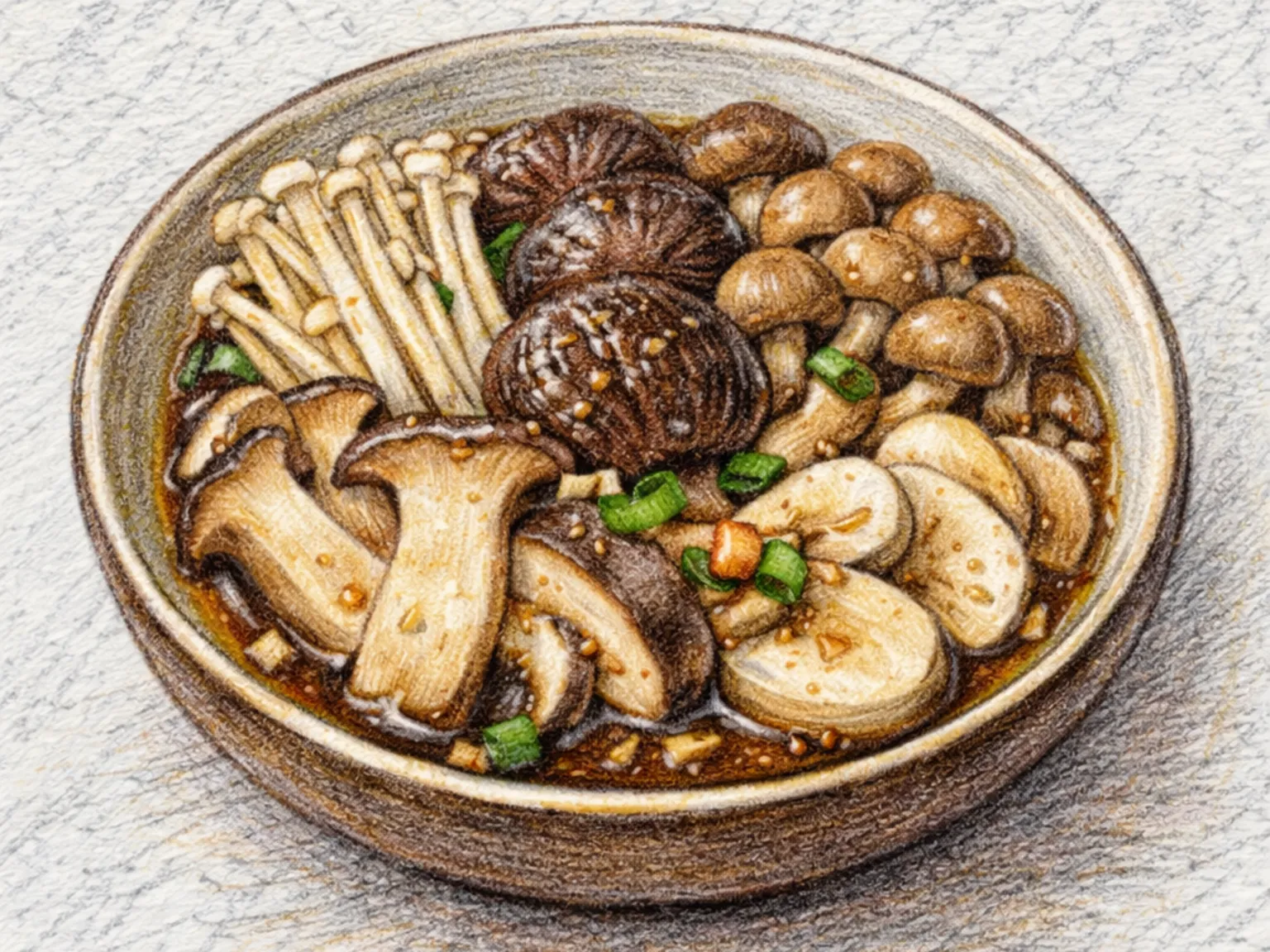
Korean Steamed Mixed Mushrooms
Oyster, shiitake, and enoki mushrooms are steamed in a soy sauce and garlic seasoning. Oyster mushrooms should be torn by hand along the grain so the rough surface absorbs the seasoning, and shiitake caps should be sliced thick after removing the stems to preserve their dense bite even after steaming. Enoki are trimmed at the base and loosened before going in. Sesame oil is added immediately after steaming, before the mushroom moisture evaporates, so the nutty aroma coats the surface properly. Because the three varieties have different densities and thicknesses, steaming time should stay within ten minutes to prevent the enoki from going limp.
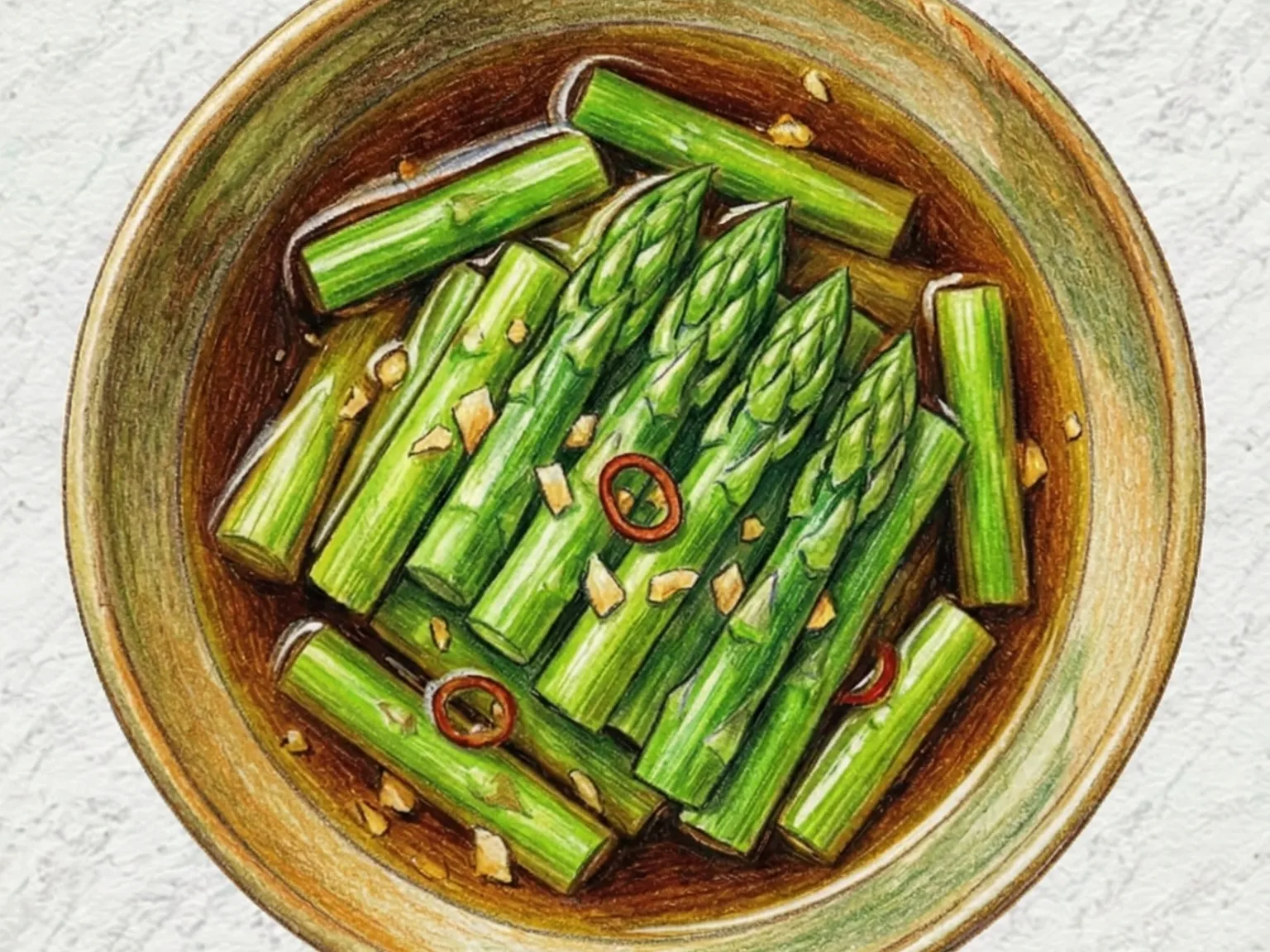
Korean Soy Pickled Asparagus
This pickle applies the Korean jangajji tradition - soy-brine preservation - to asparagus, a vegetable that arrived in Korean cooking relatively recently but now appears freely across banchan preparations. The asparagus is blanched for just 20 seconds to fix its color and soften the fibrous outer layer, then immediately shocked in ice water to lock in a vivid green and a firm, snapping texture. Packed upright in a sterilized jar, the spears are covered with a boiling brine of soy sauce, rice vinegar, sugar, and water that partially cooks the surface while leaving the core crisp and springy. Within 24 hours the brine penetrates enough for the pickle to be edible, but the flavor peaks at three days when the sweet-sour-salty balance has fully developed. Unlike most jangajji that rely on root vegetables or dense greens like radish and napa cabbage, asparagus brings a distinctive grassy, almost herbal note to the preserved format - a quality that stands on its own without the weight of fermentation. Keeps refrigerated for two weeks, and works well alongside rich or oily dishes where its acidity provides contrast.
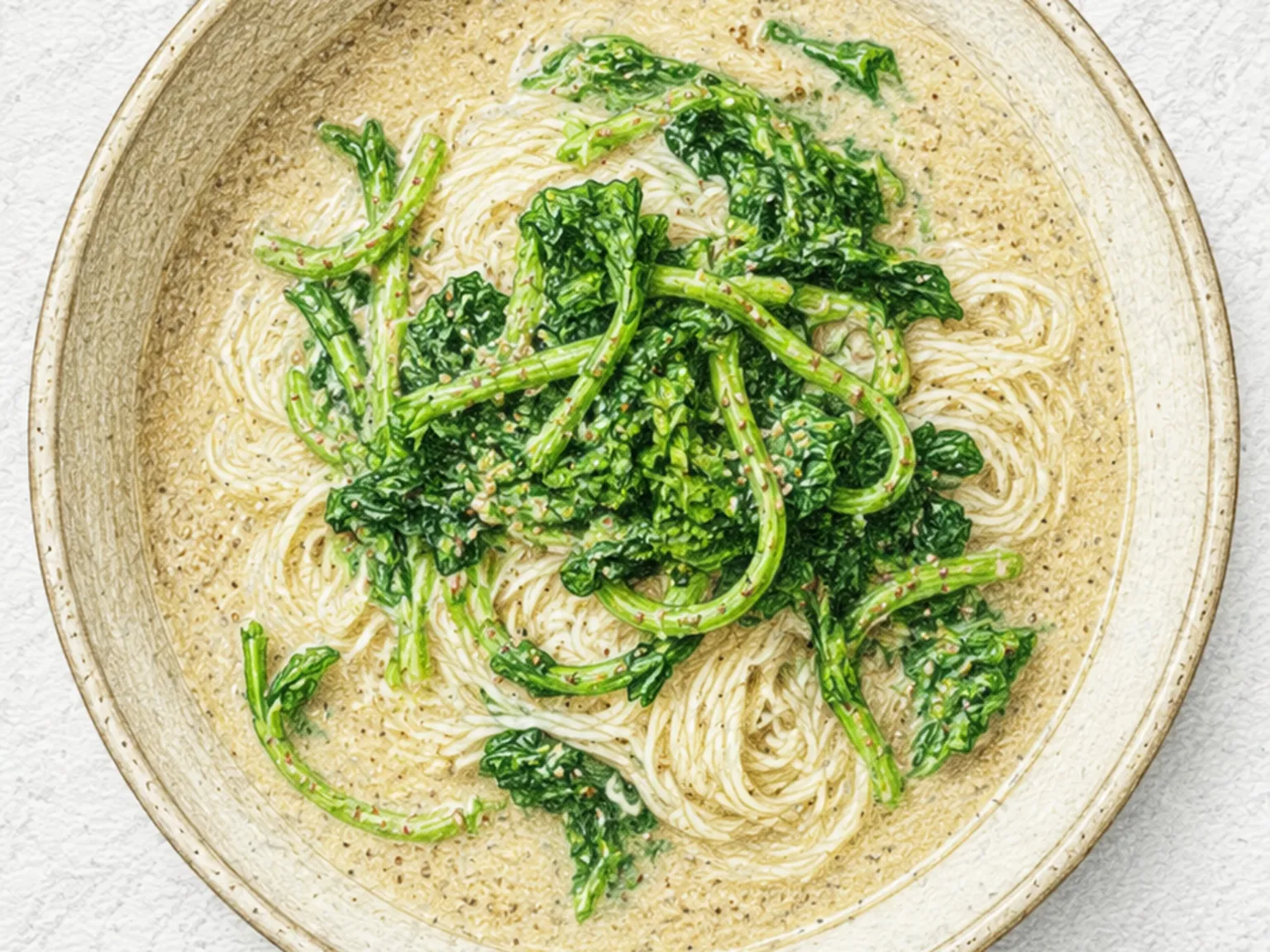
Korean Perilla Noodles with Aster Leaves
Chwi namul, a wild aster green gathered in spring, is blanched and rinsed in cold water to temper its bitterness before being seasoned lightly with soup soy sauce. Ground perilla seeds are stirred into the broth, turning the liquid a milky white and giving it a toasted, nutty weight that holds against the herbaceous bite of the greens. The perilla richness subdues the sharpest edge of the bitterness while leaving the wild mountain aroma intact so each mouthful reads clearly as foraged rather than cultivated. Soup soy sauce adds only enough seasoning to tie the elements without masking any of the natural fragrance. Somyeon wheat noodles, soft and fine-stranded, bridge the greens and the broth without competing with either. Spring-harvested chwi namul carries the most pronounced aroma, and a thorough rinse after blanching controls the bitterness to a palatable level. The resulting bowl is understated and seasonal, built on the flavor of a single wild ingredient.
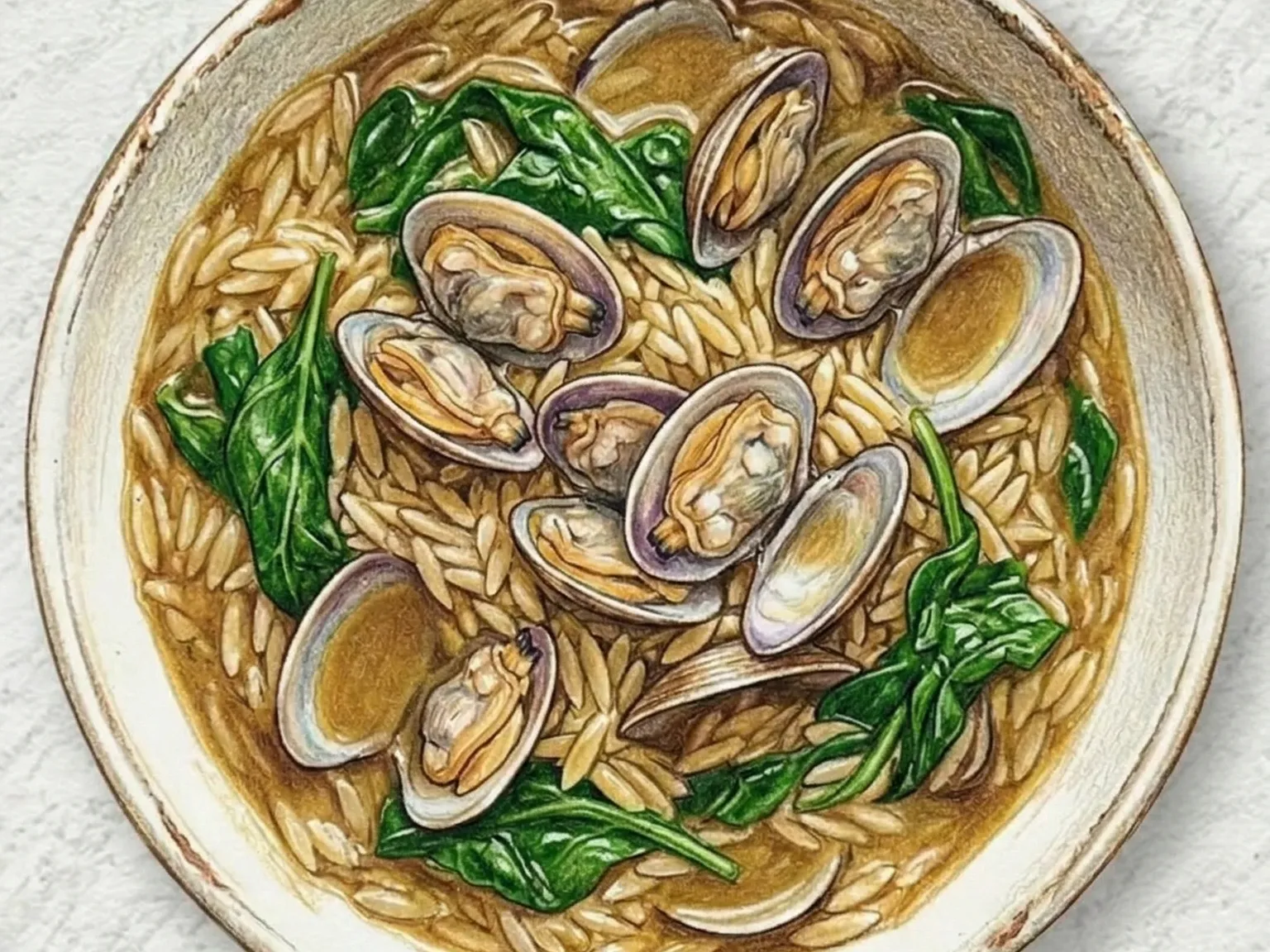
Doenjang Clam Spinach Orzo
Doenjang clam spinach orzo is a one-bowl pasta built by cooking orzo in doenjang-seasoned vegetable stock alongside clams in a method borrowed directly from risotto technique. The clams are first purged in salt water to remove sand, then steamed open in white wine so they release their briny cooking liquid into the pan. That liquid merges with the already-present fermented depth of doenjang to form a layered savory base that carries the pasta from the very first minute of cooking. Toasting the orzo in butter or oil before adding any liquid coats the starch on each grain, a step that slows its release and produces a consistently creamy sauce by the end rather than a gluey mass or a watery broth. The stock goes in two or three additions rather than all at once, each addition added only once the previous one has been absorbed, and the pasta is stirred throughout so the released starch works into the liquid rather than sinking to the bottom. Spinach added in the final thirty to sixty seconds of cooking wilts just enough to turn tender without losing its bright green color or dissolving into the sauce. A knob of cold butter stirred in off heat as the finishing touch emulsifies into the sauce, adding a glossy sheen and a rounded, buttery richness that ties all the flavors together.
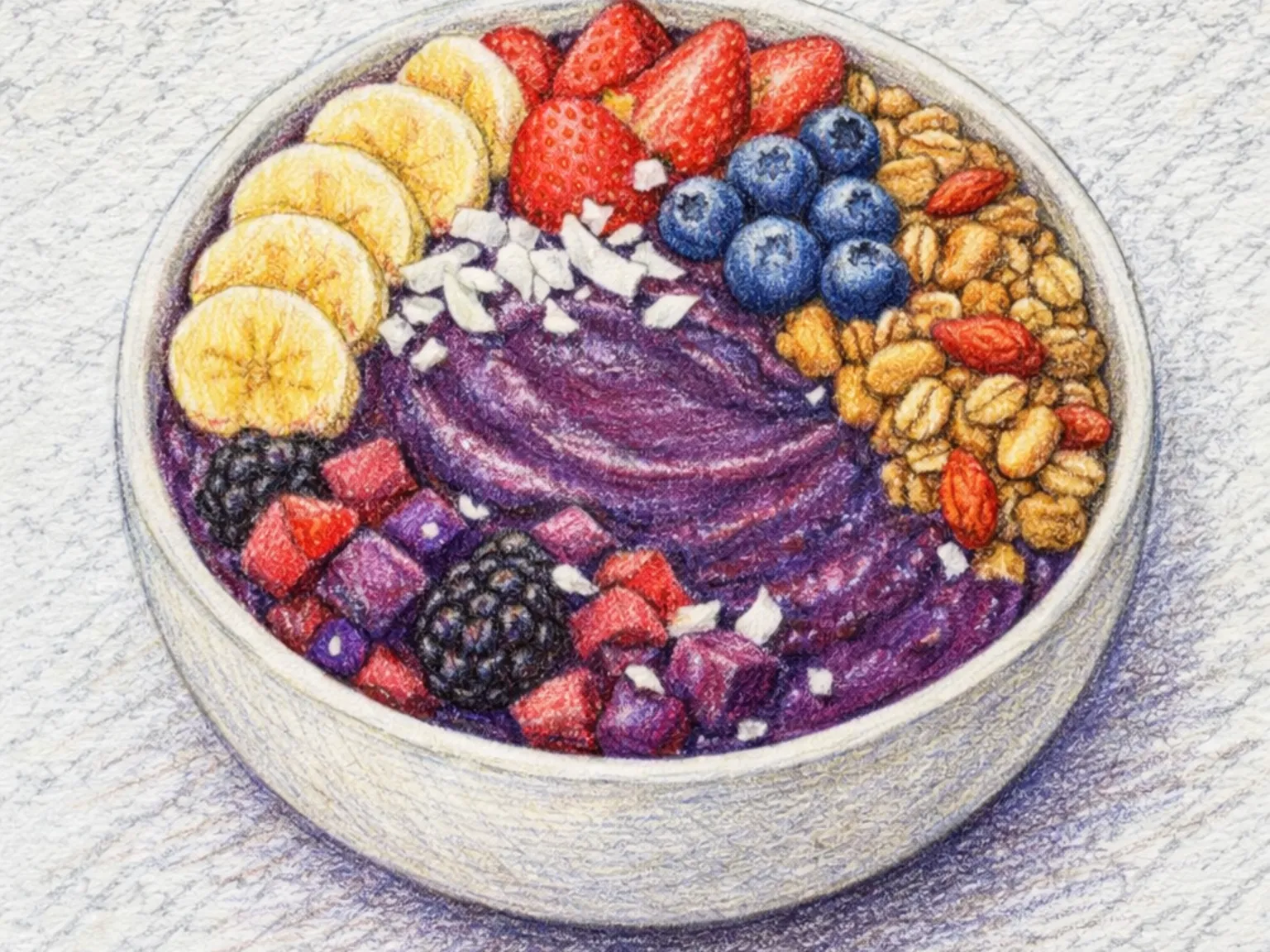
Acai Bowl
The acai bowl traces its origins to the river communities of Brazil's Amazon basin, where the dark purple berry of the acai palm has been a dietary staple for indigenous peoples for centuries - providing fat and calories in a region where animal protein could be scarce. When frozen acai pulp is blended with banana and blueberries, it becomes a thick, sorbet-like base with a deep berry flavor carrying earthy, almost chocolatey undertones that distinguish acai from sweeter tropical fruits. The bowl format - topped with granola, sliced fruit, and honey - was popularized by surfers in Rio de Janeiro during the 1980s and has since spread worldwide as a breakfast and post-workout meal. The key technical requirement is keeping the blender liquid-free: adding milk or juice thins the base until toppings sink and the textural contrast disappears. Eaten quickly before the granola loses its crunch, the bowl delivers a concentrated rush of antioxidants and natural sugars in a form that feels substantial despite being largely fruit. The deep purple color comes from the same anthocyanin pigments found in blueberries and red cabbage.
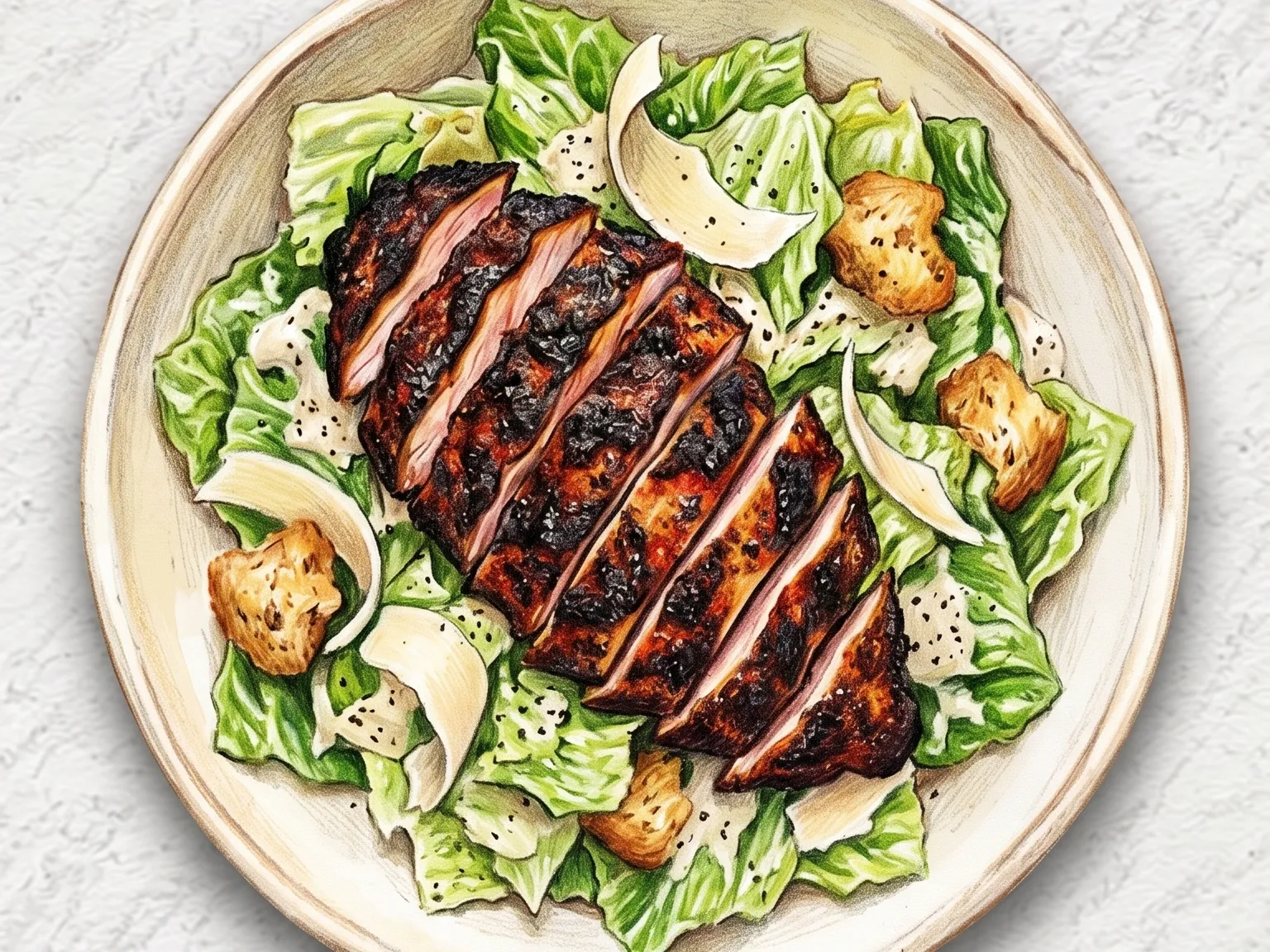
Blackened Chicken Caesar Salad
Blackened chicken Caesar salad starts with chicken breast coated thickly in paprika, cayenne, garlic powder, onion powder, and dried herbs before hitting a very hot, dry pan. The spice coating undergoes rapid charring at high temperature, forming a dark, smoky crust that seals in moisture and concentrates the spice aromatics on the surface of the meat. The interior of the chicken stays juicy because the charred crust acts as an insulating barrier, provided the pan is hot enough from the start. Creamy Caesar dressing, made with anchovy paste, egg yolk, lemon, and Parmesan, wraps around the cold, crisp romaine and the sliced hot chicken alike, moderating the cayenne heat without erasing the spice character entirely. Shaved Parmesan adds sharp, salty depth throughout, while croutons introduce a crunchy textural break against the tender chicken and limp lettuce. Because blackening generates substantial smoke, proper ventilation or an outdoor cooking setup is strongly recommended. The dish functions as a full main course rather than a starter salad.
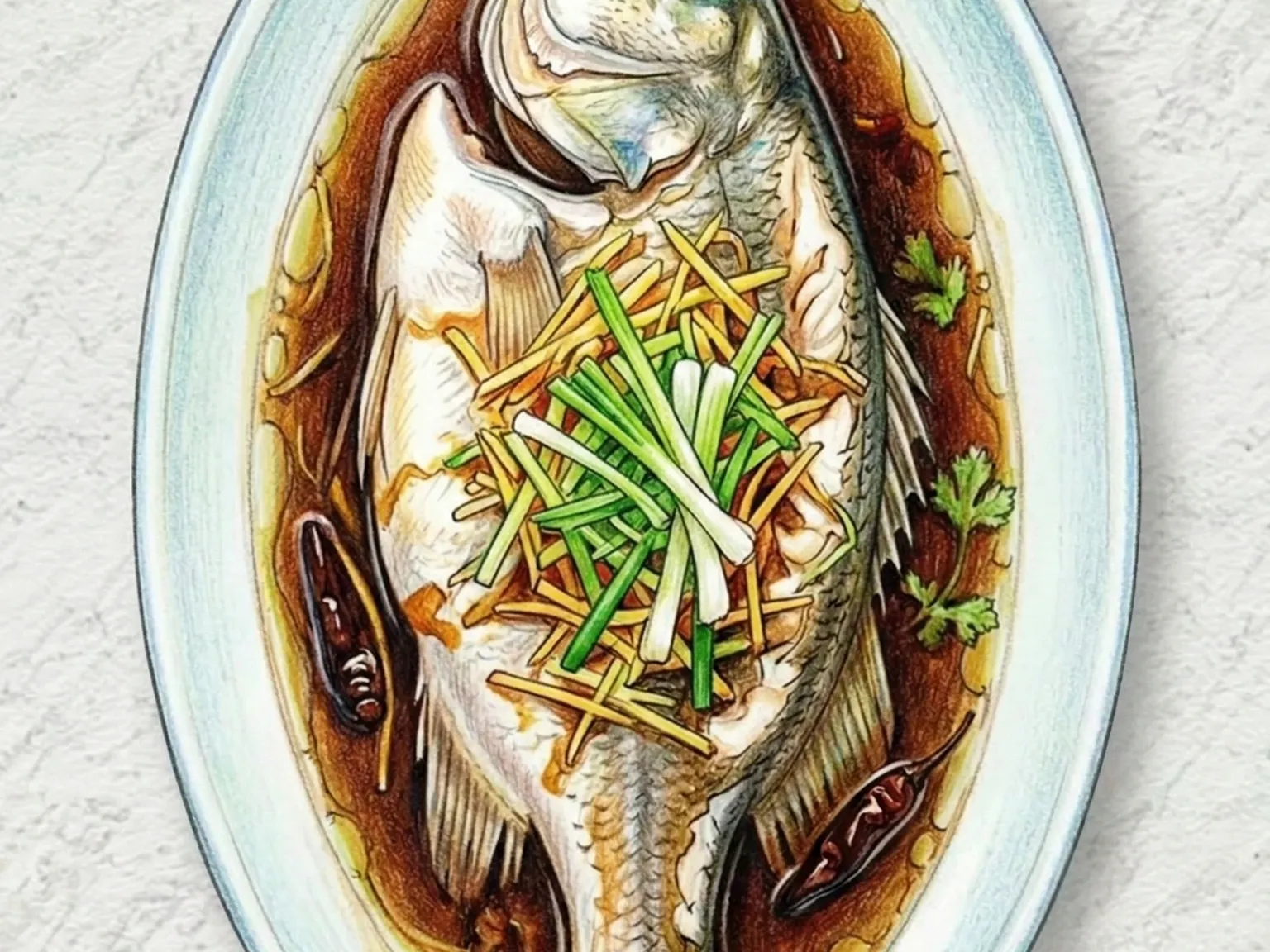
Cantonese Steamed Fish
Cantonese steamed fish - ching jing yu - is the clearest expression of the Cantonese philosophy of letting premium ingredients speak for themselves with minimal interference. The technique requires the freshest possible whole fish - sea bass, grouper, or pomfret are the standard choices - because steaming conceals nothing. Any fish that is even slightly past its peak will betray itself the moment it comes off the heat. The fish is scored on both sides to allow even heat penetration, placed on a plate with thin ginger slices tucked underneath and inside the cavity to neutralize any fishiness, then steamed over vigorously boiling water for exactly eight to ten minutes depending on thickness. Even one minute of overcooking transforms the silky, translucent flesh into something dry and dull - timing is the entire technique. The moment the fish leaves the steamer, all accumulated liquid on the plate must be poured off immediately, because that liquid carries concentrated fishiness that would spoil the clean finish. A generous pile of julienned scallion and fresh ginger is arranged on top, then a ladle of oil heated until just beginning to smoke is poured directly over the aromatics. The sizzling releases their fragrance in a single burst that infuses the fish. Seasoned soy sauce and a few drops of sesame oil complete the dish. In Cantonese banquet culture, the steamed fish course is typically the most expensive item on the table, with guests selecting a live fish directly from the restaurant tank.
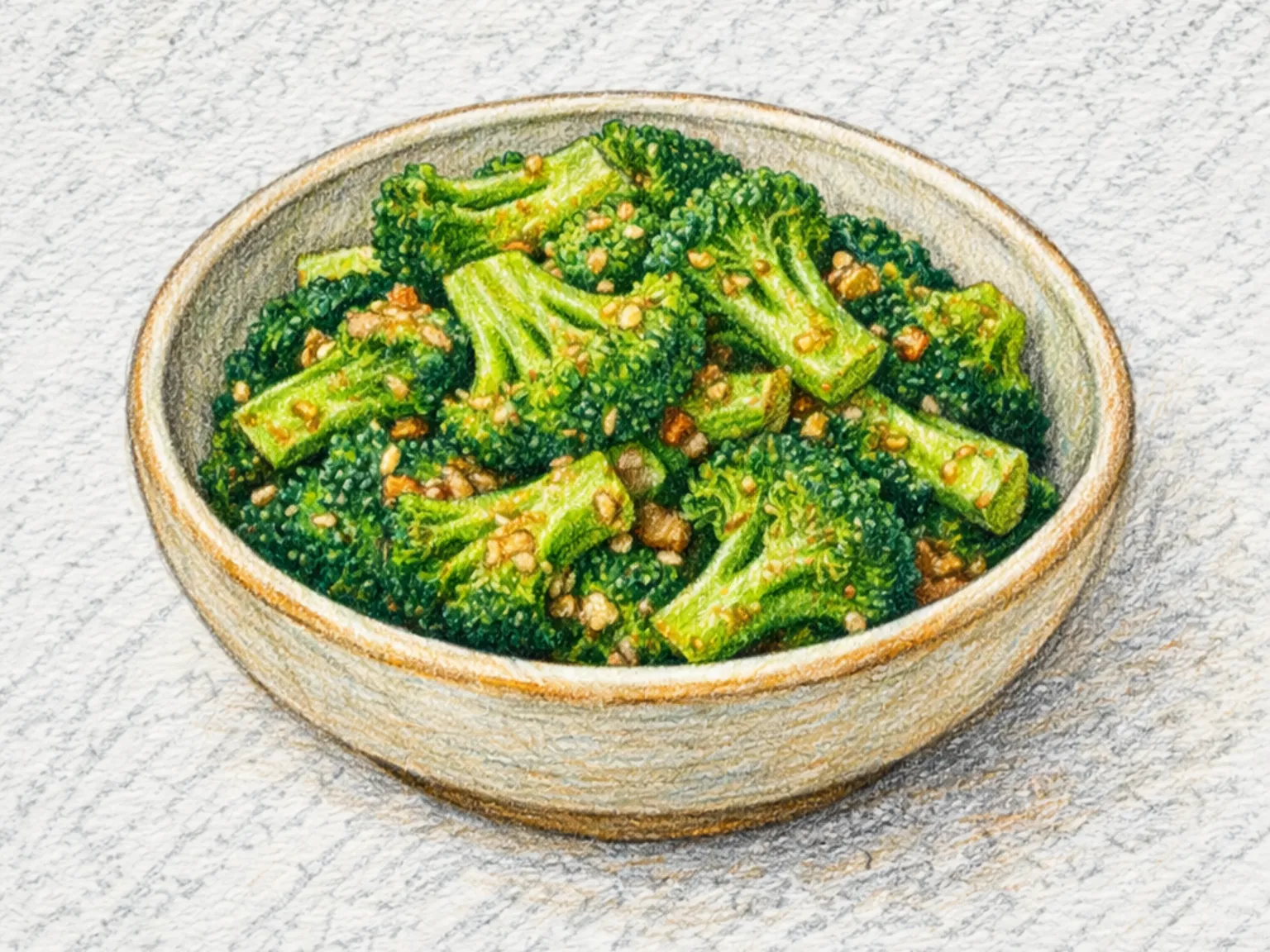
Korean Broccoli Doenjang Salad
Blanched broccoli tossed in doenjang dressing is a modern Korean banchan that pairs Western ingredients with traditional fermented seasoning. Florets and thinly sliced stems blanch for ninety seconds in salted boiling water, then shock in cold water to lock in vivid green color and a firm, crisp bite. The dressing is built from doenjang stirred with rice vinegar and oligosaccharide syrup, combining fermented salt depth, acidity, and a gentle natural sweetness that lifts rather than masks the vegetable's mild bitterness. Using the stems alongside the florets eliminates waste and adds textural variety to each bite. Ready in under ten minutes and holds well refrigerated for two days.
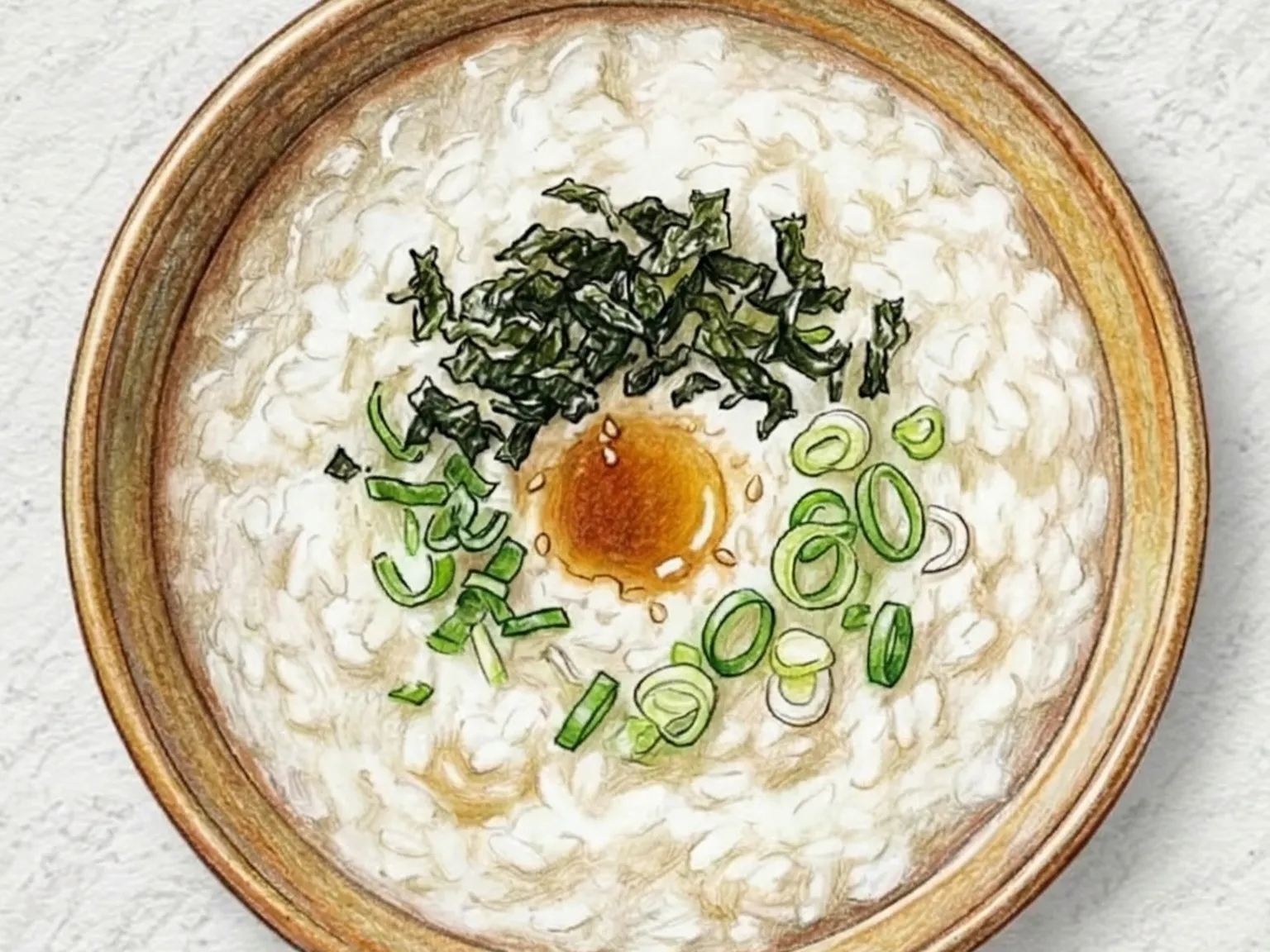
Plain Korean Rice Porridge
Baekjuk is the most fundamental Korean porridge, made with nothing more than soaked rice and water cooked together over a long, slow heat. Toasting the rice in sesame oil before adding liquid coats each grain in a thin fat layer that slows starch release, preventing the porridge from turning excessively glutinous while laying down a nutty, roasted aroma as the foundation of the dish. Water is added at six to seven times the volume of rice, brought to a boil, then reduced to the lowest heat and stirred continuously for at least thirty minutes. Over that time the grains break down entirely into a smooth, pourable consistency. Regular scraping with a wooden spatula is not optional - without it, the bottom scorches and changes both the taste and color of the porridge. Seasoning is held to a minimum of salt alone to let the natural sweetness of the rice come through, with shredded dried seaweed and sliced scallion placed on top for small bursts of contrast. A single drop of sesame oil added just before serving closes the dish with a clean, nutty fragrance. The porridge has long been used as a recovery meal for unsettled stomachs and low appetite, and it pairs easily with nearly any Korean side dish to become a complete meal.
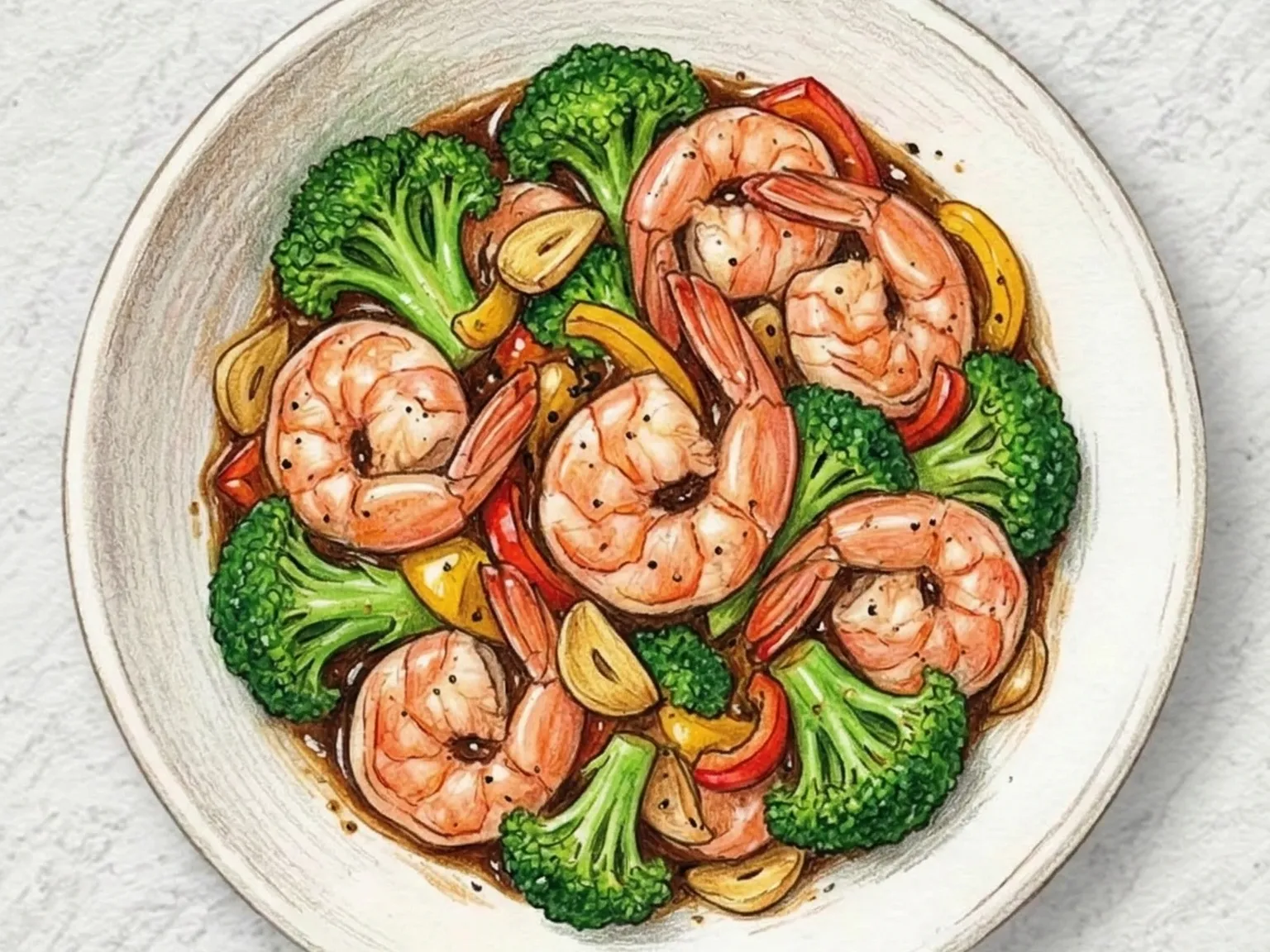
Korean Beurokolli Saeu Bokkeum (Broccoli Shrimp Stir-fry)
Peeled and deveined shrimp are seasoned with cooking wine and pepper, then stir-fried over high heat alongside blanched broccoli. The shrimp reach their ideal texture the instant they turn pink; cooking any further causes the proteins to contract and the flesh to toughen. Blanching the broccoli briefly beforehand means it releases less water once it hits the pan, keeping the sauce concentrated and clinging to the ingredients rather than pooling at the bottom. Soy sauce and oyster sauce form the savory backbone, while sliced garlic infused into the oil at the start builds a fragrant base that runs through every mouthful. Bell pepper adds a crisp snap and a vivid color. The whole dish takes under fifteen minutes and delivers a full plate of protein and vitamin C in a light, satisfying format. Served over steamed rice, it works just as well as a rice bowl.
Korean Black Soybean Noodle Cup
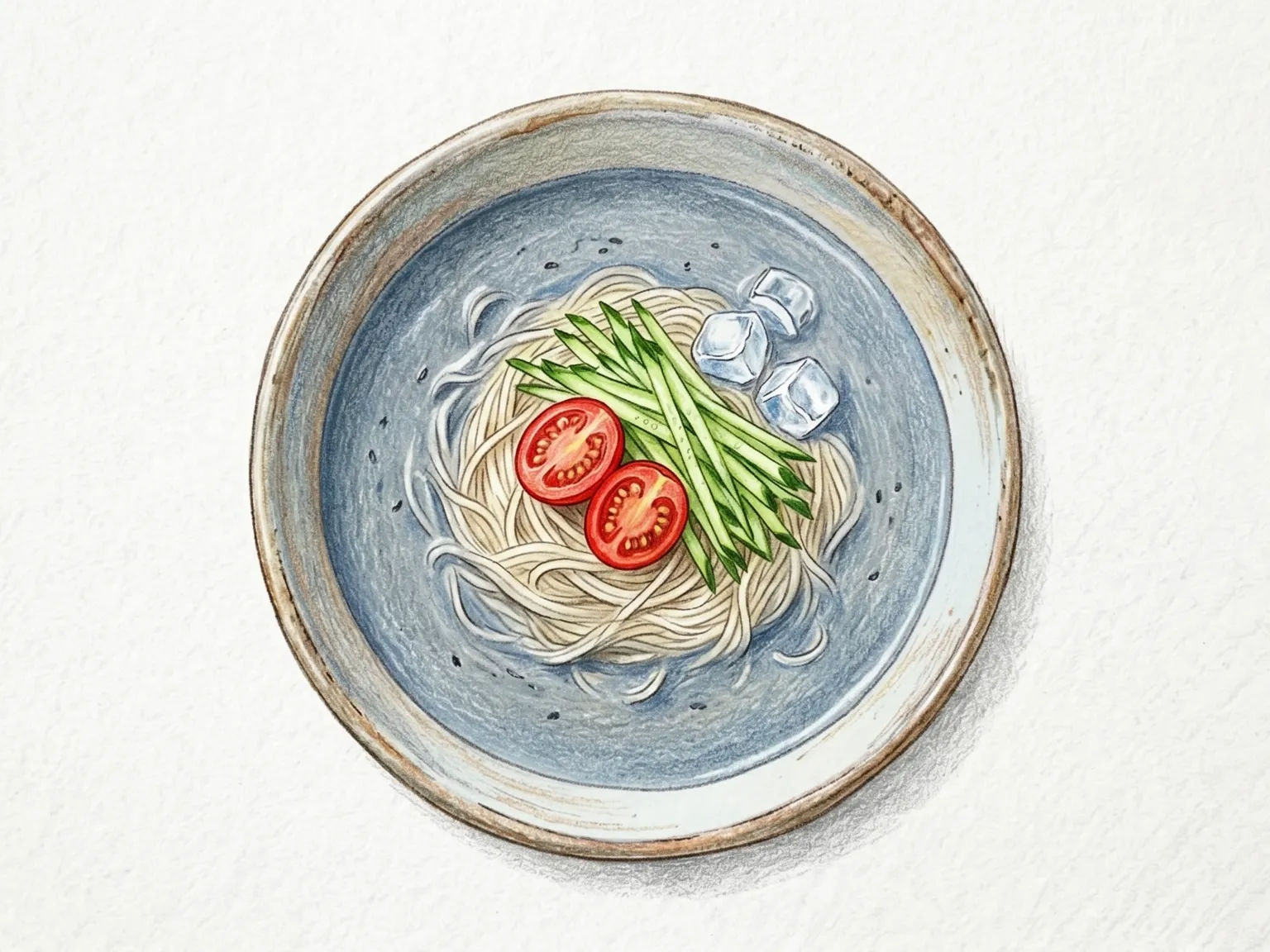
Seori-kongguksu-cup serves chilled black soybean broth over thin somyeon noodles in a cup-sized portion, a cool summer street food built for hot weather. The broth is made by blending boiled black soybeans with milk and cold water, then pressing through a fine strainer for a silky, lump-free consistency. Black soybeans give the broth a grayish hue distinct from the ivory-colored broth made with ordinary yellow soybeans, and the flavor is noticeably richer and more intensely nutty, with a clean finish rather than a heavy aftertaste. Cooking the soybeans fully and letting them cool before blending is important because heat drives off the aromatic compounds that give the broth its characteristic fragrance. Sliced cucumber, cherry tomatoes, and ice cubes go on top, the vegetables adding crunch and color contrast while the ice keeps the broth cold so the soybean flavor stays sharp and defined. Somyeon noodles are boiled and rinsed several times in cold water to strip off surface starch, which would otherwise cloud the broth and make the noodles clump. The result is a simple, satisfying bowl where every element has a clear role.

Apple Cider Vinegar Cinnamon Drink
Apple Cider Vinegar Cinnamon Drink is a flavored beverage prepared by mixing unsweetened apple juice, water, apple cider vinegar, and maple syrup. The unsweetened apple juice shares the same acid profile as the apple cider vinegar, establishing a balanced flavor profile. Cinnamon powder is sprinkled across the surface and mixed using a shaker to prevent clumping. For an optional aromatic layer, two whole cloves can be steeped in the mixture for one to two minutes before being removed to avoid bitterness. This drink can be served cold over ice or heated gently on low heat without boiling until steaming. Serving the beverage warm releases a scent profile reminiscent of baked apple pie, making it a versatile option for different seasons.
Korean Grilled Deodeok Root
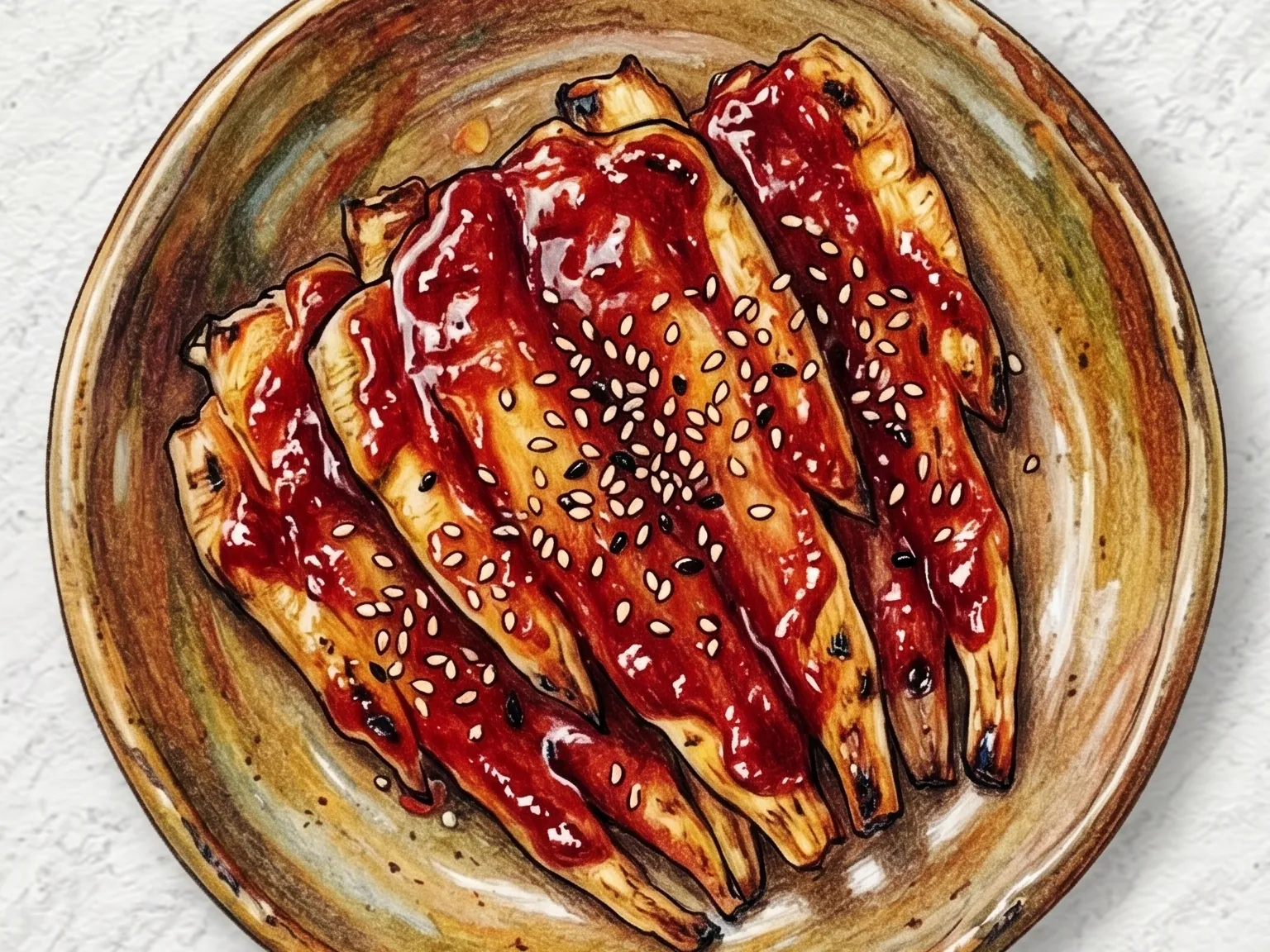
Deodeok-gui is a traditional Korean mountain vegetable dish where peeled deodeok roots are pounded flat with a mallet, coated in a paste of gochujang, gochugaru, honey, sesame oil, and garlic, then grilled over high heat. The pounding step is critical: it breaks down the tough fibers so the seasoning absorbs evenly and the root develops a pleasant chewiness instead of remaining stringy. Soaking the peeled deodeok in lightly salted water for about thirty minutes before pounding draws out the sharpest bitterness, leaving only the characteristic mellow, slightly medicinal aroma the root is known for. That bittersweet quality sits in balance between the fermented spice of gochujang and the sweetness of honey. Quick grilling at high temperature chars the glaze just enough to add smokiness while keeping the interior moist; applying the seasoning paste in two stages during grilling builds a thicker, glossier layer on the surface. Toasted sesame seeds scattered on top contribute nuttiness that complements the wild herb's earthy, resinous character.
Korean Mallow Clam Soup (Doenjang Mallow and Clam Broth)
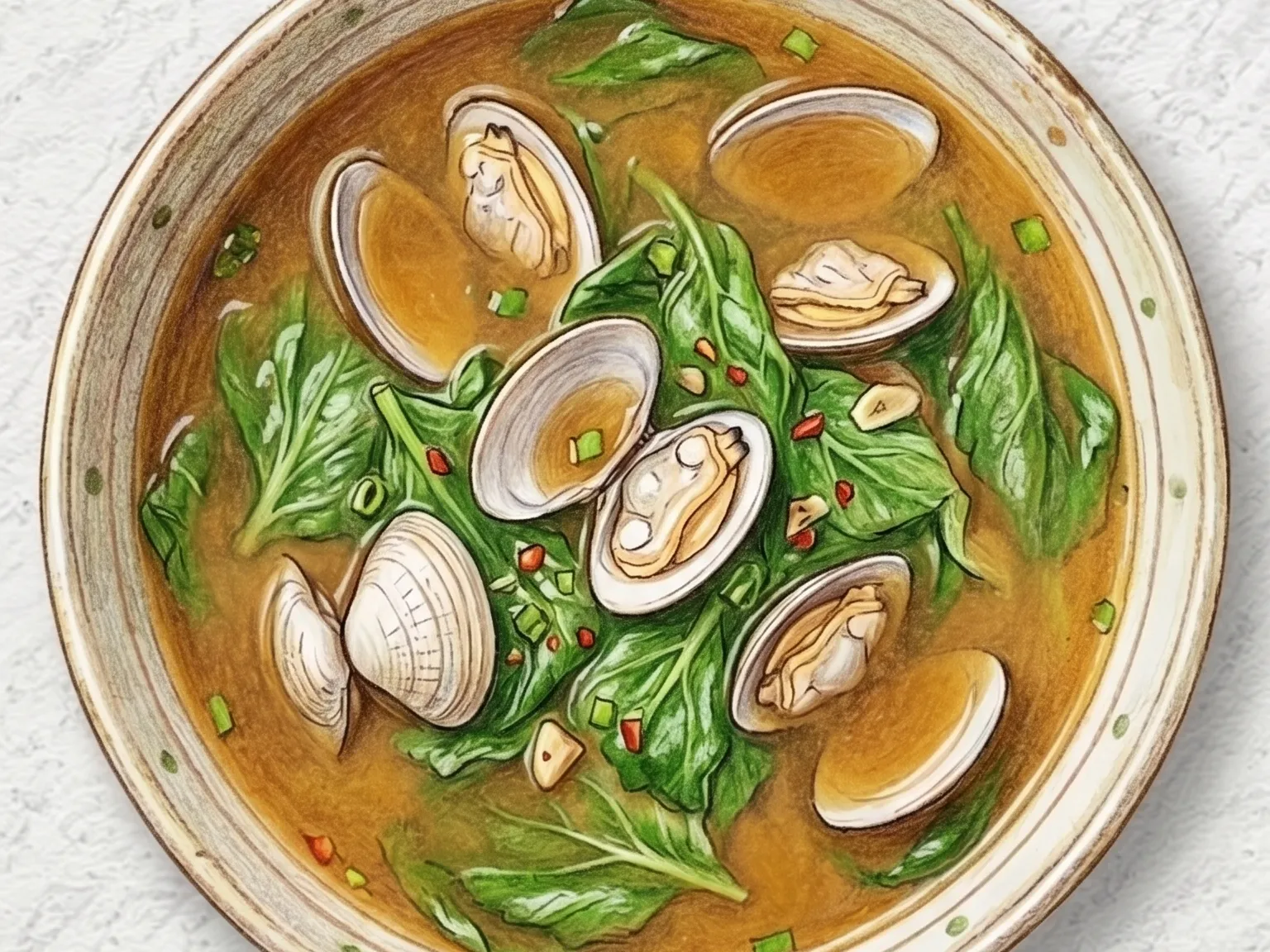
Auk-bajirak-guk pairs mallow greens and littleneck clams in a doenjang broth, a combination that Korean coastal households have prepared together for generations. The two ingredients come from the same geographic region - the shallow tidal flats and vegetable gardens of Korea's southern and western coasts - and their flavor profiles complement each other in a way that seems almost deliberate. The clams are purged of sand by soaking in salted water, then brought to a boil until the shells open. The liquid they release is immediately saline and oceanic, becoming the backbone of the broth. Doenjang dissolved into that clam liquor adds fermented earthiness and depth that the brine alone cannot provide. Mallow leaves are added at the very end - less than a minute before the pot comes off the heat. Cooking them longer dulls their color, turns the broth cloudy, and produces an excess of the mucilage the leaves naturally contain. Brief cooking preserves their silky, almost slippery texture, and the small amount of mucilage that does release thickens the broth very slightly, giving it more body. The flavor balance across the three components is precise: the doenjang's savory funk is sharpened by the clam's brininess, and the mallow's gentle sweetness smooths both into a rounded whole. The broth is flavorful enough to eat on its own poured over rice. Spring is the best season for this soup, when young mallow leaves are at their most tender.
Korean Napa Cabbage Anchovy Stew
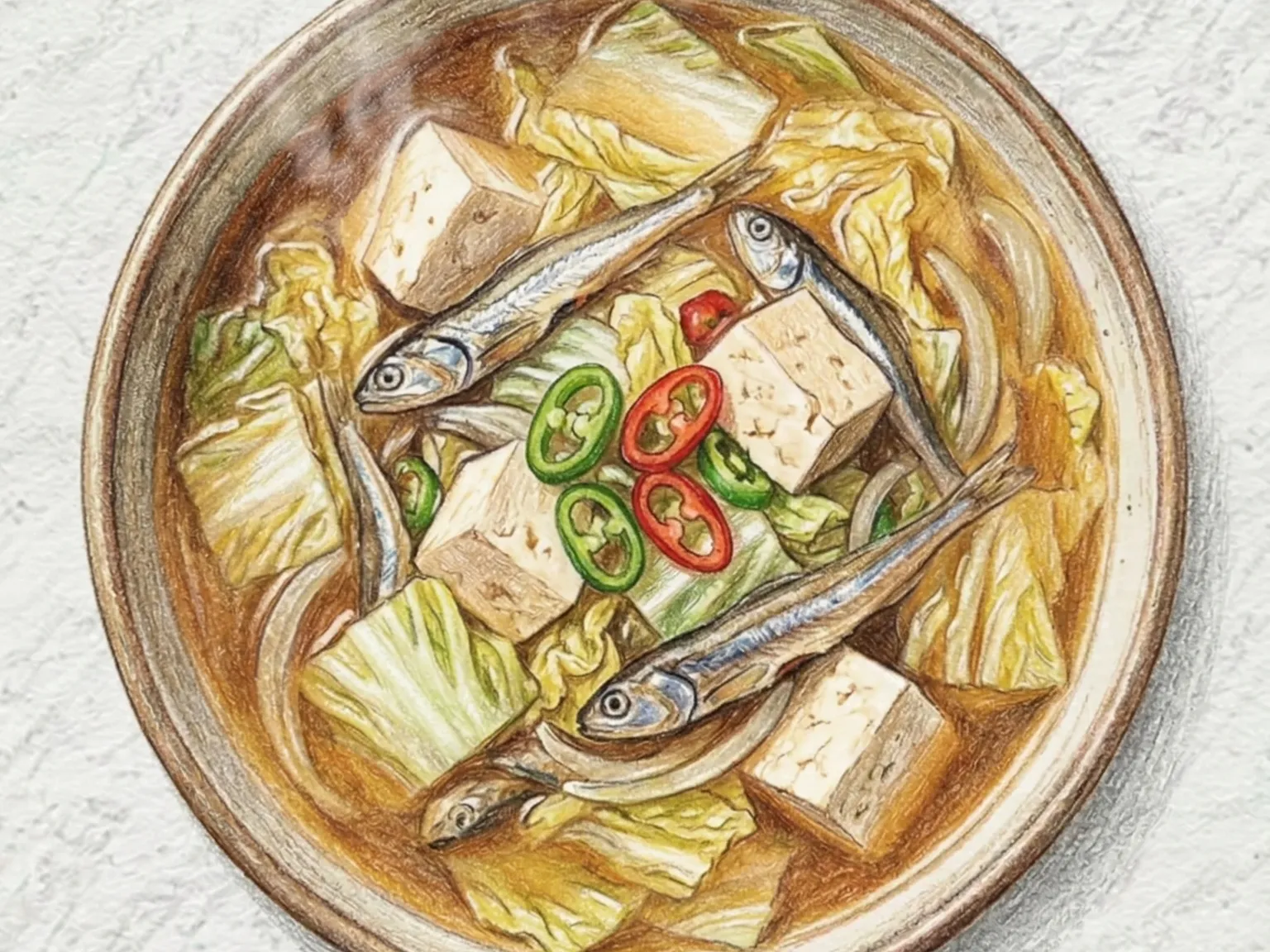
Baechu myeolchi jjigae is a homestyle Korean stew that relies on dried anchovy stock as its flavor base, with napa cabbage as the central vegetable. Large dried anchovies and kelp are simmered together for ten minutes to build a stock with pronounced umami, then strained so the broth is clear and clean. Baby napa cabbage cut into long vertical strips releases the natural sweetness of its pale inner stems into the broth as it cooks, providing a counterpoint to the saltiness of the anchovy stock. Thick-cut tofu slabs are placed between the cabbage layers, and thinly sliced onion adds another source of sweetness to the liquid. Diagonally cut cheongyang chili introduces a direct, sharp heat that gives life to what would otherwise be an entirely mild broth. Fifteen to twenty minutes of simmering is sufficient for the cabbage to soften fully and for its sugars to fully dissolve into the stock, creating the natural sweetness that defines this stew. No gochujang, no doenjang, no complicated sauce: the stew demonstrates a principle central to Korean home cooking, which holds that a well-constructed stock and a single honest vegetable can generate depth and satisfaction without further layering.
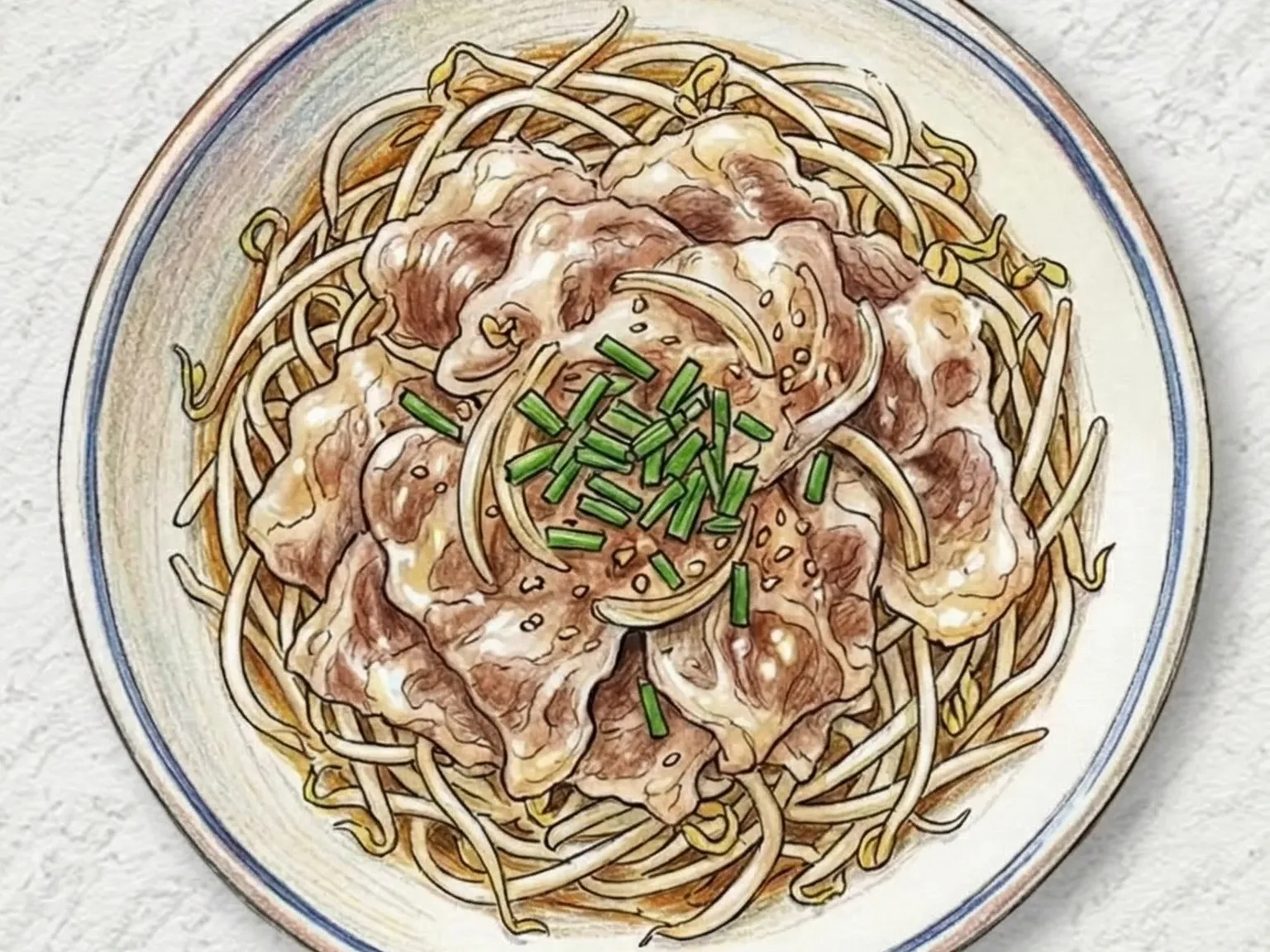
Korean Steamed Beef Brisket and Bean Sprouts
Thin-sliced marbled beef brisket is layered over bean sprouts and steamed with a dressing of soy sauce, minced garlic, sugar, and sesame oil. As the brisket cooks, the fat renders and drips down onto the sprouts, coating them with beefy richness that no separate sauce could replicate. The bean sprouts hold their crunch under the steam, and sliced onion and chive soften into the mix, adding mild sweetness and fragrance. Lightly sweetened soy sauce keeps the seasoning clean rather than heavy. The dish has a short ingredient list and a fast cook time, but the quality of the brisket - specifically how well it renders - determines the outcome.
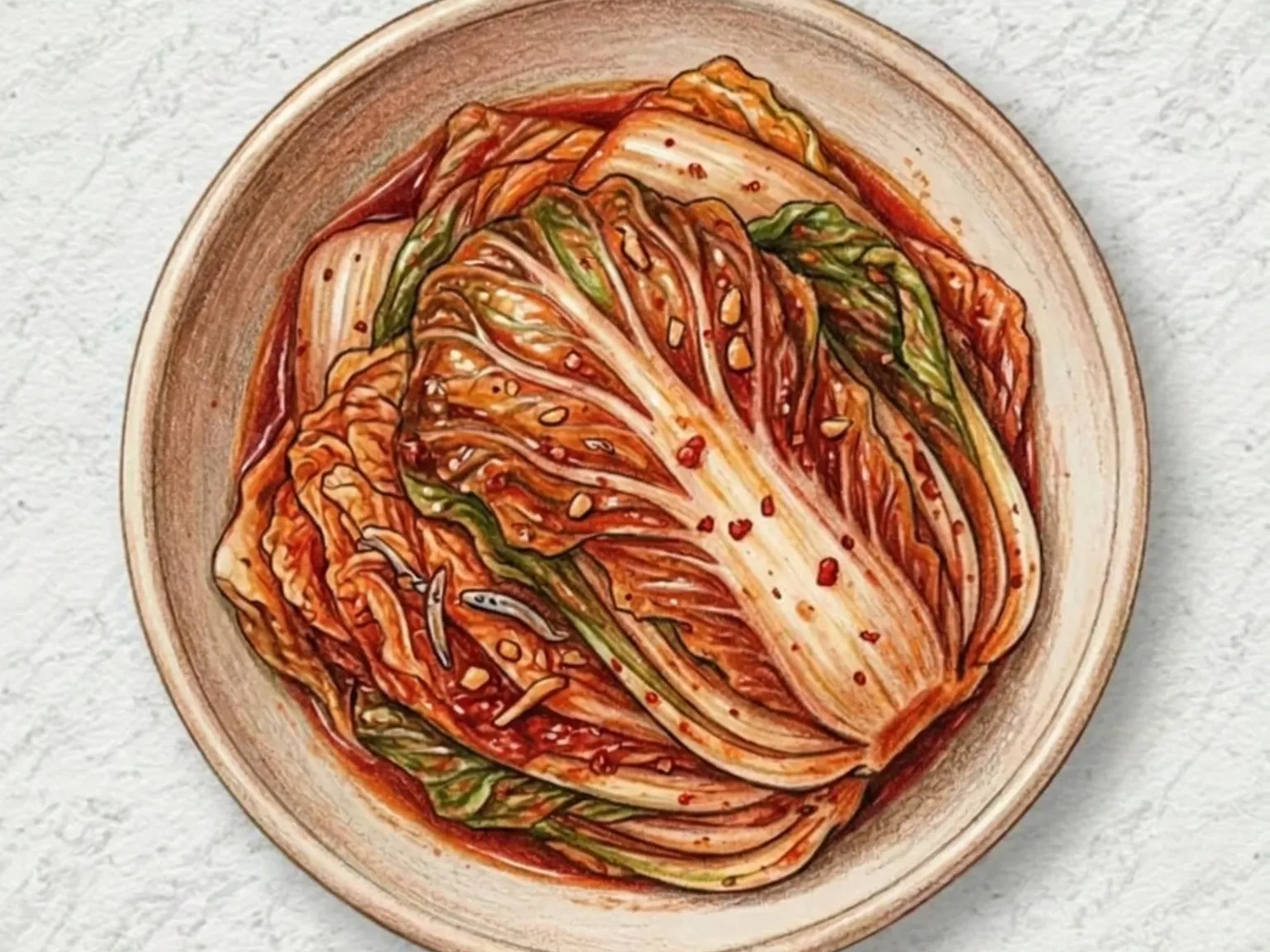
Korean Napa Cabbage Kimchi
Baechu kimchi is Korea's definitive fermented food - salted napa cabbage layered with a seasoning paste of gochugaru, anchovy fish sauce, garlic, ginger, and glutinous rice paste, then fermented at controlled temperatures until the correct balance of salt, heat, umami, and lactic acid develops. Kimchi is not a pickled vegetable in the Western sense; it is a living fermented food whose character changes continually from the moment it is made. The salting step is the technical foundation. Coarse sea salt draws moisture from the cabbage over six to eight hours, making the stems flexible while leaving the characteristic crunch intact. Under-salting results in kimchi that weeps too much liquid during fermentation and turns mushy; over-salting suppresses microbial activity and masks the seasoning. The glutinous rice paste in the seasoning serves two purposes simultaneously: it acts as an adhesive that keeps the seasoning paste clinging to each leaf rather than sliding off, and it provides fermentable sugars that give the lactobacillus bacteria an early food source, accelerating the initial fermentation. Julienned radish adds textural contrast, and scallions contribute a layer of savory depth. After one day at room temperature to establish the bacterial culture, the kimchi moves to cold storage where lactic acid accumulates slowly. At two to three weeks, the heat from gochugaru, the umami from fish sauce, and the acidity from fermentation reach their optimal equilibrium. Older kimchi - four weeks or more - develops a pronounced sourness and deeper, more fermented flavor that makes it better suited for cooking in kimchi-jjigae or kimchi-bokkeum than for eating raw.
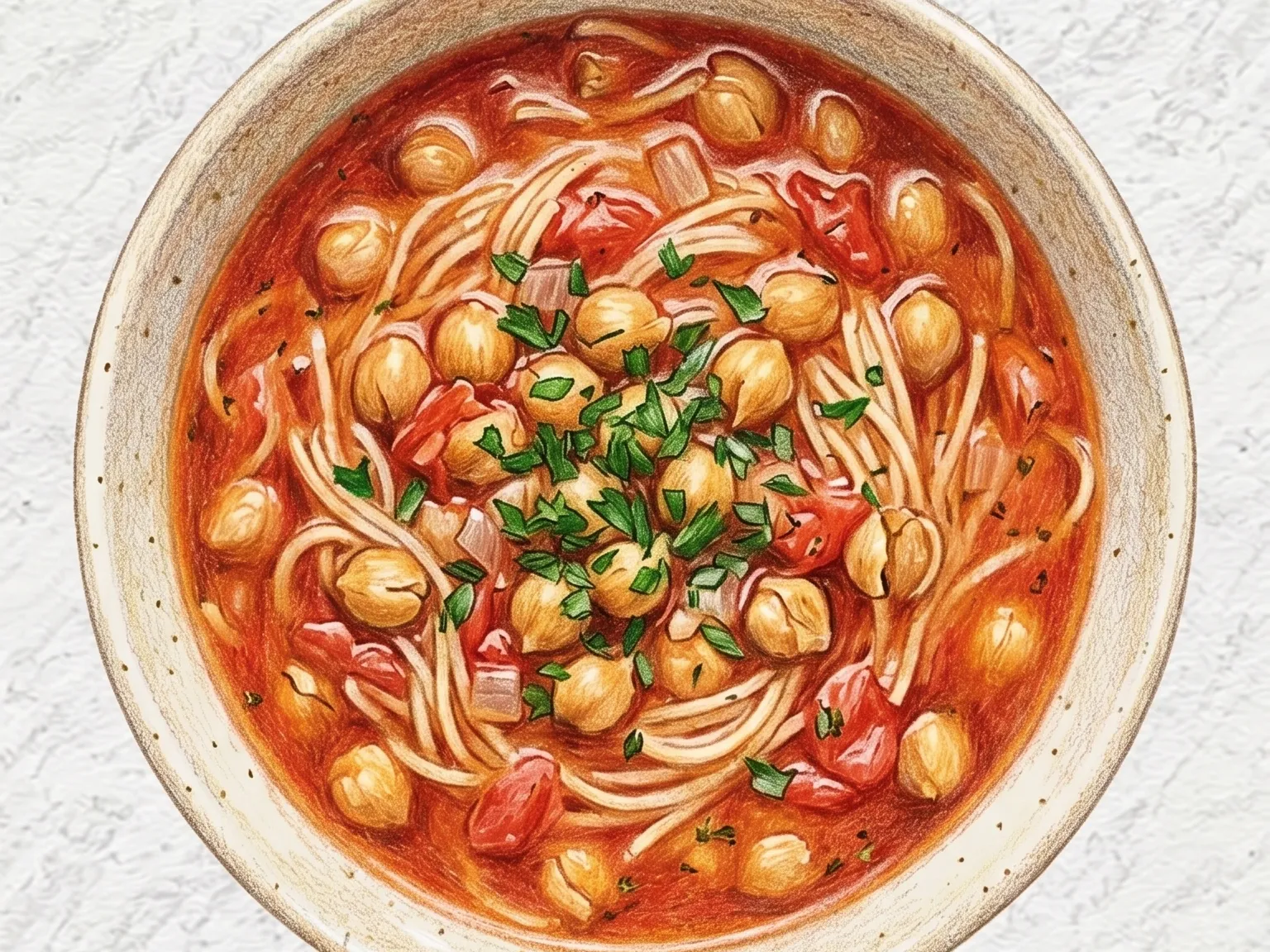
Danza Noodle Soup (Tomato Chickpea Pasta Soup)
Danza noodle soup is a light Mediterranean-style soup that simmers diced tomatoes and chickpeas together in vegetable broth with dried oregano and thin pasta noodles. Sauteing onion in olive oil until translucent before adding the tomatoes builds a deeper, more aromatic base than starting with raw aromatics. Chickpeas soften gradually as the soup cooks, contributing a nutty richness and satisfying substance without making the broth heavy. Stirring in fresh parsley just before serving lifts the finished soup with a clean herbal brightness against the tomato backdrop. Cooking the pasta separately and adding it at serving keeps the broth clearer and prevents the noodles from absorbing too much liquid.
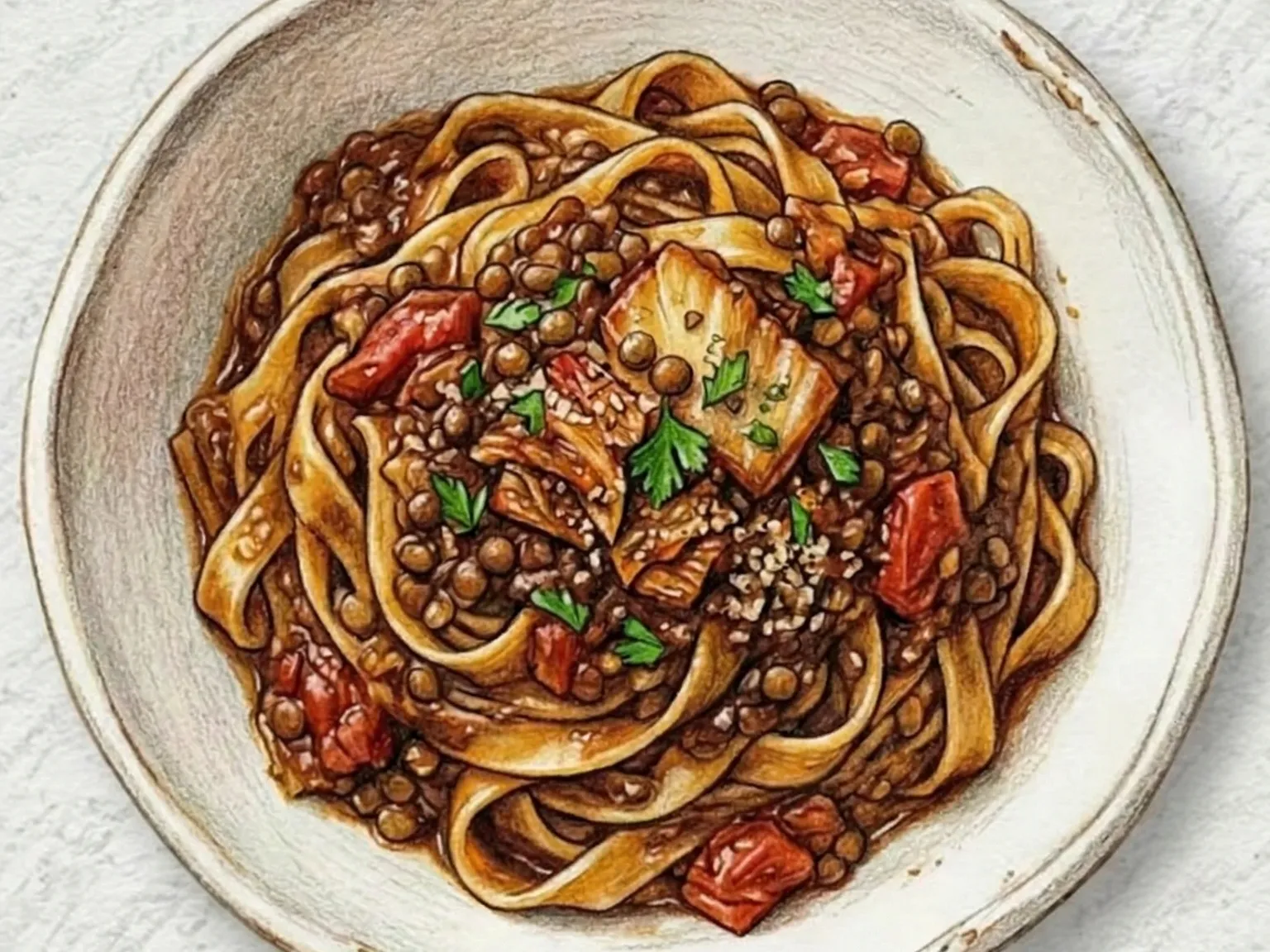
Kimchi Lentil Ragu Tagliatelle
Kimchi lentil ragu tagliatelle is a plant-forward pasta where lentils simmer with tomato puree, wine, and finely diced onion, carrot, and celery for 35 minutes, breaking down into a thick sauce with a meaty texture that contains no actual meat. The Korean-inflected soffritto builds the aromatic base, and as the lentils cook through they release starch that naturally thickens the ragu without any additional binder. Fermented kimchi is added late in the process, preserving its sharp acidity and keeping the fermented flavor present and distinct rather than cooked away. A small amount of sugar smooths the combined tartness of tomato and kimchi so neither dominates. The wide, flat tagliatelle ribbons hold the heavy sauce well, and every strand picks up the full depth of the braise. Without a gram of meat, the dish delivers genuine richness and staying power.
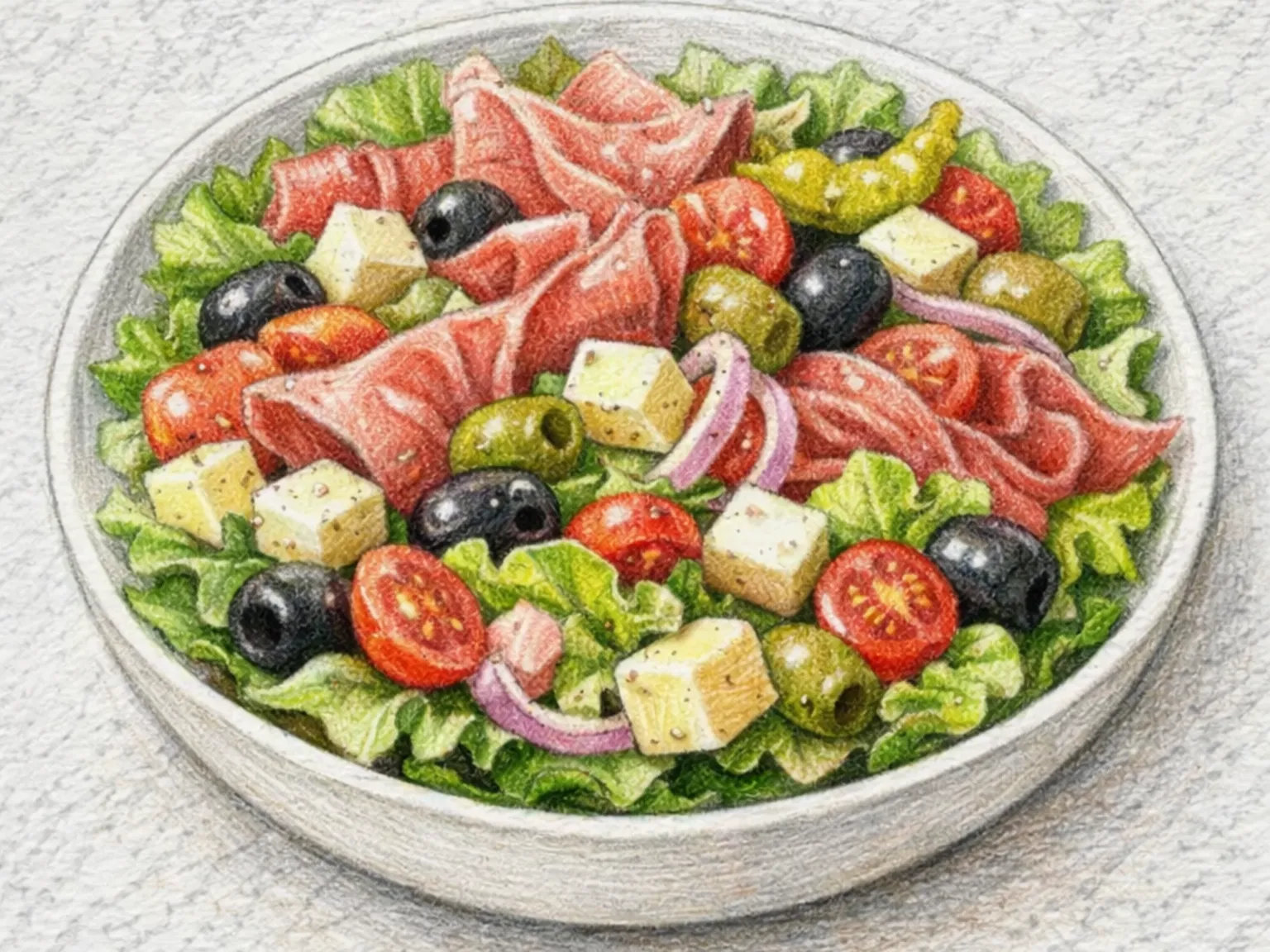
Antipasto Salad
Antipasto - literally 'before the meal' in Italian - is a first course of cured meats, cheeses, olives, and preserved vegetables, and this salad compresses that entire tradition into a single composed bowl. Crisp romaine or iceberg forms the base, layered with sliced salami, capicola, provolone, marinated artichoke hearts, roasted red peppers, and briny Kalamata olives. A red wine vinegar dressing built with dried oregano and minced garlic draws the components together with a sharp, herbal acidity that cuts through the fat of the cured meats. The salami is rolled into loose cylinders and the provolone cut into thick chunks so both hold their presence against the dressed greens rather than disappearing into the mix. The reason the salad works is the contrast in salt levels and textures: heavily cured meat against mild cheese, smoky-sweet pepper against bitter greens, silky olive against crunchy romaine - no two bites taste the same. Italian-American delis in New York and New Jersey popularized this format in the mid-twentieth century, and it has since become a reliable fixture of catered lunches, potlucks, and family gatherings across the United States.
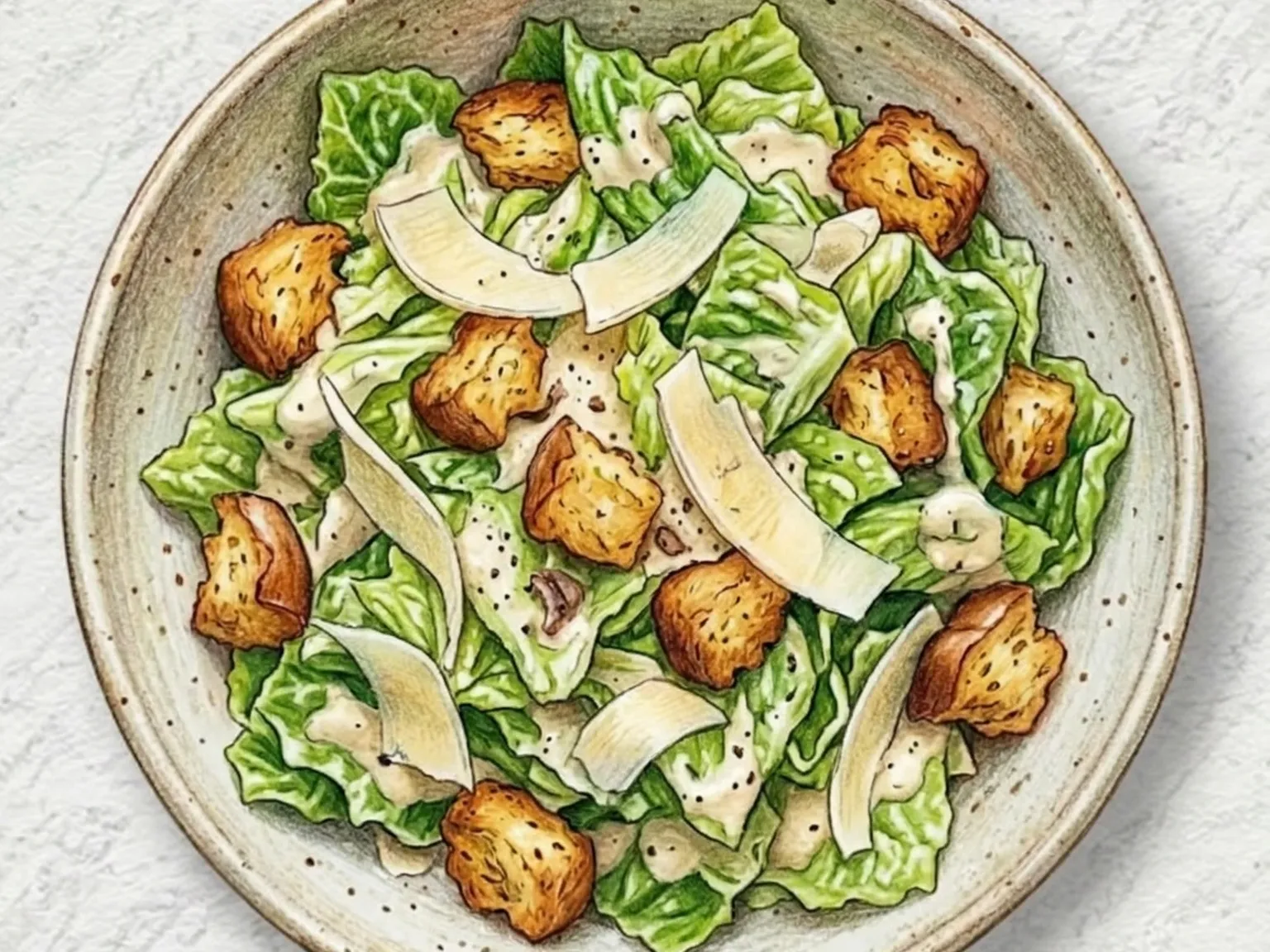
Caesar Salad
Caesar salad is built on romaine lettuce torn into rough, generous pieces and tossed in a dressing made from mayonnaise, lemon juice, garlic, and anchovy. The anchovy does not taste fishy in the finished dressing; it dissolves into the fat of the mayonnaise and functions as a deep umami foundation that keeps the salad interesting beyond its creamy surface. Lemon juice cuts through the richness of the mayo base, so the dressing coats the lettuce heavily without feeling cloying. Croutons are cubed bread toasted in olive oil until the outside turns crisp and golden but the inside stays slightly soft and chewy, giving them enough structure to absorb dressing without going immediately soggy. Wide, thin shavings of Parmesan add a dry, salty intensity that contrasts with the watery crunch of the romaine. With a short ingredient list, the quality of the dressing balance and the texture of the croutons determine the final outcome.
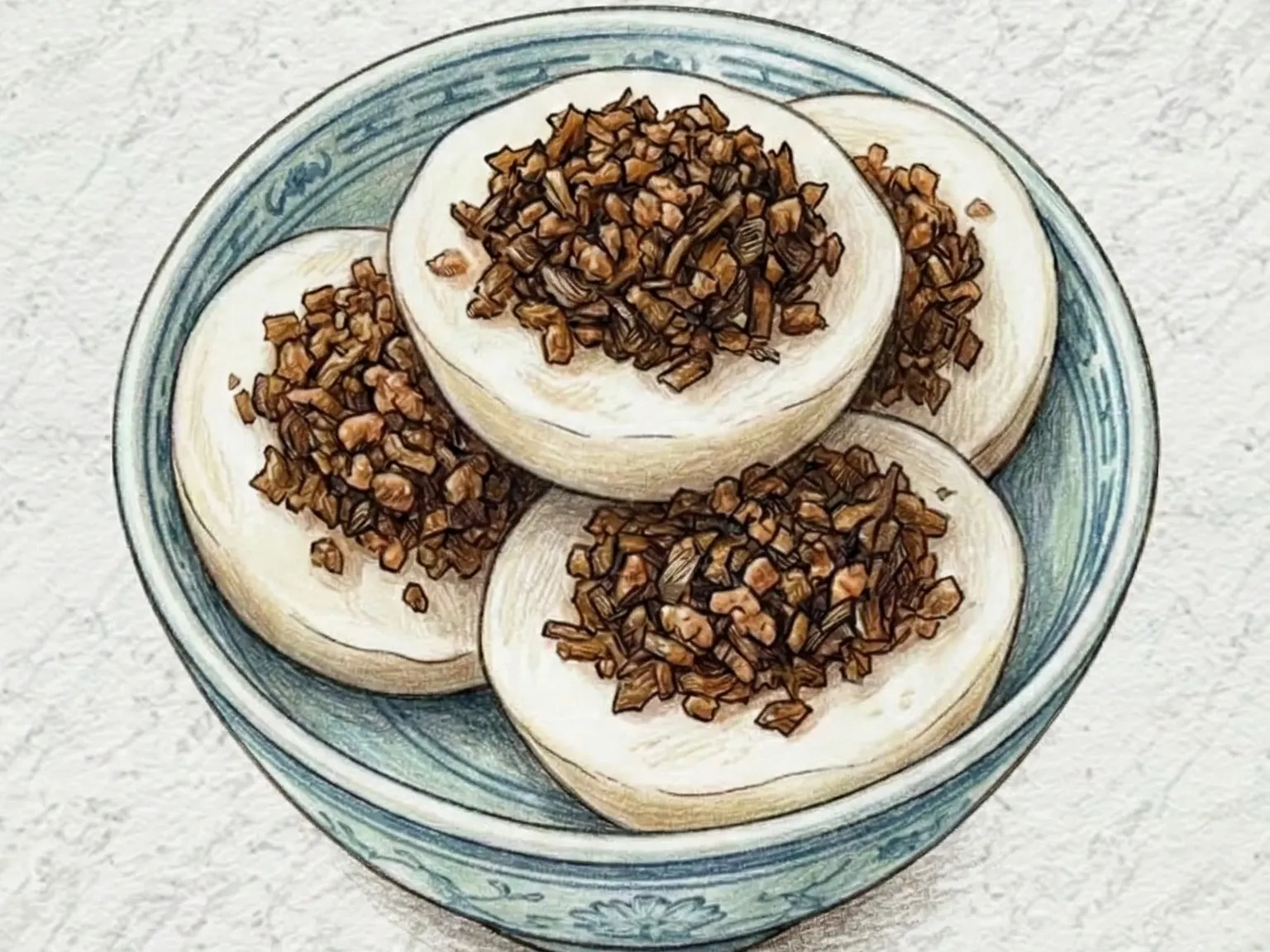
Chwee Kueh (Steamed Rice Cake with Chai Poh)
Chwee kueh is a traditional steamed rice cake that is commonly eaten during breakfast in Singapore and Malaysia. The dish originated within the Teochew Chinese community and has been passed down through multiple generations of hawker vendors. These snacks are typically available during the earliest hours of the morning at specialized stalls that often do not sell any other types of food. The preparation involves pouring a batter made of rice flour into small, round ceramic molds. These molds are placed into a steamer until the batter solidifies into a soft and slightly concave cake. The natural indentation found in the center of the rice cake is designed to accommodate a spoonful of chai poh, which is a topping made from preserved radish. The radish is finely chopped and stir-fried with soy sauce and a small amount of sugar. This process creates a mixture that balances savory and sweet flavors while allowing some of the radish pieces to develop caramelized edges. The rice cake base is intentionally kept plain and carries only a very faint sweetness from the rice itself. As a result, the overall flavor of the dish is determined by the seasoned radish and the sambal chili that is provided on the side. The addition of sambal introduces a significant amount of heat and a savory element that sharpens the flavor profile of the entire combination. A typical order of chwee kueh consists of five or six individual cakes served at a very modest price. This affordability and consistent quality have helped the dish become a prominent symbol of daily breakfast culture in Singapore. Some hawker stalls have continued to operate and serve chwee kueh from the exact same location for over fifty years. The longevity of these establishments reflects how deeply this particular rice cake dish is integrated into the regional food history and the everyday lives of the local population.