🏠 Everyday Recipes
Simple home-cooked meals for any day
1705 recipes. Page 17 of 72
These are the meals you can cook day after day without getting tired of them. Doenjang jjigae, rolled omelet, spicy pork stir-fry - the kind of home-cooked dishes that fill an ordinary day with comfort.
The beauty of everyday cooking is that it relies on common ingredients already in your fridge. No exotic items, no complicated techniques - just straightforward recipes for satisfying home meals.
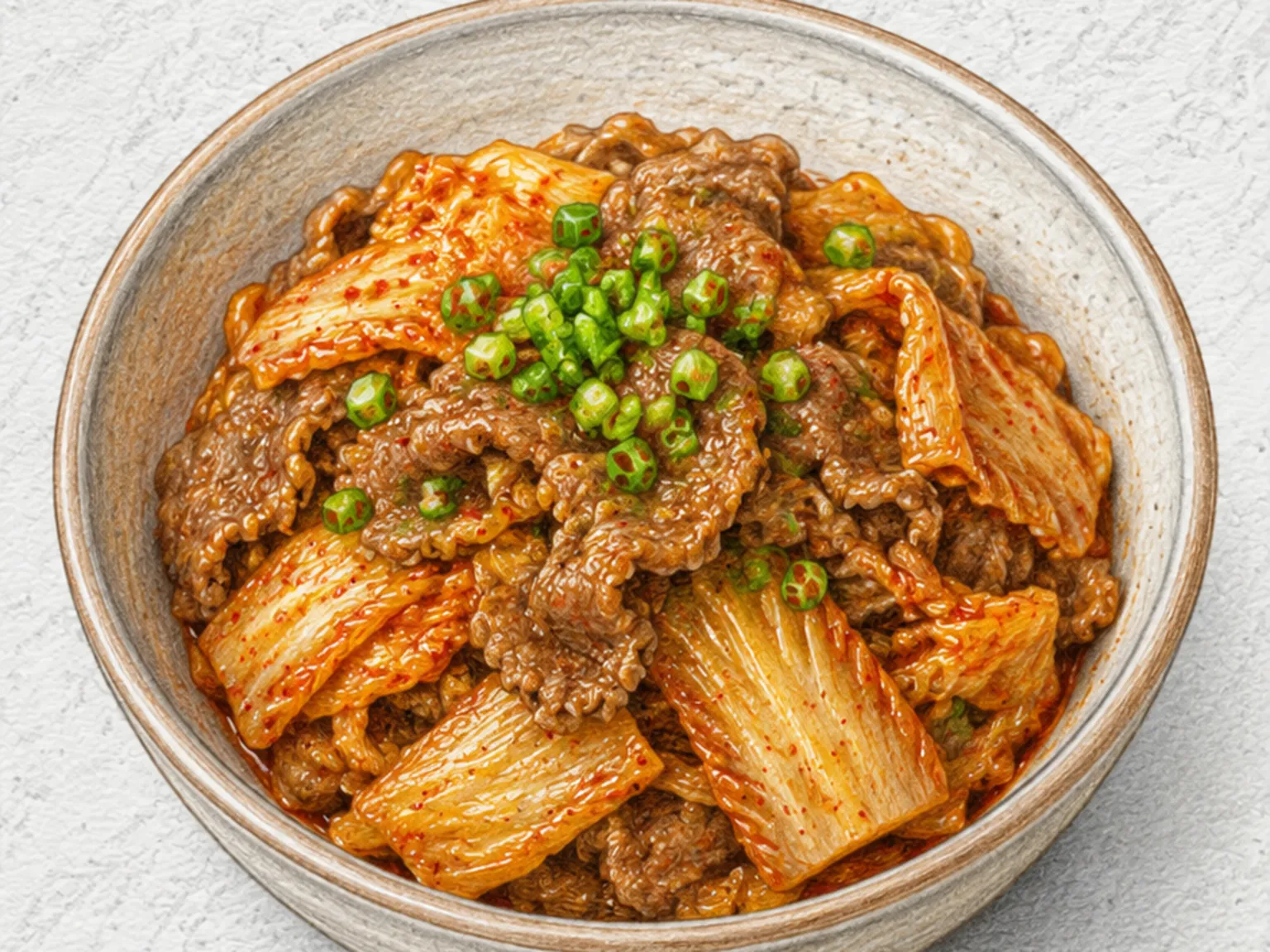
Korean Beef Brisket Kimchi Stir-Fry
Paper-thin slices of brisket are laid in a cold, dry pan and the heat is brought up gradually so the marbled fat renders out completely before the meat browns. That rendered beef tallow becomes the only cooking fat in the dish -- no oil is added at any point -- and the beefy fragrance it deposits on the kimchi is something vegetable oil simply cannot replicate. Aged kimchi contributes a pronounced sourness from weeks or months of deep fermentation, and half a teaspoon of sugar does the precise job of rounding off that acidity without tipping the flavor toward sweet. The balance lands in the narrow space between tart, salty, and subtly sweet, which is where the dish wants to live. Cooking on high heat for a short time keeps the kimchi from going soft; drop the temperature or extend the cook and the whole pan collapses into a mushy mass where textures disappear. A pinch of gochugaru added partway through brings a dry heat that sharpens the overall profile. Sesame oil, half a tablespoon swirled in after the flame is off, lifts the aroma from savory toward something more complex. Finely sliced green onion scattered over the top at the end adds a clean, fresh note against the heavy richness underneath. Five ingredients, fifteen minutes of cooking, and the result reliably clears an entire bowl of rice.

Potato Mozzarella Korean Corn Dog
Gamja mozzarella hotdog is a Korean street food that skewers a sausage and a mozzarella cheese stick together, coats them in a batter of flour, milk, and baking powder, then presses half-centimeter potato cubes across the entire surface before deep-frying. The potato cubes cook into a bumpy, golden-brown shell on the outside while the mozzarella inside melts and stretches into long, elastic strands when pulled apart. Sugar in the batter gives the whole corn dog a faintly sweet undertone throughout, and sprinkling additional sugar on the finished hotdog before eating is a common practice at street stalls. Each bite stacks the sausage's saltiness, the mozzarella's creamy stretch, and the crisp snap of the potato crust into one compact, layered structure.
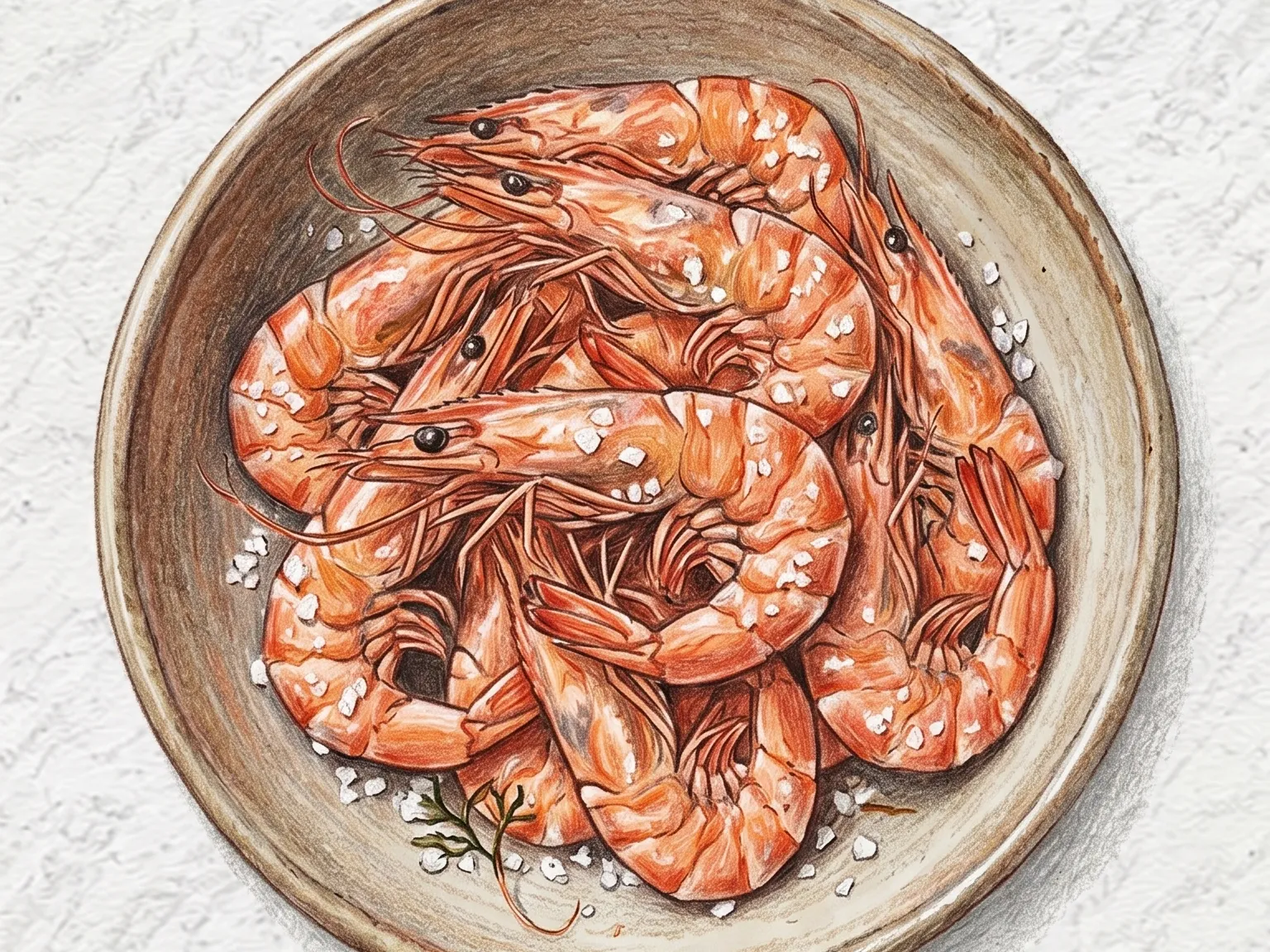
Salt-Grilled Dokdo Shrimp
This dish features salt-grilled Dokdo shrimp, selecting flower or chicken shrimp caught near Dokdo island to highlight their natural flavor. The shrimp are rinsed, treated with rice wine to eliminate odor, and trimmed of long antennae while keeping the heads intact to preserve the rich umami flavor of the liver. A layer of coarse salt is spread over parchment paper in a pan and heated to distribute warmth evenly. The shrimp are arranged on the salt bed and cooked covered to trap moisture, preventing the flesh from drying. Once the shells turn bright red, they are turned and cooked briefly to ensure the meat remains tender instead of becoming tough. Squeezed lemon juice is applied before serving. The separated shrimp heads can be saved and stir-fried with butter to create an additional savory side dish.
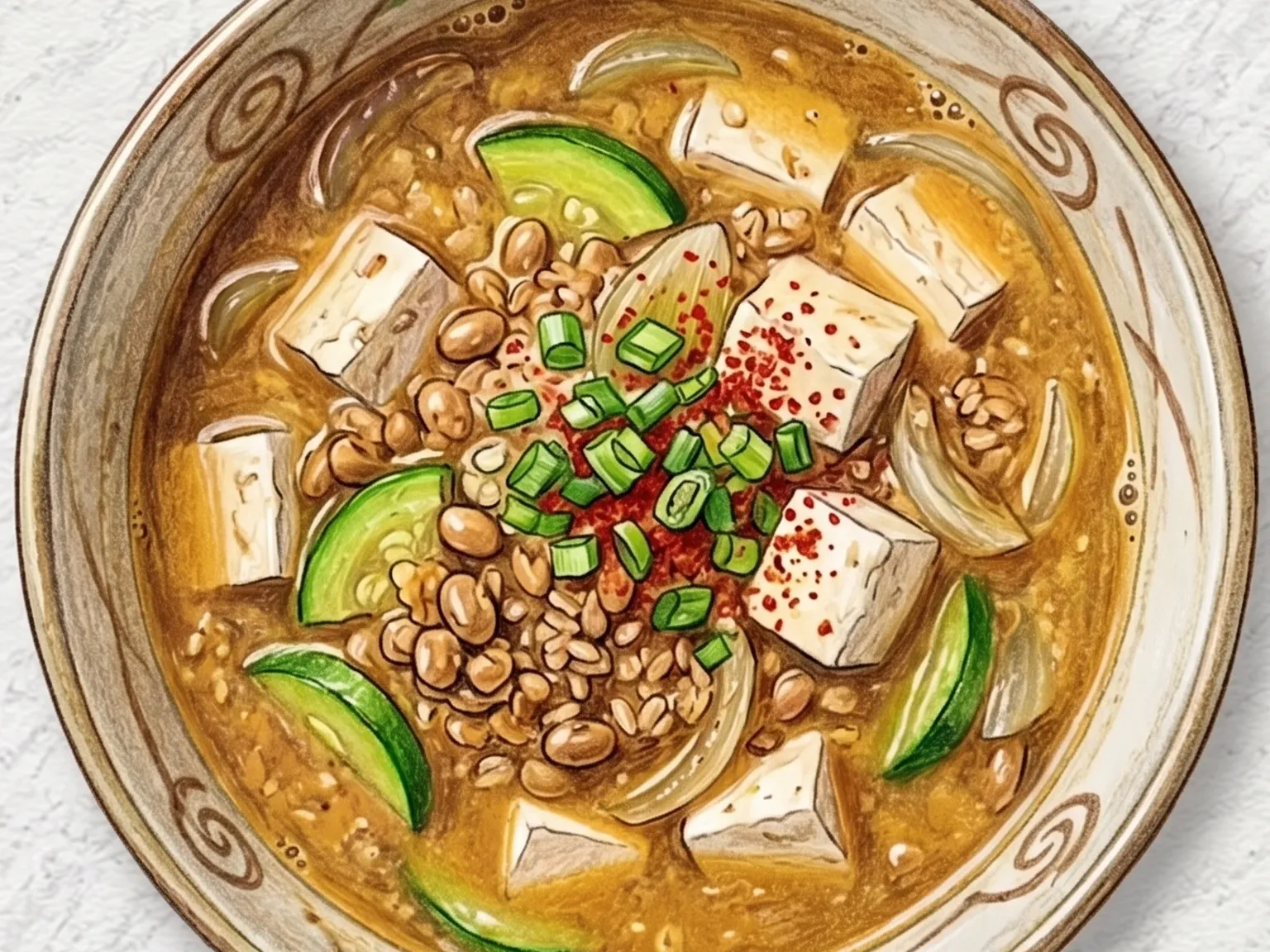
Korean Fermented Soybean Soup
Cheonggukjang-guk is a soup where cheonggukjang -- a short-fermented soybean paste with an assertive, pungent aroma that distinguishes it from the milder doenjang -- is dissolved into anchovy-kelp stock and simmered with zucchini, onion, and tofu. The paste infuses the broth with a deep, earthy fermented quality that forms the core character of the soup. Zucchini and onion contribute natural sweetness that tempers the intensity of the fermented base, keeping the overall flavor approachable rather than overwhelming. Tofu is added partway through to absorb the broth without breaking apart, adding a soft textural contrast. Red chili flakes and sliced green onion go in at the end, lifting the finish with a gentle heat. Because cheonggukjang ferments faster and more aggressively than doenjang, its flavor is noticeably stronger -- starting with a smaller quantity and adjusting to taste is advised for first-time cooks.
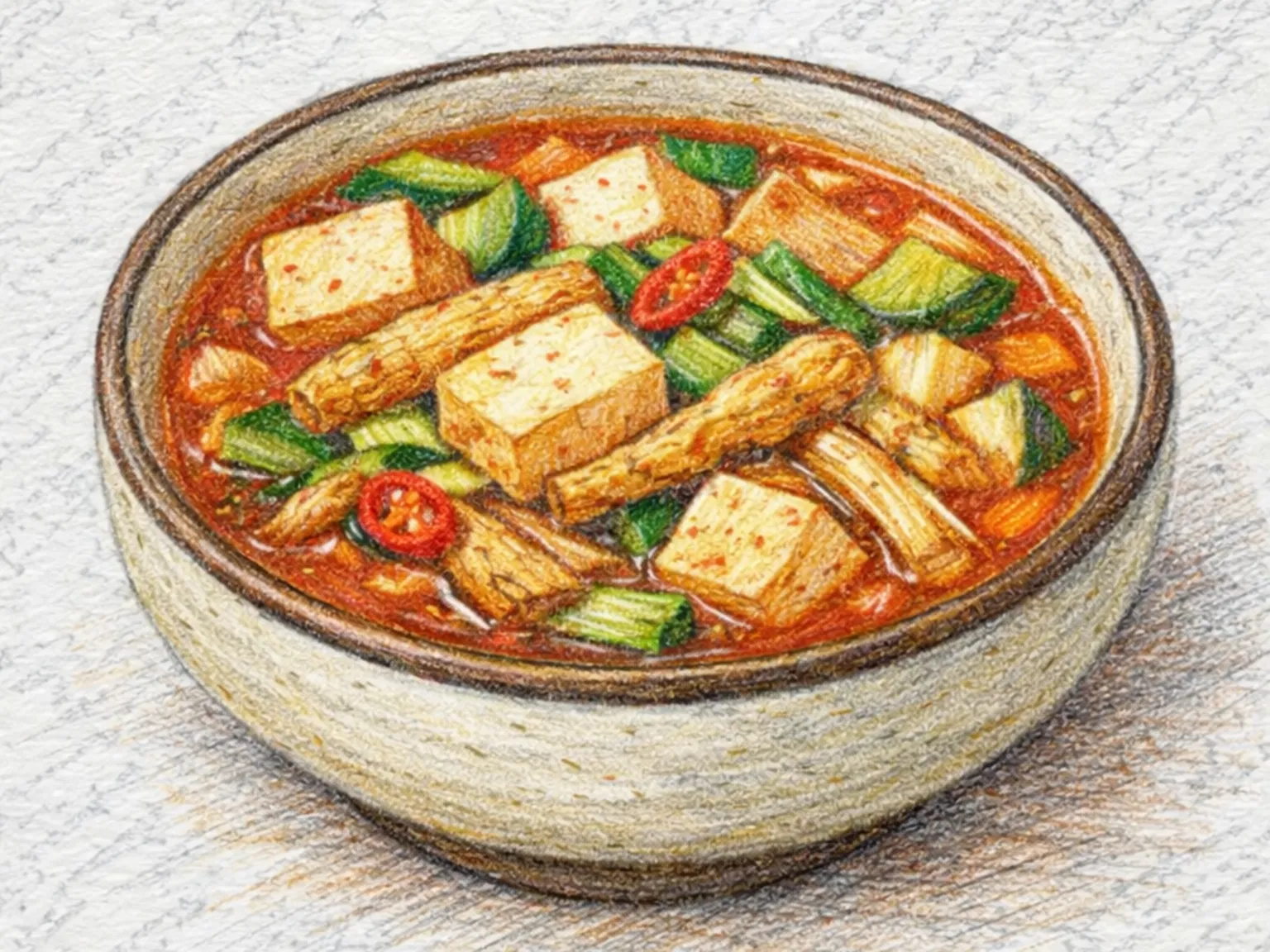
Korean Bellflower Root Tofu Stew
Deodeok dubu jjigae is a Korean stew that simmers bellflower root and soft tofu in a broth made from rice-rinse water. Gochujang and doenjang are dissolved together to build a base that is simultaneously spicy and deeply savory. Bellflower root contributes a signature bitter-herbal fragrance and firm bite that sets the soup apart from standard tofu jjigae. Rice-rinse water acts as a natural thickener and rounds off any residual bitterness from the root. The contrast between the chewy deodeok and the yielding tofu gives each spoonful an interesting texture. Before cooking, the bellflower root is traditionally pounded to open its fibrous grain, which allows the seasoning to penetrate more evenly.
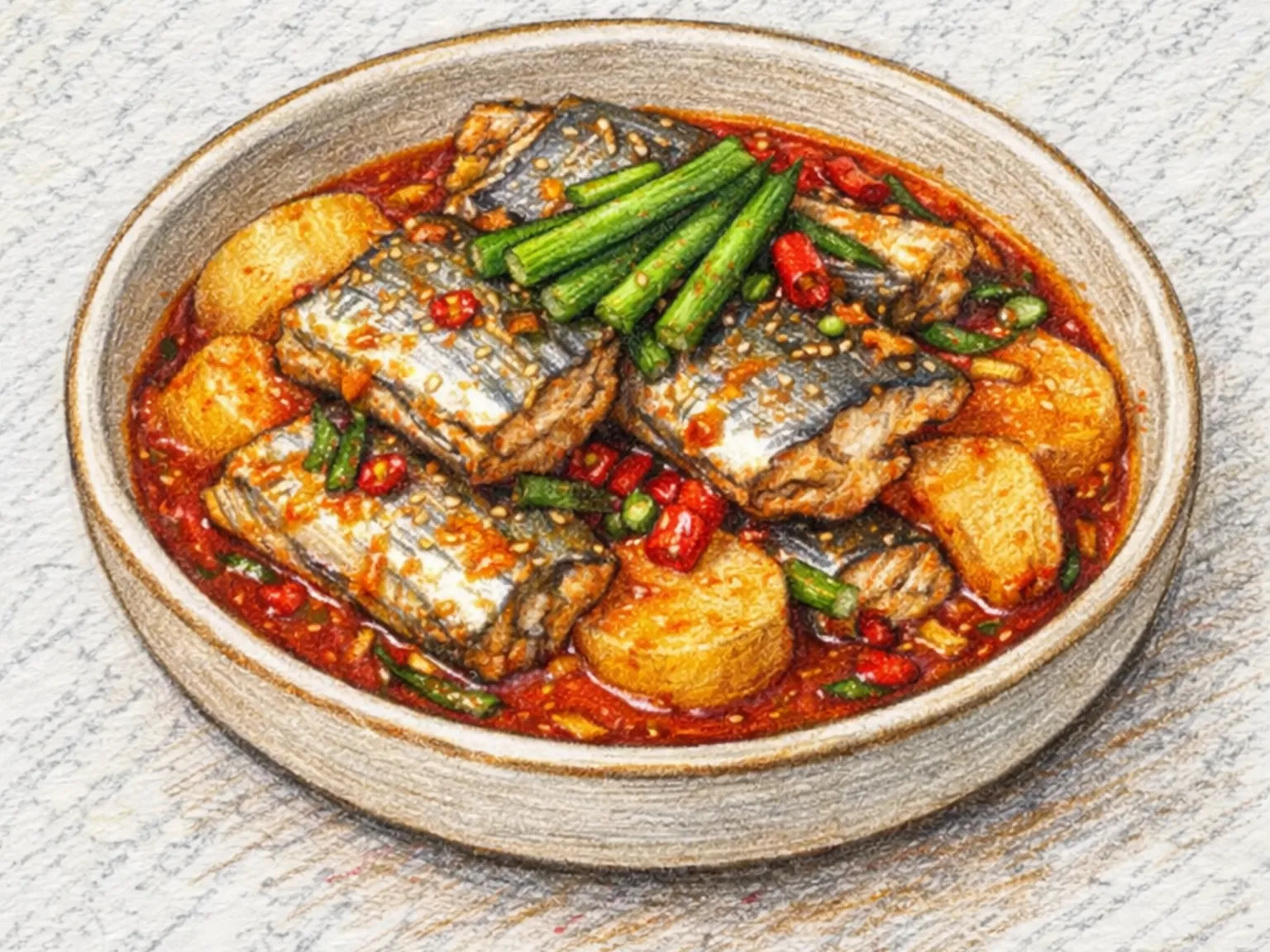
Korean Braised Hairtail Fish
Galchi-jjim is a Korean braised hairtail fish dish where sliced hairtail and Korean radish are simmered together in a seasoned broth of gochugaru, soy sauce, garlic, and ginger until the liquid reduces to a concentrated glaze. The fish has a rich, oily white flesh that drinks in the bold seasoning while staying tender and intact. Ginger juice is added specifically to neutralize the oceanic smell that hairtail can carry, keeping the finished dish clean and approachable. The radish cooks down in the braising liquid, becoming deeply seasoned throughout as it absorbs the spiced sauce. The remaining sauce is intentionally left in small quantity so it can be spooned directly over steamed rice, which is considered the most satisfying way to eat this dish. It is a staple Korean fish preparation that appears on home dinner tables across the year.
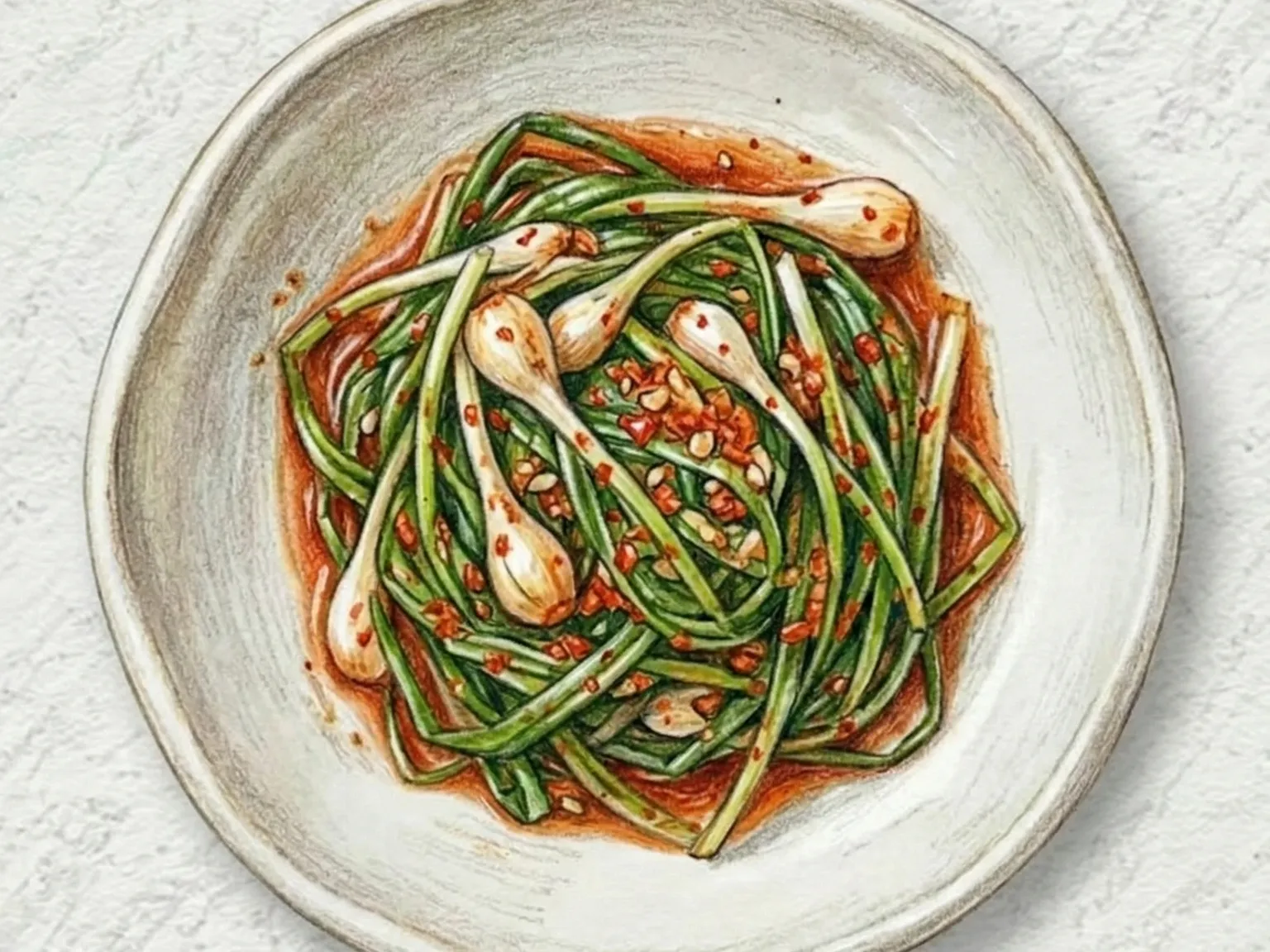
Korean Wild Chive Kimchi (Spring Quick Gochugaru)
Dallae kimchi is a quick spring kimchi made by salting wild chives for just eight minutes to barely soften them, then dressing them in gochugaru, sand lance fish sauce, plum extract, and Korean pear juice. The bulb-end roots carry the most concentrated aroma, so they should not be trimmed too short, and the seasoning should be applied starting from the roots so the flavor penetrates evenly along the entire stalk. Pear juice adds natural sweetness and a little moisture that softens the heat from the chili, while sand lance fish sauce provides a lighter, more delicate umami than standard anchovy sauce. This kimchi smells fresh and bright immediately after preparation, but one day in the refrigerator allows a mild fermented depth to develop that rounds out the flavors considerably. Wild chives are best purchased between early March and mid-April, when the roots are fat and the aroma is fully developed. Salting beyond eight minutes causes the grassy fragrance to dissipate rapidly, so timing matters. The finished kimchi pairs naturally with namul side dishes and fresh vegetable salads at a spring table.
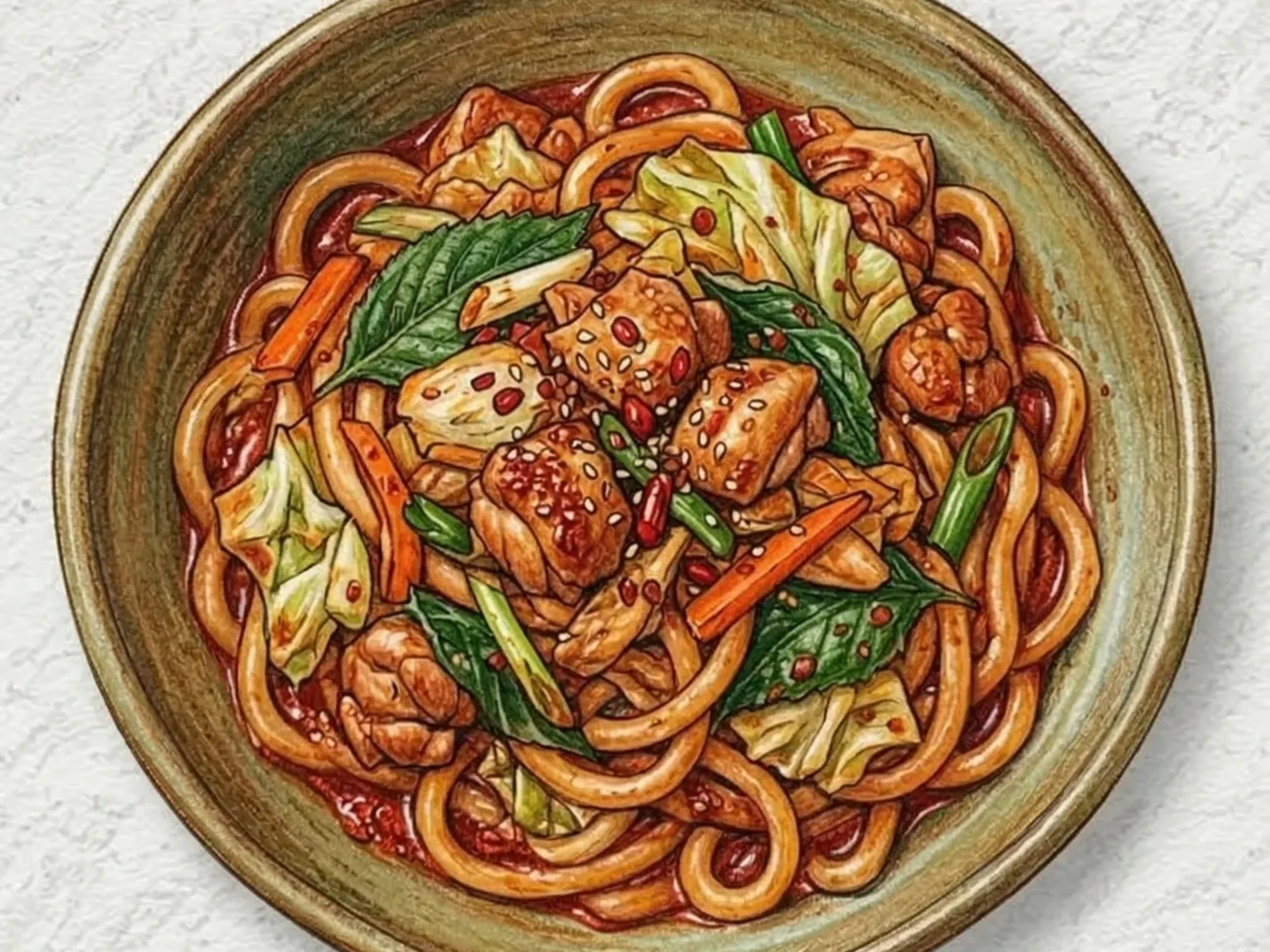
Korean Stir-Fried Udon with Spicy Chicken
Dakgalbi udon bokkeum is a Korean stir-fried noodle dish where gochujang-marinated chicken, cabbage, sweet potato, and rice cakes cook together in a wide pan before thick udon noodles are added and tossed through the spicy-sweet sauce. The dakgalbi seasoning is assertive and clingy, coating every broad surface of the udon so that each bite carries the full weight of the marinade. Cabbage and scallion wilt fast under high heat, releasing sugars that moderate the chili paste and prevent the sauce from tasting sharp or one-dimensional. Sweet potato contributes starch that slightly thickens the sauce while cushioning its spice. Udon, being considerably thicker than ramen or somyeon, holds up under the heavy coating without turning mushy, and delivers a satisfying, bouncy chew throughout the meal. Managing the heat is important: keeping the pan at high temperature drives off excess moisture and produces the lightly charred, smoky edge that separates a good stir-fry from a steamed mess. Melting cheese over the top just before serving adds a creamy, fatty layer that offsets the heat. Sesame seeds and shredded seaweed finish the dish. It is well suited to group cooking on a large griddle or electric pan.
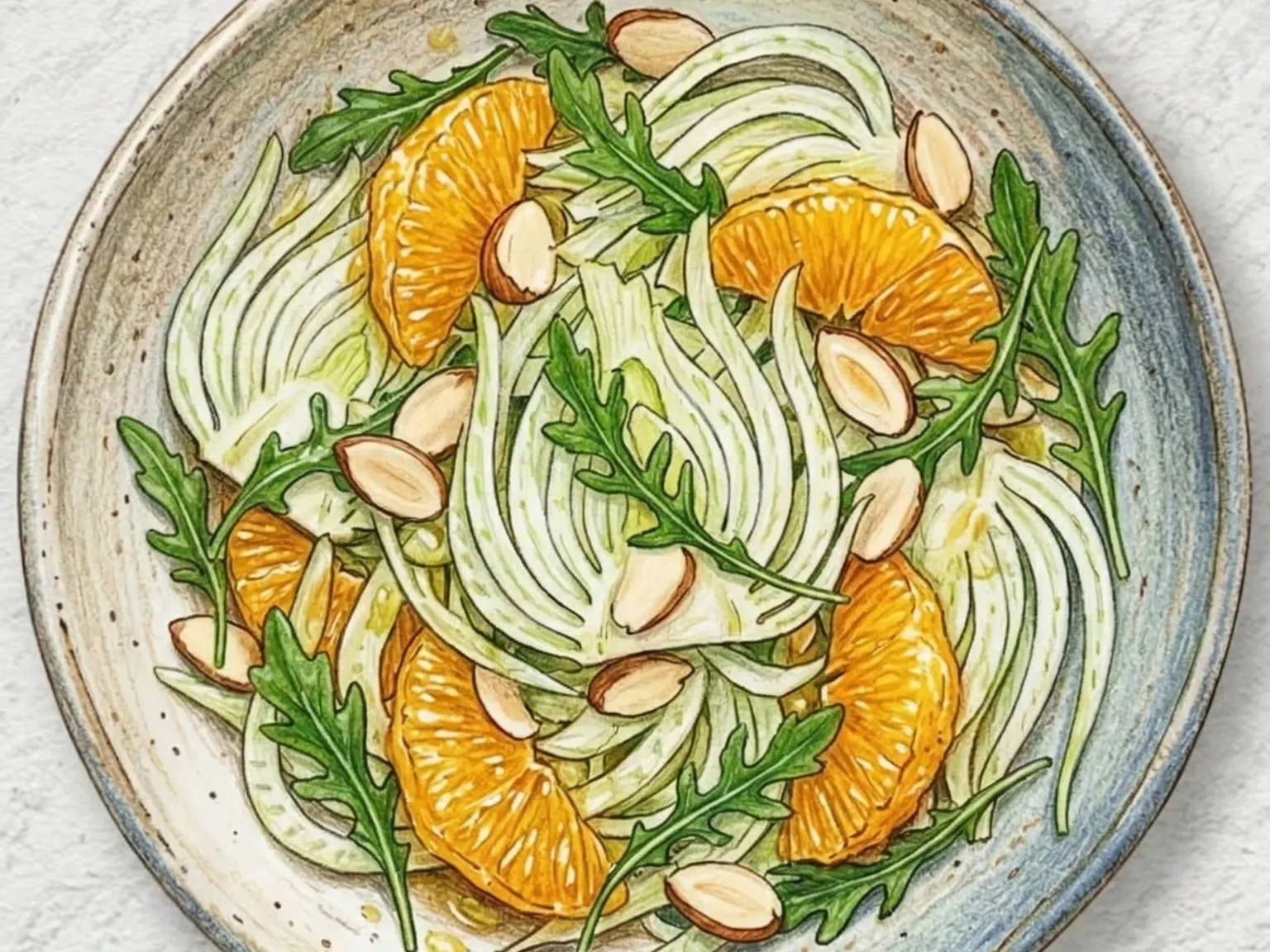
Citrus Fennel Salad (Orange & Shaved Fennel with Arugula)
Fennel is shaved thin to highlight its anise-scented crunch, then paired with segmented orange for juicy acidity. Arugula contributes a peppery bite that offsets the citrus sweetness, and sliced almonds add a toasted crunch. The dressing stays minimal - olive oil and white wine vinegar - so the raw ingredients come through clearly without interference. Dressing should be added just before serving to prevent the fennel from wilting. The salad works well before rich meat or fish courses, since the citrus and fennel combination opens the palate rather than dulling it.
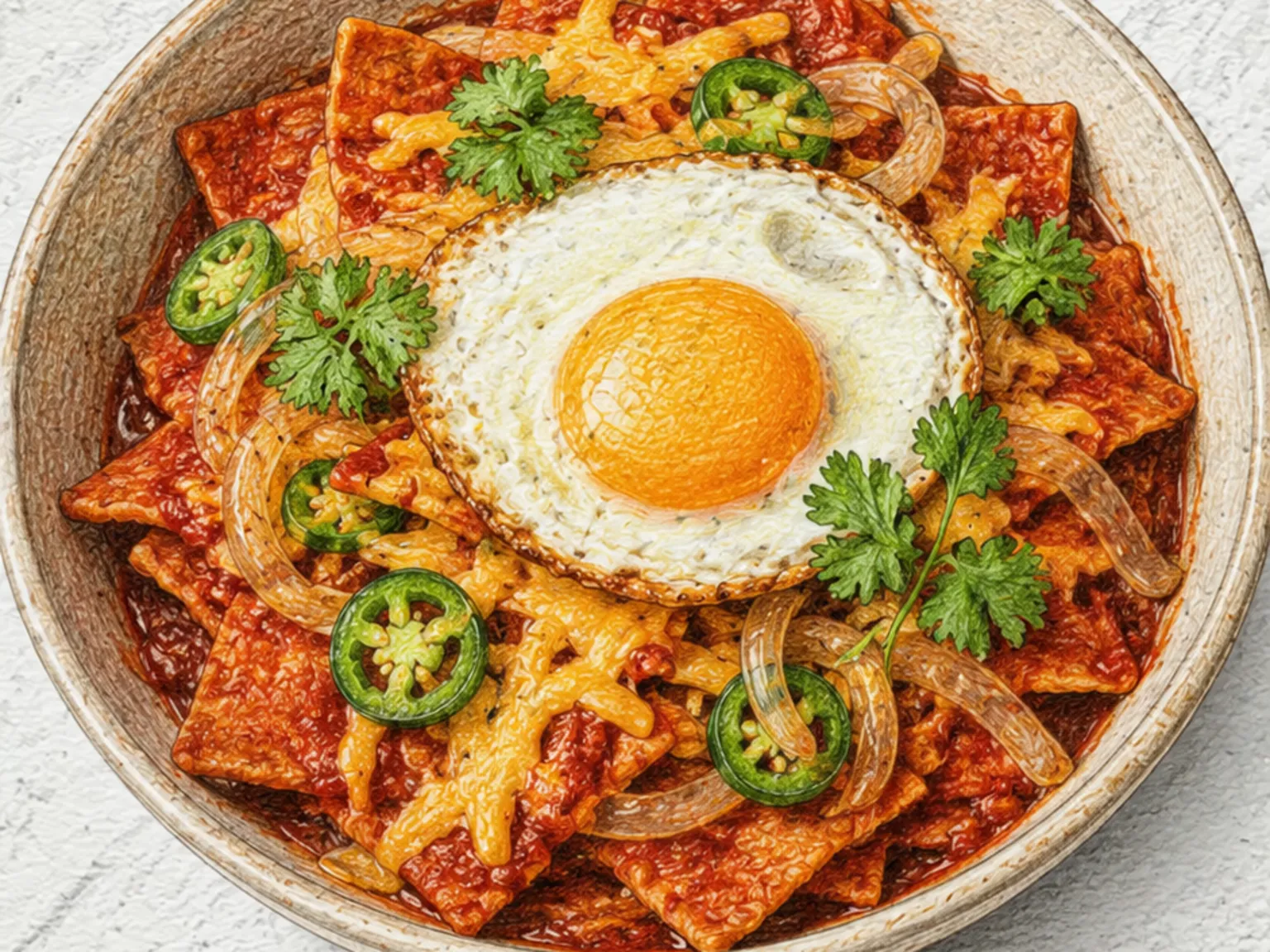
Chilaquiles Rojos (Mexican Tortilla Chips in Red Chili Tomato Sauce)
Chilaquiles rojos tosses crispy tortilla chips in a simmered tomato-chili sauce, then tops them with fried eggs, shredded cheddar cheese, and fresh cilantro for a Mexican breakfast staple. Onion and jalapeno are sauteed first to build an aromatic base, then tomato sauce is added and reduced until thick enough for the chips to absorb quickly. The chips must go in at the very end and be tossed briefly so some pieces stay crunchy while others soften - the contrast between crisp and sauced is central to the dish. Breaking the fried egg yolk into the sauce adds a rich, creamy element, and the melting cheddar brings a salty depth on top. Adjusting the jalapeno amount controls the heat level, and cilantro finishes the plate with a bright, herbal freshness.
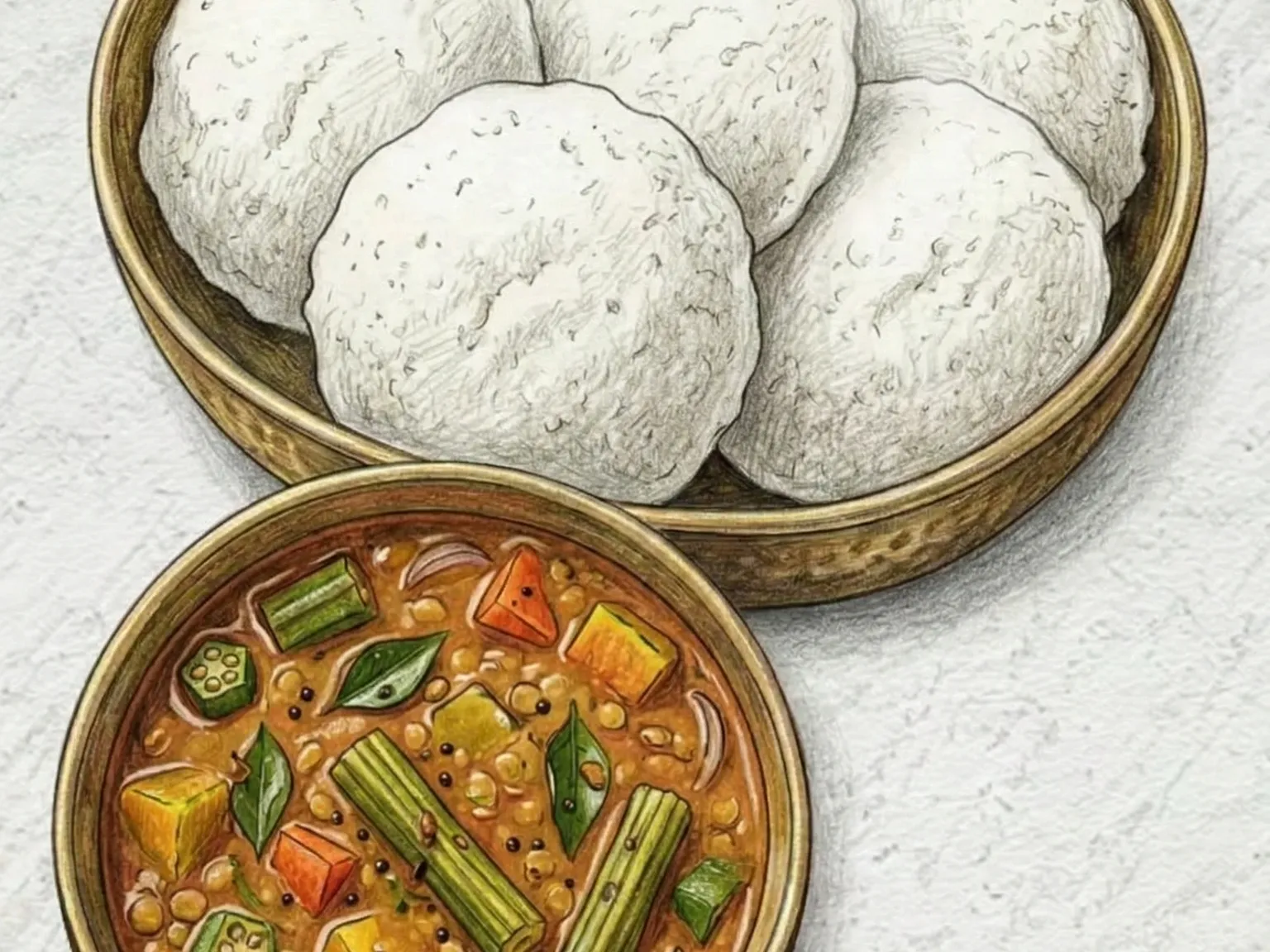
Idli Sambar (Steamed Rice Cakes with Lentil Stew)
Idli sambar is a foundational South Indian breakfast that pairs soft, steamed rice cakes with a deeply spiced lentil and vegetable stew. The idli batter is made by soaking and grinding rice and urad dal separately, then mixing and leaving the combination to ferment overnight; this fermentation is what produces the airy, spongy texture when the batter is poured into molds and steamed for ten to twelve minutes. The resulting discs absorb sauces readily and have a mild, slightly tangy flavor from the fermentation. The sambar starts with toor dal simmered until completely soft and partially mashed to give the broth body, then combined with sauteed onion and tomato along with sambar powder and tamarind water for a ten-minute simmer. Tamarind's pronounced sourness balances the earthiness of the lentils and keeps the broth from tasting heavy, while the spice blend in sambar powder adds a warm background heat without becoming harsh. The final and essential step is tempering: mustard seeds are dropped into very hot oil until they pop and scatter, then the spiced oil is stirred into the finished stew, releasing a nutty, aromatic burst that threads through the whole pot. Dipping or soaking the mild, fluffy idli in the bold, tangy sambar creates the contrast that defines this combination and distinguishes it from eating either component alone. Coconut chutney served alongside adds a cool, creamy counterpoint.
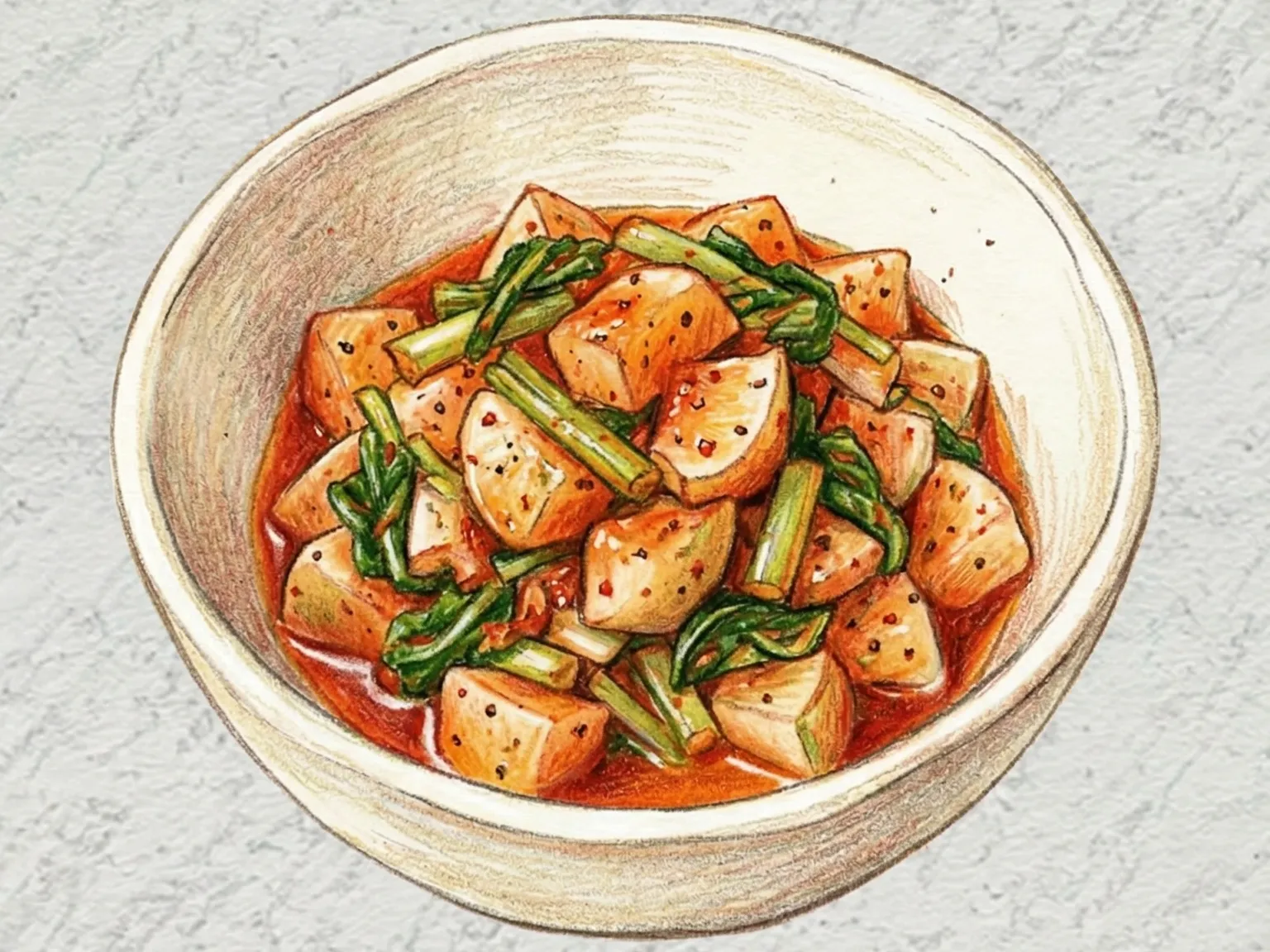
Korean Spicy Ponytail Radish Salad
Chonggak - small ponytail radishes sold with their green tops still attached - appear at Korean markets through the autumn season. Unlike chonggak kimchi, which ferments for weeks, this fresh muchim salts sliced radishes for just 15 minutes to draw out water and concentrate their crunch before seasoning. Gochugaru, fish sauce, garlic, sugar, and vinegar coat the slices in a spicy-sour glaze that clings tightly to each piece. Young Korean radishes have a sharp, peppery bite that is more assertive than that of larger, older radishes, and that edge comes through clearly in the finished dish. Including the radish greens adds a softer texture that varies the mouthfeel. Best eaten on the day it is made, before the salt continues to draw moisture and soften the flesh.
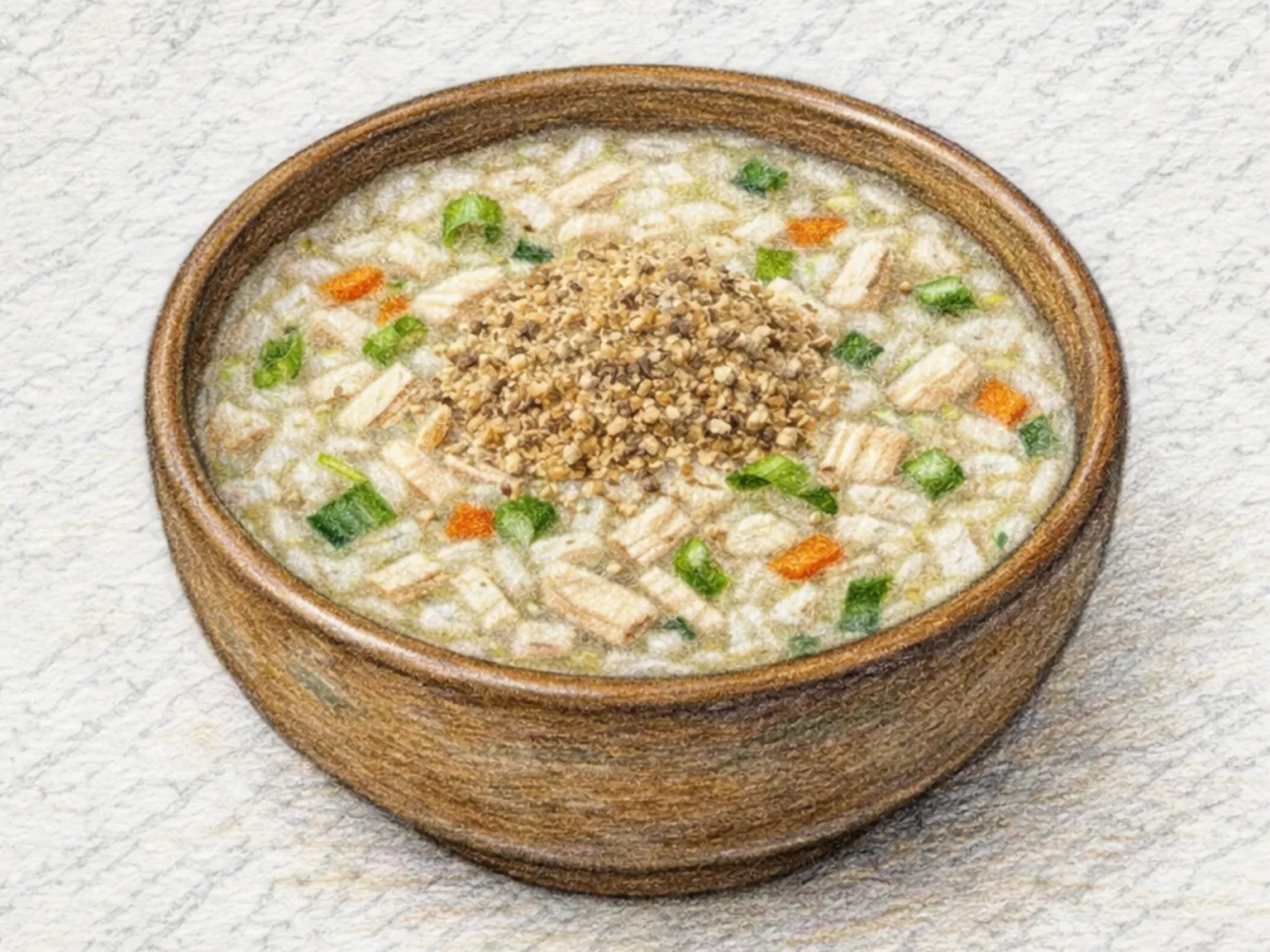
Korean Chicken Breast Perilla Porridge
Dakgaesal deulkkae juk is a traditional style of Korean porridge that utilizes shredded chicken breast alongside finely chopped onions and carrots as its primary components. The preparation begins by stir-frying these ingredients together, after which they are simmered slowly with a combination of soaked rice and chicken stock. As the cooking process nears its conclusion, perilla seed powder is incorporated into the pot. This specific ingredient dissolves thoroughly into the liquid to produce a final texture that is notably thick and creamy. The aroma produced by the perilla seeds is deeply nutty and serves as the most prominent characteristic of the dish. While sesame seeds are known for a sharp and roasted quality, perilla seeds offer a flavor that is more round and carries an herbaceous nuttiness. This gives the porridge a unique profile that is common in Korean cuisine. The inclusion of shredded chicken breast provides a source of lean protein that does not feel heavy, ensuring the meal remains nourishing and simple for the body to digest. Because of these qualities, this porridge is often used as a recovery meal for individuals after they have finished exercising or for anyone whose energy levels feel low. It also serves as a functional choice when a gentle meal is required for a sensitive stomach. Adjusting the final result is possible by increasing the quantity of perilla powder, which results in a more intense fragrance and an even thicker consistency for people seeking a richer bowl.
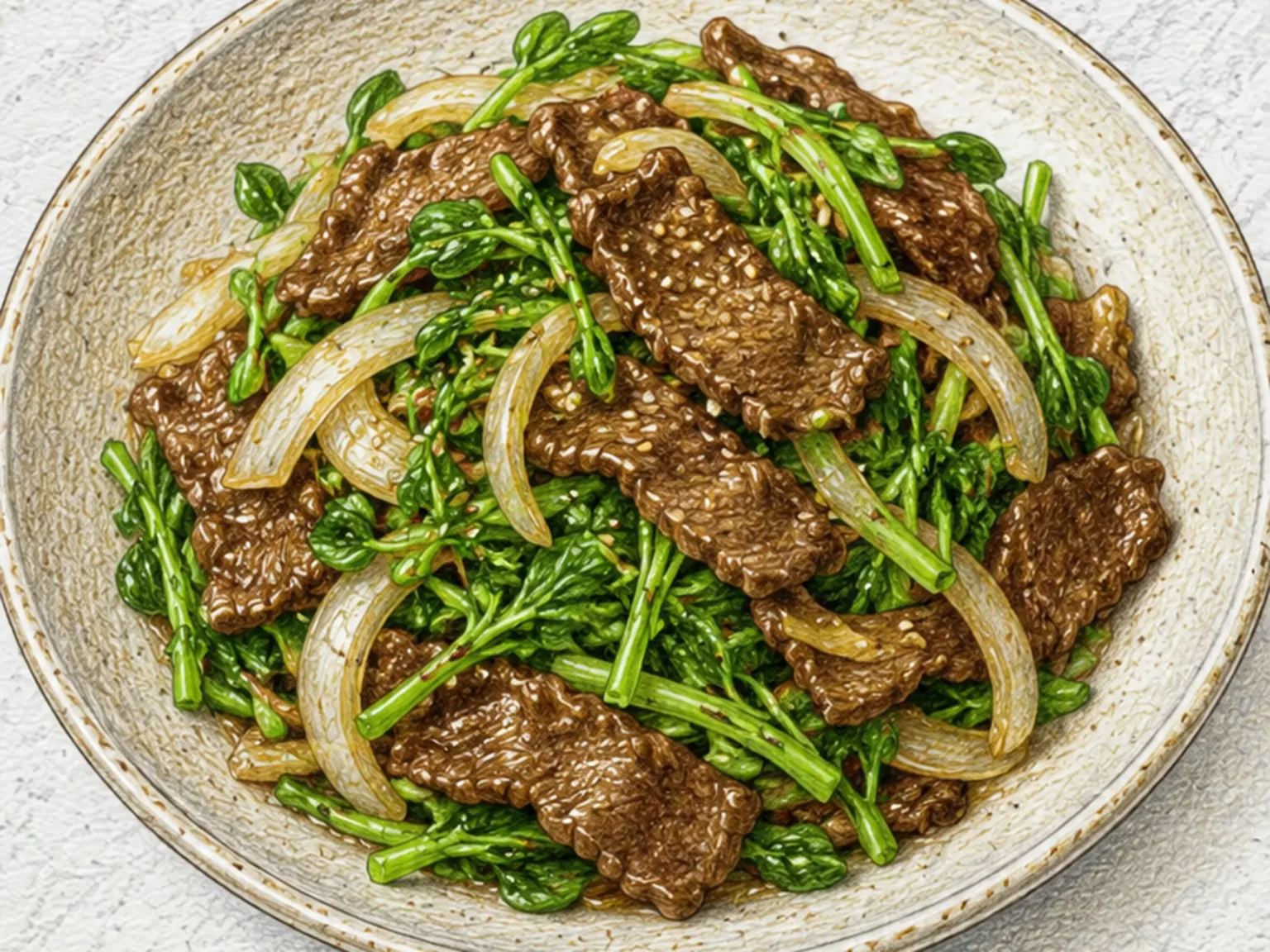
Korean Beef and Pimpinella Stir-fry
Beef sliced thin for bulgogi is marinated in soy sauce, cooking wine, minced garlic, and black pepper for ten minutes, then spread in a single layer across a hot pan so every piece browns without steaming. Crowding the pan drops the temperature and causes the meat to stew in its own liquid rather than sear, so a wide, flat arrangement is essential. Sliced onion goes in next for two minutes to draw out its sweetness, followed by chamnamul, a Korean wild green whose aroma sits somewhere between celery leaf and parsley but sharper and more distinctly herbal. The chamnamul needs only forty seconds of tossing; any longer and the stems lose their crunch while the leaves wilt and the aroma fades. Sesame oil stirred in off the heat coats every piece in a nutty richness, and whole toasted sesame seeds burst with oil when bitten. Chamnamul is a spring green harvested from late March through April, so this stir-fry has a short seasonal window. At 365 calories and 30 grams of protein, it is a nutrient-dense plate that makes the most of that brief peak.
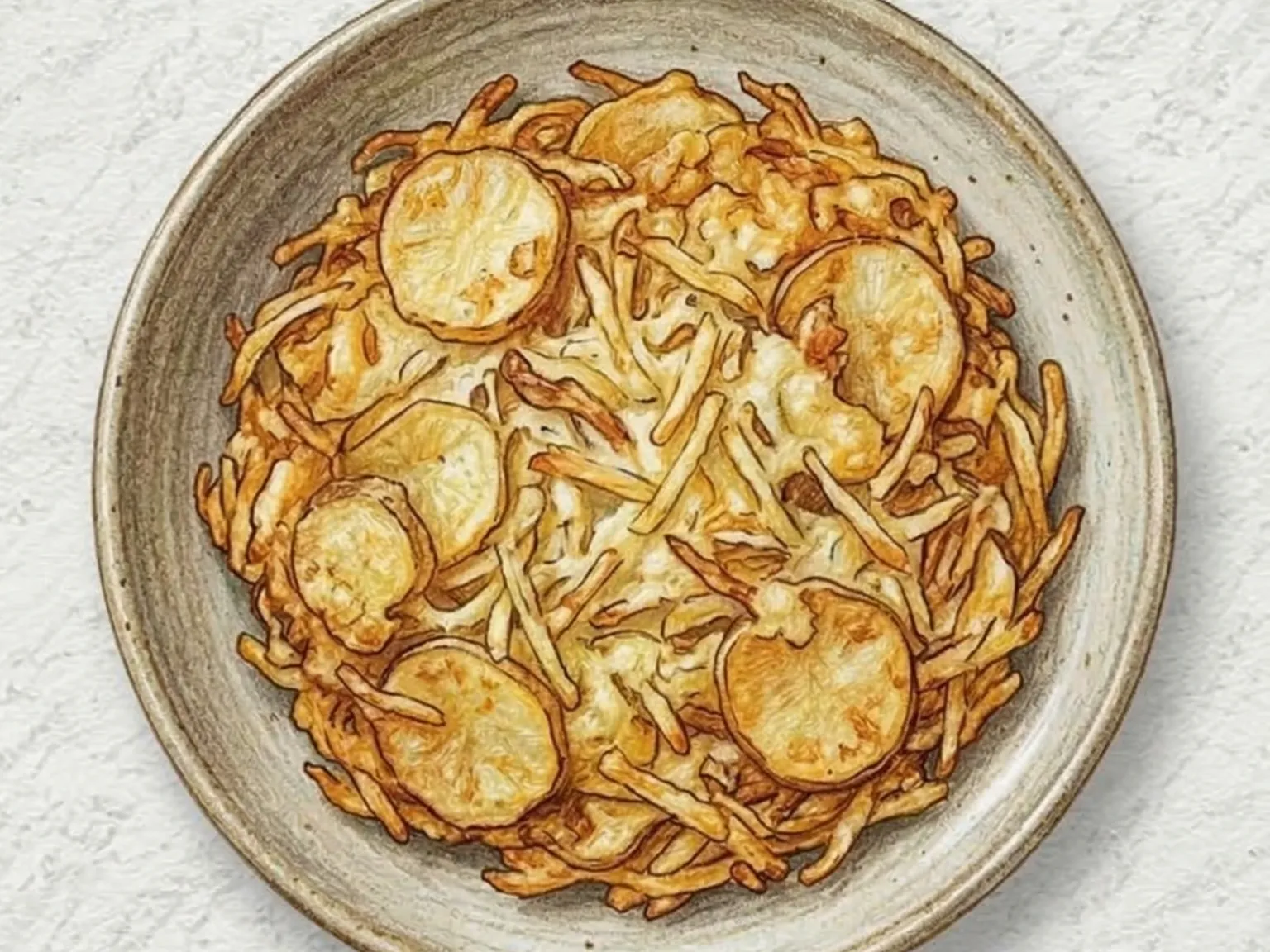
Korean Potato Fritters
Gamja twigim coats sliced or shredded potatoes in a batter of frying mix and cold water, then deep-fries them until golden and crisp at Korean street food stalls and bunsik restaurants. Soaking the cut potatoes in cold water for at least ten minutes washes off surface starch, which reduces oil absorption and keeps the crust crunchy longer after frying. Keeping the batter coat thin lets the potato's starchy sweetness come through; a thick coat forces a longer fry time and tends to turn the interior mushy. Thick-cut slices yield a fluffy, almost powdery interior beneath the crust, while shredded potatoes tangle together into a chip-like, airy cluster with multiple crisp layers. Oil temperature should sit between 170 and 180 degrees Celsius; too low and the pieces absorb excess oil, too high and the outside burns before the center is cooked through. Salt alone is enough to bring out the potato's savory sweetness, and Korean fritter shops typically serve these alongside chili pepper and perilla leaf tempura as part of a mixed platter.
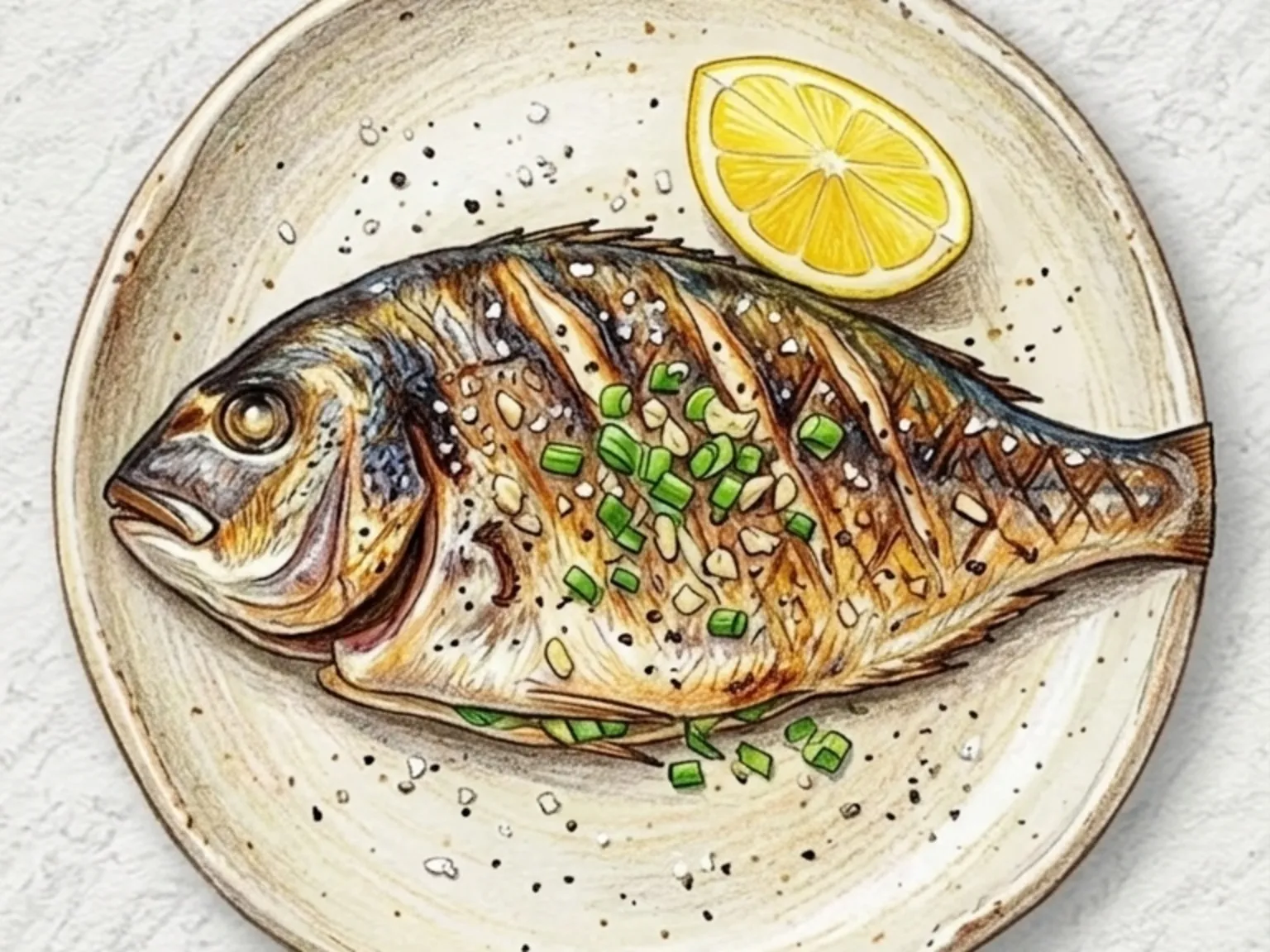
Korean Domi Sogeum Gui (Salt-Grilled Sea Bream)
Domi-sogeum-gui is a Korean pan-grilled sea bream dish where fillets are seasoned with nothing more than coarse salt and black pepper, then cooked skin-side down for the majority of the cooking time. Sea bream sits at a favorable point among white fish varieties, carrying enough natural fat to produce a clean, rounded umami from salt alone without needing additional marinades or sauces. Patting the surface completely dry with paper towels before the fish goes into the pan is essential, as any surface moisture will cause the skin to steam rather than crisp. Placing the fillet skin-side down first and keeping it there for roughly seventy percent of the total cooking time allows the skin to turn crackling and golden while the heat travels up through the flesh from below. A brief flip to finish the flesh side is all that is needed, since overcooking removes moisture from the delicate meat quickly. Minced garlic and chopped scallions placed on top after cooking add a fresh, pungent note, and a squeeze of lemon from the side wedge sharpens the bream's mild, clean sweetness by cutting through any lingering fish aroma.
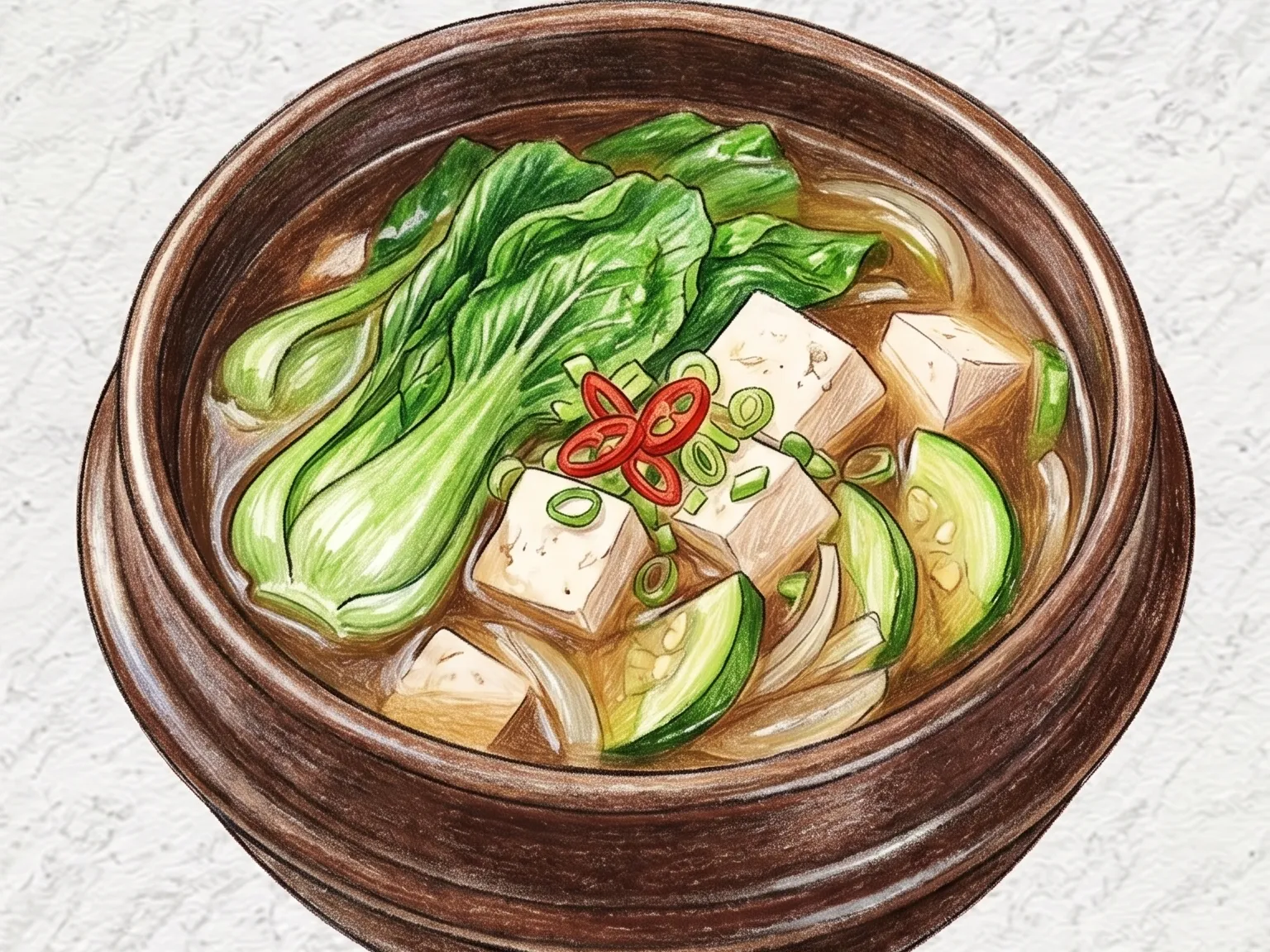
Korean Bok Choy Soybean Paste Soup
Cheonggyeongchae doenjang-guk is a Korean soybean paste soup built on anchovy-kelp stock, featuring bok choy, zucchini, and tofu. Unlike napa cabbage or spinach, bok choy brings a crisp, juicy stem alongside soft leaves, and it adds a mild, clean sweetness to the broth that differs from the earthier notes of Korean brassicas. The stock simmers first with onion and garlic for six minutes to build an aromatic base, and the doenjang is pressed through a sieve so it dissolves evenly without leaving paste clumps in the finished soup. Bok choy and tofu go in during the final three minutes, which is long enough to wilt the leaves while the stems keep their bite and the green color stays bright. Though bok choy is more common in Chinese cooking, it pairs naturally with doenjang and is available year-round in Korean supermarkets, making it a reliable alternative when napa cabbage is not on hand.
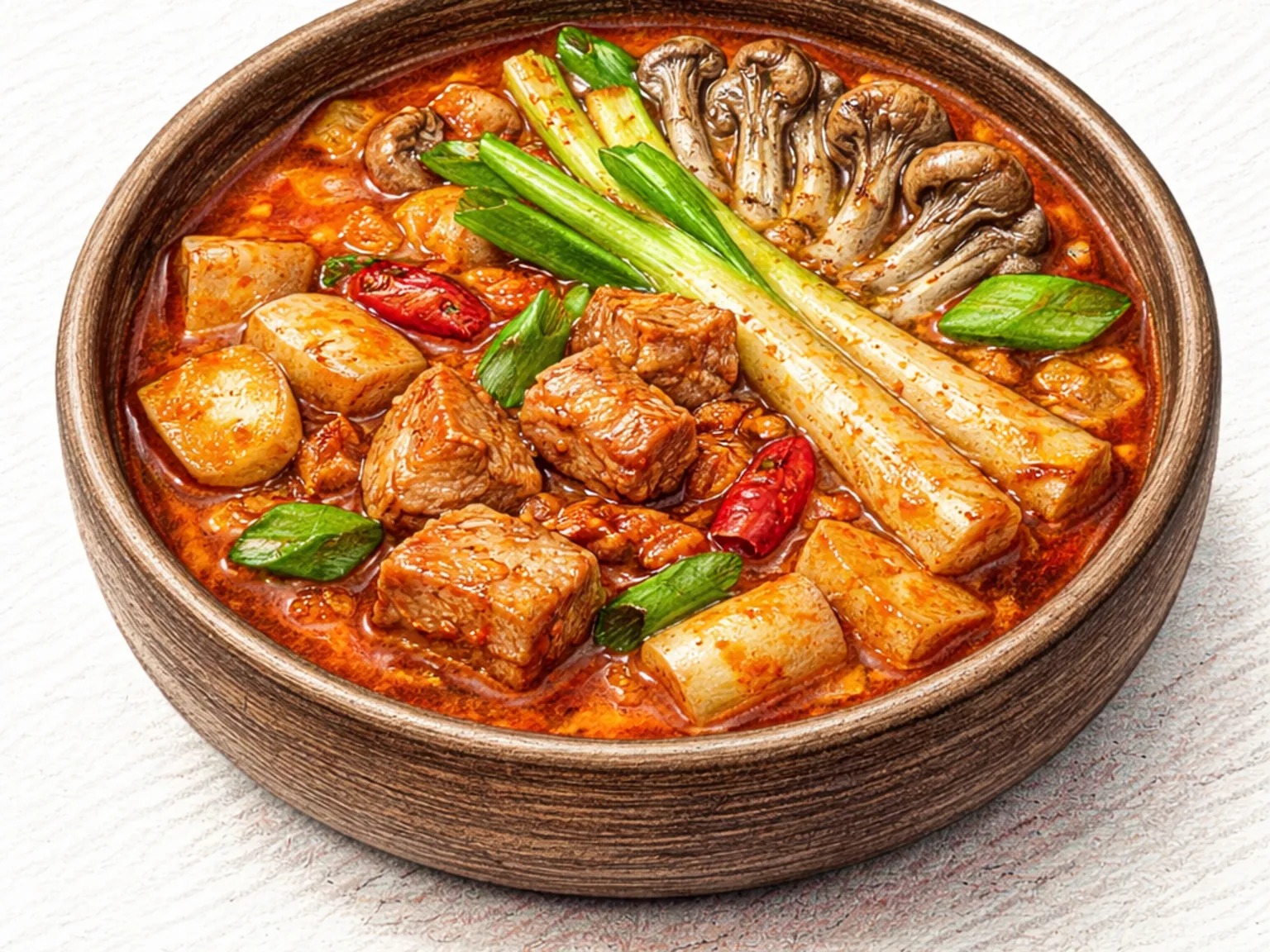
Korean Bellflower Root Pork Stew
Deodeok-dwaeji-jjigae is a spicy Korean stew that primarily features pork shoulder and bellflower root as its core components. These main ingredients are simmered together in a liquid base prepared from water used to rinse rice, which provides a different consistency and flavor profile compared to standard tap water. The seasoning for this broth relies on a combination of gochujang, which is red chili paste, gochugaru or red chili flakes, and soup soy sauce to establish a foundational heat and saltiness. To provide further texture and structural depth to the stew, oyster mushrooms and sliced onions are included in the pot during the simmering process. As the bellflower root is heated and cooked through, its natural and slightly bitter flavor profile begins to integrate into the surrounding broth. This subtle bitterness serves a functional purpose by counteracting the richness of the pork shoulder fat, which results in a final taste that feels clean on the palate rather than greasy. Utilizing rice-rinse water instead of plain water helps to mellow the intense spice of the gochujang while adding a light savory quality to the soup that simple water does not provide. By cutting the pork shoulder into small, bite-sized pieces before cooking, the fat is able to render out more effectively into the broth while the meat remains soft and easy to chew. The finished stew has a high level of spice and contains a significant amount of meat and vegetables, making it a filling dish when served alongside a bowl of steamed white rice.
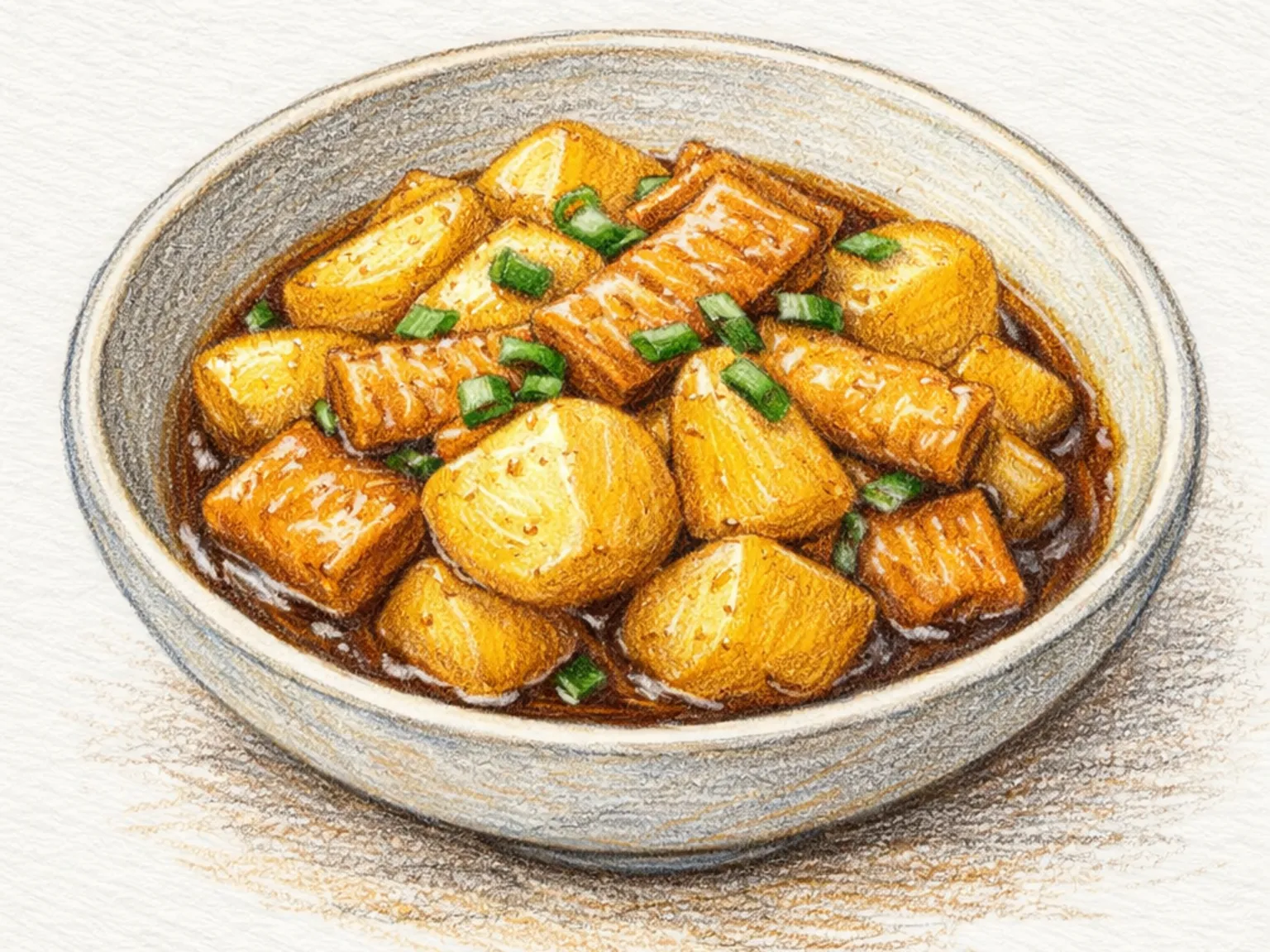
Korean Braised Potato and Fish Cake
Gamja eomuk jorim is a Korean home-style braised side dish of potato chunks and fish cake sheets, simmered together in a sauce of soy sauce and oligosaccharide syrup. The starchy potato cubes slowly absorb the seasoning as they cook, turning soft and floury in texture while carrying the full depth of the soy glaze. Fish cake sheets provide a springy, chewy counterpoint that holds its shape throughout braising. Minced garlic is stirred in early to mellow into the sauce, and a finishing drizzle of sesame oil adds a roasted, nutty fragrance that ties the dish together. The recipe requires minimal preparation and cooks in under twenty minutes, making it a practical choice for weekday meals. It is one of the most frequently packed Korean lunchbox items and a staple side dish on everyday home tables.
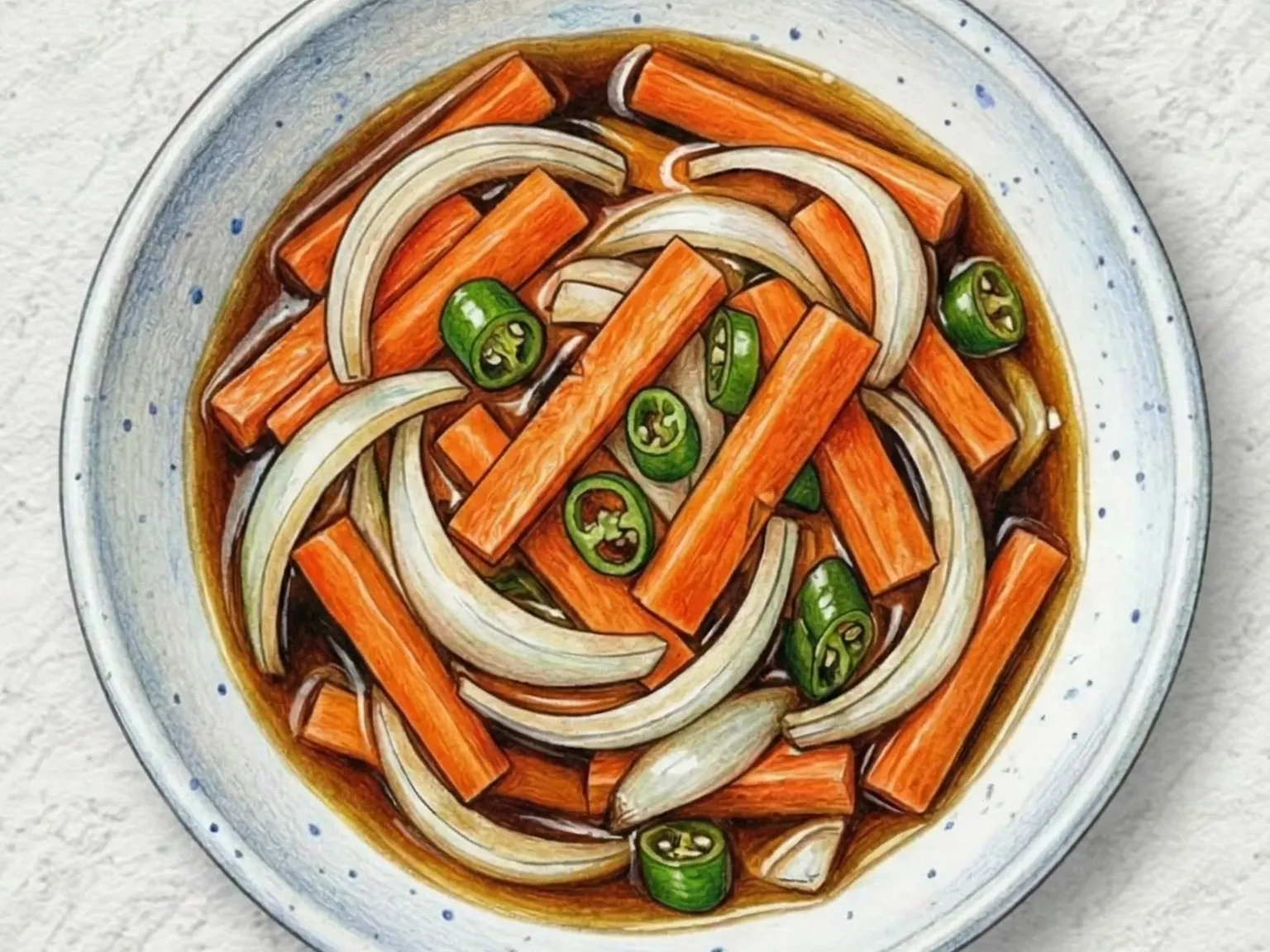
Korean Soy-Vinegar Carrot Pickles
Danggeun jangajji is a Korean pickled carrot made by cutting carrots into uniform half-centimeter sticks and layering them with onion, halved Cheongyang chili, and whole garlic in a sterilized jar, then covering with a boiled brine of soy sauce, vinegar, water, and sugar. Keeping the carrot sticks the same thickness ensures they pickle at an even rate for consistent crunch in every bite. The brine must be boiled until the sugar and salt dissolve completely, then cooled before pouring; adding hot liquid can make the vegetables go soft, and undissolved solids cause uneven seasoning and shorten shelf life. The carrot's natural sweetness plays against the soy's salinity and the vinegar's tartness, producing three distinct flavors in each piece. After cooling completely at room temperature and refrigerating, the pickle is ready in twenty-four hours. If the brine turns cloudy after a few days, reboiling and cooling it before pouring it back extends the shelf life considerably. Served alongside fatty meat dishes, the acidity and snap of the pickle cut through the richness and leave the palate clean.
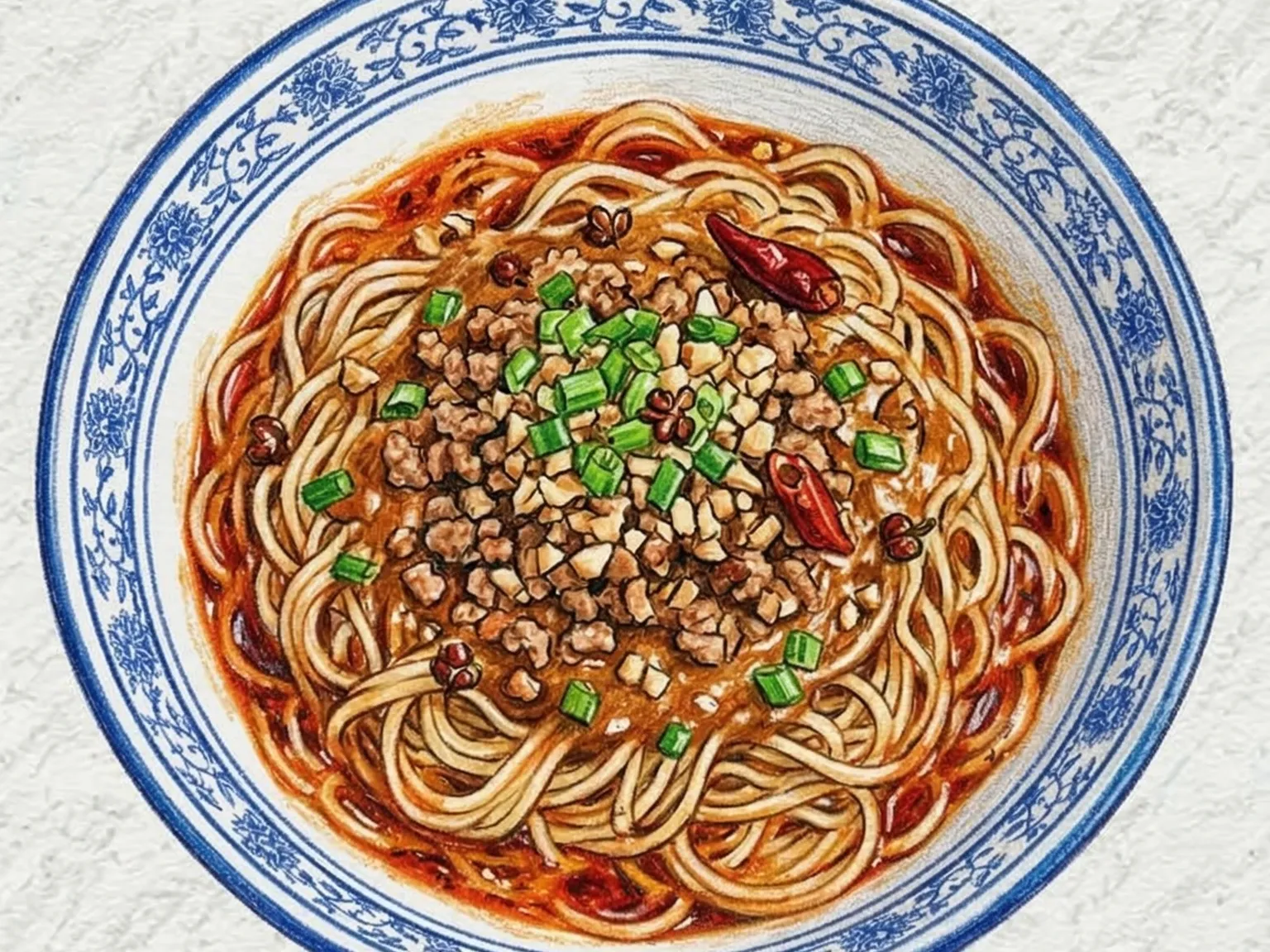
Dan Dan Mian (Sichuan Spicy Noodles)
Dan dan mian is a Sichuan noodle dish built on a thick sauce of sesame paste, soy sauce, chili oil, and vinegar, topped with wheat noodles and browned ground pork. Ground Sichuan peppercorn brings a lip-numbing, almost electric sensation that sits underneath the chili oil's direct heat and the sesame paste's deep richness, creating multiple distinct layers in a single mouthful. Browning the pork thoroughly before adding any liquid is essential -- the caramelized crust develops a roasted meatiness that permeates the entire sauce and prevents the dish from tasting flat. Blanched bok choy provides a fresh counterpoint to the oily intensity and keeps the bowl from feeling too heavy. Sichuan peppercorn's numbing effect accumulates quickly, so starting with a small quantity and tasting as you go gives precise control. Draining the cooked noodles completely is equally important; any residual water will thin the sauce and break the coating on the noodles.
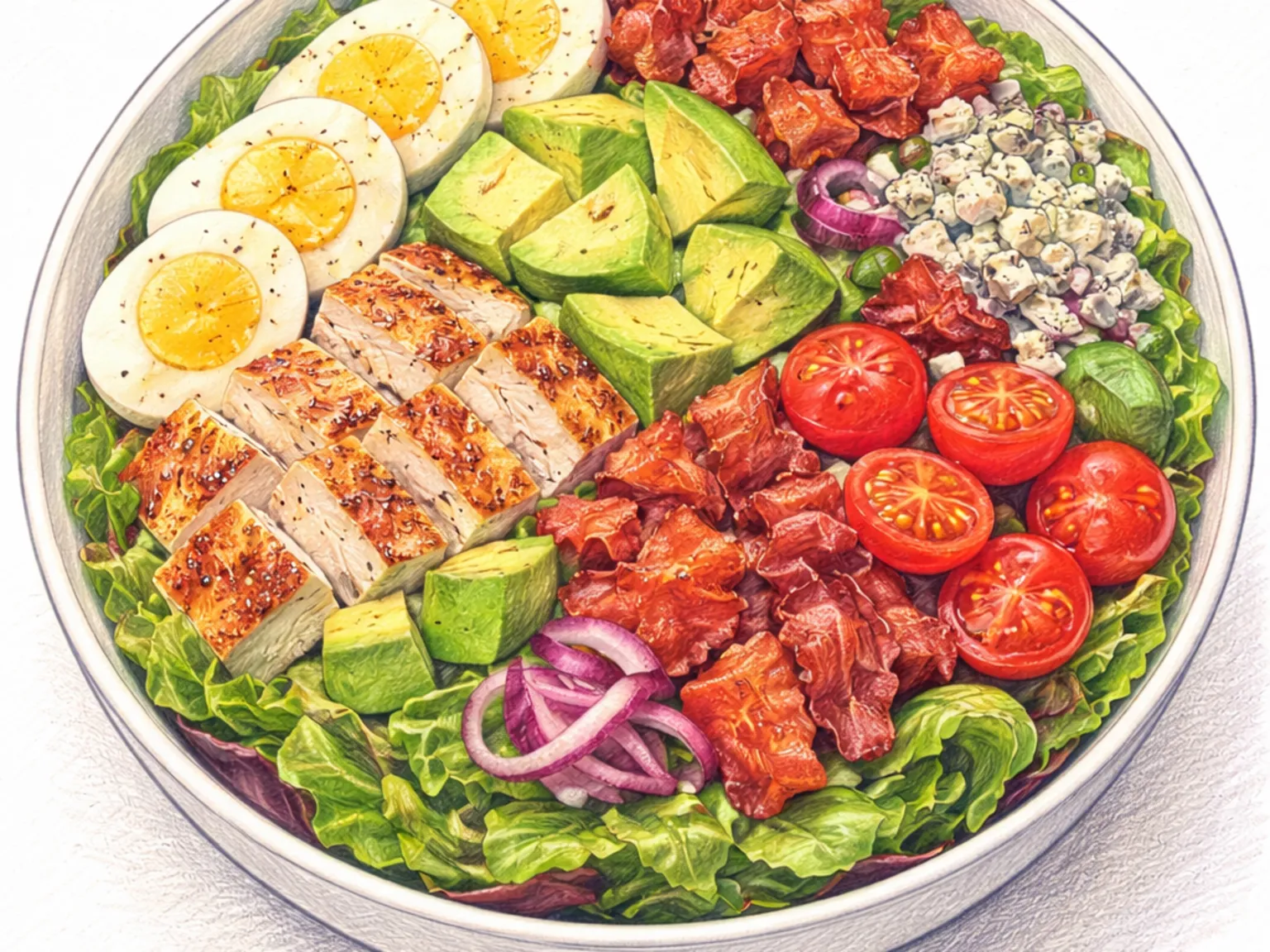
Cobb Salad
Cobb salad arranges grilled chicken breast, hard-boiled egg, avocado, crisp bacon, and cherry tomatoes in distinct, separate rows over chopped romaine. The traditional presentation keeps each ingredient untouched until the diner begins eating, allowing every forkful to be assembled to personal preference. Ranch dressing provides a creamy, tangy base that bridges the bacon's saltiness, the richness of avocado, and the lean protein of the chicken. Originating in 1930s Hollywood, the dish was conceived as a filling main-course salad and remains one of the most protein-dense salad formats in American cuisine.
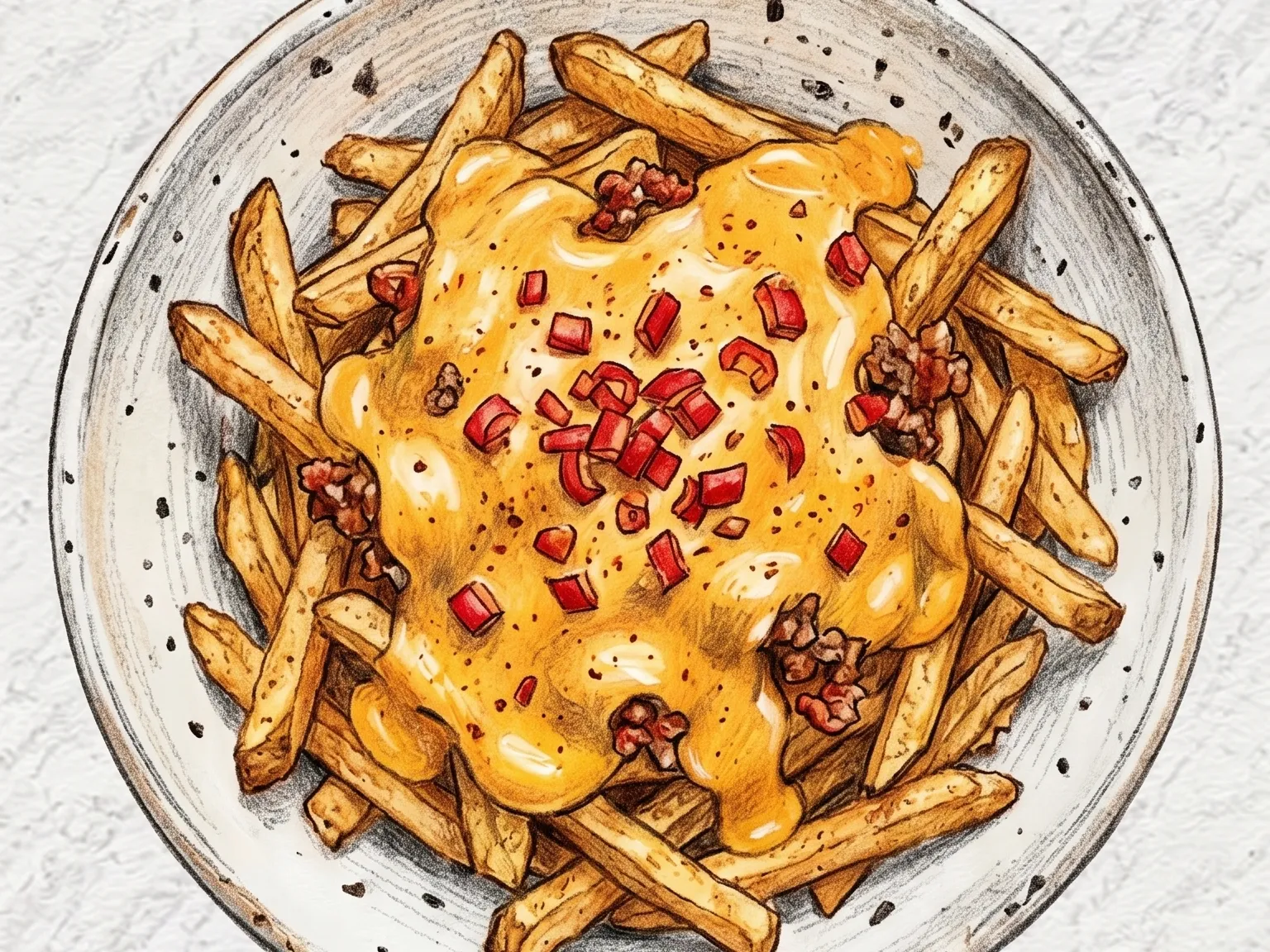
Chili Cheese Fries
This savory dish features crispy french fries topped with a warm meat chili and a rich cheese sauce. Frozen french fries are air-fried in a single layer at 200 degrees Celsius until golden and firm to prevent sogginess. A smooth, thick cheese sauce is made by melting four cheddar slices with milk and butter over low heat. The hot fries are arranged on a plate, layered with heated meat chili first, and then draped with cheese sauce to separate the flavors. The dish is topped with chopped pickled jalapeños and parsley. The acidity of the jalapeños cuts through the rich dairy fat of the cheese sauce. It serves as a satisfying snack or beer pairing, and can also be enjoyed with nacho chips. It should be served immediately while the fries are crisp and the sauces remain hot.
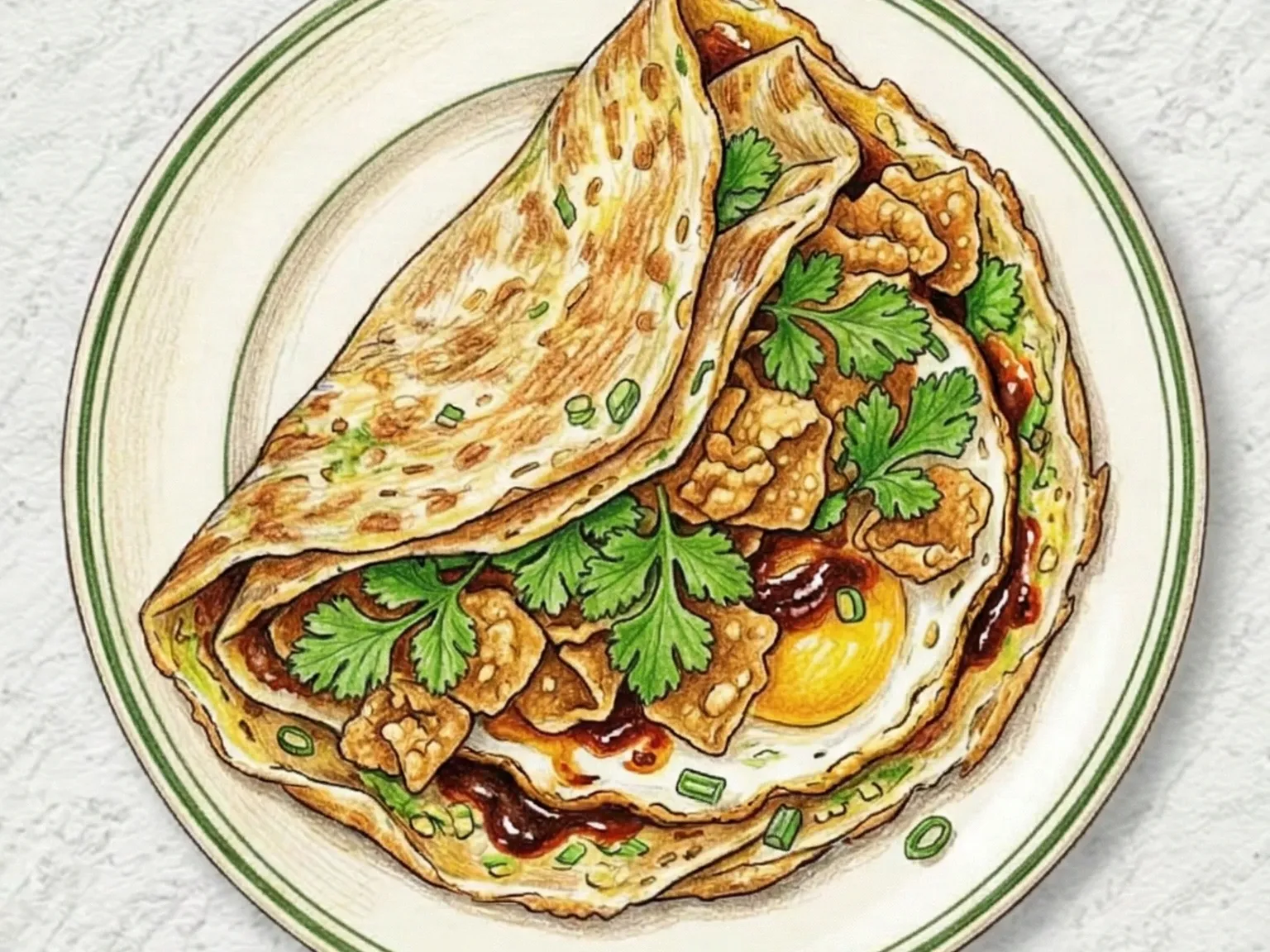
Jianbing (Chinese Savory Breakfast Crepe)
Jianbing is a northern Chinese street breakfast crepe assembled on a flat griddle within minutes. A thin batter of mung bean flour and wheat flour is spread into a wide circle, then an egg is cracked directly on top and smeared across the surface while still liquid. Chopped scallion is scattered over the egg before the crepe is flipped briefly to set the other side. Sweet bean sauce and chili sauce are brushed on, followed by fresh cilantro and a crispy fried wonton sheet that provides the signature crunch. The mung bean flour gives the batter a distinctive nutty flavor and slightly crisp edge that plain wheat flour cannot replicate. The whole assembly is folded into a neat rectangle meant to be eaten by hand. Timing is critical for the wonton cracker, which should be added last to prevent sogginess, creating a layered contrast of soft crepe, runny egg, sharp sauce, and shattering crunch.