🏠 Everyday Recipes
Simple home-cooked meals for any day
1705 recipes. Page 23 of 72
These are the meals you can cook day after day without getting tired of them. Doenjang jjigae, rolled omelet, spicy pork stir-fry - the kind of home-cooked dishes that fill an ordinary day with comfort.
The beauty of everyday cooking is that it relies on common ingredients already in your fridge. No exotic items, no complicated techniques - just straightforward recipes for satisfying home meals.
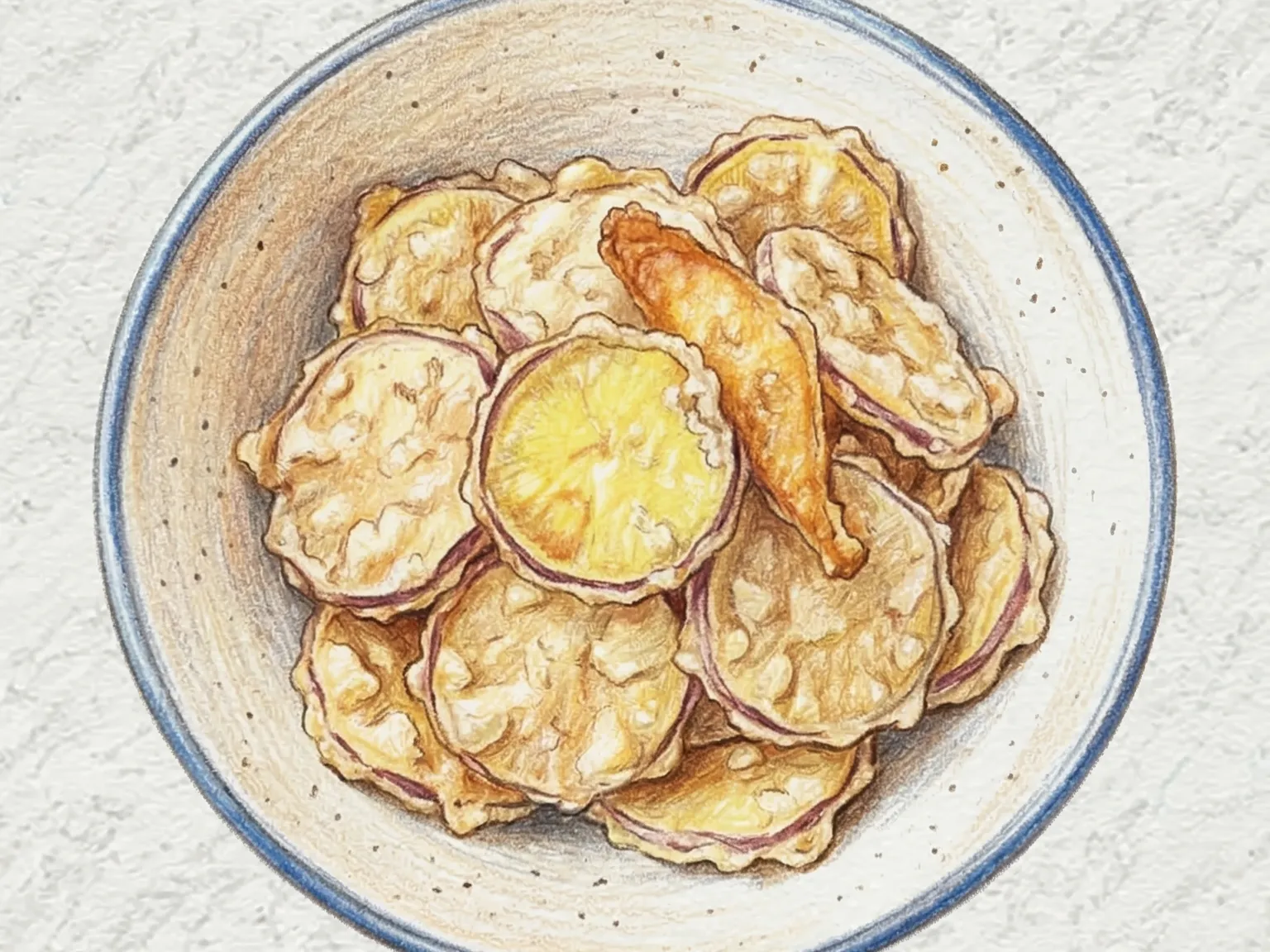
Korean Fried Sweet Potato
Goguma-twigim is a beloved Korean street snack found at tteokbokki stalls and bunsik shops across the country. Sweet potato rounds sliced to 0.5 cm are coated in a light batter and fried at 170 degrees Celsius until the crust turns crisp and golden. Ice-cold water mixed into the batter is the essential technique here: low temperature slows gluten development, keeping the coating thin and delicate so it does not overpower the natural flavor of the potato beneath. The moment the rounds come out of the oil, the heat has concentrated the sweet potato's inherent sugars just inside the shell, and a light sprinkle of salt at serving sharpens that sweetness into something more vivid. This humble snack has remained a fixture of Korean street food culture for generations, enjoyed equally by children and adults.
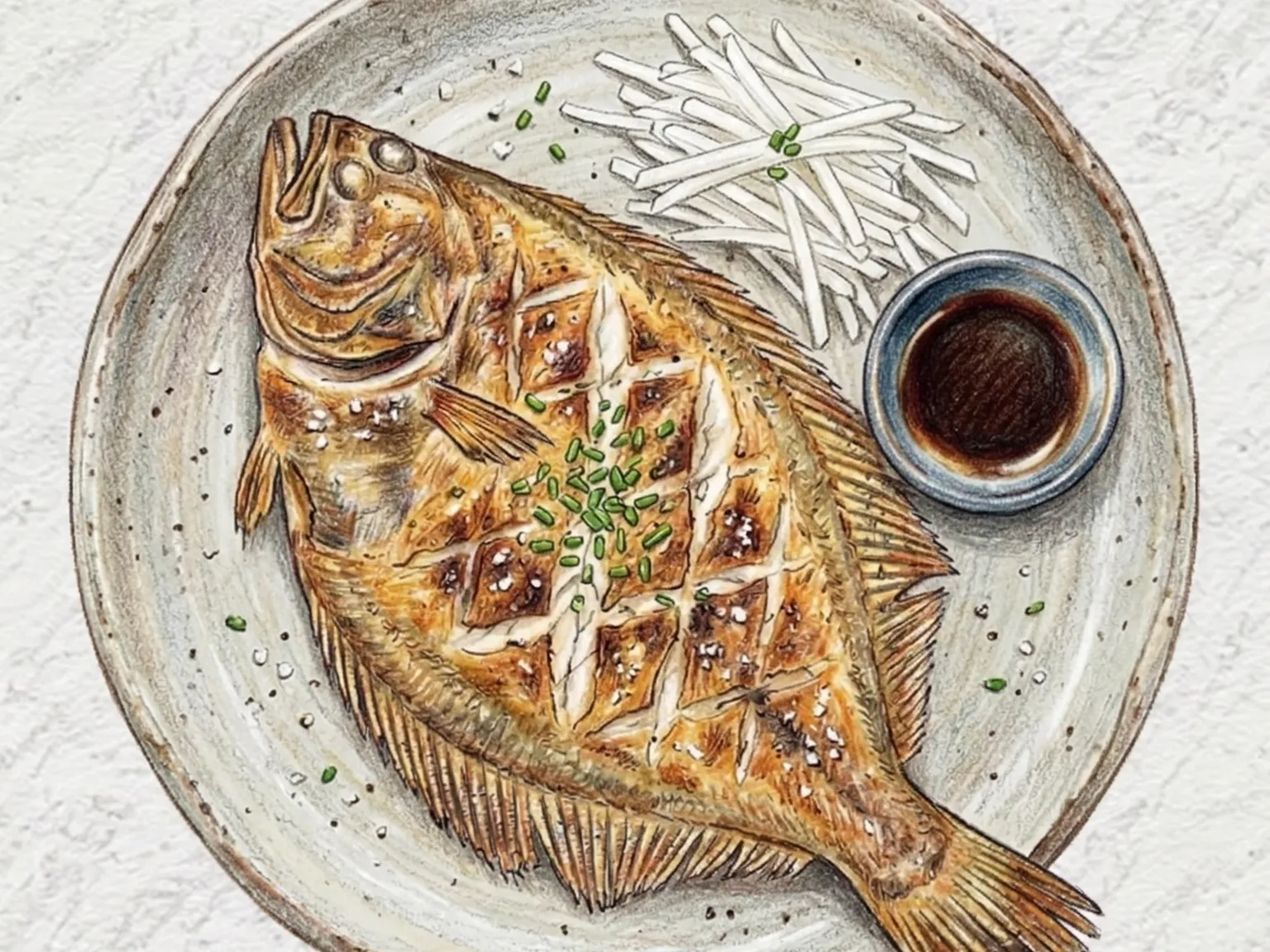
Korean Grilled Flounder (Salted Whole Flatfish Pan-Fry)
Gajami-gui is a Korean grilled flounder preparation in which a whole flat fish is salted for twenty minutes before being pan-fried or grilled over a wire rack until both sides develop an even golden-brown crust. Flounder has thinner flesh and a lower moisture content than most flatfish, which means it carries almost no fishy odor and needs only salt to taste genuinely clean on the palate. Splashing a small measure of rice wine over the fish before cooking neutralizes any remaining off-notes, and pressing the surface completely dry with kitchen paper afterward is what separates a flounder with truly crisp, caramelized skin from one that steams, sticks, and falls apart. Flipping must be done once and decisively with a wide spatula, because the flesh is delicate enough that repeated contact breaks it apart before serving. Resisting the urge to move the fish once it is in the pan is equally important: undisturbed contact with the hot surface is what drives the browning on each side. A garnish of shredded daikon with soy sauce or a sharp chili-soy dipping sauce provides a clean contrast that sharpens the perception of the fish's mild, natural flavor.
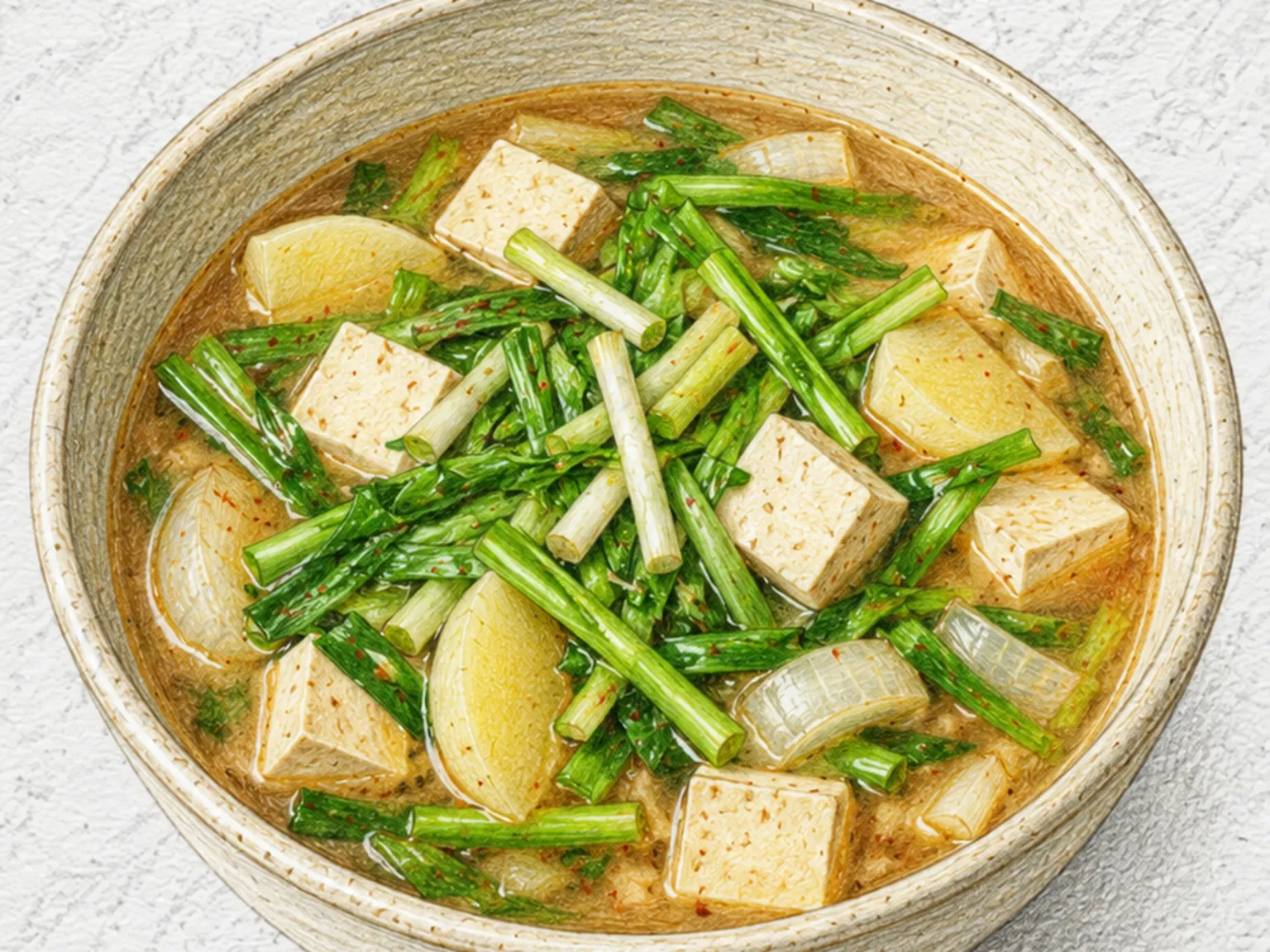
Korean Wild Chive Soybean Paste Soup
Dallae doenjang-guk is a springtime Korean soybean paste soup that showcases wild chives, a seasonal ingredient valued for its sharp, garlicky bite and short availability window. The anchovy-kelp stock is first simmered with potato and onion to build body and sweetness, then doenjang is dissolved in and tofu added for a soft, tender contrast against the broth. Wild chives go in only during the final minute of cooking, because their pungent aroma dissipates rapidly under sustained heat; cooking them too long makes them indistinguishable from ordinary green onion in both flavor and appearance. The bulb end of each chive stalk carries a stronger bite than the leaves, so mincing the bulbs finely distributes their flavor more evenly through the broth. A half teaspoon of gochugaru tints the soup a faint red that visually matches the chive's natural heat. Because dallae is in season for only a brief window, setting a few raw stalks aside to place at the table as a garnish amplifies the fresh spring character of the dish.
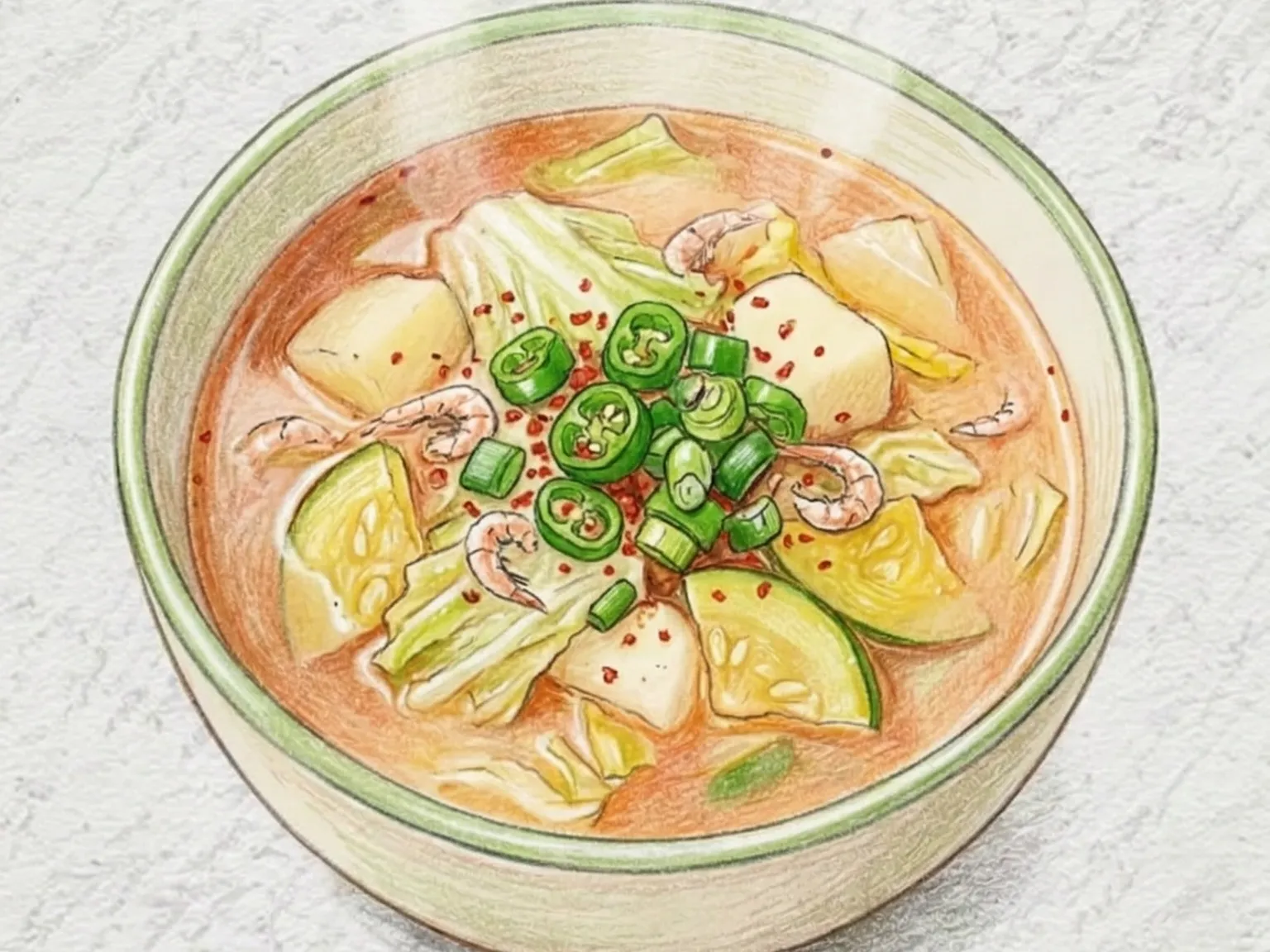
Korean Young Napa Cabbage & Salted Shrimp Stew
Eolgari saeujeot jjigae is a jjigae seasoned with salted fermented shrimp rather than the more common doenjang or gochujang. Young napa cabbage, potato, and zucchini simmer together in rice-rinse water, absorbing the fermented shrimp's concentrated brininess as they cook. Gochugaru adds color and a measured heat, while cheongyang chili and green onion bring additional sharpness to the broth. The timing of the salted shrimp matters: adding it too early causes the salt to concentrate and the delicate umami to dissipate, so it should go in just before the heat is reduced. The result is a broth that is intensely savory and clean-tasting without feeling heavy -- an everyday jjigae that pairs naturally with plain steamed rice.
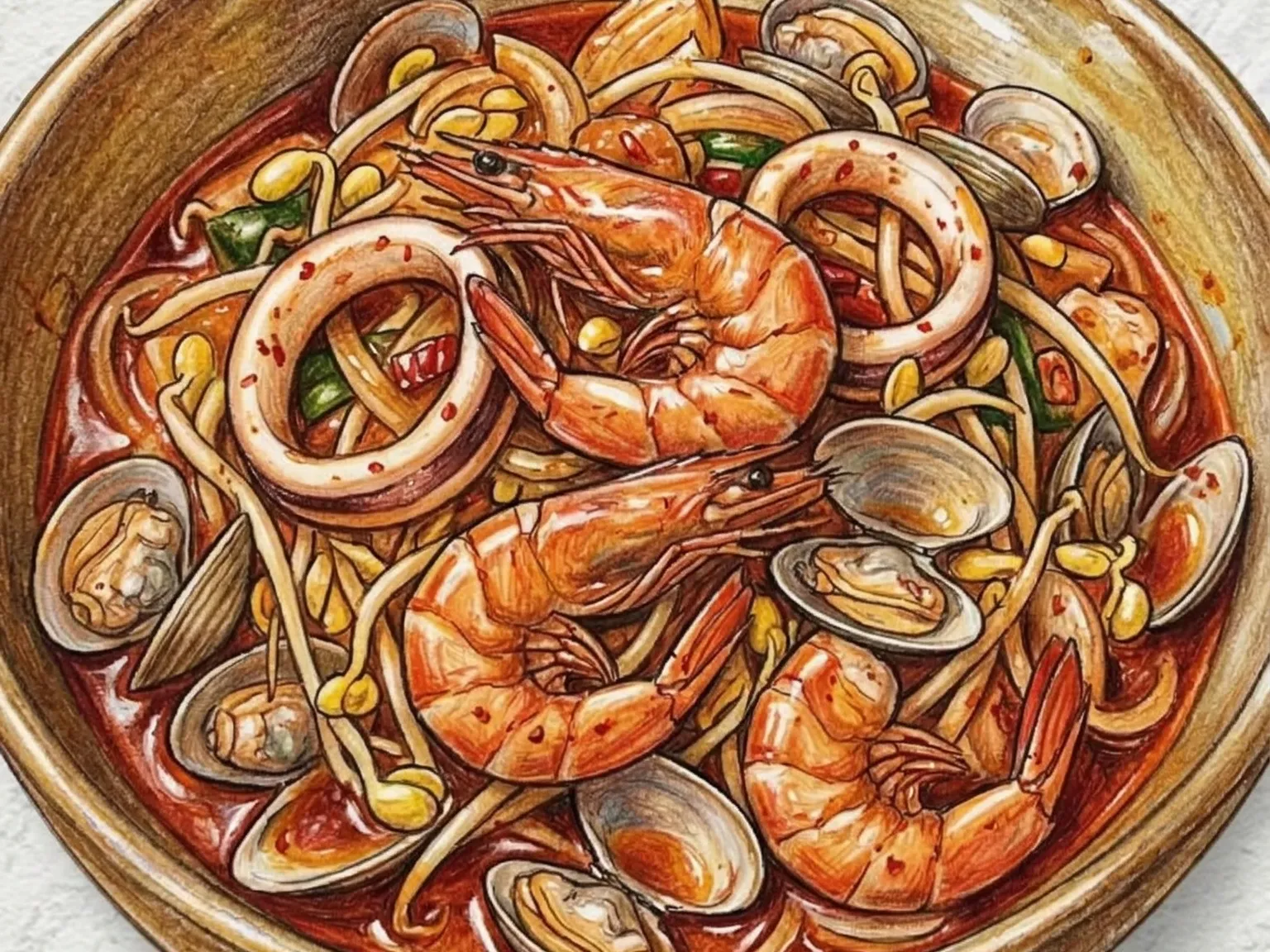
Korean Spicy Braised Mixed Seafood
Haemul-jjim is a Korean mixed seafood braise that brings together squid, shrimp, and manila clams with bean sprouts and onion in a gochugaru and soy sauce seasoning. The vegetables are layered on the bottom of the pot to absorb heat first, with the seafood arranged on top and cooked quickly over high heat so the texture stays firm and springy. Each shellfish releases its natural brine into the broth as it opens, deepening the seasoning without any added stock. A starch slurry stirred in at the end creates a glossy coating that clings to every piece of seafood and vegetable. The dish comes together in under ten minutes of active cooking. Bean sprouts hold their crunch while the squid and shrimp stay tender, and the remaining sauce at the bottom of the pot makes it natural to spoon over rice. It is a standard centerpiece at Korean gatherings and a popular accompaniment to drinks.
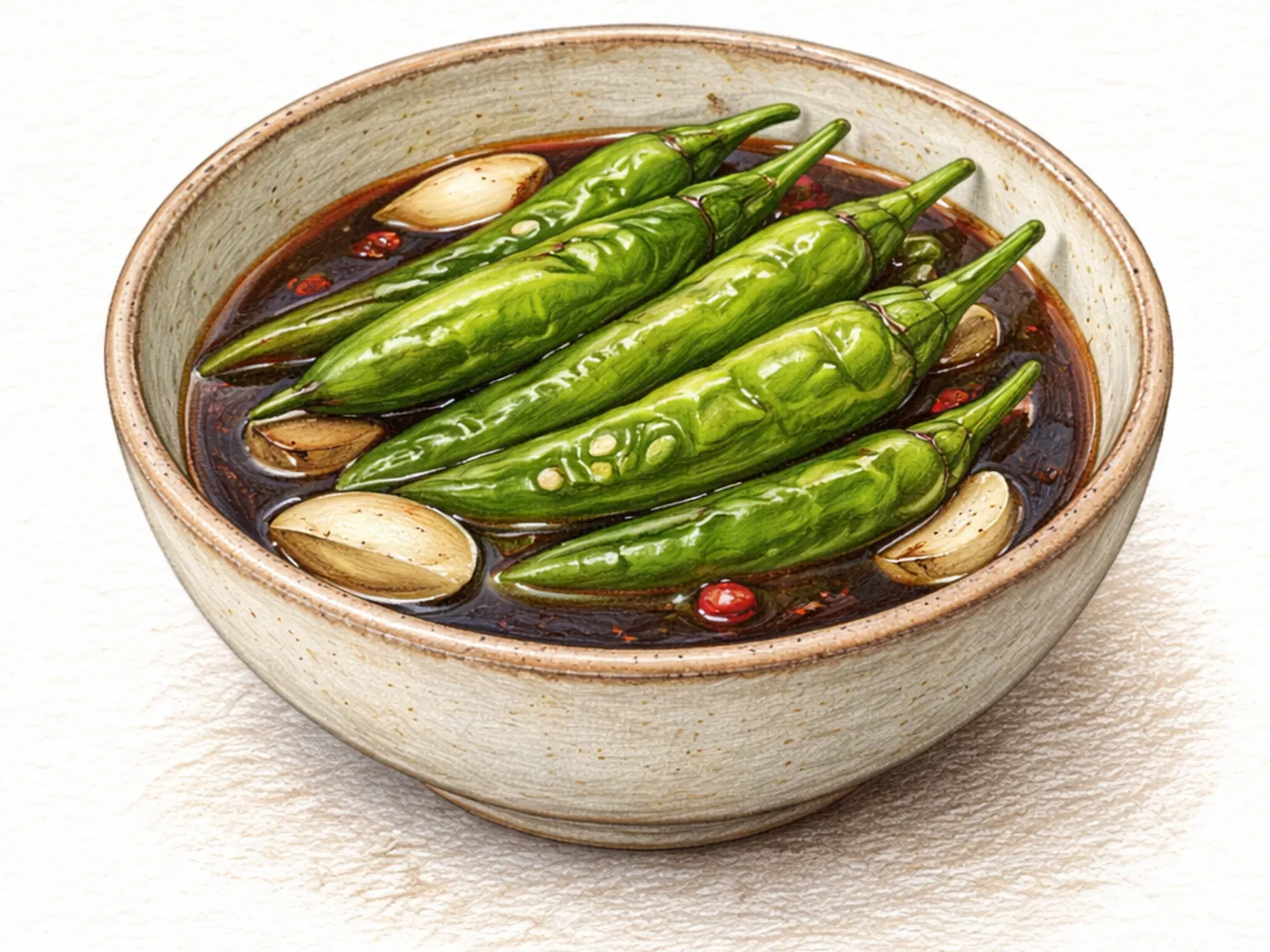
Korean Soy-Pickled Green Chili Peppers
Gochu soy jangajji is a traditional Korean pickle made by packing whole green chili peppers tightly into a glass jar, then pouring a freshly boiled brine of soy sauce, rice vinegar, sugar, and water directly over them while still steaming hot. The heat from the brine lightly cooks the outer skin of each pepper, nudging the raw sharpness down by one level while the flesh inside stays firm and crisp, so every bite delivers a clean hit of soy saltiness alongside the chili's lingering heat. Sliced onion tucked into the jar contributes a gentle background sweetness that balances the brine, and whole garlic cloves build an additional aromatic layer that deepens over the days of pickling. On the second day after packing, the brine is drained off, brought back to a full boil, and poured over the peppers again - this second-boil method eliminates residual bacteria and extends refrigerator life to a full month, making it a practical staple that can be made once and served throughout the week.
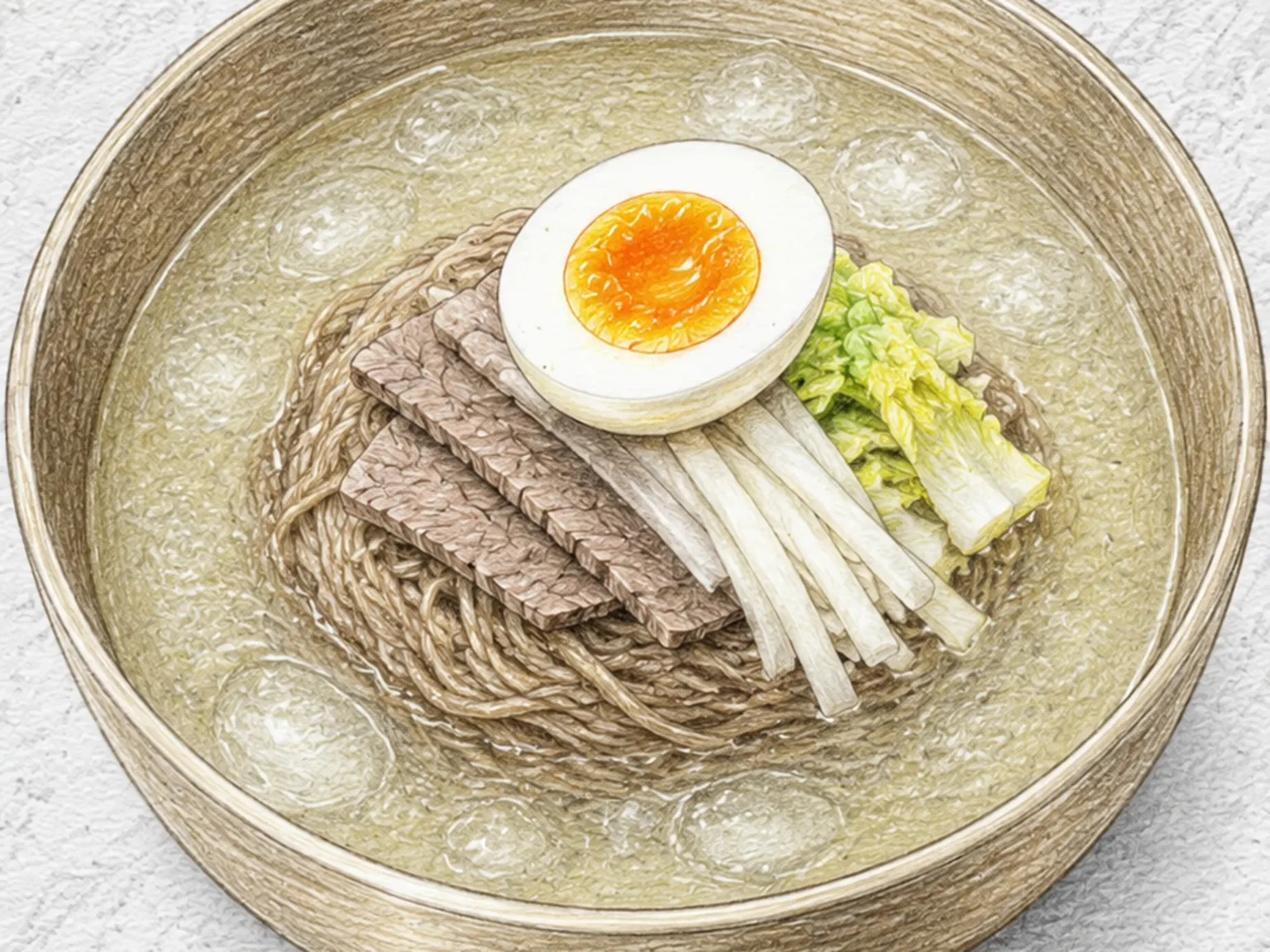
Korean Dongchimi Cold Naengmyeon
Dongchimi naengmyeon is a cold noodle dish built around the fermented brine of dongchimi, a water-based winter kimchi made with whole radish. The brine is blended with chilled beef or chicken stock, creating a broth that looks deceptively simple but carries a layered complexity from months of fermentation. The lactic acidity of the dongchimi water is not sharp or aggressive - it is long and clean, acquired through slow fermentation rather than vinegar shortcut. At very cold temperatures, just at the point of forming a thin skin of ice on the surface, the radish-derived fragrance in the broth becomes most vivid and refreshing. Thin slices of boiled beef add a lean, meaty backbone that anchors the acidity without competing with it. Julienned Korean pear brings gentle sweetness and crunch, and half a boiled egg rounds out the bowl with richness. Cutting the noodles several times with scissors before placing them in the bowl keeps them from clumping in the cold and allows the broth to reach every strand from the first bite.
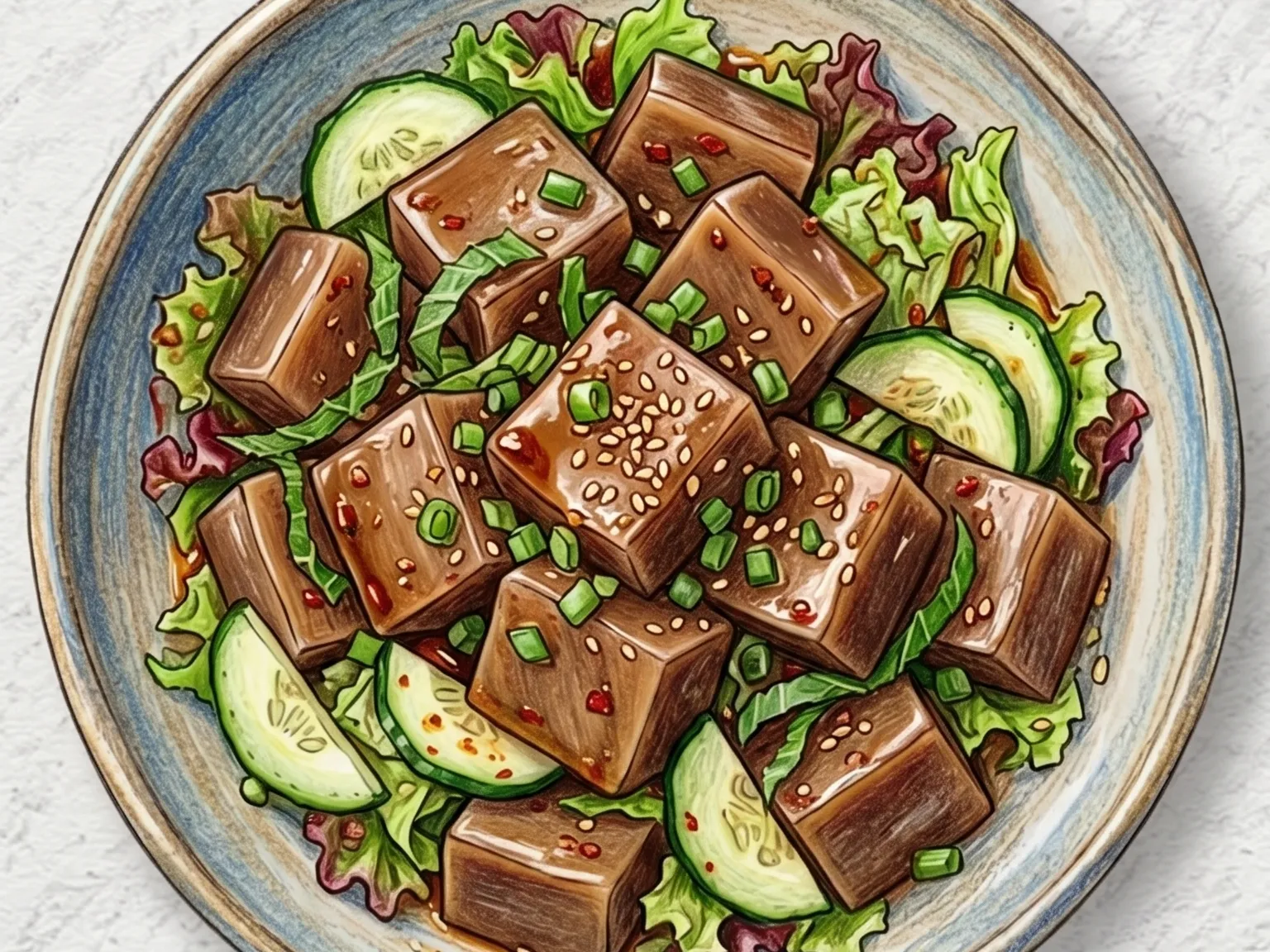
Dotori-Muk Vegetable Salad (Acorn Jelly Salad)
Dotori-muk (acorn jelly) is cut into bite-sized blocks and served with fresh lettuce, cucumber, and perilla leaves in this Korean salad. The jelly's smooth, firm texture creates a distinct contrast against the crunchy vegetables, while scallion lifts the overall aroma. A seasoning sauce of soy sauce, vinegar, gochugaru, and sesame oil gives the mild-flavored jelly a salty-tangy kick. Acorn jelly is notably low in calories and high in dietary fiber, and the tannins from acorn starch are traditionally believed to support digestion. The sesame oil and gochugaru in the dressing add a glossy richness and depth that transforms the otherwise neutral jelly into a cohesive, satisfying dish. Served chilled during summer, it works equally well as a light banchan when appetite runs low or as a refreshing standalone bowl.

Cuban Sandwich
Cuban sandwich splits a baguette lengthwise and spreads Dijon mustard on both cut sides before layering roast pork, sliced ham, Swiss cheese, and thin pickle slices inside. Butter goes on the outer crust, and the assembled sandwich is pressed in a skillet or sandwich press over medium heat for four to five minutes per side. The sustained pressure flattens the bread into a crisp, golden shell while the Swiss cheese melts and binds the fillings into a cohesive unit. Pickles provide a tart acidity and mustard adds a sharp, pungent bite that cut through the salty richness of the two meats, keeping each mouthful balanced rather than heavy. A heavy cast-iron pan placed on top works as well as a dedicated press when equipment is limited. The traditional pork is lechon, a Cuban-style roast marinated in garlic, cumin, and sour orange juice, though tightly grained pork belly or chashu makes a serviceable substitute. This sandwich was developed by Cuban immigrants in Tampa and Miami, where it became a daily staple rather than an occasional indulgence. Deceptively simple in appearance, it is a study in balance: every ingredient serves a specific purpose and the whole is noticeably better than the sum of its parts.
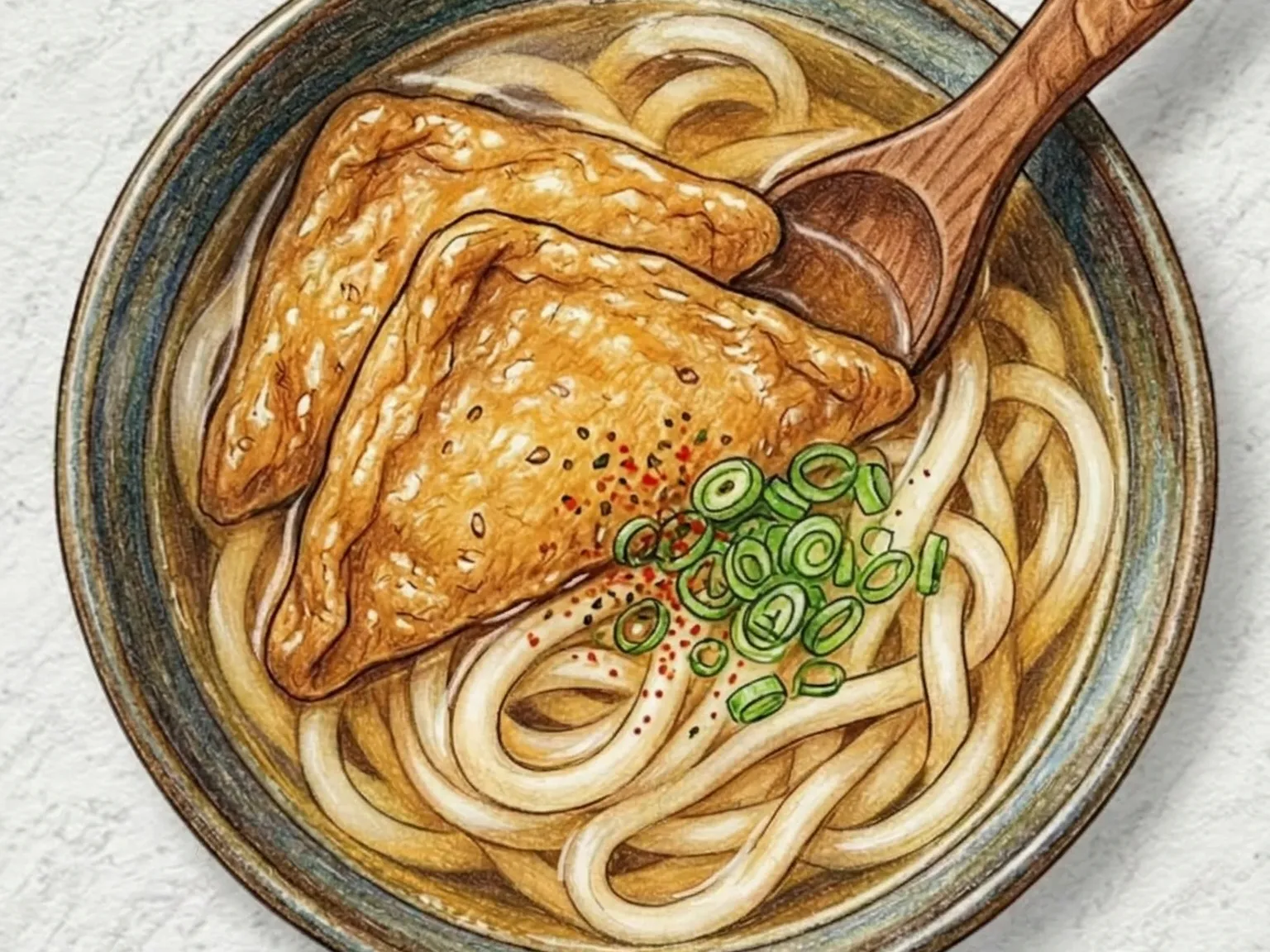
Osaka Kitsune Udon (Thick Noodles with Sweet Fried Tofu in Dashi)
Kitsune udon is Osaka's signature noodle bowl, defined by sweet simmered fried tofu draped over thick wheat noodles in a clear dashi broth. The broth is drawn from kombu and bonito flakes, then seasoned with light soy sauce in the Kansai tradition, pale in color but layered with umami. The aburaage tofu is simmered separately in a mixture of dashi, soy sauce, mirin, and sugar until it swells with sweet braising liquid, and each bite releases a burst of that concentrated sweetness into the bowl. Thick, chewy udon noodles sit in the steaming broth, their mild wheat flavor providing a neutral base for the delicate soup. Sliced green onion scattered on top adds freshness and a gentle bite. In Osaka, kitsune udon is eaten at all hours, as a quick breakfast before work, a light lunch, or a late-night bowl after drinks, and every neighborhood udon shop holds its own variation on the sweet tofu recipe passed down through the years.
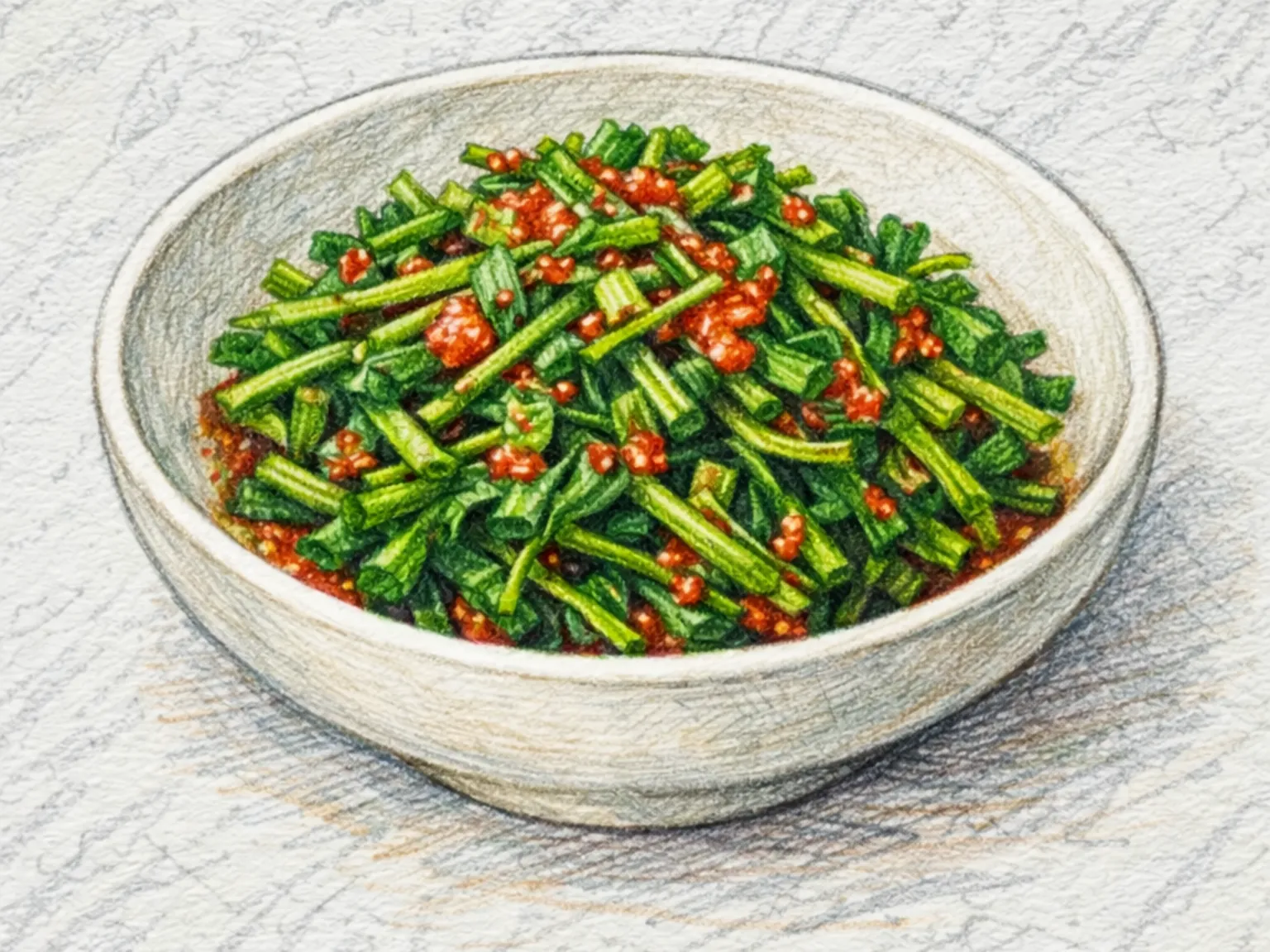
Dollnamul Muchim (Korean Seasoned Stonecrop Salad)
Dollnamul muchim is a spring banchan of raw stonecrop (Sedum sarmentosum) dressed in a seasoning mix of gochugaru, vinegar, fish sauce, garlic, and sugar. The plant grows on rocky stream banks and low walls across Korea; its plump, jade-green leaves carry a faintly sour, grassy juice that releases when bitten. Heat collapses the texture entirely - a few seconds of blanching is enough to destroy the crunch - so dollnamul is always dressed raw. The process is minimal: a quick rinse in cold water, a firm shake to remove excess moisture, and an immediate toss with the seasoning. The structural logic of the dressing has fish sauce providing fermented depth beneath the vinegar's sharp acidity; if either element dominates, the herb's clean, fresh aroma disappears. The dish must be eaten within minutes of dressing. Osmotic pressure begins pulling juice from the leaves almost immediately, and the texture softens to a limp mass within half an hour. Dollnamul muchim is a common addition to spring picnic lunches and is best served cold.
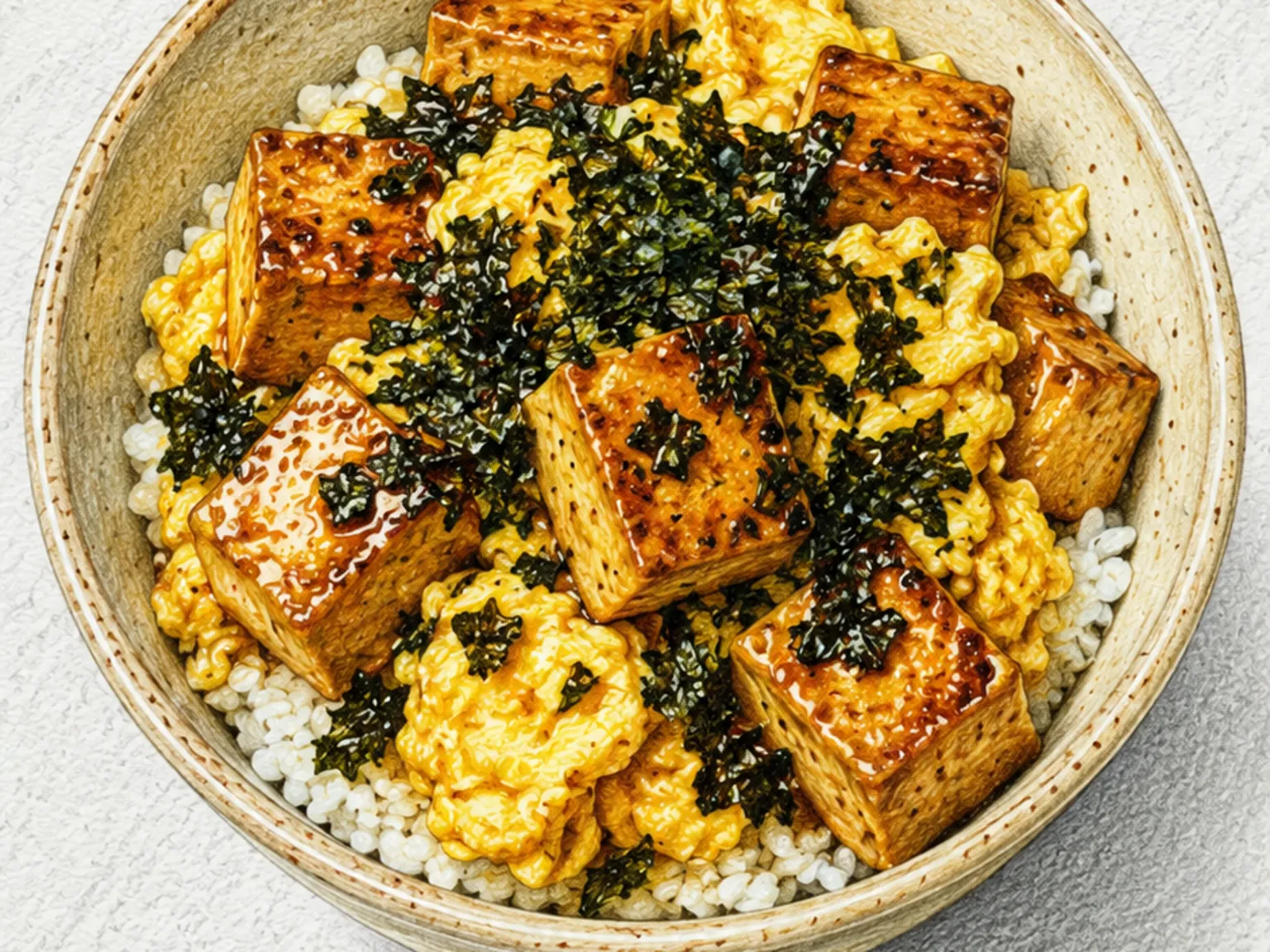
Korean Tofu Seaweed Egg Rice Bowl
Dubu gim gyeran deopbap is a Korean rice bowl built from three pantry staples: pan-fried tofu, soft scrambled egg, and roasted seaweed flakes, all layered over a bowl of steamed rice. The tofu is pressed dry, cut into cubes, and seared until the edges turn golden before being tossed with soy sauce and syrup to form a salty-sweet glaze that coats each piece. Eggs are scrambled to a barely-set, custard-like consistency rather than cooked through, creating a deliberate contrast with the firm, glazed tofu beneath them. Crumbled seaweed scattered over the top introduces a brittle crunch and a faintly briny, toasty aroma that lingers with each bite. A final drizzle of sesame oil draws all three components together into a coherent flavor. Because tofu, eggs, and dried seaweed are refrigerator and pantry staples in most Korean households, the dish can be assembled in roughly ten minutes without a special shopping trip, making it one of the most dependable meals for busy mornings or quick lunches.
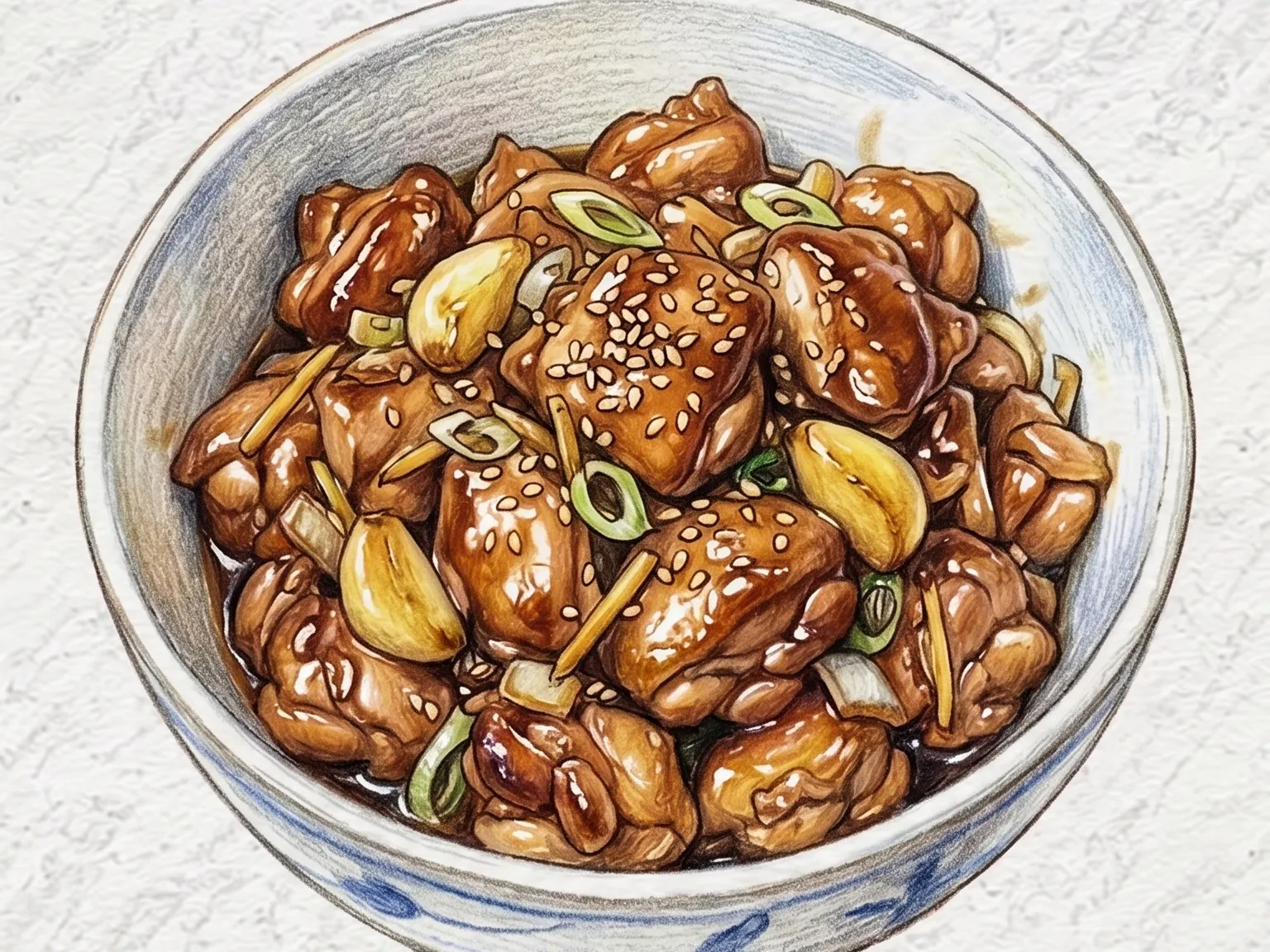
Korean Soy-Glazed Chicken Stir-Fry
Chicken thigh meat stir-fries in soy sauce, sugar, and oligosaccharide syrup for a sweet-salty glaze. Garlic and ginger go into the oil first to infuse the fat with fragrance before the chicken is added, letting the aromatics penetrate deep into the meat as it cooks. The oligosaccharide heats into a tacky gloss that coats each piece evenly as the liquid reduces. Sesame oil and whole sesame seeds scattered over the top at the end bring a nutty, aromatic finish. The flavor profile runs close to Japanese teriyaki, but the heavier use of garlic and ginger pushes it toward the more direct, punchy spice character typical of Korean cooking. Boneless thighs cut into bite-sized pieces cook more evenly than larger pieces, and keeping the heat high through most of the cook ensures the surface caramelizes without turning rubbery.
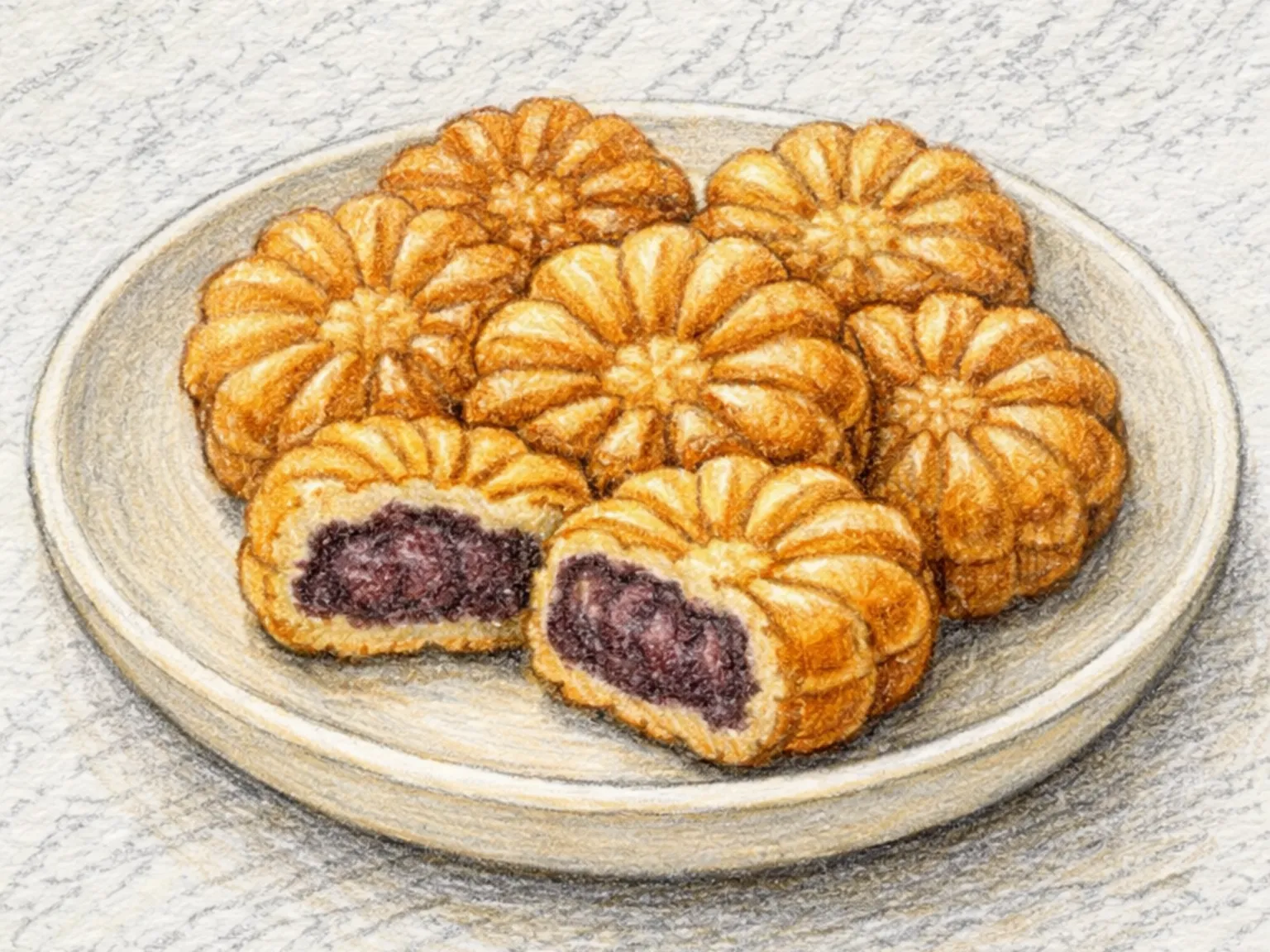
Korean Chrysanthemum Bean Cakes
Gukhwa-ppang is a Korean winter street pastry baked in a chrysanthemum flower-shaped cast-iron mold, filled with sweet red bean paste at the center. The batter of flour, baking powder, sugar, milk, egg, and melted butter is stirred together with minimal mixing to keep gluten development low, then poured to fill only one-third of the mold before a spoonful of bean paste is placed in the middle and covered with more batter, ensuring the filling sits centered in the finished pastry. Cooking over medium-low heat for three to four minutes on each side produces a golden crust with sharply defined flower-petal ridges pressed into the surface, while the bean paste inside stays soft and flows when the pastry is broken apart. It is often grouped with bungeoppang as a sibling street food, but the dough ratio is heavier and the shell is noticeably thicker, giving it a stronger bread-forward flavor and a slightly smaller proportion of filling to outer crust. The pastry is best eaten immediately after cooking, while the exterior is still crisp and the paste still hot. In recent years vendors have begun filling gukhwa-ppang with cream, chocolate, and sweet potato paste as alternatives to the traditional red bean filling.
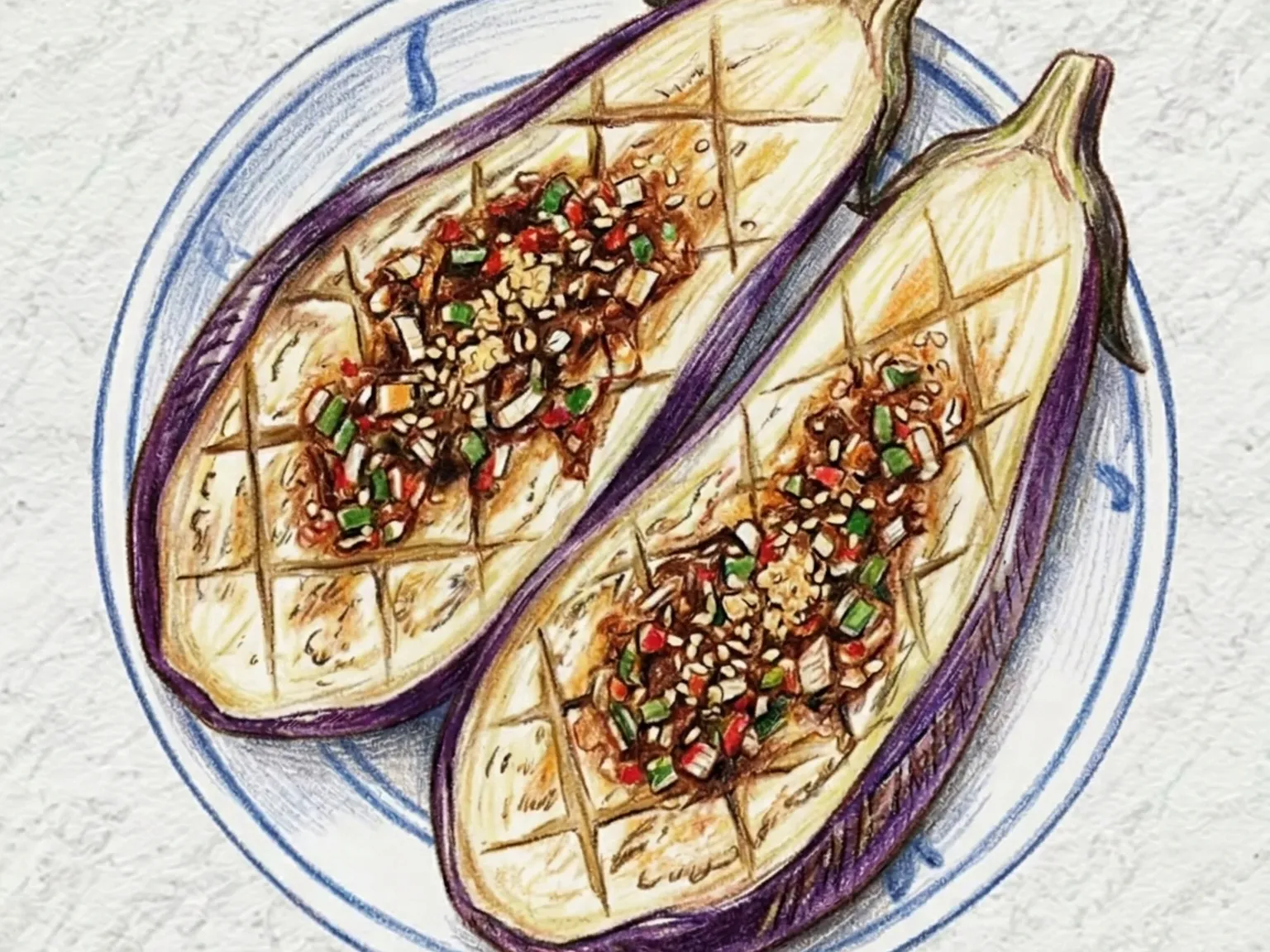
Korean Grilled Eggplant (Soy Garlic Glazed Charred Eggplant)
Gaji-gui is Korean grilled eggplant, halved lengthwise, scored, and cooked slowly over medium heat until the flesh turns soft and creamy while the skin side holds a slight firmness. Salting the cut surface and resting it for ten minutes before cooking pulls out bitter moisture through osmosis and also reduces how aggressively the eggplant absorbs oil during grilling. The scoring pattern is functional as well as visual, creating channels that allow heat to penetrate into the thick interior so the eggplant cooks through evenly rather than remaining hard at the center while the outside chars. Covering the pan after laying the eggplant cut-side down traps steam and gently cooks the flesh from within. A sauce of soy sauce, sesame oil, Korean chili flakes, minced garlic, and sliced green onion is spooned over the grilled surface while the eggplant is still hot, and the residual heat releases the fragrance of garlic and sesame oil while the liquid seeps into the scored channels and seasons the interior. Toasted sesame seeds scattered over the top add a final layer of nuttiness that gives the otherwise mild eggplant the complexity needed to hold its own as a proper banchan.
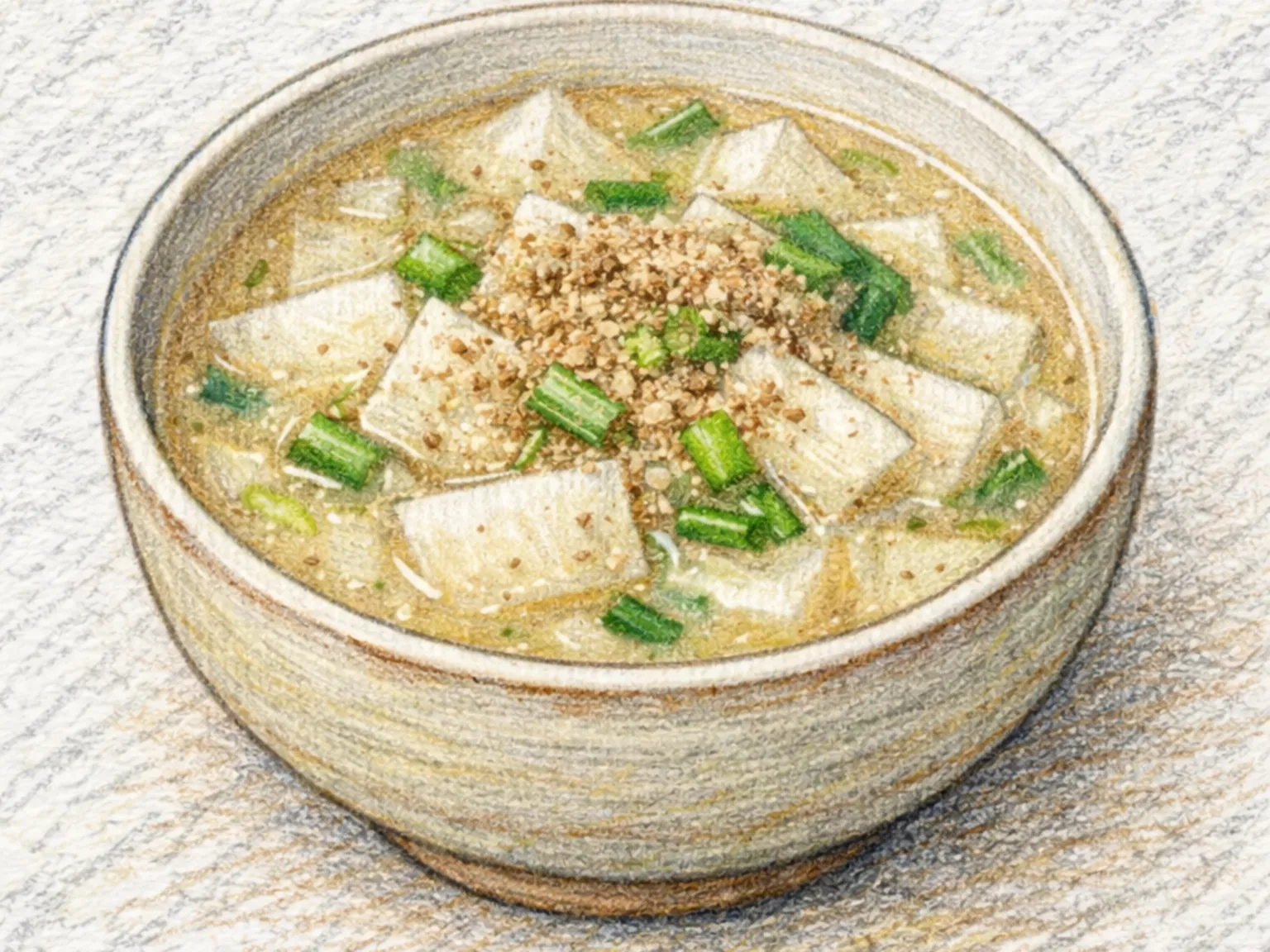
Korean Perilla Radish Soup
Deulkkae mu-guk is a Korean radish and perilla seed soup that belongs firmly to the cool-weather calendar. Sliced daikon simmers in anchovy stock for ten minutes first, releasing its clean sweetness into the broth before anything else goes in. Perilla seed powder, stirred in toward the end, thickens the liquid noticeably - its heavier, earthier fat behaves differently from sesame and coats the palate in a way plain radish broth cannot. Garlic simmers alongside the radish to build the underlying savory base. The powder must go in just before the heat is cut; leave it in too long and the toasted fragrance dissolves into the broth and disappears.

Korean Young Napa Soft Tofu Stew
Eolgari-sundubu-doenjang-jjigae is a gentle Korean stew that pairs soft tofu with young napa cabbage (eolgari baechu) in a kelp stock base seasoned with doenjang and a small measure of gochujang. The doenjang brings fermented soybean depth to the broth, while the gochujang adds a measured spiciness that stays mild rather than sharp -- the two pastes work together to produce a broth that is simultaneously savory, slightly sweet, and lightly spiced. Potato and onion are added early to contribute their natural sugars, and the potato softens gradually into the liquid, lending slight body to the stock. Soft tofu should be spooned in gently rather than stirred, as it breaks apart easily -- rocking the pot from side to side distributes it without tearing the curds into pieces. Once in the stew, the soft tofu slowly releases some of its moisture and takes on the broth around it, spreading a silky, almost cream-like texture throughout the liquid. Young napa cabbage provides a light crunch that contrasts with the velvet texture of the tofu and the smoothness of the broth. A finishing addition of minced garlic and a drop of perilla oil deepens the savory fragrance just before serving. The stew is mild enough to work as a morning meal and substantial enough to stand as a light dinner.
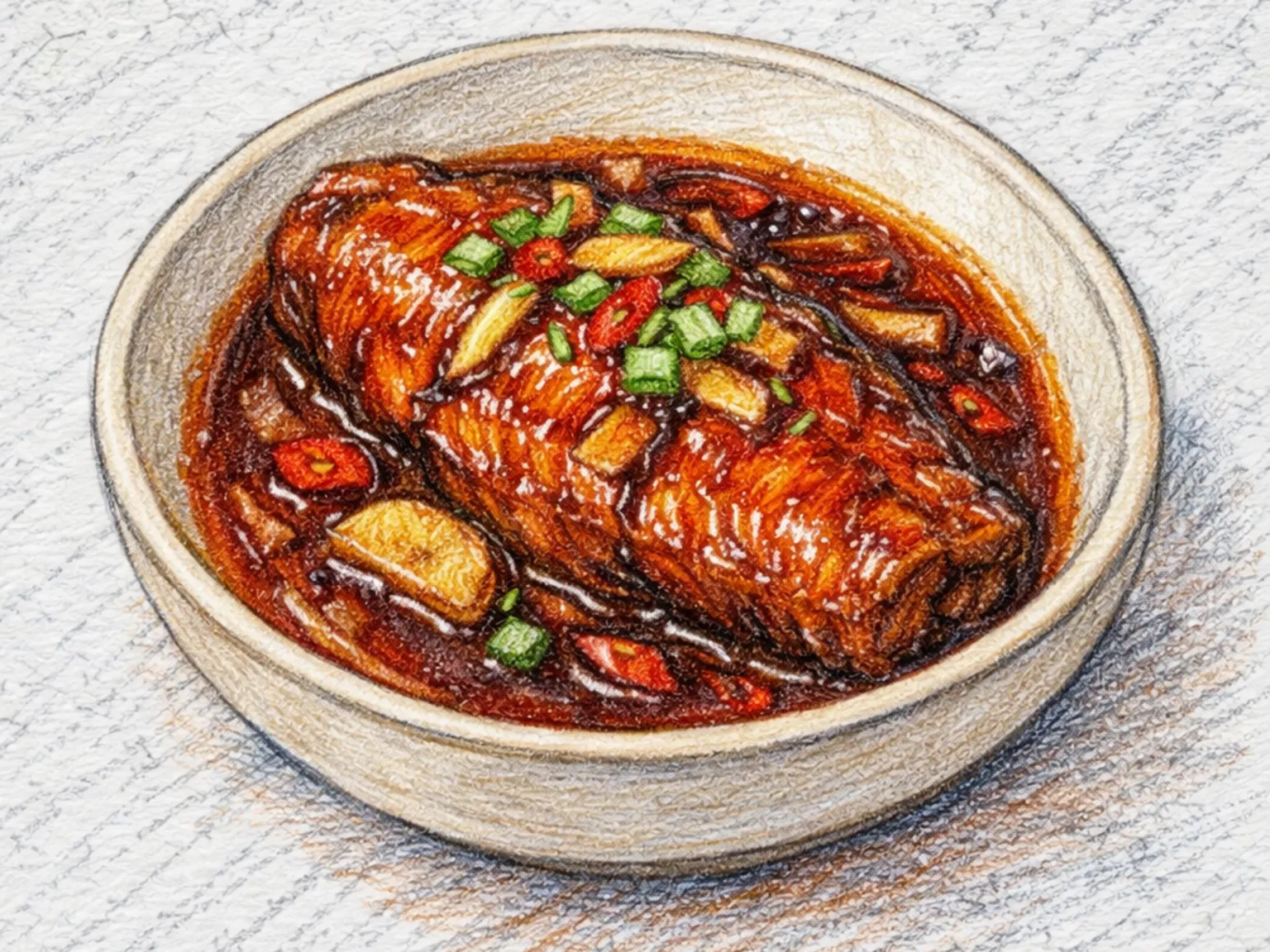
Chinese Red-Braised Fish (Hong Shao Yu)
Hong shao yu is a Chinese braised fish dish made by pan-searing white fish until golden, then pouring over a sauce of soy sauce, sugar, ginger, green onion, and Shaoxing wine and simmering over medium heat until the liquid reduces to a glaze. Searing the fish first firms up the surface so the flesh holds together during braising, and the browning from the sear adds a savory depth to the final sauce that straight braising cannot achieve on its own. Sugar softens the saltiness of the soy sauce into a sweet-savory balance, while ginger neutralizes any fishiness and contributes a sharp, clean aroma throughout the braise. As the sauce reduces it coats each piece of fish in a glossy, dark glaze well suited to spooning over steamed rice. The dish comes together in under thirty minutes, and thicker white fish holds moisture better through the braise than thin fillets. Patting the fish thoroughly dry before placing it in the pan prevents oil splatter and ensures the surface browns evenly rather than steaming.
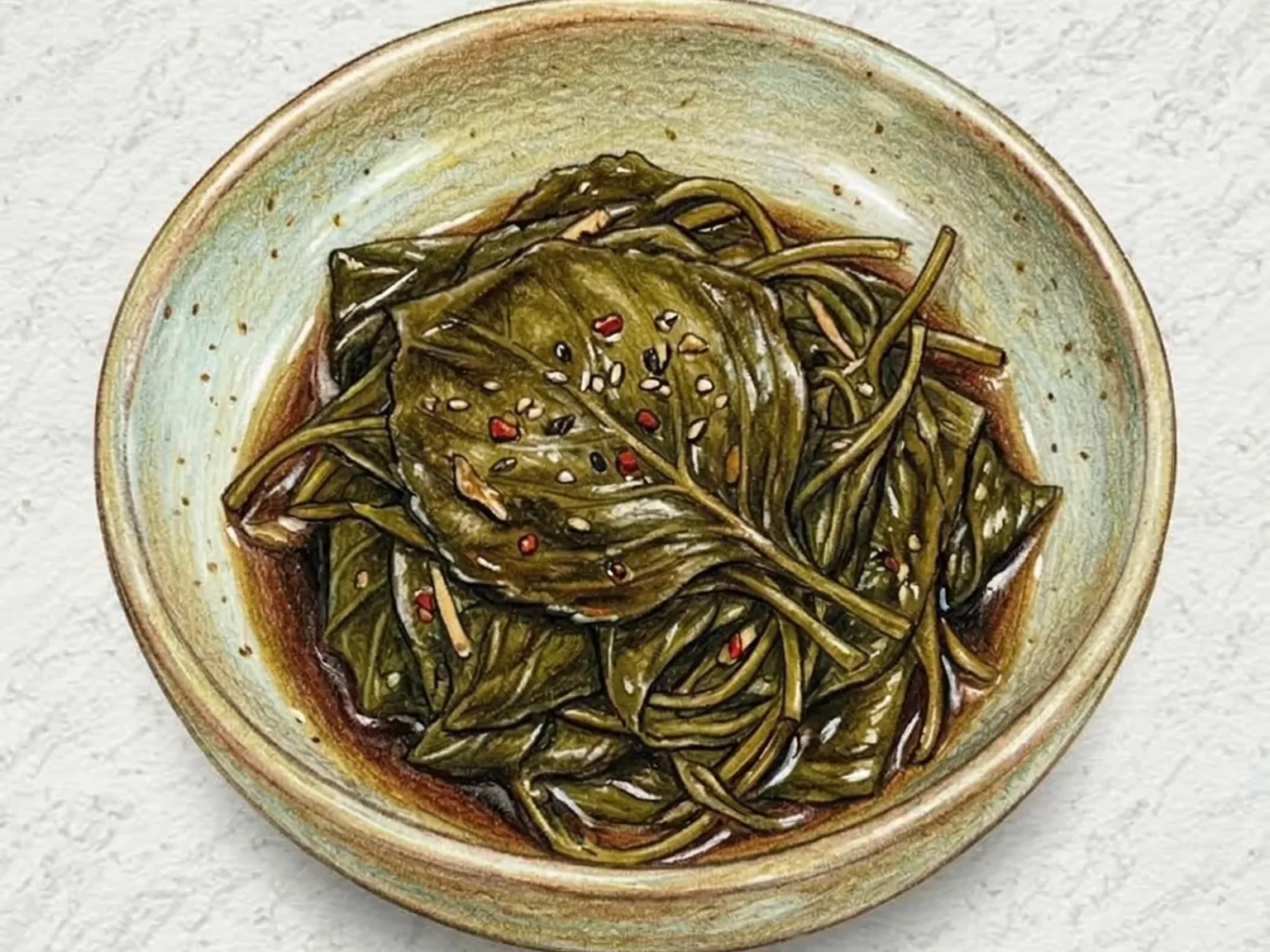
Korean Pepper Leaf Soy Pickle
Gochuip jangajji is a Korean soy pickle made from pepper leaves, a summer byproduct of chili cultivation, washed and submerged in a boiled brine of soy sauce, vinegar, and sugar. Unlike the chili fruit, pepper leaves carry almost no heat. What they bring instead is a grassy, mildly bitter fragrance that blends naturally with the savory and sour notes of the brine. Boiling the pickling liquid first and letting it cool before pouring it over the leaves preserves some of their texture while ensuring even seasoning throughout. Garlic and cheongyang chili contribute a sharp, pungent edge to the liquid, and the thin leaves absorb the brine fully within a single day. Over time, the pickling liquid penetrates deeper and the umami grows more pronounced. Laying one leaf over rice and folding it into a small parcel combines the roles of banchan and ssam in a single, compact bite.
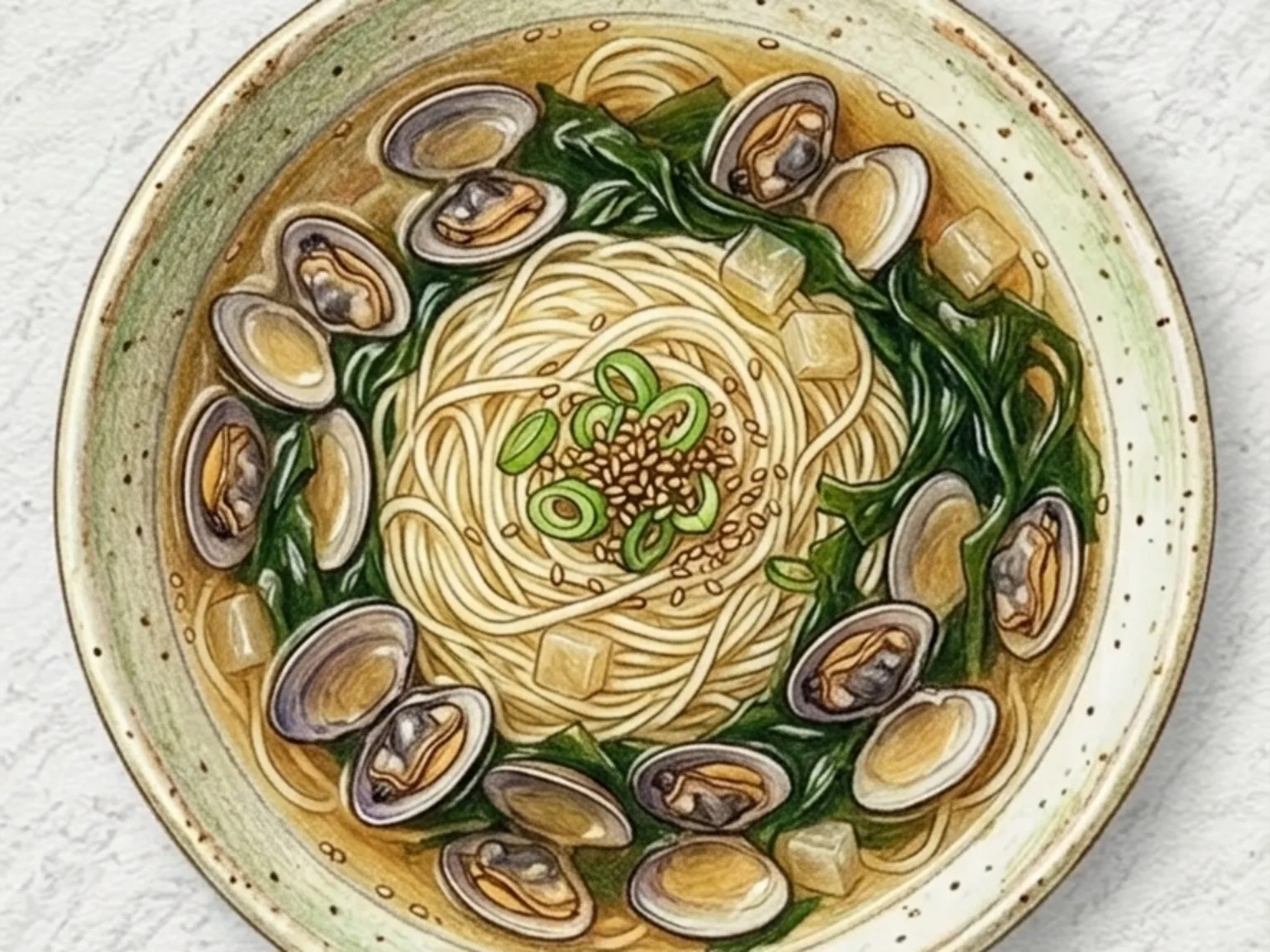
Korean Clam Seaweed Onmyeon (Warm Noodle Soup)
Dongjuk miyeok onmyeon is a warm noodle soup where small surf clams are simmered to build a clear, deeply briny stock, then combined with rehydrated seaweed and thin wheat noodles. The cool, oceanic flavor of the clams forms the backbone of the dish, and simmering radish alongside rounds out the saltiness into something bright and clean. The seaweed unfurls in the hot broth, contributing its own quiet marine umami, and seasoning stays minimal with only soup soy sauce and salt so the ingredients speak clearly. This is a restorative bowl often eaten for morning recovery or when a light, clear-tasting meal is preferred. Dongjuk clams resemble Manila clams in shape but yield a deeper, more concentrated broth, making them effective even without additional stock. The thin noodles should be cooked until just tender and transferred directly to the bowl to prevent over-softening once the hot broth is ladled over.
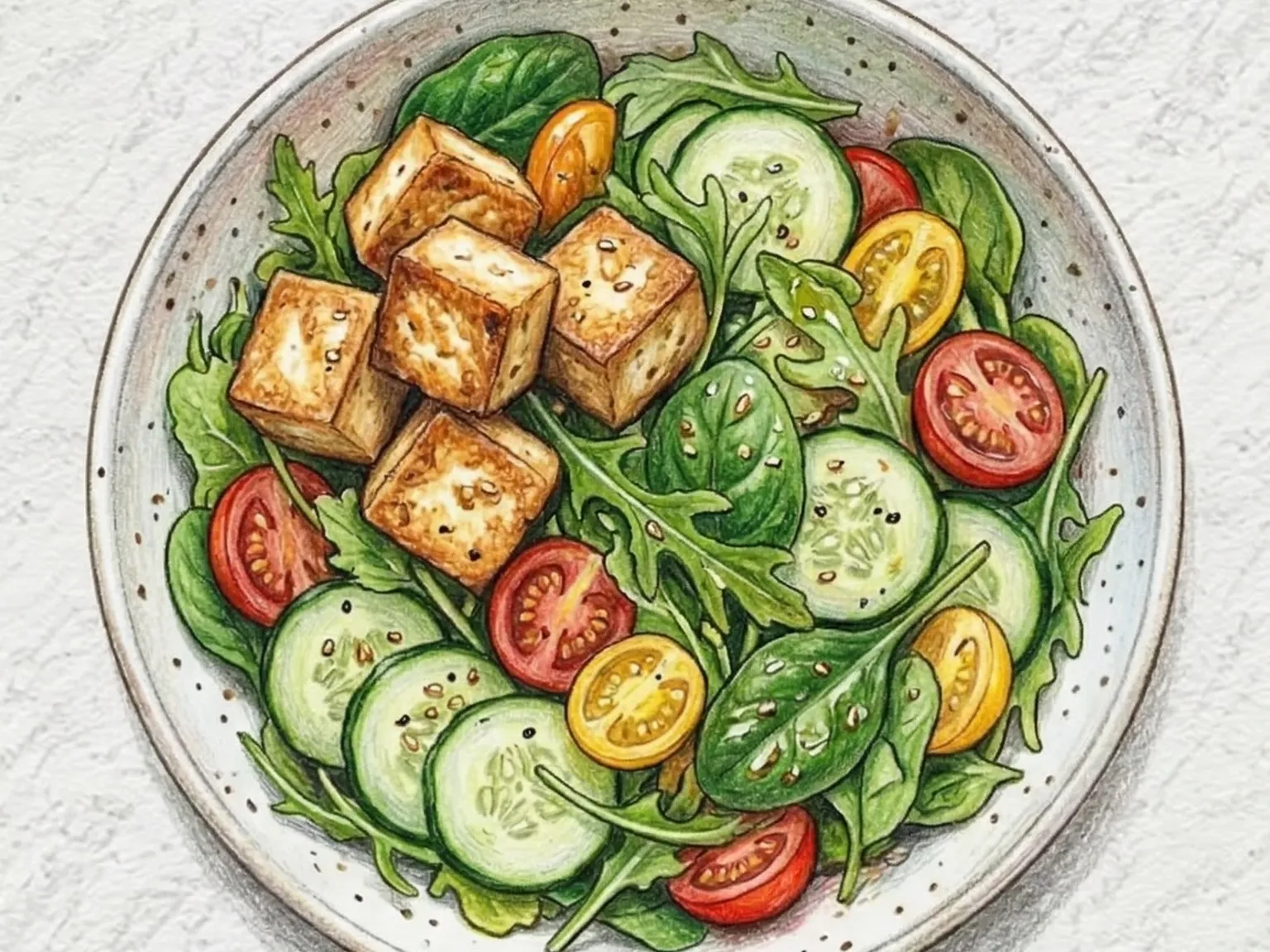
Tofu Salad (Pan-Seared Tofu on Fresh Greens)
Dubu salad is made by pressing firm tofu to remove excess moisture, then pan-searing it until the outside turns golden and crisp while the inside stays soft and tender. The seared tofu is placed over a bed of baby greens, sliced cucumber, and cherry tomatoes. Wrapping the tofu in two layers of paper towels and setting a weight on top for twenty to thirty minutes draws out enough water so the surface browns properly in the pan without steaming. A dressing of soy sauce, sesame oil, lemon juice, and olive oil moves easily between Korean and Western flavor profiles. The salad is high in plant protein and low in fat, making it a practical and satisfying option when a light, clean-tasting meal is the goal.
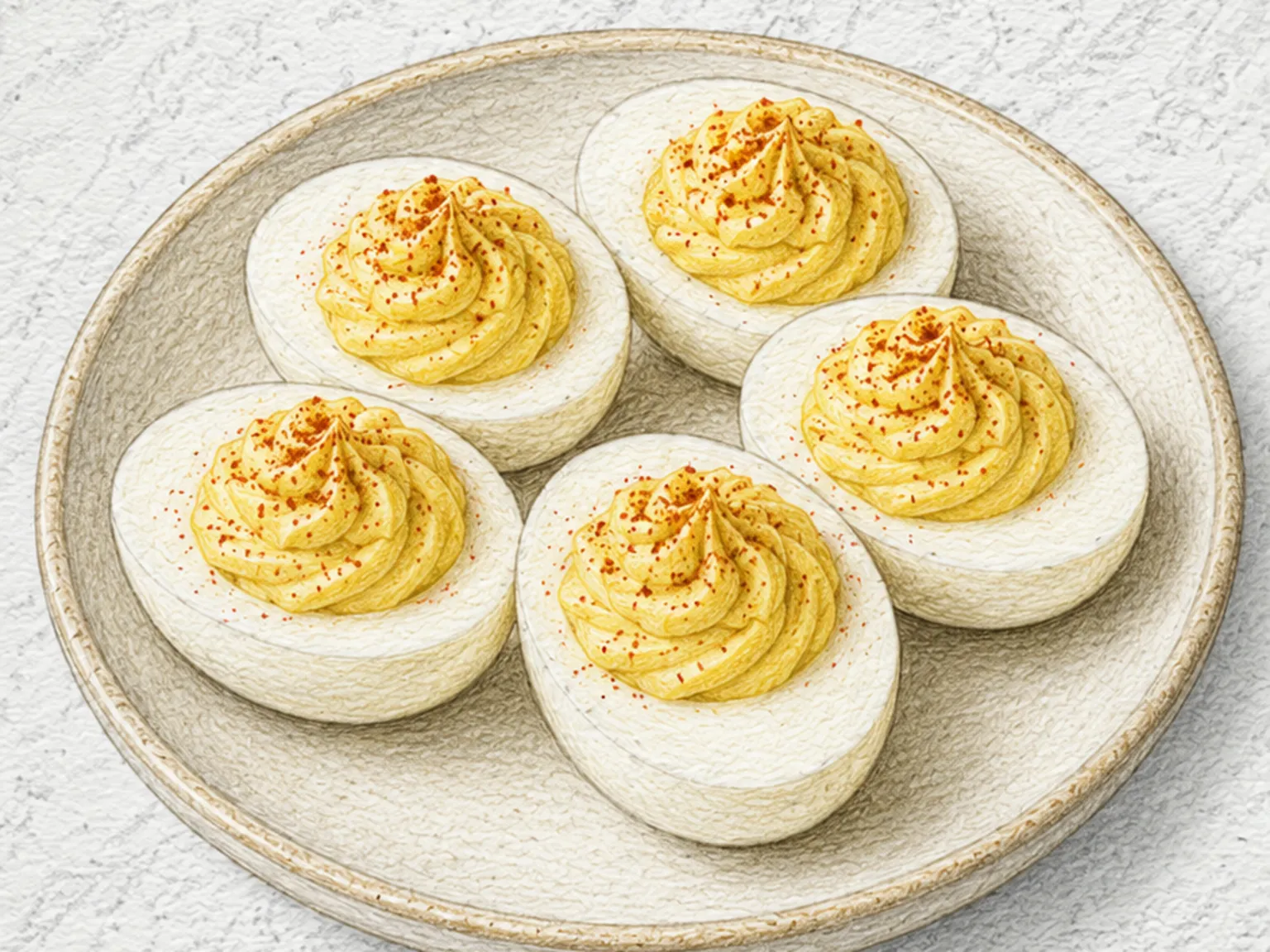
Deviled Eggs
Deviled eggs are a classic American appetizer made by hard-boiling eggs for ten minutes from a cold water start, then transferring them immediately to an ice bath to cool completely before peeling and halving. Full cooling prevents the yolk from developing a gray-green ring around its edge and allows the shell to separate cleanly, producing smooth, even white halves that serve as natural vessels for the filling. The yolks are mashed thoroughly with mayonnaise, Dijon mustard, lemon juice, salt, and black pepper until the mixture is completely smooth and uniform in texture. The mustard's sharp bite and the lemon juice's acidity cut through the fatty richness of the yolk, lifting the overall flavor and giving each bite a creamy yet bright quality that prevents the filling from feeling heavy. If the mixture is too stiff, a small addition of mayonnaise loosens it to a pipeable consistency; a piping bag with a star tip produces the cleanest, most defined presentation. A light dusting of smoked or sweet paprika over the top adds a faint warmth and creates a vivid red-and-white color contrast against the pale egg white base, completing the visual as well as the flavor.
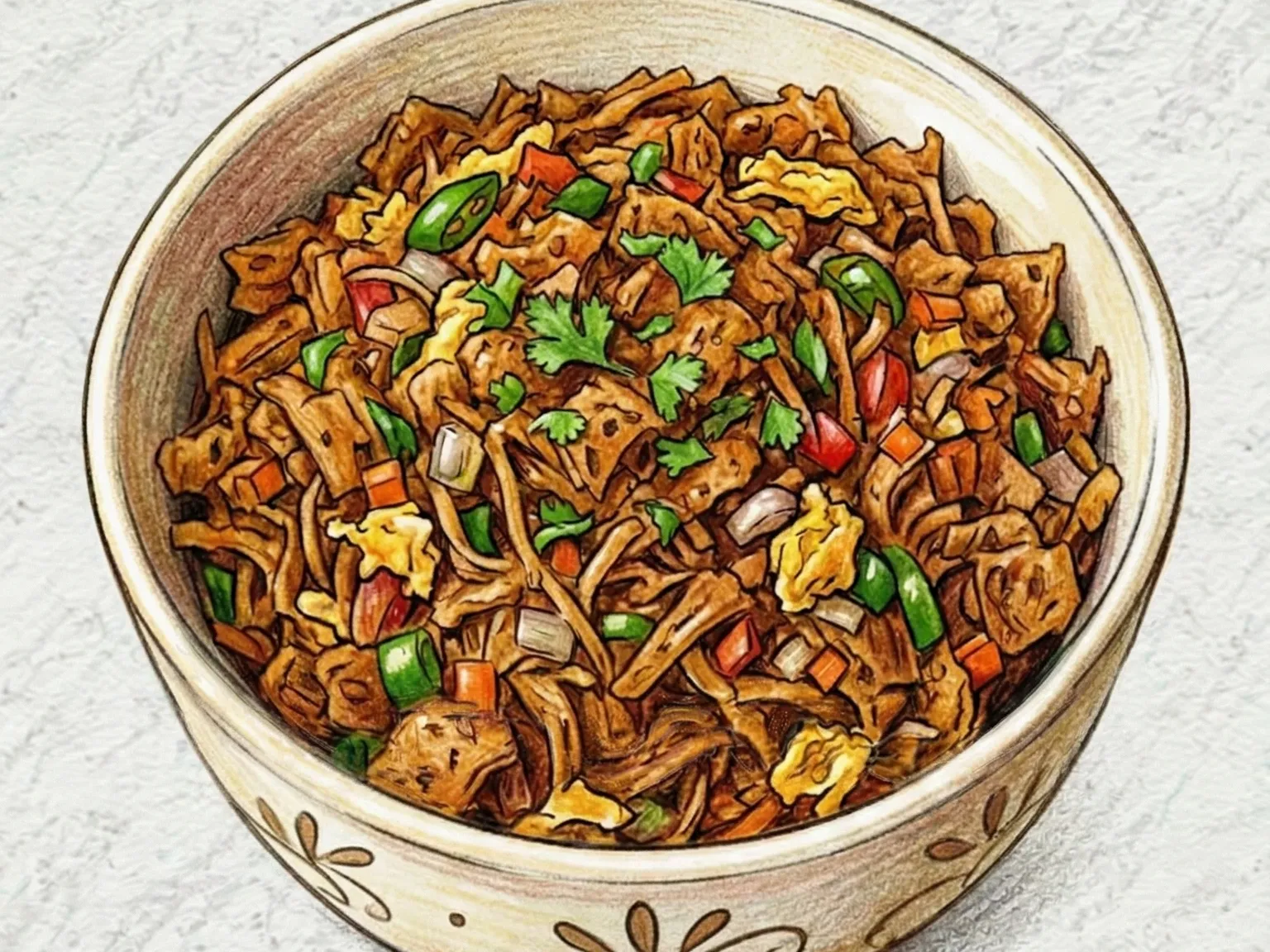
Kottu Roti (Sri Lankan Shredded Flatbread Stir-Fry with Egg)
Kottu roti is a Sri Lankan griddle dish in which flatbread is shredded and stir-fried with vegetables, egg, and spices on a heavy iron surface. The defining feature of its preparation is the sound produced when the cook uses two flat metal blades to simultaneously chop and scrape the ingredients across the griddle in a steady, rhythmic pattern. The metallic clanging carries far enough to be heard from the street and serves as the primary advertisement for kottu roti stalls, most of which operate well into the early hours of the morning. Godamba roti, a thin unleavened flatbread, is sliced into small pieces roughly one centimeter on each side before cooking begins. The griddle is oiled and onion, cabbage, and carrot are fried until wilted, after which eggs are cracked directly onto the surface and scrambled in place. The roti pieces go in next, followed by curry powder, chili flakes, and soy sauce, with the blades kept moving continuously so the heat distributes evenly and the bread absorbs the seasonings rather than sitting on top of them. Soy sauce deepens the color and adds umami, while a ladleful of curry gravy poured over near the end binds the ingredients and prevents dryness. Versions with chicken, lamb, or seafood are widely available, and the spice level can be adjusted to order. The dish is understood to be street food in the fullest sense: fast, loud, served hot off the griddle, and closely associated with late-night eating.
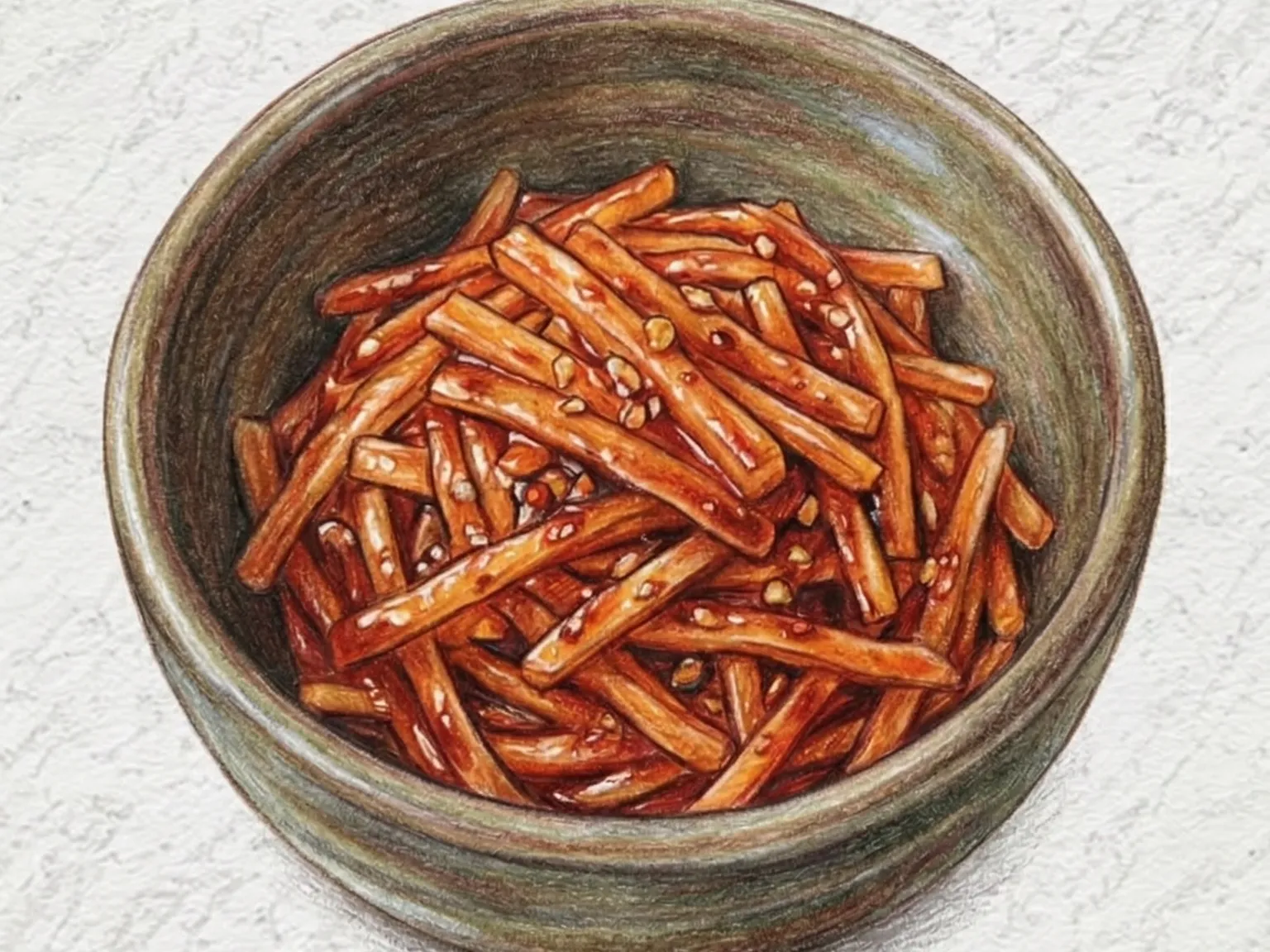
Korean Stir-fried Balloon Flower Root
Doraji -- balloon flower root -- has been cultivated in Korea for centuries, valued in cooking and herbal medicine alike. The raw root carries a pronounced bitterness from saponins, so it must be shredded into thin strips, rubbed vigorously with salt, left for ten minutes, then rinsed twice in cold water. The salt scrub draws out the saponins while preserving the root's firm, snappy bite. A base of green onion goes into the pan first to build a fragrant oil, then the prepared doraji stir-fries for two minutes before gochujang, soy sauce, and oligosaccharide syrup go in for another three minutes. The heat is raised at the end to drive off moisture, so the sauce tightens and clings to each strip rather than pooling in the pan. The result is a glossy, sweet-spicy banchan with a distinctly chewy pull.