🏠 Everyday Recipes
Simple home-cooked meals for any day
1705 recipes. Page 59 of 72
These are the meals you can cook day after day without getting tired of them. Doenjang jjigae, rolled omelet, spicy pork stir-fry - the kind of home-cooked dishes that fill an ordinary day with comfort.
The beauty of everyday cooking is that it relies on common ingredients already in your fridge. No exotic items, no complicated techniques - just straightforward recipes for satisfying home meals.
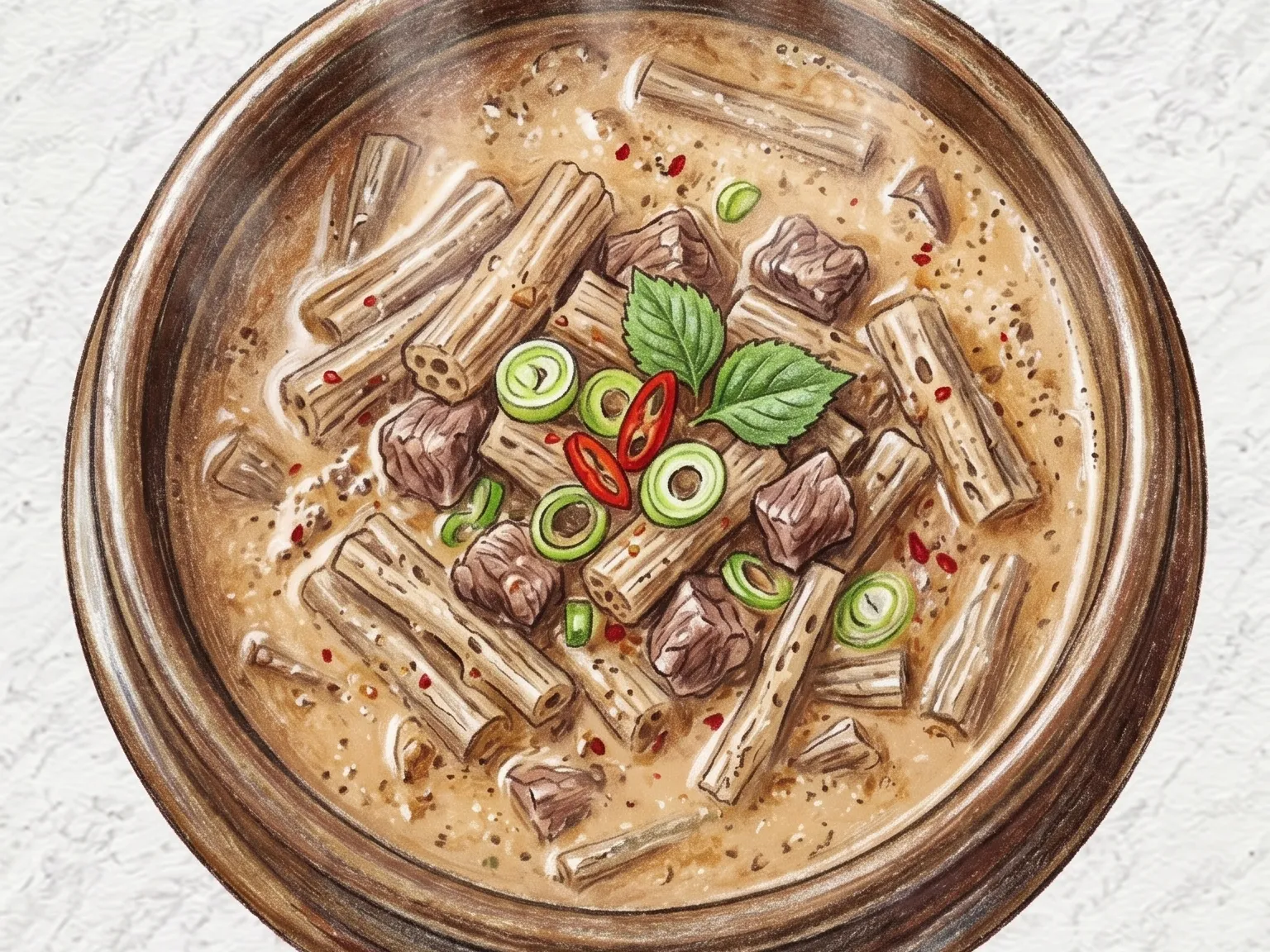
Korean Taro Stem Stew (Perilla-Thickened Soybean Broth)
Torandae jjigae is a traditional Korean autumn stew featuring taro stems simmered in a beef and doenjang broth thickened with perilla seed powder. First, beef soup cuts are boiled to make a rich stock, into which doenjang, gochugaru, and garlic are dissolved. Taro stems are soaked in cold water to reduce their natural slipperiness before being simmered in the broth for twelve minutes until tender. To ensure the perilla seed powder thickens the stew without clumping, it is mixed with hot broth before being added back in batches. The stew is seasoned with soup soy sauce and finished with green onions. This dish highlights the spongy texture of autumn taro stems paired with the warm richness of the thick perilla broth.
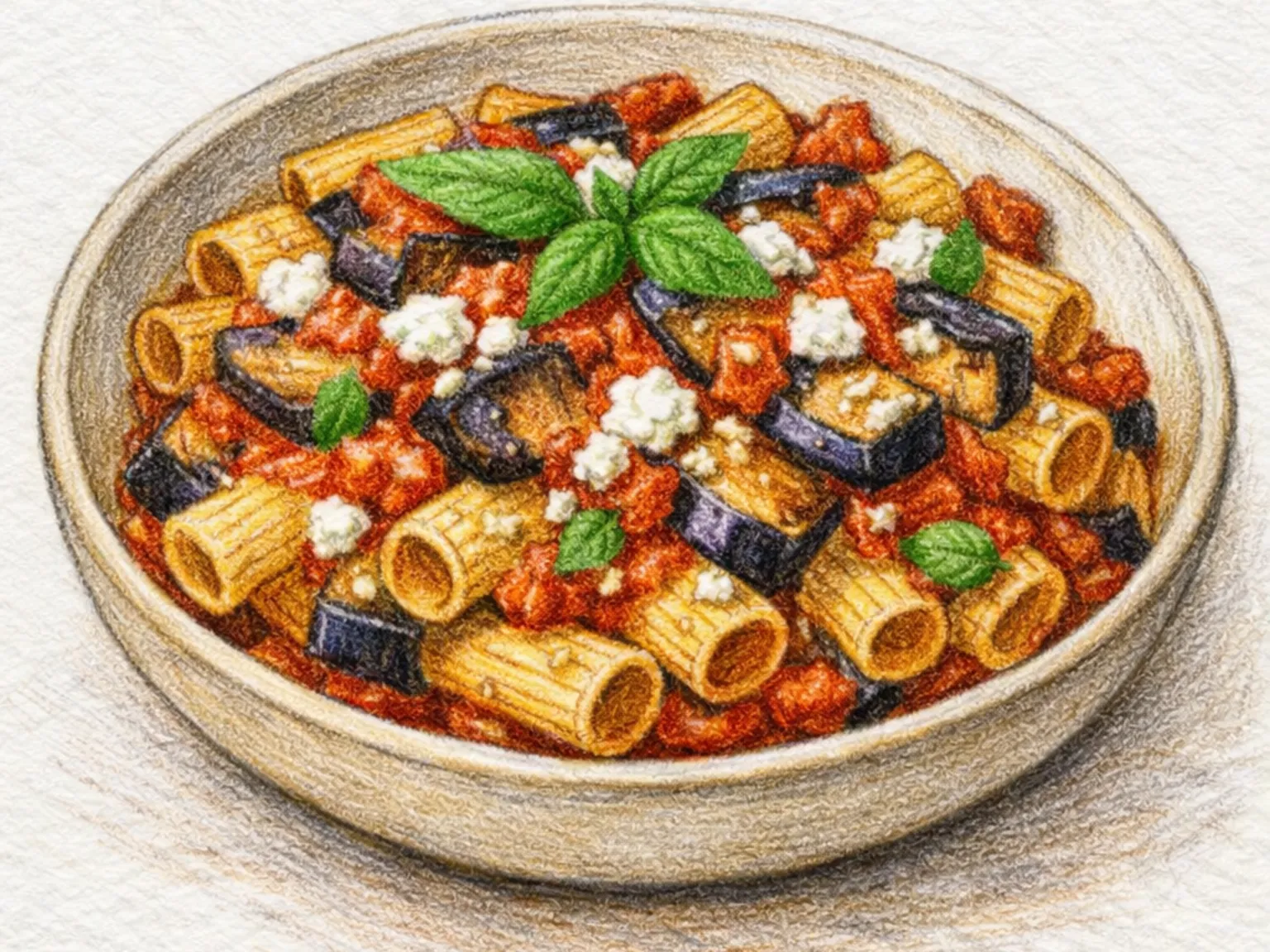
Pasta alla Norma (Sicilian Fried Eggplant Tomato Pasta)
Pasta alla Norma originates from Catania in Sicily and combines fried eggplant cubes with a simple tomato passata sauce. Salting the eggplant beforehand draws out moisture and bitterness, resulting in firmer pieces that absorb less oil during cooking. Garlic provides aromatic depth, while fresh basil added off-heat preserves its fragrance. The dish is named after Vincenzo Bellini's opera Norma, a tribute to its status as a Sicilian culinary masterpiece. It can be served as a noodle dish, with simple accompaniments chosen to match the sauce, broth, or topping.
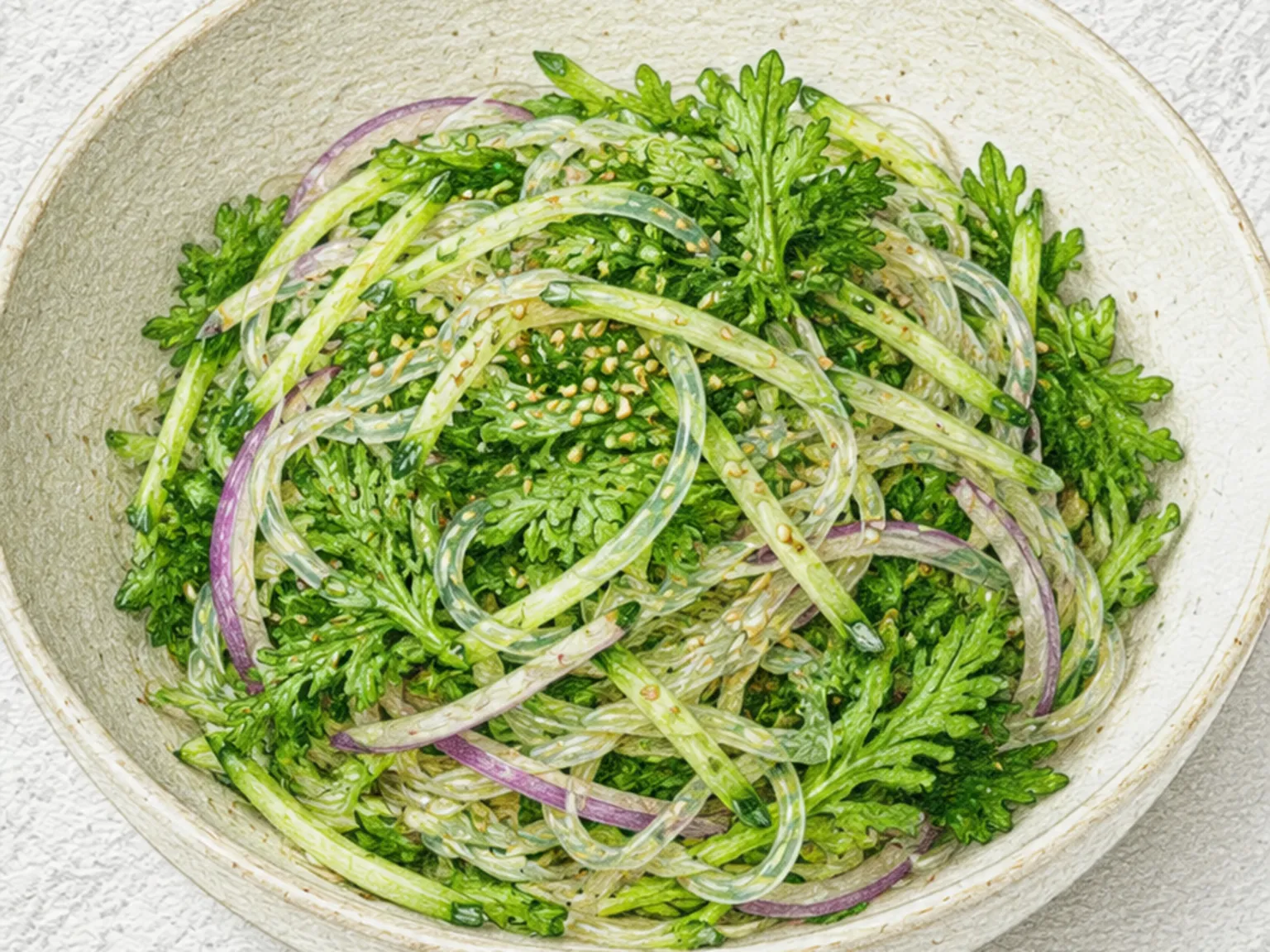
Crown Daisy & Mung Bean Noodle Salad
Ssukgat mungbean noodle salad soaks glass noodles in cold water for ten minutes, boils them for five until springy, then tosses them with fragrant crown daisy leaves, julienned cucumber, and thinly sliced red onion in a dressing of soy sauce, vinegar, plum syrup, and sesame oil. Mung bean starch noodles are more translucent and less starchy than wheat-based vermicelli, making them a cleaner canvas for the surrounding vegetables. Crown daisy's assertive, almost medicinal herbal aroma cuts through the neutral noodles and gives the salad a distinctive edge that milder greens cannot replicate. Plum syrup's gentle fruit sweetness layers over the vinegar's acidity to produce a light, clean finish on the palate rather than a sharp one-note sourness. Cucumber adds a cool crunch and red onion contributes a sharp bite between the slippery noodle strands, while toasted sesame seeds bring a roasted, nutty note at the end of each mouthful. Overcooking the noodles makes them sticky and prone to clumping, so pulling them out while still slightly firm is essential, and the salad is best served immediately after tossing so the crown daisy retains its fresh fragrance.
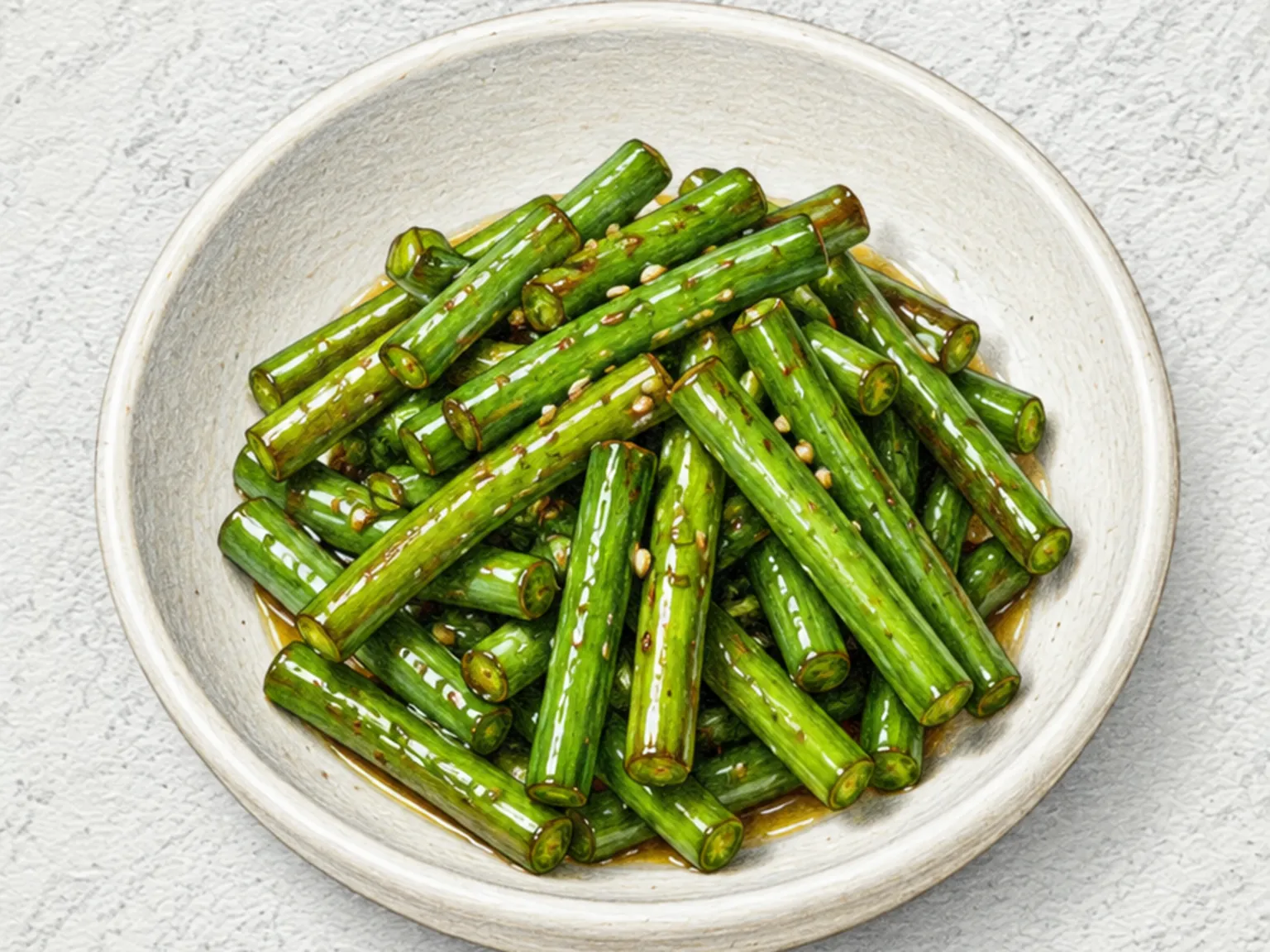
Korean Stir-Fried Garlic Scapes
Maneuljjong-bokkeum is stir-fried garlic scapes, the curling flower stalks cut from garlic plants before they bloom, seasoned with soy sauce and oligosaccharide syrup. Where garlic bulbs deliver a sharp, nose-clearing bite, scapes carry a gentler, almost sweet garlic flavor that works even for people who find raw garlic too aggressive. Cutting the scapes into 4 to 5 cm lengths and blanching them for thirty seconds loosens the fibrous outer skin while preserving the snap inside. Skipping the blanch and going directly to the pan produces an uneven result: the outside turns tough and leathery before the inside has cooked through. Blanched scapes go into a lightly oiled pan over high heat for one minute, then soy sauce, oligosaccharide, minced garlic, and a pinch of gochugaru are added and the whole thing stir-fries for another two minutes. The syrup and soy sauce build a sweet-salty glaze that clings to every piece, and sesame oil is stirred in only after the heat is off to protect its fragrance from burning off. Made once, this banchan keeps refrigerated for five days or more, making it one of the most practical side dishes to prepare on a weekend and draw from throughout the week. Spring through early summer is peak garlic scape season, when the stalks are at their most tender.
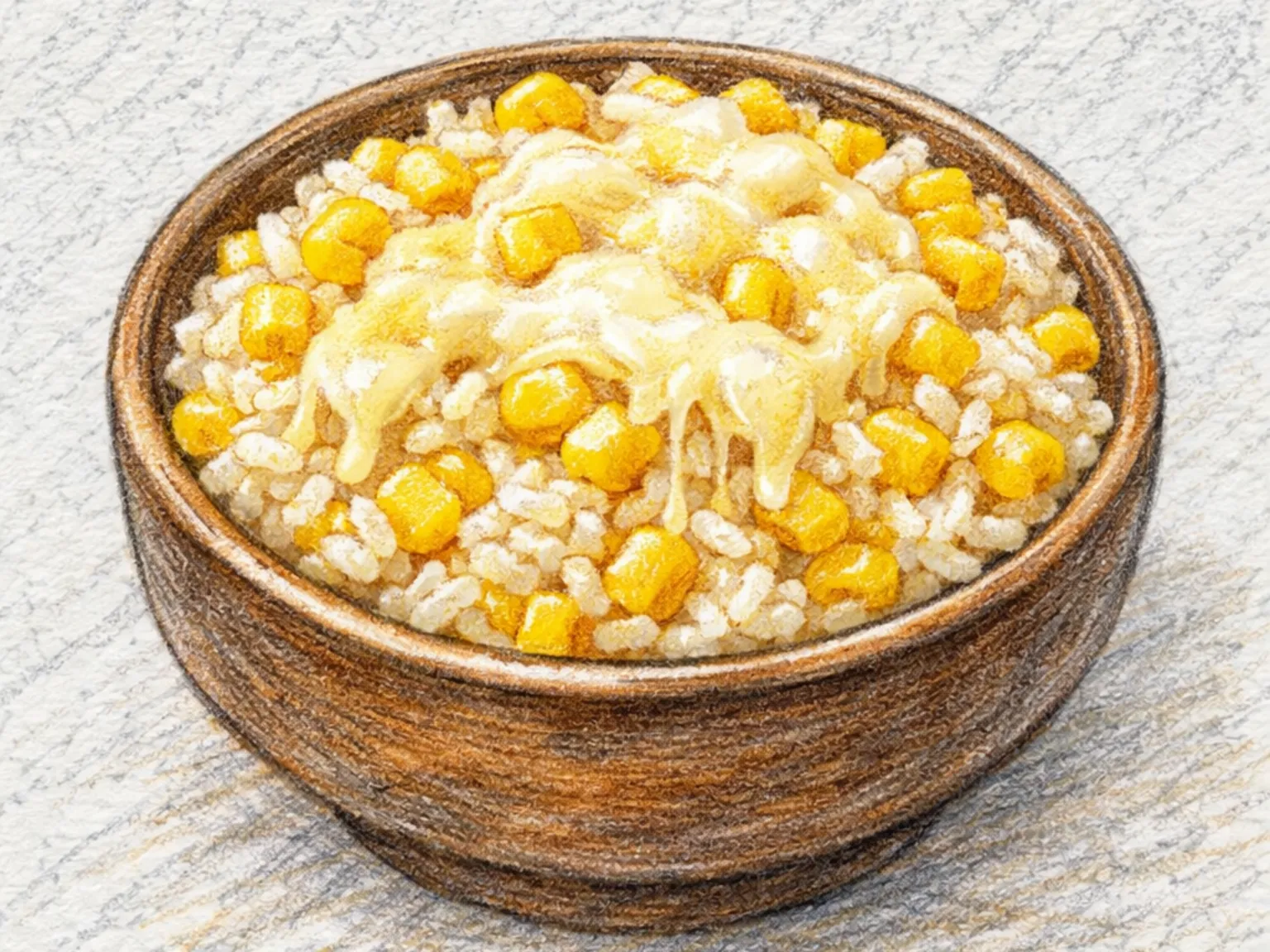
Korean Corn Cheese Pot Rice
Oksusu cheese sotbap is a Korean pot-cooked rice dish built on butter-sauteed onions and corn that infuse the grains with sweetness as the rice steams, then topped with mozzarella placed on after the heat is cut so it melts into long, stretchy strands rather than browning. Each spoonful delivers the pop of individual corn kernels alongside the soft, creamy pull of melted cheese, with butter coating every grain in a glossy richness. Replacing part of the cooking water with milk deepens the creamy texture and gives the finished rice a density and smoothness that plain water cannot achieve. With the lid closed for two to three minutes after the heat is off, the residual steam inside the pot is sufficient to melt the cheese completely without any additional heat. The combination of sweet corn, buttery rice, and stretchy mozzarella lands in a flavor register that needs no side dishes to feel complete, and it appeals across a wide age range without effort.
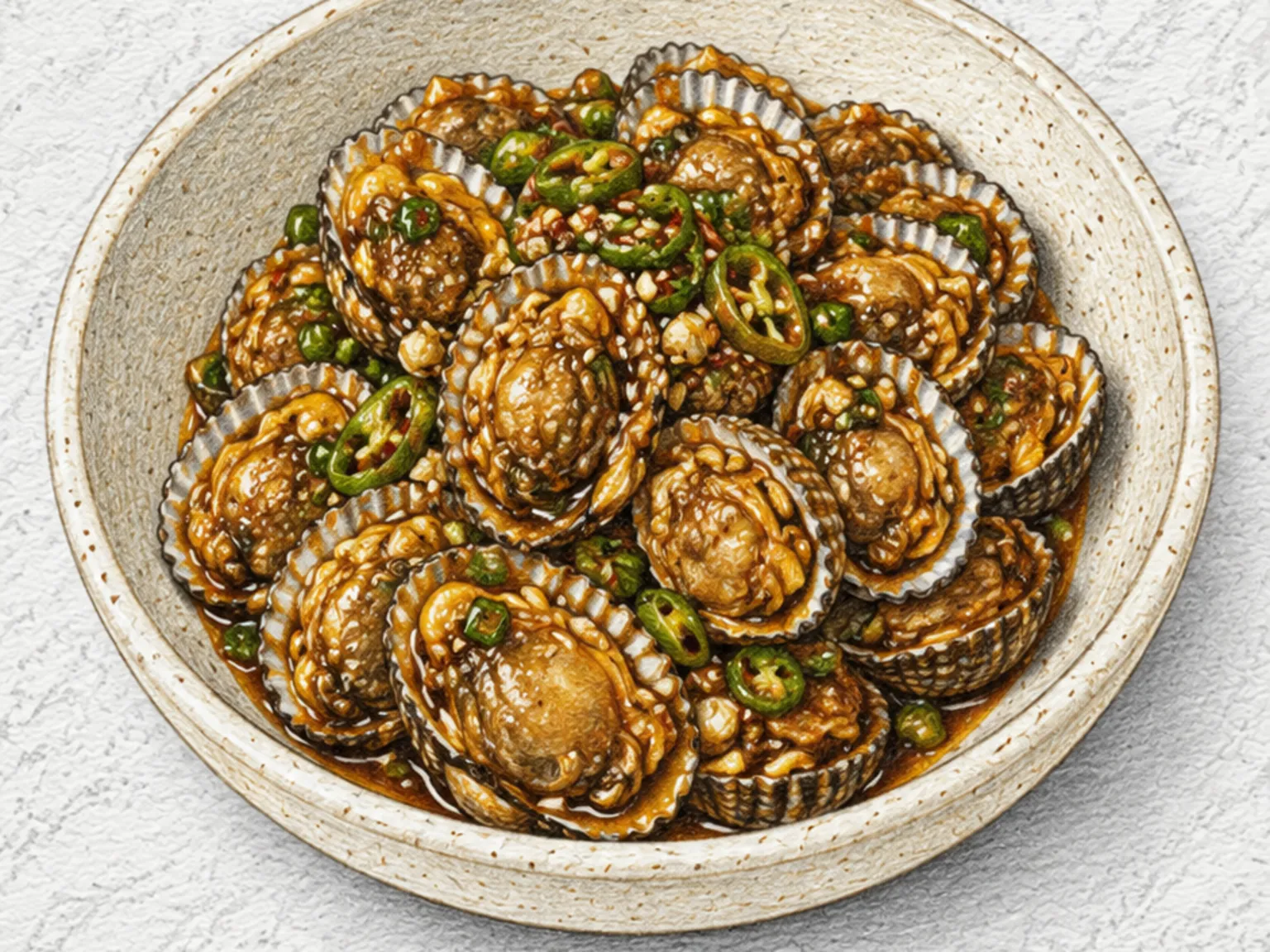
Korean Soy Braised Cockles
Kkomak jorim is a soy-glazed cockle side dish made by blanching purged cockles in boiling water just until their shells crack open, then simmering them briefly in a sauce of soy sauce, minced garlic, sugar, Cheongyang chili, and green onion. The cockles' naturally briny, chewy flesh pairs with the sweet and spicy soy glaze to produce an intensely savory result. Timing is the most critical factor: cockle protein tightens and toughens with extended heat, so once the shells are in the sauce the braise should be finished within five to six minutes. A drizzle of sesame oil pulled off the heat at the end rounds out the flavor with a nutty fragrance, and a scatter of sesame seeds completes the presentation. Because cockles themselves carry salt from the sea, the amount of soy sauce in the braise needs to be adjusted accordingly, or the finished dish can end up overseasoned. Thorough purging in salted water before cooking is equally important: insufficient soaking can leave sand or grit in the sauce. Ladled over steamed rice with the sauce spooned generously on top, the soy and cockle juices soak into the grain and transform a simple side into a fully satisfying meal.
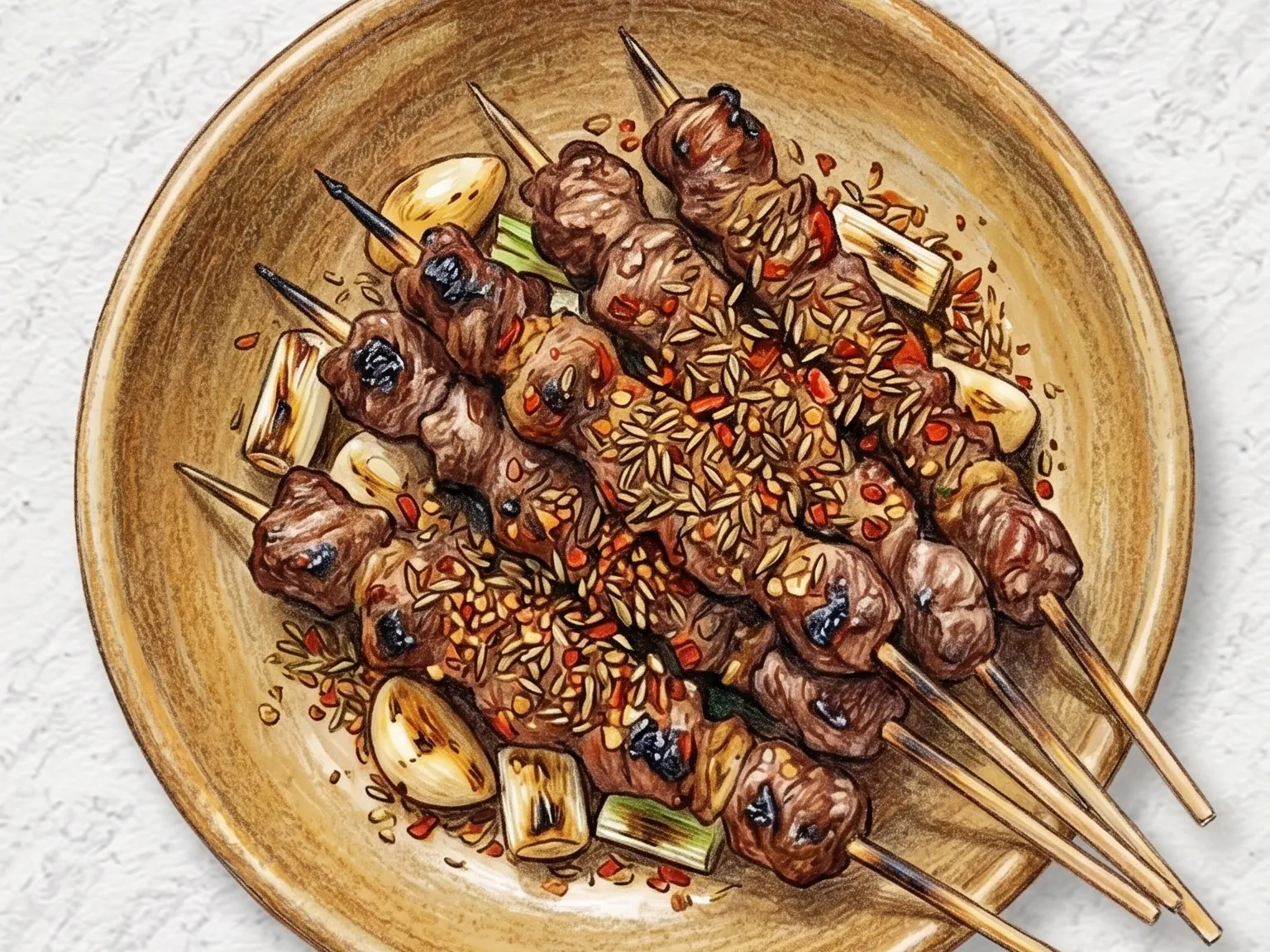
Lamb Skewers (Yangkkochi)
Lamb Skewers, or Yangkkochi, are grilled meat skewers featuring lamb shoulder coated in aromatic spices. The preparation involves cutting the lamb shoulder into two-centimeter cubes and marinating it with cooking wine, minced garlic, salt, and pepper for twenty minutes to tame any gamey smell. Threading the meat pieces onto skewers with small gaps ensures that the heat penetrates the center without burning the exterior. The skewers are grilled on a preheated pan or grill for six to eight minutes while turning them to brown each side. Cumin seeds and red pepper flakes are sprinkled over the meat during the final thirty seconds of grilling. This late addition activates the natural oils of the cumin without burning the spices, avoiding any bitter flavor. Wooden skewers should be soaked in water beforehand to prevent them from burning.
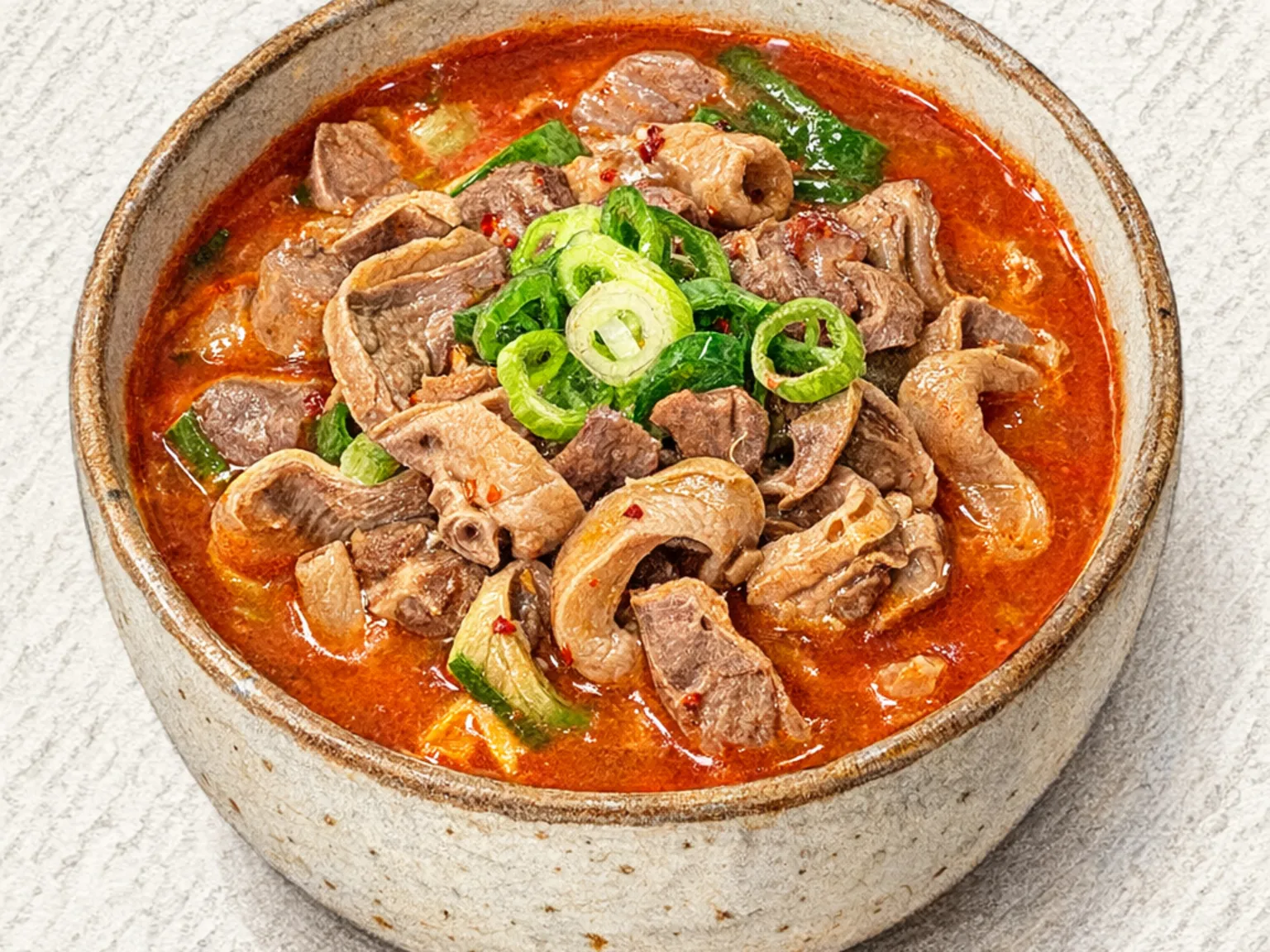
Naejang-tang (Spicy Mixed Beef Tripe Soup)
Naejang-tang is a Korean offal soup that simmers a combination of beef innards including large intestine, tripe, abomasum, and omasum together with gochugaru, gochujang or doenjang, generous amounts of garlic, and green onion into a thick, aggressively seasoned broth. Each organ contributes a distinct texture to the bowl: the small intestine is chewy and springy, the large intestine is fatty and yielding, and the stomach linings are firm with a near-crunchy resistance that gradually releases umami as it is chewed. Long cooking renders the intramuscular fat and collagen from the innards directly into the broth, producing a body and richness that cannot be replicated by shorter-cooked, leaner soups. Some versions incorporate seonji, coagulated ox blood, cooked alongside the other organs; it darkens the broth significantly and introduces a mineral, iron-forward depth that distinguishes the blood-enriched variant as a richer, more fortifying bowl. Abundant green onion and garlic form the aromatic backbone, and gochugaru raises the heat to a level that is meant to be felt as much as tasted. The soup is traditionally served in a stone pot or a heavy ceramic vessel that retains heat and keeps the broth at a bubbling simmer through the meal. In Korea, naejang-tang is closely tied to early-morning hangover recovery: restaurants specializing in the dish, often located near traditional markets or late-night drinking districts, begin service well before dawn to catch customers emerging from long nights. The combination of fat, protein, intense heat, and restorative minerals is widely understood to ease alcohol-related discomfort and replenish the body.
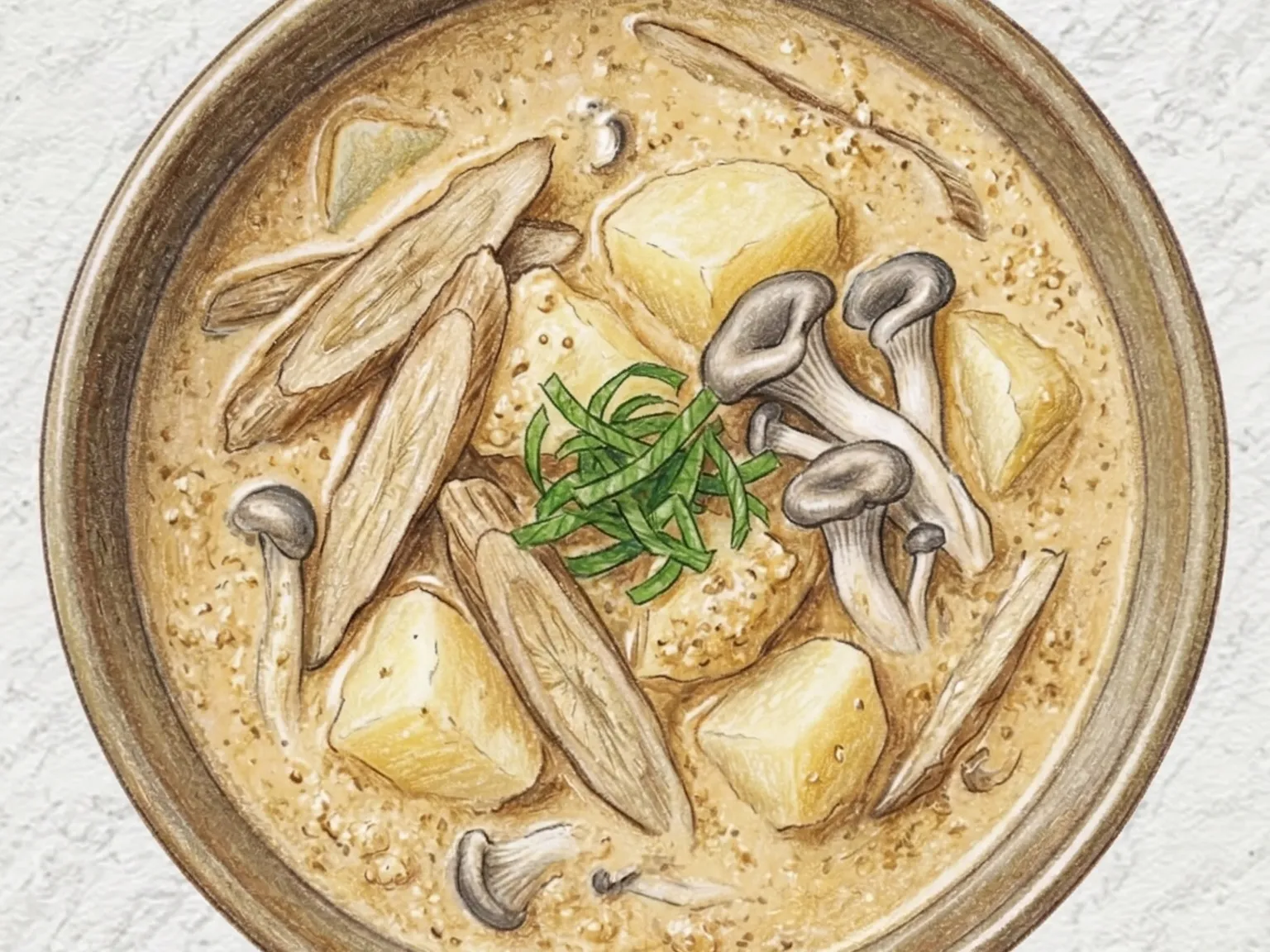
Korean Burdock Perilla Seed Stew
Ueong-deulkkae-jjigae is a Korean stew built on burdock root, potatoes, and oyster mushrooms simmered in an anchovy-kelp broth and thickened with perilla seed powder. The burdock root holds a firm, earthy crunch through the cooking while the potatoes soften and begin to break at the edges, and the oyster mushrooms add a pulling, fibrous chew that makes the stew feel substantial without any meat. Anchovy-kelp broth forms a clean, savory base, and a generous measure of perilla seed powder stirred in at the end creates a creamy, nutty consistency that coats every piece of vegetable and makes each spoonful feel round and warming. Soaking the burdock in cold water before cooking draws out bitterness and prevents the cut surfaces from darkening, which keeps the broth clear. Adding the potatoes after the burdock has partly cooked prevents them from collapsing entirely. Perilla seed powder should go in just before the heat is turned off so the toasted, nutty fragrance stays sharp rather than cooking away.
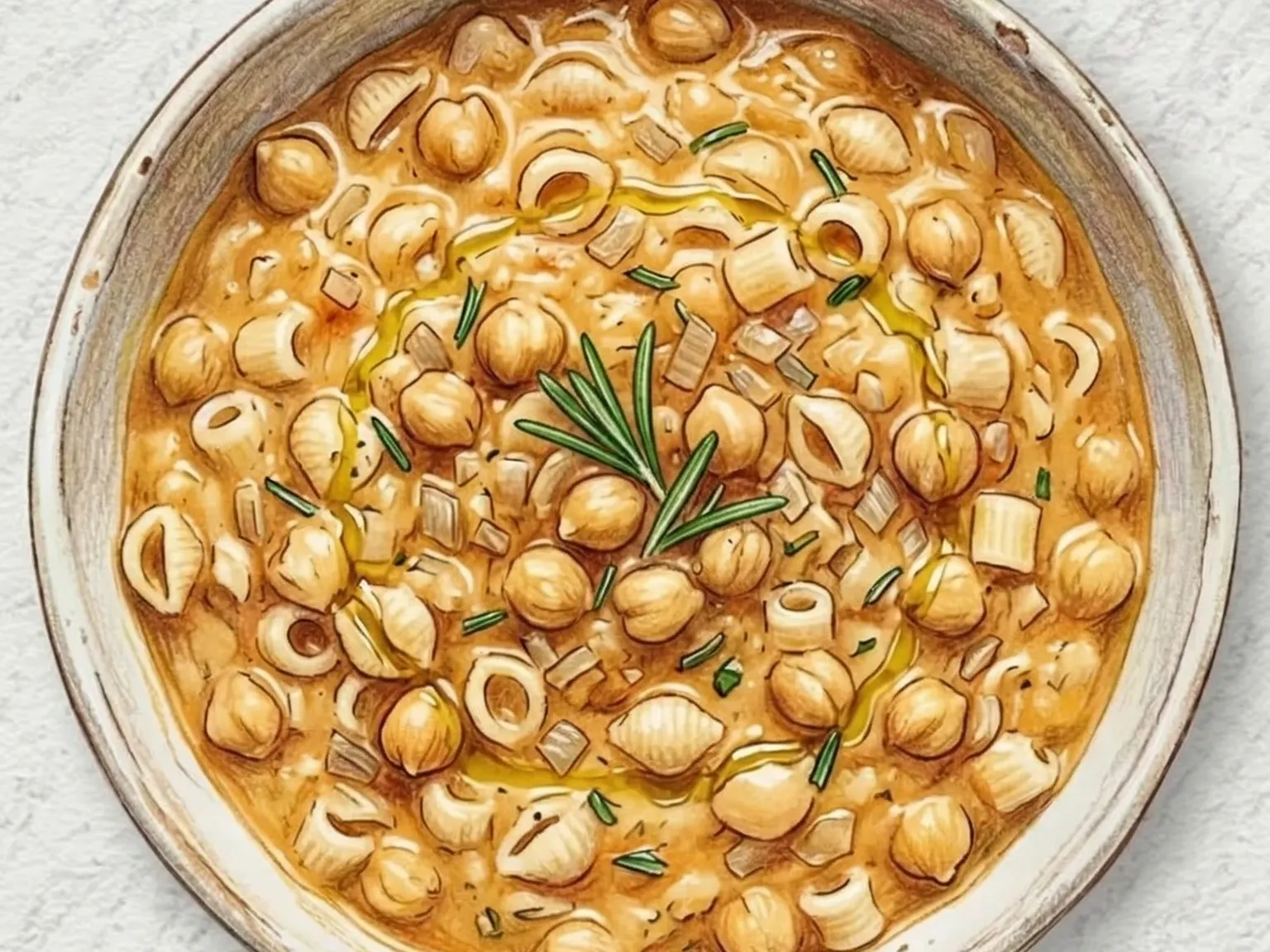
Pasta e Ceci (Italian Chickpea Stew Pasta)
Pasta e ceci is an Italian pantry staple that cooks small pasta directly in a chickpea-enriched broth. Half the chickpeas are mashed before simmering, releasing starch that naturally thickens the liquid into a stew-like consistency. A base of olive oil, garlic, rosemary, and tomato paste provides aromatic depth without overwhelming the mild chickpea flavor. The dish cooks in a single pot and is substantial enough to serve as a complete vegetarian meal. Controlling noodle texture and sauce coating helps the ingredients cook evenly while keeping the final seasoning balanced.
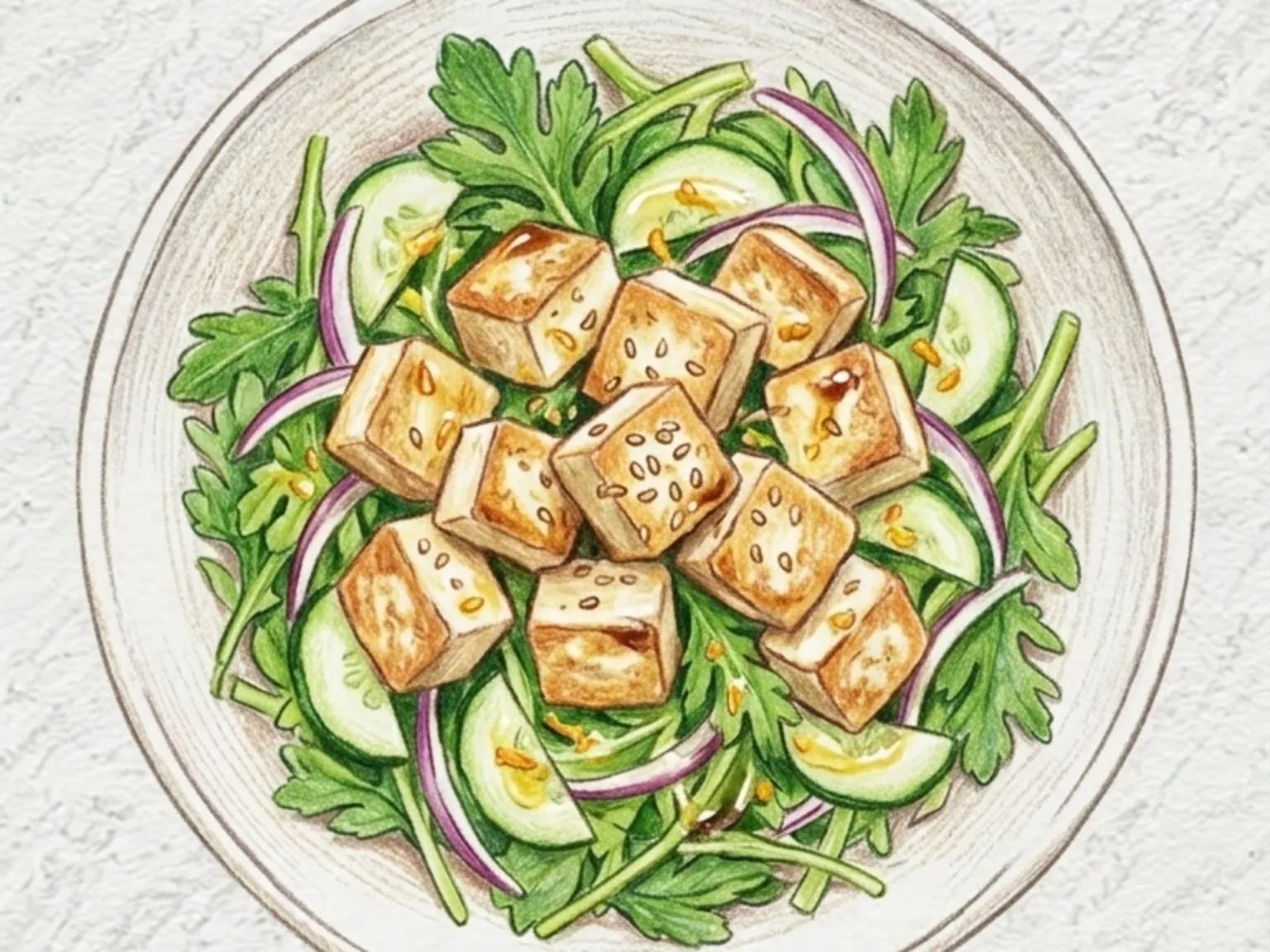
Crown Daisy & Tofu Yuzu Salad
Crown daisy and tofu yuzu salad presses firm tofu dry, sears it in a pan for six to eight minutes until the surface develops a golden crust, and pairs it with crown daisy, half-moon cucumber slices, and thinly sliced red onion in a yuzu marmalade dressing. The yuzu's bright citrus fragrance and subtle bitterness meet crown daisy's bold herbal aroma, and the two botanical notes amplify each other rather than compete. Soy sauce and sesame oil anchor the dressing with fermented depth and nuttiness, preventing the floral top notes from floating untethered. The tofu's soft, creamy interior contrasts with the fibrous crown daisy stems, and cucumber's cool moisture keeps the overall impression light. Avoiding frequent flipping during searing lets a proper crust form on the tofu's surface.
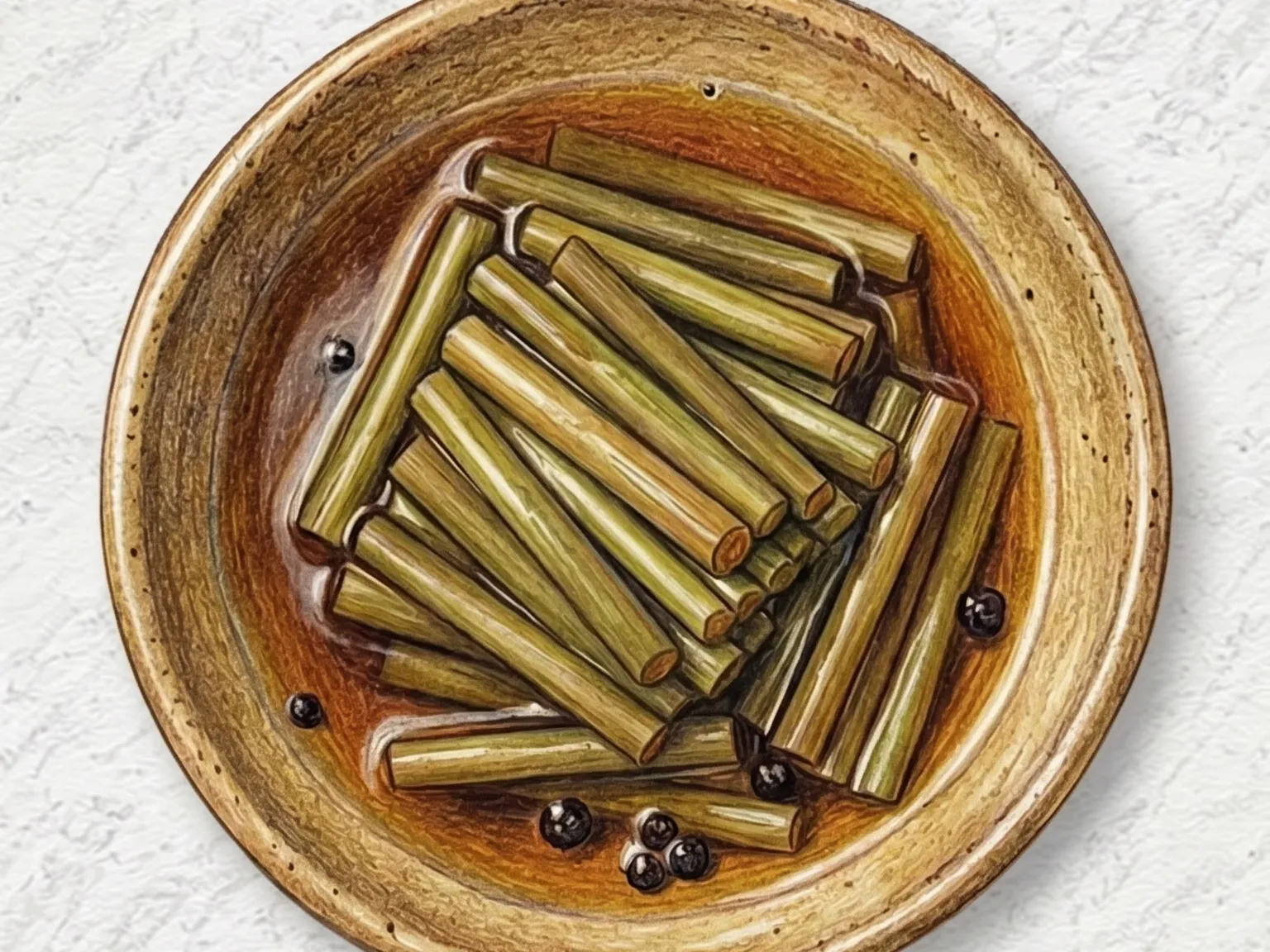
Korean Pickled Garlic Scapes
Maneuljjong-jangajji is a preserved side dish of garlic scapes pickled in a boiled soy sauce, vinegar, and sugar brine. The preservation principle is identical to that of whole garlic jangajji, but the scape, meaning the flowering stalk of the garlic plant, is used instead of the bulb, and there is one crucial technique difference. The scapes are cut into 4 cm lengths, packed tightly into glass jars, and covered with the brine immediately while it is still boiling hot. The heat partially cooks the outer layer of each scape, which creates a clean, crisp snap when the scape is bitten, unlike the soft texture that results from the cold-pour method used for whole garlic. Whole black peppercorns included in the jar release their warmth and spicy aroma slowly into the liquid during the aging period, adding a dimension beyond the straightforward salt-and-acid base. The pickles are ready after a single day, but day three is when seasoning has penetrated to the center while the scapes still push back satisfyingly under the teeth. The brine can be drained, reboiled, and poured back over the scapes once during storage, which significantly extends shelf life by suppressing bacterial growth. On the Korean table, these sharp, vinegary pickles serve as a natural counterbalance to fatty meat dishes, cutting through richness and clearing the palate between bites.

Korean Omelette Rice (Ketchup Fried Rice in Egg Wrap)
Omurice wraps ketchup-fried rice in a thin, softly set egg sheet, producing a one-plate meal that balances sweet-tangy tomato notes with rich buttery egg. Diced onion, carrot, and ham are sauteed in butter until fragrant, then tossed with cooked rice and ketchup to build a lightly caramelized fried rice base. A separate egg mixture enriched with a splash of milk is spread thin in a hot pan and folded around the rice while still slightly runny, so cutting into it reveals a creamy, flowing center. Green peas mixed into the rice add pops of sweetness and color. The contrast between the glossy egg exterior and the savory-sweet filling has made omurice one of the most comforting one-plate meals in both Japanese-origin home cooking and Korean everyday cuisine. Tilting the pan and nudging the egg sheet against the curved edge is the standard technique for shaping the signature oval.
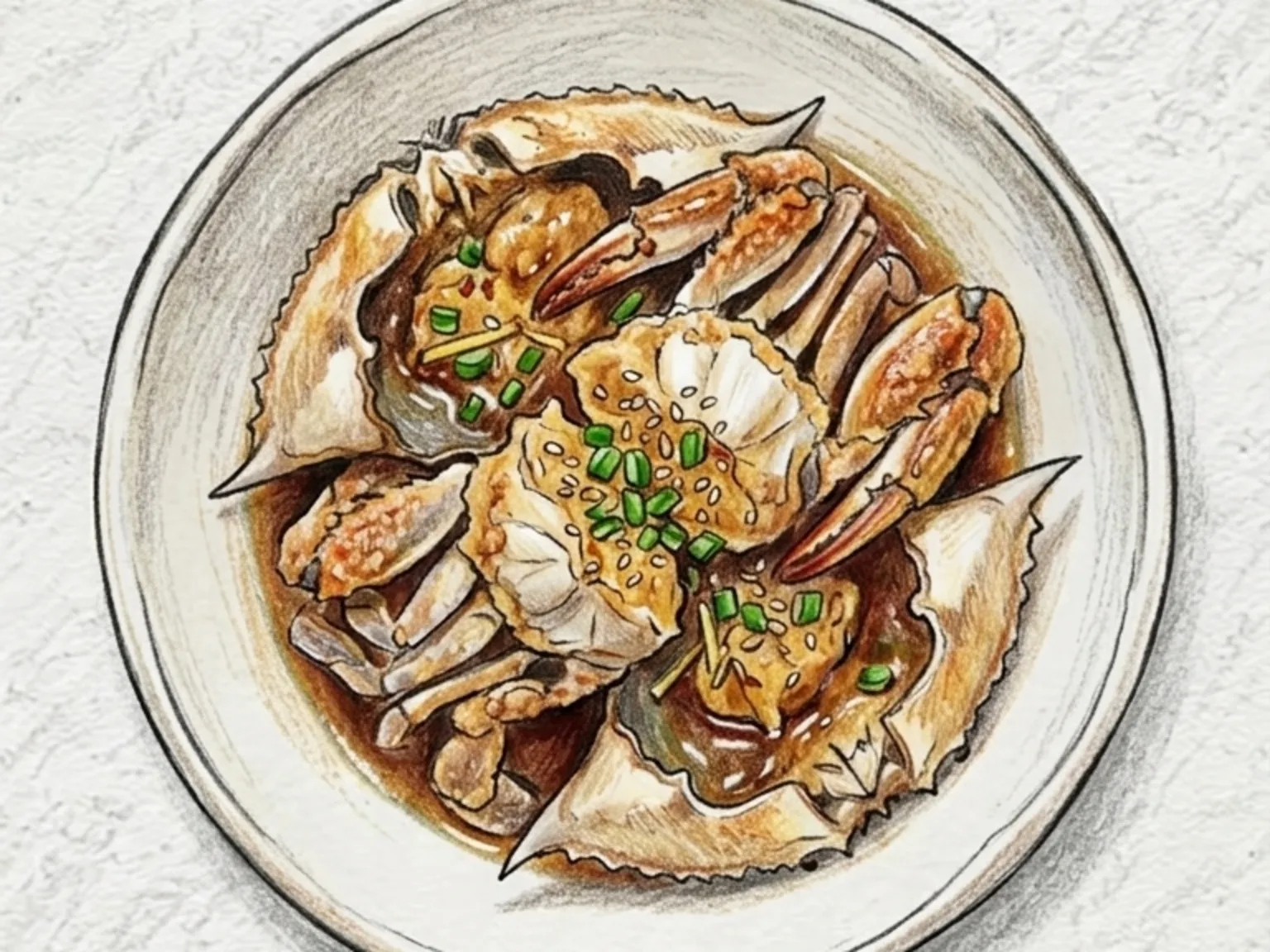
Korean Blue Crab Soy Stir-Fry
Kkotge ganjang bokkeum is a Korean blue crab stir-fry where halved crabs are lightly dusted with flour, pan-seared until the shells turn deep red, then braised briefly under a lid in a sauce of soy sauce, sugar, garlic, ginger, and gochugaru. The flour coating seals in moisture and helps the sweet-salty sauce cling to the shell surface, leaving a sticky, aromatic glaze that is meant to be licked off the fingers. Ginger neutralizes the briny smell that crabs can carry, while scallion and sesame oil are stirred in at the end to build the final aromatic layer. Using live crabs and cooking them immediately after cleaning ensures the meat stays firm and sweet; frozen crabs lose moisture during thawing and produce a noticeably softer result. Scoring the claws before cooking allows the sauce to penetrate the thicker sections of shell.
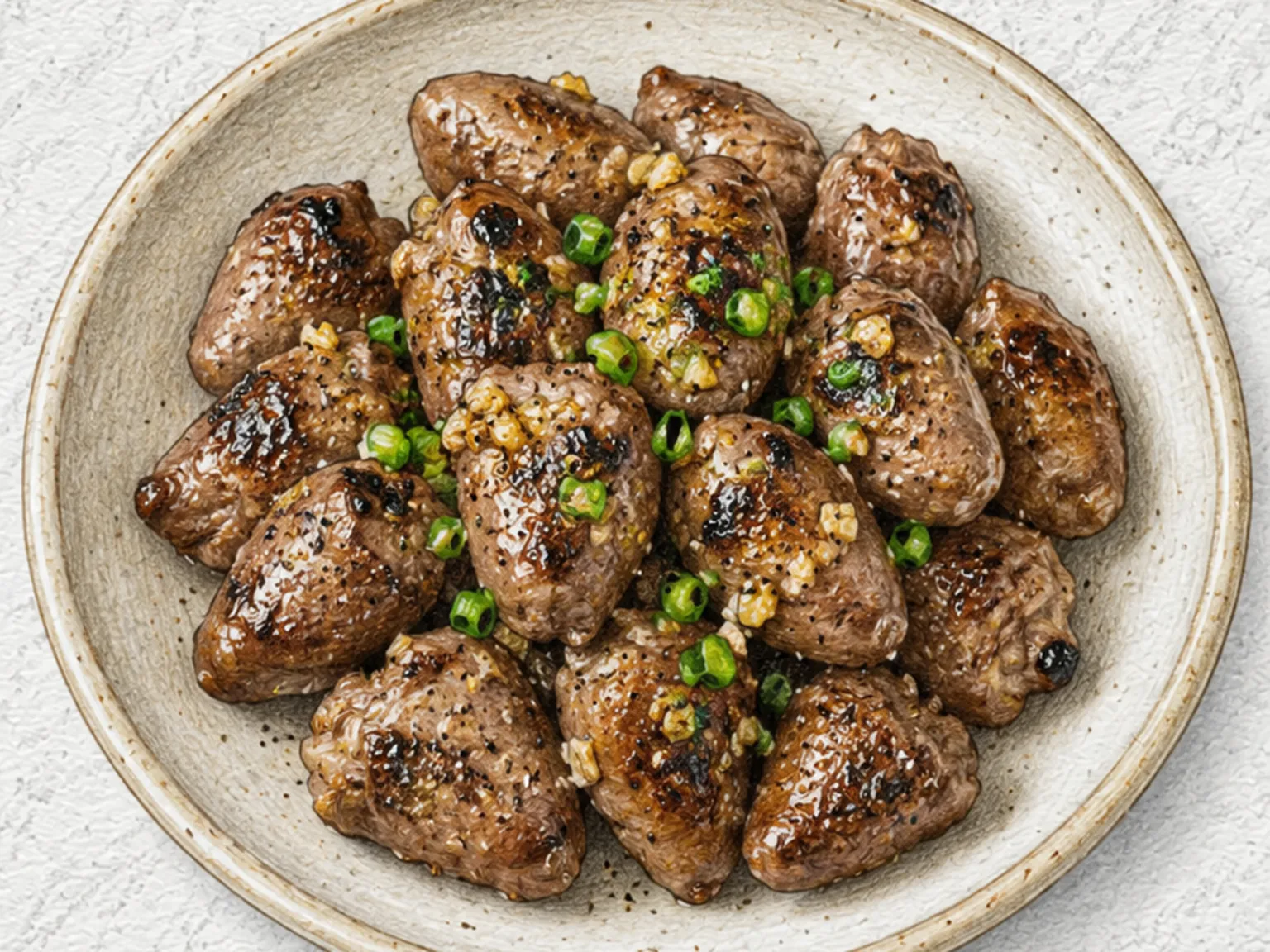
Korean Grilled Chicken Hearts
This recipe describes how to prepare chicken hearts by cleaning, seasoning, and searing them quickly over high heat. The process begins by splitting the hearts lengthwise to remove vessels and blood clots, which is necessary to ensure a pleasant texture. The hearts are soaked in cooking wine for ten minutes to neutralize any gamey smell, then patted dry. After a brief marinade with salt, black pepper, minced garlic, and neutral oil, they are added in a single layer to a very hot pan. Searing them without moving for three minutes colors the underside, after which they are flipped to cook for another two to three minutes. Keeping the total cooking time around six minutes prevents the chicken hearts from turning tough. The dish is finished with chopped scallions and is typically served warm as a side dish or drinking snack.
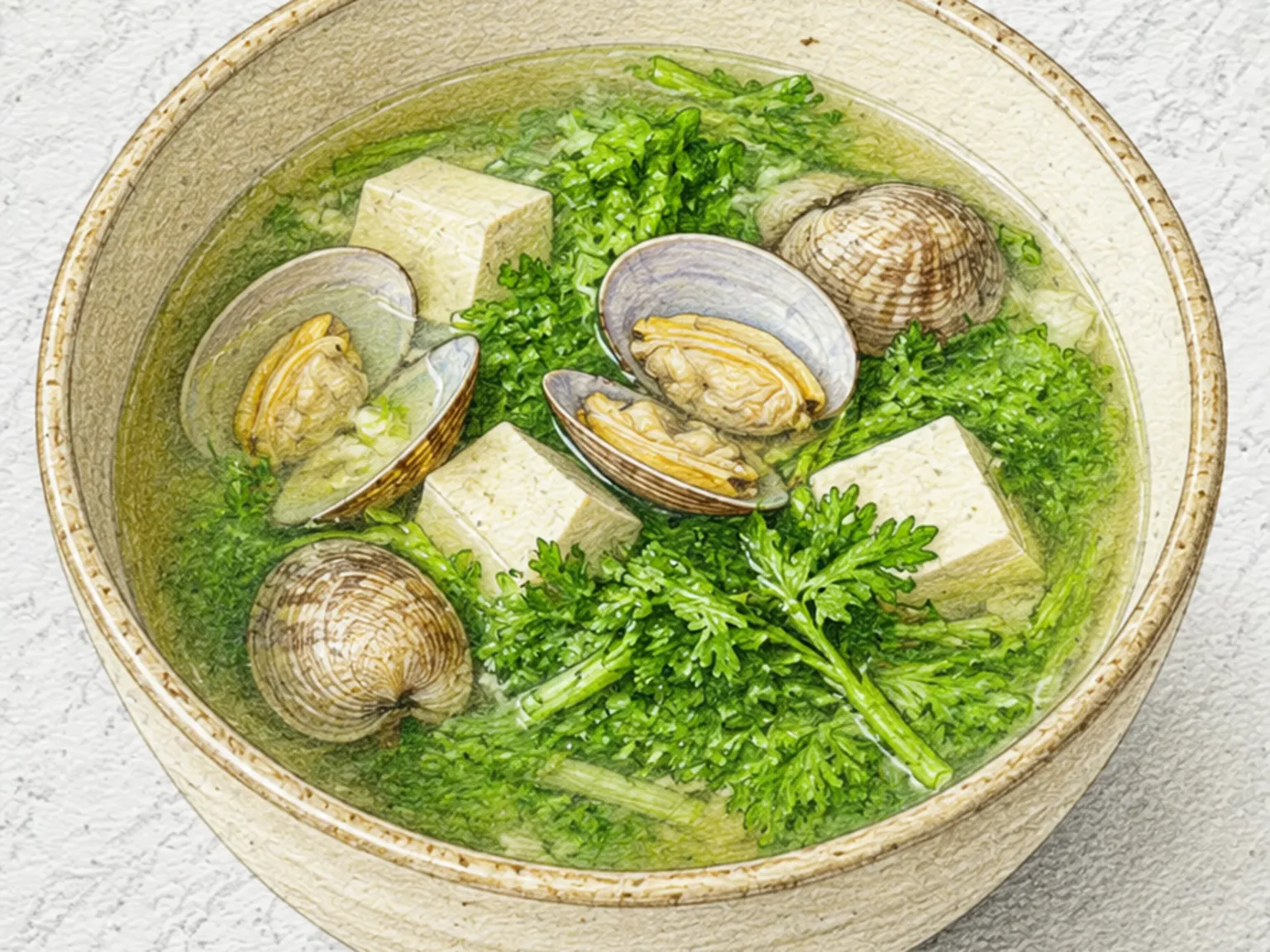
Korean Shepherd's Purse Clam Soup
Naengi-bajirak-guk is a Korean spring soup that brings together shepherd's purse and clams in a clear broth. The clams go in first, opening their shells and releasing a briny, savory liquor that forms the backbone of the soup. Cubed tofu simmers alongside, absorbing the surrounding flavor while contributing a soft texture. Shepherd's purse is added only in the final minutes to preserve its distinctive earthy fragrance; overcooking flattens the aroma that defines the herb's character. Soup soy sauce and garlic provide restrained seasoning, letting the natural salinity of the clams and the grassy scent of the naengi carry through. Before cooking, the shepherd's purse requires thorough rinsing since its roots hold grit, and the clams need to be purged in salted water so the broth stays clear and clean. On Korean spring tables, this soup is one of the first signs that the cold season has passed and the mountain greens have returned.
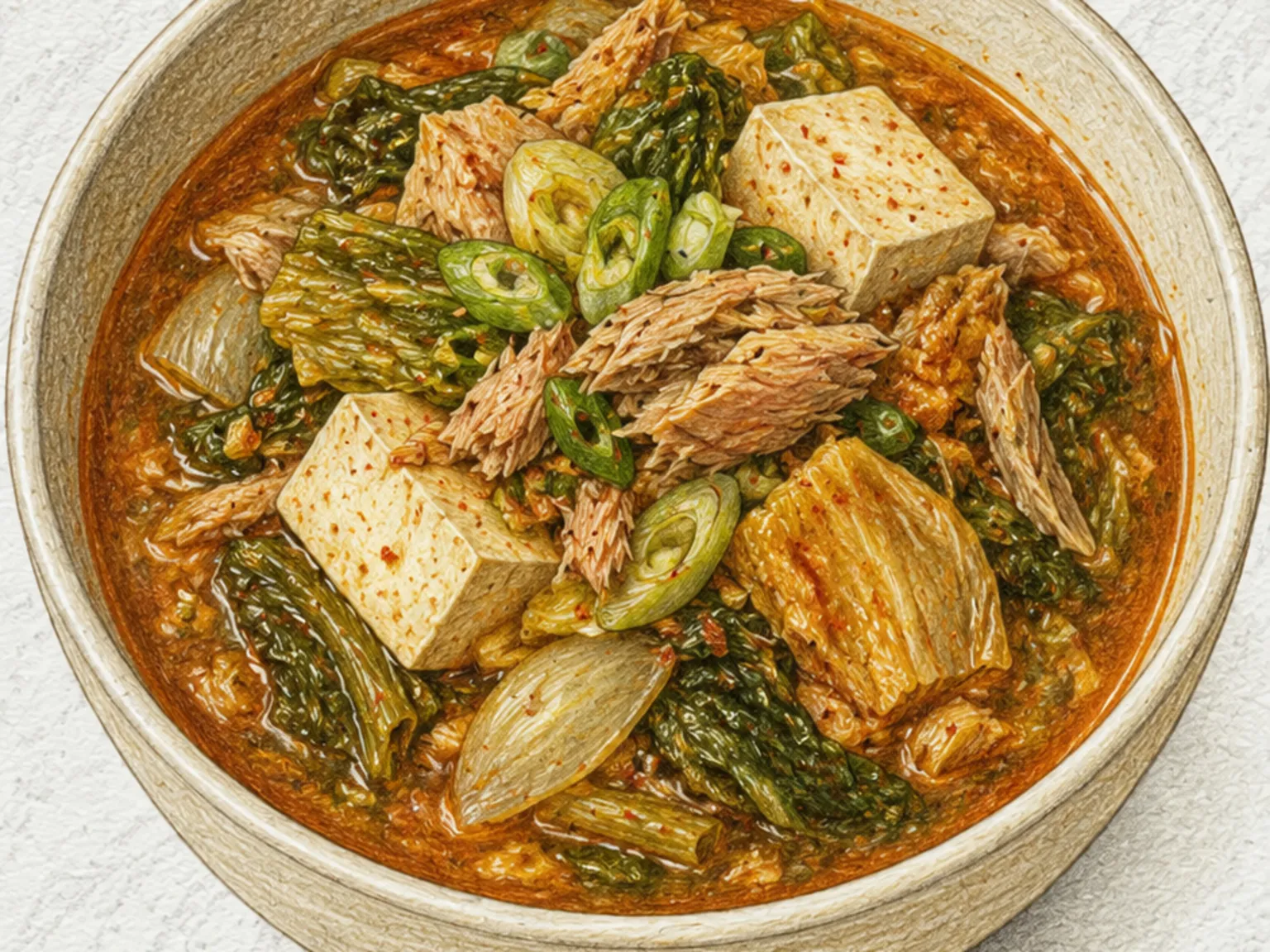
Korean Napa Leaf & Tuna Stew
This home-style Korean stew combines blanched napa cabbage outer leaves and canned tuna in a savory doenjang broth. Before cooking, the cabbage leaves are massaged with doenjang and garlic to eliminate grassy flavors. An anchovy stock forms the soup base, which is simmered with the seasoned leaves for ten minutes to soften their fibrous texture. Onion slices and gochugaru are added next to contribute sweetness and a light spicy note. Only half of the canned tuna oil is used to keep the broth savory yet light. Canned tuna chunks and firm tofu slices are introduced near the end and cooked gently over low heat for seven minutes to prevent the tofu from breaking. The stew is completed with fresh green onions and simmered for one more minute. It is a comforting dish with a deep flavor, served hot alongside steamed rice.
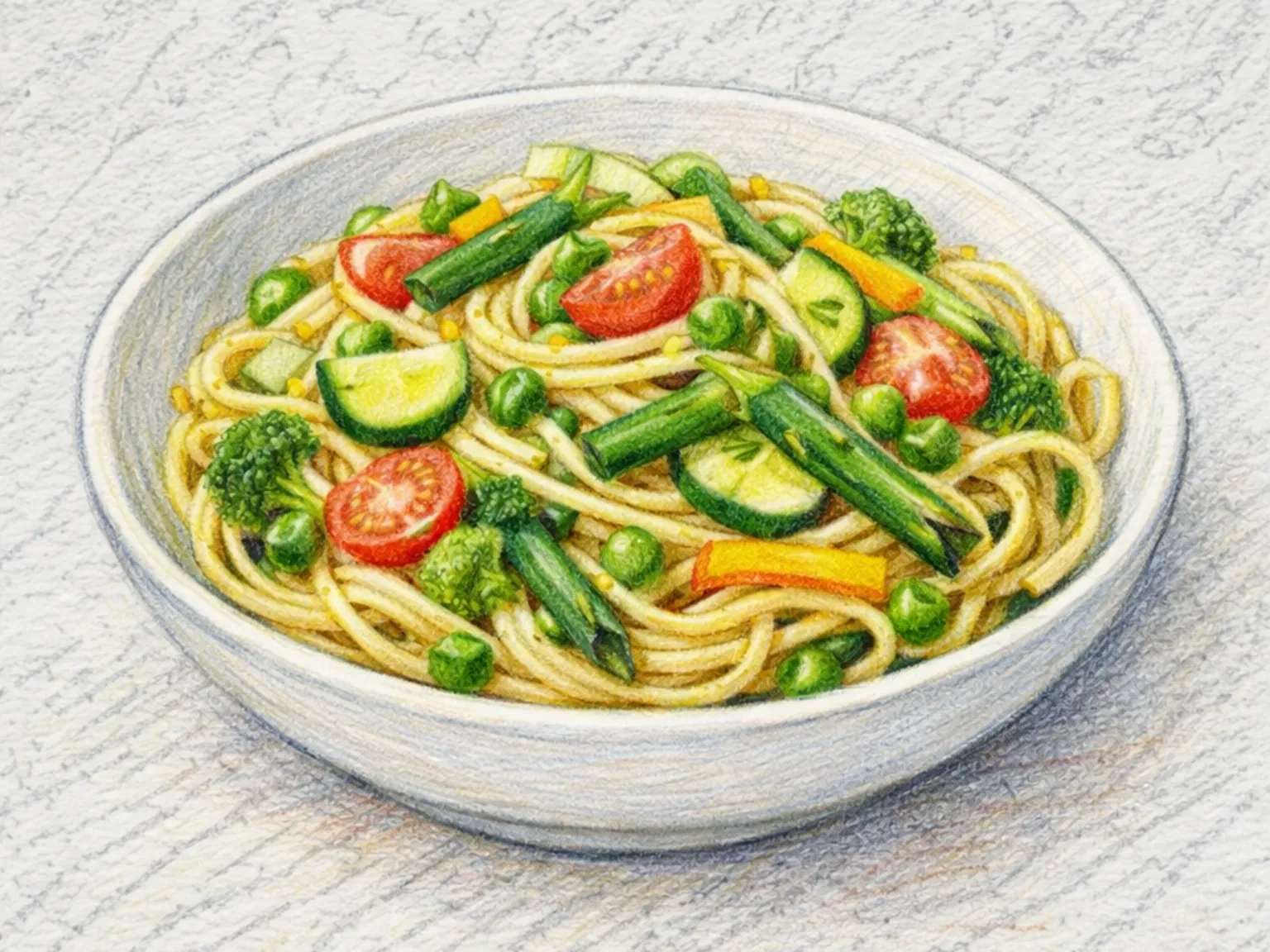
Pasta Primavera
Pasta primavera is a vegetable-forward Italian pasta that stir-fries broccoli, zucchini, bell pepper, and green peas in olive oil with garlic before tossing with spaghetti. Cutting each vegetable to a similar size and adding them in stages preserves distinct textures, while a splash of pasta water emulsifies the oil into a light, glossy coating that clings to every strand without the need for cream or a heavy sauce. Parmesan is folded in off the heat to prevent clumping, melting smoothly into the dish. The result is a bright, clean pasta that lets the natural sweetness and fragrance of the vegetables take center stage. Swapping in whatever vegetables are at peak freshness is part of how this dish works, making it as adaptable as it is straightforward to prepare.
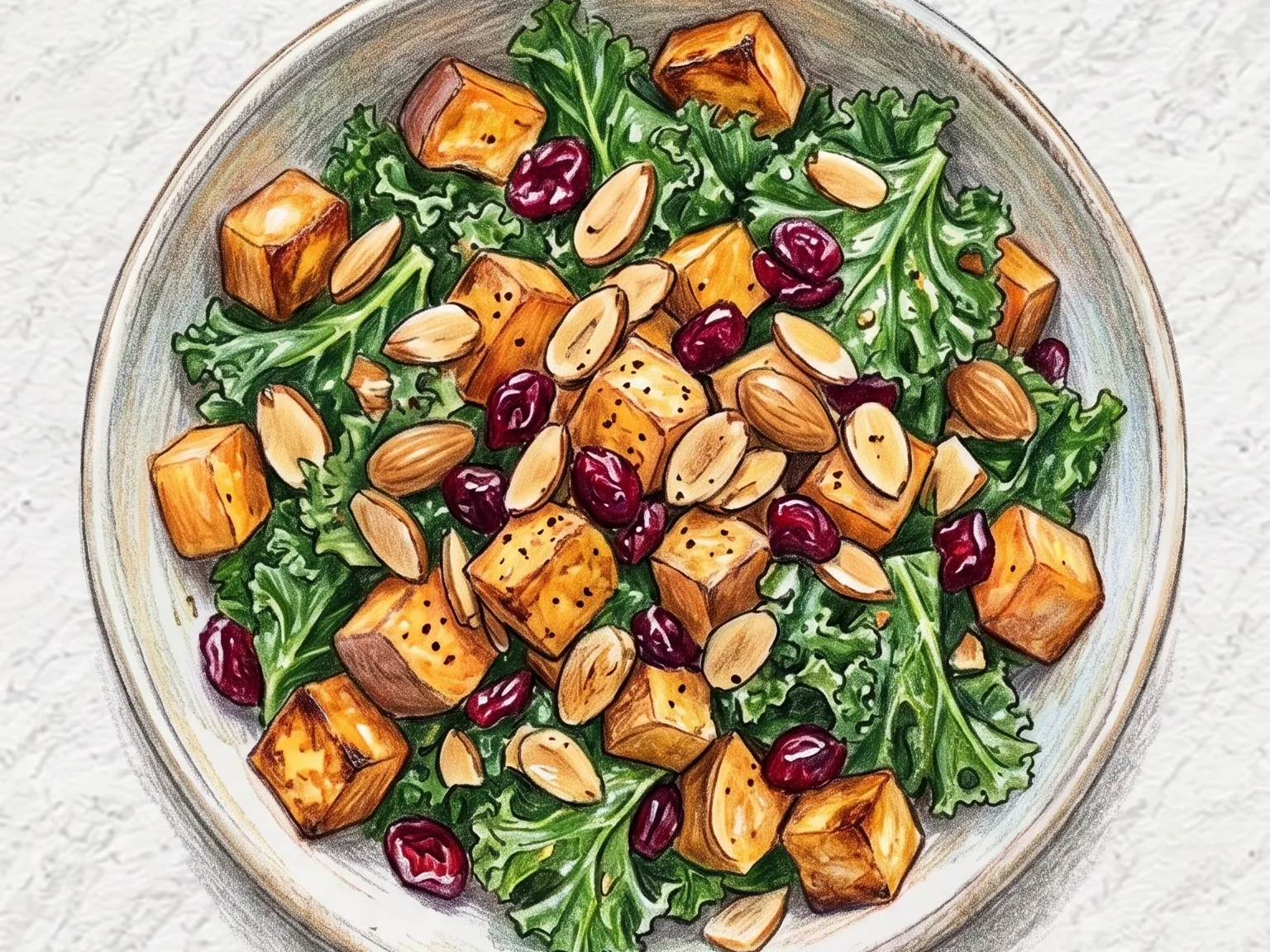
Sweet Potato Kale Salad
Sweet potato kale salad roasts cubed sweet potato at 210 degrees Celsius for 20 to 25 minutes until the edges caramelize, then combines it with kale that has been torn into bite-size pieces and massaged with a Dijon mustard, lemon juice, honey, and olive oil dressing. The roasted sweet potato's caramelized starch sweetness plays against the mustard's sharp bite, while toasted almonds deliver a nutty crunch and dried cranberries punctuate with tart sweetness. Massaging kale with the dressing for about one minute breaks down the tough cell walls, turning the leaves from fibrous and chewy to tender and absorbent. Cooling the sweet potato fully before tossing prevents residual heat from wilting the kale.
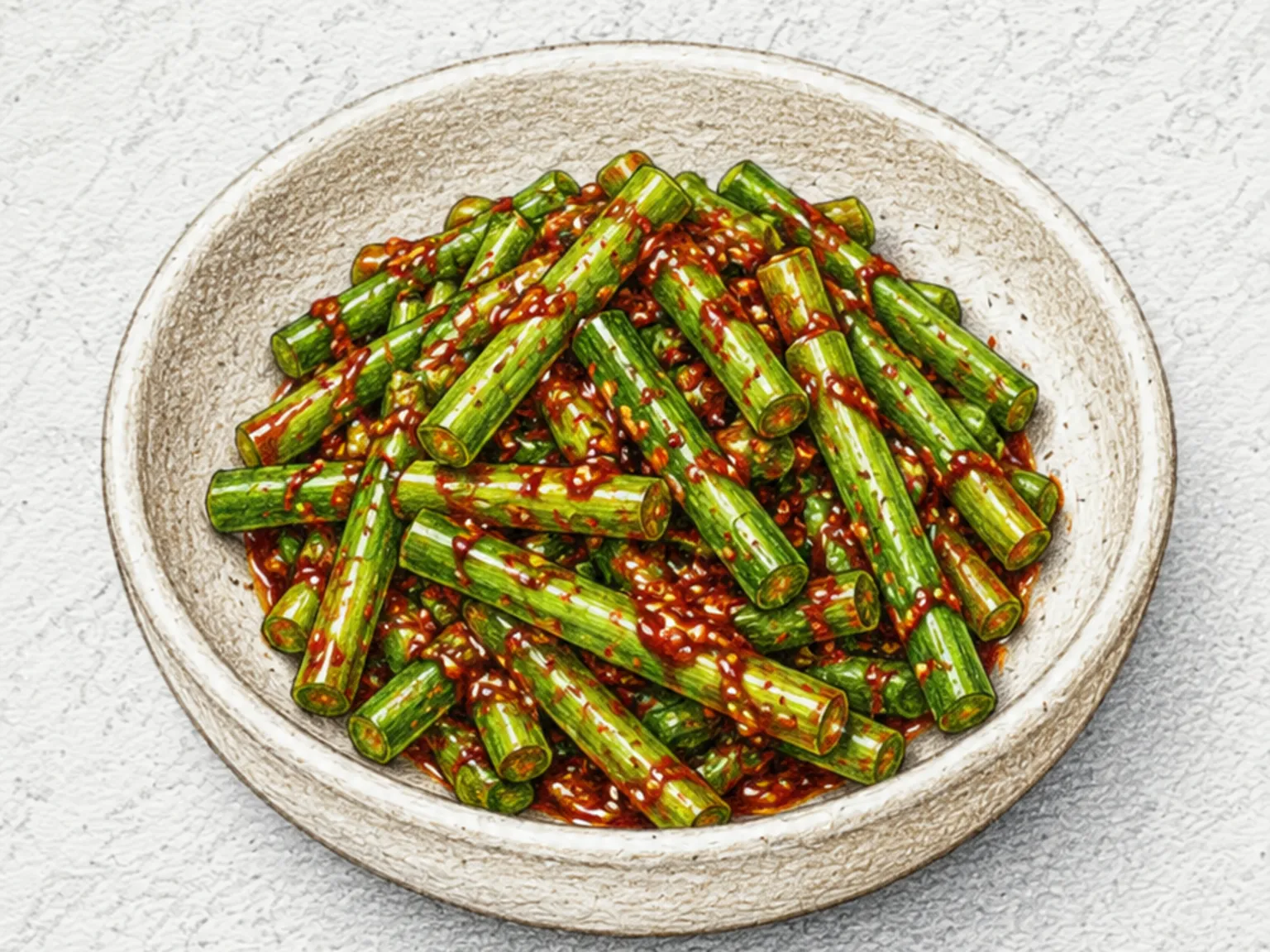
Korean Garlic Scape Salad
Maneuljong-muchim dresses briefly blanched garlic scapes in a cold gochujang and vinegar dressing, setting it apart from maneuljjong-bokkeum, which uses a soy-based sauce and relies on direct heat in a pan. The names maneuljong and maneuljjong describe the same part of the garlic plant, the slender flowering stalk that emerges in spring, but the two terms divide along regional dialect lines: speakers in Seoul and Gyeonggi province tend to say maneuljong while those in other parts of the country often use maneuljjong. Blanching must be kept well under thirty seconds to lock in the bright green color and crisp snap; beyond one minute the scapes soften and the color dulls noticeably. The gochujang dressing hits sweet, sour, and spicy in equal measure, and the vinegar component plays off the scapes' grassy, pungent aroma in a way that reads as distinctly springlike on the palate. Peak availability runs from April through May, when garlic plants push up their stalks before the heads are harvested, and vendors at traditional markets sell them bundled by the handful. Because no oil is involved and the sauce is relatively light, this preparation is considerably lower in calories than the stir-fried version, which is part of why it appears frequently in everyday Korean meal sets as a reliable, refreshing side.
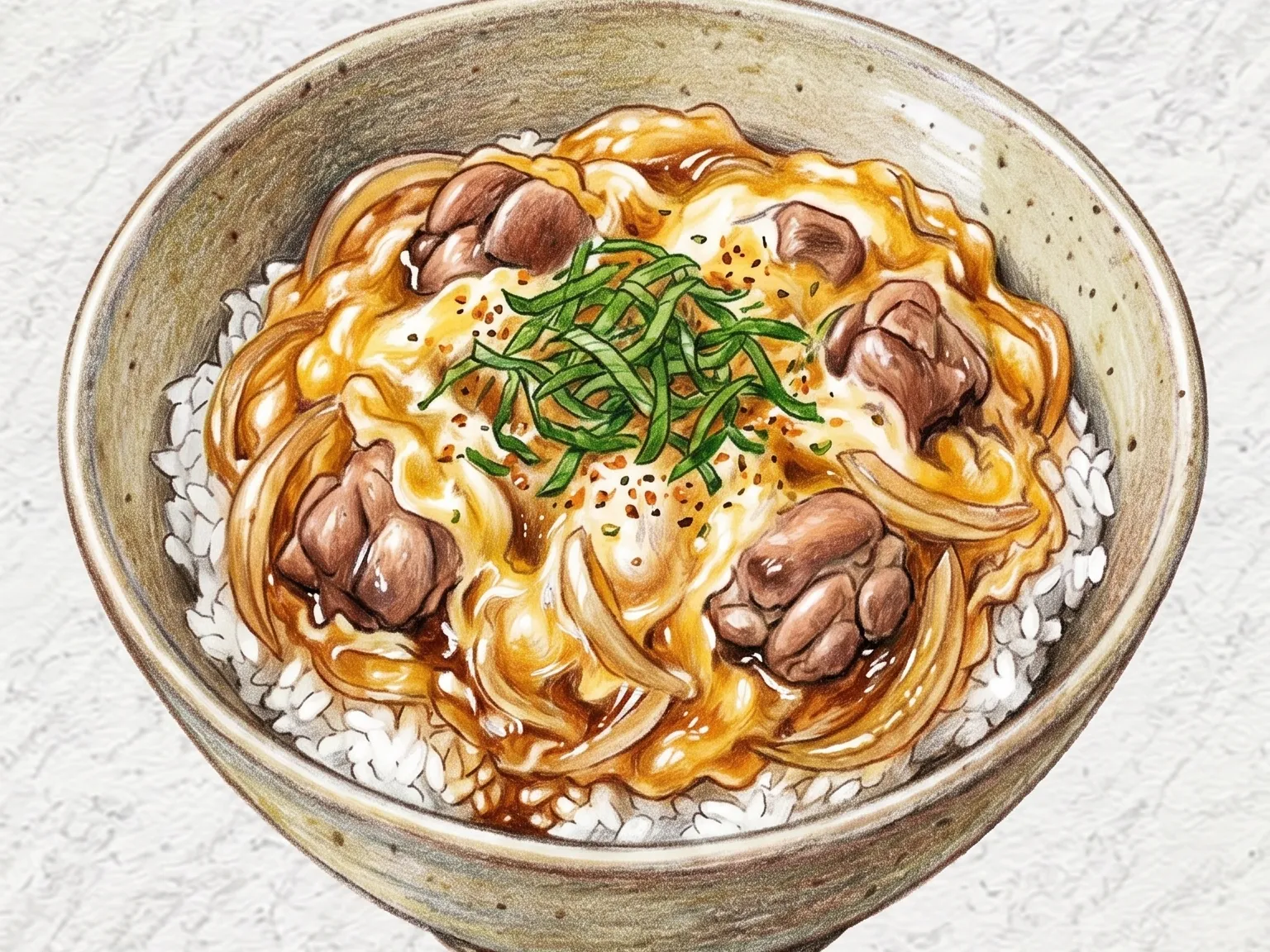
Chicken and Egg Rice Bowl
Oyakodon simmers bite-size chicken thigh and sliced onion in a soy-mirin broth, then binds everything with a soft-set egg before sliding it over steamed rice. The name means 'parent and child,' referring to the chicken and egg sharing the same bowl. Onion goes into the broth first to release its natural sweetness, followed by the chicken, which cooks just until tender. Beaten eggs are poured in a circular motion and the lid goes on briefly, leaving the egg custardy rather than fully set. That half-cooked egg absorbs the savory-sweet broth and coats each grain of rice. Despite using only a handful of ingredients, the layered umami from soy sauce and mirin gives the dish a satisfying depth.
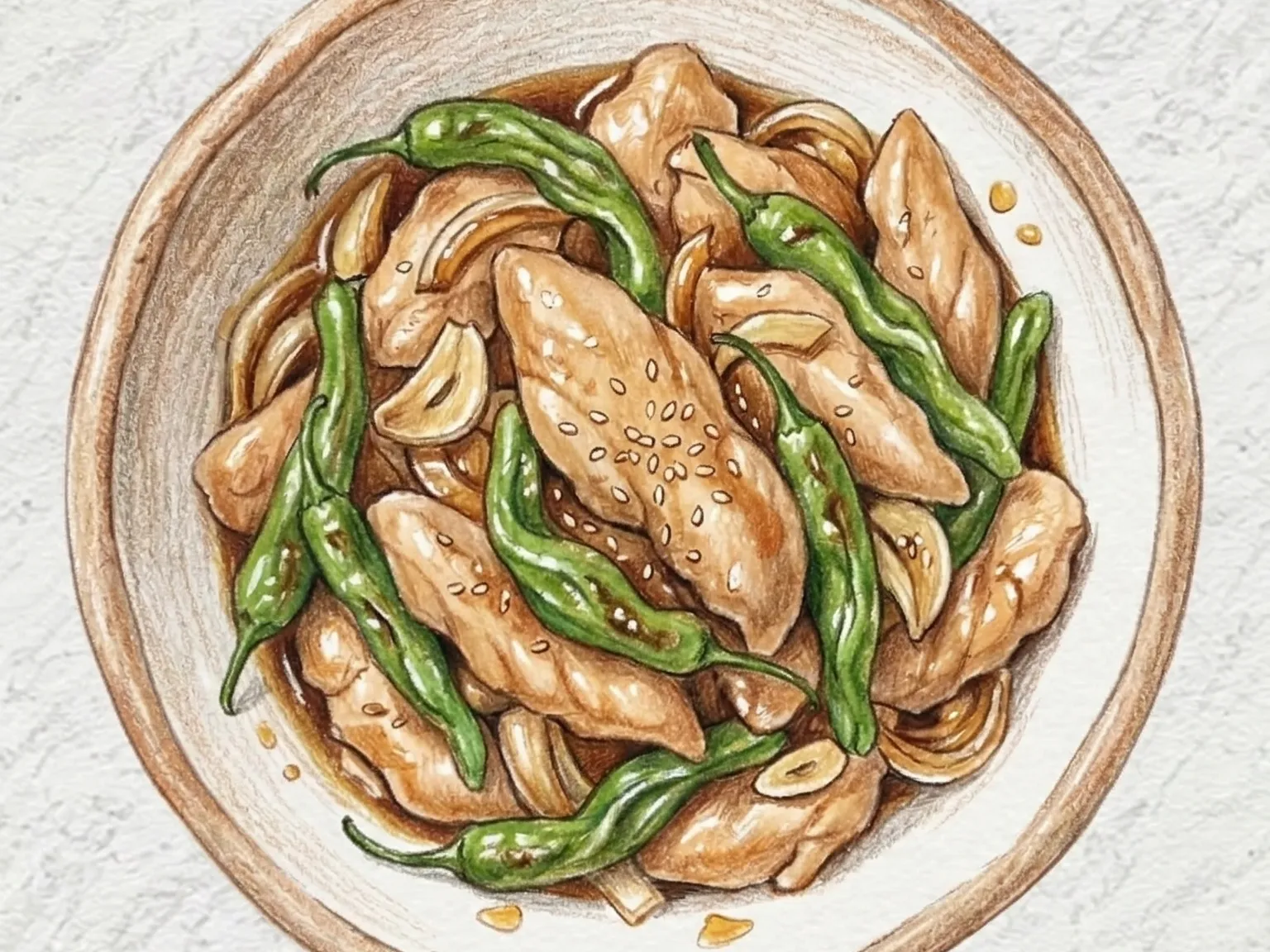
Korean Stir-Fried Shishito Peppers and Chicken Tenderloin
Kkwarigochu dak ansim bokkeum is a stir-fry of chicken tenderloin that has been marinated in soy sauce and cooking wine, cooked through first, then combined with shishito peppers and onion in a finishing sauce of soy sauce and oyster sauce. The tenderloin is prized for its low fat content and mild taste, and oyster sauce compensates by introducing fermented bivalve umami that keeps the seasoning from feeling thin. Scoring the shishito peppers lightly before they go into the pan lets the sauce penetrate the flesh while the skin stays intact, so each pepper holds its shape rather than splitting open. Chicken tenderloin firms up quickly when overcooked, so moving on to the next step the moment the exterior whitens and the center loses its translucency is the key to keeping the meat tender rather than dry. Finished with sesame oil and sesame seeds, the high protein density makes this a practical and satisfying lunchbox side dish.
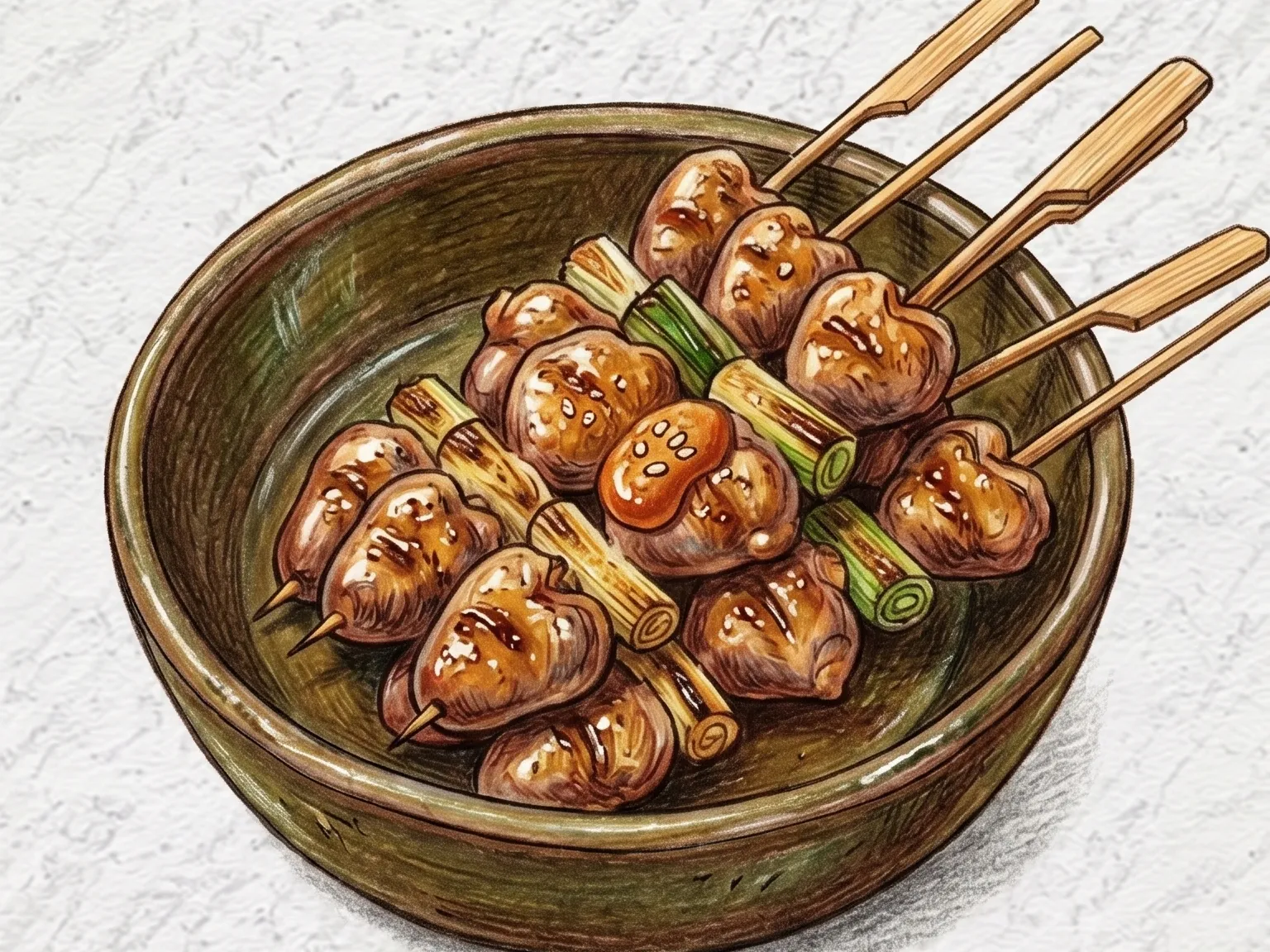
Grilled Chicken Heart Skewers
Grilled Chicken Heart Skewers are a popular street-style dish characterized by a chewy texture and a sweet, savory glaze. Preparing this dish requires splitting the chicken hearts in half to thoroughly remove any blood clots and membranes, which prevents gamey odors. For a cleaner flavor, the hearts can be soaked in milk for ten minutes before rinsing. The cleaned pieces are threaded onto skewers with small gaps in between to ensure heat distributes evenly. Grilling begins on a preheated pan without moving the skewers for the first two minutes. Once the underside turns golden, they are flipped and brushed repeatedly with a marinade made of soy sauce, oligosaccharide, minced garlic, and mirin. Finishing the skewers with sesame oil and black pepper highlights the natural richness of the meat.
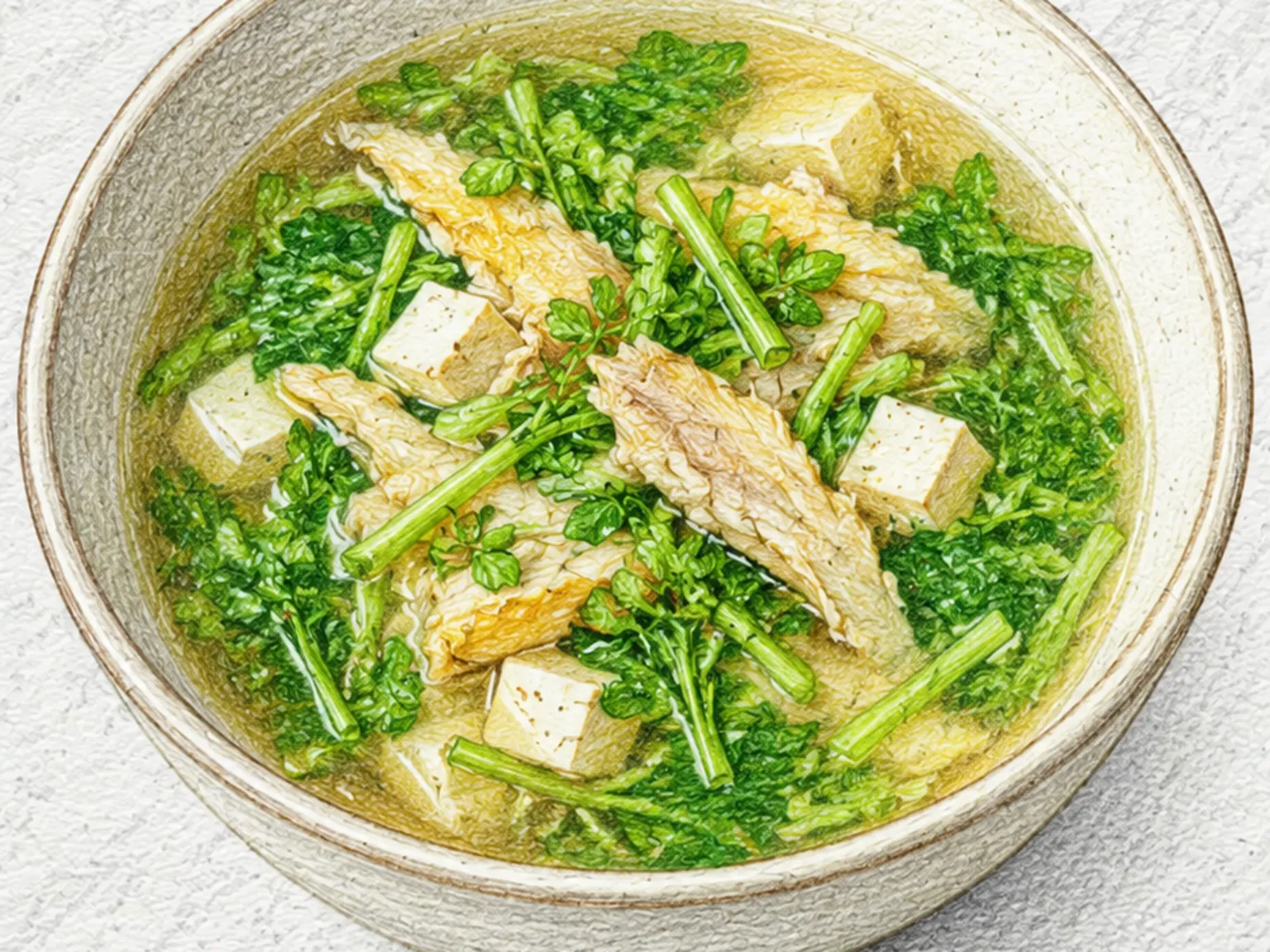
Korean Shepherd's Purse Pollack Soup
Naengi-bugeo-guk is a clear Korean soup that brings together dried pollack strips and fresh shepherd's purse, pairing the hearty depth of a winter pantry staple with the clean, herbaceous fragrance of early spring. Sautéing the pollack strips in sesame oil before adding water is the foundational step, as the dry heat coaxes a toasty, nutty aroma out of the surface proteins and primes the broth to carry deep flavor from the first minute of simmering. As the soup cooks, the concentrated umami locked inside the dried fish slowly dissolves into the liquid, building a broth that feels rich without being heavy. Cubed tofu goes in mid-cook, softening into a silky texture while keeping the overall flavor clean and mild. The shepherd's purse is added at the very end, just long enough to wilt, so that its faintly bitter, earthy spring perfume remains in the finished bowl rather than cooking off. Soup soy sauce and minced garlic season without clouding the broth. This soup is a fixture of Korean spring cooking, prized for being gentle on the stomach while delivering genuine depth.