🎉 Special Occasion Recipes
Impressive dishes for guests and special occasions
929 recipes. Page 23 of 39
When guests are coming, the menu needs a little extra care. This tag features impressive dishes suited for entertaining - galbi-jjim, japchae, and bulgogi for a Korean spread, or pasta and steak for a Western-style course.
The key to stress-free hosting is choosing recipes that allow advance preparation. Do the heavy lifting the day before, then finish plating when guests arrive. That way, you can relax and enjoy the meal together.
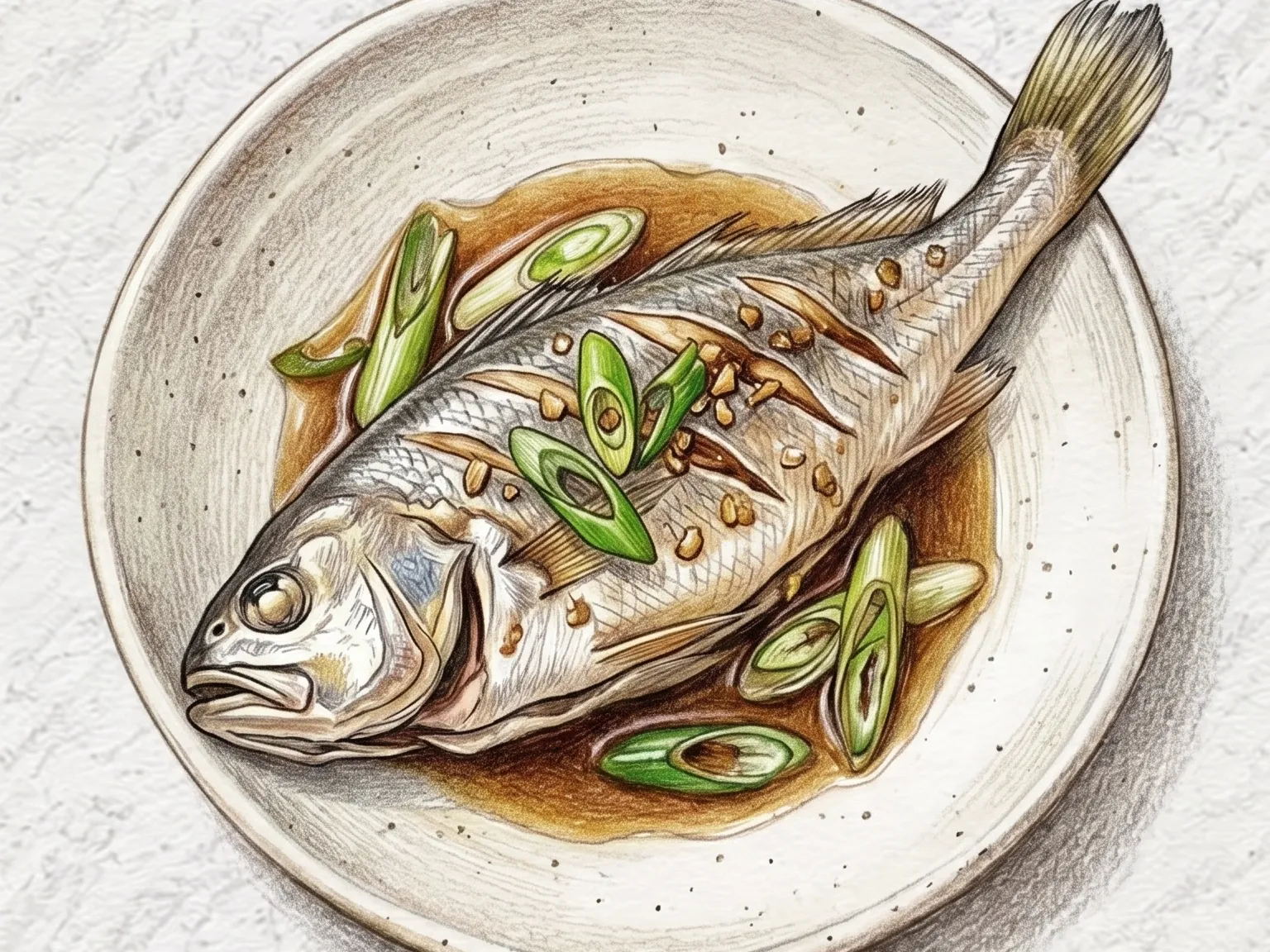
Korean Steamed Yellow Croaker
Jogi-jjim is a steamed Korean yellow croaker banchan built around a two-stage cooking method that drives soy sauce, cooking wine, garlic, and ginger deep into the flesh. Scoring the fish on both sides before cooking is essential: the cuts open channels so the marinade reaches the interior rather than sitting on the surface. Half the sauce goes in first, and the fish steams until nearly done; then the remaining sauce and sliced green onion are added for a second round. Cooking wine and ginger together strip away fishiness, leaving the croaker clean and mild on the palate. The flesh is fine-grained and firm enough to pull apart in neat flakes with chopsticks without falling apart. Any sauce that collects in the pan spooned over rice makes the dish a complete meal without needing a separate soup.
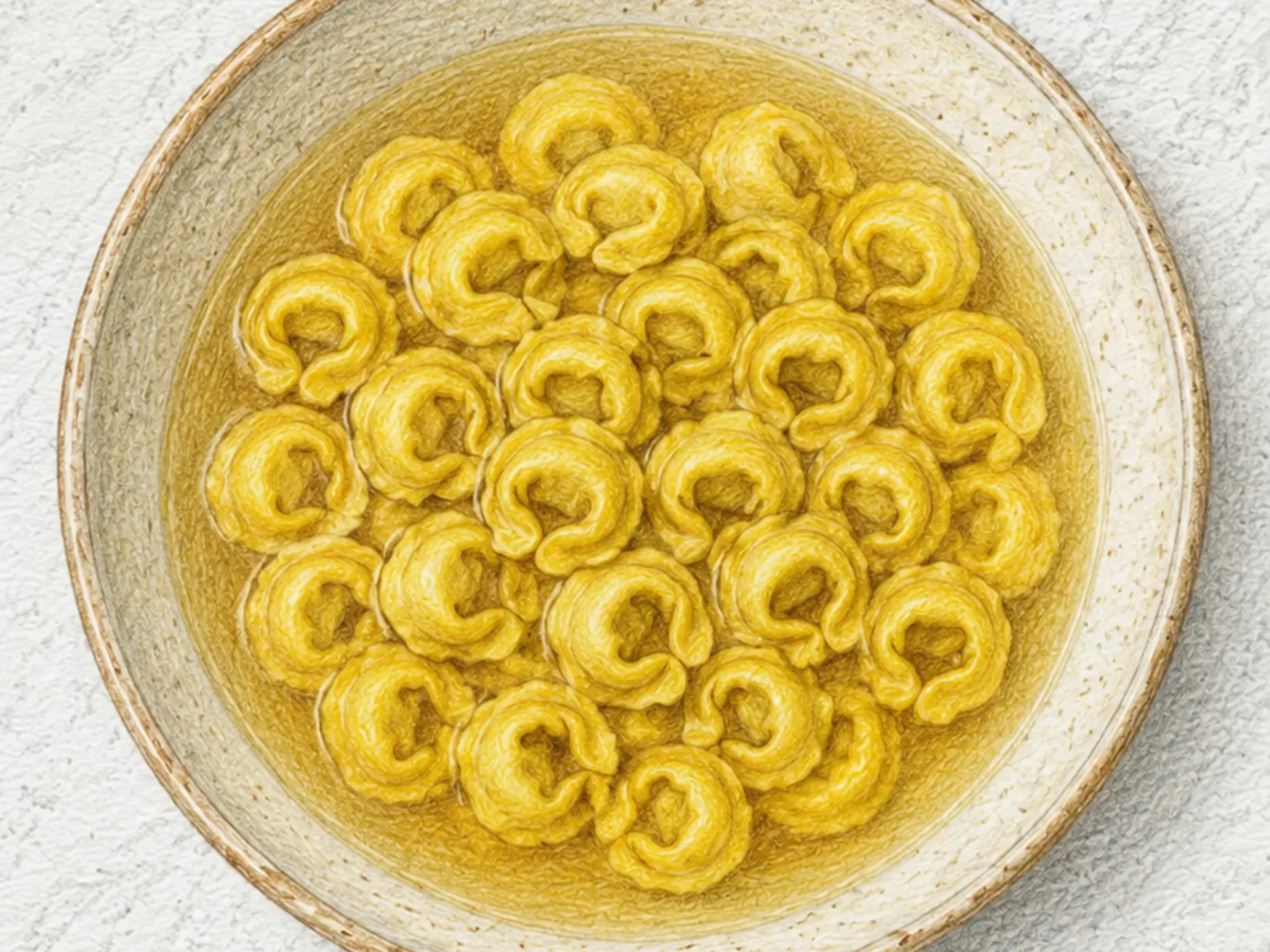
Tortellini in Brodo (Italian Stuffed Pasta in Clear Meat Broth)
Tortellini in brodo is a traditional soup from Emilia-Romagna in which small stuffed pasta parcels are served in a clear, full-flavored meat broth. The filling typically combines pork, prosciutto, and Parmigiano-Reggiano. The broth - usually made from chicken or beef bones - is simmered long enough to develop deep body while remaining transparent. In Italy, this dish is closely associated with Christmas and holiday meals. Using store-bought tortellini, the recipe can be completed in about 40 minutes.
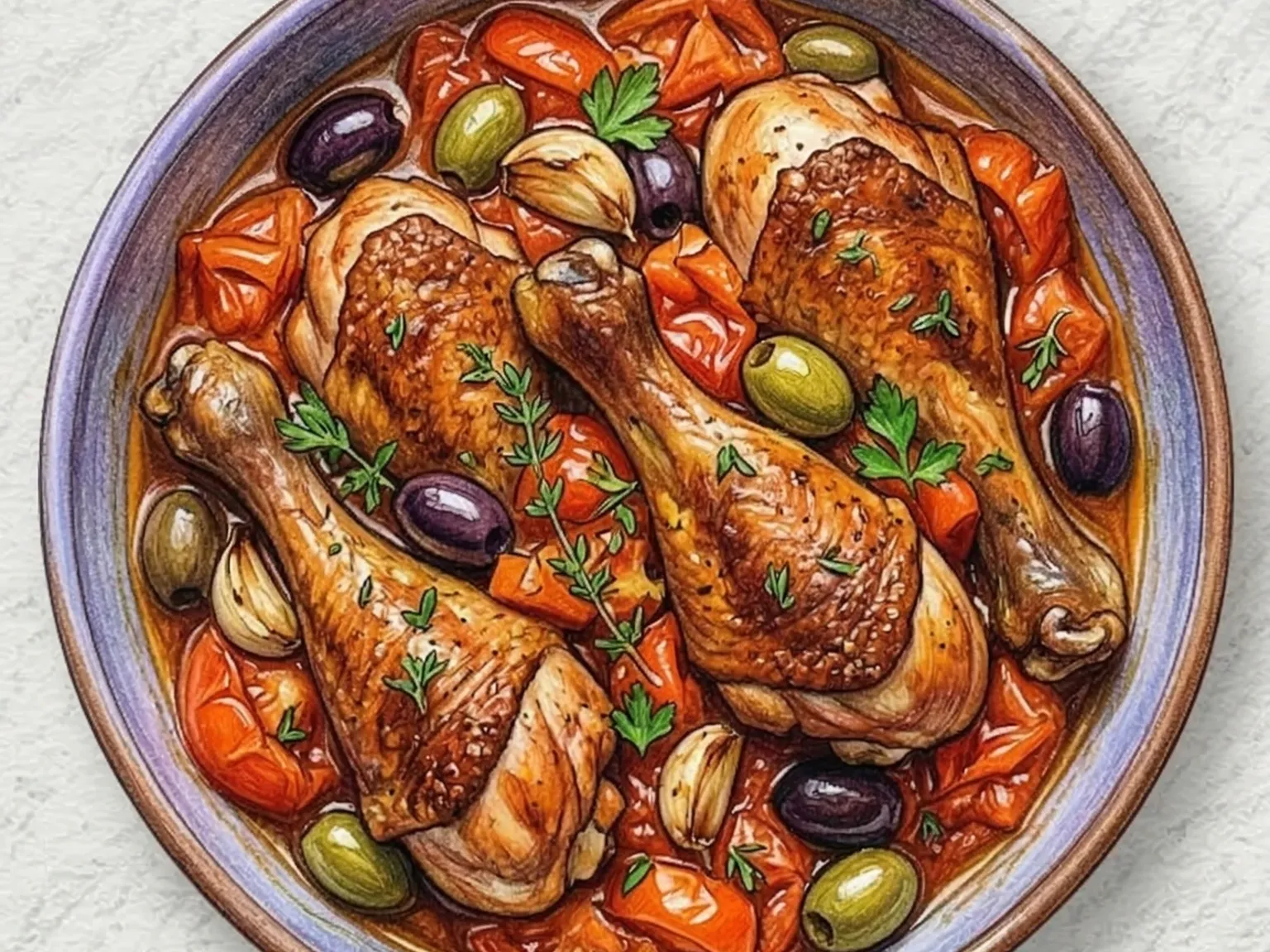
Chicken Provençal (South French Tomato Olive Herb Chicken)
Chicken Provencal sears chicken thighs skin-side down on high heat until deeply golden, then braises them with cherry tomatoes, black olives, capers, garlic, and thyme in white wine for a southern French home-style dish. A prolonged sear of the chicken skin develops both crispness and a rich layer of fond on the pan bottom, which the wine dissolves into the sauce during deglazing. As the cherry tomatoes burst during cooking, their juice combines with the salty olives and sharp capers to form a bright, layered Mediterranean sauce. Twenty minutes of covered simmering followed by eight to ten minutes uncovered concentrates the sauce and allows it to penetrate the chicken deeply. A small amount of lemon zest stirred in at the end clarifies and lifts the aromatics of the finished dish. Using whole unpitted olives rather than pitted ones during cooking lets a slight bitterness leach from the pits into the sauce, adding an extra dimension that rounds out the sweetness of the tomatoes.
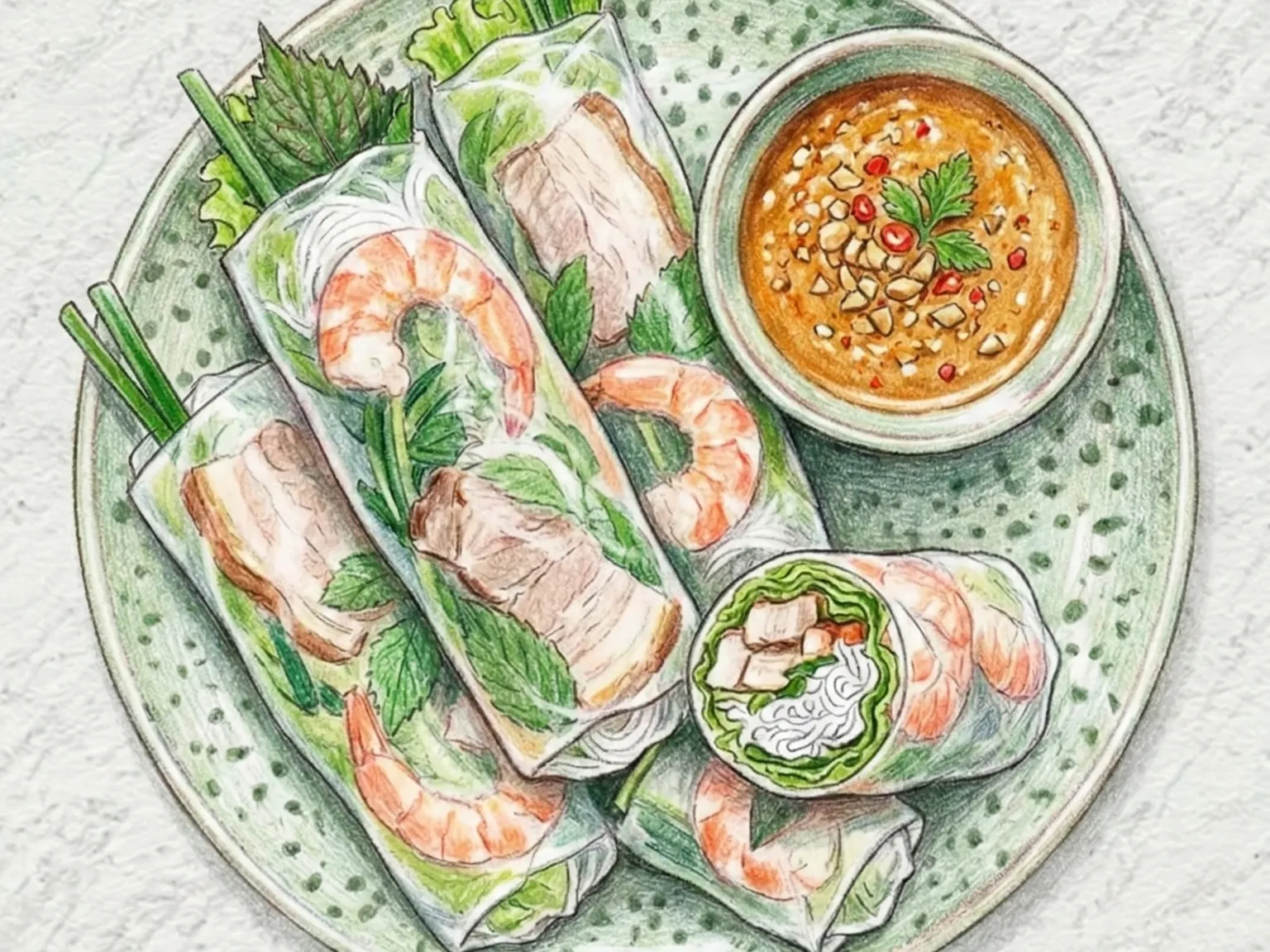
Vietnamese Fresh Spring Rolls
Goi cuon, Vietnamese fresh spring rolls, are an uncooked hand-assembled dish from southern Vietnam. A sheet of rice paper softened in water serves as the wrapper for poached shrimp, sliced pork, rice vermicelli, lettuce, mint, cilantro, and garlic chives, all rolled tightly into a compact cylinder. Because the wrapper is translucent, the pink shrimp and bright herbs are visible through the exterior before the first bite, and that visual layer is part of the appeal. Two dipping sauces are standard: a thick peanut-hoisin blend whose richness suits the fatty pork, and nuoc cham, a light bright mixture of fish sauce, lime juice, sugar, and chili that works against the springy shrimp. Inside each roll, four distinct textures come together - the chewy rice paper, slippery vermicelli, firm shrimp, and leafy herbs - and none of them would work the same way if cooked. The dish requires no heat source to prepare, yet the balance of protein, starch, and fresh aromatics makes it nutritionally complete as a light meal. In Ho Chi Minh City, fresh spring rolls are sold from street carts alongside more elaborate restaurant preparations, and serving them at home means assembling at the table together, a format that brings a communal rhythm to the meal that plated dishes do not.
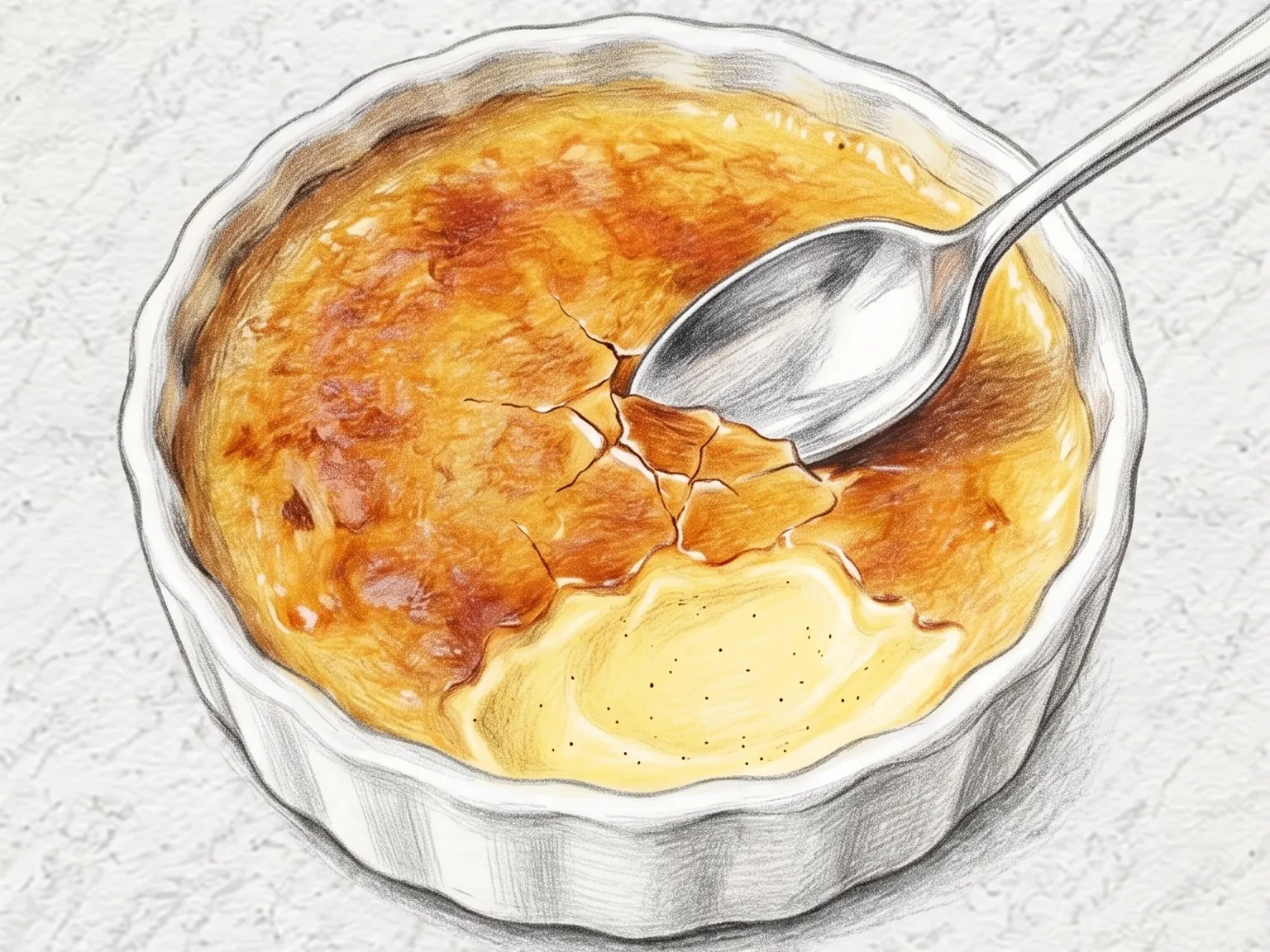
Creme Brulee
Creme brulee is a French custard dessert made from just four components: egg yolks, heavy cream, sugar, and vanilla bean. Hot cream infused with vanilla seeds is tempered into beaten yolks and sugar, then poured into ramekins and baked in a water bath at low heat. The water bath moderates the temperature, preventing the custard from curdling or developing bubbles, yielding a surface as smooth as silk. After thorough chilling, a thin layer of sugar is sprinkled on top and caramelized with a torch until it forms a glassy, amber-colored crust. The ritual of cracking through that crust with a spoon is as integral to the experience as the flavor. Beneath lies cold, trembling custard that melts on the tongue, while the hot caramel introduces a bittersweet crunch.
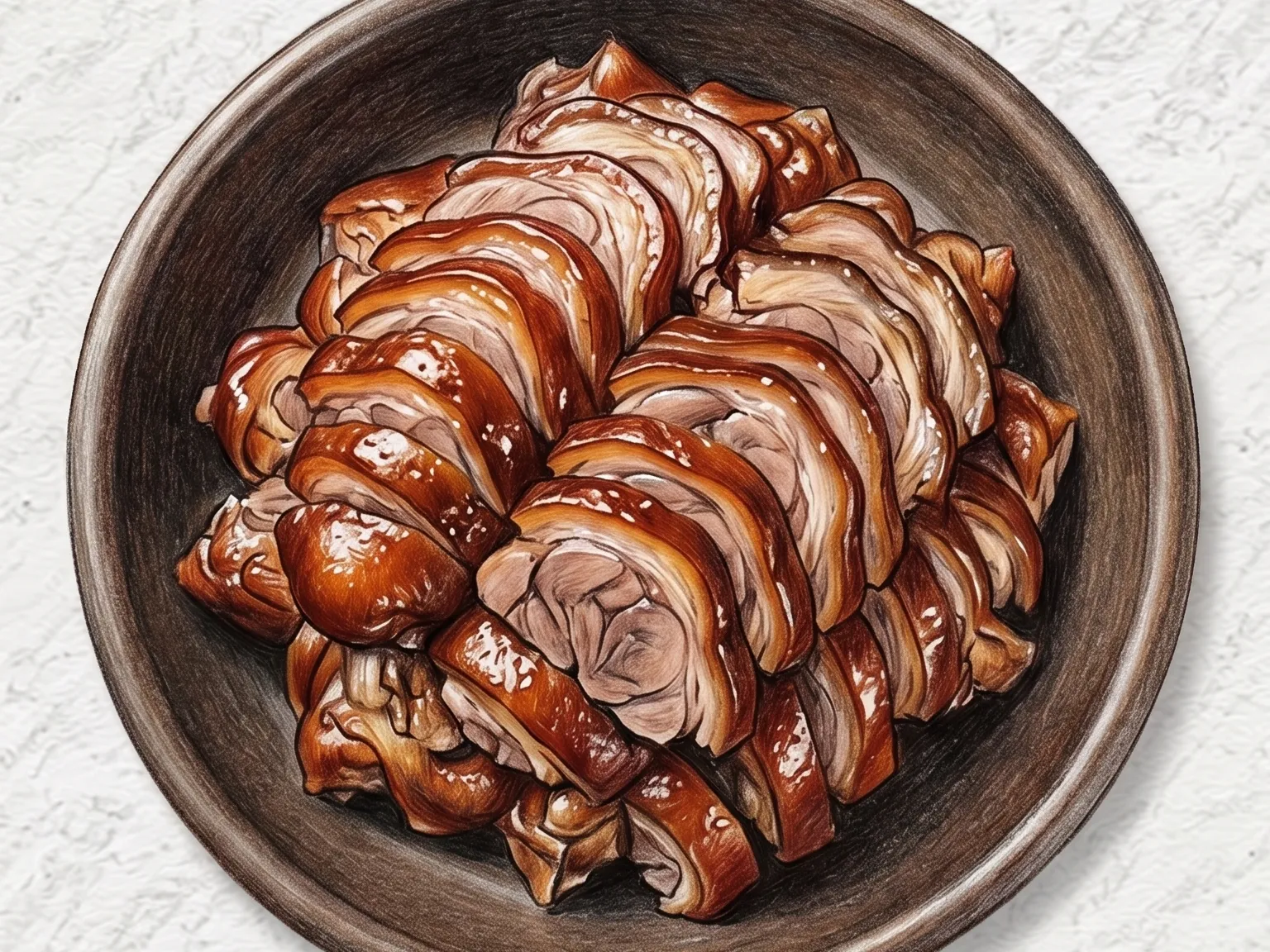
Korean Braised Pork Trotters
Jokbal is Korean soy-braised pork trotters slow-cooked for over two hours in a broth of soy sauce, garlic, ginger, onion, green onion, and whole peppercorn. The trotters are blanched first to remove impurities, then simmered gently until the collagen-rich skin turns glossy and the meat becomes fork-tender. The long braise allows the soy seasoning to penetrate deep into the layered skin and meat, creating a rich, savory flavor throughout. Traditionally sliced while still warm for the softest texture, jokbal is served with salted shrimp dipping sauce or ssamjang, wrapped in lettuce leaves - a classic Korean late-night food and drinking accompaniment.
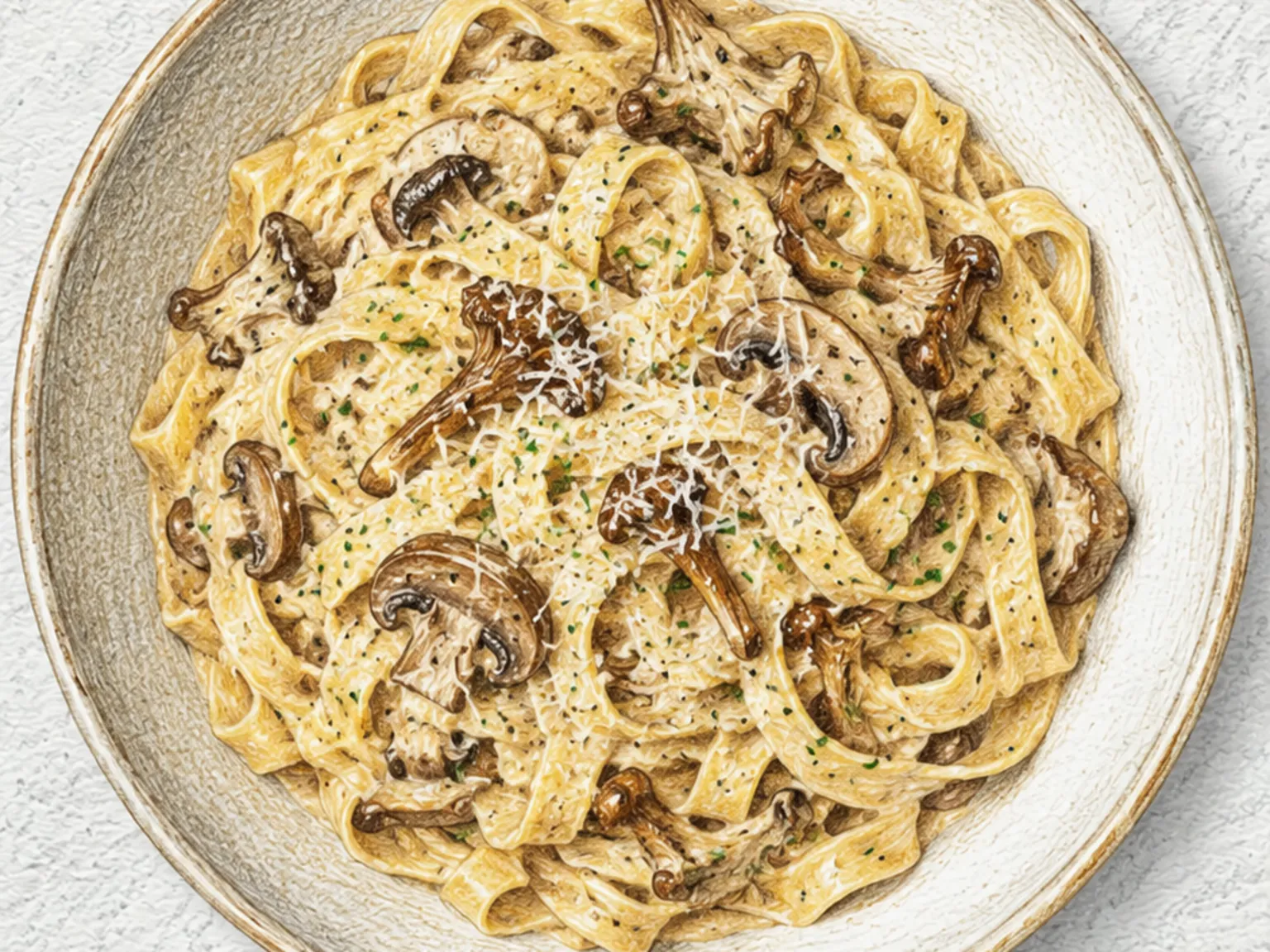
Truffle Mushroom Tagliatelle
This Italian pasta pairs wide tagliatelle ribbons with a creamy sauce built from sauteed mixed mushrooms, shallot, and garlic. The mushrooms release their liquid during cooking, which concentrates into an umami-rich base before cream is added. A drizzle of truffle oil at the end provides a distinctive earthy aroma without overpowering the dish. Grated Parmigiano-Reggiano is folded in for additional depth. The flat, broad shape of tagliatelle holds the thick sauce effectively. Total cooking time is about 33 minutes.
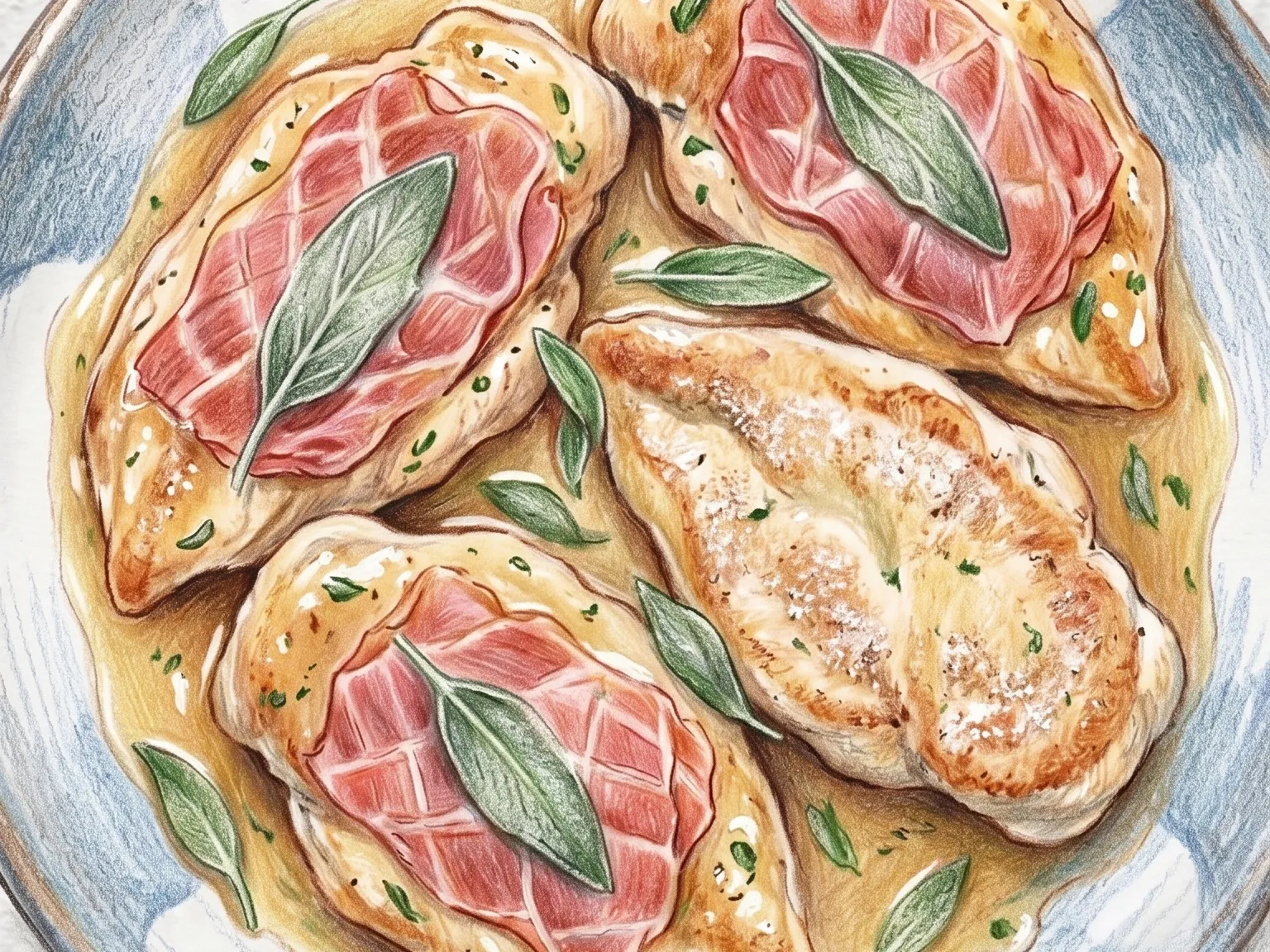
Chicken Saltimbocca (Prosciutto and Sage Italian Chicken Sauté)
Chicken saltimbocca is an Italian preparation that layers fresh sage leaves and cured prosciutto over pounded chicken breast, sears the whole assembly in one pan, and finishes the plate with a sauce reduced from white wine, chicken stock, and cold butter. The name translates from Italian as 'jumps in the mouth,' which captures how the salty intensity of prosciutto and the resinous punch of sage announce themselves against the neutral backdrop of the chicken breast. Dusting only the bare underside with flour before placing it prosciutto-side up in the pan creates a light crust on the floured surface while the prosciutto crisps directly against the heat and the sage leaf fries in the rendered fat between the meats. Deglazing with white wine lifts all the caramelized fond from the pan base, and simmering it down with chicken stock by roughly half concentrates the liquid into a sauce with real body. Whisking cold butter in small pieces into the reduced sauce off the heat emulsifies it into a glossy, smooth coating that pools around the chicken on the plate. Pounding the breast to a uniform thickness before cooking ensures it cooks evenly without drying out the thinner edges.
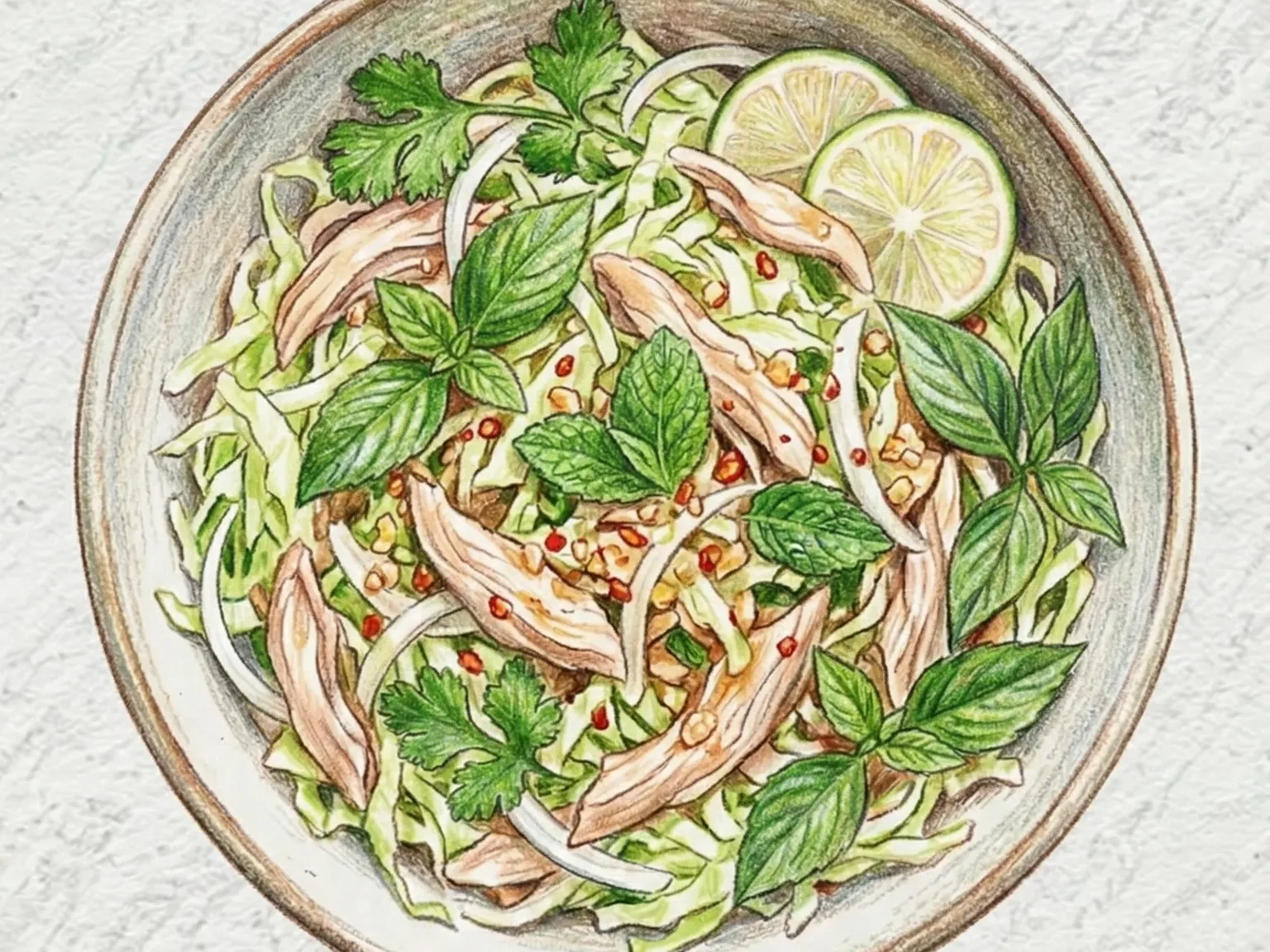
Vietnamese Chicken Salad
Goi ga is a Vietnamese chicken salad served throughout the country as a beer snack and appetizer, one of the most practical dishes the cuisine has for hot weather when something cool, sharp, and light is what the body wants. A whole chicken is poached in water until just cooked through, then cooled completely before being shredded by hand along the grain. Hand-shredding rather than knife-cutting matters here: the torn fibers create irregular surfaces with greater surface area, so the dressing clings to the meat rather than pooling at the bottom of the bowl, and the textured chew is noticeably different from cleanly sliced chicken. Shredded cabbage, onion, and carrot form the vegetable base, combined with Vietnamese coriander known as rau ram, cilantro, and fresh mint. The dressing is fish sauce, fresh lime juice, sugar, sliced fresh chili, and minced garlic, whisked together until the sugar dissolves. The dressing acidity pulls the chicken out of its mildness, and the fish sauce depth meets the watery crunch of the vegetables to produce a balance that reads as light but not bland. Fried shallots and crushed roasted peanuts scattered over the top add a crunchy layer that makes the salad feel complete rather than spare. At bia hoi, the informal fresh-beer street bars found across Vietnam, goi ga is among the first dishes ordered and typically arrives at the table before the first cold glass is poured.
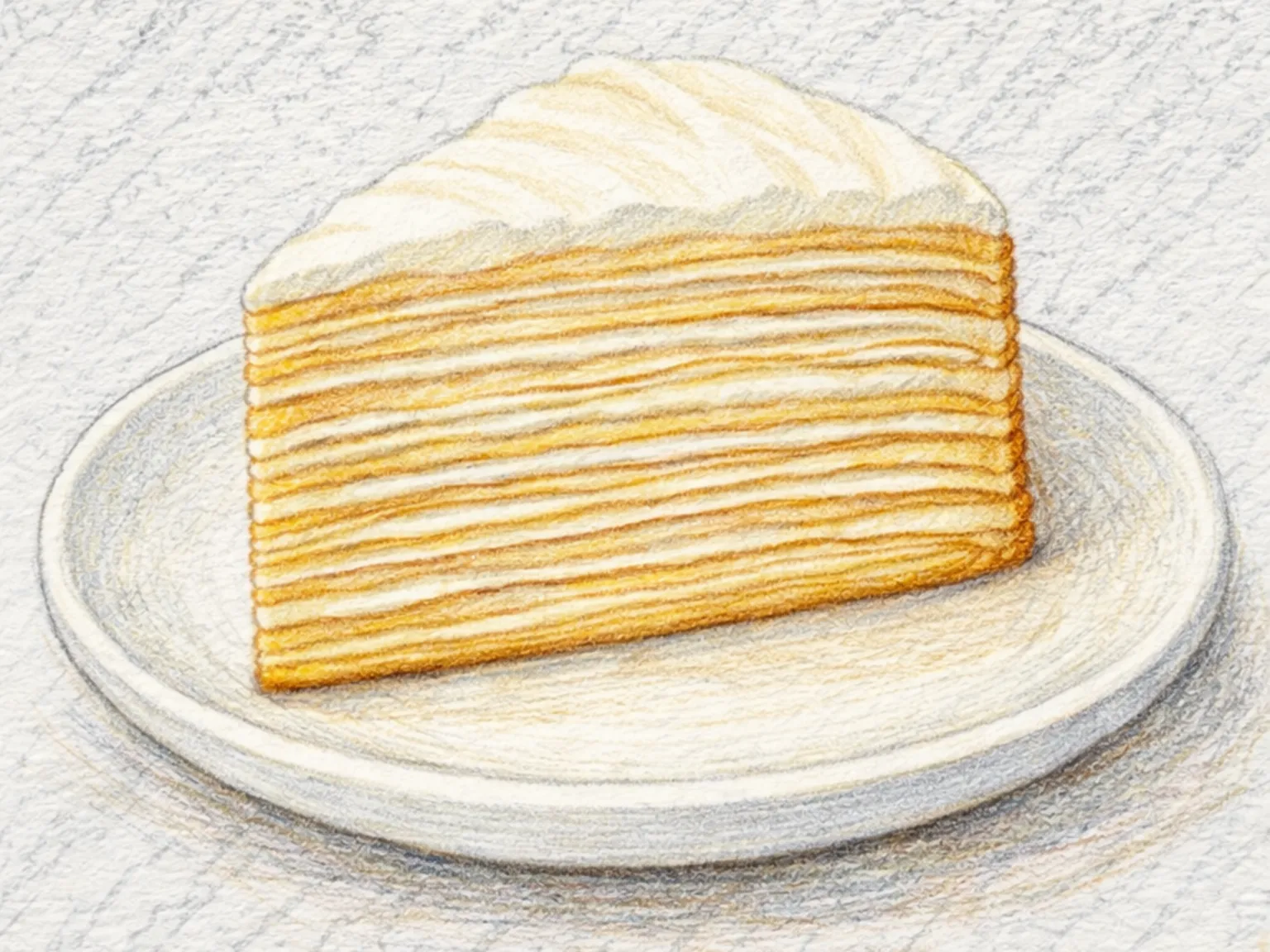
Crêpe Cake
A crepe cake is constructed by alternating dozens of paper-thin cooked crepes with thin layers of cream, building a tall multi-layered dessert that requires no baking and no oven. A batter of flour, eggs, milk, and butter gets poured by the ladleful into a lightly buttered pan and swirled into rounds that cook for under a minute per side, then cool completely before assembly. Each crepe receives an even, thin spread of lightly sweetened whipped cream or pastry cream before the next crepe goes on top, repeating until the stack reaches twenty to thirty layers. The precision of each spread matters: uneven layers create an inconsistent cross-section when the cake is sliced, whereas layers of uniform thickness produce the clean, intricate striped pattern the cake is known for. Unlike conventional sponge cake, the dominant flavors are egg, butter, and dairy fat rather than sugar and flour, and the texture is distinctly its own: soft and yielding, with each layer sliding gently against the next under the lightest pressure. Pan temperature during crepe-making must stay slightly below medium heat, as excess heat chars edges and makes the crepes brittle. After assembly, refrigerating the cake for at least two hours stabilizes the cream and allows the structure to set so each slice cuts cleanly without collapsing.
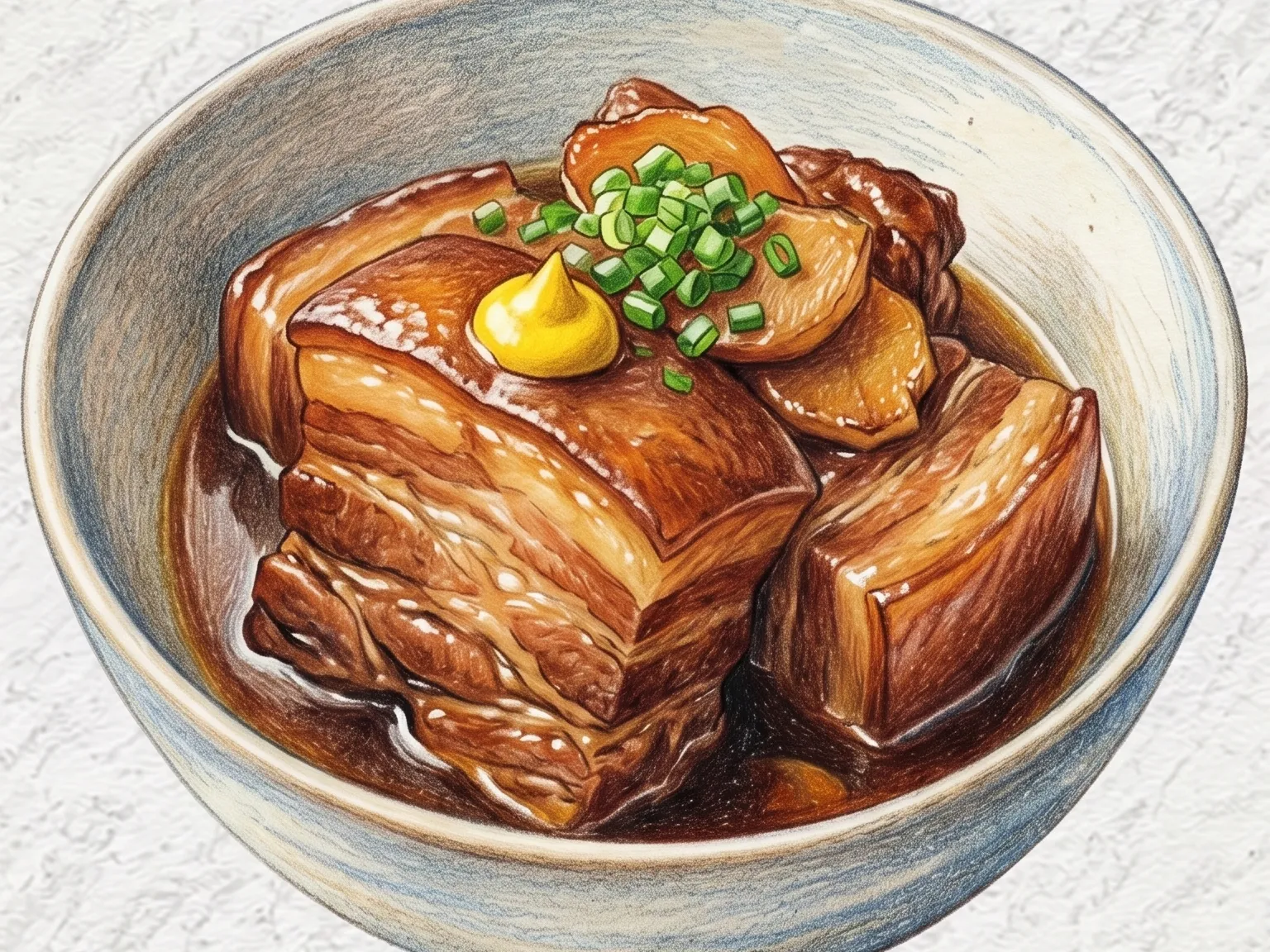
Japanese Braised Pork Belly
Kakuni is a Japanese braised pork belly in which thick slabs are simmered for two hours or more in soy sauce, mirin, sake, and ginger over the lowest possible heat. The fat layers slowly render into the surrounding meat, breaking down collagen until the pork yields completely to the faintest pressure of chopsticks. Mirin adds a mild sweetness that glazes the surface, while ginger neutralizes any gamey notes, keeping the flavor clean despite the extended cooking time. The reduced braising liquid coats each piece in a deep caramel-colored lacquer, which is one of the dish's defining visual qualities. Served over steamed rice with a spoonful of cooking liquid poured over, or paired with a small dab of hot Japanese mustard to contrast the sweet and salty glaze, kakuni is one of the most satisfying expressions of low-and-slow pork cookery.
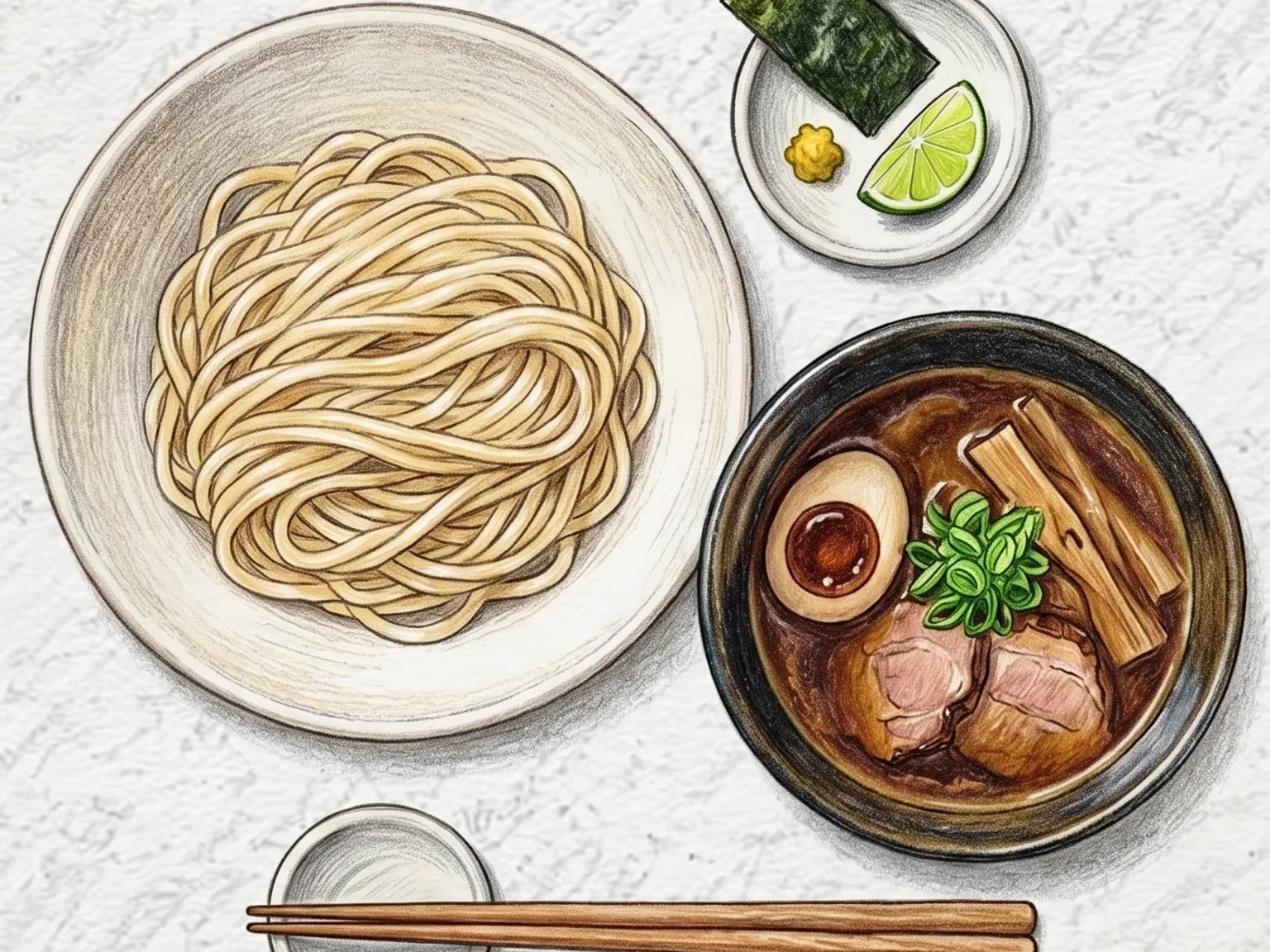
Dipping Ramen (Japanese Thick Noodles with Concentrated Dipping Broth)
Tsukemen is a Japanese dipping ramen where thick noodles and a concentrated broth are served separately. The broth - typically tonkotsu or seafood-soy based - is reduced to roughly double the intensity of standard ramen soup. Noodles are rinsed in cold water after boiling, which firms their texture and creates a temperature contrast when dipped into the hot broth. Toppings such as chashu pork, soft-boiled egg, and nori are arranged alongside the noodles. The recipe takes about 50 minutes, with most time spent building and reducing the dipping broth.
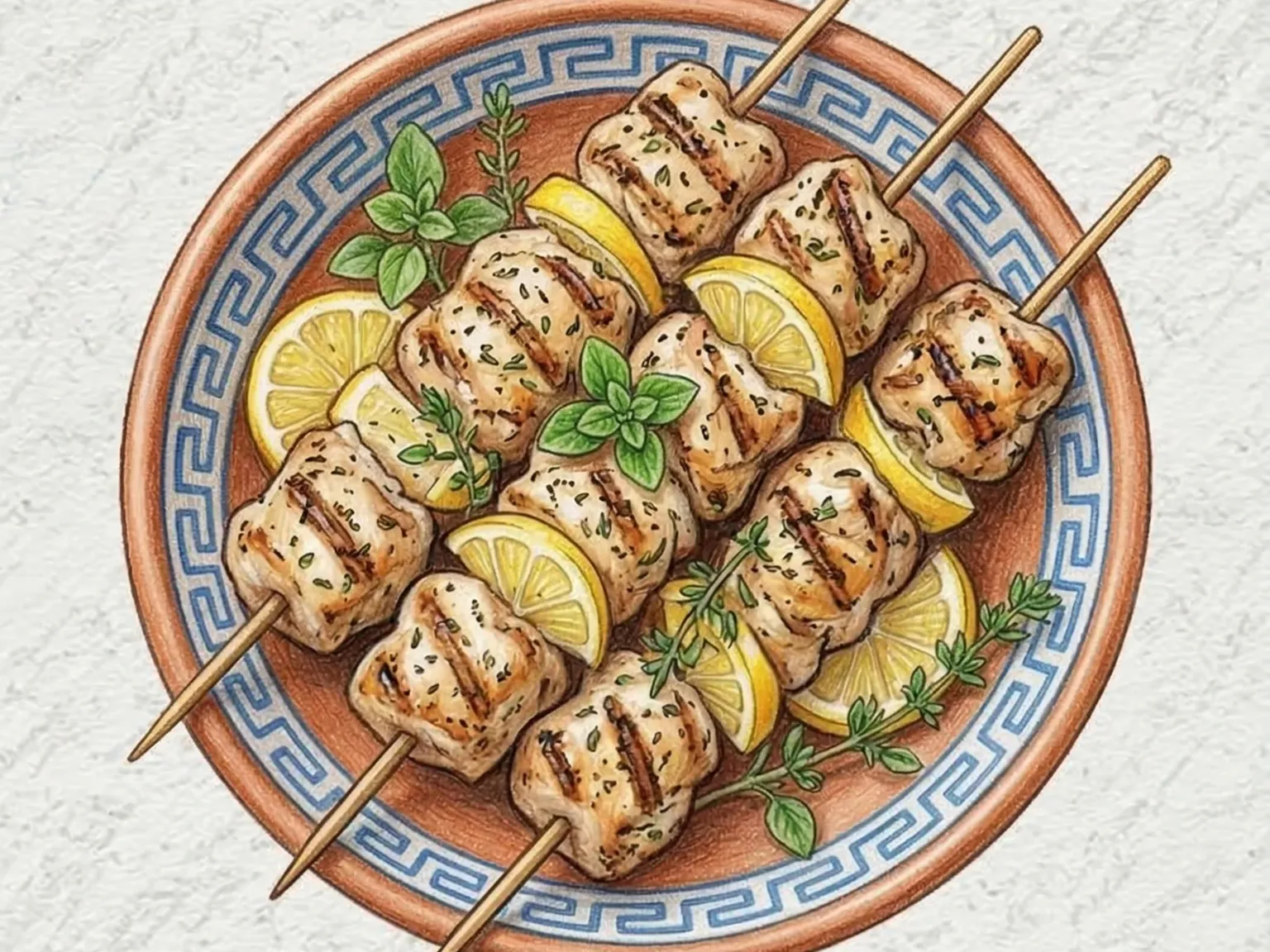
Chicken Souvlaki (Greek Lemon Herb Grilled Chicken Skewer)
Chicken souvlaki consists of Greek grilled skewers prepared using pieces of chicken thigh that have been submerged in a marinade of lemon juice, olive oil, garlic, and dried oregano. This marination period is intended to give the citric acid sufficient time to interact with the meat. The lemon juice functions by breaking down surface proteins, which allows the various seasonings to move into the interior of the chicken instead of remaining only on the surface. Simultaneously, the olive oil establishes a physical boundary during the grilling stage that reduces the rate of moisture evaporation, ensuring that the inside of each piece remains moist. The addition of dried oregano contributes an earthy and slightly bitter herbal quality that balances the acidity of the lemon to produce the clean and straightforward flavor profile typical of Greek outdoor cooking. Using chicken thigh meat is a deliberate choice because its natural fat distribution protects the muscle fibers from becoming tough under the high heat of the grill, unlike leaner breast meat. This results in individual pieces that have a glossy exterior and a tender texture when they are removed from the heat. Serving the skewers with a portion of plain yogurt provides a temperature and texture contrast to the warm, smoky meat. When these components are combined inside warm pita bread with slices of fresh tomato and raw onion, the dish becomes a portable meal that provides satiety without creating a sensation of heaviness.
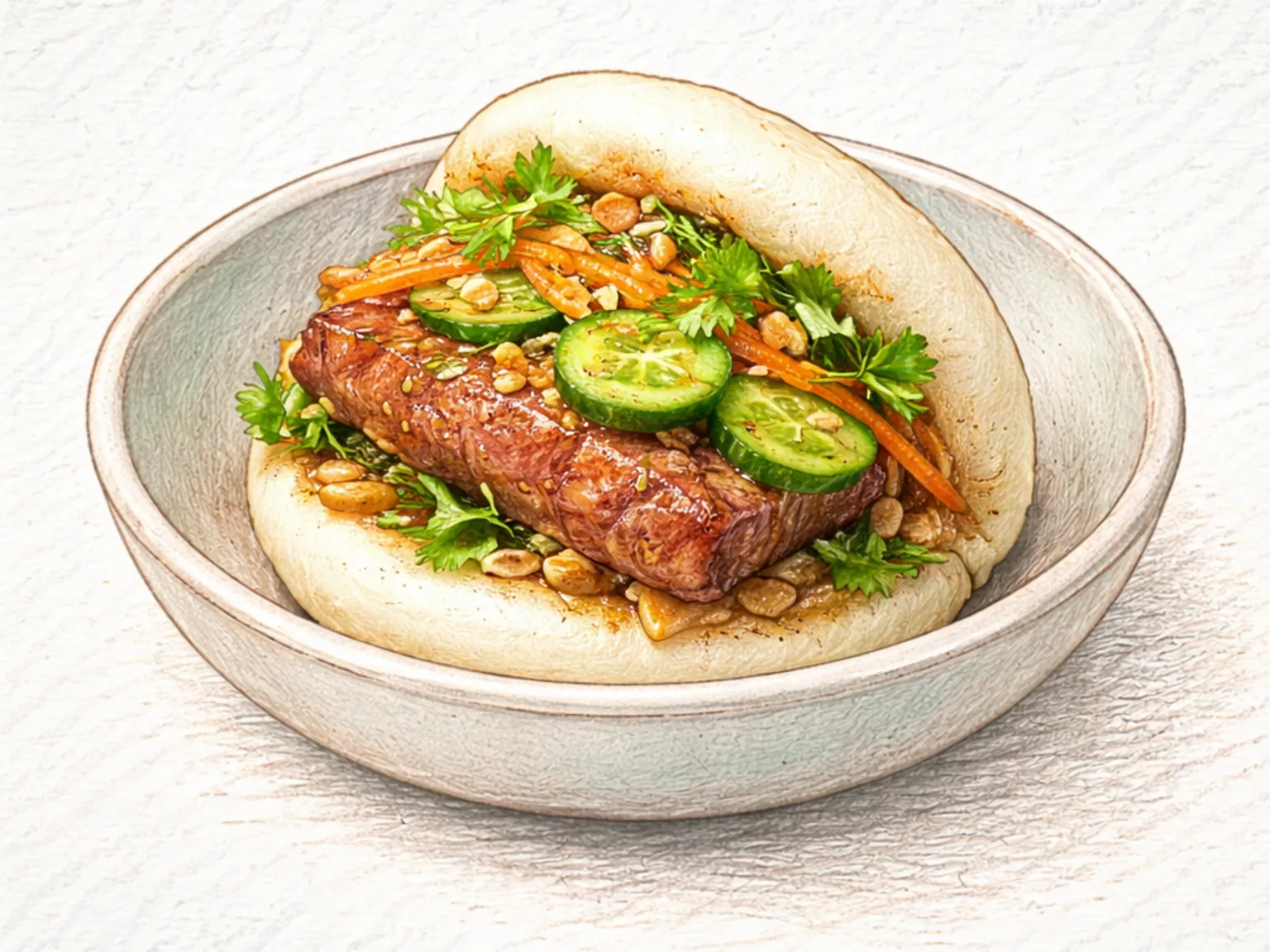
Gua Bao (Steamed Bun with Braised Pork)
Gua bao, sometimes called the Taiwanese hamburger, is a traditional snack that traces its origins to a ceremonial food eaten during Lunar New Year pig slaughter, though it has since become one of the most recognizable symbols of Taiwan night market street food culture. The steamed bun, called he ye bao, is made from fermented wheat dough that must be soft and pillowy on the inside, smooth on the surface, and elastic enough to fold cleanly in half without tearing before the filling is placed inside. The pork belly filling is braised for over an hour in soy sauce, five-spice powder, and rock sugar until the meat breaks apart along its grain at the lightest touch of chopsticks. Three garnishes work together to cut through the richness of the braised pork from different angles: pickled mustard greens bring sharp fermented acidity, crushed peanut powder adds a sandy sweetness, and fresh cilantro contributes bright herbal fragrance. The bun is sized to hold in one hand, yet the flavor complexity it contains rivals a full plated dish. This compression of layered depth into a single handheld bite is precisely what defines the spirit of Taiwan night market cooking.
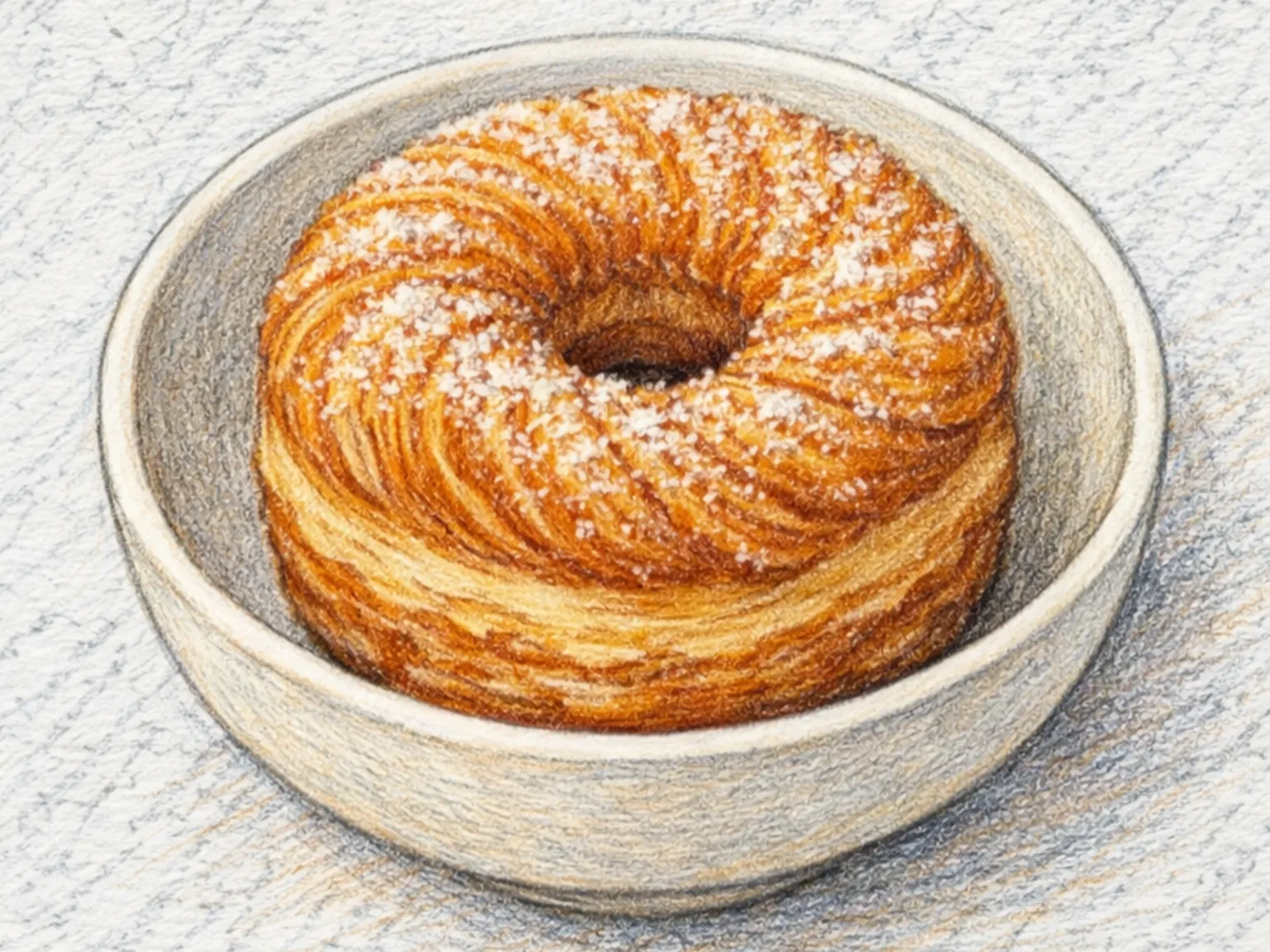
Cronut
The cronut is a hybrid pastry invented in New York in 2013 by pastry chef Dominique Ansel, created by frying laminated croissant dough in a doughnut shape. Within days of its debut, the shop had lines stretching around the block before dawn, and the cronut was named one of Time magazine's best inventions of the year. The process demands traditional croissant dough built over three days: flour and yeast are combined into a basic dough, then cold butter is folded in through repeated lamination turns that create dozens of distinct layers. That laminated dough is then cut into rings and deep-fried in oil held at a precise temperature, a step that produces the signature result of a flaky, layered interior like a croissant combined with the crisp, light shell of a doughnut. A flavored cream is piped inside and the exterior is coated in a thin glaze. A single bite delivers a sequence of experiences: the crack of the glaze, the crunch of the exterior, the airy pull-apart of buttery layers, and finally the cool richness of the cream filling. Oil temperature is critical, as oil that is too hot burns the outside while leaving the interior raw, and oil that is too cool soaks into the dough and turns it heavy. The three-day lamination process cannot be shortened without compromising the layered structure that defines the pastry.
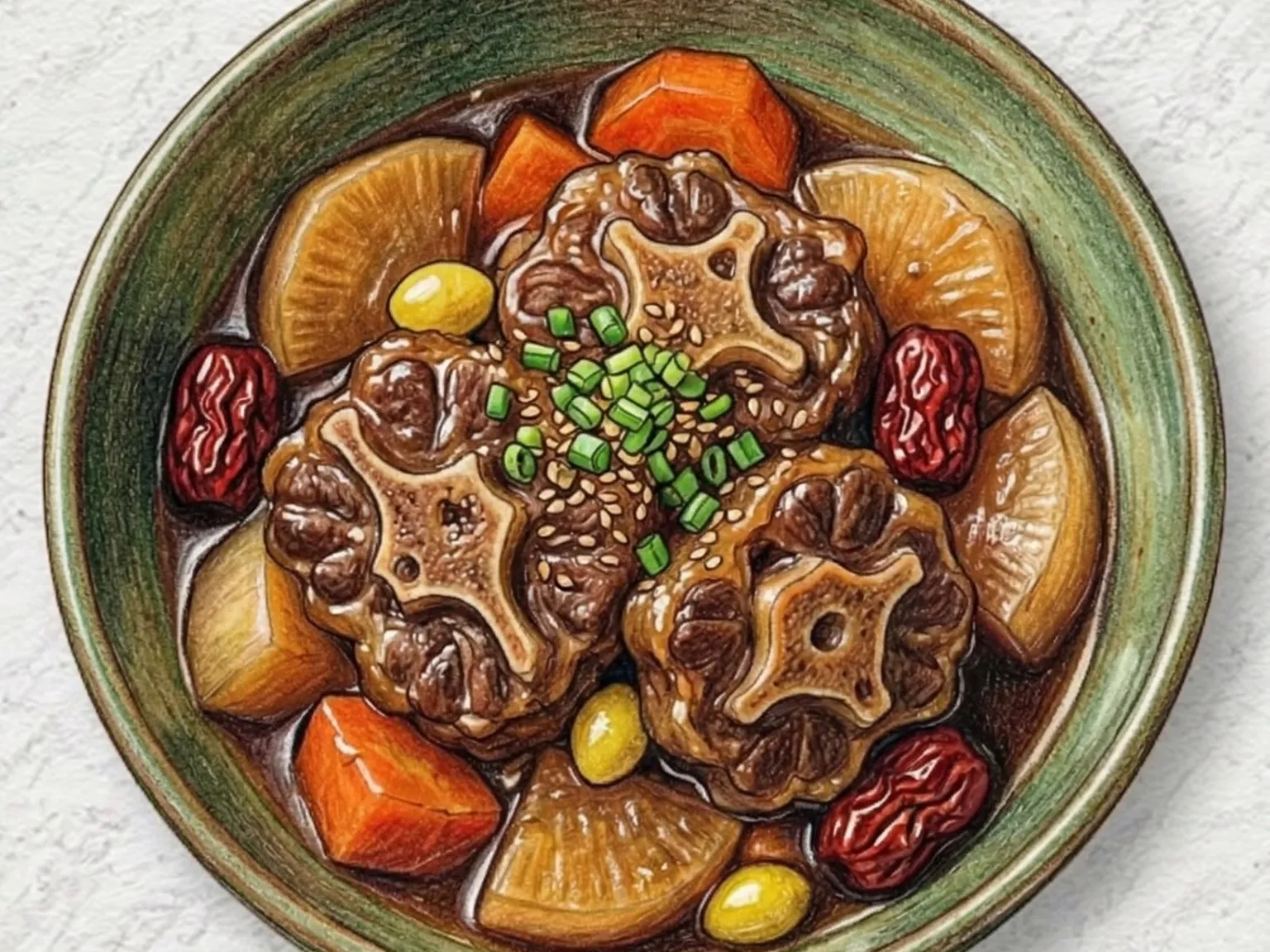
Korean Braised Oxtail (Soy Collagen Radish Braise)
Kkori-jjim is a Korean braised oxtail dish that begins with an extended soak in cold water to purge blood, followed by a preliminary boil to clean the joints before the main braise. The oxtail pieces go into a pot with soy sauce, sugar, minced garlic, ginger, and rice wine and cook low and slow for two hours or longer. The collagen concentrated in the tail joints breaks down gradually over that time, turning the braising liquid thick, glossy, and deeply gelatinous while the meat loosens away from bone without resistance. Korean radish and carrot cook alongside the meat, contributing natural sweetness and becoming saturated with the savory-sweet sauce. Jujubes and ginkgo nuts lend an herbal nuance and a subtle sweetness that distinguishes this dish from simpler braises. When chilled, the sauce sets into a firm jelly that liquefies again on reheating. The dish appears regularly on Korean holiday tables and is considered restorative food, valued for its concentrated beef flavor and the characteristic springy pull of slow-cooked collagen.
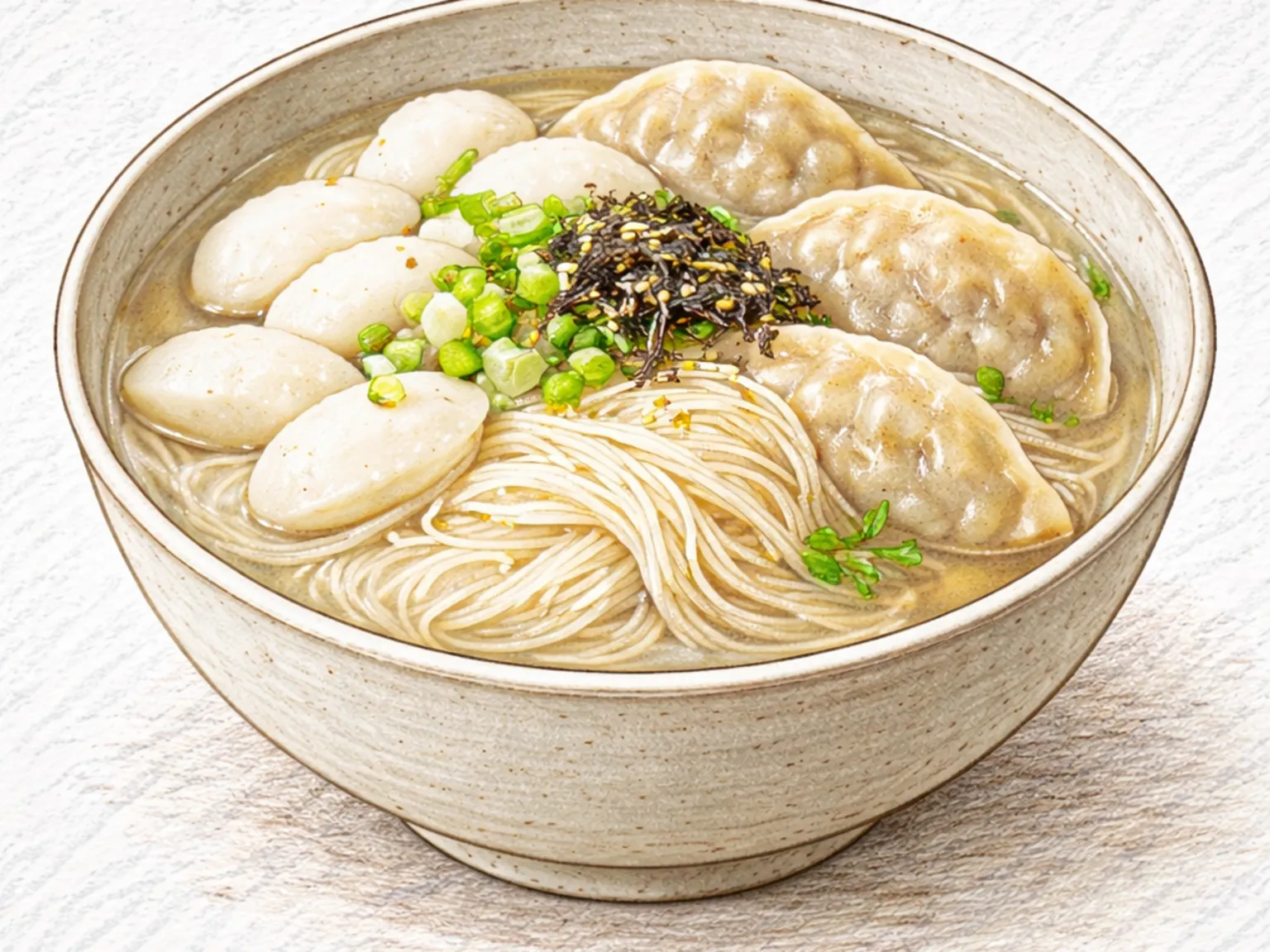
Korean Rice Cake Dumpling Noodle Soup
Tteok-mandu-guk-myeon combines sliced rice cakes, dumplings, and thin somyeon noodles in a rich beef bone broth. Each component contributes a different texture - chewy rice cakes, plump filled dumplings, and soft noodles - making the bowl substantial. The broth is typically garnished with egg strips, shredded seaweed, and scallions. This dish merges two traditional Korean soups (tteokguk and manduguk) into a single, filling meal. Using store-bought dumplings and pre-made broth, it can be ready in under 40 minutes.
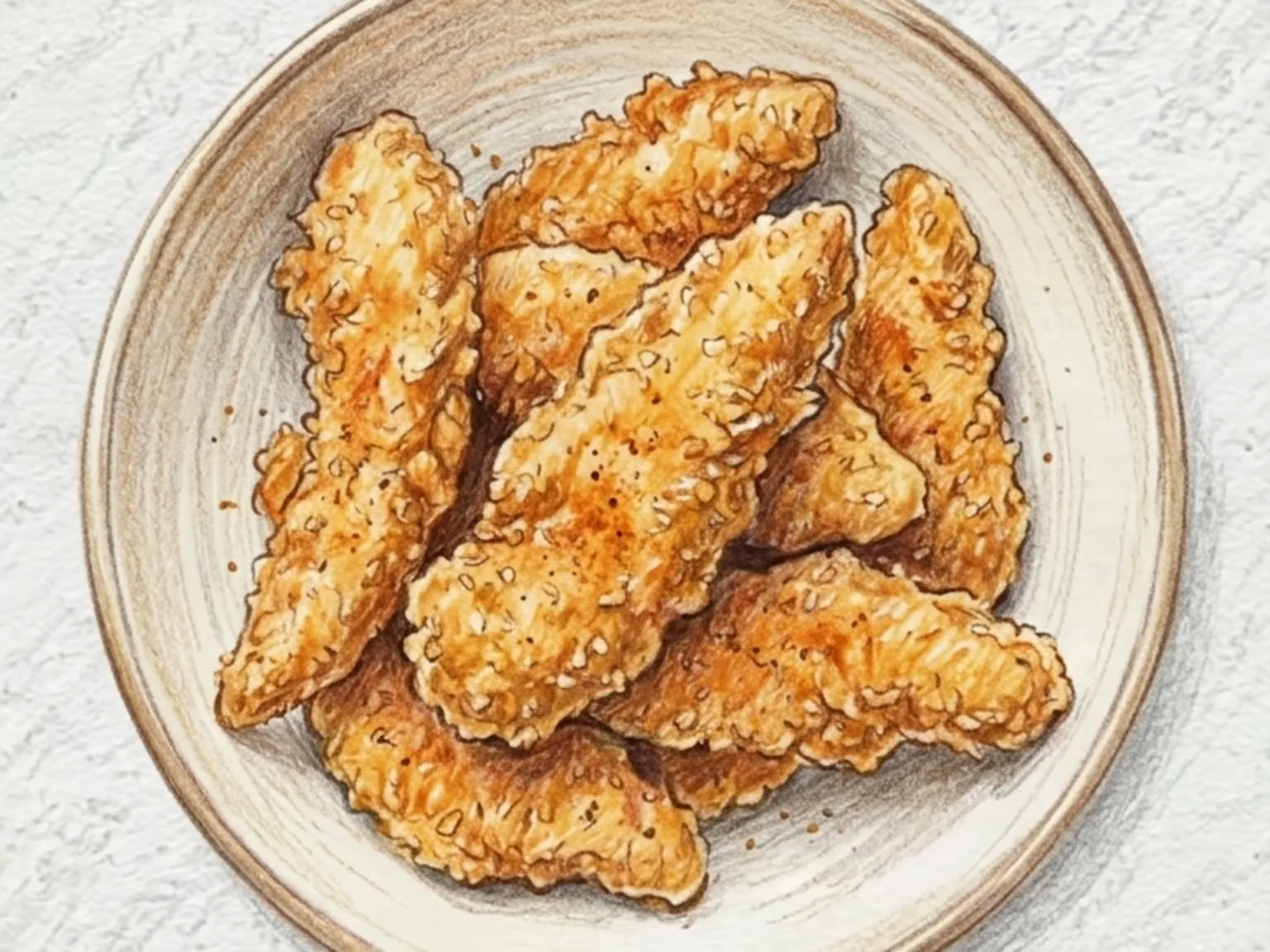
Chicken Tenders
Chicken tenders season chicken tenderloins with salt and paprika, then triple-coat them in flour, egg-milk wash, and breadcrumbs before frying at 170 degrees Celsius until golden and crisp. Tenderloins have a fine grain that stays soft even with brief frying, avoiding the dryness that breast meat can develop. Mixing milk into the egg wash produces a smoother coating that clings more evenly, and pressing the breadcrumbs firmly by hand prevents them from falling off in the oil. Four to five minutes of frying is enough to crisp the exterior to a deep gold while keeping the interior moist, and draining on paper towels immediately after removes excess oil to maintain crunch. A second fry hardens the crust further, keeping it crisp even as the tenders cool.
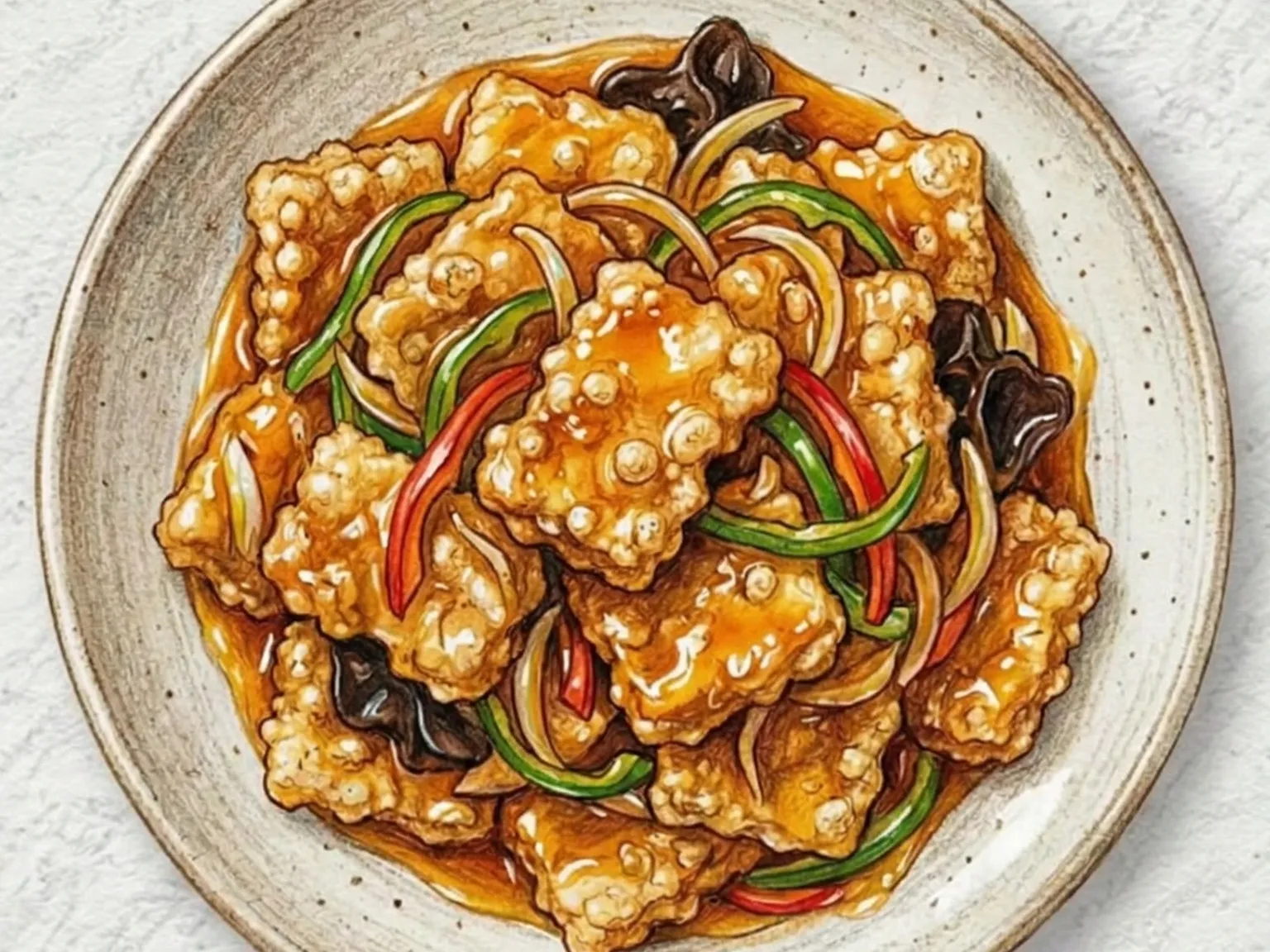
Guo Bao Rou (Sweet and Sour Crispy Pork)
Guo bao rou, literally pot-wrapped meat, is the flagship dish of Northeastern Chinese cuisine, developed in Harbin during the late Qing Dynasty to accommodate Russian diplomats who found traditional Chinese flavors unfamiliar. To suit their palate, the dish was built around a sharp vinegar-sugar balance, and that foundation has persisted to the present day. The technique centers on double-frying: pork tenderloin or loin is sliced thin, coated heavily in potato starch, fried once to set the exterior, then fried a second time at higher temperature to puff the starch into a glassy, shattering crust. The sauce of vinegar, sugar, and soy sauce is reduced in a screaming-hot wok until it caramelizes, and the fried pork must be tossed through in thirty seconds flat. Exceed that window and the starch drinks the sauce, collapsing the crunch entirely. The original Harbin version is pale in color with a pronounced acidic edge. As the dish traveled south through China and into Korean-Chinese restaurants, cooks began substituting ketchup, producing the sweeter and more vividly red version familiar today in Korean establishments. The finished piece delivers three distinct layers of texture simultaneously: a translucent caramelized sauce coating on the surface, a brittle expanded starch shell beneath it, and soft yielding meat at the center.
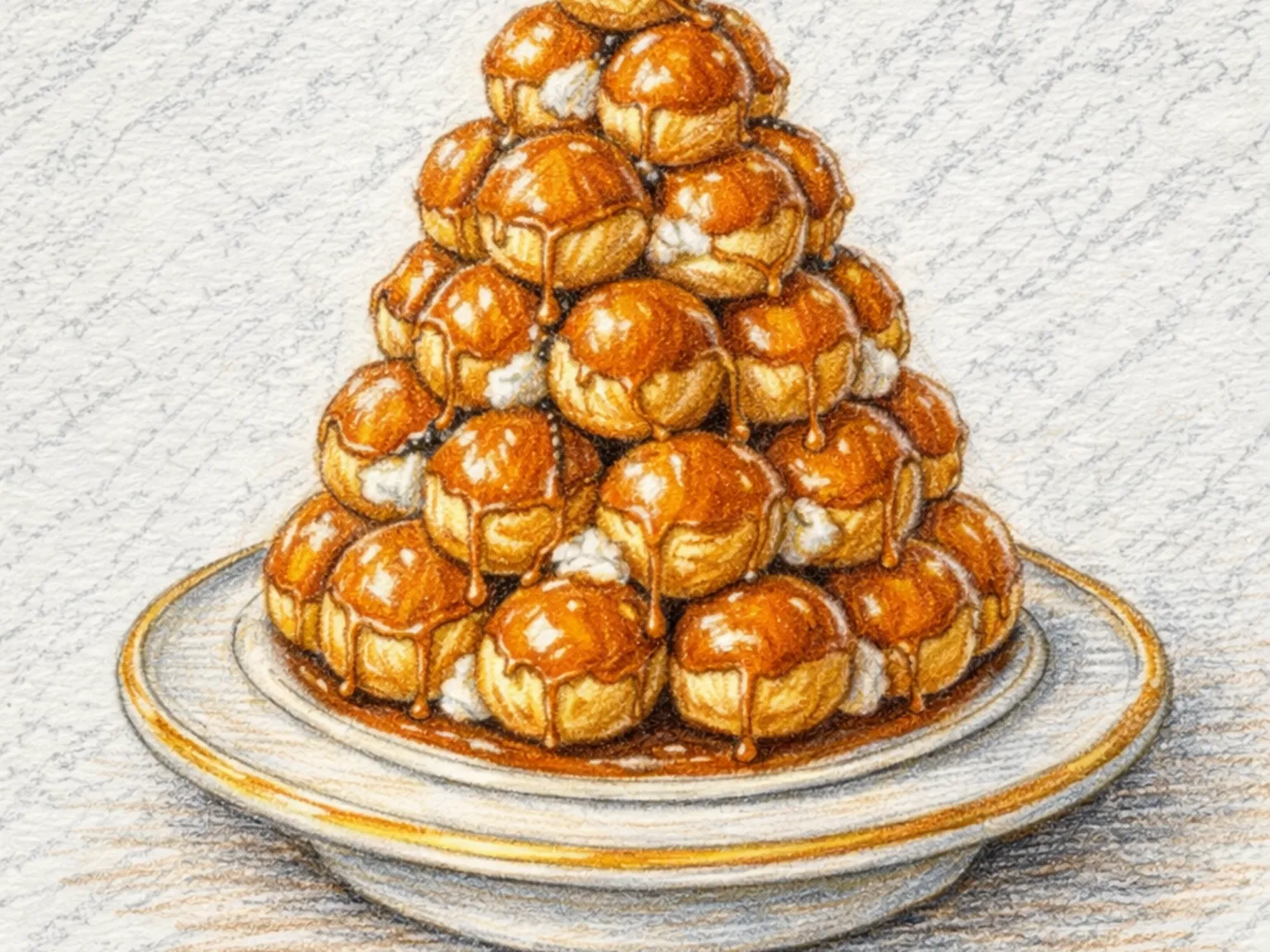
Croquembouche (French Caramel-Glazed Cream Puff Tower Centerpiece)
Croquembouche is a French celebration centerpiece constructed by dipping cream-filled choux puffs in hot caramel and stacking them into a tall conical tower. Each profiterole is baked until the interior is hollow and dry, filled with vanilla pastry cream, then submerged briefly in caramelized sugar that hardens into a thin shell on contact and bonds each puff to its neighbors. As the tower rises, caramel strands are stretched between the puffs, cooling into a web of spun sugar threads that wrap around the entire structure. A finished tower can stand several feet tall, and guests detach individual puffs from the top downward to eat. Cracking the hardened caramel shell with teeth reveals soft choux pastry underneath and cold cream inside, a progression of textures that plays out in a single bite. The name itself comes from the French for crunching in the mouth. In France the croquembouche is a traditional centrepiece at weddings and christenings, where it stands in place of a tiered cake.
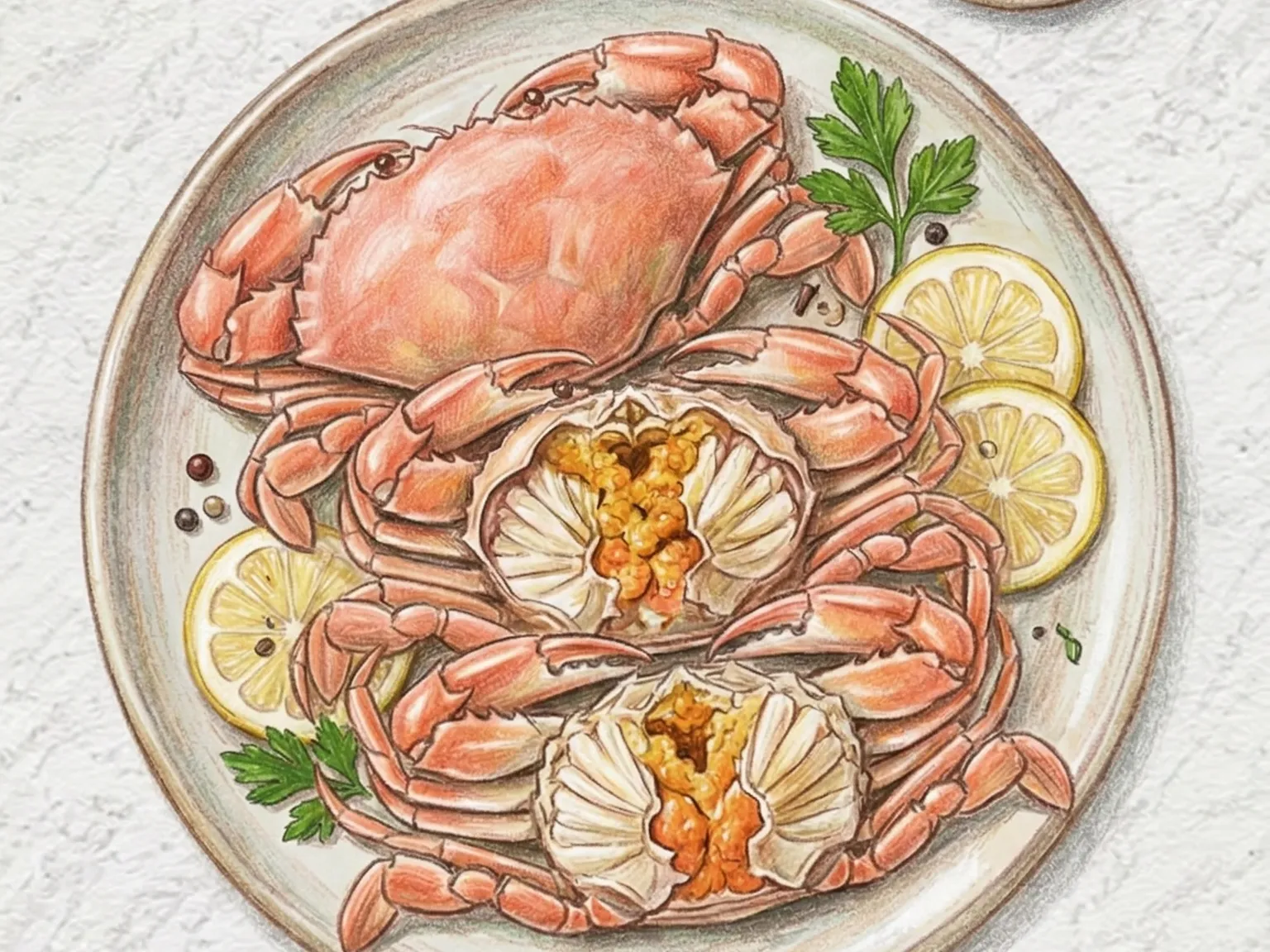
Korean Steamed Blue Crab (Whole Shell Aromatics)
Kkotge-jjim is a Korean steamed blue crab dish cooked whole in a steamer with lightly salted water and aromatic vegetables. Steaming retains the natural juices and sweetness locked inside the shell more effectively than boiling or grilling, so the extracted meat delivers a concentrated, briny flavor with each bite. Dipping the pieces in vinegar soy sauce adds acidity that draws out and sharpens the crab's inherent sweetness, creating a clear contrast against the richness of the flesh. Blue crabs caught during their spring and fall peak seasons arrive heavy with roe and thick with tomalley, which means there is far more to eat beyond the white claw and body meat, and the flavor reaches its fullest depth. Cracking the shells by hand, working through each leg joint, and pulling out the meat is an integral part of how this dish is meant to be eaten. For those without a steamer, a shallow layer of water in a pot with a wire rack set above it works as a straightforward substitute.
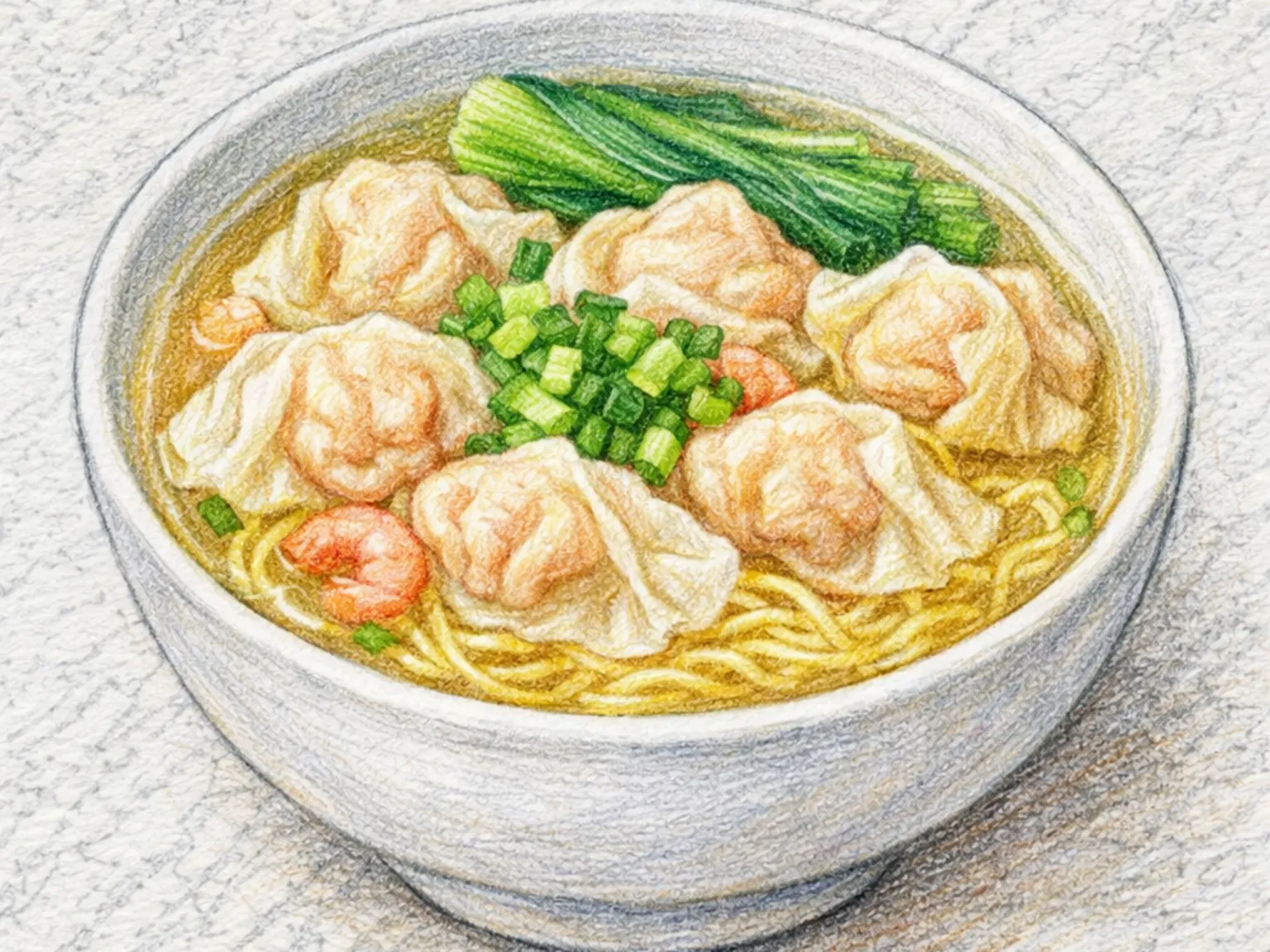
Wonton Noodle Soup
Wonton noodle soup is a Cantonese classic that pairs thin egg noodles with shrimp-and-pork wontons in a clear pork bone broth. The broth is deliberately kept light and clean, relying on long simmering rather than heavy seasoning for its flavor. Each wonton has a thin wrapper that barely conceals a filling with noticeable shrimp texture. The egg noodles are springy and slightly alkaline, a hallmark of Hong Kong-style noodle making. Wrapping wontons from scratch adds about 30 minutes of prep, though pre-made wontons shorten the process significantly.
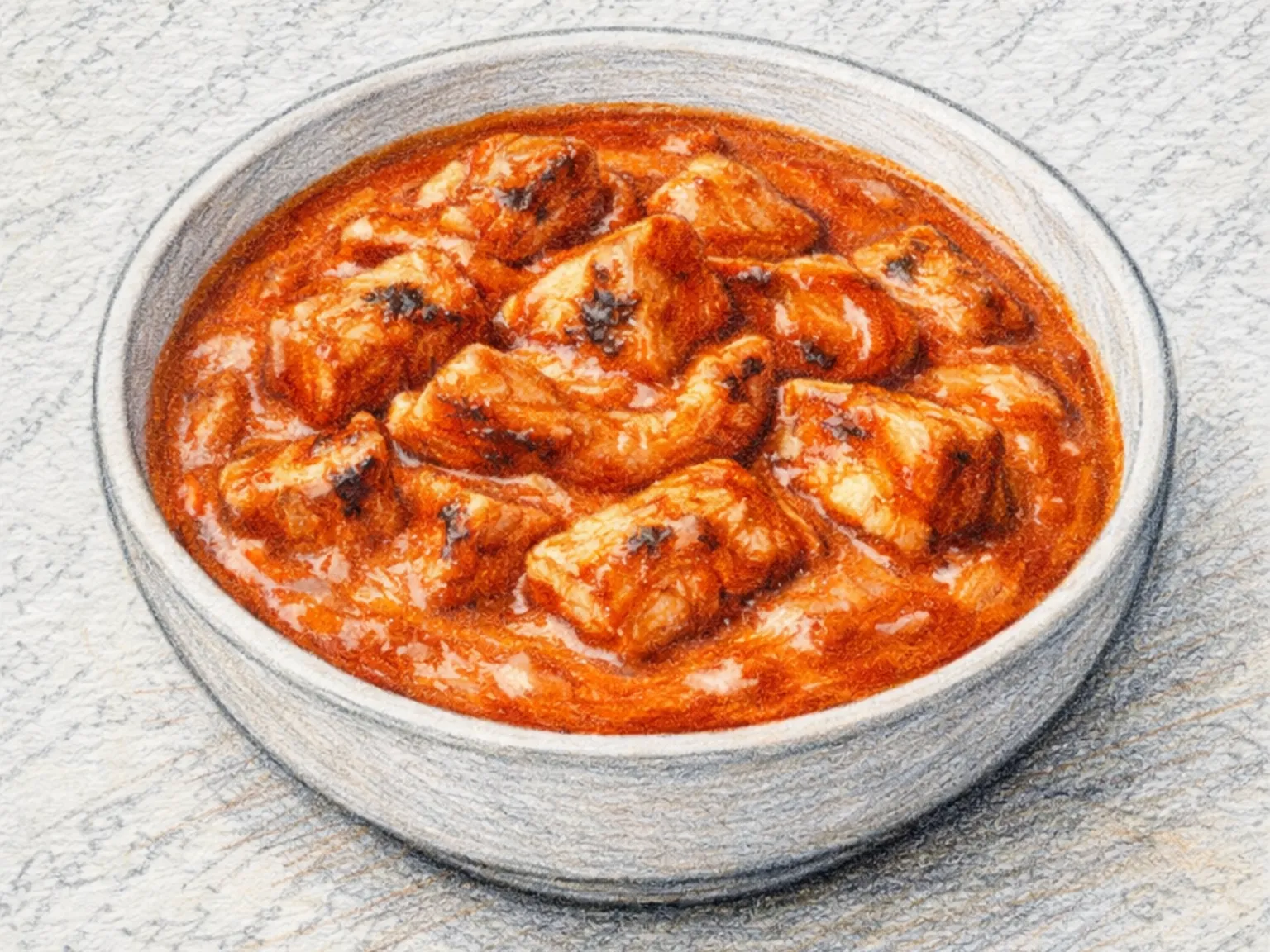
Chicken Tikka Masala
Chicken tikka masala marinates chicken overnight in yogurt, curry powder, garlic, and ginger, then grills or broils it at high heat to develop char on the surface before finishing in a sauce of tomato puree, garam masala, and heavy cream. The lactic acid in yogurt gently breaks down surface proteins while acting as a vehicle to drive the spices deeper into the meat. Browning diced onion in butter, then cooking tomato puree with garam masala for at least fifteen minutes allows the sharp, raw edges of the spices to mellow and integrate fully, building a sauce base with genuine depth. Heavy cream added just before serving wraps the tomato acidity and chili heat in a smooth, rich body that unifies the dish. Overnight marination makes a substantial difference compared to a short soak, as the spices have time to penetrate to the center of each piece. Basmati rice or naan bread served alongside is standard, and dragging the bread through the sauce captures the full range of flavor in a single bite.
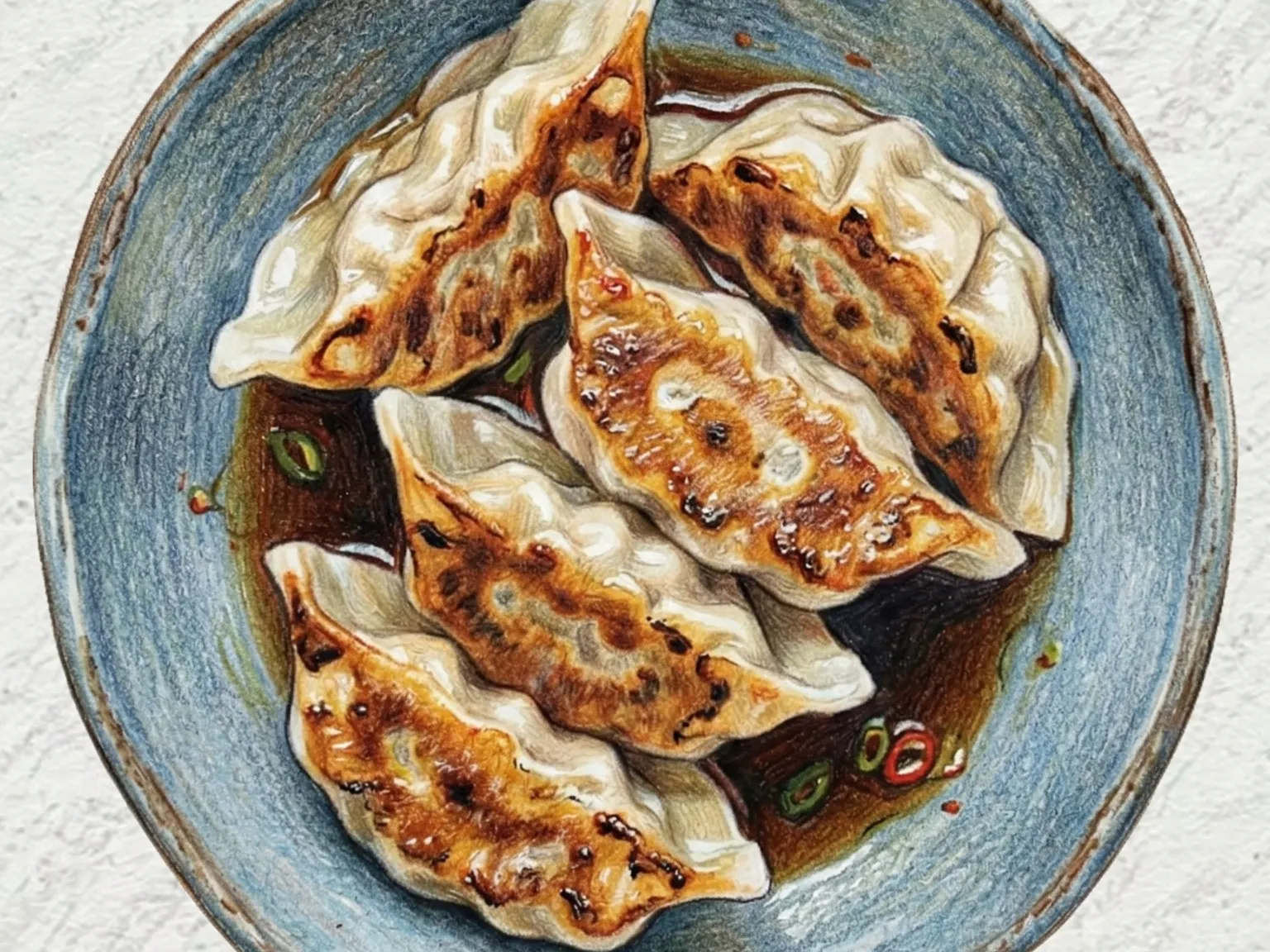
Gyoza
Gyoza are Japanese pan-fried dumplings that evolved from Chinese jiaozi, brought back to Japan by soldiers and civilians returning from Manchuria after World War II, who recreated the dumplings they had eaten abroad. A thin wheat-flour wrapper encloses a filling of ground pork, napa cabbage (or regular cabbage), garlic chives, garlic, and ginger, pleated into a crescent shape. The dumplings are placed flat-side down in an oiled skillet, seared until golden, then water - sometimes mixed with a touch of flour - is added and the lid goes on to steam them through; as the water evaporates, the bottoms re-crisp and form the thin, lacy skirt called hanetsuki that connects all the dumplings in the pan. Each piece delivers three textures in one bite: the chewy steamed top, the crackling golden base, and the juicy meat filling inside. A dipping sauce of soy sauce, rice vinegar, and la-yu (chili oil) adds sharpness, salt, and heat atop the dumpling's savory richness. Gyoza are served as a ramen-shop side dish, an izakaya beer snack, and a weekend home-cooking staple - one of the most versatile foods in the Japanese repertoire.