⚡ Quick Recipes
Ready in 20 minutes or less
804 recipes. Page 16 of 34
A busy schedule does not mean you have to settle for bland meals. Every recipe in this collection can be prepared and finished in 20 minutes or less - quick stir-fries, tossed noodles, microwave dishes, and more.
The secret is minimizing prep work and keeping the steps simple. Pre-cut ingredients or pantry staples speed things up even further. Turn to these recipes after work, during a short lunch break, or for a fast breakfast.
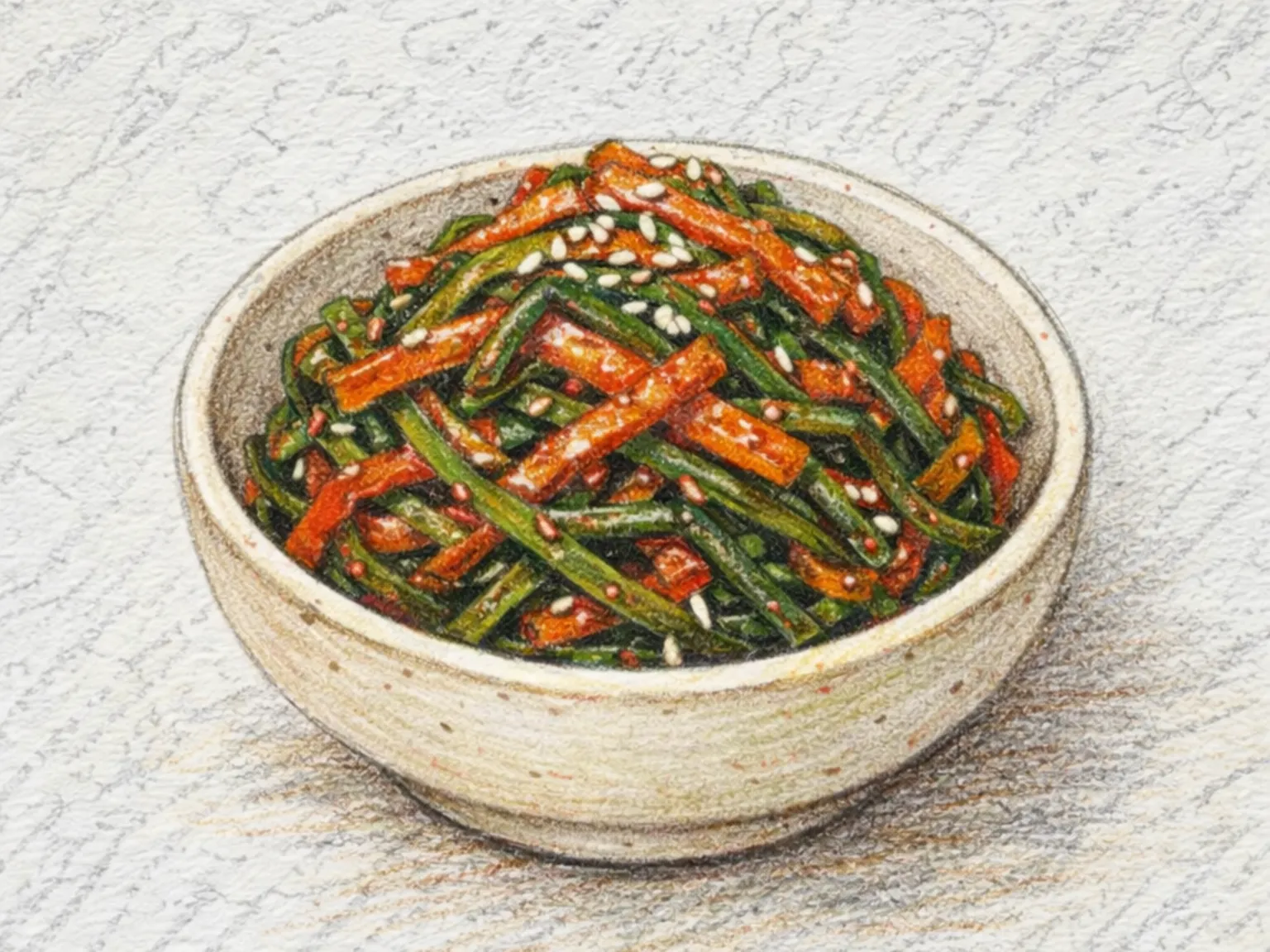
Korean Seasoned Kelp Strips
Kelp strips are soaked in cold water for ten minutes to draw out excess salt, then blanched for twenty seconds, just long enough to turn them pliable without losing their snap. The strips are dressed with gochugaru, vinegar, soy sauce, sugar, and garlic while julienned cucumber adds a cool, refreshing contrast. The seasoning sits over the mineral-dense ocean flavor of the kelp, layering a bright, acidic kick onto each bite. Sesame oil and whole sesame seeds finish the dish. The strips keep a satisfying resistance between the teeth that sets them apart from softer Korean seaweed preparations. Best served cold; the texture and flavor hold up well in packed lunches. Blanching beyond twenty seconds causes the kelp to soften and lose the chew that defines this banchan.
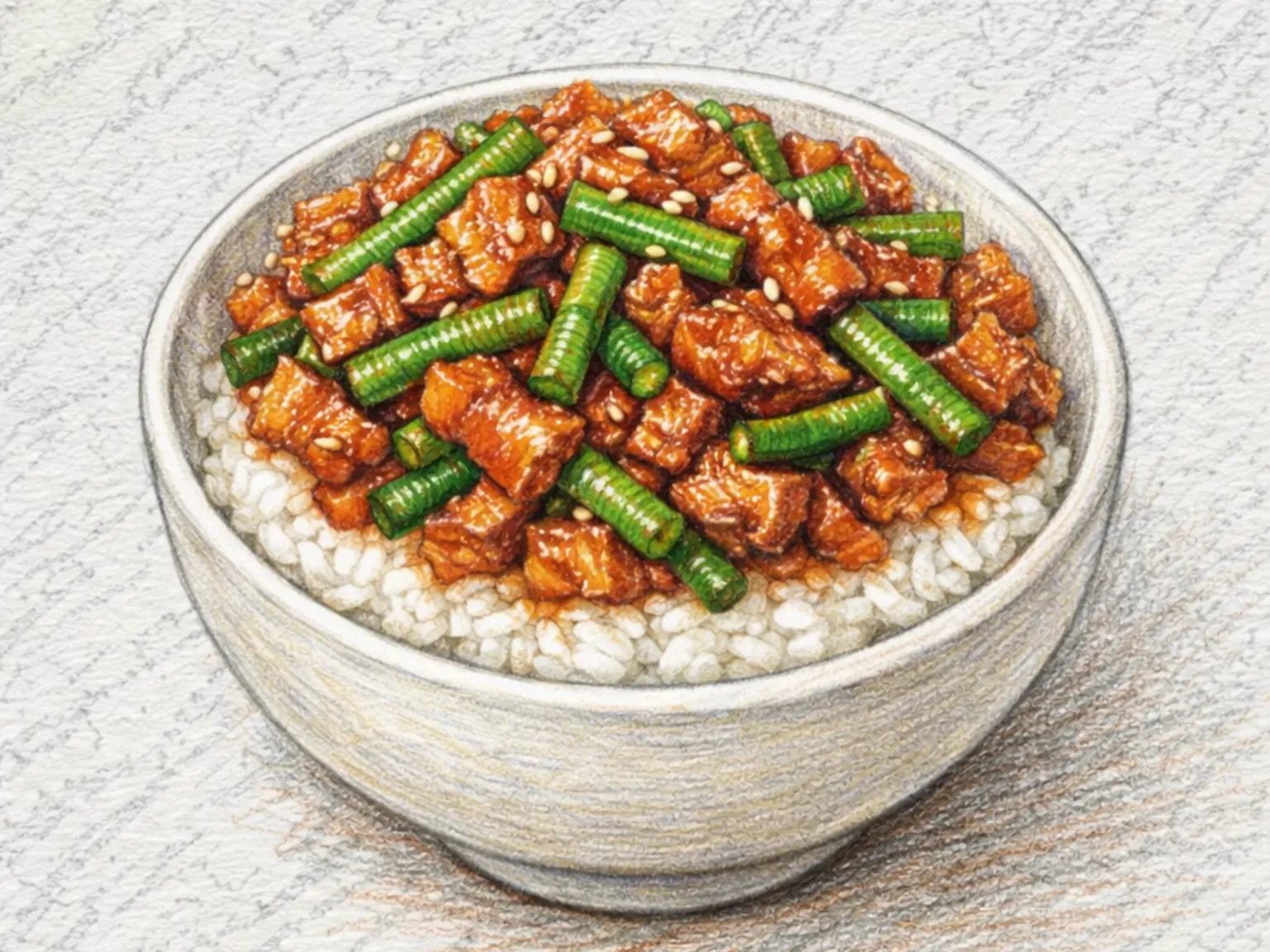
Korean Garlic Scape and Pork Rice Bowl
Crunchy garlic scapes and thinly sliced pork shoulder are stir-fried together in a gochujang-based glaze and piled over steamed rice. The scapes keep their distinctive pungent bite even after cooking, and their fibrous texture holds up against the heat in a way that most vegetables do not, balancing the richness of the pork fat throughout the dish. A quick toss over high heat caramelizes the gochujang and sugar into a glossy, lacquer-like coating that clings to both the meat and the scapes while preserving their snap. Slicing the pork thin ensures it cooks through in the same short window without drying out, and finishing with sliced green onion and a drizzle of sesame oil lifts the overall aroma. Spring-harvested garlic scapes are especially tender and clean-tasting, making this a seasonal favorite worth timing carefully. Fresh pork loses less juice than frozen, which matters when the total cooking time is under five minutes.
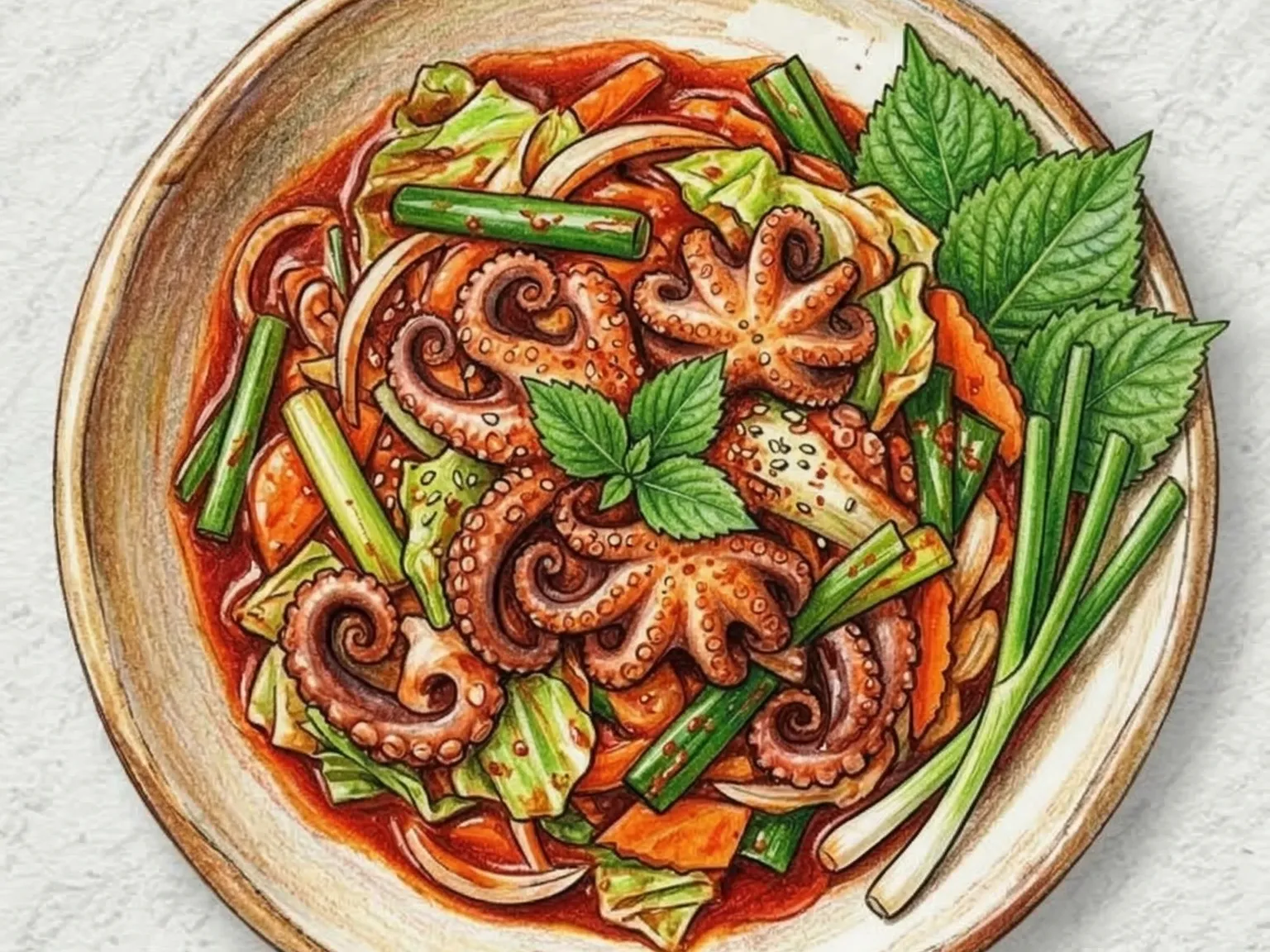
Korean Spicy Webfoot Octopus Stir-Fry
Jjukkumi-bokkeum is a Korean seafood stir-fry made by tossing cleaned small webfoot octopus with vegetables in a bold gochujang and gochugaru sauce over very high heat. Cleaning the octopus properly is essential: the innards inside the head must be removed and the body scrubbed with coarse salt to strip the slippery surface coating. The octopus is marinated ahead in a sauce of gochujang, red pepper flakes, soy sauce, sugar, minced garlic, and sesame oil, allowing the seasoning to penetrate before the heat hits. Onion and scallion go into the hot oiled pan first to develop their sweetness, then the marinated octopus is added and stir-fried on maximum heat for no more than two minutes. Keeping the cooking time short is non-negotiable: jjukkumi turns rubbery and tough if it stays over heat too long, and a chewy, springy texture is what separates a well-made version from an overcooked one. The intense heat of gochujang and coarsely ground red pepper defines the character of the dish, while the natural sweetness of onion and scallion rounds the sharp edges of the spice. Spring jjukkumi caught when the roe sacs are full adds a burst of texture when bitten into, which is why the spring season version is considered especially worth seeking out. The dish pairs naturally with steamed rice or as a drinking snack alongside soju.
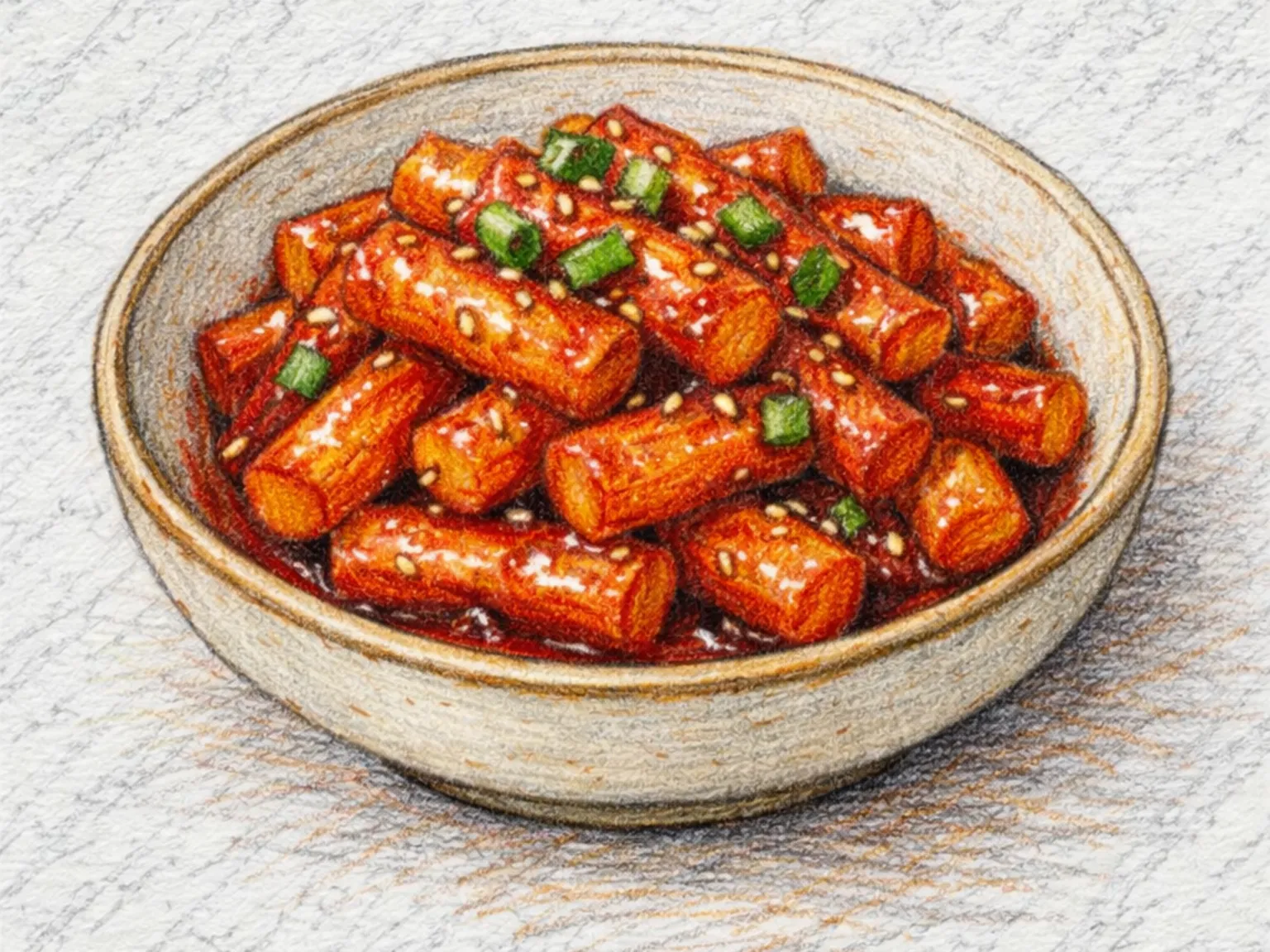
Korean Oil Tteokbokki (Dry-Stir-Fried Rice Cakes in Chili Soy Glaze)
Gireum-tteokbokki is a dry-style tteokbokki where rice cakes are stir-fried in oil and coated with a concentrated paste of gochugaru, soy sauce, sugar, and garlic - no broth involved. Blooming the chili flakes briefly in oil draws out their nutty, toasted aroma rather than raw heat, and the soy sauce and sugar build layered sweetness and umami on top of that base. Without liquid, the seasoning clings tightly to each rice cake's surface. The key technique is restraint with stirring: letting each rice cake sit undisturbed long enough to develop a lightly crisped exterior while the inside stays chewy creates a dual texture that broth-based versions cannot replicate. Green onion and sesame seeds added at the end provide fresh fragrance and textural contrast against the rich coating. The seasoning should be applied generously so the flavors penetrate past the surface rather than sitting only on the outside. Believed to have originated in school-front snack shops in 1970s and 1980s Seoul, gireum-tteokbokki is milder than gochujang versions and accessible to those who find the spicier style too intense.
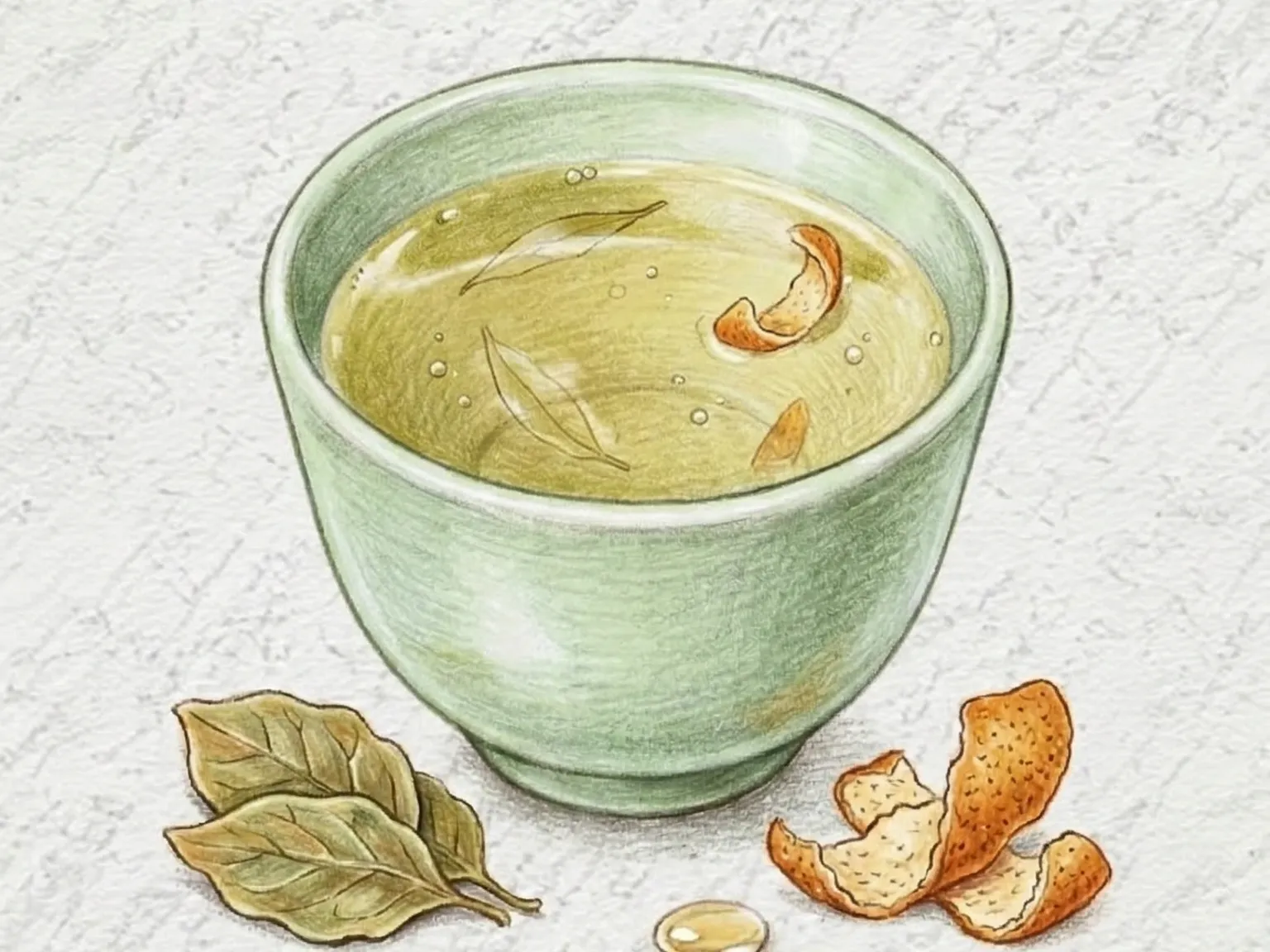
Korean Persimmon Leaf Tea
Gamnip-cha is a Korean caffeine-free tea made by simmering dried persimmon leaves and dried tangerine peel together - no rolling boil, just a low steady heat held for twelve minutes. That slow extraction pulls out the soft, grassy character of the leaves while keeping astringency in check. Thinly sliced Korean pear, skin on, goes into the pot for natural sweetness and a clean brightness, and the tangerine peel stays at a small quantity so it supports rather than overtakes the leaf aroma. Once strained, honey goes in and a trace of ground cinnamon finishes the cup. With no caffeine, it works equally well in the morning or late at night.
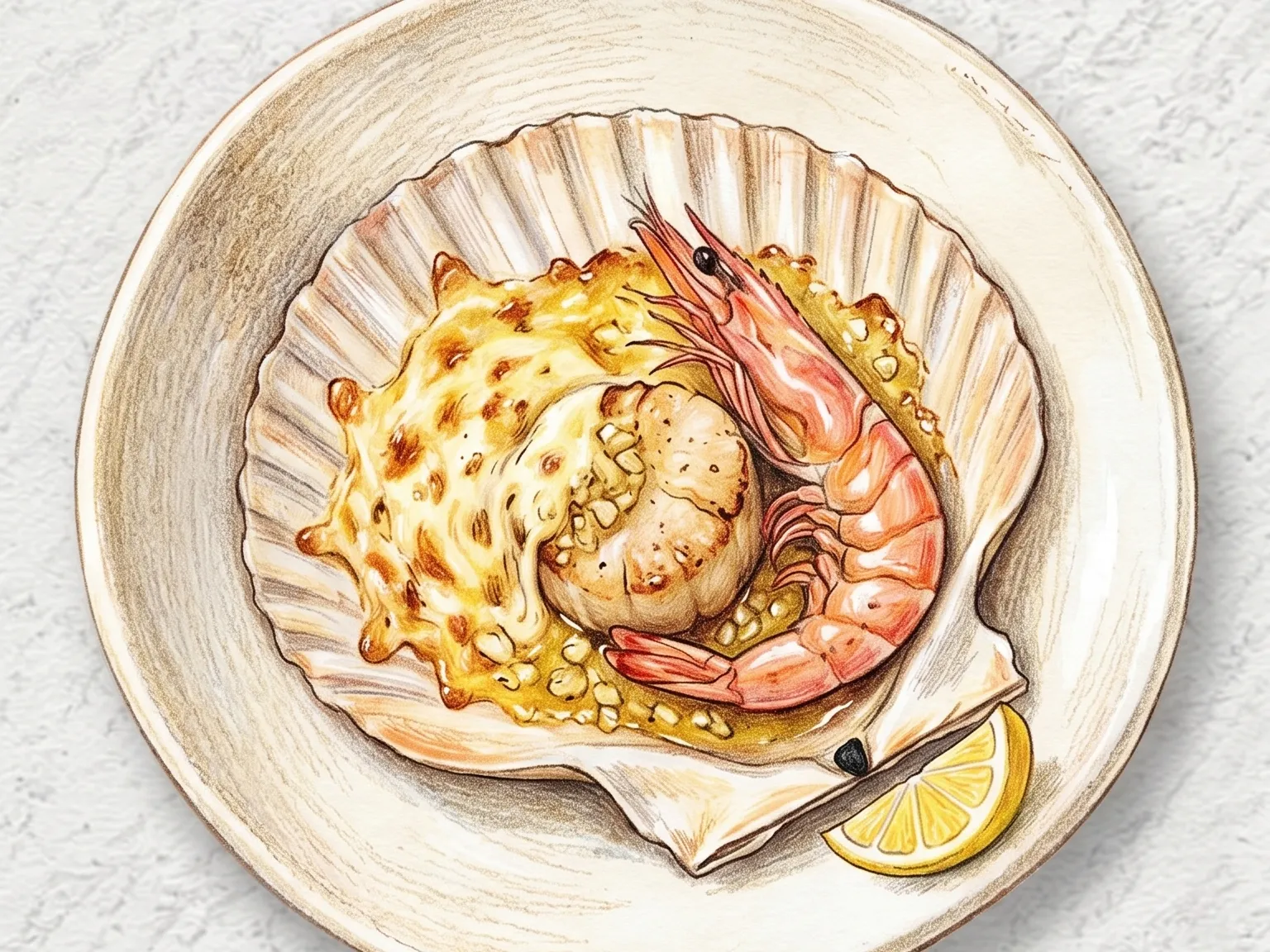
Korean Grilled Scallops (Butter Garlic Shell-On Scallop Grill)
Garibi-gui is a Korean grilled scallop dish where shell-on scallops are placed directly on the grill until they pop open, then topped with butter and minced garlic that sizzle and melt into the adductor muscle. The scallop's deep natural sweetness melds with the richness of melted butter and the sharp warmth of garlic, a combination that produces a layered flavor far more compelling than the ingredient count suggests. A cap of mozzarella cheese added for the final two to three minutes creates a stretchy, golden layer over the plump flesh, but restraint is key: covering only about half the scallop prevents the cheese from overwhelming the clean marine sweetness beneath it. Over charcoal, the shell acts as a natural vessel that channels smoky heat directly into the meat, adding a dimension that a gas burner or stovetop simply cannot replicate. A squeeze of fresh lemon juice just before serving cuts through the butter's richness and lifts the brine. Placing a single prawn alongside the scallop for the final minutes of cooking doubles the seafood sweetness and makes the dish even more compelling as an anju, the Korean term for food eaten alongside alcohol.
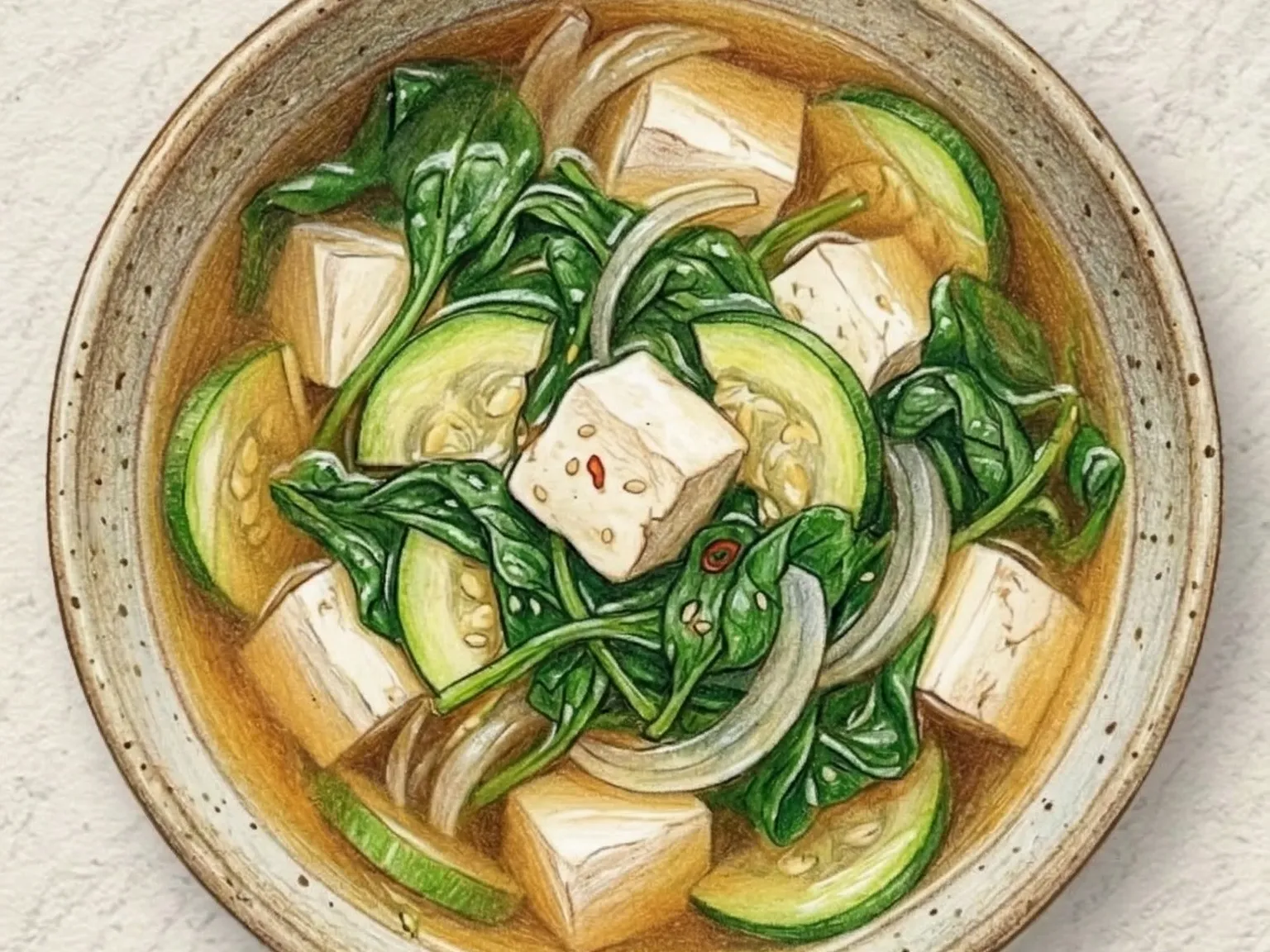
Korean Sigeumchi Dubu Jjigae (Spinach Tofu Stew)
Sigeumchi-dubu-jjigae is a Korean stew built from fresh spinach and soft tofu simmered in anchovy-kelp stock, seasoned with soup soy sauce and perilla oil. The process starts by warming perilla oil in the pot and softening minced garlic until its sharpness mellows into a rounded fragrance that transfers into the oil, giving the broth a subtle depth that would be absent if the garlic were added raw. Zucchini and onion release their natural sweetness as they cook, rounding out the broth and preventing it from tasting flat or austere. Soft tofu, added mid-way, absorbs the seasoned liquid gradually as it heats through, holding its shape while taking on the flavor of the broth around it. Spinach goes in last, only long enough to wilt, because extended cooking destroys the color and reduces the leaves to a limp, dull mass that works against the dish. The iron-forward earthiness of spinach pairs naturally with the mild creaminess of tofu and the nutty undercurrent of perilla oil, producing a stew that reads as simple but carries enough layered flavor to satisfy. This is a standard of Korean home cooking that earns its place at the table for being genuinely easy on the stomach, particularly welcome when appetite is low or the body calls for something clean.
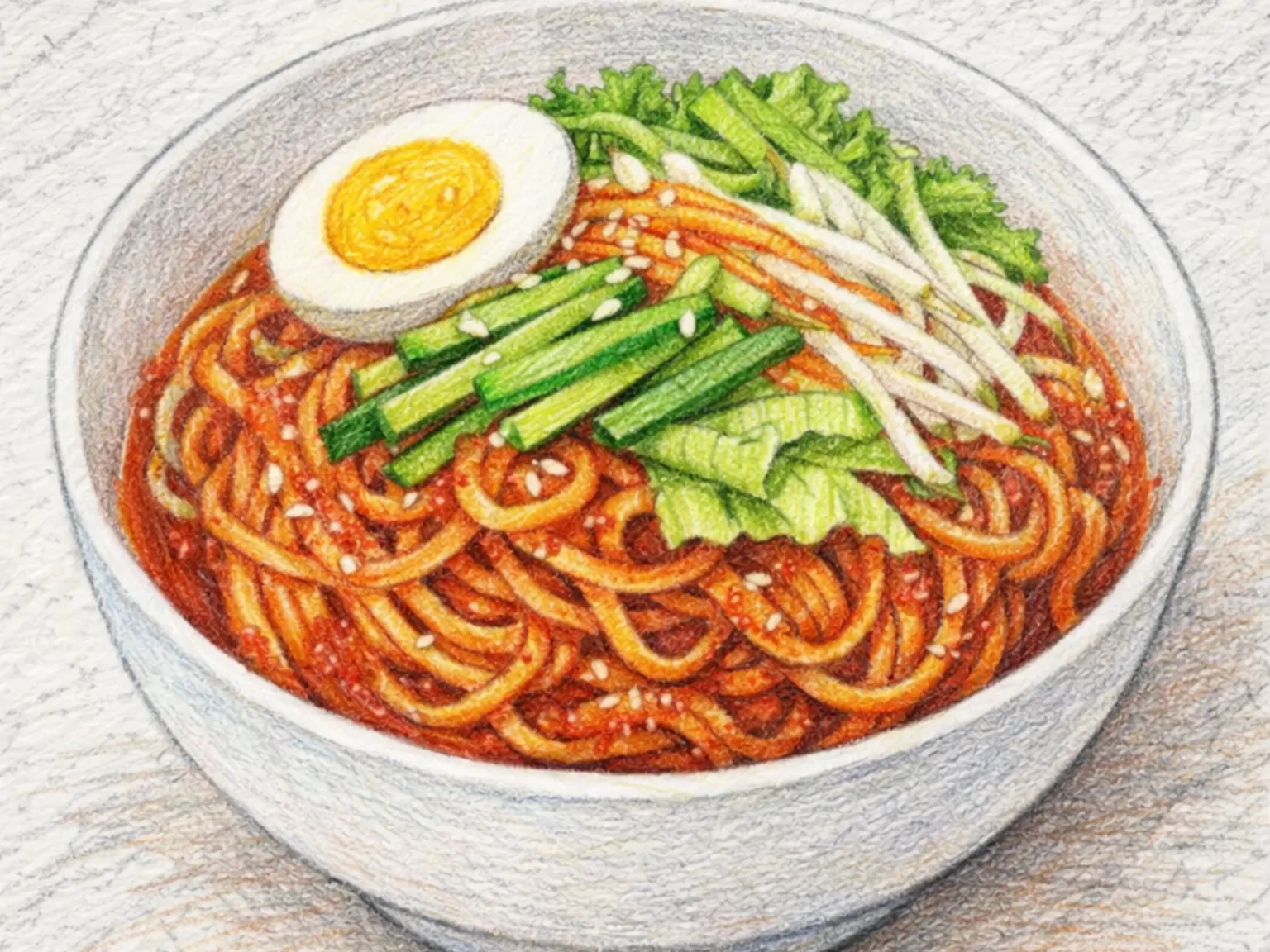
Korean Spicy Chewy Noodles
Jjolmyeon is a Korean cold noodle dish built around unusually thick, springy wheat noodles that were accidentally invented at an Incheon noodle factory in the 1970s. The noodles are boiled, rinsed in ice water to firm up their chewy texture, then dressed in a sweet-sour-spicy sauce made from gochujang, vinegar, sugar, soy sauce, and sesame oil. Shredded cabbage and julienned cucumber are chilled separately and piled on top, giving each bite a crisp contrast to the bold sauce. A halved boiled egg adds a creamy counterpoint to the heat. The dish is served cold and eaten after thorough mixing, making it a go-to summer meal and late-night snack across Korea.
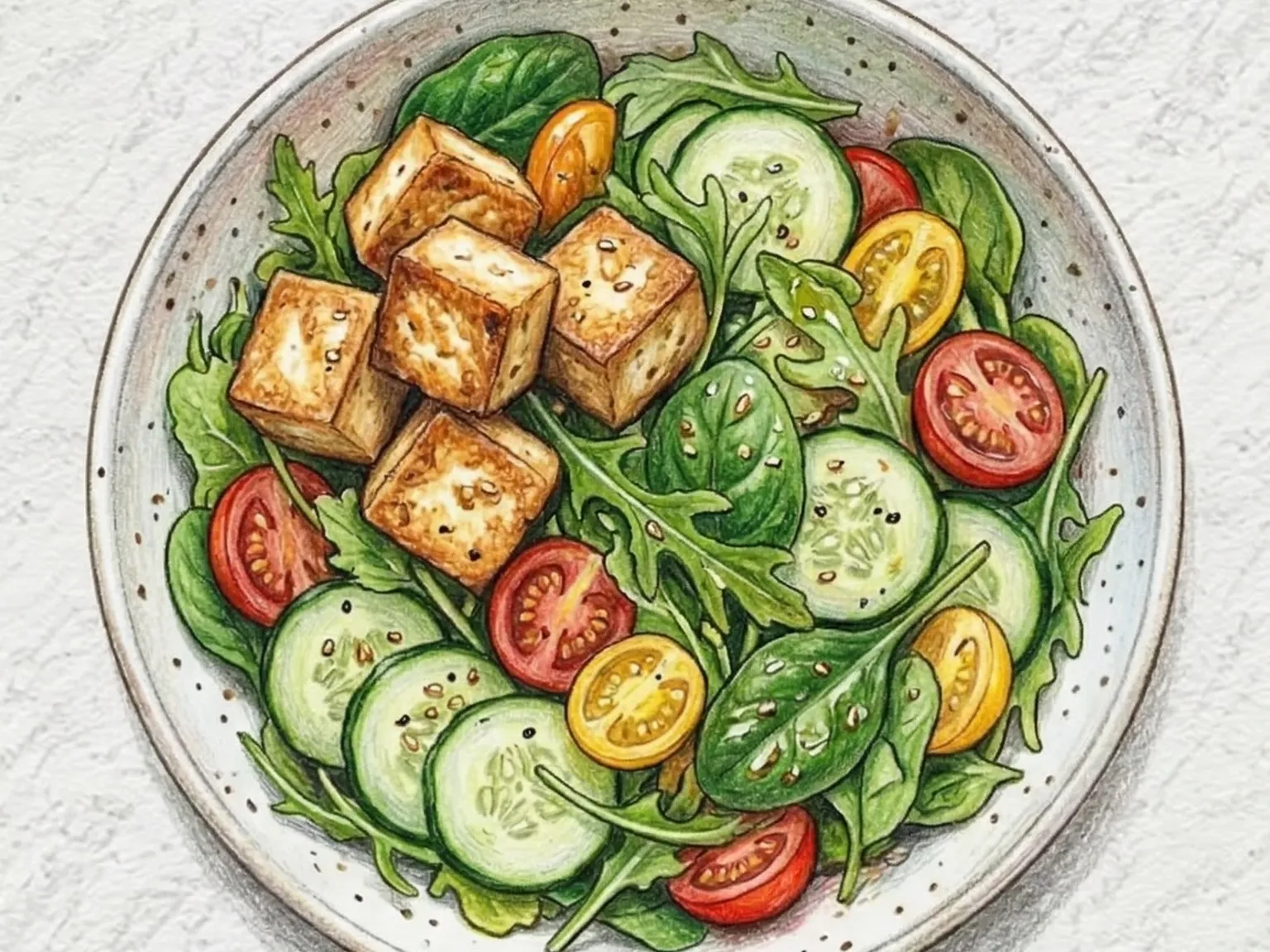
Tofu Salad (Pan-Seared Tofu on Fresh Greens)
Dubu salad is made by pressing firm tofu to remove excess moisture, then pan-searing it until the outside turns golden and crisp while the inside stays soft and tender. The seared tofu is placed over a bed of baby greens, sliced cucumber, and cherry tomatoes. Wrapping the tofu in two layers of paper towels and setting a weight on top for twenty to thirty minutes draws out enough water so the surface browns properly in the pan without steaming. A dressing of soy sauce, sesame oil, lemon juice, and olive oil moves easily between Korean and Western flavor profiles. The salad is high in plant protein and low in fat, making it a practical and satisfying option when a light, clean-tasting meal is the goal.
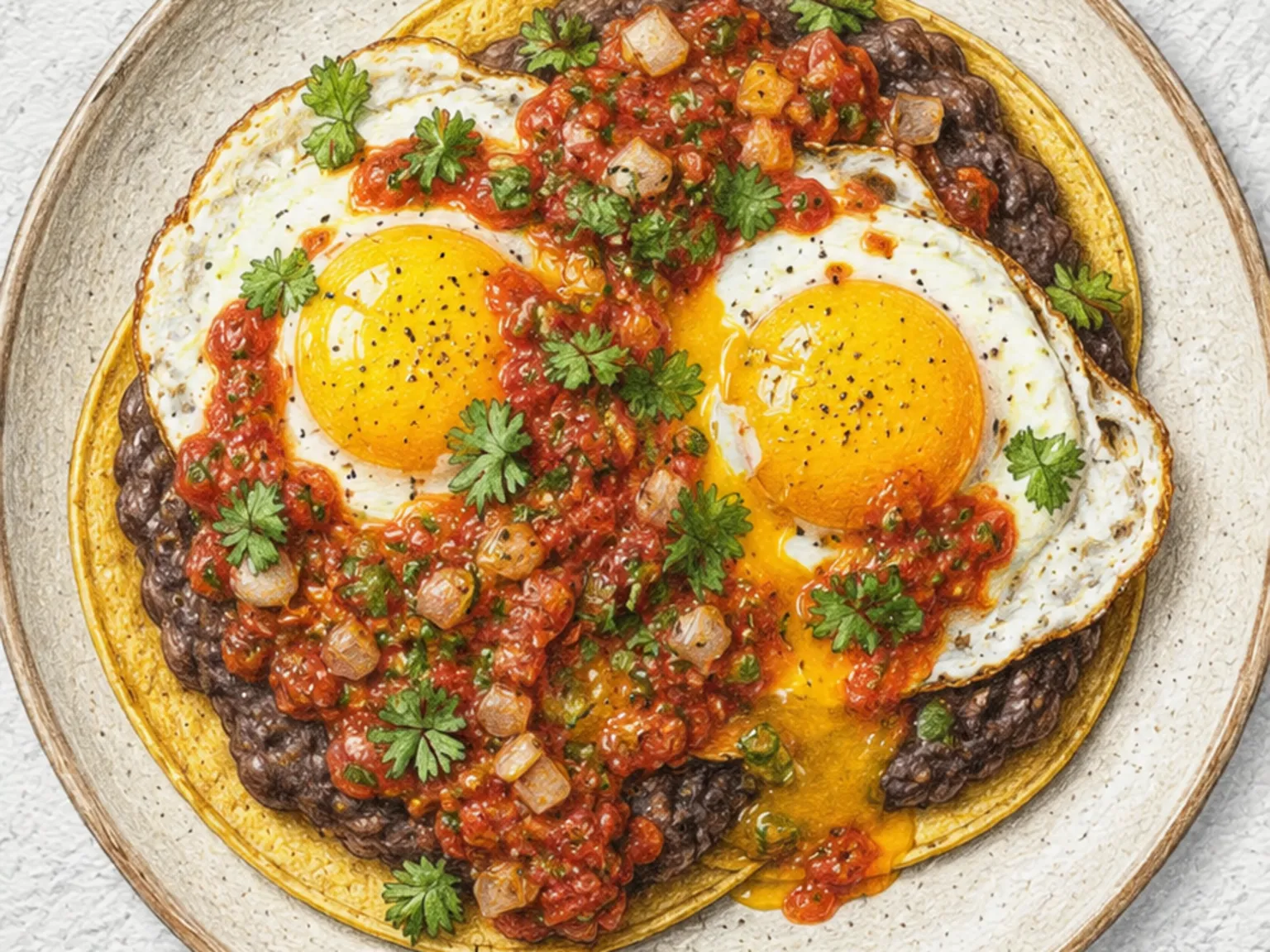
Huevos Rancheros (Fried Eggs on Tortilla with Salsa)
Huevos rancheros is a traditional Mexican breakfast of corn tortillas topped with sunny-side-up eggs, a homemade tomato-chili salsa, and lightly mashed black beans. Onion and jalapeno are sauteed in olive oil, then chopped tomatoes are added and simmered until the salsa thickens into a concentrated, spicy-tangy sauce. Keeping the salsa thick is important so the tortillas stay firm rather than turning soggy. The eggs are fried with set whites and runny yolks - breaking the yolk at the table lets it run into the salsa and create a rich, natural sauce. Fresh cilantro scattered on top adds a herbal brightness that lifts the heat and acidity, and a squeeze of lime juice sharpens the entire plate.
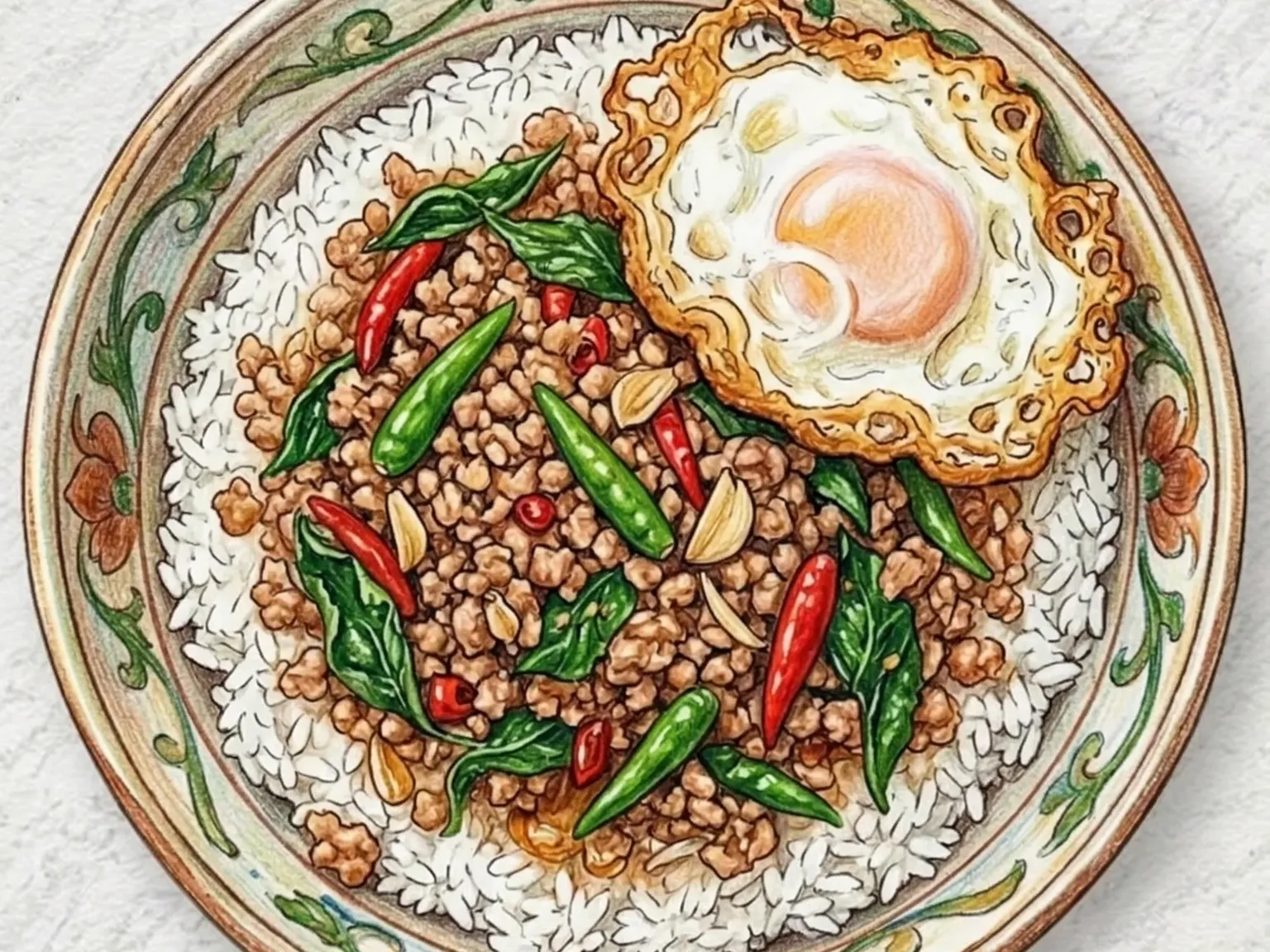
Pad Kra Pao (Thai Holy Basil Stir-Fried Minced Meat with Egg)
Pad kra pao is the single most common everyday meal in Thailand - a wok-fried dish of minced meat with holy basil and chilies, spooned over steamed rice and topped with a fried egg. Garlic and fresh chilies are roughly pounded and fried in a smoking-hot wok until fragrant, then ground pork goes in and is broken apart quickly. Oyster sauce, fish sauce, soy sauce, and a pinch of sugar create the seasoning base. A generous handful of holy basil leaves is tossed in at the end, releasing a peppery, clove-like aroma that defines the dish. The fried egg should have crispy lacy edges and a runny yolk that becomes a sauce when broken.
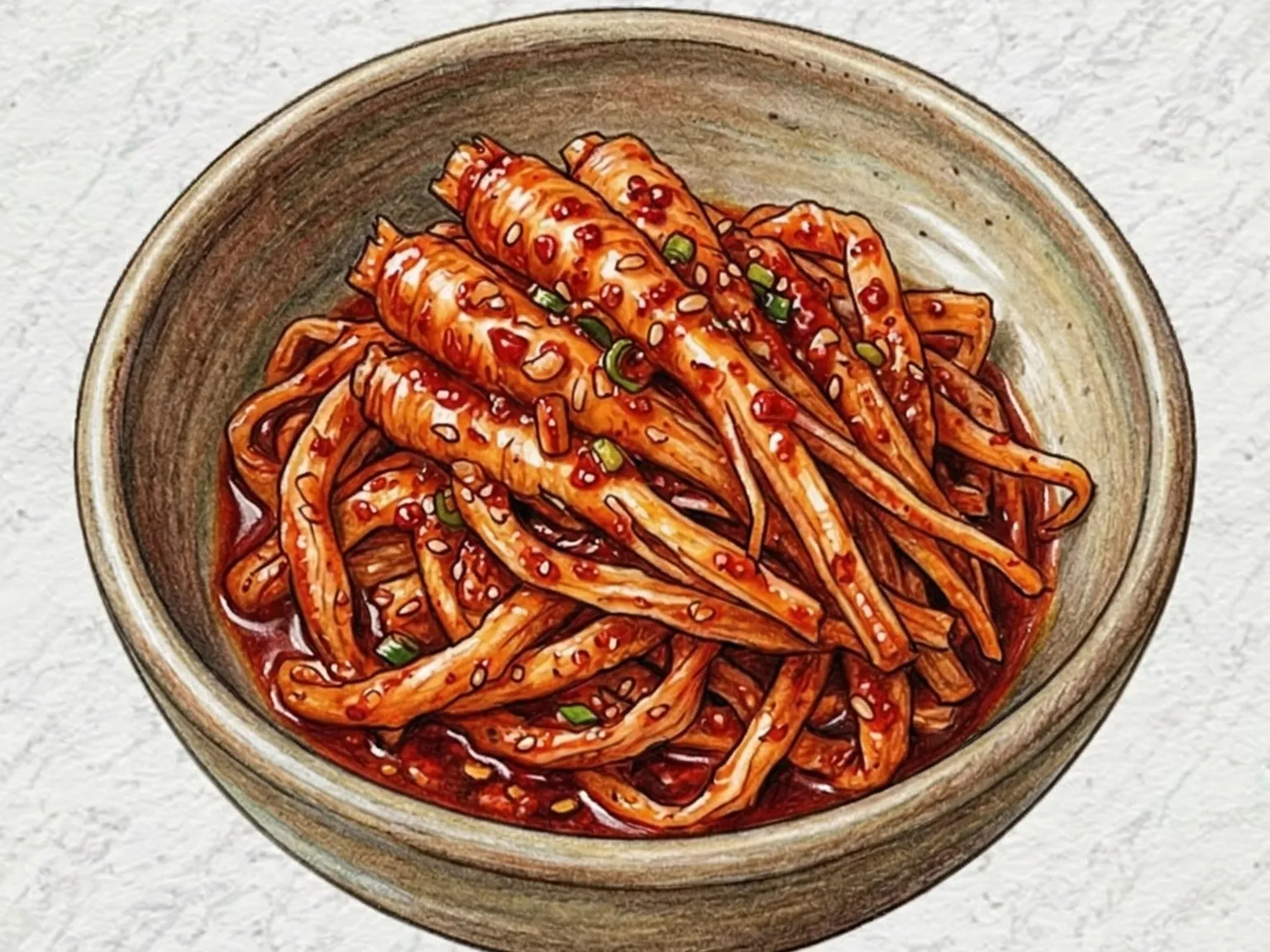
Korean Spicy Seasoned Deodeok
Deodeok - Codonopsis lanceolata - is a mountain root that has been used in Korean cooking and folk medicine for centuries. Its flesh is fibrous, sticky, and carries a ginseng-like bitterness that becomes pronounced when the root is raw. Peeling and pounding with a mallet splits the fibers into rough, ribbon-like shreds with a textured surface that holds seasoning well. A soak in cold water draws out the sharpest of the bitterness before the root is drained and tossed. The dressing - gochujang, vinegar, minced garlic, sugar, and gochugaru - is sweet, sour, and spicy in roughly equal measure, tempering the root's wild, resinous character while leaving the chewy texture intact.
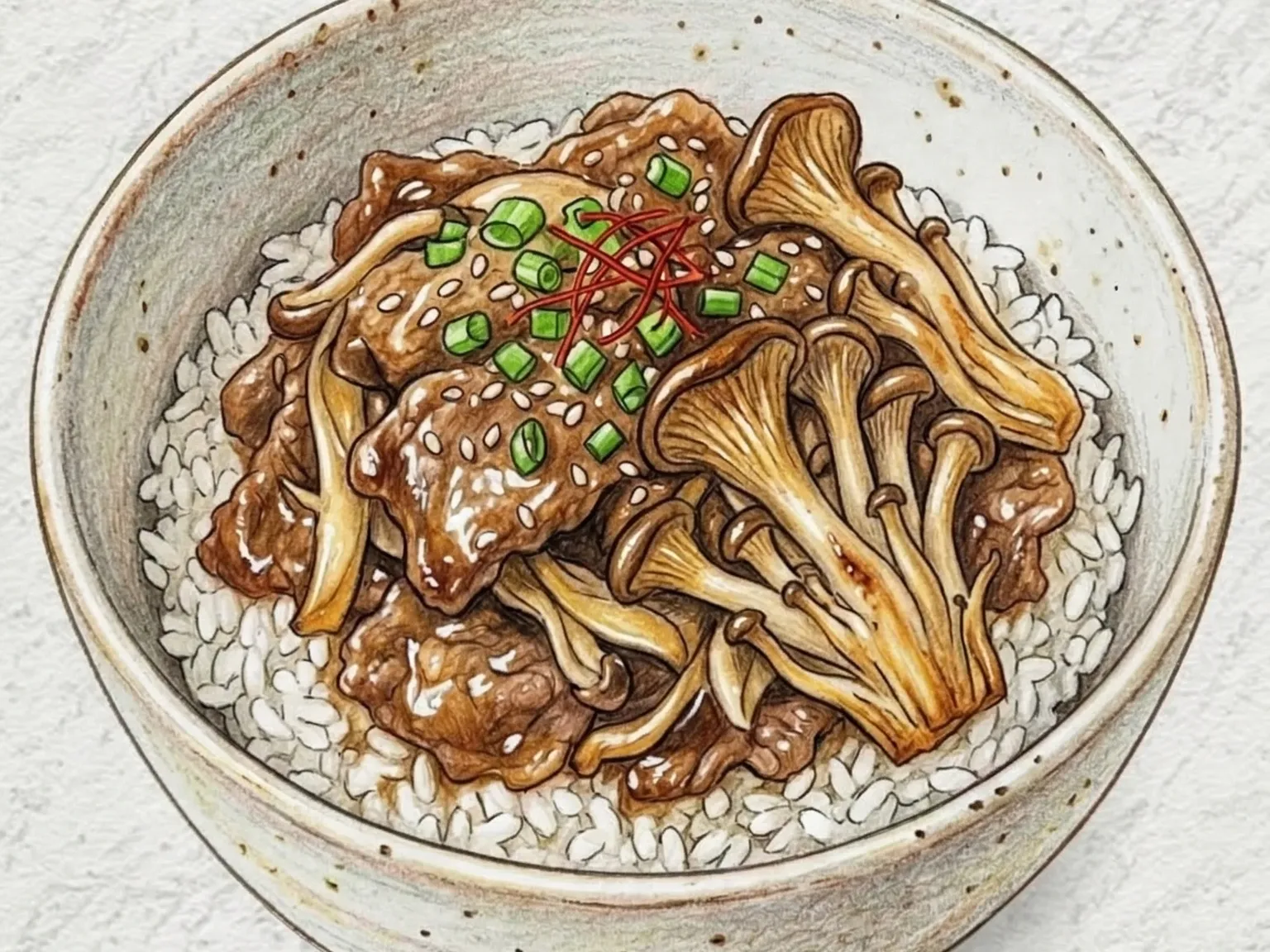
Korean Bulgogi Mushroom Rice Bowl
Soy-and-pear-juice-marinated beef is stir-fried together with torn oyster mushrooms and served over rice for a deeply savory bowl. Cooking the mushrooms first in the hot pan allows their excess moisture to evaporate, keeping the sauce thick and glossy once the marinated beef goes in rather than pooling at the bottom. Pear juice contains natural tenderizing enzymes that soften the beef fibers noticeably even after a short marinating time, and its understated sweetness bridges the saltiness of the soy sauce without adding a fruity flavor. A drizzle of sesame oil at the end of stir-frying lays a toasted, nutty fragrance over the sweet-salty glaze that rounds out the whole bowl. When pear juice is not available, one teaspoon of sugar dissolved in one tablespoon of water provides a workable substitute that approximates the sweetness without the tenderizing effect.
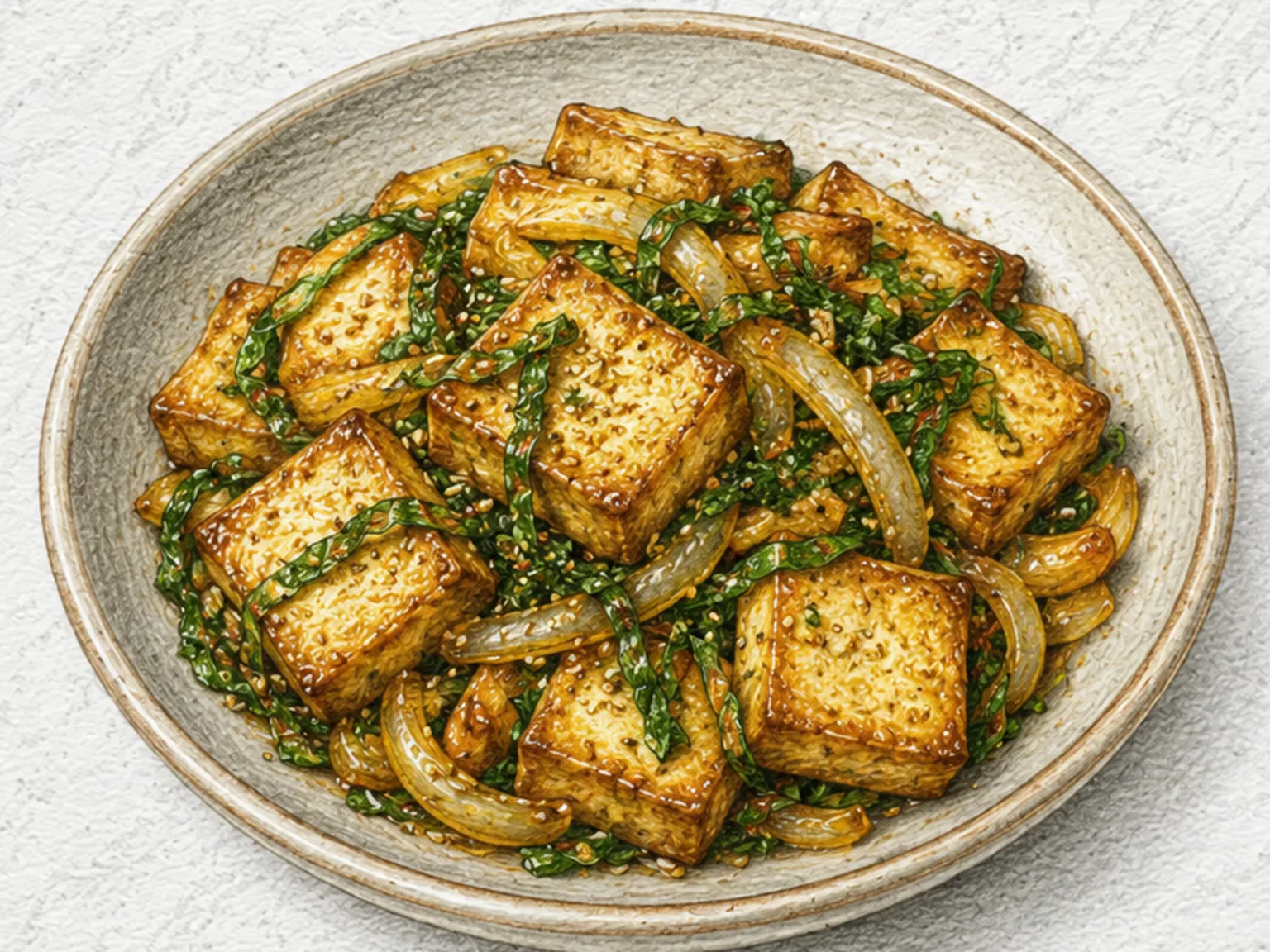
Korean Perilla Leaf Tofu Stir-fry
Kkaennip dubu bokkeum is a side dish of firm tofu cubes pan-fried until golden, then seasoned with soy sauce, onion, and garlic before being tossed with chiffonaded perilla leaves and ground perilla seeds at the end. The tofu develops a lightly crisp shell that absorbs the soy seasoning while the interior stays soft. Perilla leaves contribute a distinctive herbal fragrance, and the ground perilla seeds add a nutty depth that elevates the dish beyond a basic tofu stir-fry. A final touch of sesame oil brightens the aroma.
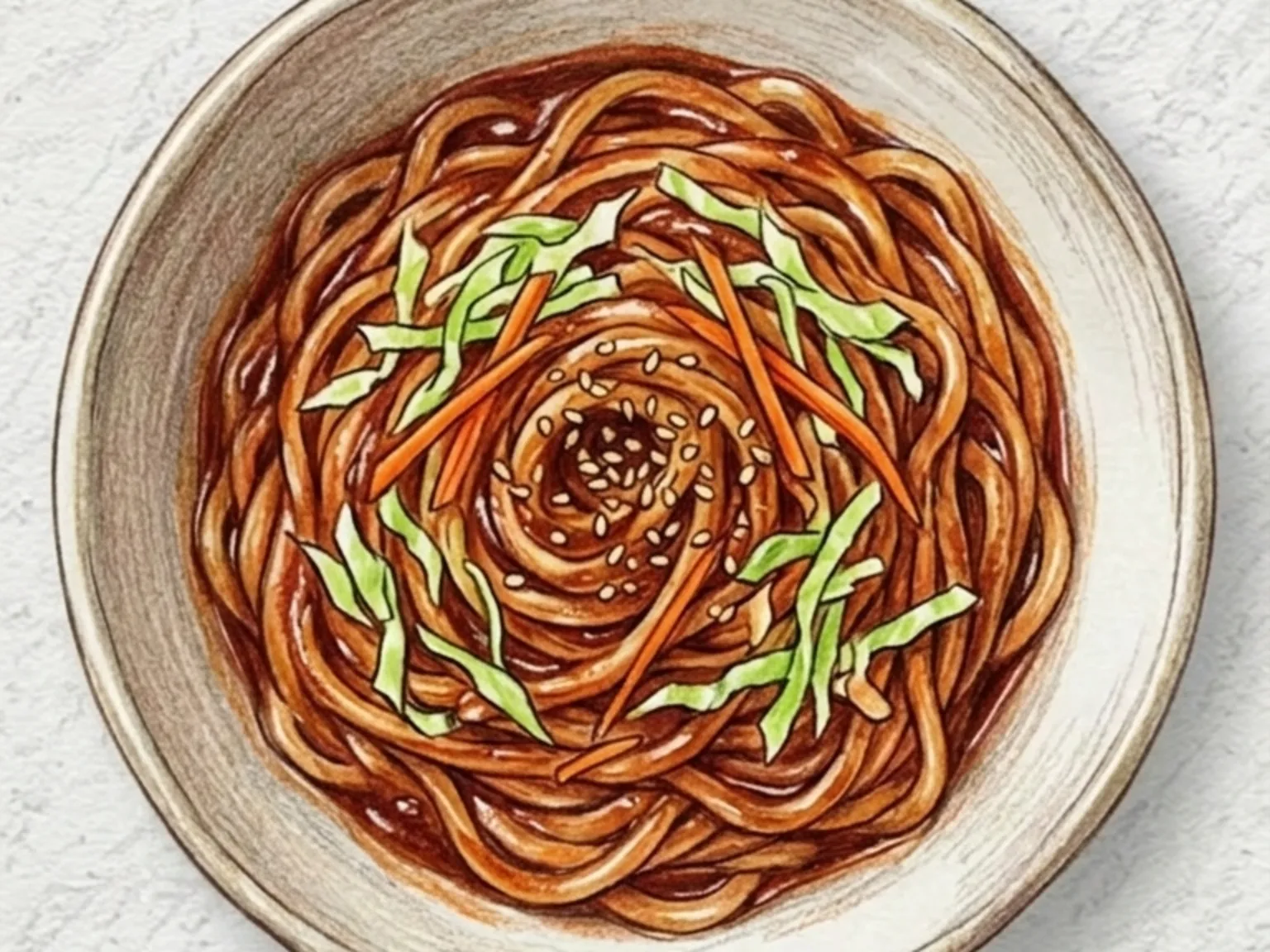
Korean Gochujang Bibim Udon Cup (Spicy Mixed Udon Cup)
Gochujang bibim udon cup is a cold-tossed udon noodle dish served in a cup, dressed with a sauce built from gochujang, soy sauce, oligosaccharide syrup, vinegar, and sesame oil. The fermented heat of gochujang meets the acidity of vinegar to create a bright, tangy-spicy flavor profile that avoids sharpness, and the viscous syrup gives the sauce enough body to cling evenly to the thick udon strands. Raw julienned cabbage and carrot are folded in without cooking, adding a snappy crunch that contrasts the soft noodles. Cooling the noodles completely before tossing is a key step that prevents the sauce from clumping and ensures even distribution throughout the cup. The handheld cup format suits street food settings, and additional toppings such as a soft-boiled egg or seasoned seaweed can elevate it into a fuller meal.
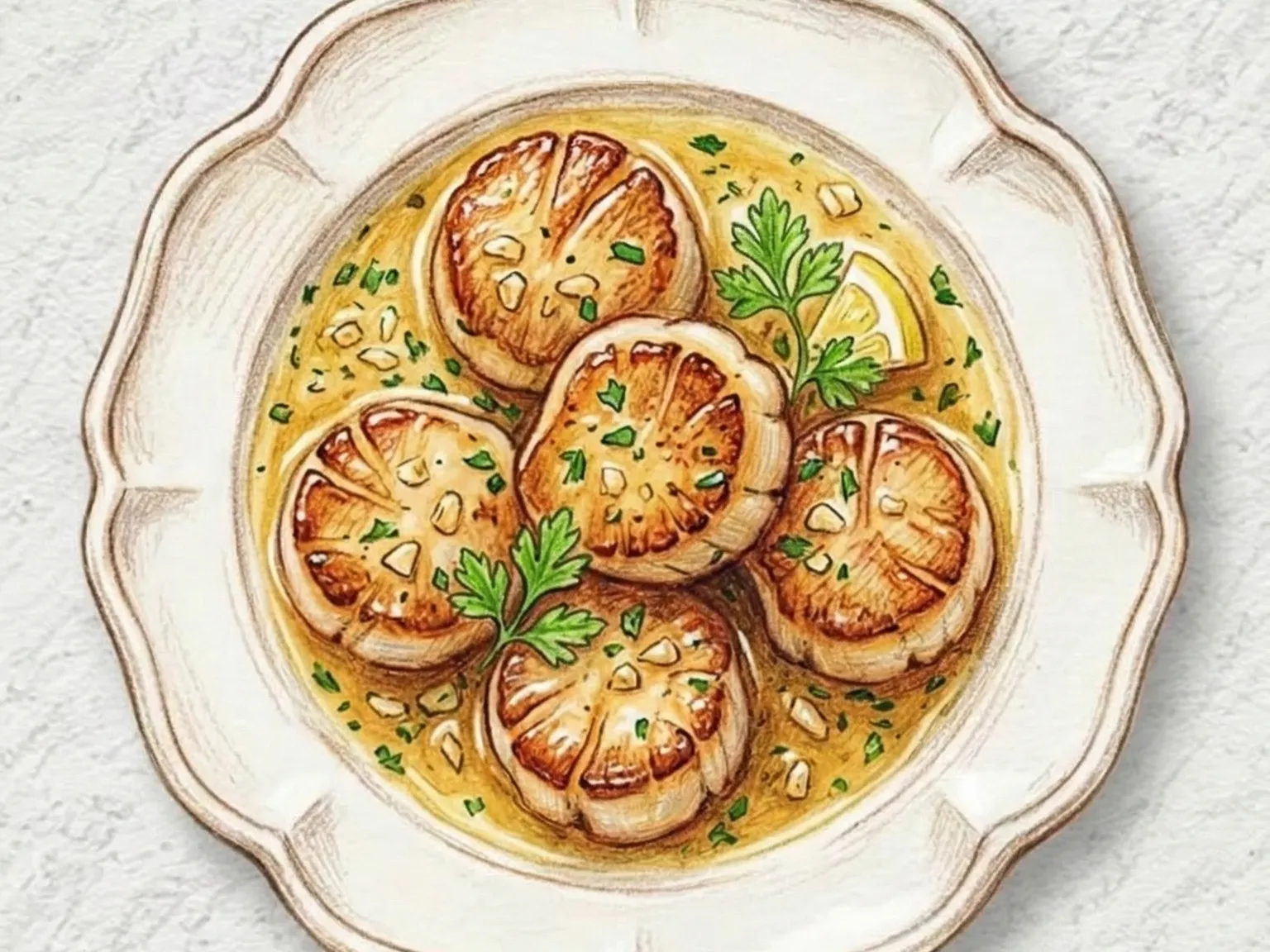
Korean Butter-Grilled Scallops
Garibi butter-gui sears fresh scallops in garlic butter until each side develops a deep golden-brown crust, then finishes with lemon juice and parsley to balance the richness. Removing every trace of surface moisture with paper towels before seasoning is the single most important step -- water on the surface of the scallop causes it to steam rather than sear, and no caramelized crust will form until that moisture has evaporated. Each side cooks for only one to two minutes at the highest heat the pan can sustain, leaving the center just barely opaque and the texture tender rather than rubbery. After flipping, butter and minced garlic are added directly to the hot pan and spooned continuously over the scallops so the aroma infuses the surface. A squeeze of lemon and a scatter of chopped parsley added just before removing from heat layers acidity and freshness over the butter richness. Simple to prepare and fast to cook, this dish appears regularly at home gatherings in Korea as a crowd-pleasing appetizer.
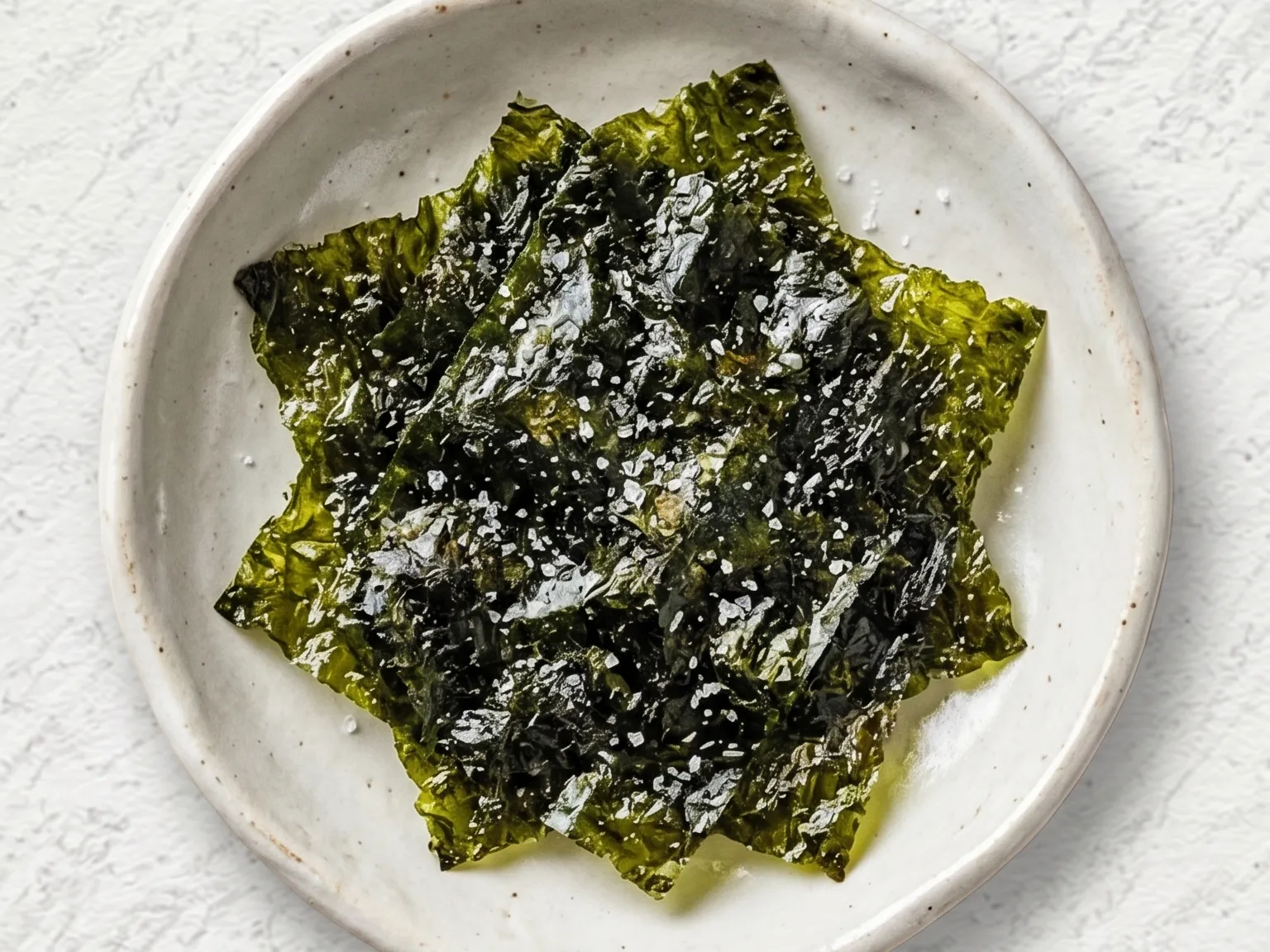
Korean Roasted Seasoned Seaweed
Gim-gui is Korea's roasted seaweed side dish, prepared by brushing thin sheets of dried laver with a light coat of sesame oil, sprinkling fine salt over the surface, and toasting each side for no more than ten to fifteen seconds over low heat. The brief exposure to heat intensifies the sesame oil's nutty aroma while the seaweed's oceanic flavor concentrates into something deeper and more savory, and the result is a paper-thin, shatteringly crisp sheet that crumbles at the slightest pressure. The saltiness makes plain steamed rice deeply satisfying, which is why gim-gui is one of the most reliably consumed items in a Korean banchan spread. Timing is the single most demanding skill: seaweed moves from perfectly roasted to scorched within seconds, so the sheets must come off the heat the moment their color shifts from a deep, dark green to a lighter, almost translucent emerald. Too much oil causes the seaweed to absorb the fat and turn soft, so a minimal coating brushed with a pastry brush rather than poured on is strongly preferred. Roasted in batches and stored in an airtight container, properly made gim-gui retains its crunch for several days and works as a rice companion, lunchbox addition, or plain snack eaten on its own.
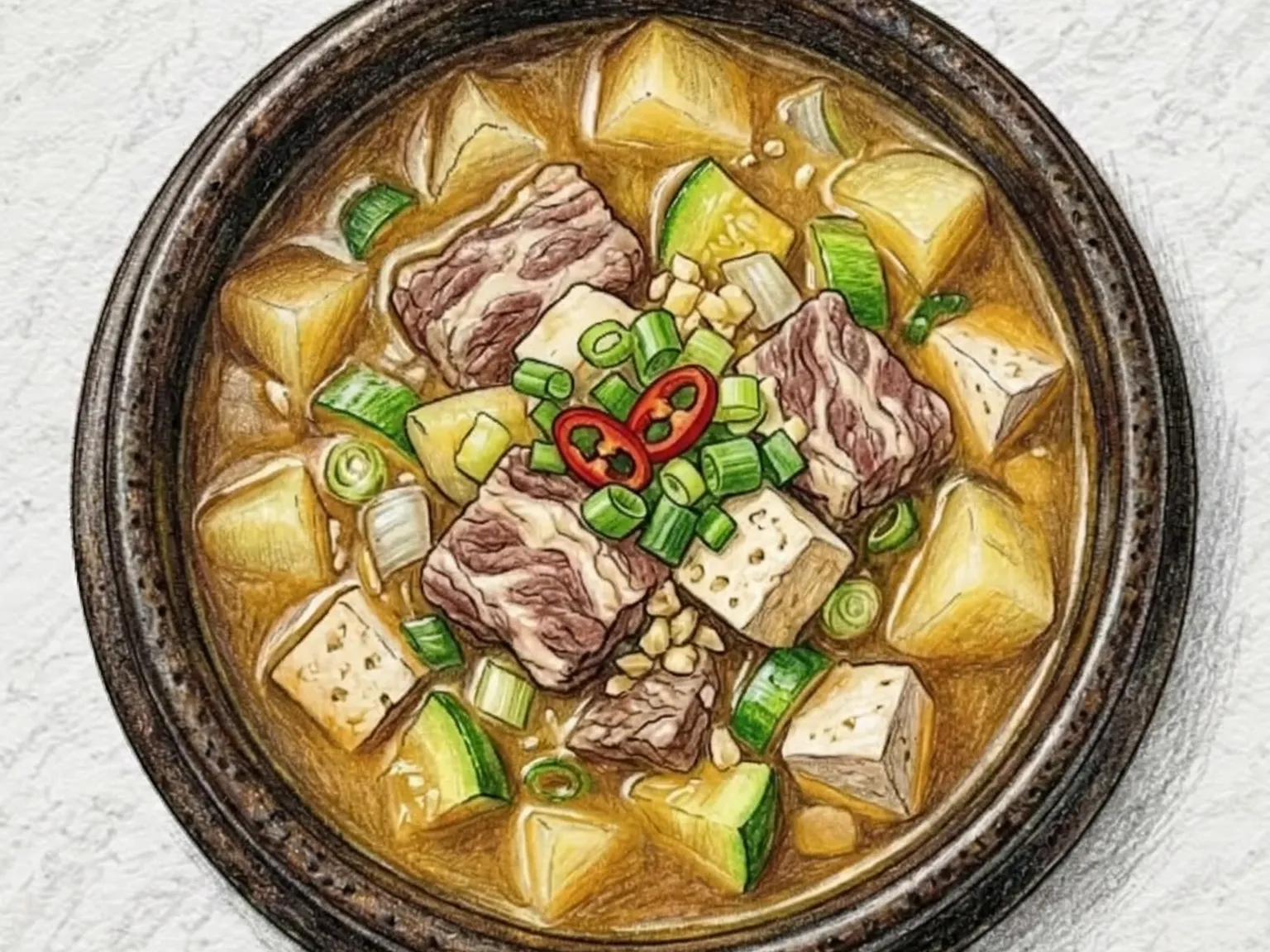
Korean Beef Doenjang Jjigae
Soegogi doenjang jjigae is a foundational Korean home-cooked stew, made with beef brisket and fermented soybean paste as the foundation, filled out with potato, zucchini, tofu, and onion, and simmered in the starchy water left from rinsing rice. The brisket rewards long cooking by releasing its fibers and pushing a rich, distinctly beefy flavor into the broth, and the mild starch from the rice water softens that richness so it blends smoothly with the fermented depth of the doenjang. As the stew simmers, potato breaks down partially at the edges, thickening the liquid and giving it body without the need for any additional starch. Green onion and minced garlic anchor the aroma and keep the flavor from going flat. Adding the doenjang in stages and tasting between additions rather than putting it all in at once is the reliable method for hitting the right depth without oversalting. Paired with freshly cooked rice, this is a stew that fits into the daily rotation without ever feeling repetitive.

Kake Udon (Plain Udon in Clear Dashi Broth)
Kake udon is the most elemental form of Japanese udon: thick, springy wheat noodles served in a clear dashi broth seasoned with soy sauce, mirin, and a small amount of salt. With so few components, the quality of the dashi determines everything about the dish. The broth is built on katsuobushi and dried kelp, producing a flavor that is restrained but unmistakably savory. The noodles must be thick enough to hold their chew and smooth enough to carry broth with each lift of the chopsticks. Toppings are deliberately kept to a minimum, typically sliced kamaboko fish cake and chopped green onion, so the stock and noodle texture remain the focus rather than any single garnish. The noodles should go directly from the pot into hot broth, as they soften quickly and lose their characteristic bounce if left to sit. In the Kansai region, pale usukuchi soy sauce is used to keep the broth nearly transparent, making the visual clarity of the soup another deliberate element of the dish.
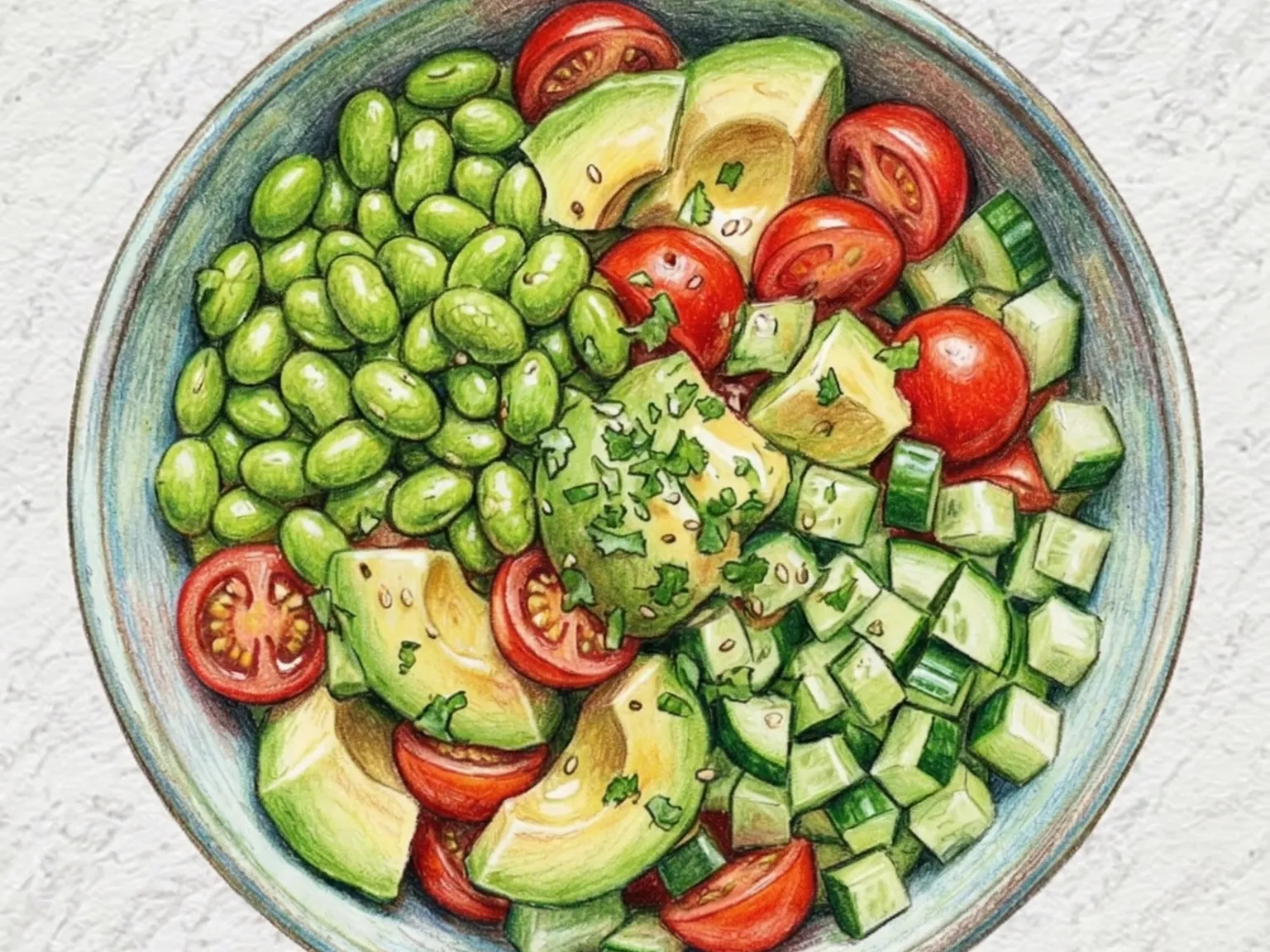
Edamame Avocado Salad
Edamame avocado salad brings together two ingredients with contrasting textures: shelled edamame, which snaps with a firm, slightly starchy bite, and ripe avocado cut into generous chunks that are smooth and buttery. The dressing is a soy-lime combination with a small pour of sesame oil - the lime cuts through the fat in the avocado, the soy adds umami depth, and the sesame oil contributes a roasted, nutty backdrop that pulls the Asian flavor profile together. Thin-sliced cucumber and halved cherry tomatoes fill out the bowl with crunch and bright acidity, keeping the whole thing fresh rather than heavy. Beyond boiling the edamame, no cooking is required: the avocado goes in raw, the dressing is whisked together in under a minute, and the whole salad is assembled cold. Total time from start to table is under 15 minutes, making it a practical option for quick lunches or side dishes.

Jambon-Beurre (Classic Butter and Ham Baguette)
The jambon-beurre is a staple French sandwich designed for daily consumption, consisting of a baguette, butter, and ham. Because the recipe uses only three primary ingredients, the specific characteristics of each component are fundamental to the assembly. A traditional version utilizes a baguette characterized by a crust that breaks easily and a crumb that provides a chewy texture. The butter chosen is typically a cultured unsalted variety. It is necessary to bring the butter to room temperature to ensure it is soft enough to spread across the bread without damaging the soft interior. The ham used is jambon blanc, which is prepared in thin slices to build the layers of the sandwich. A light application of Dijon mustard on one side of the bread provides a sharp and peppery flavor profile. This ingredient serves to balance the heavy fat content of the butter against the natural saltiness found in the ham. Sliced cornichons are included inside the bread to add a level of tart acidity. These pickles help to reduce the overall weight of the sandwich ingredients and maintain a consistent balance of flavors in every bite.
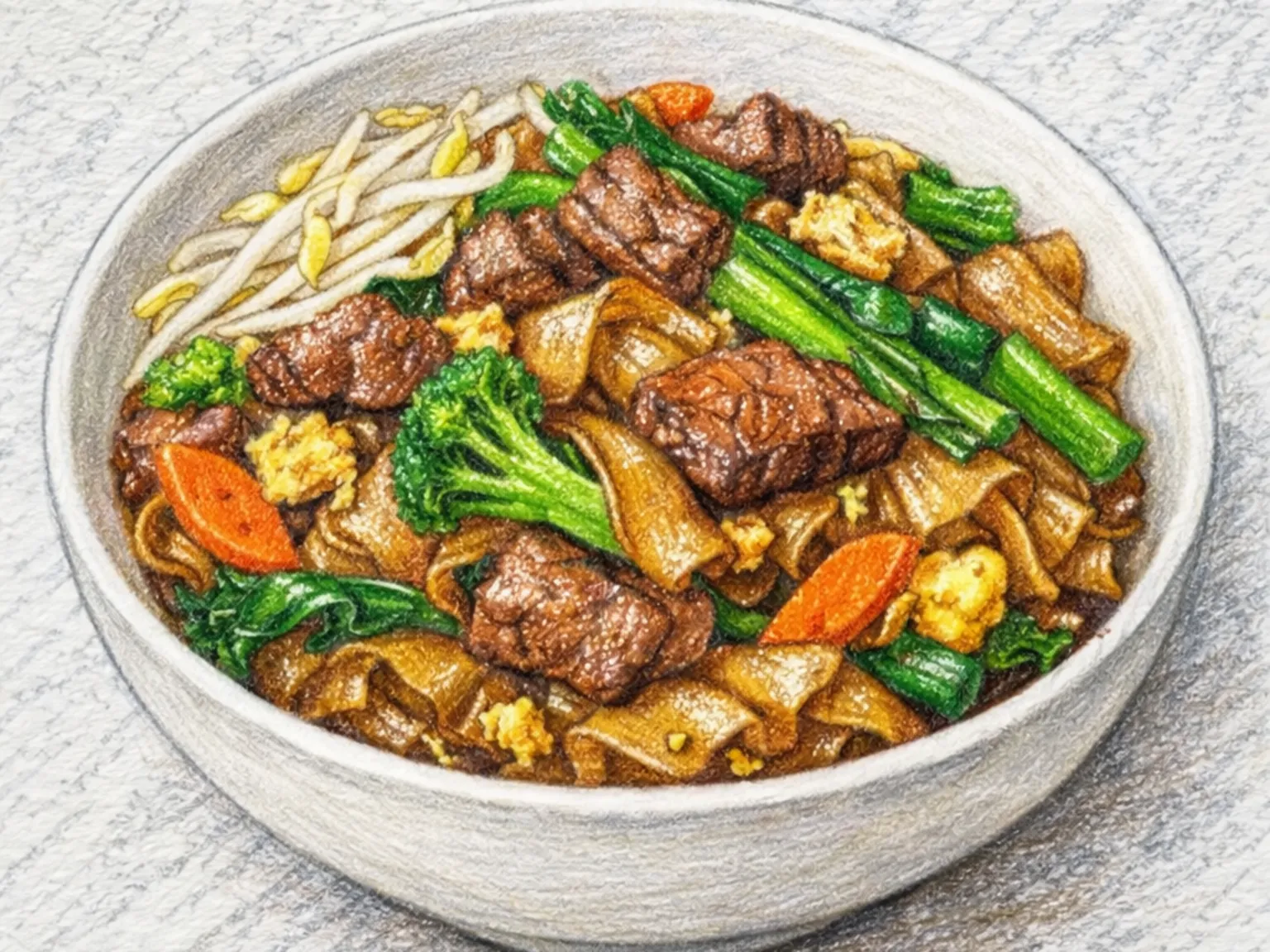
Beef Pad See Ew (Thai Wok-Fried Wide Rice Noodles in Dark Soy)
Beef pad see ew is a Thai wok-fried noodle dish built around wide rice noodles and dark soy sauce. The name translates to 'fried with soy sauce,' and broad, silky noodles are stained deep brown by dark soy, balanced with light soy and oyster sauce for a sweet-savory glaze. Thinly sliced beef is seared first in a blazing wok, then noodles go in to absorb the sauce and char slightly against the hot metal. Chinese broccoli or kale adds crunch from its stems and softness from its leaves. The defining element is wok hei - the smoky flavor that only comes from letting noodles sit against the wok until they pick up toasted spots.
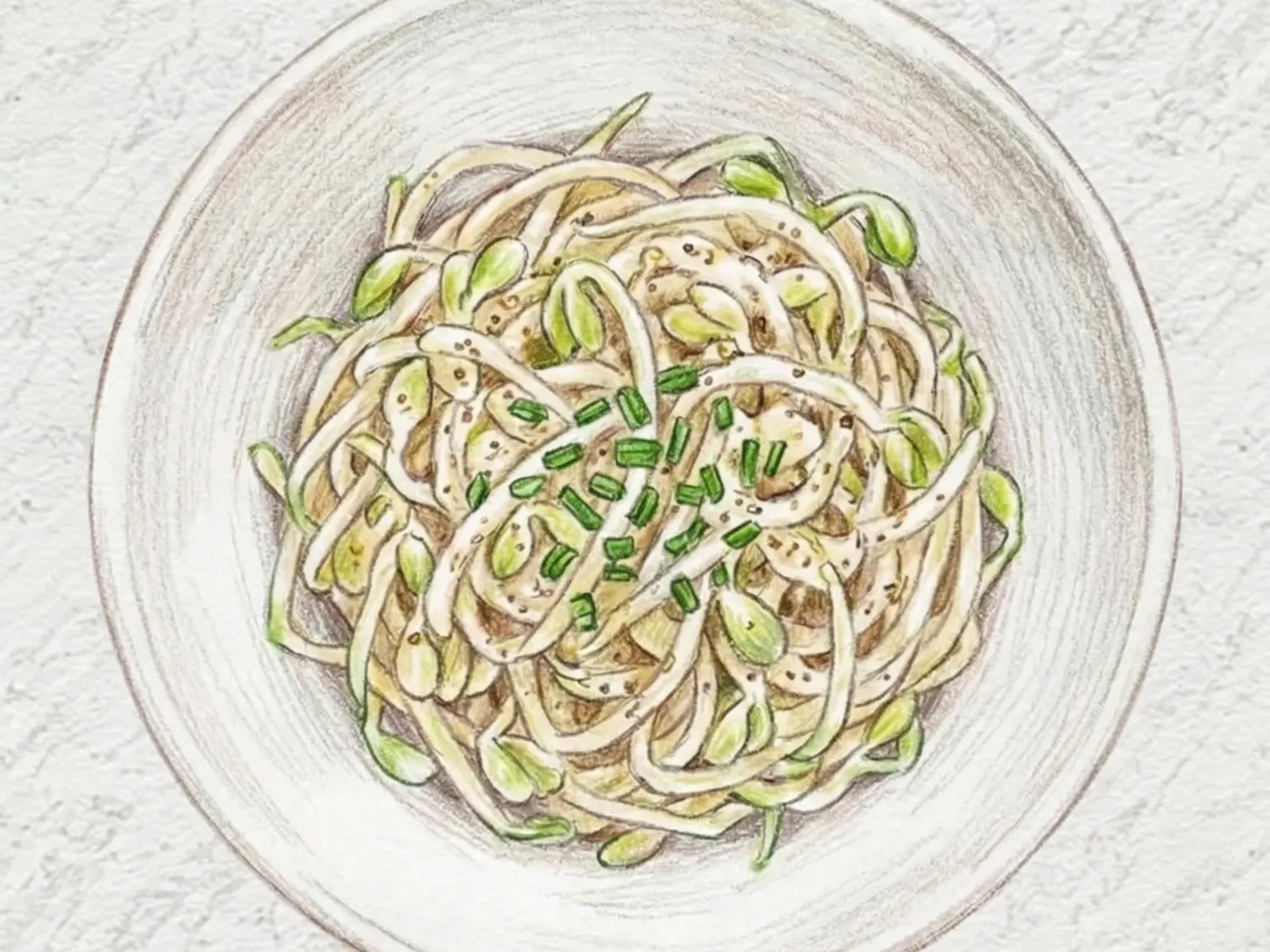
Korean Perilla Soybean Sprout Namul
Kongnamul, soybean sprouts, are among the most consumed vegetables in Korea, and this perilla-dressed version adds a nutty, full-bodied depth that the plain sesame oil variety lacks. The sprouts are steamed with the lid sealed for five minutes, which drives off the raw bean smell while keeping the heads firm and crunchy. Tossed with perilla powder, soup soy sauce, garlic, and sesame oil while still warm, the powder absorbs the moisture and dissolves into a pale coating that makes each sprout feel creamy on the tongue. Chopped scallion contributes a sharp, grassy contrast that balances the richness, and resting the finished dish for five minutes before serving lets the seasoning penetrate evenly so the flavor comes together more completely.
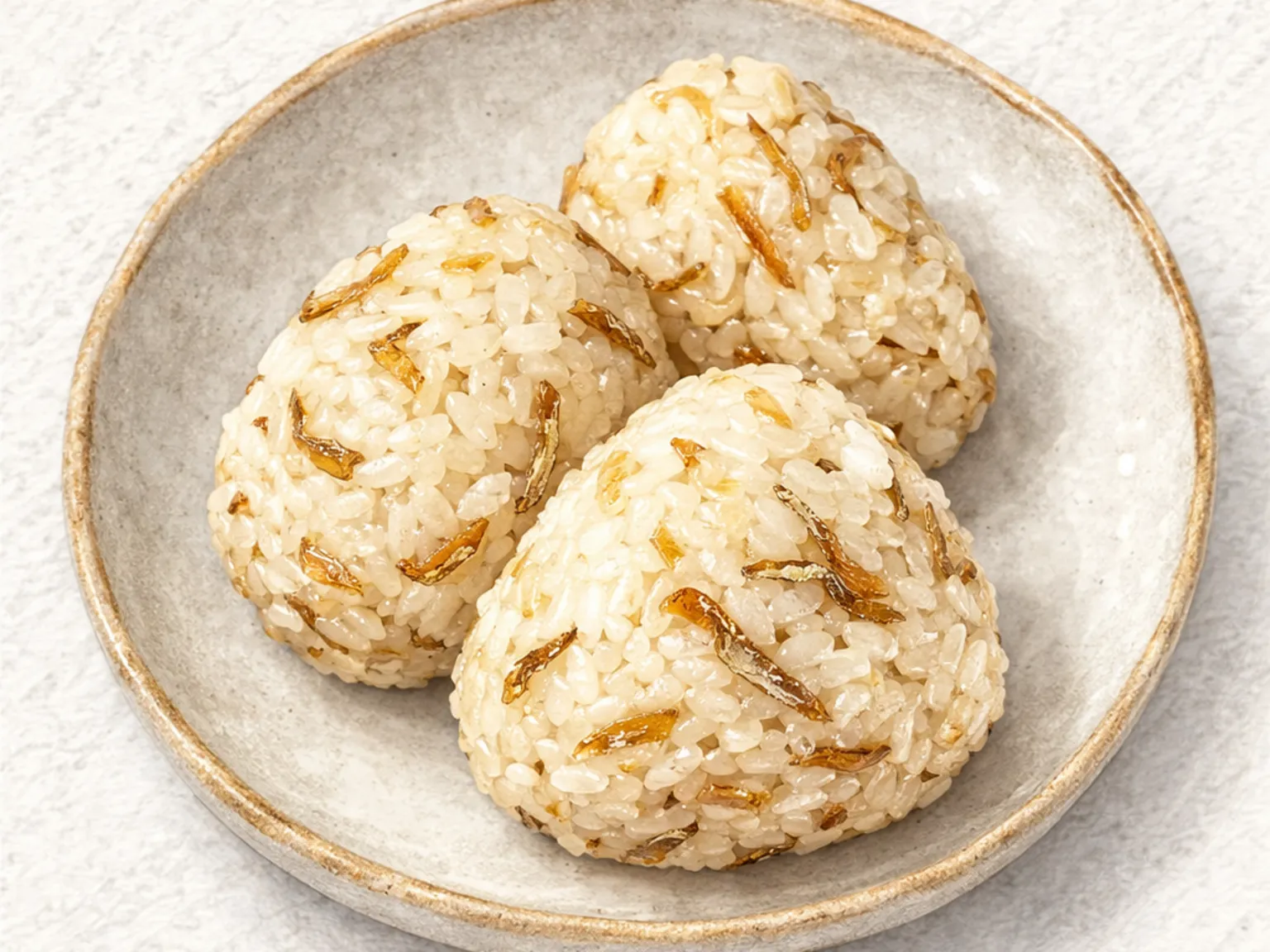
Korean Anchovy Rice Balls
Myeolchi jumeokbap is a rice ball made by mixing sweet-salty glazed dried anchovies into warm rice and shaping it by hand. The anchovies are dry-toasted first in a pan over medium heat to drive off moisture and reduce fishiness, then a small amount of oil is added along with soy sauce and oligosaccharide syrup and the mixture is stirred over heat until the anchovies are coated in a glossy, caramelized glaze. The syrup scorches quickly, so the heat must be managed carefully and the pan watched throughout. Once the glazed anchovies are folded into warm rice, sesame oil, roasted seaweed flakes, and sesame seeds are added before everything is mixed together. Hands dampened with water or brushed with sesame oil are used to compress the mixture into compact balls. Working while the rice is still warm is important: the starch is pliable at temperature and the balls hold their shape firmly, whereas cold rice does not compact well and the finished balls tend to fall apart. Anchovy saltiness varies considerably between brands and batches, so the amount of soy sauce should be adjusted accordingly to avoid over-seasoning. The finished rice balls hold their flavor well after cooling, which makes them a reliable choice for packed lunches and outdoor eating.