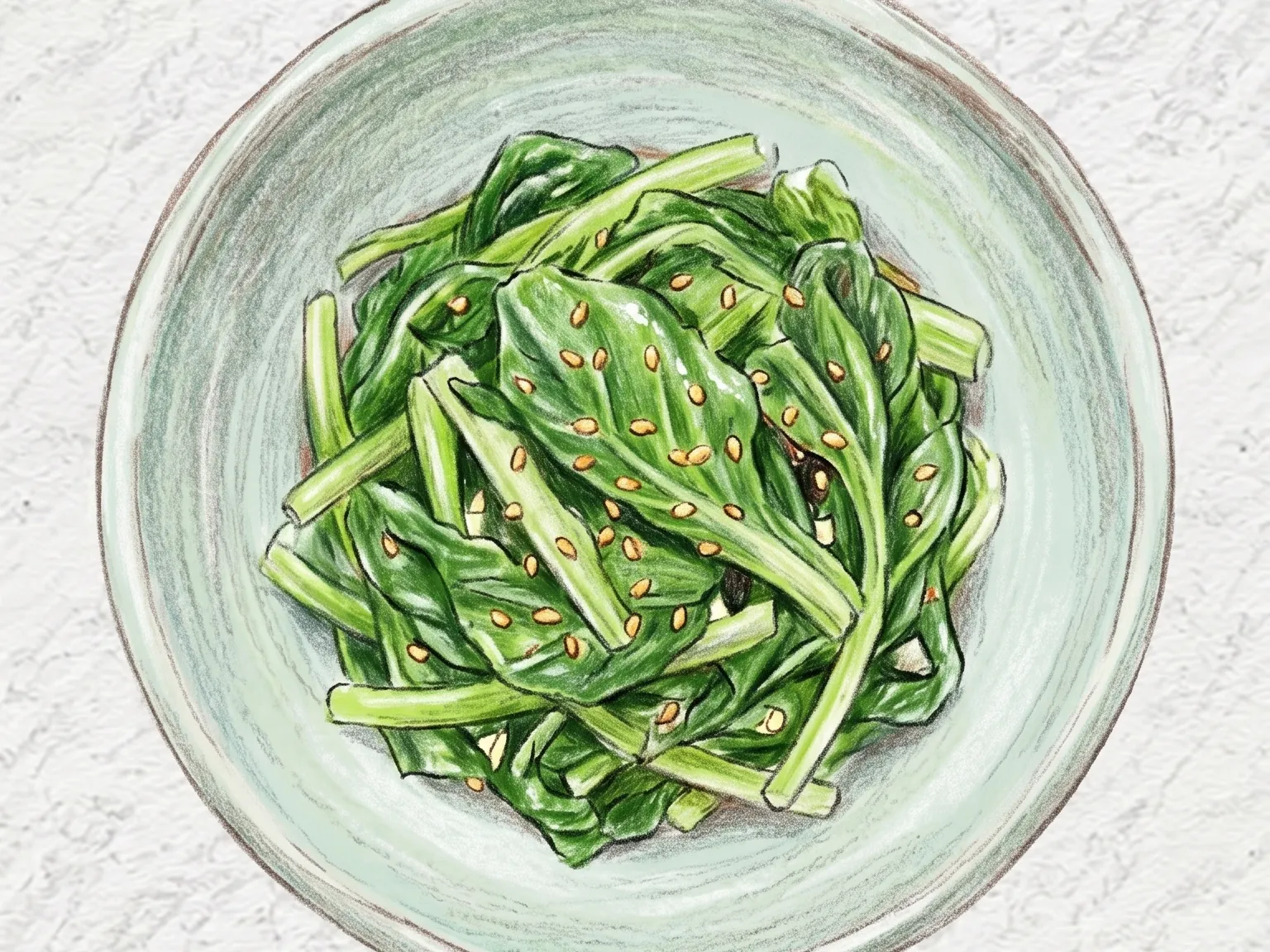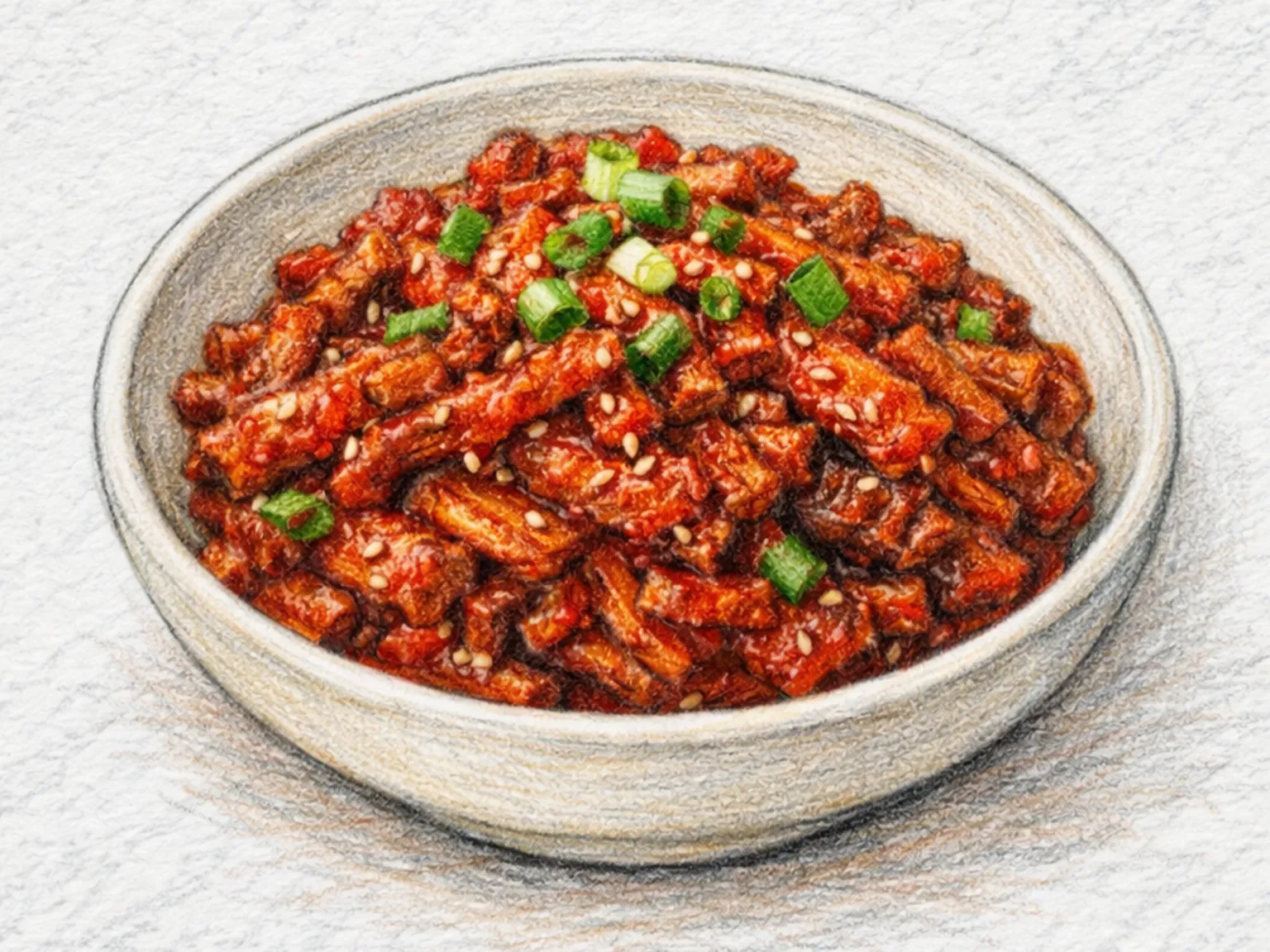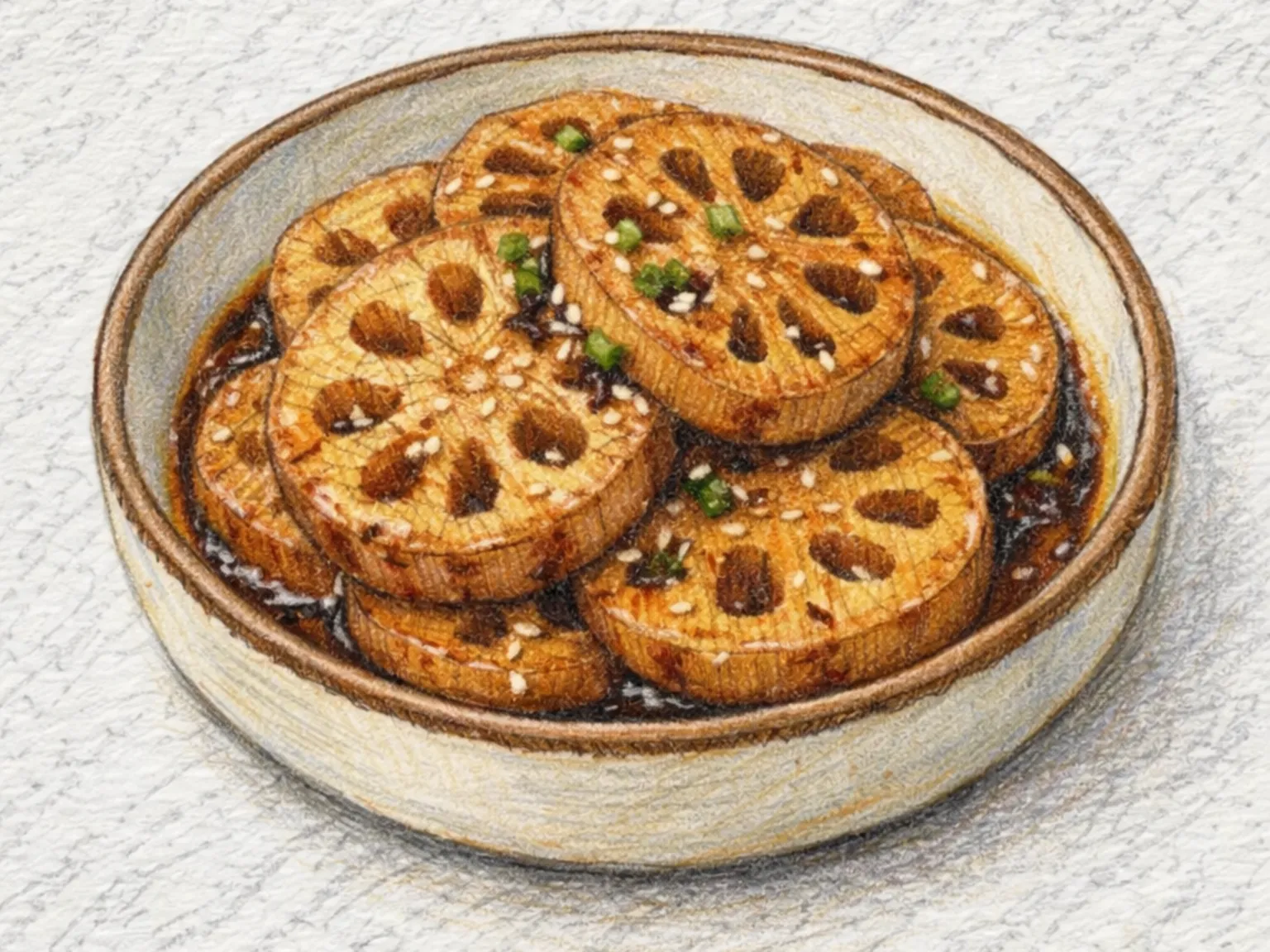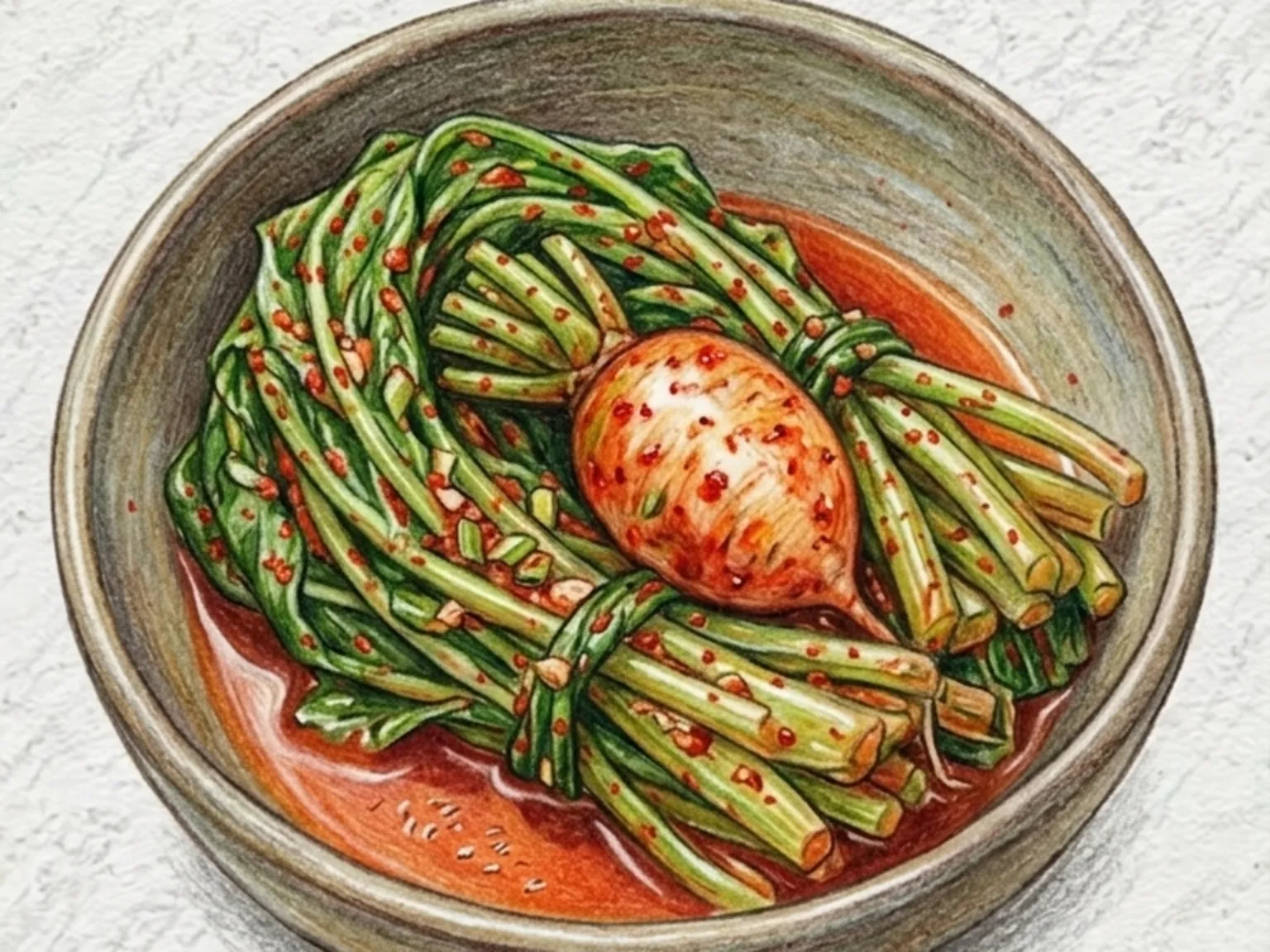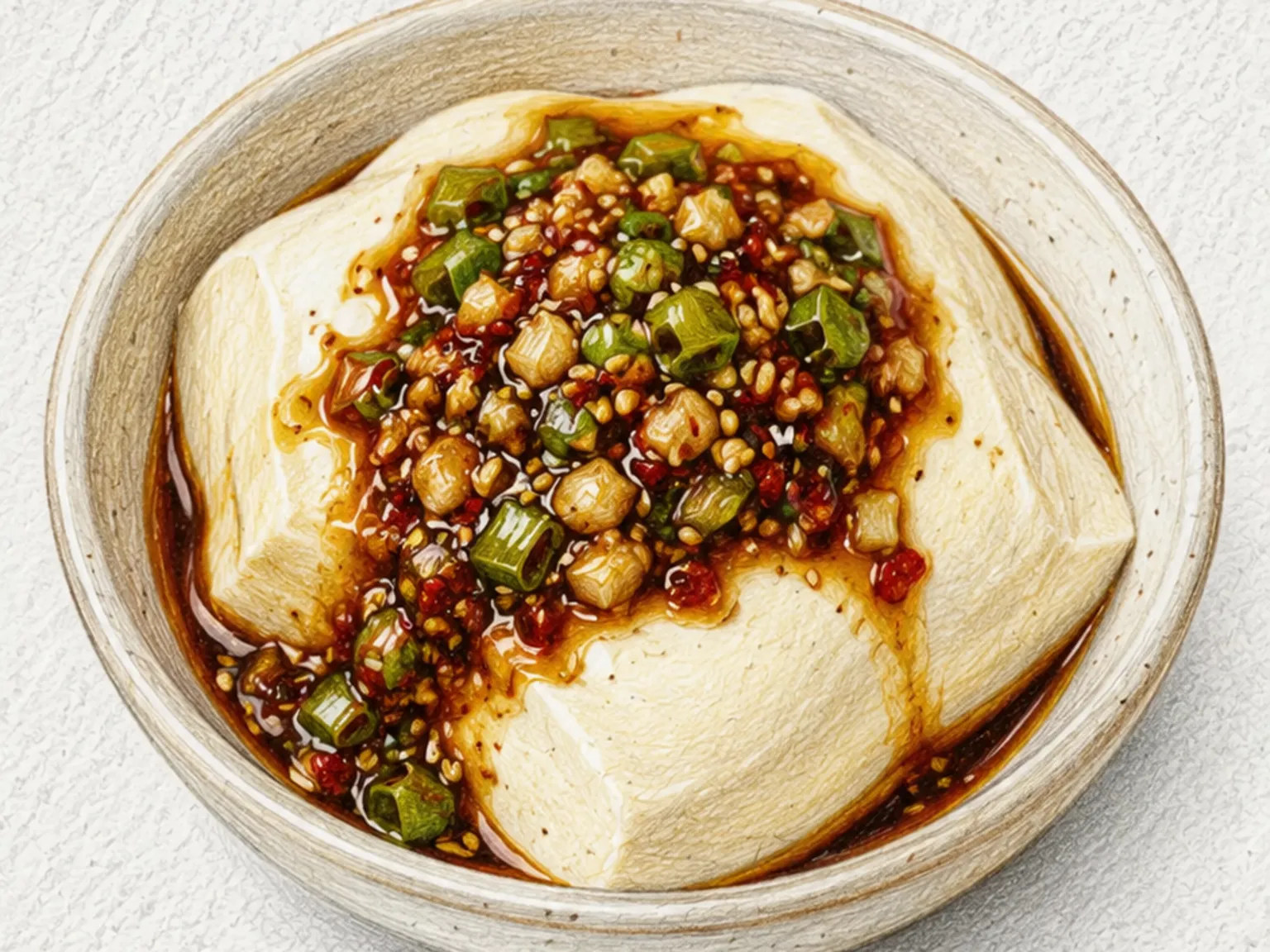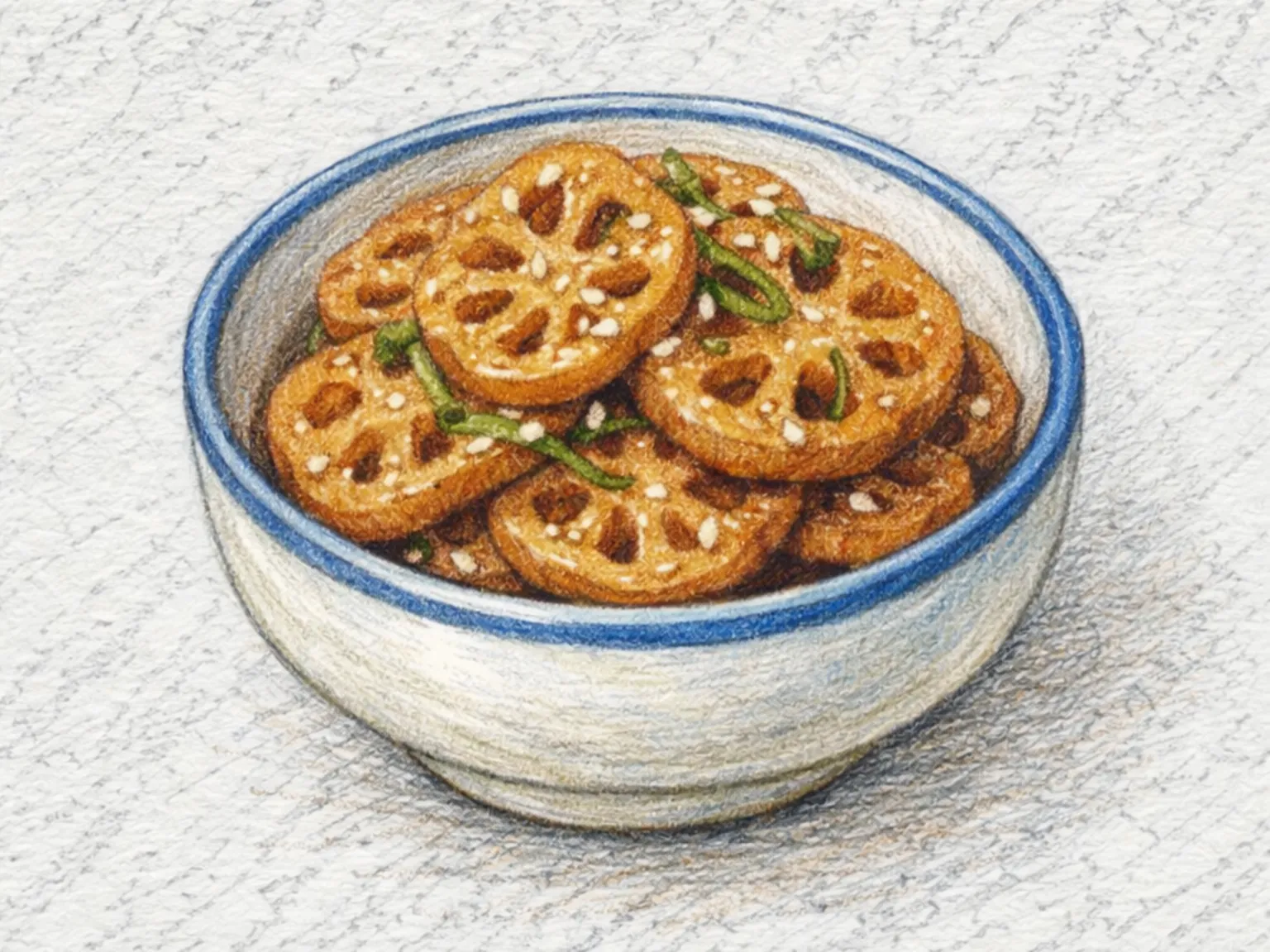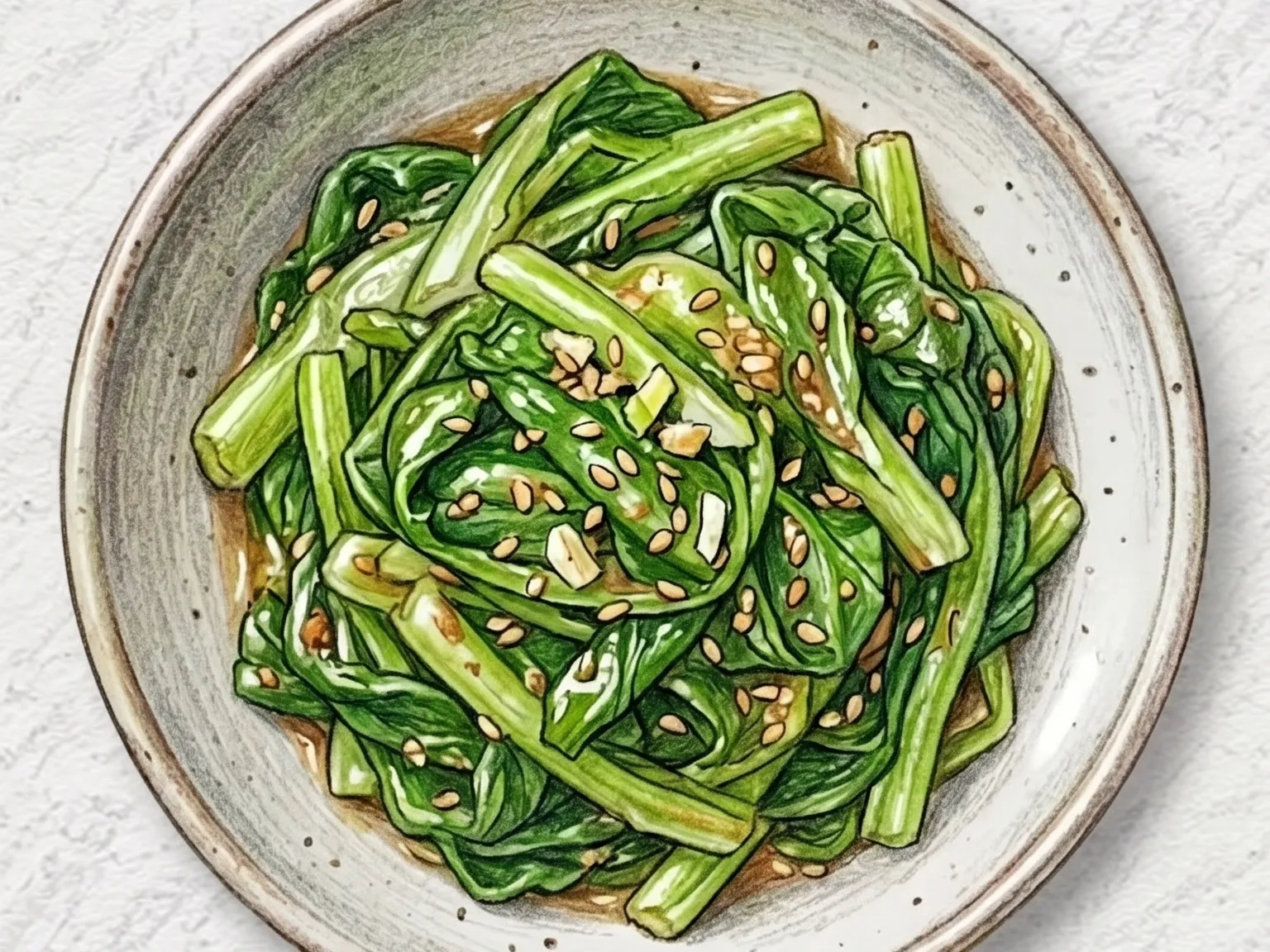
Side dishes

Side dishes Recipes

624 recipes. Page 26 of 26

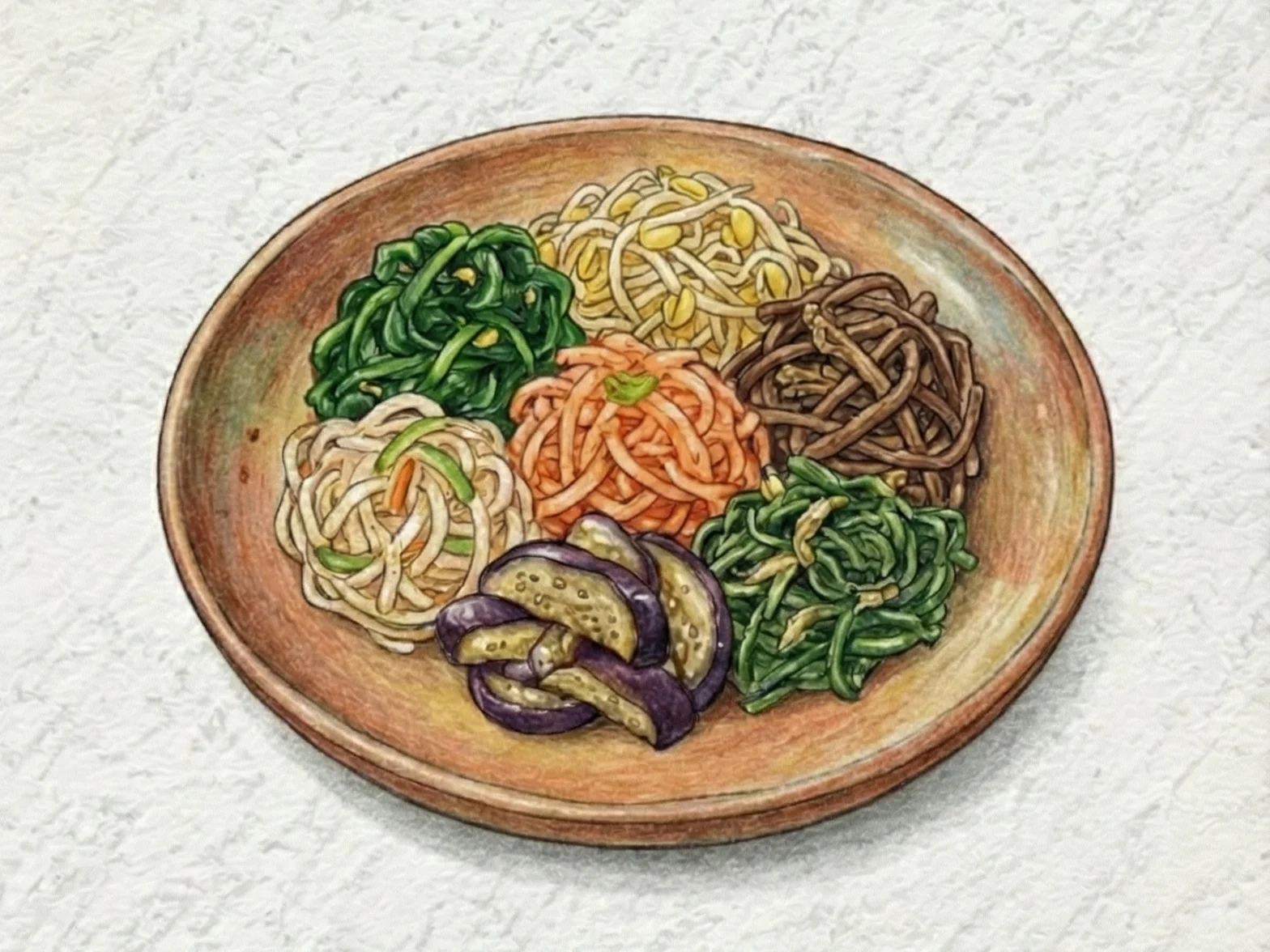
Side dishes (banchan) are the heart of Korean dining culture. A typical meal features multiple small plates - seasoned vegetables (namul), braised dishes (jorim), pickled items, and salted seafood. Classics like spinach namul, bean sprout salad, and stir-fried anchovies can be prepared in advance and enjoyed over several days.

Side dishes
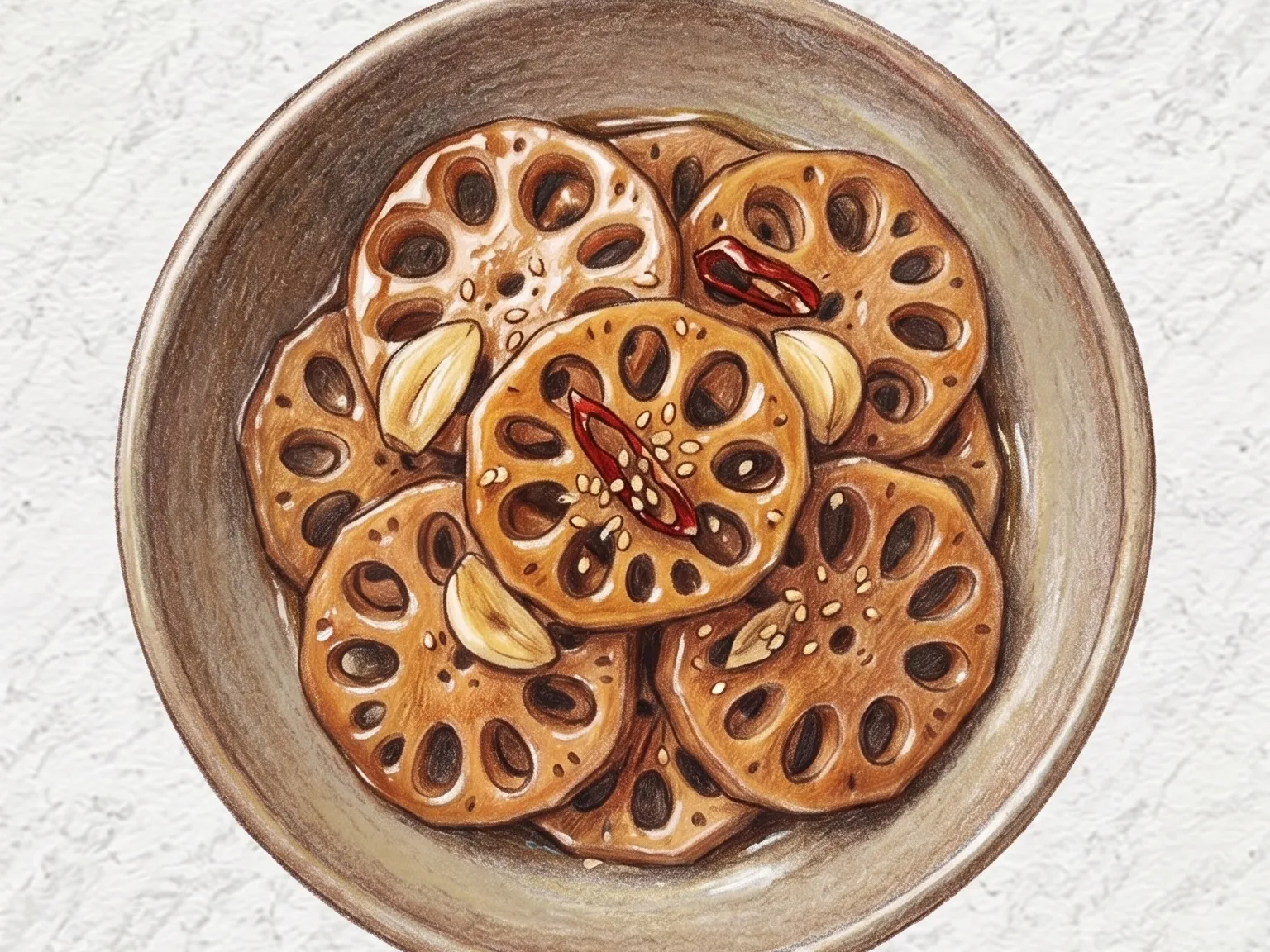
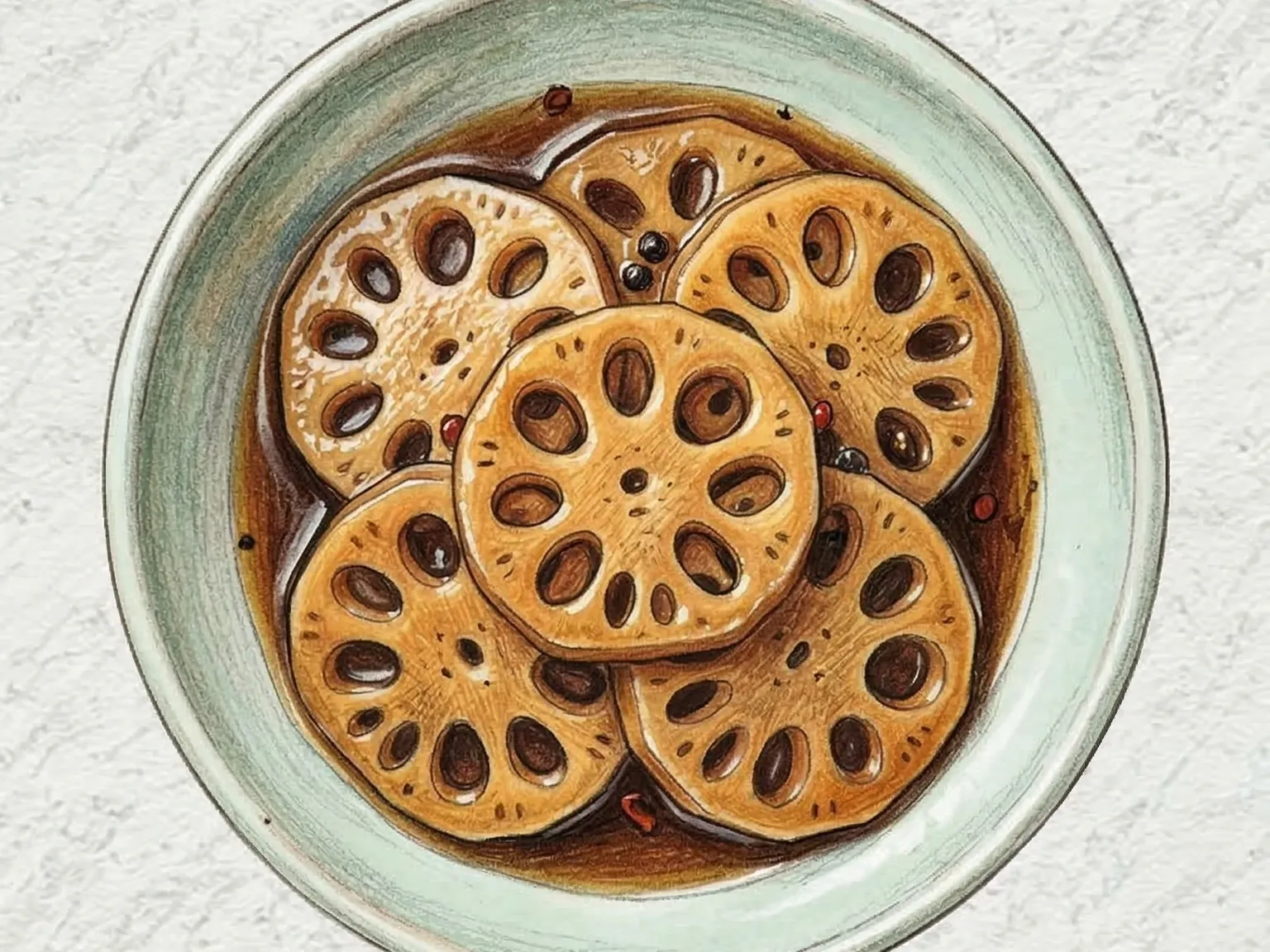
Korean Braised Lotus Root
Steamed Easy

Korean Braised Lotus Root

Lotus root rounds are simmered in soy sauce, sugar, and corn syrup until each slice glistens with a translucent, caramel-colored glaze. Cooking activates the starch in the lotus root, turning the exterior smooth and the interior pleasantly sticky, a texture unique to this root vegetable. As the soy sauce permeates the flesh, the ivory color deepens into a clear amber that signals the seasoning has reached the center. A splash of vinegar at the start prevents discoloration and introduces a faint tartness that prevents the sweetness from becoming cloying. The corn syrup reduces over low heat for fifteen to twenty minutes, forming a glass-like coating that catches the light on every surface. Because the liquid seeps through the root's hollow channels, every bite delivers consistent flavor regardless of angle. The finished jorim retains its crunch at the core while the outer layer yields with a gentle chew, and refrigerated in a sealed container the dish stays good for well over a week.

🏠 Everyday 🍱 Lunchbox
Prep 10min Cook 20min 4 servings
Korean Young Radish Water Kimchi
Kimchi Medium

Korean Young Radish Water Kimchi

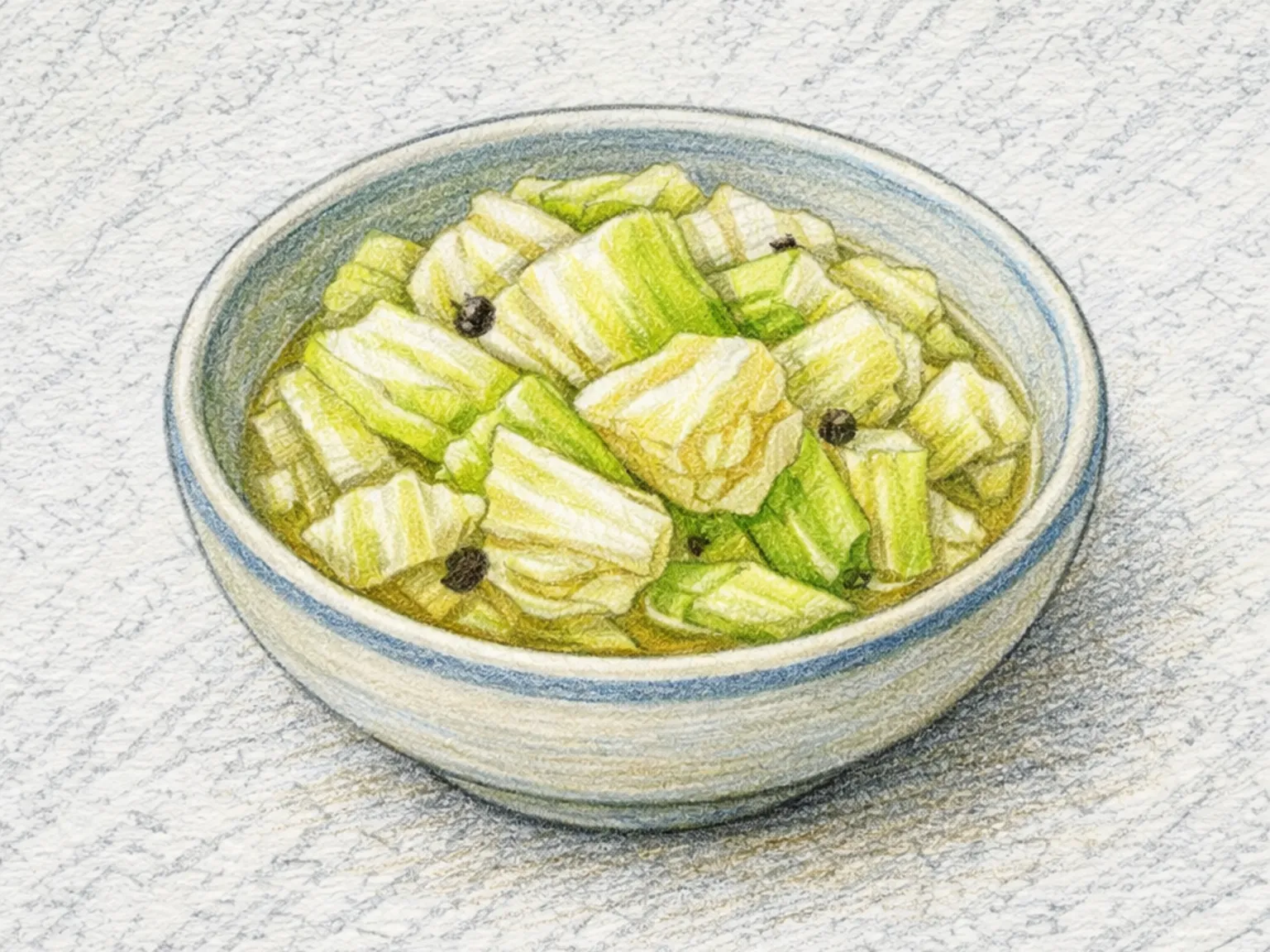
Yeolmu mul-kimchi is a water kimchi in which young radish greens are salted to reduce their raw grassy sharpness, then submerged in a clear, aromatic brine infused with sliced radish, scallions, garlic, and ginger. The garlic and ginger are wrapped in cloth and squeezed rather than added directly to the liquid, which keeps the brine transparent and clean-tasting rather than murky. Plum syrup blended into the brine provides a measured sweetness and contributes to a lively acidity as fermentation develops. Leaving the jar at room temperature for eight hours and then refrigerating for another twelve allows the brine to become gently effervescent and pleasantly tart without turning sour. The finished liquid doubles as a broth for cold noodles in summer or can be ladled over cooked rice for a refreshing light meal. Filtered cold water makes a noticeable difference in the cleanliness of the final flavor, and keeping close watch on the salting time prevents the greens from softening past their ideal crisp texture.

🥗 Light & Healthy 🍱 Lunchbox
Prep 30min 4 servings
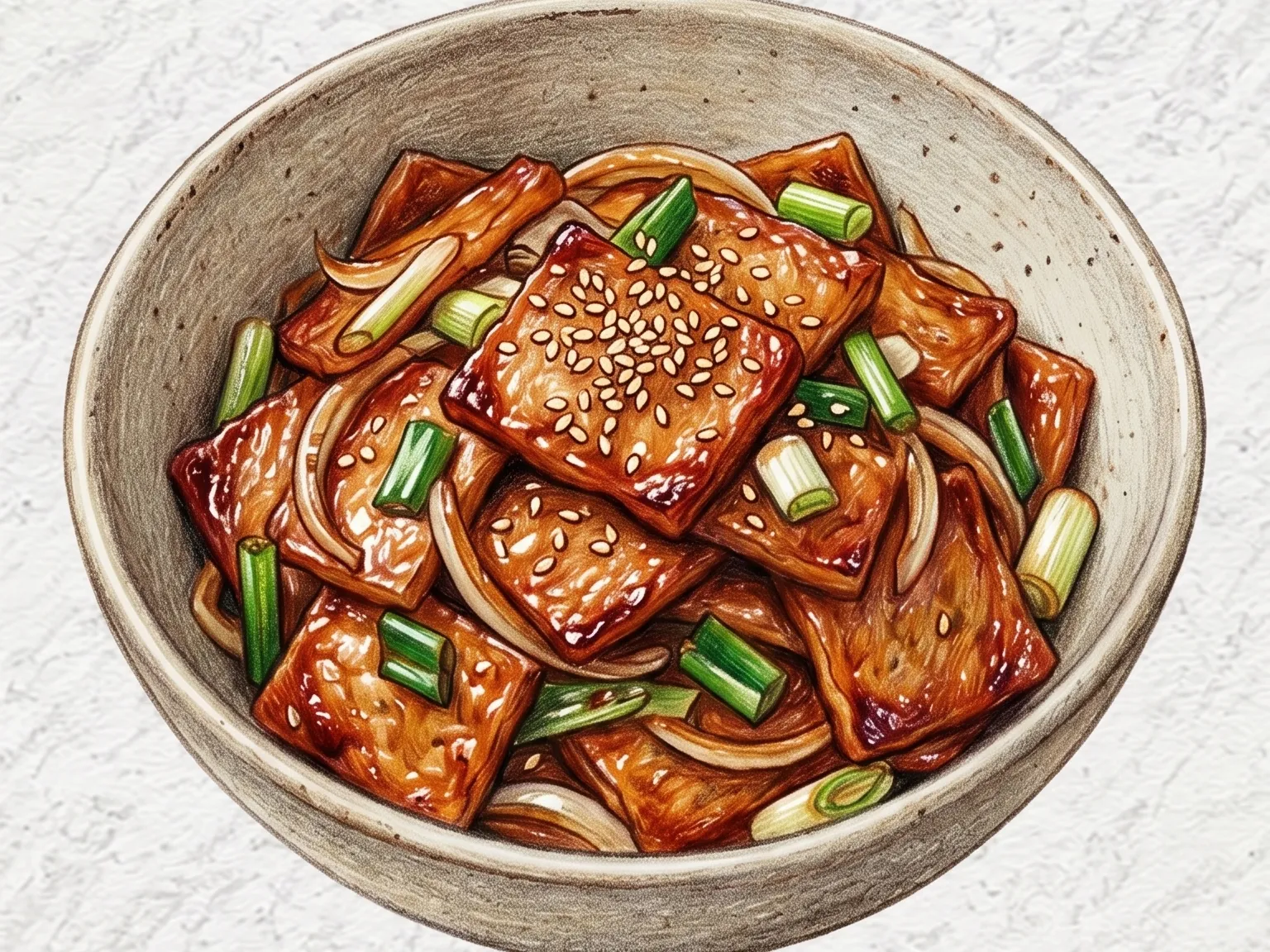
Korean Spicy Stir-Fried Fish Cake
Stir-fry Easy

Korean Spicy Stir-Fried Fish Cake

Square sheets of fish cake are sliced into uniform, bite-size pieces before being stir-fried in a seasoned glaze that balances spicy heat with a clear sweetness. One specific technique used in this recipe involves blanching the fish cake pieces in boiling water for a very short period before they enter the pan. This process serves two functions: it removes the excess oil from the manufacturing process and causes the surface of the fish cake to open up. This allows the sauce to adhere more consistently to each piece during the cooking process. When stir-fried over high heat, the edges of the fish cake undergo a light caramelization. This results in a subtle smoky flavor that adds a layer of complexity to the overall dish. The base of the sauce consists of gochujang, soy sauce, and oligodang. Oligodang is a Korean corn syrup that is used to give the dish a shiny, glossy finish while simultaneously tempering the sharp intensity of the fermented chili paste. During the cooking process, sliced onions are added and allowed to soften. The moisture released by the onions helps to deglaze the pan, which reintegrates concentrated flavors into the sauce and contributes a natural sweetness. Green onions are added just before the heat is turned off so they retain their fresh aroma and provide a crisp texture that contrasts with the rich sauce. To finish the dish, toasted sesame seeds are scattered over the top to provide a mild nutty flavor. This side dish is frequently included in packed lunches because the glaze maintains its integrity and the flavors become more concentrated as the dish cools.

🏠 Everyday 🍱 Lunchbox
Prep 8min Cook 10min 4 servings
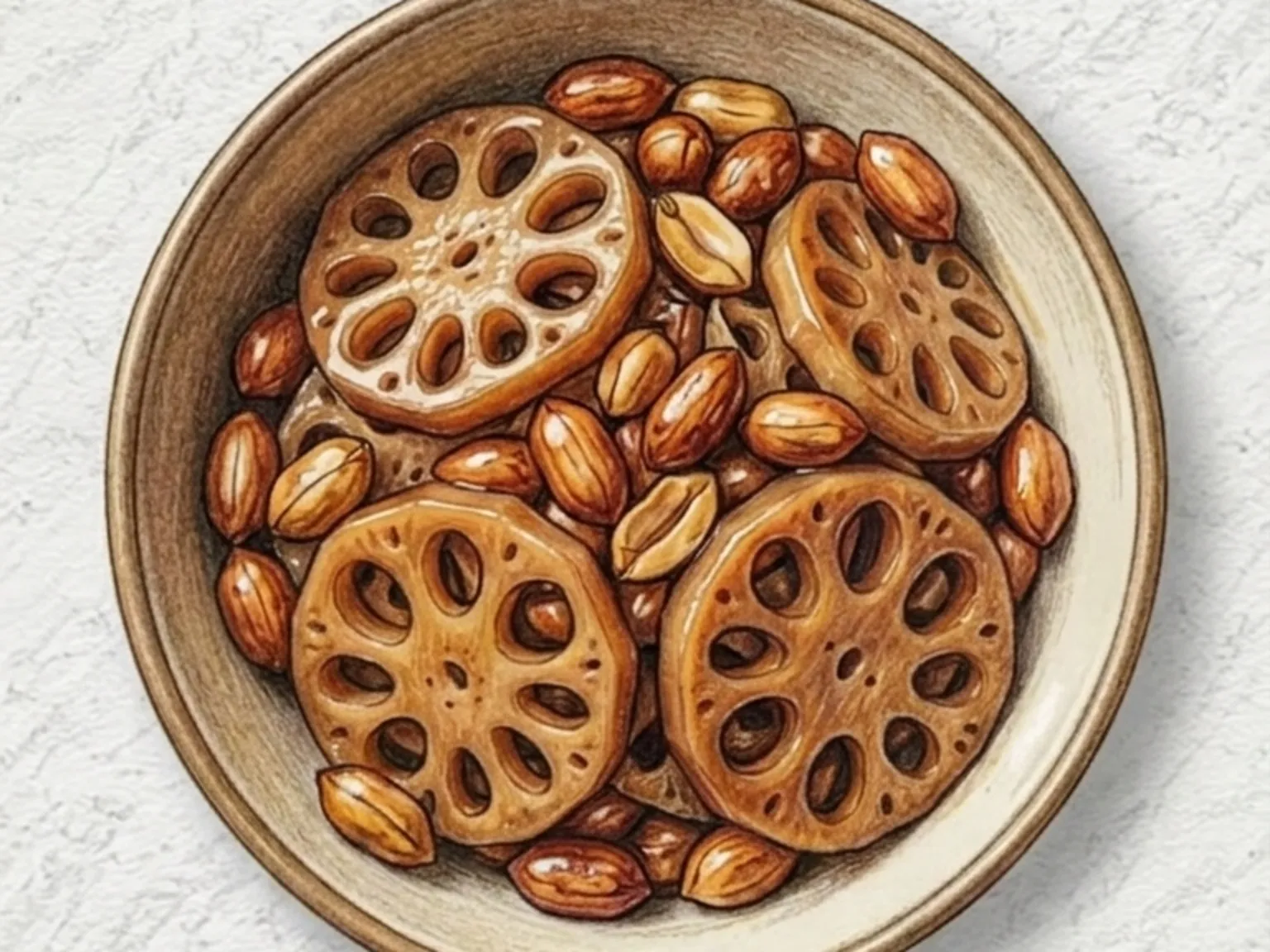
Korean Lotus Root & Peanut Braise
Steamed Medium

Korean Lotus Root & Peanut Braise

Yeongeun ttangkong jorim is a Korean soy-braised side dish of lotus root and roasted peanuts glazed in soy sauce, oligosaccharide syrup, and cooking wine. The crunchy lotus root contrasts with the toasted, nutty peanuts, and the combination releases layers of savory, roasted flavor as you chew. Soy sauce provides the salty foundation while the syrup rounds it out with a soft sweetness and glossy finish. This banchan keeps well refrigerated for several days, making it a reliable addition to lunchboxes and everyday meals.

🏠 Everyday 🎉 Special Occasion
Prep 20min Cook 30min 4 servings
Korean Lotus Root Jangajji
Kimchi Easy

Korean Lotus Root Jangajji

Yeongeun jangajji is a soy-pickled lotus root made by blanching sliced root in vinegar water to prevent discoloration, then soaking it in a hot brine of soy sauce, sugar, peppercorns, and bay leaf. The brine seeps through the root's characteristic holes, distributing a balanced salty-sweet flavor evenly in every bite. Bay leaf tempers the heaviness of the soy base while whole peppercorns add a mild spice undertone. The result is a pickle with a dual texture - simultaneously chewy and crisp - that keeps well for days and works as a lunchbox side or everyday banchan.

🏠 Everyday 🍱 Lunchbox
Prep 25min Cook 12min 4 servings
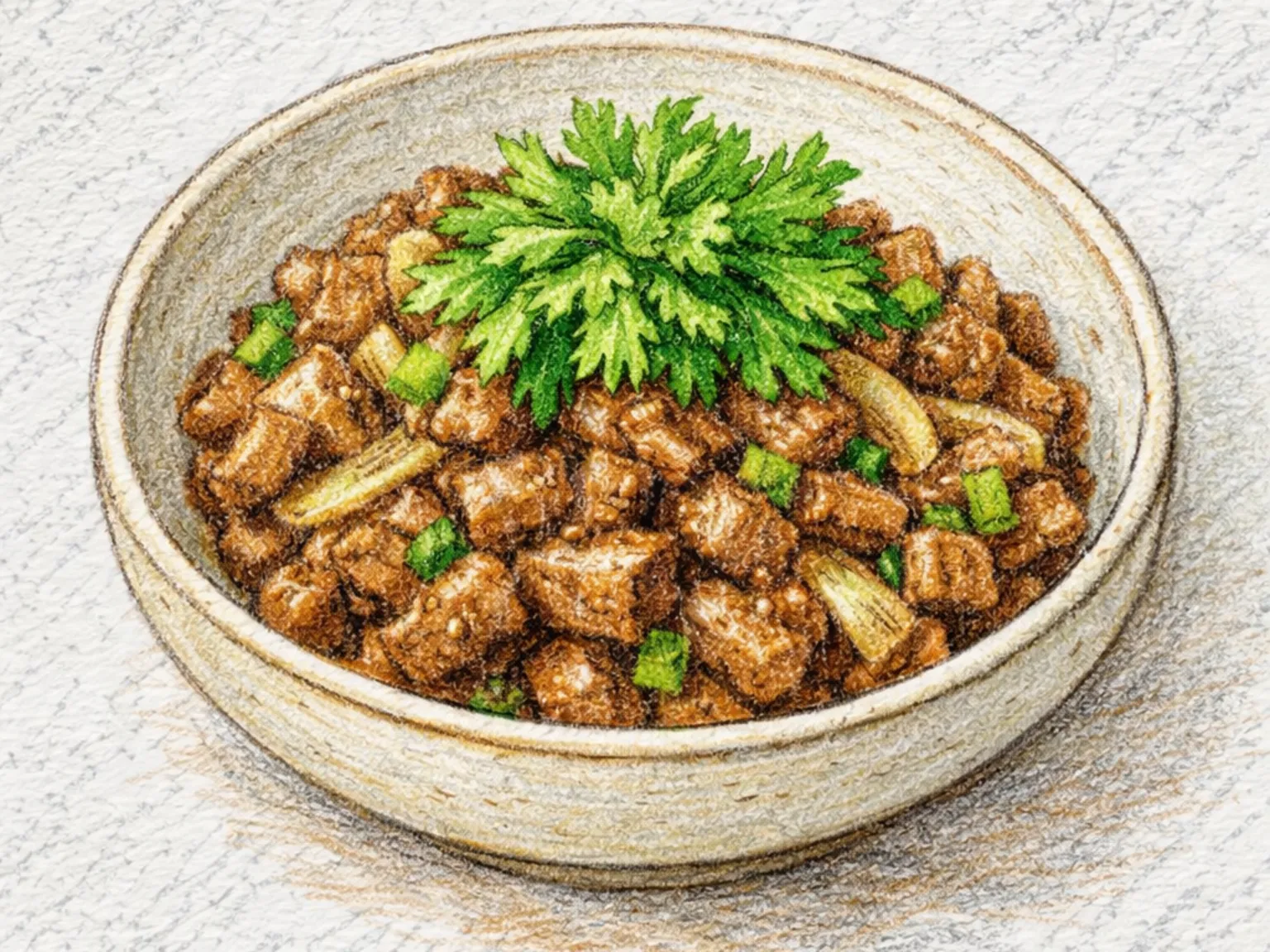
Korean Beef & Lettuce Cabbage Stir-fry
Stir-fry Medium

Korean Beef & Lettuce Cabbage Stir-fry

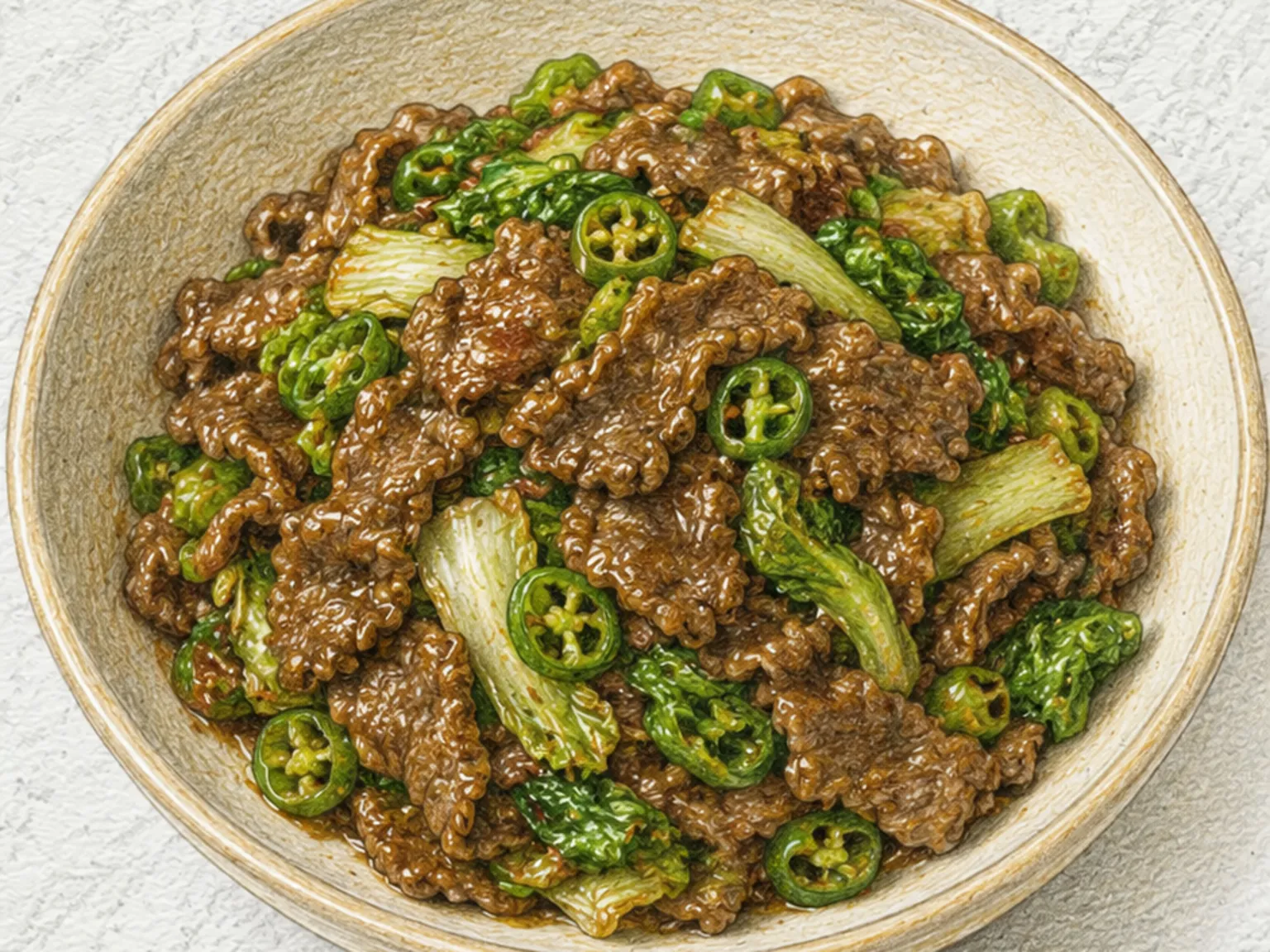
This beef and ssamchu stir-fry adds the firm stems and tender leaves at different times so neither determines the cooking time of the other. Toss 350 g of thin beef with 2 tablespoons each of dark soy sauce and pear juice, 1 tablespoon of minced garlic, 1/2 teaspoon of black pepper, and half of the sesame oil. Leave it for 10 minutes. Separate 220 g of ssamchu into stems and leaves and cut both into 3 cm strips; slice the onion thinly and the Cheongyang chili on the diagonal. Heat 1 tablespoon of cooking oil in a very hot pan and stir-fry the onion for about 1 minute, allowing only the edges to become translucent. Add the beef together with its marinade and cook for 2 to 3 minutes, separating clumps as the liquid reduces. When the meat has no red color and the seasoning forms a glossy coating, add the ssamchu stems first. Toss them for 1 minute, then add the leaves and chili for only 1 more minute. Stop as the leaves just begin to wilt. Turn off the heat, mix in the remaining sesame oil, and transfer the stir-fry before the stems lose their crunch or the leaves release more moisture.

🏠 Everyday 🌙 Late Night
Prep 18min Cook 12min 4 servings
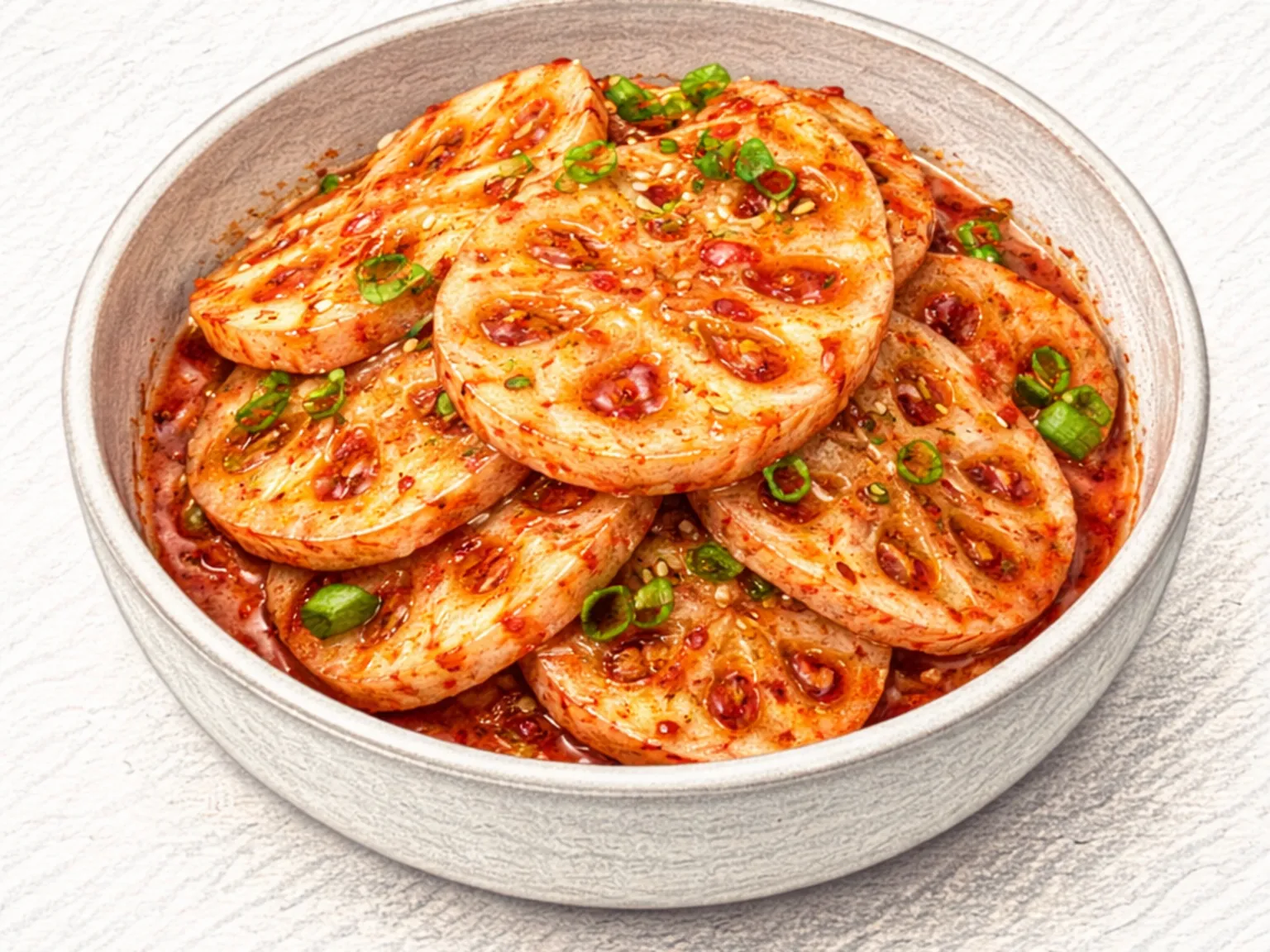
Korean Lotus Root Kimchi (Crunchy Spiced Root Kimchi)
Kimchi Medium

Korean Lotus Root Kimchi (Crunchy Spiced Root Kimchi)

Starting with sliced lotus root boiled in vinegar water helps remove bitterness while keeping the vegetable pale and crisp. The seasoning combines gochugaru, minced garlic, and anchovy fish sauce with the addition of fresh pear juice. This pear juice provides natural sugars and necessary moisture so the chili paste coats each slice evenly without becoming dry or clumping. Even after the fermentation process begins, the lotus root maintains its signature firm and crunchy texture. Sliced scallions are tossed in to add a fresh aromatic quality that balances the spicy garlic paste. One full day of refrigeration allows the flavors to settle into the flesh before serving. Because the seasoning gets trapped inside the characteristic holes of the root, the paste should remain thick rather than watery to ensure consistent flavor. When left to ferment for a few more days, the developing acidity helps cut through the richness of grilled meats or fried dishes. A light addition of sesame oil and toasted sesame seeds at the end brings a toasted scent to every bite.

🥗 Light & Healthy 🍱 Lunchbox
Prep 35min Cook 2min 4 servings
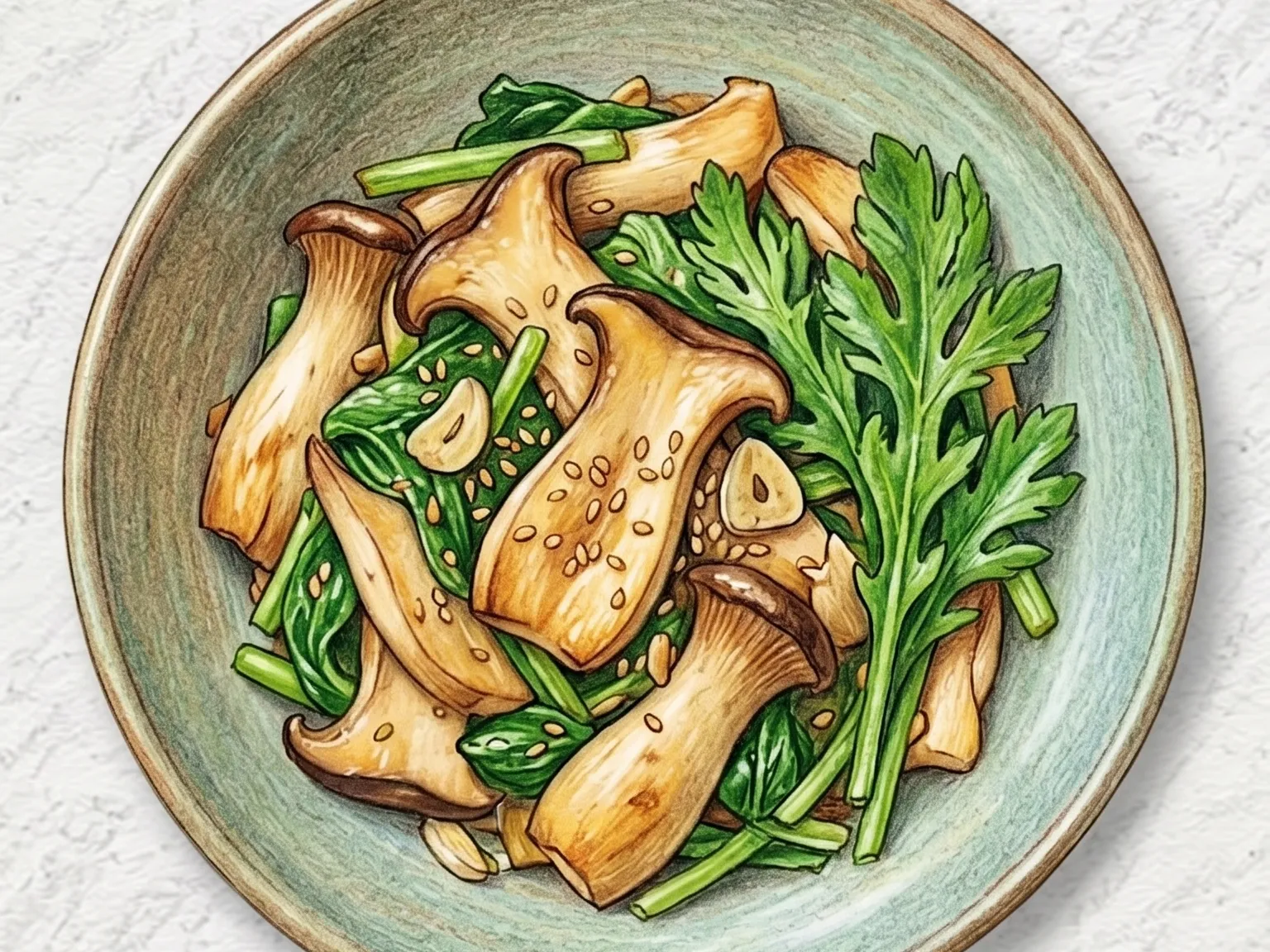
Korean Stir-fried Crown Daisy and Mushrooms
Stir-fry Easy

Korean Stir-fried Crown Daisy and Mushrooms

Ssukgat-beoseot-bokkeum is a quick stir-fry of oyster mushrooms and crown daisy (ssukgat) cooked in a garlic-infused pan. The mushrooms are seared over high heat to drive off moisture and develop a chewy bite, while the crown daisy stems and leaves go in at staggered intervals to preserve their crunch and aroma. Soy sauce and cooking wine provide the seasoning base, finished with sesame oil and toasted sesame seeds. The slightly bitter, herbal character of the crown daisy plays off the mild earthiness of the mushrooms for a clean, well-defined flavor.

🏠 Everyday 🍱 Lunchbox
Prep 10min Cook 8min 2 servings
Korean Pork & Crown Daisy Stir-fry
Stir-fry Easy

Korean Pork & Crown Daisy Stir-fry

Crown daisy enters only after the pork is cooked in this doenjang stir-fry, keeping the greens out of the pan during the longer meat stage. Pat 250 g pork shoulder dry, coat it evenly with 1.5 tablespoons doenjang, 0.5 tablespoon gochujang, and 1 tablespoon minced garlic, and leave it for 10 minutes. Trim the tough ends from 120 g crown daisy and cut it into 5 cm lengths. Slice 80 g onion and 40 g green onion thinly. Heat 1 tablespoon cooking oil over medium heat and cook the onion for about 1 minute, until only its edges become translucent. Raise the heat to high and spread the seasoned pork thinly. During the first minute, loosen only the edges instead of turning every piece constantly, while watching that the bean paste does not scorch in one spot. Continue for another 4 to 5 minutes, until no red meat remains and the seasoning looks glossy. If the doenjang begins to harden brown against the pan, lower the heat and keep the pork moving. Add the green onion and crown daisy for the final 1 to 1.5 minutes. Finish with 1 tablespoon sesame oil and remove the pan from the heat as soon as the leaves begin to wilt while their color remains bright.

🏠 Everyday 🍱 Lunchbox
Prep 15min Cook 12min 2 servings
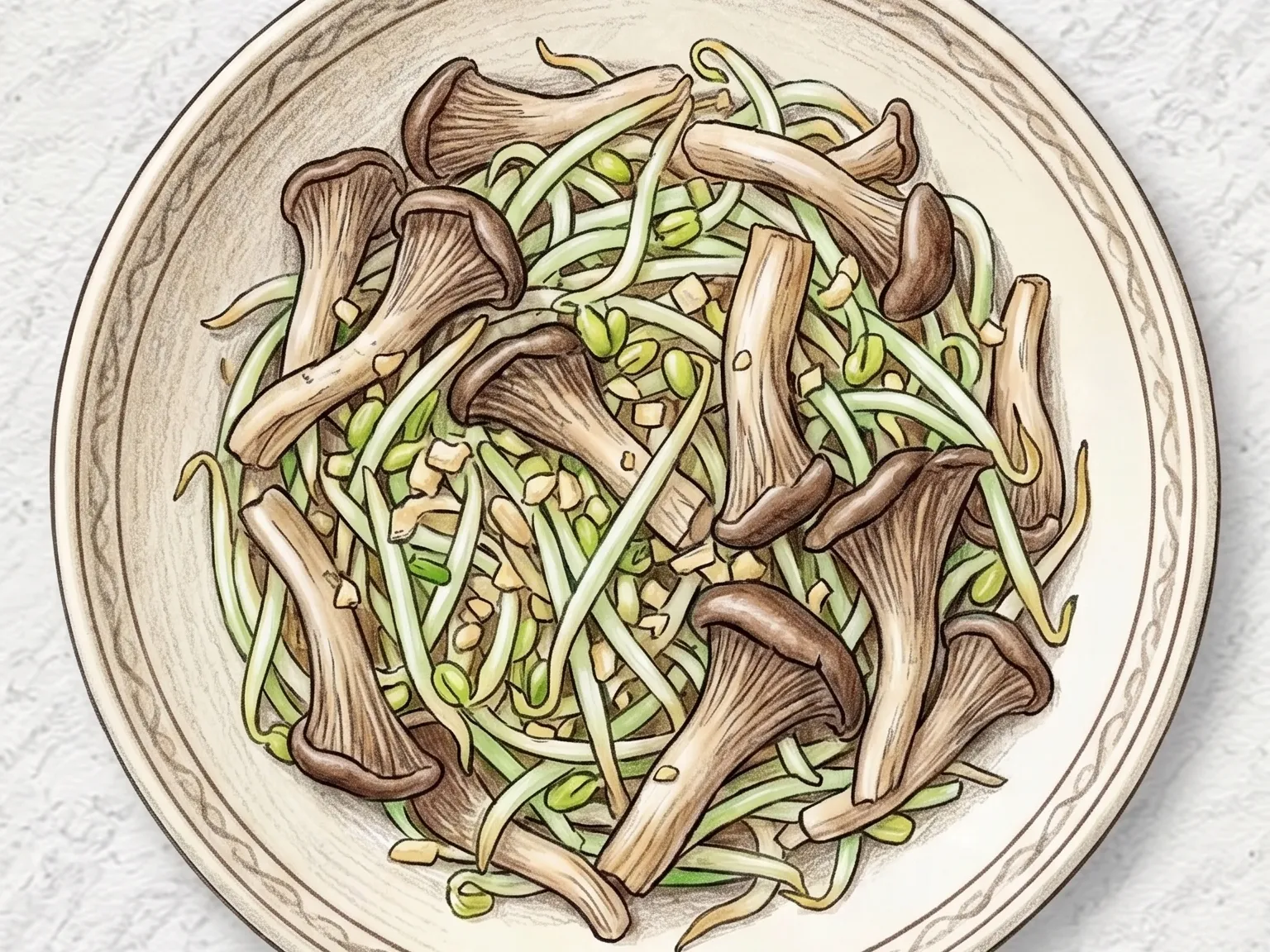
Korean Stir-Fried Mung Bean Sprouts and Mushrooms
Stir-fry Easy

Korean Stir-Fried Mung Bean Sprouts and Mushrooms

This stir-fry separates the cooking time of 180 g oyster mushrooms from 300 g mung bean sprouts so the mushroom moisture can evaporate before the sprouts receive their brief heat. Rinse the sprouts, spread them in a colander, and check that they are no longer dripping immediately before cooking. Tear the oyster mushrooms along the grain rather than chopping them. Thinly slice 80 g onion and cut 30 g green onion on the bias. Heat a wide pan fully over high heat, add 1 tablespoon cooking oil, and cook the onion with 1 tablespoon minced garlic for about 1 minute. Add the mushrooms before the garlic browns and keep them moving over high heat for 2 minutes. Continue until no water remains on the pan bottom, the sizzling sounds sharper, and the mushrooms have shrunk slightly. Only then add the drained sprouts, immediately followed by 1 tablespoon soup soy sauce and 0.5 teaspoon salt. Turn them in broad motions for no more than 30 seconds, stopping when they look glossy but remain crisp. Switch off the heat and add the green onion, 1 tablespoon sesame oil, and 1 teaspoon sesame seeds. Toss for 10 seconds with residual heat and plate at once. Cooking the mushrooms and sprouts in separate stages prevents both a wet pan and softened sprouts.

🏠 Everyday 🍱 Lunchbox
Prep 12min Cook 8min 4 servings
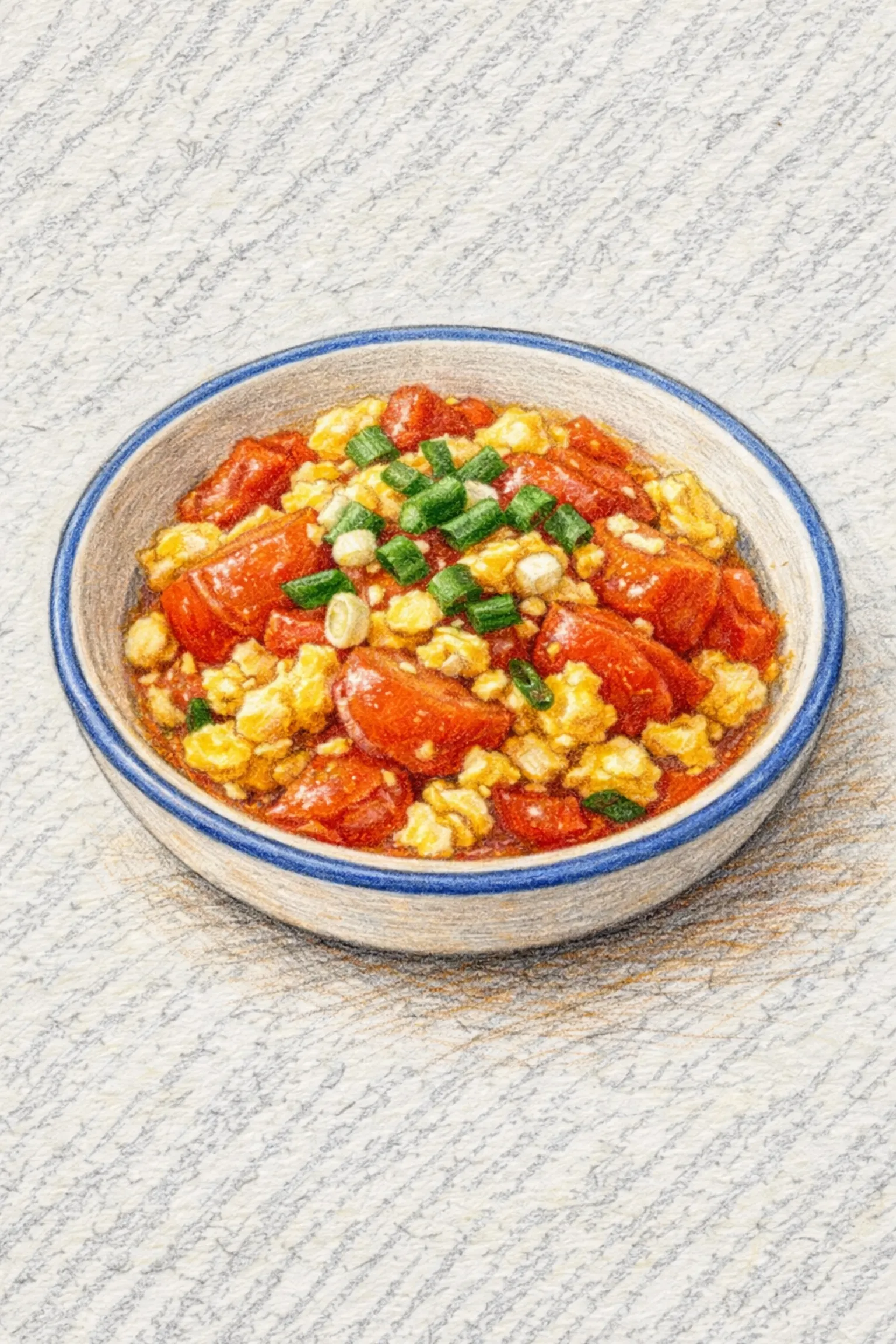
Korean Tomato Dalgyal Bokkeum (Tomato Egg Stir-fry)
Stir-fry Easy

Korean Tomato Dalgyal Bokkeum (Tomato Egg Stir-fry)

Tomato and egg cook in two separate stages here, preventing the eggs from remaining in the pan for the full time needed to soften the tomatoes. Cut 280 g of tomatoes into pieces slightly larger than bite size so they do not collapse immediately. Beat 4 eggs with a little salt until no streaks of white remain. Heat 1 tablespoon of cooking oil over medium heat, pour in the eggs, and wait for the edges to set. Fold them in broad strokes and remove them while the surfaces are still glossy and roughly 70 percent cooked. Add the remaining tablespoon of oil to the same pan with 30 g of green onion and 1 teaspoon of minced garlic. Stir for only about 20 seconds. Add the tomatoes and toss until their surfaces pick up the flavored oil, then mix in 1 teaspoon of sugar and 1 tablespoon of oyster sauce. After about 2 minutes, the tomato pieces should soften slightly and begin releasing juice. Return the eggs, lower the heat, and fold for 40 seconds. Turn off the heat as soon as no liquid egg remains and before the tomatoes lose their shape. Taste first and use the remaining salt only if needed.

🏠 Everyday 🍱 Lunchbox
Prep 10min Cook 7min 2 servings
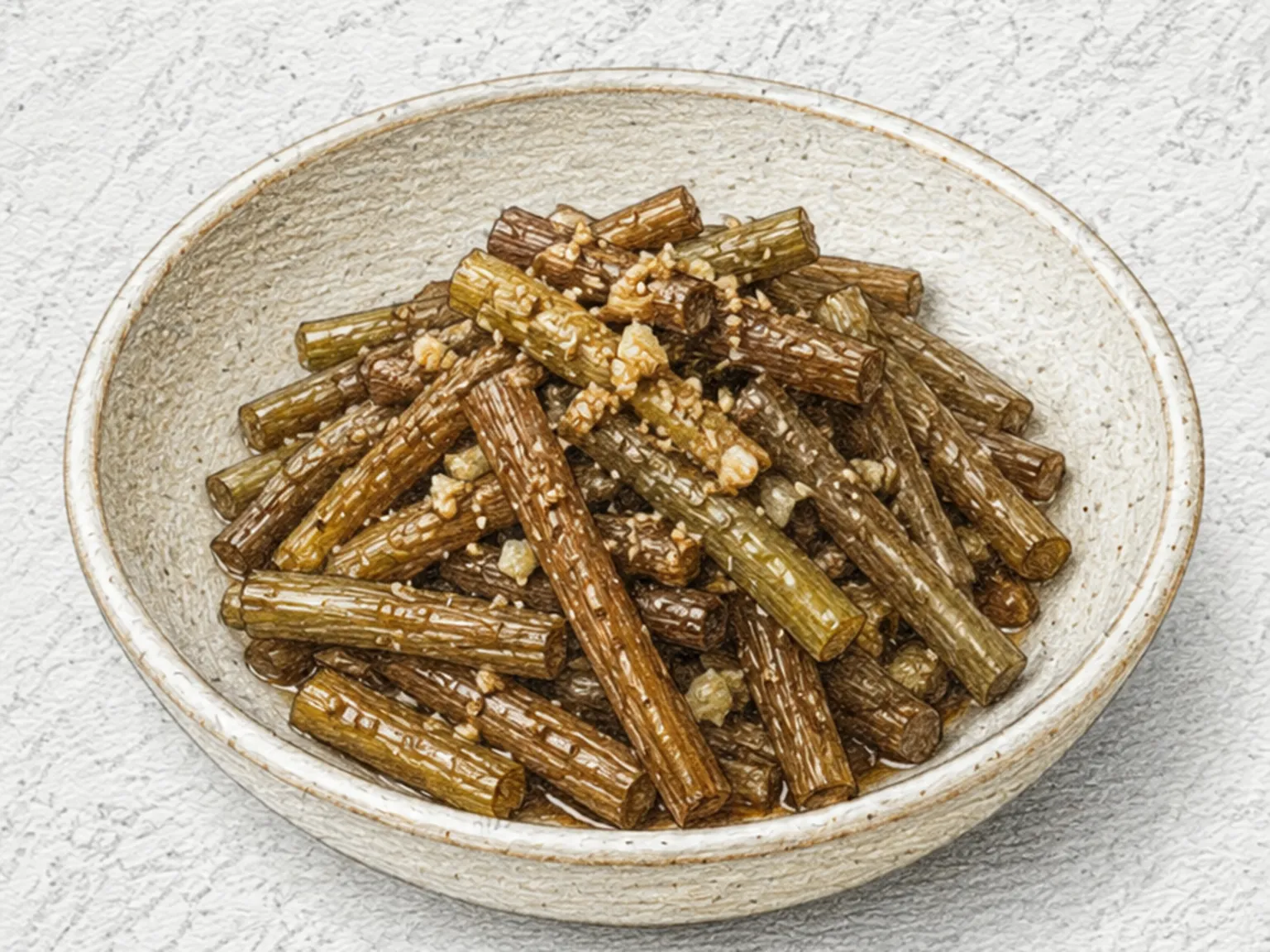
Korean Stir-Fried Taro Stems
Stir-fry Medium

Korean Stir-Fried Taro Stems

Torandae bokkeum starts with 300 g already-boiled taro stems. Squeeze them firmly, cut them into 4 to 5 cm lengths, and keep them separate from 80 g thickly sliced onion and half a green onion cut on the diagonal. Preheat a pan over medium-low heat for 1 minute, spread in 1.5 tablespoons perilla oil, and stir 1 teaspoon minced garlic for about 30 seconds. Before the garlic browns, add the taro stems and onion, raise the heat to high, and toss for 2 minutes. Continue until the stem surfaces look slightly translucent and the onion begins to soften. Pour 1 tablespoon soy sauce around the hot pan rim and mix quickly, then add 80 ml water and reduce the heat to medium. Simmer uncovered for 4 minutes, turning the stems once. Allow no more than 1 additional minute if a large amount of broth remains. Turn off the heat when only a thin layer of liquid sits on the bottom and the stems look glossy. Add 1 tablespoon ground perilla seed and the sliced green onion with the burner off. Toss for about 1 minute so the powder loosens in the residual moisture and coats each piece. The ingredient must be thoroughly boiled before this recipe begins; the stir-fry is not a substitute for that preparation.

🏠 Everyday 🍱 Lunchbox
Prep 15min Cook 12min 4 servings
Korean Taro Stem Stir-fry with Perilla Powder
Stir-fry Medium

Korean Taro Stem Stir-fry with Perilla Powder

Begin this taro stem stir-fry by removing any tough outer fibers from 350 g of boiled stems. Squeeze out excess water gently, cut the stems into 5 to 6 cm lengths, and split thick pieces lengthwise so the pieces soften evenly. Warm 1 tablespoon of perilla oil slowly over medium-low heat. Add 1 teaspoon of minced garlic and 1/2 green onion and stir for about 30 seconds, moving on before the garlic edges brown. Add the taro stems and keep them moving on medium heat. After 2 minutes, the perilla oil should coat their surfaces and moisture on the pan bottom should diminish. Pour in 1 tablespoon of soup soy sauce and 120 ml of water. Once the liquid bubbles, reduce the heat to medium-low and simmer for about 5 minutes. The stems should bend softly while retaining a slight fibrous chew. Add 3 tablespoons of perilla powder in portions rather than all at once, stirring each addition immediately to eliminate dry clumps. Remove the pan from the heat when the liquid has thickened enough to cling to the stems but remains moist rather than drying into a paste. Check the seasoning at that point.

🏠 Everyday 🍱 Lunchbox
Prep 20min Cook 12min 4 servings
Korean Seaweed, Perilla & Shrimp Stir-fry
Stir-fry Easy

Korean Seaweed, Perilla & Shrimp Stir-fry

The seaweed and shrimp follow separate cooking clocks in this stir-fry, and the ground perilla enters only after the heat is lowered. Trim thick stems from 180 g of fresh tot seaweed, rinse it, and blanch it in boiling water for 30 seconds. Cool it in cold water and squeeze firmly so it does not release excess water into the pan. Devein 180 g of shrimp, pat them dry, and leave them for 5 minutes with 1 tablespoon of cooking wine and a small pinch of salt. Heat 1 1/2 tablespoons of perilla oil over medium heat and stir 1 tablespoon of minced garlic with 30 g of green onion for about 30 seconds, stopping before the garlic browns. Spread the shrimp in one layer and cook for roughly 1 minute. When the edges turn opaque and the bodies begin to curl, at about 70 percent doneness, add the blanched seaweed. Drizzle in 1 tablespoon of soup soy sauce and toss for no more than 2 minutes. Lower the heat, sprinkle in 2 tablespoons of ground perilla, and stir for 1 minute to break up clumps. Check the seasoning when the shrimp are fully cooked and the powder coats the seaweed.

🥗 Light & Healthy 🏠 Everyday
Prep 15min Cook 10min 2 servings
Korean Stir-Fried Burdock Root
Stir-fry Medium

Korean Stir-Fried Burdock Root

Ueong bokkeum cuts 250 g burdock root into thin 5 cm matchsticks, rests them in vinegared water, then reduces soy sauce and grain syrup around the strips until almost no liquid remains. Scrape the skin lightly with the back of a knife and keep the matchsticks even. Soak them in vinegared cold water for 10 minutes to limit browning and reduce harsh bitterness. Drain well and blot the surfaces; dripping strips would steam before they fry and would weaken the final coating. Heat 1 tablespoon cooking oil over medium-high heat and toss the burdock frequently for 3 minutes so all sides receive oil. Once the edges look slightly translucent, reduce the heat to medium. Add 1.5 tablespoons soy sauce, 1.5 tablespoons grain syrup, 1 teaspoon sugar, and 100 ml water, stirring from the pan bottom. When the mixture begins to bubble, reduce it for 7 minutes first. Continue for no more than 2 additional minutes only if a visible pool remains. Larger bubbles, almost no liquid on the bottom, and glossy brown strips are the stopping cues. Turn off the heat before adding 1 teaspoon sesame oil and 1 teaspoon sesame seeds. Toss, then let the burdock cool slightly so the glaze settles. Scrape the pan frequently near the end because the sweetened sauce can stick as its water disappears.

🏠 Everyday 🍱 Lunchbox
Prep 15min Cook 12min 4 servings
Korean Stir-Fried Dried Napa Cabbage Leaves
Stir-fry Medium

Korean Stir-Fried Dried Napa Cabbage Leaves

Ugeoji namul bokkeum uses 300 g rehydrated dried napa cabbage leaves, with an additional soak and boil to soften the thick stems before doenjang stock is reduced around them. Leave the leaves in lukewarm water at about 40 degrees C for 1 hour, then boil for 5 minutes. Check that a thick stem yields easily when pressed. Rinse briefly in cool water, squeeze firmly without crushing the leaves, and cut them into rough 5 to 6 cm pieces. Warm 1 tablespoon perilla oil over medium heat and move 1 tablespoon minced garlic through it for about 20 seconds. Add the cabbage and stir-fry for 2 minutes so every piece receives oil and the moisture on the pan bottom decreases. Dissolve 1.5 tablespoons doenjang in 100 ml anchovy-kelp stock and pour it into the pan. Keep it at a medium-heat simmer for the first 8 minutes. Extend the cook by no more than 2 minutes if the stems remain firm or excess liquid is still present, adding a small amount of stock if the seasoning tastes too salty. Once most of the broth has reduced, lower the heat and add 2 tablespoons perilla seed powder with 20 g sliced green onion. Stir for 2 minutes, stopping when the powder has thickened the remaining moisture into a coating but the leaves are still moist.

🏠 Everyday 🍱 Lunchbox
Prep 60min Cook 15min 4 servings
Korean Mixed Vegetable Stir-Fry
Stir-fry Easy

Korean Mixed Vegetable Stir-Fry

This mixed vegetable stir-fry adds carrot, onion, bell pepper, and shiitake according to firmness, then coats everything with oyster sauce during the final 20 seconds. Cut 1 carrot, 1 onion, and 1 bell pepper to a similar thickness, and slice 80 g of shiitake mushrooms thinly. Dry the vegetables after washing so the high-heat pan does not cool and collect liquid. Preheat the pan over high heat for about 1 minute, add only a very thin film of oil, and put in the carrot before the oil smokes. Stir-fry the carrot for roughly 1 minute, until its edges brighten slightly. Add the onion and cook it only until the raw edge begins to soften, before the pieces become fully translucent. The bell pepper and shiitake enter next for 1 1/2 minutes of quick tossing over high heat. Before the vegetables collapse, pour 1 tablespoon of oyster sauce around the hot pan edge and keep everything moving for 20 seconds. This prevents the sauce from reducing into salty or scorched patches. When a thin sheen covers each vegetable, turn off the heat, mix in 1 teaspoon of sesame oil, and transfer immediately.

🏠 Everyday 🌙 Late Night
Prep 10min Cook 8min 2 servings
Korean Stir-fried Cabbage with Doenjang
Stir-fry Easy

Korean Stir-fried Cabbage with Doenjang

This cabbage and doenjang stir-fry coats 300 g of cabbage and 70 g of onion with a thin, savory sauce rather than leaving paste in heavy pockets. Cut around the tough core, make the leaves bite-size, and shave thick ribs more thinly so the pieces soften at a similar rate. Before the pan is heated, dissolve 1 tablespoon doenjang and 0.5 teaspoon gochugaru in 30 ml water. A smooth mixture spreads between the leaves, while unresolved lumps can scorch before the cabbage is coated. Cook the garlic and onion in 1 tablespoon oil over medium-high heat for 1 minute, stopping when the onion edges turn translucent. Raise the heat and spread in the cabbage. Toss continuously for 2 to 3 minutes; the edges should look glossy while the volume only begins to fall. Pour the doenjang mixture around the rim and mix immediately. One more minute over high heat is enough when the sauce clings lightly instead of pooling on the bottom. Turn off the heat while the cabbage still resists the bite and most of the moisture has evaporated. Mix in 0.5 teaspoon sesame oil off the heat. Because doenjang varies in saltiness, check the finished coating before deciding whether it needs more seasoning.

🏠 Everyday 🍱 Lunchbox
Prep 8min Cook 7min 2 servings
Korean Yangbaechu Kkae Bokkeum (Sesame Cabbage Stir-fry)
Stir-fry Easy

Korean Yangbaechu Kkae Bokkeum (Sesame Cabbage Stir-fry)

Yangbaechu kkae bokkeum uses 400 g cabbage with onion and carrot cut to a similar thickness, then finishes the vegetables off the heat with perilla oil and partially crushed sesame seeds. Cut the cabbage into 1 cm strips and match 80 g onion and 50 g carrot to roughly the same width. Lightly crush half of the 1.5 tablespoons toasted sesame seeds so they are ready for the finish. Heat a wide pan over medium heat, add 1 tablespoon sesame oil, and stir 1 tablespoon minced garlic for about 20 seconds. Before the garlic browns, add the carrot and onion and cook for 2 minutes. Once the onion edges look translucent, add the cabbage, raise the heat to high, and spread it broadly across the pan. Stir-fry for 1 minute first, extending this stage by only 1 minute if the edges have no color. Avoid constant stirring that traps the vegetable moisture. Pour 1 tablespoon soup soy sauce and 0.25 teaspoon salt around the pan rim and toss for 2 minutes. Stop when the cabbage has wilted slightly but its center still has a crisp bite. Switch off the burner, add 1 teaspoon perilla oil and the prepared sesame seeds, and mix with residual heat before transferring immediately. The ordered vegetable stages and short high-heat cabbage cook determine the texture.

🏠 Everyday 🍱 Lunchbox
Prep 12min Cook 8min 4 servings
Korean Lotus Root Chicken Breast Stir-fry
Stir-fry Medium

Korean Lotus Root Chicken Breast Stir-fry

This stir-fry coordinates 320 g chicken breast with 260 g lotus root by preparing and cooking them in distinct stages. Cut the chicken into even bite-size pieces and marinate it for 10 minutes with 1 tablespoon soy sauce, 1 tablespoon cooking wine, and 0.25 teaspoon black pepper. Slice the lotus root about 3 mm thick, soak it in vinegar water for 5 minutes, rinse it, and drain it thoroughly. Slices that are much thinner can break during tossing, while water left on the surface can splatter in the preheated oil. Cut 120 g onion and 100 g bell pepper to similar widths. Heat 1.5 tablespoons oil over medium-high heat, arrange the chicken without overlapping, and cook it for about 3 minutes. Move to the next stage as soon as the outside turns white and the pieces separate; extending this first cooking period can dry the breast before the sauce is added. Stir in 1 tablespoon minced garlic, the onion, and the lotus root for 4 minutes. When the lotus root edges look translucent and the onion has softened, add the remaining 1 tablespoon soy sauce, 1 tablespoon oligosaccharide syrup, and the bell pepper. Toss for 2 minutes. The dish is ready when the seasoning no longer pools and instead gives the chicken and vegetables an even glossy coating.

🏠 Everyday 🍱 Lunchbox
Prep 20min Cook 12min 4 servings
Korean Soy Sauce Stir-Fried Lotus Root and Bean Sprouts
Stir-fry Easy

Korean Soy Sauce Stir-Fried Lotus Root and Bean Sprouts

Yeongeun-kongnamul-ganjang-bokkeum stir-fries sliced lotus root and bean sprouts in a soy sauce and oligosaccharide glaze. The lotus root goes in first over medium heat for three minutes until slightly translucent, then carrot and garlic are added before the soy seasoning. Bean sprouts join last and cook on high heat for just two minutes to drive off moisture while staying crunchy. The starchy snap of the lotus root contrasts with the watery crispness of the bean sprouts, tied together by a light sweet-salty soy coating.

🏠 Everyday 🍱 Lunchbox
Prep 14min Cook 9min 2 servings
Korean Lotus Root & Duck Chili Stir-fry
Stir-fry Medium

Korean Lotus Root & Duck Chili Stir-fry

This lotus root and smoked duck stir-fry controls both texture and rendered fat by cooking the main ingredients in separate stages. Slice 220 g lotus root about 3 mm thick, soak it in vinegar water for 5 minutes, rinse, and drain it thoroughly. Thinly slice 100 g onion, cut 2 cheongyang chilies into rounds, and mix 1.5 tablespoons soy sauce with 1 tablespoon each of gochujang and oligosaccharide syrup before the pan is hot. Spread the lotus root over medium heat and stir-fry for about 3 minutes. Transfer it to a plate when the edges become translucent and lightly golden. Add 320 g sliced smoked duck to the same pan and cook over medium-high heat for roughly 3 minutes, until the edges curl and fat renders out. Spoon off the excess, leaving only a thin coating for the next stage. Add the onion and 1 tablespoon minced garlic for 1 minute, then stir in the chili and prepared seasoning until the thick sauce loosens around the duck. Return the lotus root and fold it through on medium heat. Two minutes is enough to coat it without softening its crisp center. Finish off the heat with 1 tablespoon sesame oil and 1 teaspoon sesame seeds. Smoked duck can already be salty, so taste the finished coating before adding any extra soy sauce.

🏠 Everyday 🍱 Lunchbox
Prep 20min Cook 14min 4 servings
Korean Lotus Root and Shrimp Stir-fry
Stir-fry Easy

Korean Lotus Root and Shrimp Stir-fry

Lotus root and shrimp reach their best stopping points quickly, so this stir-fry keeps every stage short and uses visible changes to decide when to move on. Thinly slice 220 g lotus root, soak it in vinegar water for 5 minutes, rinse it, and drain it in a sieve. Clean 180 g shrimp and press away surface moisture as well. Wet ingredients release water instead of stir-frying cleanly, and that moisture can dilute the soy seasoning. Heat 1 tablespoon cooking oil over medium heat and start with 1 teaspoon minced garlic and 80 g onion. Once the garlic is fragrant and the onion begins to look translucent, add the lotus root and raise the heat to medium-high. Toss it for about 2 minutes, stopping this stage when only the edges are translucent and the centers still feel crisp. Add the shrimp. As soon as they are roughly halfway pink, pour in 1.5 tablespoons soy sauce and 1 tablespoon oligosaccharide syrup, then raise the heat to high. Let the seasoning bubble and toss everything briskly for about 1 minute. Turn off the heat when the shrimp are fully pink, the pieces look glossy, and no loose sauce pools on the pan. Mix in 1 teaspoon sesame oil with the residual heat. Extending that final minute to soften the lotus root further can overcook the shrimp first, so retain the lotus root's bite instead.

🏠 Everyday 🍱 Lunchbox
Prep 15min Cook 10min 2 servings
Korean Lotus Root and Beef Stir-fry
Stir-fry Medium

Korean Lotus Root and Beef Stir-fry

This stir-fry pairs 280 g thinly sliced lotus root with 180 g beef and uses the 2.5 tablespoons of soy sauce in two separate stages. Soak the evenly cut lotus root in vinegar water for 10 minutes to limit browning, then rinse and drain it thoroughly. Cut the beef into bite-size pieces, toss it with 1 tablespoon of the soy sauce, and leave it for 5 minutes. Keep the 80 g onion slightly thick so it softens without losing its shape. Heat 1 tablespoon cooking oil over medium heat and spread the beef in a single layer. Cook for about 1 minute, moving on while roughly half of the red color remains rather than finishing the meat by itself. Add the lotus root and onion and keep tossing for about 3 minutes. When the lotus root edges look translucent and the onion becomes aromatic, lower the heat to medium-low. Add the remaining 1.5 tablespoons soy sauce, 1 tablespoon oligosaccharide syrup, and 1 teaspoon minced garlic. Stir-fry for about 2 minutes, until the seasoning forms a thin glossy coating instead of collecting on the pan. Taste one lotus root slice before stopping: the center should still be crisp and the outside should carry the sweet-salty sauce. Turn off the heat and mix in 1 teaspoon sesame oil. Thinly sliced beef suits this timing because it cooks alongside the lotus root without requiring a longer final stage.

🏠 Everyday 🍱 Lunchbox
Prep 20min Cook 12min 3 servings

About Side dishes

Great banchan balances seasoning with the natural flavor of each ingredient. Sesame oil, perilla oil, soy sauce, and fermented pastes work together to pack deep flavor into every small serving.