Stir-fry

Stir-fry Recipes

310 recipes. Page 12 of 13

Stir-frying is one of the most common cooking methods in Korean home kitchens. Classics like spicy pork stir-fry (jeyuk-bokkeum), squid stir-fry, and japchae showcase the range of flavors - from fiery gochujang-based sauces to sweet soy glazes.

Stir-fry
Pu Pad Pong Curry (Thai Crab Stir-Fry with Egg and Curry Powder)
Stir-fry Medium

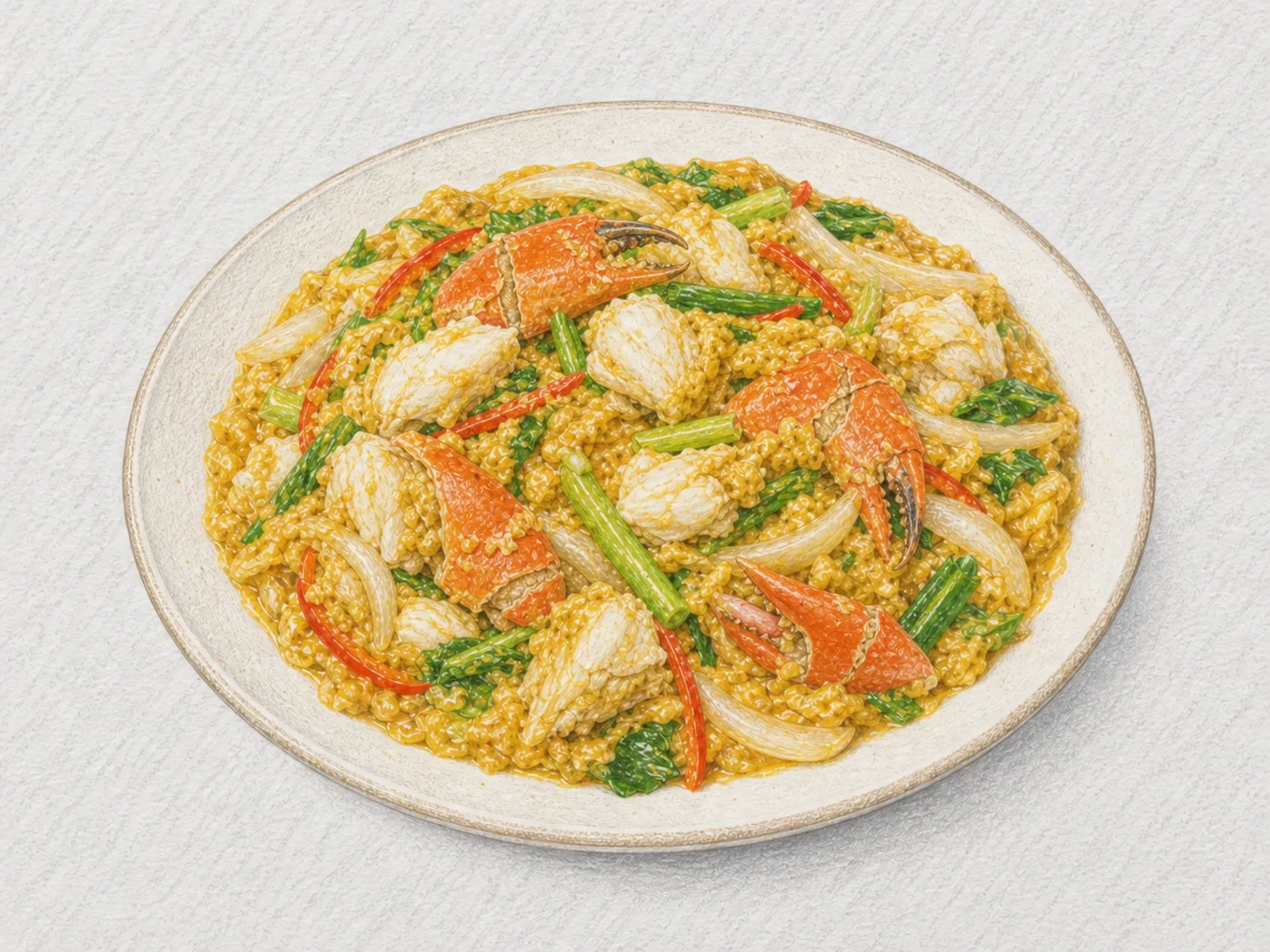
Pu Pad Pong Curry (Thai Crab Stir-Fry with Egg and Curry Powder)

Pu pad pong curry is a Sino-Thai stir-fry of crab with a sauce made from mild curry powder, eggs, and evaporated milk. Unlike a coconut-based Thai curry, it cooks quickly in a wok. Nam prik pao, oyster sauce, light soy sauce, and white pepper season the custard-like sauce without covering the sweetness of the crab. The egg mixture should remain soft and glossy, not dry like scrambled eggs. Chinese celery and scallions go in at the end so their aroma stays distinct. Measure the sauce before heating the wok, then cook the crab only long enough to warm it through.

🎉 Special Occasion 🍺 Bar Snacks
Prep 15min Cook 10min 3 servings
Stir-fried Pork and Green Pepper
Stir-fry Medium

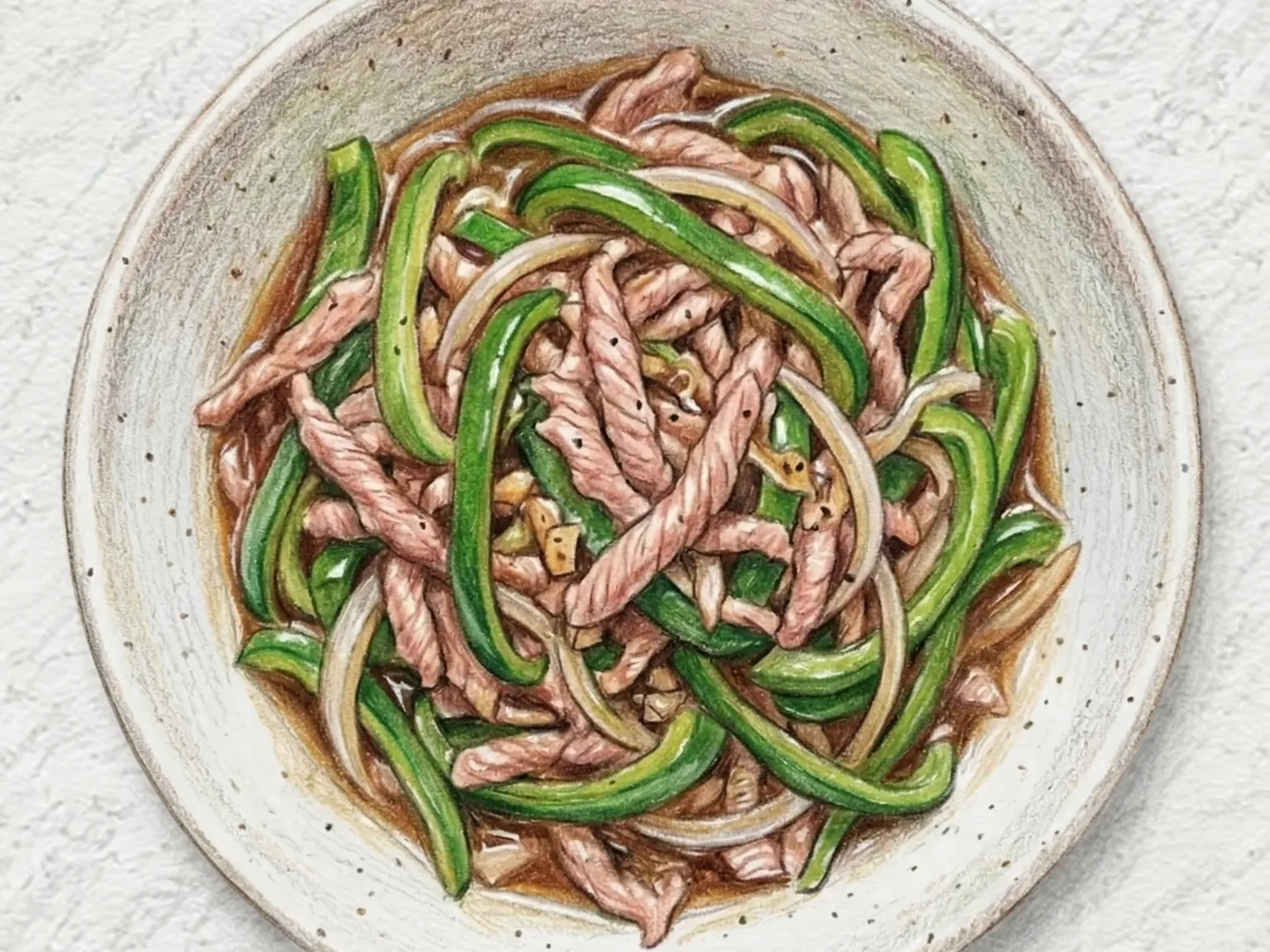
Stir-fried Pork and Green Pepper

Qingjiao rousi cooks 220 g of pork loin and 2 green bell peppers as narrow, similarly sized strips so both can finish during a brief high-heat stir-fry. Slice the pork across the grain, then mix it with 1/2 tablespoon of soy sauce and 1 tablespoon of cooking wine for 5 minutes. Shake off excess liquid before cooking to limit steaming when the pork reaches the pan. Heat 1 1/2 tablespoons of cooking oil over high heat and stir 1 teaspoon of minced garlic for about 10 seconds, only until fragrant. Spread the pork strips across the hot surface and separate them as they cook for 50 seconds to 1 minute. As soon as most of the red color disappears, add the bell pepper and onion, which should be cut to roughly the same width as the meat. Keep everything moving for about 2 minutes. When the pepper looks brighter and only the onion edges have turned translucent, add the remaining 1 tablespoon of soy sauce and 1 tablespoon of oyster sauce around the edge of the pan. Stir-fry for 1 more minute. The sauce should form a thin coating with no puddle left below, and the pepper should retain a crisp resistance when the pan comes off the heat.

🏠 Everyday 🌙 Late Night
Prep 15min Cook 8min 2 servings
Spicy Fried Chicken Stir-fry
Stir-fry Medium

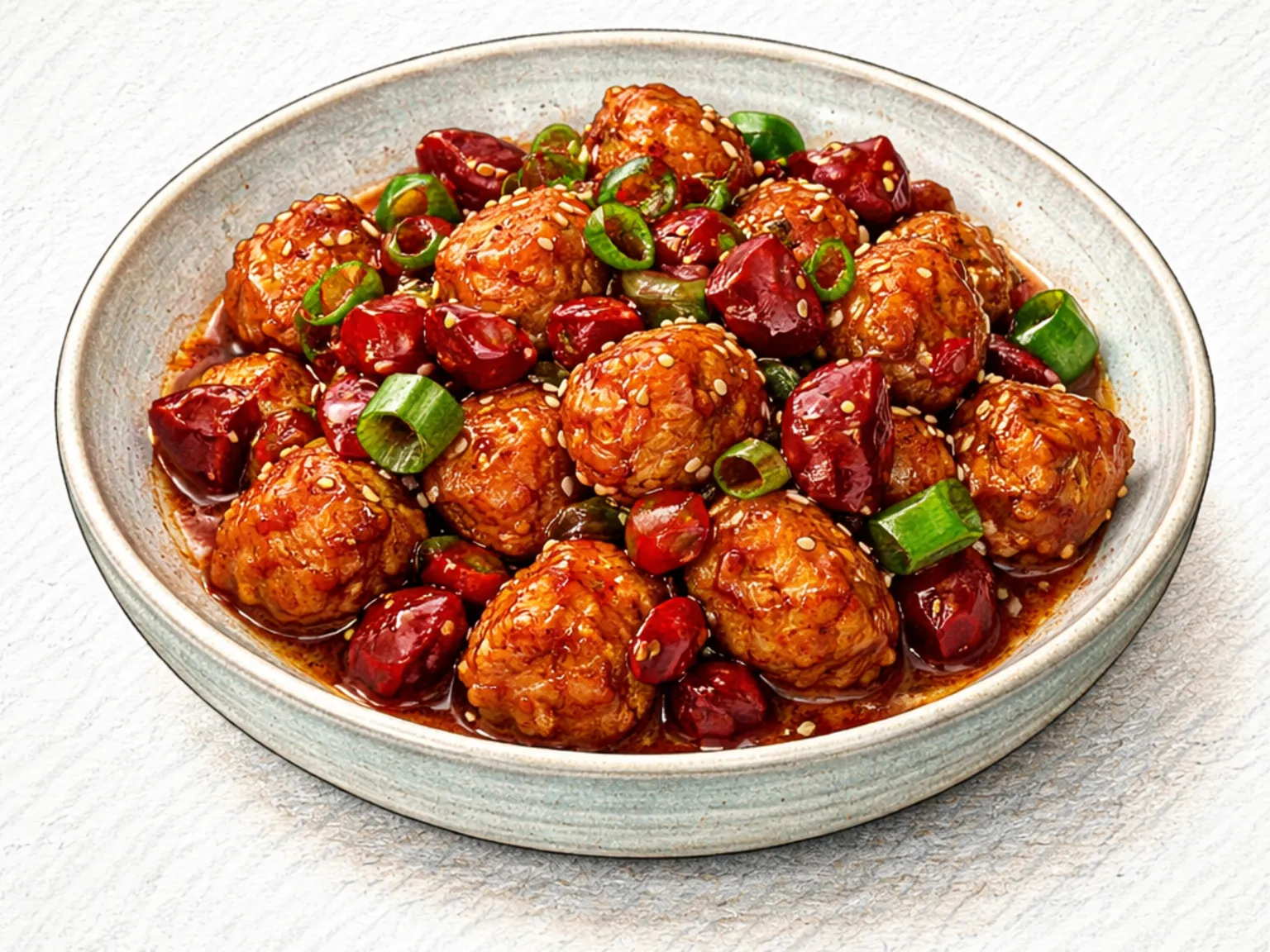
Spicy Fried Chicken Stir-fry

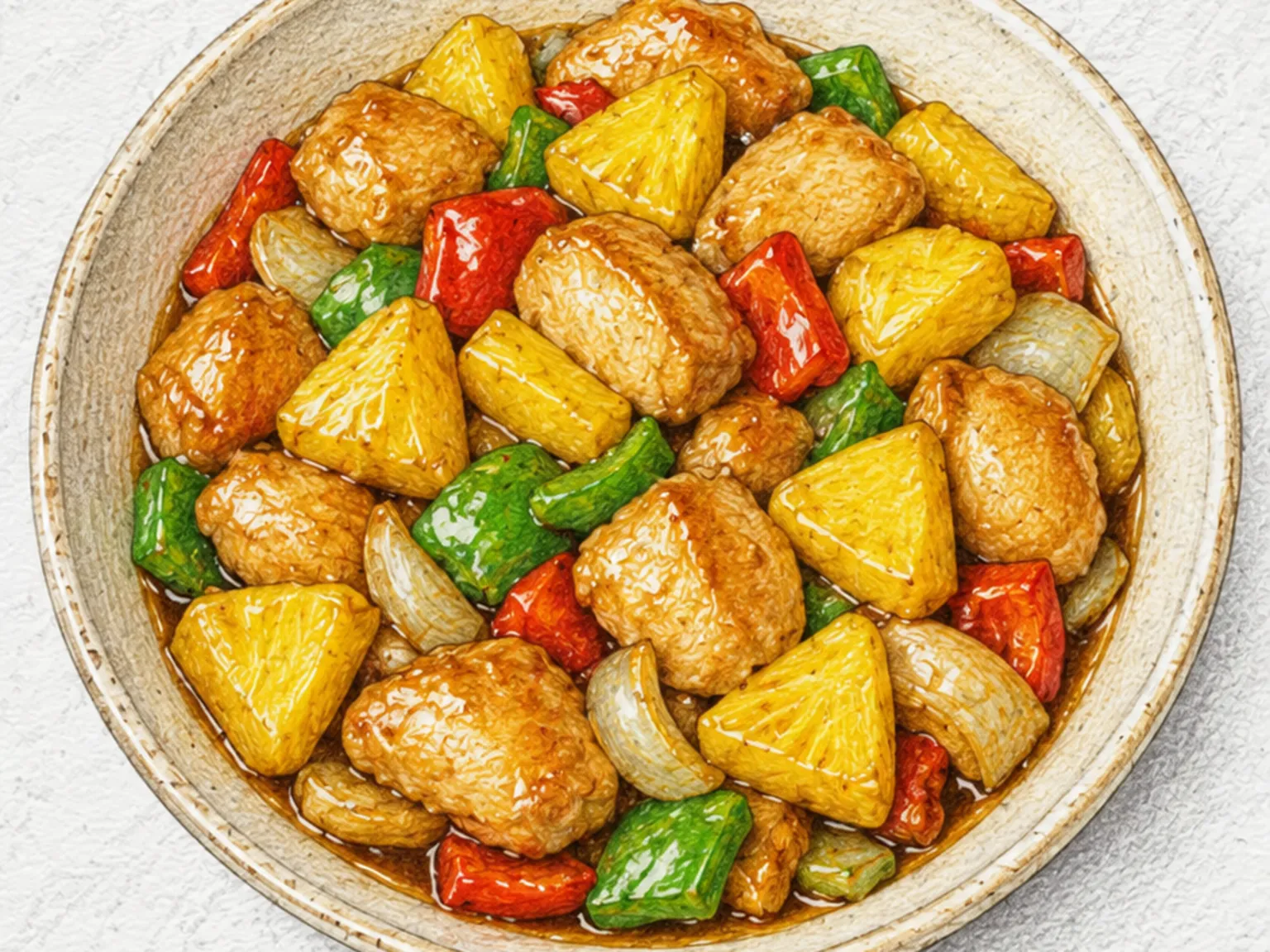
Rajogi keeps its fried crust by separating the frying stage from the final sauce toss. Cut 450 g of chicken thigh into even bite-size pieces, press away excess surface moisture, and cover all sides with 5 tablespoons of potato starch. Shake off heavy clumps so the coating fries as a thin shell instead of remaining pasty. Heat 2 cups of cooking oil to 170 degrees Celsius and add the chicken without crowding the pot. Maintain medium heat until the pieces are golden and firm around the edges, then lift them out to rest briefly. A short return to the hot oil just before making the sauce is an optional way to make the exterior firmer. In a separate pan over medium heat, stir-fry 90 g of onion and 100 g of bell pepper only until they begin to soften while retaining their shape. Lower the heat and add 1 tablespoon of gochujang, 2 tablespoons of ketchup, and 1 tablespoon of vinegar. Stir and scrape the bottom until the thick sauce bubbles and looks glossy. Add the fried chicken at the last moment, toss only until every piece has a thin coating, and transfer it immediately so the crust does not sit in the sauce.

🏠 Everyday 🍺 Bar Snacks
Prep 25min Cook 20min 3 servings
Korean Ginger Chicken Breast Stir-fry
Stir-fry Easy

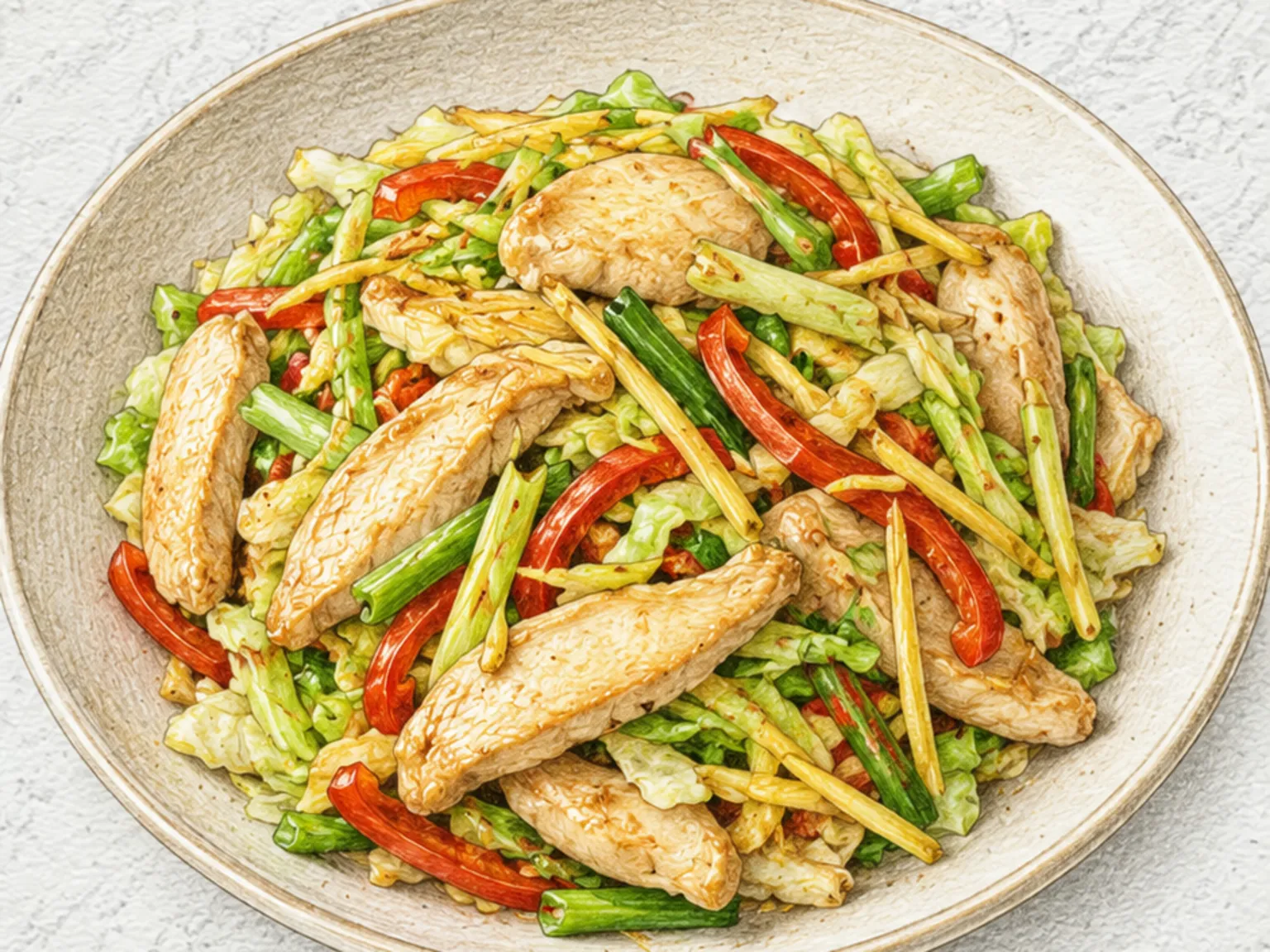
Korean Ginger Chicken Breast Stir-fry

For this ginger chicken stir-fry, slice 280 g of chicken breast across the grain into bite-size pieces and cut 12 g of fresh ginger into thin, even matchsticks. Season the chicken for 8 minutes with 1 tablespoon of soy sauce, 1 teaspoon of minced garlic, and 1/4 teaspoon of black pepper. Shake excess water from the cabbage and bell pepper and cut them into substantial pieces so they do not collapse during the final stir-fry. Heat 1 tablespoon of neutral oil over medium-high heat and move the ginger and green onion constantly for about 40 seconds. Add the chicken before the ginger edges burn, spread the pieces across the pan, raise the heat to high, and stir-fry for roughly 4 minutes. Continue until every surface is opaque and only the edges show light browning. Add 120 g of cabbage and 80 g of bell pepper with the remaining 1/2 tablespoon of soy sauce and 1 teaspoon of honey. Cook for 2 to 3 minutes, leaving a crisp bite in the vegetables. Turn off the heat when almost no watery liquid remains and the seasoning gives the chicken a light sheen. Let the pan stand for 1 minute before plating rather than extending the active cooking time.

🥗 Light & Healthy 🏠 Everyday
Prep 12min Cook 10min 2 servings
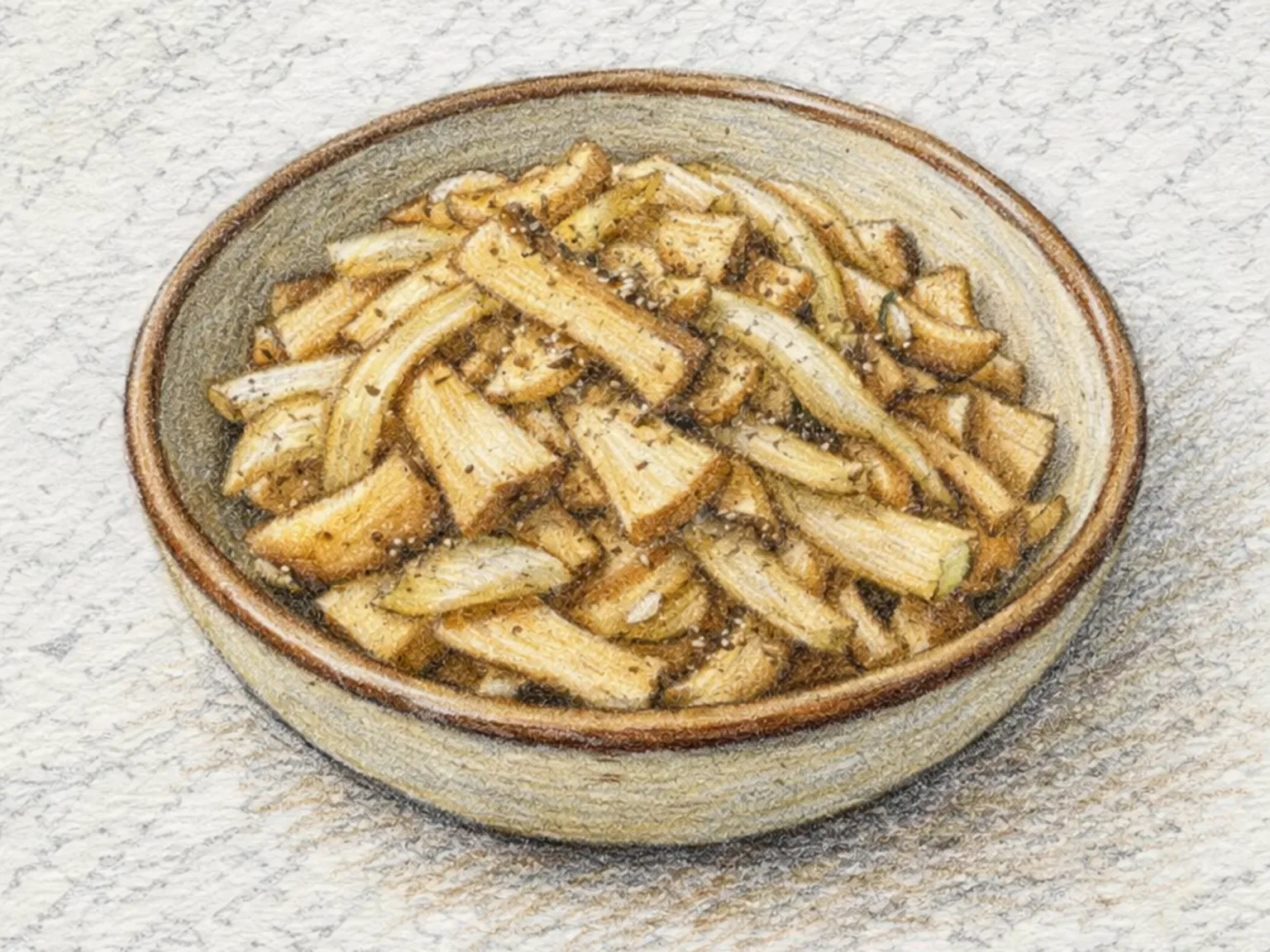
Korean King Oyster Mushroom Stir-fry with Perilla
Stir-fry Easy

Korean King Oyster Mushroom Stir-fry with Perilla

This stir-fry combines 250 grams of julienned king oyster mushrooms with onion, cooked rapidly over high heat in perilla oil and cooking oil to prevent the mushrooms from releasing too much water. Garlic is sauteed for 20 seconds first to infuse the oil, followed by onion for one minute to draw out its natural sweetness. The mushrooms then go in for a quick two-minute toss before soup soy sauce and a splash of water are added to create a light braising liquid. One and a half tablespoons of ground perilla seeds are stirred in during the final minute, thickening the sauce into a creamy coating without becoming pasty. Scallion is added off heat for a finishing touch of color and freshness.

🏠 Everyday 🍱 Lunchbox
Prep 10min Cook 8min 2 servings
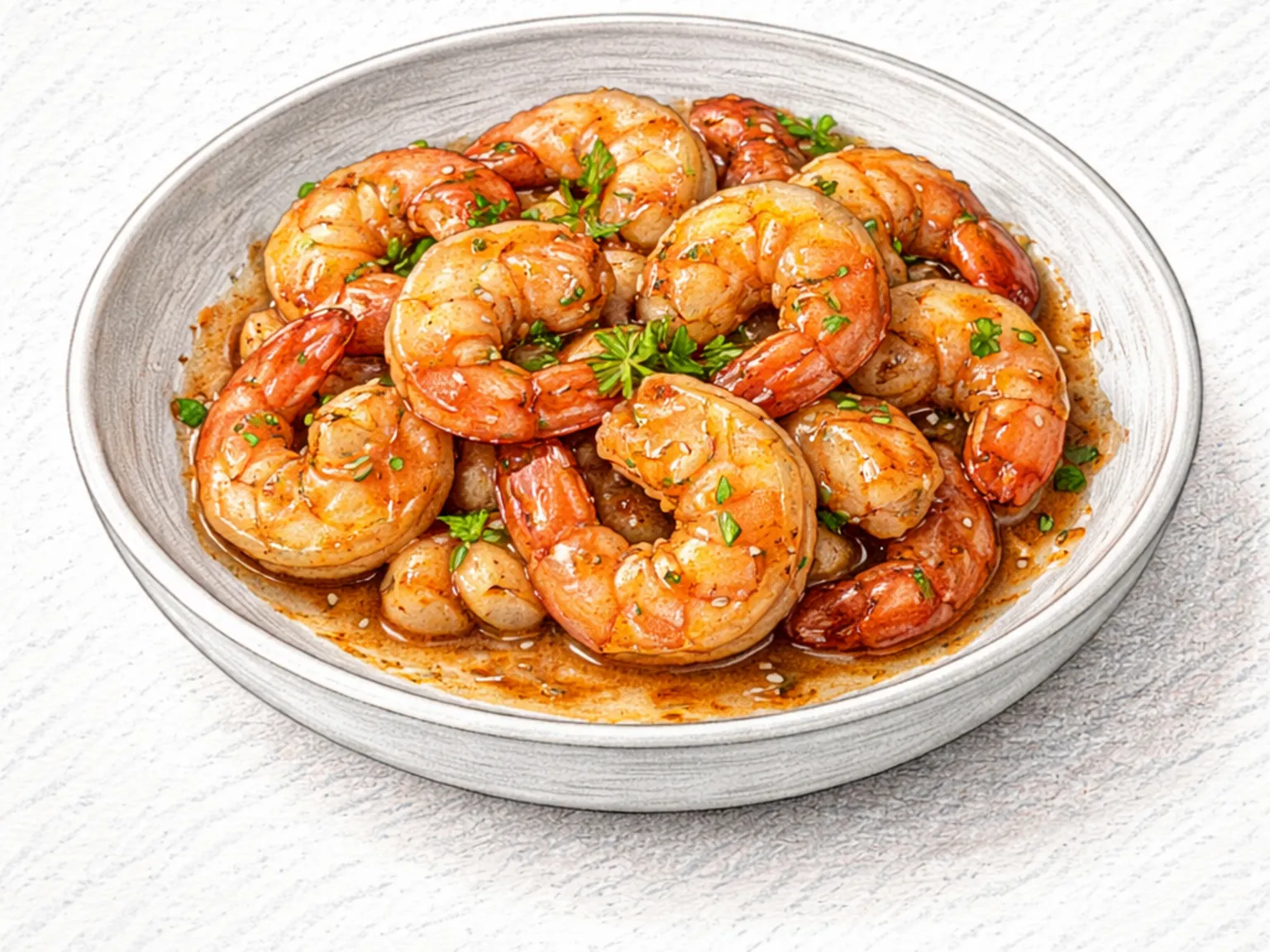
Korean Stir-Fried Shrimp (Garlic Butter Soy Glazed Shrimp)
Stir-fry Easy

Korean Stir-Fried Shrimp (Garlic Butter Soy Glazed Shrimp)

Saeu-bokkeum is a Korean stir-fried shrimp dish glazed in garlic butter and soy sauce. The process starts by peeling and deveining the shrimp, then patting them dry with paper towels to prevent splashing in the hot oil. Minced garlic is sautéed in melted butter over medium heat until fragrant. The shrimp are placed in a single layer and cooked over medium-high heat, flipping them as they turn pink. Precise timing is essential, as overcooking makes the shrimp tough and rubbery. A premixed blend of soy sauce and sugar is poured around the edges of the pan, cooking down into a glossy, sweet-and-savory glaze that coats each piece. Black pepper is added at the end to provide a sharp contrast to the rich butter. Sliced green onions are tossed in for ten seconds before turning off the heat, and the dish is served warm.

🏠 Everyday 🌙 Late Night
Prep 10min Cook 8min 2 servings
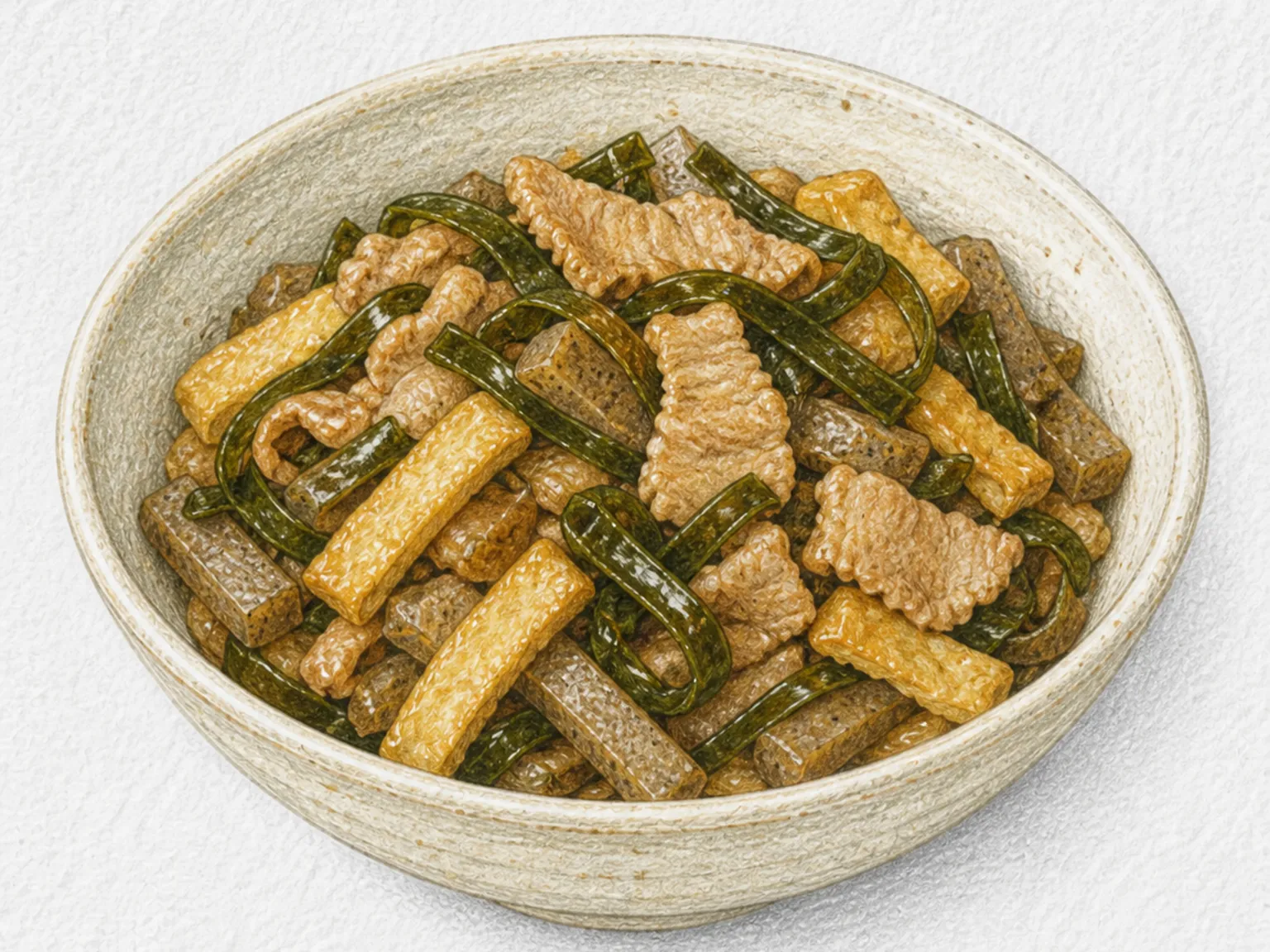
Koobuirichii (Stir-Simmered Kelp and Pork)
Stir-fry Medium

Koobuirichii (Stir-Simmered Kelp and Pork)

Koobuirichii starts by coating 40 g rehydrated kombu with oil, then softens it with 2 cups pork stock added in three portions. Soak the kombu until pliable, drain it, fold the slippery sheets into layers, and cut them into strips 3 to 4 mm wide. Boil 60 g pork belly until its center reaches at least 75°C. Cool it briefly, cut it into short strips, and strain the cooking liquid for the stock. Cut 40 g konnyaku, 30 g kamaboko, and 30 g fried tofu to a similar size. Briefly blanch the konnyaku and drain it. In a small pan over low heat, warm 1 tablespoon sugar, 0.5 tablespoon mirin, 1 tablespoon sake, and 1.25 tablespoons soy sauce. Add the pork and konnyaku and simmer them briefly in this seasoning. Heat 1 tablespoon neutral oil in a wide pot and stir-fry the kombu over medium heat until every strip is coated. Add the stock one portion at a time. Whenever a portion boils, lower the heat and replace the drop lid. Partway through softening the kombu, add the seasoned pork and konnyaku with all their liquid. Continue until almost no broth remains. Fold in the kamaboko and fried tofu without breaking them, taste, and use the pinch of salt only at the finish. Stop when the reduced seasoning clings glossily to all the pieces.

🎉 Special Occasion 🏠 Everyday
Prep 30min Cook 55min 4 servings
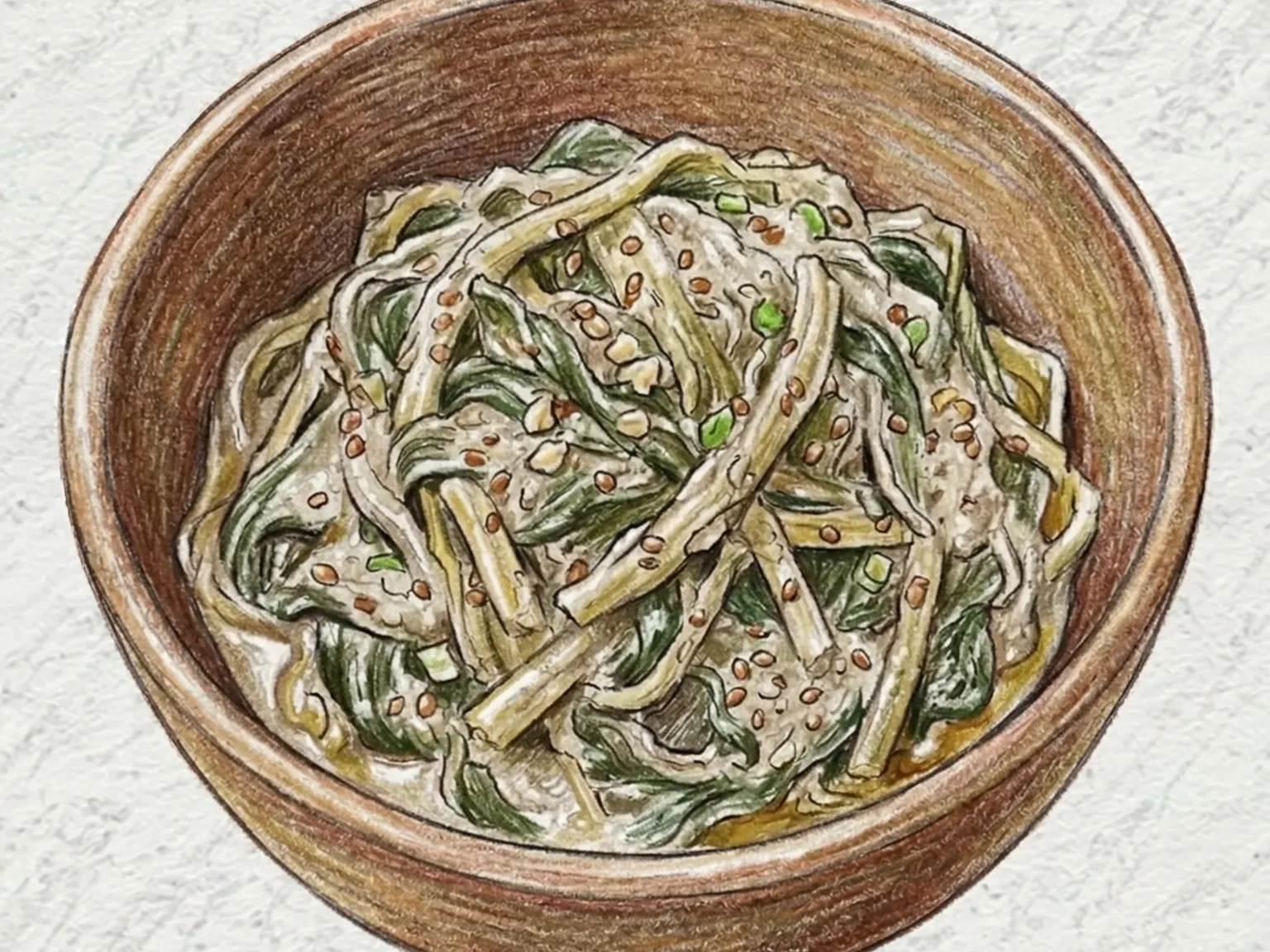
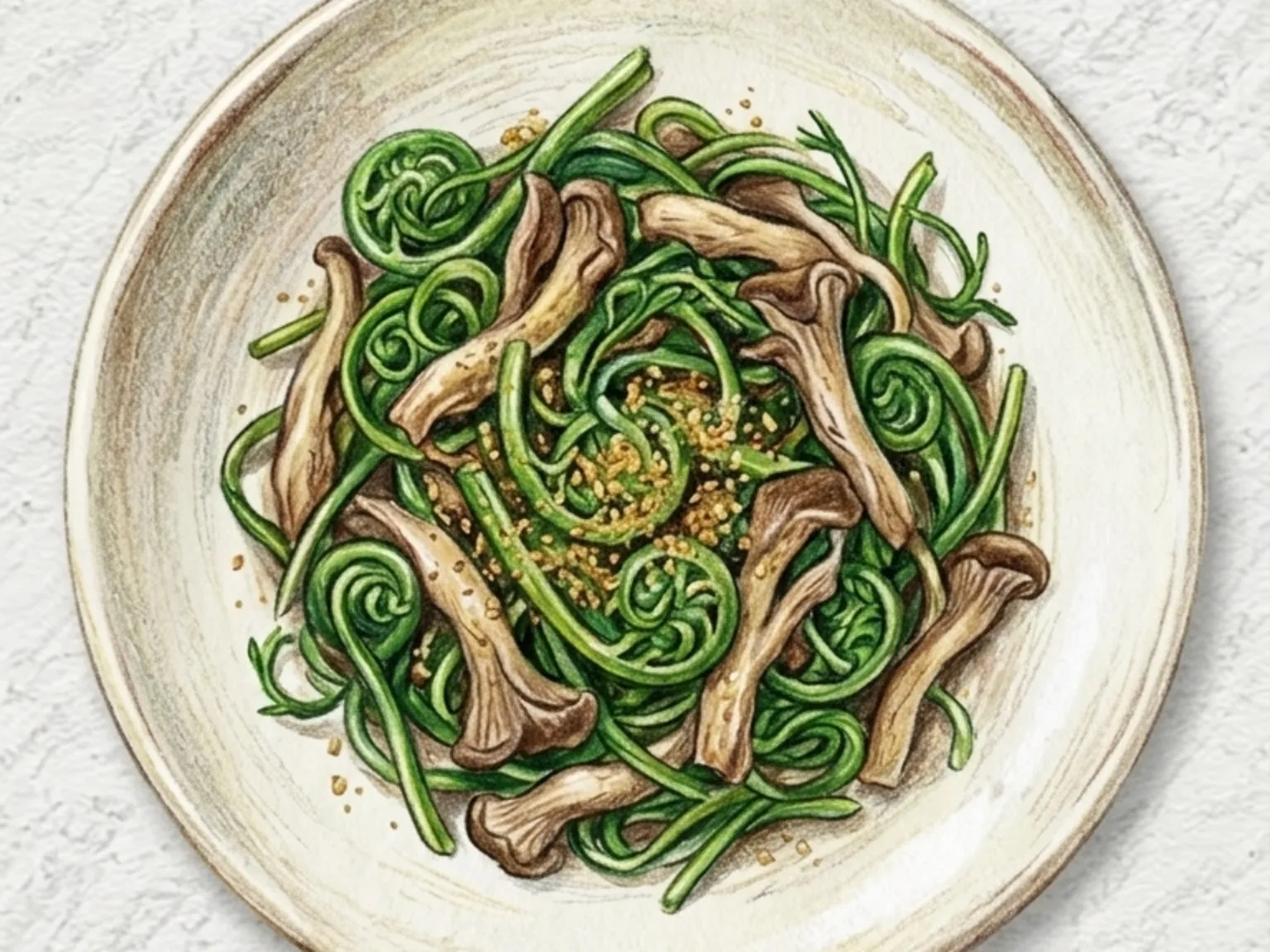
Korean Sebalnamul Beoseot Bokkeum (Saltwort Mushroom Stir-fry)
Stir-fry Easy

Korean Sebalnamul Beoseot Bokkeum (Saltwort Mushroom Stir-fry)

In this saltwort and mushroom stir-fry, 180 g of saltwort cooks only during the final minute, while moisture from 220 g of oyster mushrooms is removed earlier over high heat. Rinse the saltwort in cold water with a shaking motion to dislodge grit, drain it thoroughly, and cut it into 6 cm lengths. Tear the mushrooms along their grain after removing any tough base, and slice 120 g of onion thinly. Warm 1 tablespoon of cooking oil over medium heat and cook the onion with 1 teaspoon of minced garlic for about 1 minute, stopping before the garlic browns. Raise the heat, spread the mushrooms over the pan, and stir-fry them for roughly 2 minutes. When their edges look slightly dry rather than limp and wet, pour 1 tablespoon of dark soy sauce around the hot edge and toss quickly. Saltwort has its own salty taste, so check the seasoning before reducing the soy sauce further or adding anything else. Add the greens and lift them through the mushrooms for only 1 minute. Turn off the heat, then mix in 1 1/2 tablespoons of ground perilla seed and 1 tablespoon of perilla oil for 20 seconds, until the powder is evenly dispersed rather than clumped.

🏠 Everyday 🍱 Lunchbox
Prep 12min Cook 8min 4 servings
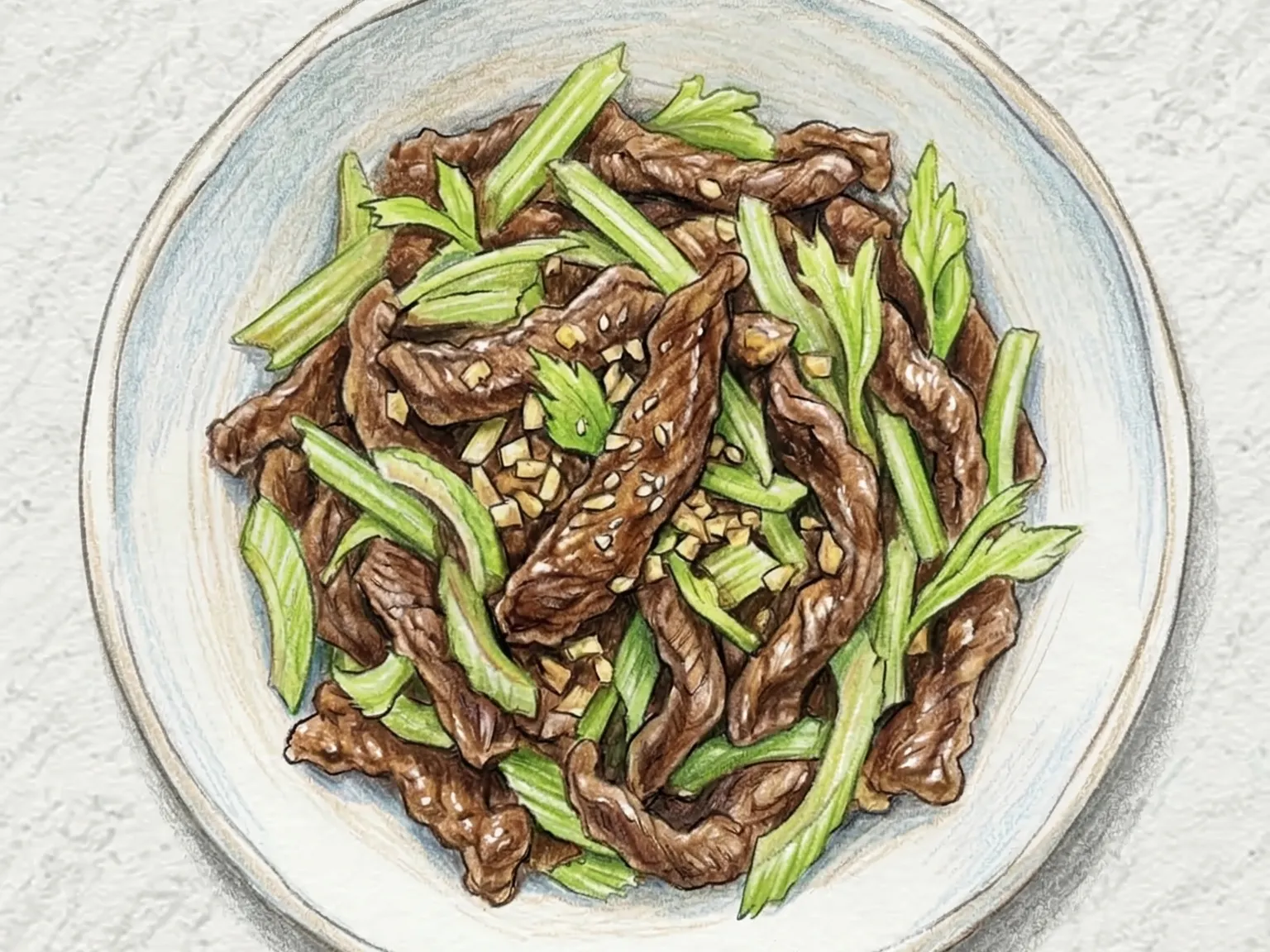
Korean Selleri Sogogi Bokkeum (Celery Beef Stir-fry)
Stir-fry Medium

Korean Selleri Sogogi Bokkeum (Celery Beef Stir-fry)

Selleri sogogi-bokkeum stir-fries soy-marinated lean beef round with celery, onion, and bell pepper over high heat. The beef is seared first for about two and a half minutes then set aside, and the vegetables are cooked separately in the same pan to keep them crisp before everything is combined. Oyster sauce and soy sauce give the beef a deep umami character, while celery's herbal freshness and firm crunch lighten the overall dish. Adding celery leaves at the very end intensifies the aromatic, almost grassy fragrance.

🏠 Everyday 🍱 Lunchbox
Prep 16min Cook 9min 2 servings
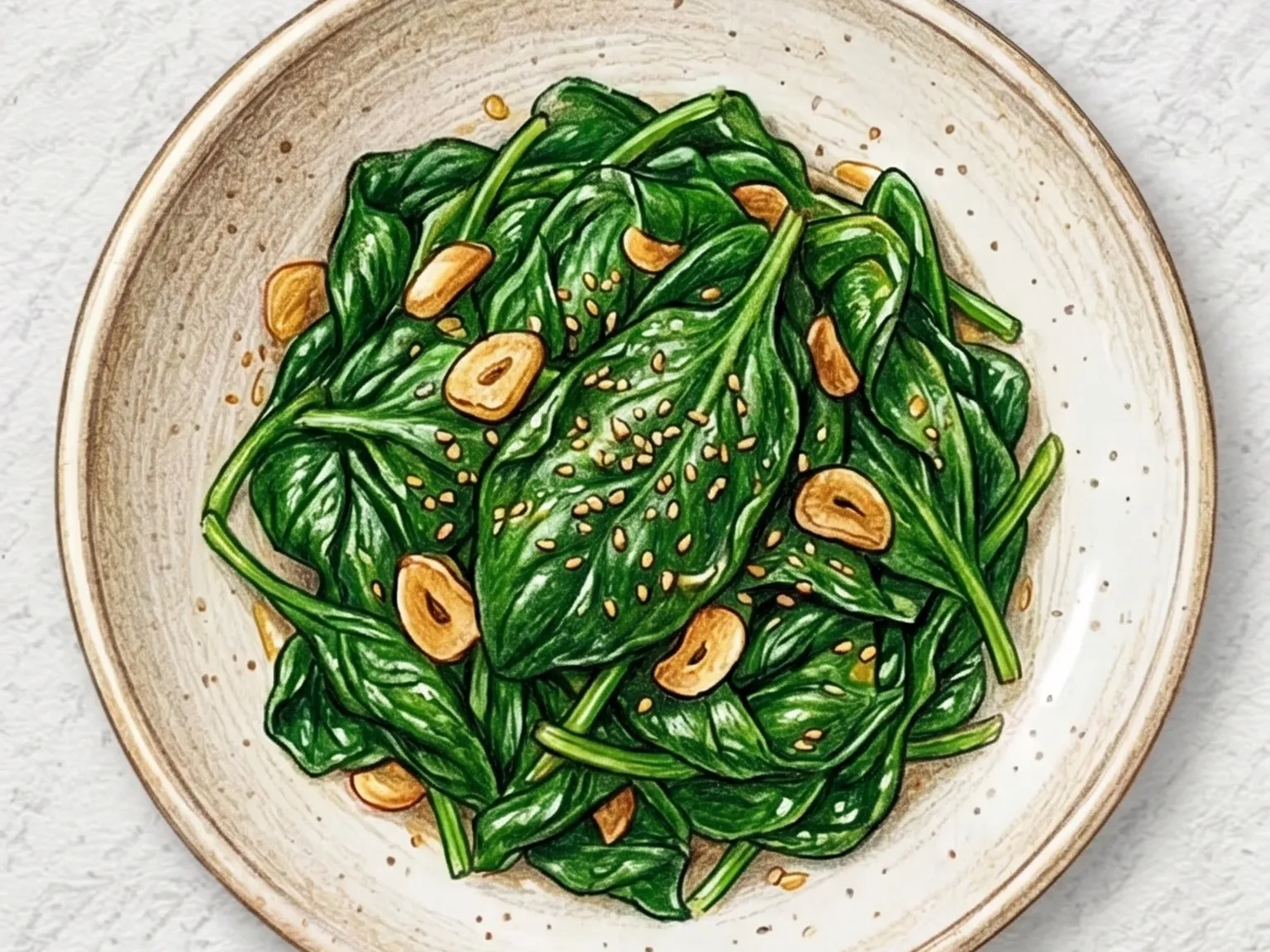
Korean Sautéed Spinach (Garlic Soy Sesame Spinach Side)
Stir-fry Easy

Korean Sautéed Spinach (Garlic Soy Sesame Spinach Side)

The amount of liquid left in this spinach stir-fry depends largely on drying the 300 g of spinach before it reaches the pan. Rinse the leaves several times until no grit remains, shake out water trapped between the stems and leaves, and let them sit briefly in a colander or on kitchen towels until the surface is as dry as practical. Warm 1 teaspoon of cooking oil over medium heat and add 3 thinly sliced garlic cloves. Keep the slices moving and stop before their edges turn deeply brown. Raise the heat to high, add all the spinach at once, and begin lifting the leaves from the bottom as soon as they collapse. Finish this stage within about 2 minutes so the spinach wilts evenly without simmering in released water. When the leaves look glossy and deep green and no liquid pools on the pan bottom, drizzle in 1 teaspoon of soy sauce and toss only long enough to distribute it. Turn off the heat rather than boiling the soy sauce with the greens. Mix in 1 teaspoon each of sesame oil and sesame seeds with the residual heat, then transfer the spinach while the stems and leaves still retain some spring.

🏠 Everyday 🌙 Late Night
Prep 5min Cook 5min 4 servings
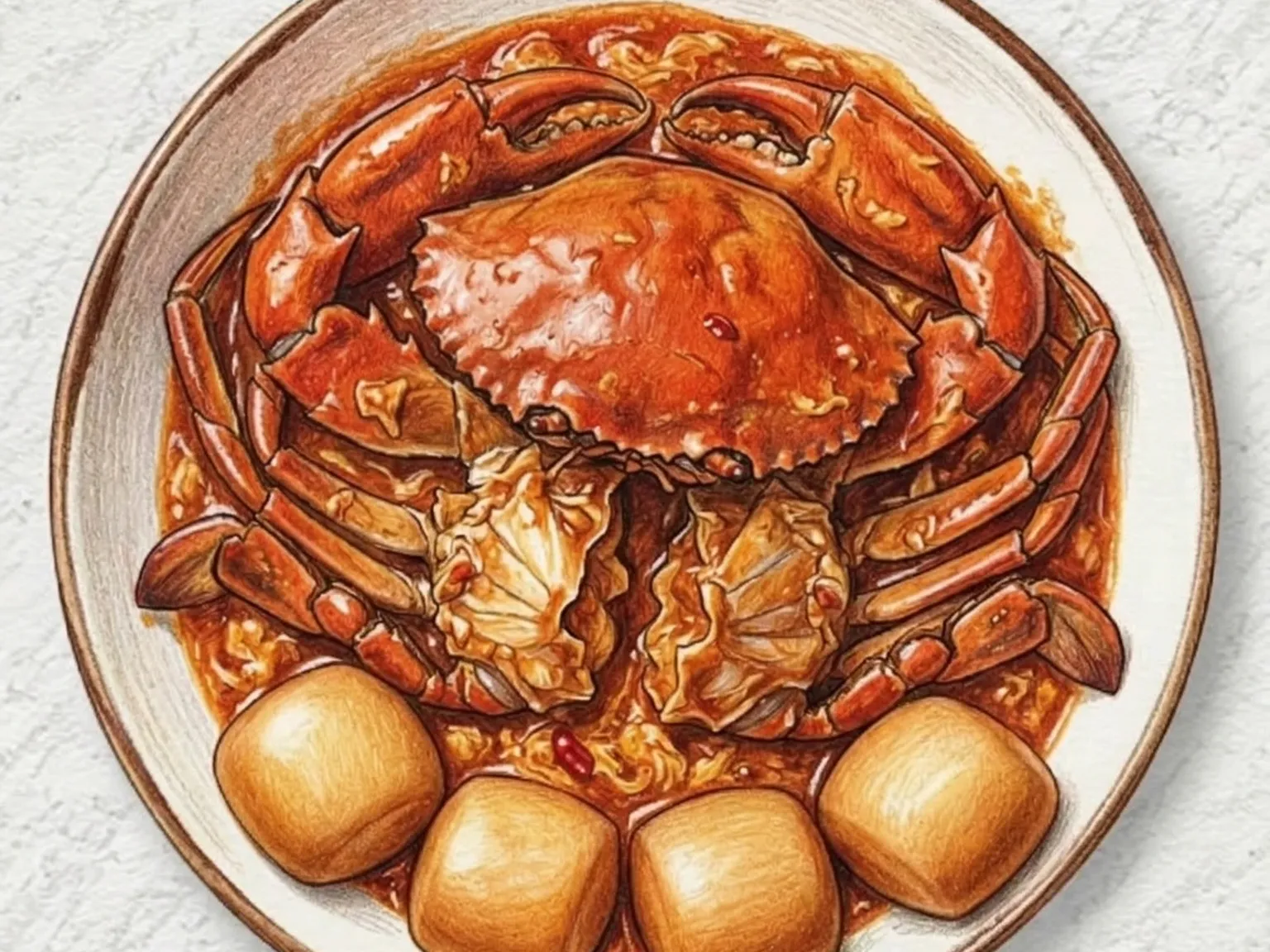
Singapore Chili Crab (Singaporean Whole Mud Crab in Sweet Spicy Sauce)
Stir-fry Hard

Singapore Chili Crab (Singaporean Whole Mud Crab in Sweet Spicy Sauce)

Singapore chili crab cooks 1200 g cleaned mud crab in a ketchup and chili sauce base, then controls the sauce thickness with starch slurry followed by beaten egg. Pat the prepared crabs very dry, cut them in half, and lightly crack the claws with the back of a knife so the sauce can reach the meat. Warm oil in a wok over medium heat and stir 1.5 tablespoons garlic with 1 tablespoon ginger for about 30 seconds, keeping both pale. Add 4 tablespoons ketchup, 3 tablespoons chili sauce, and 1 tablespoon sugar. Lower the heat to medium-low and cook the mixture for 1 minute until it looks glossy. Turn the crab pieces gently through the sauce, pour in 300 ml chicken stock, and cover the wok. Keep the covered crab at a medium-heat simmer for 8 minutes. Red shells and cooked-looking joints are the cues given before thickening. Mix 1 tablespoon starch with water and add the slurry gradually rather than all at once. Stop when the sauce leaves a thin coating on a spoon, since excess starch would make it pasty. Beat 1 egg, reduce the heat to low, and drizzle it around the wok rim. Wait 10 seconds before stirring in broad strokes to form soft ribbons. Remove the wok from the heat while the sauce still moves easily around the crab, and serve it with the bread or rice specified in the source steps.

🎉 Special Occasion 🍱 Lunchbox
Prep 25min Cook 25min 4 servings
Korean Stir-fried Radish Greens with Perilla
Stir-fry Easy

Korean Stir-fried Radish Greens with Perilla

This radish green and perilla stir-fry starts with 350 g of already boiled siraegi. Lightly squeeze away excess water, strip any tough outer fibers from the stems, and align the stems and leaves before cutting them into 5 cm lengths. In a bowl, toss the greens with 1 1/2 tablespoons of soup soy sauce and 1 tablespoon of minced garlic. Let them stand for 5 minutes, pressing only lightly so the seasoning reaches the firmer stems without crushing the leaves. Heat 1 tablespoon of perilla oil over medium heat and stir-fry the seasoned greens for about 3 minutes to remove lingering moisture. Pour in 150 ml of water and scrape the pan bottom to dissolve the seasoning. Lower the heat and add 3 tablespoons of perilla powder in portions, stirring each addition immediately so no dry lumps remain. Turn the greens often during about 4 minutes of gentle simmering. The mixture is ready for the final step when the sauce has thickened around the stems and leaves and clear water no longer pools beneath them. Add 40 g of green onion and cook for 2 more minutes. If the seasoning seems light, reduce the sauce a little further before adding anything new.

🏠 Everyday 🍱 Lunchbox
Prep 15min Cook 20min 4 servings
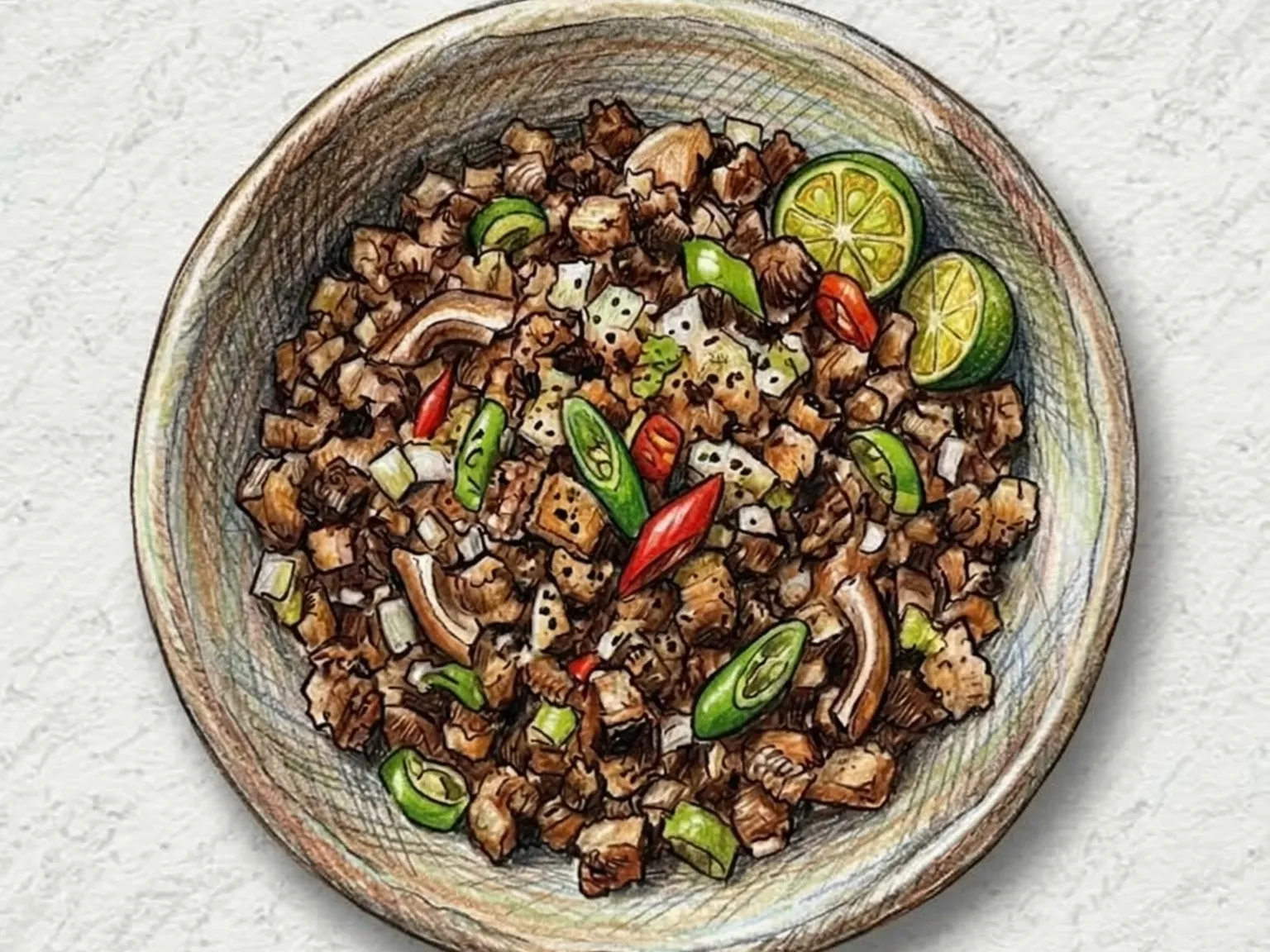
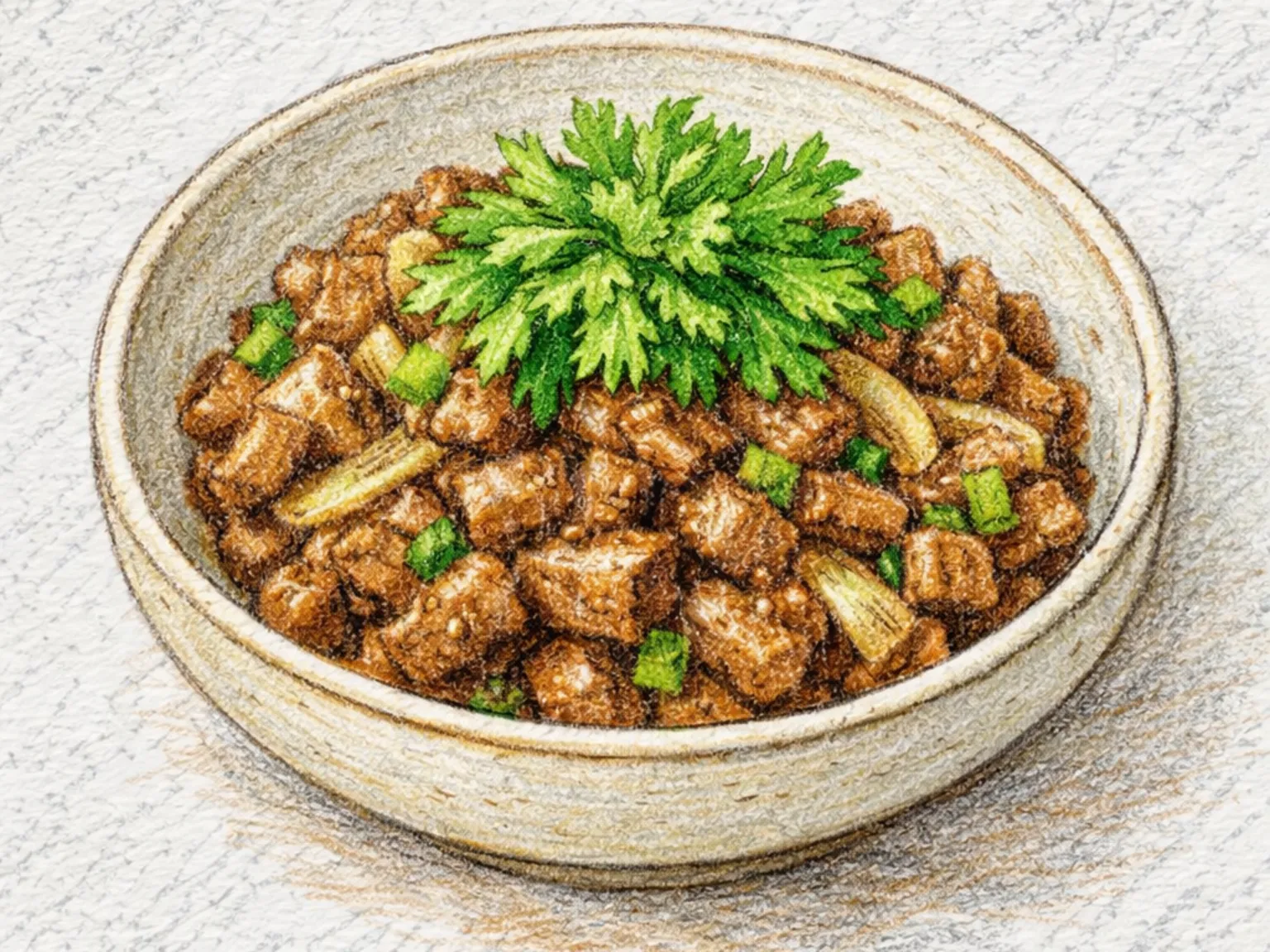
Sisig (Filipino Crispy Chopped Pork with Chili and Calamansi)
Stir-fry Medium

Sisig (Filipino Crispy Chopped Pork with Chili and Calamansi)

Sisig begins with 400 g pork shoulder boiled until fully cooked and tender, then finely chopped and crisped in butter before calamansi and mayonnaise are added at different heat stages. Drain the boiled pork thoroughly, let it cool enough to handle, chop it, and press away surface moisture. This drying step allows the pieces to brown instead of steaming. Dice 120 g onion and thinly slice 2 chilies, keeping 1 tablespoon soy sauce, 0.5 teaspoon black pepper, and 2 tablespoons calamansi juice within reach. Heat a wide pan over medium-high heat, melt 1 tablespoon butter, and spread the pork in a thin layer. Fry it for 4 minutes first, then continue for no more than 2 additional minutes if moisture remains or the edges have not become deeply crisp. Add the onion and chilies for 1 minute, extending that stage by only 1 minute if the onion is still too raw. Pour in the soy sauce and black pepper. Reduce the heat to low before adding the calamansi juice and toss for about 30 seconds so its acidity is not cooked away. Turn off the burner, fold in 2 tablespoons mayonnaise with residual heat, and stop as soon as it lightly coats the pork without splitting. Transfer immediately to a plate or the hot serving plate mentioned in the source.

🍺 Bar Snacks
Prep 20min Cook 25min 2 servings
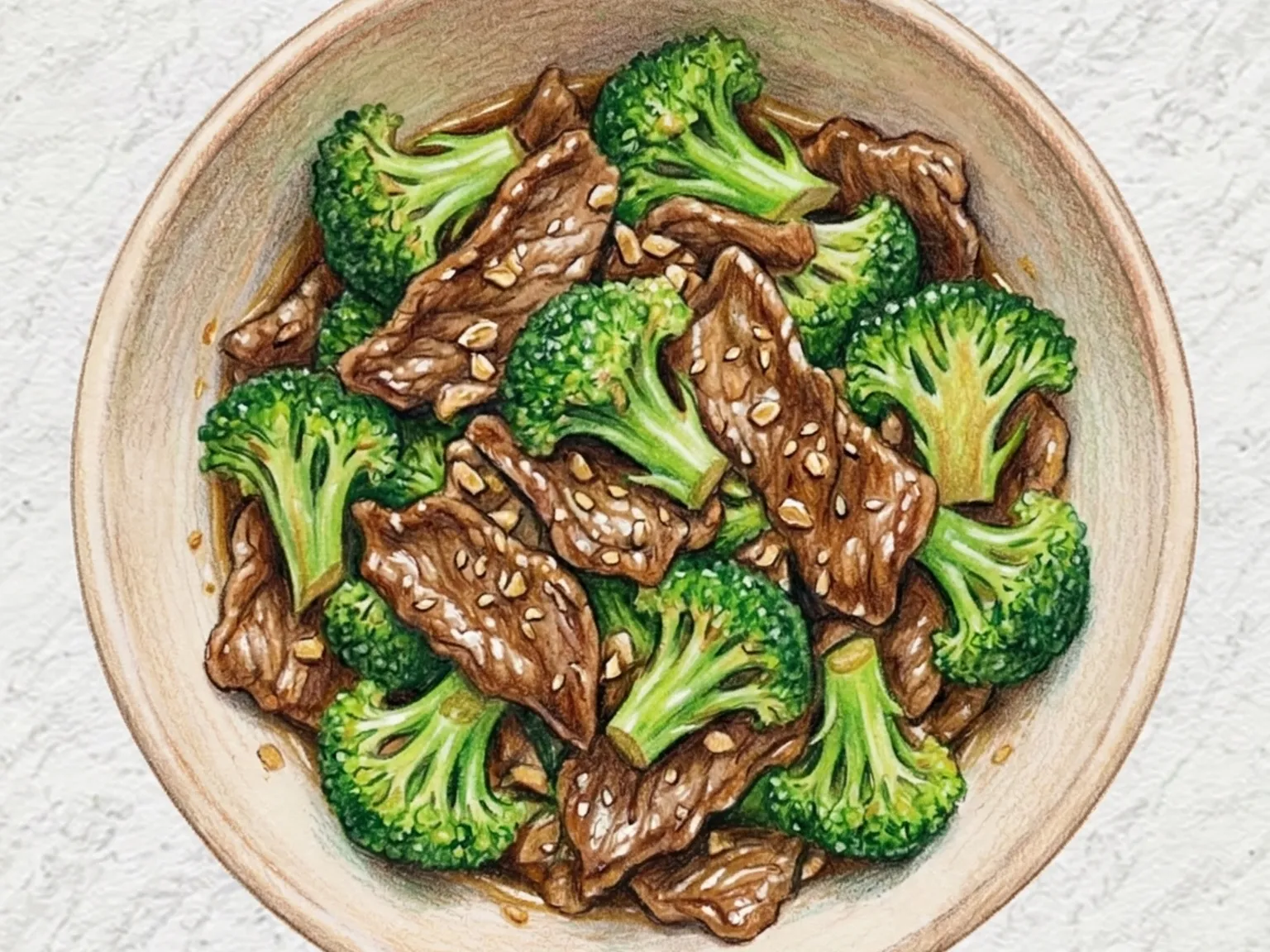
Korean Beef and Broccoli Stir-Fry
Stir-fry Easy

Korean Beef and Broccoli Stir-Fry

Beef and broccoli need different preparation before they can finish together in this stir-fry. Separate 200 g of thin beef slices, coat them evenly with 1 tablespoon of soy sauce, and leave them for about 10 minutes. Cut 250 g of broccoli into bite-size florets, trimming thick stem pieces smaller so they soften at a similar rate. Blanch the broccoli for only 40 seconds to 1 minute, then drain it thoroughly; water trapped in the florets would dilute the oyster sauce in the pan. Heat the pan over high heat, add 2 finely minced garlic cloves with the beef, and spread the slices into a broad layer. Leave them mostly undisturbed for the first minute so their surfaces begin to cook before liquid collects. When almost no red color remains on the outside, add the drained broccoli and turn everything from the bottom for about 30 seconds without breaking the florets. Add 2 tablespoons of oyster sauce and stir-fry for roughly 1 minute, just until it forms a thin, glossy coating on both ingredients. Stop while the broccoli stems retain a crisp resistance and no loose sauce pools below. Turn off the heat and mix in 1 teaspoon of sesame oil once with the residual heat.

🏠 Everyday 🌙 Late Night
Prep 15min Cook 10min 2 servings
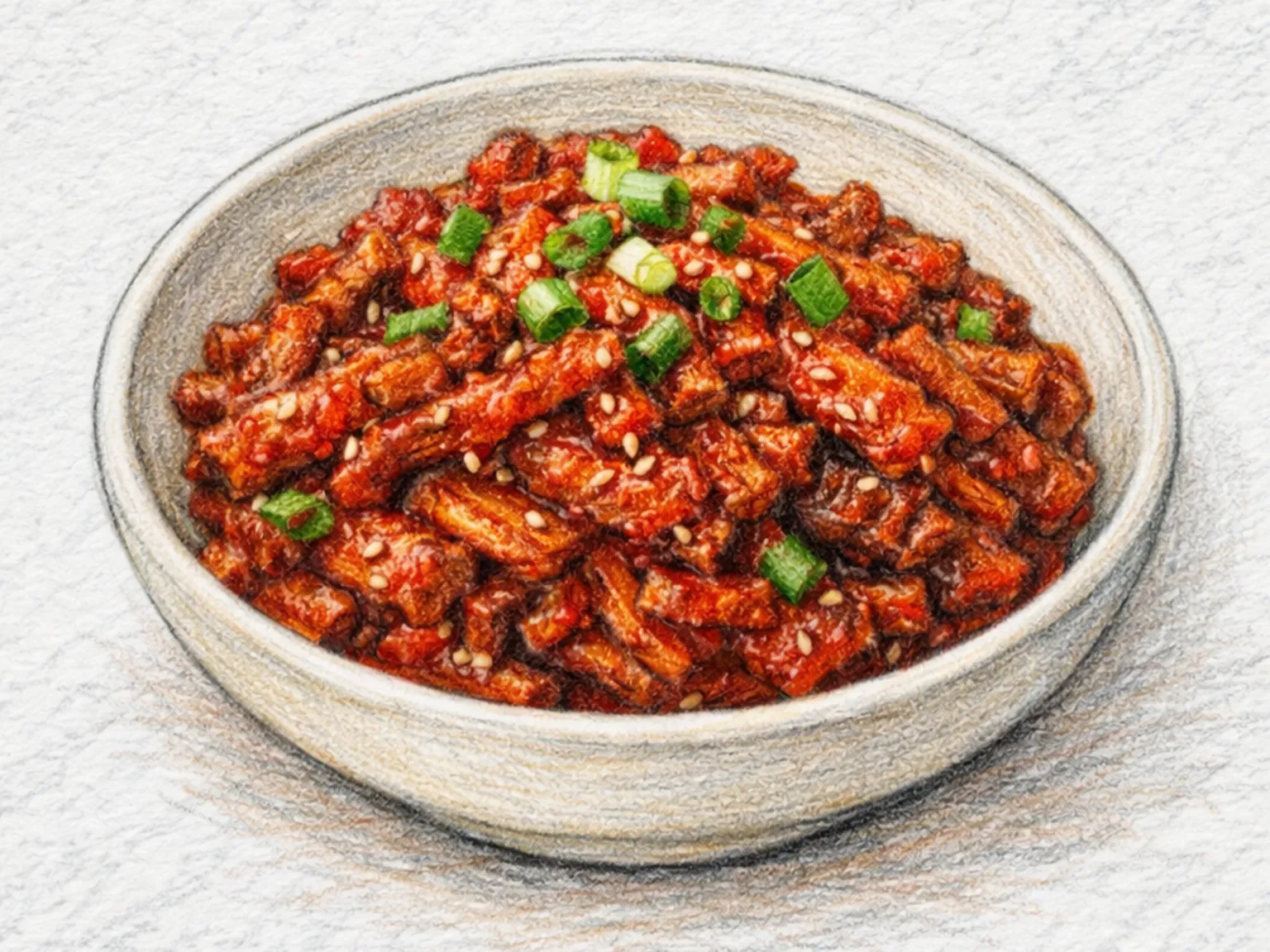
Korean Spicy Beef Stir-Fry
Stir-fry Easy

Korean Spicy Beef Stir-Fry

Thin slices must be separated before marinating this gochujang beef, or the seasoning will coat the outside of a clump and miss the inner surfaces. Mix 2 tablespoons of gochujang, 1 tablespoon of soy sauce, 1/2 tablespoon of sugar, and 1 tablespoon of minced garlic until no sugar grains or dense chile-paste lumps remain. Unfold 300 g of beef into the mixture, coat every slice, and leave it for 10 minutes. Heat 1 tablespoon of cooking oil over medium-high heat and stir-fry 80 g of onion for about 1 minute, stopping when only the edges have turned translucent. Raise the heat to high and spread the marinated beef across the pan. Avoid constant stirring during the first 30 seconds so the surface can darken and the sauce can begin to adhere. Once the meat is about halfway cooked, toss it quickly with the onion. If the thick seasoning starts sticking firmly to the bottom, lower the heat slightly rather than letting the gochujang scorch. Switch off the heat when no red meat remains, loose moisture has reduced, and a glossy coating clings to each slice. Mix in 1/2 tablespoon of sesame oil with the residual heat so its aroma is not held over the highest heat.

🏠 Everyday 🍱 Lunchbox
Prep 15min Cook 10min 2 servings
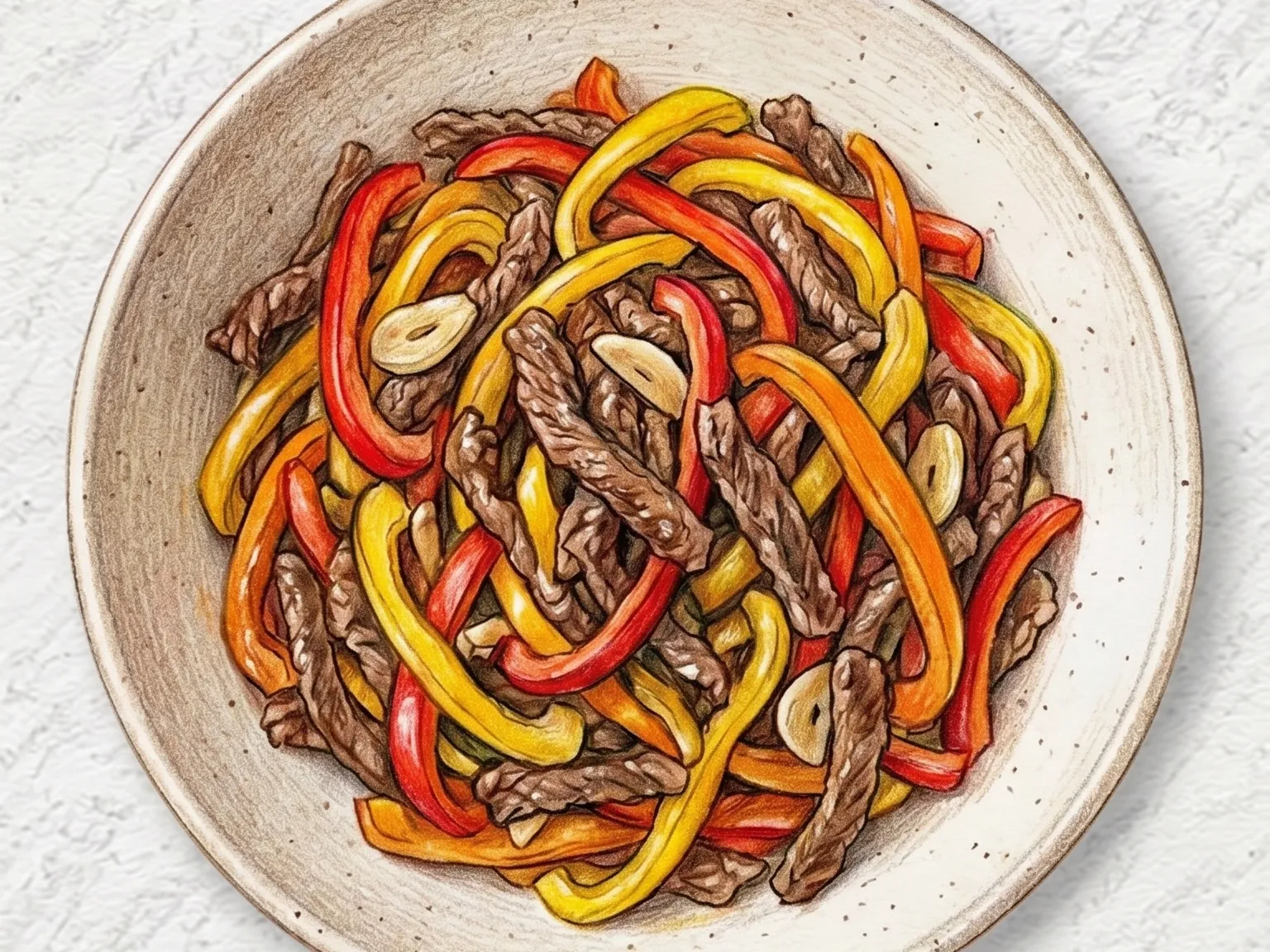
Korean Beef and Paprika Stir-Fry
Stir-fry Easy

Korean Beef and Paprika Stir-Fry

Cutting the beef and bell peppers to a similar width gives this stir-fry an even shape and lets both ingredients finish within a short cooking window. Slice 200 g of beef into thin strips, coat them with 2 tablespoons of soy sauce and 1 teaspoon of sesame oil, and let them stand briefly while preparing the vegetables. Remove the stems and seeds from 2 bell peppers, then cut the flesh to roughly the width of the beef. Keep some thickness in the peppers so they do not soften immediately over high heat. Warm the pan over medium heat for about 1 minute and cook 2 thinly sliced garlic cloves only until fragrant, stopping before their edges scorch. Add the marinated beef, raise the heat to medium-high, spread the strips out, and stir-fry for about 2 minutes until their outer surfaces turn brown. When liquid from the beef seasoning begins bubbling, add the peppers and move everything over high heat for 1 minute 30 seconds. Turn off the heat when the pepper colors look bright and only their edges have softened, leaving the centers crisp. Transfer the stir-fry immediately, since resting in the hot pan would draw more water from the peppers.

🏠 Everyday 🌙 Late Night
Prep 15min Cook 10min 2 servings
Korean Stir-fried Sausage
Stir-fry Easy

Korean Stir-fried Sausage

This sausage stir-fry dry-fries 200 g of Vienna sausages before adding a ketchup and gochujang glaze over medium-low heat. Pat the sausages dry and score them shallowly without cutting through the bodies. Cut 1/2 onion into thick slices and prepare 1 green onion for the finish. In advance, mix 2 tablespoons of ketchup, 1/2 tablespoon of gochujang, 1 tablespoon of oligosaccharide syrup, 1/2 tablespoon of soy sauce, and 1/2 teaspoon of minced garlic until no thick chile-paste lumps remain. Roll the sausages around a dry pan over medium heat for about 2 minutes. Their surfaces should become lightly golden and the cuts should begin to open. Add the onion and stir-fry for only 1 more minute, leaving a little bite beyond the translucent edges. Lower the heat to medium-low, pour in the prepared sauce, and keep turning the sausages for 2 minutes. As the ketchup and syrup thicken, constant movement keeps the glaze from sticking in one spot. Turn off the heat when the sauce no longer runs loosely and has reached both the outer surfaces and the scored cuts. Finish with the green onion and 1/2 teaspoon of sesame seeds.

🏠 Everyday 🧒 Kid-Friendly
Prep 5min Cook 10min 2 servings
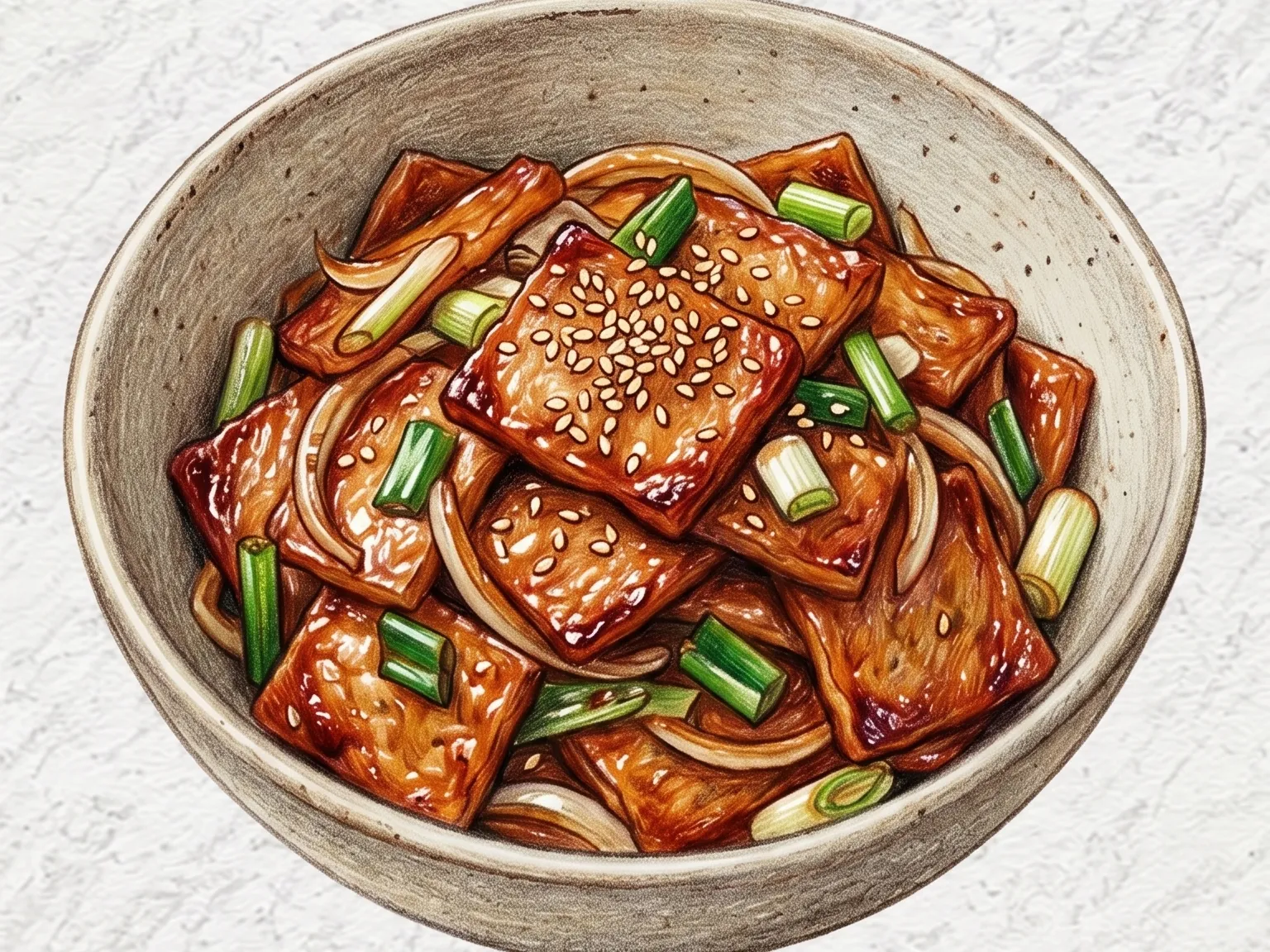
Korean Spicy Stir-Fried Fish Cake
Stir-fry Easy

Korean Spicy Stir-Fried Fish Cake

Square sheets of fish cake are sliced into uniform, bite-size pieces before being stir-fried in a seasoned glaze that balances spicy heat with a clear sweetness. One specific technique used in this recipe involves blanching the fish cake pieces in boiling water for a very short period before they enter the pan. This process serves two functions: it removes the excess oil from the manufacturing process and causes the surface of the fish cake to open up. This allows the sauce to adhere more consistently to each piece during the cooking process. When stir-fried over high heat, the edges of the fish cake undergo a light caramelization. This results in a subtle smoky flavor that adds a layer of complexity to the overall dish. The base of the sauce consists of gochujang, soy sauce, and oligodang. Oligodang is a Korean corn syrup that is used to give the dish a shiny, glossy finish while simultaneously tempering the sharp intensity of the fermented chili paste. During the cooking process, sliced onions are added and allowed to soften. The moisture released by the onions helps to deglaze the pan, which reintegrates concentrated flavors into the sauce and contributes a natural sweetness. Green onions are added just before the heat is turned off so they retain their fresh aroma and provide a crisp texture that contrasts with the rich sauce. To finish the dish, toasted sesame seeds are scattered over the top to provide a mild nutty flavor. This side dish is frequently included in packed lunches because the glaze maintains its integrity and the flavors become more concentrated as the dish cools.

🏠 Everyday 🍱 Lunchbox
Prep 8min Cook 10min 4 servings
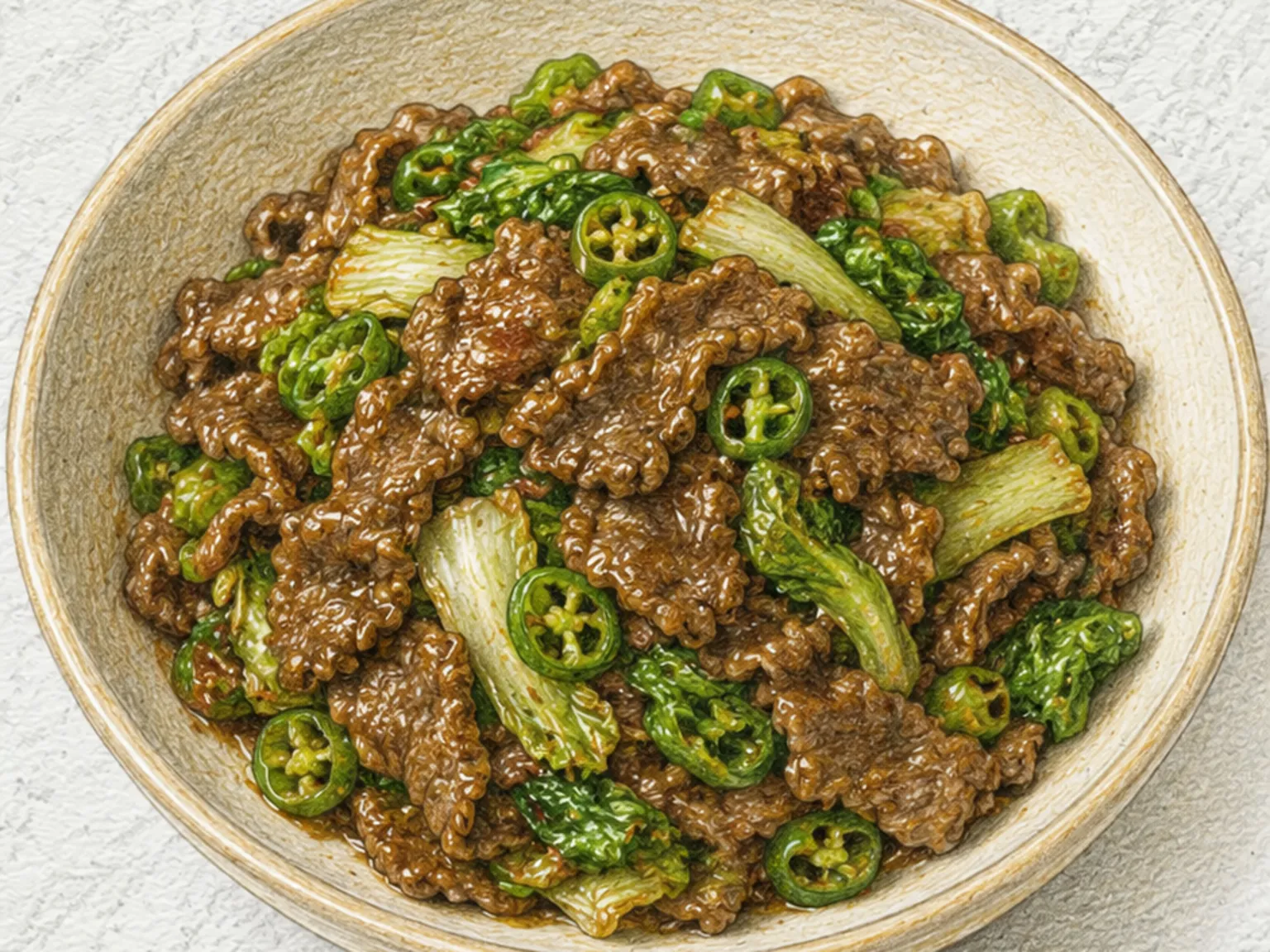
Korean Beef & Lettuce Cabbage Stir-fry
Stir-fry Medium

Korean Beef & Lettuce Cabbage Stir-fry

This beef and ssamchu stir-fry adds the firm stems and tender leaves at different times so neither determines the cooking time of the other. Toss 350 g of thin beef with 2 tablespoons each of dark soy sauce and pear juice, 1 tablespoon of minced garlic, 1/2 teaspoon of black pepper, and half of the sesame oil. Leave it for 10 minutes. Separate 220 g of ssamchu into stems and leaves and cut both into 3 cm strips; slice the onion thinly and the Cheongyang chili on the diagonal. Heat 1 tablespoon of cooking oil in a very hot pan and stir-fry the onion for about 1 minute, allowing only the edges to become translucent. Add the beef together with its marinade and cook for 2 to 3 minutes, separating clumps as the liquid reduces. When the meat has no red color and the seasoning forms a glossy coating, add the ssamchu stems first. Toss them for 1 minute, then add the leaves and chili for only 1 more minute. Stop as the leaves just begin to wilt. Turn off the heat, mix in the remaining sesame oil, and transfer the stir-fry before the stems lose their crunch or the leaves release more moisture.

🏠 Everyday 🌙 Late Night
Prep 18min Cook 12min 4 servings
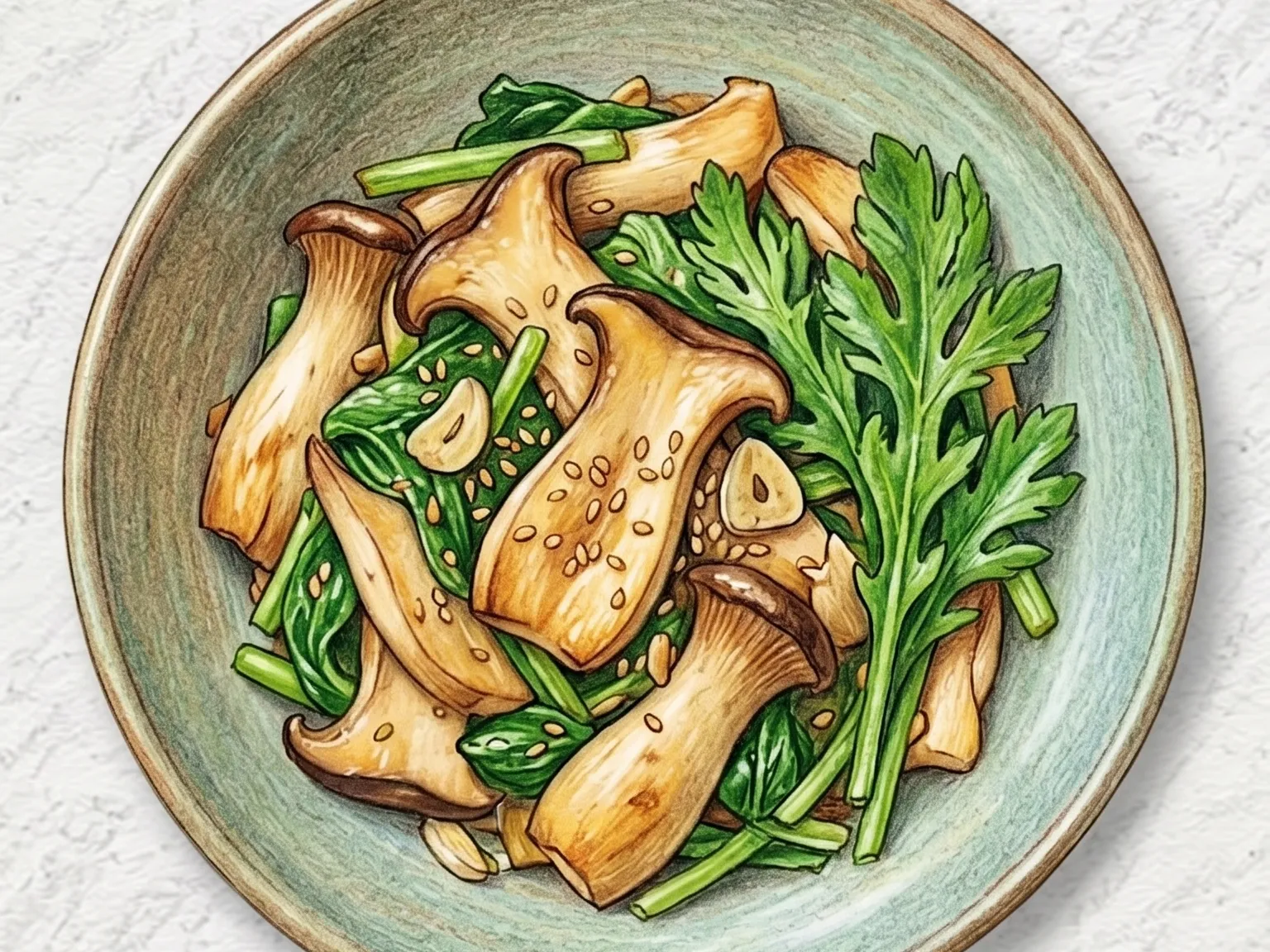
Korean Stir-fried Crown Daisy and Mushrooms
Stir-fry Easy

Korean Stir-fried Crown Daisy and Mushrooms

Ssukgat-beoseot-bokkeum is a quick stir-fry of oyster mushrooms and crown daisy (ssukgat) cooked in a garlic-infused pan. The mushrooms are seared over high heat to drive off moisture and develop a chewy bite, while the crown daisy stems and leaves go in at staggered intervals to preserve their crunch and aroma. Soy sauce and cooking wine provide the seasoning base, finished with sesame oil and toasted sesame seeds. The slightly bitter, herbal character of the crown daisy plays off the mild earthiness of the mushrooms for a clean, well-defined flavor.

🏠 Everyday 🍱 Lunchbox
Prep 10min Cook 8min 2 servings
Korean Pork & Crown Daisy Stir-fry
Stir-fry Easy

Korean Pork & Crown Daisy Stir-fry

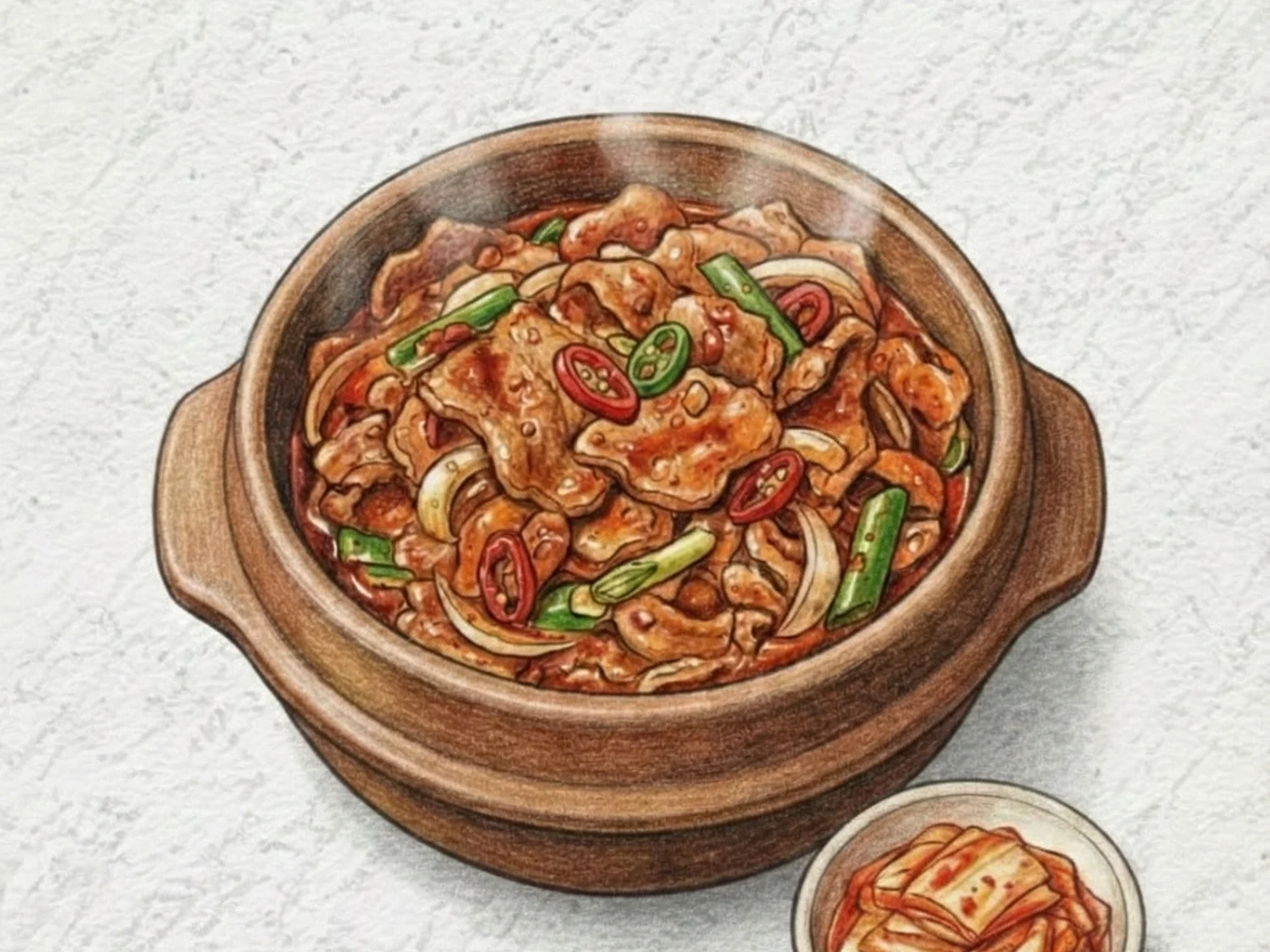
Crown daisy enters only after the pork is cooked in this doenjang stir-fry, keeping the greens out of the pan during the longer meat stage. Pat 250 g pork shoulder dry, coat it evenly with 1.5 tablespoons doenjang, 0.5 tablespoon gochujang, and 1 tablespoon minced garlic, and leave it for 10 minutes. Trim the tough ends from 120 g crown daisy and cut it into 5 cm lengths. Slice 80 g onion and 40 g green onion thinly. Heat 1 tablespoon cooking oil over medium heat and cook the onion for about 1 minute, until only its edges become translucent. Raise the heat to high and spread the seasoned pork thinly. During the first minute, loosen only the edges instead of turning every piece constantly, while watching that the bean paste does not scorch in one spot. Continue for another 4 to 5 minutes, until no red meat remains and the seasoning looks glossy. If the doenjang begins to harden brown against the pan, lower the heat and keep the pork moving. Add the green onion and crown daisy for the final 1 to 1.5 minutes. Finish with 1 tablespoon sesame oil and remove the pan from the heat as soon as the leaves begin to wilt while their color remains bright.

🏠 Everyday 🍱 Lunchbox
Prep 15min Cook 12min 2 servings
Imogara Stir-fry and Simmer
Stir-fry Easy

Imogara Stir-fry and Simmer

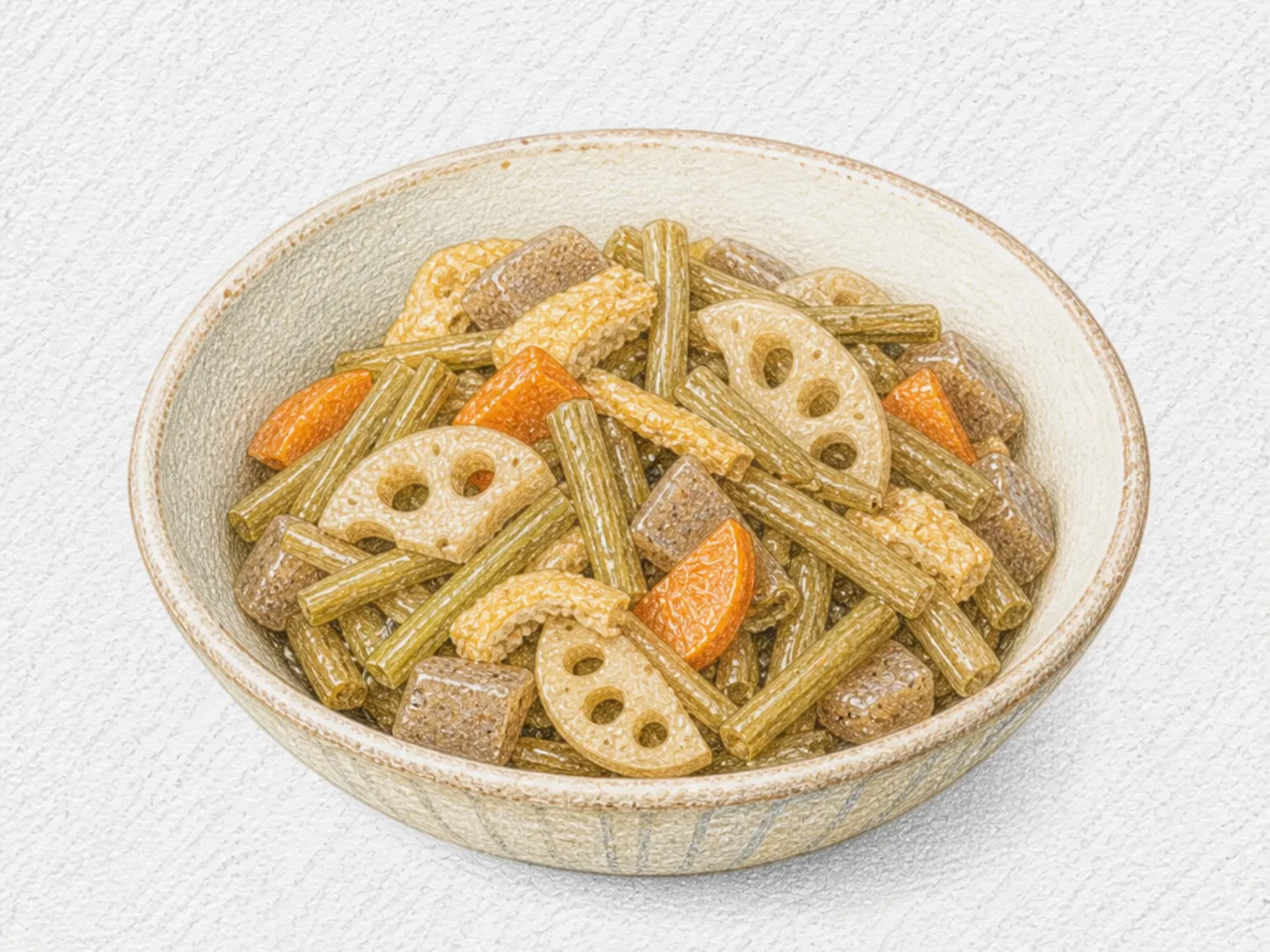
Dried taro stalk needs a full rehydration before this stir-fry and simmer begins. Rinse 50 g of the stalk, soak it in plenty of water for 30 minutes, then squeeze and cut it into bite-size lengths once it bends easily. Cut 120 g lotus root and 100 g carrot into 5 mm quarter rounds. Keep the lotus root in water after cutting and drain it immediately before cooking. Slice 1 fried tofu sheet and 1 piece of konjac into short strips, blanch both for 1 minute, and drain them. Heat 2 tablespoons cooking oil in a pot over medium heat. Add the taro stalk, lotus root, carrot, fried tofu, and konjac and stir-fry for 4 minutes, until oil coats all five ingredients. Pour in 150 ml water and dissolve 2 tablespoons sugar, 2.5 tablespoons soy sauce, 2 tablespoons sake, and 1 tablespoon mirin. Simmer uncovered over medium-low heat for about 15 minutes. The finish is not a pot full of broth: almost no liquid should remain on the bottom, while the lotus root still offers a crisp bite and the rehydrated stalk is soft enough to chew. If the center of the stalk is still stiff after its initial soak, extend that preparation before adding the seasoning rather than trying to soften it only in the reduced sauce.

🏠 Everyday 🍱 Lunchbox
Prep 40min Cook 25min 4 servings
Okomoji no Aburaitame (Stir-Fried Aged Takana Pickle)
Stir-fry Easy

Okomoji no Aburaitame (Stir-Fried Aged Takana Pickle)

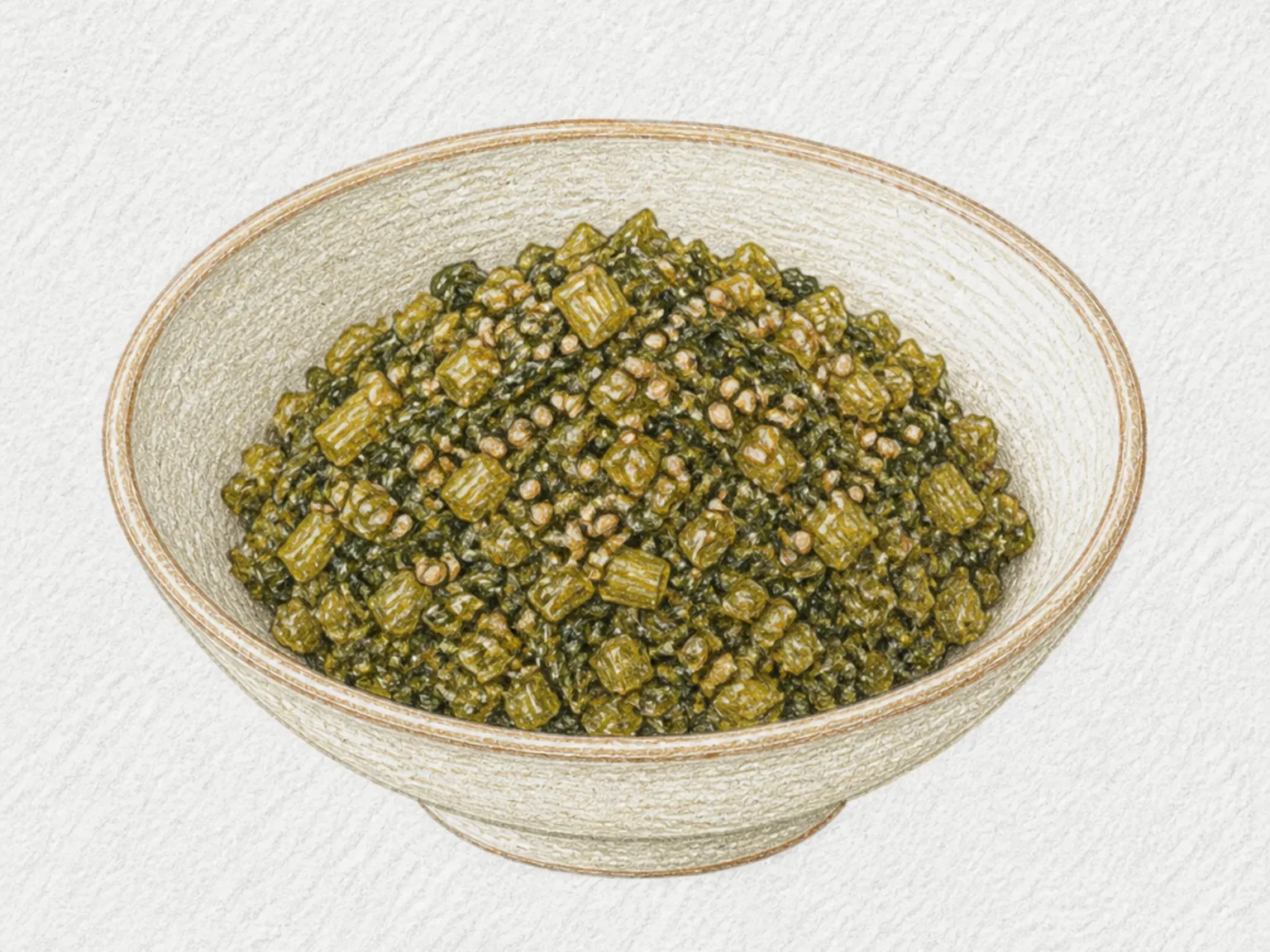
The salt level of 450 g aged takana pickle is corrected before this sesame-oil stir-fry reaches the pan. Rinse the pickle several times in cold water, soak it in plenty of fresh water for 8 hours, and change that water once. Squeeze it firmly, chop it to roughly 5 mm, and taste one piece. If it remains very salty, soak it for another 30 minutes and squeeze again. Heat 30 ml sesame oil over medium heat and add the chopped greens. Stir-fry for 6 to 8 minutes, separating clumps as surface moisture evaporates. Thorough draining matters here because wet pickle would steam and prevent the sesame oil from coating the small pieces evenly. Add 12 g sugar and stir until it dissolves. Begin with only half of the 18 ml soy sauce, cook for 2 minutes, and taste again before deciding how much of the remainder is needed. Mix in 9 g toasted sesame seeds and turn off the heat. At the stopping point, no water should collect on the pan bottom, the chopped leaves should remain loose rather than clumped, and their surfaces should carry a light sheen.

🏠 Everyday 🍱 Lunchbox
Prep 20min Cook 12min 6 servings
Korean Stir-Fried Mung Bean Sprouts and Mushrooms
Stir-fry Easy

Korean Stir-Fried Mung Bean Sprouts and Mushrooms

This stir-fry separates the cooking time of 180 g oyster mushrooms from 300 g mung bean sprouts so the mushroom moisture can evaporate before the sprouts receive their brief heat. Rinse the sprouts, spread them in a colander, and check that they are no longer dripping immediately before cooking. Tear the oyster mushrooms along the grain rather than chopping them. Thinly slice 80 g onion and cut 30 g green onion on the bias. Heat a wide pan fully over high heat, add 1 tablespoon cooking oil, and cook the onion with 1 tablespoon minced garlic for about 1 minute. Add the mushrooms before the garlic browns and keep them moving over high heat for 2 minutes. Continue until no water remains on the pan bottom, the sizzling sounds sharper, and the mushrooms have shrunk slightly. Only then add the drained sprouts, immediately followed by 1 tablespoon soup soy sauce and 0.5 teaspoon salt. Turn them in broad motions for no more than 30 seconds, stopping when they look glossy but remain crisp. Switch off the heat and add the green onion, 1 tablespoon sesame oil, and 1 teaspoon sesame seeds. Toss for 10 seconds with residual heat and plate at once. Cooking the mushrooms and sprouts in separate stages prevents both a wet pan and softened sprouts.

🏠 Everyday 🍱 Lunchbox
Prep 12min Cook 8min 4 servings

About Stir-fry

Cooking over high heat for a short time keeps ingredients crisp and vivid. With a few staple sauces like gochujang, soy sauce, and oyster sauce, the possibilities are endless - and dinner is on the table in minutes.