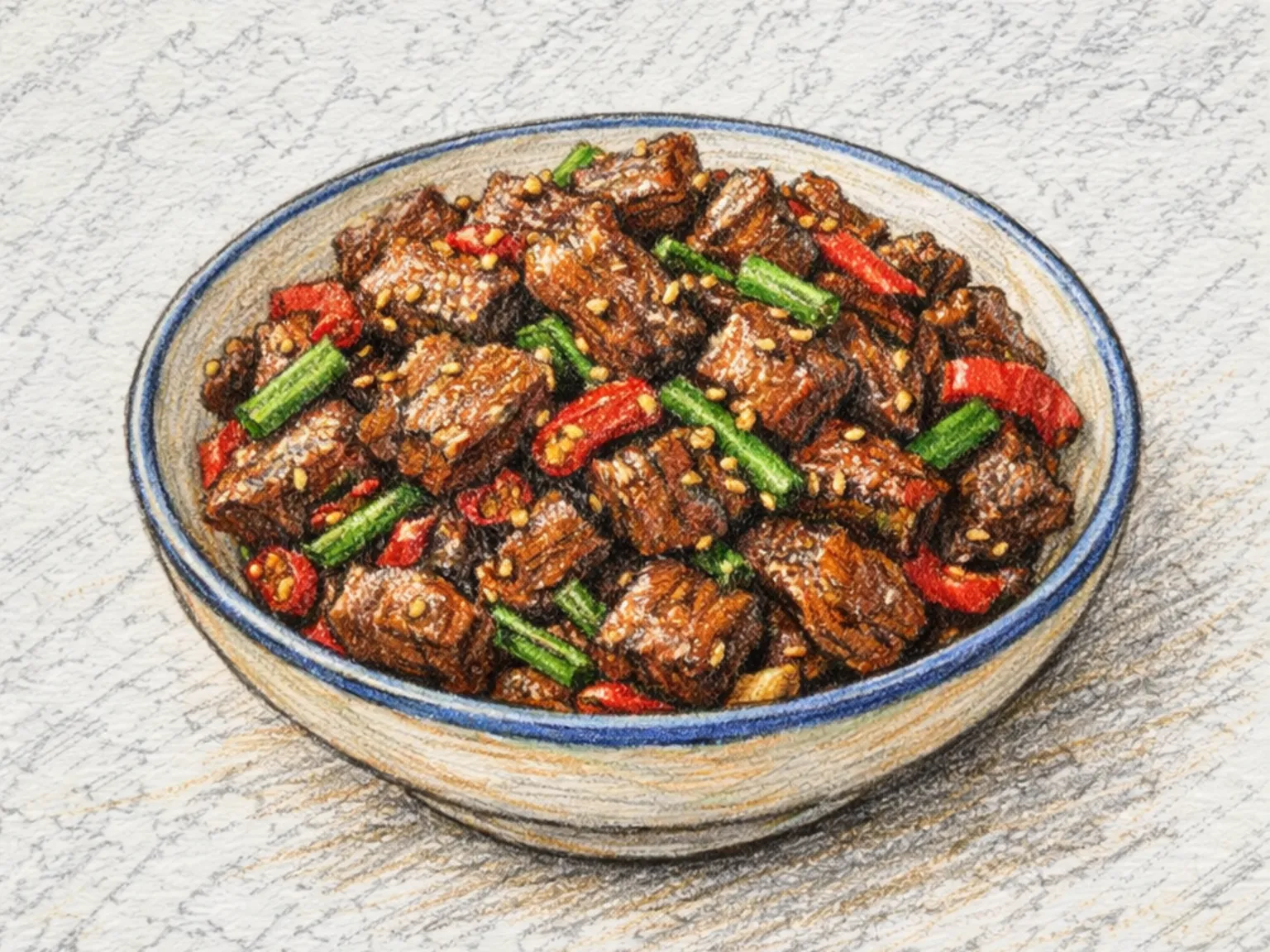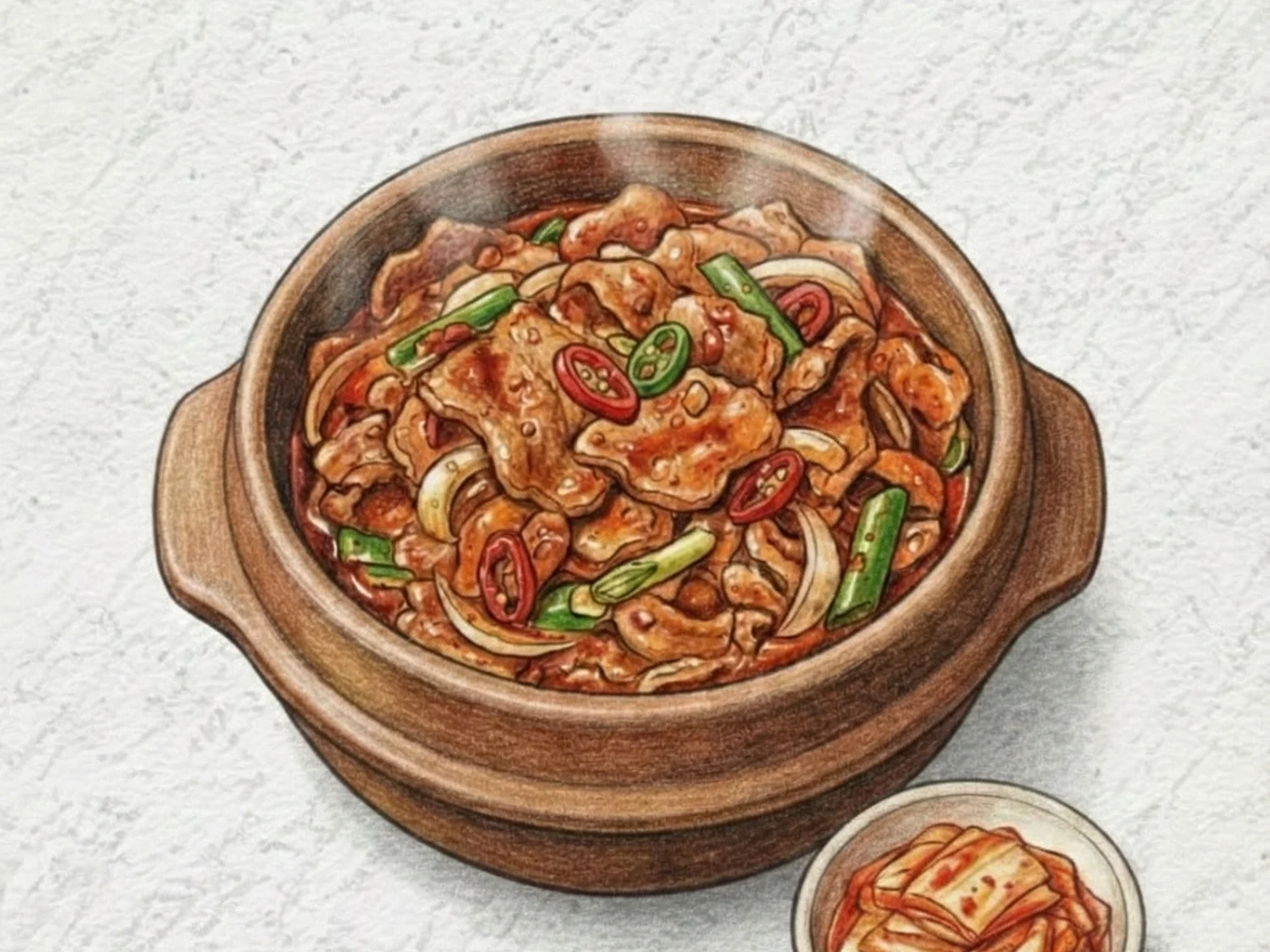
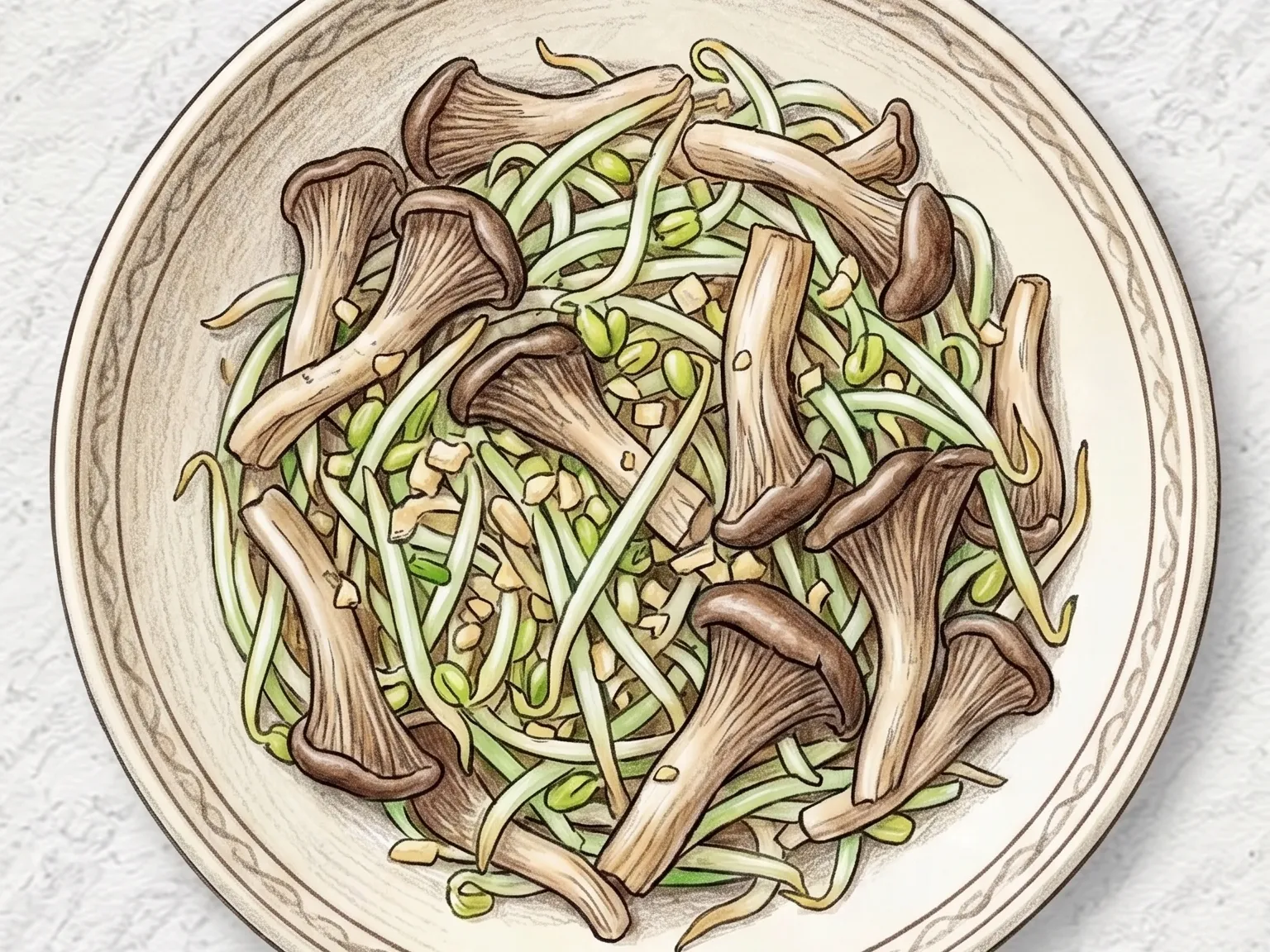
Stir-fry

Stir-fry Recipes

310 recipes. Page 13 of 13

Stir-frying is one of the most common cooking methods in Korean home kitchens. Classics like spicy pork stir-fry (jeyuk-bokkeum), squid stir-fry, and japchae showcase the range of flavors - from fiery gochujang-based sauces to sweet soy glazes.

Stir-fry
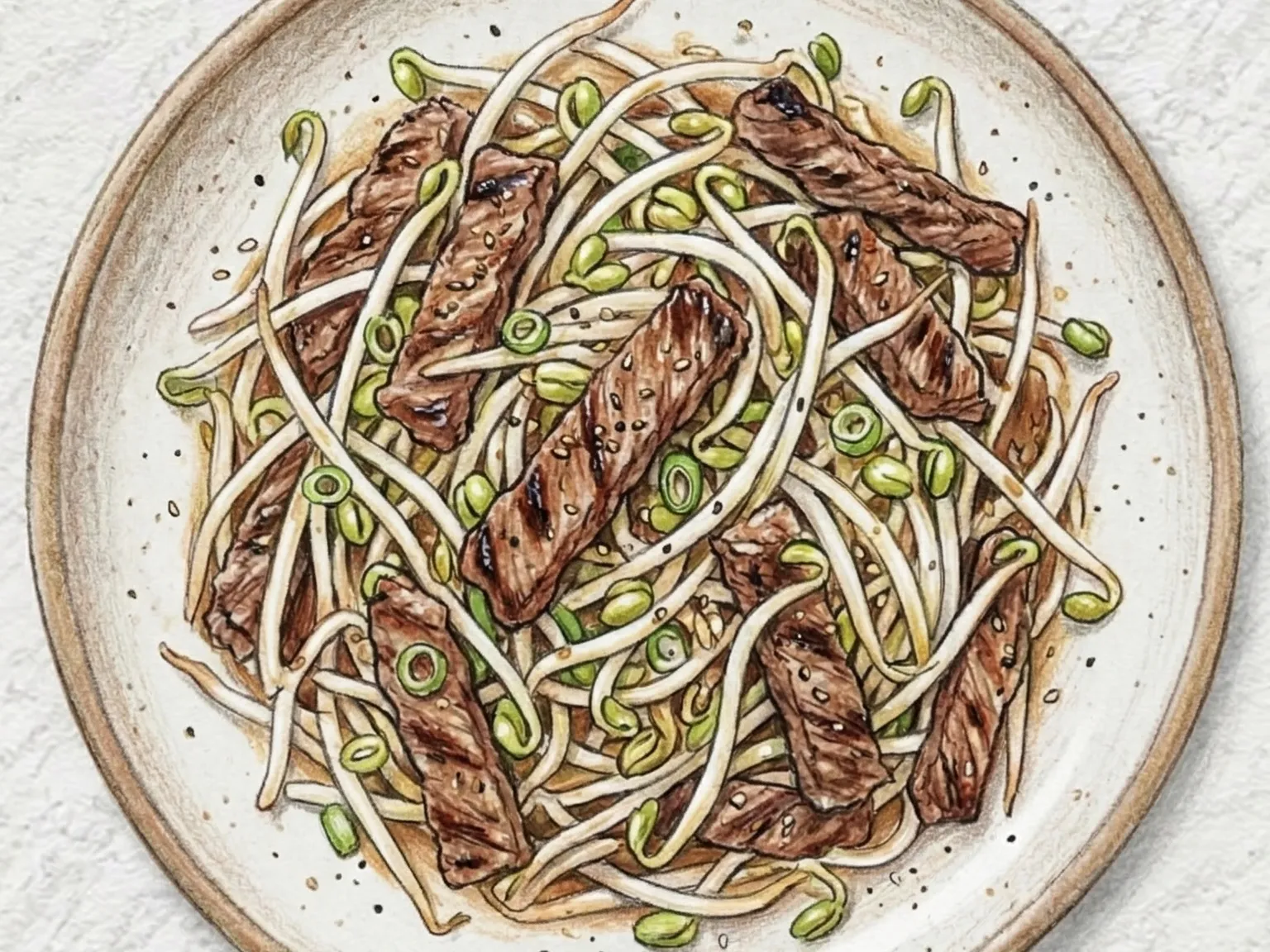
Korean Beef and Bean Sprout Stir-fry
Stir-fry Easy

Korean Beef and Bean Sprout Stir-fry

This beef and mung bean sprout stir-fry gives the 250 g of beef a head start and limits the equally weighted sprouts to the final 1 to 2 minutes. Season thin slices of beef with 1 tablespoon of soy sauce and 1/2 teaspoon of black pepper. Rinse 250 g of sprouts and leave them to drain thoroughly. Thinly slice 90 g of onion and keep 1 teaspoon of minced garlic, the remaining soy sauce, and the sesame oil beside the stove. Heat the pan fully over high heat, add 1 tablespoon of cooking oil, and spread the beef without overlapping the slices. When roughly half of the red color has disappeared, add the onion and garlic and toss continuously for about 40 seconds. Before the garlic browns, add all the sprouts and the remaining 1 tablespoon of soy sauce while keeping the heat high. Stop within 1 to 2 minutes, after the sprouts soften slightly but before their stems become translucent. Turn off the heat and mix in 1 teaspoon of sesame oil with the residual heat. Move the stir-fry to a plate before liquid can accumulate on the pan bottom.

🏠 Everyday 🌙 Late Night
Prep 12min Cook 8min 2 servings
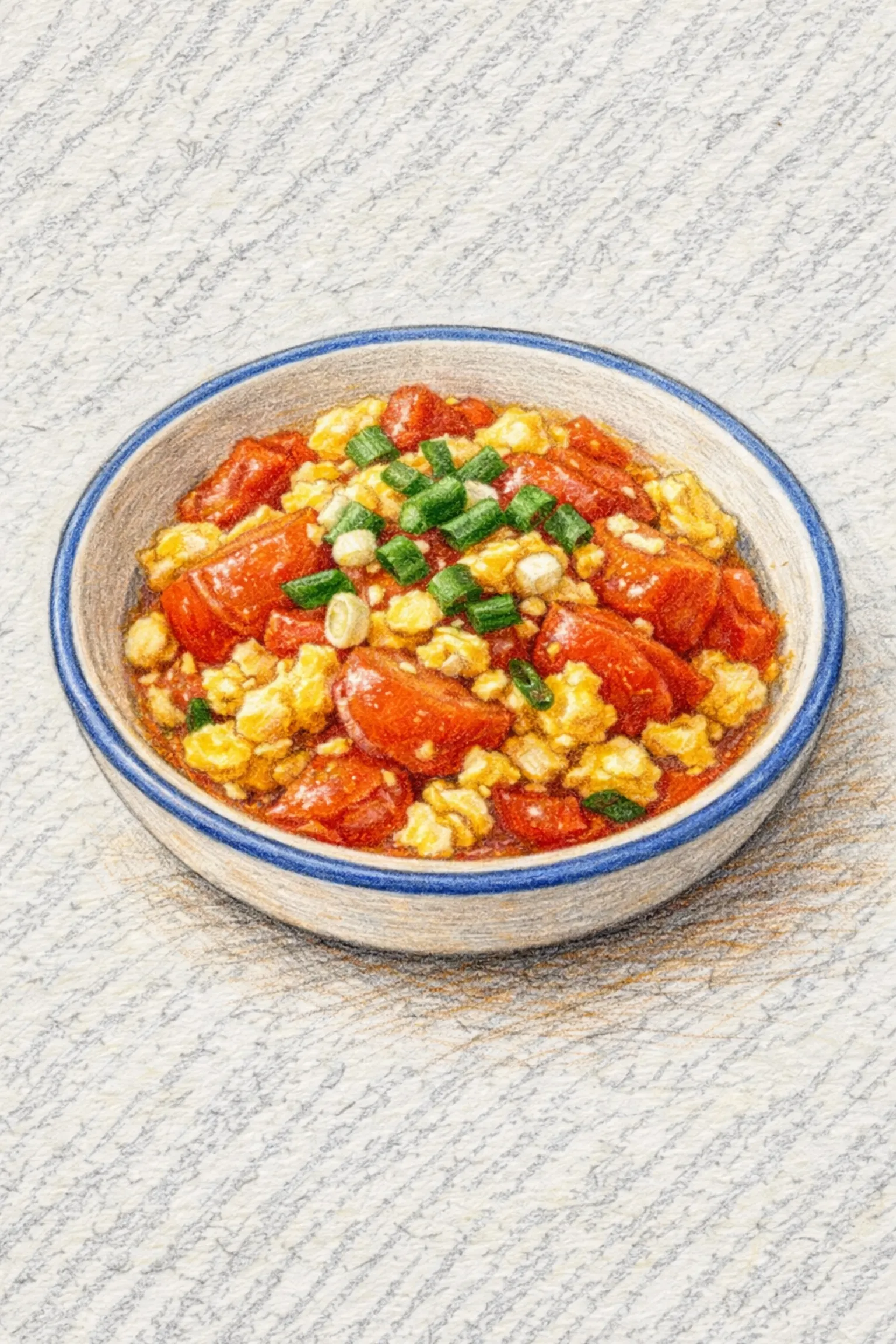
Korean Tomato Dalgyal Bokkeum (Tomato Egg Stir-fry)
Stir-fry Easy

Korean Tomato Dalgyal Bokkeum (Tomato Egg Stir-fry)

Tomato and egg cook in two separate stages here, preventing the eggs from remaining in the pan for the full time needed to soften the tomatoes. Cut 280 g of tomatoes into pieces slightly larger than bite size so they do not collapse immediately. Beat 4 eggs with a little salt until no streaks of white remain. Heat 1 tablespoon of cooking oil over medium heat, pour in the eggs, and wait for the edges to set. Fold them in broad strokes and remove them while the surfaces are still glossy and roughly 70 percent cooked. Add the remaining tablespoon of oil to the same pan with 30 g of green onion and 1 teaspoon of minced garlic. Stir for only about 20 seconds. Add the tomatoes and toss until their surfaces pick up the flavored oil, then mix in 1 teaspoon of sugar and 1 tablespoon of oyster sauce. After about 2 minutes, the tomato pieces should soften slightly and begin releasing juice. Return the eggs, lower the heat, and fold for 40 seconds. Turn off the heat as soon as no liquid egg remains and before the tomatoes lose their shape. Taste first and use the remaining salt only if needed.

🏠 Everyday 🍱 Lunchbox
Prep 10min Cook 7min 2 servings
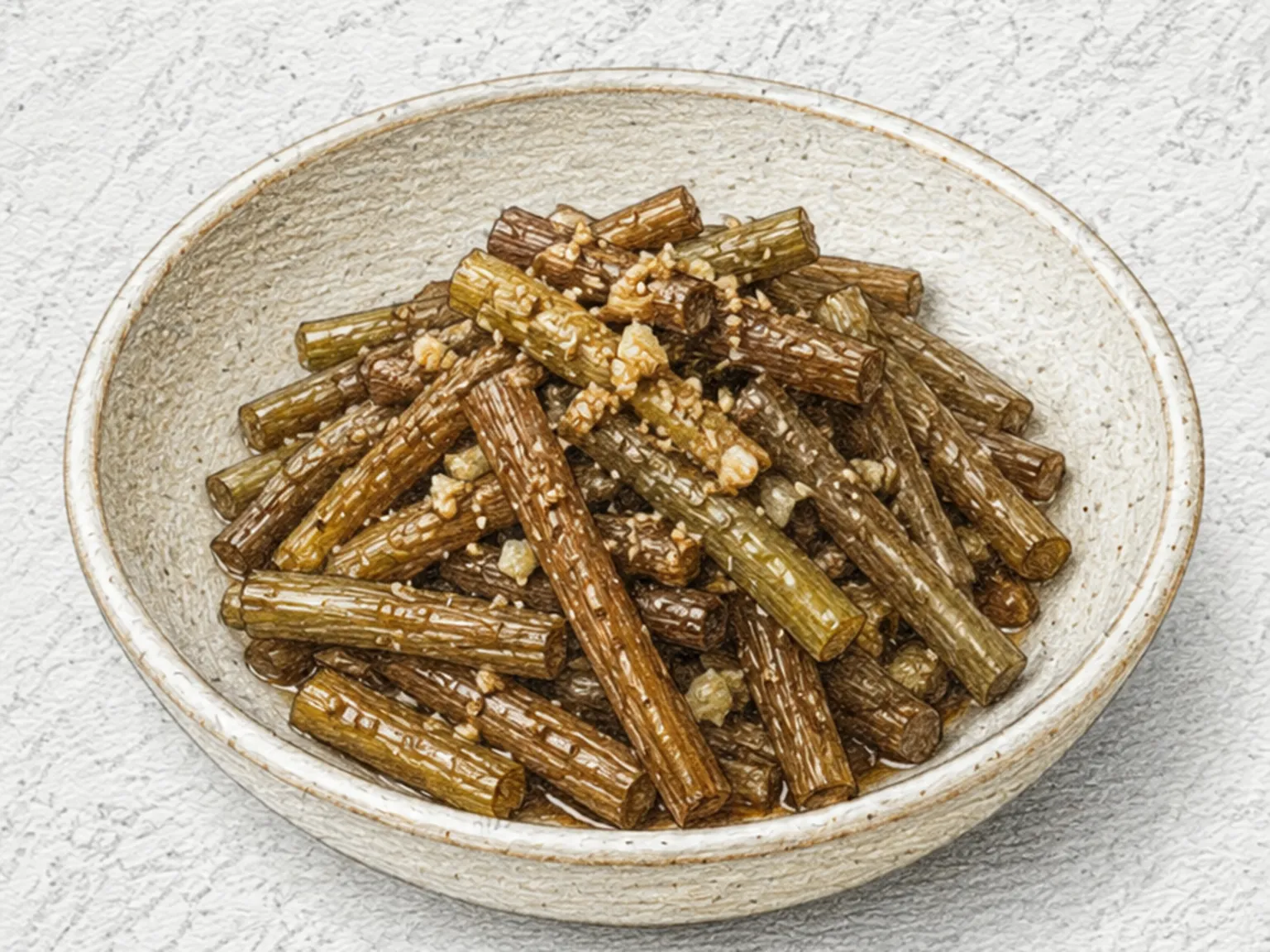
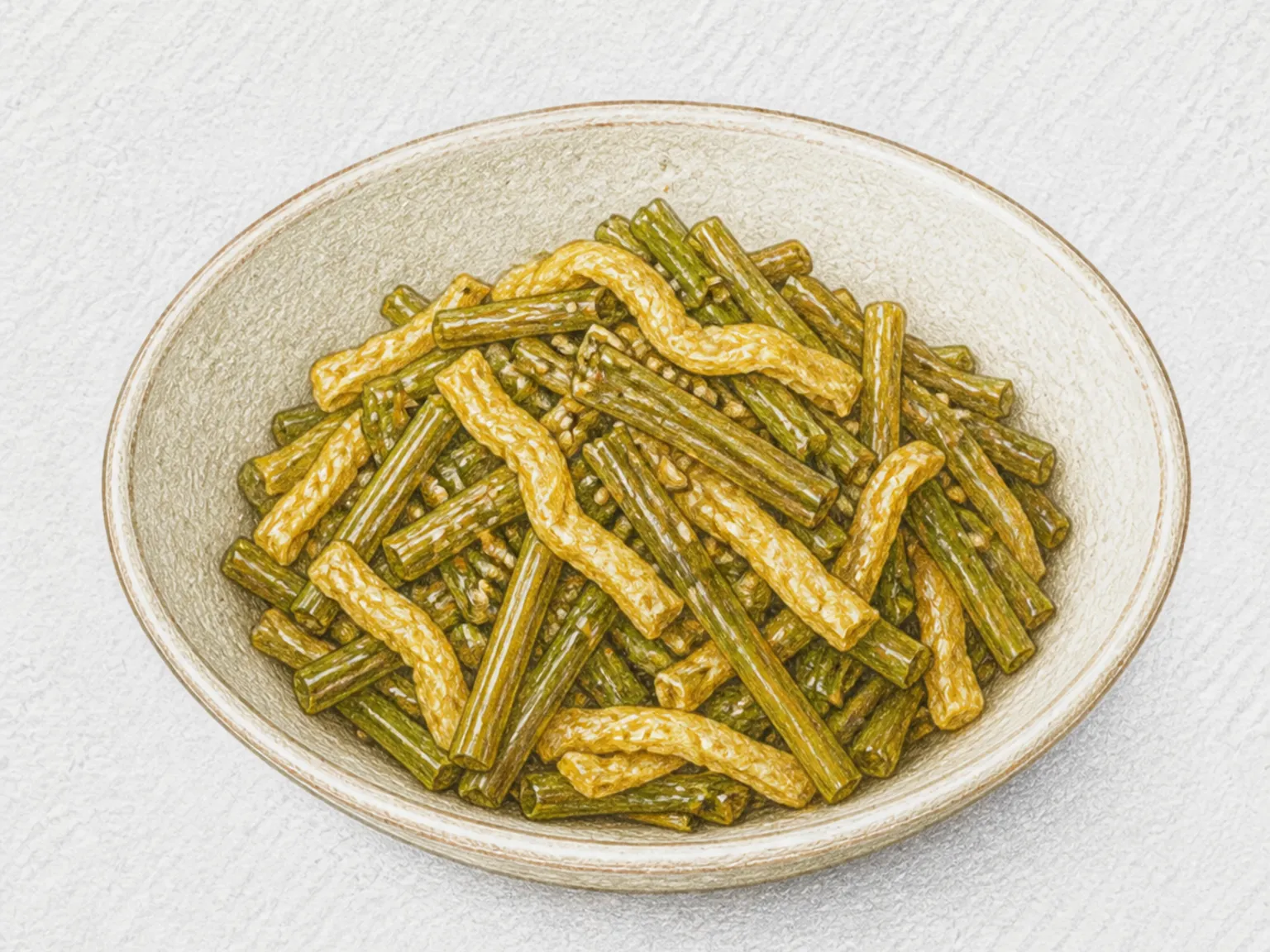
Korean Stir-Fried Taro Stems
Stir-fry Medium

Korean Stir-Fried Taro Stems

Torandae bokkeum starts with 300 g already-boiled taro stems. Squeeze them firmly, cut them into 4 to 5 cm lengths, and keep them separate from 80 g thickly sliced onion and half a green onion cut on the diagonal. Preheat a pan over medium-low heat for 1 minute, spread in 1.5 tablespoons perilla oil, and stir 1 teaspoon minced garlic for about 30 seconds. Before the garlic browns, add the taro stems and onion, raise the heat to high, and toss for 2 minutes. Continue until the stem surfaces look slightly translucent and the onion begins to soften. Pour 1 tablespoon soy sauce around the hot pan rim and mix quickly, then add 80 ml water and reduce the heat to medium. Simmer uncovered for 4 minutes, turning the stems once. Allow no more than 1 additional minute if a large amount of broth remains. Turn off the heat when only a thin layer of liquid sits on the bottom and the stems look glossy. Add 1 tablespoon ground perilla seed and the sliced green onion with the burner off. Toss for about 1 minute so the powder loosens in the residual moisture and coats each piece. The ingredient must be thoroughly boiled before this recipe begins; the stir-fry is not a substitute for that preparation.

🏠 Everyday 🍱 Lunchbox
Prep 15min Cook 12min 4 servings
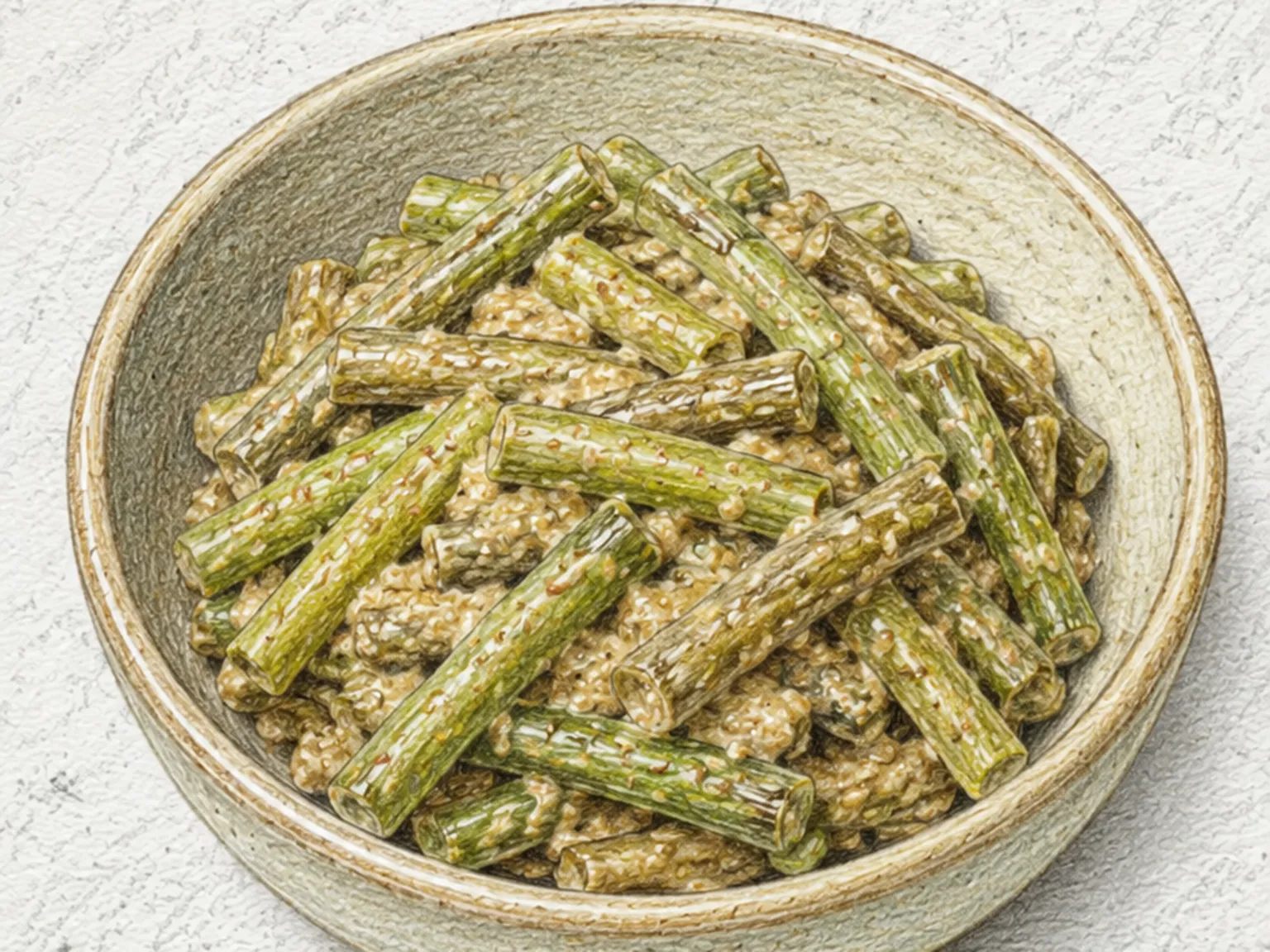
Korean Taro Stem Stir-fry with Perilla Powder
Stir-fry Medium

Korean Taro Stem Stir-fry with Perilla Powder

Begin this taro stem stir-fry by removing any tough outer fibers from 350 g of boiled stems. Squeeze out excess water gently, cut the stems into 5 to 6 cm lengths, and split thick pieces lengthwise so the pieces soften evenly. Warm 1 tablespoon of perilla oil slowly over medium-low heat. Add 1 teaspoon of minced garlic and 1/2 green onion and stir for about 30 seconds, moving on before the garlic edges brown. Add the taro stems and keep them moving on medium heat. After 2 minutes, the perilla oil should coat their surfaces and moisture on the pan bottom should diminish. Pour in 1 tablespoon of soup soy sauce and 120 ml of water. Once the liquid bubbles, reduce the heat to medium-low and simmer for about 5 minutes. The stems should bend softly while retaining a slight fibrous chew. Add 3 tablespoons of perilla powder in portions rather than all at once, stirring each addition immediately to eliminate dry clumps. Remove the pan from the heat when the liquid has thickened enough to cling to the stems but remains moist rather than drying into a paste. Check the seasoning at that point.

🏠 Everyday 🍱 Lunchbox
Prep 20min Cook 12min 4 servings
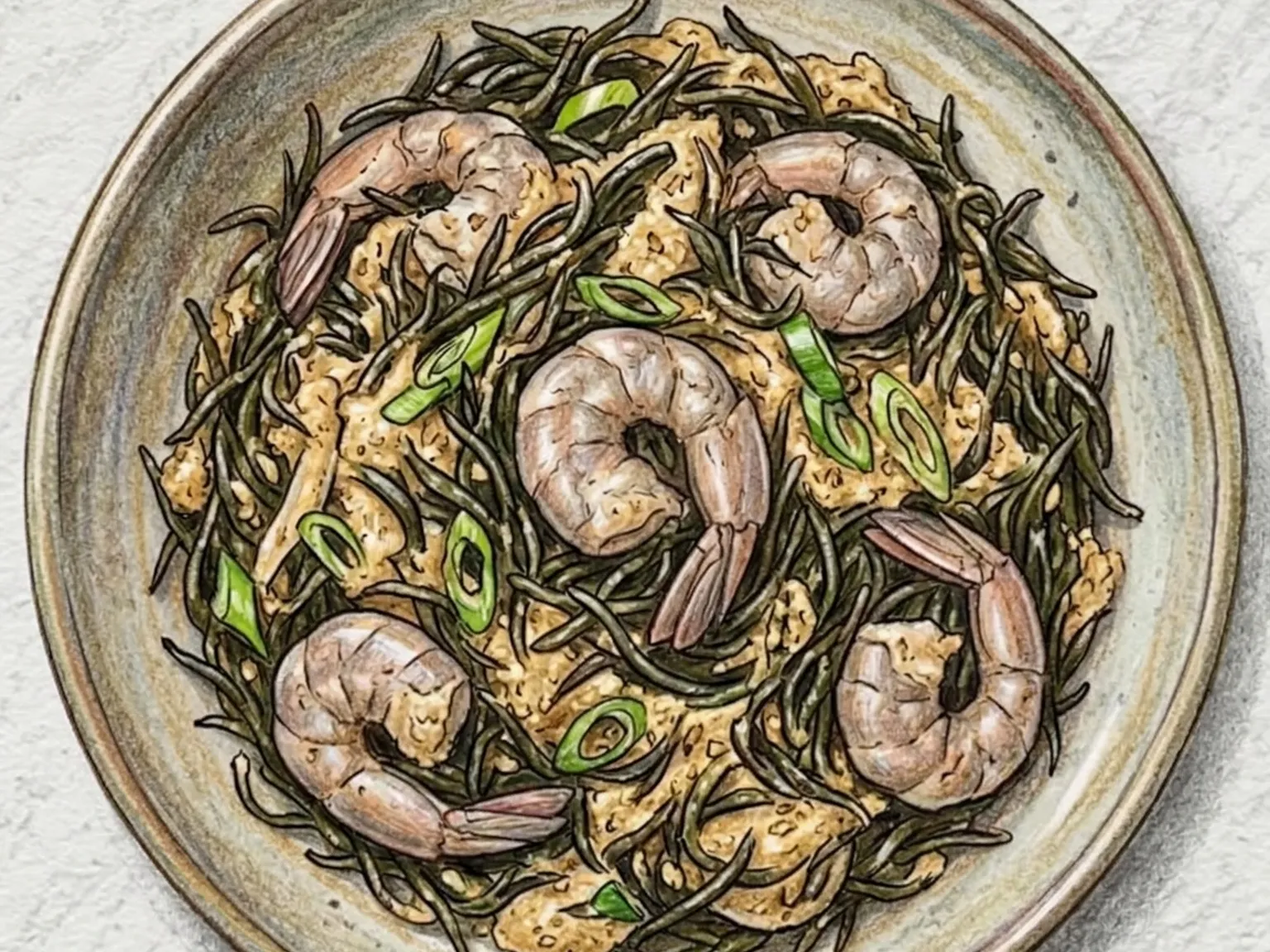
Korean Seaweed, Perilla & Shrimp Stir-fry
Stir-fry Easy

Korean Seaweed, Perilla & Shrimp Stir-fry

The seaweed and shrimp follow separate cooking clocks in this stir-fry, and the ground perilla enters only after the heat is lowered. Trim thick stems from 180 g of fresh tot seaweed, rinse it, and blanch it in boiling water for 30 seconds. Cool it in cold water and squeeze firmly so it does not release excess water into the pan. Devein 180 g of shrimp, pat them dry, and leave them for 5 minutes with 1 tablespoon of cooking wine and a small pinch of salt. Heat 1 1/2 tablespoons of perilla oil over medium heat and stir 1 tablespoon of minced garlic with 30 g of green onion for about 30 seconds, stopping before the garlic browns. Spread the shrimp in one layer and cook for roughly 1 minute. When the edges turn opaque and the bodies begin to curl, at about 70 percent doneness, add the blanched seaweed. Drizzle in 1 tablespoon of soup soy sauce and toss for no more than 2 minutes. Lower the heat, sprinkle in 2 tablespoons of ground perilla, and stir for 1 minute to break up clumps. Check the seasoning when the shrimp are fully cooked and the powder coats the seaweed.

🥗 Light & Healthy 🏠 Everyday
Prep 15min Cook 10min 2 servings
Tsuwabuki no Abura-itame (Stir-Fried Leopard Plant Stems)
Stir-fry Medium

Tsuwabuki no Abura-itame (Stir-Fried Leopard Plant Stems)

Tsuwabuki stems need both peeling and two wet preparation stages before they are fried with tofu and soy seasoning. Pull the tough outer skin and coarse fibers from 500 g stems and cut them into 5 cm lengths. Cover the pieces with cold water for 20 minutes, change the water once, and extend the soak by no more than 10 minutes if the thick stems remain rigid. Bring plenty of water to a boil, add half of the 1 teaspoon salt, and boil the stems for 5 minutes. Check a thick piece, then continue in 1-minute increments without exceeding 8 minutes, stopping when it bends without snapping. Drain thoroughly and press once more with a dry cloth so water does not spit in the oil or dilute the seasoning. Cut 1 piece of fried tofu or atsuage into strips 4 cm long and about 5 mm wide; keep atsuage near 5 mm thick as well. Warm 3 tablespoons cooking oil in a wide pan over medium heat and fry the boiled stems for about 5 minutes. Once oil coats them evenly, add the tofu, 2 tablespoons sugar, 2 tablespoons soy sauce, and the remaining salt. Keep the mixture moving for 4 minutes. If liquid still pools at the bottom, cook for 1 minute more, stopping when the seasoning adheres to the stems. Turn off the heat before rubbing 1 tablespoon toasted sesame seeds between the fingers and scattering them through the pan.

🏠 Everyday
Prep 35min Cook 20min 5 servings
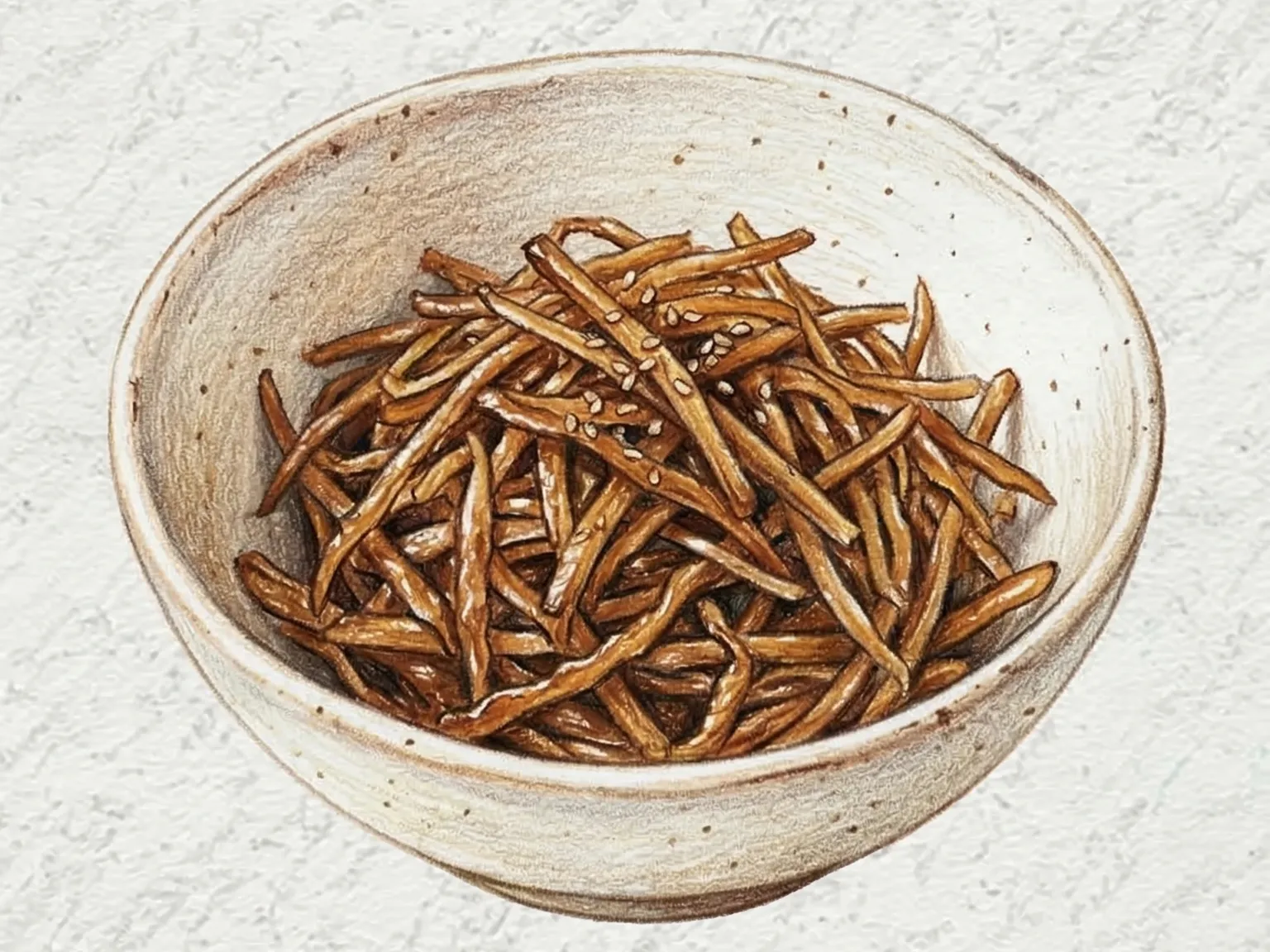
Korean Stir-Fried Burdock Root
Stir-fry Medium

Korean Stir-Fried Burdock Root

Ueong bokkeum cuts 250 g burdock root into thin 5 cm matchsticks, rests them in vinegared water, then reduces soy sauce and grain syrup around the strips until almost no liquid remains. Scrape the skin lightly with the back of a knife and keep the matchsticks even. Soak them in vinegared cold water for 10 minutes to limit browning and reduce harsh bitterness. Drain well and blot the surfaces; dripping strips would steam before they fry and would weaken the final coating. Heat 1 tablespoon cooking oil over medium-high heat and toss the burdock frequently for 3 minutes so all sides receive oil. Once the edges look slightly translucent, reduce the heat to medium. Add 1.5 tablespoons soy sauce, 1.5 tablespoons grain syrup, 1 teaspoon sugar, and 100 ml water, stirring from the pan bottom. When the mixture begins to bubble, reduce it for 7 minutes first. Continue for no more than 2 additional minutes only if a visible pool remains. Larger bubbles, almost no liquid on the bottom, and glossy brown strips are the stopping cues. Turn off the heat before adding 1 teaspoon sesame oil and 1 teaspoon sesame seeds. Toss, then let the burdock cool slightly so the glaze settles. Scrape the pan frequently near the end because the sweetened sauce can stick as its water disappears.

🏠 Everyday 🍱 Lunchbox
Prep 15min Cook 12min 4 servings
Korean Stir-Fried Dried Napa Cabbage Leaves
Stir-fry Medium

Korean Stir-Fried Dried Napa Cabbage Leaves

Ugeoji namul bokkeum uses 300 g rehydrated dried napa cabbage leaves, with an additional soak and boil to soften the thick stems before doenjang stock is reduced around them. Leave the leaves in lukewarm water at about 40 degrees C for 1 hour, then boil for 5 minutes. Check that a thick stem yields easily when pressed. Rinse briefly in cool water, squeeze firmly without crushing the leaves, and cut them into rough 5 to 6 cm pieces. Warm 1 tablespoon perilla oil over medium heat and move 1 tablespoon minced garlic through it for about 20 seconds. Add the cabbage and stir-fry for 2 minutes so every piece receives oil and the moisture on the pan bottom decreases. Dissolve 1.5 tablespoons doenjang in 100 ml anchovy-kelp stock and pour it into the pan. Keep it at a medium-heat simmer for the first 8 minutes. Extend the cook by no more than 2 minutes if the stems remain firm or excess liquid is still present, adding a small amount of stock if the seasoning tastes too salty. Once most of the broth has reduced, lower the heat and add 2 tablespoons perilla seed powder with 20 g sliced green onion. Stir for 2 minutes, stopping when the powder has thickened the remaining moisture into a coating but the leaves are still moist.

🏠 Everyday 🍱 Lunchbox
Prep 60min Cook 15min 4 servings
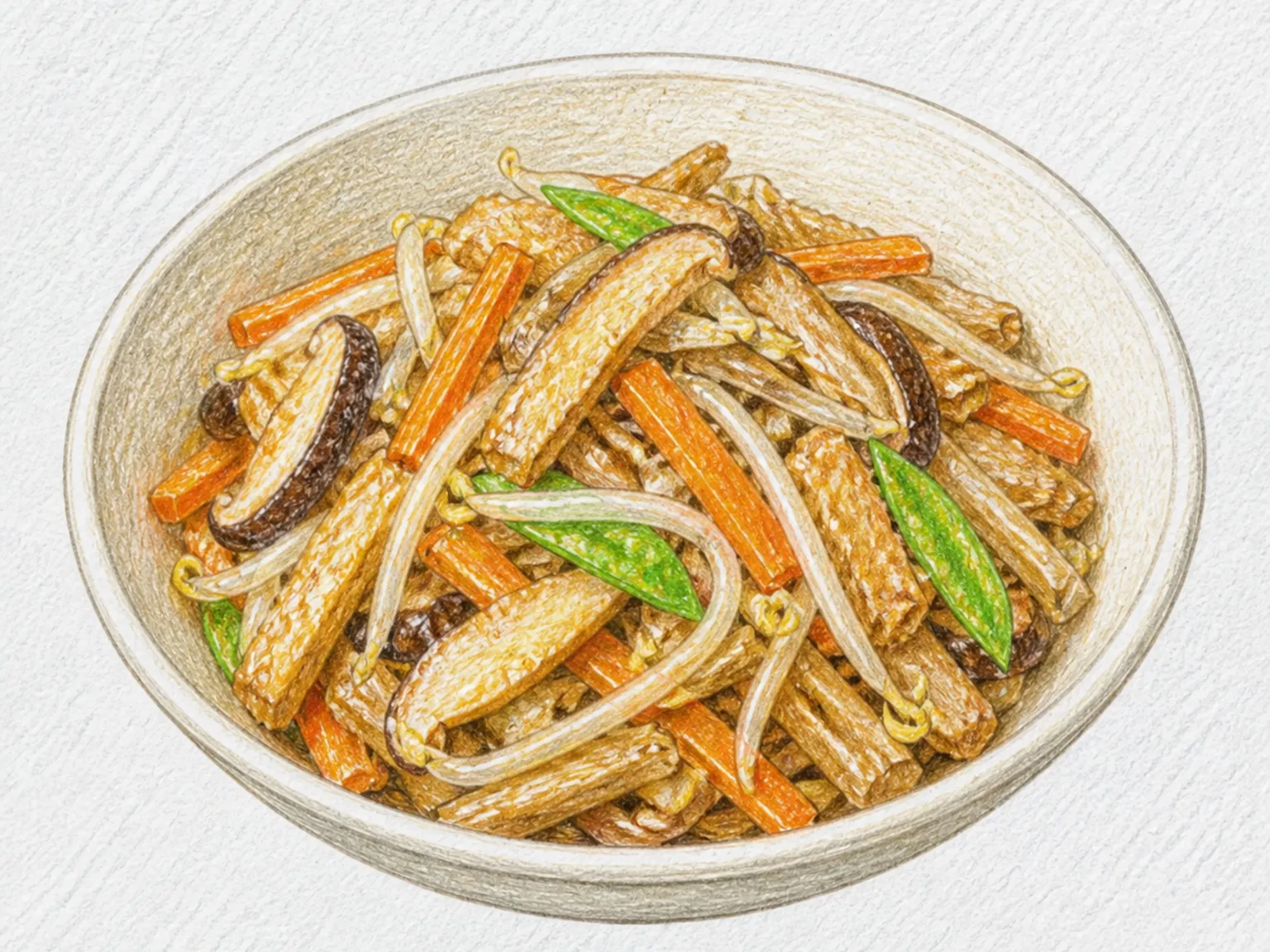
Urakami Soboro (Pork and Burdock Stir-Fry)
Stir-fry Medium

Urakami Soboro (Pork and Burdock Stir-Fry)

Urakami soboro uses sturdy strips rather than minced meat, then finishes the cooked ingredients with filtered shiitake liquid and briefly heated sprouts. Soak 6 g dried shiitake in 150 ml lukewarm water for 20 minutes. Remove the stems, cut the caps into 4 mm strips, and pass the soaking liquid through a fine filter before measuring exactly 50 ml. Cut 50 g pork belly, 20 g fried fish cake, 50 g konnyaku, and 15 g carrot into sturdy 5 cm strips. Shave 25 g burdock, cover it with cold water, leave for 5 minutes, and drain. Rinse and drain 100 g bean sprouts. Blanch the konnyaku for 2 minutes. In the same water, blanch 10 g green beans for 90 seconds, chill, dry, and slice them 4 mm wide on the diagonal. Warm 2 teaspoons oil over medium heat and spread in the pork. Cook for 3 minutes, then check for pink and continue for no more than 1 minute if needed. The thickest strip must reach at least 63°C. Add the fish cake, konnyaku, carrot, burdock, and shiitake for another 4 minutes. Pour in the 50 ml mushroom liquid, scrape the pan bottom, and bring it to a boil. Add 1 tablespoon light soy sauce, 2 teaspoons sugar, and 1 tablespoon sake and simmer for 3 minutes. Finish the sprouts over medium-high heat for only 90 seconds. Stop while they remain crisp and a little liquid is still present, then scatter over the green beans.

🏠 Everyday 🍱 Lunchbox
Prep 25min Cook 18min 2 servings
Korean Mixed Vegetable Stir-Fry
Stir-fry Easy

Korean Mixed Vegetable Stir-Fry

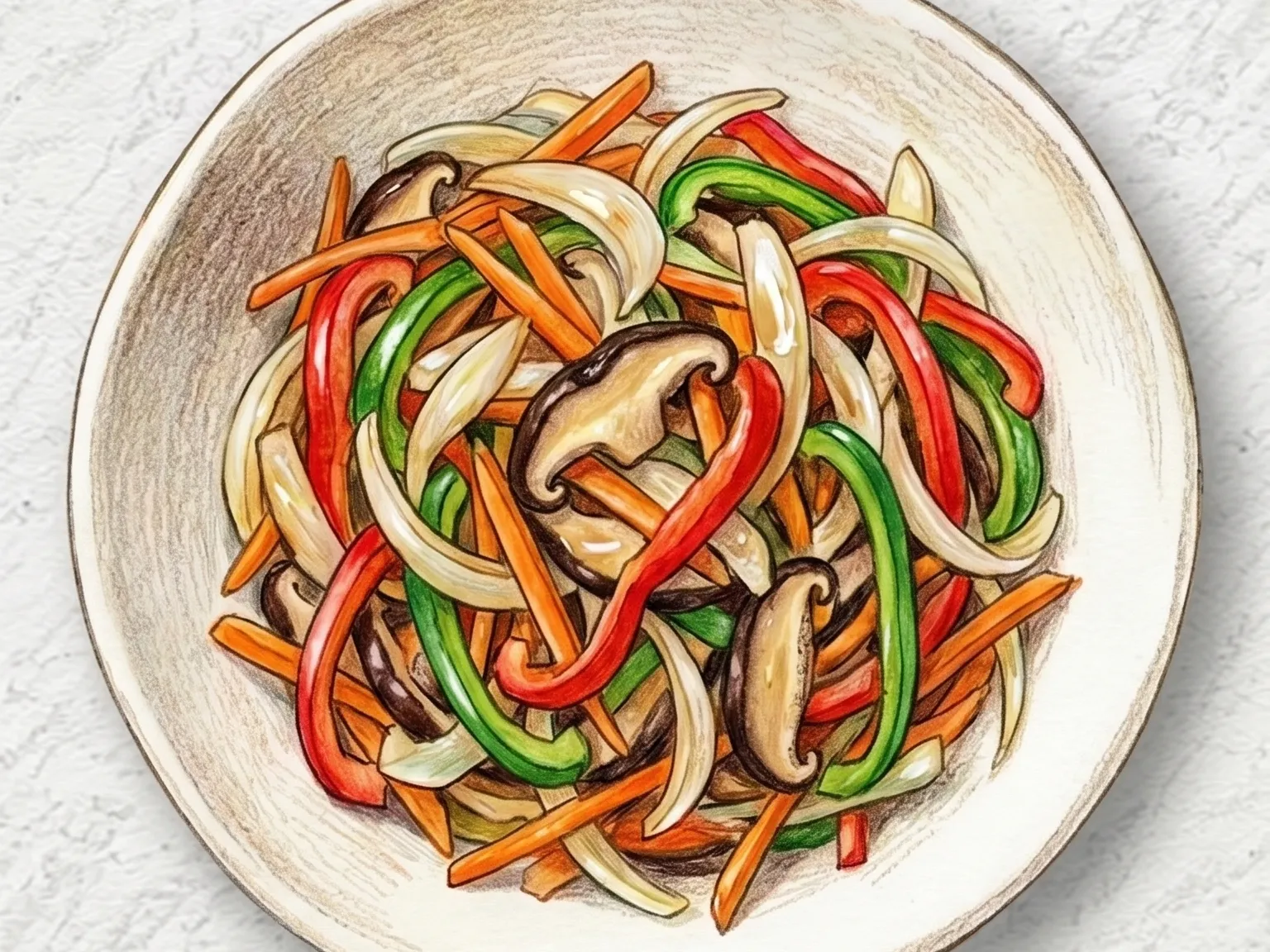
This mixed vegetable stir-fry adds carrot, onion, bell pepper, and shiitake according to firmness, then coats everything with oyster sauce during the final 20 seconds. Cut 1 carrot, 1 onion, and 1 bell pepper to a similar thickness, and slice 80 g of shiitake mushrooms thinly. Dry the vegetables after washing so the high-heat pan does not cool and collect liquid. Preheat the pan over high heat for about 1 minute, add only a very thin film of oil, and put in the carrot before the oil smokes. Stir-fry the carrot for roughly 1 minute, until its edges brighten slightly. Add the onion and cook it only until the raw edge begins to soften, before the pieces become fully translucent. The bell pepper and shiitake enter next for 1 1/2 minutes of quick tossing over high heat. Before the vegetables collapse, pour 1 tablespoon of oyster sauce around the hot pan edge and keep everything moving for 20 seconds. This prevents the sauce from reducing into salty or scorched patches. When a thin sheen covers each vegetable, turn off the heat, mix in 1 teaspoon of sesame oil, and transfer immediately.

🏠 Everyday 🌙 Late Night
Prep 10min Cook 8min 2 servings
Korean Stir-fried Cabbage with Doenjang
Stir-fry Easy

Korean Stir-fried Cabbage with Doenjang

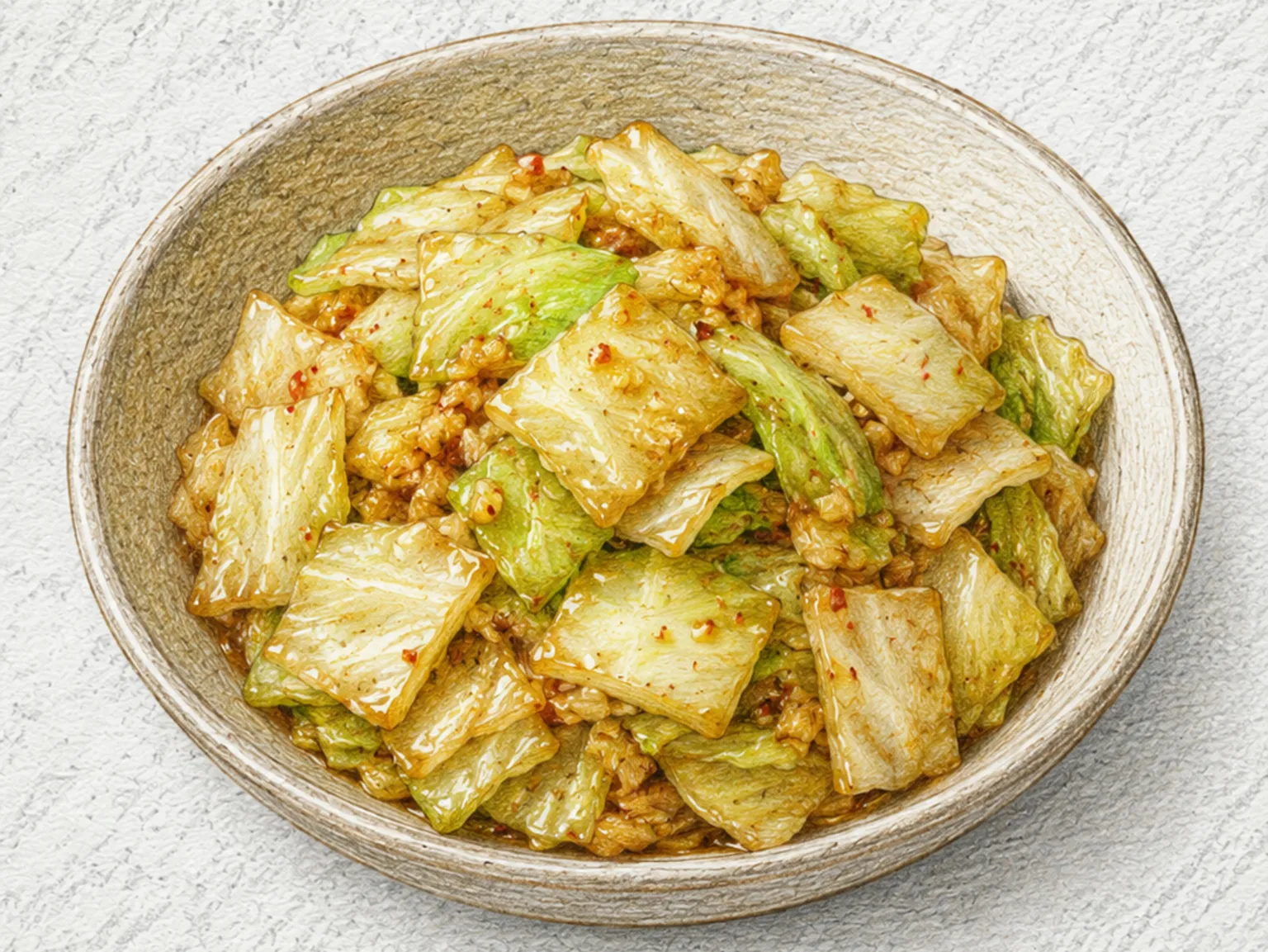
This cabbage and doenjang stir-fry coats 300 g of cabbage and 70 g of onion with a thin, savory sauce rather than leaving paste in heavy pockets. Cut around the tough core, make the leaves bite-size, and shave thick ribs more thinly so the pieces soften at a similar rate. Before the pan is heated, dissolve 1 tablespoon doenjang and 0.5 teaspoon gochugaru in 30 ml water. A smooth mixture spreads between the leaves, while unresolved lumps can scorch before the cabbage is coated. Cook the garlic and onion in 1 tablespoon oil over medium-high heat for 1 minute, stopping when the onion edges turn translucent. Raise the heat and spread in the cabbage. Toss continuously for 2 to 3 minutes; the edges should look glossy while the volume only begins to fall. Pour the doenjang mixture around the rim and mix immediately. One more minute over high heat is enough when the sauce clings lightly instead of pooling on the bottom. Turn off the heat while the cabbage still resists the bite and most of the moisture has evaporated. Mix in 0.5 teaspoon sesame oil off the heat. Because doenjang varies in saltiness, check the finished coating before deciding whether it needs more seasoning.

🏠 Everyday 🍱 Lunchbox
Prep 8min Cook 7min 2 servings
Korean Yangbaechu Kkae Bokkeum (Sesame Cabbage Stir-fry)
Stir-fry Easy

Korean Yangbaechu Kkae Bokkeum (Sesame Cabbage Stir-fry)

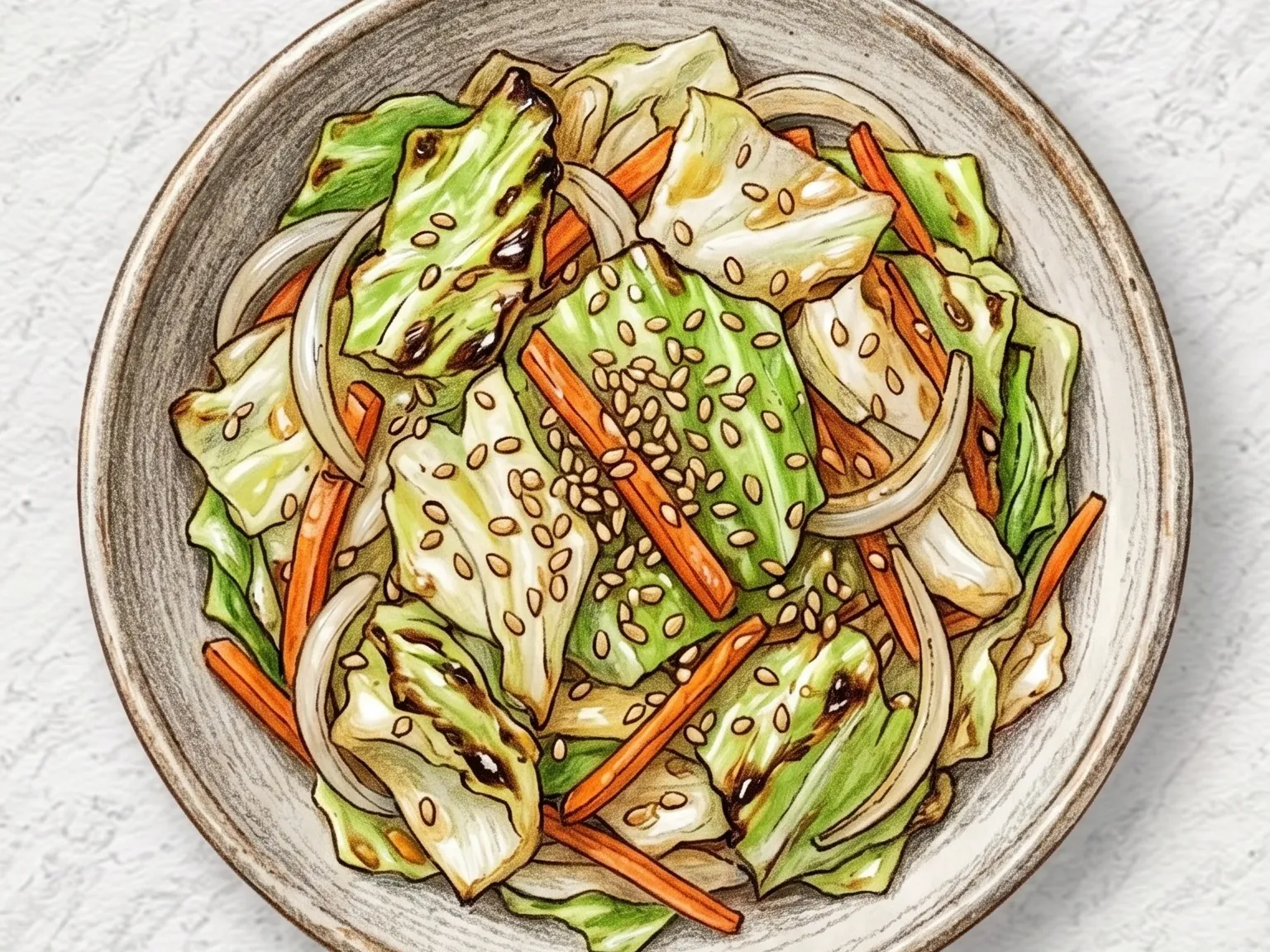
Yangbaechu kkae bokkeum uses 400 g cabbage with onion and carrot cut to a similar thickness, then finishes the vegetables off the heat with perilla oil and partially crushed sesame seeds. Cut the cabbage into 1 cm strips and match 80 g onion and 50 g carrot to roughly the same width. Lightly crush half of the 1.5 tablespoons toasted sesame seeds so they are ready for the finish. Heat a wide pan over medium heat, add 1 tablespoon sesame oil, and stir 1 tablespoon minced garlic for about 20 seconds. Before the garlic browns, add the carrot and onion and cook for 2 minutes. Once the onion edges look translucent, add the cabbage, raise the heat to high, and spread it broadly across the pan. Stir-fry for 1 minute first, extending this stage by only 1 minute if the edges have no color. Avoid constant stirring that traps the vegetable moisture. Pour 1 tablespoon soup soy sauce and 0.25 teaspoon salt around the pan rim and toss for 2 minutes. Stop when the cabbage has wilted slightly but its center still has a crisp bite. Switch off the burner, add 1 teaspoon perilla oil and the prepared sesame seeds, and mix with residual heat before transferring immediately. The ordered vegetable stages and short high-heat cabbage cook determine the texture.

🏠 Everyday 🍱 Lunchbox
Prep 12min Cook 8min 4 servings
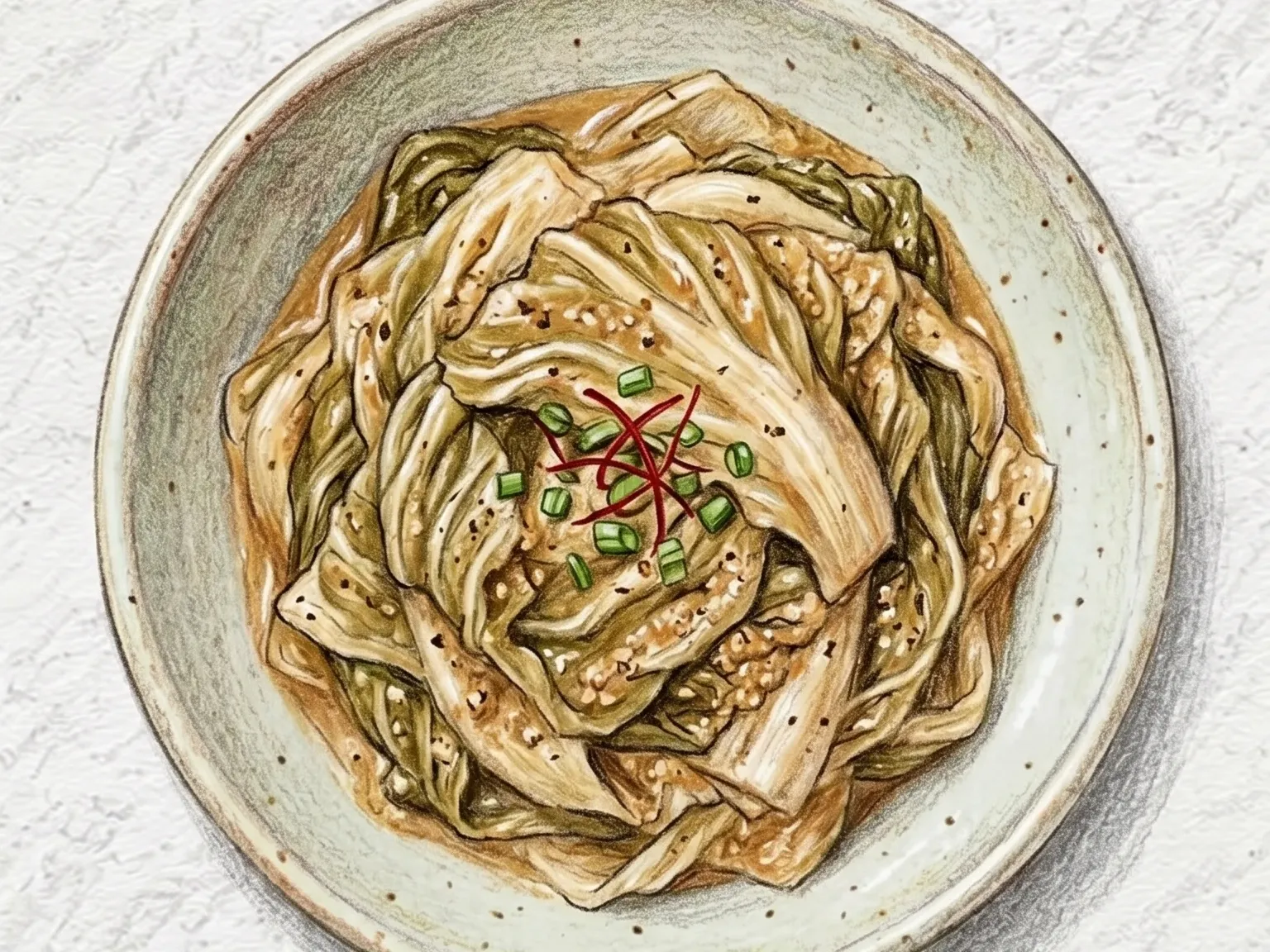
Korean Young Radish Pork Stir-fry
Stir-fry Medium

Korean Young Radish Pork Stir-fry

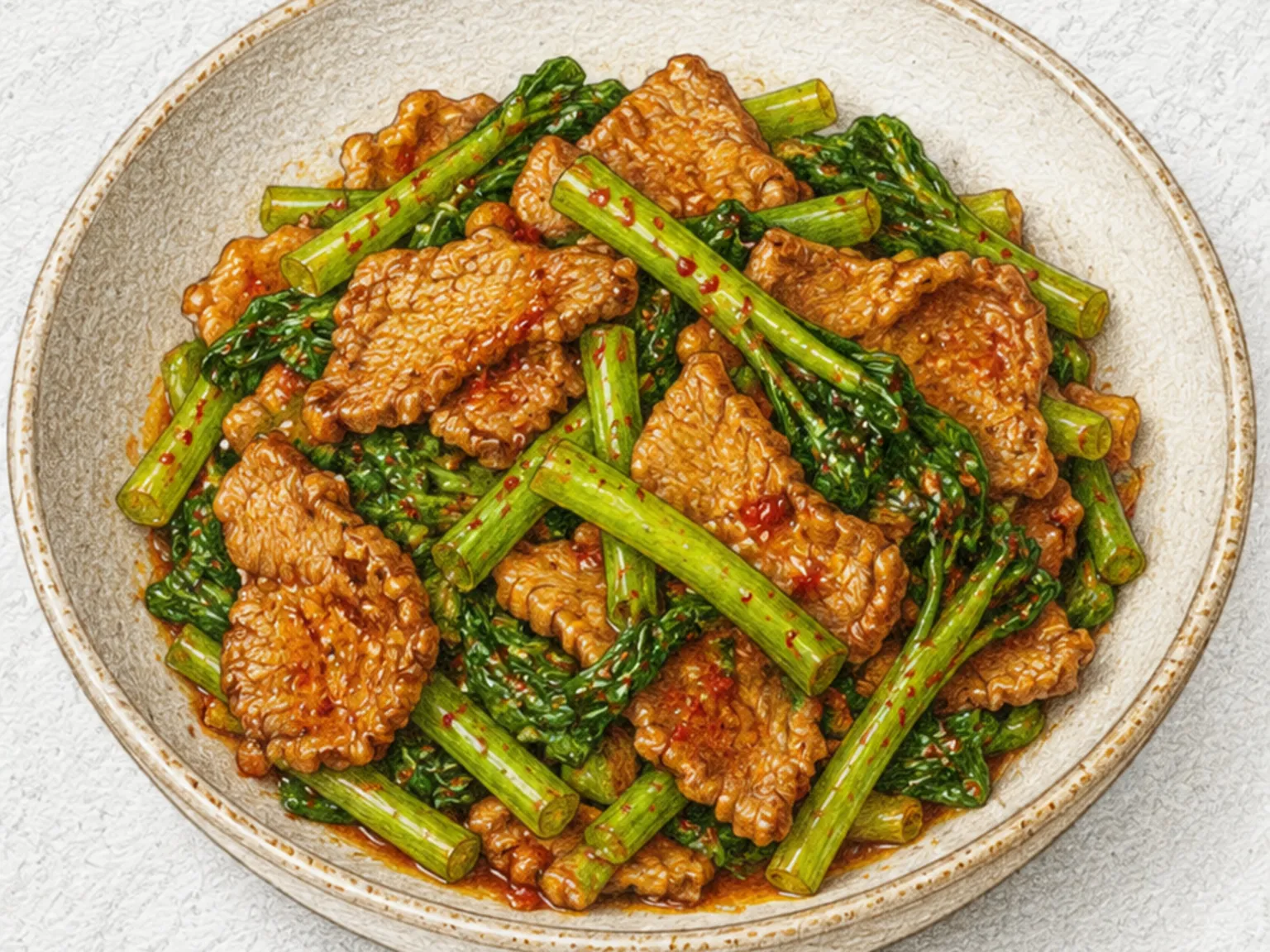
Pork and young radish greens require different timing in this stir-fry, so the 220 g of yeolmu is divided into thick stems and tender leaves before it reaches the pan. Rinse the greens several times to remove grit and cut them into 5 cm lengths. Coat 300 g pork shoulder with 1.5 tablespoons gochujang and 1 tablespoon each of gochugaru, soy sauce, and minced garlic, then leave it for 10 minutes. Start 100 g onion in a hot, oiled pan for 1 minute, just until the edges become translucent. Spread the marinated pork over high heat and cook for about 4 minutes, turning it until the raw red color disappears. Keep the pieces moving enough that the thick gochujang seasoning does not harden against the pan. Lower the heat to medium before adding the thick yeolmu stems. Give them 2 minutes, then add the leaves for another 2 minutes. The leaves should wilt while the stems retain a clear bite. If liquid remains on the bottom, cook for roughly 30 seconds longer rather than extending the entire greens stage. Turn off the heat and mix in 1 tablespoon sesame oil. For a milder version supported by the recipe, reduce only the gochugaru to 0.5 tablespoon and keep the rest of the seasoning unchanged.

🏠 Everyday 🍱 Lunchbox
Prep 16min Cook 14min 4 servings
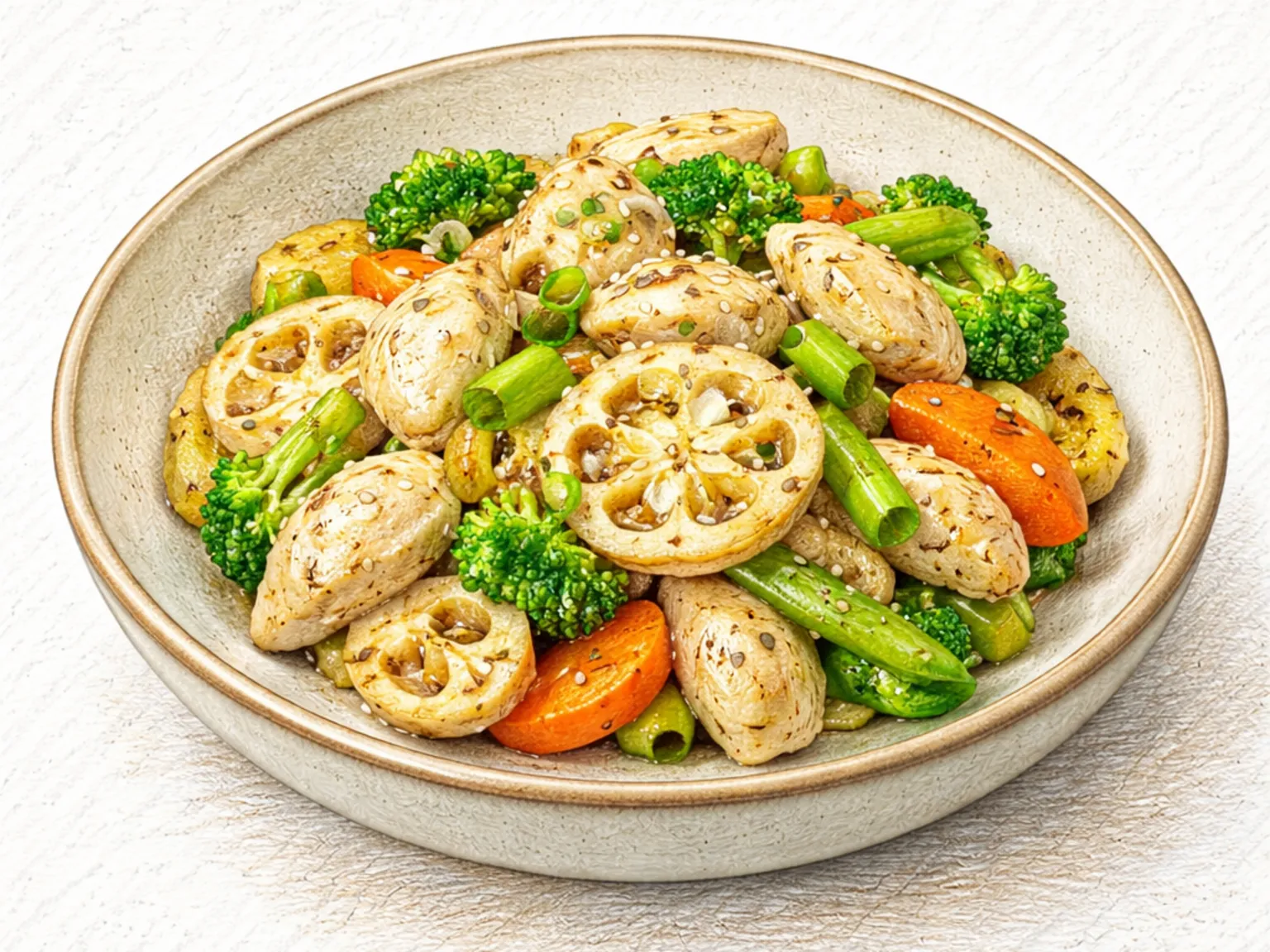
Korean Lotus Root Chicken Breast Stir-fry
Stir-fry Medium

Korean Lotus Root Chicken Breast Stir-fry

This stir-fry coordinates 320 g chicken breast with 260 g lotus root by preparing and cooking them in distinct stages. Cut the chicken into even bite-size pieces and marinate it for 10 minutes with 1 tablespoon soy sauce, 1 tablespoon cooking wine, and 0.25 teaspoon black pepper. Slice the lotus root about 3 mm thick, soak it in vinegar water for 5 minutes, rinse it, and drain it thoroughly. Slices that are much thinner can break during tossing, while water left on the surface can splatter in the preheated oil. Cut 120 g onion and 100 g bell pepper to similar widths. Heat 1.5 tablespoons oil over medium-high heat, arrange the chicken without overlapping, and cook it for about 3 minutes. Move to the next stage as soon as the outside turns white and the pieces separate; extending this first cooking period can dry the breast before the sauce is added. Stir in 1 tablespoon minced garlic, the onion, and the lotus root for 4 minutes. When the lotus root edges look translucent and the onion has softened, add the remaining 1 tablespoon soy sauce, 1 tablespoon oligosaccharide syrup, and the bell pepper. Toss for 2 minutes. The dish is ready when the seasoning no longer pools and instead gives the chicken and vegetables an even glossy coating.

🏠 Everyday 🍱 Lunchbox
Prep 20min Cook 12min 4 servings
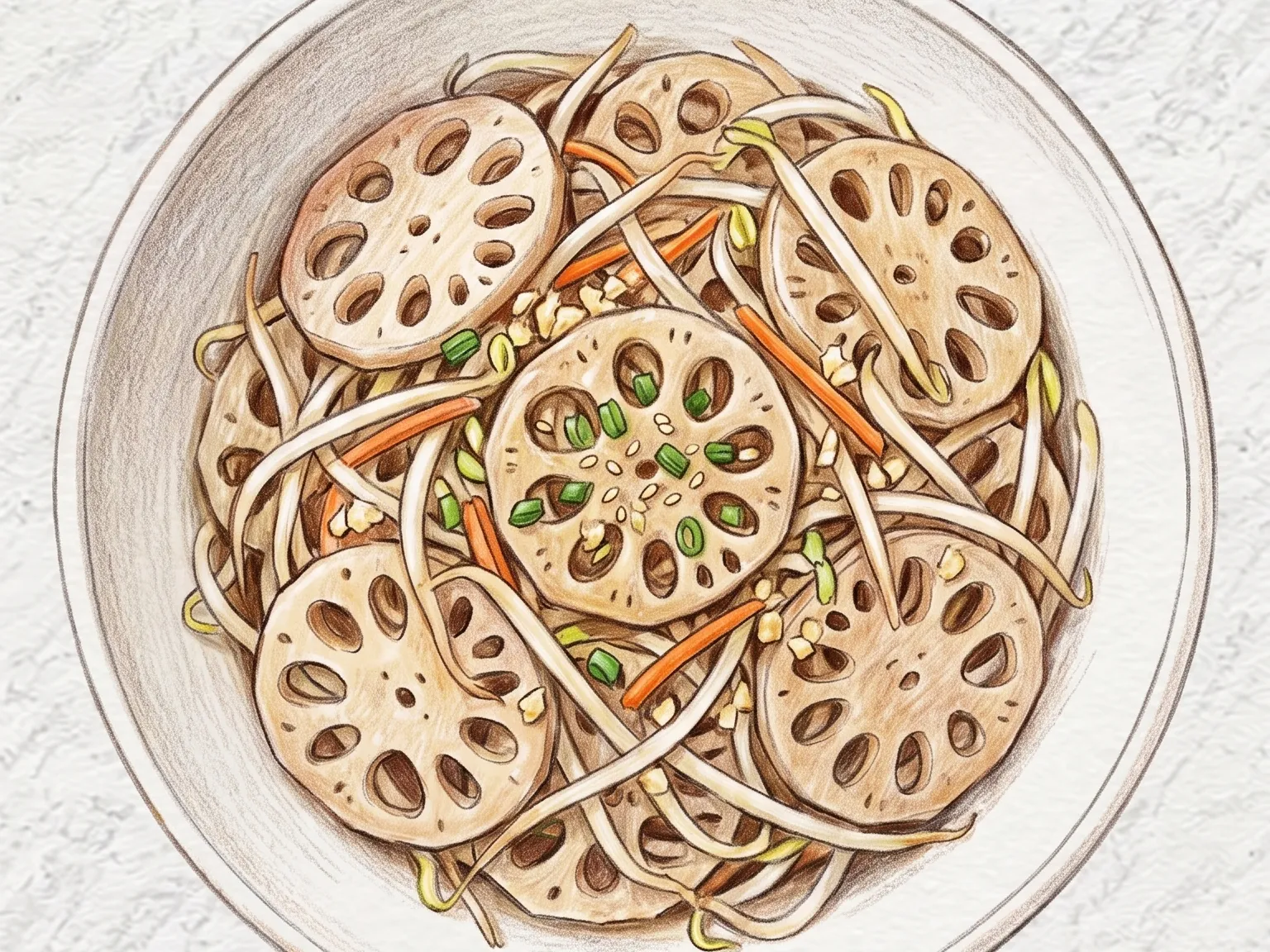
Korean Soy Sauce Stir-Fried Lotus Root and Bean Sprouts
Stir-fry Easy

Korean Soy Sauce Stir-Fried Lotus Root and Bean Sprouts

Yeongeun-kongnamul-ganjang-bokkeum stir-fries sliced lotus root and bean sprouts in a soy sauce and oligosaccharide glaze. The lotus root goes in first over medium heat for three minutes until slightly translucent, then carrot and garlic are added before the soy seasoning. Bean sprouts join last and cook on high heat for just two minutes to drive off moisture while staying crunchy. The starchy snap of the lotus root contrasts with the watery crispness of the bean sprouts, tied together by a light sweet-salty soy coating.

🏠 Everyday 🍱 Lunchbox
Prep 14min Cook 9min 2 servings
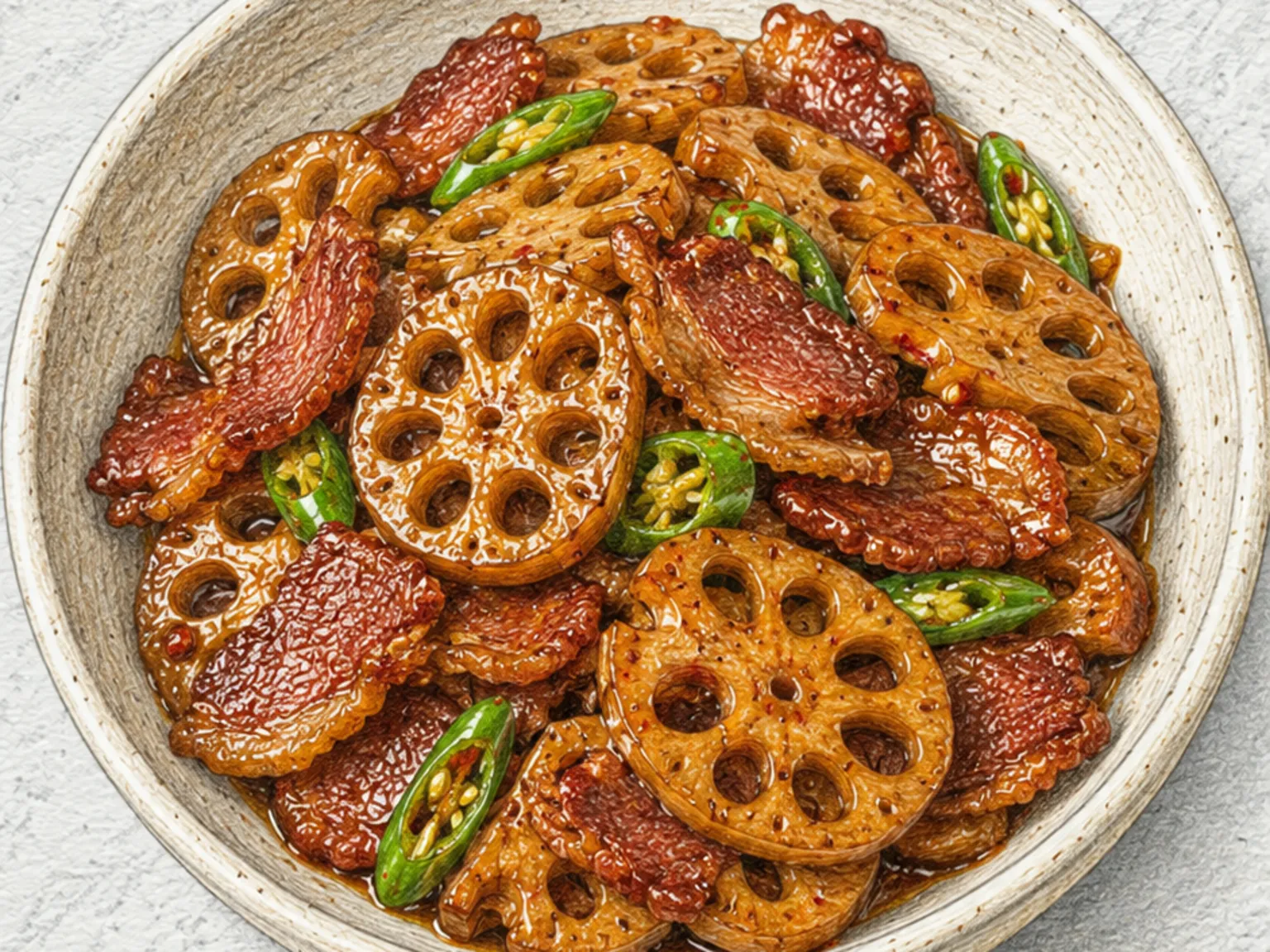
Korean Lotus Root & Duck Chili Stir-fry
Stir-fry Medium

Korean Lotus Root & Duck Chili Stir-fry

This lotus root and smoked duck stir-fry controls both texture and rendered fat by cooking the main ingredients in separate stages. Slice 220 g lotus root about 3 mm thick, soak it in vinegar water for 5 minutes, rinse, and drain it thoroughly. Thinly slice 100 g onion, cut 2 cheongyang chilies into rounds, and mix 1.5 tablespoons soy sauce with 1 tablespoon each of gochujang and oligosaccharide syrup before the pan is hot. Spread the lotus root over medium heat and stir-fry for about 3 minutes. Transfer it to a plate when the edges become translucent and lightly golden. Add 320 g sliced smoked duck to the same pan and cook over medium-high heat for roughly 3 minutes, until the edges curl and fat renders out. Spoon off the excess, leaving only a thin coating for the next stage. Add the onion and 1 tablespoon minced garlic for 1 minute, then stir in the chili and prepared seasoning until the thick sauce loosens around the duck. Return the lotus root and fold it through on medium heat. Two minutes is enough to coat it without softening its crisp center. Finish off the heat with 1 tablespoon sesame oil and 1 teaspoon sesame seeds. Smoked duck can already be salty, so taste the finished coating before adding any extra soy sauce.

🏠 Everyday 🍱 Lunchbox
Prep 20min Cook 14min 4 servings
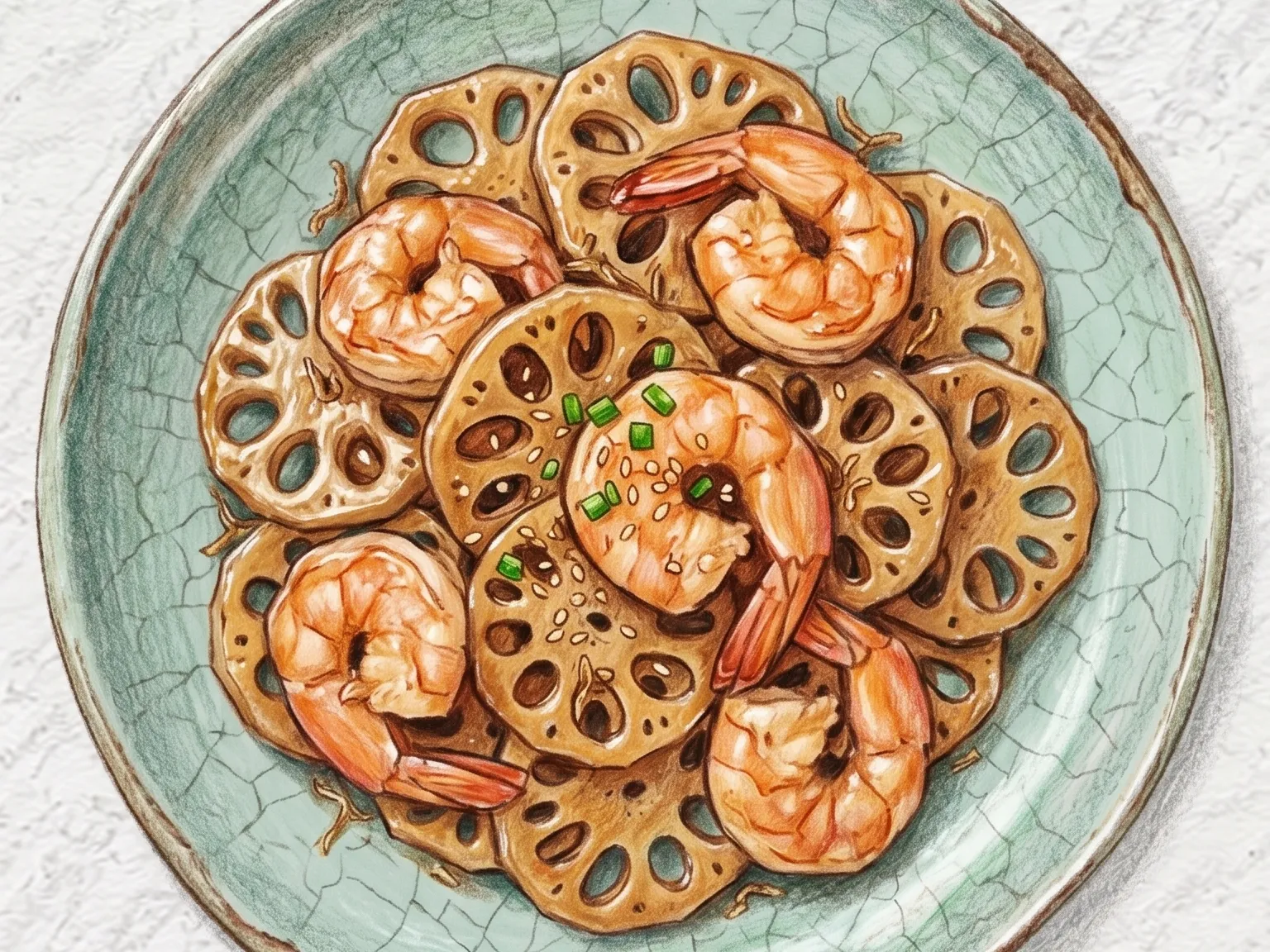
Korean Lotus Root and Shrimp Stir-fry
Stir-fry Easy

Korean Lotus Root and Shrimp Stir-fry

Lotus root and shrimp reach their best stopping points quickly, so this stir-fry keeps every stage short and uses visible changes to decide when to move on. Thinly slice 220 g lotus root, soak it in vinegar water for 5 minutes, rinse it, and drain it in a sieve. Clean 180 g shrimp and press away surface moisture as well. Wet ingredients release water instead of stir-frying cleanly, and that moisture can dilute the soy seasoning. Heat 1 tablespoon cooking oil over medium heat and start with 1 teaspoon minced garlic and 80 g onion. Once the garlic is fragrant and the onion begins to look translucent, add the lotus root and raise the heat to medium-high. Toss it for about 2 minutes, stopping this stage when only the edges are translucent and the centers still feel crisp. Add the shrimp. As soon as they are roughly halfway pink, pour in 1.5 tablespoons soy sauce and 1 tablespoon oligosaccharide syrup, then raise the heat to high. Let the seasoning bubble and toss everything briskly for about 1 minute. Turn off the heat when the shrimp are fully pink, the pieces look glossy, and no loose sauce pools on the pan. Mix in 1 teaspoon sesame oil with the residual heat. Extending that final minute to soften the lotus root further can overcook the shrimp first, so retain the lotus root's bite instead.

🏠 Everyday 🍱 Lunchbox
Prep 15min Cook 10min 2 servings
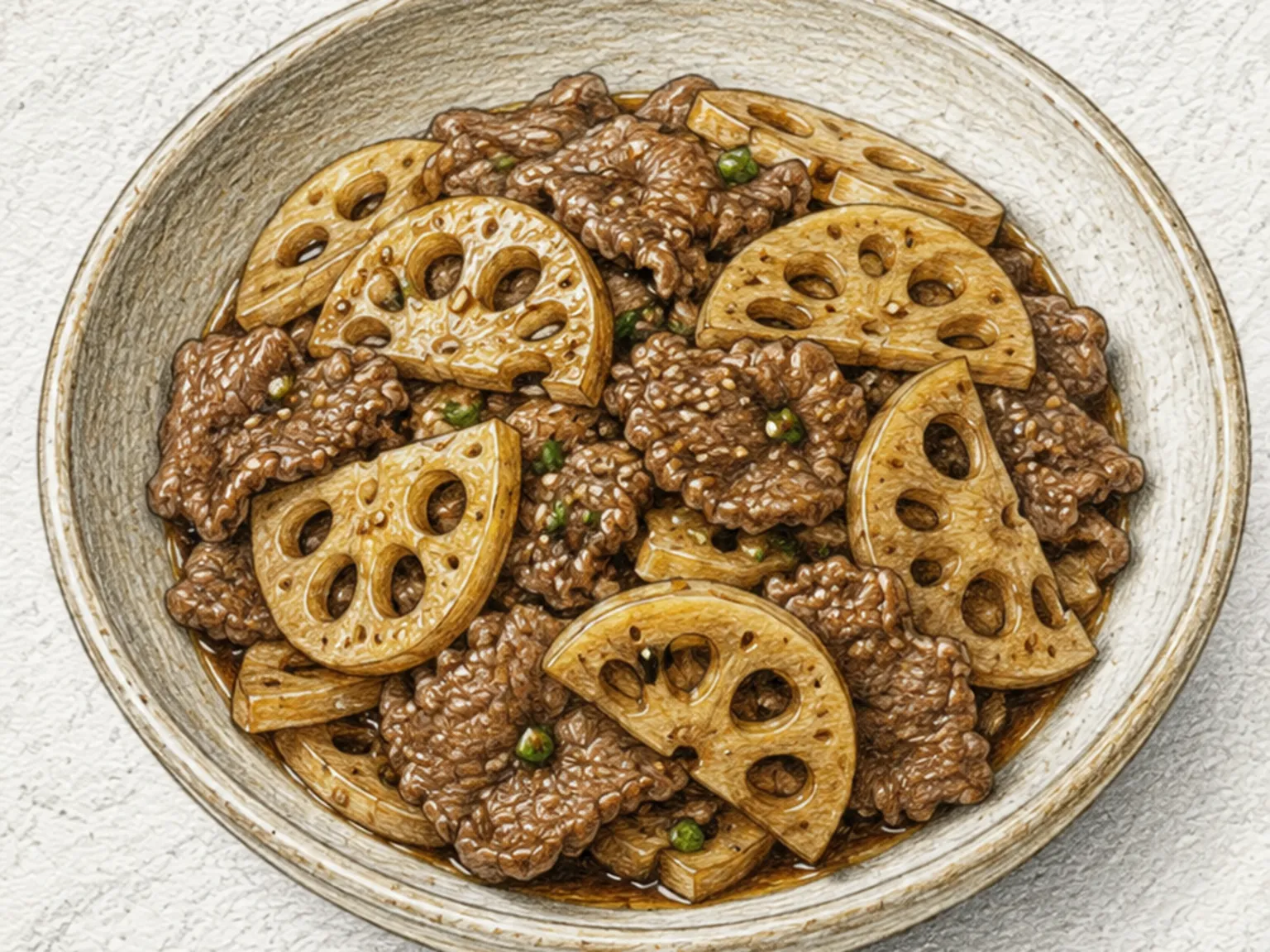
Korean Lotus Root and Beef Stir-fry
Stir-fry Medium

Korean Lotus Root and Beef Stir-fry

This stir-fry pairs 280 g thinly sliced lotus root with 180 g beef and uses the 2.5 tablespoons of soy sauce in two separate stages. Soak the evenly cut lotus root in vinegar water for 10 minutes to limit browning, then rinse and drain it thoroughly. Cut the beef into bite-size pieces, toss it with 1 tablespoon of the soy sauce, and leave it for 5 minutes. Keep the 80 g onion slightly thick so it softens without losing its shape. Heat 1 tablespoon cooking oil over medium heat and spread the beef in a single layer. Cook for about 1 minute, moving on while roughly half of the red color remains rather than finishing the meat by itself. Add the lotus root and onion and keep tossing for about 3 minutes. When the lotus root edges look translucent and the onion becomes aromatic, lower the heat to medium-low. Add the remaining 1.5 tablespoons soy sauce, 1 tablespoon oligosaccharide syrup, and 1 teaspoon minced garlic. Stir-fry for about 2 minutes, until the seasoning forms a thin glossy coating instead of collecting on the pan. Taste one lotus root slice before stopping: the center should still be crisp and the outside should carry the sweet-salty sauce. Turn off the heat and mix in 1 teaspoon sesame oil. Thinly sliced beef suits this timing because it cooks alongside the lotus root without requiring a longer final stage.

🏠 Everyday 🍱 Lunchbox
Prep 20min Cook 12min 3 servings
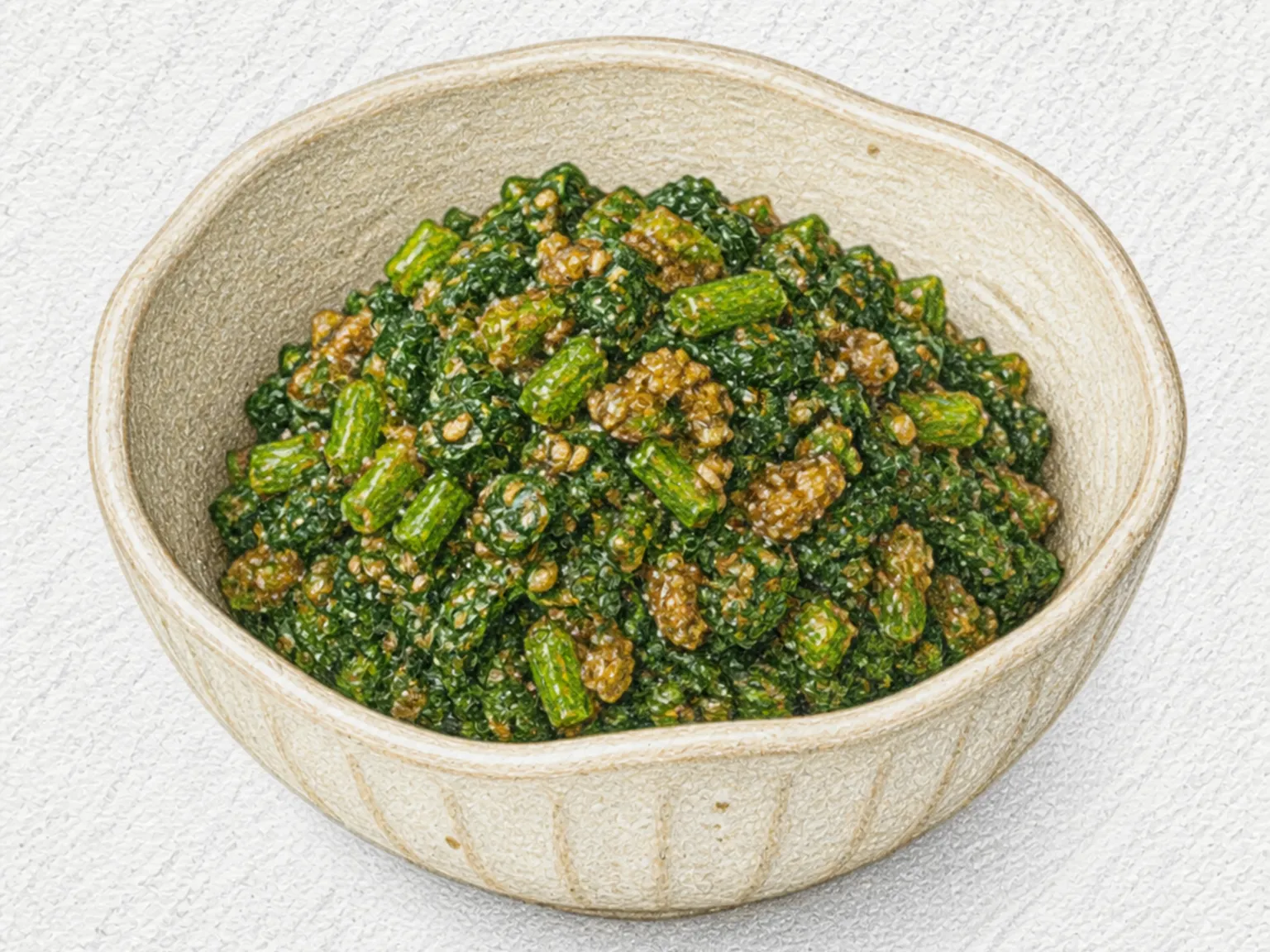
Yogoshi (Finely Chopped Greens with Sesame Miso)
Stir-fry Easy

Yogoshi (Finely Chopped Greens with Sesame Miso)

Yogoshi uses 100 g daikon leaves, blanched until tender, squeezed completely dry, and chopped to 3 to 5 mm before miso and sesame seasoning is attached in the pan. Discard yellow leaves and tough bases and wash away all soil. Put the stems into a large pot of boiling water first and blanch for 2 minutes. Allow only 1 additional minute if the thick portions remain firm. Move the greens immediately to cold water, rinse once, and squeeze repeatedly with both hands. Chop them evenly, then press once more to confirm that no water runs out; retained moisture would dilute the miso and require excessive cooking. Warm 1 teaspoon sesame oil over medium heat and separate the greens with a spatula for 2 minutes. If the pan bottom remains wet, continue for no more than 1 minute. Add 1 tablespoon each of miso, sugar, and chopped sesame seeds with 1 teaspoon mirin, then reduce the heat to low. Mix for 1 minute, extending by only 1 minute if the seasoning has not yet clung to the greens. Stop when no loose liquid remains and divide into four portions. If the dish is prepared for later, spread it in a shallow container to cool quickly and refrigerate within 2 hours rather than leaving it at room temperature overnight.

⚡ Quick 🏠 Everyday
Prep 15min Cook 10min 4 servings
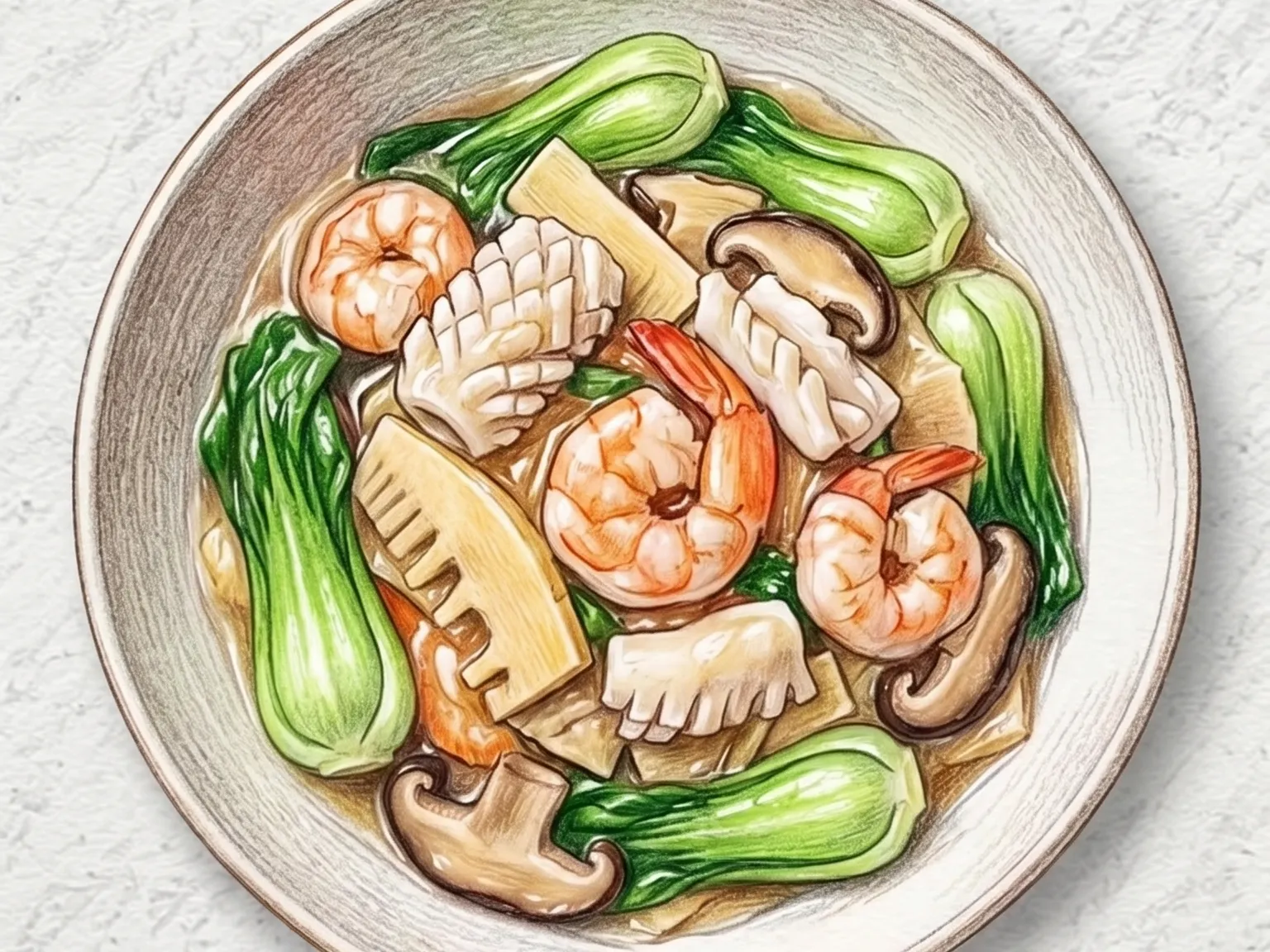
Mixed Seafood and Vegetable Stir-fry
Stir-fry Medium

Mixed Seafood and Vegetable Stir-fry

Yusanseul brings together 180 g shrimp, 150 g squid, 120 g bamboo shoots, 80 g shiitake mushrooms, and 120 g bok choy in a chicken-stock sauce thickened at the end. Pat the prepared seafood dry and cut the vegetables to similar lengths so they cook more evenly. Mix 1.5 tablespoons starch with water until smooth, then stir it again immediately before use because the starch settles while the other ingredients cook. Heat the pan thoroughly, add a thin layer of oil, and keep the heat high. Stir-fry the shrimp and squid for only 1.5 to 2 minutes, stopping that stage when their surfaces turn opaque. Add the bamboo shoots and shiitake mushrooms for about 1 minute. The bok choy goes in later and remains in the pan only until its leaves soften slightly while the stems retain their bite. Pour in 200 ml chicken stock and 1 tablespoon oyster sauce, scraping the bottom as the liquid is mixed through. Once it bubbles, cook over medium-high heat for about 2 minutes. Add the starch slurry in two portions rather than all at once, stirring quickly after each addition. Stop when the sauce looks translucent and glossy and lightly coats each piece. If the first portions produce the desired thickness, leave out the remainder. Turn off the heat and remove the food from the hot pan promptly so the brief initial cooking of the seafood is not undone by a long finish.

🏠 Everyday 🎉 Special Occasion
Prep 20min Cook 15min 3 servings
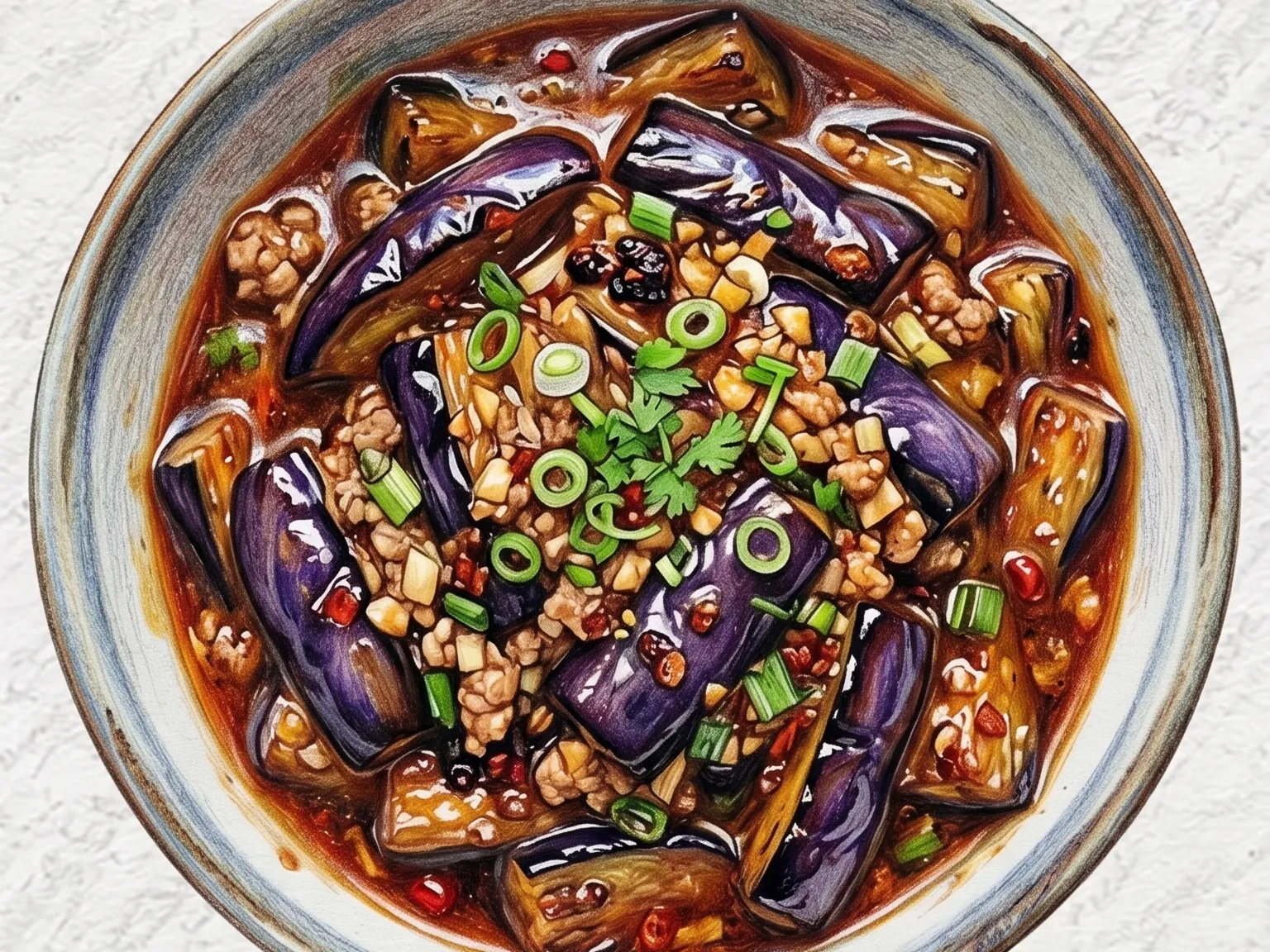
Yu Xiang Eggplant (Sichuan Spicy Garlic Pork Eggplant)
Stir-fry Medium

Yu Xiang Eggplant (Sichuan Spicy Garlic Pork Eggplant)

Yu Xiang Qiezi is a Sichuan-style eggplant stir-fry with ground pork, doubanjiang, black vinegar, and sugar. The eggplant is pre-fried to firm it up so it holds its shape in the sauce, while the pork and doubanjiang create a spicy, aromatic oil base. Soy sauce, vinegar, and sugar layer sweet and sour notes over the heat, producing the characteristic Yu Xiang flavor profile. Garlic and ginger add fragrance, and the eggplant absorbs the sauce deeply so every bite releases a concentrated burst of seasoning.

🏠 Everyday 🌙 Late Night
Prep 15min Cook 12min 2 servings
Zi Ran Yang Rou (Cumin Lamb Stir-Fry)
Stir-fry Medium

Zi Ran Yang Rou (Cumin Lamb Stir-Fry)

Zi ran yang rou sears 280 g thinly sliced lamb in one layer, then adds cumin and chili during the final minute rather than exposing the spices to the entire high-heat cook. Cut the lamb into bite-size pieces, coat it with 0.5 tablespoon soy sauce, and marinate for 10 minutes. Shake away excess surface liquid before cooking so the meat can sear instead of steam. Thinly slice 70 g onion, cut 25 g scallion into 4 cm lengths, and keep 1 tablespoon minced garlic ready. Heat a wok or heavy pan over high heat for at least 1 minute. Add 1.5 tablespoons cooking oil and stir the garlic for only 10 seconds once the oil shimmers. Spread the lamb without overlap and leave it undisturbed for the first 40 seconds. When the edges turn brown, flip and toss quickly until most of the exterior is cooked. Add the onion and cook it for 40 seconds, allowing only 20 additional seconds if it has not begun to turn translucent. Add 1.5 teaspoons ground cumin, 1 teaspoon chili flakes, and the remaining 0.5 tablespoon soy sauce. Stir-fry for 1 minute, fold in the scallions as soon as the cumin aroma becomes clear, and remove the pan from the heat. An uncrowded sear and late spice addition are the two defining controls in these steps.

🍺 Bar Snacks 🎉 Special Occasion
Prep 15min Cook 10min 2 servings

About Stir-fry

Cooking over high heat for a short time keeps ingredients crisp and vivid. With a few staple sauces like gochujang, soy sauce, and oyster sauce, the possibilities are endless - and dinner is on the table in minutes.