Charim

2686 Korean & World Recipes

2686+ Korean recipes, clean and organized. Ingredients to instructions, all at a glance.

Recipes with cheongyang chili

24 recipes

Buy cheongyang chili
Korean Soy-Braised Fish Cake
Side dishesEasy

Korean Soy-Braised Fish Cake

Eomuk-jorim is a braised Korean fish cake banchan in which triangles or rectangles of eomuk are simmered in a mixture of soy sauce, rice syrup, garlic, and water. Korean eomuk is a processed fish product made by grinding white fish flesh with starch and shaping the paste into flat sheets or molded forms -- denser and chewier than Japanese kamaboko, with a texture that holds its structure through the long braise without turning soft. As the liquid reduces by roughly half over ten minutes of steady simmering, the sauce concentrates into a thick, sticky glaze that adheres to each piece. Adding a sliced cheongyang chili near the end of cooking introduces a subtle heat that cuts through the sweetness of the rice syrup and gives the banchan a sharper edge that pairs well with plain rice. One of the most practical side dishes in the Korean repertoire, eomuk-jorim keeps in the refrigerator for up to a week and, like many braised preparations, deepens in flavor as the soy seasoning continues to penetrate the fish cake over subsequent days. Its low cost and the ease of making large batches in a single pan explain its decades-long presence in school cafeterias, packed lunchboxes, and the everyday home kitchen.

🏠 Everyday🍱 Lunchbox
Prep 8minCook 12min4 servings
Korean Anchovy Rice Balls
RiceEasy

Korean Anchovy Rice Balls

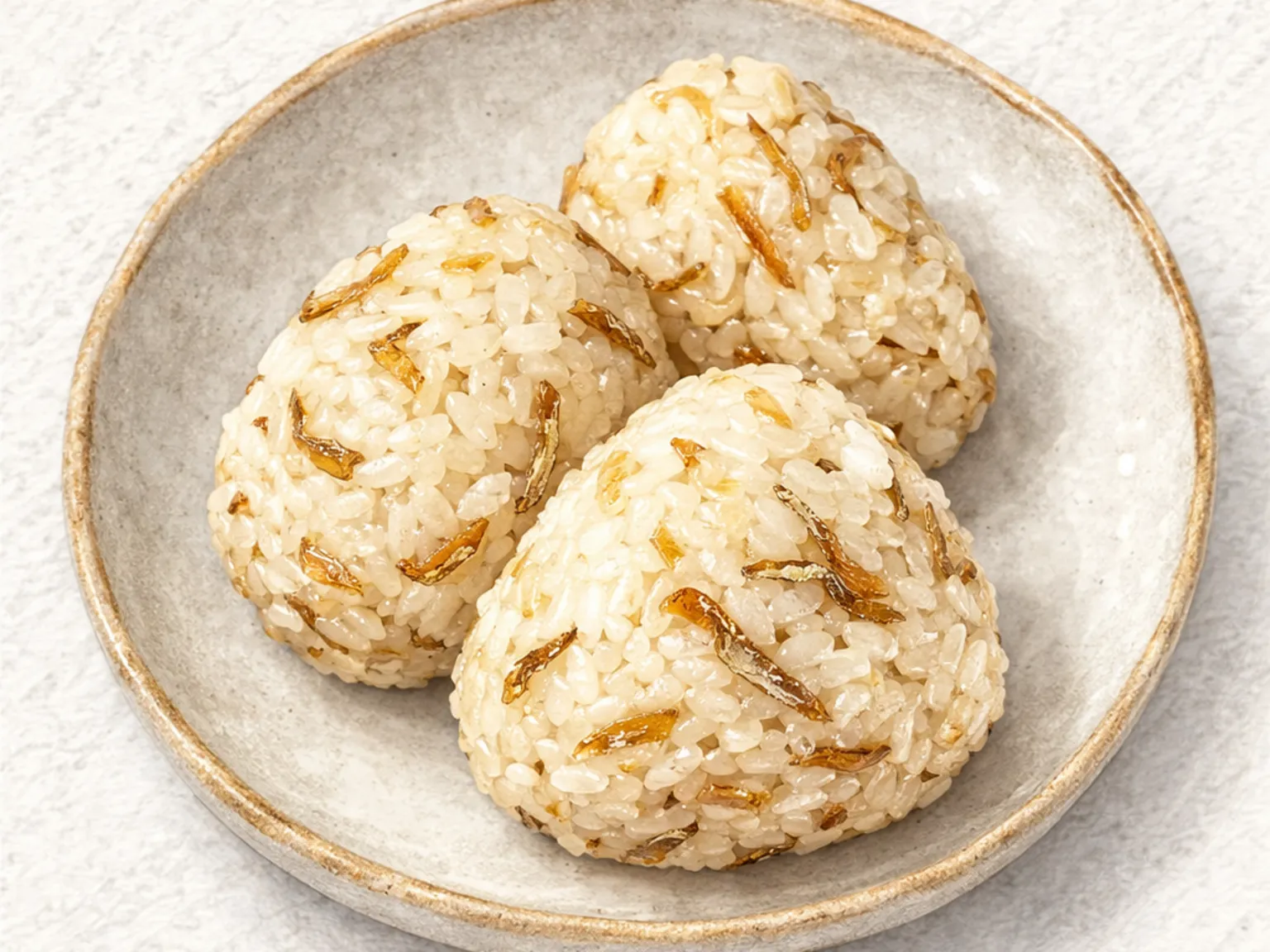
Myeolchi jumeokbap is a rice ball made by mixing sweet-salty glazed dried anchovies into warm rice and shaping it by hand. The anchovies are dry-toasted first in a pan over medium heat to drive off moisture and reduce fishiness, then a small amount of oil is added along with soy sauce and oligosaccharide syrup and the mixture is stirred over heat until the anchovies are coated in a glossy, caramelized glaze. The syrup scorches quickly, so the heat must be managed carefully and the pan watched throughout. Once the glazed anchovies are folded into warm rice, sesame oil, roasted seaweed flakes, and sesame seeds are added before everything is mixed together. Hands dampened with water or brushed with sesame oil are used to compress the mixture into compact balls. Working while the rice is still warm is important: the starch is pliable at temperature and the balls hold their shape firmly, whereas cold rice does not compact well and the finished balls tend to fall apart. Anchovy saltiness varies considerably between brands and batches, so the amount of soy sauce should be adjusted accordingly to avoid over-seasoning. The finished rice balls hold their flavor well after cooling, which makes them a reliable choice for packed lunches and outdoor eating.

🍱 Lunchbox
Prep 15minCook 10min2 servings
Korean Clam Stir-Fry (Manila Clams with Butter, Garlic and Chili)
Stir-fryEasy

Korean Clam Stir-Fry (Manila Clams with Butter, Garlic and Chili)

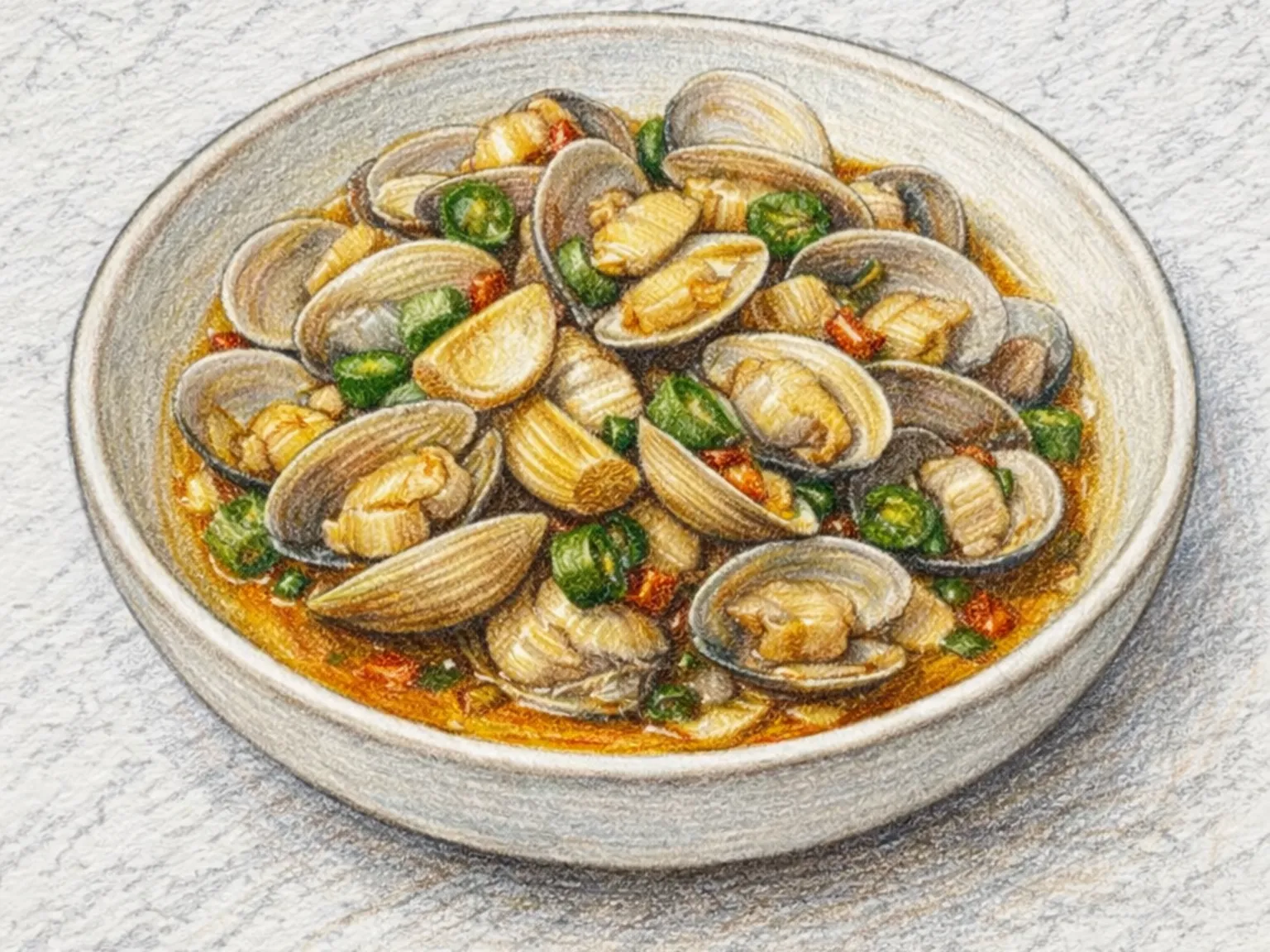
Bajirak bokkeum is a Korean clam stir-fry where purged manila clams are cooked quickly over high heat with butter, garlic, and cheongyang chili. Thorough purging in salted water beforehand removes all sand and prevents grit from appearing in the finished dish. Rice wine goes in first with the lid closed, so the alcohol steam helps the clams open rapidly while eliminating any lingering briny or muddy off-notes. Once the shells open, butter is added and emulsifies naturally with the released clam juices, building a salty, savory sauce without any additional effort or thickening agent. Generous sliced garlic infuses the butter sauce with depth as it cooks, and the cheongyang chili introduces a bright, sharp heat that prevents the richness from becoming too heavy. A small measure of soy sauce adjusts the final seasoning, though it must be kept minimal because the clams already contribute their own pronounced salinity. Scallion is tossed in at the very end for a clean, herbal finish before the pan comes off the heat. Total cooking time must stay within three to four minutes: beyond that window, the clam meat contracts, toughens, and loses its tender, juicy texture entirely. The sauce left in the pan after eating is intensely concentrated with shellfish flavor and pairs exceptionally well with crusty bread for soaking up every last drop. The dish works equally as a drinking snack alongside beer or as a side with steamed rice, and frozen manila clams produce reliably good results when fresh ones are unavailable.

🏠 Everyday🌙 Late Night
Prep 15minCook 10min2 servings
Korean Silkworm Pupae Broth
DrinksMedium

Korean Silkworm Pupae Broth

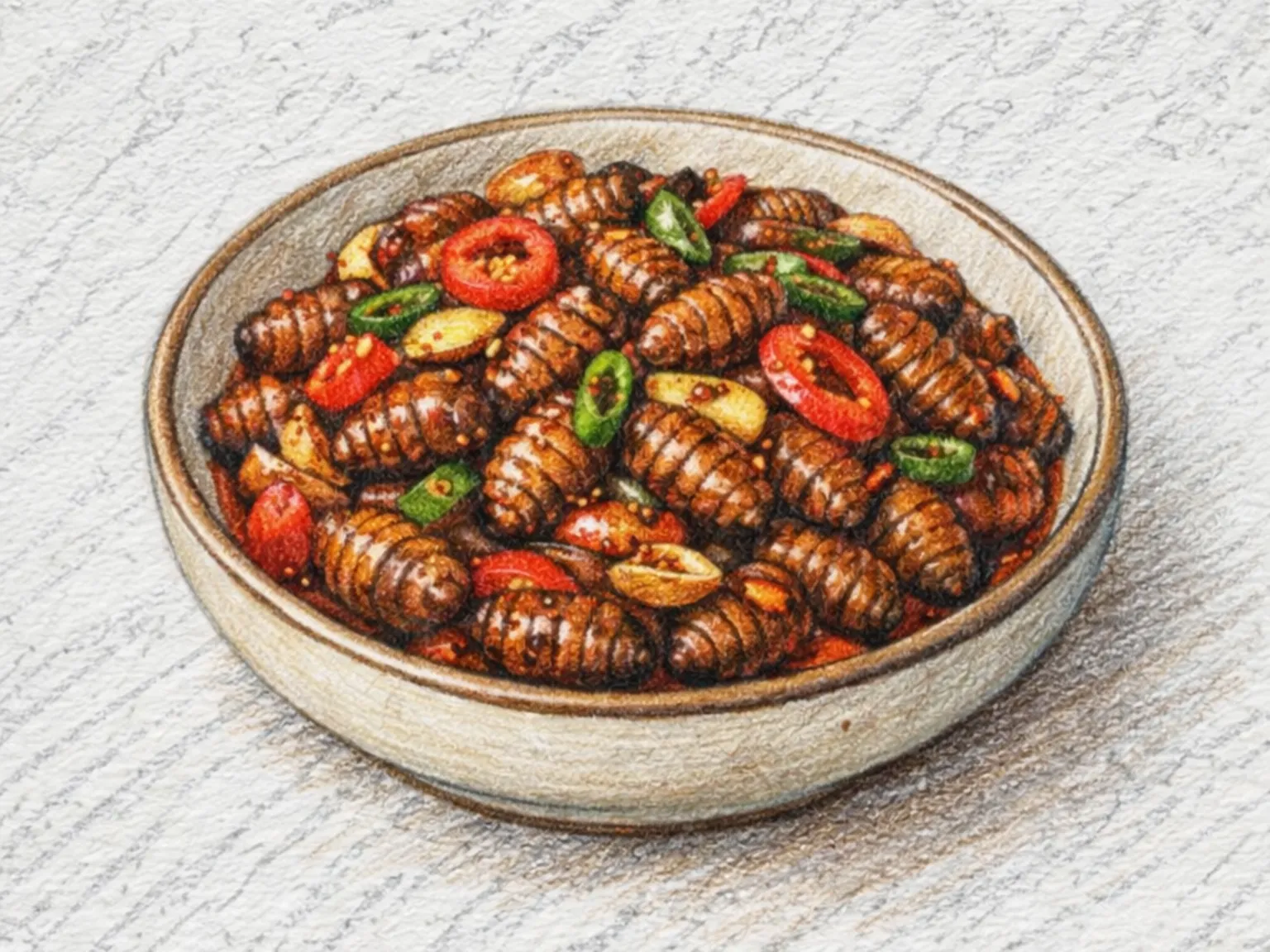
Beondegi-tang simmers canned silkworm pupae in a broth seasoned with soup soy sauce, gochugaru, and minced garlic, a staple street food soup served at Korean pojangmacha stalls. Sliced green onion and hot green chili cook alongside for eight minutes, letting the chili heat infuse the liquid while the pupae release a deep, earthy umami into every spoonful. Adding a splash of the canning liquid intensifies the savory depth, and the soup must be served piping hot to keep the aromatics lively. It is a classic pairing with soju or makgeolli, and while the chili level can be adjusted to taste, the soy sauce quantity should stay fixed to temper the pupae's distinctive aroma.

🍺 Bar Snacks
Prep 8minCook 15min2 servings
Korean Garlic-Grilled Chicken Gizzards
GrilledEasy

Korean Garlic-Grilled Chicken Gizzards

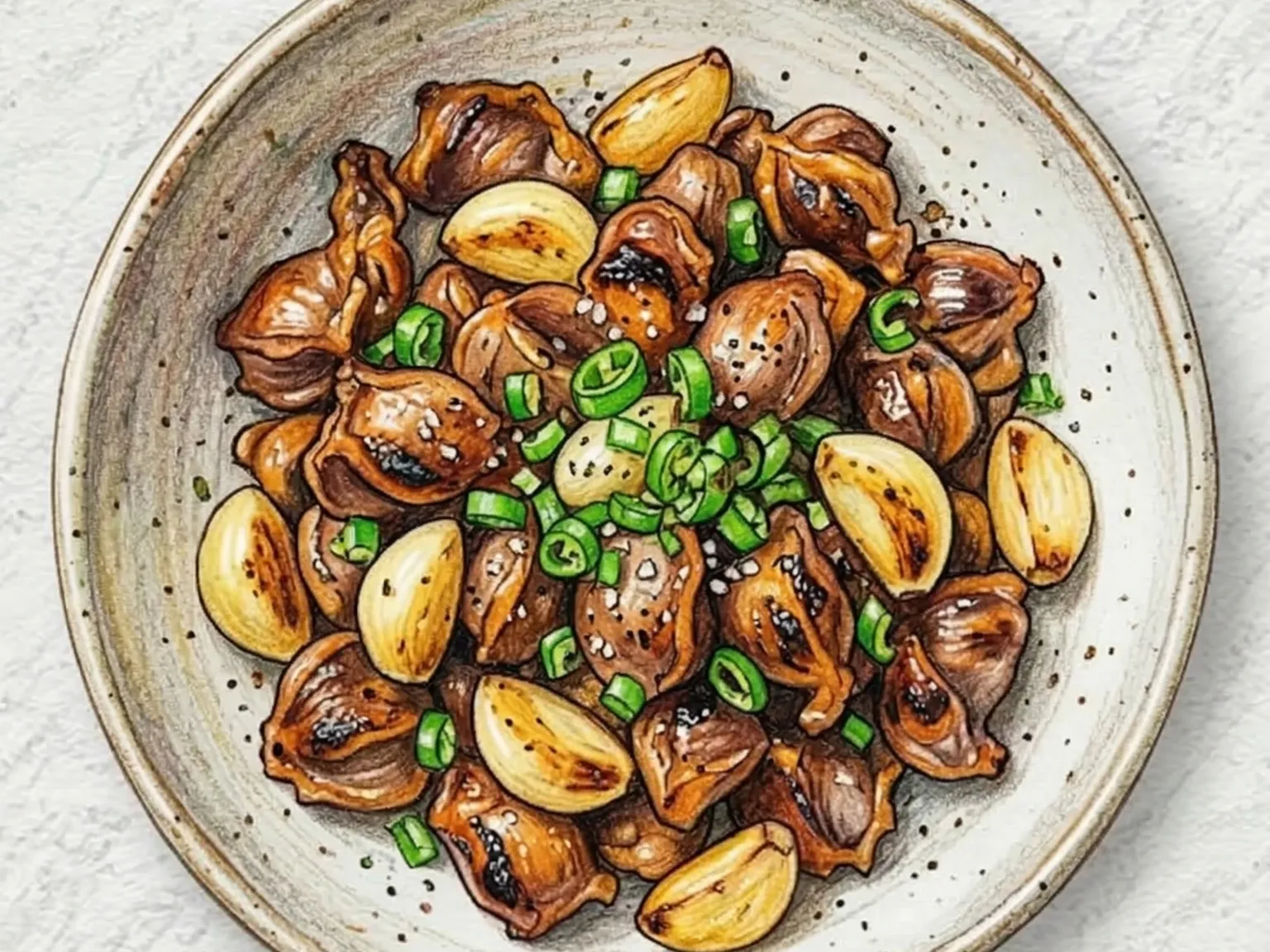
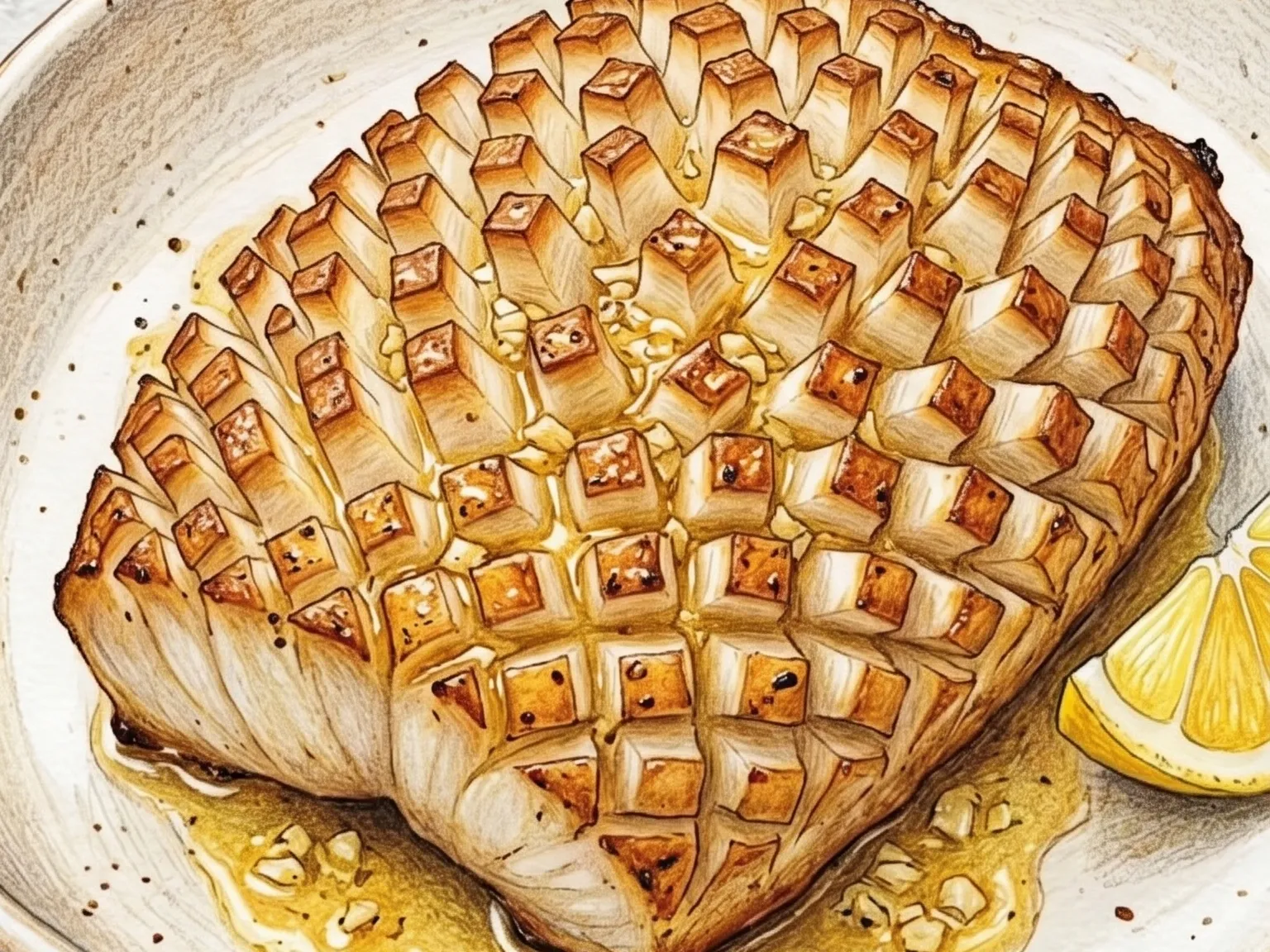
Dakttongjip-maneul-gui is a Korean dish of chicken gizzards grilled and stir-fried over high heat with whole garlic cloves and cheongyang chili peppers. Gizzards are dense, pure-muscle organs with a firm, satisfying chew that sets them apart from other chicken cuts. Scoring them deeply before cooking opens the compact tissue so heat penetrates evenly and seasoning reaches the interior; a ten-minute soak in cooking wine beforehand removes any off-odor and lets the flavors absorb. Whole garlic cloves cooked alongside the gizzards undergo a visible transformation - the exterior caramelizes to a golden brown while the inside softens and turns almost creamy, converting raw sharpness into a rounded, sweet depth. The seasoning stays deliberately minimal - only salt and black pepper - so the natural flavor of the gizzards remains the focus, with cheongyang chilies providing a brief, clean heat that punctuates each bite without overwhelming the palate. The dish works equally well as an anju with drinks or as a savory side with steamed rice.

🍺 Bar Snacks
Prep 18minCook 15min2 servings
Korean Napa Cabbage Doenjang Soup
SoupsEasy

Korean Napa Cabbage Doenjang Soup

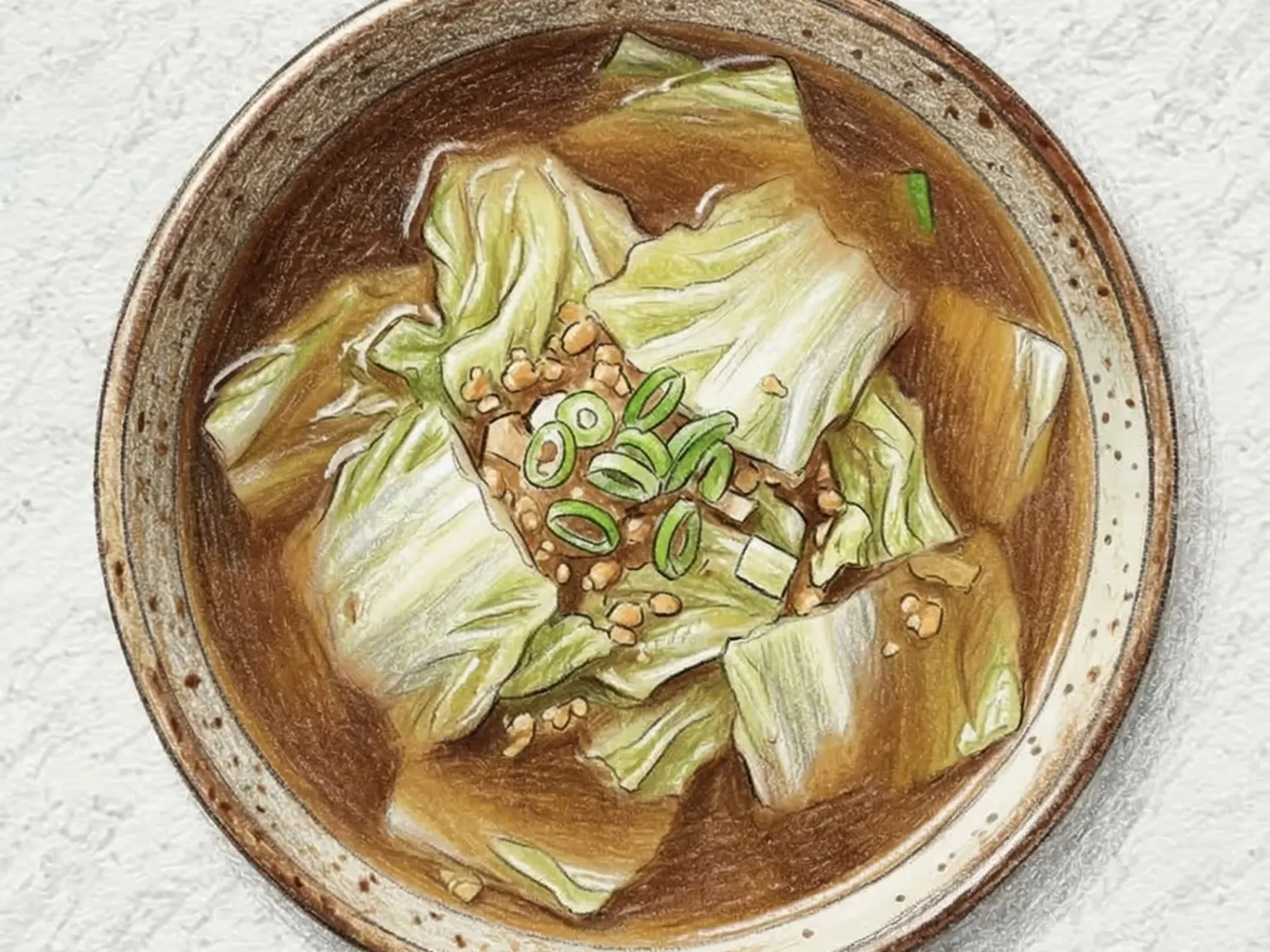
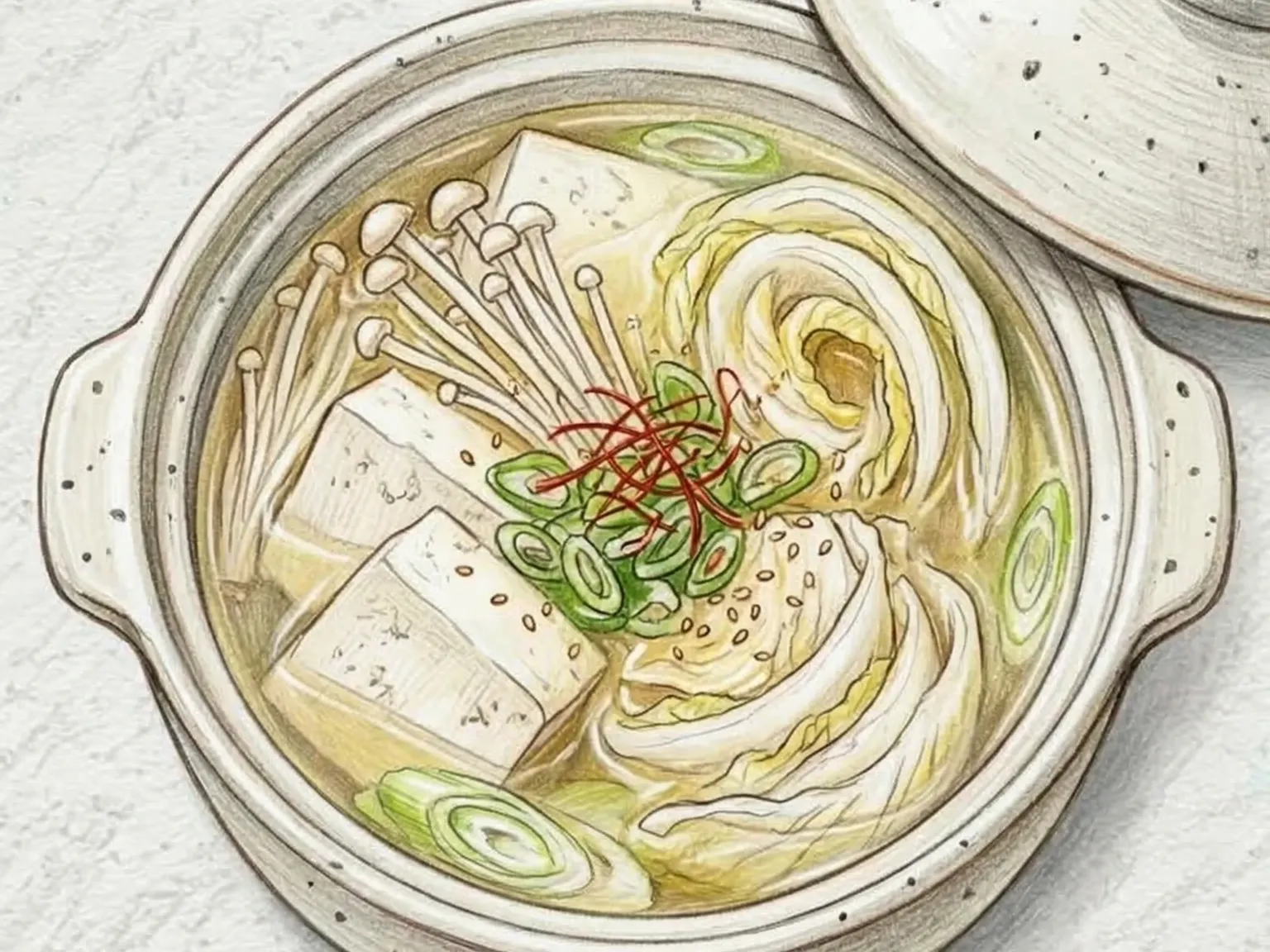
Baechu doenjang guk is a foundational Korean soup built on anchovy-kelp stock seasoned with fermented soybean paste and napa cabbage. Straining the doenjang through a fine sieve as it dissolves into the hot stock keeps the broth visually clear while extracting the full depth of its fermented, earthy flavor. The cabbage stalks go into the pot first and simmer for five minutes alone, drawing out their inherent sweetness before the leaf sections and cubed tofu are added. A small spoonful of gochujang introduced at this point gives the broth a gentle heat and a reddish cast that adds both visual contrast and flavor complexity beyond doenjang alone. Sliced cheongyang chili and scallion are stirred in during the final two minutes, contributing sharpness and aroma without turning limp. Doenjang saltiness varies significantly between brands and aged batches, so starting with a conservative amount and adjusting by taste prevents over-salting. As the cabbage softens fully, its natural sweetness seeps gradually into the broth, where it finds a natural balance with the deep fermented character of the paste. It is among the most accessible soups in Korean home cooking, requiring only the most common pantry and refrigerator ingredients.

🏠 Everyday
Prep 12minCook 20min4 servings
Korean Dried Radish Greens Pancake
PancakesEasy

Korean Dried Radish Greens Pancake

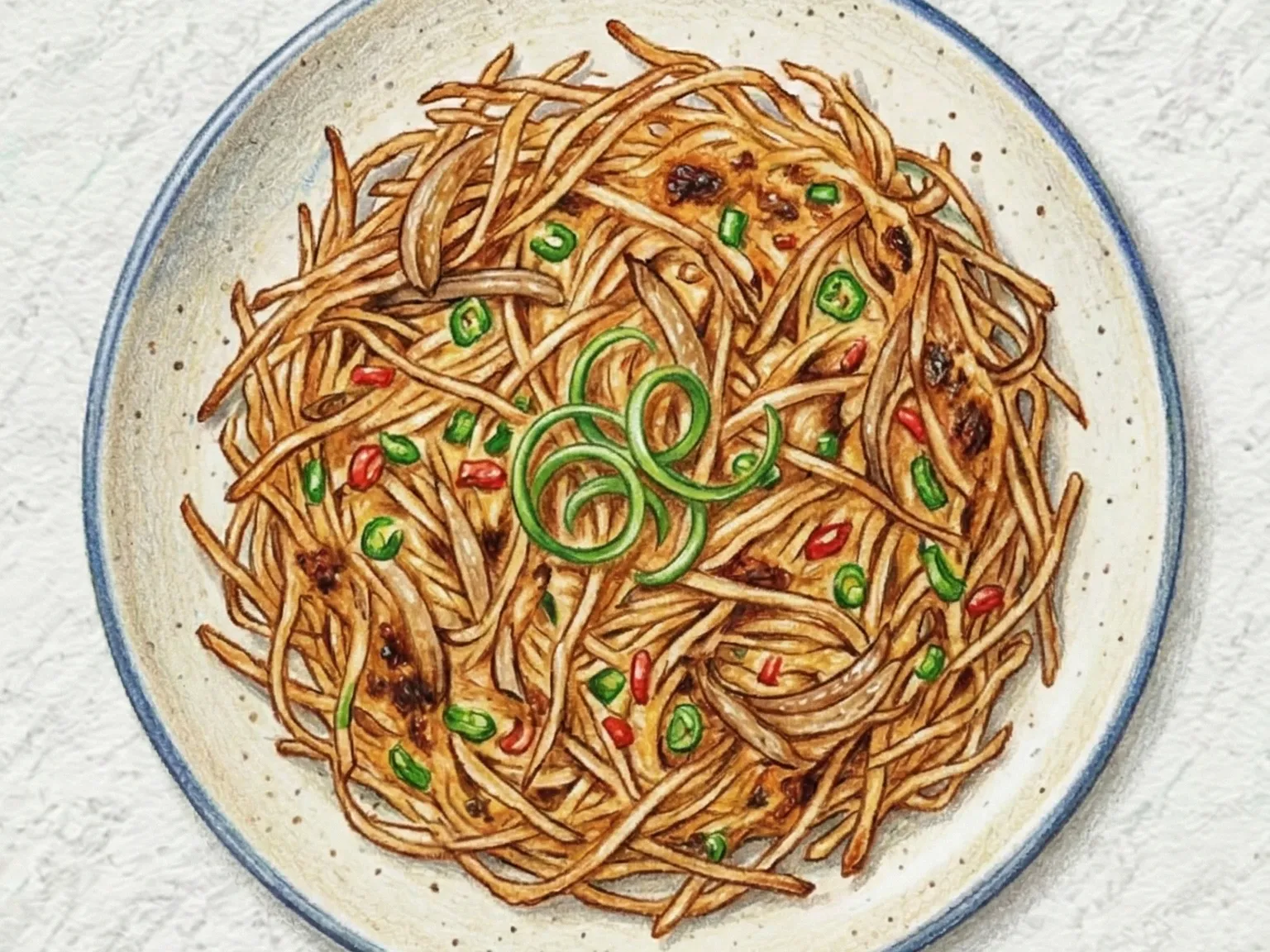
Boiled dried radish greens are combined with doenjang and pan-fried into a dense, rustic jeon with deep fermented character. The fibrous texture of the radish greens gives the pancake a satisfying chew, and the soybean paste saturates the batter so thoroughly that no dipping sauce is necessary. Buckwheat flour adds an earthy coarseness that suits the greens well. Cheongyang chili provides a spicy accent throughout. Minced garlic benefits from a brief saute in oil before being mixed into the batter-the raw edge cooks off and the garlic's savory depth integrates fully into the finished pancake. Cooking over low heat lets the inside set without burning the outside, producing a crisp surface and a tender, flavorful center.

🍺 Bar Snacks
Prep 18minCook 10min2 servings
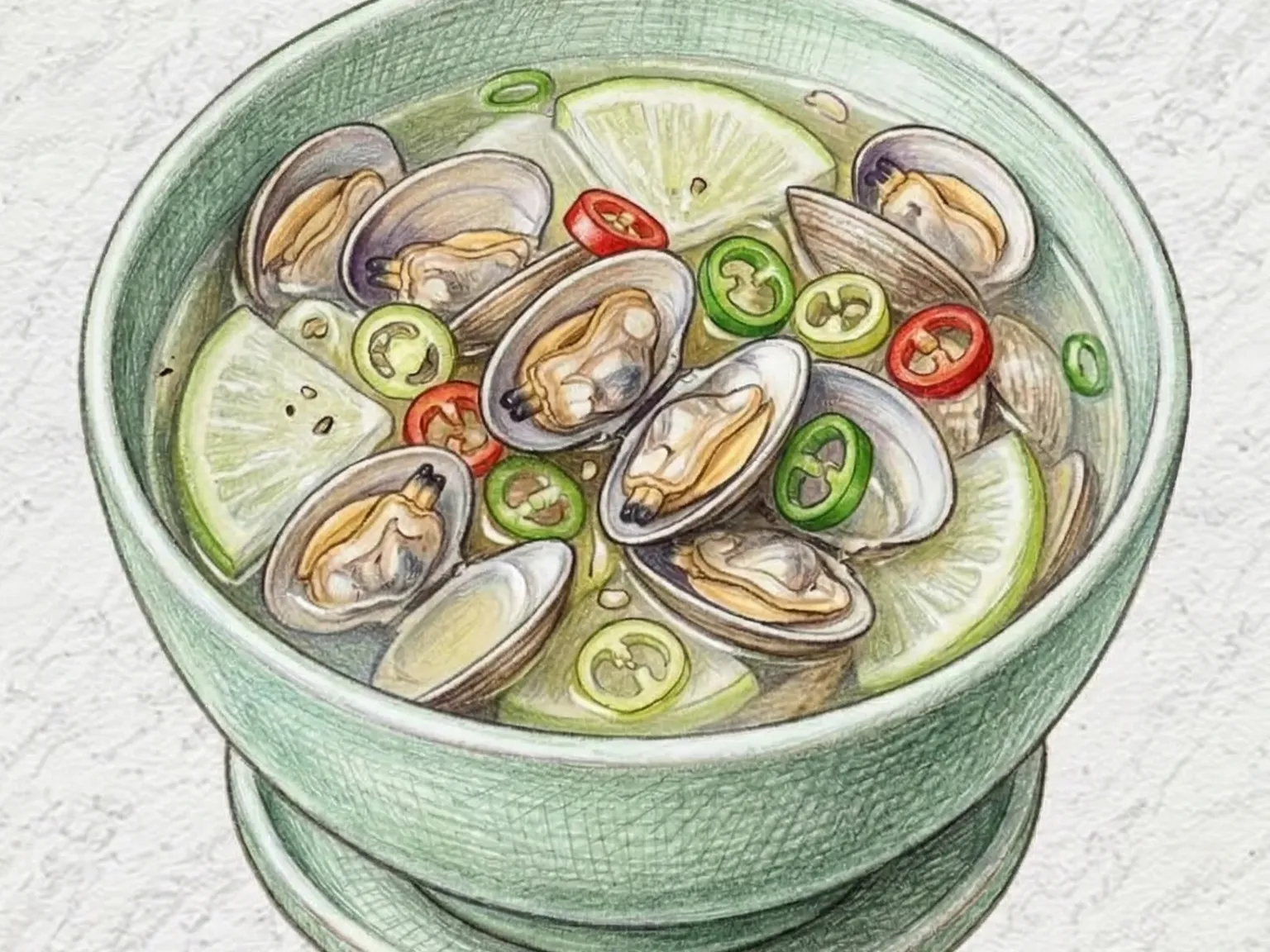
Korean White Chili Clam Stew
StewsEasy

Korean White Chili Clam Stew

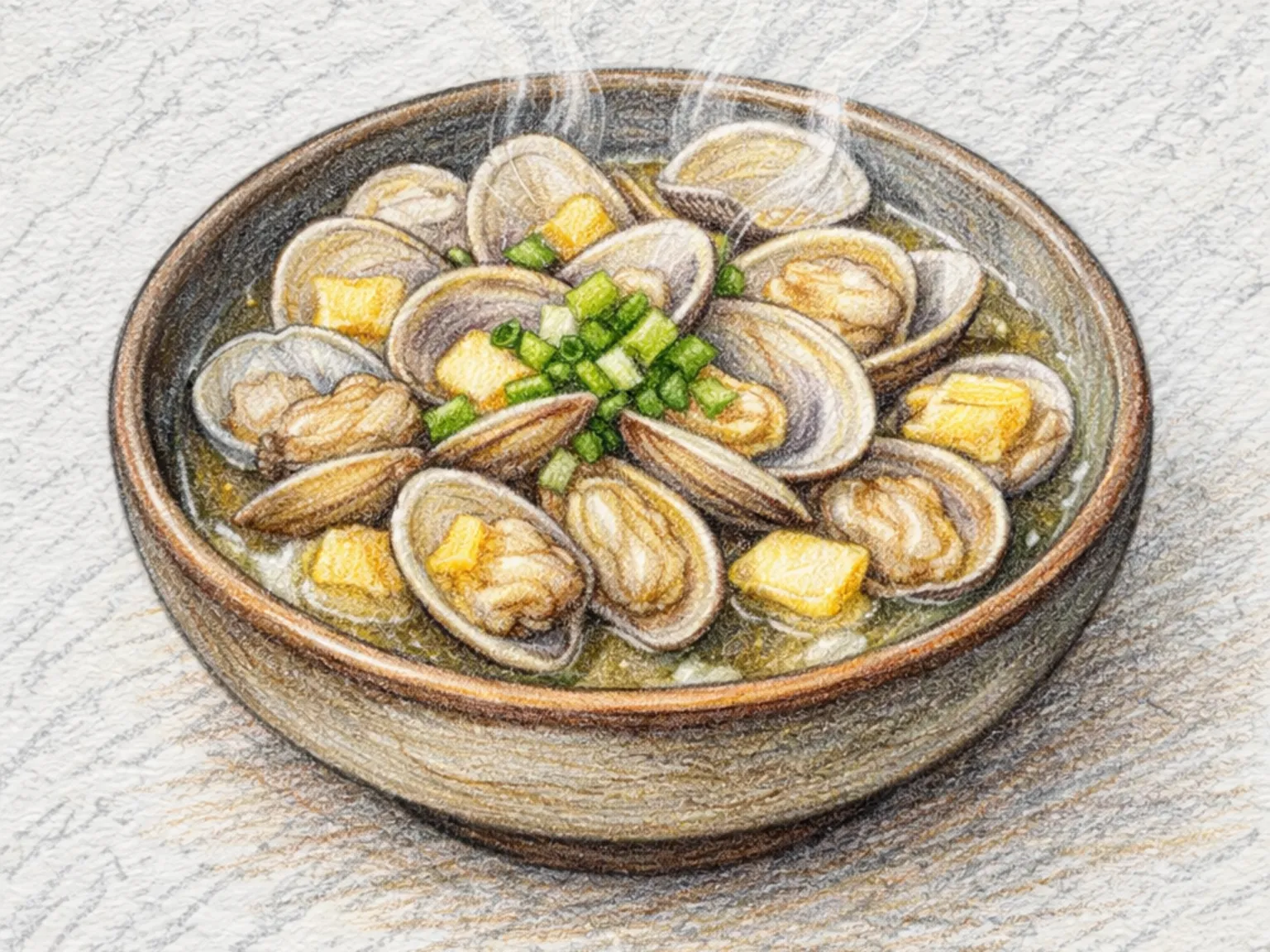
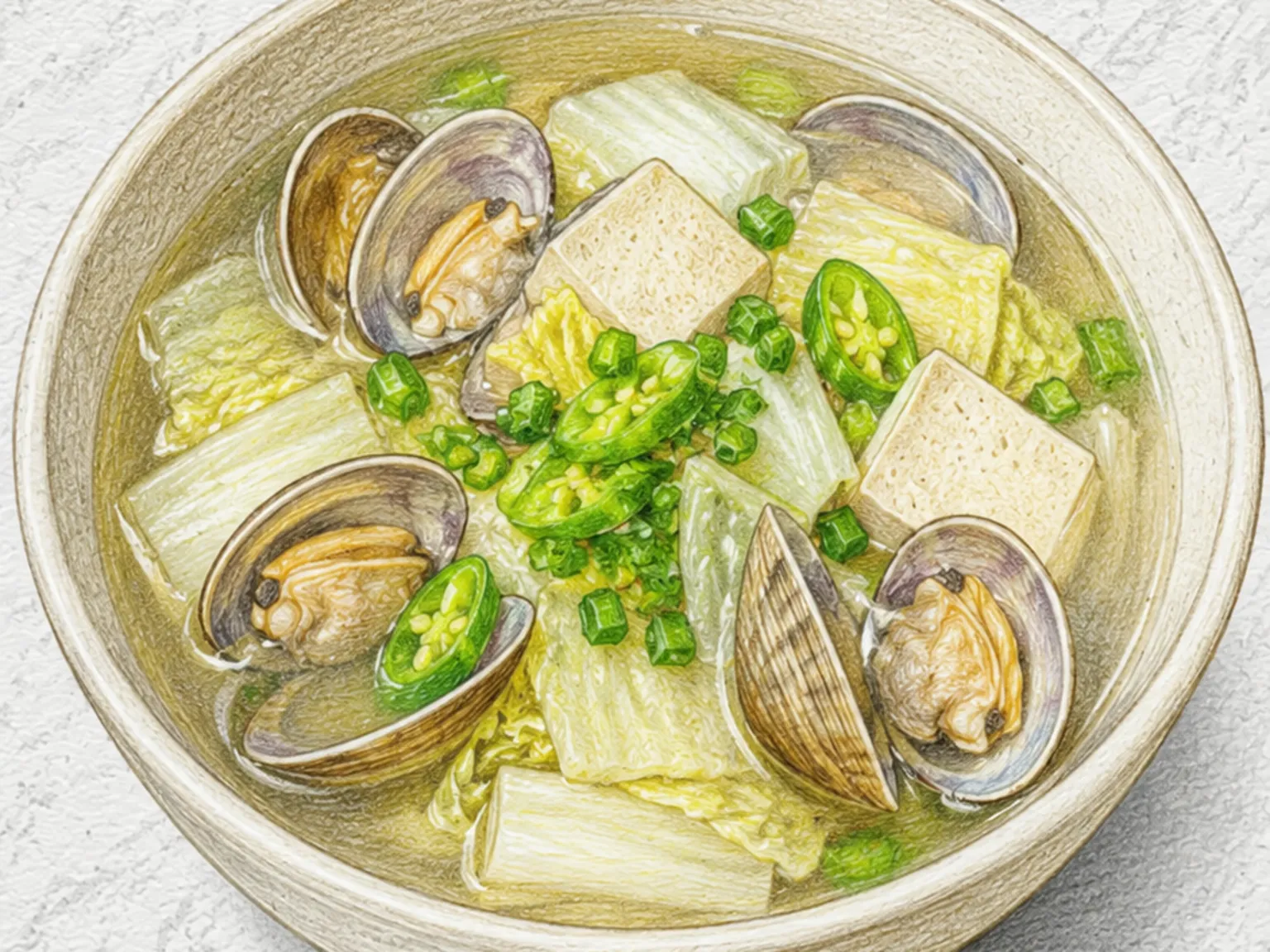
Baekgochu bajirak jjigae is a clear Korean clam stew where manila clams and daikon radish supply all the broth depth without any additional stock. Starting from cold water is essential: the gradual temperature rise draws the clams open slowly, pulling their briny, mineral-rich juices into the liquid and producing a more fully flavored broth than a quick boil would allow. The clams are purged first in salted water to remove all traces of sand, then placed in the cold pot together with cut daikon. As the water reaches a boil, the clams open and release their liquor into the surrounding liquid; any that remain closed after full boiling are discarded. Seasoning stays measured with minced garlic and guk-ganjang, while diagonally sliced red chili and cheongyang chili add both visual warmth and layered heat to the otherwise clear broth. Scallion is added only at the final moment to preserve its freshness and fragrance. The daikon contributes a cool, gentle sweetness that balances the clams natural salinity and fuses with the shellfish stock to build a broth of surprising complexity. The stew requires no anchovy, no kelp, and no premade stock: clams and radish alone generate the kind of depth that usually takes considerably more effort to achieve.

🥗 Light & Healthy
Prep 15minCook 14min2 servings
Korean Soy-Braised Deodeok Root
SteamedMedium

Korean Soy-Braised Deodeok Root

Deodeok-jorim is a Korean braised banchan made from deodeok root simmered in soy sauce, rice syrup, garlic, and sesame oil until each piece takes on a glossy, lacquered coating. The root's pronounced bitter-herbal aroma softens considerably as the sweet-salty glaze penetrates during cooking, while the interior stays dense and pleasantly chewy throughout. A single green chili stirred in near the end contributes a restrained background heat, and toasted sesame seeds with a final drizzle of sesame oil add a nutty dimension on top. Deodeok is a foraged mountain root prized for its earthy, slightly resinous character, and this preparation tames that wild quality just enough to make it approachable as a daily side dish. Paired with other vegetable banchan, it anchors the kind of traditional Korean table that prioritizes vegetables over protein.

🏠 Everyday🍱 Lunchbox
Prep 20minCook 18min2 servings
Korean Pickled Bok Choy (Soy Vinegar Chili Brine)
KimchiEasy

Korean Pickled Bok Choy (Soy Vinegar Chili Brine)

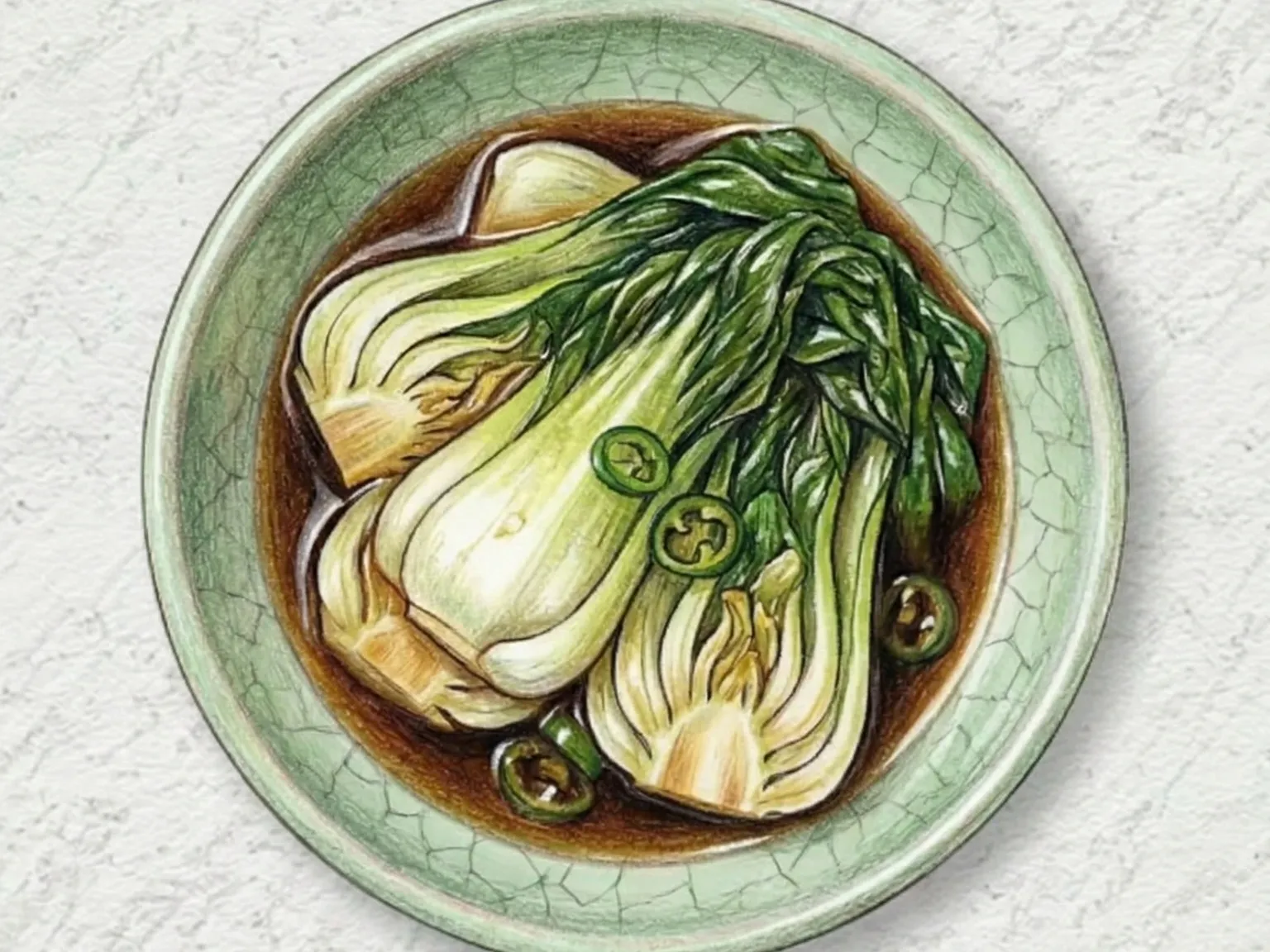
Cheonggyeongchae jangajji is a Korean pickled bok choy made by halving the heads and submerging them in a boiled brine of soy sauce, vinegar, and sugar with Cheongyang chili, garlic, and ginger. The thick white stems retain their crunch after pickling while the tender green leaves absorb the brine softly, creating two contrasting textures within a single piece. Cheongyang chili leaves a clean, lingering heat at the finish, and ginger contributes a warm undertone to the pickling liquid. Draining the bok choy thoroughly before pickling keeps the brine clear, and after two days of refrigeration the seasoning penetrates evenly throughout for a well-balanced banchan. Pouring the brine over the bok choy only after it has cooled prevents the leaves from softening too much. The spent brine can be reboiled and reused to pickle tofu or daikon, extending its value beyond the first batch.

🥗 Light & Healthy🍱 Lunchbox
Prep 20minCook 8min4 servings
Sisig (Filipino Crispy Chopped Pork with Chili and Calamansi)
AsianMedium

Sisig (Filipino Crispy Chopped Pork with Chili and Calamansi)

Sisig is a Filipino bar food built around chopped pork that is boiled first for tenderness, then pan-fried in butter until the edges turn deeply crisp. Diced onion and fresh chilies are tossed in briefly, adding crunch and a sharp bite that cuts through the richness. Calamansi juice-a small citrus native to the Philippines-brings a tart brightness that lifts the entire dish, while a finishing fold of mayonnaise binds everything together in a creamy coating without dulling the flavor. The mixture is traditionally served on a sizzling cast-iron plate so it arrives at the table still popping and hissing. Each forkful delivers a layered experience: the crunch of the fried pork, the cool tang of citrus, and the lingering heat of the chili. Sisig is inseparable from Filipino drinking culture and remains one of the country's most iconic street-to-table dishes.

🍺 Bar Snacks
Prep 20minCook 25min2 servings
Korean Braised Mackerel in Spicy Sauce
Side dishesMedium

Korean Braised Mackerel in Spicy Sauce

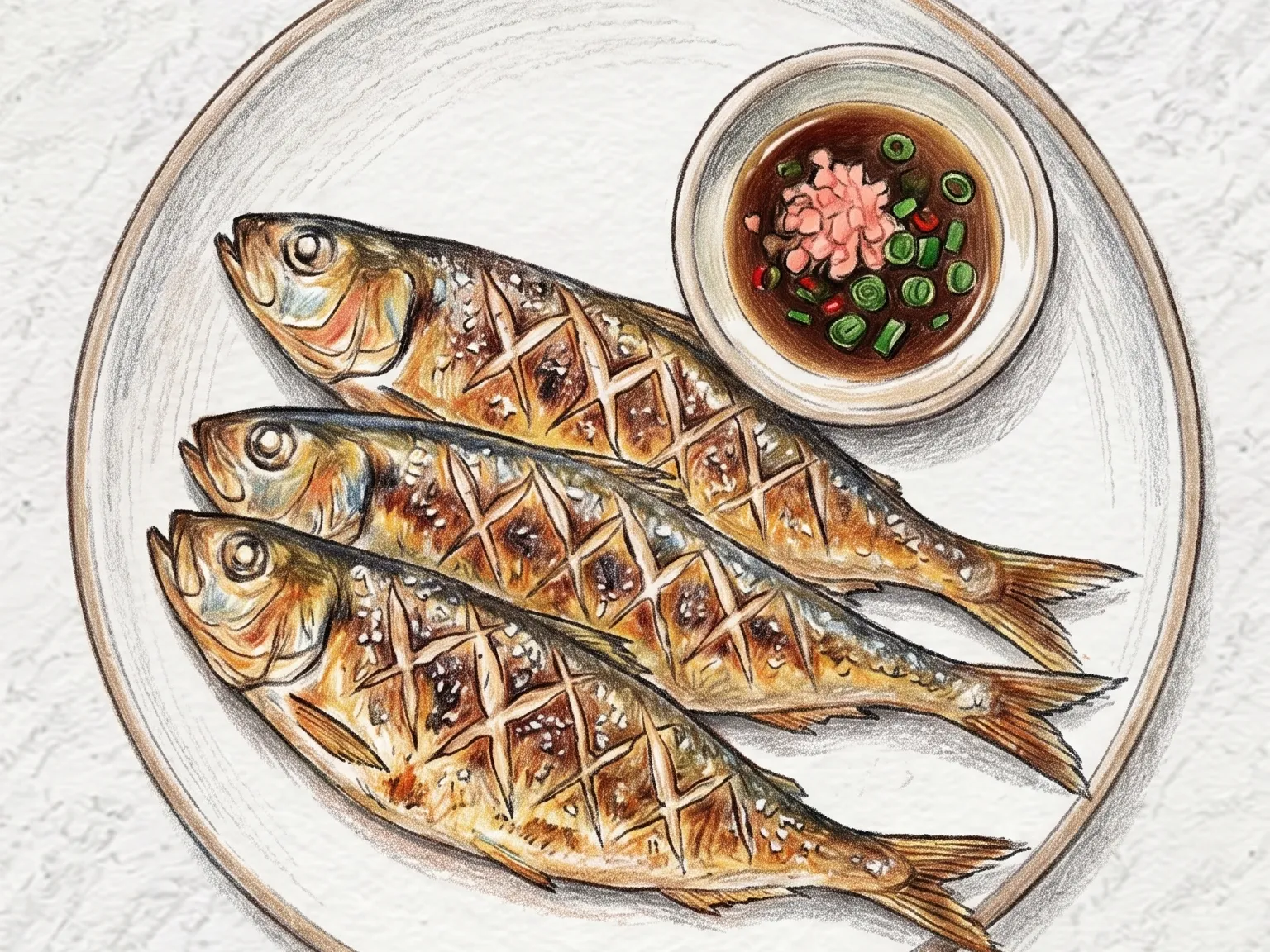
Godeungeo-jorim is one of the most frequently cooked fish banchan in Korean homes, pairing mackerel's assertive flavor with a spicy braising sauce that demands steamed rice. Mackerel is cut into steaks and salted for ten minutes to draw out fishy odors, then arranged over thick radish slices that line the pot bottom. The radish serves dual duty: preventing the fish from sticking and releasing its natural sweetness into the braising liquid below. A sauce of gochugaru, gochujang, soy sauce, garlic, ginger, and sugar is spooned over, and the pot simmers covered for twenty minutes. During this time the seasoning penetrates the flesh while the radish absorbs enough sauce to rival the fish itself as the most satisfying component of the dish. Green onion added in the final minutes lifts the heavy spice with a fresh sharpness.

🏠 Everyday🍱 Lunchbox
Prep 15minCook 25min4 servings
Korean Spicy Stir-Fried Octopus Rice Bowl
RiceMedium

Korean Spicy Stir-Fried Octopus Rice Bowl

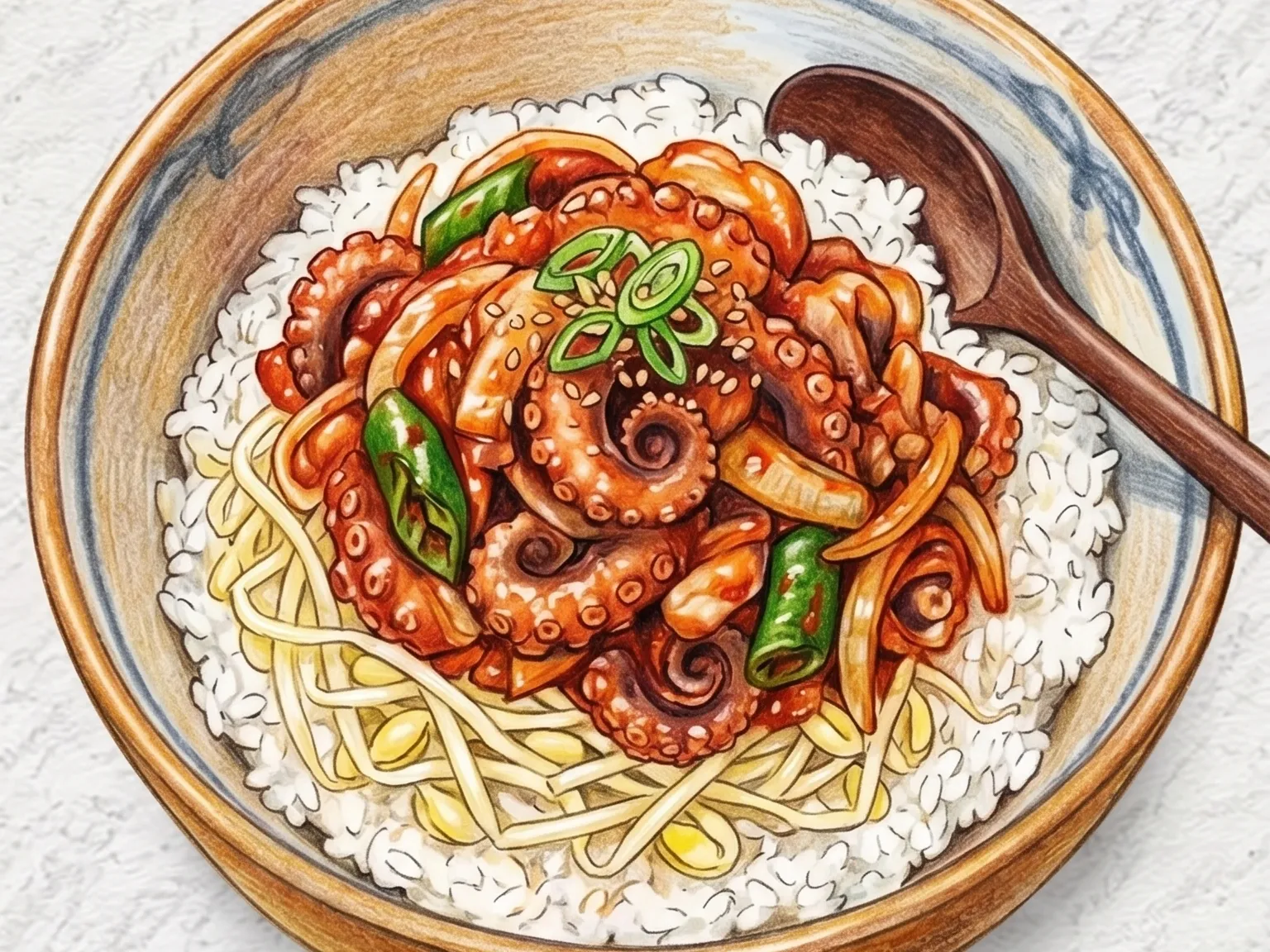
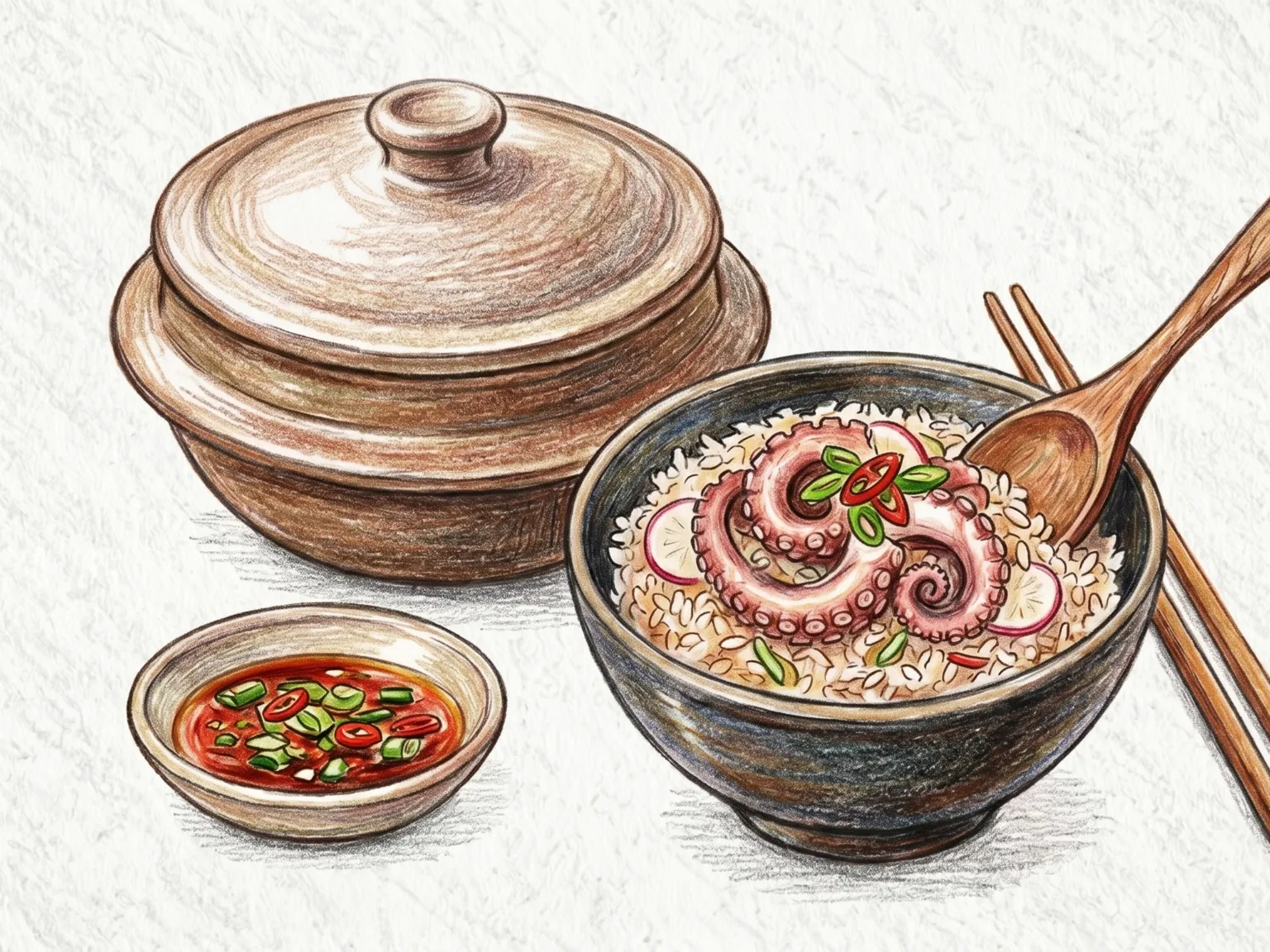
Spicy stir-fried baby octopus in a gochujang sauce is served over a bowl of steamed rice. The octopus delivers a satisfying chew, coated alongside onion and cheongyang chili in a well-seasoned glaze that makes each bite of rice deeply flavorful. Stir-frying on high heat for just a few minutes keeps the octopus springy rather than tough, and scrubbing it with flour before rinsing ensures a clean taste free of any sliminess. Adding a layer of bean sprouts under the stir-fry introduces a contrasting crunch.

🏠 Everyday
Prep 15minCook 10min2 servings
Korean Stir-fried Fish Cake with Vegetables
Stir-fryEasy

Korean Stir-fried Fish Cake with Vegetables

Eomuk-yachae-bokkeum is a Korean stir-fry that brings together fish cake sheets with onion, carrot, and green bell pepper in a soy-based glaze. Square eomuk is cut into bite-sized rectangles without any further preparation, and the vegetables are sliced to roughly matching dimensions so everything cooks through at the same rate. The textural contrast between the chewy fish cake and the crisp-tender vegetables is the defining quality of this dish - both elements are present in each chopstickful, preventing either from becoming monotonous. Soy sauce and oligosaccharide syrup form the base glaze, producing a glossy, lightly sweet and salty coating that clings evenly to each piece. Sesame oil and toasted sesame seeds stirred in at the end add a nutty finish. Adding a sliced cheongyang chili during the stir-fry introduces a sharp heat that prevents the overall flavor from reading as too sweet. The entire dish comes together in under ten minutes from prep to plate, making it a reliable candidate for packed lunches and weeknight tables that need a quick, universally liked side dish.

🏠 Everyday🍱 Lunchbox
Prep 10minCook 8min2 servings
Korean Crispy Potato Pancake
DrinksEasy

Korean Crispy Potato Pancake

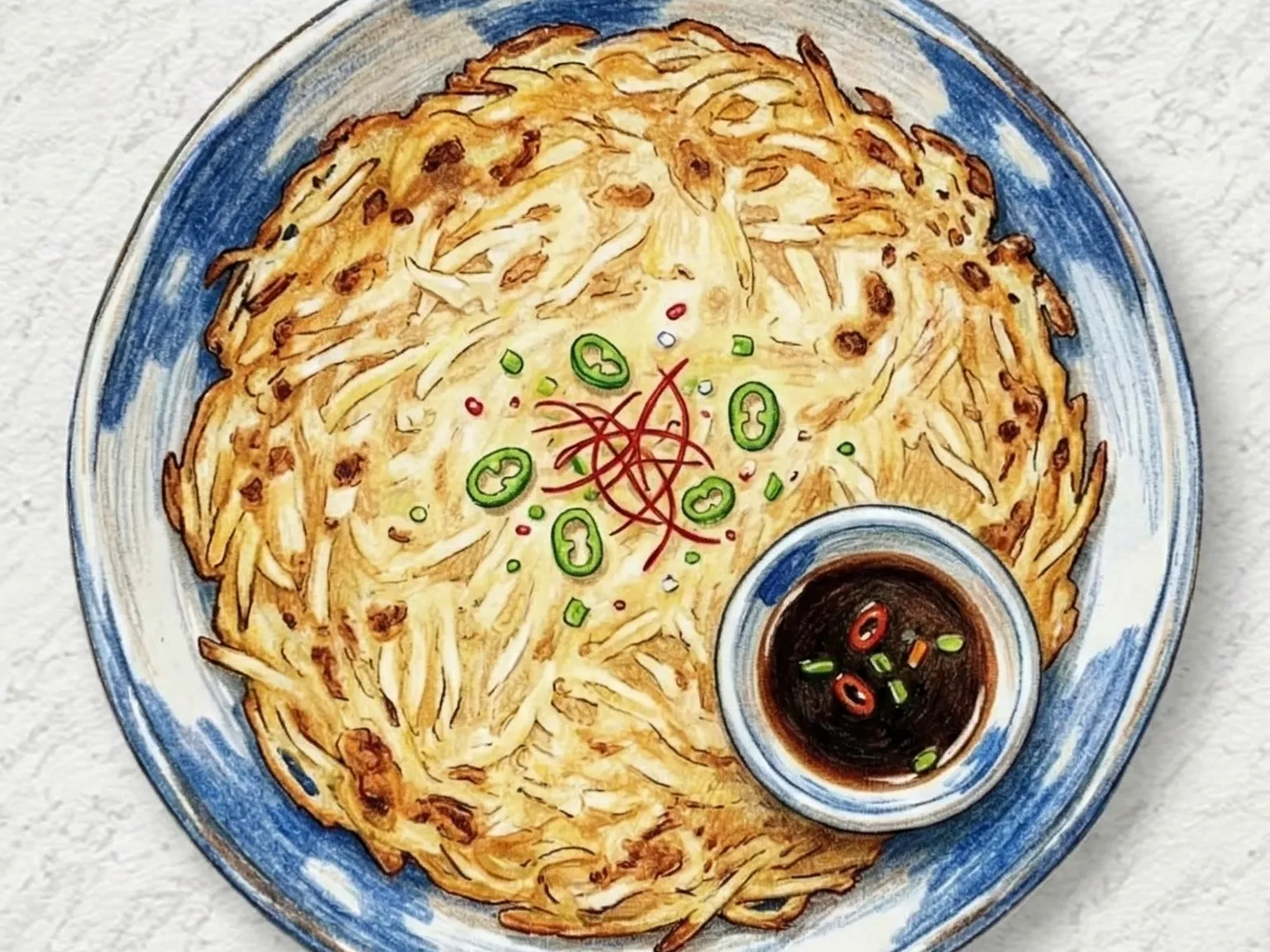
Gamja-jeon is a Korean potato pancake made by finely grating raw potatoes, letting the starch settle out of the liquid for at least ten minutes, discarding the water, and folding the settled starch back into the pulp to improve binding. Waiting long enough for full starch separation is what gives the batter enough cohesion to hold together when the pancake hits the hot pan. Spreading the batter as thinly as possible produces glass-crisp edges while the center retains a chewy, starchy bite characteristic of potato starch. The first side must cook all the way through and the underside must firm up completely before any attempt to flip, and using two spatulas simultaneously makes the turn fast enough to keep the pancake intact. Frying both sides over medium heat until evenly golden delivers a crust that is crisp on the outside while the center stays moist. A dipping sauce of soy sauce, vinegar, and minced cheongyang green chili cuts through the oily richness with sharpness and heat.

🍺 Bar Snacks
Prep 15minCook 12min2 servings
Korean Kimchi Potato Jeon
GrilledEasy

Korean Kimchi Potato Jeon

Kimchi-gamja-jeon is a pan-fried Korean pancake made from grated potatoes combined with chopped napa kimchi, Korean pancake mix, green onion, and Cheongyang chili. The grating releases starch along with water, and the key step is letting the mixture settle so the starch sinks, then pouring off the liquid and recombining only the starch with the rest of the batter. This starch concentration creates the contrast between a shattering crust and a moist, soft interior that marks a well-made potato pancake. The batter is spread thin in a preheated oiled pan and fried on both sides over medium-high heat. Keeping the temperature high enough that the exterior sets quickly before oil soaks in is essential, as a pan that is too cool produces a greasy, soft result. Kimchi juice that hits the hot pan caramelizes at the edges, creating pockets of deep savory crust alongside the sharp fermentation flavor. The tangy acidity of the kimchi and the mild sweetness of the potato create a defined contrast in each bite. Dipped in vinegared soy sauce spiked with sliced Cheongyang chili, the pancake is a classic makgeolli pairing.

🍺 Bar Snacks🏠 Everyday
Prep 15minCook 15min2 servings
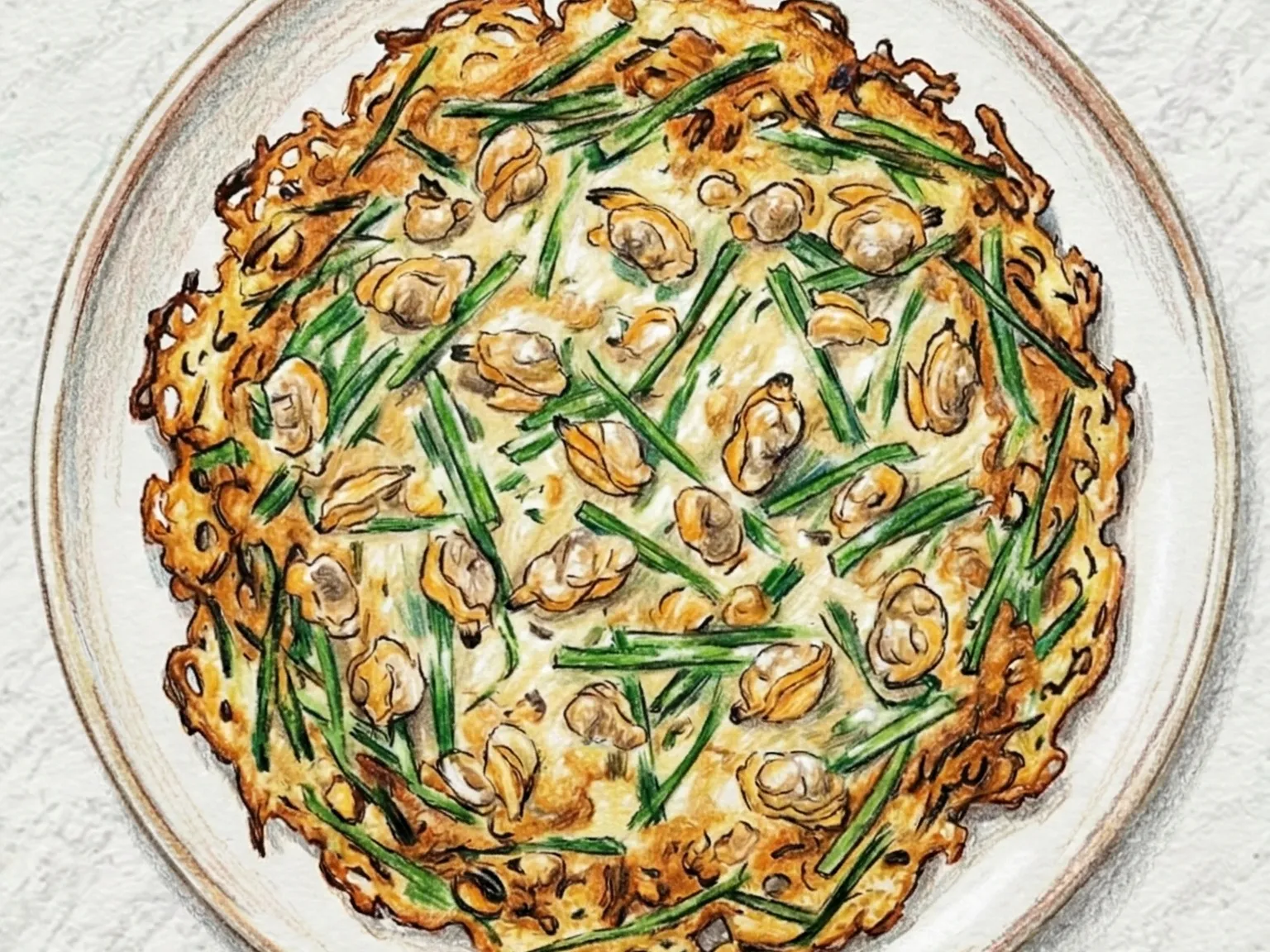
Korean Chive Clam Soup (Briny Clam Broth with Garlic Chives)
SoupsEasy

Korean Chive Clam Soup (Briny Clam Broth with Garlic Chives)

Purged clams cook with Korean radish to produce a refreshing, clean broth, then garlic chives and cheongyang chili go in near the end for fragrance and heat. Simmering the radish alone for five minutes first establishes a mild sweetness in the base that balances the natural salinity of the clam liquor. The chives are added only after the heat is cut, preserving their vivid color and grassy scent. Any clam that does not open during cooking is removed before serving. Because the clam broth itself carries substantial umami, seasoning should be kept light with just a pinch of salt or a small measure of gukganjang.

🏠 Everyday
Prep 20minCook 15min2 servings
Korean Hard Clam Radish Stew
StewsMedium

Korean Hard Clam Radish Stew

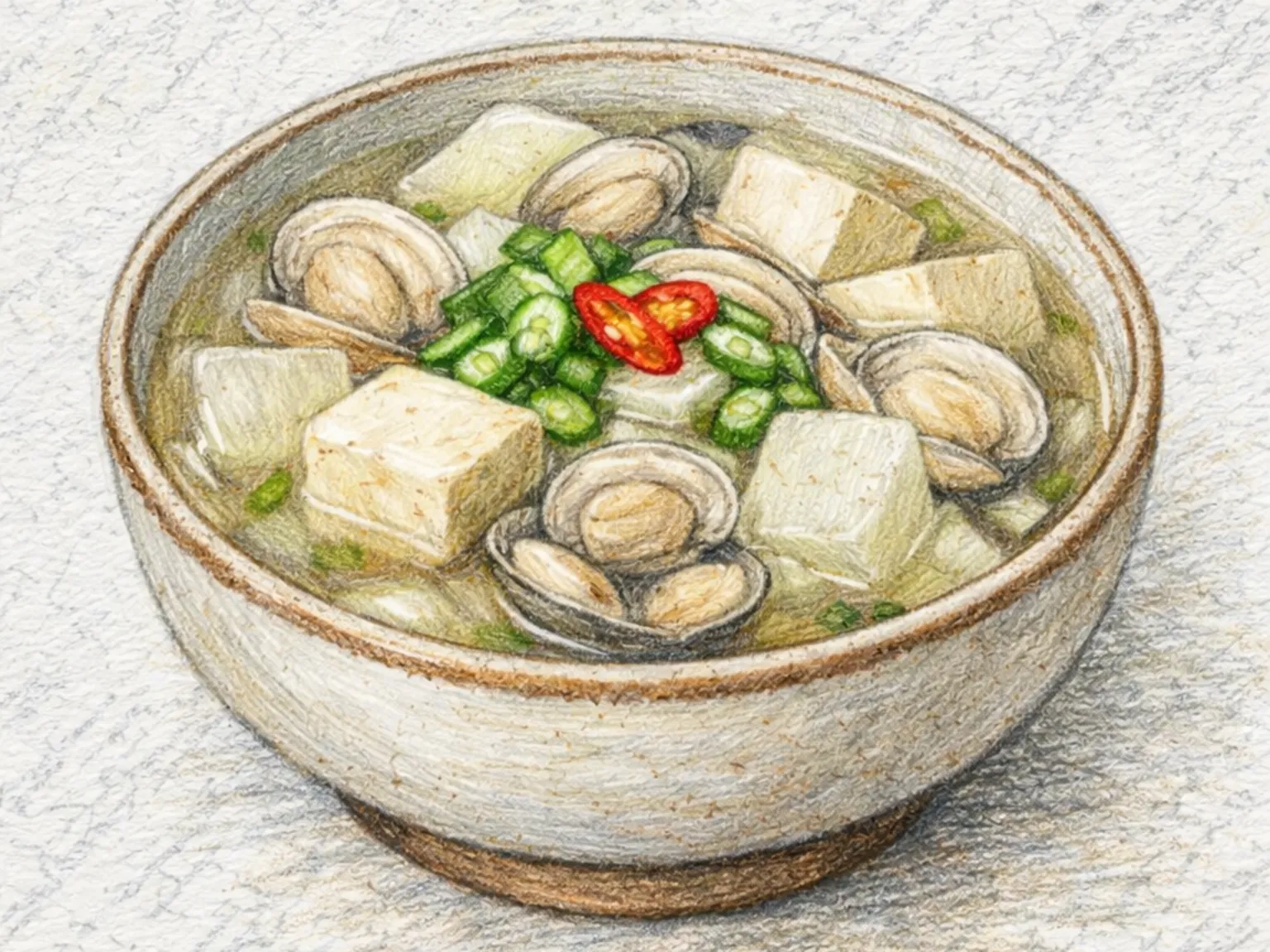
Sweet radish broth meets briny hard clams in this clean, deeply flavored Korean stew that needs no stock -- just clams, radish, and 35 minutes. The radish goes into the pot first and boils for ten minutes to release its natural sweetness, building the foundation of the broth before the clams are added. Once the clams open, their concentrated marine flavor layers over the radish sweetness, creating a broth that is simultaneously clean and complex. Seasoning is kept minimal with soup soy sauce, and minced garlic is added only after the clams open so it cooks through without remaining sharp and raw. Thick-cut firm tofu absorbs the surrounding broth, acting as a sponge for the clam umami. Diagonally sliced cheongyang and red chilies go in last, contributing a mild heat and visual contrast to the pale liquid. Any clams that fail to open must be removed immediately to keep the broth free of grit. The stew demonstrates how two primary ingredients, clams and radish, can produce a layered, satisfying broth without anchovy or kelp stock. The cool, lingering aftertaste of the clams is a hallmark of this particular combination.

🏠 Everyday🎉 Special Occasion
Prep 20minCook 25min4 servings
Korean Braised Flounder with Radish
SteamedMedium

Korean Braised Flounder with Radish

Gajami mu jorim is a Korean braised flounder dish in which flounder pieces and thick slices of Korean radish are cooked down together in a soy sauce and gochugaru broth until the liquid reduces to a concentrated, savory glaze. The radish absorbs the fat and juices released from the fish as it braises, soaking up the spicy seasoning until each slice becomes as flavorful and satisfying as the fish itself. Gochugaru and fresh Cheongyang chili provide a clean, penetrating heat, while soy sauce contributes deep umami and minced garlic adds a sharp aromatic backbone to the broth. Allowing the liquid to reduce until only a small amount remains thickens the sauce significantly, and spooning that concentrated braising liquid over plain steamed rice is one of the most common ways to finish the meal, with the sauce soaking into the grains and making it nearly impossible to stop eating. Flounder's naturally lean, delicate flesh, which pulls apart easily along the grain, pairs well with the extended braising method, which keeps the fish moist while infusing it with the bold seasonings. This combination of practical cooking technique and deep, satisfying flavor has made gajami mu jorim one of the most enduring everyday fish side dishes in Korean home cooking.

🏠 Everyday🎉 Special Occasion
Prep 18minCook 30min4 servings
Korean Cheongyang Gochu Doenjang Jangajji (Doenjang Pickled Cheongyang Peppers)
KimchiEasy

Korean Cheongyang Gochu Doenjang Jangajji (Doenjang Pickled Cheongyang Peppers)

Cheongyang chili peppers are pricked all over with a fork so the brine can reach the interior of each pod rather than sitting on the surface. Kelp is simmered with soy sauce to establish a concentrated umami base, then the heat is cut and doenjang is dissolved into the hot liquid, which layers the nutty, fermented depth of fermented soybean paste over the saltiness of the soy. Rice syrup softens the sharp, raw heat of the chilies so it does not dominate the other flavors, and vinegar sharpens and clarifies the overall profile. The chilies are pressed fully under the brine and left in the refrigerator to mature. After one day the seasoning begins to penetrate toward the core, and by day three the doenjang flavor has fully saturated each pepper. At that point, a single pepper placed on a mouthful of hot rice delivers a compact burst of salty, funky depth and the lingering heat that makes this pickle a classic Korean table condiment.

🏠 Everyday🍱 Lunchbox
Prep 18minCook 8min4 servings
Korean Green Laver Pancake
Side dishesEasy

Korean Green Laver Pancake

Parae-jeon is a Korean pancake that features 80 grams of fresh green laver folded into a pancake-mix batter alongside sliced onion and chopped green chili. Rinsing the laver two to three times removes sand and grit without stripping its briny ocean aroma. Keeping the batter on the thick side concentrates the seaweed flavor, preventing it from washing out during cooking. Pan-fried over medium heat for two to three minutes per side, the pancake develops crisp, golden edges while the interior stays tender and fragrant. Cutting it into bite-size pieces immediately after cooking preserves the crunch before steam softens the crust.

🏠 Everyday🍱 Lunchbox
Prep 10minCook 12min2 servings
Korean Braised Flounder with Radish
Stir-fryEasy

Korean Braised Flounder with Radish

Gajami-jorim is a Korean braised flounder dish where the fish is gently simmered with Korean radish in a soy sauce and chili flake broth. The delicate flounder flesh absorbs the seasoning deeply while careful low-heat cooking prevents it from breaking apart. Radish serves a dual purpose in the dish: it draws out and neutralizes the fishy odor while contributing a clean, refreshing sweetness that adds depth to the braising liquid. Spooning the reduced sauce over rice makes it a complete, standalone meal without the need for additional side dishes. Because flounder fillets are thin, the braising time is short, and the heat should be turned off once the liquid has reduced by at least half to keep the flesh moist and tender.

🏠 Everyday🍱 Lunchbox
Prep 15minCook 25min2 servings
Korean Spicy Stir-fried Cartilage
DrinksMedium

Korean Spicy Stir-fried Cartilage

Odolppyeo-bokkeum is a fiery Korean stir-fry of chicken cartilage marinated in a sauce of gochujang, gochugaru, soy sauce, garlic, and sugar, then cooked at maximum heat for a short burst. The cartilage delivers a distinctive crunch-then-chew that no other cut can replicate, and thorough drying with paper towels before marinating ensures the sauce clings directly to the surface. After ten minutes of marinating, the cartilage hits a ripping-hot oiled pan to pick up smoky wok char, followed by onion, green onion, and hot green chilies that are tossed until all moisture evaporates and the glaze turns glossy. Keeping the total stir-fry time brief is critical, since prolonged cooking turns the cartilage from pleasantly crunchy to unpleasantly tough.

🍺 Bar Snacks🌙 Late Night
Prep 15minCook 12min2 servings
Korean Grilled Doenjang Onions
GrilledEasy

Korean Grilled Doenjang Onions

Onions are sliced into 2 cm rings, secured with skewers, and grilled over medium heat while being brushed with a sauce of doenjang, gochujang, minced garlic, perilla oil, and water. Over eight to ten minutes of flipping and re-brushing, the onion's moisture evaporates and its natural sugars concentrate into pronounced sweetness, while the doenjang chars lightly at the edges to add a toasted, earthy note. Perilla oil softens the salt intensity of the doenjang, and a finish of sliced green chili and ground sesame layers in mild heat and nuttiness. At 146 calories per serving, this is a low-calorie side dish that also works as a light accompaniment to drinks.

🍺 Bar Snacks🥗 Light & Healthy
Prep 10minCook 12min2 servings