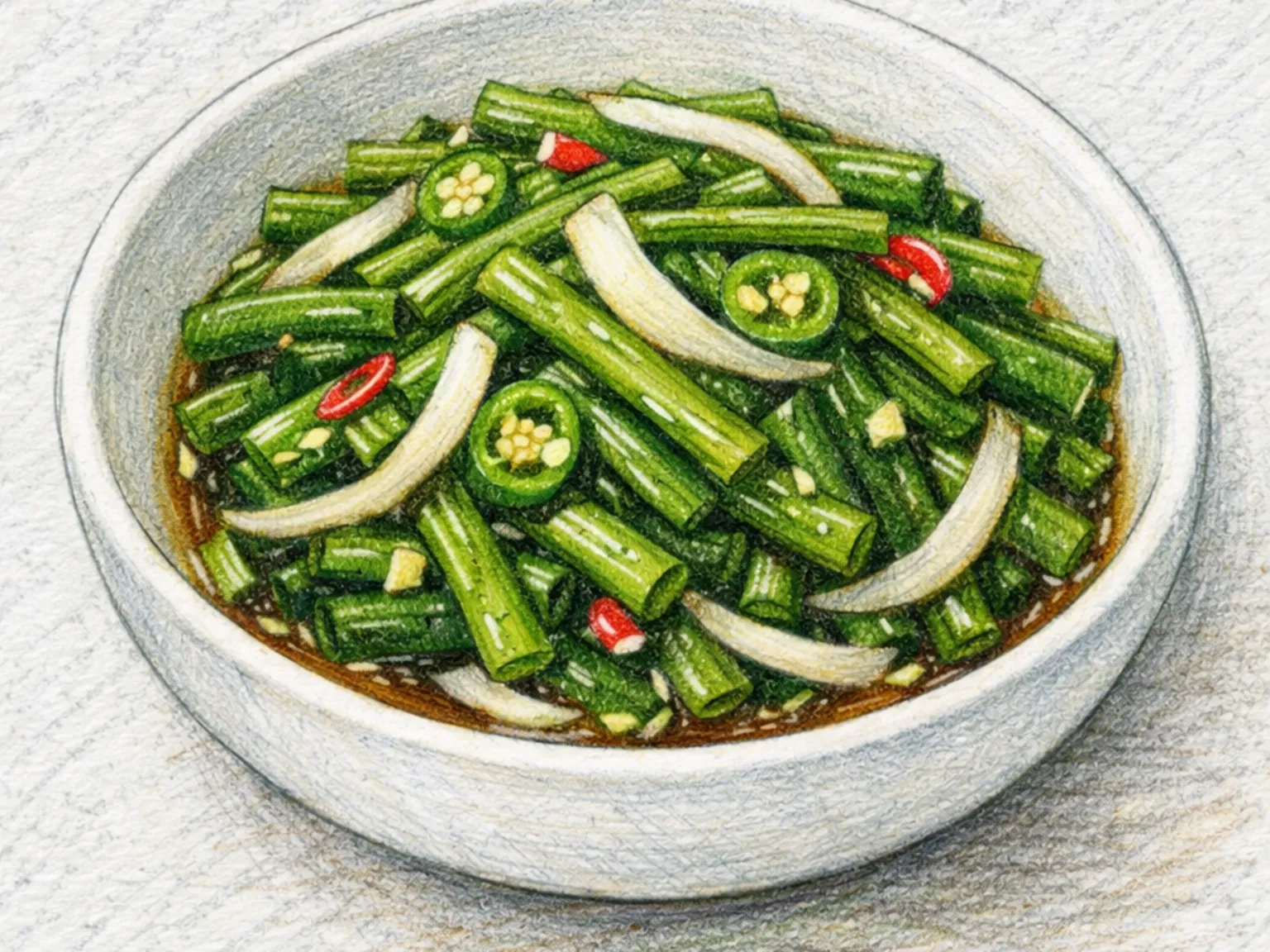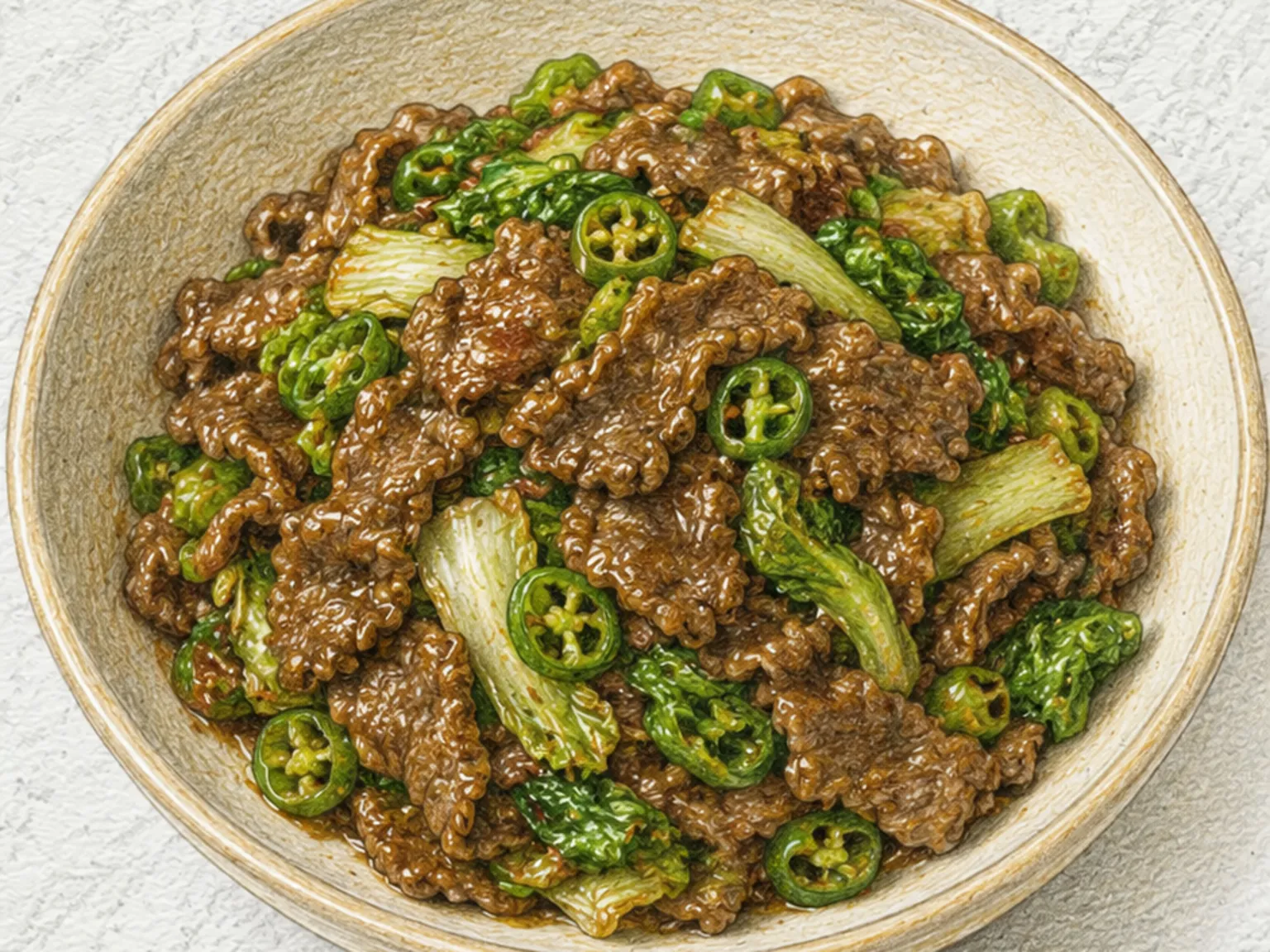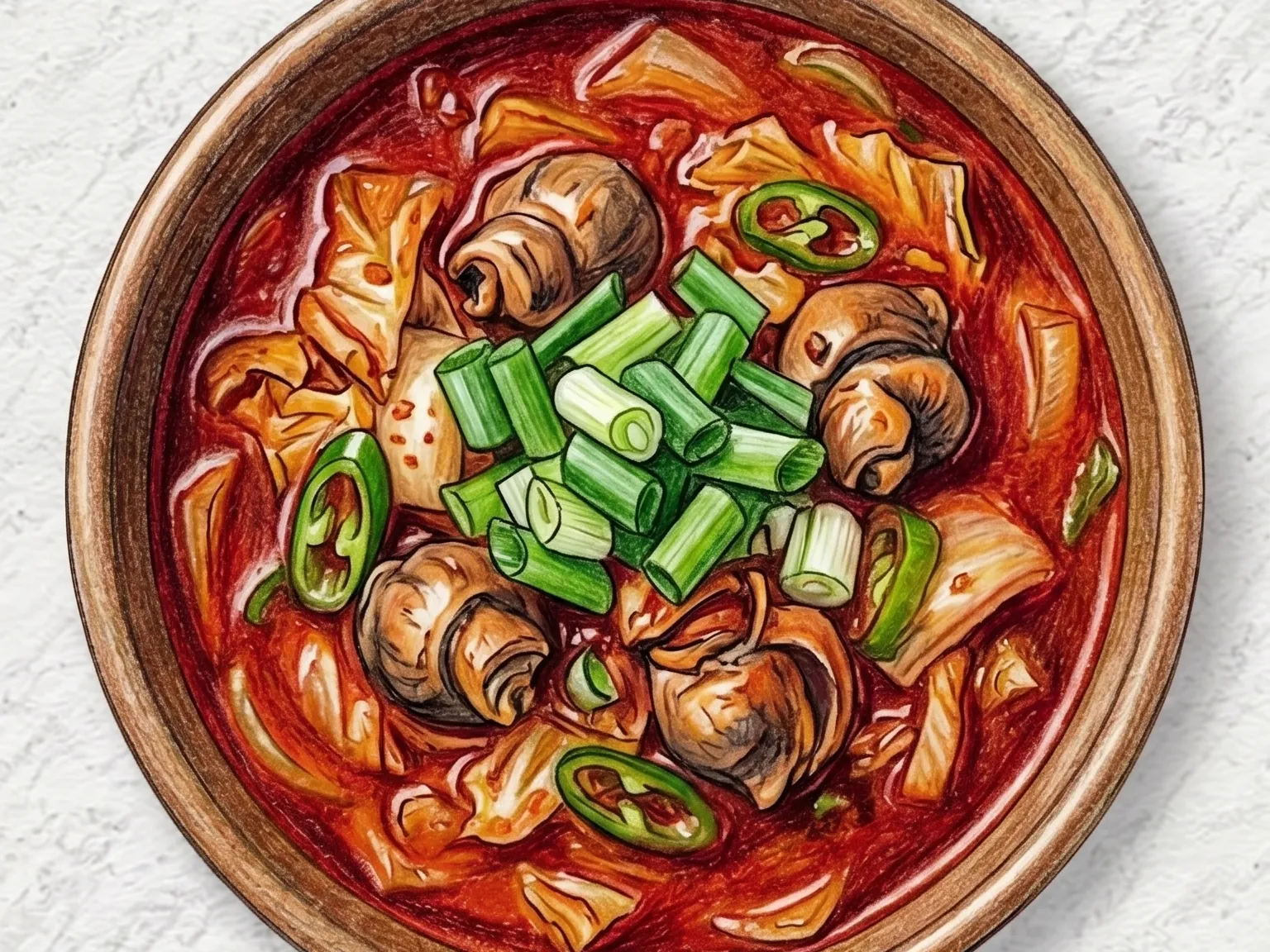
Korean Spicy Pollock Stew
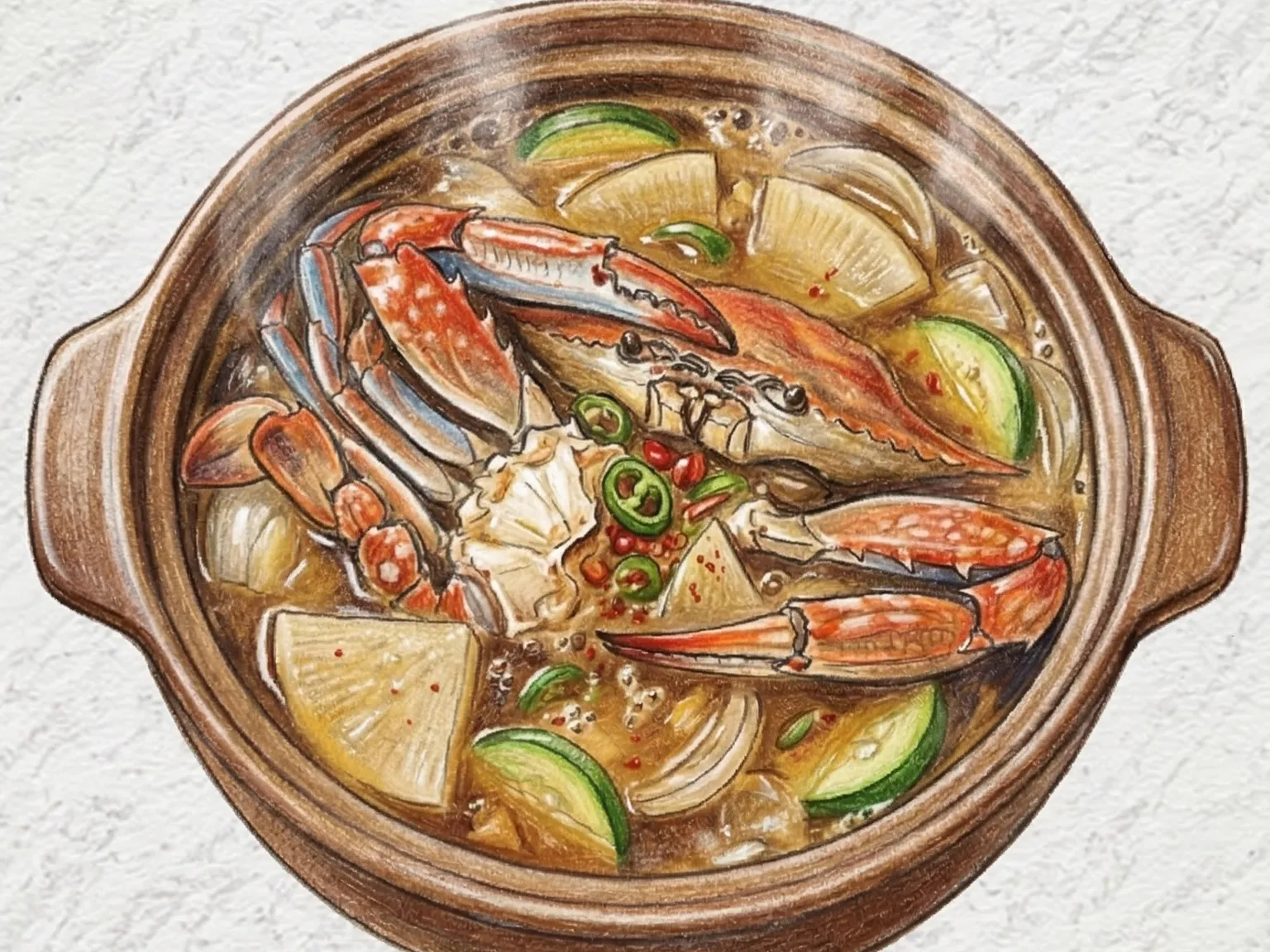
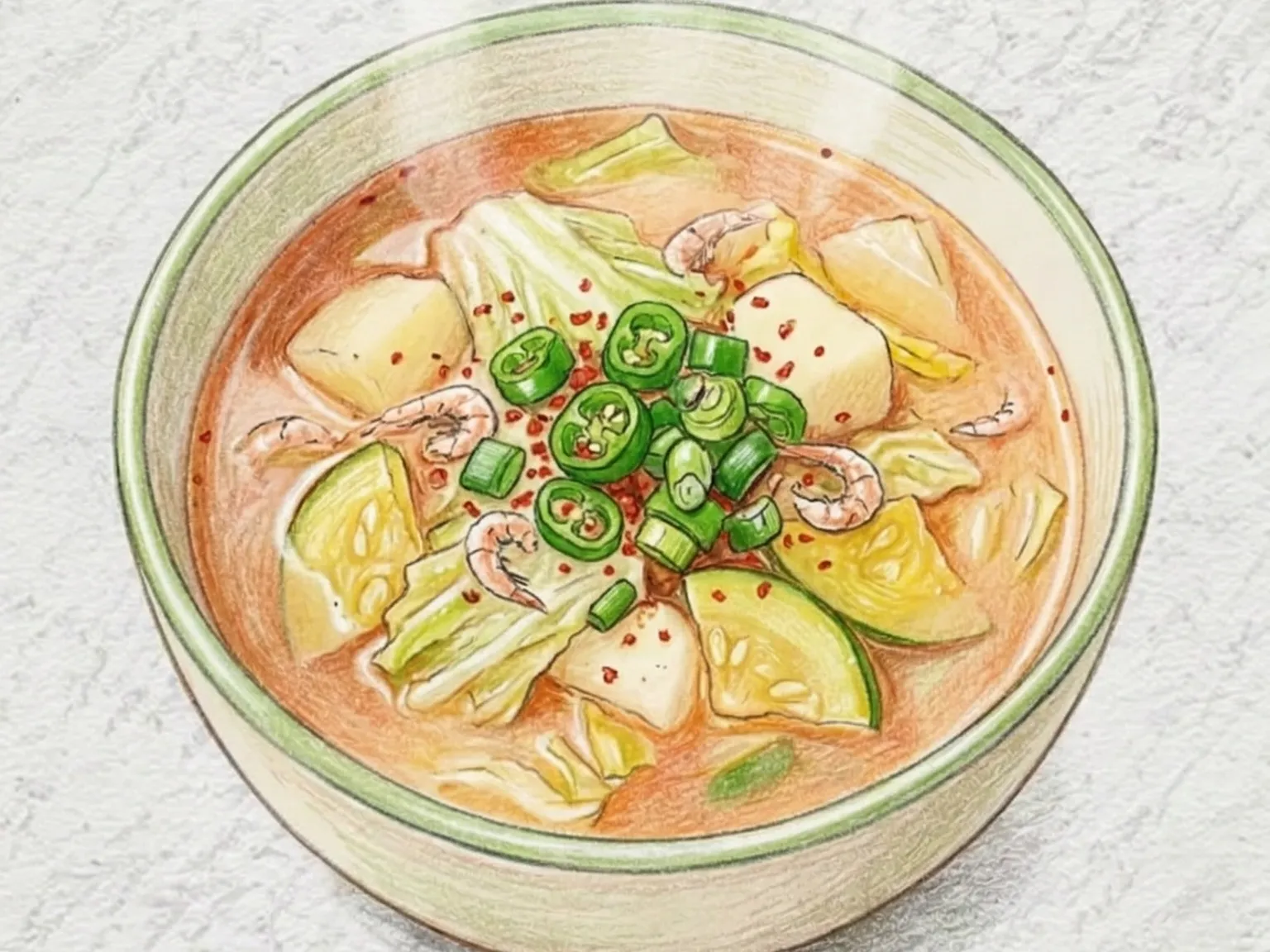
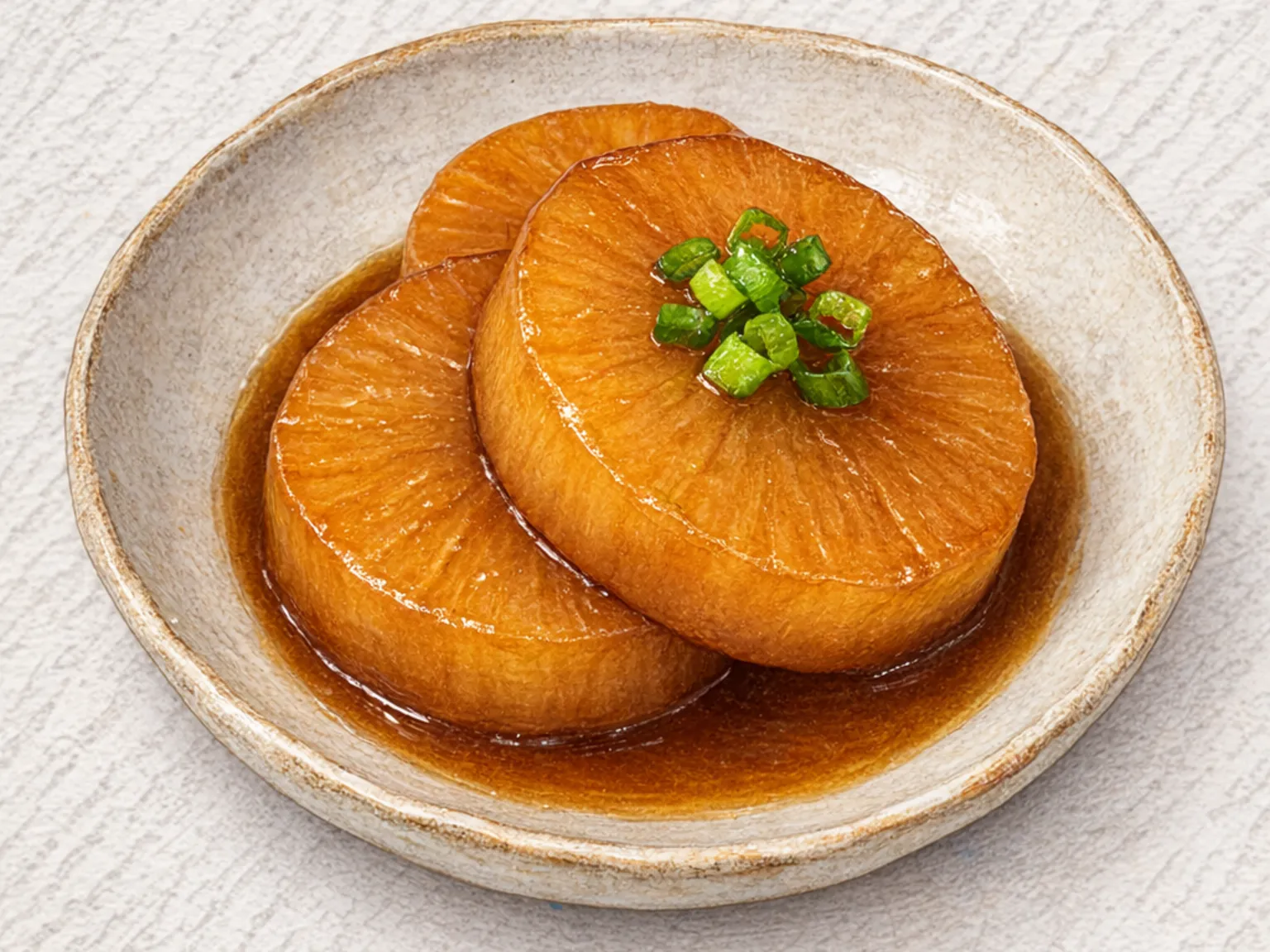
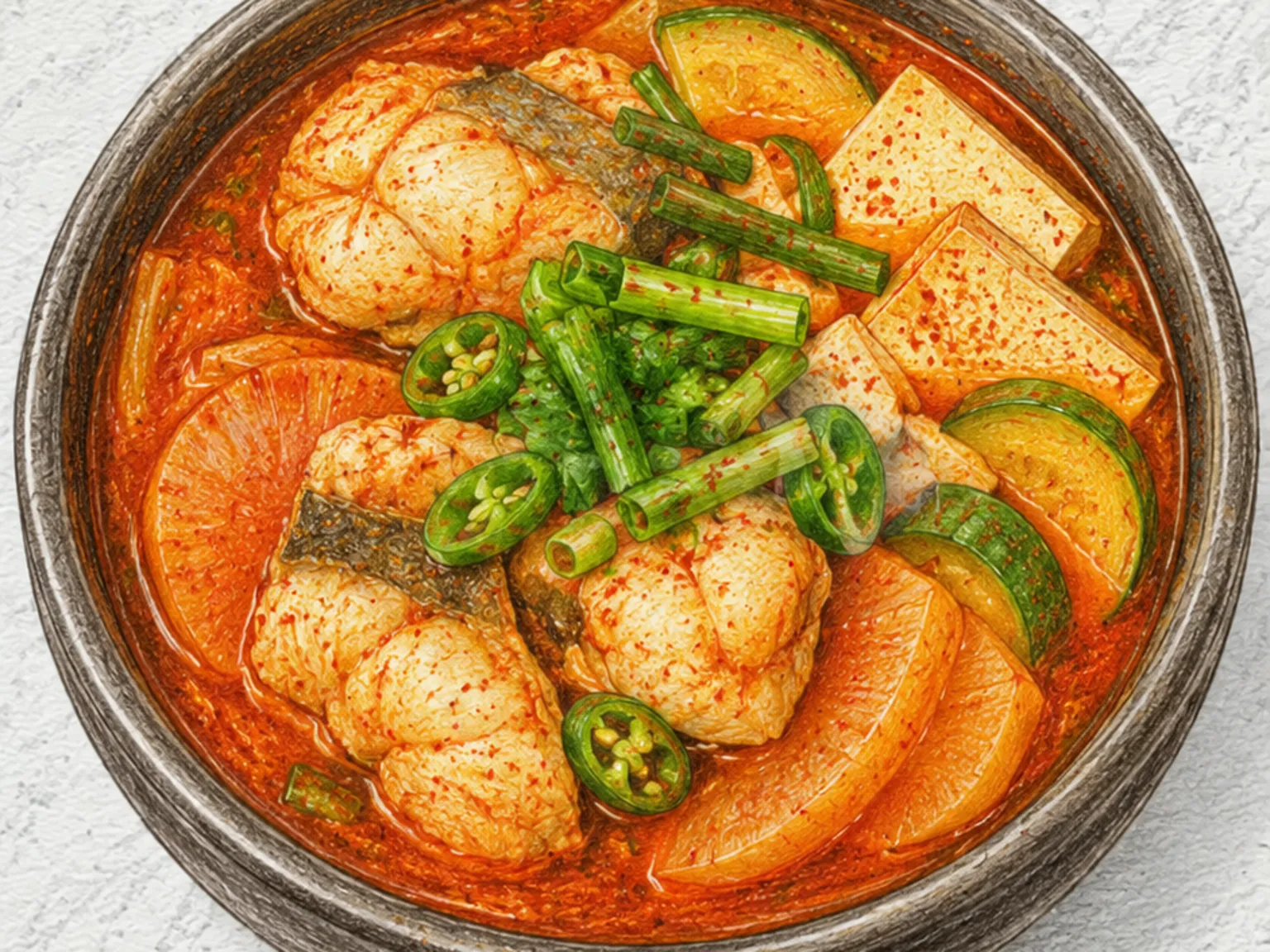
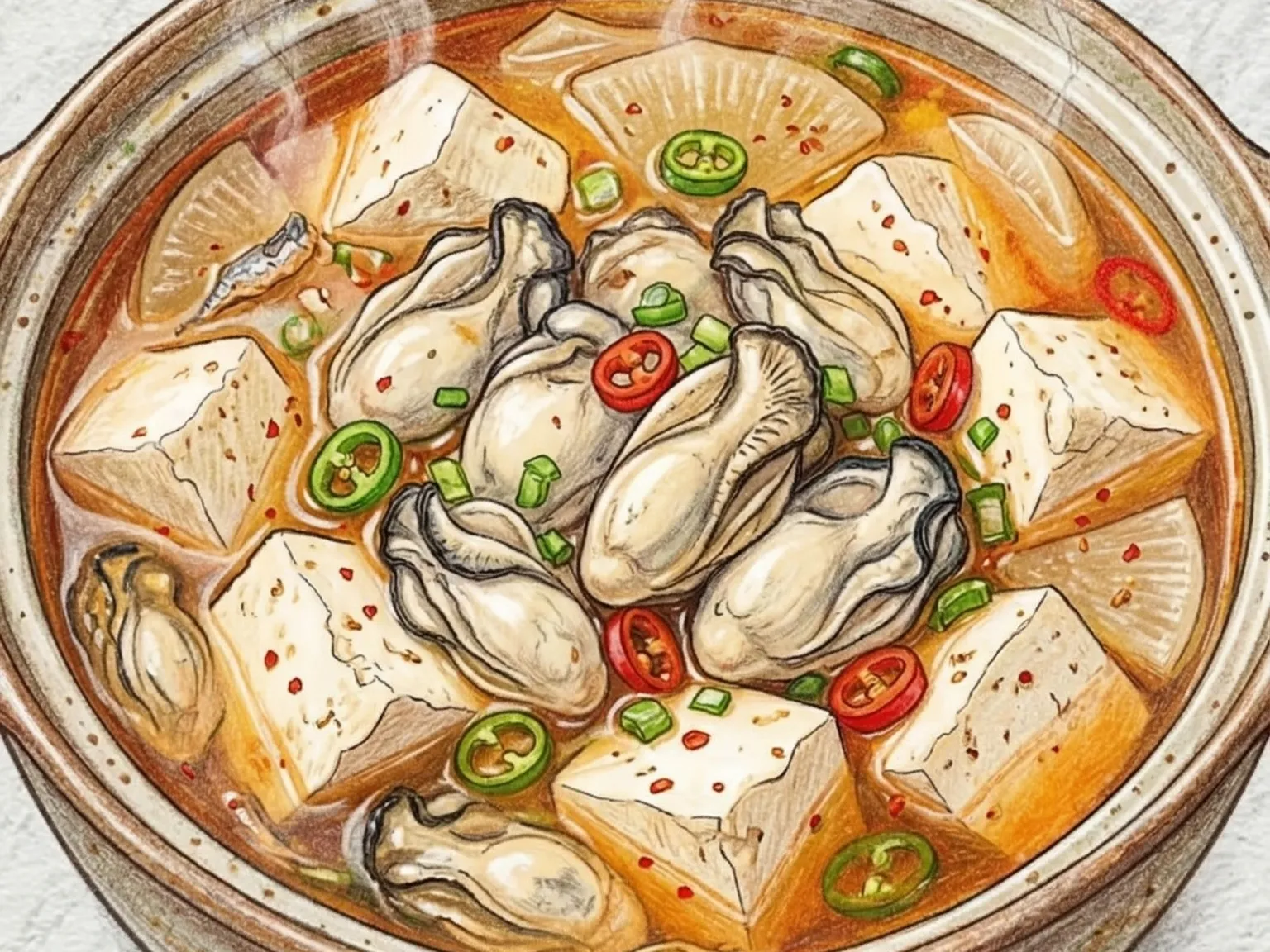
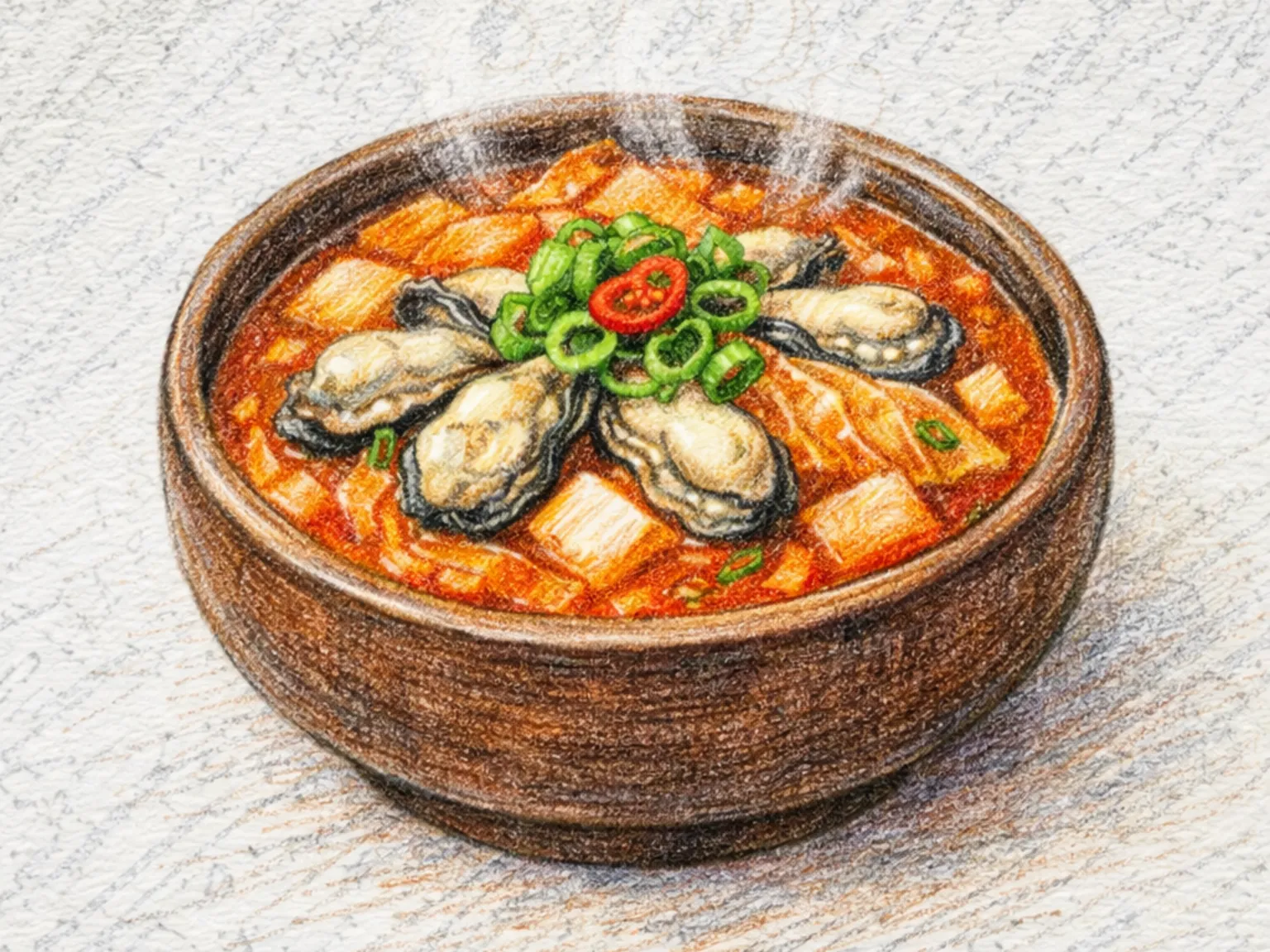
Dongtae-tang is a Korean spicy fish stew made with frozen pollock (dongtae), radish, tofu, and green onion in a broth seasoned heavily with gochugaru. The first step is simmering radish on its own long enough to release its clean, slightly sweet character into the base -- this foundation determines the clarity and depth of the finished broth. Once the radish has cooked through, gochugaru, soup soy sauce, and minced garlic are added to transform the pale stock into a vivid red, peppery liquid. The pollock is cleaned of scales and fins after thawing, then cut into large pieces so the flesh stays intact through the cooking process. After the fish is added, the stew should not be cooked for more than ten minutes: beyond that point, compounds from the bones leach into the broth, producing a bitter, fishy aftertaste that is difficult to correct. Cheongyang chili peppers add a sharper, more piercing heat than gochugaru alone -- a thin-sliced variety provides brief, concentrated bursts of spice. Tofu goes in during the last five minutes, giving it enough time to absorb the spiced broth without breaking apart. The seasoning the tofu draws in softens and rounds out the intensity of the soup, providing a mild counterpoint to the fish and the heat. The stew carries a bracing, satisfying quality and is especially popular during winter months.

Korean Steamed Mussels (Mussels Steamed in Rice Wine Broth)
Honghap-jjim is Korean steamed mussels cooked in a combination of rice wine and garlic, with green onion and cheongyang chili peppers added near the end to layer in fragrance and heat. The mussels steam open in under five minutes over high heat, releasing their briny, oceanic juices into the wine-garlic liquid pooling at the bottom of the pot. This self-generated broth is one of the dish's great pleasures, deeply flavored without the addition of stock or seasoning paste. The cheongyang chili delivers a clean, direct heat that does not muddy the mussels' freshness; instead, its capsaicin sharpens the perception of the seafood's brine, making the flavor more vivid on the palate. Total cooking time runs under ten minutes, and the only real preparation is debearding and scrubbing the shells, which means the dish can move from cold pantry to hot table with minimal effort. Watching the lid come off to reveal the fully opened shells rising from a cloud of fragrant steam is part of the experience, making this as visually satisfying as it is easy. Leftover broth, if any remains, is exceptional as a base for kalguksu or instant ramen.

Korean Namhae-Style Clam Broth
Namhae-jogae-tang is a southern coastal Korean clam soup that relies on an abundance of clams and minimal interference to produce a broth of startling clarity and depth. The clams are purged in salted water, then cooked in water spiked with rice wine, which tempers any raw ocean smell. As the shells pop open, they release their natural liquor - briny, faintly sweet, and concentrated - which becomes the soup's defining flavor. Sliced green and red chilies add gentle heat and color without overwhelming the shellfish, while garlic and green onion contribute a quiet aromatic layer. Salt is added cautiously, since the clams themselves bring significant salinity. The result is a transparent, intensely flavored bowl that tastes like the sea distilled into its purest form, and it is traditionally enjoyed as both a drinking companion and a light meal.

Korean Grilled Gizzard Shad
Jeoneo-gui is a grilled gizzard shad dish that captures the best of autumn, when this small fish is at peak fat content and flavor. The fish is scored on both sides with close, shallow cuts, rubbed with coarse salt, and left to rest for ten minutes before grilling. The resting time allows surface moisture to draw out, which reduces fishiness and creates the conditions for a properly crisp skin over a hot pan or grill. Gizzard shad has numerous fine, small bones that make the raw fish awkward to eat, but scoring densely and cooking over high heat softens the bones through heat, allowing the entire fish to be eaten without picking. A ginger soy dipping sauce - minced ginger, soy sauce, rice vinegar, and sliced cheongyang chili - accompanies the fish to cut through its notable oiliness, with the sharp ginger note neutralizing the fishy aroma. Autumn gizzard shad is so prized in Korea that the proverb says its grilling smell is enough to bring a daughter-in-law back home.

Korean Braised Saury Kimchi
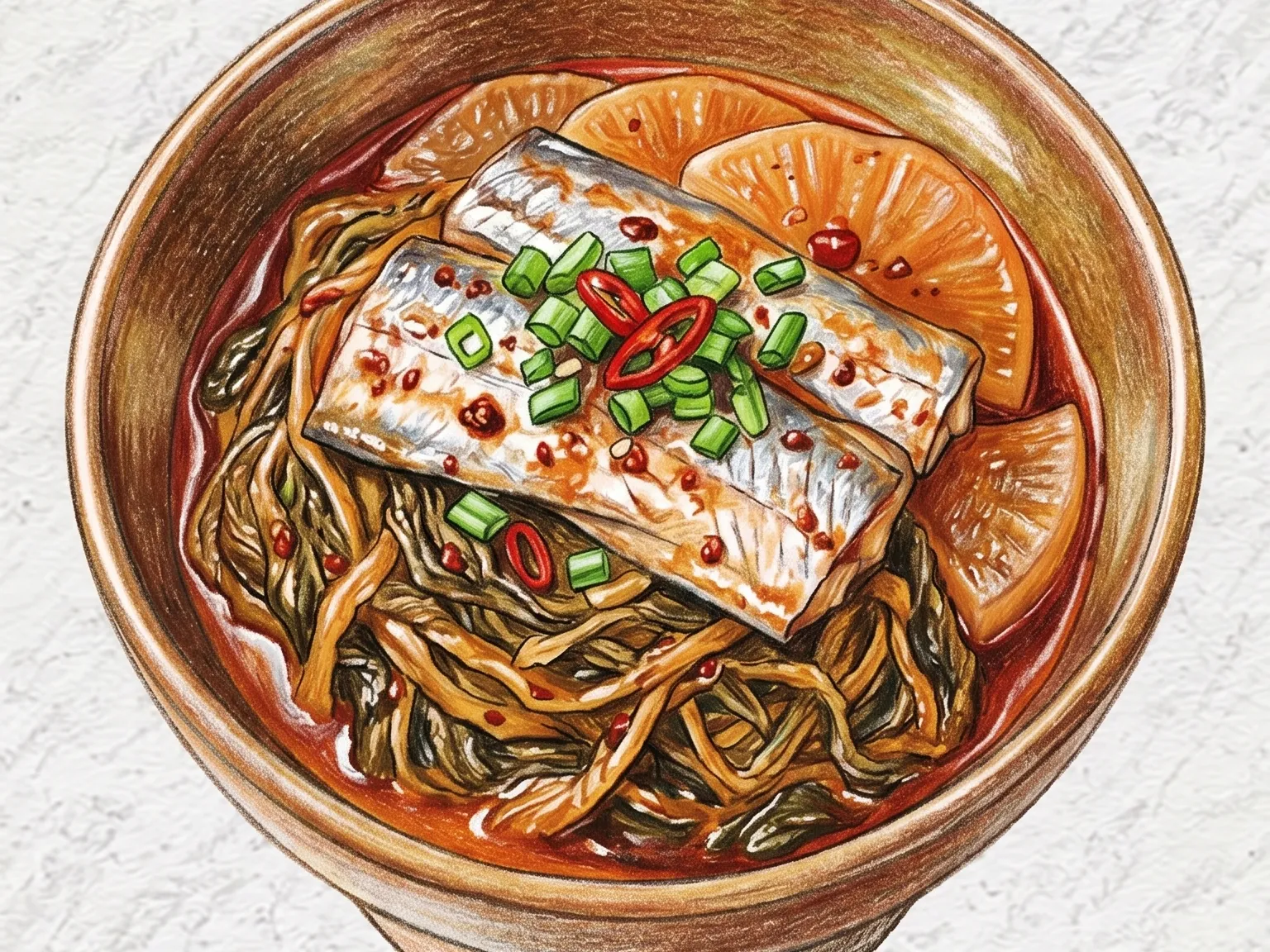
Kkongchi-kimchi-jjim braises canned Pacific saury with well-aged kimchi until the flavors meld into a concentrated, tangy sauce with no additional stock needed. The aged kimchi's deep acidity and fermented complexity dissolve into the saury's natural oils, building a rich, layered broth that tastes far more time-consuming than it is. Tofu added to the pot absorbs the spiced liquid and contributes a soft, yielding contrast to the fish. Green onion and cheongyang chili finish the dish with a sharp kick of heat that cuts through the richness. Using canned fish keeps preparation minimal, while the aged kimchi does the slow-cooking work, delivering a depth of flavor that is difficult to achieve in such little time.

Korean Whelk Stew (Spicy Canned Whelk & Cabbage Pot)
Golbaengi-jjigae is a spicy Korean stew made with canned whelk as the centerpiece. Because the whelk is already fully cooked inside the can, it goes in near the end of cooking rather than at the start, allowing the broth and vegetables to reach their full flavor first. Extended heat makes whelk rubbery, so a brief simmer of two to three minutes is enough to warm the pieces through while preserving their distinctive chewy texture. Anchovy stock forms the savory foundation of the broth, delivering a clean seafood depth that amplifies the whelk's flavor without masking it. Gochujang and gochugaru combine to give the stew its fiery, full-bodied heat, while cabbage and onion absorb the broth over time and release a gentle sweetness that balances the spice. A single cheongyang chili added whole sharpens the heat at the finish, pulling the entire broth taut with a bright, clean burn. A handful of sliced green onion stirred in at the end brings a fresh aroma that lifts the richness of the stew. It works equally well as a rice-side dish or as an accompaniment to soju.

Korean Lotus Root & Duck Chili Stir-fry
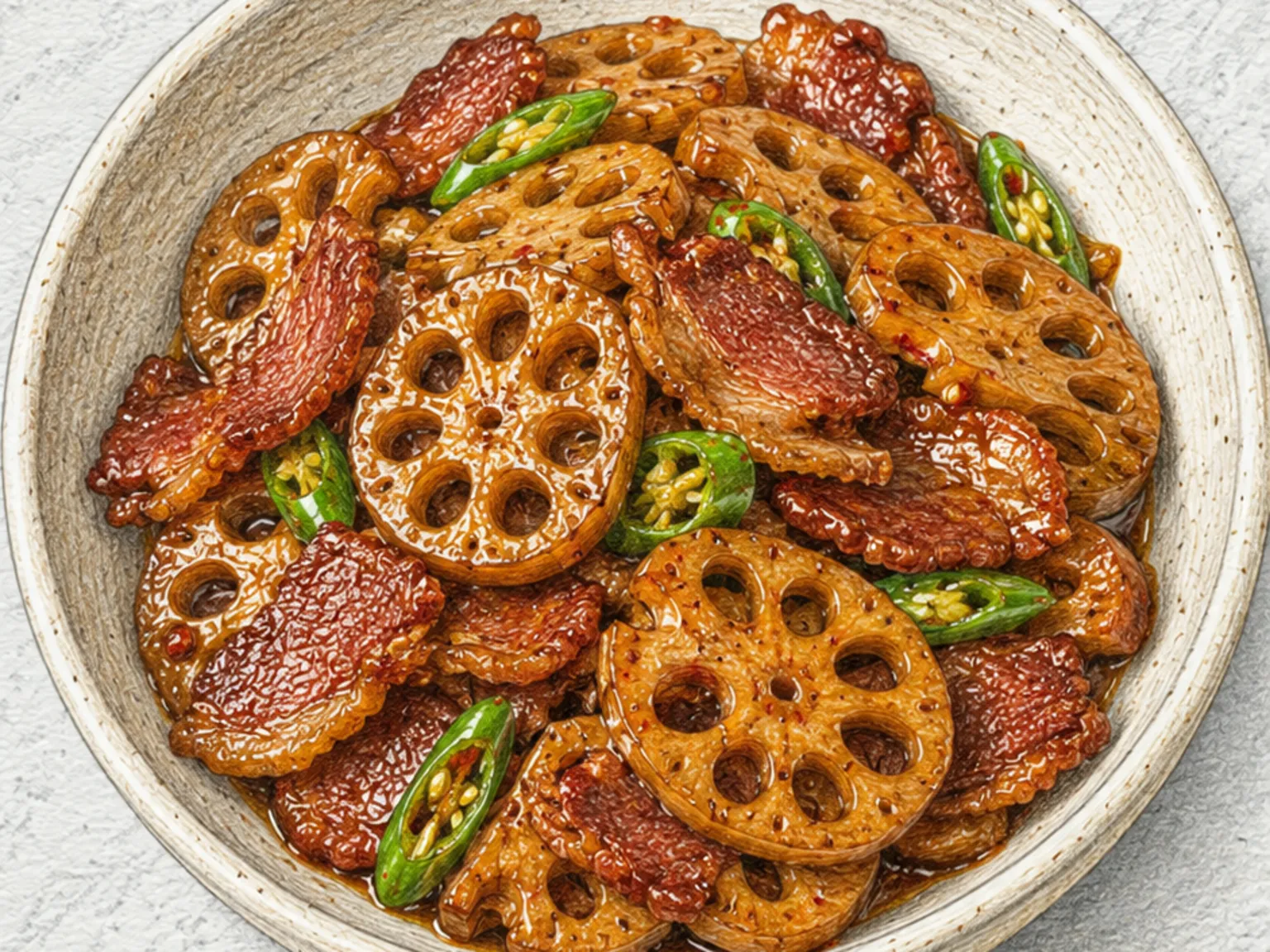
Yeongeun-ori-gochu-bokkeum stir-fries lotus root separately first to lock in its crunch, then combines it with rendered smoked duck and cheongyang chili in a spicy-sweet finish. The duck is cooked on medium-high heat to draw out excess fat, and a sauce of soy sauce, gochujang, and oligosaccharide syrup is built in the pan. The cheongyang chili's direct heat cuts through the smokiness and richness of the duck, while the returned lotus root absorbs the sauce and retains its firm bite. Three distinct flavors - smoky duck, sharp chili heat, and nutty lotus root - remain clearly defined in each bite.

Korean Mussel Stir-Fry (Plump Mussels with Butter, Garlic and Chili)
Honghap-bokkeum is a Korean mussel stir-fry where plump mussels are tossed in butter with sliced garlic, cheongyang chili, and scallion. The butter melts into the mussels' briny juice, forming a concentrated, aromatic sauce, while garlic adds a sharp fragrance that elevates the whole dish. Chili peppers cut through the richness so the dish never feels heavy. A splash of soy sauce deepens the umami, and many diners finish by mixing rice into the leftover sauce.

Korean Soy Braised Quail Eggs
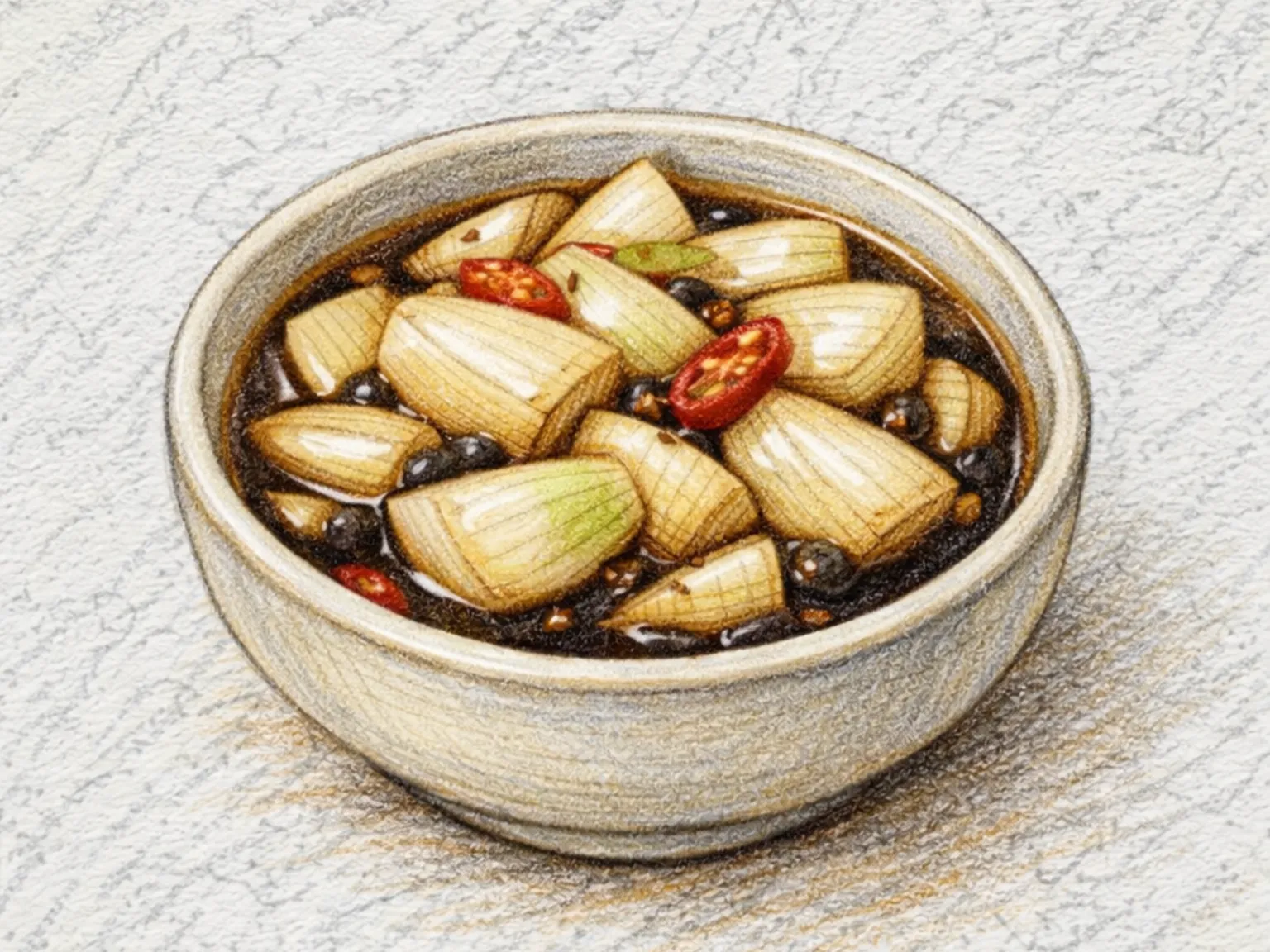
Al-jorim - soy-braised quail eggs - is one of Korea's most universal banchan, appearing in school cafeteria trays, packed office lunchboxes, and home refrigerators as a reliable standby. The dish belongs to the broader Korean jorim tradition of simmering proteins low and slow in a sweetened soy-based liquid until the glaze seeps through to the center. Peeled quail eggs go into a pan with soy sauce, water, sugar, cooking wine, and minced garlic, then simmer over medium-low heat for ten minutes. Turning the eggs occasionally is essential - it ensures the soy stain reaches every surface evenly rather than leaving pale patches. The liquid starts thin and gradually reduces as the eggs cook, concentrating into a sticky, glossy glaze that clings to the surface in the final two to three minutes over higher heat. The outside takes on a deep chestnut brown while the yolk inside stays vivid yellow. A sliced cheongyang chili added near the end introduces a low, slow heat that keeps the sweet-salty profile from becoming monotonous. Sesame oil and toasted sesame seeds scattered over the finished eggs add a nutty note against the soy base. Left overnight in the refrigerator, the seasoning penetrates further and the flavor deepens, making this one of the few banchan that genuinely improves after a day.

Korean Mallow & Clam Stew
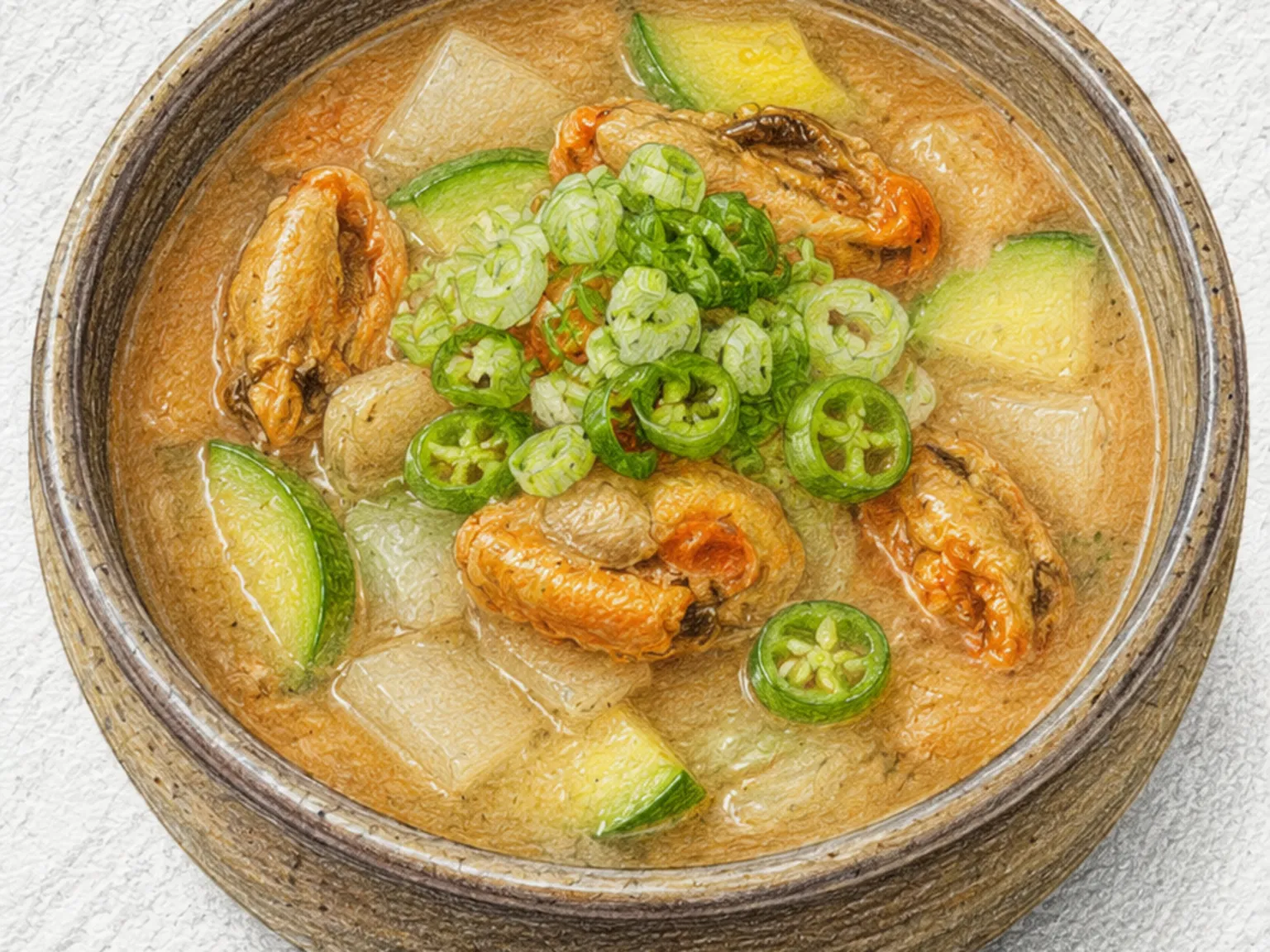
Auk-bajirak-jjigae is a thick, meal-weight stew that takes the logic of the milder auk-bajirak-guk and pushes it further: more doenjang, a denser ingredient list, and cheongyang chili for heat. The clams go in first while the water is still cold, then the pot comes to a boil so the shells open slowly and release their concentrated sea juice into the base. Doenjang and gochugaru dissolve into the liquid together, creating a foundation that is simultaneously earthy, saline, and warm with chili. Cubed tofu and sliced zucchini fill out the pot and convert what might have been a soup into something substantial enough to anchor a meal with rice. Mallow leaves added at the end bring their natural mucilage, which thickens the broth and gives it a cling that plain stews lack. Sliced cheongyang chili on top cuts through the richness with a sharp, direct heat. On a cold evening eaten alongside steamed rice, this jjigae sits at the dense, deeply layered end of the Korean stew spectrum.

Korean Spicy Freshwater Fish Noodle Soup
Eotang guksu is a regional noodle soup from the Chungcheong inland provinces, built on a broth made by simmering freshwater fish for an extended time until the bones and flesh give up their concentrated, savory extract. Freshwater fish releases fishy oils as it cooks, so straining the broth two or three times through a fine sieve to remove bone fragments and surface oils is what separates a clean, drinkable broth from a murky one. Doenjang is stirred in to neutralize residual fishiness while contributing a fermented, savory roundness. Gochugaru adds heat and color to the otherwise clear, oil-free liquid, giving direction to what might otherwise be a flat broth. A beaten egg poured in at the end forms soft, wispy ribbons that float across the surface. Somyeon noodles are added last. This dish evolved in landlocked Chungcheong communities that turned to river fish in place of coastal seafood, and its character reflects that resourcefulness.

Korean Hairtail Braised with Dried Greens
Siraegi galchi jorim is a Korean braised hairtail fish dish assembled by layering boiled dried radish greens, radish, and hairtail in a pot, then simmering everything together in a sauce built from gochugaru, soy sauce, and gochujang. Rubbing the dried radish greens with a teaspoon of doenjang before they go into the pot allows fermented earthiness to penetrate the greens during cooking, adding a layer of depth that the braising sauce alone cannot provide. The greens are firm and springy enough that long simmering does not cause them to fall apart, and their cellular structure soaks up the braising liquid so thoroughly that every bite releases a concentrated burst of the seasoned sauce. Radish absorbs the stock produced by the fish and the greens as it cooks, developing a clean, gentle sweetness that grounds the spice of the sauce. The hairtail is never turned during cooking; the braising liquid is spooned over it repeatedly instead, which preserves the delicate, layered texture of the flesh and prevents it from flaking and falling apart in the pot. Closing the lid and maintaining a steady medium-low heat while basting only between lid lifts gives the fish the best chance of arriving at the table intact. The finished dish is the kind of strongly seasoned, deeply savory Korean side that makes a full bowl of white rice disappear without effort.

Korean Stir-fried Pumpkin Leaves and Shrimp
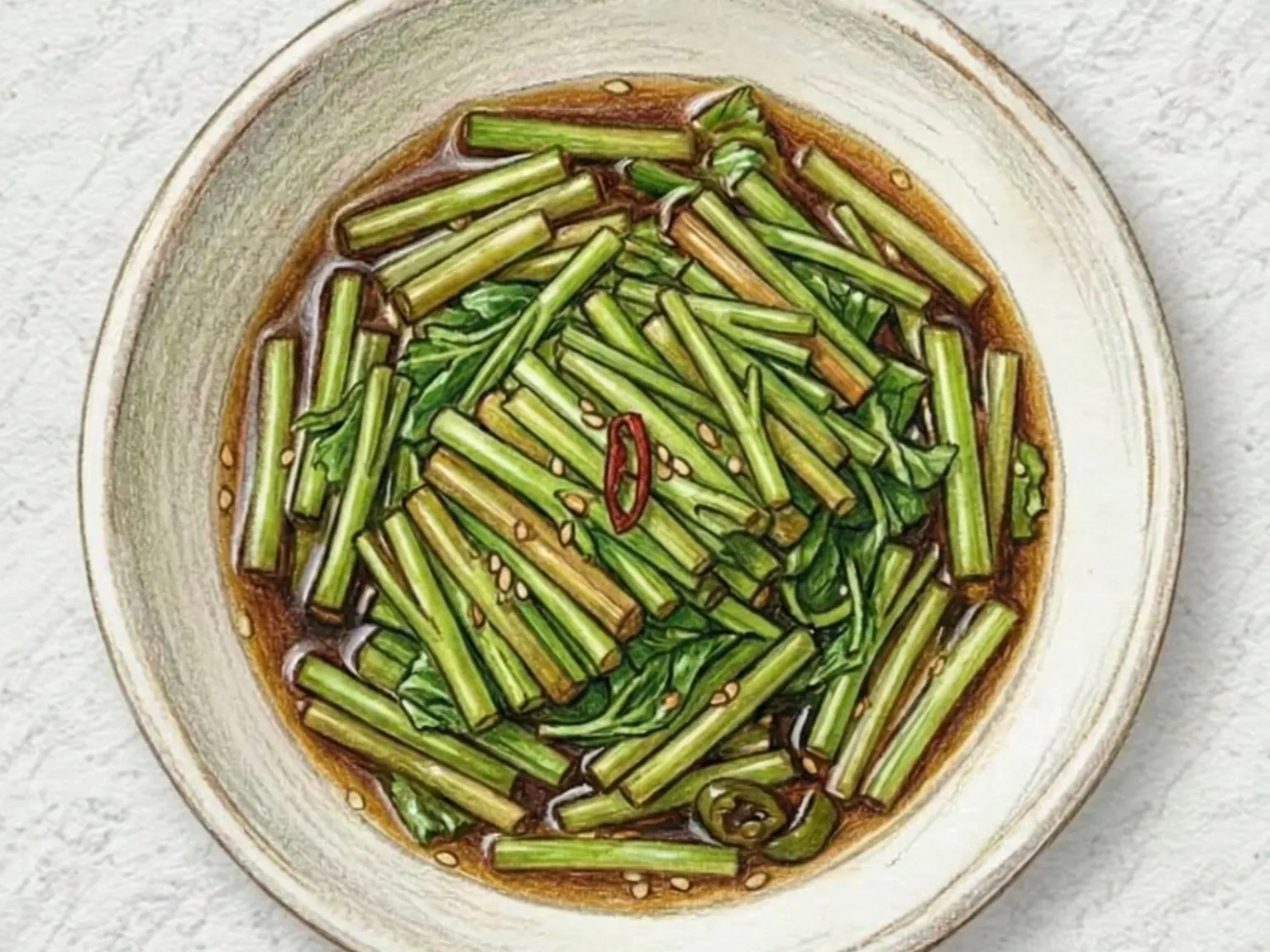
Hobakip-saeu-bokkeum is a Korean summer stir-fry that pairs blanched pumpkin leaves with fresh shrimp in perilla oil, seasoned lightly with soup soy sauce. Blanching the leaves before anything else goes into the pan is not optional. The coarse, fuzzy surface that characterizes raw pumpkin leaves softens through the brief heat exposure, but the leaf itself retains enough structure so that it does not collapse into a slippery, formless mass when it hits the hot pan. The mild, grassy aroma that defines the vegetable comes through intact after the blanching step. Shrimp brings a clean, oceanic savory quality that pairs well with the herbaceous character of the leaves rather than overwhelming it. Perilla oil holds the two together with its distinctively nutty and faintly herbal fragrance, which complements both the sea-forward shrimp and the green quality of the pumpkin leaves in a way that plain vegetable oil would not. A sliced cheongyang chili pepper adds a thread of gentle heat that keeps the dish from tasting flat without pushing the spice level high enough to obscure the delicate flavors of the main ingredients. Clam meat or finely minced pork can substitute for the shrimp, each producing a different but equally satisfying version. This is a seasonal dish that depends on pumpkin leaves at their youngest and most tender, which occurs in summer. Larger, older leaves are tougher and more fibrous, and the flavor is less delicate. After blanching, the leaves need to be squeezed thoroughly to remove excess water before they go into the pan. Skipping this step causes steam to build as they hit the hot oil, which leads to uneven cooking and a watery, diluted finish. Spooning the finished stir-fry over a bowl of hot rice and mixing it in is the most direct way to eat the dish well.

Korean Soy-Marinated Soybean Leaves
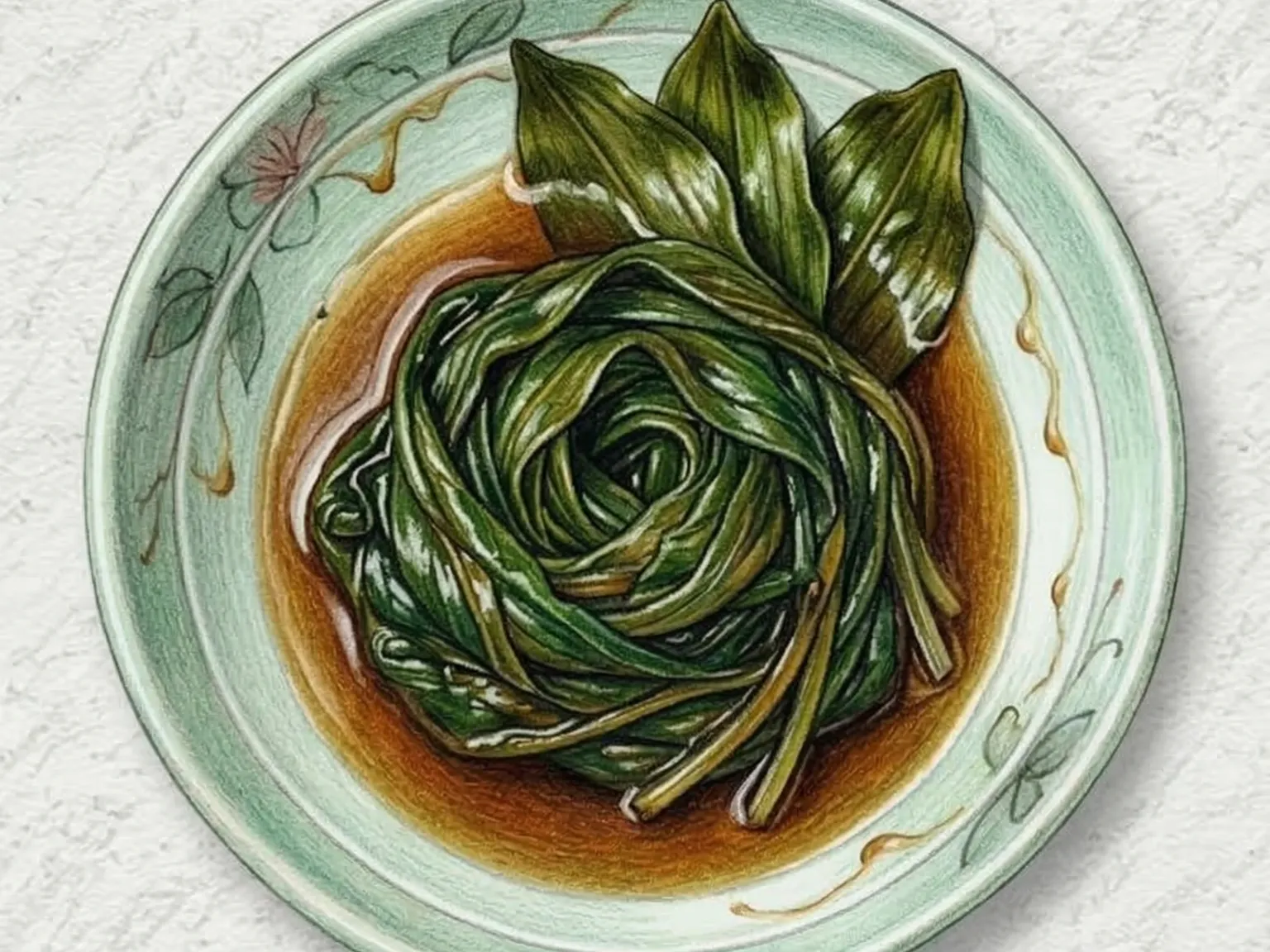
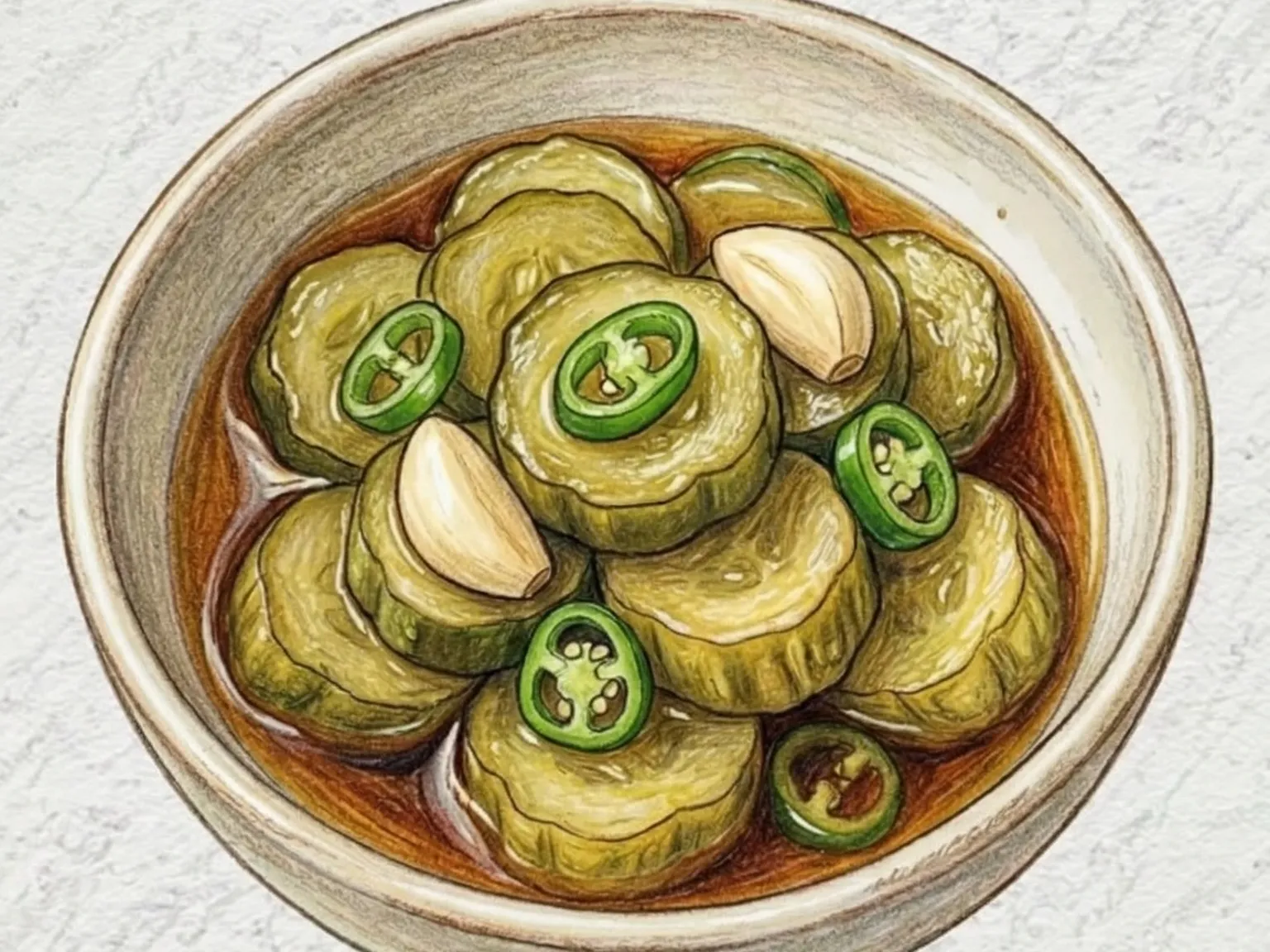
Kongnip-jangajji is soybean leaves preserved in a seasoned soy brine - one of the two major leaf jangajji traditions alongside perilla leaf (kkaennip) jangajji. Soybean leaves are larger and thicker than perilla leaves, taking longer to absorb the pickling liquid but offering a more substantial chew, with each leaf large enough to wrap around a spoonful of rice. The brine - soy sauce, water, vinegar, and sugar boiled together - must cool completely before pouring over the leaves; hot liquid softens them into a limp state, destroying the desired texture. Garlic cloves, cheongyang chili, and onion slices added to the jar infuse the brine with aromatic complexity during the curing process, producing a more layered flavor than plain soy. A minimum of two days of refrigerated aging is needed for the seasoning to reach the leaf interior, and flipping the layers once daily ensures even penetration. The most common way to eat it is draped over hot steamed rice, ssam-style.

Korean Spicy Braised Hairtail
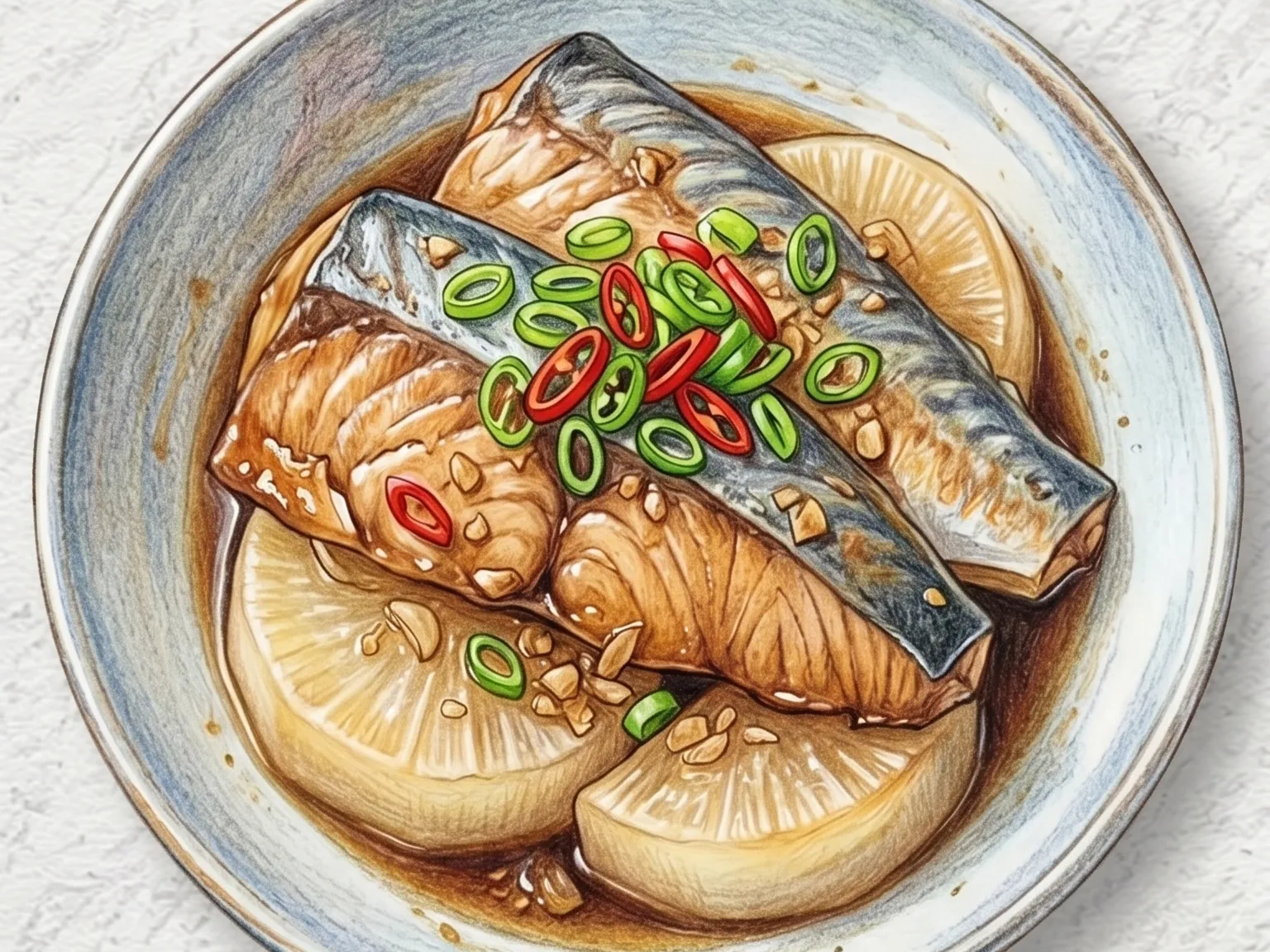
Galchi-yangnyeom-jorim is a Korean braised hairtail made by simmering sectioned cutlassfish and radish in a spicy-sweet sauce of gochugaru, soy sauce, and minced garlic. The seasoning penetrates the hairtail flesh as it cooks, suppressing any lingering fishiness while developing a layered, concentrated umami. Radish pieces are laid on the bottom of the pot first so they cook through completely and absorb the braising liquid, turning sweet and tender in a way that contrasts with the flaky fish above. Finishing with the lid off allows the sauce to reduce until it clings to the fish surface in a glossy, tight glaze. Fresh hairtail holds its shape better under heat, so the flesh can be lifted with chopsticks intact, while older fish tends to break apart during cooking. Adding Cheongyang chili increases the sharp heat, and a thin slice of fresh ginger worked into the sauce at the start removes any remaining fishiness before braising begins.

Korean Spicy Stir-fried Chicken Feet
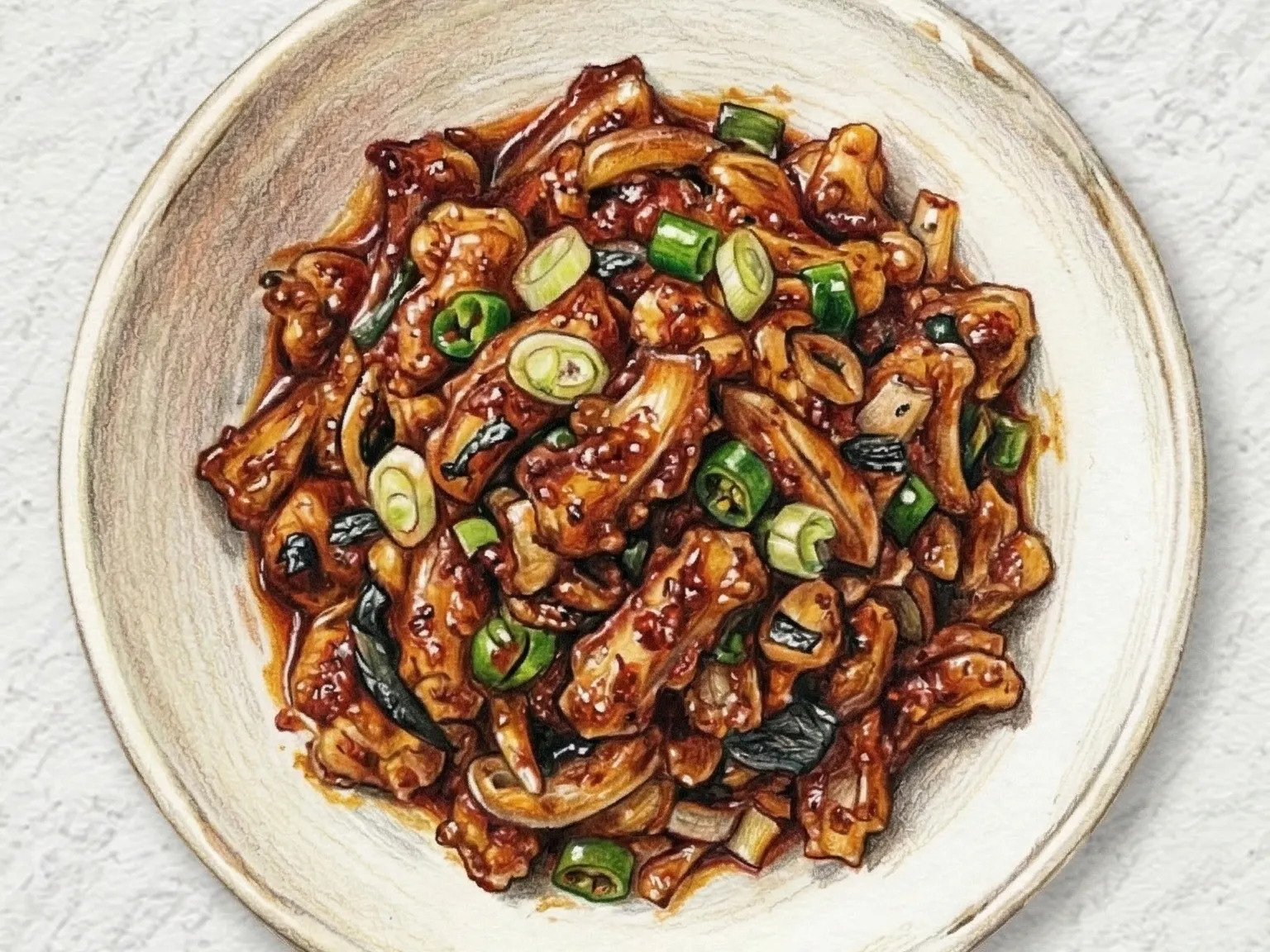
Dakbal-bokkeum stir-fries chicken feet in a sauce of gochujang, gochugaru, and soy sauce to produce one of the most distinctively textured dishes in Korean drinking food. Chicken feet are almost entirely skin, cartilage, and small bones with very little actual meat, and it is precisely this structure that gives the dish its appeal. The skin is fatty and gelatinous, clinging to the bones with a sticky chew that is unlike any other protein. Gochujang and gochugaru create a layered heat that builds slowly, while sugar threads through the spice with a sweet, lingering finish. Adding cheongyang chili peppers intensifies the burn without changing its fundamental character. Because the bones are numerous and thin, eating dakbal is a hands-on, deliberate process of stripping skin and cartilage with the teeth and lips, which makes it an inherently social and unhurried dish. Its natural setting is alongside cold beer or soju. Different establishments vary the spice level and sauce base, ranging from fire-hot buldak-style preparations to milder soy-based versions.

Korean Gangwon-style Potato Pancake
Gangwon-gamja-jeon is a traditional potato pancake from the mountainous Gangwon province, made by finely grating potatoes and incorporating the settled starch sediment back into the batter to achieve a uniquely chewy, mochi-like center with crisp edges. After grating, the potato liquid is left to sit until white starch settles at the bottom. The water on top is poured off and the dense starch is folded back in. Skipping this step produces a flat, crumbly pancake instead of the trademark sticky pull. Finely chopped Cheongyang chili peppers add a clean, sharp heat that cuts through the potato's natural sweetness, while minced onion reinforces that sweetness without adding excess moisture. The batter must be spread thin in a generously oiled pan and cooked patiently until the edges darken to deep golden brown. Rushing the process leaves the interior gummy and causes the pancake to fall apart when flipped. Even when the batter still looks soft and undercooked on top, waiting until the underside is fully set is what makes the flip clean. Makgeolli is the traditional pairing.

Korean Gapojingeo Beoteo Maneul Gui (Butter Garlic Cuttlefish Grill)
Gapojingeo beoteo-maneul-gui is butter-garlic grilled cuttlefish in which the thick body of the cuttlefish is scored in a crosshatch pattern and cooked in a pan with foaming butter and minced garlic. Cuttlefish flesh is substantially thicker and denser than regular squid, which means scoring is not optional for even cooking. Without it, the outside would overcook before heat reaches the center. The cuts also create channels that the melted butter and garlic flow into as the cuttlefish sears, infusing each section with concentrated fat and aromatics rather than just coating the surface. The timing of when to add the cuttlefish matters. The butter should be on medium heat and just beginning to foam at the edges when the cuttlefish goes in. At that temperature, the garlic releases its fragrance into the oil without burning, and the cuttlefish develops a golden crust before it has time to toughen. Two minutes per side is typically enough. The crosshatch pattern spreads open as the flesh cooks, and the surface takes on a lightly charred color that signals the Maillard reaction has done its work. Leaving it longer makes the flesh rubbery. A squeeze of lemon juice at the end cuts the richness of the butter and lifts the whole dish with a clean, acidic finish.

Korean Corbicula Clam Noodle Soup
Jaecheop-guksu is a regional specialty from Hadong in South Gyeongsang Province, built on a clear broth extracted from purged freshwater corbicula clams. The broth carries the clams' concentrated brininess alongside a remarkably clean, light body, seasoned sparingly with soup soy sauce and salt to let the shellfish flavor dominate. A single cheongyang chili simmered in the pot lends a gentle background heat, and scallion with black pepper finishes the aroma. Widely regarded as a hangover remedy, this noodle soup is prized for its ability to settle the stomach with its pure, uncluttered flavor. Along the Seomjin River restaurants of Hadong, jaecheop dishes in various forms are considered the defining taste of the region.

Korean White Kimchi Clam Soup
Baekkimchi bajirak guk is a clear Korean soup that brings together the gentle fermented acidity of white kimchi and the briny oceanic depth of manila clams in a single, unmuddied broth. Purged clams begin in cold water and are brought slowly to a boil so the rising temperature coaxes flavor from the shells gradually, building stock as they cook. Once the clams open they are lifted out, and the broth is strained through a fine sieve to eliminate any sand that clung to the shells. Chopped white kimchi is stirred into this clean clam stock, where its lactic sourness dissolves into the liquid and creates a flavor profile that reads simultaneously refreshing and layered. Adding the white kimchi brine as well deepens the acidity further, but its existing salt content demands a taste check before any additional seasoning goes in. Thick-cut tofu squares absorb the surrounding broth as they warm through, contributing a soft, substantial bite alongside their protein. A single cheongyang chili, sliced on the diagonal, introduces a measured sharpness that lifts the otherwise mild base without tilting the soup into heat-forward territory. Scallion should go in during the final thirty seconds of cooking rather than earlier; overcooked scallion loses the fresh, grassy aroma that punctuates the finish. Because this soup contains no gochugaru, the broth stays perfectly clear and pale, and the white kimchi sourness sharpens the clam umami from underneath rather than competing with it, producing a bowl that tastes more complex than its short ingredient list suggests.