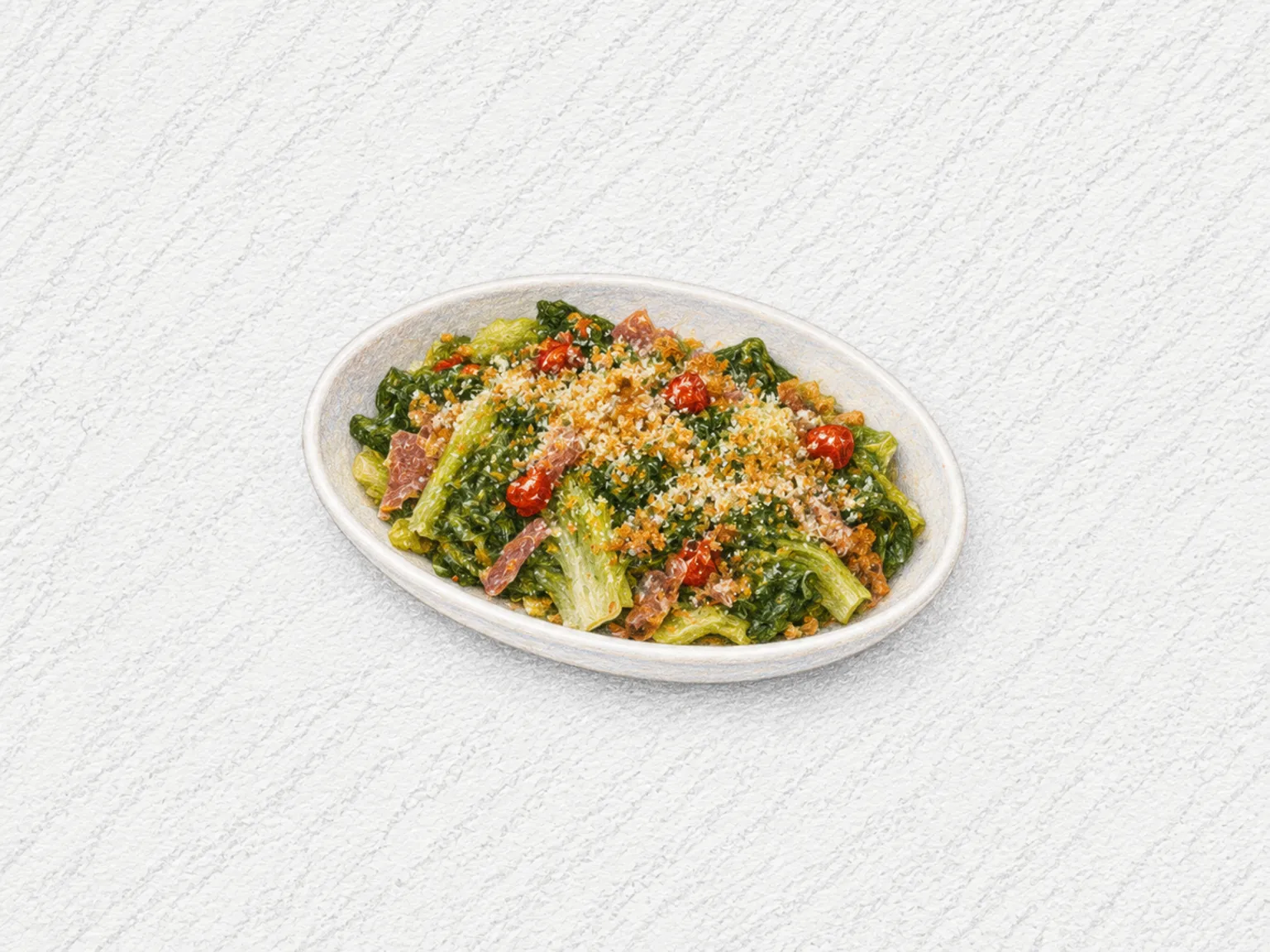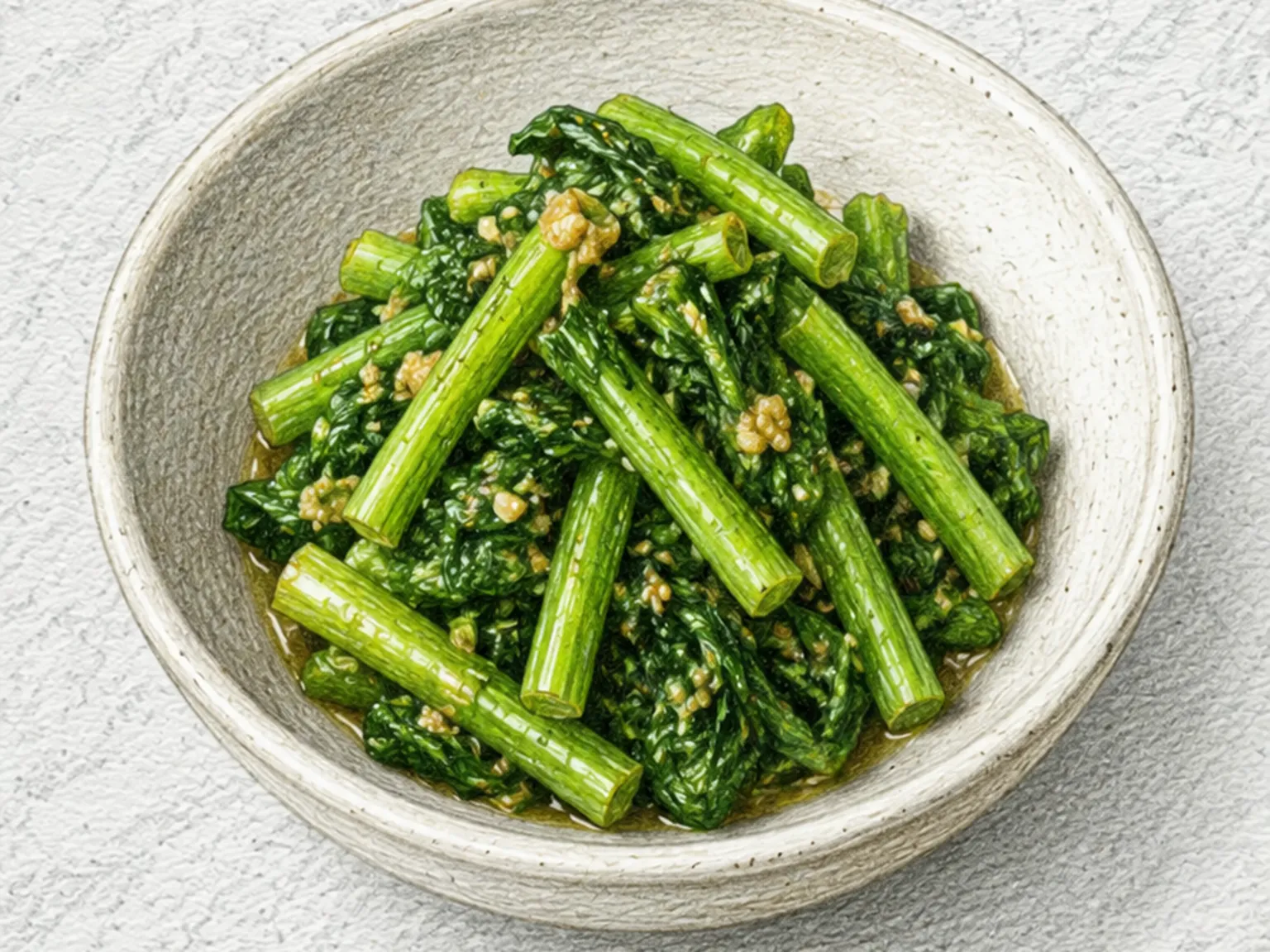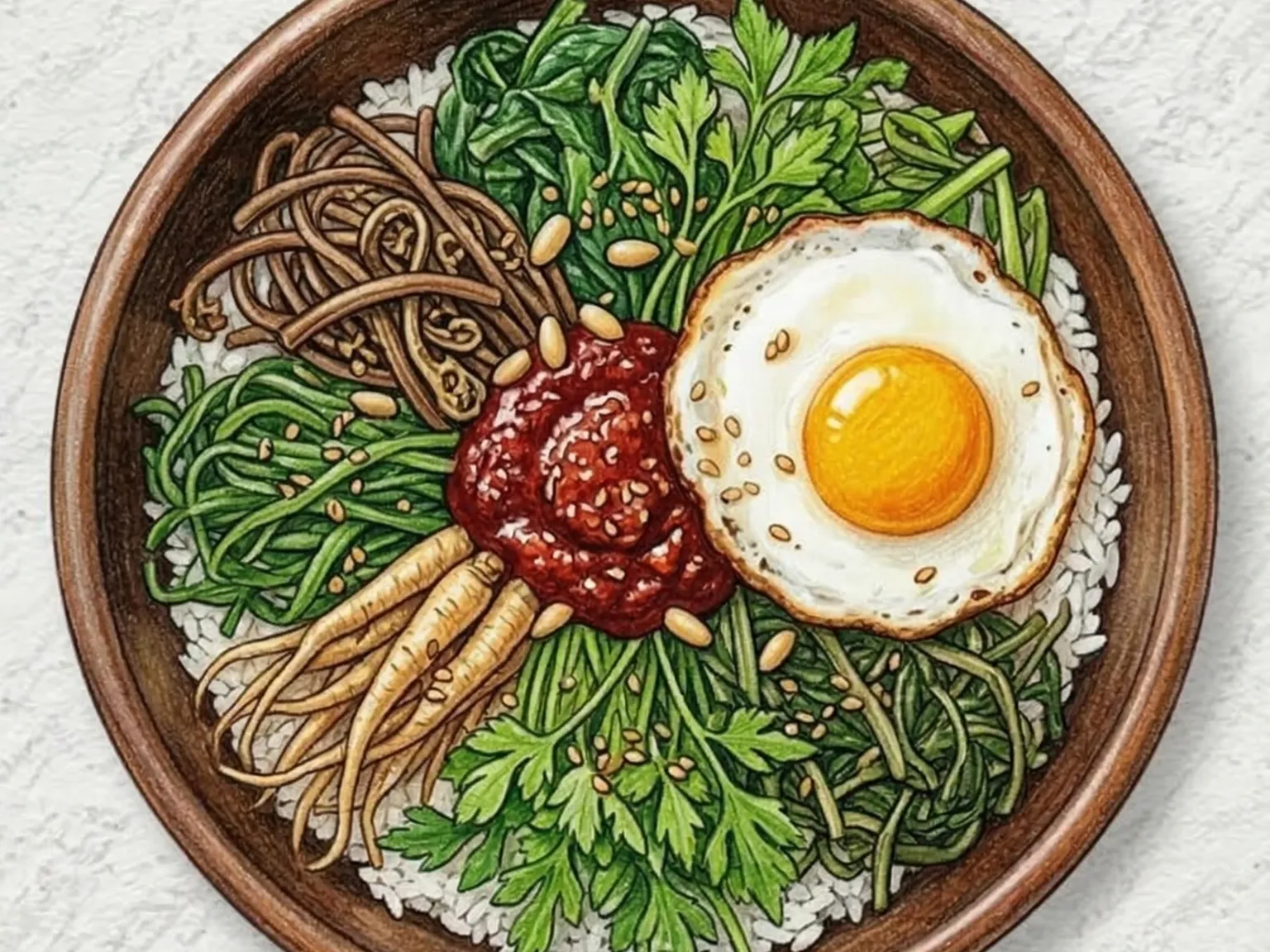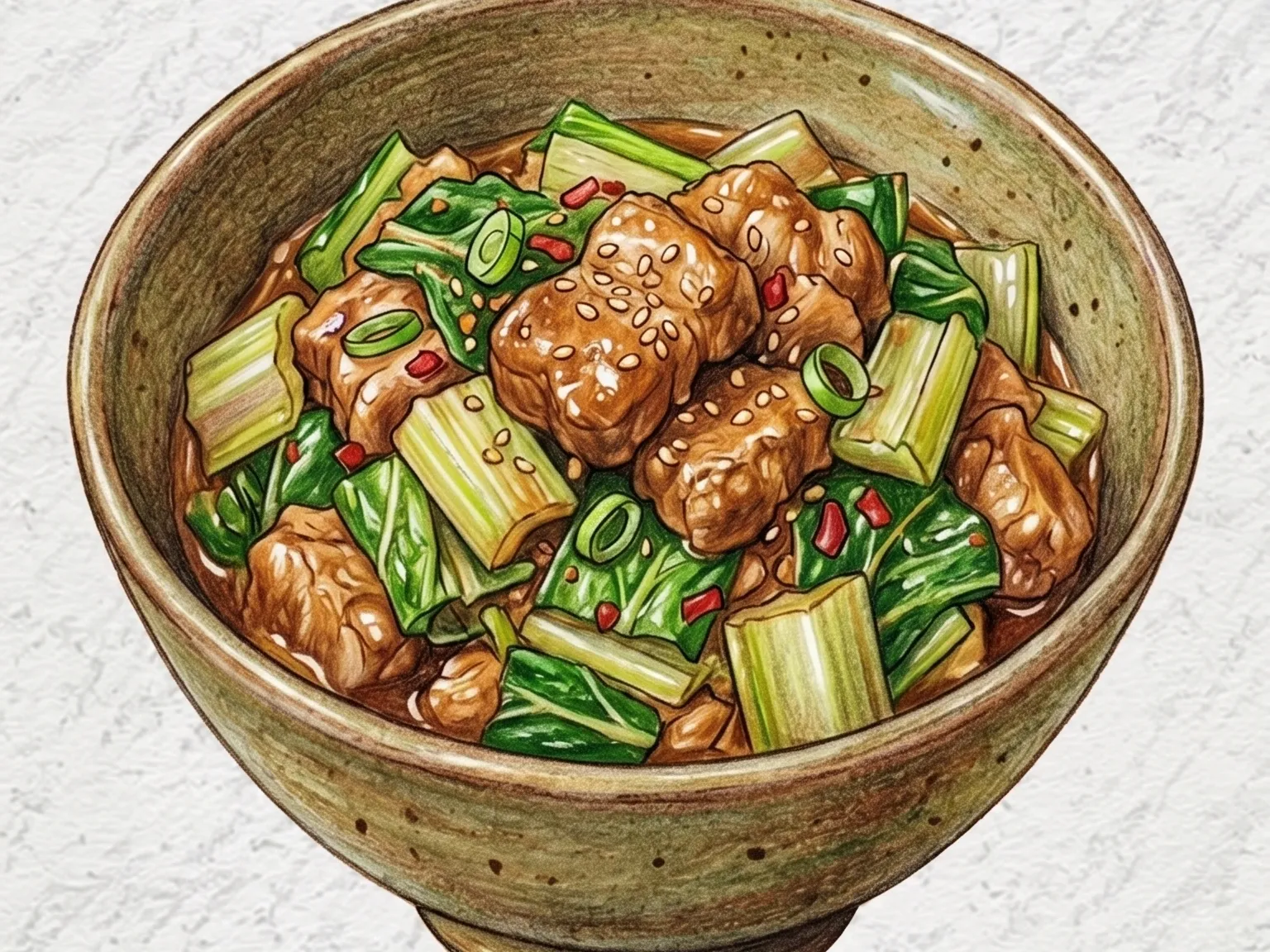
Korean Pyongyang Onban (Rice in Clear Chicken Broth)
Pyeongyang-onban is a North Korean-style warm rice soup in which steamed rice is submerged in clear chicken broth and topped with shredded chicken and sliced shiitake mushrooms. The chicken simmers with garlic and green onion for forty-five minutes, producing a clean, golden stock that is strained for clarity before use. The cooked meat is pulled into strips and set aside, while shiitake slices steep in the broth for five minutes to add an earthy dimension without muddying the liquid. Rice goes into the bowl first, followed by the hot broth and the chicken garnish, with salt as the sole seasoning. No fermented pastes, chili, or bold spices are used, which means the dish stands entirely on the quality of the stock itself. Onban was traditionally served as a breakfast dish in Pyongyang, and the deliberate restraint in seasoning makes it one of the gentler, more stomach-friendly preparations in the Korean rice soup tradition. A long, unhurried simmer is what separates a flat broth from one with real depth.

Korean Ssuk Deulkkae Jjigae (Mugwort Perilla Stew)
This seasonal stew highlights fresh mugwort simmered with perilla seed powder in a rice-rinse water base. The perilla powder gives the broth a creamy, nutty thickness, while the mugwort's slightly bitter herbaceous aroma floats through gently. Potato breaks down to add heartiness, and oyster mushrooms and firm tofu provide textural variety. Seasoned lightly with soup soy sauce, it is a springtime specialty that captures the taste of the season.

Korean Steamed Rockfish (Spicy Gochugaru Radish Braise)
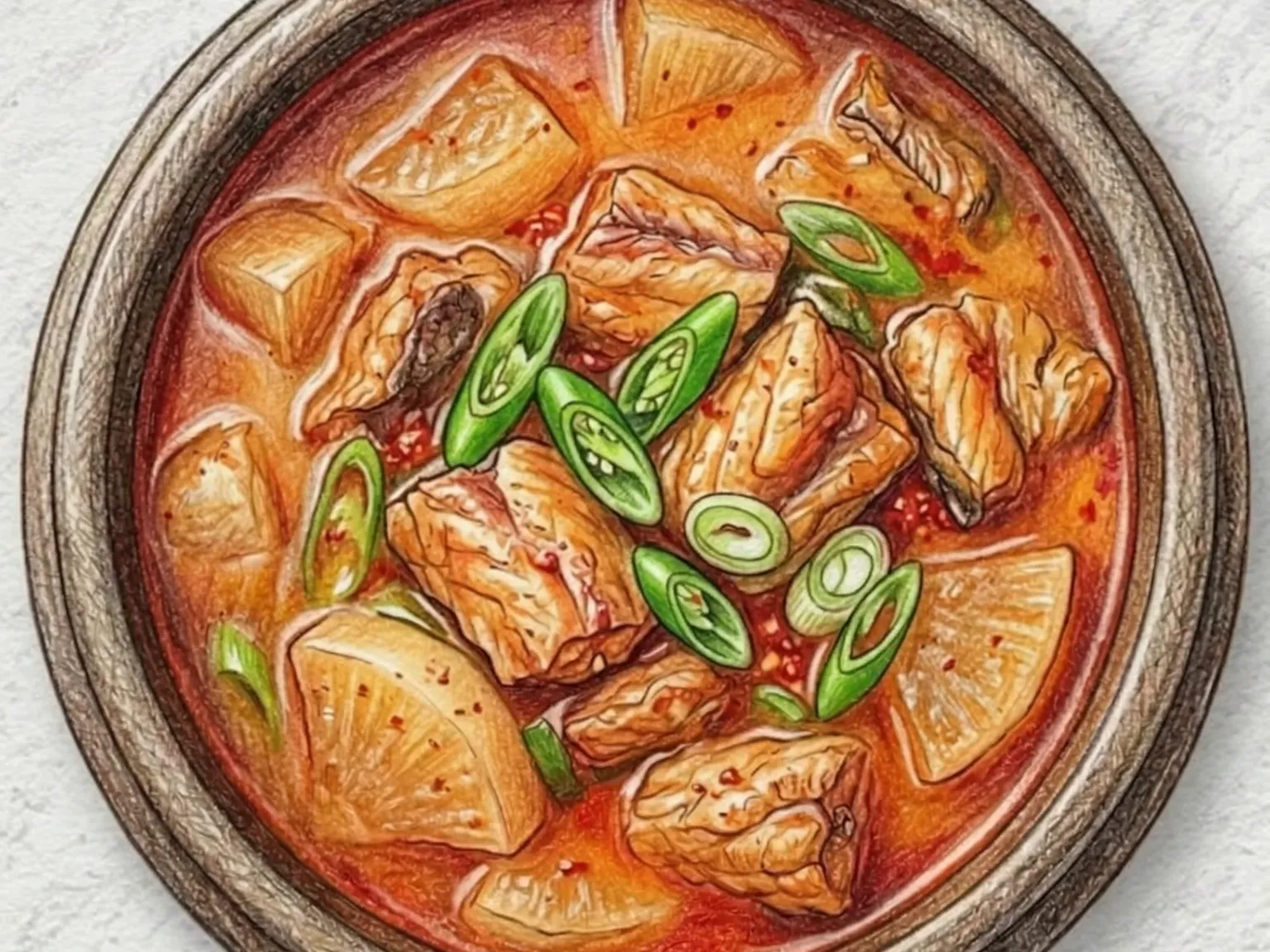
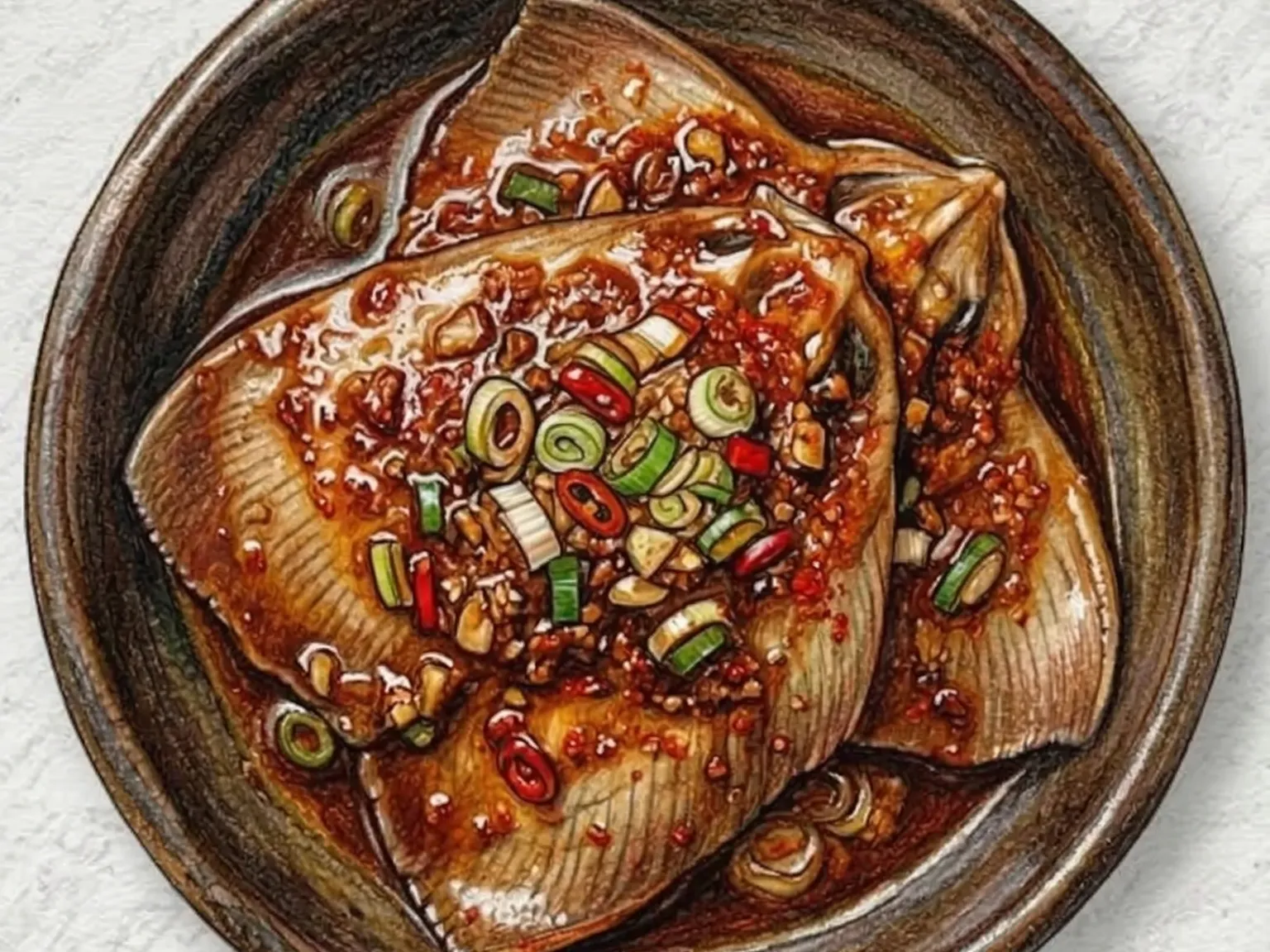
Ureok-jjim is a Korean spicy steamed rockfish cooked with Korean radish, onion, and green onion in a gochugaru and soy sauce broth. Rockfish has firm, well-defined flesh that holds its shape through the cooking process, and scoring the skin lets the bold seasoning reach deep into the meat. Radish softens in the braising liquid and absorbs the chili heat while contributing natural sweetness, and ginger keeps the fish tasting clean. The remaining sauce is concentrated enough to spoon over rice, delivering a hit of spicy, salty flavor with every bite.

Zi Ran Yang Rou (Cumin Lamb Stir-Fry)
Zi ran yang rou is a cumin lamb stir-fry originating from China's northwestern provinces, particularly Xinjiang and Gansu, where lamb and cumin are foundational ingredients. Lamb is cut into bite-sized pieces and seared over the highest possible heat, then showered with ground cumin and chili flakes while still in the wok. The cumin's warm, earthy aroma bonds with the assertive flavor of lamb in a way that neither ingredient achieves alone - cumin needs lamb's fat to bloom, and lamb needs cumin's fragrance to focus its richness. Minced garlic and sliced onion contribute underlying sweetness that tempers the spice, while soy sauce ties the seasoning together.

Stir-fried Korean Radish Namul
Mu-namul-bokkeum is a foundational Korean side dish made by stir-frying julienned daikon radish in perilla oil to draw out its natural sweetness. Cutting the radish into matchstick-thick strips and salting them for around five minutes beforehand is a critical step. Without it, the radish releases its moisture into the pan during cooking, turning what should be a stir-fry into an unintended steam, leaving the namul limp and dull. Garlic goes into the perilla oil first to build an aromatic base, then the radish strips are tossed over medium heat for three to four minutes. During this time, heat converts the radish's starch into sugars, and the raw, sharp bite disappears, replaced by a mellow and gentle sweetness. Soup soy sauce rather than regular soy sauce keeps the seasoning clean without muddying the pale color of the radish. Placing the lid on for two minutes at the end steams the interior through without over-softening the vegetable. This namul serves as one of the five-color toppings in bibimbap and is a required dish on ancestral rite tables. Sesame seeds scattered over the finished dish add a toasted nuttiness that carries the flavor through to the last bite.

Korean Stir-Fried Shrimp (Garlic Butter Soy Glazed Shrimp)
Saeu-bokkeum is a Korean shrimp stir-fry cooked in melted butter with garlic, then seasoned with soy sauce, sugar, and black pepper. The shrimp are peeled and deveined, patted dry, and cooked only until they turn pink -- a matter of minutes. Butter and garlic form the aromatic base, while soy sauce and a small amount of sugar build a savory-sweet glaze that coats each shrimp without a separate sauce. Green onion scattered on top adds a fresh bite to finish.

Korean Fish Soup (White Fish and Radish Clear Broth)
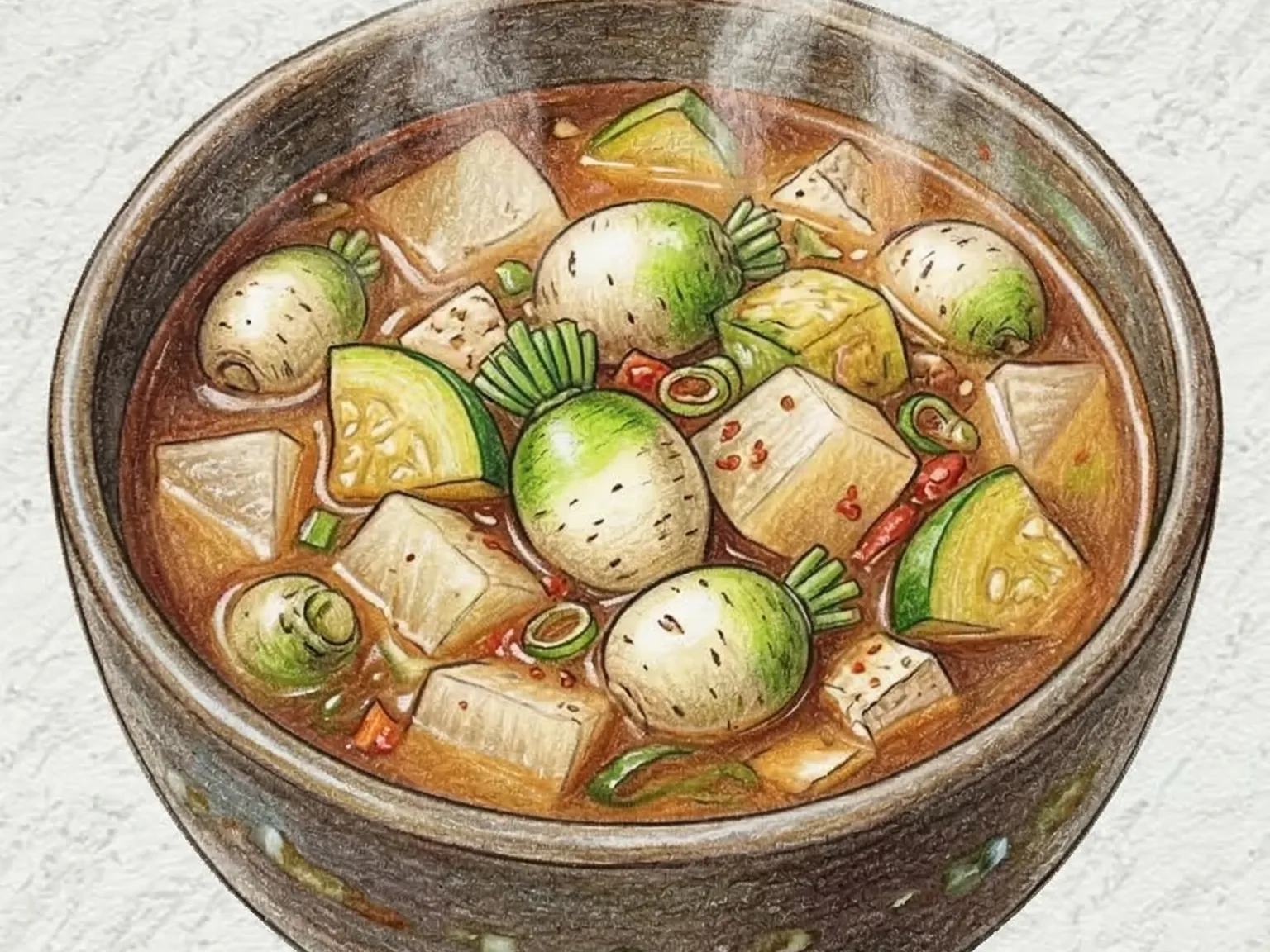
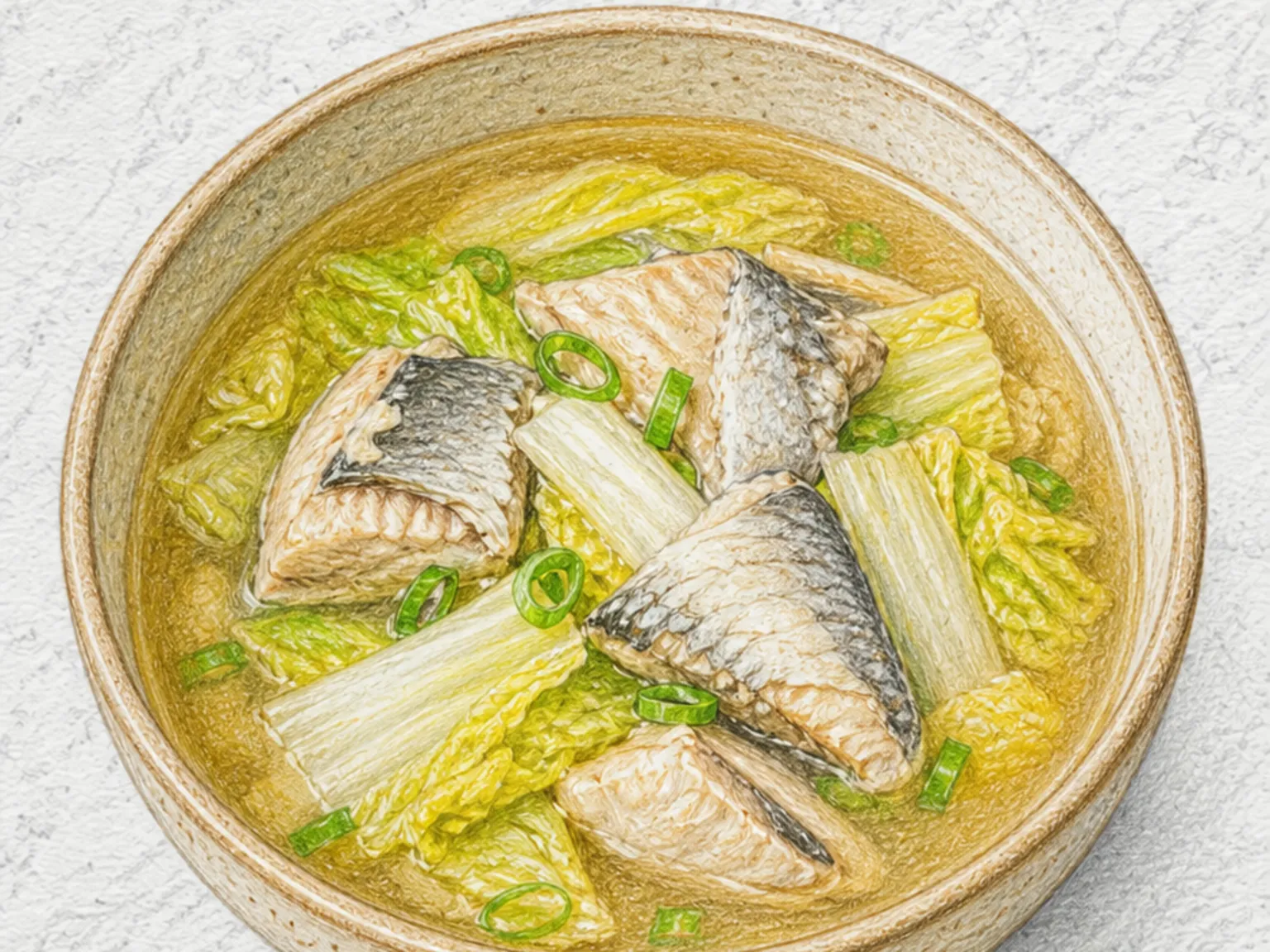
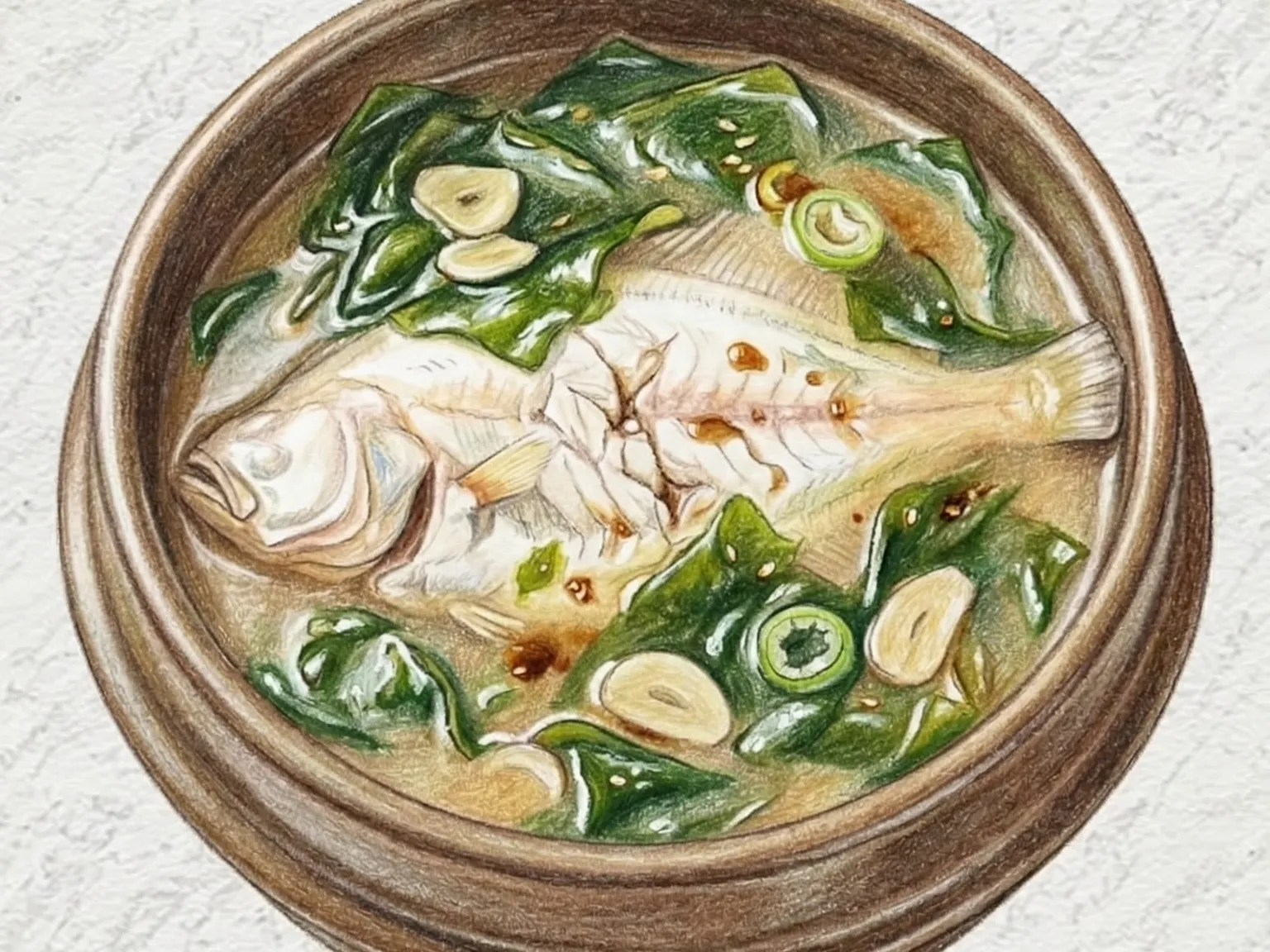
Saengseon-guk is a traditional Korean fish soup made with white-fleshed fish and radish in a clear broth. The radish simmers first, building a base of natural sweetness, before garlic and soup soy sauce are added for depth. The fish goes in once the radish is halfway cooked, and timing matters - it should cook only until the flesh turns opaque and begins to flake, as prolonged boiling would break it apart and cloud the broth. Tofu and sliced Korean chili peppers join near the end, adding soft texture and a mild kick. Green onion finishes the bowl with a fresh note. The result is a light, transparent soup where the fish's own clean, marine flavor does most of the work. It is the kind of straightforward home cooking that appears on Korean dinner tables throughout the year, requiring little more than fresh fish and basic pantry staples.

Korean Clam Sujebi Stew (Hand-Torn Dough in Clam Broth)
This stew combines hand-torn flour dumplings with clams, potato, and zucchini simmered in an anchovy-kelp stock. Adding clams to the base broth builds a clean, briny depth that anchovy stock alone cannot achieve. The dough is torn directly into the pot in uneven, thick pieces that cook into chewy, irregular shapes, each one slightly different in texture depending on thickness. As the potato softens it partially dissolves into the broth, thickening the liquid naturally without any starch addition. Zucchini and onion release gentle sweetness that rounds out the savory base. Soup soy sauce keeps the broth clear and properly seasoned, and sliced green onion finishes the bowl with fresh aroma. Because the sujebi itself serves as the starch, this one-bowl dish covers both soup and carbohydrate in a single serving, making it a satisfying, complete meal on its own.

Korean Steamed Bulgogi with Cabbage
Yangbaechu bulgogi jjim is Korean steamed bulgogi with cabbage, where thin-sliced beef marinated in pear juice and soy sauce is layered with cabbage and onion, then steamed covered. The pear juice tenderizes the beef and adds a subtle fruit sweetness, while the cabbage absorbs the meat juices and turns soft and sweet. Soy sauce and sesame oil build a deep savory backbone, and green onion stirred in at the end provides an aromatic lift. The reduced braising liquid at the bottom is meant to be mixed with rice, pulling together the flavors of beef and vegetables into one cohesive bite.

Korean Water Kimchi (Chilled Radish Broth Kimchi)
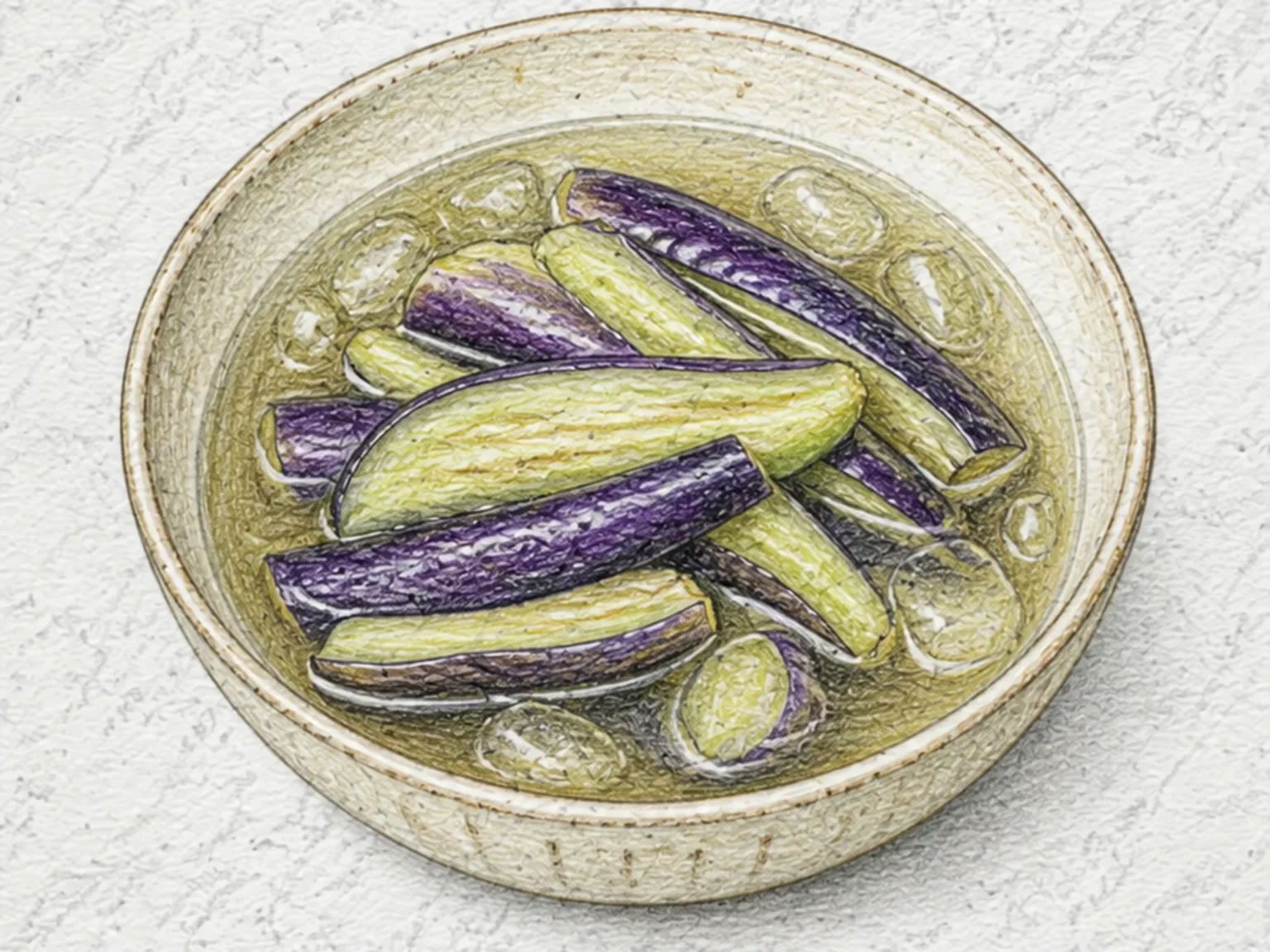
Nabak-kimchi is a Korean water kimchi made by submerging thinly sliced radish and napa cabbage in a clear, lightly reddened broth - fundamentally different from the dense, fermented intensity of baechu-kimchi. Here, the chilled broth is the centerpiece, meant to be sipped and spooned rather than merely eaten as a side. Radish and cabbage are cut into flat 2-to-3cm squares, salted briefly, then immersed in a liquid made by steeping gochugaru in water through cheesecloth - wrapping the powder prevents the particles from clouding the broth. Garlic, ginger, scallion, and fish sauce flavor the liquid. One day at room temperature initiates lactic fermentation, introducing a gentle tang, and refrigeration over two to three days deepens the complexity. A spoonful of nabak-kimchi broth alongside spicy food acts as a cooling palate cleanser. Served cold, this kimchi is particularly refreshing in summer - it is a drinking kimchi in the truest sense, closer in spirit to naengmyeon broth than to solid fermented kimchi.

Korean Braised Spanish Mackerel with Radish
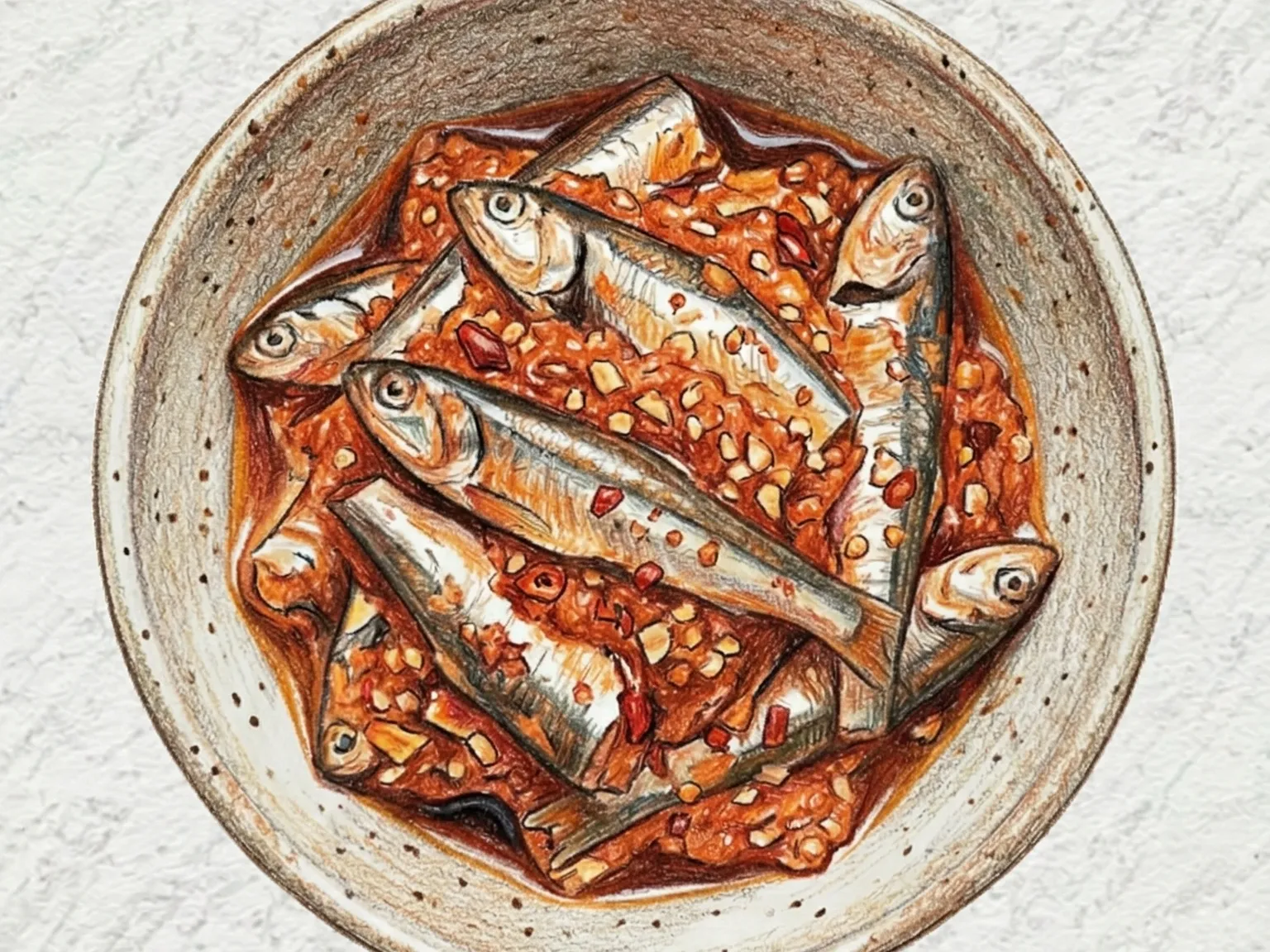
Samchi mu-jorim layers sliced Korean radish on the bottom of a pot, topped with Spanish mackerel steaks and onion, then braised in a sauce of gochujang, soy sauce, gochugaru, and garlic. The radish prevents the fish from sticking, absorbs the braising liquid, and turns translucent-soft as it cooks. Rather than flipping the fish, the sauce is spooned over the top repeatedly so the flesh stays intact. After about fifteen minutes of simmering on medium heat, the liquid reduces to a concentrated, mildly spicy broth with the radish's subtle sweetness woven through it.

Korean Ginseng Chicken Soup
Samgyetang is Korea's iconic ginseng chicken soup, made by stuffing a small whole chicken with soaked glutinous rice, fresh ginseng, jujubes, and garlic, then simmering it for over an hour. The glutinous rice inside the cavity absorbs the chicken's juices as it cooks, turning into a thick, porridge-like filling that spills into the broth when the bird is broken open at the table. The ginseng lends a subtle bitterness and herbal depth that distinguishes this soup from plain chicken broth, while jujubes contribute a quiet fruity sweetness. The prolonged cooking dissolves collagen from the skin and joints, giving the broth a silky body despite its clear appearance. Seasoning is left to each diner, who dips the meat into salt and pepper on a side plate. Samgyetang is traditionally consumed during the three hottest days of the Korean summer - a practice rooted in the belief that fighting heat with heat restores depleted energy.

Korean Beef & Mung Bean Sprout Stew
Sukju soegogi jjigae is a spicy, clean-finishing Korean stew made by simmering beef brisket and mung bean sprouts together in a gochugaru-seasoned broth. The brisket is soaked in cold water to draw out blood before being briefly boiled and skimmed, which keeps the broth clear and free of off-flavors as it simmers. As the brisket slowly cooks through, it releases a deep, meaty base that forms the backbone of the stew's flavor, seasoned with chili flakes and soup soy sauce for a spicy, savory kick. Korean radish cooked alongside the meat counteracts any heaviness in the broth and contributes a clean, refreshing note to the finish, while oyster mushrooms add a layer of chewy umami. Mung bean sprouts go in last and should cook for no more than two minutes to preserve their snap; prolonged heat softens them completely and removes the textural contrast that defines the dish. Ladled over a bowl of steamed rice, the spicy broth seeps into every grain and turns the whole combination into a satisfying single-bowl meal.

Korean Braised Pork Ribs with Young Radish Greens
Yeolmu dwaeji galbi jjim is a Korean braised pork rib dish finished with young radish greens, cooked in a gochujang and soy sauce seasoning. The ribs simmer until the meat separates from the bone, building a concentrated, spicy braising liquid from the rendered pork stock and chili paste. Young radish greens are added only in the final minutes to preserve their crisp stems and fresh, slightly peppery aroma, which lightens the rich, heavy sauce. The combination of fall-off-the-bone pork and bright summer greens makes this a seasonal main course that bridges richness and freshness.

Korean Seasoned Shepherd's Purse
Naengi-namul-muchim is a fragrant spring banchan made from shepherd's purse (naengi), a wild green foraged from rice paddy edges and field margins in early spring. The root is eaten along with the leaves - its distinctive earthy, almost truffle-like aroma defines the dish, and discarding it halves the point of using naengi at all. Cleaning the roots of clinging soil is the most time-consuming prep step, requiring careful scraping with a knife. Blanching must stay under thirty seconds to preserve the volatile aromatics, with immediate cold-water shocking to lock in color and fragrance. Doenjang, soup soy sauce, minced garlic, and sesame oil form the dressing - the fermented paste's earthy depth meets the herb's soil-scented fragrance to create a layered spring flavor. Doenjang rather than gochujang is the traditional choice because chili heat would overwhelm naengi's delicate perfume. Available at Korean markets only during the brief February-to-March window, it is one of the most anticipated seasonal namul.

Korean Sebalnamul Beoseot Bokkeum (Saltwort Mushroom Stir-fry)
Sebalnamul beoseot-bokkeum is a Korean stir-fry of saltwort (glasswort) and oyster mushrooms finished with ground perilla seeds and perilla oil. The saltwort carries a natural brininess that reduces the need for added soy sauce, while the oyster mushrooms are cooked on high heat first to drive off moisture and firm their texture. The saltwort is stir-fried for just one minute to preserve its snappy crunch. Perilla powder and oil folded in at the end create a nutty, aromatic layer that bridges the briny greens and earthy mushrooms.

Korean Ox Bone Soup (Milky Slow-Simmered Beef Bone Broth)
Seolleongtang is one of Korea's oldest and most enduring soups, produced by simmering ox leg bones and beef brisket together for six to eight hours until the broth turns a deep, opaque milky white. The bones are soaked in cold water for a minimum of two hours to purge as much blood as possible, then blanched in a separate pot and rinsed before the true simmering begins in fresh water. Over the course of a half-day at a steady, rolling boil, marrow and collagen break down and emulsify into the water, creating a broth with a heavy, almost creamy viscosity and a deep bovine savoriness that accumulates slowly and cannot be replicated with shortcuts. The brisket is removed after two hours, when it has turned tender and fully cooked, then sliced thin across the grain and returned to the bowl as a topping. The defining tradition of seolleongtang is that the broth arrives at the table completely unseasoned, and each person adds their own salt, white pepper, and sliced green onion to taste. This custom underscores the expectation that the broth itself should carry the bowl with its own richness. Steamed rice or thin wheat noodles are added directly to the soup and left to soak, absorbing the milky liquid until each grain or strand carries the flavor of the bone broth. In Korea, seolleongtang is eaten as a restorative meal after illness, as a morning hangover cure, and as a deeply satisfying cold-weather comfort food.

Korean Blood Sausage Hot Pot
Sundae-jeongol is a spicy Korean hot pot built around blood sausage, cooked together with cabbage, perilla leaves, and onion in a gochugaru-seasoned beef bone broth. The collagen-rich broth from ox bones forms the body of the soup, and combining gochugaru with a spoonful of doenjang transforms the base into something both fiery and deeply savory. The sundae heats through fully in the simmering broth, its filling of glass noodles and coagulated blood absorbing the liquid and becoming pleasantly dense and chewy. Doenjang softens the raw sharpness of the chili and adds fermented complexity that bare gochugaru cannot provide alone. Cabbage slowly releases its sweetness into the broth as it cooks down, while perilla leaves should be added just before serving to preserve their herbal aroma. The broth concentrates and deepens the longer the pot simmers, making it a dish that rewards eating slowly over time. A filling and convivial pot suited for cold-weather gatherings around a shared table.

Korean Soy Braised Salmon
Yeon-eo ganjang jorim is Korean soy-braised salmon where fillets are seared first to firm the surface, then glazed in a sauce of soy sauce, cooking wine, and oligosaccharide syrup. Green onion and onion cook in the sauce, adding sweetness and neutralizing any fishiness. The syrup gives the glaze a smooth sheen that clings to each piece of salmon as the liquid reduces. With total cooking time under twenty minutes, this is a practical weeknight fish dish that delivers a polished, glossy presentation with minimal effort.

Korean Cucumber Doenjang Salad
Oi-doenjang-muchim dresses cucumber in a doenjang-based seasoning - a milder alternative to the gochugaru-forward oi-muchim, foregrounding the fermented soybean paste's savory depth over spicy heat. Cucumber is sliced into half-moons or diagonal cuts and salted for five minutes to draw out moisture; skipping this step dilutes the dressing into a watery puddle. The seasoning blends doenjang, soup soy sauce, minced garlic, sesame oil, and sesame seeds, with the doenjang quantity being the critical ratio - too much and the dish is aggressively salty, too little and the cucumber's blandness dominates. Roughly one tablespoon of doenjang to two cucumbers is the working proportion. The cucumber's cool moisture meets doenjang's deep umami to produce a combination that is refreshing yet substantial enough to anchor a rice meal, especially in summer. This banchan must be eaten promptly after assembly - over time, osmotic pressure draws water from the cucumber and collapses its crunch. Served alongside grilled meat, the doenjang's savoriness complements the char while cleansing the palate.

Korean Selleri Sogogi Bokkeum (Celery Beef Stir-fry)
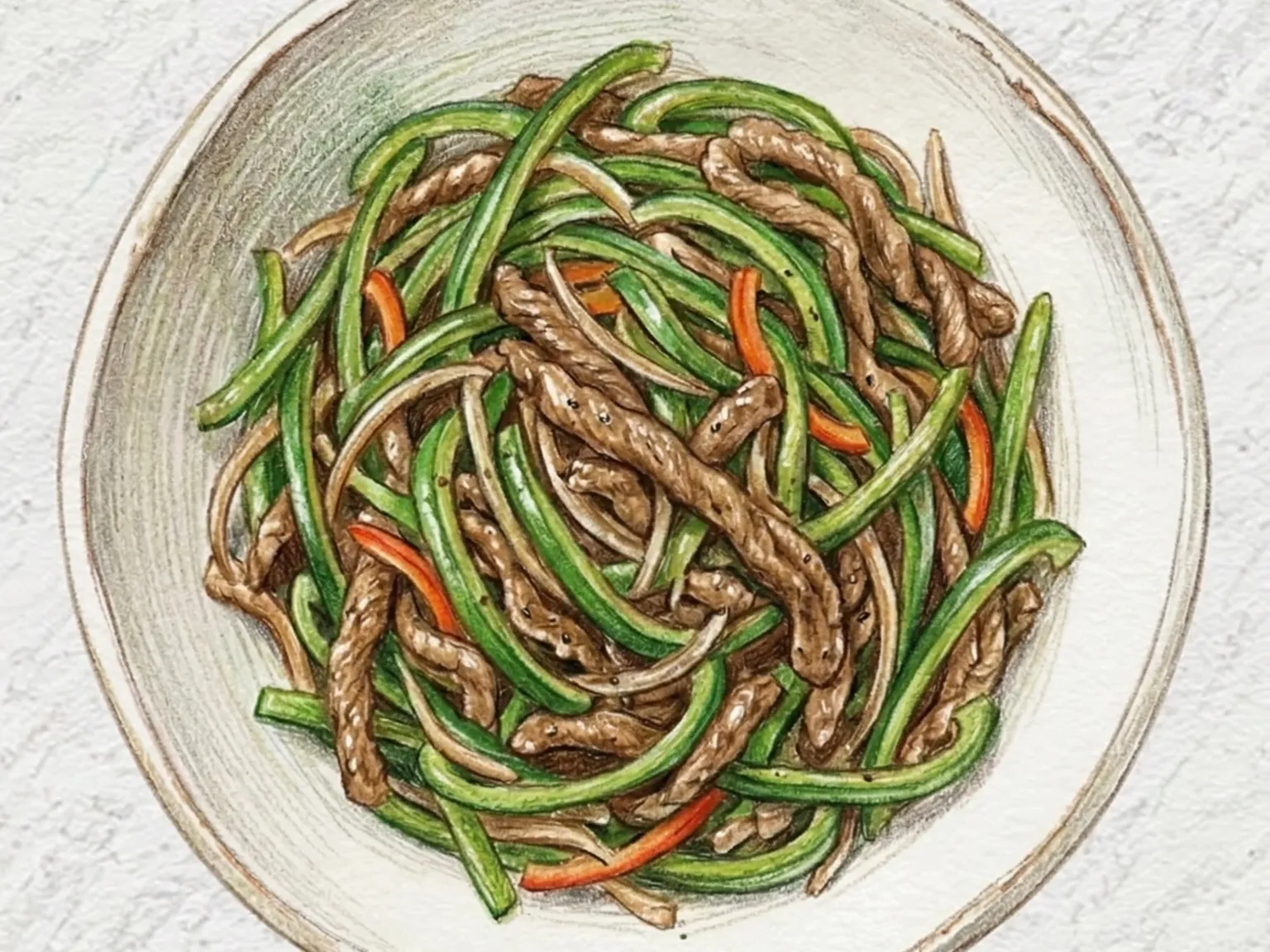
Selleri sogogi-bokkeum stir-fries soy-marinated lean beef round with celery, onion, and bell pepper over high heat. The beef is seared first for about two and a half minutes then set aside, and the vegetables are cooked separately in the same pan to keep them crisp before everything is combined. Oyster sauce and soy sauce give the beef a deep umami character, while celery's herbal freshness and firm crunch lighten the overall dish. Adding celery leaves at the very end intensifies the aromatic, almost grassy fragrance.

Korean Blood Curd Soup (Spicy Ox Blood and Beansprout Stew)
Seonji-guk is a Korean blood curd soup built from coagulated ox blood, seasoned napa cabbage outer leaves, and bean sprouts in a spicy, doenjang-accented broth. The napa greens are pre-dressed with soybean paste, garlic, and chili flakes before going into the pot, where they simmer and release an earthy, fermented depth into the liquid. Bean sprouts are added for their crisp texture and clean, refreshing bite. The blood curd - cut into large cubes - goes in partway through cooking and simmers just eight minutes to heat through without breaking apart. Its texture is soft and faintly springy, unlike anything else in the Korean soup canon, and it absorbs the surrounding spicy broth. Gochugaru gives the soup a ruddy color and a slow-building warmth. In Korea, seonji-guk is closely associated with the morning-after meal, served in dedicated haejang-guk restaurants as a restorative after heavy drinking.

Korean Silken Tofu Seafood Stew
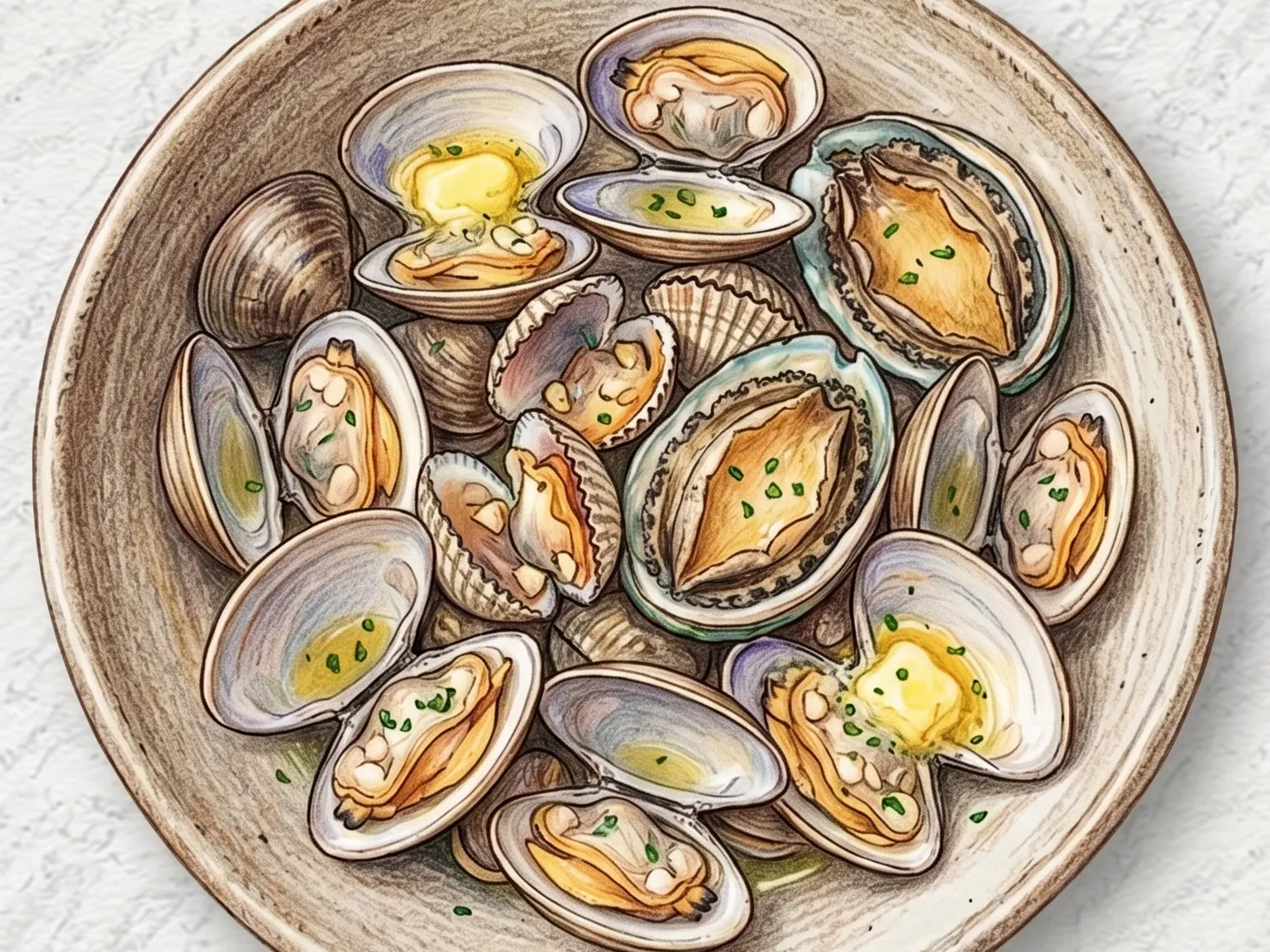
Sundubu haemul jjigae is a seafood soft tofu stew that combines silken tofu with shrimp and Manila clams in an anchovy stock seasoned with gochujang and Korean chili flakes. The aromatics are stir-fried in sesame oil first to build a deeper base before the stock is added. As the shrimp and clams cook through, they release their own briny juices into the spicy broth and push the umami noticeably higher. An egg cracked in at the end binds gently with the silken tofu, adding richness and a slight body to the broth. Deveining the shrimp and removing the back intestine keeps the flavor clean, and soaking the clams in lightly salted water beforehand purges any sand that would otherwise cloud the stock.

Korean Braised Lotus Root with Pork
Yeongeun dwaejigogi jorim is a Korean braise of lotus root and pork shoulder in a gochujang and soy sauce seasoning. The lotus root absorbs the spiced braising liquid while maintaining its signature crisp bite, and the pork shoulder softens as its fat renders into the sauce, building depth. Gochujang provides a steady warmth while soy sauce anchors the umami, and oligosaccharide syrup glazes everything in a glossy coat. The textures hold up well even after cooling, making this a practical banchan for lunchboxes and meal prep.