King Oyster Mushroom Katsu
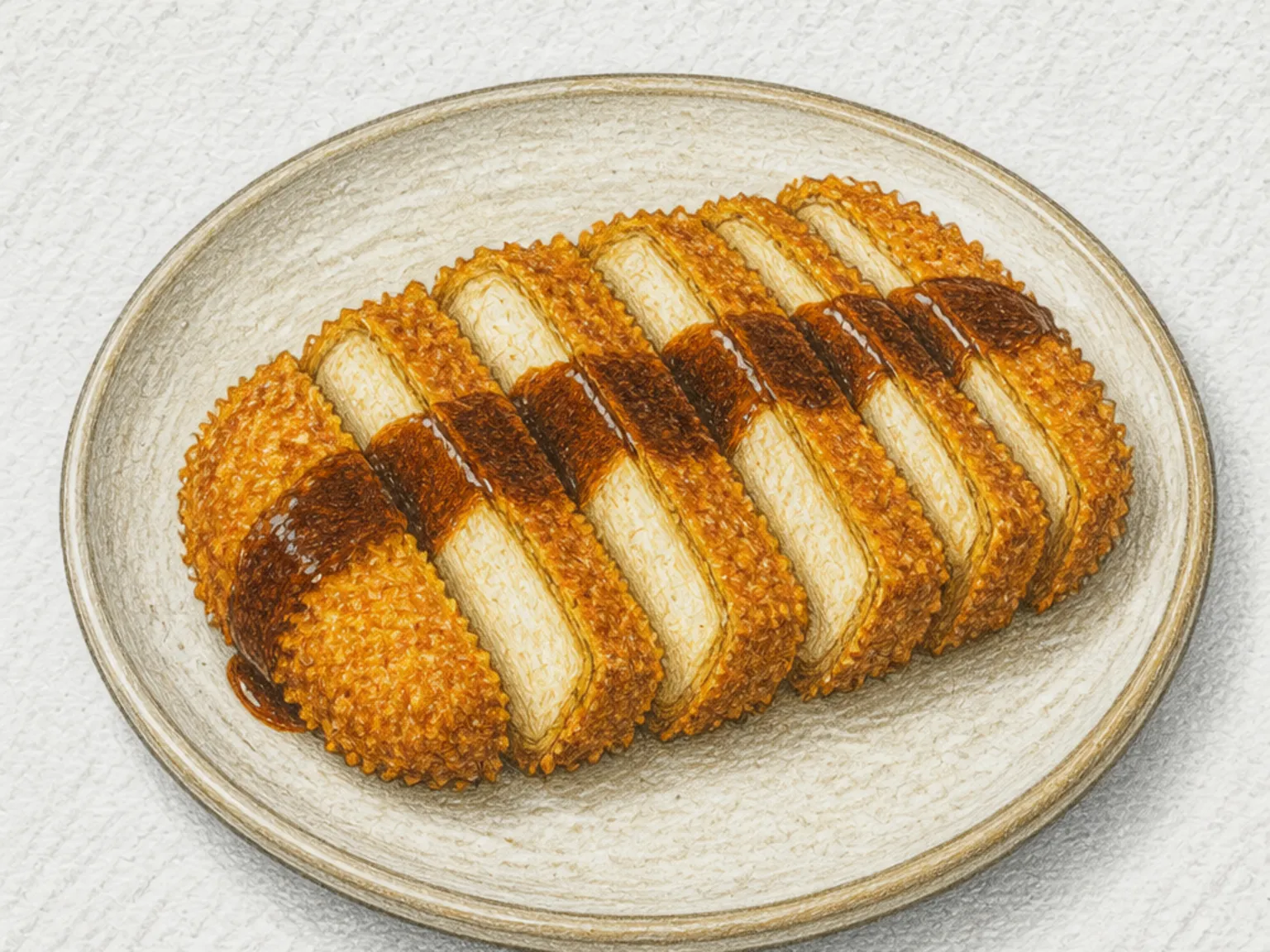
King oyster mushrooms are cut lengthwise into wide slabs 1.5 cm thick and breaded like tonkatsu, and the thickness gives them a meaty chew without any meat. Like the pork version, they go to the table with tonkatsu sauce.
26 recipes. Page 1 of 2
As an Amazon Associate, we may earn from qualifying purchases.
Start with recipes grouped by cooking time and how they fit the meal.
King oyster mushrooms are cut lengthwise into wide slabs 1.5 cm thick and breaded like tonkatsu, and the thickness gives them a meaty chew without any meat. Like the pork version, they go to the table with tonkatsu sauce.
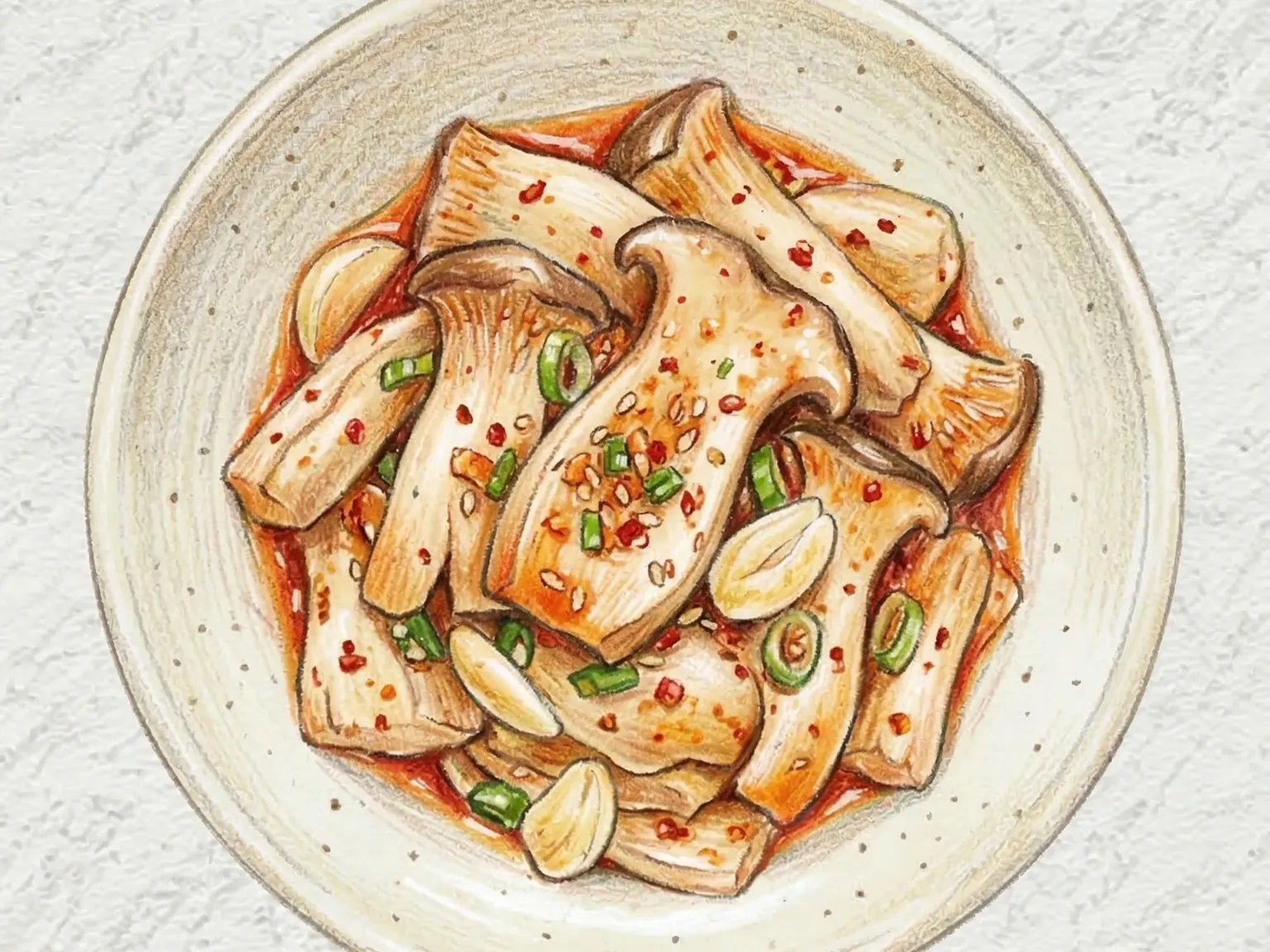
The king oyster mushrooms are torn by hand along the grain instead of sliced, then steamed. The soy, vinegar and chili flake dressing seeps into the torn fibers, and with no oil in the pan the mushroom stays clean-tasting.
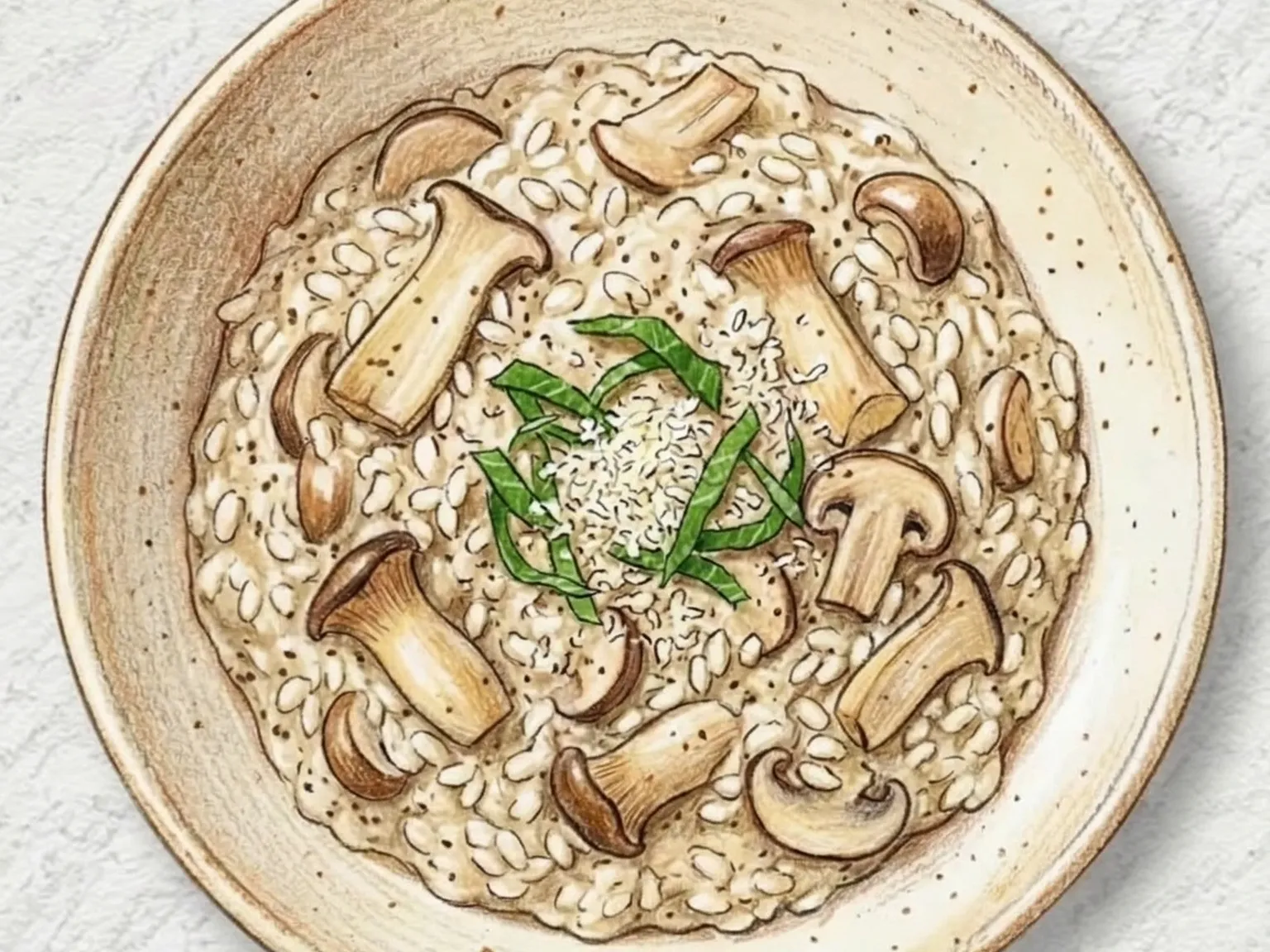
Ground perilla seed goes in with the Parmesan at the end of this mushroom risotto, and the first spoonful smells nutty in a way anyone who knows Korean perilla noodle soup will recognize. There's no cream; the starch stirred out of the rice is what makes it thick.
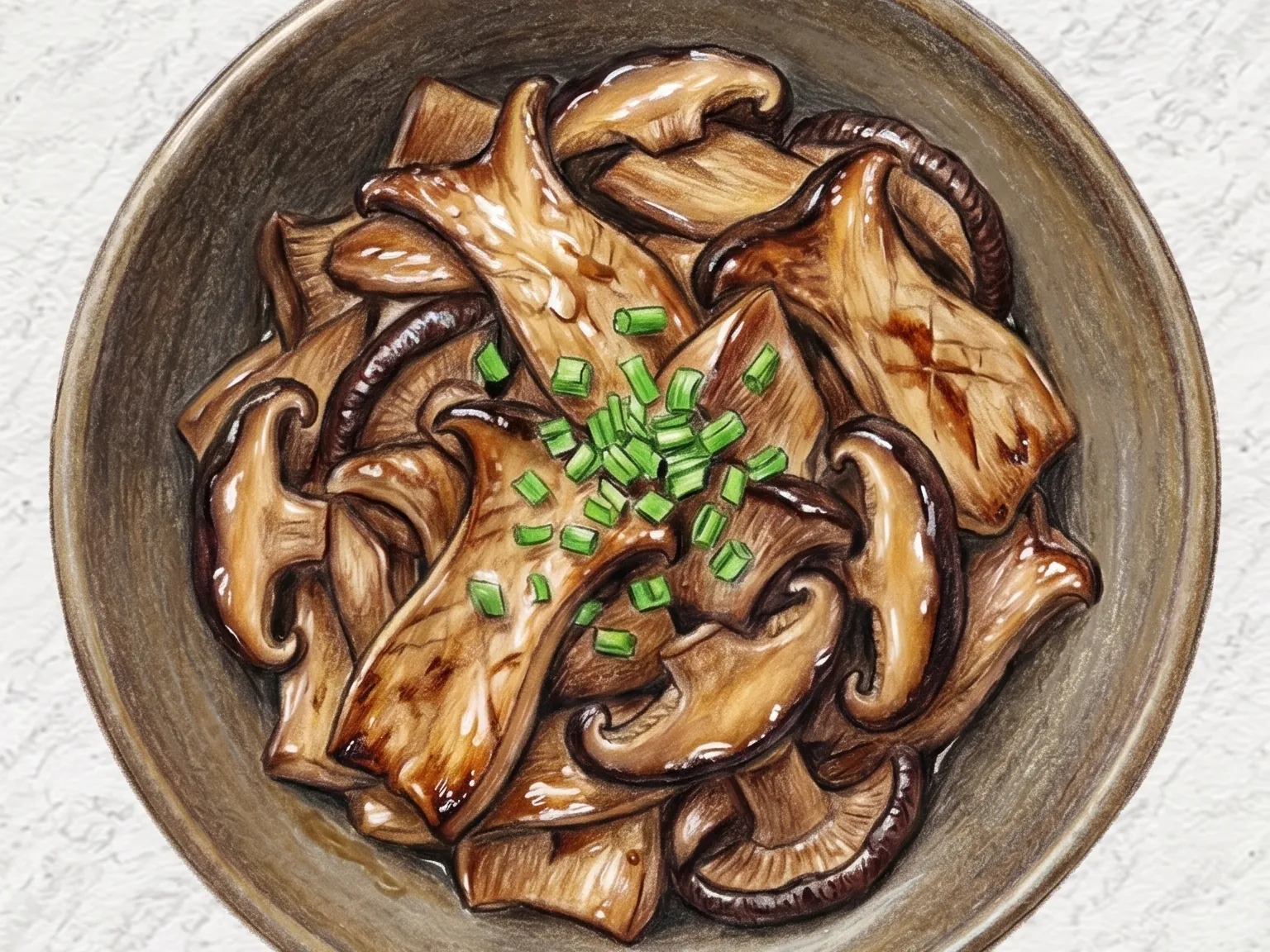
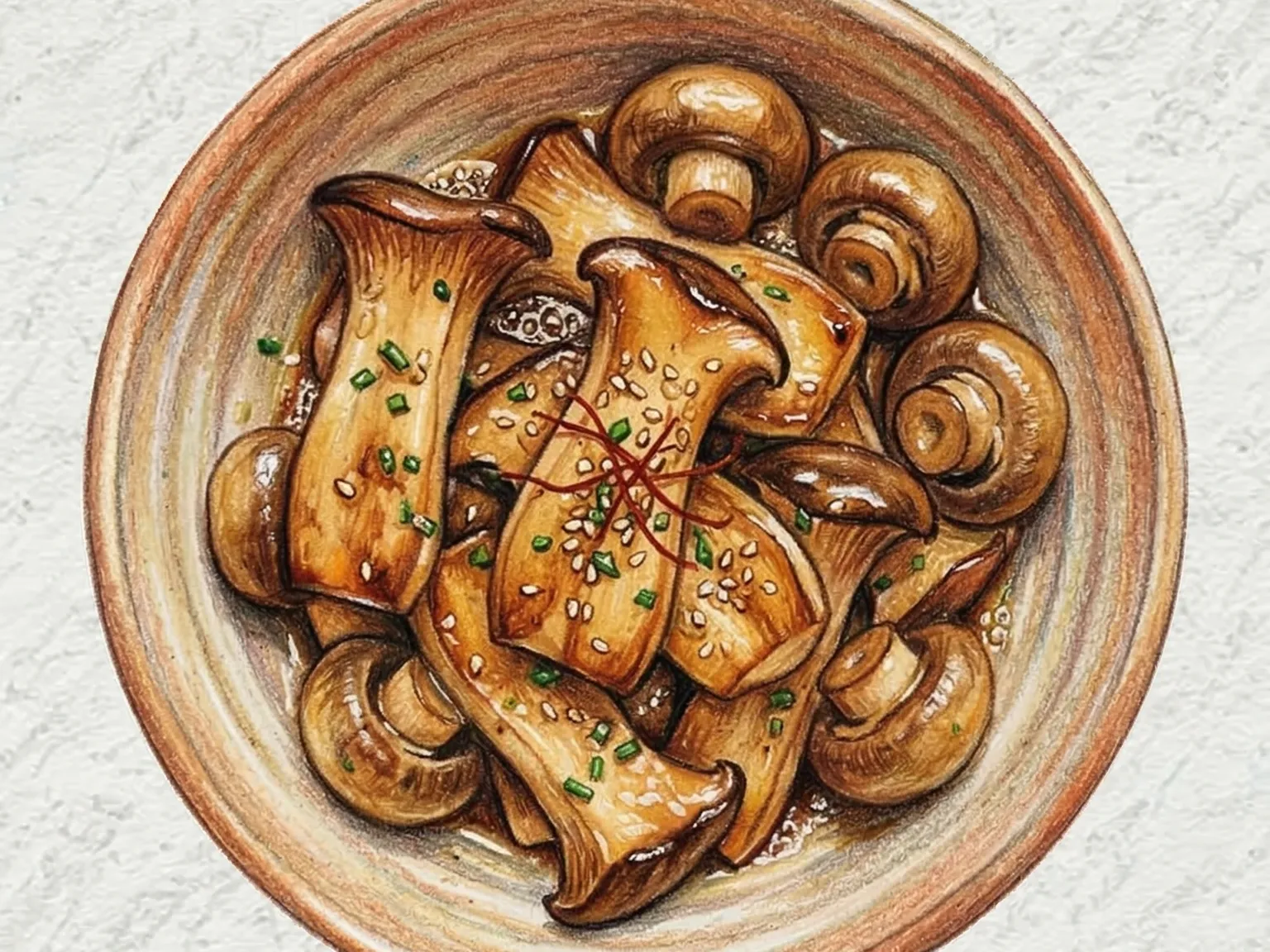
King oyster mushrooms are torn lengthwise by hand, so their fibrous grain stays intact. They are seared in a dry pan first to drive off moisture, which is why the soy sauce clings as a dark glaze instead of turning watery.
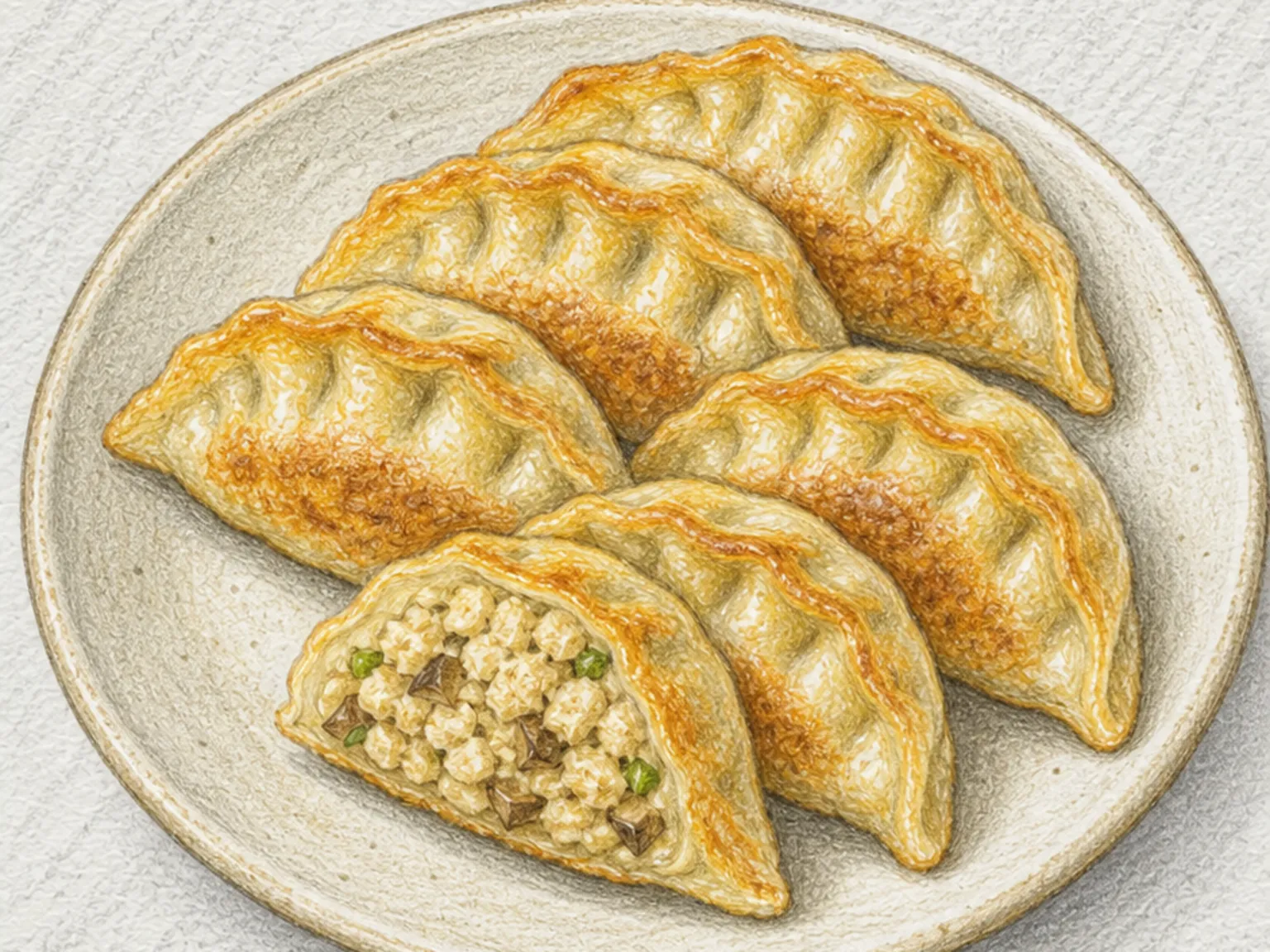
There is no meat in the filling, only king oyster mushroom, tofu and garlic chives. Both the mushroom and the tofu hold a lot of water, so the minced mushroom is dry-fried in a pan without oil first and the tofu is wrung out hard in a cloth.
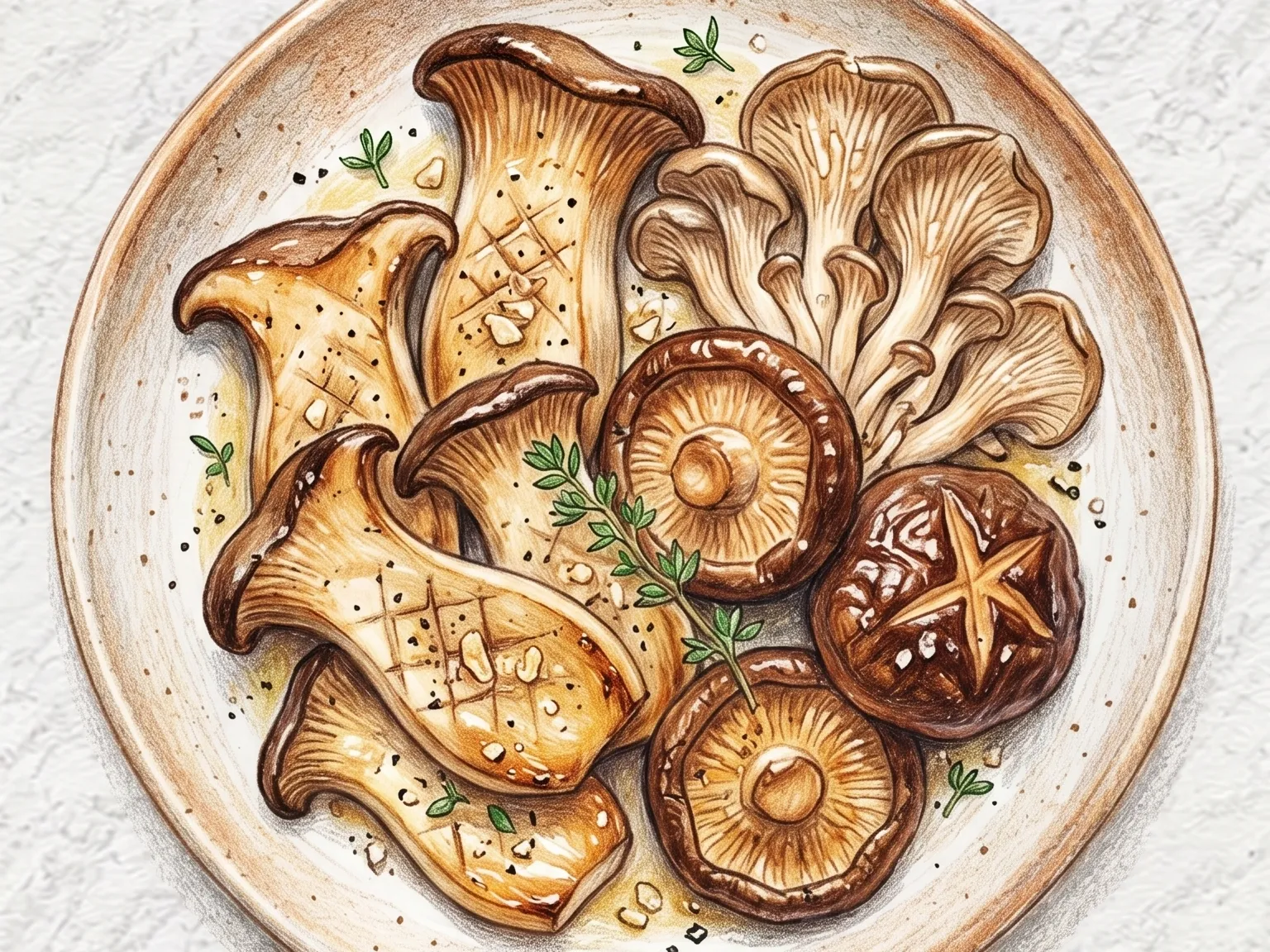
Made as a drinking snack, these mushrooms get nothing more than butter, garlic, a splash of soy sauce and some pepper. Crowd them in the pan and they sit in their own water and end up tasting boiled, so a small pan means cooking in two batches.
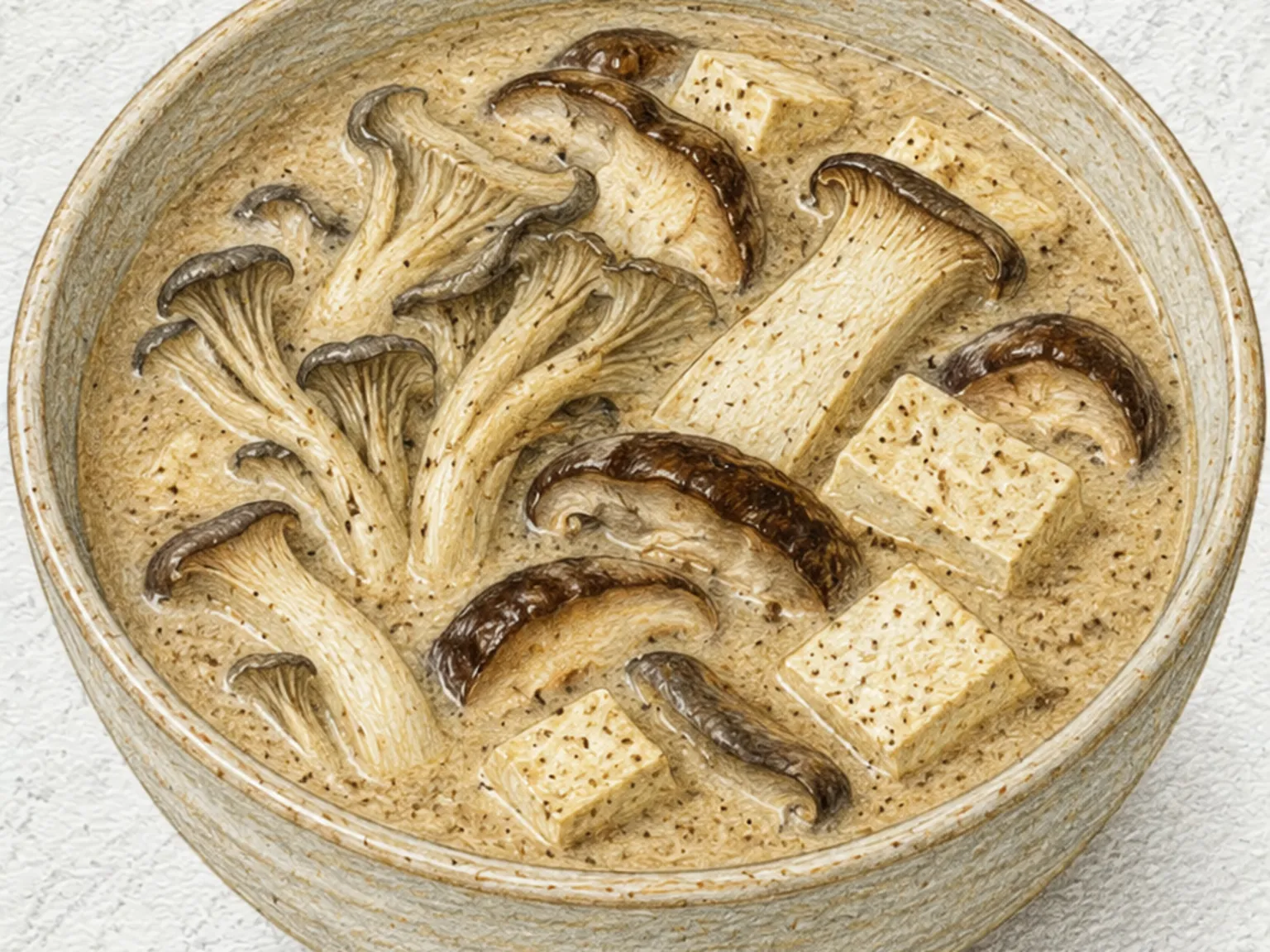
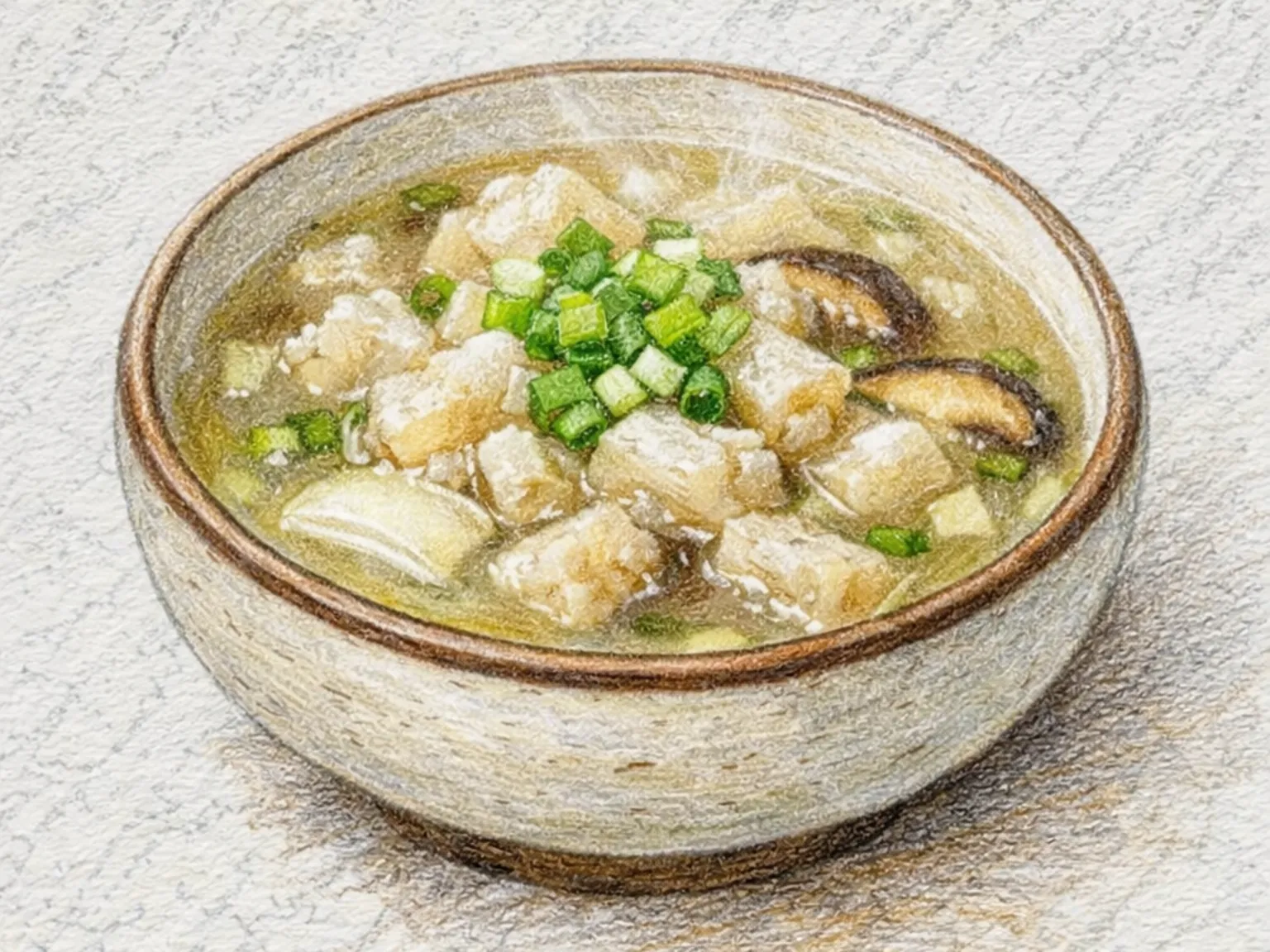
Oyster mushrooms are torn along the grain, shiitake sliced thin and king oyster mushrooms cut on the bias, and each of the three has its own chew in the bowl. The base is an onion stock, yet perilla seed powder and tofu make it filling, and two minutes of rest off the heat lets the thick broth settle.
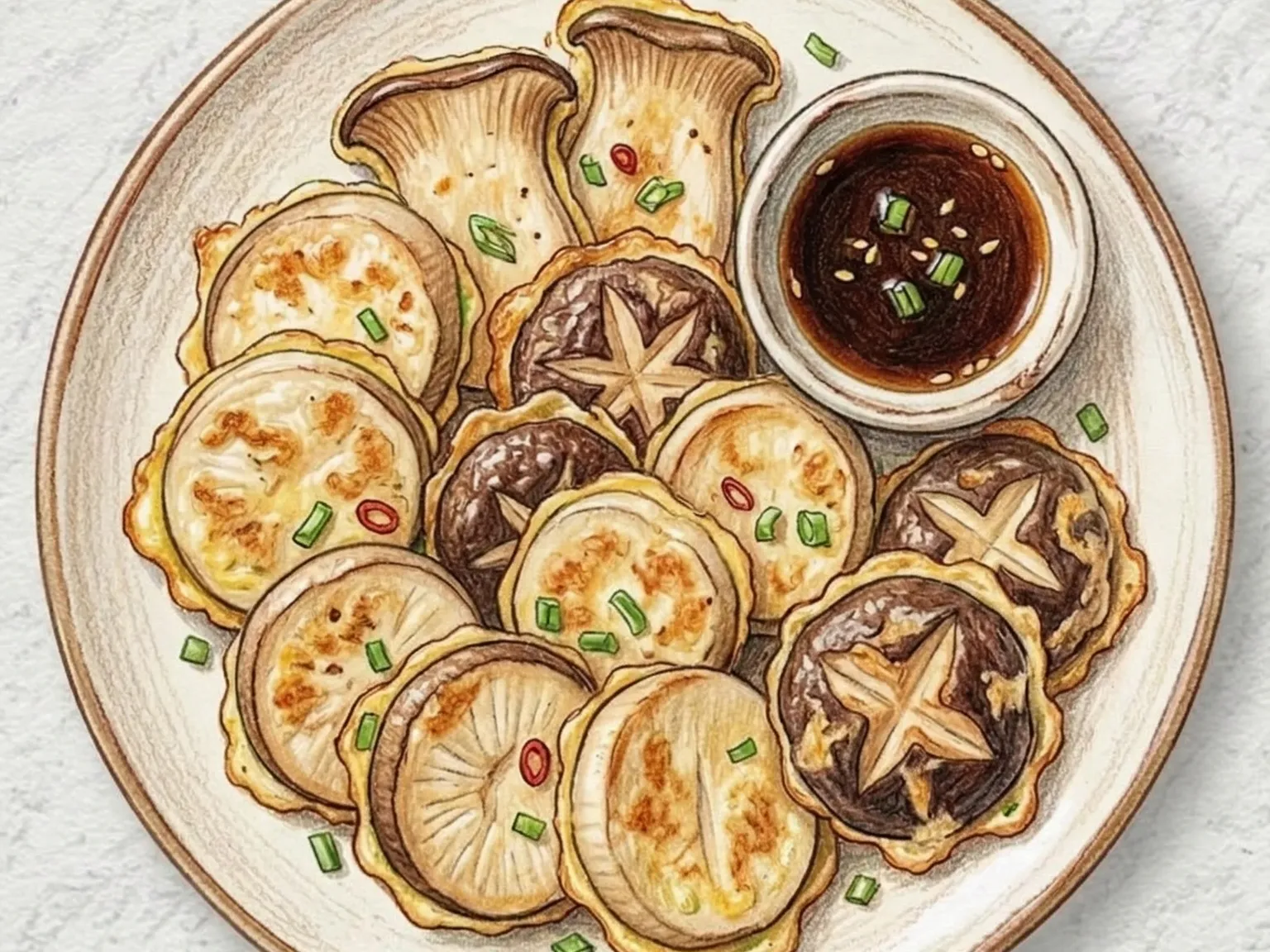
King oyster and shiitake mushrooms go into the same pan together. The batter is only a thin coat, so once fried, the mushrooms' aroma and chewy grain come through ahead of any taste of flour.
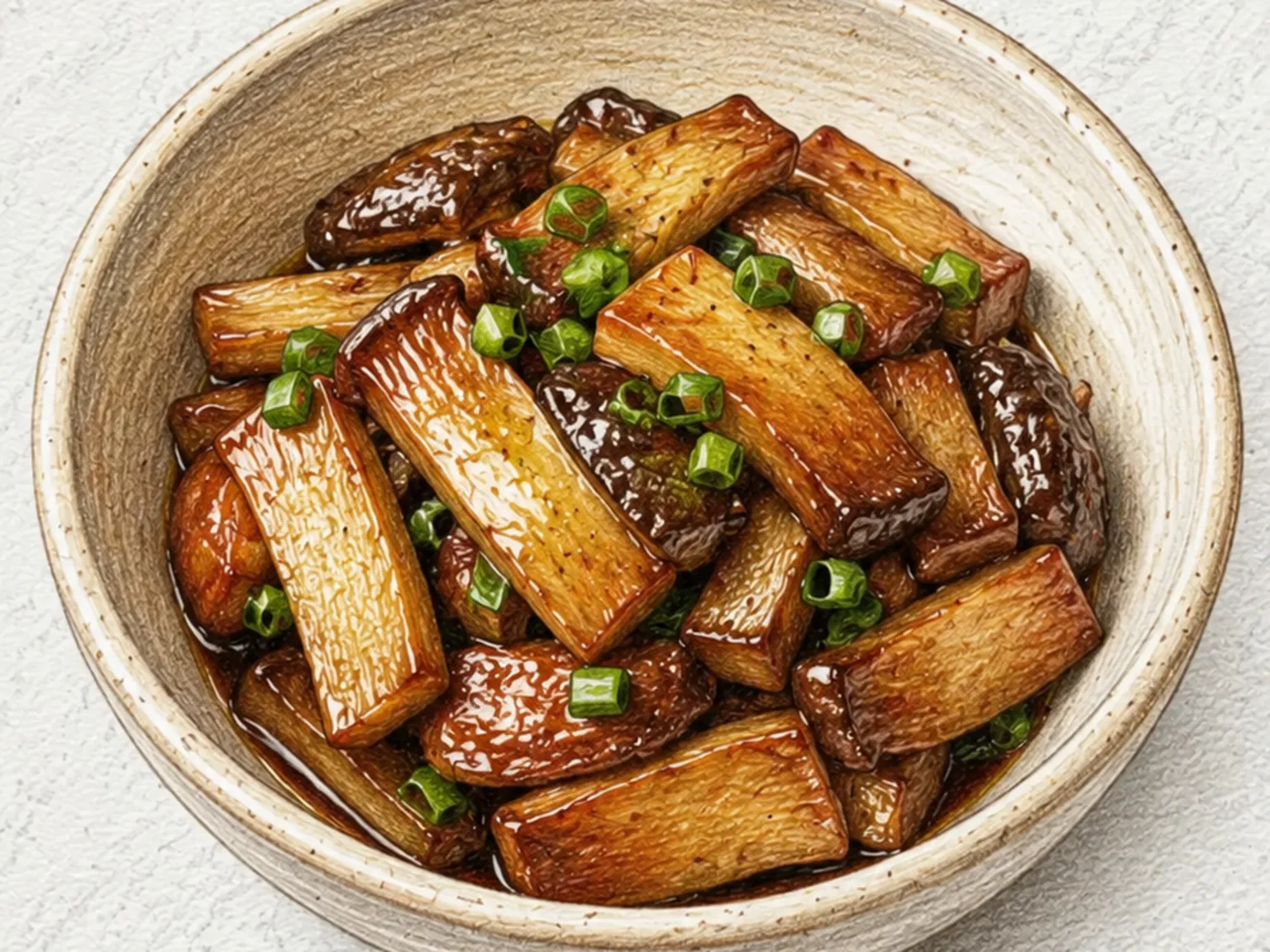
Searing king oyster mushrooms until browned before adding any sauce gives this banchan two textures: a chewy, golden cut face and a juicy center. Spread in a single layer, they lose the water they release, which would otherwise thin the glaze and keep it from turning glossy. Mix the sauce beforehand and keep it beside the pan so it can be poured straight in before the mushrooms scorch. The soy and oligosaccharide syrup glaze cooks only briefly, and the heat goes off before it turns too strong, letting residual heat bring up the shine. Finished with green onion and sesame oil, it is best warm and keeps well as a make-ahead side.
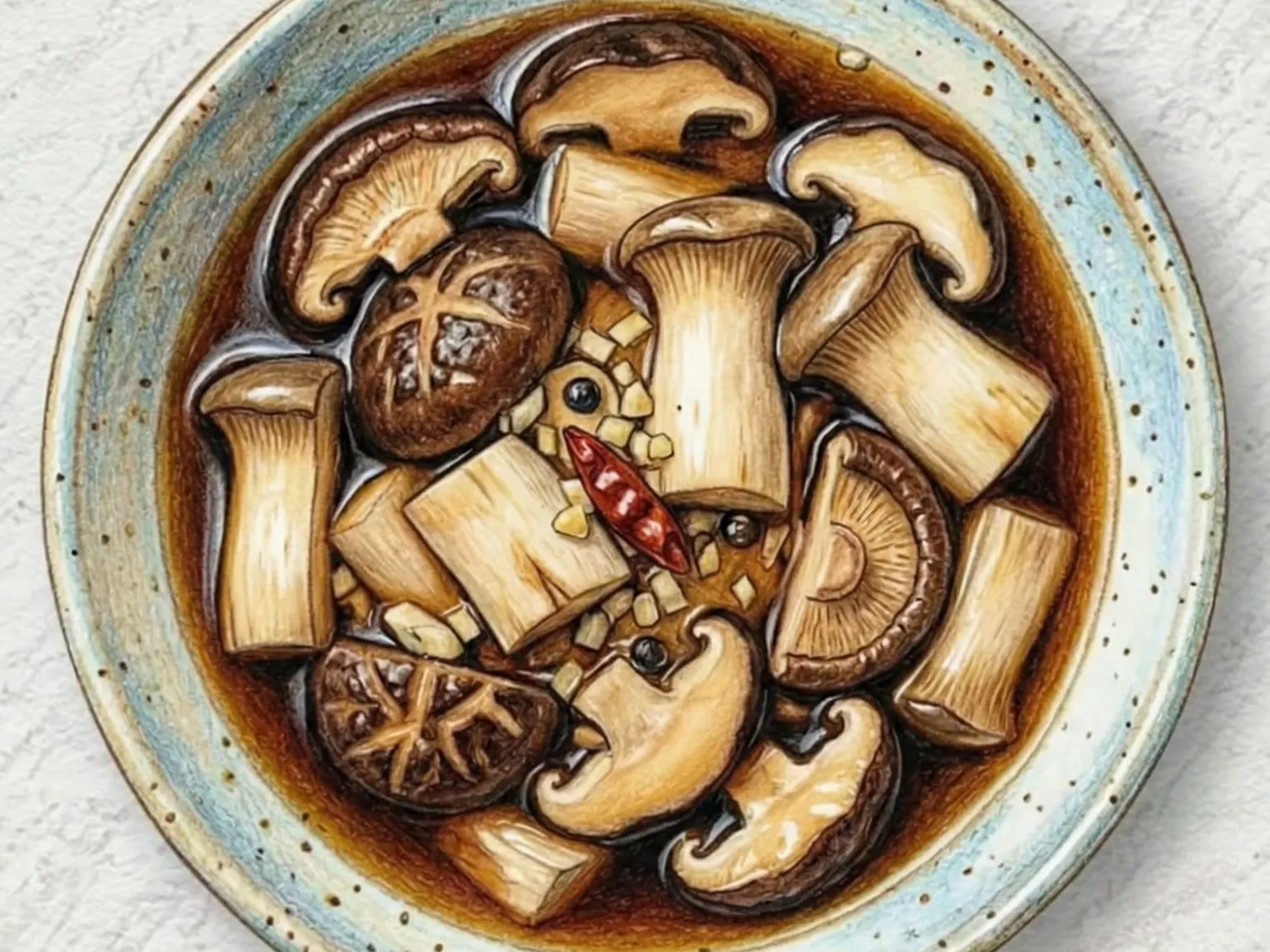
Chewy shiitake caps and meaty strips of king oyster mushroom hold their chew through days in a garlicky soy, vinegar and sugar brine with dried chili. Cutting both to a similar thickness lets them season at the same pace. One minute of blanching is enough. Any longer and the mushrooms turn soft and watery. Squeezing them firmly afterward matters more than the blanch itself, since leftover water dilutes the brine.
King oyster mushrooms sliced lengthwise and seared in a dry pan turn golden outside and stay chewy inside, giving this salad its meaty bite. Perilla oil, nutty and slightly grassy, meets lemon juice in the dressing so a light acidity lifts the browned mushrooms. Shredded perilla leaves bring a sharp herbal aroma that fades quickly once dressed. The bowl is best eaten soon after tossing.
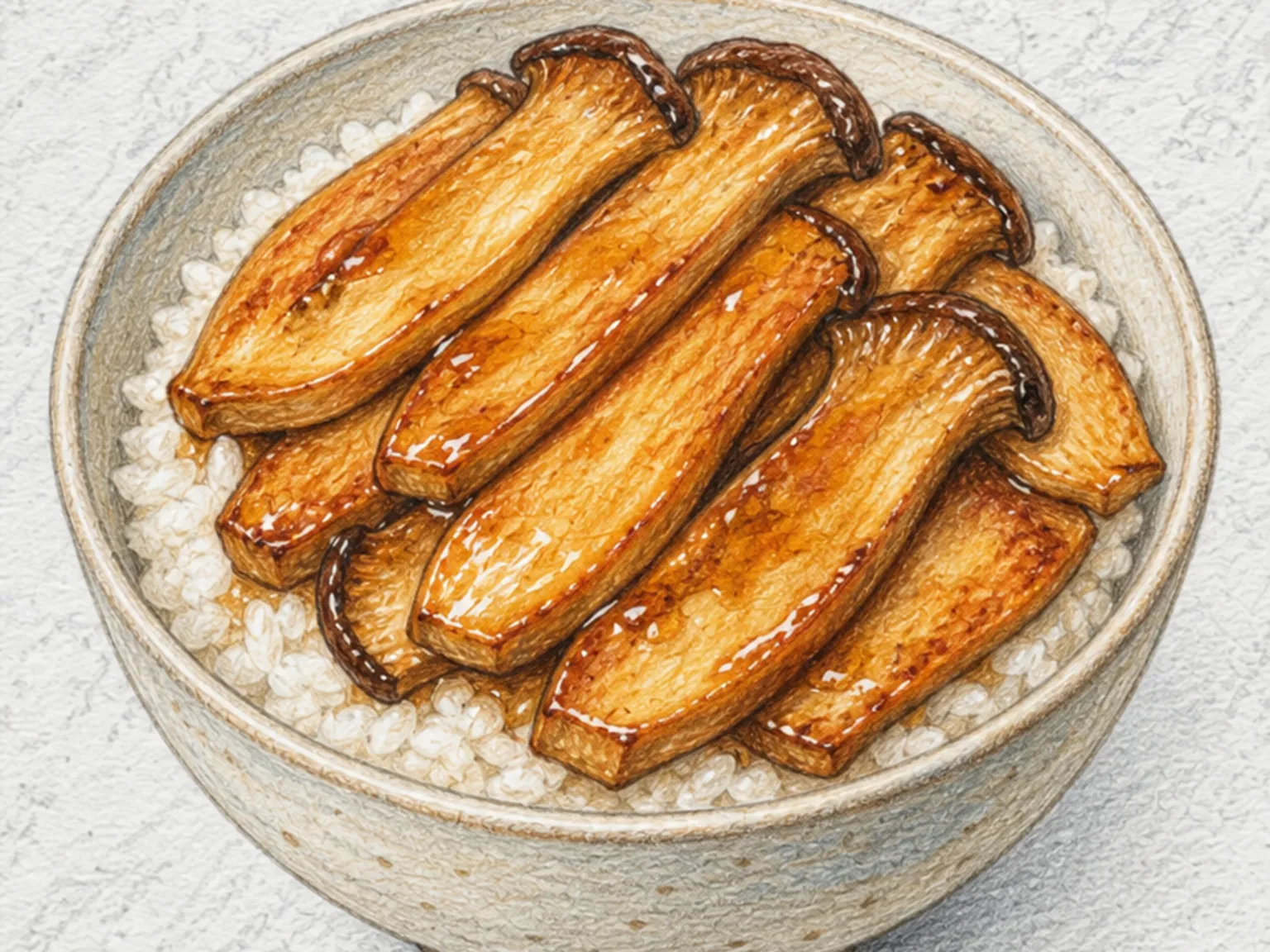
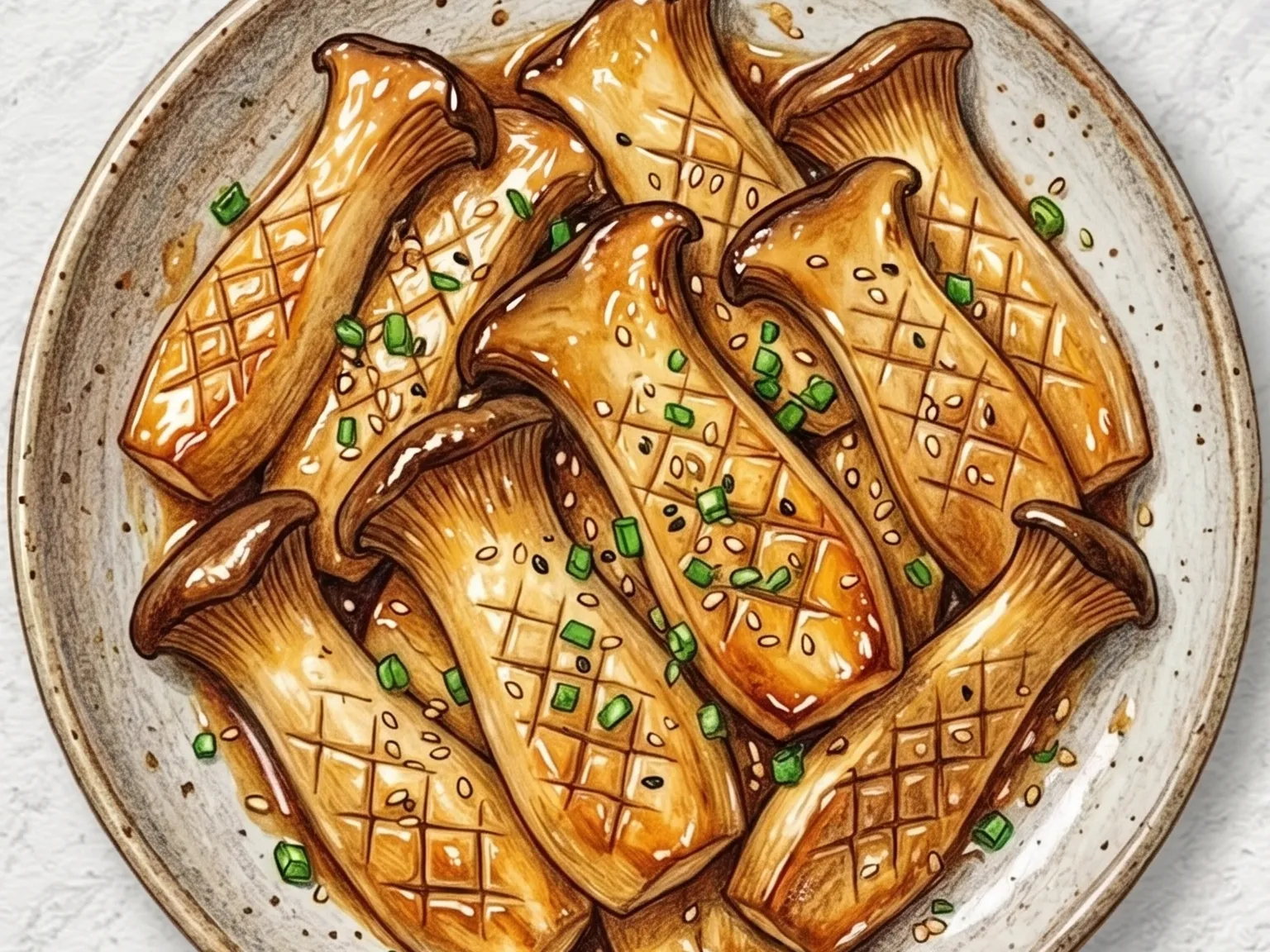
King oyster mushrooms are cut lengthwise into thick planks and scored in a crosshatch, which gives them enough heft to stand in for meat over rice. They are seared in a dry pan first to drive off water, then glazed with soy sauce, cooking wine and sugar, and they stay chewy under the sauce.
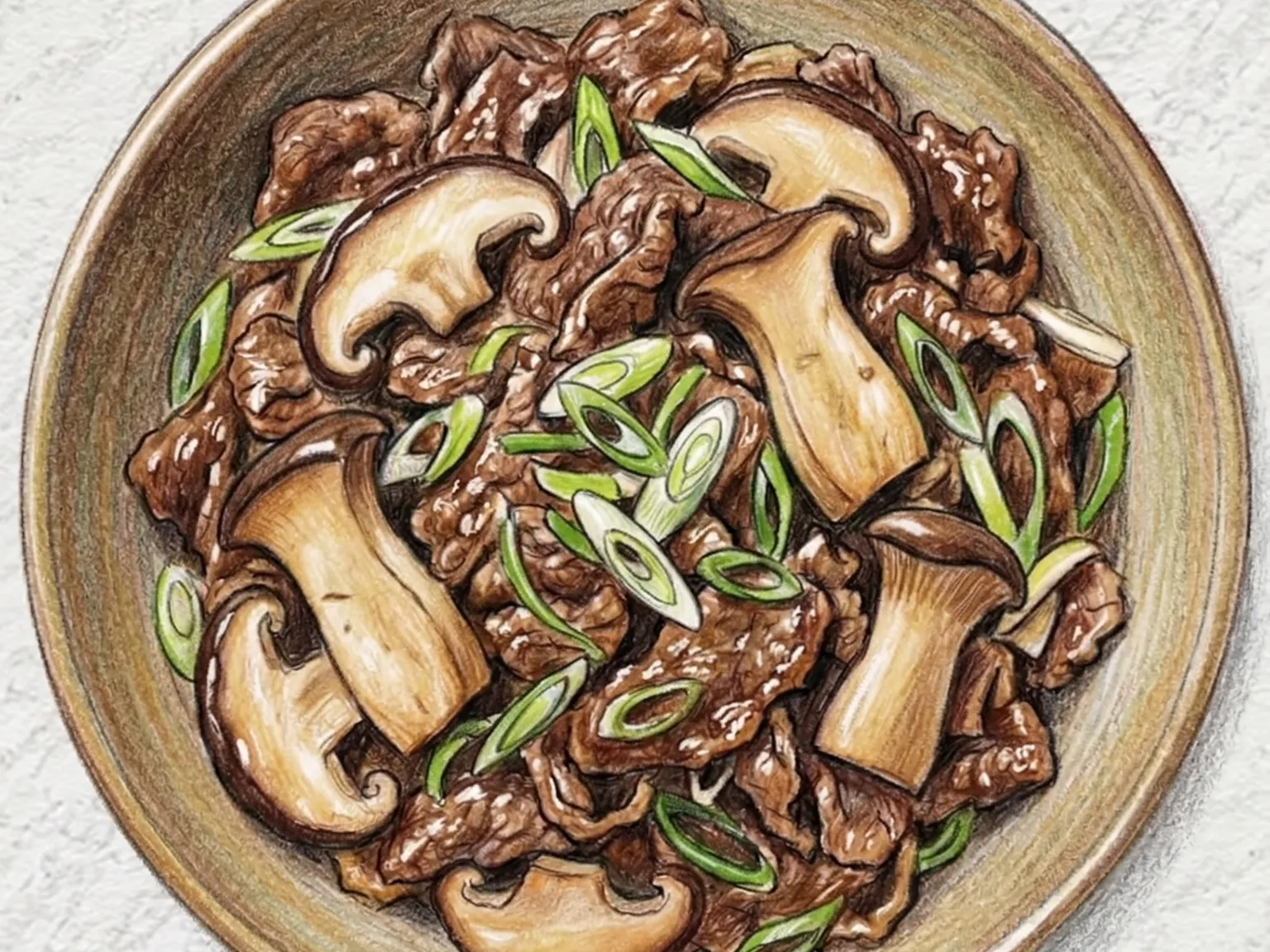
The beef sits in a pear juice and soy marinade for 10 minutes, then shiitake, king oyster mushrooms and onion are tossed into the same bowl before anything hits the heat. With everything going in at once, a small pan is better worked in two batches. Apple juice can stand in for the pear juice if the sugar is cut back a little.
Three mushrooms, king oyster, shiitake and oyster, are cut to roughly the same size and cooked in one pan. They hold a lot of water, and turning them too early steams them instead of browning, so wait until the underside is golden and flip only once.
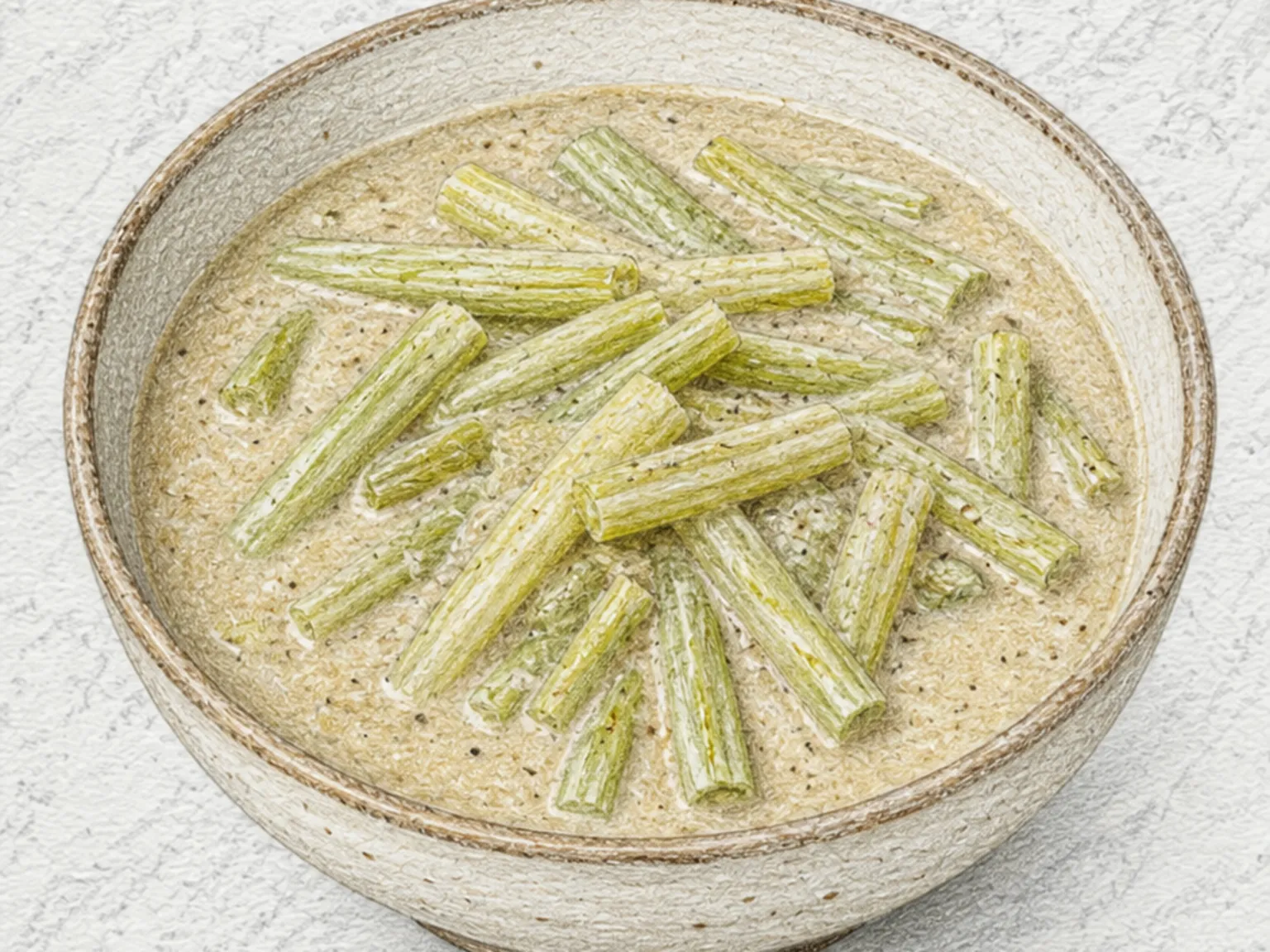
Butterbur stems are peeled, blanched and left to soak in cold water for a good while to draw out their acrid edge. Ground perilla seed with a little glutinous rice flour makes the broth thick enough to cling to a spoon, and the thick-cut stems and king oyster mushrooms give it something to chew.
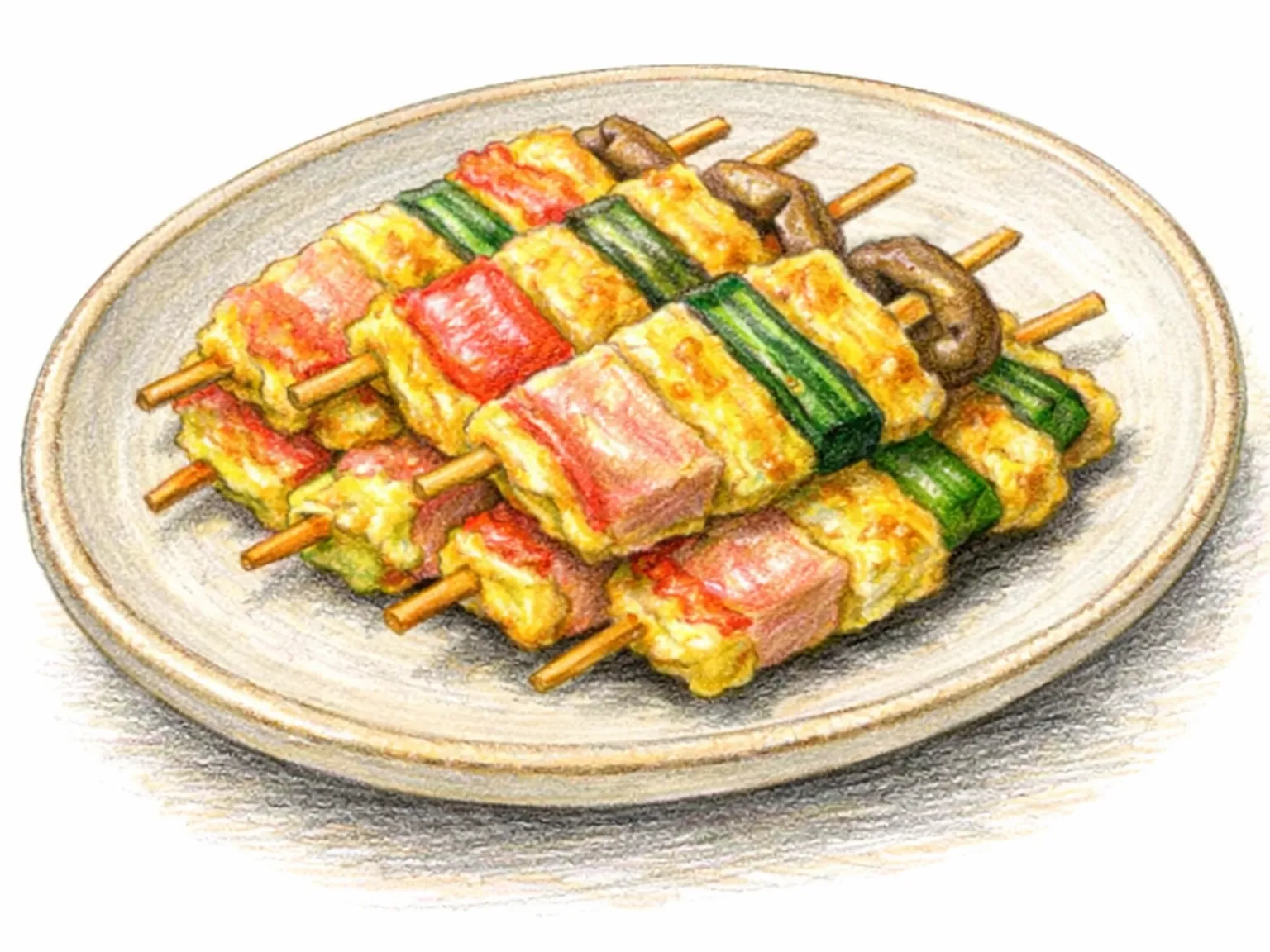
Ham, imitation crab, king oyster mushroom and scallion, all cut to the same length and threaded in turn, make up kkochi-jeon, a regular on ancestral rite and holiday tables. One bite brings the salt of the ham, the spring of the crab stick, the firm grain of the mushroom and the scallion's green smell all at once.
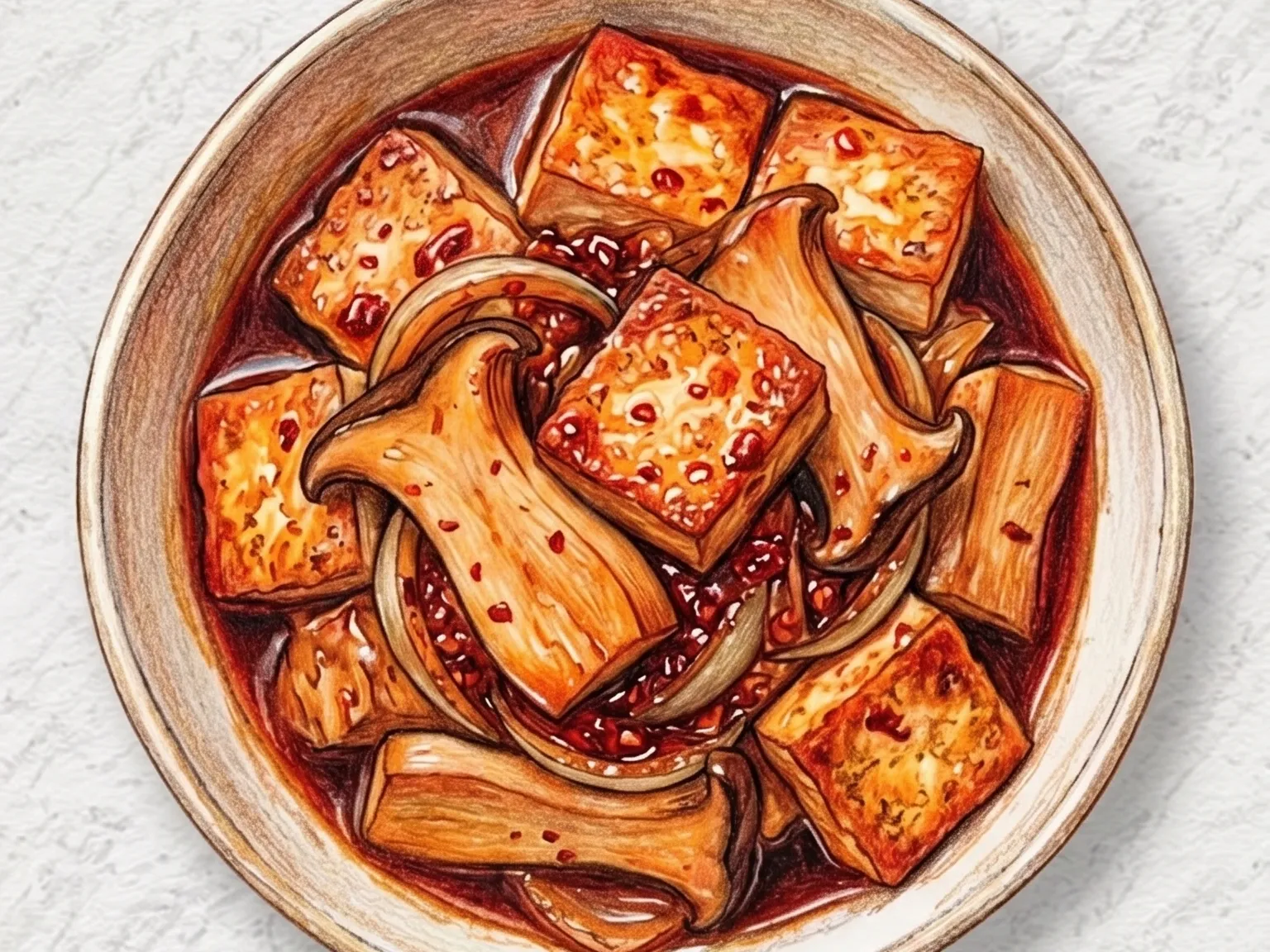
Pan-fried tofu and thick-cut king oyster mushrooms share the same spicy soy and gochujang sauce but feel completely different to bite: one soft, the other springy. Browning the tofu slowly over low heat until the edges firm up gives the sauce a surface to cling to.
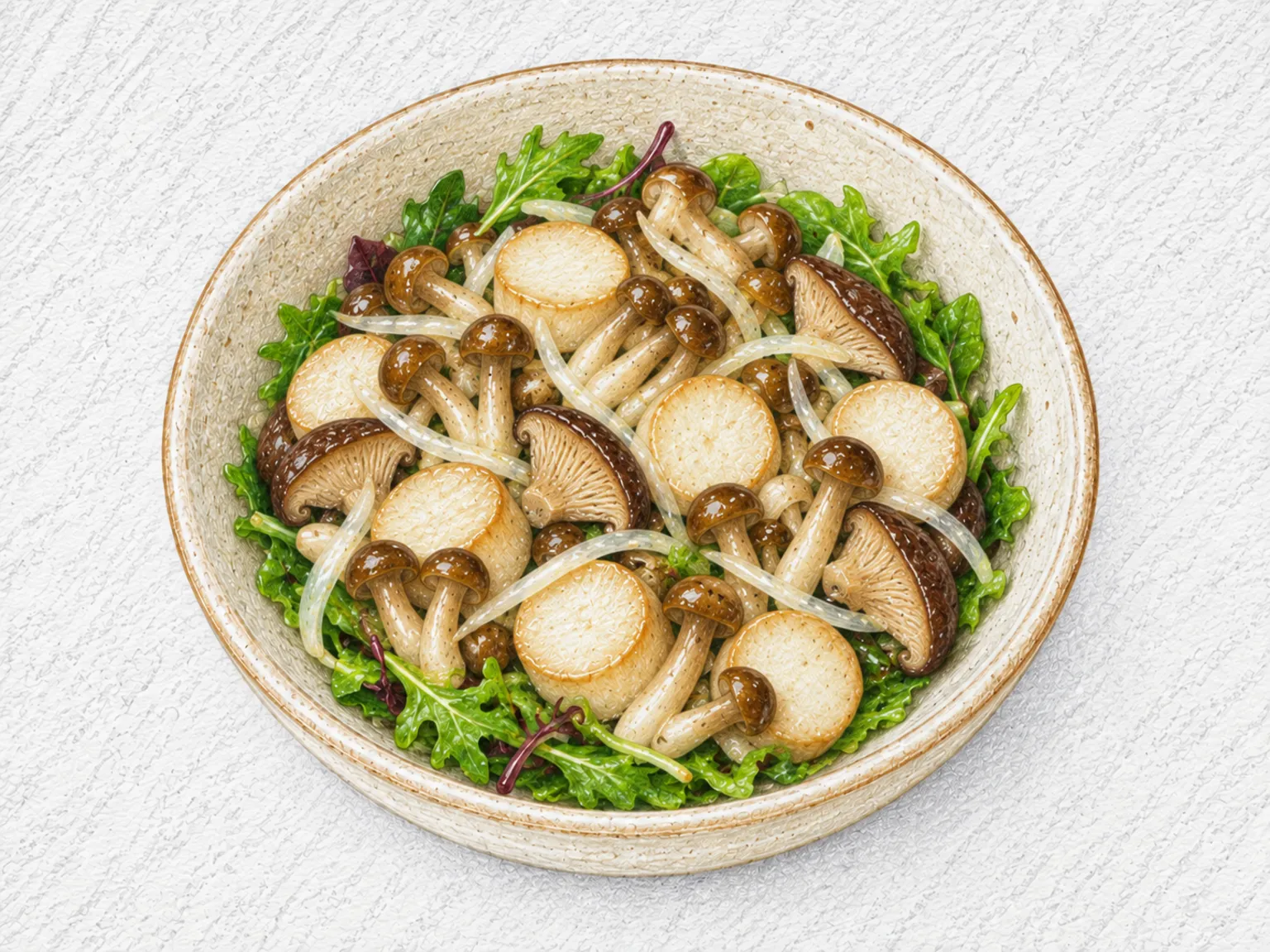
Shimeji, king oyster and fresh shiitake are microwaved and dressed while still hot with lemon juice, olive oil and a little soy sauce. Unlike soy-pickled mushrooms meant to keep, this is a side to eat the same day, not a preserve. The dressing is mixed while the mushrooms cook and is ready the moment they come out. Each mushroom is cut to keep its own shape and texture, and the baby greens never go into the hot bowl; they line the plate raw beneath the warm mushrooms. The microwave time is set for the base two servings, and a larger batch needs extra time until everything is steaming hot throughout.
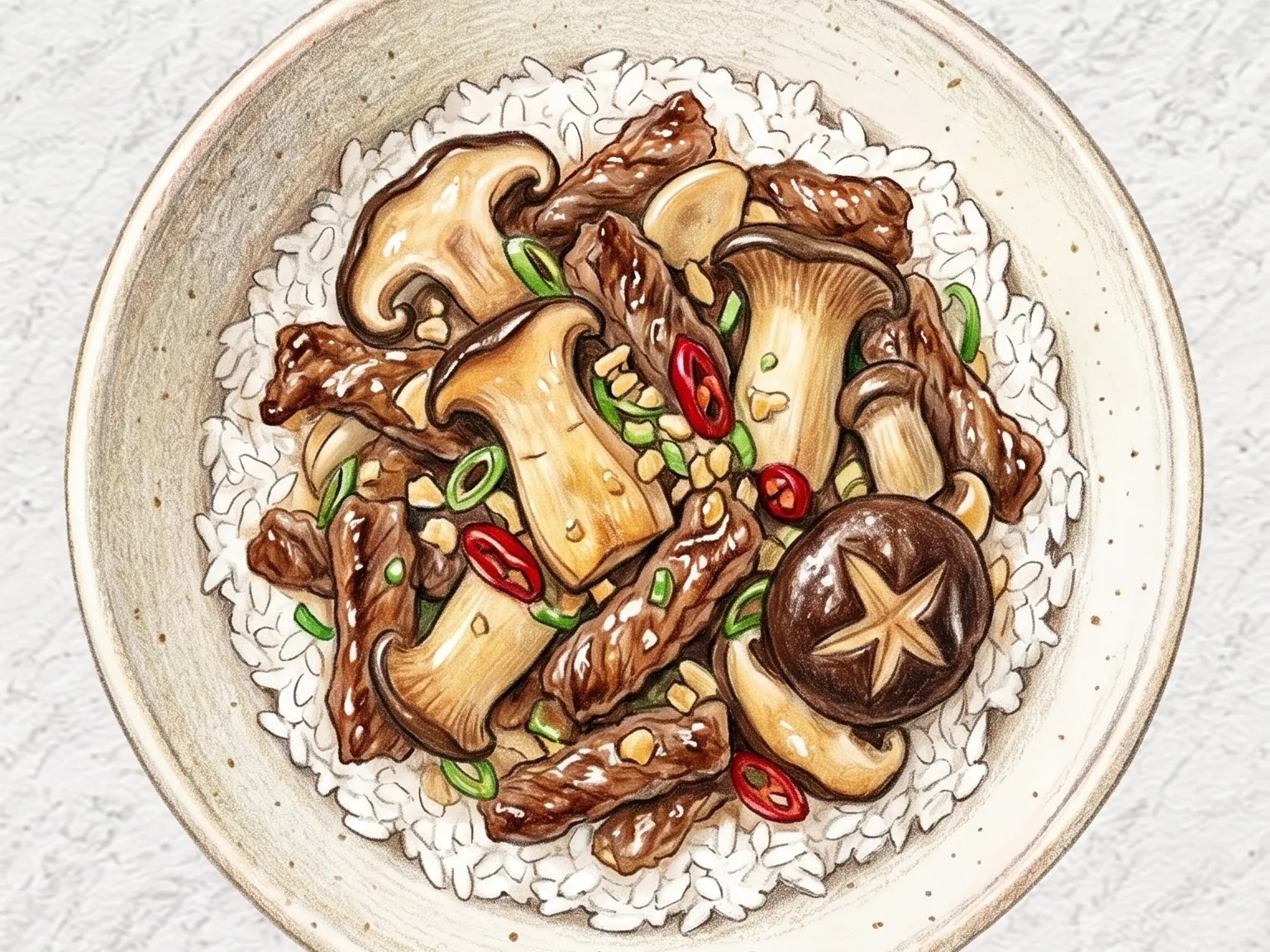
With 180 g of king oyster and shiitake mushrooms to 200 g of beef, there is nearly as much mushroom as meat in every bite. The mushrooms are wiped clean rather than washed, added to beef already browned in butter, and stir-fried hard until they wilt before soy sauce goes in around the edge of the pan.
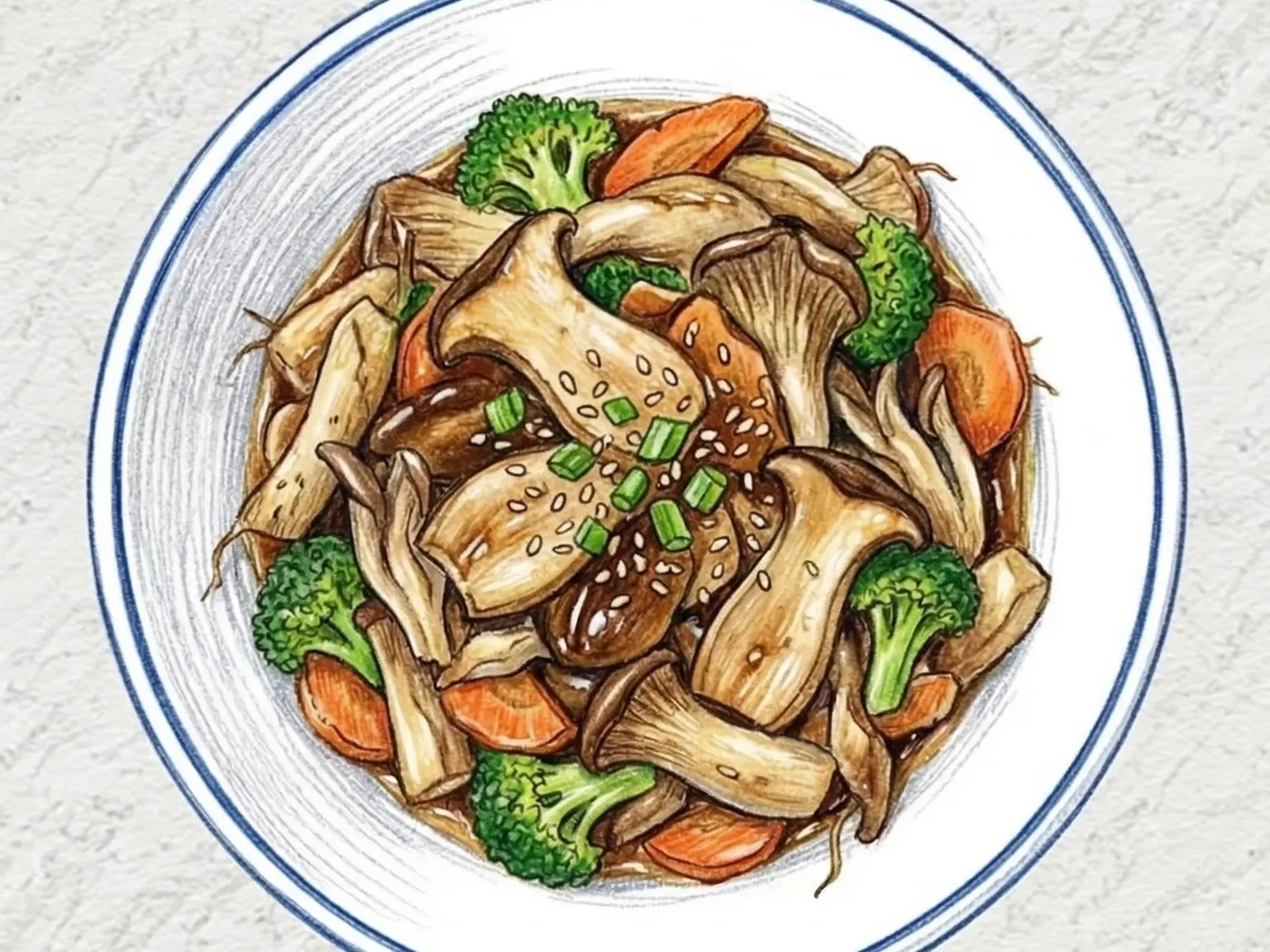
King oyster mushrooms are firm and meaty while oyster mushrooms pull apart into soft strands, so cooking both together keeps the texture from being one note. Broccoli and carrot brighten it up, and soy and oyster sauce do the seasoning.
King oyster mushrooms stay firm and chewy even when cooked, enough to stand in for meat on the plate. A shallow crosshatch on the long cut faces gives the butter soy sauce somewhere to cling as it thickens. Wipe the mushrooms with a damp paper towel instead of washing them.
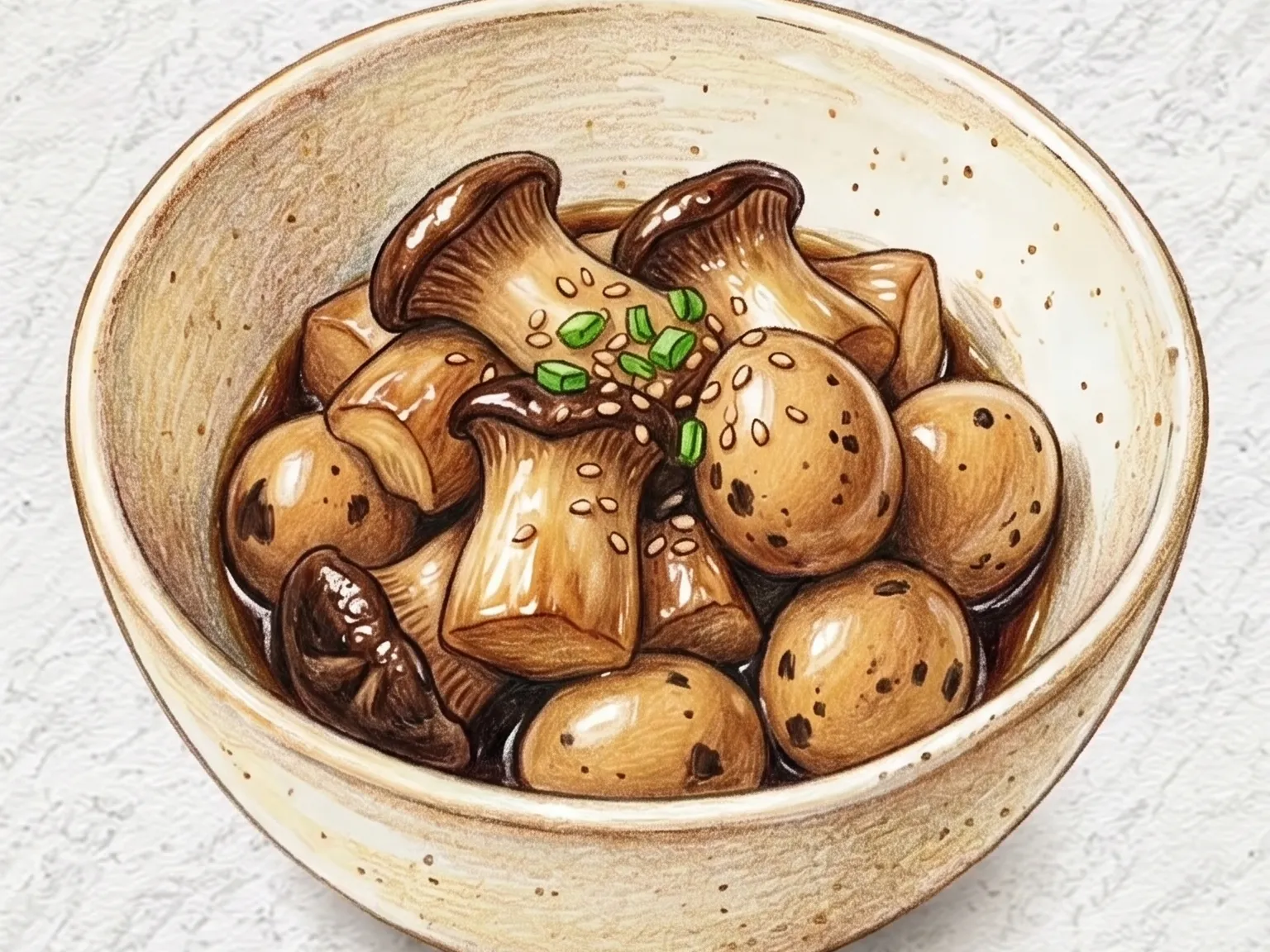
King oyster mushrooms soak up the soy broth and turn light brown, giving this quail egg braise a meaty chew alongside the soft eggs. The mushrooms braise first until they wilt and soak up plenty of seasoning, while the eggs join later and never simmer long enough to toughen. Mushrooms sliced at least 1 cm thick hold on to that chew. With no chili at all, just garlic and black pepper, it stays mild, and a spoonful of syrup at the end adds shine and rounds off the saltiness. Stored in the fridge with its remaining broth, both mushrooms and eggs stay moist, which makes it an easy side to portion into packed lunches.
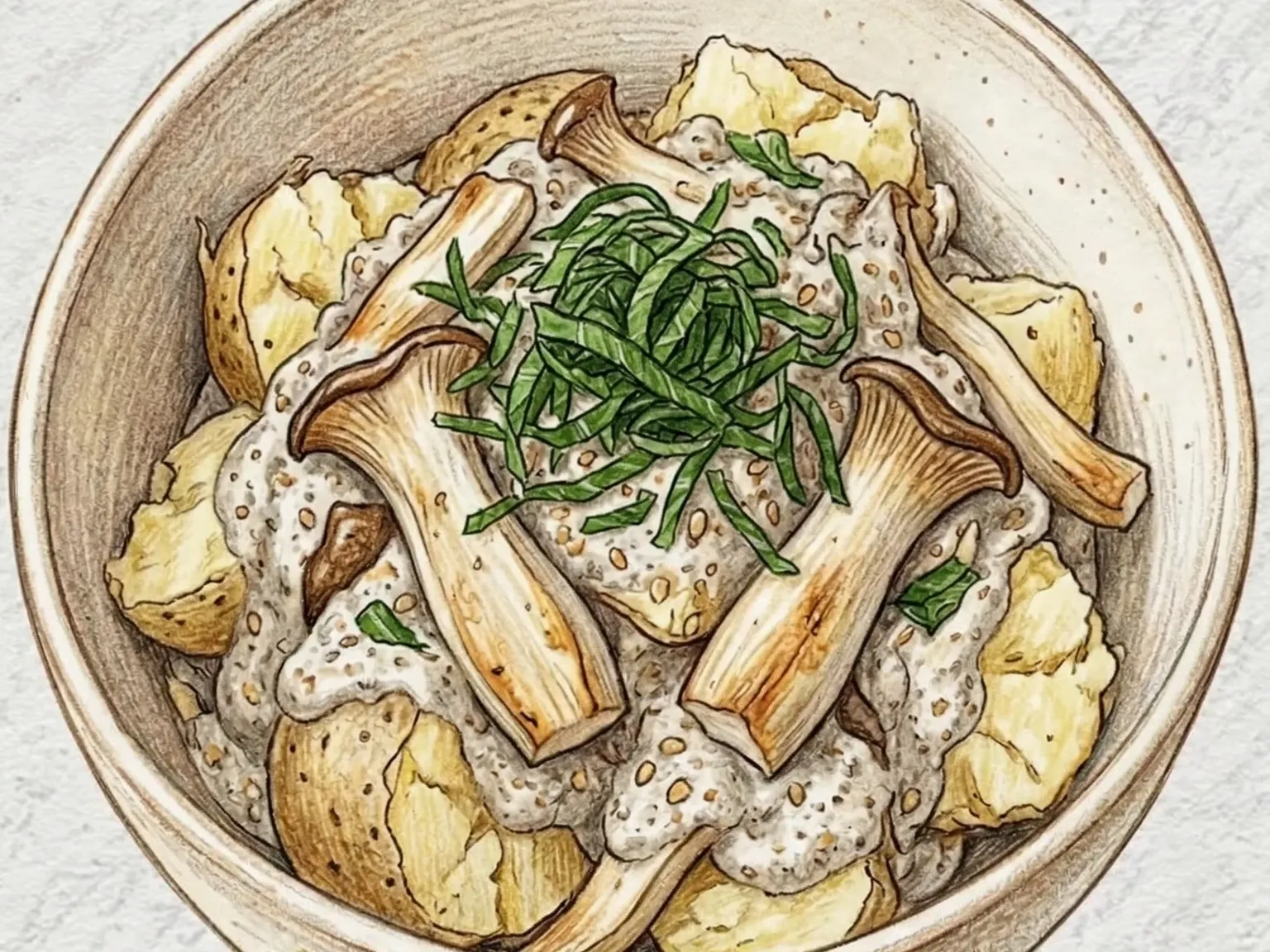
Perilla seed powder and Greek yogurt bind this potato salad instead of mayonnaise, giving it a nutty taste and a light finish. King oyster mushrooms torn into thick strips keep their chew after roasting, a good foil to the fluffy, roughly mashed potato.
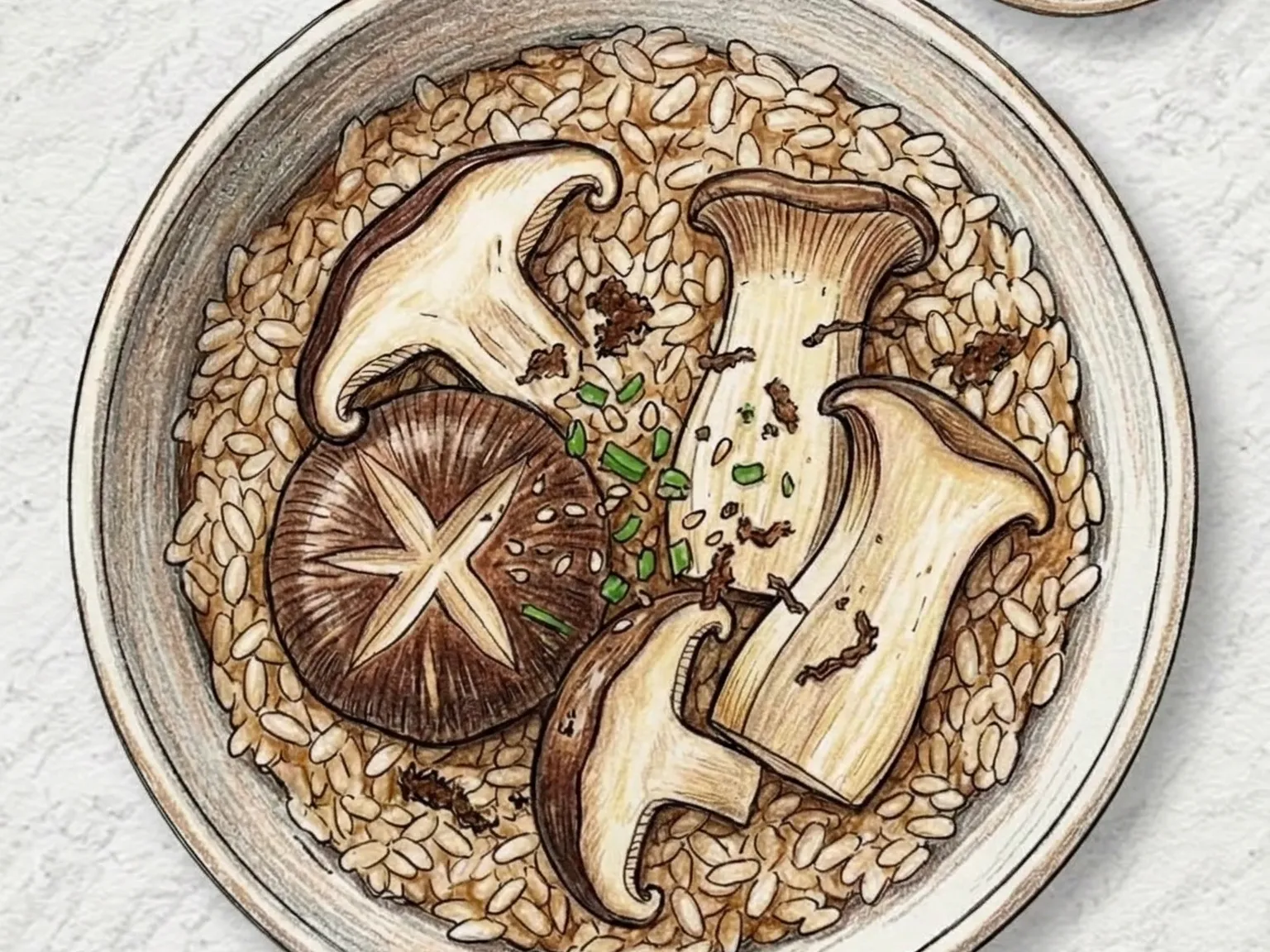
The truffle oil goes on only after the rice has finished resting. Heat drives off its aroma, so it never cooks in the pot. The rice itself is cooked in vegetable stock with shiitake, king oyster mushroom and onion that were first sauteed in butter, and the king oyster is cut thick enough to give a real bite.