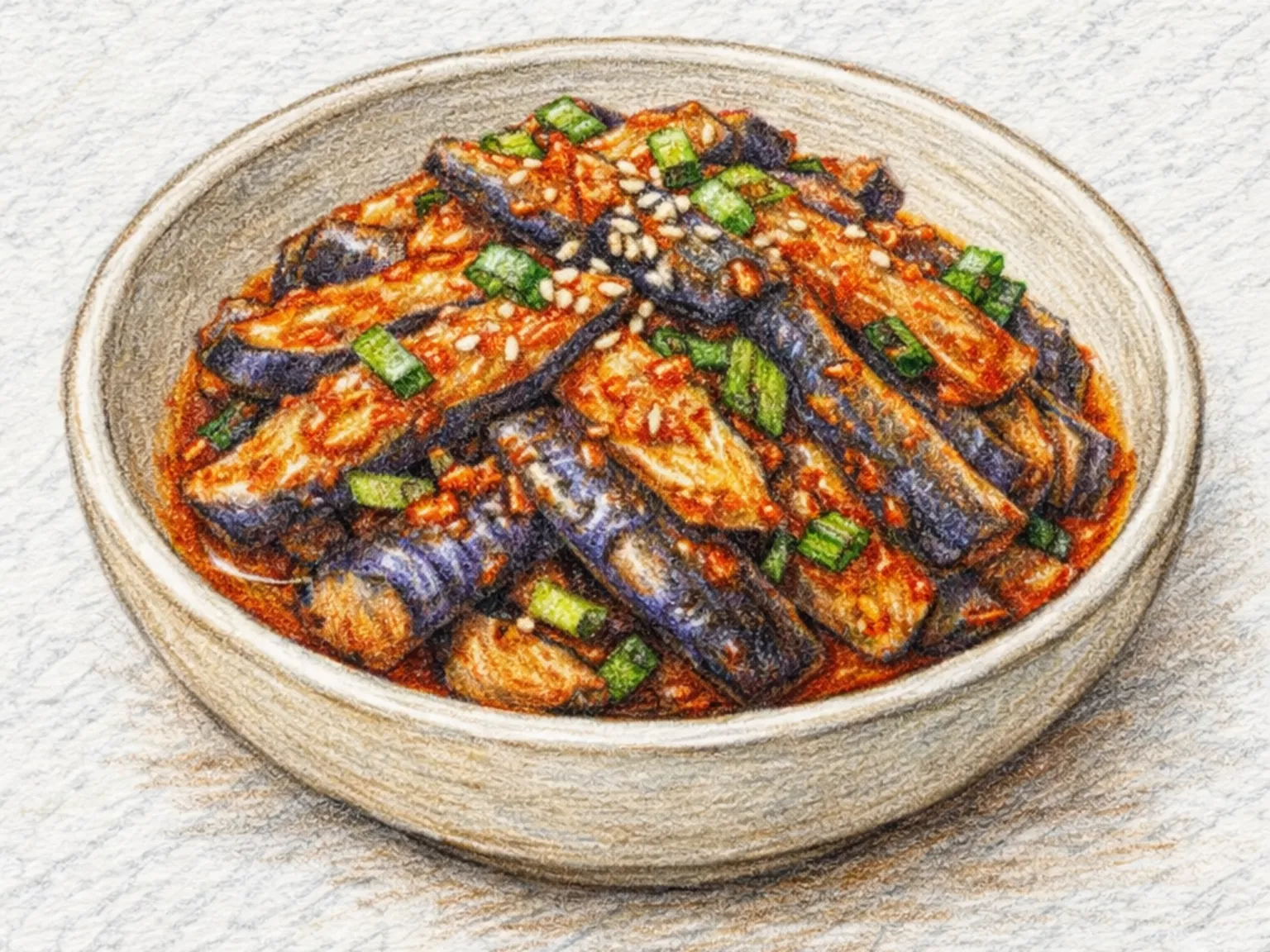
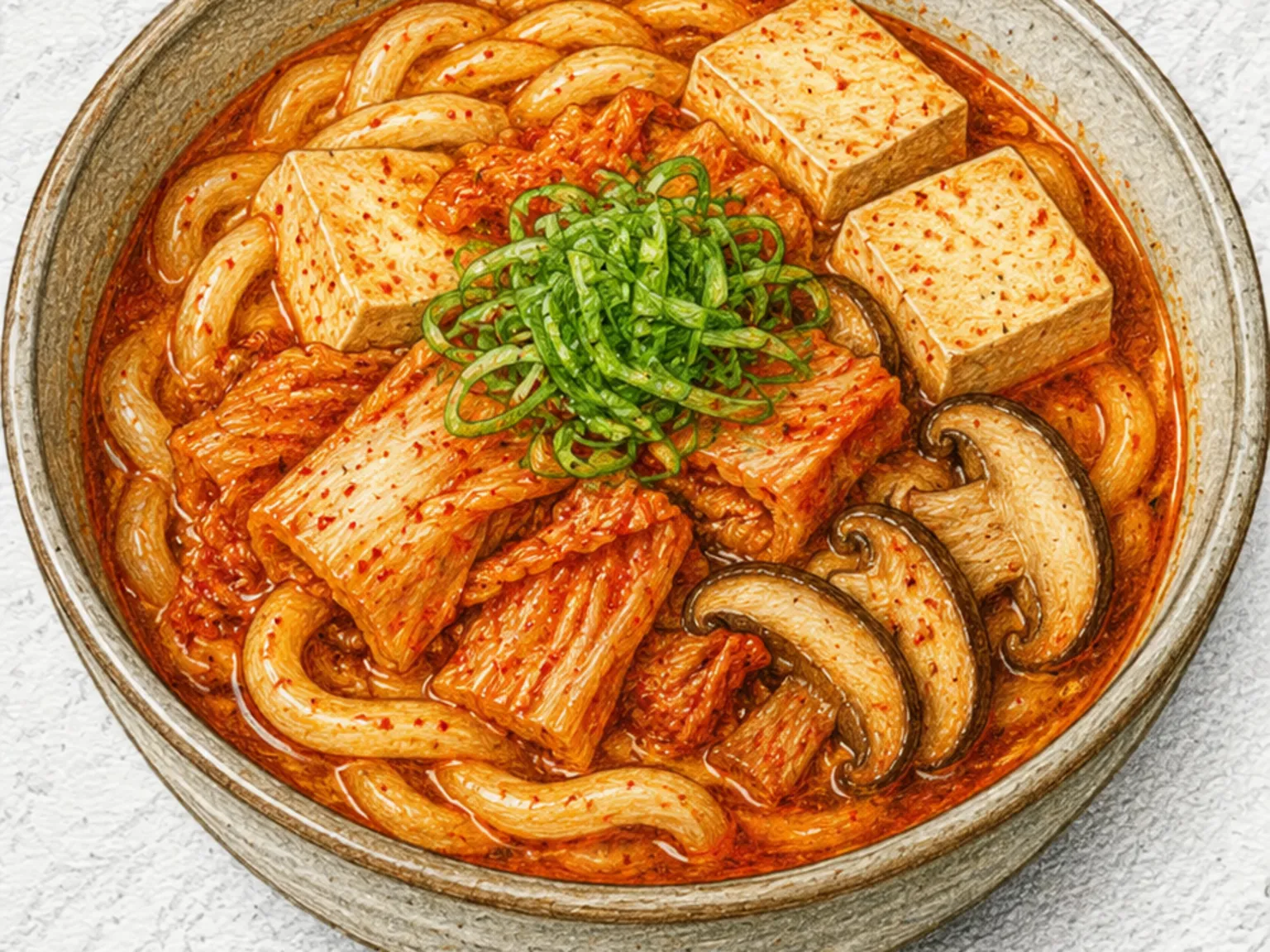
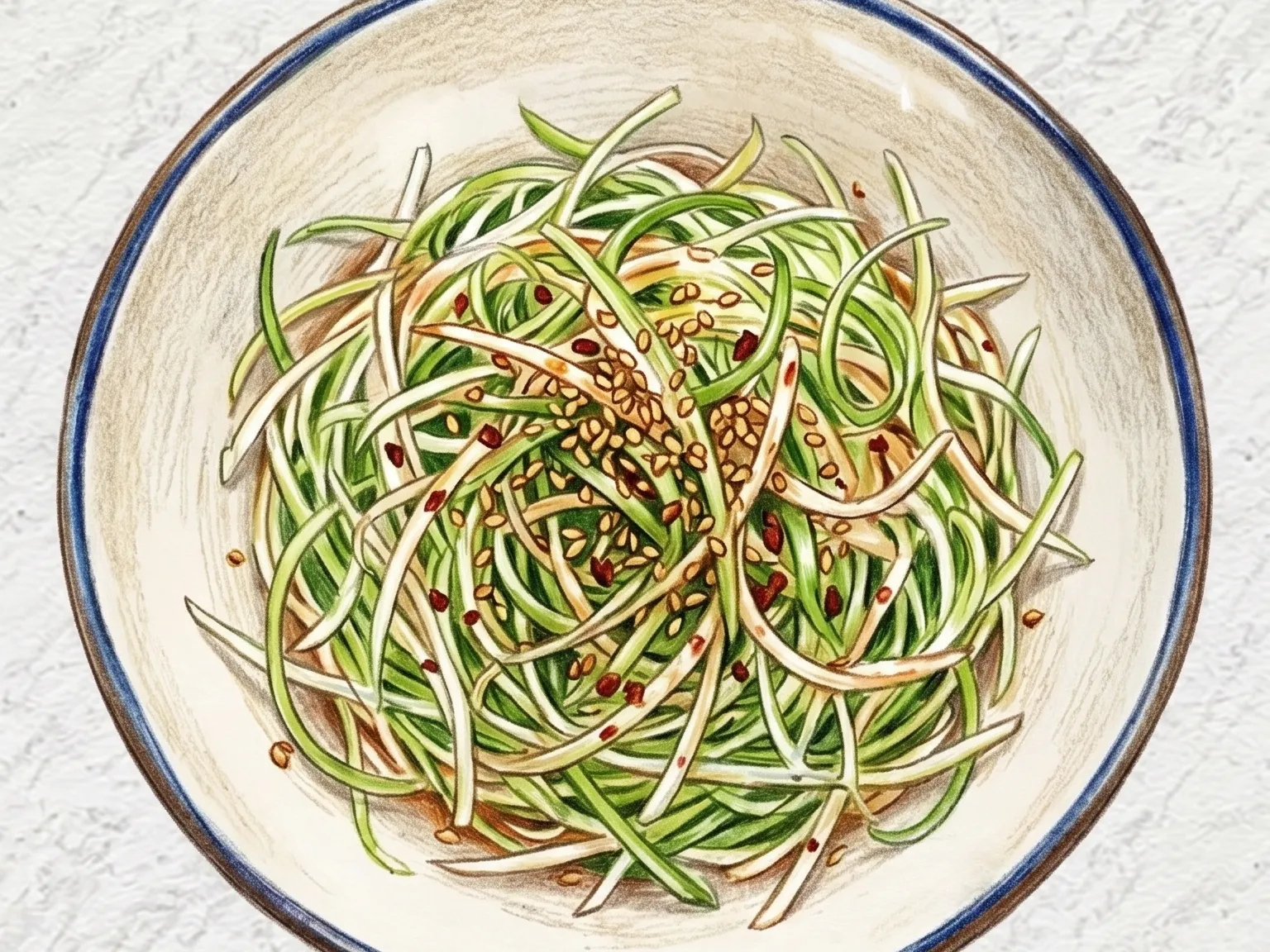
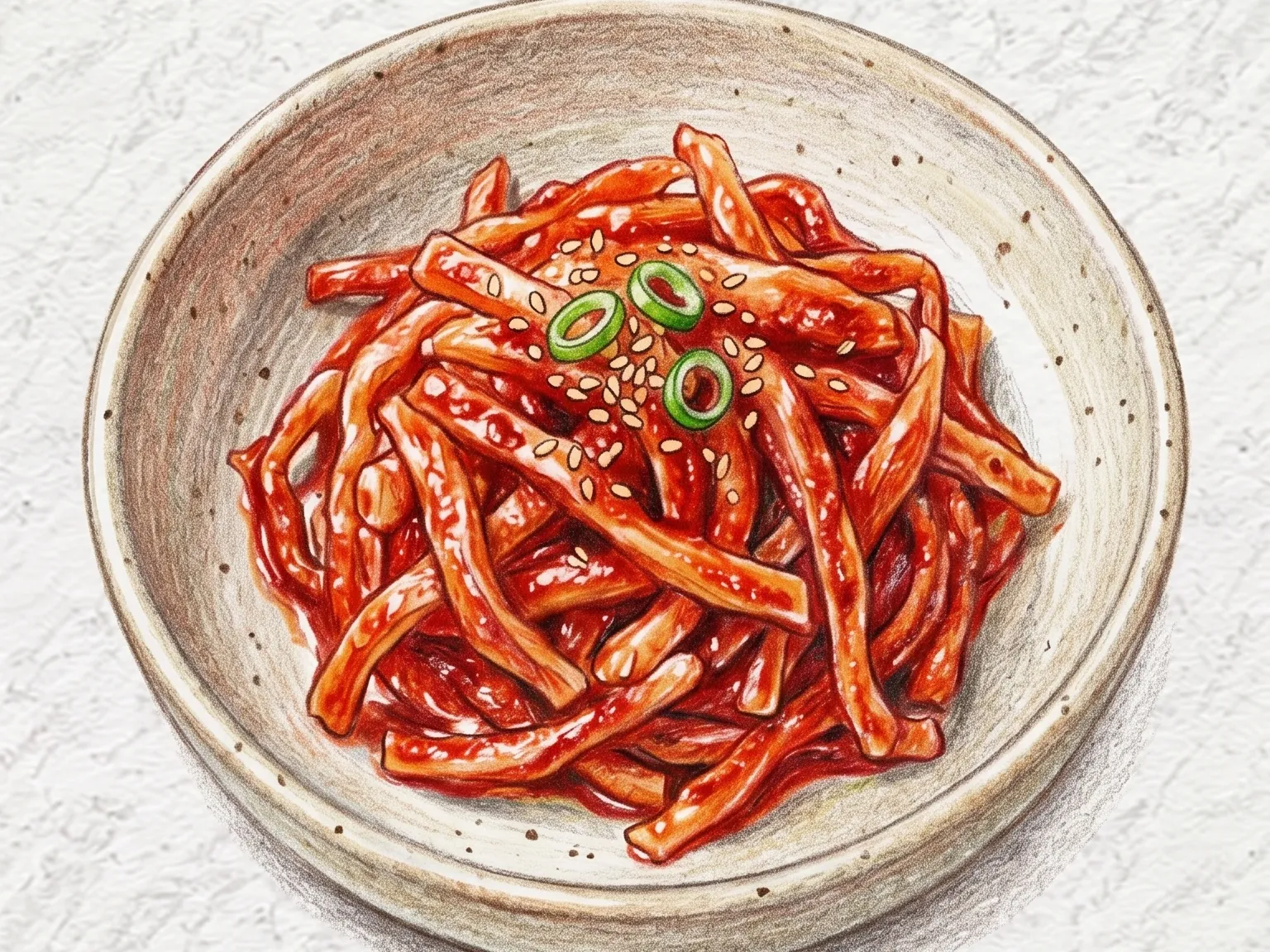
Korean Steamed Pacific Saury
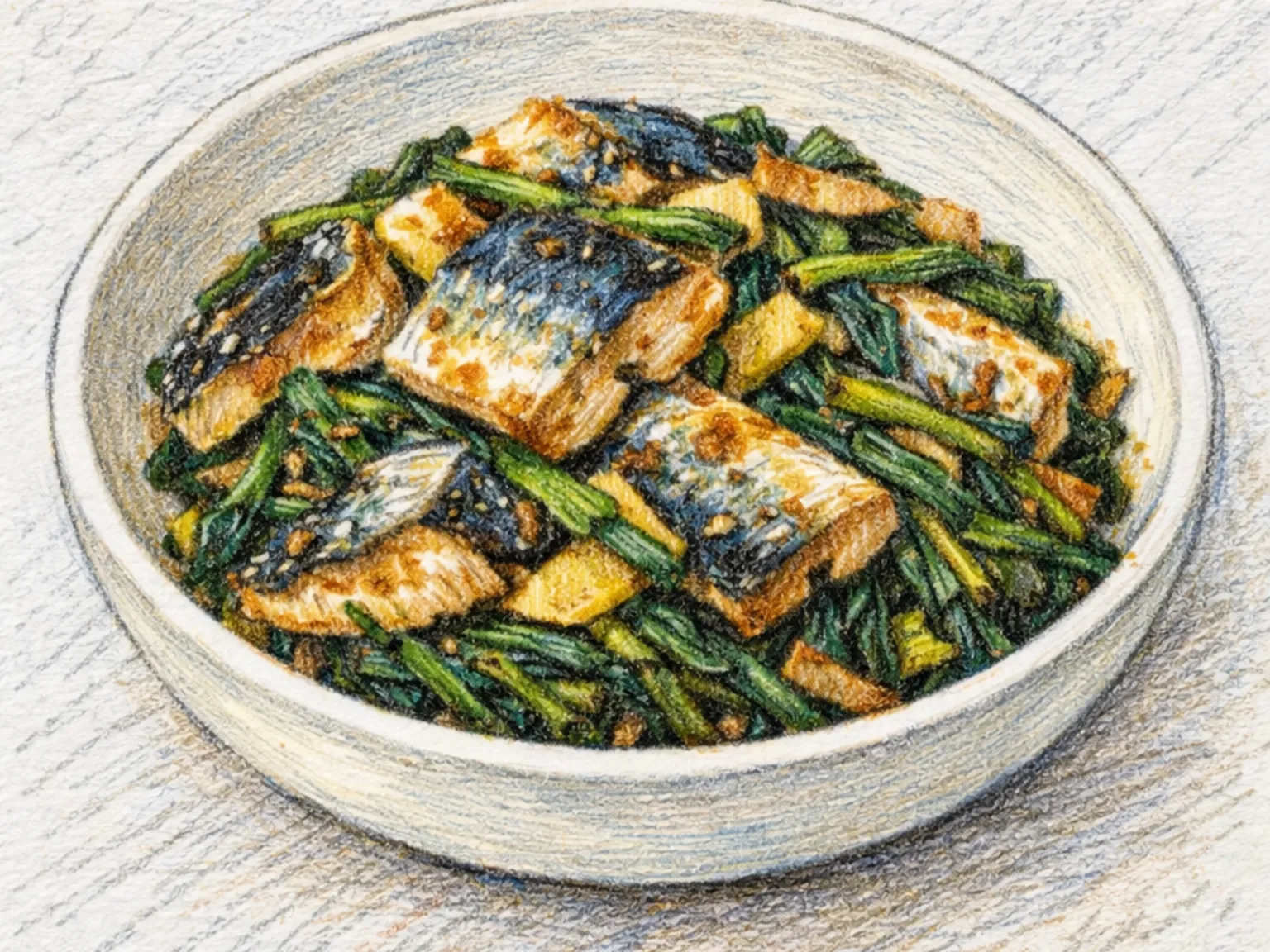
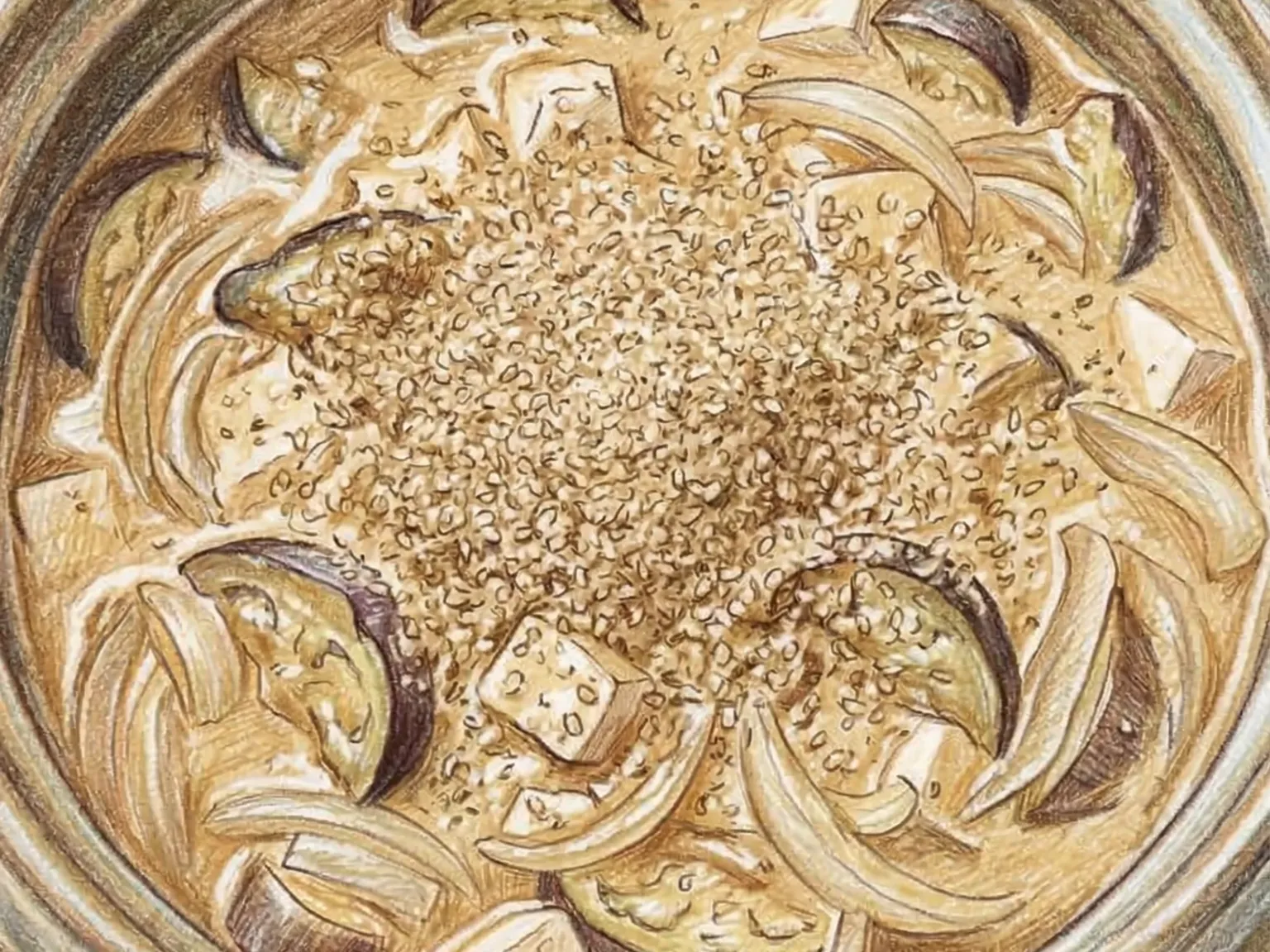
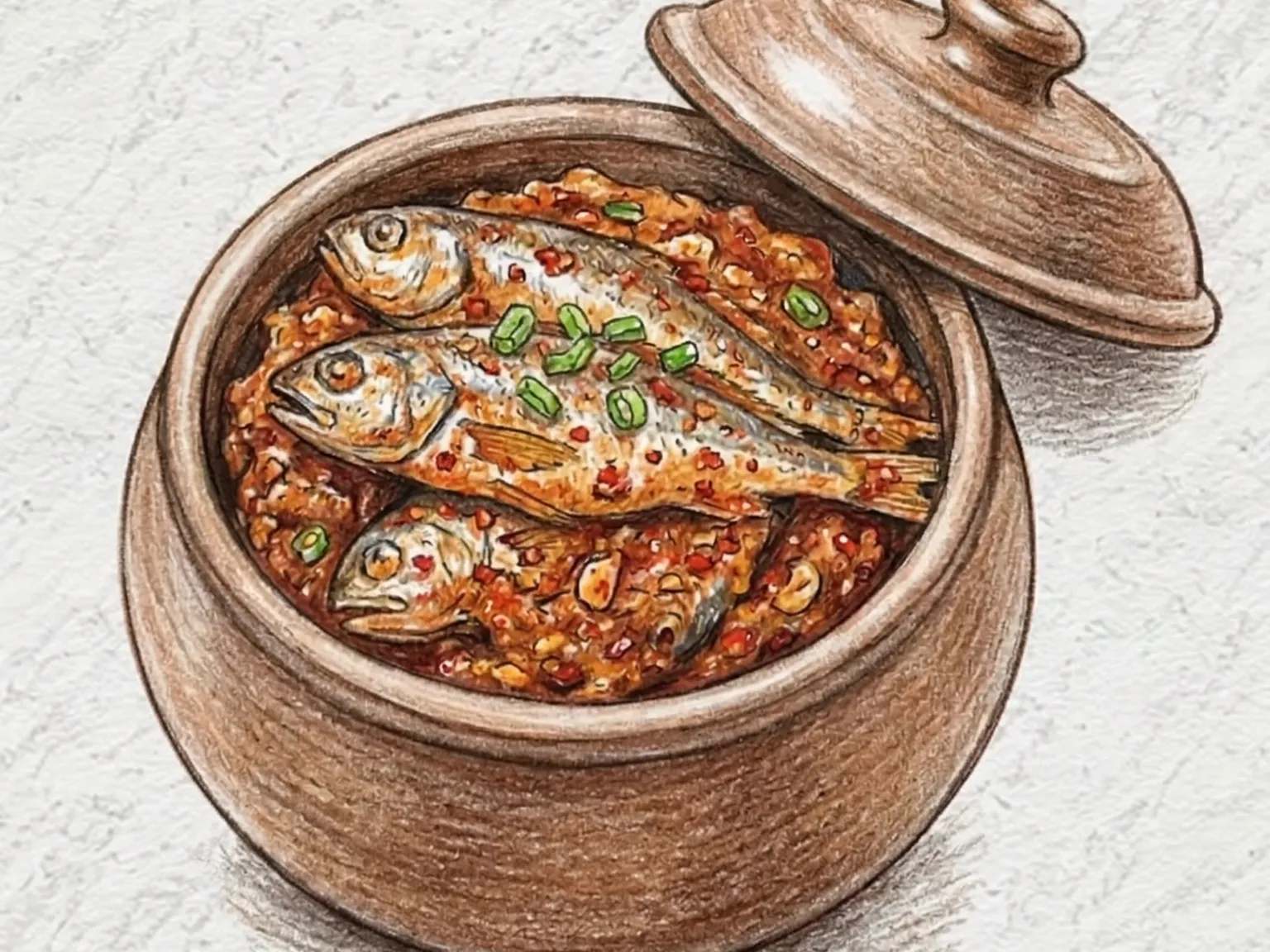
Kkongchi-jjim braises Pacific saury with Korean radish, onion, and green onion in a gochugaru and soy sauce broth until the liquid reduces to a concentrated, deeply spiced glaze. The saury's naturally oily flesh absorbs the bold seasoning without drying out, while the radish softens in the braising liquid and draws out any fishiness that would otherwise distract from the sauce. Garlic and ginger scrub the broth clean, and the chili's penetrating heat opens the appetite in a way that milder seasonings cannot. The remaining sauce, ladled over rice, is what most people eat last and remember longest - a humble fish dish that punches well above its price.

Korean Sweet Potato Stem Kimchi
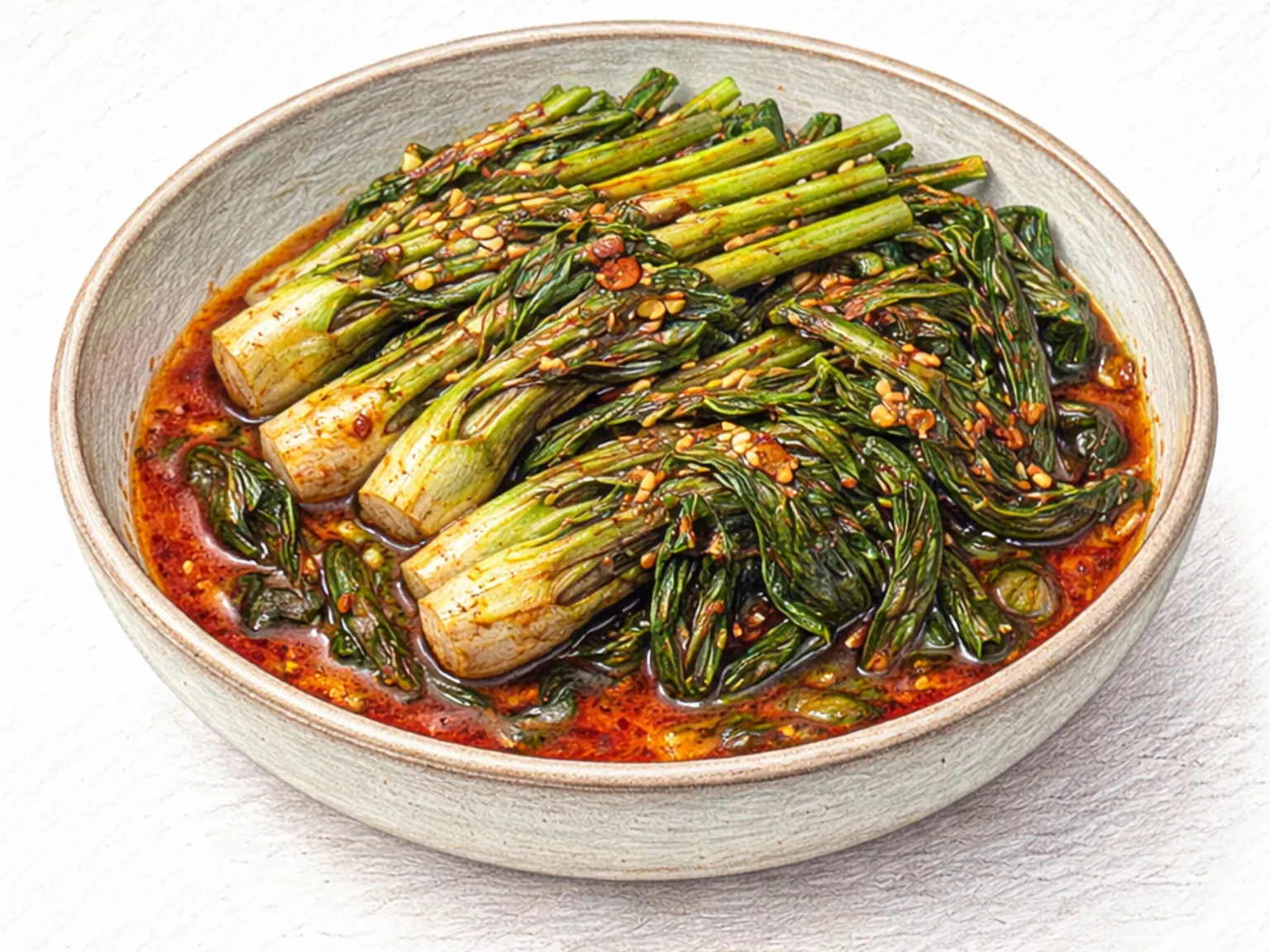
Goguma julgi kimchi is made from sweet potato stems, prepared by carefully peeling their tough, stringy outer skin to expose the elastic inner fiber, blanching briefly, then seasoning with gochugaru, anchovy fish sauce, minced garlic, and glutinous rice paste before being left to ferment. Once stripped of the outer skin, the stems retain only their springy, chewy core, which gives every bite a bouncy, almost springy resistance that sets this kimchi apart from leafy varieties. As the fermentation progresses, the seasoning works its way deep into the fibrous channels of each stem, building a well-balanced spicy-salty flavor throughout. Scallions bring a fresh herbal note, and onion rounds the sharp edges of the chili seasoning with natural sweetness. The peeling is time-consuming, but the distinctive texture rewards the effort. Made in peak summer when sweet potato stems are freshest, this kimchi is considered a seasonal treat.

Korean Seasoned Perilla Leaf Banchan
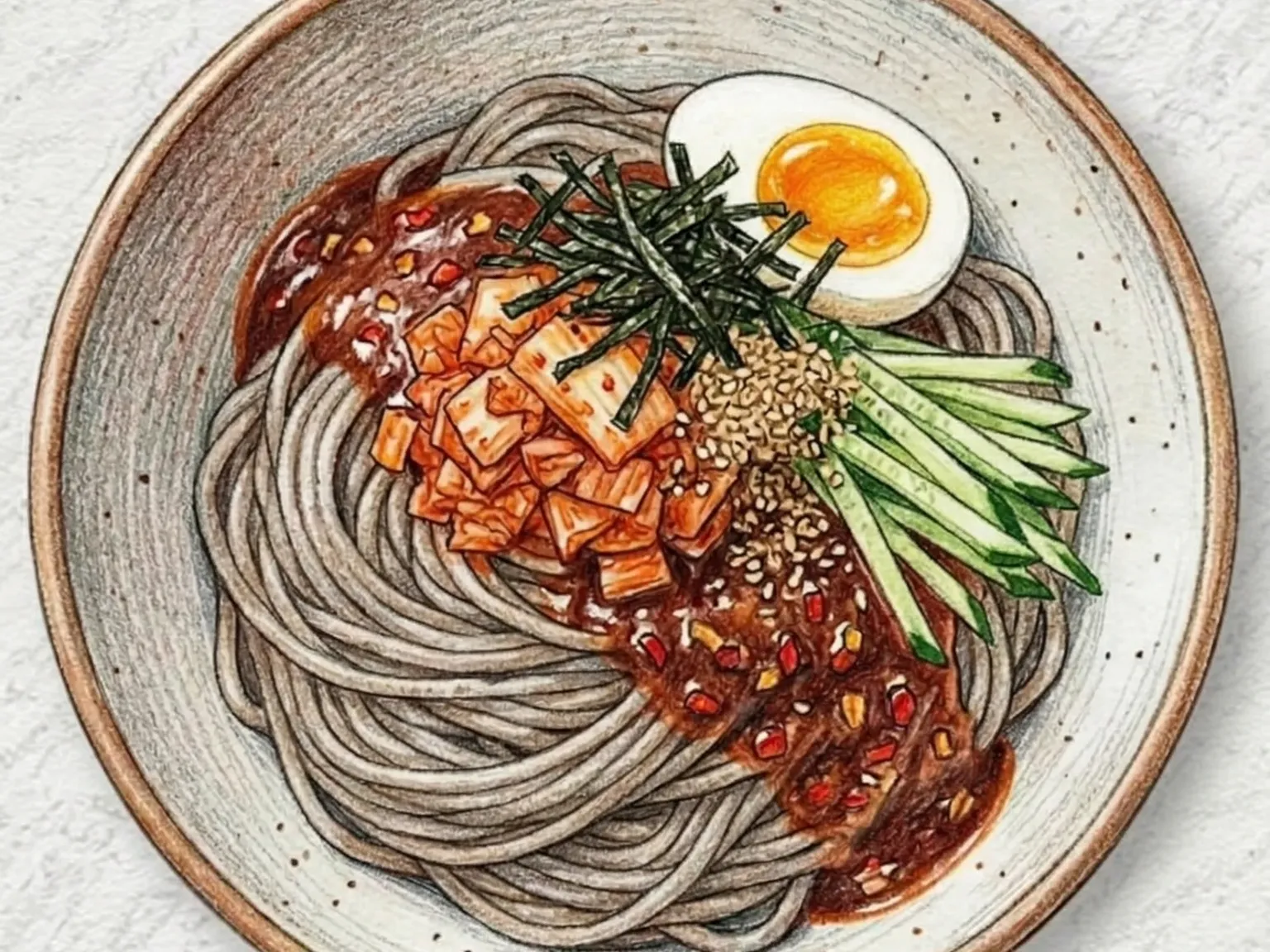
Kkaennip-muchim uses the same core ingredient as kkaennip jorim but skips the heat - raw perilla leaves are dressed directly with a soy-chili seasoning. While the braised version offers soft, fully wilted leaves, this muchim preserves the leaf's rough surface texture and its sharp, almost peppery raw aroma. The dressing - soy sauce, gochugaru, garlic, and chopped scallion - is spread thinly between stacks of five leaves; over-applying makes the dish too salty. A ten-minute rest lets the seasoning absorb into the leaf fibers. Perilla leaves are rich in rosmarinic acid, an antioxidant that has contributed to their reputation as a health food in Korea. Served alongside samgyeopsal or ssambap, the leaves' strong herbal scent cuts through the richness of fatty pork.

Korean Spicy Stir-fried Octopus
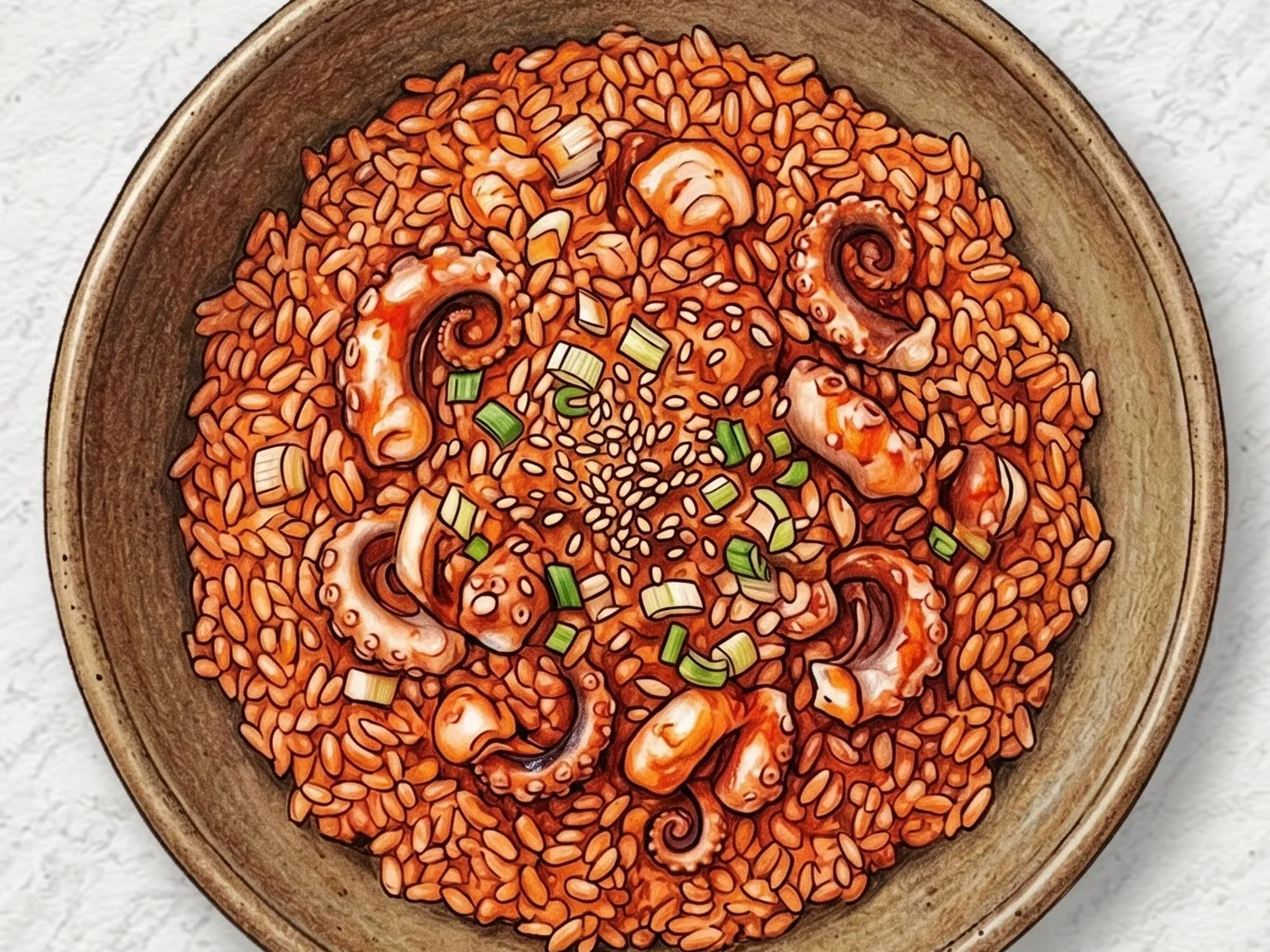
Nakji-bokkeum is a fiery Korean stir-fry of small octopus (nakji) coated in a sauce of gochujang, gochugaru, soy sauce, sugar, and garlic, tossed with bean sprouts, onion, carrot, and scallion. Bean sprouts line the bottom of the pan, releasing moisture to prevent sticking while adding crunch. The vegetables and half the sauce go on next, then the octopus on top, covered and steamed on medium heat for three minutes before a final high-heat stir-fry sears everything for two minutes. Speed is critical - octopus toughens with prolonged cooking - and the dish is often mixed with boiled thin wheat noodles for a heartier meal.

Korean Beef Intestine Hot Pot
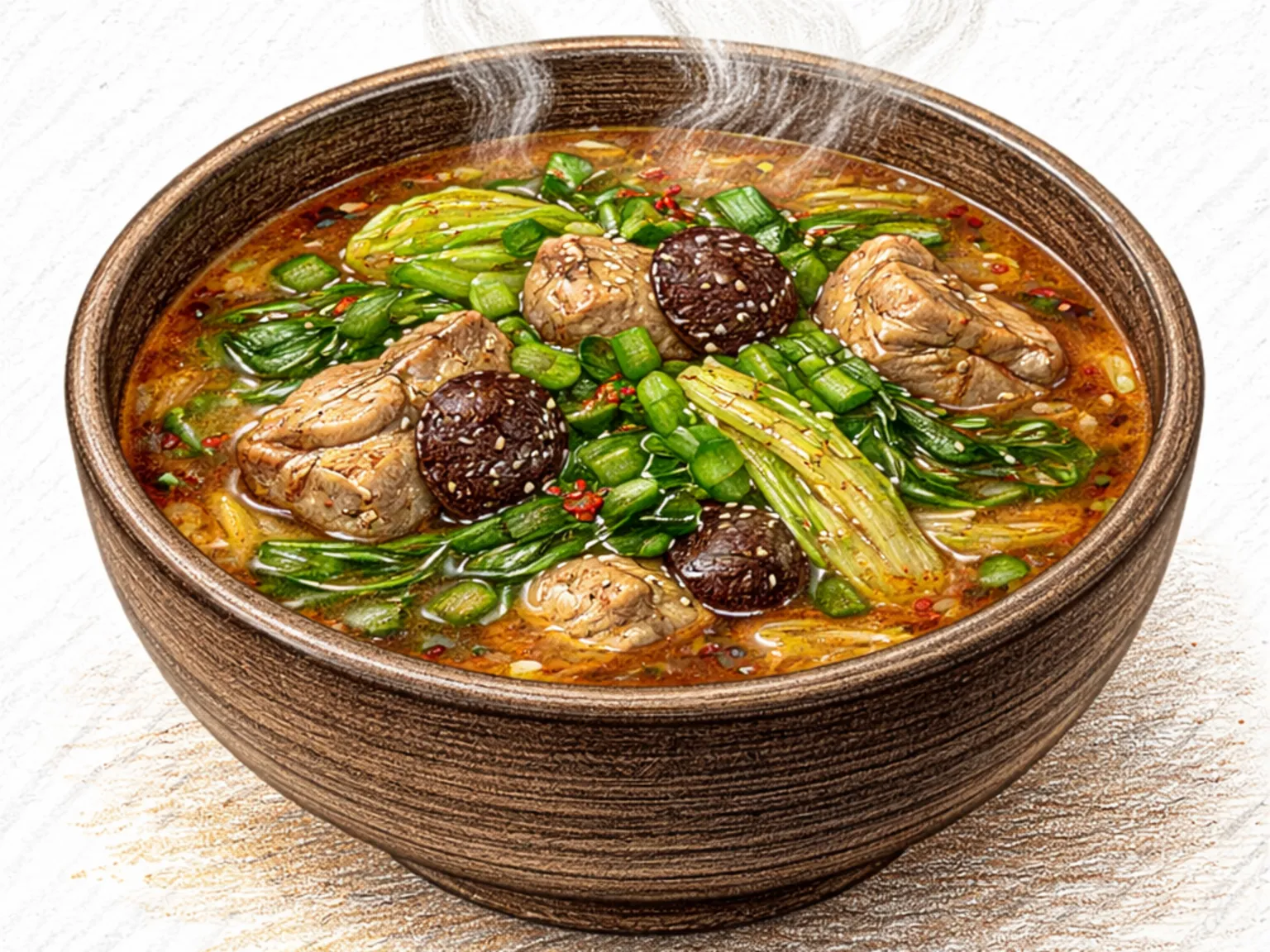
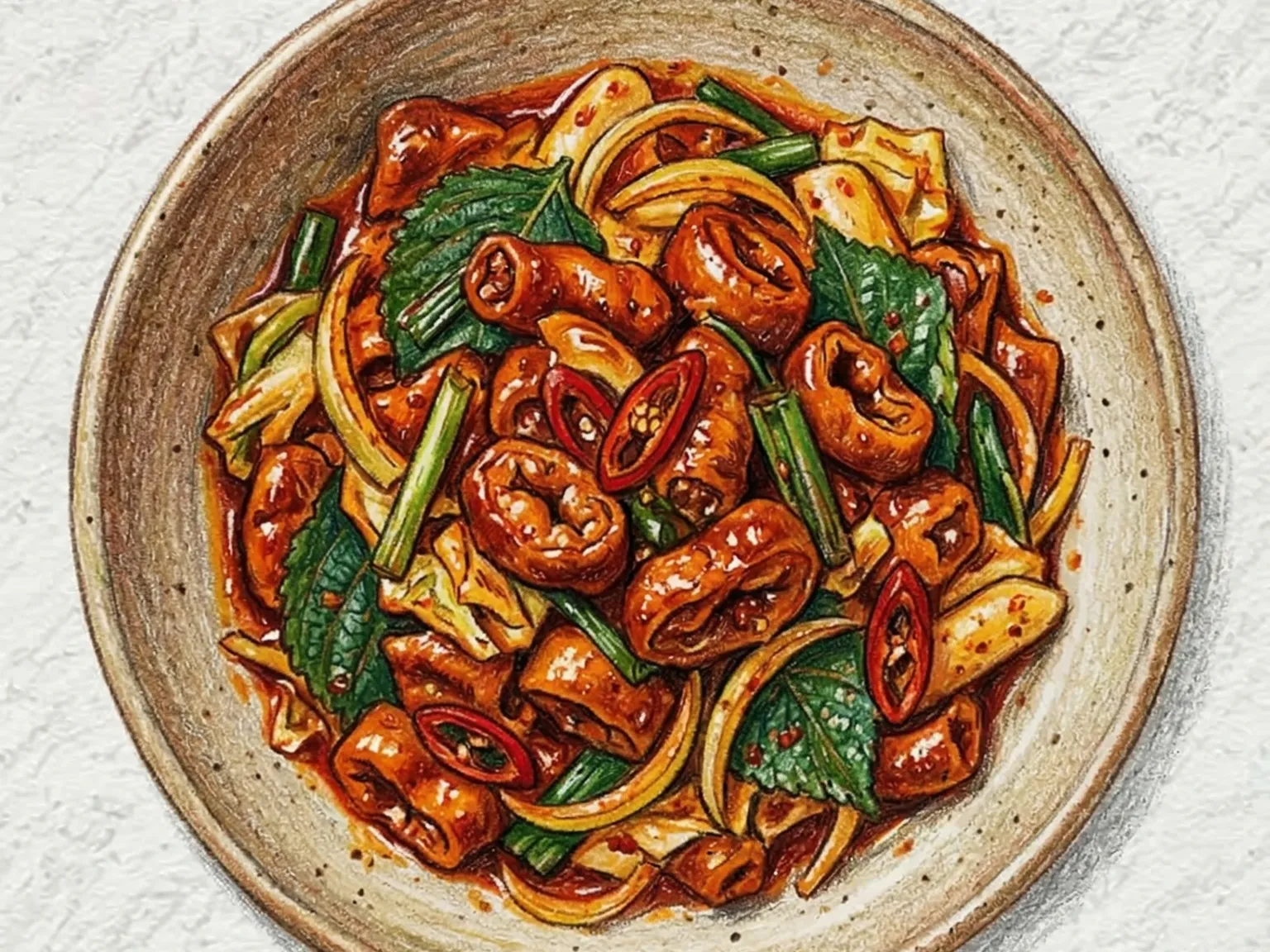
Gopchang jeongol is a hot pot built around beef intestines and tripe, simmered in a rich bone stock. The 500 grams of intestines and 200 grams of tripe provide a chewy, bouncy texture that defines the dish. Napa cabbage and oyster mushrooms balance the richness of the offal, while gochujang and gochugaru season the broth with a moderate heat. Thorough cleaning is essential before cooking: the intestines should be scrubbed repeatedly with coarse salt and flour to eliminate any off-odor, then blanched briefly to skim away the fat that rises to the surface, which makes the final broth noticeably cleaner. Once the pot is set up at the table and brought to a rolling boil, the offal turns glossy and the broth deepens into a dark, spicy richness. Wrapping pieces of intestine in perilla leaves with a smear of doenjang is a popular eating method, and the remaining broth is often used to make a finishing fried rice after the main course is done. Served bubbling at the table, this communal dish is meant to be shared.

Korean Braised Squid with Shishito Peppers
Kkwari-ojingeo-jorim is a Korean braise of squid and shishito peppers simmered in a gochujang and soy sauce seasoning. The squid retains its chewy bounce while soaking in the bold sauce, and the peppers absorb enough flavor to stand on their own while keeping a slight crunch. Gochujang brings a warm spiciness that combines with soy sauce's depth into a multilayered seasoning, and garlic with ginger neutralizes any seafood odor. As the liquid reduces, it coats each piece in a concentrated glaze that makes this banchan work especially well spooned over a bowl of steamed rice.

Korean Salted Oyster Jeotgal
Gul jeotgal is a traditional Korean fermented condiment made by curing fresh winter oysters in coarse solar salt with gochugaru, minced garlic, ginger, and plum extract, then aging the mixture at low temperature. As the salt draws moisture from the oyster tissue, the flesh contracts and its marine umami intensifies into something denser and more complex than a fresh oyster delivers. Gochugaru gives the condiment its characteristic red color and adds heat that balances the brininess. Plum extract plays a specific role during fermentation: it suppresses the fishy odor that naturally develops while contributing a mild acidity that keeps the overall flavor from turning flat or heavy. The longer gul jeotgal ages, the more layered and deep its character becomes. Eaten on its own over warm rice, it functions as a complete banchan, briny and bold against plain starch. Its more significant culinary role, however, is as a filling ingredient in baechu kimchi: folded into the seasoning paste, it introduces a richer source of umami than fish sauce alone provides, and the amino acids it releases during fermentation elevate the entire kimchi as it continues to ripen.

Korean Restaurant-Style Kkakdugi
Sikdang-style kkakdugi is the cubed radish kimchi served as a complimentary banchan at virtually every Korean restaurant, standing alongside baechu-kimchi as a permanent fixture on the Korean table. Cutting Korean radish into chunky 2 cm cubes preserves crunch deep into the flesh even after salting and fermentation. Twenty minutes in coarse salt draws out excess moisture, and the cubes are then coated in a seasoning mixture of gochugaru, anchovy fish sauce, garlic, ginger, and sugar. The fish sauce lays the umami foundation that develops further during fermentation, while ginger suppresses the raw edge of the radish and leaves a clean finish. One day at room temperature initiates lactic acid fermentation, producing the characteristic tingle of an active kimchi, after which refrigeration allows the flavor to mature steadily over two to three weeks. Winter radish carries more natural sugar, so the added sugar can be reduced without sacrificing sweetness. In summer, shortening the room-temperature rest to half a day before refrigerating prevents the kimchi from becoming overly sour. It pairs particularly well alongside grilled pork belly, rice noodle soup, and earthenware pot rice soup, where its acidity cuts through the richness of the main dish.

Korean Oi Dubu Bokkeum (Cucumber Tofu Stir-fry)
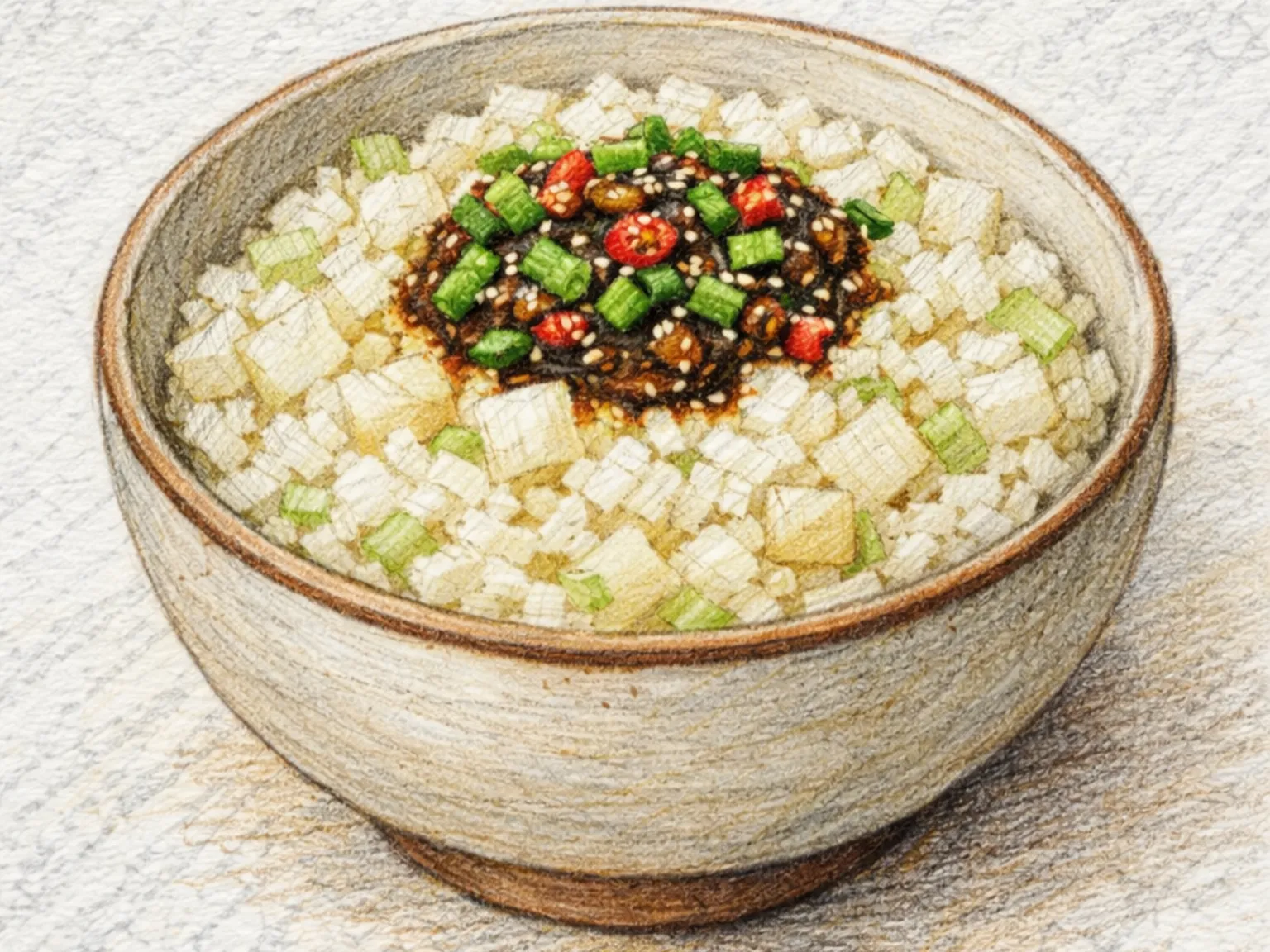
Oi-dubu-bokkeum stir-fries half-moon cucumber slices and cubed firm tofu with soup soy sauce, garlic, and a light touch of Korean chili flakes. The tofu is pan-fried to golden first to prevent crumbling, then set aside while garlic and onion build flavor in the same pan. Cucumber goes in for just 90 seconds - long enough to warm through but short enough to stay crisp and juicy. The tofu returns for a final toss with sesame oil, creating a dish defined by the contrast between cool, crunchy cucumber and warm, soft tofu under a clean soy-based seasoning.

Korean Seoul-style Gopchang Jeongol
Seoul-style gopchang jeongol is a hot pot of beef intestines cooked in beef bone broth, where the key distinction from other regional versions is the use of soup soy sauce rather than gochujang as the primary seasoning. Gochujang-based hot pots run thick and heavy; this Seoul version stays clear and clean-tasting, with the depth coming from the bone broth and the intestines themselves rather than from fermented paste. Six hundred grams of cleaned beef intestines go into the pot along with cabbage, oyster mushrooms, and perilla leaves. The perilla leaves are added toward the end and contribute a distinctive herbal scent that cuts through the richness of the intestines. Gochugaru provides color and a measured level of heat. The intestines need to cook for at least twenty minutes after the broth reaches a boil to eliminate any off-odors and reach the tender, slightly chewy texture that defines the dish. This preparation traces back to the gopchang alley restaurants concentrated around Seoul's Euljiro and Majang-dong districts, where the combination of gopchang and soju has been the standard order for decades.

Korean Braised Tofu with Shishito Peppers
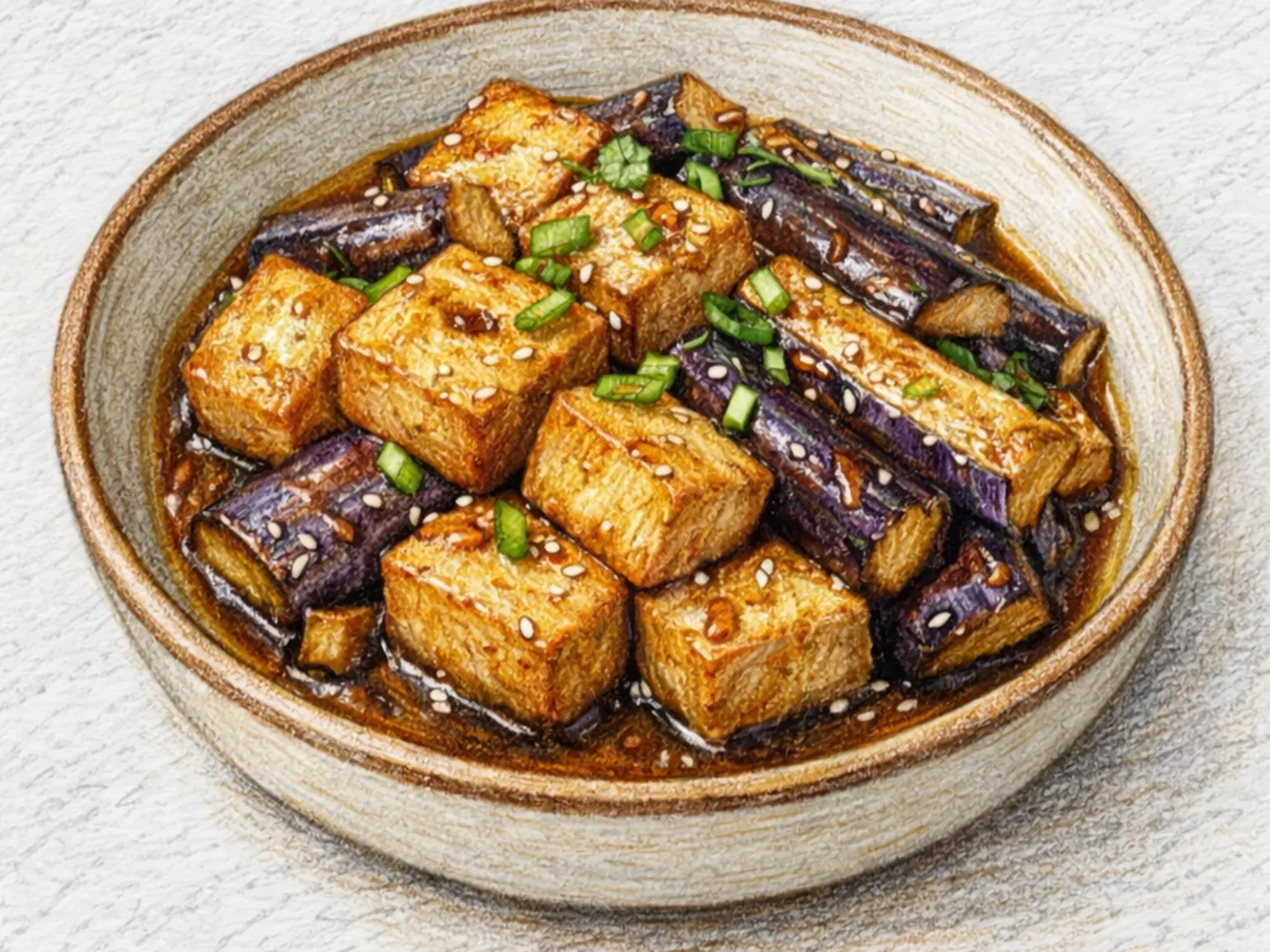
Kkwarigochu-dubu-jorim is a Korean braised dish of pan-fried tofu and shishito peppers in a soy sauce, gochugaru, and garlic seasoning. The tofu is seared first to create a firm, golden crust that contrasts with its soft interior once it finishes braising in the sauce. Shishito peppers absorb just enough liquid to carry the seasoning while adding their own fresh, vegetal note. Soy sauce and sesame oil pull the flavors together into a cohesive, savory whole, making this a satisfying plant-based banchan that holds its own on any table. Mixing the braising sauce into a bowl of rice alongside makes for a simple but rewarding meal.

Korean Zucchini Kimchi (Summer Fresh Gochugaru Quick)
Hobak kimchi represents a seasonal Korean vegetable preparation specifically associated with the summer months. This timing is chosen because domestic aehobak reach their peak levels of natural sweetness and maintain a particularly tender internal structure during this time of year. To prepare the zucchini for seasoning, the vegetable is typically sliced into thin half-moon shapes or uniform rectangular pieces. The salting stage for these slices is kept intentionally brief. This limited salting time serves a specific functional purpose in the recipe by preventing the extraction of excessive moisture from the vegetable cells. If the zucchini remains in salt for an extended period, the individual slices tend to lose their structural integrity and collapse, which eliminates the characteristic crispness that defines the quality of the finished dish. Once the brief salting process is complete, the zucchini pieces are rinsed in cold water and squeezed firmly by hand to remove as much residual liquid as possible. The seasoning phase involves thoroughly tossing the prepared slices with a combination of red chili flakes known as gochugaru, fish sauce, and finely minced garlic. Rather than utilizing refined sugar for seasoning, this recipe relies on the addition of plum extract. The extract provides a balanced and rounded natural sweetness to the profile of the dish without the need for processed additives. Fresh garlic chives are integrated into the mixture to contribute an aromatic and grassy quality that connects the different flavor elements together. Thinly sliced onions are also added to provide a subtle savory depth in the background. This particular variety is a no-fermentation kimchi, meaning it is designed to be consumed on the same day it is made or within two days at the most. Beyond this forty-eight hour window, the texture of the zucchini softens significantly and the initial freshness of the ingredients begins to dissipate. To maintain the best possible quality during this short period, the kimchi should be kept in a tightly sealed container and stored in the refrigerator.

Korean Braised Saury in Spicy Sauce
Kkongchi-jorim simmers Pacific saury with daikon radish in a soy-gochujang sauce until the bones soften enough to eat whole - a thrifty Korean fish braise built on one of autumn's most affordable catches. The radish lines the pot bottom, cushioning the fish from direct heat to prevent breakage while absorbing the braising liquid into sweet, flavor-soaked wedges. After bringing the sauce to a boil, twenty-five minutes of medium-low simmering renders the fine bones edible without adding vinegar. Canned saury, with bones already softened during processing, halves the cooking time for weeknight shortcuts. Green onion placed on top in the final two minutes tempers the fish's natural oiliness and adds a visual accent. Like most jorim-style banchan, this dish improves over several days in the refrigerator as the seasoning continues to penetrate.

Korean Spicy Duck Stir-fry
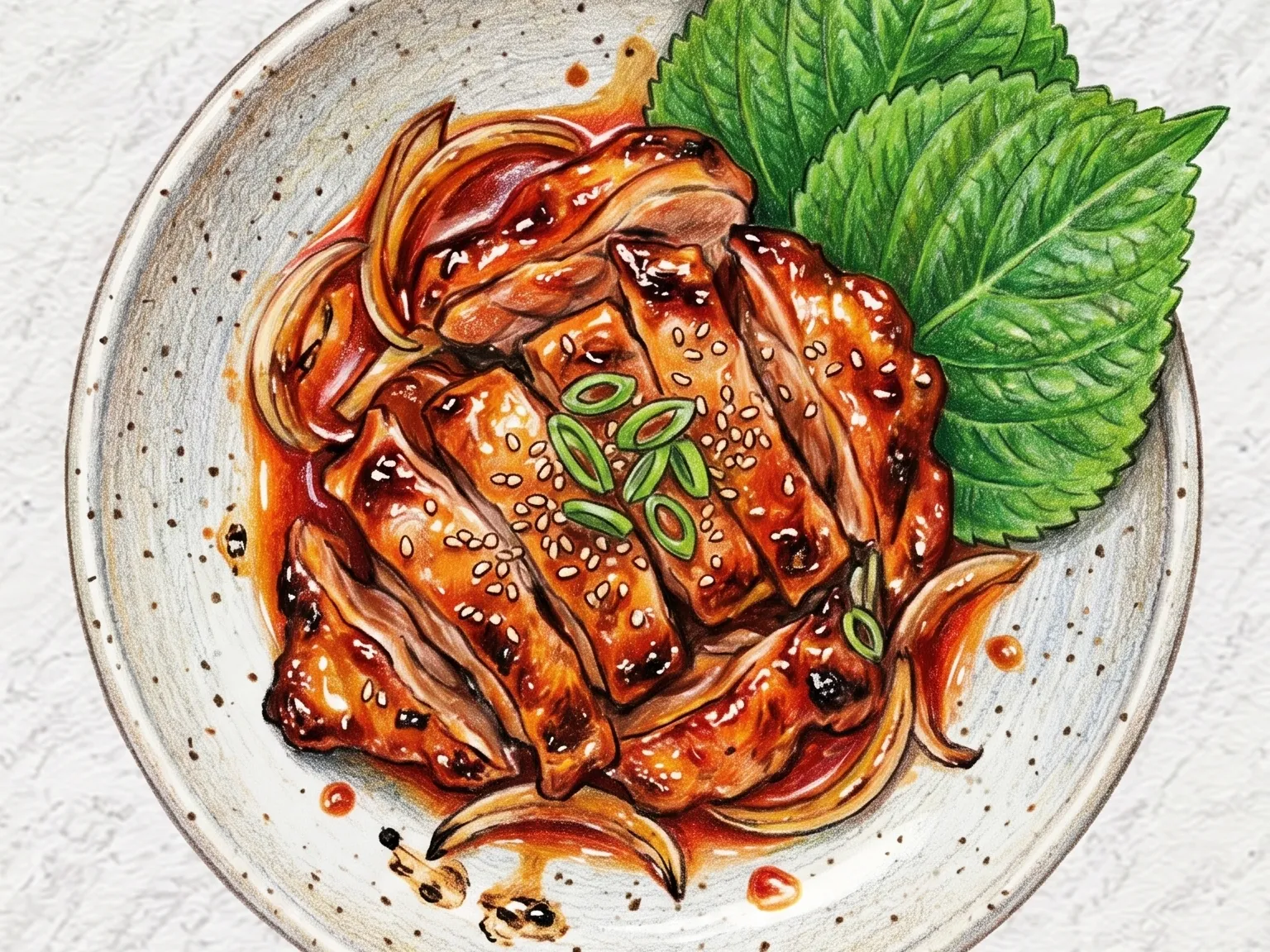
Ori-jumeulleok is a Korean spicy duck stir-fry where sliced duck is hand-massaged with a marinade of gochujang, gochugaru, soy sauce, garlic, and sesame oil, then rested for fifteen minutes before hitting a hot pan with onion. The duck renders its own fat as it cooks, creating a rich, glossy sauce without added oil. Once the meat is seared, perilla leaves go in at the very end - just long enough to release their peppery, herbal fragrance without wilting completely. The result is a dish with deep, concentrated heat from the marinade balanced by the aromatic lift of perilla, all carried on the duck's naturally rich fat.

Korean Bracken Fern and Beef Stew
Gosari-soegogi-jjigae is a Korean stew of parboiled bracken fern and beef brisket simmered together in a clear, gochugaru-seasoned broth. Bracken has a distinctly springy yet tender texture once fully rehydrated, and it absorbs the beefy broth deeply, carrying the earthy, herbal notes of the fern through each piece. Korean radish adds a clean, slightly sweet dimension to the broth, while soup soy sauce and gochugaru together build depth and a moderate heat that defines the stew's character. This stew is closely associated with Korean ceremonial cooking, appearing regularly at holiday tables and ancestral rites where its grounding flavors are particularly valued. Bracken must be thoroughly boiled and soaked in cold water to remove natural toxins and soften the texture before it can be used; brisket should be soaked to draw out the blood before cutting so the broth stays clear and does not turn murky during cooking.

Korean Spicy Braised Semi-Dried Pollock
Kodari-jjim is a Korean braised dish of semi-dried pollock slow-cooked with radish and onion in a gochugaru and soy sauce seasoning. The drying stage removes moisture from the pollock, firming the flesh so it absorbs the seasoning deeply while holding its shape throughout cooking. Radish tempers the chili heat and contributes a natural sweetness, and a small addition of doenjang adds a savory depth that rounds out the sauce. As the liquid reduces to a thick, clinging glaze, the pollock takes on an intensely spiced quality that makes it a natural companion to steamed rice. Mixing the reduced sauce into hot rice is a well-known Korean habit, since every drop carries concentrated spice and brine.

Korean Red Cabbage Kimchi
Jeokchae kimchi is made by salting red cabbage leaves, then tossing them in a seasoning of gochugaru, sand lance fish sauce, minced garlic, and Korean pear juice before a short fermentation. Red cabbage has thicker, denser leaves than napa cabbage, so it holds its crunch well after brining rather than going soft. The anthocyanin pigment in the red cabbage reacts with the chili seasoning to produce a vivid purple color rather than the typical red associated with kimchi, making it visually striking on the table. Pear juice provides a gentle fruit sweetness underneath the heat and spice, while sand lance fish sauce builds enough savory depth that even a brief fermentation yields full flavor. Scallions add a fresh, aromatic finish that ties the seasoning together. The result is a kimchi that is crunchy, spicy, and umami-rich simultaneously, with a distinctive character that sets it apart from traditional napa kimchi.

Korean Steamed Shishito Pepper Banchan
Kkwarigochu-jjim is a banchan made by coating shishito peppers with a thin dusting of flour and steaming them before tossing them in a seasoning sauce, which means no oil is used in the cooking process and the result is lighter than stir-fried or pan-fried versions. The wrinkled, bumpy surface of shishito peppers catches flour naturally. The right technique is to place the peppers in a sieve, scatter the flour over them, and shake gently to distribute an even, minimal coating. Too much flour causes the peppers to stick together into a clump during steaming. Five to six minutes of steaming wilts the peppers completely and turns the flour coat from white to translucent, while the moisture released from inside the peppers keeps the flesh tender and juicy. A quick toss in a sauce of soy sauce, gochugaru, minced garlic, and sesame oil lays a savory, mildly spicy layer over the pepper's own gentle sweetness. Because no cooking oil is involved, the calorie count is significantly lower than pan-fried shishito banchan, and steaming retains more of the pepper's vitamin C than high-heat stir-frying. Placed alongside richer, oil-based side dishes, kkwarigochu-jjim provides a clean, refreshing contrast on the table.

Korean Squid & Pork Belly Stir-fry
Osam-bulgogi is a Korean stir-fry that pairs scored squid and sliced pork belly in a single pan with a gochujang-gochugaru-soy-sugar sauce, delivering both oceanic umami and rich meatiness in every bite. The pork belly cooks first for three minutes, rendering its fat into the pan - this rendered fat then becomes the cooking medium for the squid, deepening the overall flavor. Squid is scored in a crosshatch pattern so the thick sauce penetrates its flesh, and onion provides sweetness to balance the heat. Scallion and perilla leaves finish the dish, adding freshness to what is a staple anju (drinking snack) in Korean restaurants.

Korean Gul Dubu Jjigae (Oyster Tofu Stew)
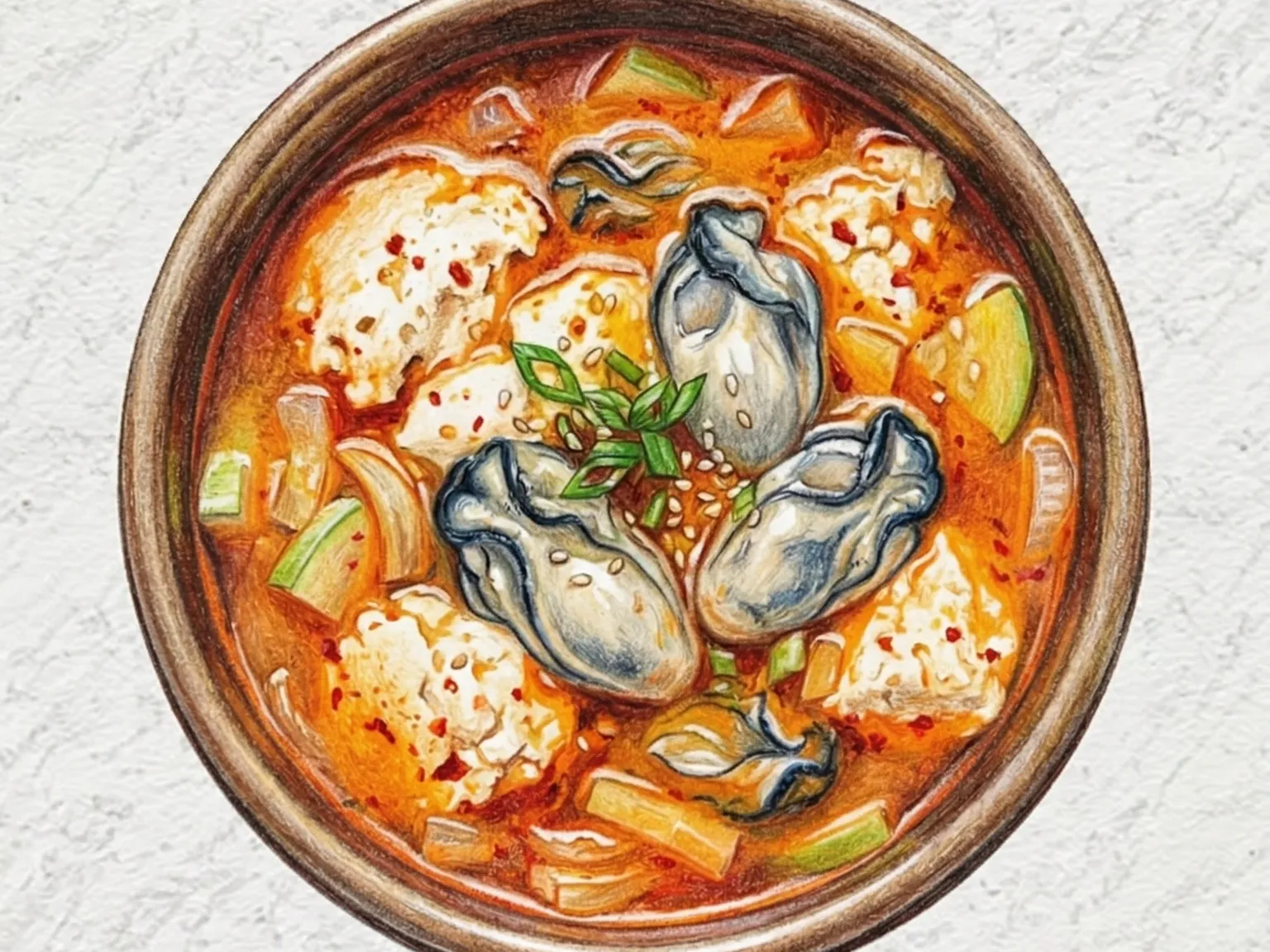
Gul dubu jjigae pairs 180 grams of fresh oysters with generous cubes of firm tofu in a clean anchovy-kelp stock. The oysters release their briny, mineral-rich juices the moment they hit the simmering broth, giving the soup an immediate oceanic depth that no other seafood replicates in quite the same way. Korean radish adds mild sweetness and keeps the stock clear rather than murky, while gochugaru and a whole Cheongyang chili suppress any fishiness and build a persistent background heat. The 300 grams of tofu make this a genuinely filling stew rather than a light soup course. Timing the oysters correctly is the most important step: added just before the pot returns to a boil, they need only thirty seconds to one minute before they are cooked through. Leaving them longer shrinks them and toughens their texture. Rinsing the oysters gently in lightly salted water before cooking removes sand and impurities without stripping their natural fragrance. This is a distinctly seasonal stew, best made in winter when the cold-water oysters are plump, briny, and at full flavor.

Korean Steamed Spicy Pork and Bean Sprouts
Kongbul-jjim is a steamed rather than stir-fried take on the classic spicy pork and bean sprout combination, cooked with a lid on to trap moisture inside the pot. As the bean sprouts release their liquid under the sealed lid, a natural broth forms and carries the gochujang-and-gochugaru seasoning evenly into every piece of pork. The double-layer chili heat is assertive, but the bean sprouts, still holding a light crunch, soften the impact of each bite. Because far less oil is used than in a stir-fry, the seasoning comes through cleaner and more direct. Stirring rice into the remaining broth at the end, or dropping in thin somyeon noodles, makes full use of the deeply flavored liquid at the bottom of the pot. Adding extra garlic builds additional layers of savory depth, and a cut like pork shoulder with some texture stays noticeably more moist through the steaming process than a leaner loin cut.

Korean Scallion Kimchi (Whole Stalk Anchovy Shrimp Paste)
Jjokpa kimchi is a traditional Korean scallion kimchi made by briefly brining whole scallions in coarse salt, then coating them from root to tip with a seasoning paste of anchovy fish sauce, fermented shrimp, gochugaru, and sweet rice flour paste. Using both anchovy fish sauce and salted shrimp together is intentional: the two condiments each carry a different profile of seafood umami, and combining them produces a more complex, layered depth than either alone could achieve. The sweet rice flour paste acts as a binder, adhering the seasoning evenly to the surface of each scallion and keeping it in place as moisture releases during fermentation. Without this paste, the pickling liquid would dilute the coating and the flavor would fade over time. The white bulb sections of the scallion hold their crunch through the brining and fermentation process while absorbing the spice of the gochugaru, and the green tops wilt to a silky texture that releases the scallion's characteristic sweet, pungent aroma. After six hours at room temperature followed by a day of refrigeration, the seasoning has fully penetrated the scallion and the kimchi is ready to eat alongside grilled pork belly or bossam. After three or more days of fermentation, a gentle lactic acidity develops that makes the kimchi equally useful as an ingredient in stews or stir-fries.

Korean Seasoned Shishito Pepper Banchan
Kkwarigochu-muchim is a Korean banchan made by briefly blanching shishito peppers and dressing them in a doenjang-based seasoning. It is a distinct dish from kkwarigochu-jjim, the braised version of the same pepper, even though the ingredients overlap significantly. The braised version simmers the peppers until they soften and absorb the sauce, while muchim relies on a very short blanch, no longer than forty seconds, to preserve the pepper's snap. Shocking the peppers in cold water the moment they come out of the boiling water locks in the vivid green color, and squeezing out excess moisture prevents the doenjang dressing from thinning into something flat and watery. The irregular wrinkled surface of shishito peppers acts as a natural trap for the doenjang, soy sauce, and sesame oil dressing, which means a modest amount of seasoning spreads evenly across every piece. Tossing rather than kneading keeps the skins intact and the texture consistent. Tearing one end slightly before dressing allows the seasoning to reach the hollow interior. Among regular eaters, part of the appeal is the mild unpredictability: most shishito peppers are gentle, but one in every handful delivers unexpected heat. Because the dish releases very little liquid after seasoning, it travels well in packed lunches and is a regular fixture on summer dinner tables in Korean households.

Korean Braised Spanish Mackerel with Radish
Samchi mu-jorim layers sliced Korean radish on the bottom of a pot, topped with Spanish mackerel steaks and onion, then braised in a sauce of gochujang, soy sauce, gochugaru, and garlic. The radish prevents the fish from sticking, absorbs the braising liquid, and turns translucent-soft as it cooks. Rather than flipping the fish, the sauce is spooned over the top repeatedly so the flesh stays intact. After about fifteen minutes of simmering on medium heat, the liquid reduces to a concentrated, mildly spicy broth with the radish's subtle sweetness woven through it.