Korean Fresh Eggplant Kimchi
Gaji kimchi is a fresh eggplant kimchi that requires no fermentation and can be eaten immediately after preparation. Eggplant is steamed until it becomes pliable and soft throughout, then torn by hand along the grain rather than cut with a knife. Tearing along the natural fibers creates a rough, open surface that allows the seasoning of gochugaru, fish sauce, garlic, and sesame oil to penetrate deep into the flesh rather than merely coating the outside. The result is an even distribution of spicy, salty flavor throughout every bite rather than concentrated only at the surface. Scallions folded in at the end add a fresh, sharp lift, and toasted sesame seeds provide a nutty, fragrant finish. Because no fermentation is involved, this kimchi is best suited to seasons when eggplant is at its peak, particularly summer, when the vegetable is widely available and a quick, no-cook banchan is most welcome. Piled over a bowl of cold leftover rice and mixed together, the seasoning soaks into the grains while the soft steamed eggplant adds body, making it a satisfying one-bowl meal without needing additional soup or side dishes.

Korean Braised Mackerel in Spicy Sauce
Godeungeo-jorim is one of the most frequently cooked fish banchan in Korean homes, pairing mackerel's assertive flavor with a spicy braising sauce that demands steamed rice. Mackerel is cut into steaks and salted for ten minutes to draw out fishy odors, then arranged over thick radish slices that line the pot bottom. The radish serves dual duty: preventing the fish from sticking and releasing its natural sweetness into the braising liquid below. A sauce of gochugaru, gochujang, soy sauce, garlic, ginger, and sugar is spooned over, and the pot simmers covered for twenty minutes. During this time the seasoning penetrates the flesh while the radish absorbs enough sauce to rival the fish itself as the most satisfying component of the dish. Green onion added in the final minutes lifts the heavy spice with a fresh sharpness.

Korean Stir-Fried Kale and Pork with Gochugaru
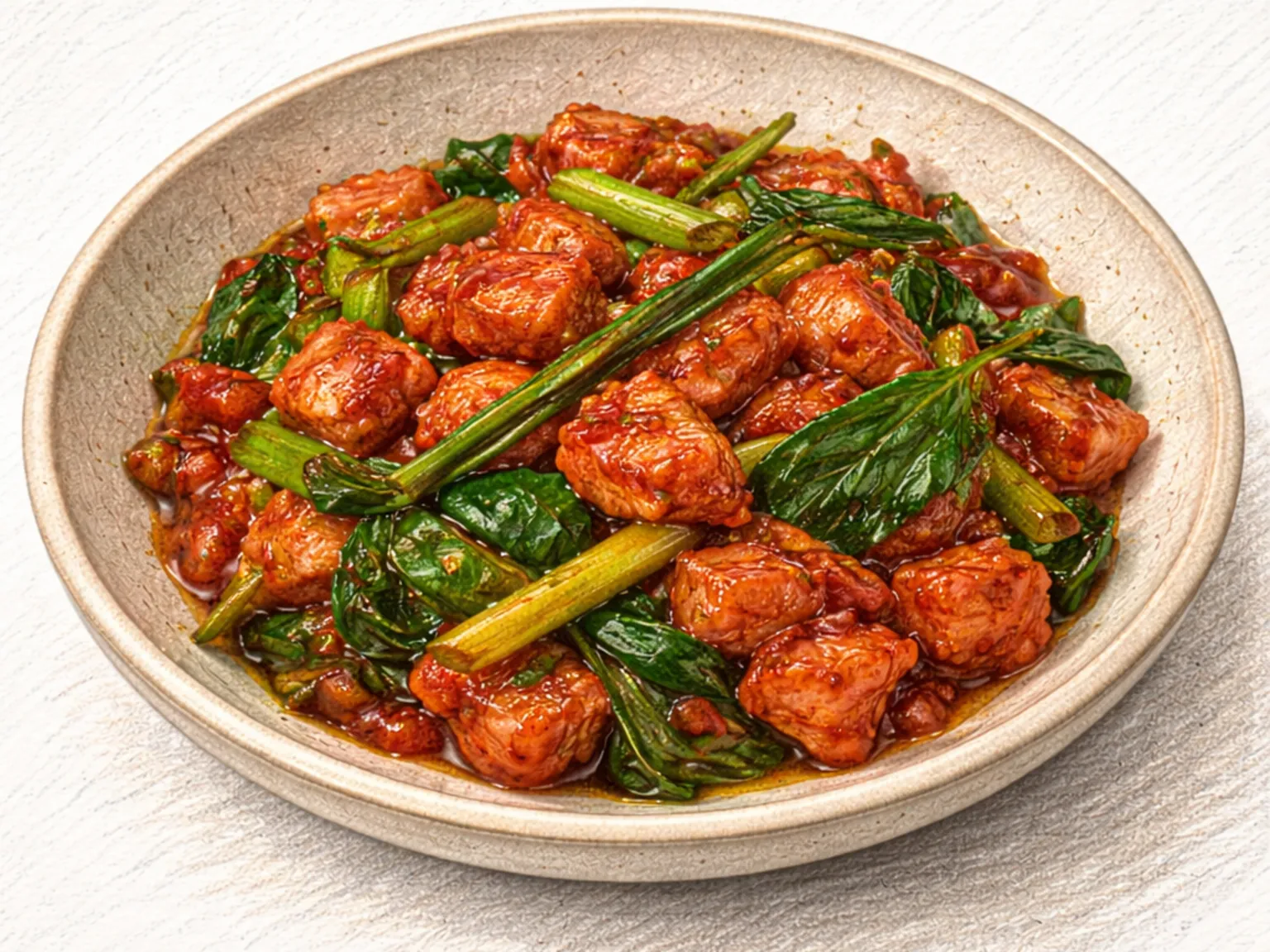
Keil-dwaeji-gochugaru-bokkeum stir-fries marinated pork shoulder with kale in a chili-forward gochugaru and gochujang sauce. The pork marinates to develop deep, spicy savoriness, then sears quickly at high heat for a lightly charred edge. Kale holds up to the heat better than most leafy greens, retaining a pleasant chew that contrasts with the tender pork and cuts through its richness. The dish works well wrapped in lettuce without any extra dipping sauce, or simply piled over a bowl of steamed rice.

Korean Galchi Kimchi Jjigae (Hairtail Kimchi Stew)
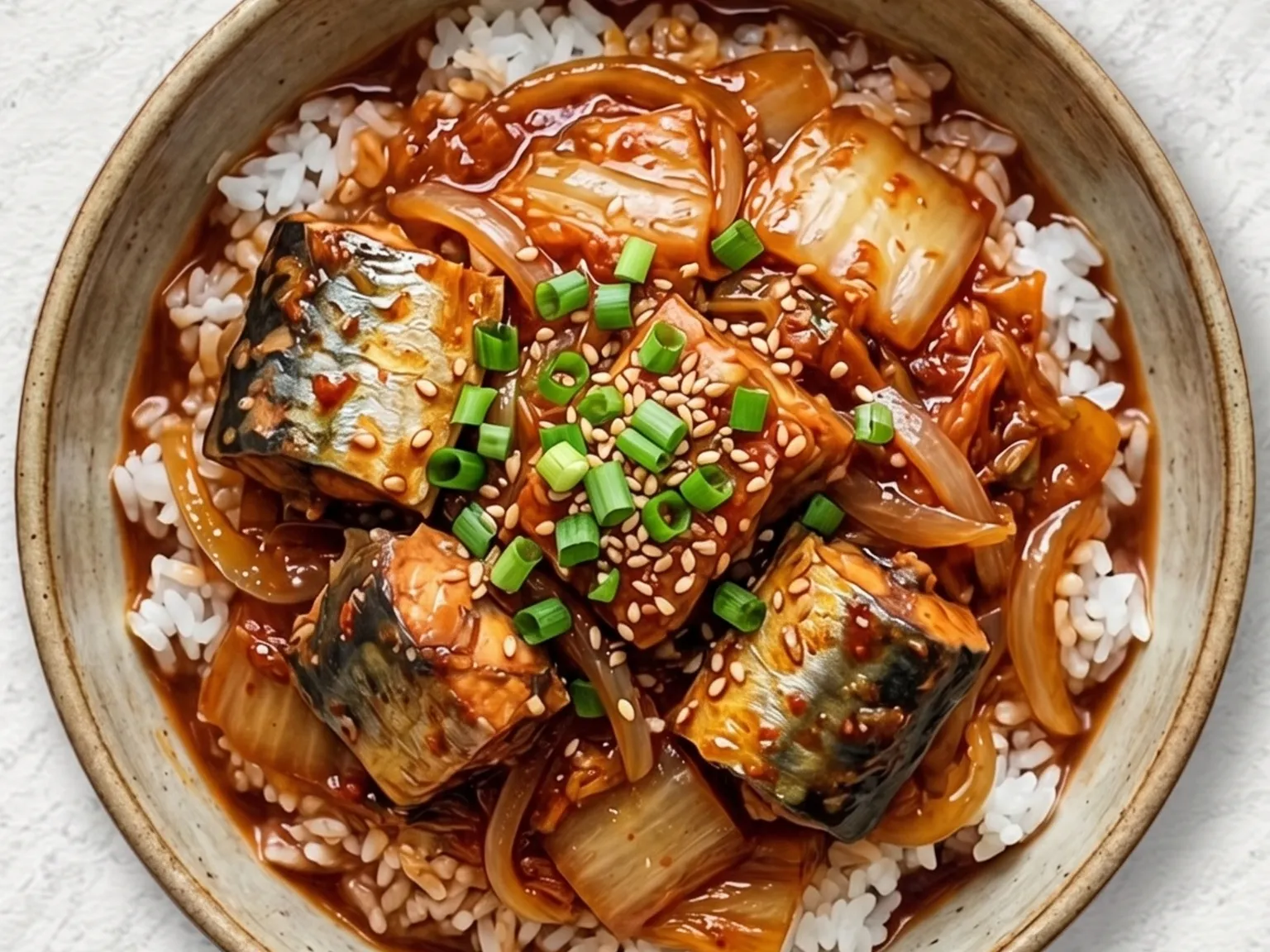
Galchi kimchi jjigae is a Korean stew that pairs hairtail fish with deeply fermented aged kimchi, simmered together in a base of anchovy and dried kelp stock. The richness of hairtail - an oily, full-flavored white fish - works in counterpoint to the sharp, acidic punch of well-aged kimchi, and as the two cook together their flavors blur into something more complex than either ingredient alone. Korean radish and onion go into the pot first, their natural sweetness dissolving into the broth to form a mild, rounded base before the fish is added. The hairtail is laid in gently and cooked covered to preserve the flesh, which would fall apart if stirred. Gochugaru and soup soy sauce season the broth with spice and salt, while the fish releases its own deep umami gradually, enriching every spoonful of liquid. Pouring the stew over a bowl of rice is one of the most common ways to eat it - the broth soaks into the grains and pulls every element of the dish together. It is particularly well-suited to cold-weather cooking, when a hot, assertive broth is exactly what is needed.

Korean Braised Mackerel (Fatty Mackerel with Radish in Spicy Soy Sauce)
Godeungeo-jjim is a Korean braised mackerel dish cooked low and slow with Korean radish, sliced onion, gochugaru, soy sauce, and fresh ginger. Mackerel belongs to the blue-backed fish category with a high natural fat content, and that fat absorbs the bold, spiced seasoning during braising in a way that leaner fish cannot. The flavor that results is deeply savory with a rounded heat that does not taste sharp or one-dimensional. Radish placed at the bottom of the pan serves a dual purpose: it draws out the fishy aroma during cooking and simultaneously soaks up the braising liquid, making it almost as desirable to eat as the fish itself. Ginger neutralizes the remaining raw fish notes and keeps the overall taste from feeling heavy, providing a subtle warmth that lifts the richness. As the braising liquid reduces, it thickens into a glossy, intensely flavored sauce that is commonly spooned over steamed rice to the last drop. Mackerel is widely available and inexpensive in Korea, which has made this preparation a household staple across generations.

Korean Mustard Leaf Kimchi
Gat kimchi is a Jeolla-province kimchi made from salted mustard greens (gat) fermented with gochugaru, anchovy fish sauce, garlic, and plum extract. The brassica oils in the leaves transform during fermentation into a sharp, nose-tingling pungency distinctly different from standard napa cabbage kimchi. Anchovy fish sauce lays down deep umami while plum extract softens the acidity, balancing the aggressive aroma against the pronounced saltiness. Served alongside fatty pork or soup-rice bowls, it cuts through richness and refreshes the palate forcefully between bites. Dolsan gat, grown on Dolsando Island in Yeosu, is considered the most aromatic variety, and the kimchi reaches its ideal balance of pungency and fermentation tang after two to three days of resting rather than immediately after preparation.

Korean Seasoned Dried Pollock Strips
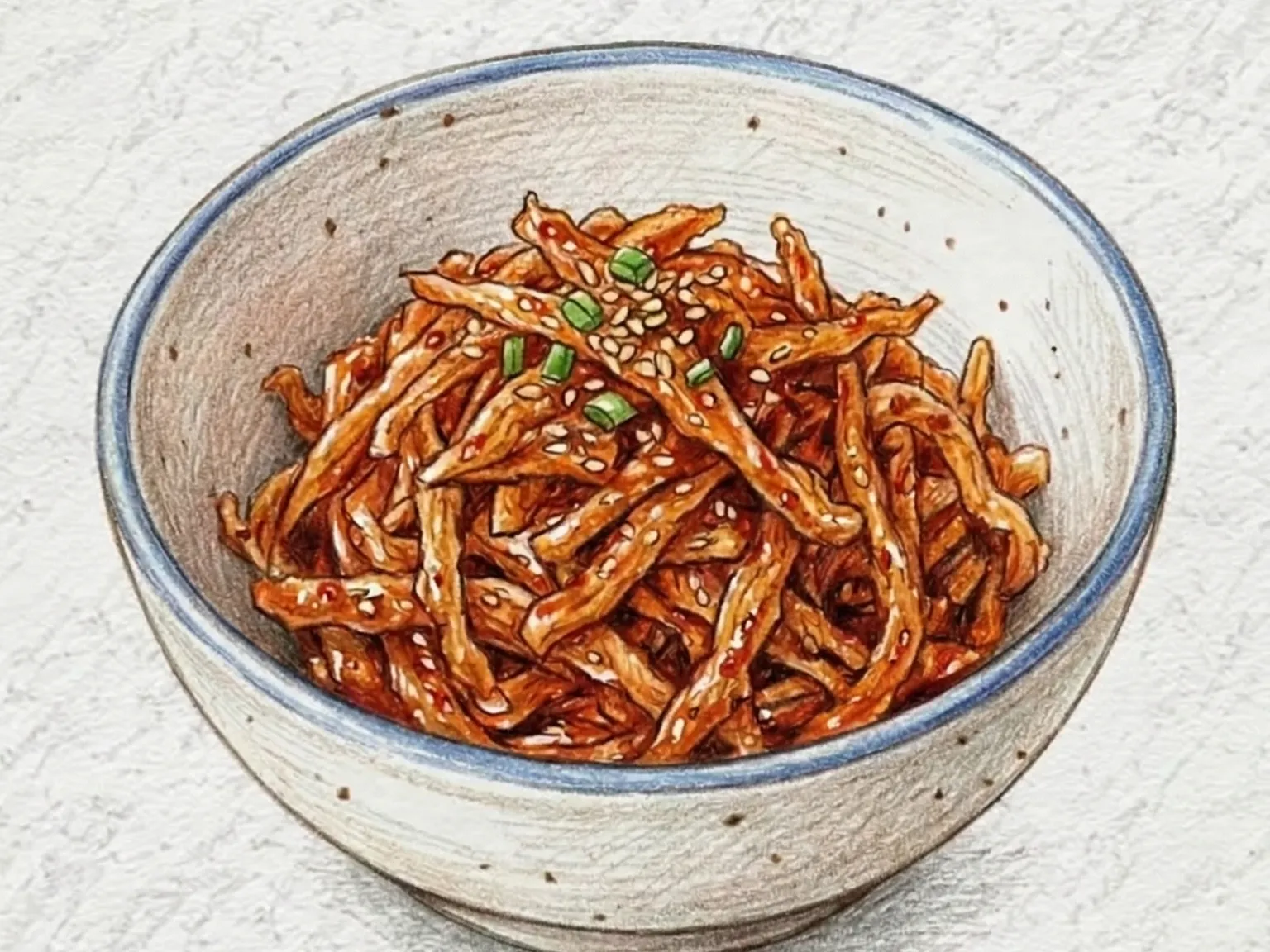
Hwangtaechae-muchim dresses shredded dried pollock strips in a no-cook gochujang sauce - sharing the same core ingredient as hwangtae-po jorim but taking a completely different approach. While the braised version simmers the strips in liquid for a moist finish, this muchim keeps them closer to their original dry state, preserving a chewy, almost jerky-like bite. If the strips are too stiff, a light mist of water followed by a two-minute rest softens them just enough without losing that chew. The dressing combines gochujang, gochugaru, oligosaccharide syrup, and vinegar into a sweet-sour-spicy trio that earns this dish its bap-doduk (rice thief) reputation. A small addition of mayonnaise coats the surfaces with a thin fat layer, preventing the rough texture that dried fish can have. Start to finish, this banchan takes under fifteen minutes.

Korean Kimchi Pork Stir-fry
Kimchi jeyuk bokkeum is a Korean stir-fry of pork shoulder seasoned with gochujang, gochugaru, and soy sauce, then cooked over high heat together with well-fermented aged kimchi. The kimchi's deep sourness from lactic acid fermentation cuts through the pork fat and tempers its richness while simultaneously amplifying the chili heat of the paste, making the overall flavor more intense than either ingredient achieves alone. Searing the pork first against a dry hot pan builds caramelized edges that add depth to the final dish, and adding the kimchi and onion afterward lets the combined liquid reduce into a concentrated glaze that coats everything in the pan. The more aged the kimchi, the more it functions as both seasoning and acid, which means less soy sauce is needed without losing complexity. Scallion and sesame oil finish the dish cleanly, and wrapping portions in fresh lettuce leaves gives the heat somewhere to go, softening each bite considerably.

Korean Pork Bone Stew (Slow-Simmered Pork Spine & Potato)
Gamjatang is one of Korea's most recognized bone soups, made by simmering pork spine for a long time until the broth turns milky white and rich with collagen. Doenjang and gochugaru form the seasoning foundation, while perilla seed powder -- a signature addition -- gives the broth a nutty, slightly creamy depth that is hard to replicate with any substitute. Potatoes simmer until they absorb the broth and soften to the core, and the dried napa cabbage leaves add a chewy, vegetal contrast to the thick liquid. A handful of perilla leaves stirred in near the end brings a fresh herbal note, and the ritual of picking tender pork off the bones with chopsticks is part of what makes eating gamjatang a hands-on, satisfying experience. It is traditionally sought out as a late-night meal or a hangover cure.

Korean Steamed Oysters
Gul-jjim is Korean steamed oysters cooked in their shells over high steam until the shells pop open. The shell acts as a natural vessel, trapping the briny liquor inside and keeping the oyster meat plump and moist throughout cooking. A dipping sauce made from soy sauce, vinegar, and gochugaru delivers a sharp, tangy contrast to the oyster's mild sweetness, while lemon wedges cut through any residual brininess and leave a clean finish. With minimal preparation and a cooking time under ten minutes, this dish is one of the most straightforward ways to enjoy winter oysters at their freshest. The single most important technique is removing the oysters from heat the moment the shells crack open, since even a minute of additional steaming causes the meat to shrink and toughen.

Korean Green Chili Kimchi
Gochu kimchi is a spicy Korean kimchi made with whole or halved green chili peppers that are salted, then dressed in gochugaru, salted shrimp, anchovy fish sauce, and garlic before a short fermentation period. The thick pepper walls retain a firm crunch through salting and fermentation, and the seeds clustered inside deliver a concentrated burst of heat when bitten into. Salted shrimp brings immediate umami even without extended aging, and the pepper's own grassy sweetness supports the seasoning in place of added sugar. Salting the peppers for thirty to forty minutes with coarse salt draws out moisture without making them overly salty, which keeps the finished kimchi well-balanced. Served alongside grilled pork belly or bossam, this kimchi acts as a sharp, refreshing counterpoint that cuts through the richness of fatty meats.

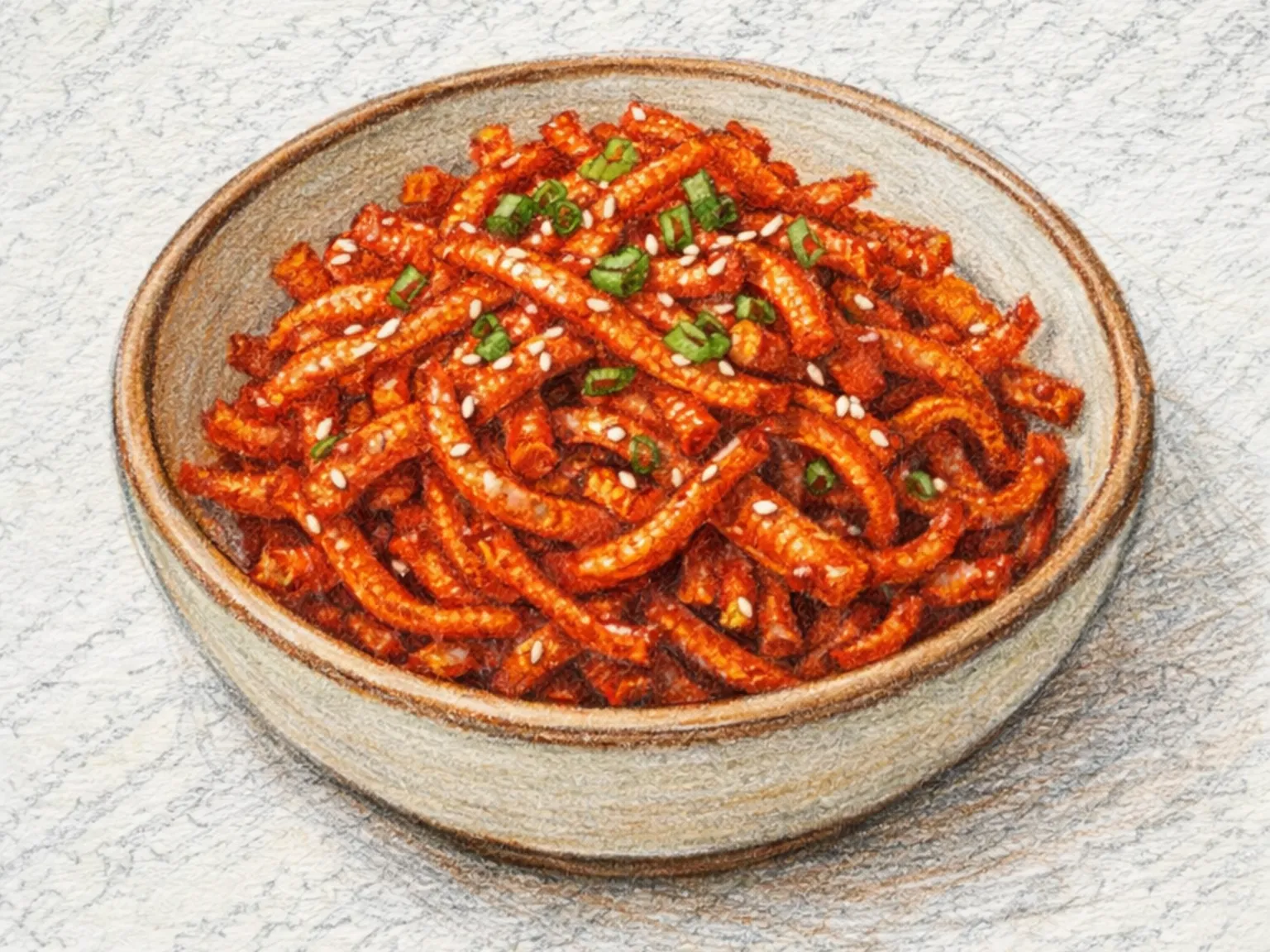
Korean Butter Soy Stir-fried Dried Squid
Butter-soy jinmichae-bokkeum stir-fries dried shredded squid (jinmichae) in melted butter with soy sauce and oligosaccharide syrup, making a banchan that is rich, salty-sweet, and distinctly different from the standard gochujang-dressed version. The butter's milk fat coats each strand of squid and creates a noticeably smoother mouthfeel than oil-based preparations. The sequence matters: garlic goes into the melted butter first and cooks for just twenty seconds to bloom its aroma without burning, then the soy sauce and syrup go in to form the glaze base, and only then does the jinmichae enter the pan. The entire stir-fry window is no more than two to three minutes - squid proteins contract and toughen quickly at high heat, so extended cooking ruins the texture. Half a tablespoon of gochugaru is enough to add gentle warmth and a reddish tint without overriding the butter's character. This banchan works in children's lunchboxes and holds up equally well as a beer snack.

Korean Blue Crab Soy Stir-Fry
Kkotge ganjang bokkeum is a Korean blue crab stir-fry where halved crabs are lightly dusted with flour, pan-seared until the shells turn deep red, then braised briefly under a lid in a sauce of soy sauce, sugar, garlic, ginger, and gochugaru. The flour coating seals in moisture and helps the sweet-salty sauce cling to the shell surface, leaving a sticky, aromatic glaze that is meant to be licked off the fingers. Ginger neutralizes the briny smell that crabs can carry, while scallion and sesame oil are stirred in at the end to build the final aromatic layer. Using live crabs and cooking them immediately after cleaning ensures the meat stays firm and sweet; frozen crabs lose moisture during thawing and produce a noticeably softer result. Scoring the claws before cooking allows the sauce to penetrate the thicker sections of shell.

Korean Perilla Gamjatang (Nutty Perilla Pork Bone & Potato Stew)
This perilla-forward version of gamjatang places nutty richness at the center of the dish by adding a generous four tablespoons of ground perilla seed to the broth. Pork backbone weighing around 1.2 kilograms is soaked in cold water to draw out the blood, blanched once to clean the surface, then simmered into a heavy, collagen-rich stock that forms the base for everything else. Potatoes and salted napa outer leaves go in partway through cooking, absorbing the deeply savory liquid as they soften. The perilla powder added toward the end turns the broth noticeably pale and creamy, coating it in a smooth, roasted nuttiness that distinguishes this variation from the sharper, more aggressively spiced standard recipe. Twelve perilla leaves are added with the lid on during the final minutes, allowing their herbal fragrance to steep gently into the pot rather than cook off. A spoonful of doenjang strengthens the underlying umami. Gochugaru and gochujang are used to build heat, but the perilla softens and rounds the spice so the overall effect is warmer and less sharp than a conventional gamjatang. Frying leftover rice in the remaining broth at the end is a natural conclusion to the meal.

Korean Spicy Braised Mixed Seafood
Haemul-jjim is a Korean mixed seafood braise that brings together squid, shrimp, and manila clams with bean sprouts and onion in a gochugaru and soy sauce seasoning. The vegetables are layered on the bottom of the pot to absorb heat first, with the seafood arranged on top and cooked quickly over high heat so the texture stays firm and springy. Each shellfish releases its natural brine into the broth as it opens, deepening the seasoning without any added stock. A starch slurry stirred in at the end creates a glossy coating that clings to every piece of seafood and vegetable. The dish comes together in under ten minutes of active cooking. Bean sprouts hold their crunch while the squid and shrimp stay tender, and the remaining sauce at the bottom of the pot makes it natural to spoon over rice. It is a standard centerpiece at Korean gatherings and a popular accompaniment to drinks.

Korean Pepper Leaf Kimchi
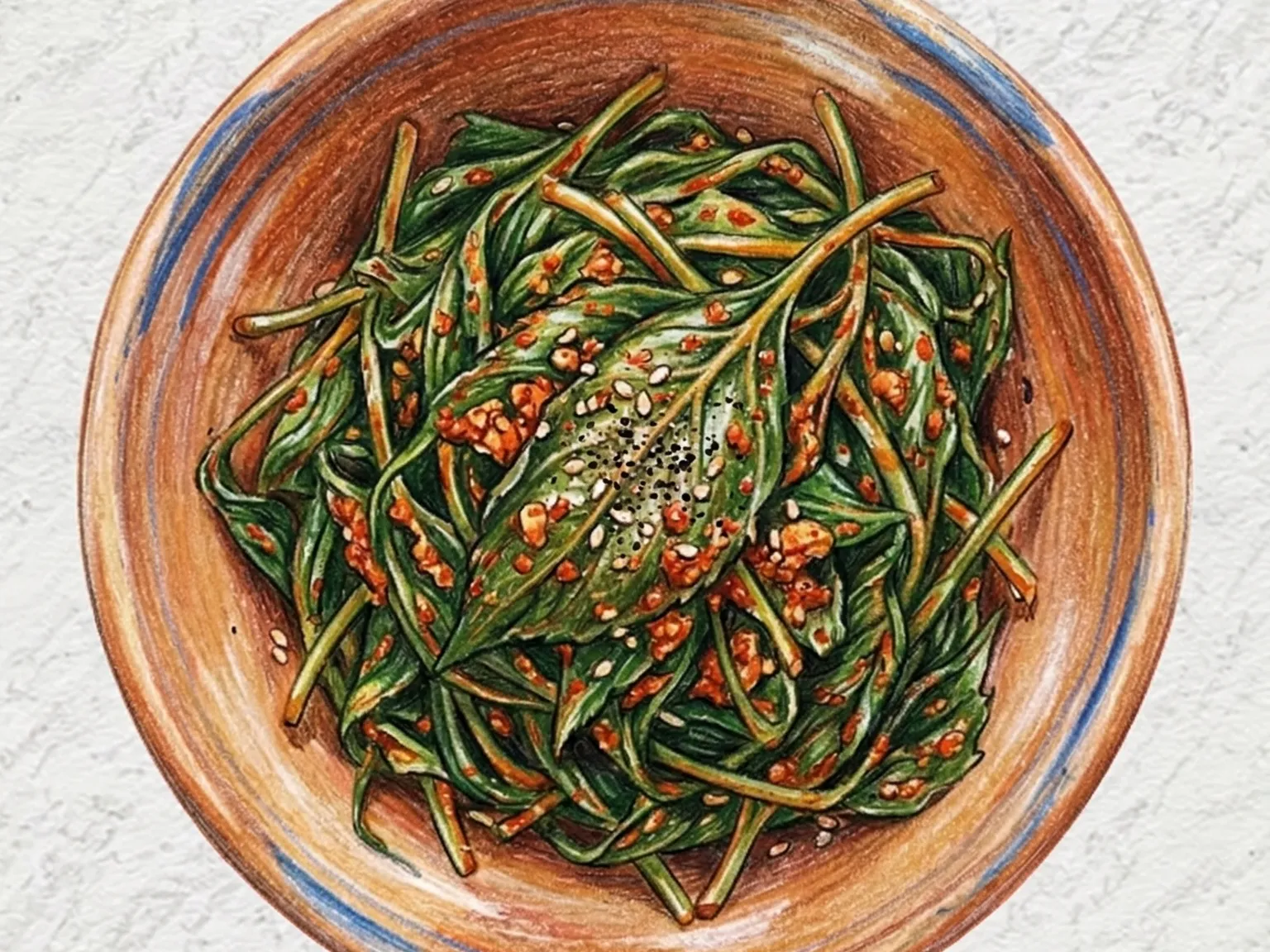
Gochuip kimchi is a seasonal Korean kimchi made from pepper leaves, prepared during late spring to summer when the leaves are available. Blanching is the essential first step. Fresh pepper leaves contain compounds that produce a raw bitterness, and simply seasoning them without pre-cooking leaves an unpleasant edge. A brief blanch of about 30 seconds collapses the cell structure, removing bitterness while dramatically reducing the volume of the leaves. The softened leaves also accept the seasoning more evenly across their surfaces. Glutinous rice paste added to the gochugaru, anchovy fish sauce, and garlic mixture thickens the coating so it adheres uniformly to each leaf and supports lactic acid fermentation even within the short one-day curing window. The herbaceous quality in pepper leaves survives fermentation, remaining as an undercurrent beneath the spicy coating and producing a green, herb-like character that distinguishes this kimchi from napa cabbage or young radish varieties.

Korean Stir-Fried Kimchi (Caramelized Aged Kimchi Banchan)
Kimchi-bokkeum is the default way Korean households use kimchi that has fermented past its fresh prime and developed a sharp lactic acidity that makes it too sour to eat on its own. Stir-frying over heat fundamentally transforms that sourness, cooking it down into something mellower, sweeter, and more rounded. Onion goes in first and cooks until translucent, building a sweet foundation before the kimchi and garlic join the pan. Maintaining medium heat is the key to driving off moisture gradually and building the thick, concentrated sauce that distinguishes well-made kimchi-bokkeum from a watery stir-fry. A small addition of gochugaru deepens the color and reinforces the chili heat, while a pinch of sugar balances the fermented sourness without making the dish sweet. A tablespoon of kimchi brine stirred in near the end amplifies the umami contributed by the lactobacillus cultures in the kimchi itself. Adding sliced pork belly or canned tuna to the pan along with the kimchi increases the protein and gives the dish more substance. The finished banchan is versatile enough to serve straight alongside rice, fold into fried rice, or pile on top of ramyeon.

Korean Beef Brisket and Bean Sprout Stir-fry
Kongnamul chadol bokkeum starts by rendering thin beef brisket slices over high heat to release their fat, then uses that fat as the cooking medium for bean sprouts and a gochujang-gochugaru sauce. The brisket's chewy bite contrasts with the sprouts' crispness, and the rendered beef fat merges with the chili paste to create a rich base without added oil. Moisture released from the bean sprouts thins the sauce just enough to coat everything evenly. Sesame oil finishes the dish, which is a common choice for a drinking snack or late-night meal.

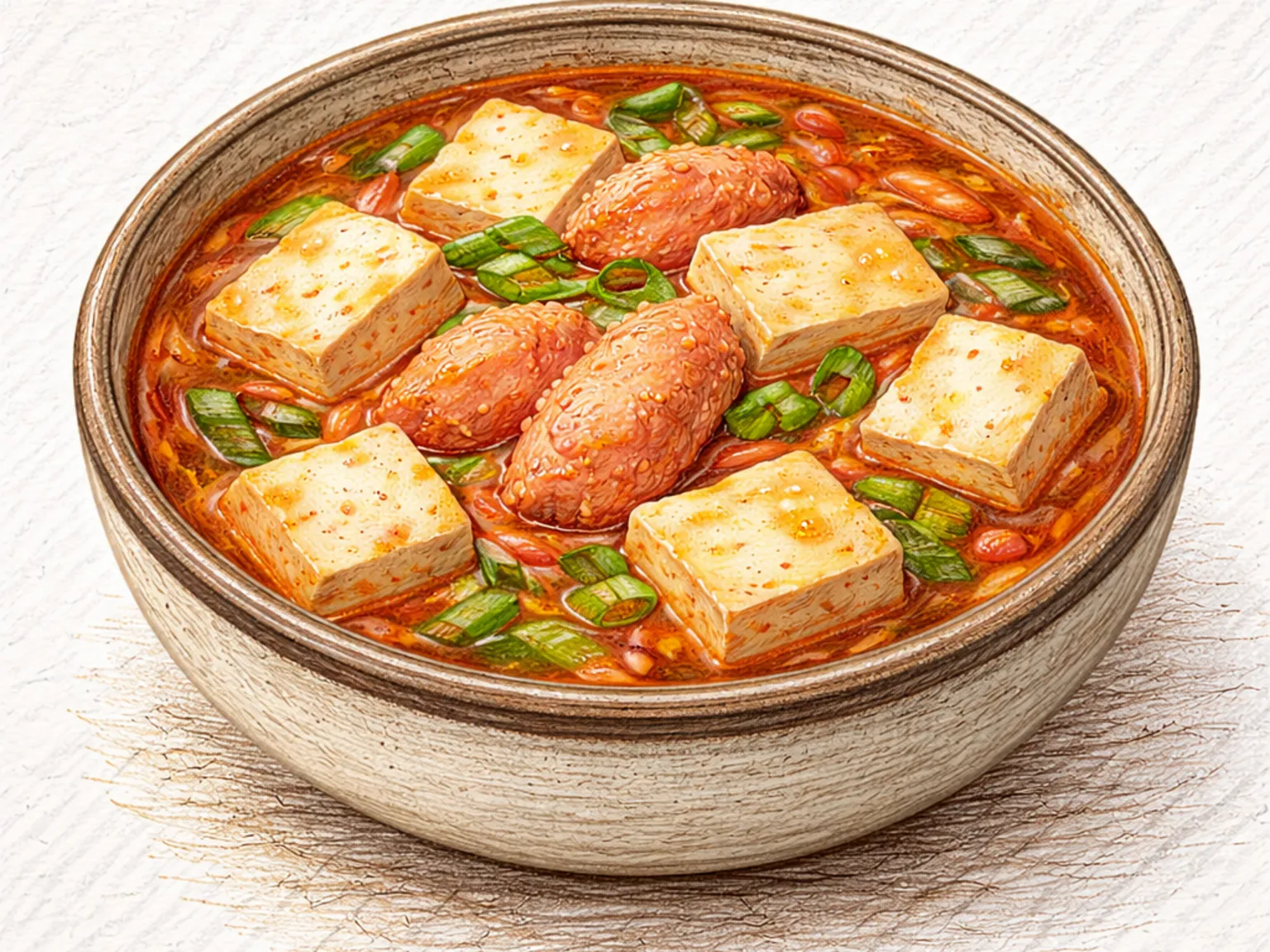
Korean Red Pepper Paste Stew
Gochujang-jjigae is a Korean stew centered on gochujang, the fermented chili paste, as its primary seasoning. It occupies a different flavor space from doenjang-based stews and kimchi-jjigae: the heat is direct and clean rather than layered with fermented funk or brined sourness. Pork shoulder is the standard protein. Browning the meat first in the pot keeps its juices sealed in and adds savoriness to the broth as the fond dissolves into the liquid. Two tablespoons of gochujang form the base, gochugaru adjusts the heat level, and soy sauce adds depth of saltiness. Potato absorbs the starch-thickened broth as it cooks and turns fluffy inside with a seasoned exterior. Zucchini softens into the thick broth, contributing gentle sweetness. Tofu soaks up the surrounding sauce and delivers a concentrated burst of gochujang flavor when bitten through. The longer the stew simmers, the more the ingredients exchange flavors, building a broth more complex than any single ingredient could produce on its own. In Korean home cooking, it is standard to ladle plenty of the broth over cold rice.

Korean Steamed Fermented Skate
Hongeo-jjim is a specialized culinary preparation originating from the Jeolla Province of South Korea that features steamed fermented skate as its central element. The flavor of the dish is developed using a seasoning mixture composed of gochugaru, gochujang, finely minced garlic, and soy sauce. The skate, known as hongeo, is processed through a traditional curing method that results in the formation of ammonia-based compounds. This specific fermentation process produces the sharp and pungent aroma that characterizes the dish, which often results in a polarizing experience for individuals who encounter the preparation for the first time. This aggressive fermentation quality tends to soften once the fish is exposed to heat and combined with the depth of the chili-based seasoning. Over time, repeated consumption often reveals complex layers of flavor that establish this dish as one of the most uniquely prepared items within Korean regional cuisine. During the cooking process, onions are included to release their natural sweetness, which functions to balance the sharper edges of the concentrated spice paste. Minari is introduced during the concluding stages of steaming to provide a clean and herbaceous quality that offers a contrast to the intensity of the fermented fish. Prior to steaming, rice wine is applied to the skate to moderate the fermentation scent without completely removing the fundamental characteristics of the fish. Removing the lid of the cooking vessel at the end of the process allows excess moisture to evaporate, ensuring that the seasoning adheres properly to the surface of the skate. In the cultural context of Jeolla Province, hongeo-jjim is a staple at ceremonial events and various celebratory meals. The dish is traditionally served in the company of makgeolli or hongtak, forming a combination that local residents typically refer to as hongeo samhap.

Korean Lettuce Root Kimchi
Godeulppaegi kimchi is a seasonal Korean kimchi made from the bitter wild herb godeulppaegi (Korean lettuce root), which is soaked in salted water for about a week to extract most of its sharp bitterness before being dressed in gochugaru, anchovy fish sauce, and glutinous rice paste for fermentation. The extended soak rounds off the bitter edge so that only a pleasant, lingering bitterness remains after fermentation, creating a complex interplay with the lactic acidity. The roots have a chewy, fibrous bite while the leaves turn soft, giving each stalk a dual texture in a single bite. This is a regional autumn kimchi from the Jeolla and parts of Gyeongsang provinces, traditionally prepared in fall to last through winter. The preparation is labor-intensive, requiring patient soaking and careful seasoning, but the resulting depth of flavor is what has kept this variety treasured across generations of Korean home cooking.

Korean Braised Perilla Leaves
Kkaennip jorim layers fresh perilla leaves with a soy-based sauce and simmers them gently - a banchan built for make-ahead storage. Kkaennip (perilla) is a distinctly Korean herb with an aromatic intensity comparable to basil or mint, yet it is rarely found outside Korean cuisine. The technique stacks five to six leaves at a time, spooning sauce between each layer so every leaf seasons evenly. Simmering on medium-low heat for eight to ten minutes wilts the leaves into soft, pliable sheets that wrap neatly around a mound of rice. The sauce combines soy sauce, gochugaru, sugar, garlic, and sesame oil - the last adding a nutty richness that complements the herb's own perfume. Refrigerated in an airtight container, kkaennip jorim lasts up to two weeks, making it one of the most economical banchan to batch-prepare.

Korean Stir-fried Aged Kimchi and Tofu
Mukeunji-dubu-bokkeum stir-fries aged kimchi and firm tofu together in a single pan, pulling the kimchi's deep sourness and the tofu's neutral mildness into a unified dish. The tofu is pan-fried in oil until golden on both sides first, which builds a firm crust that prevents the pieces from crumbling during the subsequent stir-fry and gives them a better surface area for absorbing the sauce. Onion and aged kimchi are then cooked with gochugaru until much of the kimchi's moisture cooks off and its sharpest acidic edge softens. Soy sauce and sugar calibrate the seasoning, and the crisped tofu returns to the pan to soak up the flavors evenly. A finishing pour of perilla oil wraps around the fermented intensity of the aged kimchi and smooths it out, while a handful of sliced green onion added at the end lifts the aroma.

Korean Godeungeo Mu Jjigae (Mackerel Radish Stew)
Godeungeo-mu-jjigae is a spicy Korean stew that pairs mackerel with Korean radish in a gochugaru and gochujang broth. Mackerel is an oily, fatty fish, and as it simmers, those fats render into the surrounding liquid, giving the broth a richness and depth of savory flavor that leaner fish cannot produce. The radish is laid on the bottom of the pot before the mackerel is placed on top - a deliberate positioning that lets the radish absorb the direct heat of the base while soaking up the fish juices and rendered fat dripping down from above. Radish cooked this way turns tender and sweet, and each bite releases concentrated broth from within the vegetable. Using both gochugaru and gochujang in the seasoning paste is important: gochugaru provides clean, direct heat and red color while gochujang adds fermented depth and body to the broth that chili powder alone cannot achieve. Soup soy sauce for the final seasoning keeps the saltiness measured and blended rather than sharp. Sliced green onion and cheongyang chili pepper added toward the end contribute freshness and a sharper layer of heat. For those sensitive to fishiness, thin slices of ginger added to the initial seasoning paste are effective at suppressing the odor without altering the stew's overall flavor profile. The traditional way to eat this is to spoon the broth-soaked radish and a piece of mackerel over rice, letting the concentrated cooking liquid soak into each grain.