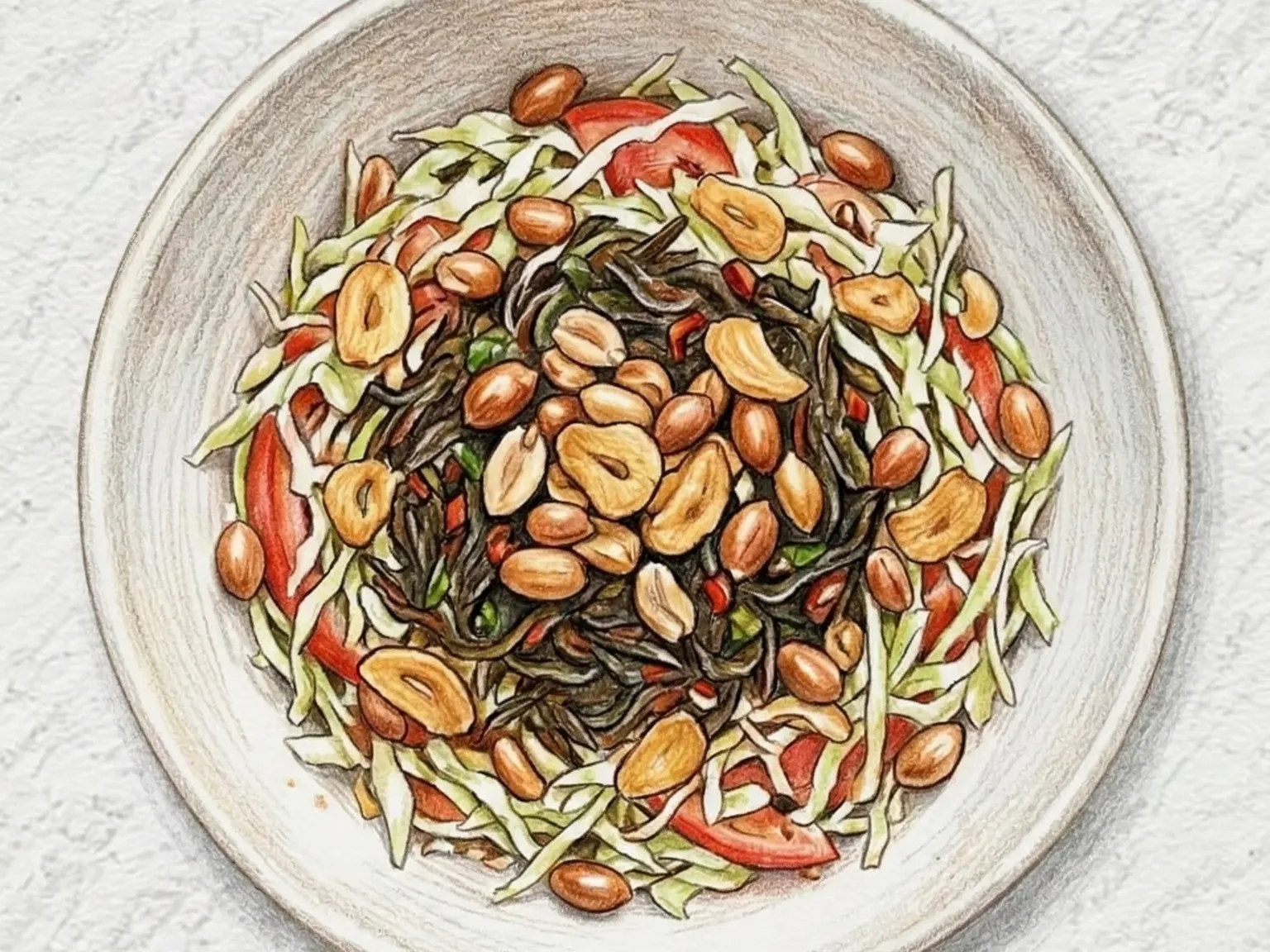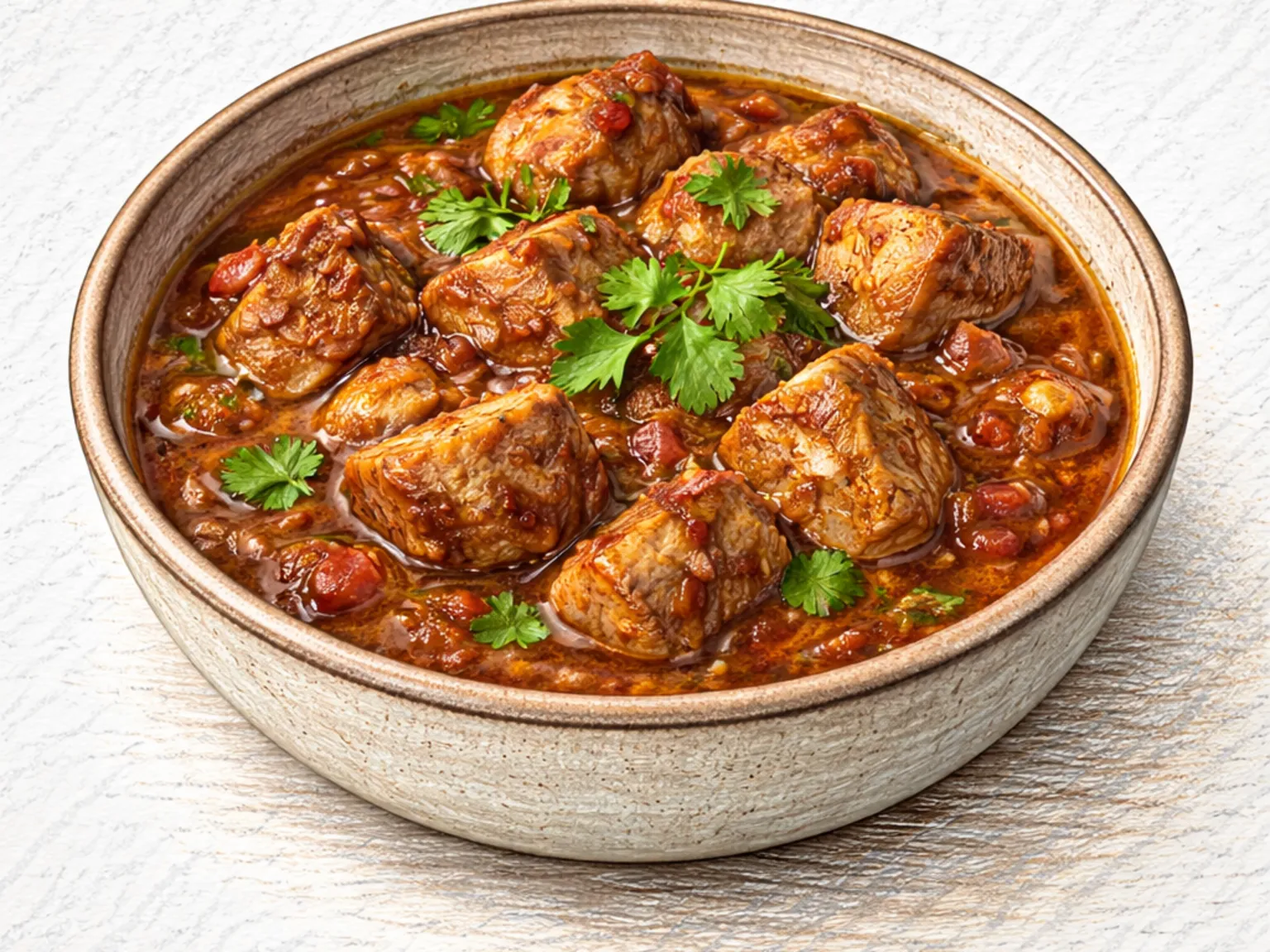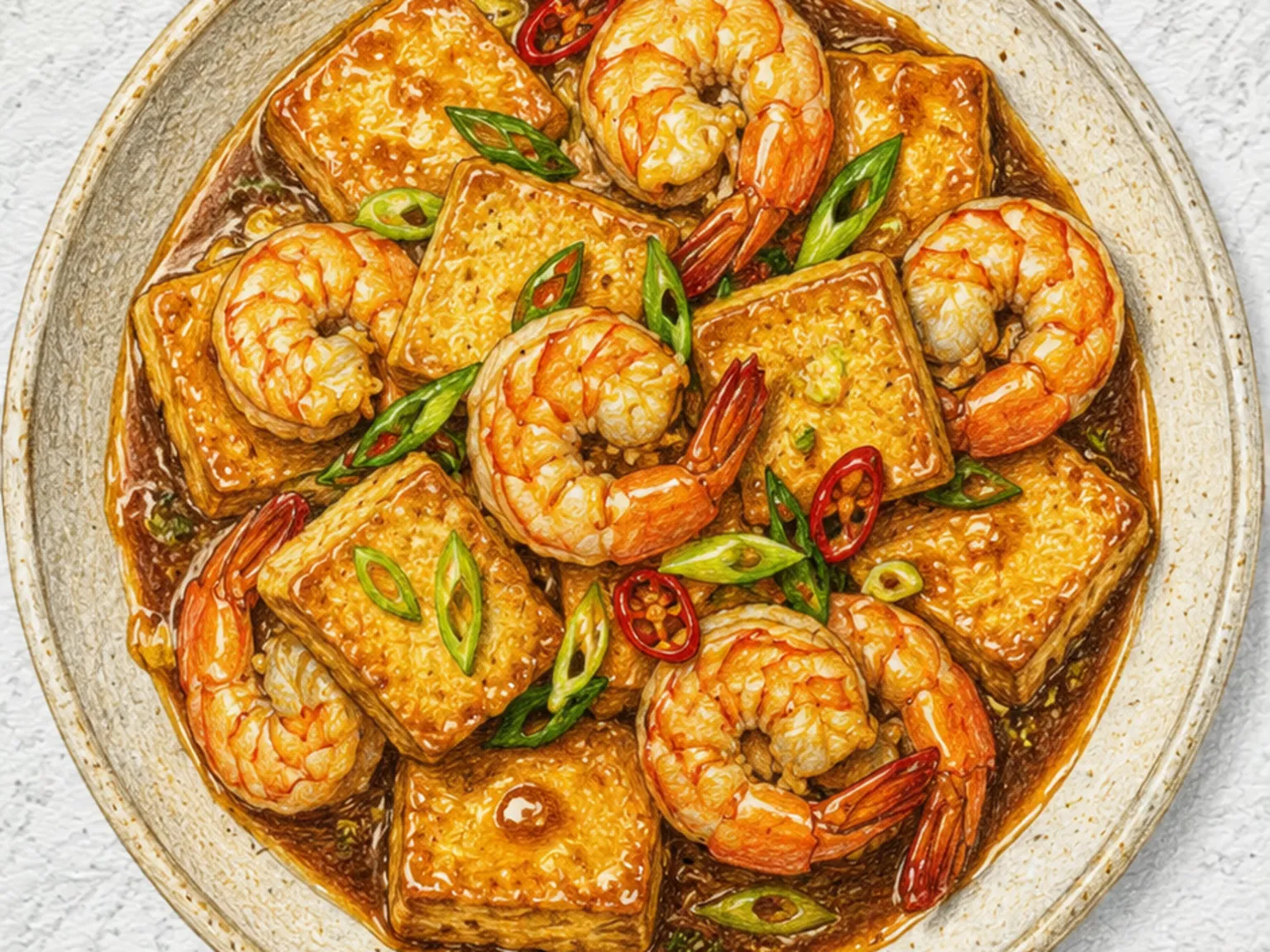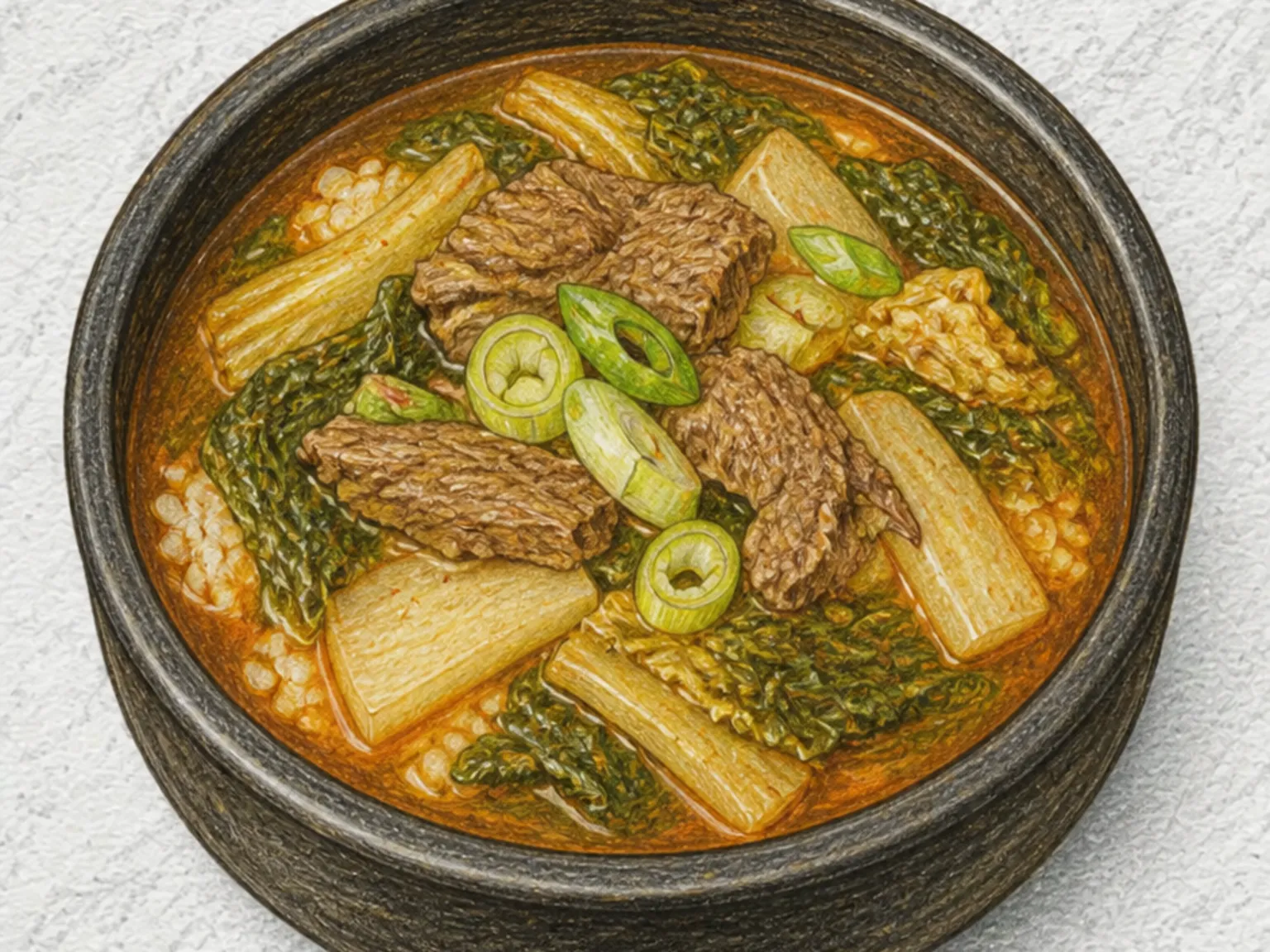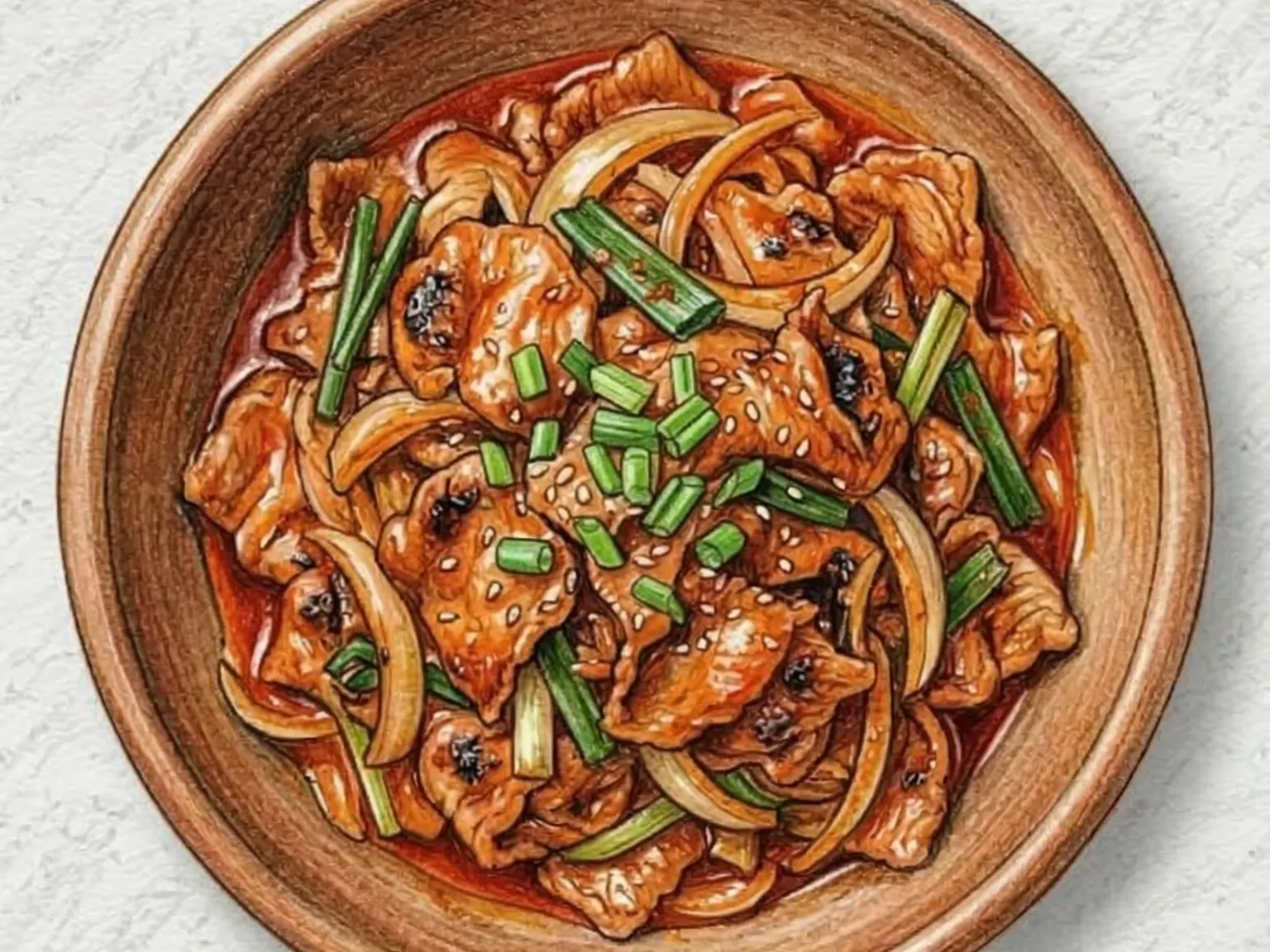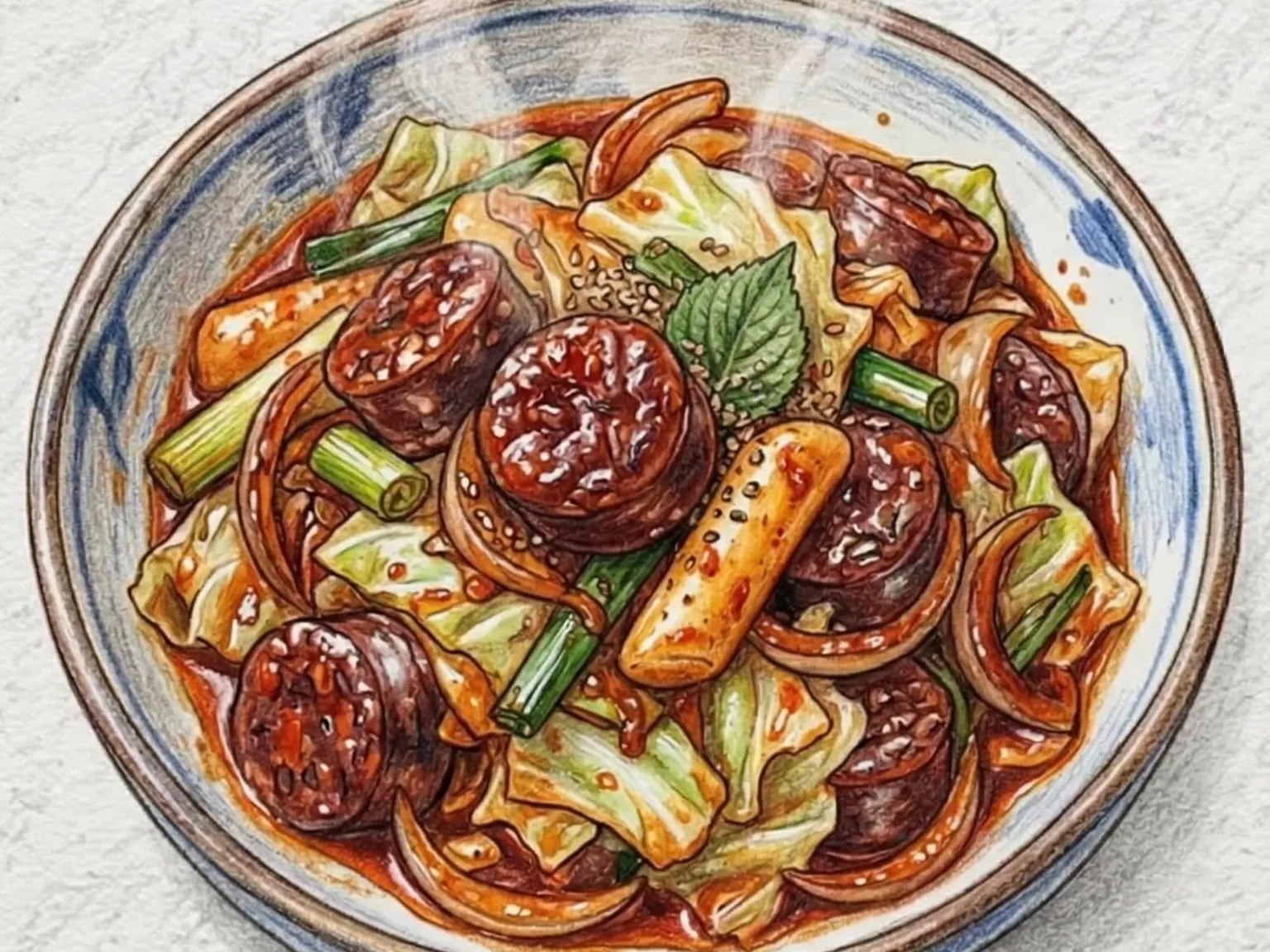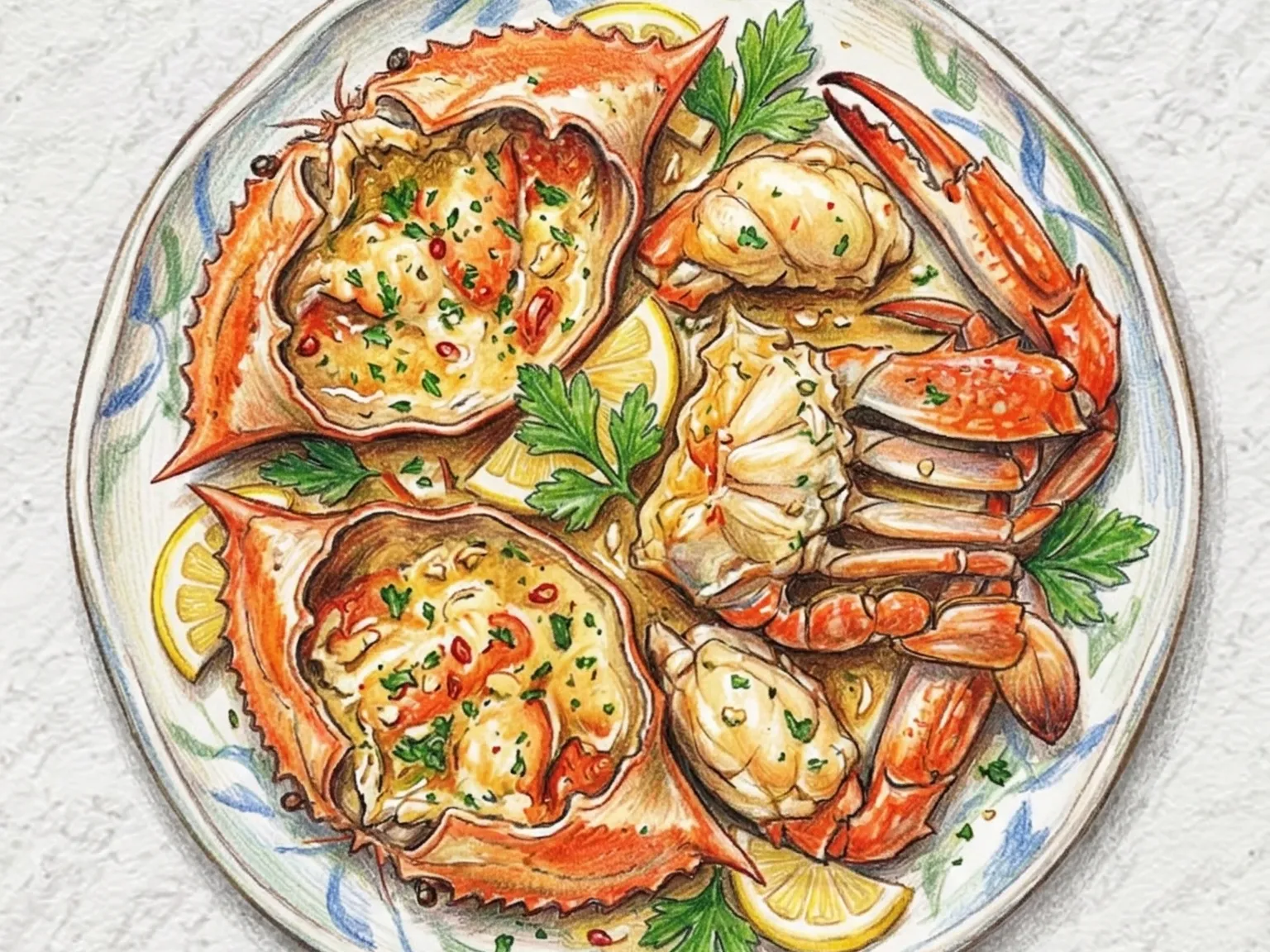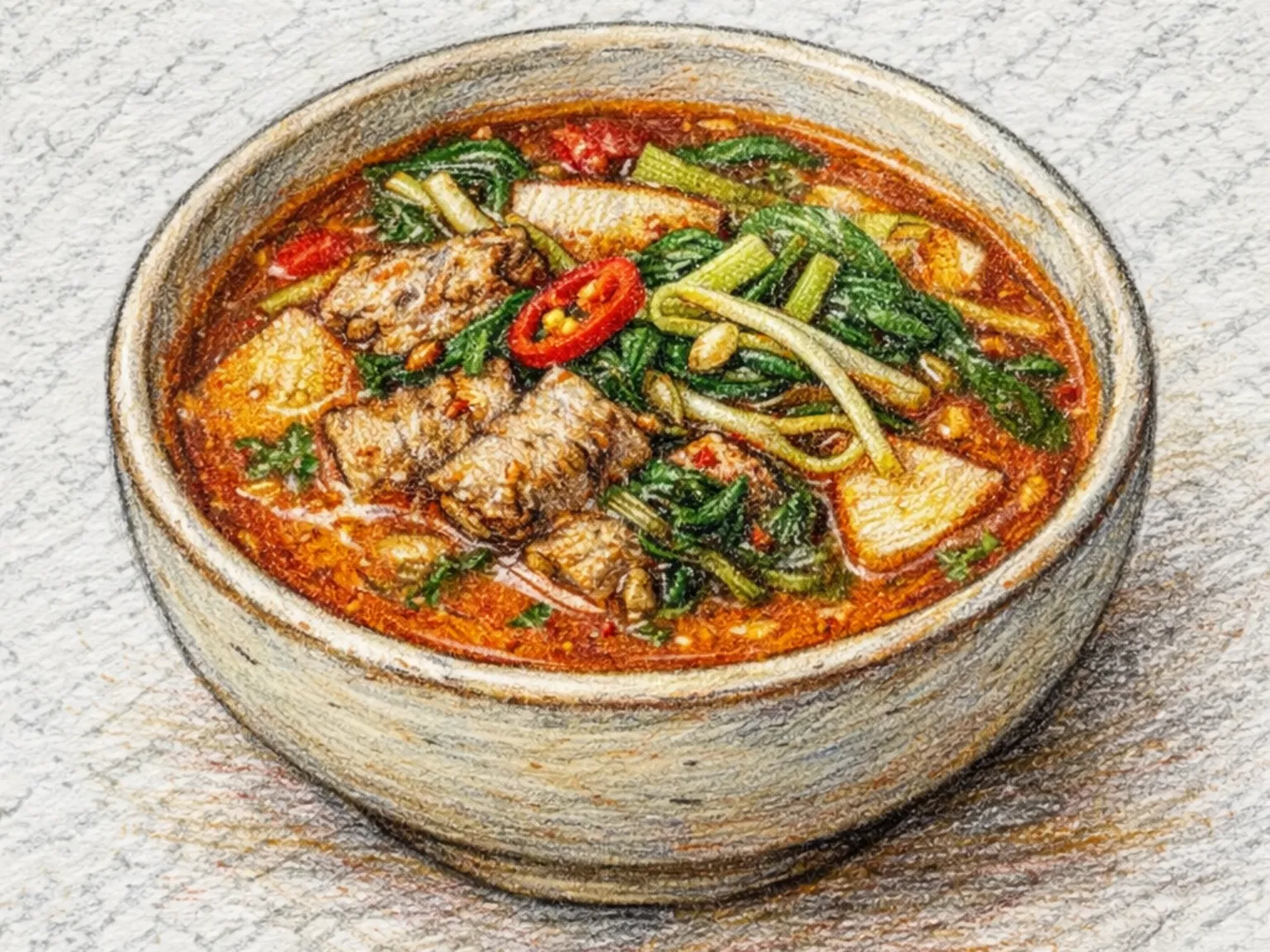
Korean Gochujang Pork Bulgogi
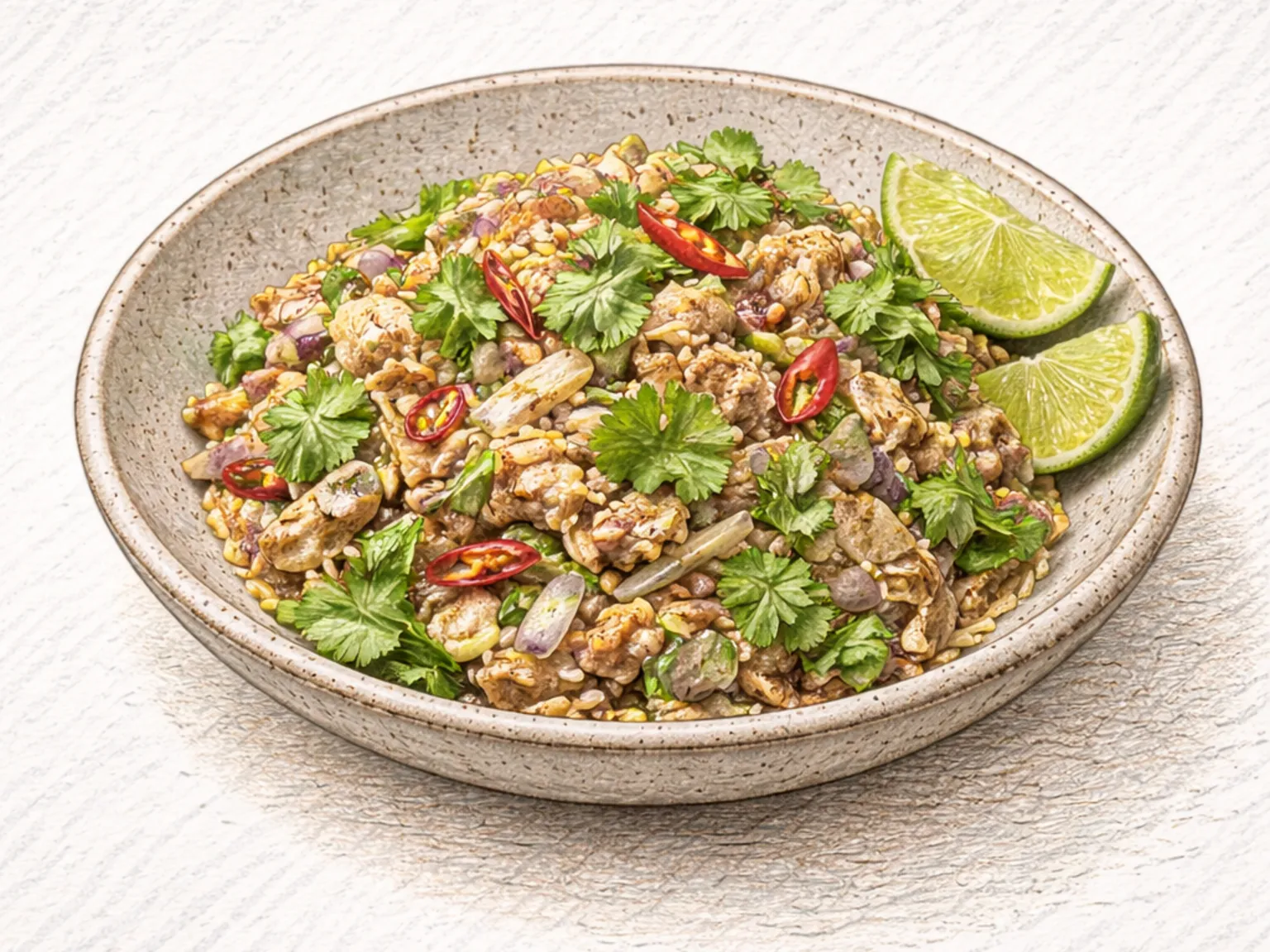
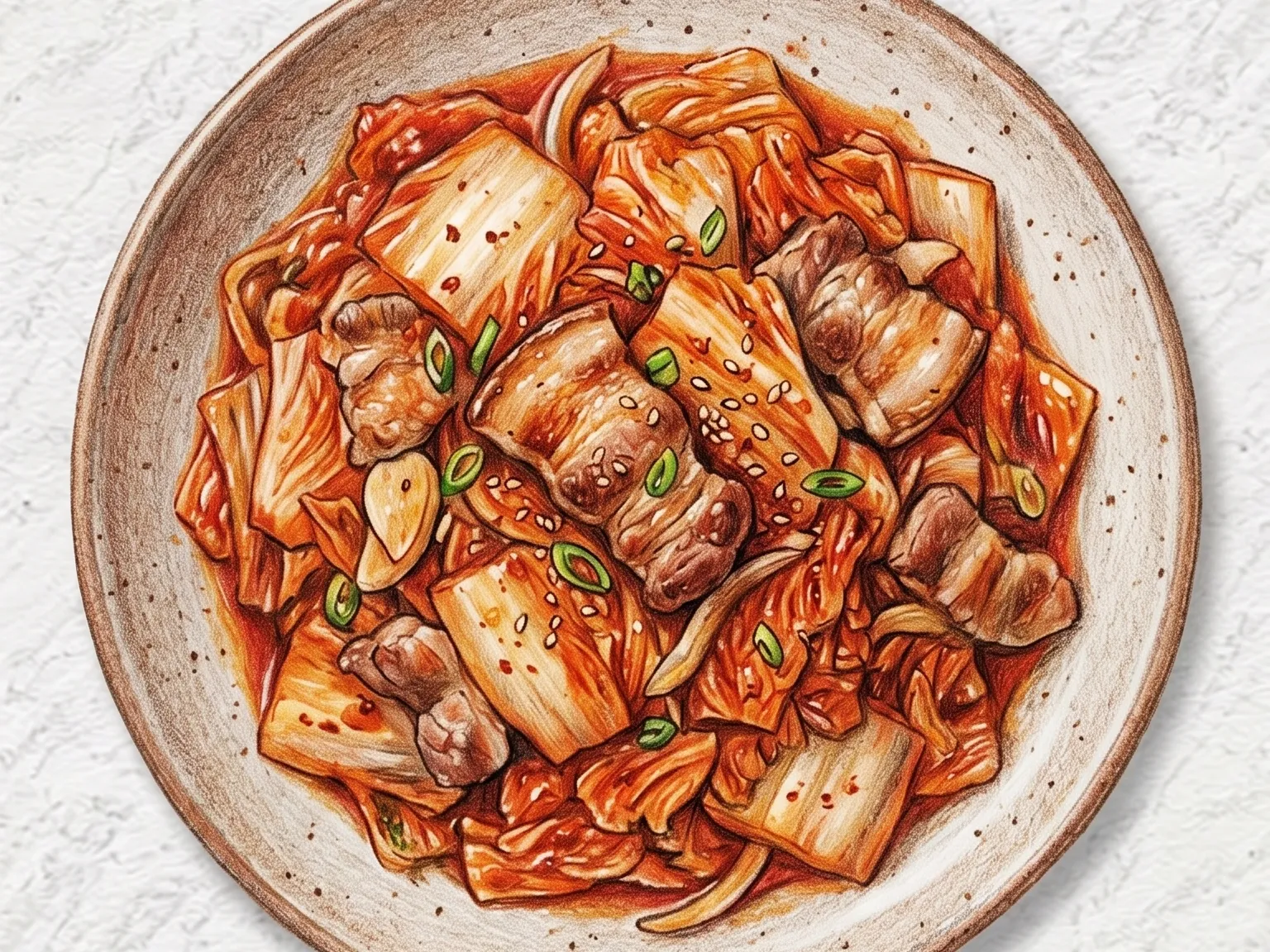
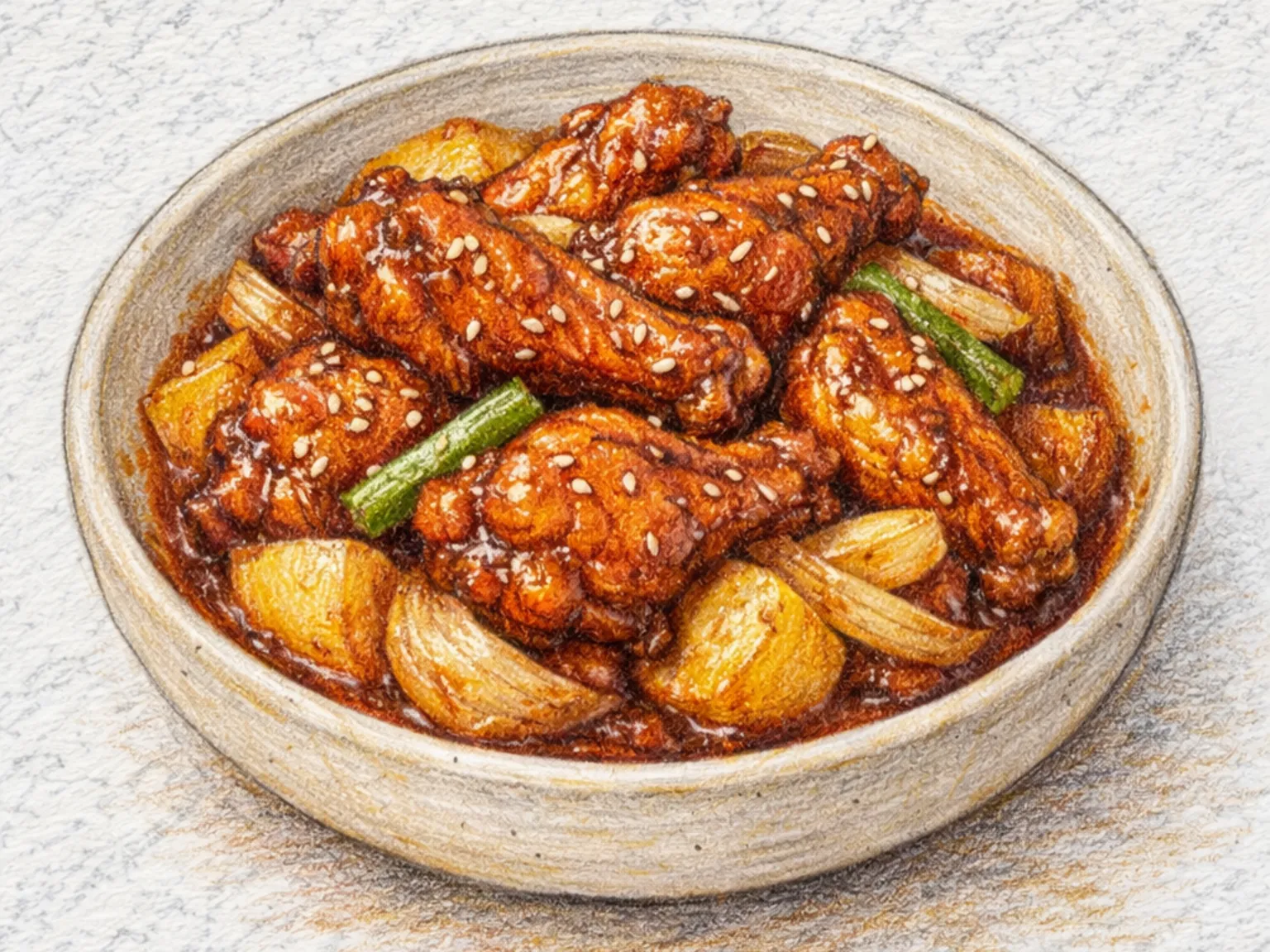
Gochujang dwaeji bulgogi is a Korean main course that marinates sliced pork neck in a sauce of gochujang, gochugaru, soy sauce, plum syrup, and minced garlic before stir-frying over high heat. The fermented heat of gochujang provides depth and a slow burn, while the plum syrup contributes a bright tanginess that prevents the sweetness from feeling flat. Onion softens and releases its natural sugar into the sauce during cooking, rounding out the overall flavor profile. Green onion adds a fresh, pungent note throughout. Perilla leaves are added at the final moment before the heat is off, preserving the herb's volatile oils so its distinctive grassy aroma and slight bitterness remain intact. That herbal character is what cuts through the richness of the pork fat and brings the dish together. Served over rice or wrapped in lettuce leaves with rice, both presentations make a filling and well-seasoned main.

Korean Crispy Fried Sundae
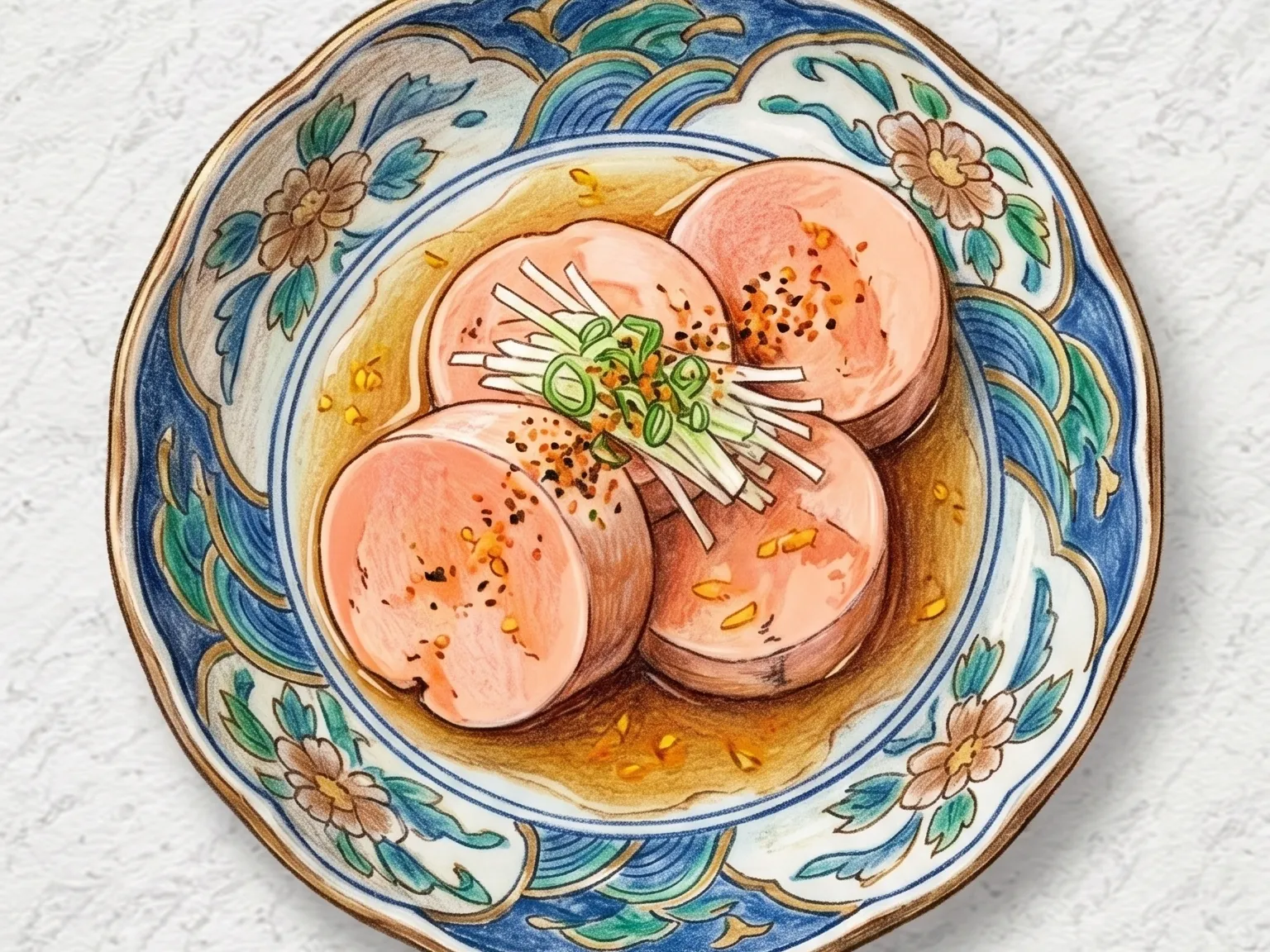
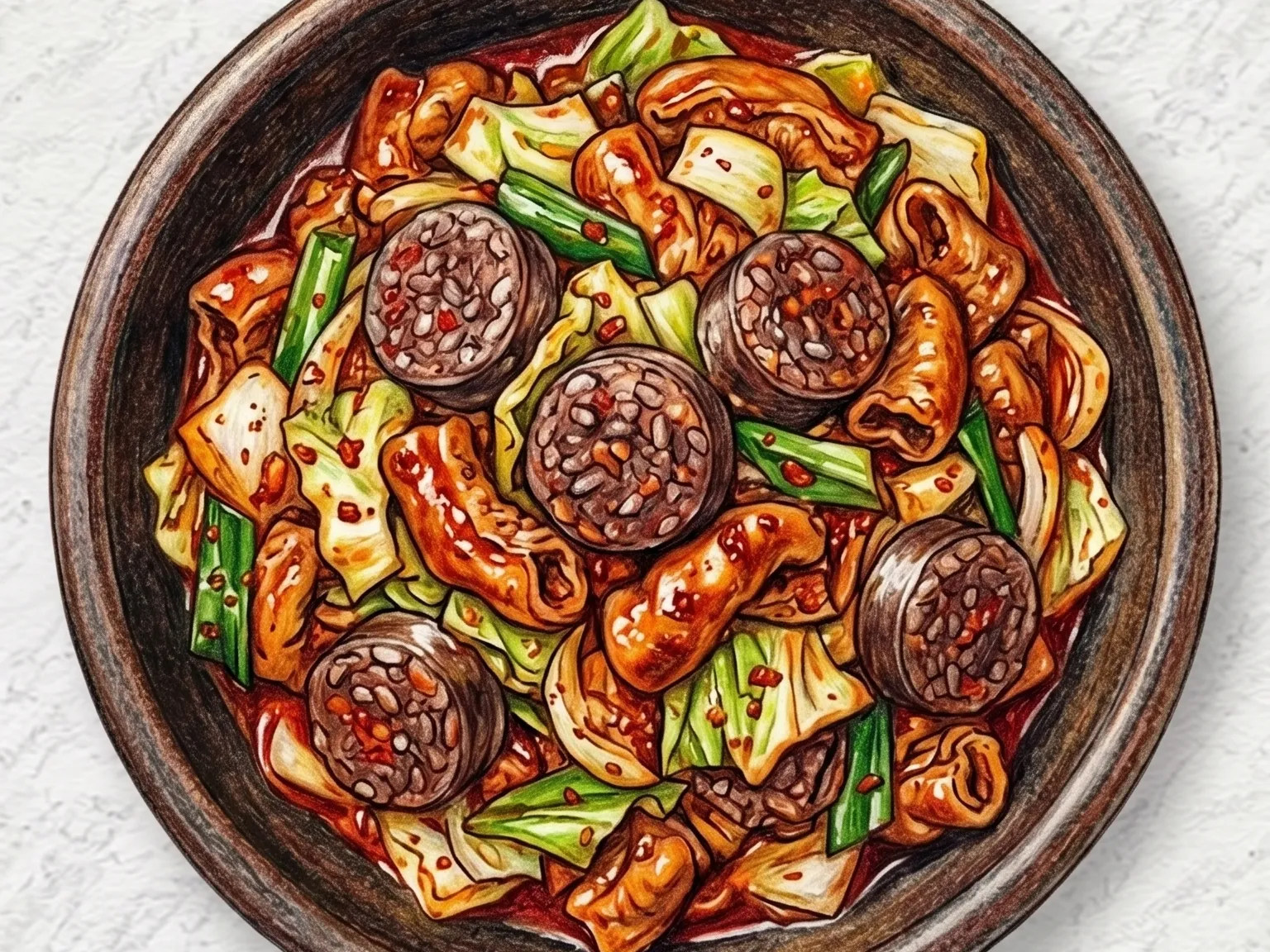
Soondae-twigim is deep-fried Korean blood sausage, sliced thick and coated in a batter of frying mix blended with potato starch for extra crunch. A double-frying method is used: the first round at 170 degrees Celsius cooks the inside through, followed by a brief second fry at 185 degrees that hardens the crust to a shattering crispness while the interior stays chewy and moist. Patting the sundae surface dry before battering is essential so the coating adheres evenly and does not peel off in the oil. A light dusting of chili powder and a side of mustard add heat and a sharp tang that cuts through the richness.

Korean Buckwheat Crepes with Kimchi Filling
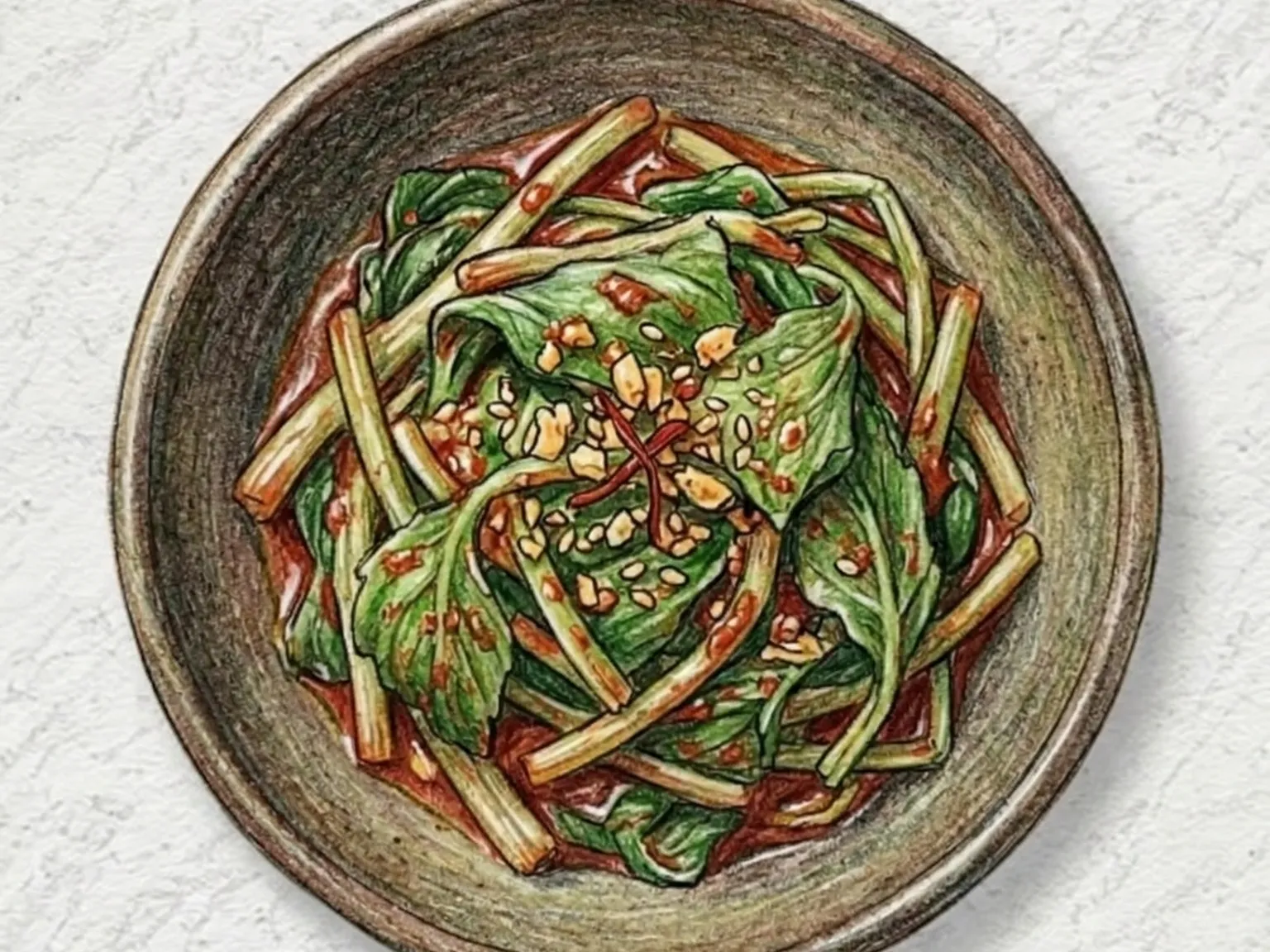
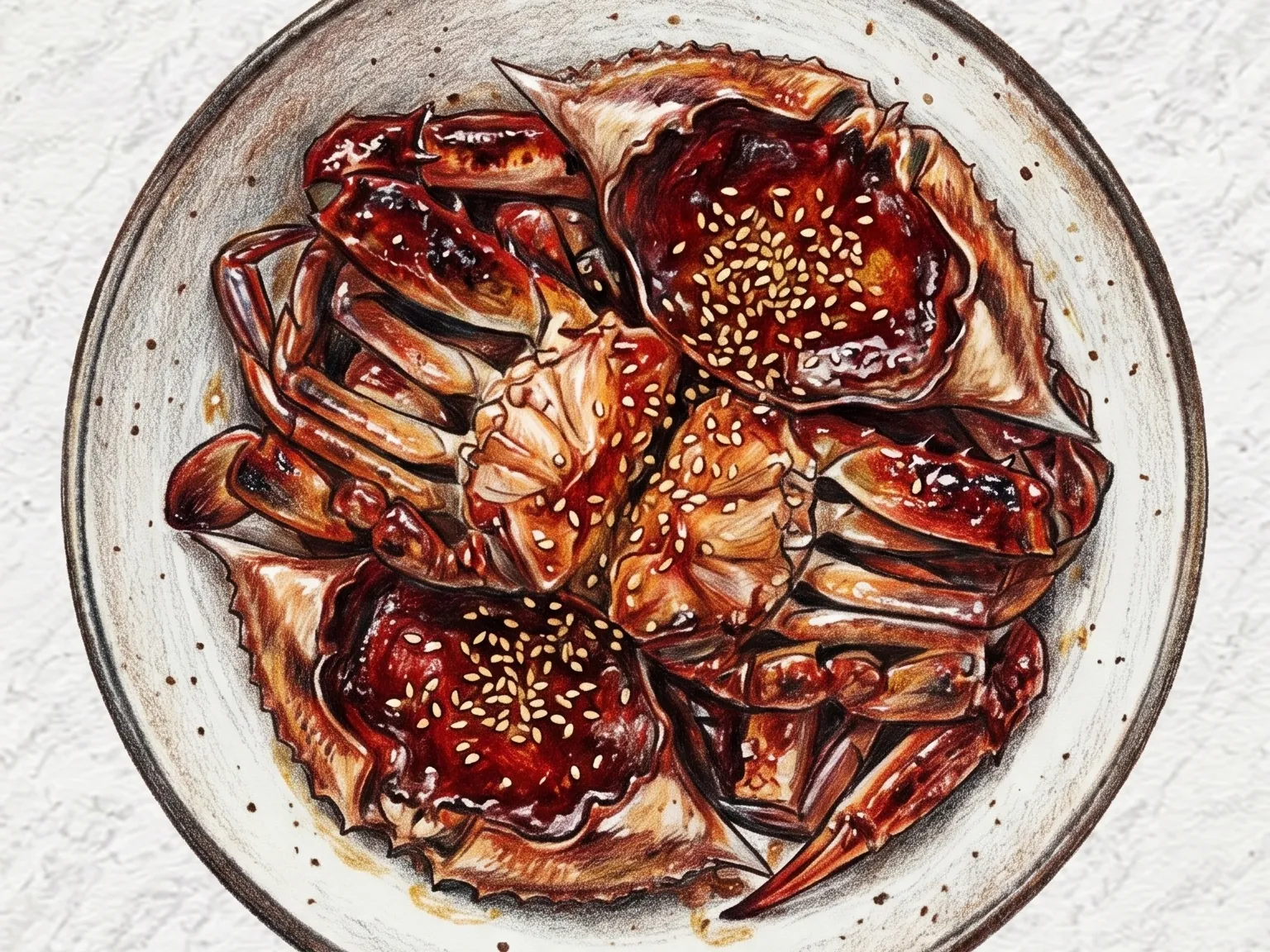
Memil-jeonbyeong is a buckwheat crepe from Korea's Gangwon province, filled with stir-fried aged kimchi, tofu, ground pork, green onion, and gochugaru, then rolled and pan-fried again until the exterior crisps. The batter is made from buckwheat flour and water mixed to a thin consistency, but buckwheat contains no gluten and the batter tears easily on the pan if used immediately. Resting it for at least ten minutes allows the flour particles to hydrate fully, giving the batter enough cohesion to be spread thin without breaking. The thinner the crepe is spread, the more pronounced the characteristic chewy texture of the buckwheat becomes after cooking. The filling is prepared separately. Aged kimchi may be rinsed to moderate its acidity, but leaving it unwashed preserves the deep, funky sourness that forms the backbone of the filling's flavor. Ground pork contributes richness, tofu adds a mild, clean counterpoint, and together with the fermented kimchi they produce a filling with several distinct flavor layers. The filling is placed along one edge of the crepe, which is then rolled tightly and pressed closed. The rolled jeonbyeong is returned to the pan and turned slowly on all sides until the outside is golden and crisp. The contrast between the chewy, slightly earthy buckwheat wrapper and the spiced, savory interior is the defining characteristic of the dish.

Korean Pork Bone Hangover Soup
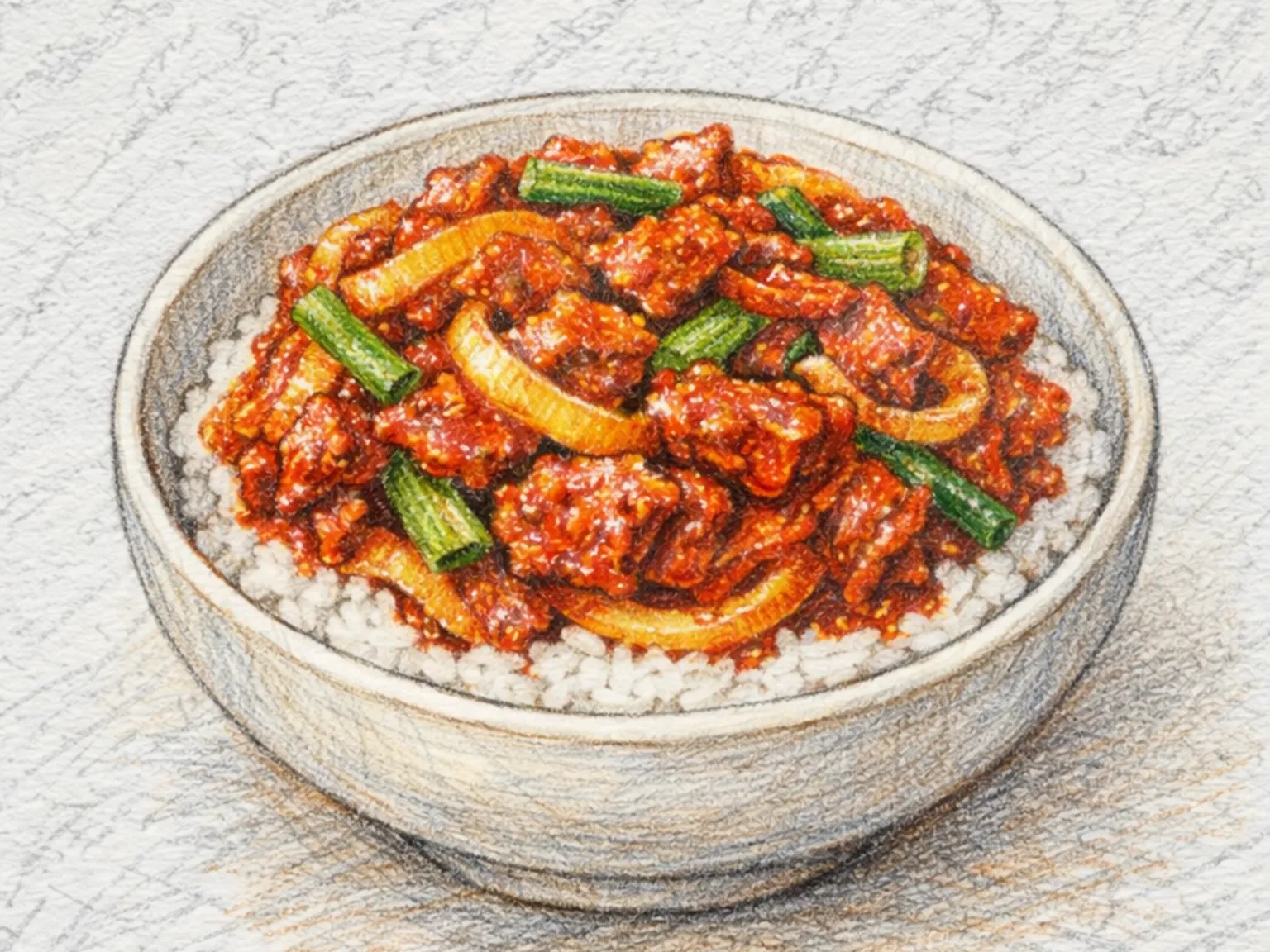
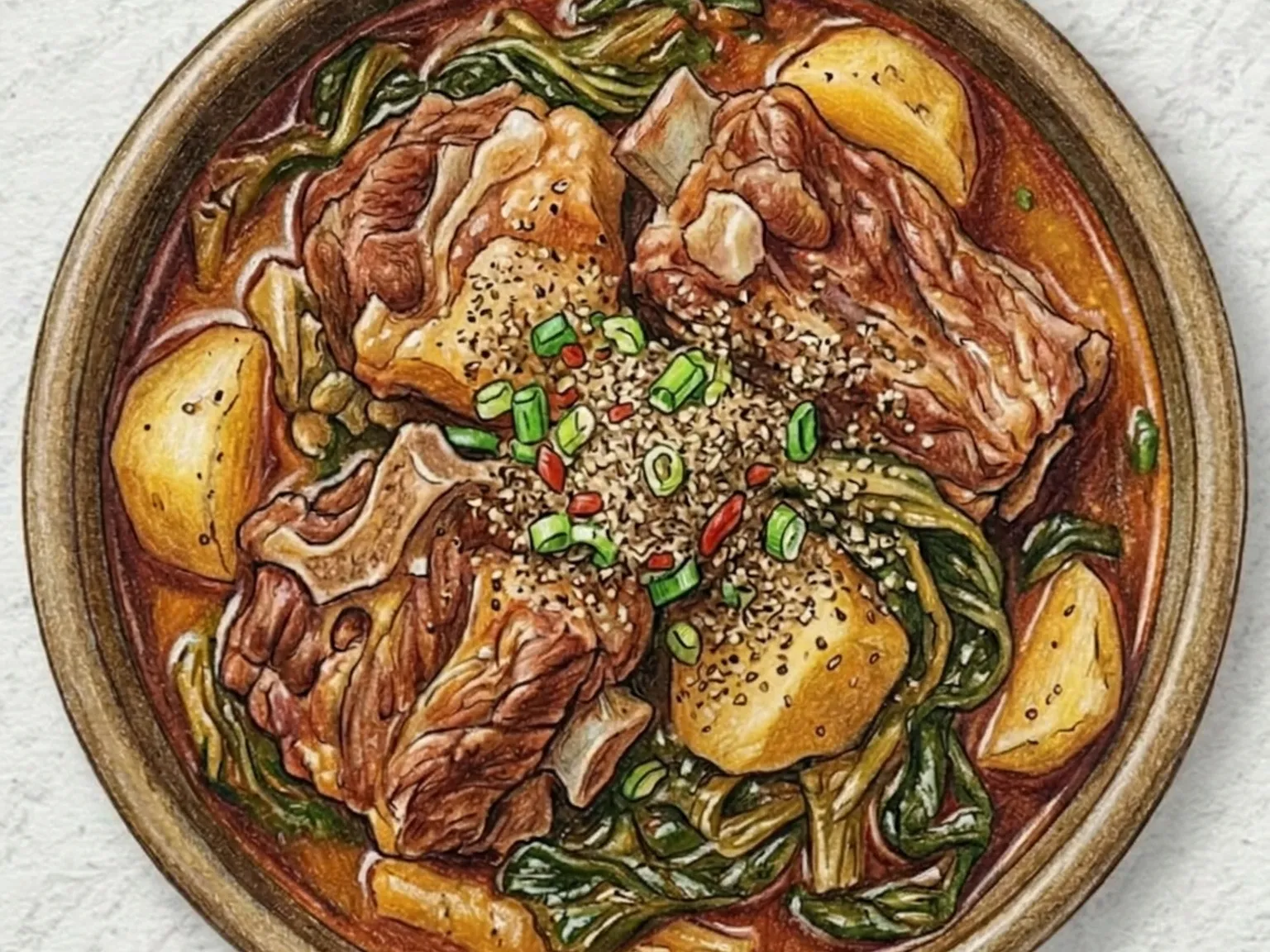
Ppyeo-haejang-guk is a Korean hangover soup built on a foundation of pork neck bones simmered for well over an hour until their collagen dissolves into a heavy, full-bodied stock. The bones are soaked and blanched beforehand to eliminate any off-flavors, and the resulting broth is clean despite its richness. Blanched napa cabbage outer leaves are pre-seasoned with doenjang, gochugaru, garlic, and soup soy sauce before being added to the pot, where they absorb the meaty broth and release their own earthy flavors in return. Perilla seed powder is stirred in at the end, thickening the liquid to a creamy consistency and adding a nutty finish. The completed soup is spicy, deeply savory, and thick enough to feel restorative after a long night. In Korea, this style of haejang-guk is a morning-after institution, served steaming in dedicated restaurants that open before dawn.

Korean Bellflower Root Pork Stew
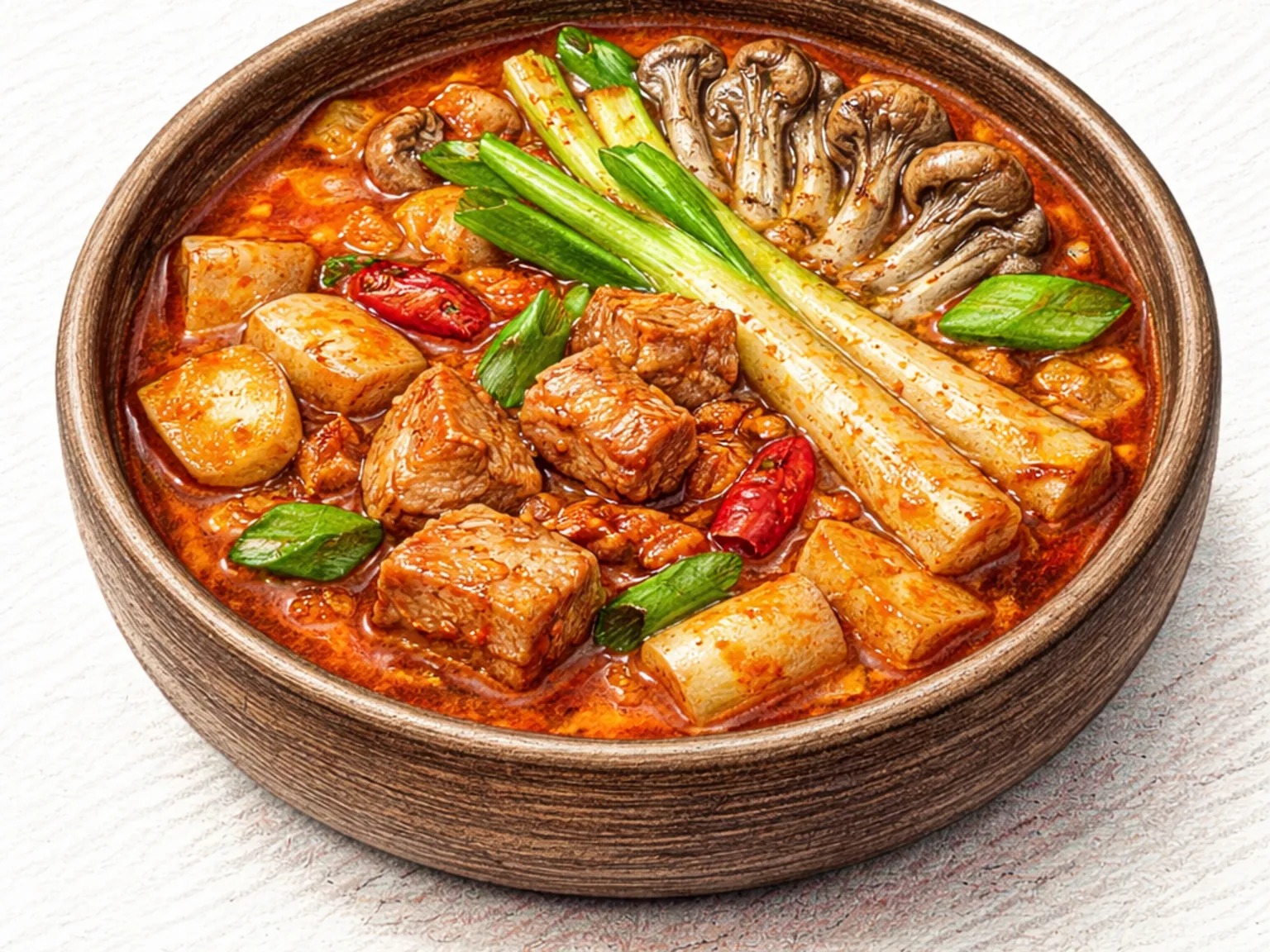
Deodeok-dwaeji-jjigae is a spicy Korean stew that primarily features pork shoulder and bellflower root as its core components. These main ingredients are simmered together in a liquid base prepared from water used to rinse rice, which provides a different consistency and flavor profile compared to standard tap water. The seasoning for this broth relies on a combination of gochujang, which is red chili paste, gochugaru or red chili flakes, and soup soy sauce to establish a foundational heat and saltiness. To provide further texture and structural depth to the stew, oyster mushrooms and sliced onions are included in the pot during the simmering process. As the bellflower root is heated and cooked through, its natural and slightly bitter flavor profile begins to integrate into the surrounding broth. This subtle bitterness serves a functional purpose by counteracting the richness of the pork shoulder fat, which results in a final taste that feels clean on the palate rather than greasy. Utilizing rice-rinse water instead of plain water helps to mellow the intense spice of the gochujang while adding a light savory quality to the soup that simple water does not provide. By cutting the pork shoulder into small, bite-sized pieces before cooking, the fat is able to render out more effectively into the broth while the meat remains soft and easy to chew. The finished stew has a high level of spice and contains a significant amount of meat and vegetables, making it a filling dish when served alongside a bowl of steamed white rice.

Korean Braised Eggplant and Tofu
Gaji dubu jorim combines eggplant and firm tofu braised together in a soy sauce and gochugaru seasoning. The eggplant soaks up the sauce and turns silky soft, while the pan-seared tofu holds its shape with a slight firmness on the outside. Garlic and green onion round out the flavor, creating a lightly spicy, umami-rich side dish. Salting the eggplant briefly before cooking draws out excess moisture so the pieces absorb the seasoning more deeply without falling apart during braising. Draining the tofu and pan-frying it on both sides before adding it to the sauce keeps the blocks intact and gives the surface a slightly chewy resistance against the tender eggplant. A practical vegetarian-friendly banchan that delivers both protein and vegetables without any meat.

Korean Wild Chive Kimchi (Spring Quick Gochugaru)
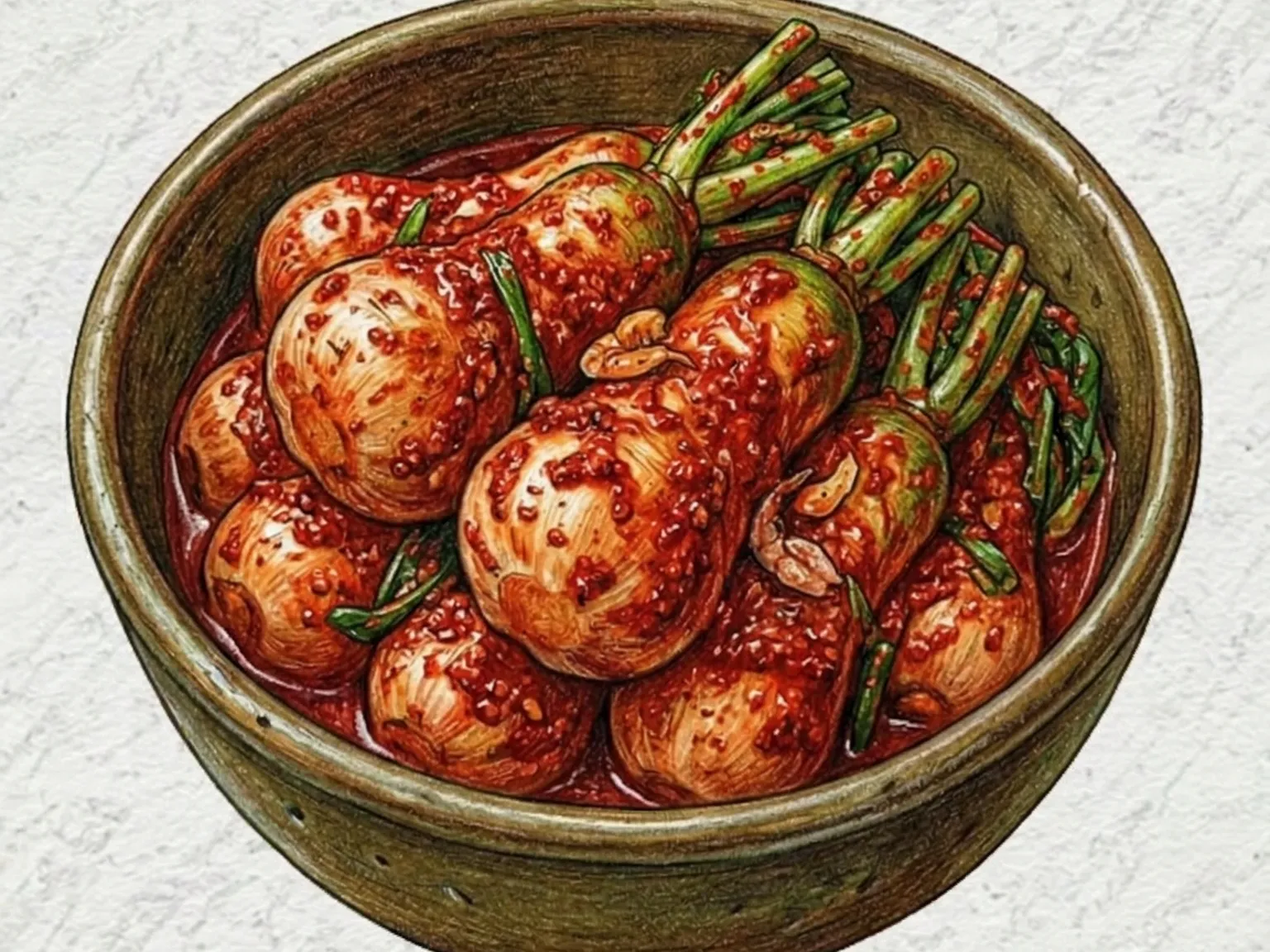
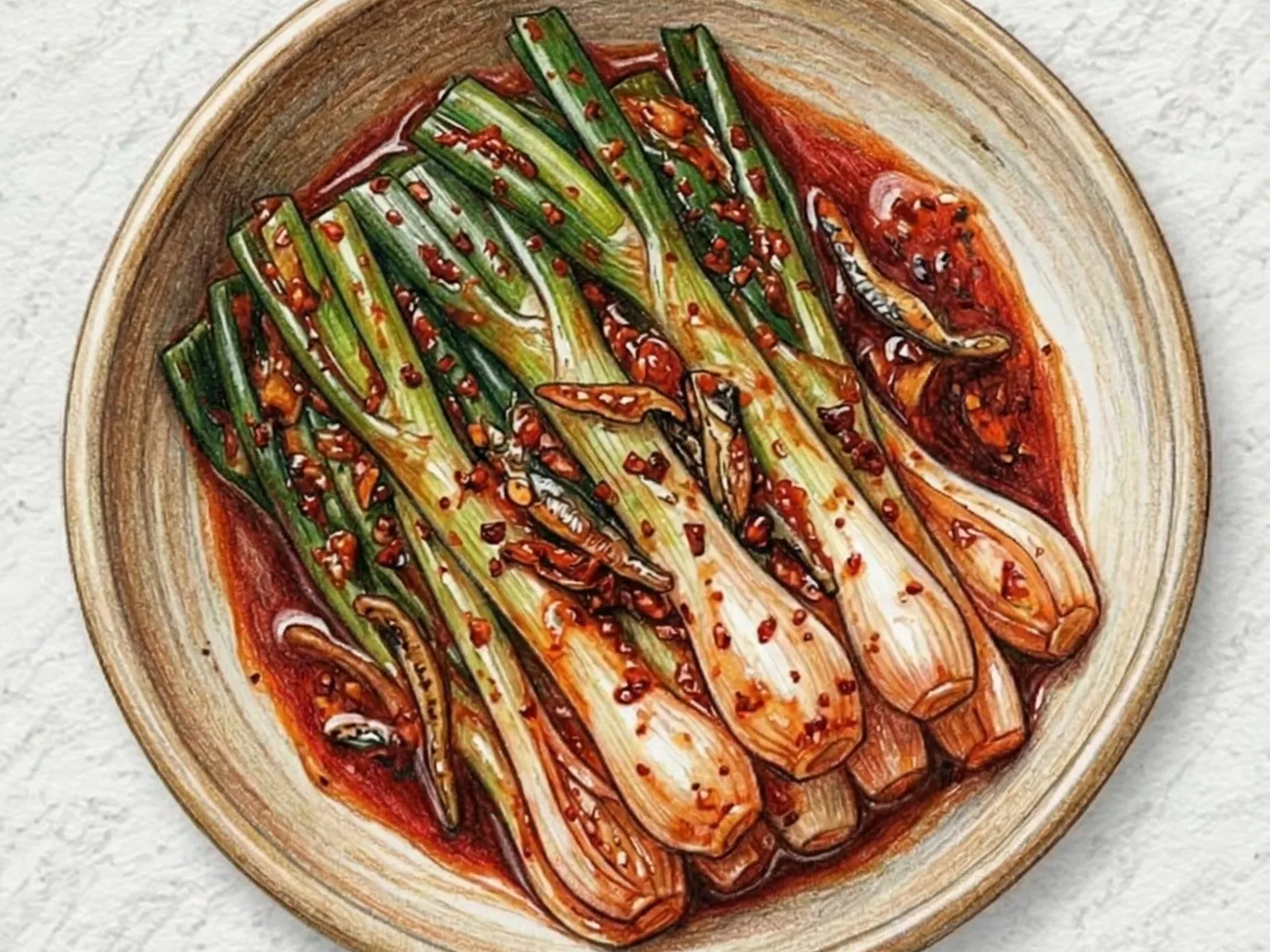
Dallae kimchi is a quick spring kimchi made by salting wild chives for just eight minutes to barely soften them, then dressing them in gochugaru, sand lance fish sauce, plum extract, and Korean pear juice. The bulb-end roots carry the most concentrated aroma, so they should not be trimmed too short, and the seasoning should be applied starting from the roots so the flavor penetrates evenly along the entire stalk. Pear juice adds natural sweetness and a little moisture that softens the heat from the chili, while sand lance fish sauce provides a lighter, more delicate umami than standard anchovy sauce. This kimchi smells fresh and bright immediately after preparation, but one day in the refrigerator allows a mild fermented depth to develop that rounds out the flavors considerably. Wild chives are best purchased between early March and mid-April, when the roots are fat and the aroma is fully developed. Salting beyond eight minutes causes the grassy fragrance to dissipate rapidly, so timing matters. The finished kimchi pairs naturally with namul side dishes and fresh vegetable salads at a spring table.

Paneer Tikka (Indian Spiced Yogurt-Marinated Grilled Cheese Skewer)
Paneer tikka is an Indian grilled appetizer where cubes of paneer cheese and vegetables are marinated in spiced yogurt and cooked over high heat until charred at the edges. The marinade combines plain yogurt with chili powder, turmeric, garam masala, and lemon juice, creating a thick coating that clings to each cube. After marination, the spices penetrate the surface while the yogurt adds tang. Bell peppers and onion chunks are threaded between the paneer pieces, and their natural sugars caramelize during grilling. The goal is to cook quickly so the exterior gets smoky char marks while the inside stays soft. Mint chutney on the side completes the dish.

Korean Seasoned Eoseuri Herb Namul
Eoseuri, Korean cow parsnip with the botanical name Heracleum moellendorffii, is a wild mountain herb foraged from Korea's central and northern highlands during early spring. Its thick stems and broad leaves carry a layered fragrance that combines celery, flat-leaf parsley, and a faintly medicinal undertone, a complexity that no cultivated green can replicate. Blanched for under a minute to soften the texture while preserving a slight resistance in the stems, the greens are dressed with gochujang, vinegar, minced garlic, and sesame oil. The bitterness is sharper than common namul varieties like spinach or bean sprouts, which makes eoseuri polarizing for first-time tasters, but those who grow accustomed to it find that milder greens no longer satisfy in the same way. In Korean mountain villages, eoseuri has traditionally been gathered alongside chwinamul and chamnamul each spring to compose the seasonal namul spread on the table, and because the plant disappears quickly after spring peaks, it is a genuinely fleeting ingredient that marks the brief window between late winter and early summer.

Korean Thistle Greens & Mackerel Stir-fry
Gondre godeungeo bokkeum pairs pan-seared mackerel with blanched gondre thistle greens in a gochujang-soy stir-fry. The mackerel is first marinated briefly in ginger juice to reduce any sharpness, then seared on both sides until a firm, golden crust forms. That outer layer keeps the fish intact during the final toss with the greens. Gondre is pre-seasoned in perilla oil and garlic to draw out its earthy, herbal fragrance before hitting the pan, and squeezing out the excess moisture is essential so the sauce stays concentrated rather than watery. The gochujang-soy combination brings heat, depth, and a subtle sweetness that bridges the rich umami of the fatty fish and the grassy character of the greens. Gondre from the Gangwon-do highlands has a mild, nutty quality once blanched that holds its own alongside oily blue-backed fish. The dish works equally well as a rice accompaniment or a drinking snack.

Korean Stir-fried Sundae (Sundae Bokkeum)
Sundae-bokkeum is a spicy Korean stir-fry of blood sausage with cabbage, onion, and green onion in a sauce made from gochujang, gochugaru, soy sauce, sugar, and garlic. High heat and a short cooking time are essential because prolonged stir-frying causes the sundae casing to burst and the filling to toughen, while the cabbage and onion release just enough moisture as they wilt to help the sauce coat every piece evenly. The seasoning stacks direct heat from gochujang, a gentler radiant warmth from gochugaru flakes, and sweetness from sugar into a multidimensional spicy-sweet profile. Green onion is held until the very last moment so its fragrance survives the heat; added earlier, the aroma disappears before the dish reaches the table. Adding tteokbokki rice cakes transforms the dish into the popular combo known as tteoksuni, and a layer of melted cheese on top rounds out the spice.

Korean Spicy Grilled Octopus
Muneo-yangnyeom-gui is a Korean spicy grilled octopus dish where pre-boiled octopus is cut into bite-sized pieces, marinated for ten minutes in gochujang, gochugaru, soy sauce, oligosaccharide syrup, and minced garlic, then seared quickly in a smoking-hot pan. Since the octopus is already cooked, extended heat exposure only toughens it-the entire grilling step should finish within three to four minutes. Blotting the octopus completely dry before cooking prevents the sauce from becoming watery and ensures rapid caramelization at high temperature. Sesame oil, sliced green onion, and sesame seeds are tossed in after the heat is off, adding a toasted, aromatic layer over the spicy-sweet glaze.

Korean Blood Curd Soup (Spicy Ox Blood and Beansprout Stew)
Seonji-guk is a Korean blood curd soup built from coagulated ox blood, seasoned napa cabbage outer leaves, and bean sprouts in a spicy, doenjang-accented broth. The napa greens are pre-dressed with soybean paste, garlic, and chili flakes before going into the pot, where they simmer and release an earthy, fermented depth into the liquid. Bean sprouts are added for their crisp texture and clean, refreshing bite. The blood curd - cut into large cubes - goes in partway through cooking and simmers just eight minutes to heat through without breaking apart. Its texture is soft and faintly springy, unlike anything else in the Korean soup canon, and it absorbs the surrounding spicy broth. Gochugaru gives the soup a ruddy color and a slow-building warmth. In Korea, seonji-guk is closely associated with the morning-after meal, served in dedicated haejang-guk restaurants as a restorative after heavy drinking.

Korean Frozen Pollack Stew
Dongtae jjigae is a spicy Korean stew built around whole frozen pollack, which separates into flaky, delicate pieces as it cooks through. Korean radish brings a clean, sweet undertone to the broth, while tofu and zucchini fill out each bowl with mild, soft contrasts to the fish. Gochugaru combined with a spoonful of doenjang creates a broth that is at once spicy, salty, and deeply savory rather than sharp in a single direction. Generous amounts of green onion and Cheongyang chili are added toward the end to cut through any fishiness and keep the heat clear and warming.

Korean Braised Eggplant with Pork
Gaji dwaejigogi jorim is a Korean braised dish of eggplant and pork shoulder simmered in a soy sauce and gochugaru seasoning base. The pork slowly renders its fat into the eggplant as they cook together, giving the vegetable a rich, meaty depth. Cooking wine mellows the pork and removes any gamey notes, while the soy and garlic combination builds deep, layered flavor throughout the braise. Briefly stir-frying the eggplant in oil before braising coats the surface and helps it hold its shape while drawing the seasoning inward more effectively. A final drizzle of sesame oil finishes the dish with a nutty fragrance, and this recipe is at its best in summer when eggplants are in peak season with thin, tender skins.

Korean Vinegared Bellflower Root Pickle
Deodeok chojeolim is a Korean vinegar pickle of bellflower root, made by peeling, splitting, and gently pounding the roots flat before soaking them in a fully cooled brine of vinegar, water, sugar, and salt. A brief ten-minute salting before rinsing draws out the root's inherent bitterness while leaving its earthy, aromatic fragrance completely intact. The brine must be cool before pouring - adding it hot would soften the root and destroy the distinctive chewy, springy texture that makes this pickle worth eating. After one day of refrigeration, the pickle gets a light toss of gochugaru and sesame oil just before serving, adding spicy warmth and a nutty finish. Served cold, it delivers a rare combination of clean acidity and deep root-vegetable aroma that sets it apart from most Korean side dishes.

Pork Vindaloo (Goan Vinegar-Marinated Fiery Pork Curry)
Pork vindaloo is a Goan curry shaped by centuries of Portuguese colonial influence on India's western coast. The name descends from the Portuguese carne de vinha d'alhos -- meat marinated in wine and garlic -- though the Goan version swaps wine for palm or cane vinegar and adds a punchy chili paste. Pork shoulder is marinated overnight in a mixture of vinegar, garlic, ginger, and Kashmiri chilies, then braised slowly until the meat yields to a fork. The sauce reduces into a thick, rust-colored gravy where acidity, heat, and garlic merge into a single bold flavor. Vindaloo is one of the few Indian curries where sourness leads rather than supports, and the dish tastes even better the next day after the flavors have had time to settle.

Korean Steamed Eggplant Vinegar Salad
Gaji-chorim-muchim takes eggplant in the opposite direction from bokkeum preparations, which rely on high heat and oil. Here, the eggplant is gently steamed and chilled before being dressed cold with a vinegar-forward sauce. The eggplant is halved lengthwise, scored on the flesh side, and steamed for eight minutes until the interior turns translucent and completely soft. After cooling fully, it is torn by hand along the grain into long strips, exposing a rough, irregular surface that grips the dressing. Soy sauce, rice vinegar, sugar, minced garlic, and gochugaru combine into a bright, tangy-spicy dressing that lifts the eggplant's subtle natural sweetness rather than masking it. Steamed eggplant torn into strips has a silky, almost slippery quality that is entirely distinct from stir-fried or grilled eggplant. The dressing can be made more generous to serve the dish as a refreshing cold salad style. A few drops of sesame oil and a scatter of sesame seeds finish it off with a nutty note. This banchan is especially well suited to Korea's hot and humid summer months.

Korean Spicy Beef Intestine Stir-fry
Gopchang-bokkeum is a Korean stir-fry of cleaned beef intestines tossed over high heat with onion, cabbage, scallion, gochujang, and gochugaru. The intestines develop a springy chew while releasing their natural fat, which melds with the spicy seasoning to create an intensely savory sauce. Vegetables stay crisp and soak up the bold flavors as the dish cooks quickly. It is one of the most popular late-night dishes in Korea, often served sizzling on a hot plate alongside rice and soju.

Korean Spicy Rice Cakes (Gochujang Braised Chewy Tteok with Fish Cake)
Simmering cylindrical rice cakes and thin fish cake sheets in a spicy base of gochujang, red chili flakes, sugar, and soy sauce creates a sticky, glossy coating. The starch released from the rice cakes as the liquid reduces acts as a natural thickener, ensuring the sauce clings tightly to each ingredient. While the fish cakes soak up the heat from the surrounding liquid, they release a subtle seafood essence into the pan, and the addition of green onions at the final stage provides a crisp contrast to the underlying sweetness. Preparing a stock from dried anchovies and kelp rather than using plain water establishes a solid savory foundation for the entire dish. It helps to start with only half the seasoning paste, adding the remainder gradually to manage the final intensity and texture as the volume decreases. If the liquid evaporates too quickly, adding small amounts of water prevents the sugars in the sauce from scorching before the rice cakes reach the desired softness. For rice cakes that have been chilled or feel exceptionally firm, a short soak in cool water or a quick blanch in boiling water helps them cook through evenly. Serving the finished dish with boiled eggs, blood sausage, or assorted fried items replicates the setup found at traditional street stalls. This recipe scales easily into different versions by incorporating heavy cream or tomato-based sauces, resulting in the rose and cream variations often found in modern snack shops.

Korean Spicy Glazed Tongue Sole
Seodae-yangnyeom-gui is a Korean spicy-glazed tongue sole dish where cleaned sole is coated with two-thirds of a sauce blending gochujang, soy sauce, Korean chili flakes, plum syrup, sugar, minced garlic, and ginger, marinated for ten minutes, then pan-fried over medium heat for four minutes per side. The flat body shape of tongue sole allows the marinade to adhere evenly across the entire surface, and because the flesh is thin, the salty-sweet seasoning penetrates all the way through quickly. Plum syrup in the sauce contributes a fruit-forward acidity that lifts the heaviness of gochujang, and together with sugar it caramelizes at pan temperature into a glossy brown coating. Brushing the remaining sauce on during the final two minutes builds a double-layered glaze, and finishing with sesame oil and chopped green onion releases a fragrant aroma from the residual heat.

Korean Blood Sausage Soup
Sundae-guk is a hearty soup built on a long-simmered pork bone broth that turns milky white from hours of boiling. Thick slices of Korean blood sausage - pork intestine casing stuffed with glass noodles, barley, and pig's blood - sit in the center of the bowl, their chewy casing absorbing the hot broth while the dense filling inside stays warm and soft. Alongside the sundae, slices of boiled pork shoulder and, in more traditional versions, offal like liver or lung add variety in texture and a faint mineral note. The broth itself is rich yet surprisingly clean, seasoned at the table with either salted shrimp paste or coarse salt depending on the diner's preference. Stirring in a spoonful of dadaegi, a thick chili paste condiment, transforms the bowl entirely, cutting through the richness with a sharp heat. Some shops finish the soup with ground perilla seeds for added nuttiness. Rice is spooned directly into the bowl and eaten together with the broth, making sundae-guk one of the most satisfying cold-weather meals in the Korean street-food tradition.

Korean Tofu Stew (Spicy Kimchi & Firm Tofu Pot)
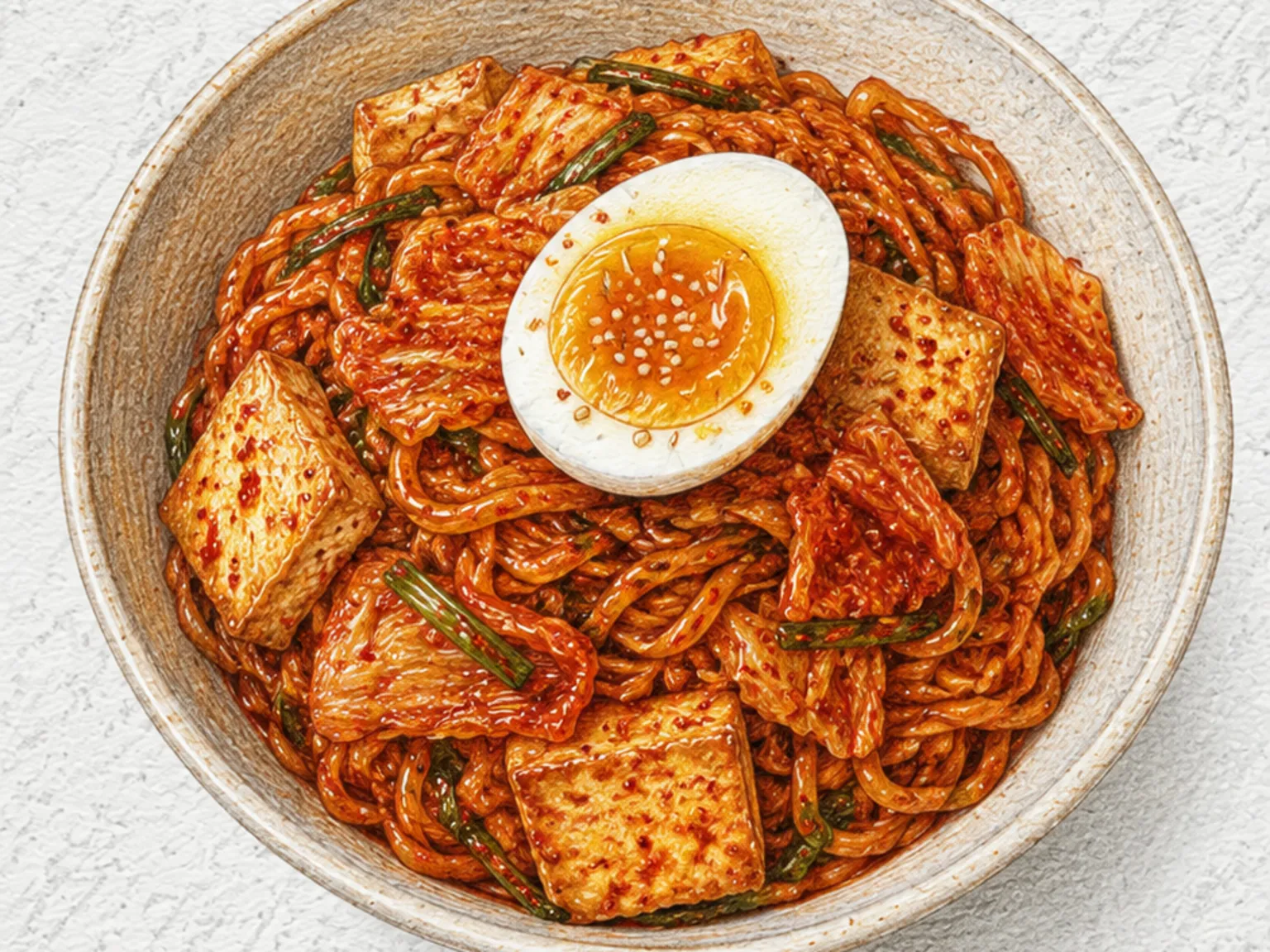
Dubu jjigae is a spicy Korean stew built on firm tofu and fermented kimchi simmered together in anchovy stock. Gochugaru goes into the broth first to establish a vivid red, peppery base; from that point, the kimchi releases its fermented tang with each additional minute over heat, steadily deepening the broth. Green onion adds fragrance, and the tofu absorbs the surrounding liquid the longer it cooks. With only five or so main ingredients, this is an efficient dish - the fermented kimchi handles the complexity, producing layered acidity and depth that reads far richer than the short ingredient list would suggest.

Korean Braised Eggplant with Shrimp
Gaji saeu jorim is a Korean braised side dish pairing eggplant with shrimp in a sauce of soy sauce and oyster sauce. Lightly stir-frying the eggplant in oil before braising coats the surface and prevents the slices from turning mushy, helping them hold their shape and develop a slight gloss as the sauce reduces. The natural umami from the shrimp combines with the dense savory character of the oyster sauce to deepen the overall flavor, and the eggplant draws all of that into its flesh as it braises slowly. Gochugaru adds a gentle warmth without masking the seafood, onion contributes background sweetness, and green onion lifts the aroma. The soft, juicy texture of the eggplant against the firm bounce of the shrimp gives the dish an appealing contrast, and the glossy dark sauce spooned over rice makes for a satisfying, complete meal with minimal effort.