Charim

2686 Korean & World Recipes

2686+ Korean recipes, clean and organized. Ingredients to instructions, all at a glance.

Recipes with korean chili flakes

24 recipes

Buy korean chili flakes
Korean Sedum Water Kimchi
KimchiEasy

Korean Sedum Water Kimchi

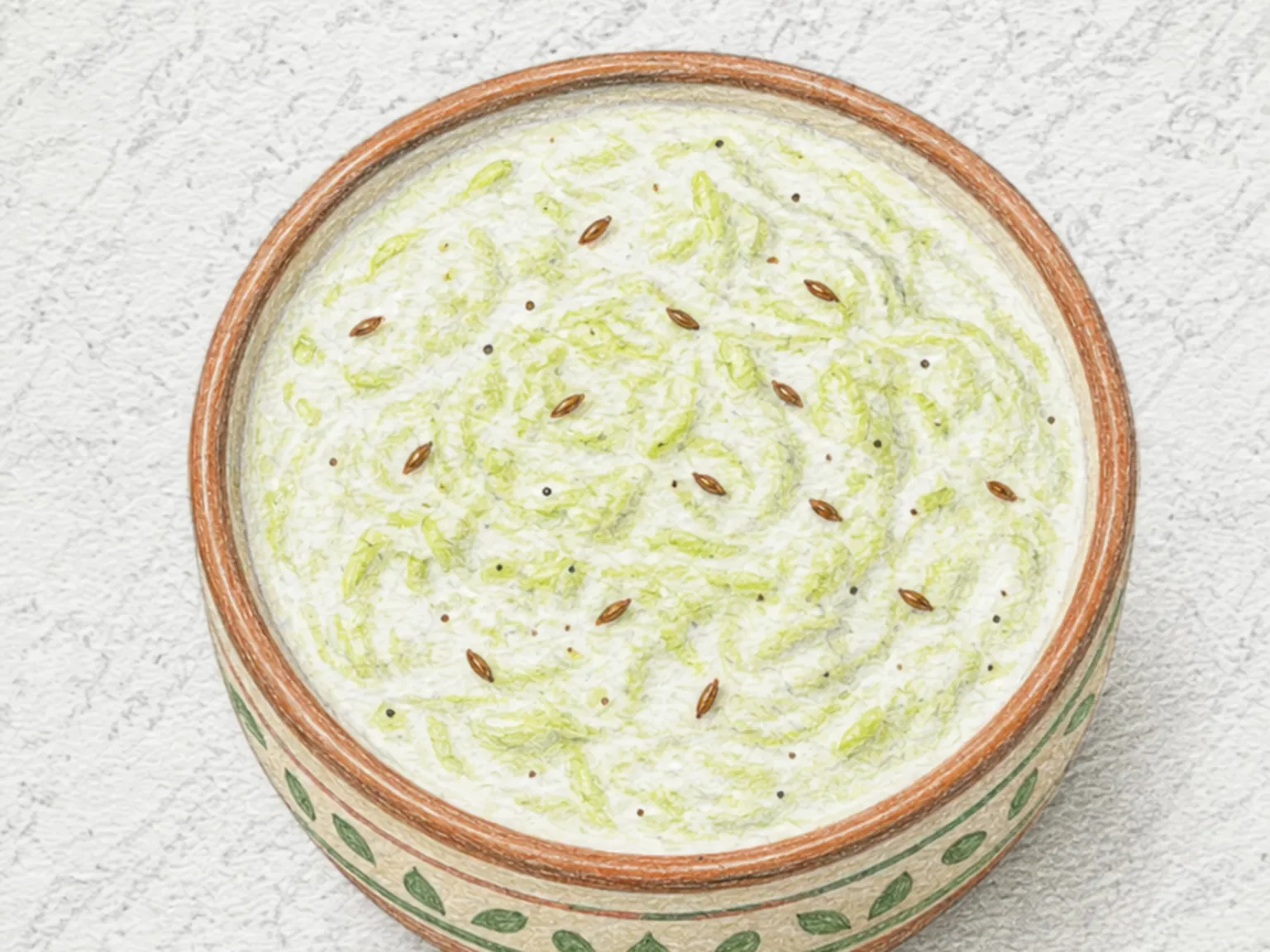
Dolnamul mul kimchi is a spring water kimchi fermented in a clear brine with sedum greens, Korean radish, Asian pear, and scallions. Thinly sliced radish is salted first to extract excess moisture before going into the liquid. Julienned pear dissolves slowly into the brine as the kimchi ferments, contributing a natural background sweetness without clouding the soup. Gochugaru is tied inside a cheesecloth pouch and steeped directly in the brine - a technique that delivers a faint chili fragrance and a bare hint of color while keeping the liquid clear. Sedum is folded in last to protect its crisp, succulent texture from softening. A single day at room temperature generates lactic acid and mild carbonation, after which the kimchi is stored cold and served straight from the container. Ladled over a bowl of warm rice, the cold, lightly fizzy broth makes a distinctly seasonal combination that belongs to early spring.

🥗 Light & Healthy🍱 Lunchbox
Prep 25minCook 10min4 servings
Rajma Chawal (North Indian Kidney Bean Curry with Rice)
AsianMedium

Rajma Chawal (North Indian Kidney Bean Curry with Rice)

Rajma chawal is a weekday comfort meal across northern India, particularly beloved in Delhi and Punjab households. Dried red kidney beans are soaked overnight and pressure-cooked until creamy inside, then simmered in a gravy of slow-cooked onions, crushed tomatoes, and a combination of garam masala, cumin, and coriander powder. As the beans continue to cook in the gravy, their starch thickens the sauce naturally, producing a rich, almost velvety consistency without any added cream. The dish is always served alongside plain steamed basmati rice, which absorbs the spiced gravy and carries its warmth. A squeeze of lemon and a side of sliced raw onion cut through the richness. Rajma reheats exceptionally well, and many cooks insist the second-day version is the better one.

🏠 Everyday
Prep 20minCook 45min4 servings
Korean Seasoned Chili Leaves
Side dishesEasy

Korean Seasoned Chili Leaves

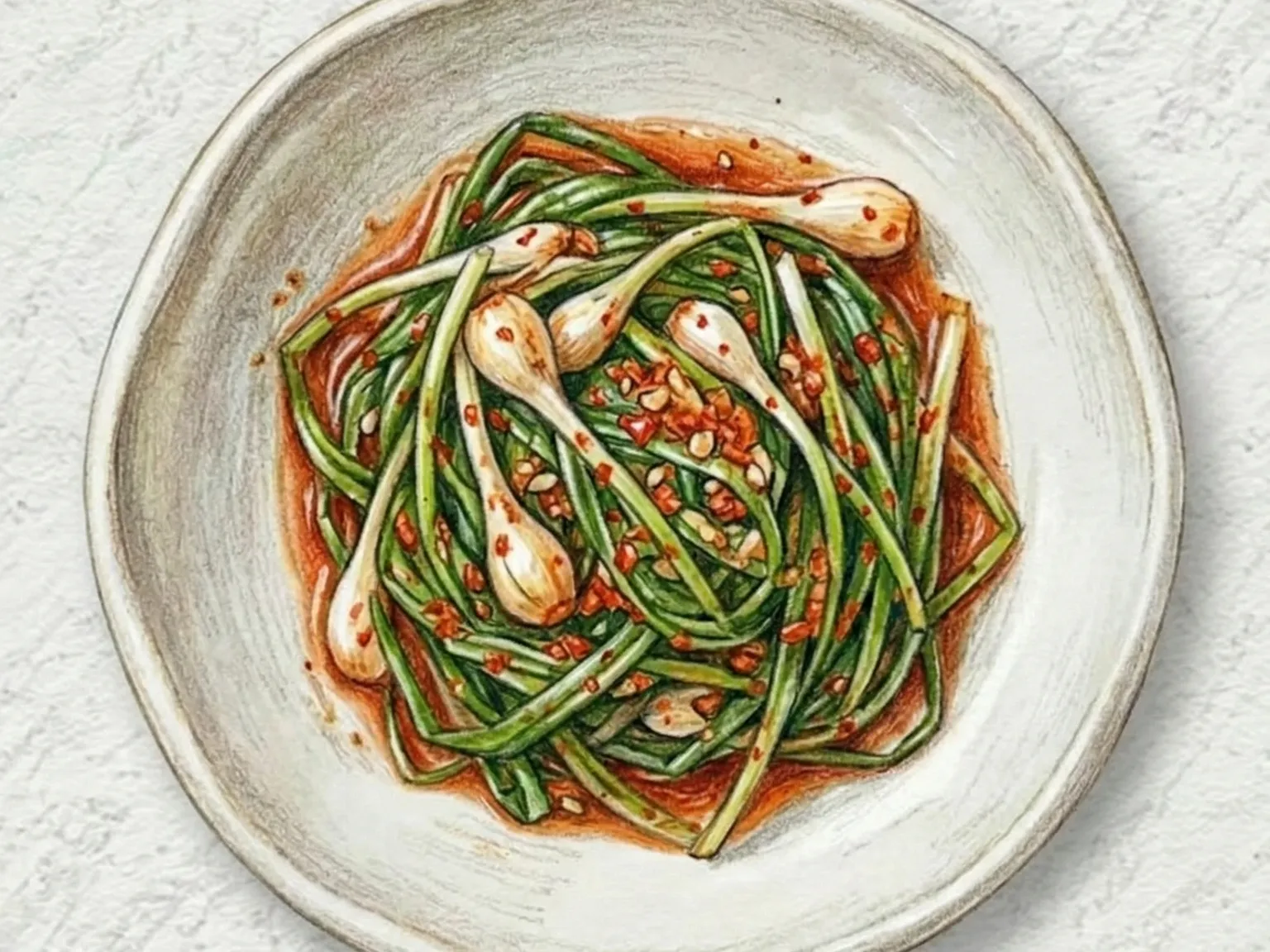
Gochuip-muchim is a seasoned namul made from chili pepper leaves harvested after the peppers themselves have been picked, rooted in the Korean rural practice of using every part of what the kitchen garden produces rather than discarding what is left behind after the main harvest. August and September mark the narrow window when the leaves are at their most tender and aromatic; after this period they become tougher and their fragrance fades. Blanched for one minute in boiling water to reduce bitterness, squeezed firmly dry, and then dressed with soy sauce, gochugaru, minced garlic, sesame oil, and sesame seeds, tossed until each leaf is evenly coated. The slightly bitter, herbaceous quality of the leaves does not cook out completely in blanching - it persists and intersects with the gochugaru's heat in a way that distinguishes this namul from any ordinary leafy green banchan. Because the thin leaves absorb seasoning almost immediately, the namul is fully flavored from the moment it is tossed and needs no resting period. Eaten alongside warm rice, the bitterness and spice settle against the neutral starch in a combination that is quiet but consistently satisfying.

🏠 Everyday🍱 Lunchbox
Prep 9minCook 3min4 servings
Korean Oyster Water Parsley Stir-fry
Stir-fryEasy

Korean Oyster Water Parsley Stir-fry

Gul-minari-bokkeum is a quick stir-fry of plump raw oysters and fragrant water parsley (minari) seasoned with gochugaru and light soy sauce over high heat. The oysters cook only until they just firm around the edges, retaining their briny interior juices while contracting slightly, and the minari stays crisp with its herbal freshness intact. The salty, sweet umami of the oysters meets the clean grassy quality of the minari, and the two flavors balance without either overpowering the other. Winter is the prime season for this dish, when cold-water oysters reach peak plumpness and flavor. Cooking the oysters too long drives out their moisture and makes them rubbery, so the stir-fry must stay brief.

🍺 Bar Snacks🏠 Everyday
Prep 15minCook 8min2 servings
Korean Sweet Spicy Dakgangjeong
Street foodMedium

Korean Sweet Spicy Dakgangjeong

Yangnyeom dakgangjeong is Korean sweet-spicy fried chicken made by cutting boneless thigh meat into bite-size pieces, dredging them in potato starch, and running them through a two-stage fry. The first fry at 170 degrees Celsius cooks the meat through; the second fry at 185 degrees drives off the residual moisture the crust absorbed during the first pass, hardening the exterior into a shell that can withstand sauce tossing without collapsing. The glaze is a reduction of gochujang, gochugaru, corn syrup, and soy sauce, simmered down until the mixture is thick enough to coat a spoon without dripping off. Tossing the finished chicken in the hot glaze must happen off the heat and within twenty seconds, because the steam trapped between sauce and crust will turn the coating soggy if the process drags on. When done correctly, the result is a glossy, sticky exterior that crackles audibly at first bite even after the dish has cooled to room temperature, surrounding thigh meat that stays juicy inside.

🧒 Kid-Friendly🌙 Late Night
Prep 25minCook 20min4 servings
Korean Grilled Sea Snail with Gochujang
GrilledMedium

Korean Grilled Sea Snail with Gochujang

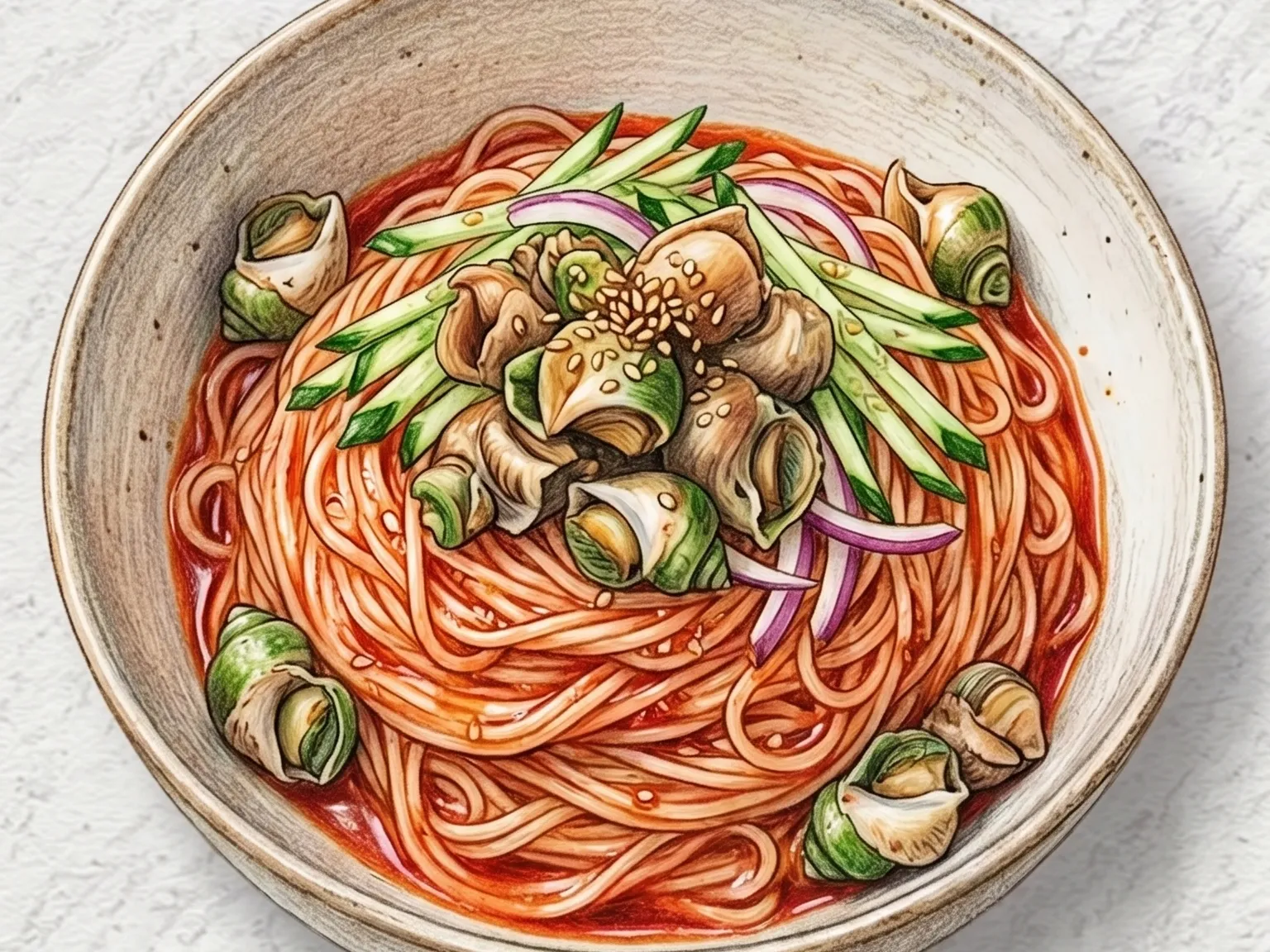
Pre-boiled sea snail meat is sliced thin, trimmed of tough visceral parts, and marinated for fifteen minutes with sliced onion in a sauce built on gochujang, gochugaru, soy sauce, oligosaccharide syrup, and minced garlic. A screaming-hot pan sears the marinated snail in three to four minutes, concentrating the spicy-sweet sauce onto the surface while preserving the snail's signature firm chew. Green onion goes in for the final minute, followed by a drizzle of sesame oil. The briny depth of the sea snail meets the fermented heat of gochujang in every bite.

🍺 Bar Snacks
Prep 20minCook 10min4 servings
Korean Napa Leaf Hangover Soup
SoupsMedium

Korean Napa Leaf Hangover Soup

Ugeoji haejang-guk is Korea's answer to the morning after - a hangover soup built on a foundation of long-simmered beef brisket broth with napa cabbage outer leaves and soybean sprouts. The brisket provides a clean, meaty depth to the broth, while the ugeoji, pre-seasoned with doenjang, breaks down during the simmer and infuses the liquid with a savory, fermented richness. Soybean sprouts, added later so they keep their crunch, contribute a refreshing brightness that lightens what would otherwise be a heavy bowl. The seasoning balances doenjang and a touch of gochugaru, producing a broth that is spicy enough to wake the palate but not so aggressive that a sensitive stomach rebels. Minced garlic and sliced scallion layer in additional aromatics. Shredded brisket arranged on top provides protein and substance, making each bowl a complete meal. The combination of warm broth, fermented depth, and crunchy sprouts works on the body like a reset, which is exactly why haejang-guk shops across Korea fill up every morning with bleary-eyed customers seeking exactly this bowl.

🏠 Everyday
Prep 25minCook 50min4 servings
Korean Young Napa Cabbage & Salted Shrimp Stew
StewsMedium

Korean Young Napa Cabbage & Salted Shrimp Stew

Eolgari saeujeot jjigae is a jjigae seasoned with salted fermented shrimp rather than the more common doenjang or gochujang. Young napa cabbage, potato, and zucchini simmer together in rice-rinse water, absorbing the fermented shrimp's concentrated brininess as they cook. Gochugaru adds color and a measured heat, while cheongyang chili and green onion bring additional sharpness to the broth. The timing of the salted shrimp matters: adding it too early causes the salt to concentrate and the delicate umami to dissipate, so it should go in just before the heat is reduced. The result is a broth that is intensely savory and clean-tasting without feeling heavy -- an everyday jjigae that pairs naturally with plain steamed rice.

🏠 Everyday
Prep 18minCook 22min4 servings
Korean Braised Eggplant in Seasoned Soy Sauce
SteamedEasy

Korean Braised Eggplant in Seasoned Soy Sauce

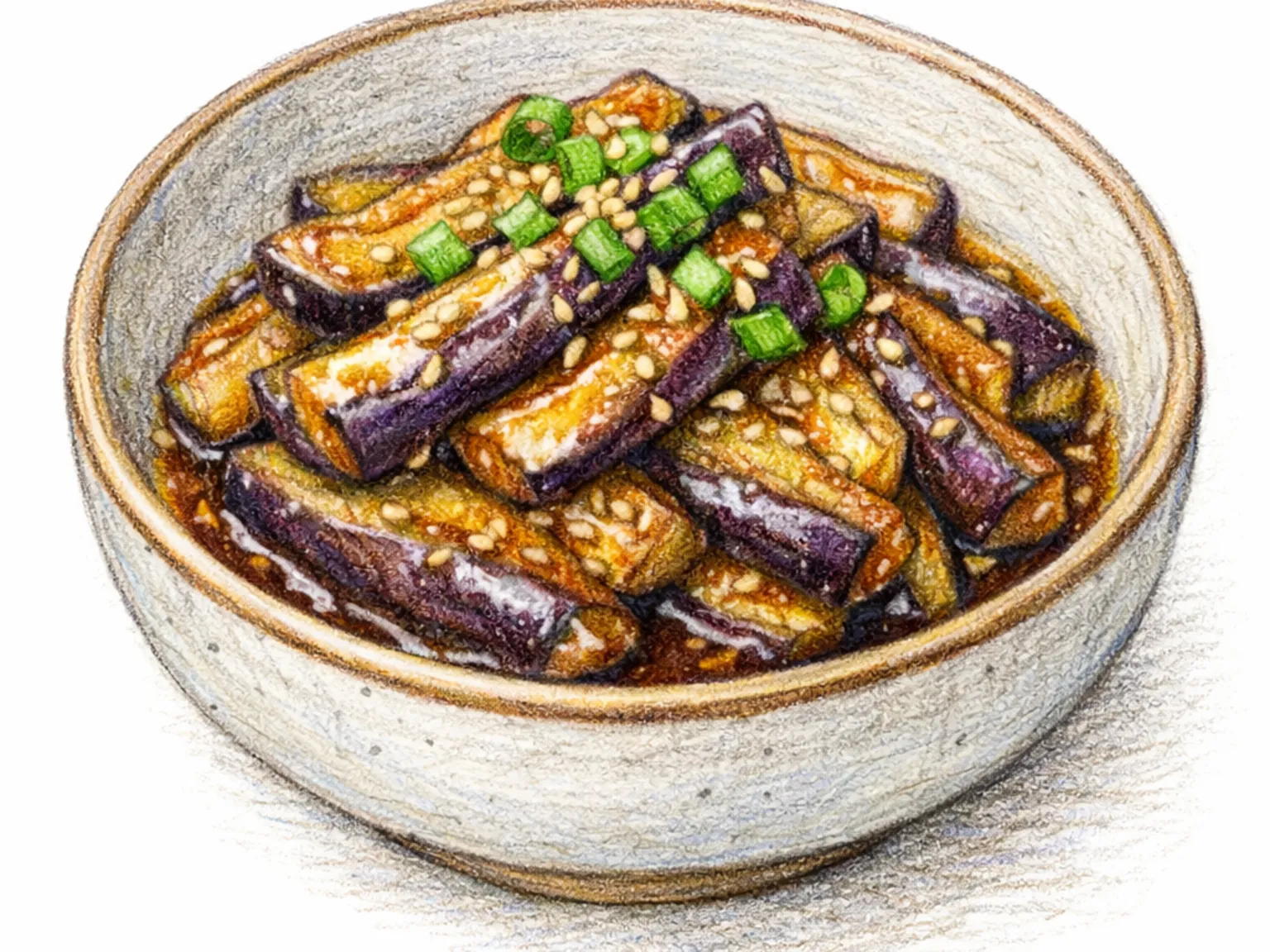
Gaji yangnyeom jorim is a Korean braised eggplant side dish made with soy sauce, gochugaru, garlic, and sesame oil. Briefly sauteing the eggplant in oil before adding the braising liquid is important: pre-cooking the surface prevents the eggplant from releasing too much water into the sauce, which keeps the seasoning concentrated and helps it penetrate evenly. A small amount of sugar or plum extract is added to the sauce, giving the finished dish its characteristic glossy sheen. Scallions are stirred in only after the heat is off to preserve their color and texture. The result is a compact, salty-spicy banchan with a deep lacquered surface on each piece. Keeping a batch in the refrigerator means it is available as a side dish for three or more days, and the leftover braising liquid works well as seasoning in bibimbap.

🥗 Light & Healthy🏠 Everyday
Prep 10minCook 15min2 servings
Korean Young Napa Kimchi (Spring Cabbage Quick Ferment)
KimchiMedium

Korean Young Napa Kimchi (Spring Cabbage Quick Ferment)

Eolgari kimchi is a spring kimchi made with young napa cabbage, briefly salted for twenty to thirty minutes, then dressed in gochugaru, fish sauce, garlic, and glutinous rice paste before fermenting at room temperature for about a day. Limiting the salting time to no more than thirty minutes is important: the young cabbage's thin leaves and tender stems absorb salt quickly, and over-salting destroys the crisp texture before fermentation even begins. Because the leaves are thinner and more porous than those of mature napa, the seasoning penetrates quickly and fermentation produces a pleasant acidity within twenty-four hours. Salted shrimp compensates for the short fermentation period by adding immediate depth, and the young cabbage itself contributes a clean sweetness that balances the chili heat without any added sugar. Using a generous amount of glutinous rice paste helps the seasoning cling evenly to each leaf, which supports uniform fermentation throughout the batch. This is a seasonal kimchi meant as a lighter, fresher alternative to aged kimchi as temperatures begin to rise in spring.

🏠 Everyday🍱 Lunchbox
Prep 40minCook 10min4 servings
Shan Noodles (Burmese Flat Rice Noodles with Turmeric Meat Sauce)
AsianMedium

Shan Noodles (Burmese Flat Rice Noodles with Turmeric Meat Sauce)

Shan noodles are the everyday noodle of Myanmar's Shan State, found at nearly every market stall and tea shop in the region. Thin, flat rice noodles are topped with a sauce of minced chicken or pork cooked with turmeric, tomato, and a touch of chili. The dish is finished with a generous pour of fried garlic oil - golden-brown garlic chips sizzling in their own rendered fat - which gives the bowl its signature aroma. Pickled mustard greens add a sour crunch on the side, and toasted chickpea flour is sprinkled over for a nutty, grainy texture. The noodles come in two styles: a dry version tossed with the sauce, and a soup version swimming in a light broth. Both are eaten with a spoon and fork rather than chopsticks, in keeping with Burmese custom.

🎉 Special Occasion
Prep 20minCook 20min2 servings
Korean Spicy Gochujang Dried Squid Stir-Fry
Side dishesEasy

Korean Spicy Gochujang Dried Squid Stir-Fry

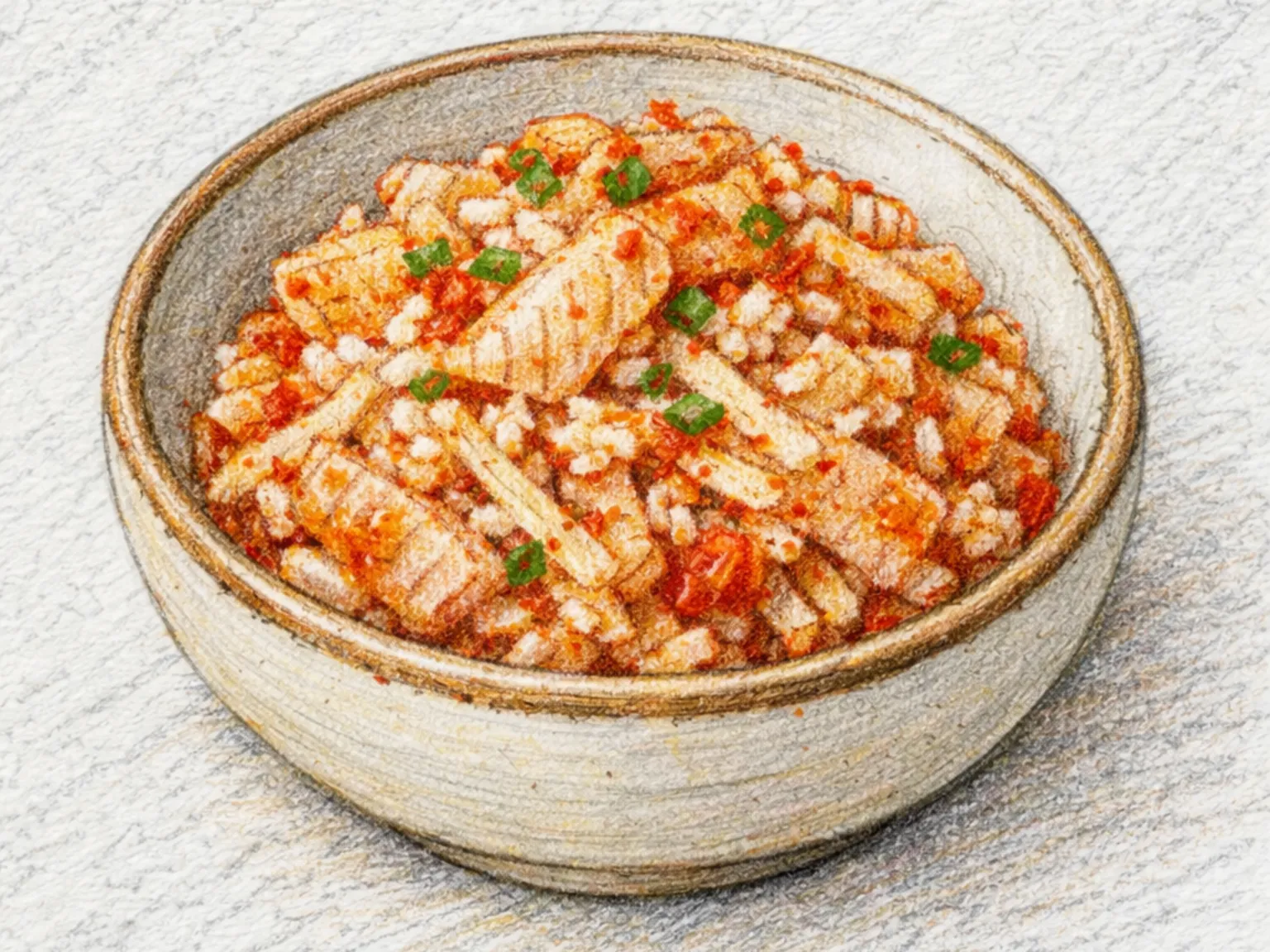
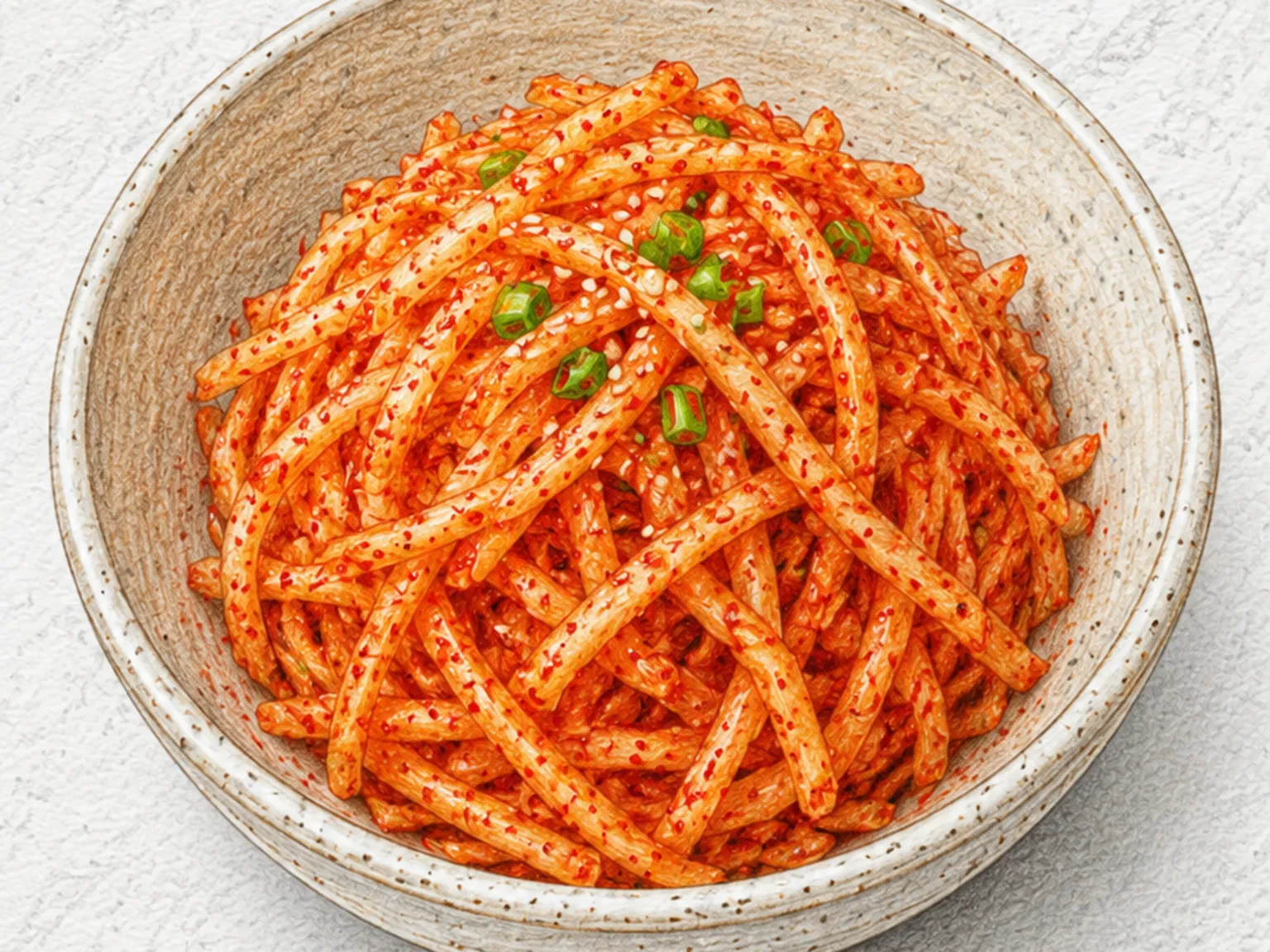
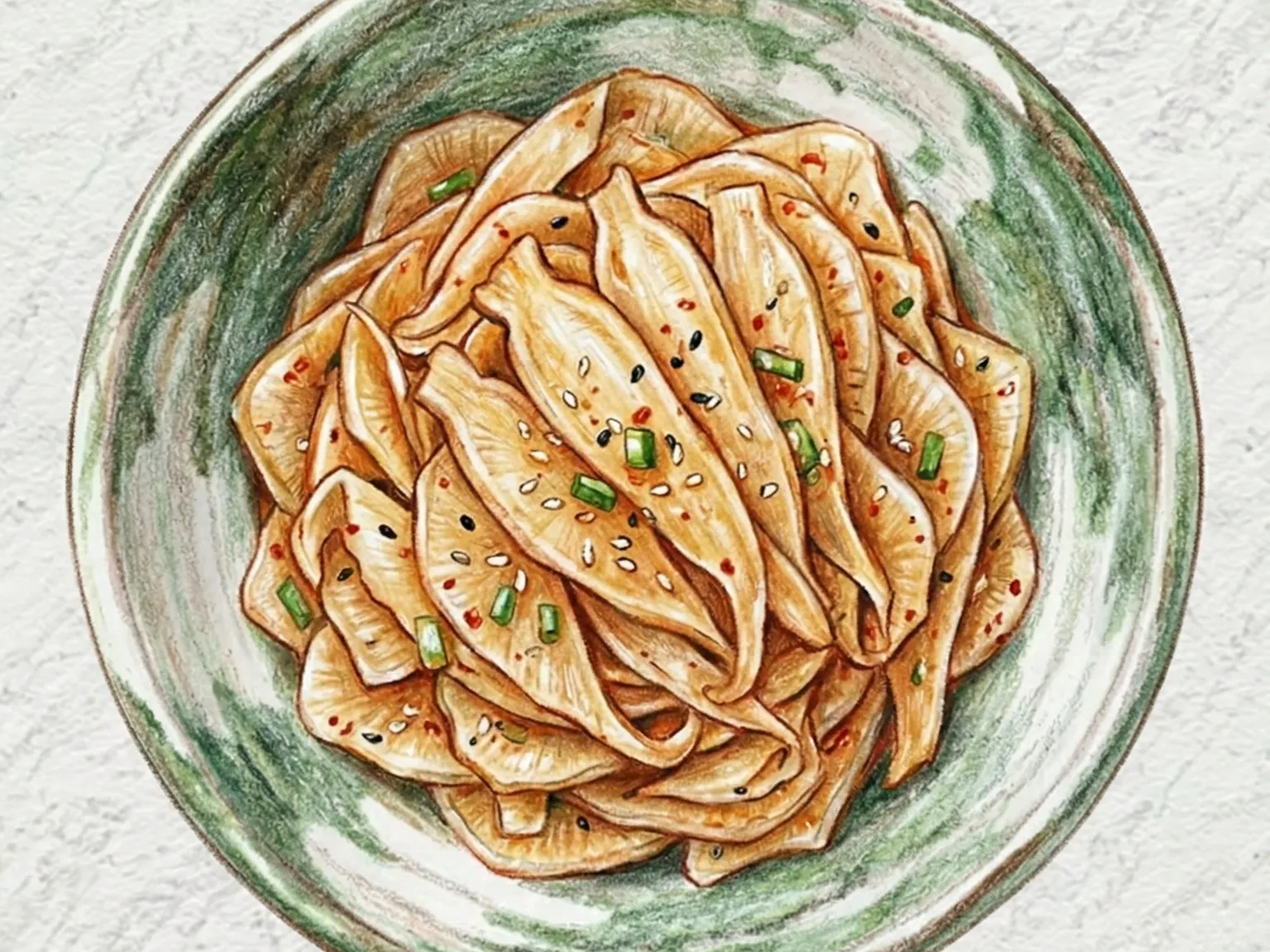
Jinmichae, shredded dried squid, is a Korean pantry staple valued for its chewy texture and the umami that builds and intensifies the longer you chew. This preparation coats the strands in a gochujang glaze, making it one of the most reliably present banchan in Korean households. Briefly soaking the dried squid in water before squeezing it dry softens the tough fibers and opens them to absorb the sauce more evenly. The sauce of gochujang, gochugaru, rice syrup, soy sauce, and garlic is stir-fried first over low heat to mellow the raw chili sharpness, then the squid is tossed through quickly over the same heat. Sesame oil and toasted sesame seeds are added off the heat, coating the strands in a sweet, spicy glaze that keeps well at room temperature for several days.

🏠 Everyday🍱 Lunchbox
Prep 8minCook 7min4 servings
Korean Stir-fried Dried Pollock Strips
Stir-fryMedium

Korean Stir-fried Dried Pollock Strips

Hwangtae-chae-bokkeum is a Korean side dish of shredded dried pollock strips soaked until fully soft, then stir-fried in a gochujang, oligosaccharide syrup, and soy sauce glaze. Hwangtae is a specific type of dried pollock produced by repeated freeze-thaw cycles in cold mountain air over winter, which gives it a lighter, spongier texture than ordinary dried pollock -- that porosity is what allows it to absorb the seasoning so completely during cooking. Soaking the dried strips in cold water for at least twenty minutes is necessary to rehydrate the flesh fully; squeezing out the excess moisture before adding them to the pan helps the glaze cling evenly rather than diluting in the pan. As the pollock fries, it drinks in the seasoning and turns chewy and moist, with the gochujang's heat and the syrup's sweetness working together to neutralize any residual fishiness. A finishing drizzle of sesame oil and a scatter of sesame seeds rounds out the flavor. The dish keeps well in the refrigerator for four to five days, making it a practical banchan to prepare in advance for lunchboxes or as a casual snack alongside drinks.

🏠 Everyday🍱 Lunchbox
Prep 12minCook 9min2 servings
Korean Pan-Fried Tofu with Soy Dipping Sauce
GrilledEasy

Korean Pan-Fried Tofu with Soy Dipping Sauce

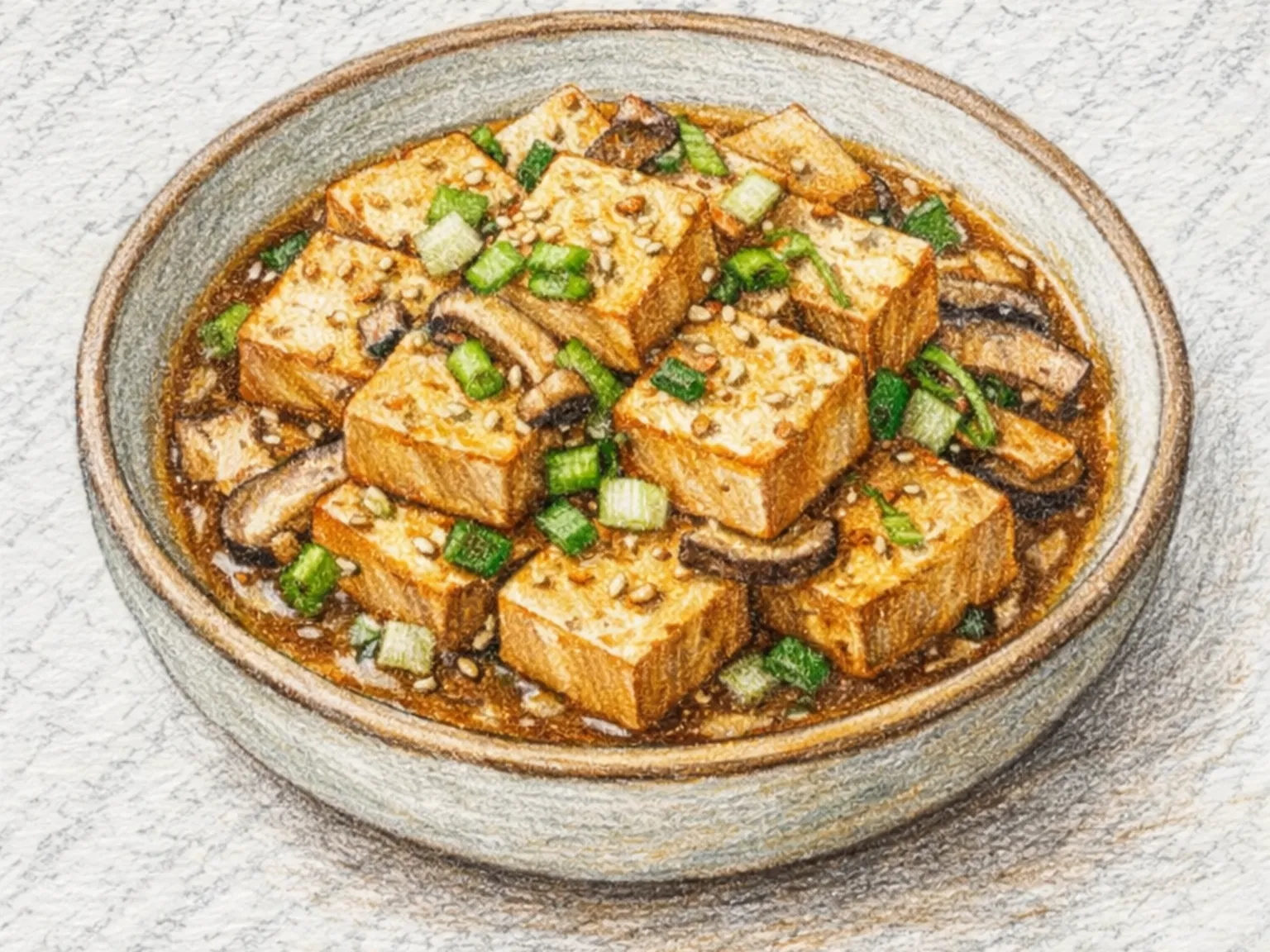
Firm tofu is sliced 1.5 cm thick, patted thoroughly dry with paper towels, and lightly salted before going into an oiled pan for four to five minutes per side. Removing surface moisture is the critical step - dry tofu does not splatter and develops an even golden crust. A dipping sauce of soy sauce, Korean chili flakes, chopped green onion, and sesame oil accompanies the fried slices, and the crisp exterior absorbs just enough sauce to add flavor while the soft interior stays mild. With minimal ingredients, this dish is entirely about the textural contrast between the crunchy shell and the silky center.

🍺 Bar Snacks
Prep 10minCook 15min2 servings
Yukgaejang (Fiery Shredded Beef and Vegetable Soup)
SoupsMedium

Yukgaejang (Fiery Shredded Beef and Vegetable Soup)

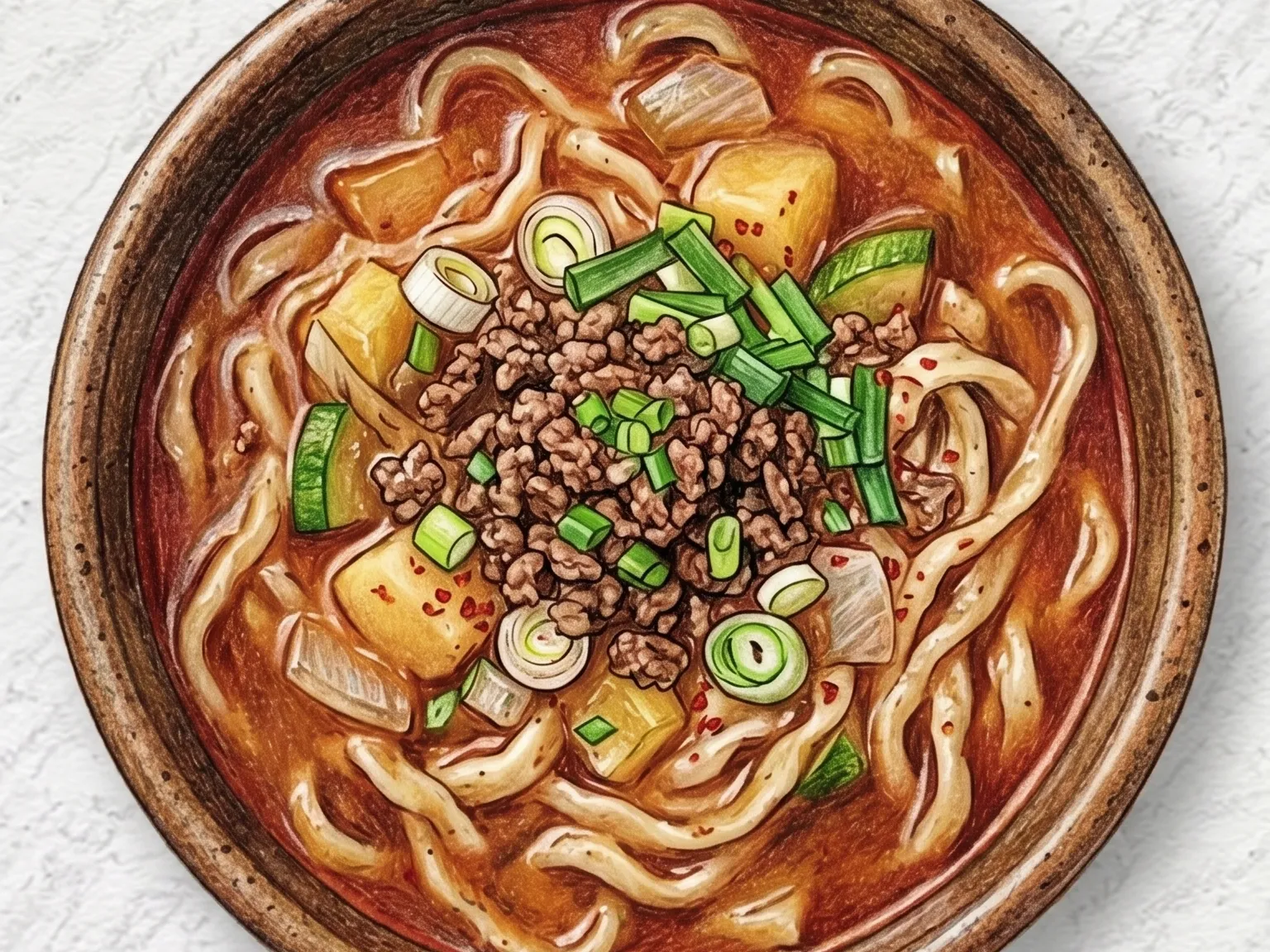
Yukgaejang is a fiery Korean beef soup that starts with brisket simmered until it can be pulled apart along the grain into long, thin shreds. The shredded meat is then hand-mixed with red pepper flakes, soup soy sauce, sesame oil, and minced garlic so the seasoning penetrates each strand before the final cook. Bracken fern, bean sprouts, and generous lengths of green onion join the pot, and everything boils together for thirty minutes in the brisket stock, which turns a deep red from the chili. The fern contributes an earthy chew, the sprouts add a clean crunch, and the green onion breaks down into the broth, lending natural sweetness that tempers the heat.

🏠 Everyday
Prep 20minCook 90min4 servings
Korean Eggplant, Perilla & Tofu Stew
StewsEasy

Korean Eggplant, Perilla & Tofu Stew

Gaji deulkkae dubu jjigae is a Korean stew of eggplant and tofu simmered in a broth thickened with ground perilla seeds. Ground perilla stirred into anchovy-kelp stock creates a creamy, nutty liquid as heat activates the oils in the seeds. Eggplant cooks slowly in this broth, breaking down until completely soft and absorbing the surrounding perilla flavor. Dicing the tofu into small cubes increases its surface area and allows the broth to penetrate from more angles. Gochugaru adds a layered warmth to the richness of the perilla, and soup soy sauce provides the salt structure. The textural contrast between the silky, yielding eggplant and the firmer tofu gives the stew a variety that makes each spoonful interesting. Even without meat, the fatty acids in perilla provide enough body and satiety to make this a substantial main-course stew, particularly well suited to vegetarian cooking.

🏠 Everyday🥗 Light & Healthy
Prep 14minCook 16min2 servings
Korean Braised Hairtail Fish
SteamedMedium

Korean Braised Hairtail Fish

Galchi-jjim is a Korean braised hairtail fish dish where sliced hairtail and Korean radish are simmered together in a seasoned broth of gochugaru, soy sauce, garlic, and ginger until the liquid reduces to a concentrated glaze. The fish has a rich, oily white flesh that drinks in the bold seasoning while staying tender and intact. Ginger juice is added specifically to neutralize the oceanic smell that hairtail can carry, keeping the finished dish clean and approachable. The radish cooks down in the braising liquid, becoming deeply seasoned throughout as it absorbs the spiced sauce. The remaining sauce is intentionally left in small quantity so it can be spooned directly over steamed rice, which is considered the most satisfying way to eat this dish. It is a staple Korean fish preparation that appears on home dinner tables across the year.

🏠 Everyday🎉 Special Occasion
Prep 18minCook 30min2 servings
Korean Fermented Flounder Sikhae
KimchiHard

Korean Fermented Flounder Sikhae

Gajami sikhae is a traditional fermented flounder preparation from Korea's East Coast, made by combining salt-cured flounder fillets with julienned radish, cooked glutinous rice, gochugaru, and fish sauce, then sealing the mixture for fermentation at low temperature for a week or more. The glutinous rice starch feeds lactic acid bacteria, producing a mild, rounded acidity that reads quite differently from the sharp, concentrated saltiness of jeotgal. Radish adds moisture and textural contrast. As fermentation progresses, fish proteins break down into deep umami compounds. The resulting sikhae is far less salty than conventional fermented seafood and can be eaten directly over rice. A regional winter banchan associated with Gangwon and Hamgyeong provinces, it grows more sour the longer it ferments.

🎉 Special Occasion🍱 Lunchbox
Prep 45minCook 25min4 servings
Zi Ran Yang Rou (Cumin Lamb Stir-Fry)
AsianMedium

Zi Ran Yang Rou (Cumin Lamb Stir-Fry)

Zi ran yang rou is a cumin lamb stir-fry originating from China's northwestern provinces, particularly Xinjiang and Gansu, where lamb and cumin are foundational ingredients. Lamb is cut into bite-sized pieces and seared over the highest possible heat, then showered with ground cumin and chili flakes while still in the wok. The cumin's warm, earthy aroma bonds with the assertive flavor of lamb in a way that neither ingredient achieves alone - cumin needs lamb's fat to bloom, and lamb needs cumin's fragrance to focus its richness. Minced garlic and sliced onion contribute underlying sweetness that tempers the spice, while soy sauce ties the seasoning together.

🍺 Bar Snacks🎉 Special Occasion
Prep 15minCook 10min2 servings
Seasoned Korean Wild Lettuce
Side dishesEasy

Seasoned Korean Wild Lettuce

Godeulppaegi muchim is a seasonal Korean side dish prepared with Ixeris dentata, a plant characterized by its thin, slender leaves. This botanical species belongs to the daisy family and has been traditionally foraged across the Korean peninsula for many generations. It serves as a versatile ingredient, often appearing on the dining table as a fermented kimchi or as a freshly seasoned vegetable dish known as banchan. The plant is recognized for a distinct and sharp bitter profile that is significantly more intense than the bitterness typically found in standard garden salad greens. Properly handling this inherent bitterness is the most important technical aspect of preparing the dish correctly. The leaves and stems undergo a brief blanching process in boiling water for a duration of approximately one to two minutes. Following this heat treatment, they are moved immediately to a cold water bath where they remain submerged for a minimum of thirty minutes. If the soaking duration is reduced or omitted entirely, the resulting dish will retain a level of bitterness that cannot be masked or balanced by any amount of additional seasoning. After the soaking period is complete, the greens are squeezed firmly by hand to remove excess moisture and then combined with a bold seasoning base. This dressing consists of a mixture of gochujang, gochugaru, vinegar, sugar, minced garlic, and toasted sesame oil. This specific combination provides a sharp acidity and spicy heat that coats the processed greens. The flavors are intended to complement the lingering bitterness of the plant instead of removing it, which creates a complex and layered taste profile that persists throughout the meal. This side dish is typically available from the beginning of spring through the early weeks of summer. During these months, the plant is a common sight in traditional rural markets located throughout South Gyeongsang and North Jeolla provinces. Individuals who value a strong and assertive flavor profile consider this preparation to be a highly valued seasonal specialty within Korean cuisine.

🏠 Everyday🍱 Lunchbox
Prep 20minCook 7min4 servings
Korean Braised Yellow Croaker
Stir-fryMedium

Korean Braised Yellow Croaker

Jogi-jorim is a Korean braised dish of yellow croaker simmered with radish and onion in a seasoning sauce of soy sauce, gochugaru, garlic, and a touch of sugar. Yellow croaker has white, tender flesh and a mild flavor with little fishiness, qualities that make it exceptionally well-suited for braising. The radish goes into the pot first, lining the bottom so the fish sits above the direct heat and does not stick or break apart during cooking. The seasoning sauce is poured over the fish and the pot comes to a boil before the heat is reduced to a steady simmer. Over time the sauce penetrates the flesh and the radish drinks in the braising liquid, turning sweet-savory and soft throughout. One or two Cheongyang chili peppers added to the pot provide a low, sustained heat that builds gradually rather than hitting all at once. The braise is finished when a moderate amount of glossy sauce remains in the pot. That concentrated sauce mixed into a bowl of plain rice is the reason Koreans reach for jogi-jorim as a go-to rice side dish. The dish also appears regularly on ancestral rite tables and holiday spreads, making it one of the more culturally familiar fish preparations in Korean cooking.

🏠 Everyday🍱 Lunchbox
Prep 15minCook 22min2 servings
Korean Grilled Bellflower Root
GrilledMedium

Korean Grilled Bellflower Root

Bellflower root is shredded lengthwise, soaked in salted water, and blanched for one minute to draw out its characteristic bitterness without eliminating it entirely. A ten-minute soak in a sauce of gochujang, gochugaru, soy sauce, oligosaccharide syrup, garlic, and sesame oil seasons the root before it hits a medium-heat pan for three to four minutes per side. The result has a crisp, crunchy bite - distinct from any other vegetable - with a red-glazed surface that carries moderate heat. Open-flame grilling adds a smoky dimension that pairs well with the spicy coating, and sesame seeds provide a finishing touch.

🍺 Bar Snacks🏠 Everyday
Prep 20minCook 10min2 servings
Korean Gaji Saewoo Jjigae (Eggplant Shrimp Stew)
StewsEasy

Korean Gaji Saewoo Jjigae (Eggplant Shrimp Stew)

Gaji-saewoo-jjigae is a spicy Korean stew of eggplant and shrimp simmered in a gochujang-based broth seasoned with perilla oil and tuna fish sauce. The vegetables and shrimp are stir-fried in perilla oil first to develop fragrance, then water is added and the whole pot brought to a boil. Eggplant cut in thick lengthwise slices or on the bias presents a large surface area that soaks up the spicy, savory broth, so each bite releases a burst of liquid from inside the softened flesh. The shrimp cook quickly and contribute a sweet, briny flavor that lifts the fermented chili paste. Tuna fish sauce adds depth and umami without any fishy edge, and the perilla oil's distinctive nutty fragrance runs through the entire broth. The soft, yielding eggplant and the firm, springy shrimp create a textural contrast in each bowl, and the characteristic sweetness built into gochujang-based broths makes this a summer dish that stimulates appetite even in the heat.

🏠 Everyday
Prep 14minCook 17min2 servings
Korean Braised Skate Wing with Radish
SteamedHard

Korean Braised Skate Wing with Radish

Gaori jjim is a Korean braised skate dish, slow-cooked with radish in a bold sauce of gochugaru and soy sauce. Skate has a texture unlike most fish: its flesh is lean and mild, but the cartilaginous fibers throughout give it a distinctly chewy, springy quality that absorbs the braising sauce deeply during a long, slow cook. Radish pieces nestle in the pot alongside the fish, soaking up the spiced liquid until they turn sweet-savory and tender all the way through. Mirim and minced garlic work together to suppress the sharper marine smell that skate can carry, and the result is a clean, bold flavor without any fishiness. Green onion scattered over the top adds color and a fresh note at the finish, and the remaining braising sauce spooned over rice is one of the best parts of the dish.

🎉 Special Occasion🍱 Lunchbox
Prep 25minCook 35min4 servings