Charim

2686 Korean & World Recipes

2686+ Korean recipes, clean and organized. Ingredients to instructions, all at a glance.

Recipes with soy sauce

24 recipes

Buy soy sauce
Korean Butter-Grilled Mushrooms
DrinksEasy

Korean Butter-Grilled Mushrooms

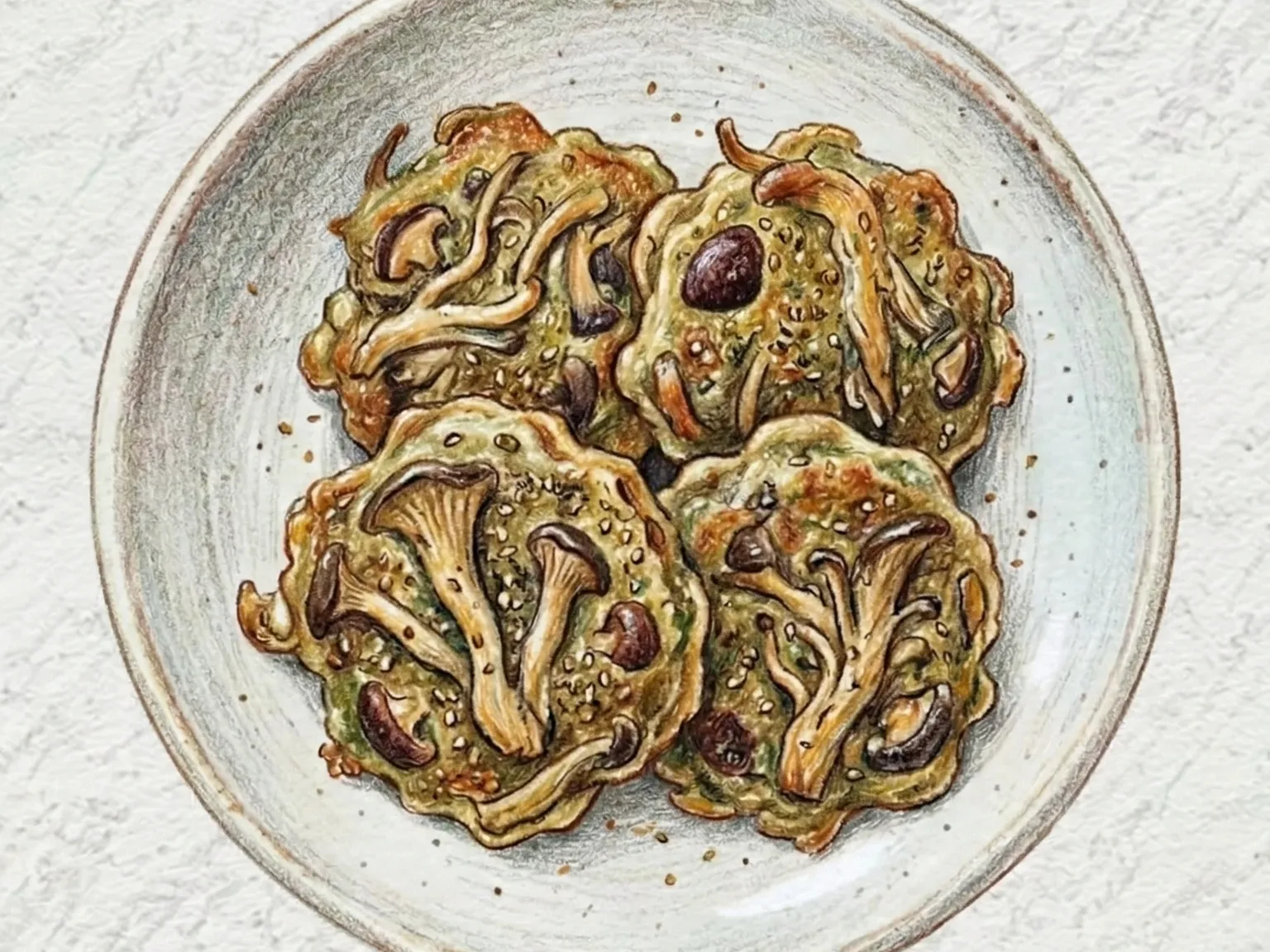
This dish takes thickly sliced king oyster and button mushrooms, sears them in melted butter over high heat for about four minutes until golden on both sides, then finishes with a quick toss of soy sauce for a glossy coating. Garlic goes in with the butter at the start, releasing its fragrance into the fat before the mushrooms hit the pan. Soy sauce added just before the heat is cut keeps the finish clean rather than acrid. A crack of black pepper and a scatter of chopped chives complete the plate, delivering concentrated umami without any meat. The preparation is straightforward and fast, making it a practical choice to put together quickly at the table.

🍺 Bar Snacks Quick
Prep 10minCook 10min2 servings
Korean Napa Cabbage Pancake
GrilledEasy

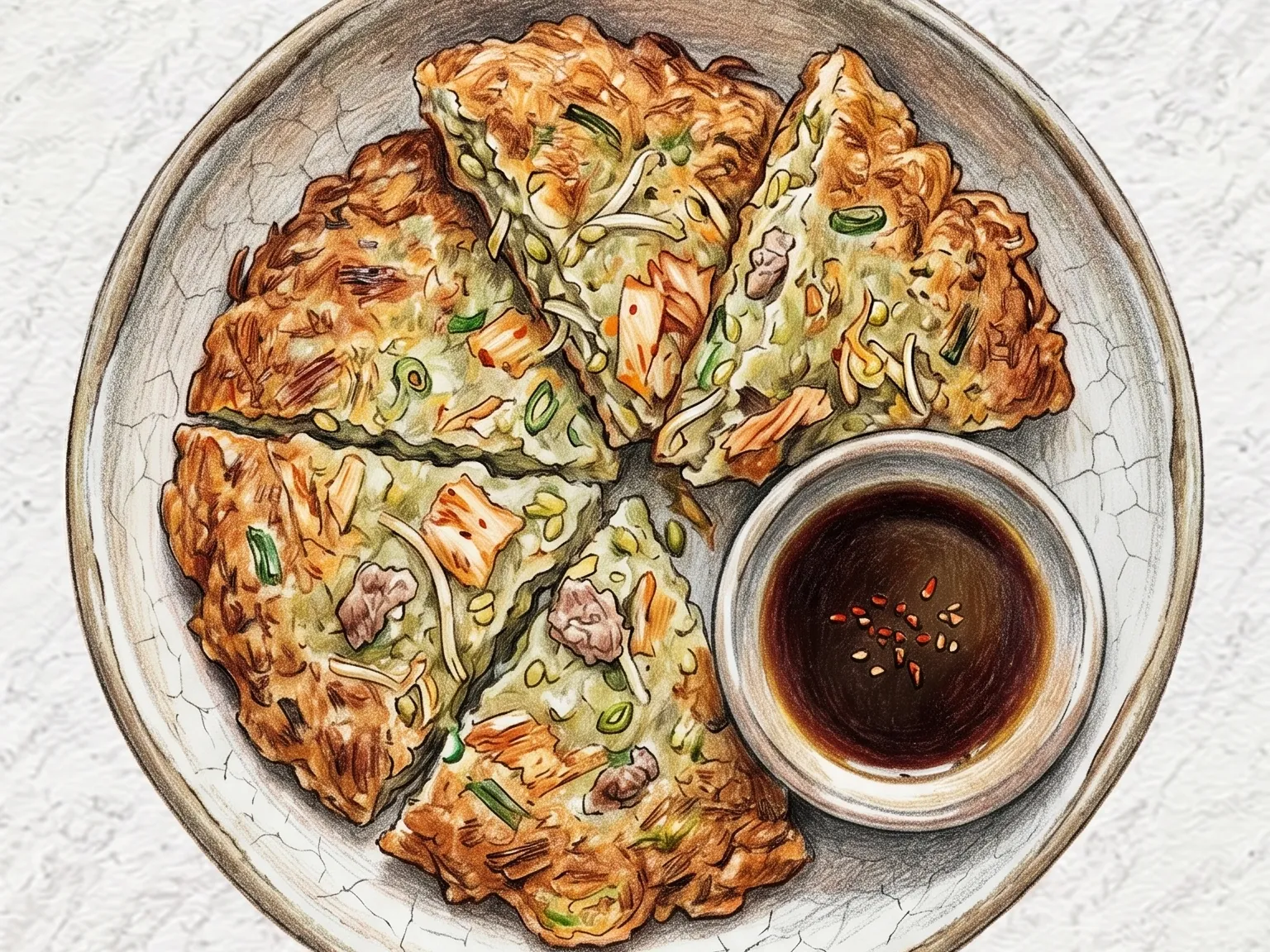
Korean Napa Cabbage Pancake

Baechu jeon is a Korean pan-fried pancake made with napa cabbage leaves coated in a thin flour batter. The simplicity of the recipe makes it a practical use-up dish during kimchi-making season, when salted outer cabbage leaves are on hand and need to be eaten quickly before they deteriorate. Outer leaves of medium size work best; the stem end, if too thick, needs to be flattened with the back of a knife so that the batter adheres uniformly and the leaf lies flat during cooking without curling or buckling. The batter is mixed thin - roughly equal parts buchim flour and water - so it forms a light coating rather than a thick shell. A heavy batter masks the cabbage entirely and produces a texture that is doughy rather than crisp. Generous oil in a well-heated pan and steady medium heat are what produce the characteristic result: a thin, crackling exterior while the cabbage inside softens and its natural sweetness intensifies. Napa cabbage's sweetness becomes more pronounced with heat than in its raw state, which is why this pancake, despite its simplicity, tastes distinctly of the vegetable. Each side must be fully golden before flipping - attempting to turn it early, before the batter sets, breaks the pancake. The standard accompaniment is a dipping sauce of soy sauce sharpened with rice vinegar and sliced cheongyang chili, whose acidity and heat provide contrast to the mild, faintly sweet pancake.

🍺 Bar Snacks🏠 Everyday
Prep 12minCook 10min2 servings
Korean Acorn Jelly Cold Broth Bowl
SoupsEasy

Korean Acorn Jelly Cold Broth Bowl

Dotori-muksabal is a chilled Korean acorn jelly broth bowl where thinly sliced acorn jelly sits in a cold, tangy-sweet seasoned broth. Acorn jelly carries a distinctly earthy, mildly astringent aftertaste and a firm, bouncy texture that becomes noticeably more pronounced once it has chilled thoroughly. The broth, a mixture of stock seasoned with soy sauce, vinegar, and sugar, must be cold before pouring over the jelly to keep that cool snap alive from the first bite to the last. Chopped kimchi adds fermented heat and a pungent sourness, while julienned cucumber contributes a clean crunch, and both ingredients cut through the jelly's neutral flavor with sharp contrasts that make the bowl far more lively than its simple appearance suggests. A spoonful of gochugaru-spiked seasoning ties the components together. The dish is notably low in calories and rich in dietary fiber, making it an appealing light meal on hot days.

🥗 Light & Healthy🏠 Everyday
Prep 20minCook 10min2 servings
Korean Stuffed Perilla Leaf Pancakes
PancakesMedium

Korean Stuffed Perilla Leaf Pancakes

Kkae-ip-jeon are pan-fried perilla leaf parcels stuffed with a filling of ground pork and firm tofu, coated in flour and egg. The tofu must be squeezed dry in a cloth before mixing; excess moisture causes the filling to spread and stick to the pan. Garlic chives and onion add crunch and fragrance to the mix, and the filling seasoned with soy sauce and black pepper pairs cleanly with the perilla's strong herbal character. Dusting with flour first, then dipping in egg, produces an even coating, and frying covered over medium-low heat for two minutes per side ensures the filling is cooked through to the center. The bite-sized pieces work well as a packed lunch side or as bar food.

🍺 Bar Snacks🎉 Special Occasion
Prep 22minCook 12min2 servings
Korean Army Stew (Spam & Ramen Spicy Fusion Pot)
StewsEasy

Korean Army Stew (Spam & Ramen Spicy Fusion Pot)

Budae jjigae loads Spam, sausages, instant ramen noodles, rice cakes, tofu, and kimchi into a single pot of gochugaru-and-gochujang broth. It originated near U.S. military bases in Uijeongbu after the Korean War, where American surplus rations met Korean pantry staples in the same pot. Each ingredient behaves differently in the heat - rice cakes stay chewy, ramen noodles turn springy, tofu softens into the broth - while the spicy, deeply seasoned stock ties them together. The noodles soak up the broth as the pot cooks down, keeping each bowl satisfying to the last spoonful.

🍺 Bar Snacks🏠 Everyday
Prep 15minCook 25min4 servings
Korean Andong Braised Chicken
SteamedMedium

Korean Andong Braised Chicken

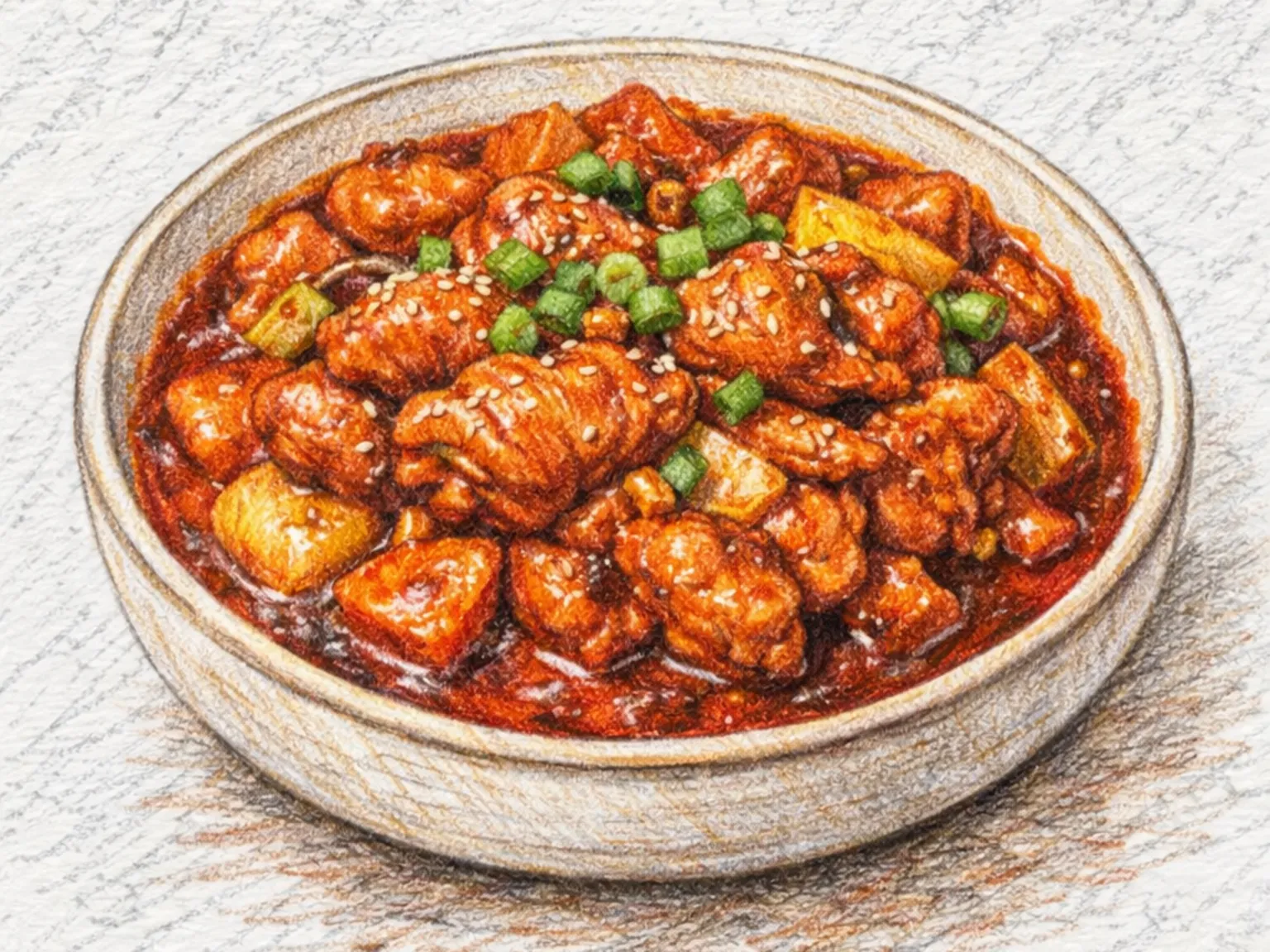
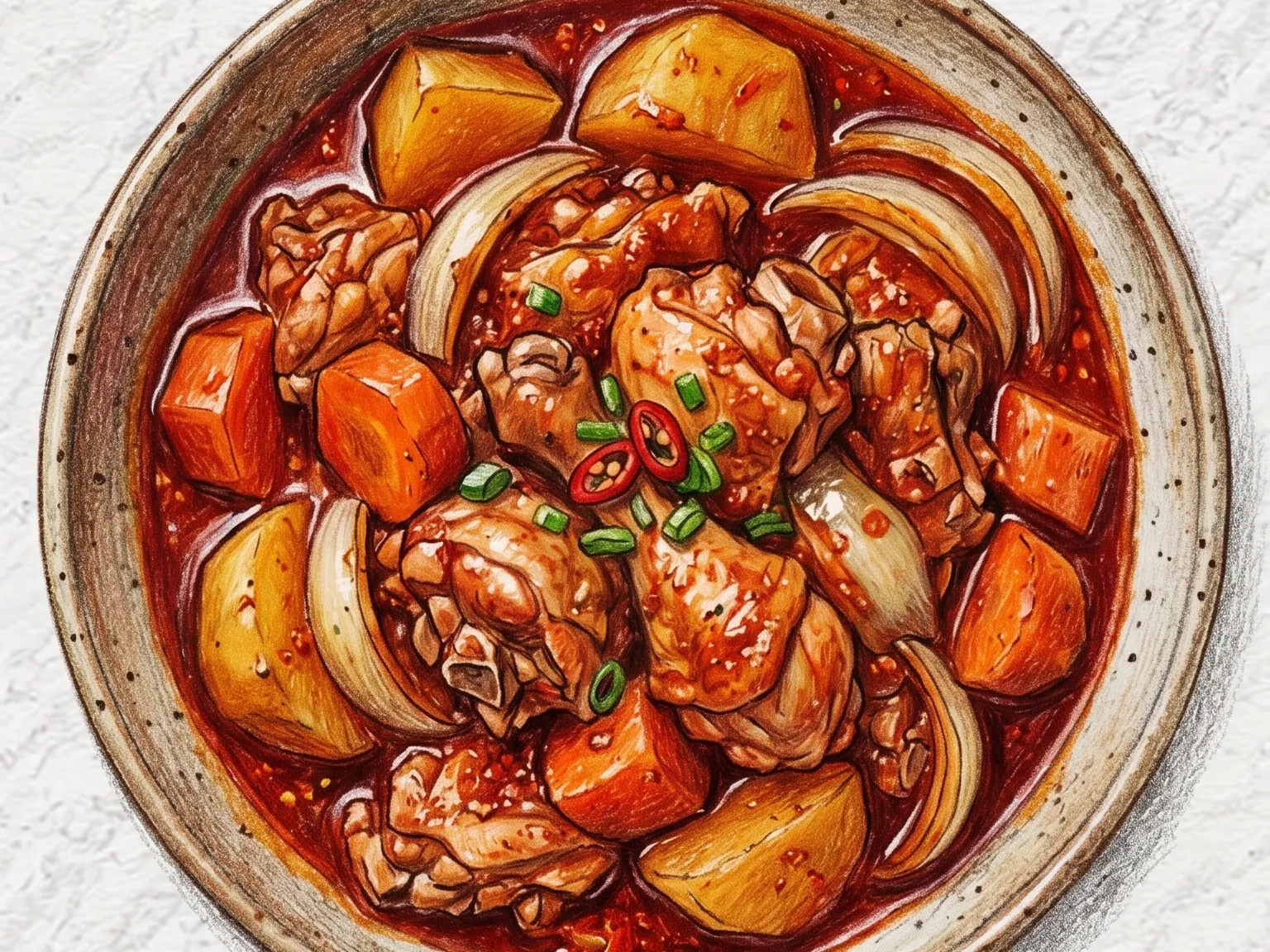
Andong jjimdak is said to have taken its modern form in Andong's old market during the 1980s, though soy-braised chicken has been a Gyeongsang Province tradition for far longer. Chicken pieces braise in a concentrated sauce of soy sauce, sugar, gochugaru, garlic, and ginger until the meat nearly separates from the bone. Glass noodles, dangmyeon, are added toward the end and absorb the braising liquid until they turn translucent and deeply stained with the sauce, becoming the most sought-after component. Potatoes and carrots provide bulk and sweetness, while dried red chilies and sliced cheongyang pepper build a layered heat that develops gradually. The finished dish arrives at the table in a wide, shallow pot, every component coated in the reduced soy glaze. It became a nationwide phenomenon in the early 2000s and remains one of Korea's most popular communal dishes, typically shared between two or three people over steamed rice.

🏠 Everyday🎉 Special Occasion
Prep 25minCook 45min4 servings
Korean Coastal Herb Pickle
KimchiEasy

Korean Coastal Herb Pickle

Bangpungnamul jangajji is a Korean soy-pickled side dish made from coastal hog fennel, a spring herb with a distinctive fragrance and a mild bitterness. The pickling liquid is made by bringing soy sauce, water, vinegar, and sugar to a boil, then pouring it hot over the cleaned herb sealed in a jar. Garlic cloves and ginger slices added to the brine deepen the aromatic complexity over time. After about two days, the herb has absorbed enough of the soy-vinegar liquid to be flavorful, and the taste continues to develop over subsequent weeks. Stored under refrigeration, the pickle keeps for over a month. Its pungent, faintly bitter character stands out among milder side dishes and serves as a palate stimulant between bites of plainer food. The standard way to eat it is in small portions alongside rice.

🍱 Lunchbox
Prep 18minCook 10min4 servings
Korean Spicy Mixed Wheat Noodles
NoodlesEasy

Korean Spicy Mixed Wheat Noodles

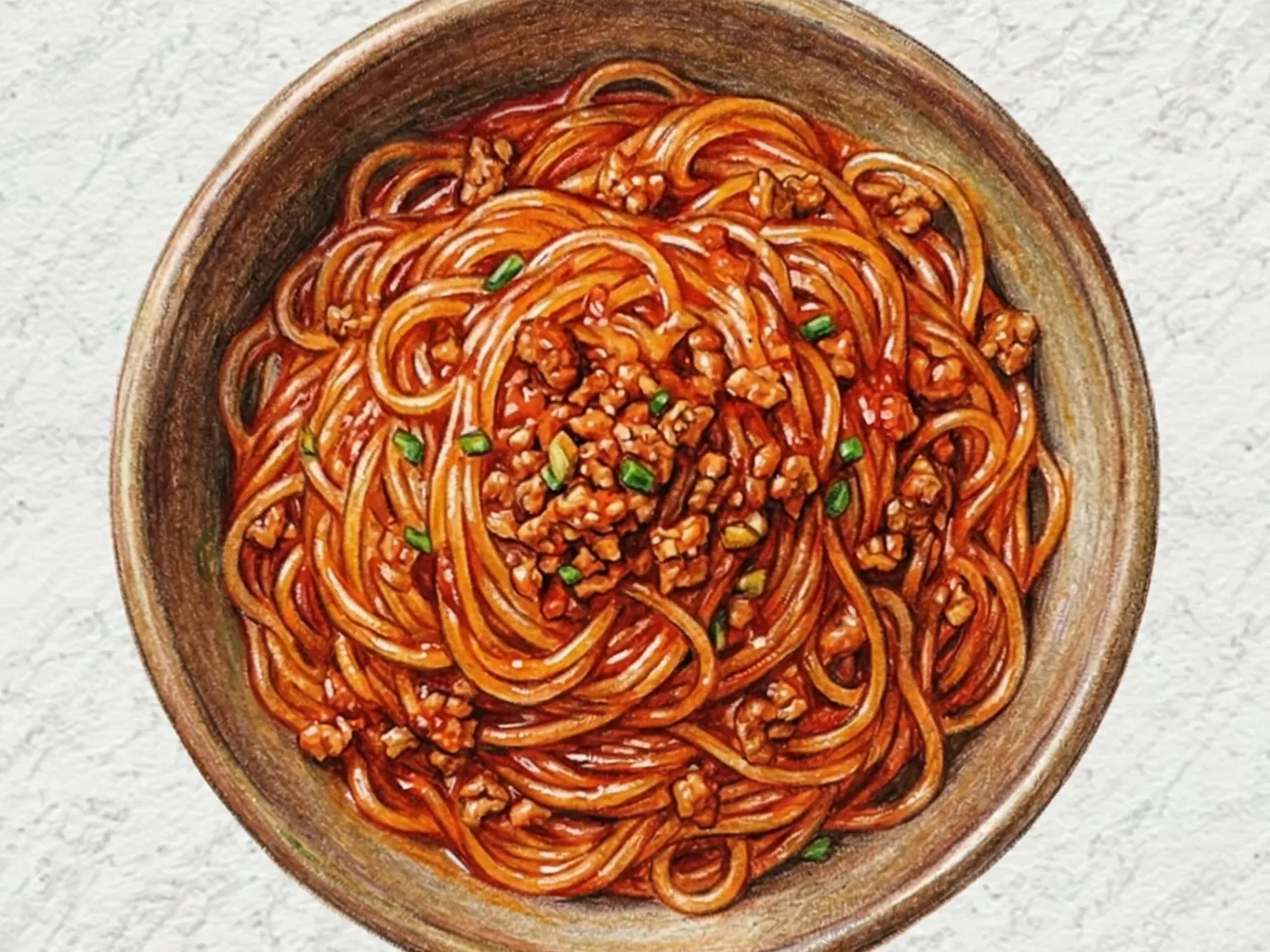
Bibim guksu is a chilled Korean noodle dish in which boiled and cold-rinsed somyeon wheat noodles are tossed in a sauce of gochujang, chili flakes, plum syrup, vinegar, soy sauce, and sesame oil. The heat from the gochujang, the sweetness of plum syrup, and the brightness of vinegar stack into a multi-dimensional flavor in every bite. Rinsing the noodles thoroughly in cold water removes excess starch, giving them a bouncy texture and allowing the sauce to cling evenly. Torn lettuce and julienned cucumber folded in at the end add crunch and release moisture that loosens the thick sauce just enough. A tablespoon of noodle cooking water can thin the sauce if needed. For 100 g of somyeon, a starting ratio of 1 tablespoon gochujang, 1 tablespoon plum syrup, and 1 teaspoon vinegar provides a reliable base to adjust from.

🏠 Everyday🌙 Late Night
Prep 15minCook 7min2 servings
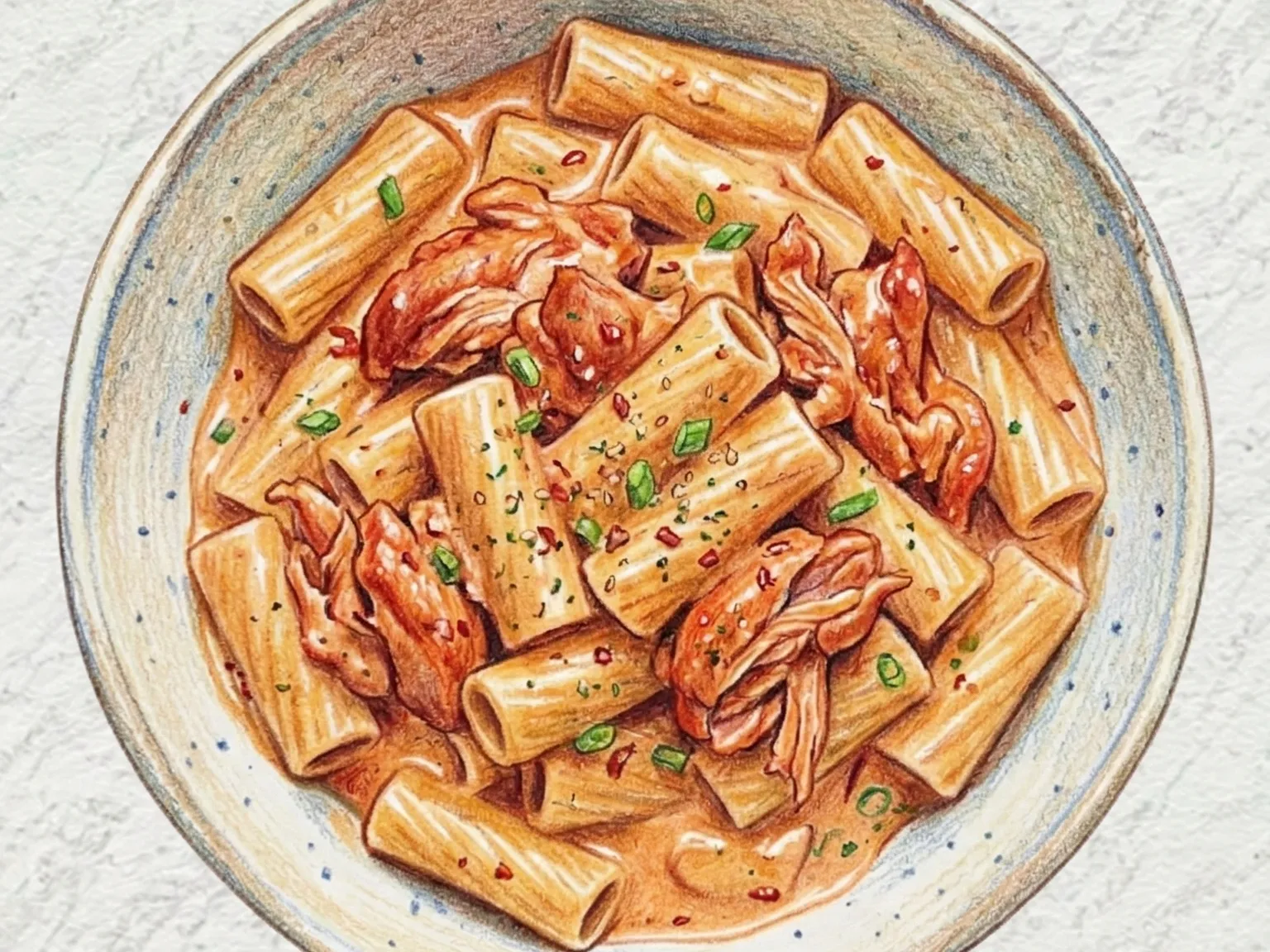
Dakgalbi Cream Rigatoni (Korean Spicy Chicken Gochujang Cream Pasta)
PastaMedium

Dakgalbi Cream Rigatoni (Korean Spicy Chicken Gochujang Cream Pasta)

Dakgalbi cream rigatoni is a Korean-Italian fusion pasta that starts by marinating boneless chicken thighs in a sauce of gochujang, soy sauce, gochugaru, and sugar for at least twenty minutes, then stir-frying them at high heat with cabbage and sweet potato to build the bold, sweet-spicy flavor profile of traditional dakgalbi before finishing with heavy cream. The marinating step is not optional: the spiced paste needs time to penetrate the meat rather than staying on the surface, and the longer the chicken soaks, the more intensely savory it becomes when it hits the pan. Cooking over high heat drives the moisture out of the cabbage quickly, concentrating its natural sweetness and keeping the texture from turning watery. Sweet potato should either be pre-cooked or sliced thin enough to cook through during the stir-fry stage without holding the process up. Once the heavy cream is poured over and the heat is reduced to low, the red marinade and cream emulsify together without breaking, producing a thick, blush-pink sauce that coats everything in the pan. Rigatoni's short, wide hollow tubes are the ideal pasta shape for this preparation: the dense cream sauce fills the interior of each tube completely, so every bite delivers both the bold heat of the dakgalbi and the smooth richness of the cream together.

🎉 Special Occasion🧒 Kid-Friendly
Prep 20minCook 25min4 servings
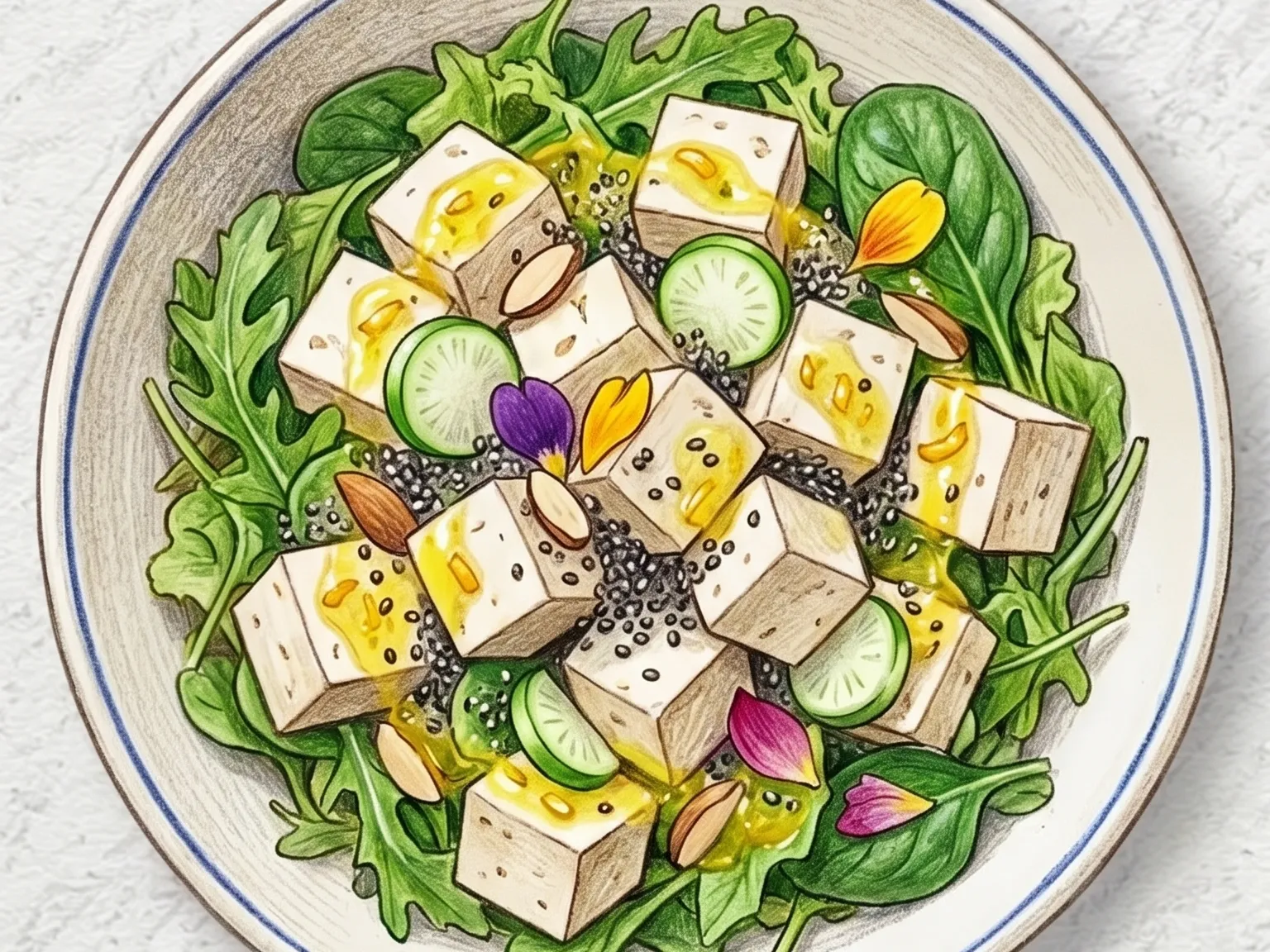
Dotori-Muk Vegetable Salad (Acorn Jelly Salad)
SaladsEasy

Dotori-Muk Vegetable Salad (Acorn Jelly Salad)

Dotori-muk (acorn jelly) is cut into bite-sized blocks and served with fresh lettuce, cucumber, and perilla leaves in this Korean salad. The jelly's smooth, firm texture creates a distinct contrast against the crunchy vegetables, while scallion lifts the overall aroma. A seasoning sauce of soy sauce, vinegar, gochugaru, and sesame oil gives the mild-flavored jelly a salty-tangy kick. Acorn jelly is notably low in calories and high in dietary fiber, and the tannins from acorn starch are traditionally believed to support digestion. The sesame oil and gochugaru in the dressing add a glossy richness and depth that transforms the otherwise neutral jelly into a cohesive, satisfying dish. Served chilled during summer, it works equally well as a light banchan when appetite runs low or as a refreshing standalone bowl.

🥗 Light & Healthy Quick
Prep 15min4 servings
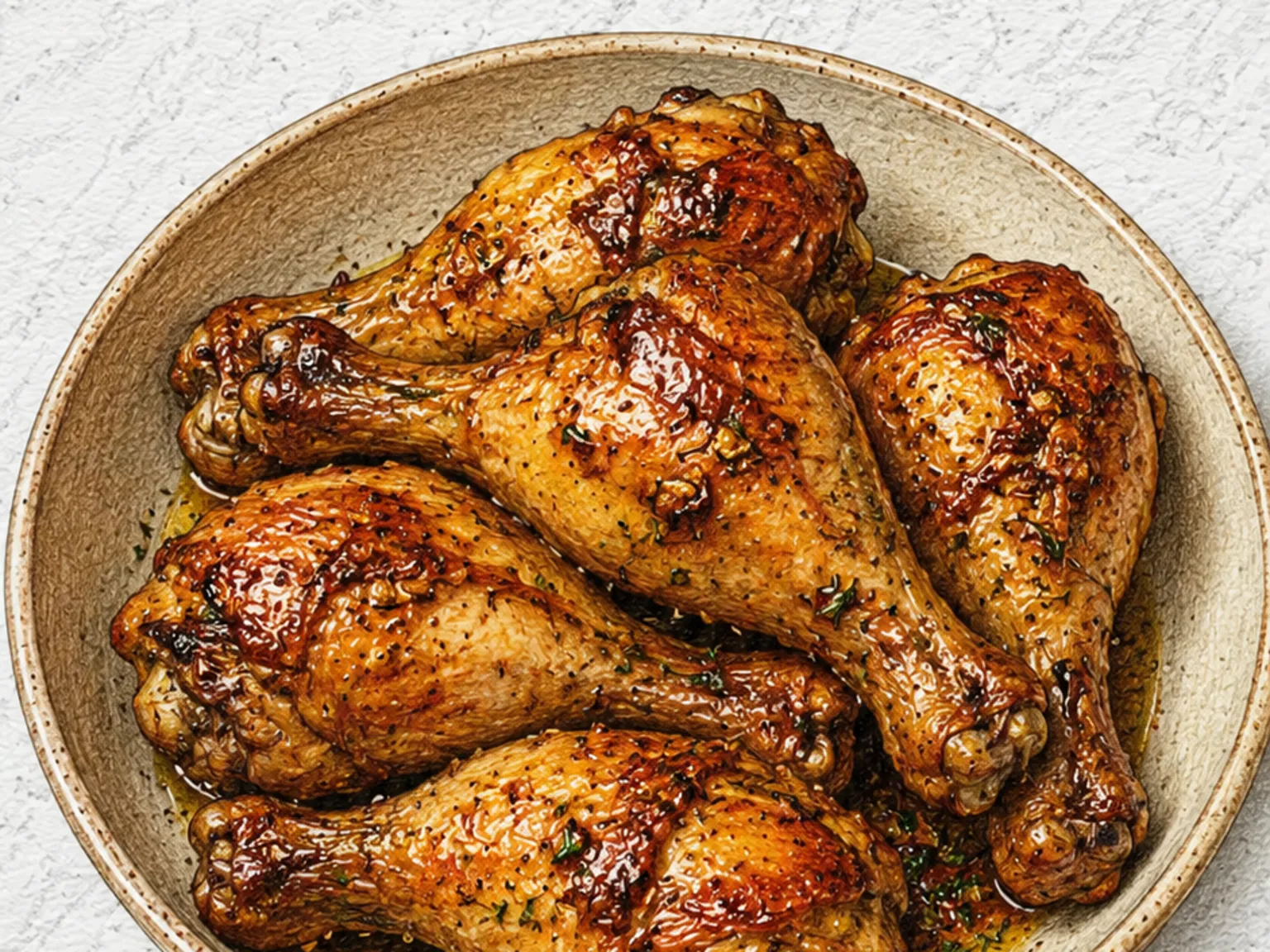
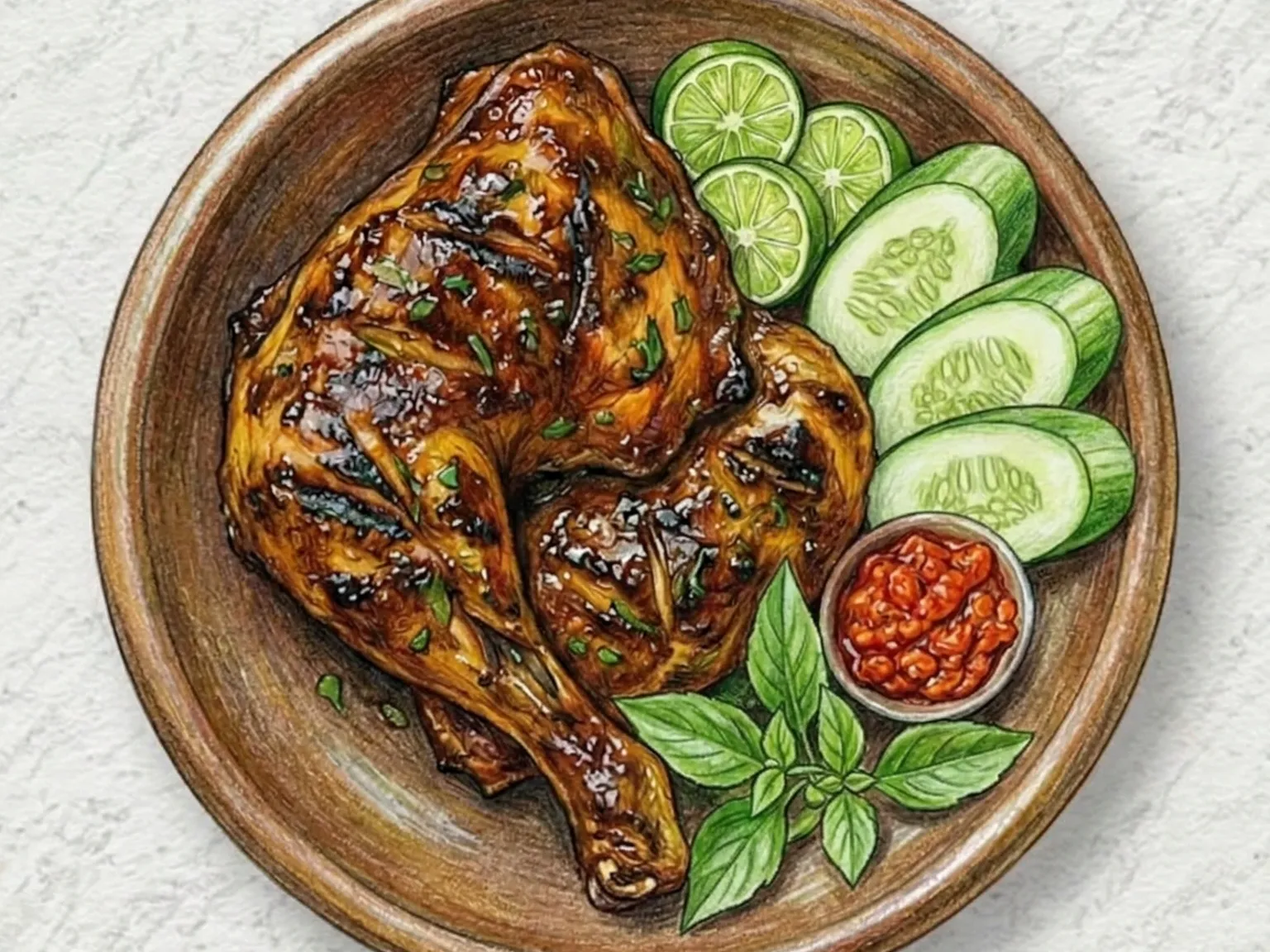
Ayam Bakar (Indonesian Grilled Chicken in Sweet Soy Marinade)
AsianMedium

Ayam Bakar (Indonesian Grilled Chicken in Sweet Soy Marinade)

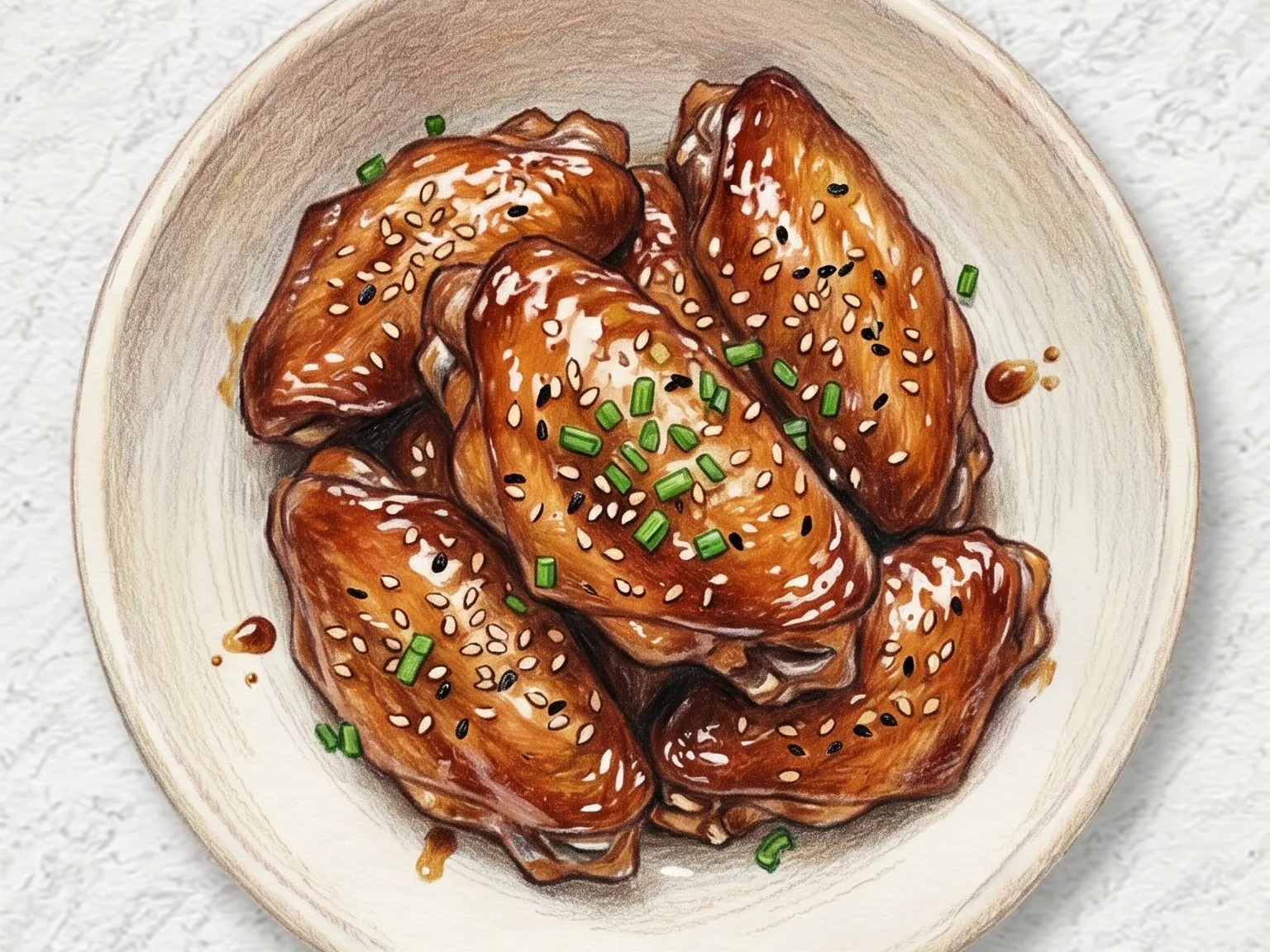
Ayam bakar means 'roasted chicken' in Malay-Indonesian and is a staple street food across Java, Sumatra, and Bali, where roadside warungs grill it over coconut-shell charcoal. The preparation follows a two-stage method: the chicken first simmers in a marinade of kecap manis (sweet soy sauce), garlic, ground coriander, turmeric, and lime juice until partially cooked and deeply colored throughout. The pre-cooked pieces then move to a very hot grill where the sugar-heavy glaze caramelizes rapidly, forming dark, lacquered patches with a faint char at the edges. This two-step approach ensures the meat stays moist under the intense grill heat while the exterior achieves maximum caramelization. The surface is sticky-sweet, with turmeric's earthiness and coriander's citrusy warmth detectable beneath. Served alongside steamed white rice, raw cucumber slices, and sambal, the dish relies on the sharp chili heat of the sauce and the cool cucumber to balance the sweetness of the glaze. The smoke from coconut-shell charcoal is considered part of the flavor, though a gas or charcoal grill at home produces an acceptable result.

🎉 Special Occasion
Prep 25minCook 30min4 servings
Korean Mushroom Japchae (Shiitake Glass Noodle Stir-Fry)
Side dishesMedium

Korean Mushroom Japchae (Shiitake Glass Noodle Stir-Fry)

Beoseot japchae replaces beef with shiitake mushrooms as the primary source of savory depth, making it a staple of Buddhist temple cuisine and vegetarian tables alike. Sweet potato noodles are soaked and boiled, then rinsed in cold water immediately to lock in a firm, springy texture. Shiitake, spinach, carrot, and onion are each cooked separately - their moisture levels and heat tolerances differ enough that combining them prematurely flattens every component. Soy sauce, sugar, minced garlic, and sesame oil bring the noodles and vegetables together, and the finished dish rests for ten minutes so the seasoning penetrates the noodles evenly. The result is a japchae where the mushroom carries genuine umami weight without any meat.

🏠 Everyday🎉 Special Occasion
Prep 20minCook 15min4 servings
Korean Bossam Kimchi Rice Bowl
RiceMedium

Korean Bossam Kimchi Rice Bowl

Bossam kimchi deopbap repurposes leftover bossam by stir-frying boiled pork and well-fermented bossam kimchi with onion in a gochujang sauce and ladling everything over a bowl of hot rice. The boiled pork picks up a concentrated savoriness from the gochujang glaze as it fries, and the moisture from the fermented kimchi cooks off during stir-frying, intensifying the tangy-spicy sauce into a dense coating. The acidity of mature kimchi and the heat of gochujang cut through the fat of the pork, keeping each spoonful from becoming heavy. Meat and kimchi together in one bowl means no side dishes are needed to complete the meal. A fried egg on top adds richness and tempers the heat of the seasoning.

🏠 Everyday
Prep 15minCook 20min2 servings
Korean Napa Cabbage Shrimp Stir-fry
Stir-fryEasy

Korean Napa Cabbage Shrimp Stir-fry

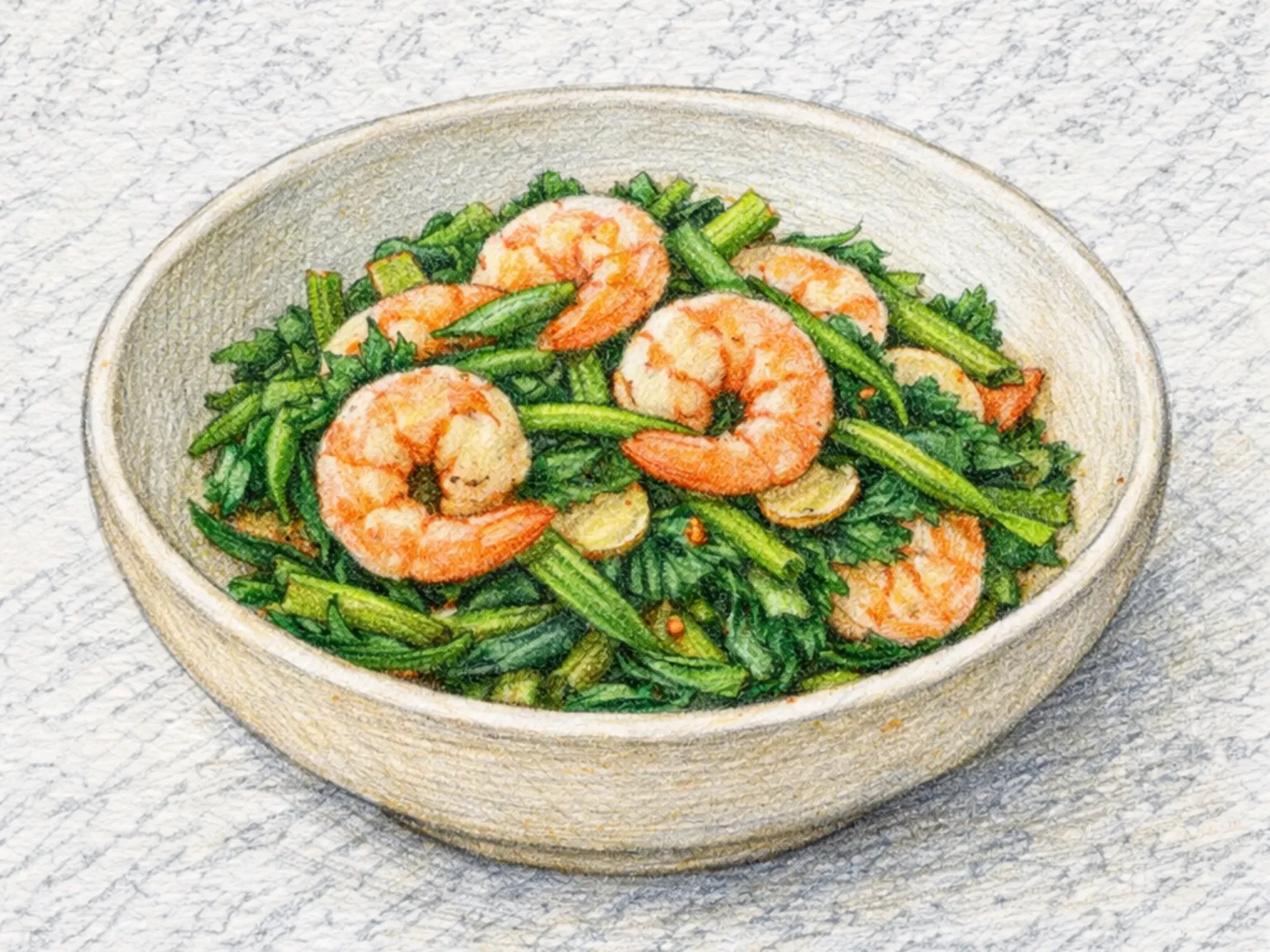
Baechu saeu bokkeum is a Korean stir-fry of napa cabbage and medium shrimp seasoned with soy sauce and fish sauce. The shrimp are deveined and scored along the back so they curl attractively and absorb seasoning more readily. They go into a hot oiled pan first for thirty seconds to sear the surface, then are removed while the cabbage stems are stir-fried until slightly wilted. Soy sauce, fish sauce, and minced garlic are added along with the cabbage leaves, and the shrimp return to the pan for a final thirty-second toss so everything seasons evenly. Sliced cheongyang chili and scallion go in last for a hit of heat and freshness. The entire stir-fry stays under three to four minutes of active cooking, which preserves the crunch of the cabbage stems and the firm bite of the shrimp. The combination of soy sauce and fish sauce provides a layered saltiness that brings out the natural sweetness of both the cabbage and the shrimp.

🏠 Everyday🍱 Lunchbox
Prep 14minCook 8min2 servings
Korean Beoteo Ojingeo Gui (Butter Grilled Squid)
Street foodEasy

Korean Beoteo Ojingeo Gui (Butter Grilled Squid)

Butter ojingeo gui is a Korean street snack of semi-dried squid scored with shallow cuts, seared in butter on a flat iron griddle, then coated in a glaze of soy sauce, oligosaccharide syrup, and gochugaru. Semi-dried squid has less moisture than fresh and a more concentrated chew, which means it develops a toasty crust from the butter quickly without steaming through. The scoring allows the glaze to penetrate into the flesh rather than sitting only on the surface. Over high heat, the soy-and-syrup mixture caramelizes fast, coating the squid in a glossy, sweet-salty lacquer. Gochugaru adds a round, lingering heat at the finish. A scatter of sesame seeds goes on last, releasing a nutty aroma with each bite. The combination of butter richness, soy glaze, and chile heat has made this one of the most recognizable items at Korean pojangmacha stalls.

🧒 Kid-Friendly🌙 Late Night
Prep 10minCook 12min2 servings
Sweet Rice Honey Muffins
DessertsMedium

Sweet Rice Honey Muffins

Yakbap muffins bake soaked glutinous rice that has been marinated for 20 minutes in a seasoning of soy sauce, dark brown sugar, honey, and sesame oil, then portioned into muffin cups with sliced jujubes and diced chestnuts before going into a 180-degree oven. The soy sauce provides a savory depth that folds into the brown sugar and honey to produce the dark, caramel-like sweetness that distinguishes traditional yakbap, while sesame oil amplifies the grain aroma throughout. Jujubes are sliced thin so their juices seep between the rice grains during baking, and the chestnut cubes provide a starchy, crumbly resistance against the sticky glutinous rice. Pine nuts placed on top release their oils as they roast, filling the oven with a nutty fragrance that deepens as the muffins brown. A 10-minute rest after removing them from the oven allows the residual heat to distribute evenly, so the glutinous rice firms into a clean shape that separates easily from the mold. The recipe reinterprets traditional yakshik as individual servings suited to a modern table.

🧒 Kid-Friendly
Prep 25minCook 30min4 servings
Korean Crispy Potato Pancake
DrinksEasy

Korean Crispy Potato Pancake

Gamja-jeon is a Korean potato pancake made by finely grating raw potatoes, letting the starch settle out of the liquid for at least ten minutes, discarding the water, and folding the settled starch back into the pulp to improve binding. Waiting long enough for full starch separation is what gives the batter enough cohesion to hold together when the pancake hits the hot pan. Spreading the batter as thinly as possible produces glass-crisp edges while the center retains a chewy, starchy bite characteristic of potato starch. The first side must cook all the way through and the underside must firm up completely before any attempt to flip, and using two spatulas simultaneously makes the turn fast enough to keep the pancake intact. Frying both sides over medium heat until evenly golden delivers a crust that is crisp on the outside while the center stays moist. A dipping sauce of soy sauce, vinegar, and minced cheongyang green chili cuts through the oily richness with sharpness and heat.

🍺 Bar Snacks
Prep 15minCook 12min2 servings
Korean Chive and Beef Jeon
GrilledMedium

Korean Chive and Beef Jeon

Buchu-soegogi-jeon are Korean chive and beef patties made from ground beef, pressed firm tofu, finely chopped garlic chives, and onion seasoned with soy sauce, garlic, and sesame oil, shaped into small ovals, dipped in beaten egg, and pan-fried for three minutes per side. Squeezing every drop of moisture from the tofu before mixing is the critical step - it prevents the patties from falling apart on the pan while contributing a soft texture that tempers the density of the beef. The egg coating sets into a thin golden crust on the outside, while the interior stays moist and fragrant with seared chive and beef. These are a standard on Korean holiday tables and guest spreads: one-bite sized, easy to pick up, and the soy-garlic-sesame seasoning holds its flavor without degrading as the patties cool.

🍺 Bar Snacks🎉 Special Occasion
Prep 20minCook 12min4 servings
Korean Flounder Seaweed Soup
SoupsEasy

Korean Flounder Seaweed Soup

Gajami miyeok-guk is a seaweed soup built around a whole flounder simmered directly in the pot. Rehydrated miyeok is stir-fried in sesame oil before the liquid is added, a step that transforms the raw seaweed fragrance into something richer and more rounded. Once the flounder is added and the pot comes to a simmer, the mild, subtly sweet flesh of the white fish slowly infuses the broth, while the collagen released from the bones gives the soup a quiet viscosity and depth that water alone cannot produce. Soy sauce and garlic are the only seasonings needed, allowing the natural flavor of the fish and seaweed to carry the soup without interference. Blanching the flounder briefly in boiling water before adding it to the pot draws out blood and removes any trace of fishiness, resulting in a cleaner, more delicate broth. Along the East Sea coast, gajami miyeok-guk has traditionally been served as postpartum recovery food in place of the more common beef seaweed soup, valued for its lightness, digestibility, and the clean nourishment provided by the fish broth.

🏠 Everyday
Prep 20minCook 20min2 servings
Korean Lotus Root Beef Pancake
PancakesMedium

Korean Lotus Root Beef Pancake

Sliced lotus root is sandwiched with seasoned ground beef, coated in pancake batter and egg, then pan-fried until golden. The lotus root keeps its crunch even after cooking, so the texture contrast with the soft beef filling is distinct in every bite. Soy sauce and minced garlic season the filling so the jeon is fully flavored on its own without a dipping sauce. Chopped green onion is worked into the beef for a fresh aromatic note. The lotus root hole pattern fills with meat during assembly, making each cross-section visually clean and precise. The egg coating browns smoothly around the outside, giving a tender rather than crisp exterior.

🍺 Bar Snacks🍱 Lunchbox
Prep 25minCook 18min4 servings
Korean Beef and Octopus Hot Pot
StewsHard

Korean Beef and Octopus Hot Pot

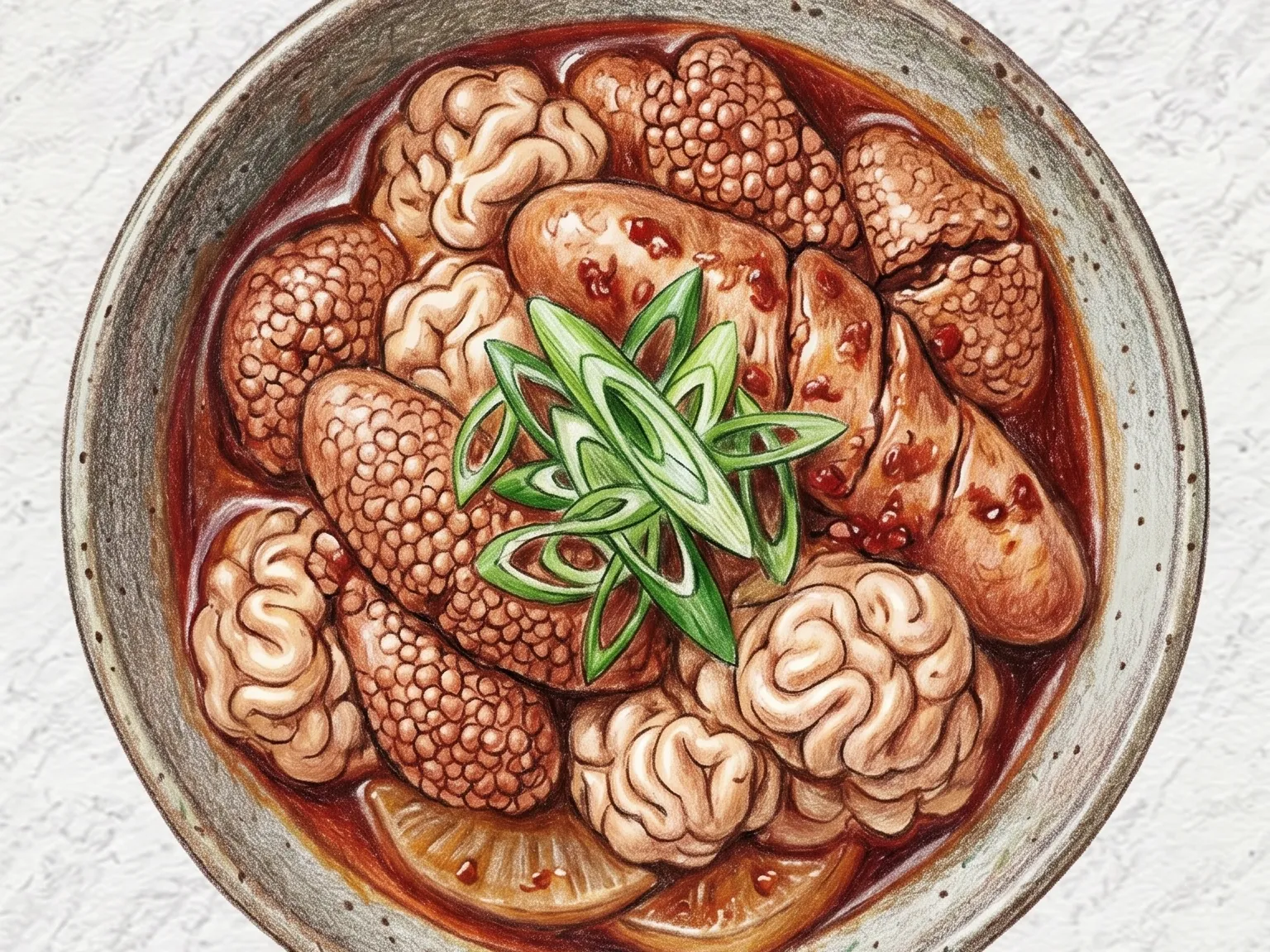
Bulnak jeongol is a hot pot made by simmering sliced beef chadolbaegi and fresh octopus together in an anchovy-kelp broth. The beef enriches the stock with a meaty depth while the fat renders out and emulsifies into the broth, and the octopus adds a firm, springy chew that holds up through the heat. Napa cabbage and water dropwort lighten the pot with fresh, slightly bitter vegetal notes, keeping the heavily flavored broth from becoming too rich. The seasoning stays restrained with soy sauce and garlic so the natural taste of each ingredient carries. Octopus should be added last so it does not toughen; the legs curling and turning a vivid red-orange is the sign that it is properly cooked. Cracking a raw egg into the simmering broth near the end adds a mild, creamy element that rounds out the intense savory notes.

🏠 Everyday🎉 Special Occasion
Prep 30minCook 20min4 servings
Korean Steamed Napa Cabbage Rolls
SteamedMedium

Korean Steamed Napa Cabbage Rolls

Baechu jjim consists of blanched napa cabbage leaves wrapped tightly around a filling of minced pork and mashed tofu, then steamed until fully cooked through. The filling uses pork and tofu at a 2:1 ratio, seasoned with soy sauce, sesame oil, and minced garlic, then kneaded until the mixture develops enough cohesion to stay intact during steaming. Tofu serves a functional purpose here beyond flavor - its moisture content prevents the pork from drying out over the extended steaming time, while the pork fat renders slowly into the surrounding cabbage leaf, adding richness to every bite. The cabbage leaves are blanched for thirty seconds to soften the stems, then squeezed dry and rolled from the stem end toward the tip with the filling placed at the base. In the steamer, rolls are arranged seam-side down so they hold their shape without any fastening, and cooked over vigorous steam for twelve to fifteen minutes. During this time, the meat juices work their way outward into the cabbage. The natural sweetness of napa cabbage - more pronounced after blanching - envelops the savory filling without sharpness, producing a mellow, layered result. A soy-based dipping sauce adds the saltiness needed to anchor the dish as a proper rice accompaniment, and leftovers reheat well without significant textural loss.

🏠 Everyday🎉 Special Occasion
Prep 30minCook 22min4 servings
Korean Soy Pickled Beet (Vinegar Soy Brine Jangajji)
KimchiEasy

Korean Soy Pickled Beet (Vinegar Soy Brine Jangajji)

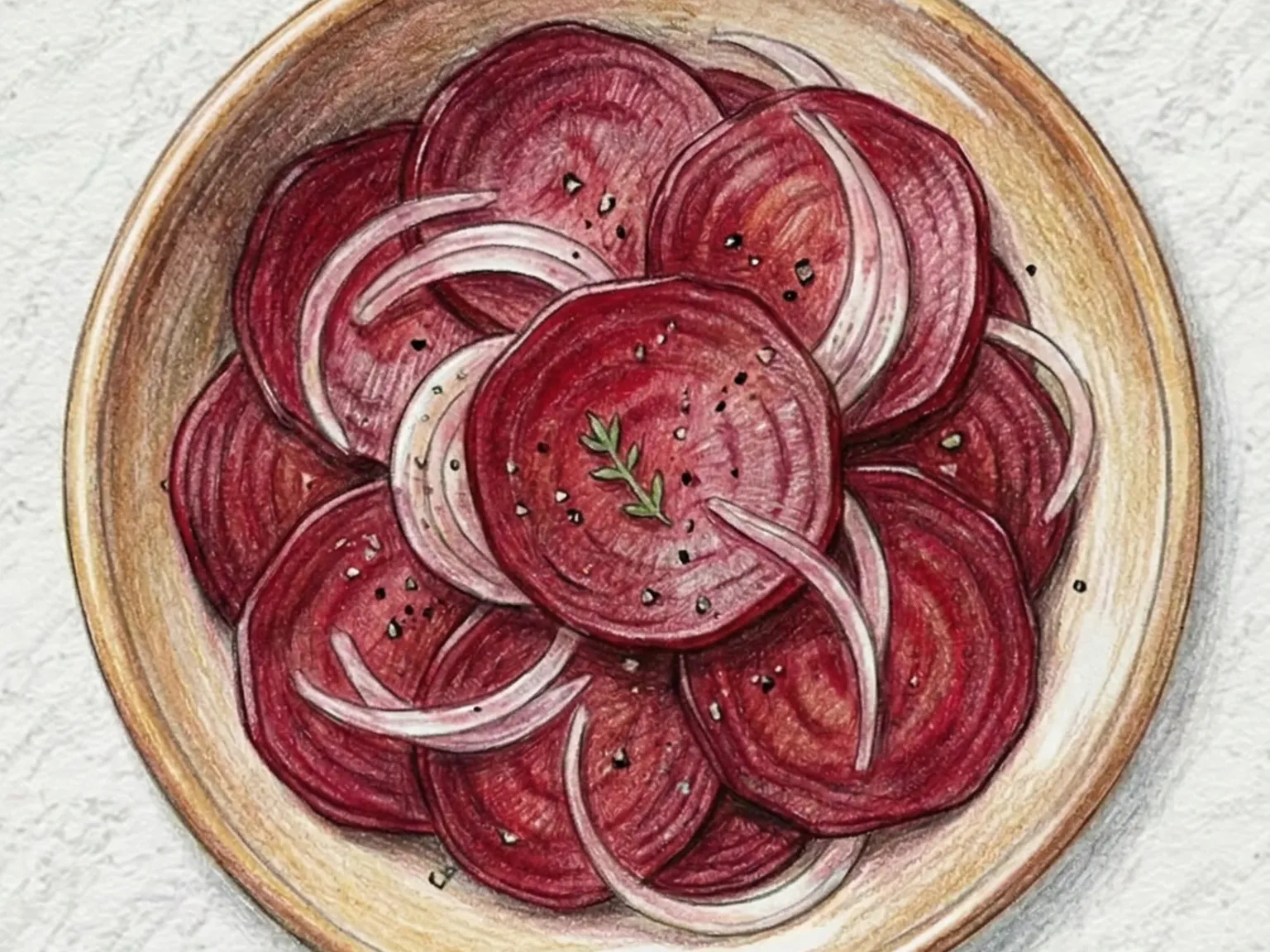
Beet jangajji is a Korean soy-pickled beet prepared by slicing beets thin and submerging them in a cooled brine of soy sauce, vinegar, and sugar. The vinegar cuts through the beet's earthy undertone, leaving a clean sweetness sharpened by acidity, and onion adds a mellow depth to the pickling liquid. As the brine cools, the beet's vivid red pigment bleeds into the liquid, creating a visually striking jar that stands out on the table. After at least a day of pickling, the flavor penetrates fully, producing a crisp, refreshing side dish suited to rice or grilled meats. Julienned beets pickle faster and are ready within a day, while thicker slices need two days or more for the brine to reach the center. Stored in the refrigerator, the pickles keep well for over two weeks, making a large batch practical.

🍱 Lunchbox
Prep 20minCook 10min2 servings
Korean Spicy Mixed Glass Noodles
NoodlesEasy

Korean Spicy Mixed Glass Noodles

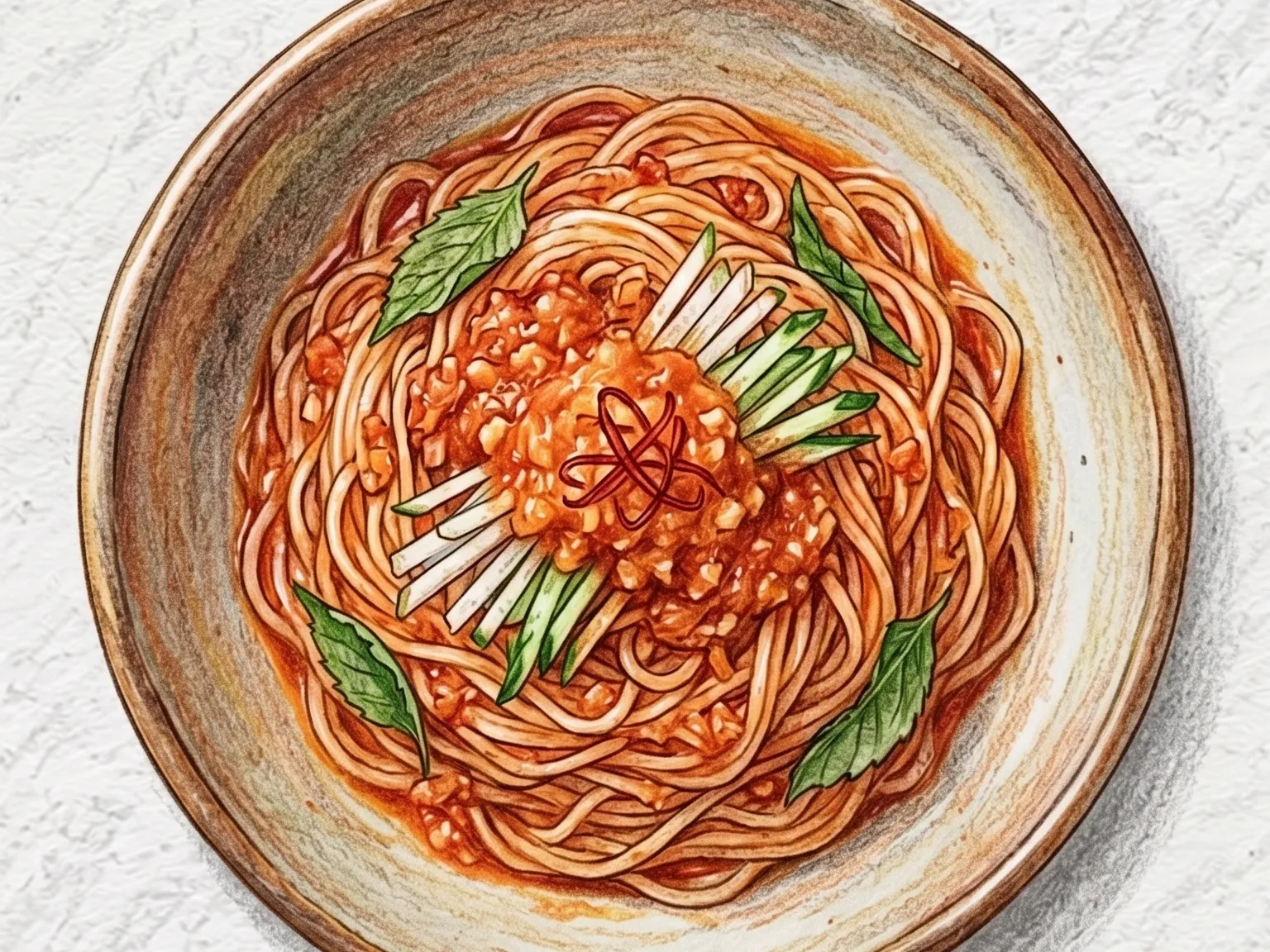
Busan bibim dangmyeon is a spicy mixed noodle dish rooted in the street food culture of Busan's traditional markets, built around springy sweet-potato glass noodles tossed with sliced fish cake, cucumber, and cabbage in a bold chili paste and soy sauce dressing. The translucent noodles are highly elastic and cling tenaciously to the sauce, so each mouthful delivers a concentrated hit of the spicy-sweet seasoning. Fish cake contributes a soft, savory depth that contrasts with the firm chew of the noodles, while shredded cucumber and cabbage add bursts of crunch throughout the bowl. Sesame oil and toasted sesame seeds finish the dish with a warm, nutty undertone. Because the recipe requires only boiling the noodles and tossing everything with a pre-mixed sauce, it comes together in a matter of minutes. The chili paste ratio can be adjusted freely to control heat level, and in Busan the dish is typically served in a single bowl and mixed at the table with a fork.

🏠 Everyday🌙 Late Night
Prep 20minCook 10min2 servings