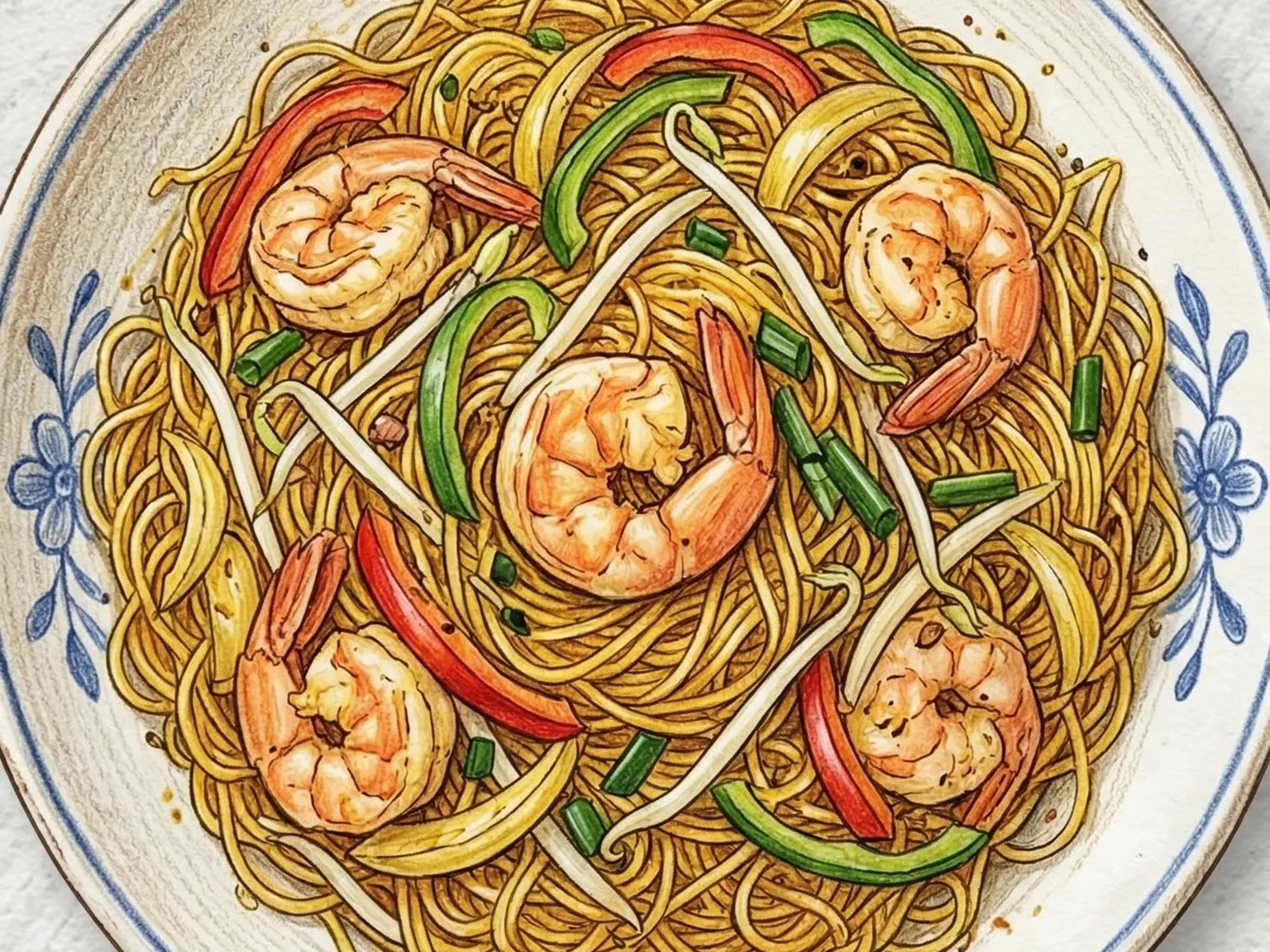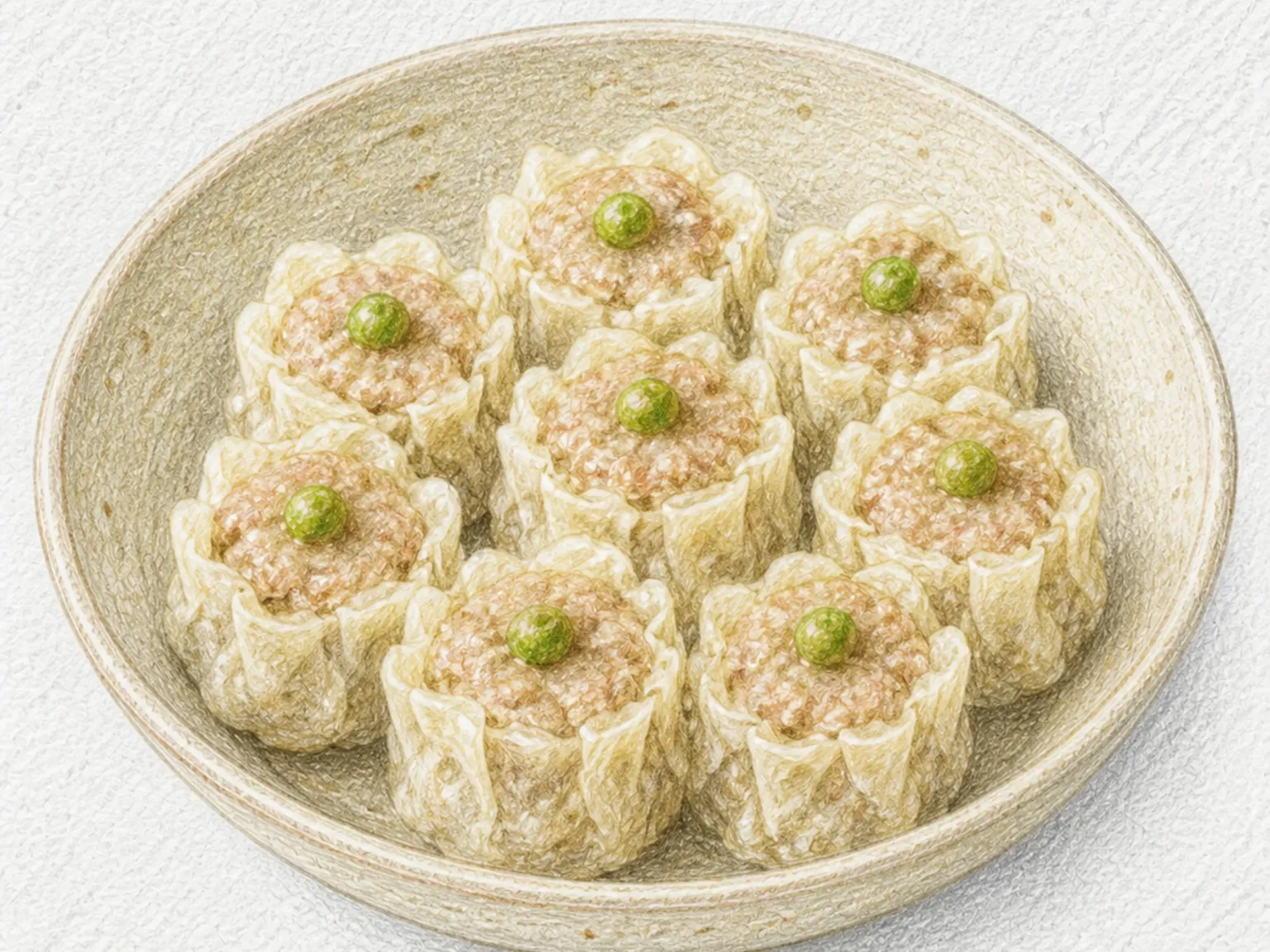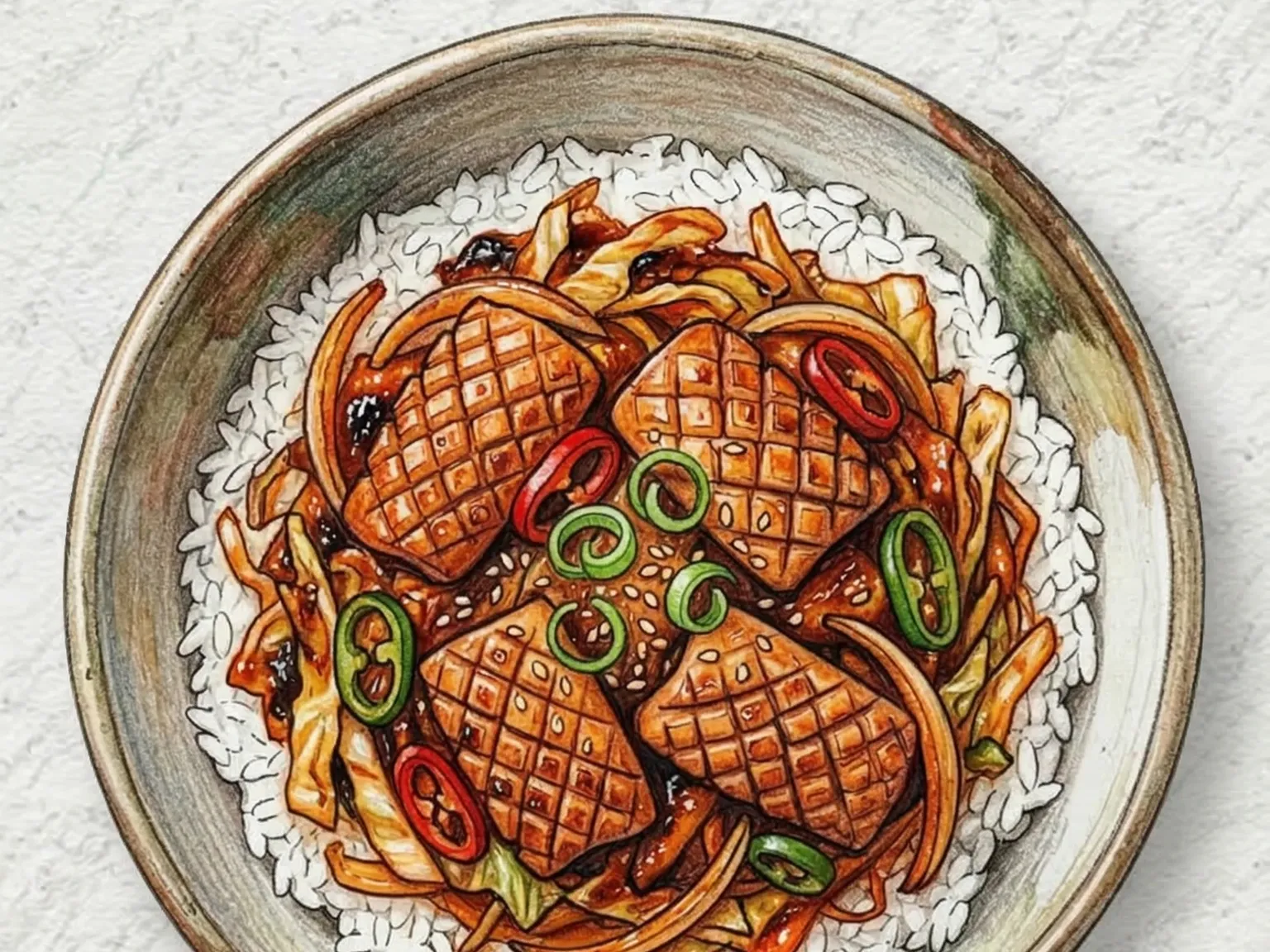
Chamchi Mayo Deopbap (Korean Tuna Mayo Rice Bowl Recipe)
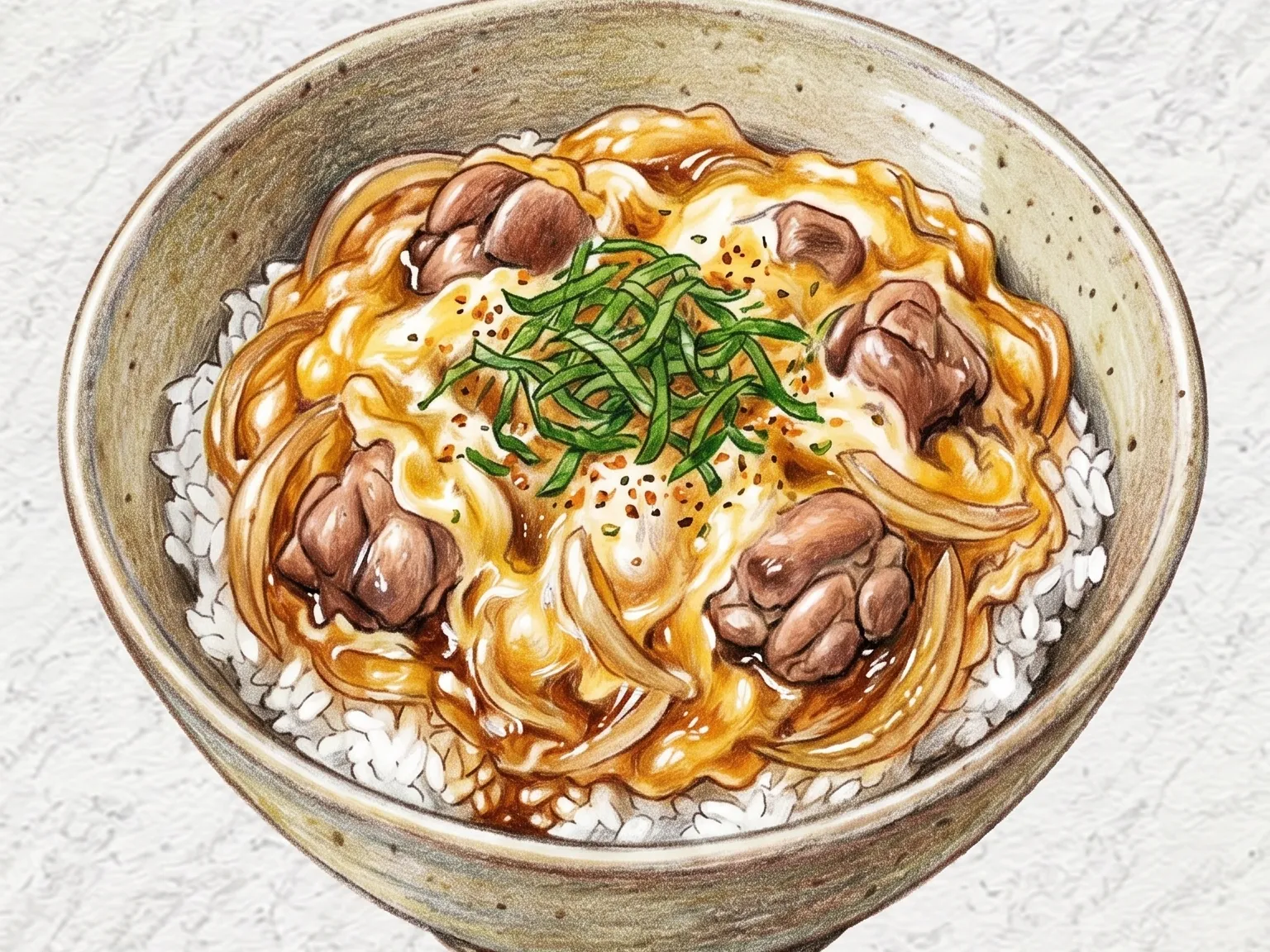
Chamchi mayo deopbap is a no-cook Korean rice bowl where drained canned tuna is tossed with mayonnaise and spooned over warm rice, then finished with soy sauce, sesame oil, and crumbled dried seaweed. The warmth of the rice softens the mayo coat so it clings to every grain rather than pooling at the base. Crumbled seaweed provides a layer of crunch alongside its salt. Nothing needs cooking - just mixing and assembling - which makes this one of the fastest meals to put together, ready in under five minutes on days when standing at the stove feels unappealing. Soy sauce deepens the salt past what the tuna alone provides, and sesame oil keeps the bowl from tasting flat. Canned tuna and mayonnaise are staples in most Korean kitchens, making this a genuinely practical fallback meal.

Korean Beef Gimbap (Soy-Marinated Beef Seaweed Rice Roll)
Sogogi-gimbap is a Korean seaweed rice roll featuring beef marinated in soy sauce and sugar, then stir-fried. The sweet-savory beef is rolled alongside sesame-seasoned rice, blanched spinach, sauteed carrots, and thin egg omelet strips inside a sheet of gim. The soy marinade from the beef seeps slightly into the rice, distributing flavor evenly through each cross-section slice. Thinly cut against the grain, the beef stays tender when bitten, while the spinach and carrot provide crisp texture and vegetable sweetness to balance the richness.

Korean Thistle and Mackerel Pot Rice
Gondre mackerel sotbap begins by stir-frying thinly sliced radish in sesame oil to build a savory base, then soaked rice and squeezed gondre thistle greens are added before a mackerel fillet marinated in cooking wine and ginger juice is placed skin-side up on top. The pot is covered and cooked over low heat for fourteen minutes, followed by five minutes of resting off the heat. During that resting period, the earthy, slightly smoky aroma of gondre and the concentrated umami of the mackerel seep into each grain of rice without further stirring. Keeping the fish skin-side up protects the flesh from breaking apart during cooking and prevents the pot from becoming cloudy with loose pieces. The radish layer at the bottom absorbs moisture and guards against sticking while contributing its own mild sweetness to the rice underneath. Before eating, a drizzle of soy sauce is poured over the opened pot and the contents are tossed together lightly, bringing the mountain-foraged greens and the sea fish into a unified, quietly complex bowl. The scorched rice crust that forms on the bottom of the pot is steeped in hot water to make nurungji tea.

Korean Perilla Leaf Tofu Stir-fry
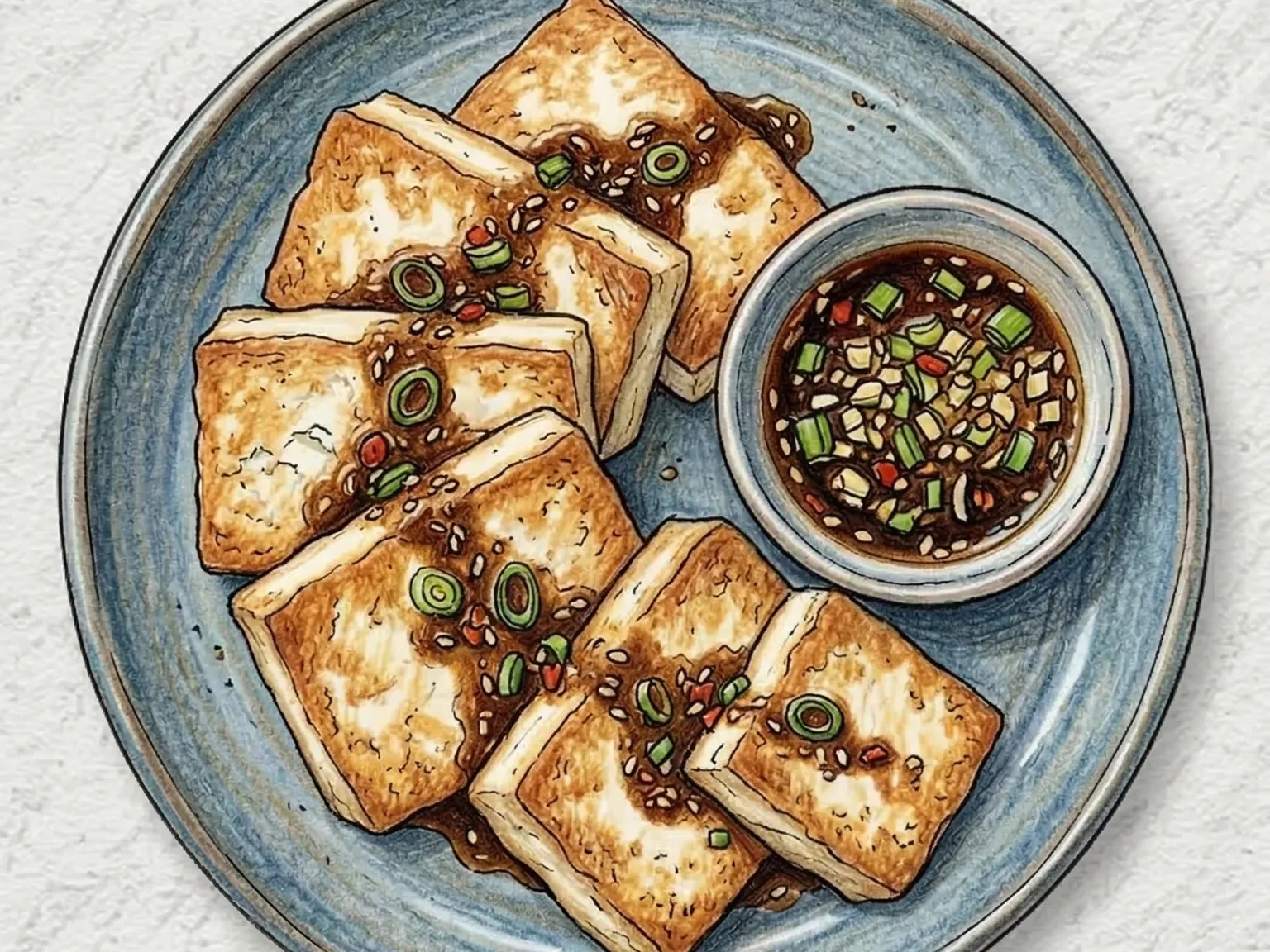
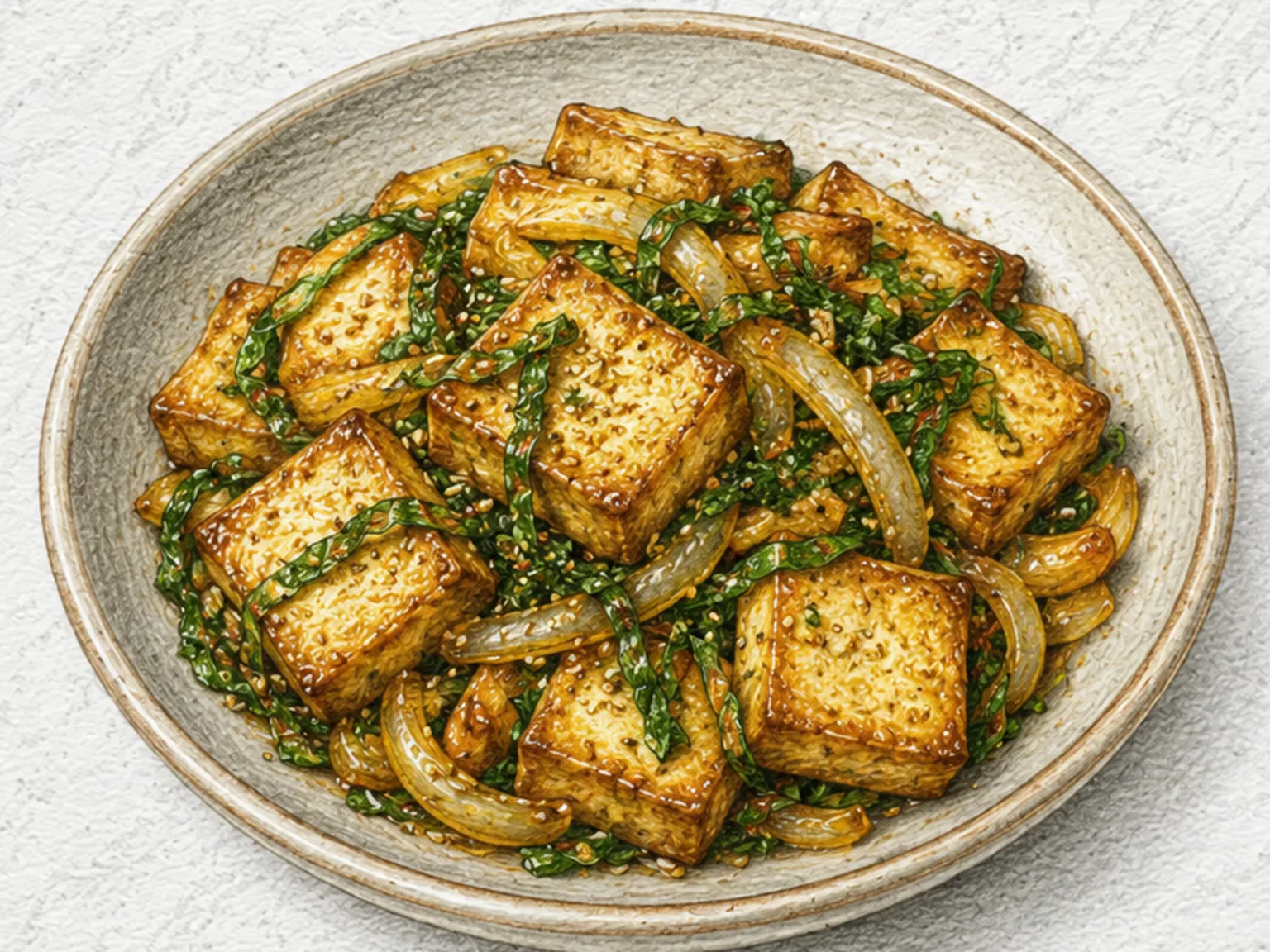
Kkaennip dubu bokkeum is a side dish of firm tofu cubes pan-fried until golden, then seasoned with soy sauce, onion, and garlic before being tossed with chiffonaded perilla leaves and ground perilla seeds at the end. The tofu develops a lightly crisp shell that absorbs the soy seasoning while the interior stays soft. Perilla leaves contribute a distinctive herbal fragrance, and the ground perilla seeds add a nutty depth that elevates the dish beyond a basic tofu stir-fry. A final touch of sesame oil brightens the aroma.

Korean Braised Beef and Burdock Steam
Ueong sogogi jjim is a Korean braised-and-steamed dish of beef shank and burdock root cooked together in a soy sauce, garlic, and sugar base with just enough liquid to surround the ingredients without submerging them. The shank is first simmered in plain water and skimmed of foam, which produces a clean, clear broth free of the off-flavors that surface during the initial boil. Soy seasoning is added to that broth, the beef cooks for another twenty minutes, and then burdock slices go in with the lid on for fifteen minutes of gentle steaming, during which the root vegetable draws in the beef-enriched liquid through its fibrous structure. Cutting the burdock at a bias to a thickness of roughly 0.5 centimeters keeps its characteristic snap while ensuring the interior cooks through within the target time. The dish is finished when the braising liquid reduces to about half its volume, at which point sesame oil and whole sesame seeds are added to round out the flavor with a nutty finish. The final dish balances the deep, heavy richness of slow-cooked beef shank against the clean, aromatic earthiness that burdock root brings to the plate.

Korean Seasoned Spinach (Garlic Sesame Oil Blanched Namul)
Sigeumchi-namul blanches 300 grams of spinach in salted boiling water for exactly 30 seconds - any longer and the leaves turn mushy. An immediate rinse in cold water stops the cooking and locks in the bright green color. After squeezing out as much water as possible, the spinach is cut into 5-centimeter lengths and dressed by hand with minced garlic, soy sauce, sesame oil, and a pinch of salt. Mixing by hand rather than with utensils ensures the seasoning reaches every fold and crevice of the wilted leaves. Sesame seeds finish the dish with a light crunch, and the result is a clean, nutty-flavored namul that appears on nearly every Korean home-cooked table.

Korean Soy-Glazed Grilled Lotus Root
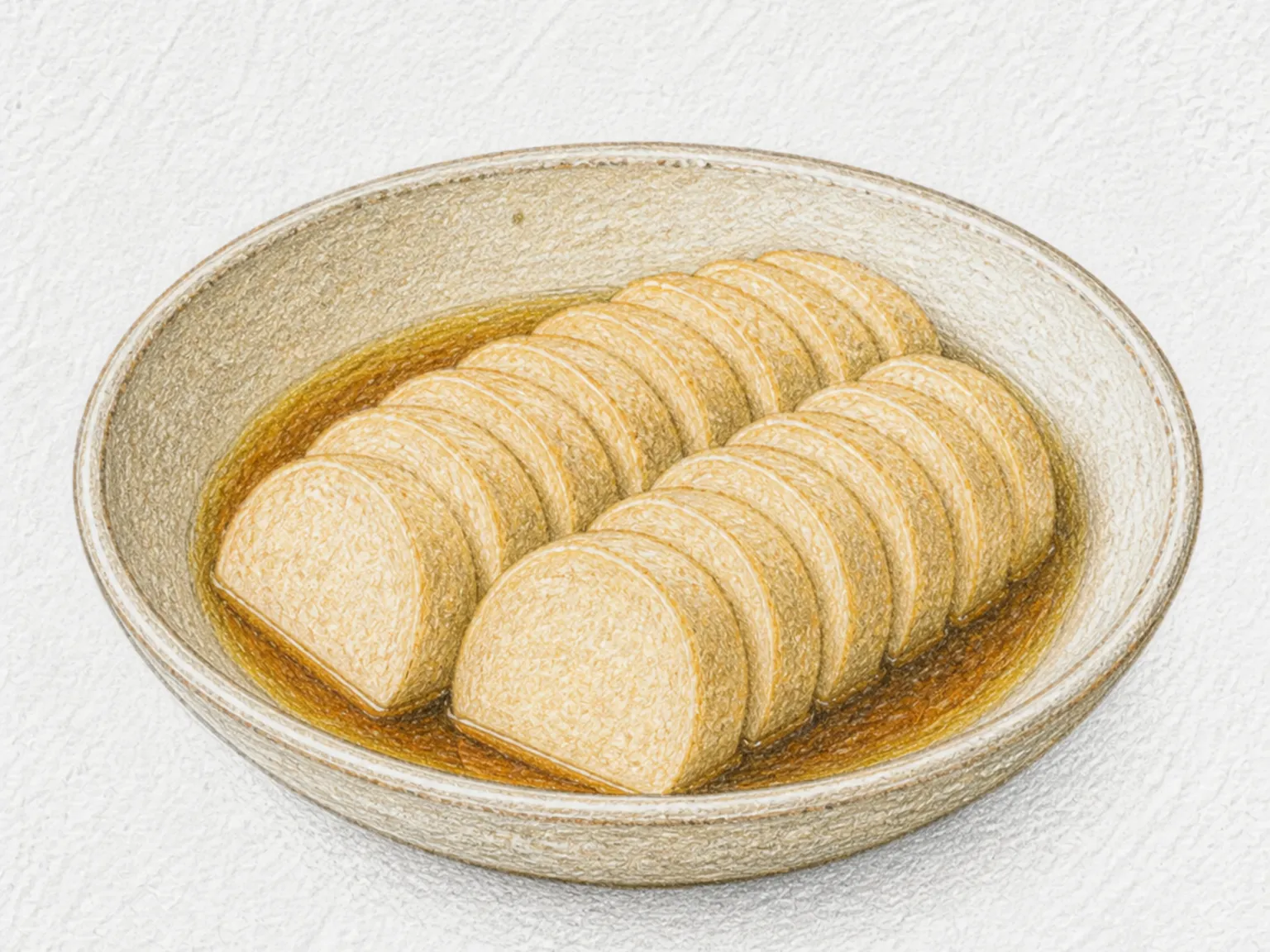
Lotus root slices are soaked in vinegar water to reduce astringency, blanched briefly, then pan-grilled with a soy sauce, oligosaccharide syrup, and garlic glaze. The coating turns glossy as it reduces, giving each slice a balanced salty-sweet finish while the interior stays crisp and clean-tasting. Topped with sesame seeds, this vegetable side holds up well in packed lunches and as an everyday banchan.

Korean Soy-Braised Chicken Wings
Korean soy-braised chicken wings are simmered in a glaze of soy sauce, sugar, garlic, and ginger until the sauce reduces to a thick, shiny coating. Scoring the wings beforehand allows the seasoning to reach the meat, and twenty minutes of covered braising followed by ten minutes of uncovered reduction concentrates the liquid into a sticky lacquer. Ginger keeps the flavor clean by neutralizing any gamey notes, and a finishing drizzle of sesame oil adds warmth. The wings come out so tender that the meat slides off the bone easily, making this a crowd-pleasing dish for children and adults alike.

Mala Biang Biang Noodles (Wide Numbing Chili Oil Noodles)
Mala biangbiang noodles consist of wide, thick strands that are coated in a complex sauce made from chili oil, doubanjiang, soy sauce, and black vinegar. This combination provides a specific type of heat that numbs the palate while simultaneously delivering spice. To achieve the authentic numbing character that defines mala, whole Sichuan peppercorns are briefly warmed in oil over a low heat. This controlled heating process is designed to release the numbing compounds from the spice without scorching the husks, a technical step that distinguishes genuine mala flavor from the simple heat of red chilies. The sauce is constructed in multiple layers by stacking the fermented saltiness of the doubanjiang with the deep and mellow acidity of the black vinegar. These ingredients work together to produce a seasoning profile with distinct depth rather than a single note of spiciness. For the preparation of the noodles, the broad strands are boiled for one minute less than the time indicated on the package. This ensures the dough remains elastic and chewy throughout the eating process. Because the noodles have such a large surface area, it is necessary to toss them aggressively in the sauce to ensure the seasoning is worked thoroughly into the wide surfaces of every strand. While the noodles are cooking, bok choy is blanched for forty seconds in the same boiling water. This vegetable adds a crisp and clean green element to the bowl, which serves to offset the richness of the oiled noodles. To finish the dish, a final drizzle of chili oil is applied over the top of the bowl just before it is served to intensify the aroma of the spices.

Korean Grilled Eel (Soy Glazed Freshwater Eel BBQ)
Jangeo-gui is a grilled freshwater eel dish in which the cleaned eel is brushed repeatedly with a marinade of soy sauce, sugar, cooking wine, and minced garlic as it cooks over medium heat. The central technique is applying the glaze in two or three stages rather than all at once, allowing each coat to caramelize before the next is brushed on. This layered glazing builds a lacquered surface with concentrated flavor and a slight sweetness that the eel's rich fat absorbs. Before grilling, rubbing the eel with coarse salt removes the slippery mucus layer and eliminates any fishiness from the skin. Turning the eel requires care since the flesh is delicate and breaks easily under pressure. Charcoal grilling adds a smoky dimension as the dripping marinade hits hot coals and vaporizes, creating an aroma that is inseparable from the restaurant version of this dish. Eel is traditionally eaten in Korea during the hottest days of summer as a stamina food, valued for its fat content and dense protein.

Korean Soy-Braised Beef with Mushrooms
Sogogi beoseot jangjorim is a Korean soy-braised banchan of beef eye round, shiitake mushrooms, and whole garlic cloves, simmered down in soy sauce and soup soy sauce. The beef is boiled first and the resulting clear stock becomes the braising liquid, so the soy sauce carries a deep meat flavor from the very beginning. Shiitake mushrooms contribute their own aromatic umami on top of that base, and whole garlic cloves lose their sharp bite during the long simmer, turning mellow and lightly sweet. Shredding the beef along the grain exposes more surface area to the sauce and makes it easier to portion out. An overnight rest in the refrigerator lets every component absorb the seasoning more fully, and the flavor is noticeably richer the next day. It keeps well for over a week refrigerated, making it a practical and reliable make-ahead banchan.

Korean Gangwon-Style Soy Bulgogi
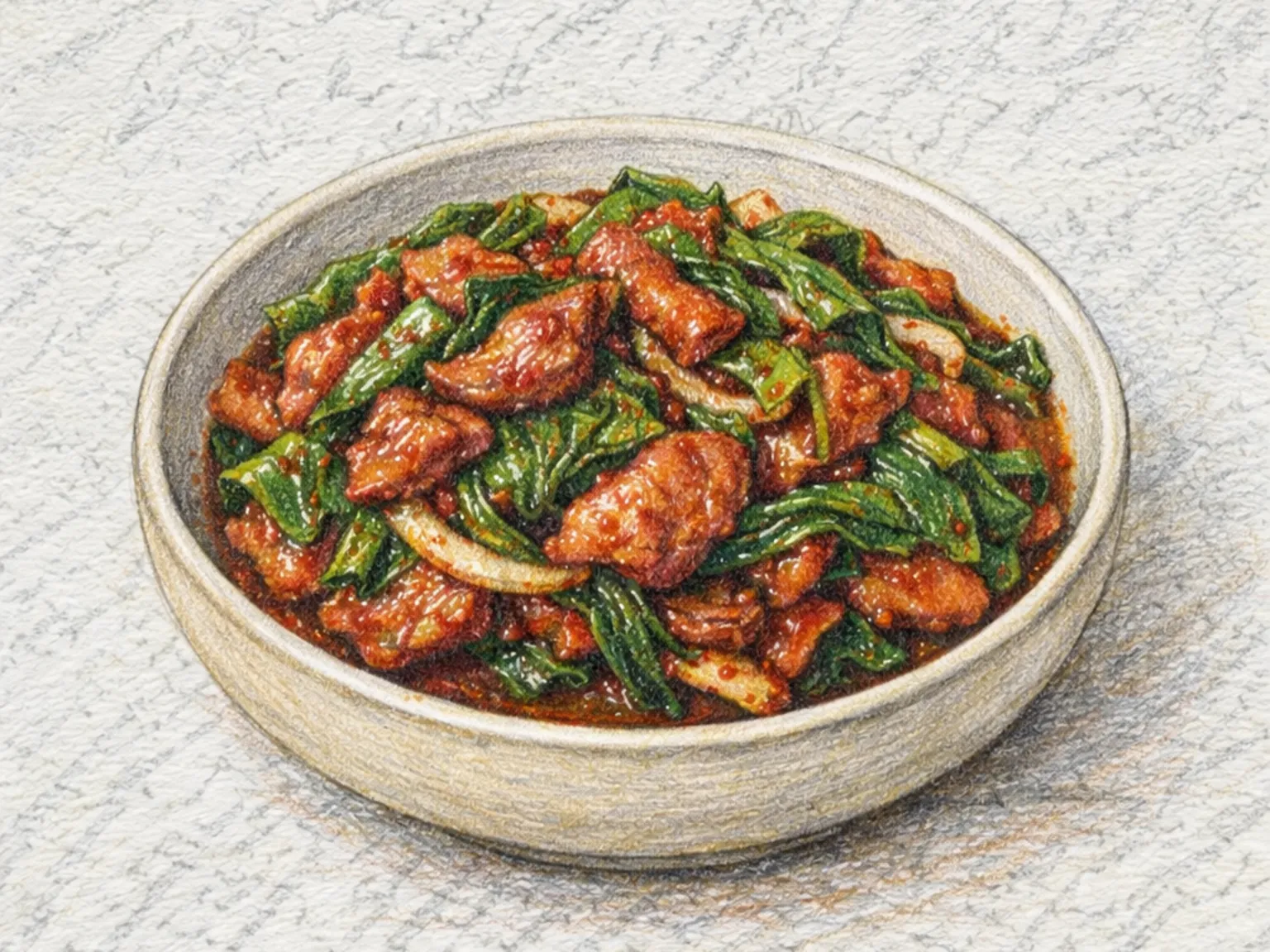
Gangwon-style soy bulgogi represents a regional variation of the traditional Korean grilled beef dish specifically associated with the Gangwon Province. Unlike the bulgogi styles commonly found in the Seoul metropolitan area, which often lean heavily into sweet and fruit-driven marinades, this version prioritizes the clean and savory profile of soy sauce. The preparation begins by marinating thinly sliced beef in a mixture composed of soy sauce, sugar, minced garlic, and toasted sesame oil, along with the addition of fresh pear juice. The inclusion of pear juice serves a dual purpose in the recipe. The natural enzymes within the juice work to tenderize the muscle fibers of the beef, while its sugars provide a subtle and restrained sweetness that complements the salty foundation of the soy sauce without becoming the dominant flavor. When the meat is ready, it is cooked in a preheated pan over high heat. Sliced shiitake mushrooms and onions are added to the pan during this stage, allowing them to absorb the liquid marinade as they soften. This process integrates the flavors of the vegetables with the primary taste of the beef. Maintaining a high temperature is a critical step in the cooking process to ensure that moisture evaporates rapidly. This prevents the dish from taking on the texture of a braised stew and instead produces a slight char and a smoky quality on the edges of the meat. Just before the heat is turned off, diagonally sliced green onions are tossed into the pan. They are cooked only until they begin to wilt, preserving a bright and sharp contrast that balances the finished dish. The result is a soy-focused flavor profile that is clear and direct. Because it avoids being overly aggressive or excessively sweet, this bulgogi serves as a consistent accompaniment for steamed rice that remains palatable through frequent consumption.

Korean Braised Squid with Radish
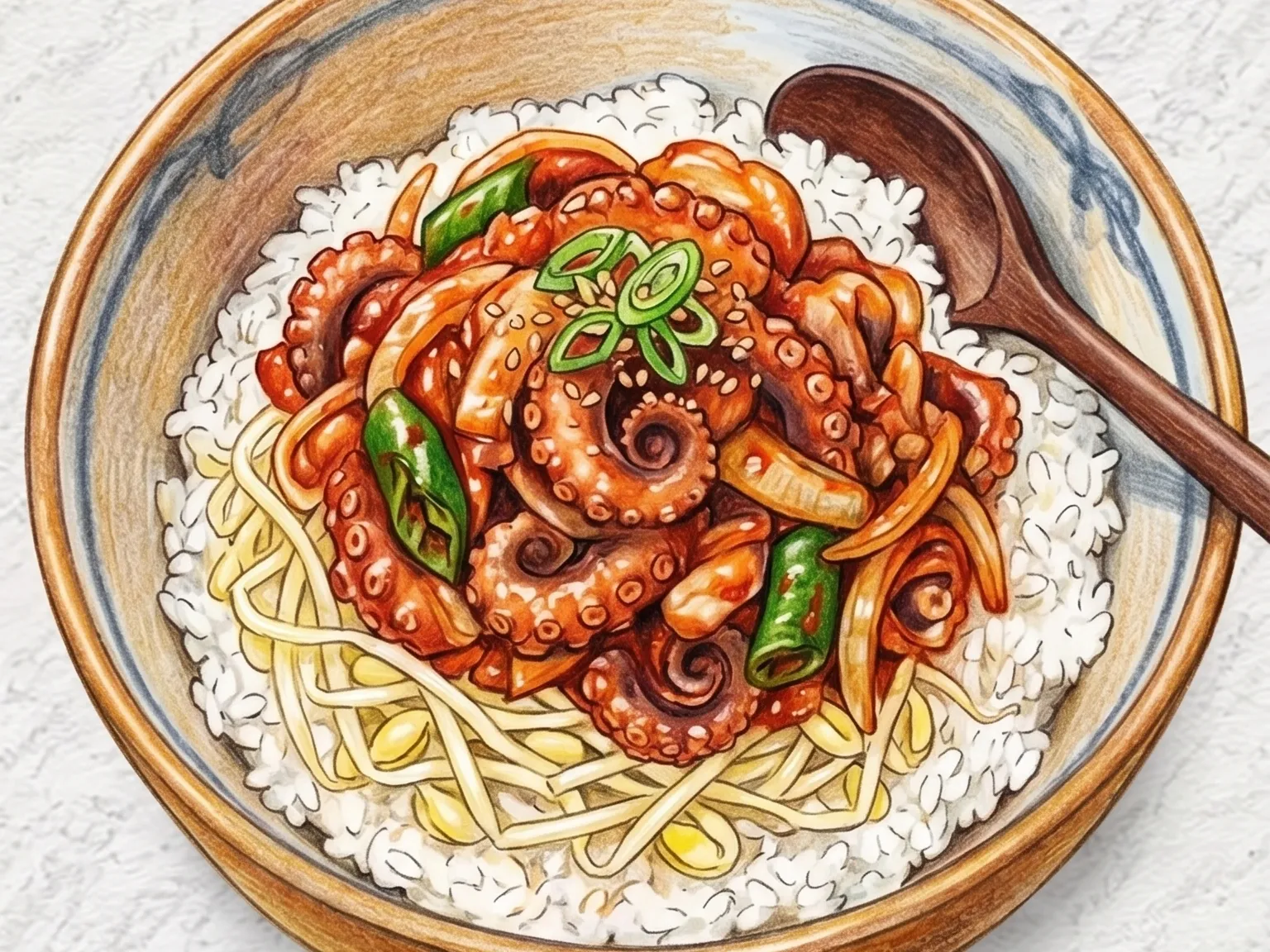
Ojingeo mu jorim is a Korean braised dish where radish is cooked first in a soy-based liquid until fully softened, then squid is added and the whole pot is reduced in a spiced sauce of gochugaru and gochujang. Giving the radish time to cook alone is the structural key to this dish: as it slowly absorbs the liquid and breaks down, it releases its natural sweetness into the broth, which merges with the salt and gentle umami of soy sauce to build the braising liquid into something more complex than its ingredients suggest. When the spice paste goes in, the resulting flavor sits at the intersection of heat and coolness - the particular sensation of Korean chili that stings without overwhelming. The single most important technique in this recipe is the timing of the squid. Squid turns rubbery when overcooked, and the window between tender and tough is narrow, so it is added only in the last five minutes of cooking. That brief time is enough for the squid to absorb the surrounding flavors while holding the springy, snapping bite that makes the dish texturally rewarding. Green onion stirred in at the finish adds a sharp herbal lift. The reduced sauce left in the pan is deliberately left shallow rather than thick, concentrated with the flavors of both the squid and the radish, and it is best used by spooning it over rice and eating everything together.

Korean Buckwheat Noodle Salad
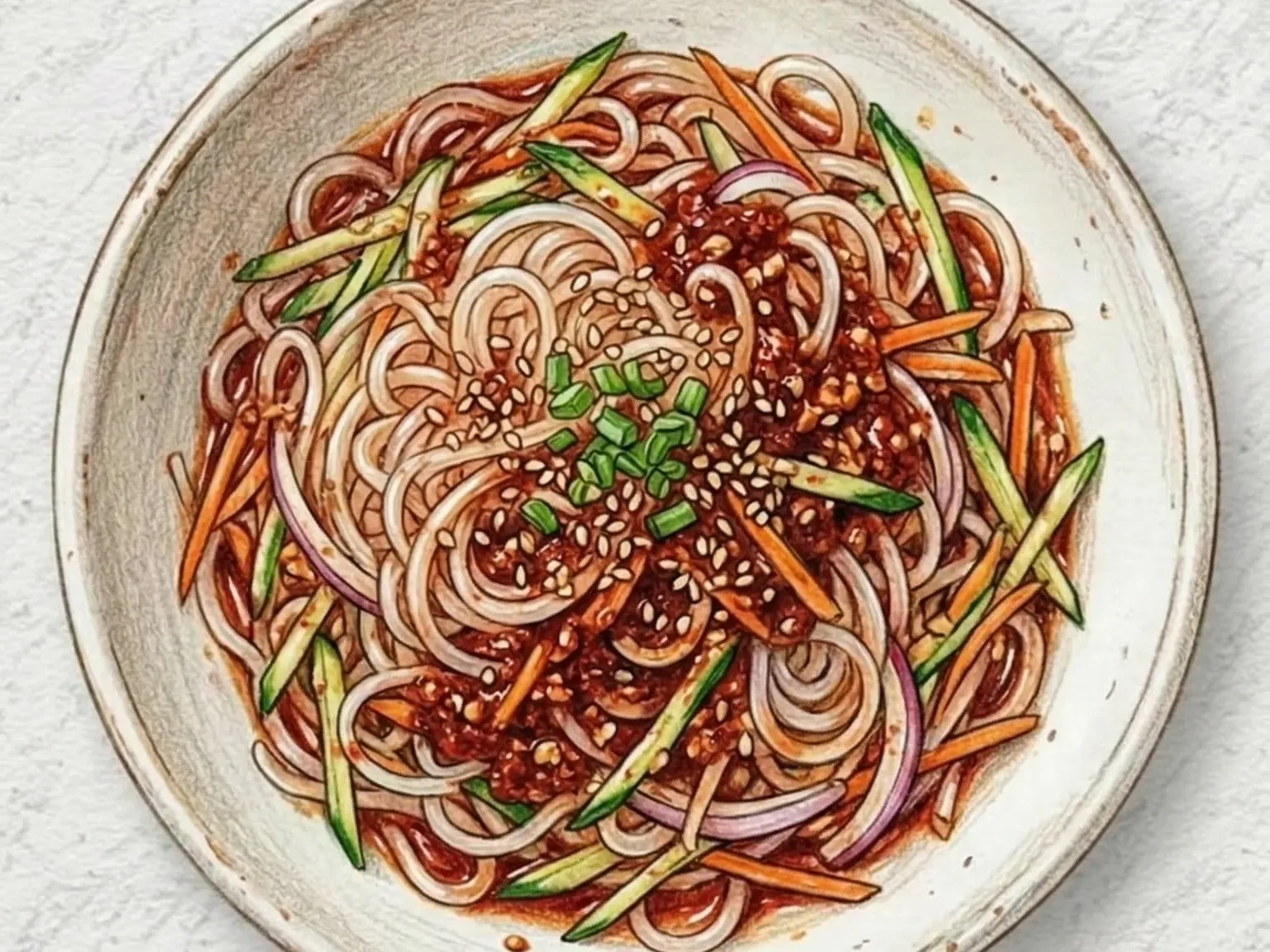
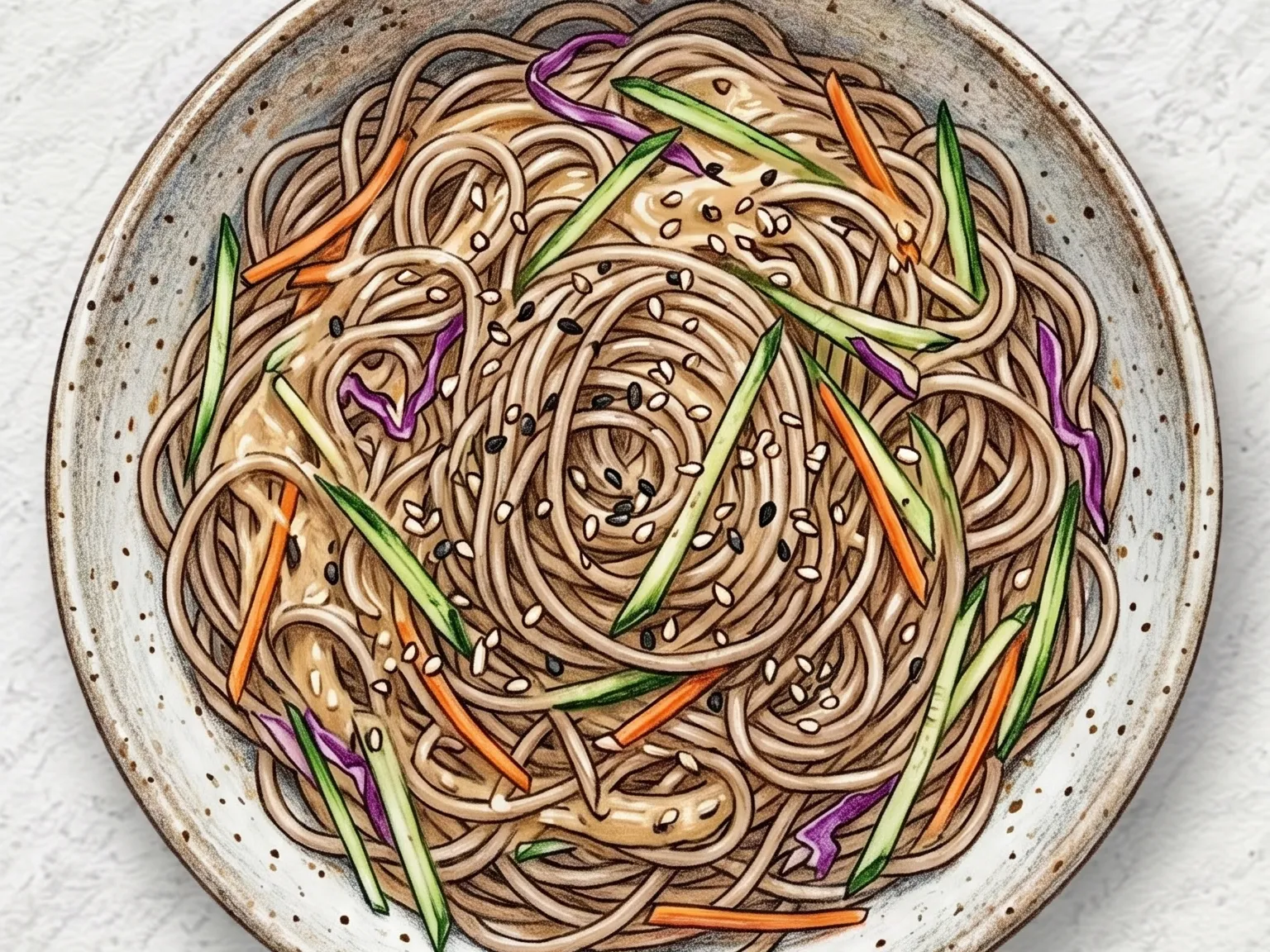
Buckwheat noodles boiled and rinsed in cold water retain both their earthy, slightly nutty flavor and a satisfying springy bite, then get tossed with julienned cucumber, red cabbage, and carrot for color and crunch. A dressing of gochujang and vinegar provides a spicy-sour backbone, while soy sauce and sesame oil layer in savory depth and aromatic nuttiness underneath. Thorough rinsing to remove surface starch is critical - it keeps the noodles from clumping and ensures the dressing coats each strand evenly rather than pooling at the bottom of the bowl. Served chilled in warm weather, the salad functions well as a standalone light meal, refreshing enough to restore appetite without leaving you heavy. Toss the dressing in just before eating to prevent the noodles from softening.

Deodeok Citrus Chicken Salad
Deodeok citrus chicken salad is a Korean-style dish that focuses on the interplay between various textures and flavors. The preparation involves pan-searing chicken tenderloin in a hot skillet until it develops a golden crust on the outside while the meat remains tender on the inside. This protein is paired with deodeok root, which is beaten or pounded before use to loosen its tough fibers and soften its structure. Deodeok provides a unique earthy quality and a subtle bitterness that is difficult to find in other root vegetables. Fresh orange segments are included to provide a bright acidity that balances the savory notes of the seared chicken and the natural earthiness of the deodeok. Arugula is used as the base of the greens, contributing a sharp, peppery layer to the overall composition. A simple dressing made from soy sauce and olive oil is used to integrate the Korean-inspired components with more Western salad elements. Because the dish contains a high amount of protein from the chicken and a significant volume of vegetables, it functions as a light meal that remains nutritionally complete.

Korean Braised Potatoes and Quail Eggs
Gamja-mechu-rial-jorim is a Korean braised side dish of potatoes and hard-boiled quail eggs cooked together in a soy-based seasoning. What makes this banchan interesting is the way the two main ingredients absorb flavor differently: quail eggs, with their smooth, porous surface, drink in the soy liquid and turn a deep brown throughout the long simmer, while potato pieces soak up the sauce while simultaneously releasing starch that thickens the glaze. Oligosaccharide syrup adds natural shine and a gentle sweetness, and the combination of sesame seeds and sesame oil provides a nutty finish that rounds out the savory, sticky sauce. The result is a banchan that hits several textural notes at once -- firm quail eggs, yielding potato, and a reduced sauce that coats every surface. It has been a mainstay of Korean children's lunchboxes for decades, practical to prepare in large batches and flavorful enough to eat with plain white rice day after day.

Korean Soy-braised Beef (Tender Shredded Brisket in Soy Glaze)
Jangjorim is the soy-braised beef that lives semi-permanently in Korean refrigerators - a make-ahead banchan with a shelf life of roughly two weeks. Beef eye round (hongdukkasal) is the traditional cut because its uniform grain and low fat content allow clean shredding along the fibers, producing the signature stringy texture. The process is unhurried: thirty minutes of soaking to draw out blood, forty minutes of simmering with whole garlic and peppercorns, then shredding and returning to the pot with soy sauce and sugar for another twenty minutes. Hard-boiled eggs and shishito peppers added in the final stage absorb the dark soy broth - the eggs turn mahogany and the peppers contribute a gentle heat to the sauce. Swapping in quail eggs makes each piece lunchbox-sized. Flavor deepens noticeably after a day of refrigeration as the seasoning penetrates fully.

Korean Squid Glass Noodle Stir-Fry
Ojingeo japchae is a seafood variation of the Korean glass noodle stir-fry that replaces the traditional beef with squid, combining chewy dangmyeon with spinach, carrot, and onion in a soy-sugar sauce. Peeling the squid and scoring the inner surface in a crosshatch pattern before slicing allows the seasoning to reach the full surface area and softens the otherwise tough texture when cooked. Stir-frying the squid with garlic for a short time only is essential, as prolonged heat causes it to turn rubbery and push moisture out into the pan. The glass noodles should be boiled for no more than six minutes to preserve their elastic, springy bite and prevent them from clumping and falling apart during the stir-fry. Spinach is blanched separately and squeezed firmly dry before being added so that excess water does not make the whole dish soggy. The sweet-salty base of soy sauce and sugar is finished with sesame oil and toasted sesame seeds, whose nutty fragrance ties together the oceanic umami of the squid, the resilient chew of the noodles, and the crisp texture of the vegetables into one cohesive plate.

Korean Stir-Fried Taro Stems
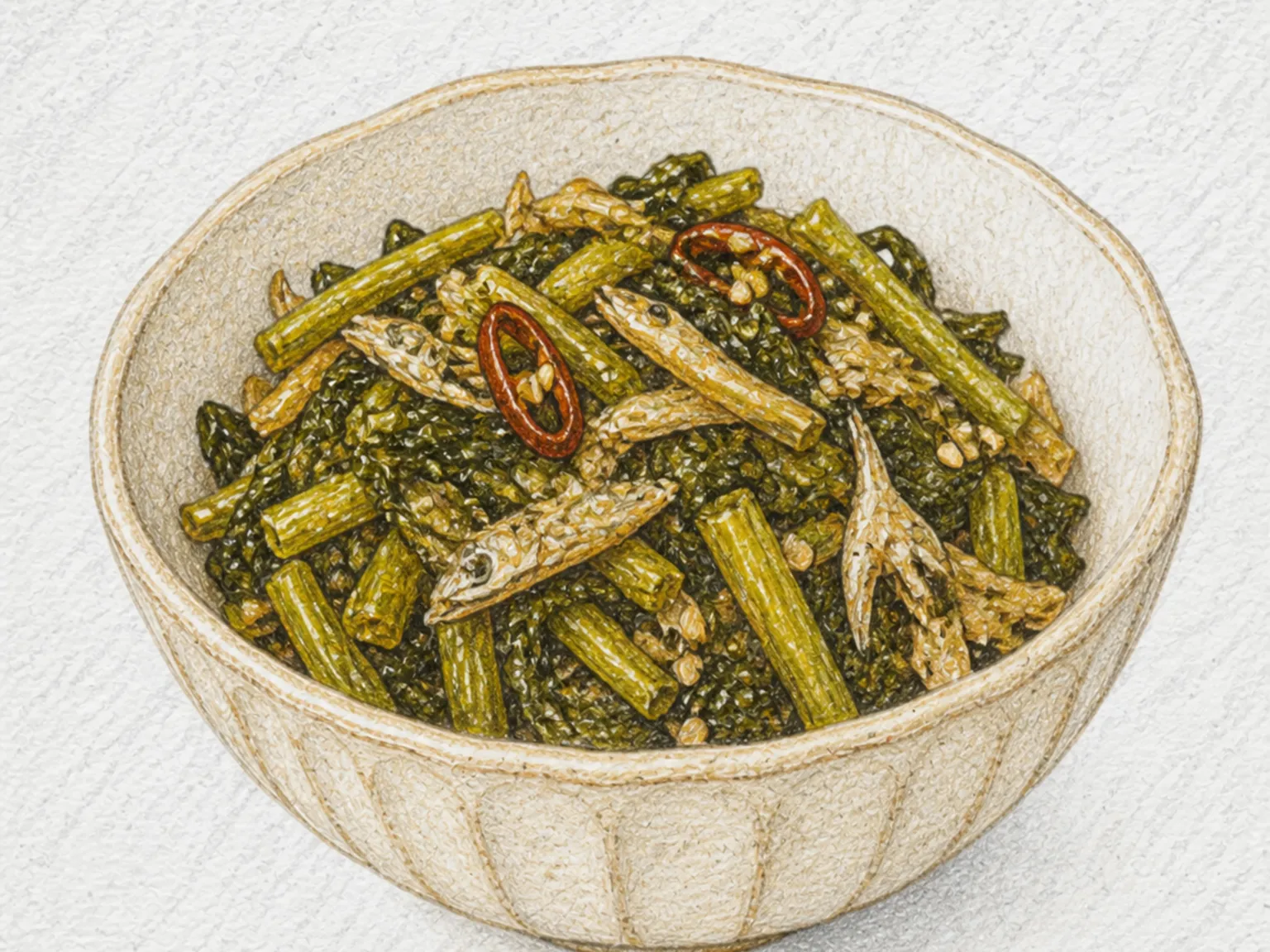
Boiled taro stems are stir-fried in perilla oil with soy sauce and garlic to create a banchan prized for its uniquely chewy texture. Dried taro stems, once soaked and simmered, lose their rawness but retain a springy, almost rubbery bite along the center of each stalk, setting them apart from softer namul greens. Stir-frying in perilla oil first builds a nutty base note, and soy sauce with minced garlic layers savory depth onto the stems' neutral flavor. A splash of stock added mid-cook allows the seasoning to penetrate the fibrous interior during a brief simmer. Sliced green onion introduces a fresh aromatic accent, and a finishing spoonful of ground perilla seeds dissolves into the residual moisture, creating a creamy coating that clings to each piece. Mixed into a bowl of steamed rice, the chewy stems provide satisfying resistance with every bite, and their mild character lets them complement bolder dishes like doenjang jjigae without competing for attention.

Korean Tteok Kkochi Yangnyeom Gui (Grilled Rice Cake Skewers)
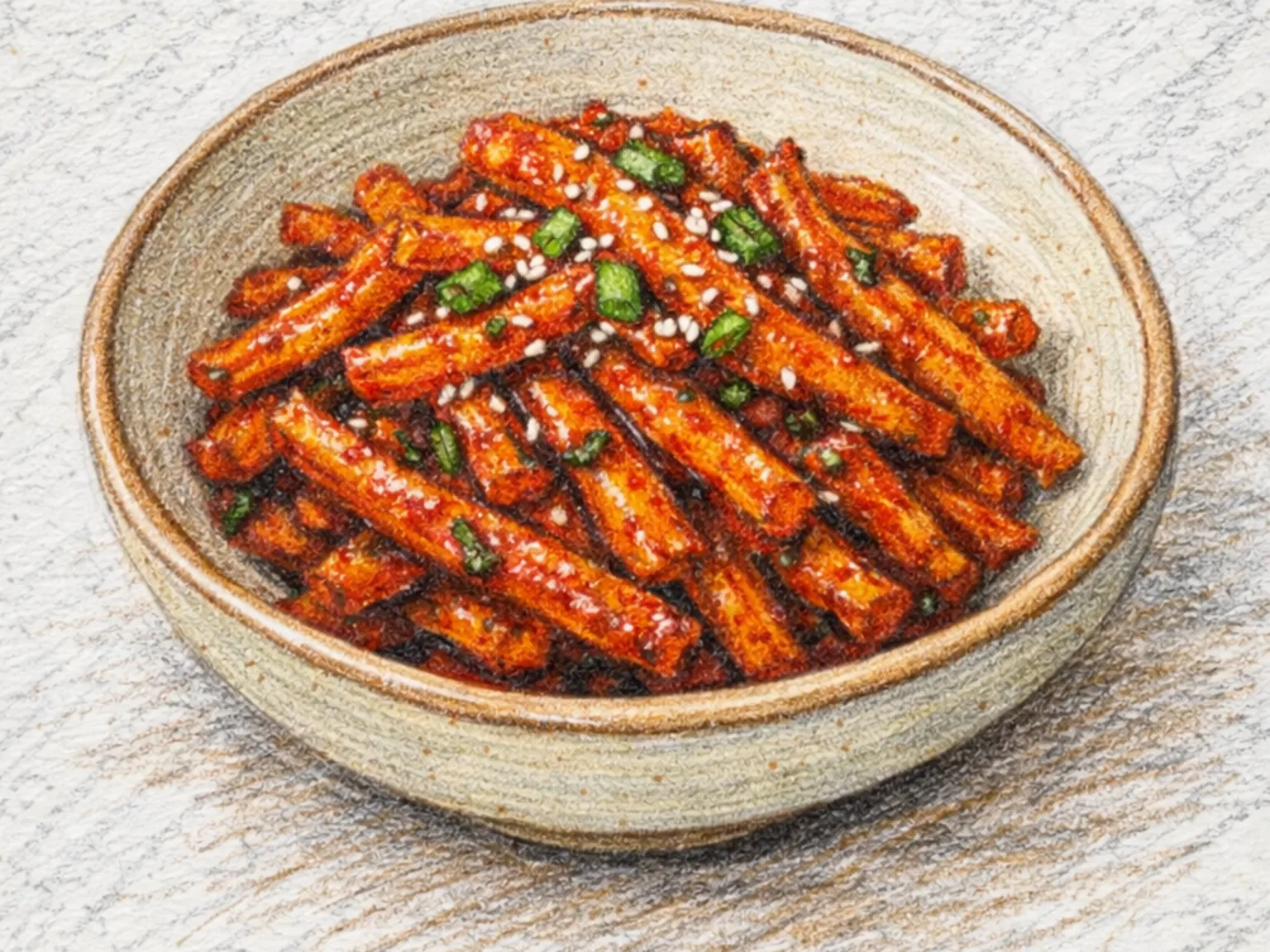
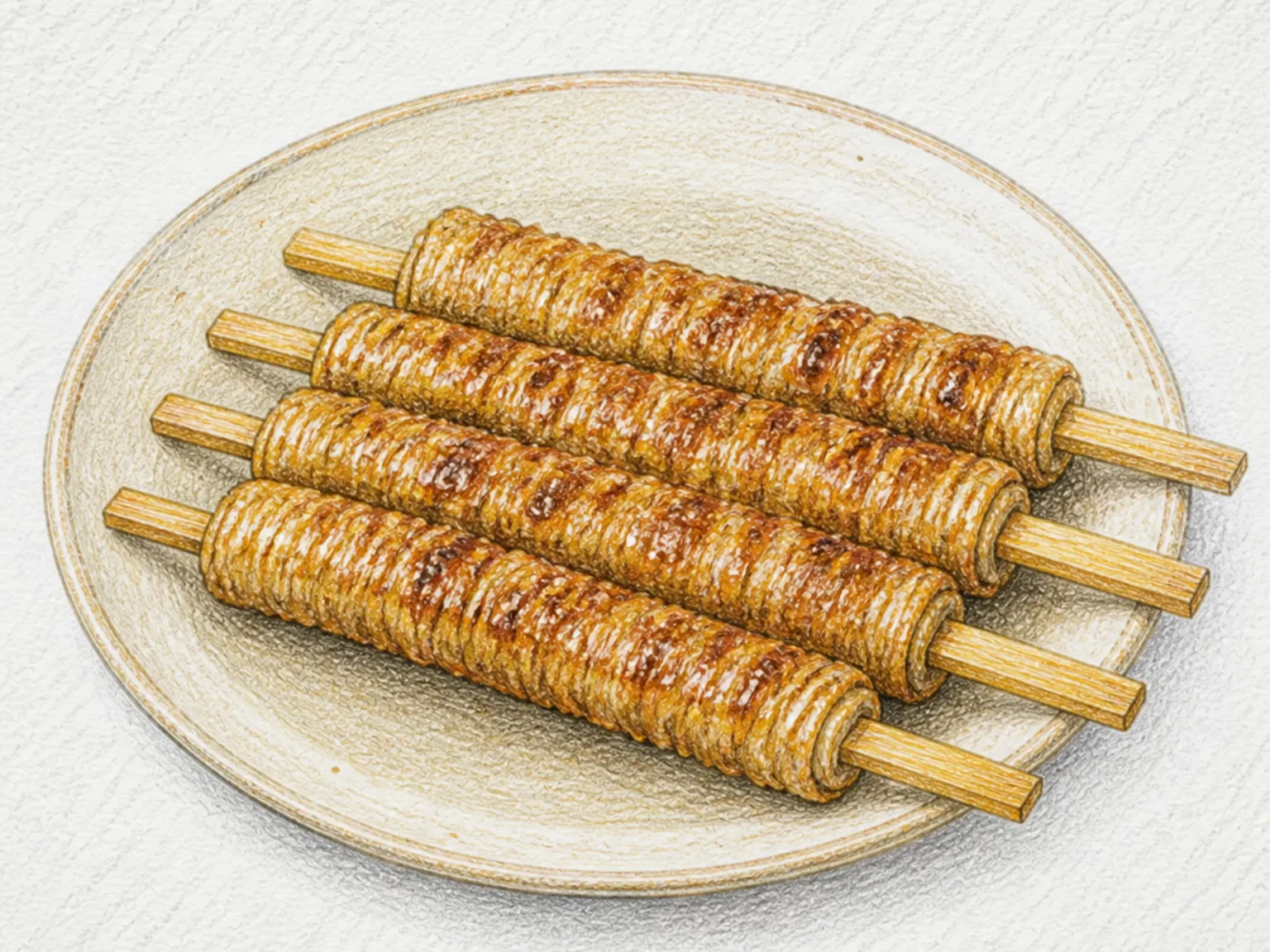
Cylinder rice cakes are threaded onto skewers, lightly brushed with oil, and rolled on a grill pan over medium heat for six to seven minutes until the exterior turns golden. A sauce of gochujang, ketchup, oligosaccharide syrup, soy sauce, and minced garlic is applied in two rounds, building a glossy red glaze that clings to the surface. The outer layer develops a slight crispness while the inside remains stretchy and dense - that textural duality is the hallmark of this dish. A light dusting of cheese powder turns it into a kid-friendly snack, and it stands as one of the most iconic items in Korean street-food culture.

Korean Aged Kimchi Mackerel Bibim Noodles
Pan-searing mackerel until golden and pairing it with stir-fried aged kimchi creates a multi-layered Korean noodle bowl. Sprinkling salt over the fish for ten minutes draws out excess moisture to minimize any fishy scent. Once the fillet is crispy and flaked, the meat integrates easily into the noodles without the hindrance of bones. Stir-frying the aged kimchi for two minutes mellows its sharp acidity while anchoring the fermented profile of the dish. The dressing uses a base of gochujang and gochugaru, balanced with plum syrup, vinegar, and sesame oil to provide spicy, sweet, and tangy elements in every bite. Adding a touch of doenjang strengthens the connection to the fermented kimchi and builds a solid base of flavor. Draining the wheat noodles completely ensures the sauce stays concentrated and clings to each strand. Sliced cucumber and roasted seaweed flakes add texture and a hint of the sea to cut through the mackerel's natural oils, while julienned perilla leaves contribute a refreshing herbal scent. Mixing hot rice into the sauce remaining at the bottom of the bowl provides a final way to finish the meal.

Korean Soy-Glazed Kabocha Grill
Danhobak-ganjang-gui is a Korean soy-glazed kabocha squash dish where thick half-moon slices are pre-steamed or microwaved until just tender, then pan-grilled with a glaze of soy sauce, corn syrup, minced garlic, and sesame oil. Pre-cooking the squash is essential: it eliminates the need for prolonged grilling, so the glaze can caramelize quickly over high heat without the interior remaining raw. The natural sugars in kabocha meet the salt of the soy sauce to create a pronounced sweet-salty contrast. The corn syrup melts into a shiny, lacquer-like coating on the surface. Sesame oil should be added only after removing from heat to preserve its fragrance, and a scattering of toasted sesame seeds finishes the dish with a crunchy, nutty accent. Kabocha squash skin is fully edible and becomes slightly crisp when grilled, creating a pleasant textural contrast with the soft, sweet interior. Substituting a spoonful of gochujang for part of the soy sauce produces a spicy variation, and minced cheongyang chili added to the glaze layers heat over the sweet-salty profile for a more intense side dish.

Korean Soy Sauce Stir-Fried Lotus Root and Bean Sprouts
Yeongeun-kongnamul-ganjang-bokkeum stir-fries sliced lotus root and bean sprouts in a soy sauce and oligosaccharide glaze. The lotus root goes in first over medium heat for three minutes until slightly translucent, then carrot and garlic are added before the soy seasoning. Bean sprouts join last and cook on high heat for just two minutes to drive off moisture while staying crunchy. The starchy snap of the lotus root contrasts with the watery crispness of the bean sprouts, tied together by a light sweet-salty soy coating.

Korean Spicy Braised Hairtail
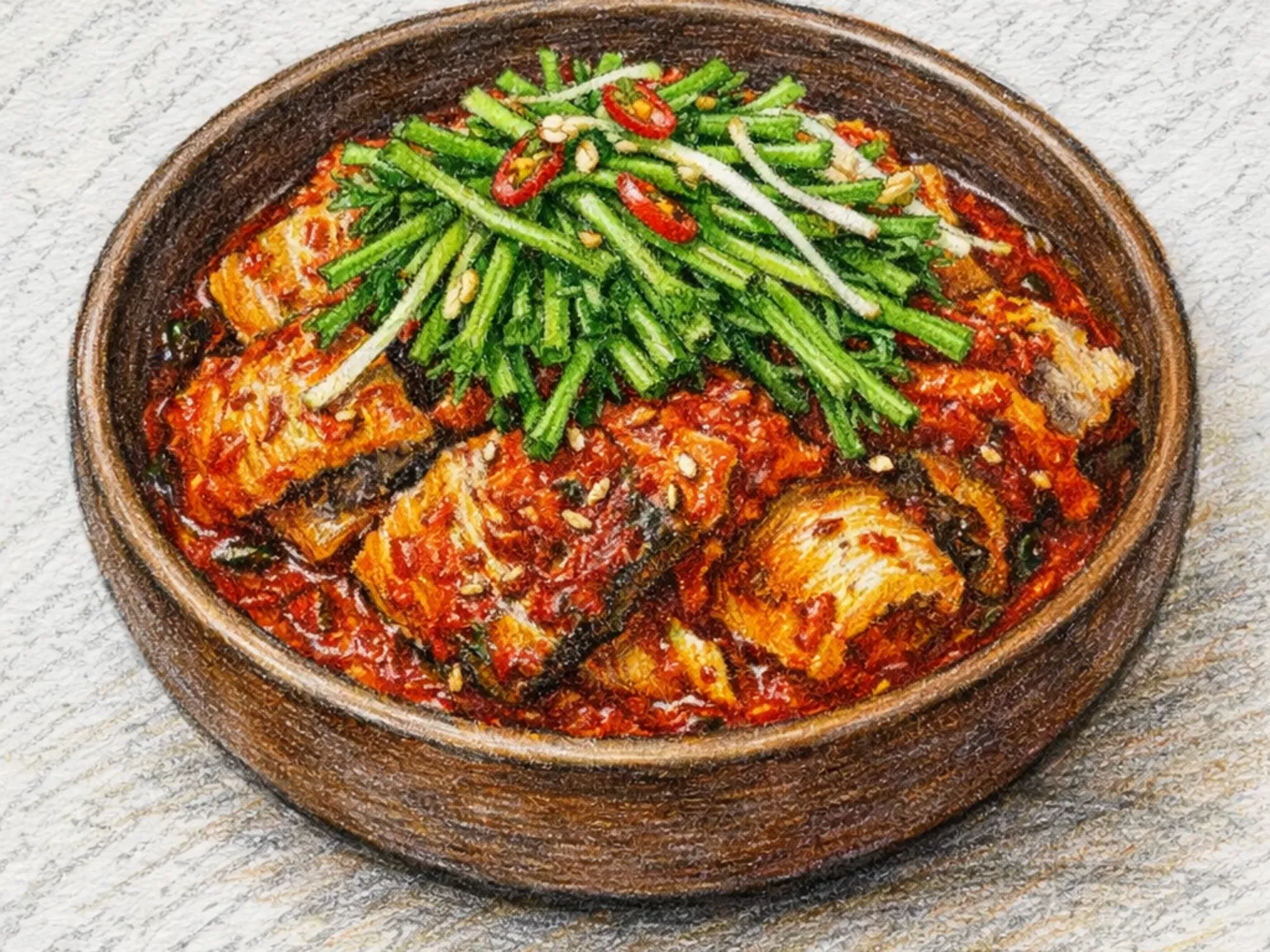
Galchi-yangnyeom-jorim is a Korean braised hairtail made by simmering sectioned cutlassfish and radish in a spicy-sweet sauce of gochugaru, soy sauce, and minced garlic. The seasoning penetrates the hairtail flesh as it cooks, suppressing any lingering fishiness while developing a layered, concentrated umami. Radish pieces are laid on the bottom of the pot first so they cook through completely and absorb the braising liquid, turning sweet and tender in a way that contrasts with the flaky fish above. Finishing with the lid off allows the sauce to reduce until it clings to the fish surface in a glossy, tight glaze. Fresh hairtail holds its shape better under heat, so the flesh can be lifted with chopsticks intact, while older fish tends to break apart during cooking. Adding Cheongyang chili increases the sharp heat, and a thin slice of fresh ginger worked into the sauce at the start removes any remaining fishiness before braising begins.