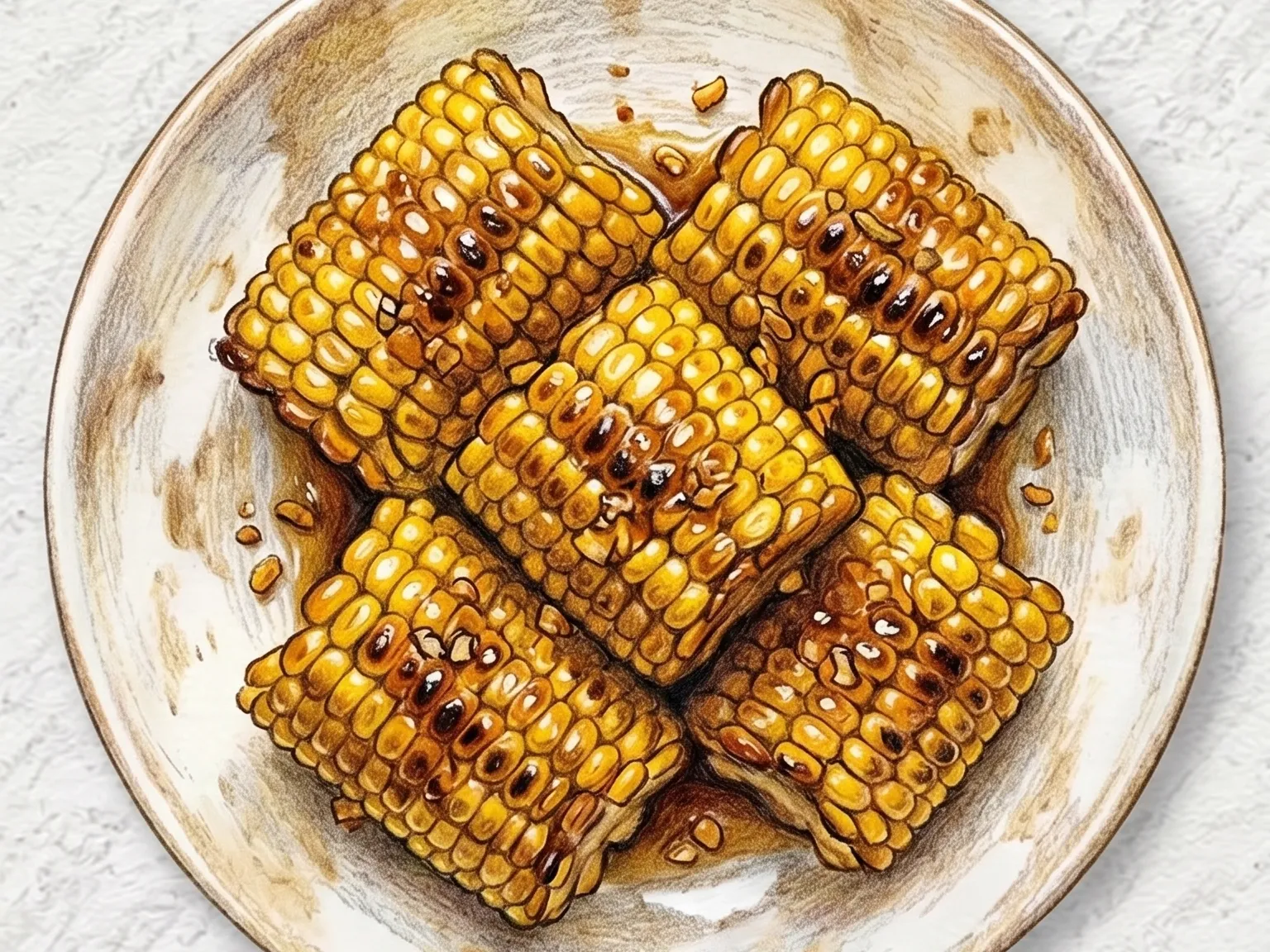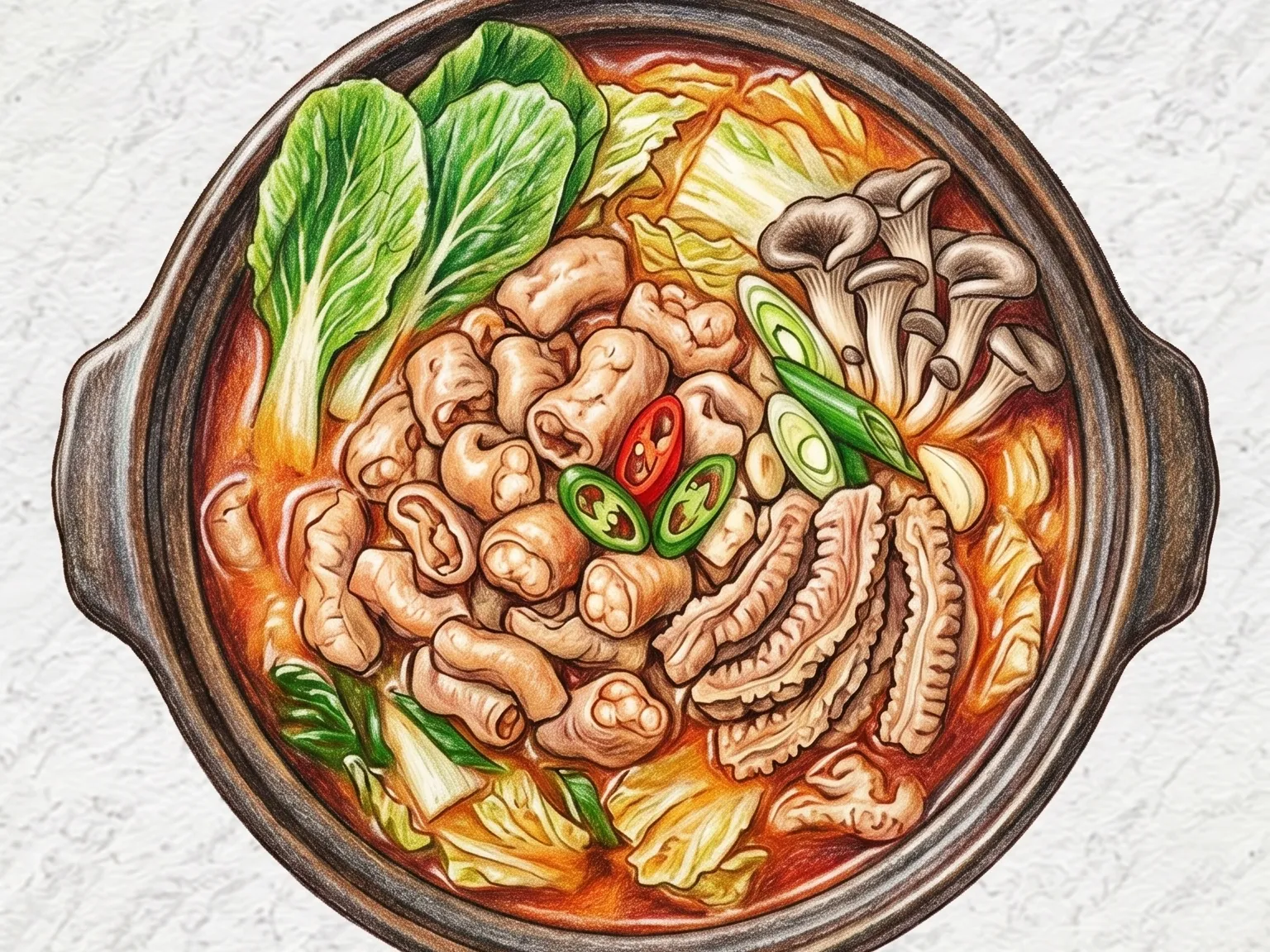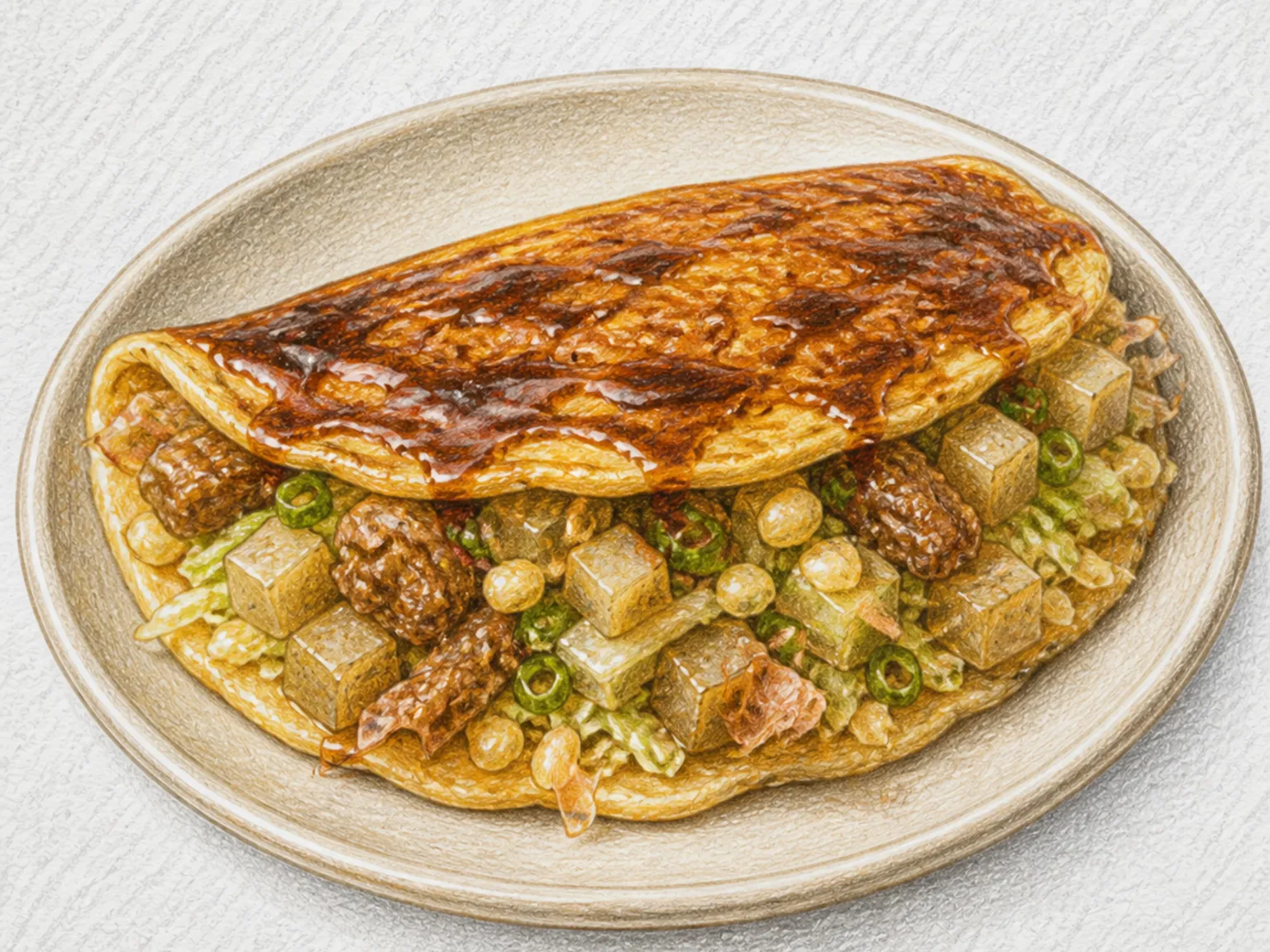
Japanese Braised Pork Belly
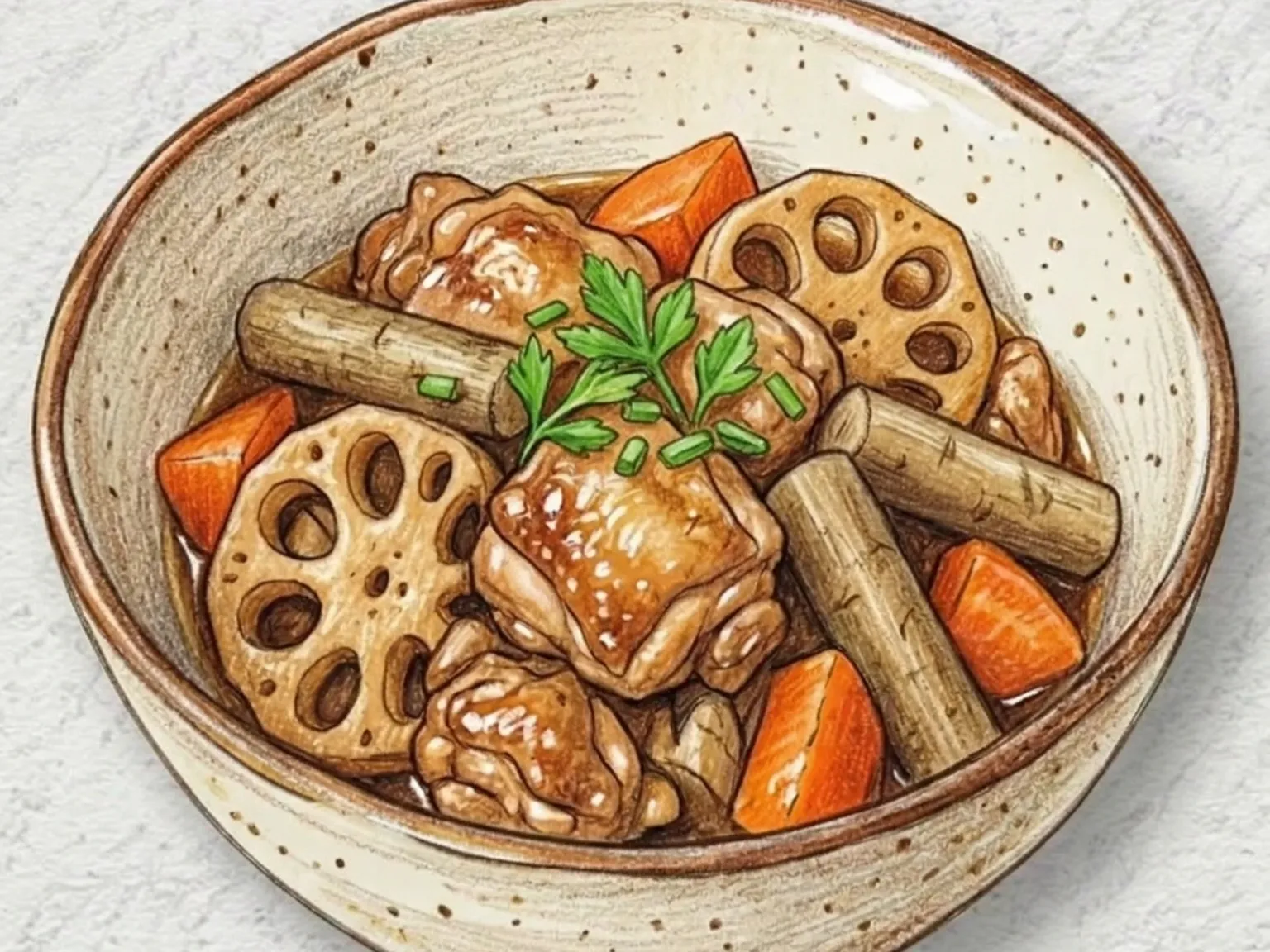
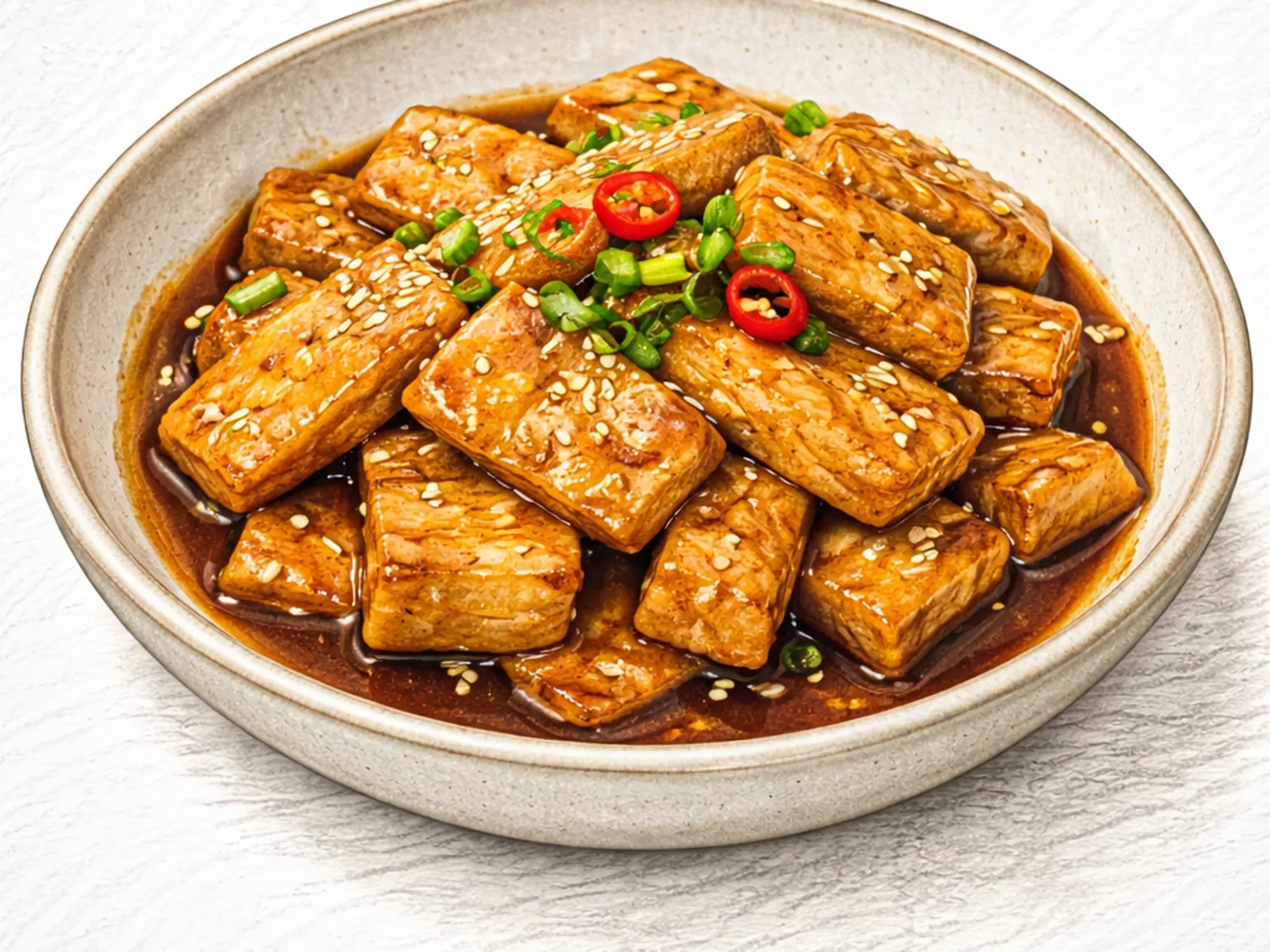
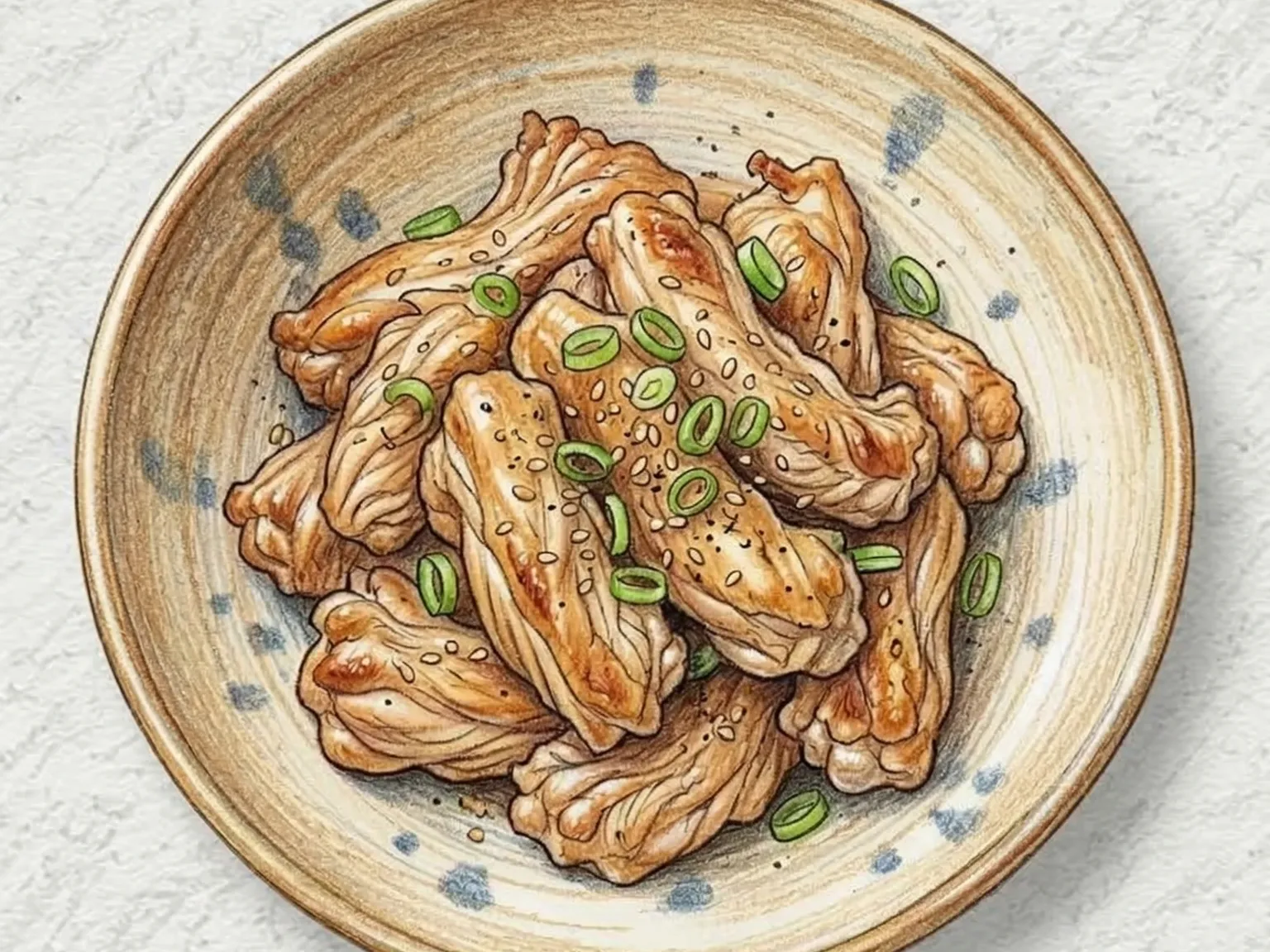
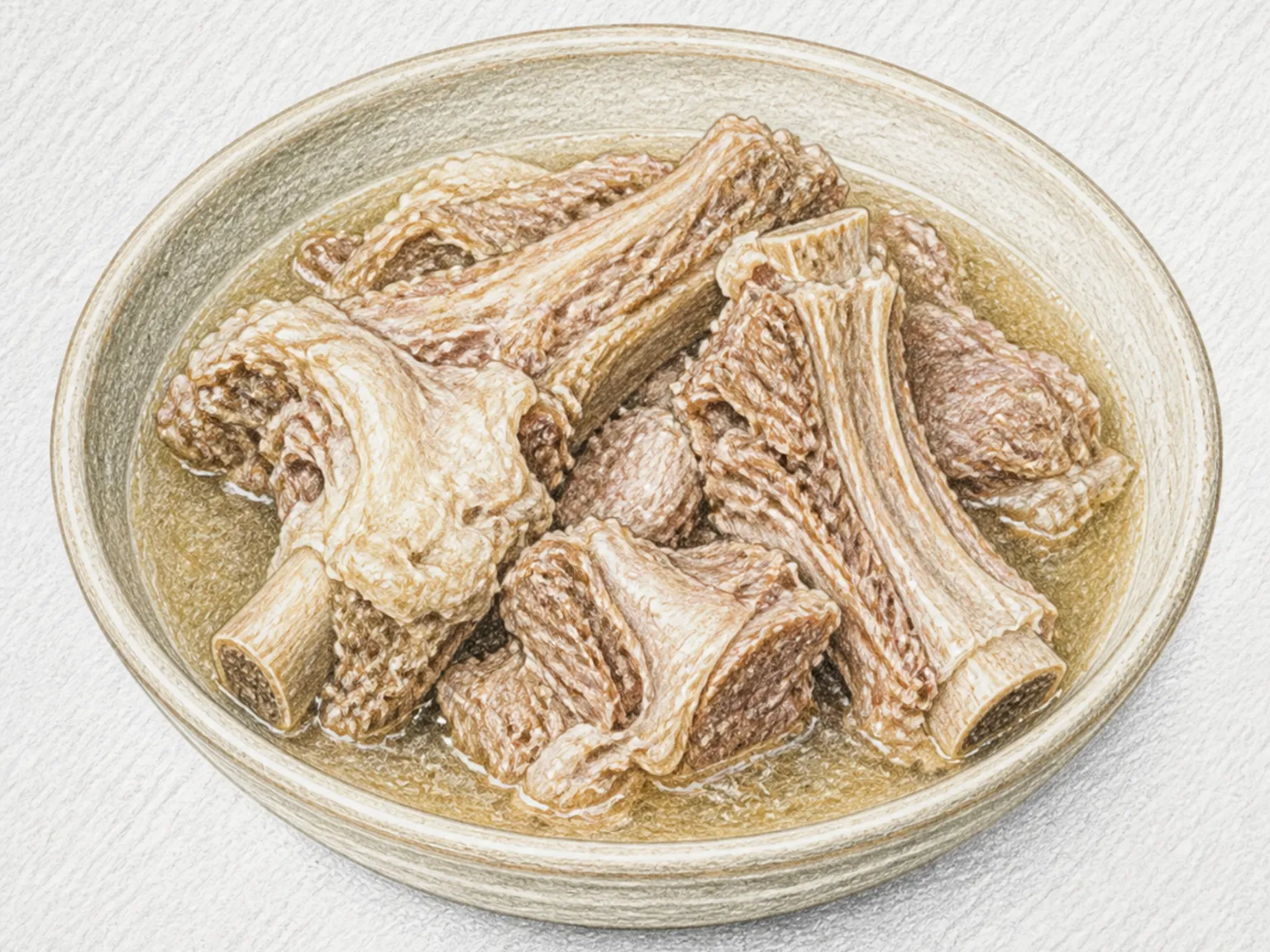
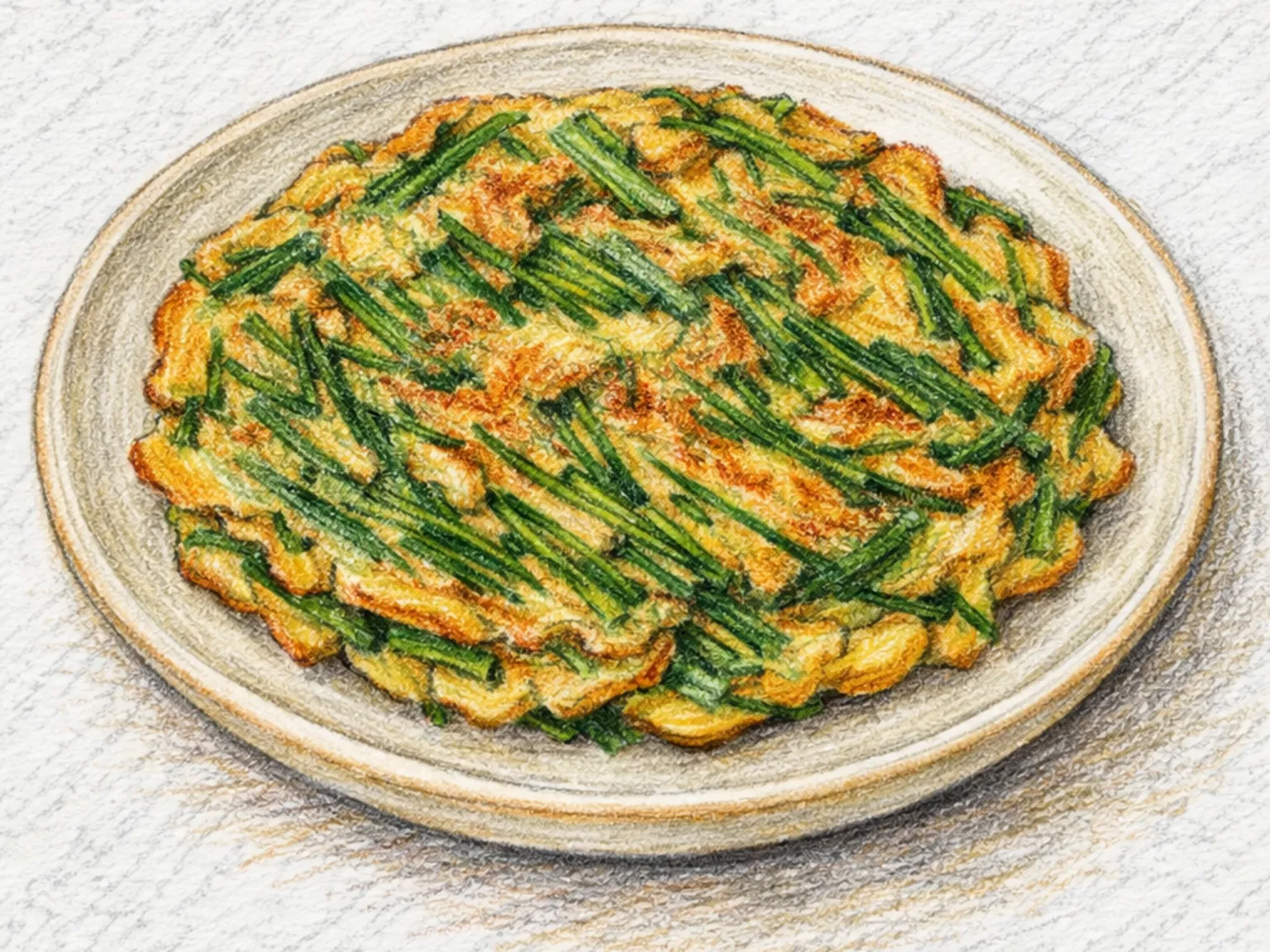
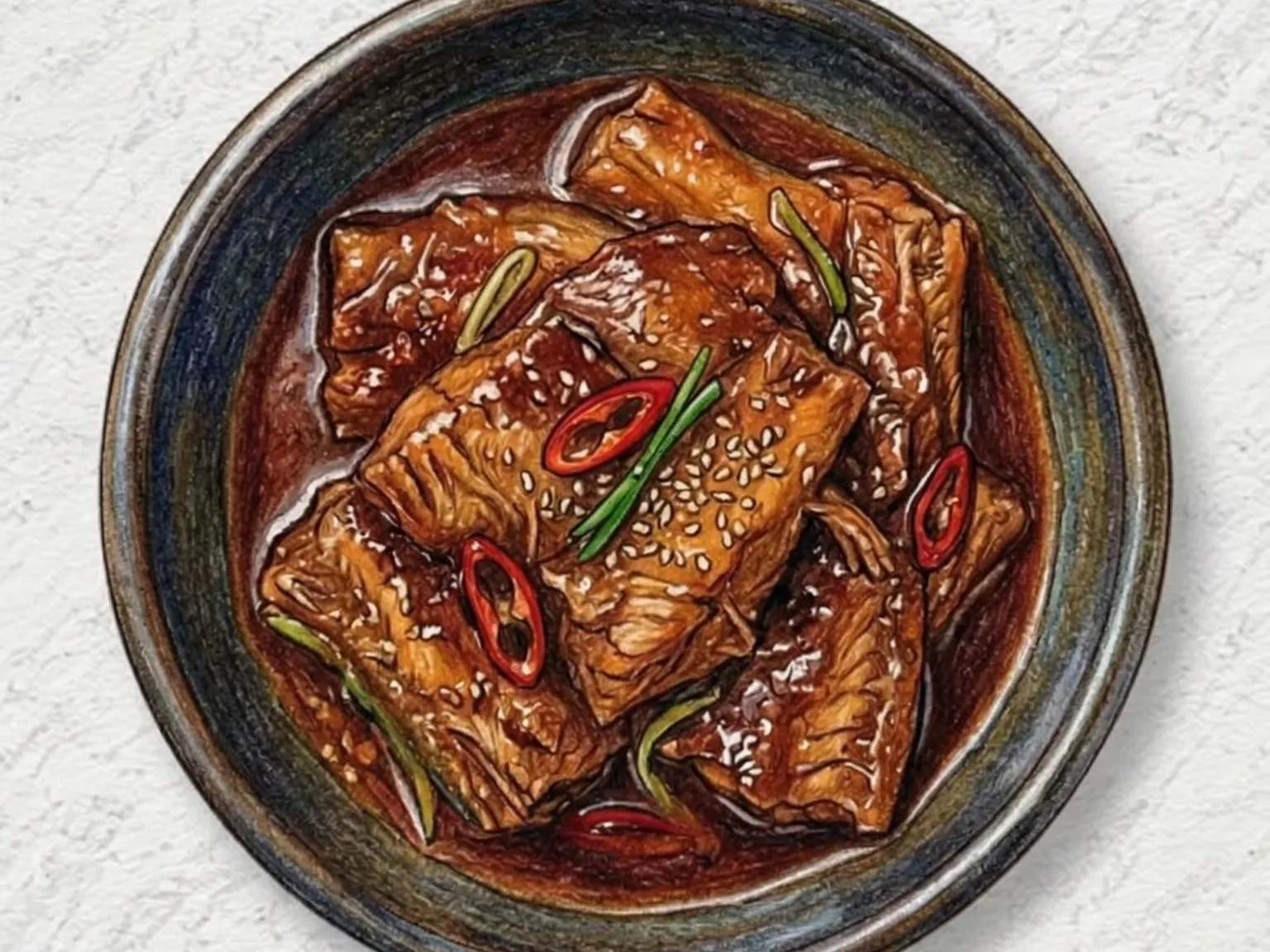
Thick cubes of pork belly are blanched for five minutes to remove impurities, then simmered in water with ginger and green onion for fifty minutes until the fat layers turn translucent and completely tender. The parboiled meat transfers to a fresh pot with soy sauce, mirin, and sugar, where it braises over medium-low heat for another thirty minutes as the liquid reduces by half and lacquers each piece in a dark, glossy coat. Mirin carries off residual off-odors along with its alcohol as it heats, while leaving a gentle sweetness behind in the meat. Ginger neutralizes the musky, funky quality that pork belly fat tends to develop during prolonged cooking. Boiled eggs added to the braising liquid absorb the soy-mirin mixture through their whites, turning amber and picking up savory flavor all the way through to the yolk. Cooling the finished dish completely and reheating it once deepens the texture further: the collagen that dissolved during cooking sets into a firm gel while cold, then melts again on reheating, thickening the sauce into something close to a demi-glace. Skimming the solidified fat from the chilled surface removes excess grease without stripping any of the flavor.

Korean Gochujang Bibim Udon Cup (Spicy Mixed Udon Cup)
Gochujang bibim udon cup is a cold-tossed udon noodle dish served in a cup, dressed with a sauce built from gochujang, soy sauce, oligosaccharide syrup, vinegar, and sesame oil. The fermented heat of gochujang meets the acidity of vinegar to create a bright, tangy-spicy flavor profile that avoids sharpness, and the viscous syrup gives the sauce enough body to cling evenly to the thick udon strands. Raw julienned cabbage and carrot are folded in without cooking, adding a snappy crunch that contrasts the soft noodles. Cooling the noodles completely before tossing is a key step that prevents the sauce from clumping and ensures even distribution throughout the cup. The handheld cup format suits street food settings, and additional toppings such as a soft-boiled egg or seasoned seaweed can elevate it into a fuller meal.

Korean Grilled Fish Cake Skewers
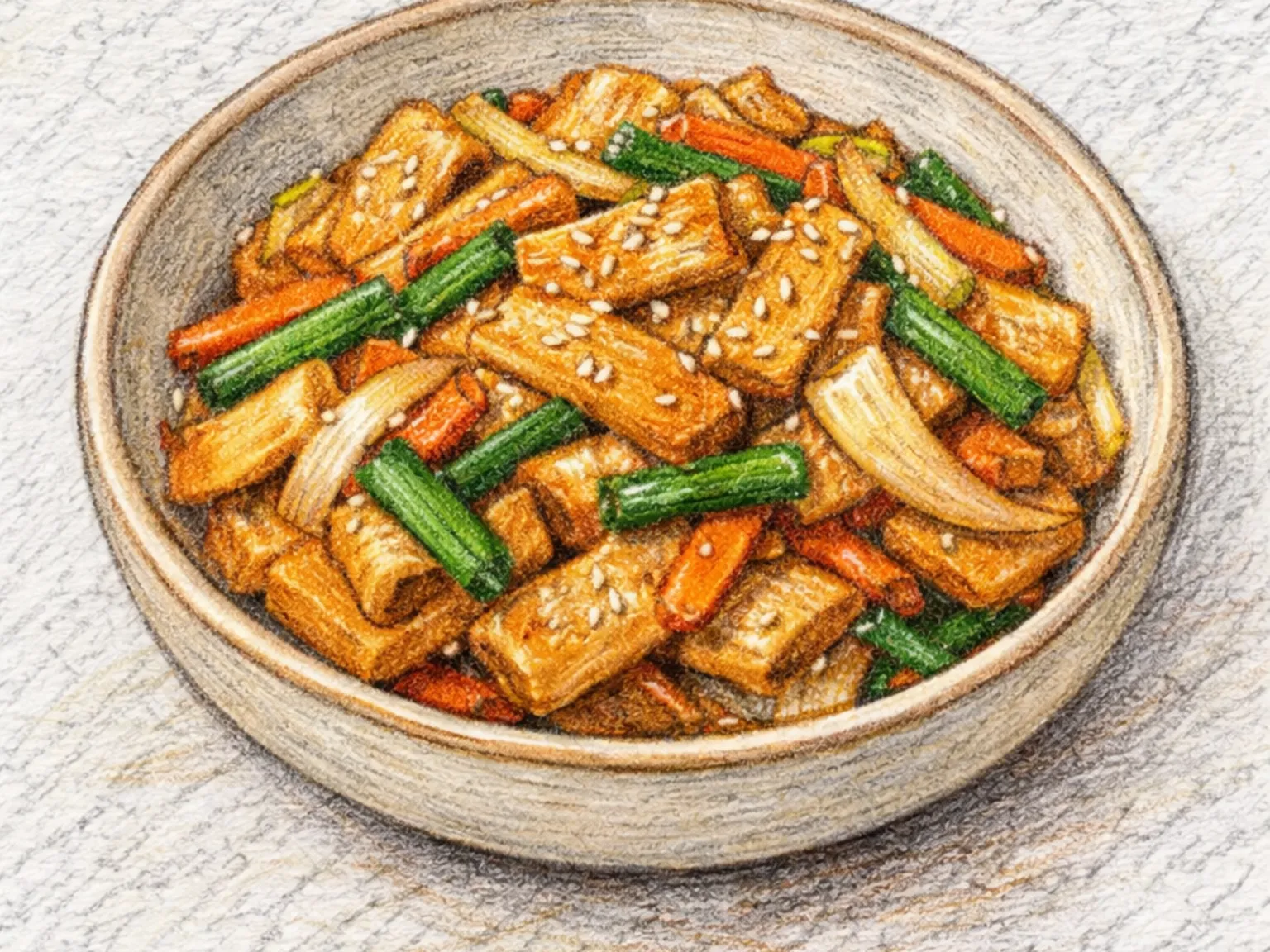
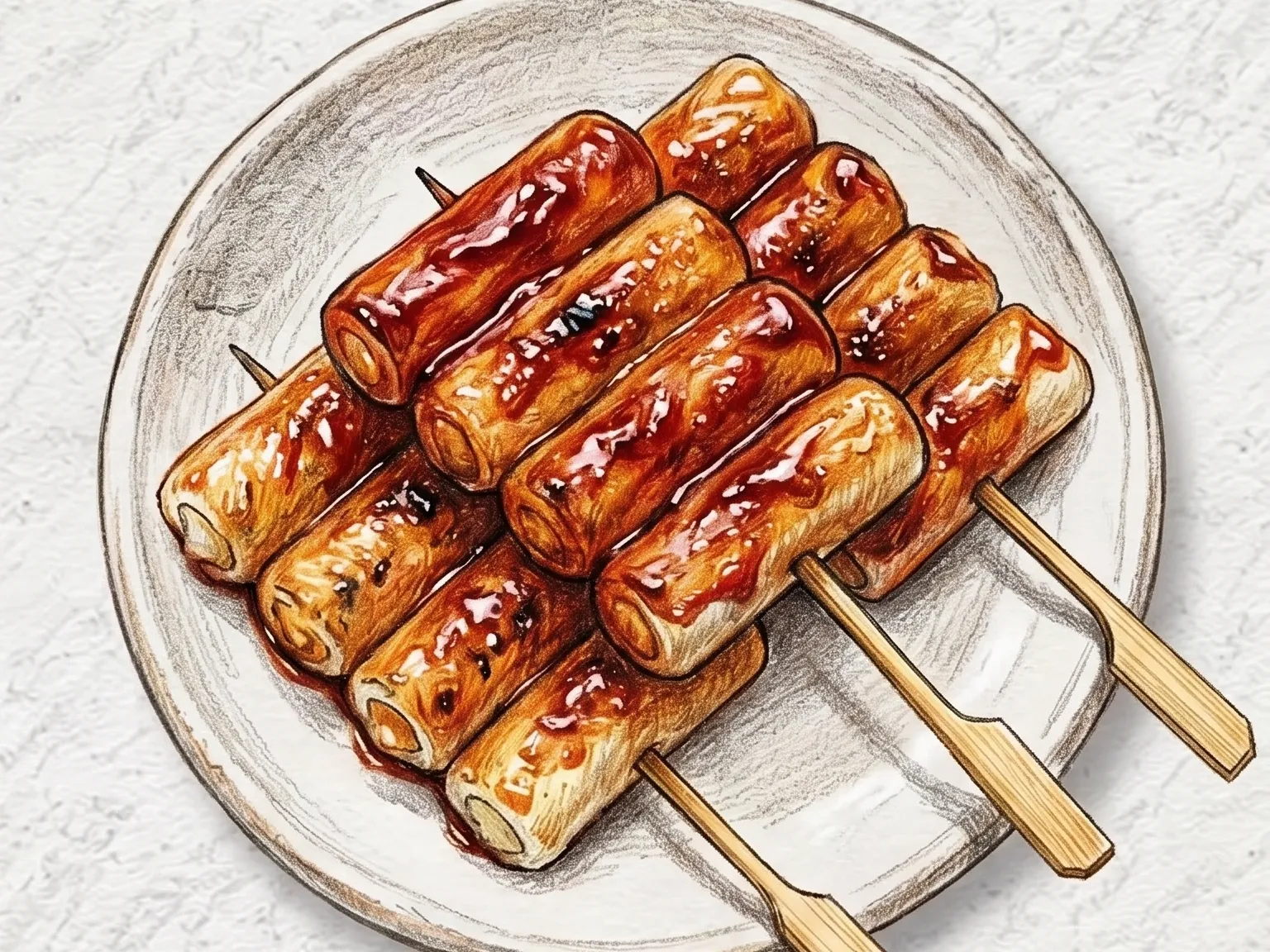
Eomuk kkochi gui are Korean grilled fish cake skewers, a staple of street food stalls that pair naturally with tteokbokki. Square fish cake sheets are folded in zigzag layers onto wooden skewers, grilled until the surface takes on color, then brushed with a glossy sauce of soy sauce, gochujang, sugar, and minced garlic. Folding the sheets before skewering multiplies the surface area that the sauce can grip and creates layered thickness that turns each bite into a dense, bouncy chew. Dry-grilling without oil first is important: it drives off moisture from the surface so that when the sauce is applied it clings and does not slide off. A second brief pass over heat after glazing caramelizes the sugars into a lacquered sheen and intensifies the savory aroma. Tucking pieces of green onion between the folds adds another layer of flavor -- the onion's moisture steams away as it grills, releasing a sweet, mellow fragrance that gradually infuses the fish cake.

Korean Soy Braised Chicken
Dak-jjim is bone-in chicken braised with potato, carrot, and onion in a sauce of soy sauce, sugar, and garlic. Juices released from the bones meld with the soy seasoning to form a glossy, concentrated gravy, and the vegetables absorb this liquid so they are seasoned all the way through. Sugar tempers the saltiness of the soy into a clear sweet-salty balance that coats every piece. Cooking with the lid on over medium heat first, then removing the lid to reduce the sauce, is what creates the glossy coating that defines a well-made dak-jjim. Served in a hot stone pot at the center of the table, it is one of the most familiar home-cooked dishes in Korean cuisine, well-suited for a shared family meal.

Korean Soy-Pickled Eggplant
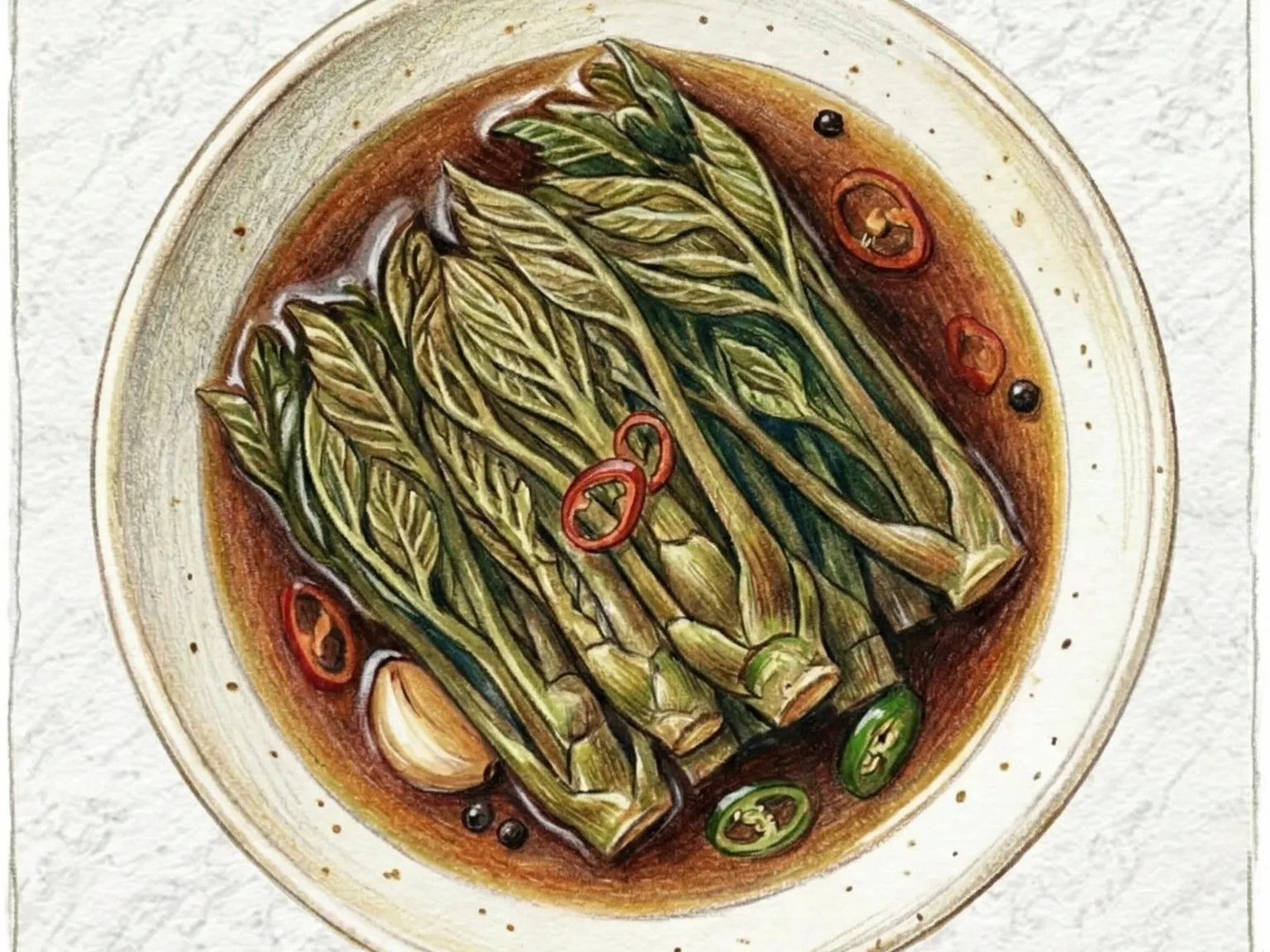
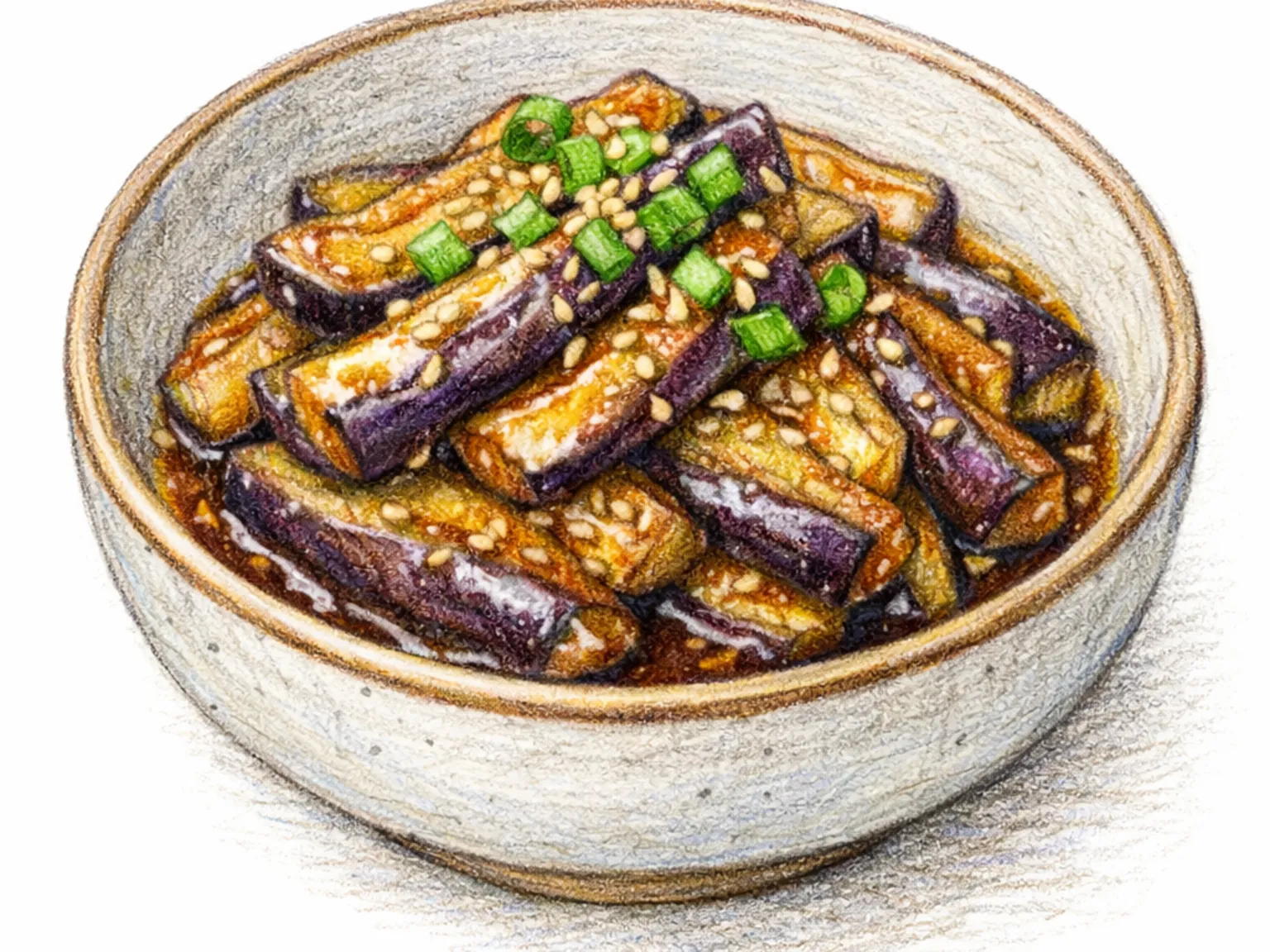
Gaji jangajji is a Korean-style pickled eggplant that starts by blanching the eggplant in boiling water for just over a minute to soften only the outer surface, leaving the inside intact. The briefly cooked eggplant is submerged in a pickling brine of soy sauce, vinegar, and sugar that has been brought to a boil and then cooled. The eggplant absorbs the brine rapidly and deeply, like a sponge, while holding a soft, yielding texture at its core. Vinegar sharpens the eggplant's otherwise flat flavor, and garlic together with cheongyang chili pressed into the brine build a low heat and quiet complexity that goes beyond basic preservation. Ready to eat after a single day in the refrigerator, this jangajji holds its texture for more than ten days when kept cold, which makes it a practical banchan to prepare in advance and pull out over multiple meals.

Korean Spicy Chewy Noodles
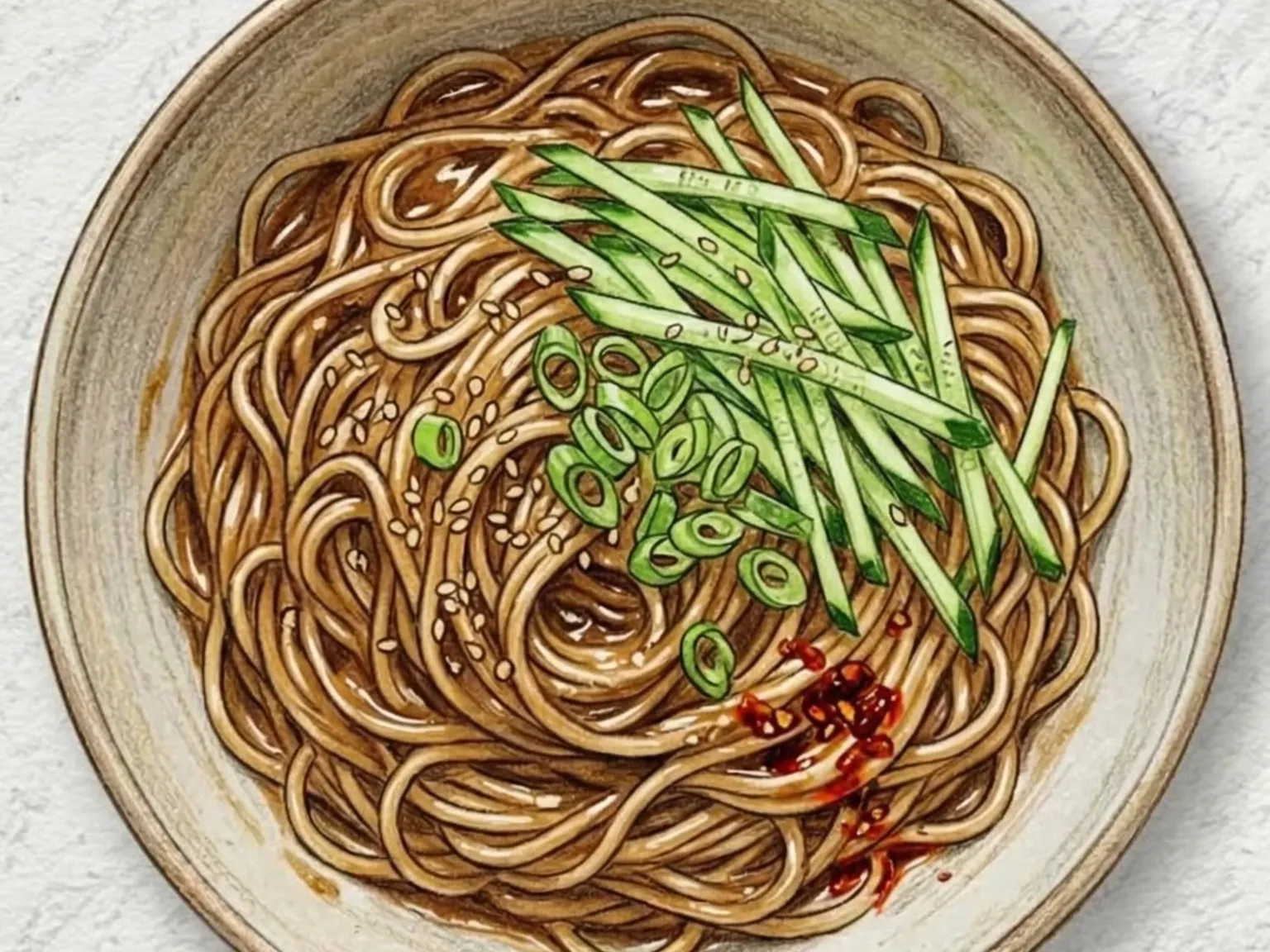
Jjolmyeon is a Korean cold noodle dish built around unusually thick, springy wheat noodles that were accidentally invented at an Incheon noodle factory in the 1970s. The noodles are boiled, rinsed in ice water to firm up their chewy texture, then dressed in a sweet-sour-spicy sauce made from gochujang, vinegar, sugar, soy sauce, and sesame oil. Shredded cabbage and julienned cucumber are chilled separately and piled on top, giving each bite a crisp contrast to the bold sauce. A halved boiled egg adds a creamy counterpoint to the heat. The dish is served cold and eaten after thorough mixing, making it a go-to summer meal and late-night snack across Korea.

Smoked Duck Chive Salad (Korean Chive Salad)
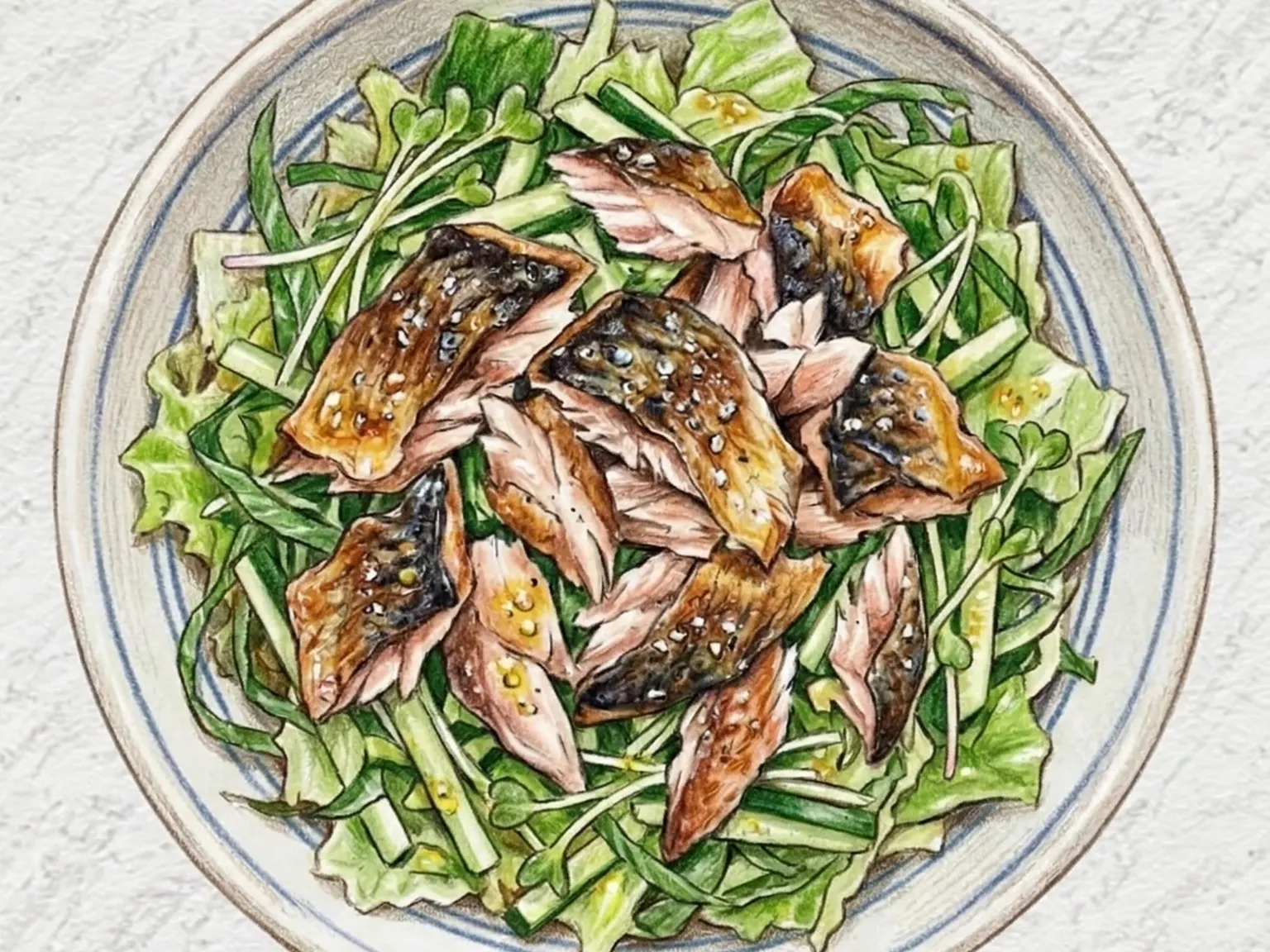
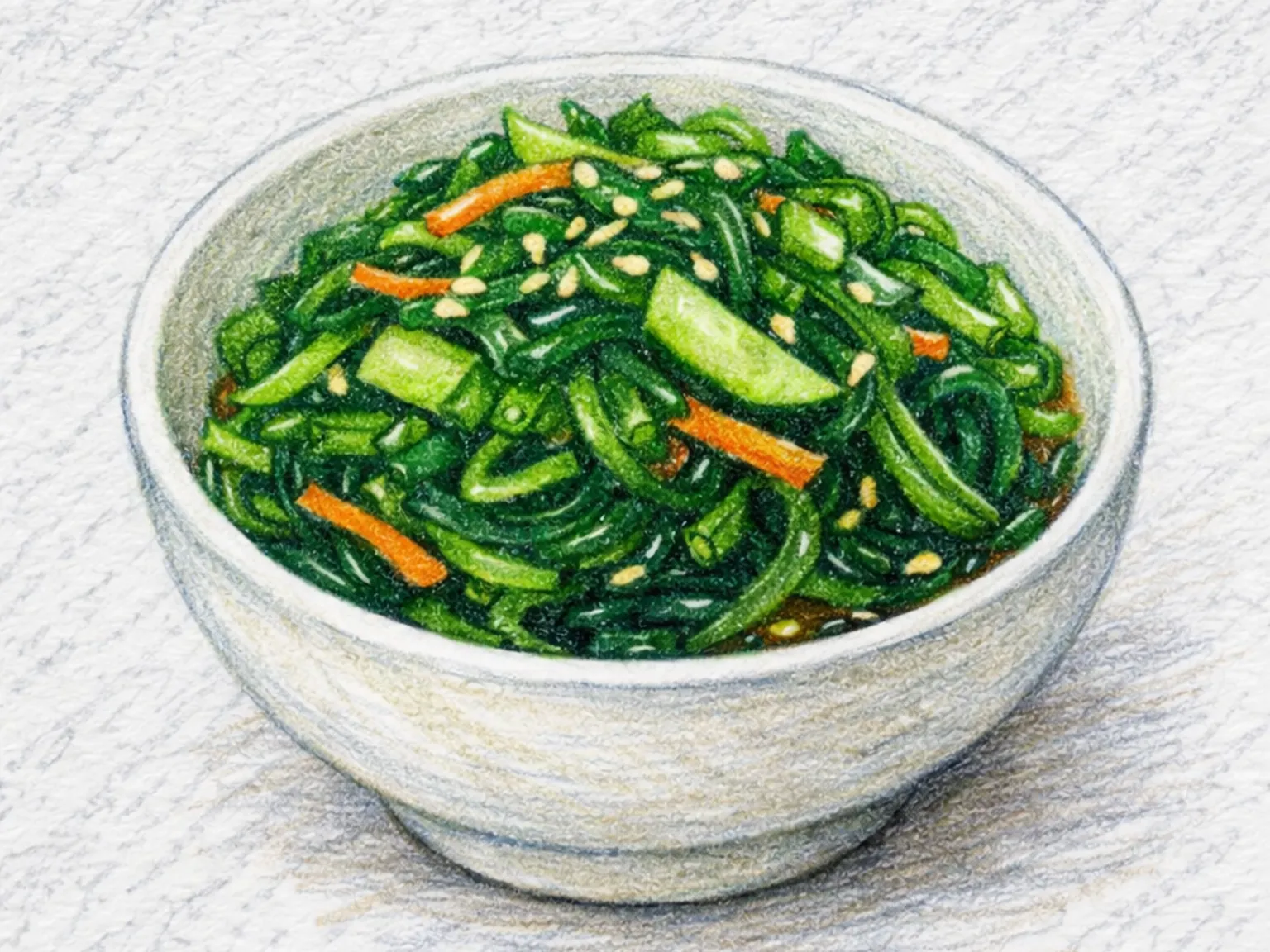
Smoked duck chive salad brings together pan-seared smoked duck and fresh Korean chives in a soy-mustard dressing that cuts through the meat's richness with precision. The duck is seared in a dry or lightly oiled pan for two to three minutes to render off the surface fat before it meets the other ingredients. Korean chives are cut to four-centimeter lengths and combined with shredded cabbage and sliced bell pepper, each element adding its own texture to the finished dish. A dressing of soy sauce, mustard, vinegar, honey, and sesame oil delivers a multi-layered hit of nose-clearing heat, sweet-sour acidity, and roasted depth that cleanses the palate after every fatty bite of duck. The cabbage provides firm, watery crunch against the chewy, smoke-infused meat, while toasted sesame seeds scatter a nutty fragrance across the top. Adding the chives at the very end keeps their herbal aroma vivid rather than grassy, and limiting the searing time prevents the duck from turning tough. The interplay between the dense smokiness of the duck and the sharp freshness of the chives is what gives this salad its character beyond a simple protein-and-greens combination.

Chashu Pork (Japanese Rolled Braised Pork Belly for Ramen)
Chashu pork takes its name from Cantonese char siu but is an entirely distinct preparation that evolved within Japanese ramen culture. A thick slab of pork belly is rolled into a tight log, tied at intervals with kitchen twine to hold its shape, then braised low and slow in a mixture of soy sauce, mirin, sake, and sugar. Over one and a half to two hours the connective tissue dissolves into gelatin, transforming the meat from firm to yielding - a texture that barely resists the chopstick and melts against the palate. The braising liquid reduces during cooking and lacquers the exterior in a deep amber glaze that clings without being syrupy. Sliced thin, each piece reveals a cross-section of spiraling fat and lean that is as much a visual signature as a textural one. The fat layers have softened to the point of near-transparency while the lean holds just enough structure to stay in one piece. Although chashu is most associated with ramen, where a few slices crown the bowl, it is equally at home over steamed rice as chashu-don, or sliced cold and eaten alongside beer. The leftover braising liquid is never wasted - soft-boiled eggs soaked overnight in it become ajitamago, the marinated soy eggs that are chashu's natural companion.

Korean Tofu with Spicy Soy Dressing
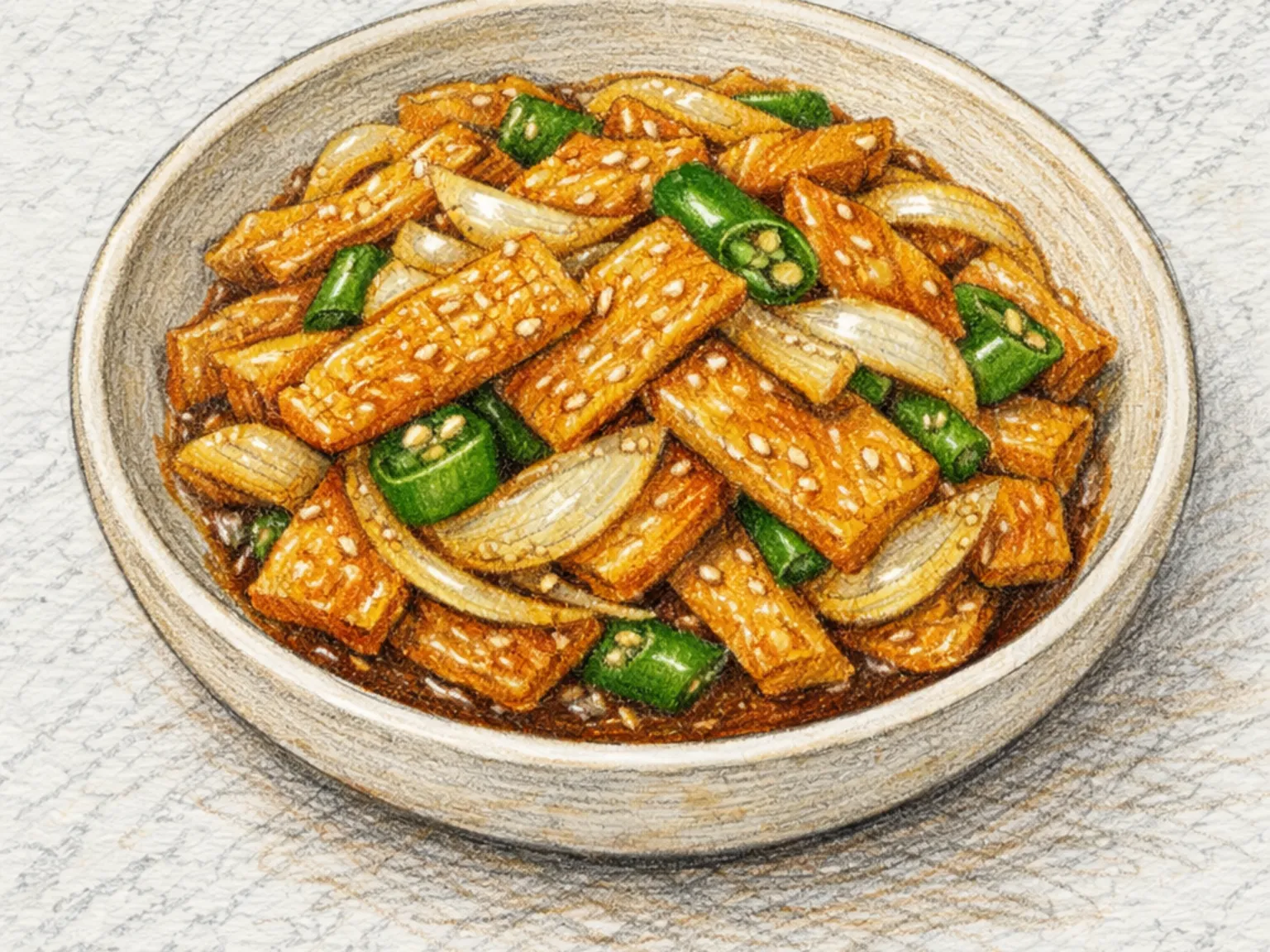
Dubu cheongyang ganjang muchim is a pan-fried tofu banchan that takes the classic dubu buchim in a sharper direction by centering the dressing on cheongyang chili, the hottest pepper in everyday Korean cooking. The most important part of the technique is getting a proper mahogany crust on the tofu. The pan must be hot before the tofu goes in, and the heat must stay high throughout. Too low a flame causes the tofu to steam in its own released moisture rather than sear, resulting in a soft surface with no textural contrast. When seared correctly, the outer layer becomes a firm, slightly chewy barrier while the interior stays silken and creamy. The dressing is raw and uncooked: soy sauce, minced cheongyang chili, scallion, garlic, and sesame oil combined without heat. It is poured over the tofu while the tofu is still steaming hot, which causes the raw garlic and chili to bloom slightly in the residual heat and release their full aromatic sharpness. Cheongyang pepper heat is clean and immediate rather than slow-building - it registers on the tongue quickly and fades without lingering the way dried gochugaru does. The dish is a natural pairing for mild, smooth soups like miyeok-guk, where the chili's sharpness provides a sharp counterpoint to the gentle seaweed broth. It also works alongside plain steamed rice as a standalone side.

Korean Eggplant Rice Bowl
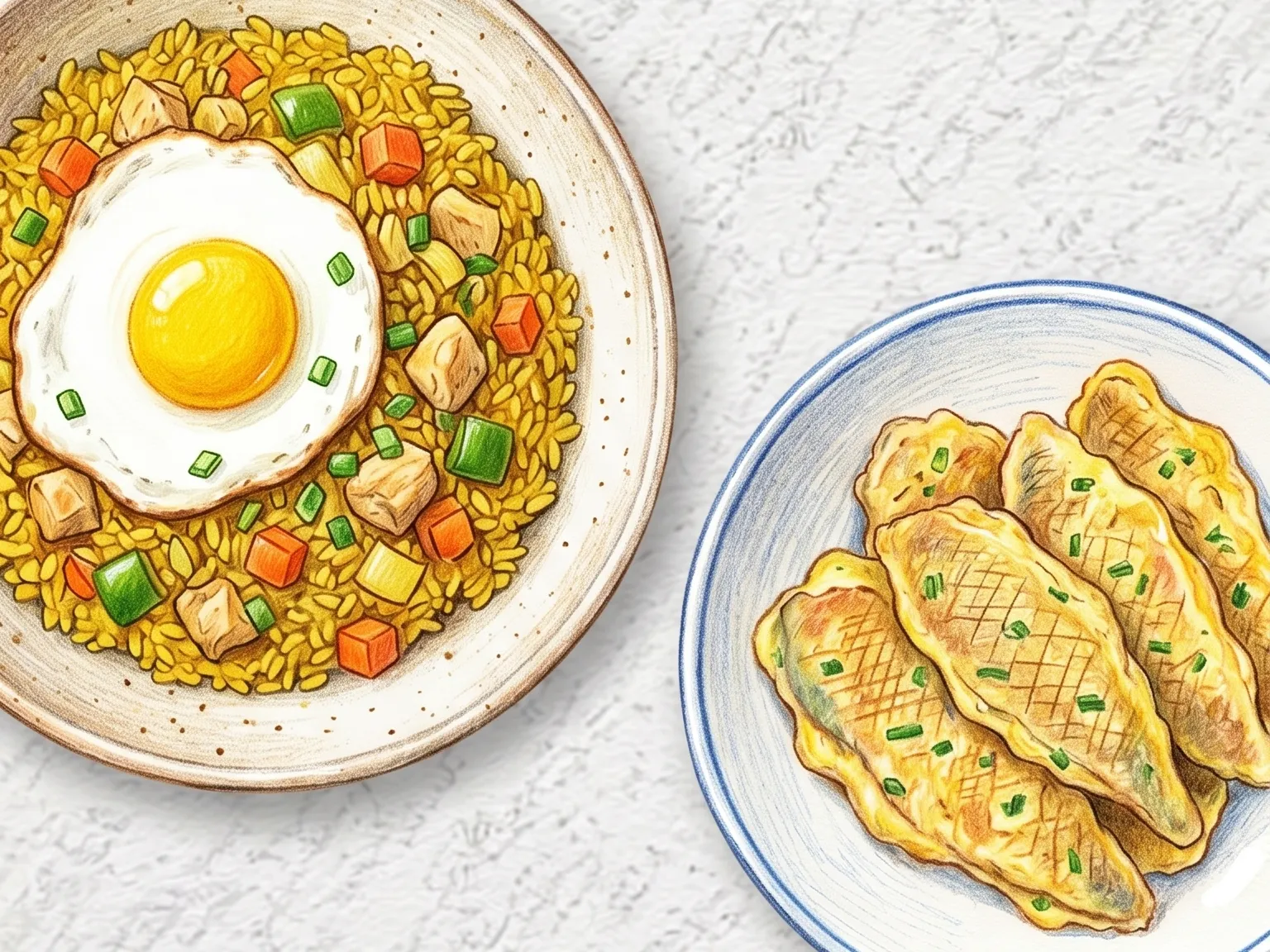
Gaji deopbap is a Korean eggplant rice bowl where sliced eggplant is pan-fried quickly in generous oil and then braised briefly with ground pork in a soy-based sauce. Soaking the eggplant in salted water for five minutes before cooking draws out bitterness and moisture. High heat is essential - eggplant absorbs oil rapidly, and fast searing creates a lightly crisp exterior while the inside collapses into a silky, almost creamy texture. The soy, sugar, and garlic sauce reduces in two minutes into a dark glaze that coats each piece, while the ground pork adds a savory depth that makes the dish feel more substantial. The sauce pools around the base of the rice and soaks into the grains, ensuring consistent flavor throughout the bowl. Green onion and sesame oil finish the dish. Summer eggplant, when the flesh is at its softest and most yielding, produces the best results. Kept cold, the eggplant holds its texture well enough to pack as a side dish for lunch.

Korean Chicken Breast and Celery Stir-fry
Bite-sized chicken breast pieces are marinated in soy sauce and minced ginger for ten minutes, then stir-fried over high heat with diagonally cut celery and thinly sliced onion. The ginger penetrates the meat during the brief rest, suppressing any bland poultry odor while leaving a bright, peppery note in the background. Soy sauce hitting the hot pan triggers a Maillard reaction on the chicken surface, building a thin layer of caramelized flavor that keeps the interior moist. Celery goes in only during the last two minutes so its stalks retain their crunch; including the leaves adds a noticeably herbal finish that sets this apart from standard chicken stir-fries. A teaspoon of oligosaccharide syrup gives the sauce just enough body to cling to each piece evenly rather than pooling at the bottom of the pan, and sliced red chili scattered in at the end contributes visual brightness more than significant heat. At 295 calories and 36 grams of protein per serving, this dish fits naturally into a post-workout meal or a calorie-conscious lunchbox without any sense of compromise.

Korean Gochujang Honey Dakgangjeong
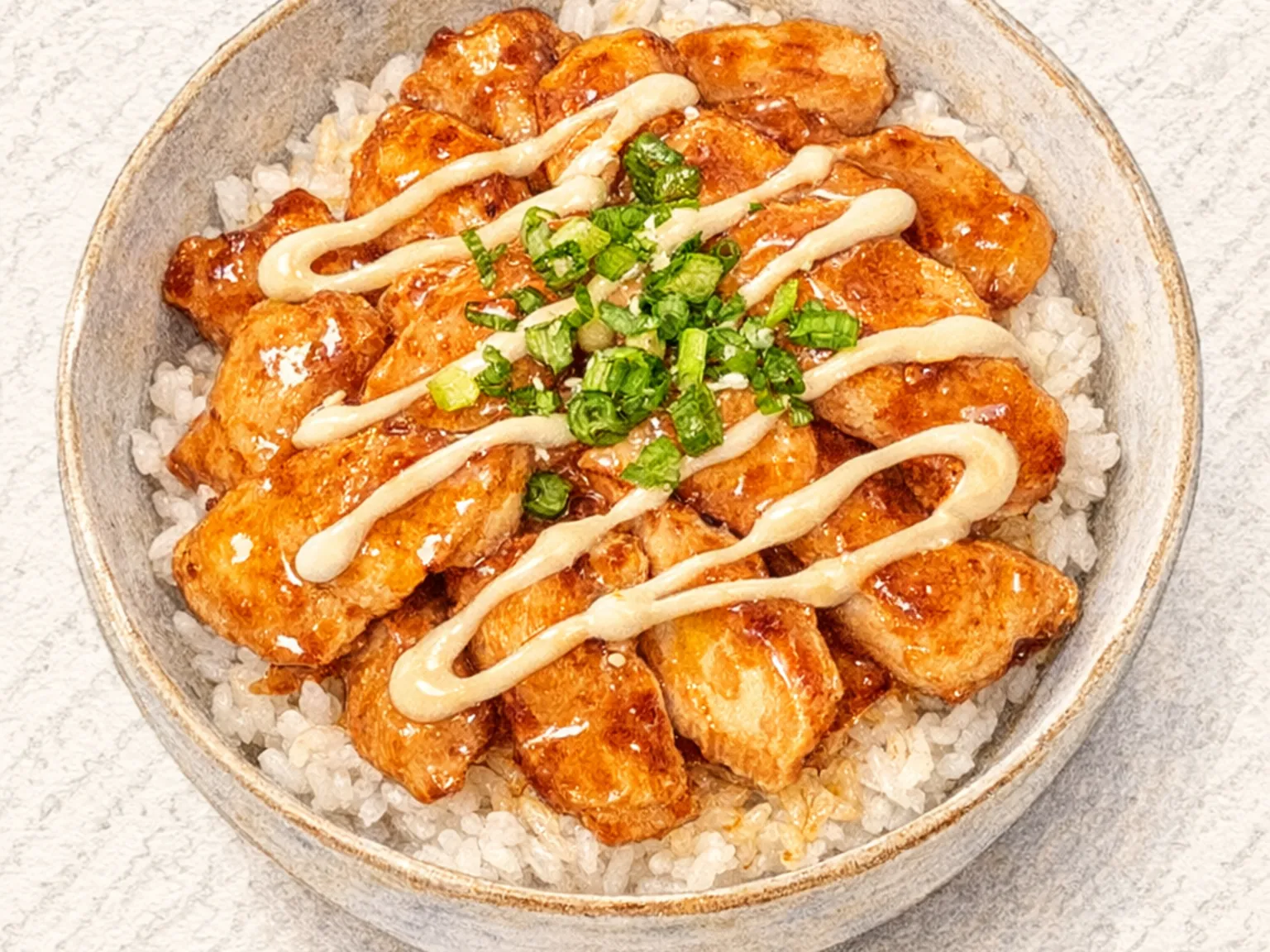
Gochujang honey dakgangjeong starts with bite-sized boneless chicken thigh pieces coated in potato starch and double-fried, first at 170 degrees Celsius and then at 180 degrees, before being tossed in a glaze of gochujang, honey, soy sauce, and garlic. The two-stage frying builds a rigid starch shell that stays crunchy even after the sauce is applied, while the natural fat in thigh meat keeps the interior juicy throughout the process. Gochujang's fermented heat contrasts directly with honey's thick sweetness, and soy sauce anchors the salt level so neither sweetness nor spice dominates. Garlic sharpens the aroma of the sauce, and sesame seeds scattered at the end add a finishing layer of nuttiness. The sauce must be reduced quickly on high heat, under one minute, to achieve a glossy coat without burning. The chicken should be sauced and eaten immediately after frying for the maximum contrast between the crackling crust and the tender, glazed interior.

Korean Grilled Eggplant (Soy Garlic Glazed Charred Eggplant)
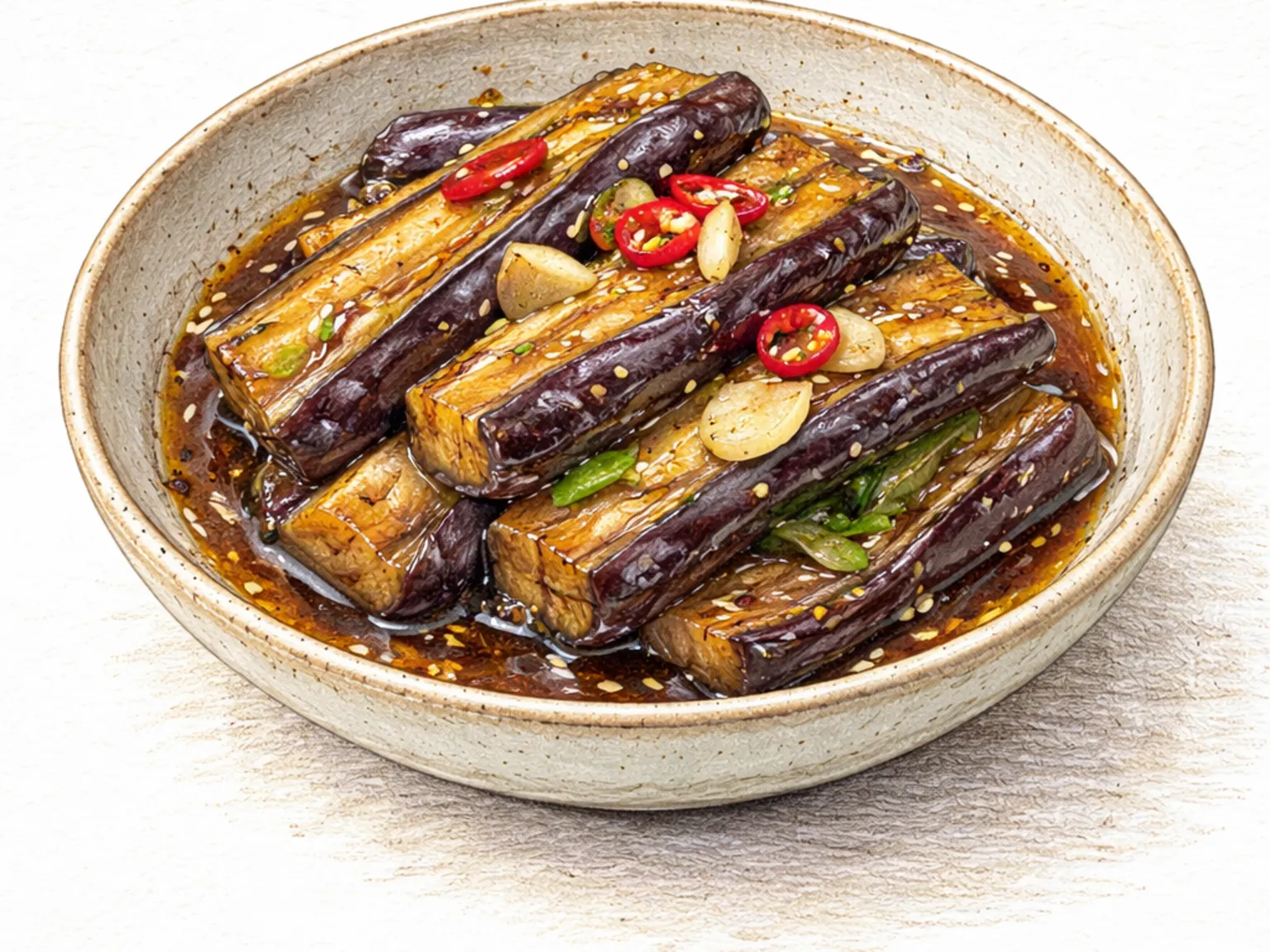
Gaji-gui is Korean grilled eggplant, halved lengthwise, scored, and cooked slowly over medium heat until the flesh turns soft and creamy while the skin side holds a slight firmness. Salting the cut surface and resting it for ten minutes before cooking pulls out bitter moisture through osmosis and also reduces how aggressively the eggplant absorbs oil during grilling. The scoring pattern is functional as well as visual, creating channels that allow heat to penetrate into the thick interior so the eggplant cooks through evenly rather than remaining hard at the center while the outside chars. Covering the pan after laying the eggplant cut-side down traps steam and gently cooks the flesh from within. A sauce of soy sauce, sesame oil, Korean chili flakes, minced garlic, and sliced green onion is spooned over the grilled surface while the eggplant is still hot, and the residual heat releases the fragrance of garlic and sesame oil while the liquid seeps into the scored channels and seasons the interior. Toasted sesame seeds scattered over the top add a final layer of nuttiness that gives the otherwise mild eggplant the complexity needed to hold its own as a proper banchan.

Korean Braised Chicken with Radish
This braise combines bone-in chicken pieces with Korean radish and potato in a soy-and-gochugaru sauce. The radish absorbs both the chicken stock and the spiced seasoning, turning amber on the outside while going translucent within. Potato edges break down during the long simmer, thickening the sauce into a sticky glaze. Gochugaru and black pepper build a layered heat that soy sauce and sugar round off, so the dish is assertively spicy without being harsh. Reducing the liquid until it barely coats the bottom concentrates all the flavors onto the surface of each piece.

Korean Fresh Eggplant Kimchi
Gaji kimchi is a fresh eggplant kimchi that requires no fermentation and can be eaten immediately after preparation. Eggplant is steamed until it becomes pliable and soft throughout, then torn by hand along the grain rather than cut with a knife. Tearing along the natural fibers creates a rough, open surface that allows the seasoning of gochugaru, fish sauce, garlic, and sesame oil to penetrate deep into the flesh rather than merely coating the outside. The result is an even distribution of spicy, salty flavor throughout every bite rather than concentrated only at the surface. Scallions folded in at the end add a fresh, sharp lift, and toasted sesame seeds provide a nutty, fragrant finish. Because no fermentation is involved, this kimchi is best suited to seasons when eggplant is at its peak, particularly summer, when the vegetable is widely available and a quick, no-cook banchan is most welcome. Piled over a bowl of cold leftover rice and mixed together, the seasoning soaks into the grains while the soft steamed eggplant adds body, making it a satisfying one-bowl meal without needing additional soup or side dishes.

Korean Kimchi Bulgogi Udon
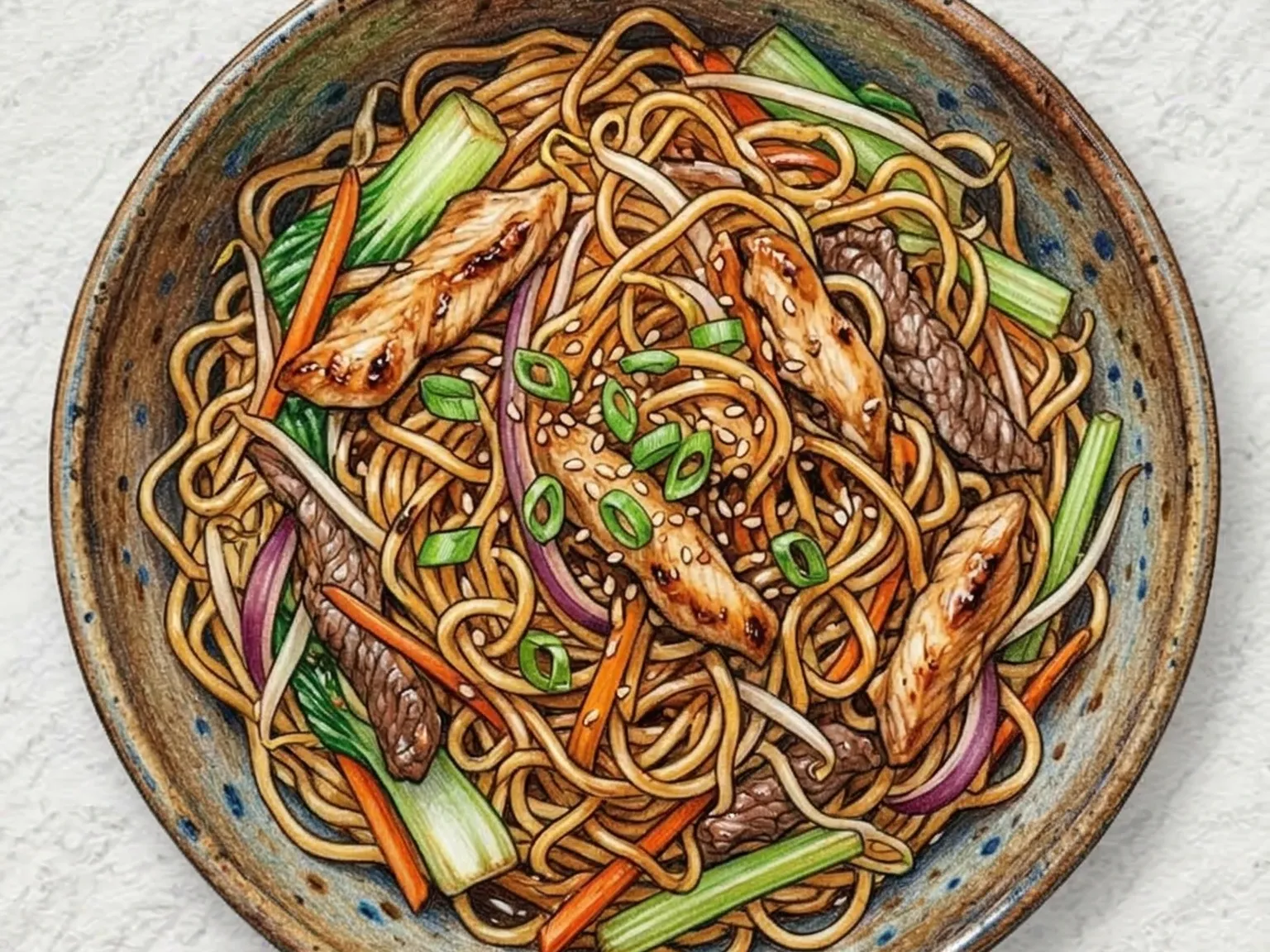
Kimchi bulgogi udon is a Korean stir-fried noodle dish that brings together the sharp acidity of well-fermented kimchi and the sweet, savory depth of thinly sliced bulgogi beef, all coating thick, round udon strands. The beef is seared quickly over high heat to develop browning on the surface before onion and kimchi join the pan and cook until nearly all their moisture evaporates, concentrating both flavor and color. A sauce of soy sauce, gochujang, and sugar goes in next, followed by briefly blanched udon noodles that get tossed on maximum heat for about one minute so every strand absorbs the sauce while retaining a firm bite. The thick cross-section of udon holds bold, clingy sauces better than thinner noodles and creates a satisfying, filling meal without any broth. When kimchi is especially sour, a small addition of sugar or a quick rinse of the kimchi before cooking brings the acidity back into proportion. Finishing with sliced scallion and toasted sesame seeds adds color and a nutty lift that completes the dish.

Tofu Avocado Salad (Silken Tofu and Avocado Sesame Bowl)
Tofu avocado salad pairs pan-seared firm tofu with ripe avocado over a bed of mixed greens, dressed in soy sauce, sesame oil, and lemon juice. Pressing the tofu thoroughly before searing allows the surface to develop a golden Maillard crust that holds its shape even after tossing with the dressing. The avocado's creamy fat contrasts with the burst of juice from halved cherry tomatoes, creating textural variety in every bite. The dressing layers three dimensions - soy sauce for salinity, sesame oil for nuttiness, and lemon juice for acidity - giving depth to otherwise mild ingredients. Cutting the avocado just before serving prevents oxidation and keeps the color clean.

Cheung Fun (Cantonese Steamed Rice Noodle Rolls with Shrimp)
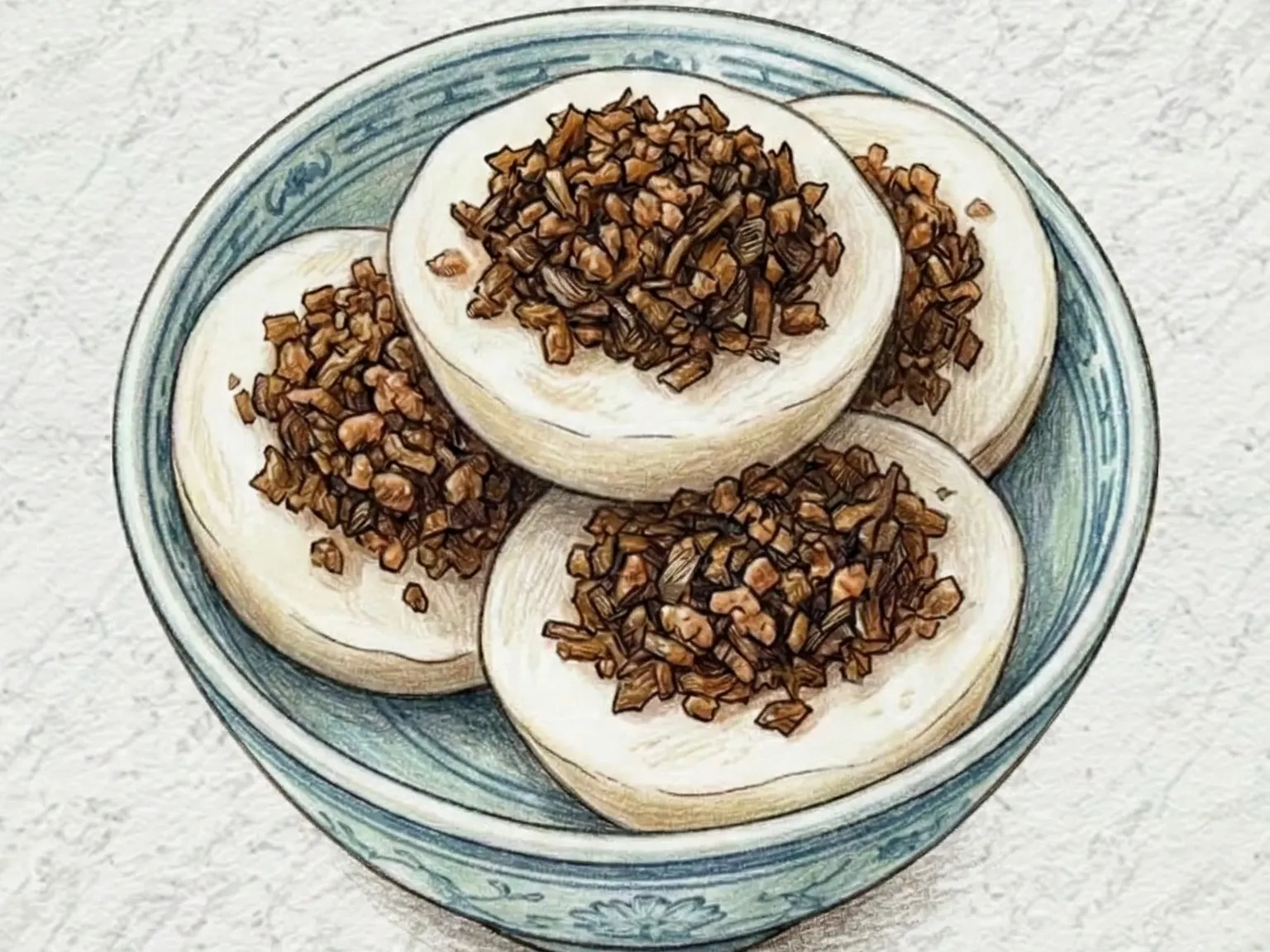
Cheung fun -- rice noodle rolls -- are a cornerstone of Cantonese dim sum, present on every yum cha table from Hong Kong's tea houses to Guangzhou's morning restaurants. A thin batter of rice flour and tapioca starch is poured onto an oiled steel plate, steamed for under a minute, then peeled off as a translucent, trembling sheet. The sheet is rolled around fillings such as shrimp, char siu, or beef, or served plain, its own silky texture being the point. The ratio of rice flour to starch determines everything: too much rice flour and the sheet is stiff; too much starch and it becomes gummy. A lightly sweetened soy sauce is poured over the rolls at the table, pooling in the plate and coating each piece as it is lifted with chopsticks. Street vendors in Hong Kong steam cheung fun on pushcarts, peeling each sheet from a metal drawer with a flat scraper in a motion that draws onlookers. For many dim sum regulars, it is the first dish ordered and the benchmark by which a restaurant is judged.

Korean Braised Tofu in Spicy Sauce
Dubu-jorim is one of the most reliably prepared tofu dishes in Korean home cooking, made from ingredients that are almost always on hand, yet the sequence of steps makes a significant difference to the result. Before the tofu ever touches the braising sauce, it must be fried in a dry pan until each face develops a thin, golden crust. That crust serves two purposes simultaneously: it keeps the tofu slabs intact as the sauce reduces around them, and it acts as a permeable layer through which the seasoning gradually penetrates toward the center during braising. The sauce - soy sauce, gochugaru, minced garlic, sugar, and water - simmers around the tofu for eight to ten minutes until it has reduced by roughly half and thickened into a glossy, spicy-sweet glaze that coats the exterior in a dark, caramelized layer. The finished tofu has three distinct zones in every slice: the outermost layer where the sauce has caramelized and taken on a slightly chewy quality, a middle band where the seasoning has fully soaked in, and a white, creamy center that provides a bland, soft contrast to the intensely flavored exterior. All three zones are present in a single bite, which is what makes this dish more texturally interesting than a standard braise. Korean home cooks typically double the recipe and refrigerate half for weekday meals, where the flavors deepen further after a night in the cold.

Korean Braised Short Rib Rice Bowl
Galbi deopbap is a Korean rice bowl topped with beef short ribs slow-braised in a soy, sugar, and grated Asian pear marinade until the connective tissue dissolves and the meat separates from the bone at the lightest touch. Grated pear serves a dual purpose in the braise: the enzymes break down tough muscle fibers while the juice introduces a gentle fruit sweetness that sets the dish apart from heavier, wine-based braises. Grated onion dissolves completely into the braising liquid over the long simmer, deepening the savory foundation without leaving visible pieces. As the liquid reduces over one hour or more, it transforms into a dark, glossy sauce that coats the ribs and drips down onto the rice below. Spooning the sauce generously over the steamed rice allows each grain to absorb the soy-sweet glaze from the bottom up, making the rice itself as flavorful as the meat. Despite the long cooking time, the dish demands minimal active attention because the braise works inside the pot without stirring. Scattered sliced green onion on top provides a crisp, fresh contrast against the richness of the braised ribs.

Stir-fried Bok Choy (Bok Choy with Garlic and Oyster Sauce Glaze)
Halved bok choy is stir-fried with sliced garlic over high heat for two minutes, then finished with oyster sauce and soy sauce in a one-minute reduction that glazes every leaf and stem. The thick white stalks need significantly more heat than the tender green leaves, so placing them cut-side down first or adding the leaves halfway through prevents the greens from wilting to mush while the stems remain undercooked. Oyster sauce lends a concentrated umami depth to the otherwise mild vegetable, and a splash of 40 milliliters of water helps the sauce flow between the tightly packed stems so seasoning reaches every layer rather than coating only the outer surfaces. Black pepper and sesame oil are added only after the pan leaves the flame so their volatile aromas stay intact on the plate. Bok choy continues releasing moisture after it is plated, so serving immediately is critical to preserving the contrast between crisp stalks and just-wilted leaves. Waiting even a few minutes allows the released liquid to dilute the sauce and soften the texture. At 105 calories per serving, this is a light side dish that still provides meaningful amounts of vitamin A and calcium. For a Sichuan-style variation, replacing a portion of the oyster sauce with doubanjiang adds a spicy, reddish character without requiring additional chili oil. The dish is common across East and Southeast Asian home kitchens under various names but the technique of separating stalk and leaf cook times is universal to cooking bok choy well.

Korean Meat Mandu (Pork and Beef Dumplings with Tofu Filling)
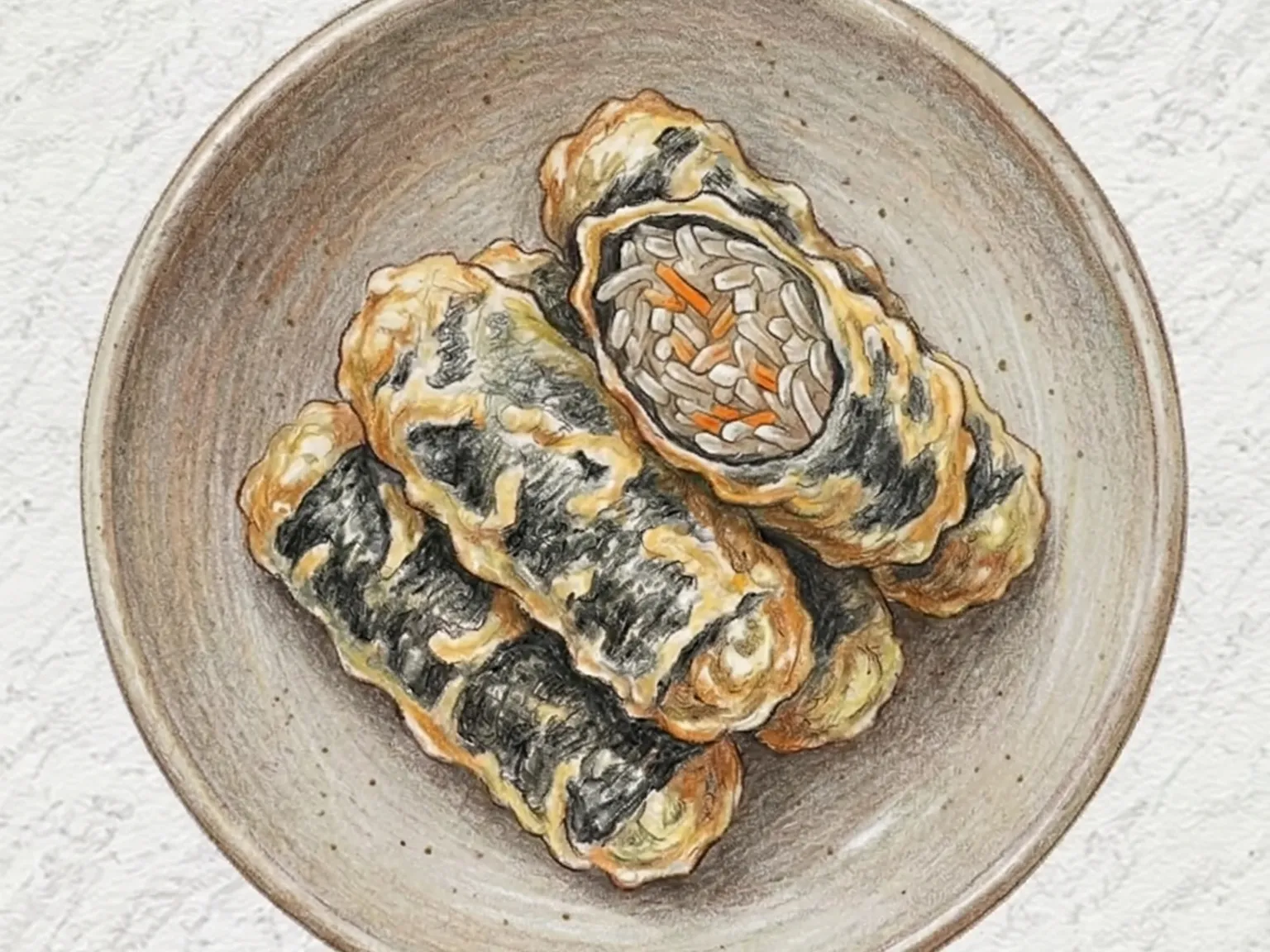
Gogi-mandu is a Korean meat dumpling filled with ground pork, ground beef, squeezed tofu, onion, scallion, and garlic, seasoned with soy sauce and sesame oil. Kneading the filling in a single direction develops myosin bonds in the meat proteins, giving the mixture a sticky consistency that helps it hold together and retain moisture during cooking. The pork contributes fat and a mild sweetness, the beef adds a deeper, more savory flavor, and the tofu, wrung dry before mixing, softens the overall texture and prevents the filling from becoming too dense. These dumplings can be steamed in a basket for a clean, light result, or cooked using the steam-then-fry method: a splash of water in a covered pan brings them through with heat, then the lid is removed and the bottoms are crisped directly on the pan surface, producing a golden, crunchy base that contrasts with the soft filling above.

Korean Grilled Pork Skirt Meat
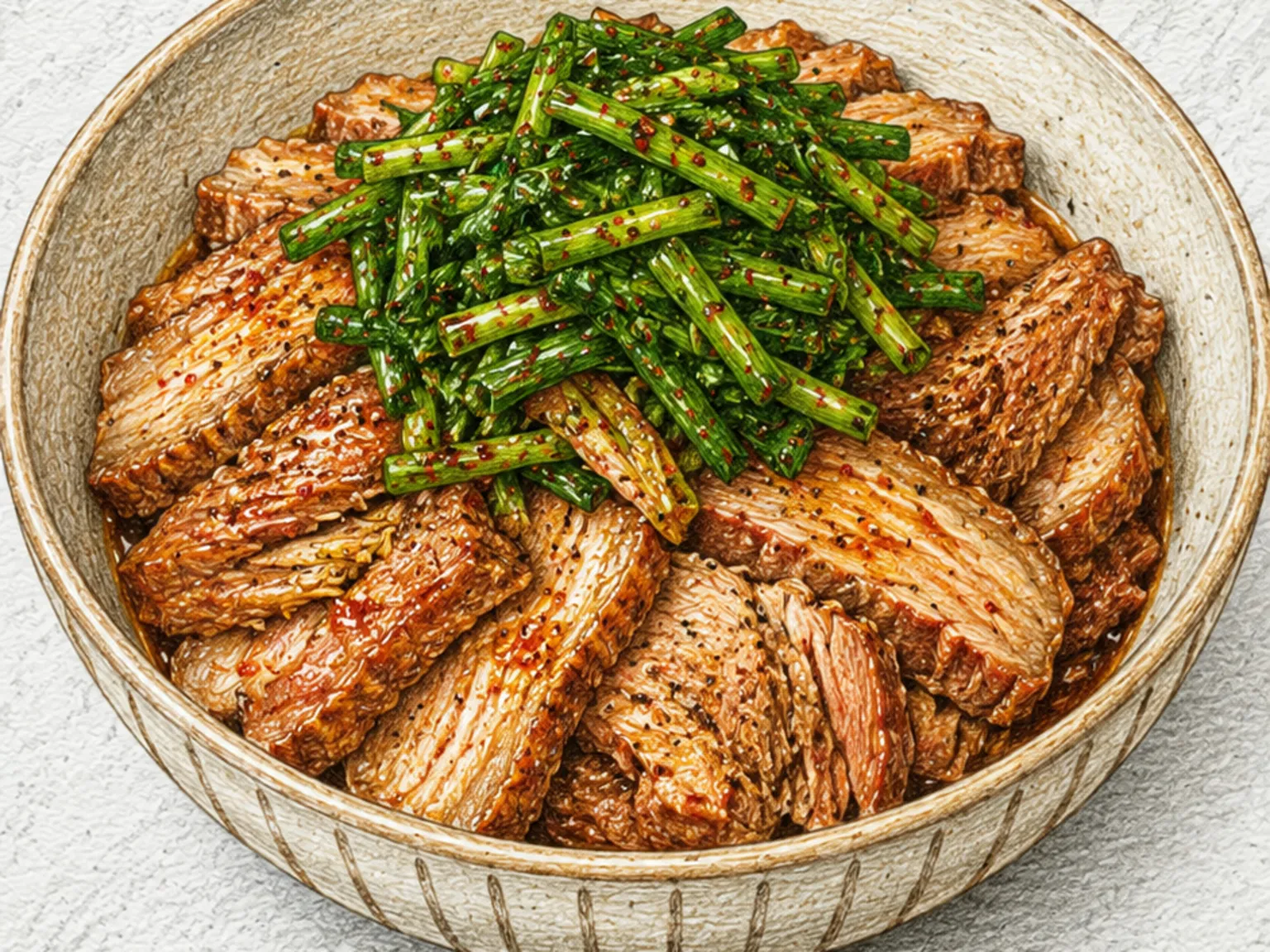
Galmaegisal-gui consists of grilled pork skirt steak harvested from the diaphragm muscle of the pig. This specific cut is recognized in Korean cuisine for its scarcity, as a single animal yields only between 200 and 300 grams of meat. Due to this limited supply, the cut is categorized as a specialty item within Korean barbecue establishments rather than a standard staple. Structurally, the meat resembles beef skirt steak because it features a very pronounced grain. This physical characteristic results in a texture that provides a substantial and firm chew. Additionally, the cut carries a specific fatty aroma that is characteristic of pork yet distinct from other common grilled parts of the animal. Before the meat reaches the heat, it typically receives a light seasoning composed of soy sauce, minced garlic, and cracked black pepper. The cooking process requires a high temperature, using either a bed of natural charcoal or a heavily heated pan to sear the exterior rapidly. Because the slices are relatively thin, the preparation involves keeping each side over the maximum heat source for less than sixty seconds. This timing ensures that the surface undergoes the Maillard reaction to achieve caramelization without drying out the interior. Ideally, the center of the meat remains slightly pink, reaching a medium level of doneness. If the cooking time extends beyond this window, the muscle fibers tend to contract and tighten significantly. Such overcooking removes the springy and resilient texture that defines the quality of this particular cut. When prepared over charcoal, the smoke particles are able to enter the juices of the pork, which produces a complex layer of smokiness. This specific flavor profile is difficult to achieve when using a standard gas or electric heating element. Once removed from the grill, the hot slices are traditionally dipped into a small saucer containing sesame oil and coarse grains of salt. This combination allows the toasted scent of the oil to blend with the smoky residue from the charcoal. For the final step of the meal, the meat is often placed inside a wrap made of fresh perilla or lettuce leaves. The addition of these greens introduces a botanical flavor that balances the inherent richness of the grilled pork.

Korean Braised Chicken Feet
Dakbal-jjim braises chicken feet in a sauce built from gochujang, gochugaru, soy sauce, and sugar until the liquid reduces to a thick, glossy coating around each foot. As the skin and cartilage cook down over time, their collagen converts to gelatin and the feet develop a chewy, sticky texture that is the central appeal of the dish. Gochujang and gochugaru each bring heat from a different angle, one deep and fermented and the other bright and direct, while sugar introduces a caramel-like sweetness that balances the heat load. Cooking wine added early removes the gaminess specific to chicken feet. By the time the sauce has fully reduced it clings to every surface in a deep red glaze, and the finished feet carry both intense seasoning and a pronounced chew that makes them a natural pairing with cold beer or a bowl of rice.