Charim

2686 Korean & World Recipes

2686+ Korean recipes, clean and organized. Ingredients to instructions, all at a glance.

Recipes with soy sauce

24 recipes

Buy soy sauce
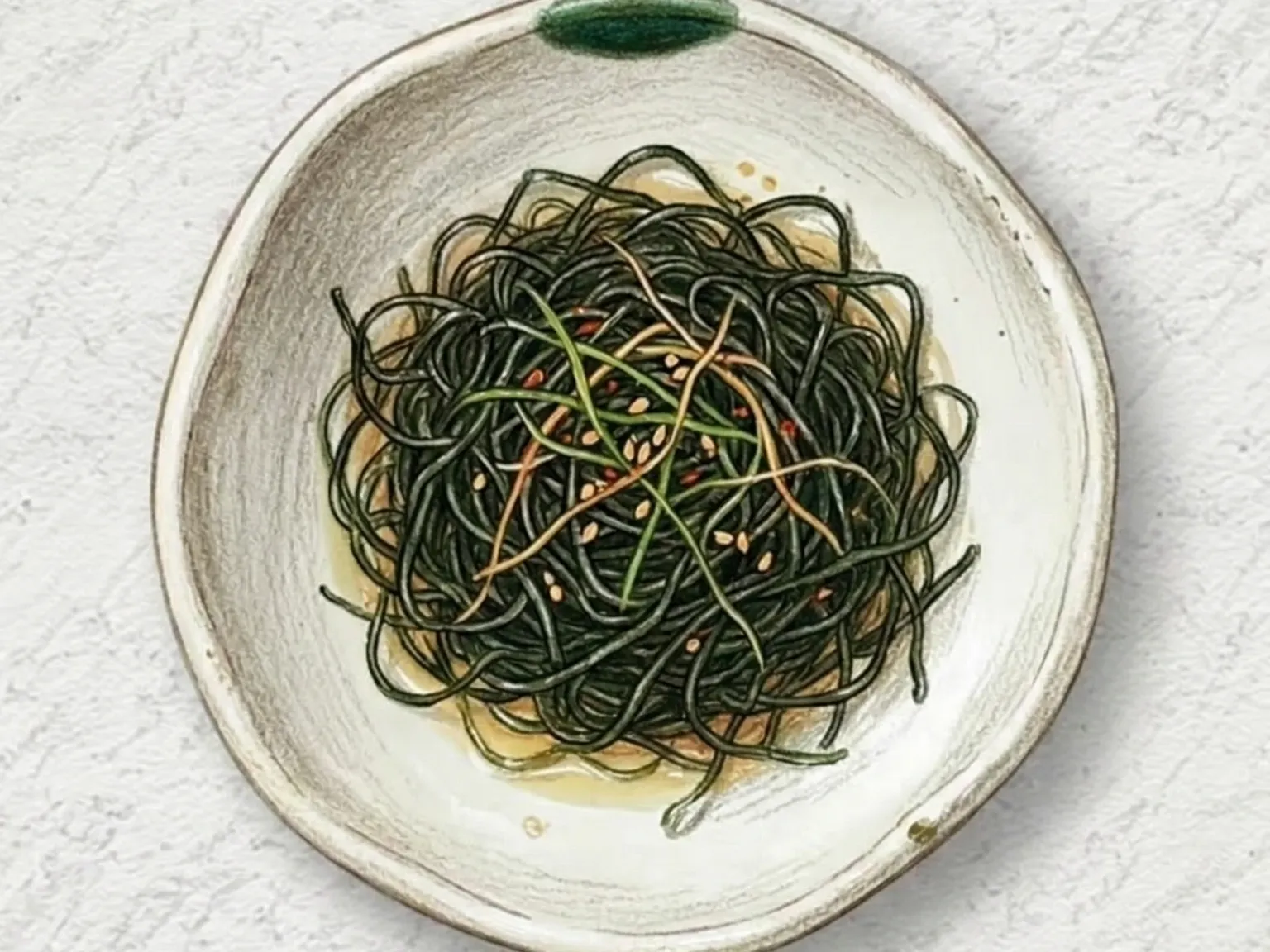
Korean Soy-Pickled Green Chili Peppers
KimchiEasy

Korean Soy-Pickled Green Chili Peppers

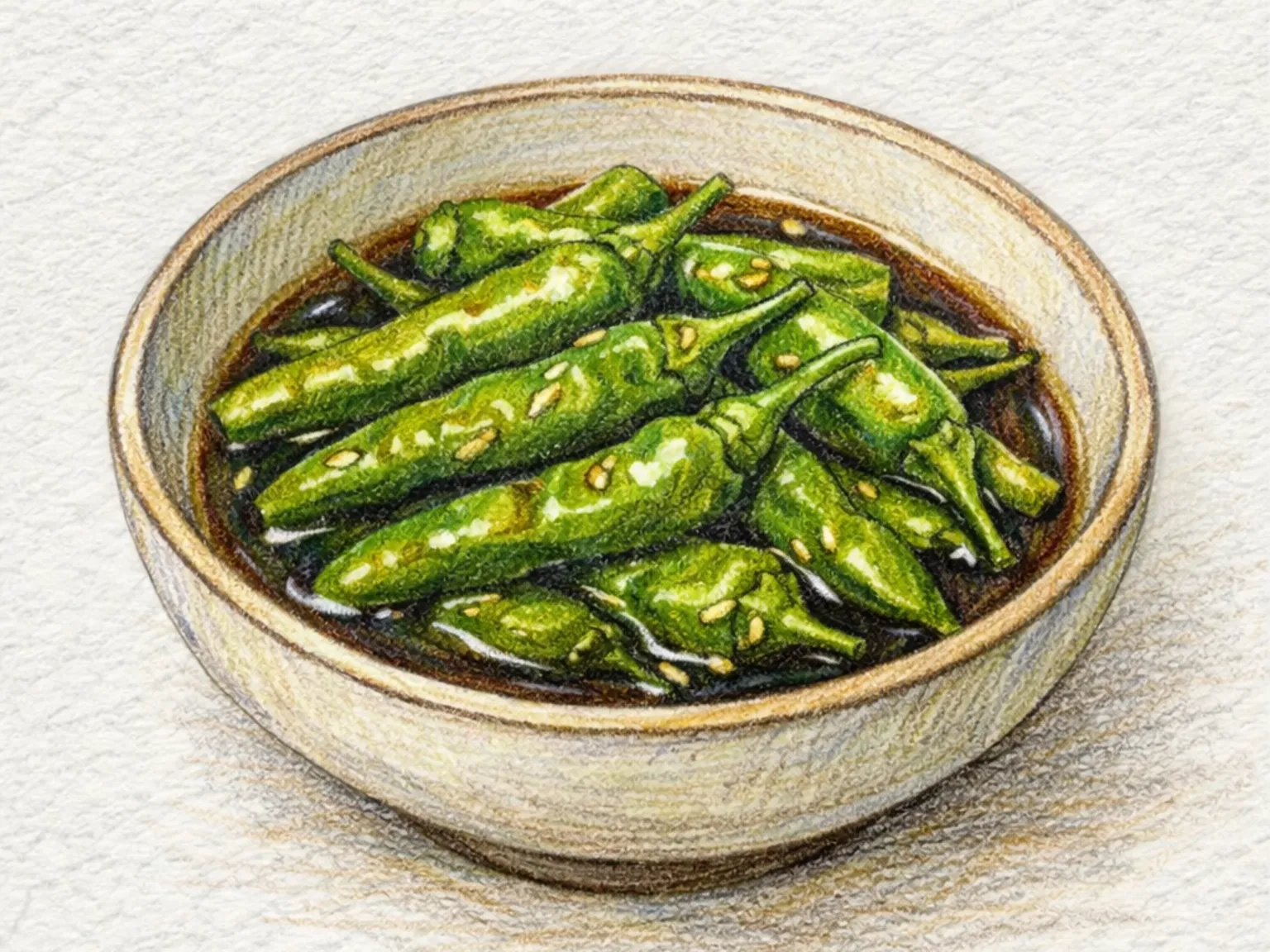
Gochu soy jangajji is a traditional Korean pickle made by packing whole green chili peppers tightly into a glass jar, then pouring a freshly boiled brine of soy sauce, rice vinegar, sugar, and water directly over them while still steaming hot. The heat from the brine lightly cooks the outer skin of each pepper, nudging the raw sharpness down by one level while the flesh inside stays firm and crisp, so every bite delivers a clean hit of soy saltiness alongside the chili's lingering heat. Sliced onion tucked into the jar contributes a gentle background sweetness that balances the brine, and whole garlic cloves build an additional aromatic layer that deepens over the days of pickling. On the second day after packing, the brine is drained off, brought back to a full boil, and poured over the peppers again - this second-boil method eliminates residual bacteria and extends refrigerator life to a full month, making it a practical staple that can be made once and served throughout the week.

🍱 Lunchbox
Prep 15minCook 8min4 servings
Kimchi Butter Udon (Tangy Kimchi Stir-Fried in Butter)
NoodlesEasy

Kimchi Butter Udon (Tangy Kimchi Stir-Fried in Butter)

Kimchi butter udon is a fusion stir-fried noodle that pairs the tangy, spicy acidity of well-fermented kimchi with the deep richness of butter. The first half of the butter goes into the pan to saute onion and garlic until they release their sweetness, then chopped kimchi is added and stir-fried for two minutes to cook off the moisture, which concentrates the flavor and mellows the sharp sourness. Blanched udon noodles and soy sauce are tossed in over high heat so the seasoning coats every strand evenly, and the remaining butter is added off-heat immediately after, keeping its aroma intact while lending a glossy sheen and fuller depth to the noodles. A soft-cooked egg placed on top breaks into a creamy sauce when stirred in, while seaweed flakes and sliced scallion contribute crunch and a fresh herbal lift. If the kimchi leans salty, reducing the soy sauce to one tablespoon keeps the balance in check. The whole dish, including prep, comes together in about twelve minutes.

🏠 Everyday🌙 Late Night
Prep 10minCook 12min2 servings
Tofu Satay Salad Bowl
SaladsMedium

Tofu Satay Salad Bowl

Tofu satay salad bowl combines pan-seared tofu with crisp lettuce, julienned carrot, and cucumber, all coated in a Thai-style peanut satay dressing. The dressing is built from peanut butter, soy sauce, lime juice, and chili sauce - the peanut fat provides body, while the lime and chili cut through it with bright acidity and heat. Pressing the tofu dry before searing ensures the surface browns rather than steams, producing a firm, golden exterior that holds up in the bowl. If the dressing is too thick to coat evenly, a tablespoon of water loosens it to the right consistency. The raw crunch and moisture from carrot and cucumber balance the dense richness of the peanut sauce.

🥗 Light & Healthy
Prep 20minCook 10min2 servings
Chicken Adobo (Filipino Vinegar Soy Braised Chicken)
AsianEasy

Chicken Adobo (Filipino Vinegar Soy Braised Chicken)

Chicken adobo is the unofficial national dish of the Philippines, rooted in a pre-colonial preservation technique of braising meat in vinegar to extend its shelf life in tropical heat long before refrigeration. Chicken simmers uncovered in soy sauce, cane vinegar, crushed whole garlic cloves, bay leaves, and whole black peppercorns until the sharp acidity of the vinegar mellows into a layered, salty-sour sauce with a caramelized depth that no amount of shortcutting can replicate. Once braised, the chicken pieces are removed from the sauce and pan-fried until the skin turns deep golden and audibly crisp, then returned to the reduced liquid for a final coat. The moment the crackling skin absorbs the thick, glossy sauce is the defining pleasure of a well-made adobo. Every Filipino household holds its own ratio of soy sauce to vinegar as a point of pride, and the unresolvable debate over whose mother makes the best version is practically a national institution. This tolerance for variation is part of why the dish has endured for centuries across a country of more than seven thousand islands. It is always served over steamed white rice with extra sauce ladled over generously, and adobo famously tastes better the next day, after the proteins have had time to reabsorb the deepened, overnight flavors from the refrigerator.

🍱 Lunchbox
Prep 15minCook 35min4 servings
Korean Crumbled Tofu Stir-fry
Side dishesEasy

Korean Crumbled Tofu Stir-fry

Dubu seoboro - crumbled tofu stir-fry - is a Korean banchan that transforms a block of tofu into something resembling a dry, granular scramble. The tofu is crumbled by hand into rough, irregular pieces rather than diced, creating a range of textures from large curds to fine crumbs that hold seasoning differently. Squeezed thoroughly in a cloth to remove as much moisture as possible, it then goes into a hot pan with diced carrot, onion, and zucchini. The key technique is cooking on high heat without stirring too often, allowing the tofu crumbles to develop lightly golden edges before soy sauce and sesame oil go in at the end. The result is a fluffy, granulated side dish that soaks into rice like a savory topping - satisfying without being rich. Popular in Korean daycare and school lunches because it delivers plant protein in a form that children eat willingly, and it travels cleanly in lunchboxes without leaking. The ingredient cost is low and the cooking time short, which makes it one of the first recipes to reach for when the refrigerator is running low on banchan.

🥗 Light & Healthy🏠 Everyday
Prep 12minCook 10min2 servings
Korean Cutlassfish Pot Rice
RiceMedium

Korean Cutlassfish Pot Rice

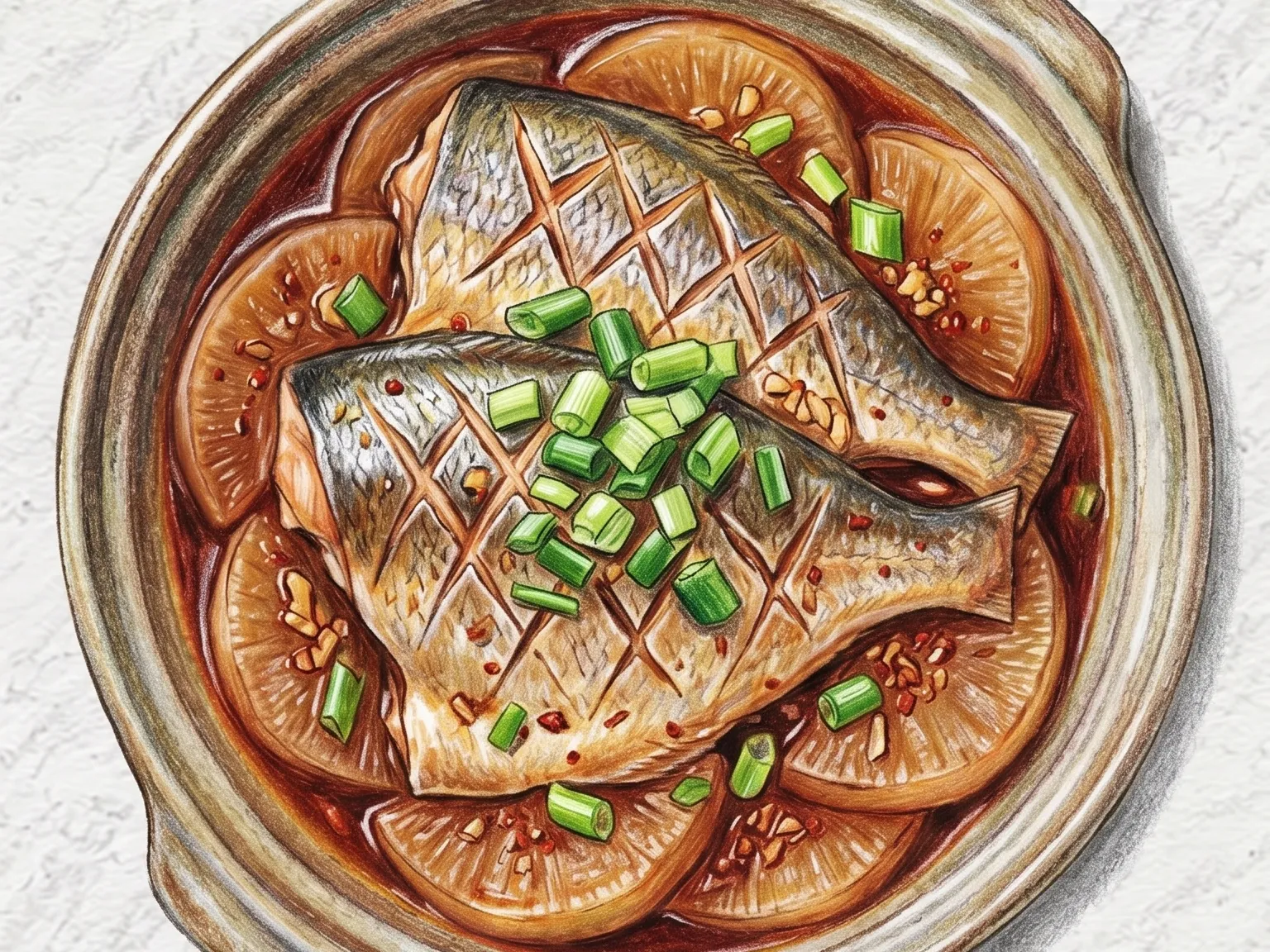
Galchi sotbap is a Korean one-pot rice dish in which cutlassfish seasoned with soy sauce and ginger is arranged on top of soaked rice along with sliced radish and shiitake mushroom, then cooked together in a heavy pot over direct heat. As the rice steams, the oils from the fish seep down through the grains, carrying a clean, rich marine savoriness into every layer of the pot. Radish softens slowly alongside the rice and releases a gentle sweetness that supports the fish without competing with it. Ginger handles any potential fishiness, keeping the overall flavor bright and unclouded. Shiitake mushroom contributes earthiness, added umami, and a chewy counterpoint to the tender fish and rice. The aroma released when the lid is lifted - soy-seasoned fish, steamed grain, and caramelized crust - is a considerable part of the eating experience. A soy-sesame dipping sauce is provided for mixing through the rice, layering in salt and nuttiness. The rice crust that forms at the base of the pot, called nurungji, adds a toasted crunch. The dish is finest in autumn when cutlassfish from the waters around Jeju Island and Korea's southern coast carry their peak fat content.

🎉 Special Occasion
Prep 25minCook 30min4 servings
Korean Stir-Fried Bok Choy and Tofu with Doubanjiang
Stir-fryEasy

Korean Stir-Fried Bok Choy and Tofu with Doubanjiang

Firm tofu is patted completely dry before pan-searing in oil for three minutes until golden on each side, then removed from the pan while the aromatics are built. Green onion and garlic go into the same pan to soften and release their fragrance, after which doubanjiang, soy sauce, sugar, and water are stirred together into a sauce directly in the pan. Doubanjiang, made from crushed fermented chilies, brings concentrated salt and heat simultaneously, so the soy sauce must be added in small amounts and the seasoning checked at the end rather than measured rigidly from the start. Bok choy stems and leaves are separated and added at different points: stems go in first for two minutes of direct heat, leaves follow for a final minute, so the stalks remain firm and the greens wilt to a silky finish. These two textures coexist on the plate without either being overcooked. A single teaspoon of sugar softens the sharp salinity of the doubanjiang, rounding the finish so that the heat registers as warmth rather than aggression. When the seared tofu cubes return to the pan, their crisp exterior absorbs the sauce, releasing a burst of spicy, fermented flavor with each bite. At 290 calories and 17 grams of protein, the dish delivers a satisfying protein intake without any meat in the recipe.

🏠 Everyday🍱 Lunchbox
Prep 12minCook 10min2 servings
Korean Soupy Tteokbokki (Rice Cakes in Spicy Gochujang Broth)
Street foodEasy

Korean Soupy Tteokbokki (Rice Cakes in Spicy Gochujang Broth)

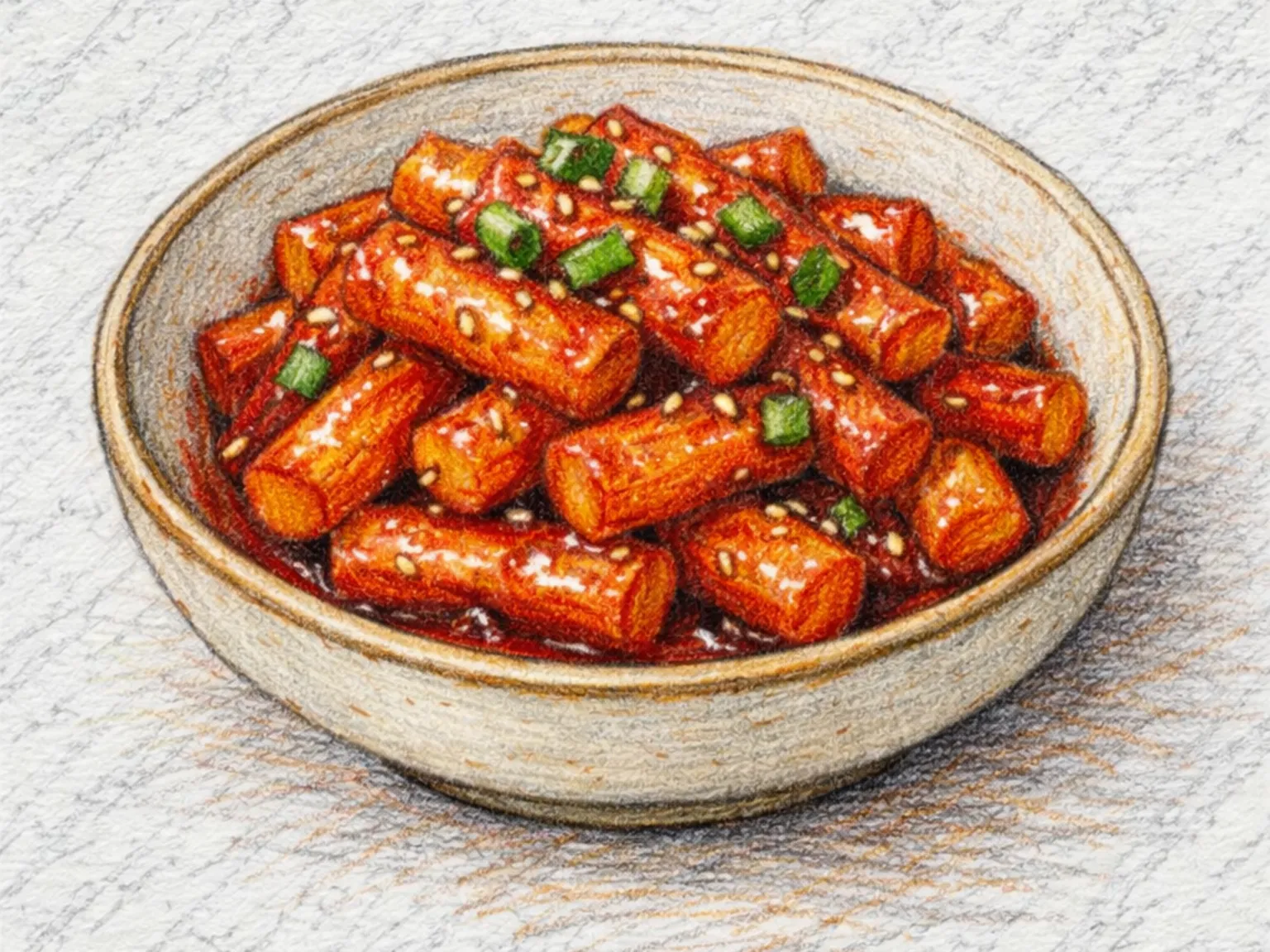
Gukmul-tteokbokki is a soup-forward version of tteokbokki in which cylindrical rice cakes and fish cakes are simmered in a kelp-anchovy broth seasoned with gochujang, gochugaru, soy sauce, and sugar. Unlike dry or stir-fried versions, the generous broth saturates each rice cake from the outside in, while the fish cakes release their own savory juices into the liquid as they cook, building the stock to a richer baseline. Eight to ten minutes of medium-heat simmering leaves the exterior of each rice cake soft and yielding while the core stays chewy. Scallions go in at the end to cut through the heat with a bright, grassy note. The broth left over after the rice cakes and fish cakes are gone is widely regarded as the most prized part of the dish: regulars stir in a bowl of rice or drop in ramyeon noodles to make sure none of it goes to waste.

🧒 Kid-Friendly
Prep 10minCook 20min2 servings
Korean Grilled Soy-Marinated Blue Crab
GrilledMedium

Korean Grilled Soy-Marinated Blue Crab

Ganjang-gejang-gui is a Korean grilled blue crab dish where the crab is halved, marinated in soy sauce with garlic, ginger juice, and sesame oil, then cooked on a grill or in an oven until the shell chars and the meat absorbs the salty-sweet seasoning. The key flavor element is the crab's hepatopancreas inside the top shell, which solidifies under heat into a thick, intensely savory paste that acts as a built-in sauce when eaten with the leg and body meat. The sugars in the soy marinade caramelize over high heat, forming a glossy glaze across the shell surface, and a final brush of sesame oil before serving adds a toasted nuttiness over the briny crab flavor. Marinating time matters considerably: a minimum of thirty minutes allows the soy to penetrate the surface, but refrigerating the crab for one to two hours gives the seasoning time to reach the interior flesh, producing noticeably deeper flavor. Placing the grilled crab over a bowl of rice and mixing the shell's concentrated juices and tomalley into the grains makes a complete meal without any additional side dishes.

🍺 Bar Snacks
Prep 20minCook 15min2 servings
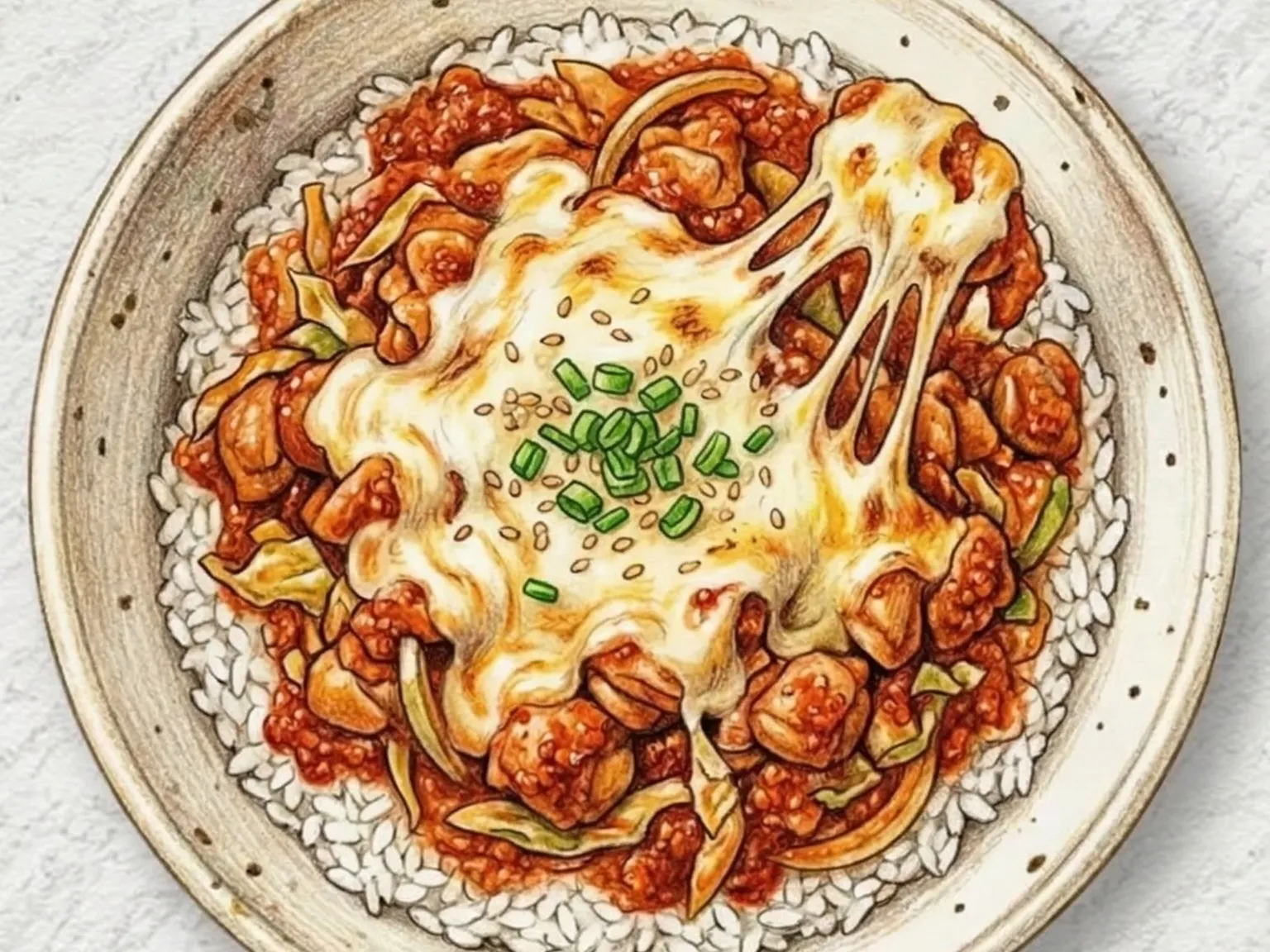
Korean Dakbong Gochujang Jorim (Gochujang-Braised Chicken Drumettes)
SteamedMedium

Korean Dakbong Gochujang Jorim (Gochujang-Braised Chicken Drumettes)

Dakbong gochujang jorim is chicken drumettes braised with potato in a sauce made from gochujang, soy sauce, chili flakes, and oligosaccharide syrup. The meat surrounding the small bones turns dense and pleasantly chewy as it simmers, holding onto the thick, reduced sauce at every surface. Potato pieces soften in the braising liquid until starchy and tender throughout, absorbing the chili-soy base from the outside in. The oligosaccharide syrup wraps the gochujang heat in a shiny glaze that keeps you reaching for another piece. A stalk of green onion stirred in at the very end adds a sharp, pungent aroma that lifts the finished dish.

🎉 Special Occasion🍱 Lunchbox
Prep 15minCook 35min4 servings
Korean Pepper Leaf Soy Pickle
KimchiEasy

Korean Pepper Leaf Soy Pickle

Gochuip jangajji is a Korean soy pickle made from pepper leaves, a summer byproduct of chili cultivation, washed and submerged in a boiled brine of soy sauce, vinegar, and sugar. Unlike the chili fruit, pepper leaves carry almost no heat. What they bring instead is a grassy, mildly bitter fragrance that blends naturally with the savory and sour notes of the brine. Boiling the pickling liquid first and letting it cool before pouring it over the leaves preserves some of their texture while ensuring even seasoning throughout. Garlic and cheongyang chili contribute a sharp, pungent edge to the liquid, and the thin leaves absorb the brine fully within a single day. Over time, the pickling liquid penetrates deeper and the umami grows more pronounced. Laying one leaf over rice and folding it into a small parcel combines the roles of banchan and ssam in a single, compact bite.

🍱 Lunchbox
Prep 15minCook 12min4 servings
Korean Kimchi Soy Milk Tantan Noodles
NoodlesMedium

Korean Kimchi Soy Milk Tantan Noodles

Kimchi duyu tantan myeon takes the structural logic of Chinese dandan noodles and rebuilds it around Korean pantry ingredients. Garlic and green onion are stir-fried in chili oil first to infuse the fat with fragrance, then ground pork goes in along with doenjang and soy sauce and stays on the heat until it browns and the fermented paste base deepens. Finely chopped kimchi is added and cooked for two more minutes, which softens the raw acidity of the kimchi and melds it into the meat mixture. Unsweetened soy milk is poured in at that point and heated gently, just below a boil, so it blends into a smooth, lightly creamy broth without breaking. The noodles are boiled separately and placed in the bowl before the broth is ladled over. Ground peanuts sprinkled on top at the end contribute a nutty finish, and the amount can be adjusted to thicken the broth to a preferred consistency.

🍺 Bar Snacks🌙 Late Night
Prep 18minCook 15min2 servings
Tofu Sesame Salad (Chilled Tofu with Roasted Sesame Dressing)
SaladsEasy

Tofu Sesame Salad (Chilled Tofu with Roasted Sesame Dressing)

Tofu sesame salad starts with firm tofu cubes seared until golden on all sides, then placed over baby greens, shredded red cabbage, and julienned carrot, finished with a sesame-soy dressing. Pressing the tofu in paper towels for ten minutes removes enough moisture for the pan to produce a sizzling, nutty crust rather than steaming the surface. This crust absorbs the soy from the dressing while the soft interior provides a contrasting texture. The dressing - soy sauce, sesame oil, and vinegar - balances salt, richness, and acidity, tying the mild tofu and raw vegetables into a cohesive bowl. Tossing only half the dressing with the greens first prevents them from wilting before serving, and a final sprinkle of toasted sesame seeds releases a nutty fragrance with each bite.

🥗 Light & Healthy Quick
Prep 12minCook 6min2 servings
Chicken Inasal (Bacolod Citrus Lemongrass Grilled Chicken)
AsianMedium

Chicken Inasal (Bacolod Citrus Lemongrass Grilled Chicken)

Chicken inasal is the defining grilled chicken of Bacolod City in the Western Visayas region of the Philippines, so inseparable from its origin that it is commonly called Bacolod chicken. An overnight marinade of calamansi juice, cane vinegar, lemongrass, and garlic allows the acid to work deep into the muscle fibers, tenderizing the meat while coating it in layered citrus and herb fragrance. During grilling over coconut-shell charcoal, the chicken is basted repeatedly with annatto oil, which stains the skin a vivid orange and keeps the exterior perpetually moist so it never dries over the coals. The charcoal smoke combines with the calamansi and lemongrass aromatics to build a smoky-citrus flavor profile that distinguishes inasal from other grilled chicken preparations. The chicken is served alongside garlic rice with a small dish of chicken oil mixed with calamansi juice for dipping. In Bacolod, an entire street called Manokan Country is lined with dozens of inasal stalls that operate simultaneously every evening, filling the neighborhood with charcoal haze.

🎉 Special Occasion
Prep 20minCook 30min4 servings
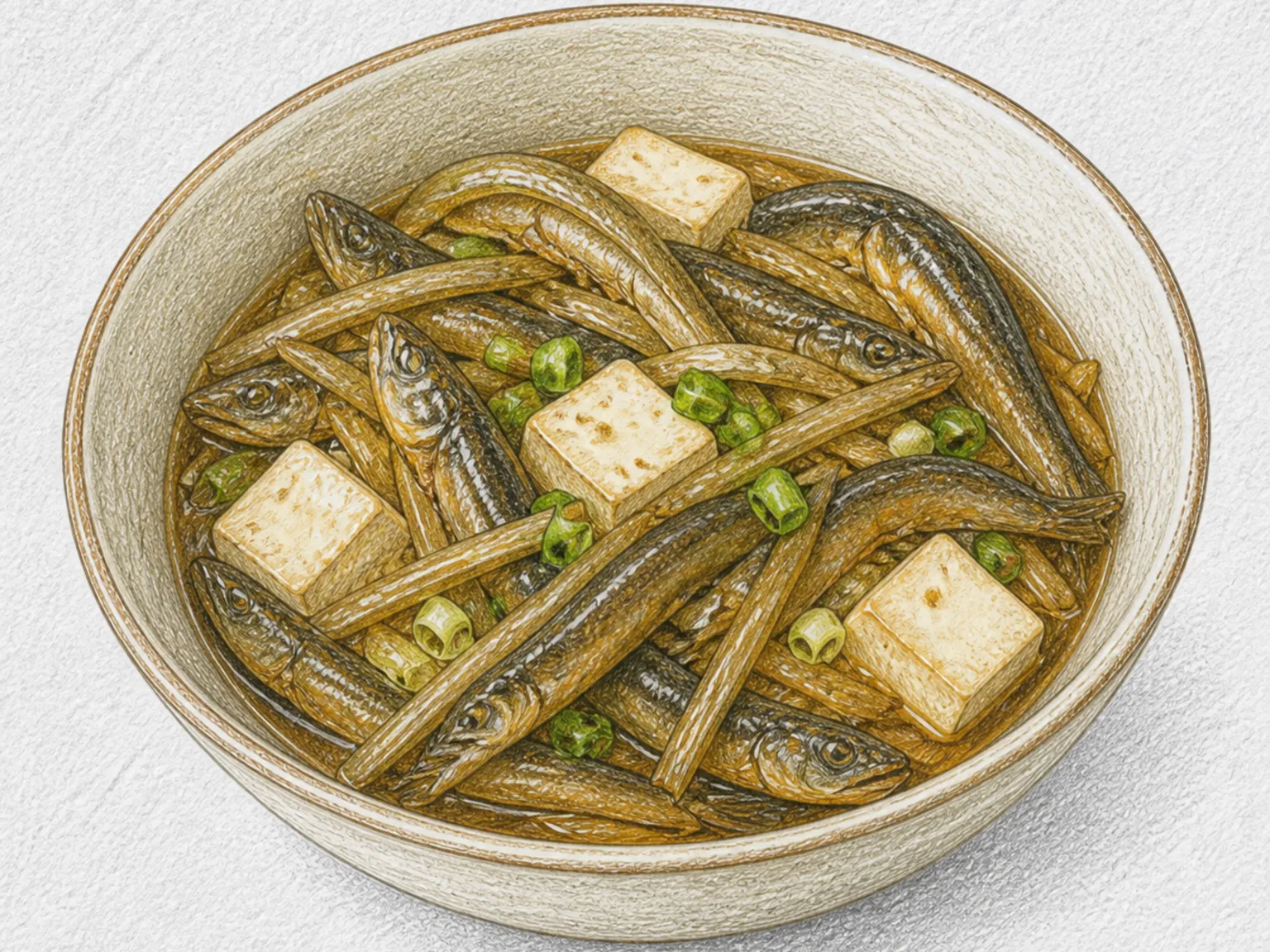
Korean Soy-Braised Fish Cake
Side dishesEasy

Korean Soy-Braised Fish Cake

Eomuk-jorim is a braised Korean fish cake banchan in which triangles or rectangles of eomuk are simmered in a mixture of soy sauce, rice syrup, garlic, and water. Korean eomuk is a processed fish product made by grinding white fish flesh with starch and shaping the paste into flat sheets or molded forms -- denser and chewier than Japanese kamaboko, with a texture that holds its structure through the long braise without turning soft. As the liquid reduces by roughly half over ten minutes of steady simmering, the sauce concentrates into a thick, sticky glaze that adheres to each piece. Adding a sliced cheongyang chili near the end of cooking introduces a subtle heat that cuts through the sweetness of the rice syrup and gives the banchan a sharper edge that pairs well with plain rice. One of the most practical side dishes in the Korean repertoire, eomuk-jorim keeps in the refrigerator for up to a week and, like many braised preparations, deepens in flavor as the soy seasoning continues to penetrate the fish cake over subsequent days. Its low cost and the ease of making large batches in a single pan explain its decades-long presence in school cafeterias, packed lunchboxes, and the everyday home kitchen.

🏠 Everyday🍱 Lunchbox
Prep 8minCook 12min4 servings
Korean Gangwon Gondre Rice
RiceEasy

Korean Gangwon Gondre Rice

Gondre, a wild thistle green long foraged in the mountains of Gangwon province, is soaked, squeezed thoroughly dry, and spread in an even layer over uncooked rice before the pot goes on the heat. The three-stage cooking method, starting at high heat for five minutes, then dropping to medium-low for ten and finishing at low for ten more, followed by a ten-minute covered rest off the heat, produces evenly cooked grains infused with the greens' earthy, grassy scent. Squeezing out the soaking water is not optional; any excess moisture left in the gondre will make the rice mushy. The rice itself is deliberately plain, designed to carry a soy-based dressing of garlic, green onion, chili flakes, and sesame oil that is mixed in at the table. That dressing provides a sharp, savory contrast to the mild, herbaceous notes of the gondre. Fresh spring gondre harvested at peak season delivers the most intense fragrance, though well-soaked dried gondre comes close and extends the dish to all four seasons. Making a larger batch of the dressing allows the same pot of rice to be eaten over several days.

🏠 Everyday
Prep 20minCook 30min4 servings
Korean Stir-fried Mung Bean Jelly
Stir-fryEasy

Korean Stir-fried Mung Bean Jelly

Mung bean jelly is cut into thick strips, blanched for thirty seconds to remove surface starch, then stir-fried gently with julienned carrot and onion in a soy sauce seasoning. The brief blanch firms up the jelly's exterior just enough to survive the tossing in the pan without crumbling, and washing away the starch allows the jelly to absorb the flavors of its companion vegetables more readily. Low heat and a careful hand are non-negotiable; aggressive stirring breaks the strips into shapeless lumps. The carrot contributes a faint natural sweetness, and the onion releases a light caramel note as it softens, both of which fill in the jelly's inherently neutral taste with understated warmth. Chopped green onion added at the very end lifts the dish with a sharp, fresh bite. One tablespoon of sesame oil swirled in after the flame is off coats everything in a glossy sheen and a final wave of nuttiness. At 180 calories and 9 grams of fat, this is a low-calorie side with enough fiber to sit gently in the stomach. The pale yellow color of mung bean jelly - a signature of the ingredient - comes through clearly on the finished plate, giving the dish a clean, orderly appearance that matches its delicate flavor.

🏠 Everyday🍱 Lunchbox
Prep 15minCook 8min2 servings
Korean Gullim Mandu (Round Dumplings)
Street foodMedium

Korean Gullim Mandu (Round Dumplings)

Gullim-mandu is a Korean dumpling made without wrappers. The filling of ground pork, pressed tofu, garlic chives, onion, and soaked glass noodles is kneaded firmly until cohesive enough to be rolled into balls by hand. Each ball is then coated in potato starch or cornstarch, rolled until the surface is evenly covered, and placed in a steamer. As steam penetrates the starch coating, it sets into a translucent, chewy skin that is far thinner than standard dumpling wrappers yet carries a distinct springy resistance when bitten through. A second coat of starch before steaming produces a thicker shell with a more pronounced chew. Inside, the pork juices mingle with the sharp fragrance of garlic chives while the glass noodles contribute a soft, yielding bite. The traditional accompaniment is a dipping sauce of soy sauce, rice vinegar, sesame oil, and minced cheongyang chili. Gullim-mandu can also be dropped into tteok-guk or mandu-guk, where the starch on the exterior gradually dissolves into the broth and thickens it lightly over time.

🧒 Kid-Friendly🌙 Late Night
Prep 25minCook 15min4 servings
Korean Soy-Glazed Grilled Rice Cakes
GrilledEasy

Korean Soy-Glazed Grilled Rice Cakes

Garaetteok-ganjang-gui is a Korean soy-glazed grilled rice cake dish where cylindrical garaetteok is sliced on the diagonal, pan-fried until the cut surfaces blister and brown, then coated in a reduced sauce of soy sauce, rice syrup, and butter. Briefly dipping the rice cakes in boiling water for thirty seconds before grilling softens their outer layer so the glaze absorbs evenly, and the pan-frying then produces a dual texture of crunchy shell and stretchy, chewy interior. A one-to-one ratio of soy sauce to rice syrup, reduced over medium heat until thick and viscous, gives the surface a lacquered sheen, and stirring a knob of butter in off the heat adds a creamy richness that rounds out the soy's saltiness without overwhelming it. A finishing scatter of crumbled seaweed and ground sesame introduces oceanic and nutty notes that elevate this from a plain grilled rice cake to a finished snack. A small spoonful of gochujang stirred into the glaze produces a spicy version, and a slice of cheese melted over the top just before serving gives it a Western-influenced character that works surprisingly well against the chewy rice cake base.

🍺 Bar Snacks🧒 Kid-Friendly
Prep 10minCook 10min2 servings
Korean Soy-Braised Deodeok Root
SteamedMedium

Korean Soy-Braised Deodeok Root

Deodeok-jorim is a Korean braised banchan made from deodeok root simmered in soy sauce, rice syrup, garlic, and sesame oil until each piece takes on a glossy, lacquered coating. The root's pronounced bitter-herbal aroma softens considerably as the sweet-salty glaze penetrates during cooking, while the interior stays dense and pleasantly chewy throughout. A single green chili stirred in near the end contributes a restrained background heat, and toasted sesame seeds with a final drizzle of sesame oil add a nutty dimension on top. Deodeok is a foraged mountain root prized for its earthy, slightly resinous character, and this preparation tames that wild quality just enough to make it approachable as a daily side dish. Paired with other vegetable banchan, it anchors the kind of traditional Korean table that prioritizes vegetables over protein.

🏠 Everyday🍱 Lunchbox
Prep 20minCook 18min2 servings
Korean Gomchwi Leaf Jangajji
KimchiEasy

Korean Gomchwi Leaf Jangajji

Gomchwi jangajji is a Korean mountain herb pickle made by submerging gomchwi leaves - a wild member of the ligularia family - in a prepared brine of soy sauce, vinegar, and sugar. The leaves carry a powerful, distinctly wild green fragrance that intensifies rather than fades as they cure, deepening when paired with the savory weight of fermented soy. Vinegar keeps the flavor profile from becoming too heavy, cutting through the richness of the soy with a clean, acidic finish after each bite. The leaves are notably broad and thick-fleshed compared to most pickling greens, which means they absorb the brine thoroughly and evenly over a few days of curing. When draped over a bowl of rice and folded into a wrap, the leaf's pungent aroma and salty seasoning seep directly into the grains, creating a self-contained bite that requires no additional side dishes. Garlic and cheongyang chili added to the brine contribute a sharp warmth and a mild heat that prevent the deep, earthy flavor of the mountain herb from becoming monotonous across a meal.

🍱 Lunchbox
Prep 18minCook 7min4 servings
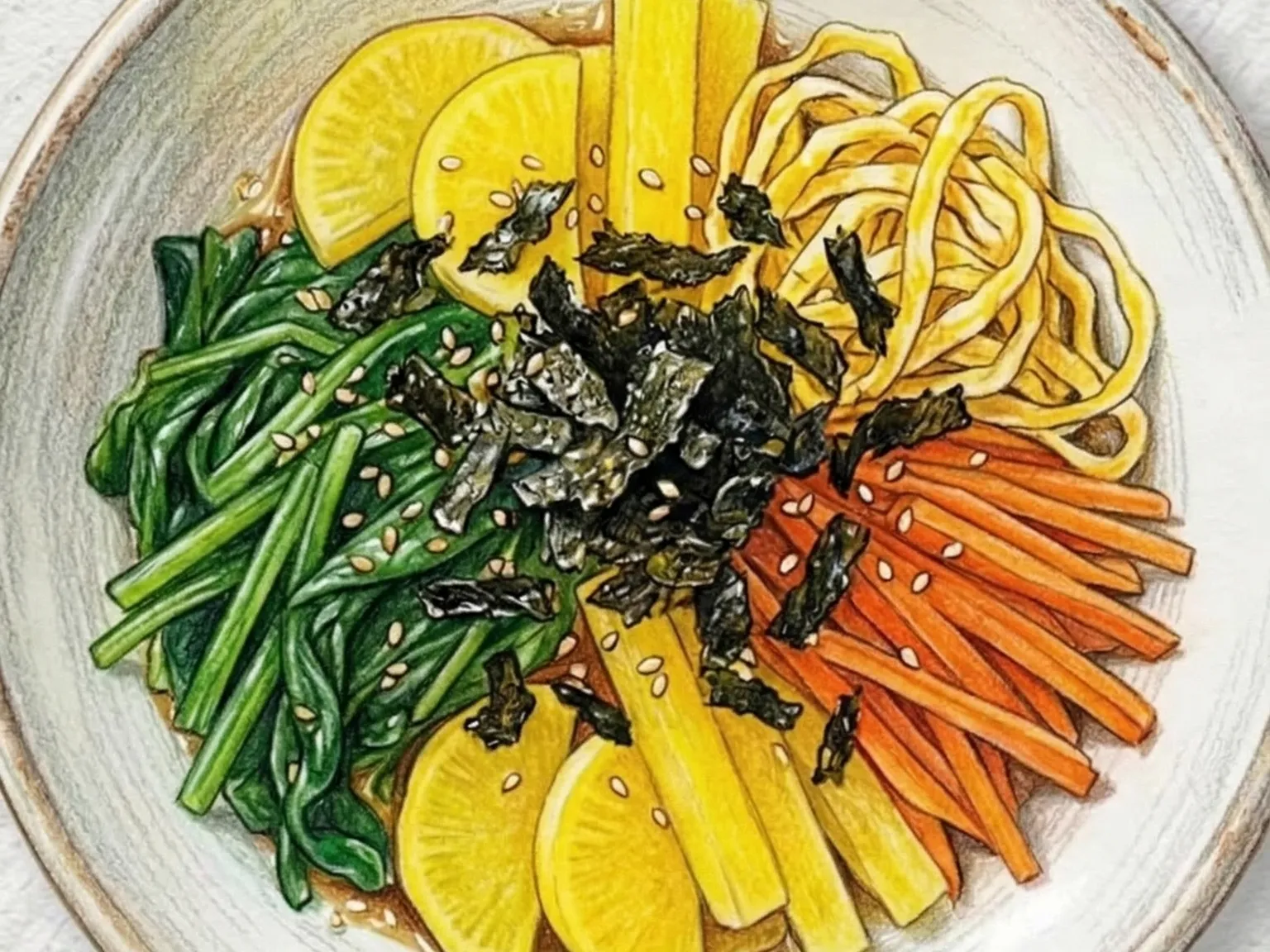
Korean Kimchi Glass Noodle Stir-Fry
NoodlesEasy

Korean Kimchi Glass Noodle Stir-Fry

Kimchi japchae is a variation on classic Korean glass noodle stir-fry that replaces the usual assortment of vegetables with well-fermented aged kimchi, giving the dish a bold tangy heat that the original does not have. Glass noodles are boiled, rinsed in cold water to stop the cooking, and pre-seasoned with soy sauce so they absorb flavor before hitting the pan. Pork shoulder goes in first to render its fat and build a savory base in the wok, then the kimchi -- thoroughly squeezed dry -- is added and stir-fried until the sourness concentrates and caramelizes slightly. Removing the kimchi's moisture is a non-negotiable step: excess liquid steams the noodles rather than frying them, causing the noodles to swell and the overall seasoning to turn watery and flat. Sliced onion goes in with the kimchi to contribute a natural sweetness that softens the acidity. Once the aromatics are cooked down, the noodles are tossed in with additional soy sauce and a small amount of sugar if the kimchi is especially sour. The pan comes off the heat before sesame oil is added to preserve its fragrance, and whole sesame seeds finish the dish. The combination of the noodles' chewy elasticity and the kimchi's pungent, fermented character produces a version of japchae that tastes fundamentally different from the traditional preparation.

🏠 Everyday🍱 Lunchbox
Prep 15minCook 15min2 servings
Salmon Salad (Seared Salmon over Greens with Soy Vinaigrette)
SaladsMedium

Salmon Salad (Seared Salmon over Greens with Soy Vinaigrette)

Salmon salad sears a salmon fillet skin-side down until the exterior is crisp and the interior stays moist, then places it over lettuce, shredded red cabbage, sliced avocado, and peppery radish sprouts, dressed with soy sauce, vinegar, minced garlic, and olive oil. Patting the salmon completely dry and seasoning with black pepper five minutes before cooking prevents the skin from sticking to the pan and allows it to crisp evenly - four minutes skin-side down and two minutes flipped produces a center that retains a pale pink translucency for maximum moisture. The avocado's creamy fat harmonizes with the salmon's omega-3 richness, while radish sprouts add a sharp, mustard-like bite that energizes the bowl. The dressing's combination of soy sauce, vinegar, and garlic creates a salty-tangy base that cuts cleanly through the oily fish.

🥗 Light & Healthy
Prep 20minCook 10min2 servings
Chili Paneer (Spicy Fried Cheese Stir-Fry)
AsianEasy

Chili Paneer (Spicy Fried Cheese Stir-Fry)

Chili paneer belongs to Indo-Chinese cuisine, a fusion genre that emerged in the late nineteenth century when Hakka Chinese immigrants settled in Kolkata and began cooking with Indian ingredients and techniques. Cubes of paneer, India's firm fresh cheese that holds its shape under high heat without melting, are coated in cornstarch and deep-fried until a crisp shell forms, then tossed in a blazing-hot wok with diced garlic, green chilies, bell peppers, and onions, all brought together in a sauce built from soy sauce, chili sauce, tomato ketchup, and vinegar. The starchy crust absorbs the punchy sauce while shielding the soft, milky interior of the paneer, and the contrast between the crunchy shell and the yielding cheese inside is the defining pleasure of the dish. Two distinct styles exist: dry, where the sauce barely coats each cube and the dish is eaten as a starter or with drinks, and gravy, where a thicker, glossier sauce pools generously around the paneer for scooping with naan or ladling over fried rice. The flavor profile, salty soy meeting sour vinegar, sweet ketchup cutting through hot chili, is neither Chinese nor Indian but something entirely its own, a product of a specific immigrant community adapting to a new place while keeping familiar techniques alive.

🍺 Bar Snacks🎉 Special Occasion
Prep 15minCook 12min2 servings