🏠 Everyday Recipes
Simple home-cooked meals for any day
1705 recipes. Page 2 of 72
These are the meals you can cook day after day without getting tired of them. Doenjang jjigae, rolled omelet, spicy pork stir-fry - the kind of home-cooked dishes that fill an ordinary day with comfort.
The beauty of everyday cooking is that it relies on common ingredients already in your fridge. No exotic items, no complicated techniques - just straightforward recipes for satisfying home meals.
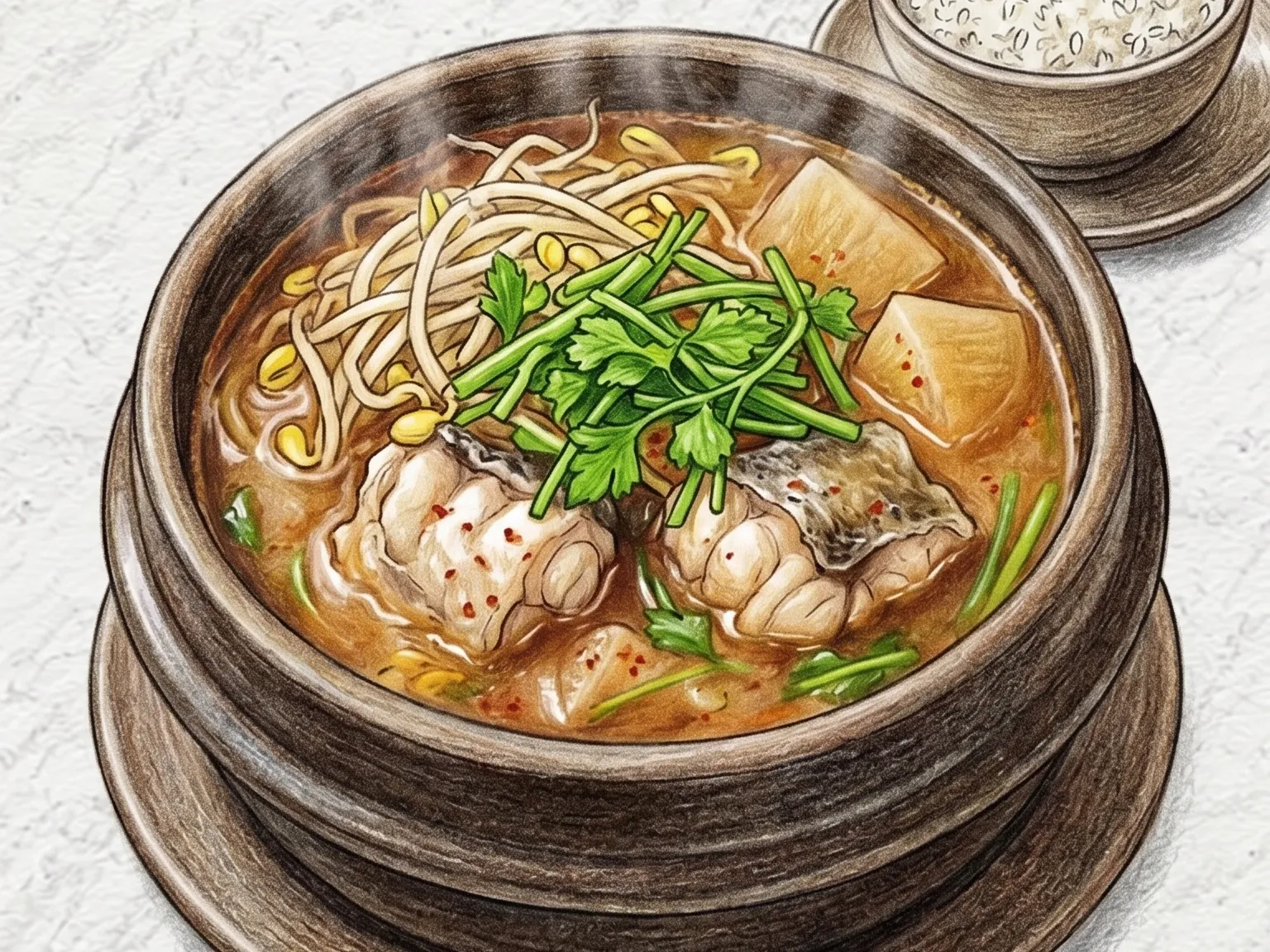
Korean Monkfish Spicy Stew
Agwi tang jjigae is a monkfish-based dish that occupies the middle ground between a clear soup and a more concentrated, heavily seasoned stew. It features a broth that is noticeably cloudier and carries a more intense flavor profile than what is typically found in either of those two distinct categories. The cooking process starts by simmering sliced radish in plain water for about ten minutes to establish a sweet and clear liquid base. After this time has passed, Korean red chili flakes and a small amount of fermented soybean paste are mixed into the pot. The soybean paste serves a specific purpose in this recipe, as it helps to neutralize any fishy smells from the monkfish while adding a foundational fermented taste to the overall broth. The monkfish is prepared over medium heat, which allows its gelatinous flesh to stay together in large, firm pieces rather than separating into flakes. To add both texture and bulk, bean sprouts are stirred into the pot to provide a crunch that balances the soft consistency of the fish. Water dropwort, which is called minari in Korean, is the final ingredient to be added. It is left to wilt in the remaining heat of the pot after the heat is reduced so that its unique herbal fragrance is infused into the liquid. Although the monkfish has a somewhat strange appearance, its flesh is thick and very sturdy, meaning it does not disintegrate even when cooked for a long period. Furthermore, the substantial layer of gelatin found under the skin melts into the soup as it simmers, providing a natural thickness to the broth without the use of any starch. When served with a bowl of hot steamed rice on a cold evening, this dish functions as a complete and satisfying meal.
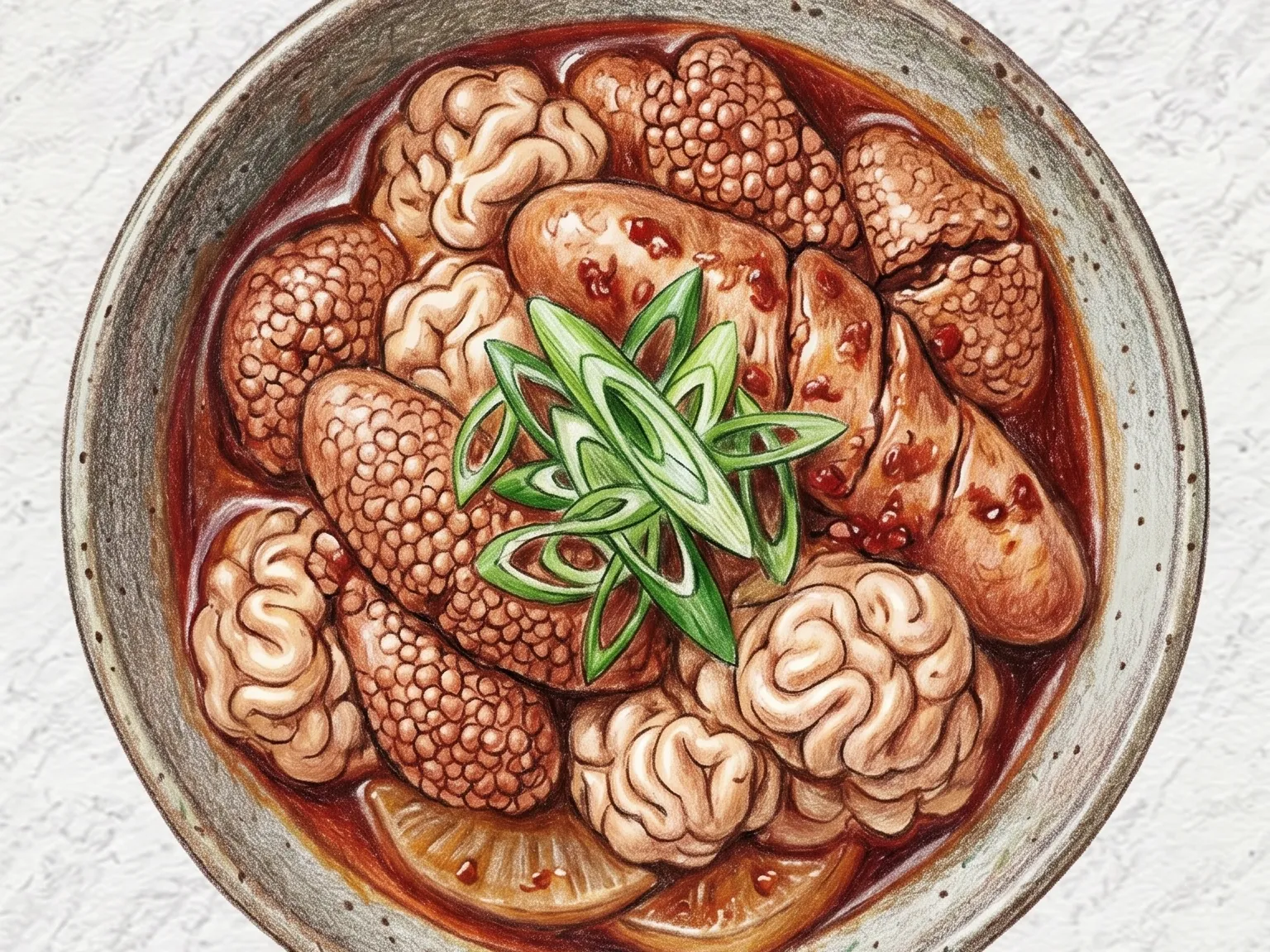
Korean Spicy Fish Roe Braise
Al-jjim is a Korean braised dish built around pollock roe sacs and milt - the parts of the fish that most home cooks discard or that are sold separately at markets near fishing ports. The two components come from the same fish but behave completely differently when cooked. The roe sacs firm up into a dense, granular texture as they heat, each individual egg becoming distinct and slightly resistant to the bite. The milt, by contrast, softens to a custard-like consistency, breaking apart in soft curds that dissolve into the braising sauce. Radish slices line the pot bottom, providing a sweet buffer against the aggressive saltiness of the gochugaru-soy braising liquid and preventing the more delicate milt from burning. The dish cooks at low heat for about fifteen minutes, during which the roe and milt release their marine oils into the sauce, adding an oceanic richness to the spicy, salty base. Green onions or scallions added at the end contribute a fresh, sharp counterpoint that keeps the heavy sauce from becoming monotonous. Al-jjim is a winter specialty in Korea's east coast fishing ports - Pohang, Gangneung, Sokcho - where fresh pollock roe is available during the winter spawning season. Frozen roe can be substituted year-round, but it releases fewer marine oils into the sauce, producing a noticeably less rich broth than the fresh version.
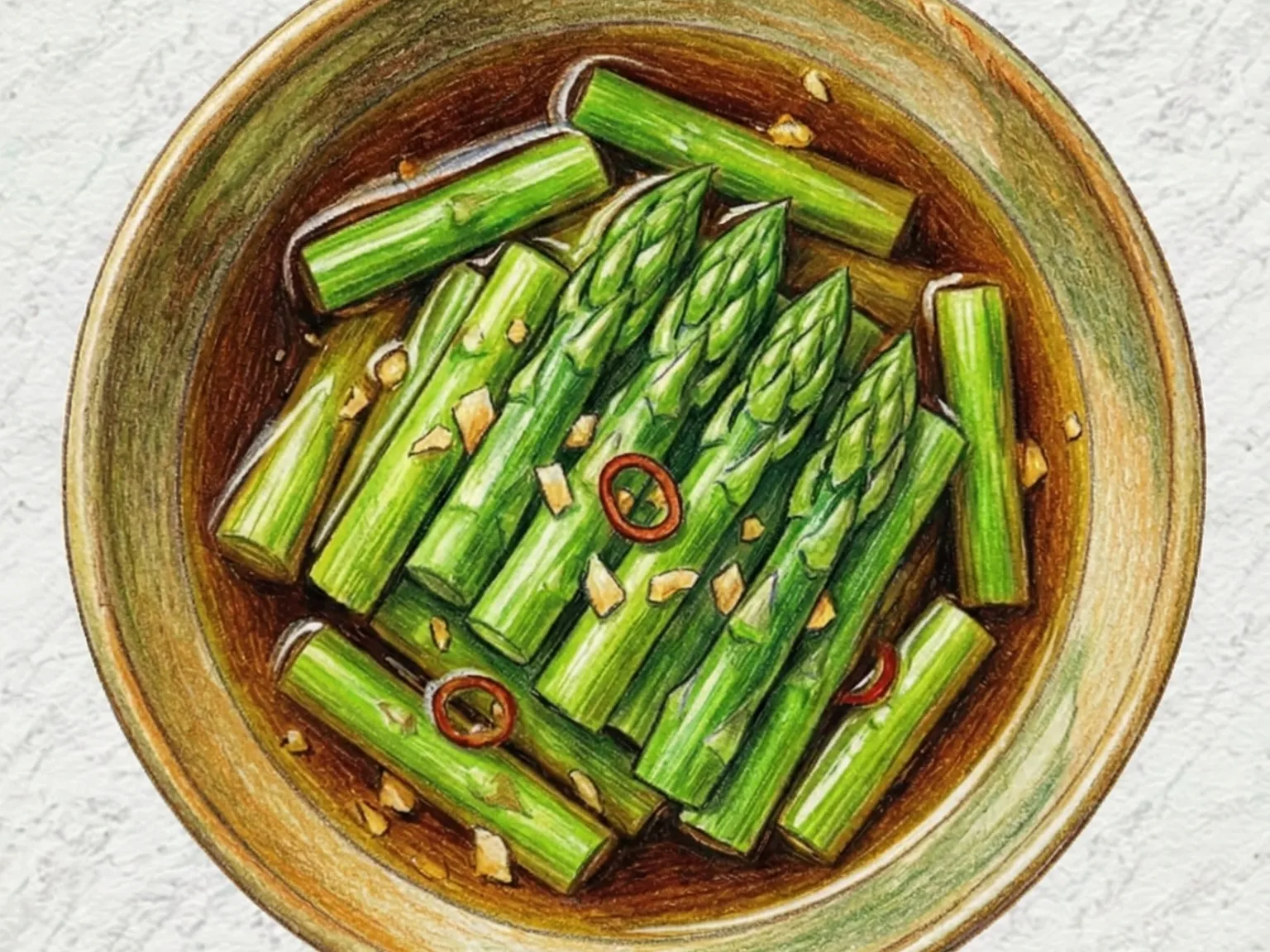
Korean Soy Pickled Asparagus
This pickle applies the Korean jangajji tradition - soy-brine preservation - to asparagus, a vegetable that arrived in Korean cooking relatively recently but now appears freely across banchan preparations. The asparagus is blanched for just 20 seconds to fix its color and soften the fibrous outer layer, then immediately shocked in ice water to lock in a vivid green and a firm, snapping texture. Packed upright in a sterilized jar, the spears are covered with a boiling brine of soy sauce, rice vinegar, sugar, and water that partially cooks the surface while leaving the core crisp and springy. Within 24 hours the brine penetrates enough for the pickle to be edible, but the flavor peaks at three days when the sweet-sour-salty balance has fully developed. Unlike most jangajji that rely on root vegetables or dense greens like radish and napa cabbage, asparagus brings a distinctive grassy, almost herbal note to the preserved format - a quality that stands on its own without the weight of fermentation. Keeps refrigerated for two weeks, and works well alongside rich or oily dishes where its acidity provides contrast.
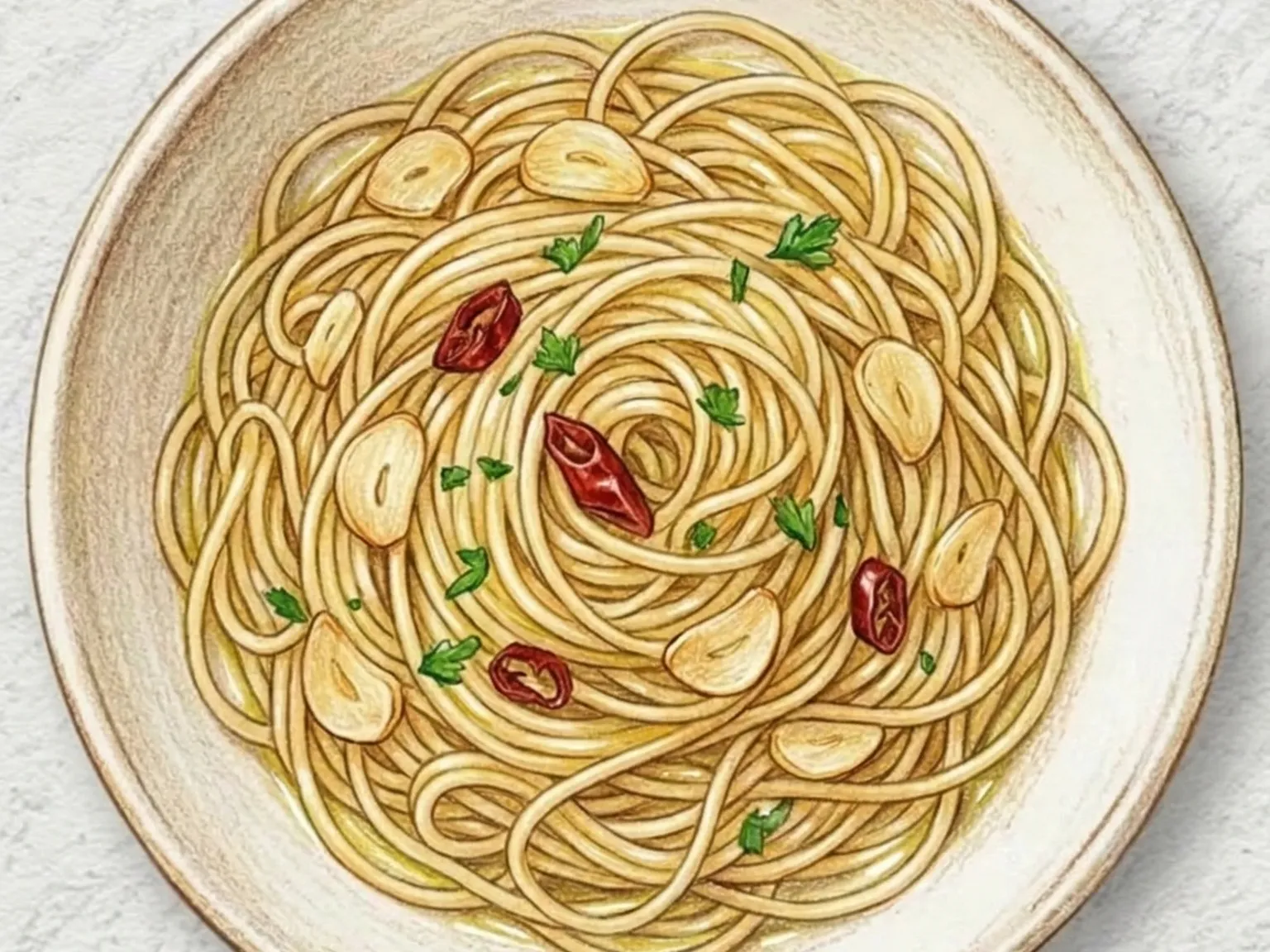
Garlic Olive Oil Pasta
Aglio e olio - garlic and oil - is the pasta Italians make at midnight with nothing in the kitchen but pantry staples. It originated in Naples, where olive oil was abundant and elaborate sauces were a luxury that working-class cooks could not afford. The entire dish depends on technique: garlic must be sliced thin and toasted slowly in generous olive oil over low heat until fragrant and barely golden - a matter of seconds past that point and it turns acrid and bitter. Peperoncino flakes go in briefly to release their capsaicin into the oil before the heat is adjusted. The real transformation happens when starchy pasta water hits the hot oil: it emulsifies into a silky, clinging sauce that coats every strand of spaghetti with a thin, even film rather than pooling at the bottom of the bowl. No cream, no cheese in the traditional version - just the clean triad of garlic, chili, and good olive oil. Flat-leaf parsley scattered on at the end contributes a fresh herbal brightness that lifts the whole dish.
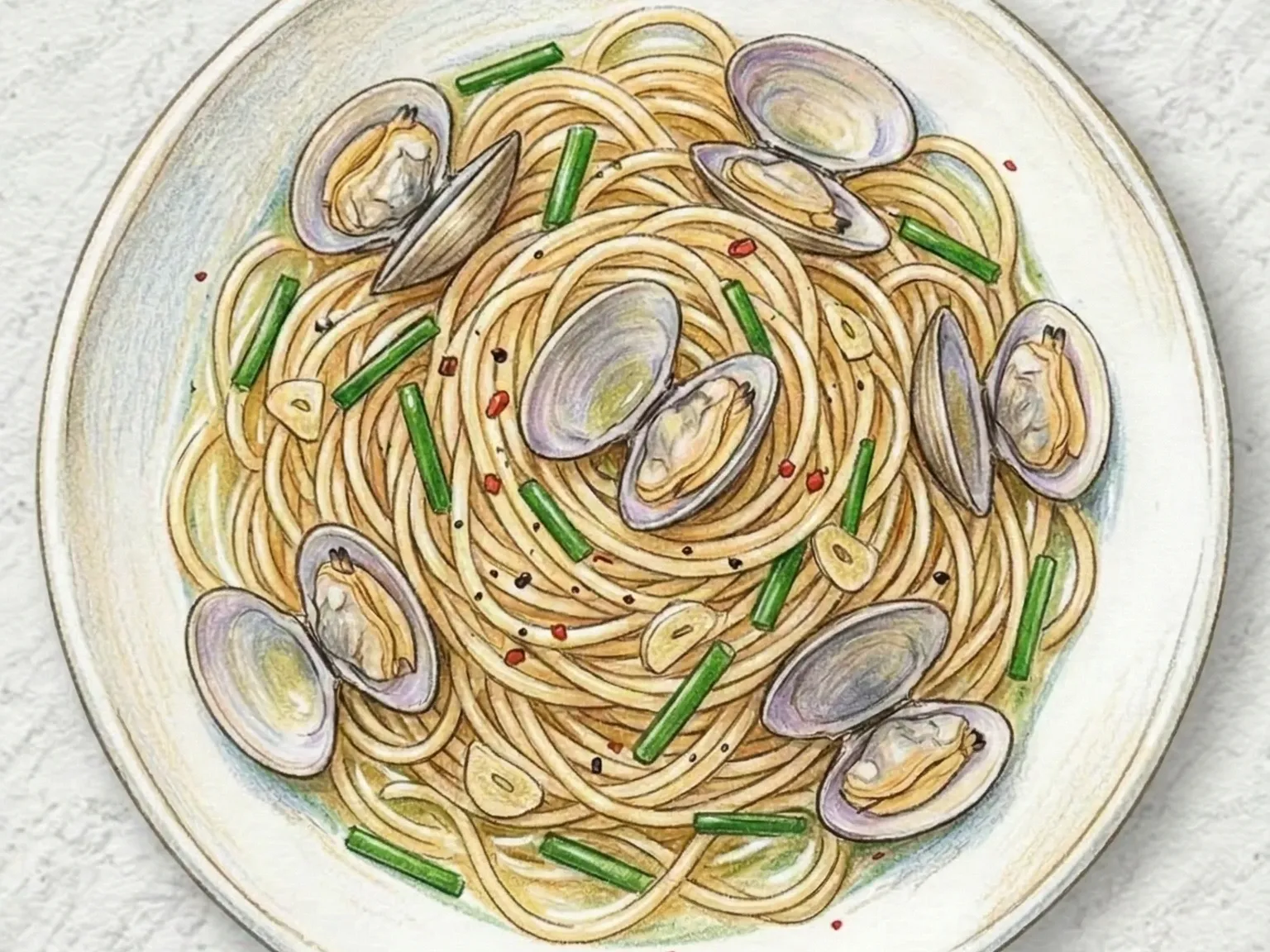
Buchu Vongole Spaghetti (Korean Garlic Chive and Clam Pasta)
Buchu vongole spaghetti takes the Italian vongole format and finishes it with a fistful of Korean garlic chives, combining a briny shellfish sauce with the sharp, vegetal fragrance that buchu brings. Garlic slices and dried chili flakes are first infused in olive oil until fragrant, then white wine goes in and the alcohol burns off quickly, leaving only the wine's fruity character in the base. Manila clams added to the pan steam open in two to three minutes under a lid, releasing their liquor into the oil and wine. That clam broth carries enough salinity and umami to season the entire sauce - no added salt required at any point. A ladleful of pasta water stirred in while shaking the pan hard creates an emulsion that bonds the clam broth with the olive oil and coats every strand. The garlic chives are added off heat so they stay bright green and fragrant rather than going soft and losing their character. A scatter of chopped Italian parsley over the finished bowl adds a last note of herbal freshness.
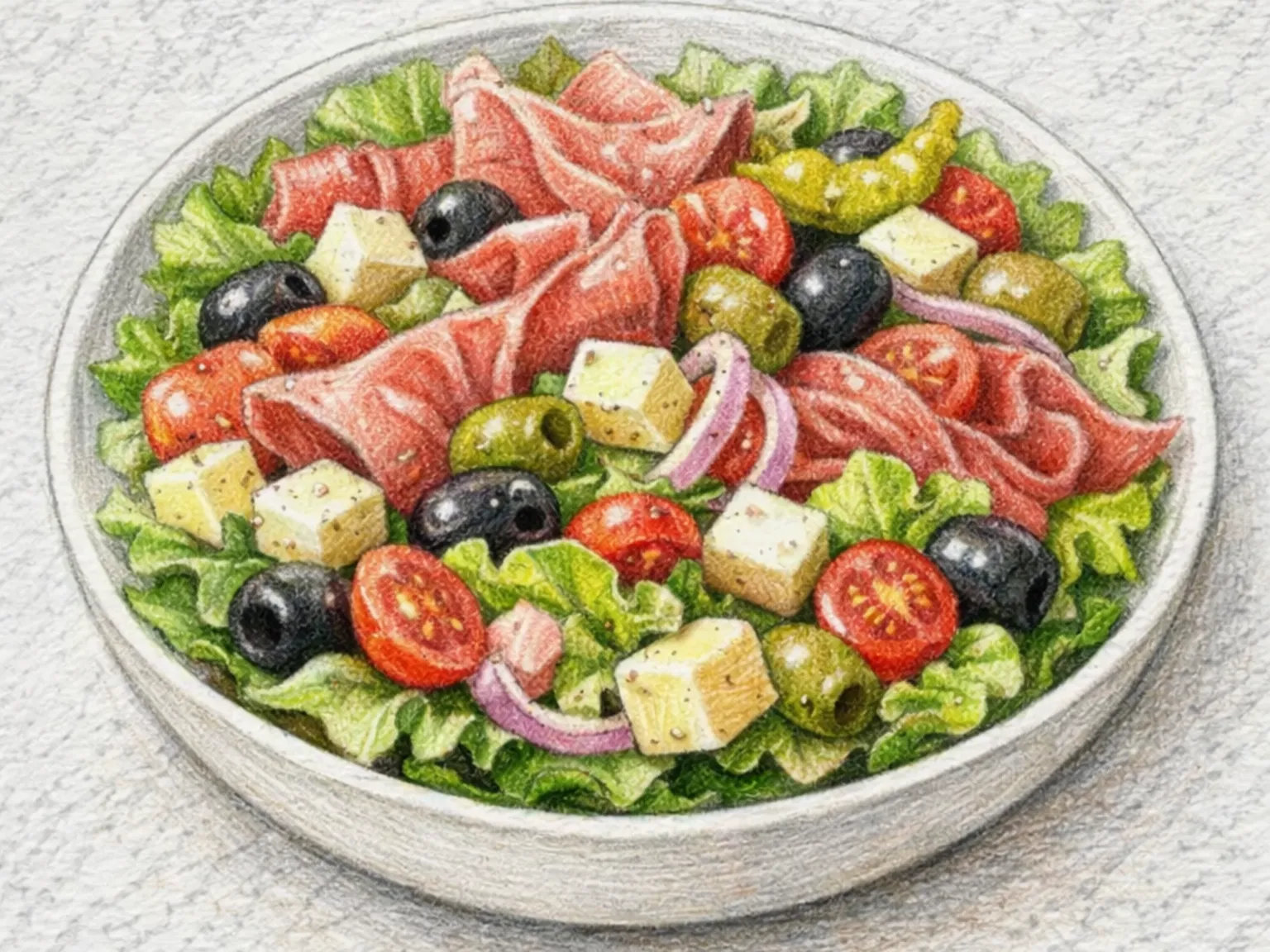
Antipasto Salad
Antipasto - literally 'before the meal' in Italian - is a first course of cured meats, cheeses, olives, and preserved vegetables, and this salad compresses that entire tradition into a single composed bowl. Crisp romaine or iceberg forms the base, layered with sliced salami, capicola, provolone, marinated artichoke hearts, roasted red peppers, and briny Kalamata olives. A red wine vinegar dressing built with dried oregano and minced garlic draws the components together with a sharp, herbal acidity that cuts through the fat of the cured meats. The salami is rolled into loose cylinders and the provolone cut into thick chunks so both hold their presence against the dressed greens rather than disappearing into the mix. The reason the salad works is the contrast in salt levels and textures: heavily cured meat against mild cheese, smoky-sweet pepper against bitter greens, silky olive against crunchy romaine - no two bites taste the same. Italian-American delis in New York and New Jersey popularized this format in the mid-twentieth century, and it has since become a reliable fixture of catered lunches, potlucks, and family gatherings across the United States.
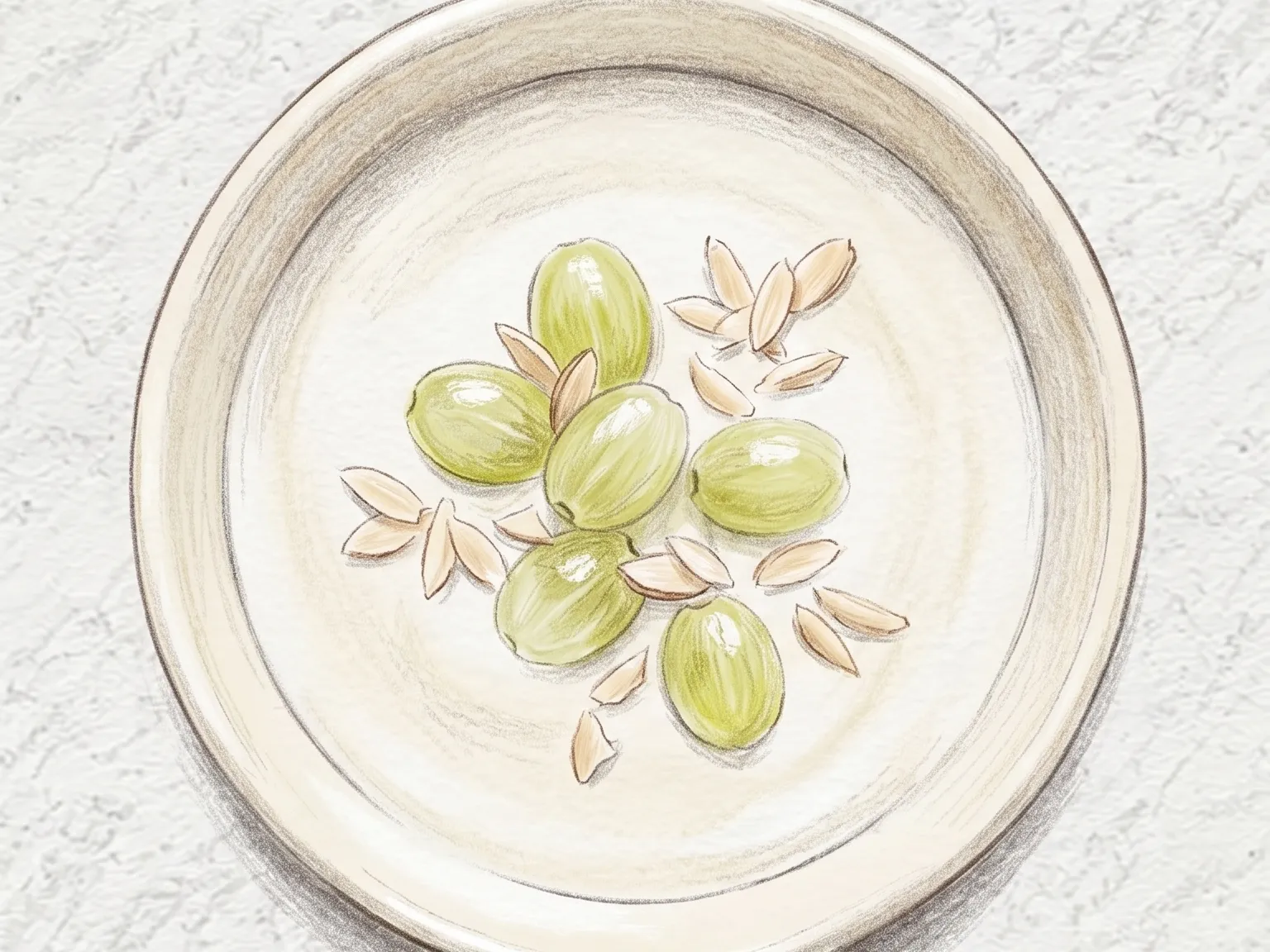
Ajo Blanco (Chilled Spanish Almond and Garlic Soup)
Ajo blanco predates the red tomato gazpacho that most people associate with Spanish cold soup - it is a Moorish-era recipe from Andalusia that was already established long before tomatoes arrived from the Americas in the 16th century. Raw blanched almonds, garlic, stale bread soaked in water, olive oil, and sherry vinegar are blended into a velvety white emulsion that is served thoroughly ice-cold. The almonds supply the soup's body and a subtle sweetness, while a single clove of raw garlic provides a quiet but persistent pungency that builds slowly as you work through the bowl. The bread serves as both thickener and emulsifier, binding the oil and water into a stable cream with no dairy involved. Traditional garnishes are peeled green grapes or sliced almonds - the green grapes add a burst of cold sweetness and acidity that plays directly against the savory almond base. Ajo blanco is a summer dish specific to Malaga province, where temperatures push well past 40 degrees Celsius and hot food loses all appeal. That it achieves this level of complexity without tomatoes or dairy is what sets it apart from more widely known cold soups.
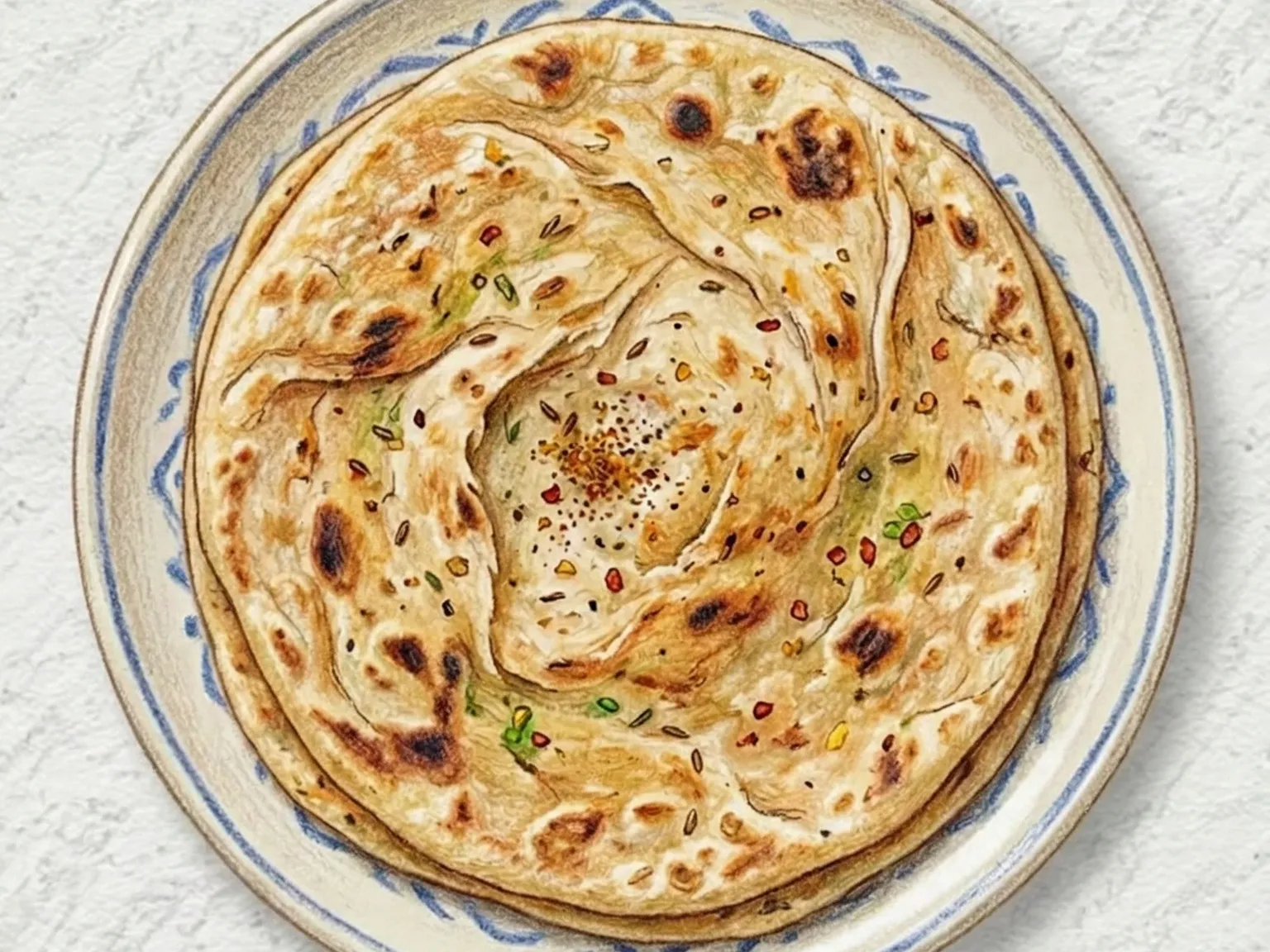
Aloo Paratha (Punjabi Spiced Potato Stuffed Flatbread)
Aloo paratha is a cornerstone of Punjabi breakfast culture - pulled hot off the tawa and served with a knob of butter melting on top, thick yogurt, and tangy mango pickle on the side. The technique involves wrapping spiced mashed potato inside a whole wheat dough ball, then rolling the stuffed parcel flat on a floured surface without letting the filling puncture through. The spice mix includes garam masala, finely chopped green chili, fresh coriander leaves, and minced ginger, giving the filling a warmth that builds as you eat. On a dry, very hot griddle, the paratha develops golden brown patches on each side when oil or ghee is brushed over the surface, and the steam trapped inside from the potato pushes the dough layers apart slightly, creating a flaky interior texture. The more generous the filling, the better the flavor, but it also raises the risk of tearing - draining the mashed potato of excess moisture and calibrating the filling-to-dough ratio is where the skill lies. Street vendors in Delhi and Amritsar stack them high on charcoal-heated tawas, selling them wrapped in newspaper to morning commuters.
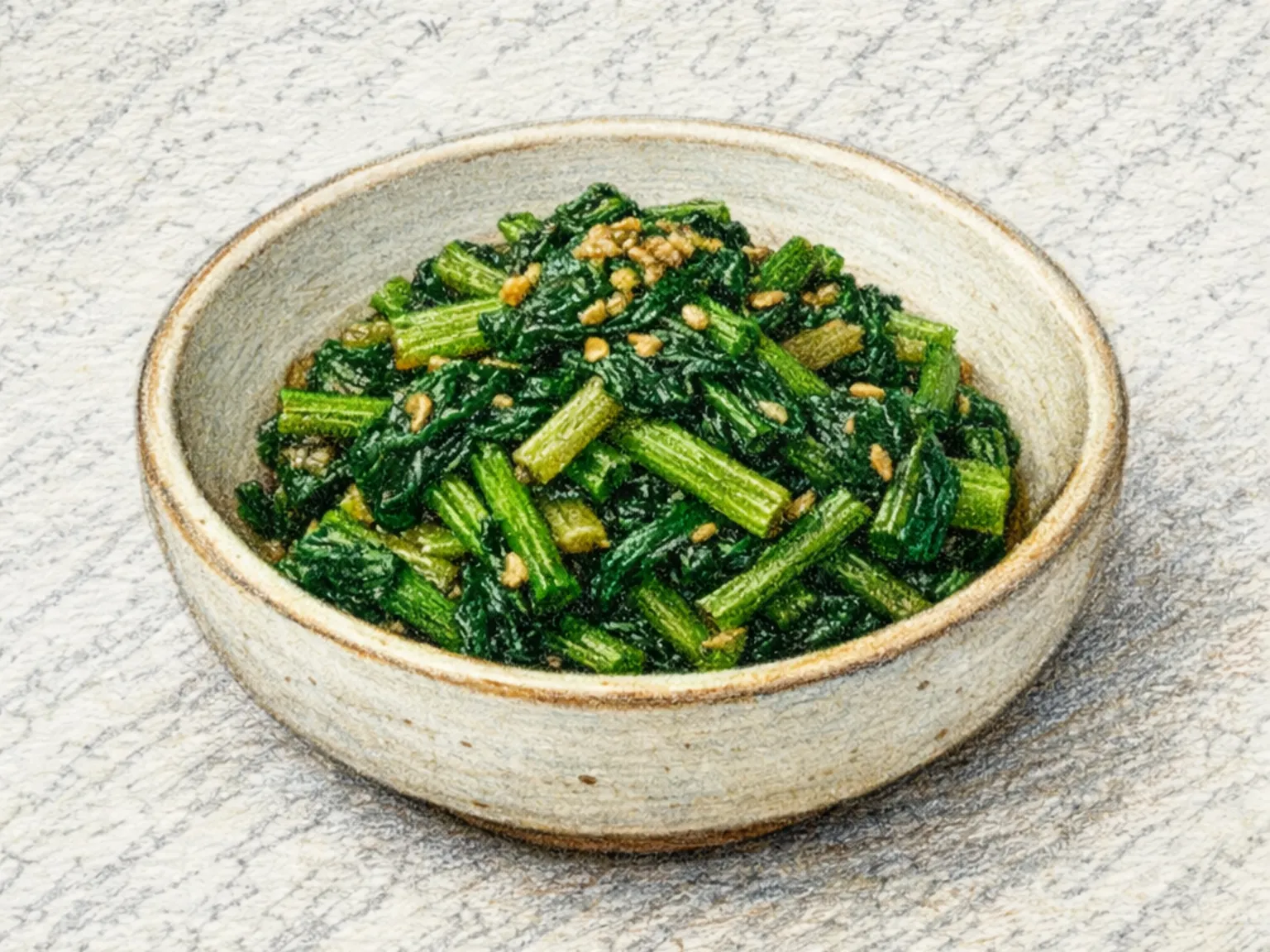
Korean Seasoned Mallow Greens
Auk namul muchim turns mallow greens - a plant used in Korean cooking since the Joseon era, most commonly in doenjang-guk - into a seasoned side dish. The leaves are soft and contain natural mucilaginous compounds that produce a distinctly slippery texture when blanched. The greens go into boiling water for exactly 40 seconds: too short and a raw grassy smell lingers, too long and the mucilage releases excessively, causing the leaves to clump and stick together. After blanching, they are wrung firmly dry and worked by hand with doenjang, soup soy sauce, minced garlic, and chopped scallion so the fermented paste penetrates the porous leaf structure rather than just coating the surface. Mixing the doenjang with garlic before adding the greens helps temper the raw sharpness of the paste. Sesame oil drizzled in last adds a glossy sheen and rounds out the fermented soy flavor against the soft, mild character of the greens.
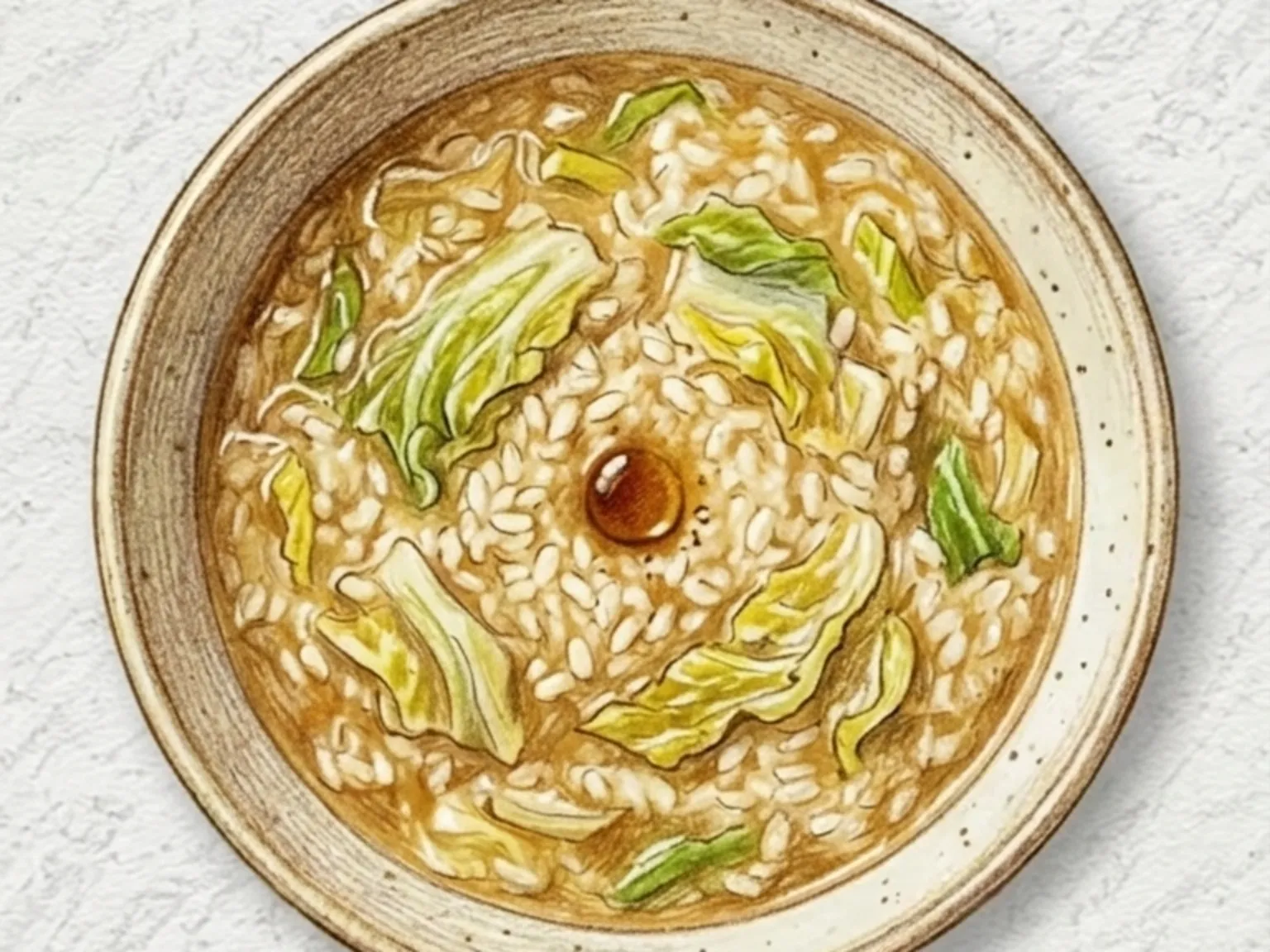
Korean Napa Cabbage Doenjang Porridge
Baechu doenjang juk is a Korean porridge where soaked rice is first toasted in sesame oil before any liquid is added, building a nutty foundation that plain boiled rice cannot provide. The doenjang is dissolved and strained through a fine-mesh sieve directly into anchovy stock so the finished porridge stays smooth without chalky bits of fermented paste. Finely chopped napa cabbage and onion go in with the strained stock: the onion melts quietly into the broth as it cooks, contributing a background sweetness, while the cabbage softens until it nearly disappears into the porridge's texture. Stirring frequently over medium-low heat for at least twenty minutes is what allows the rice grains to break down evenly and merge with the liquid rather than sitting as distinct kernels in thin broth. Skipping the initial oil-toasting step and adding raw soaked rice directly causes the starch to release unevenly, producing a porridge that sticks to the bottom of the pot and tastes flat. A drop of sesame oil and a final seasoning with guk-ganjang complete the dish. The result is a bowl that feels gentle on the stomach while carrying the full fermented complexity and depth of doenjang - suitable as a light meal or a restorative dish during recovery.
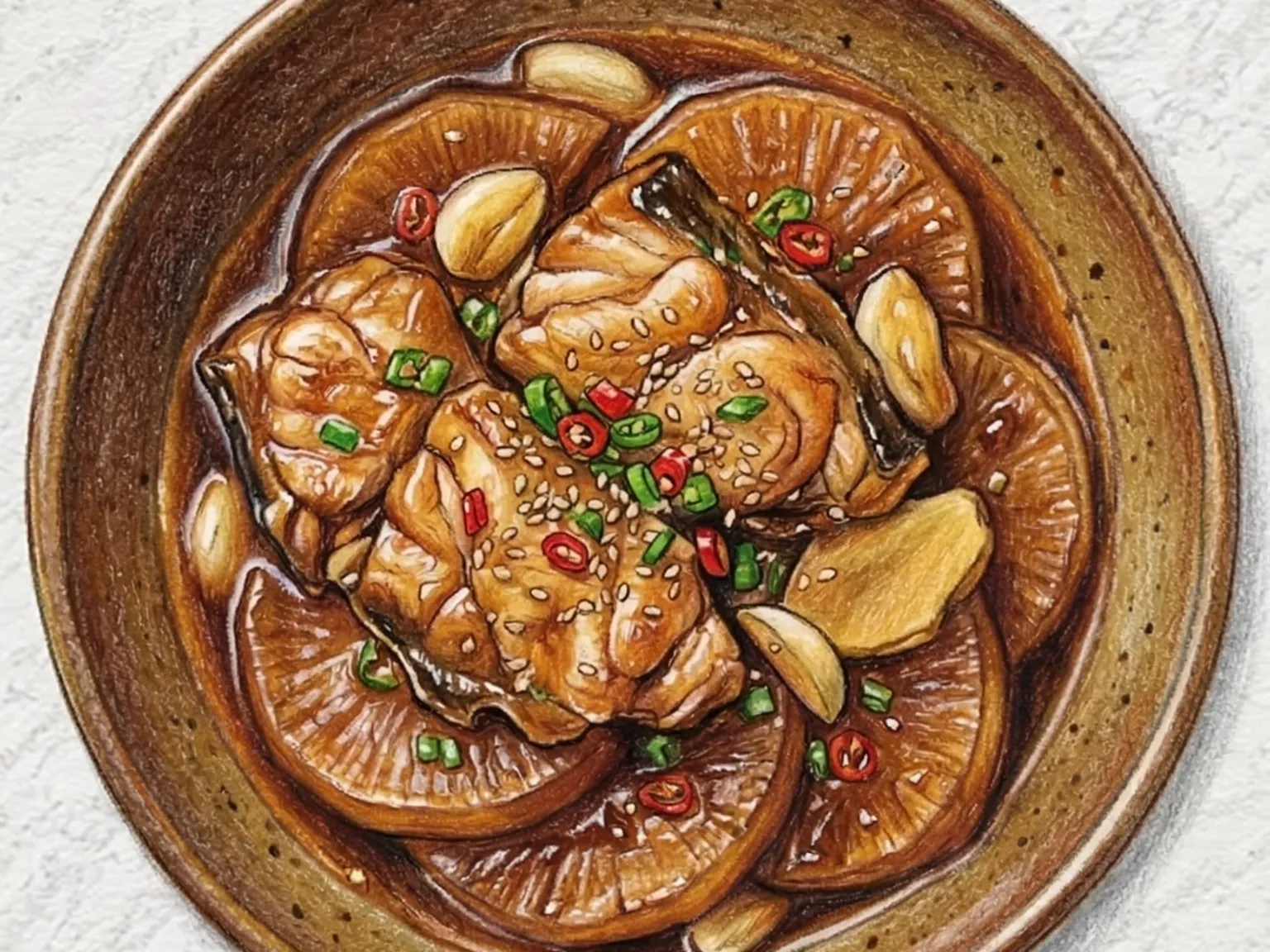
Korean Braised Monkfish in Spicy Soy Sauce
Agwi-jorim is a braised monkfish dish built around a soy-based sauce rather than the chili paste used in the better-known agu-jjim. The technique is gentler and the flavor profile more balanced - salty, faintly sweet, with a moderate heat from gochugaru rather than the aggressive fire of gochujang. Thick rounds of Korean radish go into the pot first, serving two functions simultaneously: they act as a physical buffer that keeps the fish from sticking to the bottom, and they slowly absorb the braising liquid while releasing their own sweetness into it, becoming the most flavorful element in the finished dish. The braising sauce is straightforward - soy sauce, gochugaru, garlic, and water - but it concentrates significantly as it reduces, coating both the fish and radish in a deep amber lacquer. Monkfish is well suited to braising because of its high collagen content; the flesh stays tender and almost gelatinous even with extended cooking, never turning rubbery. The liver-colored skin softens into the sauce. To eat, the standard approach is to spoon the sauce-saturated radish and fish over a bowl of steamed rice, letting the braising liquid soak in. Less fiery than agu-jjim, agwi-jorim is the version more commonly made at home, where the controlled salt-sweet-spice balance appeals to a wider range of palates.
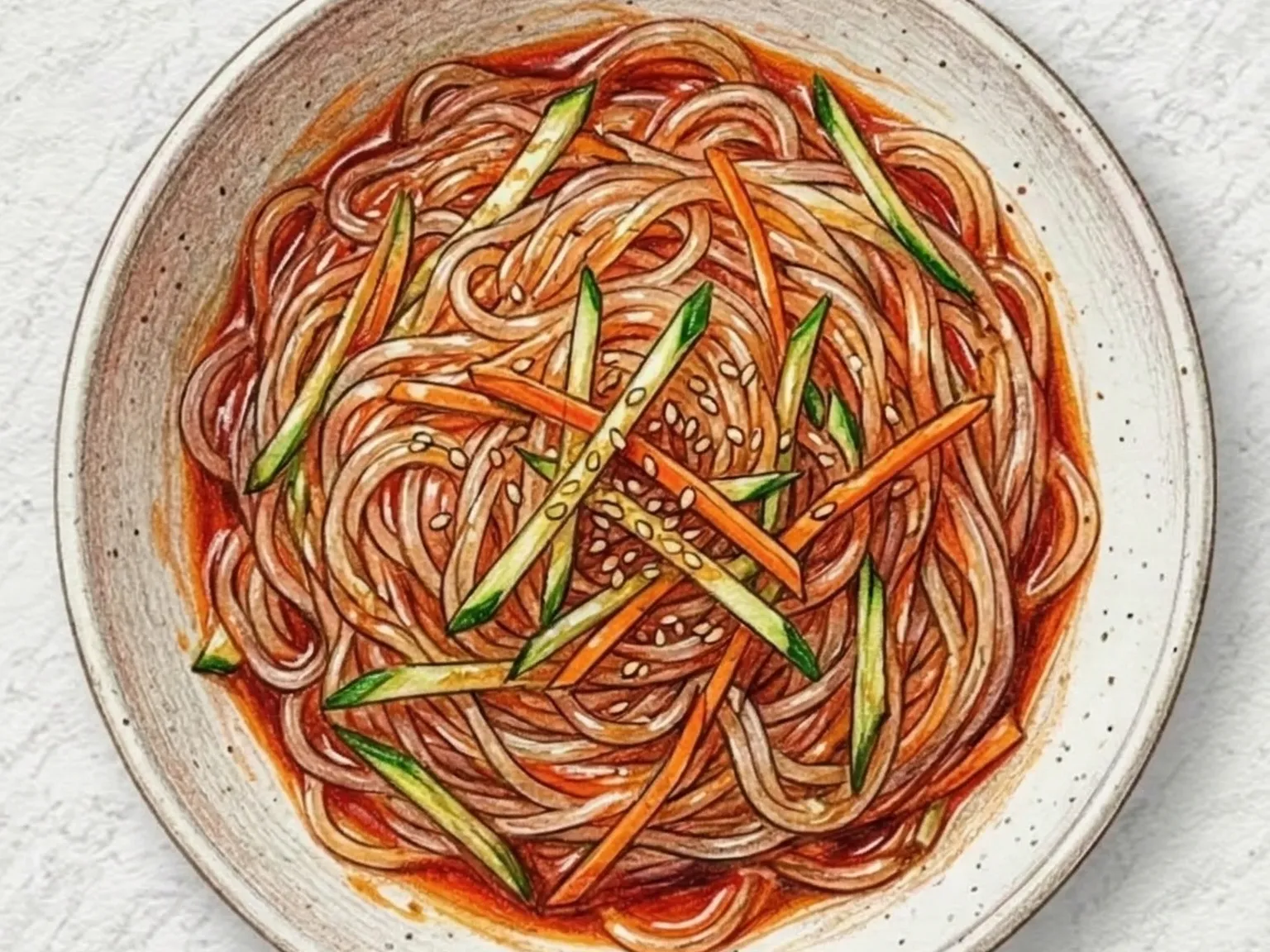
Bibim Dangmyeon (Spicy Glass Noodles)
Bibim dangmyeon is a Korean bunsik dish of boiled sweet potato starch noodles tossed together with vegetables in a dressing of gochujang, vinegar, and sugar. The noodles are cooked in boiling water until just tender, then drained and rinsed thoroughly in cold water. The cold rinse is the step that determines the final texture of the entire dish. Skipping it leaves the noodles hot and continuing to soften in their own residual heat, and they eventually stick together in a clump. Running cold water over them immediately halts the cooking, sets the starch, and produces the transparent, chewy, springy texture that defines a well-made dangmyeon. Julienned cucumber and carrot add crunch and visual contrast in the bowl. A pan-fried egg sliced into thin strips and placed on top contributes a mild, rich note and completes the visual presentation. The dressing is a balance of three distinct flavor elements: the heat and fermented depth of gochujang, the acidity of vinegar, and the sweetness of sugar. All three need to coat every strand of noodle evenly, which requires thorough tossing rather than a light fold. Sesame oil added at the end prevents the noodles from sticking together as they sit while also contributing a warm, nutty finish. Because the noodles continue absorbing the dressing over time, the dish is best eaten immediately after preparation when the texture is at its most distinct. The dressing can be made in advance and refrigerated, and garlic chives or perilla leaves can substitute for the cucumber and carrot. Adding thinly sliced bulgogi or a soft-boiled egg provides protein without disrupting the overall balance of the dish.
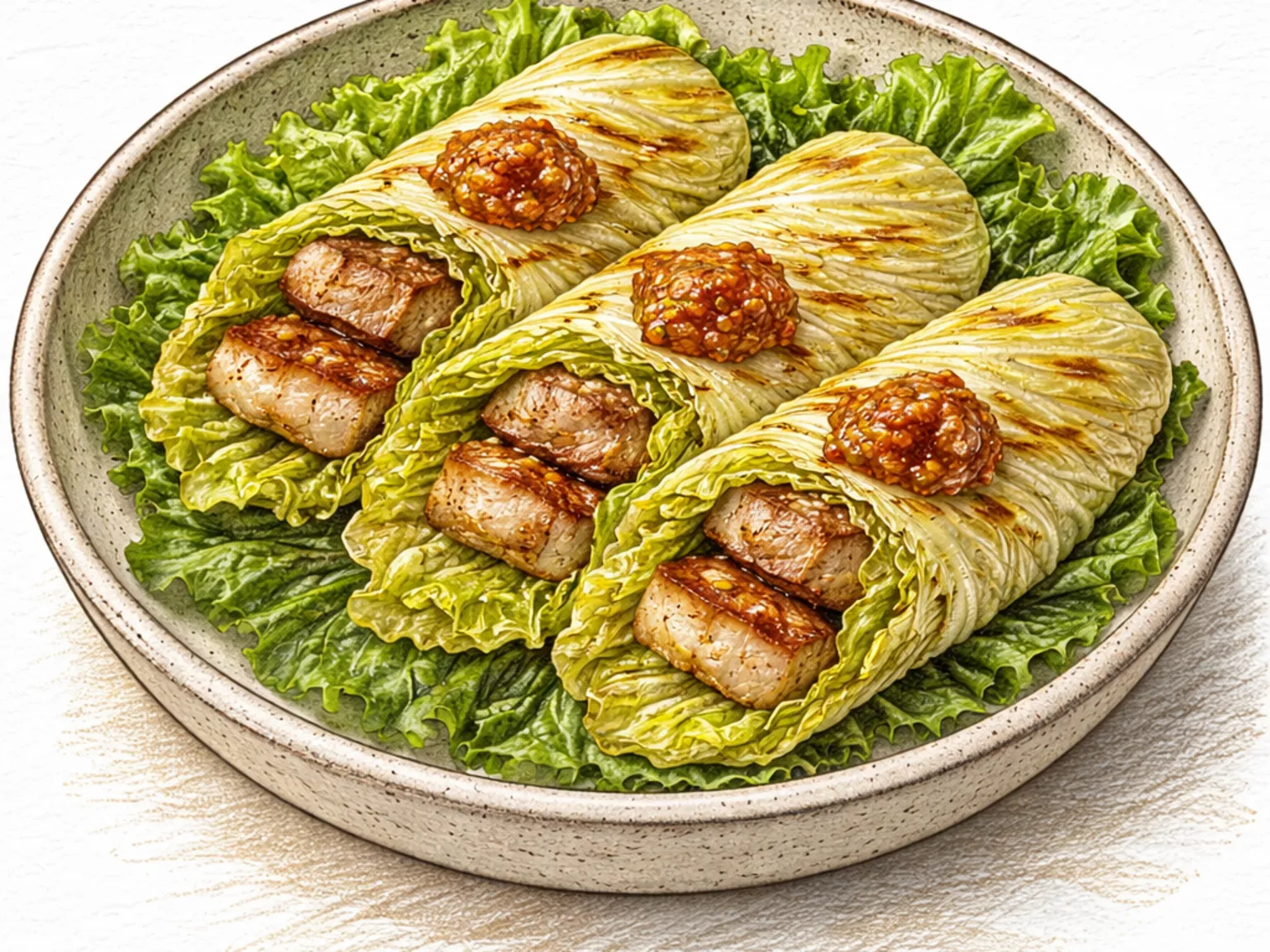
Korean Grilled Cabbage Leaf Wraps
Baechu kimchi gui ssam takes napa cabbage to the grill, charring the leaves before using them as wraps for grilled pork belly and doenjang-based ssam sauce. A whole cabbage is halved lengthwise, brushed with sesame oil and sprinkled with salt, then grilled over high heat for two to three minutes per side until the outer edges char while the inner layers keep some crispness. Pork belly is grilled separately until golden and cut into bite-sized pieces. The ssam sauce - doenjang, gochujang, minced garlic, and sesame oil mixed together - is spread on a grilled leaf, topped with pork, and rolled into a wrap. Each bite combines the smoky sweetness of the charred cabbage, the fatty richness of the pork, and the salty, fermented punch of the sauce. Grilled cheongyang chili on the side adds extra heat. The cabbage must not stay on the grill beyond the recommended time or it loses all structure and collapses into mush, making it impossible to use as a wrap. Unlike lettuce or perilla leaf, napa cabbage shrinks under heat and concentrates moisture inside the leaf, which allows it to absorb pork fat naturally as it wraps around the meat.
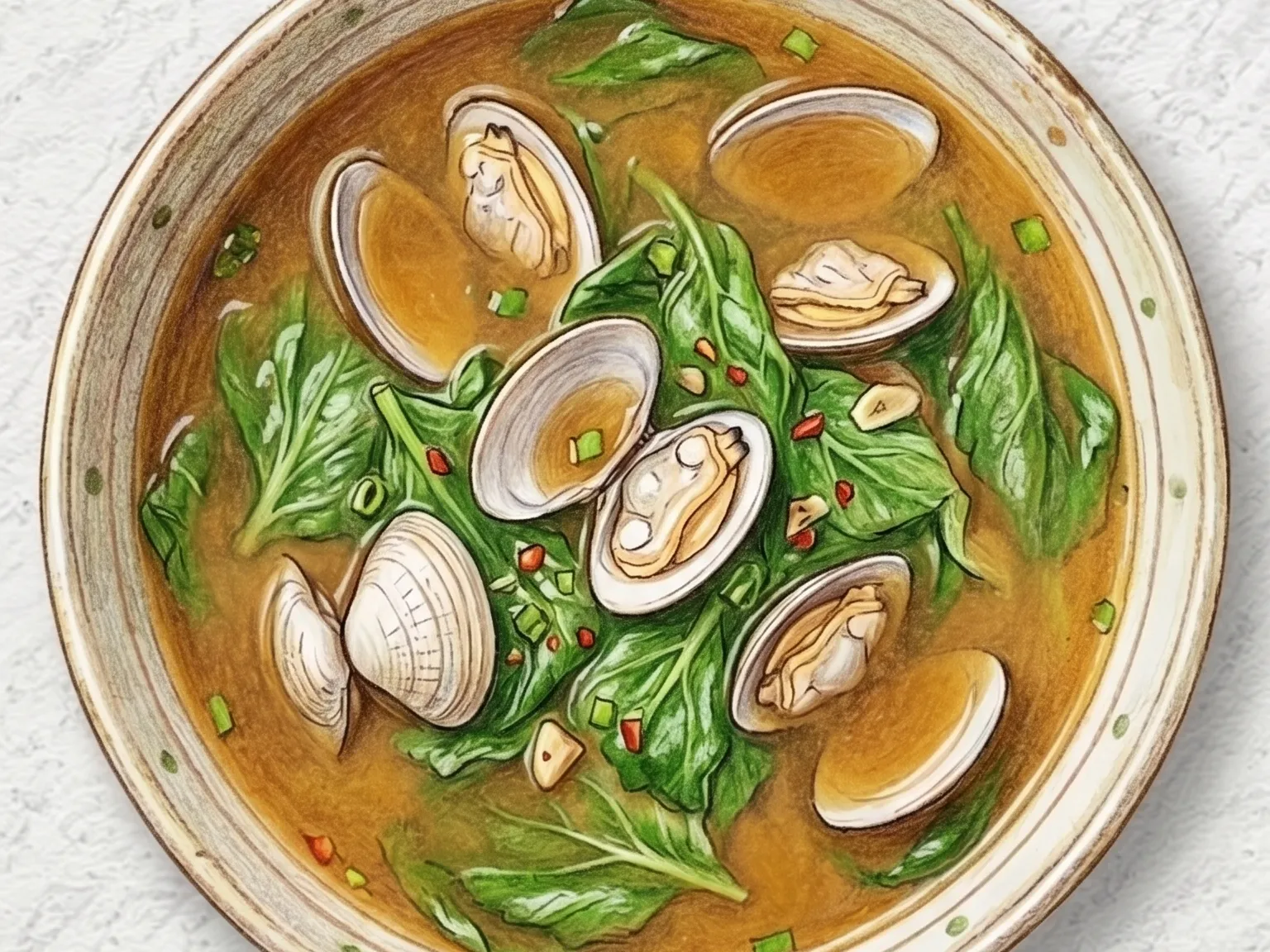
Korean Mallow Clam Soup (Doenjang Mallow and Clam Broth)
Auk-bajirak-guk pairs mallow greens and littleneck clams in a doenjang broth, a combination that Korean coastal households have prepared together for generations. The two ingredients come from the same geographic region - the shallow tidal flats and vegetable gardens of Korea's southern and western coasts - and their flavor profiles complement each other in a way that seems almost deliberate. The clams are purged of sand by soaking in salted water, then brought to a boil until the shells open. The liquid they release is immediately saline and oceanic, becoming the backbone of the broth. Doenjang dissolved into that clam liquor adds fermented earthiness and depth that the brine alone cannot provide. Mallow leaves are added at the very end - less than a minute before the pot comes off the heat. Cooking them longer dulls their color, turns the broth cloudy, and produces an excess of the mucilage the leaves naturally contain. Brief cooking preserves their silky, almost slippery texture, and the small amount of mucilage that does release thickens the broth very slightly, giving it more body. The flavor balance across the three components is precise: the doenjang's savory funk is sharpened by the clam's brininess, and the mallow's gentle sweetness smooths both into a rounded whole. The broth is flavorful enough to eat on its own poured over rice. Spring is the best season for this soup, when young mallow leaves are at their most tender.
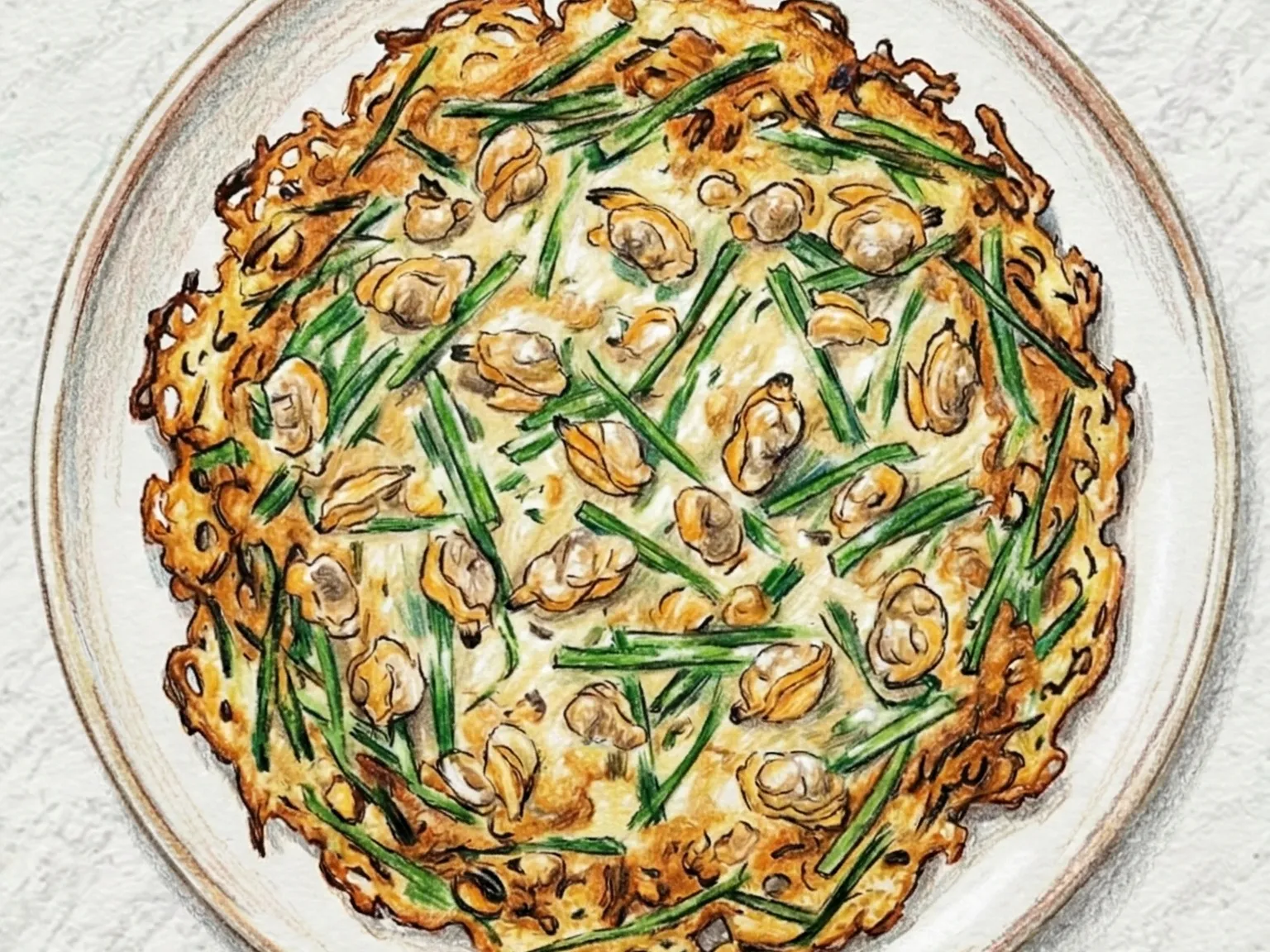
Korean Chive Clam Jeon (Garlic Chive and Clam Seafood Pancake)
Buchu-bajirak-jeon is a seafood pancake of garlic chives and clam meat, pan-fried in a batter made with a mix of all-purpose pancake flour and rice flour. The rice flour addition increases the chew and gives the finished jeon a slightly more resilient texture than plain flour batters. Clam meat releases a briny, oceanic liquid as it cooks that seeps into the batter and flavors it throughout, while the chives add a sharp, grassy counterpoint. Minced garlic and diagonally sliced cheongyang chili worked into the batter suppress any fishiness and build a layered fragrance. A generous amount of oil in the pan over medium heat produces edges that crisp and brown like the outside of a fritter. Waiting until the bottom is fully set before flipping prevents the pancake from tearing. Served with soy dipping sauce or a seasoned soy mixture, the clean salinity of the clams comes through clearly.
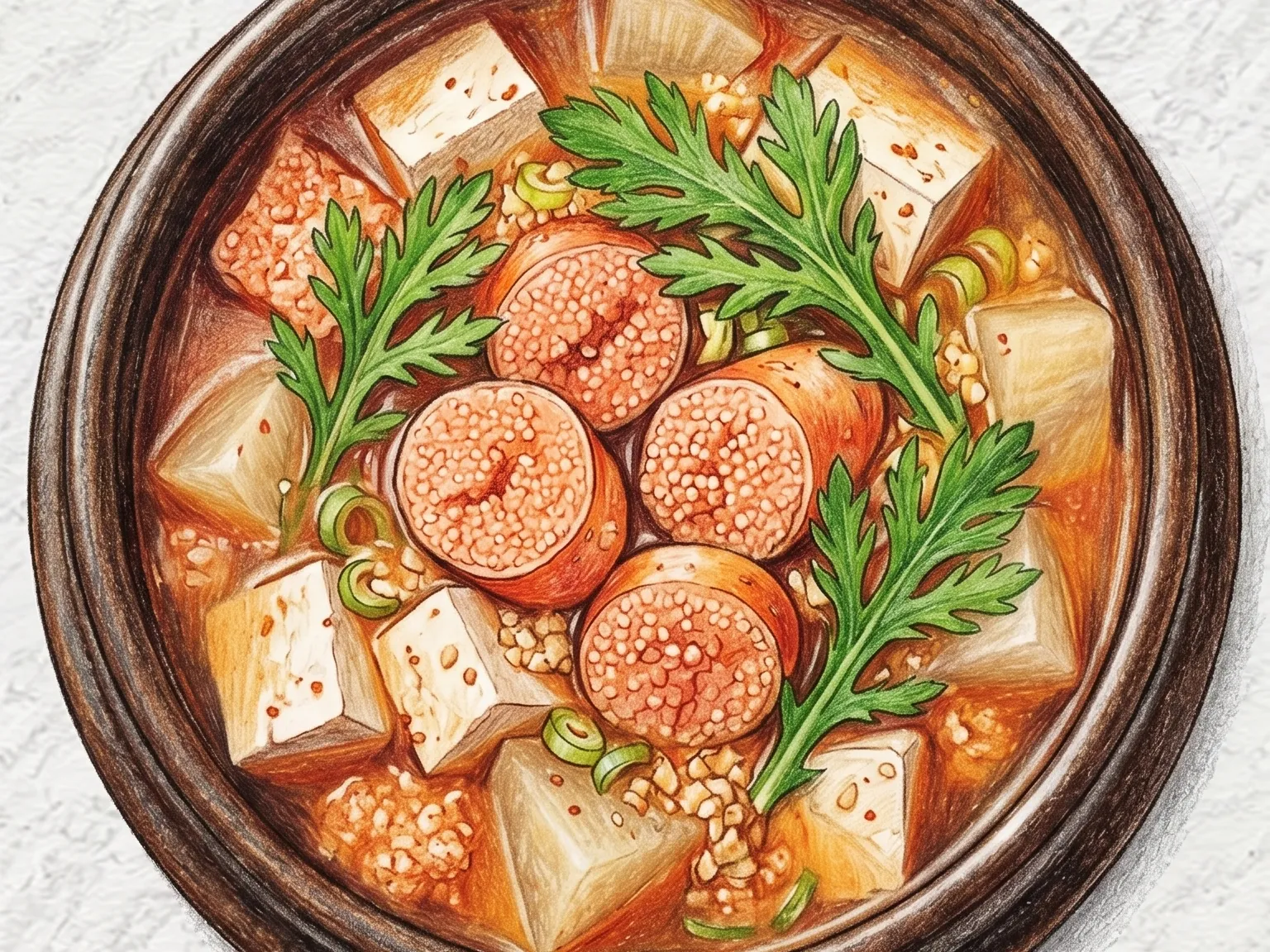
Korean Spicy Fish Roe Stew
Altang is a Korean stew built around pollock roe - the egg sacs that are the defining ingredient, distinguishing this dish from the many other spicy Korean seafood stews. The dish originated in east coast fishing towns where fresh roe is available in large quantities during the winter spawning season and must be used quickly. Anchovy-kelp stock simmers first with radish to create a clean, sweet foundation before the roe and tofu are added. Once the roe goes into the broth, something visible happens: the egg sacs release their contents as they cook, turning the liquid cloudy and enriching it with marine oils that give the broth a noticeably heavier, more unctuous body. This transformation is specific to altang and is part of what makes it a different eating experience from other spicy Korean stews. Gochugaru and doenjang season the stew together - the chili bringing direct heat and the fermented paste adding depth - and together they neutralize the fishy edge that pollock roe would otherwise carry. Crown daisy, ssukgat, is added in the final moments. Its sharp, almost medicinal herbal fragrance is the correct counterpoint to the heavy, briny broth. In Korean drinking culture, altang occupies a specific role as a late-night restorative consumed at the end of a long evening. The image of a stone pot of altang arriving at the table still vigorously boiling, at two or three in the morning, is a recognizable part of Korean urban nightlife.
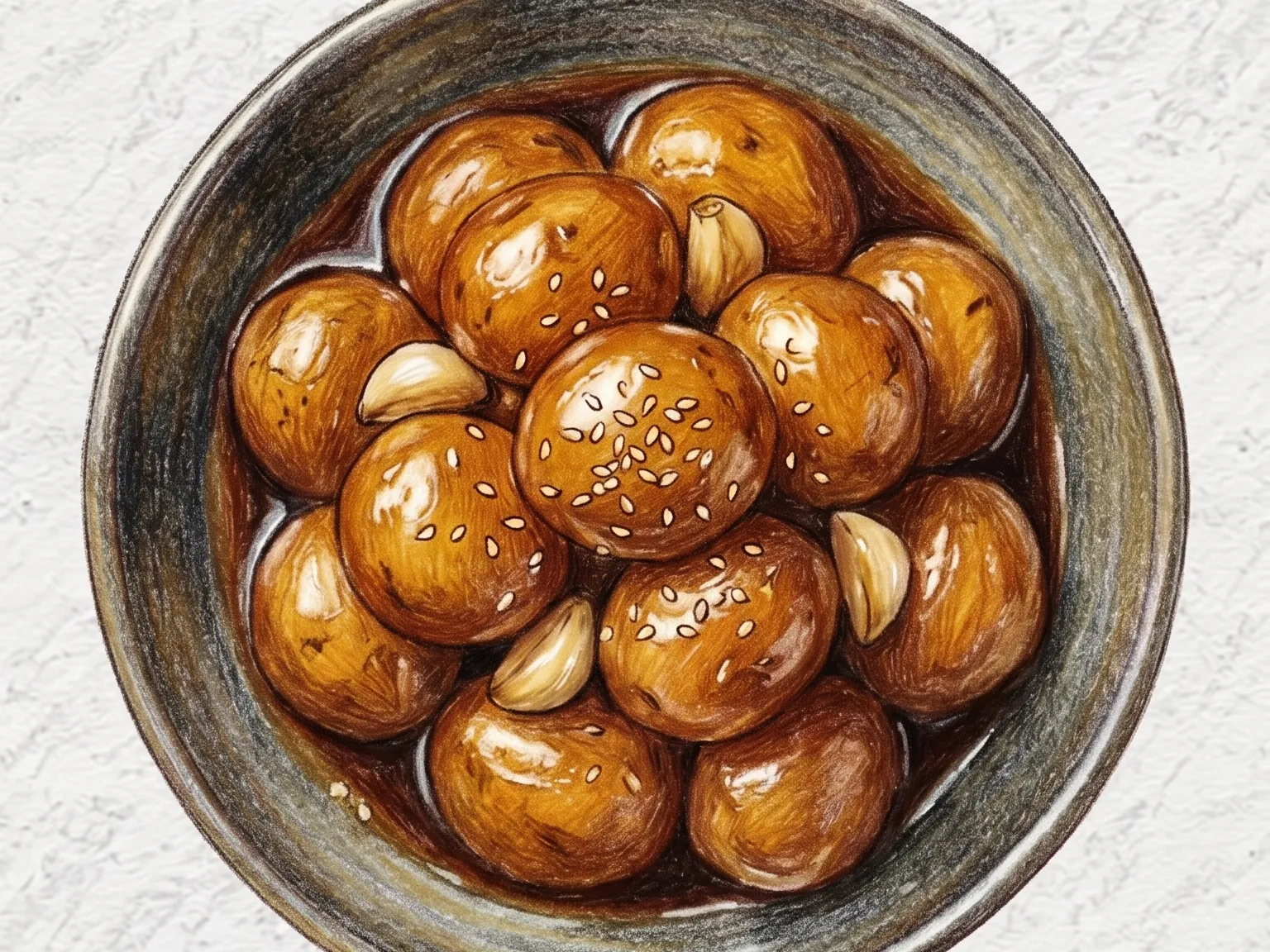
Korean Soy-Braised Baby Potatoes
Algamja ganjang-jorim is a Korean banchan of baby potatoes braised in a soy-sugar glaze, a dish so simple in its ingredients - soy sauce, sugar, corn syrup, garlic, and a handful of small potatoes - that it has persisted in home cooking across generations. The potatoes are parboiled whole first to partially cook the starchy exterior, then transferred into the seasoning liquid and simmered over low heat as the sauce reduces. As the liquid evaporates, a dark amber lacquer forms around each potato while the interior stays dense and floury. Keeping the lid off and gently shaking the pan rather than stirring with a utensil allows the coating to build evenly without breaking the potatoes apart. Sesame oil and sesame seeds go in at the end when the sauce has thickened to a glaze, adding a roasted fragrance to the finish. Refrigerating overnight deepens the penetration of the soy seasoning into the center, and the dish keeps for close to a week - practical enough to make in a single batch for the whole week.
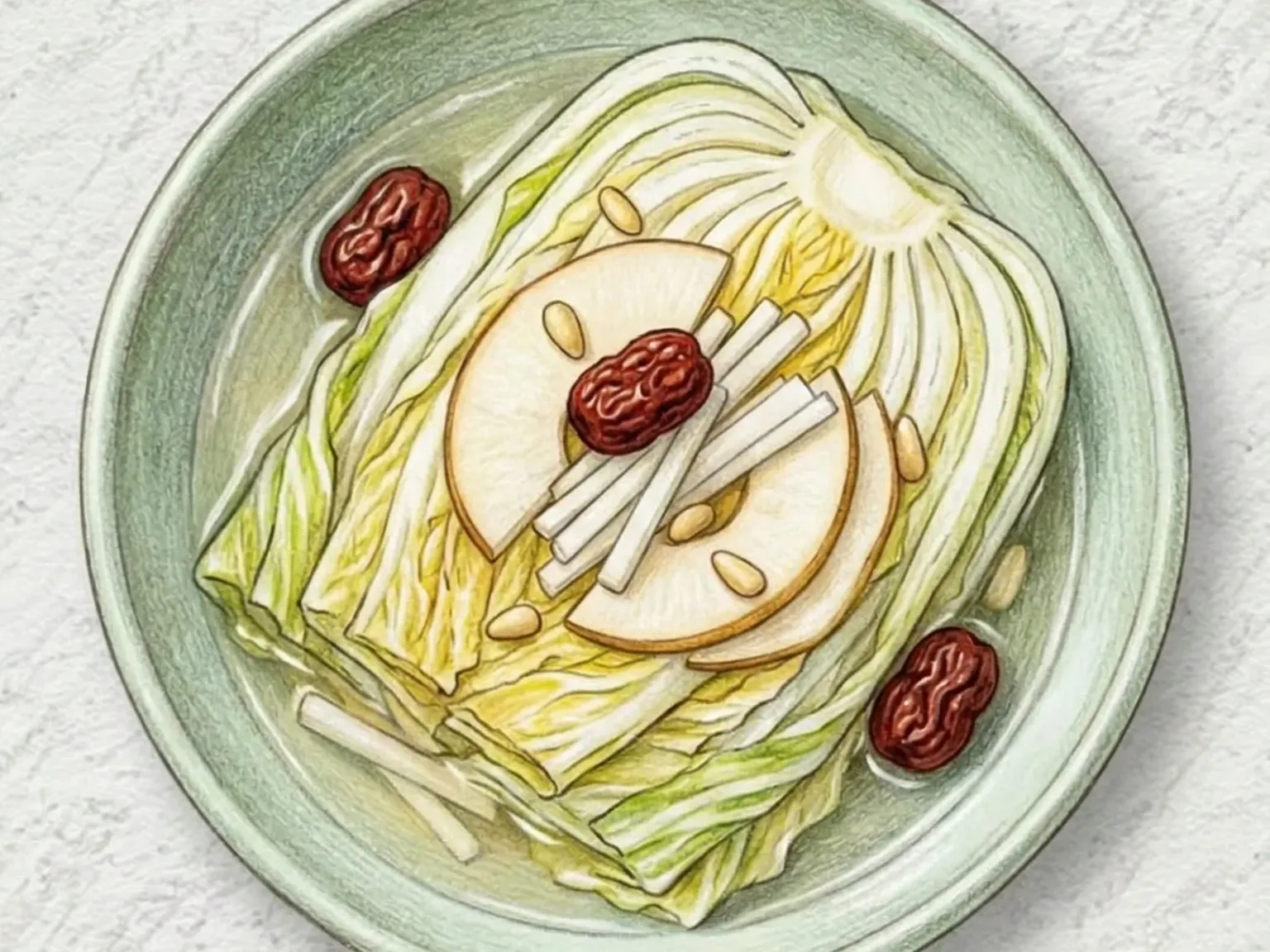
Korean White Kimchi (Non-Spicy Napa Pear Fermented)
Baek kimchi is a Korean white kimchi made without gochugaru, producing a completely non-spicy, clear-broth fermented vegetable. Napa cabbage is salted and wilted, rinsed, then layered with julienned radish, sliced garlic, and ginger tucked between the leaves. Pureed pear serves as a natural sugar source that feeds fermentation, while dried jujubes add a subtle background sweetness to the brine. Salted water is poured over the assembled cabbage, the container is sealed, and after one day at room temperature the kimchi moves to the refrigerator for a slow ferment. Without chili heat, the flavor centers on the clean lactic acidity that develops over time, balanced by the natural sweetness of pear and jujube and the warm bite of garlic and ginger dissolved into the brine. The fermentation is slower than standard kimchi, reaching optimal taste at two to three weeks. It is eaten with its brine, either on its own or as a palate-clearing side alongside fatty meat dishes. Before chili peppers were introduced to the Korean peninsula in the late sixteenth century, kimchi without gochugaru was the standard form, and baek kimchi is considered the closest modern equivalent to those pre-chili preparations.
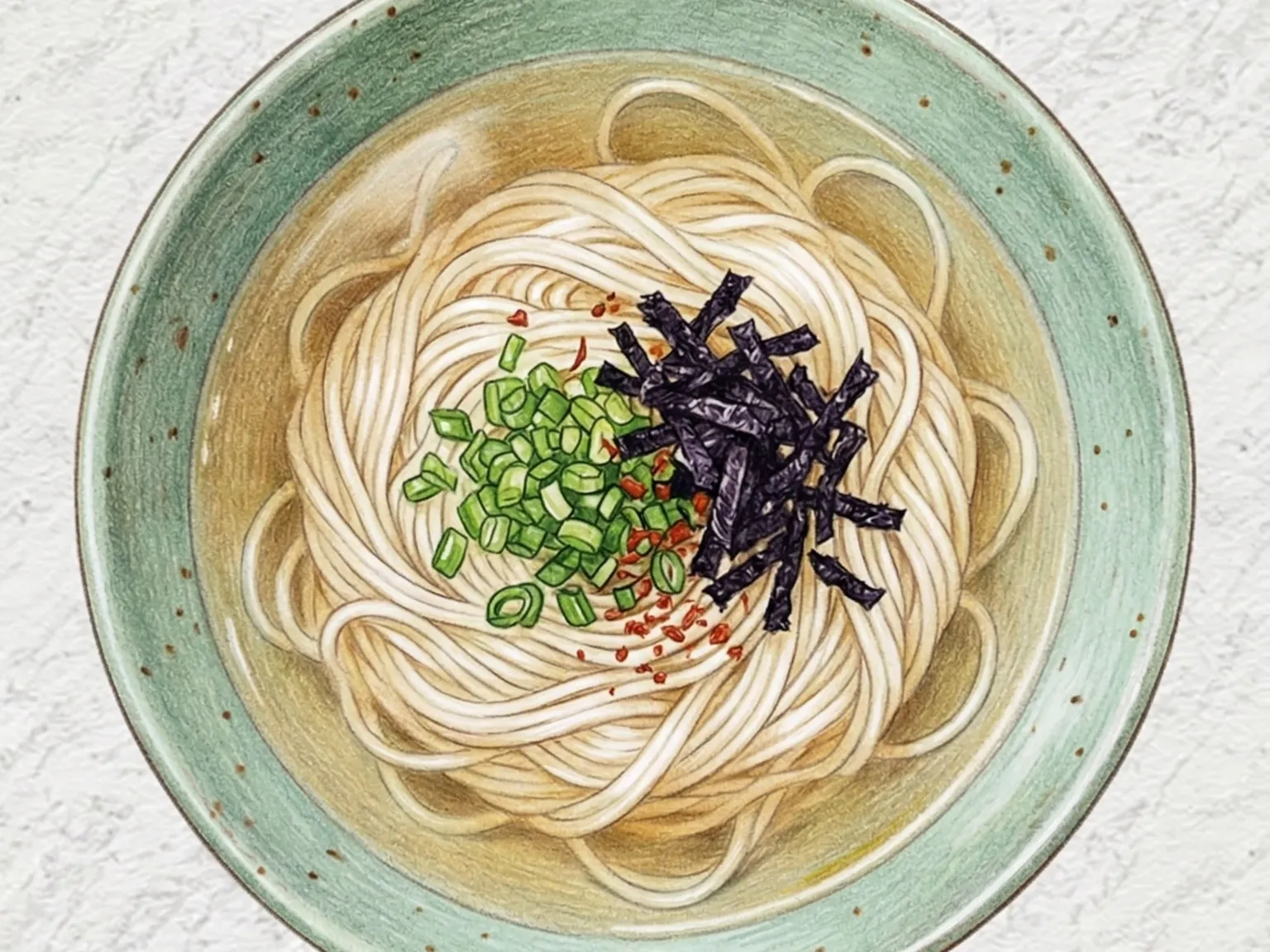
Korean Anchovy Broth Thin Noodle Soup
Anchovy somyeon is the noodle soup Korean families fall back on when the kitchen offers little to work with - dried anchovies, a strip of dashima kelp, and a bundle of thin wheat noodles are enough. The broth starts with dried anchovies soaked briefly to cut any bitterness, then simmered with dashima for fifteen minutes before being strained to produce a clear liquid with a faint oceanic sweetness and deep umami. Somyeon - hair-thin wheat noodles - are cooked in a separate pot to keep their starch from clouding the broth, then rinsed repeatedly under cold water until every strand separates cleanly. The noodles go into a bowl of hot broth and are finished with sliced scallion, a small drop of sesame oil, and often a sheet of toasted gim. A few drops of soy sauce tune the salt level, and a soft-boiled egg or a few slices of tofu can round it into a full meal. The appeal of the dish is its restraint: no chili paste, no fermented base, just the clean savor of anchovy stock meeting springy noodles. Korean mothers have served this as a quick midday meal for generations, and it endures as comfort food in its most unadorned form.
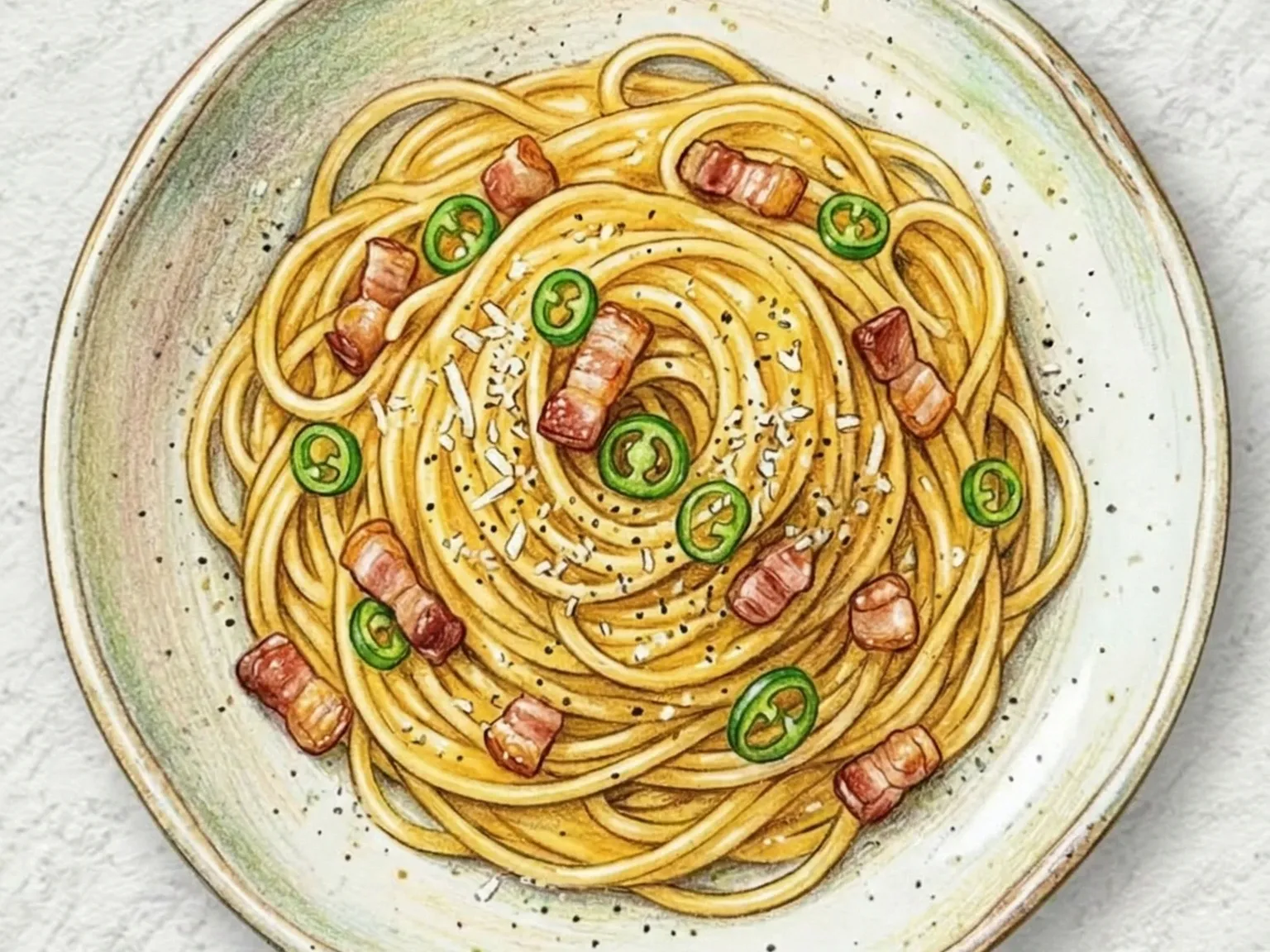
Cheongyang Chili Carbonara Spaghetti
Cheongyang chili carbonara spaghetti takes the classical Roman carbonara - built on egg yolks, Parmigiano-Reggiano, and Pecorino Romano emulsified with rendered pork fat - and introduces the sharp, lingering heat of Korean cheongyang peppers. Pancetta is rendered slowly over medium-low heat until the fat is fully released and the meat turns crisp, and the sliced chili and garlic are added to the rendered fat for just thirty seconds - long enough to infuse the oil with heat and fragrance without scorching the garlic. The cheese-egg base is made by whisking yolks with finely grated cheese until smooth; a useful ratio is two yolks to 20 grams of Parmigiano-Reggiano and 10 grams of Pecorino. This mixture must be folded into the drained pasta off direct heat, using reserved pasta water to loosen and emulsify - the starch and salt in the pasta water are what allow the sauce to coat each strand evenly rather than clump. The cheongyang pepper's capsaicin cuts cleanly through the concentrated richness of the egg and cheese fat, providing a clean finish that the classic Roman version does not have. The chili quantity is easy to adjust upward or downward, and using fresh whole peppers instead of pre-cut pieces produces a sharper heat with more green, vegetal character.
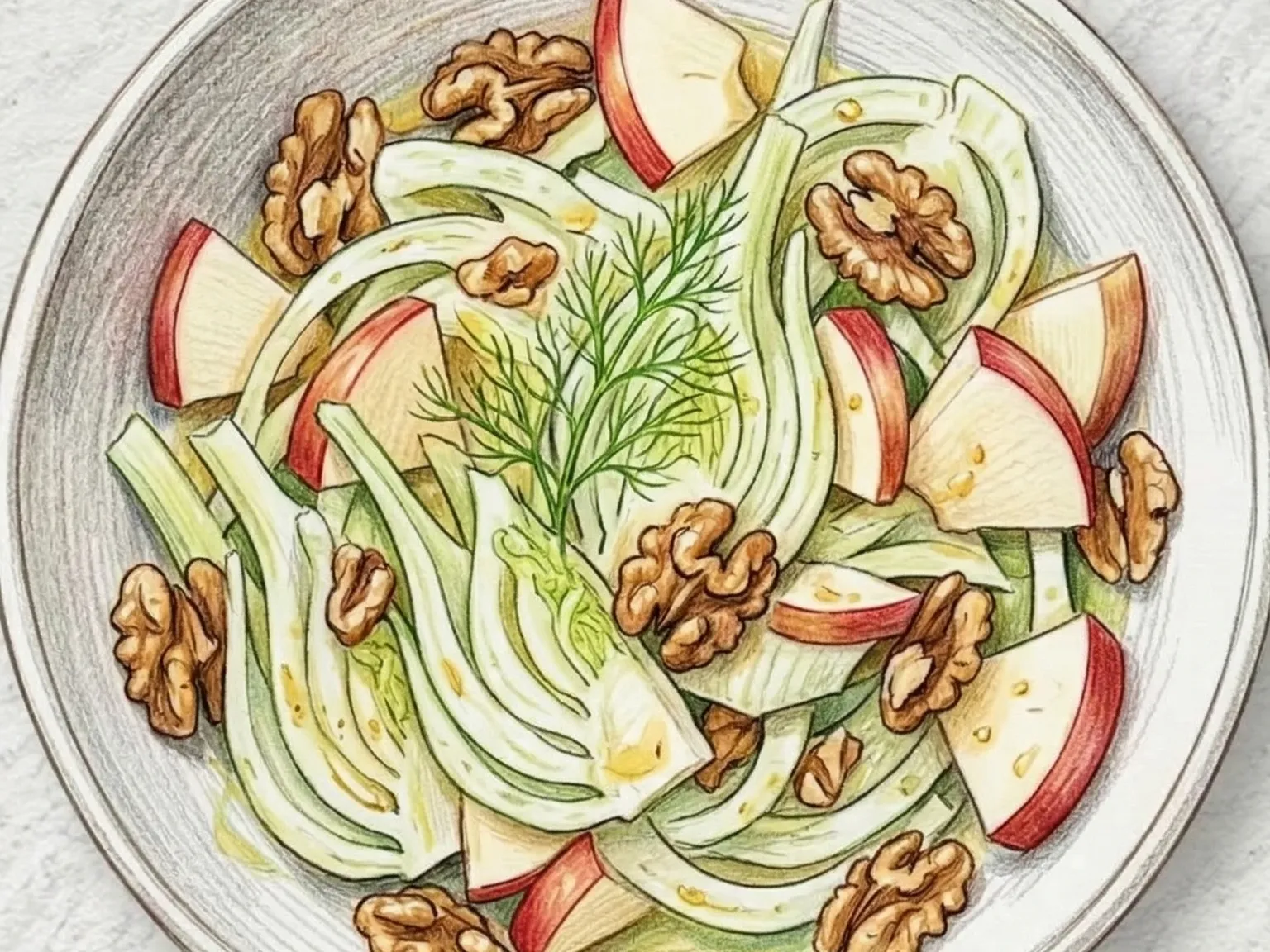
Apple Fennel Walnut Salad
This salad pairs three ingredients whose textures and flavors run in different directions - crisp apple, anise-scented fennel, and bitter walnuts - and unifies them with a honey-lemon dressing. Thinly sliced fennel bulb contributes a licorice-like fragrance that is more aromatic than sweet, while its celery-crisp texture holds a firm contrast against the apple's softer flesh. Toasted walnuts add a crunchy, tannic bitterness that anchors the lighter elements and keeps the salad from reading as merely sweet. The dressing is deliberately minimal - fresh lemon juice, honey, a small amount of olive oil, and a pinch of salt - so the ingredients carry the flavor rather than the sauce. Assembling just before serving prevents the apple from browning. Salads of this type appear on autumn and winter tables in France and Italy when local apples and fennel come into season together, and can be served as a standalone starter or alongside roasted poultry, where the anise note in the fennel cuts through the meat's richness. Fennel has a long association with digestive support in Mediterranean cooking, which is partly why it has traditionally been served alongside fatty meats, and this salad draws on the same pairing logic.
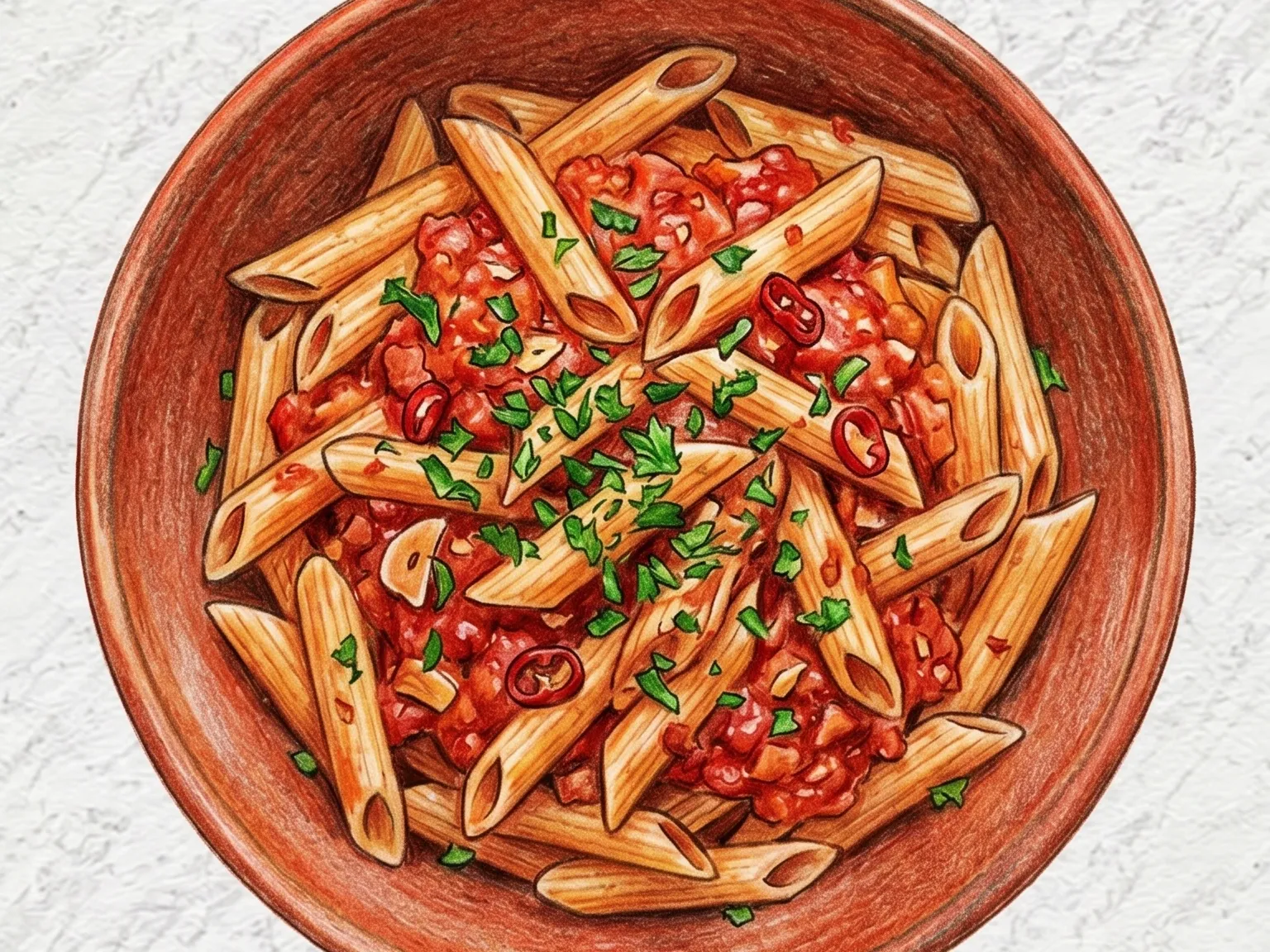
Penne all'Arrabbiata (Spicy Tomato and Garlic Pasta)
Arrabbiata, meaning angry in Italian, is a Roman pasta sauce whose heat comes from dried peperoncino chili flakes used in generous quantity. The sauce descends from the cucina povera tradition of Lazio, where tomatoes, garlic, olive oil, and chili were the four ingredients a working kitchen could reliably afford. Garlic is sliced thin and cooked in olive oil over moderate heat until fragrant and very lightly golden, then the chili flakes bloom in the hot fat for a matter of seconds, infusing the oil with their heat before crushed tomatoes are added. The sauce simmers uncovered for fifteen to twenty minutes, reducing until concentrated enough to coat each tube of penne without sliding off. The heat is slow-building rather than immediate: the first bite registers as mild, but the warmth accumulates with each subsequent forkful and persists at the back of the throat long after eating. Fresh parsley scattered at the end introduces a green, herbal brightness that modulates the lingering chili heat without diminishing it. In the purist version there is no cream and no cheese, only the clean interplay of tomato acidity, garlic depth, and chili fire. The sauce traces its origins to the villages outside Rome in the early twentieth century and reflects Southern Italian cooking's preference for restraint, directness, and heat over the dairy richness characteristic of the north.
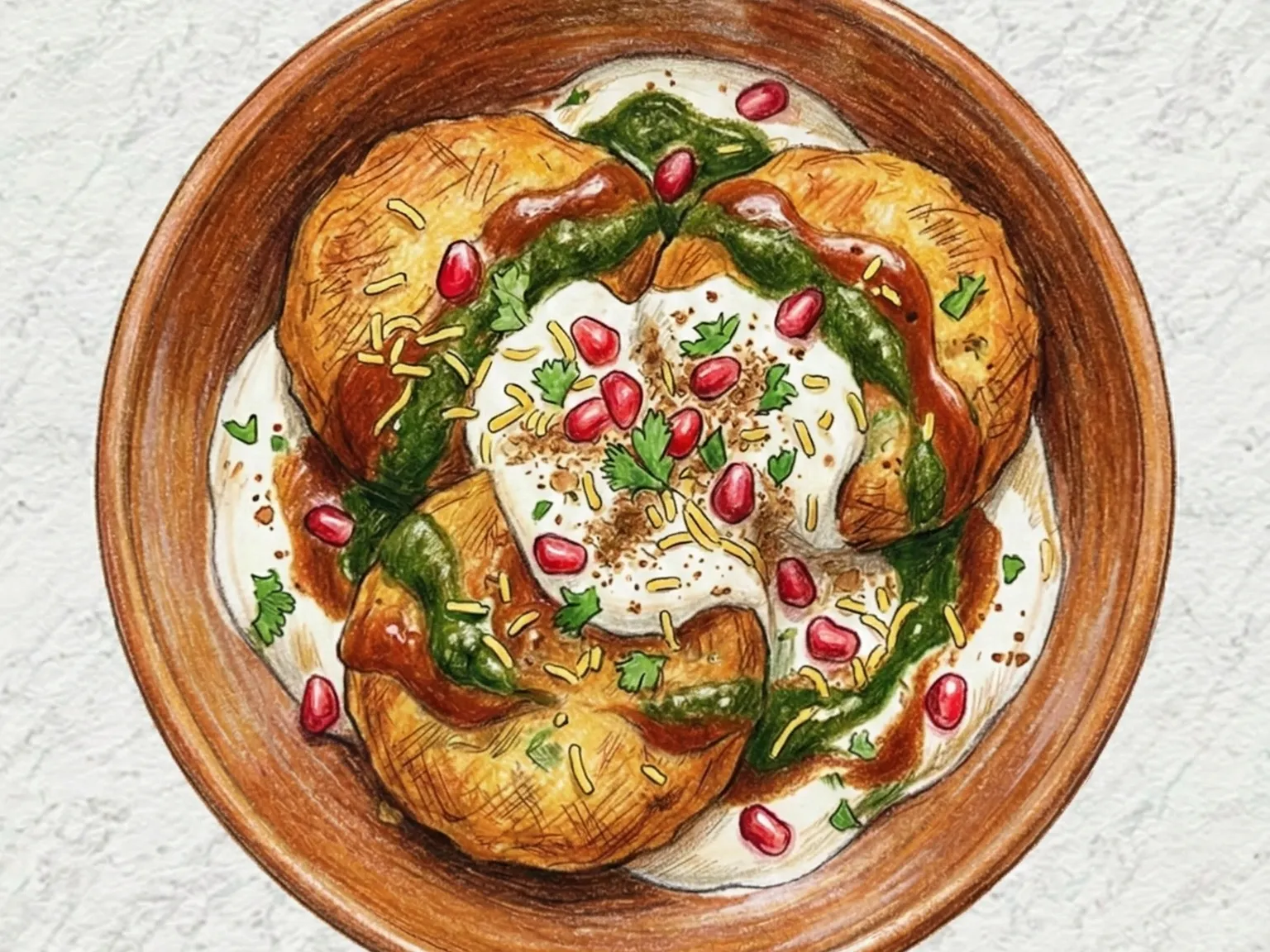
Aloo Tikki Chaat (Indian Fried Potato Patty Street Snack)
Aloo tikki chaat is one of India's most structurally layered street foods, originating from the chaat stalls of Uttar Pradesh and now found across the subcontinent. The foundation is a shallow-fried mashed potato patty: the exterior forms a deep golden crust, the interior stays soft. The real complexity arrives after frying, when cold whisked yogurt, sweet tamarind chutney, sharp green mint chutney, raw diced onion, and a dusting of chaat masala are piled onto the hot tikki at once. The temperature contrast is stark - warm and crunchy underneath, cold and creamy on top - and the chutneys deliver sweet, sour, and herbal in the same bite. The crust softens quickly under the sauces, so this must be assembled and eaten without delay.
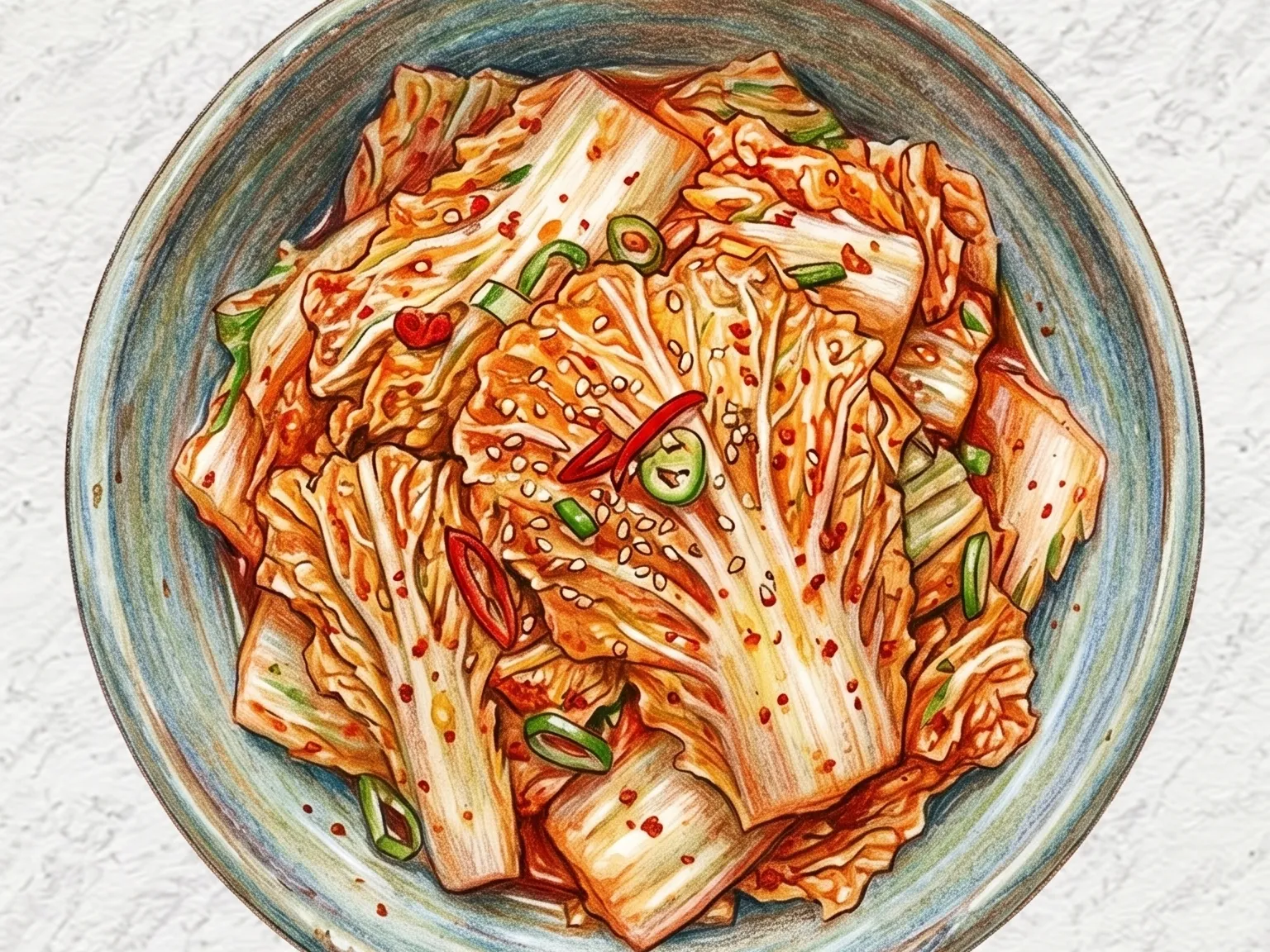
Korean Fresh Cabbage Kimchi
Geotjeori is kimchi's immediate cousin - raw napa cabbage dressed in gochugaru seasoning and eaten right away without any fermentation. The cabbage is salted for about twenty minutes to draw out moisture and soften the texture slightly, then squeezed dry and tossed with red pepper flakes, anchovy fish sauce, minced garlic, minced ginger, sugar, and a finishing drop of sesame oil. The brief salting pulls just enough water from the leaves to let the seasoning coat them evenly while keeping the cabbage noticeably crisper than fermented kimchi. Without the lactic acid produced during aging, the flavor profile is fresher and more direct - the heat of the gochugaru and the savory depth of the fish sauce come through cleanly rather than sitting under layers of fermented complexity. Geotjeori is best eaten the day it is made and should be used within a day or two if refrigerated. Koreans pair it with grilled pork belly, alongside doenjang-jjigae, or as a quick substitute when the aged kimchi jar runs empty.