🏠 Everyday Recipes
Simple home-cooked meals for any day
1705 recipes. Page 26 of 72
These are the meals you can cook day after day without getting tired of them. Doenjang jjigae, rolled omelet, spicy pork stir-fry - the kind of home-cooked dishes that fill an ordinary day with comfort.
The beauty of everyday cooking is that it relies on common ingredients already in your fridge. No exotic items, no complicated techniques - just straightforward recipes for satisfying home meals.
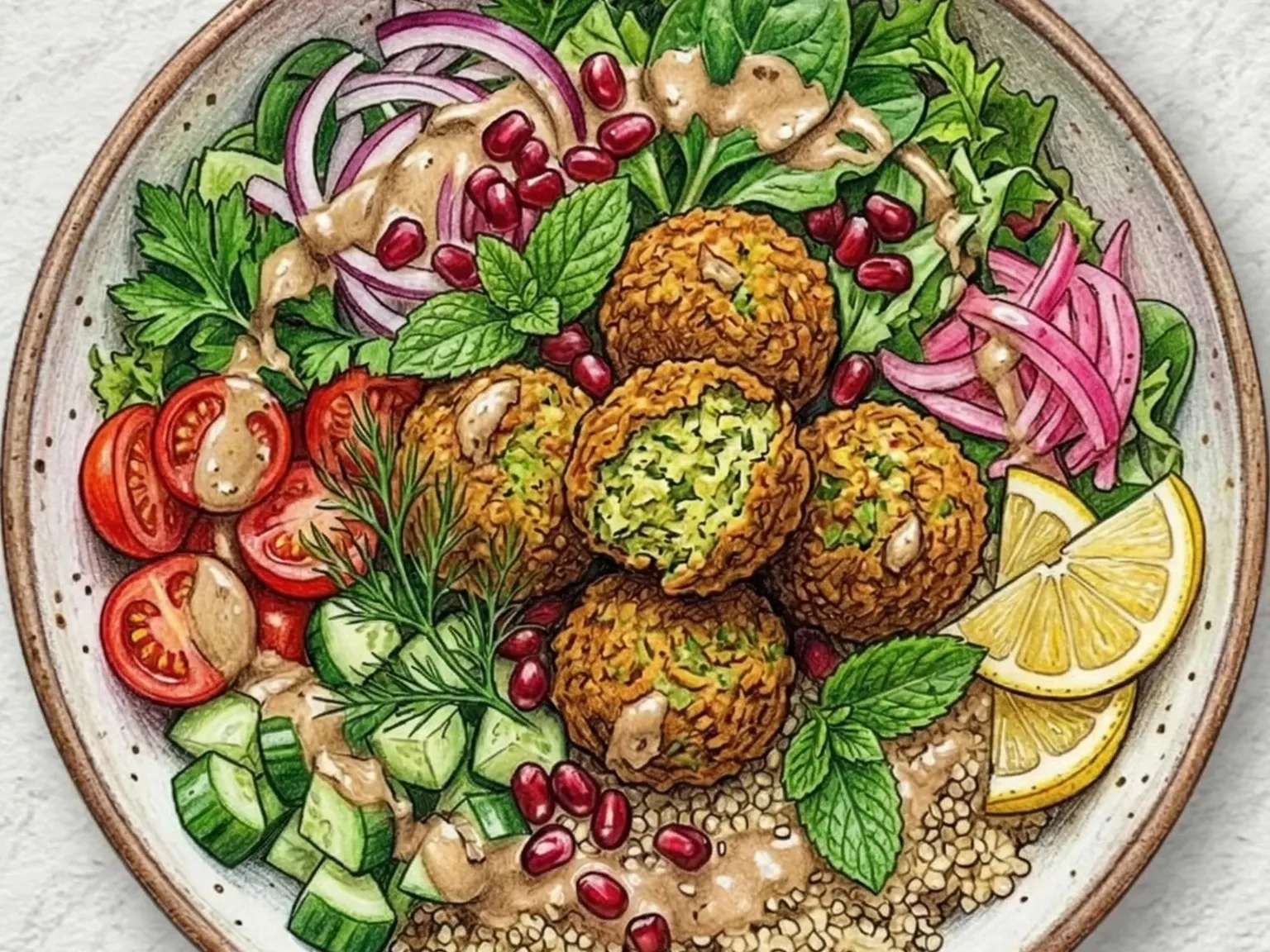
Falafel Salad Bowl
A falafel salad bowl arranges crisp, herb-packed chickpea fritters over a bed of mixed greens or grains alongside chopped cucumber, tomato, red onion, and pickled vegetables. The falafel are made from soaked raw chickpeas blended with parsley, cilantro, cumin, and garlic, then fried or baked until the exterior turns deeply golden while the interior stays bright green and moist. A generous drizzle of tahini dressing ties the bowl together with its nutty, slightly bitter sesame character, and a squeeze of fresh lemon lifts the entire dish. Adding cooked quinoa, bulgur, or couscous underneath turns it into a filling one-bowl meal. Each bite moves between crispy falafel, crunchy raw vegetables, and creamy dressing, so no two forkfuls feel the same. Originating across the Middle East, falafel has become an internationally recognized symbol of plant-based cooking, and this bowl format balances protein and fiber in a well-rounded single serving.
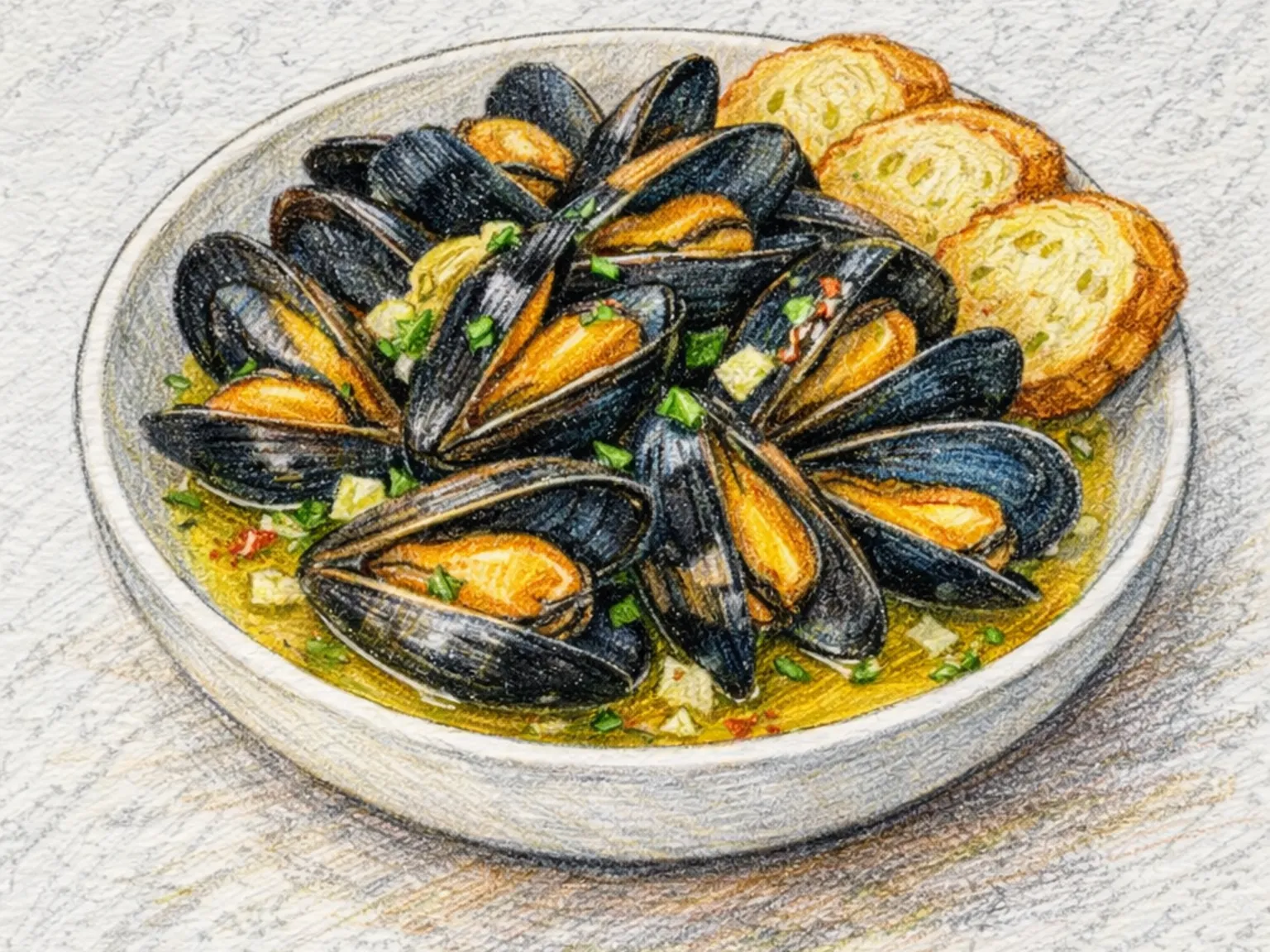
Garlic Butter Mussels
Garlic butter mussels are steamed in a fragrant broth of sauteed garlic, melted butter, and white wine. Onion and garlic are cooked in butter and olive oil until softened, then white wine is added and boiled briefly to drive off the alcohol while keeping the acidity and fruit notes intact. Once the mussels go in and the lid is sealed, the shells open within four to five minutes, releasing briny juices that meld with the butter-wine base into a rich, savory broth. Mussels that remain closed after cooking must be discarded. Finishing with chopped parsley and black pepper adds color and a mild sharpness, and tearing crusty baguette into the bowl to soak up the broth is the traditional way to enjoy every drop.
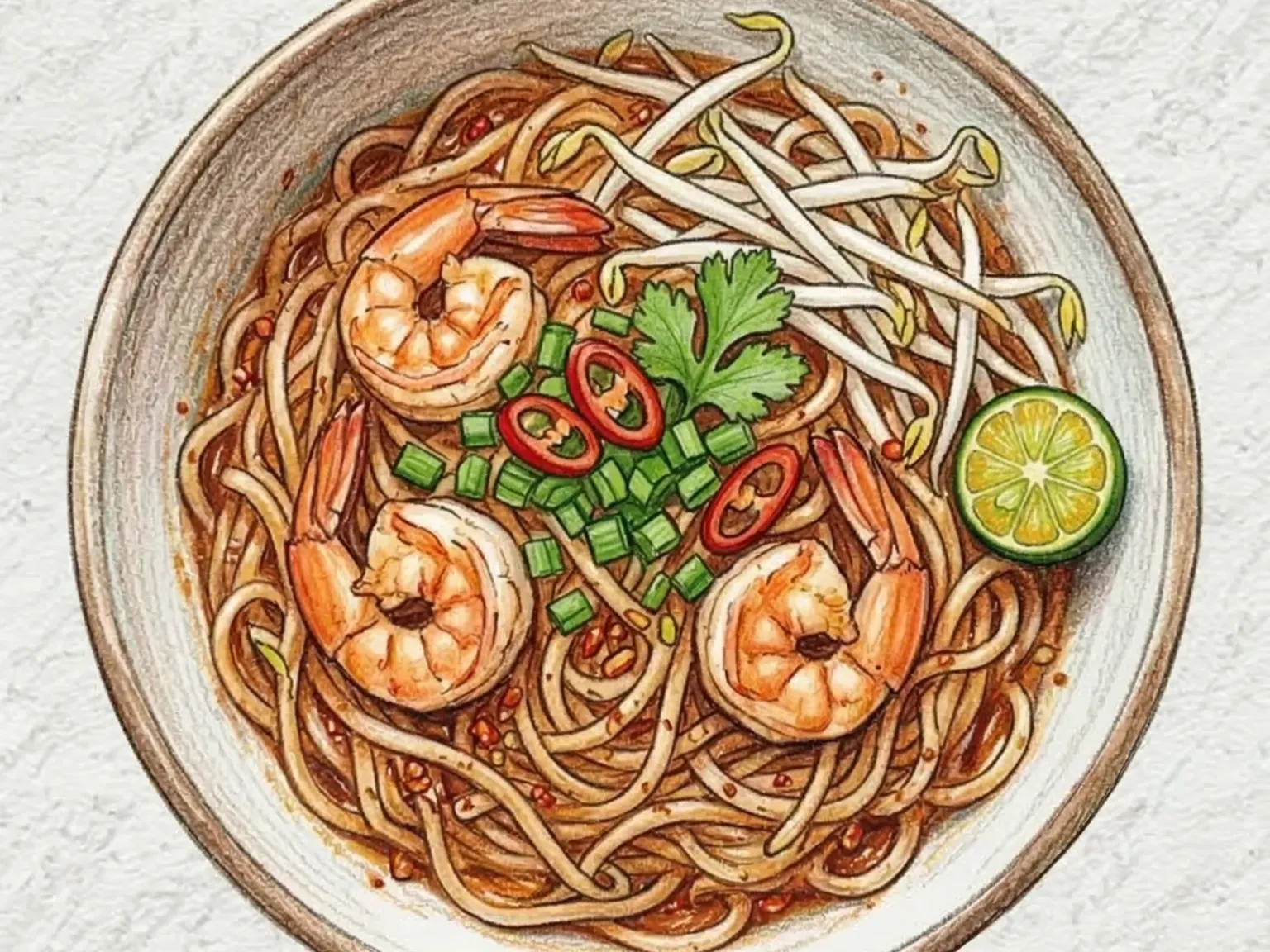
Mee Siam (Singaporean Tangy Tamarind Shrimp Rice Vermicelli)
Mee siam is a rice vermicelli dish from Singapore and Malaysia defined by a tamarind-based sauce that balances sour, sweet, and spicy in one bowl. Thin rice noodles are stir-fried with a rempah, a pounded paste of dried shrimp, shallots, and chili, then finished with tamarind water, fish sauce, and sugar, with bean sprouts and tofu added near the end. A squeeze of fresh lime over the top introduces a bright acidity that cuts through the richness of the stir-fry. Despite the name referencing Siam, the dish is a distinctly Malay-Singaporean creation rather than Thai, most commonly eaten at breakfast or as a light meal at hawker centers. Soft-boiled eggs and whole shrimp are the standard toppings when the dish is served, and the heat level can be adjusted by varying the amount of chili in the rempah. Soaking the dried shrimp and pounding them finely before cooking deepens the umami in the rempah and spreads a consistent seafood richness throughout the sauce that whole or coarsely ground shrimp cannot achieve.
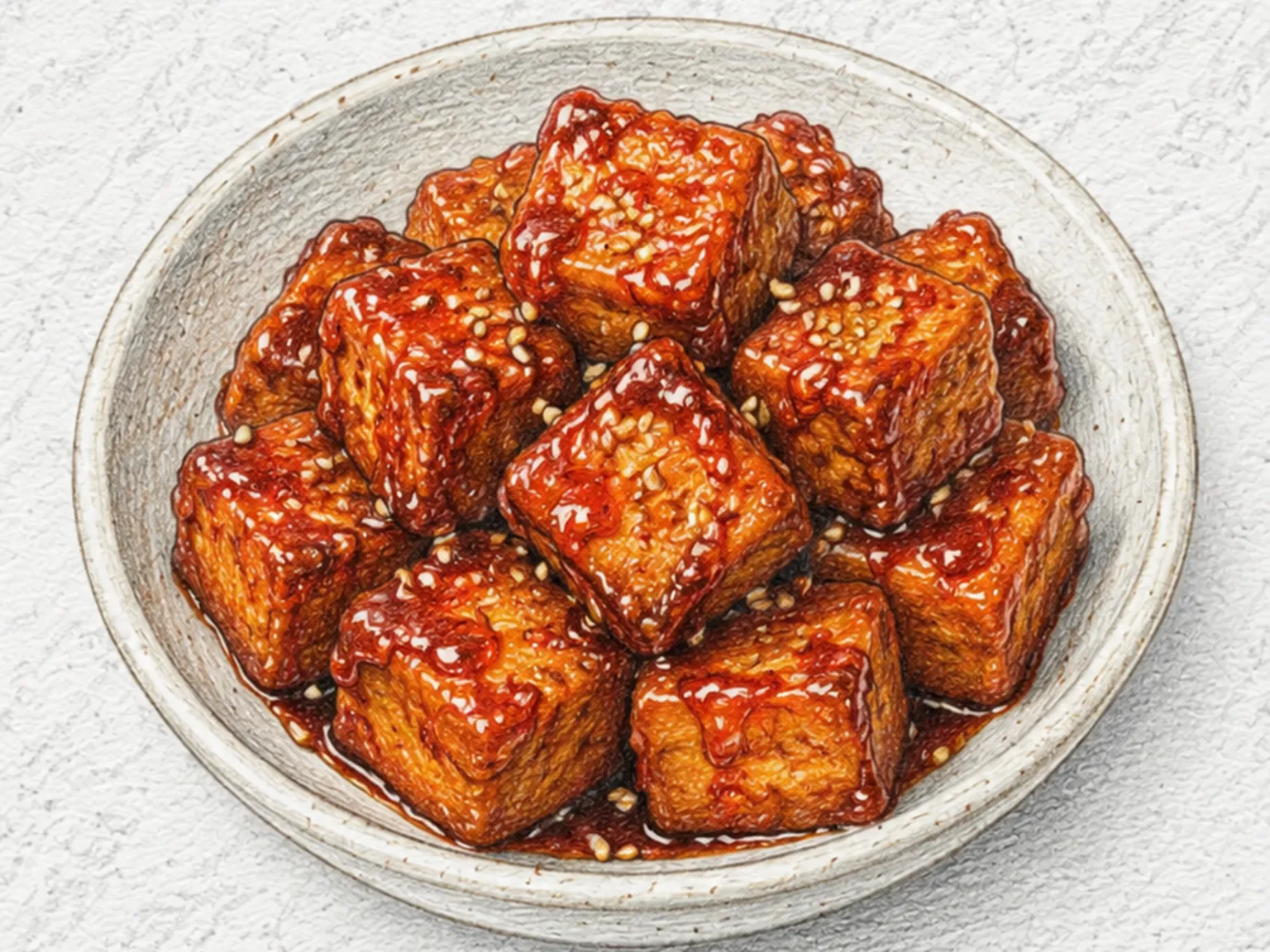
Korean Crispy Glazed Tofu Bites
Dubu gangjeong applies the double-coating logic of Korean fried chicken to tofu, pressing each cube dry before dredging in potato starch, frying until the shell turns shattering crisp, then tossing in a concentrated sticky glaze. The dish originated in temple cuisine as a meatless adaptation of gangjeong and has since become a staple anju in Korean bars. Pressing the tofu is non-negotiable: at least twenty minutes under a heavy weight wrapped in paper towels removes enough moisture to prevent oil from splattering and allows the starch coating to adhere evenly. Potato starch produces a noticeably thinner and more translucent crust than wheat flour, which cracks cleanly rather than bending when bitten. The glaze is made by boiling gochujang, soy sauce, sugar, and rice syrup together until large bubbles break on the surface, signaling that the mixture has concentrated and will cling rather than pool. Pouring the hot glaze over the fried tofu and tossing quickly coats every surface in an even, lacquer-like finish. The defining quality of a well-made dubu gangjeong is the contrast between the caramelized shell with its slight chew and the soft, almost custard-like interior. Once made, it must be eaten within ten minutes before the coating absorbs moisture and goes soft.
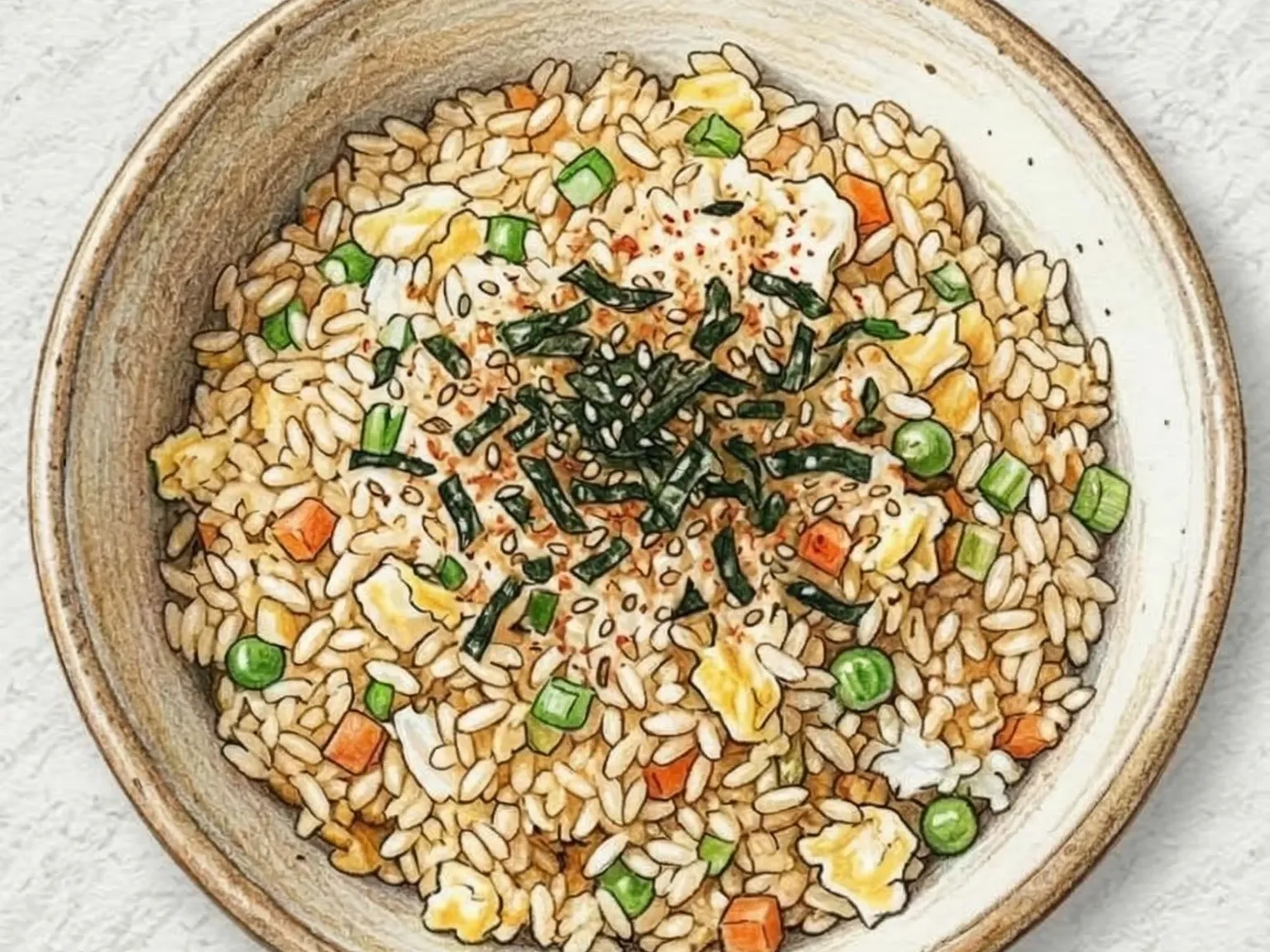
Korean Fried Rice (Simple Leftover Rice Stir-Fry)
Korean fried rice is the ultimate utility dish, built to turn leftover rice and whatever vegetables remain in the refrigerator into a satisfying meal in under ten minutes. Green onion hits the hot oil first to create a fragrant scallion-infused base, followed by diced carrot and beaten egg that gets scrambled into rough curds before the rice goes in. Cold rice is essential here - its lower moisture content prevents clumping and allows a thin film of oil to coat each grain, carrying seasoning evenly through the whole pan. Soy sauce poured along the rim sizzles on contact with the hot metal, developing a toasted depth that distinguishes a well-made fried rice from a mediocre one. A crack of black pepper and a final swirl of sesame oil complete the seasoning. The recipe is intentionally open-ended: ham, kimchi, shrimp, canned tuna, or any leftover protein slots in without altering the basic method, which is why this dish appears on Korean dinner tables more often than almost any other. The total active cooking time rarely exceeds five minutes, making it the default choice on busy weekdays and late nights alike.
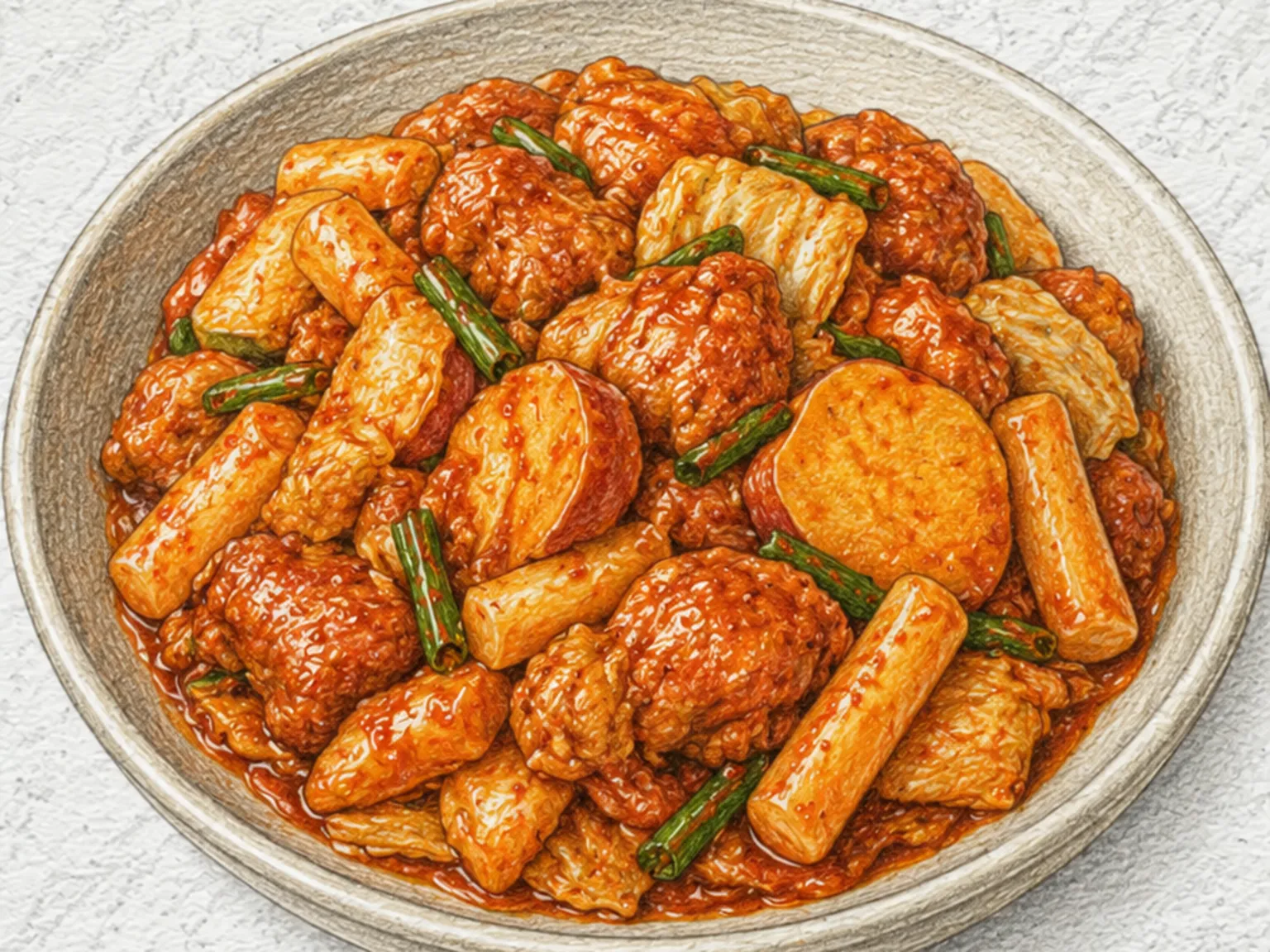
Korean Spicy Chicken Stir-fry
Dakgalbi is a Korean stir-fried chicken dish in which chicken thigh meat is marinated in a sauce of gochujang, chili flakes, soy sauce, sugar, minced garlic, and curry powder, then cooked with cabbage, sweet potato, sliced rice cakes, and green onion on a flat iron griddle or large pan. As the cabbage cooks it releases moisture that blends with the marinade, forming a natural sauce without any added liquid. Sweet potato softens gradually under heat, its natural sugars intensifying and acting as a counterweight to the sharp heat of the chili paste. Rice cakes cling to the sticky sauce on their surfaces, each piece absorbing the seasoning while staying chewy and dense inside. A small measure of curry powder is the defining addition -- it layers aromatic spice depth into the gochujang base, giving dakgalbi its slightly more complex fragrance compared to other Korean spicy stir-fries. The dish originates from Chuncheon in Gangwon Province, where it is served on large communal griddles. Finishing the meal by stir-frying rice in the leftover sauce at the bottom of the pan is a standard practice that turns the residual seasoning into a second course.
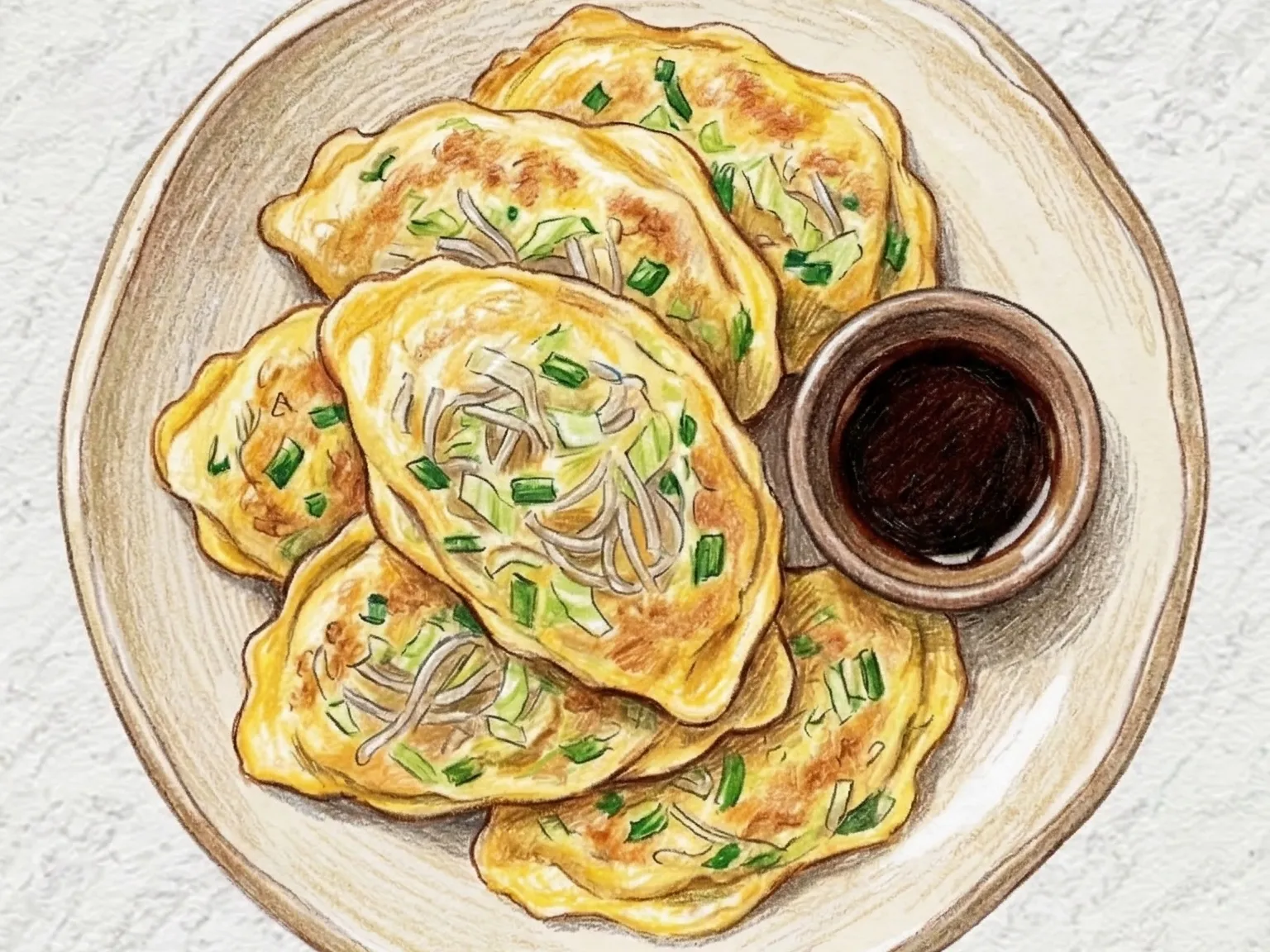
Korean Egg Dumpling Pancakes
Gyeran-mandu is a Korean market-style egg dumpling pancake made by mixing finely chopped cabbage, scallion, and soaked glass noodles into beaten egg, then pan-frying the mixture into flat, palm-sized rounds. Rather than using a traditional flour wrapper, the egg itself forms the outer shell that binds and seals the filling. The patties cook slowly over medium-low heat, giving the surface time to turn lightly golden while the interior stays moist and tender. Squeezing the excess moisture from the vegetables before mixing is the most critical step - too much water and the patties spread and lose their shape before the egg can set. Glass noodles must be cut into short lengths so the rounds hold together and flip without falling apart. A thin layer of oil in the pan and a lid placed on top help the egg cook evenly without burning. Dipping the finished patties into a sauce of soy sauce, vinegar, and a pinch of gochugaru brings a salty-tangy contrast that complements the mild richness of the egg.
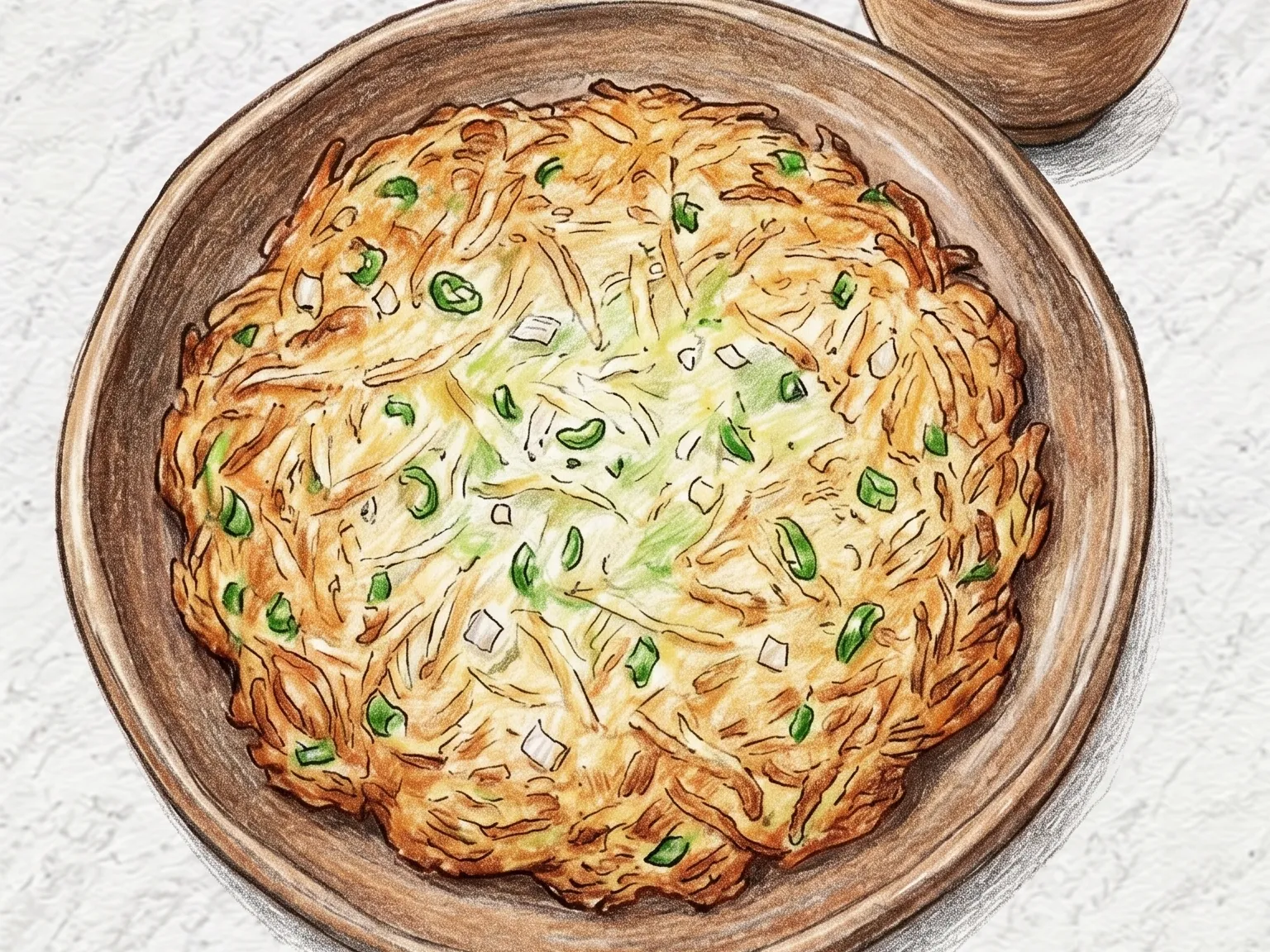
Korean Gangwon-style Potato Pancake
Gangwon-gamja-jeon is a traditional potato pancake from the mountainous Gangwon province, made by finely grating potatoes and incorporating the settled starch sediment back into the batter to achieve a uniquely chewy, mochi-like center with crisp edges. After grating, the potato liquid is left to sit until white starch settles at the bottom. The water on top is poured off and the dense starch is folded back in. Skipping this step produces a flat, crumbly pancake instead of the trademark sticky pull. Finely chopped Cheongyang chili peppers add a clean, sharp heat that cuts through the potato's natural sweetness, while minced onion reinforces that sweetness without adding excess moisture. The batter must be spread thin in a generously oiled pan and cooked patiently until the edges darken to deep golden brown. Rushing the process leaves the interior gummy and causes the pancake to fall apart when flipped. Even when the batter still looks soft and undercooked on top, waiting until the underside is fully set is what makes the flip clean. Makgeolli is the traditional pairing.

Korean Spicy Pollock Stew
Dongtae-tang is a Korean spicy fish stew made with frozen pollock (dongtae), radish, tofu, and green onion in a broth seasoned heavily with gochugaru. The first step is simmering radish on its own long enough to release its clean, slightly sweet character into the base -- this foundation determines the clarity and depth of the finished broth. Once the radish has cooked through, gochugaru, soup soy sauce, and minced garlic are added to transform the pale stock into a vivid red, peppery liquid. The pollock is cleaned of scales and fins after thawing, then cut into large pieces so the flesh stays intact through the cooking process. After the fish is added, the stew should not be cooked for more than ten minutes: beyond that point, compounds from the bones leach into the broth, producing a bitter, fishy aftertaste that is difficult to correct. Cheongyang chili peppers add a sharper, more piercing heat than gochugaru alone -- a thin-sliced variety provides brief, concentrated bursts of spice. Tofu goes in during the last five minutes, giving it enough time to absorb the spiced broth without breaking apart. The seasoning the tofu draws in softens and rounds out the intensity of the soup, providing a mild counterpoint to the fish and the heat. The stew carries a bracing, satisfying quality and is especially popular during winter months.
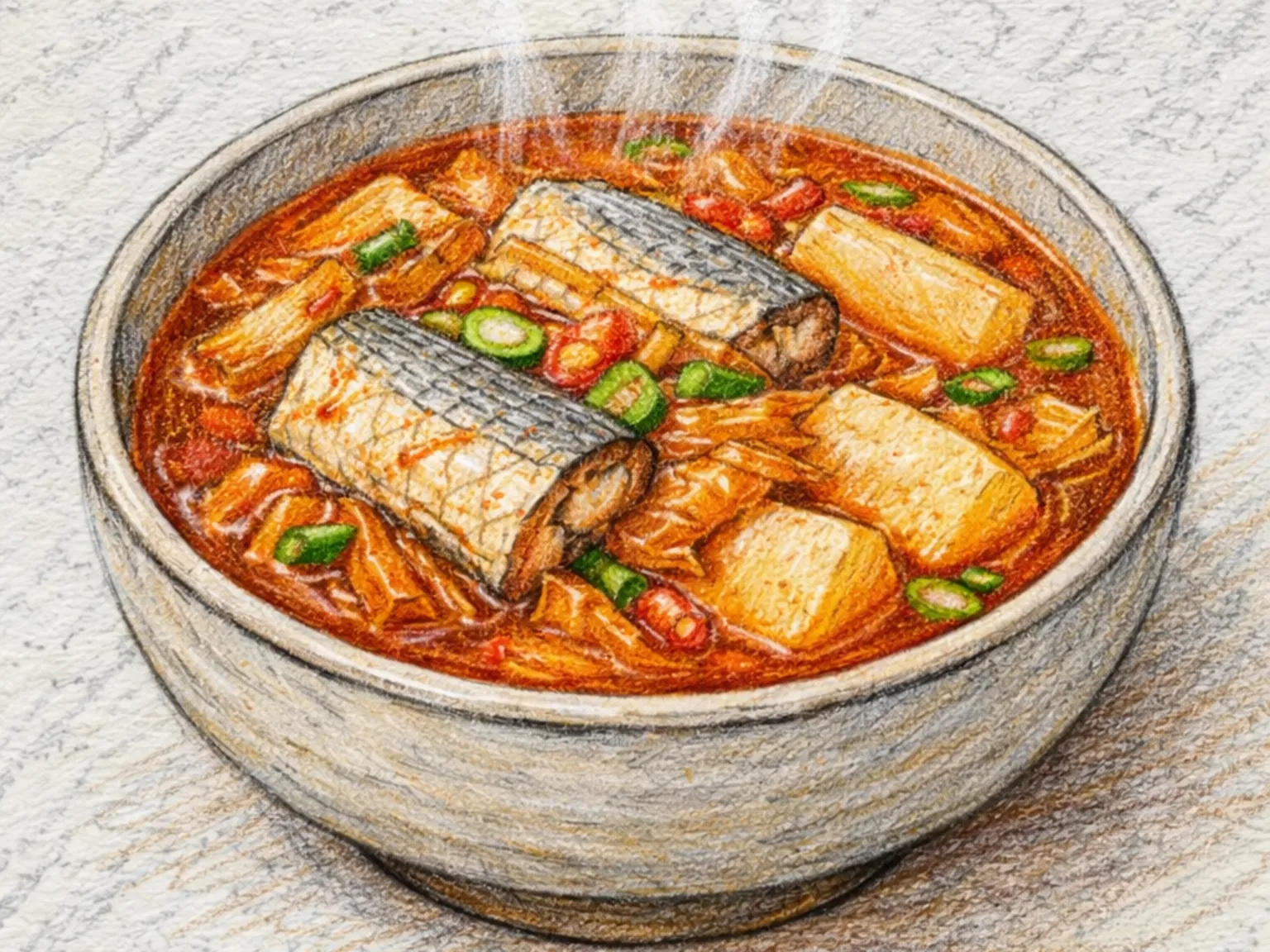
Korean Galchi Kimchi Jjigae (Hairtail Kimchi Stew)
Galchi kimchi jjigae is a Korean stew that pairs hairtail fish with deeply fermented aged kimchi, simmered together in a base of anchovy and dried kelp stock. The richness of hairtail - an oily, full-flavored white fish - works in counterpoint to the sharp, acidic punch of well-aged kimchi, and as the two cook together their flavors blur into something more complex than either ingredient alone. Korean radish and onion go into the pot first, their natural sweetness dissolving into the broth to form a mild, rounded base before the fish is added. The hairtail is laid in gently and cooked covered to preserve the flesh, which would fall apart if stirred. Gochugaru and soup soy sauce season the broth with spice and salt, while the fish releases its own deep umami gradually, enriching every spoonful of liquid. Pouring the stew over a bowl of rice is one of the most common ways to eat it - the broth soaks into the grains and pulls every element of the dish together. It is particularly well-suited to cold-weather cooking, when a hot, assertive broth is exactly what is needed.
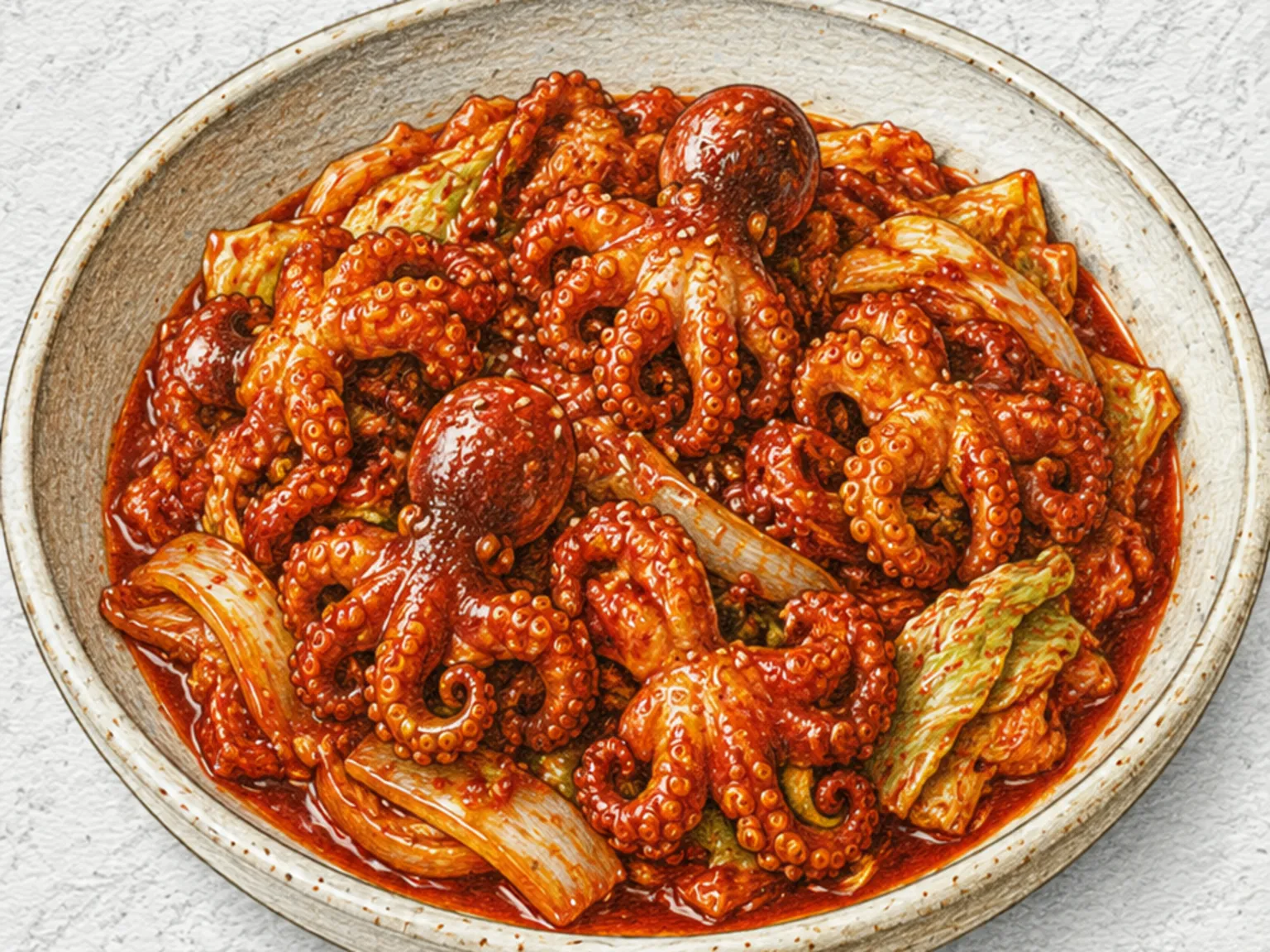
Korean Spicy Steamed Baby Octopus
Jjukkumi-jjim is spicy steamed baby octopus marinated for ten minutes in a sauce of gochugaru, gochujang, soy sauce, and minced garlic, then steamed over a bed of cabbage and sliced onion. Baby octopus turns tough very quickly with excess heat, so steaming for roughly ten minutes is essential to keep the texture springy and bouncy. The cabbage absorbs the concentrated spice and provides a mild, slightly sweet contrast to the bold chili seasoning. A drizzle of sesame oil at the finish contributes a warm, nutty aroma that rounds out the heat. The dish is at its best in spring when baby octopus is in season and the ink sacs dissolve into the marinade, adding an extra layer of savory depth. Starting to steam only after the water has reached a full boil ensures the heat surrounds the ingredients evenly, and keeping the lid closed throughout prevents temperature drops that would extend cooking time.
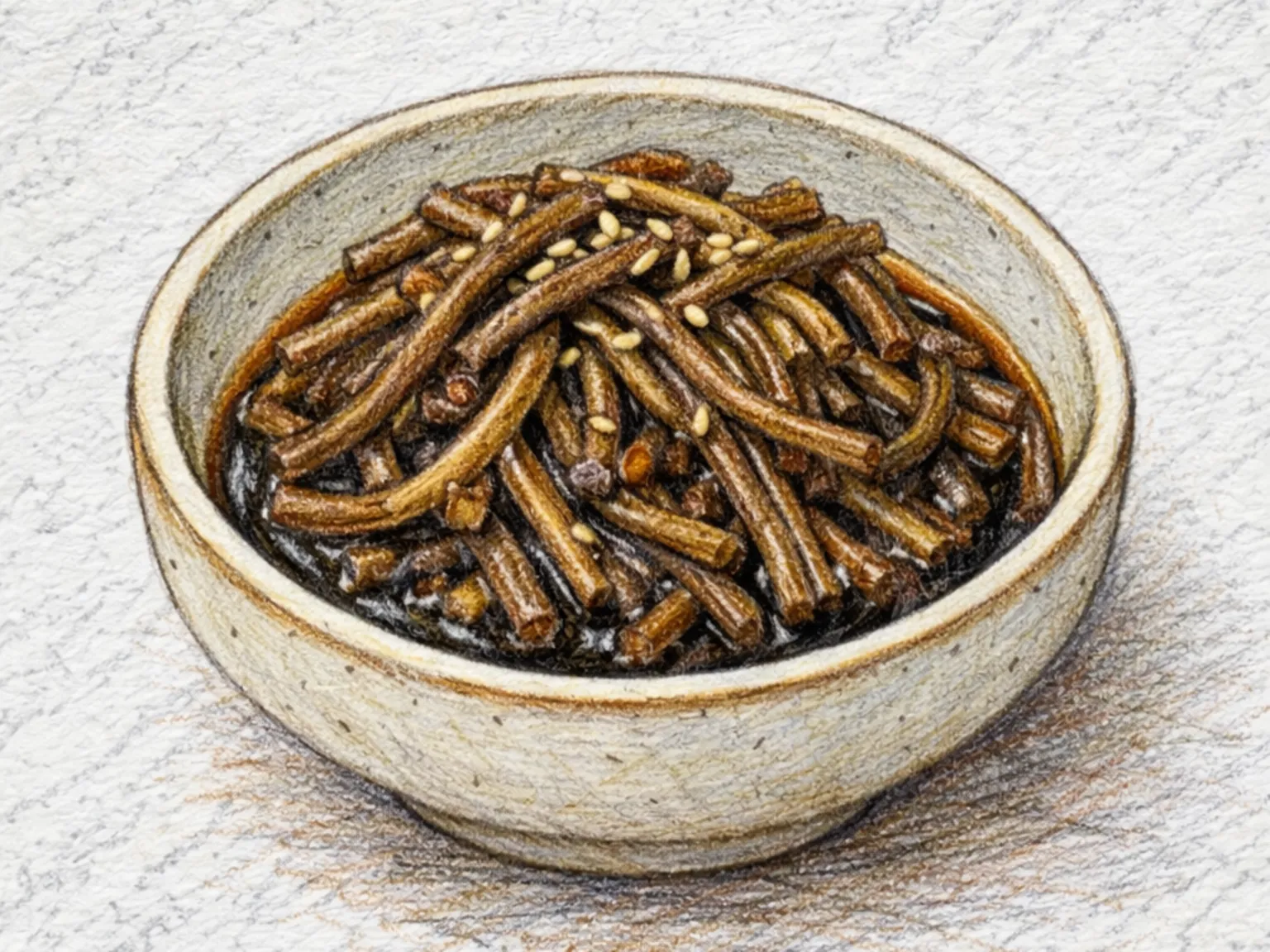
Korean Bracken Fern Pickles
Gosari jangajji is a Korean pickled bracken fern made by submerging boiled bracken stems in a brine of dark soy sauce, vinegar, sugar, and rice wine. The fern's earthy, nutty aroma weaves together with the soy umami in layers, deepening with each bite as the flavors come into focus. Though the stems are boiled until soft, the plant's natural fiber retains enough structure to give a satisfying chew, and dried chili and garlic added to the brine contribute a quiet warmth that builds gradually. Vinegar's acidity cuts through the heavier, loamy earthiness that raw bracken can carry, leaving the aftertaste clean and bright. Refrigerated, the jangajji keeps comfortably for over a week, making it a practical, ready-to-serve banchan. For anyone familiar only with gosari namul, this pickled version is a worthwhile discovery.
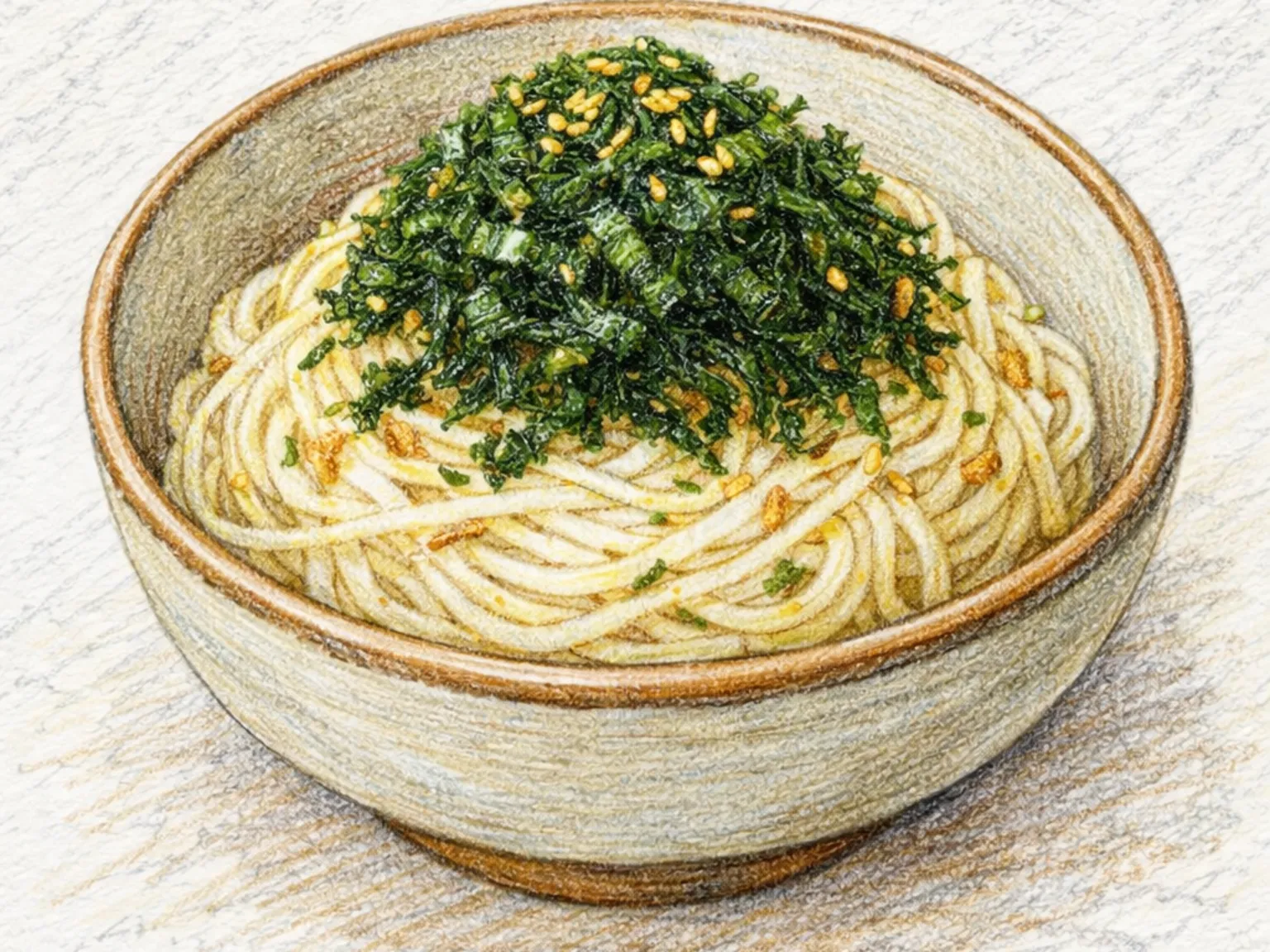
Korean Gamtae Sesame Oil Somyeon
Gamtae chamgireum somyeon is a Korean cold noodle dish where boiled thin wheat noodles are dressed with sesame oil and soy sauce, then covered with a generous layer of gamtae seaweed. Gamtae is a type of fine seaweed closer to green laver than to the roasted sheets most commonly associated with Korean cuisine, and its oceanic fragrance is considerably more intense and raw-edged than standard gim. The moment gamtae is placed over the noodles, a strong marine aroma rises that defines every subsequent bite. The dressing itself is deliberately minimal: sesame oil provides a heavy, toasted nuttiness and soy sauce contributes a salty, savory base, and together they carry the dish without competing with the seaweed's character. A measured amount of minced garlic adds a sharp, pungent undercurrent that gives the straightforward flavors a point of direction. Rinsing the noodles thoroughly in cold water after boiling removes excess surface starch, which is essential to prevent clumping and to allow the dressing to coat each strand individually rather than pooling at the bottom. The result is a clean, focused dish where ocean fragrance and nuttiness do all the work.
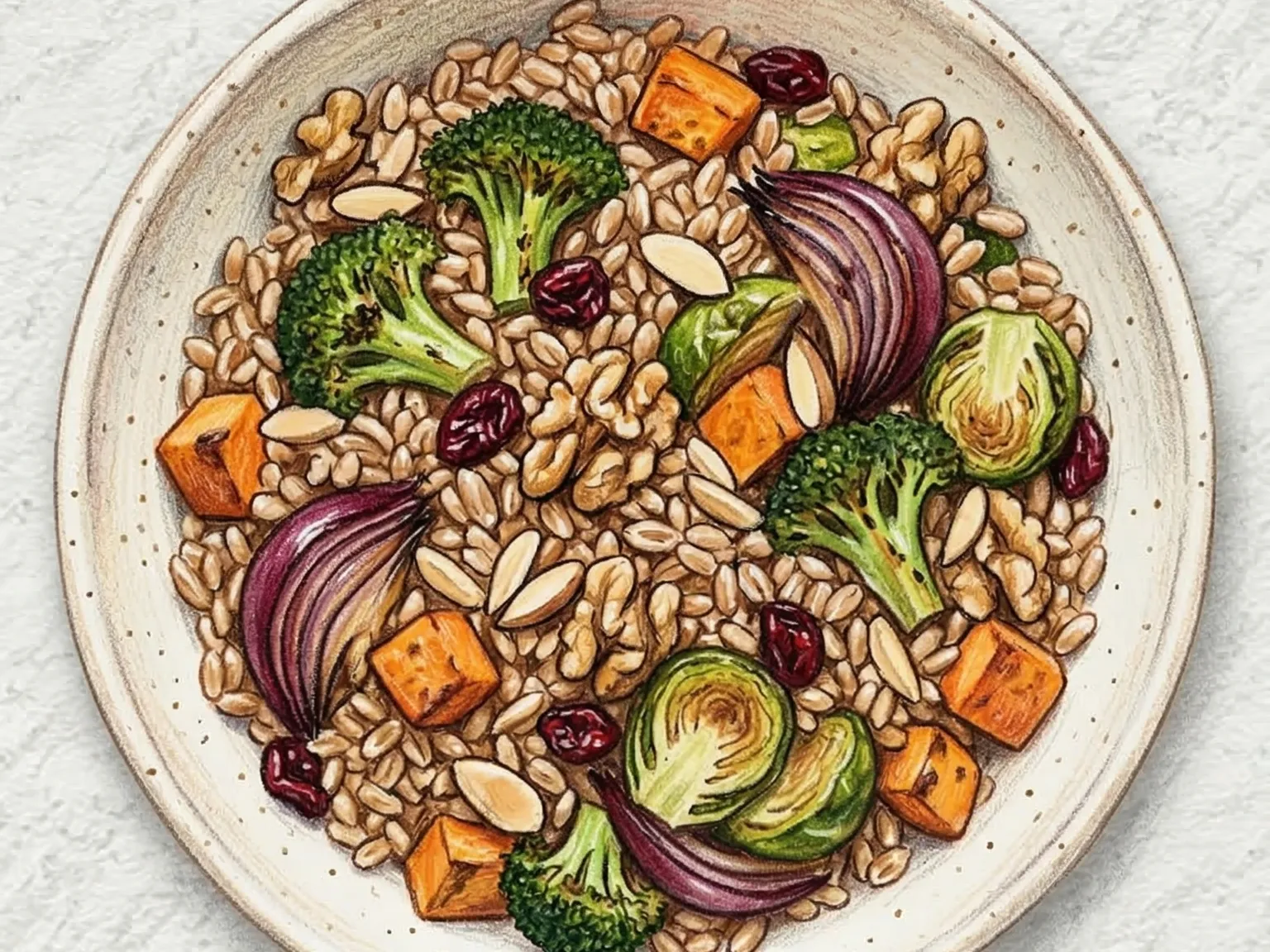
Farro Harvest Salad
Farro is an ancient Italian wheat variety that retains a satisfying chew even after boiling, making it a reliable foundation for grain salads that need to hold their texture over time. Roasting root vegetables such as butternut squash, beets, or sweet potatoes at high heat caramelizes their natural sugars and creates slightly crisp edges that contrast with the soft grain below. Toasted walnuts or pecans layered in add crunch and nutty depth. Bitter greens like arugula or kale interrupt the sweetness of the vegetables and prevent the salad from becoming one-dimensional. A dressing of apple cider vinegar, olive oil, and a small amount of honey ties the components together while allowing each ingredient to remain distinct. The salad carries enough fiber and protein to serve as a complete meal rather than a side. Farro's dense structure absorbs dressing gradually without turning soft, so the salad holds well in the refrigerator for two days, making it a practical choice for meal preparation.
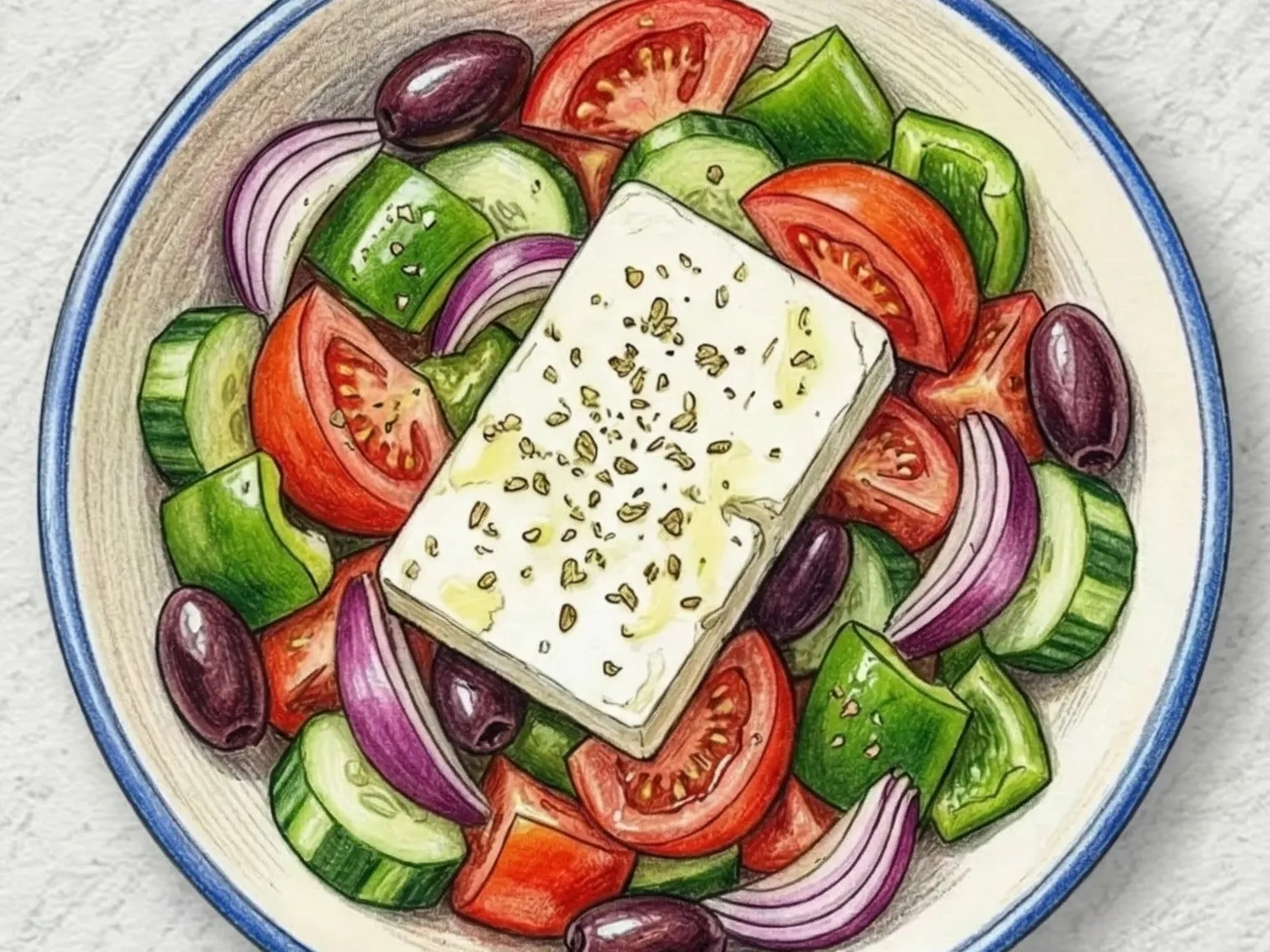
Greek Salad (Chunk-Cut Vegetable Toss with Feta)
Greek salad, known as horiatiki, is a traditional dish that arranges large-cut tomatoes, cucumber, bell pepper, and red onion with Kalamata olives, topped with a whole block of feta cheese and finished with extra virgin olive oil and dried oregano. The vegetables are intentionally cut into large chunks rather than finely diced, preserving each ingredient's distinct texture and flavor. The olive oil coats the fresh vegetables in richness, while a small amount of red wine vinegar adds a sharp acidity that balances the natural sweetness of the tomatoes. Feta is placed whole on top in the traditional Greek manner - diners break it themselves, and as the crumbled cheese mixes with the olive oil, it forms a natural dressing that clings to the vegetables.
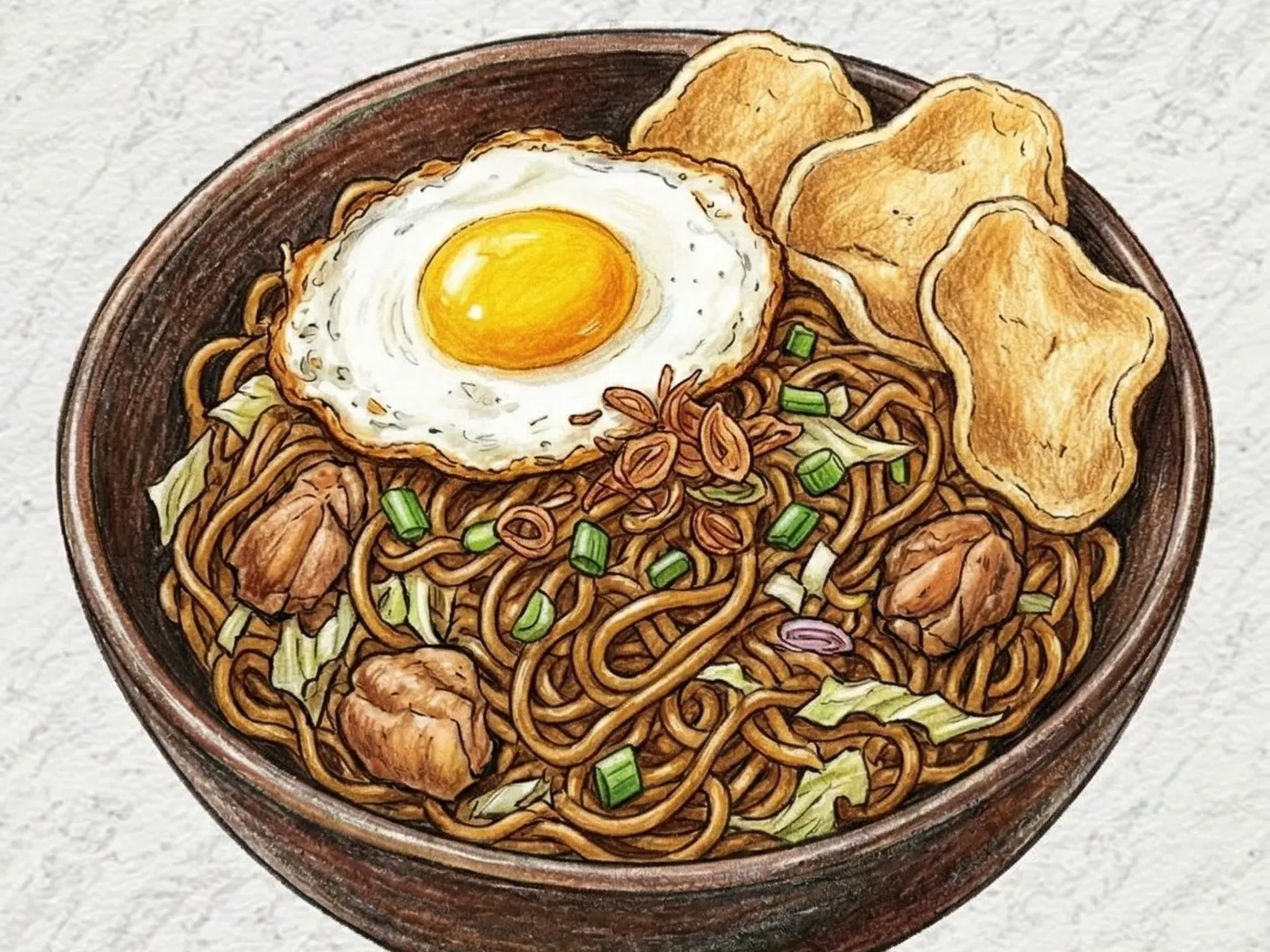
Javanese Chicken Mie Goreng
Javanese chicken mie goreng is an Indonesian stir-fried noodle dish built around kecap manis, a thick, molasses-dark sweet soy sauce that caramelizes in the wok and coats the noodles in a glossy, sweet-savory glaze that is impossible to mistake for any other style of fried noodle. Shallots and garlic are fried first to form the aromatic base, then sliced chicken thigh, shredded cabbage, and scallions join the wok over high heat. The egg noodles go in last, tossing rapidly to pick up wok breath and absorb the sauce. A fried egg with a runny yolk, prawn crackers for crunch, and a wedge of lime to cut through the sweetness complete the plate in the street-stall tradition of Java. The unmistakable sweetness of kecap manis is what sets this dish apart from Chinese-style fried noodles and gives Javanese mie goreng its identity across Indonesia and beyond.
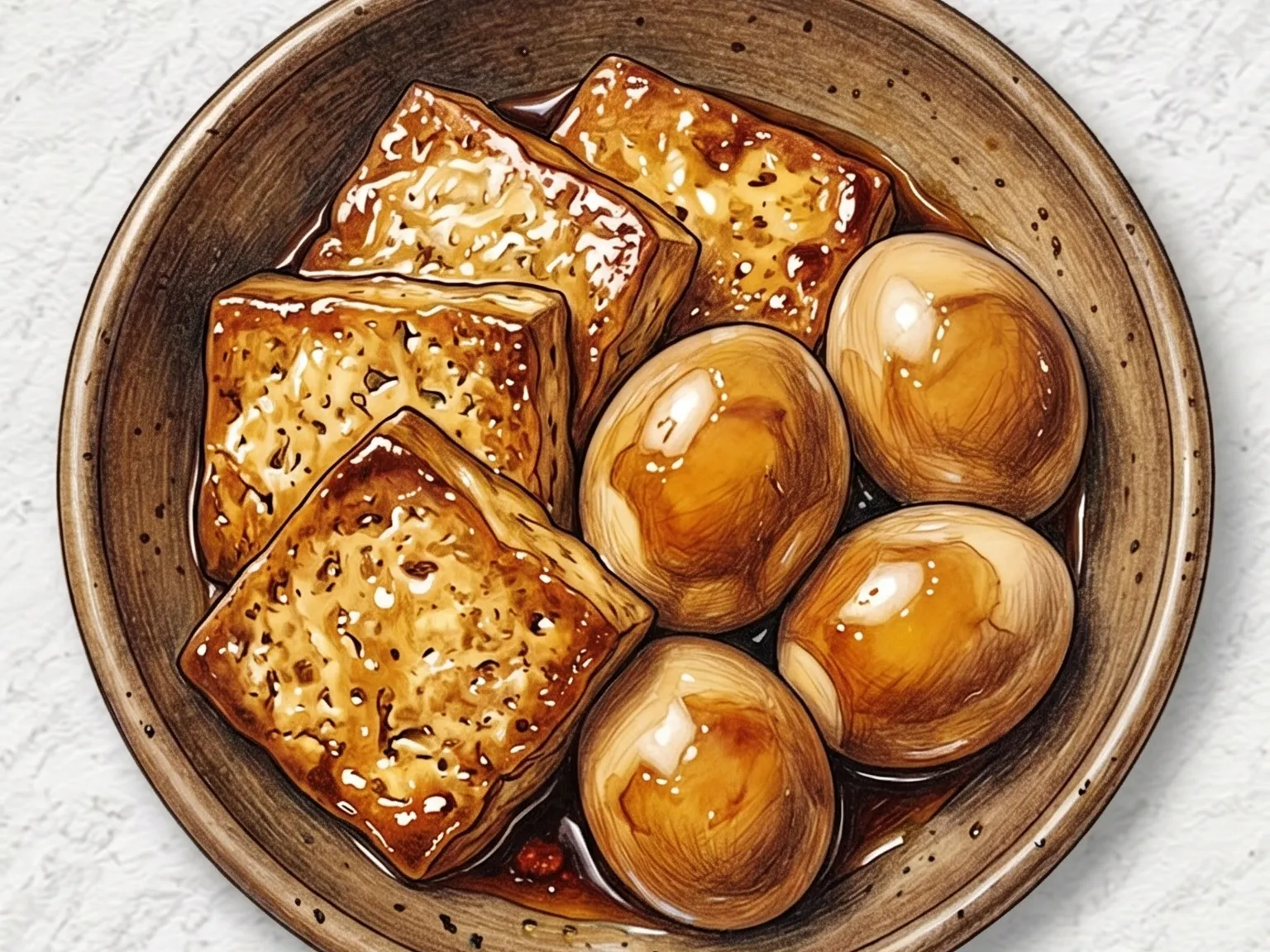
Korean Braised Tofu and Egg
Dubu-gyeran-jorim is a practical braised banchan that combines two of the most affordable protein sources in Korean cooking -- tofu and hard-boiled eggs -- in a single soy-based sauce. The tofu is pan-fried until golden on each side, building a lightly crisped surface that holds up during braising. The eggs are hard-boiled, peeled, and added alongside the tofu in a sauce made from soy sauce, sugar, minced garlic, and water. Over fifteen or more minutes of gentle simmering on low heat, the tofu draws the dark braising liquid into its porous interior, becoming dense with savory flavor throughout. The eggs develop a tan exterior as the soy sauce stains the outer white, while the inside remains fully set with a pale yellow yolk. As the liquid reduces, it thickens into a glossy coat that clings to every curve of both ingredients. This banchan is a staple of Korean school cafeterias and lunchboxes alike, valued for its keeping power -- it refrigerates well for up to five days, and the seasoning continues to deepen overnight, making day-two leftovers often better than the freshly cooked batch.
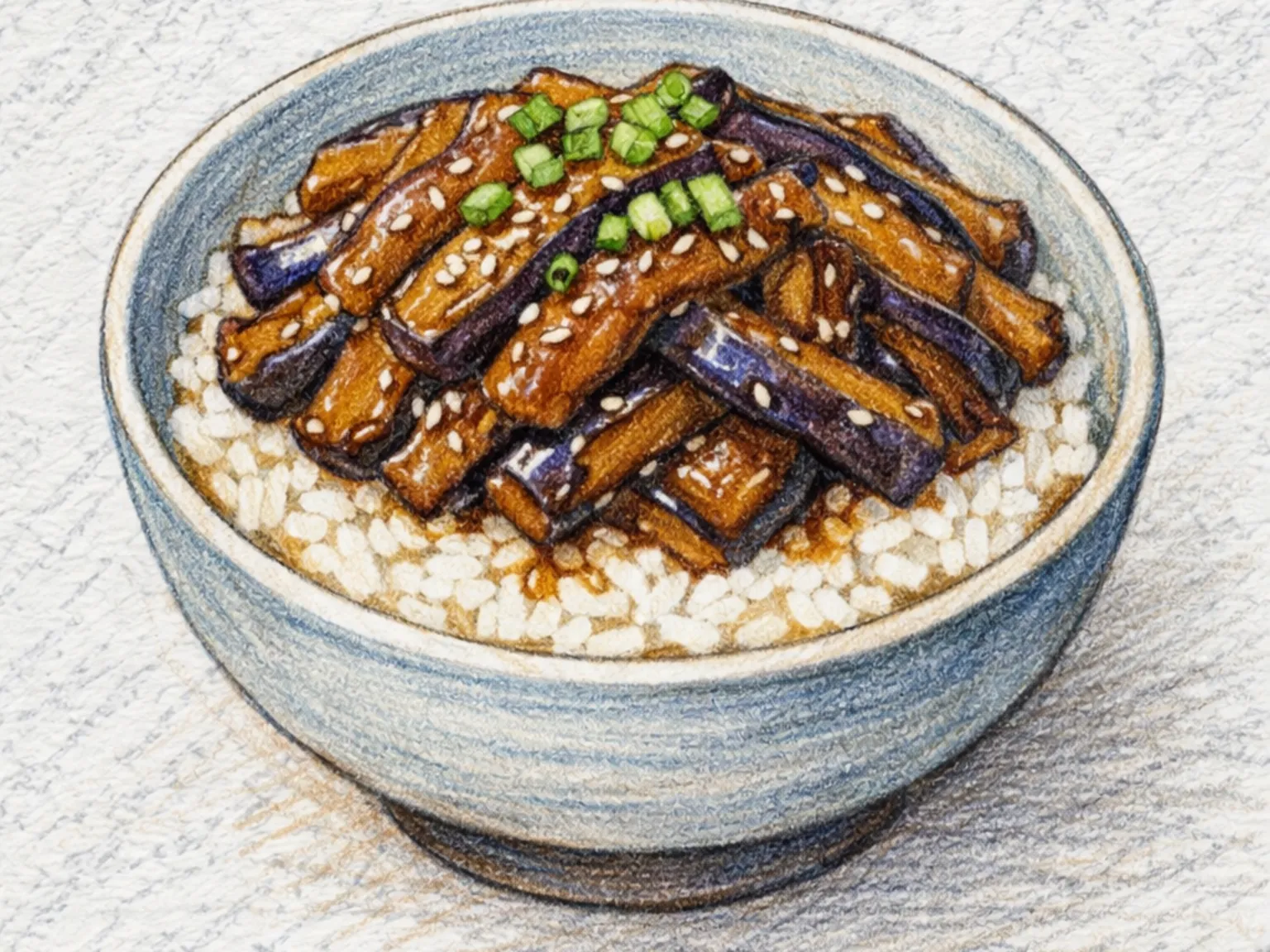
Korean Eggplant Rice Bowl
Gaji deopbap is a Korean eggplant rice bowl where sliced eggplant is pan-fried quickly in generous oil and then braised briefly with ground pork in a soy-based sauce. Soaking the eggplant in salted water for five minutes before cooking draws out bitterness and moisture. High heat is essential - eggplant absorbs oil rapidly, and fast searing creates a lightly crisp exterior while the inside collapses into a silky, almost creamy texture. The soy, sugar, and garlic sauce reduces in two minutes into a dark glaze that coats each piece, while the ground pork adds a savory depth that makes the dish feel more substantial. The sauce pools around the base of the rice and soaks into the grains, ensuring consistent flavor throughout the bowl. Green onion and sesame oil finish the dish. Summer eggplant, when the flesh is at its softest and most yielding, produces the best results. Kept cold, the eggplant holds its texture well enough to pack as a side dish for lunch.
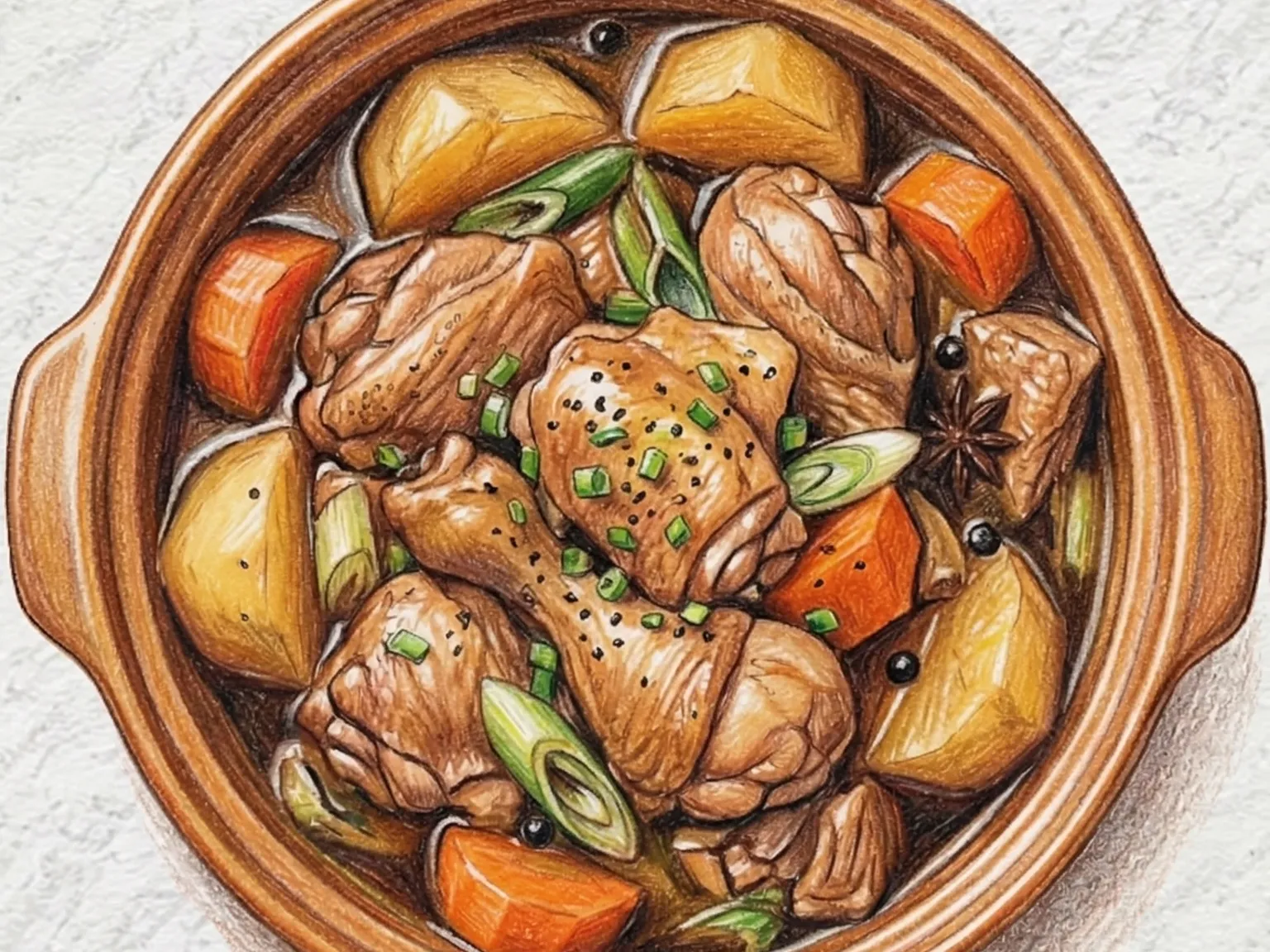
Korean Soy Braised Chicken Chunks
Dakganjang-jjim is a Korean soy-braised chicken dish where bone-in thigh pieces are combined with potatoes, carrots, and onion in a seasoned soy sauce base and simmered over low heat until the liquid reduces and the flavors concentrate. As the braising liquid cooks down, the salinity and umami of the soy sauce penetrate through the chicken skin and into the meat, seasoning it throughout rather than just coating the surface. The thigh cut is intentional - the fat and collagen in bone-in thighs keep the meat moist through the extended cooking time, preventing it from drying out the way leaner cuts would. The vegetables absorb the rendered chicken fat and soy-based cooking liquid as they soften, taking on a deep savory-sweet flavor that requires no additional seasoning. Because the dish contains no chili paste or gochugaru, it is mild in heat and broadly accessible, working equally well as a weeknight dinner main, a side dish over rice, or packed into a lunch box where the flavors continue to develop. The ratio of soy sauce to sugar in the braising liquid can be adjusted to suit individual taste - leaning toward saltier or sweeter without fundamentally changing the character of the dish.
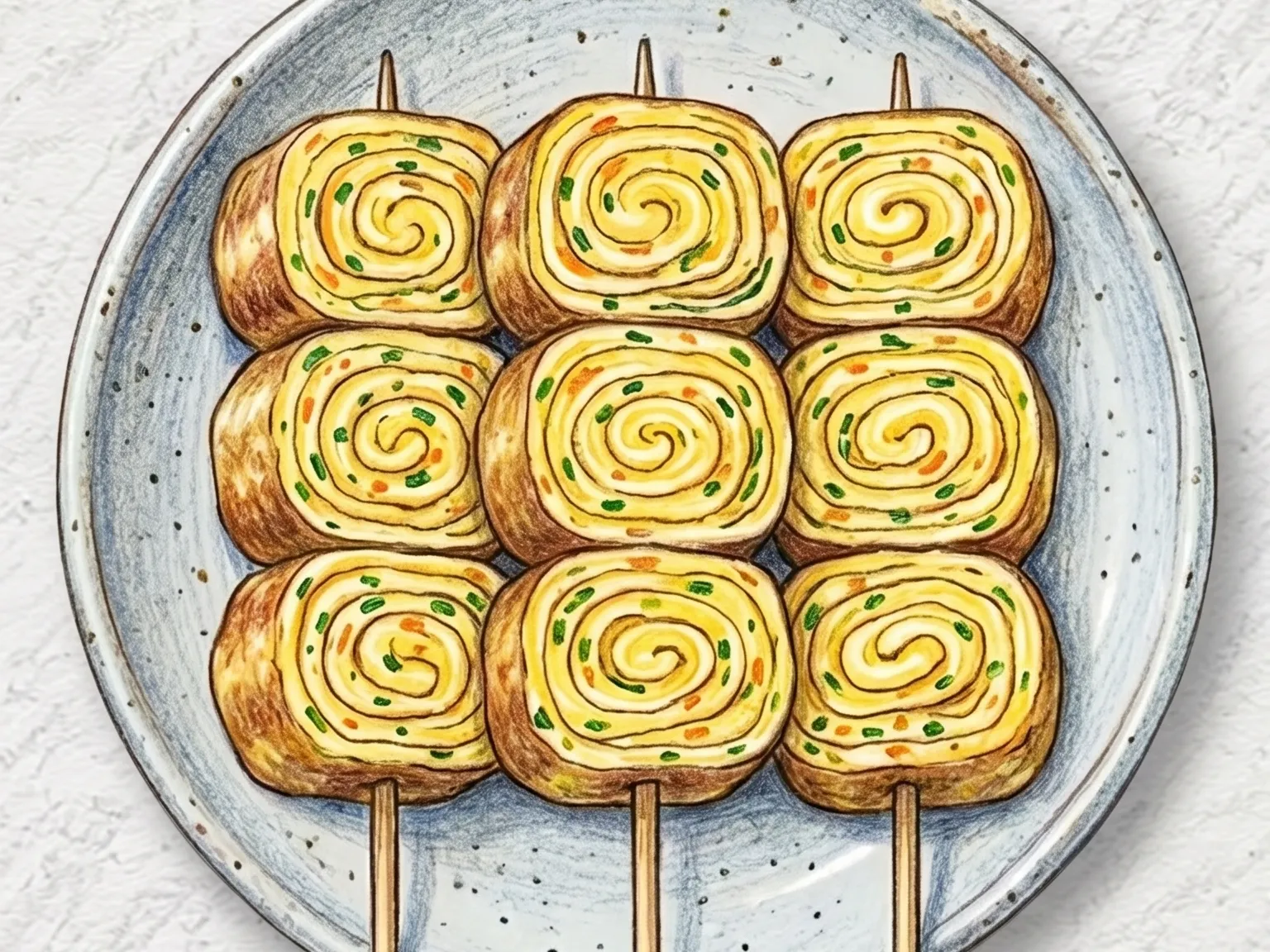
Korean Egg Roll Skewers (Layered Vegetable Egg Roll on Skewers)
Gyeran-mari kkochi is a Korean egg roll skewer made by folding finely diced carrot, garlic chives, and onion into beaten egg, then rolling the mixture in stages in a rectangular pan to create a tightly layered spiral. The beaten egg is poured into the pan in three separate additions, each addition rolled over and wrapped around the previous layer before the next is poured in - a technique that builds the internal spiral visible when the roll is sliced. Low heat from start to finish is not a preference but a requirement: if the heat climbs too high, the egg sets too quickly and tears during rolling rather than yielding to the spatula. Adding milk at roughly ten percent of the total egg volume relaxes the protein structure so the finished roll stays soft and moist even after cooling, rather than tightening into a rubbery cylinder. The natural sweetness of the chives and carrot folded inside complements the savory egg without requiring heavy seasoning - salt and a small amount of soy sauce are sufficient. Once the roll is formed, cooled briefly, and sliced into three-centimeter pieces, each piece is threaded onto a bamboo skewer and rolled once more in the pan to develop a light golden surface and lock the skewer in place.
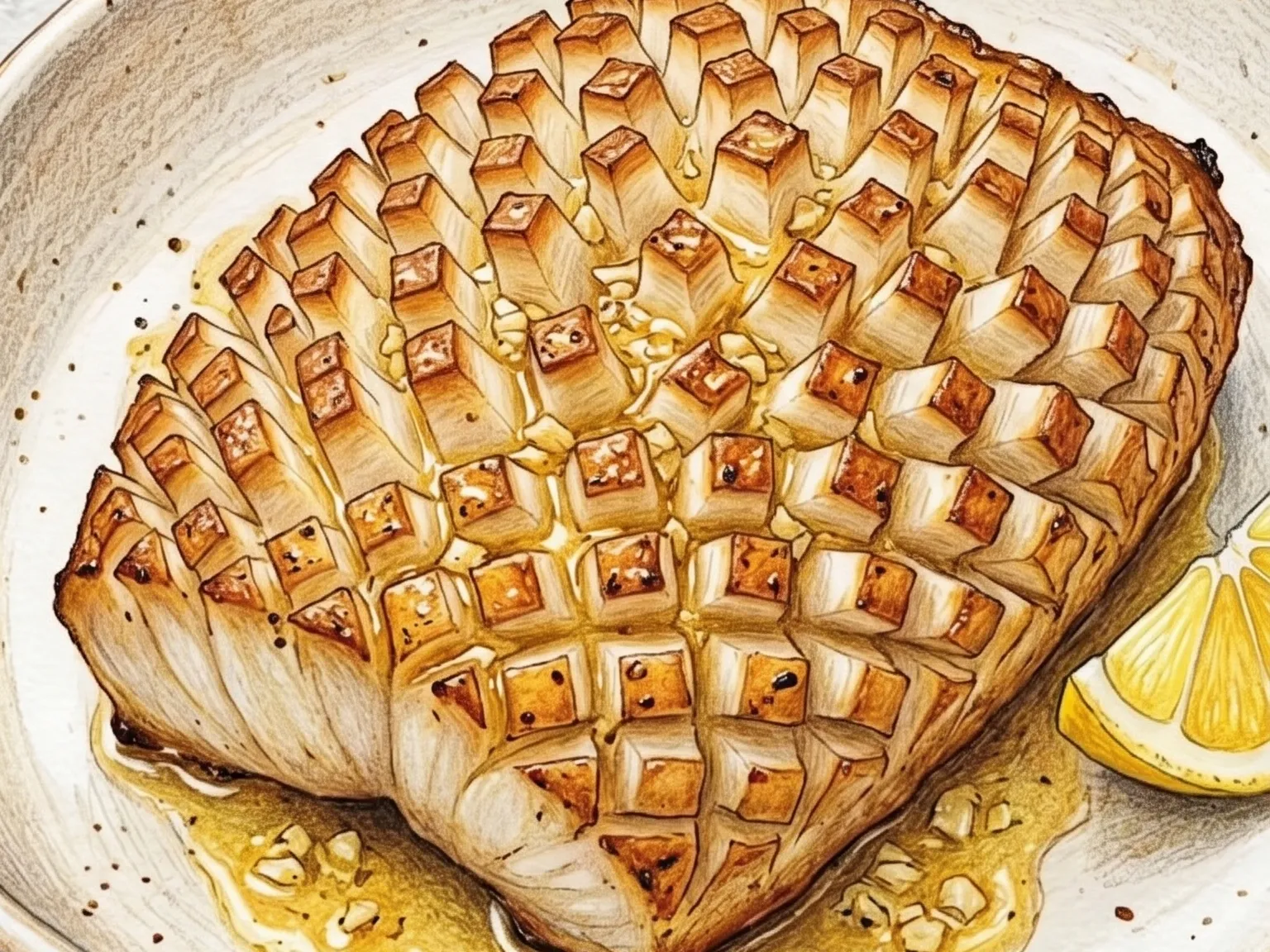
Korean Gapojingeo Beoteo Maneul Gui (Butter Garlic Cuttlefish Grill)
Gapojingeo beoteo-maneul-gui is butter-garlic grilled cuttlefish in which the thick body of the cuttlefish is scored in a crosshatch pattern and cooked in a pan with foaming butter and minced garlic. Cuttlefish flesh is substantially thicker and denser than regular squid, which means scoring is not optional for even cooking. Without it, the outside would overcook before heat reaches the center. The cuts also create channels that the melted butter and garlic flow into as the cuttlefish sears, infusing each section with concentrated fat and aromatics rather than just coating the surface. The timing of when to add the cuttlefish matters. The butter should be on medium heat and just beginning to foam at the edges when the cuttlefish goes in. At that temperature, the garlic releases its fragrance into the oil without burning, and the cuttlefish develops a golden crust before it has time to toughen. Two minutes per side is typically enough. The crosshatch pattern spreads open as the flesh cooks, and the surface takes on a lightly charred color that signals the Maillard reaction has done its work. Leaving it longer makes the flesh rubbery. A squeeze of lemon juice at the end cuts the richness of the butter and lifts the whole dish with a clean, acidic finish.
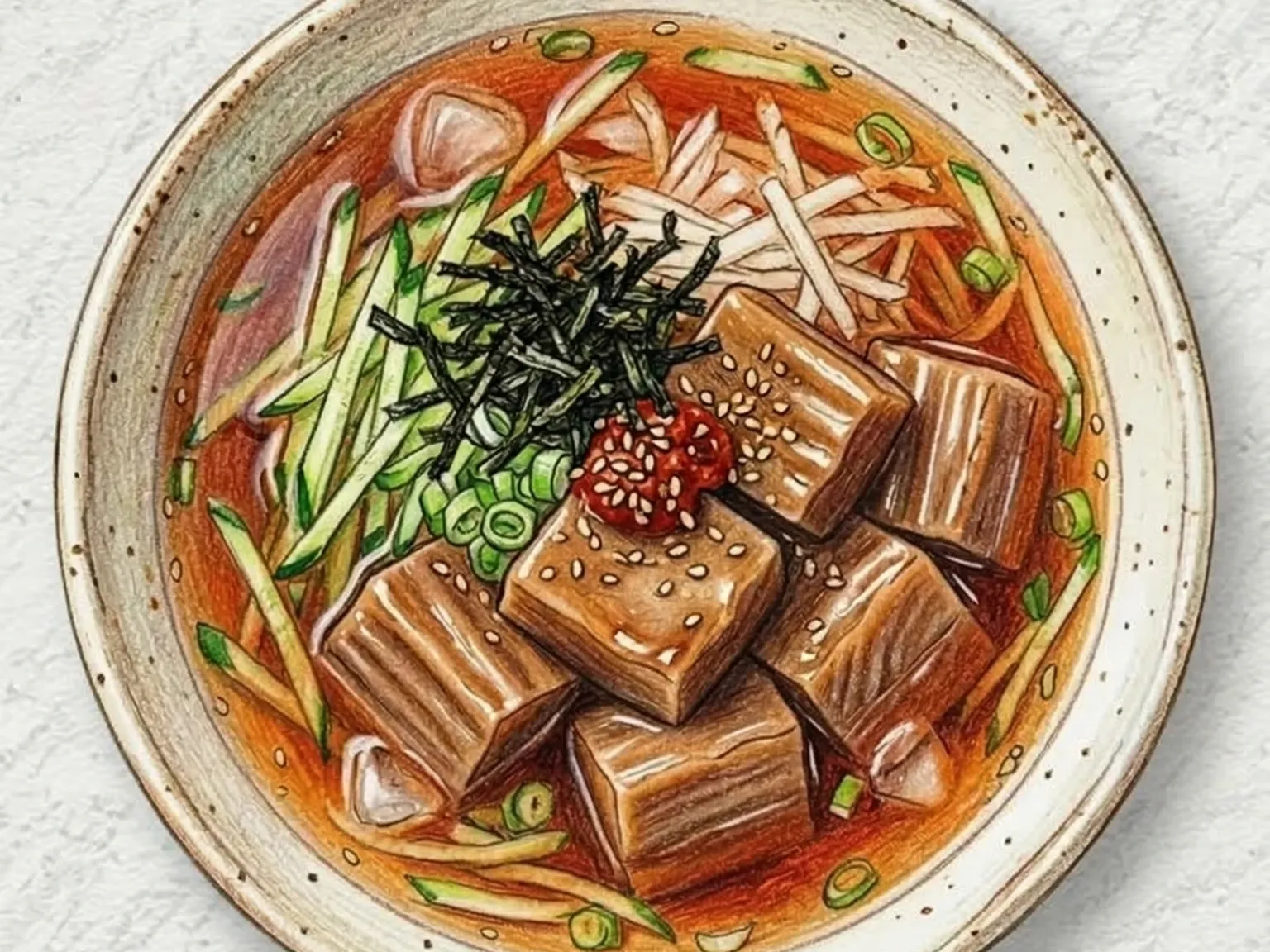
Korean Acorn Jelly Cold Broth Bowl
Dotori-muksabal is a chilled Korean acorn jelly broth bowl where thinly sliced acorn jelly sits in a cold, tangy-sweet seasoned broth. Acorn jelly carries a distinctly earthy, mildly astringent aftertaste and a firm, bouncy texture that becomes noticeably more pronounced once it has chilled thoroughly. The broth, a mixture of stock seasoned with soy sauce, vinegar, and sugar, must be cold before pouring over the jelly to keep that cool snap alive from the first bite to the last. Chopped kimchi adds fermented heat and a pungent sourness, while julienned cucumber contributes a clean crunch, and both ingredients cut through the jelly's neutral flavor with sharp contrasts that make the bowl far more lively than its simple appearance suggests. A spoonful of gochugaru-spiked seasoning ties the components together. The dish is notably low in calories and rich in dietary fiber, making it an appealing light meal on hot days.
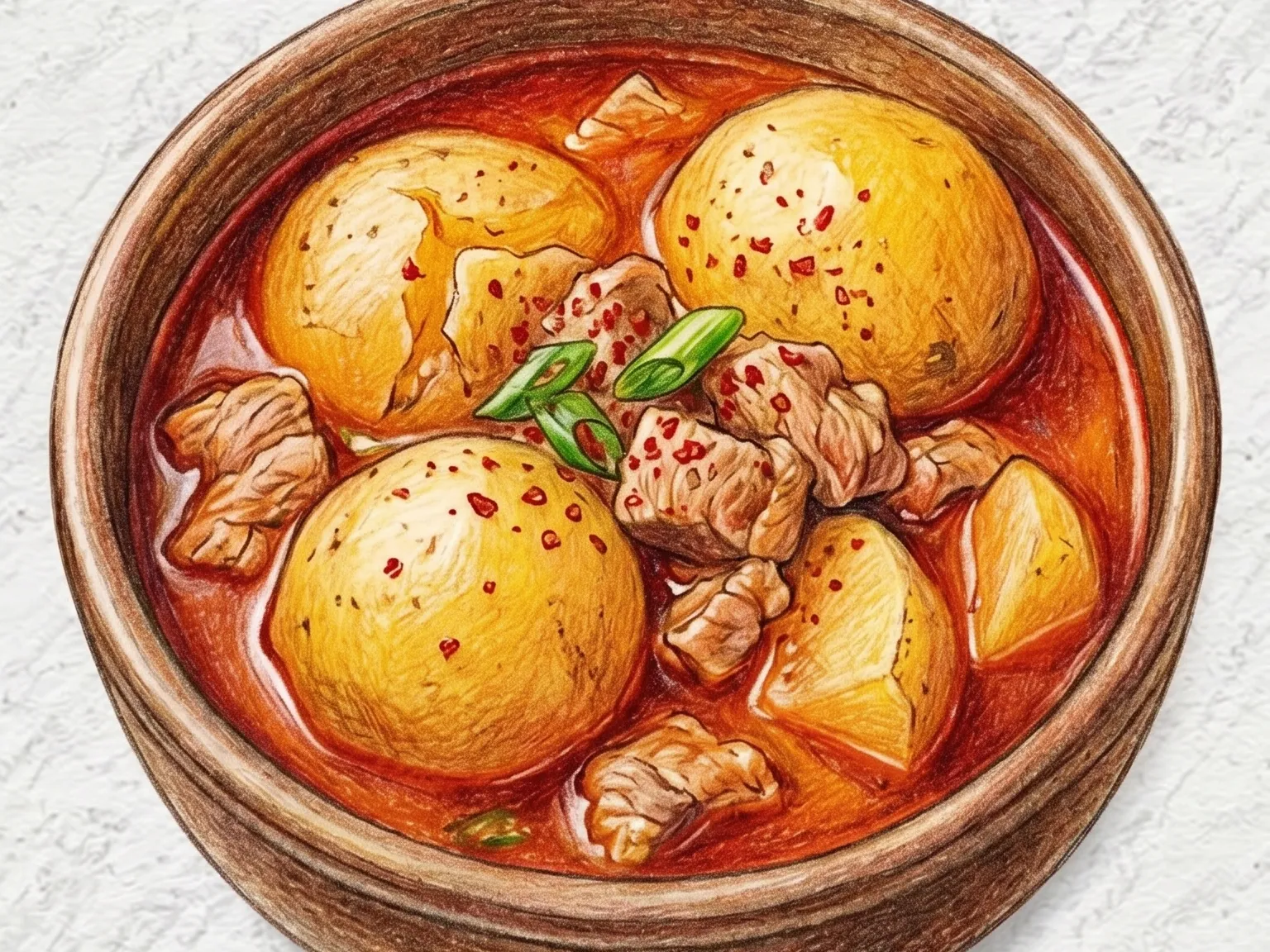
Korean Potato Stew (Pork & Potato Spicy Gochujang Pot)
Gamja-jjigae is a straightforward Korean stew of potatoes and pork seasoned with gochujang and gochugaru. The potatoes are added in large pieces and cooked until completely soft, releasing starch into the broth as they break down and giving the liquid a naturally thick, hearty consistency without any thickening agent. Pork provides a mild, clean meatiness that anchors the stew without overwhelming it, while the gochujang contributes a fermented depth and slight sweetness and the gochugaru adds a sharper, drier heat. The seasoning builds gradually as the ingredients cook together, and by the time the potatoes are done the broth has absorbed the flavors from both the meat and the chili paste. With a short ingredient list and no complex steps, this is a reliable home-style stew that comes together quickly.
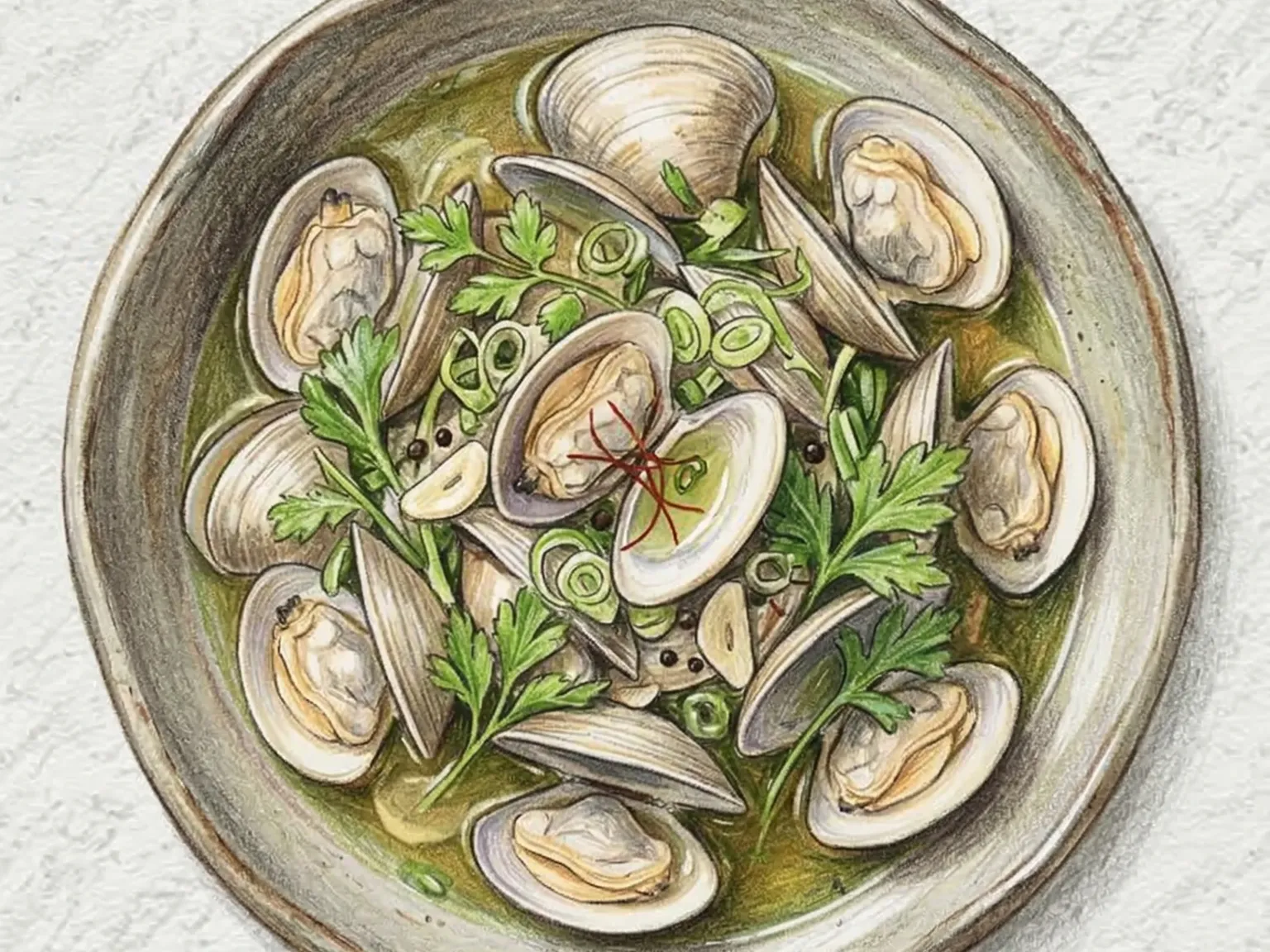
Korean Steamed Clams
Jogae-jjim is Korean steamed clams cooked with rice wine, garlic, green onion, and cheongyang chili over high heat in a covered pot. Properly purged clams open within minutes and release their natural juices into the pot, creating a clean, intensely savory seafood broth without any added stock. The chili adds a background warmth without overpowering the shellfish, and minimal salt lets the clams' natural salinity and sweetness come through unobstructed. Removing the clams from heat as soon as they open keeps the meat plump and tender rather than chewy and shrunken. The remaining broth is flavorful enough to serve as a base for noodles or porridge, so nothing goes to waste.