🏠 Everyday Recipes
Simple home-cooked meals for any day
1705 recipes. Page 25 of 72
These are the meals you can cook day after day without getting tired of them. Doenjang jjigae, rolled omelet, spicy pork stir-fry - the kind of home-cooked dishes that fill an ordinary day with comfort.
The beauty of everyday cooking is that it relies on common ingredients already in your fridge. No exotic items, no complicated techniques - just straightforward recipes for satisfying home meals.
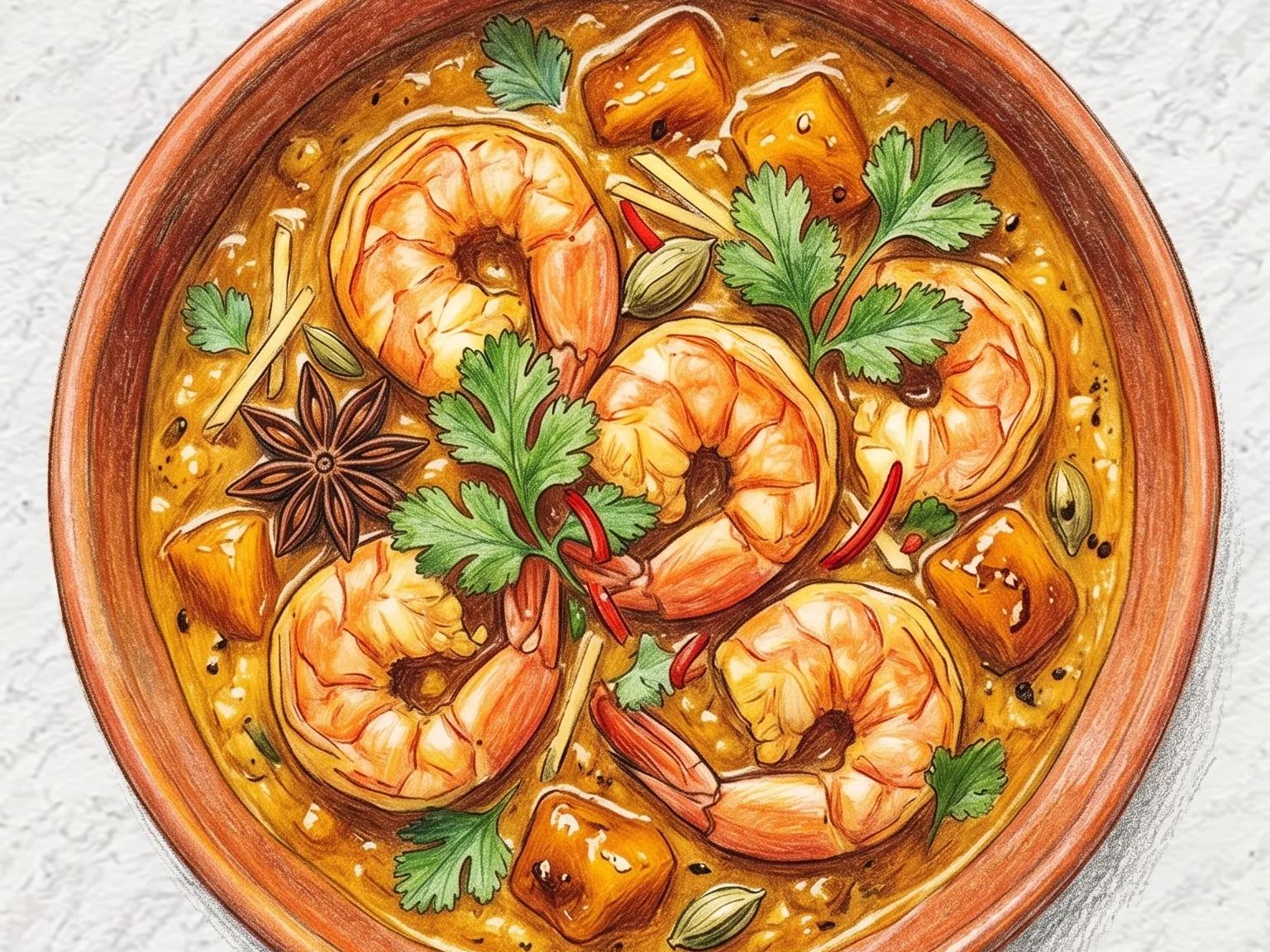
Sweet and Spicy Mango Chutney Shrimp Curry
Sweet and Spicy Mango Chutney Shrimp Curry is an Indian-style dish combining shrimp, mango chutney, and coconut milk. The process starts by sauteing onion and garlic, then blooming curry powder in oil to release its aroma. Shrimp are added and lightly cooked before pouring in coconut milk and mango chutney. Simmering for five to seven minutes ensures the shrimp remain tender and firm instead of becoming rubbery. The natural acidity of the mango chutney balances the creamy richness of the coconut milk. A touch of lime juice is added for acidity, and the dish is garnished with cilantro. It is served with rice or naan. Chopping large chunks of chutney results in a smoother sauce, and dried chili flakes can be added for extra heat.
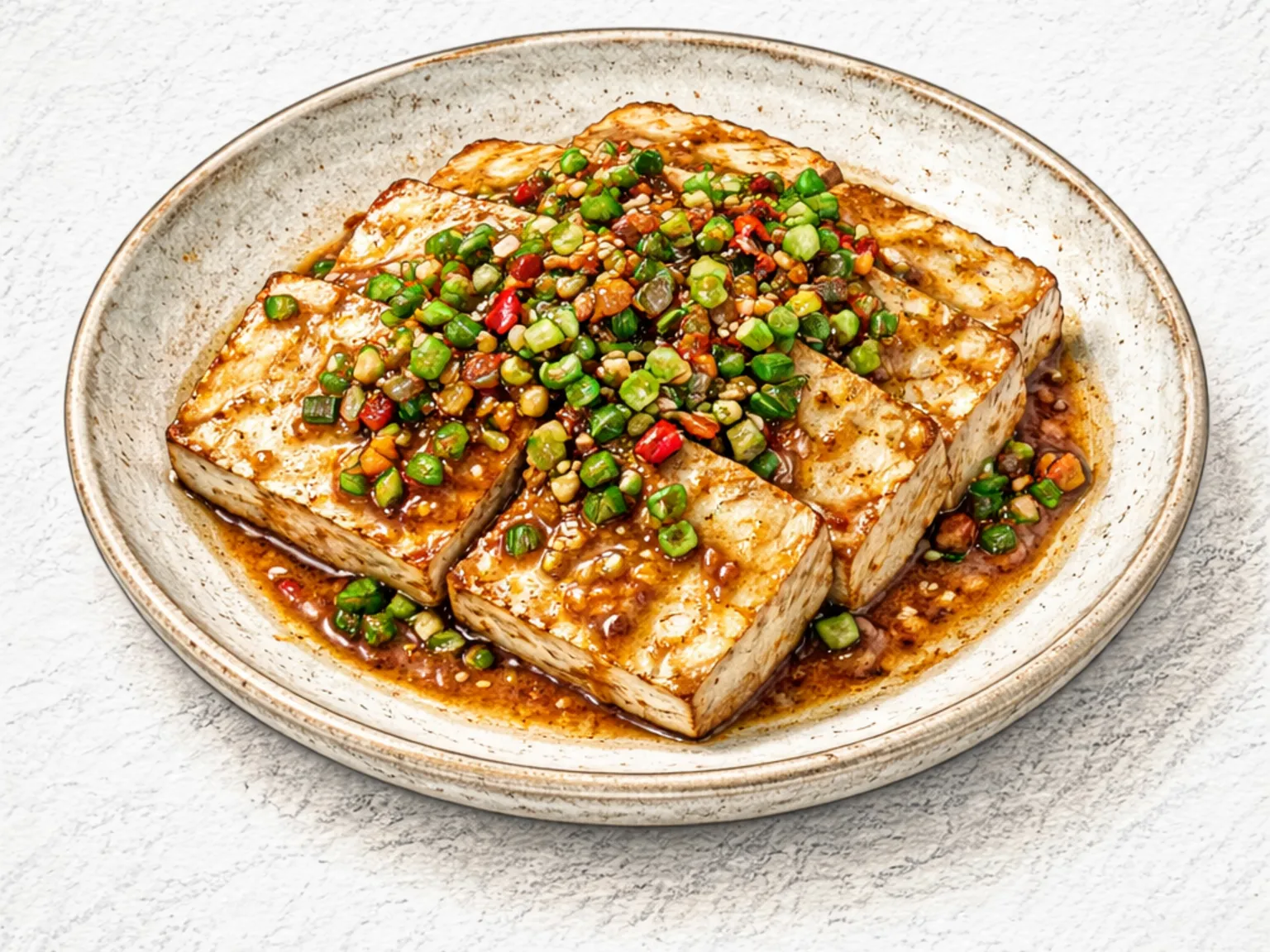
Korean Pan-Fried Tofu with Seasoned Soy Sauce
Dubu buchim yangnyeom is one of the most common Korean home banchan, a dish that appears on the table because the technique is straightforward and the ingredients are always in the kitchen. Firm tofu is cut into thick slices, salted lightly to pull moisture from the surface, then pan-fried in a minimal amount of oil until both faces develop a golden, crackling crust while the interior stays soft and warm. The yangnyeom jang, the seasoned sauce, is assembled directly at the stove: soy sauce, gochugaru, chopped scallion, garlic, and sesame oil stirred together, then spooned over the hot tofu the moment it comes out of the pan. The residual heat of the tofu gently wilts the raw scallion and opens the sesame oil, releasing its fragrance into the sauce without any additional cooking. The ratio of ingredients in the sauce varies from household to household, with some reducing the gochugaru and adding toasted sesame seeds, and others adding cheongyang chili for extra heat. In Korean temple cuisine, this preparation has served for centuries as the primary protein source in meat-free meals.
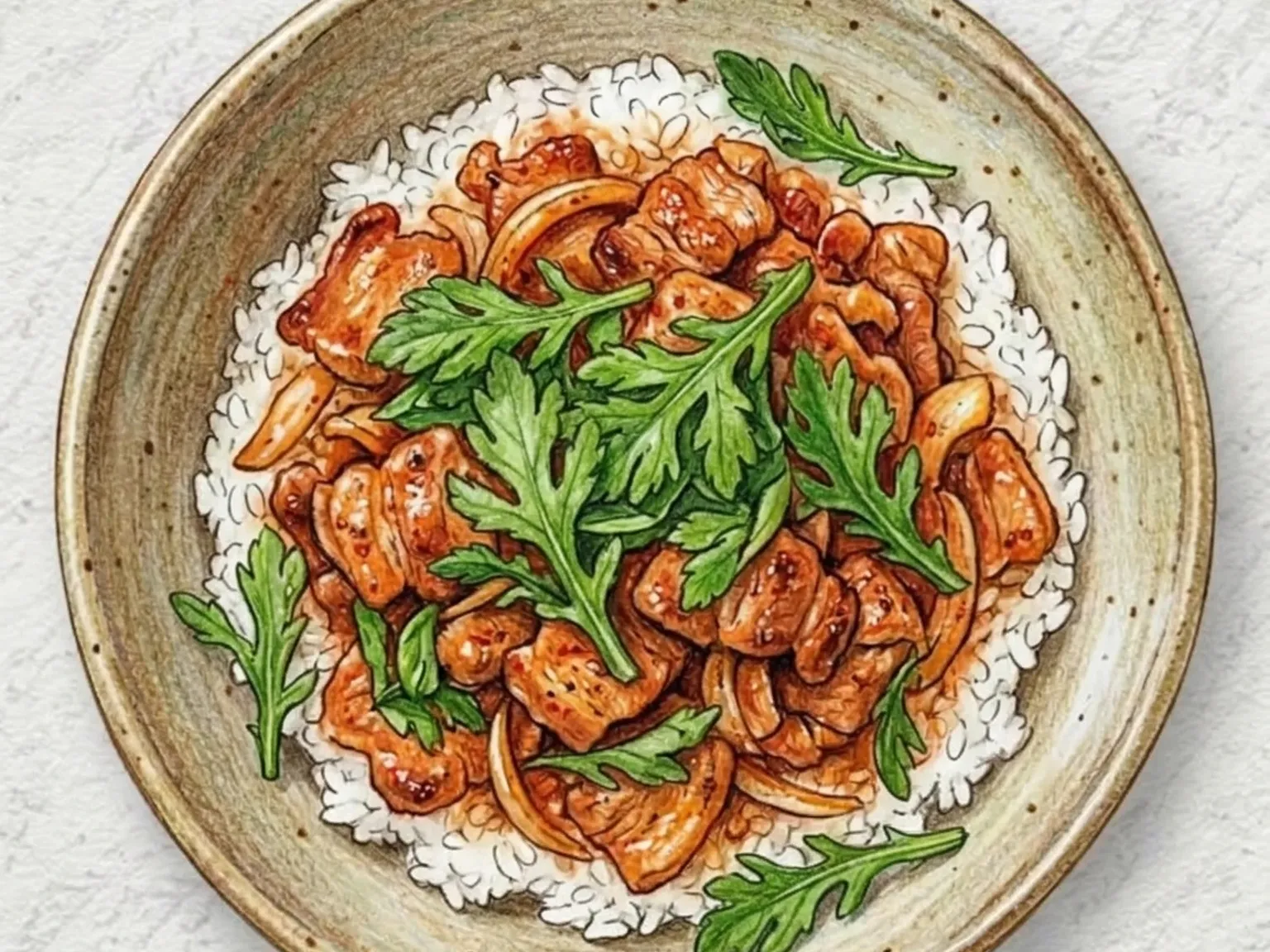
Korean Bulgogi Deopbap (Pork Rice Bowl)
Dwaeji-bulgogi-ssukgat-deopbap is a Korean rice bowl of gochujang-marinated pork stir-fried with onion over high heat, mounded over steamed rice and finished at the last moment with crown daisy greens. The marinade builds from gochujang, chili flakes, soy sauce, sugar, and minced garlic into a sauce that is simultaneously spicy, sweet, and deeply savory. A small amount of pear or kiwi juice added to the marinade tenderizes the pork shoulder before cooking. High heat over a short cooking time is essential for developing a browned crust on the meat, which produces a roasted, smoky depth that low-and-slow cooking cannot replicate. Pork shoulder carries enough intramuscular fat that once it renders under heat, it mingles with the sauce and soaks down into the rice below, creating a rich, glossy base at the bottom of the bowl. The crown daisy -- ssukgat -- goes in during the last thirty seconds before the heat is cut. The timing window is narrow: add it too early and the aromatic oils cook off, leaving only bitterness; add it with the heat already off and the fragrance stays locked inside the leaves. At the right moment, heat releases ssukgat's distinctive chrysanthemum-family herbaceousness, a green, almost medicinal brightness that cuts cleanly through the heaviness of the pork and sauce. The finished bowl is complete without side dishes.
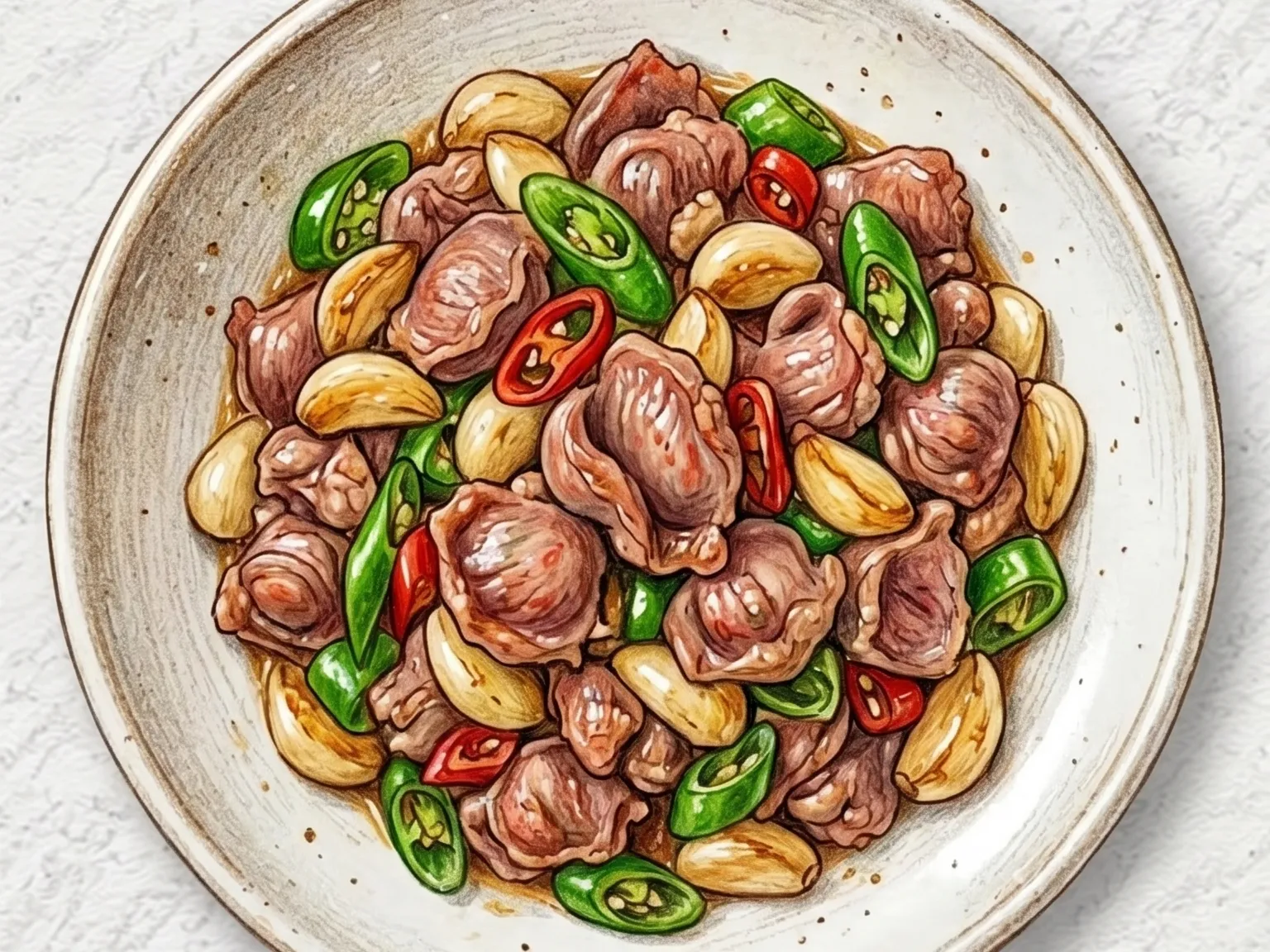
Korean Stir-fried Chicken Gizzards
Dak-ttongjip-bokkeum is a stir-fried dish made from chicken gizzards cooked over high heat with garlic and cheongyang chili pepper. The gizzard, known as the near-wi in Korean, is the thick muscular organ a chicken uses to grind its food. It contains very little fat, is high in protein, and stays firm through cooking in a way that ordinary chicken meat does not. Proper cleaning before cooking is essential. The yellow inner lining and any adjacent odorous tissue must be removed entirely, or the finished dish will carry an off smell that no amount of seasoning can cover. Once cleaned and scored lightly on the surface to help seasoning penetrate, the gizzards go into a very hot pan. The goal is a fast, high-heat cook that sears the outside while leaving the interior tender and springy. Extended cooking over lower heat makes them chewy and tough. The texture is the defining quality of this dish - dense, elastic, and slightly resistant to the bite, with a mild savory nuttiness that deepens the longer you chew. Cheongyang chili cuts through any residual heaviness and adds a clean, quick heat. Garlic provides a deep aromatic foundation that complements the protein. Soy sauce and mirim season the stir-fry with a balance of salt and restrained sweetness. The dish is ordered frequently alongside beer or soju, where its chewy texture and moderate heat make it a satisfying accompaniment to cold drinks. It also works well as a rice side dish.
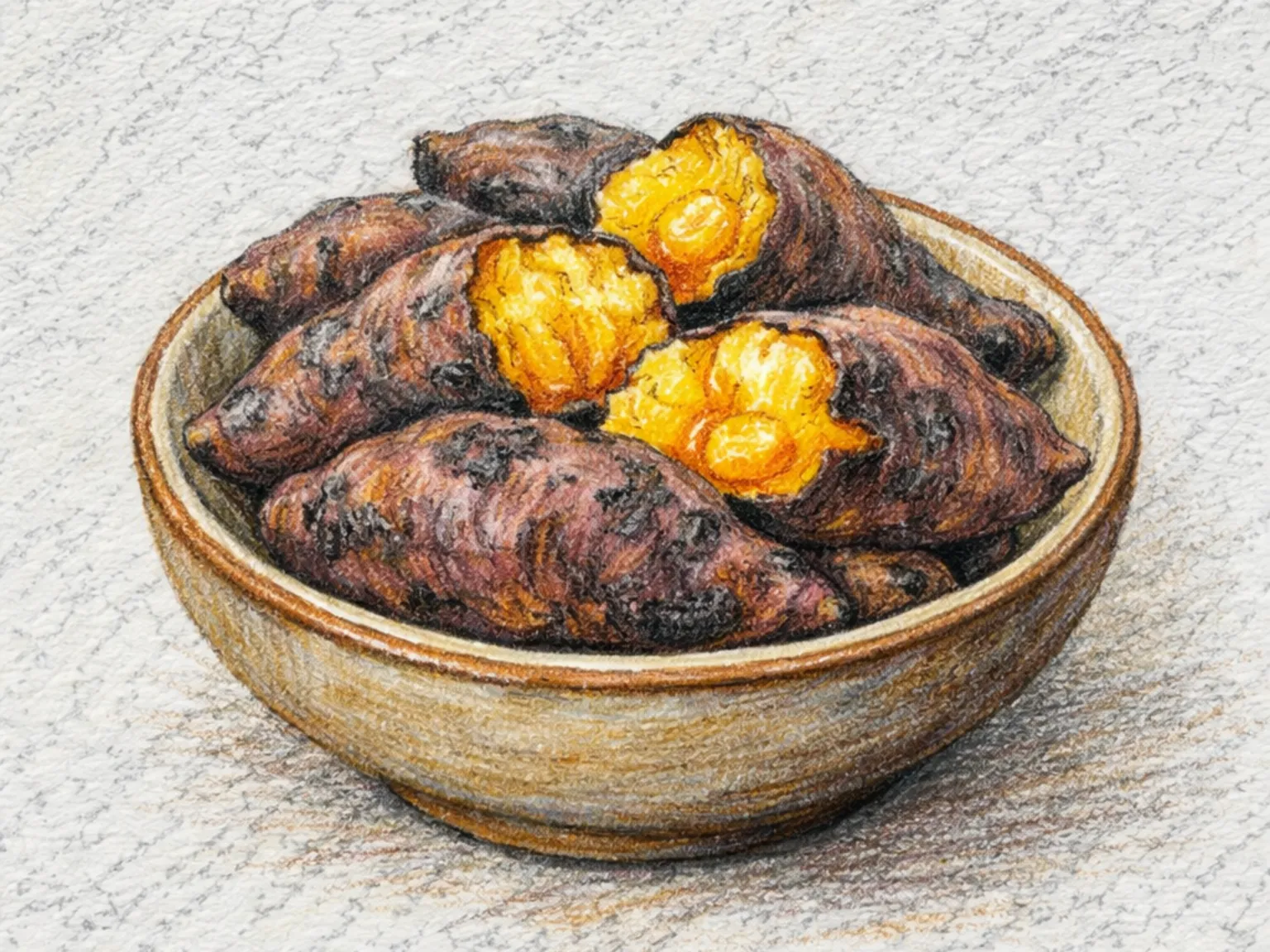
Korean Roasted Sweet Potato
Gun-goguma is a Korean winter snack made by roasting whole sweet potatoes in their skins at 200 degrees Celsius for 35 to 40 minutes. The slow heat converts the starches inside the potato into maltose, concentrating the sweetness and producing a sticky, honey-like layer just beneath the skin. Lower-temperature roasting is preferred over high heat because it extends the window of enzyme activity, allowing sugars to accumulate gradually rather than burning off at the surface. Korean pumpkin sweet potatoes, called hobak-goguma, have a higher moisture content and more pronounced natural sweetness, so they turn creamy and almost runny when fully roasted. Resting the potatoes at room temperature for a day or two before roasting further boosts sugar levels, since starch conversion continues during storage. The potato is satisfying on its own, but adding a pat of butter or a dusting of cinnamon layers in a rich, aromatic contrast. Eating the skin along with the flesh adds fiber and a slightly earthy counterpoint to the pure sweetness of the interior.
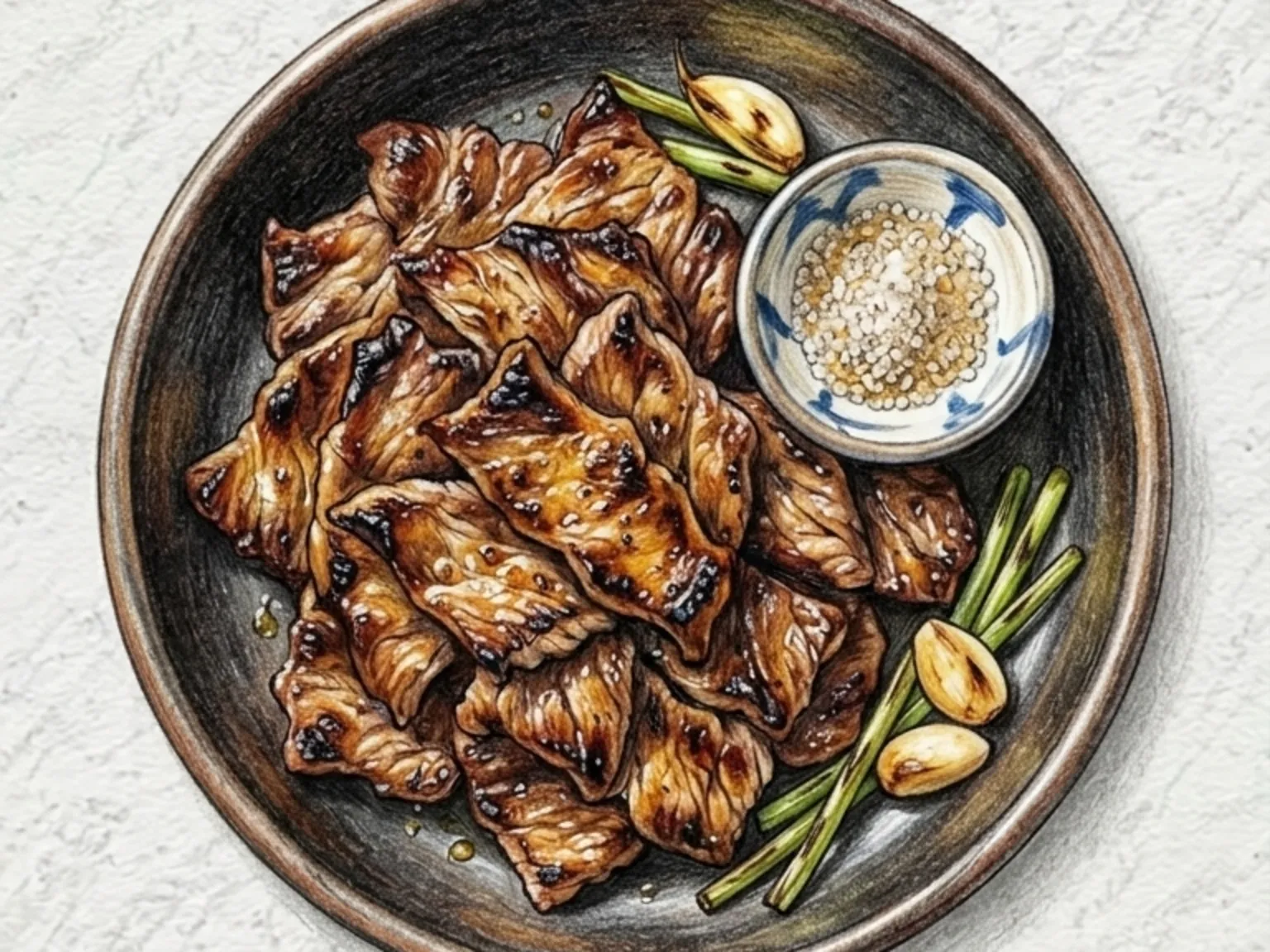
Korean Grilled Pork Skirt Meat
Galmaegisal-gui consists of grilled pork skirt steak harvested from the diaphragm muscle of the pig. This specific cut is recognized in Korean cuisine for its scarcity, as a single animal yields only between 200 and 300 grams of meat. Due to this limited supply, the cut is categorized as a specialty item within Korean barbecue establishments rather than a standard staple. Structurally, the meat resembles beef skirt steak because it features a very pronounced grain. This physical characteristic results in a texture that provides a substantial and firm chew. Additionally, the cut carries a specific fatty aroma that is characteristic of pork yet distinct from other common grilled parts of the animal. Before the meat reaches the heat, it typically receives a light seasoning composed of soy sauce, minced garlic, and cracked black pepper. The cooking process requires a high temperature, using either a bed of natural charcoal or a heavily heated pan to sear the exterior rapidly. Because the slices are relatively thin, the preparation involves keeping each side over the maximum heat source for less than sixty seconds. This timing ensures that the surface undergoes the Maillard reaction to achieve caramelization without drying out the interior. Ideally, the center of the meat remains slightly pink, reaching a medium level of doneness. If the cooking time extends beyond this window, the muscle fibers tend to contract and tighten significantly. Such overcooking removes the springy and resilient texture that defines the quality of this particular cut. When prepared over charcoal, the smoke particles are able to enter the juices of the pork, which produces a complex layer of smokiness. This specific flavor profile is difficult to achieve when using a standard gas or electric heating element. Once removed from the grill, the hot slices are traditionally dipped into a small saucer containing sesame oil and coarse grains of salt. This combination allows the toasted scent of the oil to blend with the smoky residue from the charcoal. For the final step of the meal, the meat is often placed inside a wrap made of fresh perilla or lettuce leaves. The addition of these greens introduces a botanical flavor that balances the inherent richness of the grilled pork.
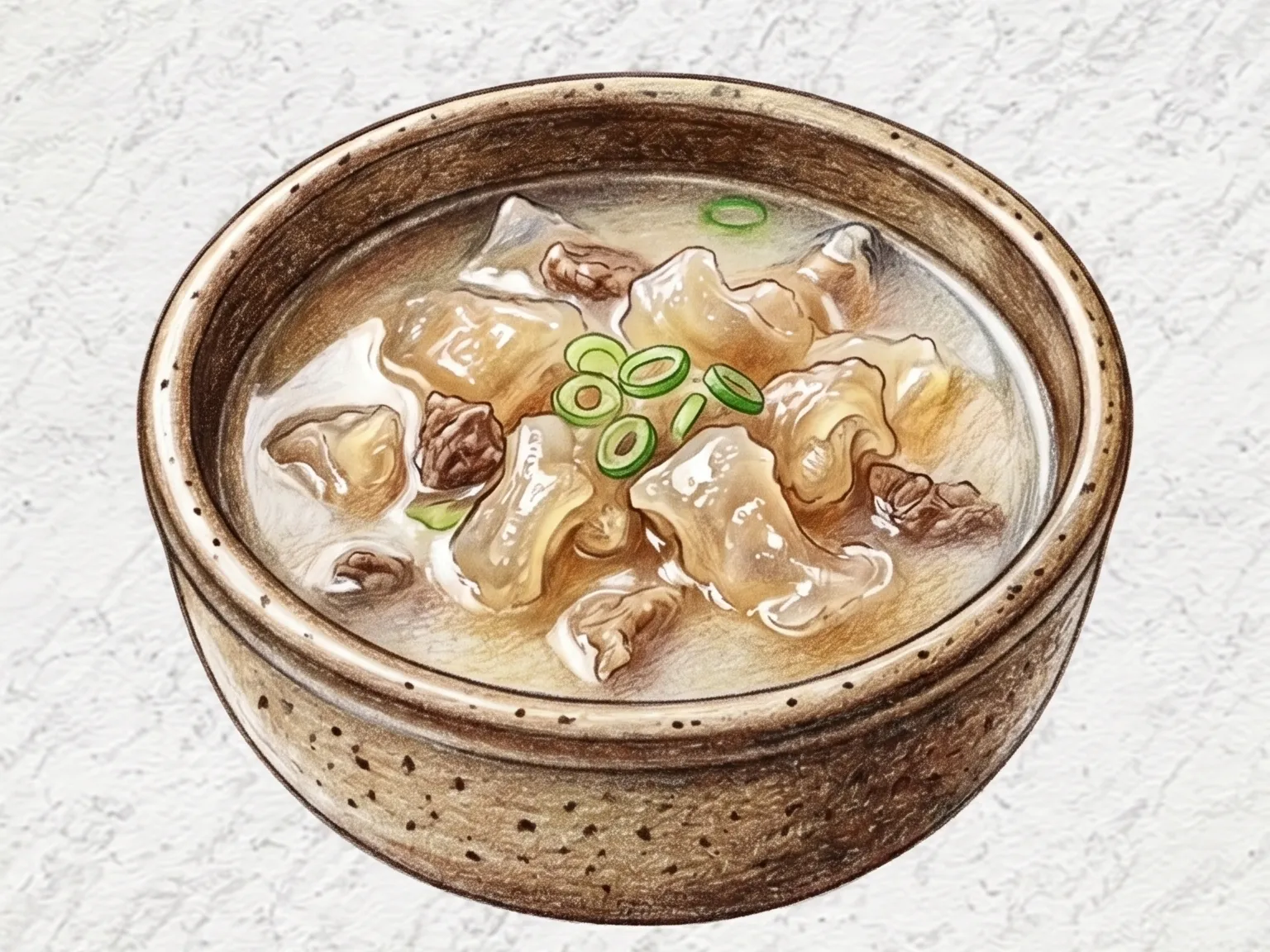
Doganitang Recipe (Dogani Tang, Korean Ox Knee Soup)
Doganitang, also written dogani tang or dogani-tang, is a Korean ox knee cartilage soup simmered for over two and a half hours on low heat. The long cook extracts collagen into a broth that appears clear but coats the lips with a rich gelatin film. Soaking the cartilage in cold water for an hour and blanching for ten minutes before the main cook are non-negotiable steps that draw out blood and impurities which would otherwise cloud the broth and leave an off-taste. The finished soup is seasoned simply with salt, pepper, and scallion so the clean beef flavor and chewy cartilage texture stay at the center.
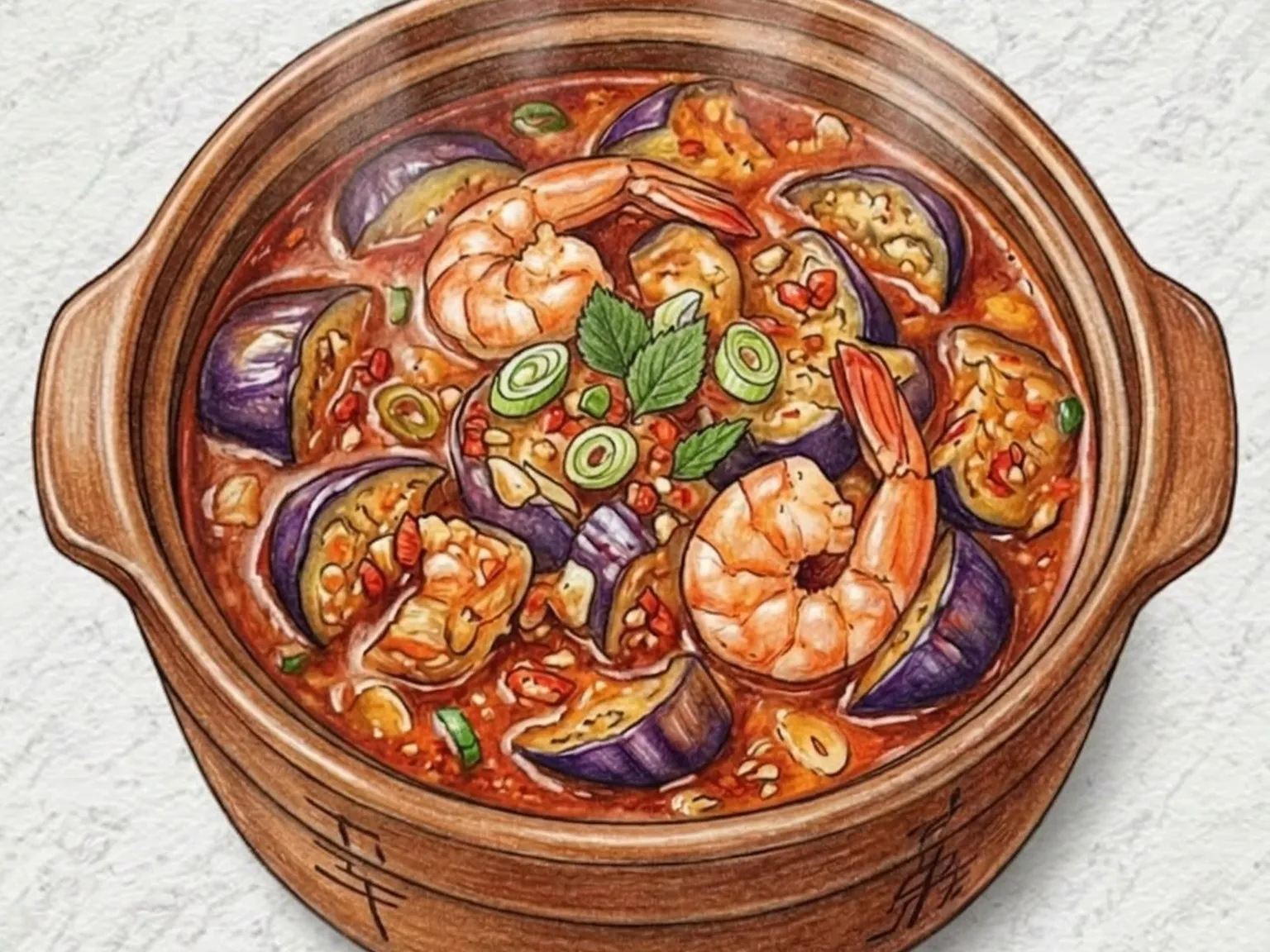
Korean Gaji Saewoo Jjigae (Eggplant Shrimp Stew)
Gaji-saewoo-jjigae is a spicy Korean stew of eggplant and shrimp simmered in a gochujang-based broth seasoned with perilla oil and tuna fish sauce. The vegetables and shrimp are stir-fried in perilla oil first to develop fragrance, then water is added and the whole pot brought to a boil. Eggplant cut in thick lengthwise slices or on the bias presents a large surface area that soaks up the spicy, savory broth, so each bite releases a burst of liquid from inside the softened flesh. The shrimp cook quickly and contribute a sweet, briny flavor that lifts the fermented chili paste. Tuna fish sauce adds depth and umami without any fishy edge, and the perilla oil's distinctive nutty fragrance runs through the entire broth. The soft, yielding eggplant and the firm, springy shrimp create a textural contrast in each bowl, and the characteristic sweetness built into gochujang-based broths makes this a summer dish that stimulates appetite even in the heat.
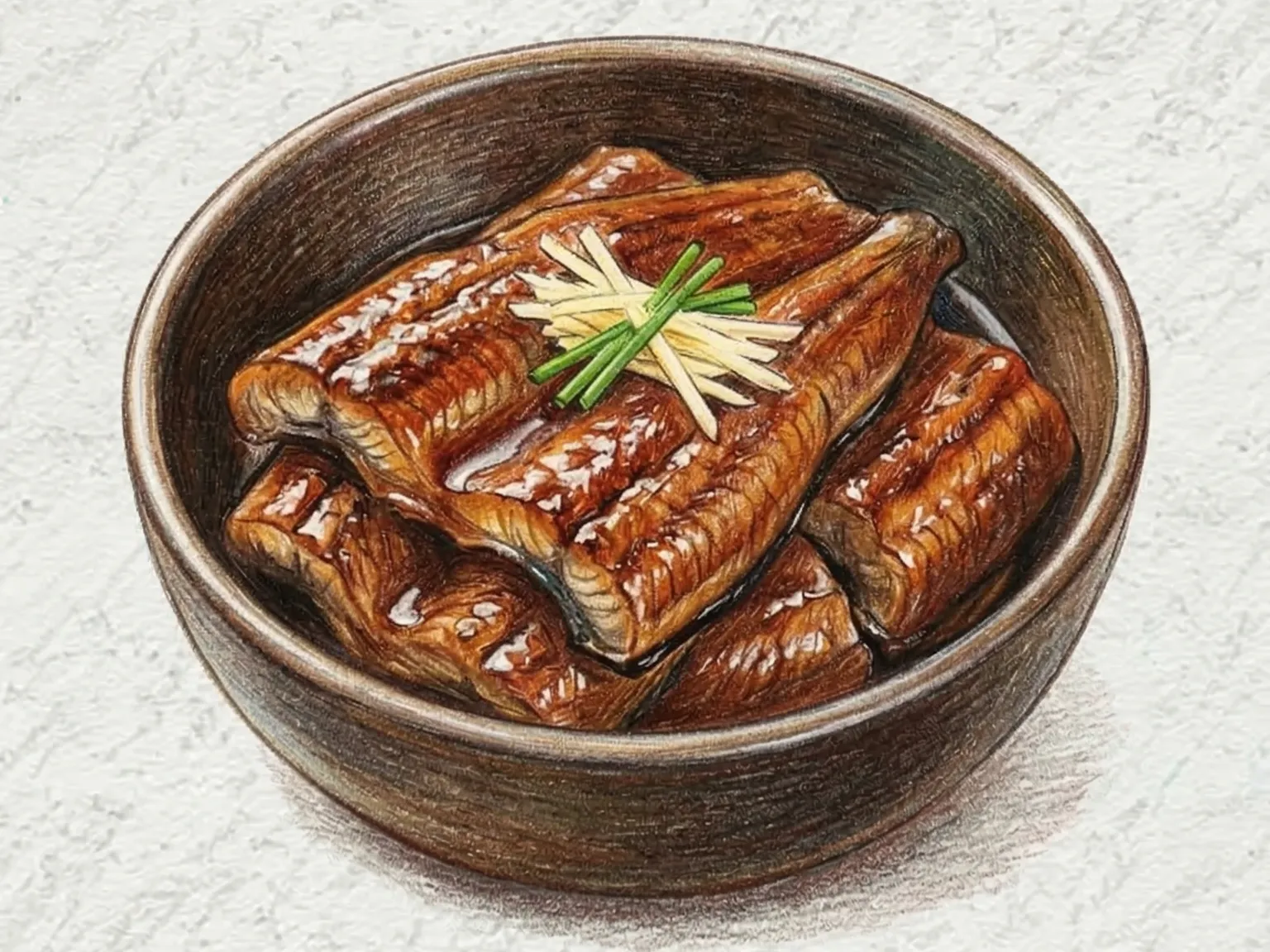
Korean Steamed Eel (Soy Ginger Glazed Two-Stage)
Jangeo-jjim is Korean steamed eel prepared in two distinct stages that are both essential to the final result. The eel is first steamed with rice wine until cooked through, which simultaneously firms the flesh and neutralizes the fishiness that would otherwise overpower the dish. It is then brushed thoroughly with a glaze made from soy sauce, sugar, ginger juice, and rice wine, topped with green onion, and steamed a second time. The two-stage process matters: the first steam allows fat to render out partially so that the glaze in the second stage penetrates deeper and clings more evenly, while the finished surface develops a glossy sheen. Ginger juice specifically cuts through the eel's natural oiliness, and the sweet-savory soy glaze complements the rich flesh in a way that makes it an ideal match for plain steamed rice. Eel is dense in protein and unsaturated fatty acids, which is why it has been a prized restorative food eaten on the hottest days of the Korean summer since ancient times. The dish is best served hot, straight from the steamer, when the glaze is still moist and aromatic.
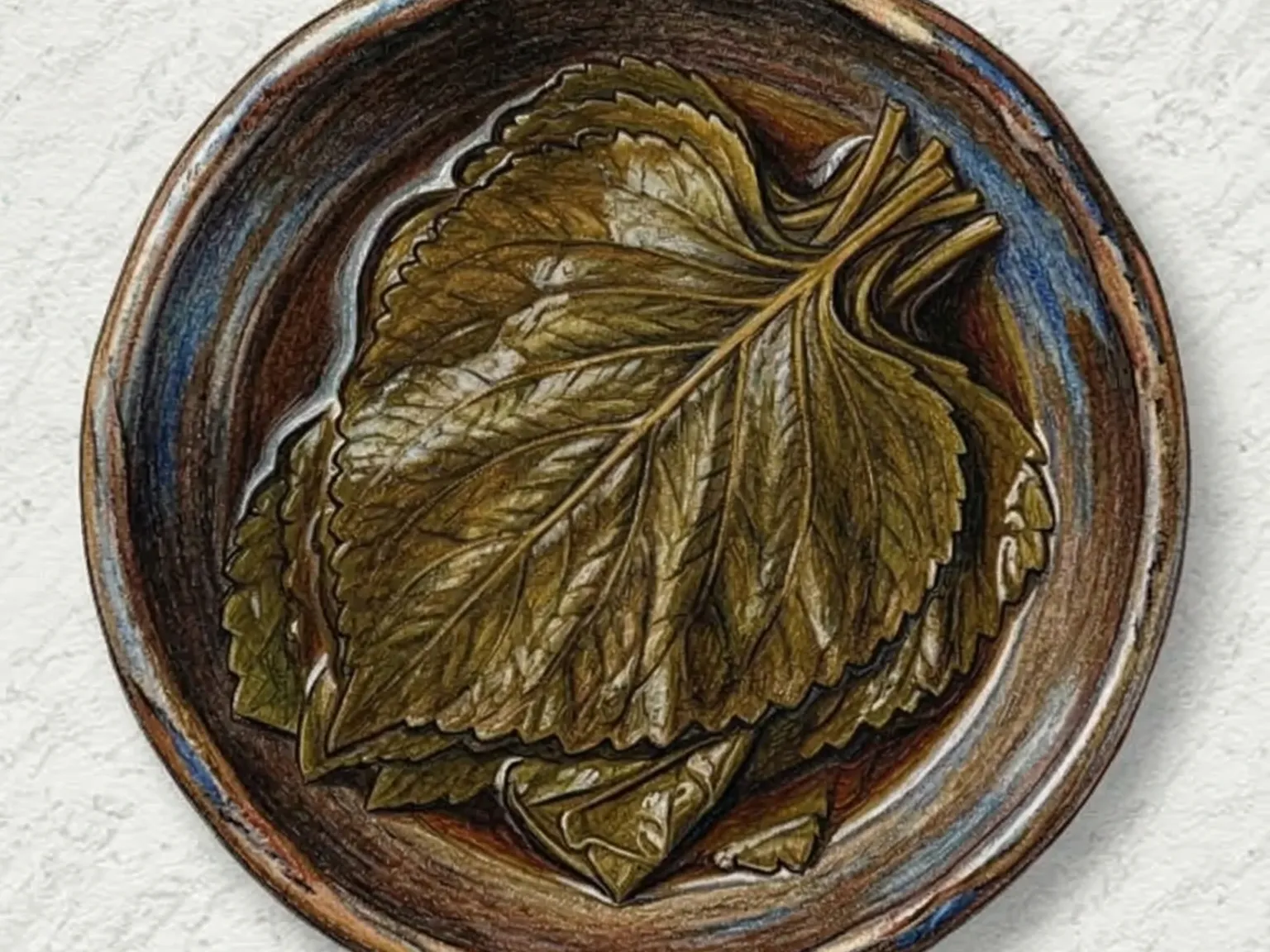
Korean Gomchwi Leaf Jangajji
Gomchwi jangajji is a Korean mountain herb pickle made by submerging gomchwi leaves - a wild member of the ligularia family - in a prepared brine of soy sauce, vinegar, and sugar. The leaves carry a powerful, distinctly wild green fragrance that intensifies rather than fades as they cure, deepening when paired with the savory weight of fermented soy. Vinegar keeps the flavor profile from becoming too heavy, cutting through the richness of the soy with a clean, acidic finish after each bite. The leaves are notably broad and thick-fleshed compared to most pickling greens, which means they absorb the brine thoroughly and evenly over a few days of curing. When draped over a bowl of rice and folded into a wrap, the leaf's pungent aroma and salty seasoning seep directly into the grains, creating a self-contained bite that requires no additional side dishes. Garlic and cheongyang chili added to the brine contribute a sharp warmth and a mild heat that prevent the deep, earthy flavor of the mountain herb from becoming monotonous across a meal.
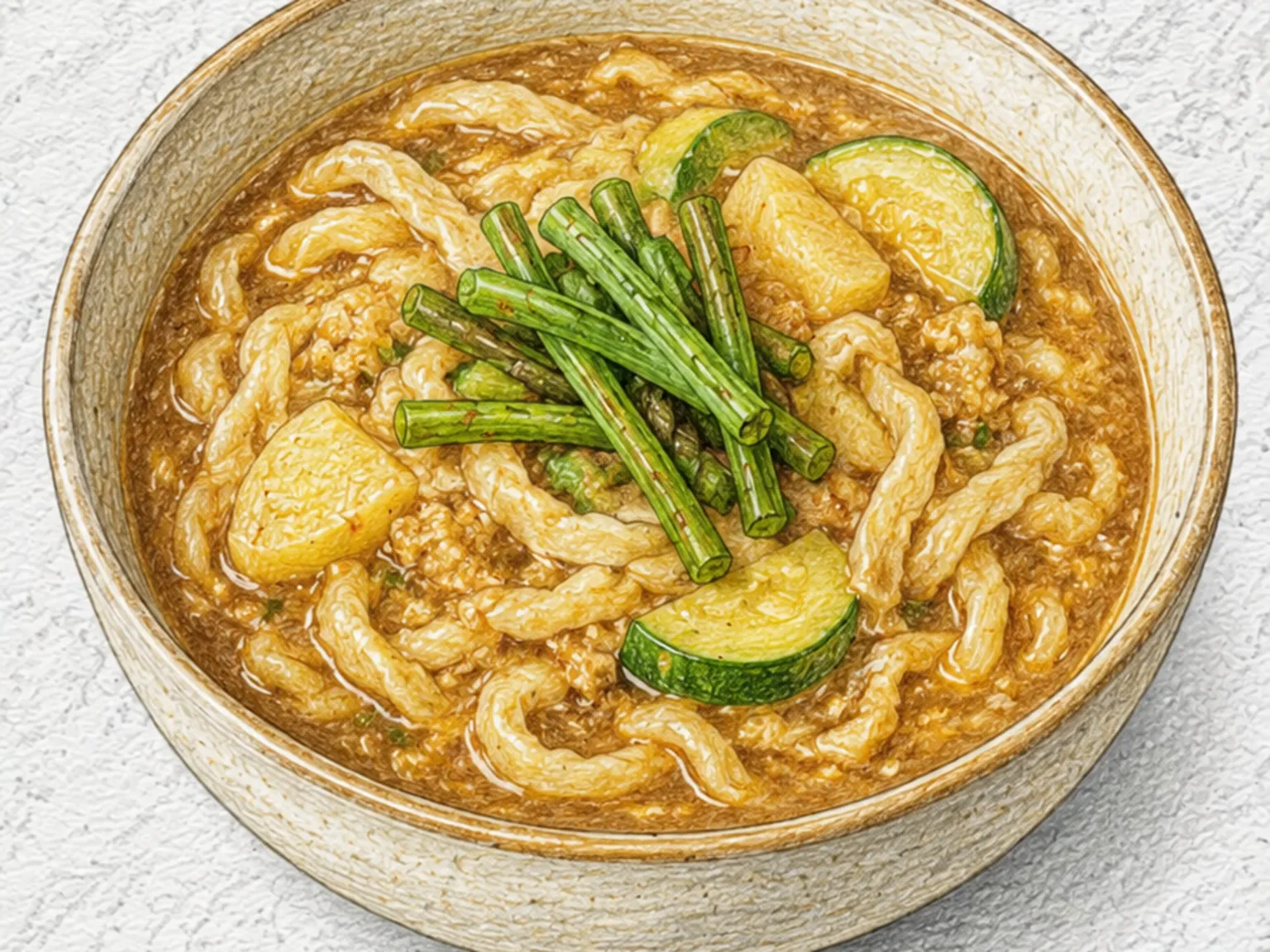
Korean Spring Aralia Soybean Noodle Soup
Durup doenjang kalguksu is a seasonal Korean noodle soup that layers blanched aralia shoots over a rich doenjang broth built with potato and zucchini. The potato breaks down partially during simmering, thickening the broth naturally and adding a mild, floury sweetness that works alongside the deep fermented character of the soybean paste. Zucchini softens into the liquid as it cooks, contributing its own gentle sweetness, and garlic reinforces the savory base. Knife-cut noodles hold up well in the dense broth, their chewy bite providing texture against the soft vegetables. The aralia shoots must be blanched separately and placed on top just before serving, because cooking them directly in the boiling broth drives off the bitter-herbal spring fragrance that makes them worth using in the first place. This dish comes together only during the brief aralia season in early spring, when the combination of fermented depth and fresh mountain herb aroma in a single bowl is at its most vivid.
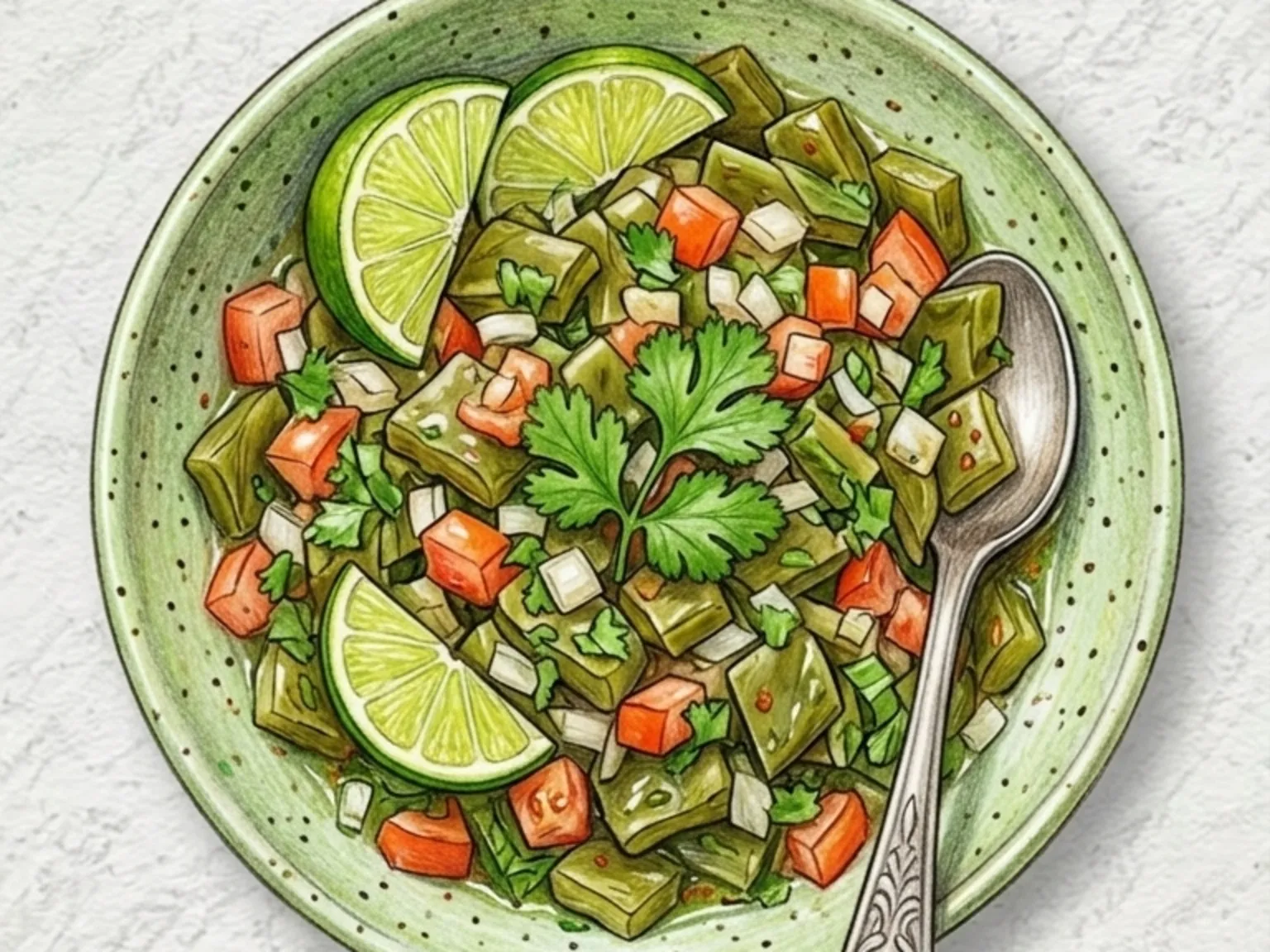
Mexican Cactus Salad (Lime-Dressed Nopal Cactus Pad)
Ensalada de nopales is a traditional Mexican salad made from cleaned and boiled prickly pear cactus pads tossed with diced tomato, onion, fresh cilantro, and lime juice. Preparing the pads requires removing the fine spines and glochids that cover the surface; wearing gloves and scraping with a knife is the standard method. Once cleaned, the pads are diced and boiled until tender. Cooking releases a mucilaginous substance similar to okra, which is the source of nopales' distinctive texture. Draining the cooked cactus thoroughly and letting it cool before dressing prevents the lime juice from becoming diluted. Even after full cooking, nopales retain a slight resistance in the bite, producing a texture that is at once tender and firm. The strong acidity of lime and the herbal quality of cilantro create contrast against the cactus's mild, neutral flavor, giving the salad a clear flavor structure. In Mexico this is a common side dish alongside tacos, grilled meats, or beans, and its high fiber and water content make it a practical addition to a balanced meal.
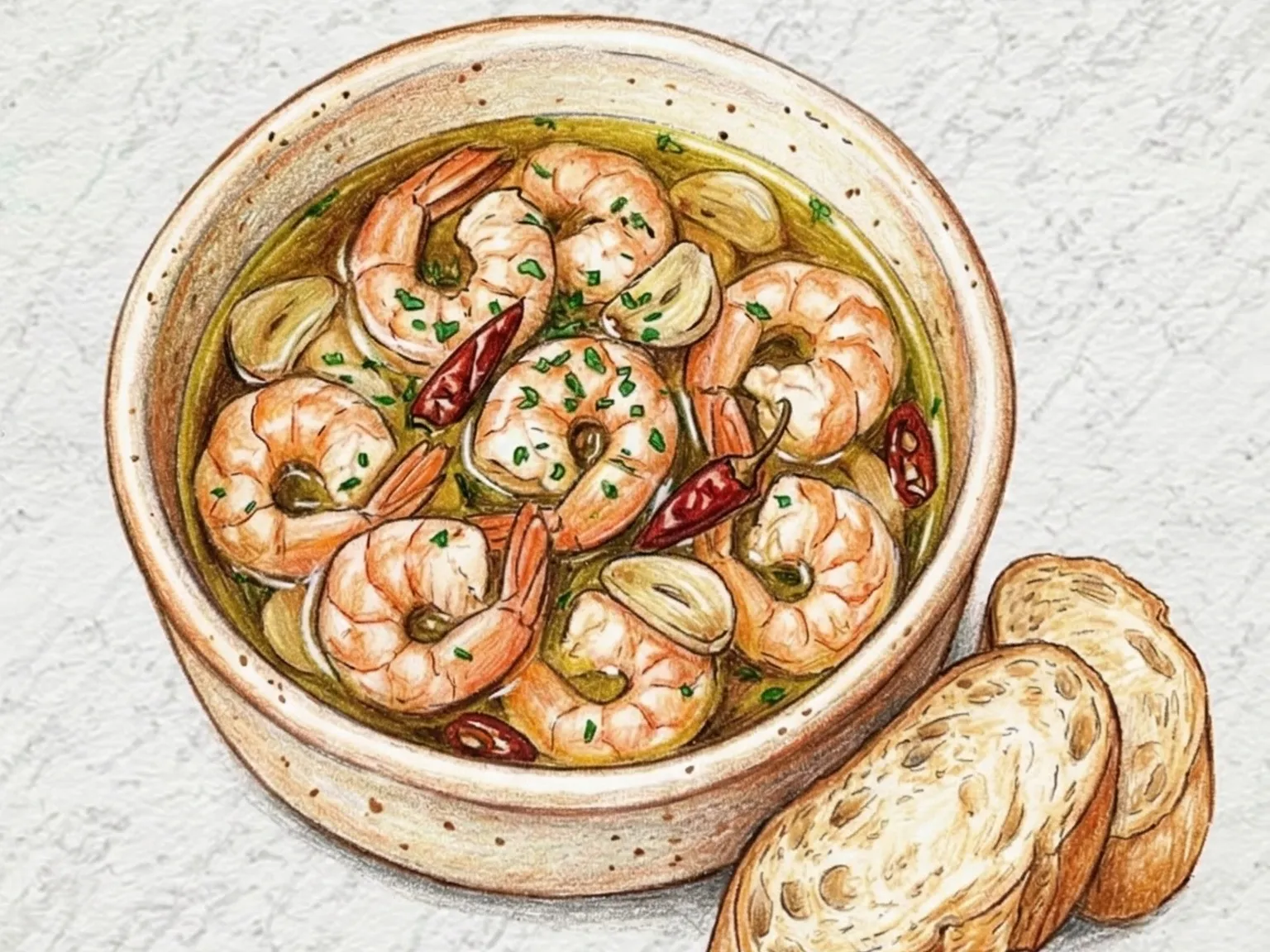
Gambas al Ajillo (Garlic Shrimp)
Gambas al ajillo cooks peeled shrimp in a generous pool of olive oil infused with thinly sliced garlic and dried red chili over low heat, a method that turns the oil itself into the flavor foundation of the dish. The garlic must be coaxed slowly to release its sweetness into the oil without crossing into bitterness - the moment it turns golden, the shrimp go in and cook for two to three minutes until pink and just cooked through. A seasoning of salt, black pepper, and a scatter of chopped parsley finishes the pan. The dried chili adds a gentle warmth that sharpens both the garlic-scented oil and the natural sweetness of the shrimp, while the olive oil absorbs and carries all these flavors together. Sliced baguette served alongside is not optional - it exists to soak up the deeply flavored oil, and mopping the pan completely clean is the traditional way to end the dish. Keeping the heat consistently low throughout is the one non-negotiable rule: high heat burns the garlic in seconds and toughens the shrimp.
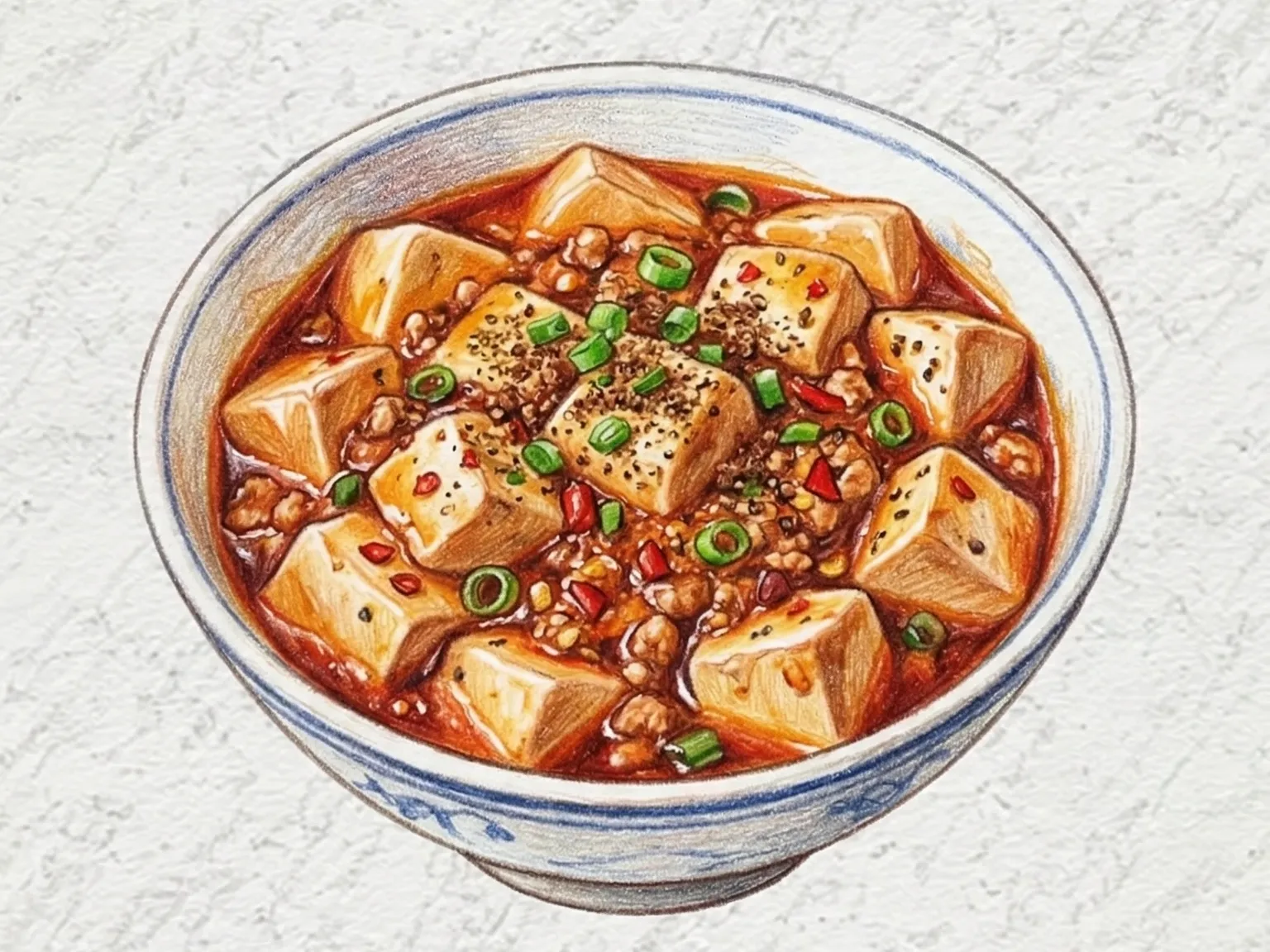
Sichuan Spicy Tofu (Mapo Tofu)
Mapo tofu is the dish that defines Sichuan cooking for much of the world, and it earns that reputation through an uncompromising combination of heat and numbing spice. Blocks of silken tofu are slid carefully into a wok with ground pork, doubanjiang (fermented chili bean paste), and a generous measure of ground Sichuan pepper, then cooked at high heat until the sauce tightens and coats every cube completely. The doubanjiang provides fermented depth and an unmistakable rusty-red color that signals its flavor before the first bite, while the Sichuan pepper delivers the numbing, tingling sensation known as ma that separates this dish from any other spicy food. Each cube of tofu absorbs the sauce at its edges while remaining silken at the center, creating a contrast between the spiced exterior and the cool, neutral interior that makes each bite dynamic. Spooned generously over steamed rice, the thick sauce penetrates between every grain, pulling together the entire bowl into a single cohesive experience. The interplay of ma (numbing) and la (spicy heat) is the defining characteristic of Sichuan cuisine, and mapo tofu demonstrates that pairing with more clarity and intensity than almost any other dish in the repertoire.
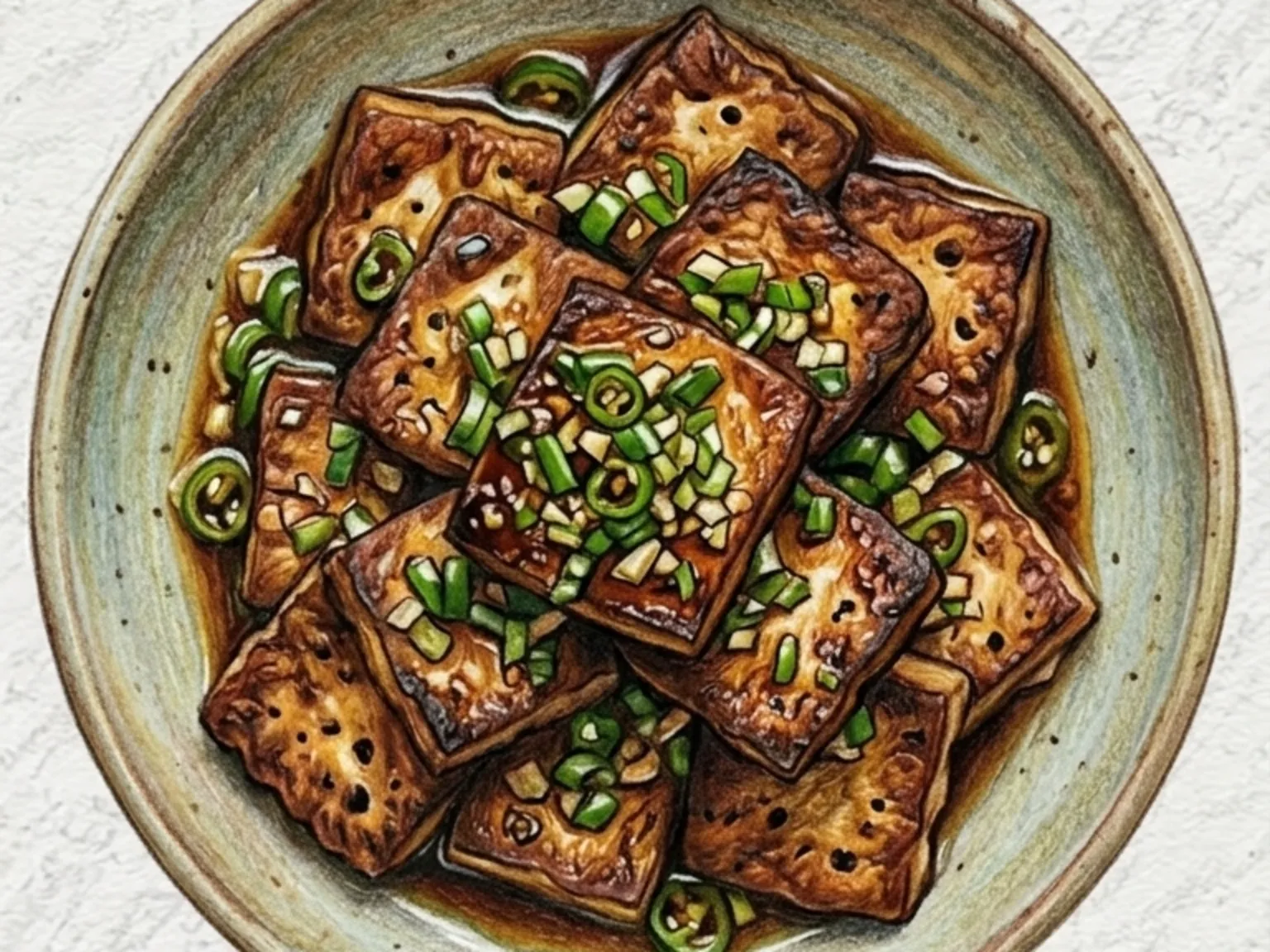
Korean Tofu with Spicy Soy Dressing
Dubu cheongyang ganjang muchim is a pan-fried tofu banchan that takes the classic dubu buchim in a sharper direction by centering the dressing on cheongyang chili, the hottest pepper in everyday Korean cooking. The most important part of the technique is getting a proper mahogany crust on the tofu. The pan must be hot before the tofu goes in, and the heat must stay high throughout. Too low a flame causes the tofu to steam in its own released moisture rather than sear, resulting in a soft surface with no textural contrast. When seared correctly, the outer layer becomes a firm, slightly chewy barrier while the interior stays silken and creamy. The dressing is raw and uncooked: soy sauce, minced cheongyang chili, scallion, garlic, and sesame oil combined without heat. It is poured over the tofu while the tofu is still steaming hot, which causes the raw garlic and chili to bloom slightly in the residual heat and release their full aromatic sharpness. Cheongyang pepper heat is clean and immediate rather than slow-building - it registers on the tongue quickly and fades without lingering the way dried gochugaru does. The dish is a natural pairing for mild, smooth soups like miyeok-guk, where the chili's sharpness provides a sharp counterpoint to the gentle seaweed broth. It also works alongside plain steamed rice as a standalone side.
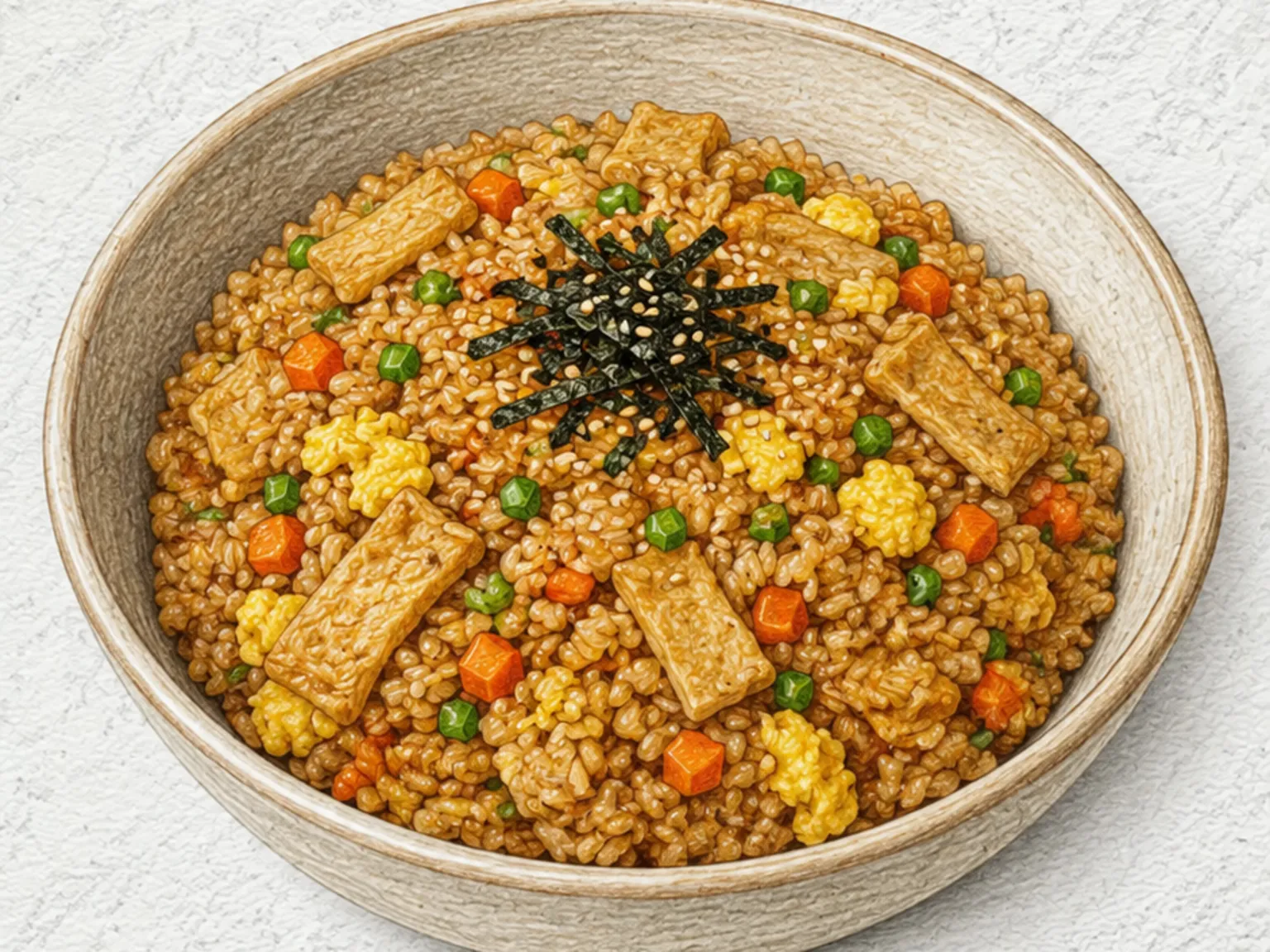
Korean Fish Cake Fried Rice
Eomuk bokkeumbap is a Korean fried rice built around diced fish cake, carrot, egg, and soy sauce -- a dish that earns its place precisely because it comes together in under ten minutes from pantry basics. The fish cake develops a lightly crisped exterior when stir-fried in hot oil, and as it cooks, its mild, briny savoriness infuses every grain of rice it comes into contact with. Egg is scrambled on one side of the pan before being folded through, adding a layer of richness without complicating the overall flavor. Soy sauce seasons the rice throughout while a drizzle of sesame oil at the very end coats the finished dish with a glossy, nutty finish. Chopped green onion tossed in just before plating provides a fresh, aromatic contrast to the savory base. The saltiness can be dialed up or down easily by adjusting the soy sauce, and a scatter of toasted sesame seeds or crumbled dried seaweed over the top adds both flavor and visual appeal. The dish requires nothing more than leftover rice and a few pieces of fish cake, making it one of the most reliable quick-meal options in the Korean home kitchen, practical for a rushed lunch or a light after-school snack for children.
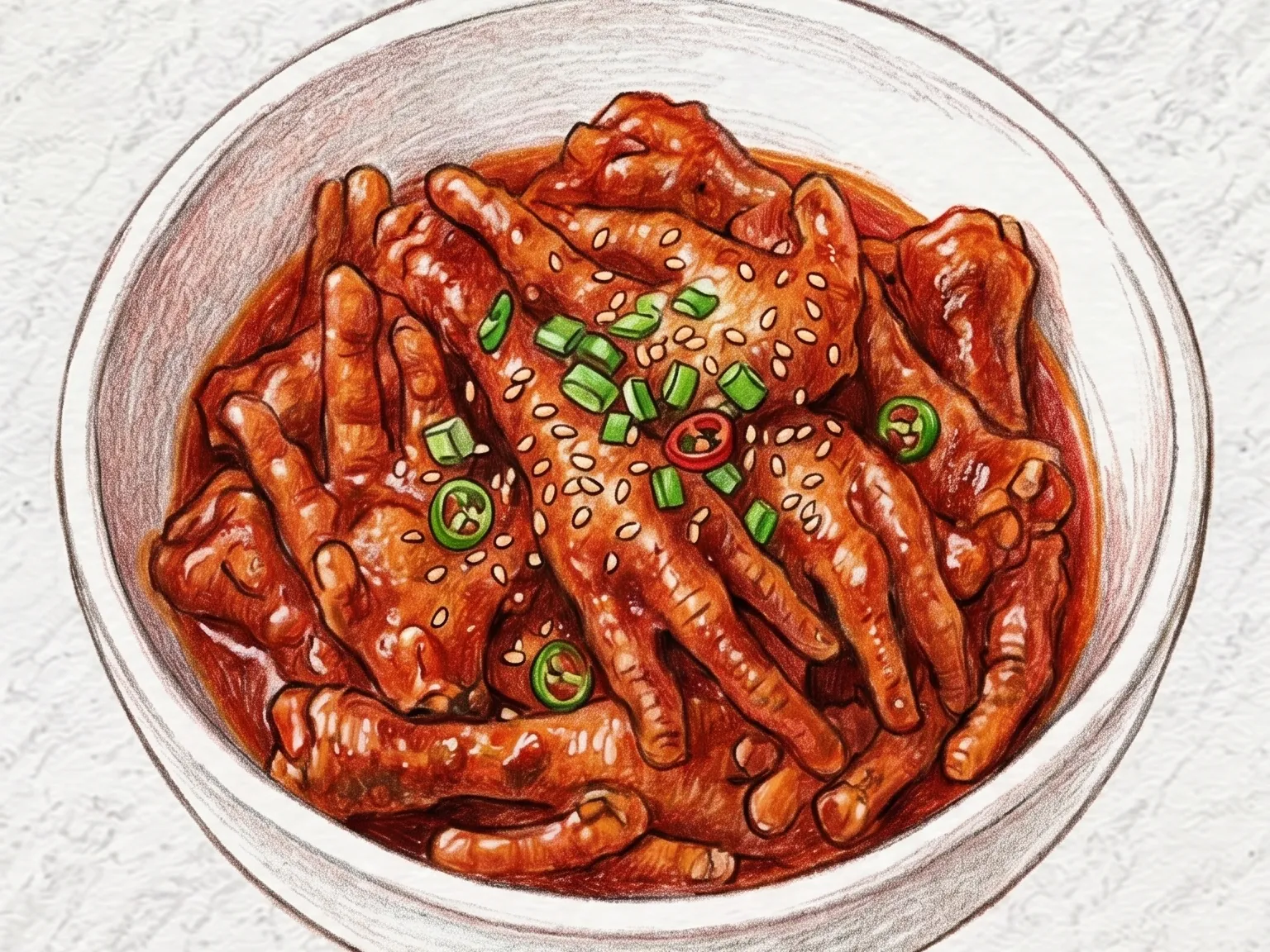
Korean Spicy Stir-fried Chicken Feet
Dakbal-bokkeum stir-fries chicken feet in a sauce of gochujang, gochugaru, and soy sauce to produce one of the most distinctively textured dishes in Korean drinking food. Chicken feet are almost entirely skin, cartilage, and small bones with very little actual meat, and it is precisely this structure that gives the dish its appeal. The skin is fatty and gelatinous, clinging to the bones with a sticky chew that is unlike any other protein. Gochujang and gochugaru create a layered heat that builds slowly, while sugar threads through the spice with a sweet, lingering finish. Adding cheongyang chili peppers intensifies the burn without changing its fundamental character. Because the bones are numerous and thin, eating dakbal is a hands-on, deliberate process of stripping skin and cartilage with the teeth and lips, which makes it an inherently social and unhurried dish. Its natural setting is alongside cold beer or soju. Different establishments vary the spice level and sauce base, ranging from fire-hot buldak-style preparations to milder soy-based versions.
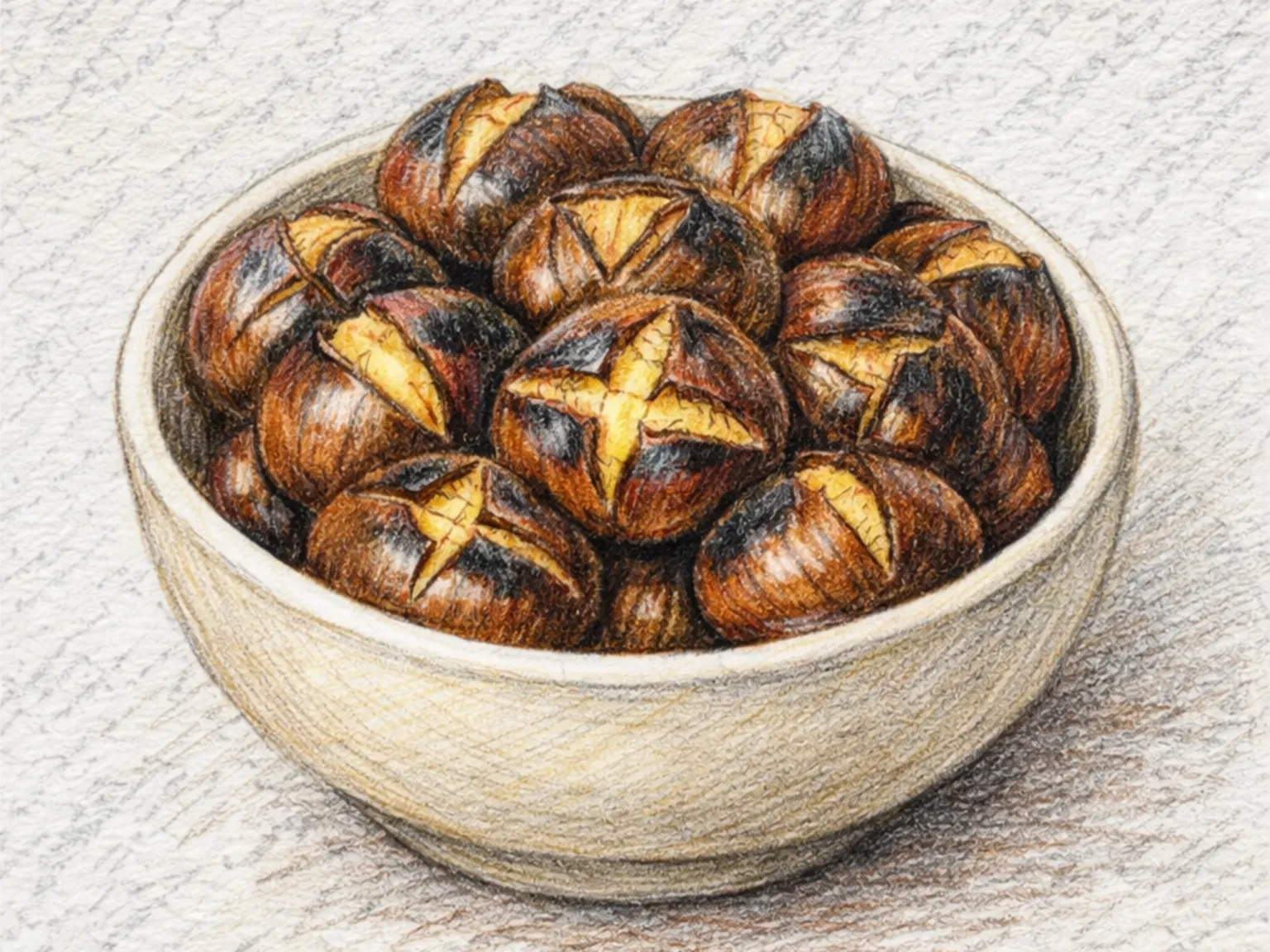
Korean Roasted Chestnuts
Gunbam is Korean roasted chestnuts, a seasonal street food sold from carts across Korea from late autumn through early spring. An X-shaped cut is scored through the shell of each chestnut before roasting. This cut serves a structural purpose: it creates a vent for steam to escape during cooking, preventing the shell from cracking unpredictably. Roasting at 210 degrees Celsius for 20 to 25 minutes converts the starches inside to sugars, deepening the sweetness and building a toasty, nutty flavor that plain raw chestnut does not have. Soaking the chestnuts in salted water for 20 to 30 minutes before roasting cleans any debris from the surface and imparts a faint background seasoning. Wrapping the freshly roasted batch in a dry cloth for five minutes while they rest lets residual steam work between the outer shell and the thin inner skin, making the inner skin easier to peel. The chestnuts should be eaten hot, while the flesh is still floury and crumbles gently against the tooth. Tossed with a little butter and sugar while warm, they take on a sheen and extra sweetness that amplifies their fragrance.
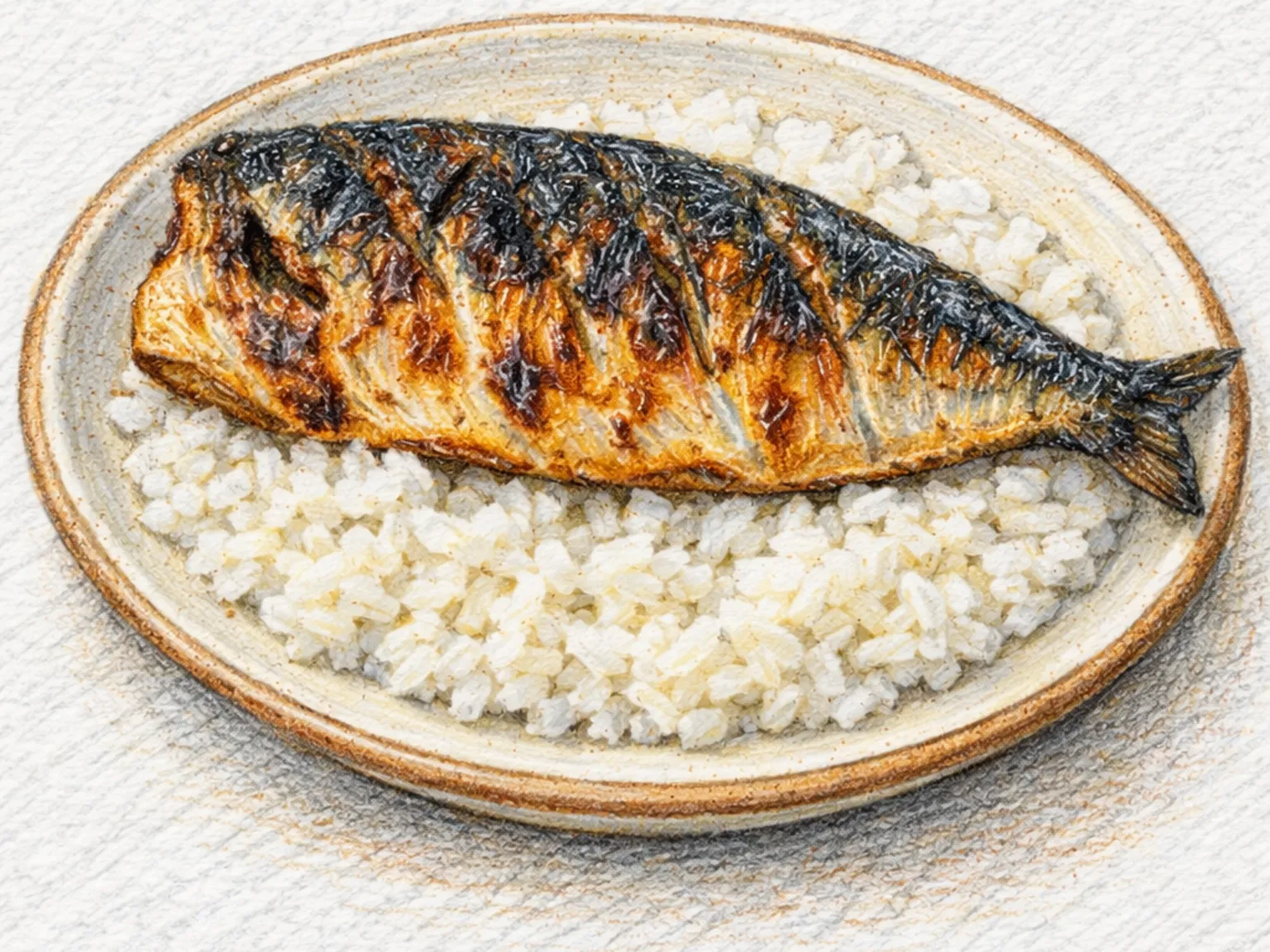
Korean Salted Mackerel Grill
Gan-godeungeo-gui is grilled salt-cured mackerel, one of the most dependable side dishes on a Korean home table. The mackerel is sold already salted at the market, so it goes straight onto heat without any additional seasoning preparation. During the curing process, the salt draws out excess moisture and firms the flesh, which makes the fish easier to handle than fresh mackerel and far less prone to falling apart in the pan. Cooking skin-side down over medium heat for seven minutes allows the fat embedded under the skin to render slowly outward, crisping the skin until it becomes paper-thin and shatters with the first touch of a spoon. Flipping the fish for just four more minutes finishes the flesh through without drying it out. The mackerel's oily richness is substantial enough to carry a bowl of rice on its own, but a wedge of lemon on the side adds a bright acidity that cuts cleanly through the fat, and a small mound of shredded daikon provides a palate-cleansing contrast that removes any lingering fishiness from the aftertaste. Frozen gan-godeungeo should be moved to the refrigerator the night before to thaw slowly, preventing the fish from weeping water all at once when it hits the hot pan.
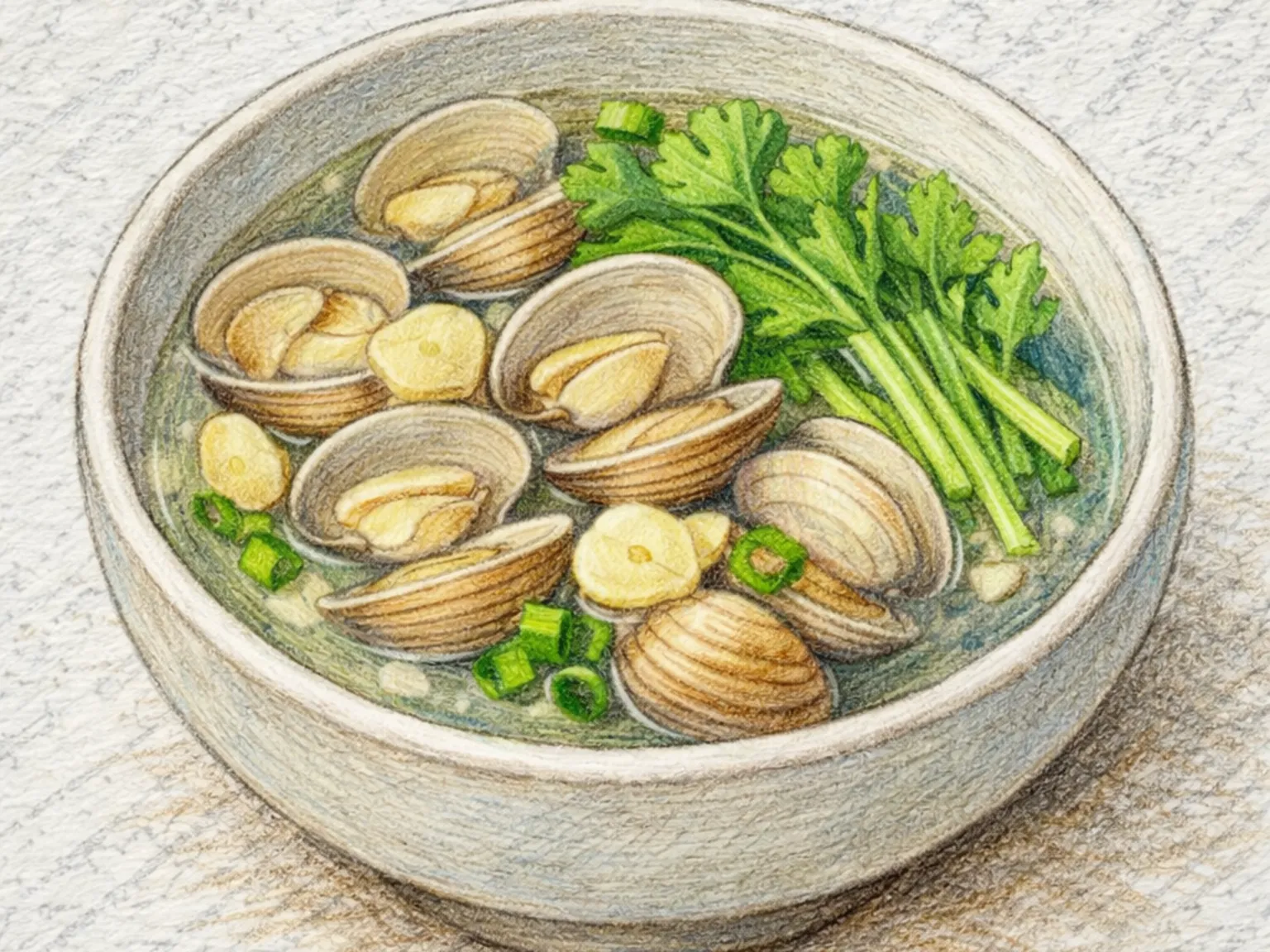
Dongjuk-tang (Korean Surf Clam Broth)
Dongjuk-tang is a Korean surf clam soup where purged clams simmer with radish in plain water to produce a briny, naturally sweet broth that needs almost no added seasoning. The radish goes in first and cooks for six minutes to build a sweet, mild base, then the clams are added for three to four minutes -- they are done the moment their shells open wide, and cooking any longer tightens and toughens the meat. Any clam that remains shut after cooking must be discarded without exception. Water dropwort stirred in at the end contributes a fresh, herbaceous fragrance that lifts the broth, and a single cheongyang chili pepper adds a mild, lingering heat that tempers the ocean flavor without masking it. The combination of clam brine, radish sweetness, and perilla creates a broth that tastes far more complex than its short ingredient list suggests.

Korean Hairtail & Fernbrake Stew
Galchi gosari jjigae pairs hairtail fish with boiled fernbrake in a deeply spiced Korean stew. The broth begins with anchovy-kelp stock seasoned with gochugaru and soup soy sauce, building a clean, peppery heat without heaviness. Korean radish and onion go in early to dissolve their natural sugars into the broth, adding a cool sweetness that tempers the chili. As the hairtail simmers, its flesh breaks into tender pieces and releases the fish's inherent oils into the liquid, enriching every spoonful with a maritime depth. The fernbrake brings a resilient, slightly meaty chew that stands up well to the long simmer. Rooted in the fish stew traditions of Jeju Island and the southern coastal regions of Korea, this dish is a regional staple that pairs seamlessly with plain rice.
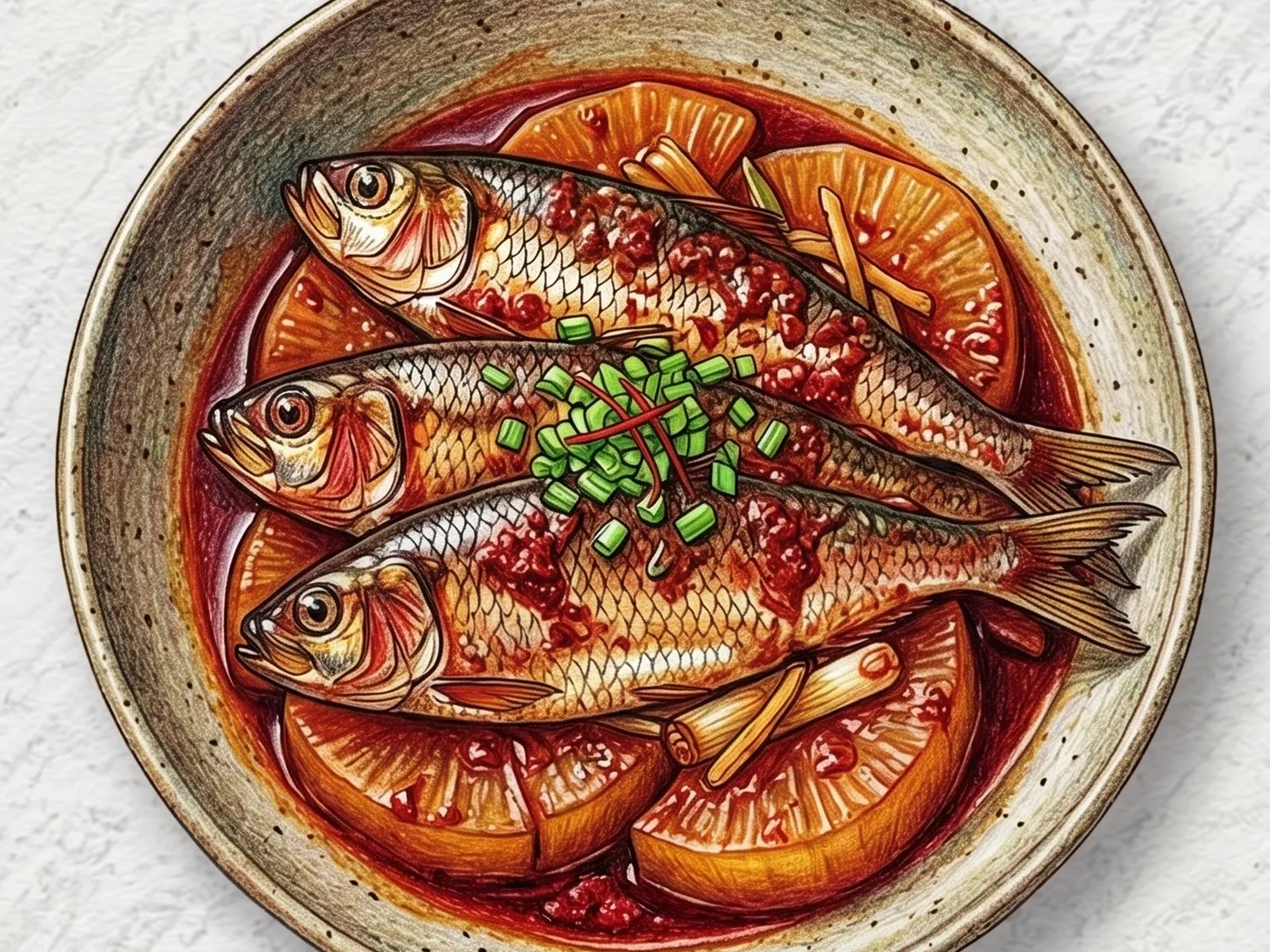
Korean Braised Gizzard Shad
Jeoneo-jjim is a braised gizzard shad dish in which the fish and Korean radish are slowly cooked together in a soy sauce and gochugaru seasoning, making it a dish best suited to autumn when the fish carries its peak fat. Radish slices line the bottom of the pot and serve a dual purpose: they act as a natural buffer that absorbs fishiness rising from the heat, and they soak up the braising liquid as they soften, turning sweet and deeply flavored by the end of cooking. The gizzard shad's characteristic fatty richness pairs well with the bold chili and garlic seasoning, and ginger threads through the entire preparation to neutralize any remaining off-notes and leave the flavor clean. Autumn-caught fish are fattier and remain moist even after extended braising, which makes them far preferable to fish taken at other times of year. Green onion is scattered on top at the finish for fragrance, and the intensified, reduced braising sauce left in the pot is traditionally ladled over steamed rice as a condiment in its own right.
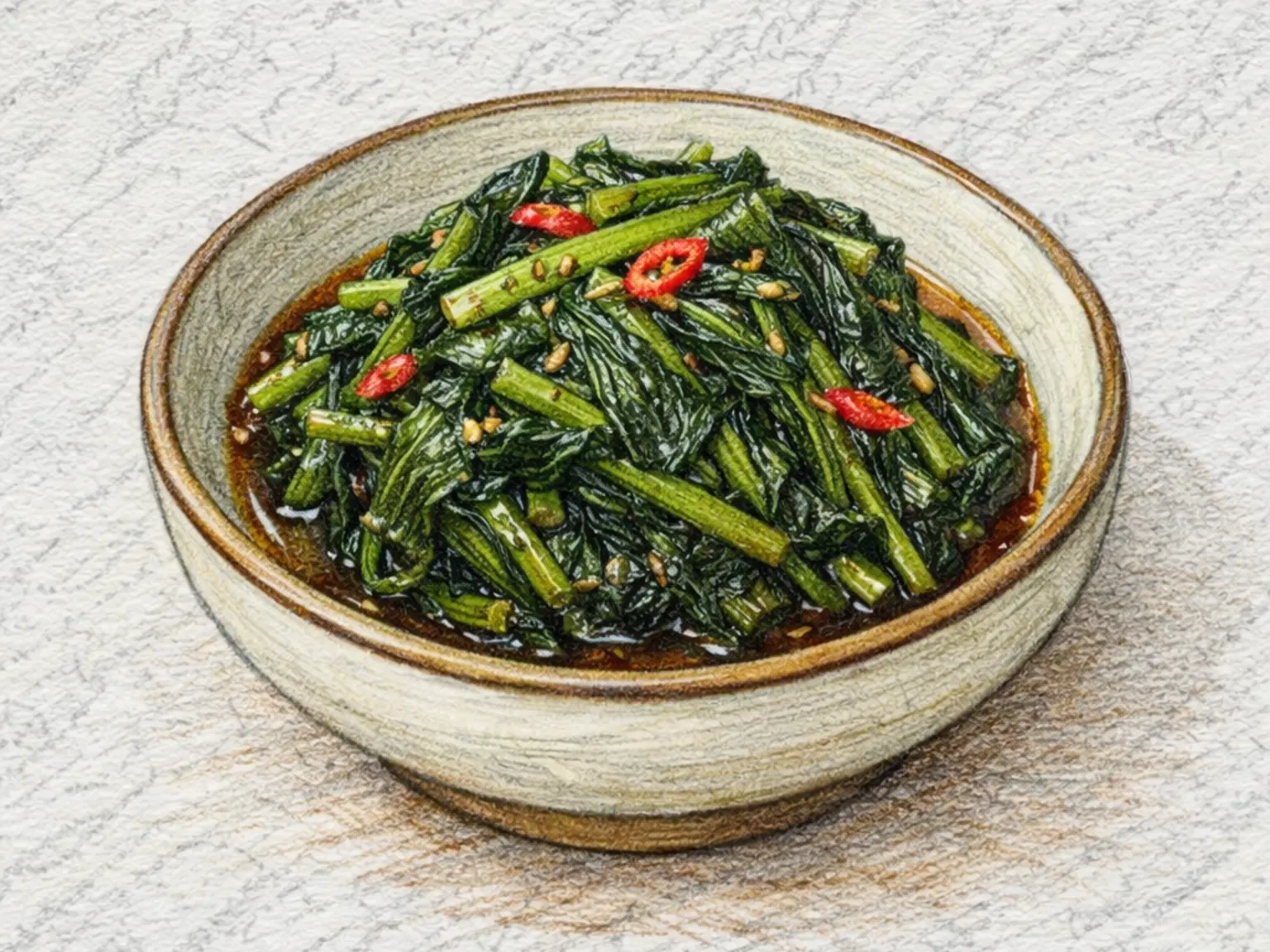
Korean Thistle Greens Pickles
Gondre-jangajji is a pickled banchan made from gondre, a Korean mountain thistle foraged in Gangwon Province each spring. The greens are blanched briefly to soften the fibrous stems before being submerged in a curing liquid of dark soy sauce, brown rice vinegar, rice syrup, minced garlic, and ginger. The blanching step is essential: raw gondre has a toughness that pickling liquid alone cannot fully penetrate, and a short time in boiling water opens the cell structure just enough to allow the marinade to work through without turning the greens limp. Rice syrup wraps the combined salt and acid in a mild sweetness that prevents the sharpness of either from dominating. A cheongyang chili adds a gentle heat at the finish that keeps the overall flavor from reading as one-dimensional. Because the fibrous texture holds the liquid within the grain of the vegetable, the jangajji stays moist and pliable throughout a week or more of refrigerated storage.
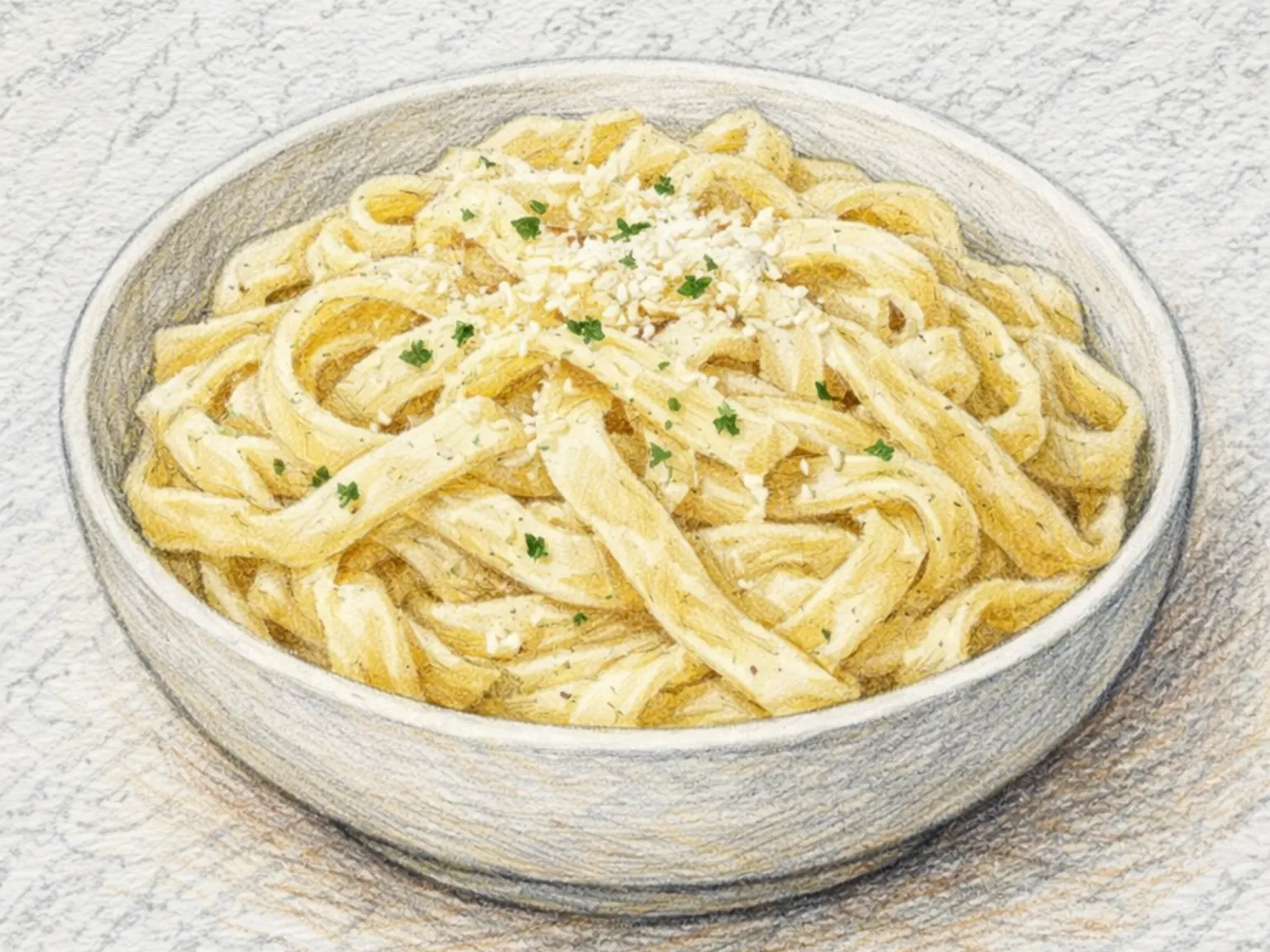
Fettuccine Alfredo
Fettuccine Alfredo is an exercise in simplicity where technique matters more than a long ingredient list. Wide fettuccine noodles are tossed with unsalted butter and finely grated Parmigiano-Reggiano cheese, using starchy pasta water to create a smooth emulsion that clings to every strand. The original Roman recipe contains no cream at all - the silky texture comes from the marriage of melted butter fat, cheese protein, and the starch released by the pasta during cooking. The pan must stay off direct heat while tossing, as excessive temperature breaks the emulsion and turns the sauce grainy and clumped. Speed is essential: the dish should move from pan to plate in under a minute. Generous freshly cracked black pepper provides a sharp counterpoint to the rich, concentrated cheese flavor. Born in Rome in the early twentieth century, this pasta remains one of the most recognizable Italian dishes served worldwide.