🏠 Everyday Recipes
Simple home-cooked meals for any day
1705 recipes. Page 32 of 72
These are the meals you can cook day after day without getting tired of them. Doenjang jjigae, rolled omelet, spicy pork stir-fry - the kind of home-cooked dishes that fill an ordinary day with comfort.
The beauty of everyday cooking is that it relies on common ingredients already in your fridge. No exotic items, no complicated techniques - just straightforward recipes for satisfying home meals.

Meatball Sub
Meatball sub starts by mixing ground beef with breadcrumbs, egg, and minced garlic, shaping the mixture into balls, and browning them in olive oil on all sides. The browned meatballs then simmer in tomato sauce on low heat for about 12 minutes until cooked through. Avoiding overmixing the meat mixture is critical - working it too much tightens the protein strands and produces dense, tough meatballs rather than tender ones. The sauce should be kept slightly thick so it does not immediately soak into the bread and turn it soggy. Warming the sub rolls before filling helps them absorb some sauce while still holding their shape. Mozzarella melted on top under a broiler or with a kitchen torch binds the meatballs and sauce together in every bite.
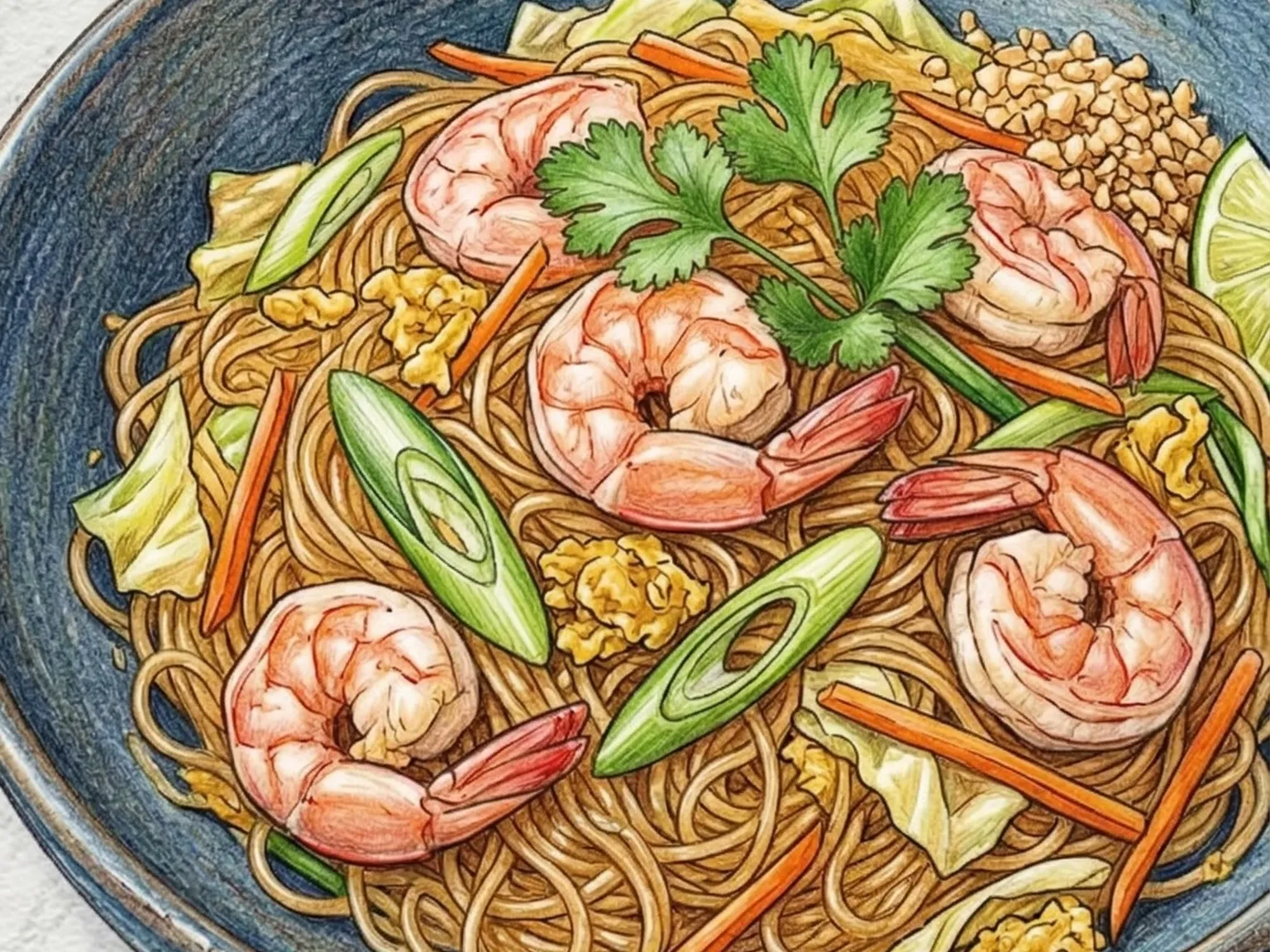
Pad Woon Sen (Thai Stir-Fried Glass Noodles with Shrimp and Egg)
Pad woon sen is a Thai stir-fried glass noodle dish that comes together in minutes. The noodles, made from mung bean starch, turn translucent when soaked and have a springy, slippery texture that absorbs sauce without becoming mushy. Shrimp is cooked first until just pink, then vegetables - typically cabbage and carrot - are tossed in over high heat to keep their crunch. Eggs are scrambled to one side of the wok and folded into the noodles along with soy sauce and oyster sauce. The seasoning is deliberately simple, allowing the natural sweetness of the shrimp and the clean bite of the vegetables to come through.
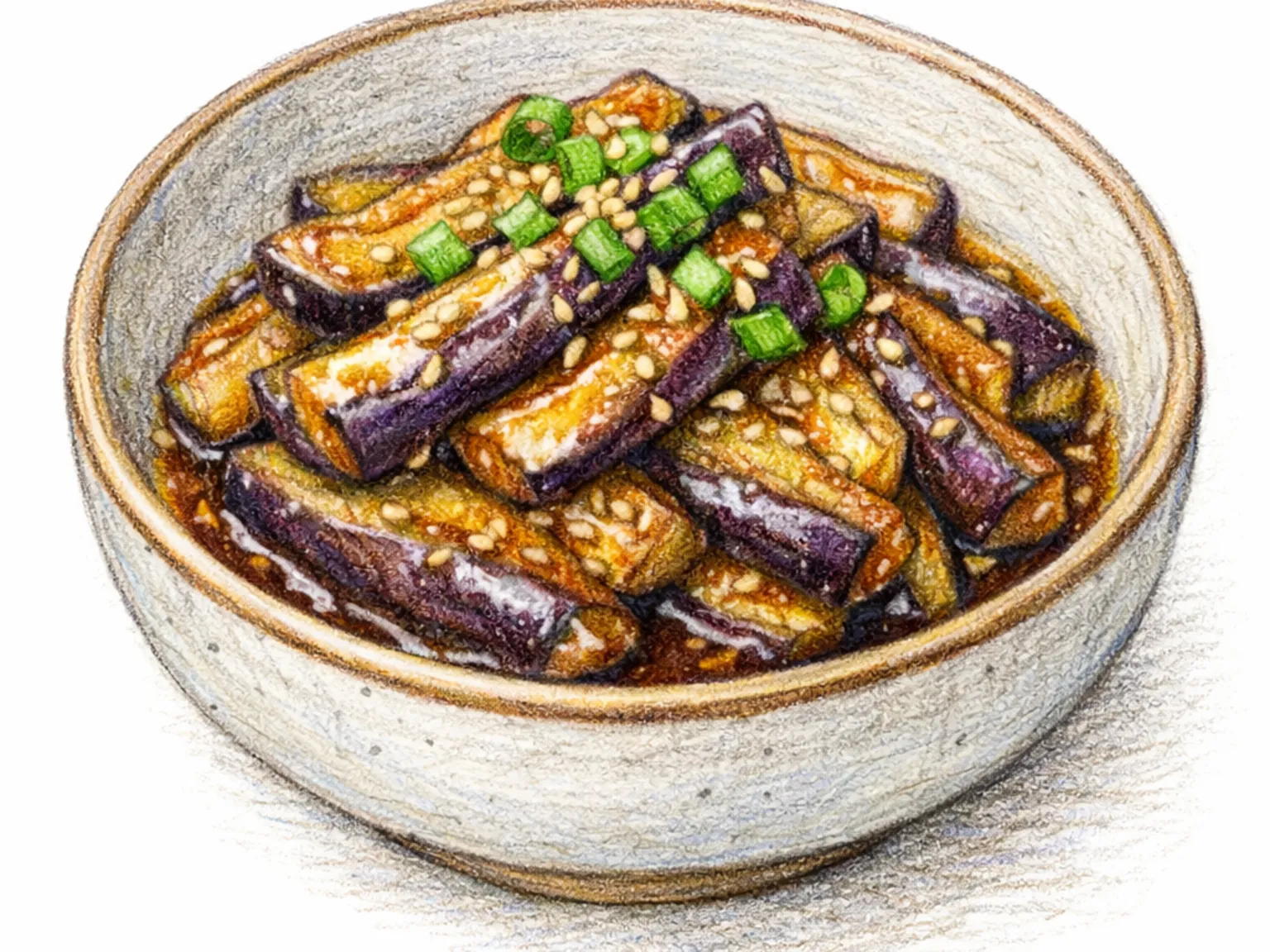
Korean Steamed Eggplant Vinegar Salad
Gaji-chorim-muchim takes eggplant in the opposite direction from bokkeum preparations, which rely on high heat and oil. Here, the eggplant is gently steamed and chilled before being dressed cold with a vinegar-forward sauce. The eggplant is halved lengthwise, scored on the flesh side, and steamed for eight minutes until the interior turns translucent and completely soft. After cooling fully, it is torn by hand along the grain into long strips, exposing a rough, irregular surface that grips the dressing. Soy sauce, rice vinegar, sugar, minced garlic, and gochugaru combine into a bright, tangy-spicy dressing that lifts the eggplant's subtle natural sweetness rather than masking it. Steamed eggplant torn into strips has a silky, almost slippery quality that is entirely distinct from stir-fried or grilled eggplant. The dressing can be made more generous to serve the dish as a refreshing cold salad style. A few drops of sesame oil and a scatter of sesame seeds finish it off with a nutty note. This banchan is especially well suited to Korea's hot and humid summer months.
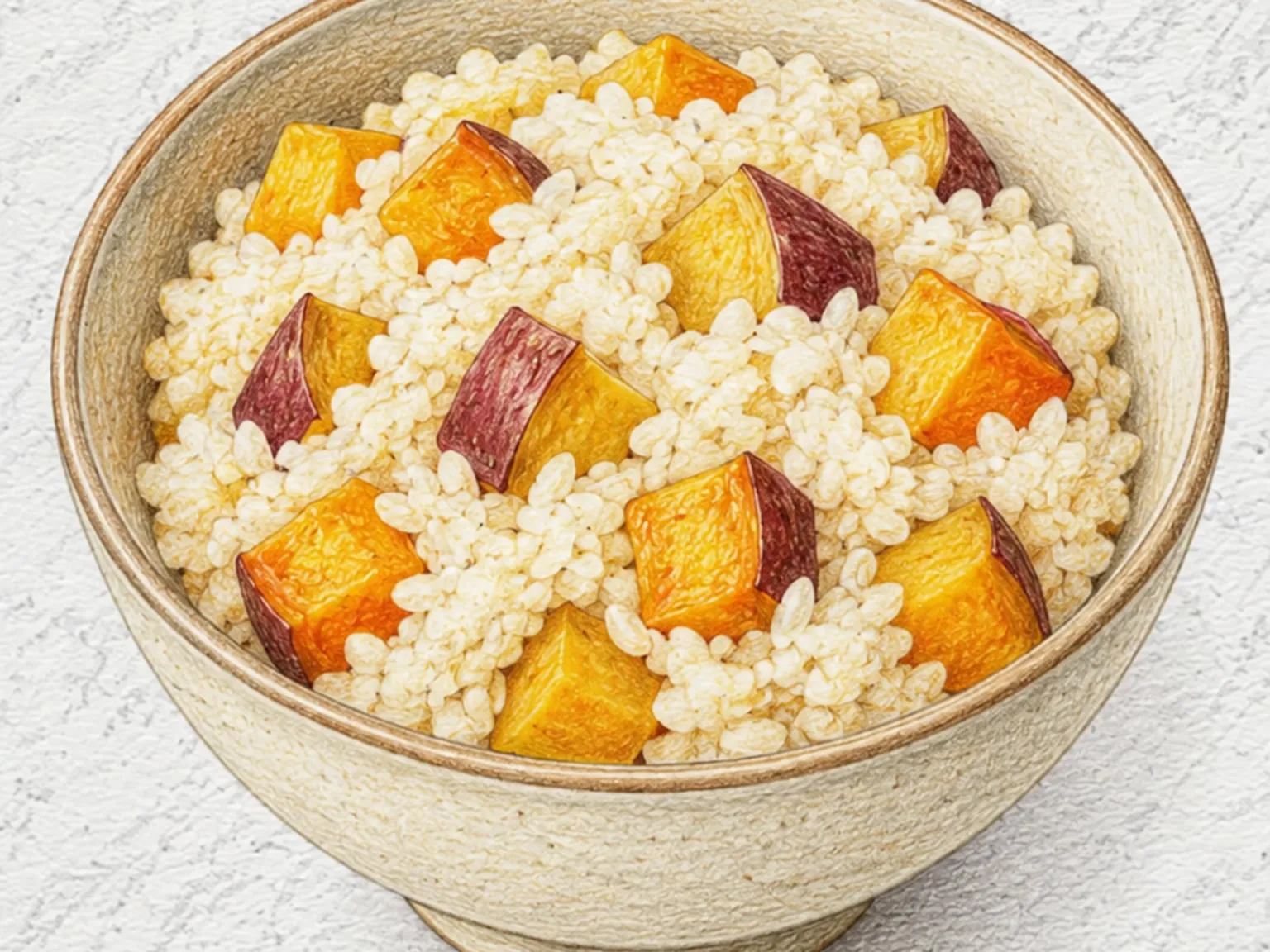
Korean Sweet Potato Rice (Steamed Grain Bowl with Natural Sweetness)
Cubed sweet potato is placed on top of washed rice and cooked together in a single pot. As the rice steams, the sweet potato's natural sugars seep into the grains, lending a gentle sweetness without any added seasoning, and the orange chunks against white rice create an inviting visual contrast. Cutting the sweet potato to roughly 2 cm ensures it cooks through at the same rate as the rice. A small pinch of salt sharpens the sweetness, and pairing the finished bowl with doenjang soup or kimchi provides a satisfying salty counterpoint. The choice of sweet potato variety matters: milbam-goguma, the chestnut-type, gives a denser and more restrained sweetness, while hobak-goguma, the butternut type, produces a softer, moister result with a more pronounced sugary flavor. Either way, goguma-bap requires minimal technique and is a reliable first recipe for anyone learning to cook Korean rice dishes.
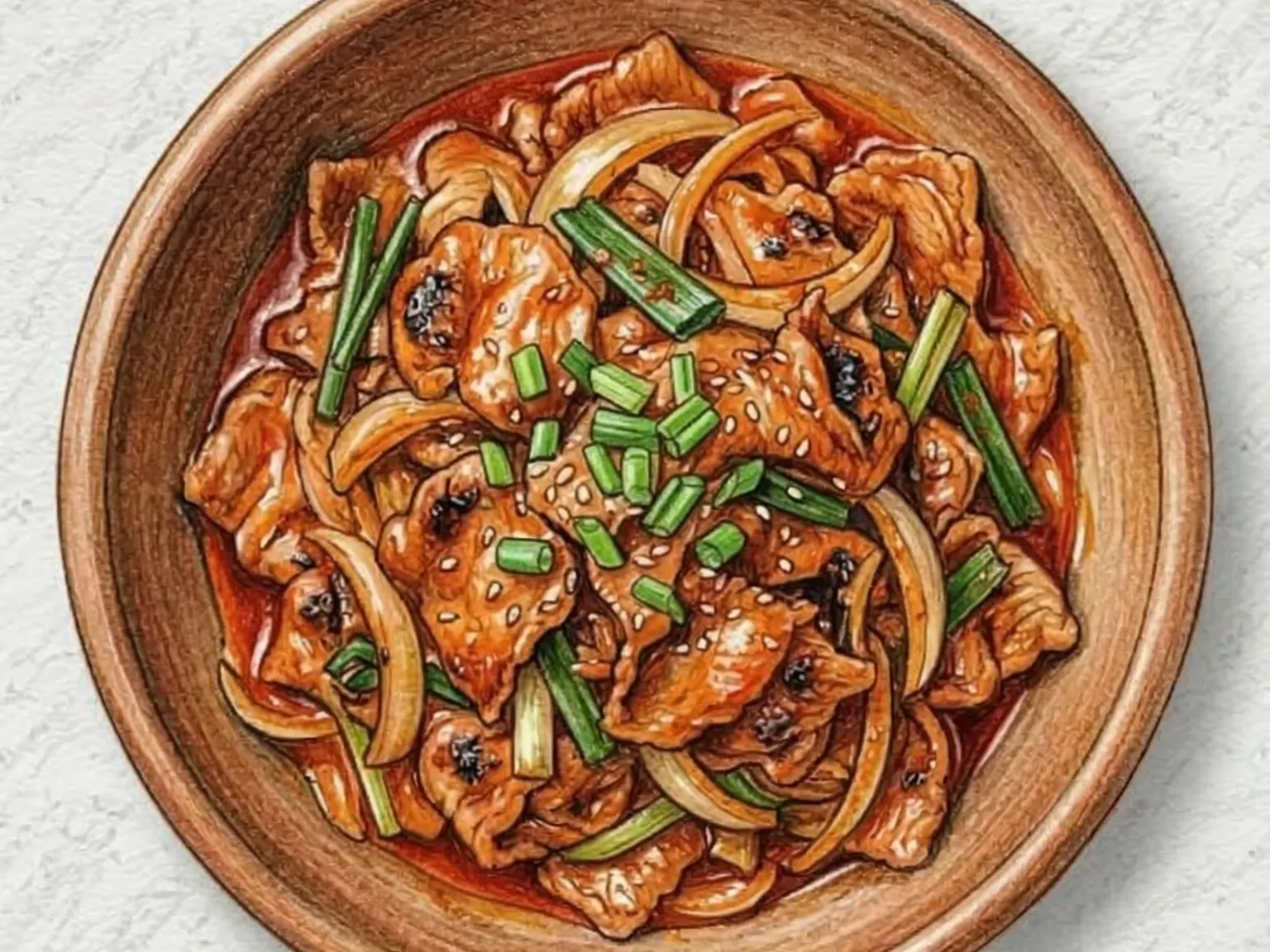
Korean Spicy Pork Duruchigi
Duruchigi is a Korean spicy pork stir-fry made by flash-cooking sliced pork shoulder with onions and scallions in a gochujang-based sauce over high heat. Pork shoulder has a balanced ratio of fat to lean meat, which prevents it from drying out even at the high temperatures required for a proper stir-fry. The intense heat chars the edges of the meat slightly and introduces a smoky wok flavor that deepens the dish beyond what the seasoning alone provides. Gochujang contributes fermented chili heat and a savory, slightly sweet undertone, while added sugar reinforces that sweetness, and scallions provide a sharp, clean finish in the back of the palate. Cooking the onion first to soften before adding the meat controls the amount of liquid released and keeps the sauce from becoming watery. Duruchigi works as a straightforward rice side dish, wrapped in lettuce leaves, or as the protein base for fried rice with the leftovers. It ranks among the most dependable everyday pork dishes in Korean restaurants and home kitchens, and also sees regular use as a late-night snack or drinking table side.

Korean Crispy Kimchi Fried Dumplings
Kimchi gun mandu are pan-fried dumplings filled with finely chopped kimchi, squeezed tofu, ground pork, and green onion seasoned with soy sauce and garlic, shaped into half-moons. The bottoms are first crisped in oil, then water is added and the pan is covered for four minutes to steam the tops, achieving a contrast of crunchy base and moist upper wrapper. The kimchi's acidity and heat permeate the pork fat to create a more assertive umami than plain dumplings, and the tofu smooths out the filling's texture. A splash of vinegar in the soy dipping sauce cuts any greasiness.
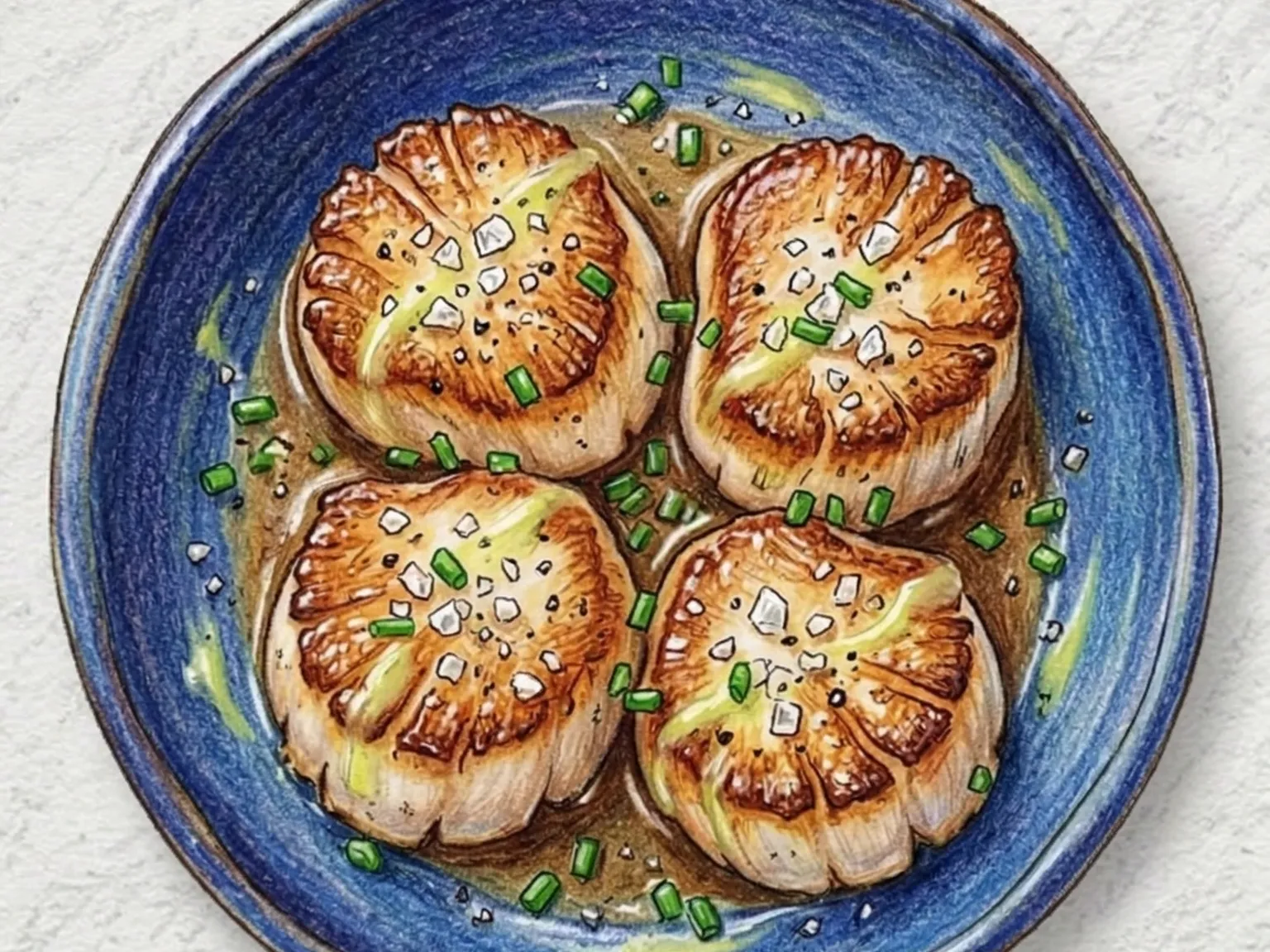
Gwanja Recipe (Korean Yuzu Salt Grilled Scallops)
This gwanja recipe is gwanja yuja-sogeum-gui, a Korean yuzu-salt grilled scallop dish built around dry sea scallops, coarse salt, butter, and a bright yuzu-lemon finish. The scallops must be thoroughly dry because any residual moisture will steam rather than sear, so they are seasoned with coarse salt and black pepper, then seared in olive oil over medium-high heat for ninety seconds per side to build a deep golden-brown crust. Lowering the heat and basting with melted butter coats each scallop in a nutty richness while preserving the bouncy, translucent center that defines a well-cooked scallop. The yuzu-lemon finishing sauce is applied only after the heat is turned off, because cooking would volatilize the citrus oils and flatten the bright, fragrant acidity that is the dish's signature. Each bite delivers a sequence of coarse salt crystals, warm butter, oceanic sweetness, and a clean citrus lift, finished with a visual scatter of chopped chives.
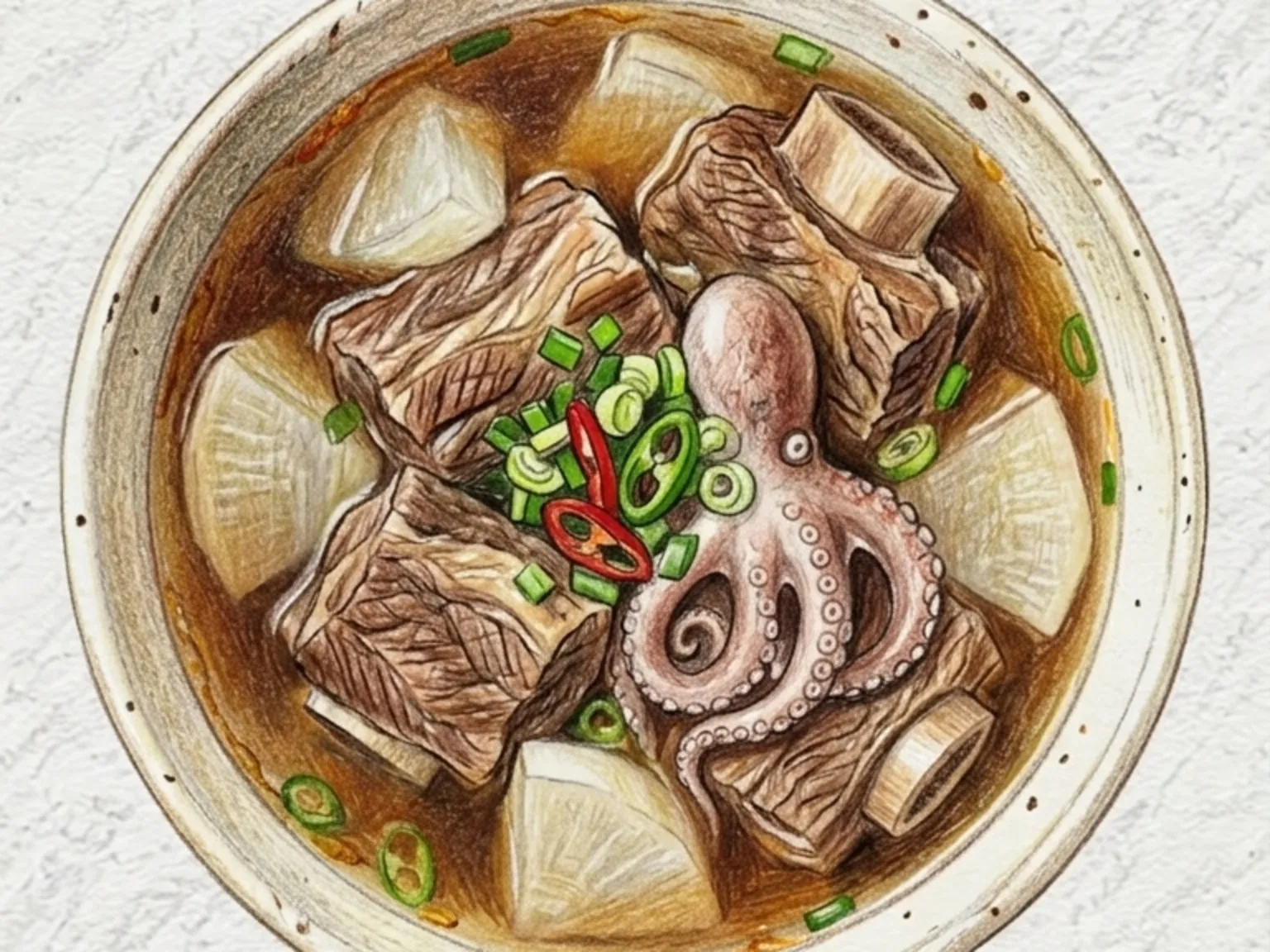
Korean Short Rib and Octopus Soup
Galnak-tang is a Korean restorative soup that combines beef short ribs and fresh octopus in the same pot, producing a broth that carries two distinct umami registers simultaneously. The ribs are simmered first until tender and the initial cooking water is discarded along with the rendered fat, leaving a cleaner base for the second round of simmering. Radish goes in early alongside the ribs, gently sweetening the broth while absorbing some of the beefy richness so that the seafood flavor added later can come through more clearly. Octopus is added only at the end and needs no more than two to three minutes in the hot broth. Any longer and the texture turns rubbery, losing the springy bite that makes octopus worth eating. As the octopus cooks, its juices release into the soup and merge with the beef stock, blending the fatty depth of braised meat with the clean, mineral brightness of the sea. A small amount of gochugaru added near the end gives the broth a mild heat that cuts through the richness without overwhelming either protein. In Korean food culture, this soup belongs to the category of stamina dishes called boyangsik, traditionally sought out during the three hottest days of summer, after illness, or the morning following a night of drinking.
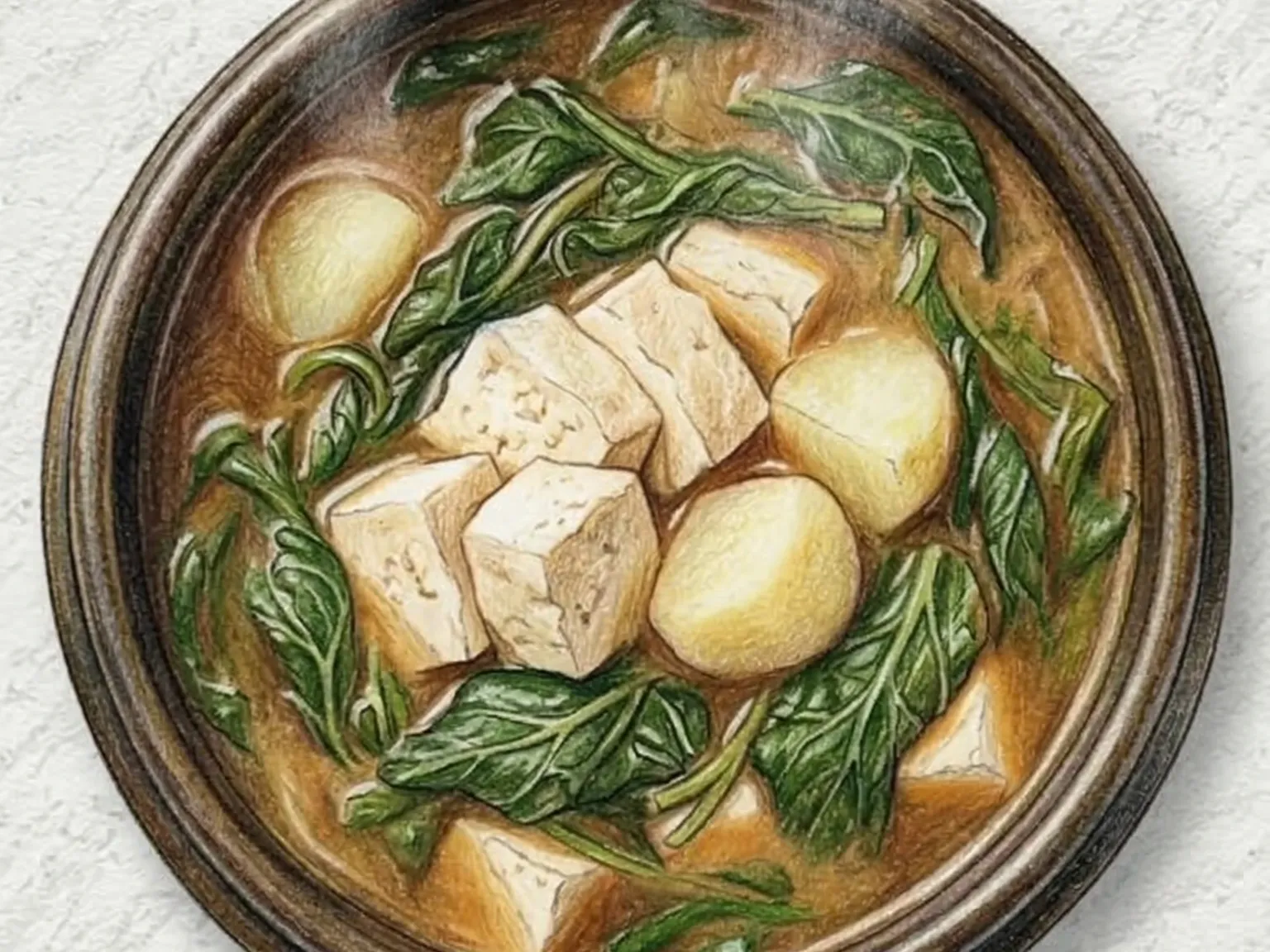
Korean Thistle Herb Soybean Paste Stew
This doenjang jjigae features blanched gondeure, Korean thistle greens that are a prized mountain herb in Gangwon Province. The greens belong to the Korean thistle family and have a mild bitterness alongside a warm, earthy aroma that pairs naturally with the depth of fermented soybean paste. Potato and firm tofu add substance to the anchovy-kelp stock base. The result is a gentle, aromatic stew without aggressive spice, a direct expression of Korean mountain cuisine. When using dried gondeure, soaking it thoroughly in water before blanching is essential to prevent a tough, fibrous texture in the finished stew. Fresh gondeure should be blanched and rinsed in cold water to remove excess bitterness. The key to this jjigae is restraint with the doenjang: using just enough for seasoning, rather than making the fermented paste the dominant flavor, allows the mountain herb's natural scent to come through clearly in every spoonful.
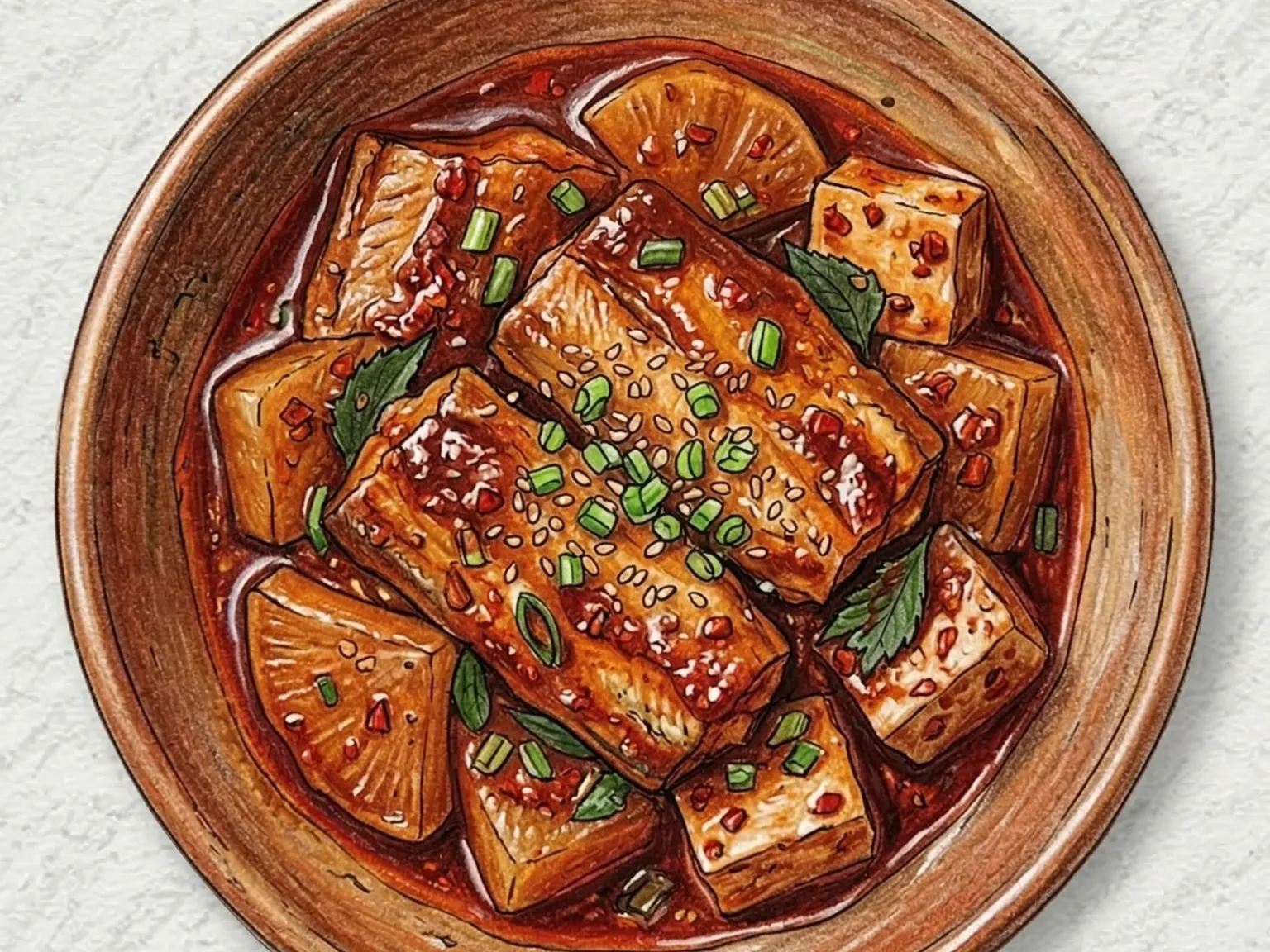
Korean Spicy Braised Semi-Dried Pollock
Kodari-jjim is a Korean braised dish of semi-dried pollock slow-cooked with radish and onion in a gochugaru and soy sauce seasoning. The drying stage removes moisture from the pollock, firming the flesh so it absorbs the seasoning deeply while holding its shape throughout cooking. Radish tempers the chili heat and contributes a natural sweetness, and a small addition of doenjang adds a savory depth that rounds out the sauce. As the liquid reduces to a thick, clinging glaze, the pollock takes on an intensely spiced quality that makes it a natural companion to steamed rice. Mixing the reduced sauce into hot rice is a well-known Korean habit, since every drop carries concentrated spice and brine.
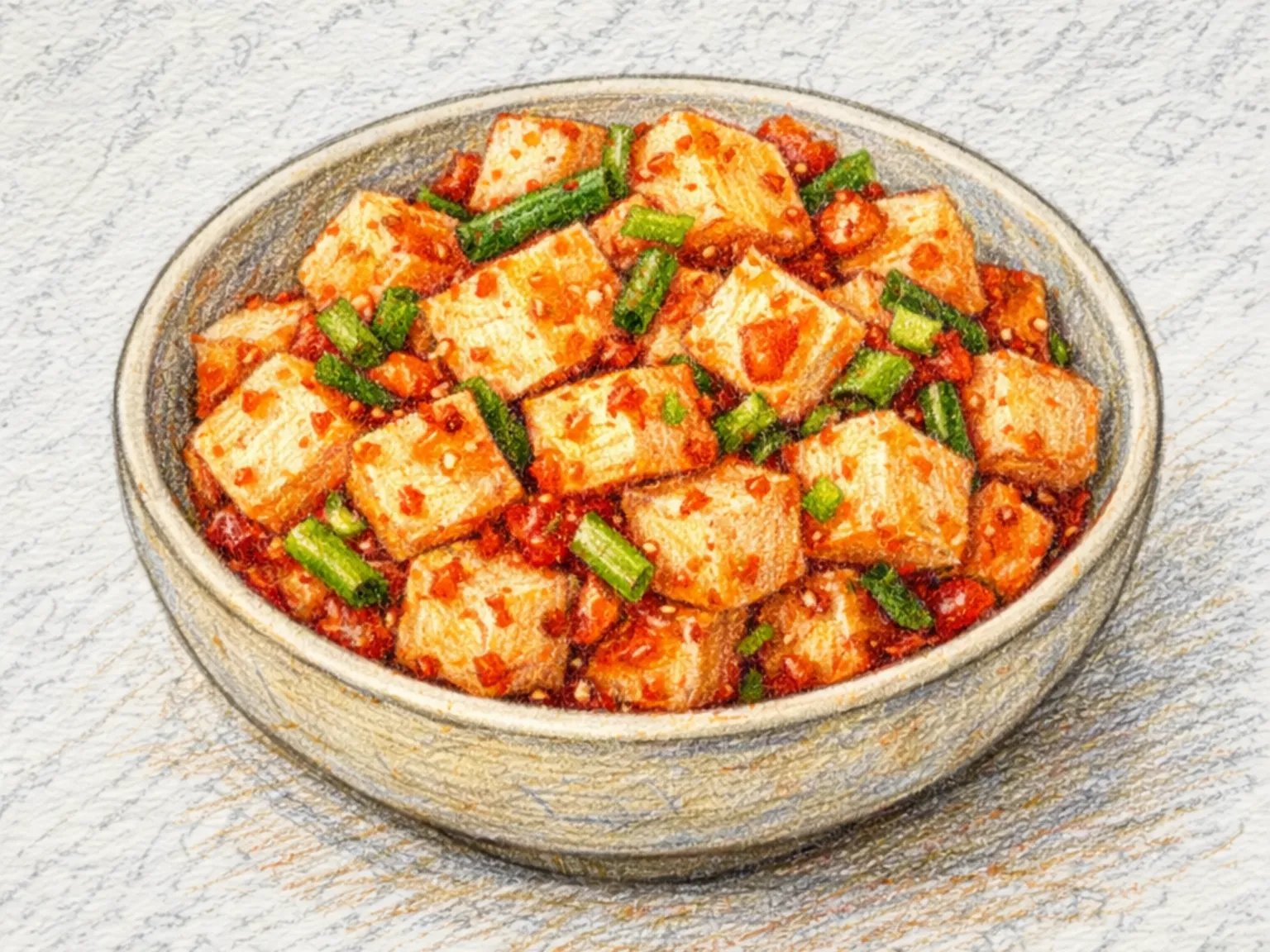
Korean Kohlrabi Kimchi (Cubed Gochugaru Fermented Crisp)
Kolrabi kimchi is made by cutting kohlrabi into 2 cm cubes, brining them in coarse salt, then mixing with gochugaru, fish sauce, minced garlic, and plum syrup before fermentation. Kohlrabi has lower moisture content and a denser cellular structure than Korean radish, which means its crunch holds up through days of fermentation without softening into mush. The brining step draws internal moisture out of the kohlrabi while driving salt evenly into the tissue, and this stage must be completed thoroughly so that seasoning can penetrate all the way through during fermentation. Kohlrabi's natural sweetness creates a clear contrast against the heat of gochugaru, adding textural depth to the flavor profile. Fish sauce builds the savory fermented foundation, while plum syrup contributes both acidity and sweetness to keep the overall seasoning in balance. Eaten immediately after mixing, the kimchi tastes fresh and light, similar to a dressed salad. After one to two days at room temperature or three to four days in the refrigerator, the umami deepens noticeably and the characteristic tang of fermentation emerges. It works well as a substitute for kkakdugi alongside rice and grilled meats.
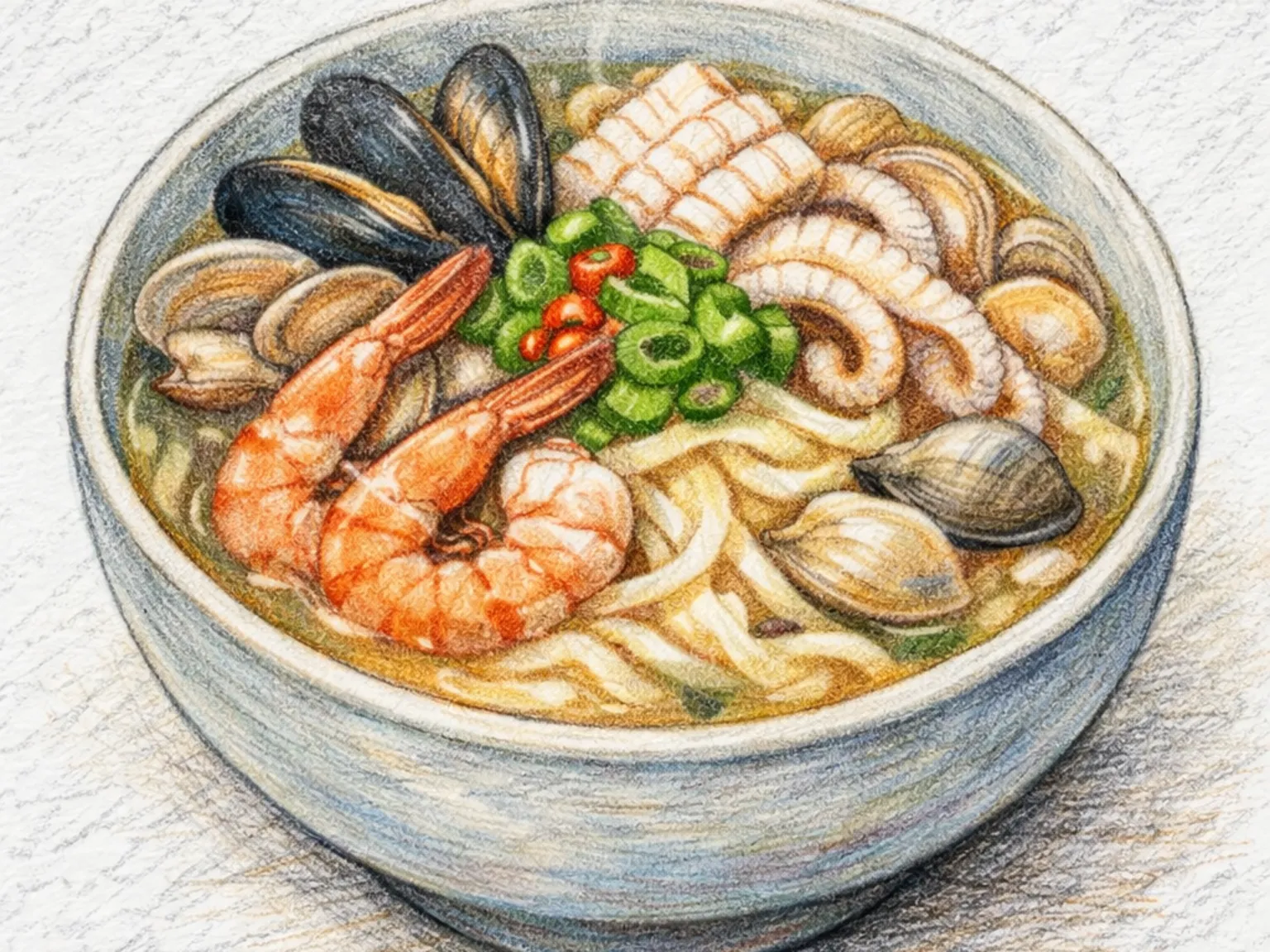
Korean Seafood Knife-Cut Noodle Soup
Haemul kalguksu simmers hand-rolled, knife-cut wheat noodles in a broth built from dried kelp, Manila clams, shrimp, and squid. The kelp forms the stock's clean mineral base, and as the clams open during cooking they release a briny liquor that enriches the broth considerably without any additional seasoning. Sliced zucchini adds a mild sweetness while green onion brings a fresh fragrance to the pot, and soup soy sauce with minced garlic rounds out the flavor into something clean and umami-rich without heaviness. Because kalguksu noodles are rolled thin and cut wide by hand, they release some starch into the broth as they cook, giving the soup a subtle natural body. The wide, flat noodles have a distinctive chewy texture and soak up the seafood broth with every bite, so that lifting a chopstick-full of noodle and clam delivers a concentrated taste of the sea in a single mouthful.
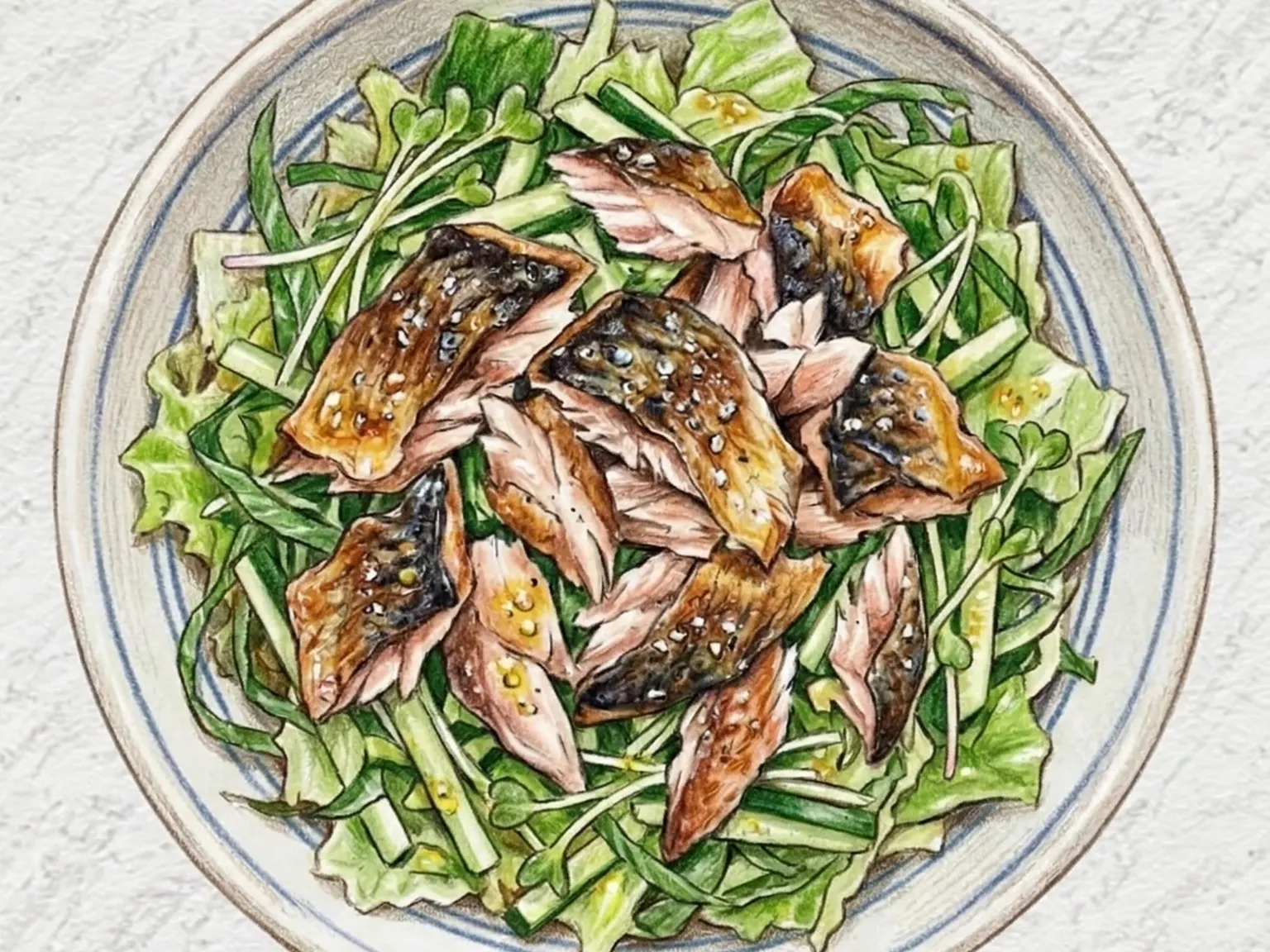
Grilled Mackerel Perilla Salad
Grilled mackerel perilla salad starts by salting mackerel fillets for five minutes, then patting them completely dry before setting them skin-side down in a hot pan. The drying step draws surface moisture out of the fish so the skin crisps sharply in the pan rather than steaming, and the brief salt also damps down the mackerel's characteristic fishiness. Four minutes skin-side down followed by two minutes on the flesh side leaves the exterior with a firm, golden crust while the interior stays moist and just cooked through. Once off the heat the fish is broken into irregular pieces and scattered over a bed of romaine, thinly sliced perilla leaves, cucumber batons, and radish sprouts. A dressing of soy sauce, yuzu marmalade, and sesame oil brings the whole dish together: the aromatic acidity of yuzu cuts cleanly through the oily richness of mackerel in a way that a plain rice vinegar dressing cannot. Cutting perilla into thin ribbons rather than tearing it distributes the herb's peppery, anise-like fragrance evenly across every forkful so no bite is without it. The contrast of warm fish against cold vegetables and crisp greens makes each serving feel alive rather than flat.
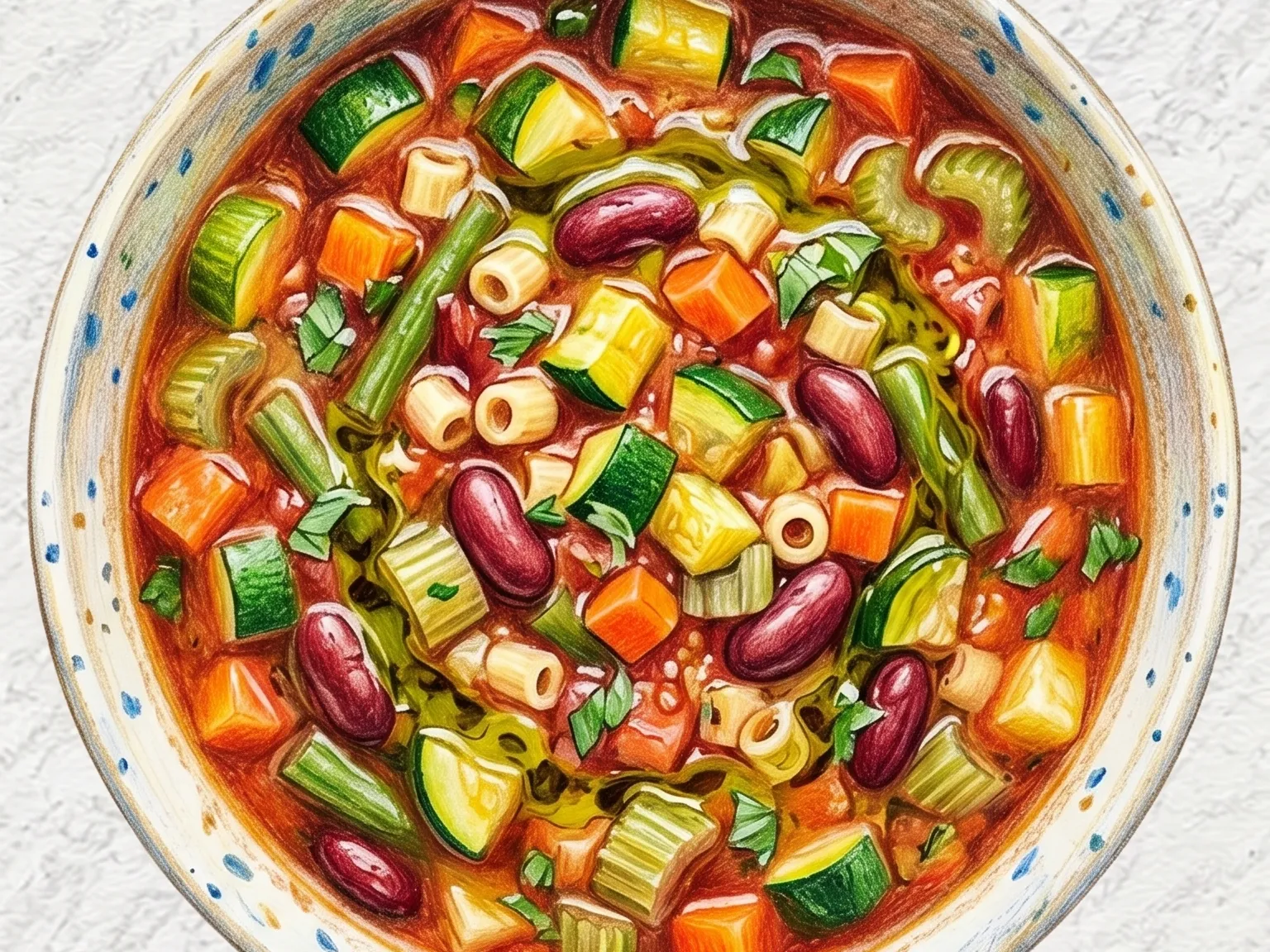
Minestrone
Minestrone is an Italian home-style soup that sautees onion, carrot, celery, and zucchini in olive oil, then simmers them with crushed tomatoes and vegetable stock before adding kidney beans and short pasta. Its greatest strength is flexibility - virtually any leftover vegetable works, and there is no single correct combination. The beans add protein and body, while the tomato's acidity forms the backbone of the broth. Cooking the pasta directly in the soup releases starch that naturally thickens the liquid. Finishing with fresh basil and a drizzle of olive oil preserves the herb's fragrance. Minestrone improves overnight as the vegetable flavors continue to meld into the broth, making it an ideal make-ahead meal.
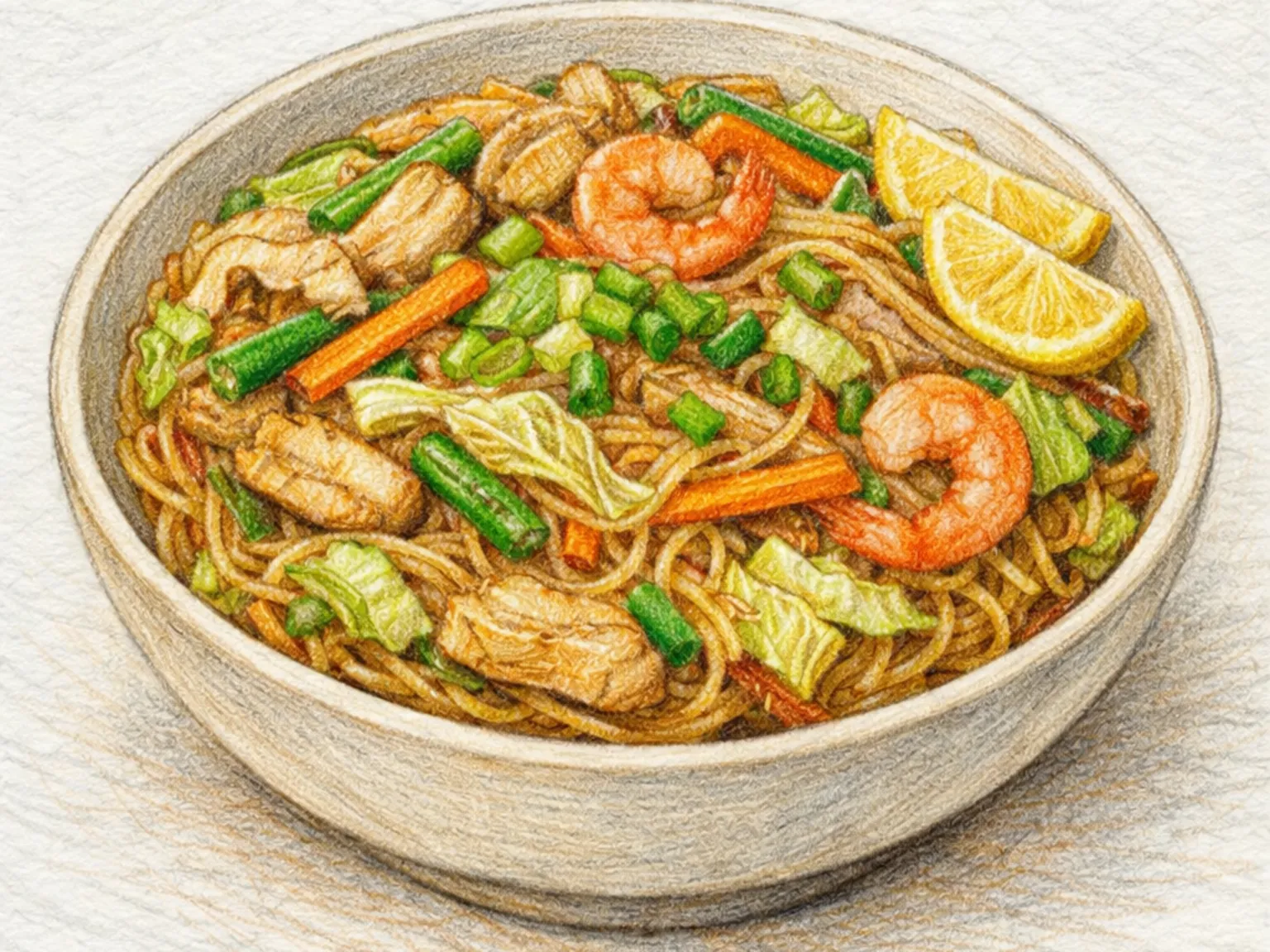
Pancit Bihon (Filipino Stir-Fried Rice Vermicelli with Chicken)
Pancit bihon is the most widely eaten noodle dish in the Philippines, made with thin rice vermicelli stir-fried with meat, vegetables, and a savory soy-fish sauce seasoning. It holds a special place in Filipino culture as a celebration dish - no birthday party is complete without a large platter, symbolizing long life and good fortune. The technique involves boiling chicken to create a broth, then using that broth to cook the noodles in the wok so every strand absorbs savory depth. Shredded cabbage and julienned carrots provide crunch, while a squeeze of calamansi brightens the dish with a tart, floral acidity.
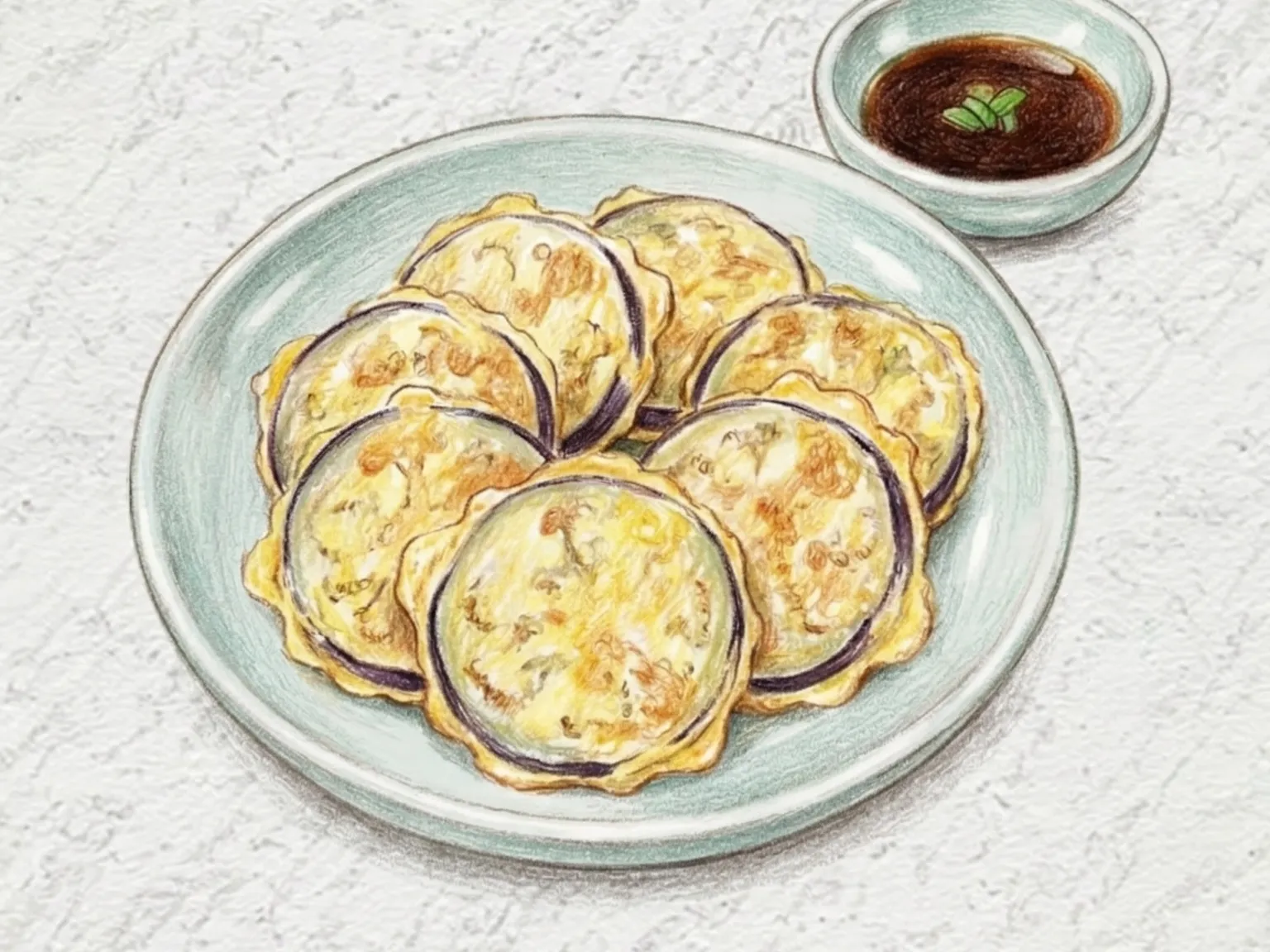
Korean Eggplant Pancakes (Egg-Battered Pan-Fried Eggplant)
Gaji-jeon belongs to the Korean jeon tradition of vegetables dipped in egg wash and pan-fried in oil, a technique integral to ancestral rites and holiday tables. Eggplant is cut into rounds about 7mm thick, thin enough to cook all the way through but thick enough to keep a soft, yielding center. A light dusting of flour before the egg wash is necessary for the batter to adhere and stay intact in the pan. As the egg coating sets into a golden, lacy crust over the heat, the eggplant inside steams in its own moisture until it collapses into a custardy, almost dissolving texture. The appeal of this jeon lies entirely in the contrast between the crisp, faintly eggy exterior and the creamy interior that gives way with almost no resistance. Dipping each piece in a simple soy and vinegar sauce cuts through the richness of the egg crust and highlights the eggplant's subtle sweetness. Korean families commonly fry gaji-jeon alongside hobak-jeon and other vegetable jeon for Chuseok. It can be fried the day before and held at room temperature without the flavor deteriorating significantly.
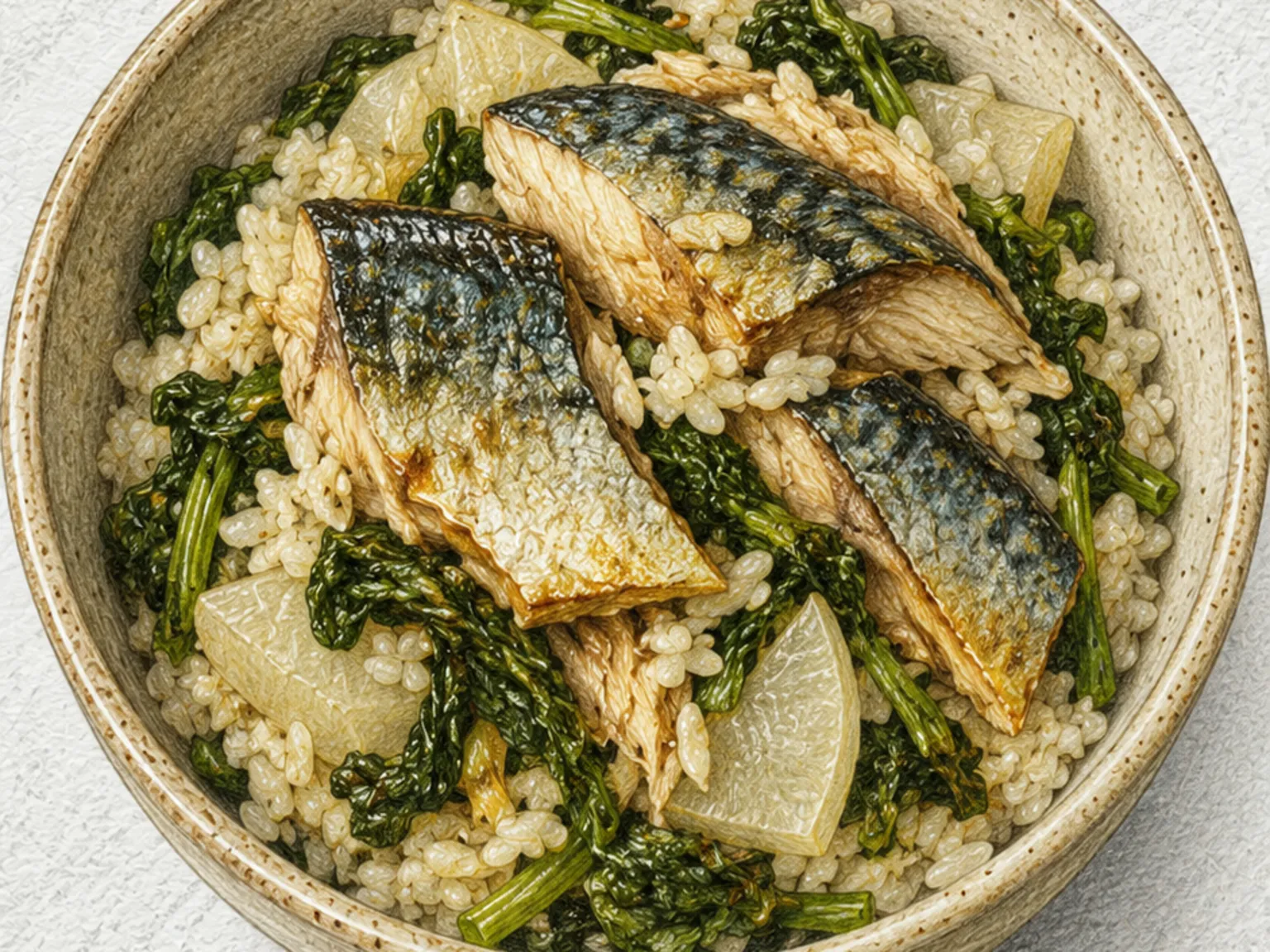
Korean Thistle and Mackerel Pot Rice
Gondre mackerel sotbap begins by stir-frying thinly sliced radish in sesame oil to build a savory base, then soaked rice and squeezed gondre thistle greens are added before a mackerel fillet marinated in cooking wine and ginger juice is placed skin-side up on top. The pot is covered and cooked over low heat for fourteen minutes, followed by five minutes of resting off the heat. During that resting period, the earthy, slightly smoky aroma of gondre and the concentrated umami of the mackerel seep into each grain of rice without further stirring. Keeping the fish skin-side up protects the flesh from breaking apart during cooking and prevents the pot from becoming cloudy with loose pieces. The radish layer at the bottom absorbs moisture and guards against sticking while contributing its own mild sweetness to the rice underneath. Before eating, a drizzle of soy sauce is poured over the opened pot and the contents are tossed together lightly, bringing the mountain-foraged greens and the sea fish into a unified, quietly complex bowl. The scorched rice crust that forms on the bottom of the pot is steeped in hot water to make nurungji tea.
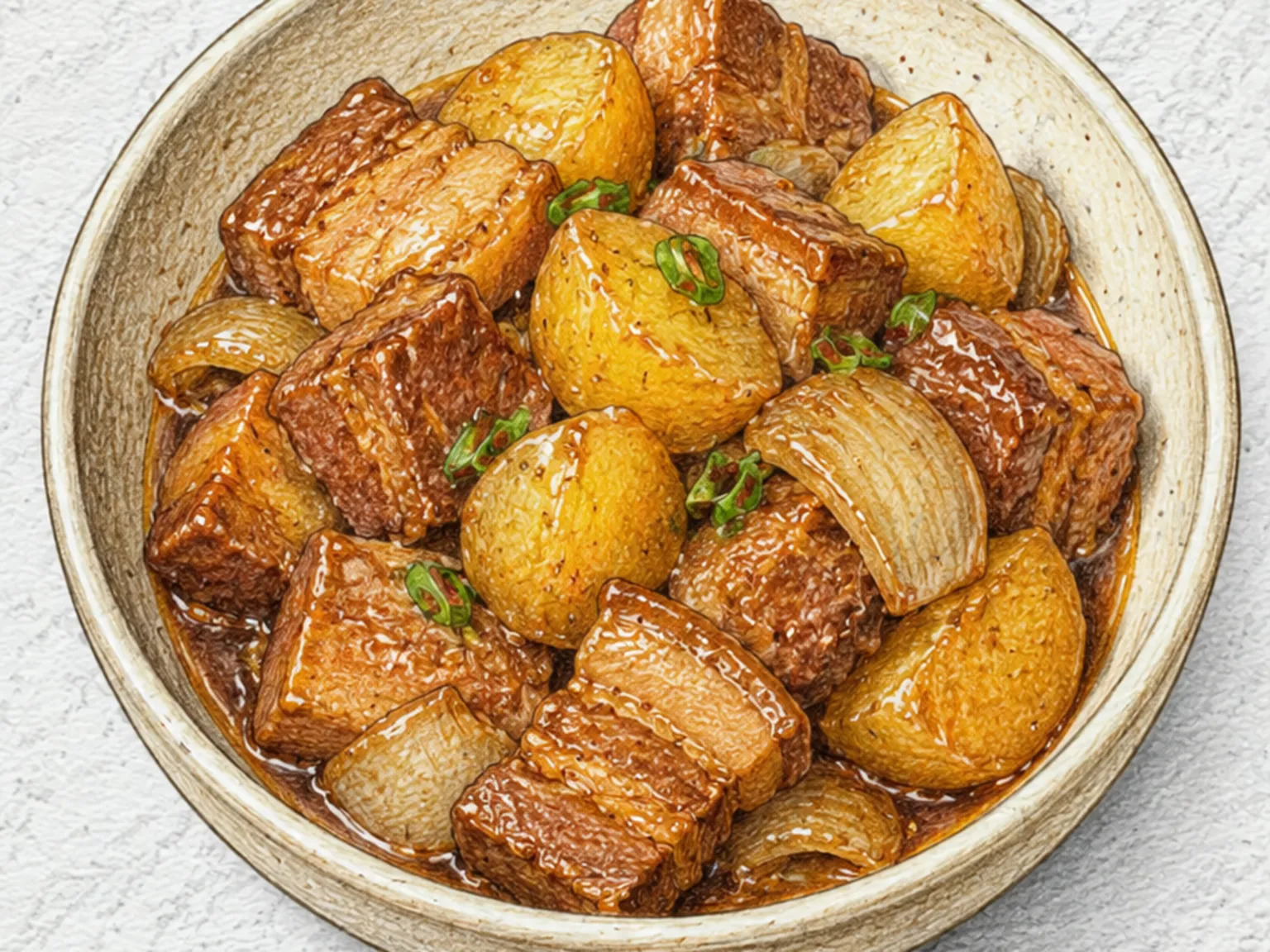
Korean Soy-Braised Pork and Potatoes
Dwaejigogi-gamja-jorim is a Korean braised side dish of pork shoulder and potatoes simmered together in a soy-based seasoning until the liquid reduces to a thick glaze. The pork is browned first in a hot pot to develop a seared surface, then water, soy sauce, sugar, garlic, and gochugaru are added and the whole pot is brought to a simmer. As the liquid reduces, the pork releases its fat and juices into the broth, enriching the sauce. The potatoes cook through in this liquid, drawing in the seasoning and emerging with a glossy, salty-sweet coating on the outside and a fluffy, starchy interior. Onion softens and releases its natural sweetness during cooking, moderating the saltiness of the soy base. The dish is finished when the liquid has reduced to just enough to coat the ingredients. Served with rice, the potatoes and braising liquid together function almost as a sauce. Protein and starch cooked together in a single pot make this a practical, satisfying meal.
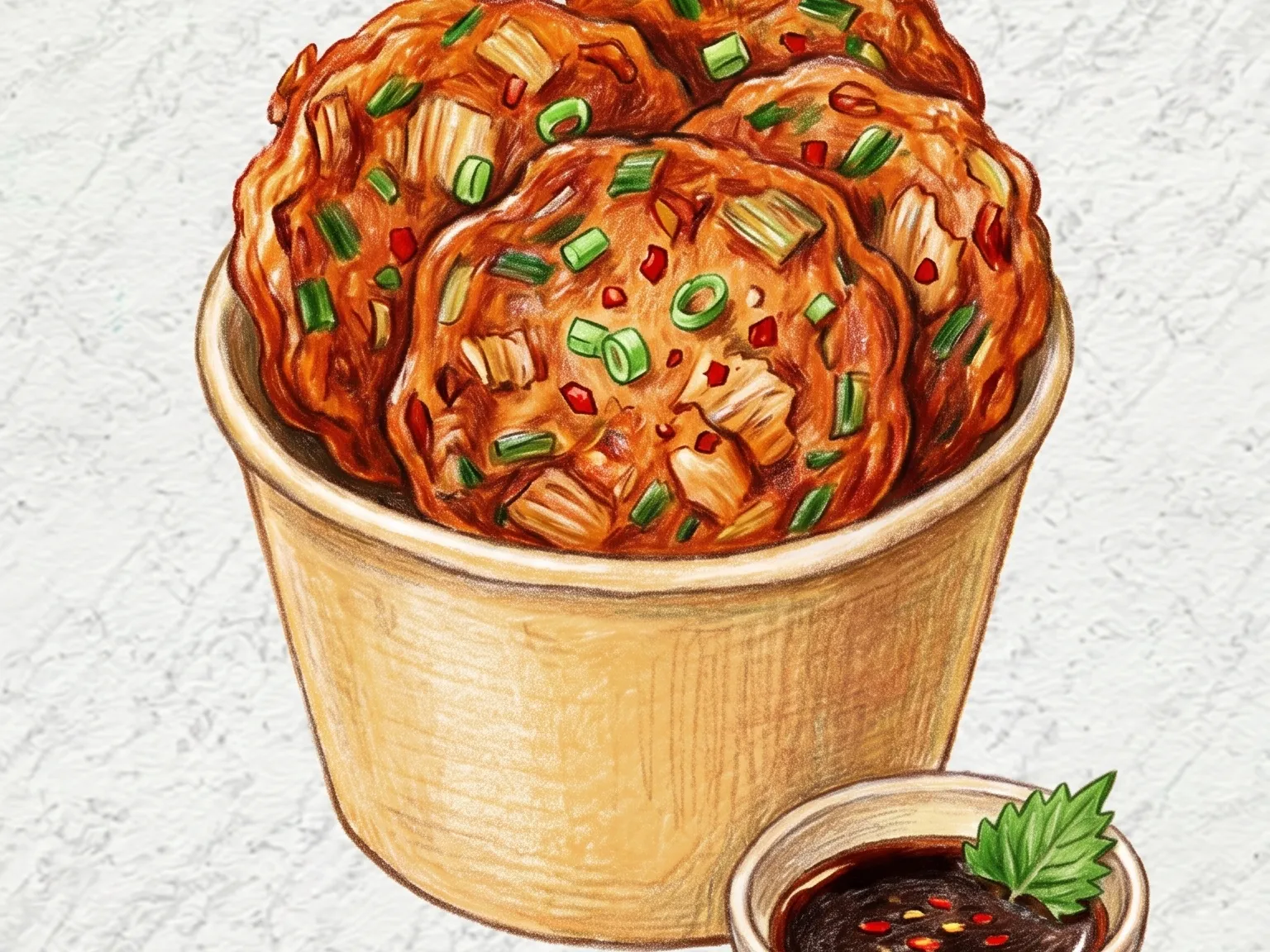
Korean Kimchi Jeon Cup (Kimchi Pancake Cups)
Kimchi jeon cups are small Korean pancakes made from a batter of pancake mix, water, kimchi brine, finely chopped aged kimchi, green onion, and Cheongyang chili, pan-fried into rounds and served standing upright in paper cups. Adding kimchi brine directly to the batter is the key step that separates these from a standard kimchi pancake: the fermented liquid spreads its salt and umami through every part of the batter, so the flavor is more intense and consistent than when kimchi is simply folded into a neutral base. A generous amount of oil in the pan and medium heat together crisp the edges into a fried shell while the center stays slightly soft and chewy. The Cheongyang chili adds a sharp, clean heat on top of the kimchi acidity, keeping the flavor lively. A thicker batter consistency than normal pancakes is necessary for this format: thin batter flops and collapses once stood upright in a cup, while a stiffer mix holds the round shape without bending. The hand-held cup format references pojangmacha culture, the covered street-stall tradition, and the pancakes are typically dipped in soy sauce or a vinegar-gochujang sauce.
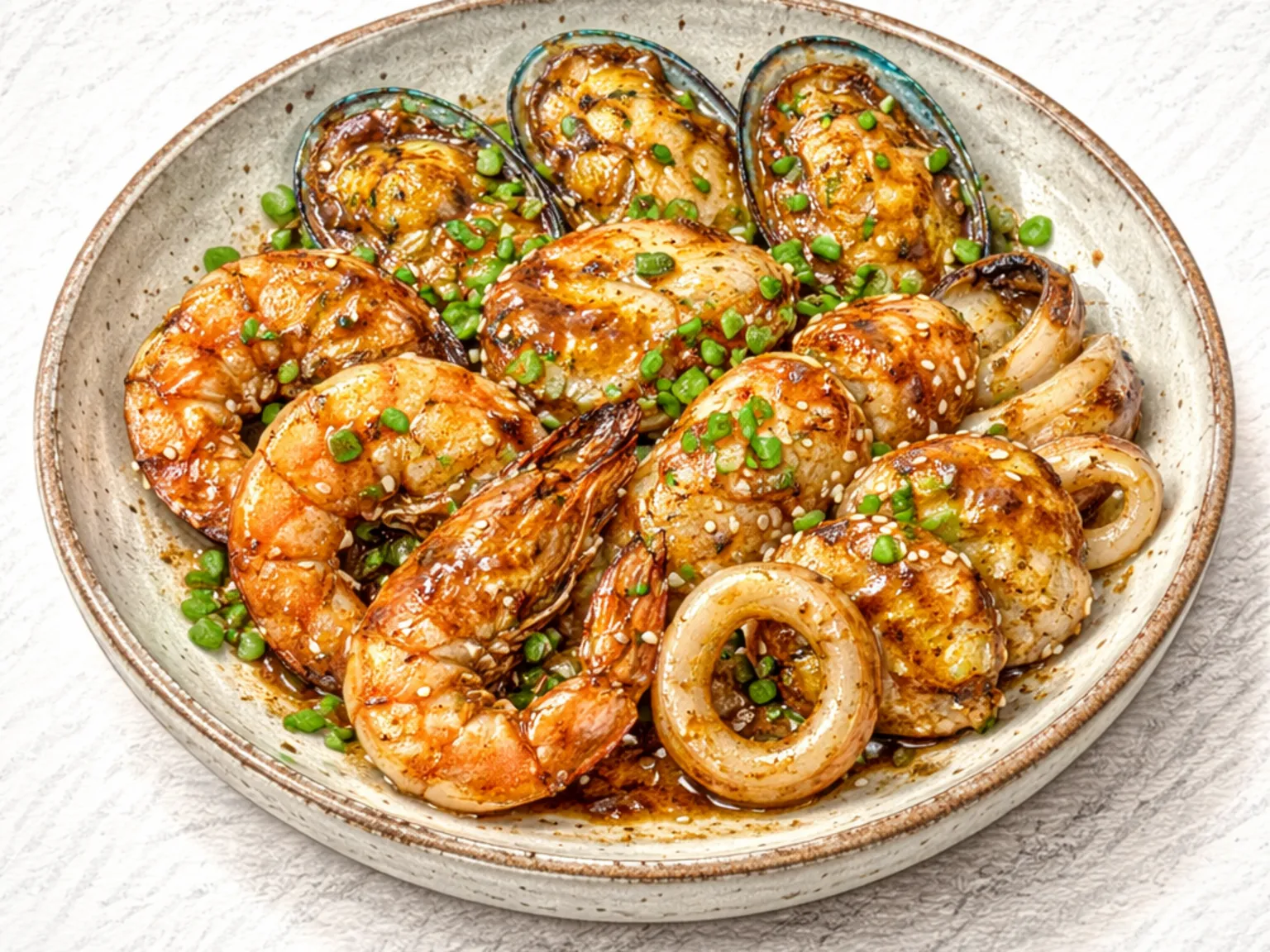
Korean Seafood with Doenjang Sauce Grill
Haemul doenjang-gui is a Korean grilled seafood dish in which shrimp and squid are brushed with a paste of doenjang, a measured amount of gochujang, minced garlic, sesame oil, and sugar before being grilled or pan-fried until the coating caramelizes. The fermented soybean paste contributes a deep, earthy umami that layers over the natural brine of the seafood, producing a complexity that neither ingredient could achieve alone. The gochujang serves as a supporting element rather than a dominant one, providing a quiet background heat that amplifies the doenjang without overpowering it. Sugar in the paste is non-negotiable: without it, the protein-dense doenjang scorches on the grill before caramelization can develop. The dish is finished when the sauce darkens to a mahogany brown and releases a nutty, fragrant aroma; hold the heat too long past that point and a bitter char begins to overtake the flavor. It functions well as a side dish with rice or as a grilled snack alongside drinks.
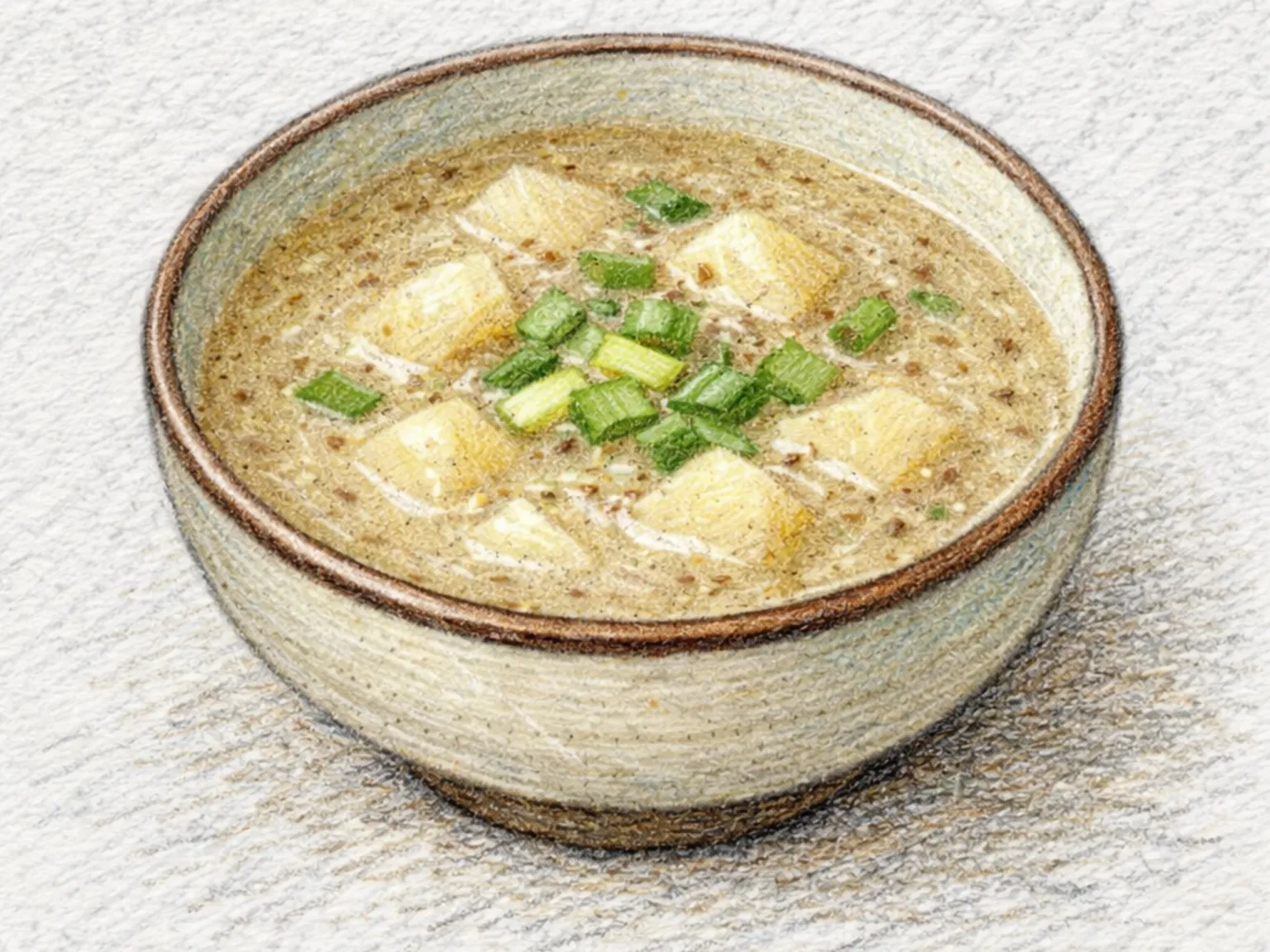
Korean Potato Perilla Seed Soup
Gamja-deulkkae-guk is a Korean home soup of potatoes and ground perilla seed simmered in anchovy stock. The potatoes go in first and cook until they begin to fall apart, releasing their starch into the liquid and giving the broth a natural, gentle thickness. Ground perilla seed is stirred in toward the end of cooking, turning the clear stock opaque and white and filling the pot with a toasty, earthy fragrance that is distinctive to perilla. The flavor sits in its own space: it has none of the fermented depth of doenjang soup and none of the oceanic quality of miyeok-guk, but the perilla leaves a long, nutty finish that builds with each spoonful rather than fading immediately. Soup soy sauce brings the seasoning together, and onion and green onion laid in at the start provide a background sweetness that keeps the broth from tasting flat. The texture is thick and warming without being heavy or greasy. This is a soup that rarely appears on restaurant menus but comes up frequently on home dinner tables during the cold months, the kind of everyday dish that fits naturally into a simple meal.
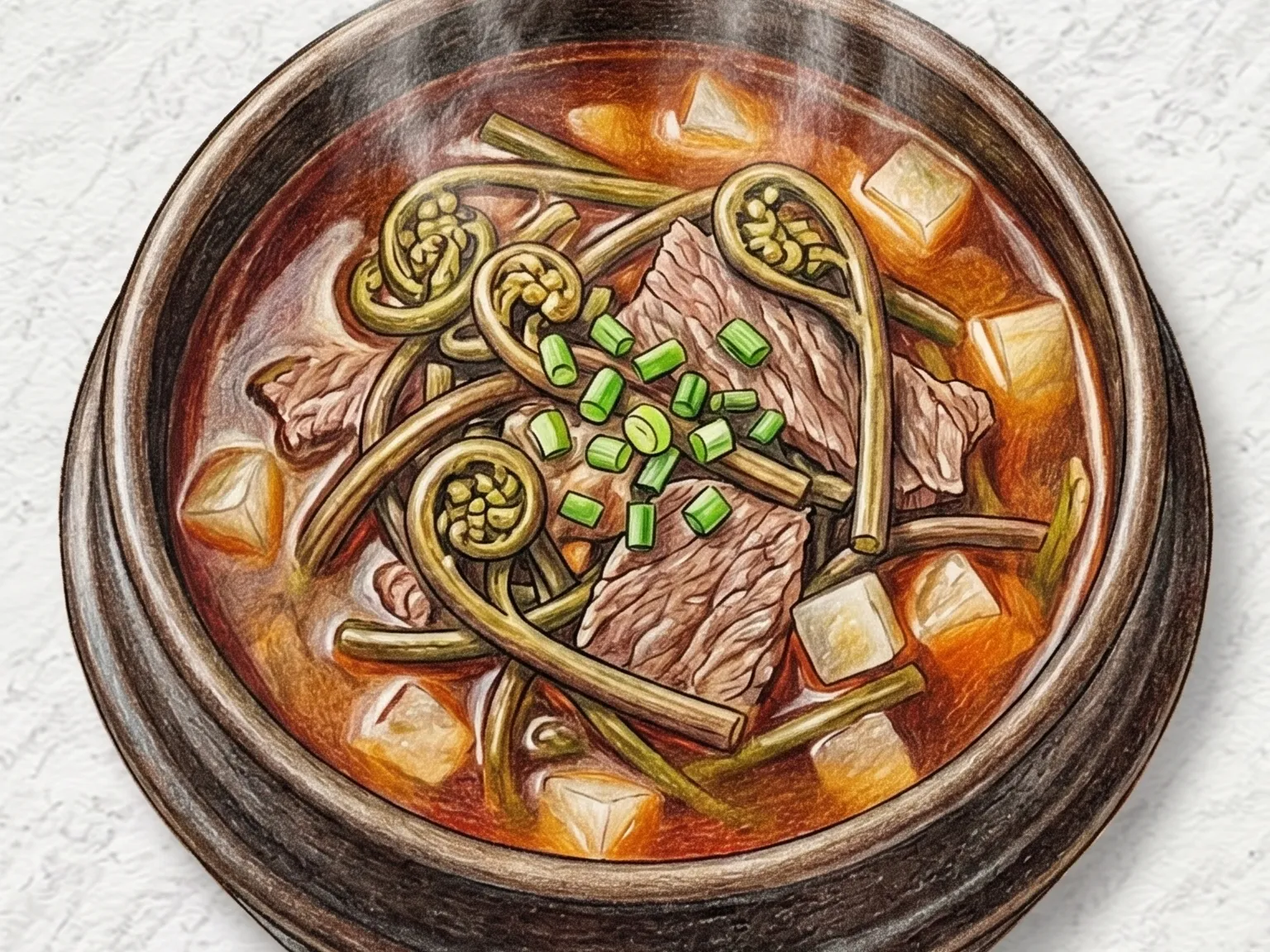
Korean Bracken Fern and Beef Stew
Gosari-soegogi-jjigae is a Korean stew of parboiled bracken fern and beef brisket simmered together in a clear, gochugaru-seasoned broth. Bracken has a distinctly springy yet tender texture once fully rehydrated, and it absorbs the beefy broth deeply, carrying the earthy, herbal notes of the fern through each piece. Korean radish adds a clean, slightly sweet dimension to the broth, while soup soy sauce and gochugaru together build depth and a moderate heat that defines the stew's character. This stew is closely associated with Korean ceremonial cooking, appearing regularly at holiday tables and ancestral rites where its grounding flavors are particularly valued. Bracken must be thoroughly boiled and soaked in cold water to remove natural toxins and soften the texture before it can be used; brisket should be soaked to draw out the blood before cutting so the broth stays clear and does not turn murky during cooking.
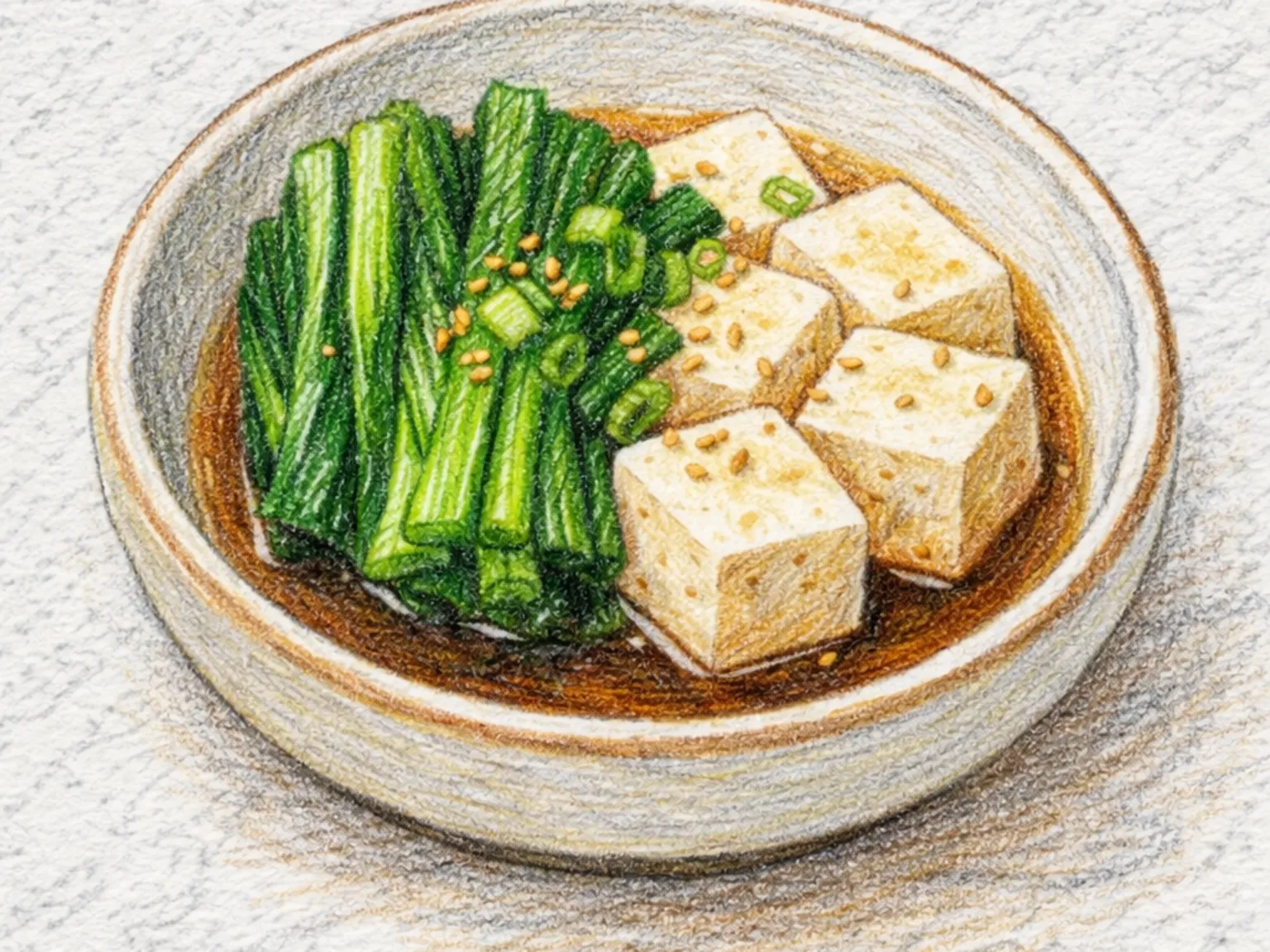
Steamed Komatsuna and Tofu
Komatsuna mushi is a Japanese steamed dish of mustard spinach and tofu, finished with a poured dashi-soy sauce. Komatsuna has less bitterness than regular spinach and keeps a firm bite after steaming, which stands in textural contrast to the soft tofu beneath it. The sauce is made from kombu and katsuobushi dashi seasoned with soy sauce and salt alone, so there is nothing artificial in the flavor and each ingredient comes through cleanly. No oil is used anywhere in the preparation, making this one of the lighter dishes in a multi-course Japanese home meal, where it commonly appears alongside several other small plates. A small amount of bonito flakes laid over the tofu at the end adds fragrance and gives the dish a tidy, composed appearance.
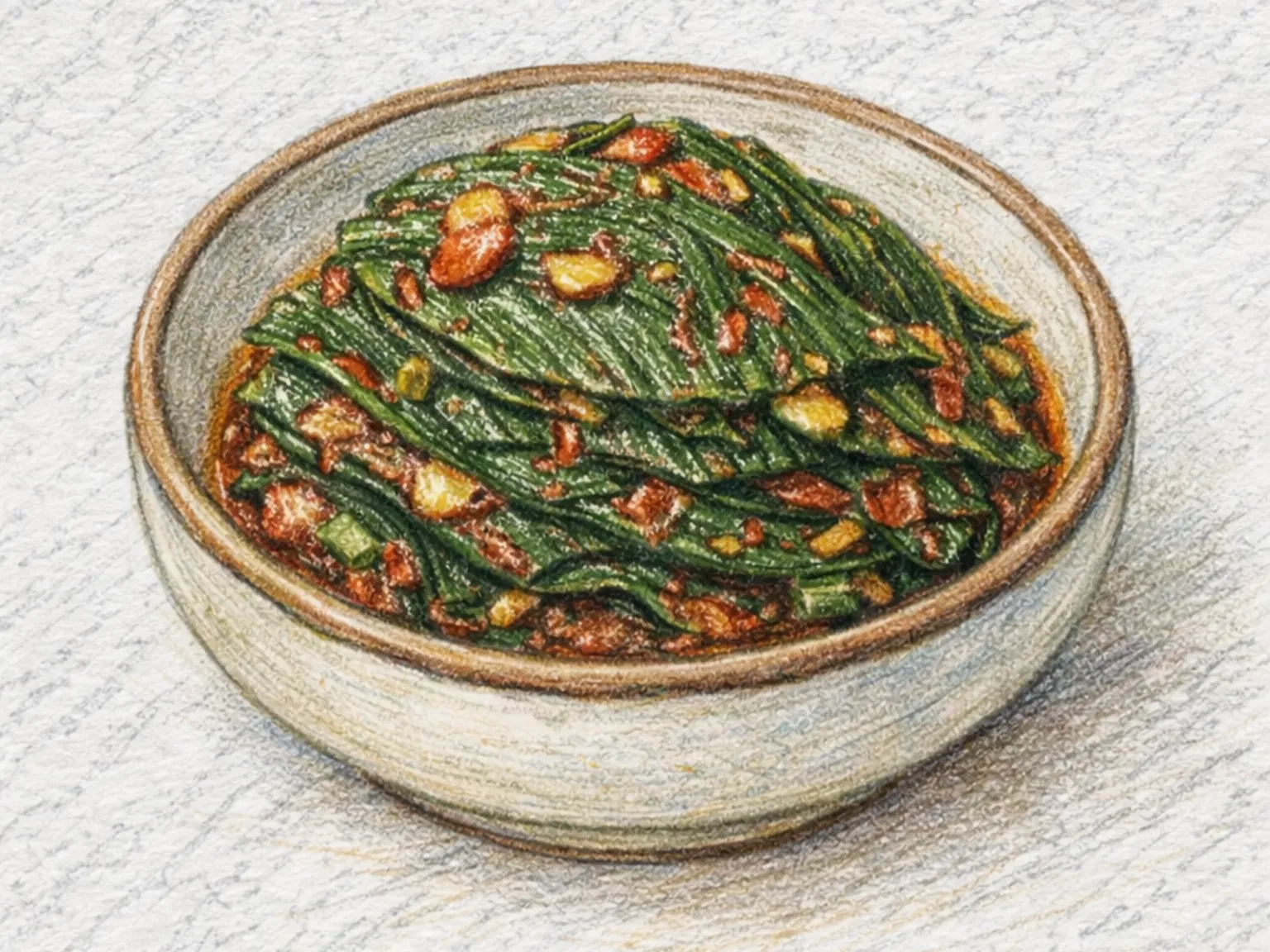
Korean Soybean Leaf Kimchi
Kongip kimchi is a Korean preserved kimchi made by coating individual soybean leaves, one by one, with a seasoning of gochugaru, dark soy sauce, anchovy fish sauce, and plum syrup, then stacking them in layers to ferment. The soybean leaf's earthy, vegetal fragrance is its defining quality in the fresh state, but it transforms into something considerably deeper and more savory once it meets the concentrated umami of soy and fermented fish sauce and begins to mature over several days. Onion and ginger are worked into the seasoning to suppress any raw edge and reinforce the overall aroma. Plum syrup tames the inherent sharpness of the salt and fish sauce with a gentle fruit acidity that rounds the flavor, ensuring that each leaf pulled from the jar tastes balanced rather than overwhelming. The traditional way to eat it is draped over a bowl of warm rice and folded around a mouthful, the salty-spicy leaf acting as both wrap and condiment. When the kimchi is particularly salty after a long fermentation, a brief toss in sesame oil softens the intensity and adds a warm, nutty note. Made in late autumn while the leaves are still young and tender before the first frost, this kimchi keeps for weeks in the refrigerator and deepens in flavor throughout the season.