🏠 Everyday Recipes
Simple home-cooked meals for any day
1705 recipes. Page 35 of 72
These are the meals you can cook day after day without getting tired of them. Doenjang jjigae, rolled omelet, spicy pork stir-fry - the kind of home-cooked dishes that fill an ordinary day with comfort.
The beauty of everyday cooking is that it relies on common ingredients already in your fridge. No exotic items, no complicated techniques - just straightforward recipes for satisfying home meals.
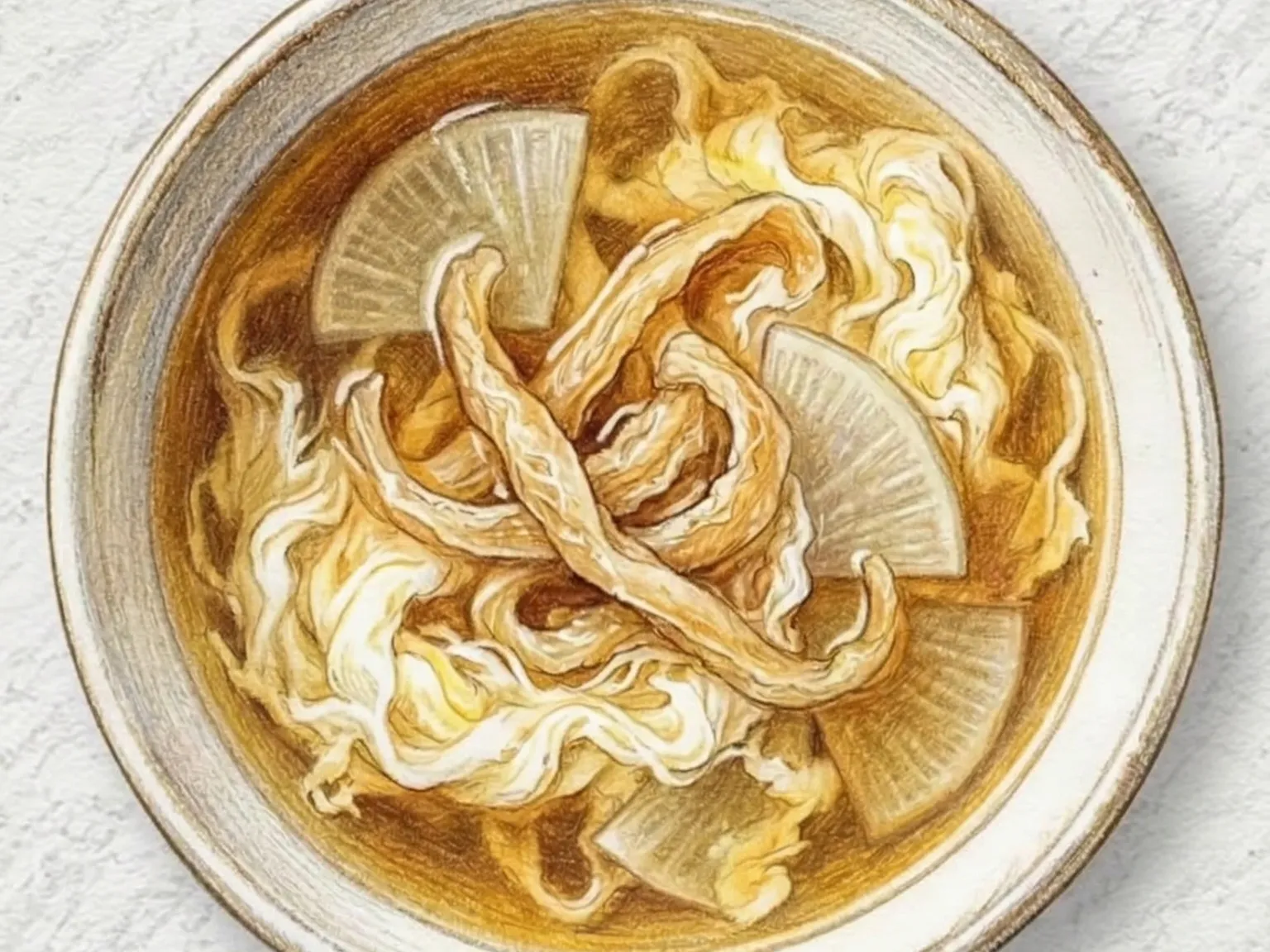
Korean Gangwon-Style Dried Pollock Hangover Soup
This Gangwon-province version of dried pollock hangover soup starts by stir-frying shredded dried pollock in sesame oil until it turns deeply fragrant and golden. That step is what sets it apart from other regions' pollock soups. The toasted sesame aroma permeates the entire broth and adds a richness that plain boiling cannot achieve. Radish simmers alongside, contributing a clean sweetness that tempers any fishiness. Garlic and soup soy sauce provide the savory foundation. Near the end, a beaten egg is swirled into the pot, forming soft, silky ribbons that give the clear broth a comforting body. The soup is intentionally mild and free of chili heat, designed to be gentle on an empty or troubled stomach. Koreans have relied on this kind of bugeo-guk for morning-after recovery for generations, and the Gangwon-style sesame preparation is considered one of the most satisfying versions. If the stir-frying step is rushed, the sesame oil does not coat the fish thoroughly, so cooking the pollock strands over medium heat until they are evenly golden is what draws out the full depth of flavor into the broth.
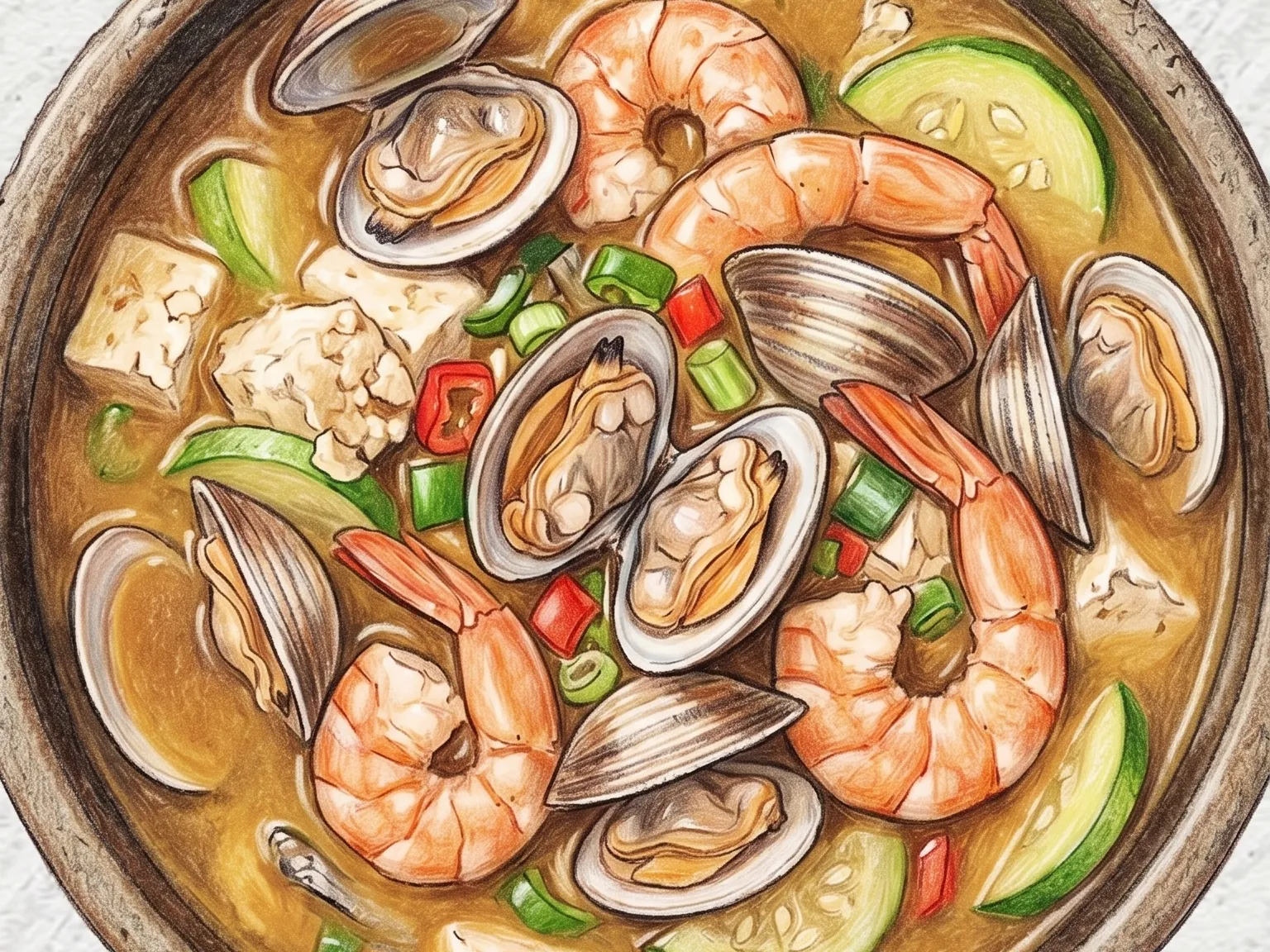
Korean Seafood Doenjang Stew
Haemul doenjang jjigae is a Korean soybean paste stew enriched with clams and shrimp. The broth is built on a kelp and dried anchovy stock into which doenjang is dissolved, then clams are added and the pot is brought to a boil. As the clams open, they release their clear, briny liquor into the doenjang base, adding a layer of ocean flavor that plain vegetable stews cannot replicate. Shrimp go in next and contribute their own distinct seafood sweetness. Tofu and zucchini round out the stew with soft, yielding textures that absorb the enriched broth fully. Clams should be purged in salted water beforehand to eliminate any grit, and doenjang is best added conservatively at the start and adjusted gradually during cooking to avoid over-salting. The seafood transforms the already satisfying doenjang stew into something noticeably more layered and complex, making it equally at home as a rice accompaniment or as food alongside drinks.
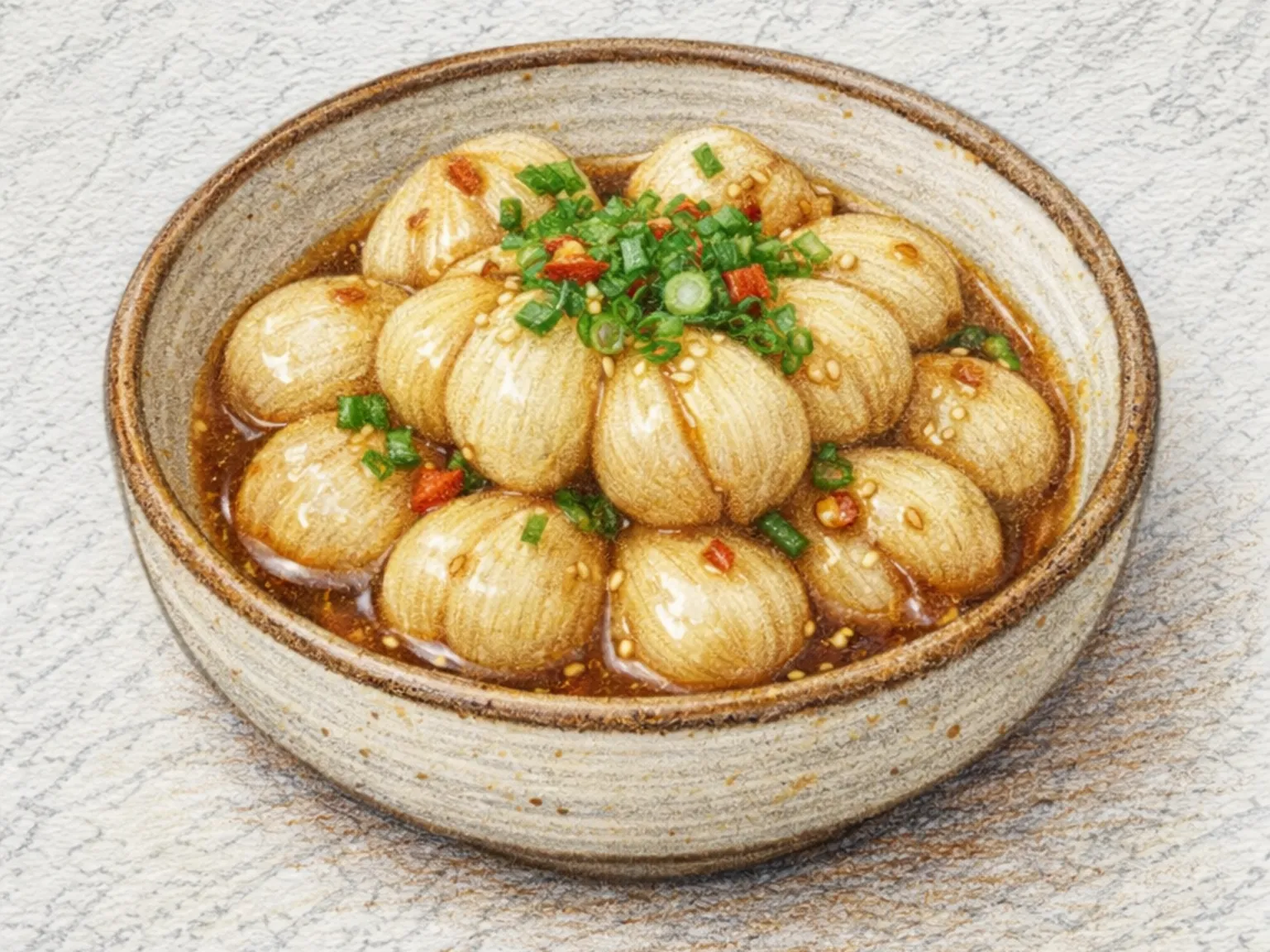
Korean Steamed Whole Garlic
Maneul-jjim is a Korean steamed whole garlic dish where cloves are slowly braised in soy sauce, oligosaccharide syrup, and sesame oil until completely tender. The raw garlic's sharp bite disappears entirely with heat, transforming into a mellow sweetness with a creamy, almost buttery texture. The syrup creates a glossy coating on each clove, and the sesame oil wraps everything in a nutty fragrance. This banchan works as a side to grilled meats or as a drinking snack, offering all of garlic's depth without any of its usual pungency. Placing a softened clove on a spoonful of rice is the simplest and most satisfying way to enjoy it.
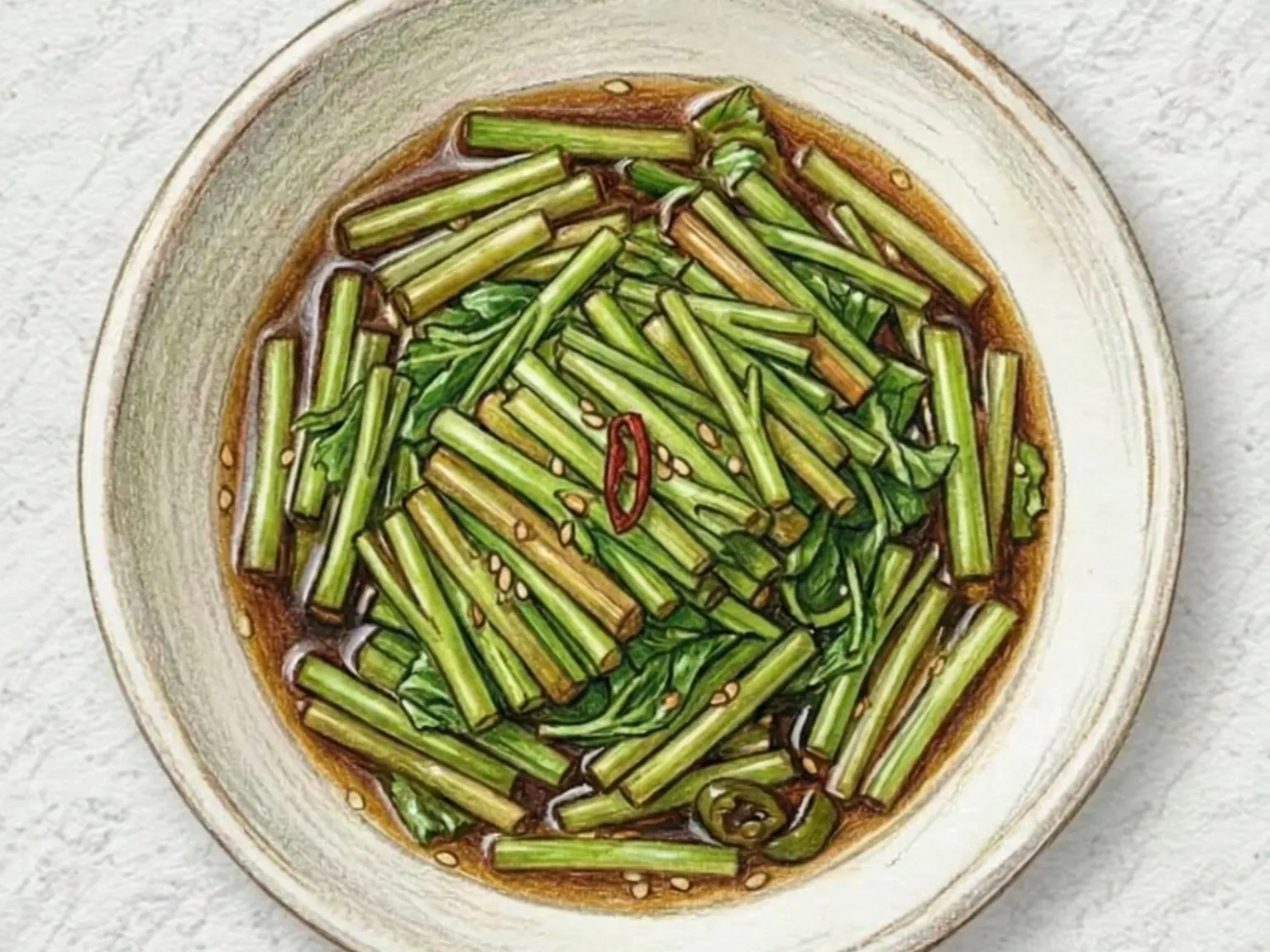
Korean Water Parsley Soy Pickle
Preparing this dish starts with cutting water parsley stems into 5-centimeter segments and ensuring they are thoroughly dried. The pickling process involves a mixture of soy sauce, rice vinegar, and sugar that is boiled and then completely cooled before being poured over the prepared stems, garlic, and cheongyang chili peppers. As the herbs submerge in the savory liquid, the fresh scent of the water parsley evolves into a complex aromatic profile that is absent in its raw state. Rice vinegar provides a crisp finish to the palate, while the sharp heat from the chili peppers prevents the flavor from becoming flat or one-dimensional. Garlic acts as a stabilizing element for the entire seasoning base. The pickle reaches its optimal state around the second or third day of refrigeration when the initial sharpness of the vinegar mellows out while the stems maintain their firm crunch. Since the texture tends to soften over time, making frequent small batches is a practical approach to enjoy this preserve. This side dish functions well alongside grilled pork belly or other main courses with high fat content by clearing the palate between bites. The remaining brine can be reused for subsequent batches of vegetables, often resulting in a more developed and layered taste than the first round. Adding a small amount of lemon or yuzu juice introduces a citrus scent that complements the natural herbal characteristics of the water parsley.
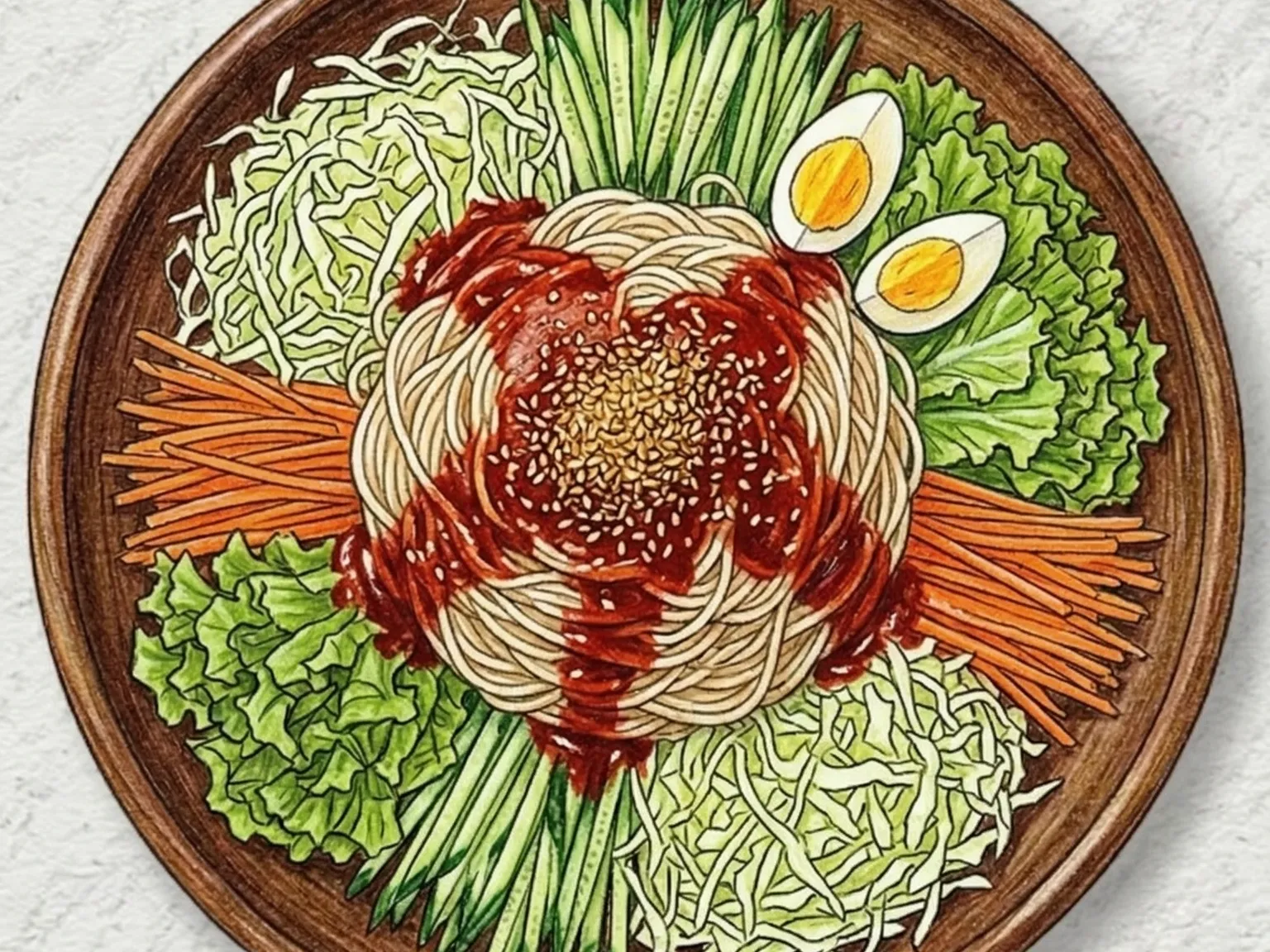
Korean Spicy Platter Noodles
Jaengban-guksu is a large-platter noodle dish where boiled somyeon and a generous pile of fresh, crunchy vegetables are tossed together in a spicy-tangy dressing. Shredded cabbage, julienned cucumber, matchstick carrot, and torn lettuce each contribute distinct textures that contrast with the tender noodles, while the dressing - gochujang blended with vinegar, sugar, and soy sauce - fires through sweet, sour, and spicy notes in quick succession. Sesame oil and toasted sesame seeds weave a nutty warmth through the dish that softens the dressing's sharpness without dulling it. After boiling, the somyeon should be rinsed thoroughly in cold water to wash off excess starch; this step allows the dressing to coat each strand evenly and prevents the noodles from clumping on the tray. Using more vegetables than seems necessary is actually recommended, since they distribute the dressing as the noodles are tossed and add contrast in every forkful. The dish is traditionally served on a single wide tray for communal mixing at the table, making it a natural fit for gatherings and outdoor outings.
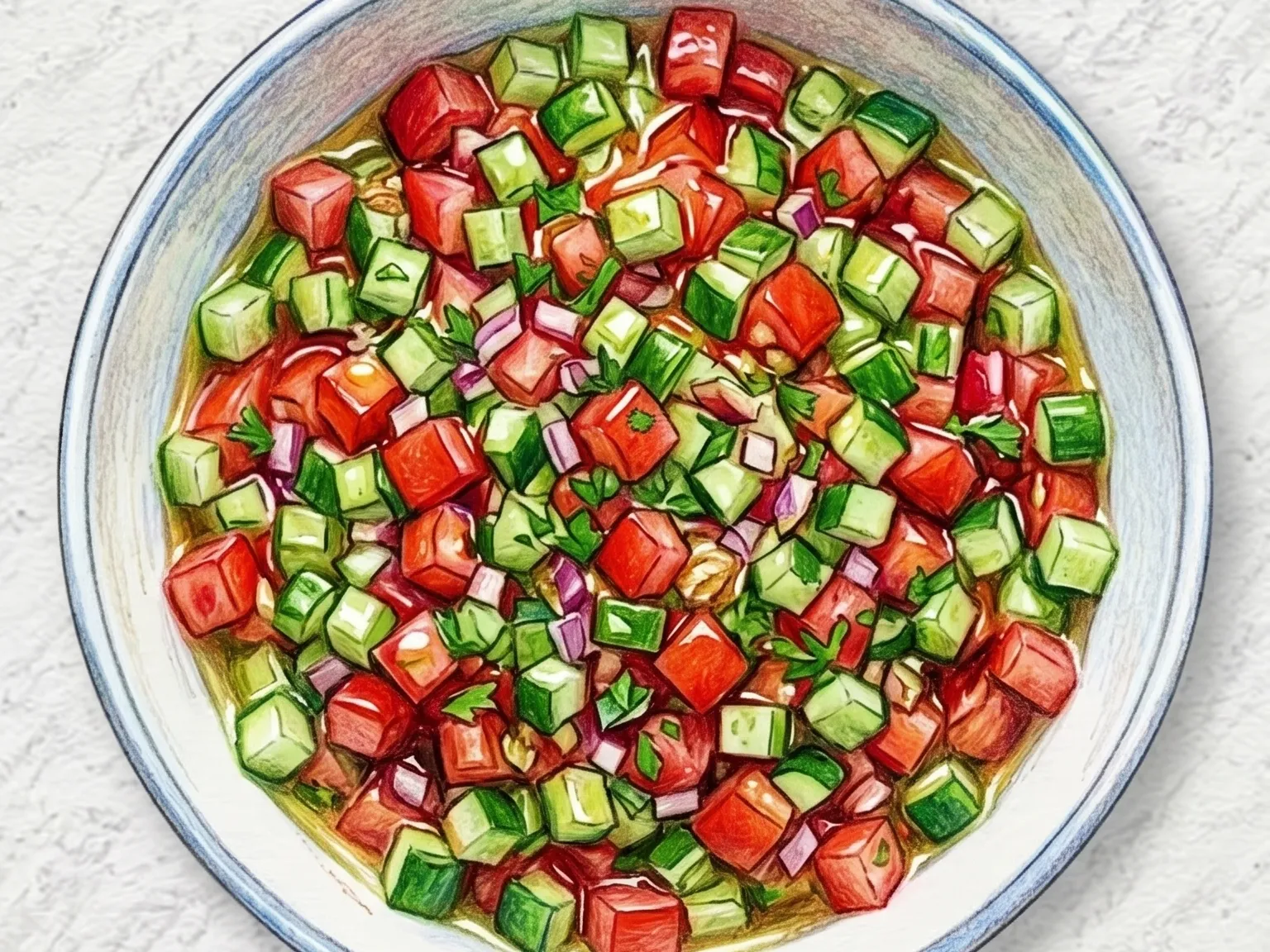
Israeli Salad
Israeli salad is the foundational everyday salad of the Middle East, built from tomato, cucumber, red onion, and parsley diced to pieces under 0.5 cm and dressed simply with lemon juice, olive oil, and salt. The uniformly small cut is the defining technique, and it is not merely aesthetic. When every component is the same tiny size, a single spoonful carries equal amounts of tomato juice, cucumber crunch, and the sharp bite of raw onion, so the balance does not shift from one mouthful to the next. The dressing is deliberately kept to two ingredients so that the natural acidity and sweetness of ripe tomatoes can dominate without interference from added vinegar or sweeteners. Resting the salad for about five minutes after tossing draws juice from the cut tomatoes, which merges with the lemon and oil to form a light, self-made brine that deepens the flavor of the entire bowl. Across Israel and throughout the broader Middle East, this salad appears at the breakfast table alongside eggs and bread as commonly as it does beside grilled meats at dinner. Its quality depends entirely on the freshness of the produce rather than any technique or seasoning.
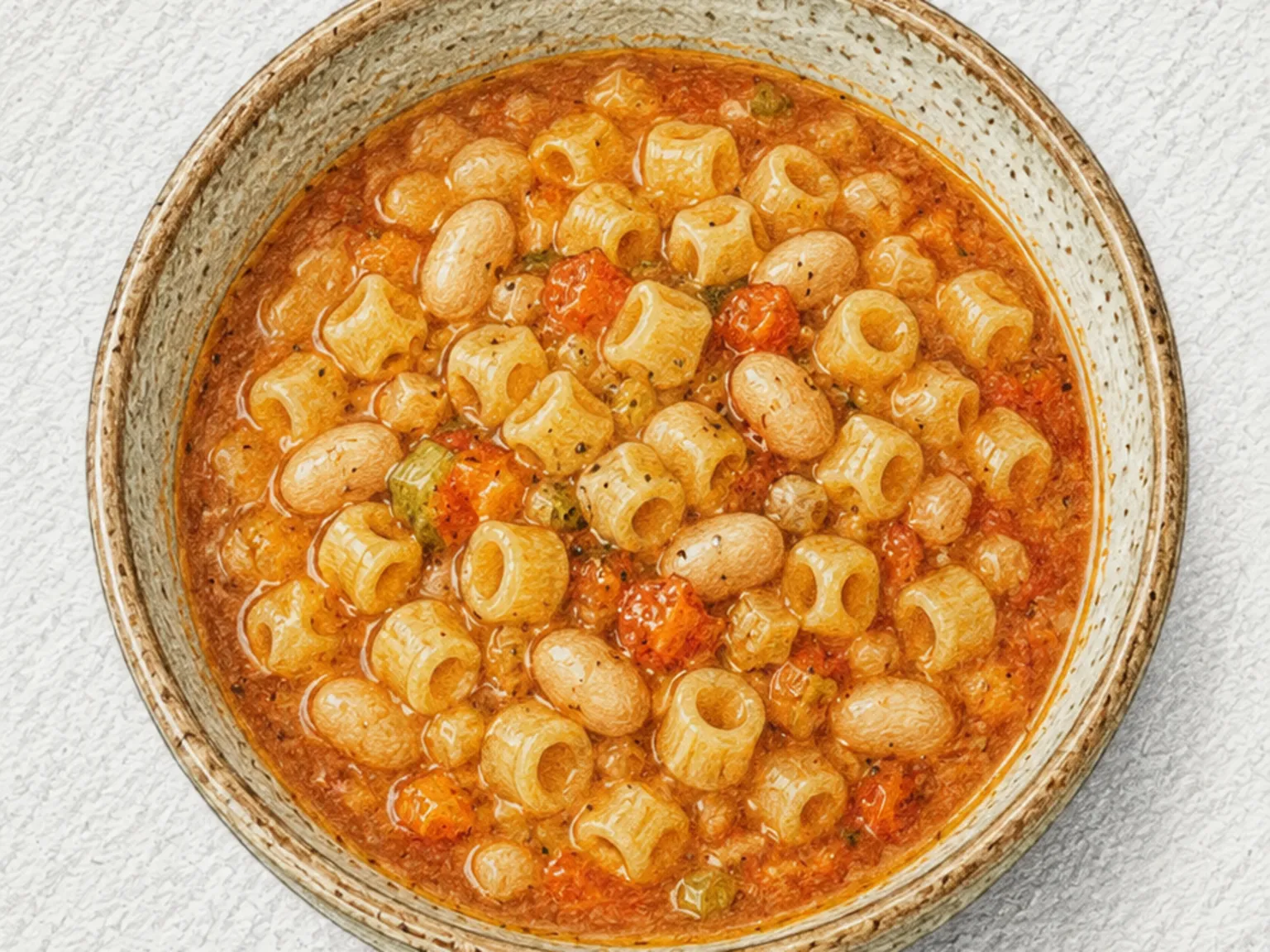
Pasta e Fagioli (Italian Rustic Bean and Pasta Soup)
Pasta e Fagioli is a bean and pasta soup rooted in the rural Italian kitchen, where cannellini beans and short pasta come together in a thick, starchy broth. A soffritto of finely diced onion, celery, and carrot sauteed in olive oil forms the flavor foundation, layered with garlic and fresh rosemary. Crushing half the beans and stirring them into the broth thickens the soup naturally without any added starch. Short pasta like ditalini is cooked directly in the broth, releasing its starch to further enrich the texture. Whole peeled tomatoes contribute a mild acidity, and simmering a Parmigiano rind in the pot infuses the entire broth with a deep, savory umami that transforms the dish from simple to complex.
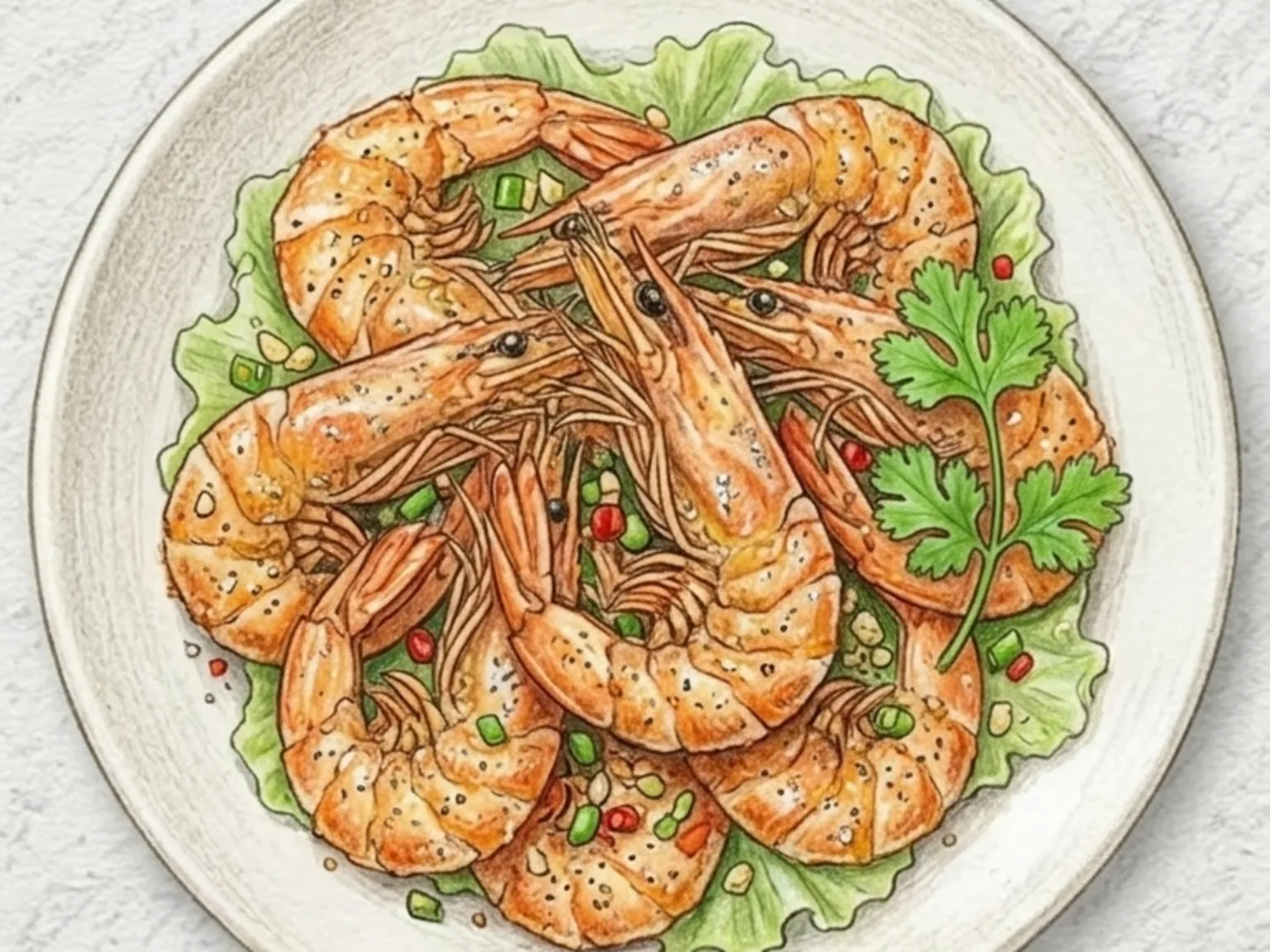
Salt and Pepper Shrimp
Salt and pepper shrimp is a Cantonese wok dish where shell-on shrimp are deep-fried twice - once to cook through and once at higher heat to crisp the shells until they shatter on the teeth. The fried shrimp are then tossed in a dry wok with minced garlic, sliced fresh chili, and a heavy dusting of sea salt and ground white pepper. The garlic chars slightly at the edges, releasing a nutty aroma that coats the shrimp. No sauce is involved; the seasoning sticks to the hot shells through residual oil alone. Eating the shrimp whole, shell and all, is the intended method - the shells provide a papery crunch that contrasts with the sweet, snappy meat inside. The dish lands on the table in minutes and disappears just as fast, especially when cold beer is within reach.
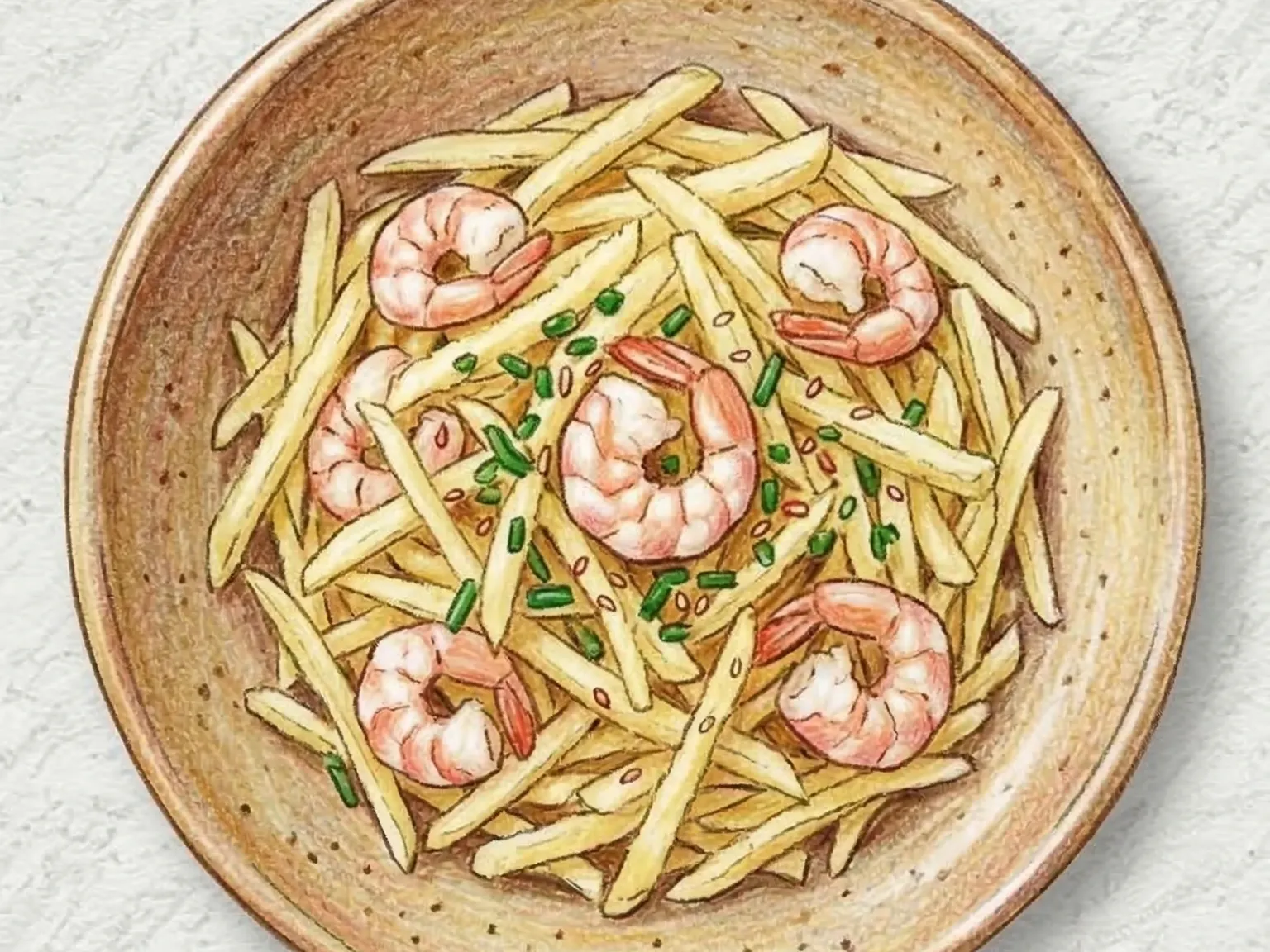
Korean Stir-fried Potato and Shrimp
Gamja-saeu-bokkeum pairs julienned potatoes with shell-on medium shrimp in a clean, garlic-forward stir-fry. The potatoes are soaked in cold water first to remove surface starch, as skipping this step leads to clumping in the pan and a starchy, heavy texture. Garlic sizzles in oil to build an aromatic base before the shrimp go in, cooking until half-done so their natural sweetness transfers to the potato strips when the two are combined. Seasoned with nothing more than salt, pepper, and a finish of sesame oil, this banchan lets the contrast between the potato's floury bite and the shrimp's springy snap carry the dish. Thin slices of Cheongyang chili pepper can be added for a clean, sharp heat that makes the stir-fry even more compatible as a rice side dish. The combination of orange shrimp, pale yellow potato, and green chili also gives the finished plate a natural visual balance.
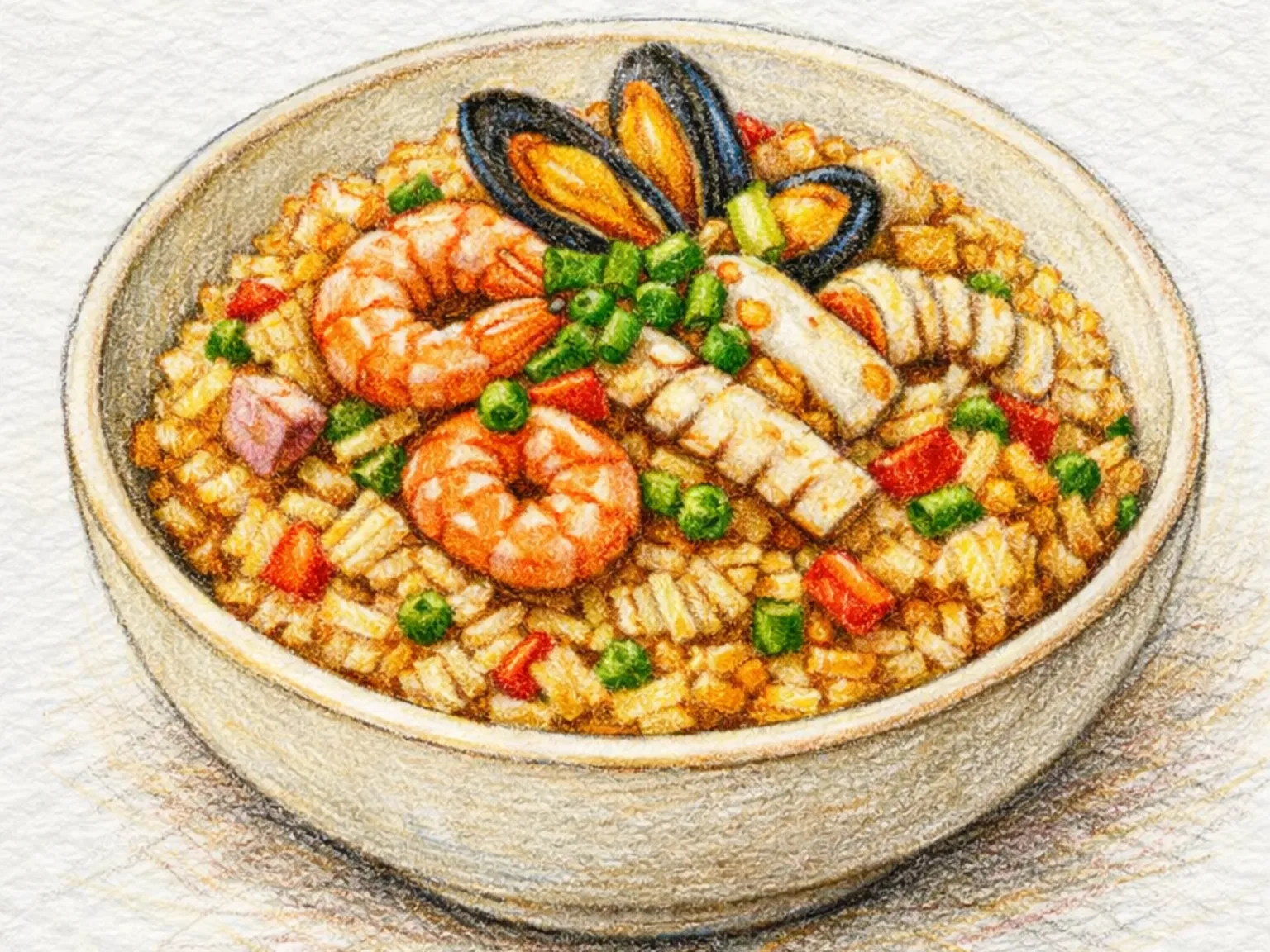
Korean Seafood Fried Rice
Mixed seafood including shrimp, squid, and mussel meat is stir-fried together on high heat until a smoky wok char develops. Day-old cold rice works best because its lower moisture content lets the grains separate cleanly in the pan, and seasoning with soy sauce and oyster sauce layers additional depth on top of the seafood's own brininess. Cracking the eggs into the pan first and immediately tossing the rice on top coats each grain in a thin shell of egg, yielding a lightly crisp exterior. Sesame oil is drizzled only after the heat is off so its fragrance stays intact.
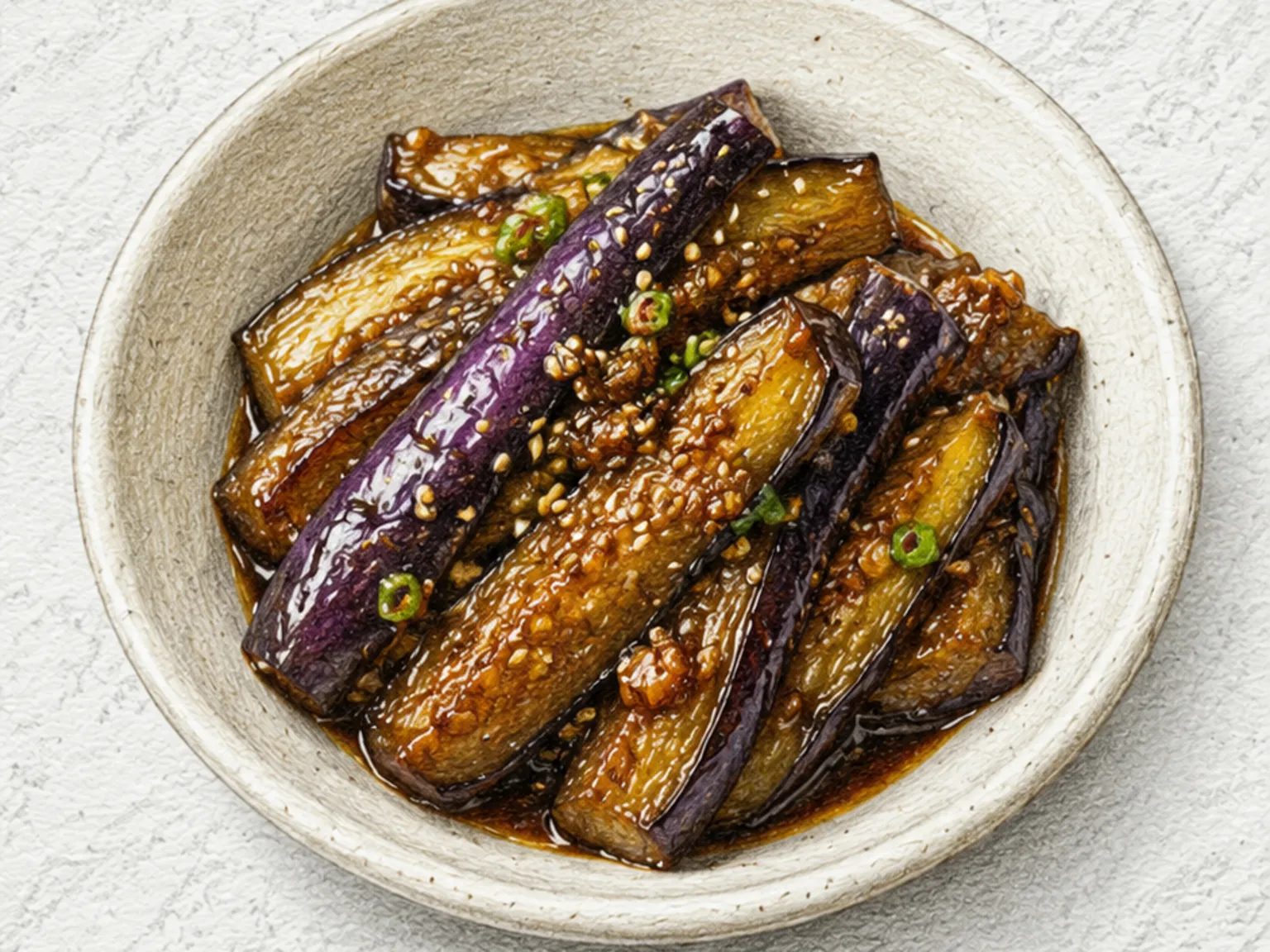
Korean Soy Braised Eggplant
Gaji-jorim is a Korean braised eggplant dish where the eggplant is simmered in a soy sauce-based seasoning until the flesh becomes thoroughly tender and saturated with flavor throughout. Eggplant has a sponge-like cellular structure that draws in liquid as it cooks, and the longer it simmers in the seasoning, the deeper the sweet-salty flavor penetrates into each piece. The sauce reduces as the eggplant cooks, concentrating around the flesh rather than pooling at the bottom of the pan, which means every bite carries the full seasoning. A finishing drizzle of sesame oil and a scattering of sesame seeds add a nutty aroma that rounds out the savory base. Despite using only eggplant as the main ingredient, the slow braising process concentrates the flavors into a compelling side dish that makes plain rice easy to eat in quantity. The seasoning adheres to the eggplant even after cooling, making it a practical addition to a packed lunch as well as a fresh rice accompaniment.
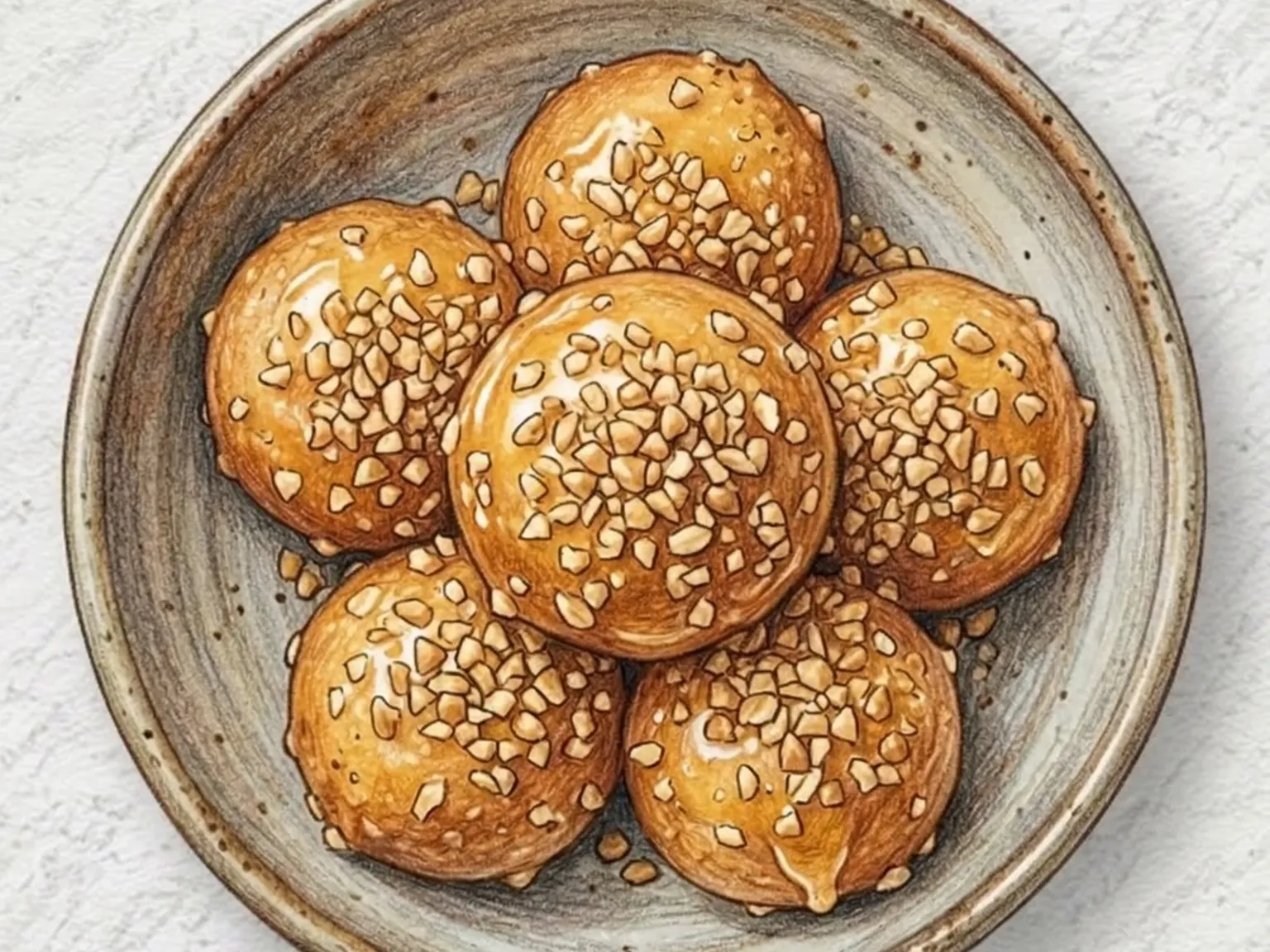
Korean Honey Bread Balls (Fried Yeast Dough Balls Glazed with Honey and Peanut)
Kkul-ppang is a regional street snack from Tongyeong made by deep-frying yeast-leavened dough balls at 170 degrees Celsius until the outside firms into a thin, crisp shell. The fermentation process fills the interior with air pockets, producing a soft, bread-like crumb rather than the dense texture of unbaked dough. Whole dough is fried without any batter coating, which is what keeps the shell thin and crackly rather than puffy or thick. Immediately after frying, while still hot, the balls are brushed generously with warm honey so it soaks into the crust, then rolled in finely chopped peanuts for a layer of roasted nuttiness. Using rice syrup instead of honey softens the sweetness and brings the flavor closer to traditional Korean confectionery. Once cooled the shell stiffens and loses some of its snap, so these are best eaten fresh from the oil.
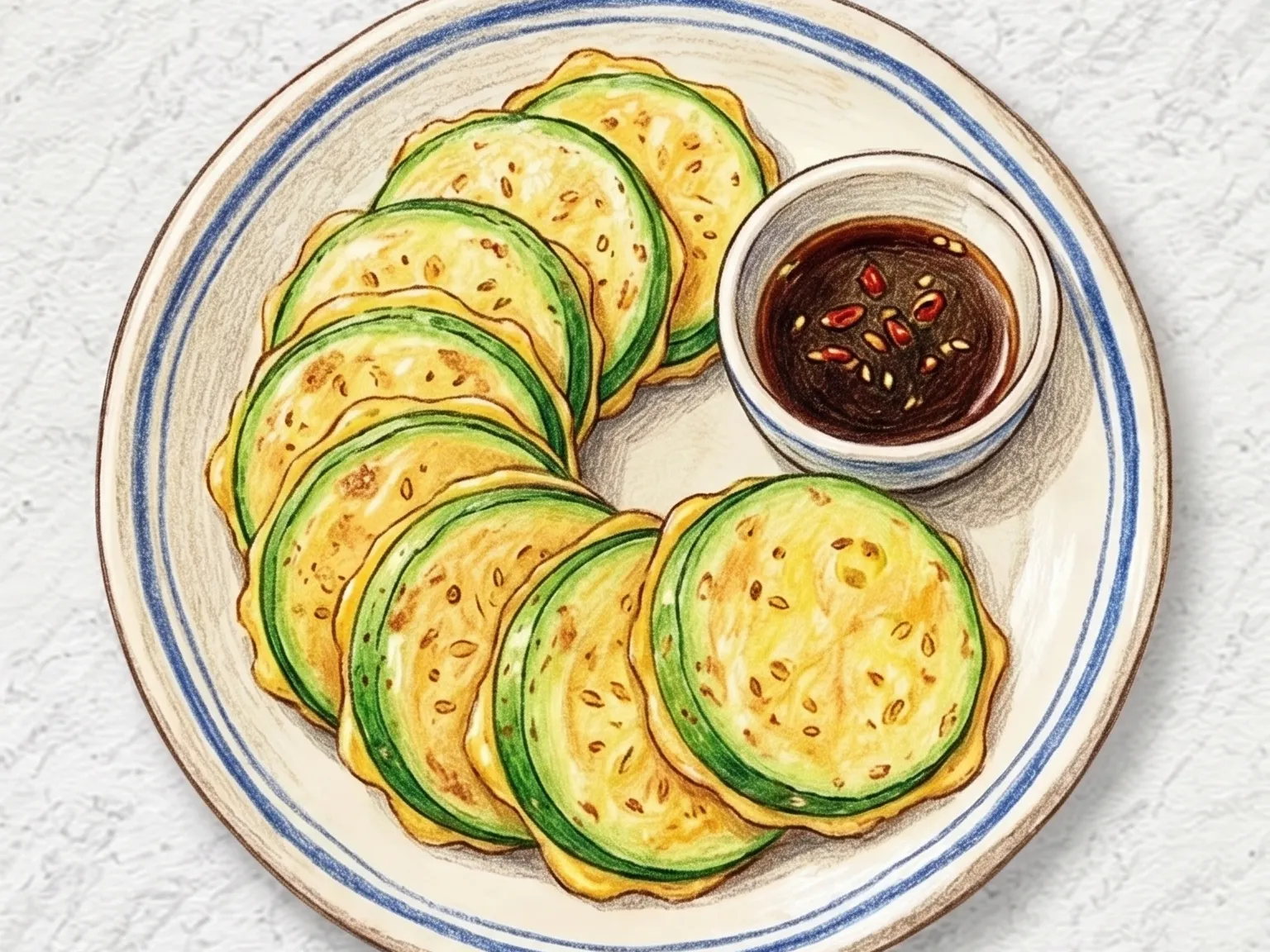
Korean Pan-fried Zucchini Jeon
Hobak-jeon is a Korean pan-fried zucchini pancake made by slicing Korean zucchini into uniform half-centimeter rounds, salting them for five minutes, then dusting in flour, dipping in beaten egg, and frying over medium heat for two to three minutes per side. The salting step does two things at once: it pulls out the moisture that would otherwise make the pancakes soggy, and it concentrates the zucchini's mild sweetness into a more distinct flavor. The egg coating acts as a gentle heat buffer, keeping the interior soft and moist while the exterior develops an even, pale golden color with a subtle nuttiness from the cooked egg. The yellow hue adds color to the table, and the jeon pairs naturally with soy sauce or a vinegared soy dipping sauce. It is one of the most versatile banchan in Korean cooking, suitable for a child's lunchbox, an everyday dinner table beside soup or stew, or stacked on a holiday platter for ancestral rites and guests alike. The simplicity of the method and the availability of the ingredients mean it appears on Korean tables year-round.
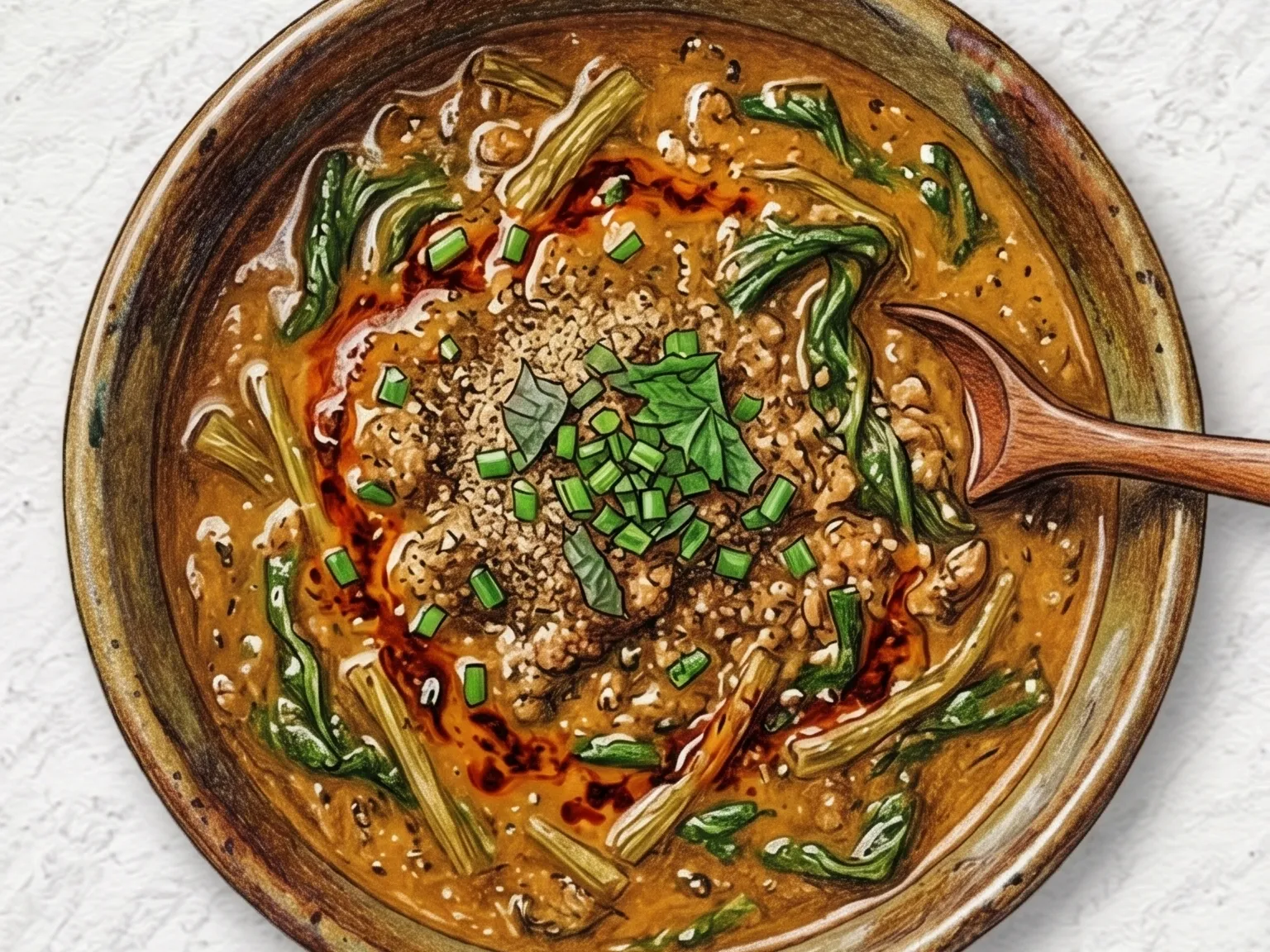
Korean Gangwon-Style Loach Soup
Gangwon-style chueotang is a thick, hearty loach soup in which the entire fish is boiled, blended smooth, and returned to the pot with ground perilla seeds and dried radish greens. Pulverizing the loach whole dissolves its small bones into the broth, creating a calcium-rich liquid with a distinctive earthy depth. Perilla seed powder transforms the soup into something creamy and nutty, far removed from a typical clear broth. Dried radish greens, rehydrated and chopped, provide a pleasantly chewy counterpoint to the thick liquid. Doenjang and gochugaru add fermented savoriness and gentle heat that deepen the overall flavor. Before blending, the loach should be soaked in salted water to purge any muddy taste, and the perilla powder is best stirred in after the soup reaches a boil so the nutty aroma does not cook off too quickly. The finished soup is dense and substantial, closer to a stew than a broth, and is traditionally eaten in autumn and winter as a stamina food. In the mountainous Gangwon province, chueotang holds a near-legendary status as a warming, restorative meal on the coldest days.
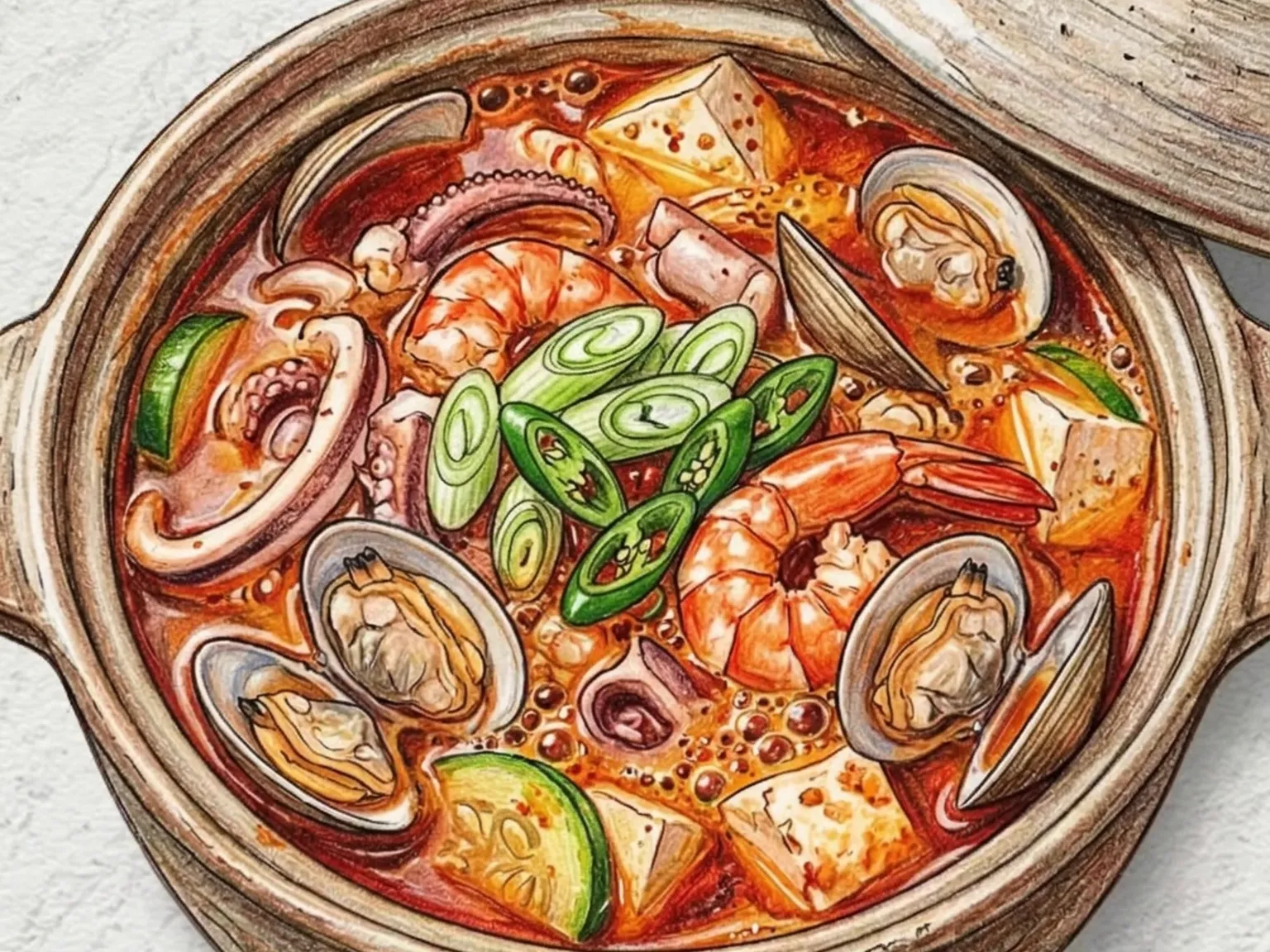
Korean Seafood Stew (Shrimp, Squid & Clam Spicy Pot)
Haemul jjigae is a fiery Korean seafood stew that loads shrimp, squid, and clams into a broth fired with gochugaru and gochujang. As the clams open during cooking, they release a clean, saline sweetness that forms the backbone of the broth, and the chili paste and flakes layer in a deep red heat that amplifies rather than masks the flavor of the sea. Large pieces of tofu and sliced zucchini cook alongside the seafood, soaking up the spiced shellfish stock and adding substance to every spoonful. Green onion and cheongyang chili added at the end contribute color and a fresh aromatic sharpness. Serving directly in the stone pot keeps the stew bubbling at the table throughout the meal, and the steady heat means the last spoonful tastes as vivid as the first. A bowl of steamed white rice alongside absorbs the broth between bites and makes the meal complete.
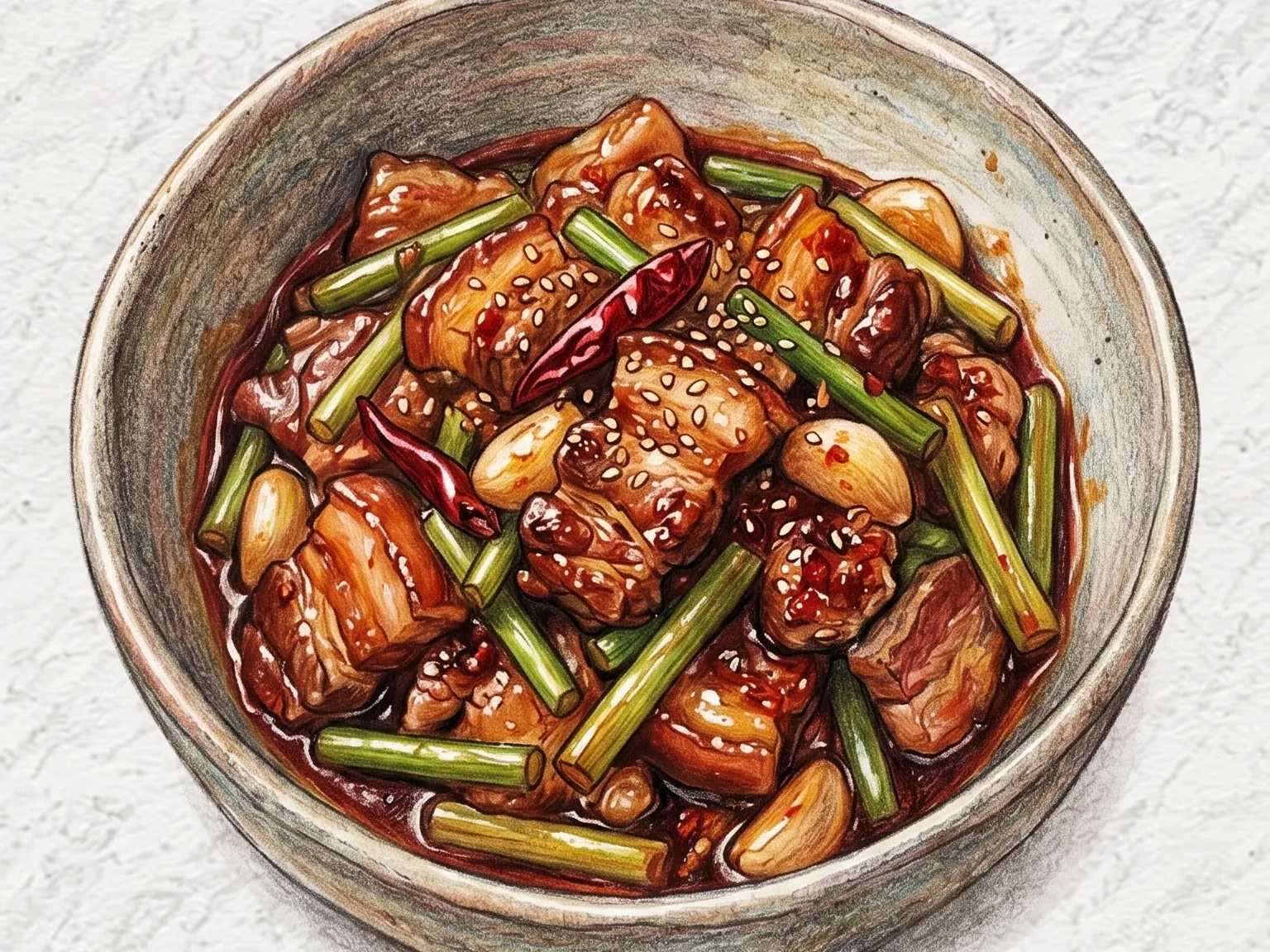
Korean Braised Pork with Garlic Scapes
Maneuljjong dwaejigogi-jorim is a Korean braise of pork and garlic scapes in a gochujang, soy sauce, and gochugaru seasoning. The pork releases its juices into the sauce as it cooks, building a concentrated braising liquid that the garlic scapes absorb while retaining their characteristic crunch. Gochujang's deep warmth layers with soy sauce's umami into a compound seasoning, and the garlic scapes' mild pungency cuts through any heaviness from the pork fat. Mixed over rice, the sauce, meat, and vegetables come together into a filling, well-rounded meal.
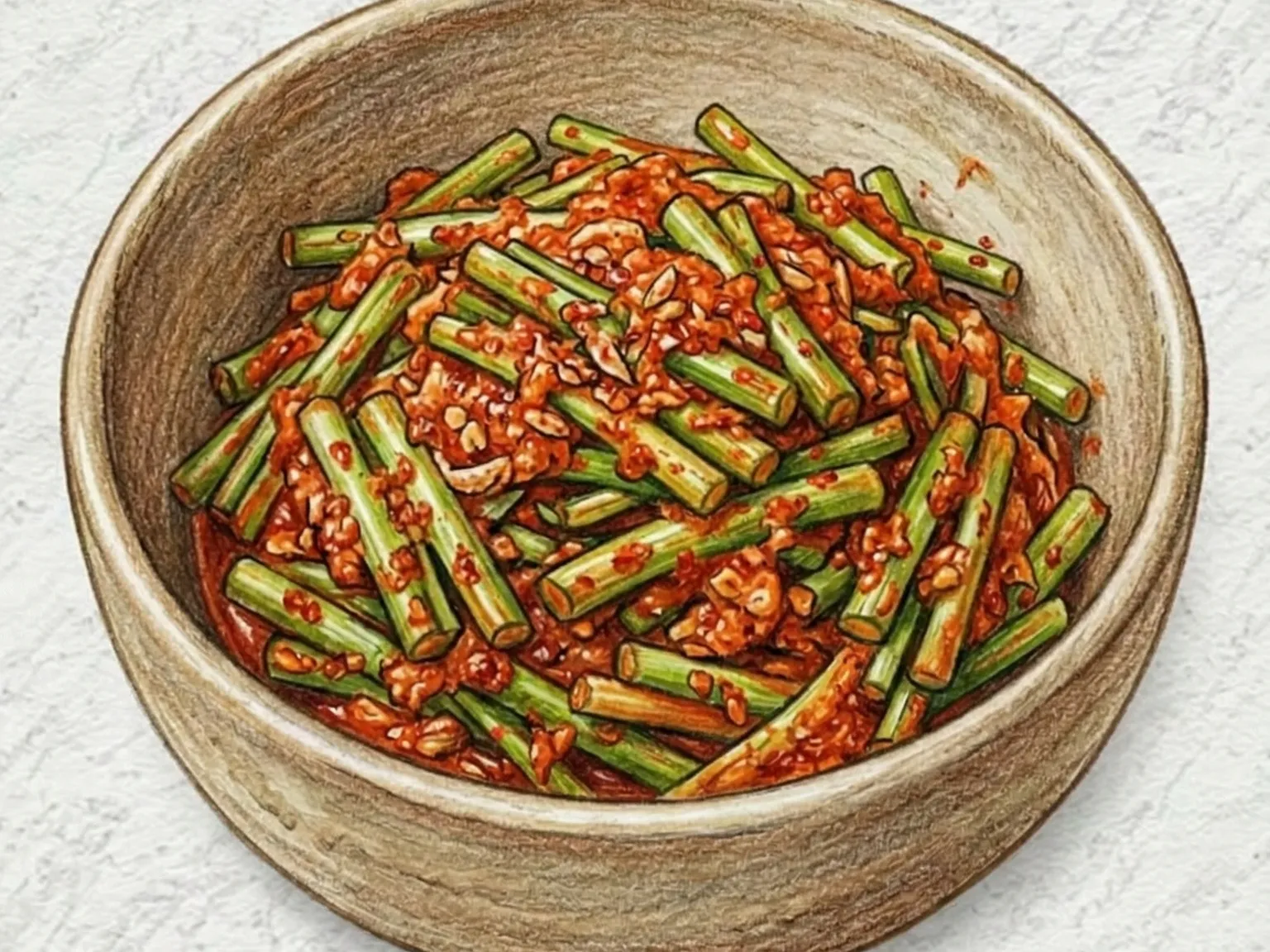
Korean Water Parsley Kimchi
Minari kimchi is a quick, no-fermentation Korean water parsley kimchi that is ready to eat the moment it is made. The stems are salted for just ten minutes to barely wilt them, preserving their characteristic crunch and cool, clean herbal fragrance. Blended onion is worked into the seasoning paste alongside gochugaru, anchovy fish sauce, and plum syrup, giving the dressing body and a gentle sweetness. Anchovy fish sauce lays a seafood umami foundation under the light vegetable, while plum syrup's fruit acidity softens the chili heat rather than letting it dominate, so the finish is bright and refreshing rather than sharp. Paired with samgyeopsal or boiled pork, the water parsley's aromatics cut directly through the fat, cleansing the palate between bites in a way that heavier banchan cannot. The kimchi is best eaten on the day it is made while the stems still have their full snap.
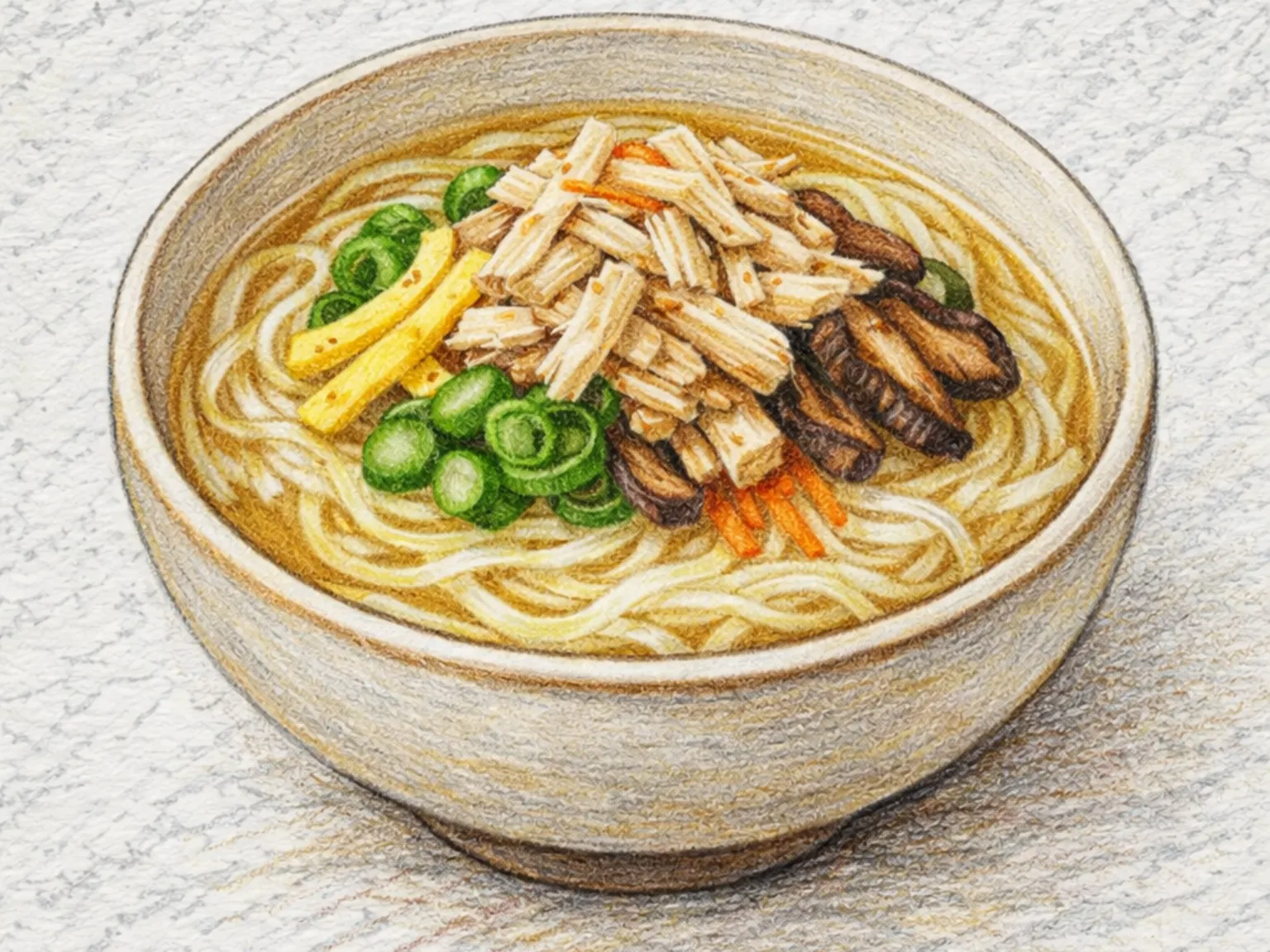
Korean Banquet Noodles (Thin Noodles in Anchovy Kelp Broth)
Janchi-guksu is a classic Korean celebration noodle soup with thin wheat noodles served in a clear broth drawn from dried anchovies and kelp. The broth balances the anchovies' deep umami against the kelp's restrained sweetness, with soup soy sauce used for seasoning so the liquid stays transparent and clean rather than cloudy or heavily salted. Julienned zucchini and carrot are stir-fried separately and arranged as garnishes on top, joined by strips of pan-fried egg crepe and crumbled roasted seaweed, giving the bowl its characteristic layered appearance of white, green, yellow, and black. The dish traces back to the custom of serving noodles to guests at weddings, birthdays, and first-birthday celebrations, with the long shape of the noodle carrying a folk belief about longevity that made it a natural fixture at auspicious events. The ingredients are few, but the care taken with the broth determines the character of the bowl - it is a dish that appears simple but rewards proper attention.
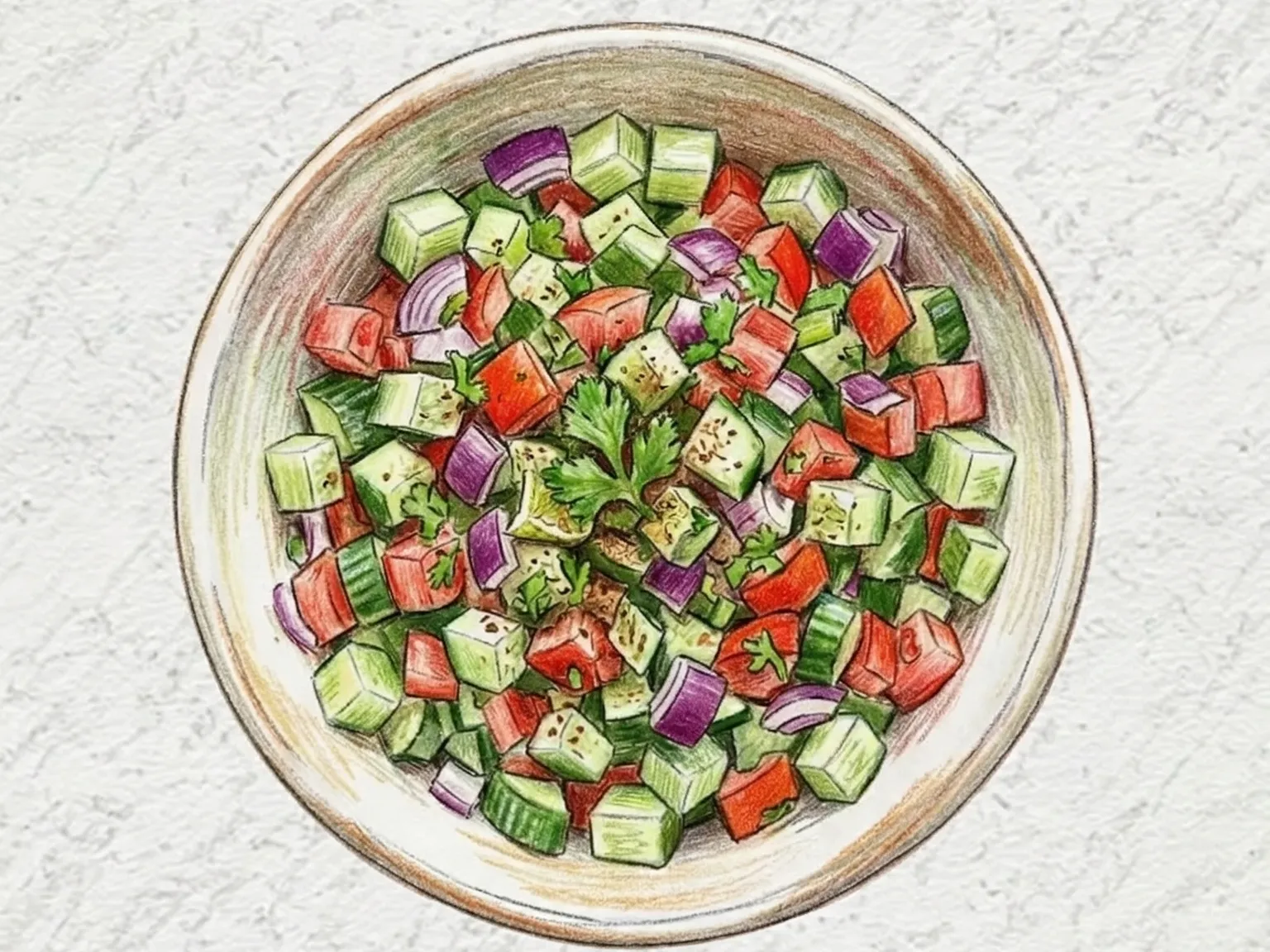
Kachumber Salad (Indian Kachumber salad)
Kachumber salad finely dices cucumber, tomato, and red onion, then tosses them with chopped cilantro, lime juice, ground cumin, chaat masala, and salt in a quick Indian raw vegetable preparation. Removing some of the seeds from the cucumber and tomato limits excess moisture so the dressing stays concentrated rather than watery. Soaking the diced red onion in cold water for three minutes draws out its harsh sharpness, letting it blend more smoothly with the other ingredients. Ground cumin lays down a warm, earthy undertone, and chaat masala layers a tangy, salty complexity over the lime acidity, lifting a simple combination of vegetables into something distinctly Indian. Chopping cilantro stems together with the leaves releases more of the herb's aromatic oils than leaves alone provide. Letting the dressed salad rest for about fifteen minutes before serving allows the flavors to meld so the final result is noticeably more cohesive.

Patty Melt
Patty Melt is an American diner classic that sits between a burger and a grilled cheese sandwich, combining a thin beef patty with deeply caramelized onions and melted cheese between slices of toasted bread. The onions require at least twenty minutes over low heat to lose their moisture and concentrate their sugars into a dark, sweet jam-like consistency. The patty is shaped thin and wide to match the bread's footprint, and spreading a thin layer of mayonnaise on the outer surface of the bread before griddling produces a more even and deeper golden crust than butter. When the cheddar melts over the patty and mingles with the caramelized onions, each bite delivers saltiness from the beef, sweetness from the onions, and richness from the cheese in a single layer.
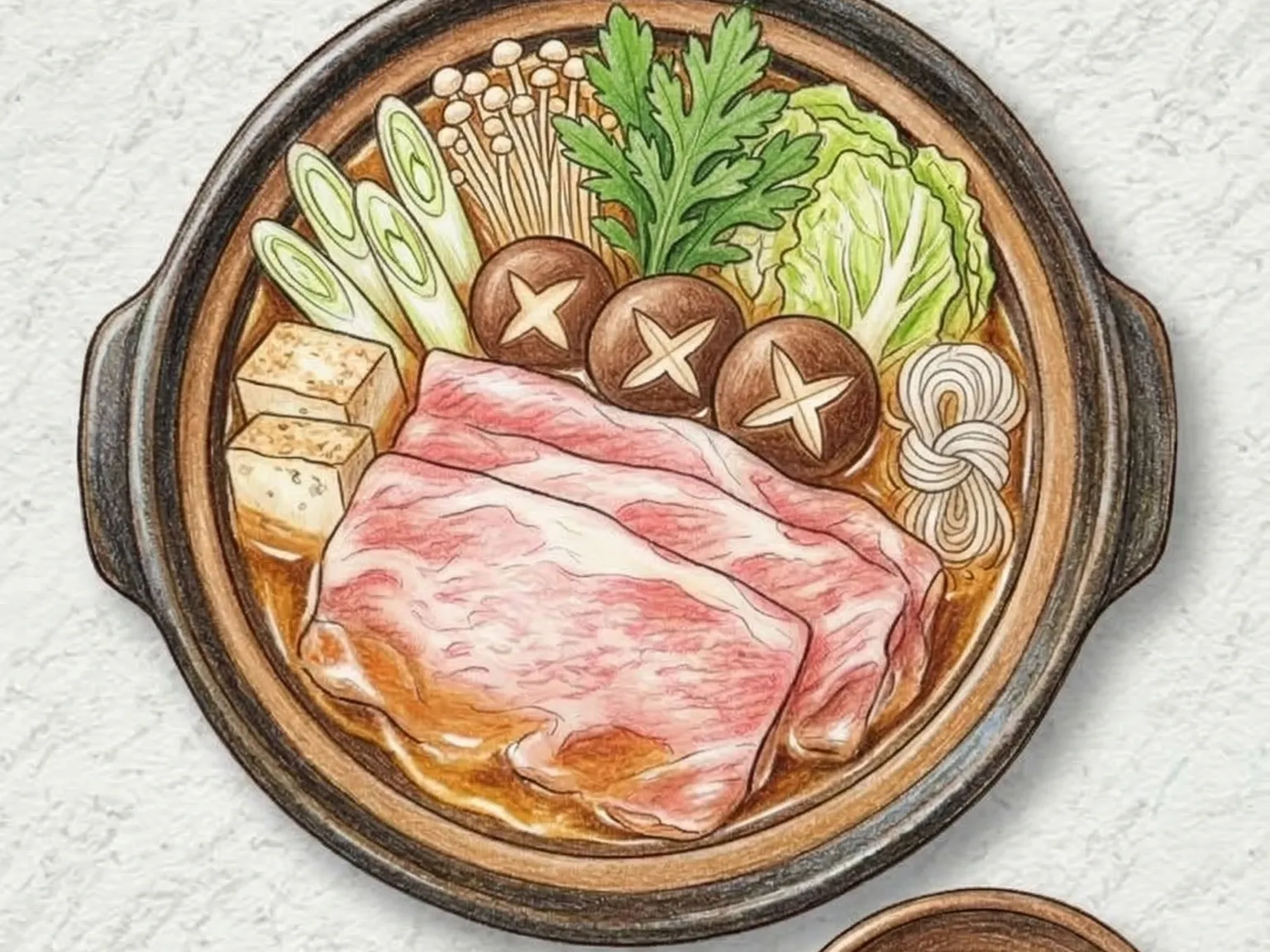
Kanto-Style Sukiyaki (Japanese Beef Hot Pot in Sweet Soy Warishita Broth)
Kanto-style sukiyaki is a Japanese hot pot in which thinly sliced beef, vegetables, and tofu simmer together in a pre-made broth called warishita-a mixture of soy sauce, mirin, sugar, and sake. The preparation begins by searing thick-cut leek in beef fat to release its sweetness, then pouring in the warishita and adding the remaining ingredients: napa cabbage, shiitake mushrooms, grilled tofu, and shirataki noodles. Each component absorbs the sweet-salty broth differently-the cabbage wilts and soaks it up, the mushrooms intensify their earthiness, and the tofu becomes a sponge for the surrounding liquid. The signature ritual is dipping each cooked morsel into a bowl of beaten raw egg before eating; the egg forms a silky coat that tempers the concentrated sauce and adds richness. Sukiyaki is a fixture of Japanese winter cooking, prepared at the table over a portable burner so the pot stays bubbling throughout the meal.
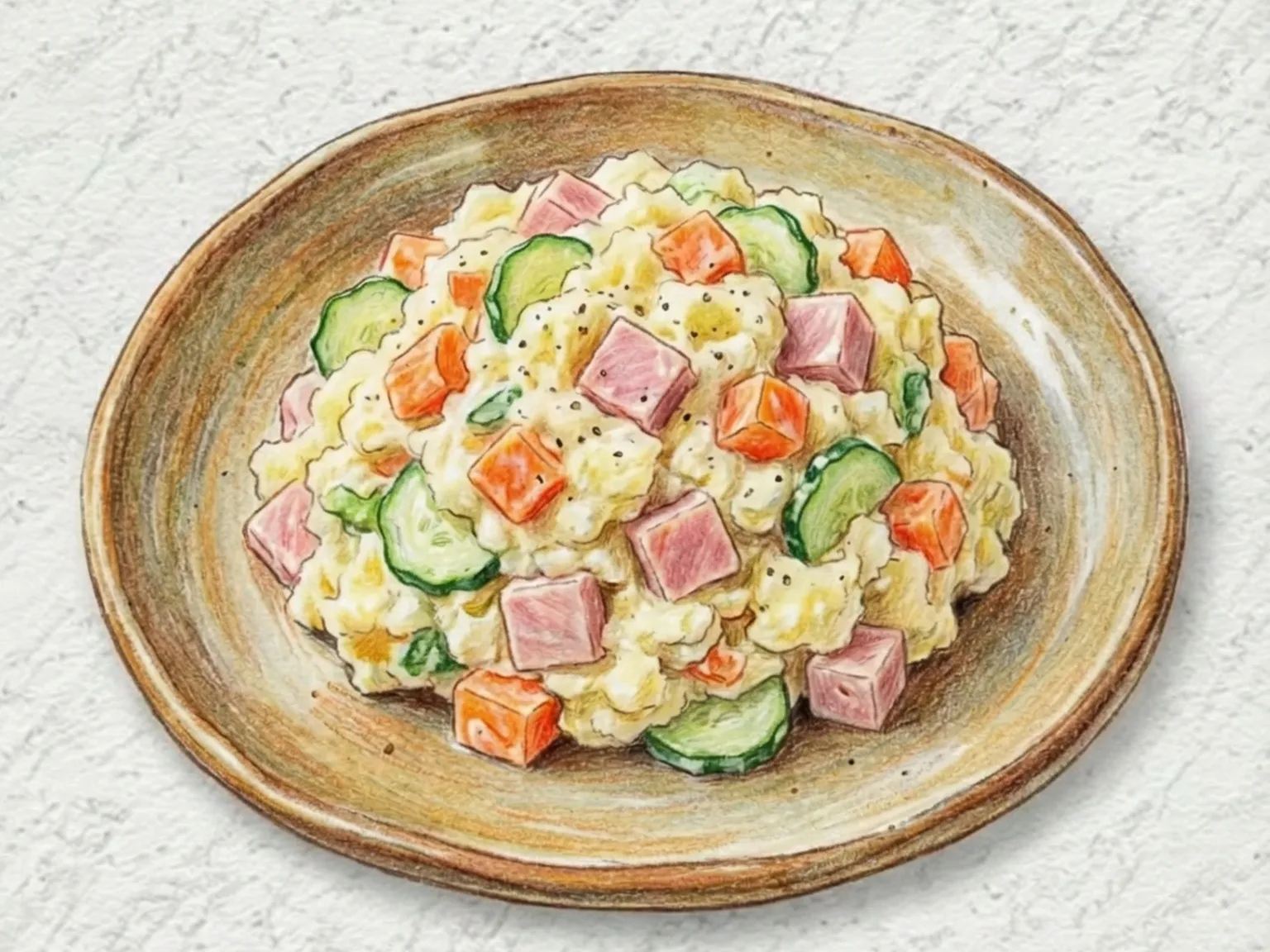
Korean Potato Salad (Creamy Mashed Potato Ham Cucumber)
Korean potato salad arrived through Japan's yoshoku tradition but developed its own distinct identity in Korean home kitchens. Potatoes are boiled until tender and mashed while still hot, but not to a perfectly smooth consistency - leaving some lumps gives the salad a dual texture of creamy mashed potato and soft, intact chunks that hold together when eaten. Diced ham is pan-seared briefly to render out excess fat before being incorporated, preventing the finished salad from becoming greasy. Cucumber is salted and squeezed to remove water, which keeps the salad from turning watery as it sits. Boiled carrot is mixed in for color and a mild sweetness. The dressing is mayonnaise adjusted with sugar and salt, resulting in a distinctly sweet-creamy profile that is noticeably different from Western versions of the dish. Chilling the assembled salad for at least one hour before serving allows the seasoning to equalize throughout the mixture, improving the flavor considerably compared to eating it straight away. The salad is served as a banchan alongside rice, and it is also commonly spread inside sandwiches.
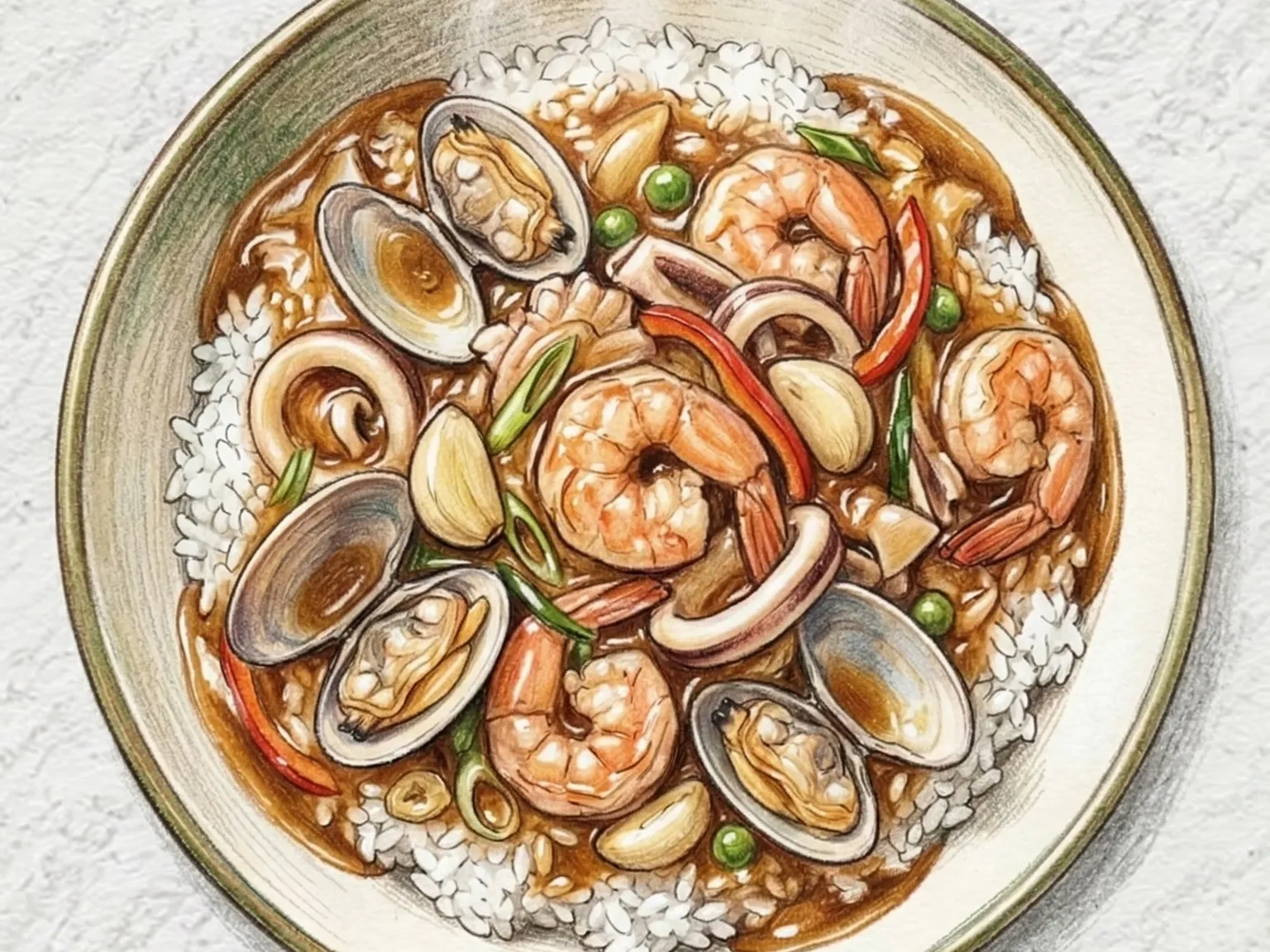
Korean Seafood Rice Bowl (Shrimp Squid Clam Starchy Sauce Bowl)
Haemul deopbap is a Korean seafood rice bowl built on a thick, glossy sauce that starts with garlic stir-fried over high heat before shrimp, squid, and clams are added and tossed together. Oyster sauce and soy sauce form the seasoning base - the oyster sauce brings a rounded, caramel-like sweetness and body, while the soy adds depth and color. A cornstarch slurry stirred in at the end transforms the thin pan juices into a glossy, clingy sauce that coats every piece of seafood and, when ladled over rice, seeps downward slowly rather than running off. The key to keeping the seafood tender is to add it last and remove the pan from heat before it overcooks - squid turns rubbery within seconds of going past done, and shrimp loses its snap if left even a moment too long. Clams contribute their natural briny-sweet liquor to the sauce, adding a layer of umami that oyster sauce alone cannot replicate. Browning the garlic first in oil before anything else goes into the pan reduces any raw edge in the flavor and lays a savory, aromatic foundation for the entire dish. The whole process takes about 25 minutes from start to finish, making this one of the more practical weeknight meals in the Korean home kitchen.
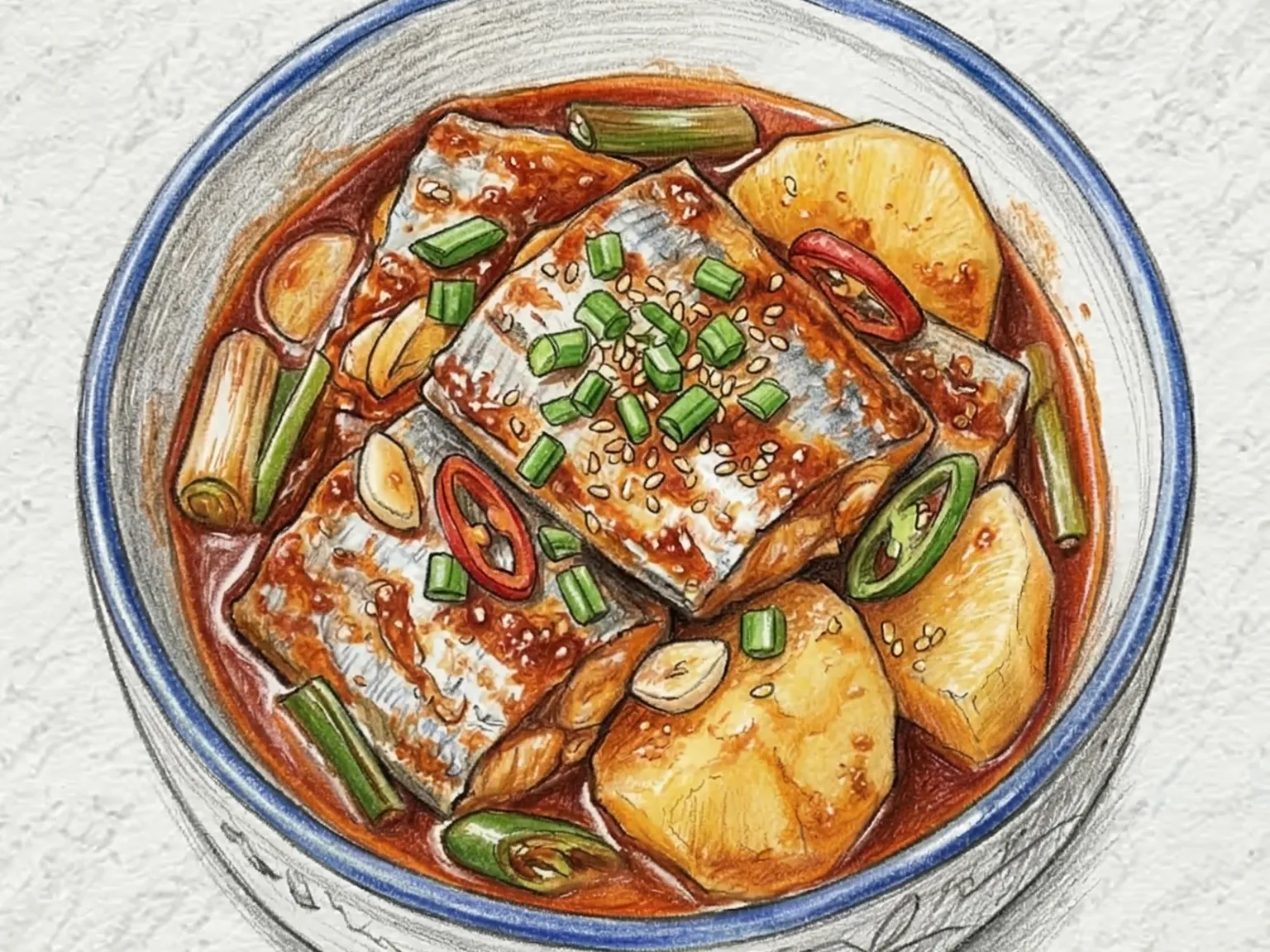
Korean Braised Beltfish with Potatoes
Galchi-gamja-jorim is a Korean braise of ribbonfish and potatoes cooked together in a soy-based sauce seasoned with gochugaru, garlic, and onion. Ribbonfish has naturally oily, tender flesh that holds together well during braising, and as the fat renders into the liquid it builds a deep seafood umami that defines the dish. The potatoes absorb this concentrated broth as they cook, becoming floury and well-seasoned all the way through rather than just on the surface. Onion breaks down and dissolves into the sauce as it reduces, contributing sweetness that balances the salt and spice. The heat level is adjustable: standard gochugaru gives color and mild warmth, while adding cheongyang chili peppers sharpens the spice. The dish is best served when the sauce has reduced to a thick, glossy consistency that clings to each piece. A spoonful of that sauce over plain rice rounds out the meal. Sliced Korean radish added to the pot introduces a clean, slightly peppery sweetness to the broth.