🎉 Special Occasion Recipes
Impressive dishes for guests and special occasions
929 recipes. Page 13 of 39
When guests are coming, the menu needs a little extra care. This tag features impressive dishes suited for entertaining - galbi-jjim, japchae, and bulgogi for a Korean spread, or pasta and steak for a Western-style course.
The key to stress-free hosting is choosing recipes that allow advance preparation. Do the heavy lifting the day before, then finish plating when guests arrive. That way, you can relax and enjoy the meal together.
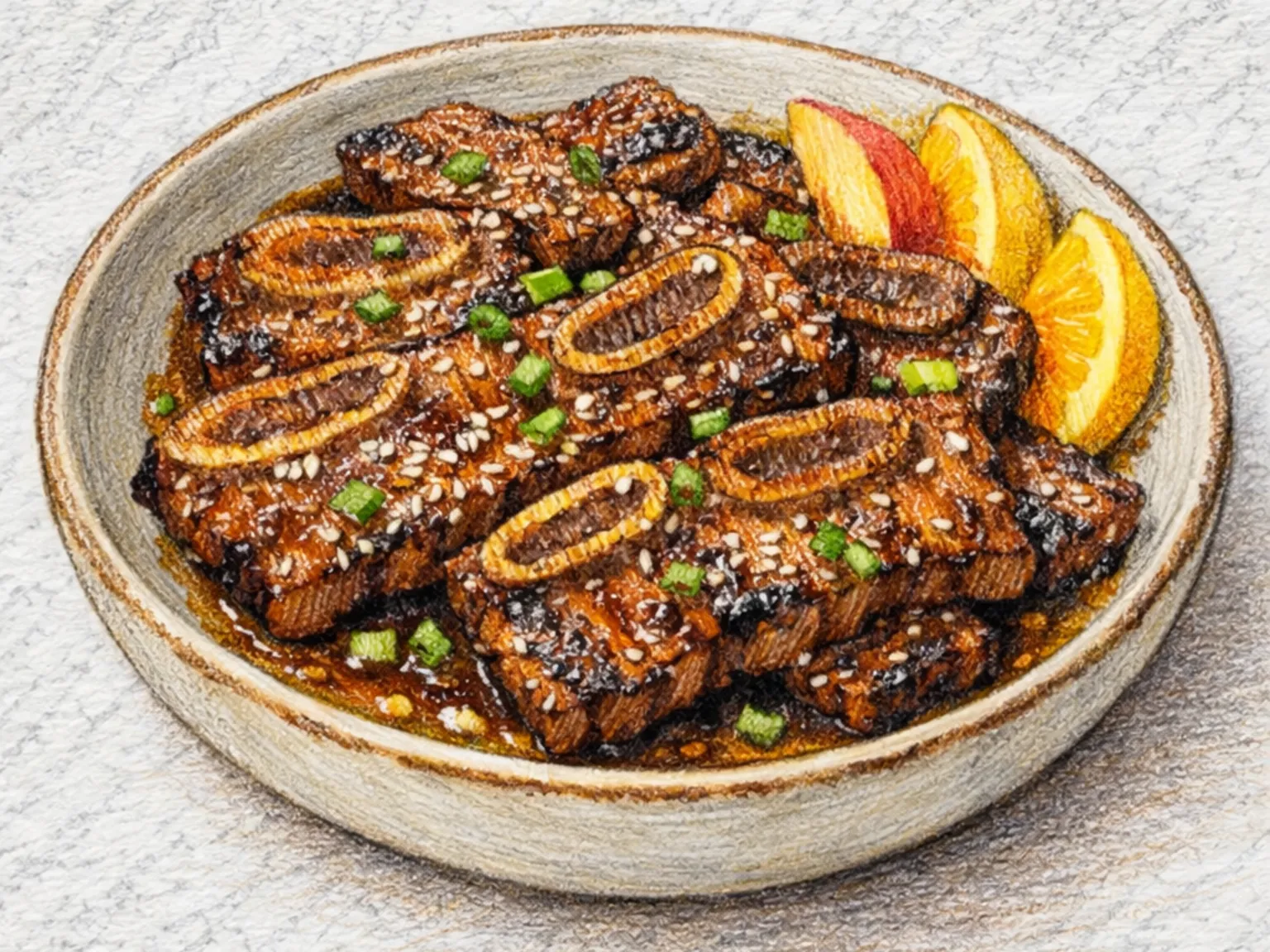
Korean Flanken Ribs (Pear-Soy Marinated LA-Cut Beef Short Ribs)
LA-galbi-gui is a Korean grilled short rib dish using flanken-cut beef ribs, where the bones are sliced laterally so several ribs run across each strip in a thin, even slab. This cross-cut format gives the meat a wide surface area and a uniform thickness that makes it both receptive to marinade and quick to cook through evenly. The marinade combines Asian pear juice, soy sauce, sugar, minced garlic, sesame oil, black pepper, and sliced green onion. Enzymes in the pear juice break down muscle fibers in the thin-sliced meat, while the combination of soy sauce and sugar triggers simultaneous Maillard browning and caramelization over high heat, forming a dark, lacquered crust on the surface. Because the marinade carries substantial sugar, cooking over medium heat and flipping frequently is essential; high heat without attention causes the exterior to char before the interior has cooked through. Each side needs three to four minutes to reach full doneness around the bone. Marinating overnight in the refrigerator allows the seasoning to penetrate fully between the bones, producing a noticeably deeper sweet-salty flavor once grilled. Resting the meat for two to three minutes after pulling it off the grill keeps the juices from running out immediately.
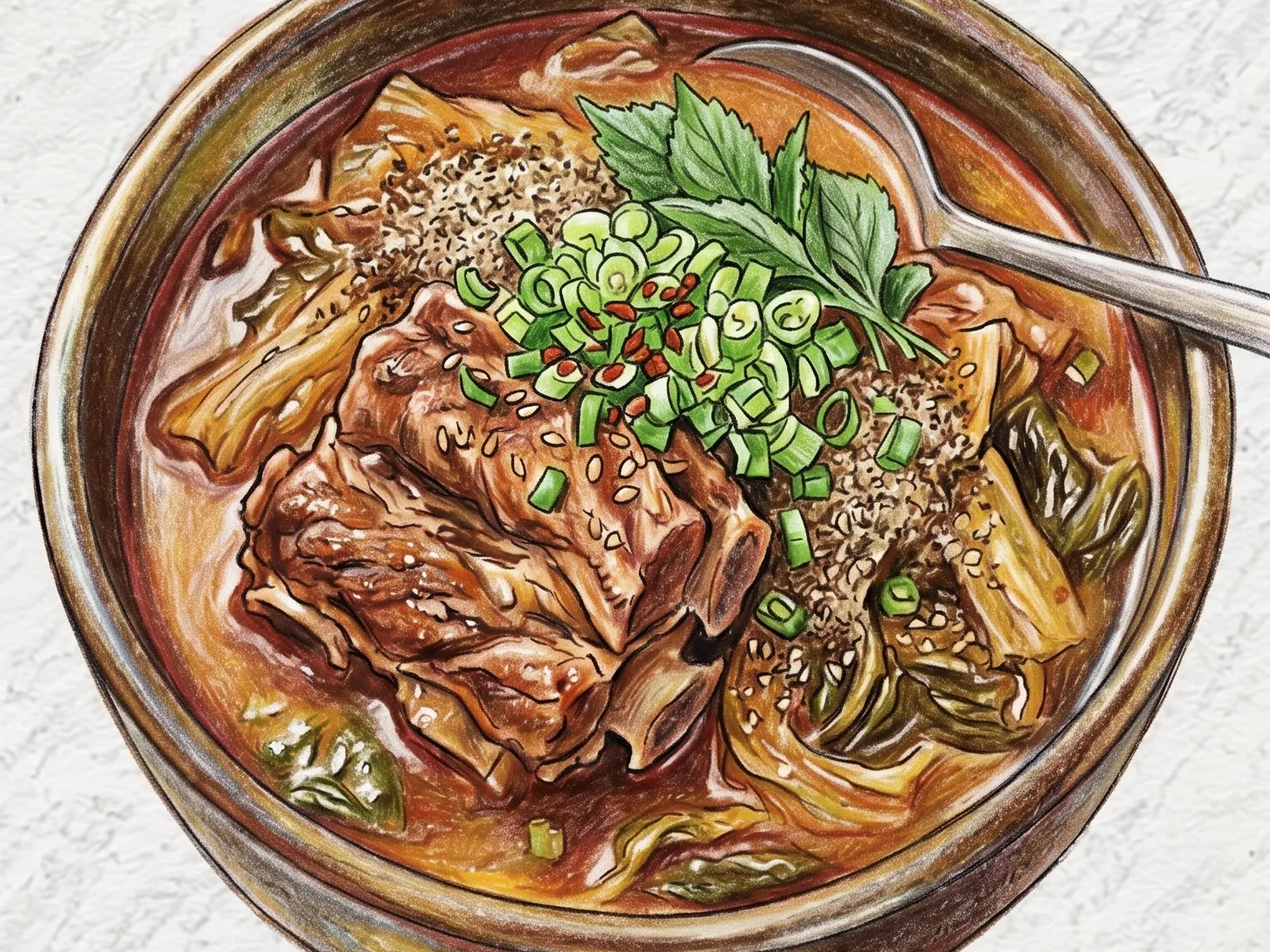
Korean Pork Bone Hangover Soup
Ppyeo-haejang-guk is a Korean hangover soup built on a foundation of pork neck bones simmered for well over an hour until their collagen dissolves into a heavy, full-bodied stock. The bones are soaked and blanched beforehand to eliminate any off-flavors, and the resulting broth is clean despite its richness. Blanched napa cabbage outer leaves are pre-seasoned with doenjang, gochugaru, garlic, and soup soy sauce before being added to the pot, where they absorb the meaty broth and release their own earthy flavors in return. Perilla seed powder is stirred in at the end, thickening the liquid to a creamy consistency and adding a nutty finish. The completed soup is spicy, deeply savory, and thick enough to feel restorative after a long night. In Korea, this style of haejang-guk is a morning-after institution, served steaming in dedicated restaurants that open before dawn.
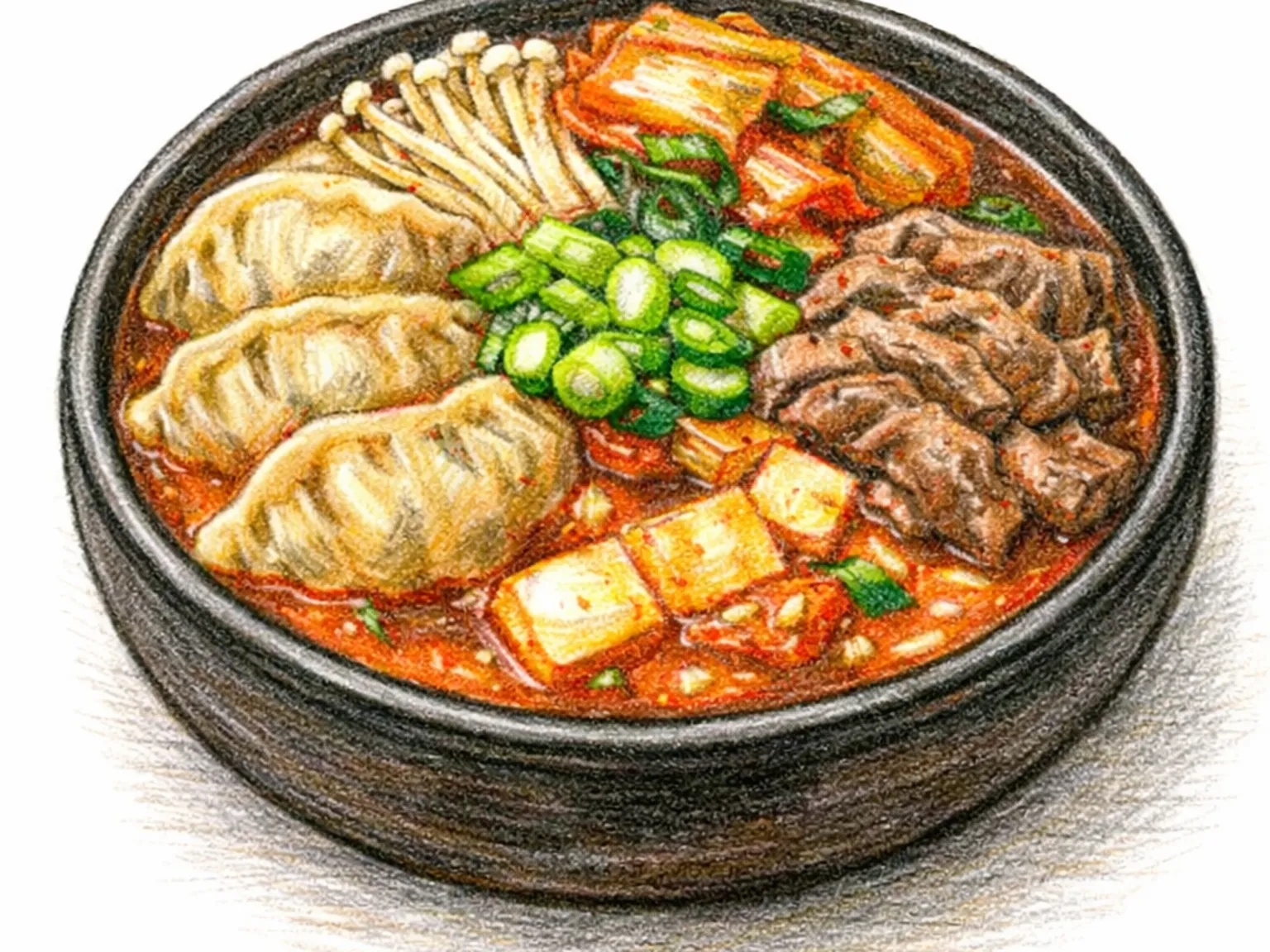
Korean Kimchi Beef Dumpling Hot Pot
Kimchi-beef mandu jeongol is a generous Korean hot pot that combines frozen dumplings, thinly sliced beef, and aged kimchi in anchovy stock seasoned with gochujang and soup soy sauce. As the pot bubbles, the meat filling inside each dumpling leaches its savory fat into the broth while the kimchi's fermented sourness and heat layer in on top, building a soup that grows more complex the longer it simmers. Napa cabbage leaves, enoki mushrooms, and firm tofu add contrasting textures to each spoonful. Blanching the beef briefly before adding it to the pot prevents the broth from clouding, and the tofu goes in last to keep it intact. The older and more pungent the kimchi, the deeper and more rounded the soup becomes, which is why well-fermented kimchi is worth seeking out for this dish specifically. A drop of perilla oil stirred in just before serving adds a nutty finish that ties the layers together. Eaten communally from the stove, with rice stirred in at the end to absorb the remaining broth, this pot feeds a table with minimal effort.
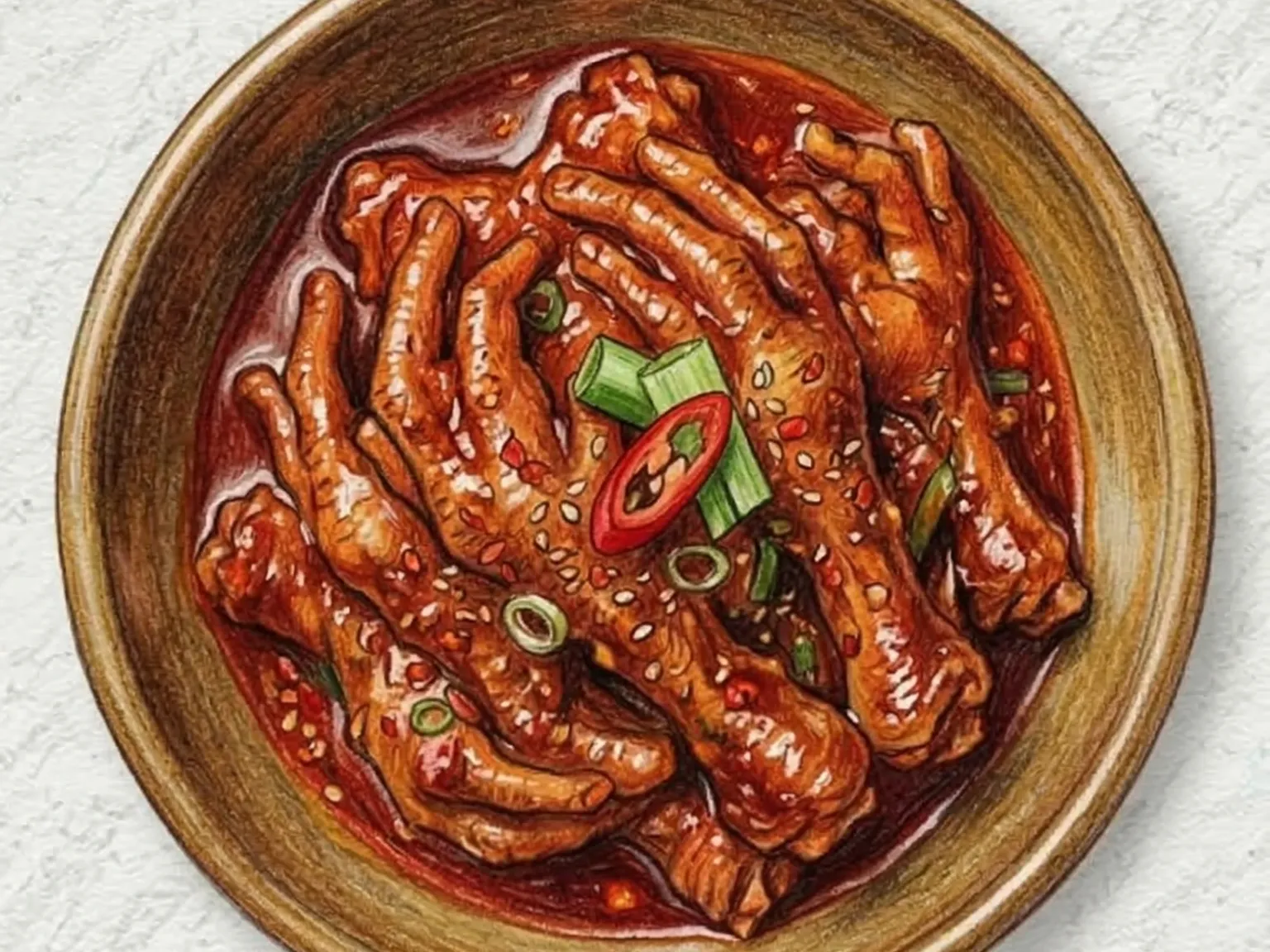
Korean Braised Chicken Feet
Dakbal-jjim braises chicken feet in a sauce built from gochujang, gochugaru, soy sauce, and sugar until the liquid reduces to a thick, glossy coating around each foot. As the skin and cartilage cook down over time, their collagen converts to gelatin and the feet develop a chewy, sticky texture that is the central appeal of the dish. Gochujang and gochugaru each bring heat from a different angle, one deep and fermented and the other bright and direct, while sugar introduces a caramel-like sweetness that balances the heat load. Cooking wine added early removes the gaminess specific to chicken feet. By the time the sauce has fully reduced it clings to every surface in a deep red glaze, and the finished feet carry both intense seasoning and a pronounced chew that makes them a natural pairing with cold beer or a bowl of rice.
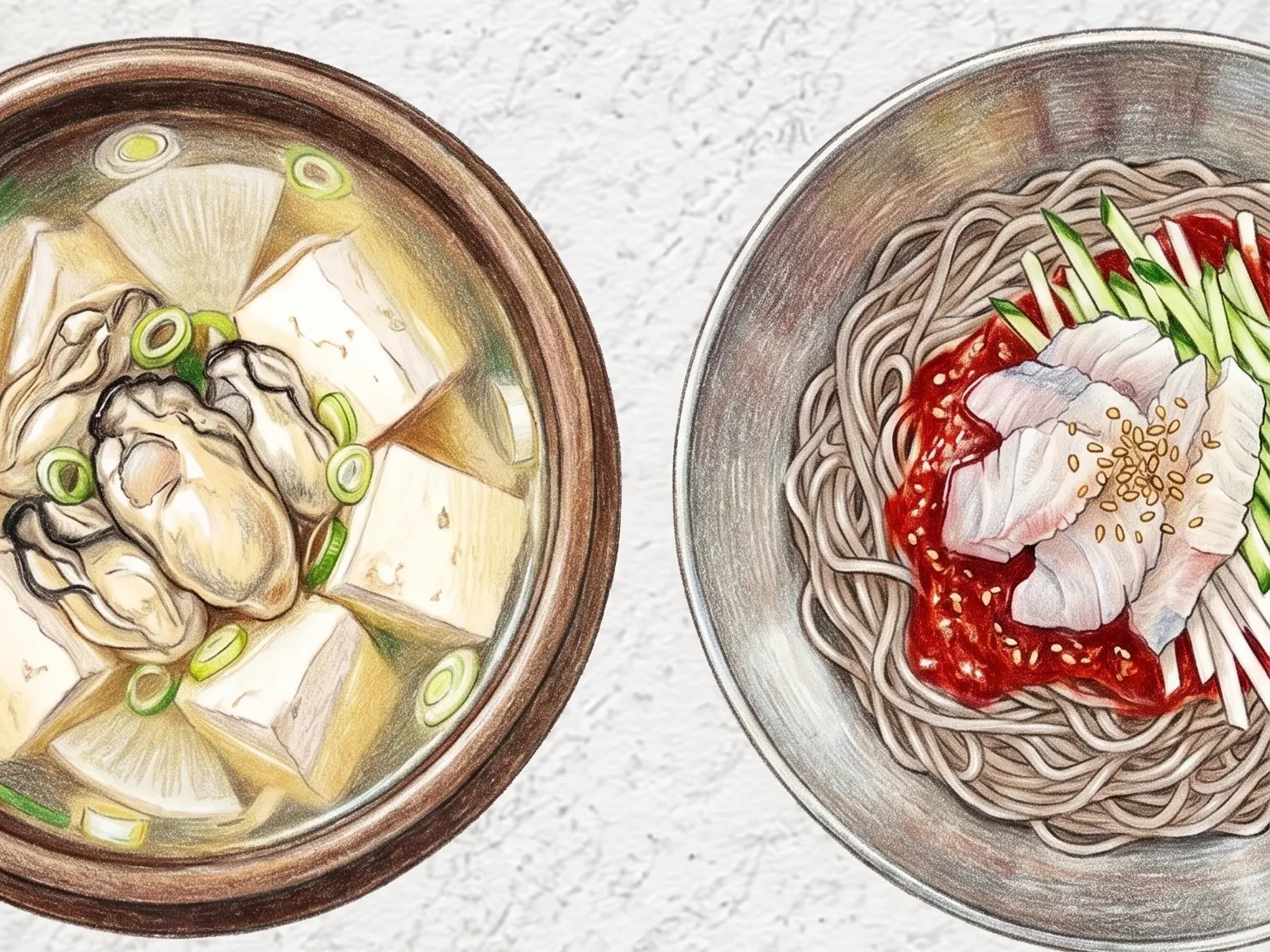
Korean Raw Fish Cold Noodles
Hoe naengmyeon places slices of fresh white fish sashimi over chewy cold buckwheat noodles and brings everything together with a spicy-sweet sauce. The gochujang-based dressing is built with generous amounts of vinegar and sugar, so the heat arrives alongside a sharp tang that complements the mild, springy texture of the fish rather than overpowering it. The fish should be sliced thin and evenly so that it distributes throughout the noodles when mixed. Shredded cucumber and radish contribute a cool crunch that contrasts with the silky sashimi and the dense chewiness of the noodles beneath. A halved soft-boiled egg and a scattering of sesame seeds finish the bowl. The dish is meant to be mixed vigorously so that every strand of noodle, piece of fish, and strip of vegetable is coated in the vivid red sauce, though eating it piece by piece before mixing lets you taste each component separately. The dish traces its roots to the cold noodle culture of the Sokcho and Hamhung regions in Gangwon Province and is now a popular summer specialty at naengmyeon restaurants and raw fish eateries across the country.
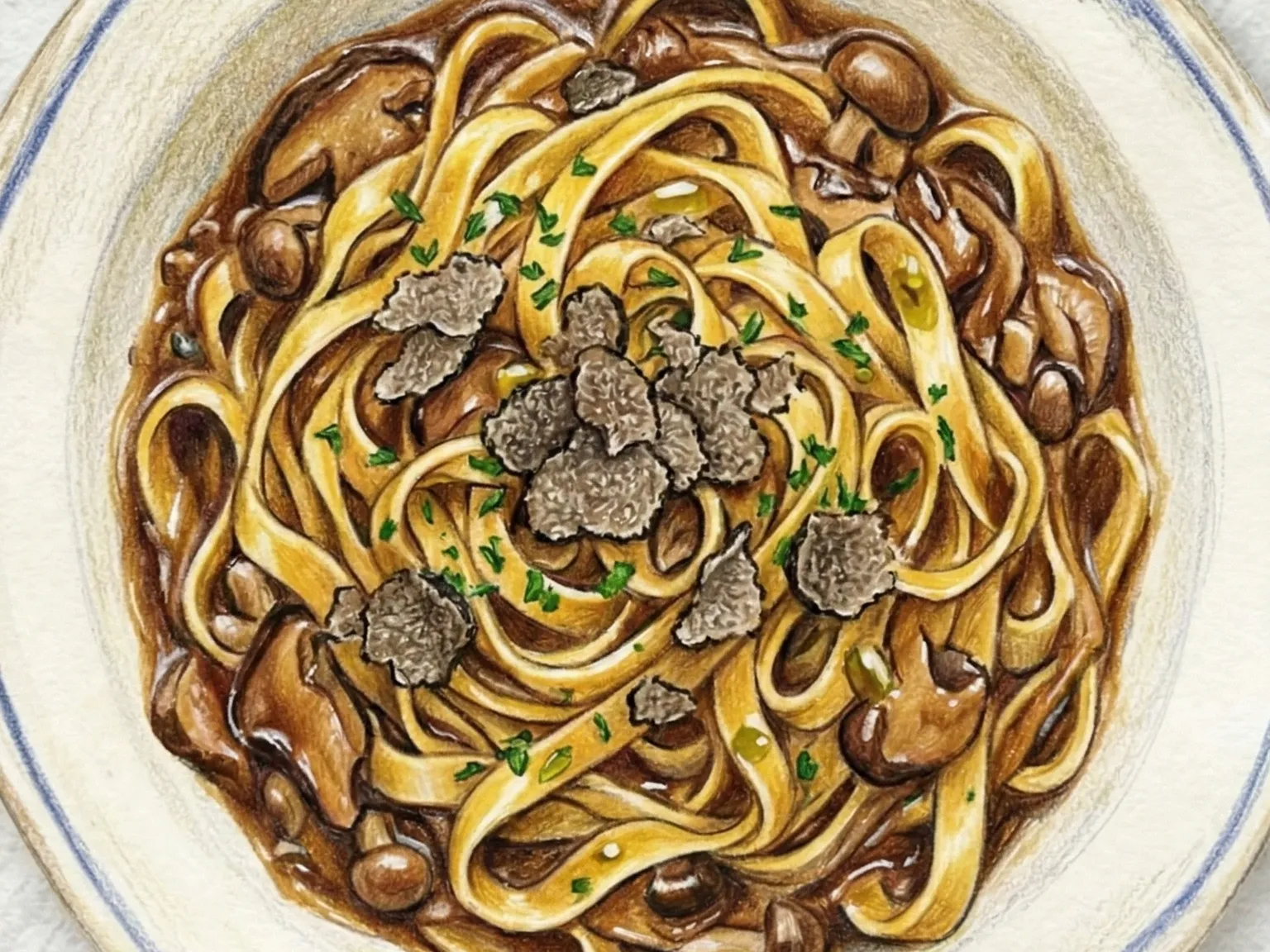
Porcini Truffle Mushroom Tagliatelle
Porcini truffle mushroom tagliatelle relies on the liquid left over from rehydrating dried porcini as the flavor engine of the entire dish. Soaking dried porcini for thirty minutes or more produces a deep brown, intensely earthy liquid that carries far more umami than any fresh mushroom can alone. Shallots and garlic are cooked slowly in butter and olive oil until soft, then white wine is added to deglaze the pan and lift the savory residue from the bottom. Rehydrated porcini and a selection of fresh mixed mushrooms go in next, followed by the strained soaking liquid, and the sauce is simmered down until concentrated and thick. Truffle paste is stirred in only after the pan is removed from heat - adding it while still on the flame burns off the volatile compounds responsible for its aroma. Grated Parmigiano-Reggiano and flat-leaf parsley are folded through at the end. Wide tagliatelle ribbons are the ideal carrier: their surface area and chewy structure hold the dense sauce without falling apart.
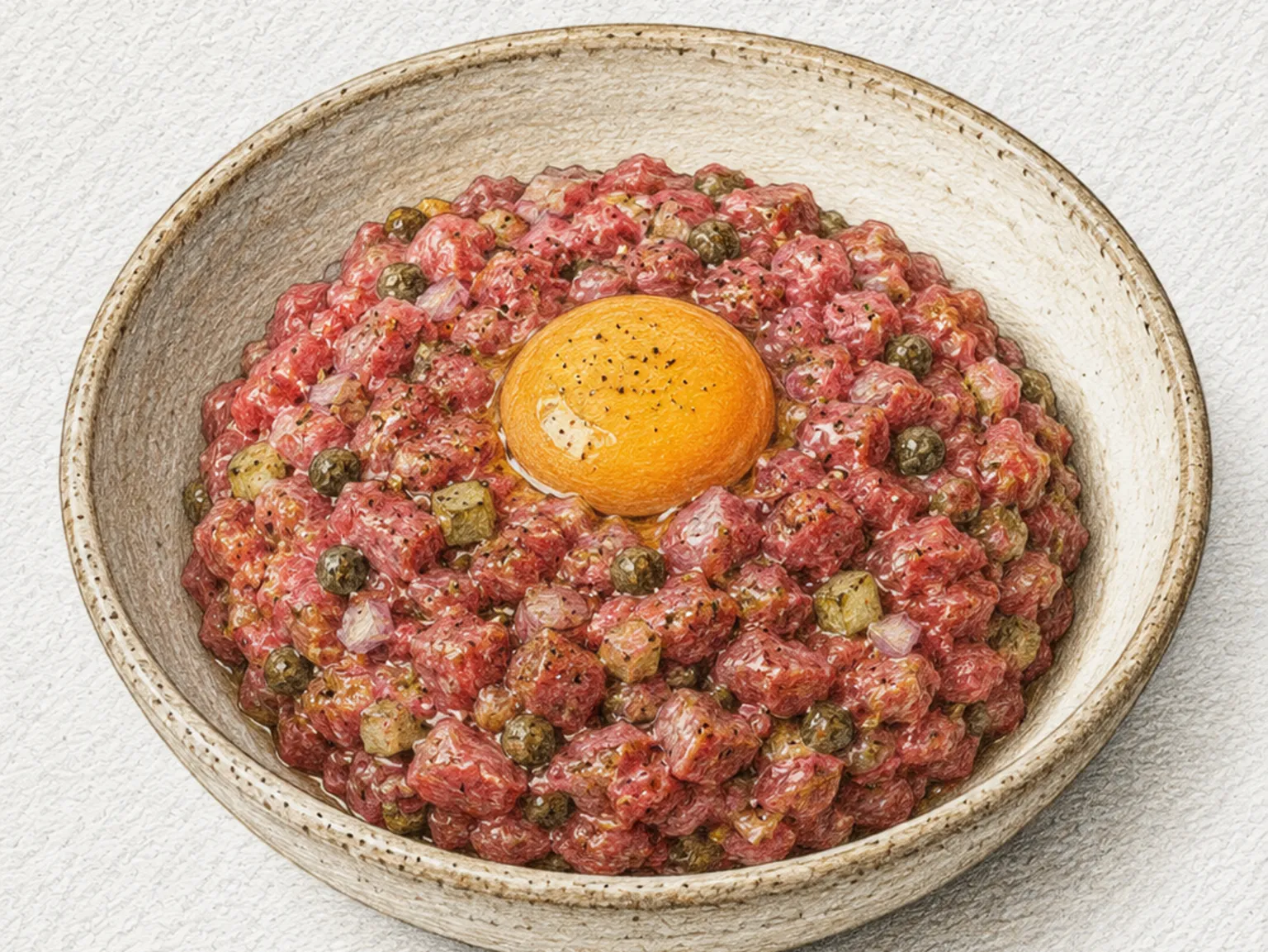
Beef Tartare
Beef tartare is a French preparation of premium tenderloin hand-chopped with a knife, never passed through a grinder, so that each small piece stays intact and delivers a clean, juicy bite rather than a pasty mouthfeel. The chopped meat is mixed with capers, anchovies, shallots, and cornichons, then bound with egg yolk and Dijon mustard. Capers and anchovies provide a salty, briny depth that makes raw beef compelling as a dish, while the Dijon adds a sharp, direct mustard heat that brings focus to every forkful. The egg yolk coats each morsel in a silky, rich film that holds the mixture together without masking the meat itself. Freshness is non-negotiable here - the quality of the tenderloin is the entire foundation of the dish, and there is no technique or seasoning that compensates for inferior beef.
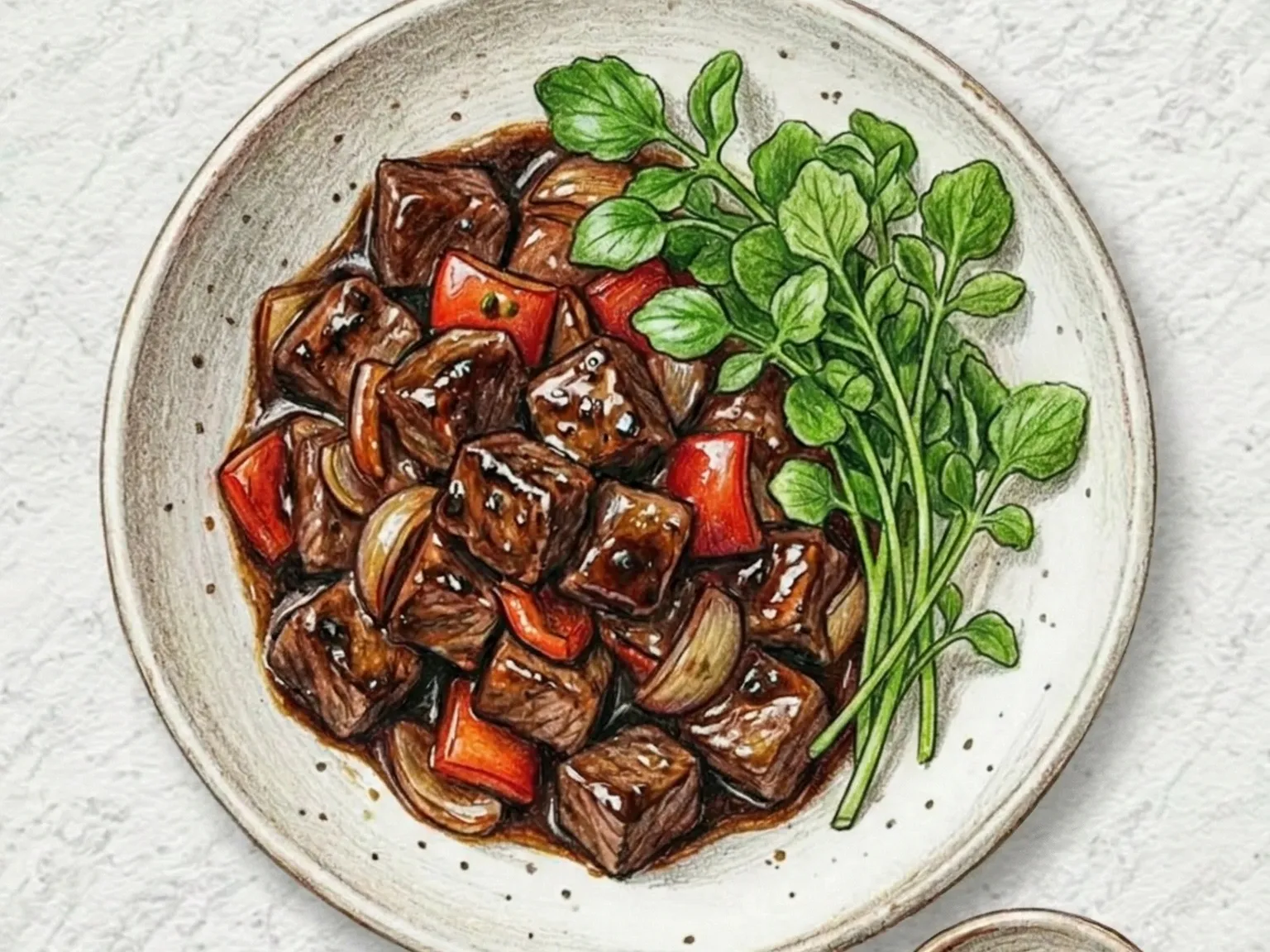
Bo Luc Lac (Vietnamese Shaking Beef Sirloin Wok Stir-Fry)
Bo luc lac takes its name from the shaking motion that defines how the dish is cooked. Cubed beef tenderloin or sirloin, marinated in soy sauce, oyster sauce, garlic, and sugar, goes into a wok heated to the point of smoking. The cook shakes the wok vigorously to toss the cubes through the oil, searing each face in seconds while the tossing motion keeps steam from building up and stewing the meat. The result is a dark, caramelized crust on the outside while the center stays pink and rare. The dish emerged from Vietnamese-French fusion cooking in colonial Saigon, when Western beef cuts became available and Vietnamese cooks applied their own techniques to them. The beef is plated over watercress dressed with lime juice and cracked black pepper; the sharpness of the watercress and the acidity of the lime cut through the rich, soy-glazed exterior. A dipping sauce of salt, pepper, and lime juice accompanies the plate. The contrast between the charred, deeply savory meat and the cool raw greens beneath has kept this one of Saigon's most recognizable dishes for decades.

Blueberry Banana Bread
Blueberry banana bread is a quick bread that pairs the dense, sweet moisture of ripe bananas with the sharp burst of blueberries. The riper the banana, the more sugar has converted from starch, which means the bread needs less added sweetener while still tasting distinctly sweet. Melted butter enriches the crumb without weighing it down the way oil can, and baking soda creates a fine, tender rise that keeps the interior soft. Blueberries burst during baking and streak the crumb with rivulets of purple juice, making every slice visually distinct as well as flavorful. The most important technique is restraint with the mixing - once the flour is added, stirring just until the dry streaks disappear prevents gluten from over-developing and keeps the crumb moist rather than tough. Because the fruit carries most of the sweetness and moisture, this is a reasonable choice as a daily snack or a healthier baked good. Sliced warm with butter or cream cheese, it works as a simple brunch dish, and it keeps well for several days at room temperature before the crumb begins to dry.
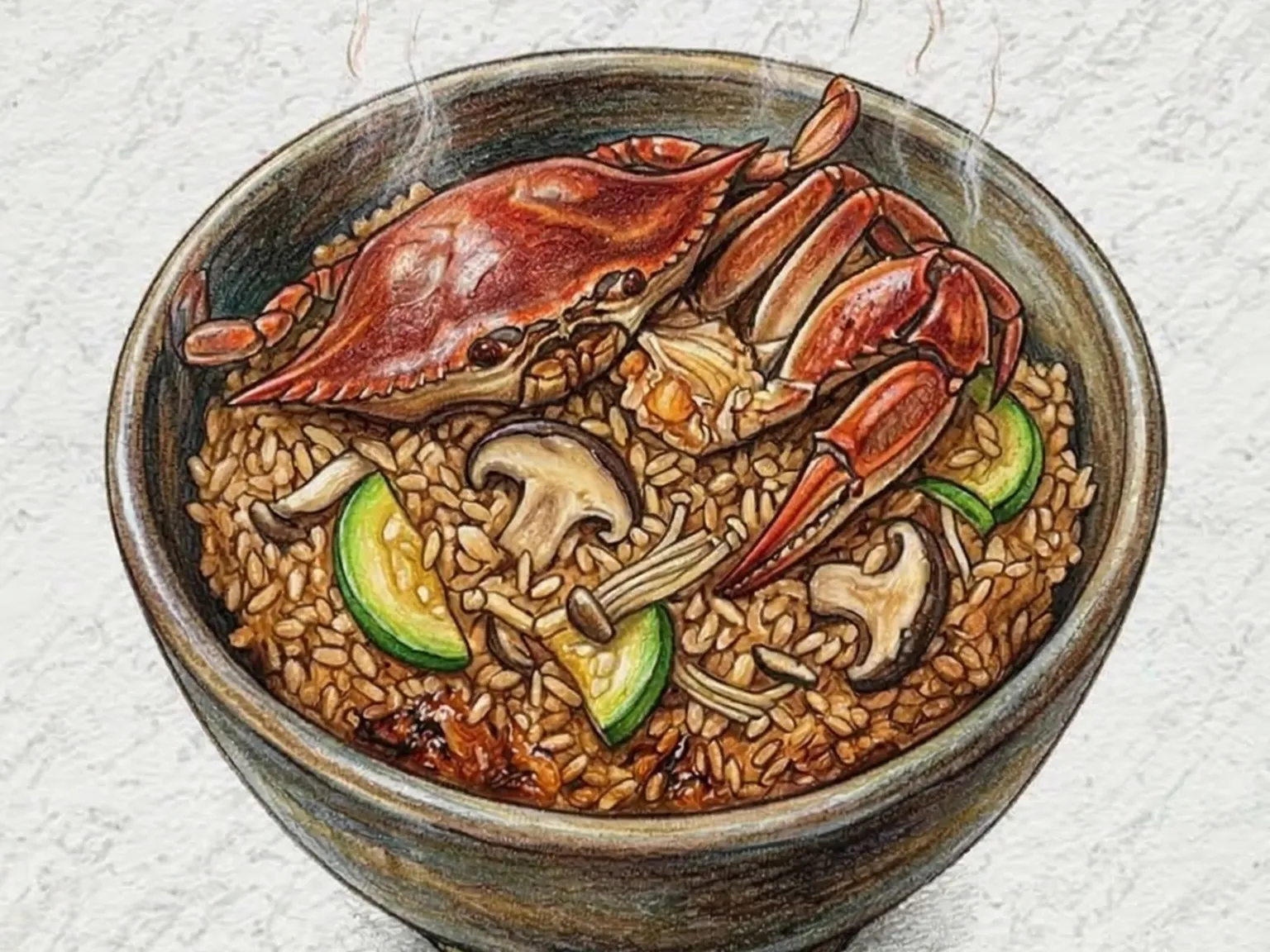
Korean Blue Crab Doenjang Pot Rice
Cleaned blue crab sits atop soaked rice in a heavy pot, cooked in anchovy-kelp stock that has been infused with dissolved doenjang. Garlic and vegetables are sauteed first in perilla oil to build an aromatic base before the stock-doenjang mixture is poured in and brought to a boil. The crab goes on top and the pot is covered for five minutes on high heat, fifteen minutes on low, then ten minutes off the heat to rest and steam through. The crab's briny sweetness and the doenjang's fermented, earthy depth soak into every grain of rice during the long, slow cook. Zucchini and shiitake mushrooms add a mild sweetness that tempers the saltiness and rounds out the bowl. One additional minute on low heat after resting creates a golden, nutty nurungji crust at the bottom, a prized texture in Korean pot rice. Doenjang saltiness varies by brand, so tasting the diluted stock before adding rice lets you calibrate without oversalting. A few slices of cheongyang chili on top cut through the fermented richness and add a sharp finishing heat.
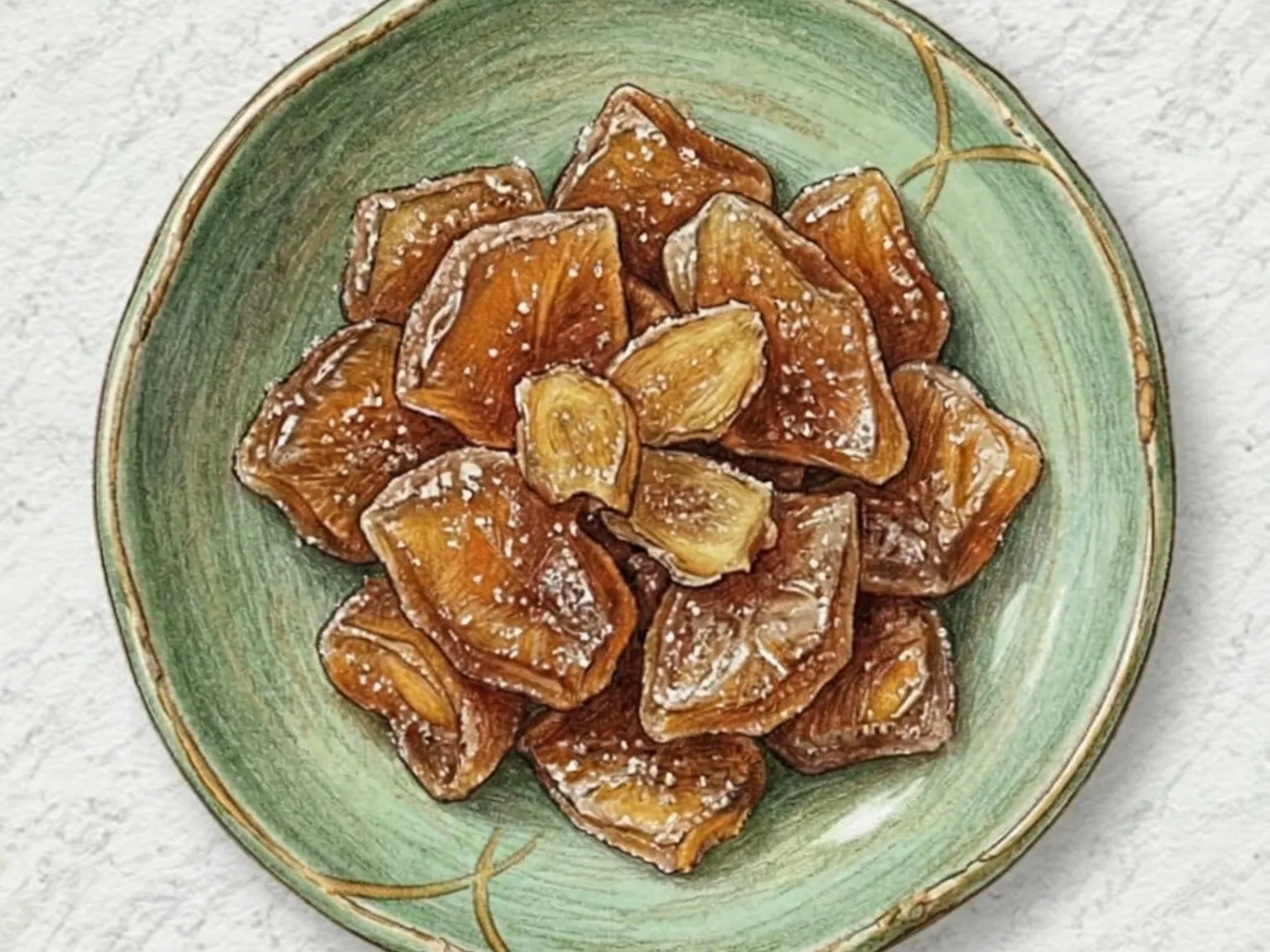
Saenggang Jeonggwa (Candied Ginger)
Saenggang jeonggwa is a traditional Korean candied ginger prepared by slicing fresh ginger thin, blanching it twice to reduce the raw heat, then simmering the pieces slowly in a glaze of sugar and grain syrup. A ten-minute soak in cold water draws out the sharpest bite first, and two rounds of boiling soften the pungency further while leaving the clean, aromatic core intact. The slices are cooked on low heat until the syrup reduces to a thick, glossy coat on the surface, at which point lemon juice is added to introduce an acidity that keeps the sweetness from becoming cloying. Once dried on a rack and rolled in granulated sugar, the finished pieces carry a crisp, crystalline shell on the outside. On the first bite, the sugar crust shatters, and the chewy, syrup-saturated ginger beneath releases a slow, building warmth that lingers well after the piece is finished.
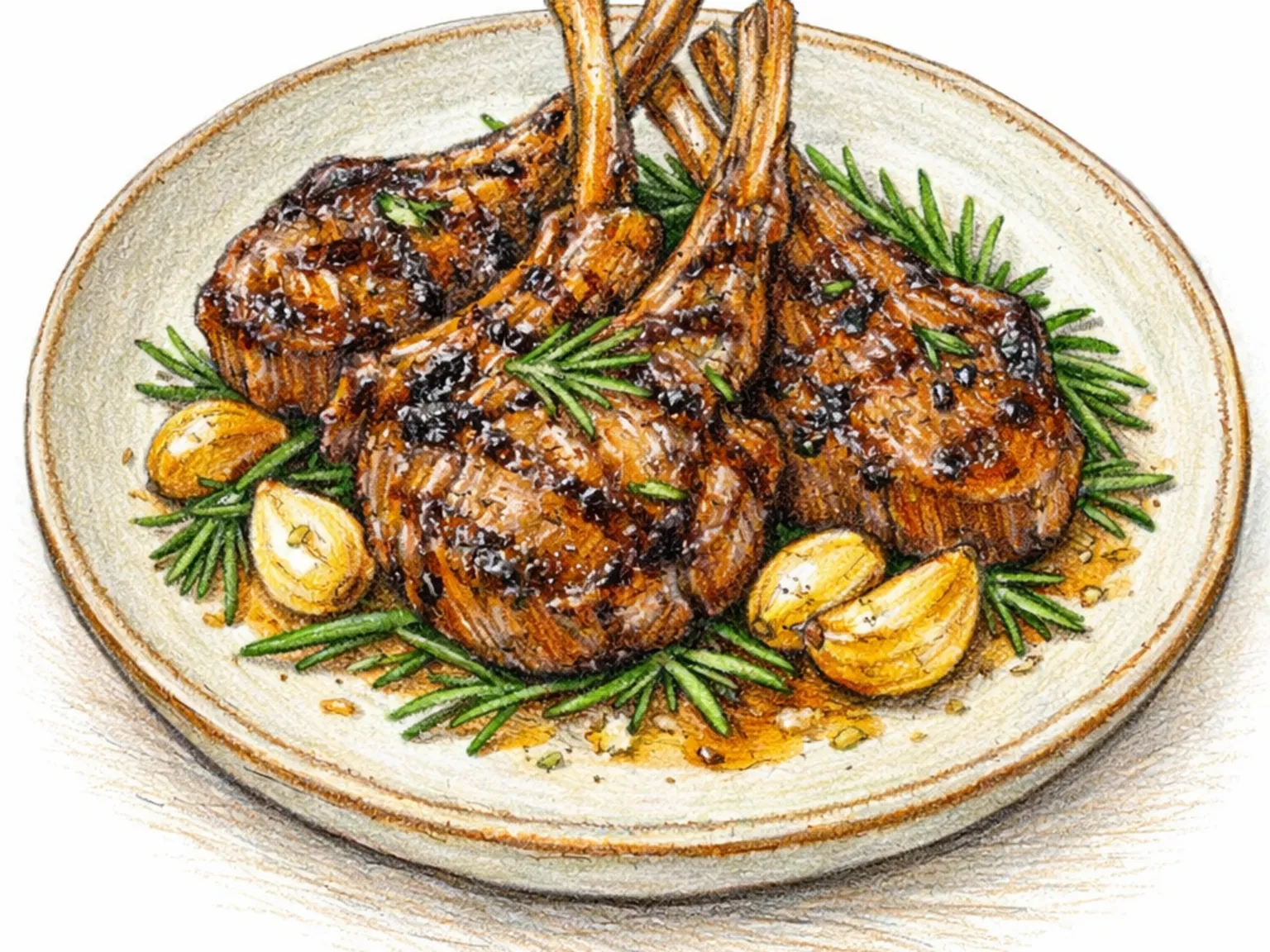
Grilled Lamb Chops
Lamb chop gui is a grilled lamb rib chop dish where a French rack is marinated for at least one hour in olive oil, crushed garlic, freshly chopped rosemary, salt, and black pepper before being seared on a blazing-hot grill. The rosemary's piney, resinous aroma tempers the lamb's gaminess effectively, while the garlic caramelizes gently on contact with the hot surface and builds a concentrated savory layer on the meat. Grilling each side for three to four minutes targets an internal temperature of 55 to 60 degrees Celsius for medium-rare, the point at which the intramuscular fat renders just enough to release abundant juices without drying the meat out. A squeeze of fresh lemon juice immediately after removing from the grill cuts through the richness of the rendered fat and brightens the overall flavor. The most satisfying way to eat these is holding the exposed rib bone and taking bites directly off it, and they pair naturally with mint yogurt sauce or a simple chimichurri-style accompaniment.
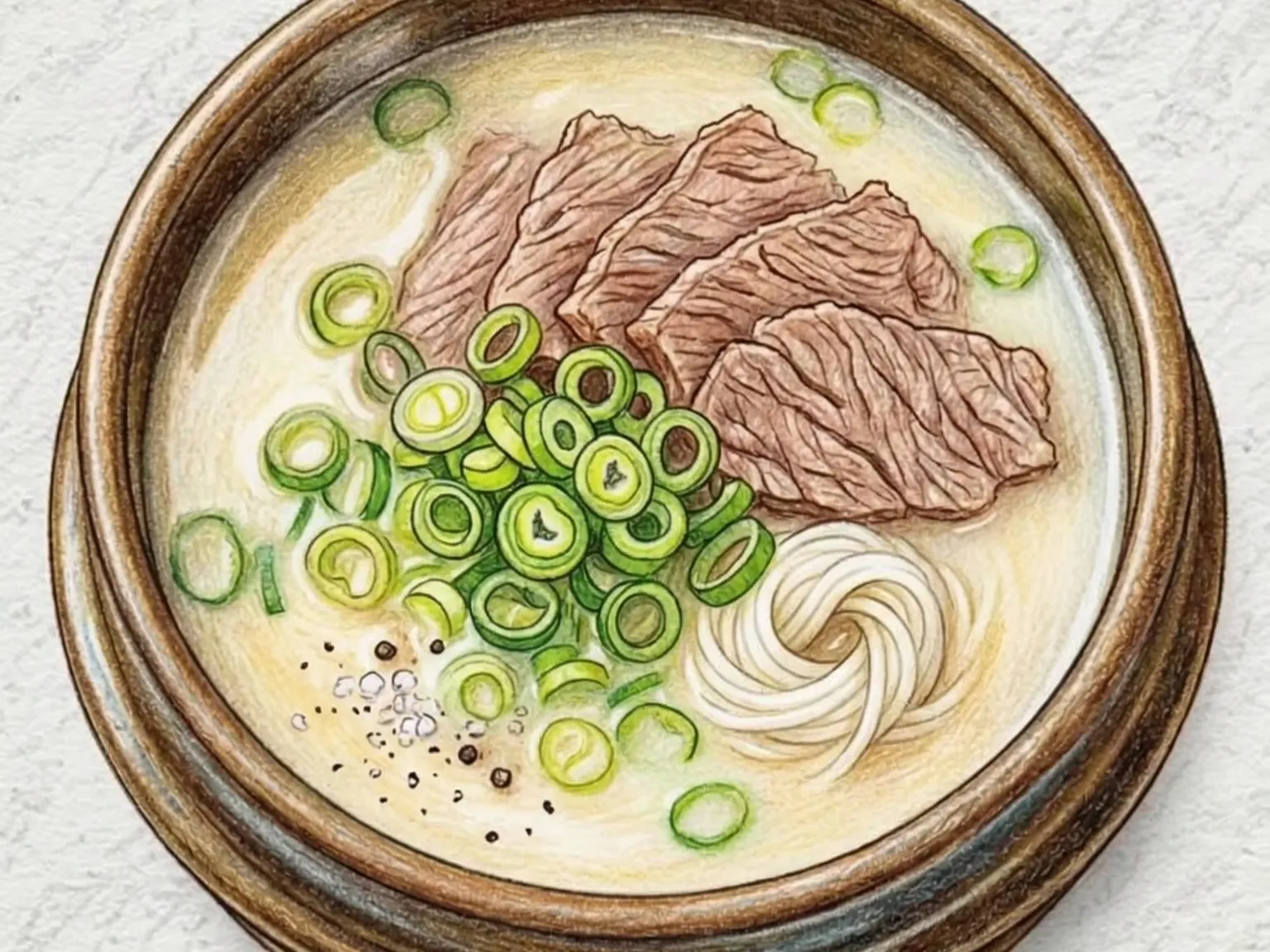
Korean Ox Bone Soup (Milky Slow-Simmered Beef Bone Broth)
Seolleongtang is one of Korea's oldest and most enduring soups, produced by simmering ox leg bones and beef brisket together for six to eight hours until the broth turns a deep, opaque milky white. The bones are soaked in cold water for a minimum of two hours to purge as much blood as possible, then blanched in a separate pot and rinsed before the true simmering begins in fresh water. Over the course of a half-day at a steady, rolling boil, marrow and collagen break down and emulsify into the water, creating a broth with a heavy, almost creamy viscosity and a deep bovine savoriness that accumulates slowly and cannot be replicated with shortcuts. The brisket is removed after two hours, when it has turned tender and fully cooked, then sliced thin across the grain and returned to the bowl as a topping. The defining tradition of seolleongtang is that the broth arrives at the table completely unseasoned, and each person adds their own salt, white pepper, and sliced green onion to taste. This custom underscores the expectation that the broth itself should carry the bowl with its own richness. Steamed rice or thin wheat noodles are added directly to the soup and left to soak, absorbing the milky liquid until each grain or strand carries the flavor of the bone broth. In Korea, seolleongtang is eaten as a restorative meal after illness, as a morning hangover cure, and as a deeply satisfying cold-weather comfort food.
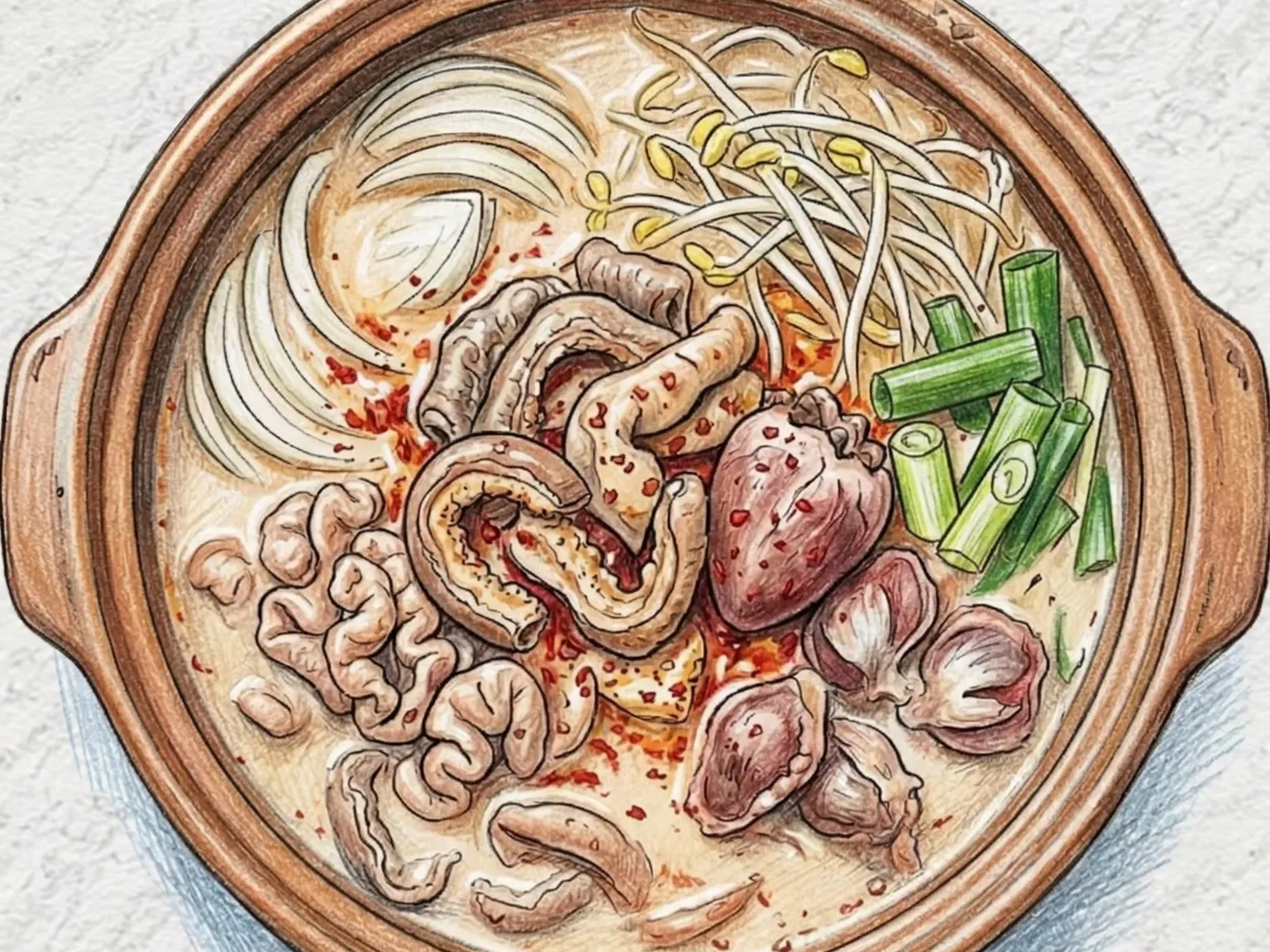
Korean Beef Tripe Hot Pot
Naejang jeongol is a Korean offal hot pot that combines mixed beef innards with rich bone broth, onion, bean sprouts, and green onion in a single pot. The typical cut selection includes small intestine, tripe, and abomasum, each bringing a distinct texture and flavor to the bowl. Thorough preparation is what separates a clean-tasting naejang jeongol from one with an unpleasant odor: the innards are kneaded repeatedly with flour and salt to remove impurities, soaked in cold water to draw out residual blood, then rinsed fully before any heat is applied. A half spoonful of doenjang added to the broth neutralizes remaining gaminess through the fermented paste's enzymes, while gochugaru and generous garlic build a spicy, warming character that defines the dish. The chewy, elastic texture of the offal plays against the milky, collagen-saturated bone broth, and that contrast of texture against rich liquid is the core pleasure of the bowl. Bean sprouts are added at the end to preserve their crunch, and green onion goes in last for its fresh aroma. Naejang jeongol has served for generations as a classic soju pairing and a trusted hangover soup.
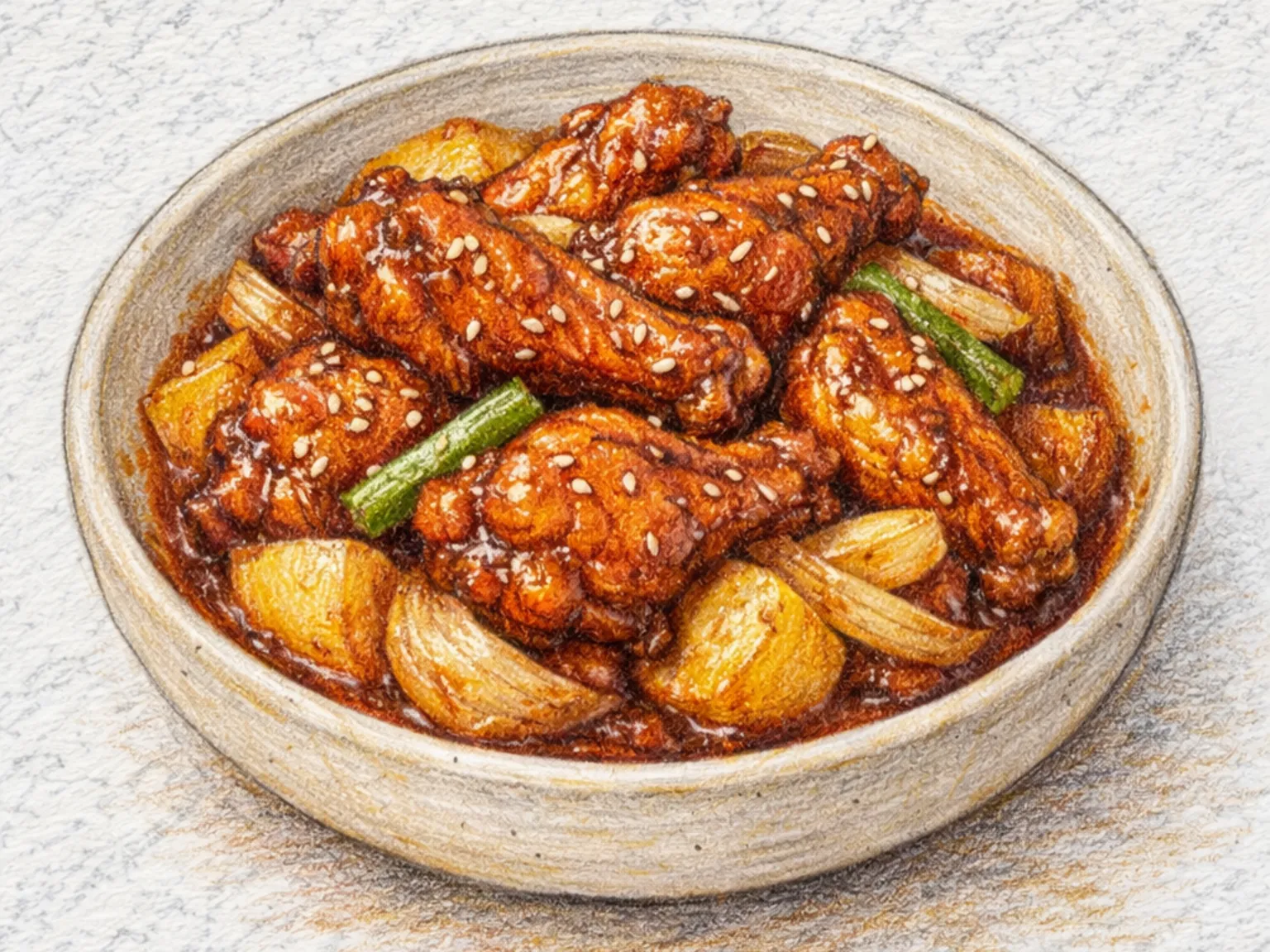
Korean Dakbong Gochujang Jorim (Gochujang-Braised Chicken Drumettes)
Dakbong gochujang jorim is chicken drumettes braised with potato in a sauce made from gochujang, soy sauce, chili flakes, and oligosaccharide syrup. The meat surrounding the small bones turns dense and pleasantly chewy as it simmers, holding onto the thick, reduced sauce at every surface. Potato pieces soften in the braising liquid until starchy and tender throughout, absorbing the chili-soy base from the outside in. The oligosaccharide syrup wraps the gochujang heat in a shiny glaze that keeps you reaching for another piece. A stalk of green onion stirred in at the very end adds a sharp, pungent aroma that lifts the finished dish.
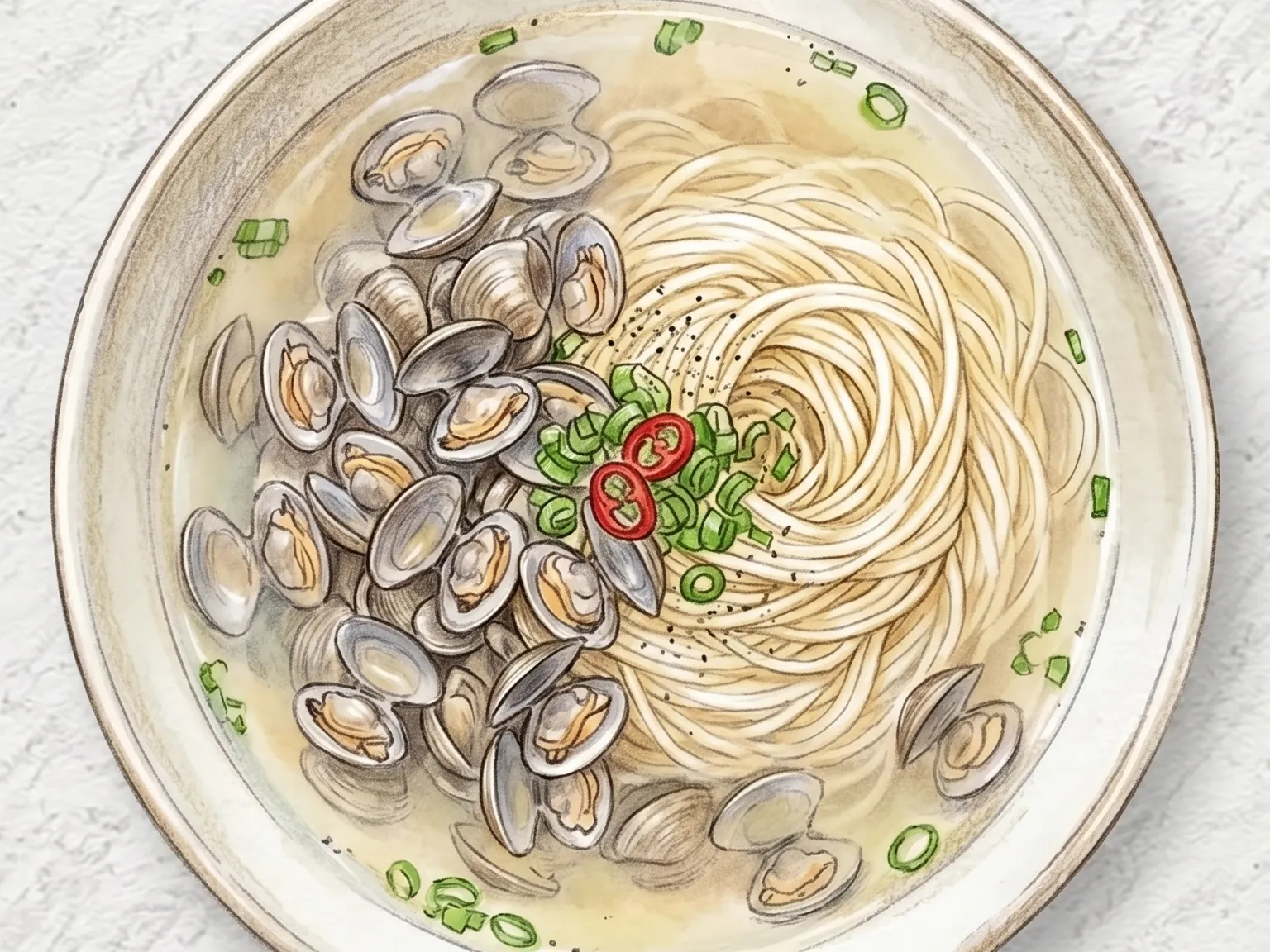
Korean Corbicula Clam Noodle Soup
Jaecheop-guksu is a regional specialty from Hadong in South Gyeongsang Province, built on a clear broth extracted from purged freshwater corbicula clams. The broth carries the clams' concentrated brininess alongside a remarkably clean, light body, seasoned sparingly with soup soy sauce and salt to let the shellfish flavor dominate. A single cheongyang chili simmered in the pot lends a gentle background heat, and scallion with black pepper finishes the aroma. Widely regarded as a hangover remedy, this noodle soup is prized for its ability to settle the stomach with its pure, uncluttered flavor. Along the Seomjin River restaurants of Hadong, jaecheop dishes in various forms are considered the defining taste of the region.
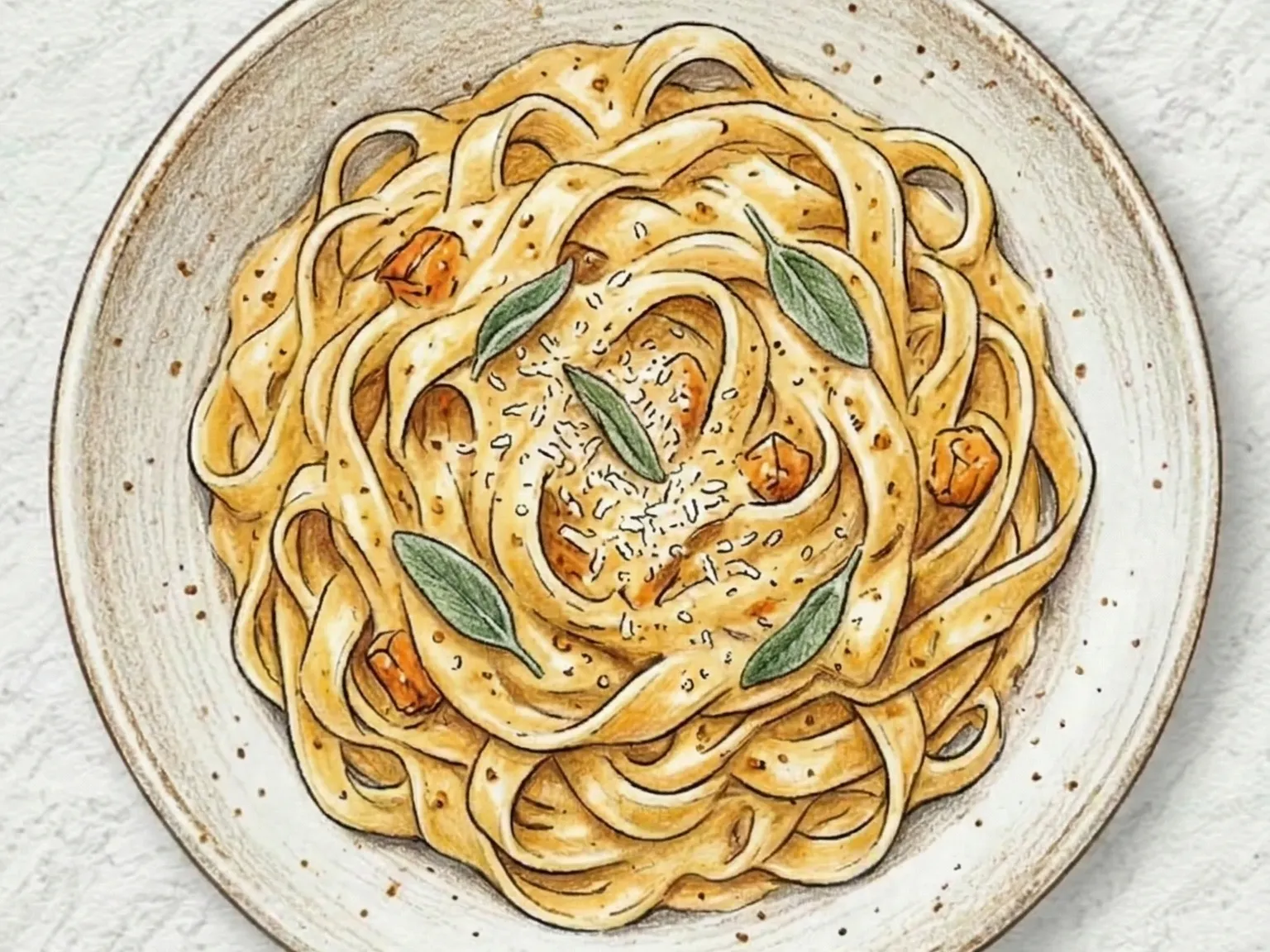
Roasted Pumpkin Alfredo Fettuccine
This pasta dish incorporates a smooth purée of kabocha squash roasted until the edges reach a caramelized state at 200 degrees Celsius. The roasting process concentrates the natural starches, providing a thick body to the sauce without additional thickening agents. Onions and garlic sautéed in butter form the aromatic base, which is then blended with the squash and heavy cream for a uniform texture. Grated Parmigiano-Reggiano introduces a salty, nutty profile, while a small measure of ground nutmeg provides a warm complexity that balances the sweetness of the squash. The wide ribbons of fettuccine are chosen specifically to hold the heavy sauce effectively. For improved efficiency, the squash can be prepared a day in advance and stored in the refrigerator. Using a ladle of starchy pasta water during the blending stage allows for precise control over the final consistency. To finish the plate, sage leaves fried in brown butter offer a bitter herbal contrast to the squash. White pepper adds a subtle heat while preserving the bright orange color of the sauce. Butternut squash serves as a functional substitute if kabocha is unavailable.
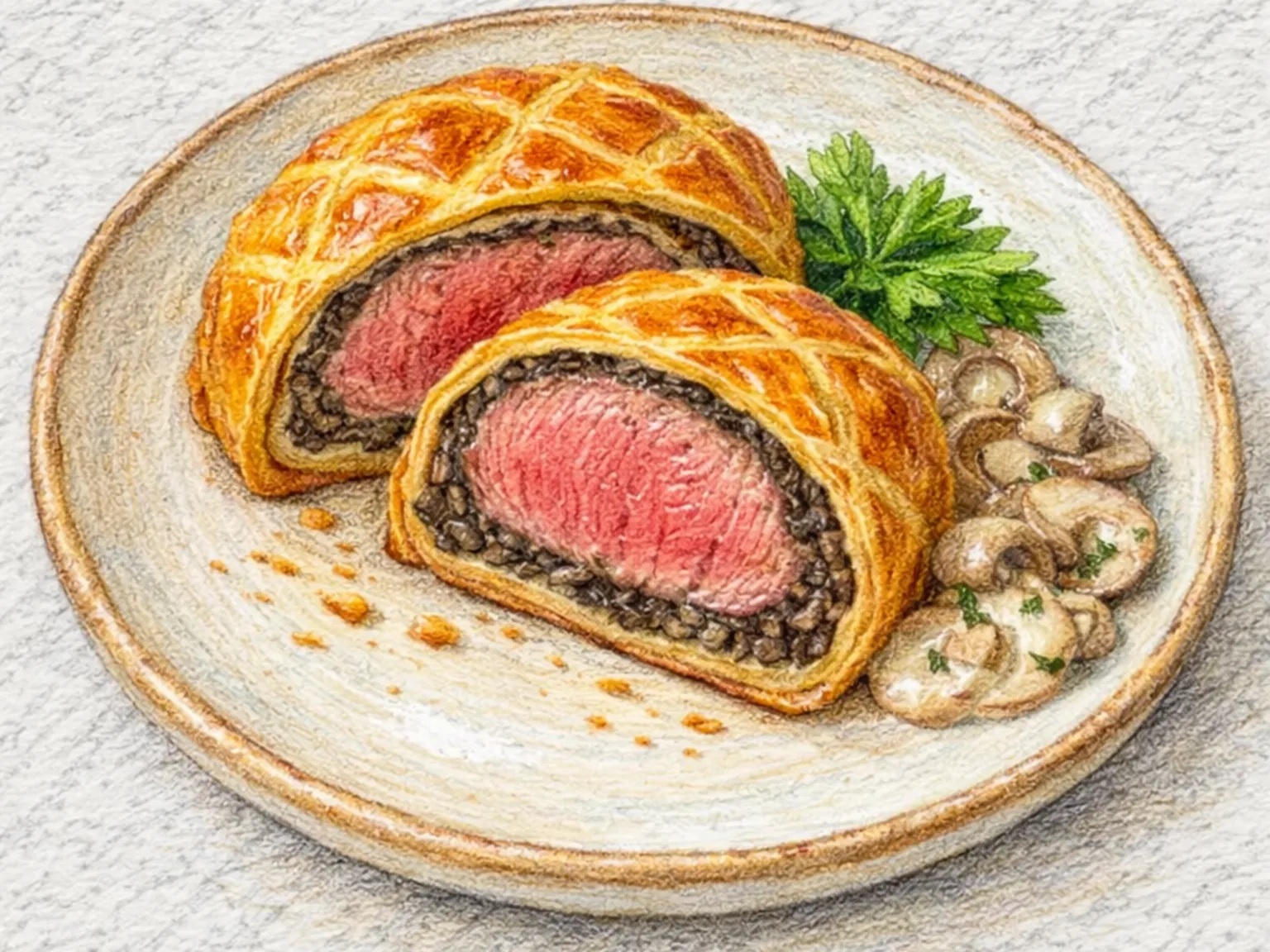
Beef Wellington
Beef Wellington wraps a whole seared beef tenderloin in a layer of mushroom duxelles and prosciutto, then encases everything in puff pastry before baking. The initial sear builds a Maillard-crusted surface on the beef, and the duxelles acts as a moisture barrier between the meat and the pastry, absorbing rendered juices so the dough does not go soggy during baking. In the oven, the pastry puffs into hundreds of golden, flaky layers while the tenderloin inside cooks evenly to a pink medium-rare center. Slicing through the finished roll reveals a clean cross-section of bronze pastry, dark mushroom layer, and rosy beef - the visual reward for careful assembly. The tightly packed sequence of textures, from shatteringly crisp pastry to the soft mushroom filling to the tender beef, makes every cut through the roll deliver a different bite. A red wine reduction served alongside completes the dish for a formal occasion.
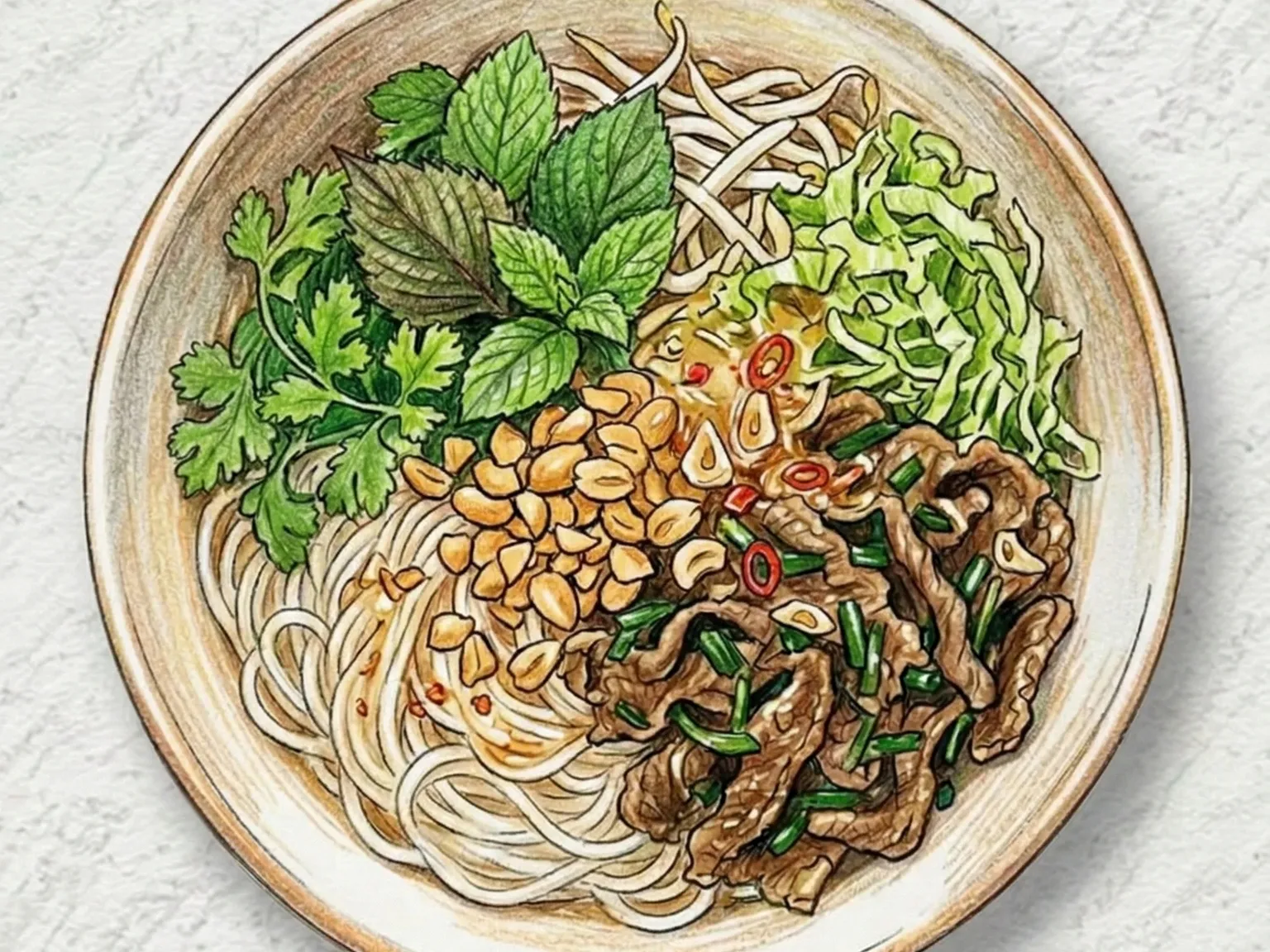
Bun Bo Nam Bo (Vietnamese Dry Beef Noodle Bowl with Herbs)
Bun bo nam bo - literally 'southern beef noodles' - is a Hanoi take on southern Vietnamese flavors, assembled as a dry noodle bowl rather than a soup. The dish layers cold rice vermicelli with stir-fried beef marinated in lemongrass and garlic, then tops it with a generous pile of fresh herbs: cilantro, Thai basil, mint, and perilla. Crushed roasted peanuts and fried shallots scatter on top, contributing crunch and a background sweetness. The binding element is nuoc cham - the sweet-sour-salty-spicy sauce built from fish sauce, lime, sugar, garlic, and chili - poured over and tossed through at the table. The beef is seared on maximum heat for under a minute so it stays medium-rare inside while the lemongrass marinade caramelizes along the edges. The pleasure of the bowl is in its temperature contrasts: cold noodles, cold herbs, warm beef, and room-temperature sauce all meeting in each chopstick-lifted tangle. Found on nearly every street in Hanoi's Old Quarter, it is the reliable lunch for office workers who return to their preferred stall day after day.

Bomboloni (Italian Cream-Filled Deep-Fried Yeast Doughnuts)
Bomboloni are Italian filled doughnuts made from an enriched yeasted dough that is shaped into balls, deep-fried, and piped full of cream or jam while still warm. The dough - built on bread flour, eggs, butter, and milk - develops strong gluten during proofing, which gives the fried result a thin, crisp outer shell enclosing a pillowy soft interior. Rolling the hot doughnuts in granulated sugar immediately after frying coats them in a crunchy, sweet layer that crackles on the first bite. Vanilla custard is the classic filling, its smooth richness contrasting with the airy bread, though strawberry jam and chocolate cream are equally popular variations. Bomboloni are best eaten within minutes of frying.
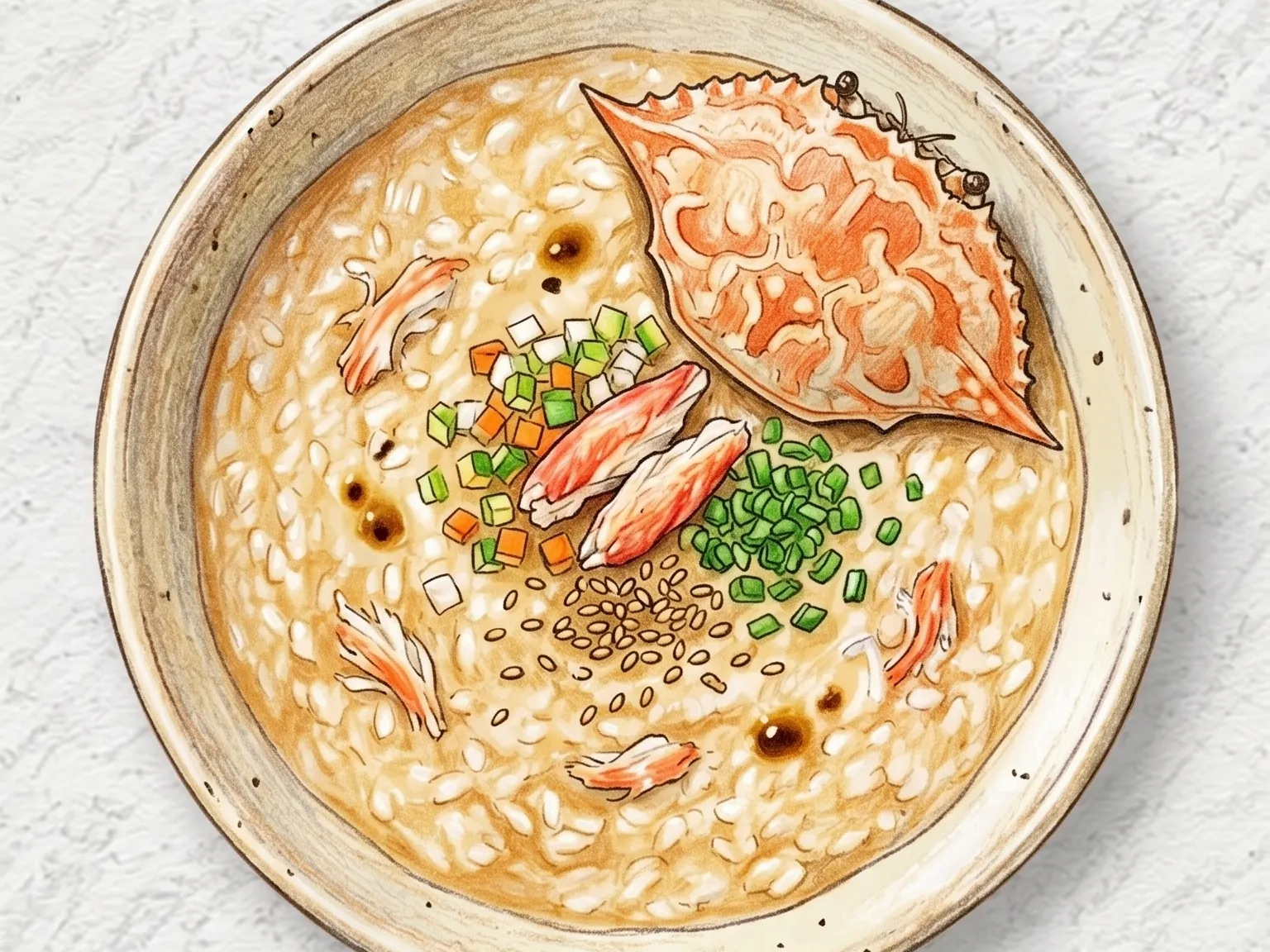
Korean Blue Crab Porridge
Kkotge-juk is a rice porridge built on a deeply flavored blue crab stock that forms the base of everything. The crab is placed in cold water and boiled for twelve minutes, during which the proteins and natural sugars from the shell and body dissolve into the liquid and create a broth that is naturally rich and faintly sweet without any additional seasoning. The cooked crab is lifted out and the meat is carefully picked from the legs and body and set aside. In the same pot, sesame oil is added and the soaked rice is toasted in it for two to three minutes, which coats the grains in a thin layer of oil that prevents them from sticking to the bottom during the long simmer and adds a gentle nutty aroma to the finished porridge. The crab stock is poured back in and the porridge cooks over medium-low heat for fifteen to twenty minutes, stirred regularly, until the grains soften and break down into the smooth, thick consistency that characterizes well-made juk. Once the porridge thickens, diced onion, zucchini, carrot, and minced garlic go in for ten more minutes, and the reserved crab meat is added only at the end so it cooks through the residual heat and stays tender rather than turning rubbery. Seasoned simply with soup soy sauce and salt, the finished bowl delivers clean, gentle ocean flavor with nothing overpowering the natural sweetness of the crab.
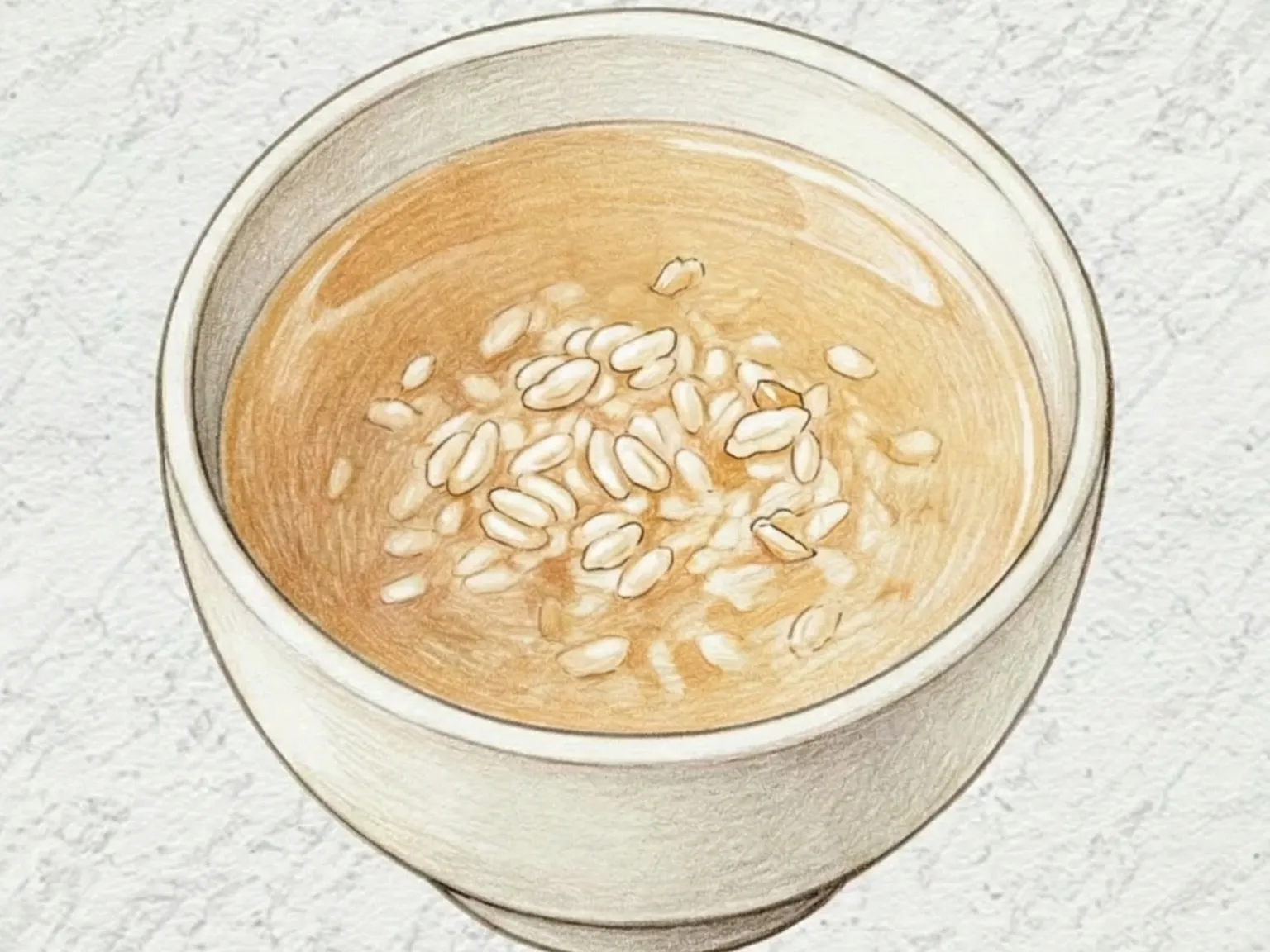
Sweet Rice Punch (Traditional Korean Malted Barley Grain Drink)
Sikhye is a traditional Korean sweet rice punch made by steeping malted barley powder in lukewarm water, straining the liquid, adding cooked rice, and holding the mixture at around 60 degrees Celsius for one hour until the rice grains float to the surface. The amylase enzymes in the malt break down the rice starch, producing a distinctly malty, clear sweetness with grain depth that no sugar alone can replicate. Only the clear top liquid is used after settling -- discarding the sediment keeps the punch from turning cloudy. Simmering with sugar and sliced ginger for 20 minutes rounds the sweetness and adds a gentle, spiced warmth to the finish. Served well chilled with the reserved floating rice grains and pine nuts on top, the cold temperature sharpens the malty aroma and makes each sip crisp. Temperature control during the steeping stage is critical: if the mixture exceeds 70 degrees Celsius, the amylase denatures and the grains will not float, so keeping a steady 60-degree hold determines whether the preparation succeeds.
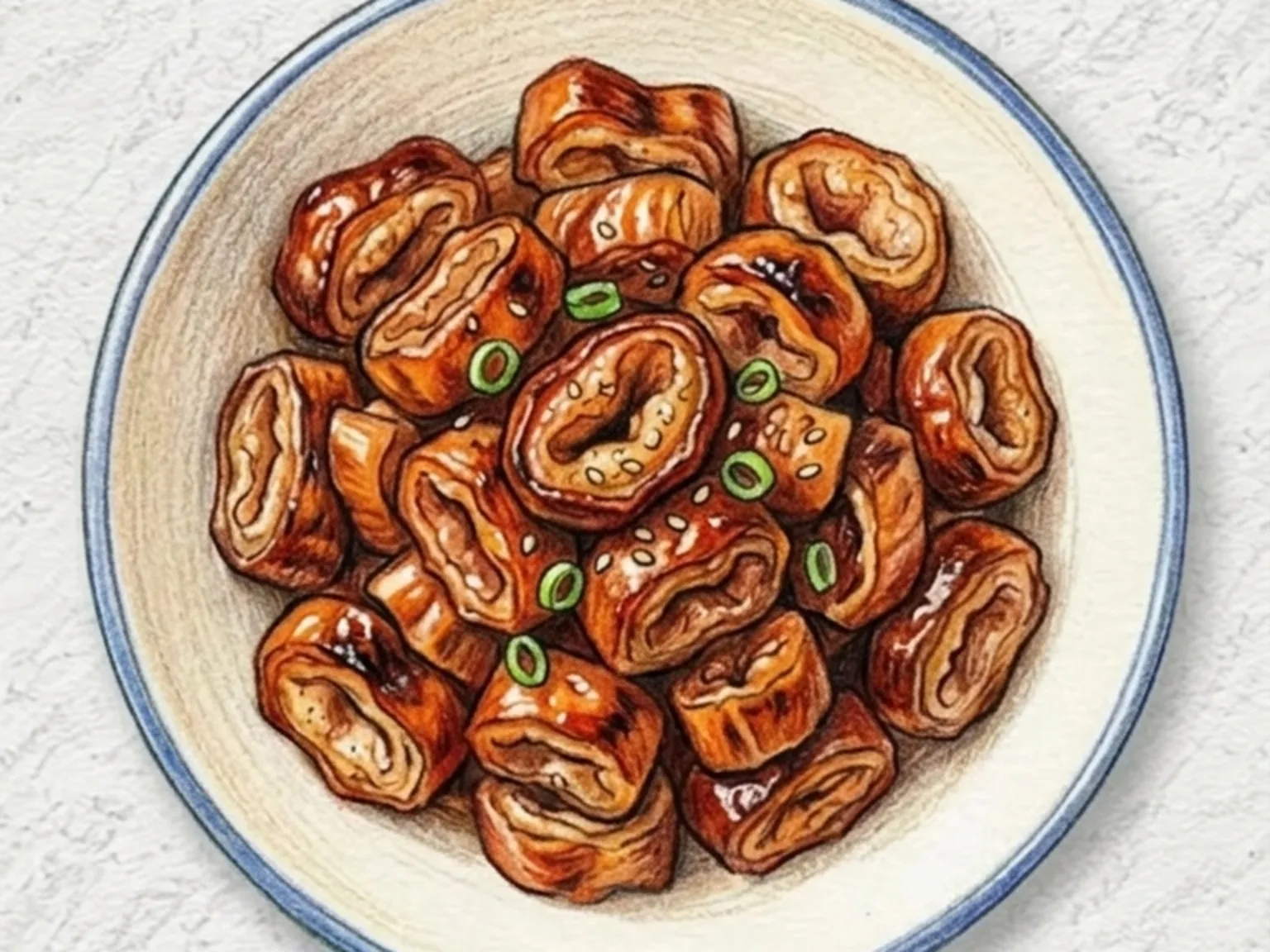
Korean Grilled Pork Makchang
Makchang-gui is a Korean grilled pork large intestine dish where the offal is thoroughly cleaned, blanched for seven minutes to remove impurities and excess fat, then coated in a marinade of gochujang, soy sauce, sugar, minced garlic, gochugaru, sesame oil, and black pepper. The blanching step eliminates off-flavors and firms the intestine's texture so it holds up on the grill without falling apart. After fifteen minutes of marinating, the deeply wrinkled surface absorbs the sweet-spicy sauce, which caramelizes into a dark, sticky glaze over medium heat as the interior moisture slowly evaporates. The result is a chewy exterior with a rich, fatty interior that releases its flavor gradually with each bite. Patience with medium heat prevents the sugar-heavy sauce from scorching before the intestine is cooked through. Scissored into bite-sized pieces at the table and wrapped in perilla leaves or napa cabbage with a dab of doenjang, makchang-gui is a late-night staple in Korean grilled meat restaurants, particularly in the Daegu and Busan regions where the dish is most deeply rooted.
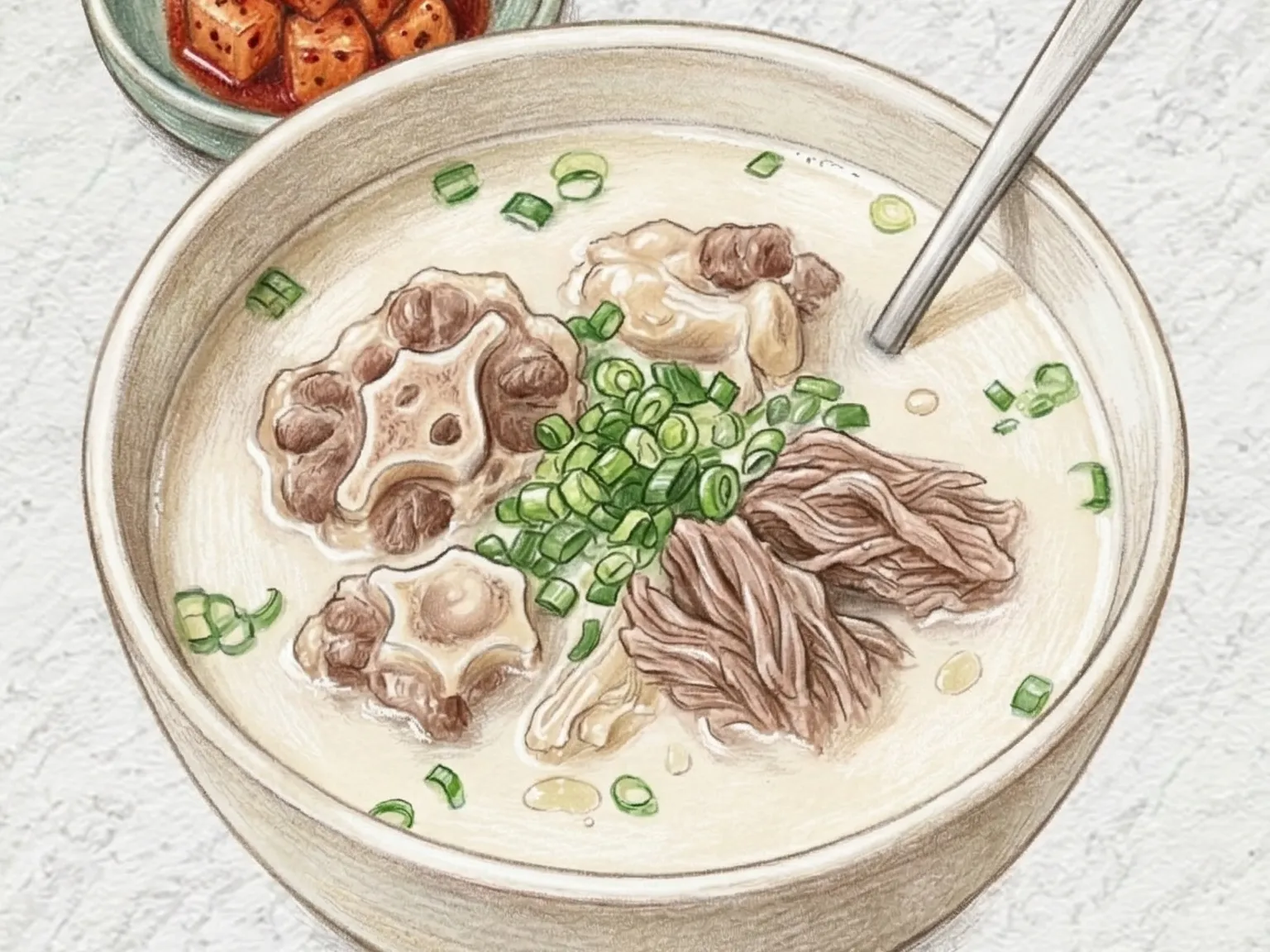
Korean Oxtail Soup
Sokori-guk demands patience - oxtail pieces are soaked in cold water to draw out blood, then placed in a heavy pot with enough water to cover and simmered for at least three to four hours. During that long, slow cook, collagen buried in the joints and connective tissue dissolves into the liquid, producing a broth so rich in gelatin that it sets into a solid block when refrigerated. Skimming fat and foam at regular intervals keeps the final broth a clean, milky white with no greasy residue. The meat, once it slides easily off the bone, is torn along the grain into shreds that are impossibly soft, while the tendon segments offer a pleasantly bouncy chew. Seasoning is deliberately minimal - coarse salt, black pepper, and sliced scallion - because the bones themselves have already contributed all the depth the soup needs. Served with a bowl of steamed rice and a side of kkakdugi, the cubed radish kimchi's sharp tang provides the only counterpoint this quietly powerful broth requires.