🎉 Special Occasion Recipes
Impressive dishes for guests and special occasions
929 recipes. Page 20 of 39
When guests are coming, the menu needs a little extra care. This tag features impressive dishes suited for entertaining - galbi-jjim, japchae, and bulgogi for a Korean spread, or pasta and steak for a Western-style course.
The key to stress-free hosting is choosing recipes that allow advance preparation. Do the heavy lifting the day before, then finish plating when guests arrive. That way, you can relax and enjoy the meal together.
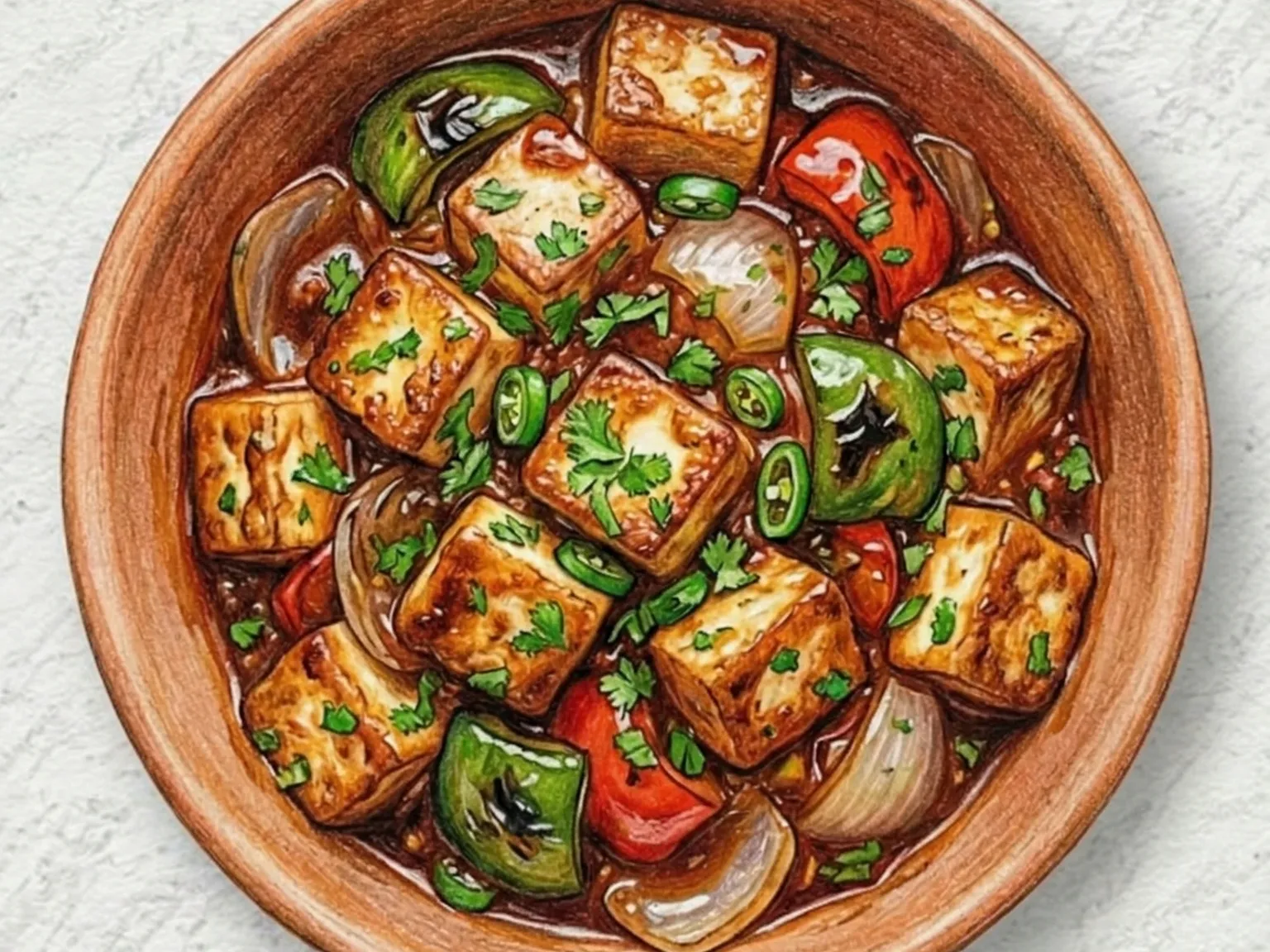
Chili Paneer (Spicy Fried Cheese Stir-Fry)
Chili paneer belongs to Indo-Chinese cuisine, a fusion genre that emerged in the late nineteenth century when Hakka Chinese immigrants settled in Kolkata and began cooking with Indian ingredients and techniques. Cubes of paneer, India's firm fresh cheese that holds its shape under high heat without melting, are coated in cornstarch and deep-fried until a crisp shell forms, then tossed in a blazing-hot wok with diced garlic, green chilies, bell peppers, and onions, all brought together in a sauce built from soy sauce, chili sauce, tomato ketchup, and vinegar. The starchy crust absorbs the punchy sauce while shielding the soft, milky interior of the paneer, and the contrast between the crunchy shell and the yielding cheese inside is the defining pleasure of the dish. Two distinct styles exist: dry, where the sauce barely coats each cube and the dish is eaten as a starter or with drinks, and gravy, where a thicker, glossier sauce pools generously around the paneer for scooping with naan or ladling over fried rice. The flavor profile, salty soy meeting sour vinegar, sweet ketchup cutting through hot chili, is neither Chinese nor Indian but something entirely its own, a product of a specific immigrant community adapting to a new place while keeping familiar techniques alive.

Chestnut Madeleine (French Shell Cake with Chestnut Butter Batter)
Chestnut madeleine is a small French cake baked in shell-shaped molds with chestnut paste folded directly into the batter. The chestnut brings a warm, starchy sweetness that layers with butter and honey, producing a flavor that is understated but noticeably complex. The signature dome, known as the hump, rises properly only when the batter is rested in the refrigerator for at least an hour before baking, then transferred directly into a hot oven. This temperature shock is what drives the rapid rise in the center. The crumb is light and moist, and the chestnut flavor comes through clearly rather than being absorbed by the butter. Warm milk or a latte amplifies the roasted chestnut notes, and the compact size makes these ideal for packaging as gifts.
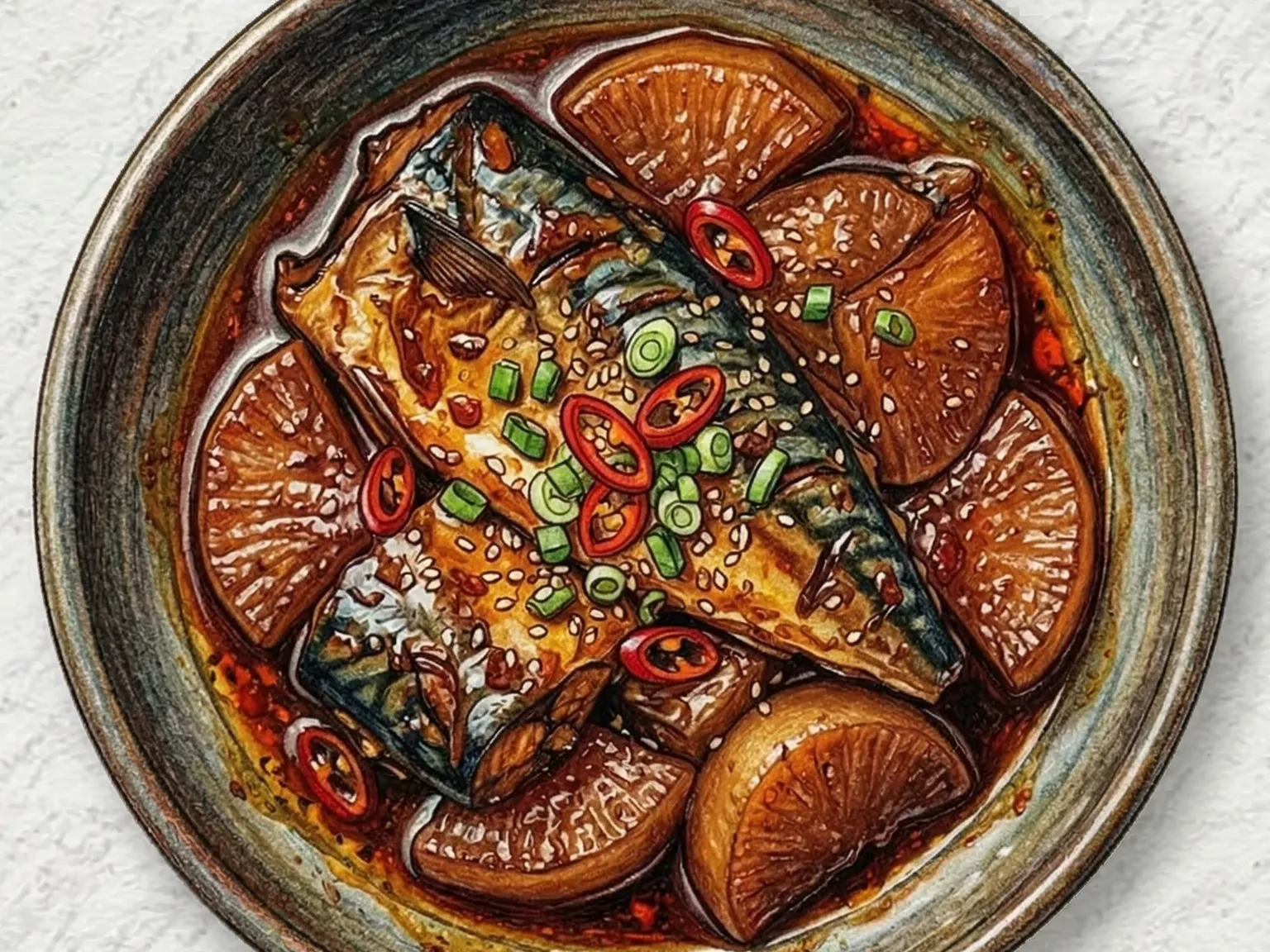
Korean Braised Mackerel (Fatty Mackerel with Radish in Spicy Soy Sauce)
Godeungeo-jjim is a Korean braised mackerel dish cooked low and slow with Korean radish, sliced onion, gochugaru, soy sauce, and fresh ginger. Mackerel belongs to the blue-backed fish category with a high natural fat content, and that fat absorbs the bold, spiced seasoning during braising in a way that leaner fish cannot. The flavor that results is deeply savory with a rounded heat that does not taste sharp or one-dimensional. Radish placed at the bottom of the pan serves a dual purpose: it draws out the fishy aroma during cooking and simultaneously soaks up the braising liquid, making it almost as desirable to eat as the fish itself. Ginger neutralizes the remaining raw fish notes and keeps the overall taste from feeling heavy, providing a subtle warmth that lifts the richness. As the braising liquid reduces, it thickens into a glossy, intensely flavored sauce that is commonly spooned over steamed rice to the last drop. Mackerel is widely available and inexpensive in Korea, which has made this preparation a household staple across generations.
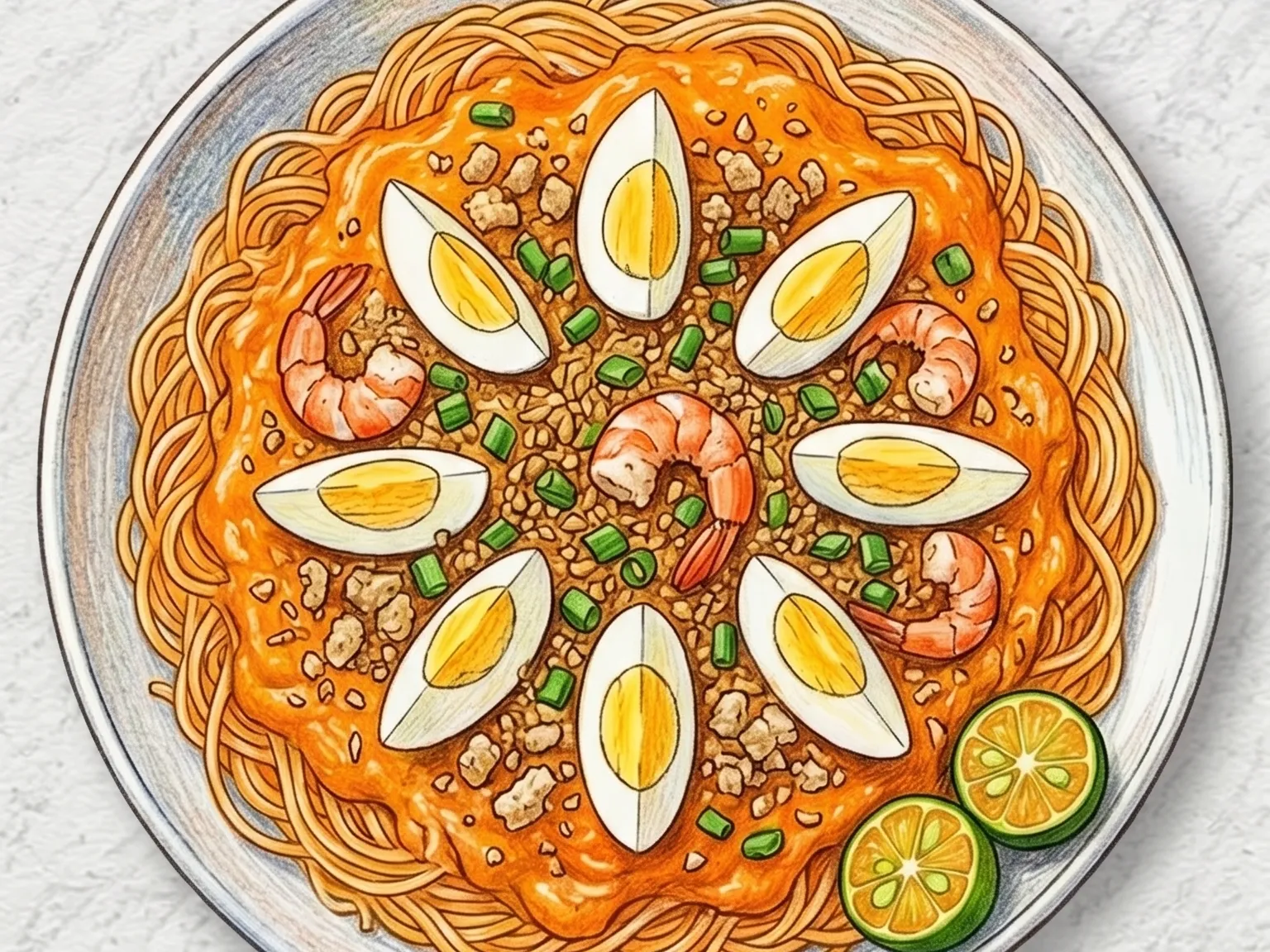
Pancit Palabok (Filipino Rice Noodles with Annatto Shrimp Sauce)
Pancit palabok is a Filipino celebratory noodle dish built on thin rice noodles blanketed in an orange-hued shrimp sauce. The sauce draws its color from annatto powder, which also contributes a faint earthy sweetness, and its savory backbone from shrimp-shell stock simmered with fish sauce. Boiled egg halves and a squeeze of lime are the traditional garnish, cutting through the richness with acidity. Fried garlic, sliced scallions, and crushed chicharron scattered on top add texture contrast and bring multiple layers of flavor to a single serving. At Filipino birthday parties and holiday gatherings, palabok is presented on a large platter and shared family-style, making it one of the most recognizable celebration dishes in the cuisine.
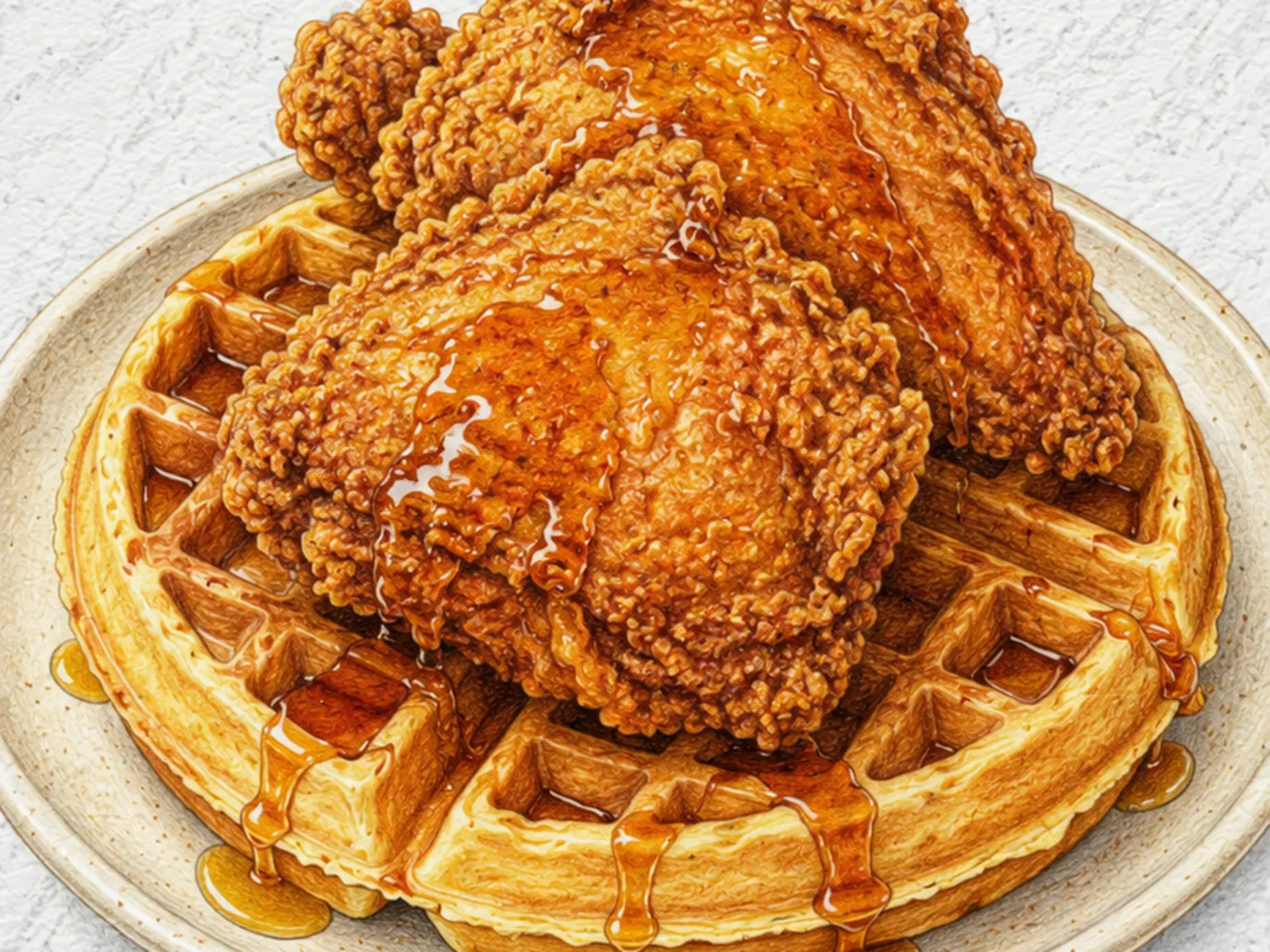
Chicken and Waffles
Chicken and waffles is a Southern American soul food dish that places crispy fried chicken thighs on freshly made waffles and finishes everything with a pour of maple syrup. Soaking the chicken in buttermilk for at least an hour before dredging tenderizes the meat and gives the finished crust a more pronounced crunch; without this step the coating is drier and less flavorful. The double-dredge technique -- flour first, then beaten egg, then flour again -- builds a thick, irregular crust that shatters at the bite after eight to ten minutes in 170-degree oil, while the interior stays moist and fully cooked. The waffle batter includes melted butter, which is what creates waffles that are genuinely crisp on the patterned exterior while staying soft and airy on the inside; waffles made without fat in the batter tend to turn limp quickly. Waffles are cooked first and kept warm in a low oven so they are ready the moment the chicken is lifted from the oil. The appeal of the dish lies entirely in contrast: the hot, salty, fatty crunch of the fried chicken meets the sweet yielding softness of the waffle and the maple syrup, and the interplay of those opposing sensations is what turns a straightforward combination of ingredients into something that stays in memory.
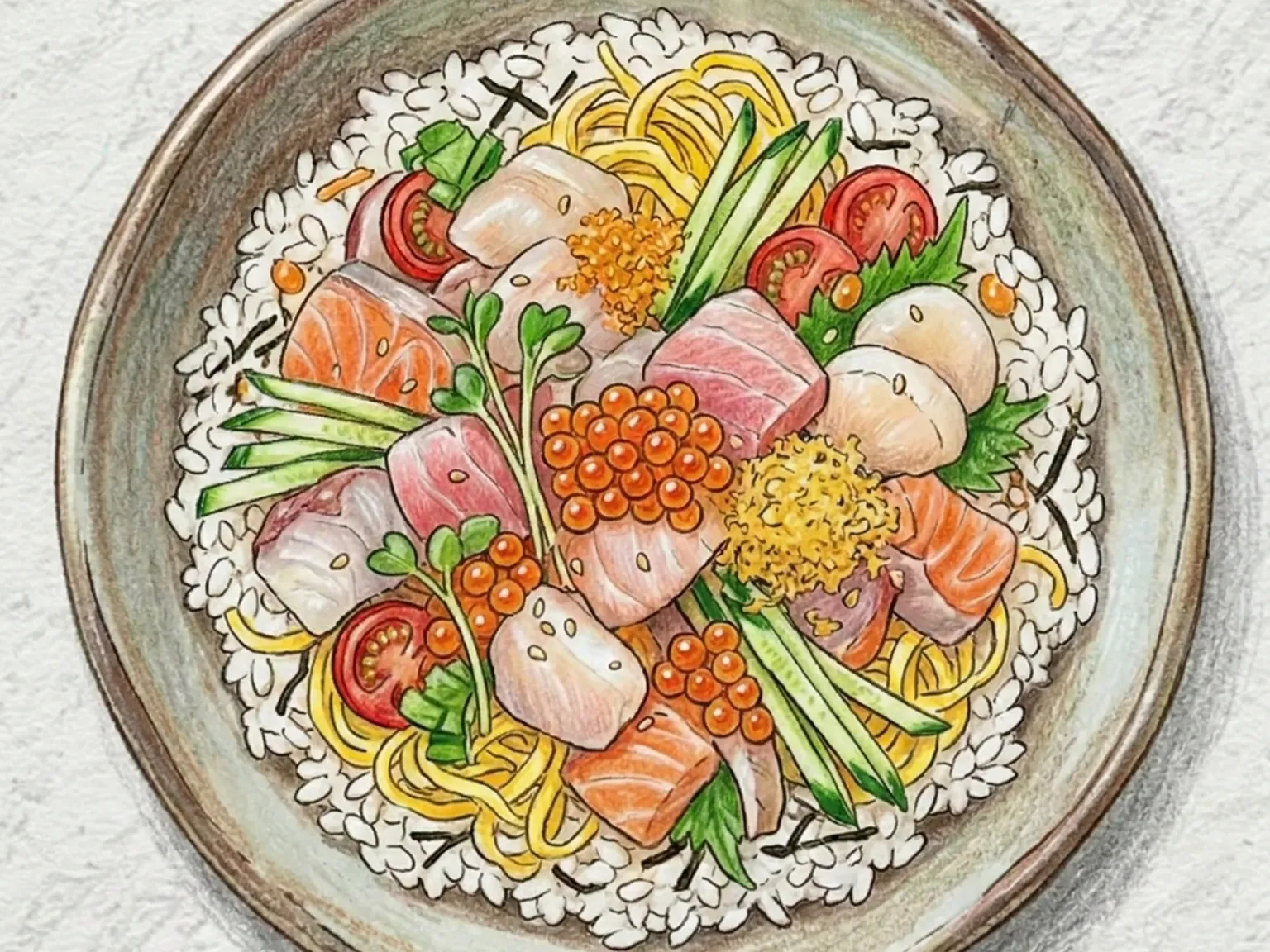
Chirashi Zushi (Scattered Sashimi Rice Bowl)
Chirashi-zushi, scattered sushi, is the celebratory home-cooking sushi of Japan, traditionally prepared for Hinamatsuri on March 3rd and other occasions where the meal itself carries visual significance. A bowl of sushi rice seasoned with vinegar, sugar, and salt forms the base, and over it are arranged sashimi cuts, julienned egg crepe, simmered lotus root, shiitake mushroom, salmon roe, and cherry shrimp. Unlike nigiri, there is no shaping technique involved, which makes chirashi accessible to any home cook, but the creative challenge shifts to composition: how the colors and textures are placed determines whether the bowl reads as festive or ordinary. Seasonal variation is embedded in the tradition - spring bowls feature bright green peas and pink-pickled cherry blossoms, summer compositions lean toward abalone and cucumber, autumn brings ginkgo nuts and matsutake. At high-end sushi counters, Edomae-style chirashi uses only top-grade cuts, chu-toro, uni, kohada, anago, arranged with the same deliberation a painter brings to a canvas. The vinegared rice beneath every version does more than hold the toppings in place: its acidity cuts the fat in the raw fish, refreshing the palate between bites and tying disparate ingredients into a unified dish.
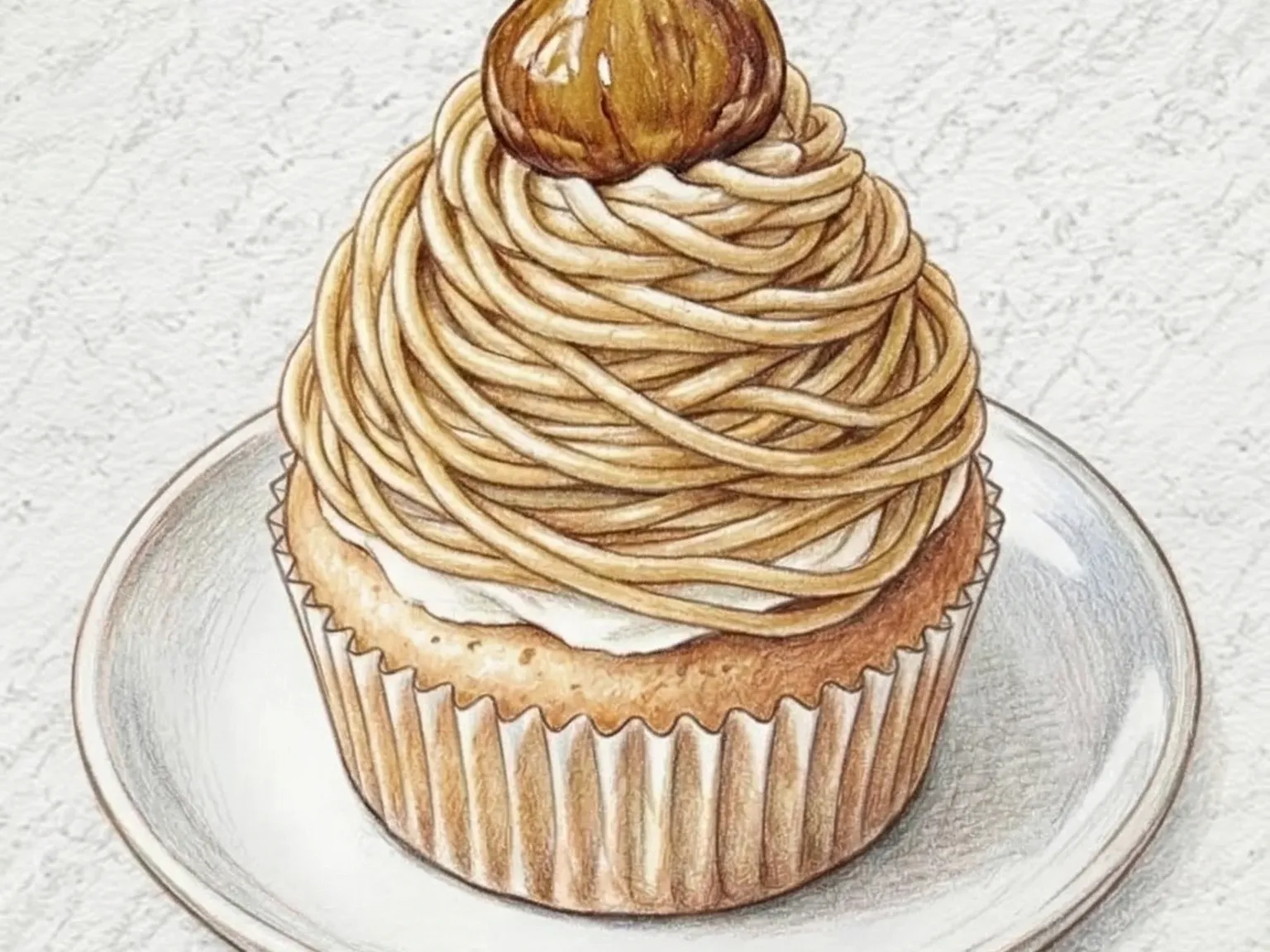
Chestnut Mont Blanc Cupcakes
Chestnut Mont Blanc cupcakes stack three distinct layers into a single handheld dessert: a moist sponge base, a dome of whipped cream, and a tangle of piped chestnut cream on top. The sponge is whisked to a fine, airy crumb that stays soft without being fragile. Whipped cream is mounded over each cupcake, then chestnut paste made from boiled chestnuts blended with butter and sugar is piped through a Mont Blanc nozzle into thin vermicelli-like strands that pile up into a peak. The chestnut cream has a powdery, almost sandy texture on the tongue that dissolves into the cream underneath, creating a flavor shift from dense, nutty richness to light dairy. Each bite moves through all three layers in sequence. A single marron glace placed at the summit serves as both garnish and concentrated flavor accent. These cupcakes are a bakery staple in Japan, where the Mont Blanc has been embraced as a seasonal autumn specialty. The individual cupcake format makes them practical for home bakers and cafes alike, since each portion is self-contained and does not require slicing or plating beyond the initial decoration.
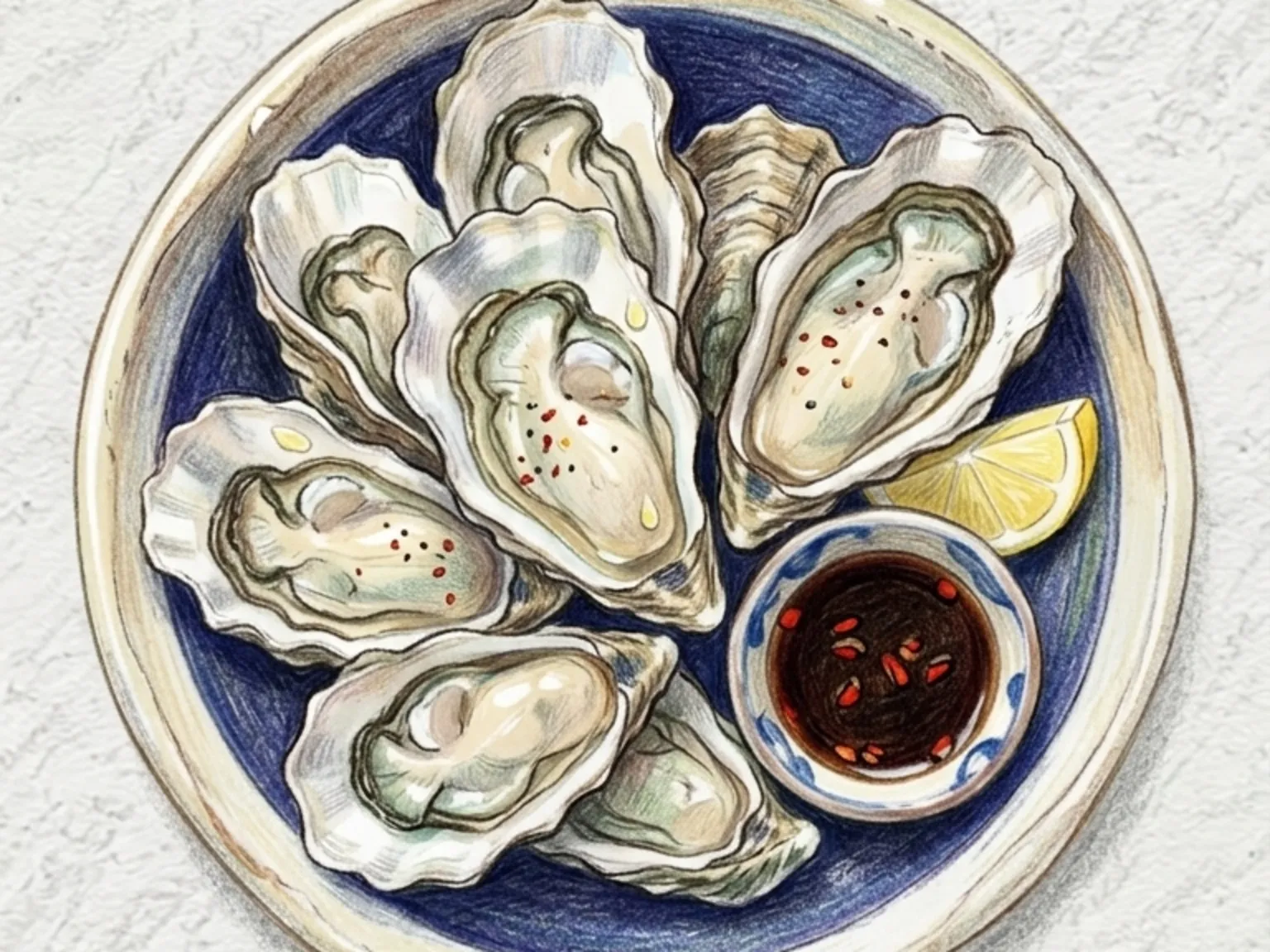
Korean Steamed Oysters
Gul-jjim is Korean steamed oysters cooked in their shells over high steam until the shells pop open. The shell acts as a natural vessel, trapping the briny liquor inside and keeping the oyster meat plump and moist throughout cooking. A dipping sauce made from soy sauce, vinegar, and gochugaru delivers a sharp, tangy contrast to the oyster's mild sweetness, while lemon wedges cut through any residual brininess and leave a clean finish. With minimal preparation and a cooking time under ten minutes, this dish is one of the most straightforward ways to enjoy winter oysters at their freshest. The single most important technique is removing the oysters from heat the moment the shells crack open, since even a minute of additional steaming causes the meat to shrink and toughen.

Pasta al Limone (Italian Lemon Butter Cream Pasta)
Pasta al limone is a pasta from southern Italy that relies entirely on lemon zest, lemon juice, butter, cream, and Parmesan for its sauce, with no tomato and no meat to complicate the flavor. The citrus oils drawn from the zest dissolve into warm butter and spread their aroma evenly through the fat before any liquid is added, which is what gives the finished sauce its rounded, lingering lemon character rather than a sharp acidic bite. A ladleful of starchy pasta water is then added to emulsify everything into a glossy, clingy coating that holds to each strand of linguine without pooling at the bottom of the plate. Cooking the sauce over low heat throughout is critical: cream added to high heat separates and loses its silky texture. Linguine cooked al dente provides enough resistance to stand up to the light sauce without the combination feeling heavy or cloying. Total preparation from filling a pot with water to plating takes roughly twenty minutes, making it a realistic weeknight option despite its refined result.
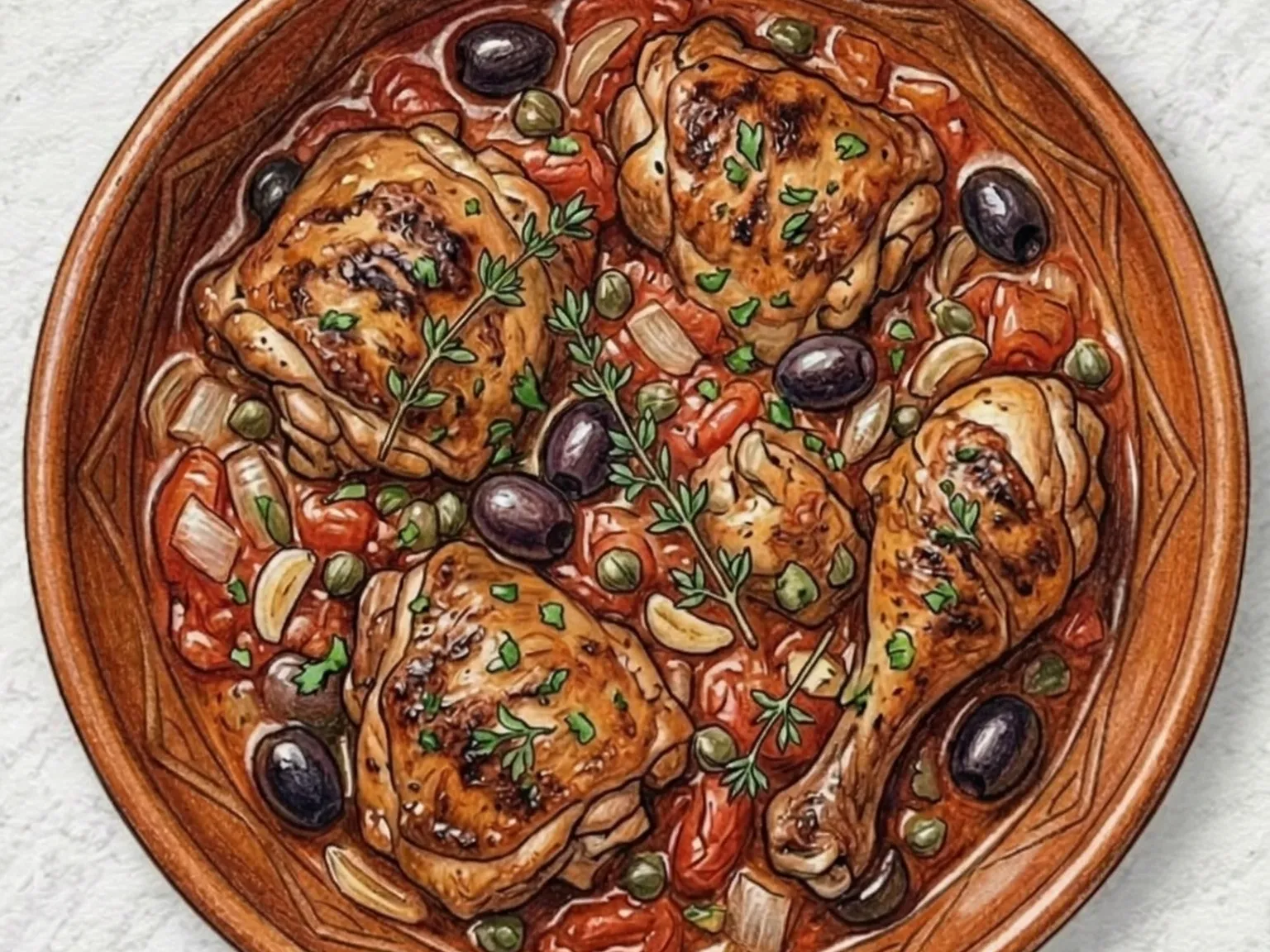
Chicken Cacciatore
Chicken cacciatore is an Italian countryside dish where chicken pieces are seared hard in olive oil until deeply browned, then braised over low heat for forty minutes with onion, garlic, canned tomatoes, black olives, capers, red wine, and thyme. The initial sear in a very hot pan triggers a Maillard reaction on the skin and surface of the meat; those browned flavors dissolve into the braising liquid and dramatically deepen the sauce as it simmers. Red wine is added and simmered for two minutes to cook off the alcohol before the remaining ingredients go in, leaving only the acidity and fruit character of the wine to layer with the tomato. The briny, savory taste of the olives and the tart, floral sharpness of the capers keep the sweetness of the canned tomatoes in check, while thyme runs as a steady, quiet herbal thread throughout. This dish improves substantially when reheated the next day, as the flavors penetrate further into the meat overnight. Leftover braising sauce is excellent tossed with pasta or spooned over soft polenta.
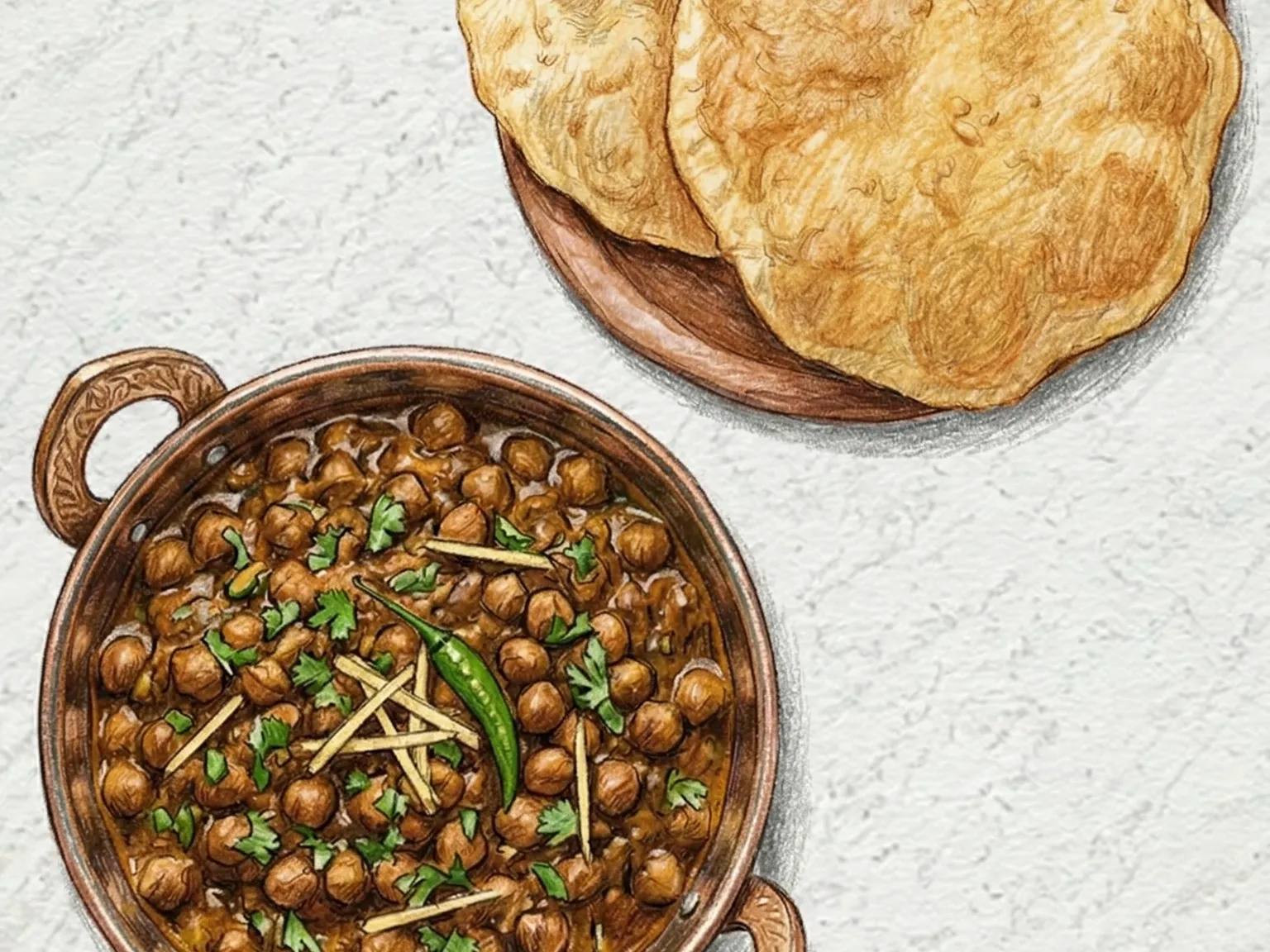
Chole Bhature (Chickpea Curry with Puffed Bread)
Chole bhature is the definitive breakfast combination of North India's Punjab and Delhi regions, bringing together a dark, intensely spiced chickpea curry and deep-fried puffed bread. The chole begins with dried chickpeas soaked overnight and pressure-cooked until tender, then folded into a base of slow-cooked onion and tomato seasoned with amchur, anardana, and garam masala, simmered until the gravy thickens to a deep, clinging brown. Whole spices - black cardamom, cinnamon, bay leaf - are often tied in muslin and simmered alongside the chickpeas, infusing the pot with fragrance without leaving stray solids in the finished dish. Bhature dough is made with refined flour enriched by yogurt and coarse semolina, rested at room temperature until slightly fermented, then rolled and lowered into hot oil where it balloons into a puffy, golden pillow within seconds. The ritual of tearing a piece of bhature and scooping up chole delivers salty, sour, and spiced-bread richness in a single motion. Raw onion rings and pickled green chilies cut through the heaviness with crunch and heat. In Old Delhi, the most storied shops have maintained their curry by never fully emptying the pot, topping it up over decades so the base carries years of accumulated flavor.
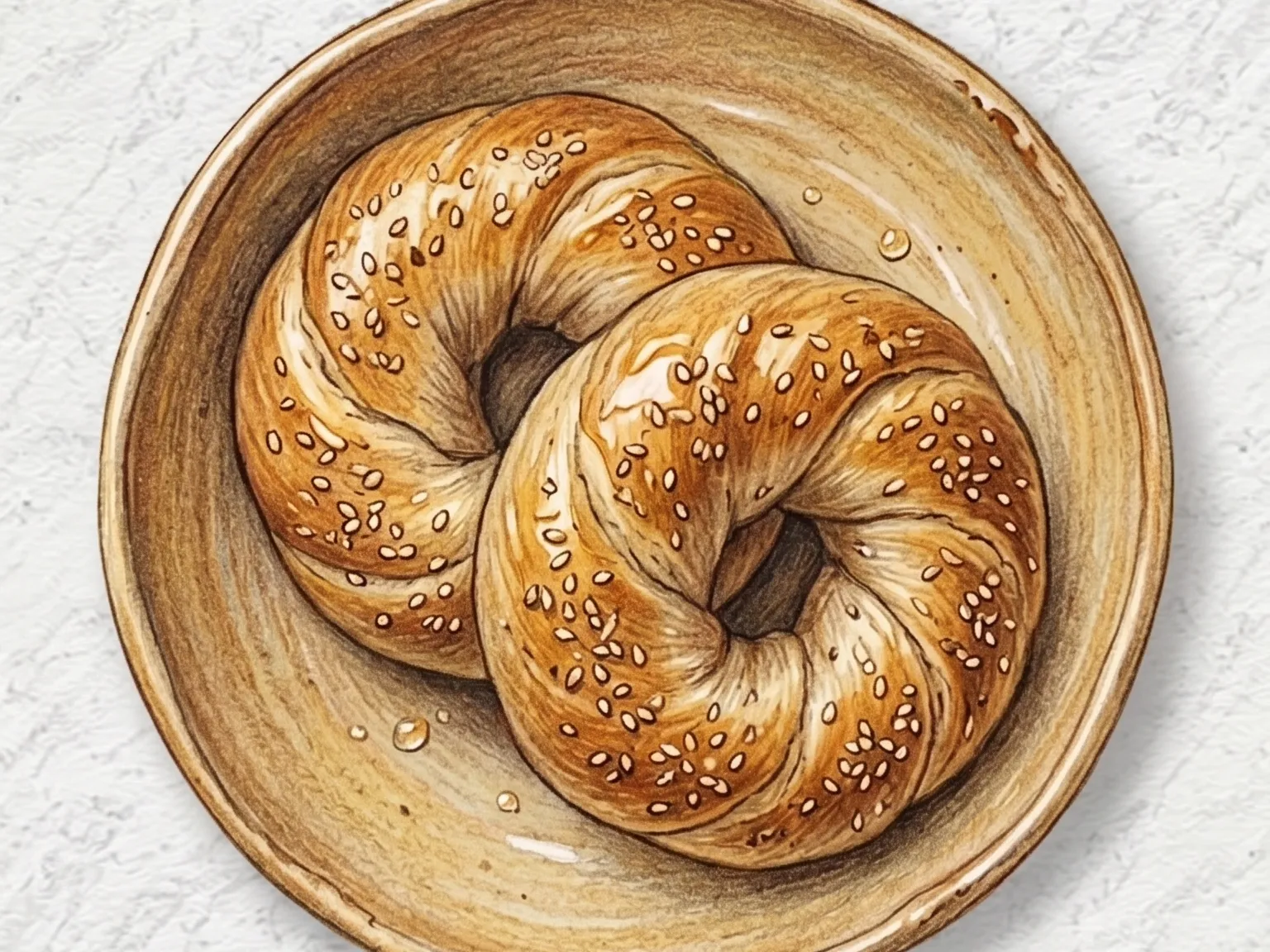
Chewy Honey Wheat Bagel
Chewy Honey Wheat Bagel is a homemade bread that achieves a nutty flavor using a seven-to-one ratio of bread flour to whole wheat flour. The dough uses honey dissolved in water for moisture and sweetness. After a first fermentation, the dough is divided and rested for fifteen minutes to relax the gluten, allowing for easier shaping into rings. Following a second proofing, the bagels are poached in boiling honey water for thirty seconds on each side. This poaching step coats the surface to form a thick, glossy, and chewy crust. The bagels are baked in a preheated oven for eighteen to twenty minutes until golden brown. Toppings like sesame seeds or onion flakes can be added before baking. The baked bagels are cooled on a rack for ten minutes before serving.
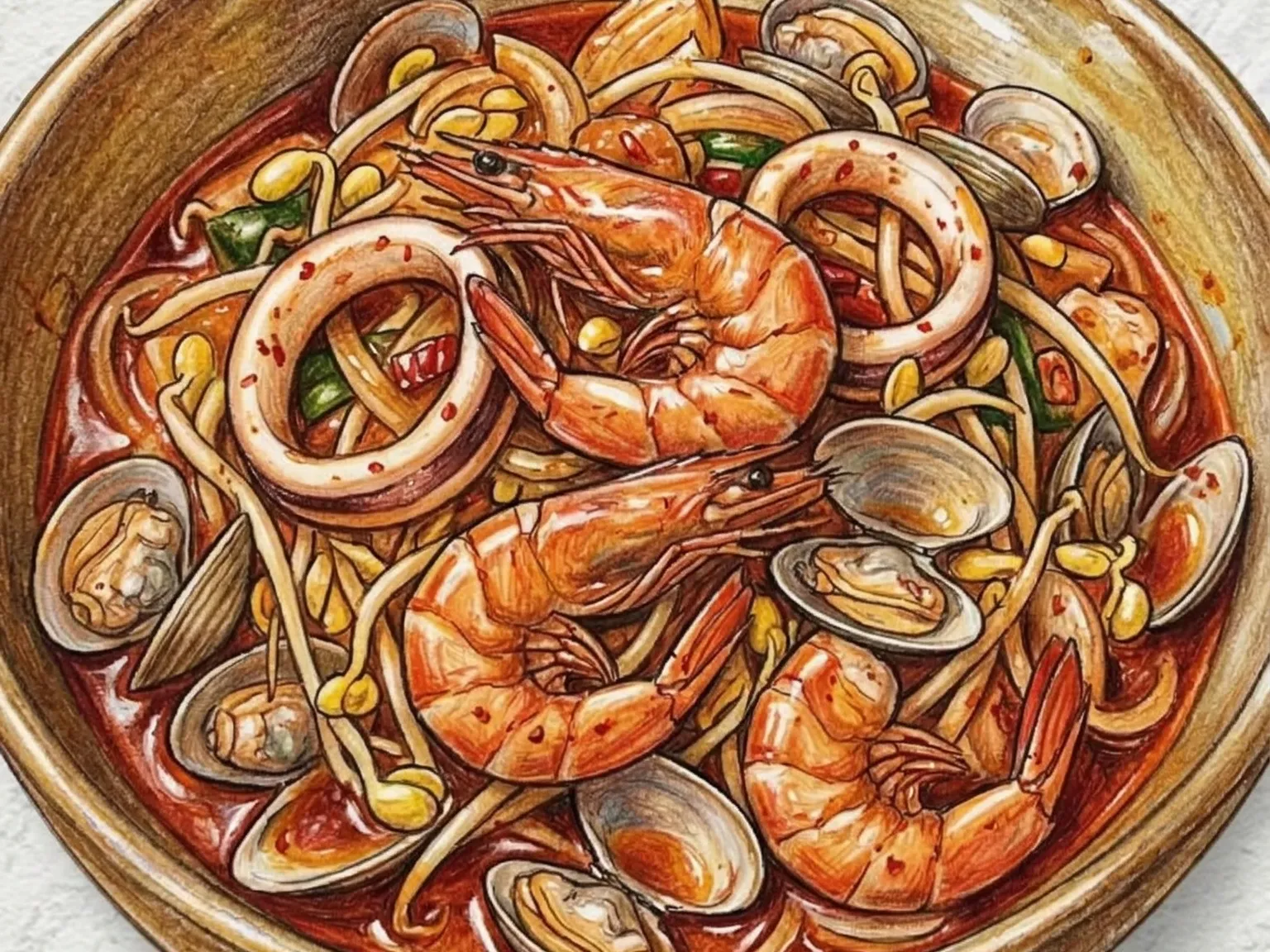
Korean Spicy Braised Mixed Seafood
Haemul-jjim is a Korean mixed seafood braise that brings together squid, shrimp, and manila clams with bean sprouts and onion in a gochugaru and soy sauce seasoning. The vegetables are layered on the bottom of the pot to absorb heat first, with the seafood arranged on top and cooked quickly over high heat so the texture stays firm and springy. Each shellfish releases its natural brine into the broth as it opens, deepening the seasoning without any added stock. A starch slurry stirred in at the end creates a glossy coating that clings to every piece of seafood and vegetable. The dish comes together in under ten minutes of active cooking. Bean sprouts hold their crunch while the squid and shrimp stay tender, and the remaining sauce at the bottom of the pot makes it natural to spoon over rice. It is a standard centerpiece at Korean gatherings and a popular accompaniment to drinks.
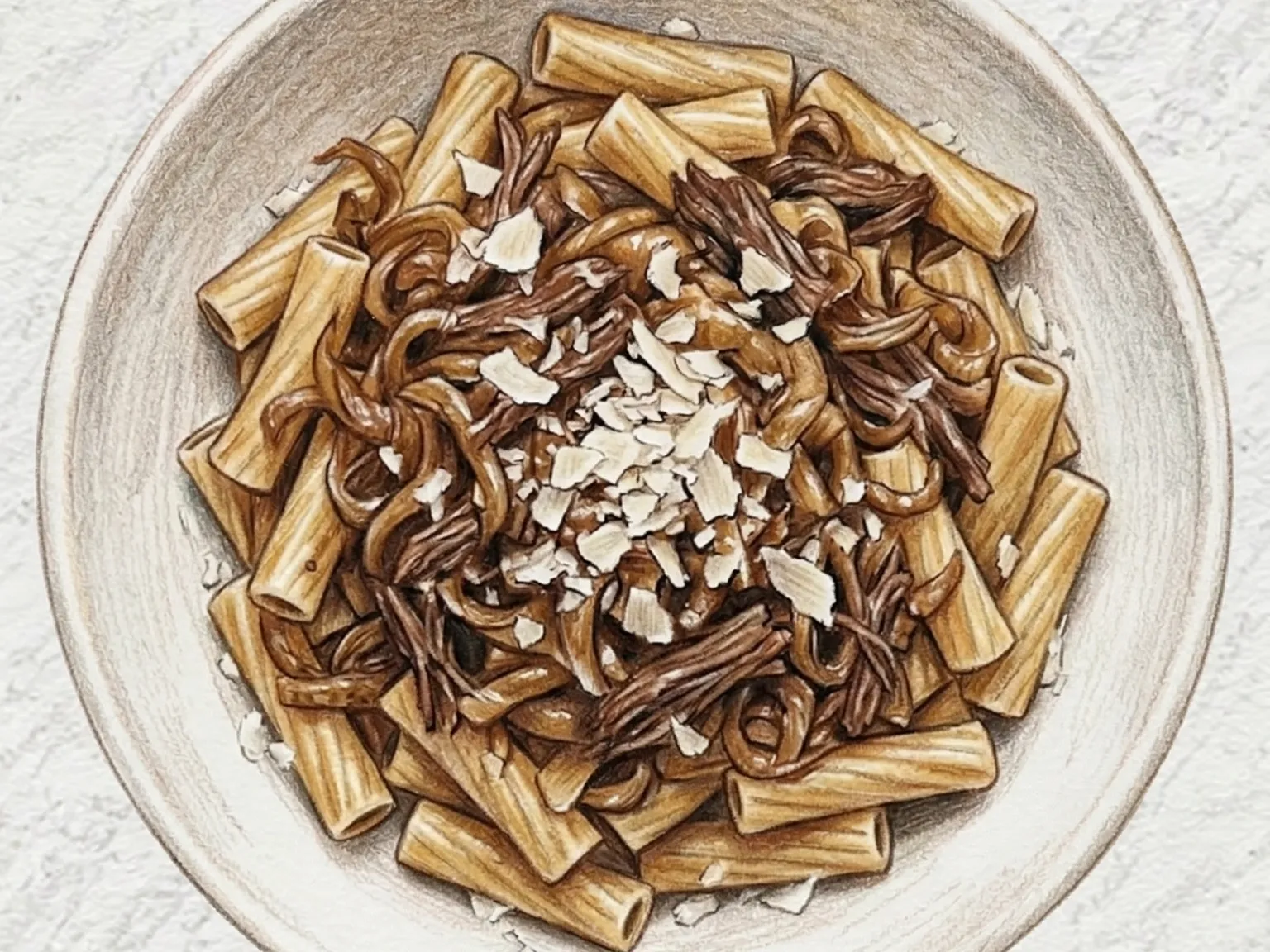
Pasta alla Genovese (Neapolitan Slow-Braised Onion and Beef Ragu)
Pasta alla Genovese is a Neapolitan slow-cooked ragu that uses a large volume of onions braised together with beef chuck for at least two hours over low heat. No tomato is involved at any stage; the sauce draws all its sweetness from the onions, which gradually dissolve and caramelize into a thick, deeply savory base, while white wine and the rendered beef fat add richness and acidity. Once the onions have nearly melted into the sauce, the beef is shredded and folded back in, giving the finished ragu a dense, almost jam-like consistency with strands of meat throughout. Despite its name, the dish has no connection to Genoa or Ligurian basil pesto; it is a distinctly Neapolitan preparation, and the name is thought to trace back to Genoese cooks or merchants who settled in Naples. Ziti is the traditional pasta shape, served with a generous dusting of Parmigiano-Reggiano.
Chicken Chasseur
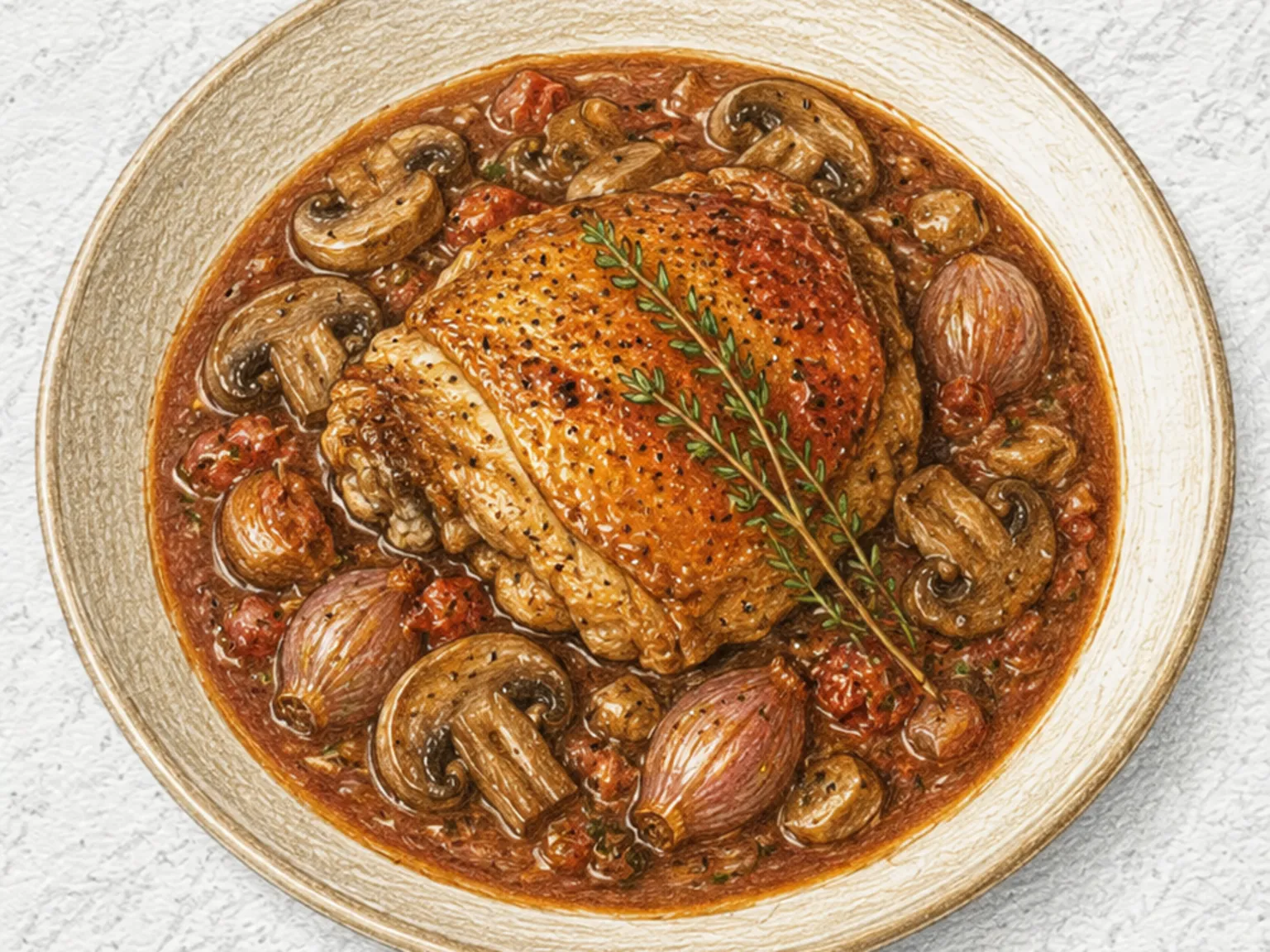
Chicken chasseur is a French braised chicken dish where thighs are seared skin-side down until the skin renders crispy and golden, then set aside while button mushrooms, shallots, and garlic are sauteed in the same pan with butter. White wine goes in next to deglaze the fond left on the bottom of the pan, and after the wine reduces by half, tomato puree, chicken stock, and fresh thyme sprigs go in before the seared chicken returns to the pot for a covered braise of twenty-five minutes. The initial searing step is not optional from a flavor standpoint, because the caramelized residue left on the pan, the fond, is the primary source of the sauce's roasted depth. Rushing the sear causes the skin to stick and tear, and results in a paler, thinner-tasting sauce. Mushrooms need to be spread out in a single layer in a hot, wide pan so they brown before their moisture escapes, since crowding them generates steam that leaves them pale and soft rather than giving them the earthy intensity the dish depends on. As the wine reduces, its acidity concentrates and sharpens, which is what makes the sauce bright enough to balance the richness of the braised chicken. Tomato puree adds a quiet, rounded sweetness and deepens the red color of the sauce, while thyme brings an herbal warmth that accumulates slowly over the course of the braise. Removing the lid for the final five minutes allows the sauce to thicken to the right consistency. Mashed potatoes or crusty bread served alongside catch every bit of the sauce.
Chwee Kueh (Steamed Rice Cake with Chai Poh)
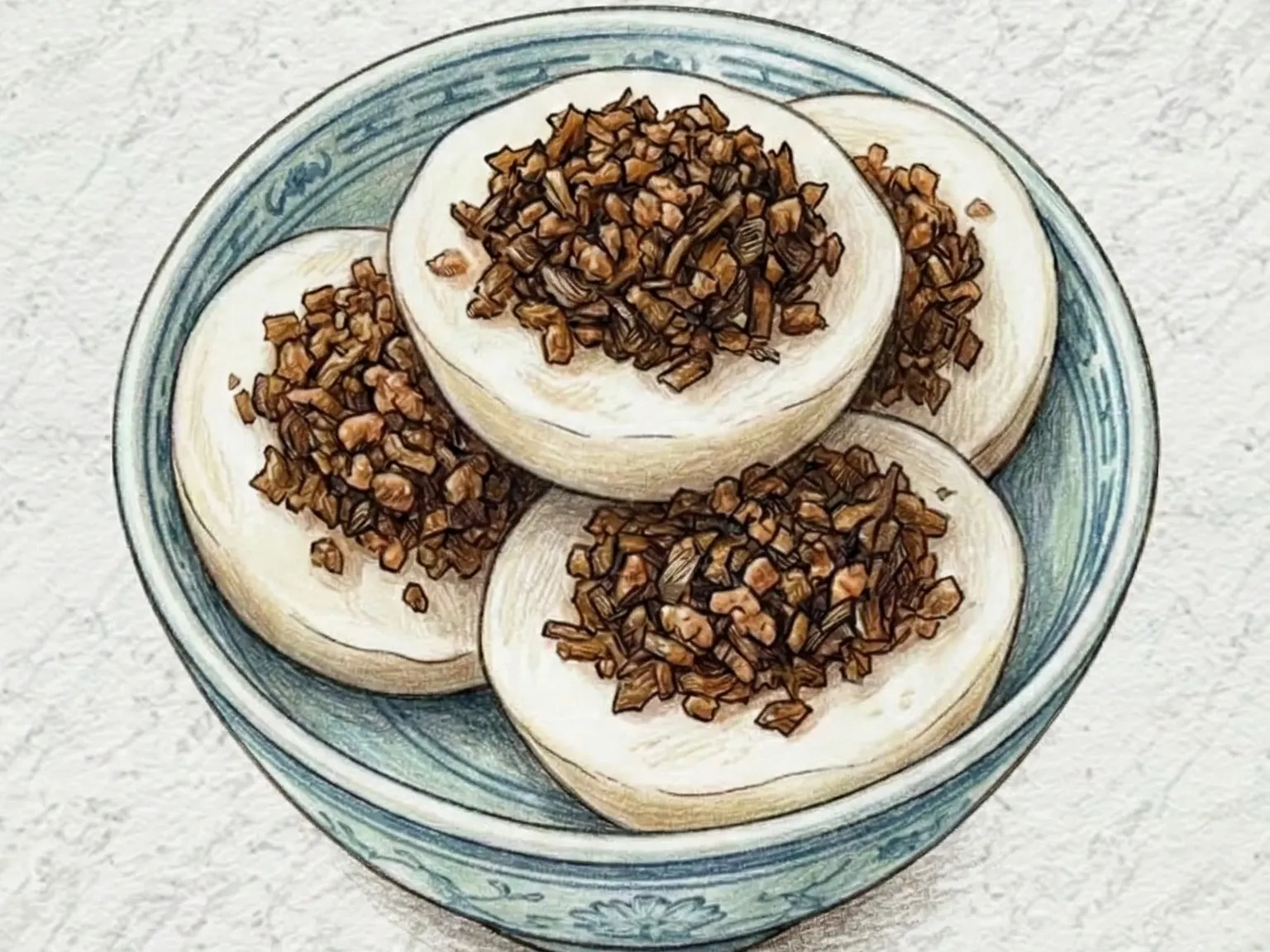
Chwee kueh is a traditional steamed rice cake that is commonly eaten during breakfast in Singapore and Malaysia. The dish originated within the Teochew Chinese community and has been passed down through multiple generations of hawker vendors. These snacks are typically available during the earliest hours of the morning at specialized stalls that often do not sell any other types of food. The preparation involves pouring a batter made of rice flour into small, round ceramic molds. These molds are placed into a steamer until the batter solidifies into a soft and slightly concave cake. The natural indentation found in the center of the rice cake is designed to accommodate a spoonful of chai poh, which is a topping made from preserved radish. The radish is finely chopped and stir-fried with soy sauce and a small amount of sugar. This process creates a mixture that balances savory and sweet flavors while allowing some of the radish pieces to develop caramelized edges. The rice cake base is intentionally kept plain and carries only a very faint sweetness from the rice itself. As a result, the overall flavor of the dish is determined by the seasoned radish and the sambal chili that is provided on the side. The addition of sambal introduces a significant amount of heat and a savory element that sharpens the flavor profile of the entire combination. A typical order of chwee kueh consists of five or six individual cakes served at a very modest price. This affordability and consistent quality have helped the dish become a prominent symbol of daily breakfast culture in Singapore. Some hawker stalls have continued to operate and serve chwee kueh from the exact same location for over fifty years. The longevity of these establishments reflects how deeply this particular rice cake dish is integrated into the regional food history and the everyday lives of the local population.
Chewy Potato Bread
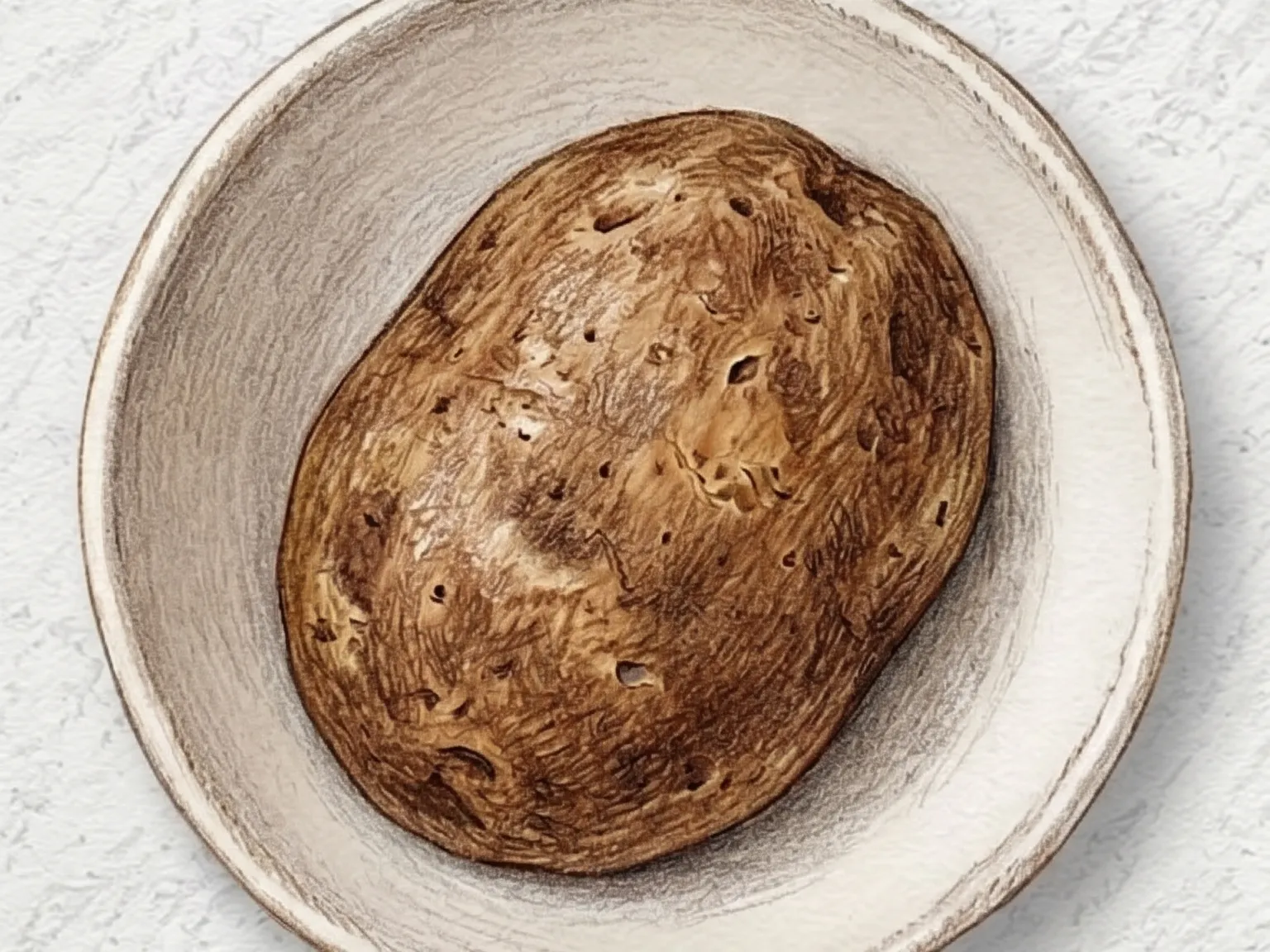
This recipe creates potato-shaped bread rolls filled with a sweet and savory mashed potato filling enclosed in a chewy dough. The filling is made by mashing hot boiled potatoes with sugar, salt, and mayonnaise. For the dough, tapioca starch and glutinous rice flour are kneaded with egg, melted butter, and corn syrup, which ensures the bread retains its signature chewy texture even after cooling. Each portion of dough is flattened to wrap the potato filling, then shaped by hand to mimic the irregular form of a real potato. Rolling the shaped dough in roasted soybean powder or black sesame powder replicates the color and texture of dirty potato skin. Indentations are poked with a chopstick to resemble potato eyes before baking at 170 degrees Celsius for twenty minutes. The result is a crisp exterior with a moist filling.

Korean Stuffed Steamed Zucchini
Hobakseon is a Korean royal court dish of zucchini hollowed out and stuffed with a filling of ground beef, mashed tofu, and chopped shiitake mushroom seasoned with soy sauce and sesame oil. Steaming allows the beef juices to permeate the filling while the zucchini shell stays intact and turns tender. The mild, slightly sweet flavor of the zucchini contrasts with the savory, meaty stuffing inside, and the textural gap between the yielding vegetable exterior and the firmer filling is one of the dish's defining characteristics. Proper preparation of the filling is important: the tofu must be wrapped in a cloth and pressed until most of the moisture is squeezed out, or the stuffing will become watery during steaming. The shiitake mushrooms should likewise be stir-fried briefly beforehand to cook off their liquid. A garnish of thin egg strips adds a second color against the pale green shell. Its refined appearance and gentle flavors make it a fitting choice for holiday tables and formal occasions.

Pasta alla Gricia (Roman Guanciale Pecorino Black Pepper Pasta)
Pasta alla Gricia is one of Rome's four classic pastas, made with only guanciale, Pecorino Romano, and black pepper. The cured pork jowl is rendered slowly until crisp, and its fat becomes the foundation of the sauce. Cooked pasta and a splash of starchy pasta water are tossed with finely grated Pecorino to form a creamy emulsion without any cream. It is considered the ancestor of both carbonara and amatriciana, predating the introduction of tomato and egg to those dishes. Serving it soon after cooking keeps the intended texture clearer, while brief resting lets the sauce or broth settle into the dish.
Chicken Cordon Bleu
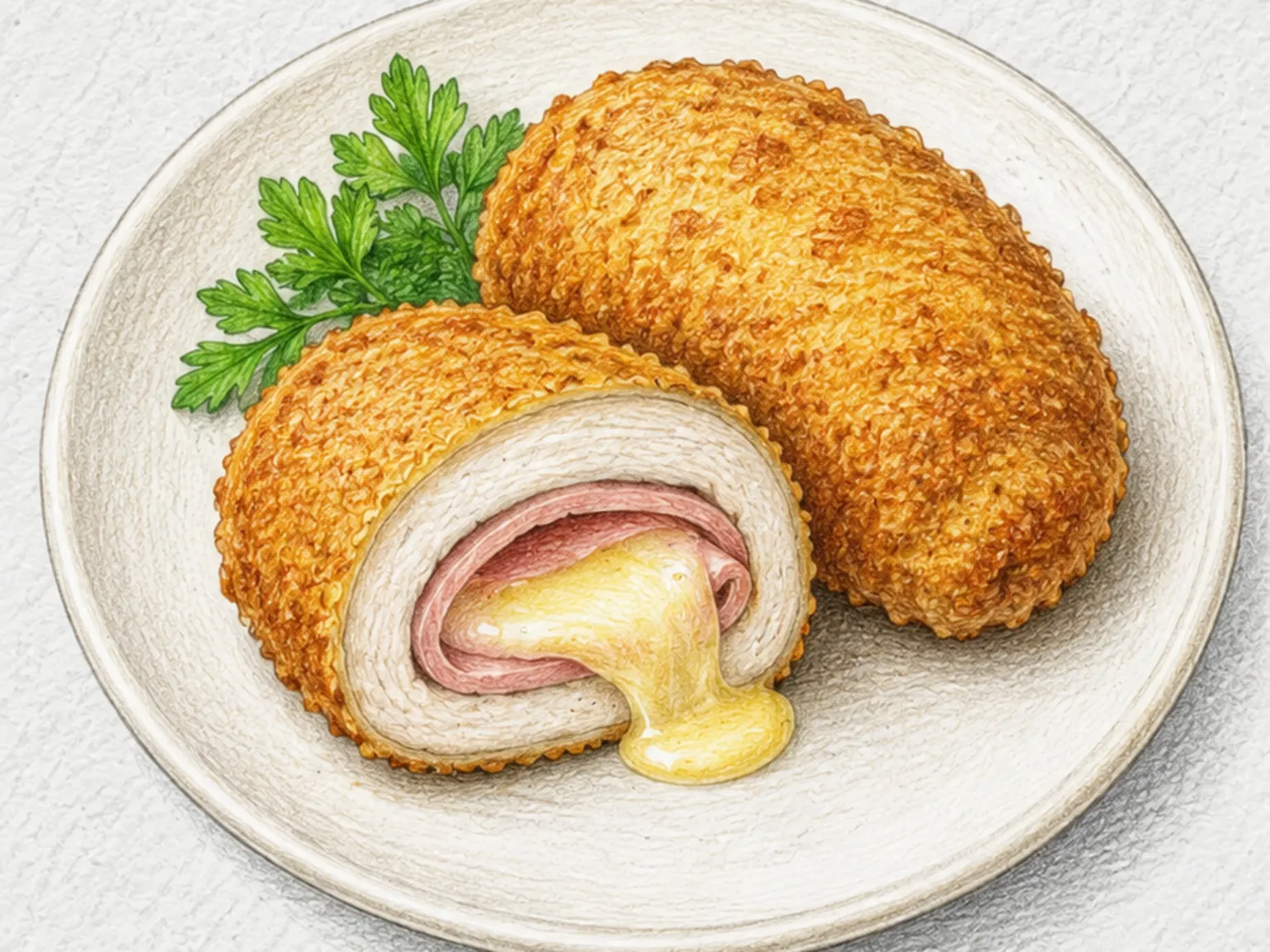
Chicken cordon bleu is a Swiss-French dish where chicken breast is pounded flat to five-millimeter thickness, layered with ham and Emmental cheese, rolled tightly, and secured with toothpicks before being coated in flour, beaten egg, and breadcrumbs. The thin, even pounding is critical: uneven thickness causes the outer sections to overcook while the thicker center remains undercooked. Pan-frying in a mixture of butter and oil over medium heat for four to five minutes per side allows the breadcrumb crust to turn golden and crisp while conducting enough heat inward to melt the cheese completely. Cutting into the finished roll reveals a cross-section of molten cheese oozing between layers of ham and chicken. The ham provides a salty counterpoint to the mild breast meat, and the melted Emmental adds a nutty, stretchy richness that holds the interior layers together. Resting the roll for two minutes after removing from the pan prevents the cheese from spilling out all at once when cut.
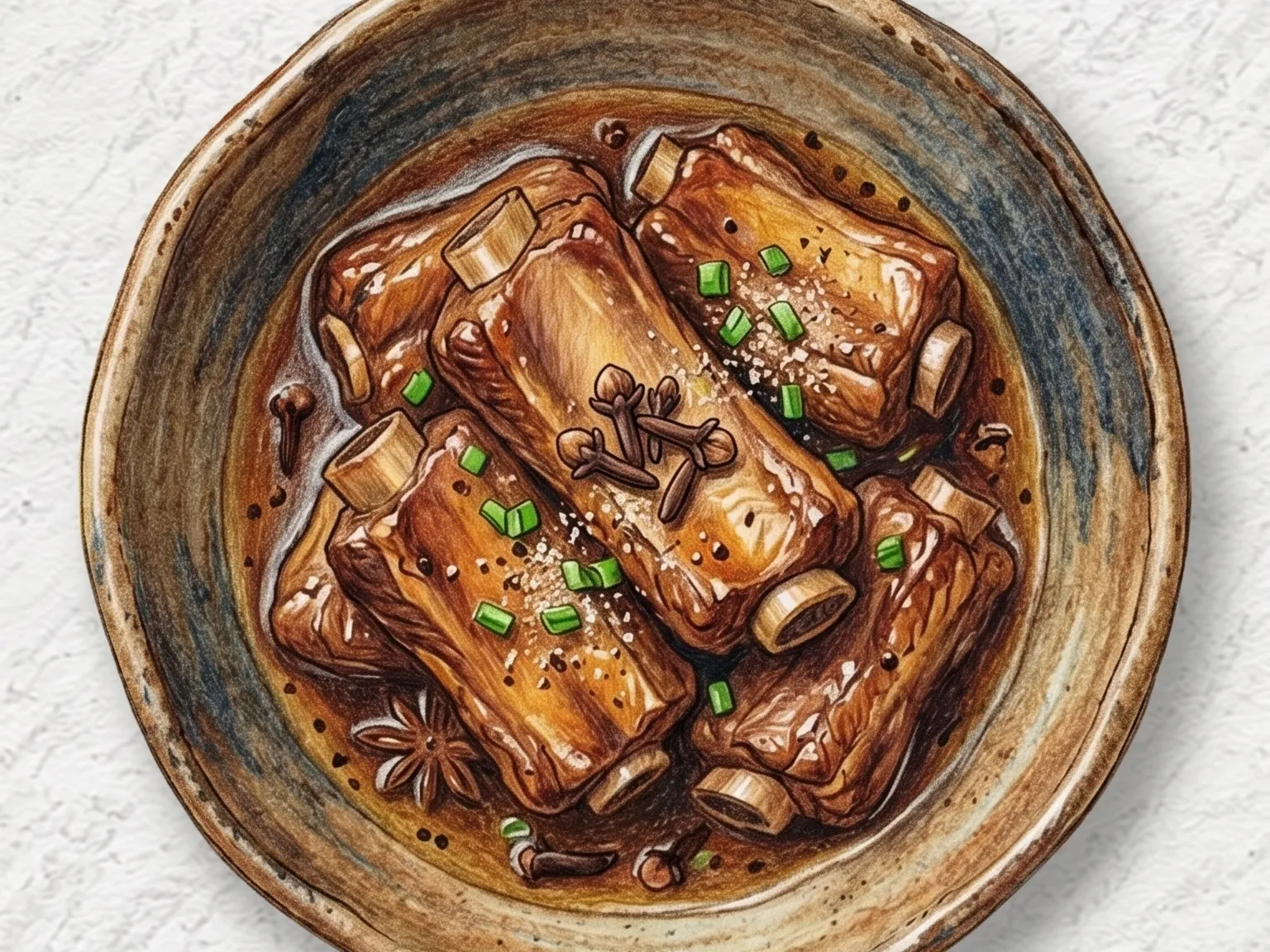
Clove-Scented Lu Shui Braised Pork Ribs
Clove-Scented Lu Shui Braised Pork Ribs is a Taiwanese-style dish featuring tender meat coated in a glossy, aromatic sauce. The cooking process starts by soaking the ribs in cold water to extract blood and blanching them to remove impurities. Rock sugar is then melted and caramelized in oil to create a deep amber base that gives the pork a mahogany finish. Sautéing the ribs with five cloves, two star anise, sliced ginger, and green onion allows the spices to bloom. The ribs are braised with soy sauce, dark soy sauce, Shaoxing wine, and water on low heat for forty to fifty minutes. This slow cooking makes the meat tender enough to slip off the bone. Uncovering the pan for the final minutes reduces the liquid into a glaze. The strong aroma of cloves requires keeping to the specified count to maintain flavor balance.
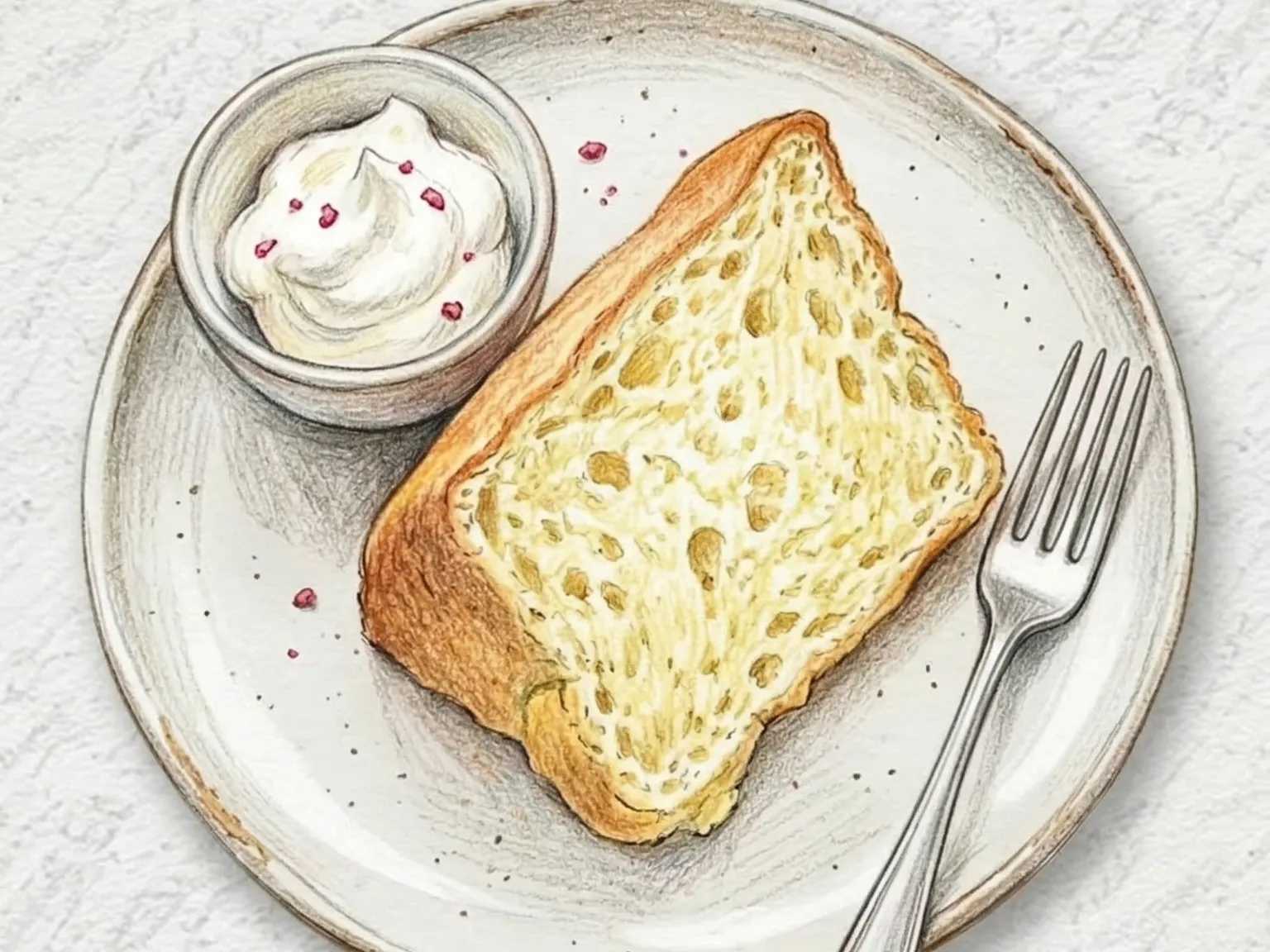
Chiffon Cake (Oil Meringue Airy American Tube Cake)
Chiffon cake sits between the density of a butter cake and the airy fragility of an angel food cake, and the difference comes down to one substitution: vegetable oil instead of butter. Oil stays liquid at room temperature, which means the crumb never firms up as it cools. The result is a cake that remains just as tender straight from the refrigerator as it is warm from the oven. The batter is built in two stages. A smooth base of egg yolks, oil, flour, and liquid comes together first, then a stiff meringue of whipped egg whites is folded in carefully to preserve as much trapped air as possible. That air is what makes the finished cake so light. After baking, the pan is immediately inverted and left to cool upside down; if the cake rests right-side up while still hot, its own weight will compress the tender crumb before it sets. Once fully cooled, the cake springs back cleanly when pressed, with a texture that is simultaneously light and moist. The neutral flavor of the base makes chiffon a versatile foundation: vanilla, matcha, yuzu, lemon, and black sesame are all common variations. It is typically served with whipped cream and fresh fruit, though a simple dusting of powdered sugar is enough when the cake itself is made well.

Chinese Red-Braised Pork Belly
Hong shao rou, red-braised pork belly, originated in the Suzhou region before spreading across China to become one of the country's defining braised dishes. Cubed pork belly is briefly boiled to remove impurities, then the pot is dried and sugar is melted alone until it reaches a deep amber caramel. The pork returns to the pot to coat every surface before dark soy sauce, light soy sauce, Shaoxing rice wine, fresh ginger slices, and star anise are added. Covered and simmered over low heat for sixty to ninety minutes, the fat layers slowly dissolve into the braising liquid while the lean meat becomes tender enough to break apart with chopsticks without any pressure. The sauce reduces to a thick, mahogany-lacquered glaze that carries layers of sweetness, salt, and the faintly medicinal warmth of star anise. Served over plain steamed rice with a generous spoonful of the sauce poured over the bowl, the dish transforms the simplest grain into a complete and deeply satisfying meal.
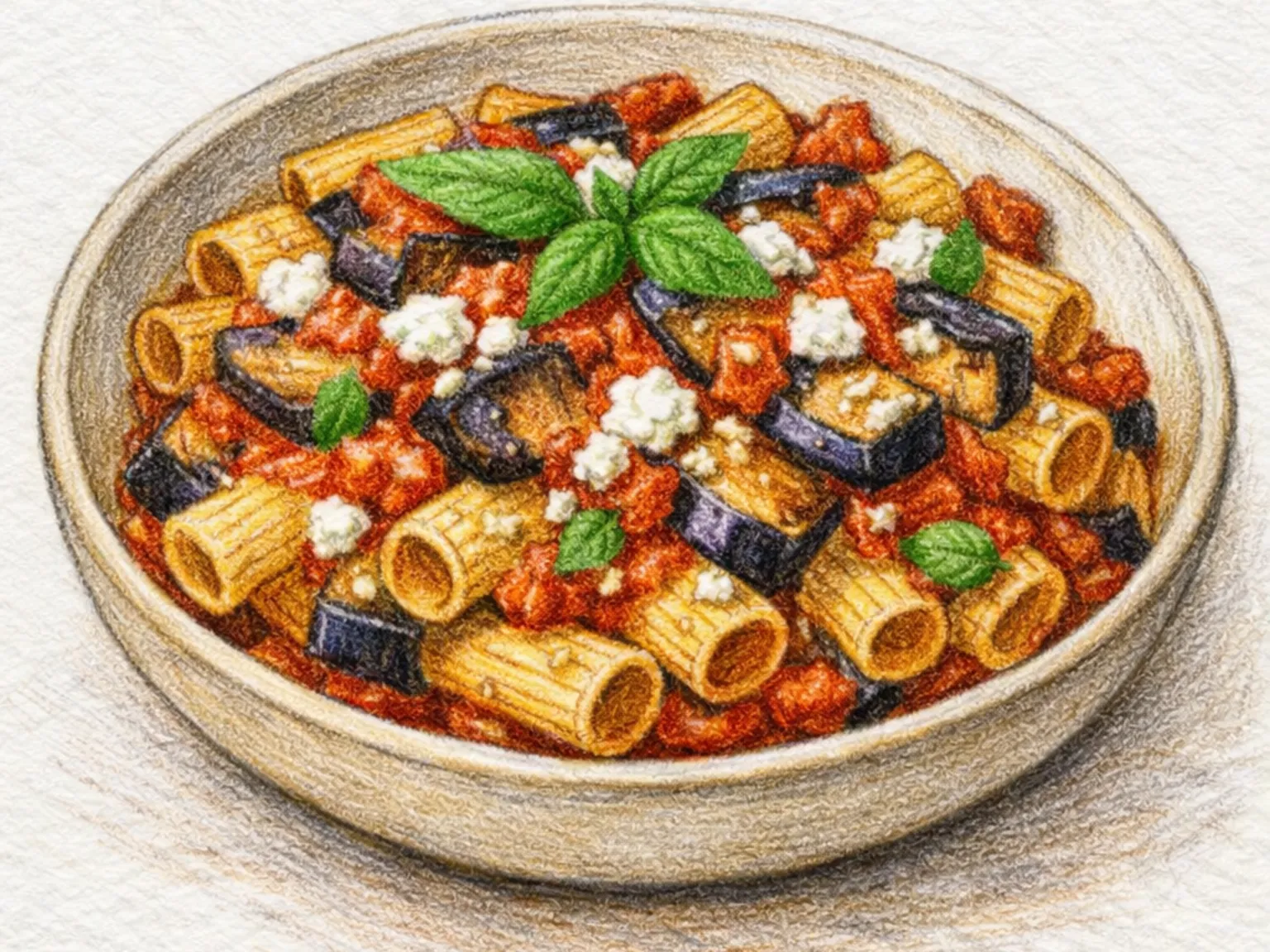
Pasta alla Norma (Sicilian Fried Eggplant Tomato Pasta)
Pasta alla Norma originates from Catania in Sicily and combines fried eggplant cubes with a simple tomato passata sauce. Salting the eggplant beforehand draws out moisture and bitterness, resulting in firmer pieces that absorb less oil during cooking. Garlic provides aromatic depth, while fresh basil added off-heat preserves its fragrance. The dish is named after Vincenzo Bellini's opera Norma, a tribute to its status as a Sicilian culinary masterpiece. It can be served as a noodle dish, with simple accompaniments chosen to match the sauce, broth, or topping.