🍱 Lunchbox Recipes
Dishes that taste great packed and cold
723 recipes. Page 19 of 31
The best lunchbox dishes hold up well at room temperature. This tag features make-ahead sides and full lunchbox recipes you can pack in the morning without stress - sausage stir-fry, rolled omelet, stir-fried anchovies, and soy-braised beef are all lunchbox staples.
The key to a great packed lunch is choosing dishes with low moisture content and arranging contrasting colors. A sprinkle of sesame seeds or furikake over the rice adds a finishing touch that looks as good as it tastes.
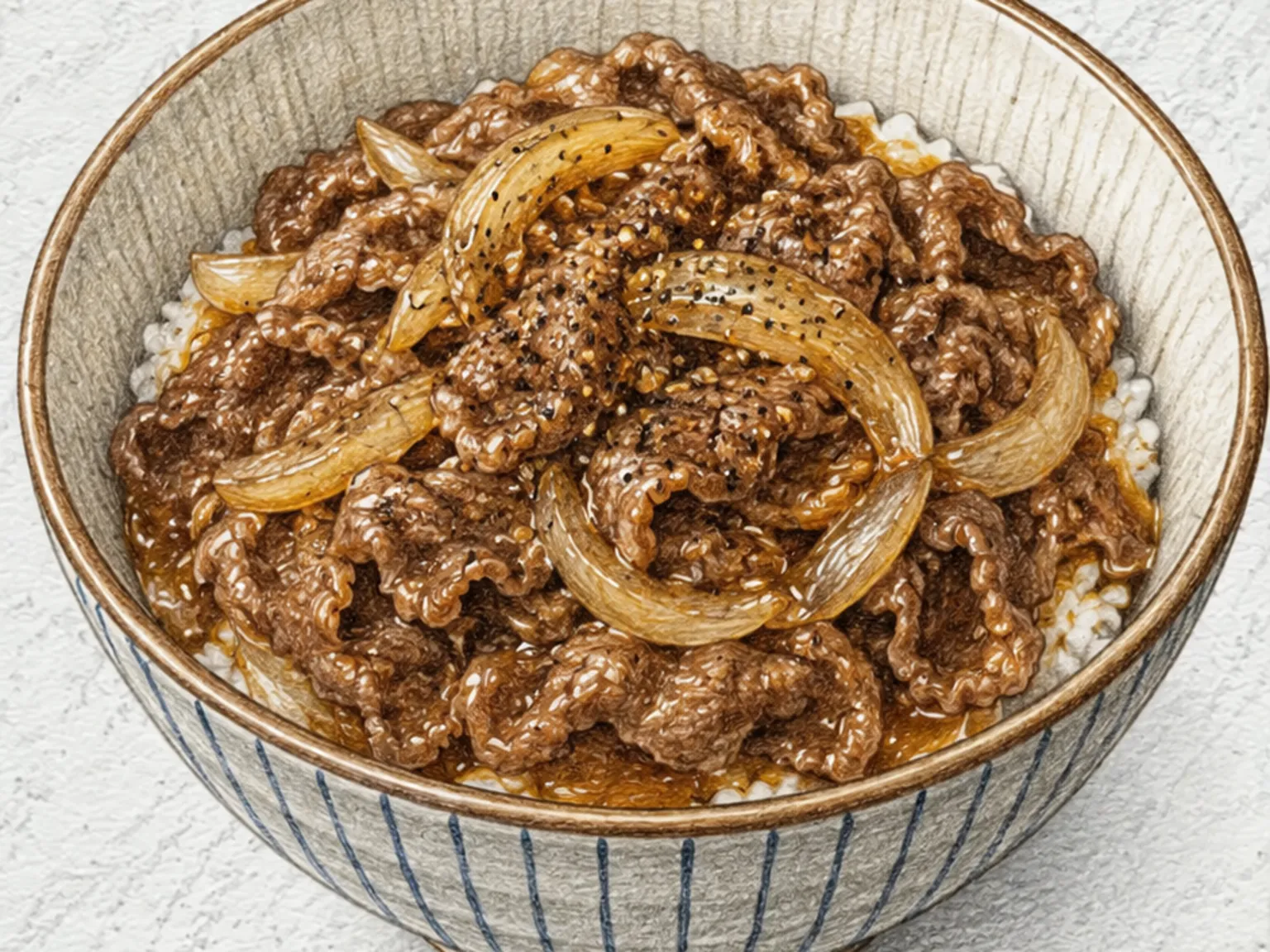
Korean Soy Glazed Beef Rice Bowl
Sogogi deopbap tops steamed rice with thin-sliced beef and onions cooked in a sweet-soy glaze, served with just enough sauce to soak into the grains. The beef is marinated briefly in a mixture of dark soy sauce, sugar, and minced garlic, which caramelizes quickly in a hot pan. Onion slices cook alongside the beef, their natural sweetness balancing the salty-sweet sauce as they soften. Sesame oil added toward the end leaves a nutty aftertaste that lingers. The key is keeping a small pool of sauce in the pan rather than reducing it completely - that glossy liquid seeps into the rice and makes each spoonful flavorful without needing additional seasoning. A generous crack of black pepper at the end adds a sharp finish.
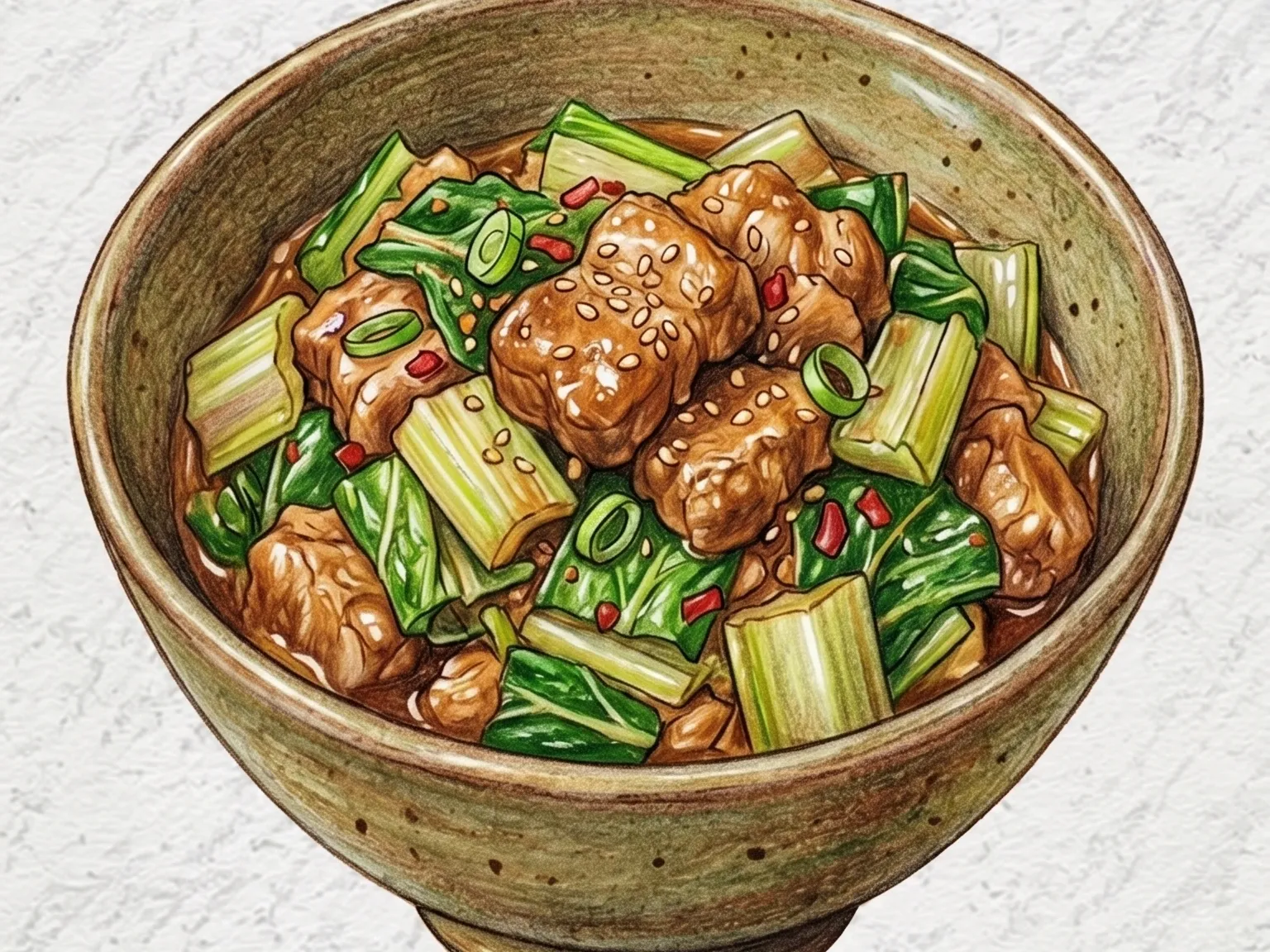
Korean Pork & Swiss Chard Stir-fry
Geundae-doenjang-dwaejigogi-bokkeum is a home-style Korean stir-fry of pork and Swiss chard in a doenjang sauce. Separating the chard stems from the leaves and adding them to the pan at different times is the practical technique that makes the dish work: the stems go in first to cook through while keeping a slight crunch, and the leaves follow just long enough to wilt without becoming limp. Doenjang absorbs and suppresses any gamey undertones from the pork while adding a deep, fermented soybean backbone to the sauce. Sesame oil stirred in at the end wraps the entire dish in a warm, nutty finish. A small amount of gochugaru brings the mild heat that distinguishes Korean home-cooking from milder preparations. The earthy, slightly mineral quality of Swiss chard pairs naturally with the fermented funk of doenjang, and spooned over steamed rice the sauce soaks into the grains and turns the whole bowl into a complete, satisfying meal.
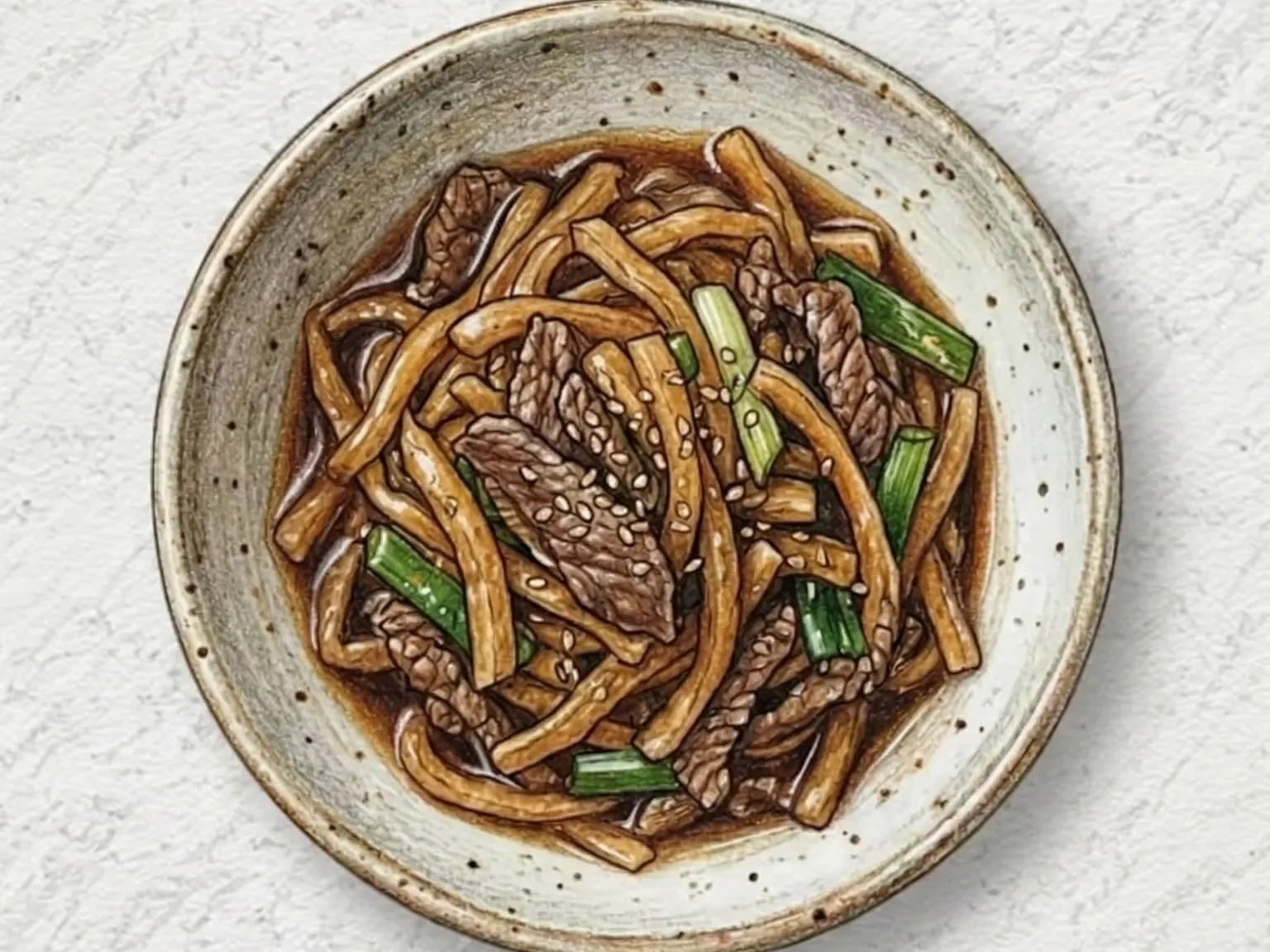
Korean Braised Beef with Dried Radish
Mumallaengi sogogi jorim is a Korean soy-braised side dish of rehydrated dried radish strips and lean beef round, cooked down until the sauce just barely covers the ingredients. Drying concentrates the radish's natural sugars and umami, and once soaked and braised the strips become chewy and deeply flavored in a way fresh radish cannot replicate. Before soaking, a quick rinse removes any dust or impurities from the drying process, and twenty minutes or more in cold water restores just enough elasticity for a satisfying texture after cooking. Thin-sliced beef is pre-seasoned with cooking wine to neutralize any off-smell, then added to the pan so it cooks cleanly and without a heavy aroma. Oligosaccharide syrup adds a gentle sheen and sweetness to the soy base without making the dish cloying. Toasted sesame seeds scattered over the top finish the dish with a nutty fragrance. Like most Korean braised side dishes, this one improves after a night in the refrigerator as the seasoning continues to penetrate, making it a practical and reliable choice for lunchboxes and weekday meal preparation that can be made ahead and eaten across several days.
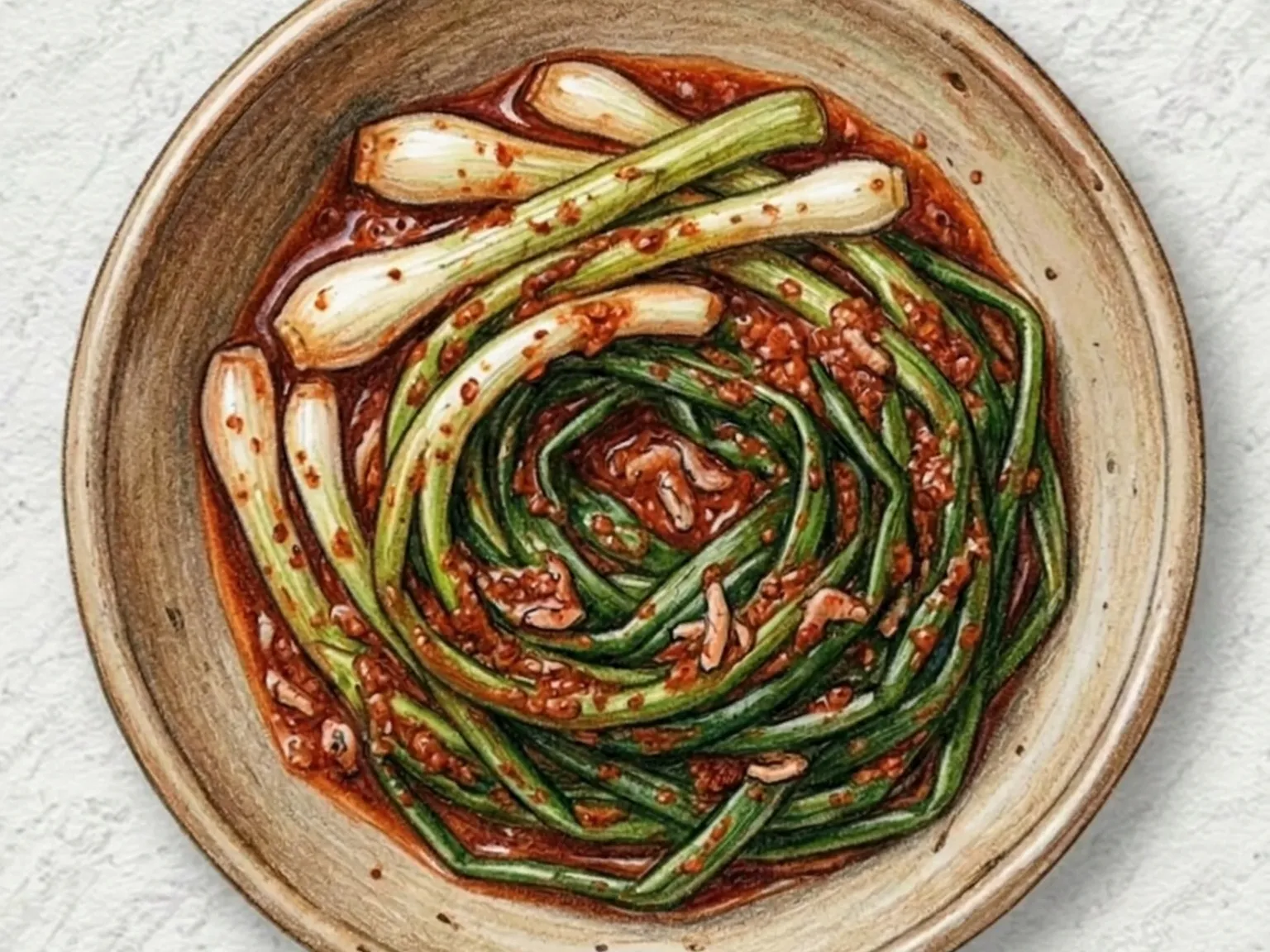
Korean Scallion Kimchi (Whole Stalk Anchovy Shrimp Paste)
Jjokpa kimchi is a traditional Korean scallion kimchi made by briefly brining whole scallions in coarse salt, then coating them from root to tip with a seasoning paste of anchovy fish sauce, fermented shrimp, gochugaru, and sweet rice flour paste. Using both anchovy fish sauce and salted shrimp together is intentional: the two condiments each carry a different profile of seafood umami, and combining them produces a more complex, layered depth than either alone could achieve. The sweet rice flour paste acts as a binder, adhering the seasoning evenly to the surface of each scallion and keeping it in place as moisture releases during fermentation. Without this paste, the pickling liquid would dilute the coating and the flavor would fade over time. The white bulb sections of the scallion hold their crunch through the brining and fermentation process while absorbing the spice of the gochugaru, and the green tops wilt to a silky texture that releases the scallion's characteristic sweet, pungent aroma. After six hours at room temperature followed by a day of refrigeration, the seasoning has fully penetrated the scallion and the kimchi is ready to eat alongside grilled pork belly or bossam. After three or more days of fermentation, a gentle lactic acidity develops that makes the kimchi equally useful as an ingredient in stews or stir-fries.
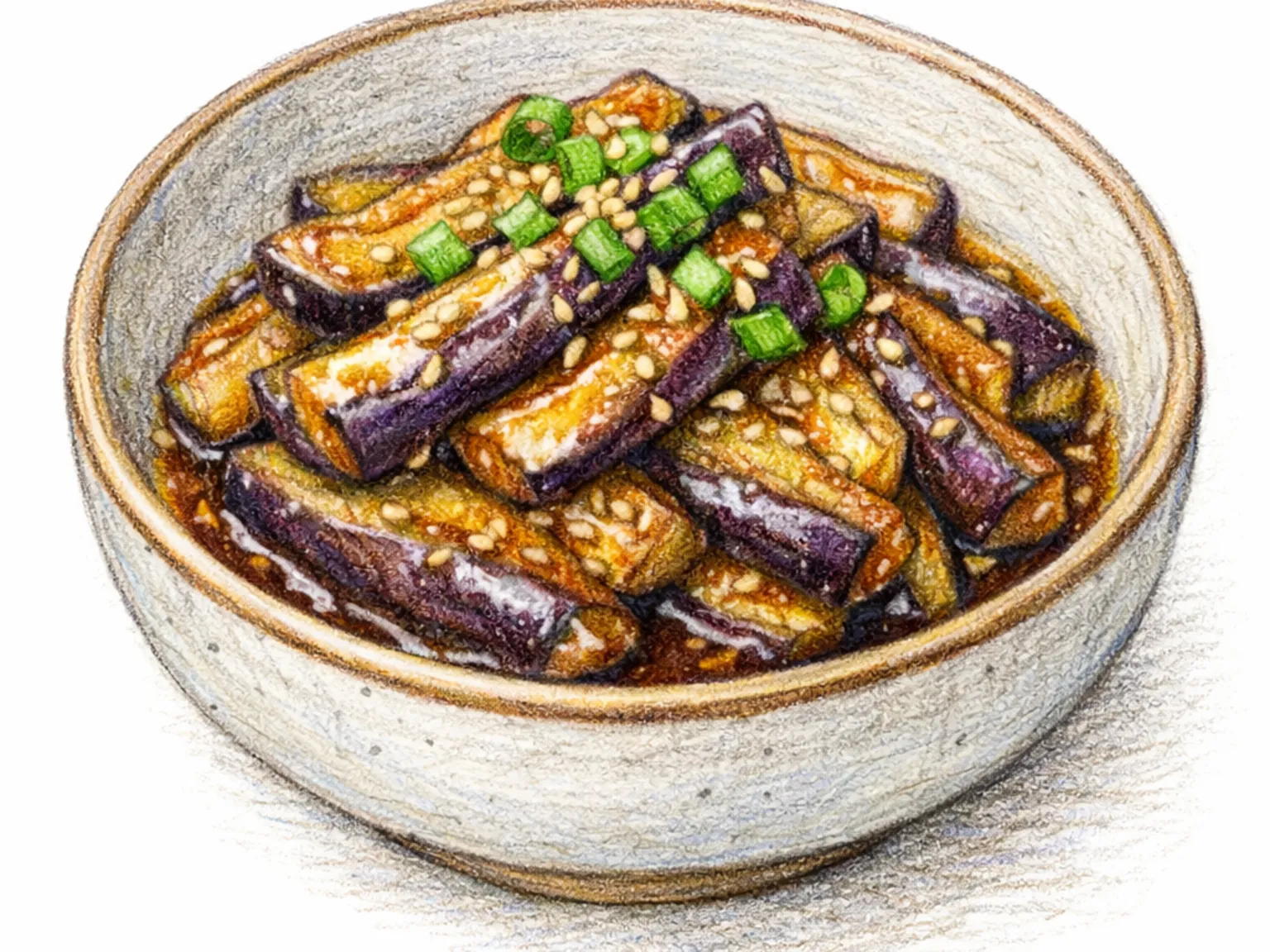
Korean Steamed Eggplant Vinegar Salad
Gaji-chorim-muchim takes eggplant in the opposite direction from bokkeum preparations, which rely on high heat and oil. Here, the eggplant is gently steamed and chilled before being dressed cold with a vinegar-forward sauce. The eggplant is halved lengthwise, scored on the flesh side, and steamed for eight minutes until the interior turns translucent and completely soft. After cooling fully, it is torn by hand along the grain into long strips, exposing a rough, irregular surface that grips the dressing. Soy sauce, rice vinegar, sugar, minced garlic, and gochugaru combine into a bright, tangy-spicy dressing that lifts the eggplant's subtle natural sweetness rather than masking it. Steamed eggplant torn into strips has a silky, almost slippery quality that is entirely distinct from stir-fried or grilled eggplant. The dressing can be made more generous to serve the dish as a refreshing cold salad style. A few drops of sesame oil and a scatter of sesame seeds finish it off with a nutty note. This banchan is especially well suited to Korea's hot and humid summer months.
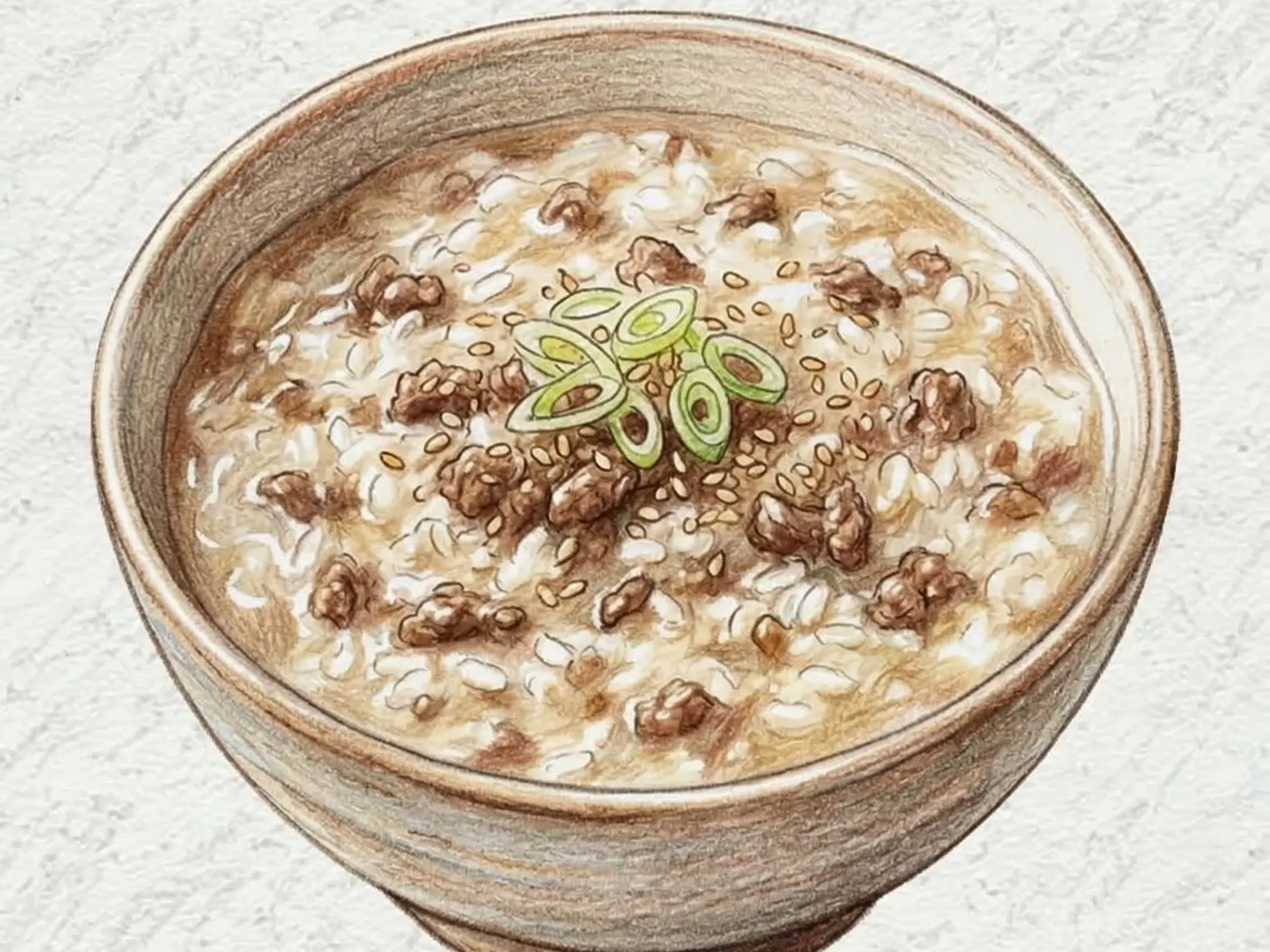
Korean Beef Porridge (Sesame Oil-Toasted Rice with Minced Beef)
Sogogi-juk is a Korean beef porridge that begins by stir-frying minced beef and soaked rice together in sesame oil, building a savory, nutty foundation before water is added. As the beef renders in the oil, its umami dissolves into the fat, and the rice grains pick up that flavor as they toast alongside the meat. Slow simmering over low heat allows the rice to break down gradually into a thick, silky porridge while the beef broth permeates every spoonful. Finely diced carrot and onion can be added for a touch of natural sweetness that softens the overall flavor profile. Widely relied on as a recovery food after illness and as a warming breakfast, this porridge is gentle on the stomach yet deeply satisfying in its quiet, meaty richness.
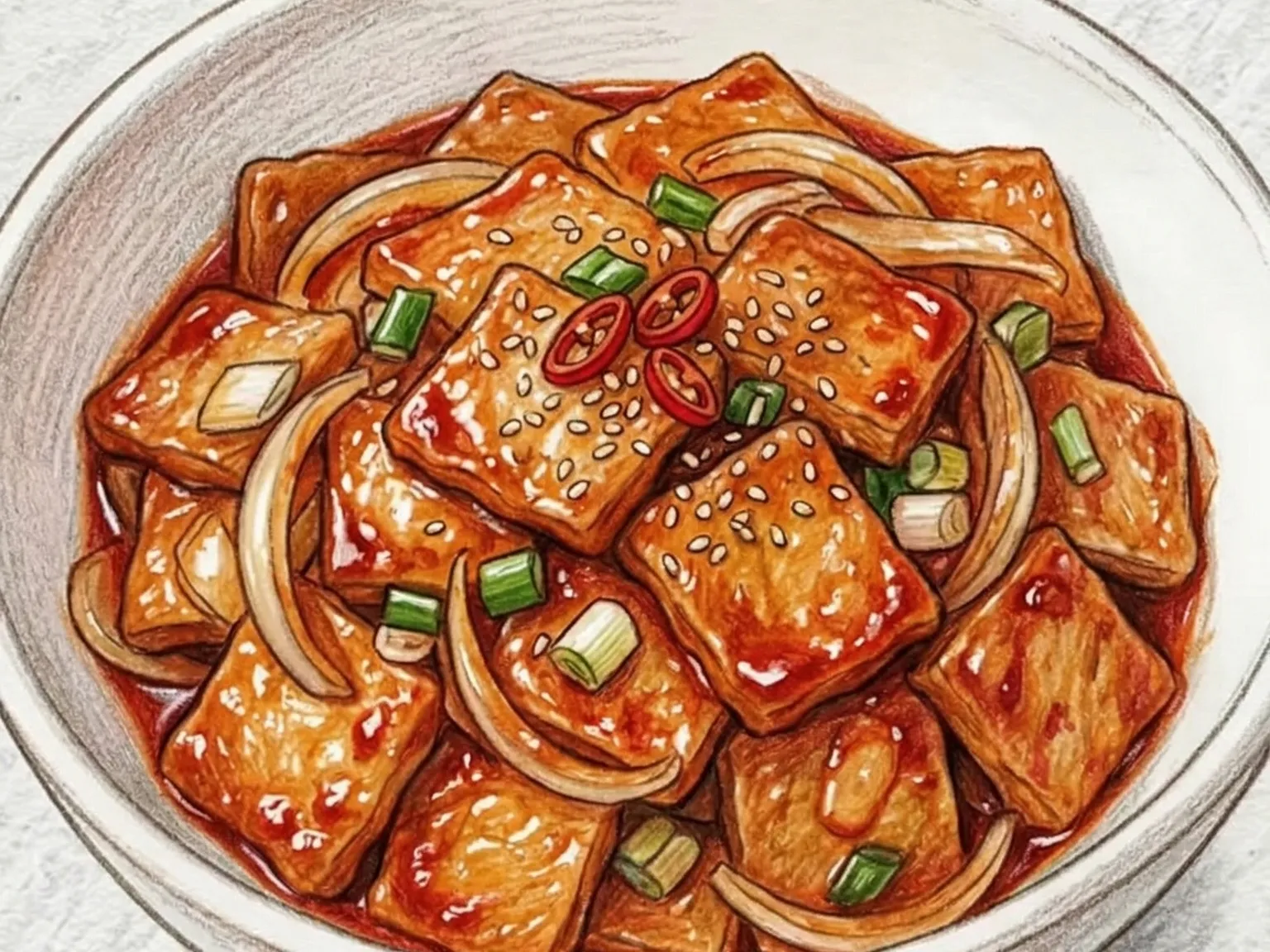
Korean Gochujang Fish Cake Stir-fry
Gochujang eomuk bokkeum stir-fries chewy fish cake sheets in a glossy sauce of gochujang, soy sauce, oligosaccharide syrup, and minced garlic. Briefly blanching the fish cakes before they go into the pan removes excess grease, producing a cleaner-tasting dish where the spicy-sweet glaze clings evenly to each surface without any slipperiness. Onion lends natural sweetness that rounds out the chili heat, while diagonally sliced green onion adds a fresh, sharp finish. Sesame oil and toasted sesame seeds complete the dish with a nutty layer. Adding a small splash of water to the sauce keeps things moist if a softer finish is preferred. This is one of Korea's most reliable everyday banchan, equally suited to a weekday dinner and a packed lunchbox.
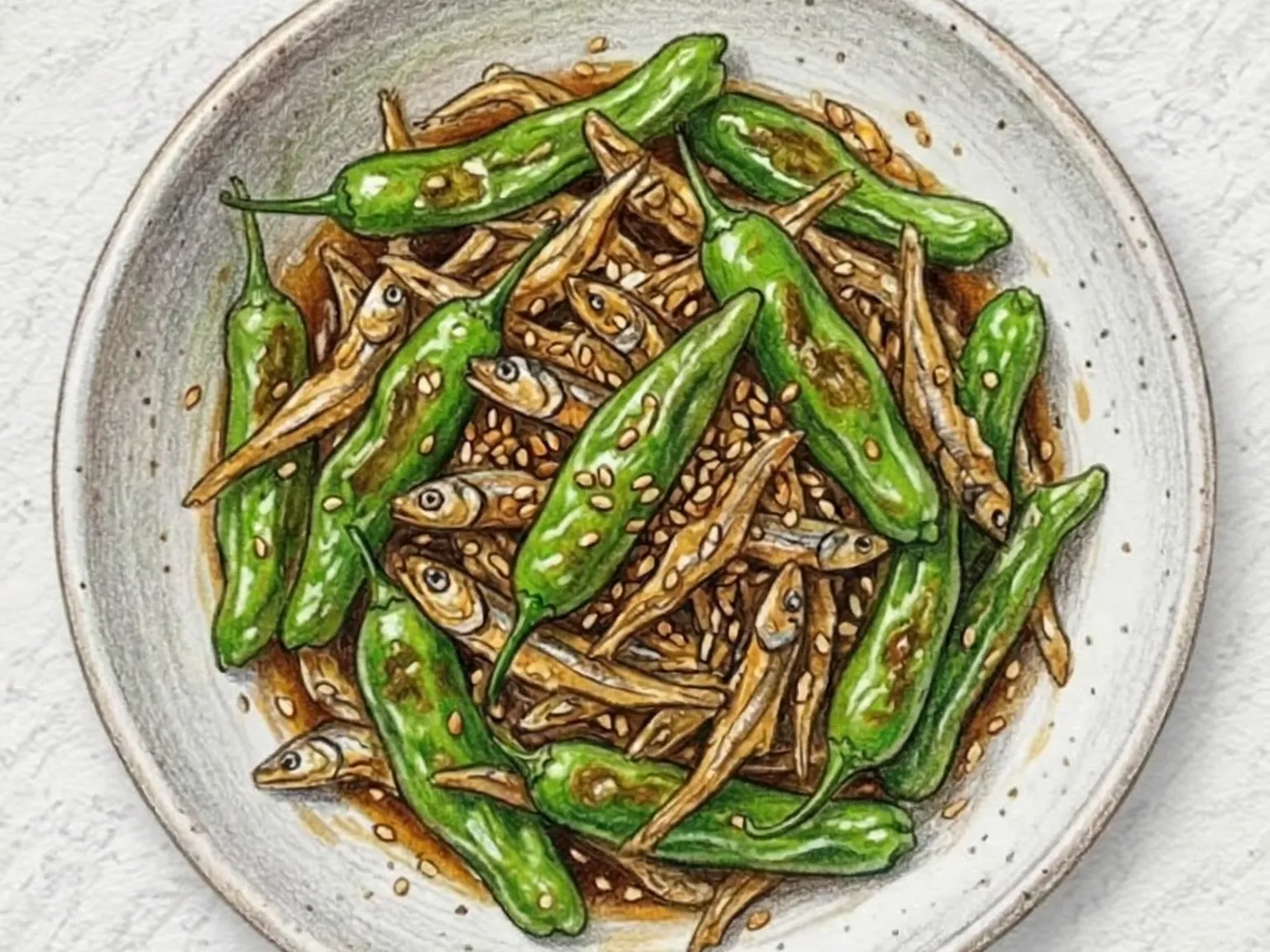
Korean Anchovy & Shishito Braise
Myeolchi kkwari jorim is a Korean side dish of dry-toasted small anchovies and shishito peppers glazed in a sweet soy sauce with corn syrup and cooking wine. Toasting the anchovies first drives off any fishy smell and brings out their nuttiness, while the peppers are stir-fried in oil to release a mild, lingering heat. The glaze coats everything in a shiny, sweet-salty finish, and sesame oil with sesame seeds add a final toasted aroma. This banchan tastes even better the next day after the sauce has fully settled in, making it one of the most reliable lunchbox staples in Korean home cooking.
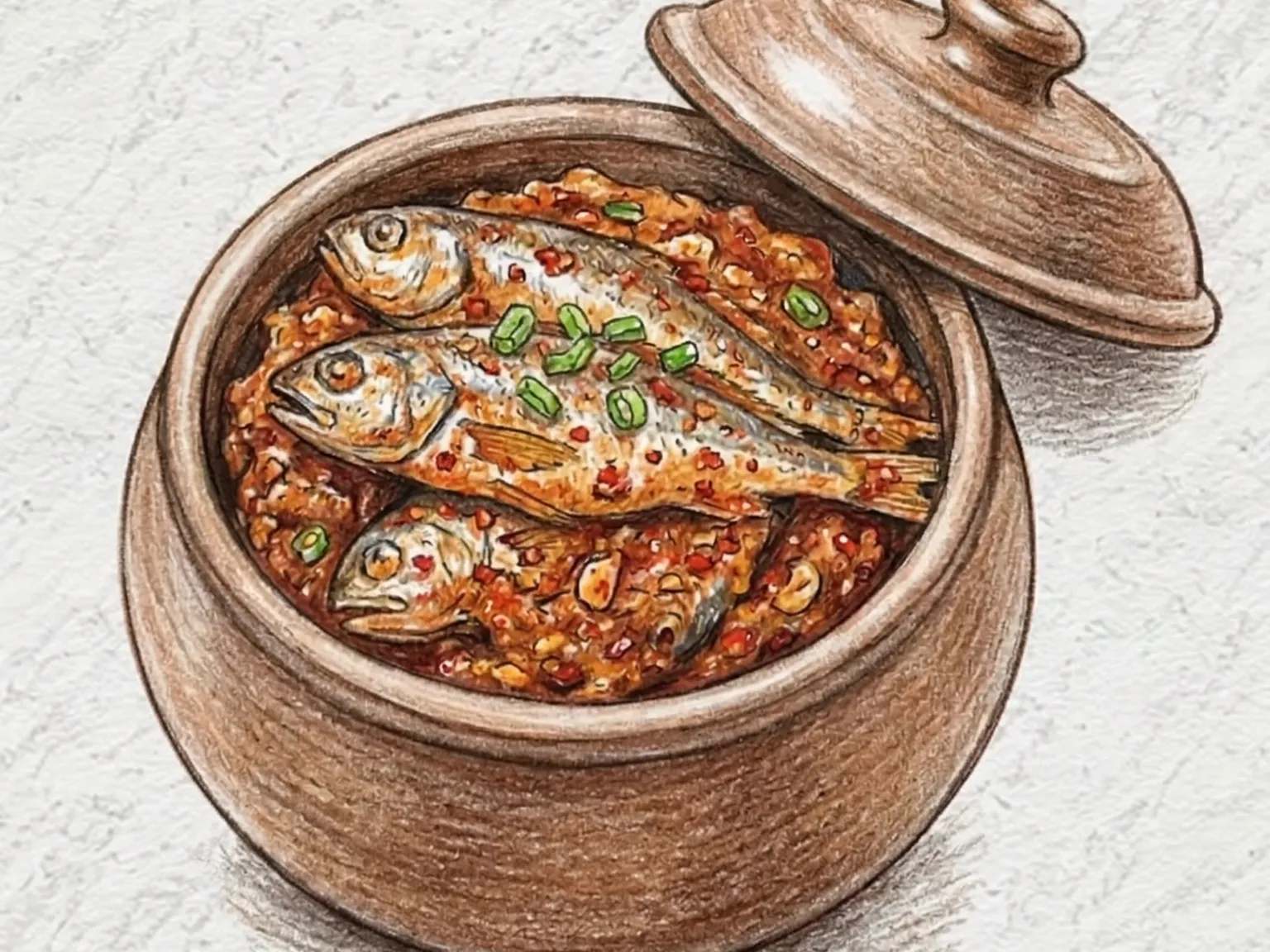
Korean Salted Yellow Croaker Jeotgal
Jogi jeotgal is a Korean salted and fermented yellow croaker made by gutting the fish, layering it in coarse sea salt for an initial multi-day cure in the refrigerator, then folding in gochugaru, garlic, ginger, and rice wine for a second stage of aging. Over the extended fermentation, fish protein breaks down into a concentrated savory depth that bears no resemblance to the raw ingredient, while the sea salt continuously draws out moisture and causes the flesh to contract and firm. Gochugaru and ginger suppress the fermentation smell and add a mild heat and aromatic warmth, while rice wine smooths out the sharp, rough edges that develop early in the process. The finished jeotgal is used in small amounts, placed over rice or added to kimchi jjigae as a flavor amplifier, a condiment that delivers significant depth from a very small quantity.
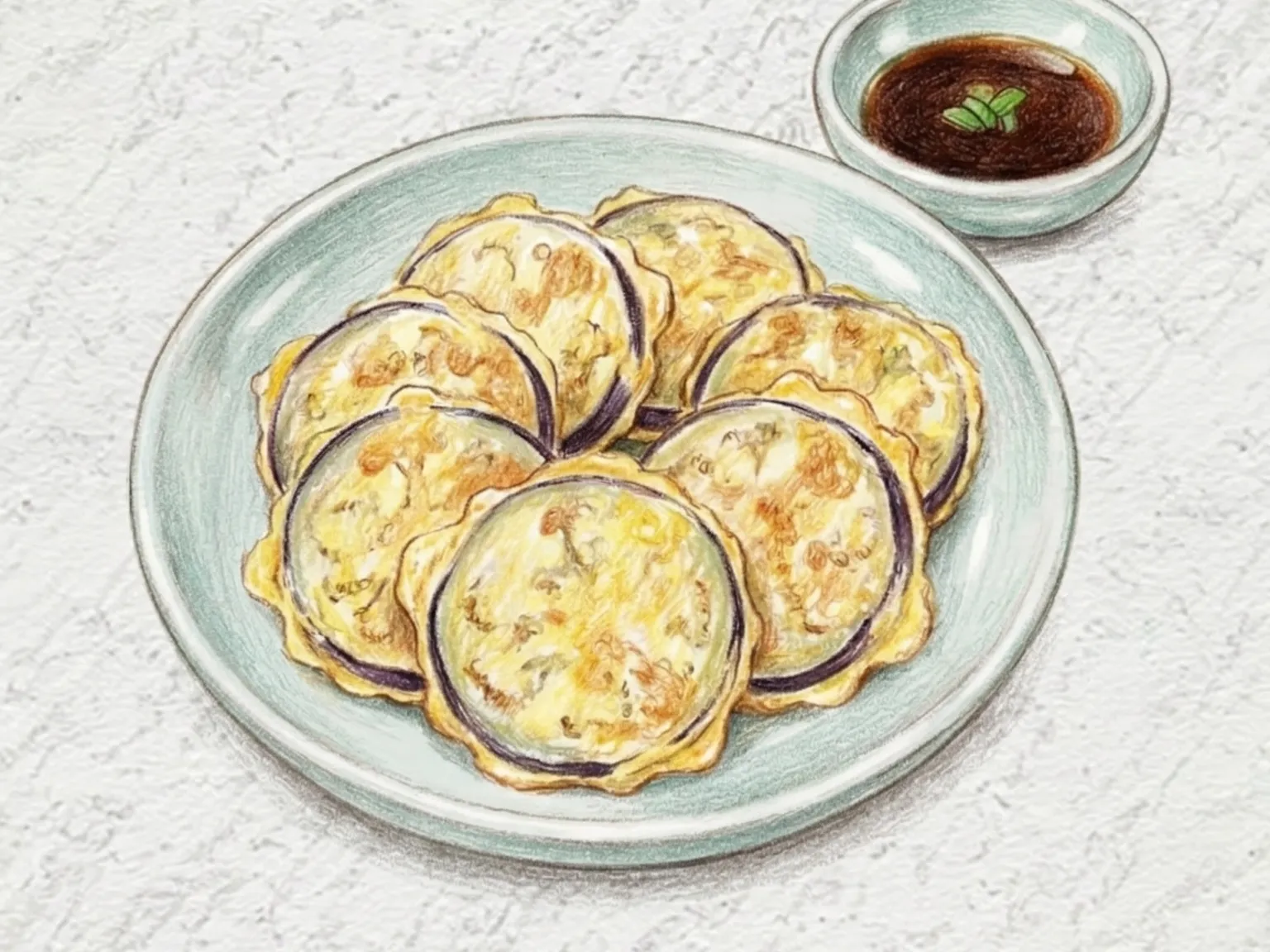
Korean Eggplant Pancakes (Egg-Battered Pan-Fried Eggplant)
Gaji-jeon belongs to the Korean jeon tradition of vegetables dipped in egg wash and pan-fried in oil, a technique integral to ancestral rites and holiday tables. Eggplant is cut into rounds about 7mm thick, thin enough to cook all the way through but thick enough to keep a soft, yielding center. A light dusting of flour before the egg wash is necessary for the batter to adhere and stay intact in the pan. As the egg coating sets into a golden, lacy crust over the heat, the eggplant inside steams in its own moisture until it collapses into a custardy, almost dissolving texture. The appeal of this jeon lies entirely in the contrast between the crisp, faintly eggy exterior and the creamy interior that gives way with almost no resistance. Dipping each piece in a simple soy and vinegar sauce cuts through the richness of the egg crust and highlights the eggplant's subtle sweetness. Korean families commonly fry gaji-jeon alongside hobak-jeon and other vegetable jeon for Chuseok. It can be fried the day before and held at room temperature without the flavor deteriorating significantly.
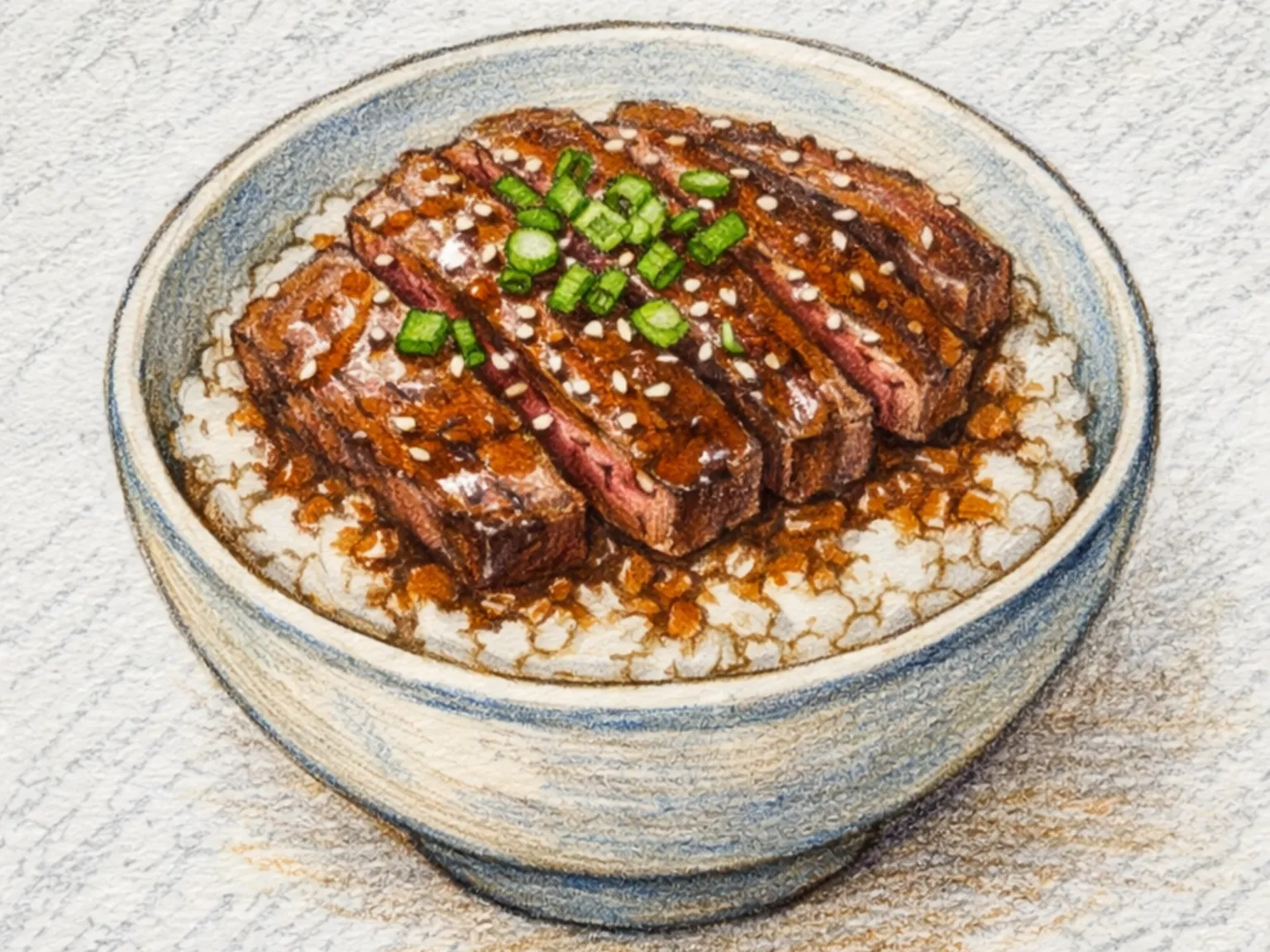
Steak Rice Bowl (Seared Beef with Soy-Garlic Glaze over Rice)
A thick-cut beef steak is seared at high heat until a deep brown crust forms, then sliced and fanned over a bowl of hot rice. A glaze of soy sauce, garlic, and mirin is spooned over the slices, coating them in a glossy, caramelized finish. As the warm rice absorbs the pan juices, each spoonful carries the full weight of the beef's seared flavor. A runny fried egg or a small dab of wasabi on the side balances the richness with creaminess or heat. Controlling resting time and grain texture helps the ingredients cook evenly while keeping the final seasoning balanced.
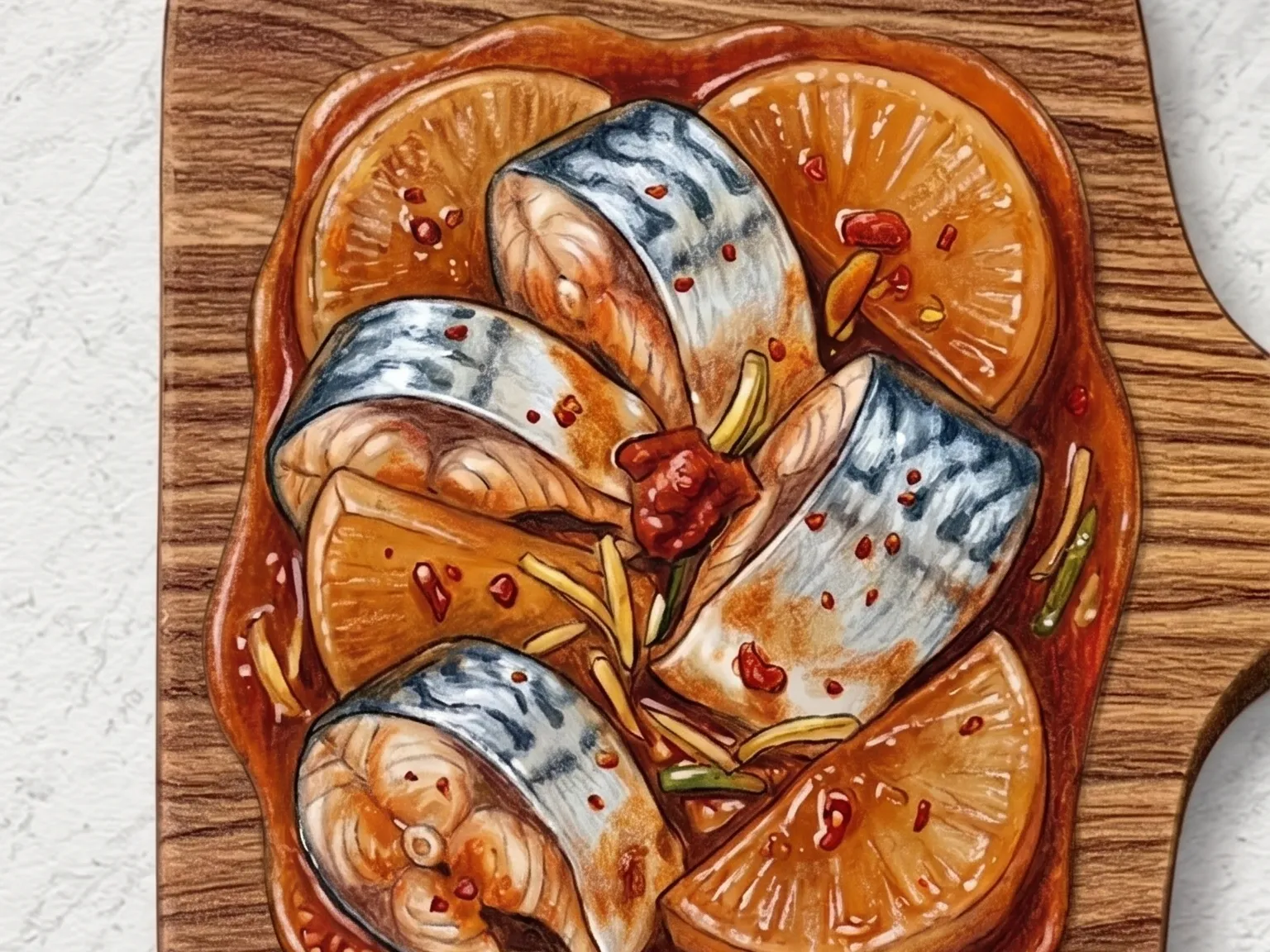
Korean Braised Mackerel with Radish
Layering thick slices of radish beneath fresh mackerel prevents the delicate fish from sticking to the pot while allowing the vegetables to soak up the seasoning like a sponge. This traditional Korean preparation uses a base of soy sauce, red chili powder, and red chili paste to create a thick braising liquid. As the pot simmers, the cook repeatedly spoons the sauce over the fish pieces to ensure the heat and spices reach every part of the mackerel. Ginger serves as a crucial ingredient to eliminate any strong fishy scents, so adding it early in the cooking process allows its aromatic properties to fully integrate into the broth. Over time, the radish softens into a translucent texture, absorbing the spicy and salty elements of the sauce until it becomes a substantial part of the meal. Adding onions and green onions during the final stages of cooking preserves their crispness and prevents their fresh aroma from fading. The process concludes when the liquid reduces into a glossy glaze that coats the mackerel. Serving this dish immediately over warm white rice allows the grains to catch the concentrated sauce. Beyond its taste, the mackerel provides omega-3 fatty acids while the radish contributes digestive enzymes and vitamin C to balance the natural oils of the fish.
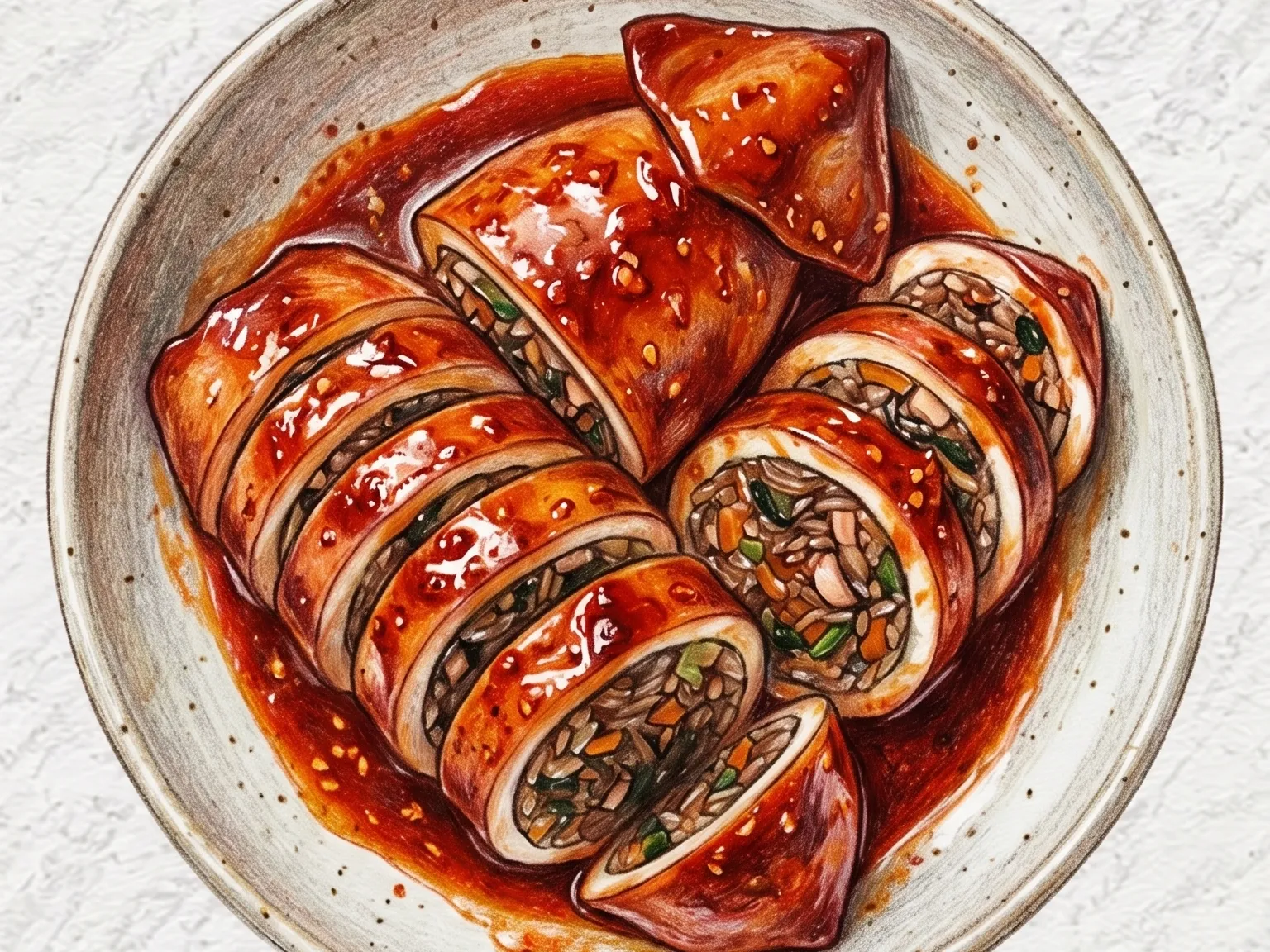
Braised Squid Sundae in Spicy Sauce
This dish features sliced squid sundae simmered in a sweet and spicy red chili paste sauce. The squid sundae is cut into thick 1.5 cm rounds before cooking, which helps prevent the seasoned stuffing from spilling out during the braising process. The sauce is prepared by mixing water, gochujang, red chili powder, soy sauce, minced garlic, and rice syrup in a wide pan. After boiling the sauce, the squid pieces are arranged in a single layer and simmered over low heat. Basting the slices with the sauce rather than flipping them frequently helps preserve their shape and keeps the cross-section intact. The rice syrup thickens the chili paste base into a glossy, sticky glaze that coats the squid. A drizzle of sesame oil at the end adds a savory finish.
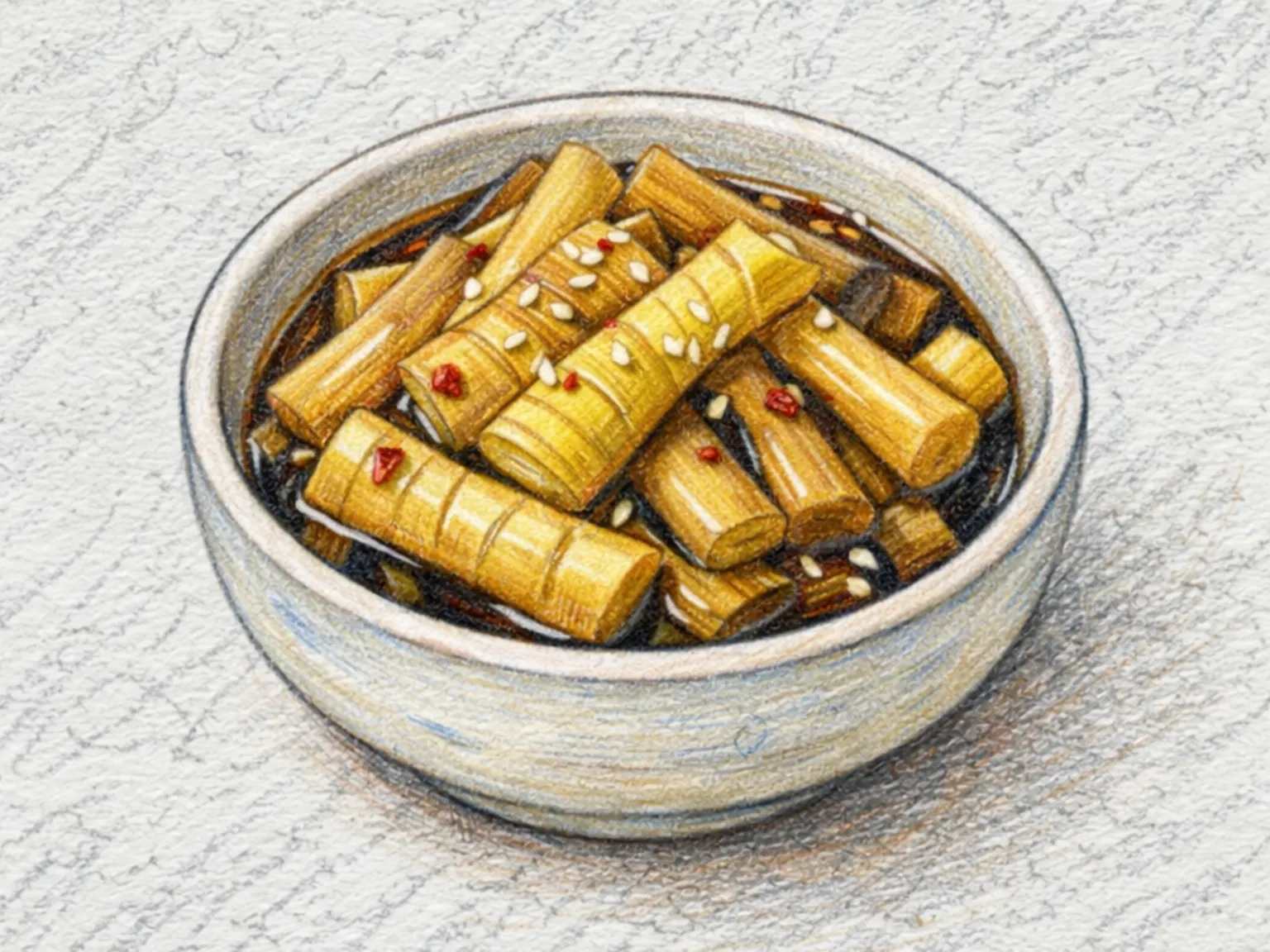
Korean Bamboo Shoot Pickle
Juksun jangajji refers to a Korean side dish consisting of pickled bamboo shoots. The preparation begins by boiling the raw bamboo shoots in water, a necessary preliminary step that removes the naturally occurring astringency and the sharp, harsh qualities found in the fresh plant. Once the shoots are softened and neutralized, they are placed into a container and covered with a hot pickling liquid. This brine is a mixture of soy sauce, vinegar, and sugar, which is brought to a boil together with dried bay leaves and whole black peppercorns to provide a subtle aromatic complexity. Because bamboo possesses a particularly dense and tightly packed cellular structure, it does not absorb the flavors immediately. Instead, the shoots slowly take in the salty, sweet, and acidic properties of the brine over the course of at least twenty-four hours while resting in a refrigerator. This slow penetration allows the bamboo to retain its characteristic firm and crunchy texture even after it has been submerged in the liquid for several days. The inclusion of bay leaf and whole peppercorns introduces a quiet, layered spice profile that differentiates this version from simpler soy and vinegar preparations. It is important to perform the initial blanching, as skipping this step results in a persistent bitterness that the pickling brine is unable to mask. In terms of serving, the sharp acidity of these pickles functions effectively as a palate cleanser when eaten alongside fatty meats such as grilled pork belly or marinated galbi. The textured shoots can also be utilized as a crisp topping for rice bowls or integrated into sandwiches to add a structural element.
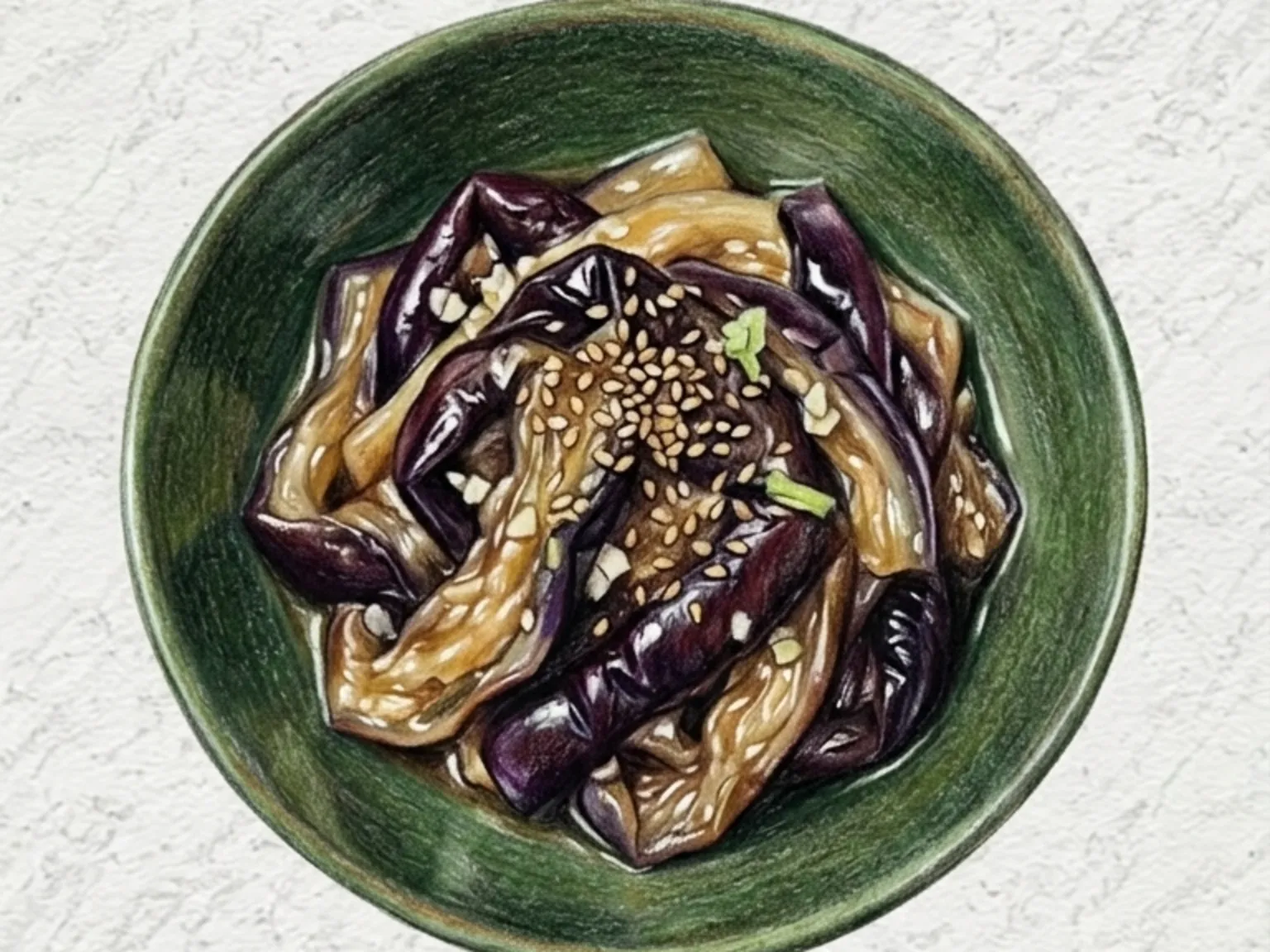
Korean Steamed Eggplant Namul
Gaji namul strips eggplant down to its most restrained form, a banchan dressed with nothing more than soy sauce, garlic, and sesame oil. The eggplant is halved and steamed for around seven minutes until the flesh is uniformly tender throughout, then pulled into long shreds by hand along the grain. Tearing rather than cutting creates a rougher, more uneven surface that grips the minimal seasoning more effectively than clean knife edges would. There is no chili powder, no vinegar, no fermented paste. The soy sauce and sesame oil soak into the porous, spongy flesh, staining it a deep, glossy color and pulling the flavors in without competing with the eggplant itself. The texture is softer than almost any other Korean namul, collapsing gently when pressed and practically dissolving when stirred into warm rice. Gaji namul is a traditional dish in Korean Buddhist temple food, a cuisine where the absence of strong flavors is a deliberate choice rather than an oversight, and where simplicity is the point.
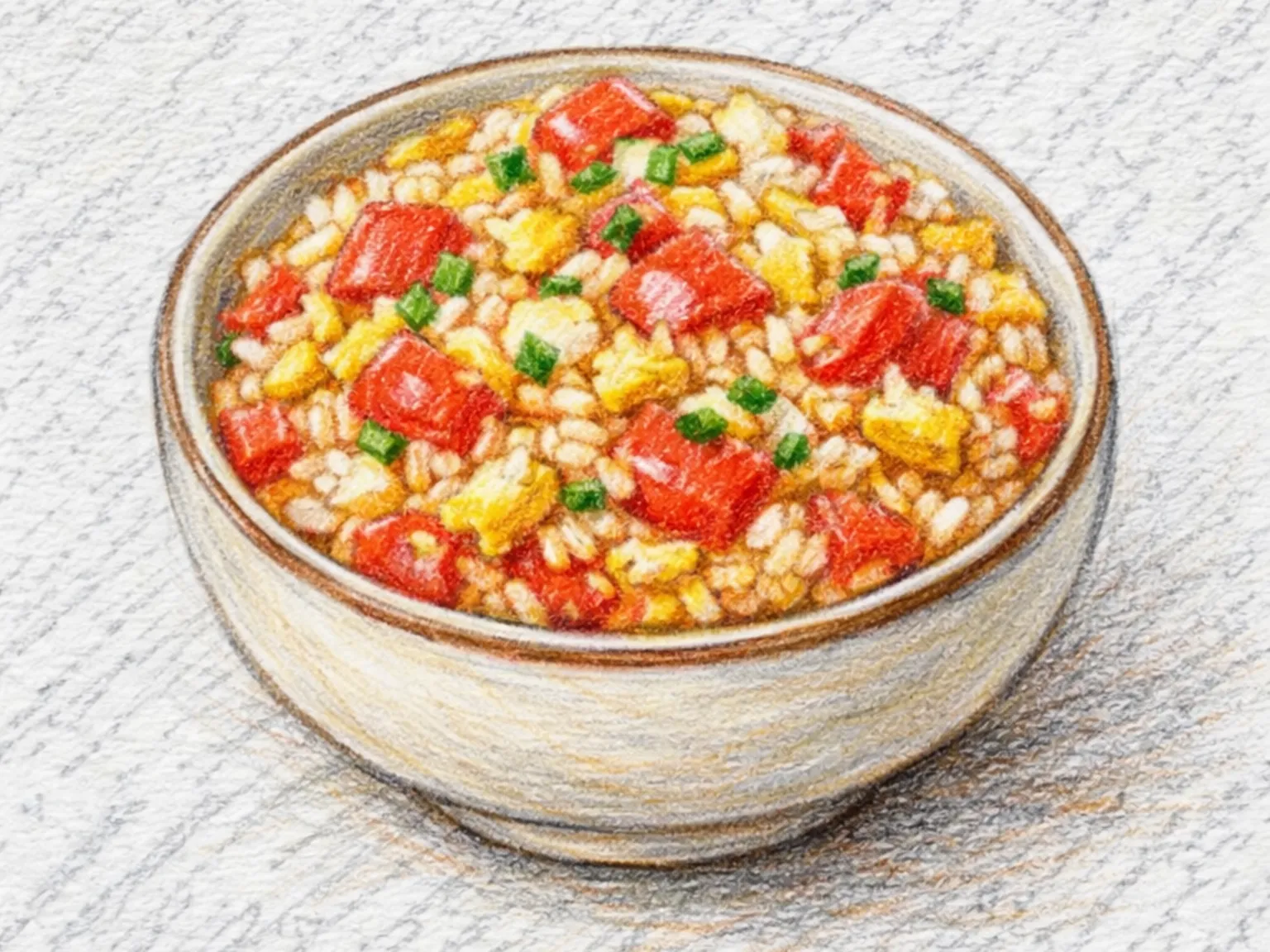
Korean Tomato Egg Fried Rice
Eggs are scrambled first and set aside, then tomatoes are stir-fried in the same pan until their juices burst and coat the wok. Day-old or freshly cooked rice goes in next, tossed at high heat so the grains absorb the tomato's sweet-tart moisture while staying individually distinct. The scrambled egg is folded back in at the end, distributing soft, fluffy curds throughout the fried rice. Rooted in the Chinese classic of tomato and egg, this version turns those familiar flavors into a satisfying one-bowl fried rice.
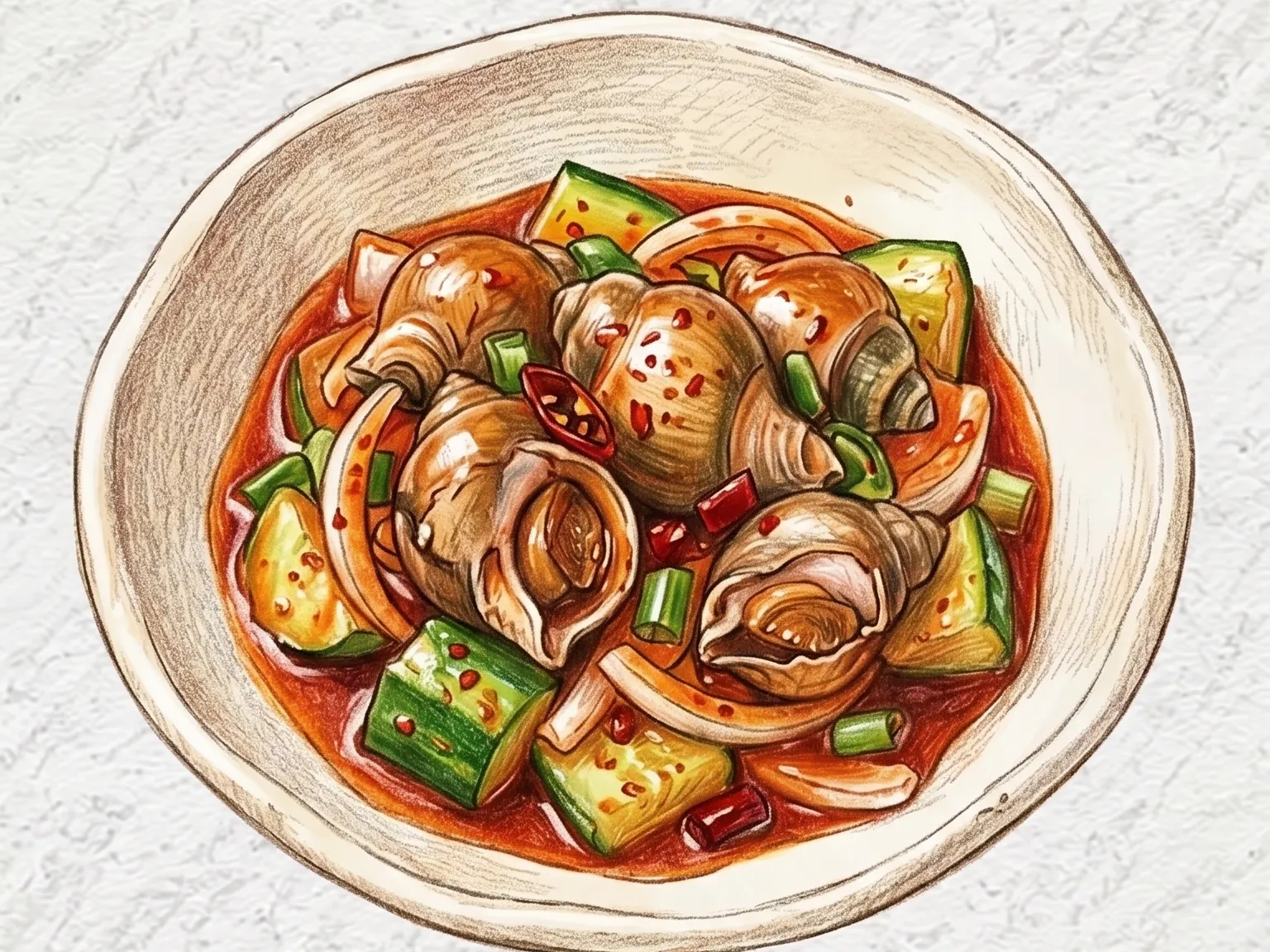
Korean Spicy Whelk Stir-fry
Golbaengi bokkeum is a spicy Korean whelk stir-fry that uses canned whelk with a sauce built from gochujang, gochugaru, vinegar, sugar, and sesame oil. The firm, chewy texture of the whelk is the defining quality of the dish, which means cooking time must stay within two to three minutes to prevent the meat from toughening further. Vinegar adds a tangy brightness that lifts and balances the heat from the chili components. A splash of the canning liquid stirred in during cooking enhances the whelk's natural brininess and keeps the sauce from drying out. Julienned cucumber, sliced onion, and scallion are added off the heat so they stay crisp and retain their raw freshness rather than wilting into the sauce. As a banchan, it pairs directly with rice, but served alongside thin wheat noodles or glass noodles it transforms into one of Korea's most beloved drinking snacks, a staple of old-school pojangmacha stalls where the combination of cold beer and spicy, chewy whelk has been a fixture for decades.
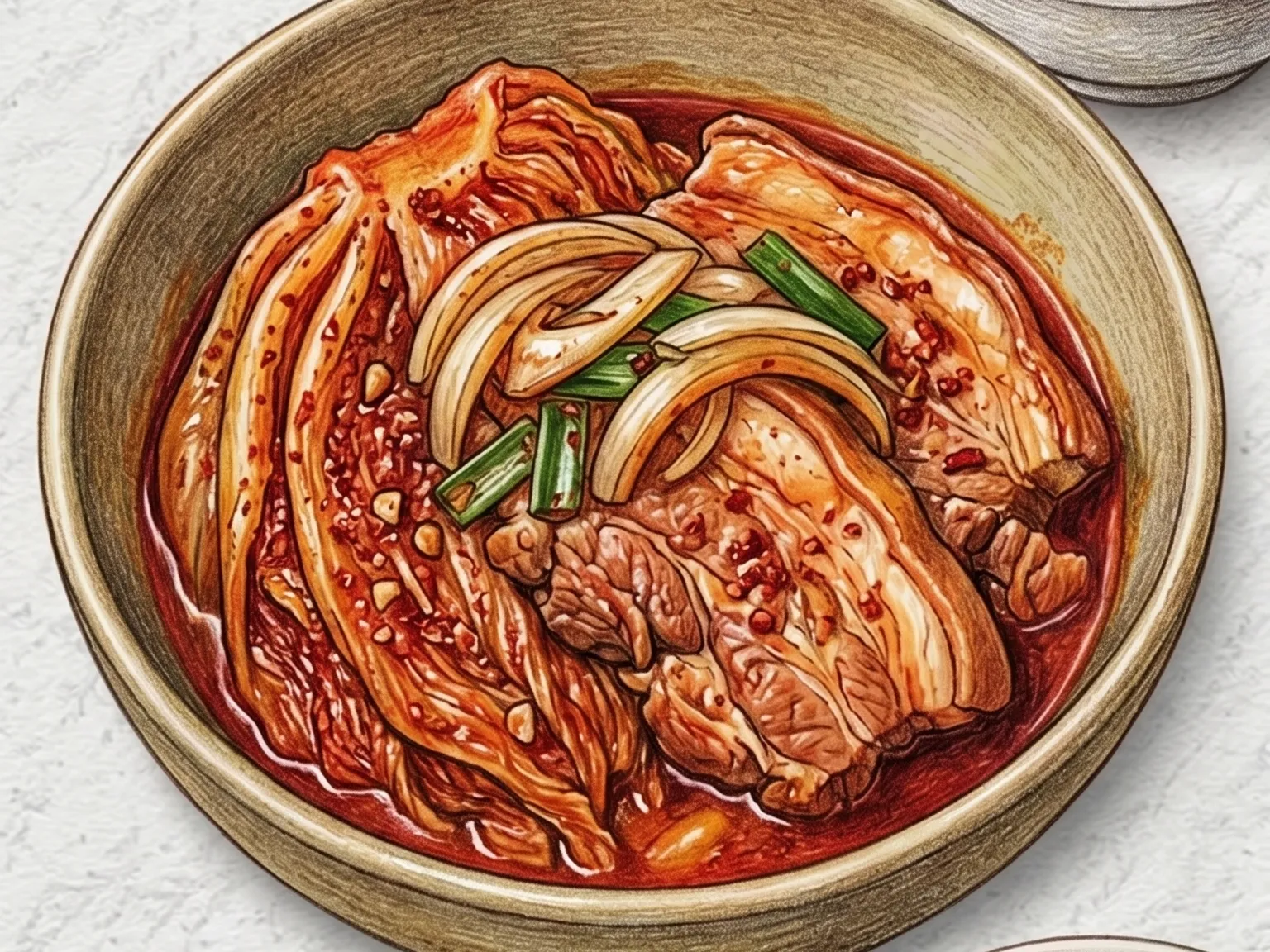
Korean Braised Pork Kimchi
Pork kimchi jjim is a slow Korean braise where pork shoulder and well-aged kimchi are layered alternately in a pot with gochugaru, soup soy sauce, and minced garlic, then cooked at a low simmer for over fifty minutes. The kimchi's sharp, pungent fermented acidity gradually softens over the long cook but does not disappear; instead, it transforms into a complex, deep flavor that saturates the pork rather than overwhelming it. Pork shoulder is the preferred cut because its layered fat and muscle does not dry out over extended cooking and the rendered fat continuously bastes the braising liquid, enriching it throughout the process. Onion and green onion supply a natural sweetness that moderates the acidity and spice and prevents the dish from tipping into one-dimensional sharpness. Reducing the braise until only a small amount of sauce remains is important for flavor concentration, and lifting the lid periodically to turn the ingredients ensures that the top layers absorb the liquid as thoroughly as the bottom. The pork is done when it pulls apart with chopsticks with almost no resistance. Served over steamed rice with the remaining sauce spooned generously over the top, the soy and kimchi juices soak into the grain and make for a deeply satisfying and complete meal. Refrigerated leftovers eaten the following day taste noticeably better: the acidity stabilizes further overnight and the flavors integrate more fully.
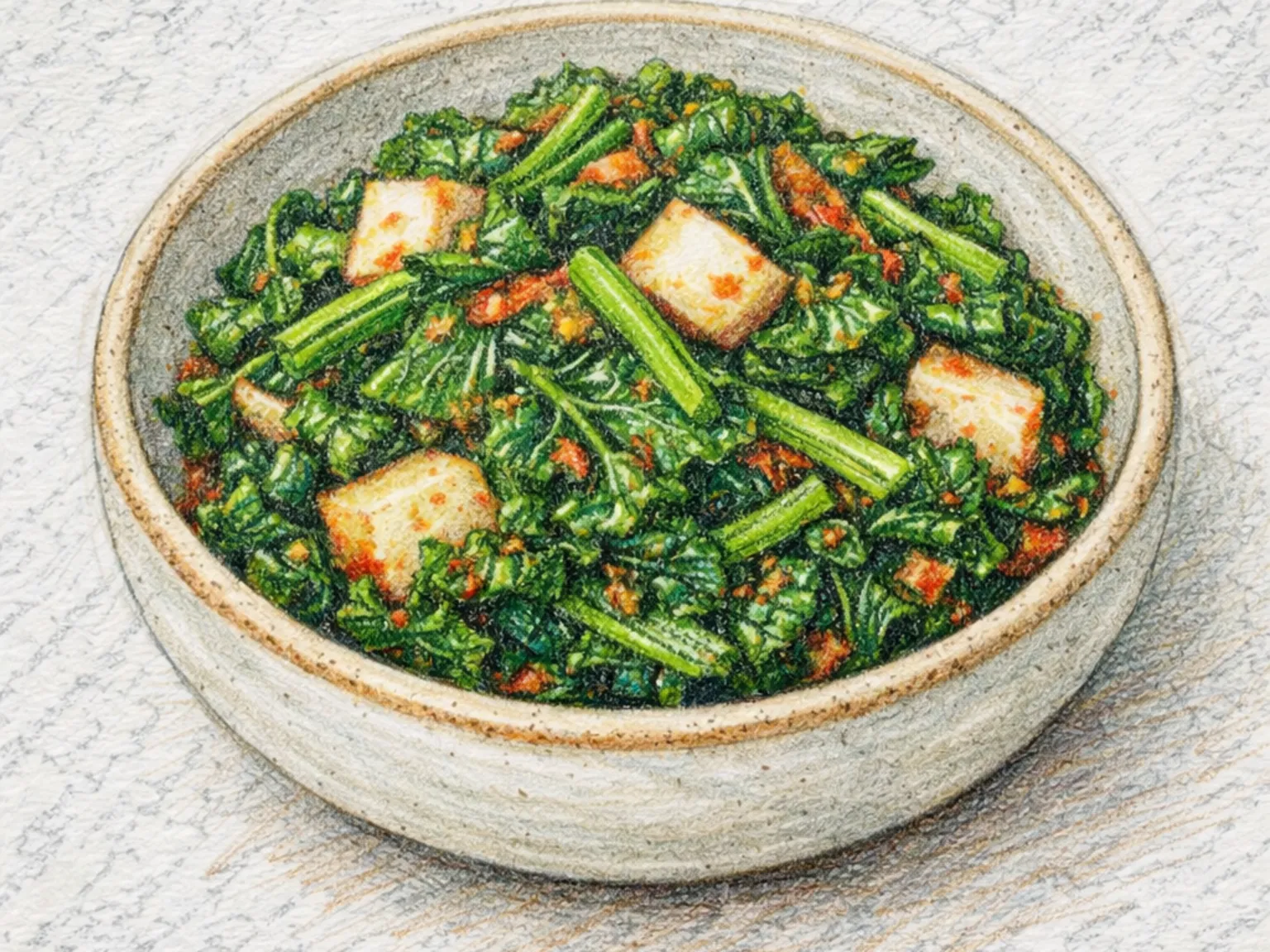
Korean Fermented Kale Kimchi
Kale kimchi is made by wilting kale leaves in coarse salt, then tossing them with julienned radish, scallions, gochugaru, soup soy sauce, and pear puree before fermenting. The kale's strong green flavor mellows during fermentation while its sturdy leaf structure maintains a satisfying chew, and the radish strips add a crisp counterpoint to the soft seasoning. Pear puree wraps around the chili heat with fruit sweetness, and soup soy sauce anchors the seasoning with a quiet umami depth. Made using the same technique as napa cabbage kimchi but carrying kale's distinctive slight bitterness, this version adds a layer of complexity and nutritional density to the traditional format. Kale requires less salting time than napa cabbage, and weighting it down evenly during the process ensures consistent wilting throughout the batch.
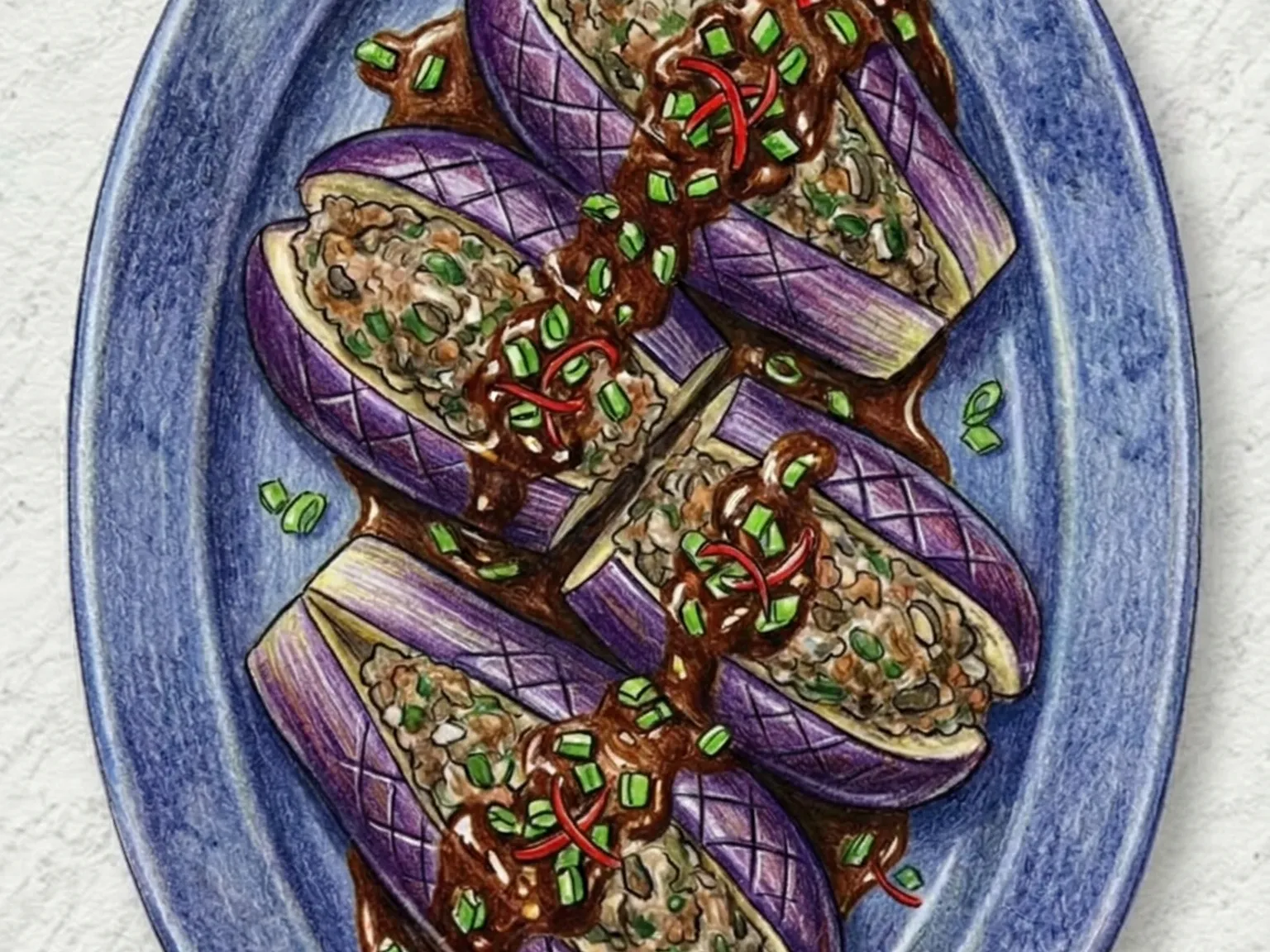
Korean Stuffed Eggplant Seon
Gaji-seon is a Joseon-era royal court banchan belonging to the seon category, a class of preparations in which vegetables are stuffed with a seasoned filling and steamed. The eggplant is scored at regular intervals with deep cuts that stop short of the bottom, creating accordion-like pockets along the length of the vegetable. A filling of minced pork or beef combined with crumbled tofu, scallion, and sesame oil is pressed firmly into each slit, then the stuffed eggplant is steamed for fifteen minutes. During steaming, the juices from the filling soak into the softening eggplant flesh, and the two components merge into a single flavor. The labor of stuffing each eggplant individually made this a dish historically reserved for guests and formal occasions rather than everyday meals. After steaming, a light soy-based sauce is spooned over the top. The sharp textural contrast between the near-dissolving eggplant skin and the firm, savory filling produces a refinement that clearly separates seon from ordinary stir-fried or braised eggplant preparations.

Korean Taro Porridge (Perilla Oil-Toasted Rice with Taro Root)
Soaked rice is toasted in perilla oil until fragrant, then simmered with peeled taro in a generous amount of water until the porridge reaches a thick, flowing consistency. Some taro pieces dissolve into the liquid and naturally thicken it, while others hold their shape and offer a starchy, crumbly bite. The gentle nuttiness of perilla oil and the mild earthiness of taro create a soothing combination with no sharp flavors. Seasoning with just salt preserves the delicate taste of the taro without masking it.
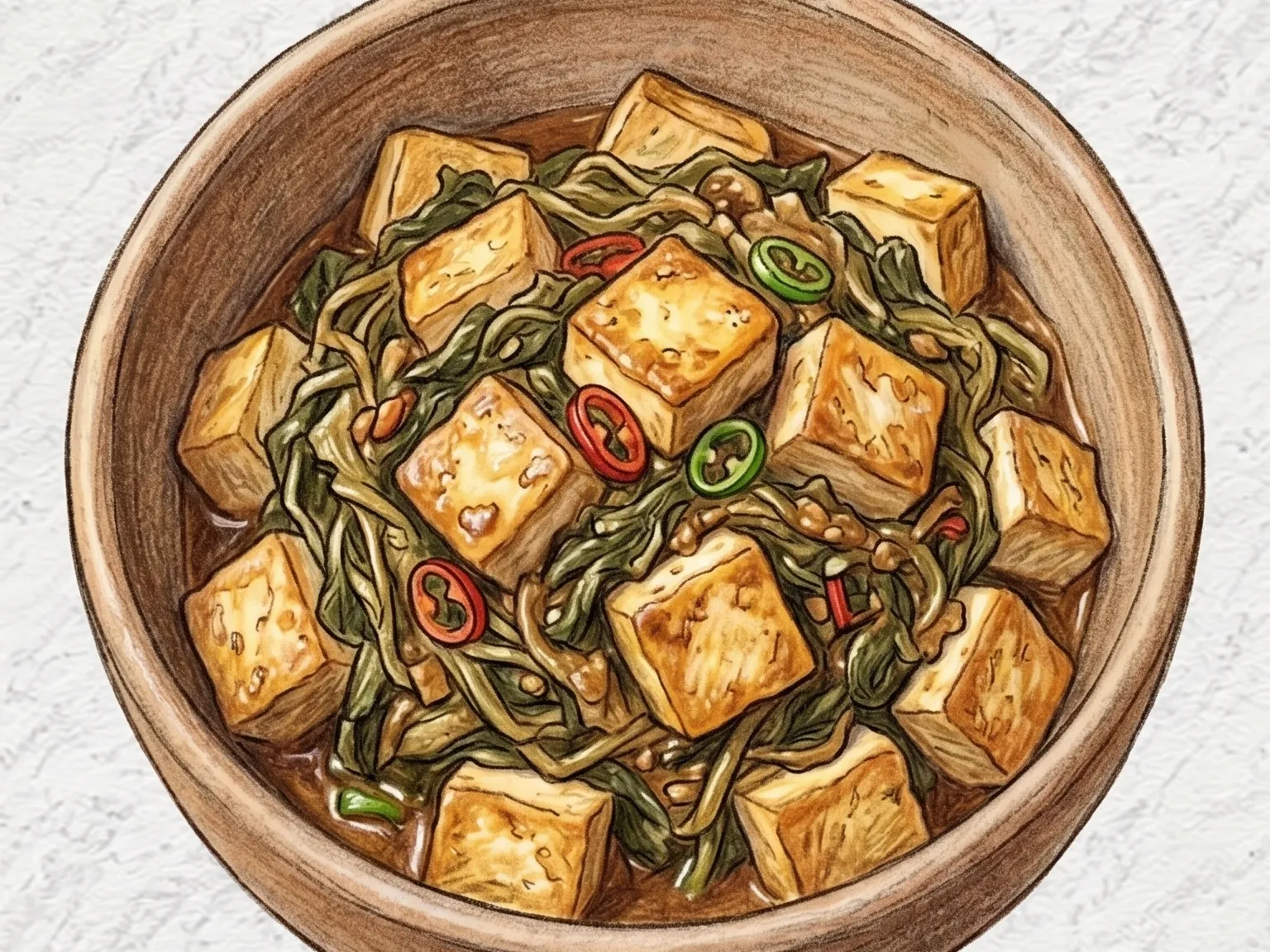
Korean Gondre Dubu Doenjang Bokkeum (Thistle Tofu Doenjang Stir-fry)
Gondre dubu doenjang bokkeum is a stir-fried side dish that pairs pan-seared firm tofu with blanched gondre thistle greens in a doenjang-based sauce. Searing the tofu separately in perilla oil before combining it with the greens is the step that makes the difference: the firm, lightly crisped surface that forms holds its shape through the subsequent stir-frying and absorbs the seasoning without breaking down into chunks. Doenjang dissolved in a small amount of water is stirred through the gondre so the fermented paste coats every strand evenly, and a small addition of soup soy sauce deepens the savory character without pushing the salt level too high. Sliced cheongyang chili adds a gentle heat that lingers at the finish. Perilla oil, with its nutty, herbal scent, binds the flavors and gives the dish its distinctive aromatic character. Gondre is a thistle variety grown in the Gangwon mountain region and pairs particularly well with doenjang because its earthy, slightly sweet fragrance complements the depth of the fermented paste.
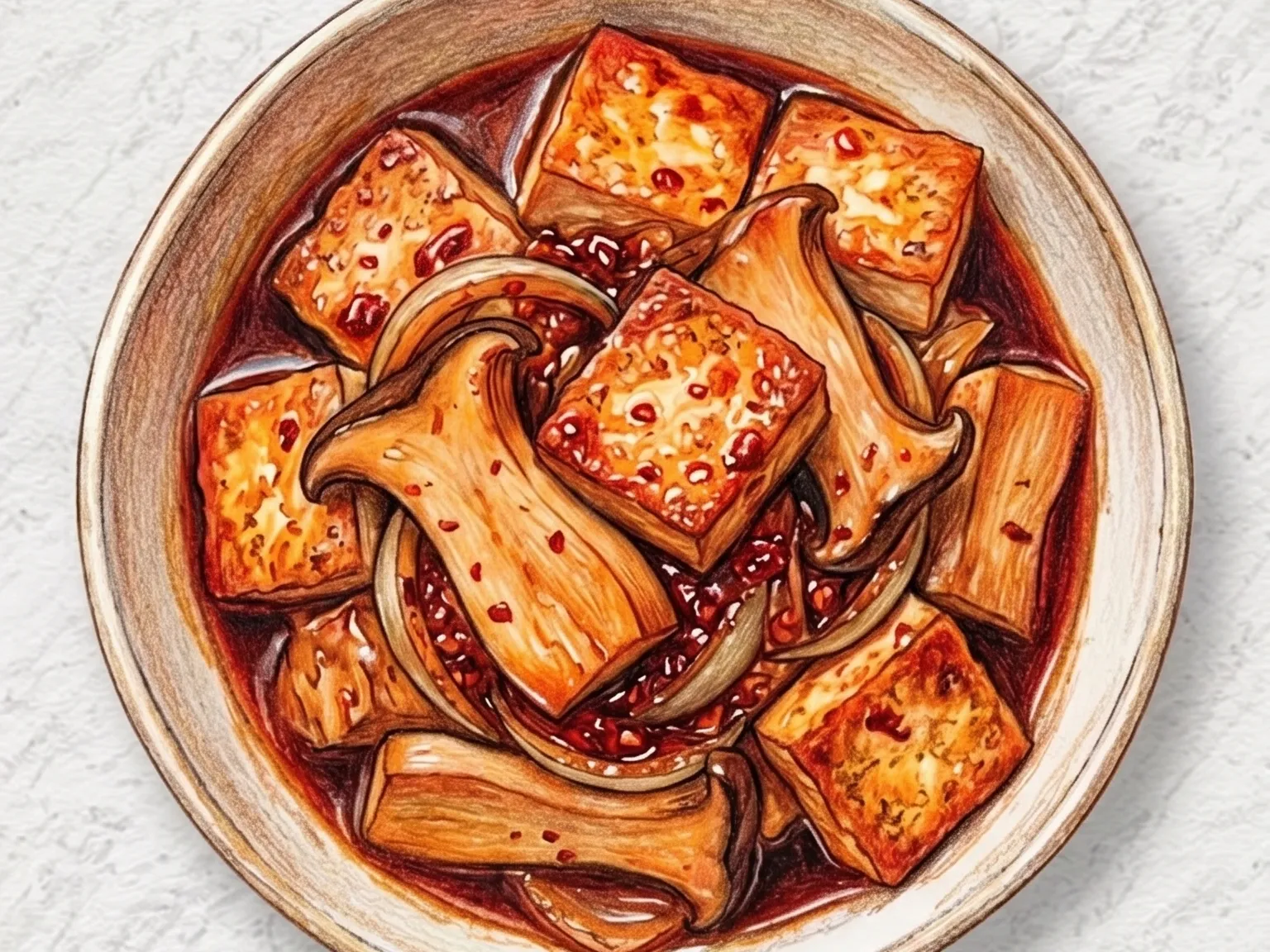
Korean Braised Tofu and King Oyster Mushrooms
Saesongi dubu yangnyeom jorim is a braised side dish of firm tofu and king oyster mushrooms cooked down in a sauce of soy sauce, gochujang, and Korean chili flakes until the liquid is nearly gone and every surface is glazed. Pan-searing the tofu first over low heat until golden builds a crust that keeps it intact through braising and gives the seasoning somewhere to grip. Thick-cut king oyster mushrooms stay springy even after the long braise, while onion woven through the pot contributes a sweetness that softens the heat of the gochujang. Sesame oil stirred in at the end draws all the aromatics together into a cohesive finish. The result is a banchan with layers, gochujang spice, deep soy saltiness, and a savory earthiness from the mushrooms, that holds its flavor cold, making it a natural fit for packed lunches.
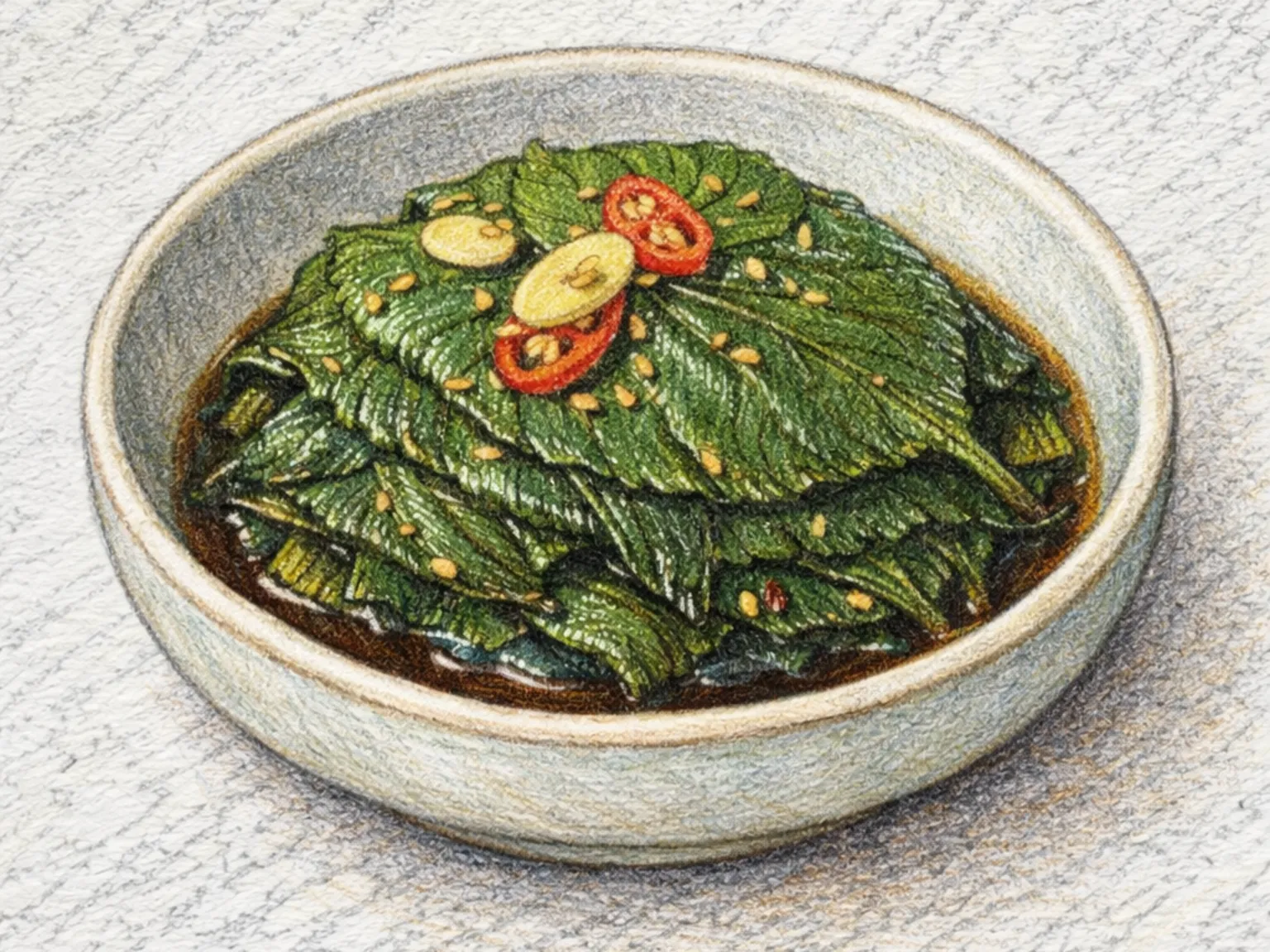
Korean Soy Pickled Perilla Leaves
Kkaennip jangajji is a Korean soy-pickled perilla leaf side dish made by layering thoroughly dried leaves in a brine of boiled soy sauce, rice vinegar, and sugar with garlic and cheongyang chili. One of the most important steps is bringing the brine to a full boil and then allowing it to cool completely before pouring it over the leaves. Hot brine wilts the leaves immediately and collapses their structure, while a cooled brine preserves their shape and allows the seasoning to penetrate evenly over the resting period. The perilla's bold herbal fragrance becomes rounder and less sharp when it comes into contact with the salty depth of the soy sauce, and the vinegar prevents the saltiness from becoming overwhelming, keeping the finish clean and bright. Cheongyang chili leaves a quiet but definite heat at the back of each bite, and garlic threads a pungent undercurrent through the entire flavor profile. Wrapped around a spoonful of plain white rice, a single leaf delivers its full herbal, savory character in one mouthful, and the combination is one of the most satisfying pairings in Korean home cooking. Stored in the refrigerator, the pickled leaves keep for well over a month, making this one of the most practical side dishes to prepare in advance.