🌙 Late Night Recipes
Quick and satisfying late-night bites
651 recipes. Page 12 of 28
Late-night cravings call for quick, easy recipes that satisfy without too much effort. Ramyeon, egg fried rice, tuna-mayo rice bowls, and simple toasts - these are dishes you can throw together when hunger strikes after dark. Cooking at home beats delivery in both cost and healthiness.
The ideal late-night snack is fast to make, easy to clean up, and just filling enough. These recipes hit that sweet spot - comforting without being heavy.
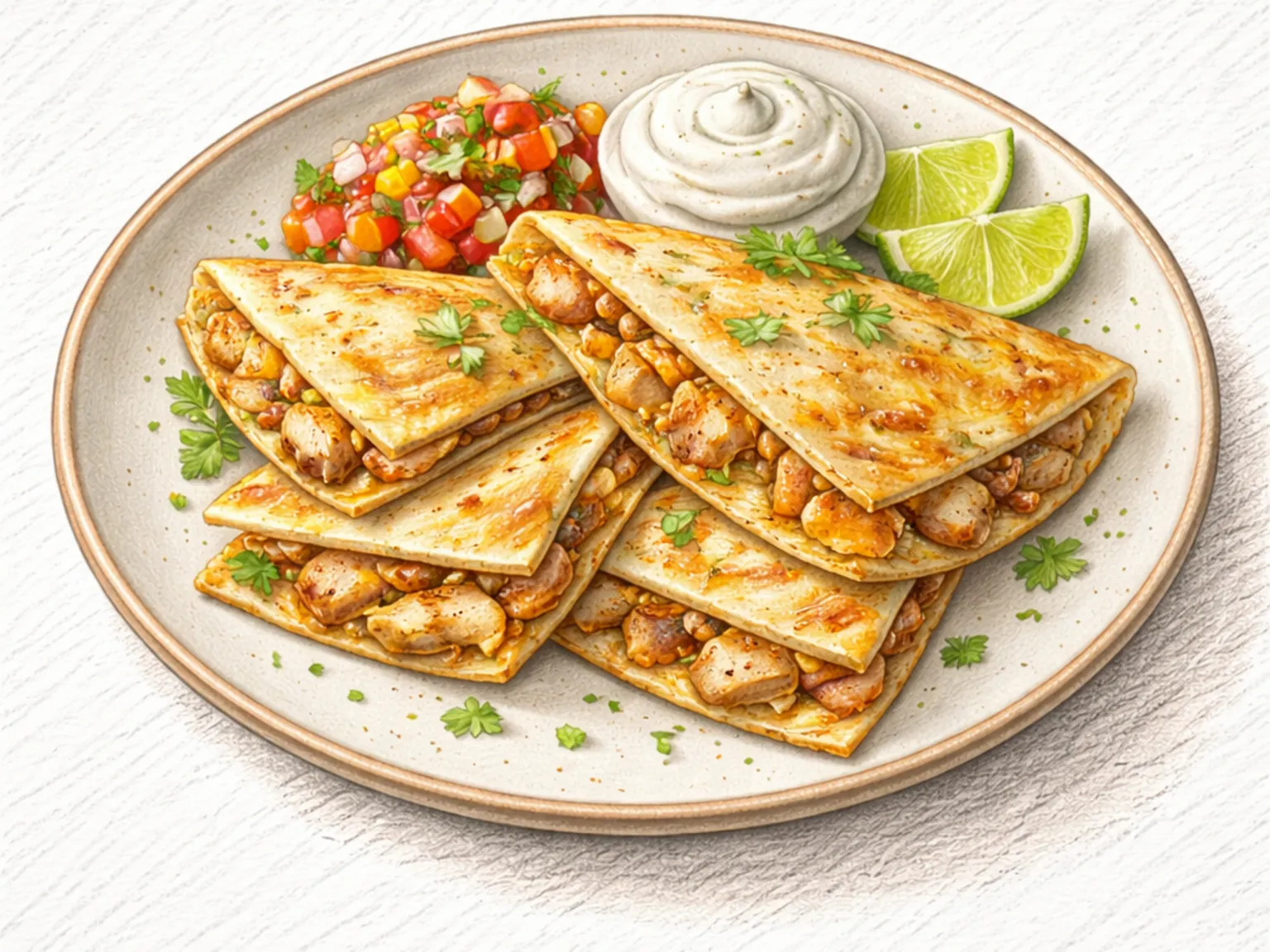
Chicken Quesadilla
Chicken quesadilla seasons diced chicken thigh with paprika, sautees it with onion and bell pepper, then presses the filling between flour tortillas with cheddar and mozzarella and toasts on low heat until crisp. Spreading a thin layer of cheese to the edges acts as glue, sealing the tortilla shut so the filling stays in place and the wedges cut cleanly. Low heat is essential - it gives the cheese time to melt evenly through the filling before the tortilla surface browns. The sharp flavor of cheddar and the stretch of mozzarella together wrap around the lean chicken, while paprika and onion add a sweet, smoky undertone. Sliced into eight wedges and served warm with sour cream or salsa on the side.
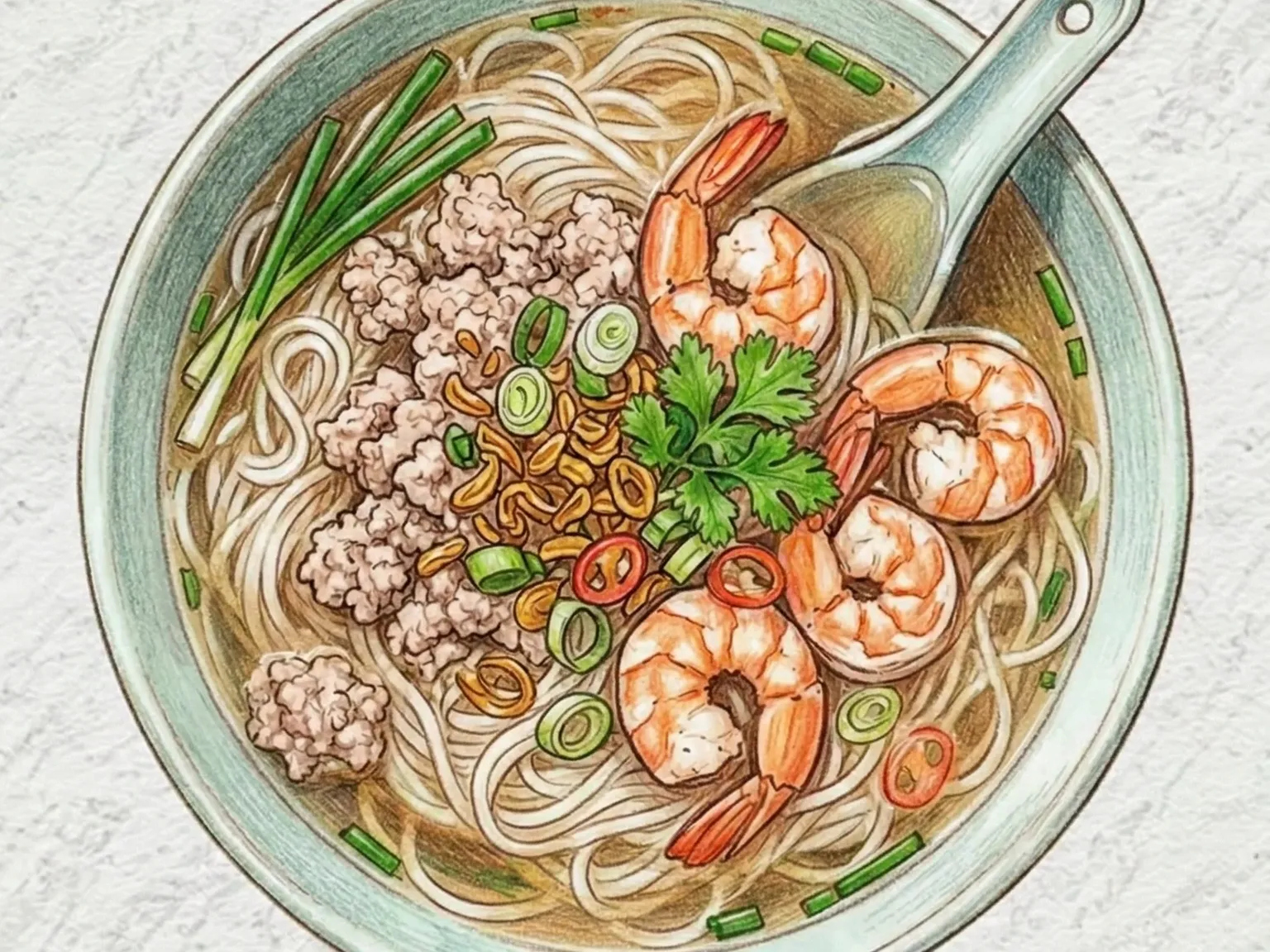
Hu Tieu Nam Vang (Vietnamese Pork & Shrimp Noodle Soup)
Hu tieu nam vang is a clear-broth rice noodle soup from southern Vietnam, originating in the Cambodian immigrant communities of Phnom Penh and now thoroughly embedded in Saigon street food culture. Pork bones are simmered at low heat for an extended time while the surface is skimmed repeatedly to keep the broth transparent and clean-tasting. Fish sauce and a measured amount of sugar season the broth with a savory-sweet balance that is distinctively southern Vietnamese. Ground pork is pan-fried with garlic until the moisture cooks off and the meat turns crumbly and lightly browned, creating a textured topping that contrasts with the silky broth. Whole shrimp are blanched for one minute only, enough to set the flesh without turning them rubbery. Rice noodles go into the bowl first, raw bean sprouts are piled on top, and boiling broth is ladled over, wilting the outer layers of the sprouts while leaving their cores crisp. A spoonful of garlic-infused oil floated on the surface releases fragrance with each sip and deepens the overall aroma. Green onion and black pepper finish the bowl simply, and the long-cooked broth does the work of pulling every element together. Lime wedges and fresh chilies on the side let each diner adjust acidity and heat to their own preference.
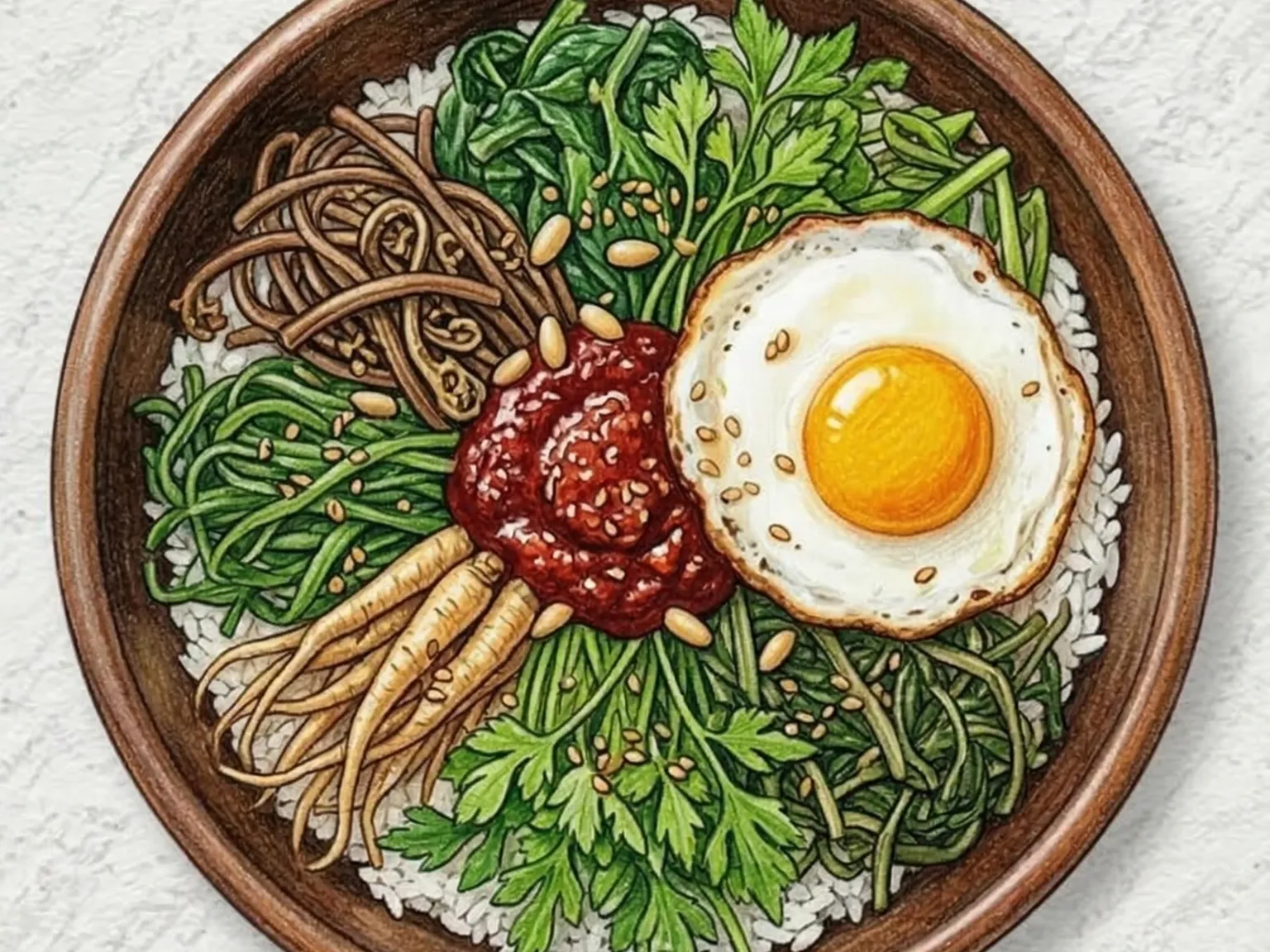
Korean Mountain Herb Bibimbap
Sanchae bibimbap arranges individually seasoned mountain vegetables including fernbrake, bellflower root, and chwi-namul over a bowl of rice, then brings everything together at the table with a spoonful of gochujang. Each wild green is treated separately to preserve its distinct character. Fernbrake is stir-fried in sesame oil and soy sauce until tender and lightly caramelized. Bellflower root is salted, kneaded vigorously, and rinsed to remove its characteristic bitterness before being left with a clean crunch. Chwi-namul, the young leaves of Korean mountain aster, is blanched for just a few seconds to soften it while locking in its herbal, slightly resinous fragrance. Julienned carrot or radish kimchi adds bright color contrast across the bowl. A second drizzle of sesame oil when mixing helps the greens coat evenly and carries the nutty aroma through every bite. The spicy, subtly sweet gochujang ties the earthy, grassy, and faintly bitter notes of the individual namul into one cohesive, energizing bowl. The dish traces its roots to Korean mountain temple cuisine, where foraged seasonal greens combined with plain rice formed the foundation of a simple but nourishing plant-based meal.
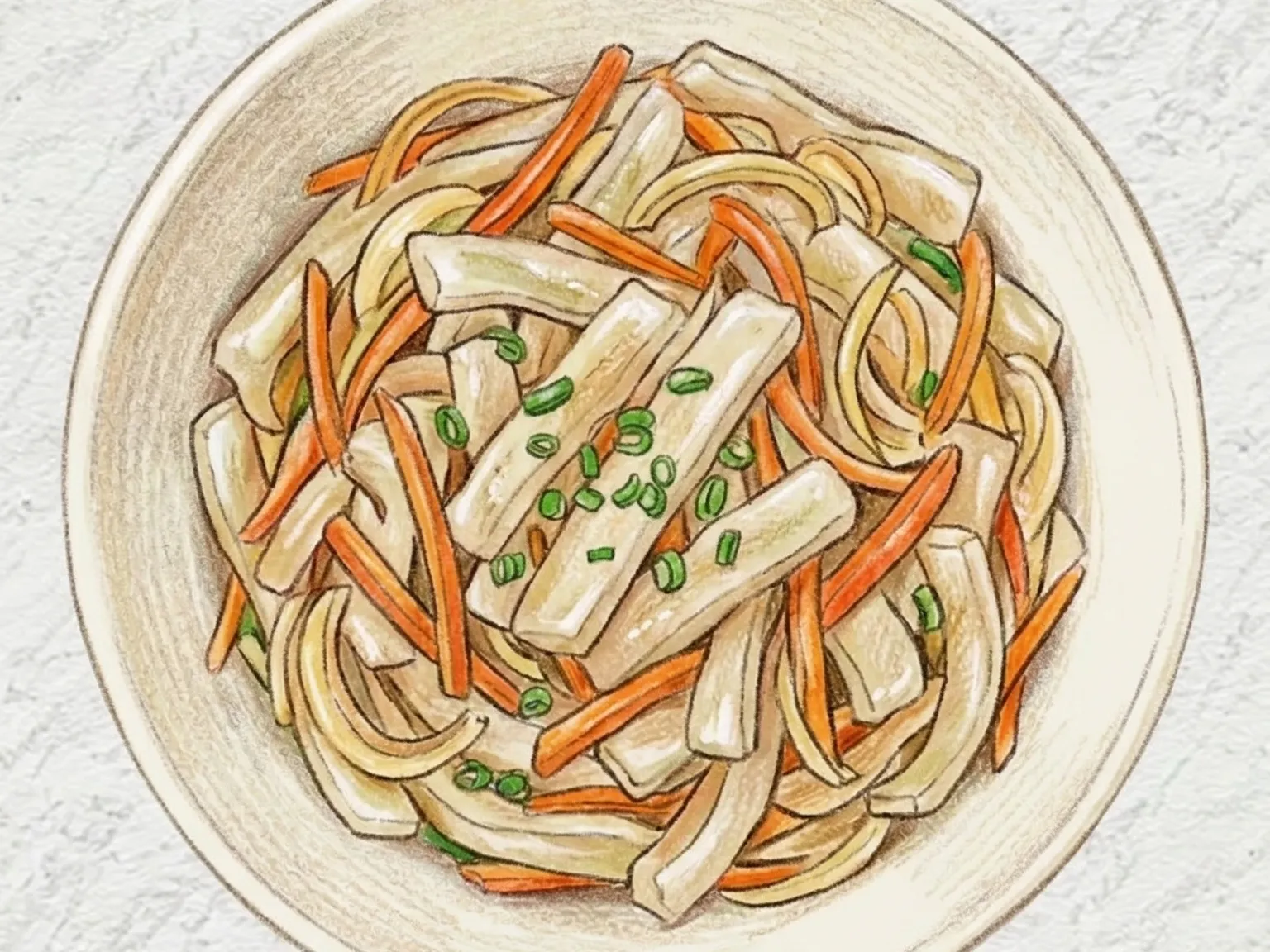
Korean Stir-fried Mung Bean Jelly
Mung bean jelly is cut into thick strips, blanched for thirty seconds to remove surface starch, then stir-fried gently with julienned carrot and onion in a soy sauce seasoning. The brief blanch firms up the jelly's exterior just enough to survive the tossing in the pan without crumbling, and washing away the starch allows the jelly to absorb the flavors of its companion vegetables more readily. Low heat and a careful hand are non-negotiable; aggressive stirring breaks the strips into shapeless lumps. The carrot contributes a faint natural sweetness, and the onion releases a light caramel note as it softens, both of which fill in the jelly's inherently neutral taste with understated warmth. Chopped green onion added at the very end lifts the dish with a sharp, fresh bite. One tablespoon of sesame oil swirled in after the flame is off coats everything in a glossy sheen and a final wave of nuttiness. At 180 calories and 9 grams of fat, this is a low-calorie side with enough fiber to sit gently in the stomach. The pale yellow color of mung bean jelly - a signature of the ingredient - comes through clearly on the finished plate, giving the dish a clean, orderly appearance that matches its delicate flavor.
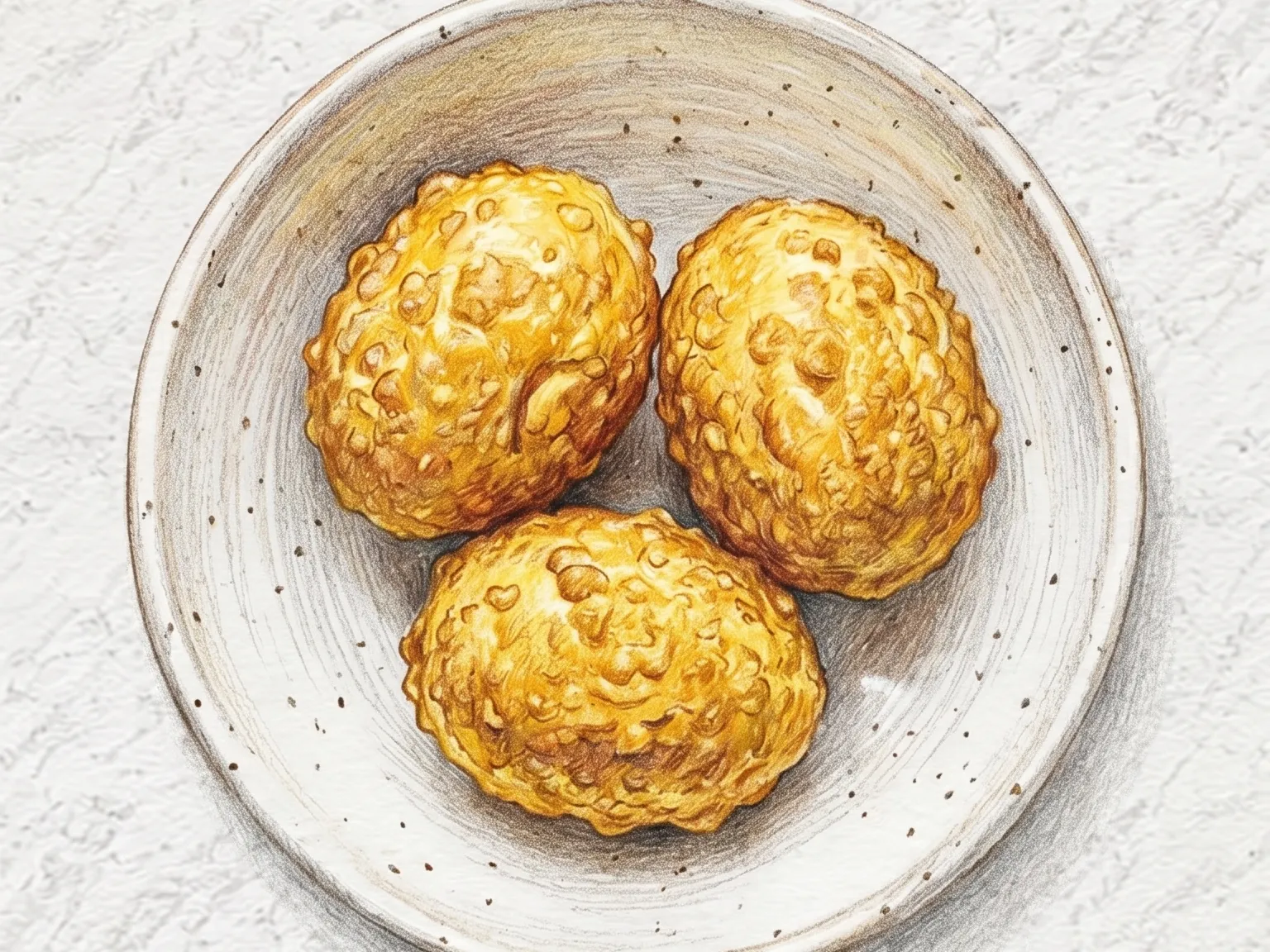
Korean Deep-Fried Egg (Battered Boiled Egg with Crispy Golden Shell)
Gyeran-twigim is a Korean street snack of peeled boiled egg coated in a thin cold-water batter and fried at 170 degrees Celsius until the shell turns golden and crisp. The batter is mixed minimally, just enough to combine the frying powder and cold water without lumps, because a thinner coat lets the egg's own flavor carry through while a heavy coat buries it. When the egg is soft-boiled, the yolk stays semi-liquid inside the crunchy shell, creating a dramatic contrast the moment the outer crust breaks. Hard-boiling produces a crumbly, dry yolk with a dense, satisfying texture instead. A pinch of coarse salt is the only seasoning needed to bring out the egg's natural richness. Dipping the fried egg into the spicy-sweet broth from a bowl of tteokbokki transforms it entirely, as the porous batter absorbs the sauce and takes on the deep, savory-sweet heat of the stew.
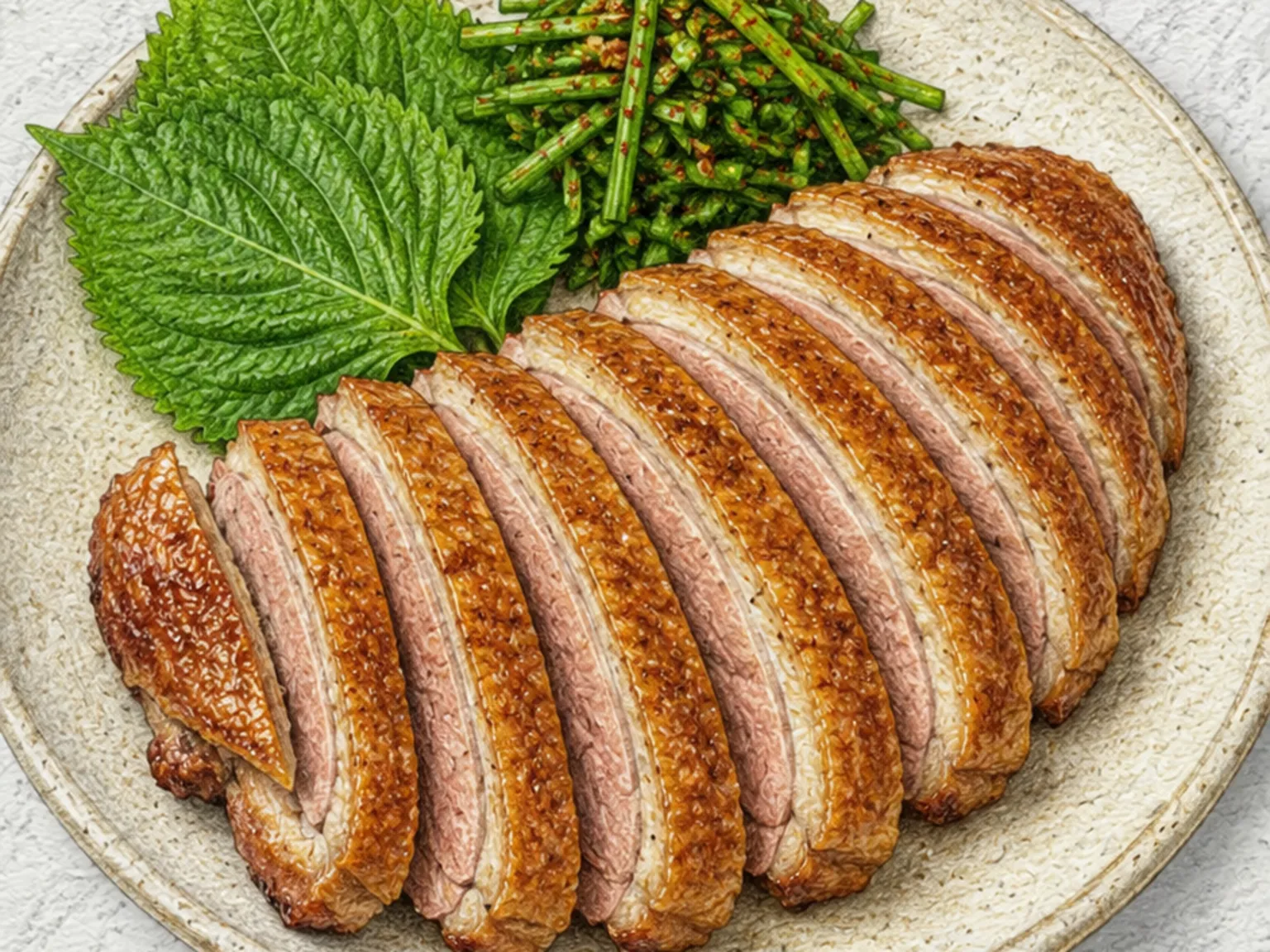
Korean Salt-Grilled Duck (Crispy Skin Duck Breast with Ginger)
Ori-sogeum-gui is Korean salt-grilled duck breast where shallow score marks cut into the skin at one-centimeter intervals expose the fat layer without piercing through to the flesh, allowing the subcutaneous fat to render fully while the meat juices stay contained. A ten-minute pre-treatment with cooking wine, ginger juice, and minced garlic neutralizes the gamey odor that duck skin can carry. After marinating, the surface must be patted completely dry with kitchen paper so the salt stays granular on the skin rather than dissolving into moisture that would cause steaming instead of crisping. The scored breast goes into a cold pan skin side down, then the heat is raised gradually to medium-low, coaxing the thick subcutaneous fat to melt slowly and render clear while the skin crisps in its own fat over eight minutes. The pan never needs additional oil. Flipping for four to five minutes on the flesh side finishes the interior, and a three-minute rest off the heat redistributes the juices so the sliced surface stays clean and the meat is uniformly cooked from edge to center. Sliced on a bias and wrapped in perilla leaves with ssamjang, the fermented bean paste adds depth and complexity to the salt-forward duck flavor. A side of fresh garlic chive salad cuts through any richness and lifts the overall plate.
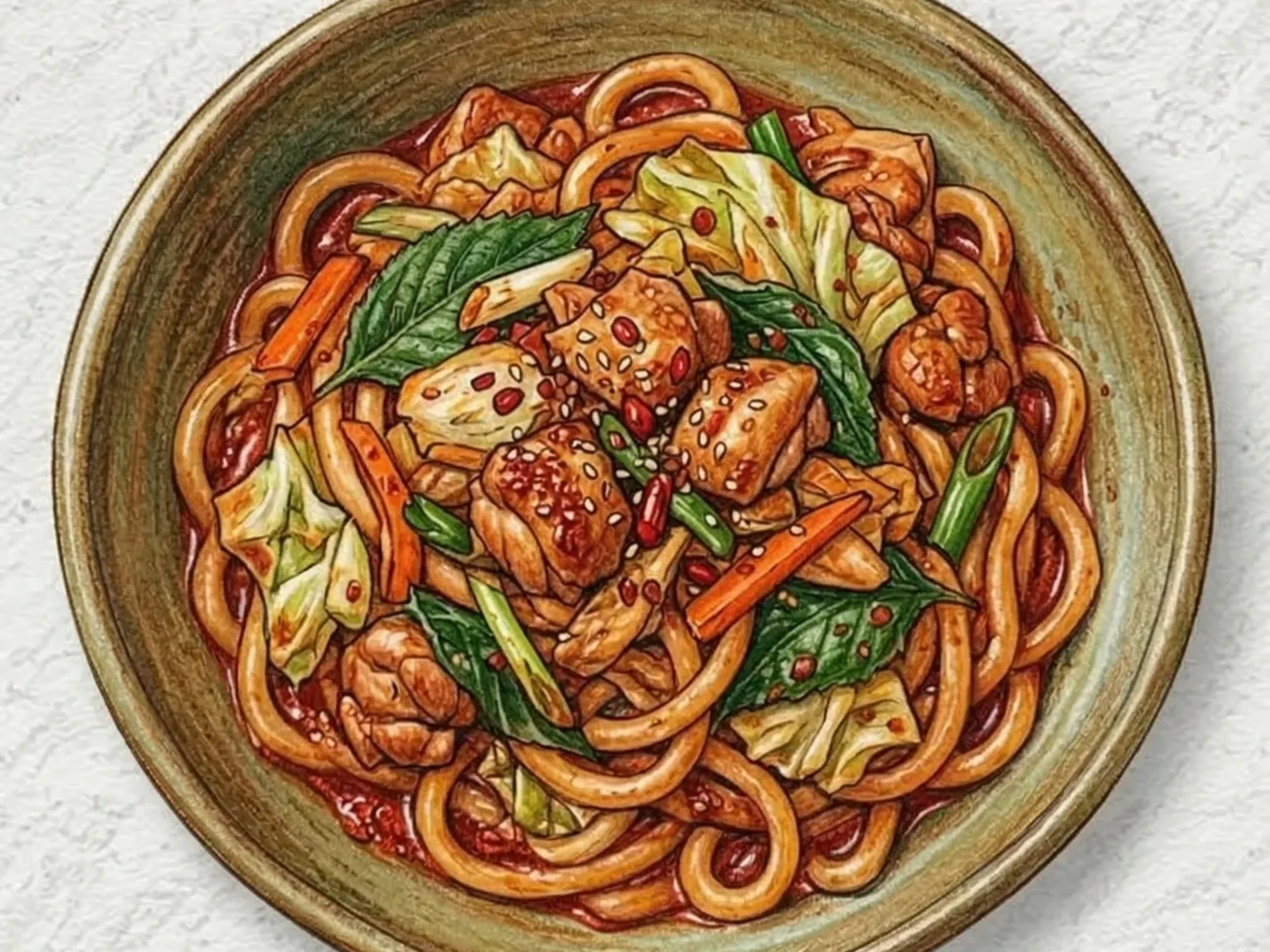
Korean Stir-Fried Udon with Spicy Chicken
Dakgalbi udon bokkeum is a Korean stir-fried noodle dish where gochujang-marinated chicken, cabbage, sweet potato, and rice cakes cook together in a wide pan before thick udon noodles are added and tossed through the spicy-sweet sauce. The dakgalbi seasoning is assertive and clingy, coating every broad surface of the udon so that each bite carries the full weight of the marinade. Cabbage and scallion wilt fast under high heat, releasing sugars that moderate the chili paste and prevent the sauce from tasting sharp or one-dimensional. Sweet potato contributes starch that slightly thickens the sauce while cushioning its spice. Udon, being considerably thicker than ramen or somyeon, holds up under the heavy coating without turning mushy, and delivers a satisfying, bouncy chew throughout the meal. Managing the heat is important: keeping the pan at high temperature drives off excess moisture and produces the lightly charred, smoky edge that separates a good stir-fry from a steamed mess. Melting cheese over the top just before serving adds a creamy, fatty layer that offsets the heat. Sesame seeds and shredded seaweed finish the dish. It is well suited to group cooking on a large griddle or electric pan.
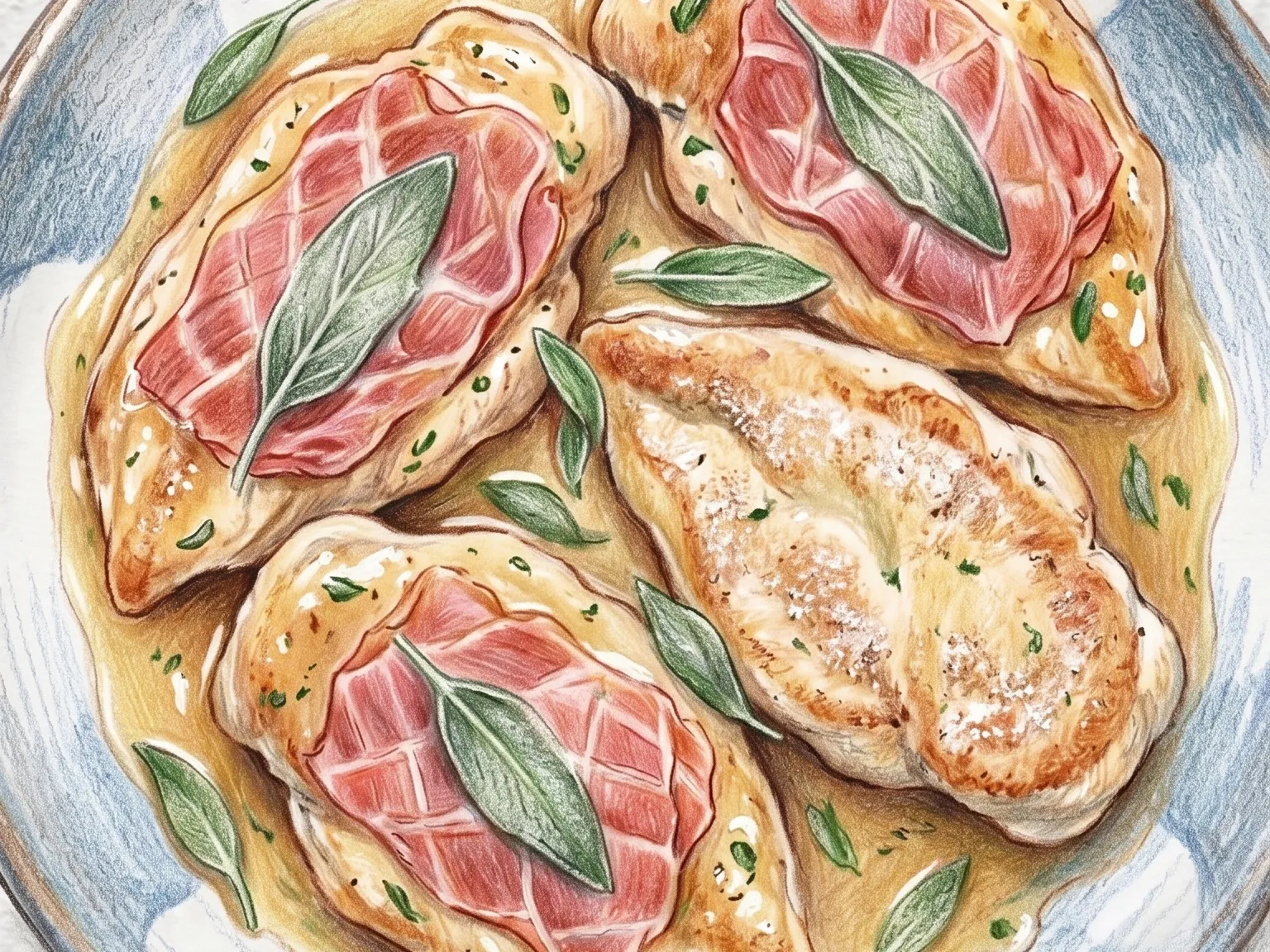
Chicken Saltimbocca (Prosciutto and Sage Italian Chicken Sauté)
Chicken saltimbocca is an Italian preparation that layers fresh sage leaves and cured prosciutto over pounded chicken breast, sears the whole assembly in one pan, and finishes the plate with a sauce reduced from white wine, chicken stock, and cold butter. The name translates from Italian as 'jumps in the mouth,' which captures how the salty intensity of prosciutto and the resinous punch of sage announce themselves against the neutral backdrop of the chicken breast. Dusting only the bare underside with flour before placing it prosciutto-side up in the pan creates a light crust on the floured surface while the prosciutto crisps directly against the heat and the sage leaf fries in the rendered fat between the meats. Deglazing with white wine lifts all the caramelized fond from the pan base, and simmering it down with chicken stock by roughly half concentrates the liquid into a sauce with real body. Whisking cold butter in small pieces into the reduced sauce off the heat emulsifies it into a glossy, smooth coating that pools around the chicken on the plate. Pounding the breast to a uniform thickness before cooking ensures it cooks evenly without drying out the thinner edges.
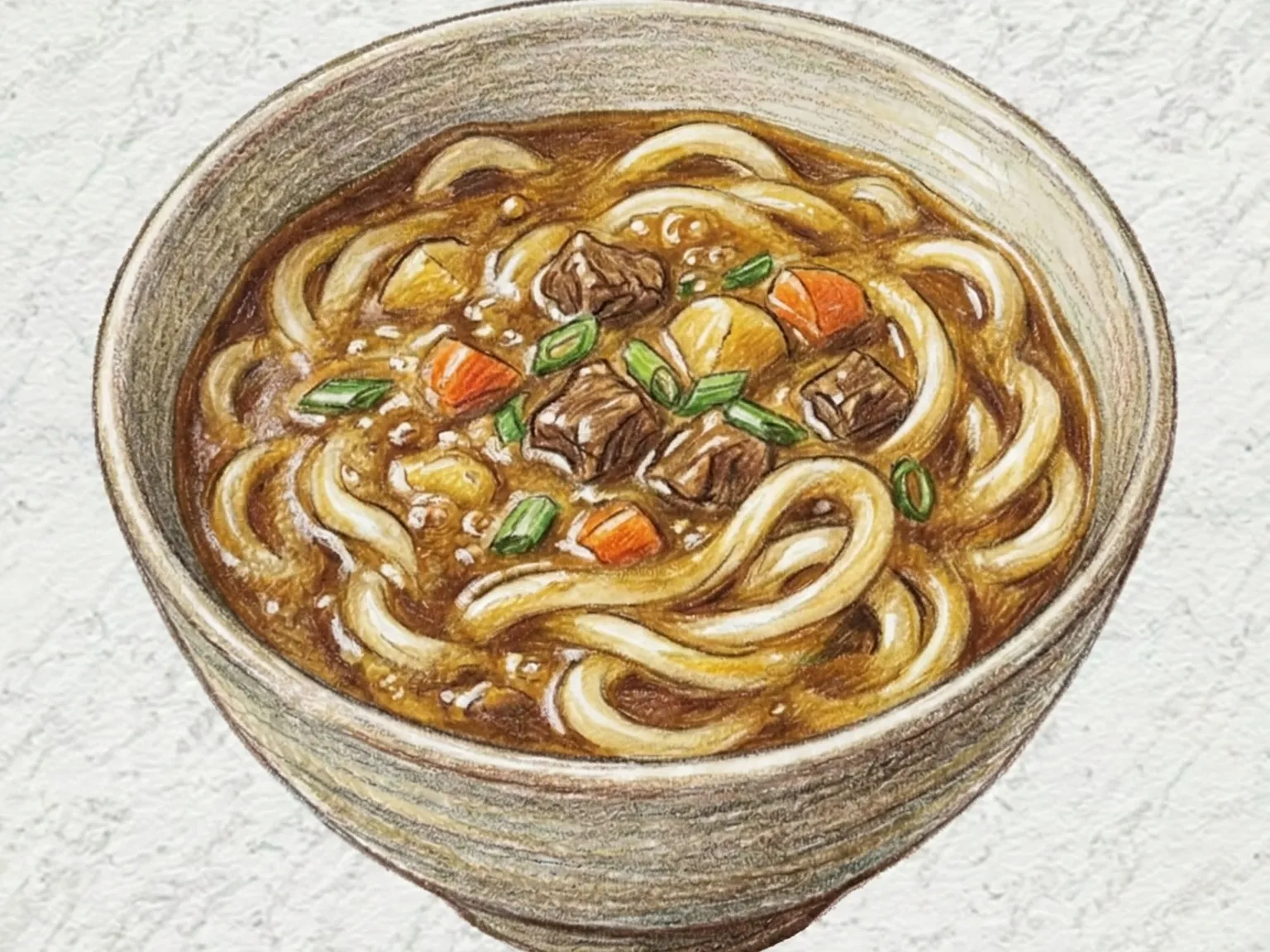
Curry Udon
Kare udon is a Japanese curry noodle dish built on dashi stock, which separates it from curry rice despite sharing the same roux. Thinly sliced pork and onion are stir-fried in oil first, then dashi made from katsuobushi and kombu is added and brought to a boil. Curry roux blocks are stirred in next, transforming the stock into a thick, clinging sauce that coats the pot and every strand of noodle. The heat must drop to low the moment the roux goes in, with constant stirring to prevent the starchy sauce from scorching. Katsuobushi and kombu contribute an umami depth that the curry spices intensify rather than mask, producing a broth more layered than either element alone. The fat, chewy udon strands absorb the sauce and carry it from pot to mouth with each lift of the chopsticks. Finishing with sliced scallions or shichimi adds fragrance and a mild bite. Though the same roux block appears in kare raisu, the presence of dashi and noodles makes this a distinctly different dish in taste, texture, and character.
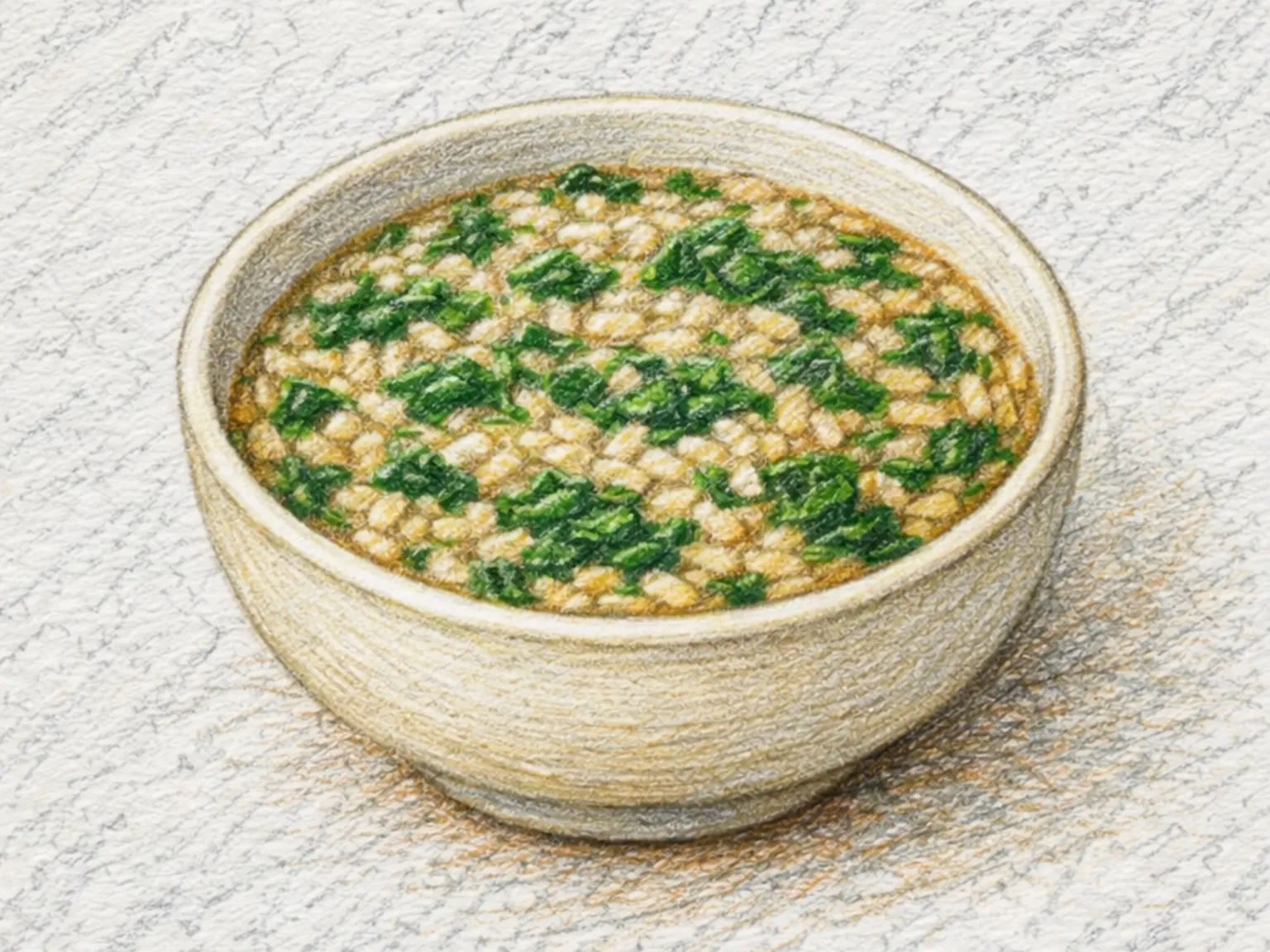
Korean Spinach Soybean Paste Porridge
Sigeumchi doenjang-juk is a Korean porridge built on the deep, fermented savoriness of doenjang and the clean, mild green flavor of finely chopped spinach. Soaked rice is toasted in sesame oil first, which coats each grain with a nutty warmth before anchovy stock is poured in. Doenjang and minced garlic are stirred in early in the cooking process, giving the porridge time to develop a rich, rounded base flavor as the grains slowly break down into a thick, spoonable consistency. Spinach goes in at the very end and stays in the heat for no longer than thirty seconds, which is exactly enough time for the leaves to wilt while keeping their bright color and delicate grassy aroma intact. The fermented paste wraps around the slight bitterness naturally present in raw spinach, smoothing it out so the finished bowl tastes clean rather than sharp. This is a porridge that works as a restorative meal when the body needs something gentle, and it doubles just as well as a light, warming breakfast that does not demand much from the stomach in the morning.
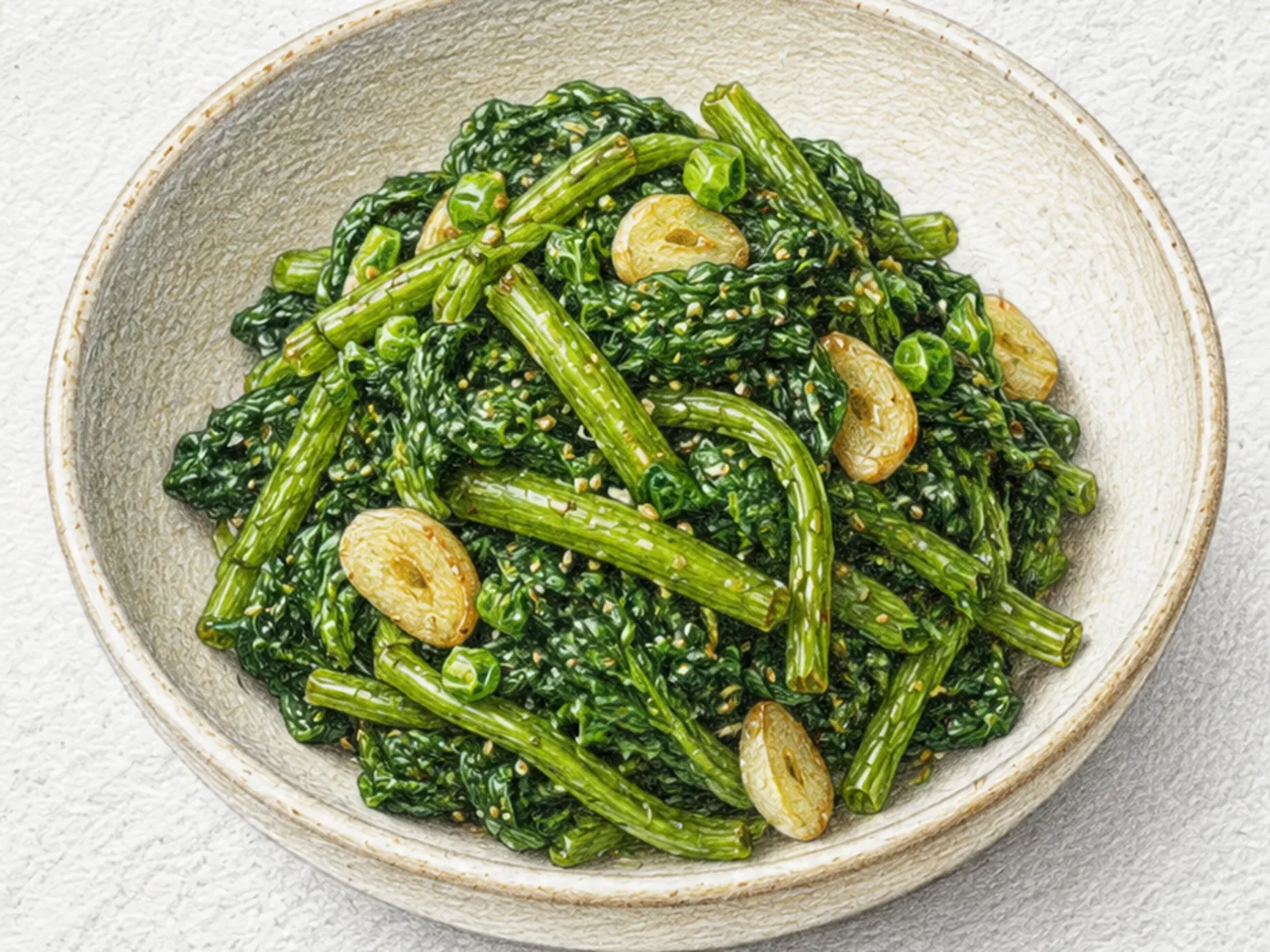
Korean Stir-fried Aster Scaber with Garlic
Chwinamul-maneul-bokkeum stir-fries rehydrated aster scaber greens with garlic, soup soy sauce, and perilla oil, keeping the distinctive bitter-herbal aroma of the wild greens intact. Chwi-namul, also called cham-chwi, is one of Korea's most recognized spring mountain greens; dried after the spring harvest, it can be stored and cooked year-round. Perilla oil is the preferred fat here -- it carries a heavier, more earthy character than sesame oil and matches the pronounced flavor of dried mountain greens without getting lost. Ground perilla seeds added during cooking deepen the nuttiness further. Green onion contributes a mild sweetness that balances the greens' inherent bitterness, and as the rehydrated greens lose their soaked moisture in the hot pan, they firm up into a chewy, satisfying texture rather than going limp. The strong herbal flavor is concentrated enough that a small portion alongside steamed rice carries a full bowl.

Korean Corn Dog
Korean corn dogs are a street food built around two fillings: a sausage, mozzarella cheese, or both together, skewered on a stick and coated in a thick batter made from pancake mix before being rolled in panko breadcrumbs and fried at 170 degrees Celsius. The panko creates a coarse, jagged exterior that shatters on the first bite, while the inner batter layer stays dense and chewy, producing a layered texture that is central to the appeal. Inside, the mozzarella stretches in long pulls as the heat melts it, mixing with the salty sausage in a way that makes each bite unpredictable. Immediately after frying, the hot dog is rolled in granulated sugar, which clings to the crisp surface and creates the signature sweet-and-salty contrast that sets the Korean version apart from American corn dogs. Ketchup and mustard are standard condiments. Variations are common: some stalls use only cheese, others stack rice cake, potato cubes, or shrimp alongside the sausage for extra texture. Korean corn dogs are sold at street stalls, night markets, and bunsik shops.
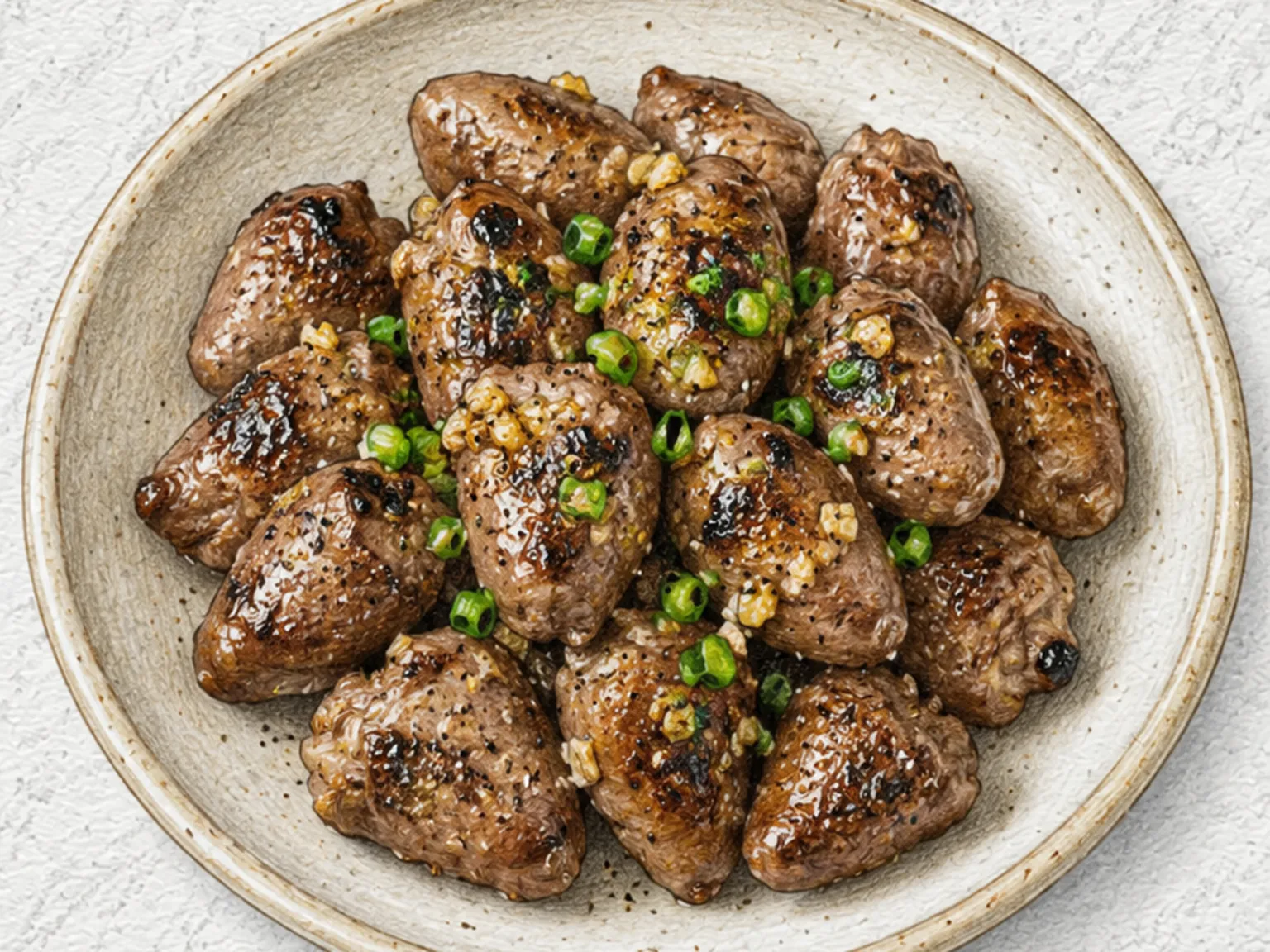
Korean Grilled Chicken Hearts
This recipe describes how to prepare chicken hearts by cleaning, seasoning, and searing them quickly over high heat. The process begins by splitting the hearts lengthwise to remove vessels and blood clots, which is necessary to ensure a pleasant texture. The hearts are soaked in cooking wine for ten minutes to neutralize any gamey smell, then patted dry. After a brief marinade with salt, black pepper, minced garlic, and neutral oil, they are added in a single layer to a very hot pan. Searing them without moving for three minutes colors the underside, after which they are flipped to cook for another two to three minutes. Keeping the total cooking time around six minutes prevents the chicken hearts from turning tough. The dish is finished with chopped scallions and is typically served warm as a side dish or drinking snack.
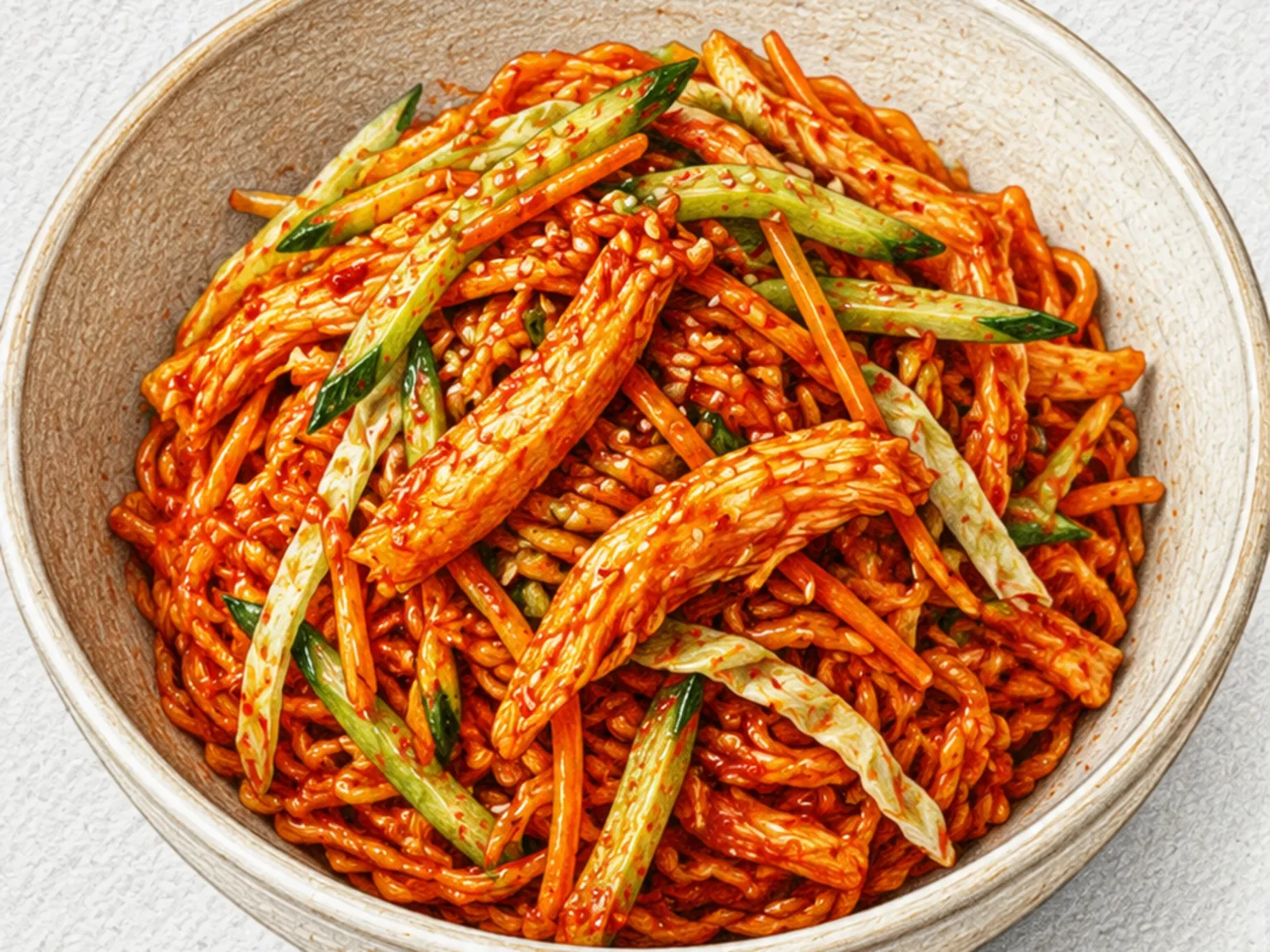
Korean Spicy Bellflower Root Chewy Noodles
Deodeok gochujang jjolmyeon is a spicy noodle dish that pairs the aromatic bitterness of bellflower root with gochujang-dressed chewy jjolmyeon noodles. Lightly pounding the peeled deodeok against a cutting board loosens its fibrous texture, releasing its distinctive herbal scent and making each piece more receptive to seasoning. A brief salt cure draws out moisture and dials down the bitterness, allowing the sauce to penetrate more effectively into the root. The sauce blends gochujang with vinegar and oligosaccharide syrup, balancing heat with a clean tangy edge and gentle sweetness that complements the root's inherent character without masking it. Julienned cabbage, carrot, and cucumber supply a crisp, refreshing layer between the dense noodles and the fibrous deodeok. All ingredients should be combined just before eating to preserve the crunch of the vegetables.
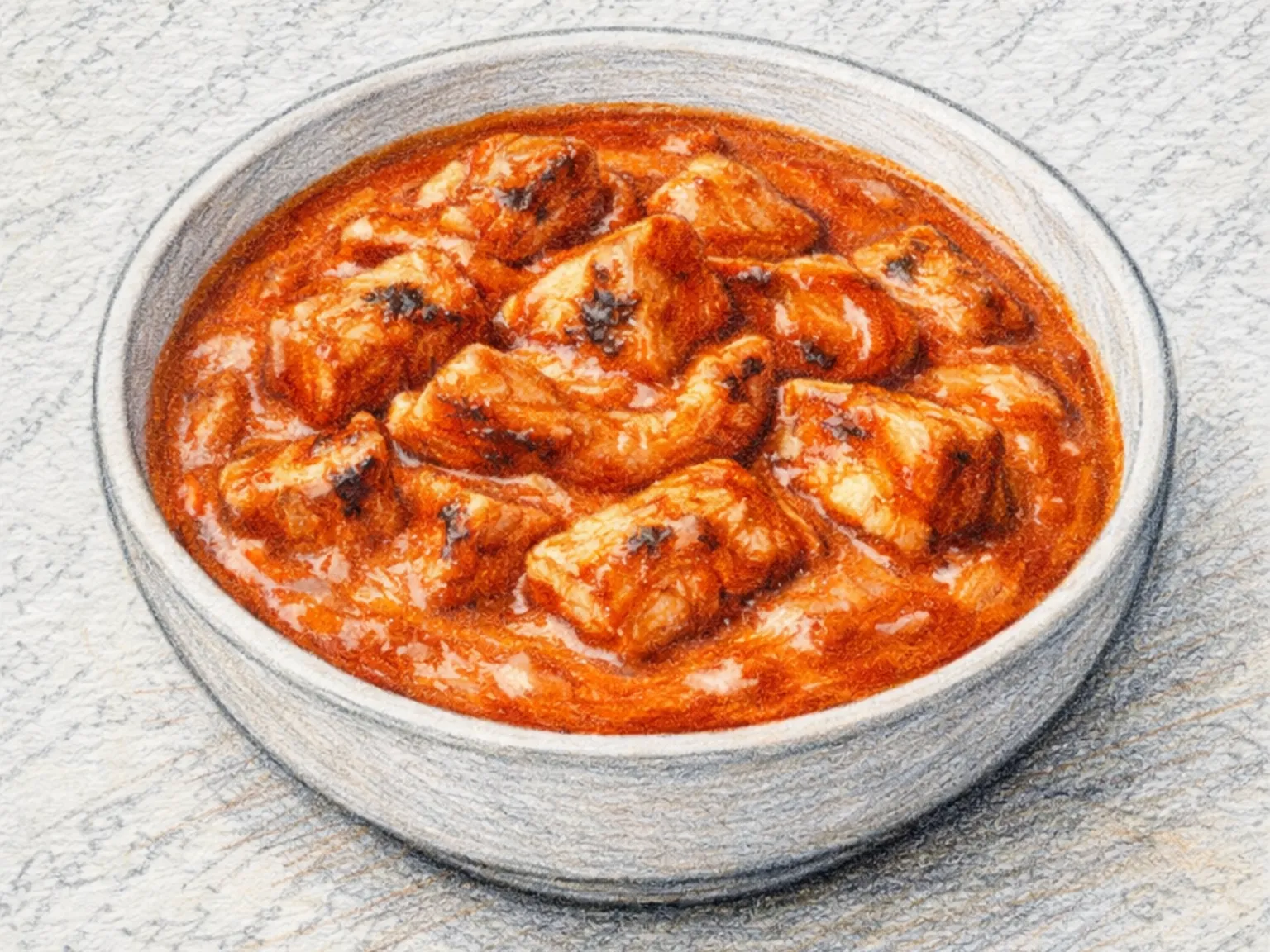
Chicken Tikka Masala
Chicken tikka masala marinates chicken overnight in yogurt, curry powder, garlic, and ginger, then grills or broils it at high heat to develop char on the surface before finishing in a sauce of tomato puree, garam masala, and heavy cream. The lactic acid in yogurt gently breaks down surface proteins while acting as a vehicle to drive the spices deeper into the meat. Browning diced onion in butter, then cooking tomato puree with garam masala for at least fifteen minutes allows the sharp, raw edges of the spices to mellow and integrate fully, building a sauce base with genuine depth. Heavy cream added just before serving wraps the tomato acidity and chili heat in a smooth, rich body that unifies the dish. Overnight marination makes a substantial difference compared to a short soak, as the spices have time to penetrate to the center of each piece. Basmati rice or naan bread served alongside is standard, and dragging the bread through the sauce captures the full range of flavor in a single bite.
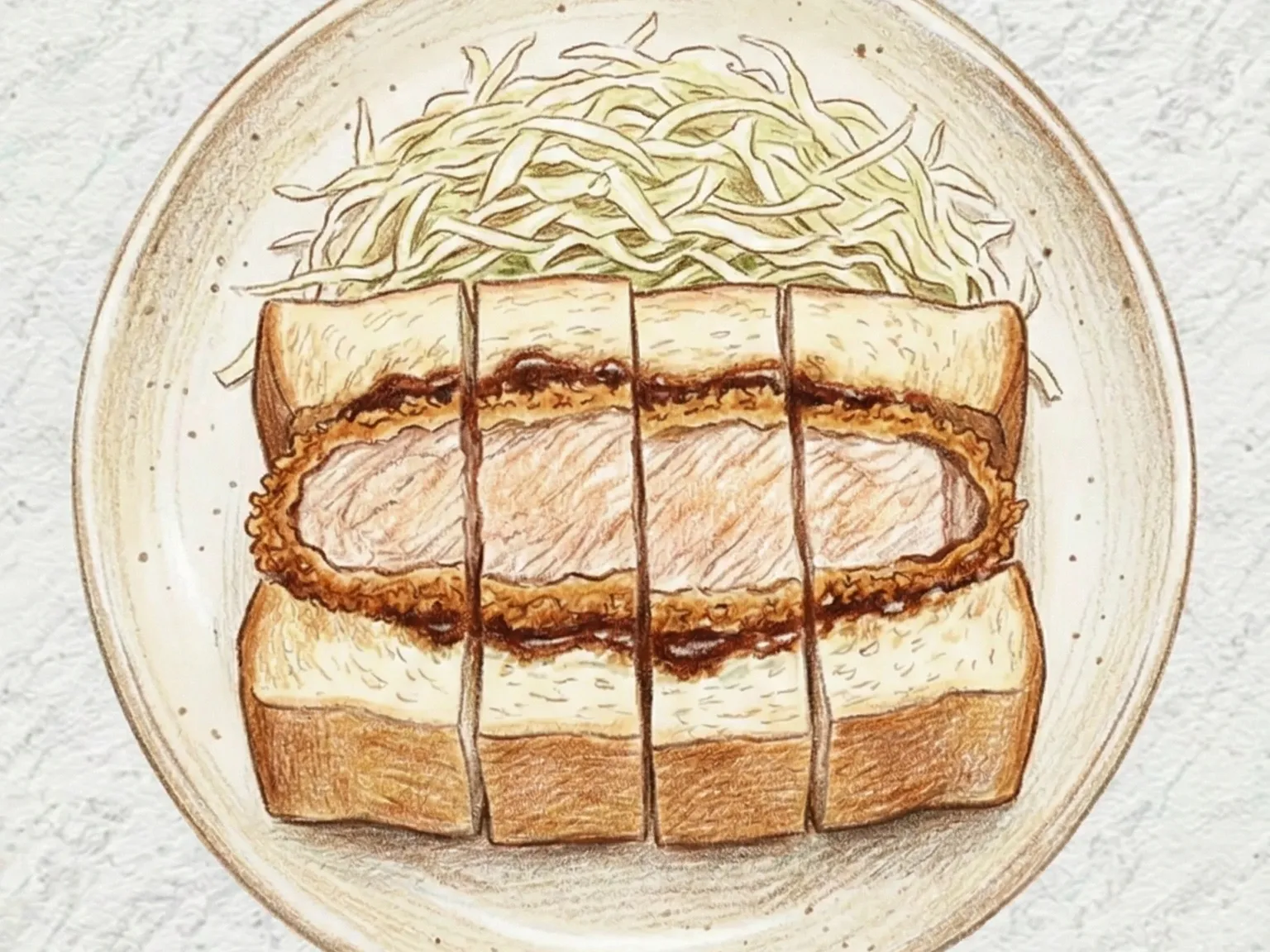
Katsu Sando (Japanese Crispy Pork Cutlet Sandwich)
Katsu sando is a Japanese sandwich built around a thick, crispy pork cutlet pressed between slices of soft milk bread. The pork loin is sliced at least two centimeters thick, pounded lightly to tenderize, seasoned with salt and pepper, then coated in flour, beaten egg, and coarse panko breadcrumbs before being lowered into oil at 180 degrees Celsius. The result is a deep golden crust that shatters on the first bite while the interior stays moist and tender. Tonkatsu sauce, a thick condiment with a fruity, sweet-savory profile similar to Worcestershire, is spread generously on one side of the bread, while a thin layer of Japanese mayonnaise goes on the other. Finely shredded cabbage is layered beneath the cutlet, providing a fresh, watery crunch that cuts through the richness of the fried meat. The crusts are trimmed from the bread, the sandwich is pressed firmly and sliced cleanly in half, and the cross-section of pale bread, pale cabbage, and dark golden cutlet becomes the defining visual of the dish. Katsu sando works as a packed lunch, a picnic item, a late-night snack, or a quick meal at the counter of a butcher shop in Tokyo.
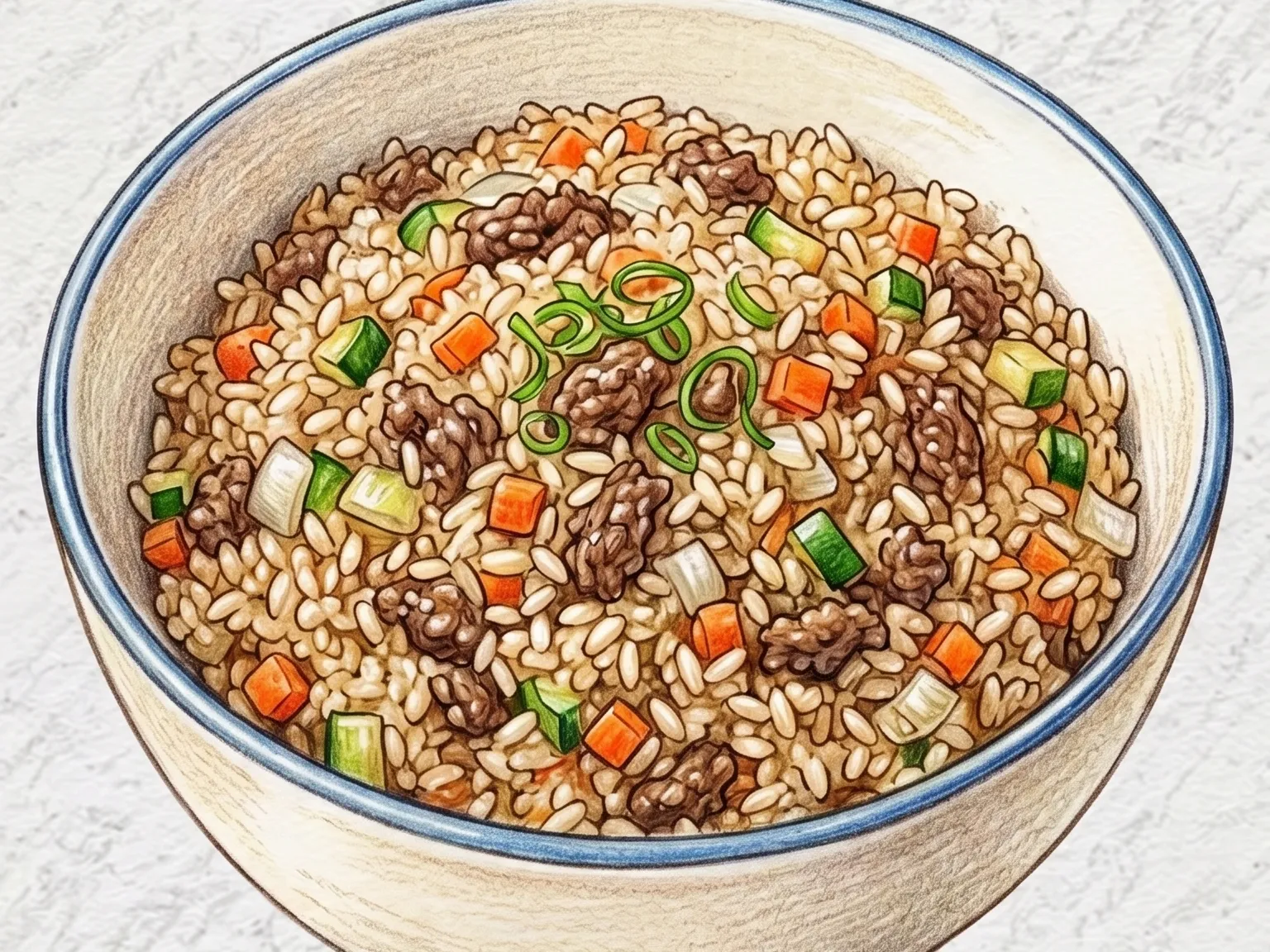
Korean Beef Fried Rice (Soy-Marinated Ground Beef Stir-fried Rice)
Sogogi bokkeumbap stir-fries soy-marinated ground beef with diced vegetables and day-old rice over high heat for a deeply savory fried rice. The beef goes in first, rendering its fat and leaving behind a flavorful fond that coats the pan. Onion, carrot, and zucchini follow, cooking just until their edges soften and their natural sugars begin to caramelize. Cold rice is added and tossed vigorously to break up clumps, picking up the soy seasoning and meat juices as it fries. A final drizzle of sesame oil right before plating adds a fragrant, nutty finish. The beef infuses the rice with a meaty depth while the vegetables keep the dish from feeling heavy, making it a quick, satisfying meal from everyday pantry ingredients.
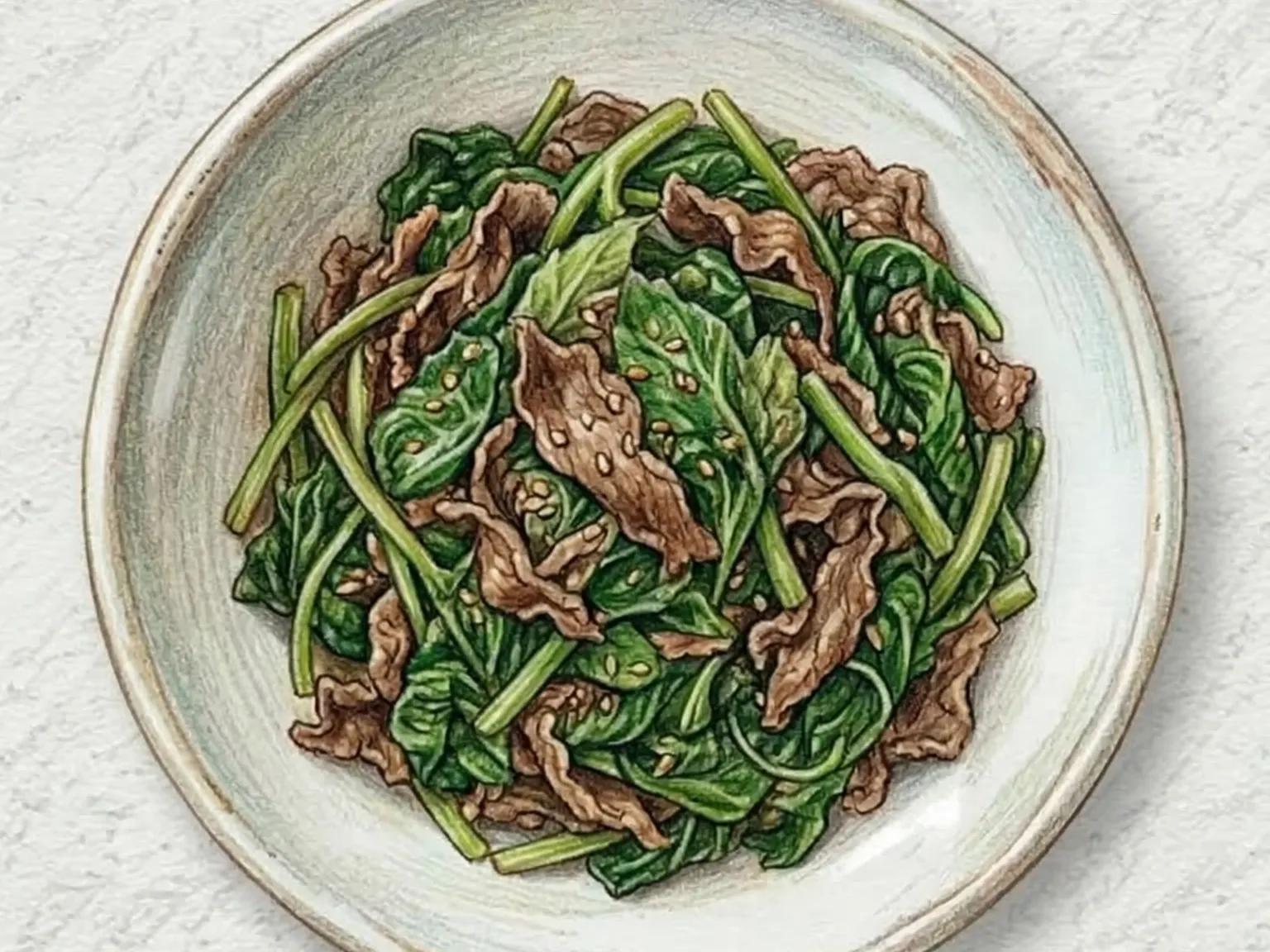
Korean Aster Greens Beef Stir-fry
This stir-fry brings together fragrant chwi-namul wild greens and thinly sliced bulgogi-cut beef on a single plate, where the greens' herbal bitterness meets the meat's savory depth. Pre-seasoning the beef with soy sauce and cooking wine means that as the meat cooks, the seasoning transfers into the greens without the need for additional salt at the end. Onion softens during cooking, releasing sweetness that takes the edge off the overall saltiness and rounds the flavor. A finishing drizzle of perilla oil adds a distinctly Korean nuttiness, and whole sesame seeds scattered on top provide small pops of texture throughout each mouthful. This banchan works as a hearty, protein-rich complement to an otherwise vegetable-heavy table, substantial enough to serve as a main side dish alongside steamed rice.

Korean Injeolmi Toast (Buttery Toast Topped with Rice Cake and Soybean Powder)
Injeolmi toast starts with bread pan-toasted in butter until golden and crisp, then topped with sliced injeolmi rice cake, a generous dusting of roasted soybean powder, and a drizzle of honey. The textural contrast between the brittle toast and the sticky, elastic rice cake is the defining feature of the dish, while the soybean powder adds a toasty, nutty flavor that unifies both components. Pan-frying the injeolmi briefly before placing it on the toast improves its elasticity and creates a light caramelization on the outer surface, changing the chew in a noticeable way. Jocheong or maple syrup can replace honey without altering the overall balance, and a spread of cream cheese beneath the rice cake adds a creamy tanginess that deepens the flavor profile. Store-bought soybean powder becomes considerably more aromatic after a minute in a dry pan over low heat, so a quick toast before dusting makes a real difference. The dish comes together in under ten minutes and has become a common menu item at Korean cafe-style snack bars.
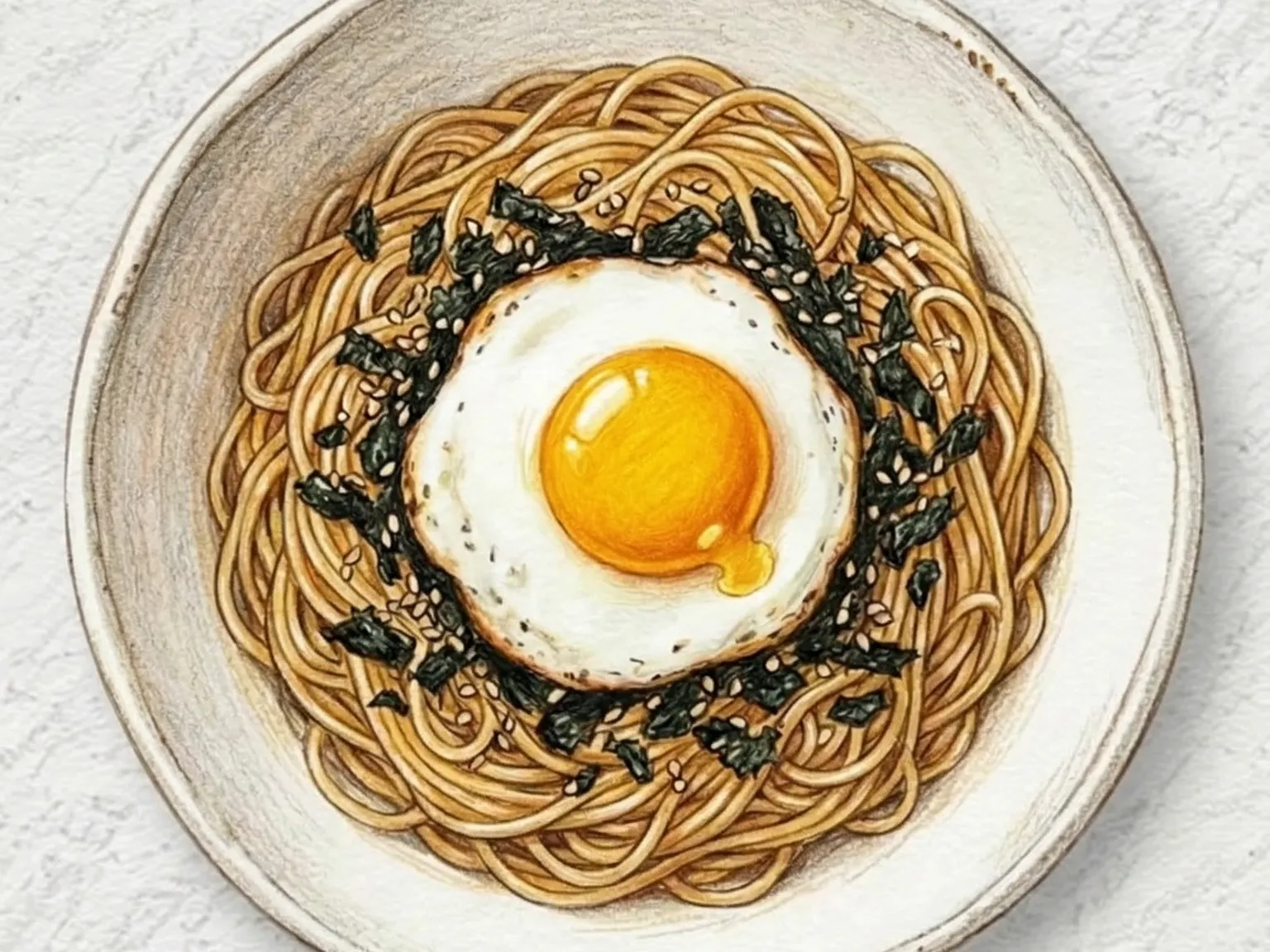
Korean Perilla Oil Noodles
Deulgireum guksu is a Korean cold mixed noodle dish where boiled somyeon are rinsed thoroughly in cold water to strip surface starch, tossed in soy sauce seasoning to coat each strand with salt and umami, then finished with a generous pour of perilla oil. The order matters: soy sauce first to season the noodles through, perilla oil last so its volatile fragrance is not cooked off. The oil has a distinctive earthiness - more roasted and grassy than sesame - and it clings to every strand in a way that makes the whole bowl smell powerfully aromatic. Crumbled roasted seaweed contributes a briny crunch, and toasted sesame seeds provide a quiet textural counterpoint. The whole preparation takes under ten minutes from pot to bowl, which makes it a practical choice for late-night meals or solo eating. A fried egg placed on top is a frequent addition; the runny yolk breaks into the dressed noodles, adding richness and rounding out the sharp, saline seasoning.
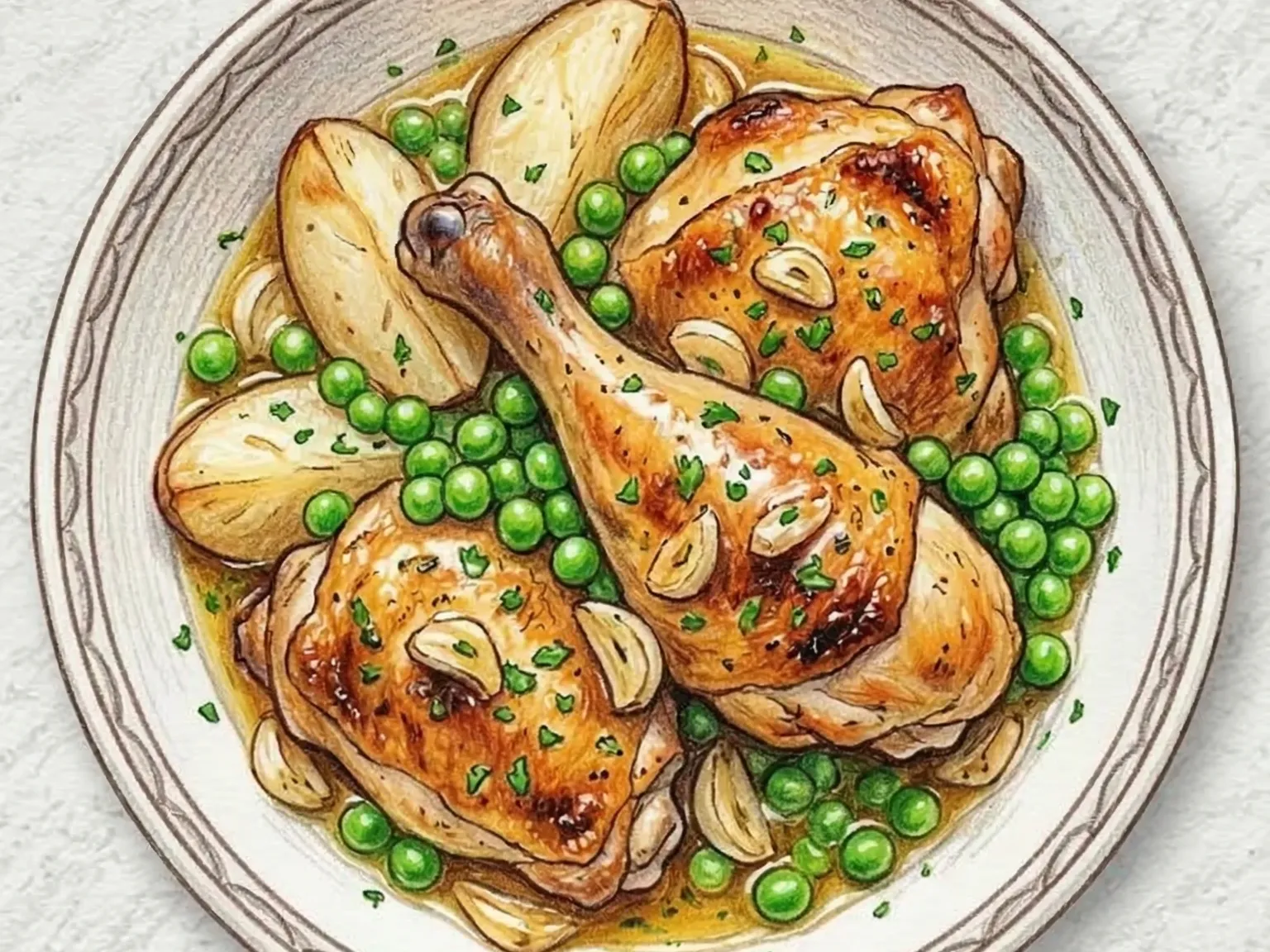
Chicken Vesuvio (Chicago White Wine Braised Chicken with Potatoes)
Chicken Vesuvio is a Chicago Italian-American dish that sears chicken thighs and potato chunks until golden, then simmers them with garlic, dry white wine, chicken stock, and oregano in a covered pan. Searing the chicken skin for at least five minutes builds a crisp texture and deposits a deep fond on the pan bottom that becomes the backbone of the sauce. After deglazing with wine and adding stock, twenty minutes of covered simmering lets the potatoes absorb the sauce and turn creamy inside while the chicken stays moist under its crisp skin. Peas and lemon juice added in the final two minutes introduce a bright green color and fresh acidity that lighten the otherwise heavy sauce. Dry white wine keeps the sauce clean and balanced rather than sweet.
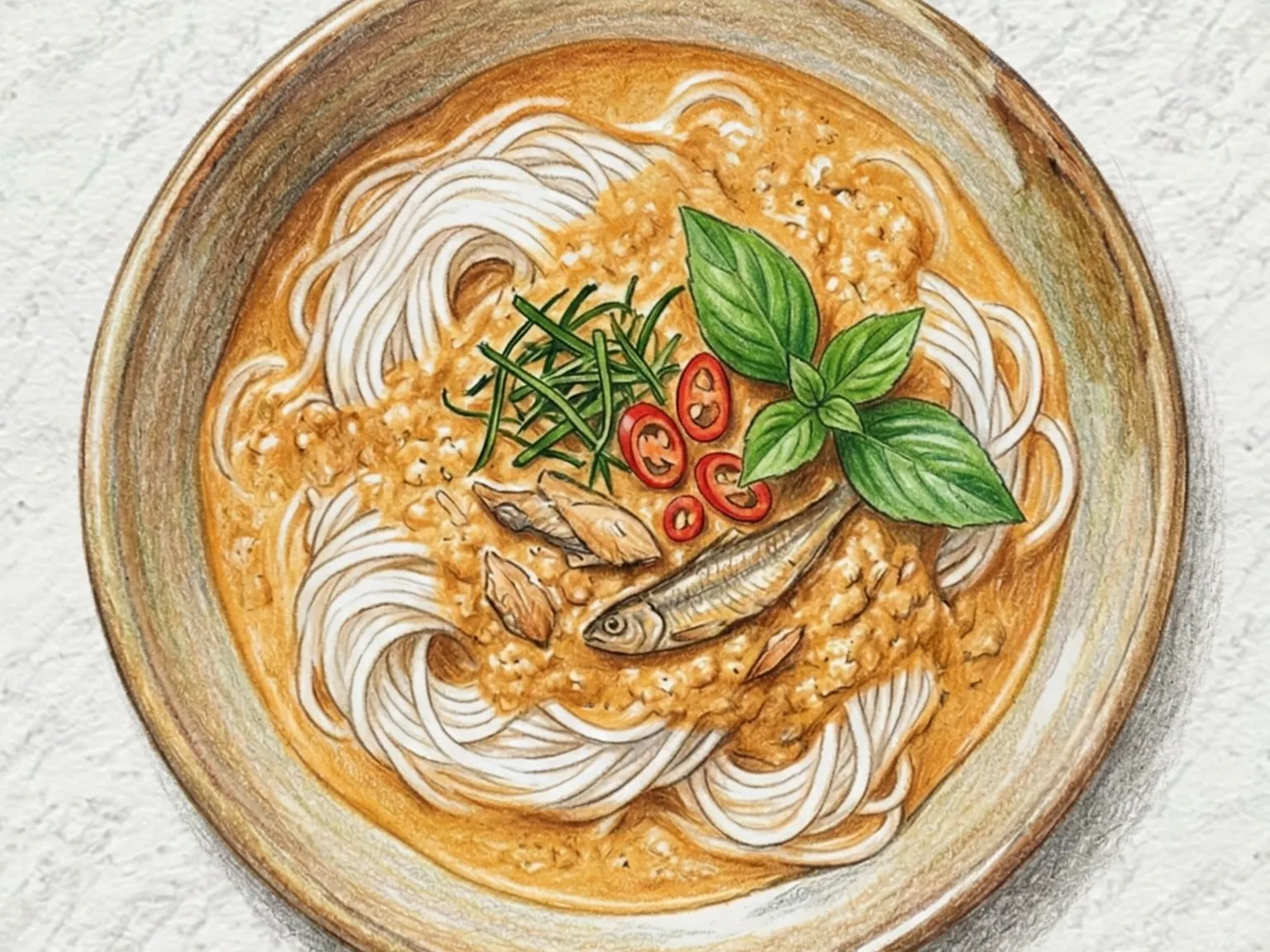
Khanom Jeen Nam Ya (Thai Fermented Rice Noodles in Fish Curry)
Khanom jeen nam ya is a traditional Thai dish of fermented rice noodles bathed in a thick, fragrant curry sauce built from fish and coconut milk. White fish fillets are poached with lemongrass and kaffir lime leaves, then flaked and folded into a simmering pot of red curry paste and coconut milk. The fish dissolves into the sauce, lending body and a subtle marine sweetness that balances the heat of the curry. Fish sauce sharpens the salt, and palm sugar rounds off the edges. The finished sauce is ladled generously over coiled bundles of the thin, slightly sour fermented noodles. A spread of raw garnishes - bean sprouts, morning glory, green beans, shredded cabbage, and fresh chili - accompanies each serving, letting diners customize texture and freshness with every bite. The dish traces its origins to royal Thai cuisine but is now a common sight at market stalls across the country.
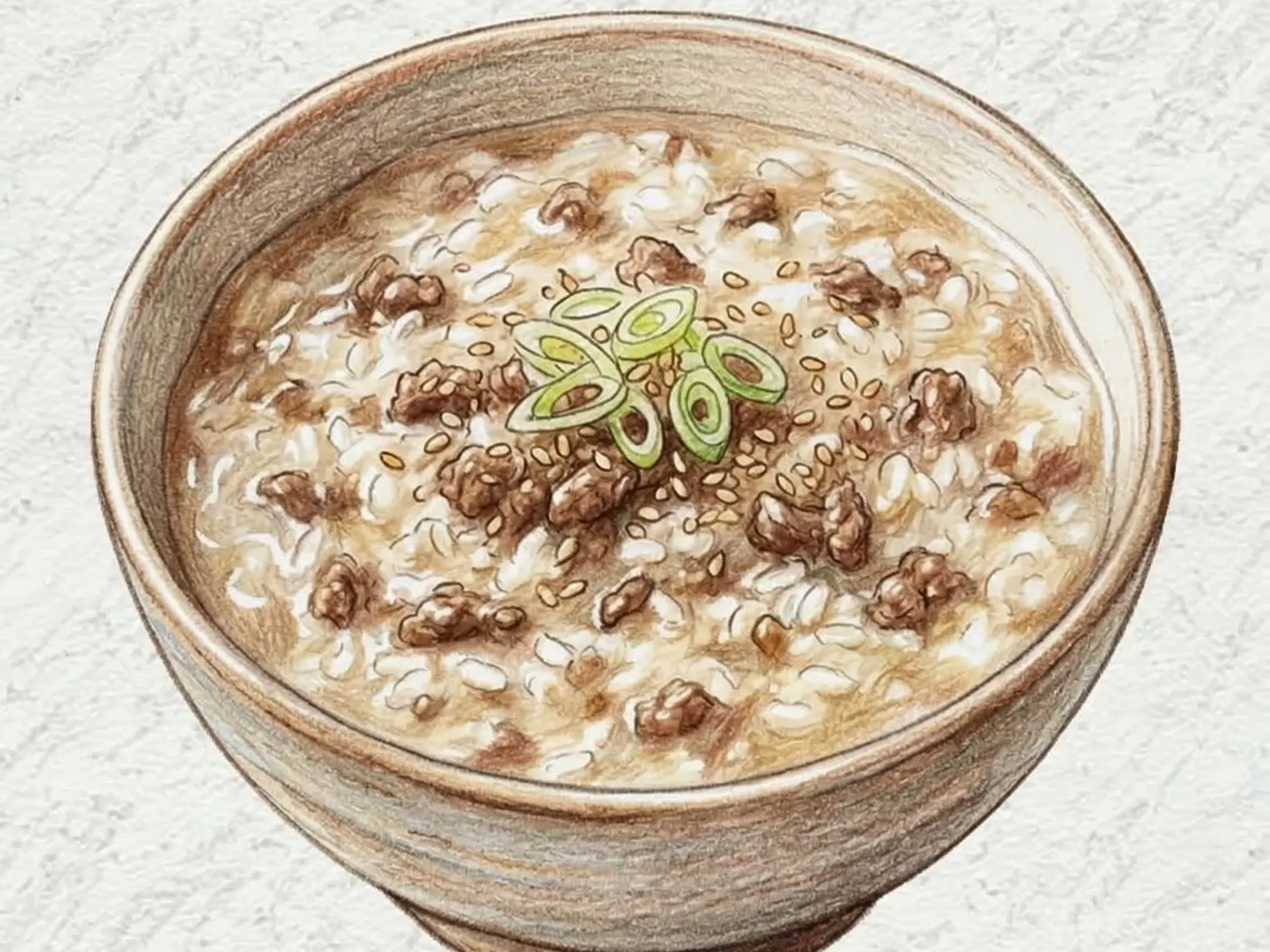
Korean Beef Porridge (Sesame Oil-Toasted Rice with Minced Beef)
Sogogi-juk is a Korean beef porridge that begins by stir-frying minced beef and soaked rice together in sesame oil, building a savory, nutty foundation before water is added. As the beef renders in the oil, its umami dissolves into the fat, and the rice grains pick up that flavor as they toast alongside the meat. Slow simmering over low heat allows the rice to break down gradually into a thick, silky porridge while the beef broth permeates every spoonful. Finely diced carrot and onion can be added for a touch of natural sweetness that softens the overall flavor profile. Widely relied on as a recovery food after illness and as a warming breakfast, this porridge is gentle on the stomach yet deeply satisfying in its quiet, meaty richness.
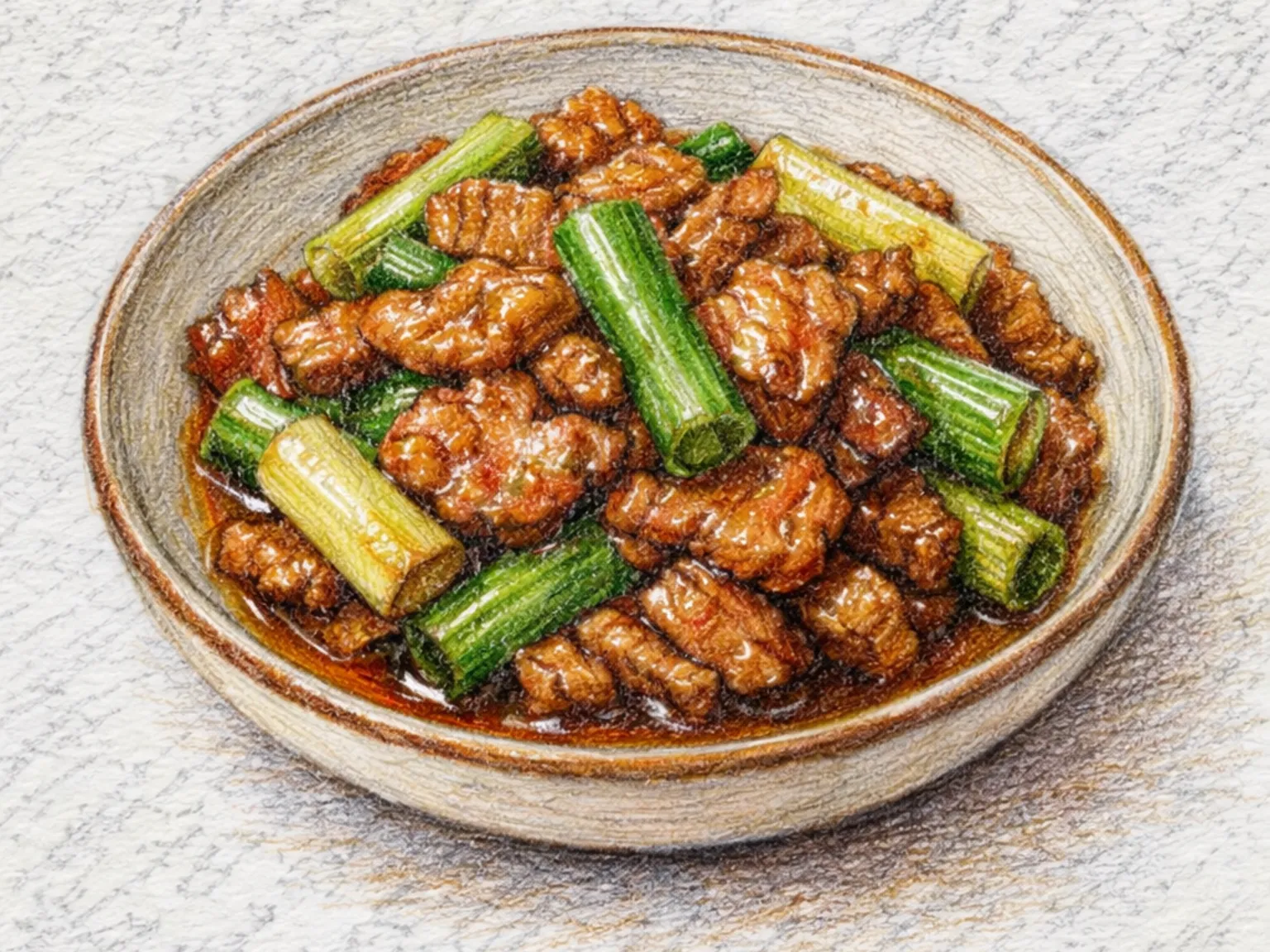
Korean Soy Glazed Pork Neck Stir-fry
Daepa moksal ganjang bokkeum is a quick stir-fry of thinly sliced pork neck with Korean large green onion, soy sauce, and oyster sauce. Pork neck has enough fat marbled through it to stay moist under high heat without drying out the way leaner cuts do, and the thin slicing ensures it cooks through in under two minutes. Soy sauce and oyster sauce hit the hot pan and caramelize quickly, forming a glossy coating on the meat's surface that is simultaneously salty, sweet, and slightly sticky. Onion releases its moisture as it cooks, naturally loosening the sauce and preventing it from thickening into a paste. The large green onion is cut on a diagonal into generous sections and added near the end - put in too early, it goes limp and loses its character, but added at the right moment, the edges char lightly while the inside turns translucent and releases a sweet, sharp fragrance that is distinct from the smaller variety. The combination of the caramelized meat and the barely-cooked green onion makes this an equally effective banchan over rice or an accompaniment to drinks.