⚡ Quick Recipes
Ready in 20 minutes or less
804 recipes. Page 3 of 34
A busy schedule does not mean you have to settle for bland meals. Every recipe in this collection can be prepared and finished in 20 minutes or less - quick stir-fries, tossed noodles, microwave dishes, and more.
The secret is minimizing prep work and keeping the steps simple. Pre-cut ingredients or pantry staples speed things up even further. Turn to these recipes after work, during a short lunch break, or for a fast breakfast.
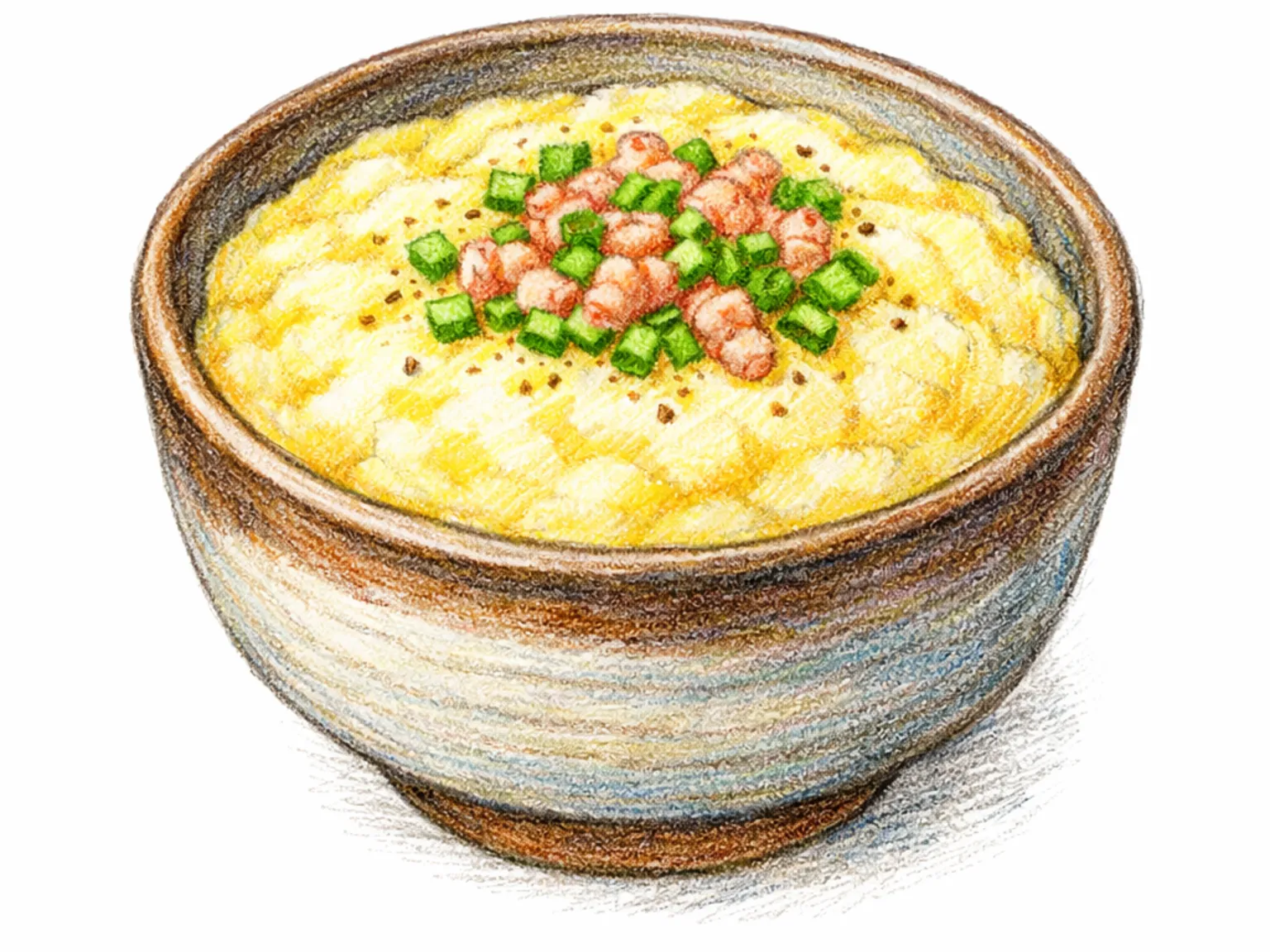
Korean Steamed Egg (Gyeran-jjim)
Gyeran-jjim is a Korean steamed egg dish made by whisking eggs together with anchovy stock and salted shrimp, then cooking the mixture slowly in a stone pot over low heat with the lid on. The anchovy stock establishes a deep savory backbone, and the salted shrimp adds a fermented, briny salinity that eliminates the need for additional seasoning. Straining the egg mixture through a fine sieve before cooking removes air bubbles and ensures the finished custard has a smooth, unbroken surface rather than the pitted texture that forms when bubbles are trapped and burst during cooking. The stone pot should not be preheated before the egg mixture is added. Starting cold and bringing the heat up slowly with the lid in place traps steam inside, which gives the custard its signature cloud-like softness and prevents the surface from drying out. Small pieces of carrot and sliced green onion add color, and a final drizzle of sesame oil with a scatter of sesame seeds brings a nutty fragrance to each spoonful. The right point to remove it from heat is when the center still wobbles slightly when the pot is nudged, because residual heat will finish setting the middle as it rests.
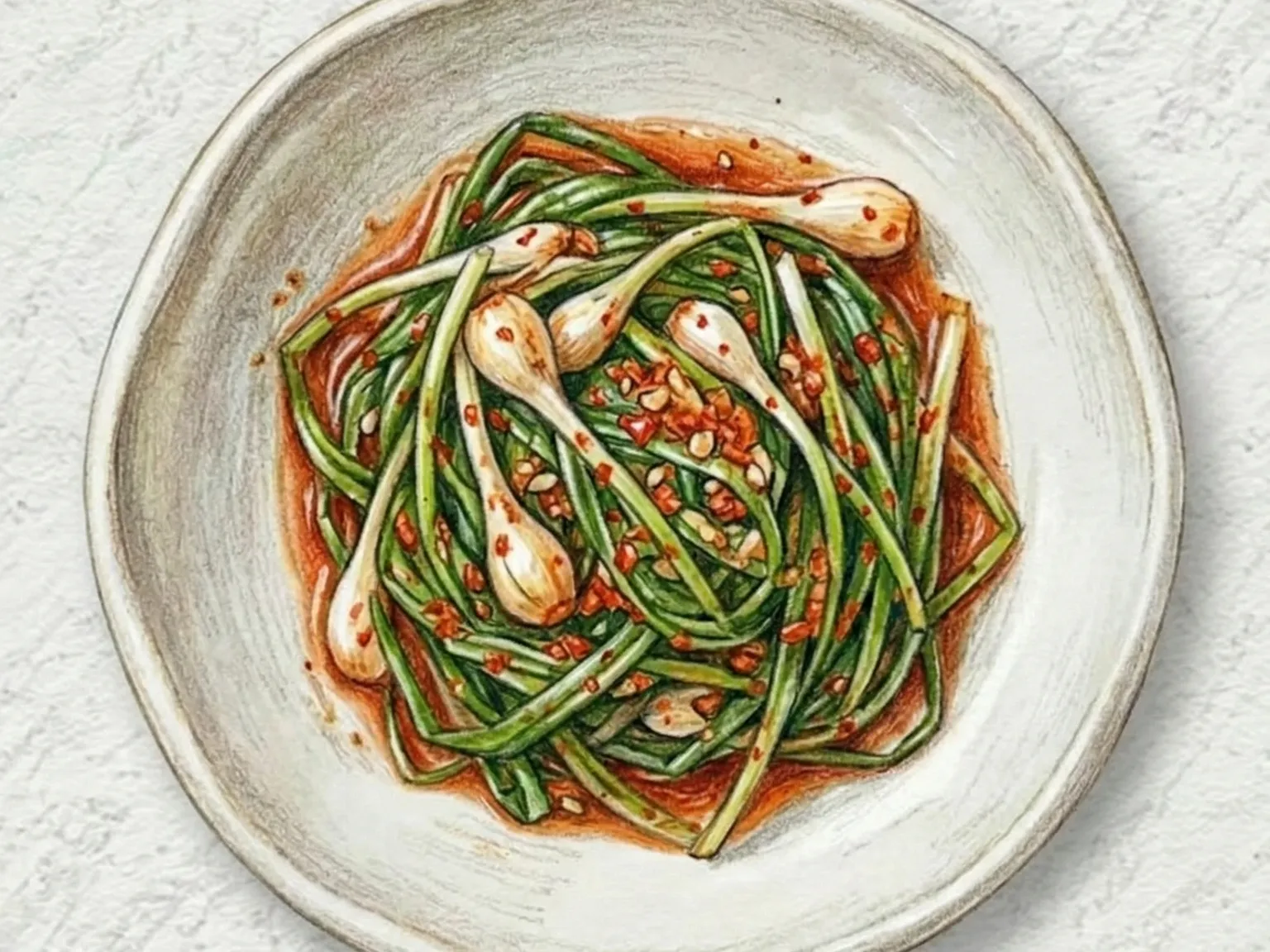
Korean Wild Chive Kimchi (Spring Quick Gochugaru)
Dallae kimchi is a quick spring kimchi made by salting wild chives for just eight minutes to barely soften them, then dressing them in gochugaru, sand lance fish sauce, plum extract, and Korean pear juice. The bulb-end roots carry the most concentrated aroma, so they should not be trimmed too short, and the seasoning should be applied starting from the roots so the flavor penetrates evenly along the entire stalk. Pear juice adds natural sweetness and a little moisture that softens the heat from the chili, while sand lance fish sauce provides a lighter, more delicate umami than standard anchovy sauce. This kimchi smells fresh and bright immediately after preparation, but one day in the refrigerator allows a mild fermented depth to develop that rounds out the flavors considerably. Wild chives are best purchased between early March and mid-April, when the roots are fat and the aroma is fully developed. Salting beyond eight minutes causes the grassy fragrance to dissipate rapidly, so timing matters. The finished kimchi pairs naturally with namul side dishes and fresh vegetable salads at a spring table.
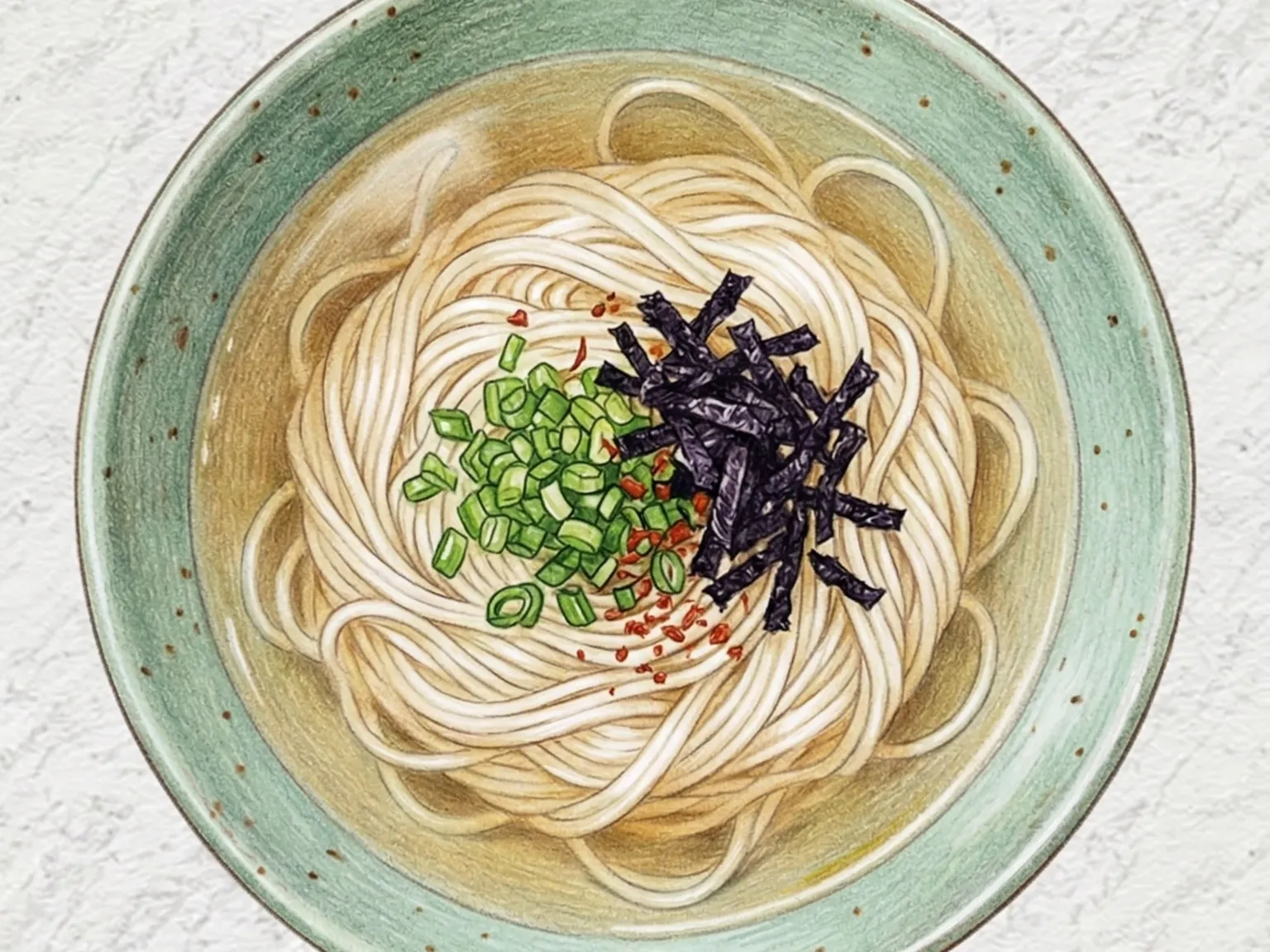
Korean Anchovy Broth Thin Noodle Soup
Anchovy somyeon is the noodle soup Korean families fall back on when the kitchen offers little to work with - dried anchovies, a strip of dashima kelp, and a bundle of thin wheat noodles are enough. The broth starts with dried anchovies soaked briefly to cut any bitterness, then simmered with dashima for fifteen minutes before being strained to produce a clear liquid with a faint oceanic sweetness and deep umami. Somyeon - hair-thin wheat noodles - are cooked in a separate pot to keep their starch from clouding the broth, then rinsed repeatedly under cold water until every strand separates cleanly. The noodles go into a bowl of hot broth and are finished with sliced scallion, a small drop of sesame oil, and often a sheet of toasted gim. A few drops of soy sauce tune the salt level, and a soft-boiled egg or a few slices of tofu can round it into a full meal. The appeal of the dish is its restraint: no chili paste, no fermented base, just the clean savor of anchovy stock meeting springy noodles. Korean mothers have served this as a quick midday meal for generations, and it endures as comfort food in its most unadorned form.
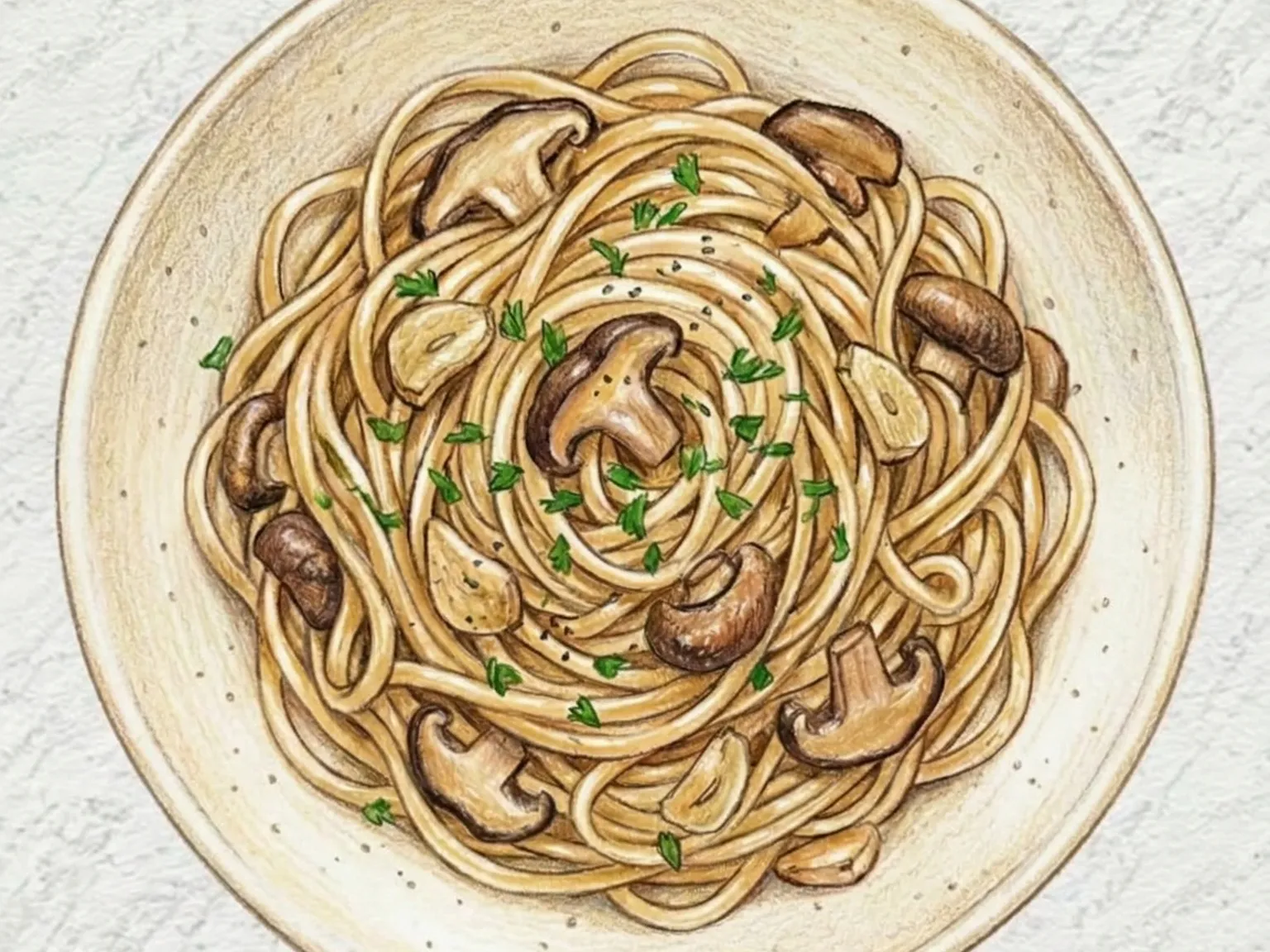
Doenjang Mushroom Butter Linguine
Doenjang mushroom butter linguine starts with garlic sauteed in butter and olive oil, followed by button mushrooms cooked undisturbed on high heat until moisture fully evaporates and the edges brown. Stirring the mushrooms too frequently steams rather than sears them, producing a soft, wet texture instead of the firm, chewy bite that makes this dish work. Doenjang is dissolved in reserved pasta water before being added to the pan, ensuring even distribution of fermented savoriness across every strand without clumping. The butter's fat emulsifies with the starchy pasta water to form a glossy sauce that clings to the noodles rather than pooling at the bottom of the bowl. Sliced green onion added at the finish brings a sharp, grassy note, and grated Parmesan layers additional salt and umami depth into the final dish. One to two minutes of tossing with pasta water adjustment tightens the sauce around each noodle.
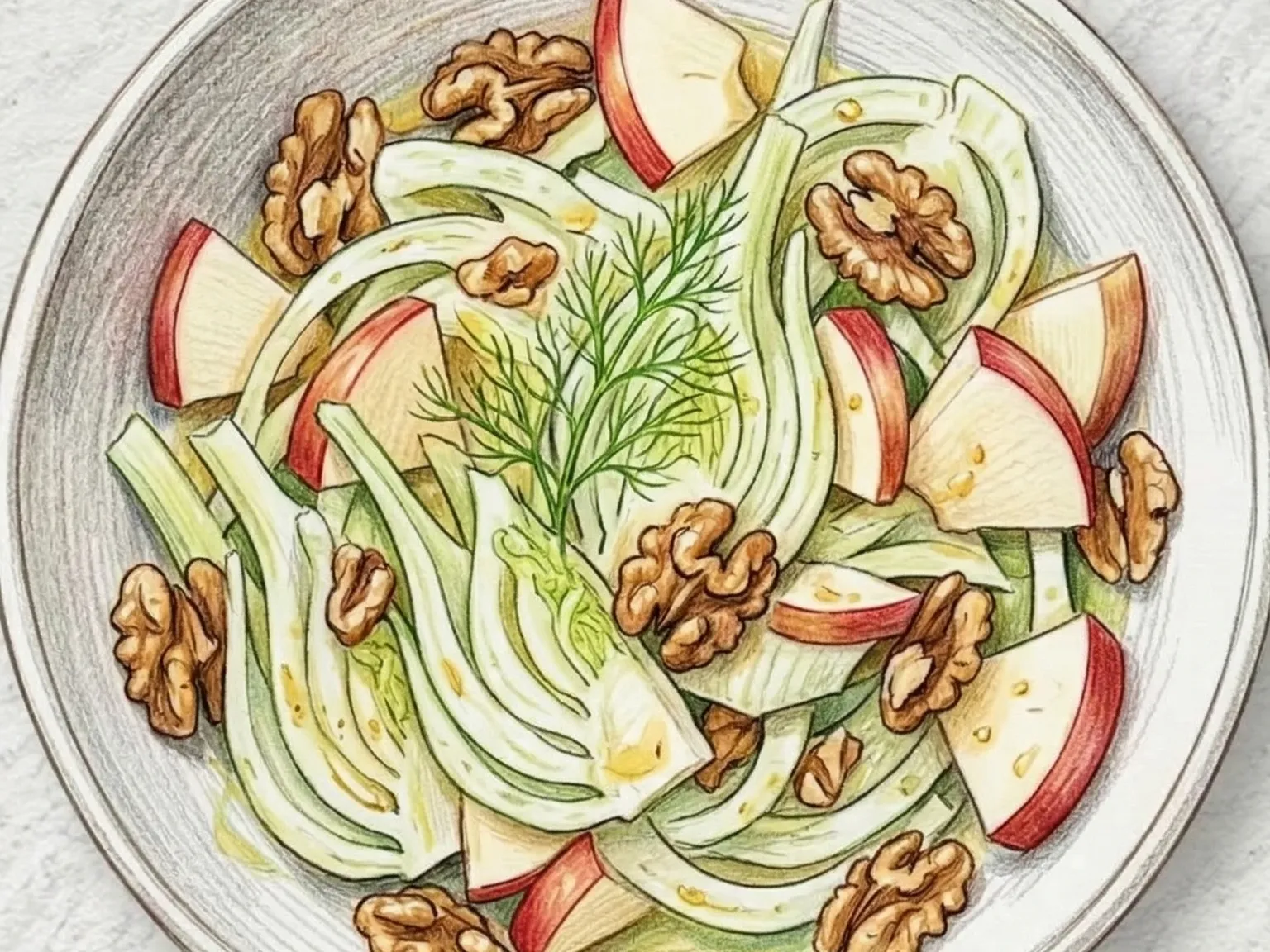
Apple Fennel Walnut Salad
This salad pairs three ingredients whose textures and flavors run in different directions - crisp apple, anise-scented fennel, and bitter walnuts - and unifies them with a honey-lemon dressing. Thinly sliced fennel bulb contributes a licorice-like fragrance that is more aromatic than sweet, while its celery-crisp texture holds a firm contrast against the apple's softer flesh. Toasted walnuts add a crunchy, tannic bitterness that anchors the lighter elements and keeps the salad from reading as merely sweet. The dressing is deliberately minimal - fresh lemon juice, honey, a small amount of olive oil, and a pinch of salt - so the ingredients carry the flavor rather than the sauce. Assembling just before serving prevents the apple from browning. Salads of this type appear on autumn and winter tables in France and Italy when local apples and fennel come into season together, and can be served as a standalone starter or alongside roasted poultry, where the anise note in the fennel cuts through the meat's richness. Fennel has a long association with digestive support in Mediterranean cooking, which is partly why it has traditionally been served alongside fatty meats, and this salad draws on the same pairing logic.
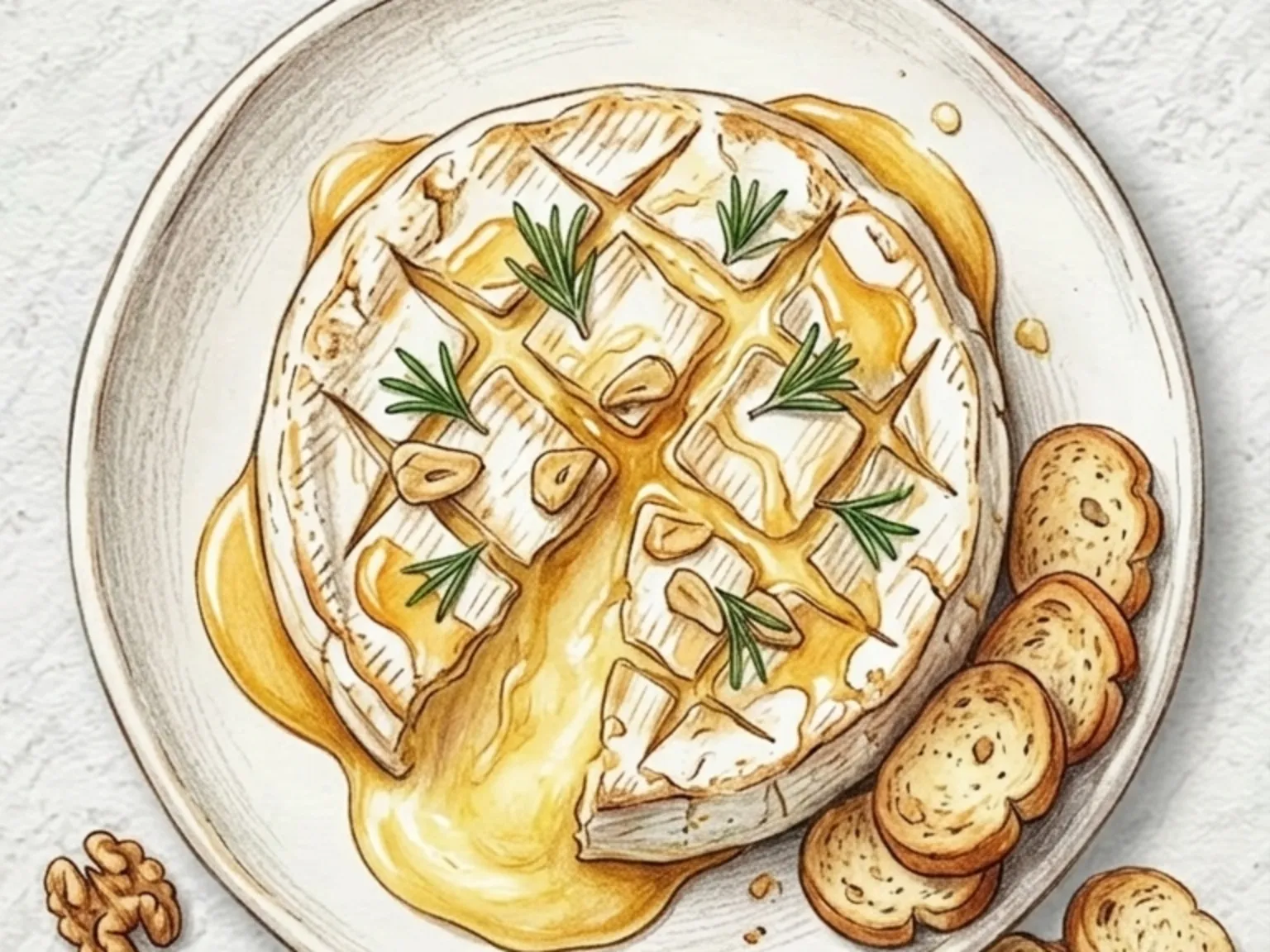
Warm Melting Cheese (Whole Oven-Baked Camembert with Garlic and Honey)
Baked Camembert is a French warm appetizer in which an entire wheel of Camembert is oven-roasted until the interior liquefies into a pooling, spoonable cream while the white-mold rind holds firm and serves as a natural bowl. Scoring the top of the rind in a crosshatch pattern and tucking in thin slices of garlic and sprigs of rosemary allows those aromatics to infuse the melting cheese throughout the approximately fifteen minutes it spends at 180 degrees Celsius. The result, straight from the oven, is a cheese that flows when touched but stays contained within its rind, making it ideal for sharing directly from the box or the baking dish it sat in. Torn baguette slices and lightly toasted walnuts are the most natural accompaniments for dipping, and a drizzle of honey over the top before serving adds a sweetness that bridges the funky, salty character of the cheese and creates a sweet-savory contrast. The entire preparation requires less than five minutes of active work before it goes into the oven, which makes it one of the most efficient warm appetizers to produce when hosting guests or pairing with wine. Unlike richer double-cream styles, Camembert has enough flavor depth to hold its own with both dry white wines and lighter reds, and the roasted garlic left in the scored grooves becomes soft and sweet as it heats, adding a mellow backdrop that complements rather than competes with the cheese.
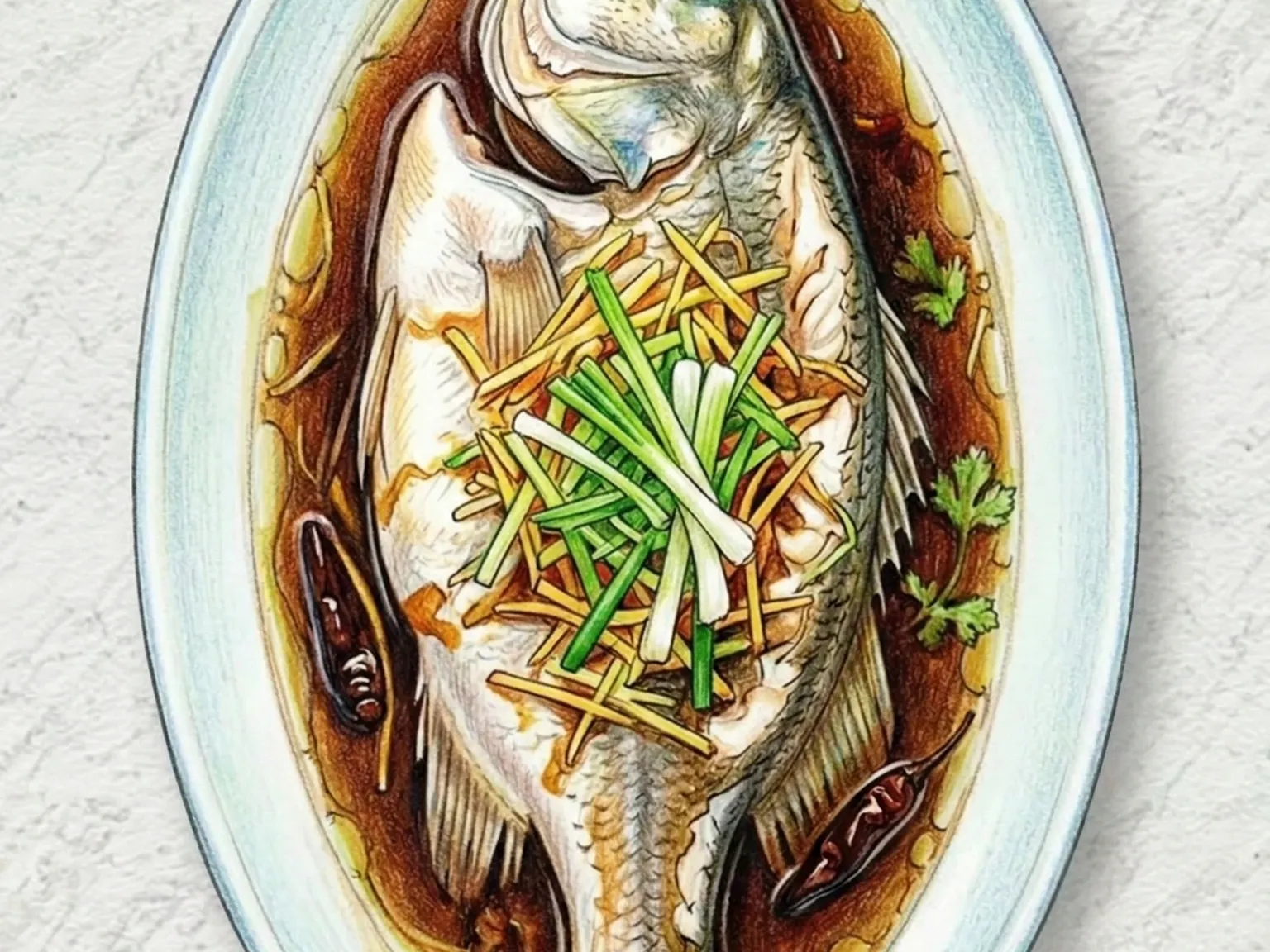
Cantonese Steamed Fish
Cantonese steamed fish - ching jing yu - is the clearest expression of the Cantonese philosophy of letting premium ingredients speak for themselves with minimal interference. The technique requires the freshest possible whole fish - sea bass, grouper, or pomfret are the standard choices - because steaming conceals nothing. Any fish that is even slightly past its peak will betray itself the moment it comes off the heat. The fish is scored on both sides to allow even heat penetration, placed on a plate with thin ginger slices tucked underneath and inside the cavity to neutralize any fishiness, then steamed over vigorously boiling water for exactly eight to ten minutes depending on thickness. Even one minute of overcooking transforms the silky, translucent flesh into something dry and dull - timing is the entire technique. The moment the fish leaves the steamer, all accumulated liquid on the plate must be poured off immediately, because that liquid carries concentrated fishiness that would spoil the clean finish. A generous pile of julienned scallion and fresh ginger is arranged on top, then a ladle of oil heated until just beginning to smoke is poured directly over the aromatics. The sizzling releases their fragrance in a single burst that infuses the fish. Seasoned soy sauce and a few drops of sesame oil complete the dish. In Cantonese banquet culture, the steamed fish course is typically the most expensive item on the table, with guests selecting a live fish directly from the restaurant tank.

Rum Balls
Rum balls are a no-bake confection made by combining crushed chocolate cookie crumbs with dark rum, cocoa powder, powdered sugar, and melted butter, then rolling the mixture into compact spheres and coating them in cocoa. The absence of baking keeps the process fast and the result dense - each ball has a fudge-like firmness that yields slowly on the tongue, releasing waves of cocoa bitterness followed by the warm, boozy bloom of rum. The low moisture content means the crumb mixture binds tightly, holding its shape without refrigeration, though chilling overnight allows the rum to permeate every particle of cookie and cocoa for a more unified flavor. Stored in an airtight container, they keep for well over a week. Rolling some in chopped pistachios or rainbow sprinkles instead of cocoa adds color and textural variety, which makes them suitable for gift boxes or party platters. Despite their simplicity, the interplay between chocolate and rum gives these small bites a sophistication that belies the ten-minute preparation.
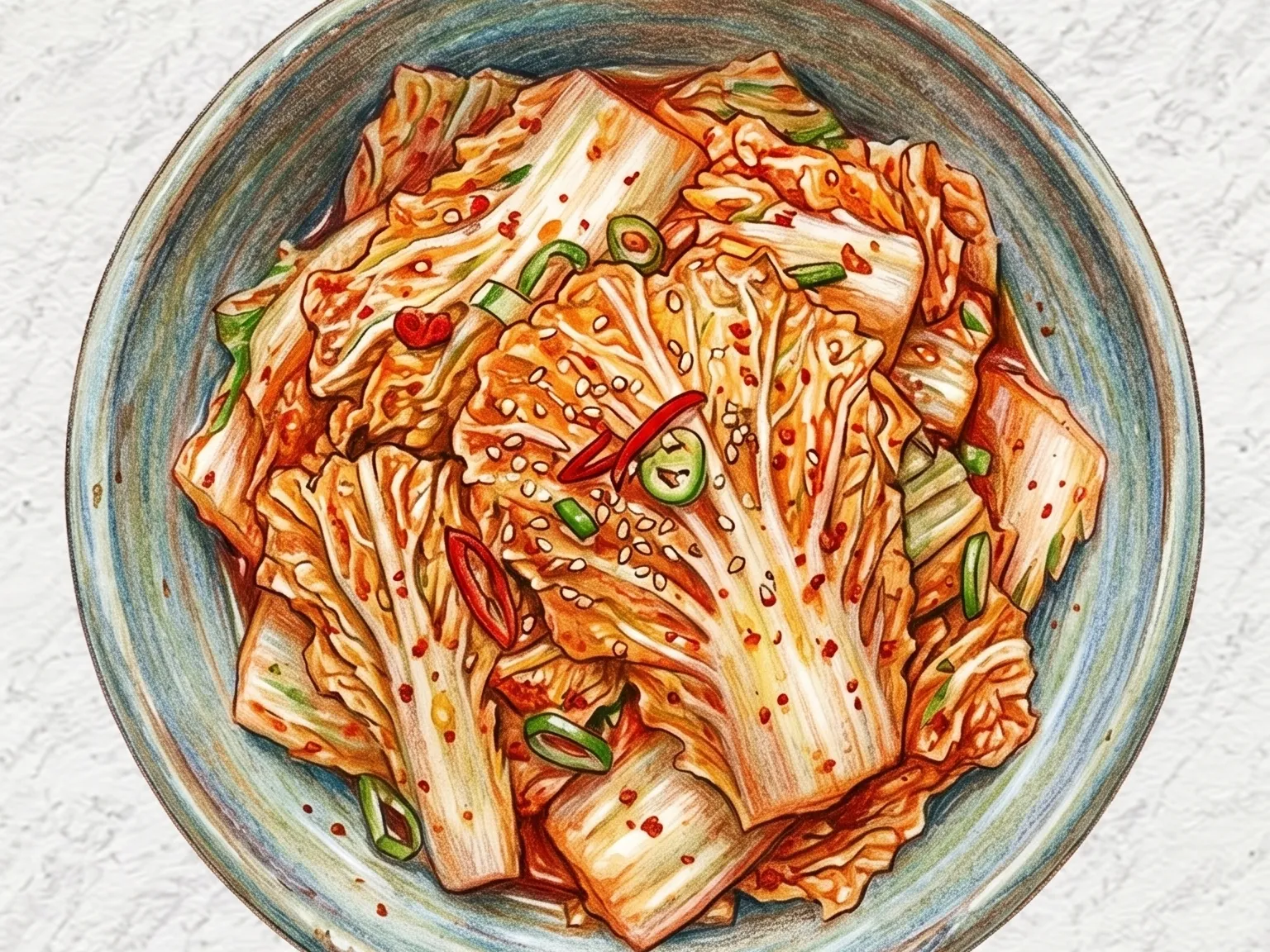
Korean Fresh Cabbage Kimchi
Geotjeori is kimchi's immediate cousin - raw napa cabbage dressed in gochugaru seasoning and eaten right away without any fermentation. The cabbage is salted for about twenty minutes to draw out moisture and soften the texture slightly, then squeezed dry and tossed with red pepper flakes, anchovy fish sauce, minced garlic, minced ginger, sugar, and a finishing drop of sesame oil. The brief salting pulls just enough water from the leaves to let the seasoning coat them evenly while keeping the cabbage noticeably crisper than fermented kimchi. Without the lactic acid produced during aging, the flavor profile is fresher and more direct - the heat of the gochugaru and the savory depth of the fish sauce come through cleanly rather than sitting under layers of fermented complexity. Geotjeori is best eaten the day it is made and should be used within a day or two if refrigerated. Koreans pair it with grilled pork belly, alongside doenjang-jjigae, or as a quick substitute when the aged kimchi jar runs empty.
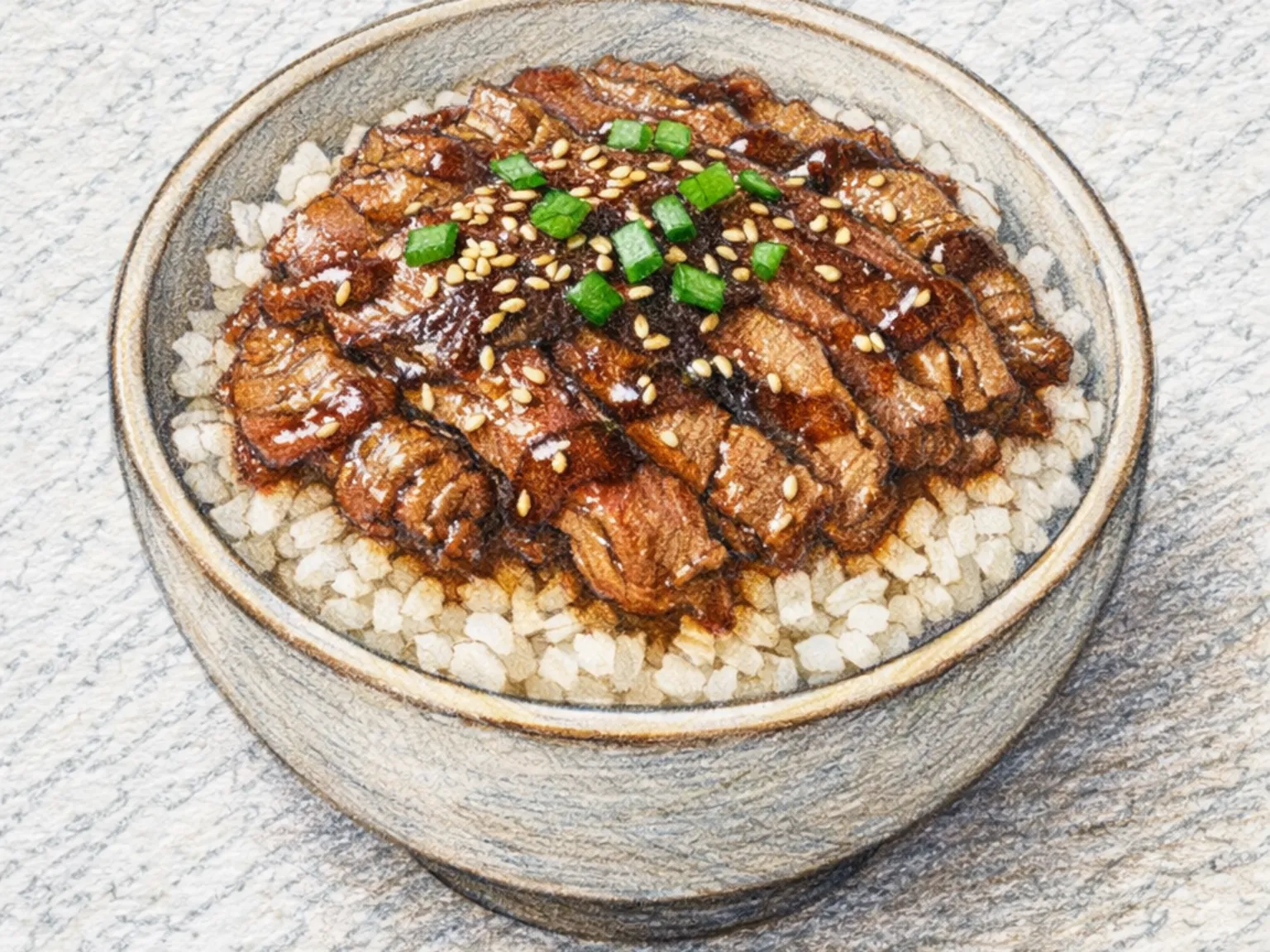
Korean Beef Brisket Rice Bowl
Chadol deopbap is a Korean rice bowl built on paper-thin beef brisket slices seared in a hot dry pan until the edges turn crisp and caramelized, then finished with a soy-based glaze and placed over steamed rice. The marbling in the brisket renders quickly under high heat, coating the pan in fat that then carries the flavors of soy sauce, sugar, garlic, and sesame oil into a concentrated glaze. A soft-cooked or raw egg yolk placed on top is a standard addition; stirring it in spreads a golden richness across the rice that thickens the sauce and rounds out the saltiness of the soy. Sliced scallions and toasted sesame seeds scattered over the finished bowl add textural contrast and a clean finish. The recipe relies on pantry staples, requires no marinating, and comes together in under ten minutes from start to plate, making it one of the most practical formats for a single-serve weeknight meal without sacrificing depth of flavor.
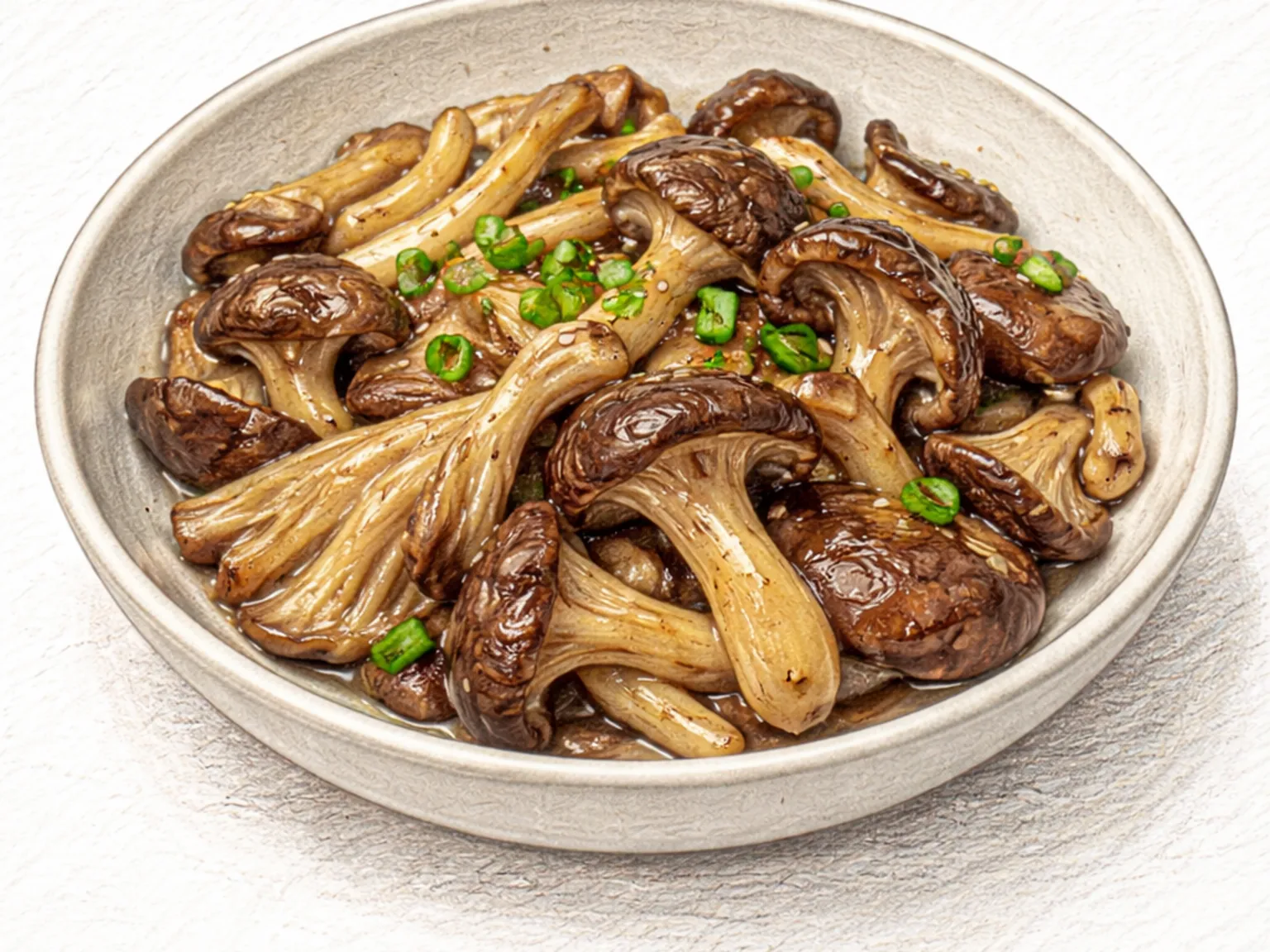
Korean Stir-fried Mushrooms
Oyster mushrooms and shiitake are stir-fried over high heat until their moisture evaporates and their natural umami concentrates into each bite. Wiping the mushrooms with a damp cloth instead of rinsing under water is not a minor detail: washing introduces excess moisture that lowers pan temperature the moment the mushrooms hit the surface, which causes them to steam rather than sear. The pan must stay hot enough that the mushrooms develop light golden edges through the Maillard reaction, and that narrow window is when the deepest nutty flavor emerges. Water-logged mushrooms never reach it. Soy sauce supplies the salinity, and black pepper adds a sharp accent without obscuring the mushrooms' own flavor. Sesame oil is added after the heat is turned off to preserve its volatile fragrance; adding it while the pan is still hot burns off the aromatic compounds before they have a chance to coat the mushrooms. A handful of sliced green onion tossed in at the end brings color and a sharp, fresh bite against the earthy backdrop. At roughly 120 calories per serving, this side dish fits comfortably into any calorie-conscious meal plan while delivering plant-based protein and dietary fiber in a form that actually tastes worth eating.
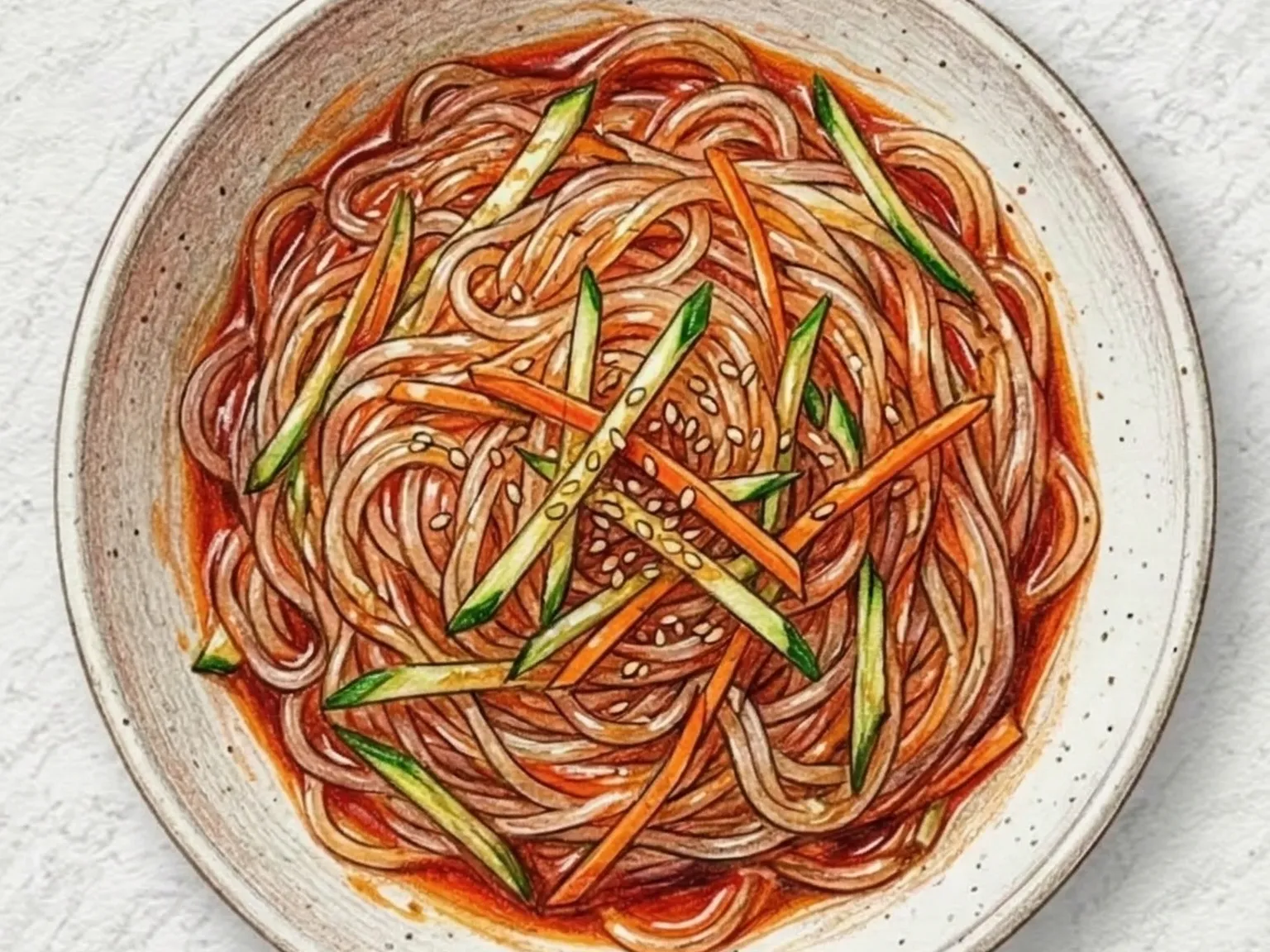
Bibim Dangmyeon (Spicy Glass Noodles)
Bibim dangmyeon is a Korean bunsik dish of boiled sweet potato starch noodles tossed together with vegetables in a dressing of gochujang, vinegar, and sugar. The noodles are cooked in boiling water until just tender, then drained and rinsed thoroughly in cold water. The cold rinse is the step that determines the final texture of the entire dish. Skipping it leaves the noodles hot and continuing to soften in their own residual heat, and they eventually stick together in a clump. Running cold water over them immediately halts the cooking, sets the starch, and produces the transparent, chewy, springy texture that defines a well-made dangmyeon. Julienned cucumber and carrot add crunch and visual contrast in the bowl. A pan-fried egg sliced into thin strips and placed on top contributes a mild, rich note and completes the visual presentation. The dressing is a balance of three distinct flavor elements: the heat and fermented depth of gochujang, the acidity of vinegar, and the sweetness of sugar. All three need to coat every strand of noodle evenly, which requires thorough tossing rather than a light fold. Sesame oil added at the end prevents the noodles from sticking together as they sit while also contributing a warm, nutty finish. Because the noodles continue absorbing the dressing over time, the dish is best eaten immediately after preparation when the texture is at its most distinct. The dressing can be made in advance and refrigerated, and garlic chives or perilla leaves can substitute for the cucumber and carrot. Adding thinly sliced bulgogi or a soft-boiled egg provides protein without disrupting the overall balance of the dish.

Omija Bead Ice Cream
This dessert features omija syrup shaped into small frozen spheres using a molecular gastronomy technique. The natural five-flavored profile of omija berries is concentrated into each tiny bead. The recipe uses two types of base mixtures: a clear pink omija juice and an opaque pink liquid made by blending the juice with milk and yogurt powder. These liquids are dropped from a pipette into a cup of cooking oil that has been chilled in the freezer for at least one hour. Upon contact with the cold oil, the droplets solidify into round spheres. The frozen beads are scooped out with a strainer, rinsed in cold water to remove the oil coating, and stored in the freezer. The clear red and milky pink beads are served mixed together, and they can also be added to sparkling water to make a beverage.

Korean Cactus Fruit Ade (Prickly Pear Citrus Sparkling Drink)
Baeknyeoncho ade is a chilled Korean fruit beverage prepared by combining a syrup made from the fruit of the prickly pear cactus with fresh lemon juice and grapefruit juice, eventually topped with carbonated water. The cactus fruit syrup is characterized by its intense magenta color and a flavor profile that resembles berries, though it also contains an earthy sweetness and a particular thickness that is unique to this specific fruit. The sharp acidity of the lemon and the characteristic bitter notes of the grapefruit juice work together to neutralize the sweetness of the syrup, ensuring the finished drink is fruity and balanced rather than syrupy or cloying. A small amount of salt is added to the mixture to function as a flavor enhancer rather than a seasoning, which makes the various fruit acids more prominent to the taste buds. During preparation, the sparkling water is added last and stirred only slightly after the syrup and ice have already been combined in the glass to preserve as much carbonation as possible. A single sprig of apple mint is placed on the surface to provide a subtle herbal aroma that the drinker notices with every sip, which helps to increase the cooling effect of the beverage. This prickly pear cactus grows in wild conditions on Jeju Island and across the southern coastal areas of Korea, where both the round fruits and the flat, paddle-shaped stems are harvested for culinary use. The fruit is notably rich in betacyanin pigment, a natural substance that retains its vivid coloration even when subjected to heat, making it a valuable source for natural food coloring. When presented in a clear glass vessel, the saturated magenta liquid creates a visual appearance that is as striking as the refreshing nature of the drink itself.
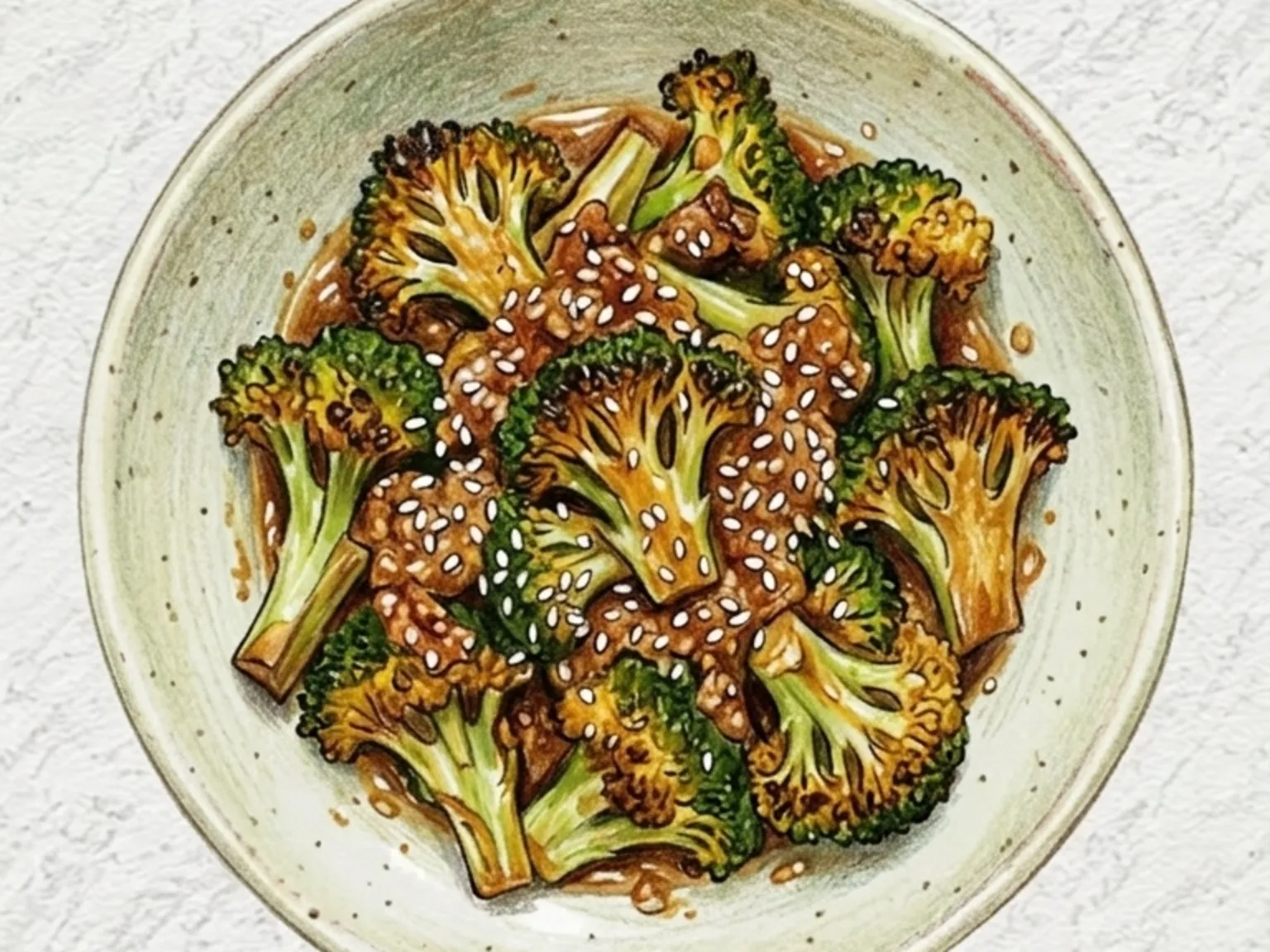
Korean Grilled Broccoli with Soybean Paste
Broccoli doenjang-gui is a Korean oven-roasted broccoli dish where bite-sized florets are blanched for exactly one minute to preserve their crunch, then tossed thoroughly in olive oil before being coated with a thick paste made from doenjang, gochujang, minced garlic, and oligosaccharide syrup, and roasted at 200 degrees Celsius for about twelve minutes. Coating the florets in oil first is the key step that ensures the paste adheres uniformly rather than clumping in spots, so every piece caramelizes evenly in the heat. At high oven temperatures the outer edges of the florets char slightly, and that controlled browning concentrates the fermented soybean paste into a deeply savory crust with a faint smokiness that raw doenjang cannot replicate. Keeping the blanching time to one minute is equally important: the stems stay crisp enough to hold their texture through roasting, so the finished dish has a satisfying snap rather than softening entirely. If the paste feels too stiff to spread, a tablespoon of water loosens it without diluting the flavor. A generous scatter of sesame seeds before serving adds a toasted nuttiness that layers over the salty-spicy profile and completes the dish.
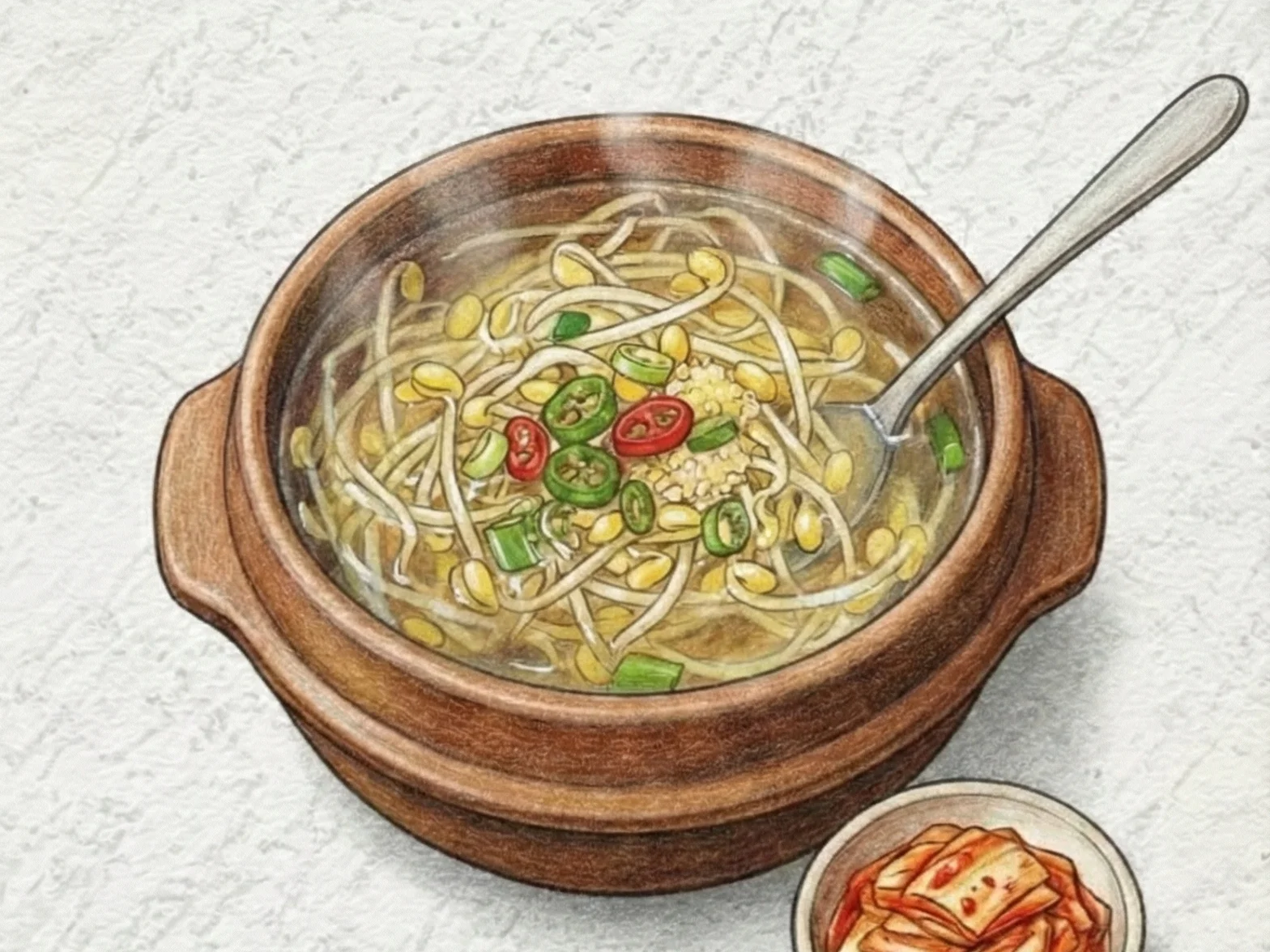
Kongnamul-guk (Bean Sprout Anchovy Soup)
Kongnamul-guk is a clear Korean soup built on bean sprouts, water, soup soy sauce, and garlic, and its central technique is boiling the sprouts with the lid firmly closed for seven minutes. The reason behind the closed lid is a long-standing Korean kitchen belief: the compounds responsible for the raw, beany smell in soybean sprouts are volatile, and if the lid is left open, they do not escape with the steam but instead condense back into the pot. Whether the chemistry fully supports this, keeping the lid closed has been the standard method for generations and consistently produces a clean-tasting broth. Green onion goes in at the very end to keep its bright, mild bite without overcooking. Trimming the fine root tails from each sprout improves the texture and presentation, though it does not change the flavor and is often skipped on weekdays. Adding chili flakes and a cracked egg transforms the soup into a spicy, restorative hangover version, and a handful of clams deepens the broth with extra umami. From start to finish the soup takes about fifteen minutes, which makes it one of the fastest soups in the Korean repertoire, and the directness of its flavor -- clean, cool, and vegetal -- is exactly what makes it worth returning to.
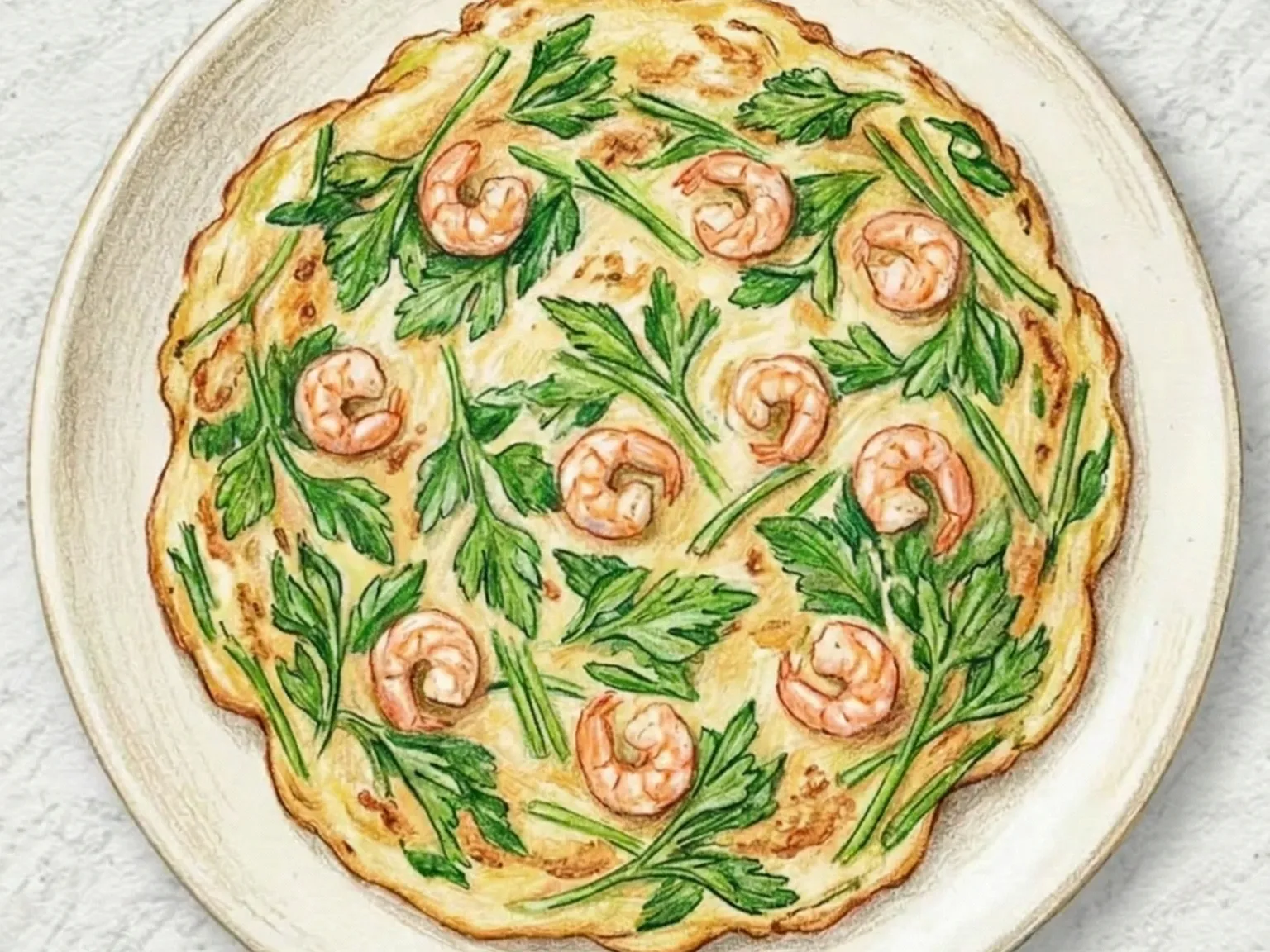
Korean Water Parsley Shrimp Pancake
This Korean pancake combines fresh water parsley and cocktail shrimp in a light, seasoned batter. The preparation starts by cutting cleaned water parsley into five-centimeter pieces, slicing onions thinly, and drying the shrimp to prevent oil splattering. The batter is mixed using pancake flour, cold water, an egg, and a pinch of salt until smooth. The vegetables and shrimp are folded in gently with chopsticks to keep the texture light. Cooking the batter in a well-oiled pan over medium heat for two to three minutes on each side produces a pancake with thin, crispy edges. The water parsley stems retain their crispiness even after frying, contrasting with the tender shrimp. The herbal fragrance of the parsley blends with the clean sweetness of the shrimp. It is typically cut into bite-sized pieces immediately after cooking and served warm with a soy sauce and vinegar dipping sauce.
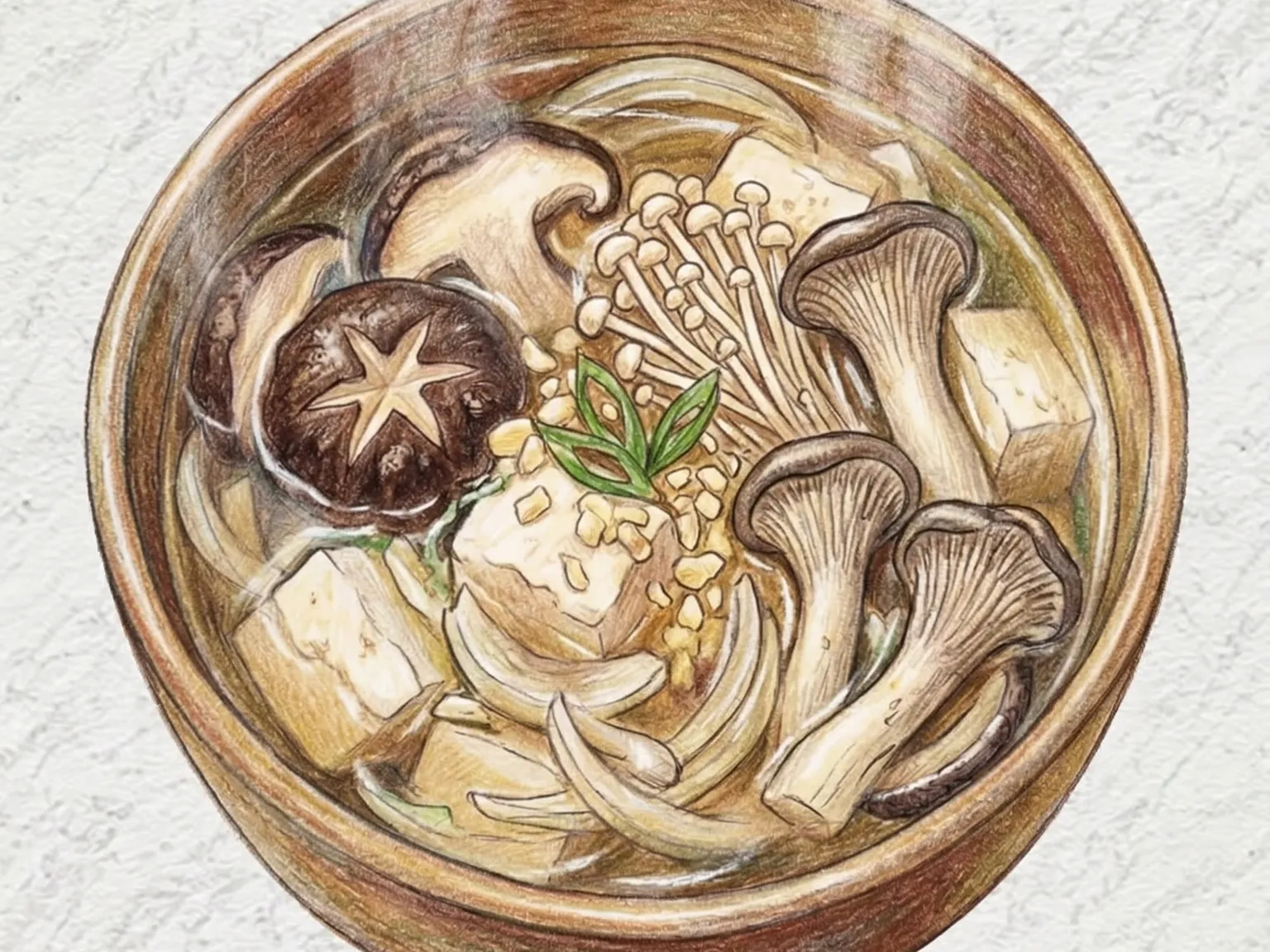
Korean Beoseot Jjigae (Mushroom Stew)
Korean mushroom stew, or beoseot jjigae, is a clean and oil-free soup made by simmering three varieties of mushrooms with tofu and onions in a kelp-infused broth. The recipe uses oyster, shiitake, and enoki mushrooms to create layers of distinct textures and umami. Seasoned simply with soup soy sauce and minced garlic, the clear broth highlights the natural characteristics of the ingredients. The cooking process involves boiling sliced onions and garlic in kelp water first to build a sweet base, followed by adding the mushrooms. Oyster mushrooms are torn along the grain for a tender texture, shiitake mushrooms are sliced to provide bite, and enoki mushrooms are added during the final minute of cooking to maintain their crispness. Skimming the foam while boiling ensures the broth stays clear. It is a light, warming dish that serves as a gentle and easily digestible meal.
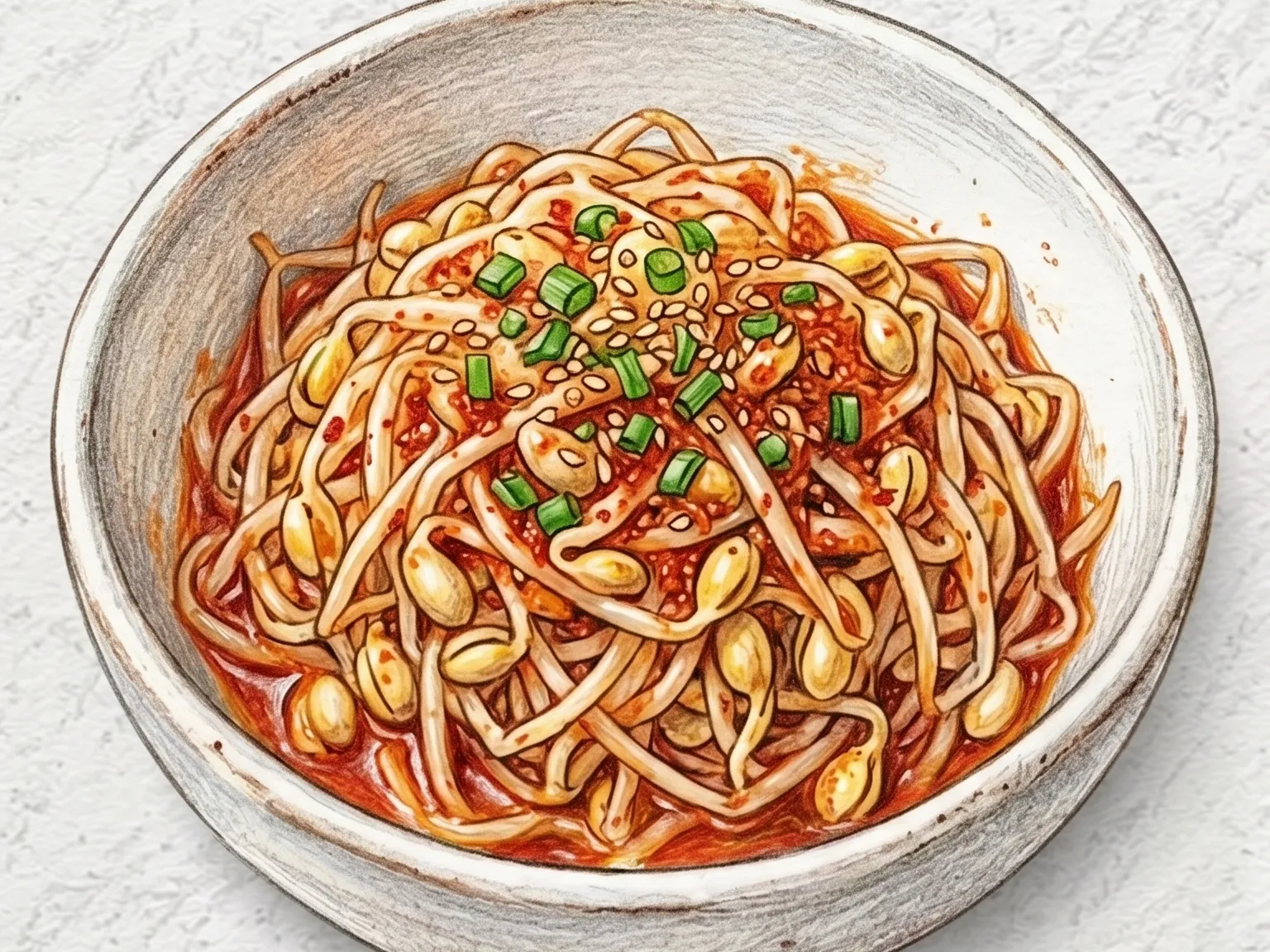
Korean Steamed Soybean Sprouts
Kongnamul-jjim is a traditional Korean side dish centered on steamed soy bean sprouts. The preparation involves layering fresh bean sprouts with a mixture of red chili flakes, soy sauce, and finely minced garlic before placing them in a pot. A critical aspect of the cooking process is keeping the lid tightly closed from the beginning until the sprouts are fully cooked. This sealed environment creates a build-up of steam that is essential for maintaining the natural crispness of the sprouts while ensuring that the savory and spicy seasoning permeates each individual strand. The resulting flavor profile features a sharp heat from the red pepper that complements the clean and refreshing qualities of the bean sprouts, resulting in a light and clear finish. To finish the dish, a generous drizzle of sesame oil and a handful of sliced scallions are added to provide a fragrant, toasted aroma and a layer of savory depth. Because the primary ingredients are inexpensive and the entire process from preparation to plating takes less than fifteen minutes, this dish serves as a dependable addition to any meal when the table requires an extra side dish on short notice. For a different aromatic profile, perilla oil can be substituted for sesame oil to introduce an earthy and more herbaceous scent. Individuals seeking a more intense level of spice can add sliced Cheongyang chilies during the cooking stage to elevate the heat.
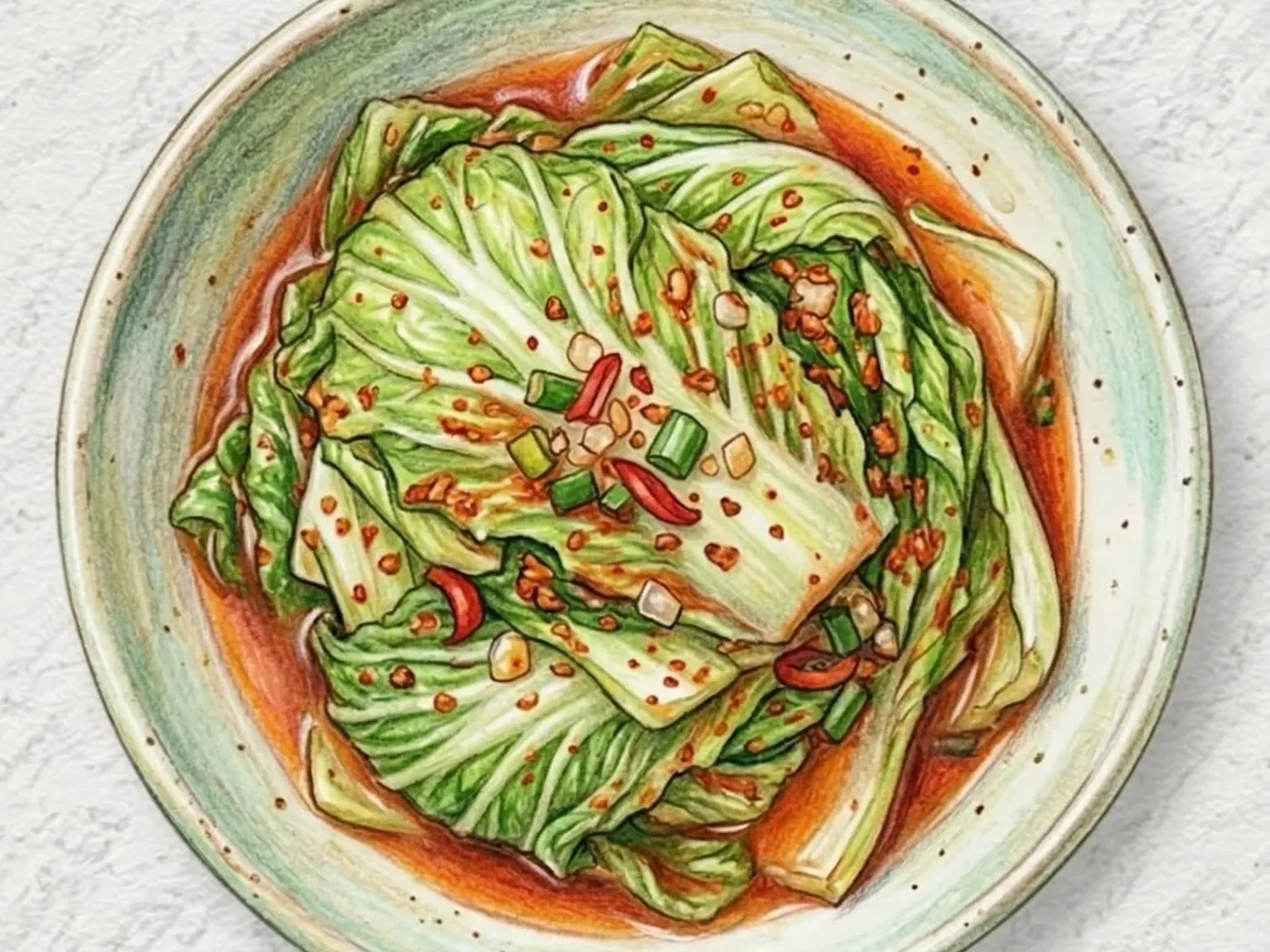
Korean Young Napa Kimchi (Spring Cabbage Quick Ferment)
Eolgari kimchi is a spring kimchi made with young napa cabbage, briefly salted for twenty to thirty minutes, then dressed in gochugaru, fish sauce, garlic, and glutinous rice paste before fermenting at room temperature for about a day. Limiting the salting time to no more than thirty minutes is important: the young cabbage's thin leaves and tender stems absorb salt quickly, and over-salting destroys the crisp texture before fermentation even begins. Because the leaves are thinner and more porous than those of mature napa, the seasoning penetrates quickly and fermentation produces a pleasant acidity within twenty-four hours. Salted shrimp compensates for the short fermentation period by adding immediate depth, and the young cabbage itself contributes a clean sweetness that balances the chili heat without any added sugar. Using a generous amount of glutinous rice paste helps the seasoning cling evenly to each leaf, which supports uniform fermentation throughout the batch. This is a seasonal kimchi meant as a lighter, fresher alternative to aged kimchi as temperatures begin to rise in spring.
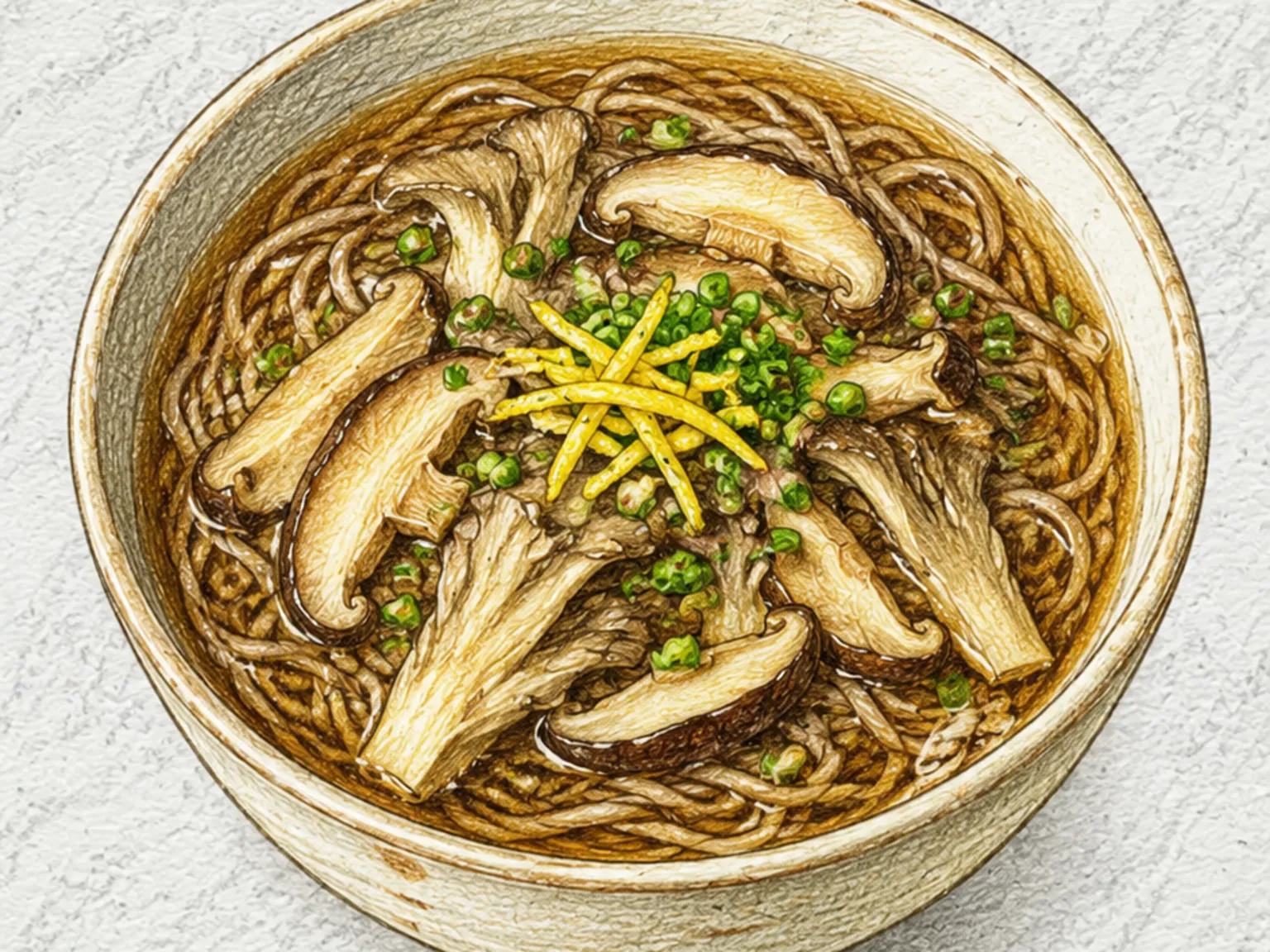
Mushroom Memil Soba (Warm Buckwheat Noodles in Mushroom Dashi)
Beoseot memil soba is a warm buckwheat noodle soup built on dashi stock seasoned with soy sauce and mirin, with shiitake and oyster mushrooms simmered for five minutes so their concentrated woodsy depth moves fully into the broth. Dried shiitake contributes far more umami than fresh, and oyster mushrooms torn along the grain absorb more liquid than sliced. The soba noodles are cooked separately and rinsed in cold water to strip off surface starch, which keeps the broth clear and prevents the noodles from turning soft. A small curl of yuzu zest placed on top just before serving sends a sharp citrus note across the broth's earthy weight, lifting the finish without overpowering it. Green onion scattered on top adds a layer of fresh aroma and color.
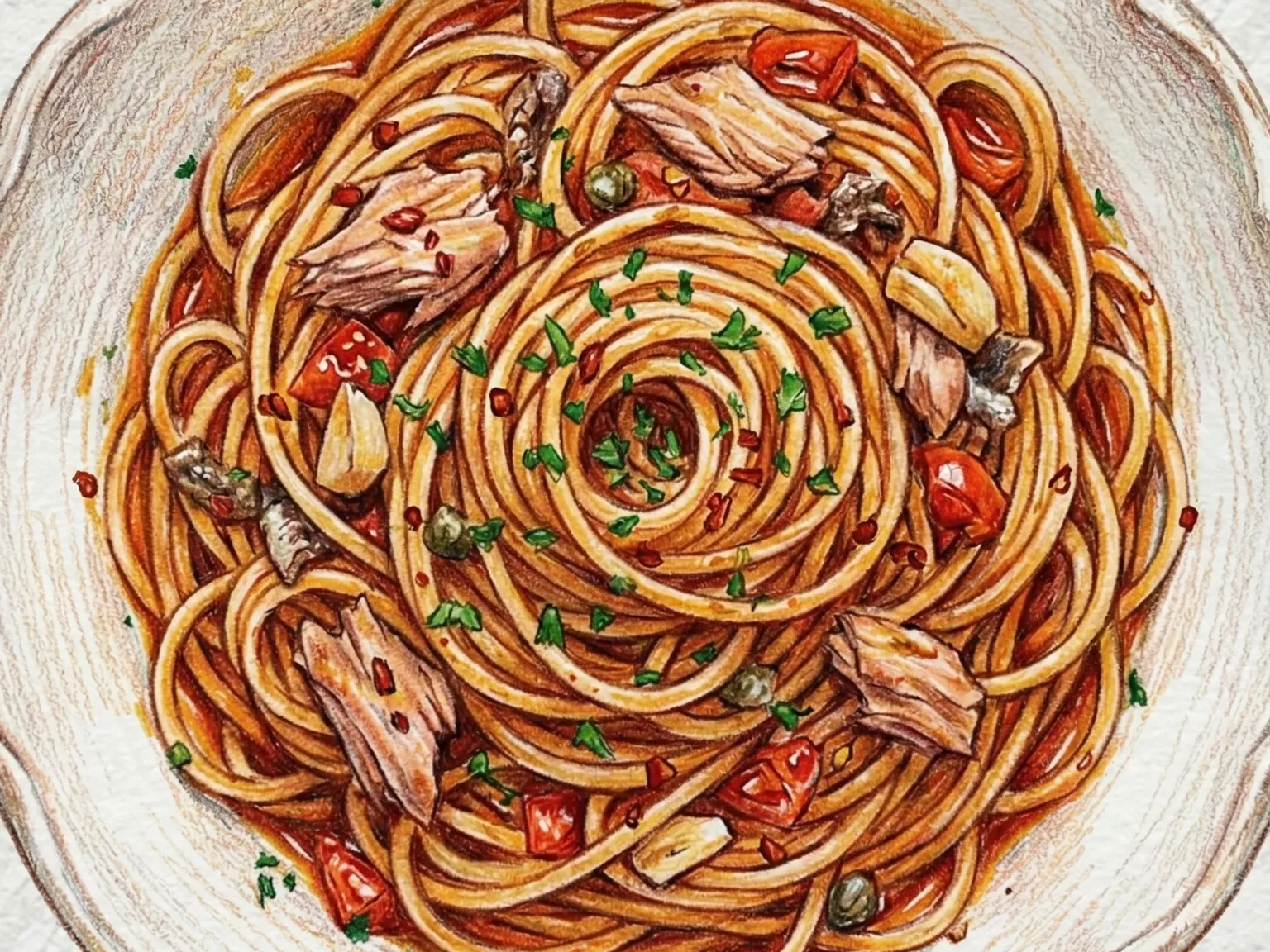
Gochu Oil Tuna Puttanesca Spaghetti
The foundation of this Gochu oil tuna puttanesca spaghetti is established by integrating the olive oil reserved from a can of tuna with a secondary portion of chili oil. This combined oil serves as the medium for sautéing sliced garlic and whole anchovy fillets over a consistently low heat. The process continues until the anchovies have fully dissolved into the warm fat, a step that allows their natural saltiness to permeate the base while eliminating any lingering traces of fishiness. Crushed tomatoes are then introduced to the pan and left to simmer for six minutes over medium heat. This period of simmering reduces the liquid content, which in turn concentrates the flavors and makes the natural acidity of the tomatoes more prominent. After this reduction, capers and black olives are added to provide distinct layers of brine and a characteristic hint of bitterness to the mixture. The solid pieces of tuna are folded in during the final two minutes of cooking. This short duration ensures that the tuna maintains its structure and provides a firm texture instead of disintegrating into the liquid. The cooked spaghetti and a small quantity of starchy pasta water are then combined with the sauce over high heat. This rapid tossing emulsifies the fats and liquids into a glossy coating that adheres uniformly to every surface of the pasta. To finish the dish, a handful of chopped parsley is scattered on top to introduce a fresh herbal quality that lightens the dense and salty profile of the sauce. Red chili flakes can be included at any stage of the process to allow for the precise adjustment of heat levels.
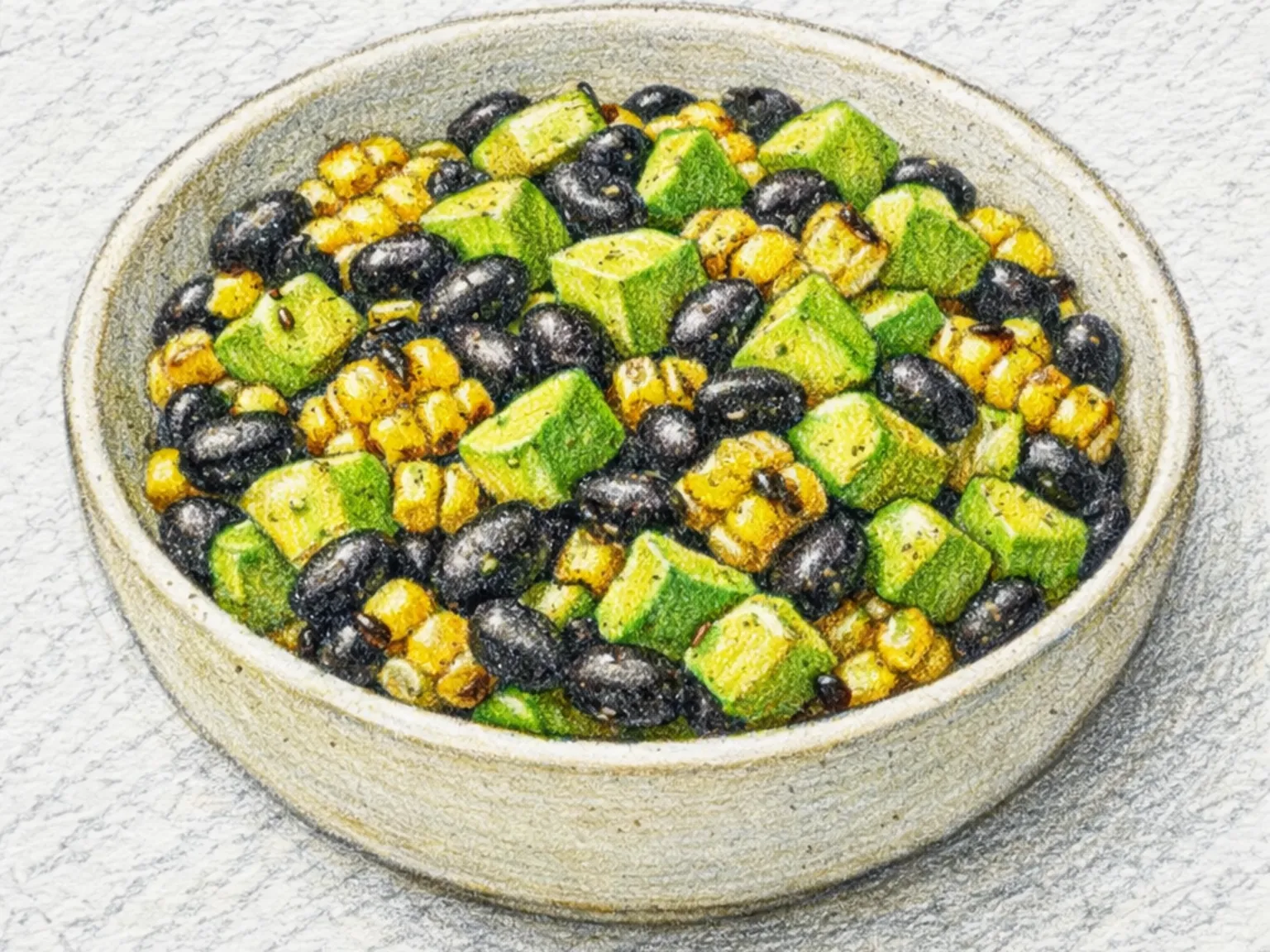
Black Bean Corn Avocado Salad
Black bean corn avocado salad is a Mexican-style bowl that combines cooked black beans, charred sweet corn, and ripe avocado in a lime dressing. Black beans form the starchy, mildly nutty base, while corn charred in a dry pan brings a caramelized sweetness and a burst of texture against the softer ingredients. Ripe avocado contributes a dense creaminess that absorbs the lime's sharp acidity and rounds the dressing's edges. Fresh cilantro scatters a bright herbal note, and ground cumin or chili powder can deepen the spice dimension. The combination delivers plant protein, dietary fiber, and healthy fats in a single bowl substantial enough to serve as a light meal. Tortilla chips on the side turn it into a dip. Because none of the components require hot cooking, the salad can be assembled in minutes from pre-prepared ingredients and keeps well in the refrigerator for a day or two without the avocado browning significantly if dressed just before serving.
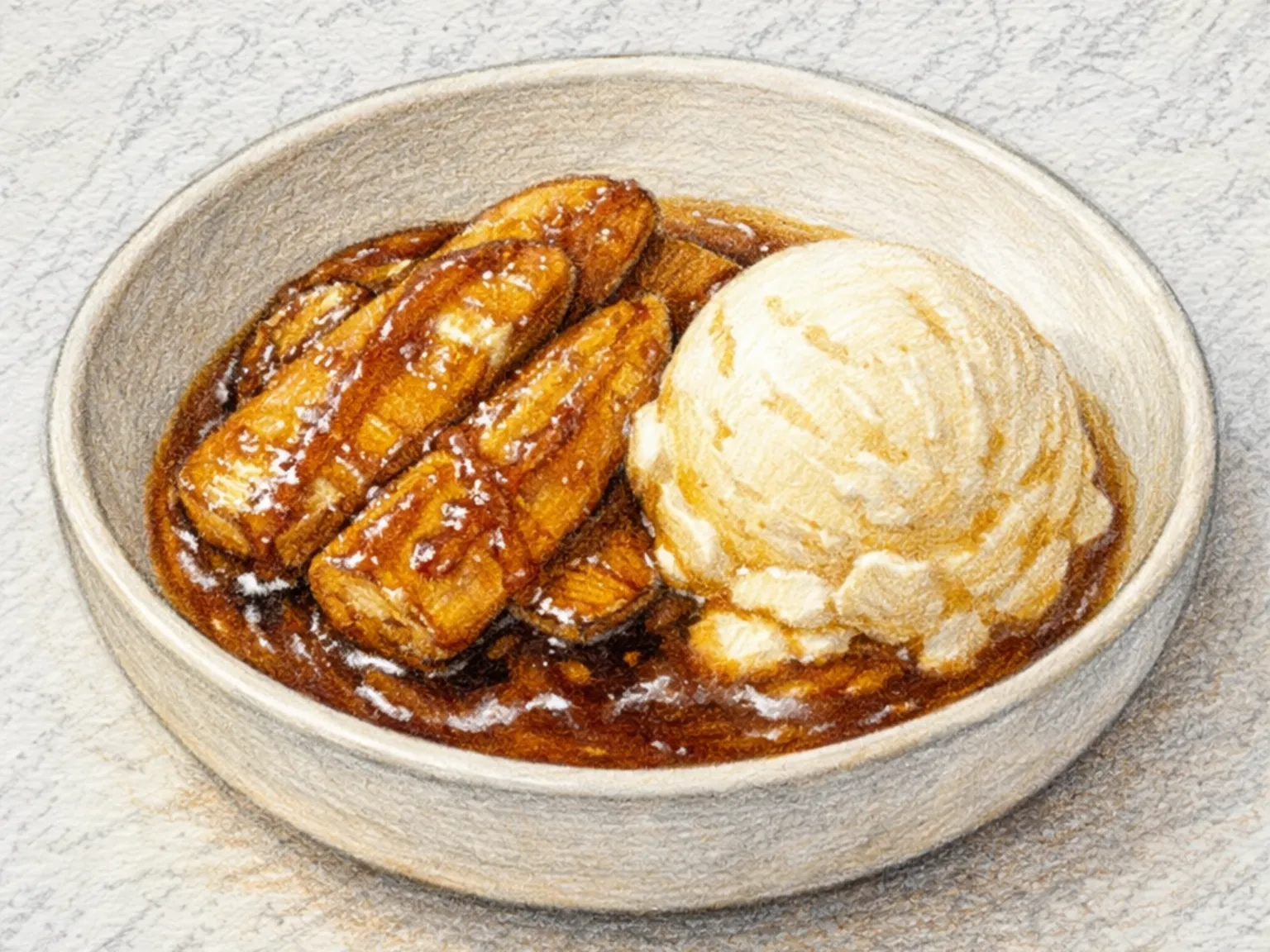
Bananas Foster
Bananas Foster is a New Orleans dessert invented in the 1950s at Brennan's Restaurant, built around the simple technique of caramelizing bananas in butter and brown sugar before serving them over vanilla ice cream. The sauce begins by melting butter in a skillet and stirring in brown sugar until the two combine into a thick, bubbling caramel. Halved bananas go in cut-side down and cook just long enough to absorb the syrup while holding their shape. Ground cinnamon folded into the sauce adds a warm spice layer that keeps the sweetness from reading as flat, and a squeeze of lemon juice sharpens the overall profile. Traditional preparation calls for igniting rum poured into the hot pan - the blue flame burns off the alcohol and concentrates the molasses notes in a few dramatic seconds. The step can be skipped at home without meaningfully altering the result. Spooning the hot caramelized bananas over cold ice cream generates immediate steam, and the contrast between molten caramel and frozen cream defines every bite. The entire dish takes roughly ten minutes.