Asian

Asian Recipes

216 recipes. Page 5 of 9

The Asian category gathers popular dishes from Japan, China, Thailand, Vietnam, India, and beyond. Curry, stir-fried noodles, mapo tofu, pad Thai, and pho are among the Asian favorites commonly enjoyed in Korean households.

Asian
Kai Jeow (Crispy Thai Omelette)
Asian Easy

Kai Jeow (Crispy Thai Omelette)

Kai jeow is a Thai home-style omelet that differs fundamentally from Western versions in its cooking method. Eggs seasoned with fish sauce and sugar are whisked until genuinely foamy, then poured into oil hot enough to be smoking. That contact heat makes the egg batter puff and blister on impact, creating lacy, deeply crisped edges while the center stays thick and pillowy. The amount of oil matters as much as the temperature -- use enough for shallow frying rather than a thin film, otherwise the egg sits flat and turns greasy instead of lifting. Ground pork or chopped shrimp can be mixed directly into the batter for a more filling meal, though a plain version with nothing added is just as common in everyday Thai cooking. After the omelet is done, it goes briefly on paper towels to drain, then lands on a mound of jasmine rice. The fish sauce does double duty as the sole seasoning, supplying salt along with a rounded, fermented depth that plain salt cannot replicate. The defining pleasure of kai jeow is the contrast -- a crackly perimeter giving way to a soft, almost custardy interior -- and that texture only happens when the oil temperature is exactly right.

🍱 Lunchbox ⚡ Quick
Prep 10min Cook 10min 2 servings
Japanese Karaage (Soy-Ginger Fried Chicken)
Asian Medium

Japanese Karaage (Soy-Ginger Fried Chicken)

Karaage is Japanese fried chicken where boneless thigh pieces are marinated in soy sauce, mirin, grated ginger, and minced garlic for at least fifteen minutes before being coated in potato starch and double-fried. Ginger in the marinade counters the stronger gaminess of dark meat, and mirin contributes a mild sweetness and sheen to the finished crust. Potato starch produces a lighter and crispier shell than wheat flour or cornstarch, but any excess coating must be shaken off before frying or the surface sets unevenly. The first fry at 170 degrees Celsius runs for three to four minutes, cooking the chicken fully through. Pulled from the oil and rested for two minutes, residual heat equalizes the interior temperature. The second fry at 180 degrees for one to two minutes drives off remaining surface moisture, leaving a thin, shattering crust that holds its texture far longer than a single fry would. This is the central technique that keeps karaage crisp even as it cools. Squeezing lemon juice over the pieces just before eating cuts through the richness and sharpens the contrast between the crust and the juicy interior.

🍺 Bar Snacks 🧒 Kid-Friendly
Prep 20min Cook 20min 2 servings
Kare-Kare (Filipino Peanut Oxtail Stew)
Asian Hard

Kare-Kare (Filipino Peanut Oxtail Stew)

Kare-kare is a Filipino celebration stew built around beef shank braised until every strand of connective tissue has melted into gelatin, leaving meat that falls away from the bone at the touch of a spoon. The shank needs a minimum of sixty minutes at a steady simmer for this transformation to happen fully, and the resulting braising liquid becomes the backbone of the sauce. Glutinous rice flour is dry-toasted in a wide pan, stirred constantly until it turns pale gold and smells nutty, then whisked directly into the strained broth where it acts simultaneously as a thickener and a flavoring agent. Peanut butter is dissolved into the broth next, forming a sauce that is rich and creamy without any heaviness, because the toasted rice flour gives body more cleanly than cornstarch ever could. The braised meat goes back in and simmers together with the sauce for fifteen minutes so the flavors merge completely. Eggplant, yardlong beans, and bok choy are added in the final five to seven minutes, long enough to soften but short enough to keep their individual textures. The dish is always served alongside bagoong, a Filipino fermented shrimp paste, whose concentrated salt and pungent funk contrast forcefully with the mild, nutty sauce and elevate every spoonful.

🎉 Special Occasion
Prep 25min Cook 90min 4 servings
Japanese Curry Rice
Asian Easy

Japanese Curry Rice

Kare raisu is one of the most frequently cooked meals in Japanese households, using commercially prepared curry roux blocks that produce a milder, thicker, and sweeter result than Indian curry. Beef or chicken is cut into bite-sized pieces and stir-fried with onion, potato, and carrot before water is added and the pot simmers until the potatoes turn tender. The heat is lowered and the curry roux blocks are broken in and stirred until fully dissolved; the roux contains flour and fat that thicken the liquid into a glossy, coating sauce. Keeping the heat low after adding the roux is critical because high heat causes the thick sauce to scorch on the bottom. The finished curry deepens in flavor if rested overnight, as the vegetables continue to release their sweetness into the sauce. Unlike Indian curry with its layered spice blends, Japanese curry draws its appeal from the consistent, approachable flavor that a single roux block delivers every time.

🏠 Everyday 🧒 Kid-Friendly
Prep 20min Cook 35min 4 servings
Curry Udon
Asian Easy

Curry Udon

Kare udon is a Japanese curry noodle dish built on dashi stock, which separates it from curry rice despite sharing the same roux. Thinly sliced pork and onion are stir-fried in oil first, then dashi made from katsuobushi and kombu is added and brought to a boil. Curry roux blocks are stirred in next, transforming the stock into a thick, clinging sauce that coats the pot and every strand of noodle. The heat must drop to low the moment the roux goes in, with constant stirring to prevent the starchy sauce from scorching. Katsuobushi and kombu contribute an umami depth that the curry spices intensify rather than mask, producing a broth more layered than either element alone. The fat, chewy udon strands absorb the sauce and carry it from pot to mouth with each lift of the chopsticks. Finishing with sliced scallions or shichimi adds fragrance and a mild bite. Though the same roux block appears in kare raisu, the presence of dashi and noodles makes this a distinctly different dish in taste, texture, and character.

🏠 Everyday 🌙 Late Night
Prep 10min Cook 20min 2 servings
Katsu Curry
Asian Medium

Katsu Curry

Katsu curry is a Japanese single-plate meal of crisp deep-fried pork cutlet served beside a thick, glossy curry sauce over steamed rice. The pork loin is pounded to an even thickness, seasoned with salt and pepper, then coated in three layers: flour, beaten egg, and panko. Panko breadcrumbs have a coarser, more jagged texture than standard breadcrumbs, which creates more air pockets in the crust and produces a crunch that stays crisp longer after frying. The breaded cutlet is lowered into oil heated to 170 degrees Celsius and fried for four to five minutes until deep golden brown, then lifted onto a wire rack to rest for two minutes. The resting period allows the residual heat to finish cooking the center while the juices redistribute and the crust firms up. The curry sauce is built separately: onion and carrot are sauteed until their natural sweetness develops fully, then water is added and everything simmers until the vegetables are tender. The curry roux blocks are added and dissolved over low heat until the sauce reaches a thick, velvety consistency. Resting the curry overnight deepens its flavor as the vegetables continue to release sugars and the spices meld together. At the table, the curry fills one side of the plate and the sliced katsu occupies the other so the crust stays dry until deliberately pushed into the sauce, preserving the contrast between the two textures.

🎉 Special Occasion 🧒 Kid-Friendly
Prep 25min Cook 25min 2 servings
Katsu Sando (Japanese Crispy Pork Cutlet Sandwich)
Asian Medium

Katsu Sando (Japanese Crispy Pork Cutlet Sandwich)

Katsu sando is a Japanese sandwich built around a thick, crispy pork cutlet pressed between slices of soft milk bread. The pork loin is sliced at least two centimeters thick, pounded lightly to tenderize, seasoned with salt and pepper, then coated in flour, beaten egg, and coarse panko breadcrumbs before being lowered into oil at 180 degrees Celsius. The result is a deep golden crust that shatters on the first bite while the interior stays moist and tender. Tonkatsu sauce, a thick condiment with a fruity, sweet-savory profile similar to Worcestershire, is spread generously on one side of the bread, while a thin layer of Japanese mayonnaise goes on the other. Finely shredded cabbage is layered beneath the cutlet, providing a fresh, watery crunch that cuts through the richness of the fried meat. The crusts are trimmed from the bread, the sandwich is pressed firmly and sliced cleanly in half, and the cross-section of pale bread, pale cabbage, and dark golden cutlet becomes the defining visual of the dish. Katsu sando works as a packed lunch, a picnic item, a late-night snack, or a quick meal at the counter of a butcher shop in Tokyo.

🧒 Kid-Friendly 🍱 Lunchbox
Prep 20min Cook 18min 2 servings
Classic Katsudon (Pork Cutlet Egg Rice Bowl)
Asian Medium

Classic Katsudon (Pork Cutlet Egg Rice Bowl)

Classic katsudon is a Japanese rice bowl that transforms a crispy pork cutlet into something altogether different by simmering it briefly with onion, egg, and seasoned dashi broth. Thinly sliced onion cooks first in a shallow pan of tsuyu -- a combination of soy sauce, mirin, and dashi -- until soft and sweet. The fried cutlet, sliced into strips, is laid into the onion broth, then lightly beaten egg is poured over the top and cooked just until it sets into a custard-like layer. This half-set egg clings to the panko crust, creating a contrast between the still-crunchy edges and the silky coating. The entire mixture is slid onto a bowl of steaming rice, where the savory broth soaks into the grains. In Japan, katsudon is traditionally eaten before exams or competitions as a good-luck ritual. Pulling the pan off the heat within thirty seconds of covering it keeps the egg in that soft, barely-set state -- overcooking turns the layer rubbery and loses the signature texture entirely.

🏠 Everyday 🍱 Lunchbox
Prep 20min Cook 18min 2 servings
Kaya Toast (Singaporean Coconut Jam Butter Toast)
Asian Easy

Kaya Toast (Singaporean Coconut Jam Butter Toast)

Kaya toast is the defining breakfast of Singaporean coffee shops, built from two slices of crisped white bread filled with kaya and a thick slab of cold butter. Kaya is a jam made by cooking coconut milk, eggs, sugar, and fresh pandan leaf over low heat with constant stirring until the mixture thickens into a pale green spread that smells of vanilla, coconut, and floral sweetness simultaneously. The bread is toasted directly over charcoal or in a grilling rack until it shatters at the edges. Cold butter placed inside the hot toast begins to soften immediately at the center while retaining its chill at the edges, so each bite delivers a different ratio of fat and sweetness. The traditional pairing is two soft-boiled eggs cracked into a shallow bowl, seasoned with dark soy sauce and a grind of white pepper, then loosely mixed into a thin custard for dipping or dunking. Alongside these, a glass of kopi - coffee brewed through a cloth sock filter and sweetened with condensed milk - completes the set. This breakfast combination has changed very little in decades and remains the first meal of the day for many Singaporeans, served at everything from old neighborhood kopitiams to national chains like Ya Kun Kaya Toast.

🏠 Everyday 🧒 Kid-Friendly
Prep 10min Cook 8min 2 servings
Keema Matar (Indian Spiced Minced Meat and Pea Curry)
Asian Easy

Keema Matar (Indian Spiced Minced Meat and Pea Curry)

Keema matar is a North Indian curry of seasoned minced meat and green peas cooked down into a thick, almost dry gravy. Onions are fried until deep golden to form a sweet, caramelized base, followed by garlic and ginger that release their sharpness into the fat. Ground lamb or beef is added and stirred continuously to break up clumps before the spices go in. Turmeric, cumin, garam masala, and chili powder build the spice profile, while diced tomatoes provide acidity and moisture that allow the spices to cook through without scorching. Green peas are added near the end of cooking so they retain a pop of texture and natural sweetness. Because the finished dish is relatively dry with little sauce, it clings well to flatbreads such as naan or chapati and also works as a topping over plain steamed rice. The whole preparation takes under forty-five minutes with minimal knife work, making it one of the more practical Indian curries for weeknight cooking. Blooming the cumin in hot oil at the start, using the tadka technique, deepens the aroma significantly and lifts the overall flavor of the dish.

🏠 Everyday 🎉 Special Occasion
Prep 15min Cook 30min 4 servings
Khanom Jeen Nam Ya (Thai Fermented Rice Noodles in Fish Curry)
Asian Hard

Khanom Jeen Nam Ya (Thai Fermented Rice Noodles in Fish Curry)

Khanom jeen nam ya is a traditional Thai dish of fermented rice noodles bathed in a thick, fragrant curry sauce built from fish and coconut milk. White fish fillets are poached with lemongrass and kaffir lime leaves, then flaked and folded into a simmering pot of red curry paste and coconut milk. The fish dissolves into the sauce, lending body and a subtle marine sweetness that balances the heat of the curry. Fish sauce sharpens the salt, and palm sugar rounds off the edges. The finished sauce is ladled generously over coiled bundles of the thin, slightly sour fermented noodles. A spread of raw garnishes - bean sprouts, morning glory, green beans, shredded cabbage, and fresh chili - accompanies each serving, letting diners customize texture and freshness with every bite. The dish traces its origins to royal Thai cuisine but is now a common sight at market stalls across the country.

🎉 Special Occasion 🌙 Late Night
Prep 25min Cook 30min 4 servings
Khao Kha Moo (Thai Braised Pork Leg Rice Bowl)
Asian Hard

Khao Kha Moo (Thai Braised Pork Leg Rice Bowl)

Khao kha moo is a Thai braised pork leg rice bowl built on a simple premise: the longer the pork simmers, the better it becomes. A whole pork hock or front leg is submerged in a soy-based braising liquid seasoned with palm sugar, dark soy sauce, star anise, cinnamon sticks, and whole garlic cloves, then cooked at a low, steady simmer for two hours or more. Sustained heat breaks down connective tissue and collagen until the meat yields at the slightest touch, pulling away from the bone in glossy, quivering strips. As the liquid reduces, palm sugar and soy caramelize into a thick, mahogany-tinted sauce that balances deeply savory and gently sweet notes in equal measure. Thick slices of the pork are arranged over fragrant jasmine rice, and several spoonfuls of the braising sauce are ladled over so the grains soak up the flavor. Traditional accompaniments include a hard-boiled egg steeped overnight in the braising liquid until it turns brown throughout, pickled mustard greens to cut through the richness with sharp brine, and a small cup of chili-vinegar sauce for those who want heat. The dish is among the most beloved items at night markets across Thailand and demonstrates how patience and a handful of pantry aromatics transform inexpensive pork into something extraordinary.

🎉 Special Occasion 🍺 Bar Snacks
Prep 20min Cook 120min 4 servings
Khao Man Gai Tod (Thai Fried Chicken Rice Bowl)
Asian Medium

Khao Man Gai Tod (Thai Fried Chicken Rice Bowl)

Khao man gai tod is the fried variation of Thailand's beloved chicken rice, replacing the poached bird with a crispy deep-fried version that adds texture and caramelized flavor to an already satisfying dish. Chicken pieces are marinated in garlic, white pepper, and fish sauce, then dusted in seasoned flour and fried until the crust turns deep golden and audibly crunchy. The rice is cooked in chicken broth with garlic and ginger, absorbing the fat and aroma of the stock into each grain so that it tastes rich on its own before any sauce is added. What ties the plate together is the sweet chili dipping sauce, a mix of fermented soybean, vinegar, chili, and sugar that delivers a sharp, funky counterpoint to the rich fried chicken and oily rice. Sliced cucumber and a small bowl of clear broth with winter melon round out the standard serving and provide relief between bites. Street vendors across Bangkok keep vats of oil at the ready for this dish throughout the day, and the crackling sound of chicken hitting hot oil is a reliable signal to stop and eat.

🎉 Special Occasion 🍺 Bar Snacks
Prep 20min Cook 25min 2 servings
Khao Mok Gai (Thai-Muslim Spiced Chicken Biryani)
Asian Medium

Khao Mok Gai (Thai-Muslim Spiced Chicken Biryani)

Khao mok gai is a Thai-Muslim take on biryani, in which spice-marinated chicken is cooked together with turmeric-tinted rice until the grains absorb the meat's juices. The chicken is rubbed with yogurt, cumin, coriander, and cinnamon, then briefly seared before being buried in parboiled rice seasoned with cardamom, cloves, and bay leaves. The pot is sealed and left on low heat so steam circulates through the layers, infusing every grain with aromatic depth. Turmeric gives the rice its signature golden hue. The dish originated in the Muslim communities of southern Thailand and reflects the culinary crossroads of Indian, Middle Eastern, and Southeast Asian cooking traditions. It is served with a sweet chili sauce for dipping, a bowl of clear chicken broth on the side, and a scattering of crispy fried shallots on top.

🎉 Special Occasion 🍺 Bar Snacks
Prep 20min Cook 30min 4 servings
Thai Fried Rice
Asian Easy

Thai Fried Rice

Khao pad is Thailand's definitive fried rice, and the entire dish depends on one preparatory decision made the day before: using cold, day-old rice rather than freshly cooked grains. Freshly steamed rice retains too much moisture and clumps together in the wok, steaming rather than frying and resulting in a heavy, gummy texture. Cold rice separates easily under the heat, allowing the individual grains to coat in oil and achieve the distinct, lightly chewy texture that defines good khao pad. The wok is heated until it smokes before garlic goes in, building a fragrant base in seconds. Eggs are scrambled into large, soft curds alongside the garlic before the rice is added and tossed vigorously with fish sauce, soy sauce, and a small pinch of sugar, which rounds the saltiness into something rounder and more complex. The most important quality that separates a superior khao pad from a mediocre version is wok hei: the faint, smoky breath that comes from sustained contact between the ingredients and a very hot wok surface. A plate of khao pad is always accompanied by a lime wedge, sliced cucumber, and chopped scallion. In its simplest form it needs no protein, but shrimp, chicken, or crab are common and equally traditional additions.

🏠 Everyday 🌙 Late Night
Prep 12min Cook 10min 2 servings
Thai Chicken Fried Rice
Asian Easy

Thai Chicken Fried Rice

Khao pad gai is Thai chicken fried rice, one of the most consistently available single-plate meals sold at street stalls and sit-down restaurants across Thailand from morning until late at night. Bite-size pieces of chicken breast or thigh are seared first in a ripping-hot wok to develop color and a slight char, then minced garlic and a cracked egg follow in rapid succession. Day-old jasmine rice, cold from the refrigerator, is added next because its reduced moisture allows each grain to separate cleanly and pick up oil rather than clumping. Constant tossing over the highest possible heat is what produces the characteristic wok fragrance that sets Thai fried rice apart from versions cooked at lower temperatures. Fish sauce provides the primary saltiness, soy sauce adds a brown color and a layer of savory depth, and white pepper delivers a warm, earthy heat that lingers in the background. The mound of finished rice is tipped onto a plate and surrounded by a lime wedge, cucumber slices, and tomato to provide cool, acidic relief between bites. At the table, diners season their own portion from a small tray holding fish sauce, dried chili flakes, white sugar, and vinegar - the standard four-condiment set present at virtually every Thai table. The combination of all these adjustments makes a single dish capable of tasting quite different from person to person, which is part of its enduring appeal.

🏠 Everyday 🌙 Late Night
Prep 12min Cook 10min 2 servings
Pineapple Shrimp Khao Pad
Asian Easy

Pineapple Shrimp Khao Pad

Pineapple shrimp khao pad is a Thai fried rice served inside a hollowed-out pineapple half, which functions both as a vessel and as a flavoring agent as residual juice from the fruit walls seeps gradually into the rice during service. Shrimp are cooked first in a very hot wok with minimal time, just long enough to firm up and curl before they are set aside, preventing the rubbery texture that results from overcooking in the subsequent stir-fry steps. Garlic goes into the oil next, quickly followed by day-old jasmine rice, which is broken up and tossed at high heat. Using rice that has dried out in the refrigerator overnight is important: fresh rice carries too much moisture and steams rather than fries, resulting in clumping. Egg is pushed through a cleared space in the center, scrambled lightly, then folded into the rice before it fully sets. Diced fresh pineapple is added at the very end and tossed only briefly so that it retains some structure while releasing enough juice to flavor the rice with its characteristic tart sweetness, which plays against the salty depth of fish sauce. Curry powder tints the grains a pale yellow and contributes a warm, earthy undertone that keeps the dish from reading as purely sweet. Roasted cashew nuts add crunch throughout, and scattered raisins provide small concentrated hits of sweetness. The assembled rice is mounded into the pineapple shell and brought to the table, often served with a wedge of lime on the side.

🎉 Special Occasion 🧒 Kid-Friendly
Prep 15min Cook 10min 2 servings
Thai Crab Fried Rice (Khao Pad Pu)
Asian Easy

Thai Crab Fried Rice (Khao Pad Pu)

Khao pad pu is a Thai crab fried rice built on the premise that the sweetness of fresh crab meat carries the entire dish. The wok must reach smoking heat before minced garlic goes in and fries for ten seconds. Beaten egg follows and is scrambled into large, loose curds before cold jasmine rice is added and tossed rapidly to prevent sticking. Cold rice works here because its lower moisture content allows every grain to stay separate and pick up a direct scorch from the wok surface. Fish sauce and a small measure of soy sauce season the rice, and white pepper ground over the top adds a subtle, lingering heat. Lump crab meat goes in thirty seconds before the heat is cut and is stirred only gently, just enough to warm through without breaking the pieces down or toughening the texture. Prolonged heat would shrink the crab and strip out its sweetness entirely. The finished rice is plated and finished with a generous squeeze of lime, then garnished with spring onion, sliced cucumber, and fresh coriander. The salted umami of the fish sauce, the brightness of the lime, and the delicate sweetness of the crab come together cleanly on one plate.

🎉 Special Occasion ⚡ Quick
Prep 12min Cook 10min 2 servings
Khua Kling (Southern Thai Dry-Fried Spiced Minced Pork Curry)
Asian Medium

Khua Kling (Southern Thai Dry-Fried Spiced Minced Pork Curry)

Khua kling is the dry-fried curry that defines the cooking of southern Thailand, built around minced meat stir-fried with an intense red curry paste until every trace of liquid has been cooked away. The paste goes into a dry, preheated pan first, and it fries in its own aromatic oils until the raw edge is gone and the kitchen fills with its fragrance. Ground pork is then added and the cook stirs without pause, working the meat against the hot surface and driving off all moisture until each grain of meat is separate, dry, and coated in a concentrated layer of spice. Fish sauce brings salt, a small measure of sugar tempers the raw heat, and finely shredded kaffir lime leaves push a bright citrus fragrance through the heavy chili and shrimp paste base. Extra sliced red chilies are standard in the southern version, and the heat level here far exceeds what most central Thai dishes offer. There is no sauce at all in the finished dish: the texture is crumbly and almost granular, which is precisely the point. A single spoonful carries enough concentrated flavor to carry several bites of plain steamed rice. The dish is best served immediately off the heat, while the aromatics are still vivid and the meat still steaming.

🍺 Bar Snacks 🎉 Special Occasion
Prep 15min Cook 12min 2 servings
Kiritanpo Nabe (Akita-Style Grilled Rice Stick Hot Pot)
Asian Hard

Kiritanpo Nabe (Akita-Style Grilled Rice Stick Hot Pot)

Kiritanpo nabe is a rustic hot pot from Akita Prefecture in northern Japan, built around grilled mashed-rice sticks simmered in chicken broth. Freshly cooked rice is pounded in a mortar until partially smooth and sticky, then wrapped around cedar skewers and toasted over charcoal until the surface develops a light char and a faint smokiness. The broth begins with bone-in chicken thighs cooked until the stock is rich and clear, seasoned simply with soy sauce and mirin, then loaded with burdock root, scallions, mushrooms, and Japanese parsley. The kiritanpo sticks are cut into segments and added to the simmering pot, where they absorb the rich broth and soften into a chewy, dumpling-like texture while still holding their cylindrical shape. Akita's harsh mountain winters gave this dish its purpose as a calorie-dense, warming meal built entirely from locally available ingredients. The faint smokiness from the charcoal grilling carries through into the finished broth, and this subtle background note is what distinguishes kiritanpo nabe from similar rice-cake hot pots made elsewhere in Japan.

🎉 Special Occasion 🍺 Bar Snacks
Prep 30min Cook 30min 4 servings
Osaka Kitsune Udon (Thick Noodles with Sweet Fried Tofu in Dashi)
Asian Easy

Osaka Kitsune Udon (Thick Noodles with Sweet Fried Tofu in Dashi)

Kitsune udon is Osaka's signature noodle bowl, defined by sweet simmered fried tofu draped over thick wheat noodles in a clear dashi broth. The broth is drawn from kombu and bonito flakes, then seasoned with light soy sauce in the Kansai tradition, pale in color but layered with umami. The aburaage tofu is simmered separately in a mixture of dashi, soy sauce, mirin, and sugar until it swells with sweet braising liquid, and each bite releases a burst of that concentrated sweetness into the bowl. Thick, chewy udon noodles sit in the steaming broth, their mild wheat flavor providing a neutral base for the delicate soup. Sliced green onion scattered on top adds freshness and a gentle bite. In Osaka, kitsune udon is eaten at all hours, as a quick breakfast before work, a light lunch, or a late-night bowl after drinks, and every neighborhood udon shop holds its own variation on the sweet tofu recipe passed down through the years.

🏠 Everyday ⚡ Quick
Prep 10min Cook 20min 2 servings
Japanese Korokke (Crispy Panko Potato and Beef Croquette)
Asian Medium

Japanese Korokke (Crispy Panko Potato and Beef Croquette)

Korokke is a Japanese potato croquette that traces its roots to the French croquette but has become a distinctly Japanese comfort food. Potatoes are boiled until completely soft, mashed while still hot, then mixed with sauteed onion and seasoned ground beef. The mixture is shaped into flat ovals, coated in flour, dipped in beaten egg, and rolled in panko breadcrumbs before frying at around 170 degrees Celsius. The panko crust turns an even golden brown and stays audibly crunchy, while the interior remains fluffy and starchy. A drizzle of Worcestershire or tonkatsu sauce is the standard condiment. In Japan, korokke are a staple of butcher shops and prepared-food counters, where they are fried to order and eaten on the spot or carried home still warm. Cream korokke filled with bechamel and crab, curry-flavored korokke, and kabocha pumpkin korokke are among the popular variations. Allowing the shaped patties to cool fully before frying keeps them from falling apart in the oil, and maintaining a steady temperature around 170 degrees prevents the crust from absorbing excess oil and turning greasy.

🧒 Kid-Friendly 🍱 Lunchbox
Prep 25min Cook 20min 4 servings
Kottu Roti (Sri Lankan Shredded Flatbread Stir-Fry with Egg)
Asian Medium

Kottu Roti (Sri Lankan Shredded Flatbread Stir-Fry with Egg)

Kottu roti is a Sri Lankan griddle dish in which flatbread is shredded and stir-fried with vegetables, egg, and spices on a heavy iron surface. The defining feature of its preparation is the sound produced when the cook uses two flat metal blades to simultaneously chop and scrape the ingredients across the griddle in a steady, rhythmic pattern. The metallic clanging carries far enough to be heard from the street and serves as the primary advertisement for kottu roti stalls, most of which operate well into the early hours of the morning. Godamba roti, a thin unleavened flatbread, is sliced into small pieces roughly one centimeter on each side before cooking begins. The griddle is oiled and onion, cabbage, and carrot are fried until wilted, after which eggs are cracked directly onto the surface and scrambled in place. The roti pieces go in next, followed by curry powder, chili flakes, and soy sauce, with the blades kept moving continuously so the heat distributes evenly and the bread absorbs the seasonings rather than sitting on top of them. Soy sauce deepens the color and adds umami, while a ladleful of curry gravy poured over near the end binds the ingredients and prevents dryness. Versions with chicken, lamb, or seafood are widely available, and the spice level can be adjusted to order. The dish is understood to be street food in the fullest sense: fast, loud, served hot off the griddle, and closely associated with late-night eating.

🏠 Everyday 🌙 Late Night
Prep 20min Cook 15min 2 servings
Kung Pao Chicken
Asian Medium

Kung Pao Chicken

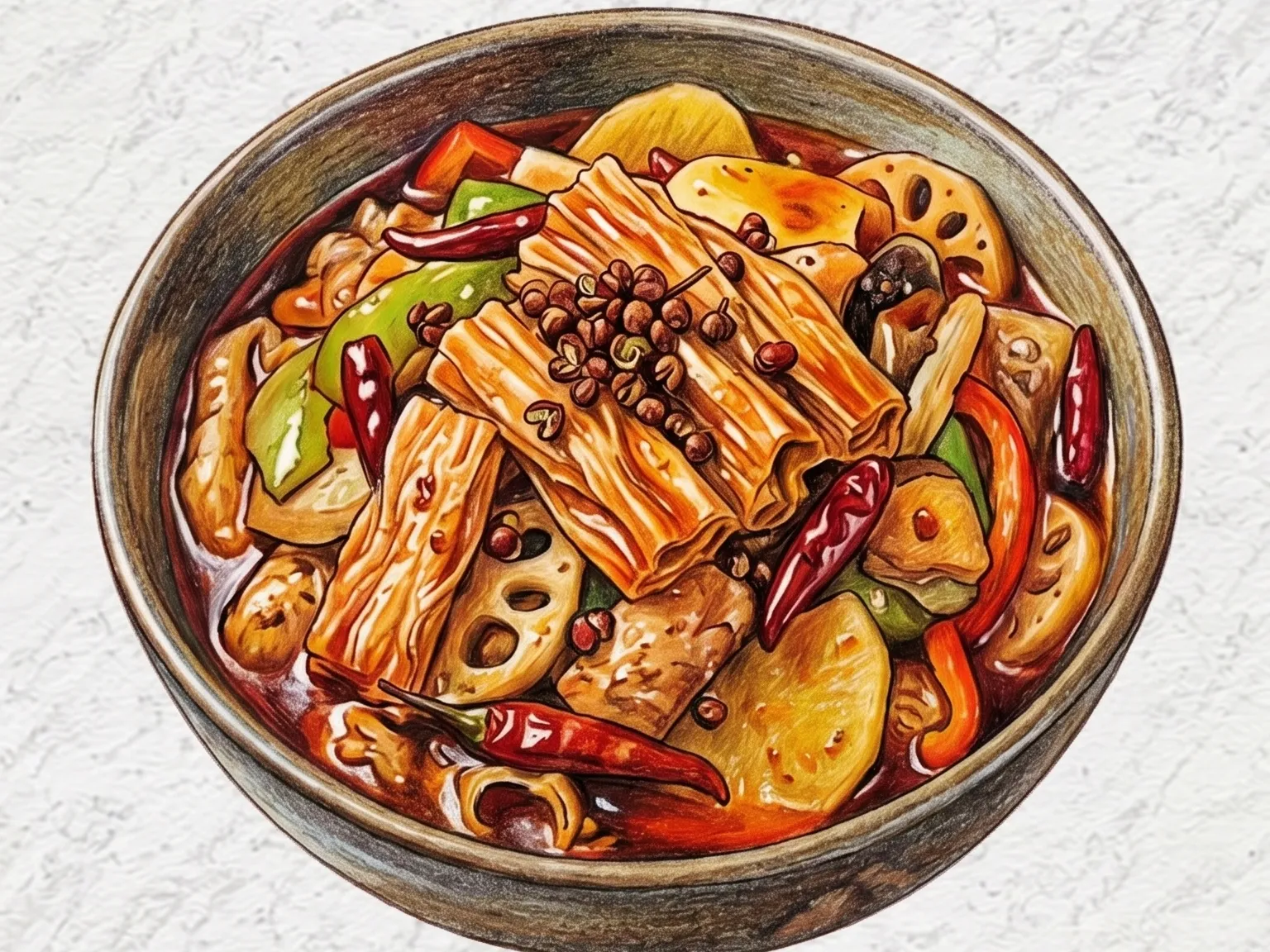
Kung pao chicken is one of the defining dishes of Sichuan cuisine, built around diced chicken, roasted peanuts, and dried chilies in a sauce that hits spicy, sweet, sour, and numbing at the same time. The chicken is cut into small cubes and given a brief marinade of soy sauce and cornstarch, which seals moisture in and creates a light coating that takes on color quickly in a screaming-hot wok. Dried red chilies and Sichuan peppercorns are fried in oil as the very first step, pulling their heat and the distinctive mala tingling sensation into the fat before anything else goes in. This flavored oil becomes the foundation the entire dish is built on. Soy sauce, black vinegar, and sugar are added at the end and reduced into a glossy glaze that coats every surface. Roasted peanuts go in last so they stay crunchy, and chopped scallion brings a clean, fresh finish. The interplay of sharp chili heat, tongue-numbing peppercorn, tangy vinegar, and toasty peanut in a single bite is what carries this dish beyond Sichuan into kitchens worldwide.

🍺 Bar Snacks 🎉 Special Occasion
Prep 20min Cook 10min 2 servings

About Asian

Each country brings its own signature spices and sauces, so even the same ingredients can produce completely different flavors. With a few key pantry items - coconut milk, fish sauce, curry powder, doubanjiang - you can recreate the tastes of Asia at home.