Asian

Asian Recipes

806 recipes. Page 8 of 34

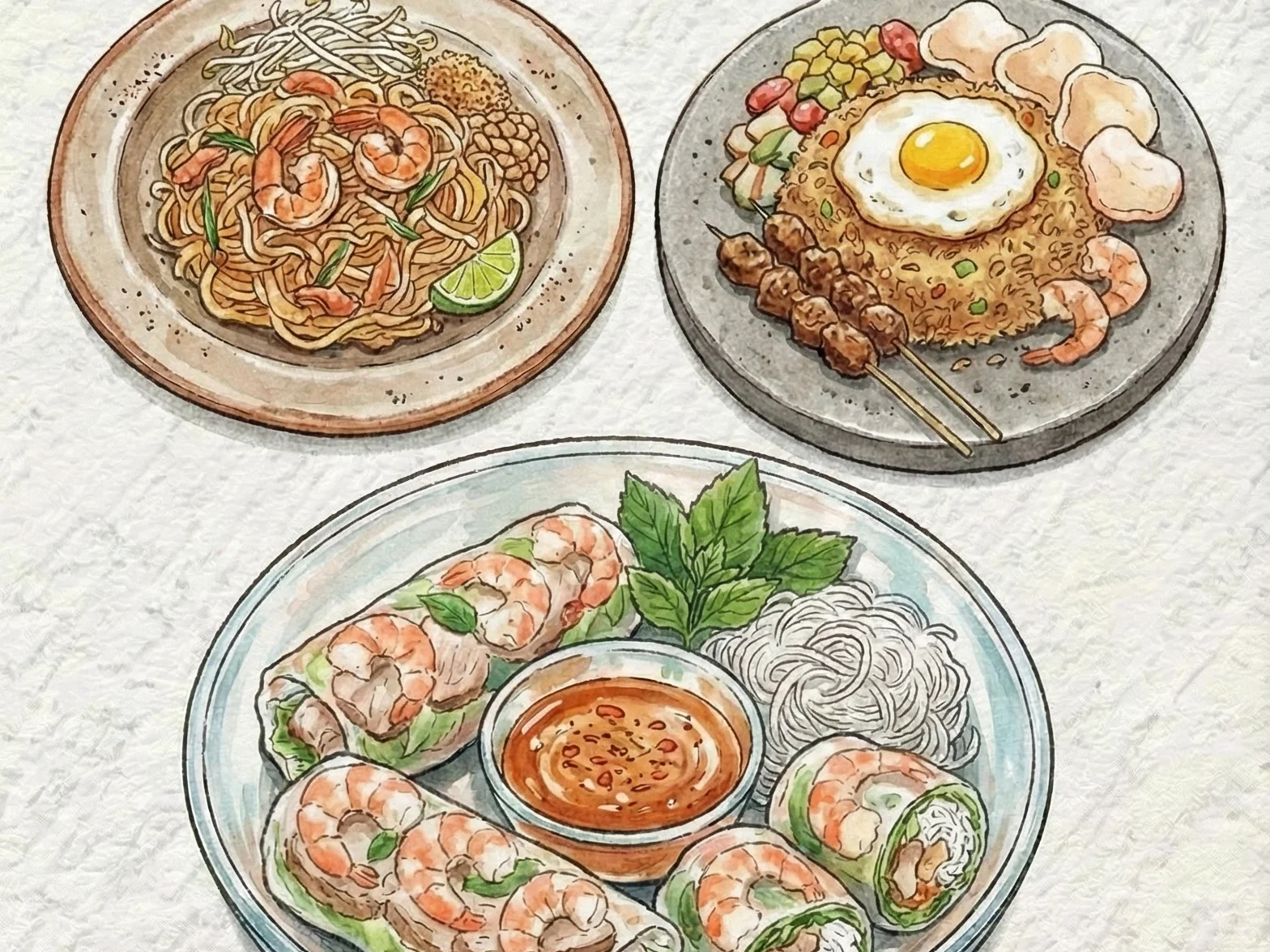
The Asian category gathers popular dishes from Japan, China, Thailand, Vietnam, India, and beyond. Curry, stir-fried noodles, mapo tofu, pad Thai, and pho are among the Asian favorites commonly enjoyed in Korean households.

Asian
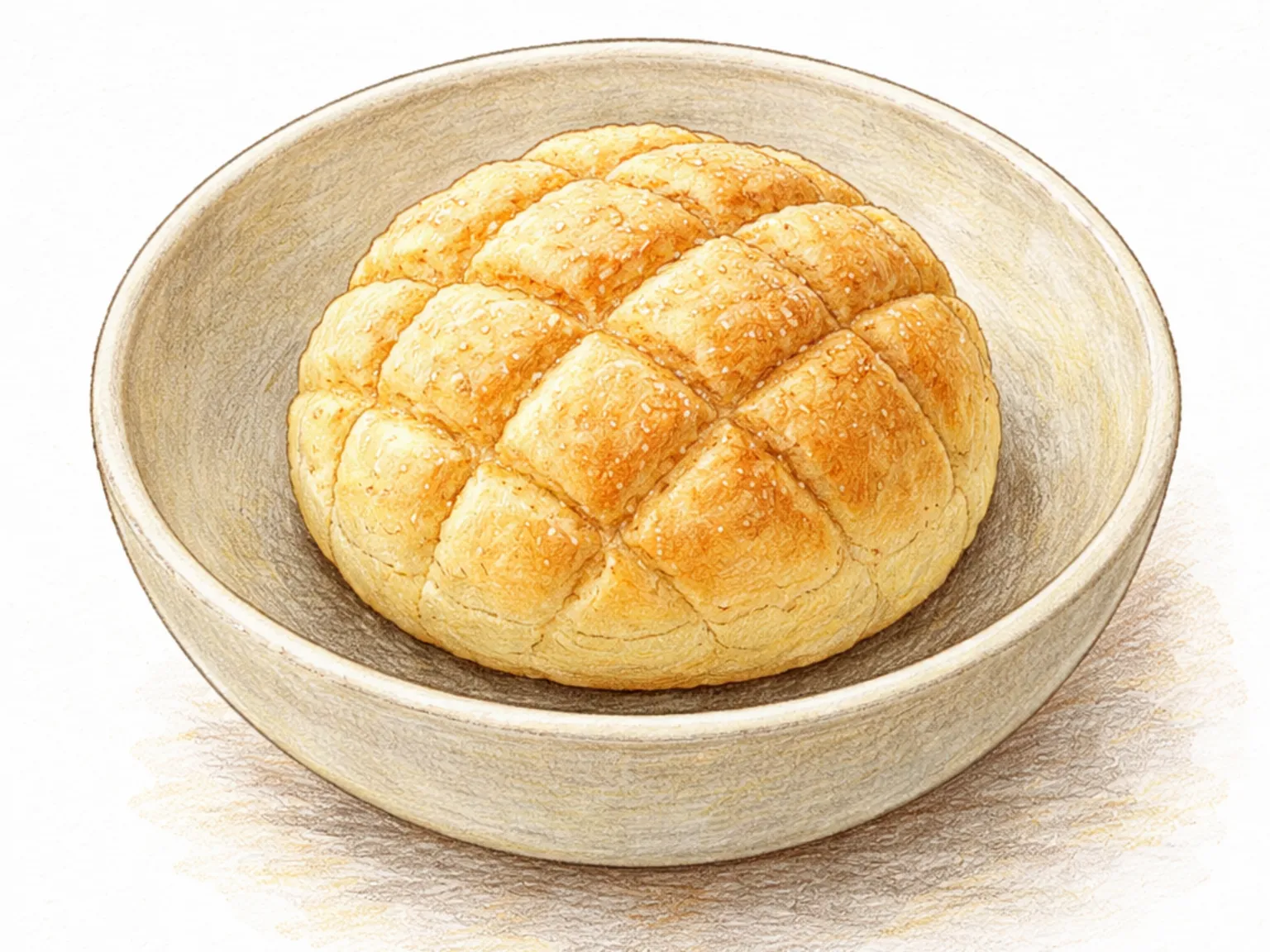
Japanese Melon Bread (Crispy Cookie-Crusted Sweet Bun)
Baking Medium

Japanese Melon Bread (Crispy Cookie-Crusted Sweet Bun)

A Japanese sweet bun that wraps a soft, yeasted bread dough in a layer of cookie dough, then bakes both together so the exterior crisps into a shell while the interior stays fluffy. The bread dough, made with bread flour, milk, and butter, is kneaded and proofed until pillowy; the cookie dough, a simple blend of cake flour, sugar, butter, and egg, is chilled until firm enough to drape over the risen bread rounds. The contrast between the shattering cookie crust and the cloud-soft bread beneath is what defines melon pan. Scoring a crosshatch pattern on the cookie layer with a bench scraper mimics the rind of a melon and gives the bun its name and iconic look. Rolling the tops in granulated sugar before proofing adds sparkle and an extra layer of crunch. Baking at 170 degrees Celsius for 13 to 15 minutes sets the cookie shell without over-browning it; the bread inside continues to steam and rise, pushing against the firming crust and creating the characteristic dome shape. Best eaten within hours of baking, while the crust still audibly cracks.

🧒 Kid-Friendly 🎉 Special Occasion
Prep 40min Cook 15min 8 servings
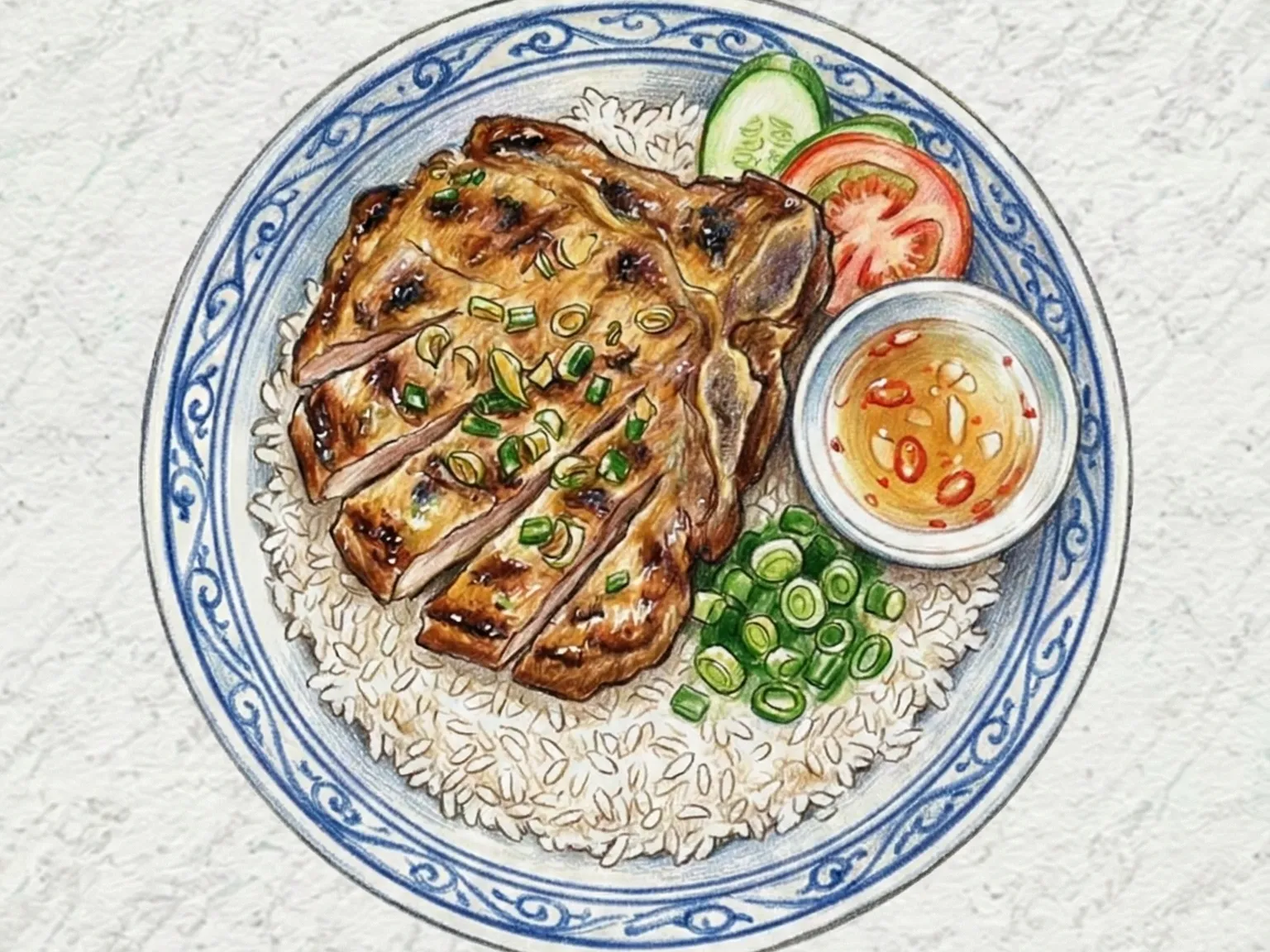
Com Tam Suon Nuong (Broken Rice with Grilled Pork)
Rice Medium

Com Tam Suon Nuong (Broken Rice with Grilled Pork)

Com tam translates literally as broken rice, named after the fractured grains left over from milling that were once too damaged to sell and eaten only by those who could afford nothing better. In Ho Chi Minh City, what began as subsistence food became a morning institution. The smaller, porous grains cook drier than whole rice and absorb sauces and meat juices more efficiently, turning an unwanted byproduct into a texture worth seeking out. Suon nuong, the charcoal-grilled pork chop, is the centerpiece. The meat soaks for at least an hour in a marinade of lemongrass, garlic, fish sauce, and sugar before hitting the coals. Under direct heat, the marinade caramelizes against the bone, building a sticky, slightly charred crust that carries both sweetness and smoke. The assembled plate puts the grilled chop over broken rice, topped with shredded egg crepe, pickled daikon and carrot, and a generous pour of nuoc mam pha, the sweet-salty-sour dipping sauce made from fish sauce, lime, sugar, and fresh chili. Across the city, com tam stalls open before dawn and the morning ritual of pulling a motorbike over to eat a quick plate at a sidewalk table is part of the daily rhythm of the place.

🎉 Special Occasion 🍺 Bar Snacks
Prep 25min Cook 20min 2 servings
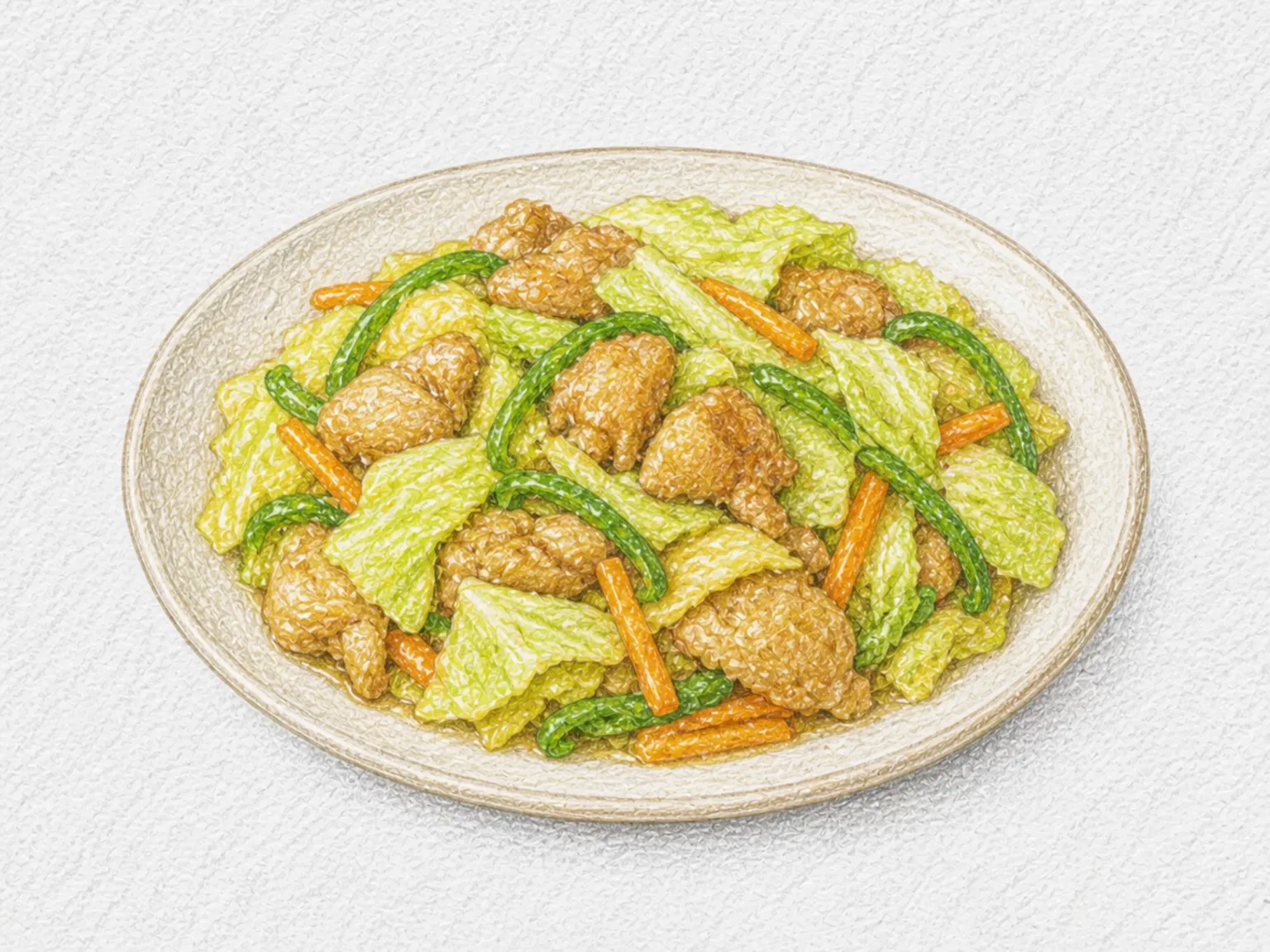
Keichan (Miso Chicken and Cabbage Stir-Fry)
Stir-fry Easy

Keichan (Miso Chicken and Cabbage Stir-Fry)

Keichan marinates 200 g chicken breast with mixed miso and garlic under refrigeration, then adds carrot, cabbage, and green pepper according to their cooking time. Cut the chicken across the grain into 2 cm pieces. Combine 6 g finely grated garlic with 32 g mixed miso, 6 ml sake, and 8 ml light soy sauce. Massage this into the chicken for 1 minute and refrigerate for 15 minutes. Meanwhile, cut 200 g cabbage into 4 cm pieces, 40 g carrot into pieces 2 mm thick and 4 cm long, and 20 g green pepper into 5 mm strips. Preheat a large pan over medium-high heat for 2 minutes and add 6 ml oil. Spread the chicken with its marinade in a single layer and leave it untouched for the first 2 minutes. Turn the pieces and cook for another 3 minutes. If the miso seasoning begins to catch on the bottom, lower the heat before it scorches. Add the carrot first and stir-fry for 2 minutes. Add the cabbage and pepper, raise the heat to high, and toss broadly for 4 minutes. Stop when the cabbage edges look translucent and the chicken center measures at least 74°C. Staging the vegetables keeps the carrot from remaining hard without exposing the cabbage and pepper to the entire chicken cooking time.

🏠 Everyday ⚡ Quick
Prep 20min Cook 15min 4 servings
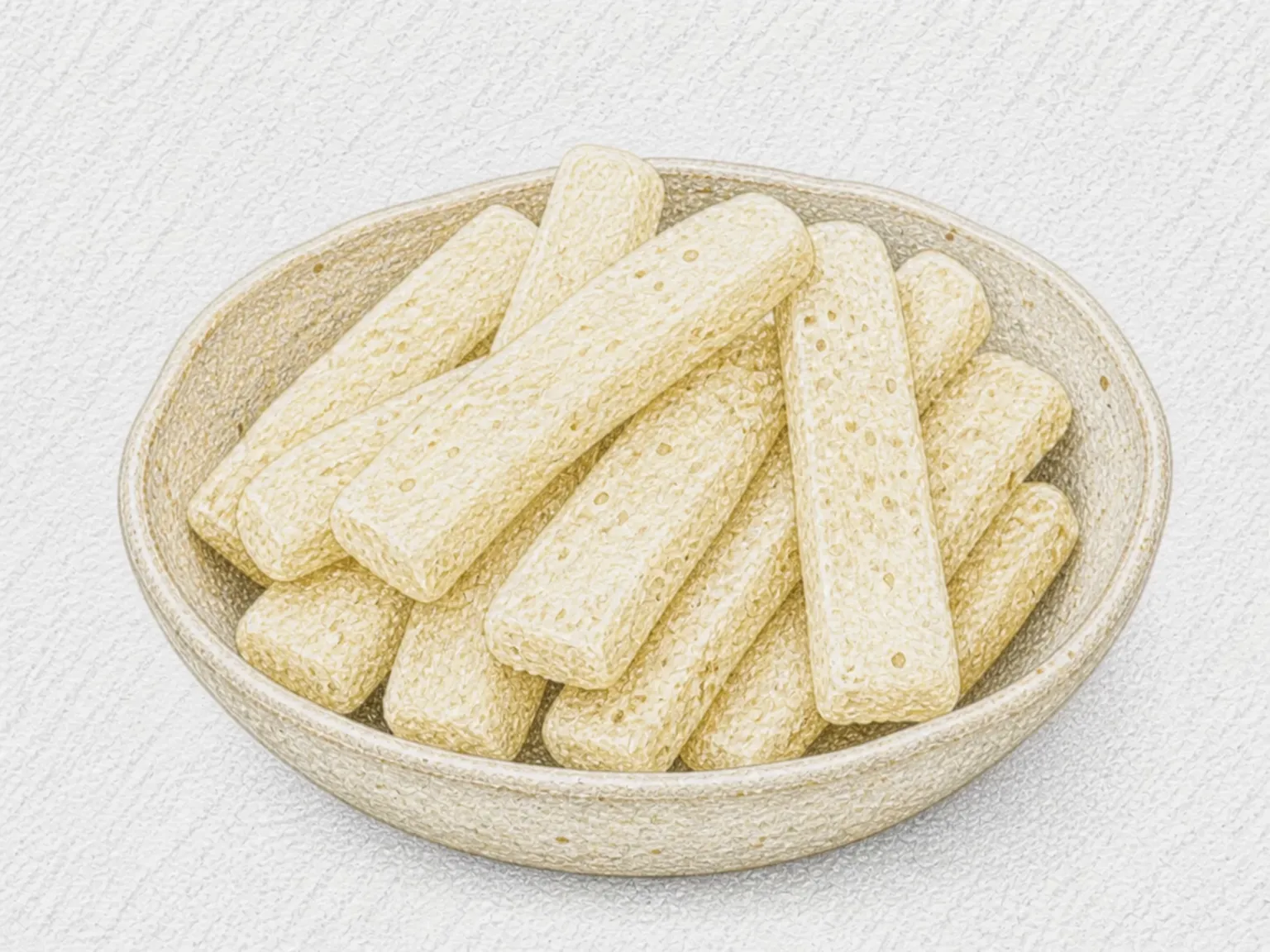
Hoshi-mochi (Winter Freeze-Dried Rice Cakes)
Desserts Hard

Hoshi-mochi (Winter Freeze-Dried Rice Cakes)

Hoshi-mochi is a winter-preserved rice cake from Tsugaru in Aomori. A 4.5 kg batch of glutinous rice is steamed and pounded with more added water than ordinary mochi, seasoned with sugar, salt, and sesame, cut thin, braided into long strands with rice straw, dipped once in water on a bitterly cold day, frozen outdoors, and wind-dried for about two months. Repeated freezing and drying remove internal moisture and create a light porous structure, giving the alternative name kori-mochi. Long curtain-like rows under household eaves once defined February in Goshogawara, and each family had a person responsible for reading the weather and choosing the right day. The cakes may be eaten dry and crisp, lightly toasted to reveal rice sweetness, brushed with butter soy sauce, or fried. Success depends on sustained subzero cold, low humidity, clean airflow, and patient inspection.

🎉 Special Occasion
Prep 180min Cook 120min 90 servings
Hokkaido Jingisukan Lamb Grill
Grilled Medium

Hokkaido Jingisukan Lamb Grill

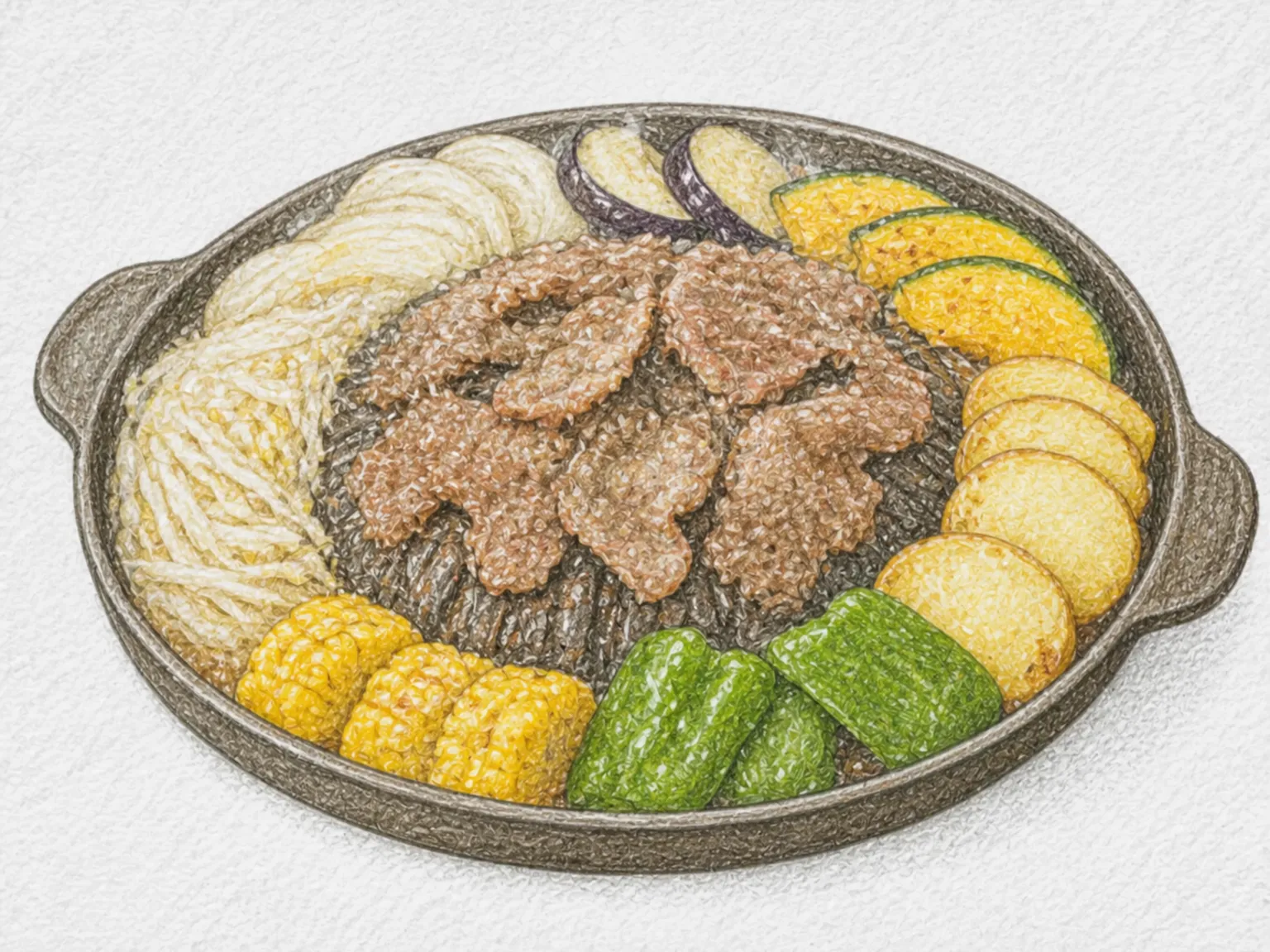
Jingisukan is a Hokkaido grill cooked on a domed, grooved pan. Thinly sliced lamb cooks on the raised center while onion, eggplant, pumpkin, potato, green pepper, corn, and bean sprouts surround it, catching the juices that run down the grooves. The cooked meat and vegetables are dipped in a sauce of sake, soy sauce, vinegar, grated fruit, garlic, and ginger. Sheep raising expanded in Hokkaido during the Taisho era when wool imports became difficult, and eating lamb began in that setting; the dish later took root as meat production replaced the focus on wool. It is eaten at home year-round and outdoors at spring blossom gatherings and summer barbecues.

🎉 Special Occasion 🍺 Bar Snacks
Prep 30min Cook 20min 4 servings
Iwashi Dango Jiru (Sardine Dumpling Soup)
Soups Medium

Iwashi Dango Jiru (Sardine Dumpling Soup)

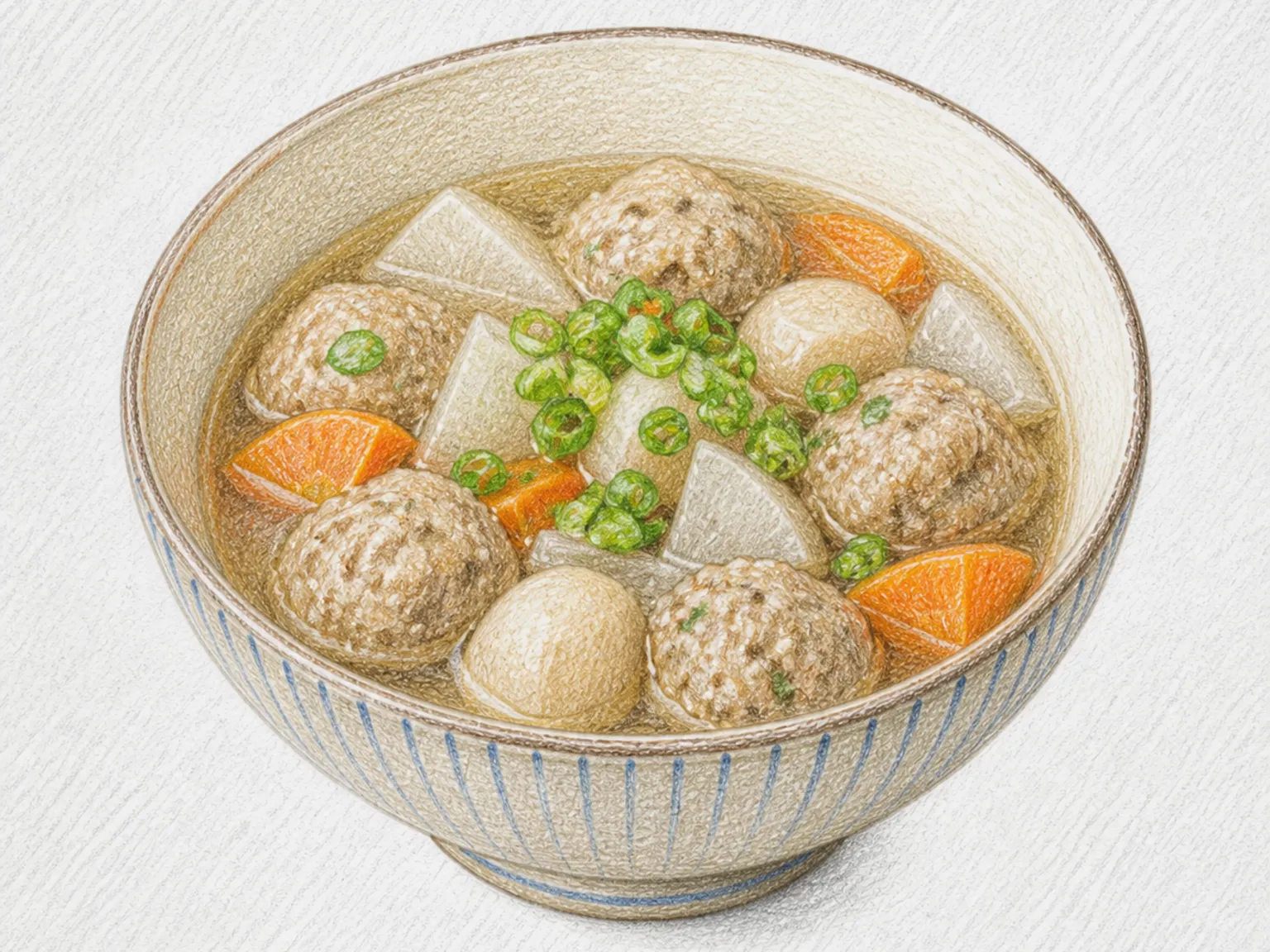
Iwashi dango jiru is a sardine dumpling and root vegetable soup from Chiba's Hokuso and Kujukuri areas. Sardine fillets are ground to a paste and bound with grated mountain yam, beaten egg, and miso, producing dumplings that stay tender without dispersing in the broth. Daikon and carrot begin cooking in water before taro is added, then the fish mixture is shaped between two spoons and dropped directly into the simmering pot. Soy sauce and sliced leek finish a warming soup often prepared with winter sardines caught from November through March.

🏠 Everyday
Prep 25min Cook 25min 4 servings
Nozawana-zuke (Fermented Nozawana Greens)
Kimchi Hard

Nozawana-zuke (Fermented Nozawana Greens)

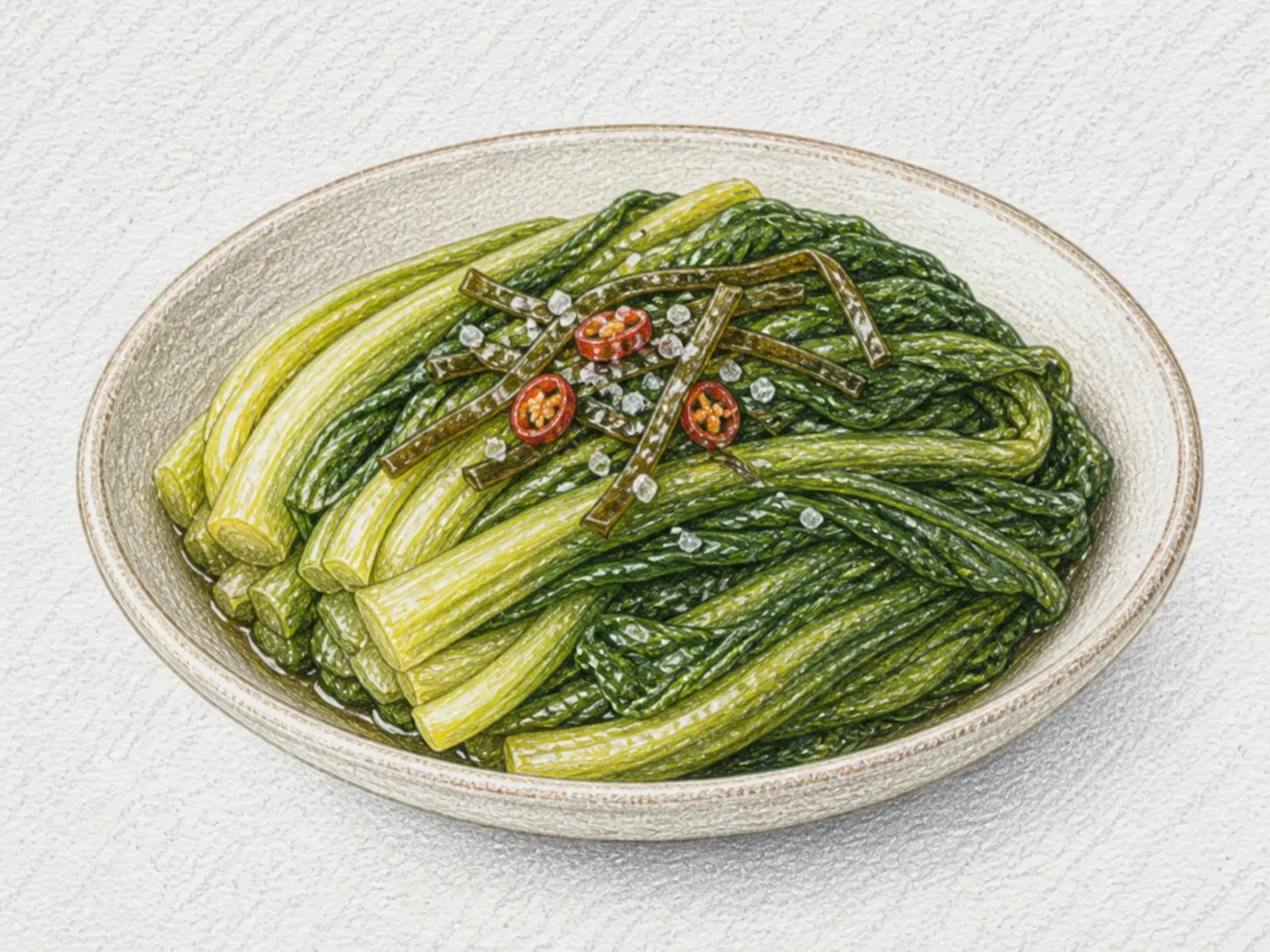
Nozawana-zuke is a large winter ferment from Nagano. Forty kilograms of frost-softened nozawana greens are layered whole in a barrel with pickling salt, kombu, and dried chili, then compressed under a heavy weight until their own brine rises and lactic fermentation proceeds in the cold. Nozawana developed in the cool highland climate of Nozawa Onsen, growing long leaves and stalks rather than a large root, and became an essential source of preserved greens for winter. It can be sampled after 2 to 3 weeks and develops deeper acidity and savoriness around one month. Every stalk must stay below brine; fuzzy mold, slimy discoloration, or rotten odor requires discarding the batch without tasting.

🏠 Everyday
Prep 300min 100 servings
Cao Lau (Hoi An Chewy Rice Noodles with Braised Pork)
Noodles Medium

Cao Lau (Hoi An Chewy Rice Noodles with Braised Pork)

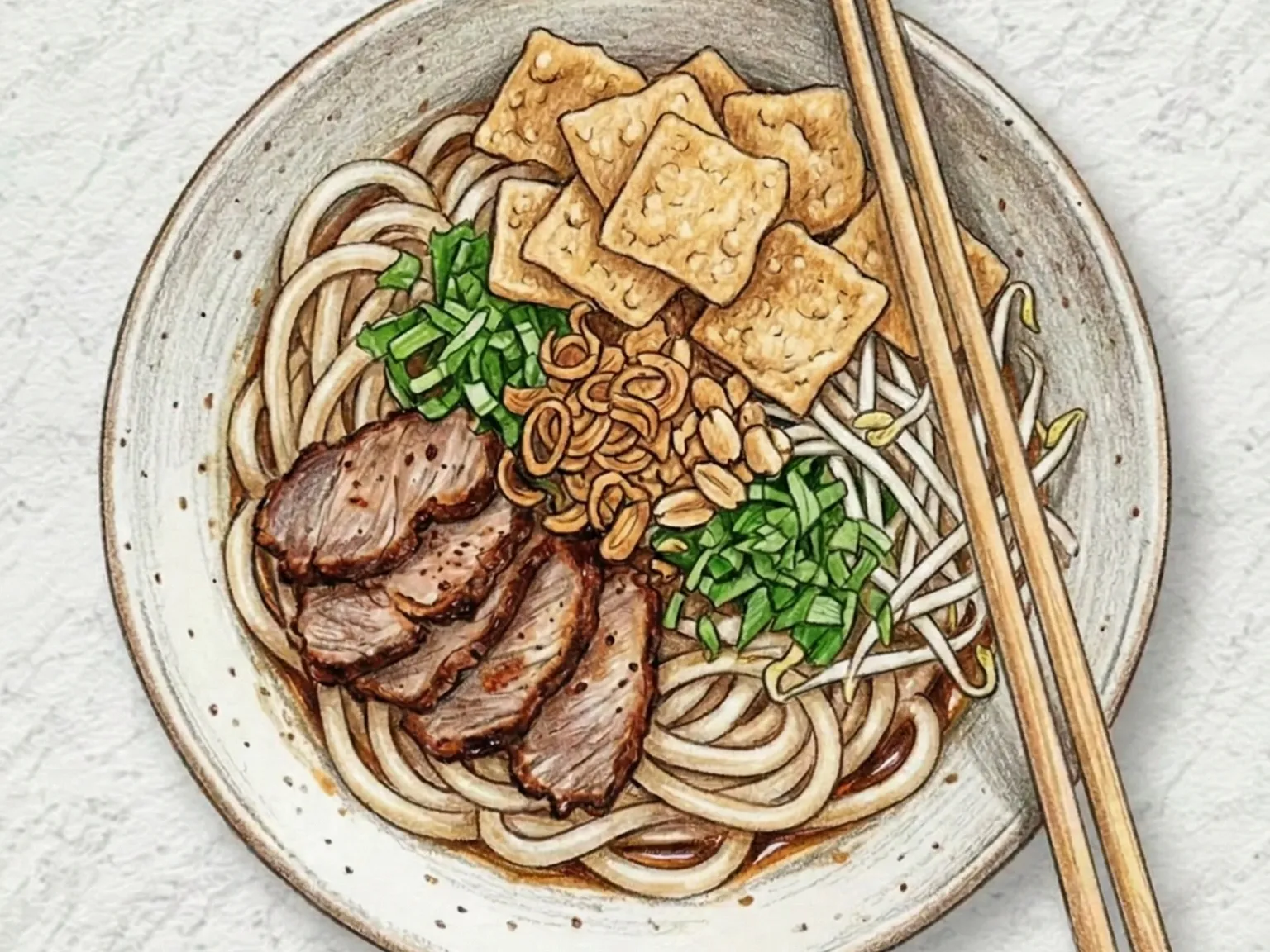
Cao lau is a dish with a single origin: Hoi An, a UNESCO-designated port town on Vietnam's central coast. Its defining characteristic is the noodle, which was traditionally prepared using water drawn from a specific ancient Cham well and lye derived from the ash of trees grown on the nearby Cham Islands. The combination of that mineral-rich water and alkaline lye gives the noodles a firm, dense chew and a distinctive amber color that no other Vietnamese noodle shares. Sliced pork braised in soy sauce, five-spice, and sugar until the exterior deepens and caramelizes is the main protein, placed on top of the noodles along with a handful of fresh herbs, crunchy bean sprouts, and torn pieces of fried wonton skin that have been crisped separately. Only a small amount of the pork braising liquid is spooned over the bowl - cao lau is a dry noodle dish, not a soup, and the absence of broth is essential to how the textures work together, each component staying distinct rather than softening in liquid. The flavors encoded in the dish are a record of the trading cultures that moved through Hoi An over several centuries: the soy-based braising sauce reflects Japanese culinary influence, the five-spice points to Chinese cooking traditions, and the abundant fresh herb garnish is unmistakably Vietnamese. The result is a dish whose full identity cannot be separated from its place of origin, making it one of the most geographically specific preparations in Southeast Asian cuisine.

🎉 Special Occasion 🍱 Lunchbox
Prep 20min Cook 30min 2 servings
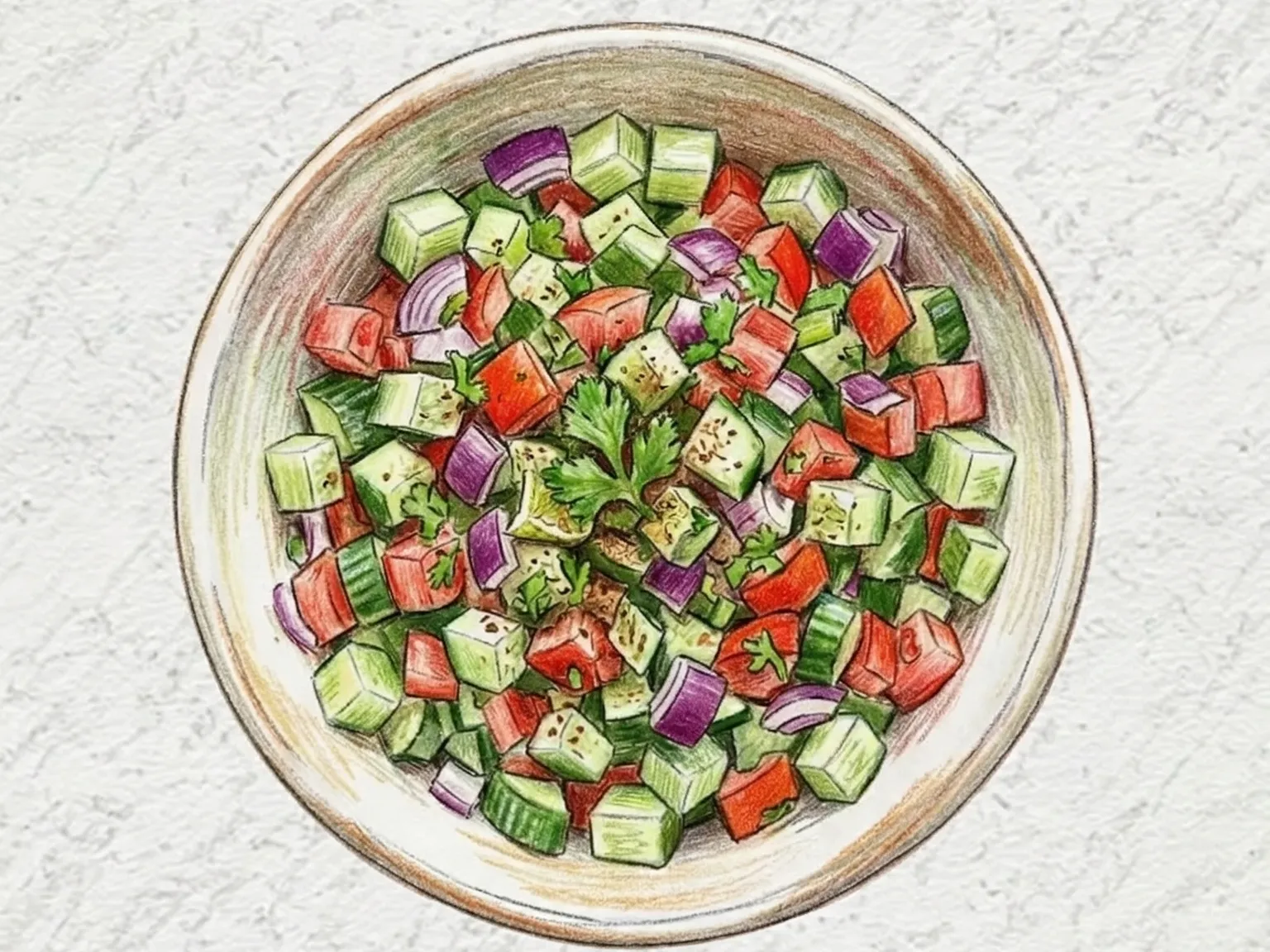
Kachumber Salad (Indian Kachumber salad)
Salads Easy

Kachumber Salad (Indian Kachumber salad)

Kachumber salad finely dices cucumber, tomato, and red onion, then tosses them with chopped cilantro, lime juice, ground cumin, chaat masala, and salt in a quick Indian raw vegetable preparation. Removing some of the seeds from the cucumber and tomato limits excess moisture so the dressing stays concentrated rather than watery. Soaking the diced red onion in cold water for three minutes draws out its harsh sharpness, letting it blend more smoothly with the other ingredients. Ground cumin lays down a warm, earthy undertone, and chaat masala layers a tangy, salty complexity over the lime acidity, lifting a simple combination of vegetables into something distinctly Indian. Chopping cilantro stems together with the leaves releases more of the herb's aromatic oils than leaves alone provide. Letting the dressed salad rest for about fifteen minutes before serving allows the flavors to meld so the final result is noticeably more cohesive.

🥗 Light & Healthy ⚡ Quick
Prep 12min 2 servings
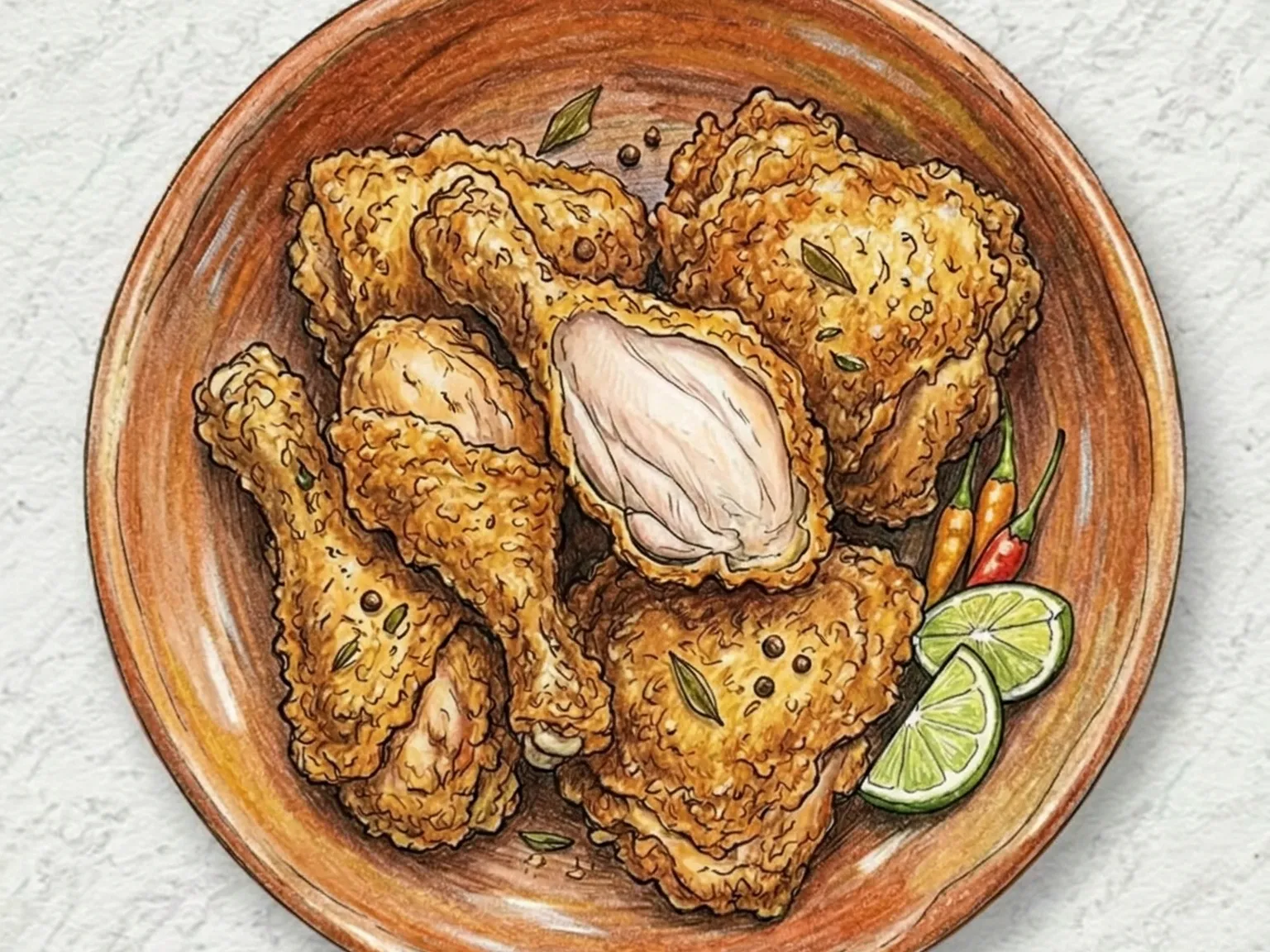
Ayam Goreng (Indonesian Spiced Fried Chicken Without Coating)
Asian Medium

Ayam Goreng (Indonesian Spiced Fried Chicken Without Coating)

Ayam goreng uses garlic, ginger, ground coriander, turmeric, and coconut milk instead of a flour coating. Pat the chicken dry, coat it with the spice mixture and coconut milk, and rest it for 20 minutes, turning the pieces once so the seasoning reaches every side. Simmer the chicken with all the marinade until almost no liquid remains and a thick spice paste clings to the bottom. The chicken should be cooked through at this stage. Fry it in 500ml oil only until the surface is deep golden with uneven crisp areas, taking care not to burn the spice coating.

🎉 Special Occasion 🍺 Bar Snacks
Prep 25min Cook 25min 4 servings
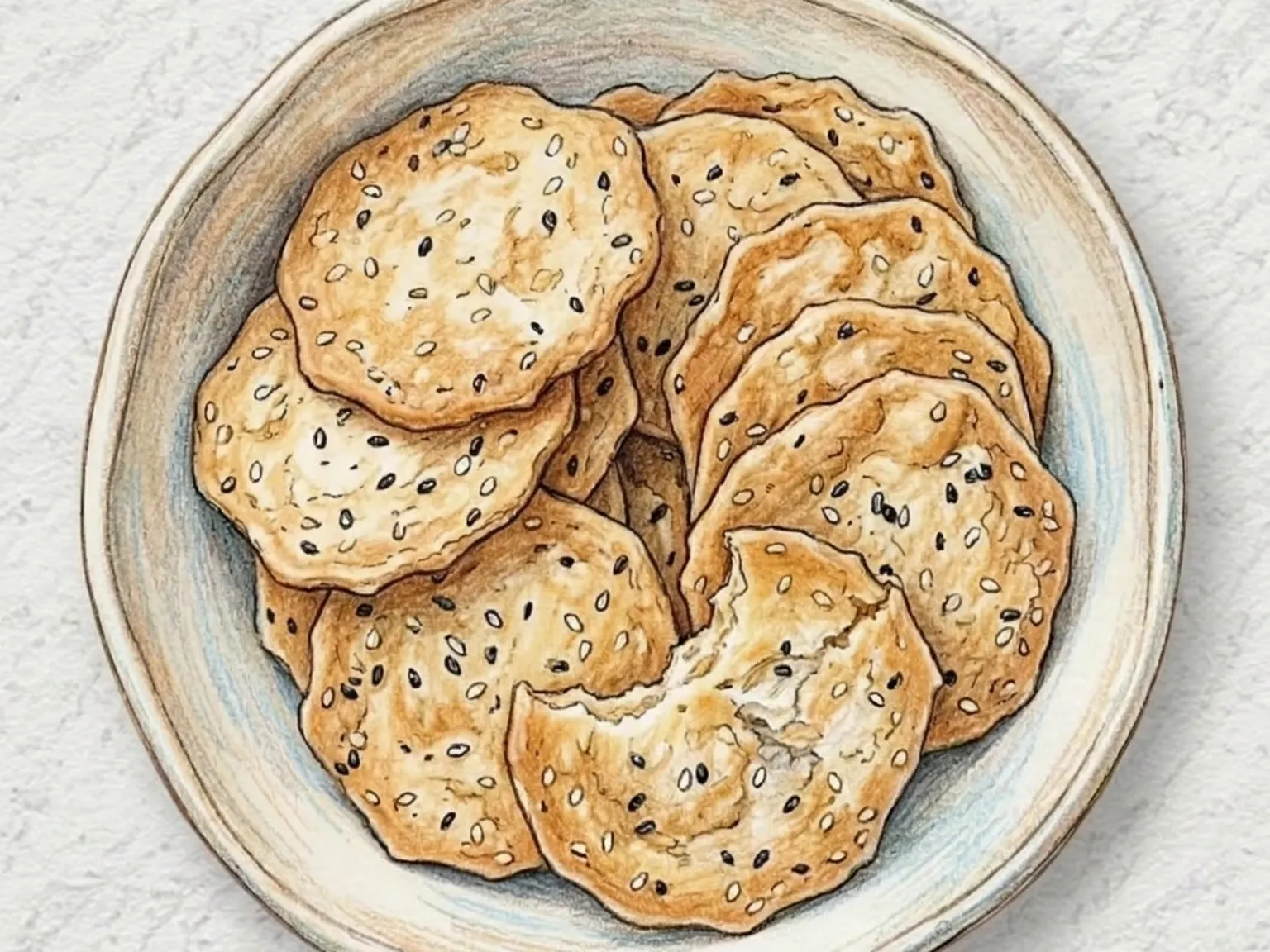
Miso Sesame Crackers
Baking Easy

Miso Sesame Crackers

Miso sesame crackers combine white miso, sesame oil, and sesame seeds in a thin flour dough. Mix the sugar, baking soda, and salt through the flour first so these small quantities do not collect in isolated spots. In a separate bowl, loosen the miso with sesame oil and water until visible lumps disappear. This distributes the salty paste and sesame aroma evenly once the liquid meets the dry ingredients. Stir with a spatula until the dough looks shaggy, then press it briefly by hand only until it holds together. Fold in the sesame seeds without extended kneading; an elastic dough is harder to roll thin and can bake with a tougher texture. Place the dough between two sheets of parchment and roll from the center toward the edges, checking that the entire sheet is evenly thin. Remove the top sheet, cut squares, and dock each one closely with a fork so steam can escape instead of forming large bubbles. Watch the edge color during baking and rotate the tray if one side browns early. The crackers become fully crisp as they cool, with white miso providing savoriness and the sesame oil and seeds carrying the nutty finish.

🧒 Kid-Friendly
Prep 15min Cook 14min 4 servings
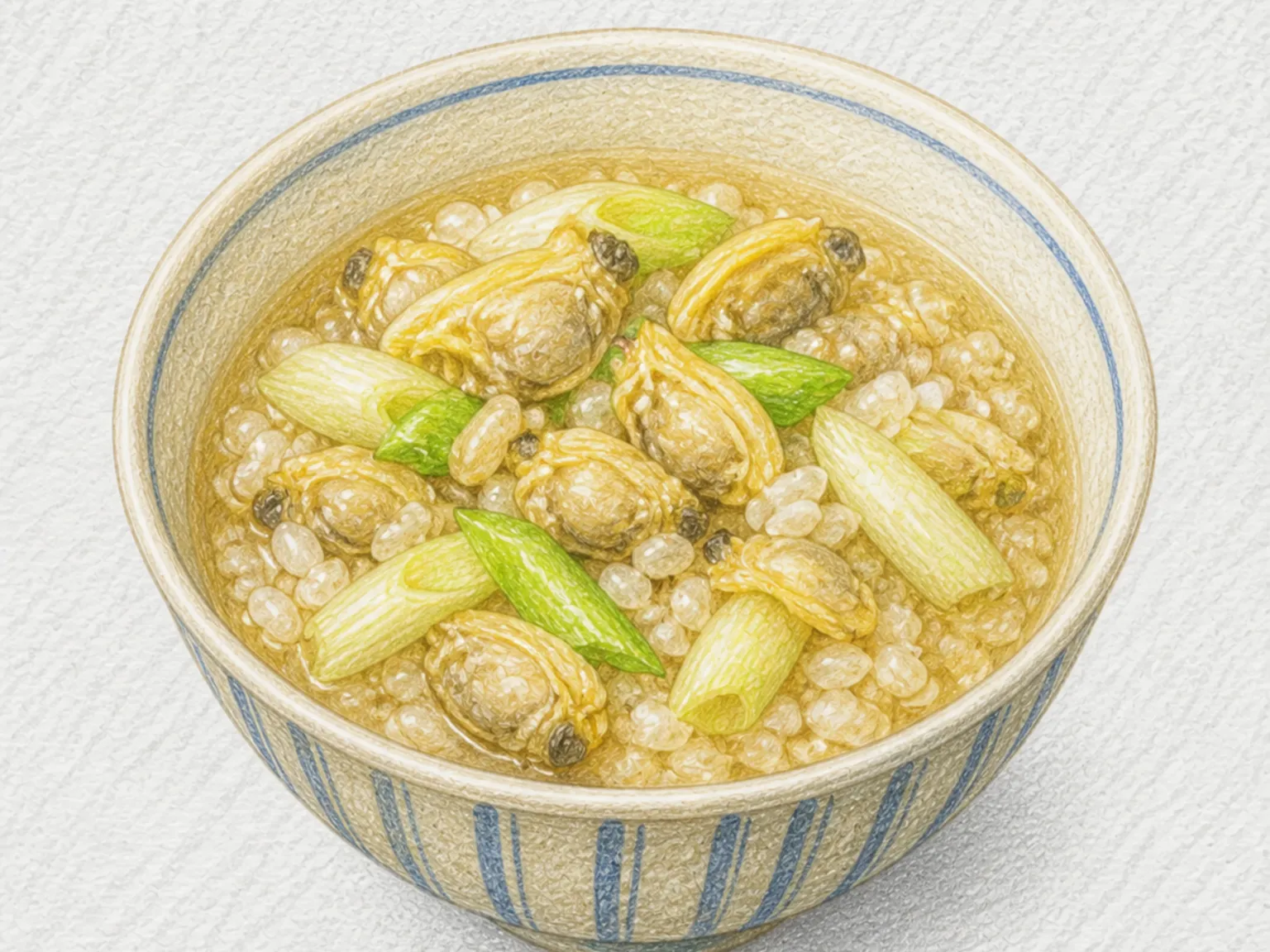
Fukagawa Meshi
Rice Easy

Fukagawa Meshi

Fukagawa meshi is an Edo-style fisherman's rice bowl from Fukagawa in Tokyo's Koto ward. Fresh shucked clams and coarsely cut scallion are briefly simmered in miso broth and poured, liquid and all, over hot rice. During the Edo period, Fukagawa-ura was a tidal fishing settlement rich in clams, and vendors sold nukimi, shellfish already removed from their shells. Fishers could quickly cook that meat and eat it between work. Today both this poured-over version and a seasoned rice version cooked with clams carry the same name. Brief cooking keeps the clam meat tender, and the bowl is eaten immediately as its savory broth runs between the grains.

⚡ Quick 🏠 Everyday
Prep 10min Cook 8min 1 servings
Khua Kling (Southern Thai Dry-Fried Spiced Minced Pork Curry)
Stir-fry Medium

Khua Kling (Southern Thai Dry-Fried Spiced Minced Pork Curry)

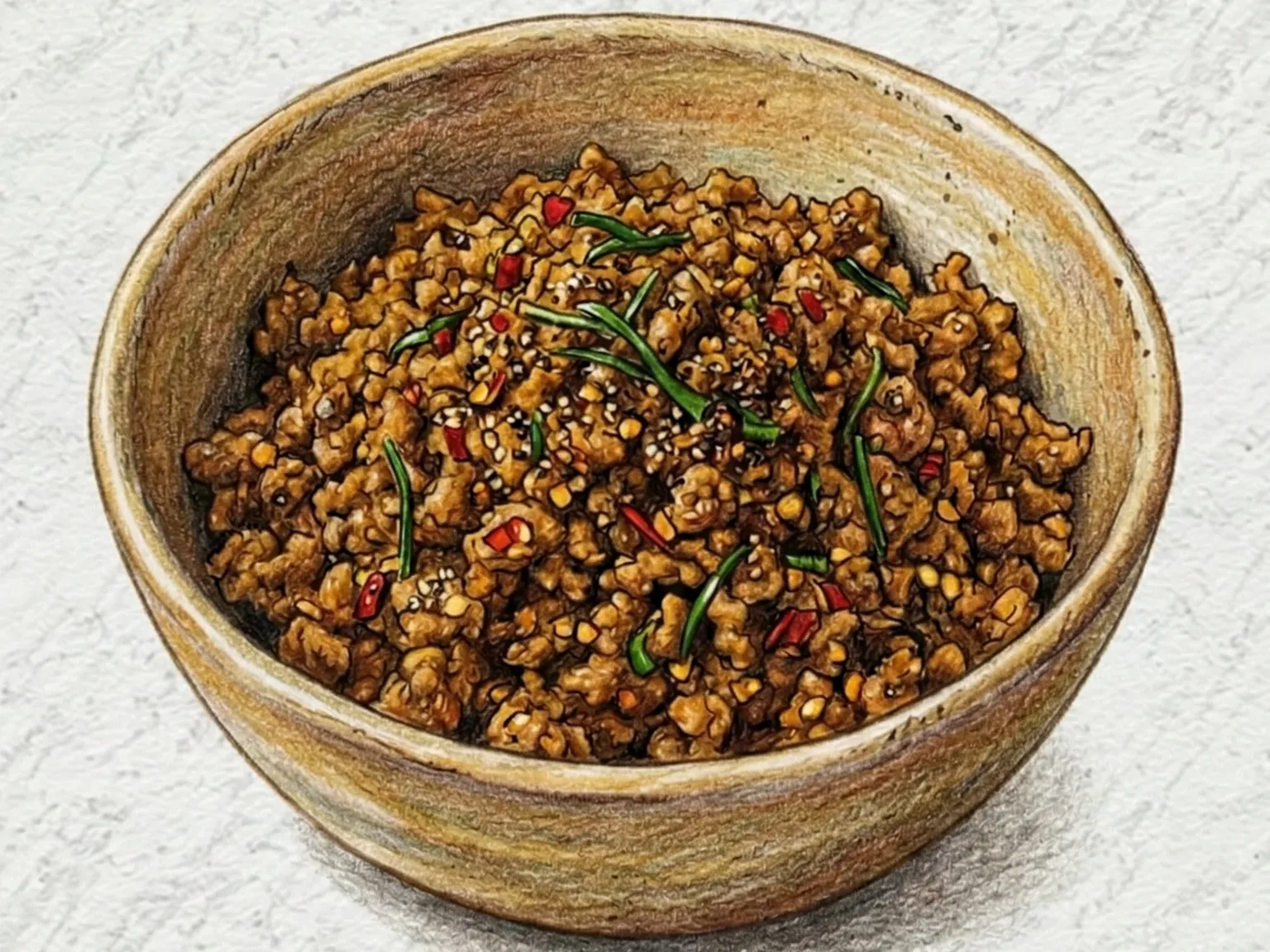
Khua kling is the dry-fried curry that defines the cooking of southern Thailand, built around minced meat stir-fried with an intense red curry paste until every trace of liquid has been cooked away. The paste goes into a dry, preheated pan first, and it fries in its own aromatic oils until the raw edge is gone and the kitchen fills with its fragrance. Ground pork is then added and the cook stirs without pause, working the meat against the hot surface and driving off all moisture until each grain of meat is separate, dry, and coated in a concentrated layer of spice. Fish sauce brings salt, a small measure of sugar tempers the raw heat, and finely shredded kaffir lime leaves push a bright citrus fragrance through the heavy chili and shrimp paste base. Extra sliced red chilies are standard in the southern version, and the heat level here far exceeds what most central Thai dishes offer. There is no sauce at all in the finished dish: the texture is crumbly and almost granular, which is precisely the point. A single spoonful carries enough concentrated flavor to carry several bites of plain steamed rice. The dish is best served immediately off the heat, while the aromatics are still vivid and the meat still steaming.

🍺 Bar Snacks 🎉 Special Occasion
Prep 15min Cook 12min 2 servings
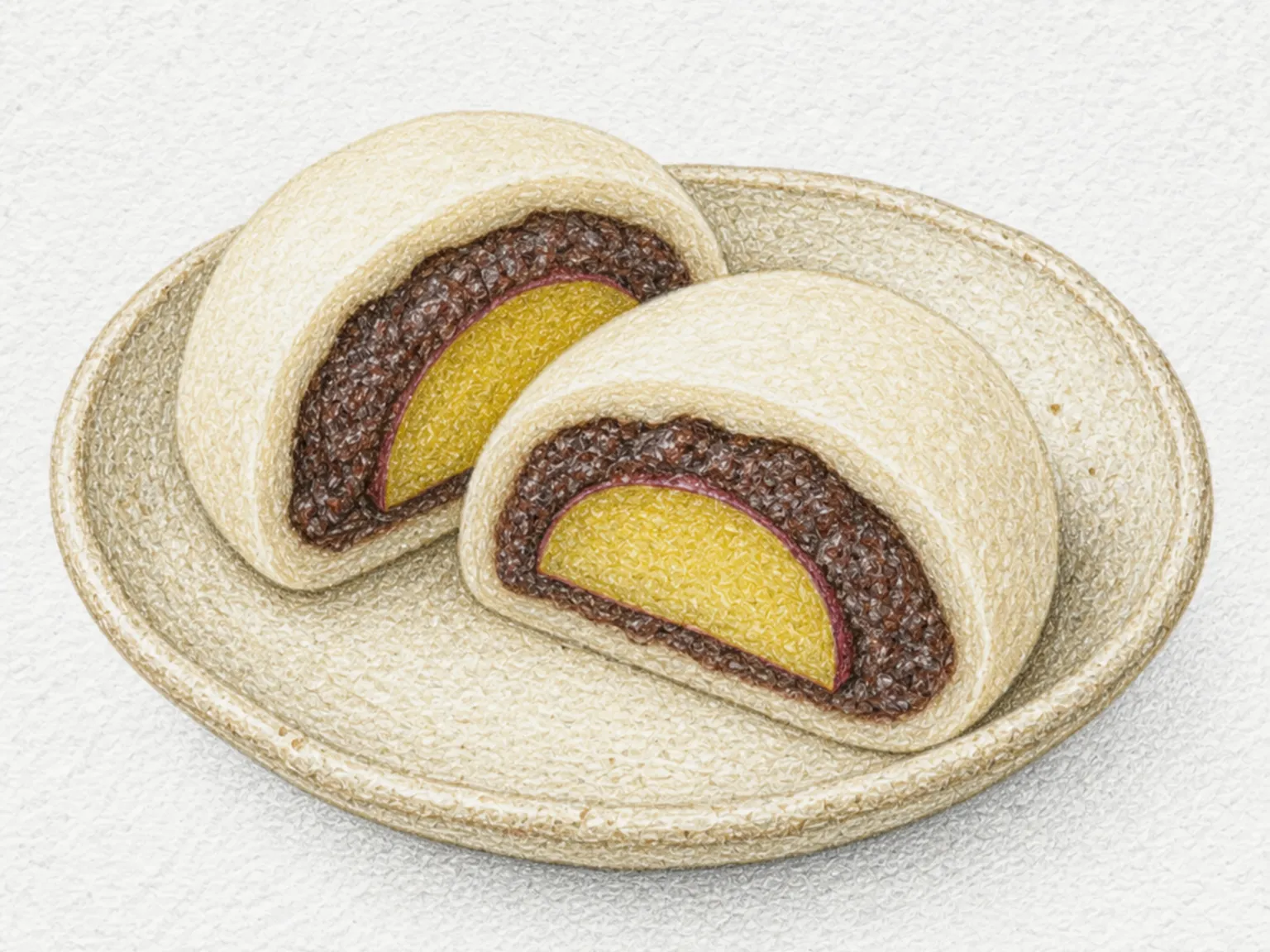
Ikinari Dango (Steamed Sweet Potato and Red Bean Dumplings)
Desserts Medium

Ikinari Dango (Steamed Sweet Potato and Red Bean Dumplings)

Ikinari dango are steamed dumplings from Kumamoto's Kikuchi area, once prepared as a snack during the autumn sweet potato harvest. A raw sweet potato round 1 to 1.5 cm thick and a portion of sweet red bean paste are stacked, then enclosed together in a rested dough of wheat flour and dango flour. After about 20 minutes of steaming, the wrapper is supple, the bean paste is warm, and the potato remains a distinct tender layer. The Kumamoto word ikinari is associated with something simple and quick, fitting a snack also served when guests arrive.

🧒 Kid-Friendly 🎉 Special Occasion
Prep 90min Cook 20min 10 servings
Katsuo no Tataki (Seared Bonito)
Grilled Medium

Katsuo no Tataki (Seared Bonito)

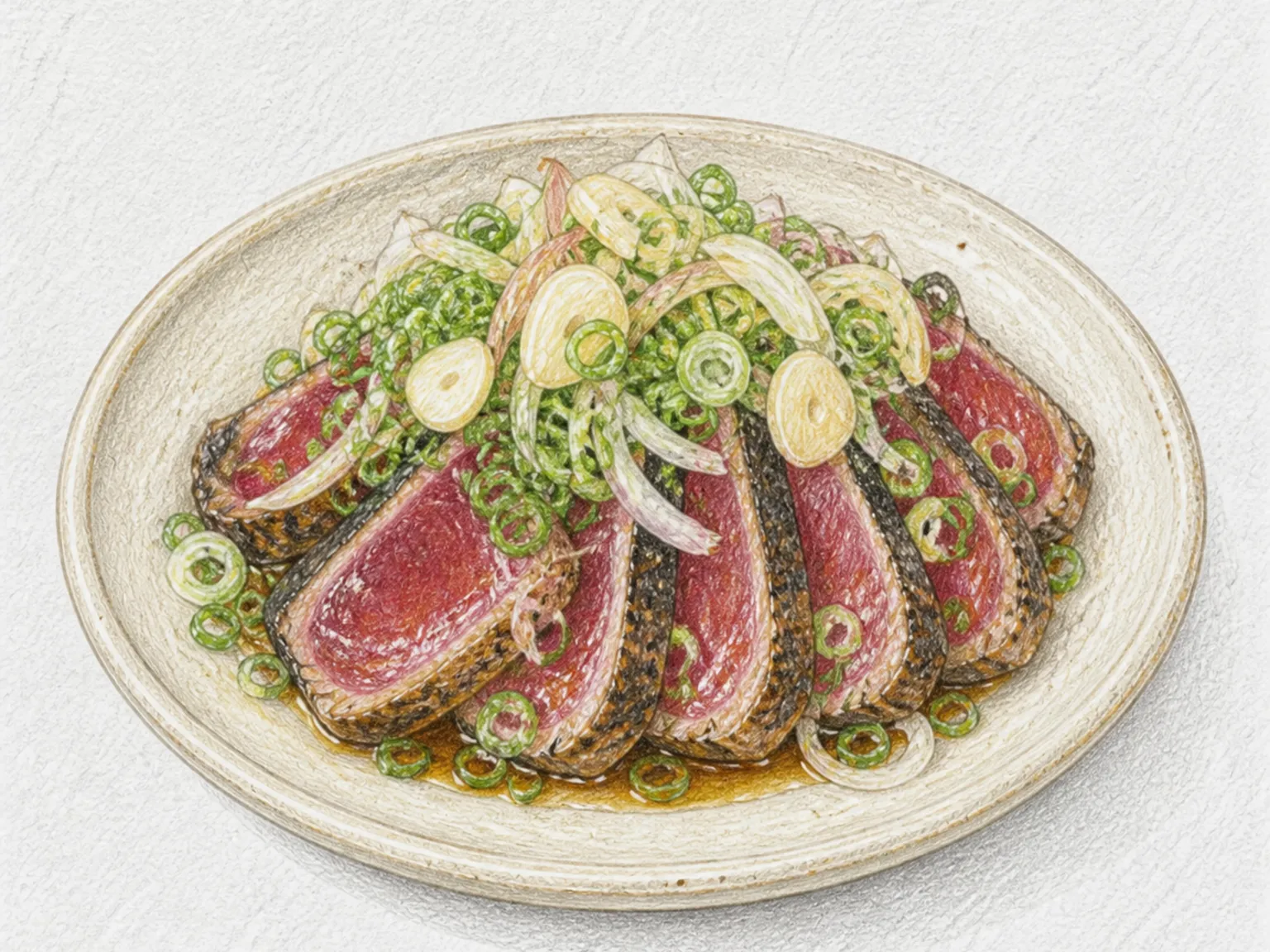
Katsuo no tataki is a Kochi dish made by flashing three surfaces of raw-grade bonito over a strong flame, slicing it thickly, and tapping salt, yuzu vinegar, and soy sauce into the surface. The outside gains a roasted aroma while the center remains red and cool, and thin garlic, scallion, and onion provide a sharp garnish. Because the fish remains raw inside, use bonito specifically sold for raw consumption, keep it cold throughout preparation, prevent cross-contamination, and serve it immediately after seasoning.

🎉 Special Occasion 🍺 Bar Snacks
Prep 15min Cook 3min 4 servings
Hittsumi (Hand-Torn Wheat Dumpling Soup)
Soups Medium

Hittsumi (Hand-Torn Wheat Dumpling Soup)

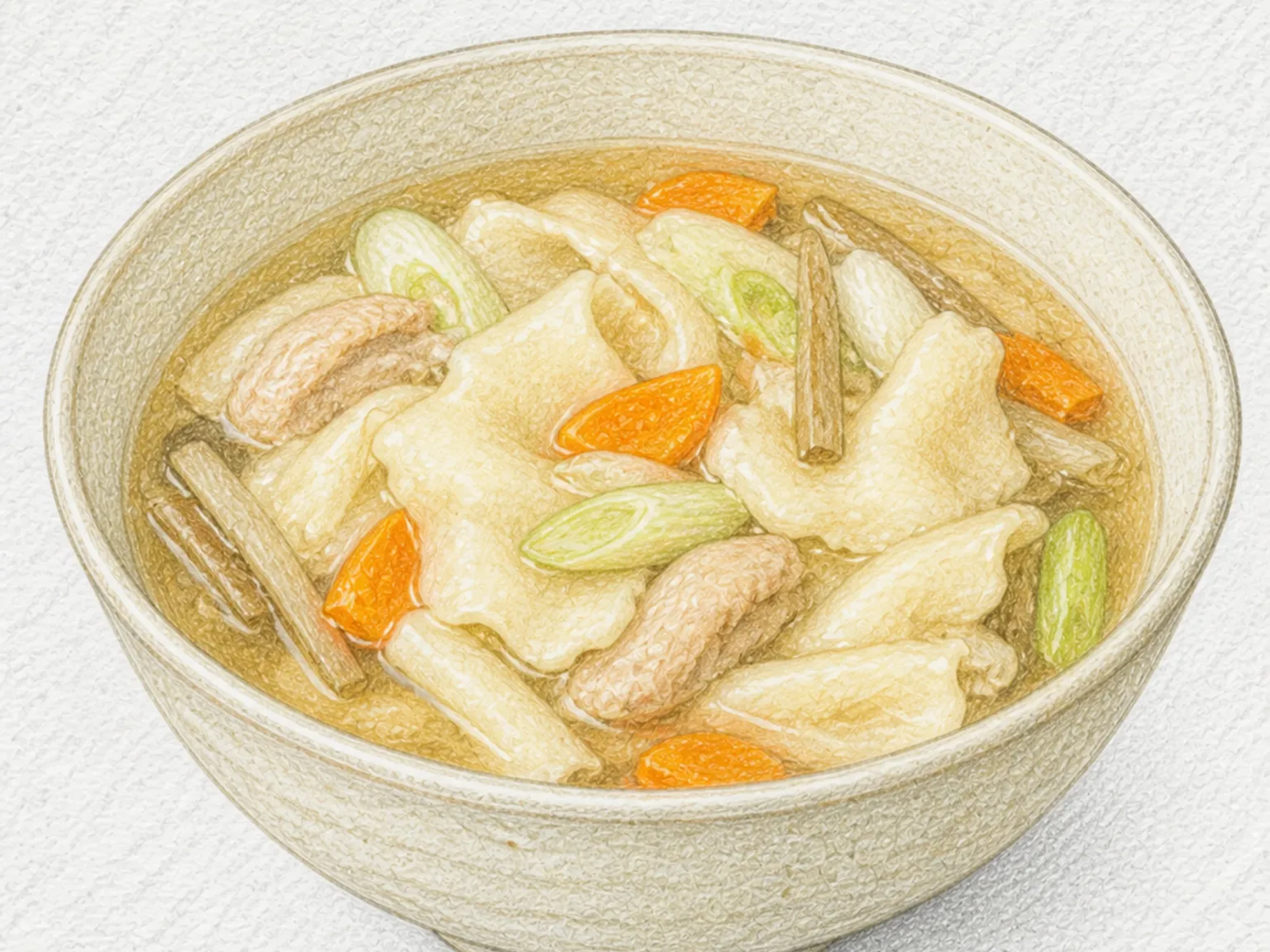
Hittsumi is a local soup from southern Aomori. A rested bread-flour dough is stretched thin with the fingers, torn directly into dashi simmering with chicken, burdock, carrot, and green onion, and cooked until springy. Its name is associated with the pulling and pinching motion rather than rolling and cutting noodles. Keeping the edge thin and the center slightly thicker gives both tender and chewy textures in one bowl. Cook the chicken through first, then continue simmering the floating dumplings until no raw flour remains before serving the soup piping hot.

🏠 Everyday
Prep 45min Cook 35min 8 servings
Omizuke (Yamagata Chopped Mustard Green Pickle)
Kimchi Medium

Omizuke (Yamagata Chopped Mustard Green Pickle)

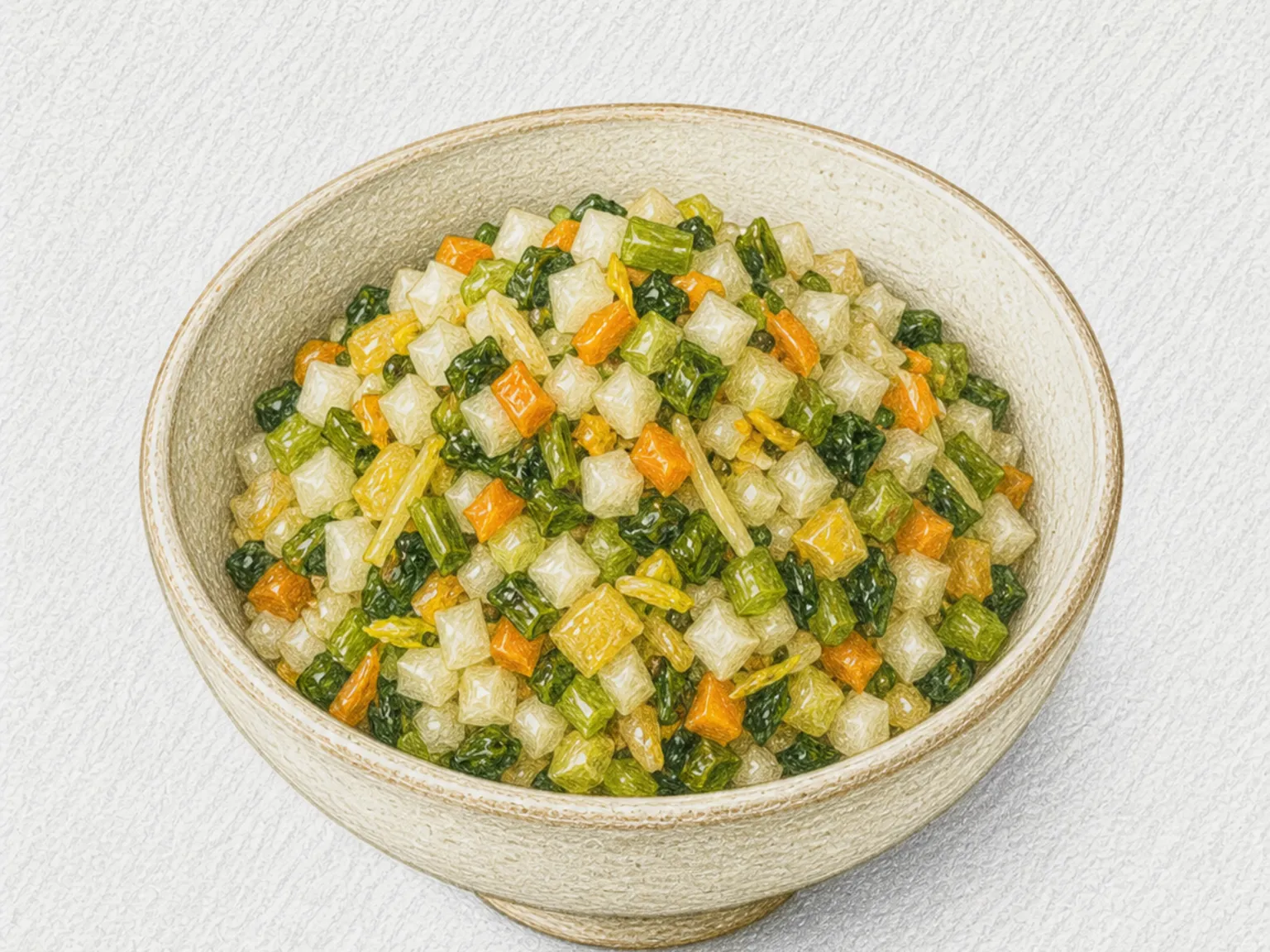
Omizuke is a chopped vegetable pickle from the Murayama, Mogami, and Okitama areas of Yamagata Prefecture. Yamagata seisai mustard greens, daikon, carrot, and Jerusalem artichoke are cut into small pieces, salted, and pressed overnight under a weight about twice as heavy as the vegetables. The released green liquid is discarded, and the vegetables are rinsed and squeezed well. Salted perilla seeds, edible chrysanthemum petals, and ginger are mixed in before a boiled and fully cooled dressing of soy sauce, coarse sugar, and mirin is added. A light weight keeps everything beneath the liquid during refrigerated pickling. It is ready after 2 to 3 days and may be served with rice or used in rice balls, ochazuke, and fried rice. Because the salt level is mild, keep it refrigerated and finish it within about two weeks.

🏠 Everyday 🍱 Lunchbox
Prep 35min Cook 15min 20 servings
Char Kway Teow (Penang Wok-Fried Flat Rice Noodles with Prawns)
Noodles Medium

Char Kway Teow (Penang Wok-Fried Flat Rice Noodles with Prawns)

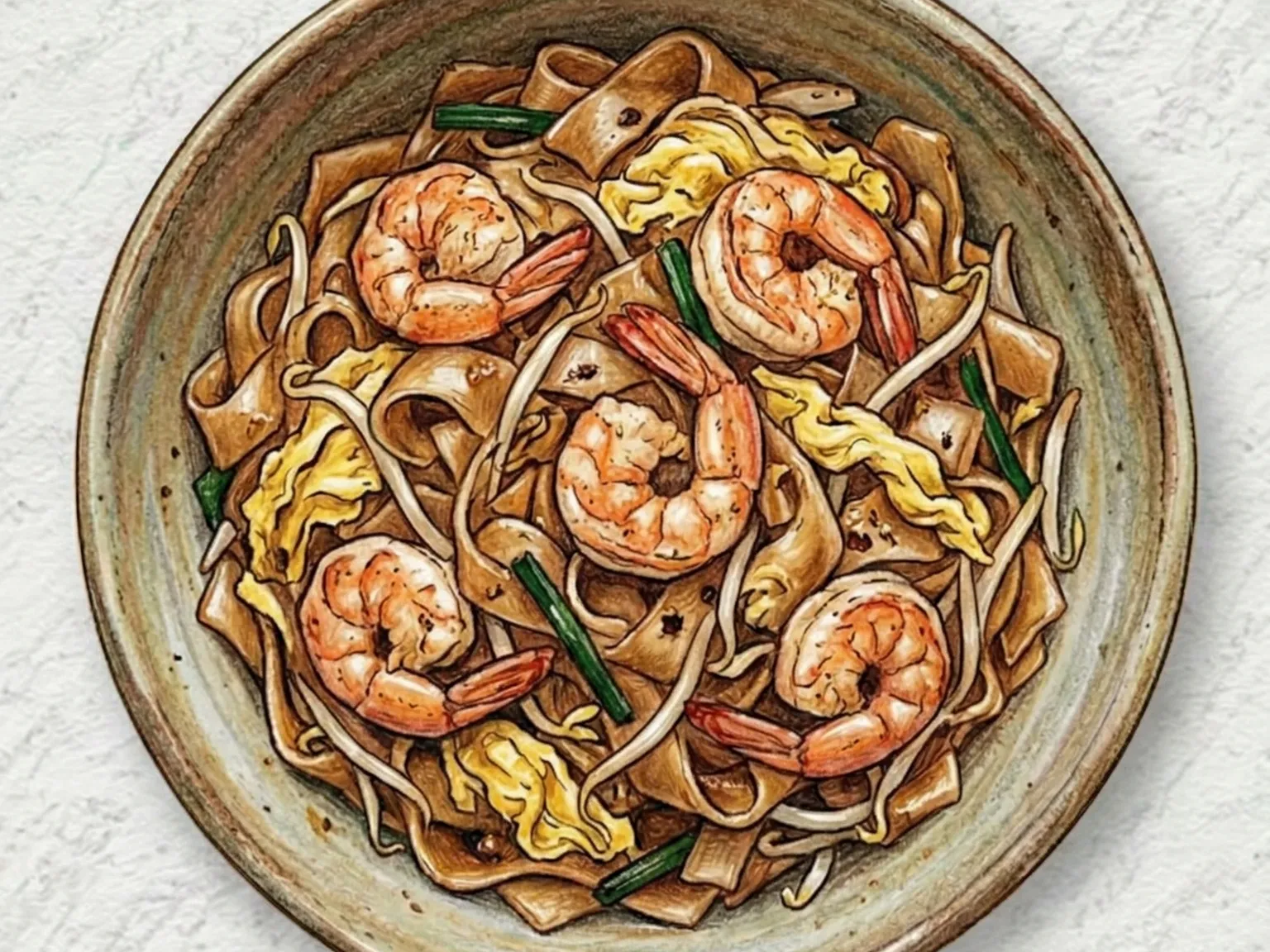
Char kway teow originated in Penang as a meal for Chinese laborers who needed something filling and cheap, cooked fast over high heat with whatever was affordable. Wide flat rice noodles go into a scorching wok with prawns, cockles, egg, bean sprouts, Chinese chives, and sliced lap cheong sausage. Dark soy sauce and oyster sauce stain the noodles a deep, smoky brown as they caramelize against the iron of the wok. The defining quality of the dish is wok hei, the charred, slightly acrid breath of the wok that comes only from cooking at extreme temperatures with the noodles thrown directly through open flame. Achieving wok hei requires both a wok that has reached its full temperature and enough physical space inside it for the noodles to make sustained contact with the hot surface rather than steaming in their own moisture. Traditionally cooked in pork lard, the rendered fat coats every noodle strand with a richness no vegetable oil can match. Penang hawker stalls cook one plate at a time because crowding the wok traps moisture and kills the sear. The result carries a charred, faintly bitter edge beneath the sweet-salty sauce that has made it one of the most recognized street foods in Southeast Asia.

🏠 Everyday 🌙 Late Night
Prep 15min Cook 12min 2 servings
Japanese Kani Salad
Salads Easy

Japanese Kani Salad

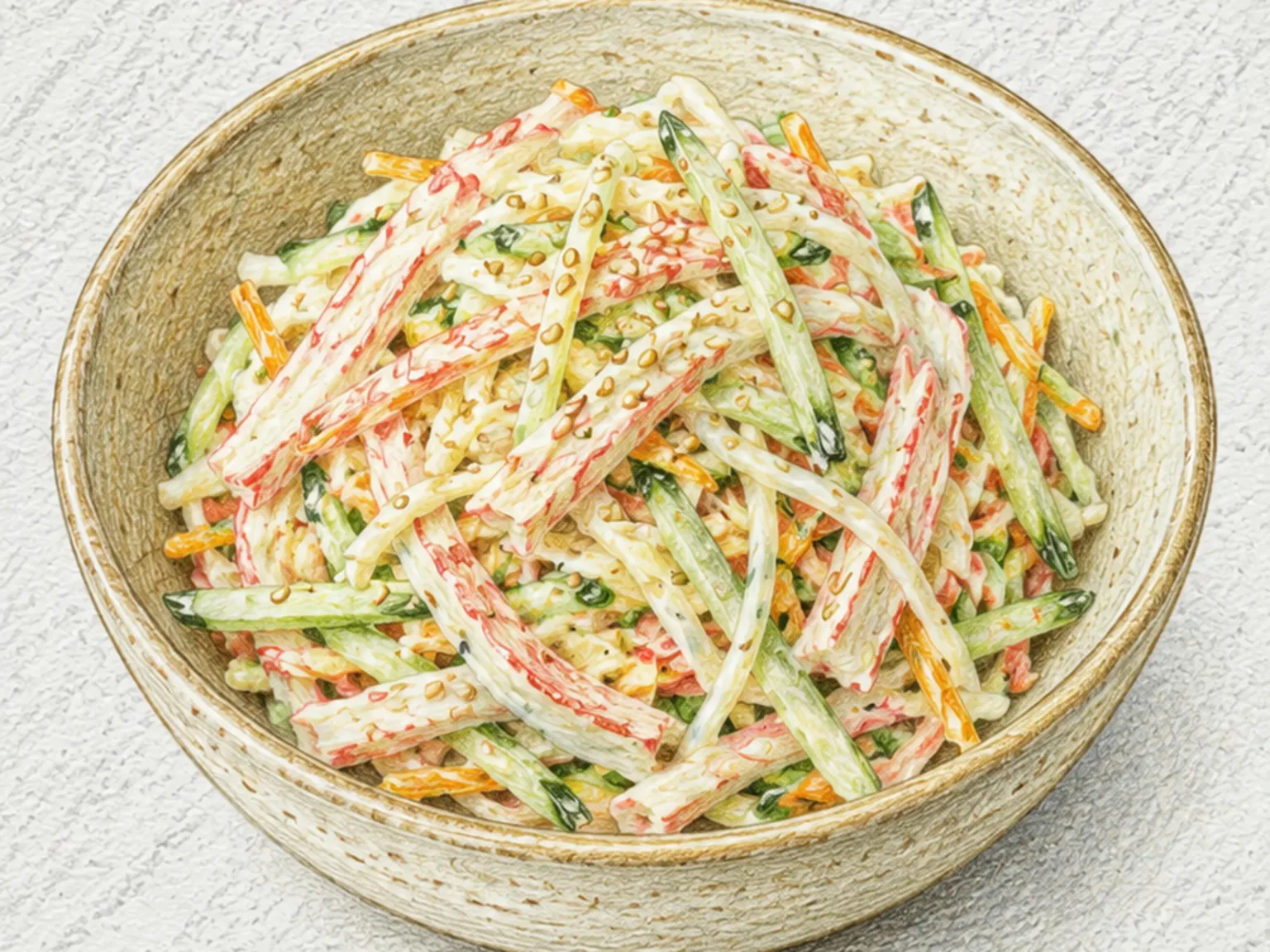
Kani salad is a Japanese-inspired dish centered on imitation crab meat that is prepared using a specific shredding technique. Instead of chopping the crab, the sticks are pulled apart along their natural grain to create a soft and fibrous texture. This particular structure allows the crab to absorb the dressing thoroughly while preventing the pieces from becoming saturated with excess liquid. These shreds are combined with cucumbers and carrots that have been julienned into thin strips to add a crisp and refreshing crunch to the overall composition. The dressing for the salad is a mixture of mayonnaise, rice vinegar, and fresh lemon juice. This specific blend results in a creamy coating that provides a smooth mouthfeel without leaving a heavy or oily sensation after eating. Toasted sesame seeds are incorporated into the mixture to provide a warm and nutty element that complements the gentle sweetness of the imitation crab. The most significant requirement for a successful salad is ensuring that the vegetables are patted completely dry before they are tossed with the other ingredients. If there is any moisture left on the cucumber or carrots, it will dilute the mayonnaise base and cause the salad to become thin and watery within a short amount of time. Because the recipe requires no cooking or heat, the entire bowl can be assembled in approximately ten minutes, which provides an efficient solution for a quick and refreshing lunch or dinner side. This salad is versatile in its application, serving as a popular topping for sushi rolls or as a light starter when paired with slices of fresh avocado.

🥗 Light & Healthy ⚡ Quick
Prep 15min 2 servings
Ayam Gulai (Spiced Coconut Chicken Curry)
Asian Medium

Ayam Gulai (Spiced Coconut Chicken Curry)

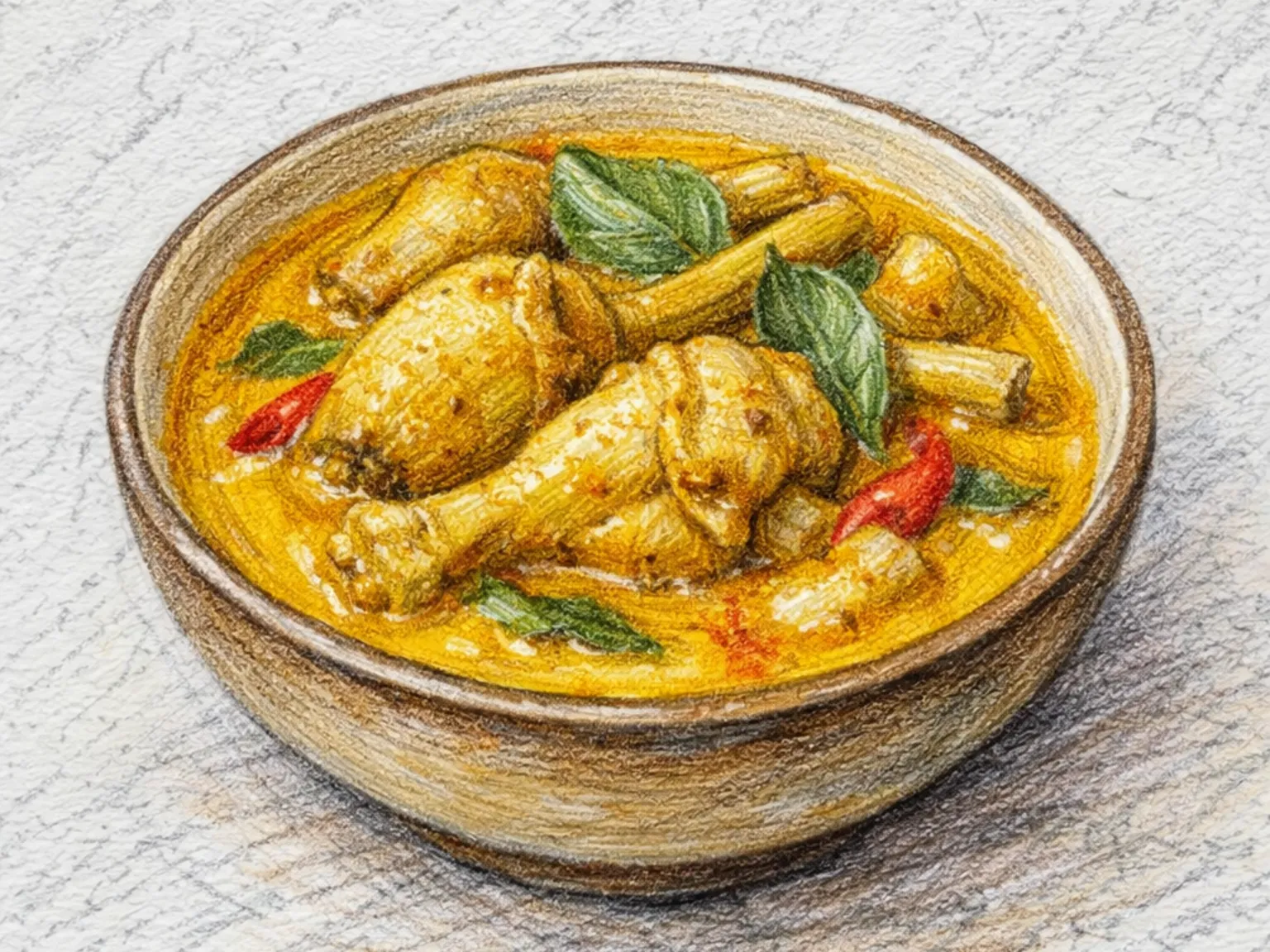
Traditional Indonesian cuisine from West Sumatra relies heavily on the complex application of spices and coconut milk. Ayam gulai serves as a primary example of this Minangkabau tradition. The process starts by grinding shallots, garlic, ginger, galangal, turmeric, and candlenuts into a wet paste called rempah. This mixture requires continuous stirring over low heat until the oil visibly separates from the solids. This separation indicates that the moisture has completely evaporated, allowing the aromatic compounds to develop fully. Skipping this step results in a sauce with an unpleasant raw texture. Once the base is ready, chicken pieces are braised in the spiced coconut liquid for at least thirty minutes. This duration ensures the meat becomes tender enough to fall off the bone while the sauce reduces to a bright yellow consistency that clings to the poultry. Turmeric and galangal establish an earthy base, while kaffir lime leaves contribute a sharp citrus scent to offset the heavy coconut milk. The natural fats in the coconut serve to carry these different aromatics across the palate, creating a long-lasting aftertaste. In a traditional Padang establishment, servers place numerous small plates on the table before any specific order is made. This service style reflects the local hospitality of the region. Diners are charged only for the dishes they touch, a practice that remains a defining element of the dining experience alongside the technical preparation of the curry itself.

🎉 Special Occasion
Prep 20min Cook 40min 4 servings
Pandesal Milk Rolls
Baking Medium

Pandesal Milk Rolls

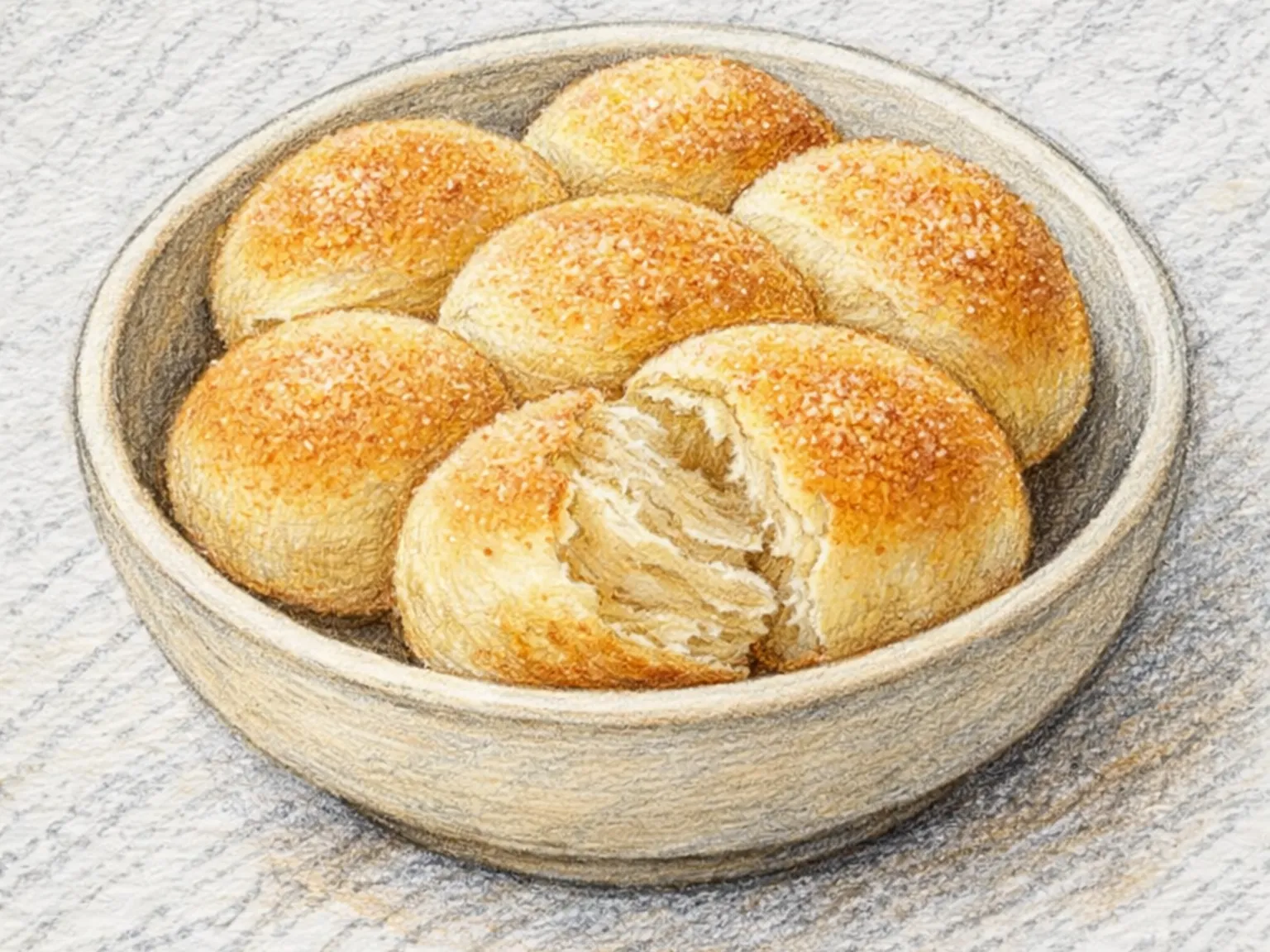
Pandesal milk rolls are small yeast breads made with warm milk and finished with breadcrumbs across their tops. First dissolve the yeast and part of the sugar in the milk and wait for small surface bubbles. Add this mixture and the egg to bread flour combined with the remaining sugar and salt. Once no dry flour remains, work in the unsalted butter in several portions. The dough feels slippery at first but becomes smooth and capable of stretching thin after sufficient kneading. During the first proof, let it double and check that a fingertip indentation returns slowly. Release only excess gas, divide the dough into equal pieces, and round each one with light tension across the surface. Moisten only the tops and apply the breadcrumbs evenly, then leave space between the rolls on the tray for the second proof and oven expansion. Bake until the coating and surface become light golden. After a brief cooling period, cover the rolls with a clean towel as directed. The breadcrumb coating leaves a fine, slightly coarse outer texture, while the milk-and-butter dough tears into a soft interior.

🧒 Kid-Friendly
Prep 35min Cook 18min 4 servings
Funa-Meshi (Okayama Minced Crucian Carp Rice Bowl)
Rice Medium

Funa-Meshi (Okayama Minced Crucian Carp Rice Bowl)

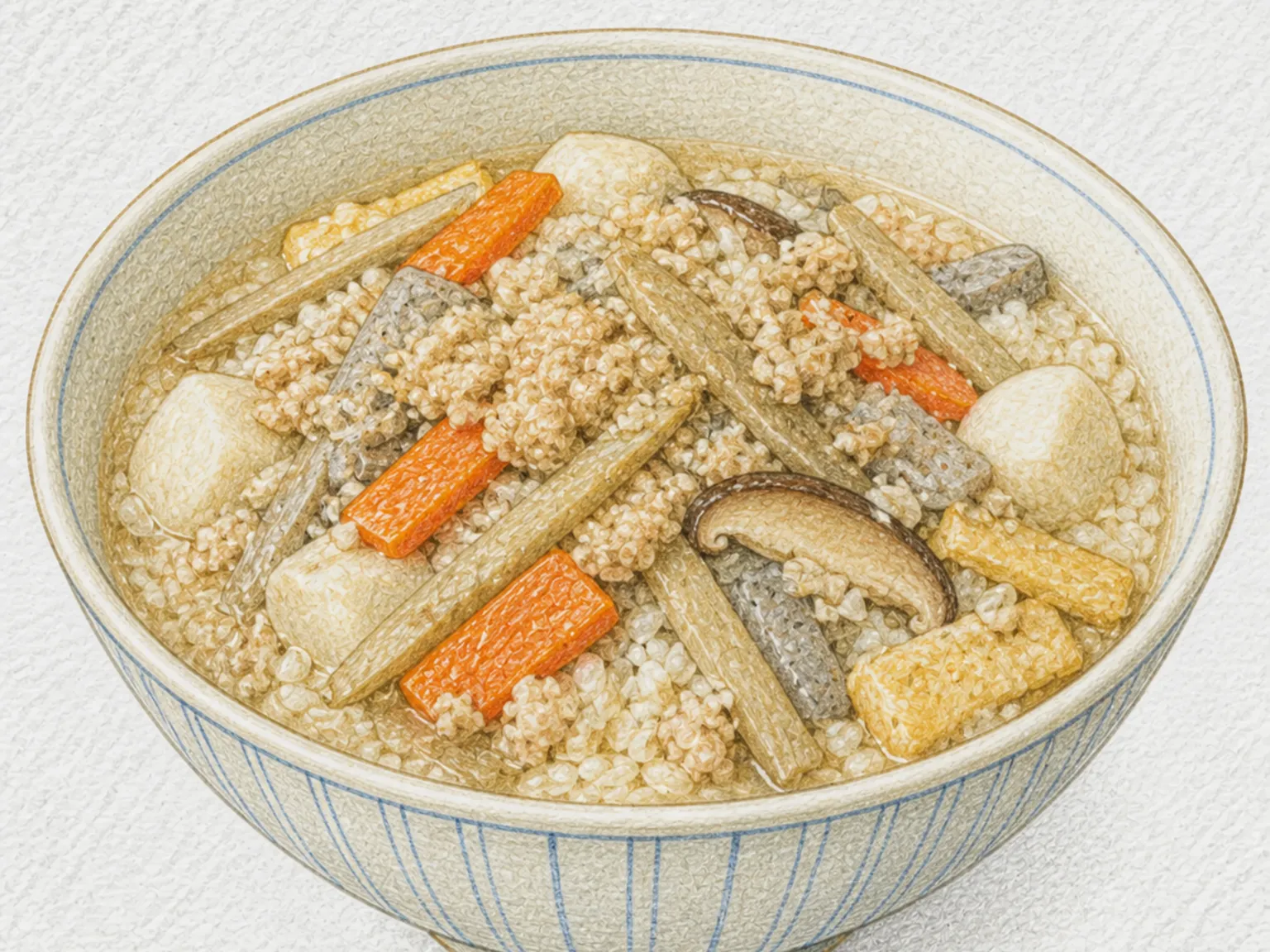
Funa-meshi is a rice bowl from southern Okayama made by loosening minced crucian carp in vegetable and sesame oils, briefly frying it with burdock, Kintoki carrot, taro, fresh shiitake, konnyaku, and fried tofu, then simmering everything in dashi seasoned with dark and light soy sauces, mirin, sake, and sugar. The hot, richly flavored soup is ladled generously over rice and finished with sliced onion and torn nori. Cooking the mince gently until pale before adding the vegetables reduces the freshwater aroma and keeps it granular. The dish grew alongside reclamation around Kojima Bay, where rice fields, canals, rivers, and Kojima Lake supported plentiful crucian carp. It was also called tontoko-jiru or tontoko-meshi after the rhythmic chopping sound made when winter fish were minced on a board.

🏠 Everyday
Prep 25min Cook 30min 4 servings
Kinpira Gobo
Stir-fry Easy

Kinpira Gobo

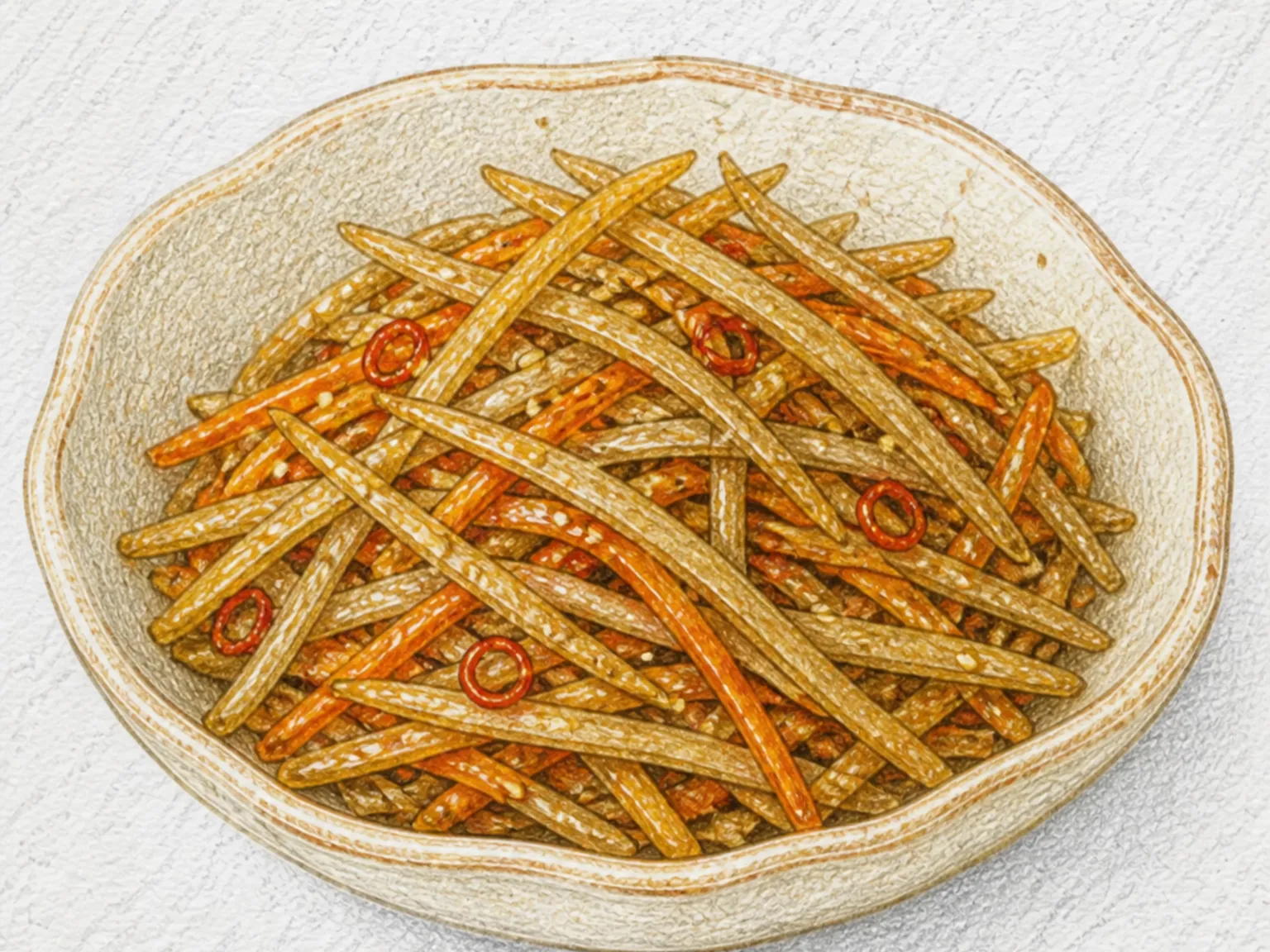
Kinpira gobo matches 70 g burdock with 30 g carrot in thin 5 cm strips, then reduces a measured soy seasoning until almost no liquid remains. Scrub soil from the burdock rather than cutting away a thick layer of skin. Cut it to size, soak it in 500 ml water for 5 minutes, and drain. Cut the carrot to the same length and remove the seeds from half a dried red chili. In a separate bowl, stir 50 ml water with 1.5 teaspoons soy sauce, 2 teaspoons sugar, and 1 teaspoon sake for 30 seconds, until almost no sugar grains remain. Heat 1 tablespoon sesame oil with the chili over high heat for 30 seconds. Add the burdock first and stir-fry for 2 minutes, then add the carrot for 1 more minute so both vegetables receive a coating of oil. Pour in the mixed seasoning, lower the heat to medium, and cook for 6 to 8 minutes while stirring. Turn off the heat when the pan bottom is nearly dry but the burdock still gives firm resistance when bitten. Let the vegetables stand for 5 minutes, then rub 1 teaspoon toasted white sesame seeds between the fingers as they are scattered over the surface.

🏠 Everyday 🍱 Lunchbox
Prep 15min Cook 12min 2 servings
Imo Yokan (Sweet Potato Jelly)
Desserts Easy

Imo Yokan (Sweet Potato Jelly)

Imo yokan is a firm, sliceable sweet potato confection made by blending hot sieved sweet potato with a small amount of agar syrup, then chilling the mixture in a mold. Peel and trim 250g sweet potato, cut it into 2cm rounds, and cover the pieces with cold water. Drain them after 10 minutes. Replace that water with fresh water and cook over medium heat. After 12 to 15 minutes, test the center with a skewer; it should pass through without resistance. Drain the potato promptly and press it through a sieve while it is still hot; cooling first makes the fibers harder to smooth out. Cover the sieved potato so its surface does not dry while the setting liquid is prepared. Combine 120ml water and 2g agar powder in a clean saucepan. Bring the liquid to a boil over medium heat, then stir for a full 2 minutes so no agar granules remain. Add 60g sugar and dissolve it completely before mixing in the sweet potato. Keep the pan over low heat for 2 minutes, working with a spatula until the puree and syrup form one even mass with no pale streaks or dry lumps. Dampen the mold with water, pack in the mixture, and level the top. Let visible steam dissipate before refrigerating it for at least 2 hours. Unmold the set block and cut it into four portions. A finished slice should keep a clean corner under the knife, retain the compact, soft grain of the sieved sweet potato, and avoid a rubbery gel texture.

🧒 Kid-Friendly 🎉 Special Occasion
Prep 15min Cook 25min 4 servings

About Asian

Each country brings its own signature spices and sauces, so even the same ingredients can produce completely different flavors. With a few key pantry items - coconut milk, fish sauce, curry powder, doubanjiang - you can recreate the tastes of Asia at home.