Asian Recipes
806 recipes. Page 7 of 34
The Asian category gathers popular dishes from Japan, China, Thailand, Vietnam, India, and beyond. Curry, stir-fried noodles, mapo tofu, pad Thai, and pho are among the Asian favorites commonly enjoyed in Korean households.
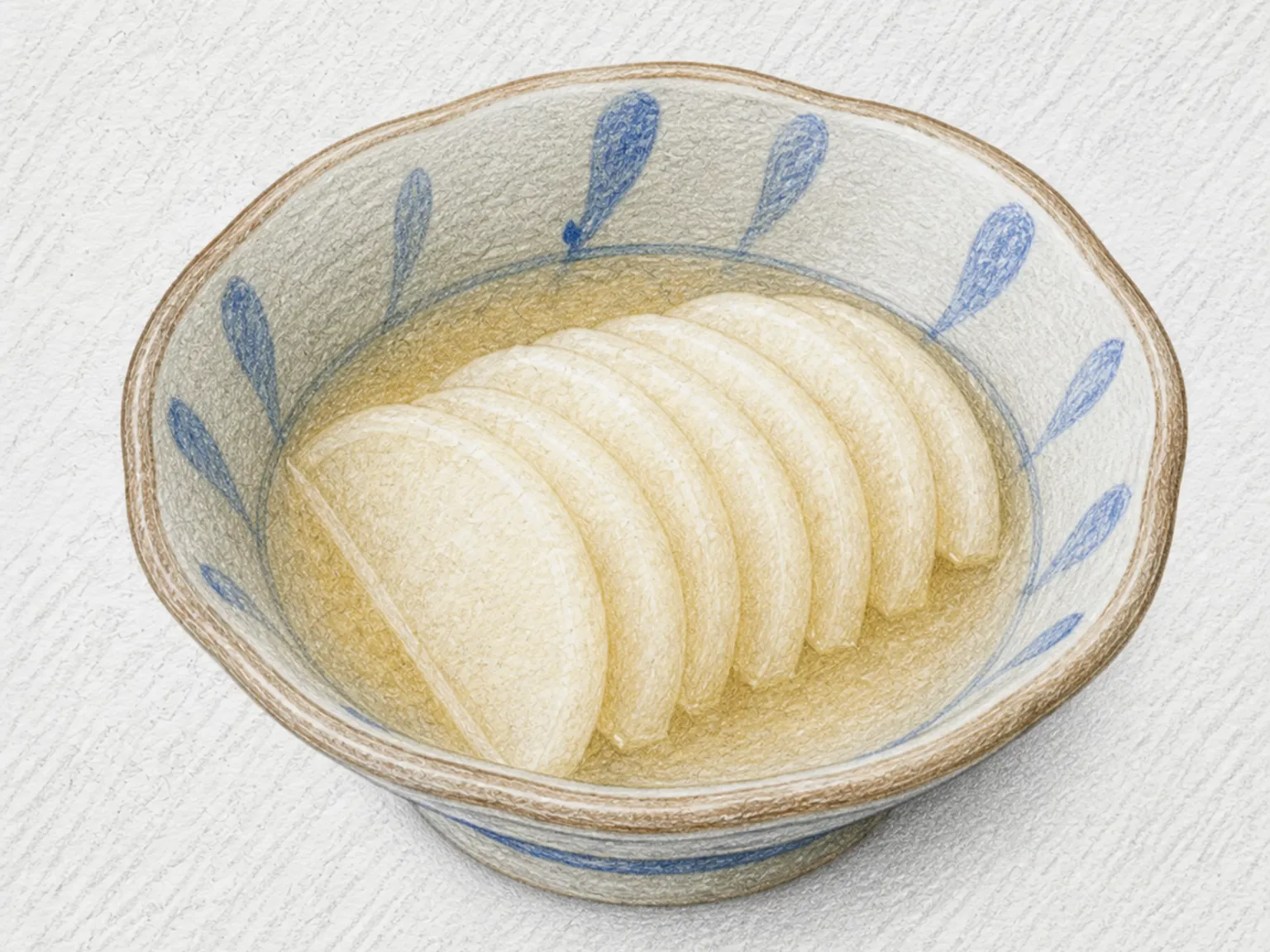
Namagusa-Koko (Daikon Pickled in Salted Sardine Liquid)
Namagusa-koko is a preserved food from Kakudahama in Niigata City. Sardines cleaned of gills and innards in spring are stored under a large measured quantity of salt, then heated around 70°C in winter to make the liquid used for pickling daikon for about 1 month. The salted fish is held from the spring catch until the December radish harvest, then heated with its brine while stirring. Around 70°C, the thick fish mixture becomes a smoother liquid. Once cooled, it must cover the daikon completely during the month-long refrigerated pickle. The finished radish is sliced thinly and was formerly eaten both as an everyday side dish and at New Year.
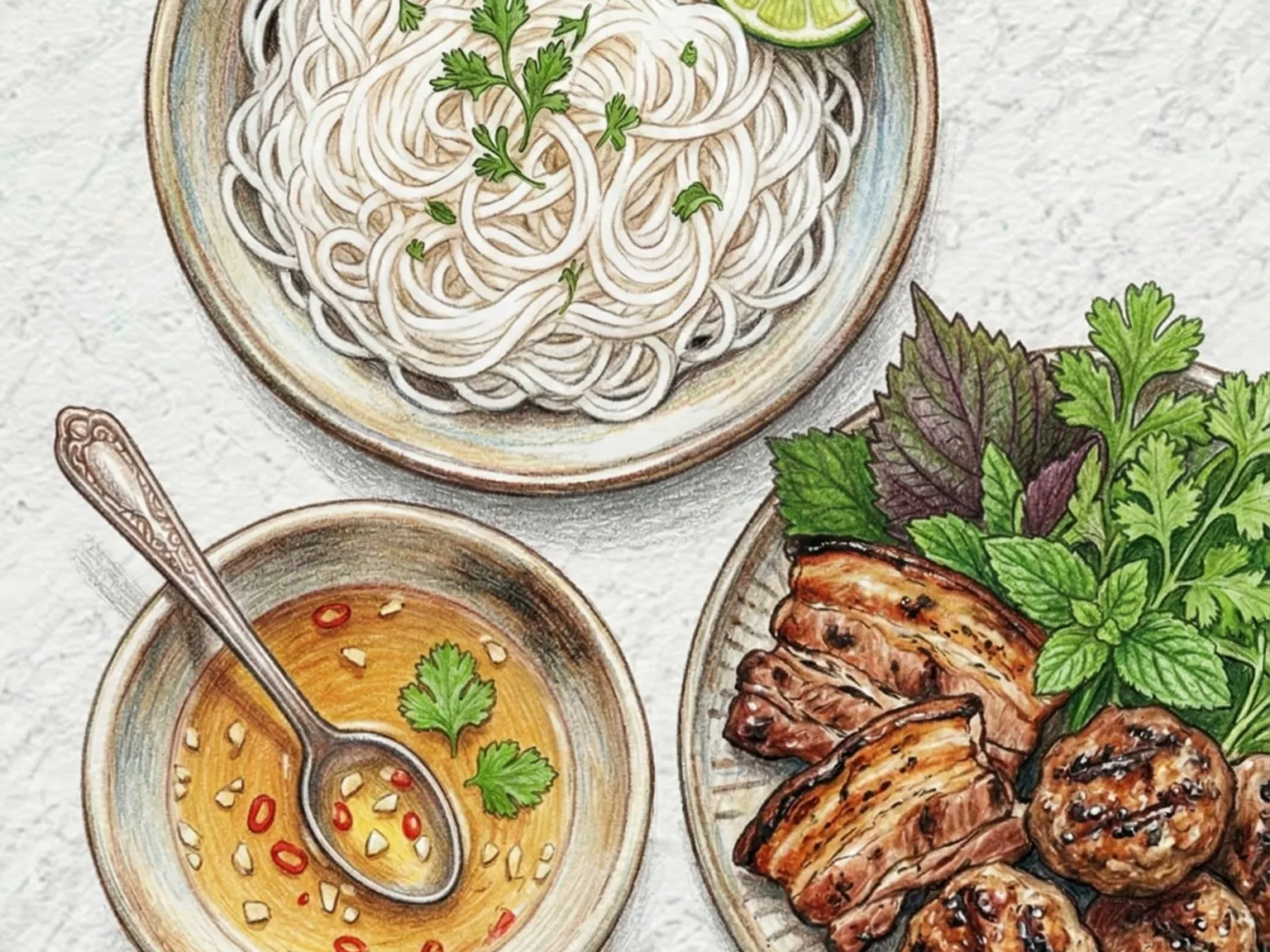
Hanoi Bun Cha (Grilled Pork Patties with Rice Noodles)
Bun cha defines the lunchtime rhythm of Hanoi. Every alley in the Old Quarter fills at midday with the smoke of charcoal grills, the sound of fat hitting hot coals, and the caramel-edged smell of pork charring at the edges. Two forms of pork are grilled simultaneously: fatty sliced pork belly and small, hand-shaped patties of seasoned ground pork. Both cook over coconut-shell charcoal until the edges blacken and the fat renders into drippings, carrying the smoke of the fire into every bite. The grilled meat drops directly into individual bowls of warm dipping broth - a sweetened fish sauce sharpened with vinegar, garlic, and chili. This broth sits between a condiment and a light soup, and diners naturally drink a little of it between bites of meat and noodles. Rice vermicelli arrives on a separate plate alongside a full mound of fresh herbs: perilla, mint, lettuce, and dill. The ritual of eating matters as much as the ingredients - noodles are dipped into the broth, a piece of pork is retrieved, wrapped in fresh herbs, and eaten in one bite. In 2016, Barack Obama and Anthony Bourdain ate bun cha at a simple Hanoi street stall. The restaurant preserved the table they occupied behind a glass case, a response that says everything about how deeply this dish is bound to the city.
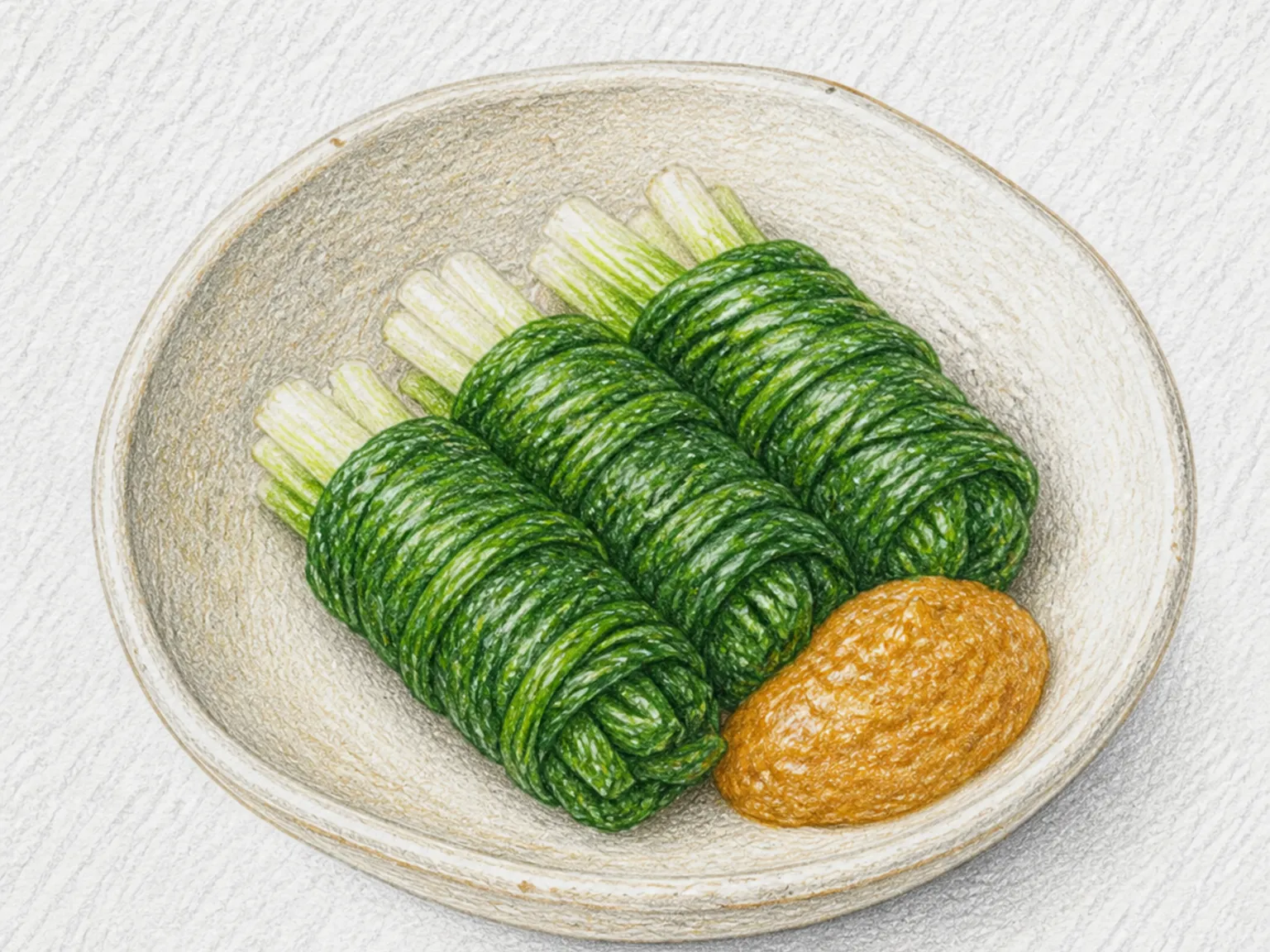
Hitomoji no Guruguru (Coiled Scallions with Vinegar Miso)
Hitomoji no guruguru is a Kumamoto dish made by briefly blanching local wakegi scallions and winding each green leaf around its swollen white base. The root ends enter salted boiling water first so the dense cores cook while a crisp bite remains. After cooling and thorough squeezing, each stalk is folded about 5 cm above the white section and coiled to an even size. A sweet-tart sauce of white miso, sugar, vinegar, and mirin is served alongside. The dish is said to have begun as an inexpensive sake snack during austerity measures in the Higo domain, and the scallions are sweetest in early spring after overwintering.
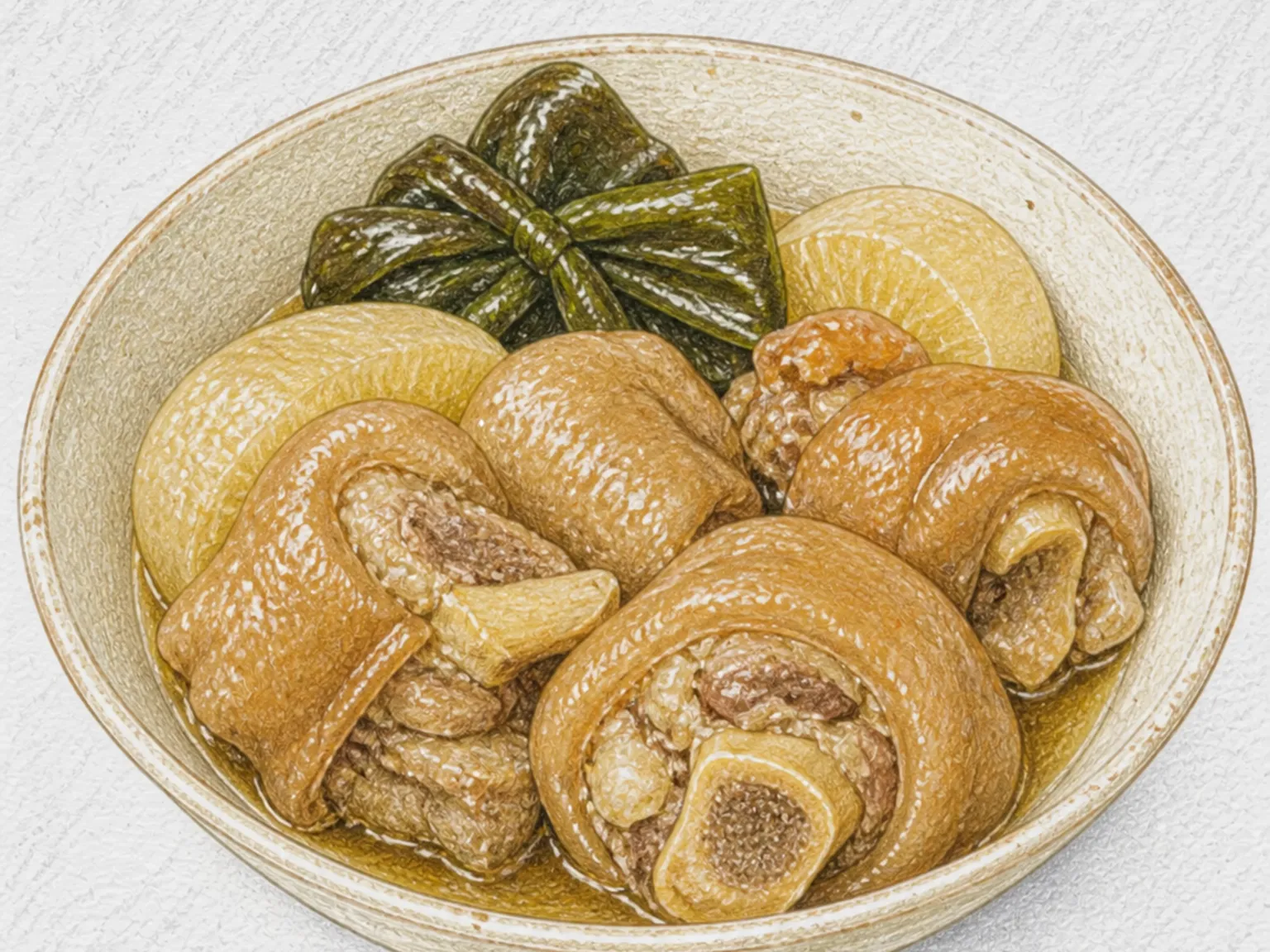
Ashi Tibichi Okinawan Simmered Pig Trotters
Ashi tibichi is an Okinawan simmer that first parboils pig trotters in water scented with awamori, then slowly cooks them with knotted kombu and daikon until the bones slip out easily. It reflects Ryukyu pork cookery that used every part of the animal, moving from court cuisine into ordinary homes. The broth becomes firm when cold because the trotters release abundant gelatin. Residual hair on the skin is singed and the surface is thoroughly washed before a twenty-minute awamori parboil removes odor and excess fat. The trotters then enter fresh water with kombu and blanched daikon for about three and a half hours of gentle cooking, with foam and fat skimmed along the way. Kombu and daikon soften sooner, so they are removed before losing shape and returned only when the trotters are meltingly tender. Salt and soy sauce provide a restrained final seasoning.
Malcha Chamkkae Brioche Knots (Matcha Sesame Brioche Knots)
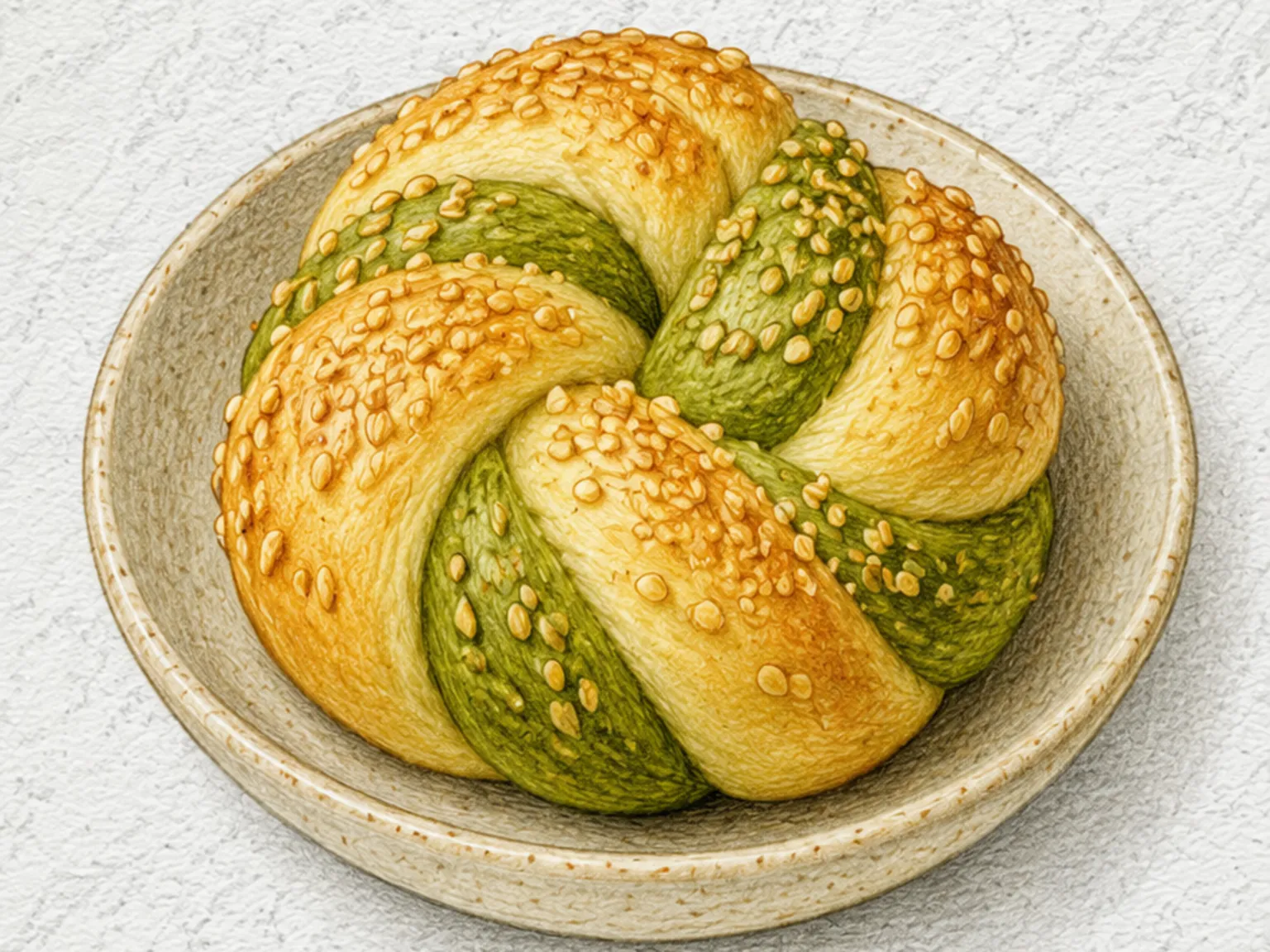
Half the brioche dough is tinted green with matcha powder and left to develop alongside the plain half, then the two are twisted into knot shapes and coated in toasted sesame seeds before baking. The enriched dough delivers the hallmark brioche character, soft, buttery, and slightly sweet, while the matcha half contributes an earthy bitterness that tempers the richness. Sesame seeds, warmed during baking, release a pronounced nutty aroma and add a light crunch to the bread's otherwise pillowy surface. Keeping the dough temperature near 26 degrees Celsius prevents the butter from leaking out during kneading; dissolving the matcha in a small amount of water first ensures streak-free color. After a 60-minute bulk rise and a 30-minute proof, the knots bake at 180 degrees Celsius for 16 to 18 minutes until the tops are golden and the interiors are feathery. The two-toned swirl visible when the knot is torn open makes this bread visually striking, well suited for gift-giving or serving at a gathering.
Chicken Curry Rice
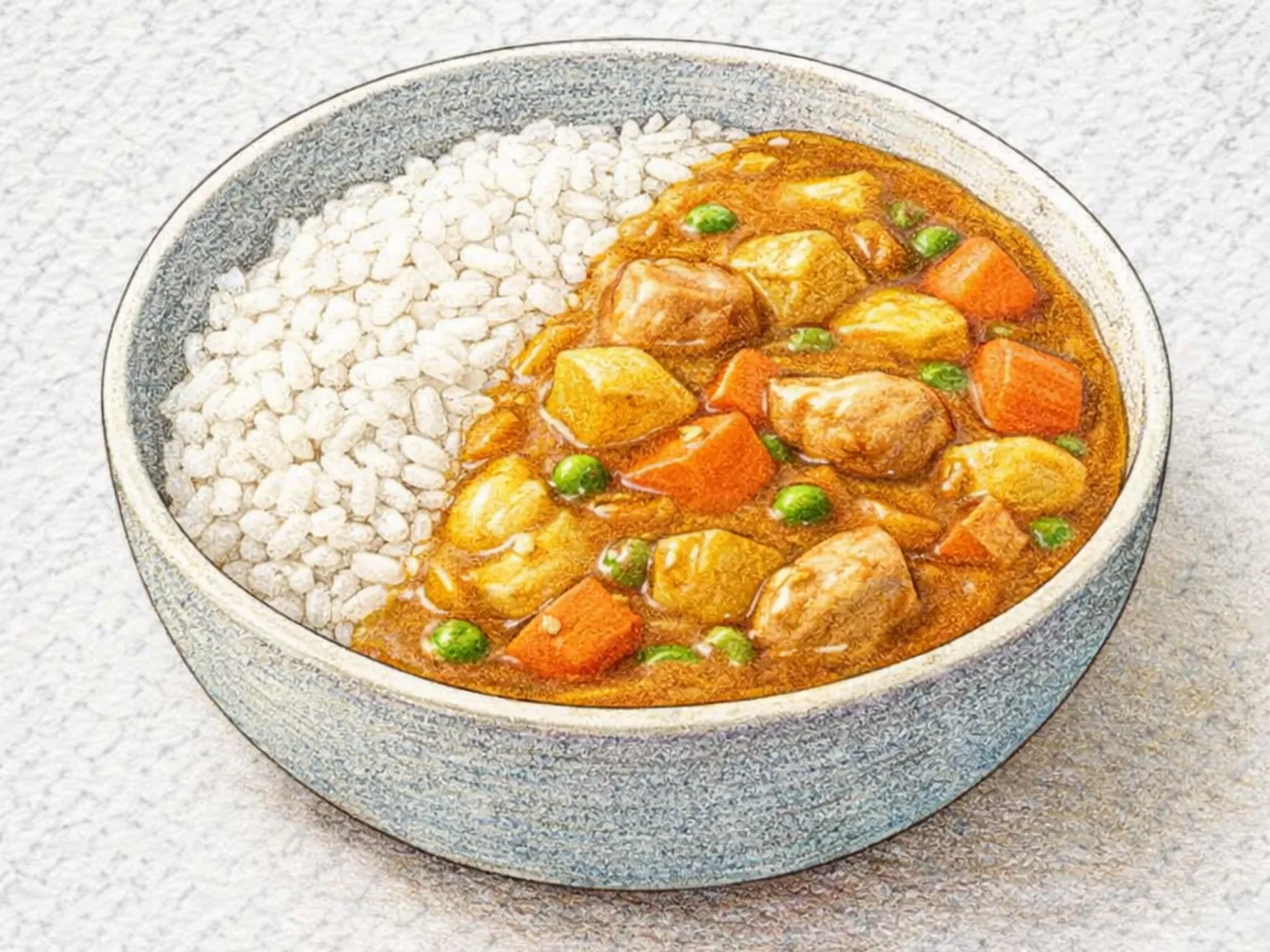
Chicken curry rice cooks 420 g chicken thigh with 250 g potato, 140 g carrot, and 220 g onion, then serves the curry with 4 cups cooked rice. Cut the chicken into 3 to 4 cm pieces and dice the vegetables to a similar size, leaving the potato pieces slightly larger. Cook the chicken in 1 tbsp oil until the surfaces turn white and lightly brown, then add the vegetables for 3 minutes. Pour in 850 ml water, bring it to a boil, skim the foam, and simmer over medium-low heat for 12 minutes with the lid slightly open. Turn off the heat before adding 120 g curry roux and stir until no lumps remain. Add 1 tbsp butter, return the pot to low heat, and stir for 5 minutes. Divide the 4 cups rice and curry among four plates.
Goya Champuru (Bitter Melon and Island Tofu Stir-Fry)
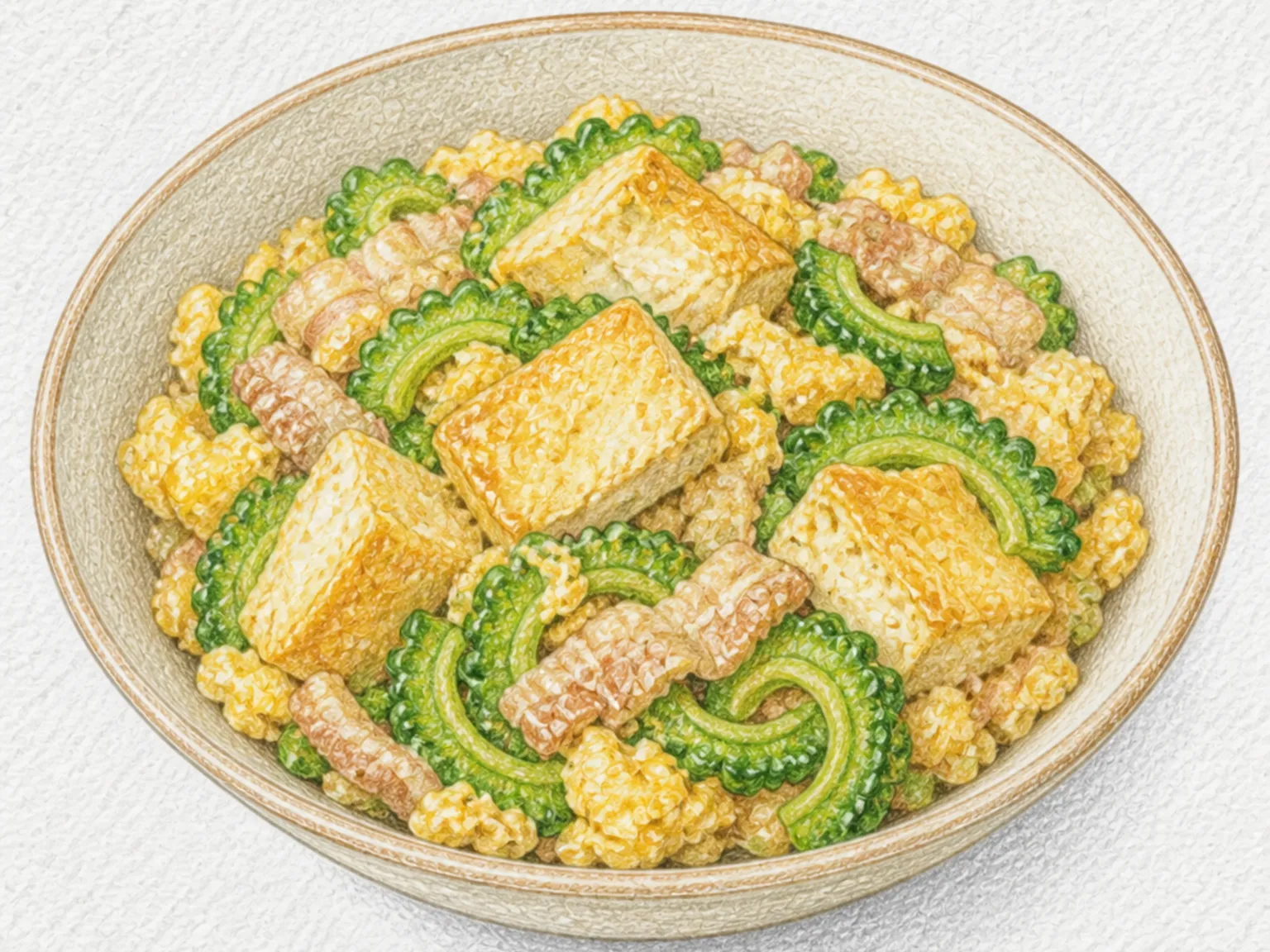
Goya champuru is a representative Okinawan stir-fry built by browning firm island tofu first, then combining it with sliced bitter melon, boiled pork belly, and egg in sequence. The goya is split lengthwise, cleared of seeds and white pith, and cut into thin half-moons. Tofu is dried well, torn into large pieces, and seared over medium heat before being removed, which helps it stay intact when returned at the end. Pork belly is simmered until tender and cut into short strips. The bitter melon receives only a brief stir-fry over low to medium heat, retaining its green color and characteristic bitterness. Beaten egg is allowed to coat and set around the slices before the pork and browned tofu are folded back in. Chanpuru refers to a seasonal vegetable stir-fry in which island tofu is essential. Once especially associated with summer goya, the dish is now eaten throughout the year.
Miyagi Ganzuki
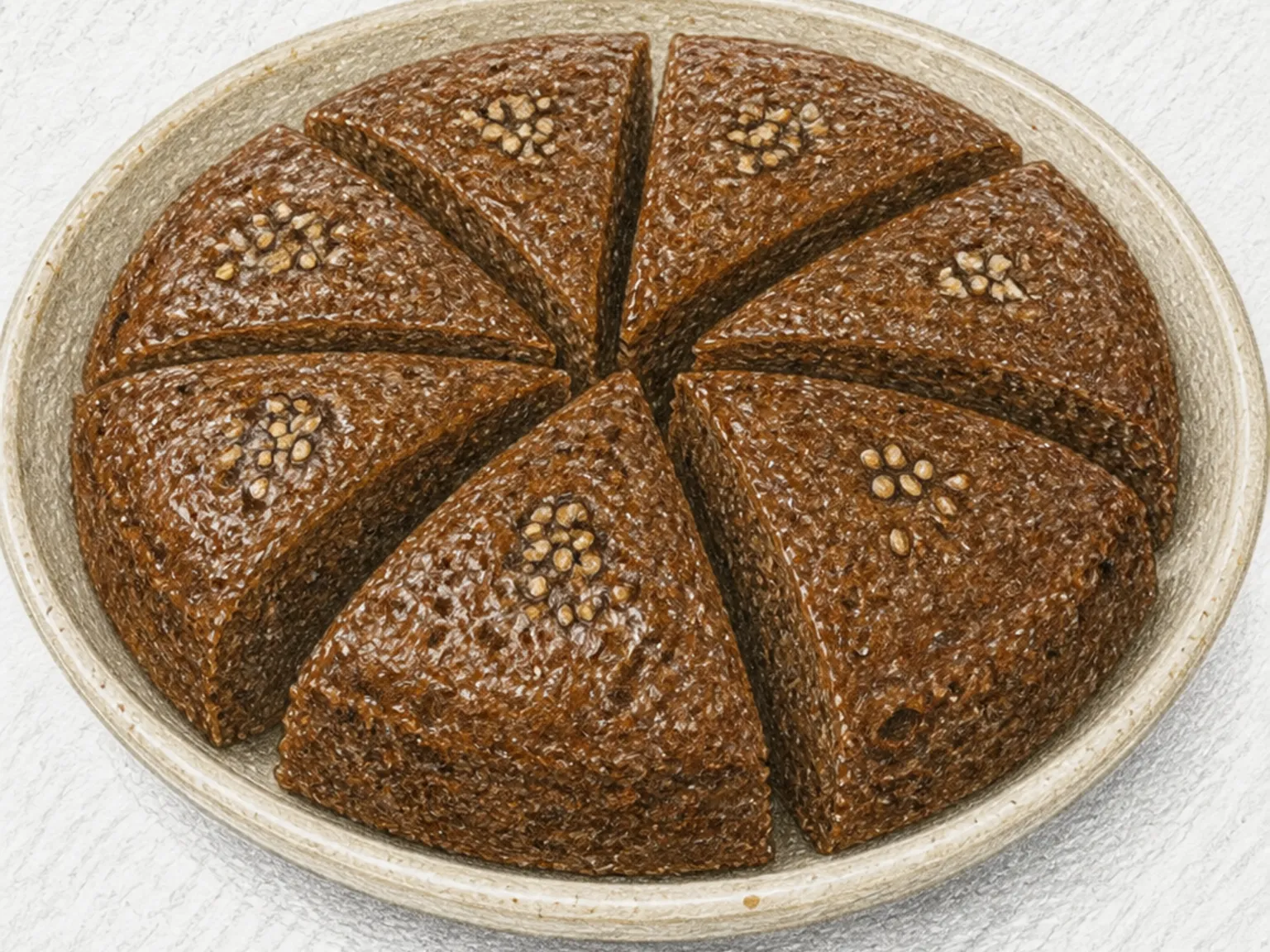
Ganzuki is a rustic Miyagi steamed cake made by dissolving dark brown sugar in water, combining it with wheat flour and baking powder, topping it with sesame or walnuts, and steaming it in a round or loaf mold. One explanation links its name to a dark, fluffy appearance resembling wild-goose meat, and the brown form is also called kuro-ganzuki. Because chemical leavening replaces fermentation, households could prepare it quickly as a filling snack for children or during breaks in farm work. Cooling the sugar liquid before briefly mixing the flour prevents premature leavening, while steady strong steam produces an evenly risen, moist crumb.
Horaku-yaki (Covered Seafood Roast in Earthenware)
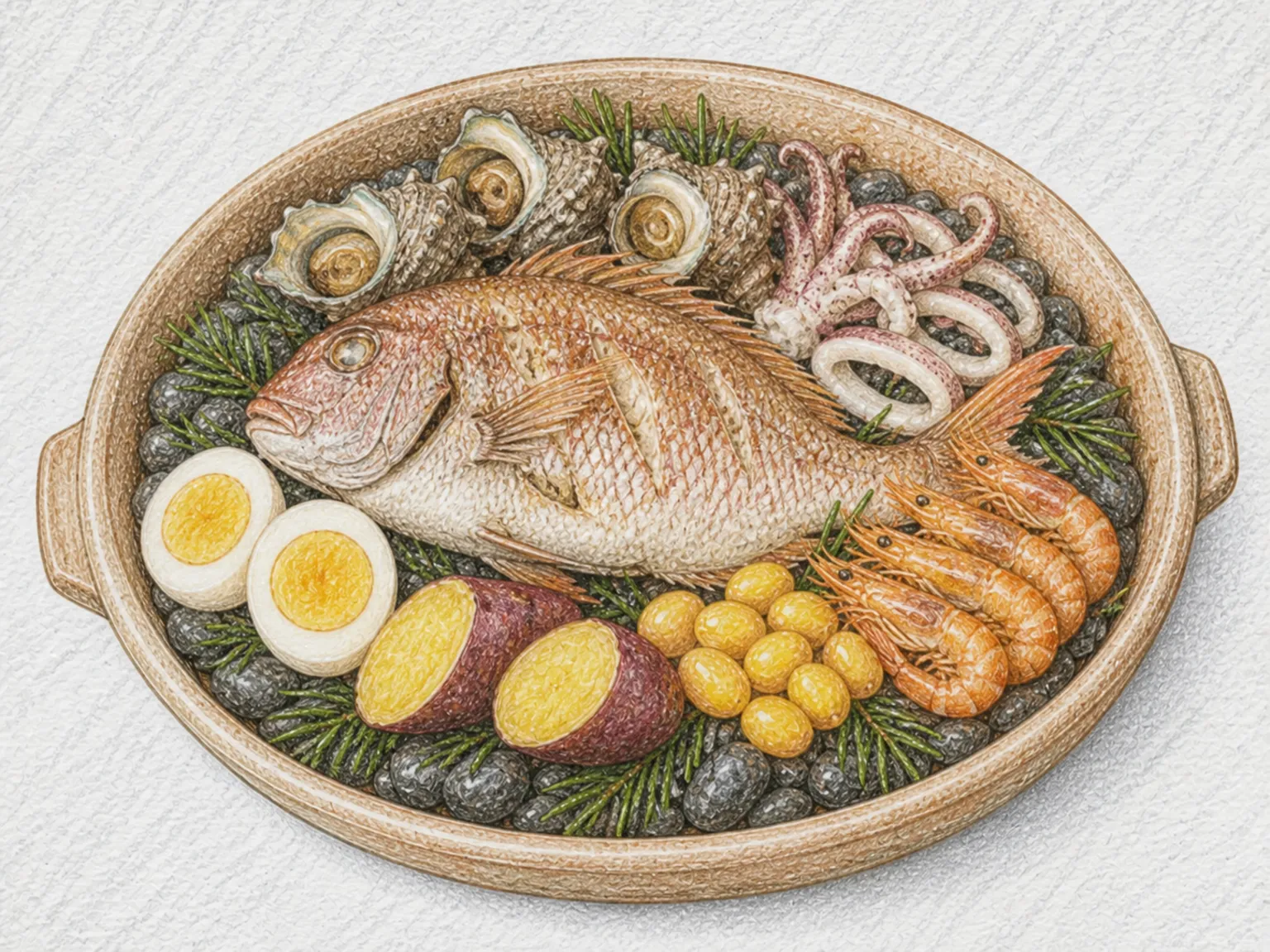
Horaku-yaki is an Imabari specialty from Ehime. A flat earthen roasting pan is lined with small stones and untreated pine needles, then filled with a whole sea bream at the center and turban shells, squid, kuruma prawns, boiled eggs, sweet potato, and ginkgo nuts around it. The covered pan cooks without added water and uses only salt for seasoning, concentrating moisture released by the seafood while the stones catch excess liquid. A tradition links the dish to victory feasts of the Murakami naval forces based around the Kurushima Strait in the Muromachi period, which is why it is also called pirate cuisine and served at banquets.
Donko-Jiru (Miyagi Miso Fish and Liver Soup)
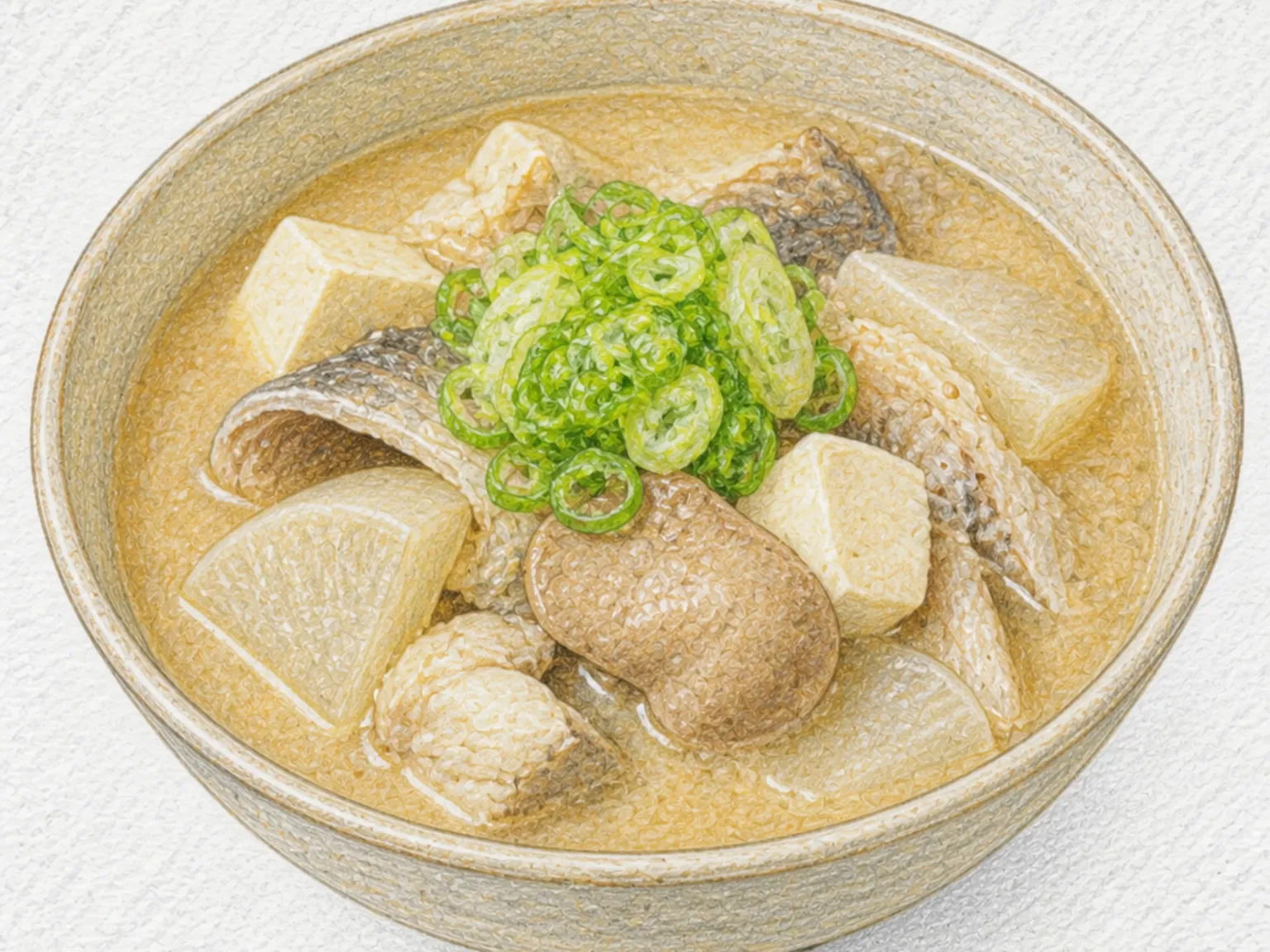
Donko-jiru is a Miyagi winter soup that uses one or two whole donko fish, including flesh, head, bones, and liver. The pieces simmer with daikon in water, are seasoned with Sendai miso, and finish with tofu and long onion. Donko is a regional name applied to ezo isoname and chigo cod, fish that become firm and develop especially rich livers from autumn into winter. As the liver cooks, its fat disperses through the broth while the head and bones contribute clean marine depth. The fish's large mouth and body tapering toward the tail inspired an auspicious interpretation: money enters easily but is difficult to lose. Around Kesennuma, families hung donko at the household altar for Ebisu observances, praying for abundant catches and prosperous business, then made it into soup. It is also served to winter guests.
Nasu no Hana-zushi
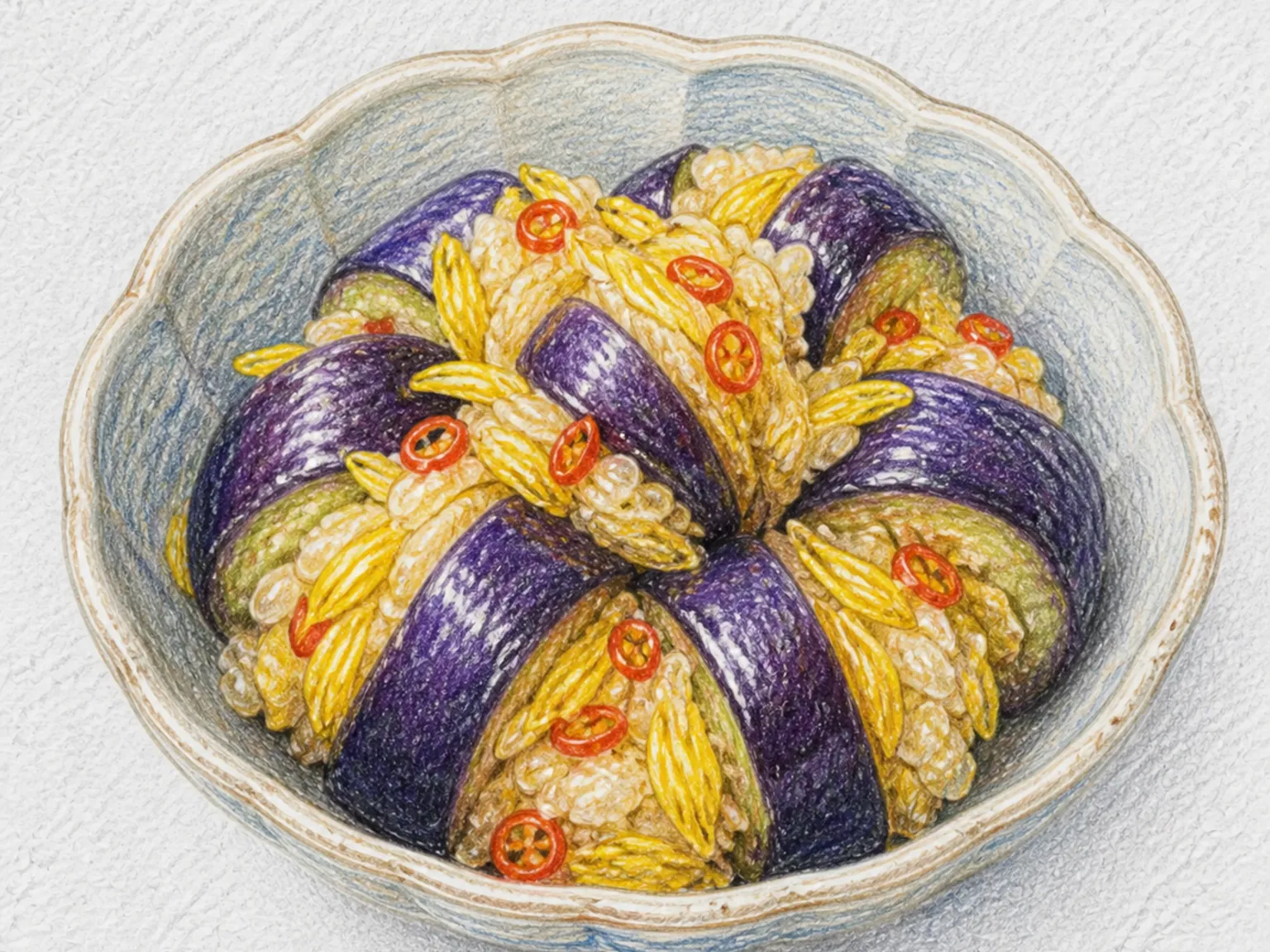
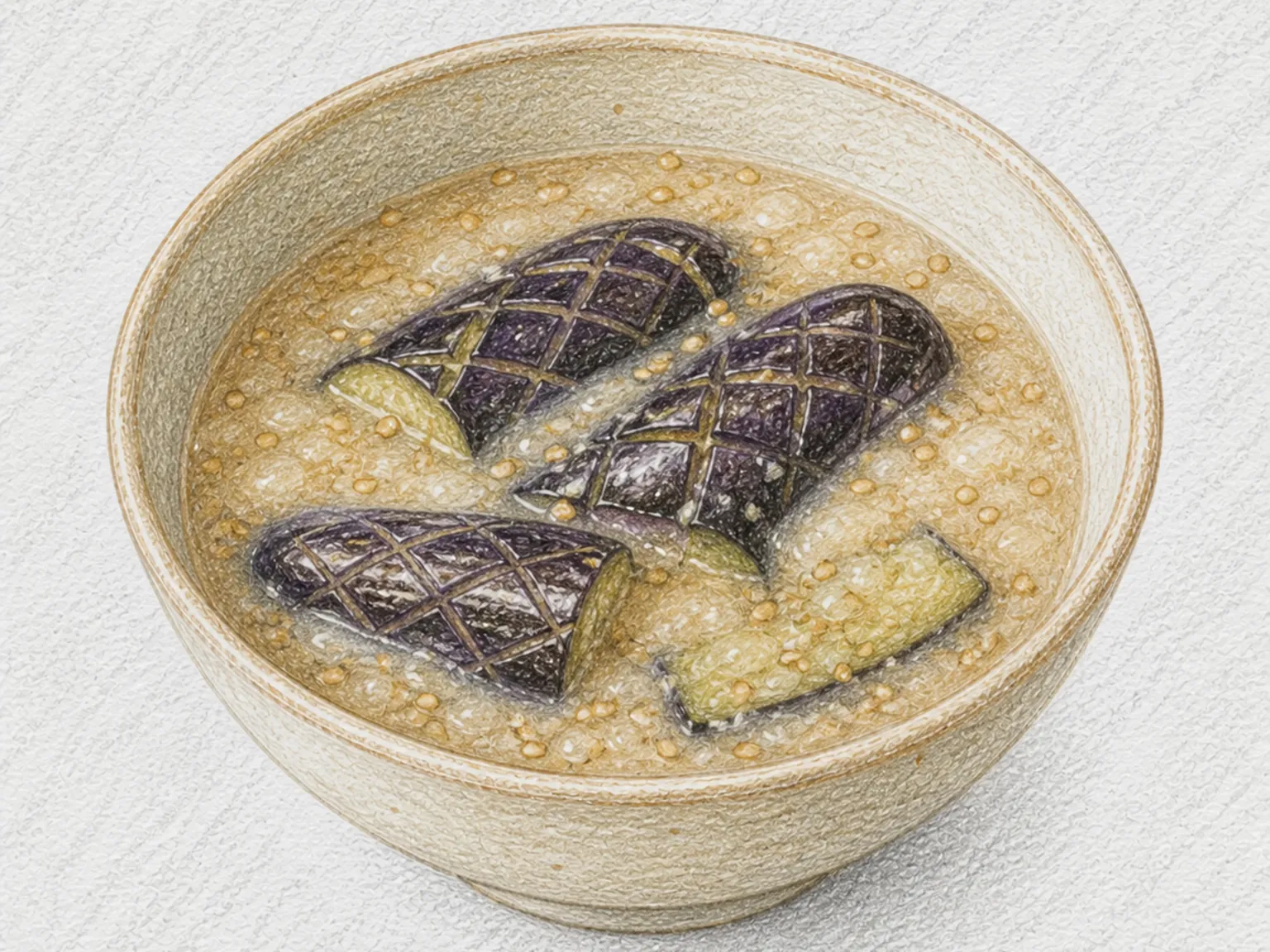
Nasu no hana-zushi is a southern Akita pickle that layers thick-cut eggplant with sweet-and-salty seasoned glutinous rice, yellow edible chrysanthemum petals, and red chili, then rests for three to four days. It is called zushi because rice is used, not because it contains fish. Regional names include hanakko and nasukko. The contrast of purple eggplant, yellow chrysanthemum, and red chili makes it a celebratory New Year food sometimes described locally as an artwork among Akita pickles. Traditionally, eggplants harvested earlier were preserved in salt and assembled when chrysanthemums bloomed in late autumn for winter eating. The rice supplies a gentle fermented sweetness, while the flowers add a clean aroma to the firm, salty eggplant.
Bun Rieu (Vietnamese Crab and Pork Tomato Noodle Soup)
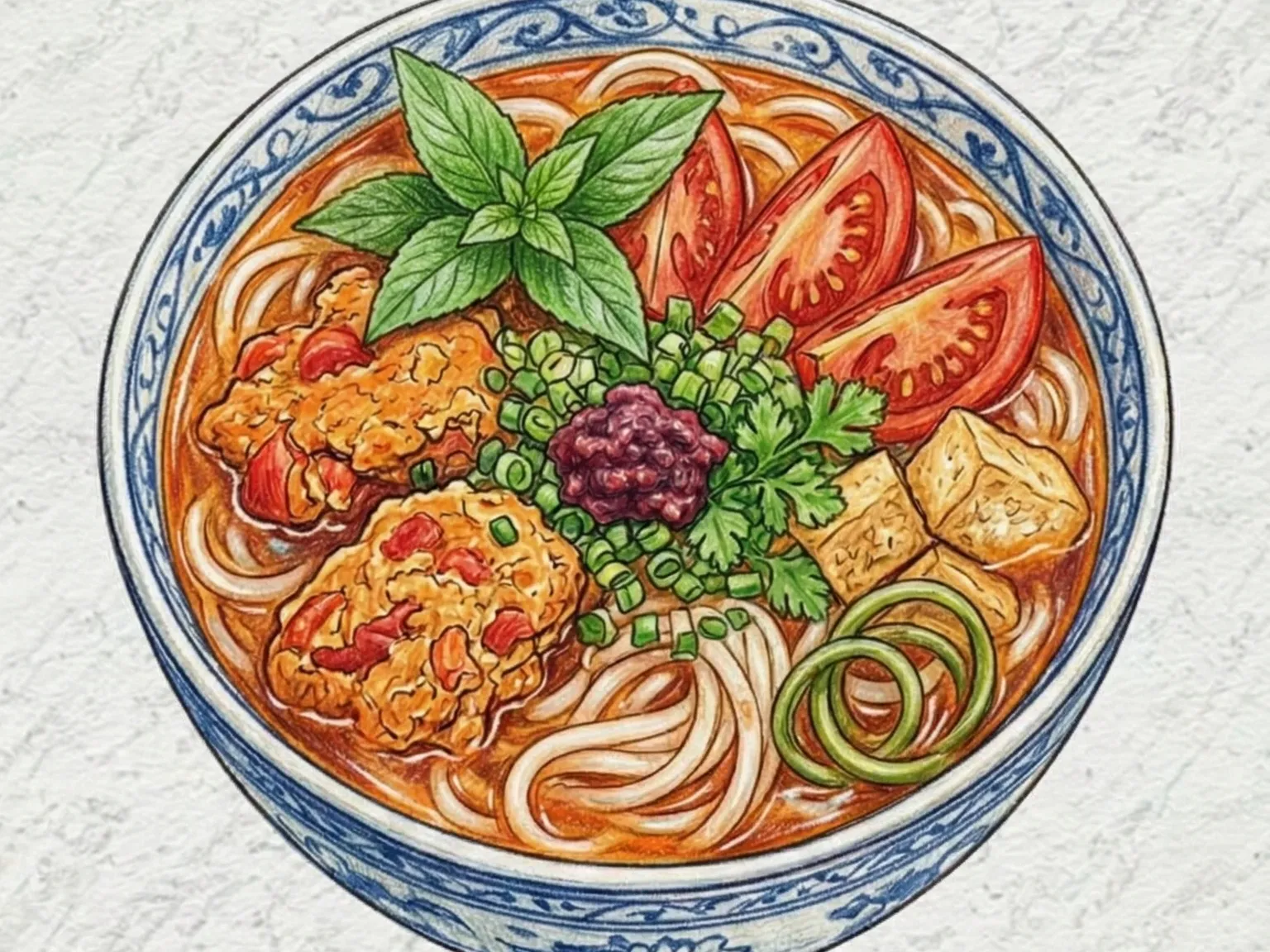
Bun rieu is a Vietnamese noodle soup from the north built on two unconventional foundations: freshwater paddy crabs and fermented shrimp paste. Together they produce a broth of unusual complexity that is simultaneously sweet, savory, and funky in ways that fish-sauce-based soups are not. Small river crabs are pounded whole, shell and all, in a mortar, then mixed with water and strained through a sieve to extract a turbid, intensely crab-scented liquid. This liquid is heated gently over low flame until the crab proteins coagulate into a soft, custard-like mass that floats to the surface, forming the crab cake that defines the dish. Tomatoes are added to the simmering broth and break down over time, tinting it red and contributing a fruity acidity that balances the crab richness. Mam tom, the fermented shrimp paste, is kept tableside and stirred in individually according to each diner's tolerance for pungency. A single spoonful transforms the broth into something considerably more intense and complex. Rice vermicelli provides a neutral base, while fried tofu puffs absorb broth during cooking and release it in each bite. Morning glory greens add a vegetable counterpoint. In Hanoi, bun rieu vendors typically specialize in this one soup, ladling hundreds of bowls from a single pot each morning before selling out by noon.
Hiyashi Wakame (Japanese Chilled Wakame Salad)
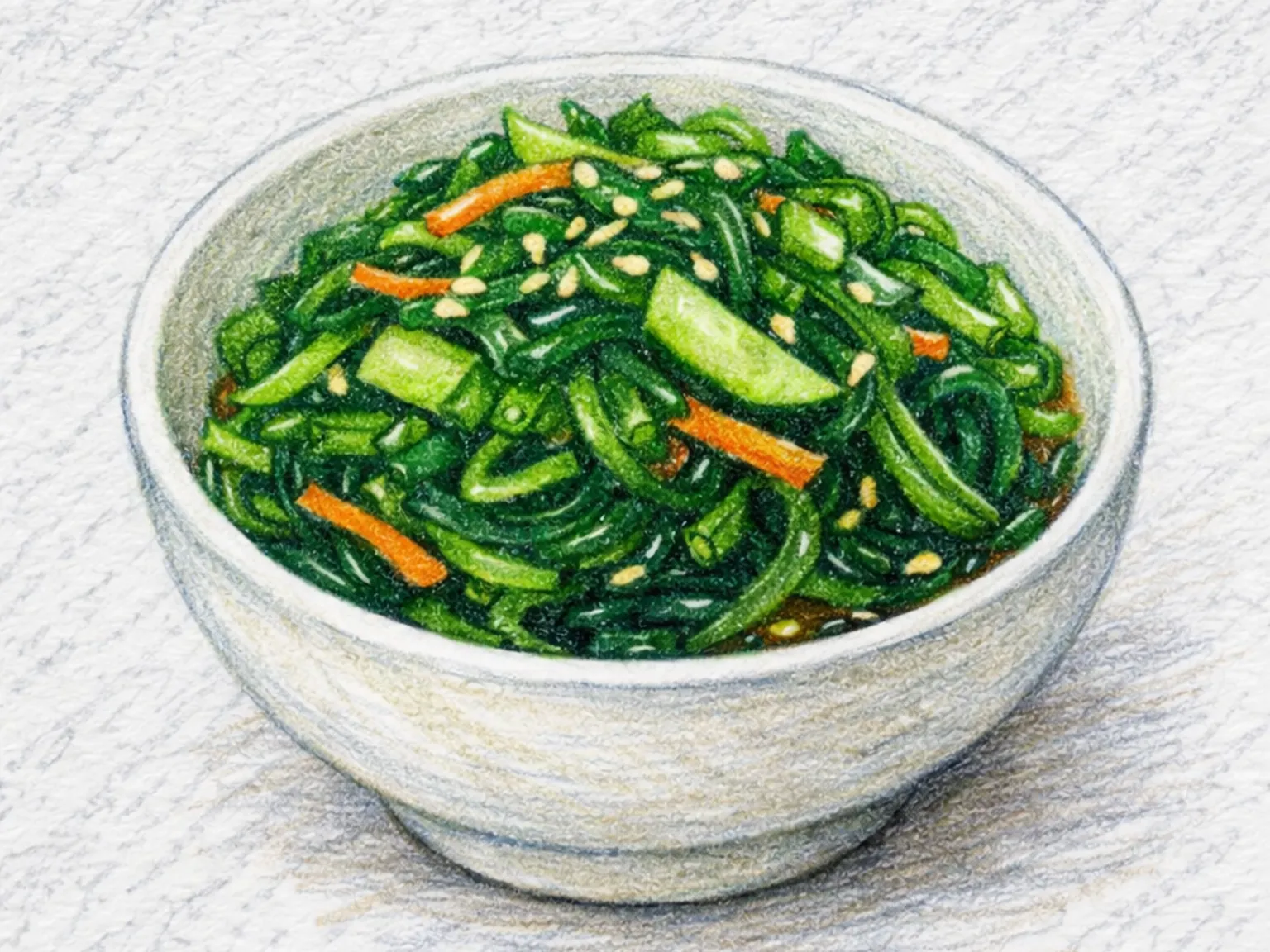
Hiyashi wakame is a chilled Japanese seaweed salad in which dried wakame is rehydrated in cold water, blanched for exactly twenty seconds, then rinsed in cold water and squeezed firmly dry before being tossed with salt-wilted cucumber slices in a soy-vinegar dressing. The twenty-second blanch is the most technically precise step in the recipe: less time leaves the wakame insufficiently tender, while more than twenty seconds tips it toward rubbery toughness or mushiness depending on how long it continues on the heat. Wakame blanched for exactly this duration holds a smooth, springy texture that takes the dressing evenly across its surface. The dressing combines soy sauce, rice vinegar, sugar, and sesame oil into a balance of salty umami and sharp acidity that amplifies the seaweed's natural oceanic fragrance rather than competing with it. Salting the cucumber for five minutes and pressing out the liquid before adding it is a non-optional step; skipping it causes the cucumber's released water to dilute the dressing and wash out its flavor. A generous finish of toasted sesame seeds adds a warm, nutty aroma that sits as a counterpoint over the cold, clean textures of the wakame and cucumber.
Atama Ryori (Blanched Large Fish Head and Offal Platter)
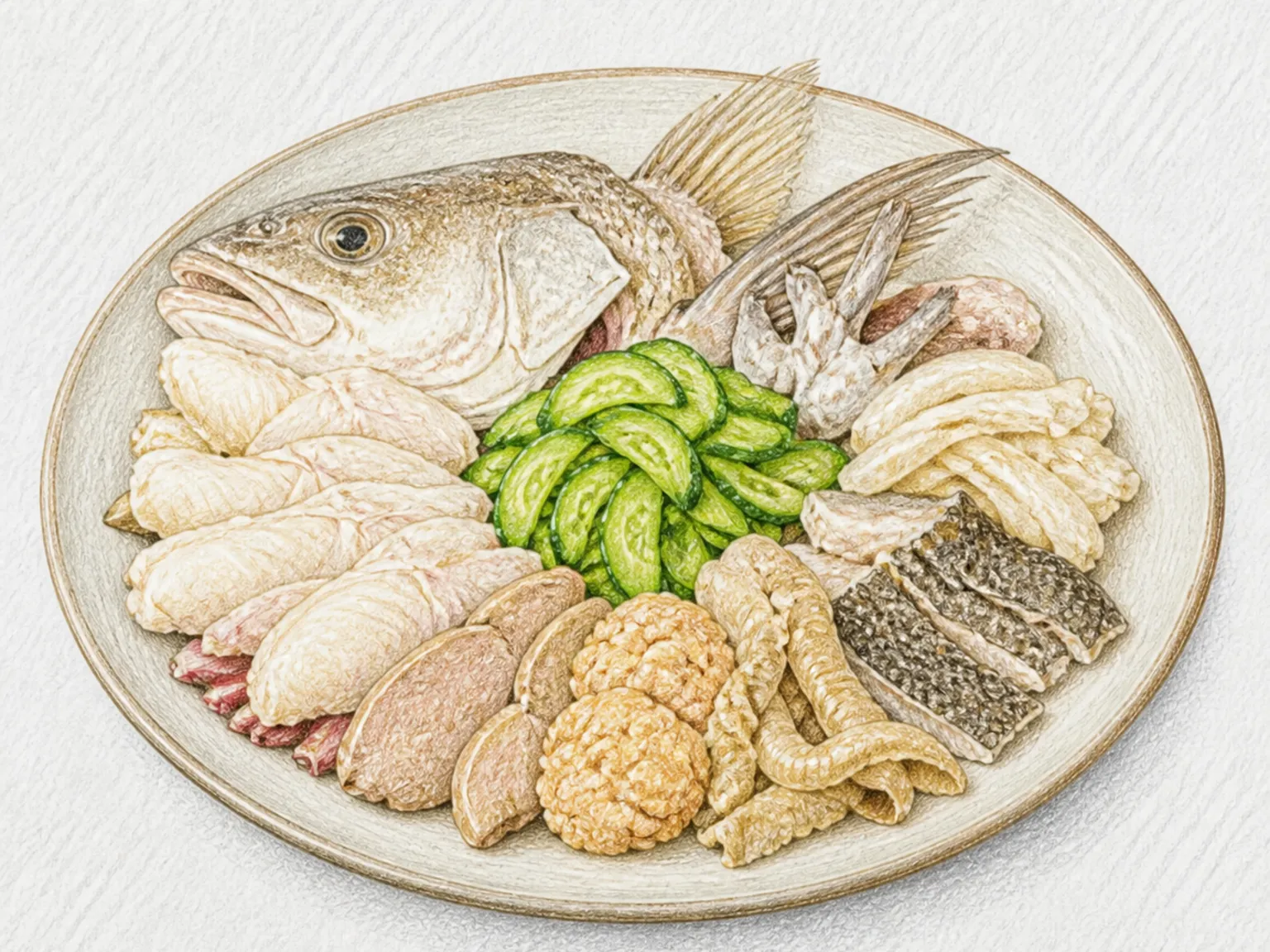
Atama ryori is a celebratory dish from inland Taketa, Oita, created to use every edible part of a once-rare large sea fish. Cheek and fin meat, skin, jaws, gills, stomach, liver, roe, and milt from a verified large white-fleshed fish are salted and cleaned, then blanched or boiled for different lengths of time. The cooked pieces are sliced, arranged with seasonal vegetables, and served with nihaizu or sanbaizu sharpened with kabosu. Because fish species and edible organs must be identified correctly, this demanding preparation should begin with a fishmonger who can clean and approve every part.
Matcha White Chocolate Brownies
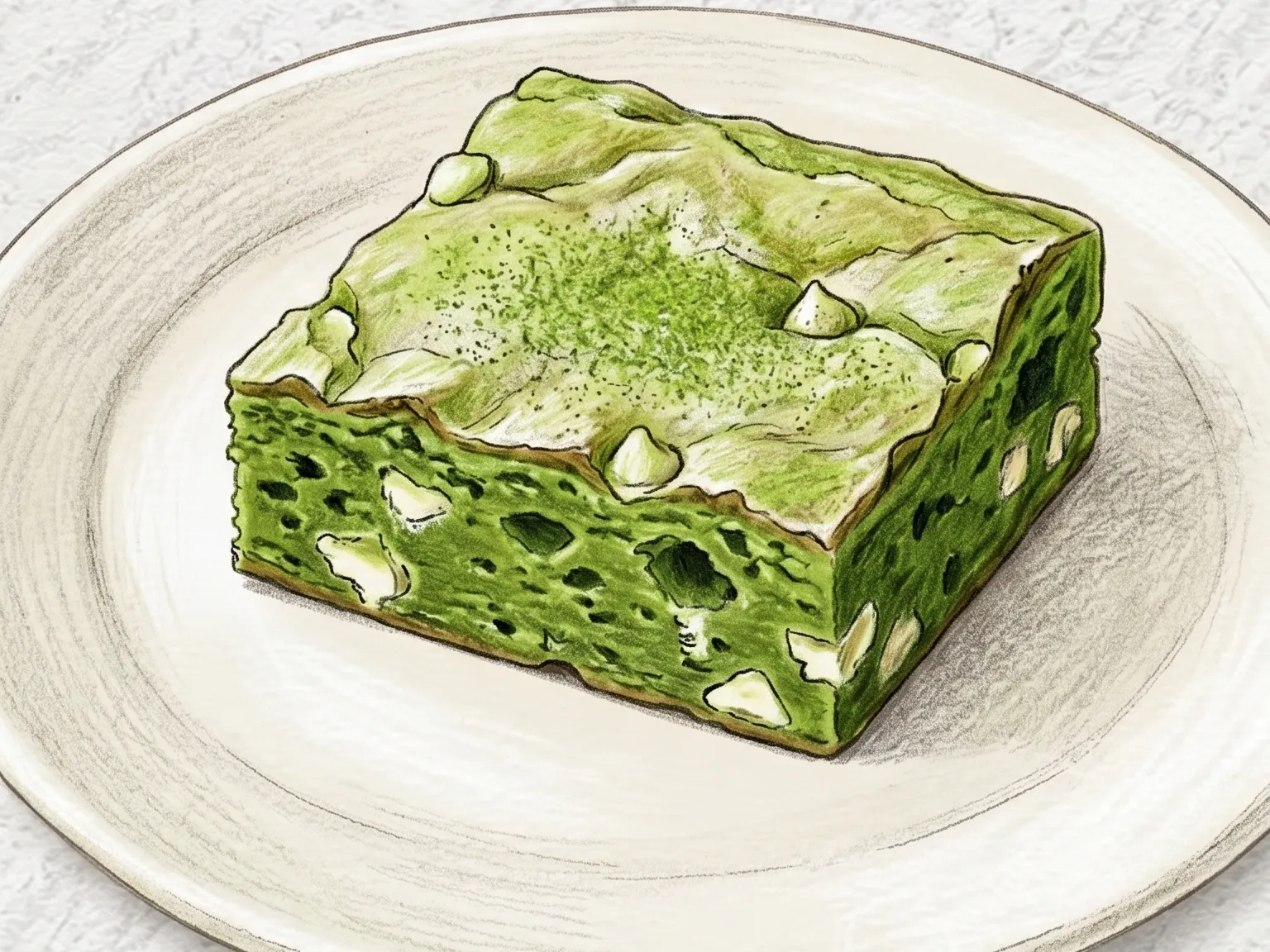
White chocolate melted with butter forms the base of this brownie, and matcha powder folded in at the end gives it a vivid green color and a distinctly bitter tea note. The cocoa butter in the white chocolate is responsible for the dense, fudgy chew that sets these brownies apart from cakey versions, while the matcha's astringency offsets the sweetness so that neither flavor dominates. White chocolate chips added to the batter do not fully melt during baking; they hold their shape partially, creating pockets of concentrated sweetness that punctuate the more restrained matcha base. Baking at 175 degrees Celsius for 22 to 25 minutes, pulling the pan when the center still wobbles slightly, is the key to achieving the chewy interior; the residual heat finishes the set as the brownies cool. Overbaking dries them into crumbly squares and mutes the matcha color. Sifting the matcha powder thoroughly before adding it eliminates the dry clumps that would otherwise appear as bitter spots. Once cooled completely, the brownies cut into clean-edged squares with a glossy top.
Chirashi Zushi (Scattered Sashimi Rice Bowl)
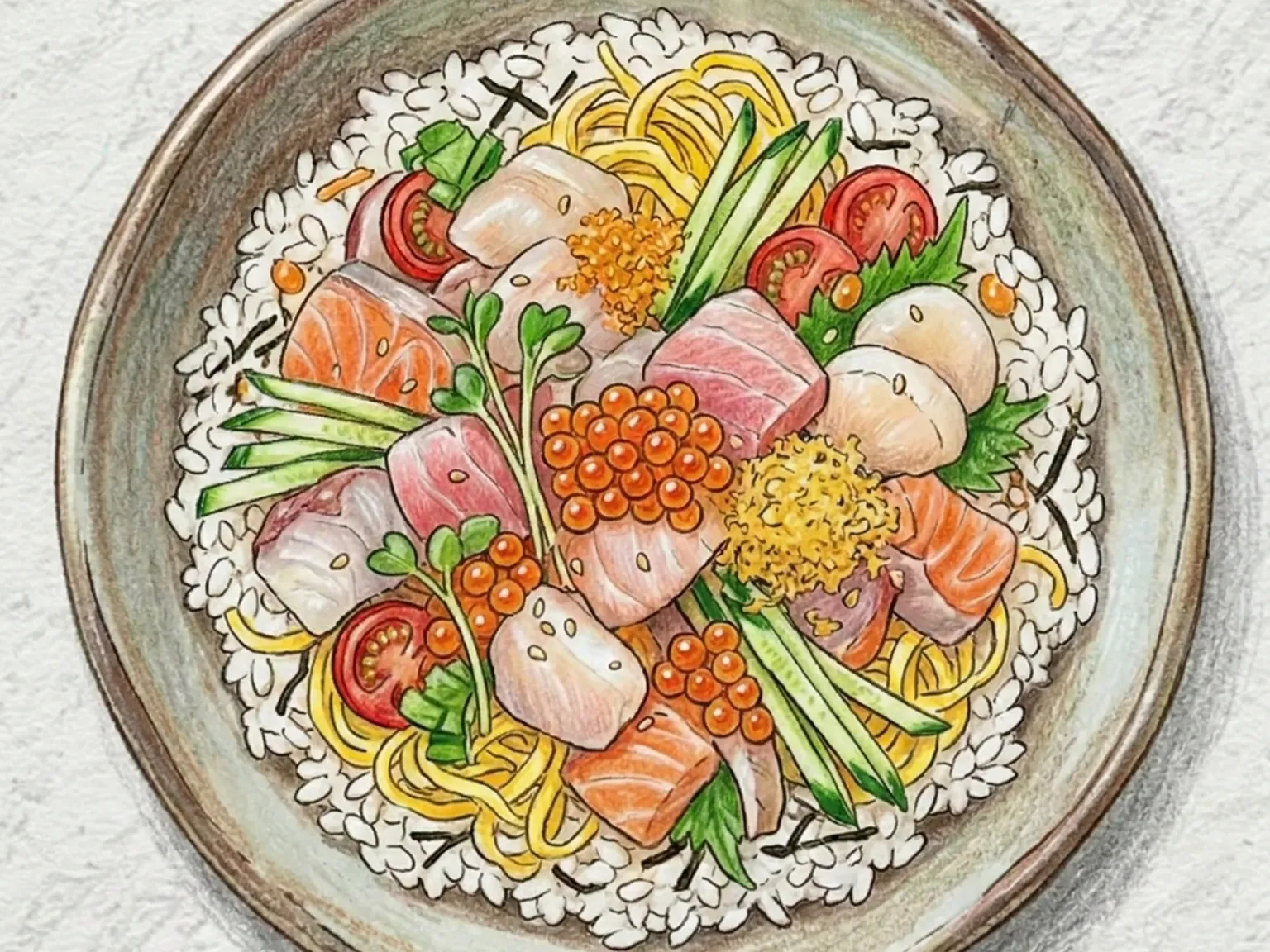
Chirashi-zushi, scattered sushi, is the celebratory home-cooking sushi of Japan, traditionally prepared for Hinamatsuri on March 3rd and other occasions where the meal itself carries visual significance. A bowl of sushi rice seasoned with vinegar, sugar, and salt forms the base, and over it are arranged sashimi cuts, julienned egg crepe, simmered lotus root, shiitake mushroom, salmon roe, and cherry shrimp. Unlike nigiri, there is no shaping technique involved, which makes chirashi accessible to any home cook, but the creative challenge shifts to composition: how the colors and textures are placed determines whether the bowl reads as festive or ordinary. Seasonal variation is embedded in the tradition - spring bowls feature bright green peas and pink-pickled cherry blossoms, summer compositions lean toward abalone and cucumber, autumn brings ginkgo nuts and matsutake. At high-end sushi counters, Edomae-style chirashi uses only top-grade cuts, chu-toro, uni, kohada, anago, arranged with the same deliberation a painter brings to a canvas. The vinegared rice beneath every version does more than hold the toppings in place: its acidity cuts the fat in the raw fish, refreshing the palate between bites and tying disparate ingredients into a unified dish.
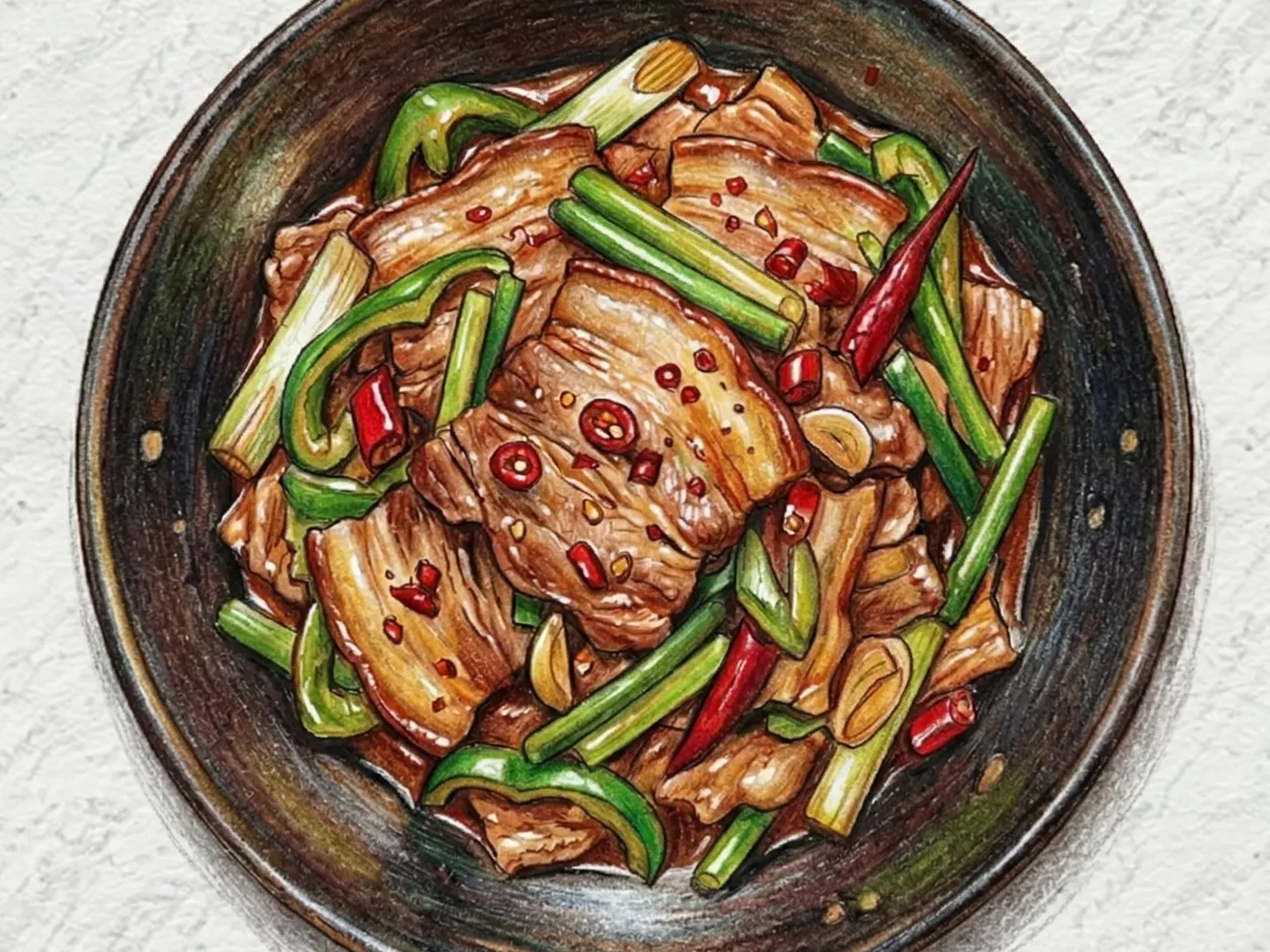
Hui Guo Rou (Twice-Cooked Pork)
Hui guo rou, literally 'twice-cooked pork,' stands as one of the defining dishes of Sichuan cuisine. Pork belly is first simmered whole until cooked through, then cooled completely and sliced thin before returning to a screaming-hot wok. The initial boiling renders excess fat and firms the meat, making clean, uniform slices possible. Back in the wok, those slices fry until their edges curl and crisp while the fat layers turn chewy rather than soft. Doubanjiang, the fermented chili bean paste that forms the backbone of Sichuan cooking, goes in along with fermented black beans, and together they build the dish's signature salty-spicy character. A splash of soy sauce and a pinch of sugar round out the depth. Diagonally sliced leek and green bell pepper are added only in the final one to two minutes over maximum heat, keeping their snap and fresh color against the richly seasoned pork. Because doubanjiang's saltiness varies significantly by brand, the soy sauce amount should always be adjusted to taste after the paste is added. When the wok is hot enough to generate wok hei, all the elements fuse into a cohesive, smoky whole that captures the bold spirit of Sichuan cooking.
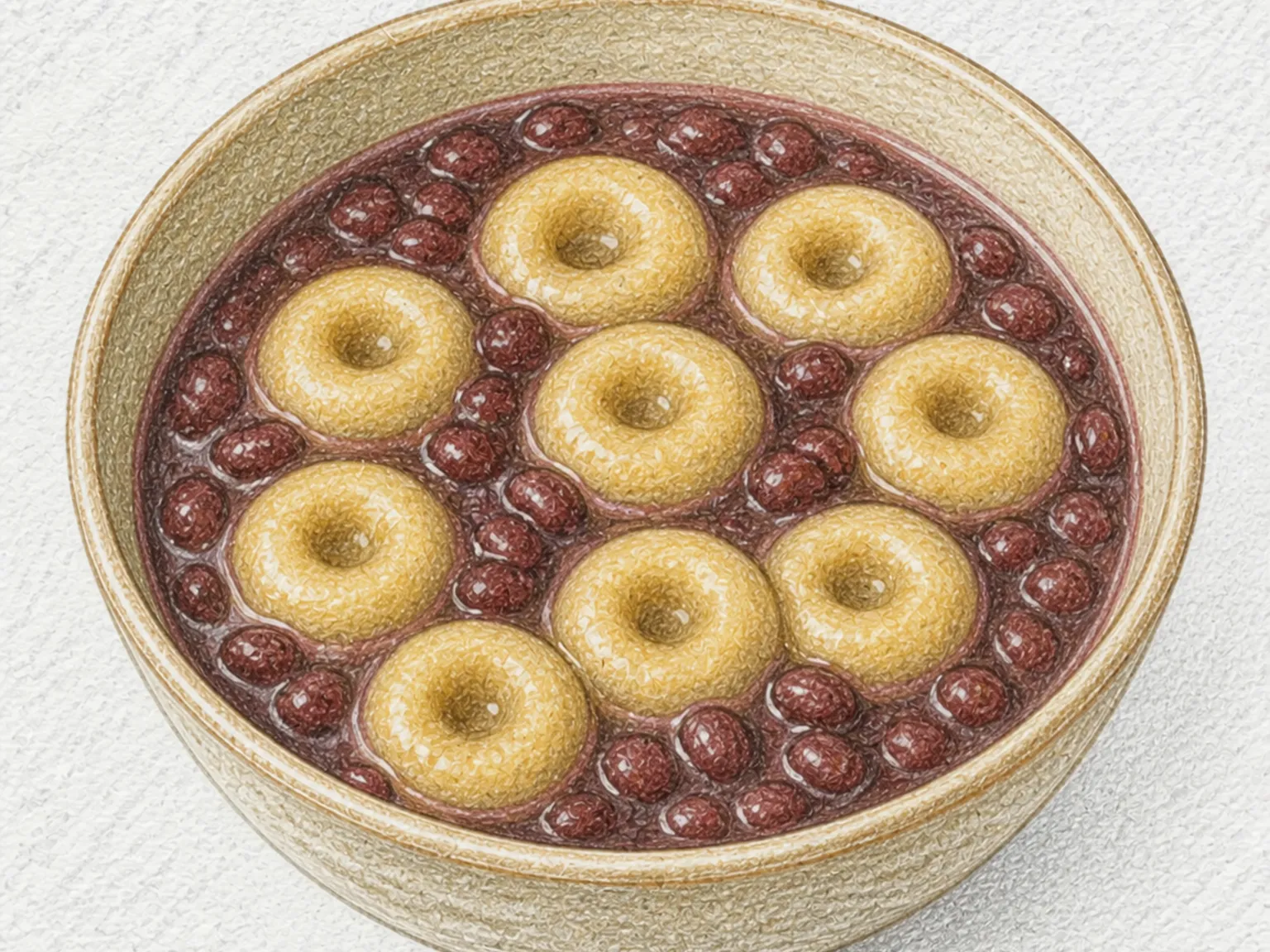
Hecchoko Dango (Three-Grain Dumplings in Sweet Azuki Soup)
Hecchoko dango is a northern Iwate sweet made with three separate grain doughs: takakibi sorghum flour, glutinous foxtail millet flour, and inakibi proso millet flour. Each is mixed with its own measured boiling water, shaped into 2 cm balls, and pressed in the center with an index finger to form a navel-like hollow. The dumplings cook in sweet azuki soup until they float, which also gives the dish the alternate name ukiuki dango. The hollow takes up the bean soup and balances the slight bitterness of sorghum. One explanation links hecchoko to the year's farming hardship, while another points to the belly-button shape. It was offered to deities and served after the harvest to honor labor or welcome guests.
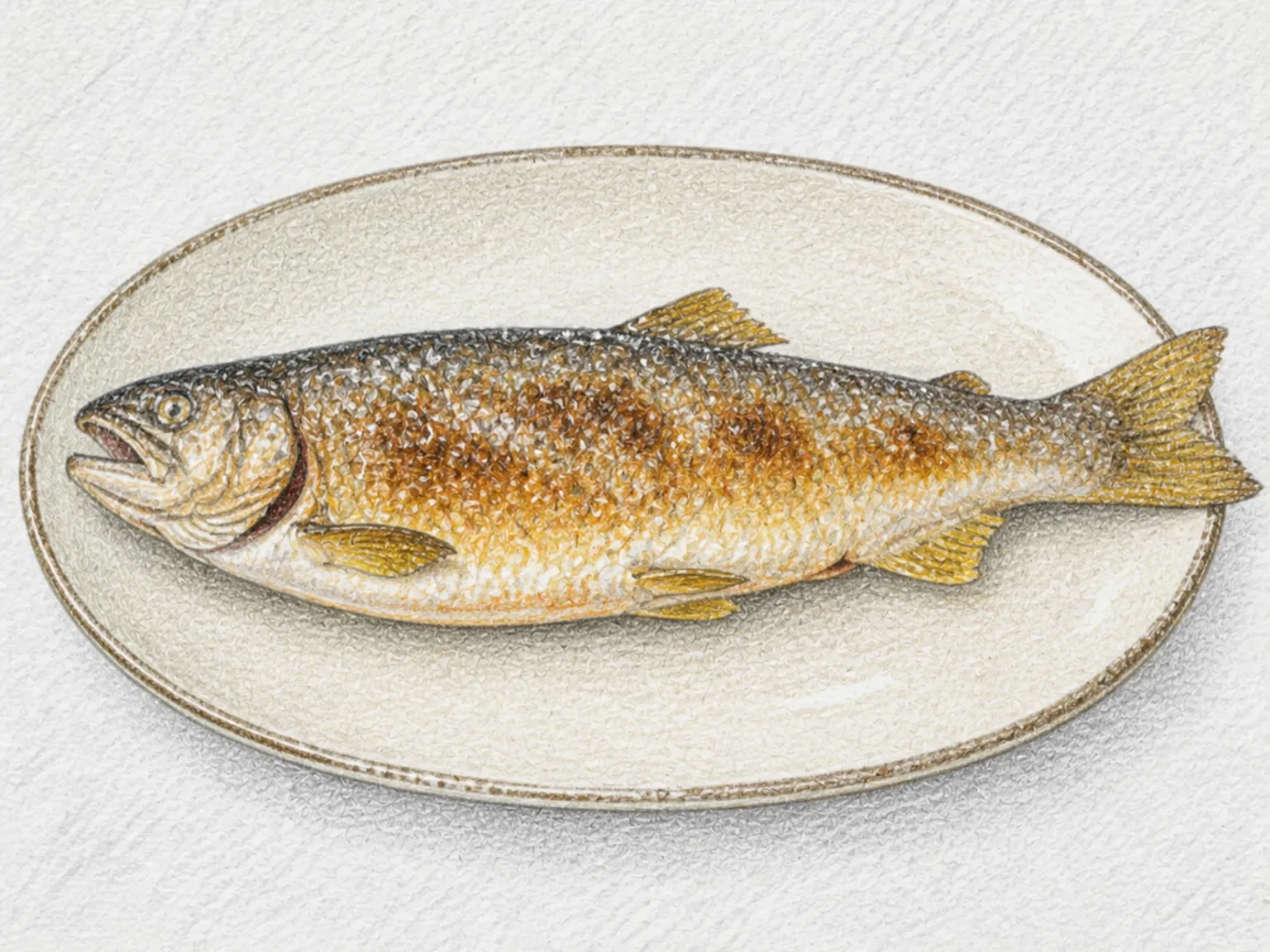
Iwana no Shioyaki (Salt-Grilled Char)
Iwana no shioyaki is a Miyagi preparation from Kurihara and nearby areas. A cleaned char about 25cm long is threaded onto a long bamboo skewer, seasoned with roughly 3g salt, and cooked slowly beside glowing charcoal. Char inhabit clear headwater streams and were difficult to catch, but Miyagi became the first place in Japan to farm them, making the fish more accessible. Wild char are prized in summer before spawning, while farmed fish are available throughout the year. Salting both sides and the tail from above gives an even coat, and steady radiant heat dries the skin while the flesh cooks through without burning.
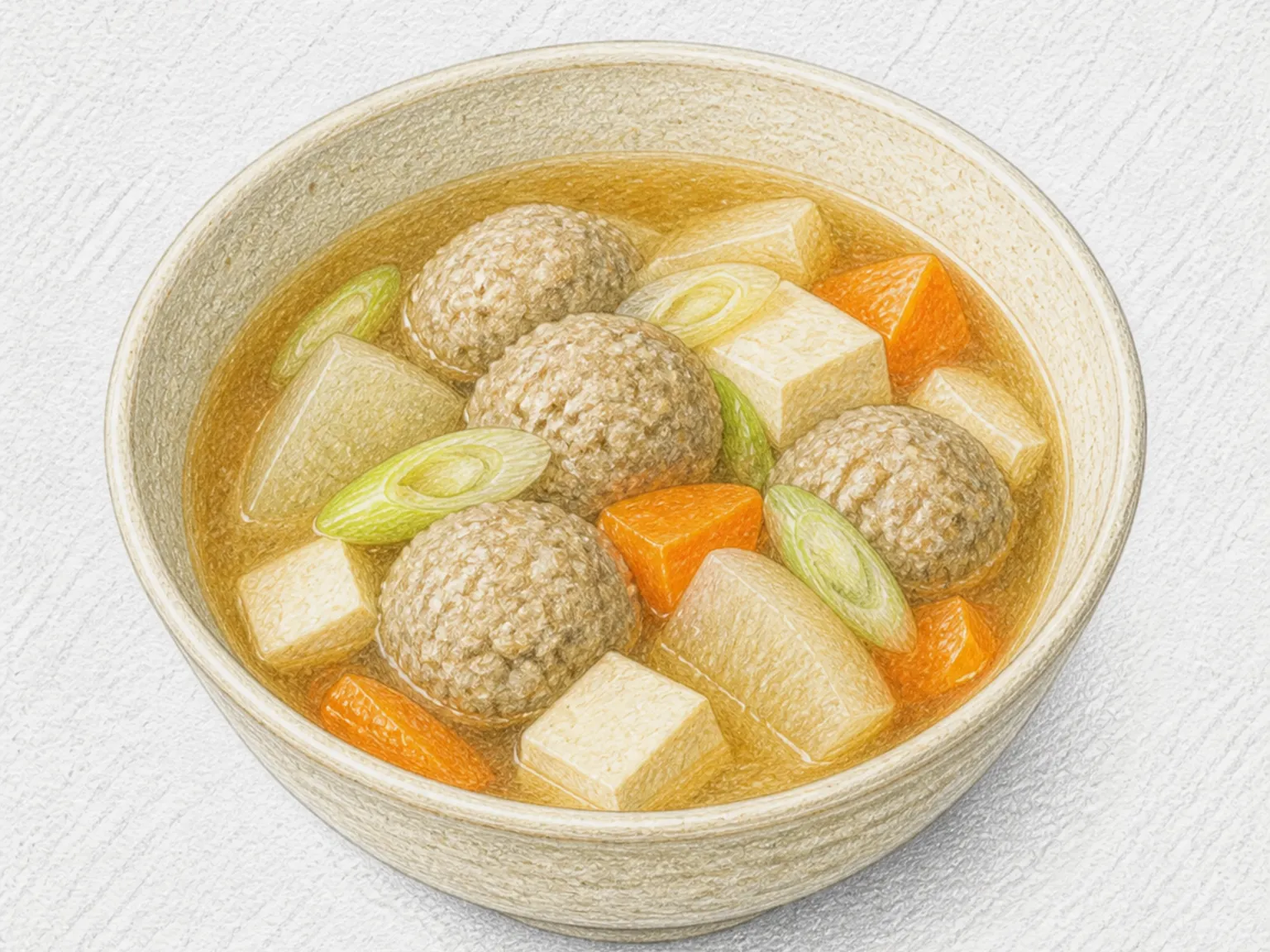
Samma no Surimi Jiru (Pacific Saury Fish Ball Soup)
Samma no surimi jiru is a home-style soup from Iwate's Sanriku coast. Cleaned Pacific saury flesh is pounded in a mortar until sticky, seasoned with miso, egg, salt, soy sauce, and sake, and shaped into small fish balls. The dish became common after saury catches increased around sixty years ago and remains a seasonal household meal. Simmering the balls first releases their seasoning and fish flavor into the water, then daikon, carrot, tofu, and green onion complete the broth. Thorough grinding gives the fish balls a light texture, while equal 20 to 30g portions help every center cook safely.
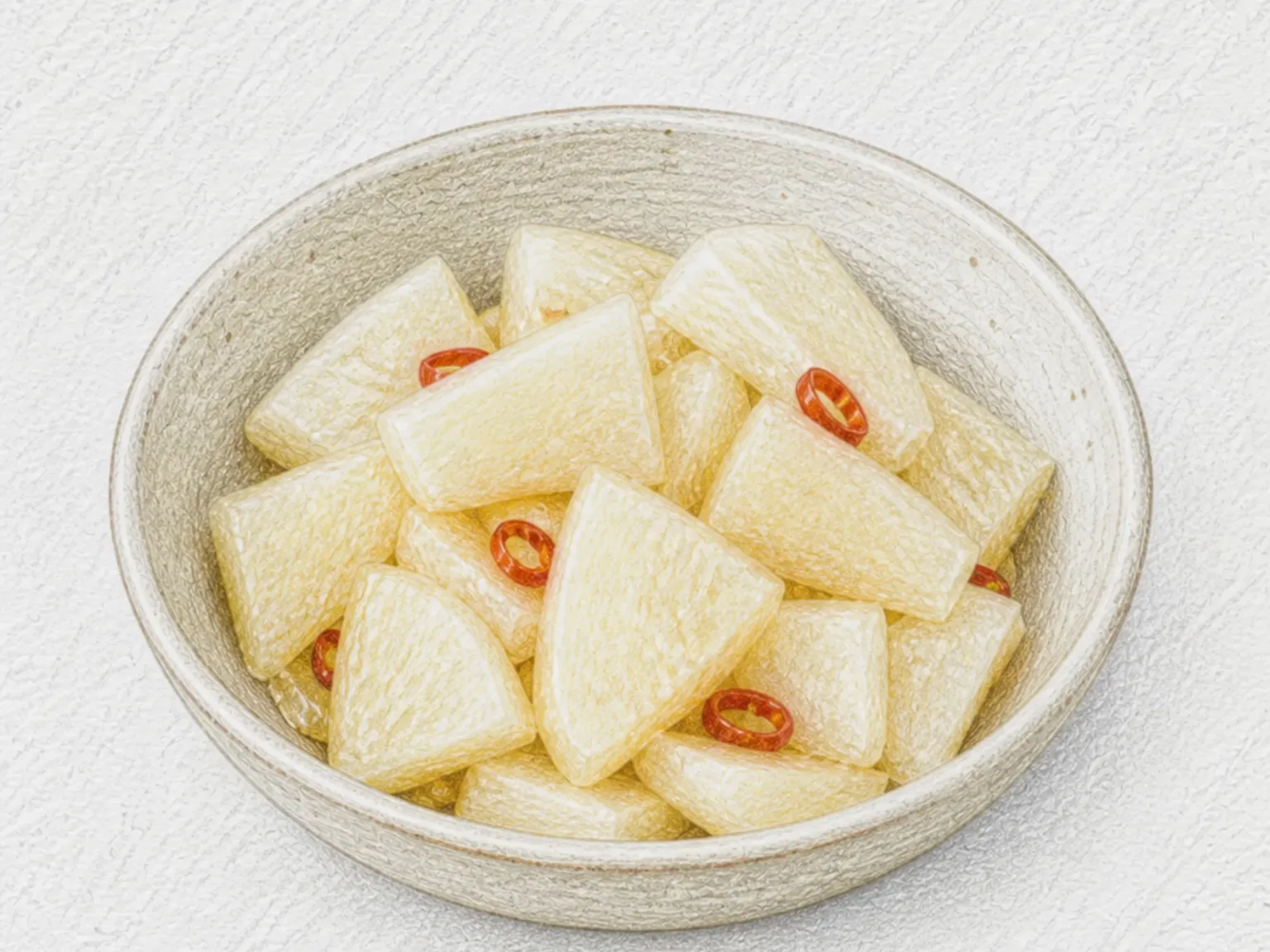
Nata-zuke (Daikon Pickled in Amazake)
Nata-zuke is a winter gakko pickle from Akita. Daikon is cut into thick, irregular chunks, salted for a preliminary cure, then pickled again with prepared amazake, sugar, and a small dried chili. The name comes from nata, the heavy hatchets once common in local forestry households. Their rough cut leaves a frayed surface that takes in seasoning while the center remains crunchy. After the salty liquid is drained, the second cure lasts about one week under refrigeration. The finished pickle is served with daily meals, packed in lunches, paired with drinks, or eaten with tea in the local gakko chakko custom.
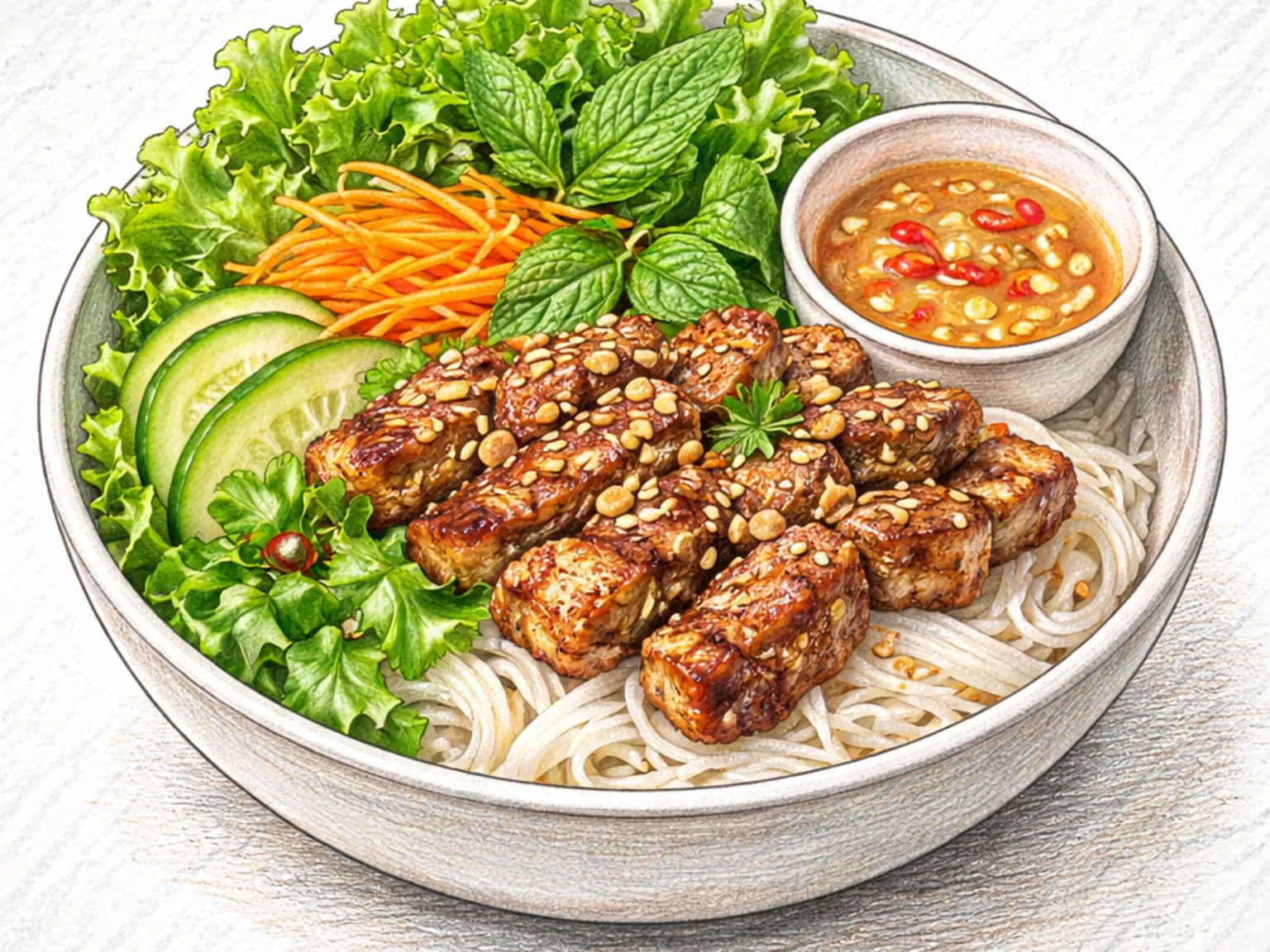
Vietnamese Grilled Pork Vermicelli
Charcoal-grilled pork is placed over cold rice vermicelli and eaten mixed with nuoc cham in this southern Vietnamese noodle bowl. The pork marinates in fish sauce, sugar, and garlic before grilling, so direct heat caramelizes the surface sugars into a deep brown crust while the interior holds its moisture. Fresh mint, cilantro, and coarsely crushed roasted peanuts are scattered on top, layering herbal fragrance with crunch. Nuoc cham, built from lime juice, sugar, fish sauce, and chili, is the sweet-sour-salty binding agent that pulls together the warm meat, cool noodles, and raw herbs into a single coherent bowl. The temperature contrast between hot pork and chilled vermicelli is central to the eating experience. Pickled daikon and carrot add a final note of acidity that keeps each bite clean. No broth is needed; the bowl is filling and bright.
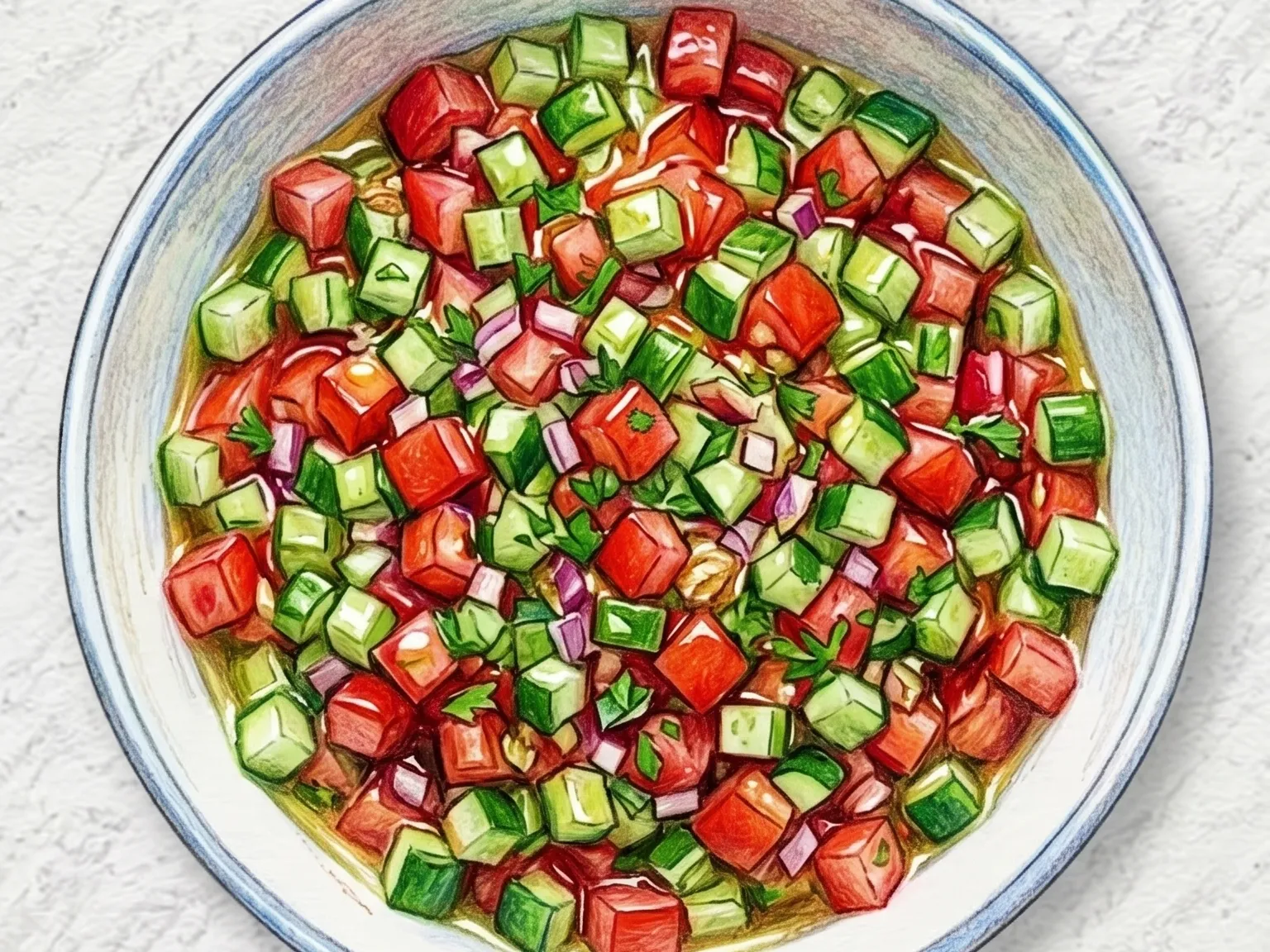
Israeli Salad
Israeli salad is the foundational everyday salad of the Middle East, built from tomato, cucumber, red onion, and parsley diced to pieces under 0.5 cm and dressed simply with lemon juice, olive oil, and salt. The uniformly small cut is the defining technique, and it is not merely aesthetic. When every component is the same tiny size, a single spoonful carries equal amounts of tomato juice, cucumber crunch, and the sharp bite of raw onion, so the balance does not shift from one mouthful to the next. The dressing is deliberately kept to two ingredients so that the natural acidity and sweetness of ripe tomatoes can dominate without interference from added vinegar or sweeteners. Resting the salad for about five minutes after tossing draws juice from the cut tomatoes, which merges with the lemon and oil to form a light, self-made brine that deepens the flavor of the entire bowl. Across Israel and throughout the broader Middle East, this salad appears at the breakfast table alongside eggs and bread as commonly as it does beside grilled meats at dinner. Its quality depends entirely on the freshness of the produce rather than any technique or seasoning.
Atsuage no Nitano (Whole Simmered Fried Tofu)
Atsuage no nitano is a Fukui tofu dish made by blanching thick fried tofu to remove surface oil, cutting a cross into its center, and gently simmering each slab whole in dashi, sake, mirin, and soy sauce. Keeping it intact produces a deeply seasoned brown exterior around the soft white tofu center. The crosscut gives broth a path into the thick middle, while ginger juice added just before the heat is turned off freshens the fried aroma. Each whole slab is served in a bowl with grated ginger rather than cut into small pieces.
About Asian
Each country brings its own signature spices and sauces, so even the same ingredients can produce completely different flavors. With a few key pantry items - coconut milk, fish sauce, curry powder, doubanjiang - you can recreate the tastes of Asia at home.