Baking Recipes
261 recipes. Page 5 of 11
Baking transforms flour, butter, sugar, and eggs into breads, cookies, cakes, muffins, and more. The aroma of something freshly baked is one of the great pleasures of cooking at home.
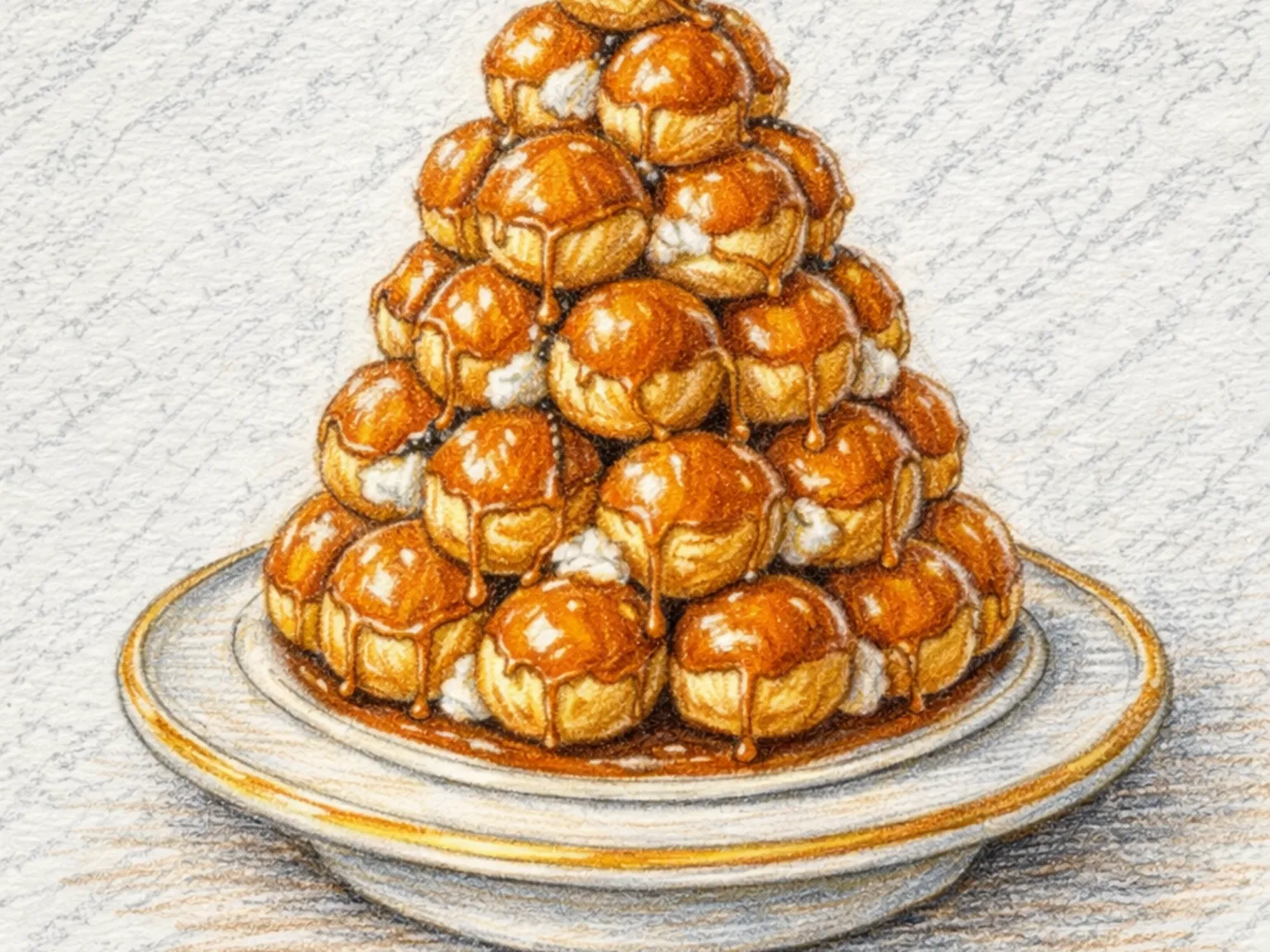
Croquembouche (French Caramel-Glazed Cream Puff Tower Centerpiece)
Croquembouche is a French celebration centerpiece constructed by dipping cream-filled choux puffs in hot caramel and stacking them into a tall conical tower. Each profiterole is baked until the interior is hollow and dry, filled with vanilla pastry cream, then submerged briefly in caramelized sugar that hardens into a thin shell on contact and bonds each puff to its neighbors. As the tower rises, caramel strands are stretched between the puffs, cooling into a web of spun sugar threads that wrap around the entire structure. A finished tower can stand several feet tall, and guests detach individual puffs from the top downward to eat. Cracking the hardened caramel shell with teeth reveals soft choux pastry underneath and cold cream inside, a progression of textures that plays out in a single bite. The name itself comes from the French for crunching in the mouth. In France the croquembouche is a traditional centrepiece at weddings and christenings, where it stands in place of a tiered cake.
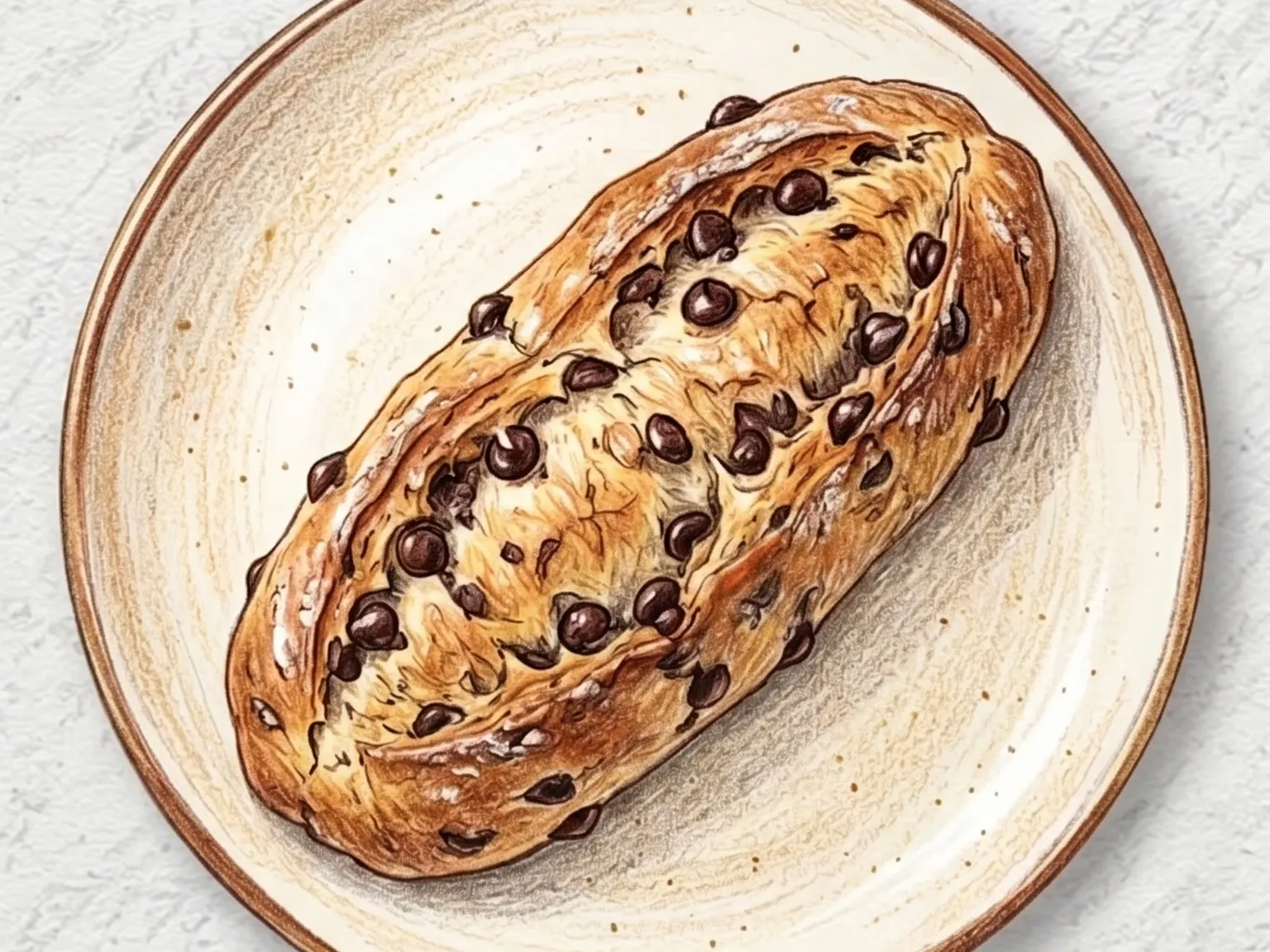
Crunchy Chocolate Chip Baguette
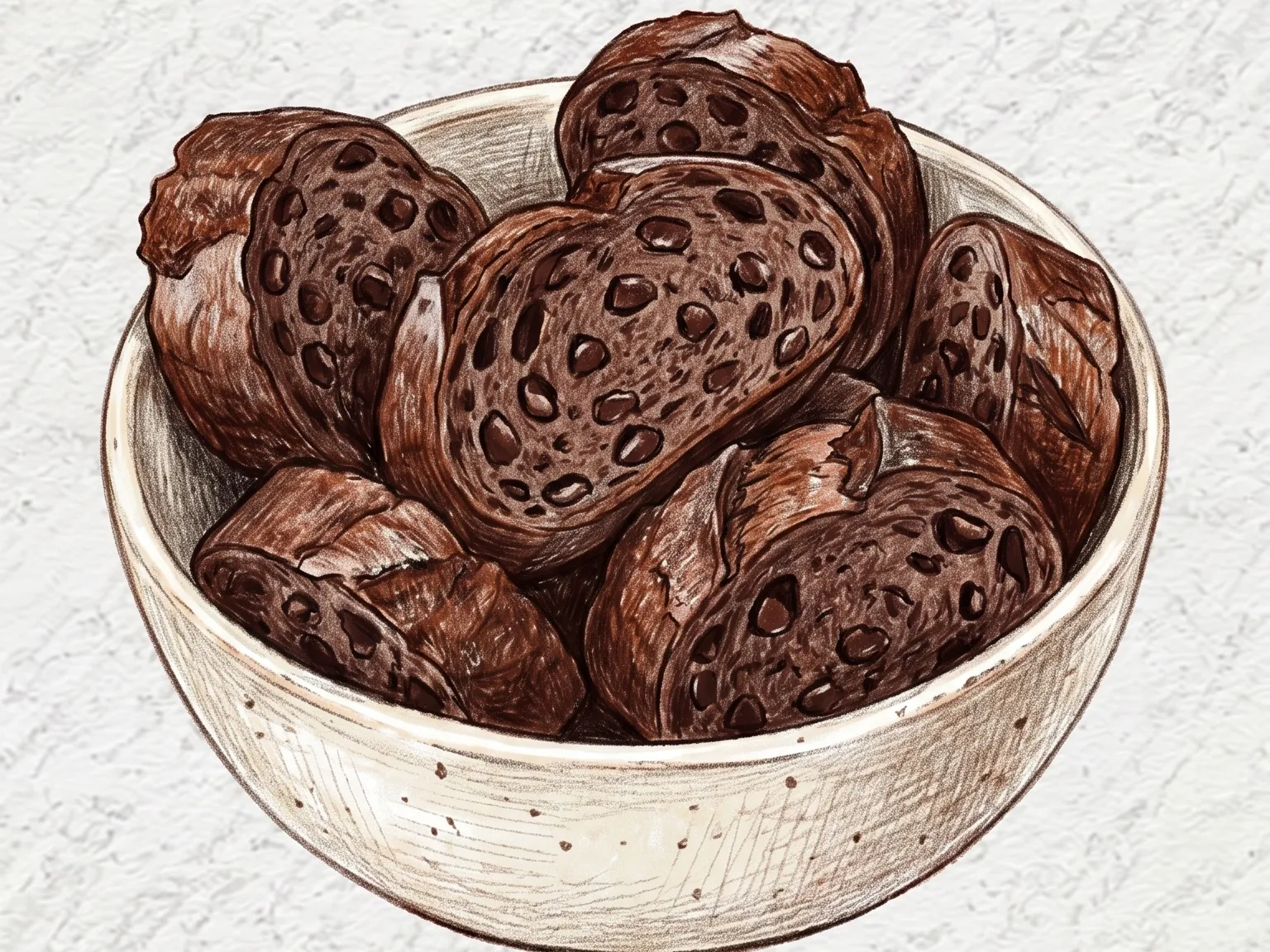
This baking recipe explains how to make a chocolate baguette featuring a crispy crust and a bittersweet crumb. The dough combines bread flour, cocoa powder, sugar, salt, and instant dry yeast, which is kneaded with lukewarm water until smooth and elastic. Chocolate chips are folded into the dough at the end of kneading to distribute them evenly without melting. After a one-hour first fermentation, the dough is divided and shaped into long ovals, then left to rise again for thirty minutes. Before baking, the loaves are scored to expose the chocolate chips during the oven spring and sprayed with water. Baking at 220°C with steam creates a firm, crispy crust while keeping the inside soft. The finished baguette offers a rich cocoa aroma and sweet pockets of melted chocolate chips in every bite.
Dacquoise (Almond Meringue Disc with Butter Cream Filling)
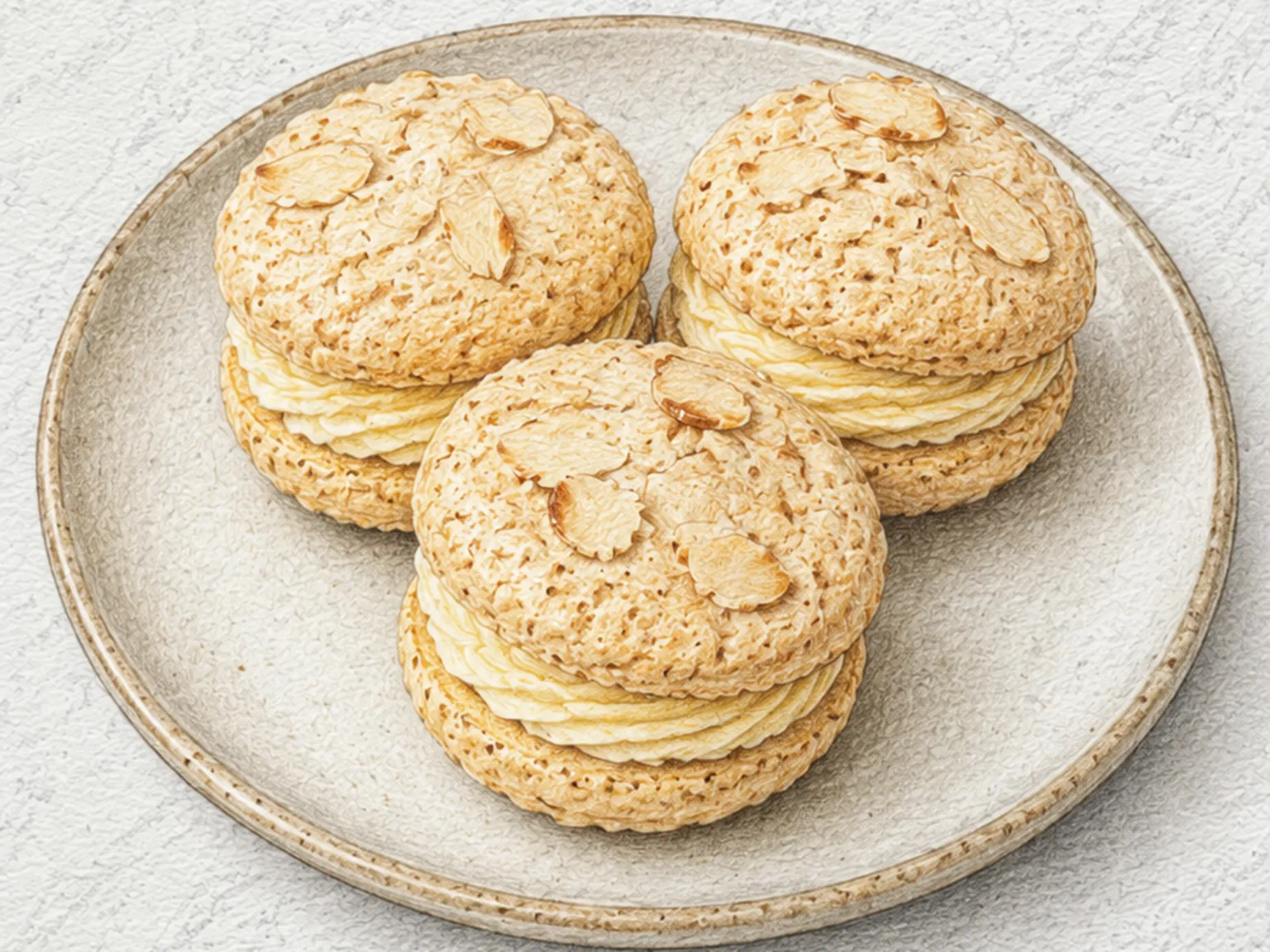
Dacquoise is a French confection originating in the town of Dax in the southwest, made by folding almond flour into stiff beaten egg whites, piping the batter into flat discs, and baking until the surface forms a thin, dry shell. That outer layer cracks cleanly underfoot, while the almond oils inside keep the meringue moist and chewy, so two distinct textures inhabit the same bite. Two discs are sandwiched around a layer of buttercream, which provides richness and holds the halves together; the filling varies widely, vanilla, matcha, pistachio, or fruit curd depending on the baker. In Korean cafes, dacquoise has been scaled down to single-portion bite-sized pieces and individually wrapped for takeaway, a format that has made them one of the most popular items alongside afternoon coffee. The key to the right texture is folding the almond flour into the meringue without deflating it, preserving the open crumb that gives each piece its characteristic chew.
Danish Pastry
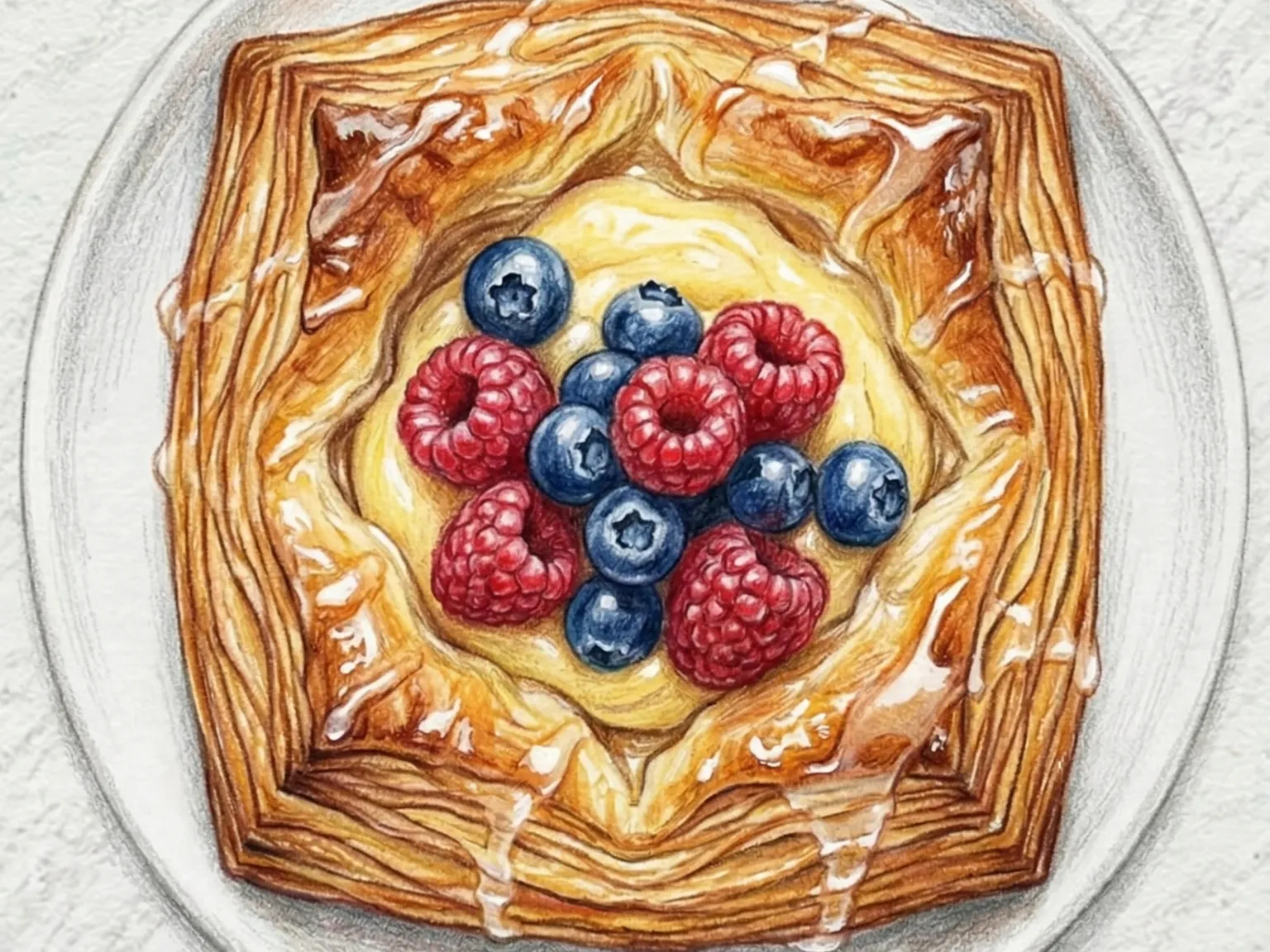
Danish pastry is made by enclosing a cold butter slab in yeast dough, completing 3 folds with chilled rests, and baking pastry cream in a shallow center well. Mix the bread flour, milk, sugar, and instant yeast until the dough is smooth and elastic, then let it complete its first rise until visibly puffy. If the dough feels warm or sticky, chill it briefly before beginning the butter work. Flatten 180g cold butter into an even slab that feels slightly firmer than the dough. When it cracks under light pressure, give it a short rest until it can bend and roll without breaking into pieces. Wrap the dough completely around the butter, roll the packet into a long sheet, and fold it. Complete 3 folds in total, refrigerating between the turns so the butter remains a distinct layer inside the dough. Roll the chilled laminated dough evenly and cut it into 8 squares. Press a shallow well in the center of each piece while leaving the exposed edges uncompressed, since those edges need room to lift. Divide 180g pastry cream among the wells and keep the filling gathered in the centers. Return the shaped pieces to the refrigerator if the dough softens. At 190°C, the baking takes 16 to 18 minutes. Remove the pastries when the layers have opened, the surface is deep golden, and the cream looks set and glossy. Let the pieces cool slightly before moving them so the raised borders and warm custard centers stay in place.
Korean Sweet Red Bean Bun
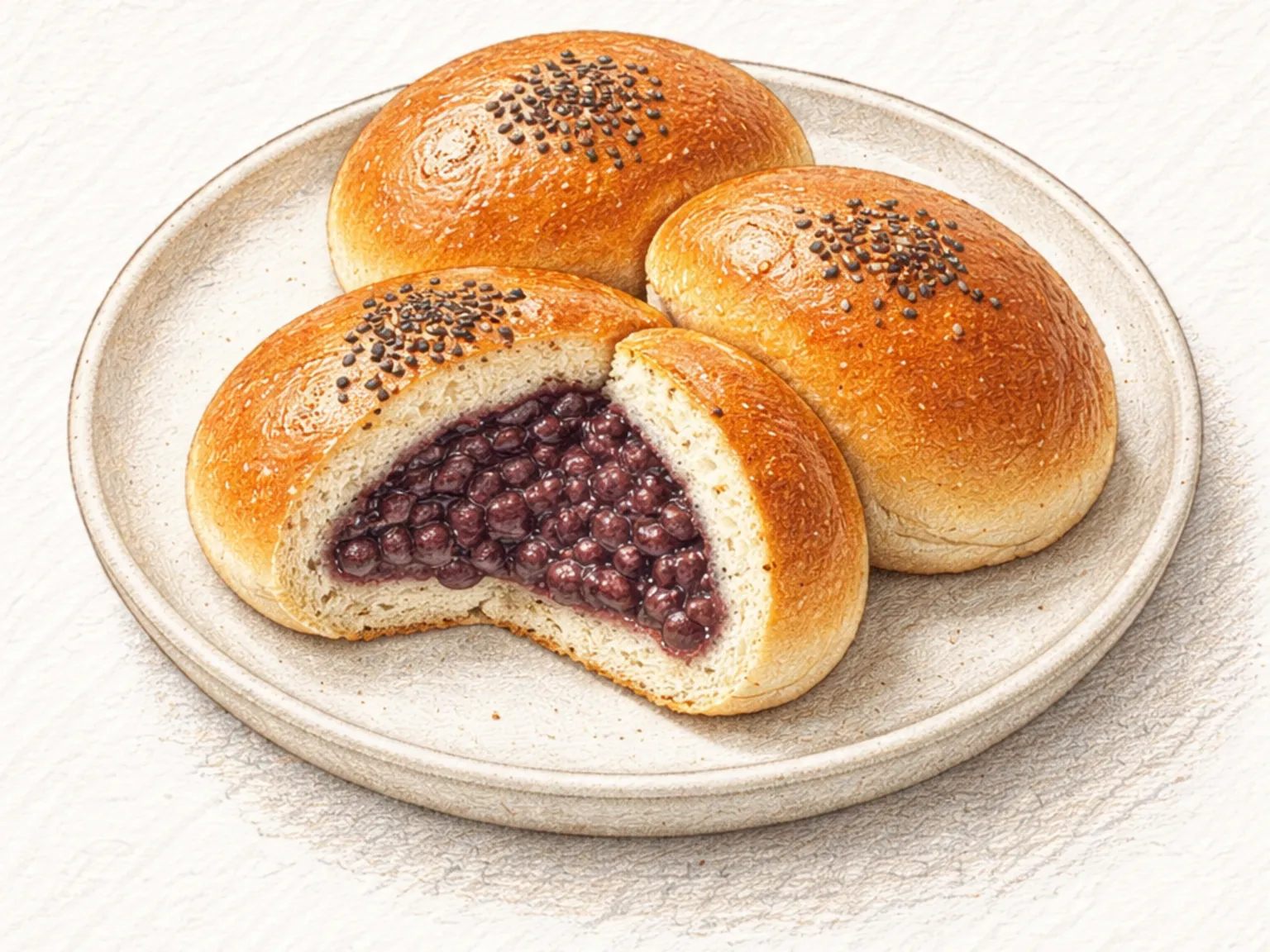
Danpat-ppang is a Korean sweet red bean bun made from a yeasted dough of bread flour, sugar, butter, and egg, put through a one-hour first rise and thirty-minute second rise before baking at 180 degrees Celsius for fifteen minutes. Each bun is filled with about thirty grams of sweet red bean paste and sealed shut, so the paste softens into a dense, sweet layer inside as the bread bakes. Skipping the second rise produces a tight, dense crumb, so both fermentation stages matter. An egg wash brushed across the surface gives the bun a glossy, deep brown finish, while the yeast-leavened interior stays pillowy and moist. The concentrated sweetness of the red bean filling sits in contrast to the mild, lightly enriched dough around it. Danpat-ppang has held its place on Korean bakery shelves for decades and remains one of the first items regulars reach for.
Dark Chocolate Baguette
This rustic chocolate baguette features a crisp crust filled with dark chocolate chips. The dough is prepared by combining bread flour, cocoa powder, dry yeast, salt, sugar, and lukewarm water. Once the dough becomes elastic after kneading, dark chocolate chips are folded in gently. After the first rise, the dough is divided and rested before being shaped into long, tapered ovals. This shaping helps retain moisture in the thicker crumb during baking. The loaves are proofed a second time, scored diagonally, and sprayed generously with water. Baking them at 220 degrees Celsius with oven steam creates a distinct double-layered crispy crust. High-quality cocoa powder and dark chocolate chips ensure a deep cacao flavor throughout the bread, offering a subtle sweetness inside a crusty exterior.
Doenjang Caramel Apple Galette
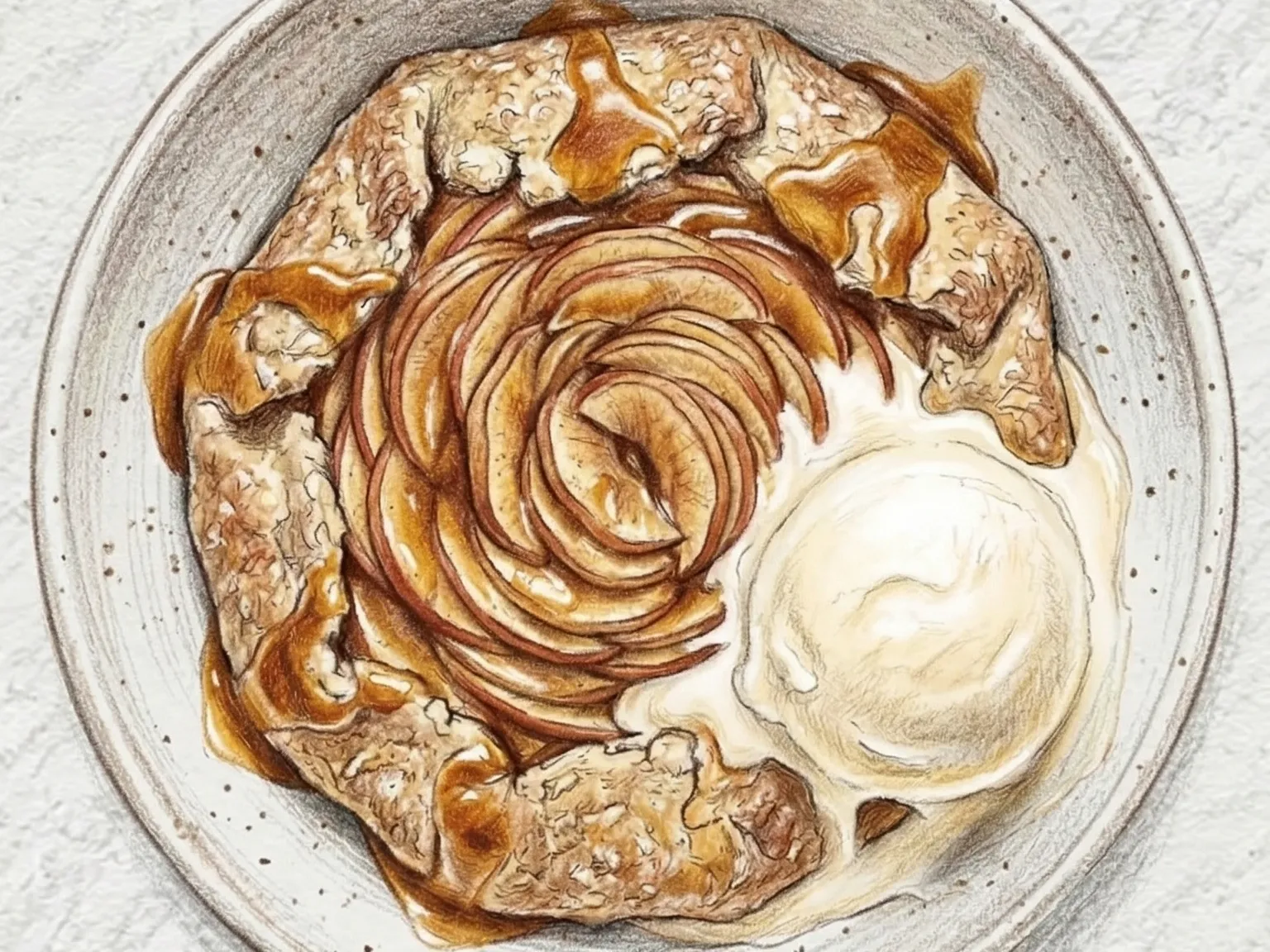
This galette layers a rustic free-form French pastry with a Korean-inflected twist: a doenjang-laced caramel draped over cinnamon apples filling the center. The crust is made by working cold butter into flour and shaping the dough by hand, folding the rough edges over the fruit in an imperfect, irregular way. Apples tossed with brown sugar and cinnamon fill the center, softening in the oven until tender and yielding. The doenjang caramel is made by whisking a small amount of fermented soybean paste into a brown sugar and cream sauce. Keeping the amount deliberately minimal is the whole point: enough to create an ambiguous saltiness and fermented depth, but not enough to register clearly as soybean paste. It is the murkiness of the flavor that lifts the familiar apple-and-cinnamon combination out of predictability. Served warm with a scoop of ice cream, the contrast between the hot pastry and cold cream adds one more layer to an already textured dessert.
Doenjang Caramel Pecan Tartlets
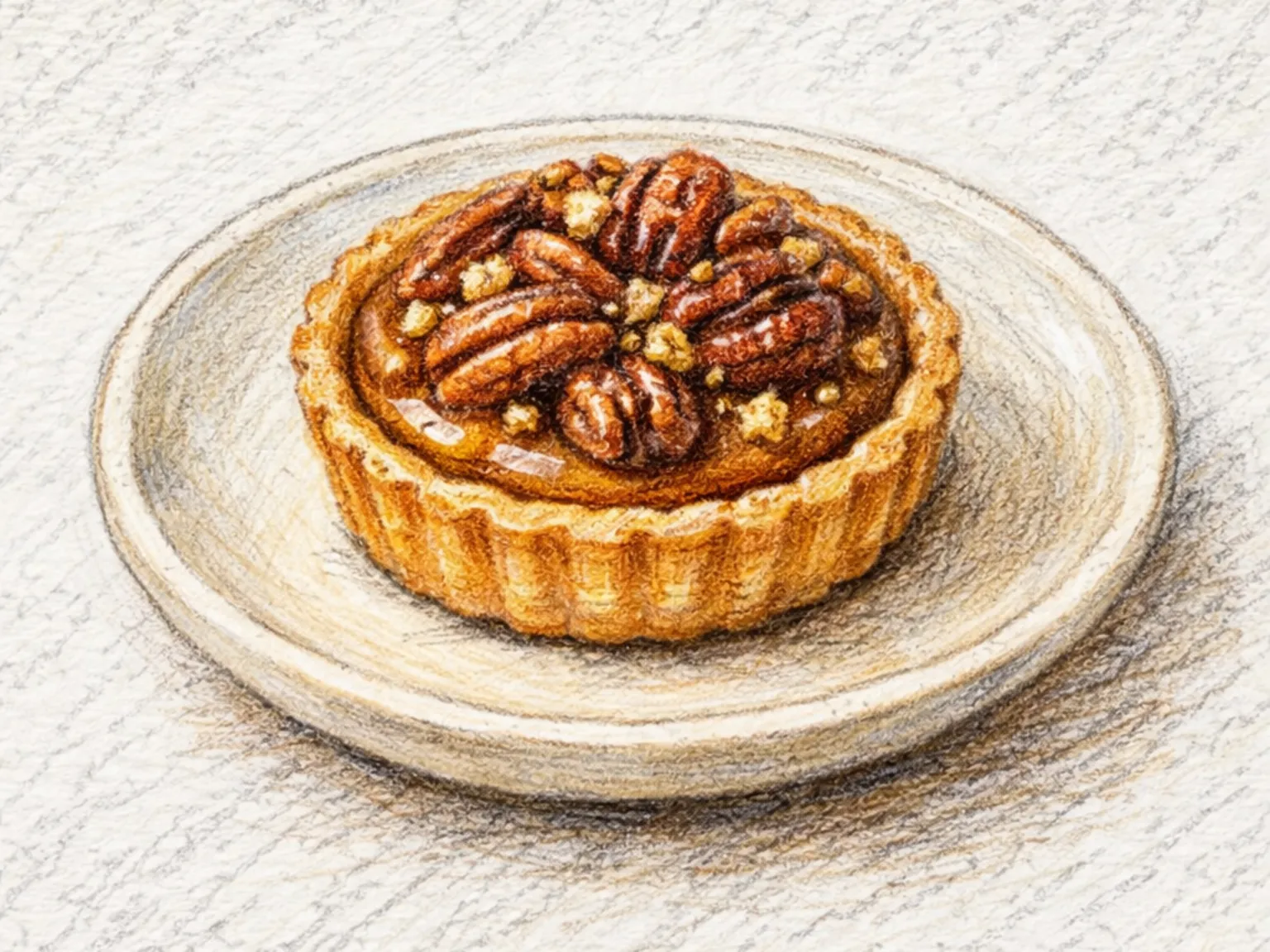
Doenjang caramel pecan tartlets bring together Korean fermented soybean paste and Western pastry in a dessert that treats doenjang the way salted caramel treats sea salt: as a savory element that sharpens and deepens sweetness. Mini tart shells are filled with toasted pecans and topped with caramel into which a small amount of doenjang has been thoroughly whisked. The fermented paste introduces salty, umami-layered depth beneath the caramel's sweetness, and the result sits noticeably broader and more complex than a standard pecan tart. The caramel must be cooked to a deep amber before the doenjang is added; pulling it too early leaves only sweetness and buries the paste's fermented character. Once poured and cooled, the surface sets into a glassy layer that snaps under a fork, adding a textural payoff before the filling yields. The pecan's buttery, slightly bitter roasted note meets the caramel's bittersweet char and the doenjang's fermented roundness, stacking three distinct kinds of richness into every bite. Well-aged doenjang used in a small quantity concentrates the aroma more than a milder paste, and adding almond flour to the tart shell dough creates a shortbread texture that harmonizes with the pecan.
Dutch Baby Pancake
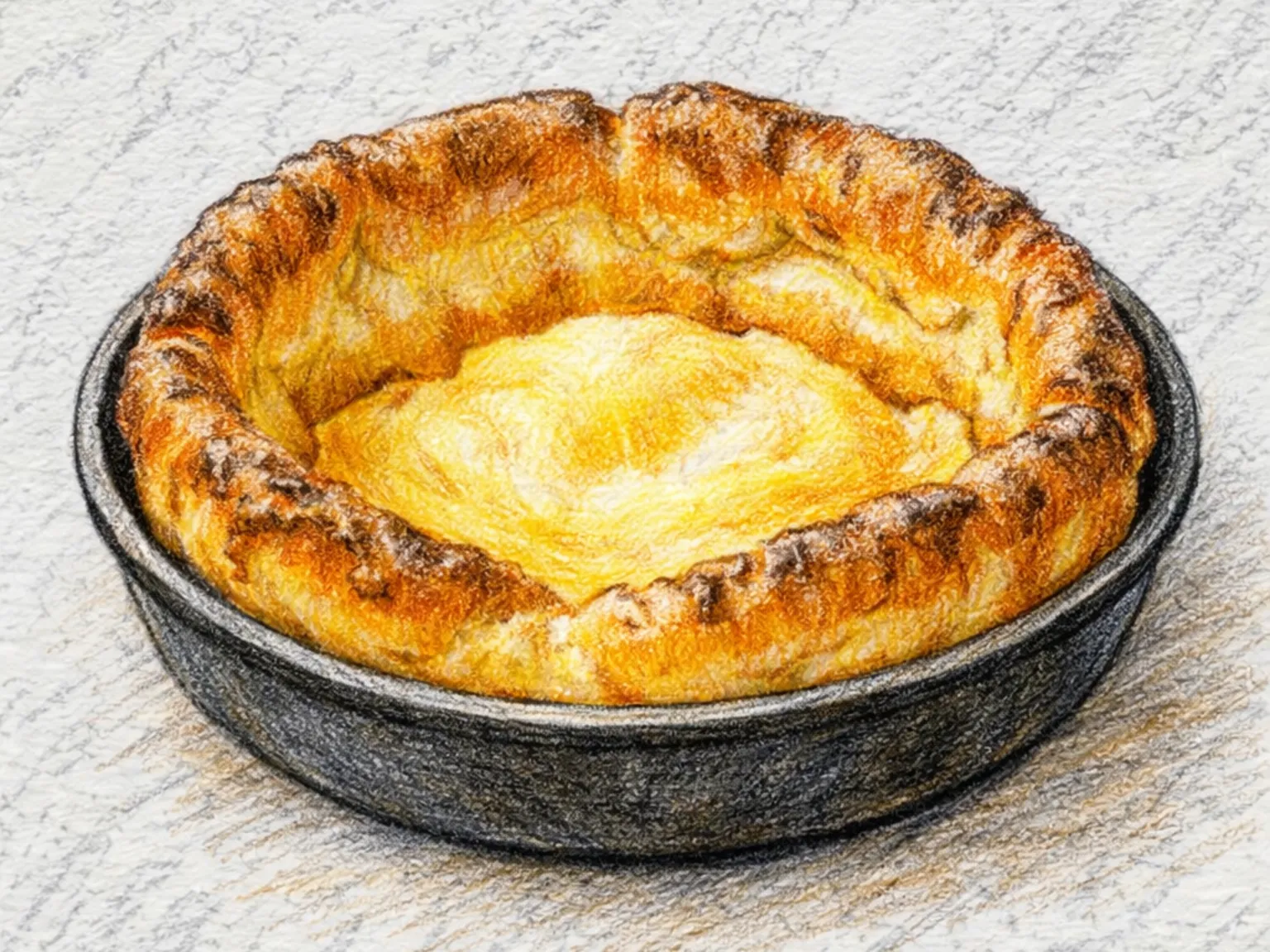
A Dutch baby is a German-American oven-baked pancake made from a thin, loose batter of eggs, flour, milk, and melted butter, poured into a cast iron skillet that has been preheated until it is searing hot. The sudden contact with the hot pan and oven causes the edges to puff dramatically, sometimes rising several inches above the rim and curling inward to form a natural bowl, while the center remains low, custardy, and tender. This contrast between the crisp, golden-brown walls and the soft, eggy base is the whole point of the dish, and the pancake begins deflating the moment it exits the oven, so it needs to go directly to the table while still dramatically puffed. A squeeze of fresh lemon juice over the surface and a heavy dusting of powdered sugar is the classic finishing touch: the bright acidity and the sweetness play directly against the rich, buttery egg base in a way that simple toppings rarely achieve. Fresh berries, sliced stone fruit, or a generous cloud of whipped cream transform it from a simple breakfast into a substantial brunch centerpiece. Getting the skillet genuinely hot -- at least 220 to 230 degrees Celsius before the batter goes in -- is the single most important factor in how high the edges rise. Using eggs at room temperature and letting the mixed batter rest briefly before pouring also contributes to even, dramatic puffing.
Earl Grey Banana Bread
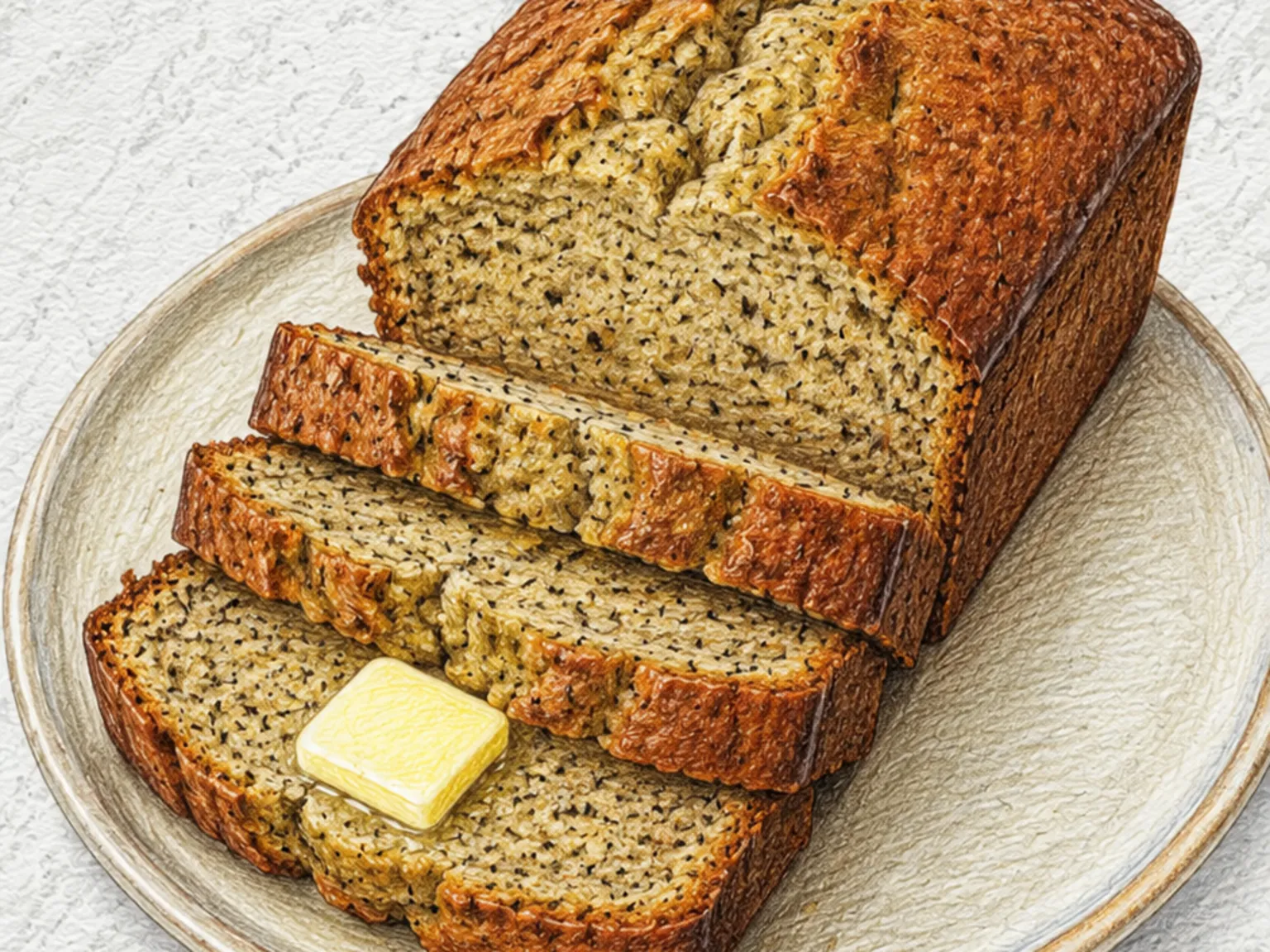
Earl Grey banana bread is a loaf-shaped quick bread made with 3 ripe bananas and finely ground tea leaves. Preheat the oven to 175°C and line the pan before mixing, then grind the measured 4g tea until no coarse pieces remain. Cream the softened unsalted butter with the sugar until the mixture becomes lighter in color. Add the 2 eggs one at a time, mixing after each addition so the base stays smooth and glossy. Mash the bananas with a fork, leaving a few small soft pieces, and fold them into the butter mixture with the milk and ground Earl Grey. Sift in the all-purpose flour, baking soda, and salt. Use a spatula to lift the batter from the bottom and stop as soon as the last dry streak disappears. Transfer the batter to the prepared pan and bake for 45 to 50 minutes. If the surface darkens while the middle still needs time, cover the loaf loosely with foil. A split top and a skewer that comes out without wet batter indicate that the center is done. Let the loaf stand in its pan for 15 minutes, then unmold it and cool it completely before slicing. The finished crumb holds small traces of banana throughout, while the powdered tea is dispersed through the loaf instead of collecting in coarse pockets.
Earl Grey Milk Tea Cheesecake
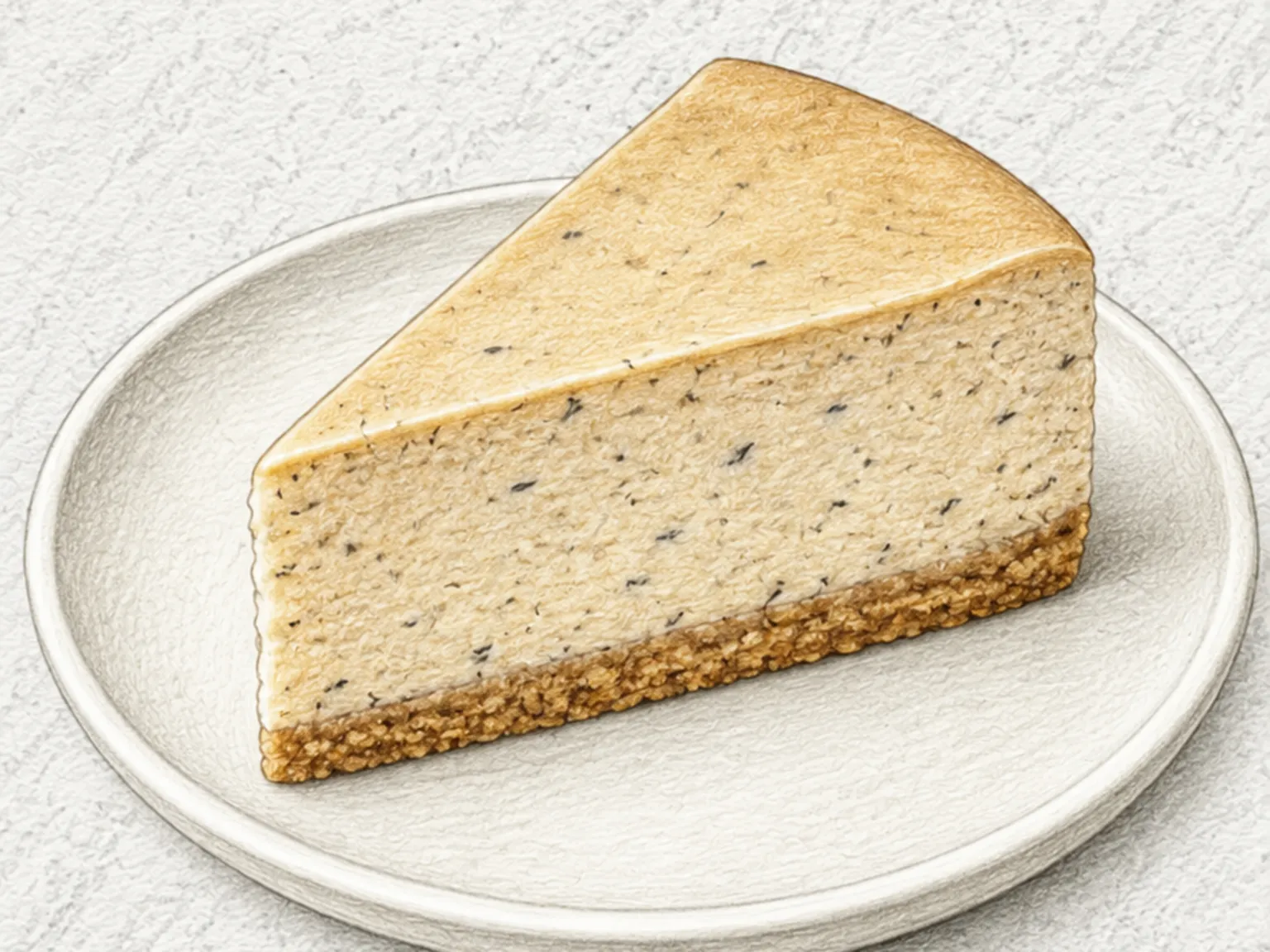
Earl Grey cheesecake infuses the bergamot-scented fragrance of Earl Grey tea into a classic baked cheesecake. The heavy cream is warmed without boiling, steeped with 2 tea bags for 10 minutes, and then mixed into a filling of cream cheese, eggs, sugar, and flour. A crushed digestive biscuit crust provides a sandy, buttery base. The cheesecake bakes slowly in a hot-water bath until the edges are set but the center still has a gentle wobble, which firms as it cools. After cooling completely, the cake is refrigerated for at least 4 hours so the filling can set before slicing. The bergamot fragrance remains distributed through the dense cream cheese and gives the chilled filling its milk tea character.
Earl Grey Roll Cake (Tea-Infused Chiffon Cream Roll)
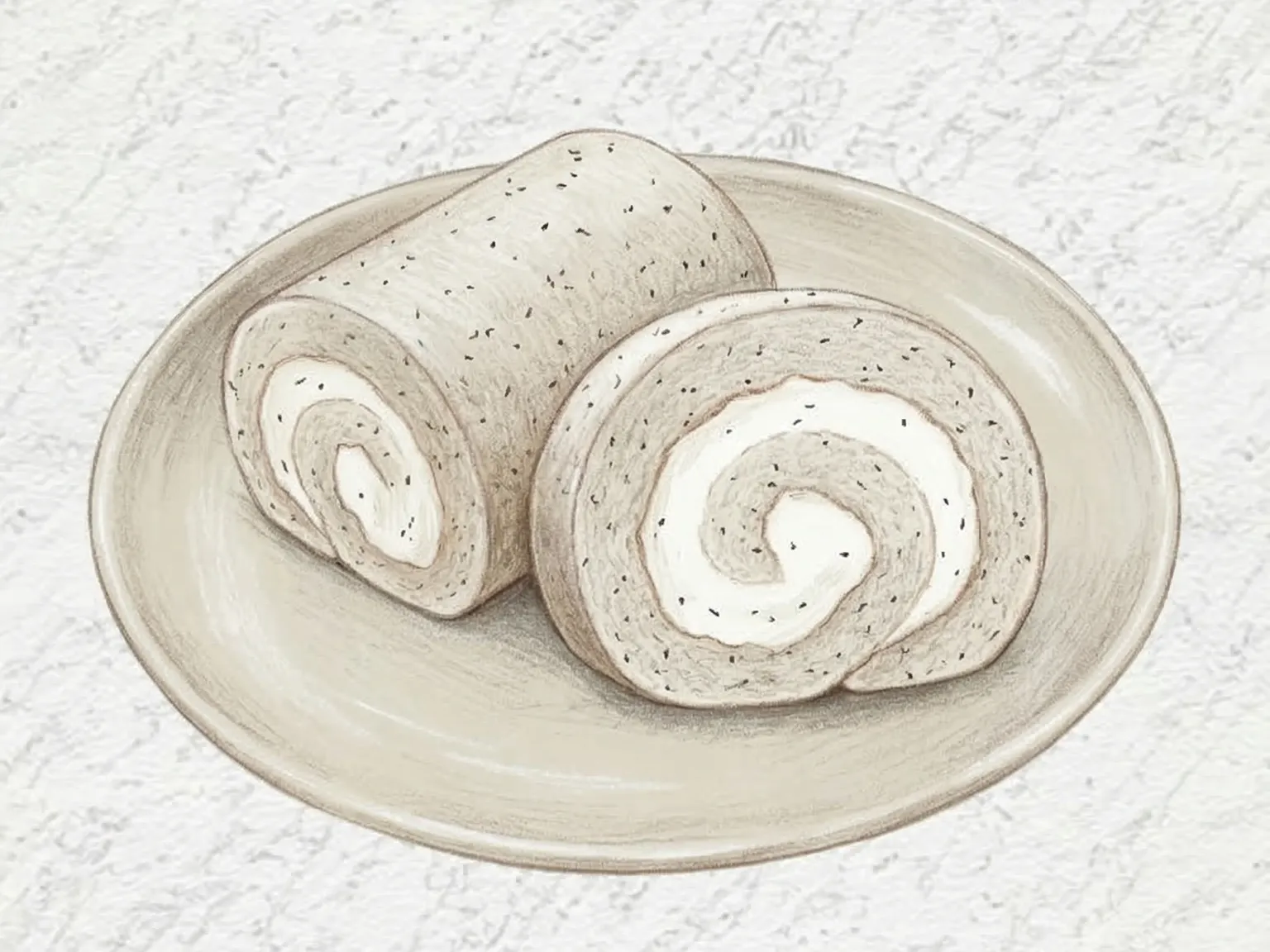
Earl Grey roll cake is a chiffon sponge sheet baked with finely ground tea leaves folded directly into the batter, then spread with lightly sweetened whipped cream and rolled into a tight spiral. The meringue folded into the batter gives the sponge enough structure to hold its shape while rolling without cracking, a balance that depends on not overworking the batter after the egg whites go in. The tea leaf particles embedded throughout the crumb release bergamot fragrance with every bite -- a different quality from flavoring the cream separately, because the heat of baking fixes the aroma into the sponge itself. The cream filling is deliberately understated in sweetness so it supports the tea flavor rather than competing with it, and the fat content keeps the crumb moist even after overnight refrigeration. The cross-section of a sliced roll shows a clean gradient of pale brown sponge against white cream, with the tea flecks visible throughout. Bergamot aroma peaks when the cake is slightly cool rather than cold, making it worth pulling from the refrigerator fifteen minutes before serving.
Chocolate Eclairs
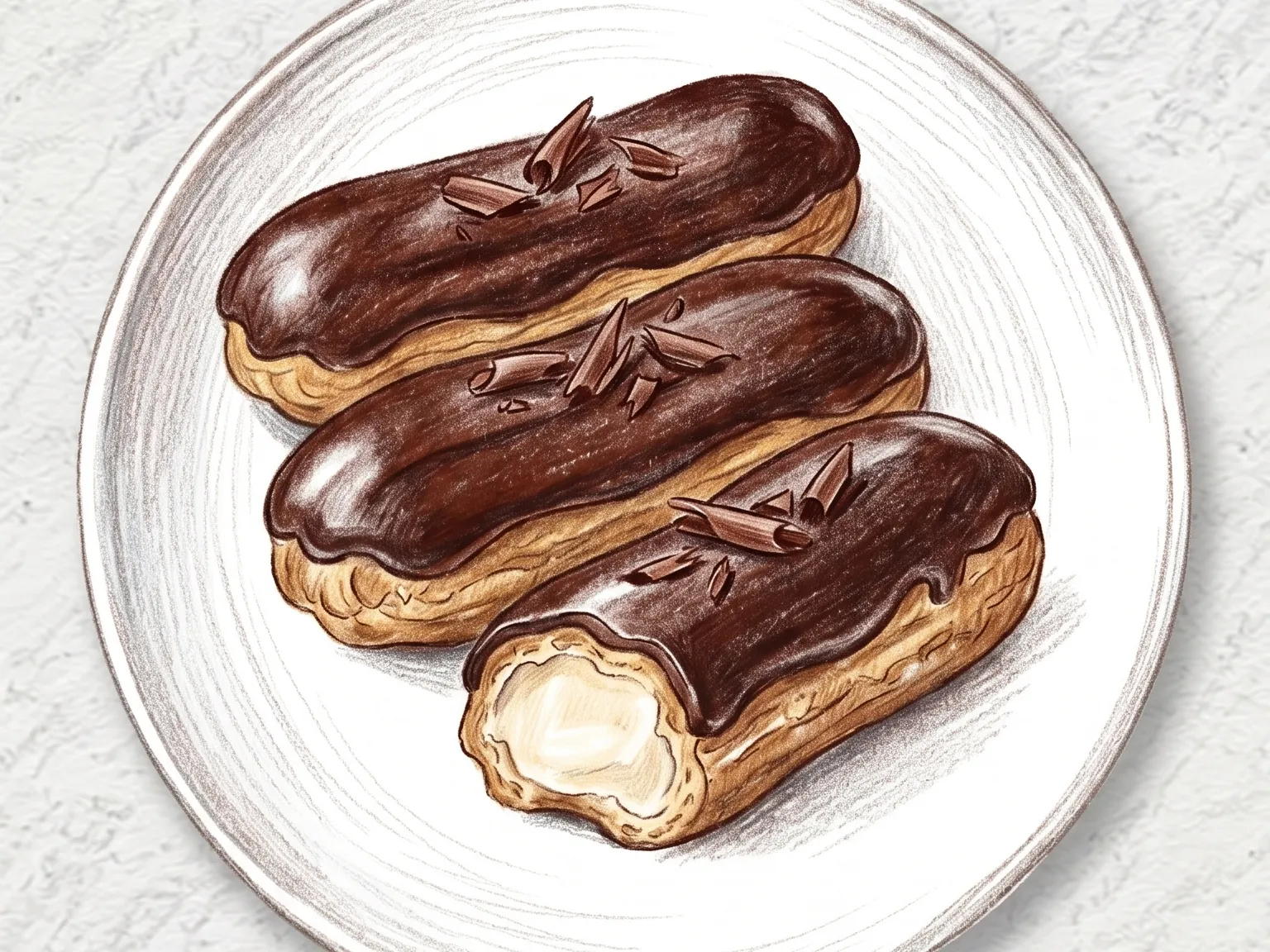
Eclairs are elongated French pastries built from choux dough, a cooked paste of water, butter, and flour into which eggs are incorporated one at a time until the mixture becomes smooth and glossy. When piped into finger-length strips and baked at high heat, the moisture locked in the dough converts to steam and expands, inflating each strip into a hollow shell with a crisp golden exterior. After cooling completely, vanilla custard cream is piped through a small hole in the base to fill the cavity. The top surface is dipped in a dark chocolate glaze that sets into a thin, shiny coating. Biting through delivers a layered experience: the slight bitterness of the chocolate, the crunch of the choux shell, and the cool smoothness of the custard in quick succession. Because the shell begins absorbing moisture from the cream as soon as it is filled, eclairs are best consumed within a few hours of assembly. Leaving them overnight compromises the texture significantly.
English Muffin
English muffins are round, flat breads made from a yeasted dough that is cooked entirely on a griddle rather than in an oven. This stovetop method creates a firm, cornmeal-dusted exterior that browns directly against the hot surface while generating large, irregular air pockets throughout the interior. These nooks and crannies define the bread: they are produced by the high-hydration dough and preserved intact by splitting with a fork rather than slicing with a knife. Fork-splitting tears the crumb open along its natural fault lines, leaving a rough, cratered surface full of ridges and hollows. When placed in a toaster, the edges of those pockets crisp up quickly and unevenly, creating contrasting textures in every bite. Melted butter, jam, marmalade, or the broken yolk of a poached egg settles deep into every crevice, making each mouthful more saturated with flavor than a smooth cut surface ever would allow. English muffins are the structural foundation of Eggs Benedict and work equally well as a straightforward breakfast toast. Because the dough is wet and sticky, ring molds on the griddle keep the rounds uniform in thickness during cooking.
Ensaymada Cheese Bread (Filipino Sweet Cheese Brioche)
Ensaymada is a Filipino sweet brioche descended from the Spanish ensaimada of Mallorca, transformed over centuries into something entirely its own. The dough is enriched with a generous amount of eggs and butter, kneaded until it pulls away from the bowl in smooth, elastic sheets, then given a long rise that results in a pillowy interior with a cotton-like, pull-apart crumb. After baking, the buns are brushed with softened butter while still warm, rolled in granulated sugar, and blanketed in a thick layer of grated cheddar or Edam cheese. The contrast between the sweet, buttery bread and the salty aged cheese is not incidental but central to the character of ensaymada, reflecting a Filipino fondness for pairing sweet and savory within a single bite. Bakeries across the Philippines produce them in enormous quantities during the Christmas season, when they are given as gifts and served at holiday gatherings, though they appear on breakfast tables year-round alongside thick hot chocolate or coffee.
Erbazzone
Erbazzone is an Italian savory pie that encloses Swiss chard, pancetta, garlic, and Parmigiano-Reggiano between two thin sheets of dough. Combine 250 g flour with 30 ml of the 50 ml olive oil, 120 ml warm water, and part of the 5 g salt. Knead until smooth, wrap the dough, and let it rest for 30 minutes so it can be rolled without springing back. Blanch 600 g Swiss chard in boiling water, squeeze it very thoroughly, and chop it finely. Saute 50 g pancetta with 10 g minced garlic until fragrant, add the chard, and cook for 3 minutes. Let this mixture cool before stirring in 80 g grated Parmigiano-Reggiano and the remaining salt. Divide the rested dough into two portions and roll both thinly. Line the pie dish with one sheet, distribute the cooled filling evenly, and cover it with the second sheet. Prick the top with a fork to provide vents, then brush it with the remaining olive oil. Bake in an oven preheated to 200 C for 30 minutes, removing the pie when the surface is evenly golden. Squeezing the blanched chard is essential because water left in the leaves will soak the lower crust. Cooling the filling before assembly also protects the thin dough and makes the covered pie easier to handle before baking.
Bibingka (Filipino Coconut Rice Cake)
Bibingka is a Filipino baked rice cake that belongs almost entirely to the Christmas season, sold warm from clay-pot stalls outside churches after Simbang Gabi, the nine-day series of dawn masses leading up to Christmas Day. For Filipinos, the smell of bibingka cooking over charcoal at four in the morning is inseparable from the feeling of the holiday itself. The batter is made from ground rice flour mixed with coconut milk, eggs, and sugar, then poured into a clay pot lined with fresh banana leaves. The pot sits between two layers of live charcoal - one below and one held above on a metal lid - so both surfaces cook simultaneously. This top-and-bottom heat is what gives bibingka its characteristic crust: lightly charred and fragrant on the outside from the banana leaves, moist and tender within. As the batter cooks, the banana leaves release a vegetal green fragrance that infuses into the rice cake and leaves faint dark marks on the underside. Midway through cooking, slices of salted duck egg are pressed into the surface alongside fresh coconut shavings, then a brush of butter is applied and the cake returns to the heat. During this final pass the sugars in the butter and batter caramelize at the edges, producing a triple wave of banana leaf, coconut, and butter aromas. The finished texture sits somewhere between a glutinous rice cake and a sponge cake - slightly sticky and chewy yet airy and soft. The salted egg cuts through the sweetness and gives each bite a complexity that plain sweetness alone cannot provide. Bibingka vendors outside Philippine churches in December, tending glowing braziers in the pre-dawn darkness, are one of the country's most enduring Christmas images.
Financier (Brown Butter Almond Mini Cake)
Financiers are small French cakes built on two key ingredients: browned butter and almond flour. The butter is cooked in a saucepan over medium heat, slowly at first, until the water evaporates and the milk solids settle and caramelize to a hazelnut-brown color, a stage called beurre noisette. This transformation produces a deep, toasty aroma layered with nutty complexity that plain melted butter cannot replicate. The browned butter is then combined with almond flour, powdered sugar, a small measure of cake flour, and egg whites to form a batter that is poured into rectangular molds and baked at around 190 degrees Celsius for 12 minutes. As the financiers bake, their edges deepen to a dark amber and the surface forms a thin, brittle crust, while the interior stays dense and moist because the almond oils and butter fat resist drying out. Their name derives from the gold-bar shape of the traditional mold, which connects them to the financial district of Paris, where they were reputedly created as a practical, suit-friendly snack that bankers could eat at a counter without making a mess. A smear of berry jam or lemon curd on the side sharpens the contrast against the nut-brown richness of the cake.
Flammkuchen (Alsatian Crème Fraîche Flatbread)
Flammkuchen uses a paper-thin, unleavened-style base carrying a light layer of creme fraiche, onion, and bacon, then bakes rapidly for 10 to 12 minutes at 250C. Mix 180 g flour, 90 ml water, 1 tablespoon olive oil, and 0.8 teaspoon salt into one dough. Knead until the surface becomes less rough, then rest it for 10 minutes so it can be rolled without resisting. Meanwhile, preheat the oven fully to 250C. Weak heat leaves the center soggy before moisture can escape from the cream and toppings, so do not shorten the preheating time. Slice 120 g onion as thinly as possible and cut 120 g bacon into small pieces. Both need to cook within the brief bake. Roll the rested dough until paper-thin and transfer it to a pan or tray. Feel for thicker spots and stretch them gently by hand so the whole base crisps at the same rate. Spread 120 g creme fraiche in a thin, even layer. Scatter the onion and bacon across the full surface without creating piles. Overlapping toppings trap steam, preventing the bacon from browning and keeping the dough underneath damp. Bake for 10 to 12 minutes. Remove the flatbread when the rim is crisp and lightly charred and the creme fraiche looks concentrated rather than watery. Finish with 1/2 teaspoon black pepper, cut promptly, and serve while the thin center and edges retain their crisp texture.
Flan Parisien (Parisian Vanilla Custard Tart)
Flan Parisien is a Parisian bakery staple found in nearly every boulangerie in the city. A buttery shortcrust pastry shell holds a thick, firm vanilla custard that bakes slowly until the top develops caramelized brown spots. The custard is made from milk, eggs, sugar, and cornstarch, which gives it a denser, sliceable consistency that distinguishes it from softer baked custards like creme brulee. When properly cooled, the filling holds its shape when cut yet melts smoothly on the tongue with a clean vanilla flavor. Vanilla bean seeds speckled throughout the custard signal that the real ingredient was used rather than extract. The pastry shell must be blind-baked first to prevent sogginess, then filled and baked again until set. It is served cold, and the contrast between the crisp, buttery shell and the cool, trembling custard makes each bite satisfying. Allowing the flan to cool fully at room temperature before refrigerating prevents the custard from cracking or collapsing when sliced, which is the most common mistake when cutting too soon after baking.
Florentine Cookies (Caramel Almond Lace with Chocolate)
Florentine cookies are thin, lace-like biscuits made by stirring sliced almonds, candied orange peel, and dried cherries into a hot caramel of sugar, butter, and heavy cream, then spooning small pools of the mixture onto a lined baking sheet. In the oven, the caramel re-liquefies and spreads, binding the nuts and fruit into flat, crisp discs with a translucent amber surface. The baked rounds are fragile and catch the light like stained glass when held up. Once cooled, one side is coated with tempered dark chocolate, and a fork is dragged through the surface just before setting to create the classic wave pattern. The texture sequence is distinctive: the first bite shatters the caramel shell cleanly, then gives way to chewy pockets of dried fruit embedded in the caramel. Flavor-wise, toasted caramel sweetness opens first, followed by the bitter note of orange peel, the nuttiness of almonds, and finally the deep bitterness of dark chocolate. The combination is considerably more layered than the cookies' fragile appearance suggests. Stored in an airtight container, they hold their snap well for several days, making them a reliable choice for gift boxes or holiday platters.
Focaccia Bread
Focaccia is an Italian flatbread distinguished by its generous use of olive oil and a high-hydration dough that produces a distinctly open, irregular crumb. The simple mixture of flour, water, yeast, and salt is mixed with plenty of olive oil and given a long fermentation during which large air pockets develop throughout the dough, producing a texture that is simultaneously chewy, airy, and moist. The dough is spread into a well-oiled pan and dimpled deeply across the surface with fingertips, a step that gives focaccia its characteristic pitted appearance. These depressions collect pools of olive oil that effectively fry both the underside and the surface during baking, creating a golden, crisp crust all around while the interior stays tender. Flaky sea salt and fresh rosemary scattered over the top before baking add a fragrant, savory finish. The bread adapts to a wide range of toppings: olives, cherry tomatoes, red onion, thinly sliced potato, or sun-dried tomatoes all work well pressed into the surface before baking. Focaccia is at its absolute best in the minutes immediately after leaving the oven, when the crust is still crackling and the interior is warm and pillowy. Torn by hand into rough pieces, it is built for sharing at the table.
Olive Herb Fougasse
Fougasse is a flatbread from Provence in southern France, shaped with decorative slashes that resemble a leaf or wheat sheaf. The dough is enriched with olive oil and studded with black olives, rosemary, and thyme, distributing pockets of briny, herbal flavor throughout the bread. The distinctive cuts increase the crust-to-crumb ratio, so thinner sections bake to a crisp finish while thicker areas remain soft and chewy. This variation in texture within a single piece gives fougasse its distinctive character. The surface is brushed with olive oil before baking, which produces a golden, glossy finish. It is especially good while still warm, when the crust is crisp and the crumb remains tender. It pairs naturally with southern French dishes, charcuterie boards, or a simple bowl of olive oil for dipping.
French Macarons
French macarons are small, round almond meringue sandwich cookies that demand precision at every single step of the process. The shells are made from finely ground almond flour, powdered sugar, and a meringue base, mixed using a technique called macaronage, which means folding the batter until it flows slowly off the spatula like lava and forms a smooth, glossy ribbon when piped. A properly baked macaron has a smooth domed top, a ruffled ring called the foot at its base, and a thin crisp shell that gives way to a chewy, lightly moist interior. The filling between the shells, whether buttercream, ganache, or fruit curd, carries the primary flavor of each variety. Classic options include vanilla and pistachio, while modern interpretations extend to raspberry, salted caramel, yuzu, and matcha. After assembly, macarons must rest in the refrigerator for at least twelve hours, during which moisture from the filling gradually softens the shells into a unified, melt-in-the-mouth texture that is impossible to achieve straight out of the oven. In Parisian patisseries, the quality of a single macaron shell is considered a reliable indicator of the entire shop's technical standard.
About Baking
Precise measurements are the key to successful baking. Each recipe here includes detailed ingredient ratios and oven temperatures, so even beginners can achieve consistent results. From simple scones to layered cakes, this collection covers a wide range of baking projects.