Side dishes Recipes
624 recipes. Page 15 of 26
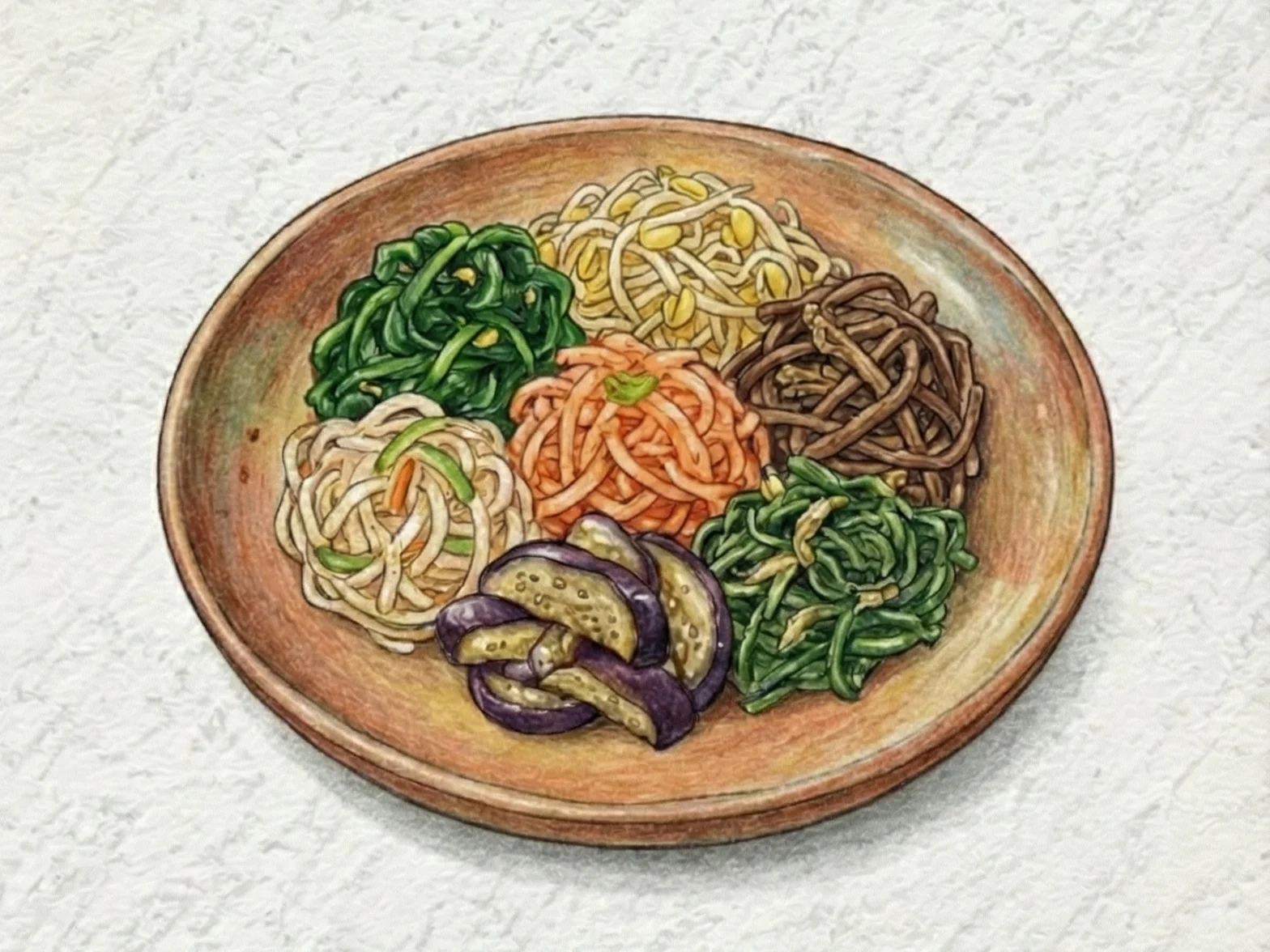
Side dishes (banchan) are the heart of Korean dining culture. A typical meal features multiple small plates - seasoned vegetables (namul), braised dishes (jorim), pickled items, and salted seafood. Classics like spinach namul, bean sprout salad, and stir-fried anchovies can be prepared in advance and enjoyed over several days.
Korean Potato and Sausage Stir-Fry
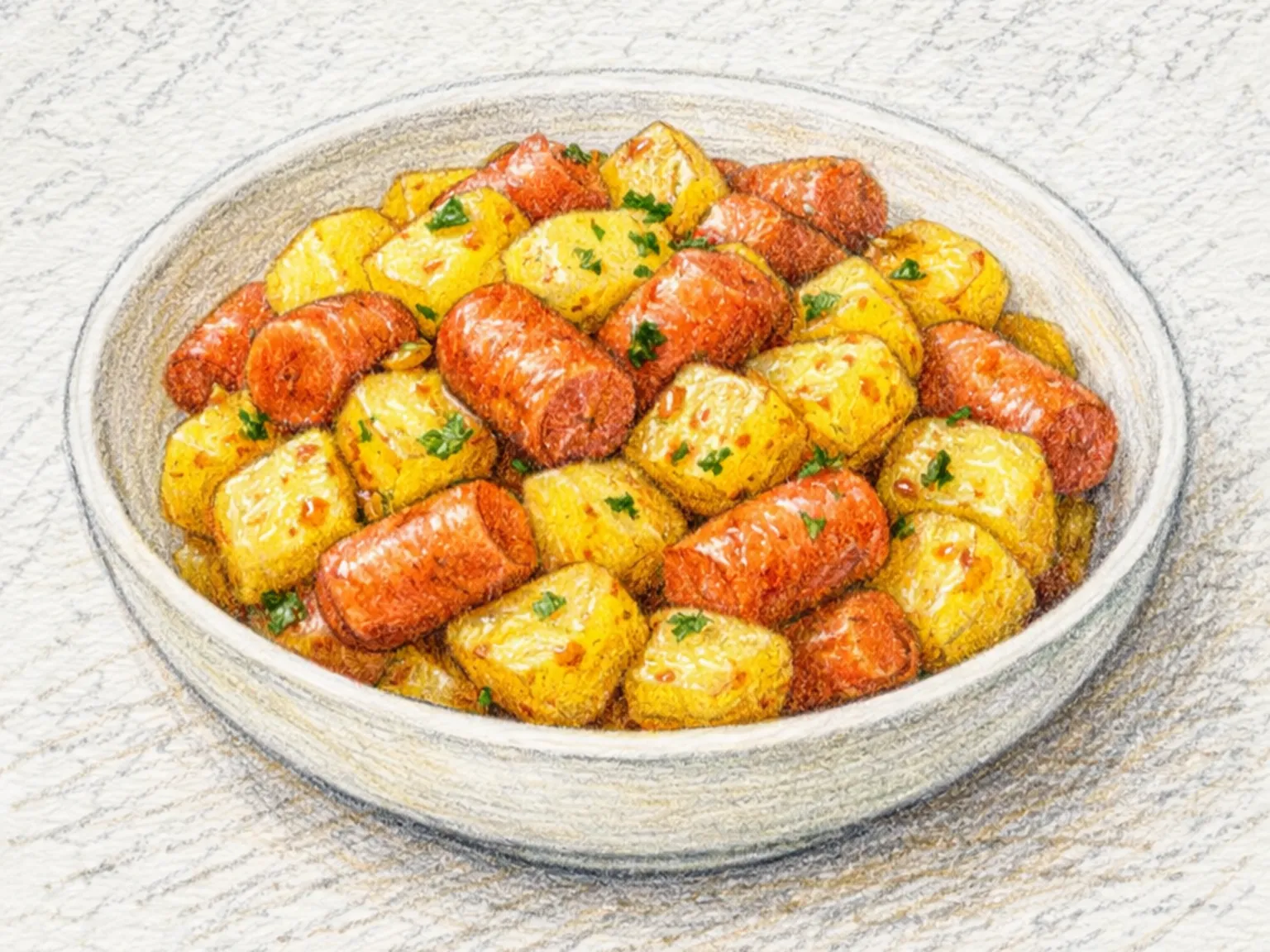
This Korean side dish features thinly sliced potatoes and bite-sized sausages stir-fried in a sweet and savory sauce. The potatoes are sliced into half-moons and cooked in a hot pan with oil for three minutes until their edges turn translucent. Sausages are then added, and the heat is reduced to medium to cook for two more minutes, allowing the rendered sausage fat to coat the potatoes. The dish is seasoned with a quick blend of soy sauce, ketchup, and sugar. Because the sauce can burn easily, it is crucial to toss the ingredients rapidly for thirty seconds until a glossy glaze forms. Ketchup provides a mild acidity that balances the saltiness of the soy sauce and the sweetness of the sugar. This stir-fry is a popular lunchbox staple that comes together in under ten minutes, making it highly practical for busy mornings.
Korean Beef Jeon (Egg-Coated Pan-Fried Thin Beef Slice)
This classic Korean dish consists of thinly sliced lean beef round that is lightly seasoned, coated in flour and egg, and pan-fried. The process begins by seasoning the beef slices with salt, black pepper, and minced garlic. Each slice is dusted with a thin layer of flour, shaking off any excess to prevent clumping and to ensure the egg batter adheres securely during cooking. The floured beef is dipped in beaten egg and cooked in a preheated pan with oil over medium heat. It is crucial to avoid high heat, which can scorch the egg coating and toughen the meat. Pan-frying each side briefly until the egg sets preserves the natural tenderness of the beef. The cooked slices feature a delicate golden coating and are typically served warm. Yukjeon is a staple for holiday feasts, ancestral rites, and housewarming gatherings.
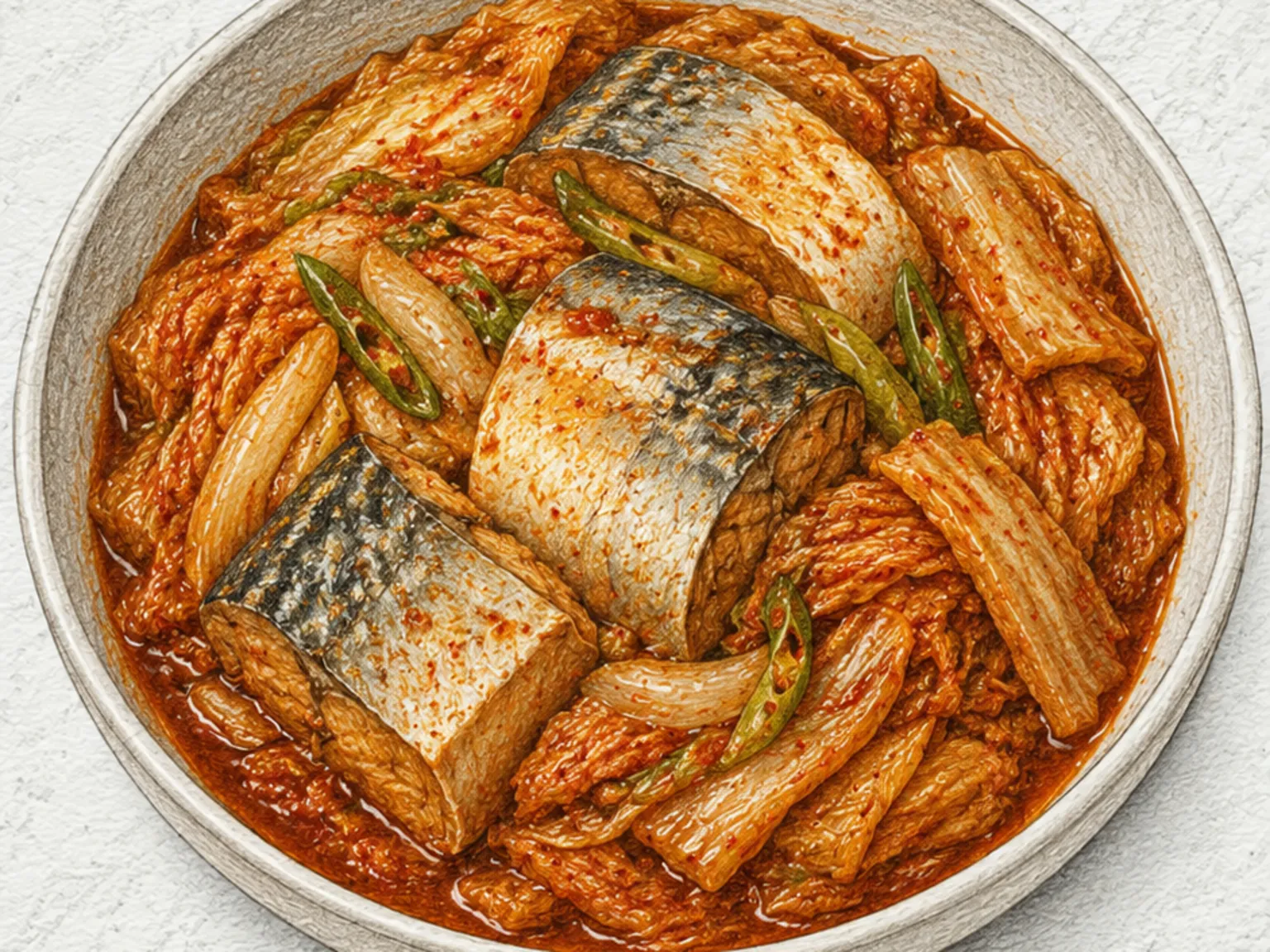
Korean Braised Mackerel with Aged Kimchi
Godeungeo kimchi jjim is mackerel braised together with well-fermented aged kimchi in a soy sauce and gochugaru broth. The deep, sharp acidity of the aged kimchi cuts through the fatty mackerel flesh without leaving any heaviness, drawing out a concentrated savory taste instead. The key step is removing the lid partway through cooking and letting the braising liquid reduce and absorb into the fish, which also drives off any residual fishiness. Onion softens into a gentle sweetness that rounds out the broth, while a pinch of sugar tempers the sourness of the kimchi so the seasoning stays in clear balance. The sauce reduces to a small pool of intensely flavored liquid that is meant to be mixed directly into a bowl of steamed rice.
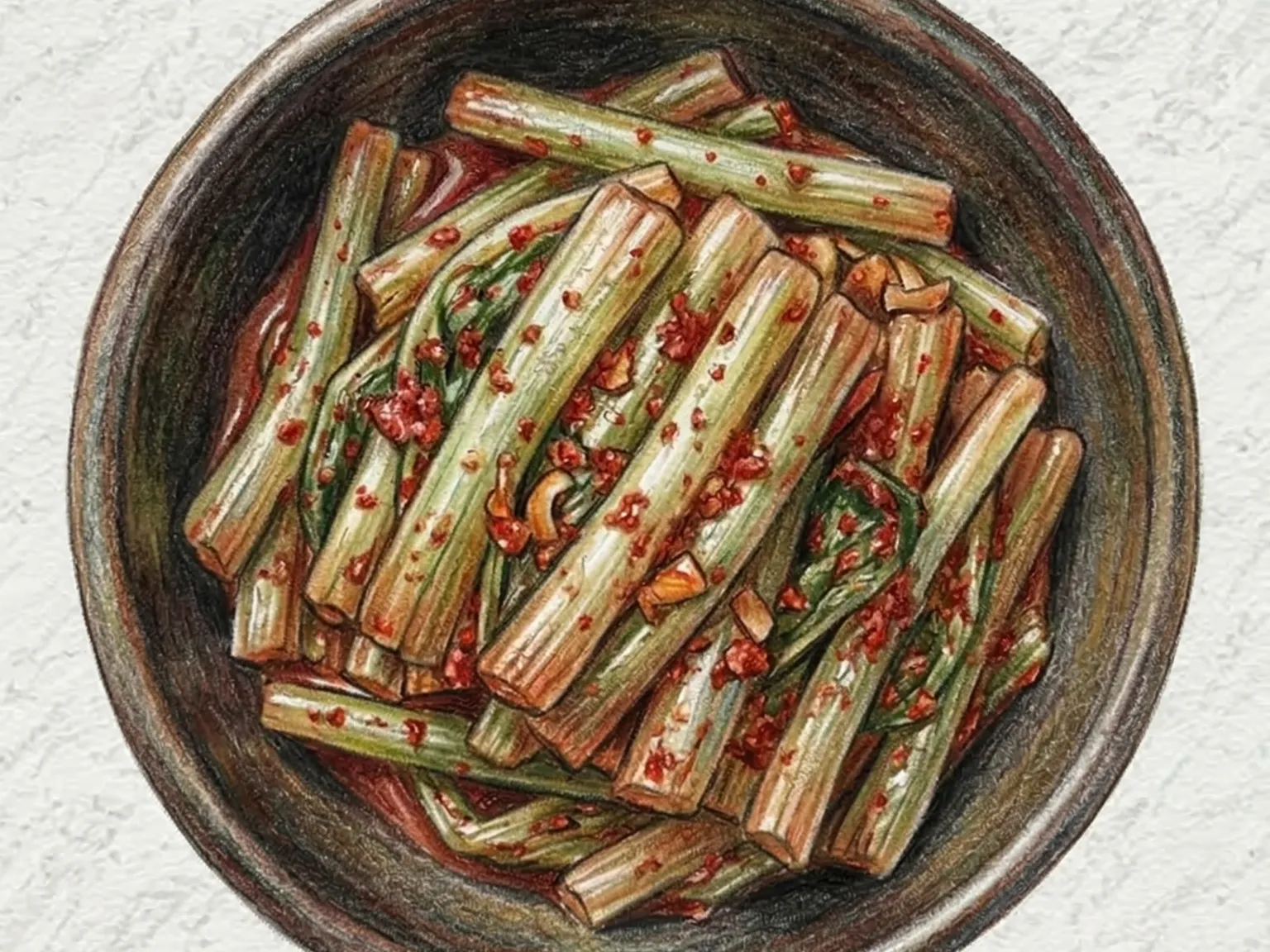
Korean Sweet Potato Stem Kimchi
Goguma julgi kimchi is made from sweet potato stems, prepared by carefully peeling their tough, stringy outer skin to expose the elastic inner fiber, blanching briefly, then seasoning with gochugaru, anchovy fish sauce, minced garlic, and glutinous rice paste before being left to ferment. Once stripped of the outer skin, the stems retain only their springy, chewy core, which gives every bite a bouncy, almost springy resistance that sets this kimchi apart from leafy varieties. As the fermentation progresses, the seasoning works its way deep into the fibrous channels of each stem, building a well-balanced spicy-salty flavor throughout. Scallions bring a fresh herbal note, and onion rounds the sharp edges of the chili seasoning with natural sweetness. The peeling is time-consuming, but the distinctive texture rewards the effort. Made in peak summer when sweet potato stems are freshest, this kimchi is considered a seasonal treat.
Seasoned Korean Wild Lettuce
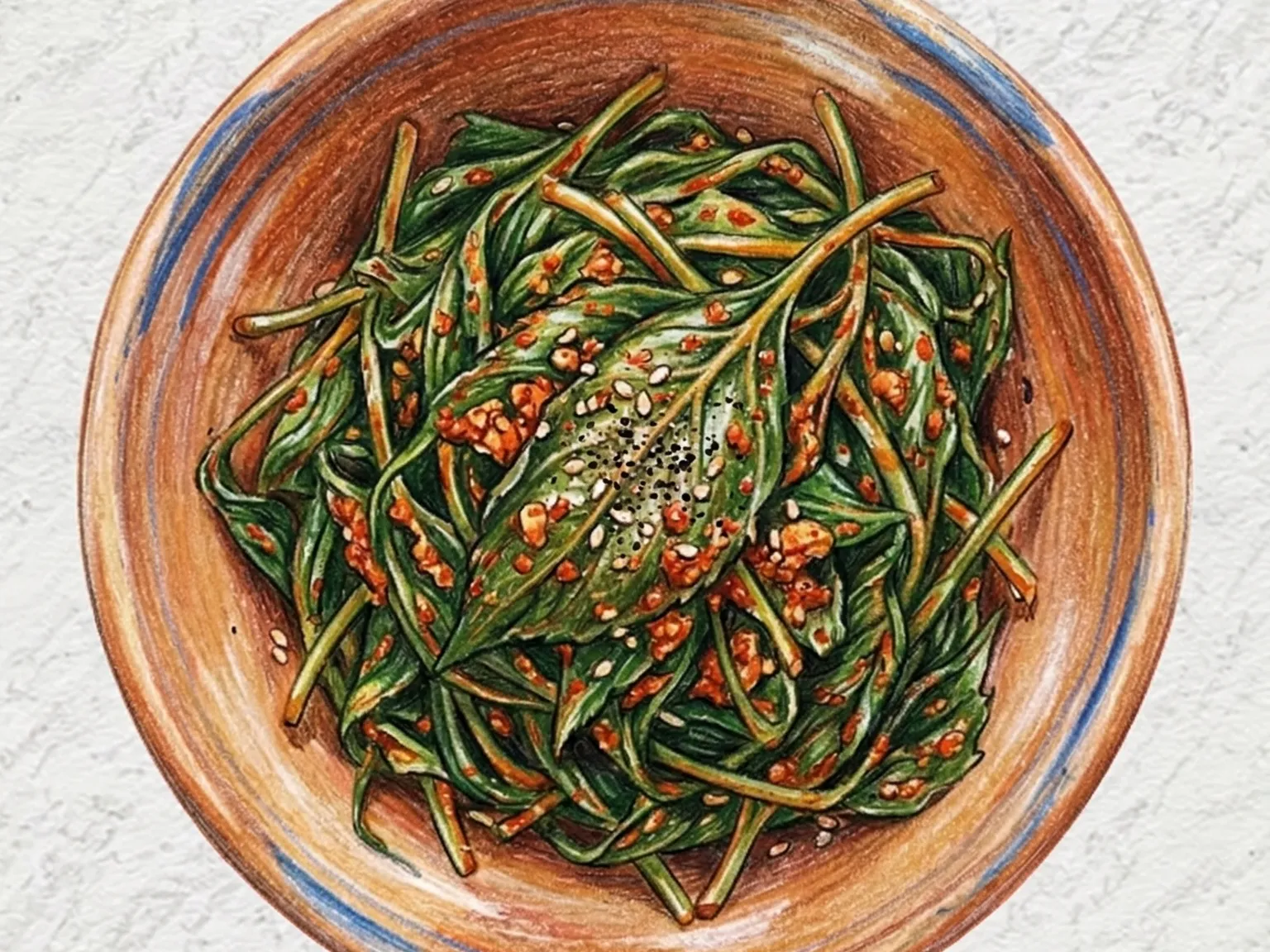
Godeulppaegi muchim is a seasonal Korean side dish prepared with Ixeris dentata, a plant characterized by its thin, slender leaves. This botanical species belongs to the daisy family and has been traditionally foraged across the Korean peninsula for many generations. It serves as a versatile ingredient, often appearing on the dining table as a fermented kimchi or as a freshly seasoned vegetable dish known as banchan. The plant is recognized for a distinct and sharp bitter profile that is significantly more intense than the bitterness typically found in standard garden salad greens. Properly handling this inherent bitterness is the most important technical aspect of preparing the dish correctly. The leaves and stems undergo a brief blanching process in boiling water for a duration of approximately one to two minutes. Following this heat treatment, they are moved immediately to a cold water bath where they remain submerged for a minimum of thirty minutes. If the soaking duration is reduced or omitted entirely, the resulting dish will retain a level of bitterness that cannot be masked or balanced by any amount of additional seasoning. After the soaking period is complete, the greens are squeezed firmly by hand to remove excess moisture and then combined with a bold seasoning base. This dressing consists of a mixture of gochujang, gochugaru, vinegar, sugar, minced garlic, and toasted sesame oil. This specific combination provides a sharp acidity and spicy heat that coats the processed greens. The flavors are intended to complement the lingering bitterness of the plant instead of removing it, which creates a complex and layered taste profile that persists throughout the meal. This side dish is typically available from the beginning of spring through the early weeks of summer. During these months, the plant is a common sight in traditional rural markets located throughout South Gyeongsang and North Jeolla provinces. Individuals who value a strong and assertive flavor profile consider this preparation to be a highly valued seasonal specialty within Korean cuisine.
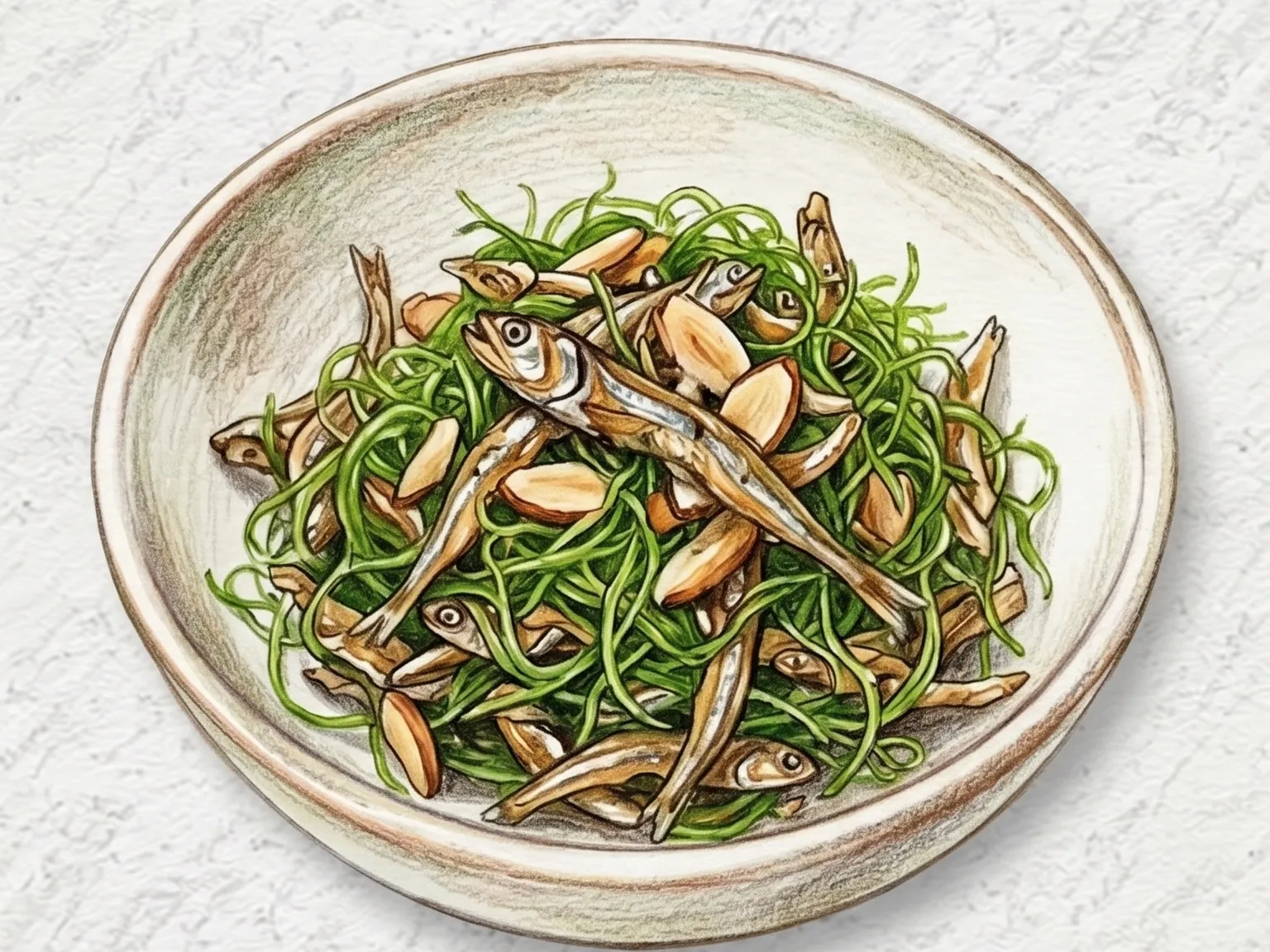
Korean Stir-fried Seaweed and Anchovies
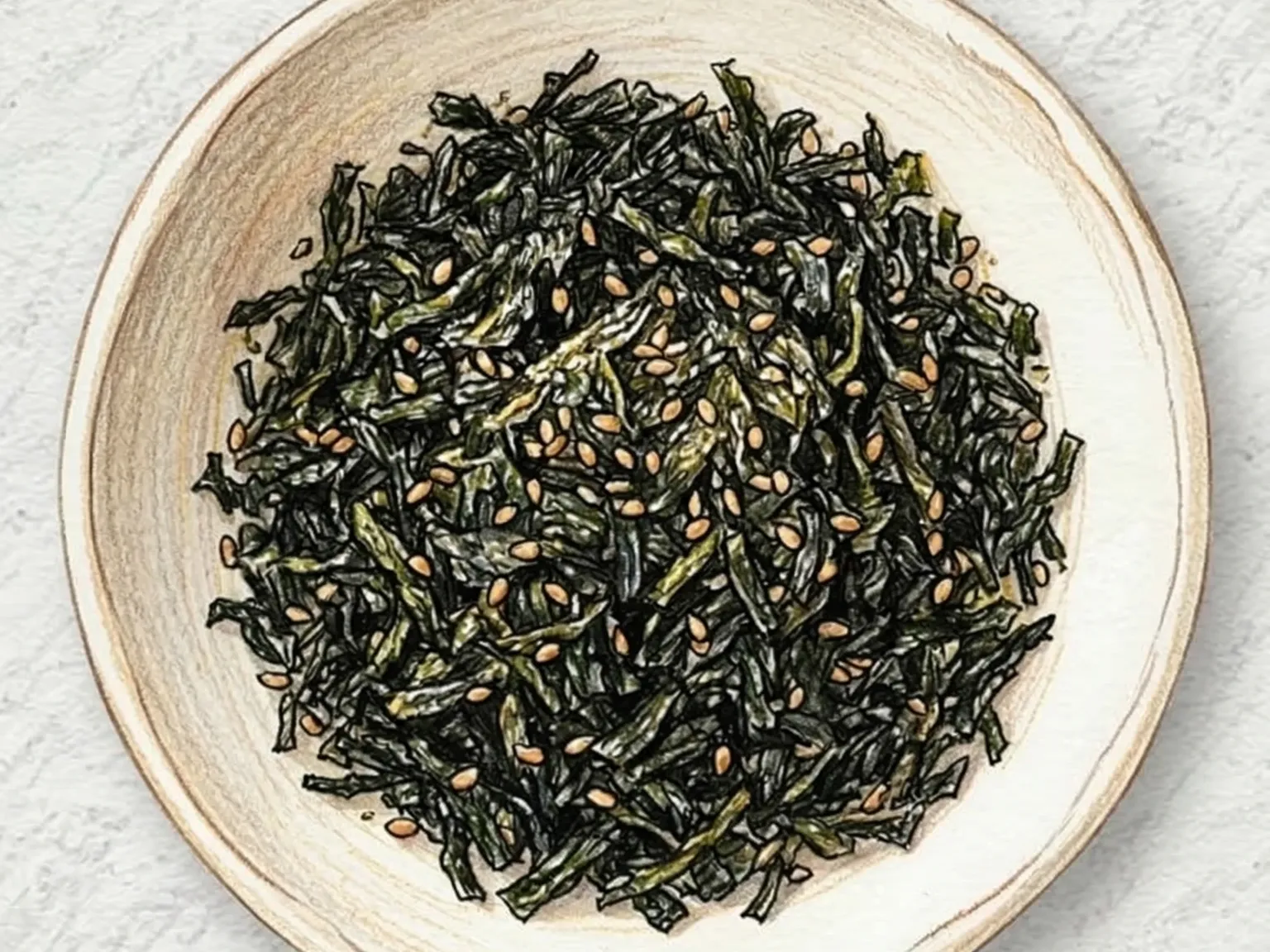
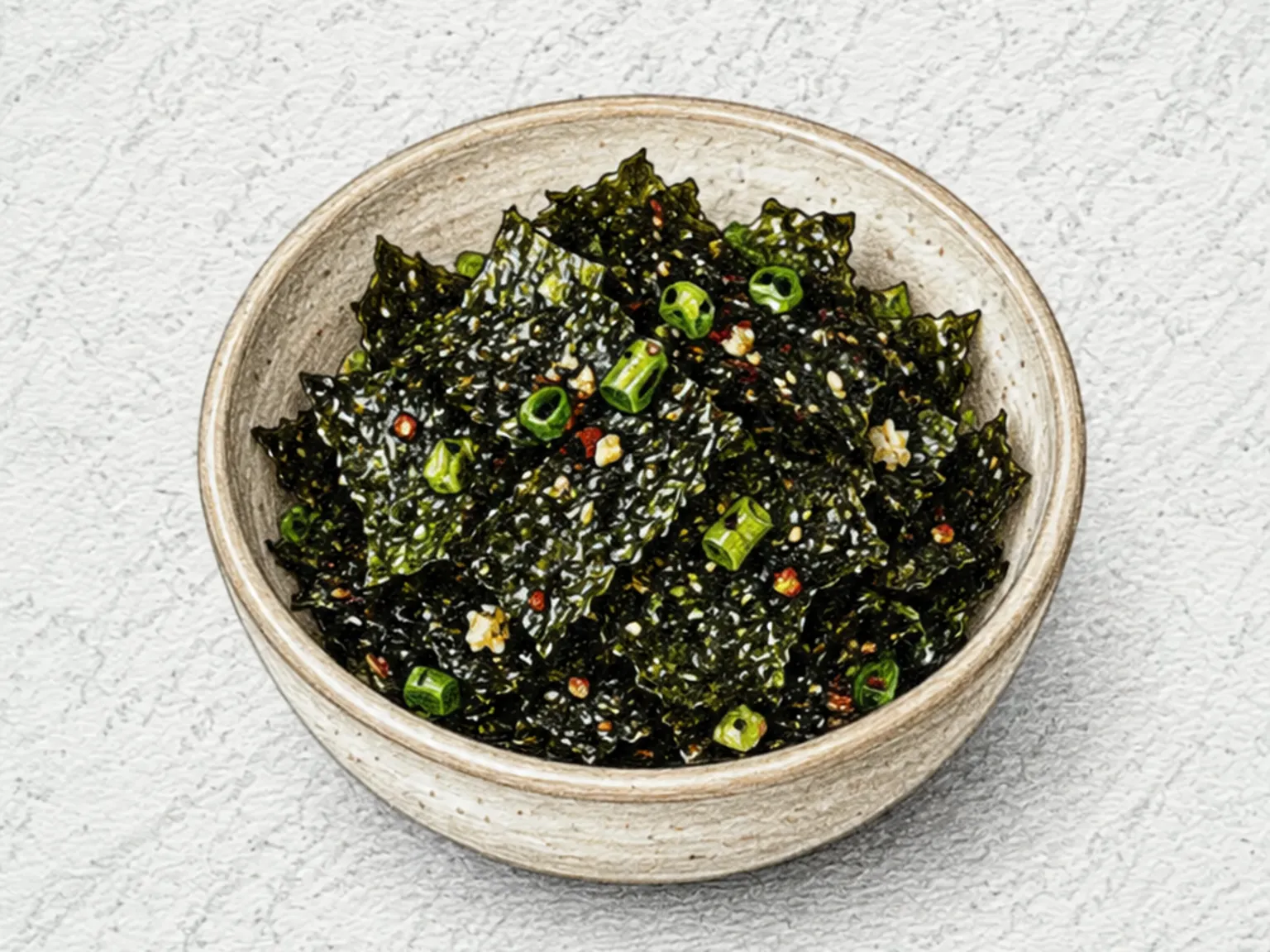
Gamtae myeolchi bokkeum is a crispy Korean banchan that combines small dried anchovies with gamtae seaweed and sliced almonds in a soy-syrup glaze. Gamtae is a green seaweed harvested along parts of Korea's southern coast, milder and less bitter than common sea lettuce, with a gentle oceanic fragrance that complements rather than overpowers the anchovies. The first step is toasting the anchovies in a dry pan without oil until they turn slightly golden and fragrant; this drives off moisture and mellows their fishy edge. The soy and oligosaccharide syrup glaze is added next, coating each anchovy in a glossy, lightly sweet-savory layer. Oligosaccharide syrup is preferred over honey or corn syrup because it is less viscous, which keeps the anchovies separated rather than clumped. Almond slices are stirred in to provide a larger, firmer crunch that contrasts with the tiny anchovies and adds a mild nutty sweetness. Gamtae is added only in the final seconds - ten seconds over heat is enough to warm it and release its aroma, and longer exposure will turn it yellow and dull. Once everything is cooled completely before sealing in an airtight container, the banchan holds its crunch for one to two weeks, making it an ideal make-ahead dish for weekly meal prep. The anchovies provide calcium and the gamtae contributes marine minerals, giving the dish a nutritional balance that matches its flavor.
Korean Zucchini Corn Jeon
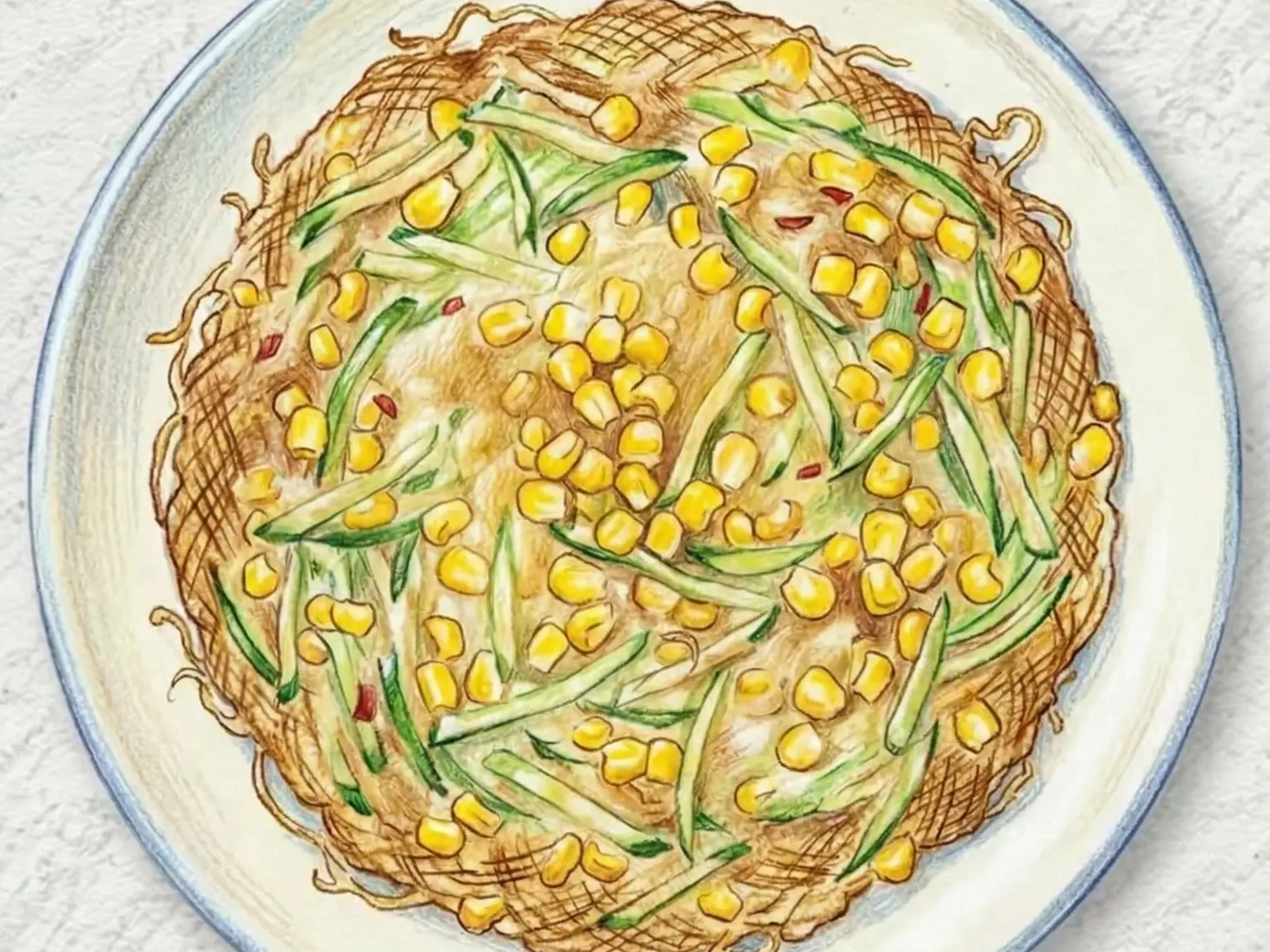
Shredded zucchini and sweet corn kernels are folded into a pancake-mix batter and pan-fried until golden. Julienning the zucchini to a uniform thickness ensures even cooking throughout, while the corn kernels pop with sweetness in each bite. Egg enriches the batter and improves cohesion, and black pepper adds a light seasoning. Using cold water keeps the batter thin and airy, which helps the vegetables maintain their distinct textures after frying. The pan and oil must be fully heated before the batter goes in to achieve a crisp exterior, and spreading the batter wide makes the edges thin enough to turn properly crunchy. Let one side set completely over medium heat before flipping to keep the pancake intact.
Korean Braised Mackerel with Radish
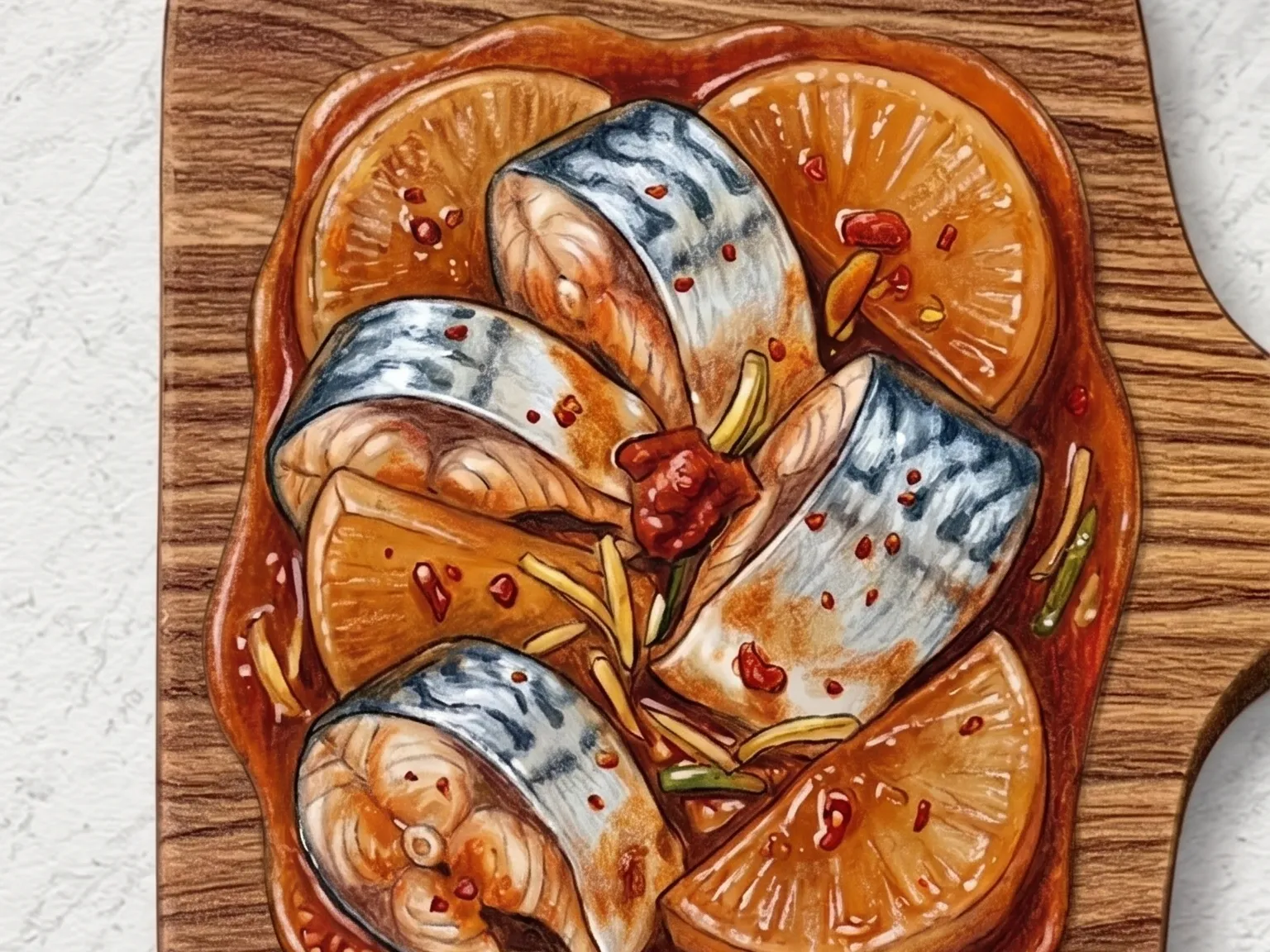
Layering thick slices of radish beneath fresh mackerel prevents the delicate fish from sticking to the pot while allowing the vegetables to soak up the seasoning like a sponge. This traditional Korean preparation uses a base of soy sauce, red chili powder, and red chili paste to create a thick braising liquid. As the pot simmers, the cook repeatedly spoons the sauce over the fish pieces to ensure the heat and spices reach every part of the mackerel. Ginger serves as a crucial ingredient to eliminate any strong fishy scents, so adding it early in the cooking process allows its aromatic properties to fully integrate into the broth. Over time, the radish softens into a translucent texture, absorbing the spicy and salty elements of the sauce until it becomes a substantial part of the meal. Adding onions and green onions during the final stages of cooking preserves their crispness and prevents their fresh aroma from fading. The process concludes when the liquid reduces into a glossy glaze that coats the mackerel. Serving this dish immediately over warm white rice allows the grains to catch the concentrated sauce. Beyond its taste, the mackerel provides omega-3 fatty acids while the radish contributes digestive enzymes and vitamin C to balance the natural oils of the fish.
Korean Gomchwi Leaf Jangajji
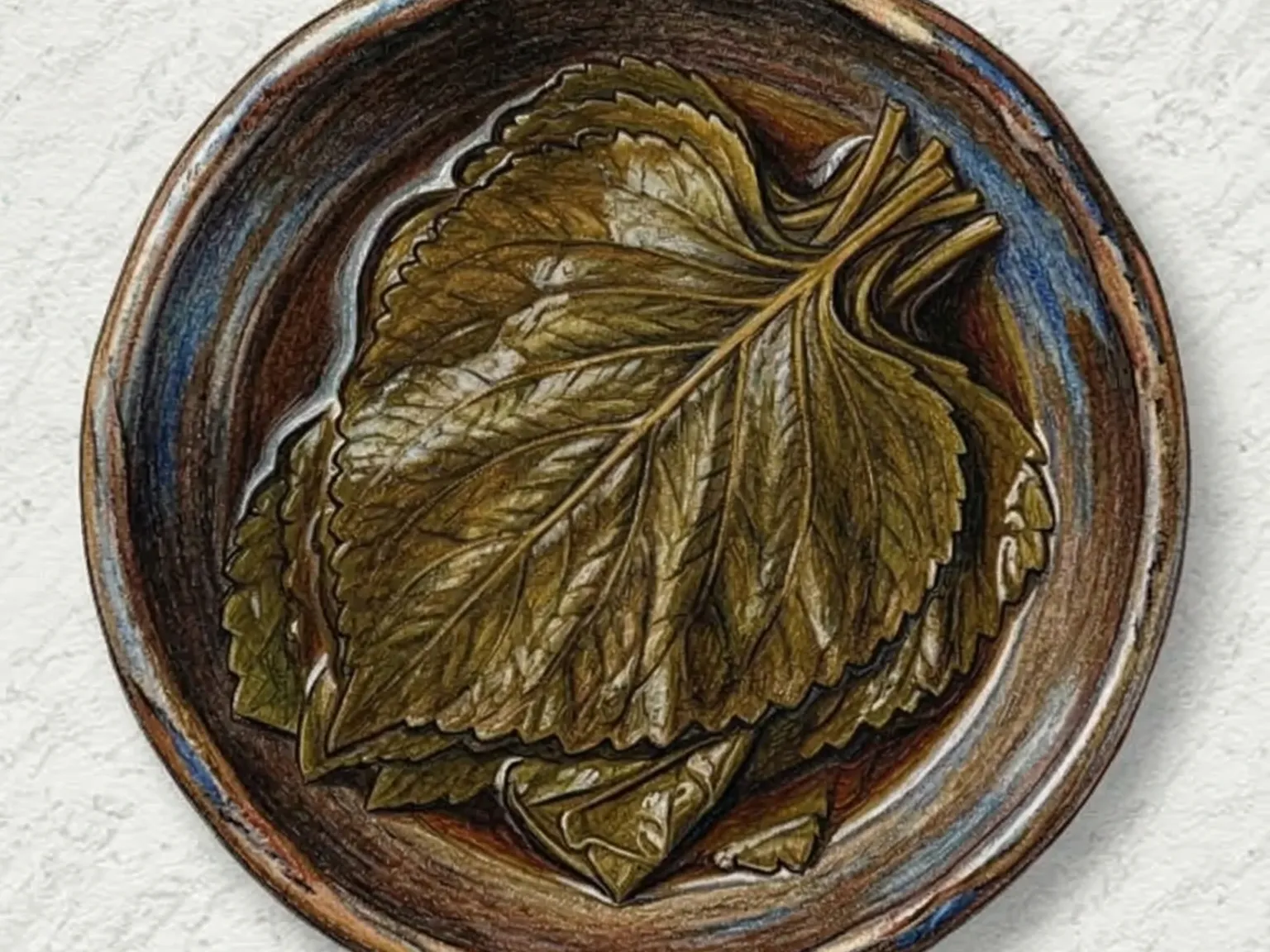
Gomchwi jangajji is a Korean mountain herb pickle made by submerging gomchwi leaves - a wild member of the ligularia family - in a prepared brine of soy sauce, vinegar, and sugar. The leaves carry a powerful, distinctly wild green fragrance that intensifies rather than fades as they cure, deepening when paired with the savory weight of fermented soy. Vinegar keeps the flavor profile from becoming too heavy, cutting through the richness of the soy with a clean, acidic finish after each bite. The leaves are notably broad and thick-fleshed compared to most pickling greens, which means they absorb the brine thoroughly and evenly over a few days of curing. When draped over a bowl of rice and folded into a wrap, the leaf's pungent aroma and salty seasoning seep directly into the grains, creating a self-contained bite that requires no additional side dishes. Garlic and cheongyang chili added to the brine contribute a sharp warmth and a mild heat that prevent the deep, earthy flavor of the mountain herb from becoming monotonous across a meal.
Korean Mackerel Sashimi
Godeungeo hoe uses 300 grams of mackerel fillet labeled for raw consumption with a parasite-control freezing history verified through the supplier. Keep the fillet at or below 4 degrees Celsius until preparation and use only a cleaned cutting board and knife. Pat the surface dry with a paper towel, inspect for bones, remove any pin bones with cleaned fish tweezers, and run a fingertip over the fillet to check again. If the skin is attached, remove it, then slice the fish diagonally across the grain into 0.5-centimeter pieces. Arrange 50 grams onion and 30 grams water dropwort on a plate and place the mackerel on top. Serve 0.5 lemon, 3 tablespoons sweet chili paste sauce, 2 tablespoons dark soy sauce, and 1 teaspoon wasabi alongside the fish for use immediately before eating. Documented parasite-control freezing and cold handling address separate parts of preparation, so the fillet must remain cold even after its freezing history has been confirmed. Serve at once and do not store leftover mackerel sashimi.
Korean Soy-Glazed Chicken Stir-Fry
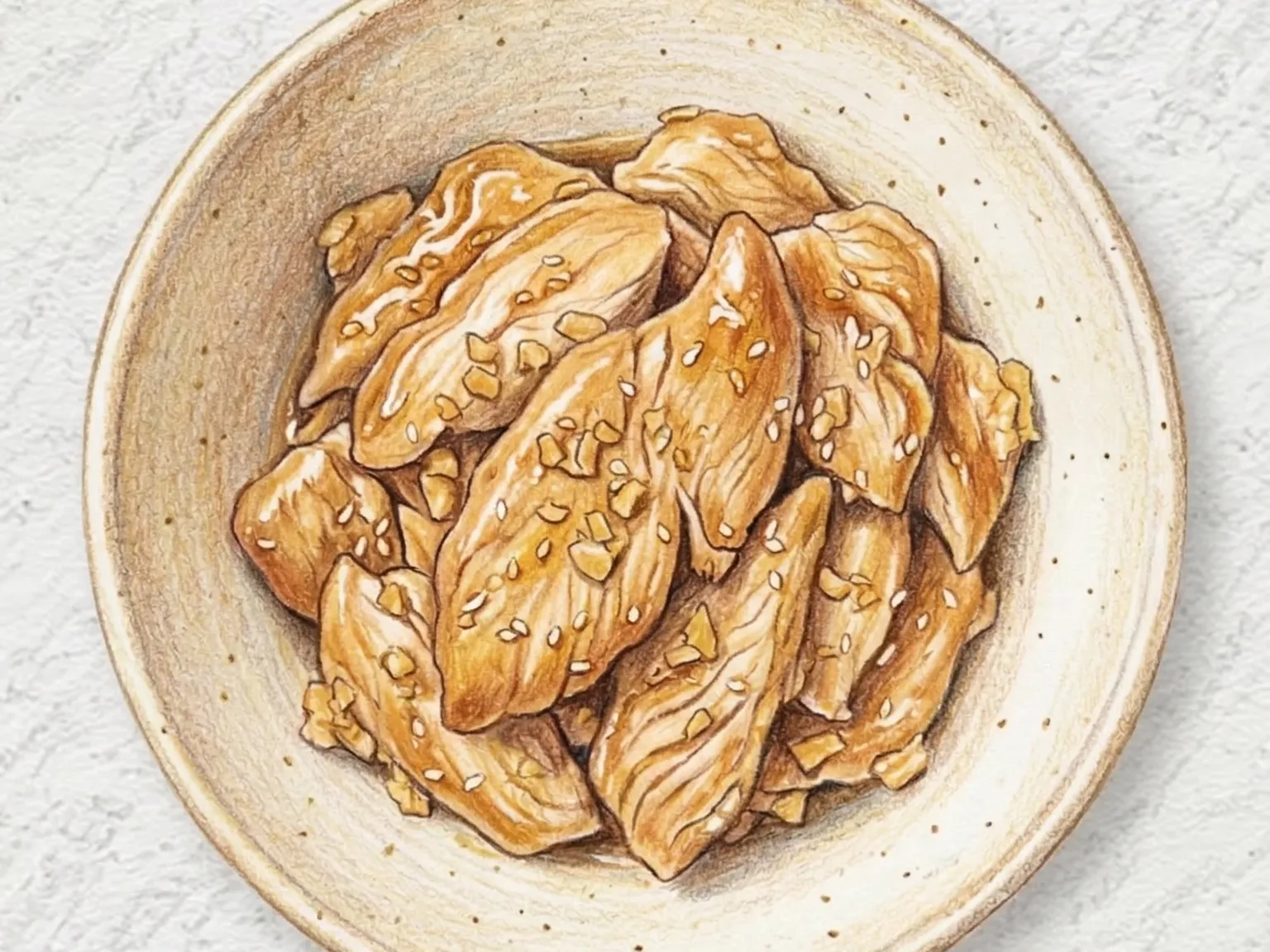
Ganjang chicken bokkeum marinates thin chicken breast in soy sauce, garlic, and ginger for 10 minutes, sears the slices in one layer, and finishes them with sesame oil. Three hundred grams chicken breast is cut against the grain into even 0.5 cm slices. Two tablespoons soy sauce, 2 minced garlic cloves, and 1 teaspoon ginger are mixed through the meat and left for 10 minutes. A pan is heated thoroughly over medium-high before 1 tablespoon cooking oil is added. The chicken is spread as close to a single layer as possible so released moisture does not collect and steam the slices. During the first minute, the pieces are left mostly undisturbed to set and lightly color on the underside. When the edges turn white, they are flipped and stir-fried for 1 more minute. As the remaining marinade reduces against the pan, the heat is lowered to medium. The thickest slice is cut open and checked for a white center with no translucent raw areas. The burner is switched off, 1 teaspoon sesame oil is folded through, and the chicken rests in the pan for 1 minute before plating. Cutting every slice to the same thin thickness and preventing overlap allows the centers to finish within the short searing period.
Korean Steamed Thistle Greens with Perilla
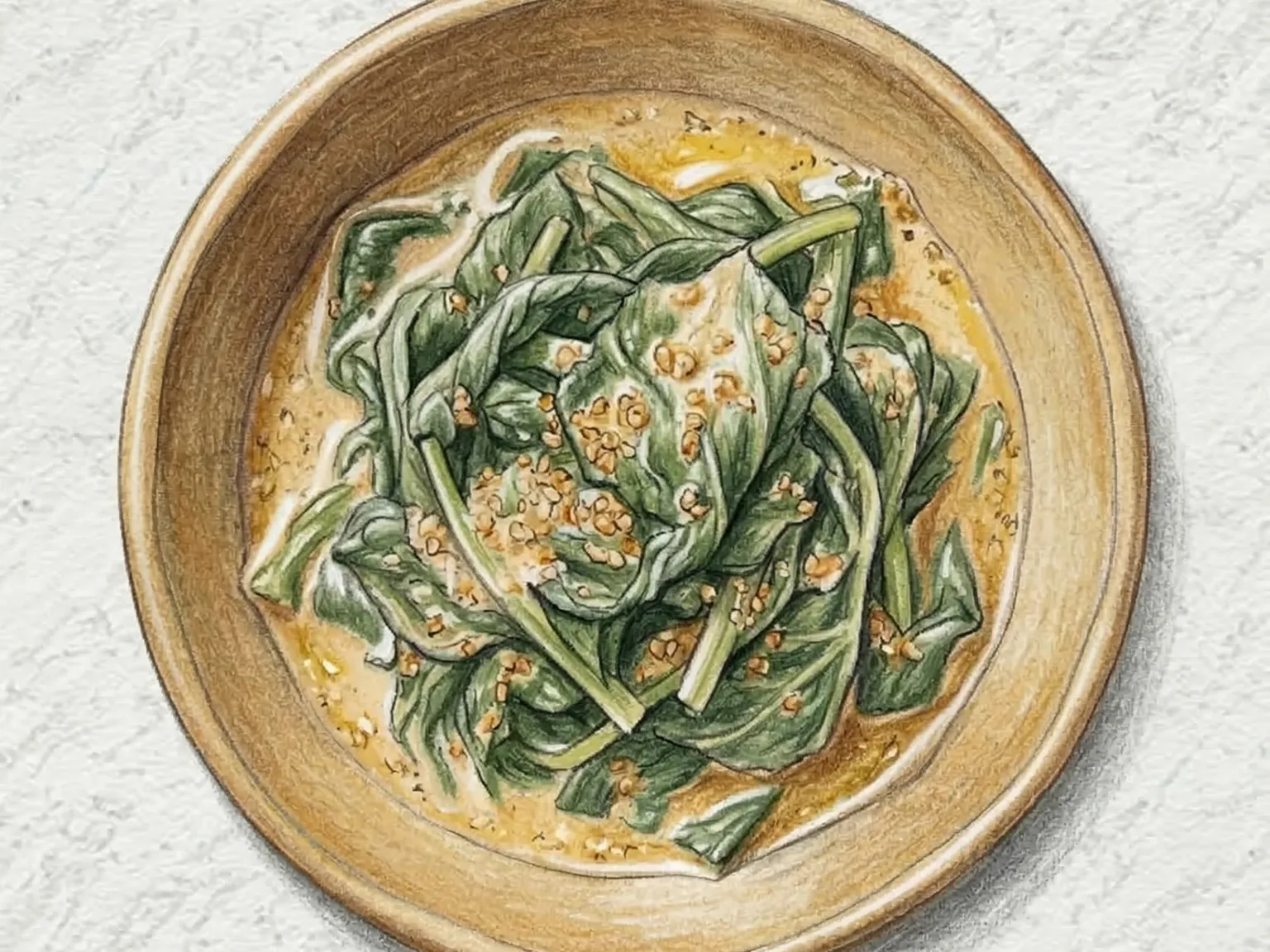
Gondre deulkkae jjim is a steamed side dish of blanched thistle greens cooked down with ground perilla seeds, perilla oil, and soup soy sauce. The greens are seasoned with garlic and oil first, then covered and left to steam over low heat so the liquid is slowly absorbed into the fibrous leaves rather than evaporating away. Adding the perilla powder toward the end of cooking, rather than at the beginning, prevents the nutty flavor from turning bitter or chalky from prolonged heat exposure. The soft, absorbent fibers of the thistle greens hold the seasoning exceptionally well, meaning each bite carries a concentrated burst of savory, nutty flavor throughout. Pulling the pan off the heat while a little texture remains in the greens keeps the dish from turning mushy. Green onion cut into rough pieces is added on top at the end, and a final drizzle of perilla oil revives the aroma. The ingredient list is short, but the result is a deeply satisfying dish often piled over hot rice or served as a companion to gondre bibimbap.
Korean Thistle Greens Pickles
Gondre-jangajji is a pickled banchan made from gondre, a Korean mountain thistle foraged in Gangwon Province each spring. The greens are blanched briefly to soften the fibrous stems before being submerged in a curing liquid of dark soy sauce, brown rice vinegar, rice syrup, minced garlic, and ginger. The blanching step is essential: raw gondre has a toughness that pickling liquid alone cannot fully penetrate, and a short time in boiling water opens the cell structure just enough to allow the marinade to work through without turning the greens limp. Rice syrup wraps the combined salt and acid in a mild sweetness that prevents the sharpness of either from dominating. A cheongyang chili adds a gentle heat at the finish that keeps the overall flavor from reading as one-dimensional. Because the fibrous texture holds the liquid within the grain of the vegetable, the jangajji stays moist and pliable throughout a week or more of refrigerated storage.
Korean Seasoned Thistle Greens
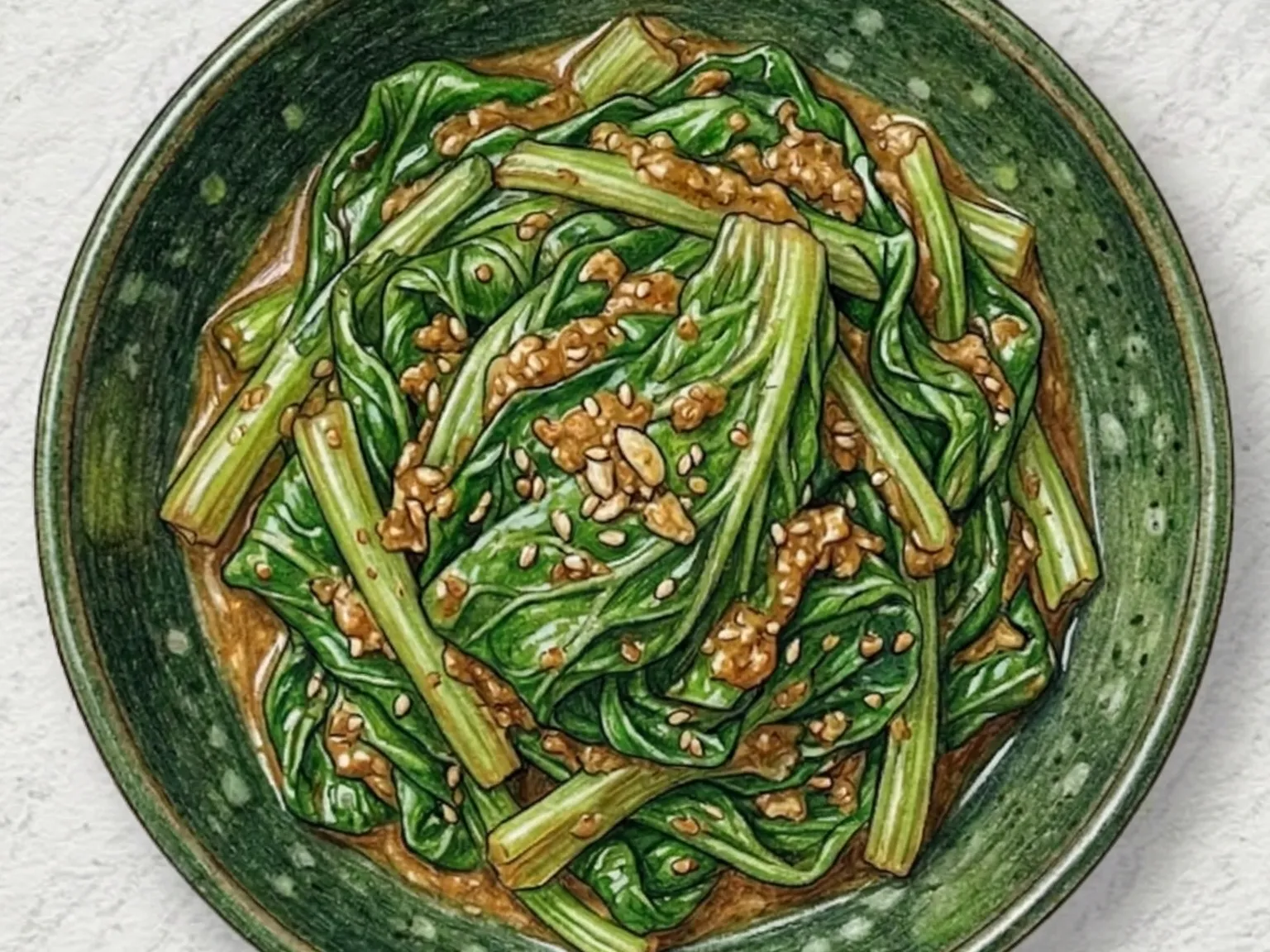
Gondeure is a wild thistle (Cirsium setidens) that grows in the alpine highlands around Jeongseon and Taebaek in Gangwon-do. In this mountainous region, where rice was historically scarce, gondeure was mixed into the cooking pot to stretch the grain and fill the table. Boiled gondeure dressed with soy sauce, garlic, and perilla oil carries a fragrance that blends mugwort-like herbal sharpness with a forest-floor earthiness rarely found in other vegetables. The stems are noticeably tougher than the leaves, so blanching them separately for longer, or chopping them finely, produces a more even texture throughout the dish. The namul is a capable side dish on its own, but gondeure is most famous when cooked directly into rice in a pot, a preparation called gondeure-bap. At the table, the cooked greens and rice are mixed with a dipping sauce of soy, perilla oil, and ground perilla seeds, drawing the herb's fragrance through every grain. The ratio of perilla oil to garlic varies from one Gangwon-do kitchen to the next, and dried gondeure is kept year-round so the dish is never limited to a single season.
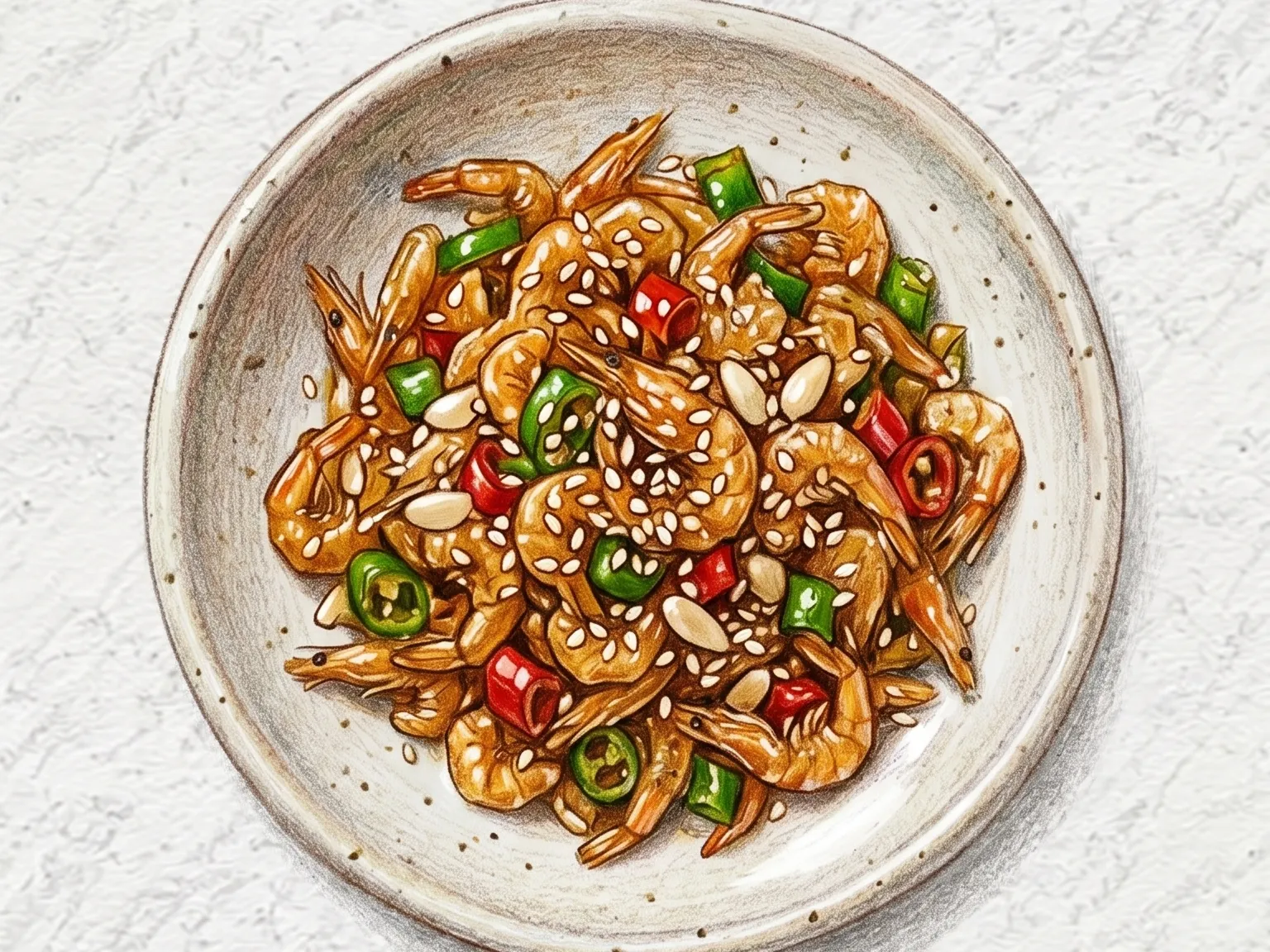
Korean Soy-Glazed Shrimp Stir-Fry
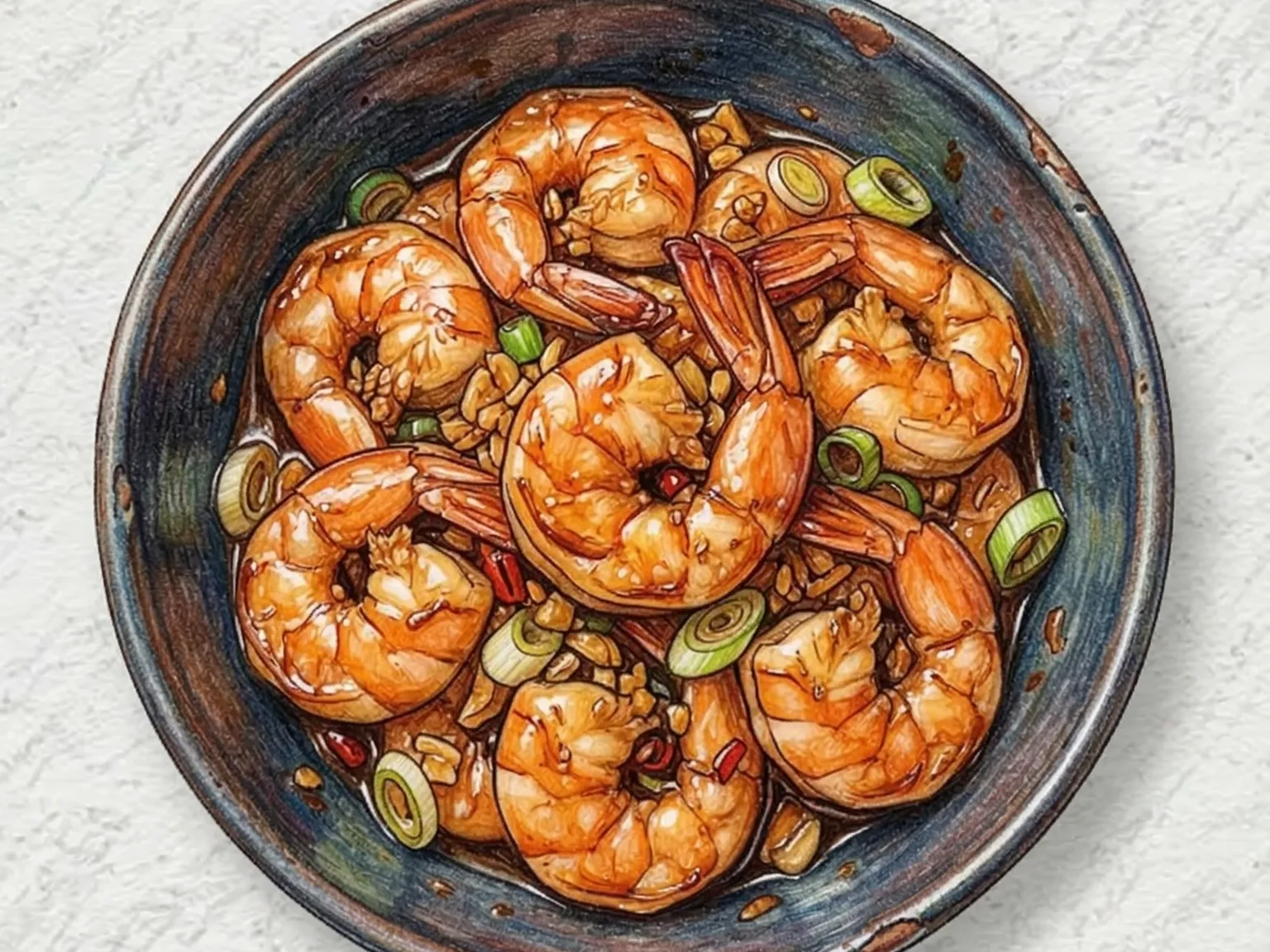
Ganjang saeu bokkeum builds its glaze by scenting butter with garlic, searing dried shrimp over high heat, and adding soy sauce, sugar, and cheongyang chili as soon as the shells turn pink. Three hundred grams shrimp is peeled, headed if necessary, and deveined through a shallow cut along the back. It is rinsed briefly and dried completely. Three garlic cloves are minced, 1 cheongyang chili is sliced diagonally, and 2 teaspoons soy sauce with 1 teaspoon sugar are measured beside the stove. Fifteen grams butter is melted over low heat before the garlic cooks for about 30 seconds. When it is pale gold and fragrant but not dark brown, the heat is raised to high. The shrimp is spread in one layer and stir-fried for 1 minute 30 seconds to 2 minutes, until the outsides turn pink and the edges curl. The soy sauce, sugar, and chili are added immediately and tossed for 30 seconds. The burner is switched off when the glaze clings with a sheen and no thin sauce collects at the bottom. One teaspoon sesame oil is mixed in before serving. Measuring the sauce in advance prevents a delay between the shrimp reaching its color cue and the brief glazing stage.
Korean Soy Braised Konjac
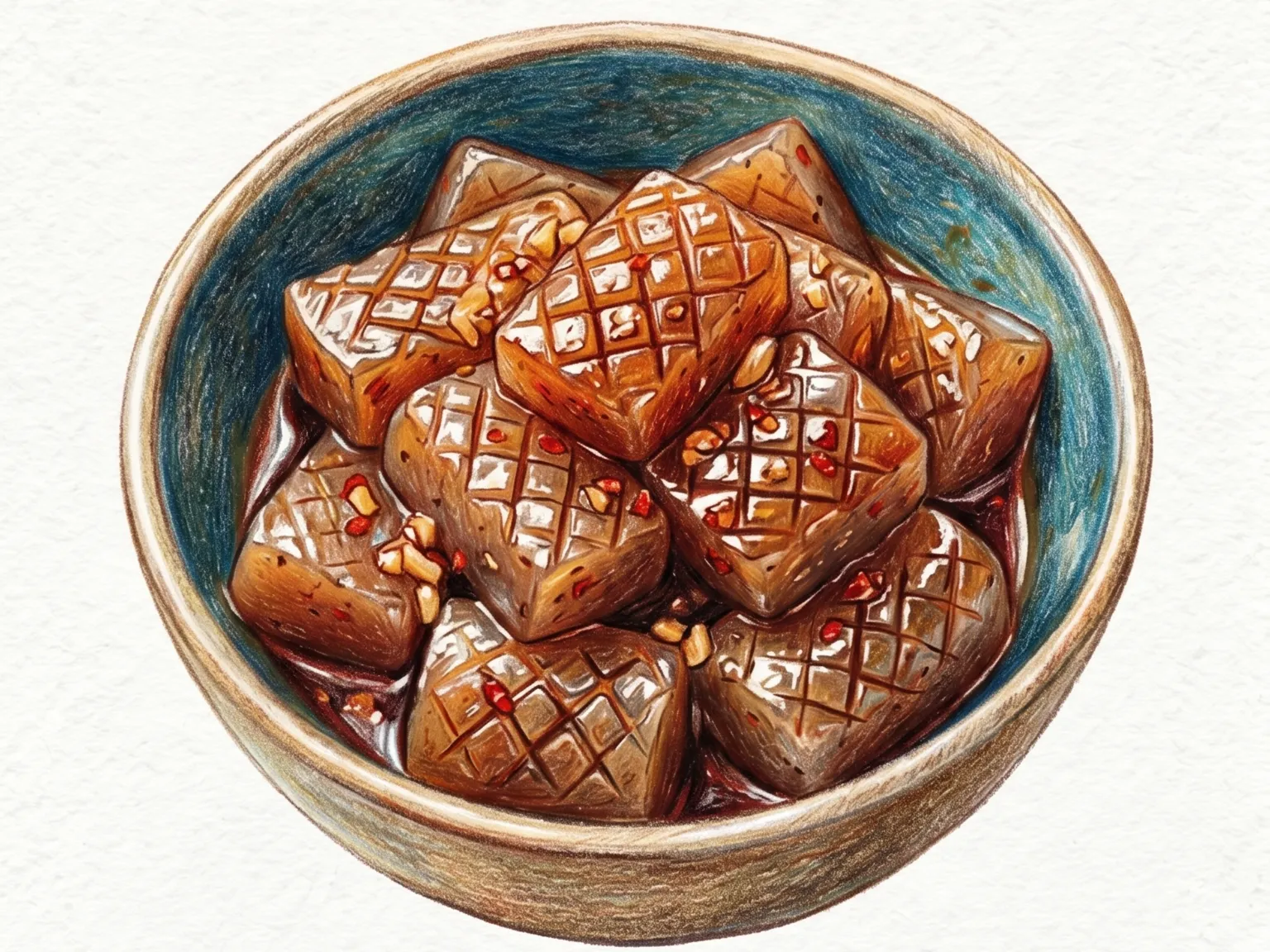
Gonnyak-jorim is a braised konjac banchan seasoned with soy sauce, rice syrup, gochugaru, and garlic, valued mainly for its satisfying chew and near-zero calorie count. Konjac carries a faint lime-water odor from its processing, and blanching it in boiling water for two minutes removes that smell before any seasoning is applied. Draining thoroughly and then dry-toasting the pieces in a pan without oil evaporates residual moisture from the surface, creating a drier exterior that the sauce can actually grip. Scoring the konjac in a crosshatch pattern before cooking solves its fundamental flavor problem: the dense, non-porous texture resists absorption, but the scored grooves pool the sauce and hold it in place so the coating sticks. Rice syrup in the sauce builds a glossy, slightly sticky finish as the liquid reduces. The finished pieces are sweet, salty, and faintly spicy with a firm, springy bite that makes them one of the more filling low-calorie side dishes in Korean cuisine.
Korean Bracken Fern Pickles
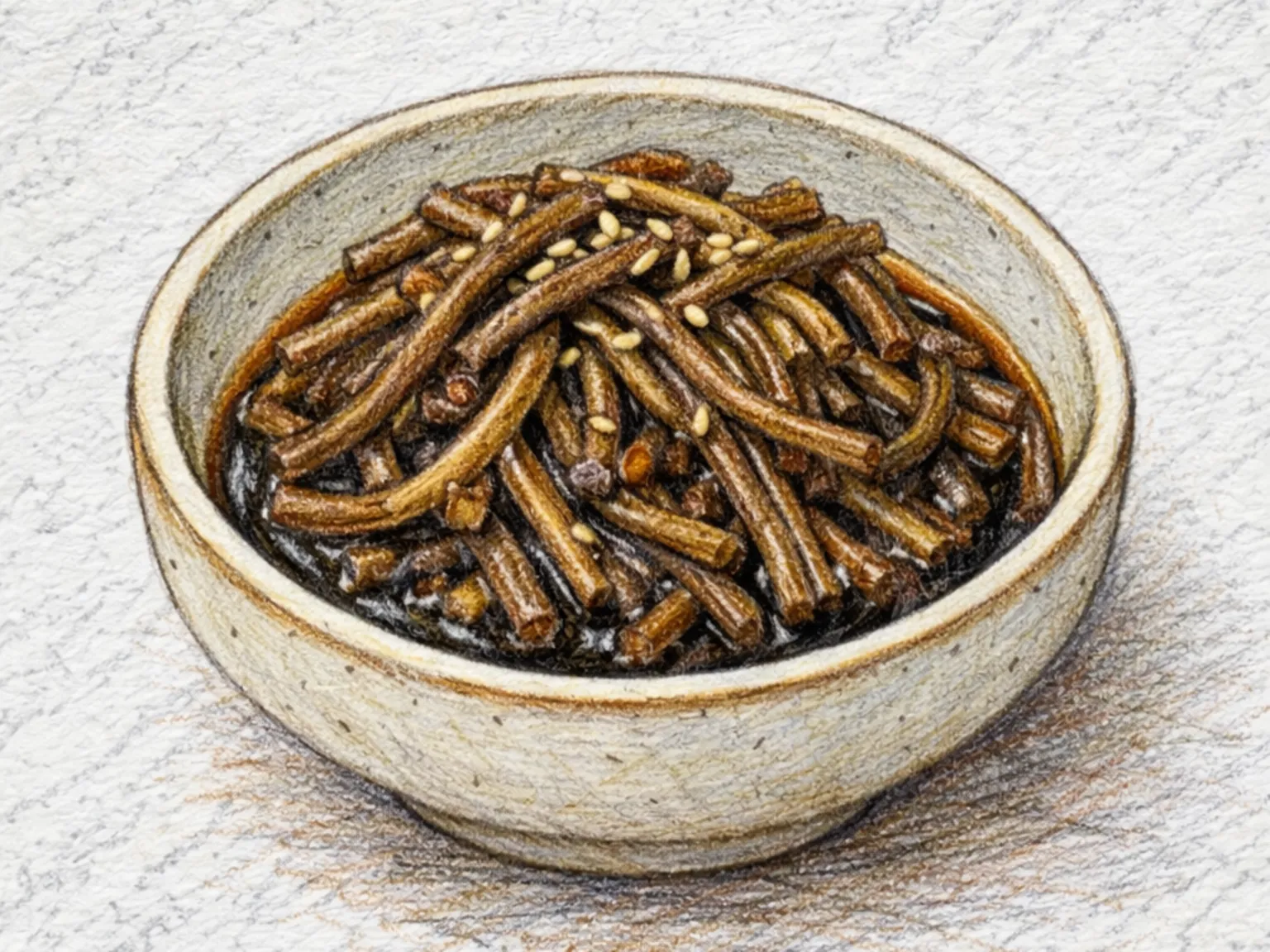
Gosari jangajji is a Korean pickled bracken fern made by submerging boiled bracken stems in a brine of dark soy sauce, vinegar, sugar, and rice wine. The fern's earthy, nutty aroma weaves together with the soy umami in layers, deepening with each bite as the flavors come into focus. Though the stems are boiled until soft, the plant's natural fiber retains enough structure to give a satisfying chew, and dried chili and garlic added to the brine contribute a quiet warmth that builds gradually. Vinegar's acidity cuts through the heavier, loamy earthiness that raw bracken can carry, leaving the aftertaste clean and bright. Refrigerated, the jangajji keeps comfortably for over a week, making it a practical, ready-to-serve banchan. For anyone familiar only with gosari namul, this pickled version is a worthwhile discovery.
Korean Seasoned Bracken Fern
Gosari, the Korean name for bracken fern, is one of the oldest foraged vegetables in Korean cooking, with consumption records tracing back to the Three Kingdoms period. It is a mandatory component of bibimbap and a required dish on jesa, the ancestral rite table set for ceremonies honoring the dead. Dried gosari must soak overnight in cold water and then boil until the tough, wiry fibers relax into a distinctively springy, almost elastic chew that no fresh vegetable can replicate. The rehydrated fern is stir-fried in perilla oil with minced garlic until fragrant, then a small amount of soup soy sauce and water goes in and the pan is covered to let the liquid absorb and the fern braise briefly. This short braising step is what rounds the flavor and ensures the seasoning penetrates the fibrous strands rather than sitting only on the surface. Perilla oil is the traditional fat of choice rather than sesame oil because its green, herbal quality pairs more naturally with the woodsy, forest-floor flavor of gosari, amplifying rather than competing with it. Large batches are typically made during Chuseok or Seollal and eaten over several days, as the flavor improves and deepens as the dish sits.
Korean Pork & Swiss Chard Stir-fry
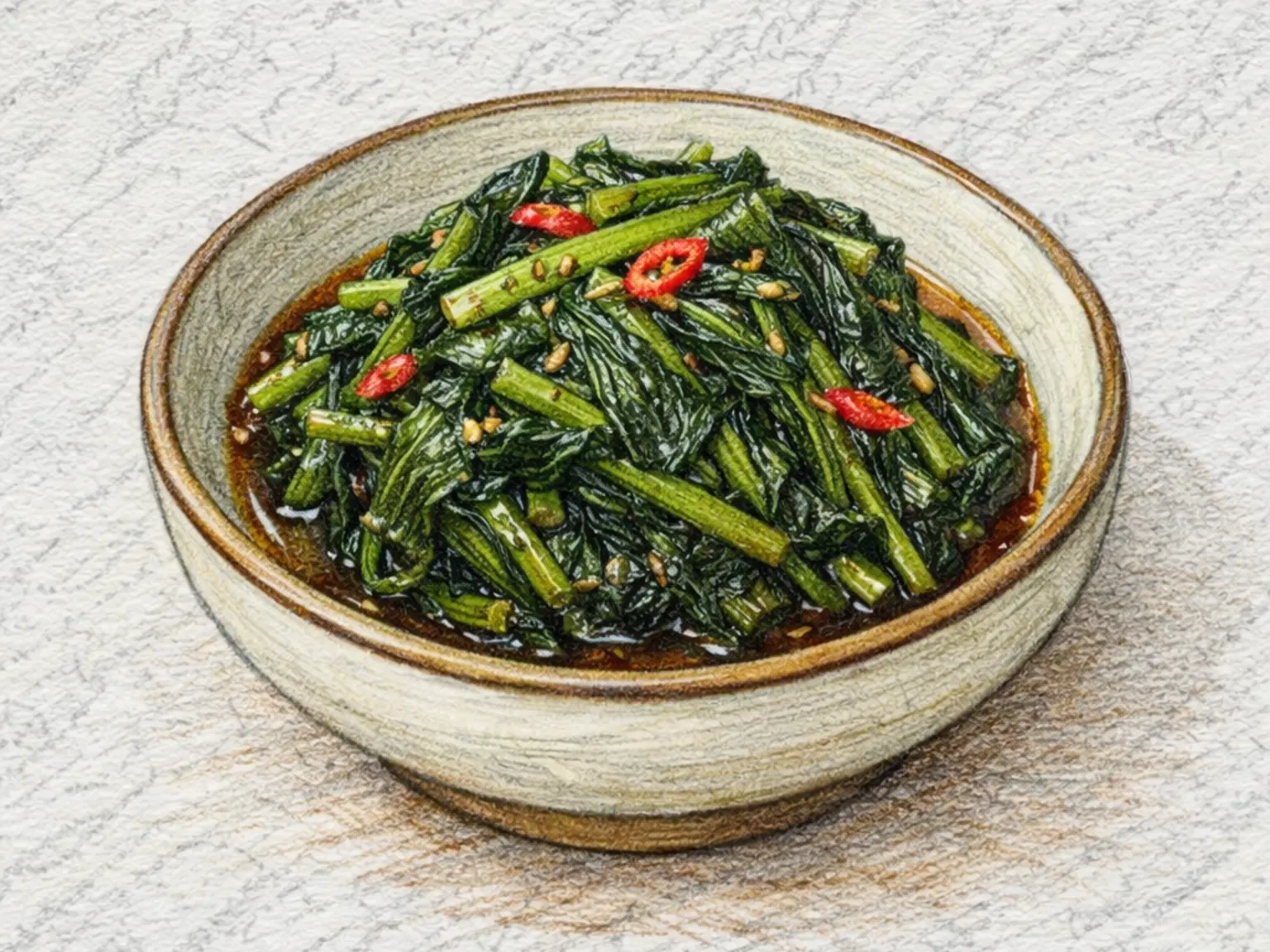
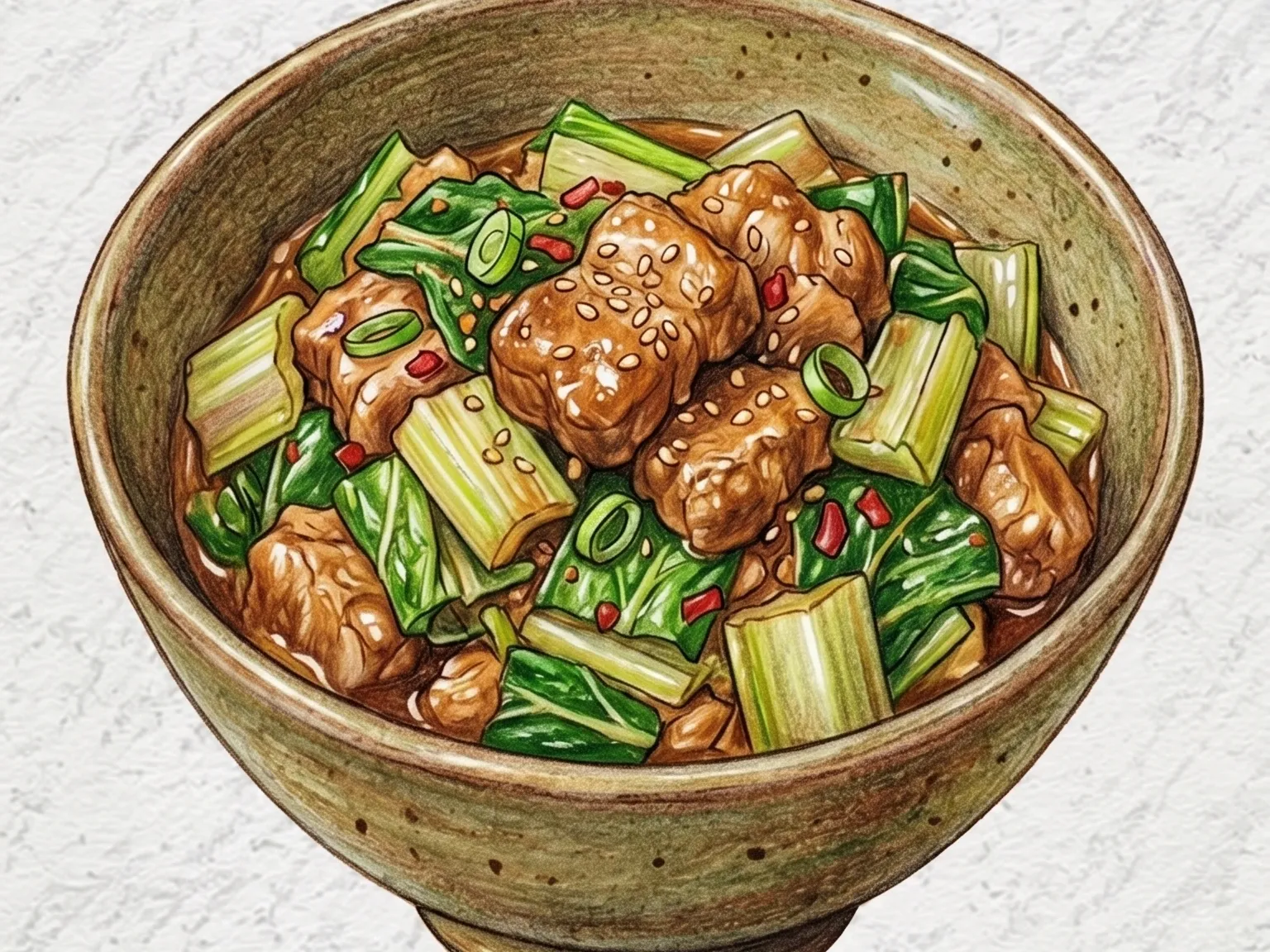
Geundae-doenjang-dwaejigogi-bokkeum is a home-style Korean stir-fry of pork and Swiss chard in a doenjang sauce. Separating the chard stems from the leaves and adding them to the pan at different times is the practical technique that makes the dish work: the stems go in first to cook through while keeping a slight crunch, and the leaves follow just long enough to wilt without becoming limp. Doenjang absorbs and suppresses any gamey undertones from the pork while adding a deep, fermented soybean backbone to the sauce. Sesame oil stirred in at the end wraps the entire dish in a warm, nutty finish. A small amount of gochugaru brings the mild heat that distinguishes Korean home-cooking from milder preparations. The earthy, slightly mineral quality of Swiss chard pairs naturally with the fermented funk of doenjang, and spooned over steamed rice the sauce soaks into the grains and turns the whole bowl into a complete, satisfying meal.
Korean Steamed Egg (Gyeran-jjim)
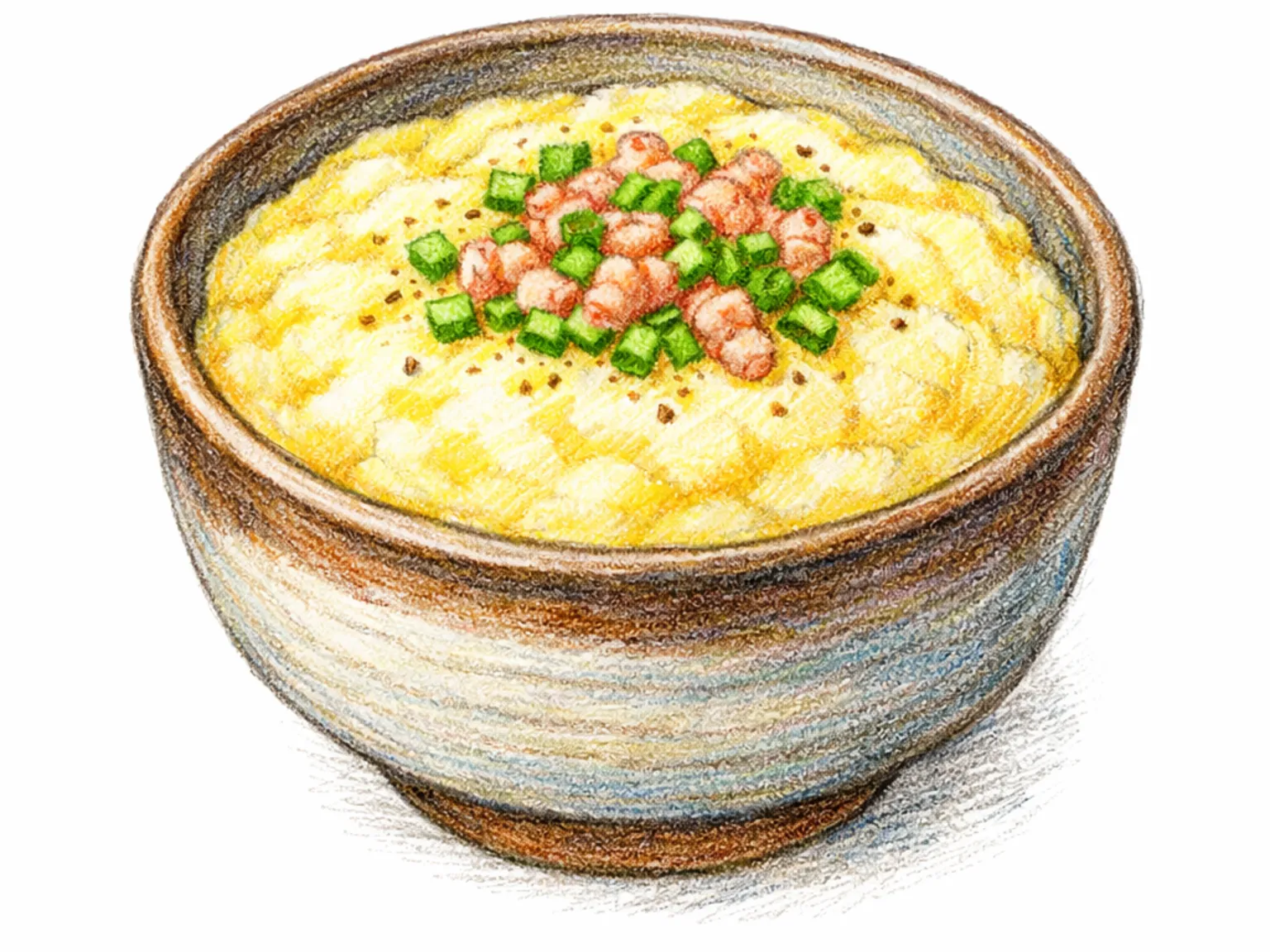
Gyeran-jjim is a Korean steamed egg dish made by whisking eggs together with anchovy stock and salted shrimp, then cooking the mixture slowly in a stone pot over low heat with the lid on. The anchovy stock establishes a deep savory backbone, and the salted shrimp adds a fermented, briny salinity that eliminates the need for additional seasoning. Straining the egg mixture through a fine sieve before cooking removes air bubbles and ensures the finished custard has a smooth, unbroken surface rather than the pitted texture that forms when bubbles are trapped and burst during cooking. The stone pot should not be preheated before the egg mixture is added. Starting cold and bringing the heat up slowly with the lid in place traps steam inside, which gives the custard its signature cloud-like softness and prevents the surface from drying out. Small pieces of carrot and sliced green onion add color, and a final drizzle of sesame oil with a scatter of sesame seeds brings a nutty fragrance to each spoonful. The right point to remove it from heat is when the center still wobbles slightly when the pot is nudged, because residual heat will finish setting the middle as it rests.
Korean Salted Oyster Jeotgal
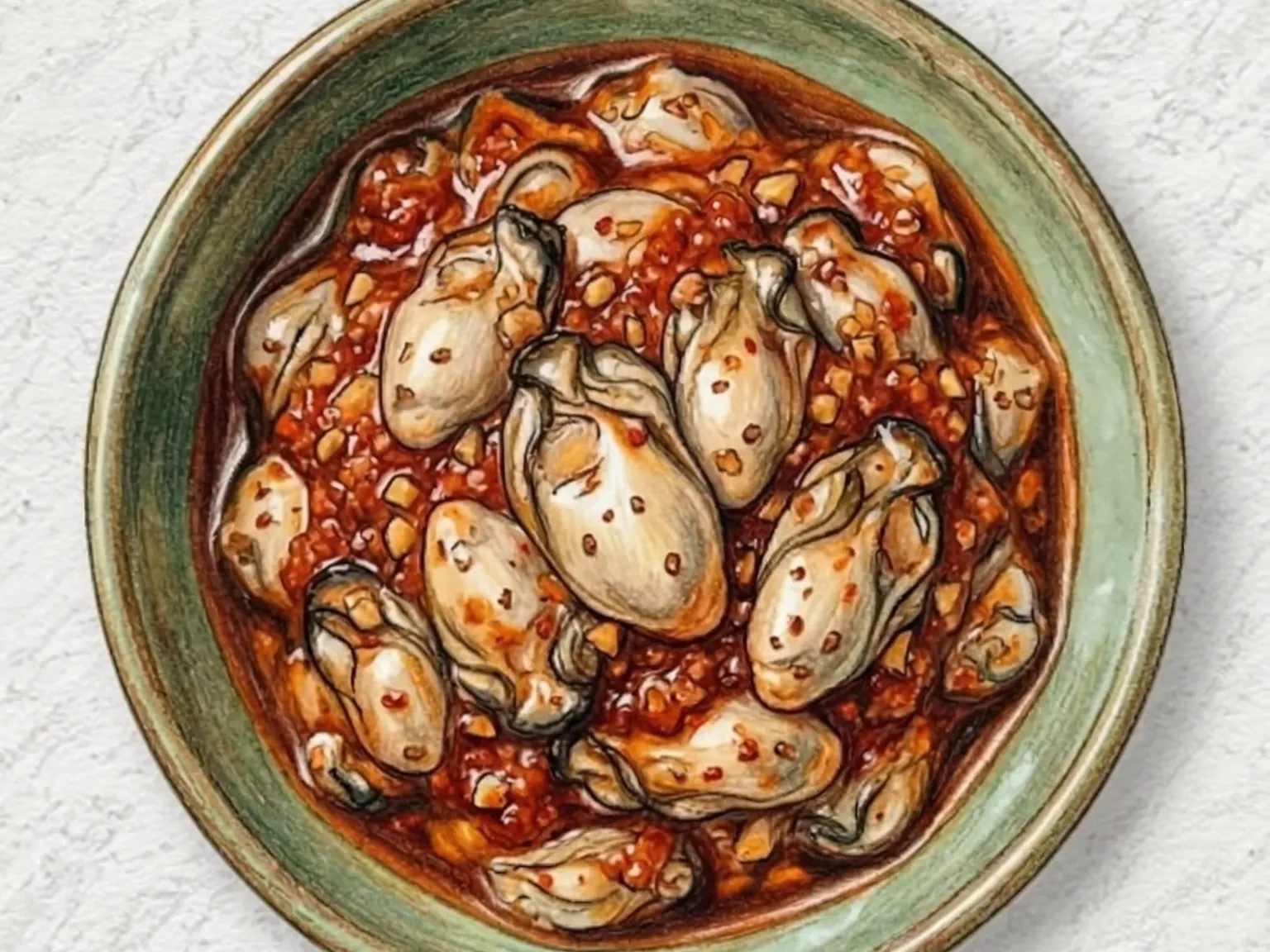
Gul jeotgal is a traditional Korean fermented condiment made by curing fresh winter oysters in coarse solar salt with gochugaru, minced garlic, ginger, and plum extract, then aging the mixture at low temperature. As the salt draws moisture from the oyster tissue, the flesh contracts and its marine umami intensifies into something denser and more complex than a fresh oyster delivers. Gochugaru gives the condiment its characteristic red color and adds heat that balances the brininess. Plum extract plays a specific role during fermentation: it suppresses the fishy odor that naturally develops while contributing a mild acidity that keeps the overall flavor from turning flat or heavy. The longer gul jeotgal ages, the more layered and deep its character becomes. Eaten on its own over warm rice, it functions as a complete banchan, briny and bold against plain starch. Its more significant culinary role, however, is as a filling ingredient in baechu kimchi: folded into the seasoning paste, it introduces a richer source of umami than fish sauce alone provides, and the amino acids it releases during fermentation elevate the entire kimchi as it continues to ripen.
Korean Fernbrake Namul with Doenjang
This doenjang variation of gosari namul diverges from the standard soy-sauce-forward version by using fermented soybean paste as the primary seasoning, producing a banchan with noticeably more depth and a pronounced fermented character. Rehydrated and boiled bracken fern is first stir-fried in perilla oil to develop a light, nutty base, then doenjang and soup soy sauce are added along with a small splash of water for a five-minute braise over medium-low heat. The water prevents the paste from scorching and allows it to distribute evenly through the fibrous strands, so every piece of fern absorbs the full flavor. The porous texture of bracken draws in the funky, savory paste more readily than firmer vegetables, which is why this combination works particularly well. Perilla powder stirred in at the end thickens the remaining liquid into a dense, creamy coating around each strand of fern. Richer and more layered than its soy-sauce counterpart, this namul delivers deep flavor when mixed into steamed rice, with the fermented paste and toasted perilla building on each other across every bite.
Korean Gochujang Fish Cake Stir-fry
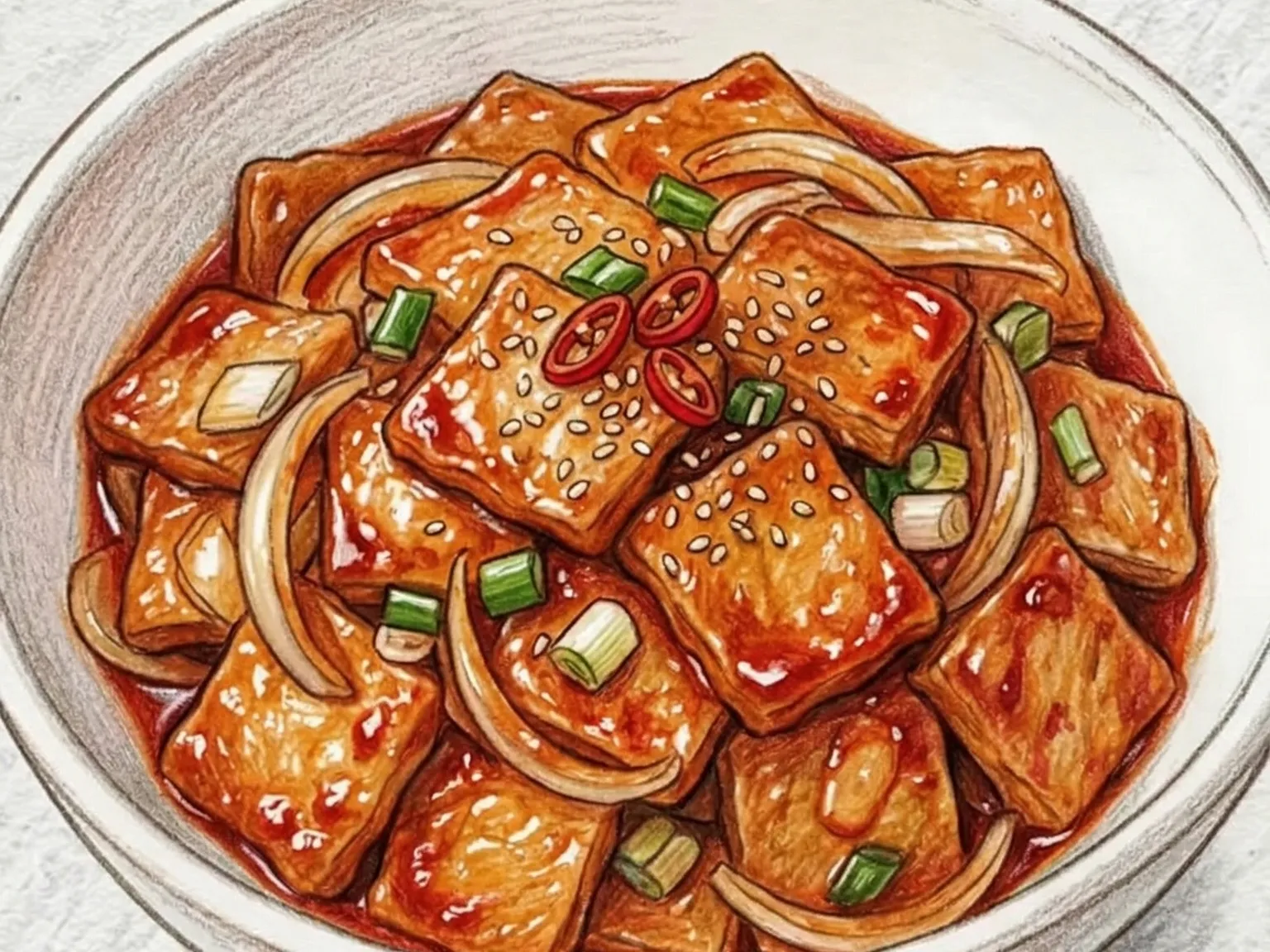
Gochujang eomuk bokkeum blanches fish cake sheets for 20 seconds, dries their surfaces in the pan with onion, and coats them over medium-low heat with gochujang, soy sauce, oligosaccharide syrup, and garlic. Three hundred grams fish cake sheets is placed in boiling water for only 20 seconds, drained thoroughly, and cut into bite-size pieces. One hundred grams onion is cut into strips that are not too thin, and 60 g green onion is sliced diagonally. The sauce combines 1.5 tablespoons gochujang, 1 tablespoon soy sauce, 1 tablespoon oligosaccharide syrup, and 1 teaspoon minced garlic. One tablespoon cooking oil is heated over medium before the onion cooks for about 1 minute. When its edges begin to turn translucent, the fish cake is added and stir-fried for 2 minutes to remove surface moisture and firm its edges. The sauce goes in and the heat is immediately lowered to medium-low. Frequent tossing for 2 to 3 minutes keeps the gochujang off the pan bottom while the glaze thickens. Once it clings evenly without pooling, the green onion is mixed for 30 seconds. The burner is switched off before 1 teaspoon sesame oil and 0.5 tablespoon sesame seeds are added. Draining after blanching and then drying the surface in the pan prevents water from thinning the glaze.
Korean Stuffed Steamed Zucchini
Hobakseon is a Korean royal court dish of zucchini hollowed out and stuffed with a filling of ground beef, mashed tofu, and chopped shiitake mushroom seasoned with soy sauce and sesame oil. Steaming allows the beef juices to permeate the filling while the zucchini shell stays intact and turns tender. The mild, slightly sweet flavor of the zucchini contrasts with the savory, meaty stuffing inside, and the textural gap between the yielding vegetable exterior and the firmer filling is one of the dish's defining characteristics. Proper preparation of the filling is important: the tofu must be wrapped in a cloth and pressed until most of the moisture is squeezed out, or the stuffing will become watery during steaming. The shiitake mushrooms should likewise be stir-fried briefly beforehand to cook off their liquid. A garnish of thin egg strips adds a second color against the pale green shell. Its refined appearance and gentle flavors make it a fitting choice for holiday tables and formal occasions.
About Side dishes
Great banchan balances seasoning with the natural flavor of each ingredient. Sesame oil, perilla oil, soy sauce, and fermented pastes work together to pack deep flavor into every small serving.