Side dishes

Side dishes Recipes

624 recipes. Page 21 of 26

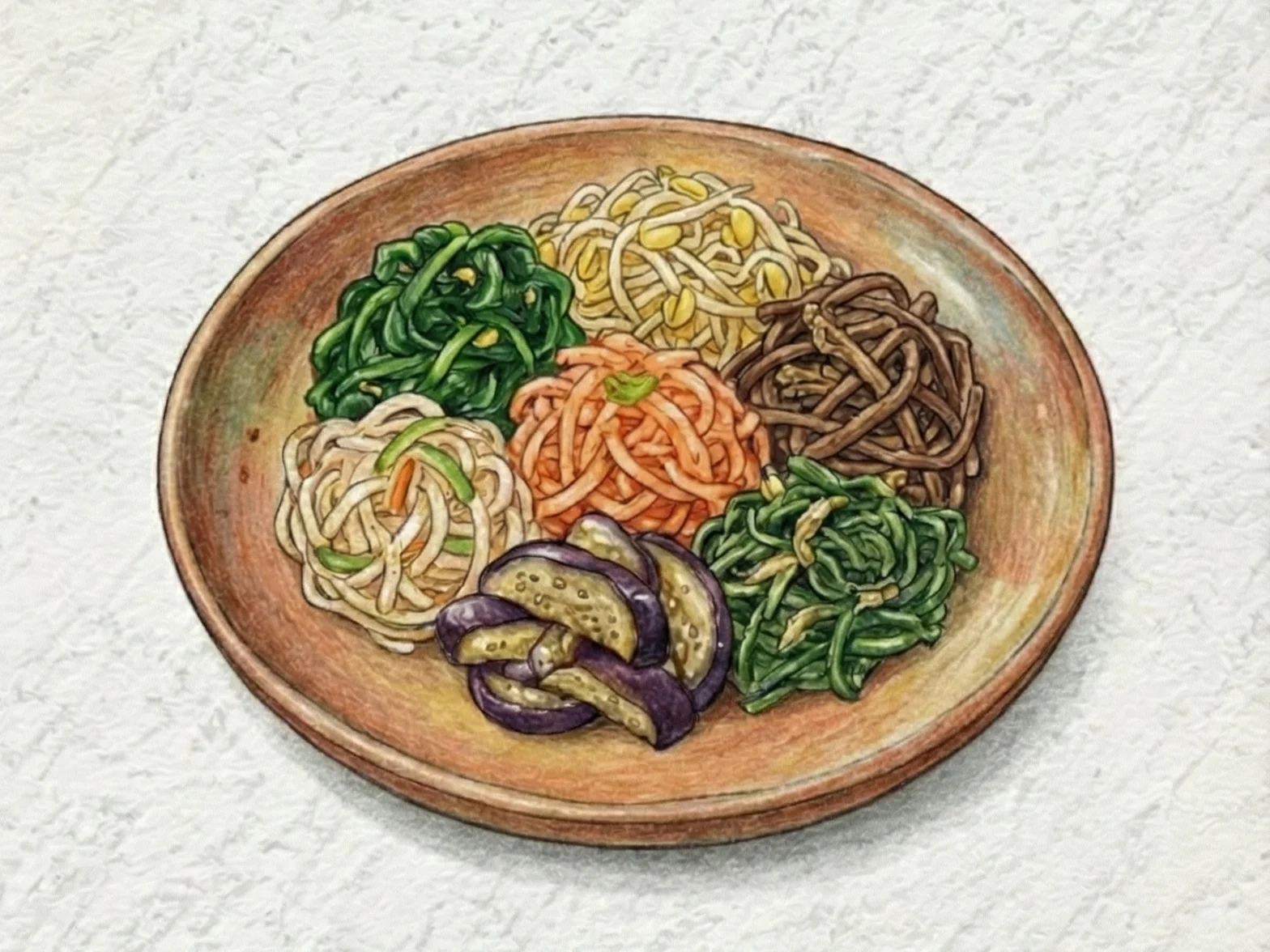
Side dishes (banchan) are the heart of Korean dining culture. A typical meal features multiple small plates - seasoned vegetables (namul), braised dishes (jorim), pickled items, and salted seafood. Classics like spinach namul, bean sprout salad, and stir-fried anchovies can be prepared in advance and enjoyed over several days.

Side dishes
Korean Radish Greens Kimchi
Kimchi Easy

Korean Radish Greens Kimchi

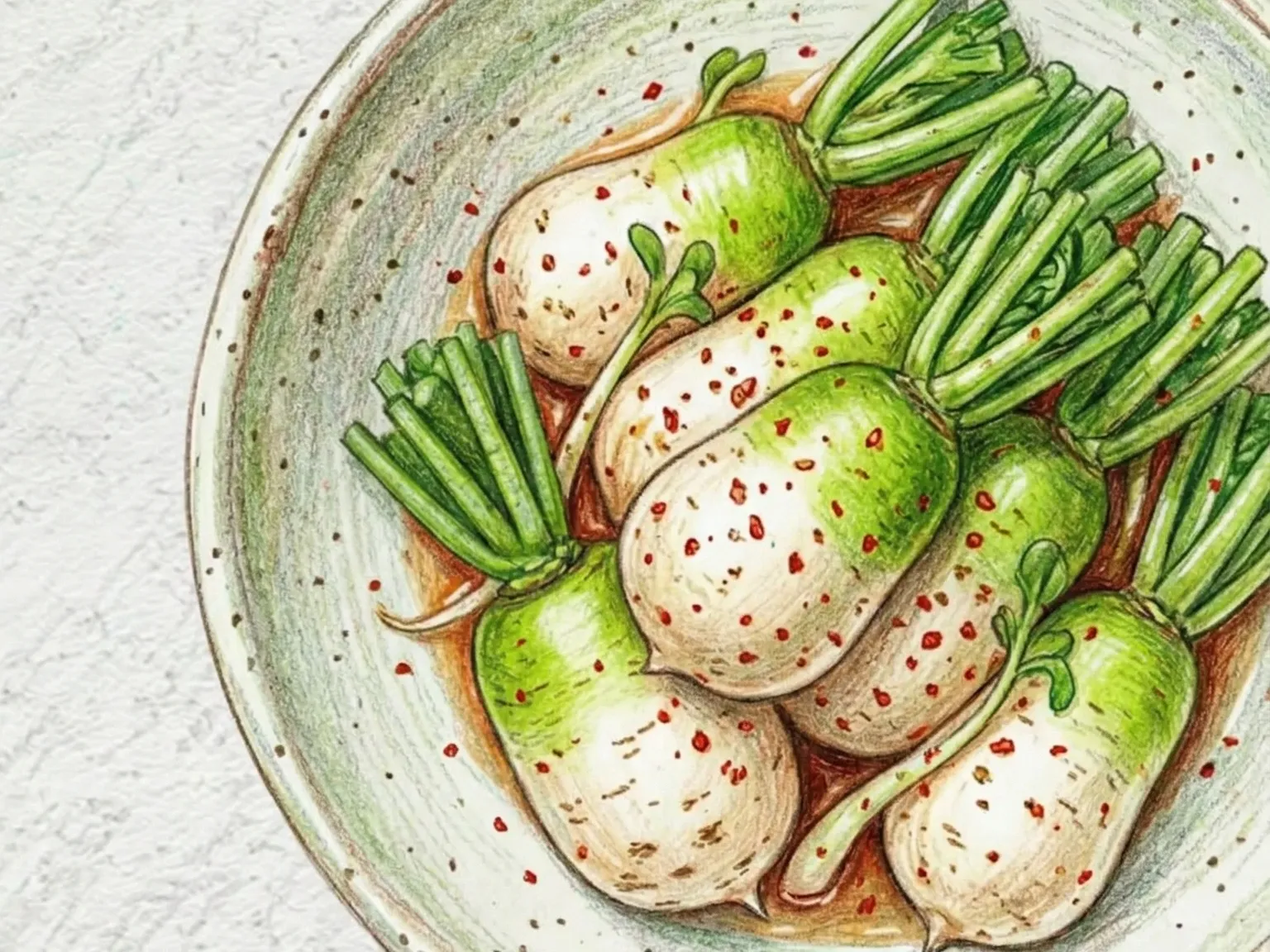
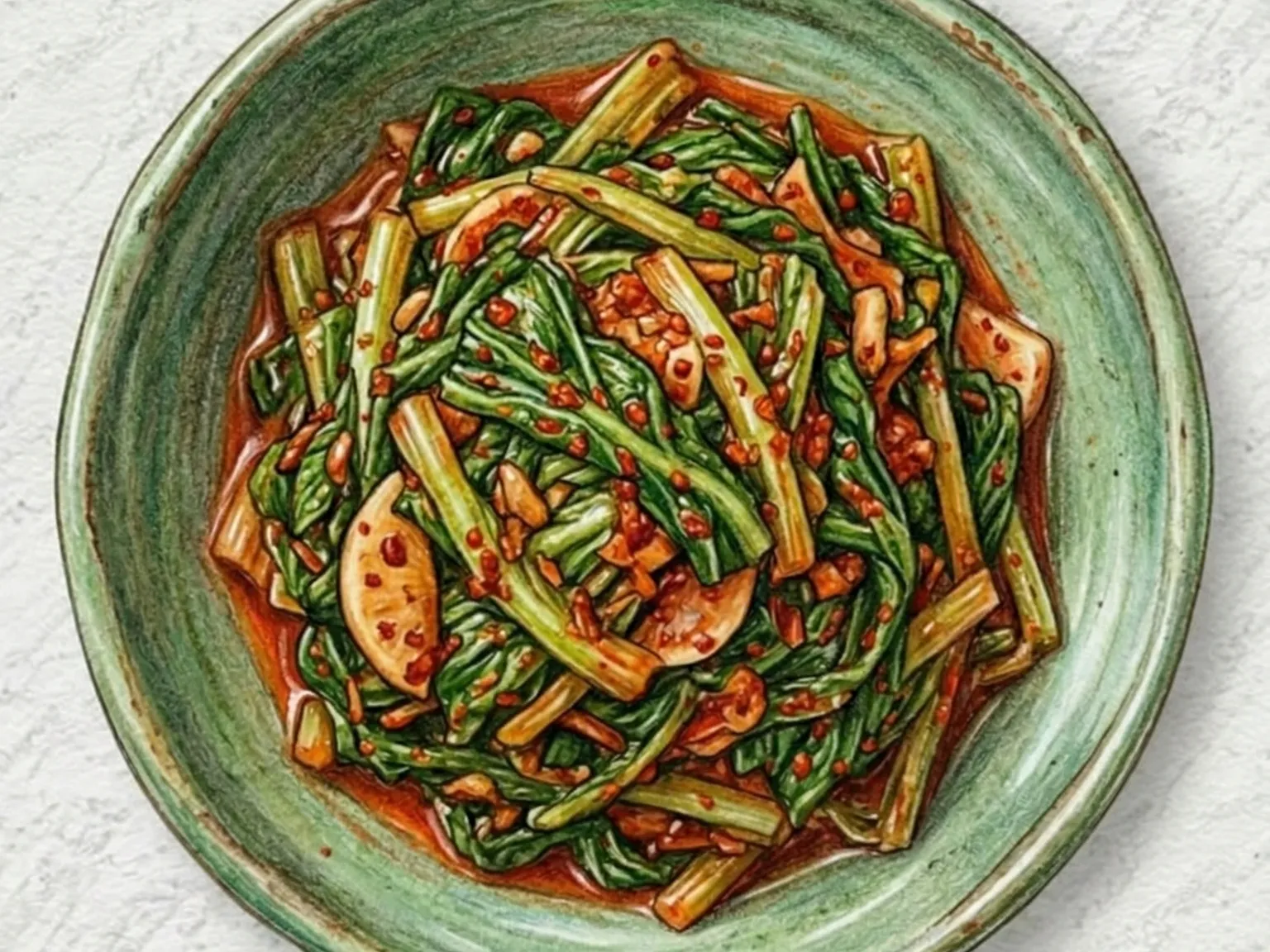
Mucheong kimchi is made from the leafy greens and stems of Korean radish, cut into 5 cm lengths, salted in coarse brine, then coated in a paste of sweet rice flour, gochugaru, anchovy fish sauce, minced garlic, ginger, and onion. The thick, fibrous stems grip the seasoning and hold up through fermentation without turning mushy, keeping a firm chew even after weeks in the refrigerator. Sweet rice flour acts as a glue that prevents the coating from sliding off the stems as the kimchi ages. Anchovy fish sauce lays down a deep seafood umami as the base layer, while onion moderates the chili heat with natural sweetness. The greens are a practical use of the entire radish rather than just the root, and the finished kimchi works beyond the banchan role: torn into pieces and added to siraegi soup, it enriches the broth; stirred into doenjang jjigae, it deepens the fermented soybean flavor with another layer of fermented complexity.

🍱 Lunchbox 🏠 Everyday
Prep 35min Cook 5min 4 servings
Korean Chopped Live Octopus
Side dishes Medium

Korean Chopped Live Octopus

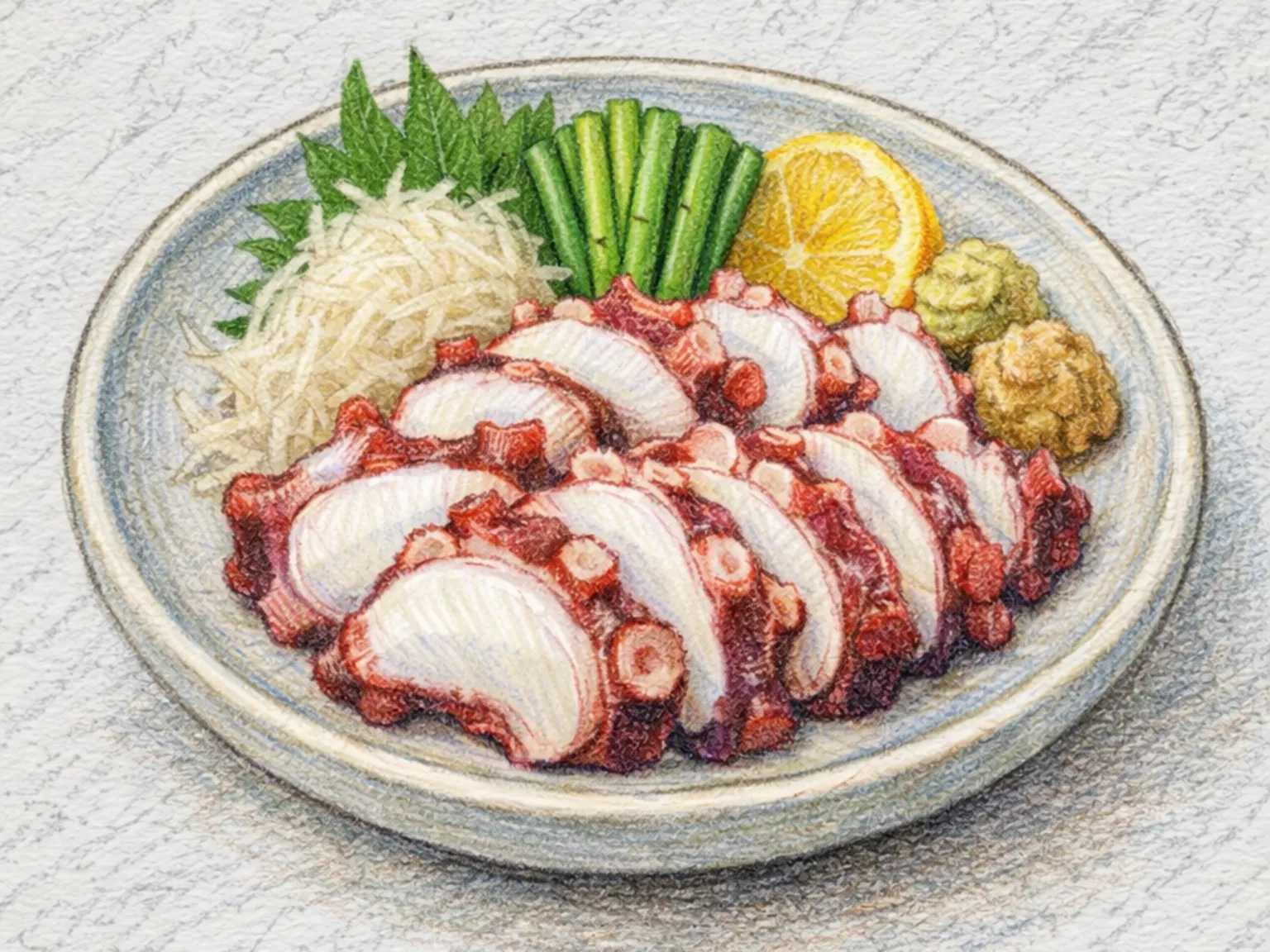
Nakji tangtangi is prepared by cleaning raw live octopus, chopping it into short pieces, and arranging it with Cheongyang chili, garlic, scallion, and an egg yolk. The sesame-oil sauce is served alongside rather than poured over the entire plate. Rub the octopus with flour or coarse salt to remove the slippery surface coating, rinse it repeatedly in cold water, and drain it first in a sieve and then with paper towels. Thorough drying prevents a puddle from forming on the plate and keeps the sesame oil and salt from sliding away from the seafood. Chopping should shorten the body and tentacles into manageable bites without crushing them into a paste. A light, rhythmic motion with the blade preserves the springy resistance that defines the dish. Scatter the finely minced chili, garlic, and scallion across the octopus and place the yolk in the center so it can be broken and mixed immediately before eating. Combine sesame oil, salt, and sesame seeds in a separate small dish, then dip or season gradually; this allows the clean marine taste of the octopus to remain perceptible instead of covering it at once. Keep every component cold during preparation and serve the finished plate immediately so the texture and appearance are at their best.

🍺 Bar Snacks
Prep 15min 2 servings
Korean Garlic Scape Chicken Breast Stir-fry
Stir-fry Medium

Korean Garlic Scape Chicken Breast Stir-fry

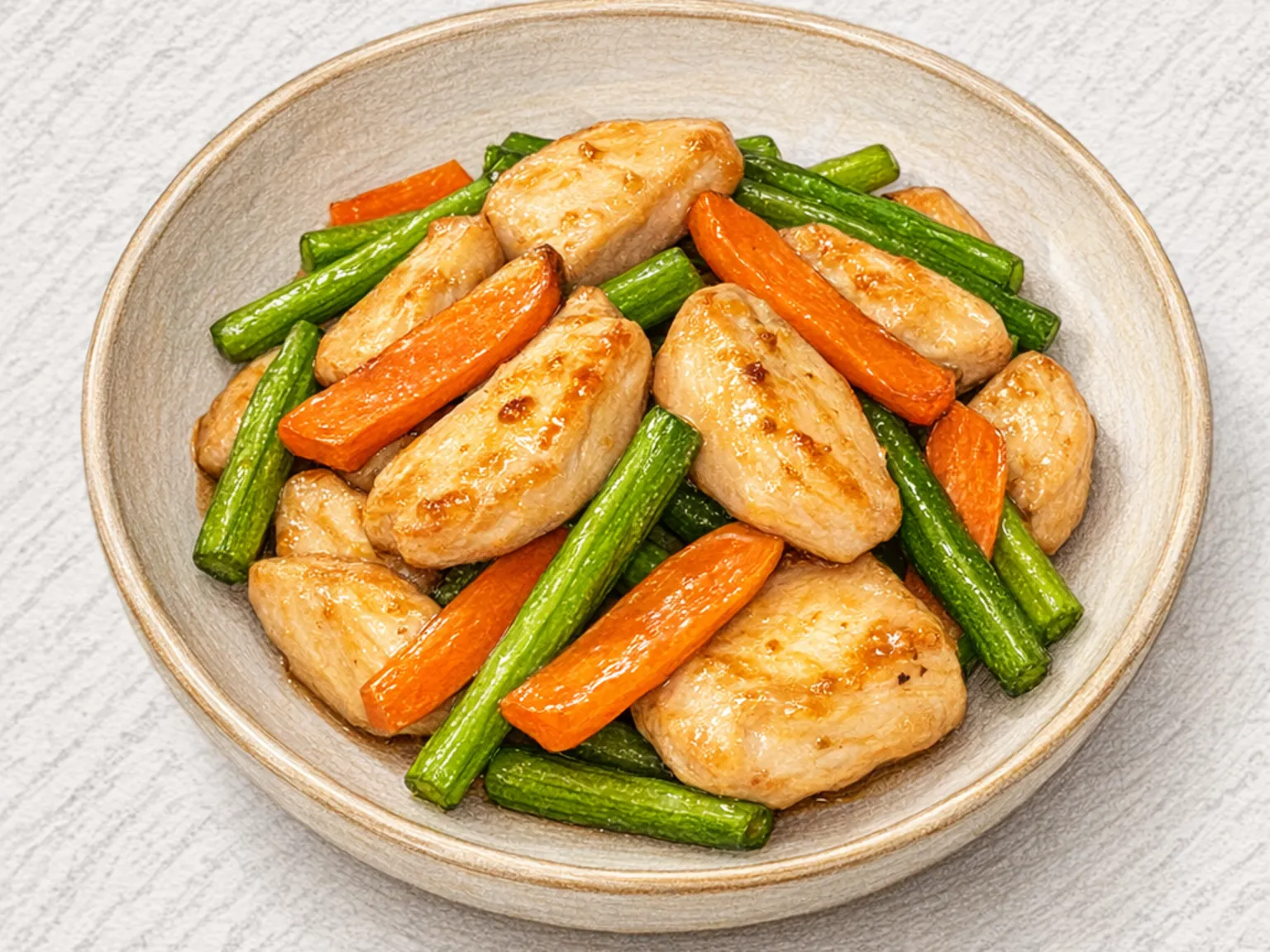
Maneuljjong dakgaseumsal bokkeum is a stir-fry where soy-marinated chicken breast is cooked through with ginger and garlic first, then joined by garlic scapes cut to five-centimeter lengths and julienned carrot for a quick blast over high heat before the whole pan is finished in an oyster sauce and soy sauce glaze. Chicken breast is naturally lean and can easily read as flat on its own, but the oyster sauce compensates by delivering concentrated umami and coating the surface of each piece with a lacquered sheen. The garlic scapes provide a dual texture that is both crisp and slightly chewy, setting up a direct contrast with the smooth, tight grain of the chicken breast. Julienned carrot adds a gentle sweetness that softens the saltiness of the soy and oyster sauce base. Ginger pulls double duty, eliminating any poultry odor while contributing the aromatic lift characteristic of well-executed stir-fry. The high-protein, low-fat profile makes this a practical everyday banchan for anyone managing calories, and it also works well spooned over rice in a deopbap format. Keeping the garlic scapes in the pan for as short a time as possible is essential to preserving their signature crunch.

🥗 Light & Healthy 🏠 Everyday
Prep 15min Cook 11min 2 servings
Korean Spicy Steamed Squid
Steamed Medium

Korean Spicy Steamed Squid

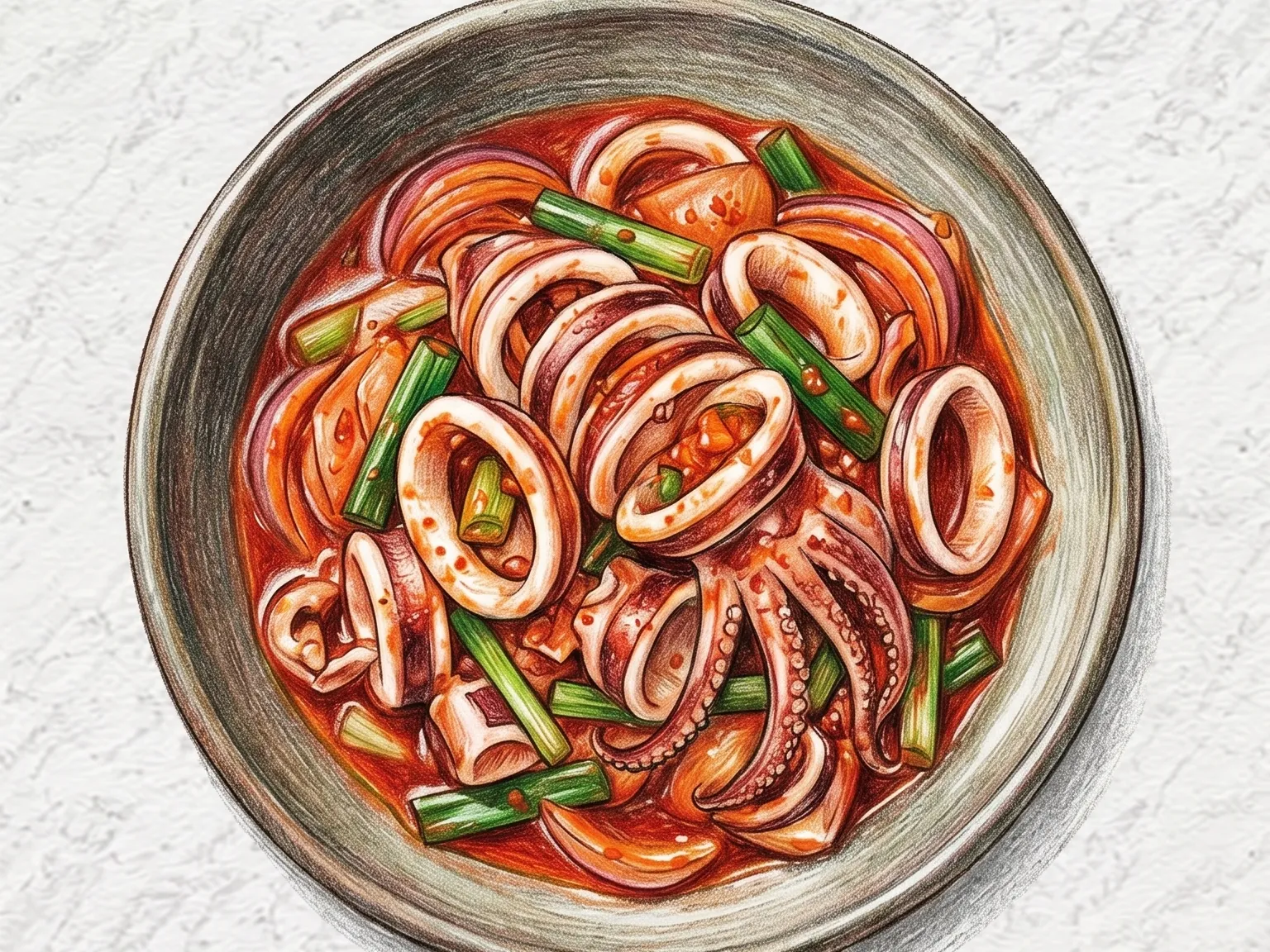
Ojingeo-jjim is a Korean spicy steamed squid dish cooked with onion and green onion in a sauce of gochugaru, gochujang, and soy sauce. The key is keeping the total cooking time to around ten minutes, starting on high heat and finishing on medium, so the squid stays chewy rather than turning rubbery. Gochujang provides a thick, coating heat while the chili flakes add a sharper spiciness on top. One final toss at the end ensures every piece is evenly glazed with the red sauce. This quick-cooking dish works equally well as a banchan alongside rice or as an accompaniment to drinks.

🍺 Bar Snacks 🏠 Everyday
Prep 18min Cook 12min 2 servings
Korean Radish Sprout Kimchi
Kimchi Easy

Korean Radish Sprout Kimchi

Musun kimchi is an instant Korean side dish made by tossing thin radish sprouts in a seasoning of gochugaru, sand lance fish sauce, minced garlic, and a splash of vinegar. The sprouts carry a sharp, peppery bite that stacks naturally with the chili heat and the fish sauce's fermented depth. Mixing must stay under thirty seconds - overworking the delicate stems releases a grassy off-note instead of the clean radish sharpness. Vinegar sharpens the finish with bright acidity, and a final drizzle of sesame oil ties the bowl together with a toasted richness. This kimchi is at its best eaten the same day, while the sprouts still hold their crisp snap.

🥗 Light & Healthy 🍱 Lunchbox
Prep 20min Cook 5min 4 servings
Ogeurakji (Dried Radish Strips)
Side dishes Medium

Ogeurakji (Dried Radish Strips)

In North Gyeongsang speech, ogeurakji means dried radish or a seasoned side dish. This recipe soaks dried radish strips in cold water for 20 minutes to keep them pleasantly chewy. After soaking, the strips are rinsed and squeezed firmly to remove excess moisture, preventing the seasoning from watering down. The dressing combines chili powder, anchovy fish sauce, soy sauce, and rice syrup. Using rice syrup instead of sugar gives the strips a heavy, glossy coating. The radish strips are massaged firmly by hand to help the spicy, salty, and sweet flavors penetrate. Minced garlic, chopped chives, and sesame seeds are folded in at the end. This side dish can be served immediately, but maturing it in the refrigerator for one day deepens the taste.

🔥 Trending Now 🏠 Everyday
Prep 30min Cook 10min 4 servings
Korean Garlic Scape Clam Stir-fry
Stir-fry Medium

Korean Garlic Scape Clam Stir-fry

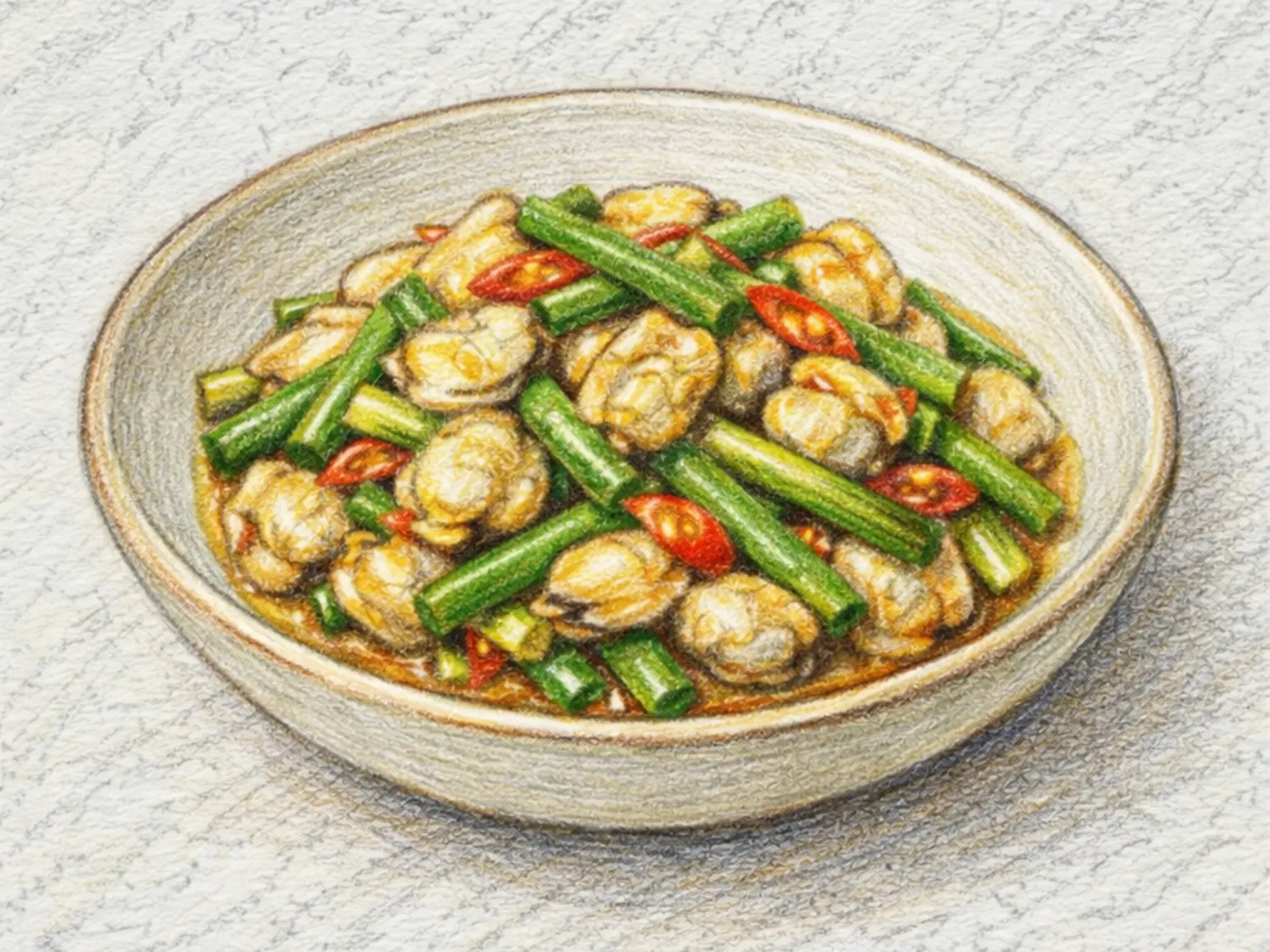
Garlic scape and clam stir-fry coats the scapes with soy and oyster sauce before adding well-drained clam meat for only the final 30 to 60 seconds. One hundred sixty grams garlic scapes are trimmed of tough ends and cut into 4 cm pieces. Ten grams red chili is sliced diagonally after excess seeds are shaken out if necessary. One hundred eighty grams clam meat is rinsed briefly in salted water to remove grit and drained thoroughly in a sieve. One tablespoon cooking oil is heated over medium-high, and 1 teaspoon minced garlic is stirred for about 20 seconds. Before the garlic browns, the scapes are added for 2 1/2 to 3 minutes. They should look brighter and glossy while still feeling firm under a spatula. One tablespoon soy sauce and 1 tablespoon oyster sauce are poured around the pan edge and allowed to bubble briefly. The red chili is tossed through for 20 seconds so the scapes receive the seasoning before the clams enter. The drained clam meat and 0.25 teaspoon black pepper are then added as the heat is raised to high. Cooking stops within 30 to 60 seconds, as soon as the clams are hot and the sauce clings with a gloss. Separating the scape and clam stages gives the firm stems their longer cooking time without holding the clam meat over heat for the same duration.

🏠 Everyday 🍱 Lunchbox
Prep 14min Cook 9min 2 servings
Korean Braised Squid with Radish
Steamed Medium

Korean Braised Squid with Radish

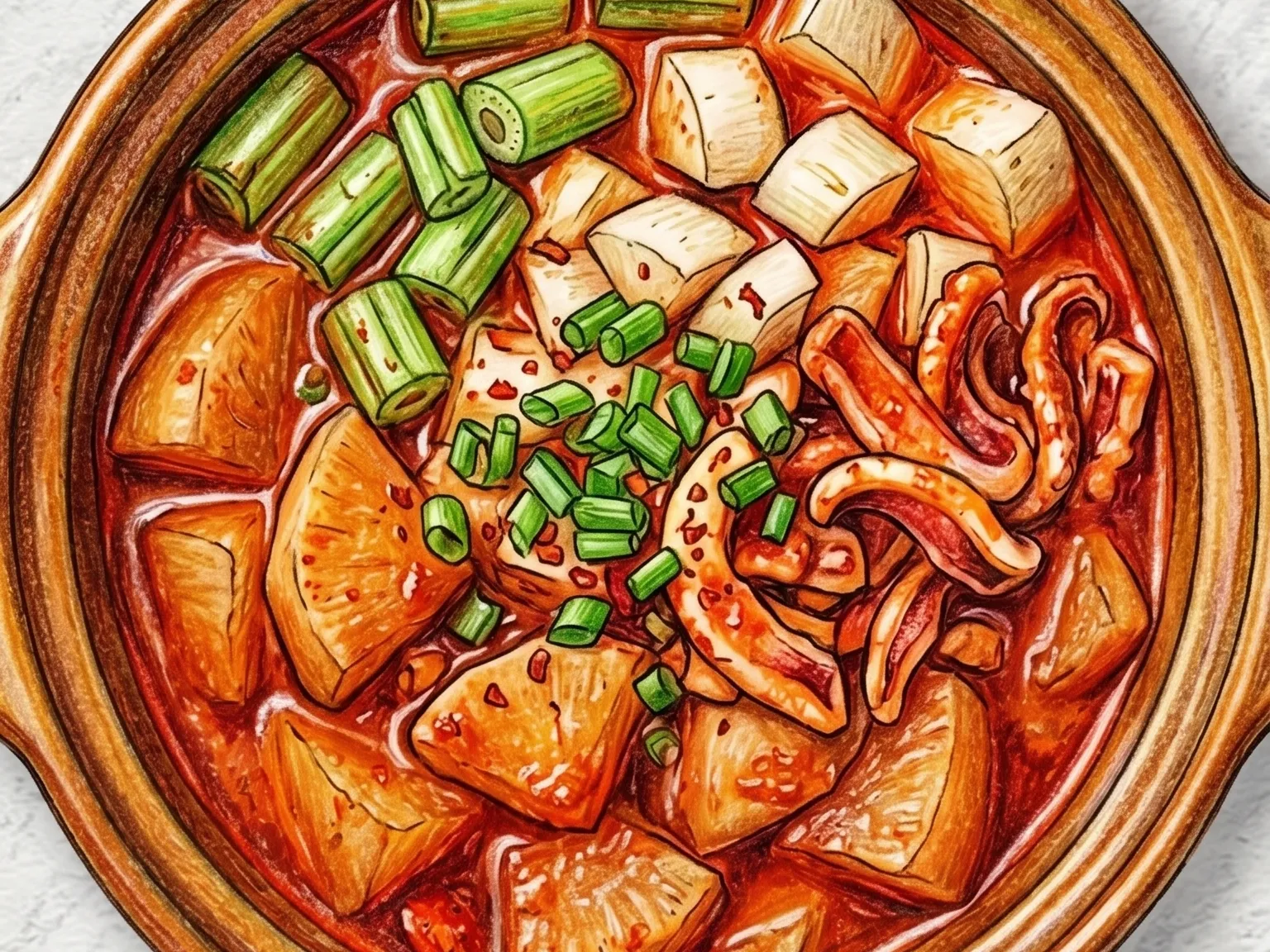
Ojingeo mu jorim is a Korean braised dish where radish is cooked first in a soy-based liquid until fully softened, then squid is added and the whole pot is reduced in a spiced sauce of gochugaru and gochujang. Giving the radish time to cook alone is the structural key to this dish: as it slowly absorbs the liquid and breaks down, it releases its natural sweetness into the broth, which merges with the salt and gentle umami of soy sauce to build the braising liquid into something more complex than its ingredients suggest. When the spice paste goes in, the resulting flavor sits at the intersection of heat and coolness - the particular sensation of Korean chili that stings without overwhelming. The single most important technique in this recipe is the timing of the squid. Squid turns rubbery when overcooked, and the window between tender and tough is narrow, so it is added only in the last five minutes of cooking. That brief time is enough for the squid to absorb the surrounding flavors while holding the springy, snapping bite that makes the dish texturally rewarding. Green onion stirred in at the finish adds a sharp herbal lift. The reduced sauce left in the pan is deliberately left shallow rather than thick, concentrated with the flavors of both the squid and the radish, and it is best used by spooning it over rice and eating everything together.

🏠 Everyday 🎉 Special Occasion
Prep 20min Cook 30min 4 servings
Korean Salted Anchovy Jeotgal
Kimchi Medium

Korean Salted Anchovy Jeotgal

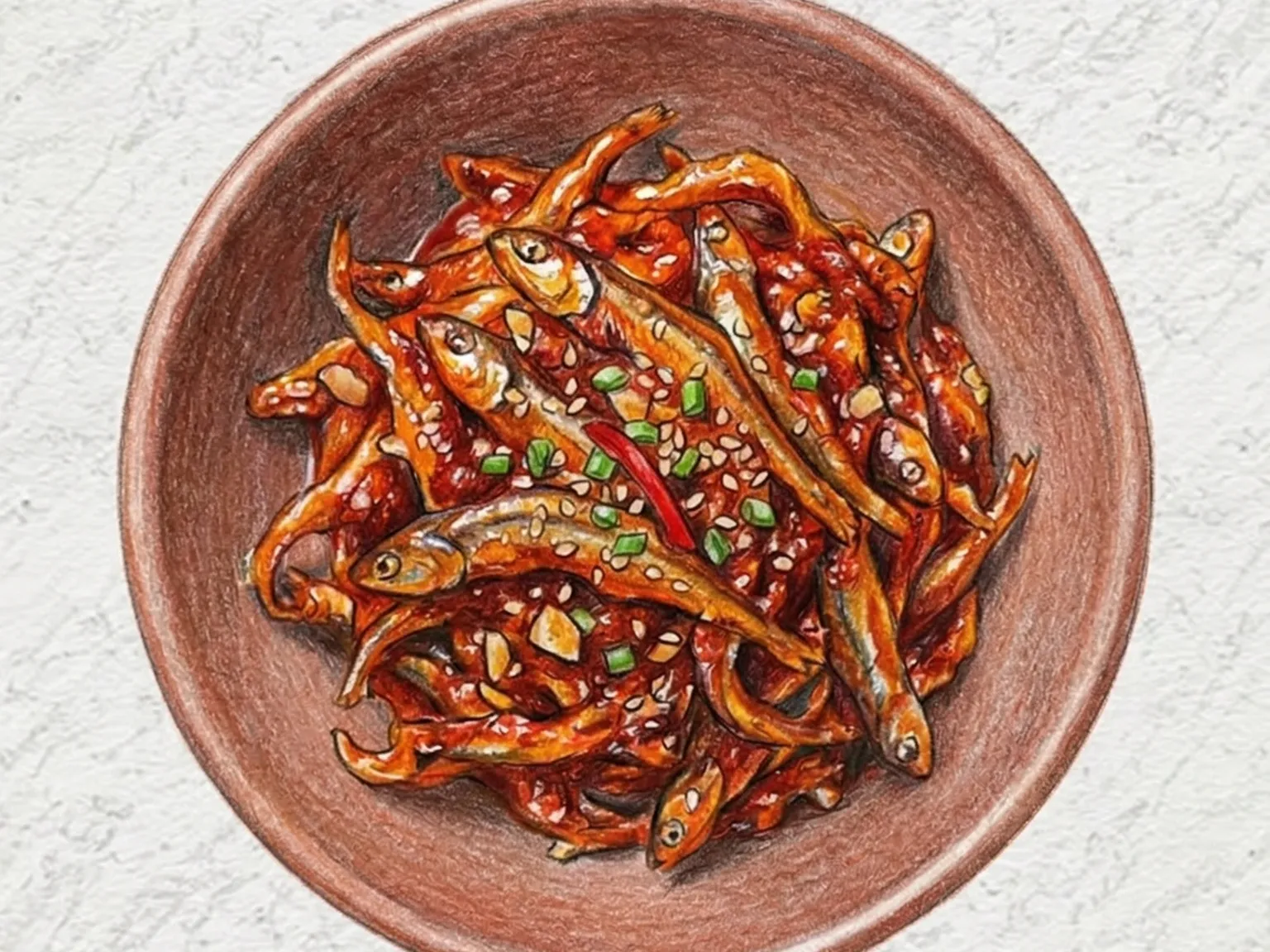
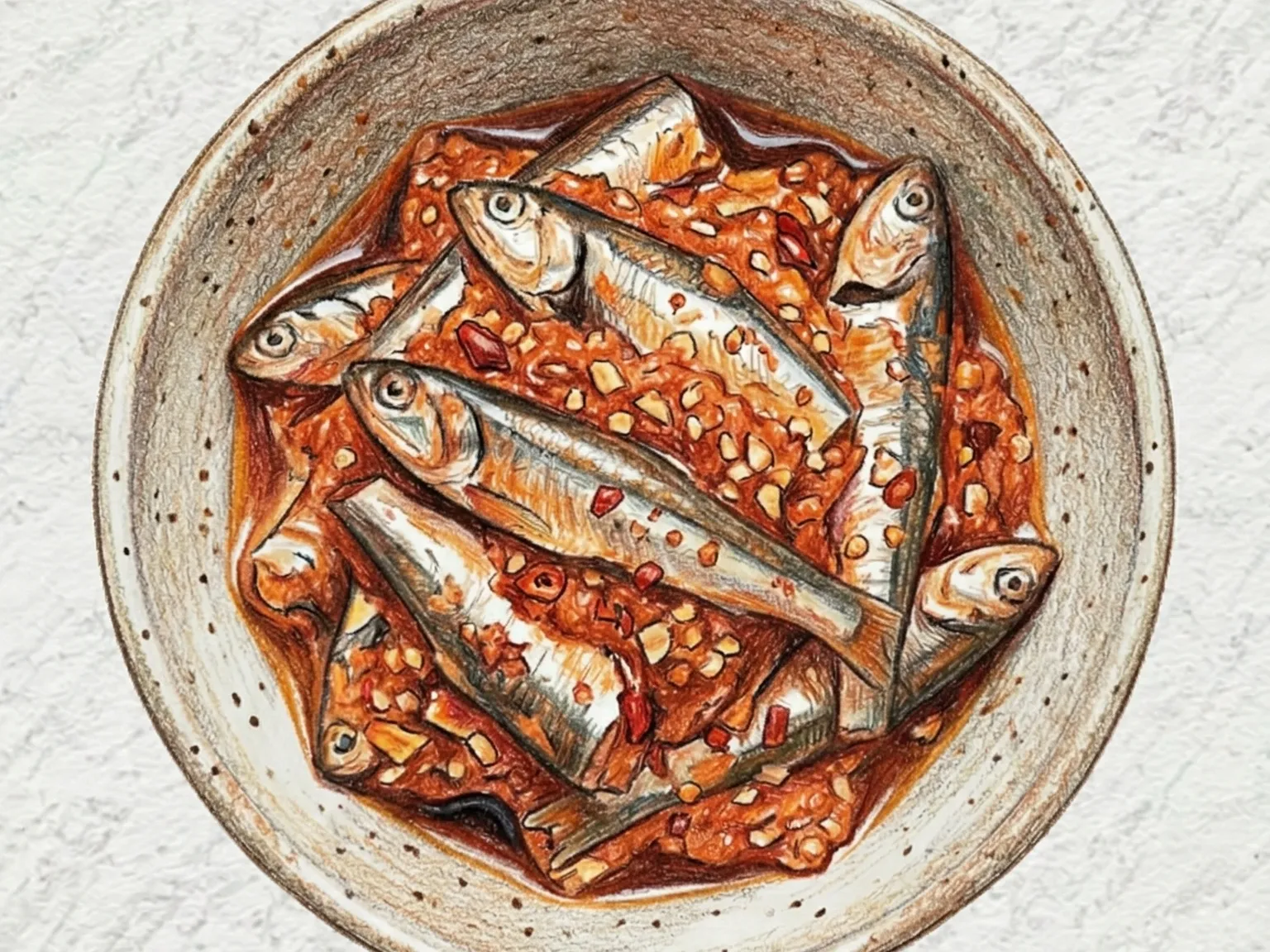
Myeolchi jeotgal is a traditional Korean fermented anchovy preserve made by layering cleaned small anchovies with coarse sea salt in a sterilized container, pressing firmly to eliminate air pockets, then refrigerating for extended aging. As salt draws moisture from the fish, it begins breaking down proteins into concentrated umami compounds, stripping away the raw fishiness and building the deep, complex flavor that defines this preserve. On the fifth day of fermentation, minced garlic, grated ginger, chili flakes, and rice wine are folded in to add aromatic layers on top of the developing fermented base. The salt ratio must stay at or above twenty percent of the anchovy weight throughout the process, as dropping below this threshold allows harmful bacteria to take hold and risks spoilage. The finished jeotgal has two primary uses in Korean cooking: stirred in small amounts into kimchi seasoning paste as an umami backbone, or spooned directly over hot rice as a pungent, savory side dish. It can also substitute for fish sauce in doenjang jjigae or seasoned vegetables, adding a more pronounced fermented character.

🍱 Lunchbox ⚡ Quick
Prep 20min 4 servings
Korean Seasoned Cucumber Pickle Salad
Side dishes Easy

Korean Seasoned Cucumber Pickle Salad

Oiji-muchim takes oiji - cucumber that has been salt-brined for a month or longer - rinses out the excess salinity, and dresses it in a sweet-sour-spicy sauce. Oiji is a traditional Korean preserved food: summer cucumbers are submerged in a concentrated salt brine and aged until their moisture migrates out, transforming the texture from fresh and crisp into something firm, almost crunchy-chewy - a chew fundamentally different from raw cucumber. If the pickle is too salty, soaking in cold water for thirty minutes to an hour draws the brine down to a palatable level. After thorough squeezing, the cucumber pieces are tossed with gochugaru, vinegar, sugar, sesame oil, minced garlic, and scallion. Vinegar and sugar layer a bright sweet-sour dimension over the pickle's inherent saltiness, balancing it for pairing with rice. Julienned oiji absorbs more dressing and delivers a different eating experience than diagonal-cut slices - each approach has its advocates. Made during the summer cucumber glut, oiji keeps refrigerated for over a month.

🏠 Everyday 🍱 Lunchbox
Prep 15min 4 servings
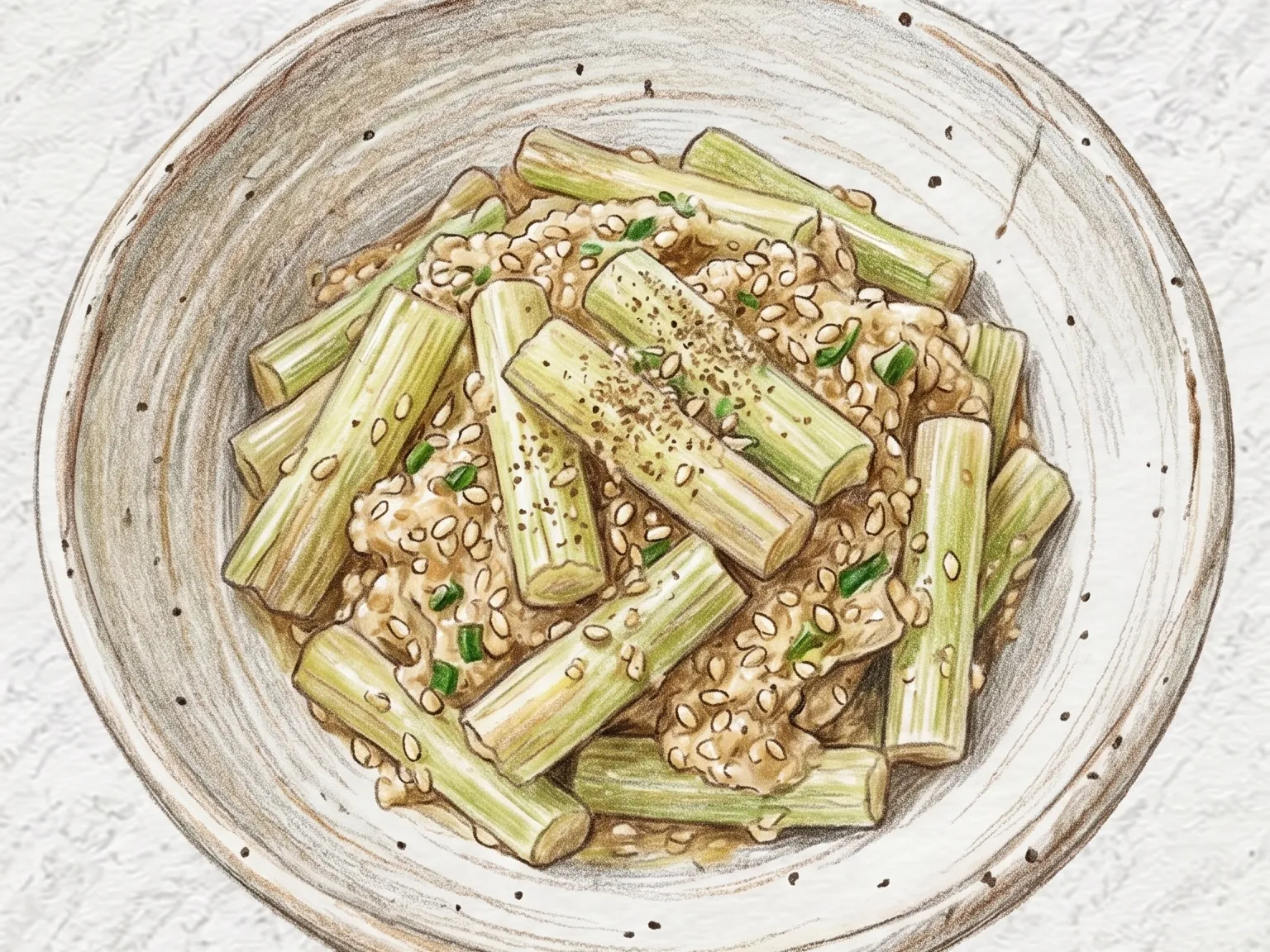
Korean Butterbur Stem Stir-fry with Perilla
Stir-fry Medium

Korean Butterbur Stem Stir-fry with Perilla

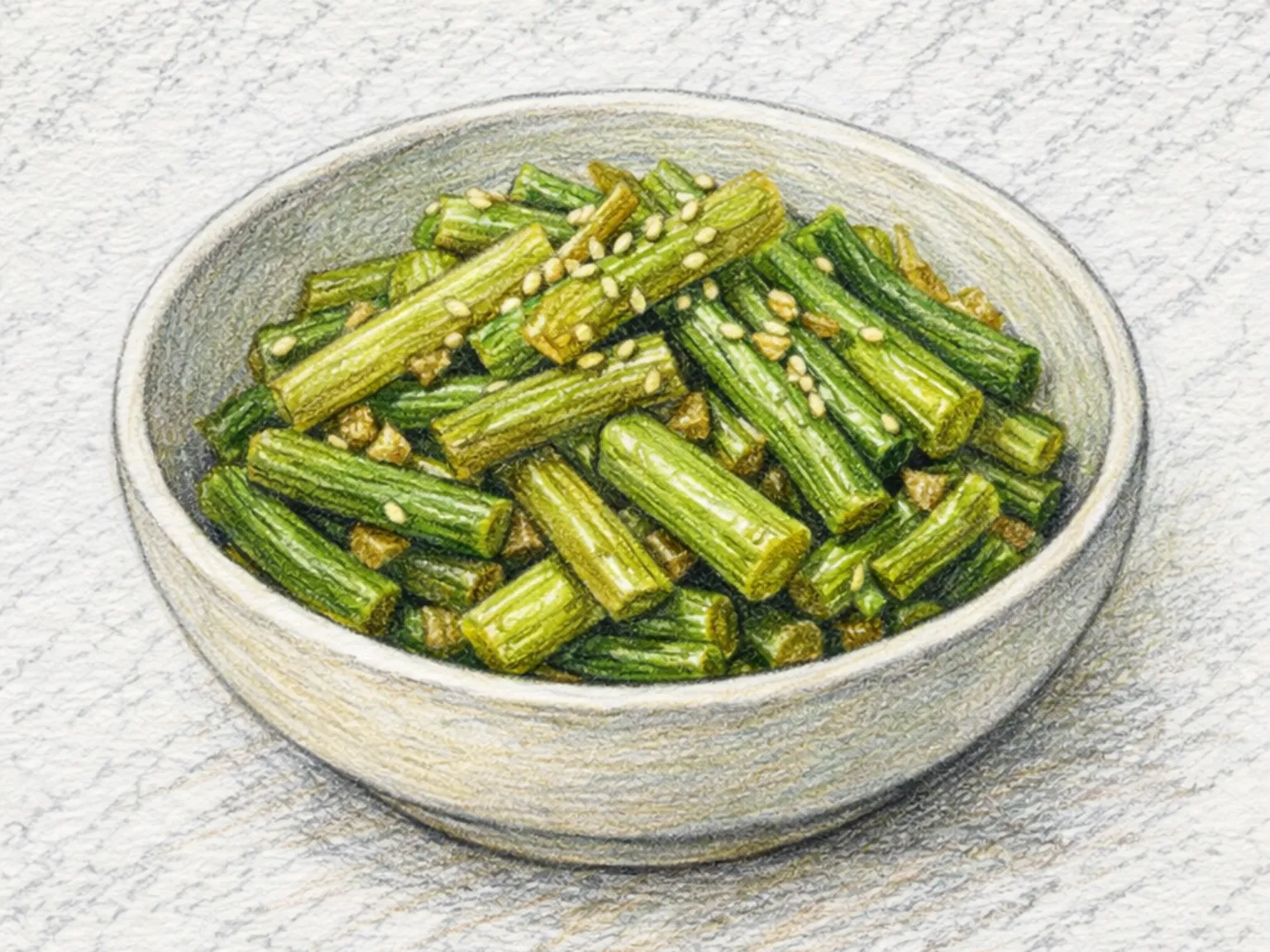
Butterbur stem and perilla stir-fry coats prepared boiled stems with perilla oil, simmers them in seasoned water, and adds the perilla powder while a small amount of liquid remains. Three hundred twenty grams boiled butterbur stems are bent and checked for tough outer fibers, which are peeled away before the stems are cut into 5 cm lengths and lightly drained. Half a green onion is sliced, and 1 teaspoon minced garlic is kept ready. One tablespoon perilla oil is warmed over low before the garlic and green onion are stirred for about 30 seconds. The butterbur is added before the garlic browns, and the heat is raised to medium for a 3-minute stir-fry. Once the stems are evenly coated with oil and moisture on the pan bottom has decreased, 1 tablespoon soup soy sauce and 100 ml water are poured in. The heat is reduced to medium-low after bubbling begins, and the stems simmer for about 4 minutes. Two and a half tablespoons perilla powder is added only while a shallow amount of liquid still remains. It is mixed over low until the powder absorbs that moisture and forms a thick coating around the stems, then the burner is switched off immediately. Keeping liquid in the pan before adding the powder prevents dry clumps from forming in one place.

🏠 Everyday 🍱 Lunchbox
Prep 25min Cook 10min 4 servings
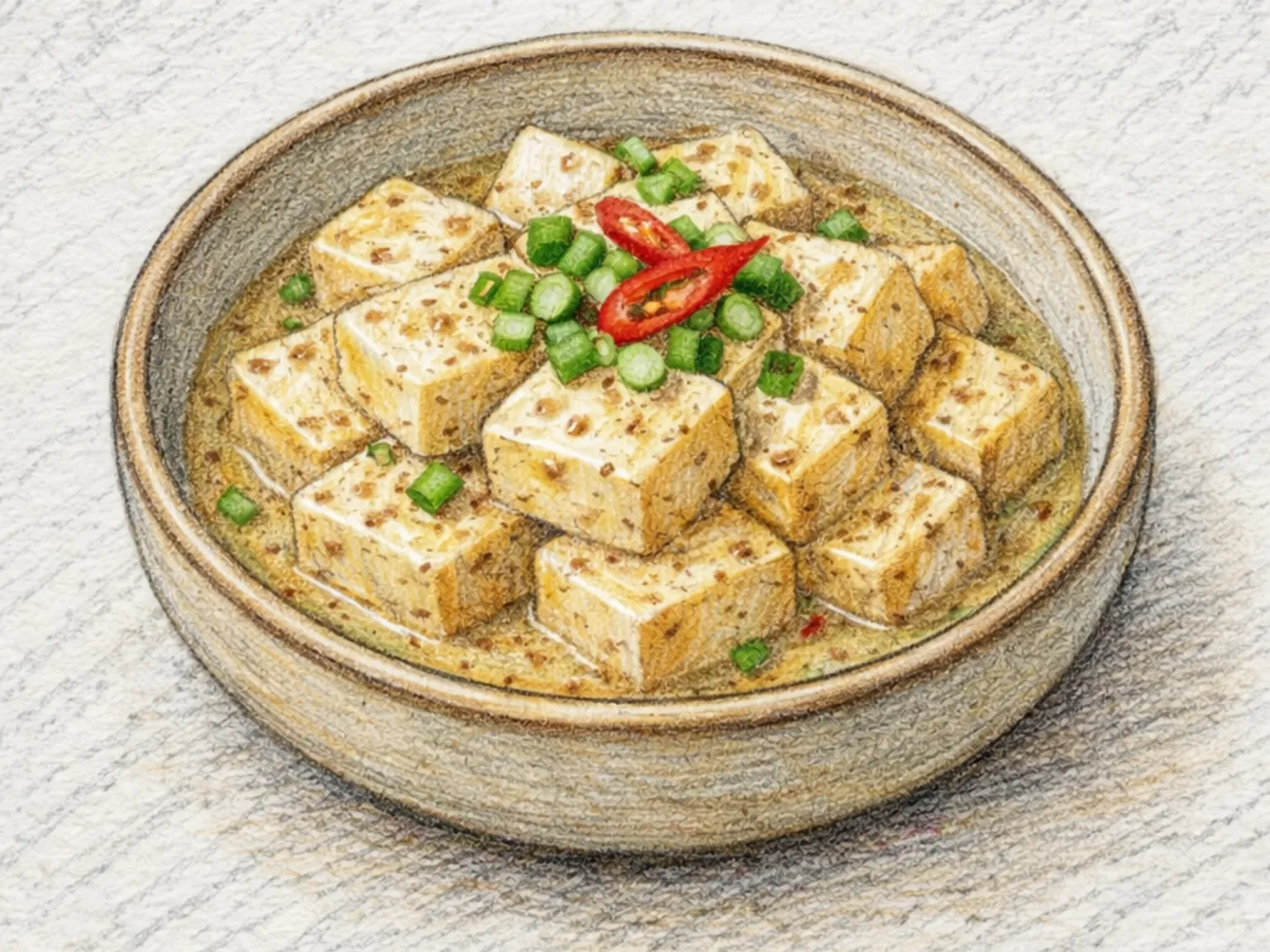
Korean Perilla Braised Tofu
Steamed Easy

Korean Perilla Braised Tofu

This dubu-jorim sears 350 g of tofu before braising it in soy sauce, then thickens the remaining liquid with 2 tablespoons ground perilla seeds. Press the tofu dry with paper towels, cut it into thick pieces, and brown each side for 2 minutes in 1 teaspoon cooking oil over medium heat. The light crust helps the pieces keep their shape and gives the sauce a surface to cling to. Mix 1.5 tablespoons soy sauce, 1 teaspoon minced garlic, and 180 ml water. Slice 0.5 onion thinly, spread it over the seared tofu, and pour the braising liquid around the edge of the pan. Simmer for 6 minutes over medium-low heat while spooning liquid over the top. Add the ground perilla gradually and stir each addition into the liquid immediately; dumping it in at once can leave dry, chalky lumps. Reduce the heat and cook for 3 more minutes. When the sauce coats the tofu thickly, add green onion and 0.5 teaspoon sesame oil, fold the pieces over once with a broad motion, and turn off the heat. This sequence keeps the tofu intact while leaving the perilla and sesame aromas at the surface.

🏠 Everyday 🍱 Lunchbox
Prep 12min Cook 14min 2 servings
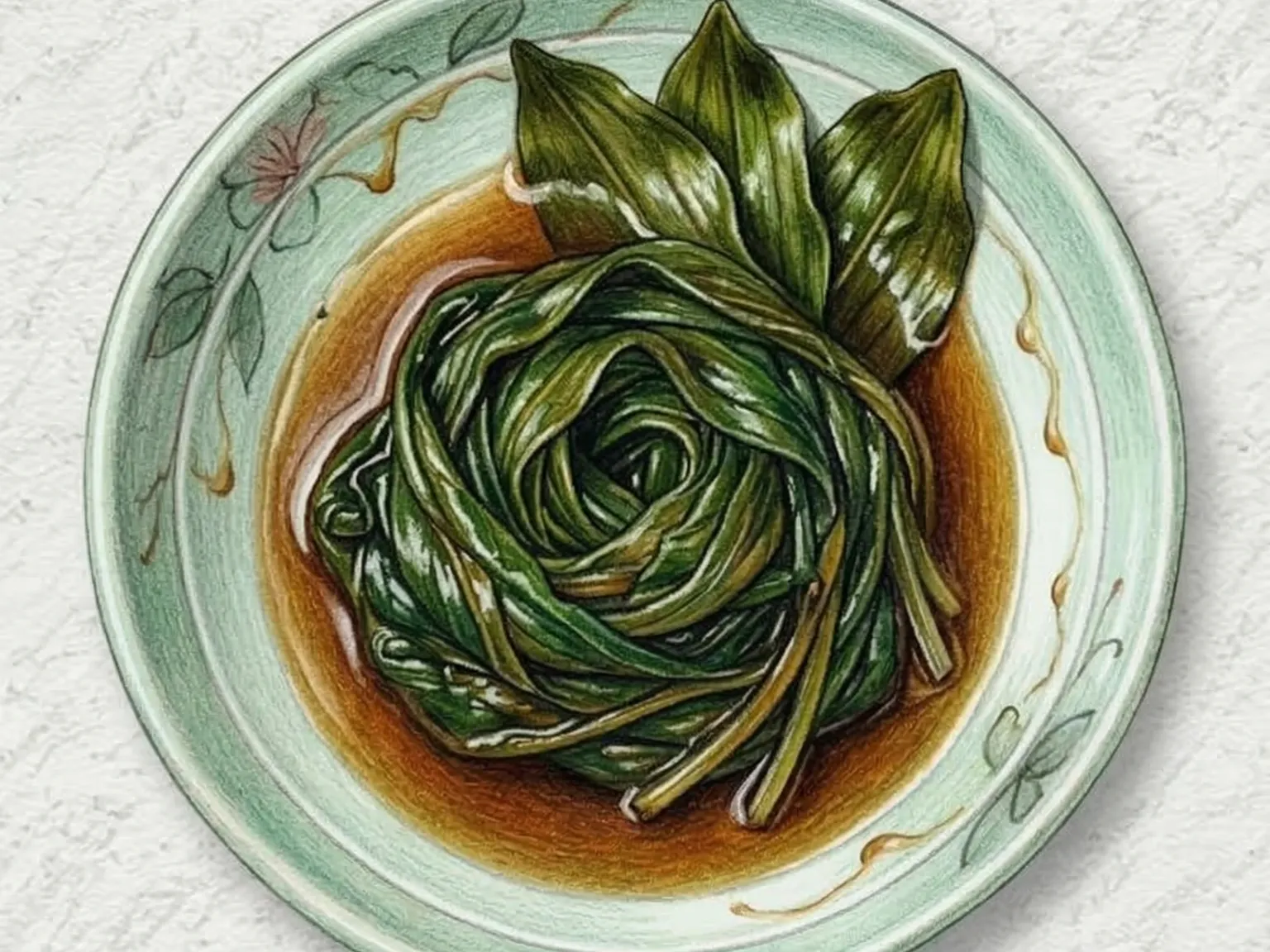
Korean Pickled Alpine Leek Leaves
Kimchi Easy

Korean Pickled Alpine Leek Leaves

Myeongi jangajji is a Korean soy-pickled preserve made from alpine leek leaves, a wild mountain herb harvested in early spring. The leaves are rolled into a sterilized jar with sliced green chili, then covered with a boiling brine of soy sauce, vinegar, water, and sugar. Pouring the hot liquid partially blanches the leaf surface, locking in a vivid green color while the interior stays raw and pungent. After two to three days of refrigeration the brine penetrates fully, tempering the raw garlic intensity into a mellow, fragrant heat balanced by soy saltiness and vinegar tang. These pickled leaves are traditionally wrapped around grilled pork belly or bulgogi, where their aromatic acidity cuts through the rendered fat.

🍱 Lunchbox 🏠 Everyday
Prep 18min Cook 10min 4 servings
Korean Poached Squid Slices
Side dishes Easy

Korean Poached Squid Slices

Ojingeo-sukhoe is a Korean poached squid dish where cleaned whole squid is blanched for two to three minutes in boiling water seasoned with salt, cooking wine, and green onion, then sliced into pieces and served alongside vinegared gochujang. The most important step is thorough preparation: the innards are removed completely, the skin is peeled away, and the body is rinsed under cold running water until there is no trace of sliminess or off-odor remaining. Cooking wine in the blanching water neutralizes any residual fishiness, and the green onion infuses a mild aromatic note into the flesh. The squid goes into water that is already at a full boil so the surface seizes immediately and the interior moisture stays locked in rather than leaching out into the pot. Pulling the squid out the moment the flesh turns opaque and letting it rest briefly prevents carryover heat from tightening the protein any further, preserving the elastic, springy bite that defines good sukhoe. Slicing after cooling also produces a cleaner cut than slicing while still hot. The dipping sauce of gochujang, vinegar, garlic, and sugar provides a sharp, tangy contrast that cuts through the mild squid and makes the dish far more dynamic than its simple method would suggest.

🍺 Bar Snacks ⚡ Quick
Prep 10min Cook 6min 2 servings
Korean Stir-fried Butterbur Stems
Stir-fry Medium

Korean Stir-fried Butterbur Stems

Meowi-namul-bokkeum stir-fries boiled butterbur stems in perilla oil, adding a cooking step that distinguishes it from the cold-dressed muchim version. While the muchim blanches and seasons immediately without further heat, the bokkeum takes the boiled stems into a pan with soup soy sauce and water for five minutes or more, driving the seasoning deep into the plant fibers. This additional cooking time also volatilizes more of the butterbur's bitter compounds, producing a milder flavor compared to the cold preparation. Perilla oil, though more prone to oxidation than sesame oil, is the traditional choice because its earthy, grassy aroma harmonizes with the herb's character in a way sesame oil cannot. Adding perilla seed powder in the last minute causes its starch to partially gelatinize, giving the sauce a thicker consistency, but leaving it on the heat too long makes the dish chalky and heavy. Timing this final step precisely is what separates a well-made version from an overcooked one. This banchan appears on spring mountain-village tables alongside gondeure-namul and chwinamul as part of the seasonal wild greens spread that marks the transition out of winter.

🏠 Everyday 🍱 Lunchbox
Prep 18min Cook 12min 4 servings
Korean Soy-Braised King Oyster Mushrooms
Steamed Easy

Korean Soy-Braised King Oyster Mushrooms

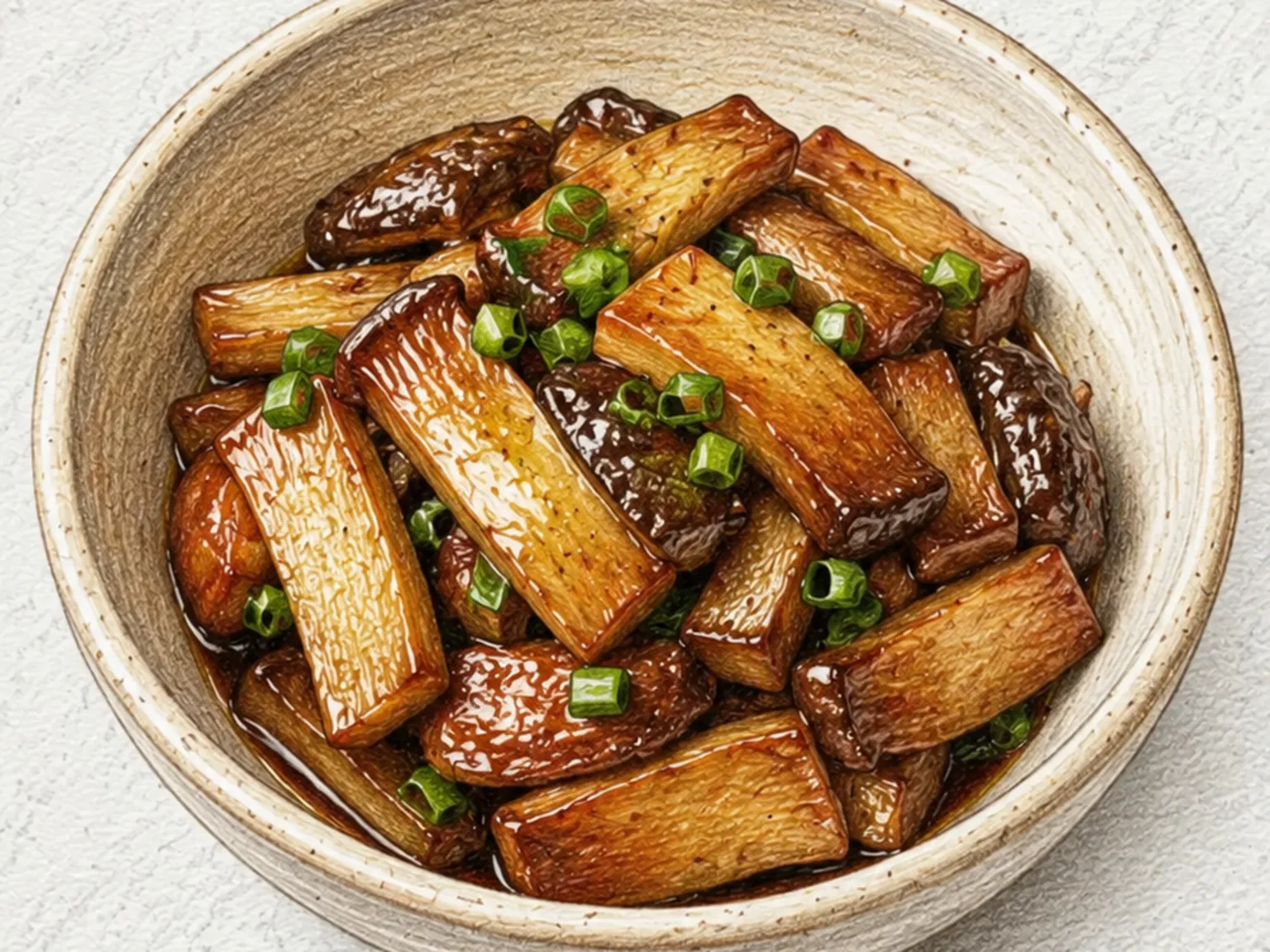
Saesongi-beoseot-jorim braises 300 grams of king oyster mushrooms in a soy-based sauce after an initial sear that drives off moisture and firms up the texture. The mushrooms are halved lengthwise, cut into bite-size pieces, and pan-fried in oil for about two minutes until lightly golden before the braising liquid - soy sauce, water, oligosaccharide syrup, and garlic - is poured in. Five minutes of simmering over medium heat reduces the liquid to a sticky glaze that clings to every surface. Sesame oil is drizzled in just before removing from heat, and chopped scallion adds a fresh green contrast. The finished dish stores well, making it a reliable make-ahead side for weekday meals.

🏠 Everyday 🍱 Lunchbox
Prep 10min Cook 10min 4 servings
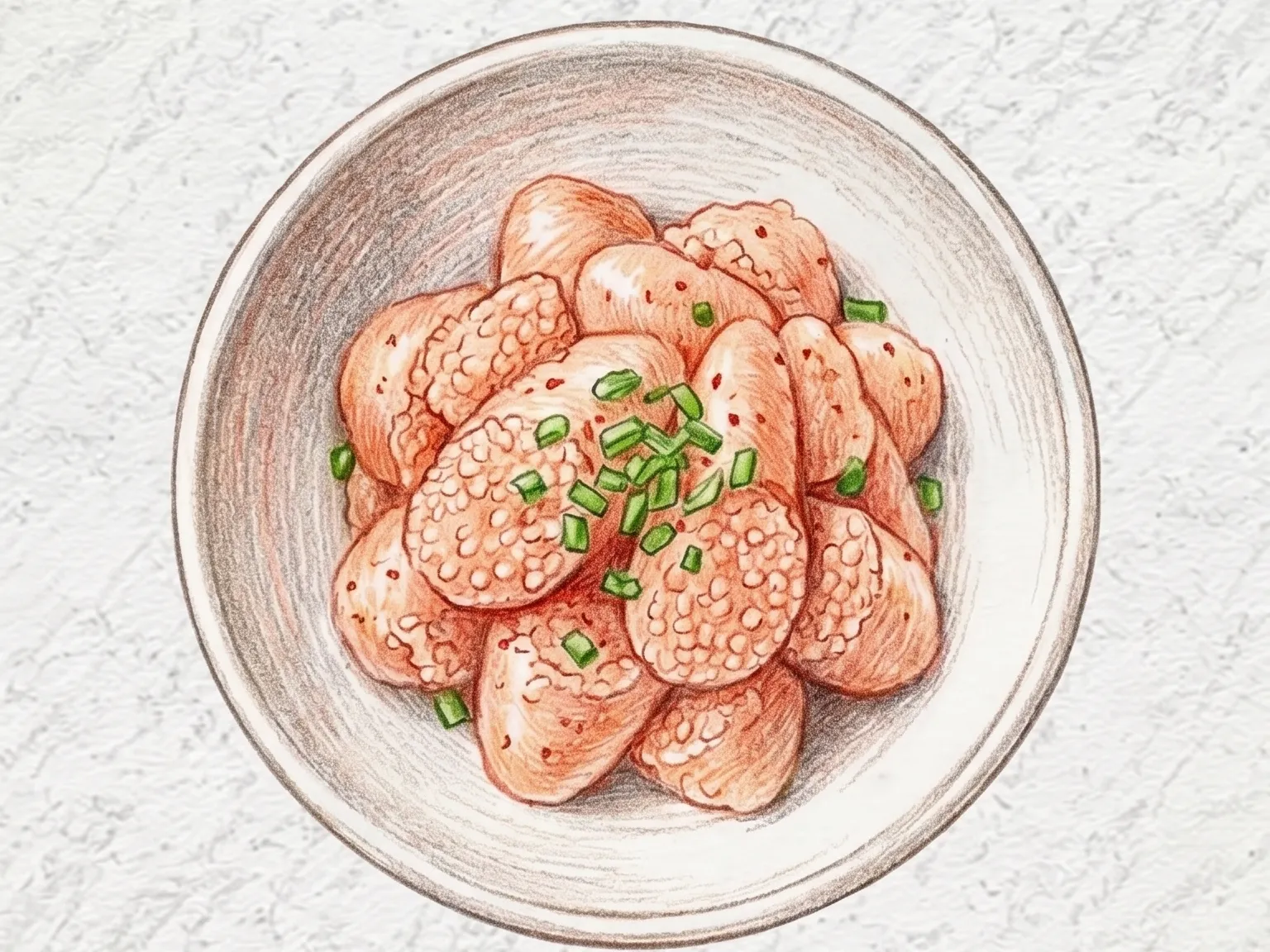
Korean Salted Pollock Roe Jeotgal
Kimchi Hard

Korean Salted Pollock Roe Jeotgal

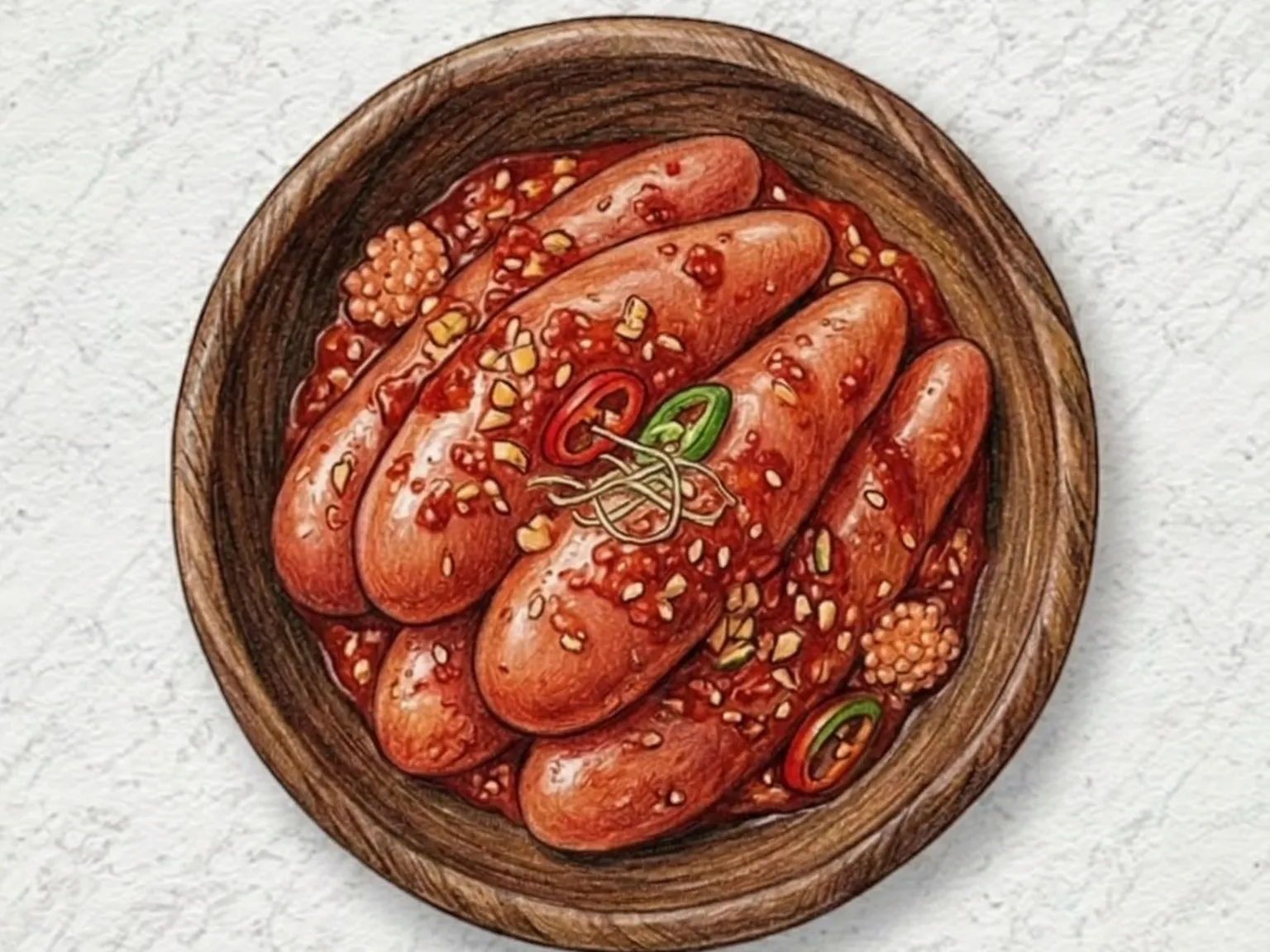
Myeongran jeotgal is a Korean salted and fermented pollock roe where fresh roe sacs are meticulously cleaned of blood spots and membranes, brushed with rice wine to suppress fishiness, then packed in a curing blend of coarse sea salt, gochugaru, and minced garlic alongside a piece of kelp. Over three to five days in cold storage, salt draws moisture out of each tiny egg, concentrating their pop-and-burst texture while enzymatic breakdown generates a deep, layered umami that raw roe cannot produce on its own. The chili flakes introduce a gentle warmth that sits behind rather than over the roe's natural salinity. Sliced thin and arranged over hot steamed rice, each piece releases a salty, oceanic intensity with every bite - a condiment that disappears faster than any dish it accompanies.

🎉 Special Occasion 🍱 Lunchbox
Prep 30min 4 servings
Parae Muchim
Side dishes Easy

Parae Muchim

Parae muchim seasons 200 g of green laver with gochujang, vinegar, sugar, garlic, sesame oil, and sesame seeds. Place the laver in a large bowl of cold water, loosen the strands gently with your fingertips, drain, and repeat with fresh water at least five times. Check the bottom of the bowl after each wash and continue until no sand settles there. Add the cleaned laver to strongly boiling water for exactly 10 seconds, then transfer it immediately to cold water to stop the heat. Squeeze firmly with both hands and cut the strands into 4 to 5 cm lengths. For the dressing, stir together 1 tablespoon gochujang, 2 tablespoons vinegar, and 1 tablespoon sugar until the sugar grains disappear. Mix in 0.5 teaspoon minced garlic and 1 teaspoon sesame oil. Add the dressing to the laver in two or three portions, lifting the strands from the bottom with your fingertips rather than pressing them. Dividing the dressing makes it possible to watch how evenly it spreads through the damp strands. Once the reddish seasoning covers the laver, finish with 1 teaspoon sesame seeds. Repeated washing, the 10 second blanch, immediate cooling, and thorough squeezing are the practical preparation stages that come before seasoning.

🏠 Everyday 🍱 Lunchbox
Prep 15min 4 servings
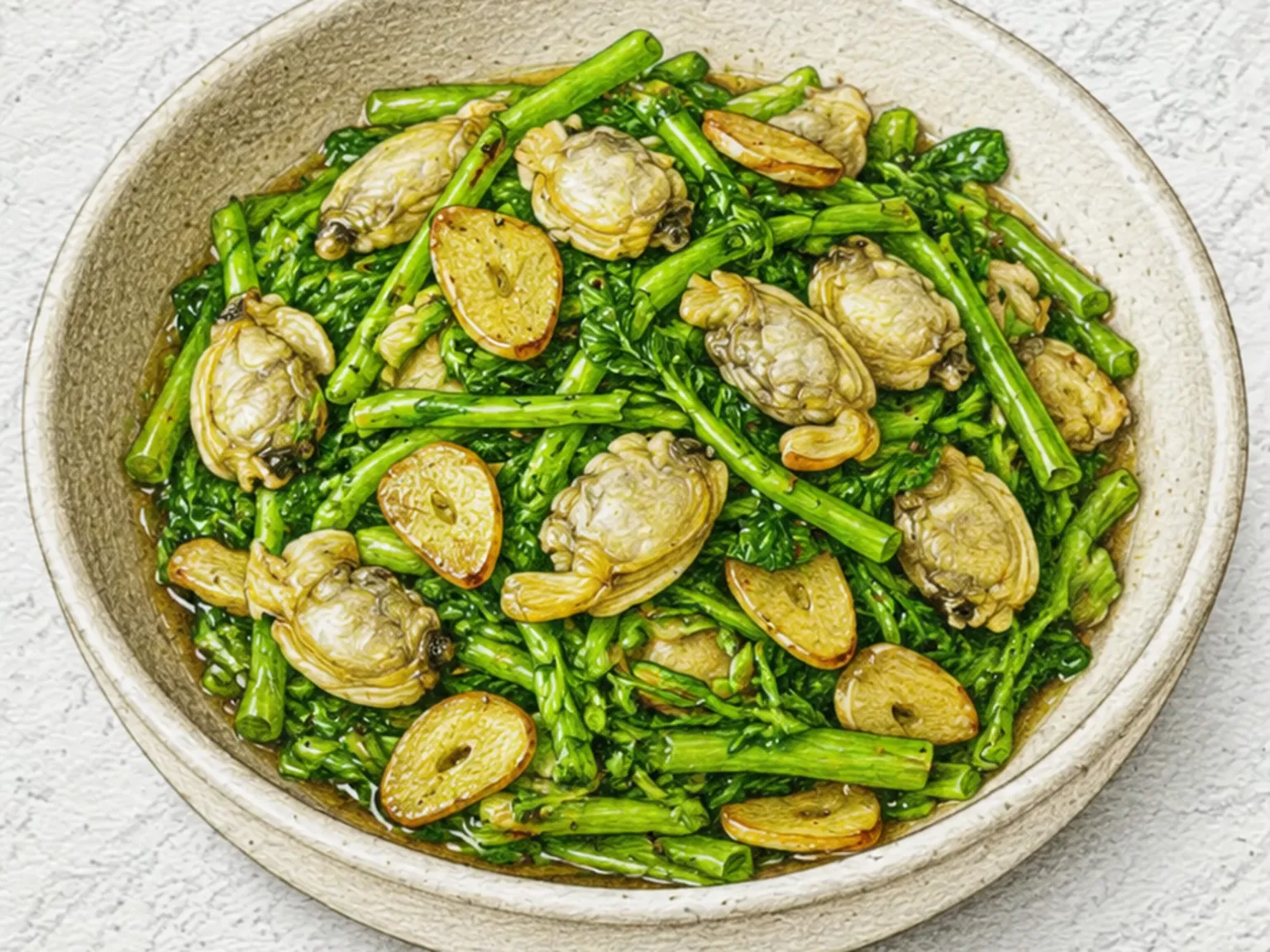
Korean Water Parsley, Clam & Garlic Stir-fry
Stir-fry Medium

Korean Water Parsley, Clam & Garlic Stir-fry

Minari-bajirak-maneul-bokkeum starts by slowly toasting garlic slices in oil over low heat until they turn golden and mellow, coaxing out a sweet, nutty fragrance that becomes the aromatic backbone of the entire dish. As the garlic cooks gently, its sharp pungency fades and the infused oil absorbs its full flavor. Clam meat goes in next with a splash of rice wine and cooks for just about 90 seconds at higher heat, long enough to eliminate any fishiness while keeping the flesh plump and springy. Water parsley stems are added with a measure of soup soy sauce and, if desired, sliced red chili, and their crunch is preserved by not overcooking. The delicate parsley leaves join only in the final 20 seconds before the heat is turned off so they barely wilt, contributing their distinctive grassy aroma without losing it entirely to the heat. A few drops of sesame oil finish the dish. The result brings together three distinct textures and flavors in a single pan: the sweet depth of the toasted garlic oil, the clean ocean salinity of the clams, and the fresh herbal brightness of the minari.

🏠 Everyday 🍱 Lunchbox
Prep 20min Cook 9min 2 servings
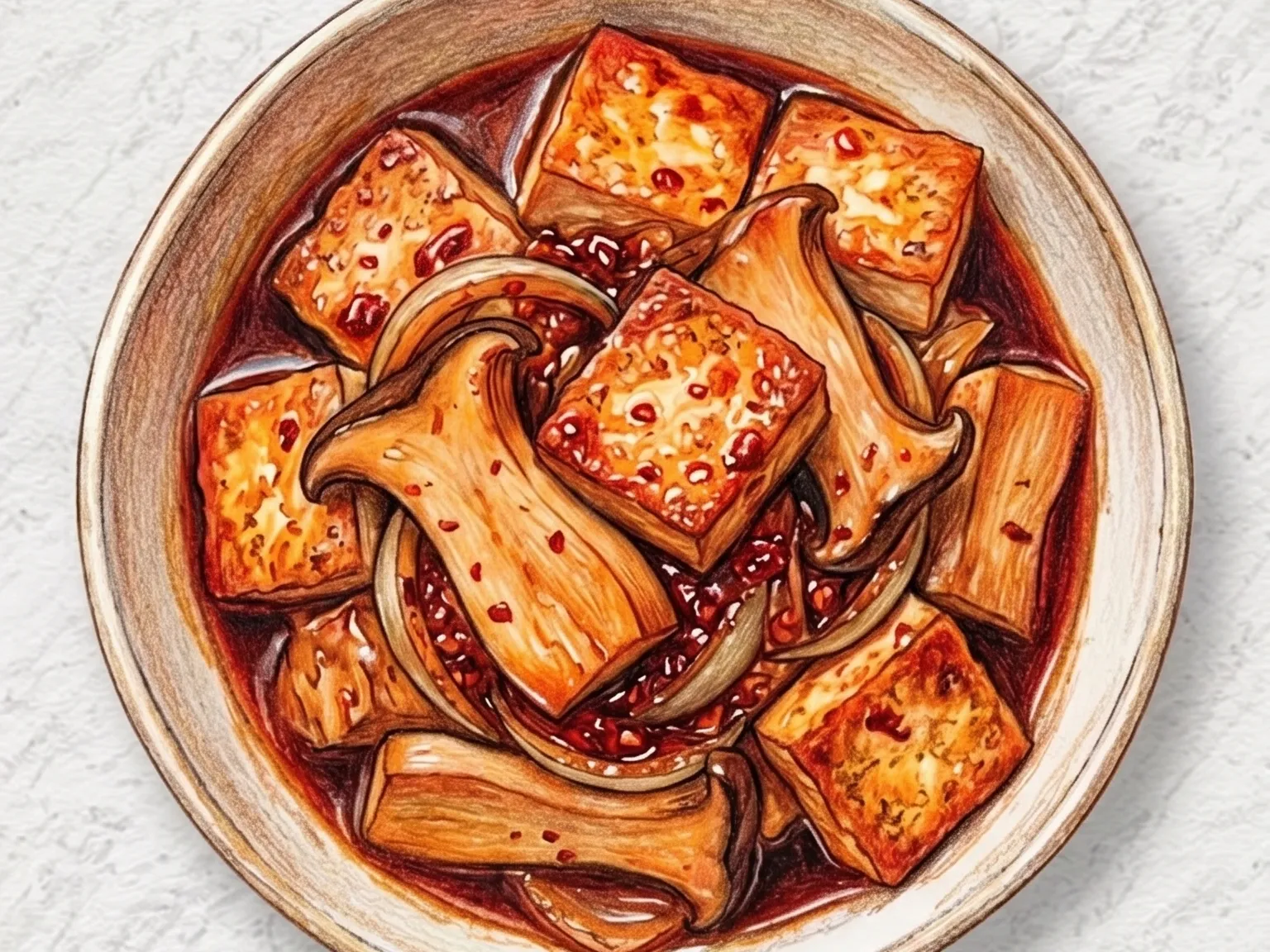
Korean Braised Tofu and King Oyster Mushrooms
Steamed Easy

Korean Braised Tofu and King Oyster Mushrooms

Saesongi dubu yangnyeom jorim is a braised side dish of firm tofu and king oyster mushrooms cooked down in a sauce of soy sauce, gochujang, and Korean chili flakes until the liquid is nearly gone and every surface is glazed. Pan-searing the tofu first over low heat until golden builds a crust that keeps it intact through braising and gives the seasoning somewhere to grip. Thick-cut king oyster mushrooms stay springy even after the long braise, while onion woven through the pot contributes a sweetness that softens the heat of the gochujang. Sesame oil stirred in at the end draws all the aromatics together into a cohesive finish. The result is a banchan with layers, gochujang spice, deep soy saltiness, and a savory earthiness from the mushrooms, that holds its flavor cold, making it a natural fit for packed lunches.

🍱 Lunchbox 🏠 Everyday
Prep 12min Cook 18min 2 servings
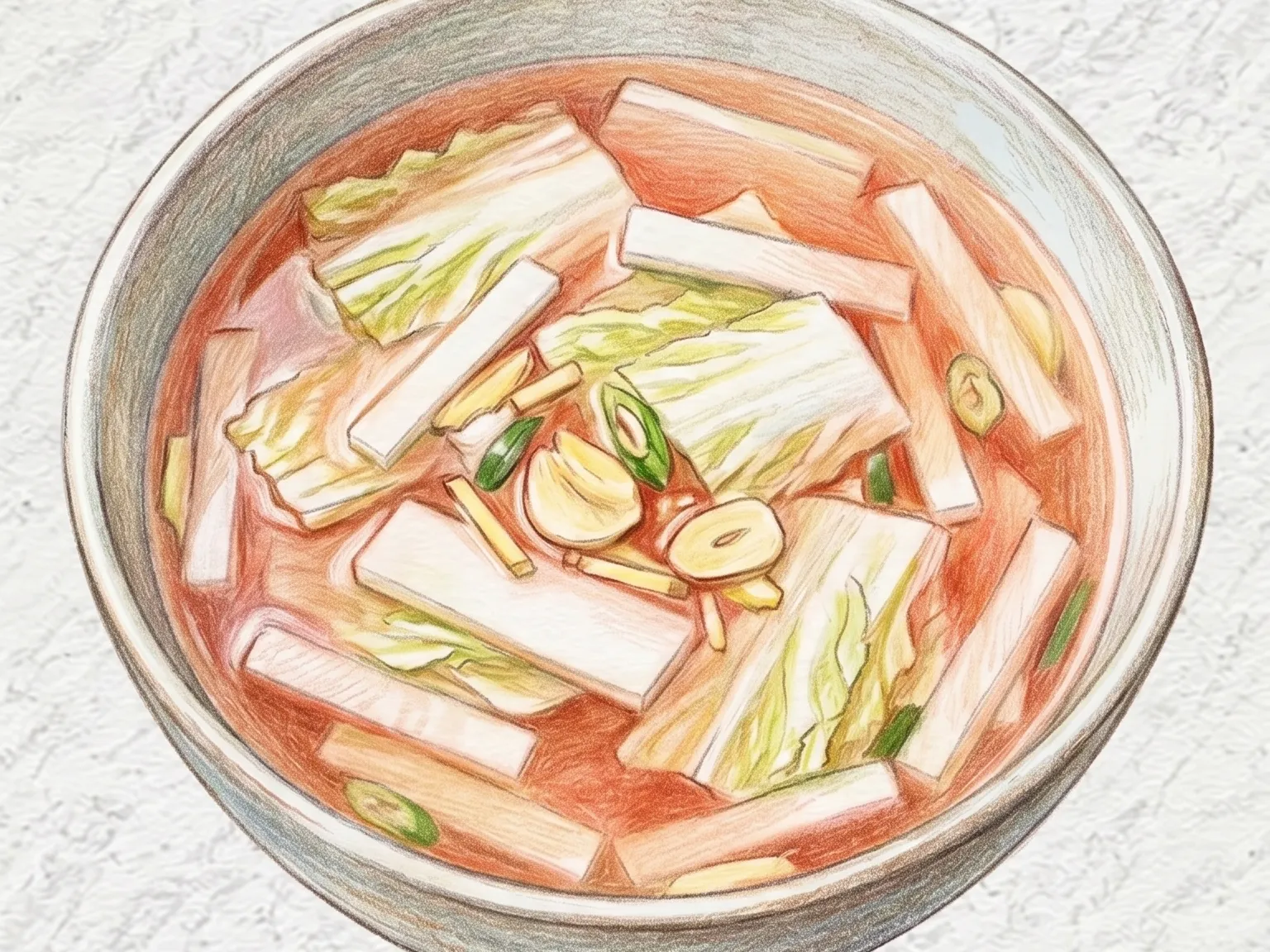
Korean Water Kimchi (Chilled Radish Broth Kimchi)
Kimchi Easy

Korean Water Kimchi (Chilled Radish Broth Kimchi)

Nabak-kimchi is a Korean water kimchi made by submerging thinly sliced radish and napa cabbage in a clear, lightly reddened broth - fundamentally different from the dense, fermented intensity of baechu-kimchi. Here, the chilled broth is the centerpiece, meant to be sipped and spooned rather than merely eaten as a side. Radish and cabbage are cut into flat 2-to-3cm squares, salted briefly, then immersed in a liquid made by steeping gochugaru in water through cheesecloth - wrapping the powder prevents the particles from clouding the broth. Garlic, ginger, scallion, and fish sauce flavor the liquid. One day at room temperature initiates lactic fermentation, introducing a gentle tang, and refrigeration over two to three days deepens the complexity. A spoonful of nabak-kimchi broth alongside spicy food acts as a cooling palate cleanser. Served cold, this kimchi is particularly refreshing in summer - it is a drinking kimchi in the truest sense, closer in spirit to naengmyeon broth than to solid fermented kimchi.

🏠 Everyday 🍱 Lunchbox
Prep 20min 4 servings
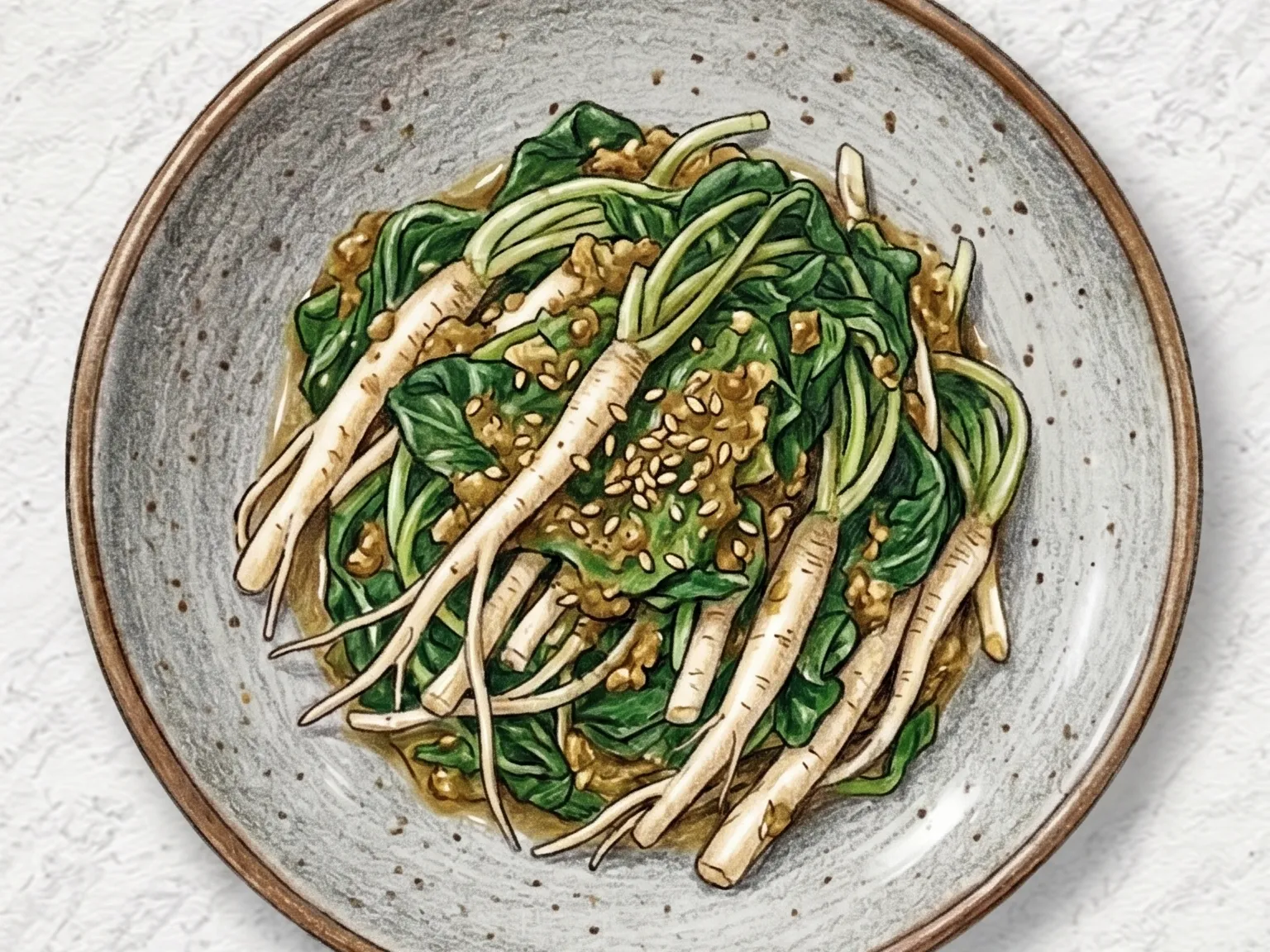
Perilla Gosari Namul
Side dishes Medium

Perilla Gosari Namul

This perilla-scented bracken fern namul begins by pre-seasoning 250 grams of boiled bracken with soup soy sauce, minced garlic, and half the perilla oil for five minutes so the flavor seeps into the chewy fibers. Green onion is sauteed briefly in the remaining perilla oil to build an aromatic base before the seasoned bracken joins the pan for a two-minute stir-fry that drives off excess moisture. Adding water and ground perilla seeds, then simmering gently for five minutes, transforms the dish into a lightly sauced namul where every strand carries a nutty, earthy depth. Sesame seeds scattered at the end add a visual accent and a faint crunch that complements the bracken's dense chew.

🏠 Everyday 🎉 Special Occasion
Prep 15min Cook 12min 2 servings
Korean Water Parsley Beef Stir-Fry
Stir-fry Easy

Korean Water Parsley Beef Stir-Fry

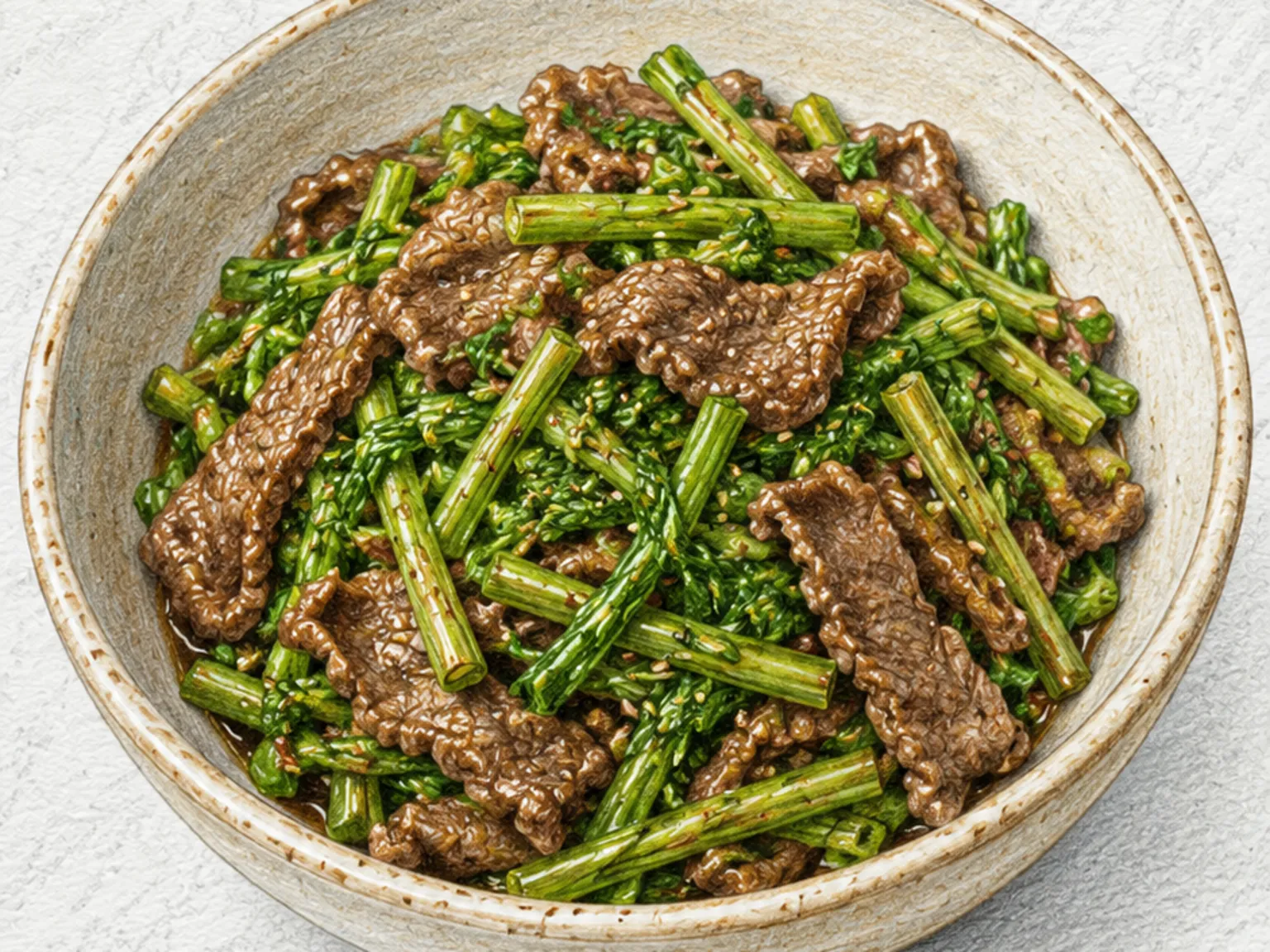
Minari and beef stir-fry cooks briefly soy-seasoned beef first, then gives the water parsley only 20 to 30 seconds over high heat. One hundred fifty grams minari is rinsed, shaken dry, and cut into 4 cm lengths. The leaves are handled without pressing or bruising and kept loose so they can enter the pan at once. One hundred fifty grams thinly sliced beef is cut into narrow strips, coated with 1 tablespoon soy sauce, and left for about 5 minutes. Clumped slices are pulled apart so they can cook evenly. One garlic clove is minced finely. The pan is preheated over medium before the garlic and seasoned beef are added and stir-fried over medium-high for about 2 minutes. Once most red color has disappeared and the edges look cooked, the minari is added and the heat is raised to high. A 20 to 30 second toss lets the leaves lose a little volume while the stems remain firm and bright. The thickest beef piece is checked for doneness before the burner is switched off. One teaspoon sesame oil is mixed through with residual heat, and the stir-fry is moved out of the pan immediately. Separating the beef and minari stages makes it possible to finish the meat without keeping the leaves and stems over heat for the same length of time.

🏠 Everyday 🌙 Late Night
Prep 10min Cook 10min 2 servings
Korean King Oyster & Quail Egg Braise
Steamed Easy

Korean King Oyster & Quail Egg Braise

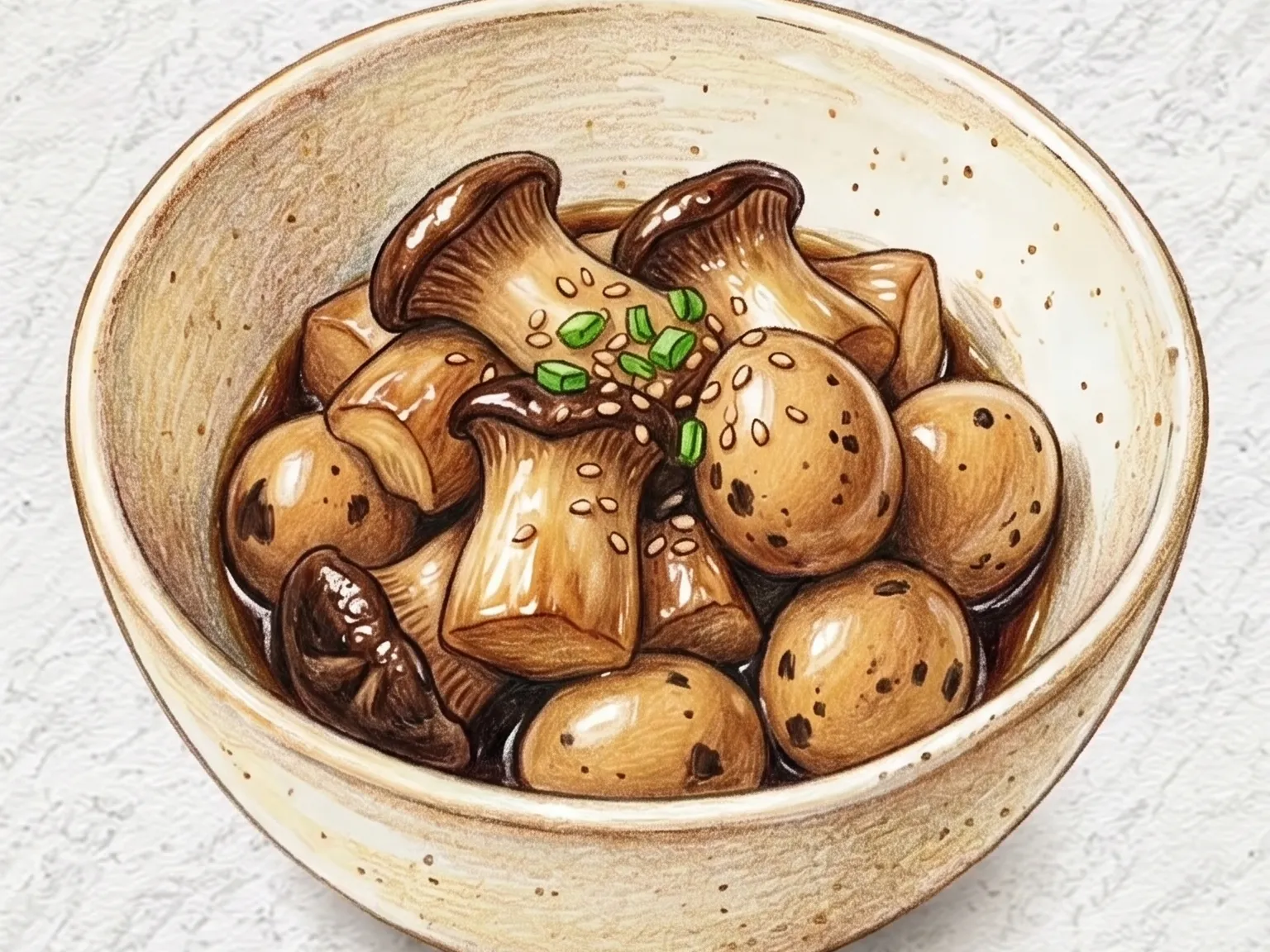
Saesongi quail egg jorim is a soy-braised Korean banchan featuring king oyster mushrooms and quail eggs with a balance of savory and gently sweet flavors. The mushrooms are braised first to let them absorb moisture and seasoning thoroughly before the eggs are added, giving the eggs time to soak up the liquid without becoming tough. A spoonful of oligosaccharide syrup added near the end gives the surface a glossy sheen and softens the saltiness of the soy base. The dish calls for only a handful of pantry staples and comes together in under thirty minutes, making it easy to prepare on a busy day. It also keeps well in the refrigerator, improving in flavor over two days as the braising liquid penetrates deeper, which makes it a reliable choice for packed lunches.

🏠 Everyday 🍱 Lunchbox
Prep 15min Cook 20min 2 servings

About Side dishes

Great banchan balances seasoning with the natural flavor of each ingredient. Sesame oil, perilla oil, soy sauce, and fermented pastes work together to pack deep flavor into every small serving.