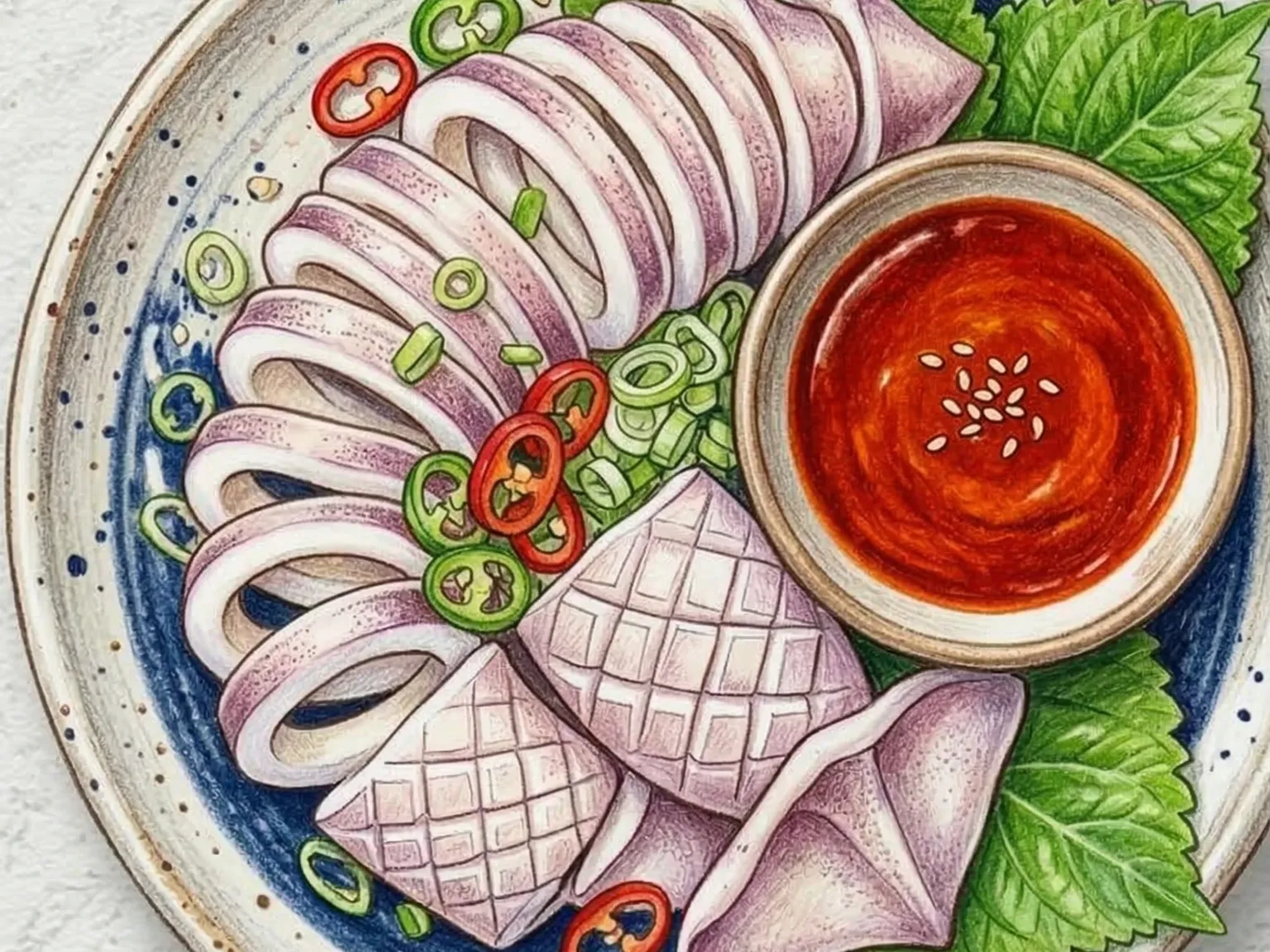
Side dishes Recipes
624 recipes. Page 22 of 26
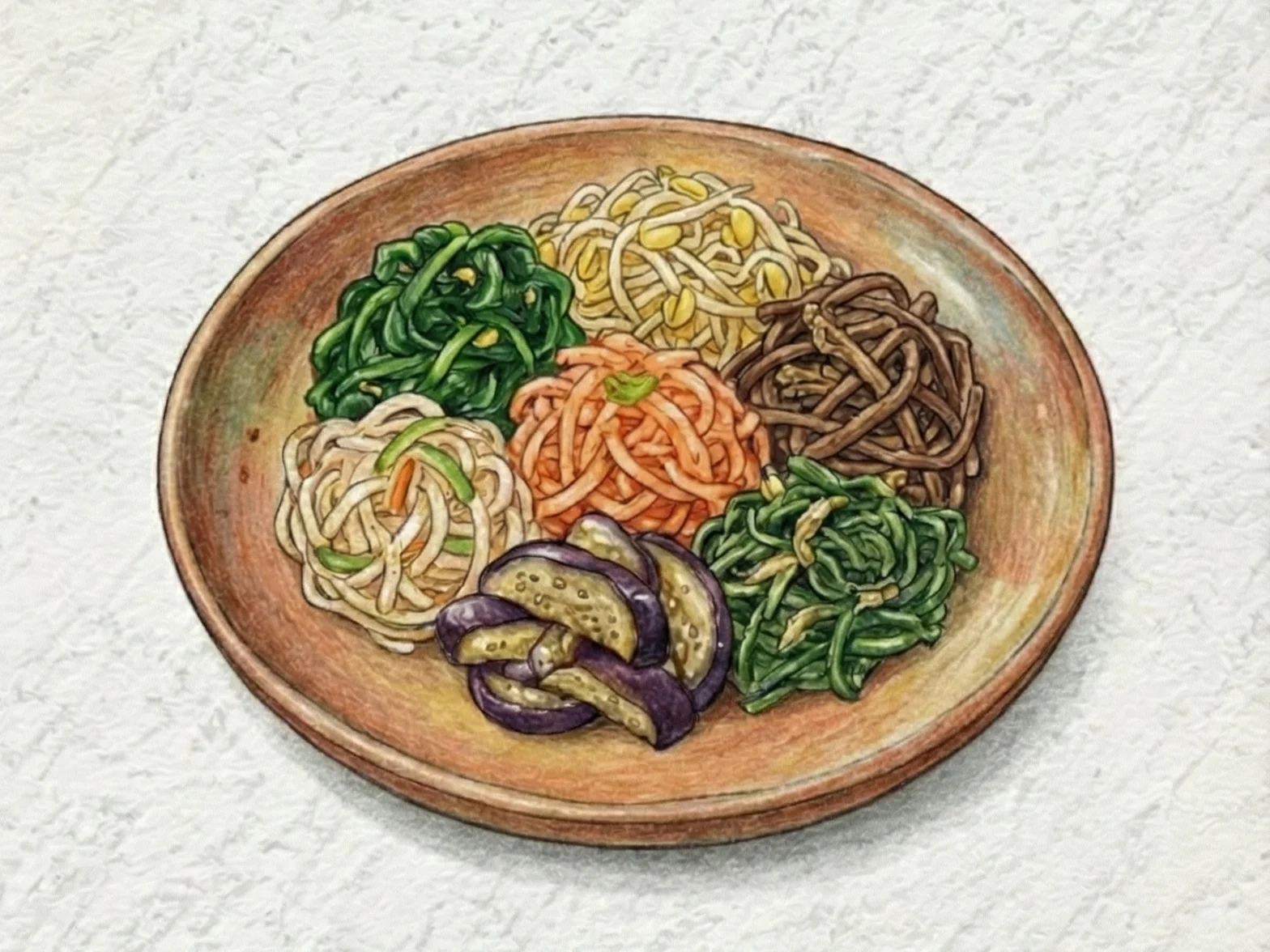
Side dishes (banchan) are the heart of Korean dining culture. A typical meal features multiple small plates - seasoned vegetables (namul), braised dishes (jorim), pickled items, and salted seafood. Classics like spinach namul, bean sprout salad, and stir-fried anchovies can be prepared in advance and enjoyed over several days.
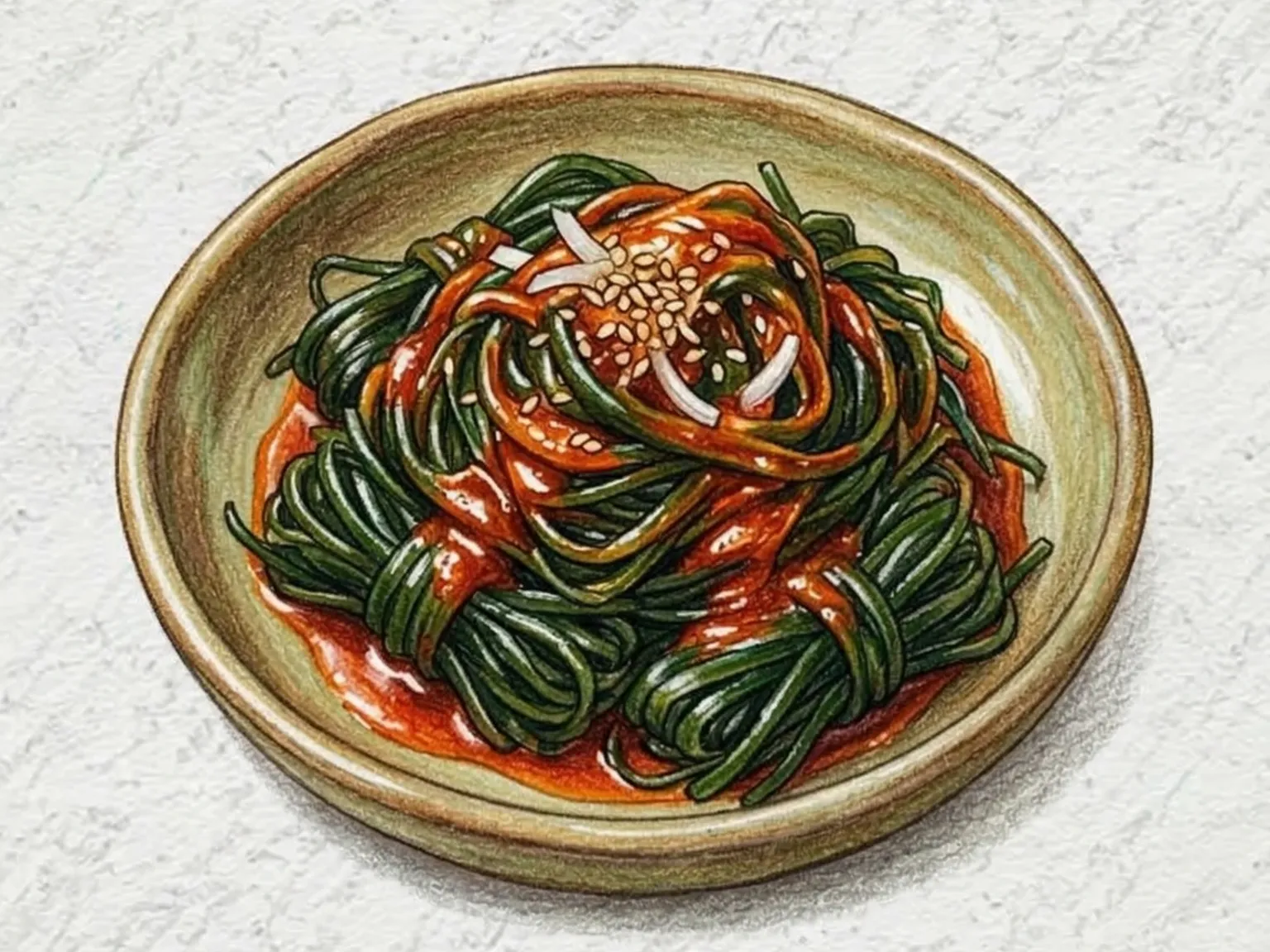
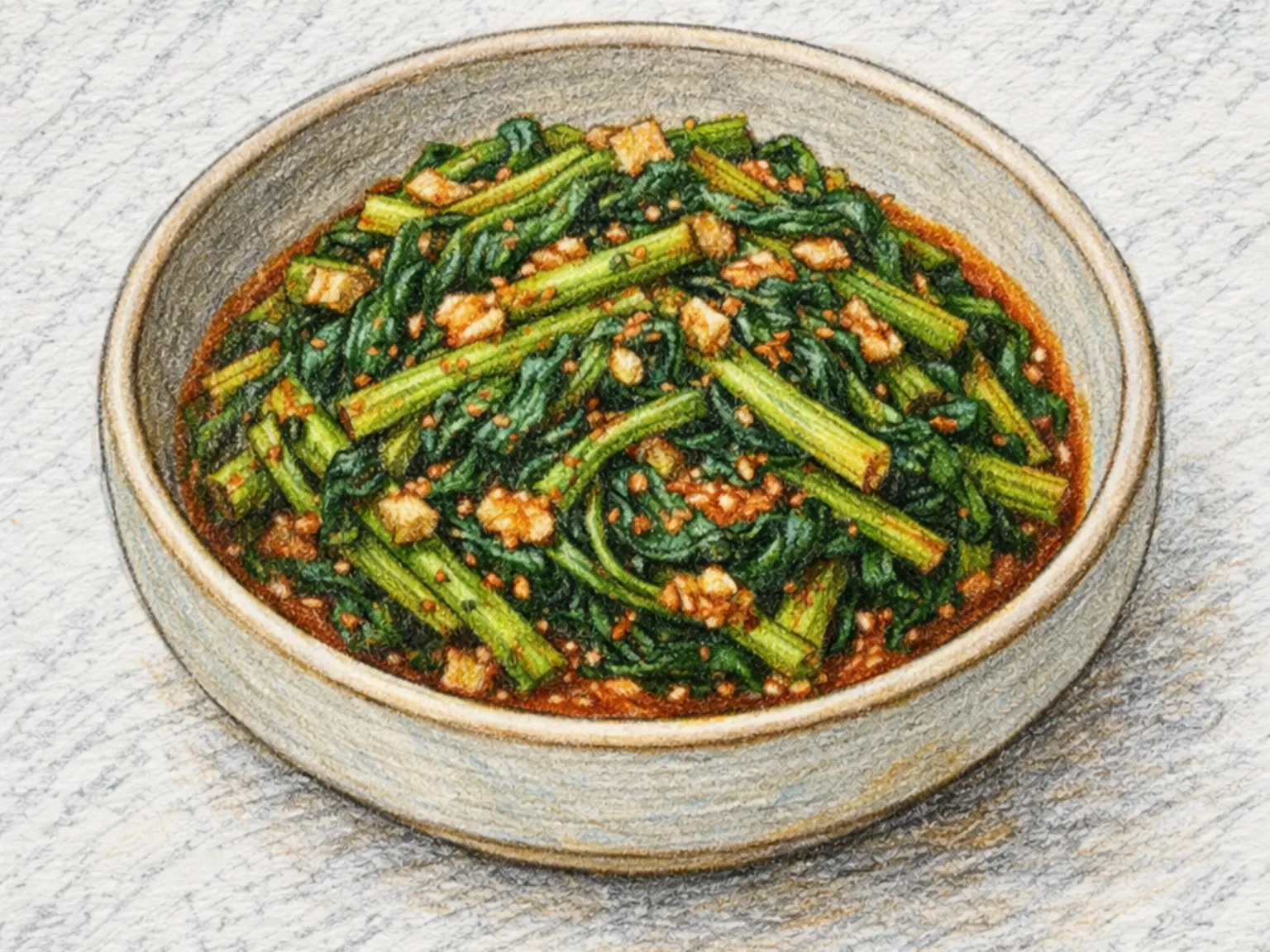
Korean Shepherd's Purse Kimchi
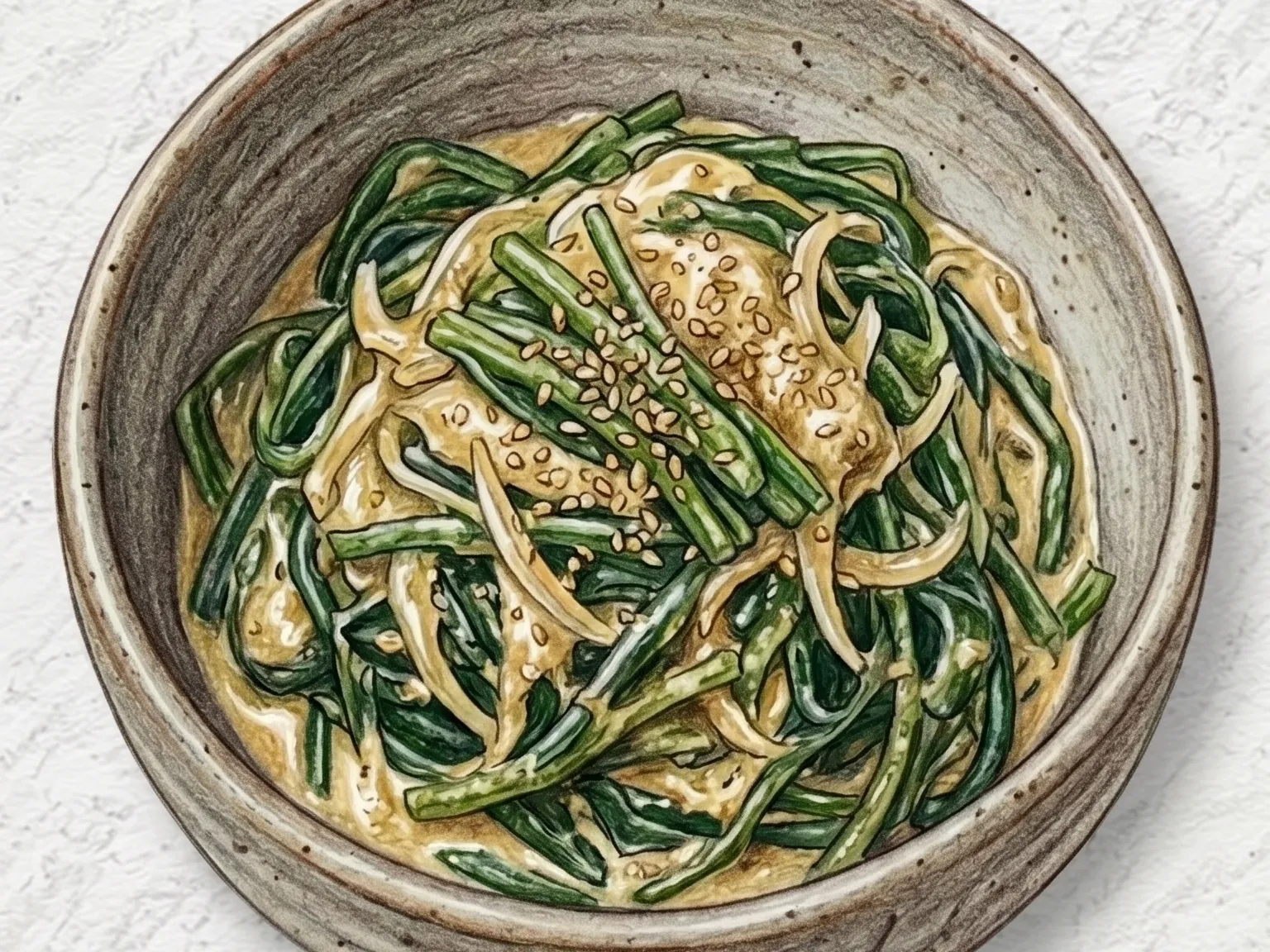
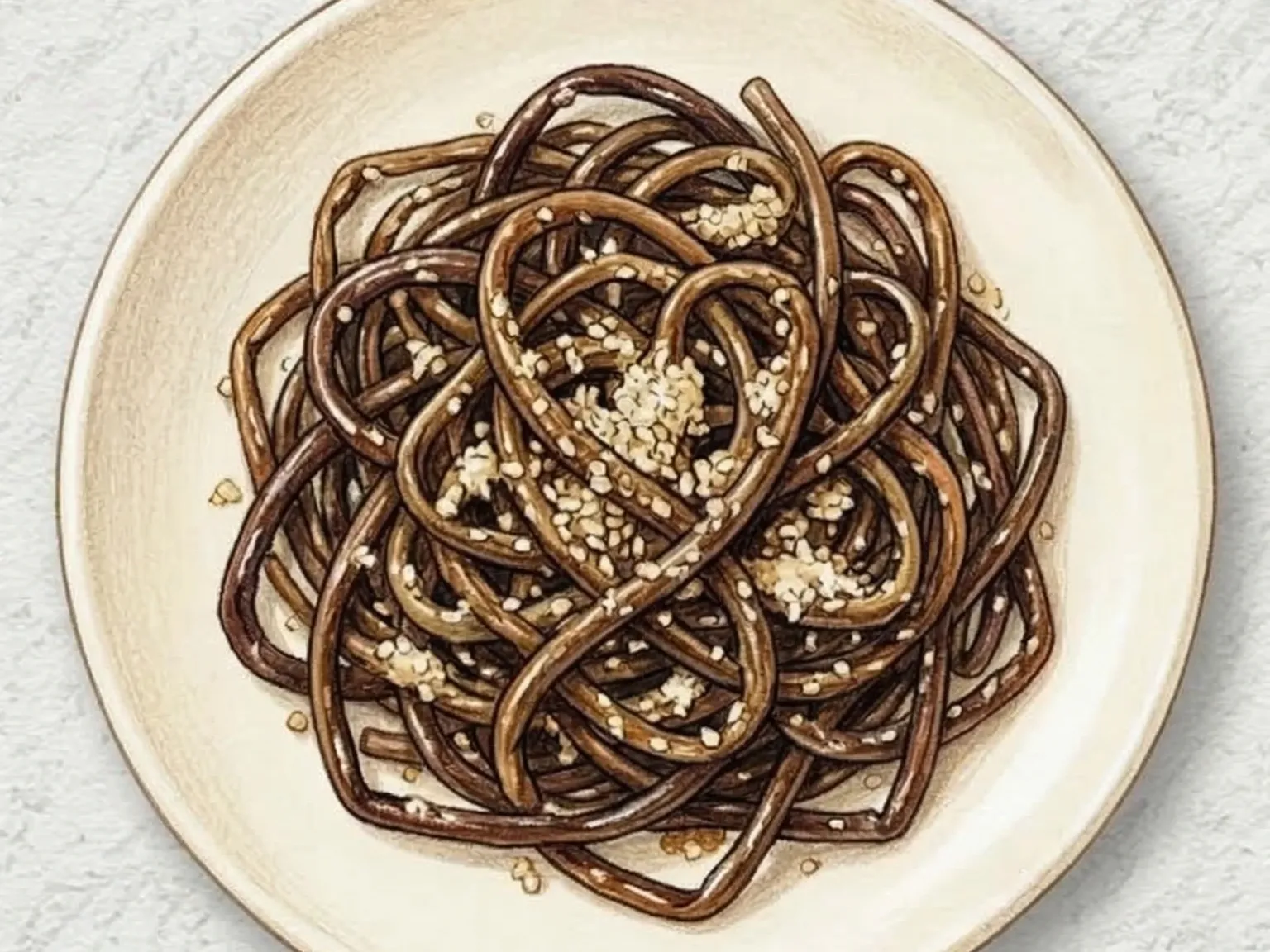
Naengi kimchi is a seasonal Korean side dish where shepherd's purse, an early-spring wild herb with a distinctive earthy fragrance, is blanched for just twenty seconds in boiling salted water. This brief blanching is the defining technique - long enough to strip away the raw bitterness and any soil odor, yet short enough to preserve the herb's own clean, spring-like aroma. The cooled and thoroughly squeezed greens are then dressed in a paste of gochugaru, anchovy fish sauce, minced garlic, and sweet rice paste, which provides enough body and viscosity to coat each slender stem evenly. The fish sauce's fermented depth meets the herb's green, earthy character, producing a layered flavor that neither ingredient achieves on its own. Sesame seeds scattered on top add a quiet toasted crunch. At least two hours of refrigeration allows the seasoning to settle and deepen before the kimchi is at its best.
Korean Braised Shiitake Mushrooms
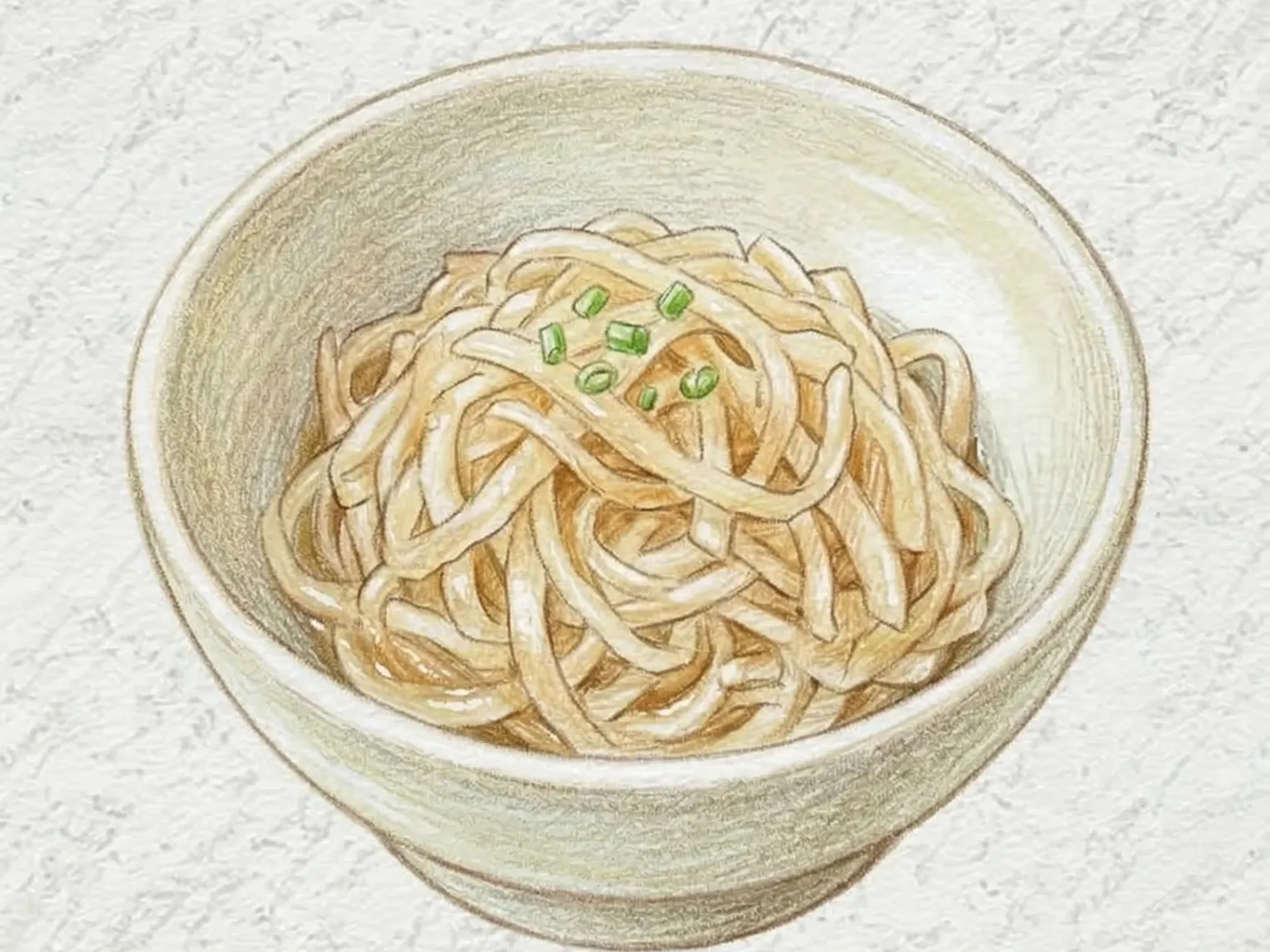
Pyogo-beoseot-jorim is a Korean side dish of sliced shiitake mushrooms braised in a savory soy-based sauce. The preparation begins by wiping the mushrooms with a damp towel, removing the stems, and slicing the caps thickly so they retain a chewy texture. The sliced mushrooms are added to a boiling mixture of water, soy sauce, oligosaccharide syrup, and minced garlic. Simmering the mixture over medium-low heat for about eight minutes allows the mushrooms to absorb the salty-sweet liquid. As the sauce reduces, the oligosaccharide syrup caramelizes, coating the mushrooms with a glossy sheen. The heat is turned off, and a splash of sesame oil and toasted sesame seeds are tossed in for a nutty finish. Using rehydrated dried shiitake mushrooms can yield a deeper umami profile.
Korean Stir-fried Seaweed Stems
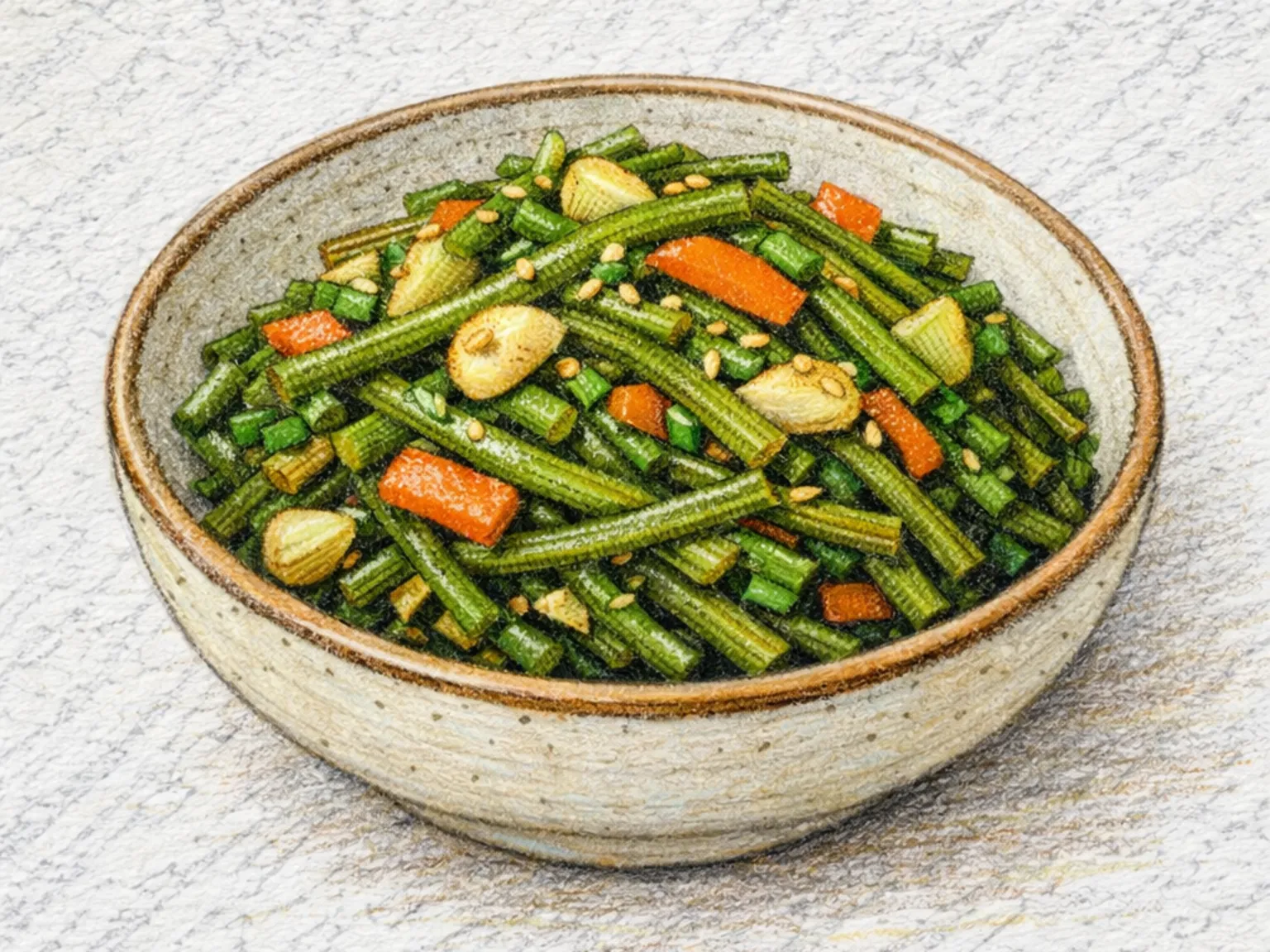
Miyeok-julgi-bokkeum is stir-fried seaweed stems - specifically the thick midrib portions of salted miyeok (wakame) - offering a textural experience entirely different from miyeok-muchim (seaweed salad) or miyeok-guk (seaweed soup). While seaweed leaves are soft and slippery, the stems are thick and resilient, producing a distinctive crunchy pop with each bite. Salt levels vary by brand, so soaking in cold water for ten minutes is the baseline desalting step, but tasting before cooking and rinsing again if needed is essential. Julienned onion and carrot stir-fried alongside break the monotony of seaweed alone, adding sweetness and color. Garlic sauteed in oil first establishes an aromatic foundation. A finishing drizzle of sesame oil and sesame seeds bridges the oceanic seaweed flavor with a toasty nuttiness. The extremely low calorie count makes this banchan a staple in diet-conscious Korean meal plans.
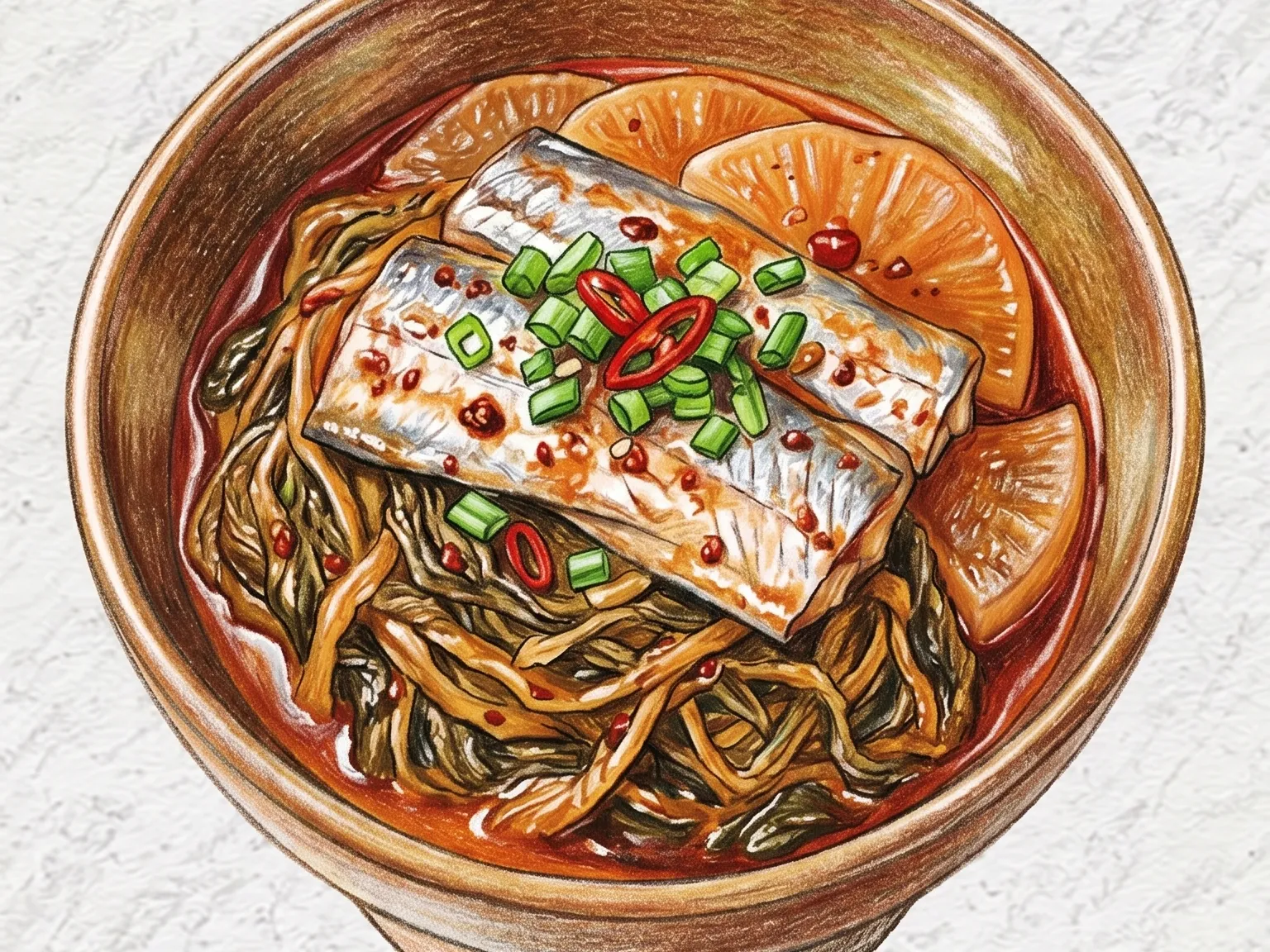
Samchi Jjim (Korean Steamed Spanish Mackerel)
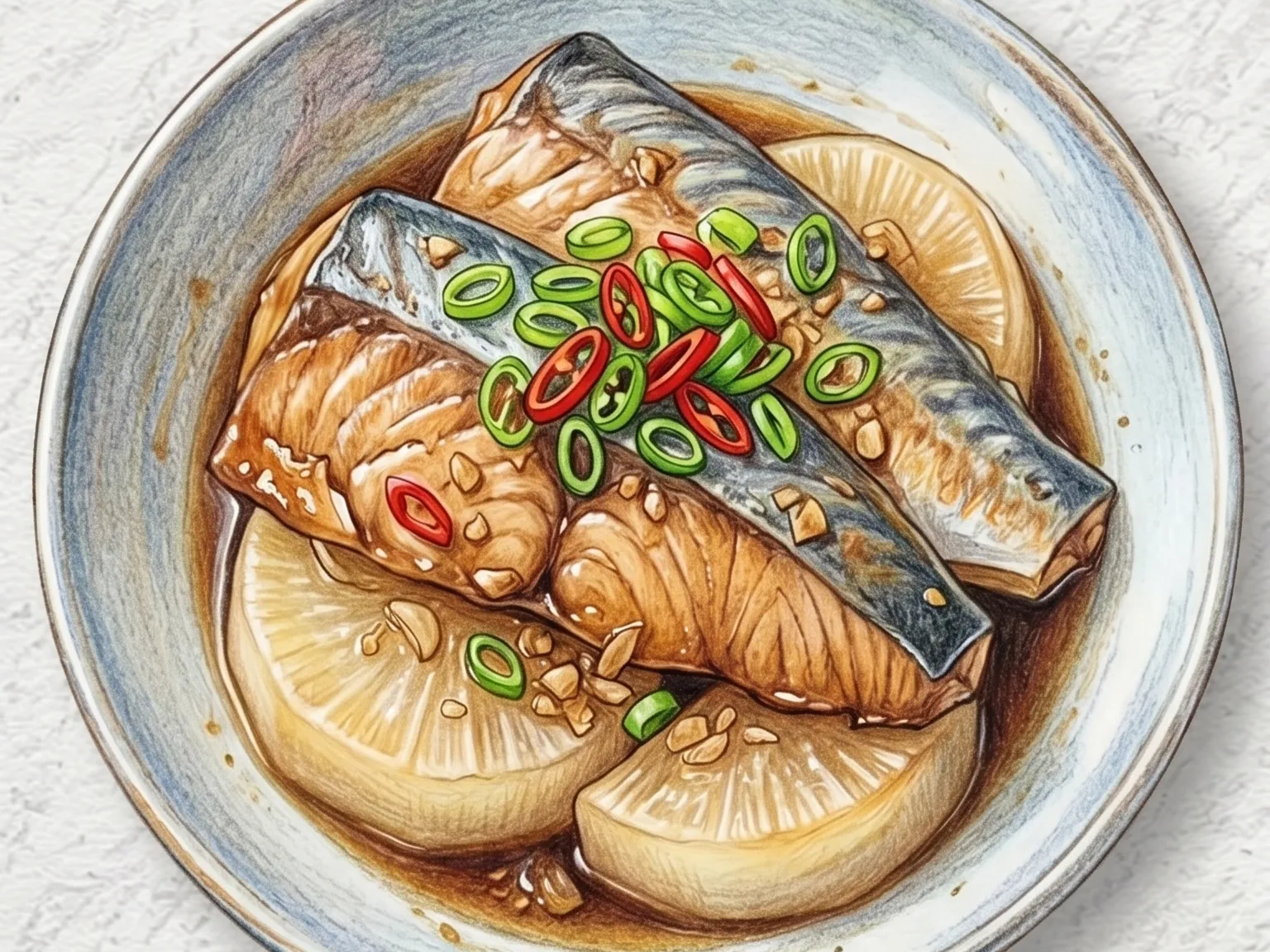
Samchi jjim is a Korean steamed-braised Spanish mackerel dish cooked over radish slices with soy sauce, garlic, and cooking wine. The radish cushions the fish from direct heat while releasing a clean sweetness into the braising liquid, and soy sauce seasons the delicate flesh evenly. Because the mackerel is soft and flaky, it is never flipped; instead the sauce is spooned over it repeatedly. Green onion and fresh chili are added at the end for a pop of color and gentle heat. Paired with rice and a ladle of the reduced sauce, it highlights the clean flavor of the fish alongside soy-based umami.
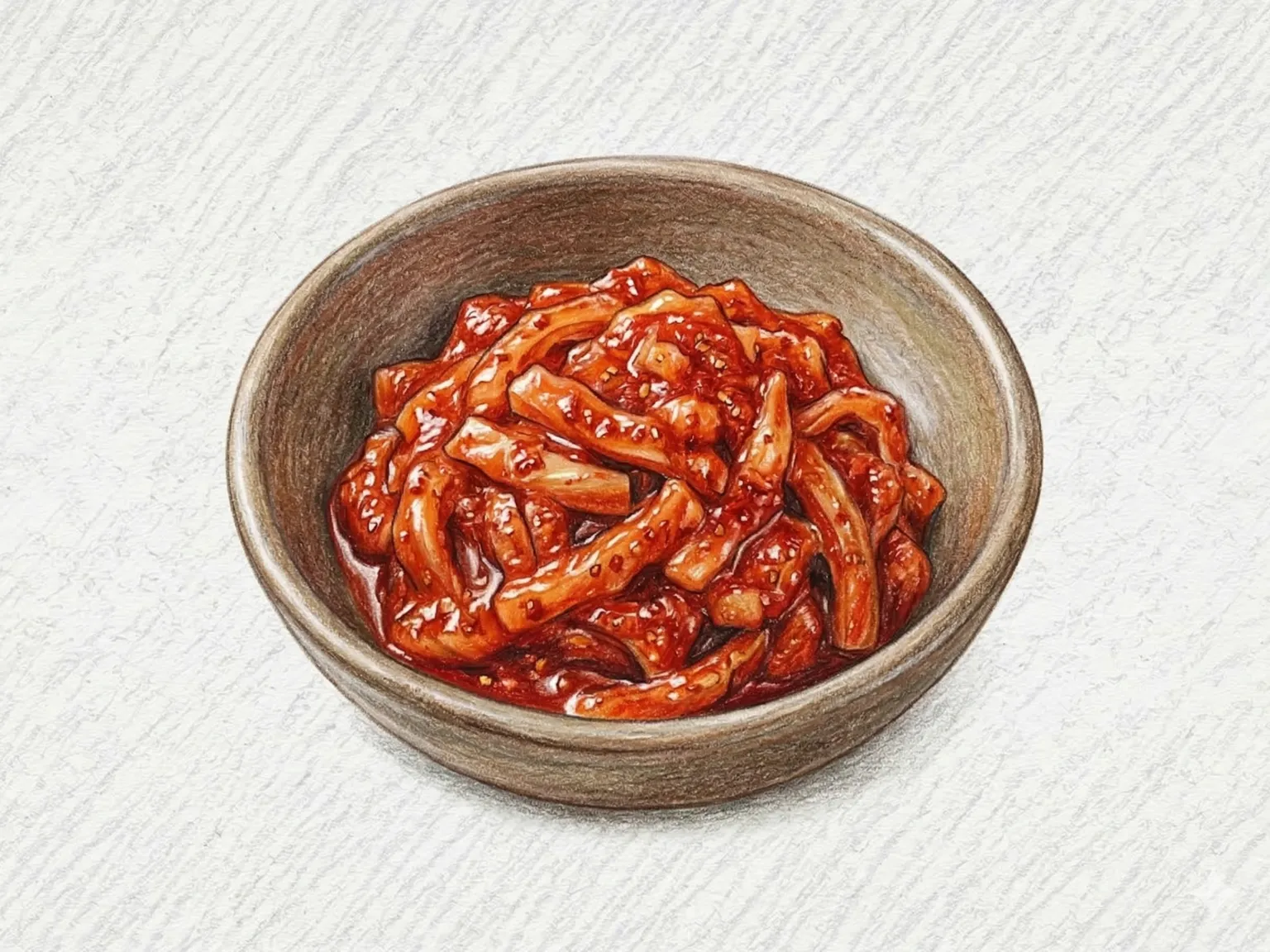
Korean Spicy Salted Octopus Jeotgal
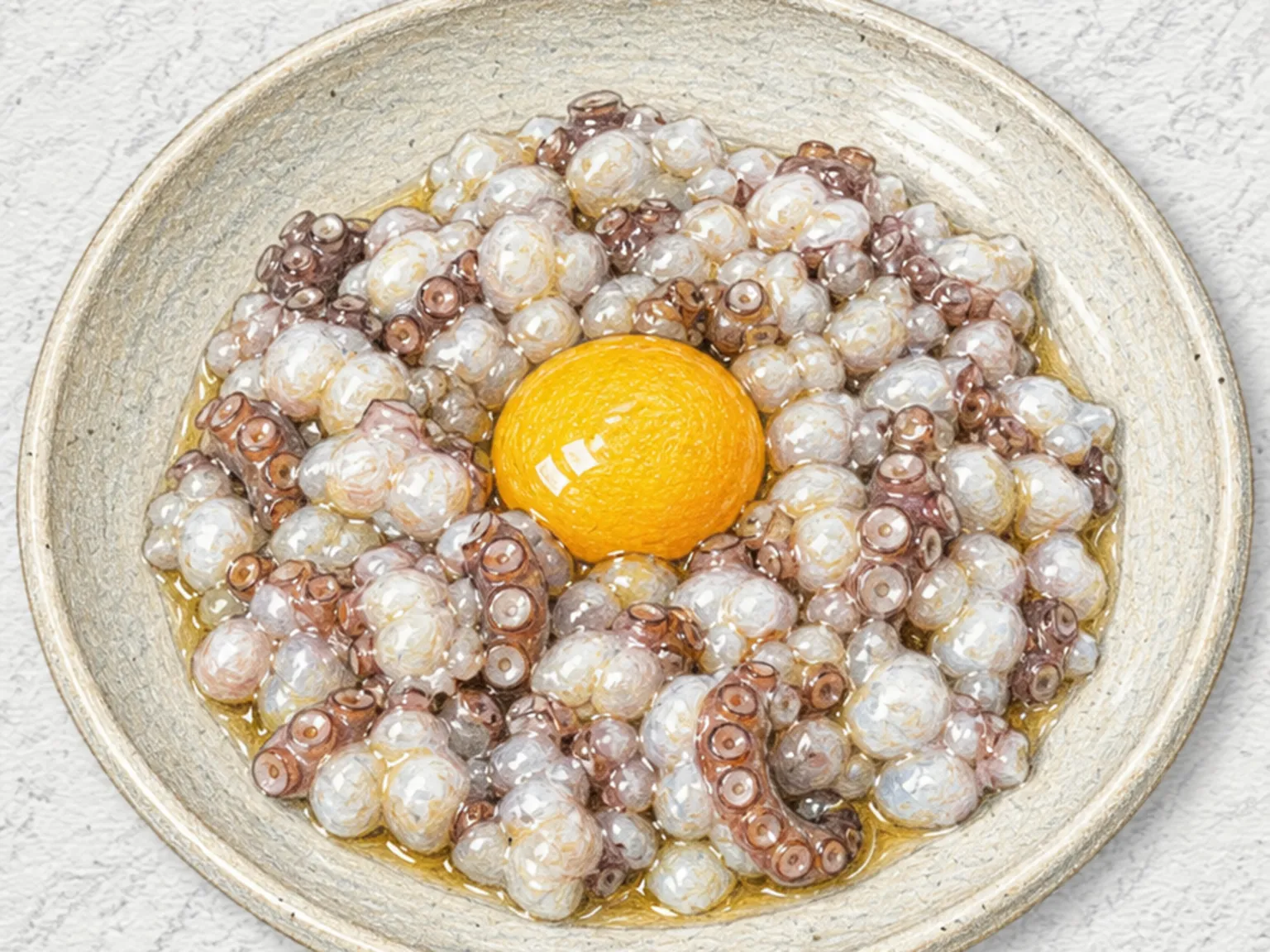
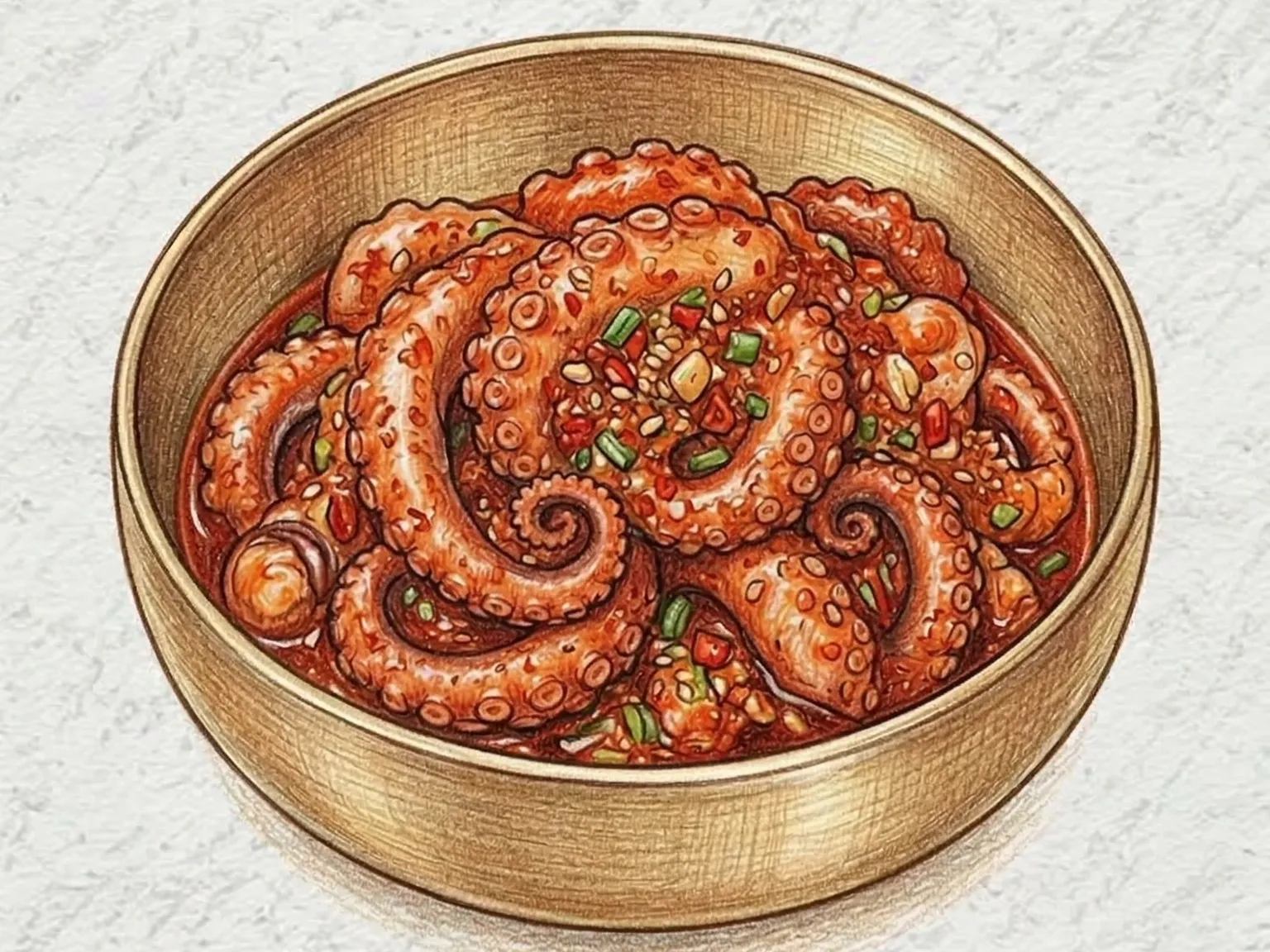
Nakji jeotgal is a Korean fermented octopus side dish made by packing cleaned octopus in coarse salt for at least forty minutes to draw out moisture and firm the flesh, then coating it thoroughly in a paste of gochugaru, minced garlic, minced ginger, anchovy fish sauce, and plum syrup before cold-aging in the refrigerator. The initial salt cure tightens the octopus's already springy muscle fibers, intensifying the chew, and the gochugaru paste forms a dense crimson coating that forces spicy, salty heat into every layer of flesh as the dish sits. Anchovy fish sauce builds the umami foundation while plum syrup counteracts any lingering marine smell and introduces a subtle fruit sweetness that rounds out the salt and chili. Ginger leaves a sharp, clean note at the back of the palate that keeps the overall flavor from becoming heavy. After two to three days of refrigeration, a slow fermentation sets in and the separate components fuse into a cohesive, deeply savory whole. Served over warm rice, each piece of octopus delivers a firm, elastic chew followed by a concentrated rush of ocean flavor, and a drop of sesame oil stirred in at serving adds a toasted, nutty finish.
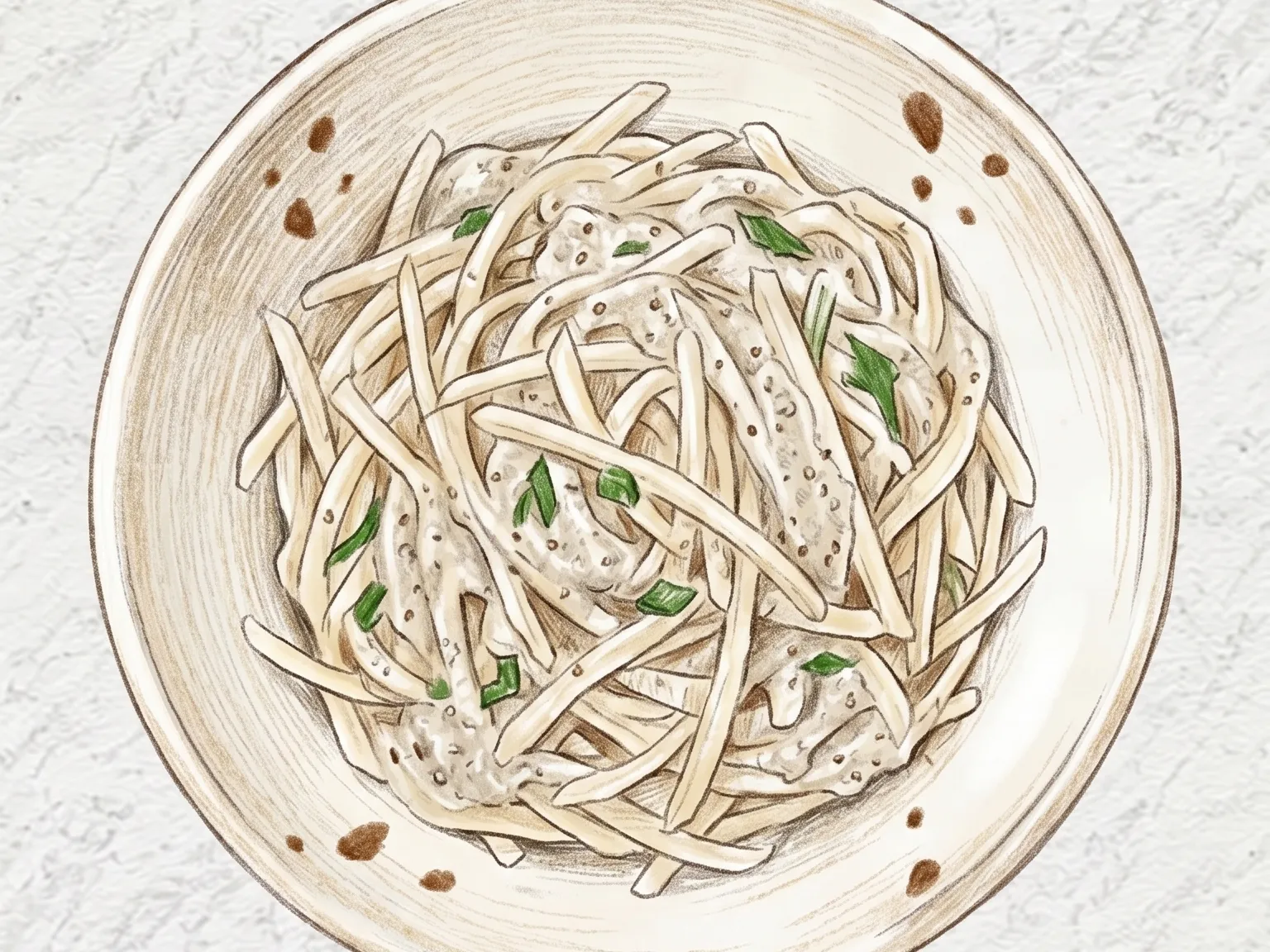
Saesongi Beoseot Muchim
Saesongi beoseot muchim uses 250 g of king oyster mushrooms torn along the grain, steamed, and dressed with soy sauce, vinegar, gochugaru, garlic, and sugar. Tear the mushrooms into even strips about 1 cm wide and spread them in the steamer without overlapping. Cover and steam over high heat for 6 minutes. Remove the strips and let them cool for 2 to 3 minutes, then use a clean kitchen towel or the palm of your hand to press out excess water gently. The goal is to remove the moisture that could dilute the dressing without squeezing the mushrooms until dry. Combine 1 tablespoon soy sauce, 1 teaspoon vinegar, 1 teaspoon gochugaru, 0.5 teaspoon minced garlic, and 0.5 teaspoon sugar, stirring until the sugar dissolves. Add the mushrooms and 10 g thinly sliced green onion, then toss by hand or with tongs so the dressing reaches between the separated fibers. Drizzle with 1 teaspoon sesame oil, mix lightly, and finish with 0.5 tablespoon sesame seeds. The method gives separate controls for strip width, steaming time, cooling, and pressure during draining before the measured dressing is added.
Korean Stir-Fried Seaweed Stems with Perilla
Deulkkae miyeokjulgi-bokkeum stir-fries salted seaweed stems with perilla oil and ground perilla seeds, diverging from the standard sesame-and-soy version by foregrounding the earthy nuttiness of perilla. Desalting the stems in cold water for at least fifteen minutes is the essential first step - too brief and the dish is unpalatably salty, too long and the oceanic character washes away entirely. Garlic is sauteed in perilla oil to build an aromatic foundation, then the drained stems join with soup soy sauce and a splash of water for three minutes of stir-frying. Ground perilla seeds go in at the end, where they bind with the residual moisture and coat each strand in a pale, creamy film. Julienned onion added alongside contributes sweetness that balances the seaweed's brininess. The perilla powder's starch partially gelatinizes on contact with heat, thickening the sauce - but overcooking past this point turns the coating chalky, so timing the final addition is critical. Sesame seeds scattered off heat complete the dish.
Korean Braised Spanish Mackerel with Radish
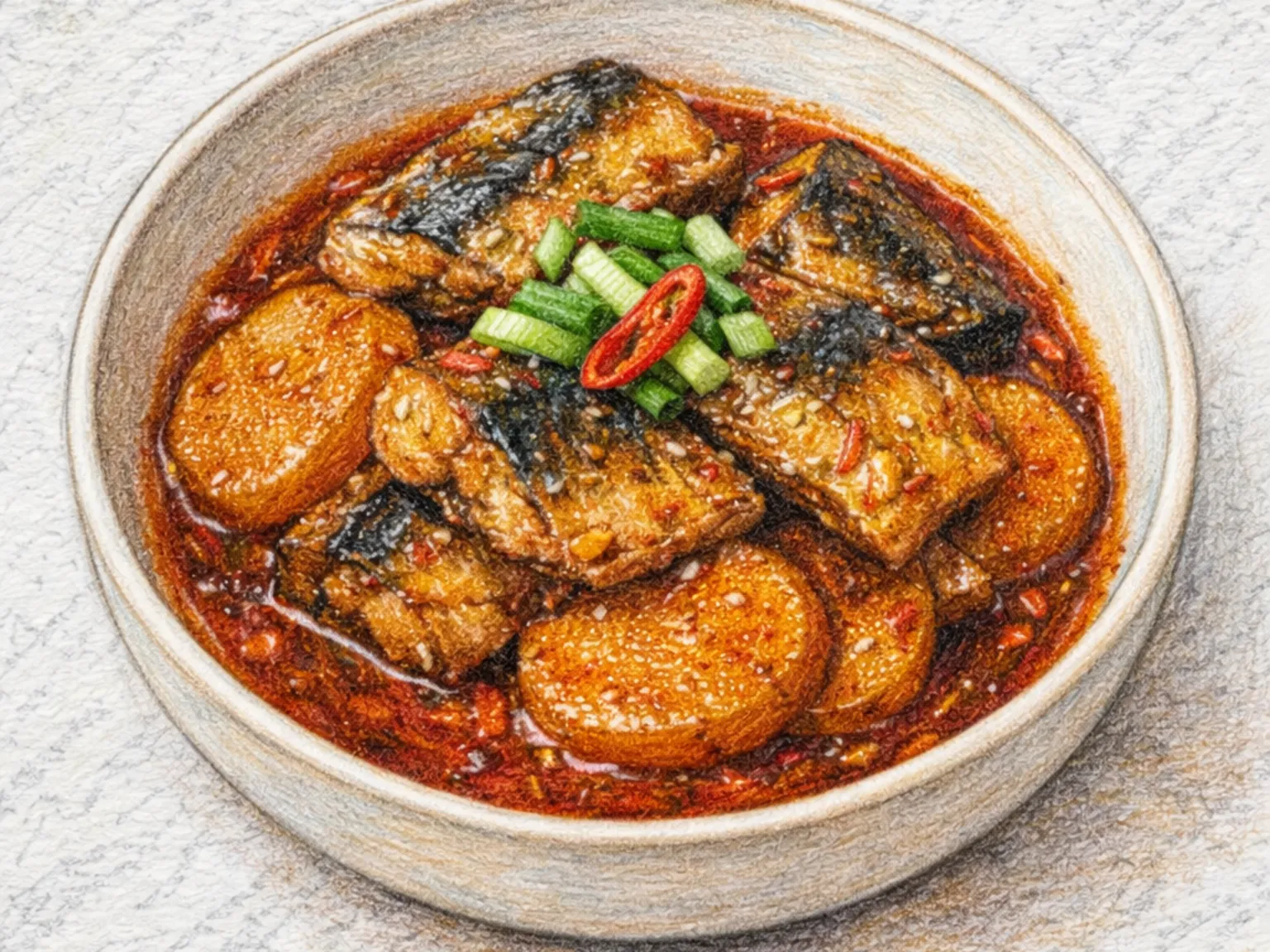
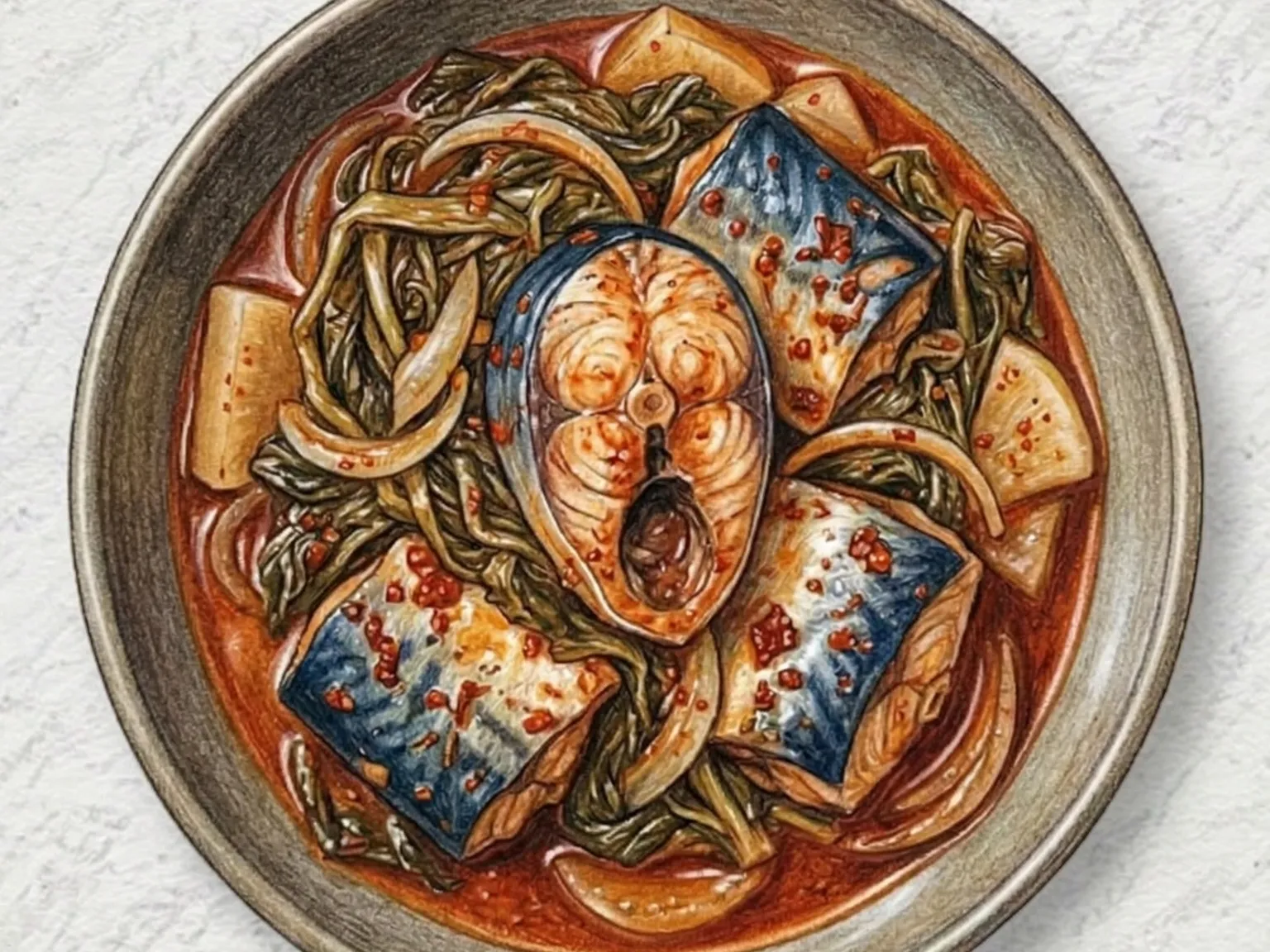
Samchi mu-jorim layers sliced Korean radish on the bottom of a pot, topped with Spanish mackerel steaks and onion, then braised in a sauce of gochujang, soy sauce, gochugaru, and garlic. The radish prevents the fish from sticking, absorbs the braising liquid, and turns translucent-soft as it cooks. Rather than flipping the fish, the sauce is spooned over the top repeatedly so the flesh stays intact. After about fifteen minutes of simmering on medium heat, the liquid reduces to a concentrated, mildly spicy broth with the radish's subtle sweetness woven through it.
Korean Soy Pickled Cucumber
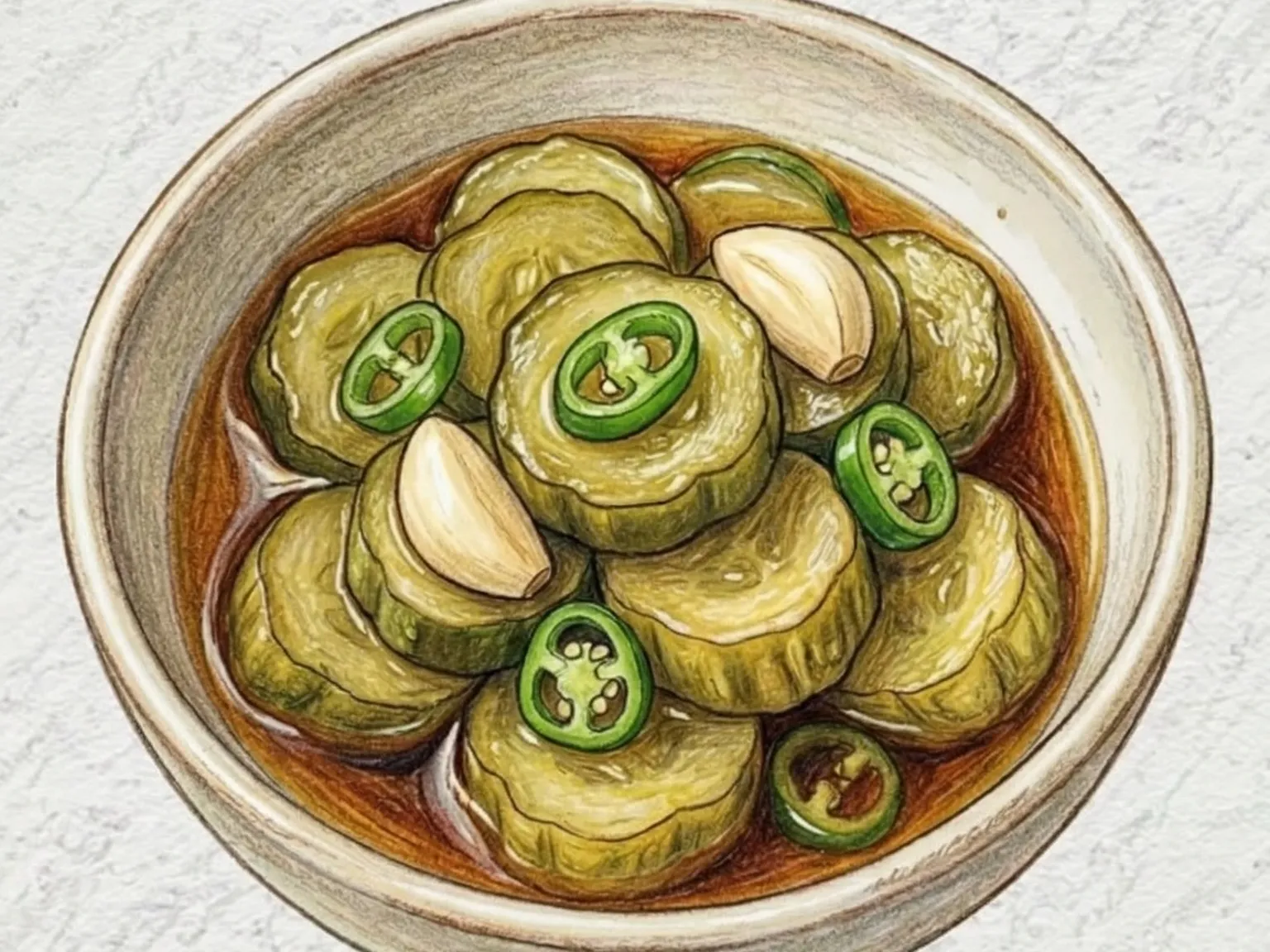
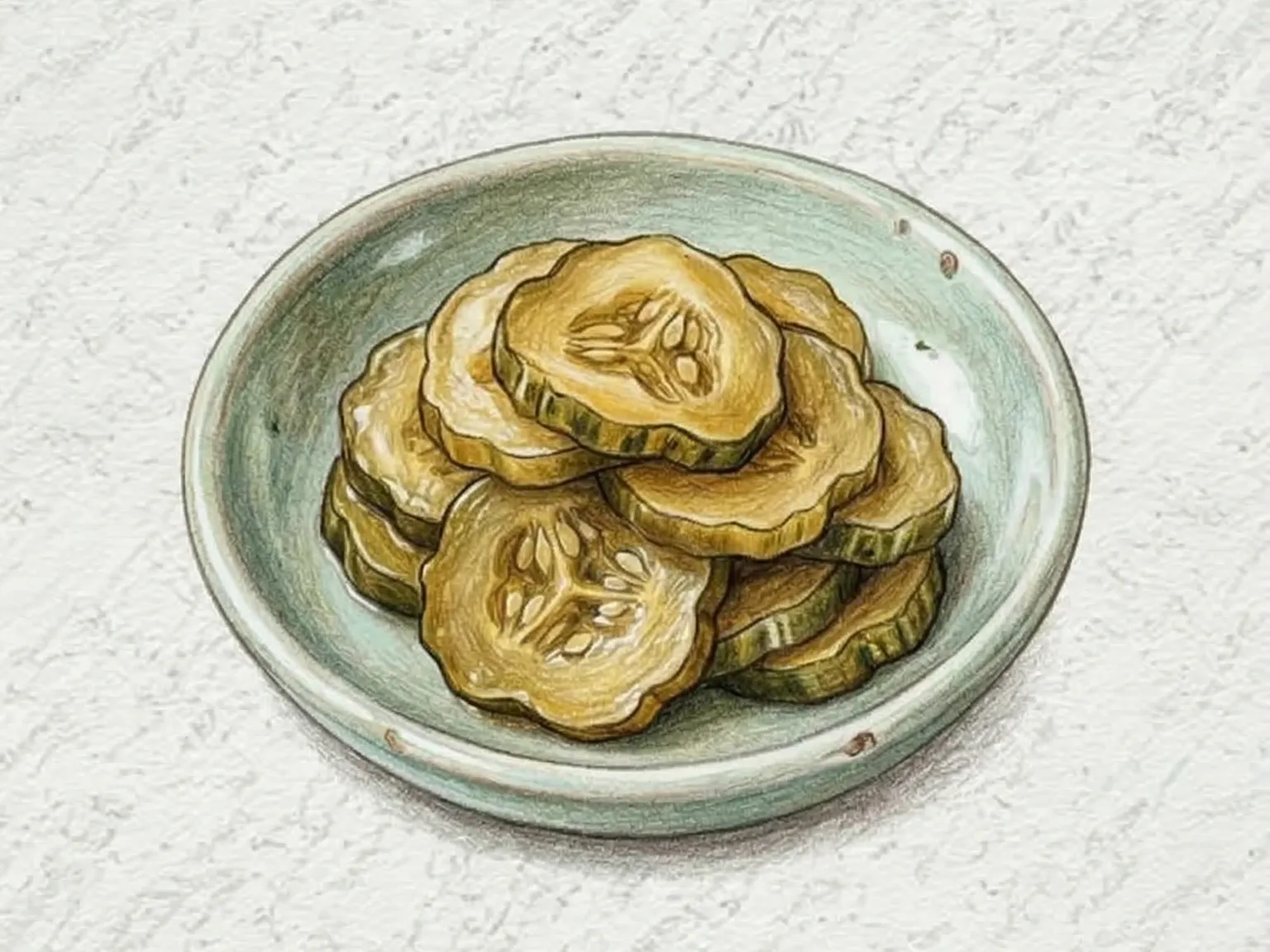
Oi jangajji is a Korean soy-pickled cucumber made by slicing cucumbers into one-centimeter rounds, lightly salting them to draw out surface moisture, then packing them into a sterilized jar with whole garlic cloves and green chilies before pouring over a boiling brine of soy sauce, water, vinegar, and sugar. The hot liquid partially cooks the cucumber surface while leaving the center firmly crisp, and two days of cold fermentation allows the sweet, salty, sour brine to penetrate all the way through. The green chilies leave a faint heat at the back of each bite, and the whole garlic cloves release their aroma gradually into the brine as they soften over the resting period, adding a layer of complexity beyond a straightforward soy pickle. Reboiling the spent brine and pouring it back over the cucumbers once extends the crunch considerably, turning this into a practical side dish that holds up well for more than a week in the refrigerator. It works alongside a bowl of rice, next to a hearty soup, or as a sharp palate-waker on a hot summer day when appetite runs low.
Saeujeot Muchim
Saeujeot muchim seasons 70 g of salted shrimp with gochugaru, garlic, green onion, sugar, sesame oil, and sesame seeds. Place the saeujeot in a bowl and, if excess brine is present, press lightly with a spoon to keep the mixture from becoming watery. Snip large shrimp pieces into lengths of about 1 cm so the pieces are more even. Add 1 teaspoon gochugaru first and mix for about 30 seconds, using the back of a spoon to break up any dry clumps. Fold in 0.5 teaspoon minced garlic and 10 g chopped green onion without crushing the shrimp. Add 0.25 teaspoon sugar and let the mixture stand for 1 minute. No additional salt appears in the ingredient list or is needed in the method. Drizzle 0.5 teaspoon sesame oil around the edge of the bowl and fold for about 20 seconds. Stop when the surface looks lightly glossy, then finish with 0.5 tablespoon sesame seeds and transfer the seasoned shrimp to a small serving dish. The order keeps the chili flakes, aromatics, sugar, and oil as distinct additions, while the first brine adjustment controls the final consistency.
Korean Seaweed Stem & Shrimp Stir-fry
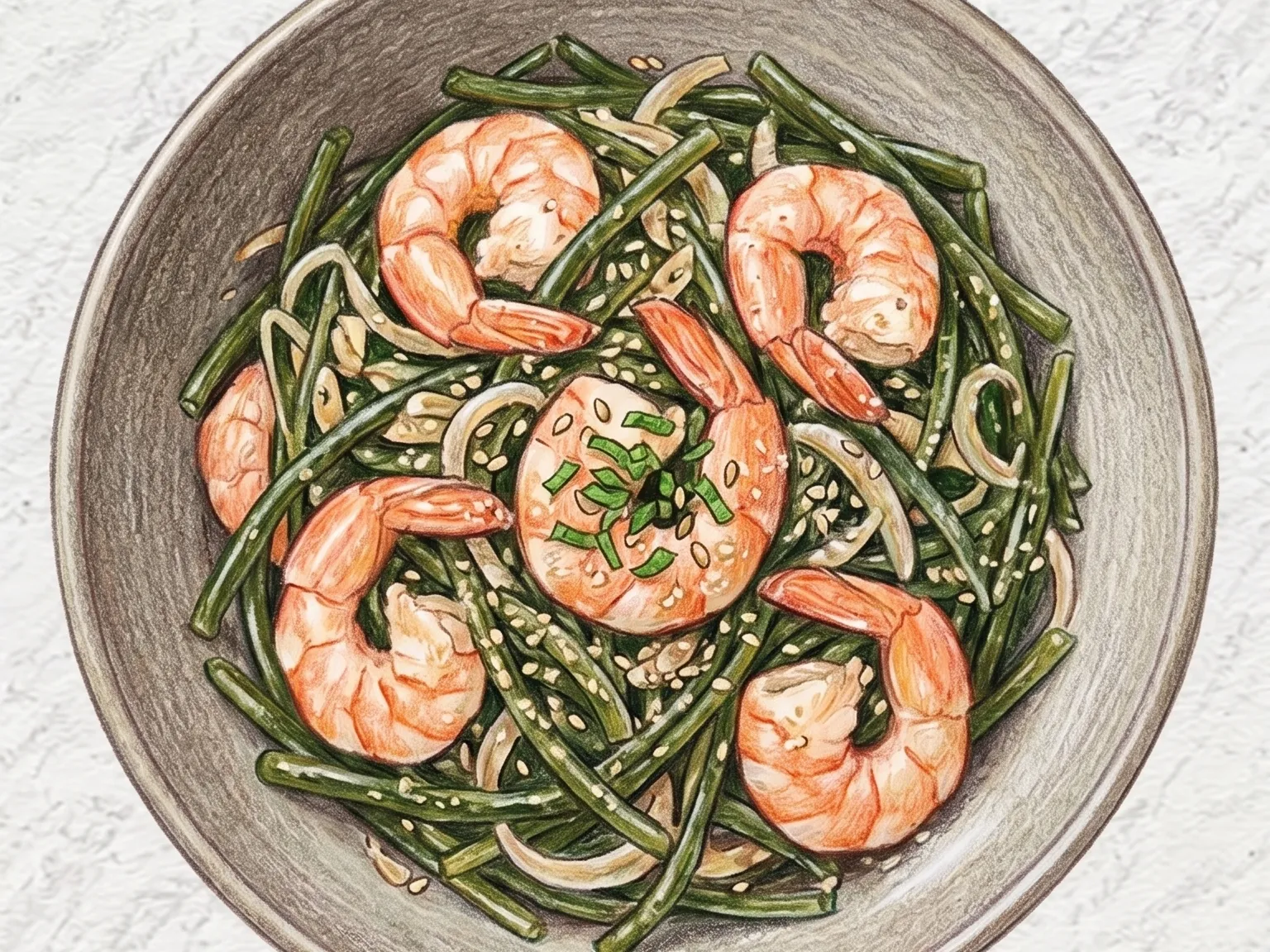
Miyeokjulgi-deulkkae-saeu-bokkeum combines desalted seaweed stems and medium shrimp, stir-fried in perilla oil and finished with a generous coating of perilla seed powder. The seaweed stems are soaked in cold water for ten minutes to draw out excess salt, then cut into five-centimeter pieces that retain a distinctive chewy-crunchy bite throughout cooking - a textural contrast that keeps each forkful interesting against the springy shrimp. Onion and garlic are sauteed first to establish a sweet aromatic base, the shrimp are added until they turn pink, and then the seaweed stems join the pan for a quick toss over high heat. Soup soy sauce provides the only seasoning, keeping the flavor profile clean and allowing the two main ingredients to come forward. Perilla powder goes in immediately after the heat is off so its nutty, slightly grassy aroma stays fully intact through serving. The combination of perilla's earthy nuttiness and the seaweed's oceanic minerality gives this simple banchan a layered depth that reads distinctly Korean.
Korean Steamed Tofu with Spinach
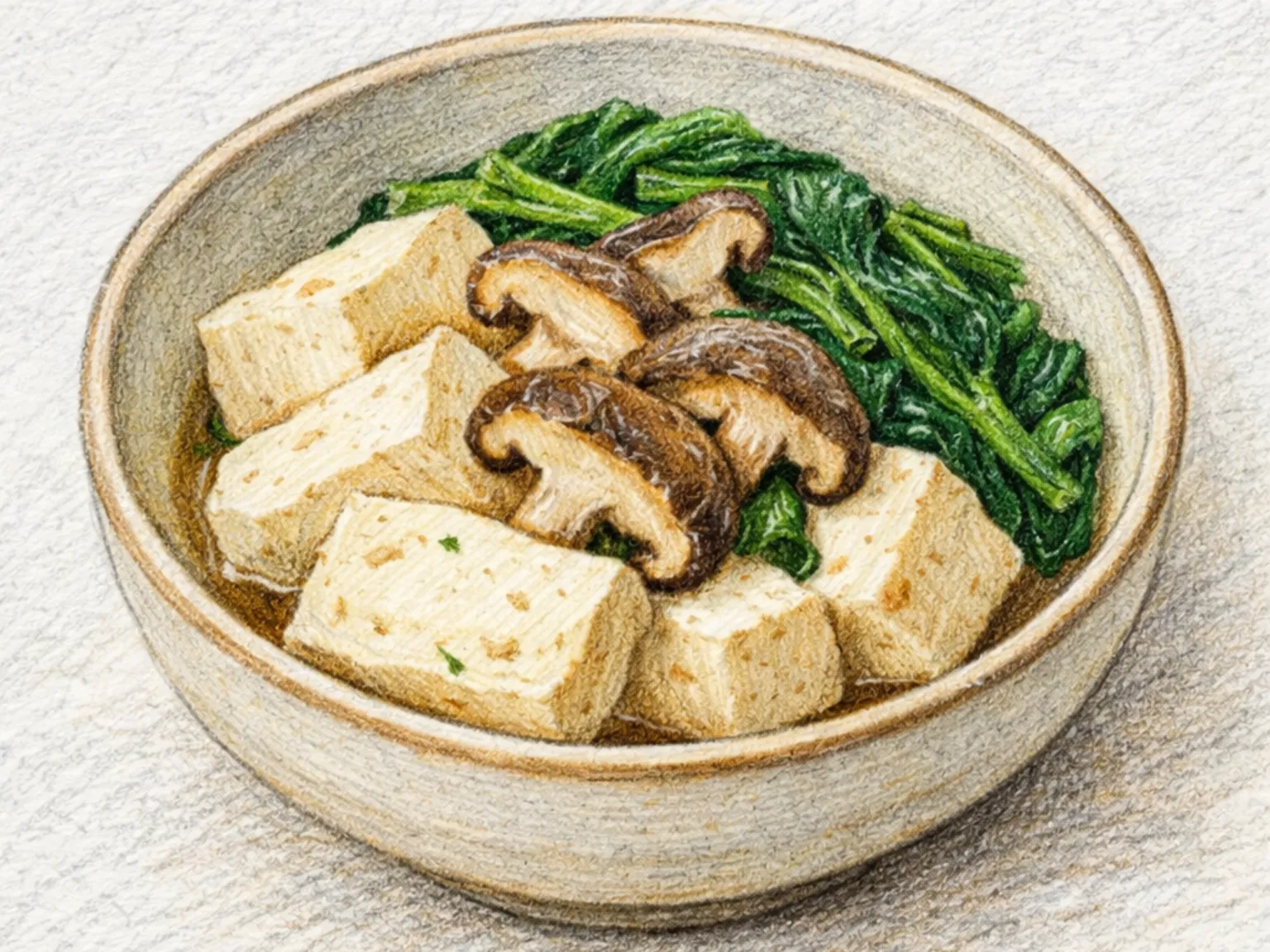
Sigeumchi dubu jjim is a Korean steamed side dish of firm tofu, spinach, and shiitake mushrooms seasoned with soy sauce and soup soy sauce, then covered and cooked over gentle heat until everything is just done. Pressing the tofu firmly between layers of kitchen paper to remove excess moisture is a necessary first step; water left in the tofu dilutes the seasoning and turns the cooking liquid murky. When the spinach and mushrooms are arranged alongside the tofu and the seasoning is spooned over everything before the lid goes on, the steam released by the vegetables cooks the dish evenly without any added water. Shiitake mushrooms bring a concentrated umami that gives unexpected depth to what is otherwise a very simple soy-based seasoning. A drizzle of perilla oil and a scattering of sesame seeds at the end add a distinctly nutty, aromatic finish that lifts the entire dish. Low in calories and rich in plant protein, it fits naturally into a light weeknight dinner as a side dish that is as nourishing as it is unfussy.
Korean Stuffed Cucumber Kimchi
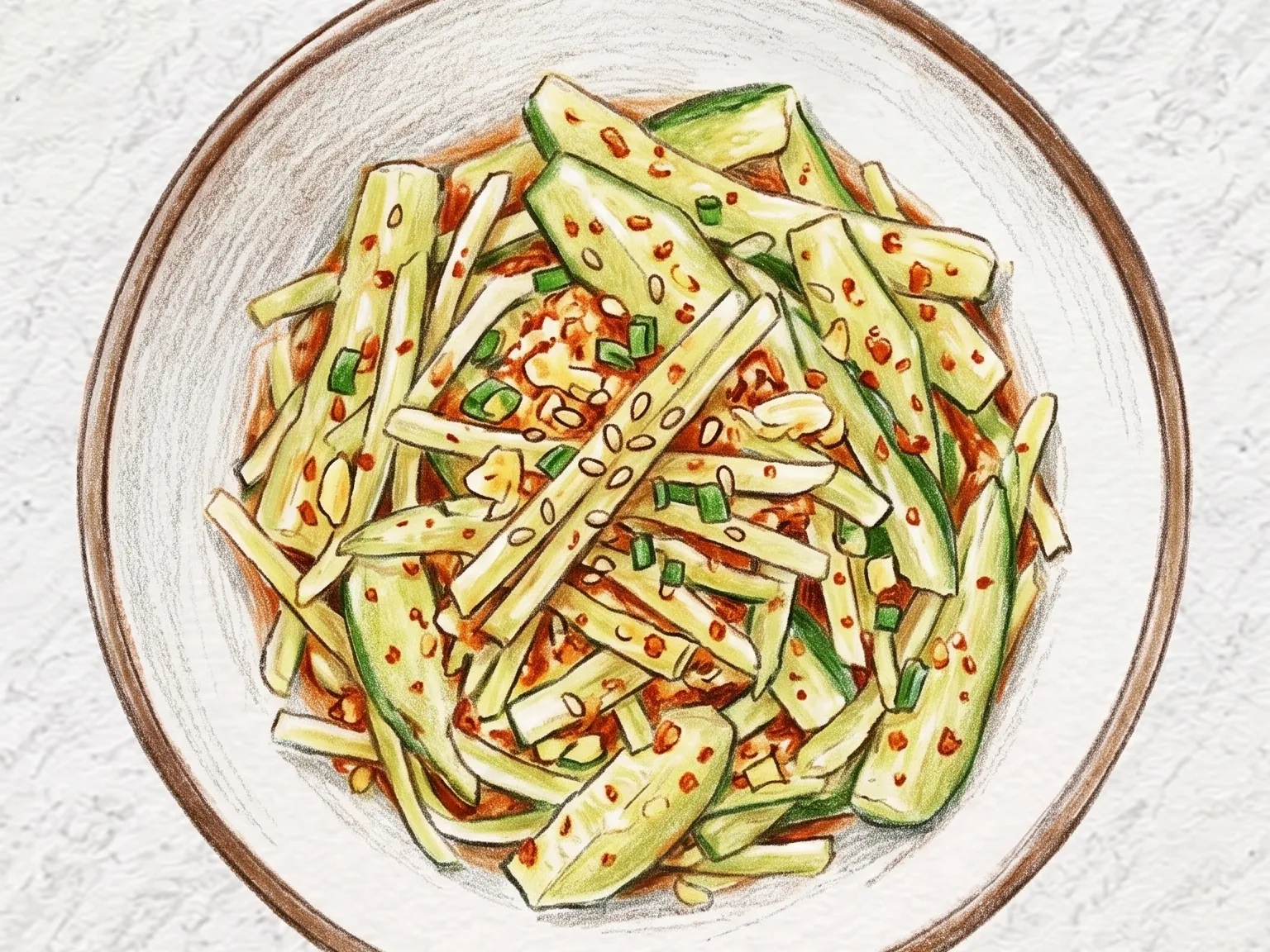
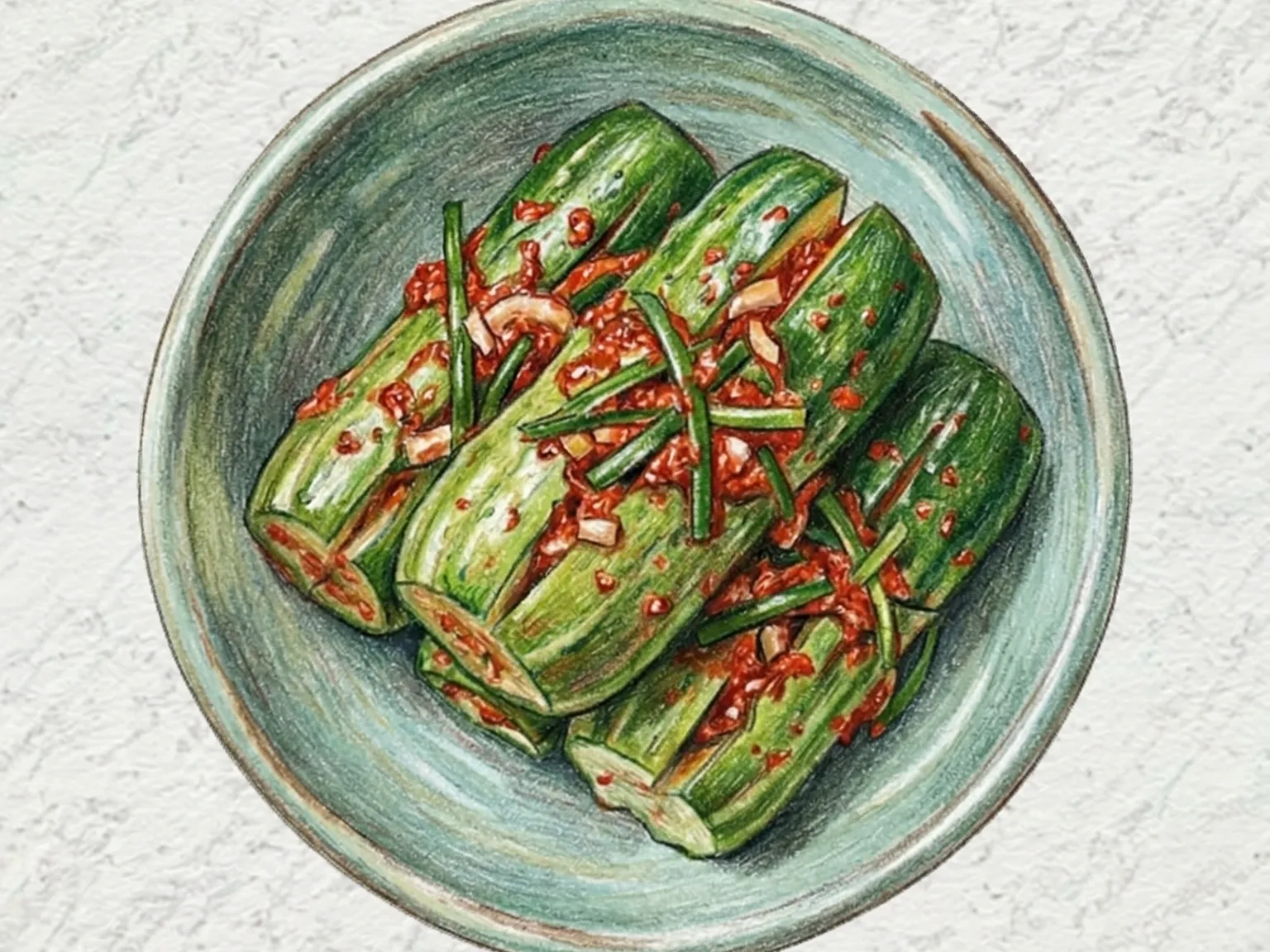
Oi sobagi is a Korean stuffed cucumber kimchi made by salting whole cucumbers, cutting them crosswise to within a centimeter of the base to create four attached wedges, and packing the cavity with a filling of garlic chives, onion, gochugaru, anchovy fish sauce, and plum syrup. When bitten, the cucumber's cool moisture meets the spicy, fragrant stuffing inside, releasing a burst of layered juice, and the firm crunch of the flesh contrasts cleanly with the softer chive filling. Salting for exactly thirty minutes is the critical window -- less time leaves the cucumber too firm to absorb the seasoning properly, while longer breaks down the cell structure and causes the flesh to go limp, which makes the stuffed pieces fall apart when cut. The filling ingredients should be mixed quickly without over-handling, because overworking the chives releases water and dilutes the seasoning. After stuffing, the cucumbers sit at room temperature for four hours to begin fermentation, then move to the refrigerator, where lactic acid development continues slowly overnight. By the second day the flavor is brighter and more complex with a distinct tangy edge. Cutting the portions just before serving, rather than in advance, keeps the flavorful interior juices from running out. Cucumbers of uniform thickness salt most evenly, and if substituting sugar for plum syrup, use a smaller quantity to keep the sweetness in check.
Fermented Soybean Leaf Muchim
Sakhin kongip muchim uses 80 salt-fermented soybean leaves that are boiled, drained, and layered with a soy sauce and anchovy fish sauce seasoning. Soak the leaves in cold water to draw out excessive salt and strong fermented odor, then boil them for 5 minutes. Rinse them in cold water and squeeze thoroughly in a sieve before adding any seasoning. Mix 30 milliliters soy sauce, 30 milliliters anchovy fish sauce, 30 grams Korean chili powder, 15 grams minced garlic, 30 milliliters grain syrup, and 15 milliliters sesame oil. Rather than tossing all the leaves in a bowl, arrange them in stacks of 3 or 4 on a wide plate and spread the sauce between the stacks so it reaches the individual layers. Pack the seasoned leaves neatly in an airtight container, sprinkle with 5 grams sesame seeds, and refrigerate immediately. Removing the water after boiling is necessary to keep the measured sauce from becoming diluted and sliding away from the leaf surfaces.
Korean Stir-fried Pork with Seaweed Stems
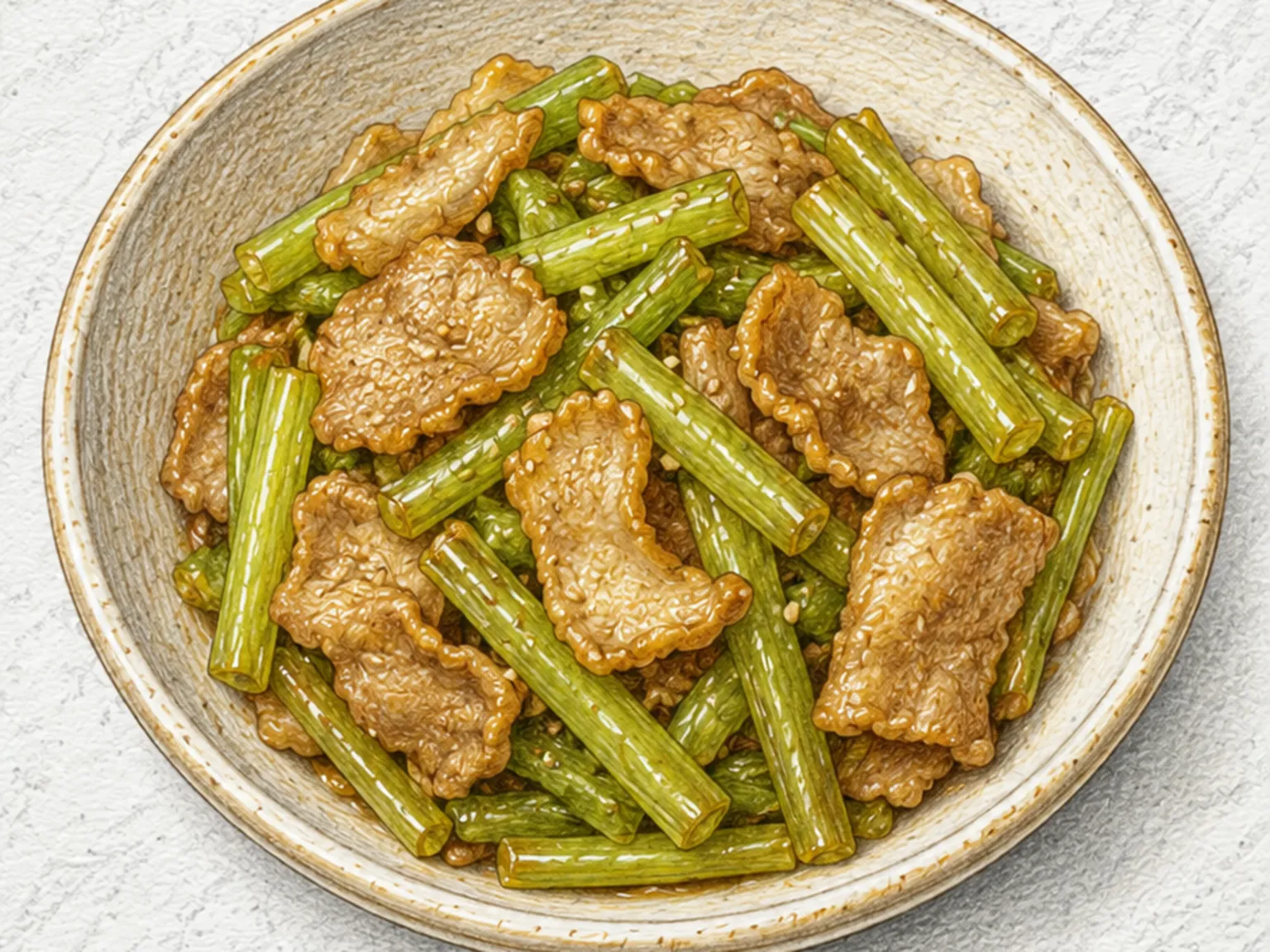
Seaweed stem and pork stir-fry begins by reducing the salt in the stems and tasting them before the remaining soy sauce is committed to the pan. Two hundred twenty grams salted seaweed stems receive a 10-minute soak in cold water. One strand is tasted, and the batch is rinsed again if it remains too salty, then drained and cut into 5 cm lengths. One hundred eighty grams thinly sliced pork shoulder is coated with 0.5 tablespoon soy sauce and 0.5 tablespoon cooking wine for 5 minutes. The slices are spread without overlap in a pan heated thoroughly over medium-high and left undisturbed until some fat renders and the underside develops brown spots. The pork is turned before 1 tablespoon minced garlic and 80 g onion are added over high heat. Once the outer pink color disappears and the onion edges become translucent, the seaweed stems, remaining 1 tablespoon soy sauce, and remaining 0.5 tablespoon cooking wine go in. Two to 3 minutes of brisk tossing retains a firm bite in the stems while finishing the thickest pork piece. After the burner is switched off, the seasoning is checked before any extra soy sauce is considered. One teaspoon sesame oil and 1 teaspoon toasted sesame seeds are folded through at the end. Tasting the soaked stems first makes their remaining salinity part of the seasoning decision instead of assuming every batch needs the same adjustment.
Korean Braised Dried Radish Greens with Doenjang
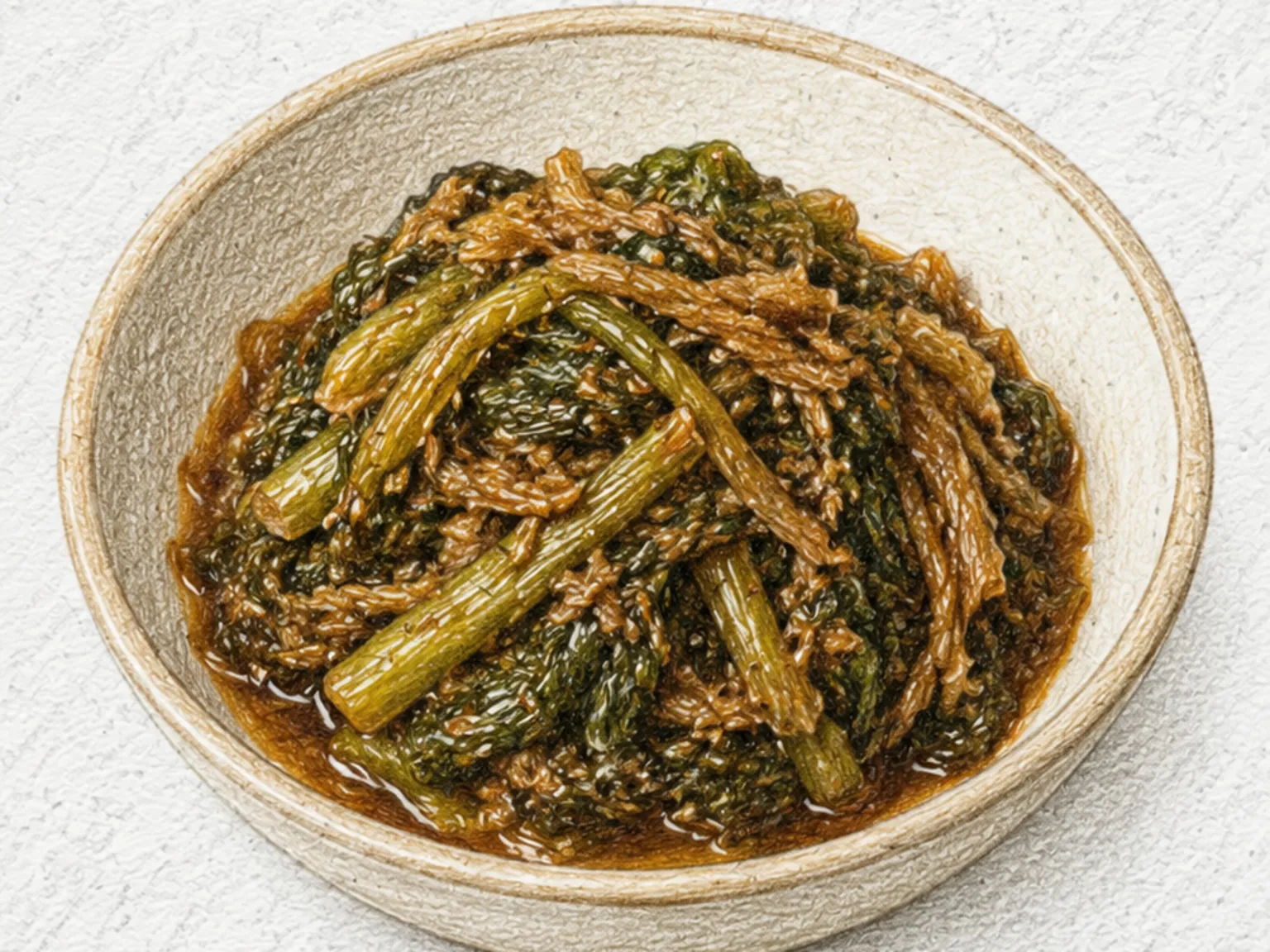
Dried radish greens, once rehydrated and boiled tender, are braised in a doenjang-based seasoning until the liquid reduces to a concentrated glaze. The fermented soybean paste melts into the coarse fibers of the greens, infusing each strand with deep, earthy umami. A splash of anchovy stock is added after the initial stir-fry in perilla oil, and the pan is covered so the greens can absorb the broth slowly over low heat. As the liquid evaporates, the seasoning thickens and clings to every piece, producing a chewy, salty-savory bite that releases its flavors gradually when chewed. Gochugaru contributes a mild, lingering warmth rather than sharp heat, while garlic softens into a mellow sweetness that rounds out the intensity of the doenjang. Patience during the final reduction is essential: only when the braising liquid has nearly disappeared does the dish reach the dense, flavorful consistency that makes it an ideal topping for steamed rice.
Salt-Brined Korean Cucumber Pickles
Oiji is a traditional Korean long-fermented cucumber pickle made by submerging whole cucumbers in a boiled brine of water, coarse salt, sugar, and a touch of vinegar, then weighting them down so they stay fully immersed during at least five days of cold storage. Whole garlic cloves added to the jar release their aroma gradually into the brine. As the days pass, osmotic pressure draws moisture from the cucumbers while salt penetrates inward, producing a uniformly salty, firm pickle that retains its crunch far longer than quick-pickled varieties. Before serving, the oiji is sliced thin and soaked briefly in cold water to temper its saltiness, then dressed with sesame oil and gochugaru as a side dish, or dropped into a chilled broth for a refreshing summer soup.
Samnamul Muchim
Samnamul muchim is made with 220 grams of deer fern that is trimmed, blanched, rinsed, and seasoned with soup soy sauce and perilla oil. Remove tough stems and yellow leaves first, then swish the greens in cold water two or three times to release soil and debris. Blanch them in boiling water for 1 minute, transfer them directly to cold water, and rinse twice. Squeeze firmly until the greens no longer drip and cut them into 4-centimeter lengths. For the dressing, combine 1 tablespoon soup soy sauce, 1 tablespoon perilla oil, 0.5 teaspoon minced garlic, 1 tablespoon chopped green onion, and 1 teaspoon ground sesame. Loosen any clumps as you toss so the seasoning reaches both the stems and leaves. Finish with the measured 0.2 teaspoon salt and toss once more. Following the draining step carefully keeps residual water from thinning the dressing and makes the final seasoning easier to distribute evenly.
Korean Stir-fried Radish with Perilla Powder
Radish and perilla stir-fry softens evenly cut radish under a lid before using perilla powder to thicken the moisture left in the pan. Three hundred grams radish is dried on the surface and cut into fine julienne of similar thickness. One tablespoon cooking oil is warmed over medium-low before 1 teaspoon minced garlic and 30 g scallion are stirred for about 40 seconds. The radish is added before the garlic browns, and the heat is raised to medium. Frequent turning for about 3 minutes makes the edges slightly translucent and reduces the volume of the pile. Eighty milliliters water and 1 teaspoon soup soy sauce are poured around the pan and mixed through. The pan is covered and held over medium-low for 4 minutes. If a large amount of liquid remains after uncovering, it is reduced for about 1 more minute. The radish is ready for the final stage when the strands look translucent and bend easily with chopsticks. The heat is lowered before 2 tablespoons perilla powder is stirred in. Once the powder combines with the radish moisture and clings thickly to the strands, the mixture cooks for only 1 more minute. Even cutting brings the pieces to tenderness together, while adding the powder after covered cooking keeps it away from the pan bottom during the longer moist stage.
Korean Hairtail Braised with Dried Greens
Siraegi galchi jorim is a Korean braised hairtail fish dish assembled by layering boiled dried radish greens, radish, and hairtail in a pot, then simmering everything together in a sauce built from gochugaru, soy sauce, and gochujang. Rubbing the dried radish greens with a teaspoon of doenjang before they go into the pot allows fermented earthiness to penetrate the greens during cooking, adding a layer of depth that the braising sauce alone cannot provide. The greens are firm and springy enough that long simmering does not cause them to fall apart, and their cellular structure soaks up the braising liquid so thoroughly that every bite releases a concentrated burst of the seasoned sauce. Radish absorbs the stock produced by the fish and the greens as it cooks, developing a clean, gentle sweetness that grounds the spice of the sauce. The hairtail is never turned during cooking; the braising liquid is spooned over it repeatedly instead, which preserves the delicate, layered texture of the flesh and prevents it from flaking and falling apart in the pot. Closing the lid and maintaining a steady medium-low heat while basting only between lid lifts gives the fish the best chance of arriving at the table intact. The finished dish is the kind of strongly seasoned, deeply savory Korean side that makes a full bowl of white rice disappear without effort.
Korean Spicy Fermented Squid Jeotgal
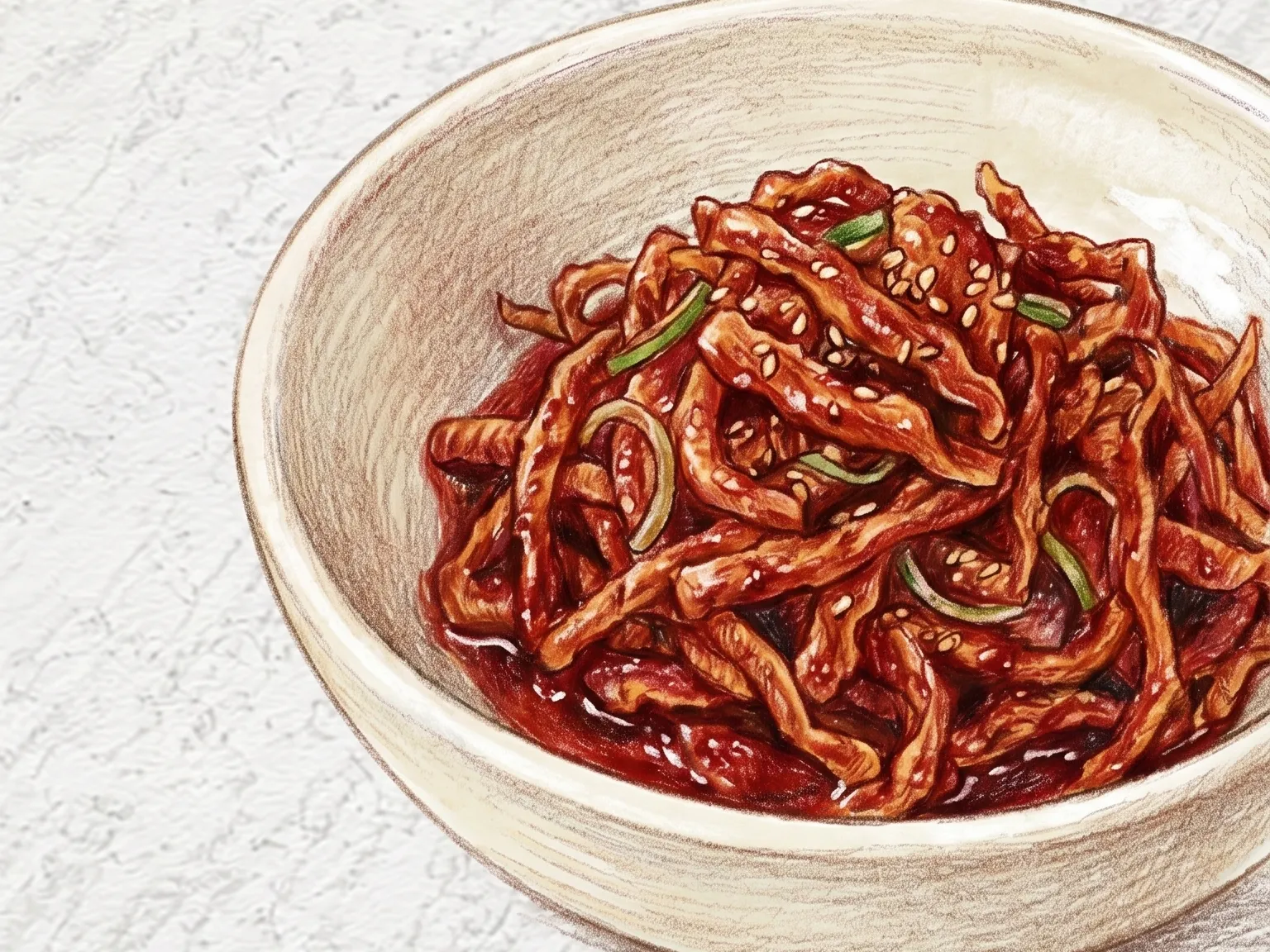
Ojingeo jeotgal is a Korean fermented squid preserve made by salting cleaned, finely chopped squid for one hour to firm the flesh and extract moisture, then dressing it in a paste of gochugaru, minced garlic, ginger, fish sauce, and corn syrup. The salt cure intensifies the squid's natural chewiness, and cutting the pieces small accelerates seasoning absorption during the two-to-three-day cold fermentation. Chili flakes coat every surface in a deep red layer that delivers steady heat, while corn syrup adds gloss and a mild sweetness that prevents the salt from dominating. Spooned over steamed rice, each piece offers a firm, springy chew followed by a wave of fermented umami. Mixing in a touch of sesame oil before serving softens the saltiness and adds a nutty fragrance that rounds out each mouthful.
Sigeumchi Namul
Sigeumchi namul uses 300 grams of spinach blanched for 30 seconds, cooled in cold water, and seasoned with soy sauce, sesame oil, garlic, and sesame seeds. Wash between the stems and roots first so no soil remains in the tightly packed base. Add 0.5 teaspoon salt to vigorously boiling water, lower in the spinach, and keep the heat high for the full 30 seconds. Transfer the spinach directly to cold water, then squeeze it firmly with both hands to remove as much water as possible. Cut it into even 5-centimeter lengths and toss lightly with 2 minced garlic cloves, 1 tablespoon soy sauce, and 1 tablespoon sesame oil. Crush 1 teaspoon sesame seeds between your palms and scatter them over the seasoned spinach. All of the measured salt goes into the blanching water, so the seasoning step does not call for extra salt. Thorough draining also prevents residual water from diluting the soy sauce and sesame oil.
Stir-fried Korean Radish Namul
Mu-namul-bokkeum is a foundational Korean side dish made by stir-frying julienned daikon radish in perilla oil to draw out its natural sweetness. Cutting the radish into matchstick-thick strips and salting them for around five minutes beforehand is a critical step. Without it, the radish releases its moisture into the pan during cooking, turning what should be a stir-fry into an unintended steam, leaving the namul limp and dull. Garlic goes into the perilla oil first to build an aromatic base, then the radish strips are tossed over medium heat for three to four minutes. During this time, heat converts the radish's starch into sugars, and the raw, sharp bite disappears, replaced by a mellow and gentle sweetness. Soup soy sauce rather than regular soy sauce keeps the seasoning clean without muddying the pale color of the radish. Placing the lid on for two minutes at the end steams the interior through without over-softening the vegetable. This namul serves as one of the five-color toppings in bibimbap and is a required dish on ancestral rite tables. Sesame seeds scattered over the finished dish add a toasted nuttiness that carries the flavor through to the last bite.
Korean Braised Mackerel with Dried Radish Greens
Siraegi godeungeo jorim is a Korean braised mackerel dish in which the fish and pre-boiled dried radish greens are cooked down with radish and onion in a chili-soy seasoning. The richness of mackerel fat and the earthy, fibrous character of dried radish greens share the same braising liquid, each amplifying what the other brings to the pot. The radish greens must be boiled thoroughly before braising to soften their tough fibers and leach out any residual bitterness, which is then washed away with a cold rinse. Mackerel seasoned lightly with cooking wine is placed over the greens and vegetables, and the pot braises over medium-low heat for more than twenty minutes so the seasoning penetrates the flesh all the way through. Spooning the braising liquid over the fish two or three times during cooking ensures an even coating on the upper surface. Radish becomes sweeter and more concentrated as it reduces, neutralizing any fishiness from the mackerel. The finished dish, spooned generously over steamed rice with its spicy braising sauce, delivers a layered depth of flavor that is unmistakably Korean.
About Side dishes
Great banchan balances seasoning with the natural flavor of each ingredient. Sesame oil, perilla oil, soy sauce, and fermented pastes work together to pack deep flavor into every small serving.