Desserts Recipes
379 recipes. Page 7 of 16
Desserts are the sweet finish to a meal or a enjoyable snack any time of day. This collection spans Korean traditional sweets - yakgwa (honey cookies), hotteok (sweet pancakes), injeolmi (rice cakes) - as well as puddings, parfaits, and frozen treats.
Chocolate Lava Cake
Chocolate lava cake bakes a batter of melted dark chocolate, butter, whole eggs, egg yolks, sugar, and a small measure of flour in buttered ramekins at 220 degrees Celsius for ten to twelve minutes, producing a set crust and molten center from a single brief baking window. The high oven temperature firms the outside and top of the batter into cake while the core stays liquid, so breaking the surface with a spoon releases a slow pour of concentrated warm chocolate. High-cacao dark chocolate provides a complex, bittersweet depth that pairs with the richness of butter fat, and vanilla extract softens and rounds the overall aroma. Timing controls everything in this recipe: overbaking by even two minutes sets the center solid and destroys the signature flow. The edges of each ramekin should feel just firm when pressed lightly through a towel at the ten-minute mark. Ramekins can be filled ahead and refrigerated, but the baking time then needs an extra one to two minutes to account for the colder starting temperature. Serving with a scoop of vanilla ice cream or a spoonful of cold heavy cream creates a striking contrast between the hot, dense chocolate interior and the chilled, lighter dairy.
Hecchoko Dango (Three-Grain Dumplings in Sweet Azuki Soup)
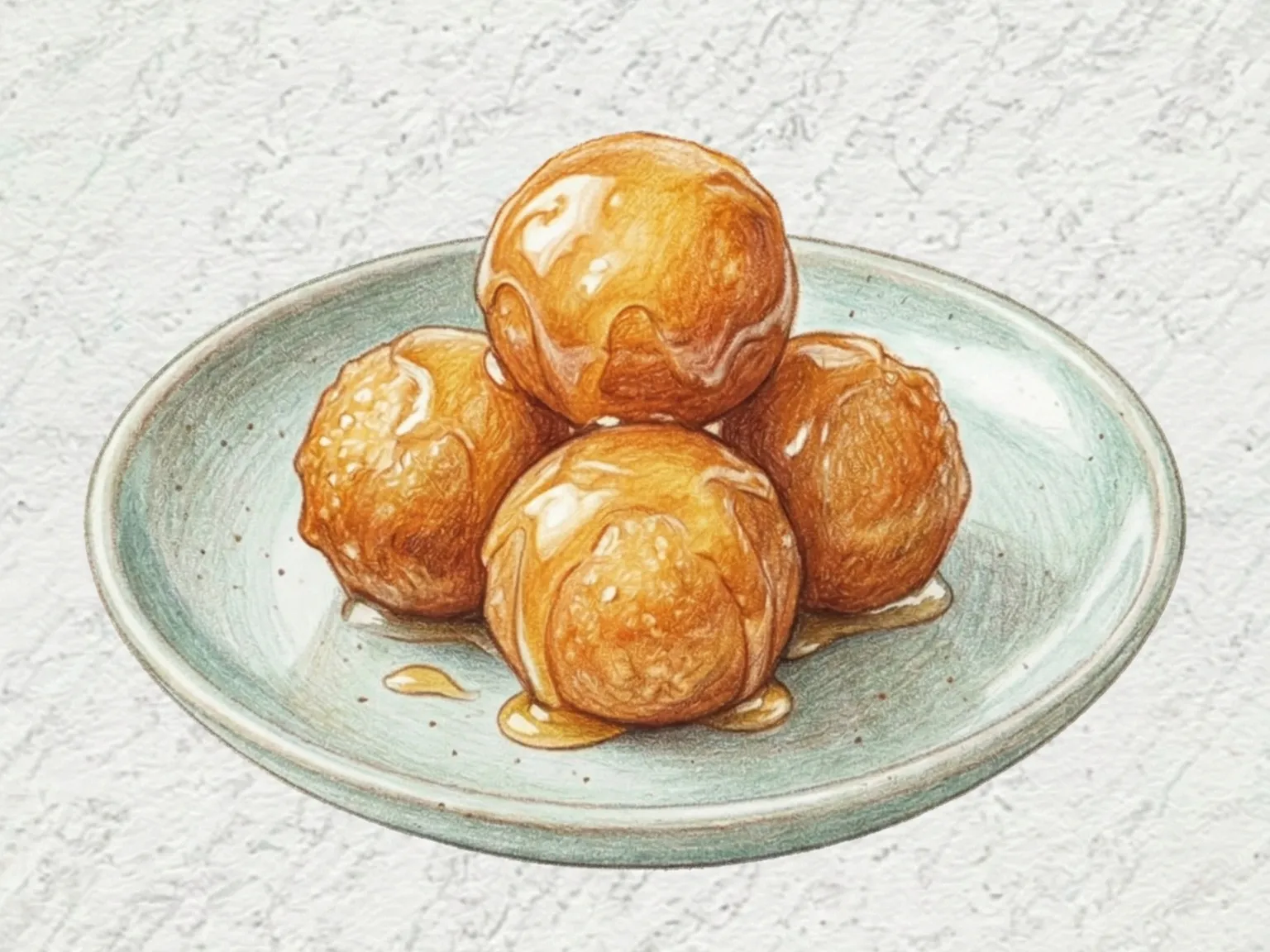
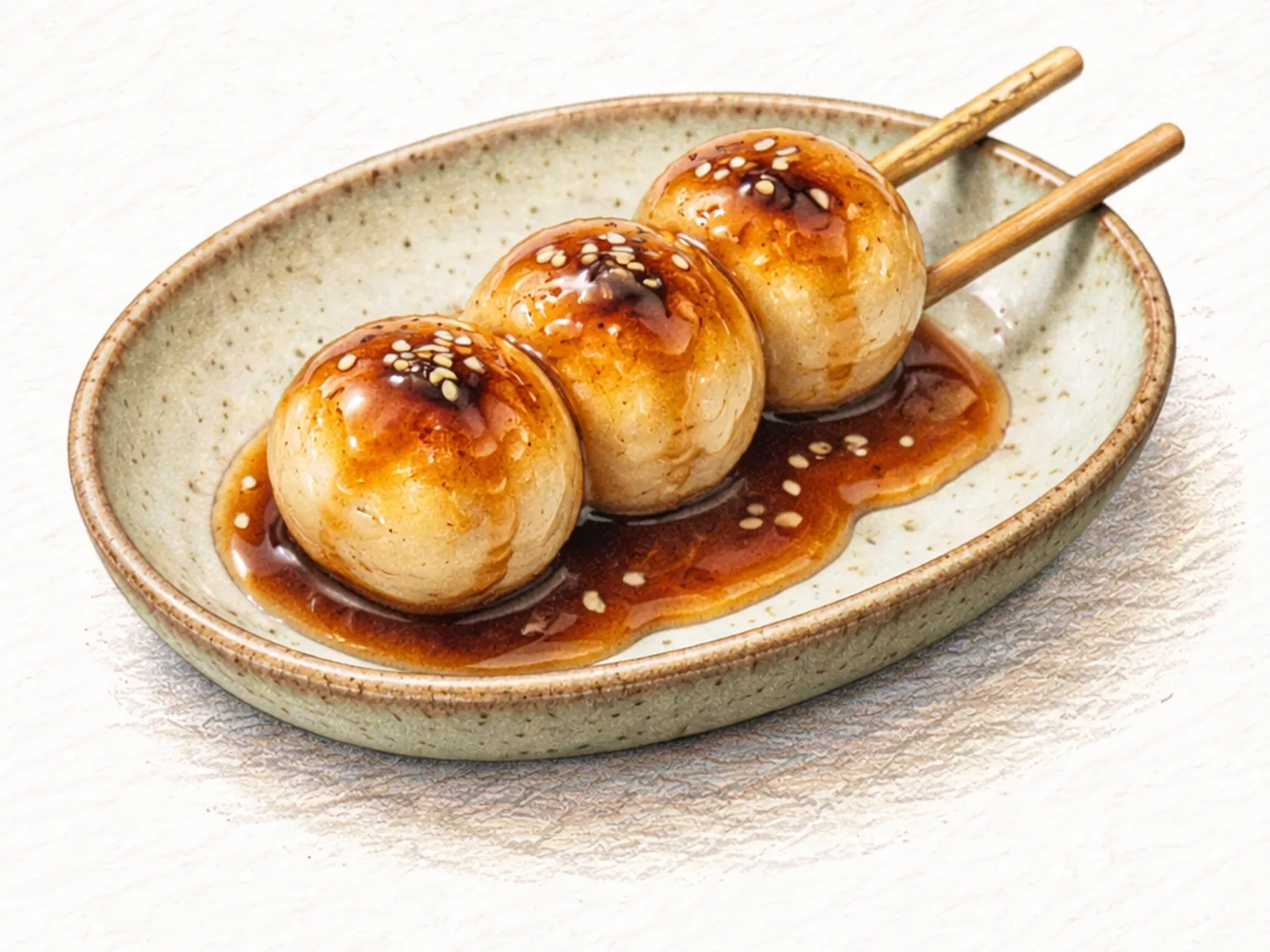
Hecchoko dango is a northern Iwate sweet made with three separate grain doughs: takakibi sorghum flour, glutinous foxtail millet flour, and inakibi proso millet flour. Each is mixed with its own measured boiling water, shaped into 2 cm balls, and pressed in the center with an index finger to form a navel-like hollow. The dumplings cook in sweet azuki soup until they float, which also gives the dish the alternate name ukiuki dango. The hollow takes up the bean soup and balances the slight bitterness of sorghum. One explanation links hecchoko to the year's farming hardship, while another points to the belly-button shape. It was offered to deities and served after the harvest to honor labor or welcome guests.
Chocolate Souffle
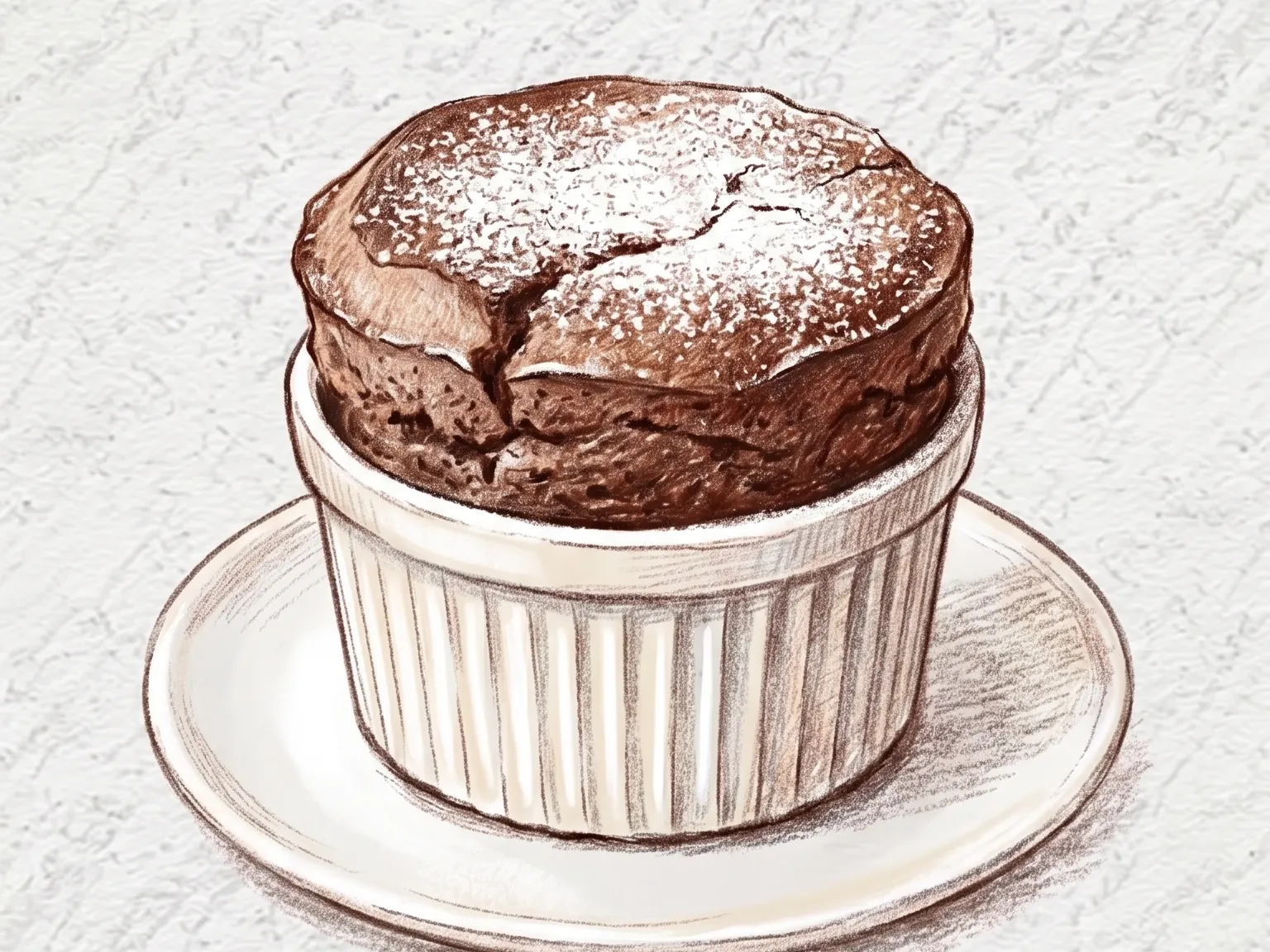
Chocolate souffle folds stiffly beaten egg white meringue into a base of melted dark chocolate and egg yolks, then bakes it in a buttered ramekin at high heat until it rises dramatically above the rim. The intense oven heat expands the air trapped within the meringue, pushing the souffle upward while the exterior sets into a thin, delicate crust and the interior remains a molten, near-liquid chocolate cream. Breaking through the top with a spoon releases a rush of hot, intensely flavored chocolate from inside, and that moment of opening is the point of the entire dessert. The souffle begins to deflate within a minute or two of leaving the oven, so it must go directly to the table without delay. Coating the inside of the ramekin with butter followed by sugar is not optional: this surface preparation gives the batter traction to climb straight upward rather than sticking to the sides and collapsing unevenly. Using chocolate with a high cocoa content produces a deeper, more defined contrast between bitterness and sweetness. The most critical technical step is folding the meringue into the chocolate base using broad, circular motions with a spatula and a minimum number of strokes, because overmixing deflates the air bubbles that are responsible for the rise. Serve dusted with powdered sugar or alongside a scoop of vanilla ice cream.
Black Sesame Tea Cookies (No-Bake Korean Pressed Cookies)
Heukimja dasik is a traditional Korean pressed tea cookie made by binding roasted black sesame powder and almond flour with honey and rice syrup, then pressing the mixture into a decorative wooden mold. No heat is applied at any point: the rich, toasty depth of the sesame and the fatty body of the almond combine within the sticky honey base to produce a crumbly, melt-in-the-mouth texture. A small measure of sesame oil improves binding, and dusting the mold with pine nut powder before pressing yields a sharply defined surface pattern. Resting the shaped cookies in an airtight container for thirty minutes allows them to firm up, resulting in bite-sized confections traditionally served alongside tea at a Korean tea table.
Choux Cream Puffs (French Hollow Pastry with Vanilla Custard)
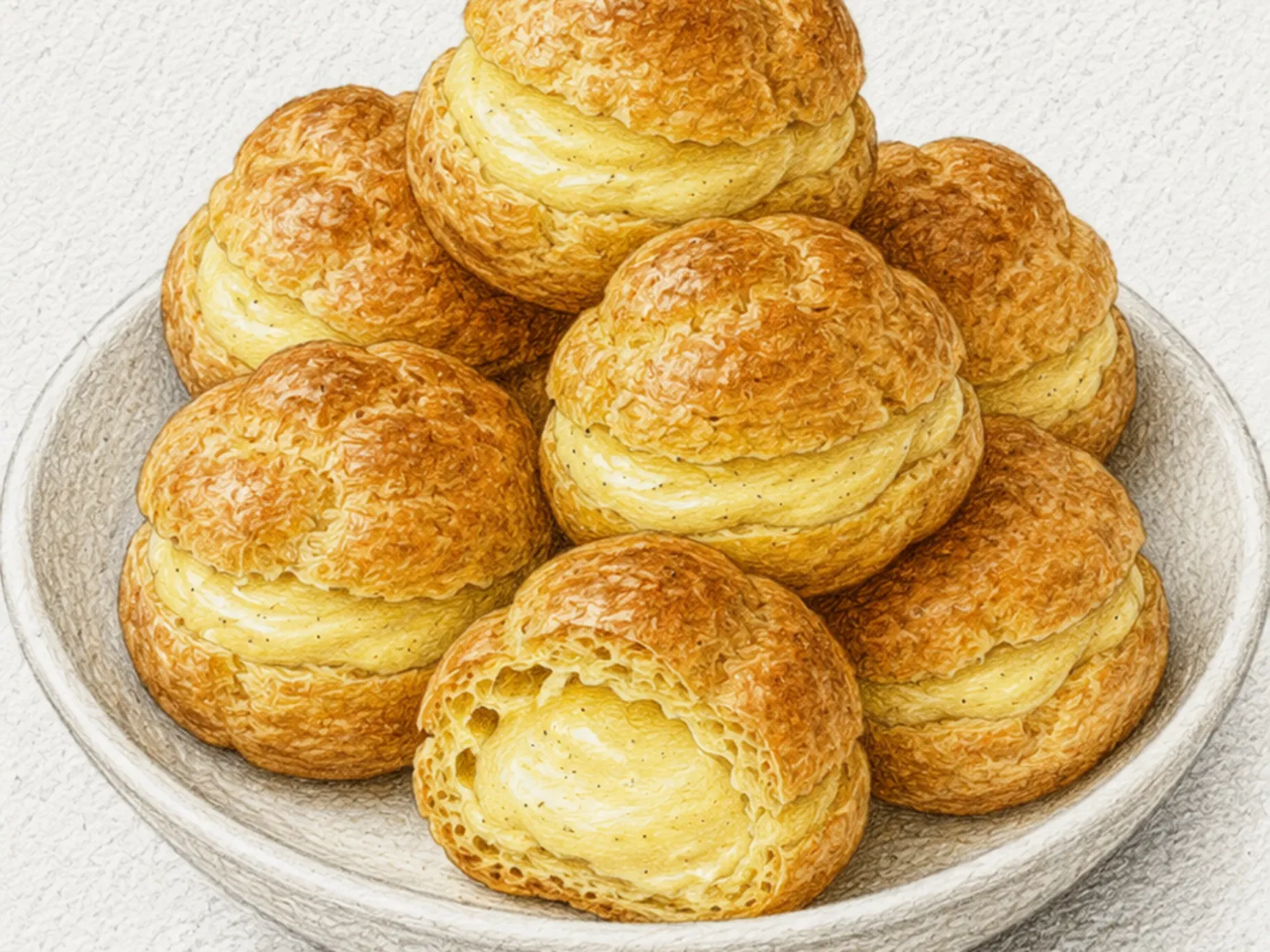
Choux cream puffs are built around pate a choux, a paste cooked directly on the stovetop by combining water, butter, and flour over heat, then beating in eggs one at a time until the dough is smooth, glossy, and just thick enough to hold a piped shape. Once mounds are piped onto a baking sheet and slid into a hot oven, the water content in the dough converts rapidly to steam, inflating each piece into a hollow shell while the exterior sets into a crisp, deep-golden crust. The key to a reliably hollow interior is patience with the eggs: adding them too quickly or all at once produces uneven expansion, while a gradual approach allows the structure to develop properly. Once completely cooled - cooling fully is not optional, as residual heat will melt the filling - a small hole is pierced in the bottom of each shell and pastry cream is piped inside. The contrast upon biting is what makes the pastry compelling: the thin, shattering shell breaks to release cool, silky custard against the palate. The pastry cream itself is made by simmering milk with a split vanilla bean, then whisking the infused milk into egg yolks, sugar, and cornstarch, cooking until thick, and chilling until cold and set. Filled puffs should be consumed within two to three hours, as moisture from the cream migrates into the pastry over time, softening the crust and eliminating the textural contrast that defines the experience.
Black Sesame Pudding
Heukimja pudding is a chilled dessert made by warming milk and heavy cream on low heat with black sesame powder to extract its flavor, then setting the mixture with gelatin. The key to a silky consistency is stopping the heat when tiny bubbles appear at the edge of the pan, well before a full boil, which would cause the fat to separate. After seasoning with sugar and salt and straining once to remove any gritty particles, the liquid is divided into cups and refrigerated for at least two hours until set. A light dusting of black sesame powder on top before serving adds a visual accent and an extra layer of roasted, nutty fragrance. A small pinch of salt is worth adding because it subdues any residual bitterness from the sesame and makes the sweetness come through more cleanly. Gelatin sheets and powdered gelatin both work, but sheets tend to produce a smoother, cleaner result.
Cinnamon Babka (Jewish Twisted Enriched Bread with Cinnamon Swirl)
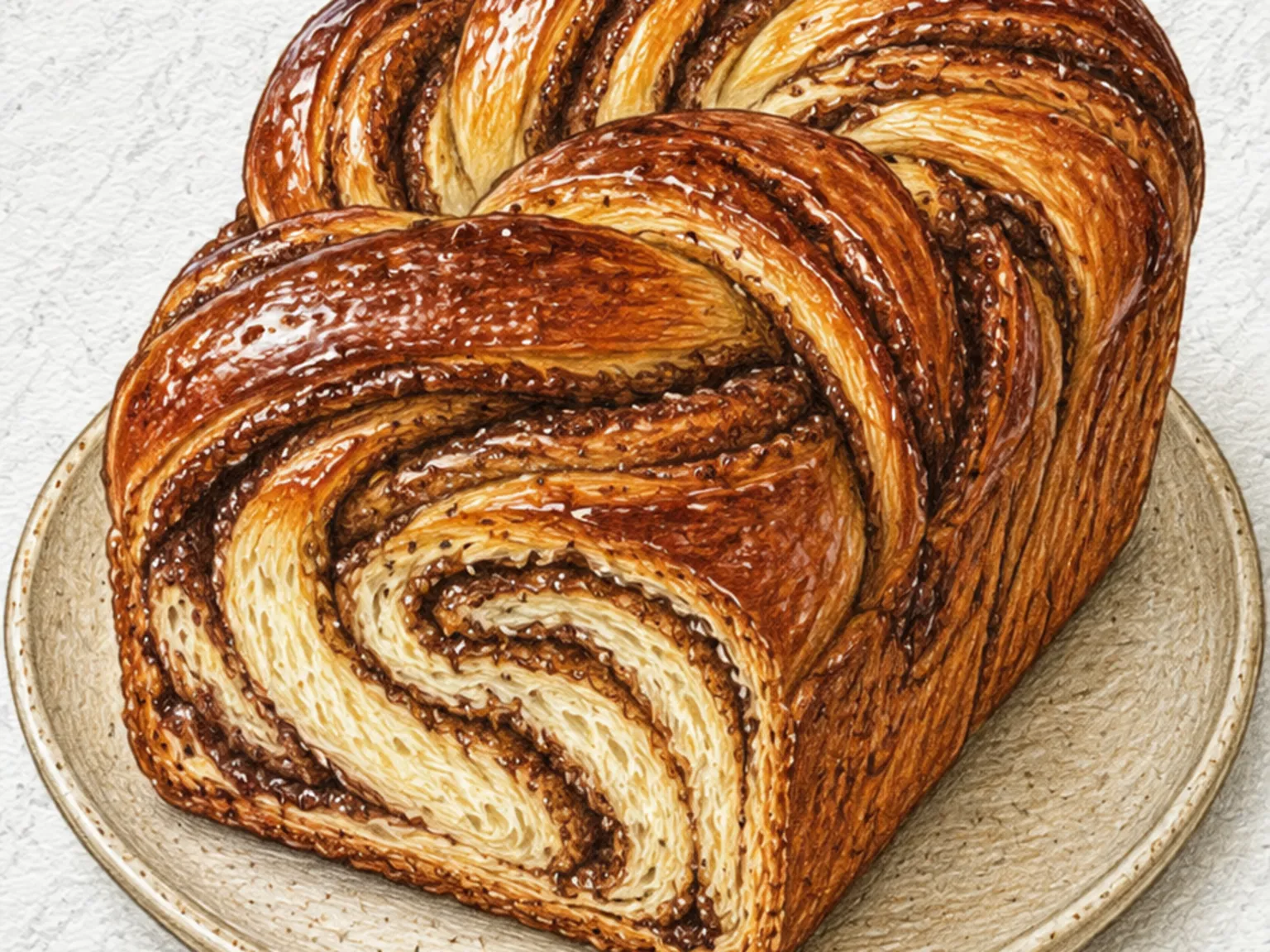
Cinnamon babka is a twisted, enriched yeast bread from the Eastern European Jewish baking tradition, built from a dough loaded with butter and eggs that gives it a crumb closer to brioche than ordinary bread. The dough is rolled into a wide rectangle, spread edge to edge with a thick mixture of cinnamon and brown sugar, then rolled tightly into a log. The log is split lengthwise down the center, exposing the spiral filling on both cut surfaces, and the two halves are twisted around each other before being lowered into the loaf pan. This shaping step is what creates the characteristic layered swirl visible in every slice. During baking, the cinnamon sugar melts into sticky, caramelized threads that run through the crumb and saturate the bread with a warm spice aroma. The soft, pull-apart texture of the enriched dough carries the richness of the butter and eggs in every bite, and the contrast between the pale dough and dark cinnamon filling becomes more defined after the loaf cools. Brushing the surface with simple syrup immediately out of the oven seals in moisture and gives the top a glossy, bakery-counter sheen that holds into the next day. The loaf is sweet enough to serve as dessert yet substantial enough to anchor a breakfast table.
Homemade Ginger Honey Candy
Homemade Ginger Honey Candy is a hard candy made by boiling fresh ginger juice, honey, sugar, and water to a high temperature. The ingredients are combined in a heavy-bottomed pot and heated without stirring. Avoiding stirring prevents sugar crystallization, which would otherwise make the candy cloudy instead of transparent. The mixture is heated to 150C to reach the hard-crack stage, locking the sharp pungency of the ginger within a glass-like sugar structure. Once it reaches this stage, the syrup is quickly dropped onto a mold or baking paper to shape. After cooling at room temperature for fifteen to twenty minutes, the candies are dusted with powdered sugar to prevent them from sticking together during storage in an airtight container.
Cinnamon Rolls
Cinnamon rolls are yeasted enriched dough baked into spirals of butter, cinnamon, and brown sugar, with roots in both Scandinavian and North American baking traditions. The dough, enriched with milk, butter, and eggs, rises into a crumb soft enough to pull apart in layers by hand. A thick layer of softened butter and cinnamon-sugar is spread on the rolled dough before it is coiled tightly and sliced into rounds. During baking, the sugar melts and caramelizes between the coiled layers, and the cinnamon aroma filling the space is one of the most recognizable in all of baking. A cream cheese glaze poured over the hot rolls melts into a tangy coating that balances the sweetness. In Sweden the same concept appears as kanelbulle with less sugar and added cardamom; in the United States the rolls are rolled thicker and buried under a generous glaze.
Hoshi-mochi (Winter Freeze-Dried Rice Cakes)
Hoshi-mochi is a winter-preserved rice cake from Tsugaru in Aomori. A 4.5 kg batch of glutinous rice is steamed and pounded with more added water than ordinary mochi, seasoned with sugar, salt, and sesame, cut thin, braided into long strands with rice straw, dipped once in water on a bitterly cold day, frozen outdoors, and wind-dried for about two months. Repeated freezing and drying remove internal moisture and create a light porous structure, giving the alternative name kori-mochi. Long curtain-like rows under household eaves once defined February in Goshogawara, and each family had a person responsible for reading the weather and choosing the right day. The cakes may be eaten dry and crisp, lightly toasted to reveal rice sweetness, brushed with butter soy sauce, or fried. Success depends on sustained subzero cold, low humidity, clean airflow, and patient inspection.
Clafoutis (French Baked Cherry Custard Dessert)
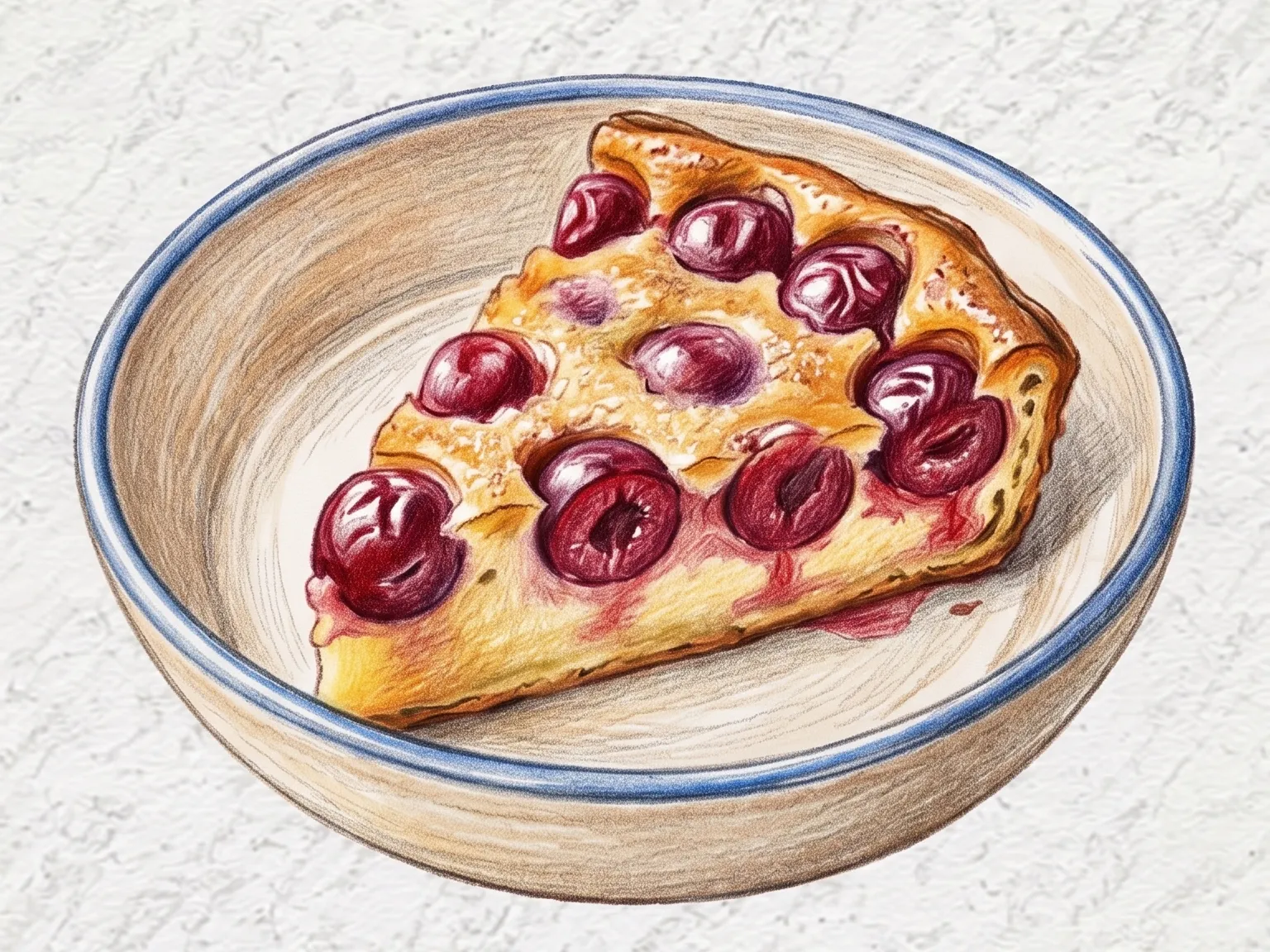
Clafoutis is a traditional French dessert from the Limousin region made by arranging fresh cherries in a buttered baking dish, then pouring over a thin batter of eggs, sugar, milk, and flour and baking at 180 degrees Celsius for thirty to thirty-five minutes. The batter is considerably thinner than pancake batter, and the result when baked is a texture that sits between a creamy custard and a light sponge -- the edges puff and turn golden while the center around the cherries stays moist and yielding. Using unpitted cherries is the traditional method: the pits release a faint almond scent during baking that perfumes the surrounding batter in a way that pitted fruit cannot replicate. The cherries also hold their shape better with the pits in. Vanilla extract deepens the egg-and-milk base, and the cherries' own tart juice seeps into the batter during baking, creating concentrated pockets of fruit flavor that balance the overall sweetness. Clafoutis is served directly from the baking dish, typically dusted with powdered sugar and brought to the table while still warm, because the custard texture softens and loosens slightly as it cools, making the warm version noticeably more appealing. Made with blueberries, plums, or apricots instead of cherries, the dessert takes a different name -- flaugnarde -- though the technique remains identical.
Ikinari Dango (Steamed Sweet Potato and Red Bean Dumplings)
Ikinari dango are steamed dumplings from Kumamoto's Kikuchi area, once prepared as a snack during the autumn sweet potato harvest. A raw sweet potato round 1 to 1.5 cm thick and a portion of sweet red bean paste are stacked, then enclosed together in a rested dough of wheat flour and dango flour. After about 20 minutes of steaming, the wrapper is supple, the bean paste is warm, and the potato remains a distinct tender layer. The Kumamoto word ikinari is associated with something simple and quick, fitting a snack also served when guests arrive.
Classic British Scones
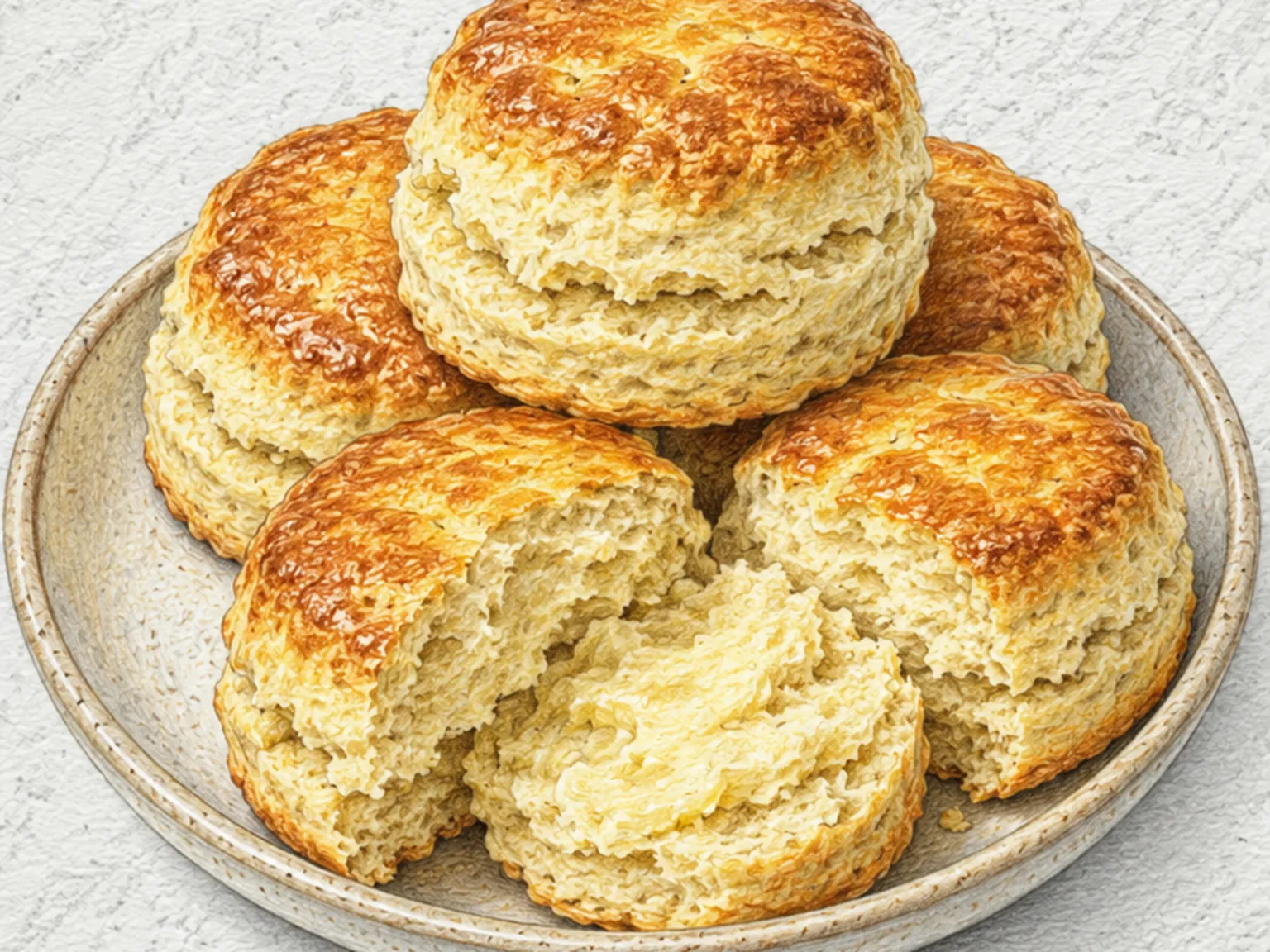
Classic British scones are made by rubbing cold unsalted butter into seasoned flour, then binding the mixture briefly with milk and egg. Heat the oven fully to 200°C and line a wide tray before the dough is mixed. Whisk the all-purpose flour, baking powder, sugar, and salt until no large lumps remain. Add the cold butter and work quickly with your fingertips until the mixture resembles fine breadcrumbs. Keeping the butter cool and limiting the contact time prevents it from turning greasy in the bowl. Whisk the milk with 1 egg, pour it over the dry mixture, and stir with a spatula only until the ingredients gather into a dough. Repeated kneading can make the baked centers firm, so stop once no dry flour remains. On a lightly floured surface, roll the dough to 2.5cm thickness and press a 5 to 6cm round cutter straight down to make 8 even pieces. Brush the tops with 20ml heavy cream. This recipe uses the egg inside the dough and cream on the surface. Bake for 13 to 15 minutes at 200°C, until the scones rise and their tops turn golden. Move them to a wire rack for 10 minutes, then split them by hand while warm. Clotted cream and strawberry jam can be added across the open crumb, which remains soft and easy to pull apart beneath the browned top.
Ile Flottante (Poached Meringue on Vanilla Custard)
Ile flottante presents a cloud of poached meringue floating on a pool of chilled vanilla custard sauce. Stiffly beaten egg whites are shaped into rounds and gently poached in hot milk, cooking just enough to set the exterior while the center remains airy and marshmallow-soft. The custard beneath is a creme anglaise made from egg yolks, sugar, milk, and vanilla bean, cooked slowly until it coats the back of a spoon with a silky consistency. The contrast between the weightless meringue and the rich, creamy sauce defines the eating experience: each spoonful combines something ethereal with something indulgent. Thin threads of caramel drizzled over the meringue just before serving add a brittle sweetness and a golden visual accent. Despite having only a handful of components, the dessert demands precision at every stage.
Classic Lemon Bars
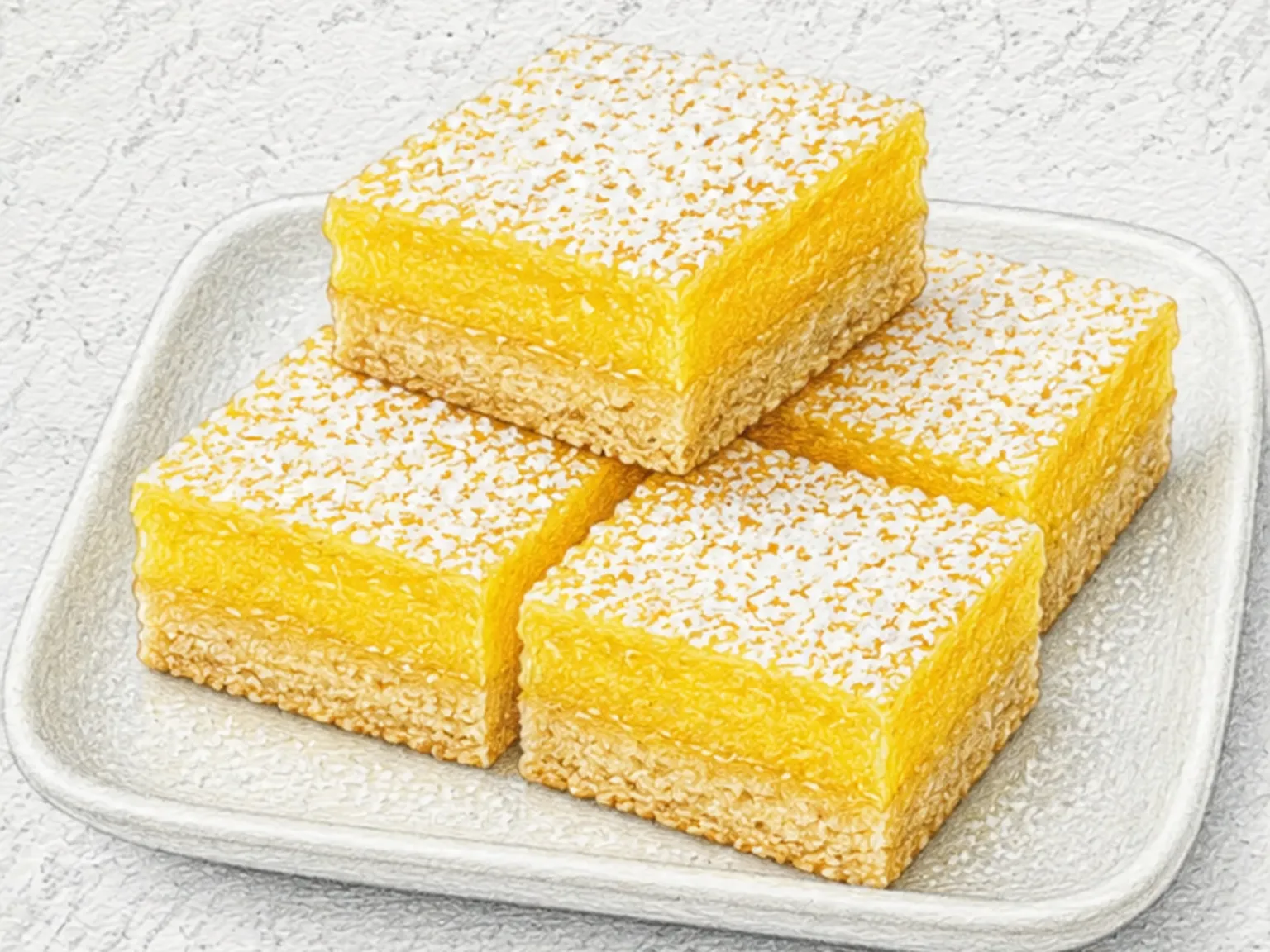
Classic lemon bars layer a bright, tangy lemon curd over a buttery shortbread base, baked together in the same pan and chilled before slicing into clean rectangles. The base is made by pressing a mix of butter, powdered sugar, and flour evenly into the pan and blind-baking it until pale gold and firm enough to hold the filling without crumbling. The curd layer combines eggs, sugar, fresh lemon juice, and zest, which is poured directly over the hot crust and returned to the oven until just set: the edges firm up while the center still trembles gently when the pan is moved. Cutting before the bars are fully chilled causes the curd to run, so refrigeration is essential to achieve the characteristic sharp-edged rectangular slices. Lemon zest releases its citrus oils during baking and intensifies the fragrance well beyond what juice alone provides. A dusting of powdered sugar across the surface creates a white-on-yellow visual contrast and softens the tartness of the first bite. The defining pleasure of the bar is that the crisp, buttery shortbread and the cool, silky curd hit the palate simultaneously in each mouthful.
Imo Yokan (Sweet Potato Jelly)
Imo yokan is a firm, sliceable sweet potato confection made by blending hot sieved sweet potato with a small amount of agar syrup, then chilling the mixture in a mold. Peel and trim 250g sweet potato, cut it into 2cm rounds, and cover the pieces with cold water. Drain them after 10 minutes. Replace that water with fresh water and cook over medium heat. After 12 to 15 minutes, test the center with a skewer; it should pass through without resistance. Drain the potato promptly and press it through a sieve while it is still hot; cooling first makes the fibers harder to smooth out. Cover the sieved potato so its surface does not dry while the setting liquid is prepared. Combine 120ml water and 2g agar powder in a clean saucepan. Bring the liquid to a boil over medium heat, then stir for a full 2 minutes so no agar granules remain. Add 60g sugar and dissolve it completely before mixing in the sweet potato. Keep the pan over low heat for 2 minutes, working with a spatula until the puree and syrup form one even mass with no pale streaks or dry lumps. Dampen the mold with water, pack in the mixture, and level the top. Let visible steam dissipate before refrigerating it for at least 2 hours. Unmold the set block and cut it into four portions. A finished slice should keep a clean corner under the knife, retain the compact, soft grain of the sieved sweet potato, and avoid a rubbery gel texture.
Coconut Cream Pie
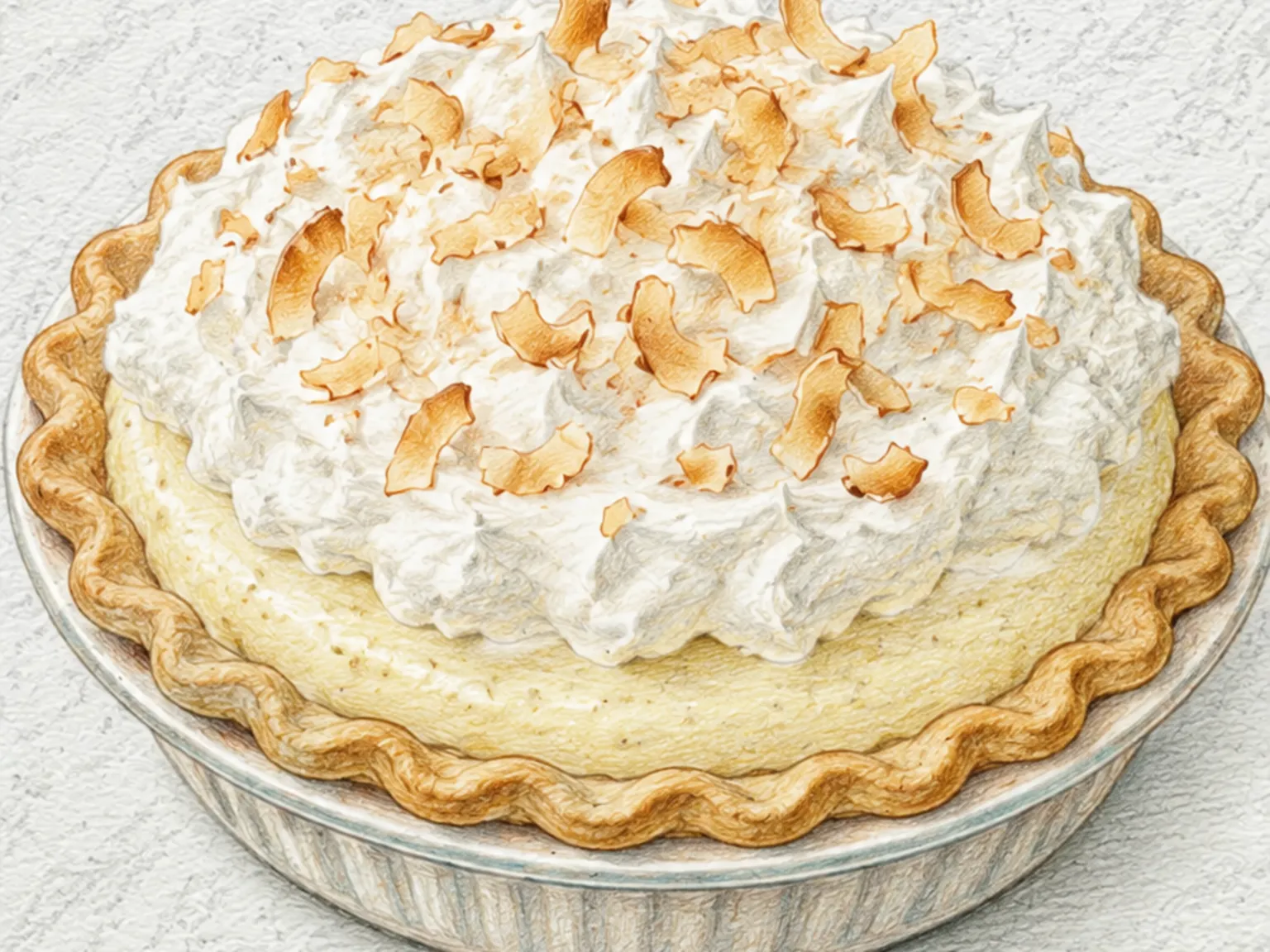
Coconut cream pie fills a blind-baked pastry shell with a thick, silky custard built from coconut milk, whole milk, egg yolks, and cornstarch. The custard is cooked directly on the stovetop, stirred constantly until it thickens enough to coat the back of a spoon without running. Once poured into the cooled crust and refrigerated for several hours, it sets firmly enough to slice cleanly, holding its shape on the plate. The coconut flavor is strong and tropical, drawing entirely from real coconut milk rather than extract or artificial flavoring, so the sweetness stays rounded and natural. A thick layer of freshly whipped cream spread over the top cuts through the density of the custard, and a generous scattering of toasted coconut flakes across the surface adds a nutty, crunchy contrast to the smooth layers below. When sliced, the cross section shows three distinct layers: a golden, crumbly crust at the base, a pale ivory custard in the middle, and white cream on top. The pie is served cold straight from the refrigerator, which keeps the custard firm and the whipped cream stable.
Imobera Azuki (Kochi Dried Sweet Potato and Azuki Sweet)
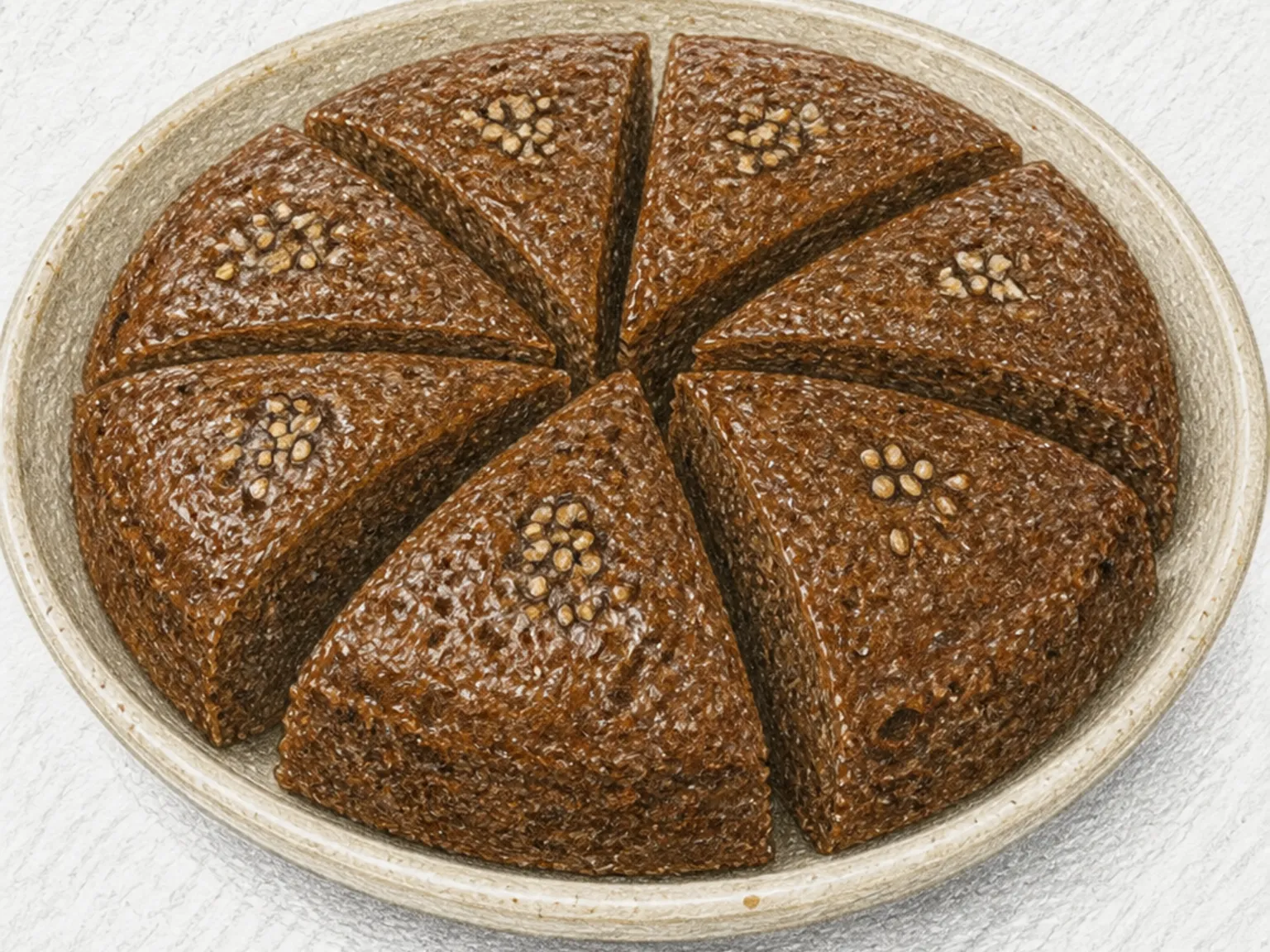
Imobera azuki is a local sweet from Ino, Kochi, in which yudebera, a distinctive boiled-and-dried sweet potato, is simmered with azuki beans and sugar. Whole sweet potatoes are traditionally boiled for hours, dried until the outside firms, sliced into rounds, and dried again; in Ino these pieces are called yudebera or nibera. Soaking 300g yudebera in lightly salted water for 4 to 5 hours restores moisture to the center. The pieces then cook slowly in the same liquid and are mashed while some texture remains. Cooked azuki and 130g sugar are added in stages so the beans stay recognizable and the mixture remains moist enough to scoop. It is not a flour dumpling soup, but a substantial preserved-food snack with chewy sweet potato and tender beans.
Coconut Macaroon
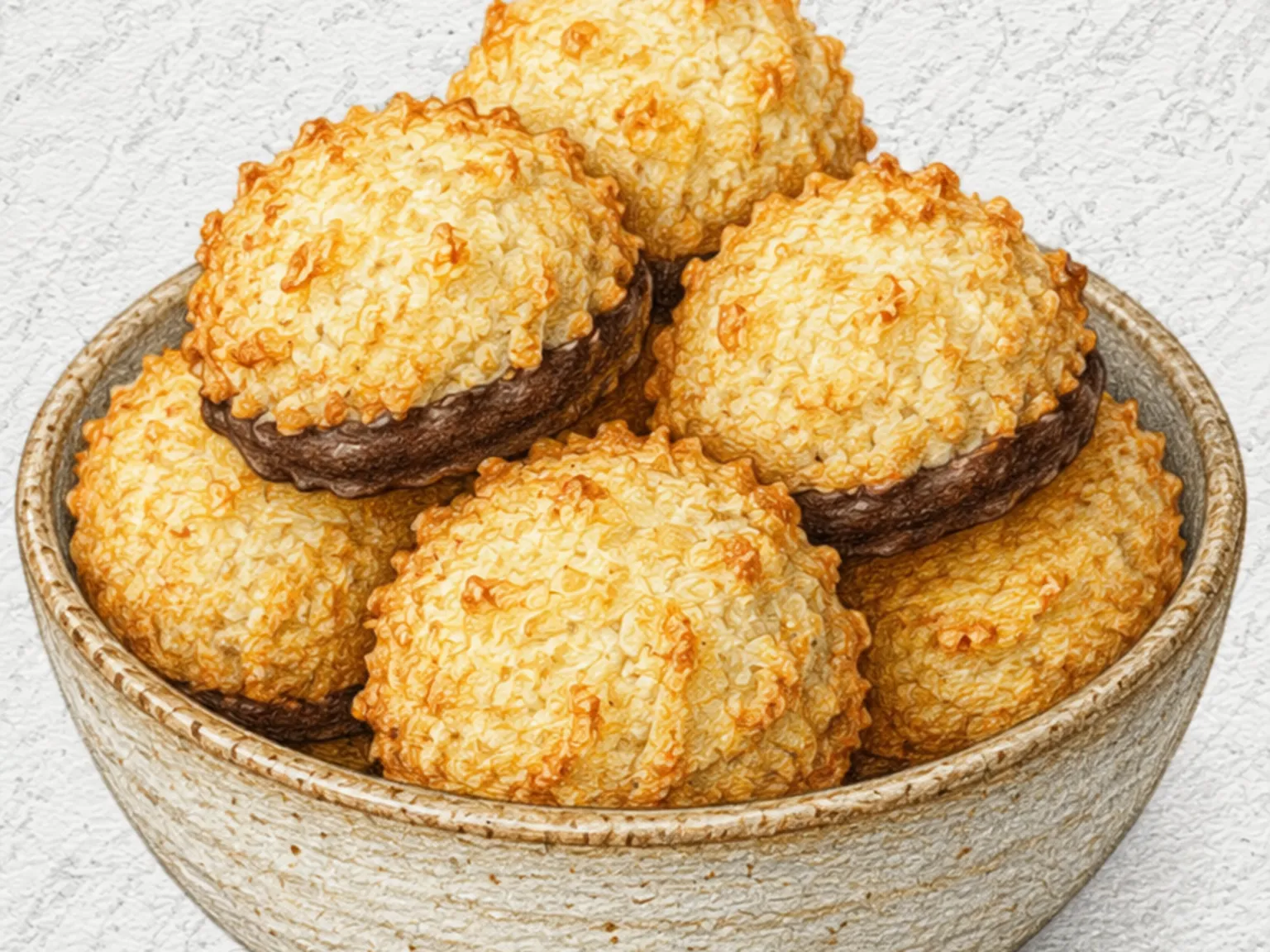
Coconut macaroons are flour-free cookies formed by binding shredded coconut flakes with egg whites and sweetened condensed milk, then baking until the exterior crisps and the interior remains dense and moist. Without flour as a structural element, coconut carries all of the texture and flavor, making every bite intensely coconut-forward in a way that flour-based cookies cannot replicate. In the oven, egg whites set the outer surface of each mound into a thin, golden crust while condensed milk holds the interior together in a chewy, sticky mass. The contrast between the crisp shell and the moist center is the defining textural feature of the macaroon. A pinch of salt sharpens the coconut's natural nuttiness, and a small amount of vanilla extract adds a warm, soft backdrop to the sweetness. Dipping the flat base of each cookie in melted dark chocolate once cooled introduces a bitter counterpoint that balances the concentrated sweetness of the condensed milk.
Glutinous Rice Cake with Soybean Powder
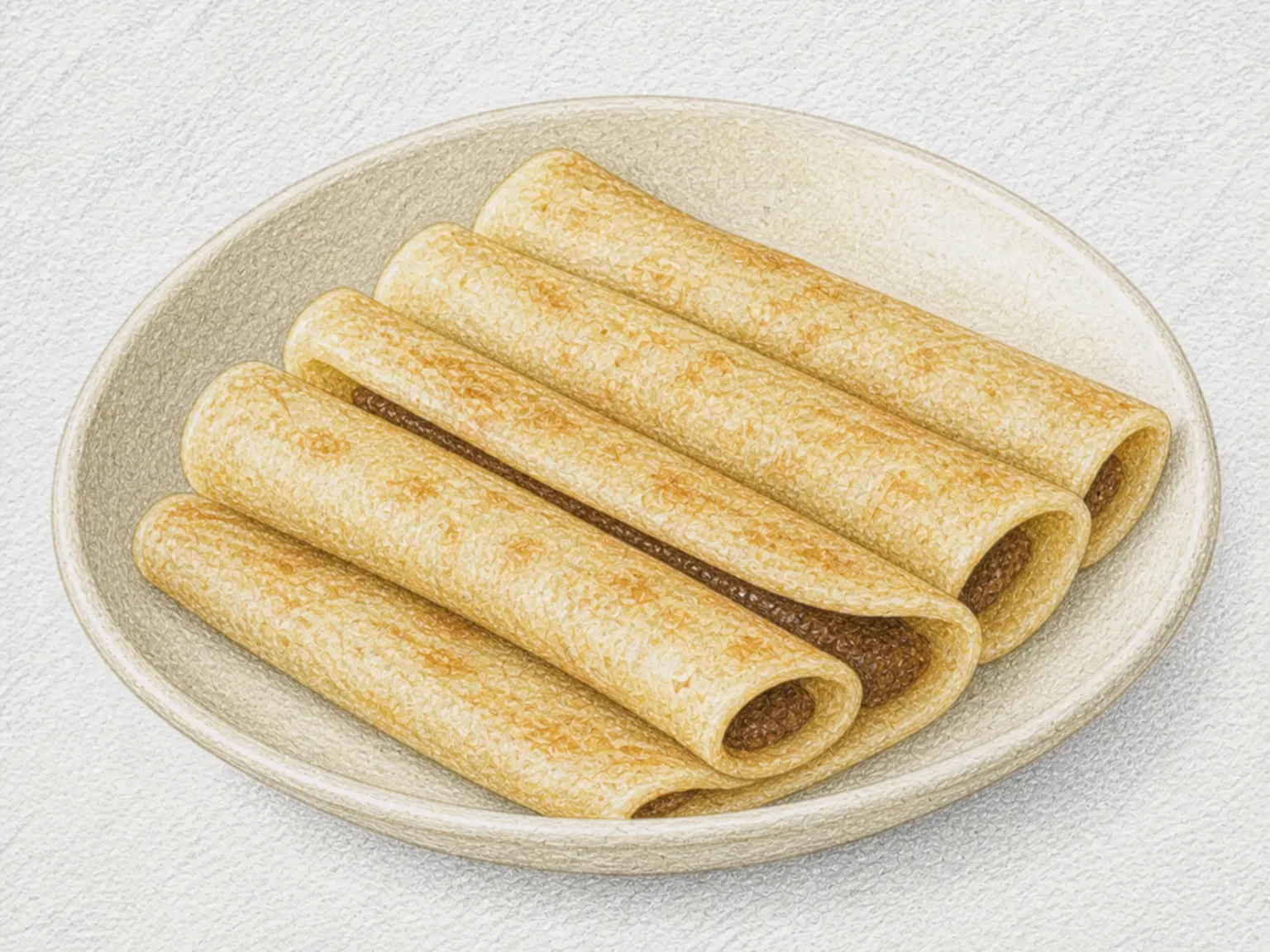
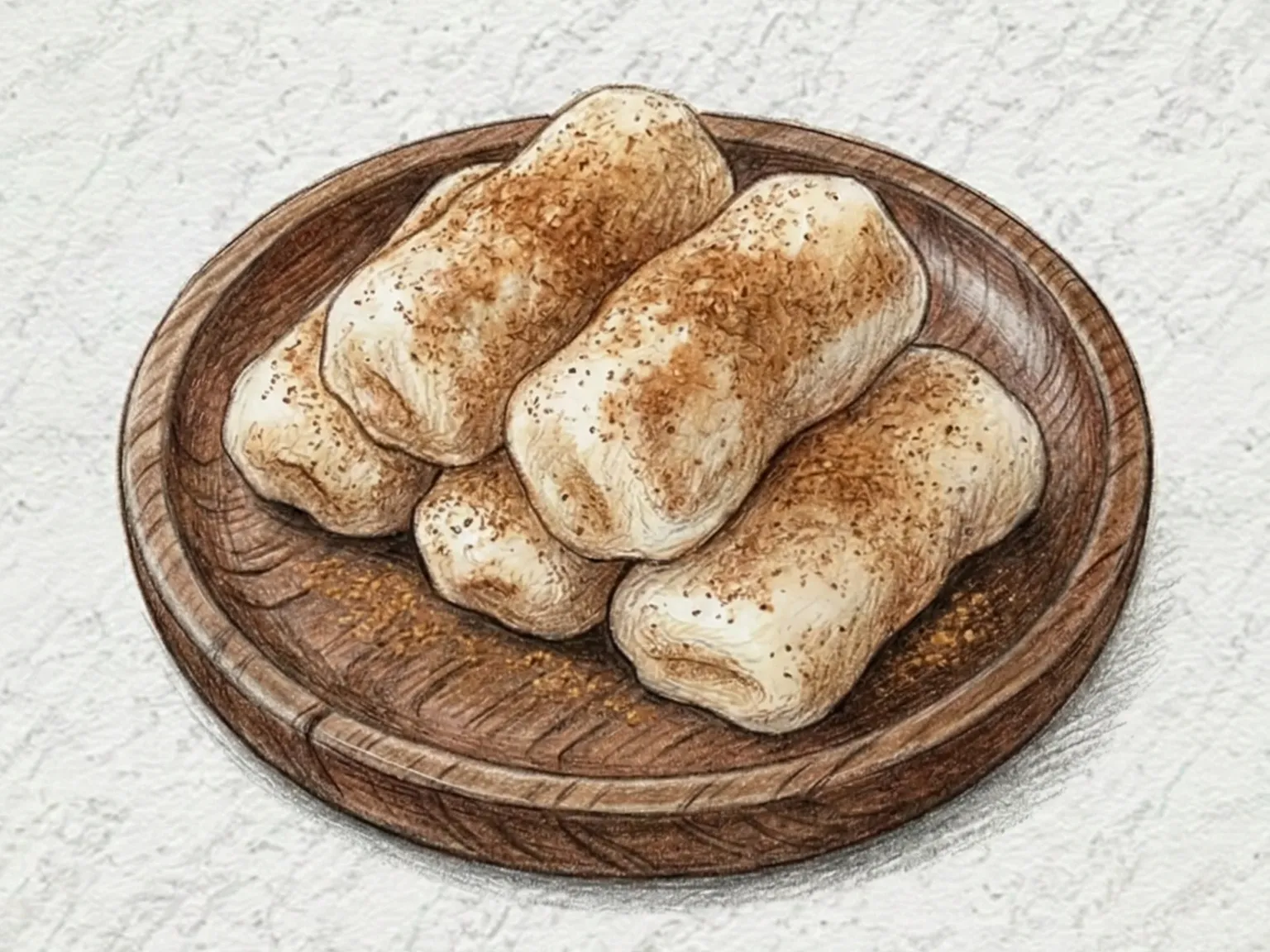
Injeolmi is a Korean glutinous rice cake made by kneading rice flour dough with hot water, steaming it for fifteen minutes, then pounding or beating it vigorously for at least five minutes to develop the characteristic elasticity. The pounding step determines the final texture: insufficient working produces a weak dough that cracks apart, while thorough pounding yields the signature stretchy, chewy pull that injeolmi is known for. The finished dough is stretched out, cut into bite-sized pieces, and rolled in a mixture of roasted soybean powder and sugar, which coats each piece in a fragrant, toasted-grain aroma. Applying a thin layer of sesame oil to both hands and knife before cutting prevents the dough from sticking, and the soybean powder coating is best applied immediately before serving to keep the surface dry and powdery rather than absorbing moisture. Injeolmi appears regularly at ancestral rites, first birthday celebrations, and traditional ceremonies across Korea.
Coffee Cake
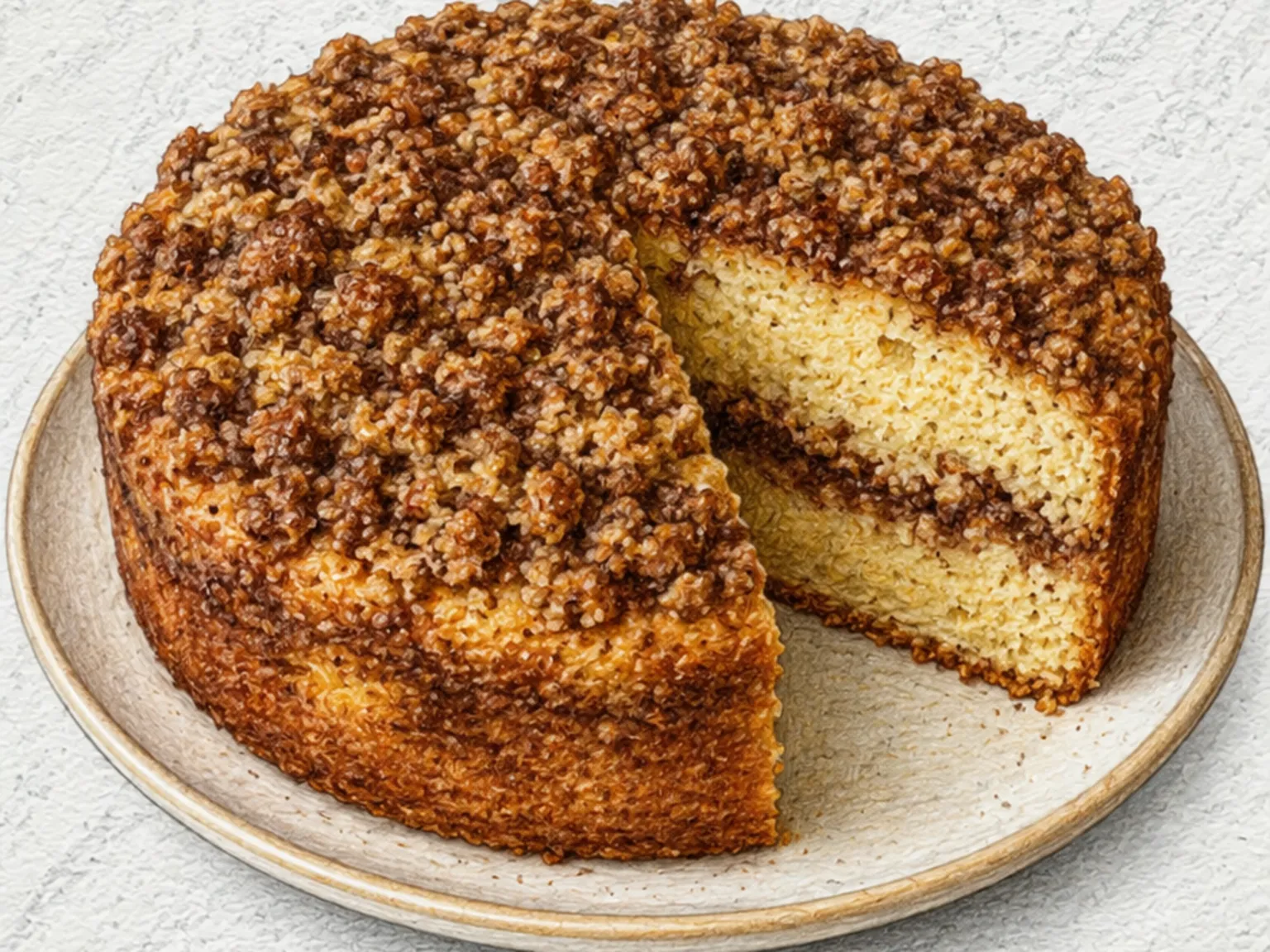
Coffee cake is an American snack cake topped with a buttery cinnamon streusel, designed to be eaten alongside coffee rather than containing coffee as an ingredient. Sour cream in the batter produces a noticeably moister, more tender crumb than a standard butter cake, and its mild acidity keeps the overall sweetness from feeling heavy. The streusel is made by rubbing brown sugar, cinnamon, flour, and cold butter together until the mixture forms coarse, irregular clumps; in the oven these bake into a sandy, crunchy topping that provides sharp textural contrast to the soft cake beneath. A widely used technique involves layering streusel into the center of the batter as well as on top, so that each slice reveals two distinct cinnamon-scented veins running through it. The cinnamon aroma is most pronounced when the cake is still warm from the oven, making the timing of serving worth paying attention to.
Iriko Mochi (Parched Rice Flour Cake)
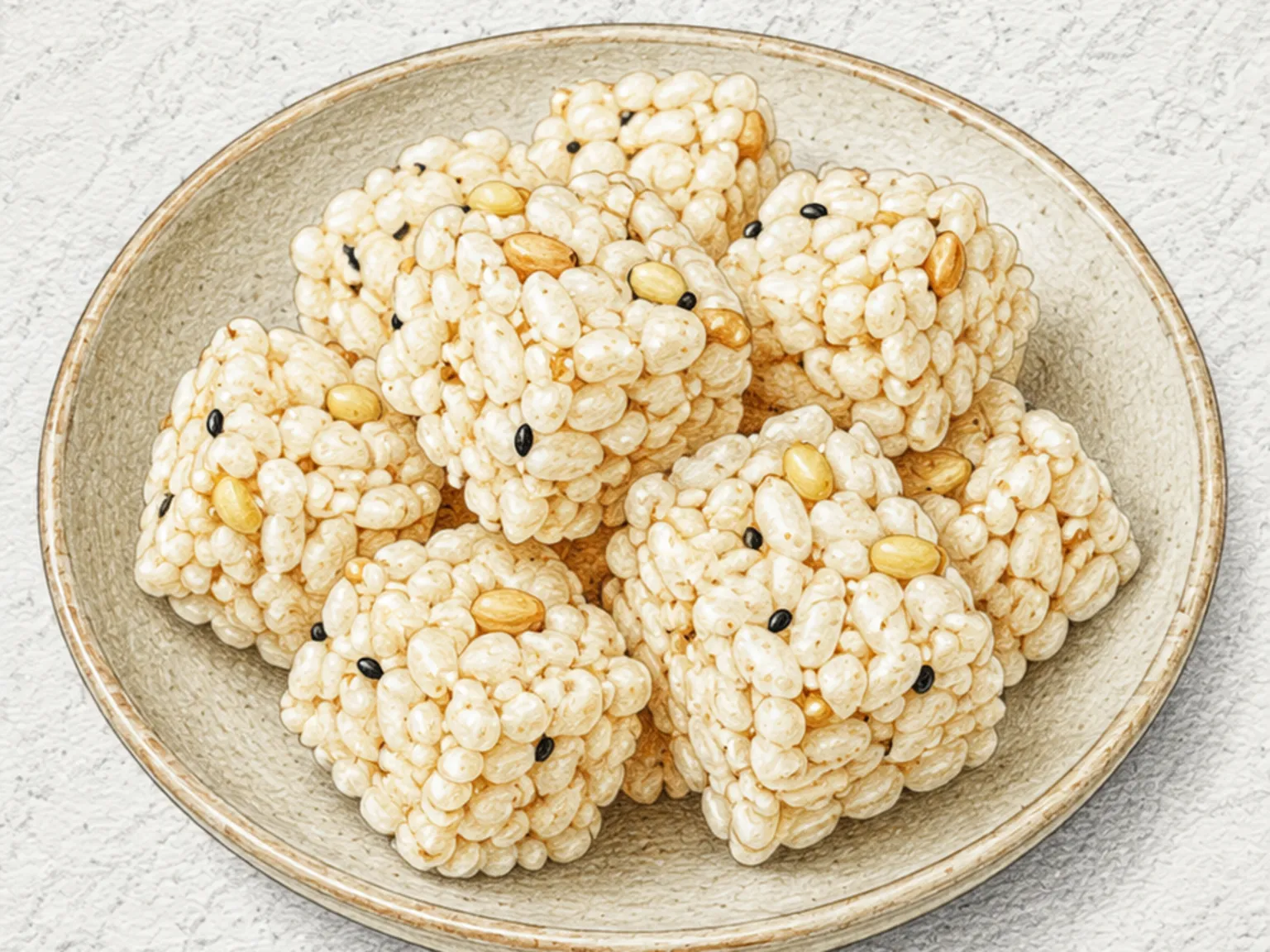
Iriko mochi is a Miyazaki confection made from parched rice flour, traditionally ground from a mixture of glutinous and short-grain rice in an 8:2 or 7:3 ratio. Sugar, starch syrup, and water are heated only until bubbles rise, then worked into the flour a little at a time while still hot. The dough gains a soft, chewy body without being steamed or boiled. It is shaped in a starch-dusted mold, cooled completely, and cut with a starch-coated knife. The roasted rice aroma and mild sweetness suit a snack that has been shared since the Edo period for children's seasonal celebrations, Bon offerings, and everyday eating.
Cream Horn Pastry
Cream horn pastry is made by wrapping cold puff pastry strips around conical molds, baking them into hollow spirals, and filling the cooled shells with cream cheese cream. Preheat the oven fully to 200°C. Keep the thawed pastry cold and cut it with a sharp knife into long strips about 2cm wide, without rolling it thinner or pulling it out of shape. Starting at the narrow tip of each mold, wind a strip upward with about 0.5cm overlap. Press the joins lightly so gaps do not open during baking. Brush the surface with beaten egg, sprinkle the measured sugar evenly over the pastry, and press gently so it adheres. After 15 to 18 minutes of baking, the visible layers should be open and the shells deep golden. Leave the molds in place until the pastry has cooled completely, then twist each shell gently to release the metal cone. For the filling, whip the cold heavy cream until stiff peaks stand. Beat the softened cream cheese until smooth, then fold the whipped cream into it in 2 additions. Pipe the thick filling through the hollow center only when the pastries are ready to serve, and finish with powdered sugar. Filling at the last moment keeps the cream from sitting against the crisp pastry for an extended period and preserves the distinct spiral ridges around the shell.
Ishigaki Dango (Steamed Sweet Potato Dumplings)
Ishigaki dango is a rustic snack from the Sagamihara area of Kanagawa. One-centimeter cubes of sweet potato are embedded in a lightly sweetened wheat dough, shaped into rounds, and steamed. Wheat and sweet potatoes grew well enough on the volcanic-ash-covered Sagamihara plateau to become familiar farm foods, and these dumplings were eaten as a small break during agricultural work. Their name means stone-wall dumpling because the square potato pieces showing through the dough resemble stones set into masonry. The flour, baking powder, sugar, and salt are sifted twice, then mixed briefly with 100ml water. Minimal kneading keeps the crumb tender, while a few reserved sweet potato cubes pressed onto each top make the stone pattern clear.
About Desserts
Sweet treats brighten the day and add a little joy to the routine. From no-oven quick desserts to traditional confections that take patience and care, find the right recipe for any occasion.