Stews Recipes
142 recipes. Page 4 of 6
Korean stews (jjigae) are heartier and more intensely seasoned than soups, packed with vegetables, tofu, meat, or seafood. Kimchi jjigae, doenjang jjigae, and sundubu jjigae rank among the most beloved everyday meals, bubbling away in stone pots at the table.
The depth of flavor comes from fermented pastes - doenjang, gochujang, and gochugaru. Stews are also a practical way to use up leftover ingredients, making them a staple of home cooking.
Korean Dried Pollock Napa Stew
This stew pairs dried pollock strips with napa cabbage for a mild, comforting bowl built on clean, unhurried flavors. The pollock releases a savory, slightly sweet depth into the broth as it rehydrates during cooking. Soaking the pollock briefly in water before adding it loosens the stiff fibers and helps the broth extract faster. The cabbage softens slowly and adds its own natural sweetness, while firm tofu and zucchini round out the ingredients with body and texture. A touch of perilla oil lends a nutty fragrance to the finished bowl. Seasoned simply with soup soy sauce, it works well as a hangover remedy or a light weekday meal that settles the stomach.
Korean Dried Pollack Stew
Hwangtae jjigae is a straightforward Korean stew built on dried pollack strips, tofu, and eggs, with a broth that tastes far deeper than its short ingredient list suggests. Sauteing the pollack strips in sesame oil before any liquid is added draws out a roasted, nutty aroma that becomes the flavor backbone of the entire pot. Water poured over the toasted fish produces a broth that is simultaneously clear and richly savory, a character specific to hwangtae that fresh fish cannot replicate. Soft tofu cut into cubes settles into the broth and contributes a delicate texture alongside its protein, while beaten eggs stirred in during the final minutes form silky, fine-grained ribbons throughout the liquid. The minimal ingredient list makes this stew genuinely practical when pantry and refrigerator supplies are running low.
Korean Eel Stew (Freshwater Eel in Spicy Perilla Broth)
Jangeo jjigae is a nourishing Korean stew featuring freshwater eel simmered in a gochujang-based broth enriched with ground perilla seeds. The eel's fatty, firm flesh melds with the fermented chili paste to produce an intensely savory liquid, while the perilla adds a creamy, nutty body that gives the finished stew a thick, substantial texture. Gochugaru layers an additional level of heat on top of the gochujang's deep sweetness, so the spice builds in complexity across each spoonful rather than hitting at one flat register. Cooking the eel with the bones left in extracts collagen into the broth and deepens the overall richness, while boneless pieces are easier to eat. Garlic and ginger are added in generous amounts to counter the eel's strong aroma, and the perilla powder is stirred in only at the very end of cooking so its nutty fragrance is preserved rather than cooked off. Traditionally regarded as a stamina food, the stew is especially popular on the three hottest days of the Korean lunar calendar - sambok - and throughout the summer months when the body loses energy to the heat. A bowl served piping hot produces a spreading warmth from the inside out.
Korean Jjageuli Pork Stew
Jjageuli jjigae is a thick, reduced-broth stew of pork and potato simmered in a gochujang and gochugaru sauce. As the potato pieces break down, they naturally thicken the stew into a hearty, almost gravy-like consistency. The pork fat renders into the spicy-sweet seasoning, creating a deeply coating sauce meant to be spooned over rice. Onion and green onion add sweetness and fragrance, making this a satisfying one-pot meal that needs little else on the side.
Korean Webfoot Octopus Tofu Stew
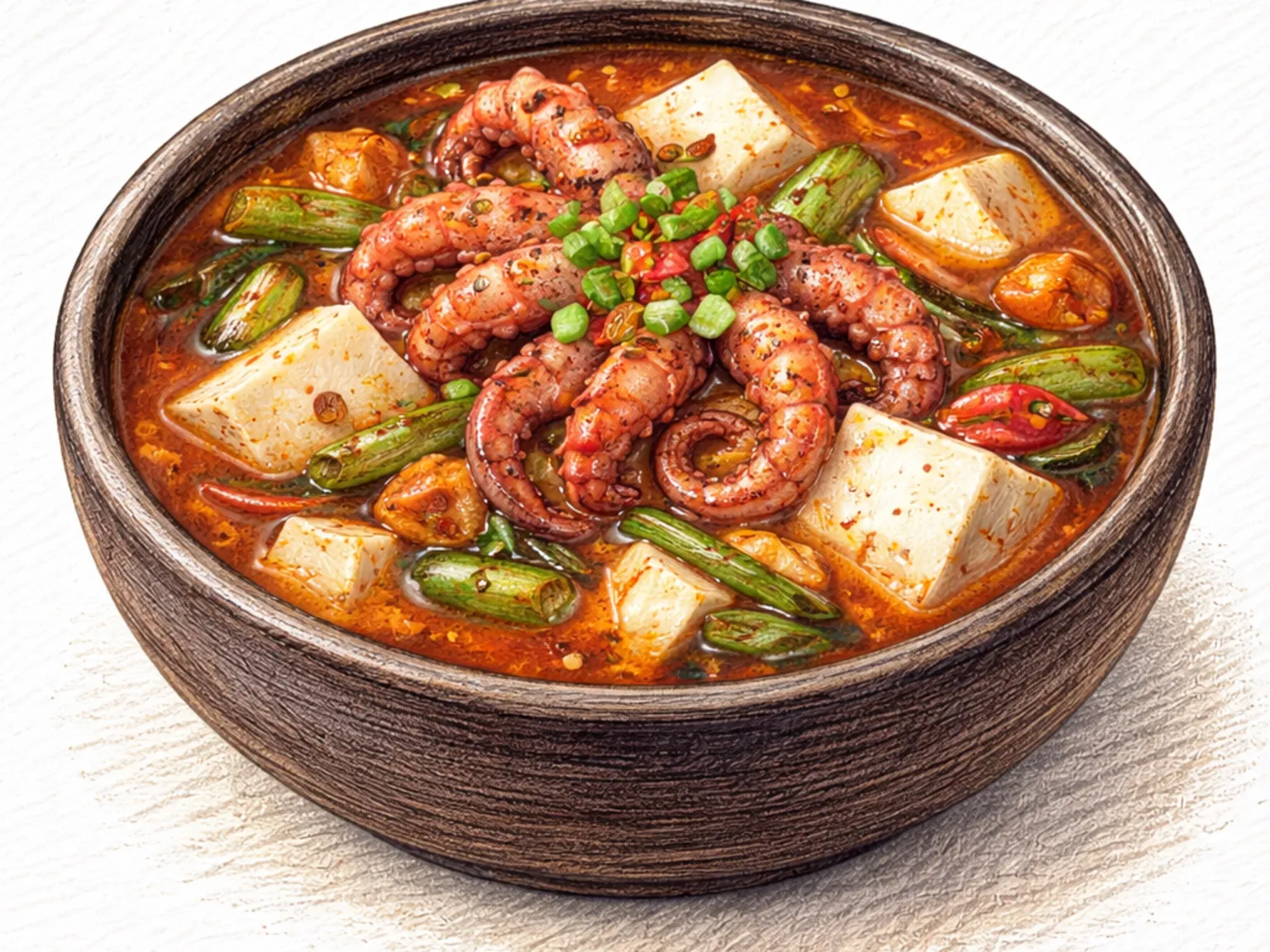
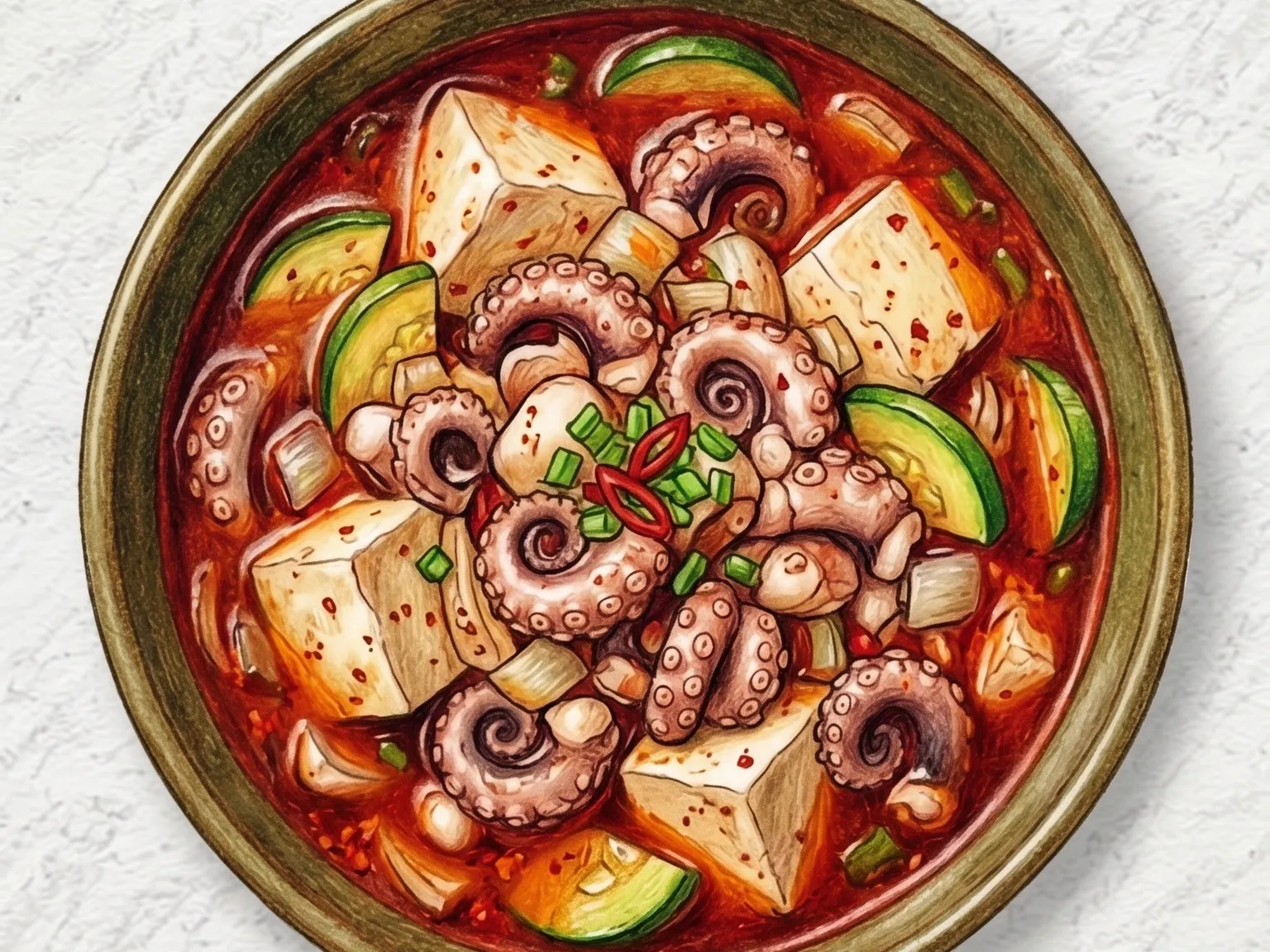
Jjukkumi dubu jjigae is a Korean stew of webfoot octopus and soft tofu cooked in a gochugaru-seasoned anchovy broth. A full 450 grams of jjukkumi goes into the pot, providing a bouncy, chewy texture in every spoonful. The tofu absorbs the spicy broth as it cooks, creating a soft counterpoint to the firm octopus, and the contrast between the two textures is a central part of the dish. Rice wine added early in the cooking process neutralizes any fishiness from the seafood, keeping the broth clean-tasting rather than pungent. Soup soy sauce deepens the umami base without darkening the broth too heavily, and gochugaru provides the heat. Zucchini and onion contribute natural sweetness that rounds out the broth and prevents the salt from the seafood from feeling sharp or one-dimensional. Jjukkumi becomes rubbery if overcooked, so removing the pot from heat three to four minutes after it comes back to a boil is the key step for keeping the octopus tender and springy rather than tough.
Korean Kimchi Jjigae (Kimchi Stew)
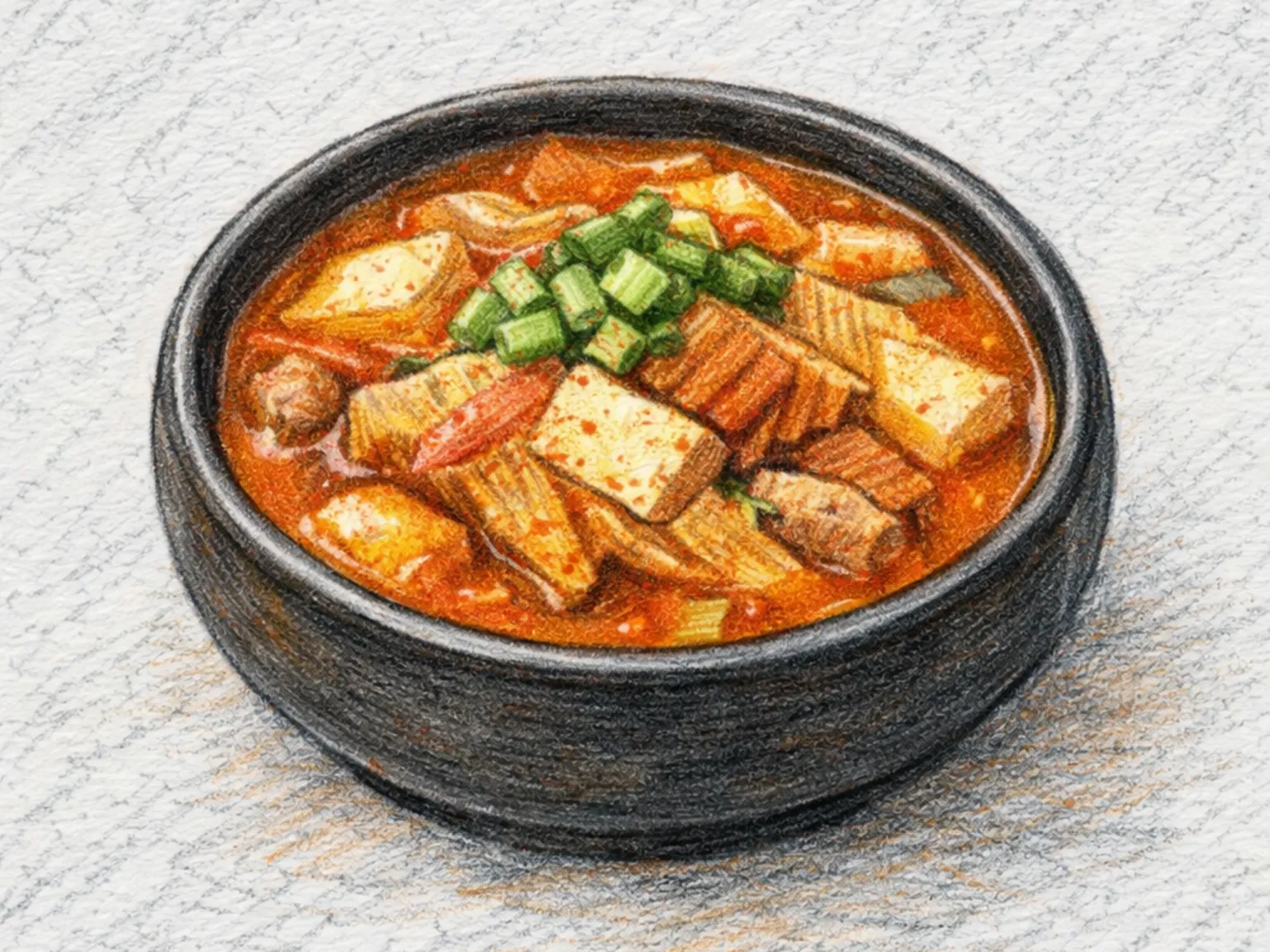
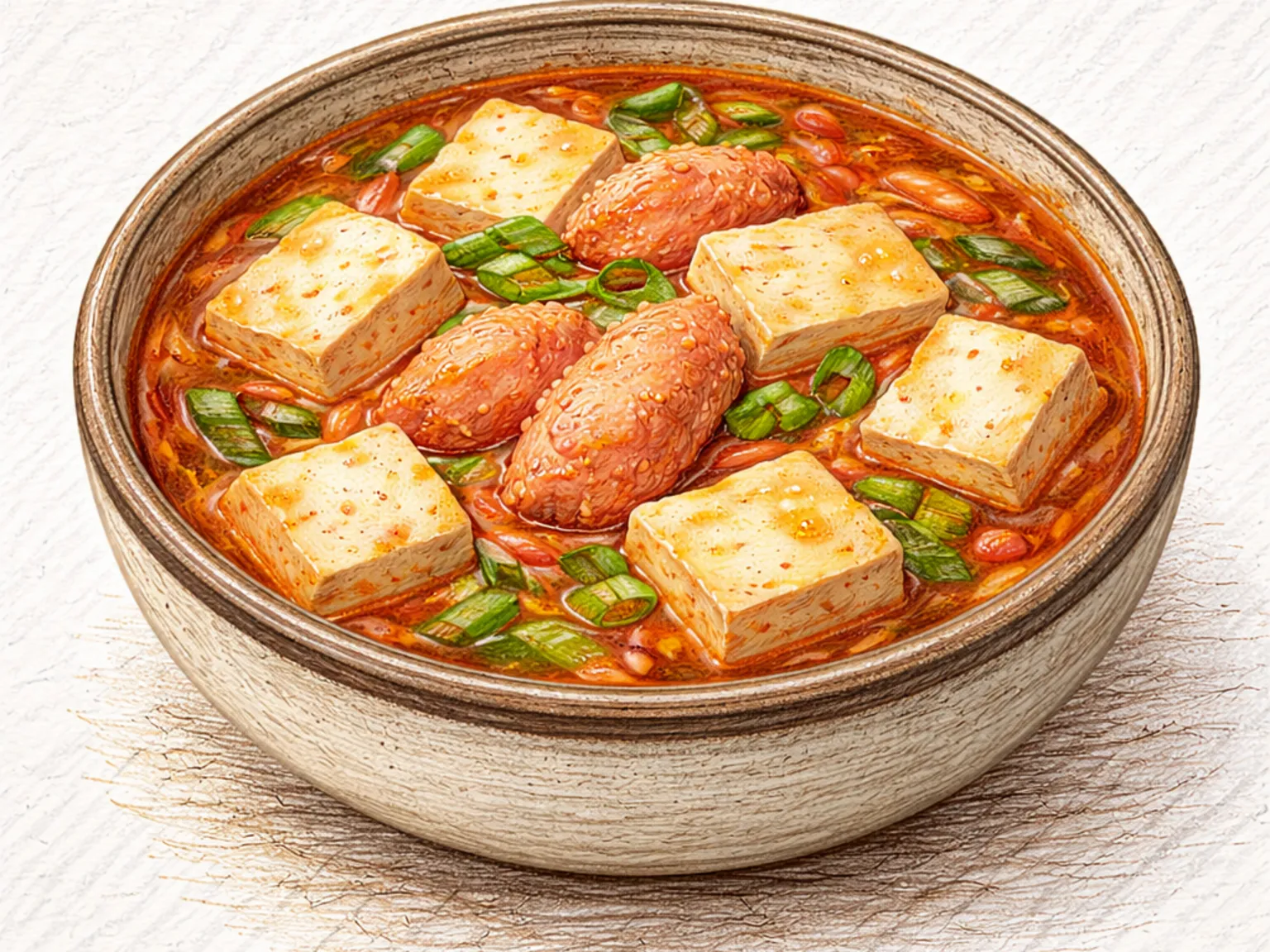
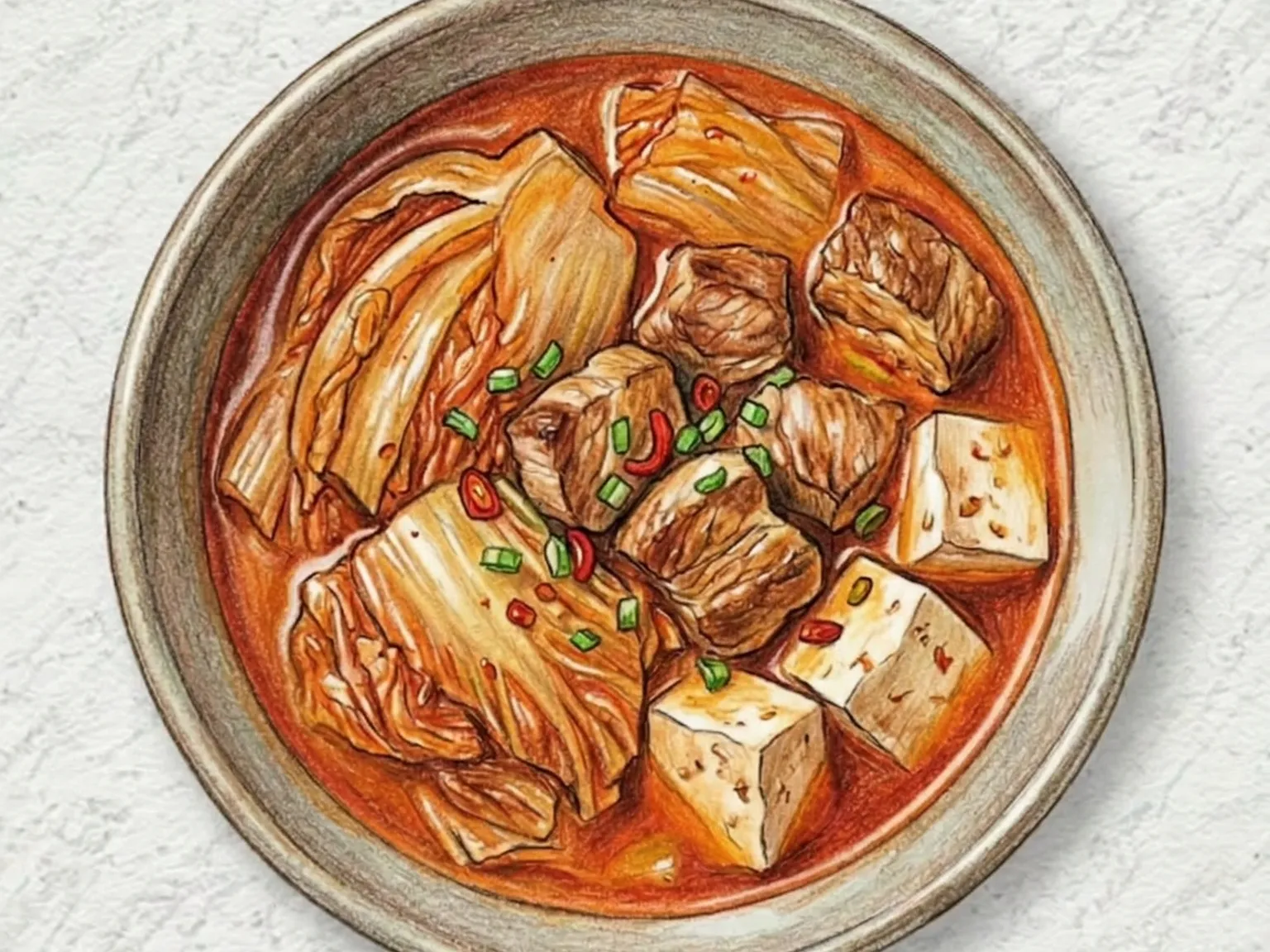
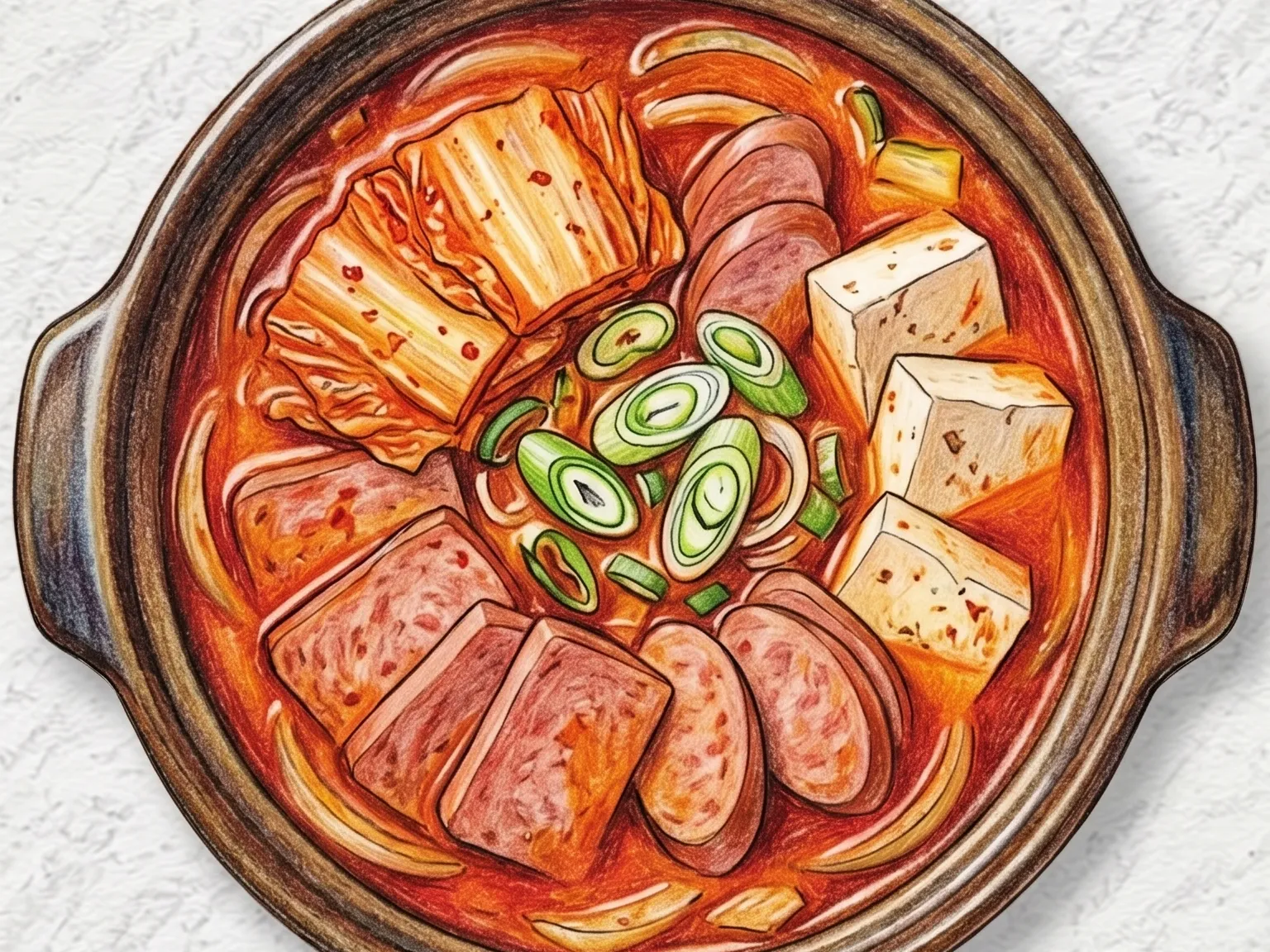
Kimchi jjigae is a well-loved Korean home-cooked stew, built on well-fermented kimchi and pork belly simmered together until the flavors fully meld. The kimchi's sharp acidity breaks down the richness of the pork fat, producing a broth that is simultaneously tangy, spicy, and deeply savory. A spoonful of doenjang adds another layer of fermented complexity, while tofu blocks absorb the fiery liquid. Finished with a drizzle of sesame oil, it is the definitive comfort food served with steamed rice.
Korean Kimchi Bean Sprout Stew
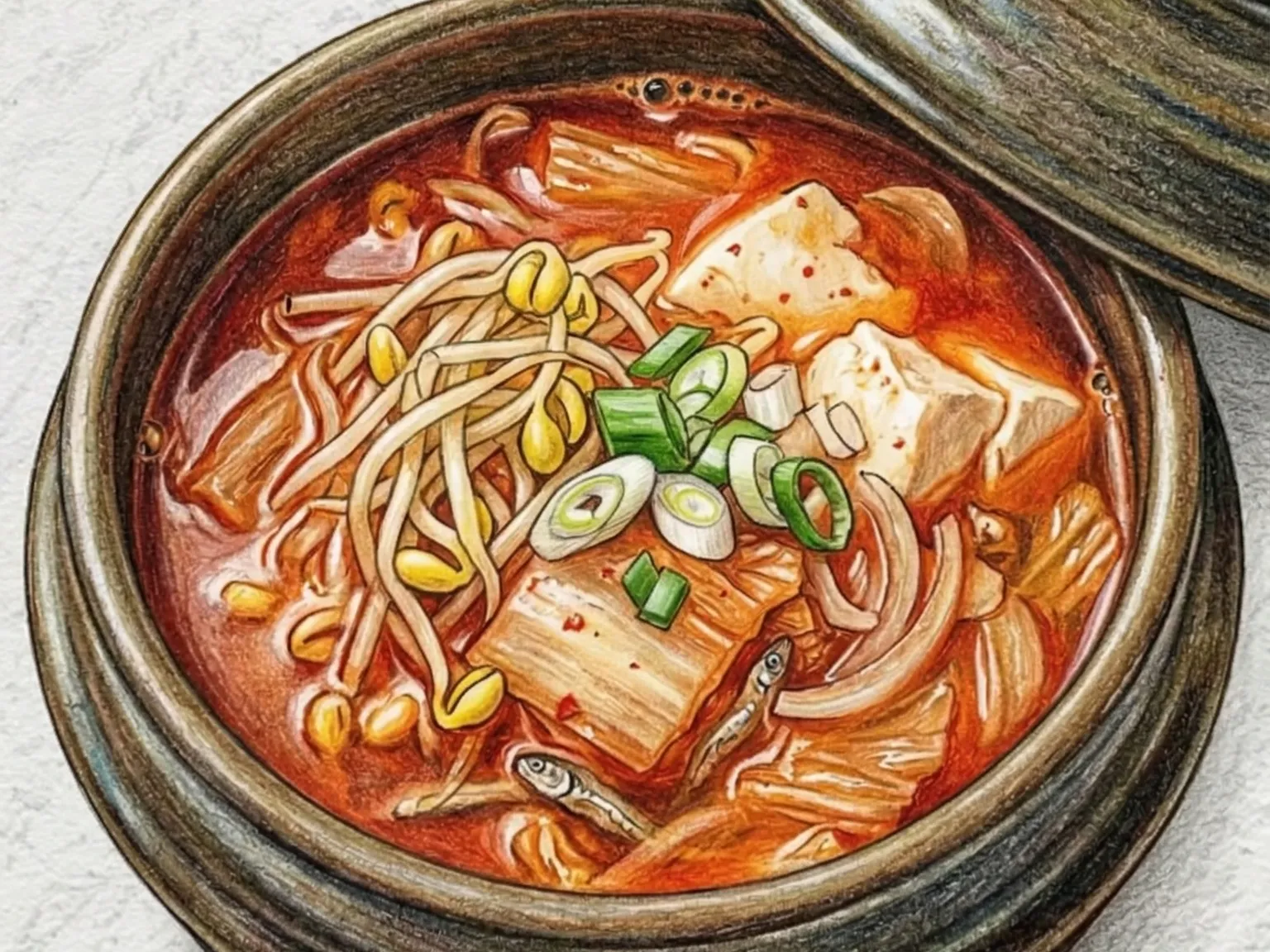
This jjigae simmers fermented kimchi and soybean sprouts in an anchovy-based stock for a broth that is both refreshing and sharply spiced. The soybean sprouts contribute a crisp bite and a clean, neutral flavor that tempers the kimchi's fermented tang and chili heat, keeping the overall taste from feeling one-dimensional. Soft tofu adds creaminess and a gentle texture contrast, while onion provides background sweetness and green onion brings a fresh, aromatic note. Soup soy sauce and gochugaru are used to season, producing a clear, clean spiciness without muddying the broth. In Korean households, this jjigae is frequently eaten in the morning or as a hangover remedy, valued for its simplicity and its ability to settle the stomach while still delivering a satisfying depth of flavor.
Korean Kimchi Mandu Jjigae (Kimchi Dumpling Stew)
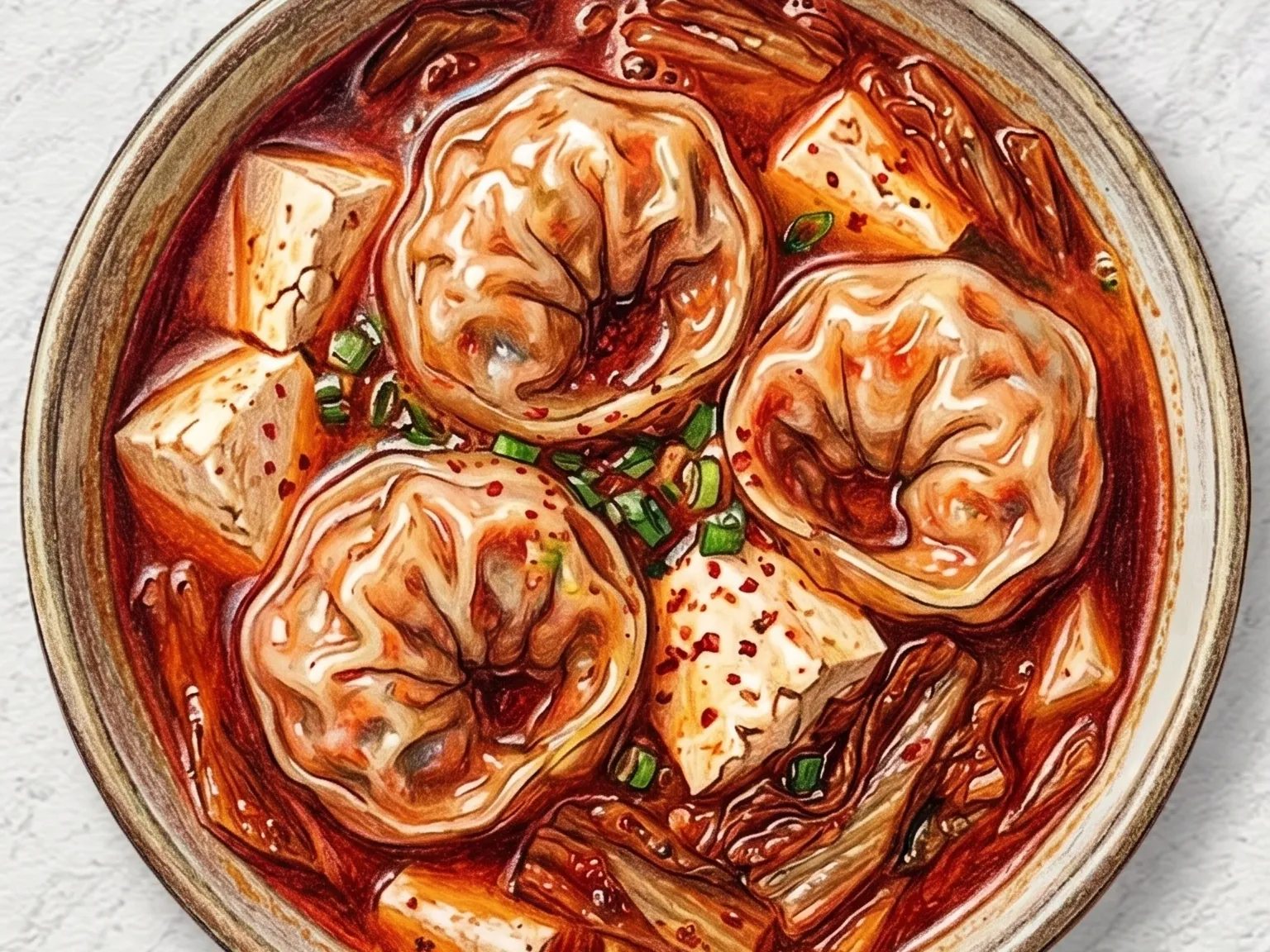
Kimchi mandu jjigae drops whole frozen kimchi dumplings straight into a simmering pot of aged kimchi, tofu, and anchovy stock. The dumpling wrappers absorb the broth as they cook, swelling plump and moist, while the kimchi filling inside echoes the stew's tangy base and doubles the fermented depth. Gochugaru and soup soy sauce add a clean chili heat, and firm tofu cubes absorb the spiced broth for a softer textural contrast. Because the dumplings themselves carry seasoning, it is better to start with less sauce and adjust after tasting the broth. This is a filling, no-fuss meal that needs nothing more than a bowl of steamed rice alongside it.
Korean Perilla Leaf Beef Stew
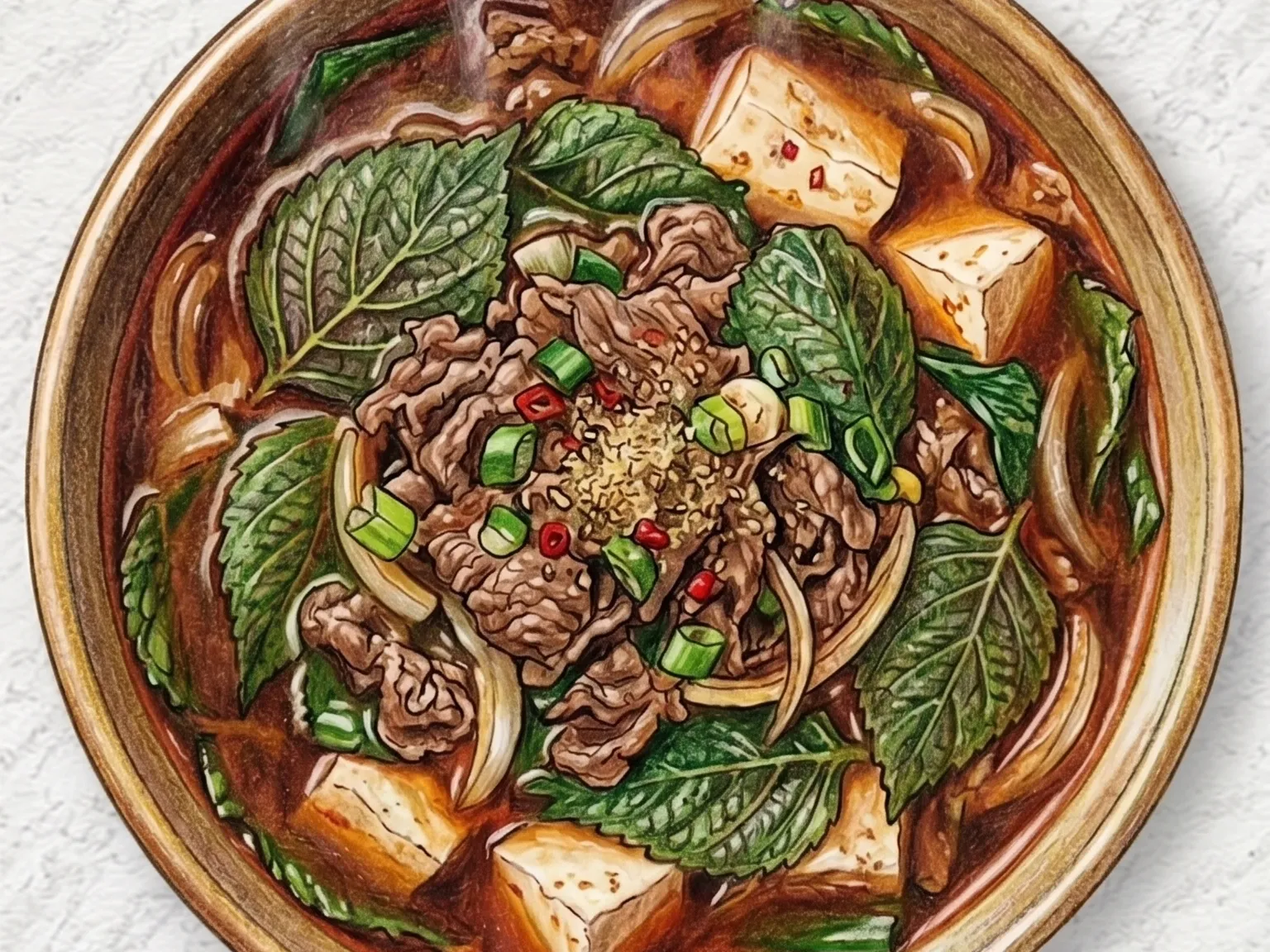
This stew features thinly sliced beef and a generous handful of perilla leaves simmered in anchovy stock. Twelve perilla leaves infuse the entire broth with their distinctive herbaceous, slightly minty aroma, while the beef releases its umami into the liquid. Firm tofu cubes absorb the gochugaru-seasoned broth, and onion adds a sweet undertone. Seasoned primarily with soup soy sauce, the stew lets the perilla and beef flavors stay in the foreground.
Korean Perilla Leaf Soft Tofu Stew
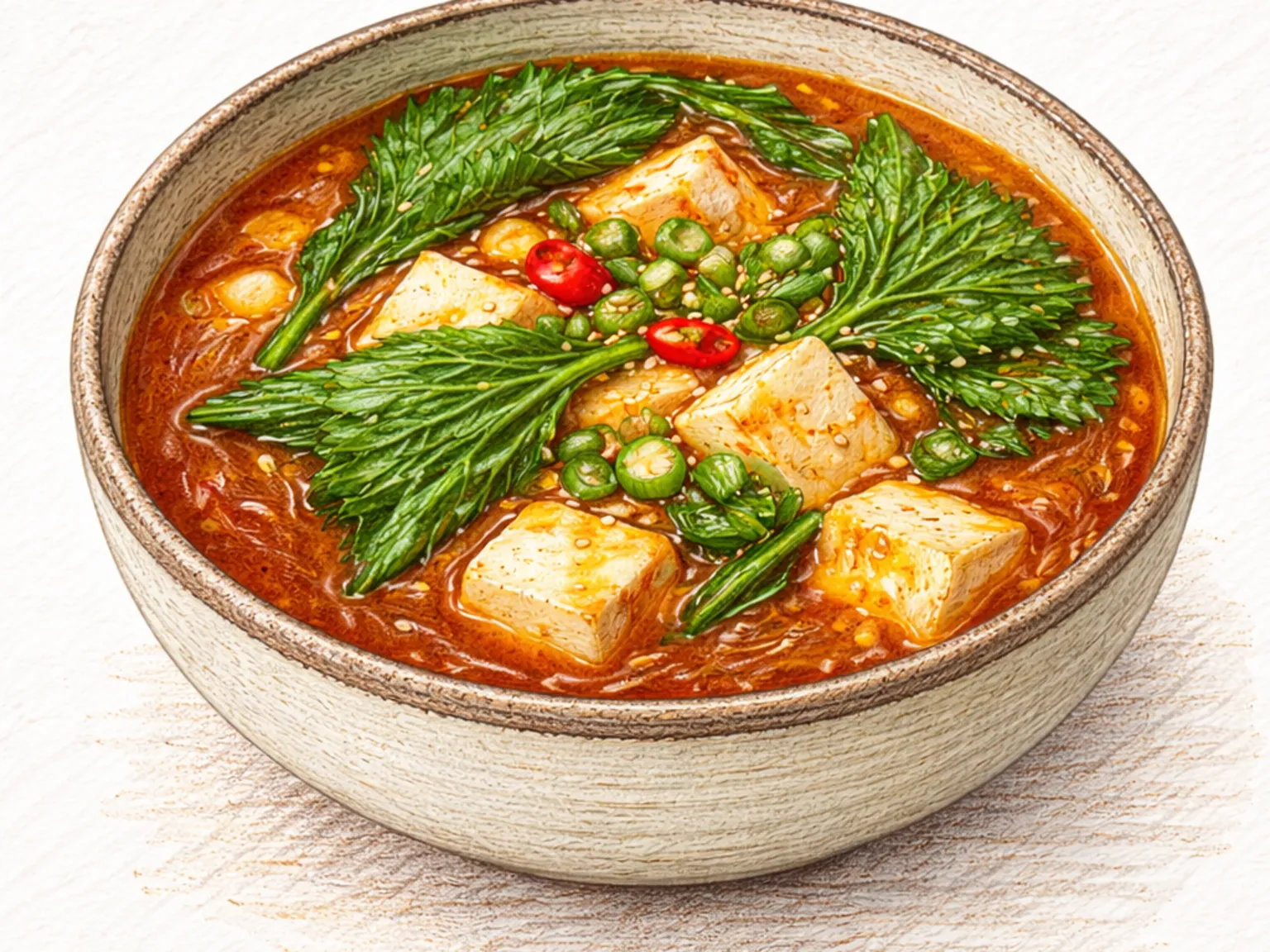
Kkaennip sundubu jjigae is a mild, gently seasoned stew of soft tofu and perilla leaves simmered in a light anchovy broth. The 350g of sundubu goes in as large, rustic pieces that hold their shape while cooking, then collapse into silky, cloud-like curds on the spoon. Twelve perilla leaves added stem-on release their aromatic oils gradually as the broth comes to a boil, giving the stew a distinctly herbal, faintly anise-like character that sets it apart from standard sundubu variations. Gochugaru and soup soy sauce provide just enough background seasoning to keep the perilla fragrance forward rather than overwhelmed by heat, and a drizzle of sesame oil at the finish adds a nutty warmth. Low in spice and gentle on the stomach, this is a practical choice on days when a soothing, unfussy bowl is what is needed.
Korean Pacific Saury Stew
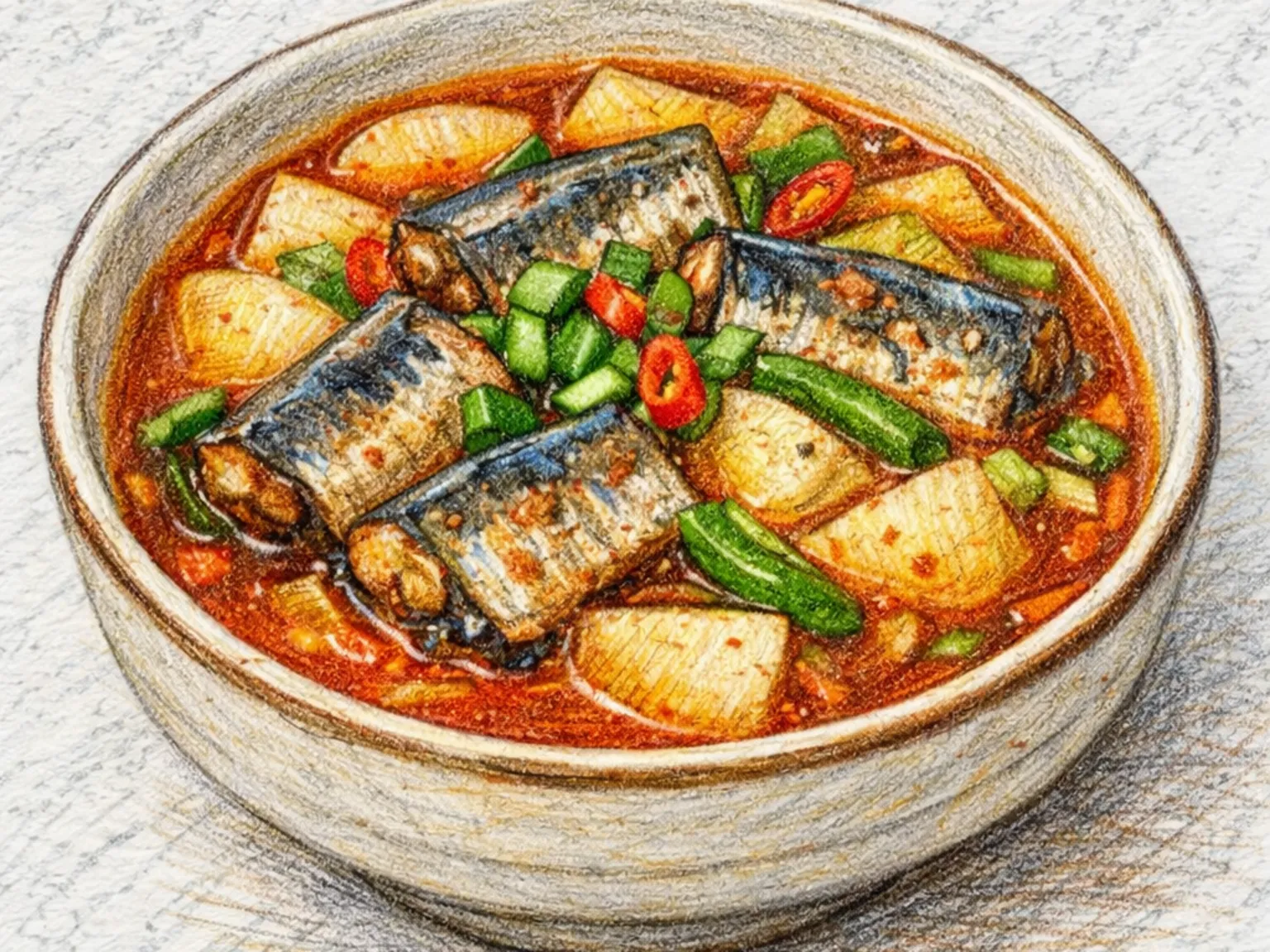
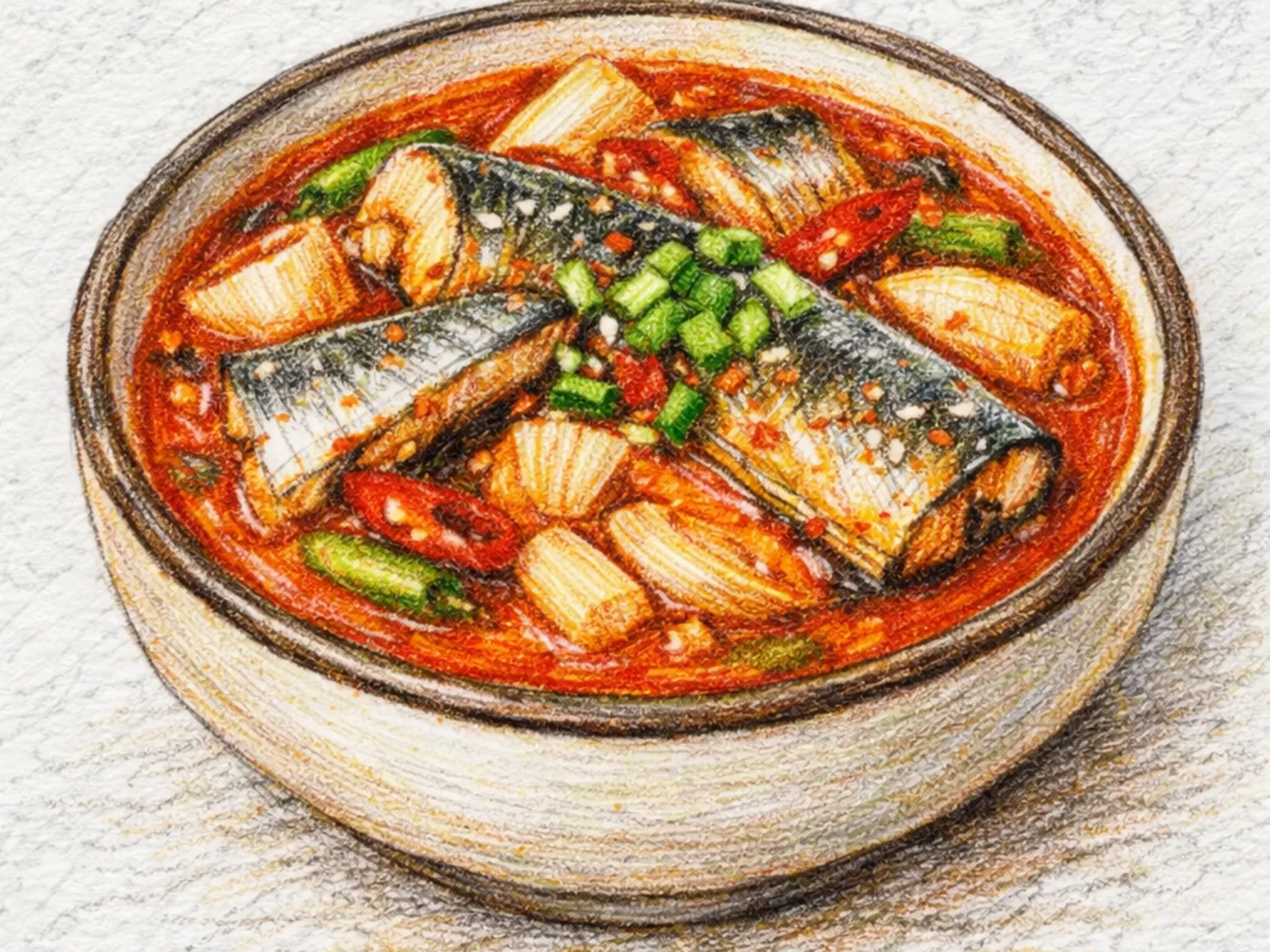
Kkongchi jjigae is a budget-friendly Korean stew built around a single can of Pacific saury, making it one of the most practical jjigae to pull together from pantry staples. Korean radish and onion go into the pot alongside the fish, absorbing the bold, oily flavor of the canned saury as everything simmers together. The canning liquid is included in the pot as well, eliminating the need for a separate stock while adding the concentrated brininess of the fish directly to the broth. A half-tablespoon of doenjang tames the fishiness that canned fish can carry while adding a layer of fermented, savory depth, and gochugaru builds the characteristic spicy bite that makes this stew work as a proper rice banchan. Because canned saury is already fully cooked and the bones have softened in the canning process, the fish can go directly into the pot without any preparation and the pieces can be eaten bones and all. The whole stew comes together in under 30 minutes, making it a reliable weeknight option when time and budget are both short.
Korean Spicy Blue Crab Seafood Stew
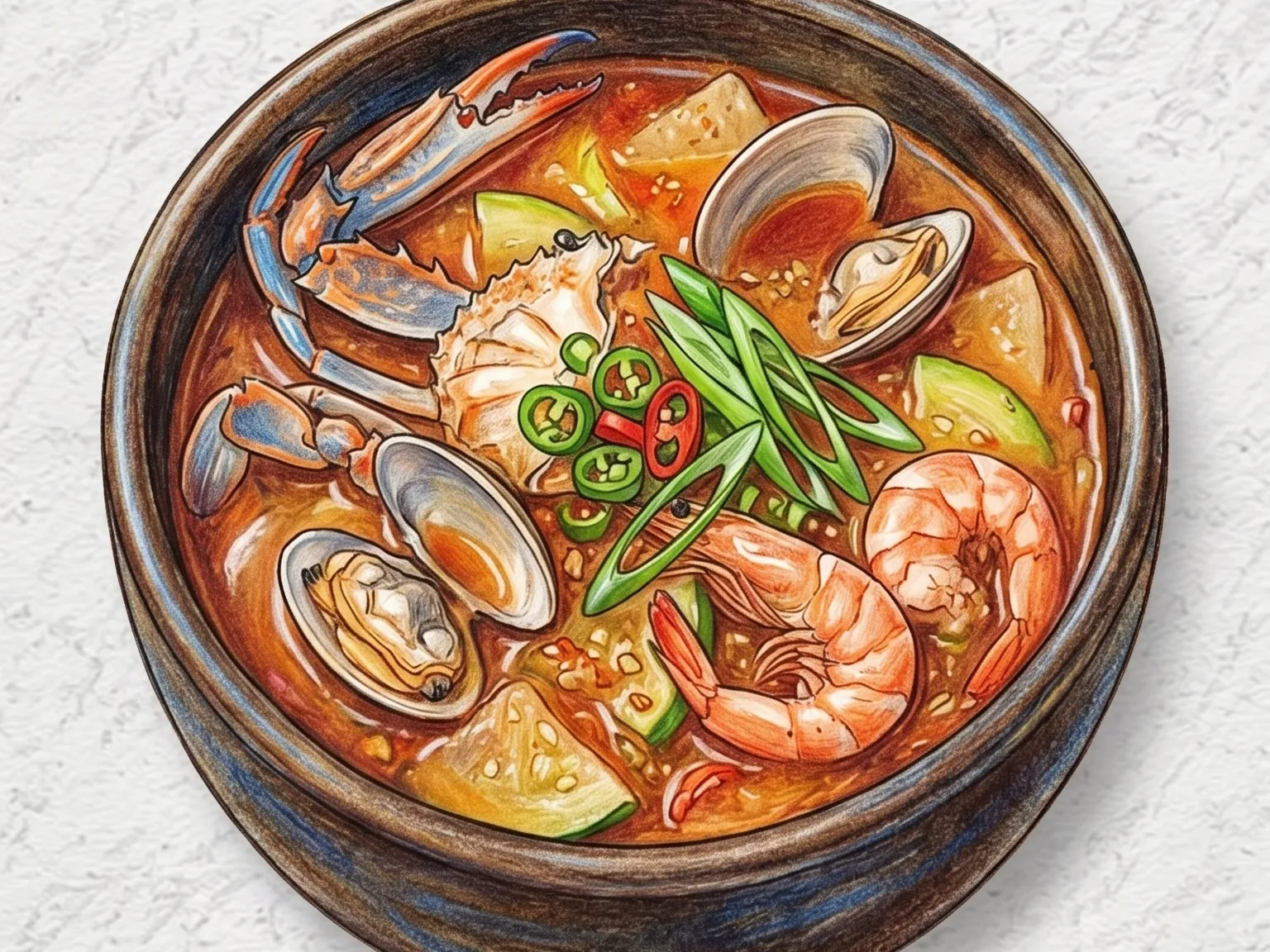
Kkotge haemul jjigae is a Korean seafood stew that combines blue crab, Manila clams, and shrimp in 1.2 liters of anchovy-kelp stock to build the most layered possible ocean flavor. Each shellfish contributes a distinct profile to the broth: blue crab adds a sweet, nutty richness from the body and roe, clams release a clean briny depth, and shrimp fold in their characteristic sweetness and concentrated umami. Together they create a broth with complexity that no single ingredient could produce on its own. Radish and zucchini absorb the seafood-infused liquid as they cook, becoming tender and carrying the flavor deep into their flesh. Doenjang and gochugaru form the seasoning backbone, layering fermented savoriness and spice into what would otherwise be a straightforward clear broth. Cheongyang chili and sliced green onion go on last, brightening the surface and extending the clean, cool finish that is the hallmark of well-made Korean seafood stew. Adding the crab first and letting it simmer before introducing the other shellfish is the key step -- it gives the stock time to take on the crab's full flavor before everything else goes in.
Korean Doenjang Kkotge Tang
Kkotge tang doenjang is a Korean blue crab stew that uses a full 800g of crab simmered in a doenjang-forward broth, where fermented soybean paste and the crab's natural essence are the two dominant flavors. As the shells cook, they release a deeply savory stock, and radish, zucchini, and onion simmer in that liquid and add layers of sweetness and body. Unlike the more common spicy gochujang-based crab stews, this version leads with doenjang's earthy depth and fermented complexity. Gochugaru and Cheongyang chili provide a secondary heat that balances the richness without taking over. Adding tofu keeps the texture varied and lightens the heaviness of the broth slightly. The crabs turn a vivid orange as they cook, a reliable visual cue that the meat is ready to pull cleanly from the shell. The fermented character of the doenjang suppresses any fishy edge from the crab, making the stew approachable even for those who do not normally gravitate toward shellfish. Served with rice to soak up the broth, it makes a satisfying complete meal.
Korean Spring Blue Crab Stew
Kkotgetang is a classic Korean spicy crab stew made with 600g of whole blue crab simmered until the shells release their full flavor into the broth. Gochugaru and a touch of doenjang season the liquid with heat and fermented depth, while radish and zucchini turn sweet as they absorb the crab-infused stock. Two Cheongyang chilies push the spice level higher, and green onion adds a fresh finish. Picking the crab meat from the shell while sipping the hot, briny broth is half the enjoyment. Spring blue crabs are prized for their fuller flesh, making that the ideal season to prepare this dish.
Korean Semi-Dried Pollock Radish Stew
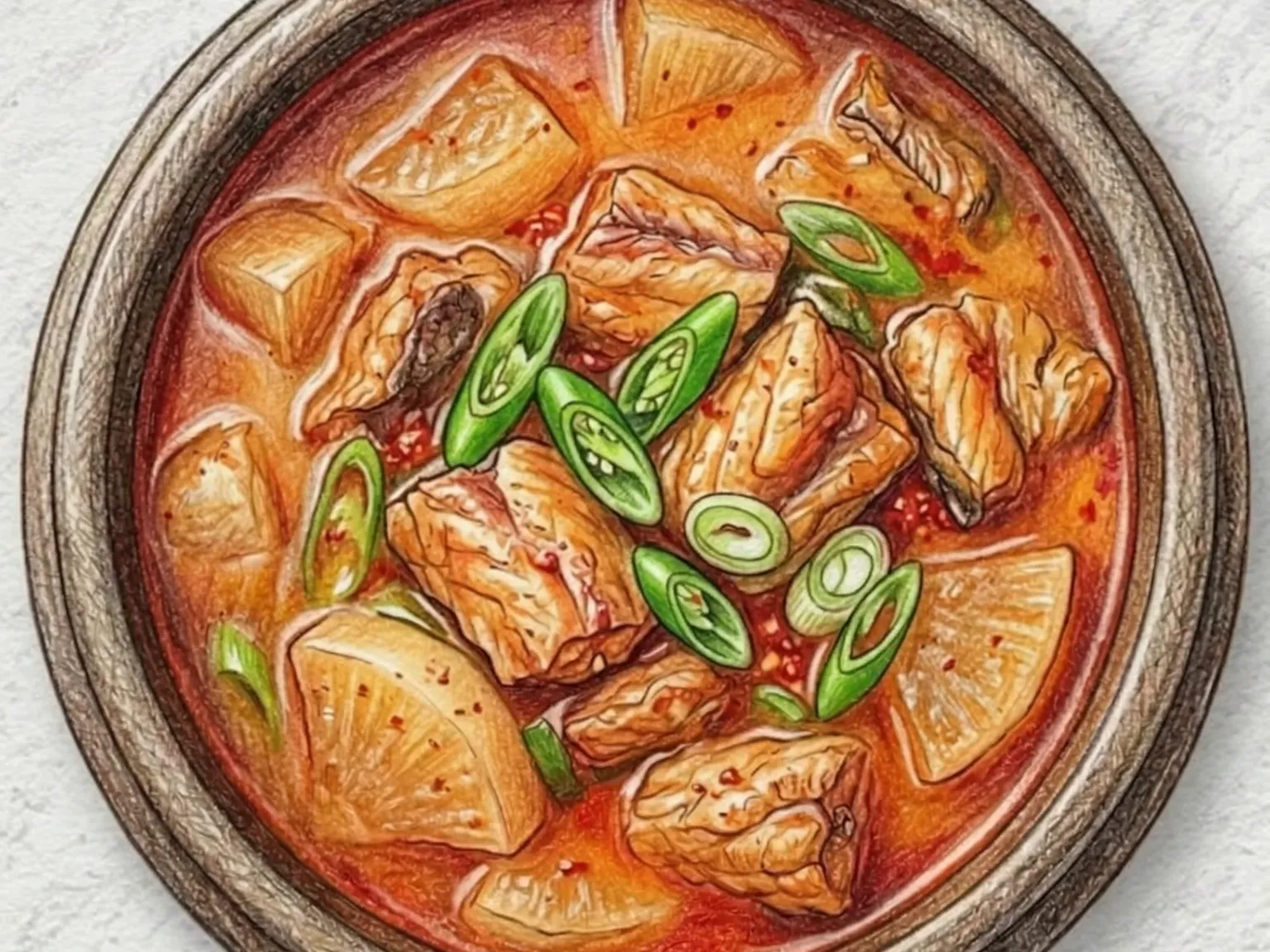
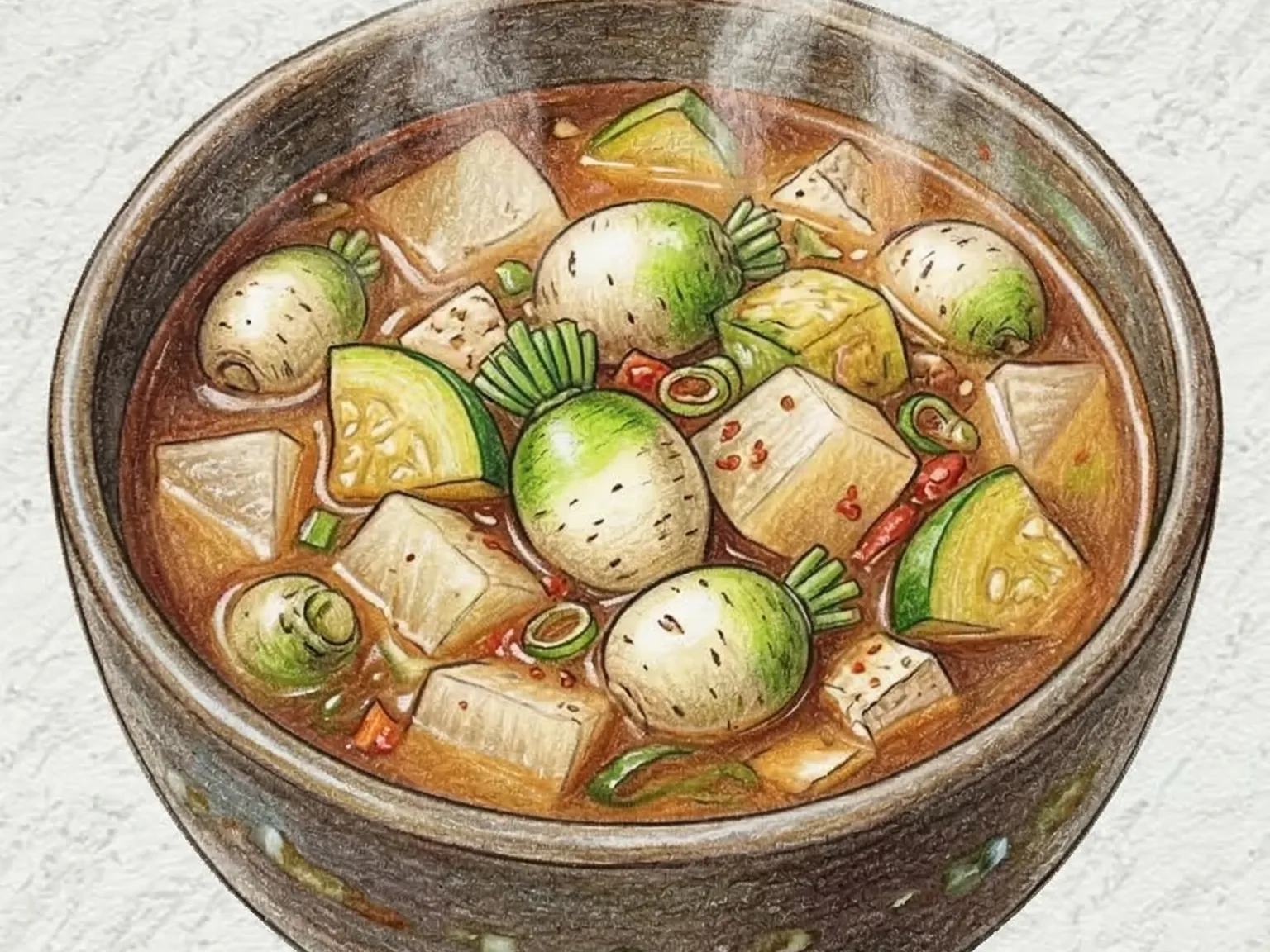
Kodari mu jjigae stews 700g of semi-dried pollock with Korean radish in rice-rinse water, a traditional technique that adds a subtle starchy richness to the broth. The pollock's firm, chewy flesh holds up well during simmering and absorbs the gochujang and gochugaru seasoning deeply. Radish balances the heat with its natural sweetness as it softens in the spicy liquid. Cheongyang chilies add a final kick, making this a warming stew that pairs exceptionally with a bowl of hot rice. The semi-drying process gives kodari a distinctly denser, chewier bite that separates it noticeably from fresh pollock.
Korean Spicy Blue Crab Hot Pot
Maeun kkotge jeongol is a fiery blue crab hot pot made with two whole crabs broken down and simmered in a gochujang and gochugaru-laced broth. The crab shells and innards gradually release a deep, concentrated shellfish essence into the pot, which layers with the fermented chili paste to produce a broth that is bold and complex rather than simply hot. Daikon radish and tofu absorb the spicy liquid as they cook, becoming flavorful in their own right, while thick green onion stalks add fragrance near the end. This is a communal dish meant to be placed in the center of the table over a portable burner and shared as it simmers, with a little water added as the broth reduces to keep it going through the meal. Stirring the crab innards directly into the broth deepens the umami considerably.
Korean Mushroom Dumpling Hot Pot
Mandu jeongol is a generous hot pot of twelve large dumplings simmered with napa cabbage, shiitake mushrooms, oyster mushrooms, and bok choy in anchovy-kelp stock. The two varieties of mushroom add layers of umami to the clear broth, while the cabbage and bok choy soften and release their natural sweetness as they cook. The dumplings cook directly in the simmering stock, their wrappers gradually turning chewy as the filling flavors seep into the surrounding liquid. Soup soy sauce and garlic provide a clean, understated seasoning that keeps the broth from overshadowing any single ingredient. The right moment to eat is when the vegetables have wilted and the dumplings float to the surface, signaling they are cooked through. The absence of any spice or strong seasoning makes this one of the more universally approachable hot pots, suited for all ages. Leftover broth absorbs cooked rice or soaked glass noodles easily, turning what remains into a satisfying finish to the meal.
Korean Kimchi Beef Dumpling Hot Pot
Kimchi-beef mandu jeongol is a generous Korean hot pot that combines frozen dumplings, thinly sliced beef, and aged kimchi in anchovy stock seasoned with gochujang and soup soy sauce. As the pot bubbles, the meat filling inside each dumpling leaches its savory fat into the broth while the kimchi's fermented sourness and heat layer in on top, building a soup that grows more complex the longer it simmers. Napa cabbage leaves, enoki mushrooms, and firm tofu add contrasting textures to each spoonful. Blanching the beef briefly before adding it to the pot prevents the broth from clouding, and the tofu goes in last to keep it intact. The older and more pungent the kimchi, the deeper and more rounded the soup becomes, which is why well-fermented kimchi is worth seeking out for this dish specifically. A drop of perilla oil stirred in just before serving adds a nutty finish that ties the layers together. Eaten communally from the stove, with rice stirred in at the end to absorb the remaining broth, this pot feeds a table with minimal effort.
Korean Sea Squirt Stew (Pop-and-Burst Seafood Broth)
Mideodeok-jjigae is a traditional Korean seafood stew characterized by its spicy broth and its central ingredient, the sea squirt. This coastal dish is widely recognized for the specific way the sea squirts pop when they are bitten, a sensation that is paired with an intense aroma reminiscent of the ocean. When an individual bites into a sea squirt, the outer skin breaks to release a concentrated internal liquid that carries a saline and savory marine flavor that is distinct from any other type of seafood. The cooking process starts with the creation of an anchovy stock which serves as the fundamental liquid base for the dish. Slices of Korean radish, zucchini, and white onion are placed into this stock and cooked until they become tender and translucent. It is important to wait until the very end of the cooking process to add the sea squirts to the pot. If the sea squirts are boiled for too long, their internal sacs will eventually collapse and lose their structure, which leads to a loss of the desired texture. The seasoning of the stew involves the use of gochugaru and soup soy sauce, which together create a heat that is both spicy and clean. Minced garlic and sliced green onions are also incorporated to add further complexity and a rounded depth to the final broth. After the sea squirts are added and the liquid returns to a boil, the cooking should be completed within a five-minute window to ensure the ingredients remain firm and elastic. Mideodeok that is harvested during the peak season of April and May will produce a broth that is notably more fragrant and flavorful than at other times of the year. People who enjoy the strong and bold flavors associated with the sea often find that this stew leaves a lasting impression.
Korean Water Parsley Clam Stew
Minari-bajirak-jjigae pairs the clean, briny broth of littleneck clams with the sharp, herbal fragrance of Korean water parsley. Korean radish and zucchini simmer in the base and contribute a gentle natural sweetness, while a whole cheongyang chili and a small measure of gochugaru add a crisp heat that does not overpower the delicate shellfish. The restrained use of chili powder keeps the broth clear and allows the clams' distinct umami to come through without interference. Clams must be thoroughly purged of sand before cooking - any residual grit will ruin the broth. Once the shells open, the clams should be eaten promptly as continued heat toughens the meat. Minari goes in only at the very end, just before the heat is turned off, to preserve its bright green color and volatile fragrance. With prep time dominated by clam purging, the active cooking takes under ten minutes.
Korean Minari Doenjang Stew
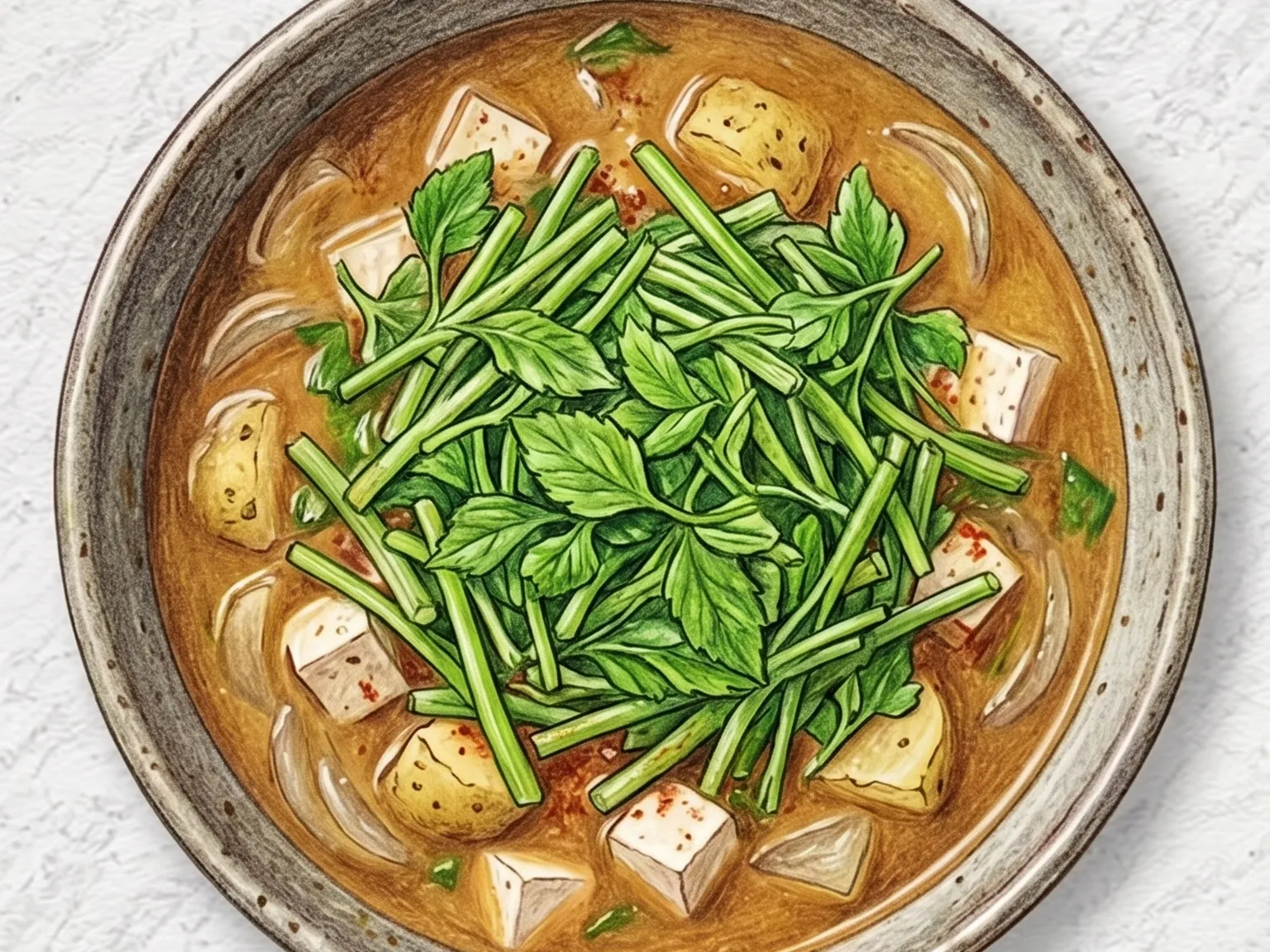
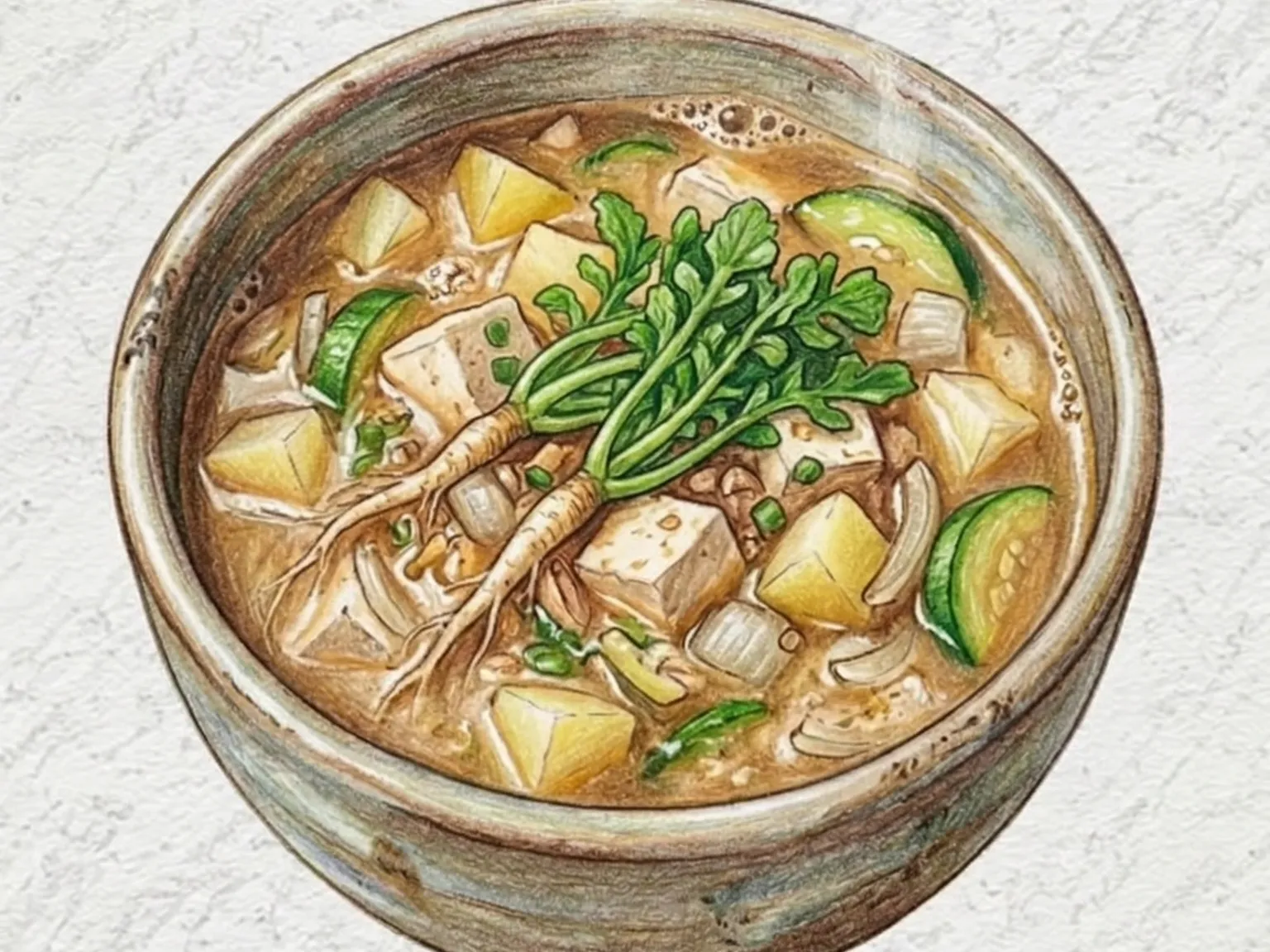
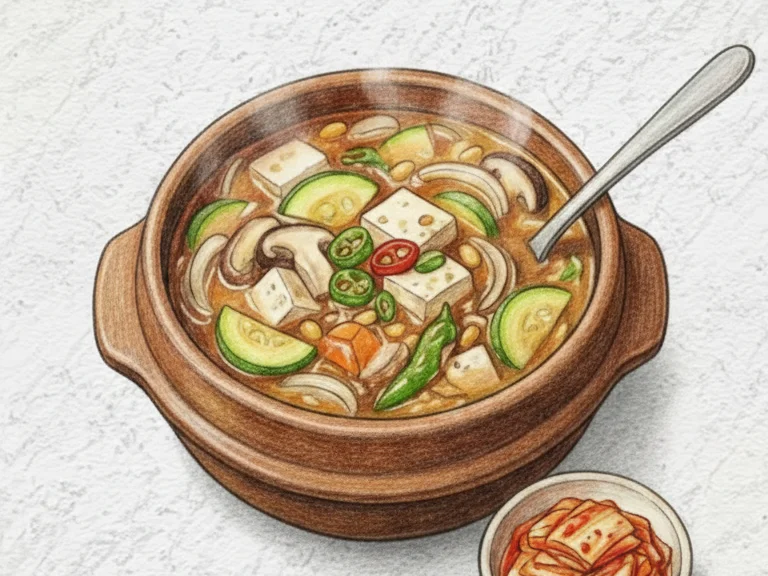
This variation of doenjang jjigae adds a generous amount of water parsley (minari) to the classic soybean paste stew. Firm tofu, potato, and onion simmer in anchovy-kelp stock with doenjang, building an earthy, deeply fermented base. The minari goes in near the end to preserve its crisp texture and peppery herbaceous aroma. A half tablespoon of chili flakes rounds out the flavor with mild warmth. Minari's grassy, herb-like character layers naturally against doenjang's fermented depth, turning a familiar stew into a seasonal variation worth returning to throughout the year.
Korean Aged Kimchi Stew (Deep-Fermented Pork Belly Broth)
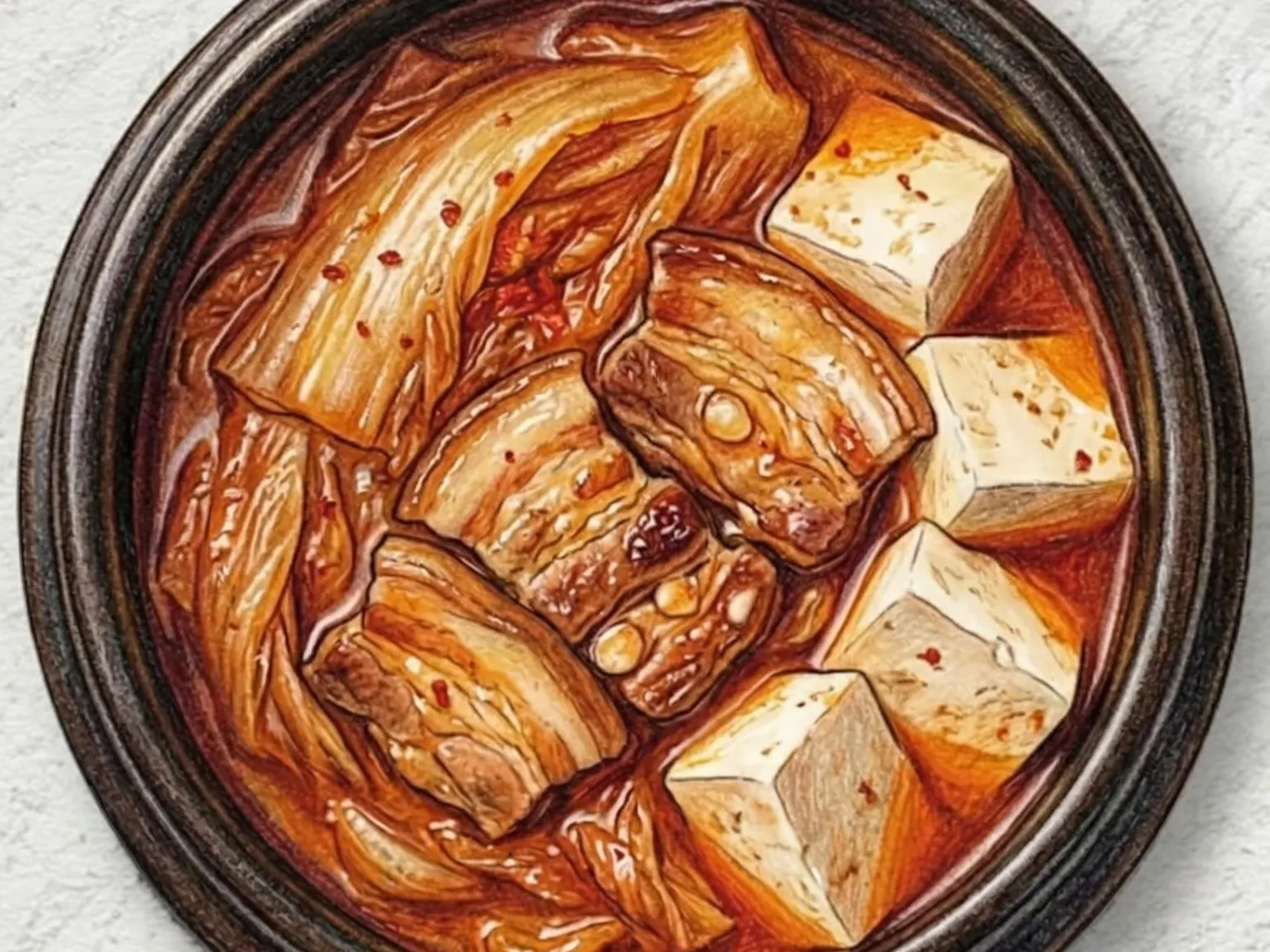
Mugeunji jjigae uses deeply fermented, aged kimchi that delivers an intense sour tang and concentrated umami far beyond fresh kimchi. Pork belly renders its fat into the stew, mellowing the sharp acidity while enriching the broth. Tofu cubes absorb the bold flavors and provide a soft contrast. The longer the kimchi has aged, the more complex and punchy this stew becomes.
Korean Radish and Salted Shrimp Stew
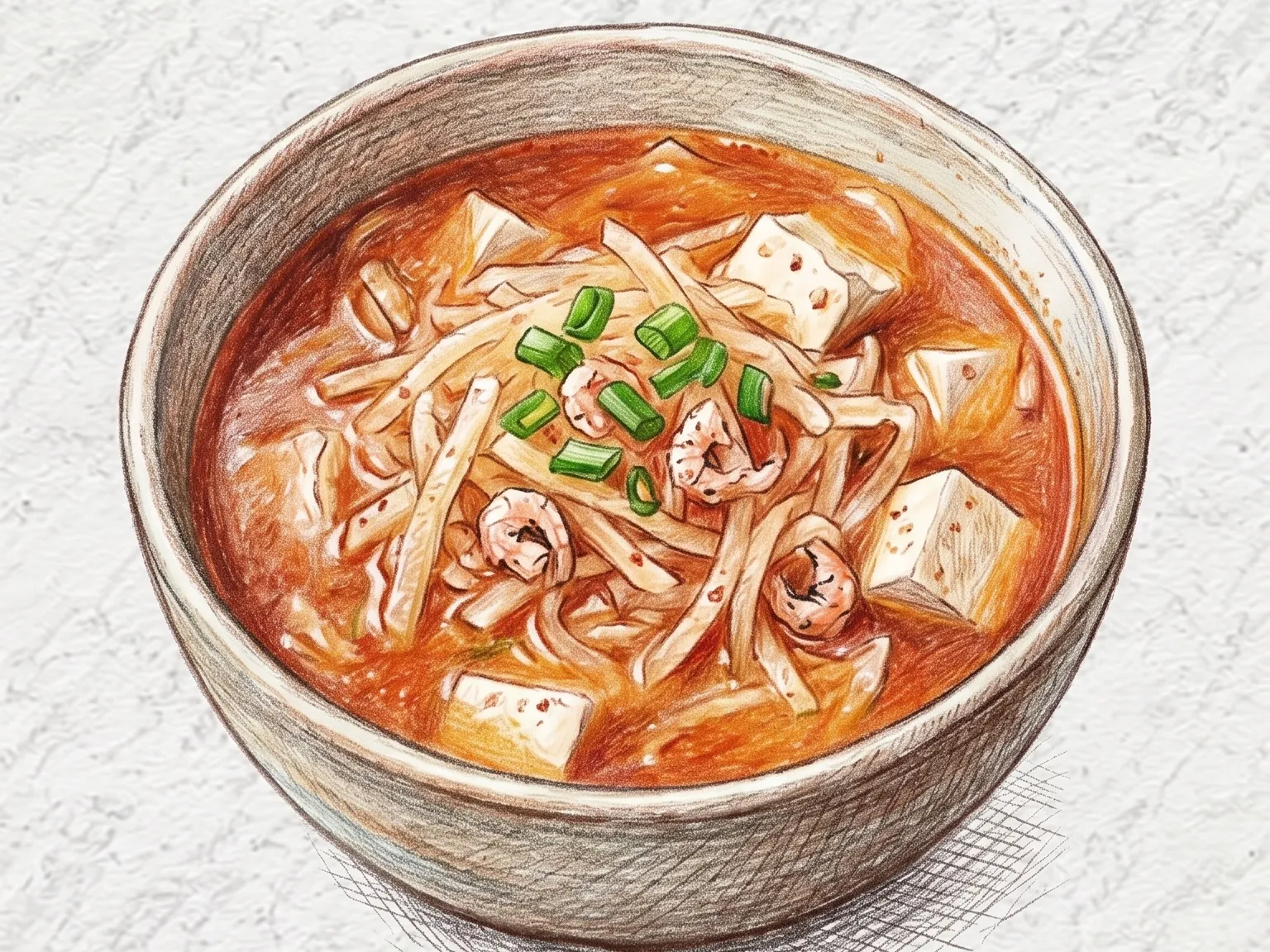
Musaengchae-jjigae simmers julienned radish in a broth built on salted shrimp (saeujeot) and gochugaru, drawing a surprising depth of flavor from minimal ingredients. Saeujeot is fermented shrimp paste that concentrates months of salt-curing and enzymatic breakdown into a potent seasoning -- it supplies umami on the level of fish sauce but with a more rounded, fermented character that forms the backbone of this broth without requiring any stock. Cutting the radish into thin julienne strips, rather than chunks, is deliberate: thin pieces cook through quickly and release just enough starch into the broth to give it a faint natural body. Gochugaru provides color and heat, and its fruity spice complements the sweet, mild flavor that radish develops as it softens. Tofu adds body and protein, and the green onion and garlic round out the aromatics. What makes this jjigae worth repeating despite its simplicity is the fermented complexity from the saeujeot -- a single tablespoon transforms plain water into something that tastes long-cooked. Lighter in texture than doenjang or kimchi jjigae, it works well as an everyday soup that pairs with rice without overwhelming the meal.
Korean Pollack Roe Tofu Stew
Myeongnan-dubu-jjigae is a Korean stew built around whole pollack roe simmered in anchovy and kelp stock. As the broth comes to a boil, the roe gradually loosens and disperses into the liquid, releasing a briny, concentrated umami that permeates every ingredient in the pot. Using anchovy-kelp stock rather than plain water lets the oceanic character of the roe come through without competition. Firm tofu cut into one-centimeter slices absorbs the savory broth while holding its shape throughout cooking, unlike soft tofu which breaks apart. Red pepper flakes, minced garlic, and sliced green onion finish the stew with a clean, spicy edge. The grainy, textured bite of the intact roe kernels is what sets this stew apart from other Korean jjigae. Cooking time should be kept short: once the broth reaches a full boil, the heat is reduced immediately, because prolonged boiling dissolves the roe completely and erases the textural contrast. Spooning the broth and roe together over steamed rice and mixing it in is the most satisfying way to eat it.