Stews
Stews

Stews Recipes

142 recipes. Page 3 of 6

Korean stews (jjigae) are heartier and more intensely seasoned than soups, packed with vegetables, tofu, meat, or seafood. Kimchi jjigae, doenjang jjigae, and sundubu jjigae rank among the most beloved everyday meals, bubbling away in stone pots at the table.

The depth of flavor comes from fermented pastes - doenjang, gochujang, and gochugaru. Stews are also a practical way to use up leftover ingredients, making them a staple of home cooking.

Korean Hairtail & Fernbrake Stew
Stews Medium

Korean Hairtail & Fernbrake Stew

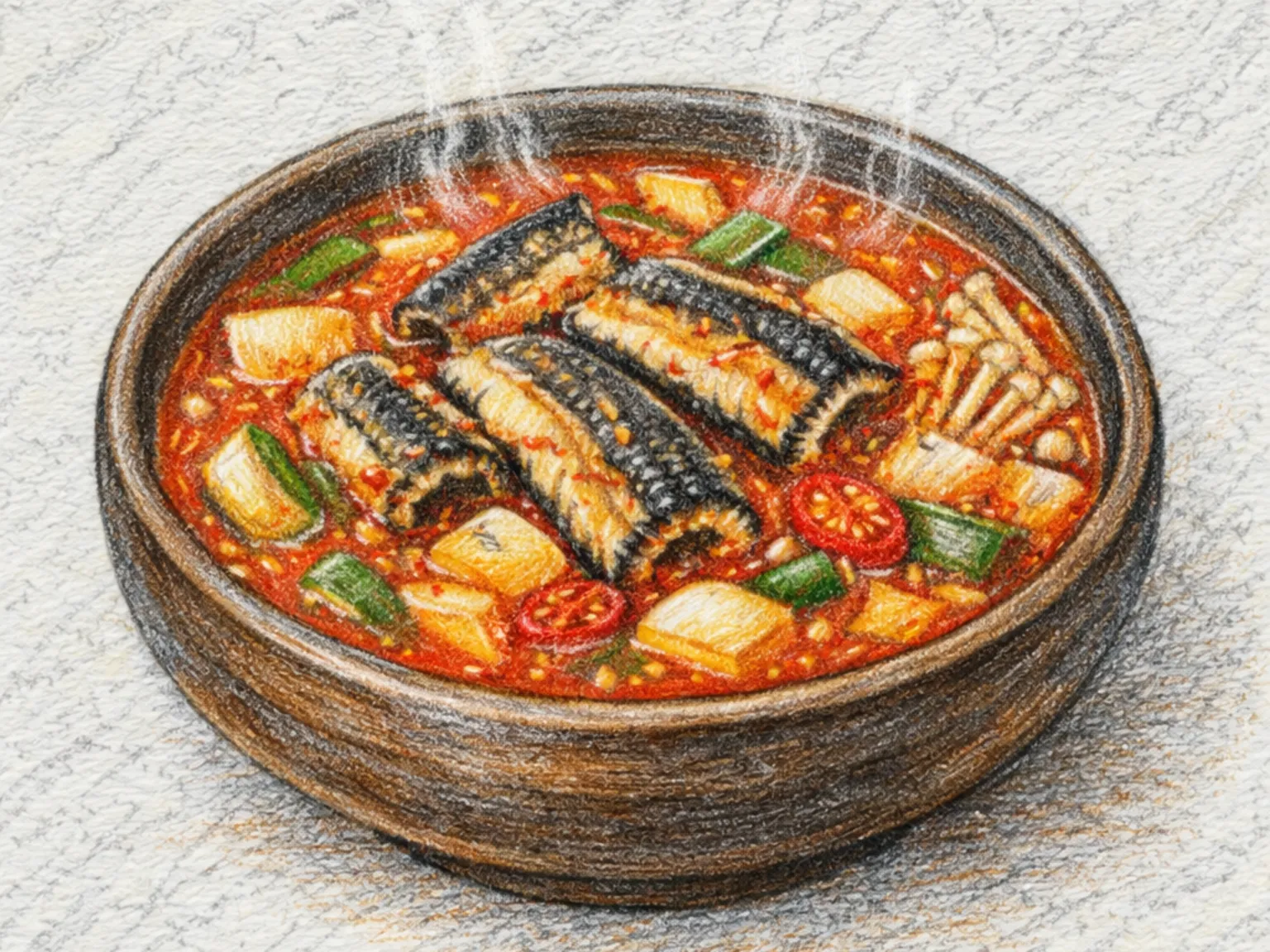
Galchi gosari jjigae pairs hairtail fish with boiled fernbrake in a deeply spiced Korean stew. The broth begins with anchovy-kelp stock seasoned with gochugaru and soup soy sauce, building a clean, peppery heat without heaviness. Korean radish and onion go in early to dissolve their natural sugars into the broth, adding a cool sweetness that tempers the chili. As the hairtail simmers, its flesh breaks into tender pieces and releases the fish's inherent oils into the liquid, enriching every spoonful with a maritime depth. The fernbrake brings a resilient, slightly meaty chew that stands up well to the long simmer. Rooted in the fish stew traditions of Jeju Island and the southern coastal regions of Korea, this dish is a regional staple that pairs seamlessly with plain rice.

🏠 Everyday
Prep 20min Cook 30min 4 servings
Korean Galchi Kimchi Jjigae (Hairtail Kimchi Stew)
Stews Medium

Korean Galchi Kimchi Jjigae (Hairtail Kimchi Stew)

Galchi kimchi jjigae is a Korean stew that pairs hairtail fish with deeply fermented aged kimchi, simmered together in a base of anchovy and dried kelp stock. The richness of hairtail - an oily, full-flavored white fish - works in counterpoint to the sharp, acidic punch of well-aged kimchi, and as the two cook together their flavors blur into something more complex than either ingredient alone. Korean radish and onion go into the pot first, their natural sweetness dissolving into the broth to form a mild, rounded base before the fish is added. The hairtail is laid in gently and cooked covered to preserve the flesh, which would fall apart if stirred. Gochugaru and soup soy sauce season the broth with spice and salt, while the fish releases its own deep umami gradually, enriching every spoonful of liquid. Pouring the stew over a bowl of rice is one of the most common ways to eat it - the broth soaks into the grains and pulls every element of the dish together. It is particularly well-suited to cold-weather cooking, when a hot, assertive broth is exactly what is needed.

🏠 Everyday
Prep 20min Cook 35min 4 servings
Korean Potato Stew (Pork & Potato Spicy Gochujang Pot)
Stews Easy

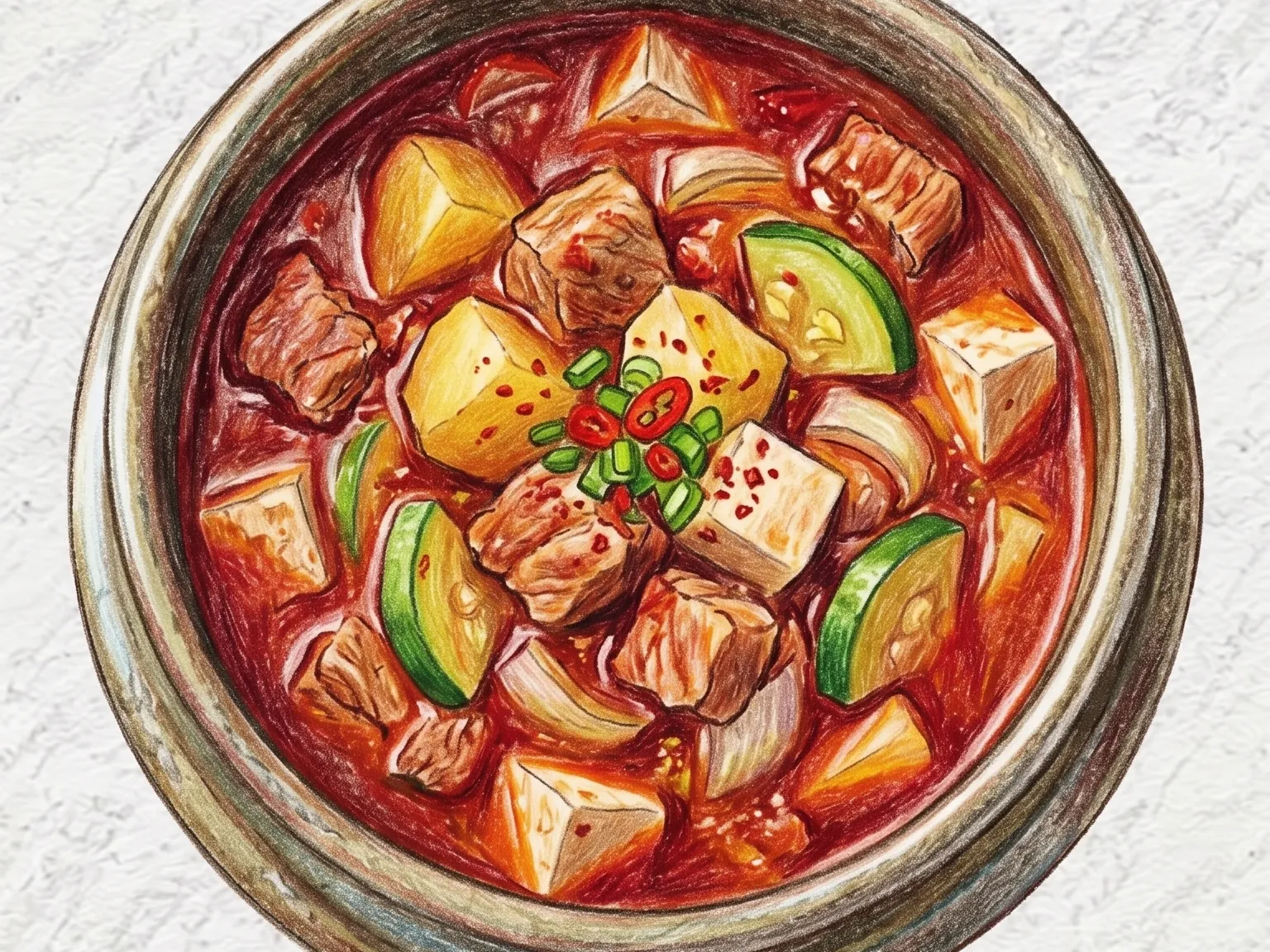
Korean Potato Stew (Pork & Potato Spicy Gochujang Pot)

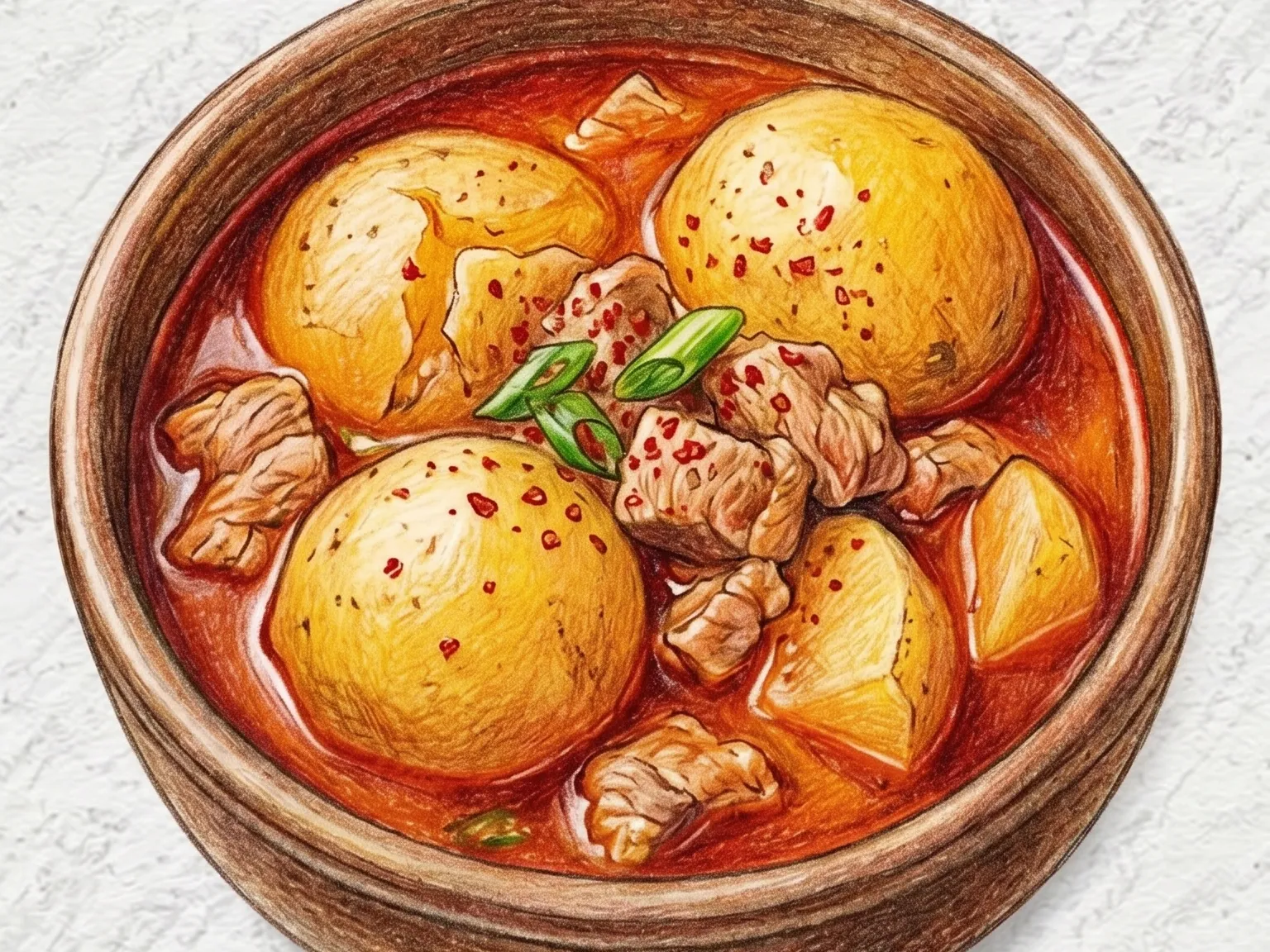
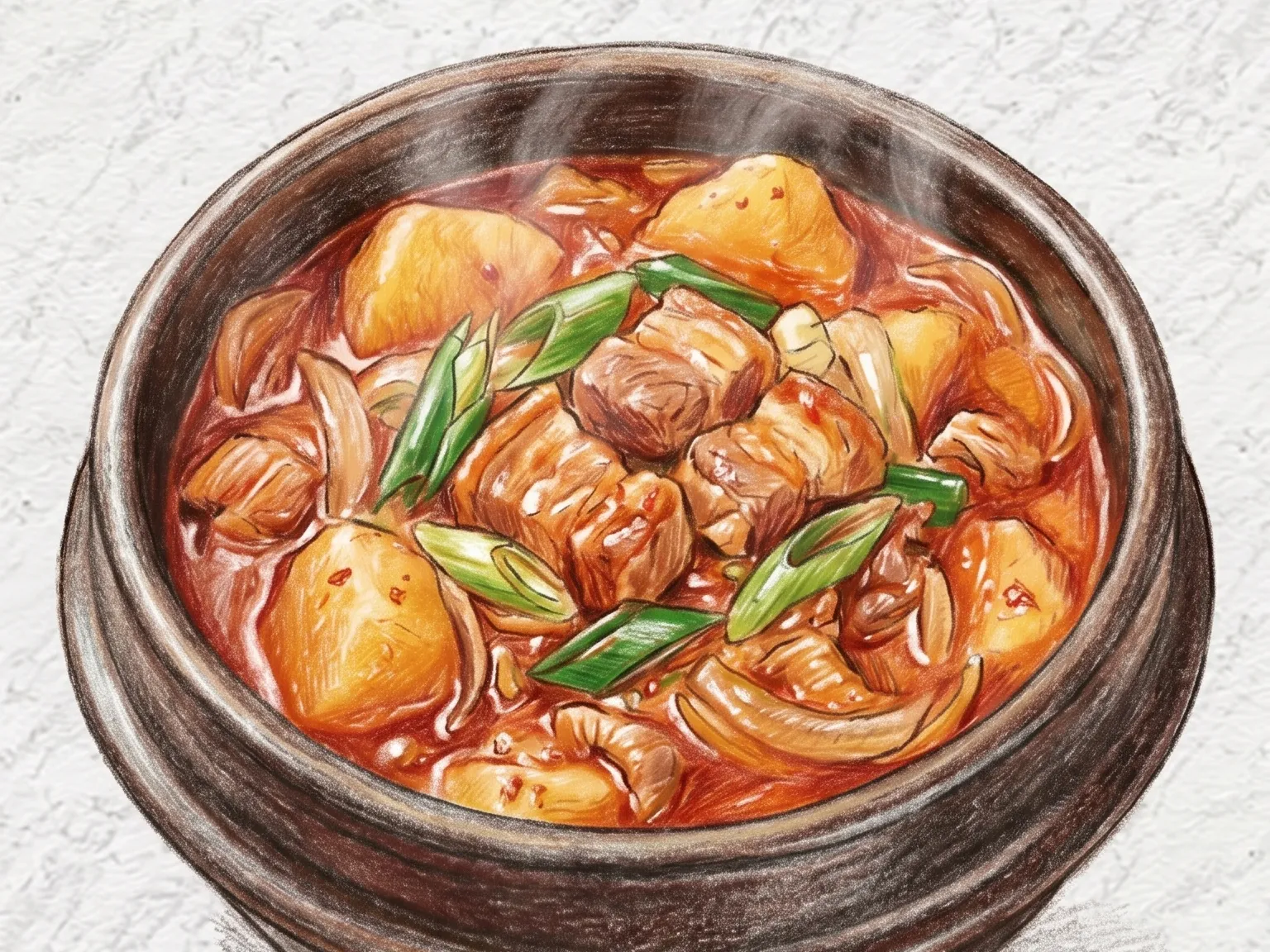
Gamja-jjigae is a straightforward Korean stew of potatoes and pork seasoned with gochujang and gochugaru. The potatoes are added in large pieces and cooked until completely soft, releasing starch into the broth as they break down and giving the liquid a naturally thick, hearty consistency without any thickening agent. Pork provides a mild, clean meatiness that anchors the stew without overwhelming it, while the gochujang contributes a fermented depth and slight sweetness and the gochugaru adds a sharper, drier heat. The seasoning builds gradually as the ingredients cook together, and by the time the potatoes are done the broth has absorbed the flavors from both the meat and the chili paste. With a short ingredient list and no complex steps, this is a reliable home-style stew that comes together quickly.

🏠 Everyday
Prep 10min Cook 25min 2 servings
Korean Pork Bone Stew (Slow-Simmered Pork Spine & Potato)
Stews Medium

Korean Pork Bone Stew (Slow-Simmered Pork Spine & Potato)

Gamjatang is one of Korea's most recognized bone soups, made by simmering pork spine for a long time until the broth turns milky white and rich with collagen. Doenjang and gochugaru form the seasoning foundation, while perilla seed powder -- a signature addition -- gives the broth a nutty, slightly creamy depth that is hard to replicate with any substitute. Potatoes simmer until they absorb the broth and soften to the core, and the dried napa cabbage leaves add a chewy, vegetal contrast to the thick liquid. A handful of perilla leaves stirred in near the end brings a fresh herbal note, and the ritual of picking tender pork off the bones with chopsticks is part of what makes eating gamjatang a hands-on, satisfying experience. It is traditionally sought out as a late-night meal or a hangover cure.

🍺 Bar Snacks 🏠 Everyday
Prep 30min Cook 60min 4 servings
Korean Perilla Gamjatang (Nutty Perilla Pork Bone & Potato Stew)
Stews Medium

Korean Perilla Gamjatang (Nutty Perilla Pork Bone & Potato Stew)

This perilla-forward version of gamjatang places nutty richness at the center of the dish by adding a generous four tablespoons of ground perilla seed to the broth. Pork backbone weighing around 1.2 kilograms is soaked in cold water to draw out the blood, blanched once to clean the surface, then simmered into a heavy, collagen-rich stock that forms the base for everything else. Potatoes and salted napa outer leaves go in partway through cooking, absorbing the deeply savory liquid as they soften. The perilla powder added toward the end turns the broth noticeably pale and creamy, coating it in a smooth, roasted nuttiness that distinguishes this variation from the sharper, more aggressively spiced standard recipe. Twelve perilla leaves are added with the lid on during the final minutes, allowing their herbal fragrance to steep gently into the pot rather than cook off. A spoonful of doenjang strengthens the underlying umami. Gochugaru and gochujang are used to build heat, but the perilla softens and rounds the spice so the overall effect is warmer and less sharp than a conventional gamjatang. Frying leftover rice in the remaining broth at the end is a natural conclusion to the meal.

🏠 Everyday
Prep 30min Cook 70min 4 servings
Korean Thick Soybean Paste Stew
Stews Easy

Korean Thick Soybean Paste Stew

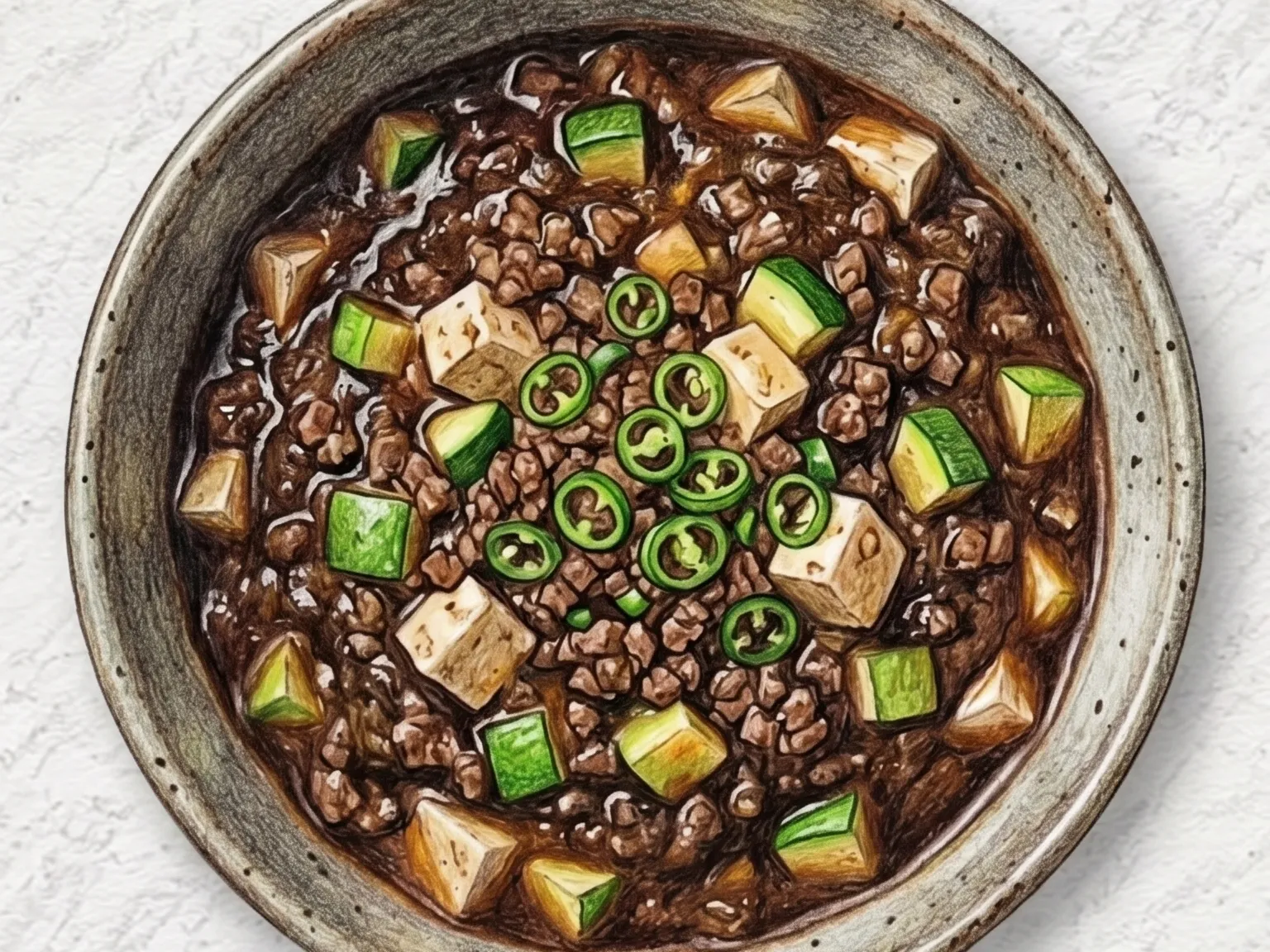
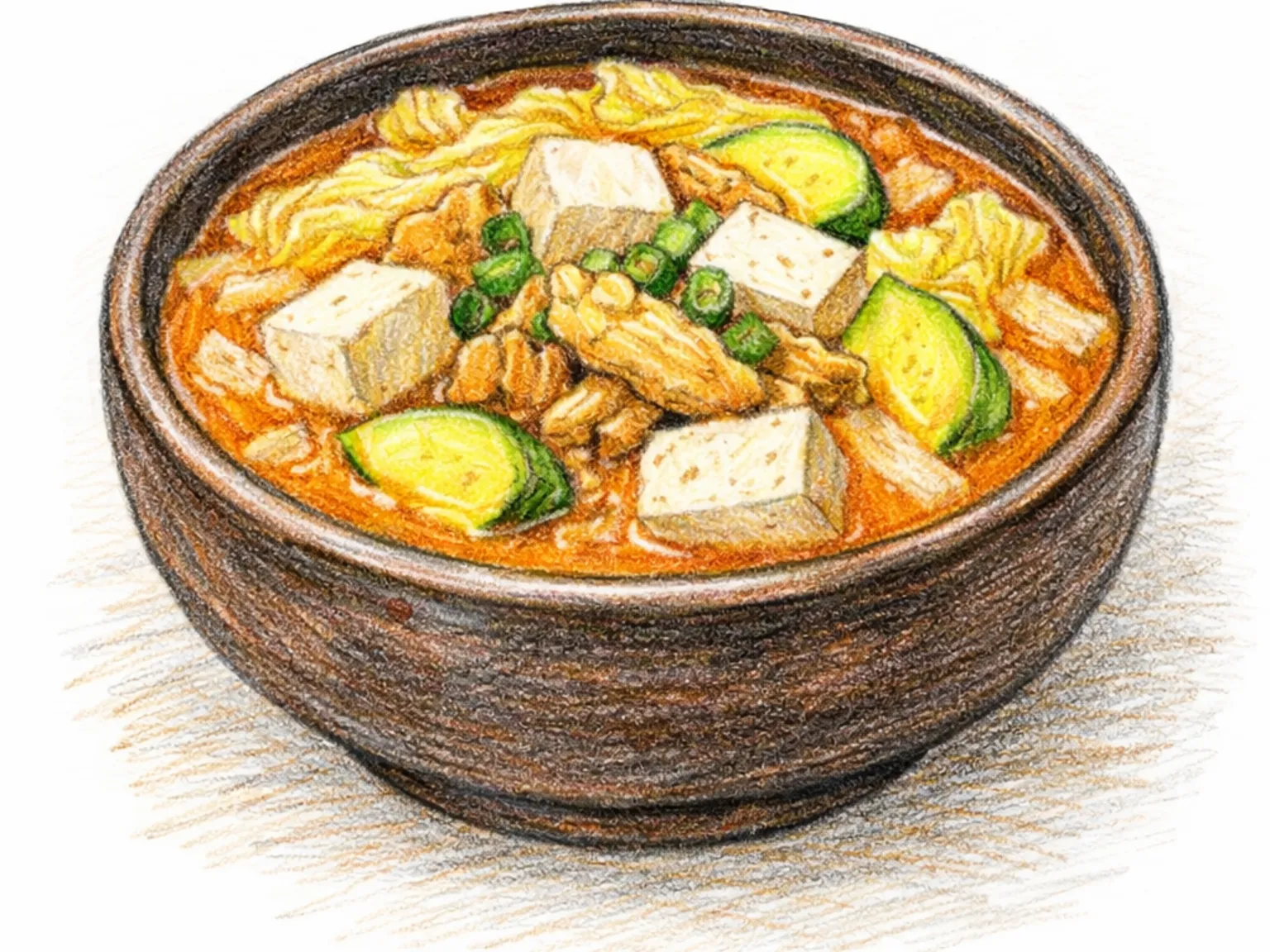
Gangdoenjang jjigae is a concentrated Korean soybean paste stew that combines doenjang with a measure of gochujang, pushing the base into a richer, sharper register than standard doenjang jjigae. Ground beef stirred into the paste mixture amplifies the savory depth from the start, while cubed firm tofu and zucchini slices provide soft, yielding textures that absorb the bold seasoning. The anchovy-kelp stock beneath the paste keeps the overall flavor clean and well-defined rather than muddy. A single Cheongyang chili, added whole or sliced, threads a steady, moderate heat through the broth without dominating it. Because the stew is intentionally thicker and more intensely flavored than most Korean soups, it pairs naturally with ssam-bap: wrapped in lettuce leaves with rice, it functions as both dipping sauce and main component in one.

🏠 Everyday ⚡ Quick
Prep 12min Cook 18min 2 servings
Korean Gangwon-Style Soybean Paste Stew
Stews Easy

Korean Gangwon-Style Soybean Paste Stew

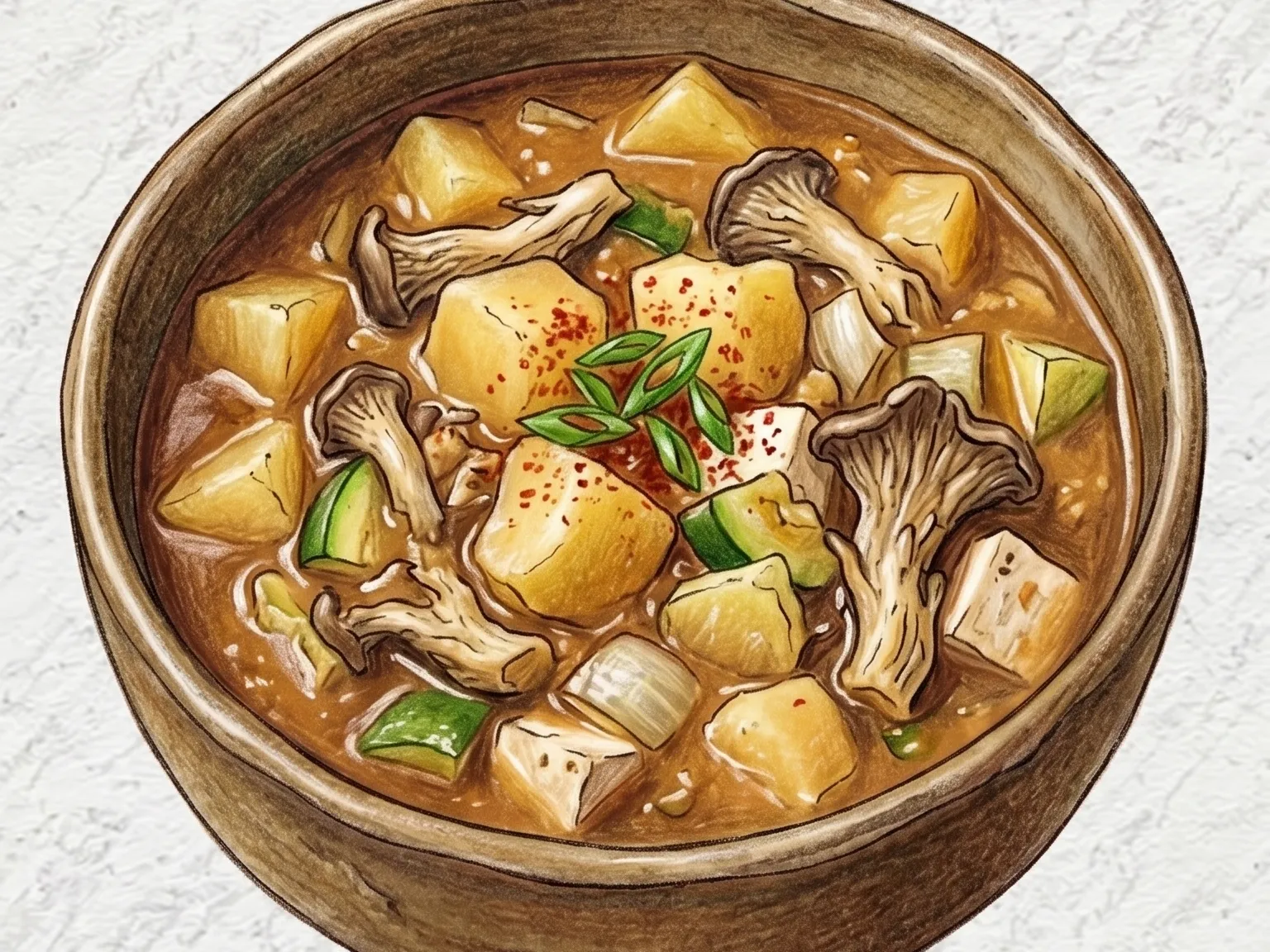
Gangwon-style doenjang jjigae is a regional variation of the fermented soybean paste stew defined by an unusually generous quantity of potatoes - 300 grams - which break down during cooking and release starch into the broth, giving it a thick, substantial body rarely found in other regional versions. Three tablespoons of doenjang dissolved in 1.1 liters of anchovy stock form a solid base. As the diced potatoes cook through, their starch gradually thickens the surrounding liquid and softens into pieces with a texture somewhere between firm and yielding. Oyster mushrooms contribute a distinctly chewy quality that holds up through extended simmering while also enriching the savory depth of the broth. Zucchini, onion, and firm tofu round out the pot, making it substantial enough to serve as a complete meal without anything else on the table. Gangwon Province, with its mountainous terrain, cooler summers, and long winters, developed a style of home cooking that favors generous quantities and long cooking times over refinement. The stew should be simmered until the potatoes are completely soft before serving so the broth reaches its intended consistency.

🏠 Everyday
Prep 15min Cook 25min 4 servings
Korean Crab Doenjang Stew
Stews Easy

Korean Crab Doenjang Stew

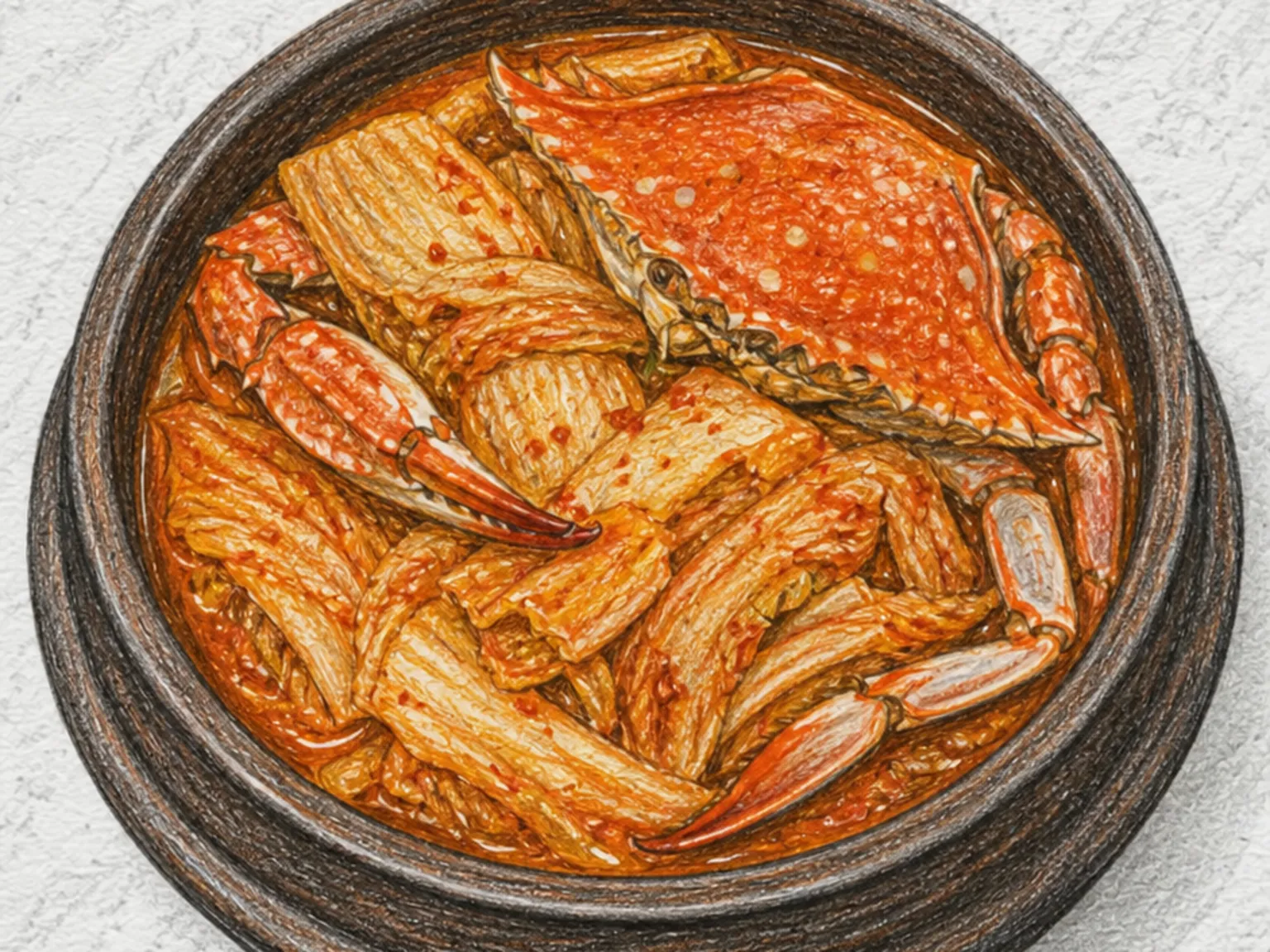
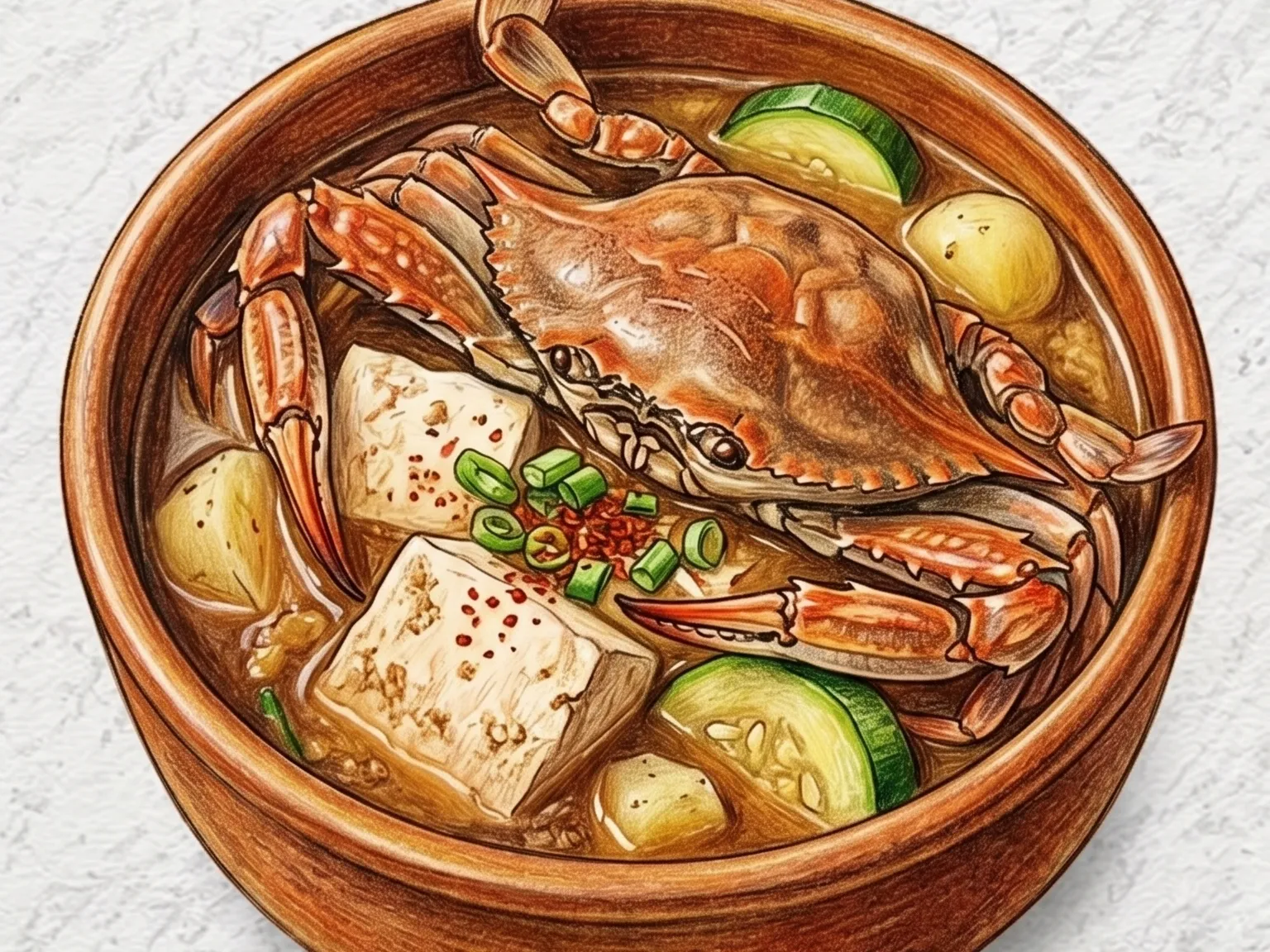
Gejang-jjigae is a Korean stew made by simmering a whole blue crab in an anchovy broth base seasoned with doenjang, the fermented soybean paste. The crab shell and meat release a concentrated seafood stock as they cook, and that liquid merges with the doenjang to create a broth that is simultaneously briny, earthy, and deeply savory. Using anchovy broth as the foundation amplifies the oceanic notes rather than diluting them, so both the doenjang umami and the crab sweetness come through at the same time. Tofu and zucchini absorb the rich cooking liquid throughout the simmering process, becoming flavorful in their own right rather than acting merely as filler. The tofu in particular pulls in the solids that settle from the fermented paste, softening into a silky texture that contrasts with the firmer crab meat. Picking the sweet crab meat out of the shell with chopsticks is one of the characteristic pleasures of eating this stew, and the contrast between the naturally sweet crab flesh and the bold, fermented broth gives each mouthful a satisfying complexity.

🏠 Everyday ⚡ Quick
Prep 10min Cook 20min 2 servings
Korean Red Pepper Paste Stew
Stews Easy

Korean Red Pepper Paste Stew

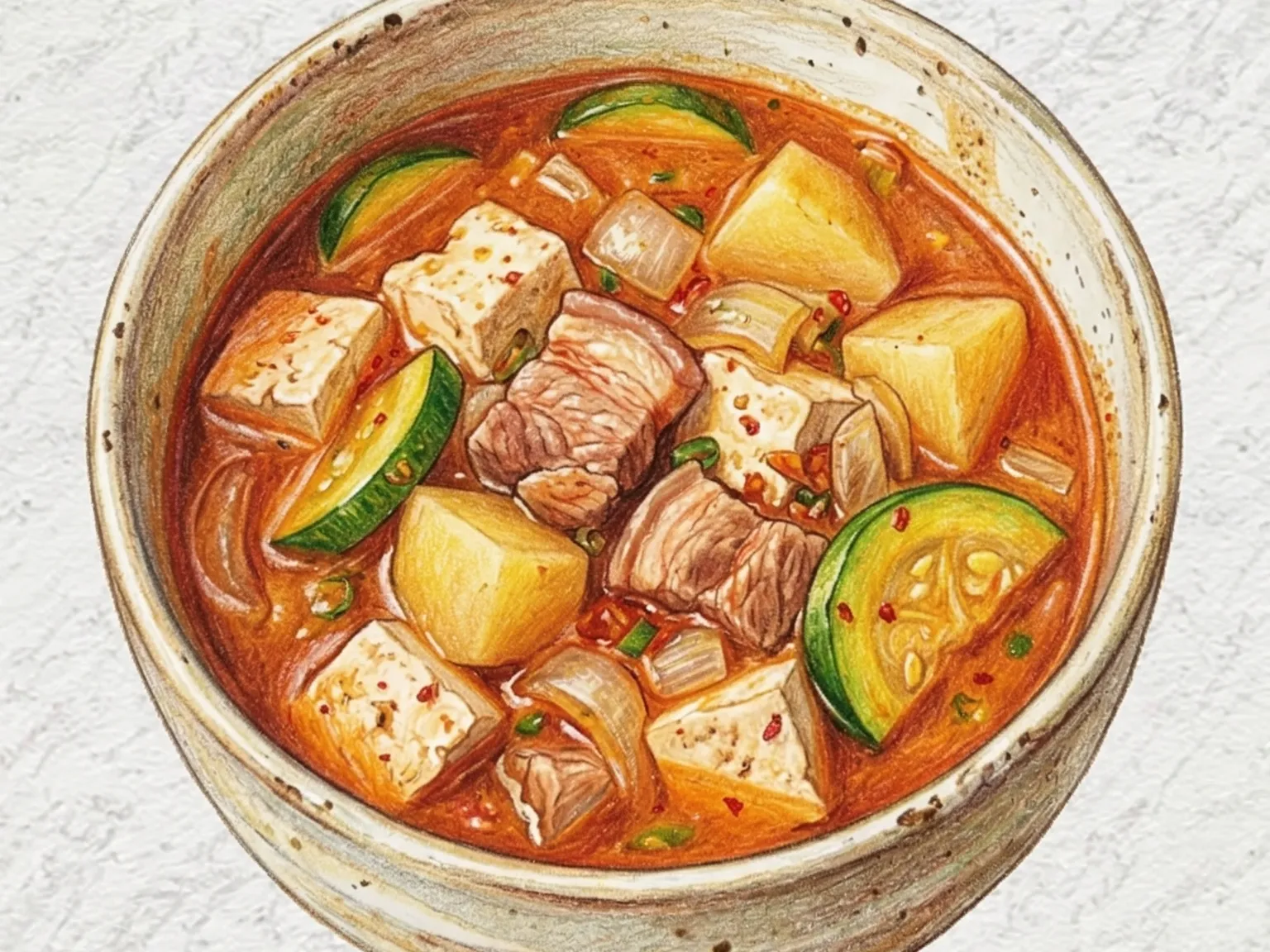
Gochujang-jjigae is a Korean stew centered on gochujang, the fermented chili paste, as its primary seasoning. It occupies a different flavor space from doenjang-based stews and kimchi-jjigae: the heat is direct and clean rather than layered with fermented funk or brined sourness. Pork shoulder is the standard protein. Browning the meat first in the pot keeps its juices sealed in and adds savoriness to the broth as the fond dissolves into the liquid. Two tablespoons of gochujang form the base, gochugaru adjusts the heat level, and soy sauce adds depth of saltiness. Potato absorbs the starch-thickened broth as it cooks and turns fluffy inside with a seasoned exterior. Zucchini softens into the thick broth, contributing gentle sweetness. Tofu soaks up the surrounding sauce and delivers a concentrated burst of gochujang flavor when bitten through. The longer the stew simmers, the more the ingredients exchange flavors, building a broth more complex than any single ingredient could produce on its own. In Korean home cooking, it is standard to ladle plenty of the broth over cold rice.

🏠 Everyday ⚡ Quick
Prep 10min Cook 20min 2 servings
Korean Pork Gochujang Jjigae
Stews Easy

Korean Pork Gochujang Jjigae

This pork gochujang stew simmers pork shoulder in a sauce of gochujang and doenjang, two fermented pastes that together build a more layered flavor than either would alone. Using gochujang on its own produces a heat that comes across as sharp and one-dimensional, but adding half a tablespoon of doenjang rounds out the fermented soybean depth and gives the broth a fuller, earthier backbone. A full tablespoon of gochugaru deepens the red color and adds texture to the spice rather than just boosting intensity. The 180 grams of pork shoulder render their juices into the 700 milliliters of broth as the stew cooks, gradually enriching the base. Potato, zucchini, onion, and tofu go into the same pot and contribute a range of textures that keep each spoonful varied. The combination of both fermented pastes means this version has noticeably more complexity than a standard gochujang stew, and the finished broth is the kind that makes it difficult to stop eating before the bowl is empty.

🏠 Everyday
Prep 15min Cook 20min 2 servings
Korean Godeungeo Mu Jjigae (Mackerel Radish Stew)
Stews Medium

Korean Godeungeo Mu Jjigae (Mackerel Radish Stew)

Godeungeo-mu-jjigae is a spicy Korean stew that pairs mackerel with Korean radish in a gochugaru and gochujang broth. Mackerel is an oily, fatty fish, and as it simmers, those fats render into the surrounding liquid, giving the broth a richness and depth of savory flavor that leaner fish cannot produce. The radish is laid on the bottom of the pot before the mackerel is placed on top - a deliberate positioning that lets the radish absorb the direct heat of the base while soaking up the fish juices and rendered fat dripping down from above. Radish cooked this way turns tender and sweet, and each bite releases concentrated broth from within the vegetable. Using both gochugaru and gochujang in the seasoning paste is important: gochugaru provides clean, direct heat and red color while gochujang adds fermented depth and body to the broth that chili powder alone cannot achieve. Soup soy sauce for the final seasoning keeps the saltiness measured and blended rather than sharp. Sliced green onion and cheongyang chili pepper added toward the end contribute freshness and a sharper layer of heat. For those sensitive to fishiness, thin slices of ginger added to the initial seasoning paste are effective at suppressing the odor without altering the stew's overall flavor profile. The traditional way to eat this is to spoon the broth-soaked radish and a piece of mackerel over rice, letting the concentrated cooking liquid soak into each grain.

🏠 Everyday
Prep 20min Cook 35min 4 servings
Korean Whelk Stew (Spicy Canned Whelk & Cabbage Pot)
Stews Easy

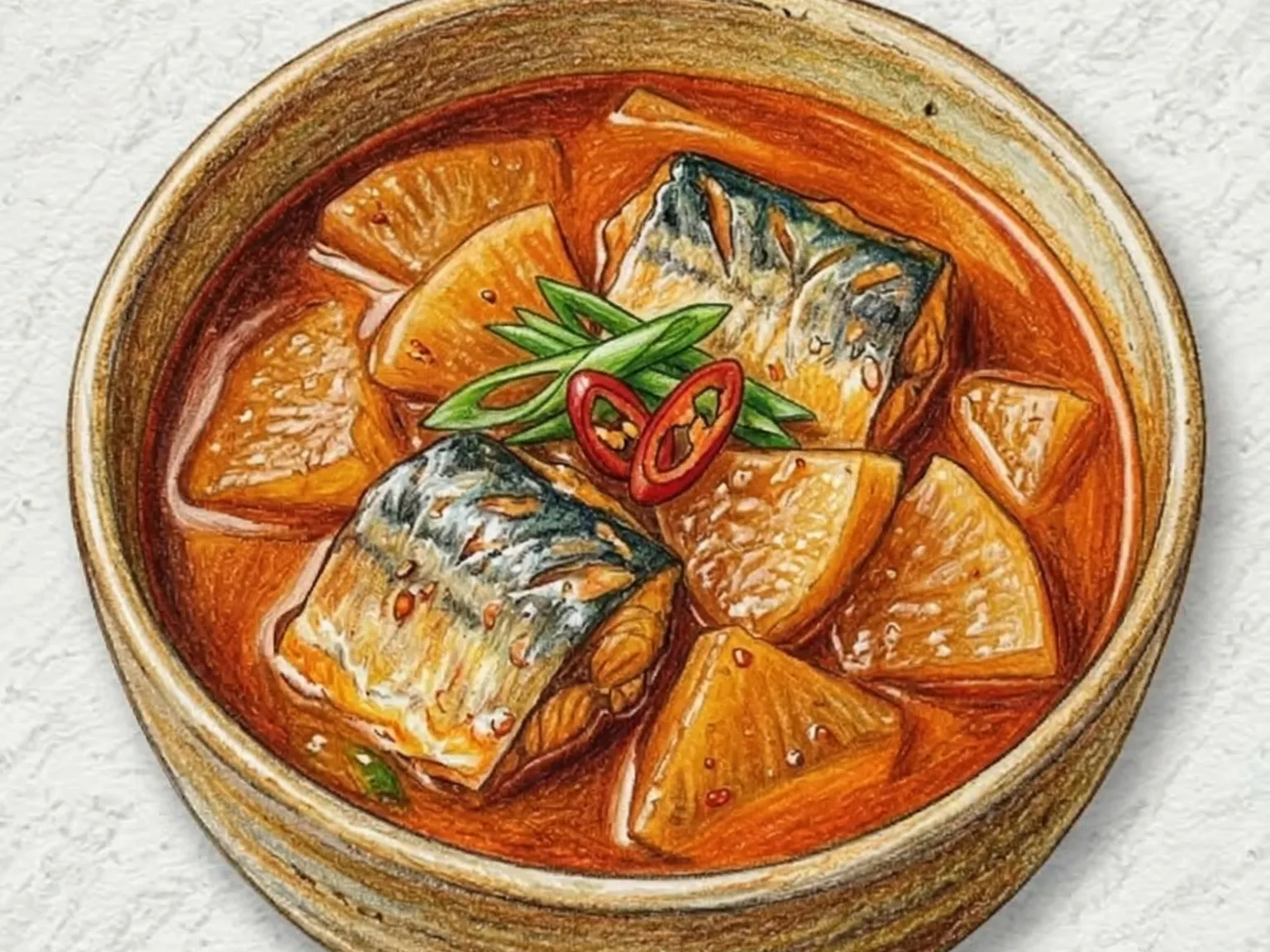
Korean Whelk Stew (Spicy Canned Whelk & Cabbage Pot)

Golbaengi-jjigae is a spicy Korean stew made with canned whelk as the centerpiece. Because the whelk is already fully cooked inside the can, it goes in near the end of cooking rather than at the start, allowing the broth and vegetables to reach their full flavor first. Extended heat makes whelk rubbery, so a brief simmer of two to three minutes is enough to warm the pieces through while preserving their distinctive chewy texture. Anchovy stock forms the savory foundation of the broth, delivering a clean seafood depth that amplifies the whelk's flavor without masking it. Gochujang and gochugaru combine to give the stew its fiery, full-bodied heat, while cabbage and onion absorb the broth over time and release a gentle sweetness that balances the spice. A single cheongyang chili added whole sharpens the heat at the finish, pulling the entire broth taut with a bright, clean burn. A handful of sliced green onion stirred in at the end brings a fresh aroma that lifts the richness of the stew. It works equally well as a rice-side dish or as an accompaniment to soju.

🏠 Everyday ⚡ Quick
Prep 12min Cook 18min 2 servings
Korean Thistle Herb Soybean Paste Stew
Stews Easy

Korean Thistle Herb Soybean Paste Stew

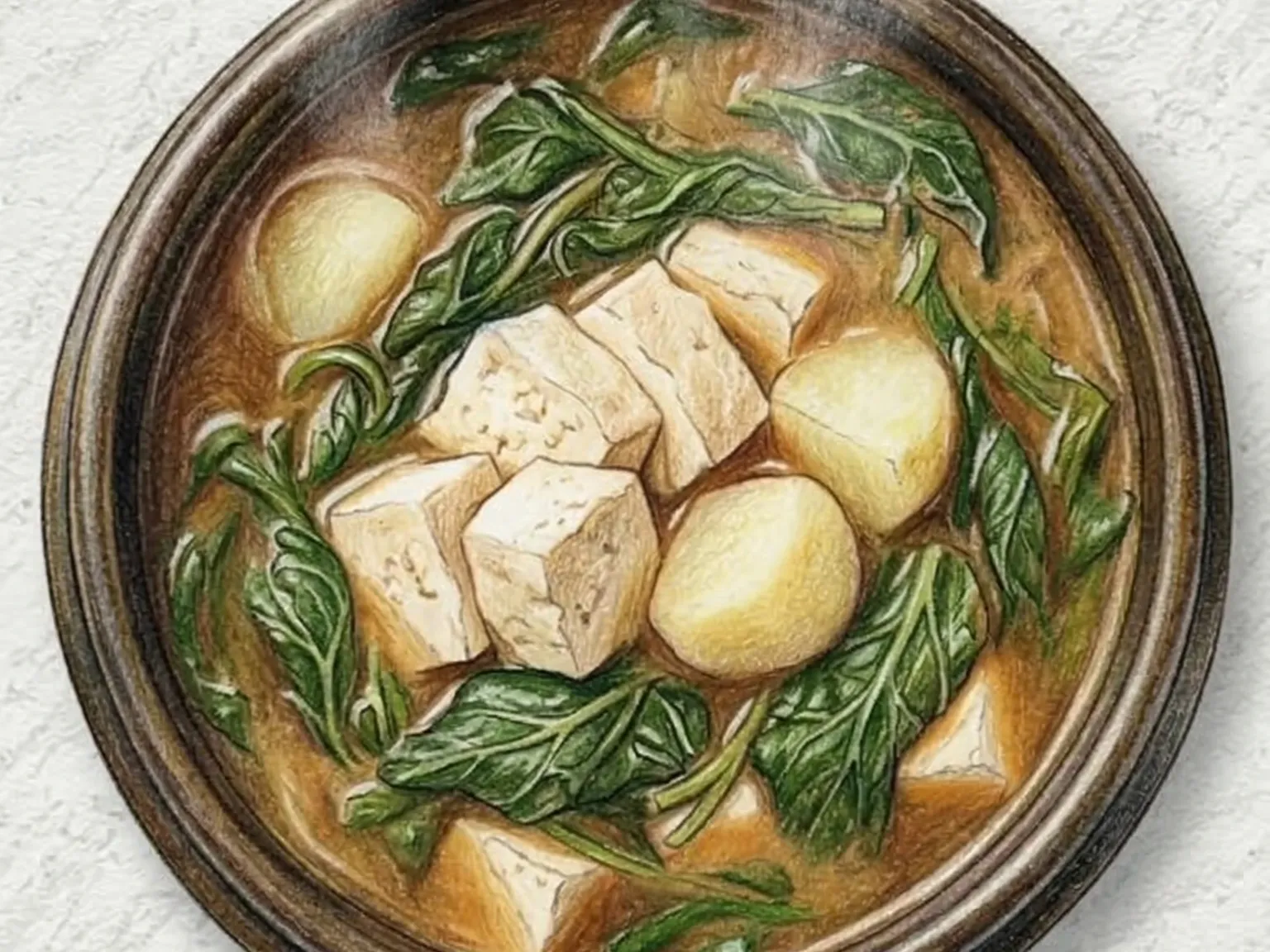
This doenjang jjigae features blanched gondeure, Korean thistle greens that are a prized mountain herb in Gangwon Province. The greens belong to the Korean thistle family and have a mild bitterness alongside a warm, earthy aroma that pairs naturally with the depth of fermented soybean paste. Potato and firm tofu add substance to the anchovy-kelp stock base. The result is a gentle, aromatic stew without aggressive spice, a direct expression of Korean mountain cuisine. When using dried gondeure, soaking it thoroughly in water before blanching is essential to prevent a tough, fibrous texture in the finished stew. Fresh gondeure should be blanched and rinsed in cold water to remove excess bitterness. The key to this jjigae is restraint with the doenjang: using just enough for seasoning, rather than making the fermented paste the dominant flavor, allows the mountain herb's natural scent to come through clearly in every spoonful.

🏠 Everyday 🥗 Light & Healthy
Prep 15min Cook 20min 2 servings
Korean Beef Intestine Hot Pot
Stews Hard

Korean Beef Intestine Hot Pot

Gopchang jeongol is a hot pot built around beef intestines and tripe, simmered in a rich bone stock. The 500 grams of intestines and 200 grams of tripe provide a chewy, bouncy texture that defines the dish. Napa cabbage and oyster mushrooms balance the richness of the offal, while gochujang and gochugaru season the broth with a moderate heat. Thorough cleaning is essential before cooking: the intestines should be scrubbed repeatedly with coarse salt and flour to eliminate any off-odor, then blanched briefly to skim away the fat that rises to the surface, which makes the final broth noticeably cleaner. Once the pot is set up at the table and brought to a rolling boil, the offal turns glossy and the broth deepens into a dark, spicy richness. Wrapping pieces of intestine in perilla leaves with a smear of doenjang is a popular eating method, and the remaining broth is often used to make a finishing fried rice after the main course is done. Served bubbling at the table, this communal dish is meant to be shared.

🍺 Bar Snacks 🎉 Special Occasion
Prep 30min Cook 35min 4 servings
Korean Seoul-style Gopchang Jeongol
Stews Hard

Korean Seoul-style Gopchang Jeongol

Seoul-style gopchang jeongol is a hot pot of beef intestines cooked in beef bone broth, where the key distinction from other regional versions is the use of soup soy sauce rather than gochujang as the primary seasoning. Gochujang-based hot pots run thick and heavy; this Seoul version stays clear and clean-tasting, with the depth coming from the bone broth and the intestines themselves rather than from fermented paste. Six hundred grams of cleaned beef intestines go into the pot along with cabbage, oyster mushrooms, and perilla leaves. The perilla leaves are added toward the end and contribute a distinctive herbal scent that cuts through the richness of the intestines. Gochugaru provides color and a measured level of heat. The intestines need to cook for at least twenty minutes after the broth reaches a boil to eliminate any off-odors and reach the tender, slightly chewy texture that defines the dish. This preparation traces back to the gopchang alley restaurants concentrated around Seoul's Euljiro and Majang-dong districts, where the combination of gopchang and soju has been the standard order for decades.

🍺 Bar Snacks 🎉 Special Occasion
Prep 30min Cook 30min 4 servings
Korean Bracken Fern and Beef Stew
Stews Medium

Korean Bracken Fern and Beef Stew

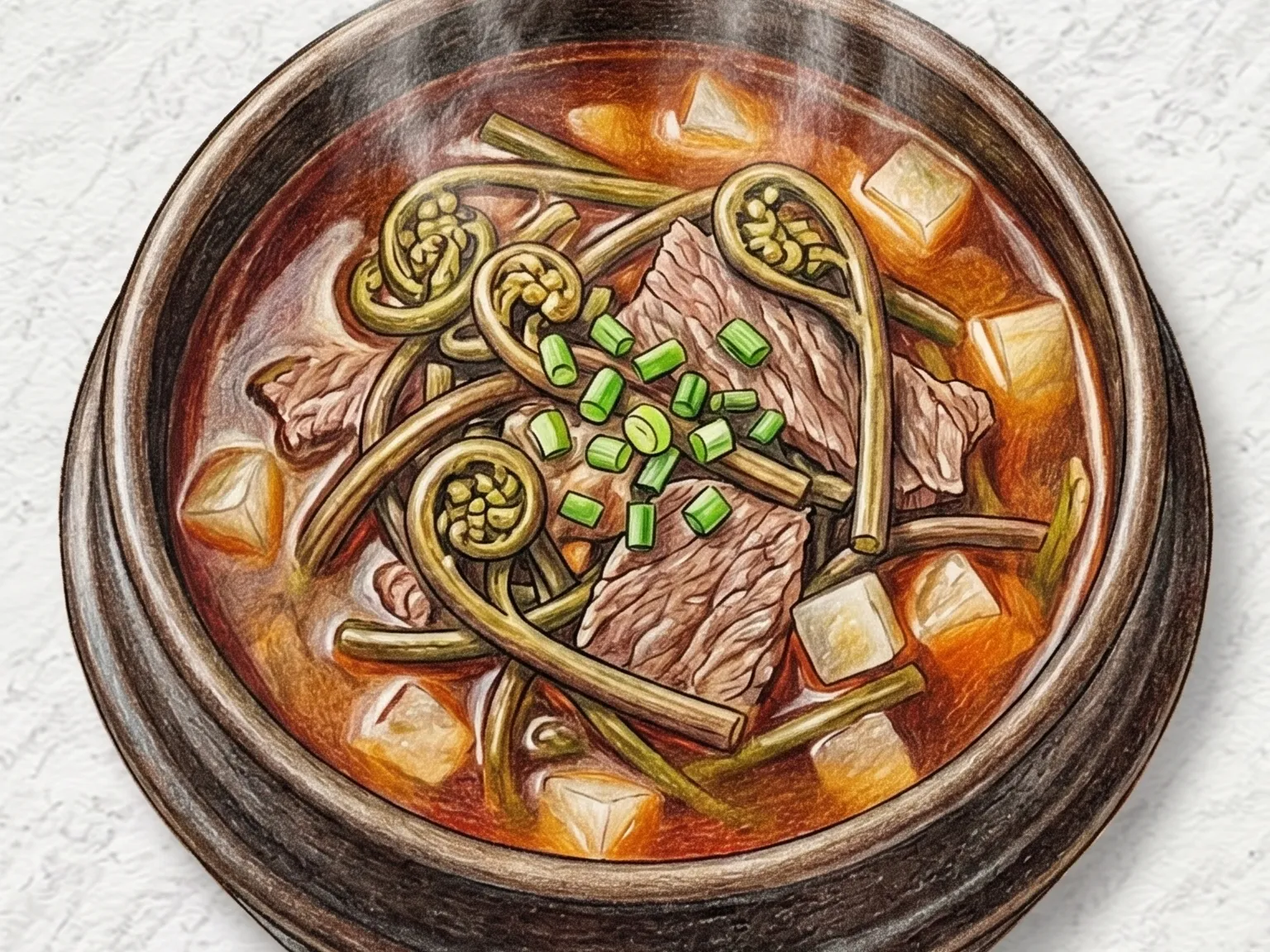
Gosari-soegogi-jjigae is a Korean stew of parboiled bracken fern and beef brisket simmered together in a clear, gochugaru-seasoned broth. Bracken has a distinctly springy yet tender texture once fully rehydrated, and it absorbs the beefy broth deeply, carrying the earthy, herbal notes of the fern through each piece. Korean radish adds a clean, slightly sweet dimension to the broth, while soup soy sauce and gochugaru together build depth and a moderate heat that defines the stew's character. This stew is closely associated with Korean ceremonial cooking, appearing regularly at holiday tables and ancestral rites where its grounding flavors are particularly valued. Bracken must be thoroughly boiled and soaked in cold water to remove natural toxins and soften the texture before it can be used; brisket should be soaked to draw out the blood before cutting so the broth stays clear and does not turn murky during cooking.

🏠 Everyday
Prep 20min Cook 35min 4 servings
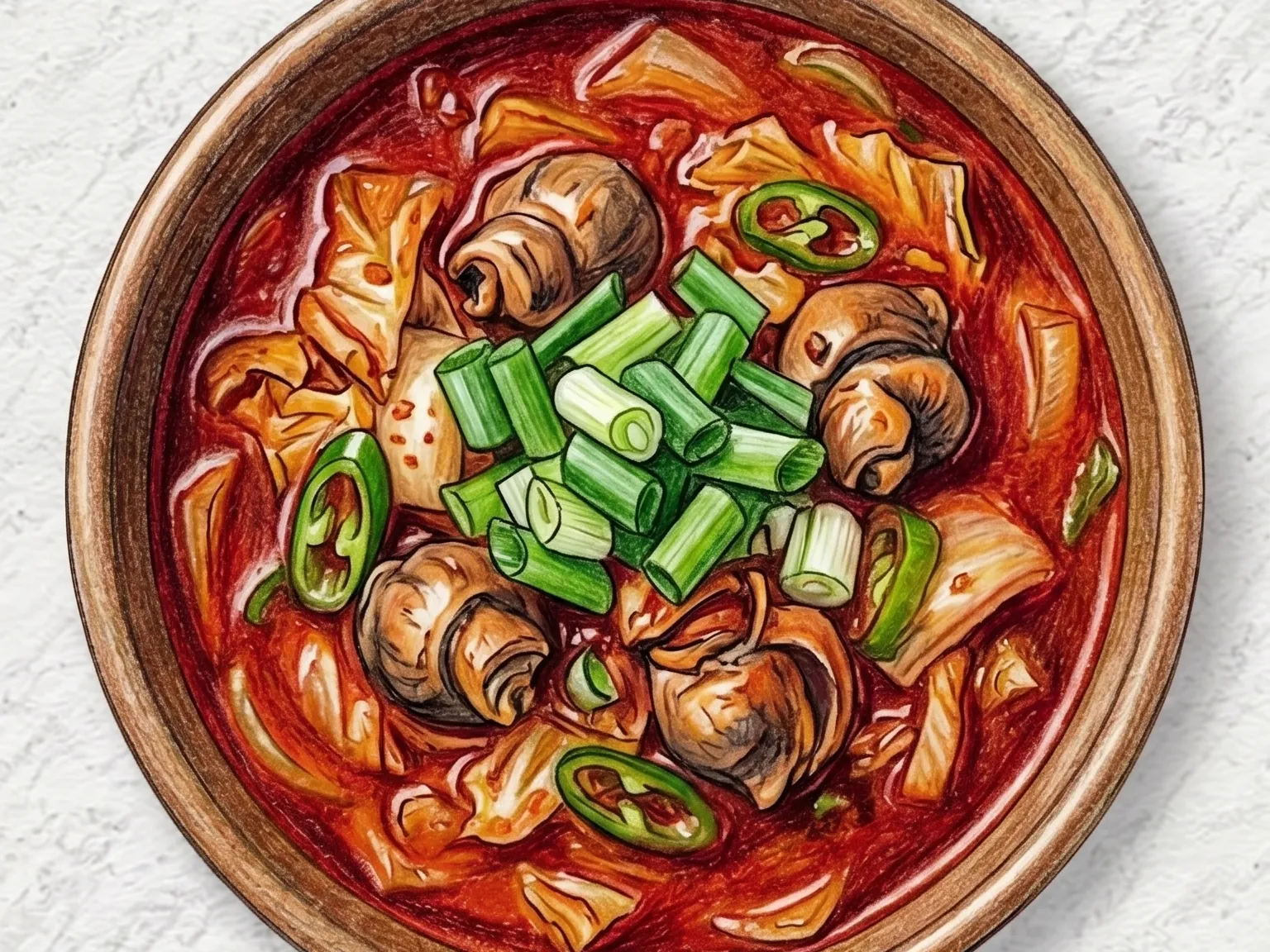
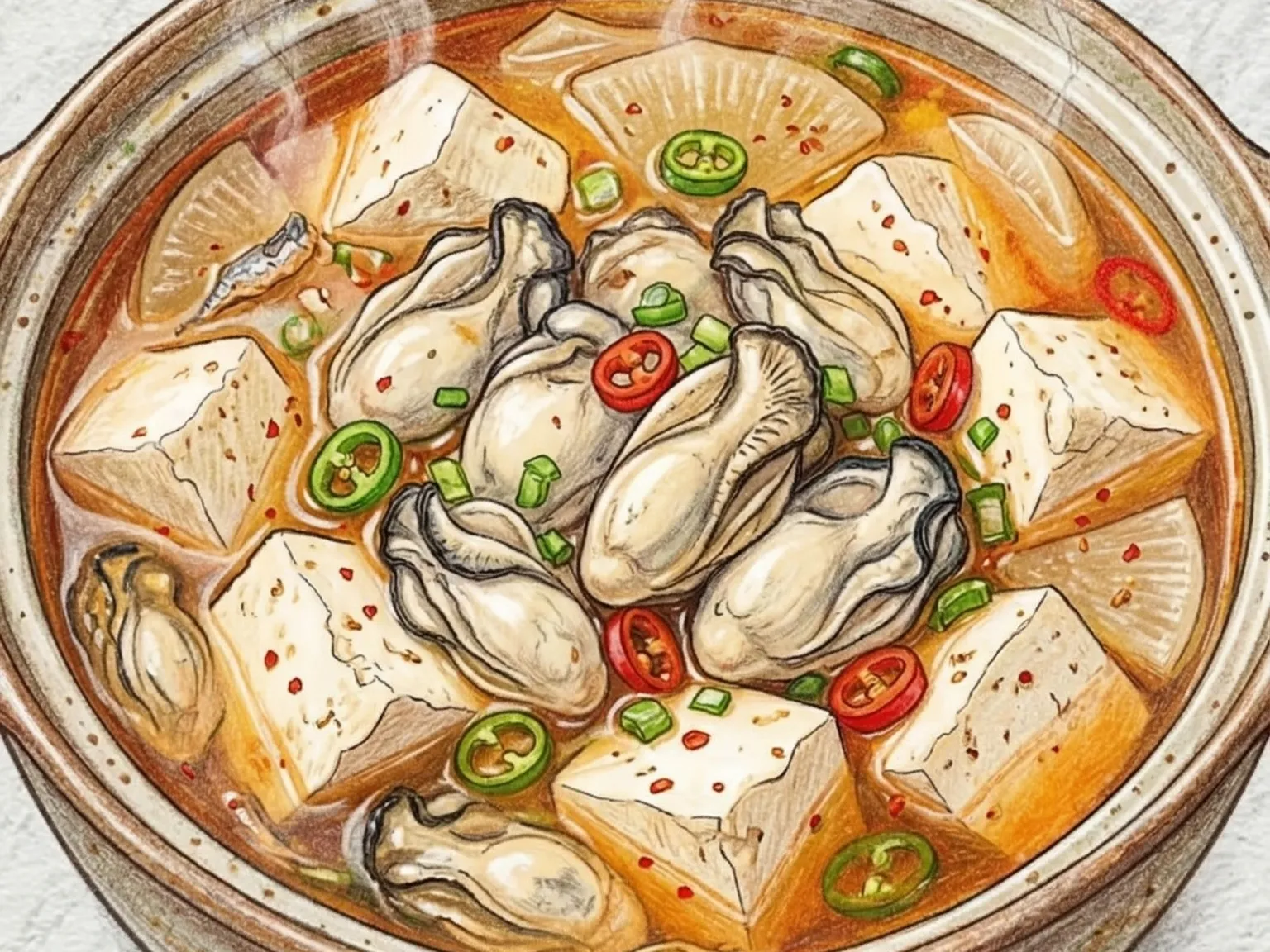
Korean Gul Dubu Jjigae (Oyster Tofu Stew)
Stews Easy

Korean Gul Dubu Jjigae (Oyster Tofu Stew)

Gul dubu jjigae pairs 180 grams of fresh oysters with generous cubes of firm tofu in a clean anchovy-kelp stock. The oysters release their briny, mineral-rich juices the moment they hit the simmering broth, giving the soup an immediate oceanic depth that no other seafood replicates in quite the same way. Korean radish adds mild sweetness and keeps the stock clear rather than murky, while gochugaru and a whole Cheongyang chili suppress any fishiness and build a persistent background heat. The 300 grams of tofu make this a genuinely filling stew rather than a light soup course. Timing the oysters correctly is the most important step: added just before the pot returns to a boil, they need only thirty seconds to one minute before they are cooked through. Leaving them longer shrinks them and toughens their texture. Rinsing the oysters gently in lightly salted water before cooking removes sand and impurities without stripping their natural fragrance. This is a distinctly seasonal stew, best made in winter when the cold-water oysters are plump, briny, and at full flavor.

🏠 Everyday ⚡ Quick
Prep 12min Cook 18min 2 servings
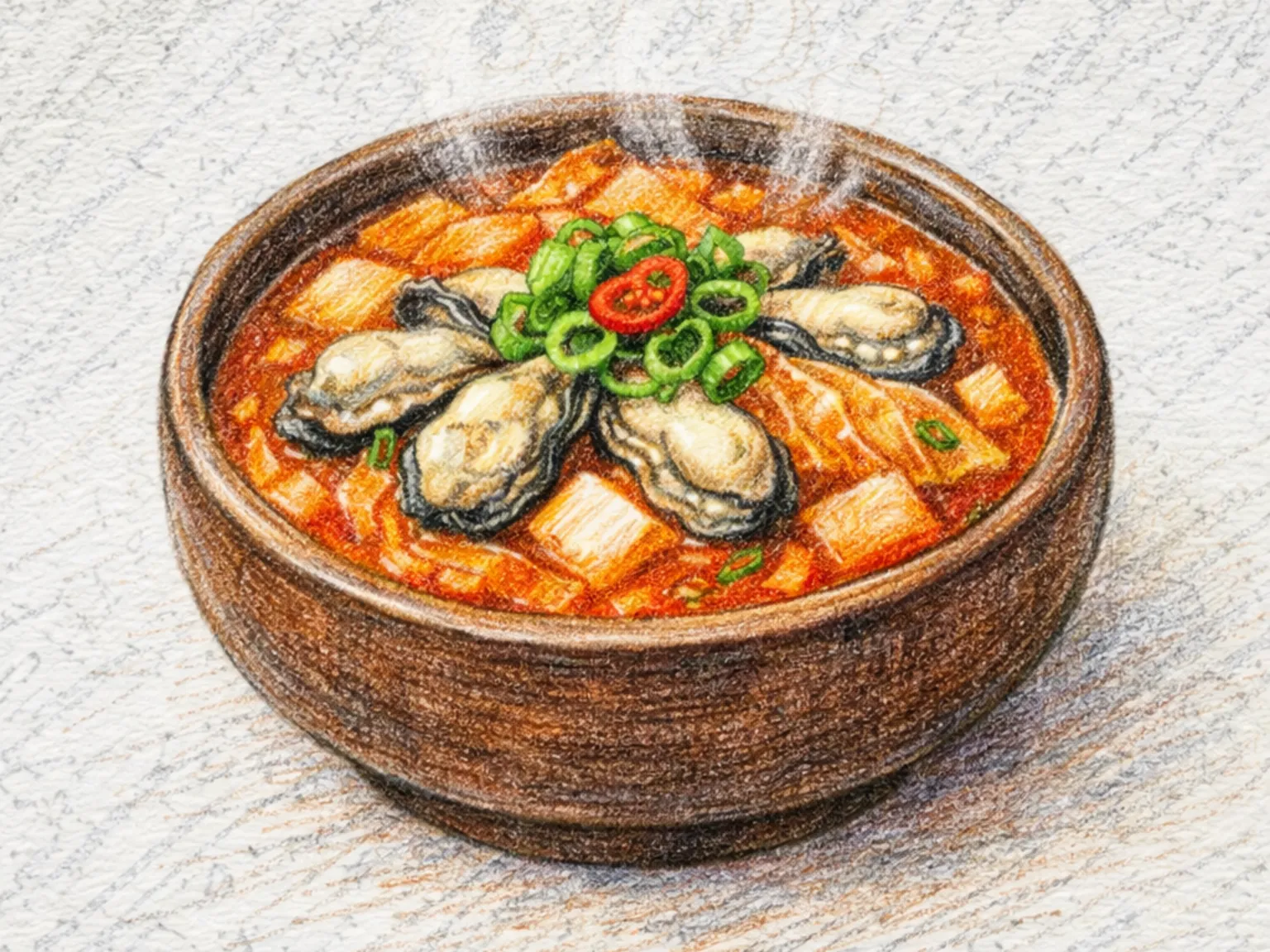
Korean Oyster Kimchi Stew
Stews Medium

Korean Oyster Kimchi Stew

This stew pairs fresh oysters with aged kimchi, two ingredients that reach their peak simultaneously during the Korean winter, making this a dish with a narrow but rewarding season. The oysters contribute a deep briny sweetness while the well-fermented kimchi provides a sour, umami-laden backbone that would be impossible to replicate with fresh or lightly fermented leaves. A tablespoon of perilla oil distinguishes this from a standard pork kimchi jjigae: its nutty, slightly green aroma adds an earthy roundness that ties the seafood and kimchi together without competing with either. Radish is added to keep the broth clean and refreshing despite the concentration of flavors, and a base of anchovy stock reinforces the savory depth that the oysters and kimchi alone begin to build. Gochugaru and minced garlic provide heat and sharpness. The oysters go in only once the pot reaches a full boil and are cooked for no more than two to three minutes, just long enough to firm up without shrinking into small, rubbery pieces.

🏠 Everyday
Prep 12min Cook 18min 2 servings
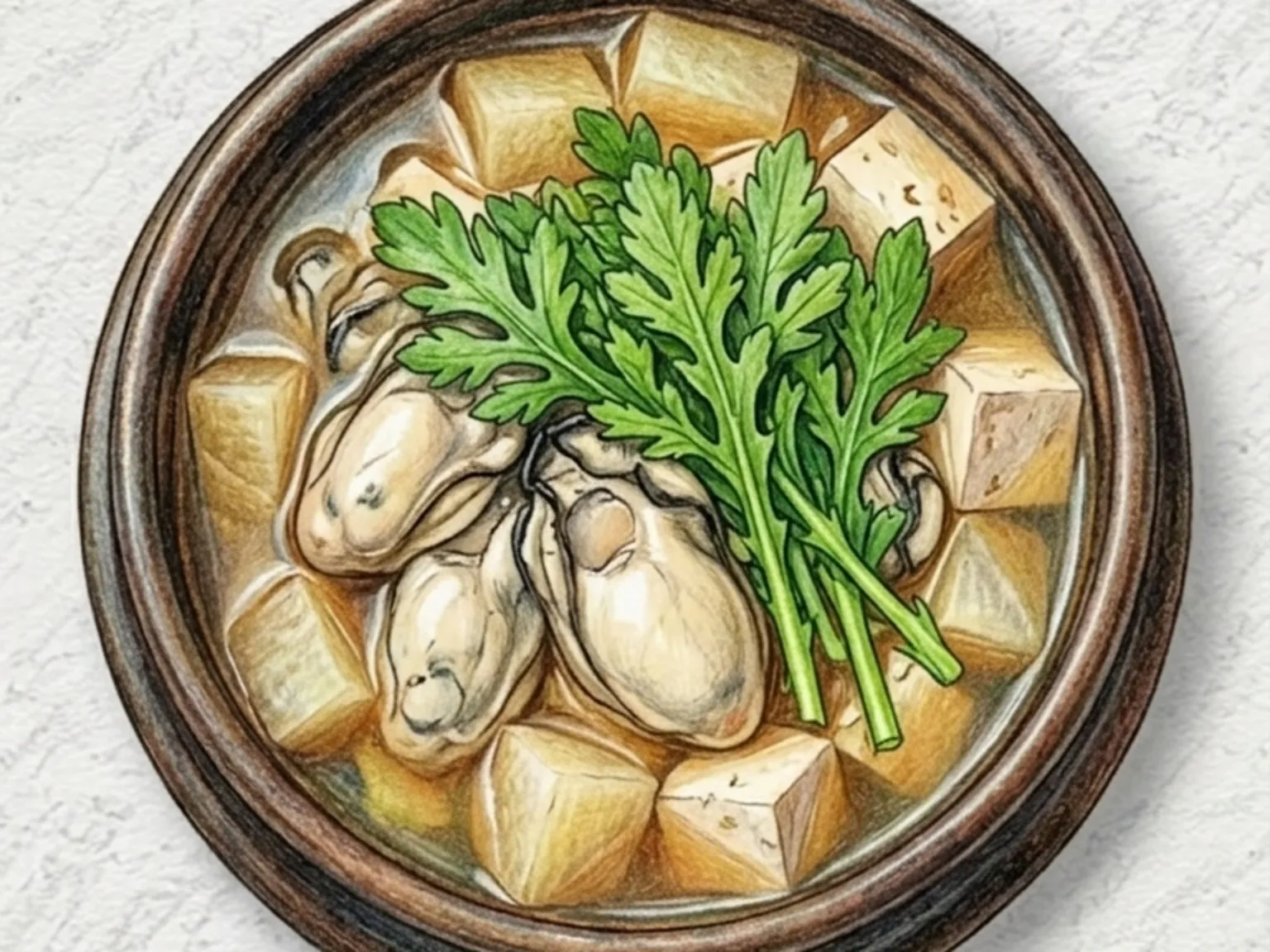
Korean Oyster & Crown Daisy Stew
Stews Easy

Korean Oyster & Crown Daisy Stew

Gul ssukgat jjigae is a Korean stew that combines oysters with crown daisy, a leafy herb that brings a distinctive bitter-herbal character rarely found in other stews. The oysters, approximately 220 grams, provide the foundational savory base of the broth, releasing their briny, oceanic juices as they heat through. Crown daisy contributes an aromatic quality that is simultaneously bitter and clean, and that fragrance is volatile enough to disappear entirely with extended cooking, so it must be added at the very end, just before the heat is turned off. Korean radish and firm tofu are added midway through cooking to add body and substance to the stew without muddying the clean flavor of the broth. Soup soy sauce seasons the liquid while keeping the broth a clear, pale color rather than the darker tones that regular soy sauce would introduce. The combination of briny shellfish and herbal greens is a traditional Korean pairing, one that appears most often in home cooking rather than in restaurant settings. The result is a stew with a distinct identity - lighter than kimchi jjigae, more aromatic than doenjang jjigae - that works well as a standalone bowl with a bowl of rice.

🏠 Everyday
Prep 15min Cook 20min 2 servings
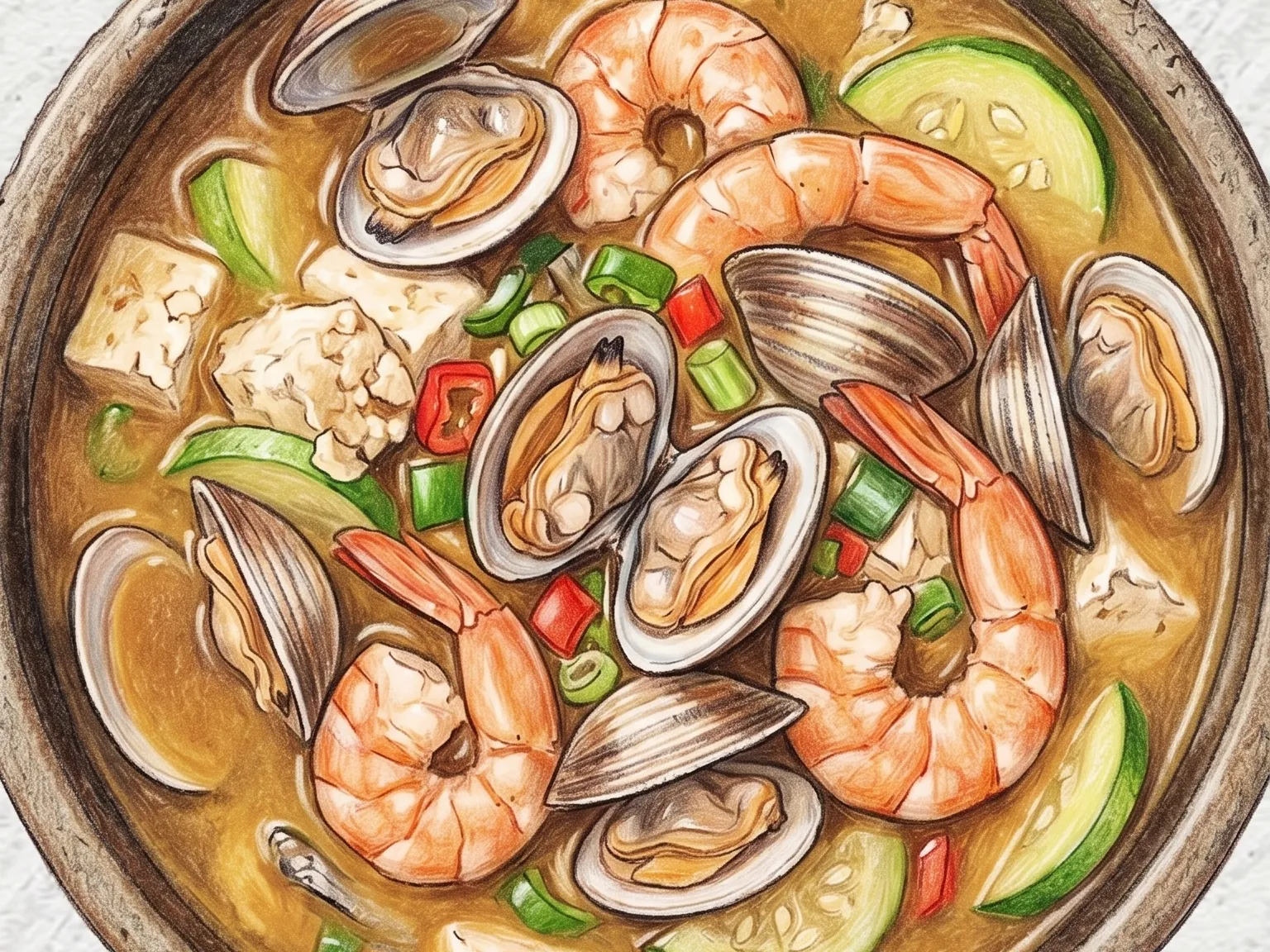
Korean Seafood Doenjang Stew
Stews Easy

Korean Seafood Doenjang Stew

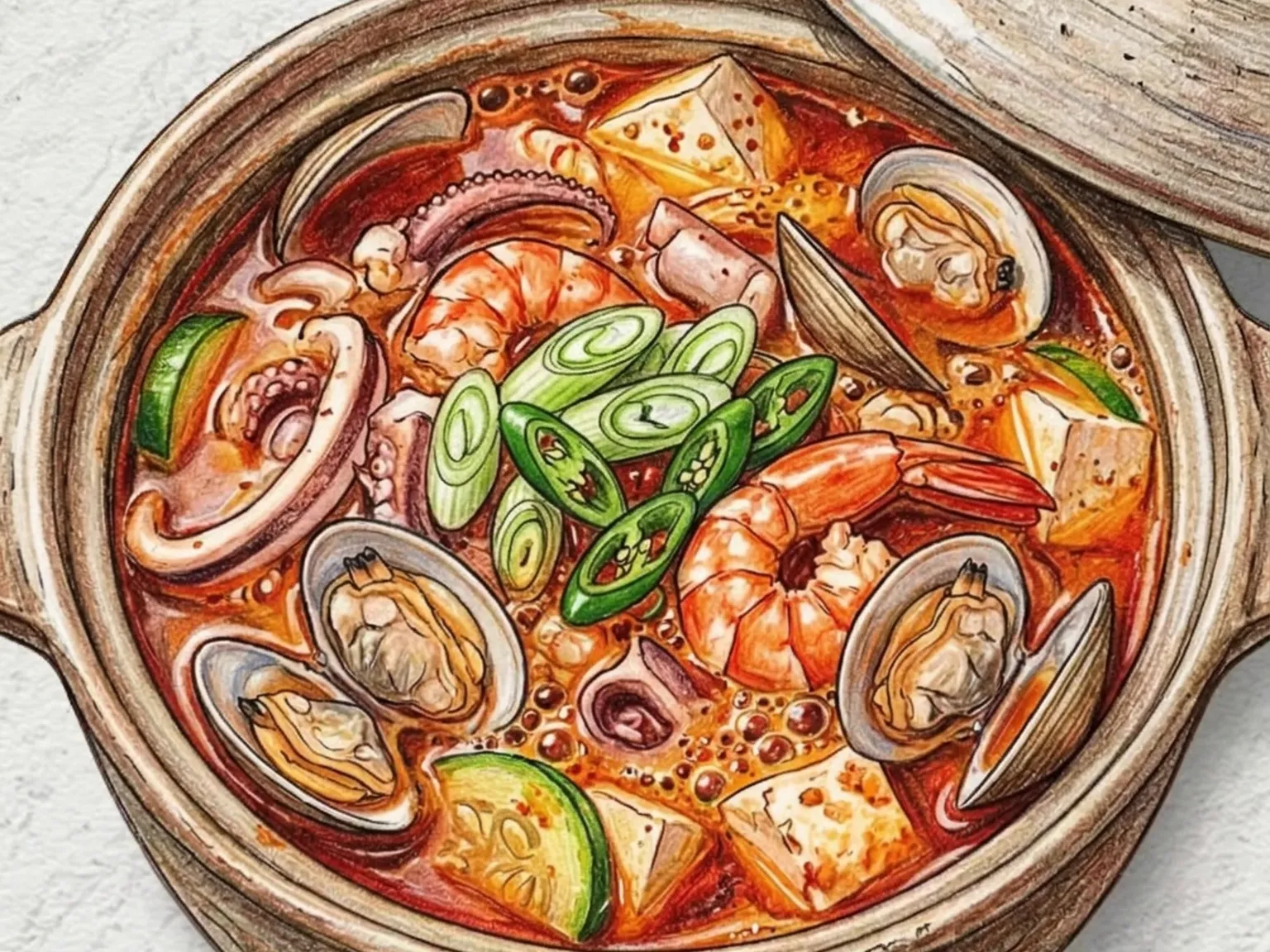
Haemul doenjang jjigae is a Korean soybean paste stew enriched with clams and shrimp. The broth is built on a kelp and dried anchovy stock into which doenjang is dissolved, then clams are added and the pot is brought to a boil. As the clams open, they release their clear, briny liquor into the doenjang base, adding a layer of ocean flavor that plain vegetable stews cannot replicate. Shrimp go in next and contribute their own distinct seafood sweetness. Tofu and zucchini round out the stew with soft, yielding textures that absorb the enriched broth fully. Clams should be purged in salted water beforehand to eliminate any grit, and doenjang is best added conservatively at the start and adjusted gradually during cooking to avoid over-salting. The seafood transforms the already satisfying doenjang stew into something noticeably more layered and complex, making it equally at home as a rice accompaniment or as food alongside drinks.

🏠 Everyday 🍺 Bar Snacks
Prep 15min Cook 20min 2 servings
Korean Seafood Hot Pot (Shrimp, Squid & Crab Spicy Pot)
Stews Medium

Korean Seafood Hot Pot (Shrimp, Squid & Crab Spicy Pot)

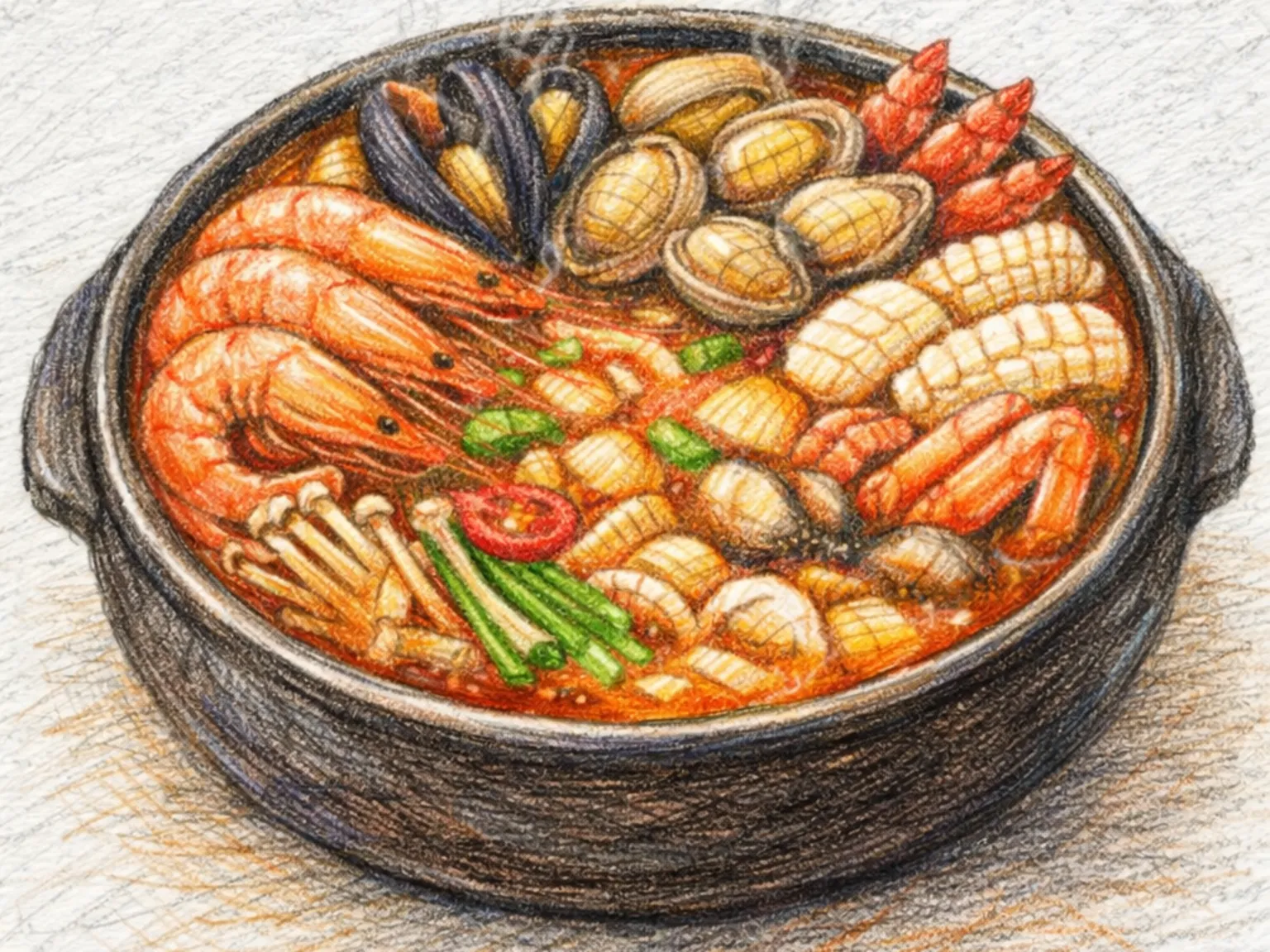
Haemul jeongol is a Korean seafood hot pot that brings together shrimp, Manila clams, squid, and blue crab in a spicy kelp-based broth seasoned with gochujang and gochugaru. The two chili seasonings serve different purposes: gochujang contributes fermented umami depth and body to the broth, while gochugaru adds clean heat and the vivid red color that makes the dish visually striking. Each type of seafood contributes something distinct to the pot. The clams release their natural briny-sweet liquor as they open, forming the backbone of the broth's flavor. The blue crab sweetens the stock progressively as it simmers, adding a richness that builds over time. The squid provides a chewy textural counterpoint to the softer elements, and the shrimp contribute a clean, delicate sweetness. Tofu and zucchini round out the pot with soft contrast between the firm seafood, and soup soy sauce is used for final seasoning rather than regular soy sauce to avoid darkening the broth. Because jeongol is served bubbling at the table and eaten while still cooking, the seafood should not be fully cooked before serving - shrimp and squid in particular should be added just as the broth comes to a boil and cooked only briefly, since prolonged heat makes them rubbery and dry. The wide vessel and communal style of eating, with everyone reaching into the same pot, is central to what makes haemul jeongol a gathering dish rather than a solo meal.

🎉 Special Occasion
Prep 20min Cook 20min 4 servings
Korean Seafood Stew (Shrimp, Squid & Clam Spicy Pot)
Stews Medium

Korean Seafood Stew (Shrimp, Squid & Clam Spicy Pot)

Haemul jjigae is a fiery Korean seafood stew that loads shrimp, squid, and clams into a broth fired with gochugaru and gochujang. As the clams open during cooking, they release a clean, saline sweetness that forms the backbone of the broth, and the chili paste and flakes layer in a deep red heat that amplifies rather than masks the flavor of the sea. Large pieces of tofu and sliced zucchini cook alongside the seafood, soaking up the spiced shellfish stock and adding substance to every spoonful. Green onion and cheongyang chili added at the end contribute color and a fresh aromatic sharpness. Serving directly in the stone pot keeps the stew bubbling at the table throughout the meal, and the steady heat means the last spoonful tastes as vivid as the first. A bowl of steamed white rice alongside absorbs the broth between bites and makes the meal complete.

🏠 Everyday 🥗 Light & Healthy
Prep 15min Cook 20min 2 servings
Korean Ham-Packed Budae Jjigae
Stews Easy

Korean Ham-Packed Budae Jjigae

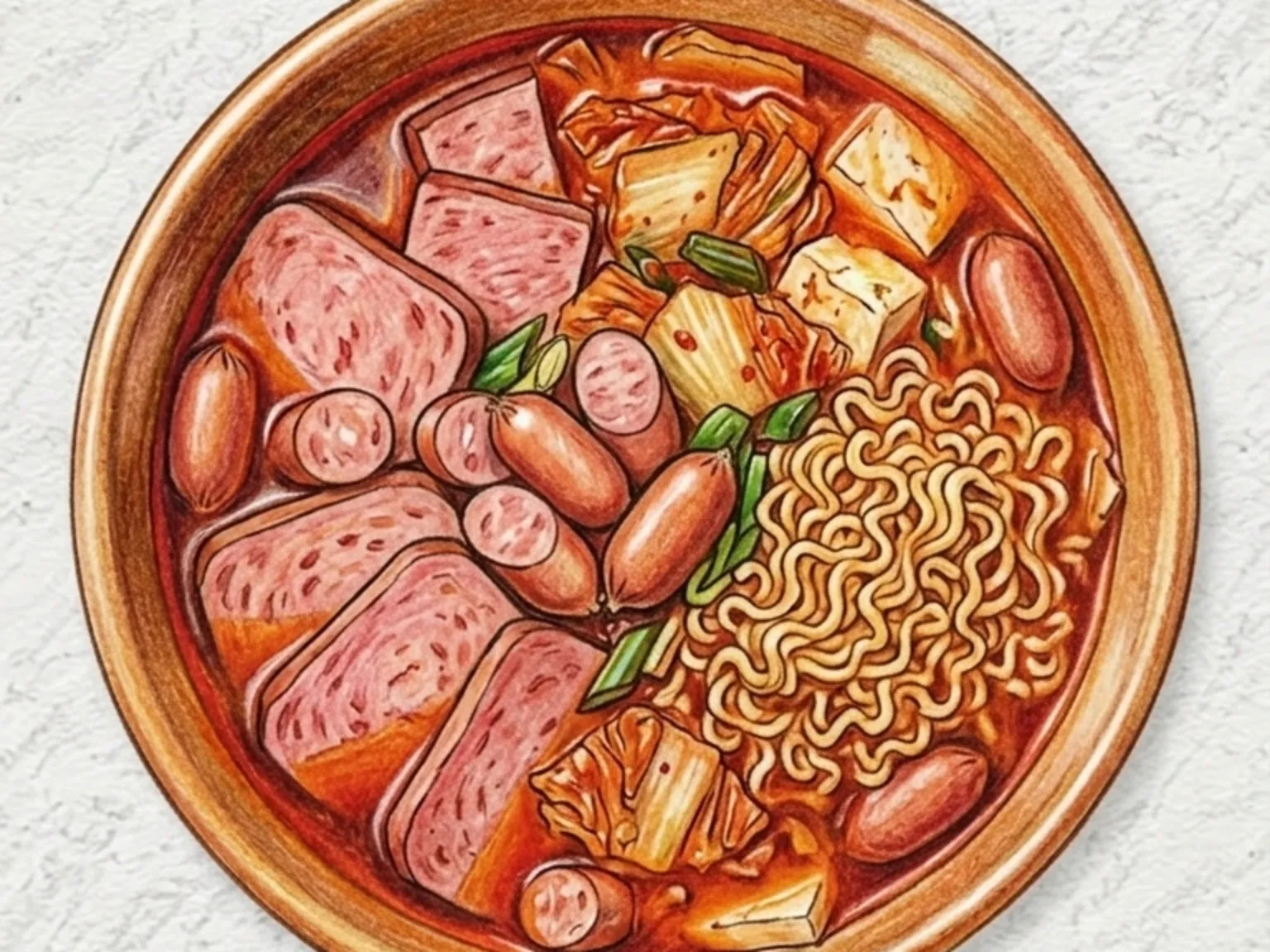
This version of budae jjigae is built around a generous load of Spam and Vienna sausages, simmered alongside well-fermented kimchi in a wide pot of anchovy or dashi stock. Gochujang and Korean chili flakes build layered heat while the kimchi's sourness cuts through the salt of the processed meats and keeps the overall flavor from becoming one-dimensional. Adding a bundle of ramen noodles toward the end allows them to absorb the deeply seasoned broth as they cook. With 900ml of stock, this is a communal pot meant to be shared at the table. Budae jjigae originated in the years after the Korean War, when surplus American military rations such as ham and sausage were combined with Korean staples near military base towns. The ham-forward version puts the salty, meaty character of the processed ingredients at the center of the dish.

🍺 Bar Snacks 🏠 Everyday
Prep 15min Cook 20min 2 servings
Korean Mussel Stew
Stews Easy

Korean Mussel Stew

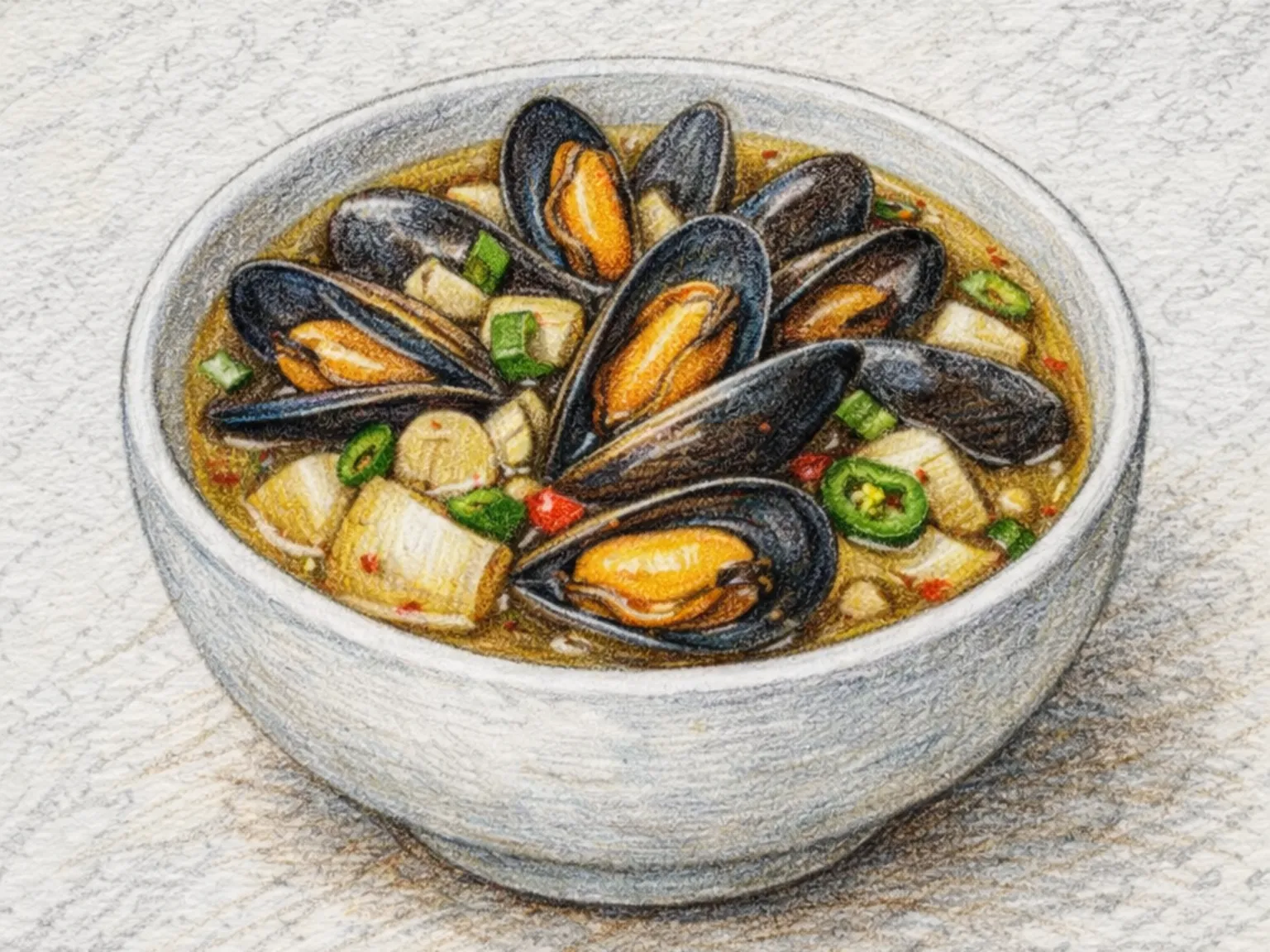
Honghap jjigae uses a generous 900g of mussels to build an intensely briny, clean-tasting broth that defines this stew. Thick-cut Korean radish simmers alongside the shellfish, soaking up the ocean-flavored liquid and contributing a quiet natural sweetness. Cheongyang chili and gochugaru deliver a moderate, lingering heat, while soup soy sauce and cooking wine round out the seasoning without drowning the seafood flavor. Using the liquid the mussels release during cooking as the base of the broth provides depth without requiring a separate stock. Sliced green onion added at the end lifts the aroma without adding any fishy note. Selecting only mussels whose shells are tightly closed before cooking reduces the chance of grit or off-flavors in the finished stew.

🏠 Everyday 🥗 Light & Healthy
Prep 20min Cook 18min 4 servings