Peach Cobbler
Sliced peaches are tossed with sugar and lemon juice, spread in a baking dish, and covered with spoonfuls of biscuit batter that bakes into a golden, slightly craggy topping. In the oven, the fruit juices bubble up around the edges and seep into the base of the dough, creating a zone where crisp crust meets soft, fruit-soaked interior. The lemon sharpens the peach flavor and prevents it from tasting flat under all the sugar. If the peaches lack sweetness on their own, an extra tablespoon of sugar in the fruit layer compensates without making the topping heavier. Served warm with a scoop of vanilla ice cream, the contrast between hot cobbler and cold cream is as much a part of the experience as the flavor itself.

Persimmon Spice Pound Cake
Persimmon spice pound cake is a dense, buttery loaf made with finely chopped dried persimmon folded into the batter, scented with cinnamon and nutmeg. The natural sweetness of dried persimmon keeps the sugar level modest while contributing a concentrated, jammy richness to every slice. Chewy morsels of persimmon distributed through the crumb provide bursts of intense dried-fruit flavor amid the buttery cake. Cinnamon and nutmeg give the loaf its warm, autumnal character, making it a natural fit for the cooler months when dried persimmon is most abundant. The batter should be mixed only until the ingredients just come together; overmixing develops excess gluten and produces a tough, dense result rather than the moist, tender crumb the cake depends on. Resting the cake at room temperature for two days allows the spices to fully penetrate the crumb and the dried persimmon to meld with the surrounding butter base, deepening the flavor considerably. The cake pairs naturally with warm tea or black coffee. Slicing and toasting briefly before serving crisps the outer surface and revives the butter fragrance.

Red Bean Baked Doughnuts (Oven-Baked Doughnuts with Bean Paste)
These baked doughnuts encase a core of sweetened red bean paste inside a soft, cake-like crumb, delivering the satisfaction of a filled doughnut without any frying. The batter is spooned halfway into a greased doughnut mould, a teaspoon of chilled red bean paste is placed on top, and more batter seals it in before baking. The result is a ring with a fluffy exterior and a hidden pocket of dense, earthy-sweet filling that reveals itself on the first bite. Because the recipe relies on cake flour and baking powder rather than yeast, the entire process from mixing to cooling takes under forty minutes. Minimal stirring is essential - overworking the batter activates too much gluten and turns the finished doughnut tough instead of tender. Keeping the bean paste cold before assembly prevents it from melting into the surrounding batter and losing its distinct layer. The absence of oil gives these doughnuts a remarkably clean finish, making them well suited as a light afternoon snack.

Semla (Swedish Cardamom Bun with Almond Cream)
Semla is a Swedish cardamom-scented bun that is baked, cooled, and then hollowed out to make room for a filling of almond paste mixed with the scooped crumb, topped with a generous mound of whipped cream. The bun itself is soft and fragrant, with cardamom lending an exotic warmth that distinguishes it from ordinary sweet rolls. The almond filling is dense and intensely nutty, providing a rich base layer that the light, billowy cream offsets with its cool freshness. The removed cap of the bun is placed back on top like a lid, and a final dusting of powdered sugar completes the presentation. Timing is important: the bun must cool completely before any cream goes in, or the heat will melt it into a flat puddle. If the cardamom flavor feels too subtle after baking, increasing the spice by half a teaspoon in the dough brings it to the forefront. In Sweden, semla appears in bakeries from January through Easter, and the best versions balance the three components - bread, nut paste, and cream - so that no single element dominates.

Sfogliatella (Neapolitan Layered Shell Pastry with Ricotta)
Sfogliatella is a Neapolitan pastry built from a lean flour-and-water dough that is stretched paper-thin, brushed with butter, and rolled into a tight cylinder to create hundreds of distinct layers. Slices of this cylinder are opened into a shell shape, filled with a mixture of ricotta cheese, sugar, cinnamon, and orange zest, then baked at high heat. In the oven, the butter between each layer turns to steam and forces the sheets apart, producing an exterior that shatters audibly at the first bite. Inside, the ricotta filling softens to a warm, fragrant cream with citrus and spice notes that contrast beautifully with the crisp shell. The thinner the dough is stretched before rolling, the more pronounced the layered effect becomes - professional bakers aim for near-transparency. Overfilling is the most common cause of failure, as excess moisture from the ricotta can burst through the delicate layers during baking. The ideal sfogliatella emerges from a 200-degree oven deeply golden on every ridge, with a filling that is just set and still slightly creamy in the center.

Soft Pretzel
Yeasted dough is shaped into the classic pretzel twist, briefly dipped in a boiling baking-soda bath, and baked at high heat. The alkaline solution triggers an accelerated Maillard reaction on the surface, producing the deep mahogany crust and slightly bitter, complex flavor that separates a true pretzel from ordinary bread rolls. Beneath that thin, chewy shell, the interior stays soft, airy, and faintly sweet. Coarse salt crystals pressed into the surface before baking deliver sharp, salty bursts that contrast with the mellow dough. The dip in the alkaline bath must be brief - thirty seconds at most - or the exterior turns slimy and the texture suffers. Mustard is the traditional accompaniment, its acidity and heat cutting through the bread's richness, though warm cheese sauce has become an equally popular pairing.

Salt Bread (Sogeum-ppang - Korean Bakery Butter Roll)
Salt bread is a Korean bakery favorite built on a simple premise: yeasted dough enriched with milk is wrapped around a plug of cold butter, shaped into a tapered roll, and baked at high heat. The butter melts during baking and saturates the crumb from the inside out, while the exterior develops a thin, crackling crust. Coarse salt sprinkled on top before the oven amplifies the butter's richness and adds sharp, crystalline bites that punctuate each mouthful. A full second proof is essential - underproofed dough bakes dense and heavy - and a hot oven ensures the outside crisps before the interior dries out. Eaten warm, when the melted butter is still pooled inside the crumb, the bread delivers its full impact: salty, buttery, and gone in four bites.

Stollen
Stollen is a traditional German Christmas bread loaded with mixed dried fruits, almonds, and a generous amount of butter kneaded into a yeasted dough. The loaf is shaped into a distinctive oval, baked until golden, and then brushed with melted butter while still hot to seal in moisture. A thick coating of powdered sugar applied over the butter layer gives the finished bread its signature snow-white appearance. The interior is dense and rich, with pockets of rum-soaked raisins and candied peel appearing at every slice. Soaking the dried fruits overnight in rum or fruit juice before mixing them into the dough ensures they remain plump and soft after baking rather than turning hard and chewy. The bread improves with age - resting for at least a day after baking allows the butter, spice, and fruit flavors to meld and permeate the crumb, which is why many German families bake their stollen weeks before Christmas. Wrapped tightly, it keeps for well over a week without losing quality, making it an ideal gift or make-ahead holiday preparation.

Sweet Potato Cream Cheese Galette
The success of a rustic galette depends on maintaining cold temperatures during the pastry preparation. By rubbing cold butter into flour to create coarse crumbs, the dough bakes into a crisp, laminated shell with distinct layers. This flat pastry base holds a filling of mashed sweet potato combined with cream cheese, honey, and ground cinnamon. The sweet potato offers a mellow sweetness, while the cream cheese introduces a sharp acidity that balances the overall profile. Honey serves as the binding agent that pulls these components into a unified mixture. Cinnamon provides a warm aromatic element that enhances the autumnal quality of the bake. It is essential to handle the dough quickly; if the butter begins to soften, returning the pastry to the refrigerator immediately preserves the flaky texture. When assembling, leaving a clear four-centimeter border around the filling ensures a clean folding process and prevents leakage in the oven. Using a drier variety of sweet potato, such as the chestnut-type, is effective in preventing a soggy bottom as it contains less moisture. For the best experience, the galette should be served while still warm to enjoy the contrast between the brittle crust and the soft, creamy center. Small amounts of ginger or cardamom can be substituted for cinnamon to create different aromatic profiles.

Vanilla Cupcakes
Butter and sugar are creamed until pale and fluffy, then eggs, vanilla extract, cake flour, and milk are incorporated to produce the most versatile cupcake in home baking. The creaming step is where the texture is decided: enough air beaten into the butter creates a light, tender crumb, while under-creaming yields a dense, flat result. Each egg is added individually to maintain a stable emulsion, and the low protein content of cake flour keeps the finished cupcake soft rather than chewy. Filling each liner to seventy percent capacity allows a domed rise without overflow, and the oven door should remain closed for the first fifteen minutes to prevent collapse. Once cooled, these cupcakes accept virtually any frosting - buttercream, cream cheese, ganache - without the base flavor competing. The vanilla is warm and present but never dominant, which is exactly what makes this recipe a dependable foundation for countless variations.

Vanilla Honey Madeleines (French Shell Cakes with Honey)
Eggs, sugar, and honey are whisked together, then combined with melted butter, cake flour, and vanilla to form a batter that bakes into small, shell-shaped French cakes with a characteristic bump on the back. The honey works alongside sugar to sweeten the madeleine while contributing a floral undertone that plain sugar cannot provide. Melted butter saturates the batter with richness, and vanilla bridges the honey and butter flavors into a cohesive aroma. Chilling the batter for at least thirty minutes is the key to the signature hump - the cold batter hitting the hot oven creates a rapid rise in the center while the edges have already begun to set. Each mold cavity should be well-buttered and filled to eighty percent to ensure clean edges and consistent shape. Baking time is brief, ten to twelve minutes, and the madeleines must be removed as soon as the rims turn golden to preserve the moist, spongy interior. They are best eaten within hours of baking, when the crust is still faintly crisp and the center yields softly.

Whoopie Pie
Two dome-shaped cocoa cake cookies sandwich a generous swirl of marshmallow cream, creating an American classic that straddles the line between cookie and cake. The cookies are thicker and softer than standard drop cookies, with a moist, cakey crumb that yields gently when bitten. Cocoa provides a mild bitterness that grounds the filling, while the marshmallow cream is airy, sweet, and slightly sticky. Spacing the batter mounds well apart on the baking sheet is important, as they spread during baking into the flat, round shape that defines a whoopie pie. Filling must wait until the cookies are completely cool; warm cookies melt the cream and create a messy result. Matching pairs by size before assembly produces a uniform, professional look. Stored in the refrigerator, the cream firms and seeps into the cookies overnight, producing a denser, fudgier texture that many prefer to the freshly assembled version.

Yuja Madeleines (Brown Butter Citrus French Shell Cakes)
These yuja madeleines rely on brown butter for a deeply nutty base that elevates the batter beyond a standard madeleine. About 35 grams of yuja marmalade is folded directly into the mixture, distributing bright citrus oil and small shreds of peel throughout each shell-shaped cake. A 30-minute rest in the refrigerator helps develop the signature madeleine hump during baking. The two-stage bake - 3 minutes at 200 degrees Celsius followed by 8 to 9 minutes at 180 degrees - crisps the thin edges while keeping the center moist and springy. A small measure of lemon juice reinforces the yuja acidity, preventing the sweetness from becoming one-dimensional.

Yuja Ricotta Tea Cake (Korean Citron Ricotta Loaf Cake)
Yuja ricotta tea cake pairs the gentle creaminess of ricotta cheese with the bright citrus punch of yuja marmalade in a single tender loaf. Ricotta replaces much of the butter found in traditional pound cakes, keeping the crumb exceptionally moist and giving it a soft, almost custard-like quality. Pieces of yuja peel and pulp are folded into the batter, creating pockets of fragrant sourness that cut through the richness with each bite. Once baked, the top develops a thin golden crust while the interior remains plush and yielding. The cake pairs naturally with black tea or green tea, where the yuja's aromatic acidity complements the tannins in the brew. It keeps well for a day or two without drying out.

Monkey Bread
Small balls of yeasted dough are rolled in cinnamon sugar, layered into a buttered Bundt pan, and baked until the sugar melts and caramelizes into a sticky sauce that glues the pieces together. When inverted onto a plate, the golden caramel cascades over the mound of bread, coating every surface in a glossy, sweet shell. The traditional way to eat it is by pulling pieces apart by hand - each tear trails a thread of caramel and reveals the soft, pillowy interior beneath the crunchy, sugar-crusted exterior. The outer pieces absorb the most butter and caramel and become almost candy-like, while the inner ones stay lighter and breadier, giving each serving a different experience depending on where it came from in the pan. A drizzle of cream cheese glaze or a handful of chopped pecans tossed in with the dough balls are common additions that expand both flavor and texture.

Baked Potato Soup
Baked potato soup is an American comfort food that translates the flavor of a loaded baked potato into a creamy bowl. Potatoes are first boiled or oven-roasted until tender, then partially mashed and simmered in chicken stock with heavy cream. The depth of the soup depends on sweating onions low and slow in butter before the liquid is added. Toppings replicate the classic baked potato format: crispy bacon bits, shredded cheddar, and finely sliced chives, added at serving. Leaving some potato chunks intact rather than fully blending gives the bowl a more varied texture throughout. The soup thickens overnight as the starch settles into the cream base, so portions reheated the next day are noticeably richer than the first serving. Bacon should go on at the last moment to stay crisp.

Chicken Paprikash (Hungarian Paprika Chicken Stew with Sour Cream)
Chicken paprikash is a Hungarian stew that starts by browning chicken thighs in a hot pan to develop color and fond, then builds a sauce around slowly cooked onion, sweet paprika, and tomato before finishing with sour cream. The onion is cooked low and slow until completely soft and sweet, and only then is the paprika added over reduced heat to bloom its color and release its earthy, lightly smoky aroma without any risk of scorching. Paprika forms the entire foundation of the sauce's flavor and its characteristic deep red hue, while tomato contributes the acid needed to balance the richness of dark meat through a 25-minute gentle simmer. The chicken stays submerged in the sauce throughout cooking, absorbing the paprika-infused liquid and becoming very tender. Sour cream must be added at the very end with the heat turned low; stirring it in while the pot is still at a boil causes it to curdle, whereas adding it gently over low heat integrates it into a smooth, creamy sauce with a mild tang. The traditional presentation ladles the sauce over wide egg noodles or spaetzle, whose tender chew is well suited to catching and holding the rich, paprika-scented sauce.

Brownie Cookie Bars (Layered Brownie and Cookie Bar)
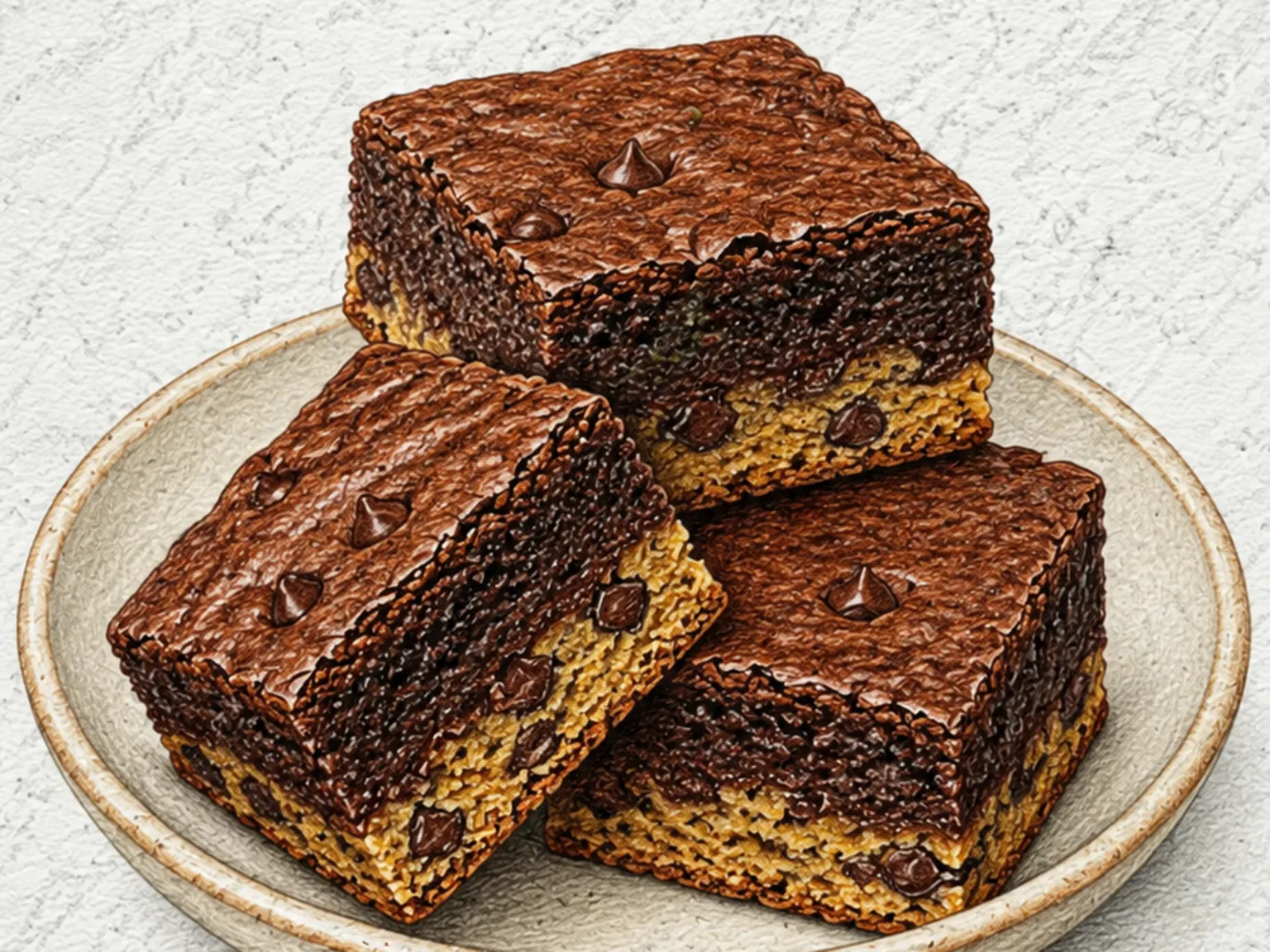
Brookie bars combine brownie batter and cookie dough in a single baking pan, stacking the two components so that each cut piece delivers both in one bite. The cookie layer sits at the bottom of the pan and is built on brown sugar and melted butter, which together produce a deep caramel flavor that plain white sugar cannot achieve. At the edges, where the batter is thinnest and heat penetrates fastest, the cookie bakes into a crisp, snapping crust. Toward the center, the same layer stays chewy and slightly underdone, with a pull to the texture that contrasts with the firmer brownie above. The brownie layer uses both cocoa powder and dark chocolate chips, a dual approach that delivers two distinct expressions of chocolate flavor. Cocoa powder spreads its bitter intensity throughout the entire layer, while the chips melt into pockets of concentrated richness that survive as soft inclusions in the finished bar. Where the two layers press against each other during baking, a narrow transition zone forms in which cookie and brownie are partially merged. This interstitial region carries the vanilla-butter warmth of the cookie alongside the bitter darkness of the brownie simultaneously. The bars must cool completely before cutting. Removing them from the pan too soon results in crumbling and smearing that destroys the clean cross-section that makes brookie bars visually satisfying.

Sticky Toffee Pudding
Sticky toffee pudding is a British dessert consisting of a moist date sponge cake drenched in a warm, buttery toffee sauce. Chopped dates are soaked in hot water with baking soda, which softens the fruit into a near-puree that distributes through the batter, providing natural sweetness and exceptional moisture. Brown sugar in the batter deepens the caramel character, and eggs give the sponge just enough structure to hold together under the weight of the sauce. The toffee sauce is made by simmering heavy cream with additional brown sugar and butter until it thickens to a pourable consistency that coats a spoon. Poured over the warm cake, the sauce seeps into the crumb and pools around the edges, creating a sticky, glossy finish. Reheating the sauce just before serving ensures it flows freely and releases its full butterscotch aroma. A scoop of vanilla ice cream on the side provides a cold, clean contrast that prevents the richness from becoming overwhelming. The dates must be thoroughly soaked - under-softened pieces leave gritty pockets in an otherwise uniformly tender cake.

Green Bean Casserole
Green bean casserole bakes blanched green beans in a mushroom cream sauce, then tops them with crispy fried onions for a contrast of textures that defines this American holiday side dish. Blanching the beans for just three minutes and shocking them in ice water preserves their bright green color and a slight crunch that survives the oven. Sauteing onion and mushrooms in butter, stirring in flour to build a roux, and gradually adding milk produces a smooth cream sauce infused with earthy mushroom flavor. After twenty minutes in the oven, the casserole is pulled out and topped with fried onions, then returned for five more minutes so the onions crisp without burning. The finished dish layers the crunch of the topping against the creamy sauce and tender-crisp beans.

Kedgeree (British Smoked Fish Spiced Rice Dish)
Kedgeree is a British brunch dish of smoked haddock flaked into spiced rice with boiled eggs, descended from the Indian colonial-era dish khichri. The smoked fish is poached or steamed and broken into large pieces - keeping the flakes sizable preserves their texture and allows the smoky flavor to distribute through the rice in distinct pockets. Onion is sauteed in butter, then curry powder is bloomed for thirty seconds, releasing the warm aromas of cumin and turmeric into the fat, which tints and seasons every grain of rice. A squeeze of lemon juice at the end cuts through the richness of the butter and the heaviness of the spices with a bright acidity. Halved boiled eggs and chopped parsley finish the dish with contrasting texture and color.

Polenta con Funghi (Italian Creamy Cornmeal with Sauteed Mushrooms)
Polenta con Funghi is a staple winter dish in northern Italian households, made by stirring cornmeal into water or stock for over thirty minutes to achieve a smooth, porridge-like consistency, then topped with sauteed mushrooms. Constant stirring is essential - pausing even briefly causes the polenta to stick to the bottom and form lumps. Folding in butter and grated Parmigiano-Reggiano at the end transforms the coarse grain into a velvety texture enriched with dairy fat and cheese umami. The mushrooms - a mix of porcini, oyster, and cremini - are cooked quickly in olive oil with garlic over high heat to drive off moisture and allow the edges to caramelize and develop depth. The gentle sweetness of the cornmeal against the earthy, woodsy mushrooms creates a pairing that is humble yet deeply satisfying.

Rum Balls
Rum balls are a no-bake confection made by combining crushed chocolate cookie crumbs with dark rum, cocoa powder, powdered sugar, and melted butter, then rolling the mixture into compact spheres and coating them in cocoa. The absence of baking keeps the process fast and the result dense - each ball has a fudge-like firmness that yields slowly on the tongue, releasing waves of cocoa bitterness followed by the warm, boozy bloom of rum. The low moisture content means the crumb mixture binds tightly, holding its shape without refrigeration, though chilling overnight allows the rum to permeate every particle of cookie and cocoa for a more unified flavor. Stored in an airtight container, they keep for well over a week. Rolling some in chopped pistachios or rainbow sprinkles instead of cocoa adds color and textural variety, which makes them suitable for gift boxes or party platters. Despite their simplicity, the interplay between chocolate and rum gives these small bites a sophistication that belies the ten-minute preparation.

Club Sandwich
A club sandwich is built across three slices of buttered, golden-toasted bread with sliced chicken breast, crisp bacon, fresh lettuce, and tomato arranged in two distinct layers. The salty crunch of bacon meets the lean, mild protein of chicken breast, and juicy tomato slices and crisp lettuce introduce freshness and textural contrast throughout. Mayonnaise spread on each bread layer functions as a binder that smooths each bite and brings the savory components into balance. Drying the lettuce completely before assembly is essential - any residual moisture will soften the toast within minutes. Securing all layers with cocktail picks and cutting diagonally produces clean cross-sections and keeps the layers from sliding during eating. The order of fillings and the degree of toasting both affect the final texture noticeably.