Shepherd's Pie
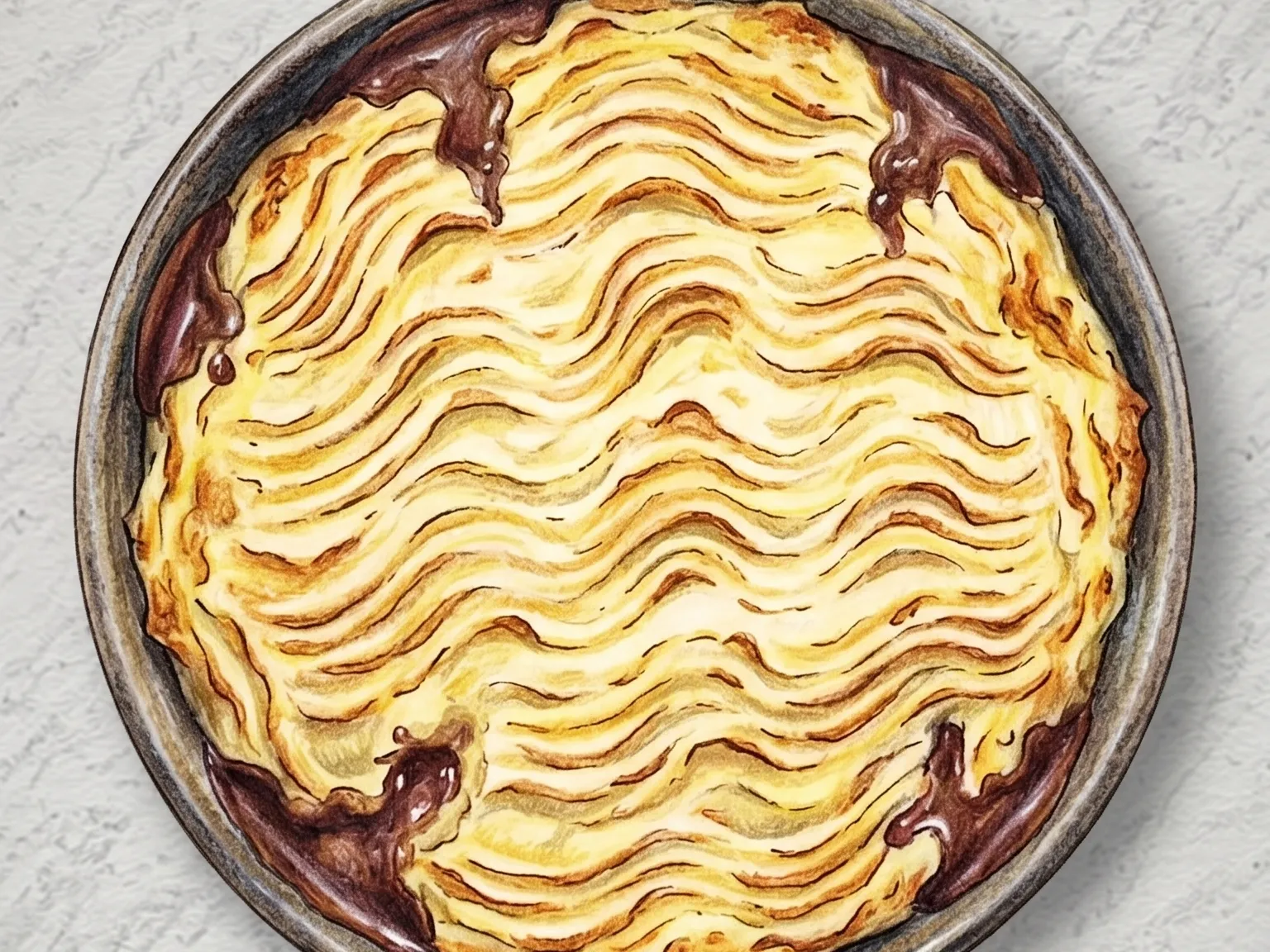
Shepherd's pie is a traditional British home dish where seasoned lamb mince is cooked with onion, carrot, and peas, deglazed with red wine and beef stock, then topped with creamy mashed potato and baked until golden. The wine evaporates its alcohol during cooking, leaving behind fruit depth and tannin that enrich the lamb, while Worcestershire sauce adds a layer of fermented umami. The potatoes are boiled, mashed with butter and milk until smooth, then spread evenly over the meat filling. Dragging a fork across the mashed potato surface creates ridges that brown and crisp in the oven, adding textural contrast to the creamy layer beneath. After twenty-five minutes at 200 degrees Celsius, the meat juices bubble up around the edges, signaling that the filling is hot throughout.
Gateau au Chocolat (Rich Flourless Chocolate Cake)
Gateau au chocolat is a French-style chocolate cake built on an unusually high ratio of dark chocolate and butter relative to flour. Many versions use only a trace of flour or none at all, so the structure depends almost entirely on eggs and melted chocolate rather than on gluten development. Whipping the egg whites separately into a glossy meringue and folding them into the batter introduces just enough trapped air to prevent the result from feeling dense and leaden; the finished cake is simultaneously rich and melt-on-the-tongue light. Straight from the oven the center appears underset, but as the cake cools fully on a rack the interior firms to a fudge-like consistency and a thin, crackly shell forms across the top. Sliced, it reveals an intensely dark cross-section that looks as concentrated as it tastes. A fine dusting of powdered sugar provides visual contrast against the dark surface, and a generous spoonful of lightly whipped, unsweetened cream tempers the bittersweet intensity. The cake actually improves if left overnight: moisture redistributes evenly through the crumb and the chocolate flavor deepens noticeably, making it an ideal candidate for baking a full day ahead of birthdays or dinner gatherings where a reliable, make-ahead dessert is needed.
Loaded Baked Potato
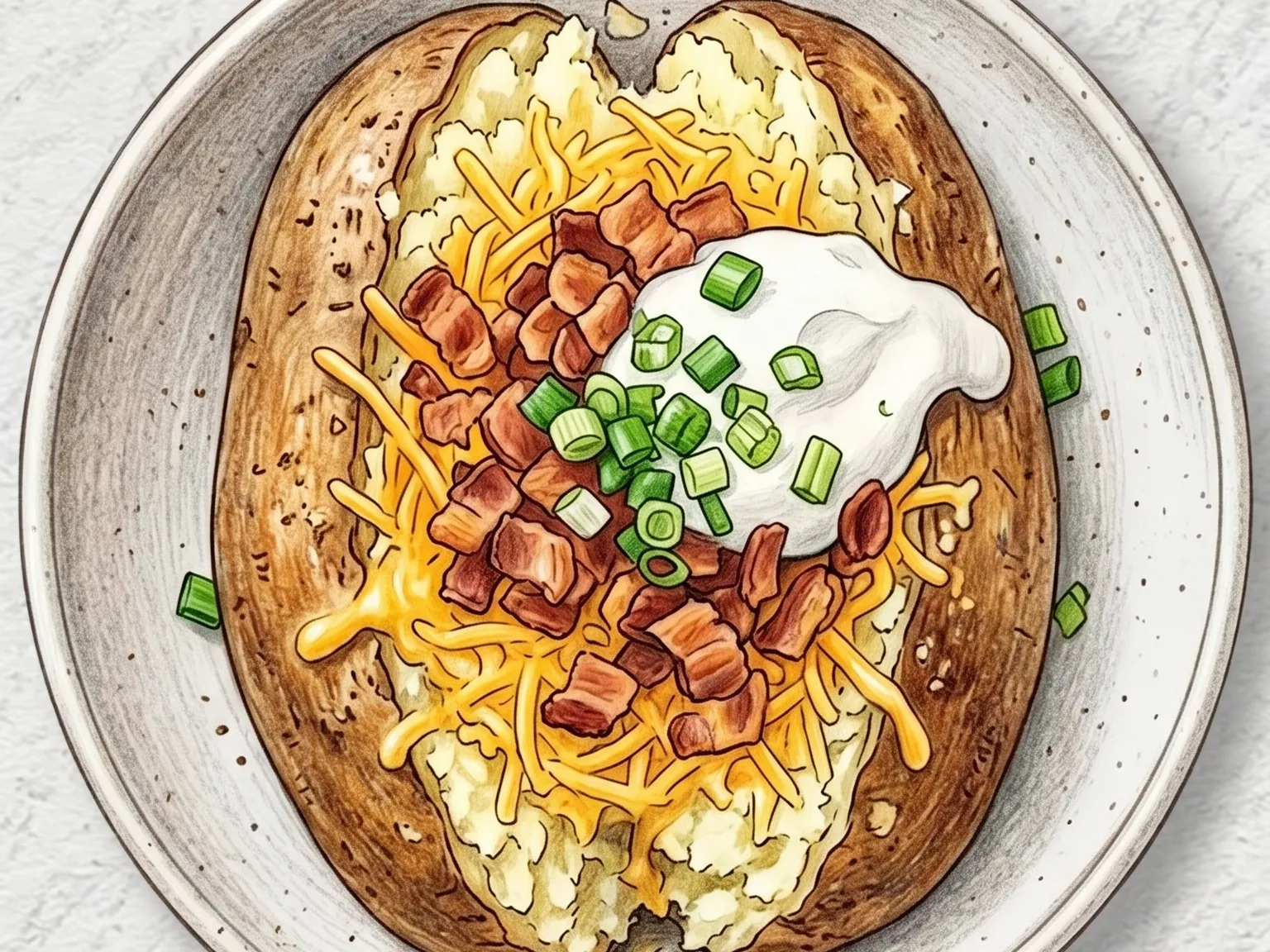
Loaded baked potato starts with a russet potato baked whole at 200 degrees Celsius for about 50 minutes until the inside is fluffy and the skin is crisp. Rubbing the skin with salt and butter before baking and poking holes with a fork ensures even heat penetration and a thin, crunchy shell. The hot potato is split open, the flesh is fluffed with a fork, then piled with shredded cheddar cheese - which melts on contact - crumbled crispy bacon, cold sour cream, and chopped chives. The sour cream's cool tang balances the salty bacon and rich cheese, while the chives add a mild onion freshness. No additional cooking is needed beyond the bake itself, making it equally suited as a side dish or a full meal.
Gingerbread Men
Gingerbread men are spiced cookies shaped like small figures, made from a dough enriched with molasses, ground ginger, cinnamon, and cloves. The molasses contributes a deep amber color and a bitter undertone that distinguishes these cookies from simpler butter cookies, while the spice blend delivers a warmth that builds gently across the palate. Chilling the dough for at least one hour before rolling ensures it holds its shape through cutting and baking, so the finished cookies emerge with crisp, defined edges rather than rounded, puffy outlines. Once fully cooled, royal icing piped into eyes, mouths, and buttons turns each cookie into a small edible character. The ideal texture balances a snappy bite at the rim with a slightly chewy center that keeps the cookie from crumbling apart. Stored in a sealed container, the cookies improve over a day or two as the spice flavors meld and deepen. The recipe is simple enough for children to help with shaping and decorating, making it a fixture of winter holiday baking in many households.
Lobster Bisque
Lobster bisque serves as a foundational dish within the French culinary tradition, specifically categorized as a smooth cream soup based on crustacean shells. The preparation begins by roasting the lobster shells in butter until they reach a dark, saturated color, a step that develops the base flavors of the dish. This is followed by a flambe process using cognac, which serves to eliminate any lingering bitterness from the shells while introducing a layer of smoky depth to the mixture. Once the shells are prepared, they are placed in a pot with fish stock, whole tomatoes, and a selection of aromatic vegetables to simmer for a minimum of thirty minutes. This extended simmering time allows for the maximum extraction of flavor from the lobster shells into the surrounding liquid. After the simmering process is complete, the mixture is passed through a fine sieve to remove all solid fragments and ensure a uniform consistency. The resulting broth is then combined with heavy cream, which provides a thick and velvety texture that characterizes the final soup. Fresh tarragon is incorporated to provide an herbal element that balances the concentrated richness of the cream and seafood. The lobster meat, which was set aside earlier in the process, is stirred into the hot liquid at the final stage of preparation to ensure that its texture remains tender and does not become tough. The final result is a soup that features a concentrated essence of the ocean and represents one of the most technical and polished preparations found in French cooking.
Gochujang Chocolate Crinkle Cookies
Gochujang chocolate crinkle cookies merge the fermented heat of gochujang with deep chocolate flavor in a single bite. The signature cracked surface forms when balls of dough rolled in powdered sugar expand in the oven, splitting the white coating to reveal the dark interior beneath. Gochujang, added in a modest amount, threads a low, lingering warmth and an umami undertone through the chocolate without overtly announcing itself. Most tasters sense something unexpected at the finish but cannot immediately identify the source. The exterior sets into a thin, lightly crisp shell while the inside stays dense and fudgy, occupying the territory between a brownie and a cookie. Using both cocoa powder and melted chocolate increases the chocolate intensity beyond what either ingredient achieves alone. A pinch of flaky sea salt on top before baking sharpens the contrast between sweet and spicy, making the flavor more defined. Chilling the dough for at least 30 minutes before rolling ensures the powdered sugar coating adheres evenly and produces the consistent cracking pattern that defines the cookie's appearance.
Lobster Roll
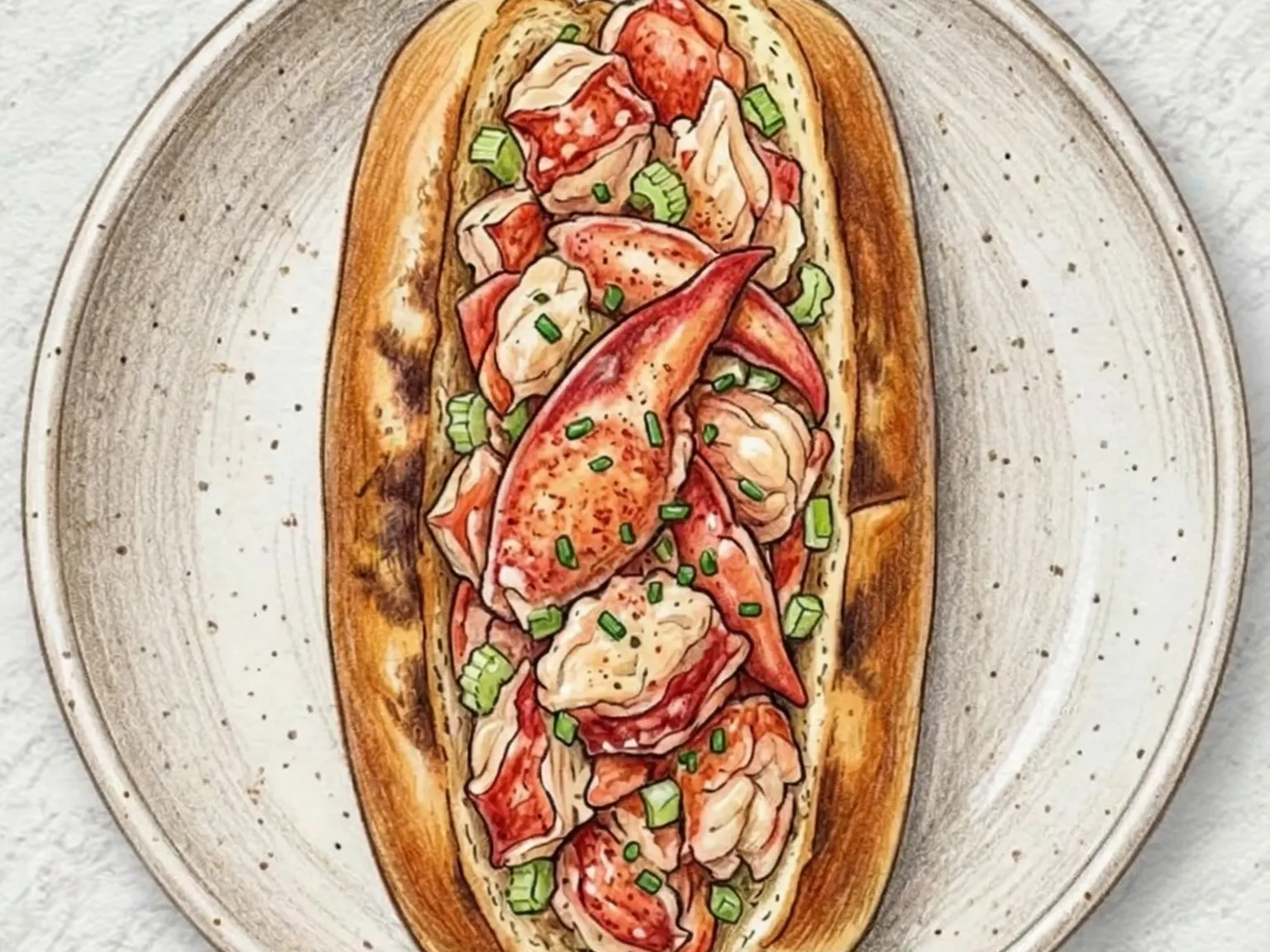
Lobster roll is a New England sandwich that fills a butter-toasted hot dog bun with chunks of cooked lobster meat tossed lightly in mayonnaise, lemon juice, and diced celery. Keeping the lobster pieces large enough to bite through is essential - overchopping turns the filling mushy and obscures the natural sweetness of the shellfish. Only a small amount of mayonnaise is used so it binds the meat without masking its flavor, while the lemon juice provides a sharp acidity that keeps the richness in check. Toasting the flat sides of the bun in butter creates a crisp, golden exterior that contrasts with the cool, tender filling inside. Served chilled in the classic cold style, the lobster roll is a simple but indulgent summer meal.
Dried Persimmon Cinnamon Rolls
This cinnamon roll replaces the usual brown sugar and raisin filling with finely chopped gotgam, Korean sun-dried persimmon. The dough is enriched with butter to a level close to brioche, fermented until well risen, and rolled thin before an even layer of cinnamon sugar and diced persimmon is spread across the surface. The dough is then rolled tightly from one end, cut into portions of uniform thickness, and baked until golden. Gotgam develops its character through the drying process: moisture loss concentrates the sugars until the fruit carries a depth of sweetness that fresh persimmon does not, with an edge of caramelization that reads more like dried fig or date than fresh fruit. That concentrated sweetness placed against cinnamon's warm, assertive spice produces a flavor pairing that calls to mind sujeonggwa, the traditional Korean cinnamon-persimmon punch. Slicing a baked roll reveals the persimmon distributed in a spiral through the layers, and each torn strip delivers pockets of soft, dense fruit. Overbaking dries the persimmon out, so timing matters. A cream cheese glaze spread over the warm rolls introduces acidity that cuts through the sweetness cleanly. The buttery, yeasty fragrance of the fermented dough, the natural depth of the gotgam, and the spice of the cinnamon occupy distinct layers in each bite.
Lobster Thermidor
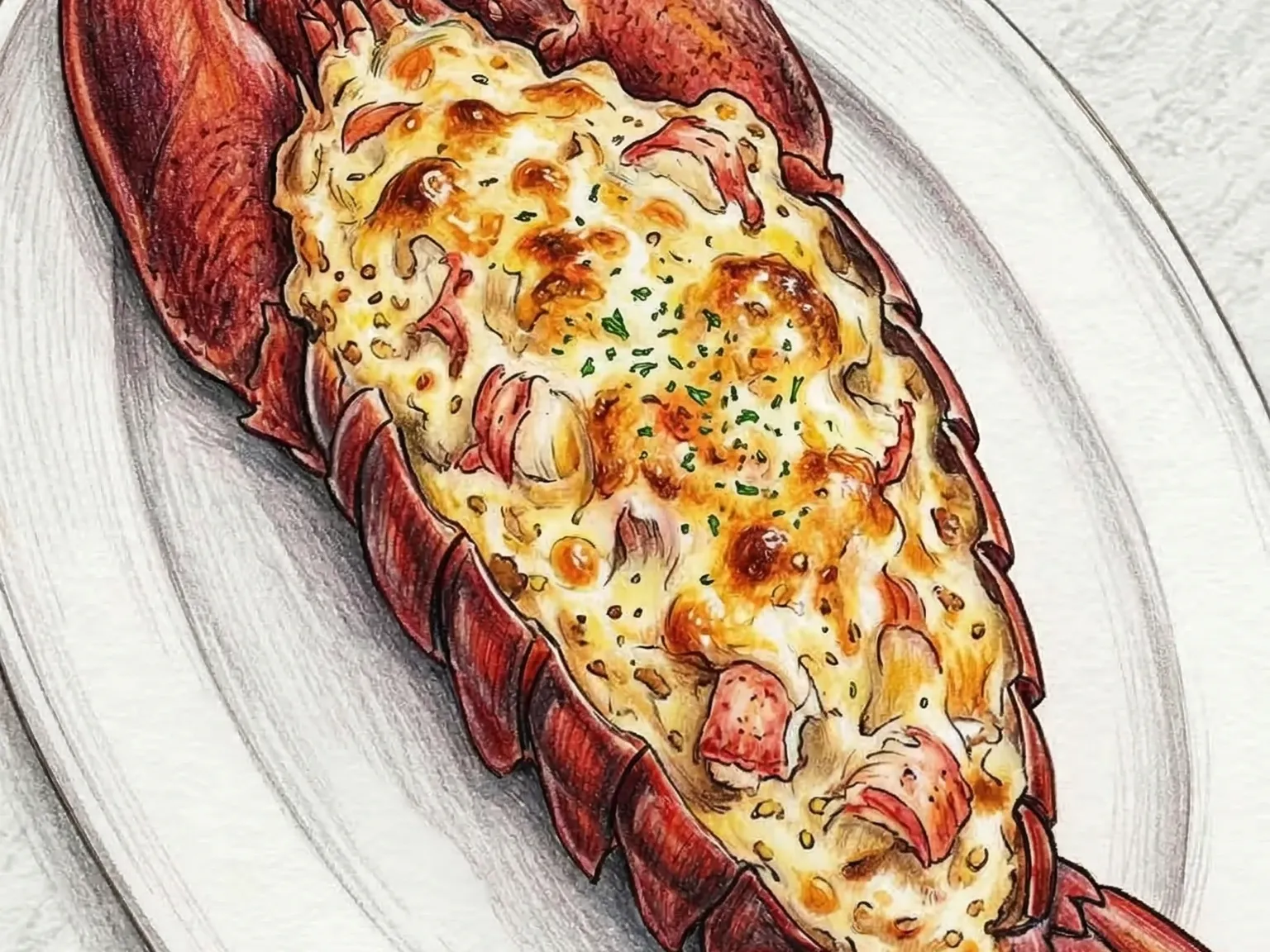
Lobster thermidor is a French dish in which boiled lobster meat is cut into bite-size pieces, folded into a cream sauce made from shallots sauteed in butter, white wine reduced by half, Dijon mustard, and heavy cream, then packed back into the cleaned shell and topped with grated Parmesan for a brief gratin under high heat. Reducing the wine concentrates its acidity, and the mustard adds a sharp undercurrent that prevents the cream sauce from tasting flat. Baking at 220 degrees Celsius for only six to eight minutes gives the cheese a golden crust while keeping the lobster meat tender. Lemon juice stirred into the filling at the last moment lifts the richness. The dramatic presentation in the shell makes it a natural choice for entertaining.
Hallabong Lemon Bars (Jeju Citrus Curd on Shortbread)
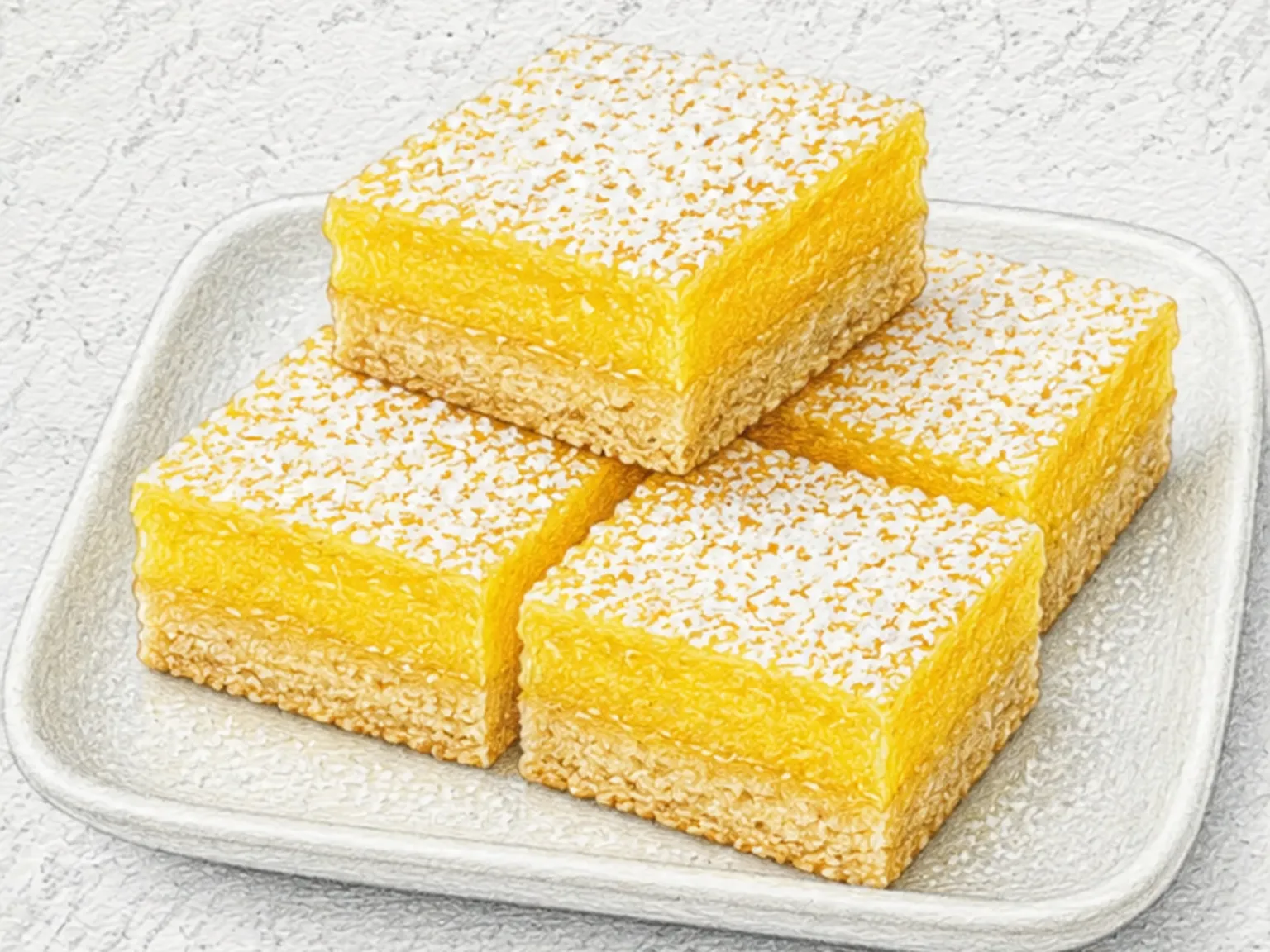
Hallabong lemon bars combine the sweet citrus flavor of Jeju hallabong juice with the sharp acidity of fresh lemon juice over a buttery shortbread base. The crust is made by rubbing cold unsalted butter into flour and powdered sugar, then pressing it into a pan to bake until pale golden. A smooth citrus curd, made by gently mixing eggs, sugar, hallabong juice, lemon juice, and cornstarch, is strained and poured over the warm pre-baked crust. Baking the curd just until the edges are set keeps the texture silky. Once baked, the bars are chilled to firm up the curd layer, which can then be sliced cleanly with a hot knife. A light dusting of powdered sugar is added before serving, creating a nice contrast between the soft topping and the buttery crust.
Mac and Cheese
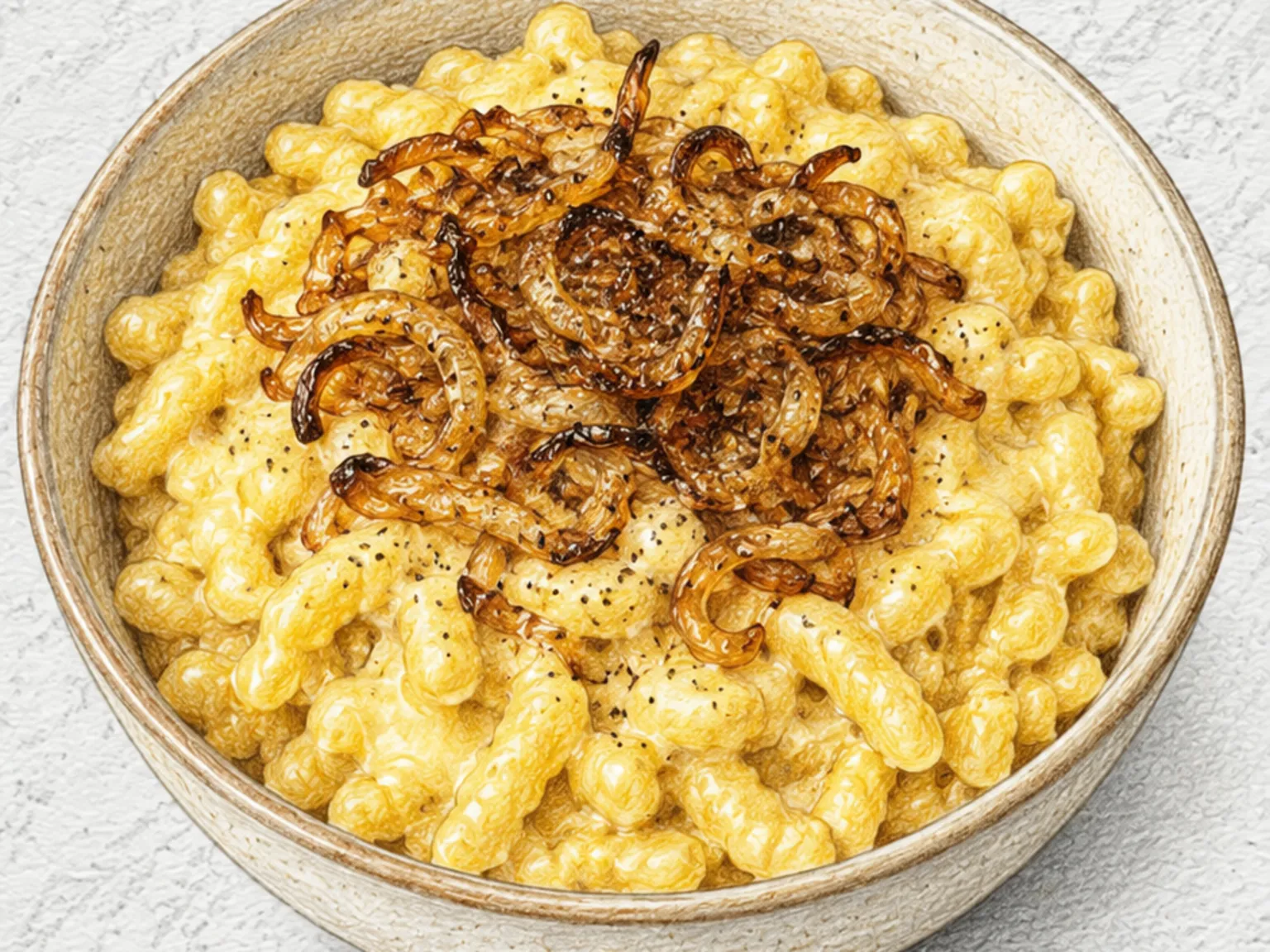
Mac and cheese begins with a roux of butter and flour, into which milk is whisked in three additions to form a smooth bechamel. Cheddar and mozzarella are melted into the sauce over low heat - adding cheese on high heat causes the fat to separate and the texture to turn grainy. The cooked macaroni, boiled one minute short of the package time, is stirred into the sauce so it finishes to al dente as it absorbs moisture. Reserving a few tablespoons of pasta water makes it easy to adjust the consistency if the sauce thickens too much. For an optional crunchy top, the mixture can be transferred to a baking dish, topped with buttered breadcrumbs, and baked at 200 degrees Celsius for 12 to 15 minutes until golden. Either way - baked or straight from the pot - the result is a rich, creamy dish with bold dairy flavor.
Hallabong Marmalade Madeleines
Hallabong marmalade madeleines are shell-shaped baked treats that combine melted butter with sweet citrus marmalade. The batter is prepared by whisking eggs and sugar, folding in sifted cake flour and baking powder, and incorporating milk, honey, and hallabong marmalade. Melted unsalted butter is added in portions until the batter is glossy. Resting the batter in the refrigerator for thirty minutes before baking is essential, as the cold batter helps form the characteristic hump on top. The cakes are baked at 200°C for four minutes, then at 180°C for eight minutes. This temperature shift ensures a proper rise. The finished madeleines feature a soft texture with chewiness from the bits of candied citrus rind. The contrast between the bitter rind and sweet pulp complements the rich butter aroma. These pastries pair well with black tea or Earl Grey.
Monte Cristo Sandwich
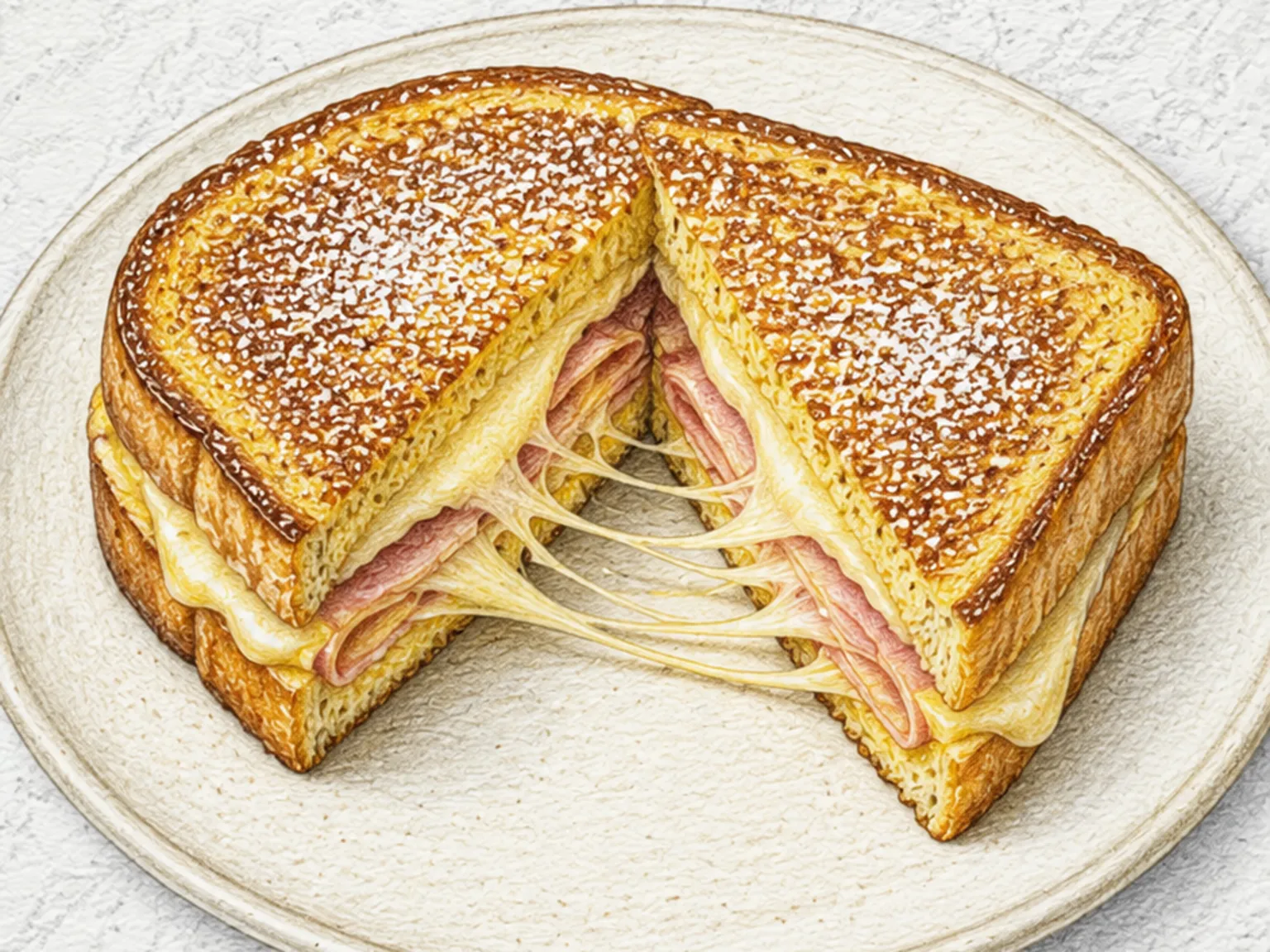
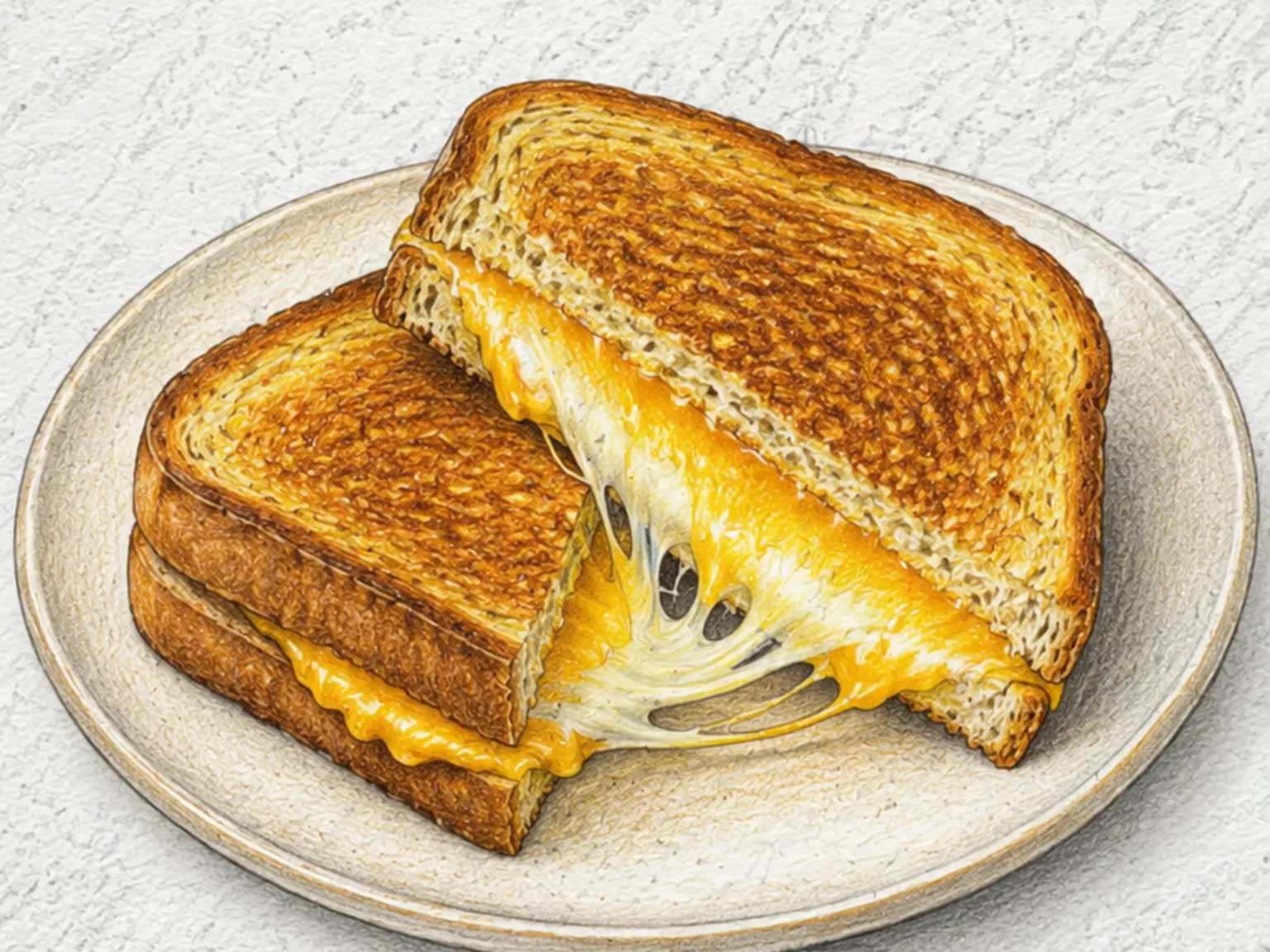
A Monte Cristo sandwich consists of multiple layers of ham and Swiss cheese placed between slices of bread that have been spread with a layer of Dijon mustard. After the sandwich has been assembled, it is dipped for a short period of time into a batter made from a combination of beaten eggs and milk. The sandwich is then transferred to a pan and fried in butter until the exterior develops a golden color on both sides. This preparation method blends the traditional elements of French toast with those of a standard ham and cheese sandwich by surrounding savory interior fillings with a rich and egg based coating. It is necessary to keep the dipping stage brief because allowing the bread to soak for an extended duration will cause it to become overly saturated, which typically leads to the bread tearing when the sandwich is flipped. Cooking the sandwich over medium low heat ensures that the outside has sufficient time to reach a golden and crisp state while the cheese inside the layers melts in a consistent manner. Dividing the sandwich into two halves while it is still warm serves to display the stretchy consistency of the melted cheese and creates a visual presentation for the finished meal. The addition of mustard introduces a sharp taste that functions to balance the rich characteristics of the eggs and dairy ingredients.
Honey Madeleines (Buttery Shell-Shaped French Cakes)
Honey madeleines are small French sponge cakes characterized by their shell-like shape and the prominent rounded mound that rises on their underside during the baking process. To successfully create this characteristic hump, the prepared batter must be rested in a refrigerator until it is thoroughly chilled before being placed into a preheated oven set to a high temperature. This specific thermal shock between the cold batter and the hot air causes the outer edges of the cake to set almost immediately. While the exterior firms up, the steam generated inside the batter is forced upward through the center, resulting in the distinct bump that separates a correctly baked madeleine from one that remains flat. The recipe utilizes a high proportion of melted butter to ensure the edges are crisp and develop a deep golden color. By substituting a portion of the standard granulated sugar with honey, the cakes gain a specific floral sweetness and a rounded flavor profile that sugar alone cannot provide. When served fresh from the oven, the exterior provides a light crunch that gives way to a moist and spongy texture inside. This combination releases the fragrance of toasted butter and warm honey as the cake is eaten. The addition of lemon zest to the batter introduces a sharp citrus quality. This component serves to balance the inherent richness of the butter and prevents the flavor from becoming overly heavy on the palate. Madeleines are best consumed within a very narrow window of time, ideally within thirty minutes of leaving the oven. During this period, the outer shell retains its crispness while the center of the cake is still warm. These cakes are commonly served alongside a cup of black tea or coffee as a simple afternoon snack.
Moules-Frites (Belgian Steamed Mussels with Fries)
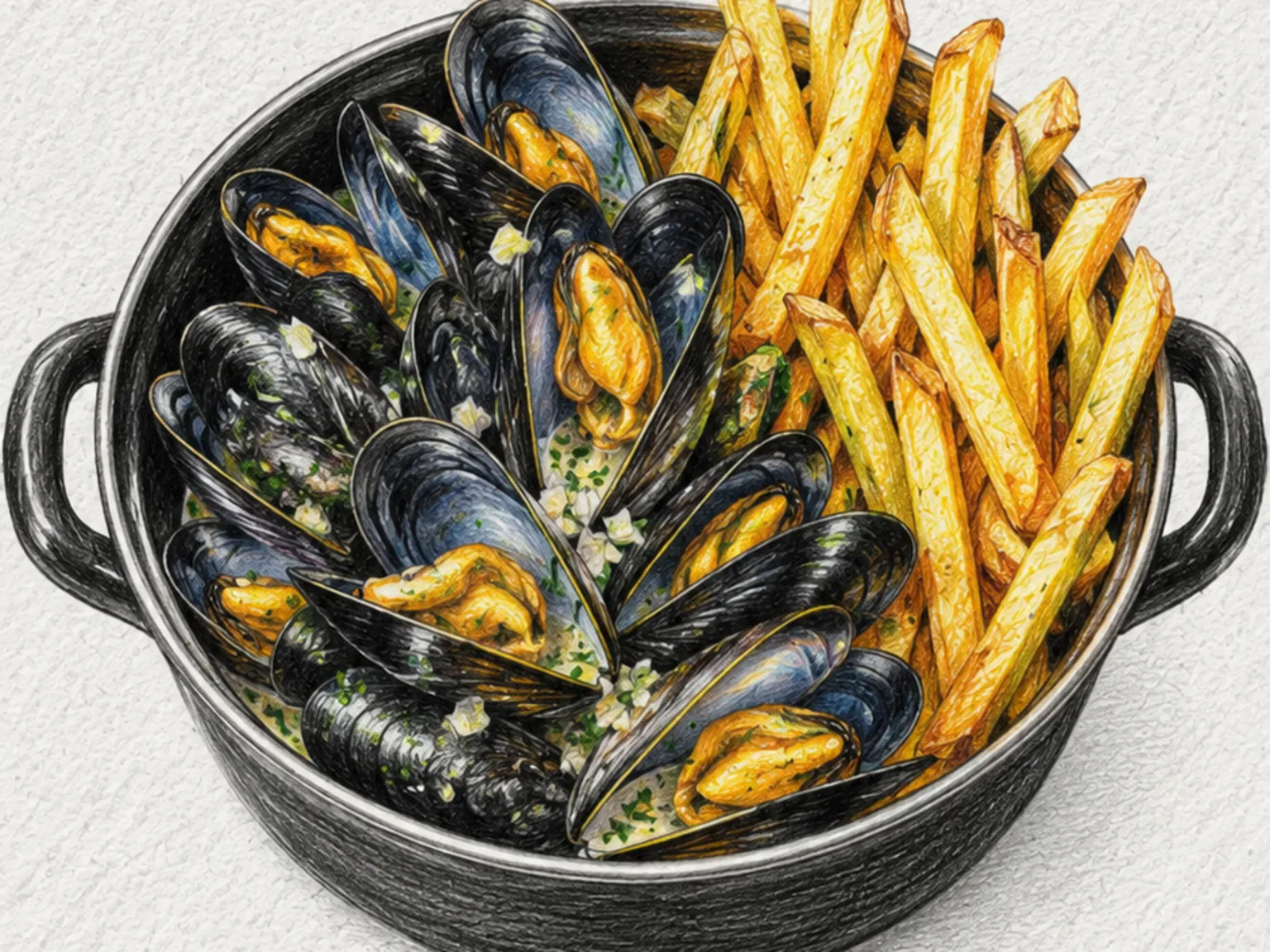
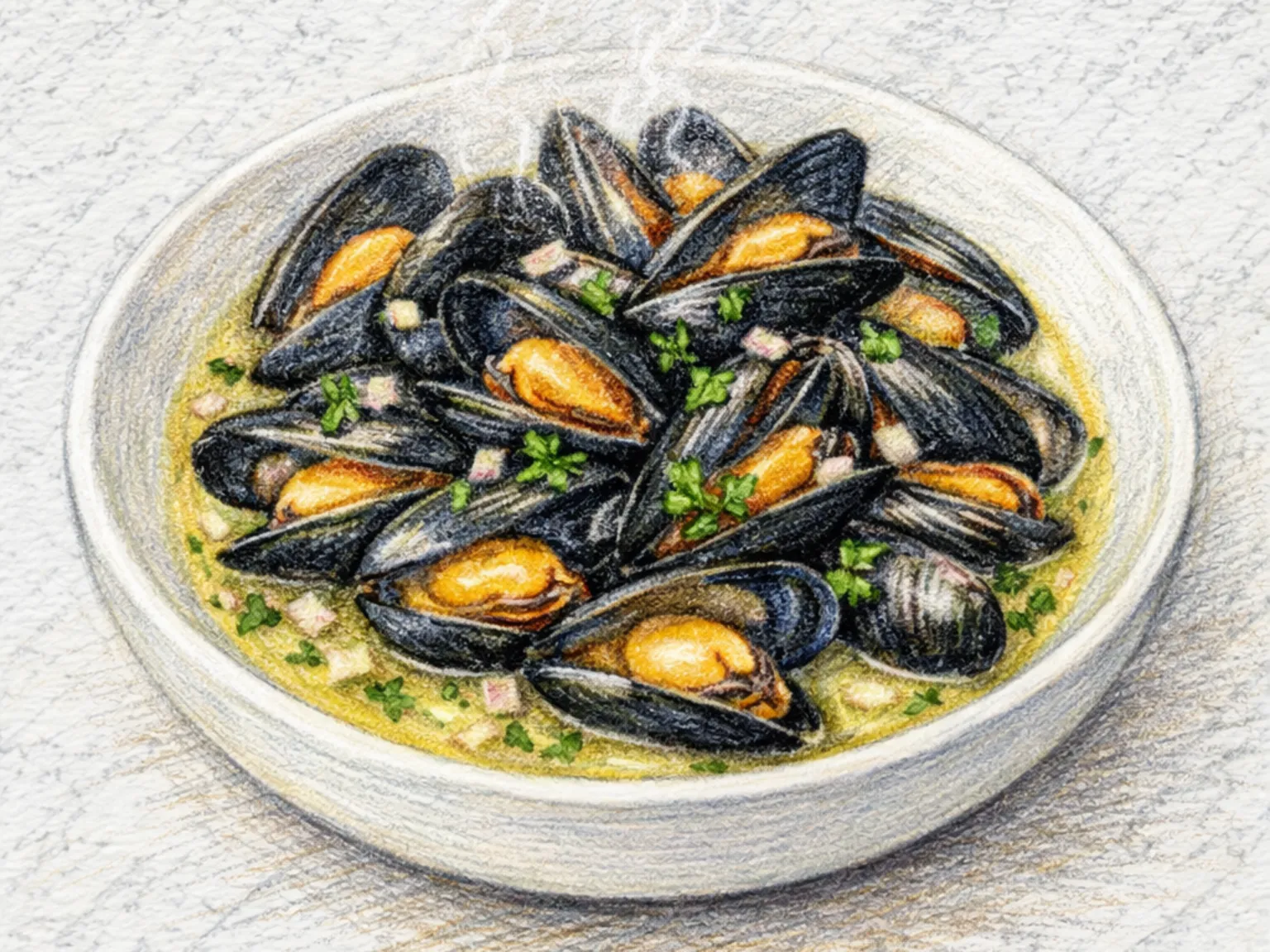
Moules-frites steams mussels with shallots, garlic, white wine, and butter, then serves them alongside twice-fried potatoes for a Belgian classic. The mussels are scrubbed clean, debearded, and steamed covered on high heat for just three to four minutes - long enough for the shells to open while the flesh stays plump and tender. Any mussels that remain closed after cooking must be discarded. The fries are cut into thick sticks, soaked in cold water to remove surface starch, dried thoroughly, then fried first at 170 degrees Celsius to cook the interior and again at 190 degrees to crisp the exterior. Removing all moisture from the potatoes before frying reduces splatter and improves crunch. The mussel broth, rich with wine and butter, is traditionally sopped up with bread or poured over the fries.
Injeolmi Croffles (Soybean Powder Croissant Waffles)
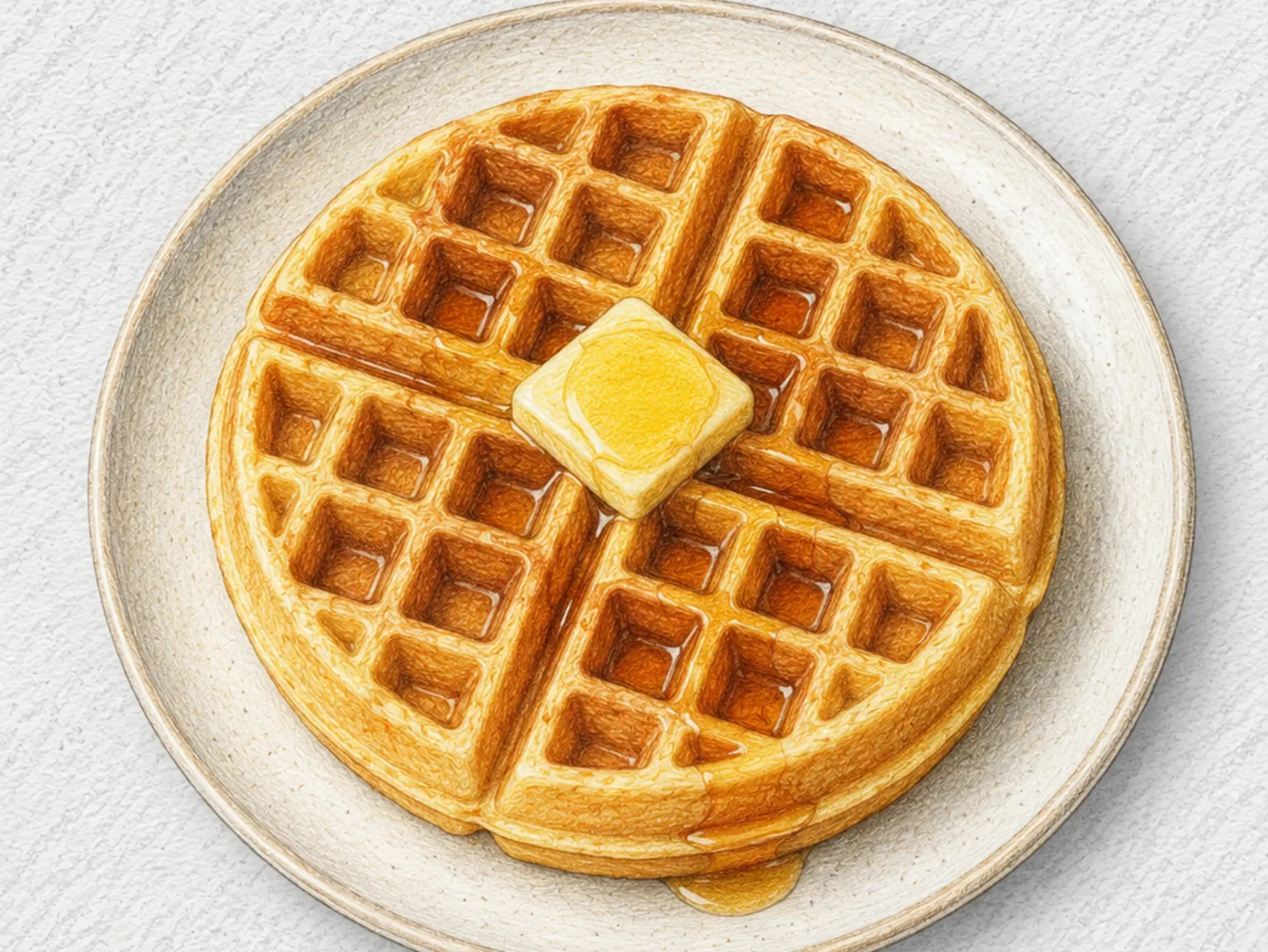
An injeolmi croffle presses laminated croissant dough in a waffle iron until the exterior caramelizes into a deeply browned, crisp grid, then tops it with roasted soybean powder, chewy tteok pieces, and honey. The waffle iron's direct contact heat transforms the dough in a way an oven cannot replicate: both sides brown simultaneously under pressure, creating a shattering crust while the buttery layers inside stay flaky and pull apart in ribbons. Dusting the hot croffle with roasted soybean powder adds a toasted, nutty coating that absorbs just enough surface oil to cut through any greasiness and leave the bite clean. Scattered cubes of tteok contribute a sticky, elastic chew that alternates with the crisp shell of the croffle on every bite, and a drizzle of honey ties the components together with a natural sweetness that keeps the whole thing from feeling heavy. Because store-bought croissant dough performs well in this recipe, no pastry-making skills are required, which makes the croffle one of the more accessible cafe-style treats to replicate at home.
Moules Marinières (French White Wine Steamed Mussels)
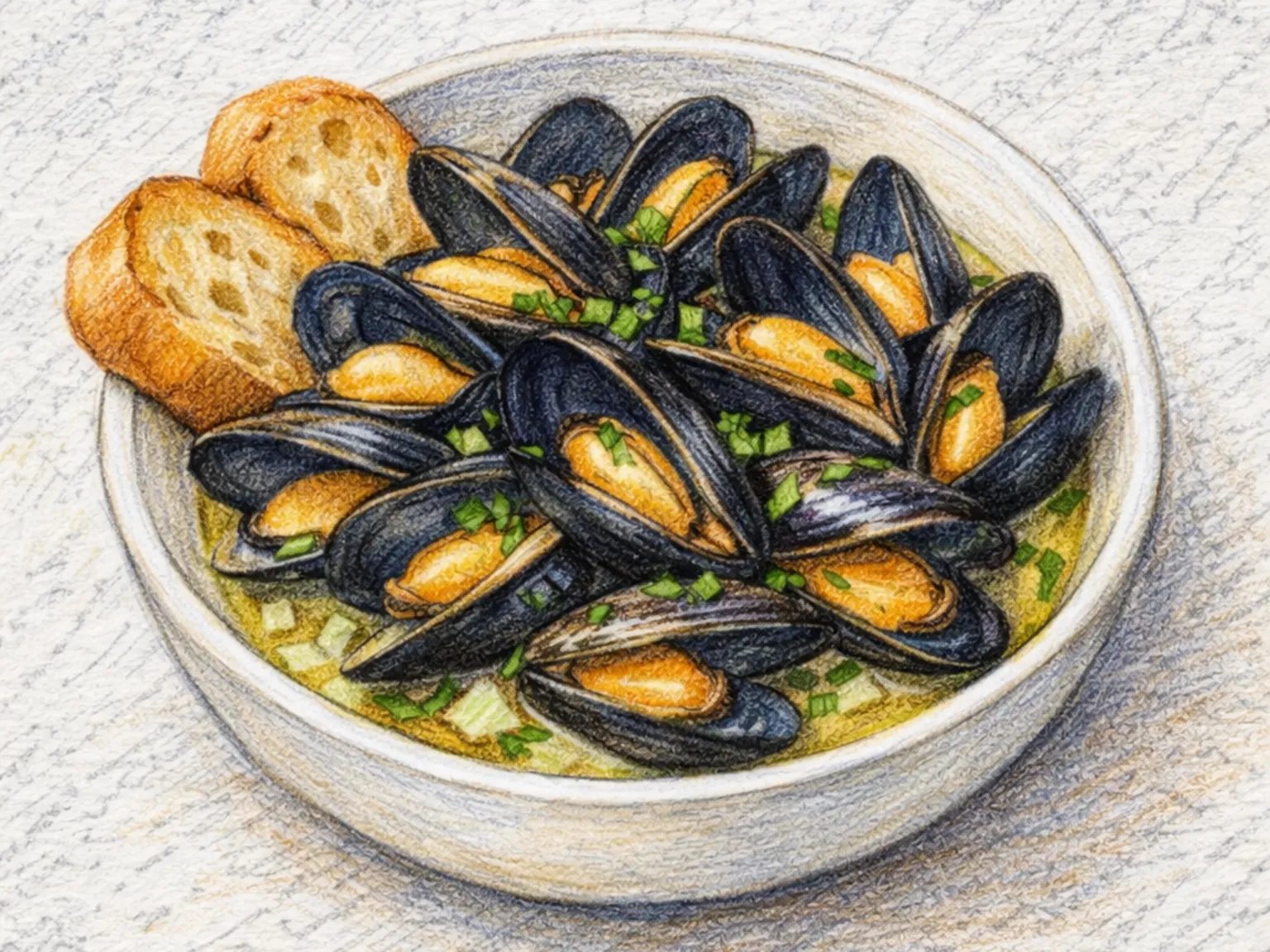
Moules marinieres is a French seafood dish that steams scrubbed mussels over a base of shallots and garlic softened in butter, with white wine added and the pot covered for four to five minutes on high heat. Boiling the wine for a minute before adding the mussels burns off the alcohol and leaves behind only the bright acidity that pairs naturally with the briny shellfish. Once the shells open, a splash of heavy cream, chopped parsley, and black pepper turn the cooking liquid into a light, aromatic broth. The short cooking time keeps the mussel meat firm and springy rather than rubbery. Any mussels that stay closed after steaming should be discarded. Crusty bread served alongside is essential for soaking up the butter-wine broth to the last drop.
Injeolmi Crumble Cheesecake
This fusion dessert combines the nutty flavor of Korean roasted soybean powder, known as injeolmi, with a cream cheese base. The batter is prepared by mixing softened cream cheese with sugar, salt, eggs, and heavy cream. Sifted sweet rice flour is folded in to create a chewy texture reminiscent of traditional rice cakes inside the dense cake, while a portion of roasted soybean powder adds a gentle nuttiness. The topping consists of a crumble made by rubbing the remaining soybean powder with melted unsalted butter, which is scattered over the batter. Baking at 165 degrees Celsius for 40 to 45 minutes yields a crisp crumble top that contrasts with the smooth, thick cheese layer underneath. Chilling the cake in the refrigerator for at least three hours settles the structure and deepens the roasted aroma. It pairs well with green tea or grain lattes.
Moussaka (Greek Eggplant Lamb Bechamel Bake)
Layers of pan-fried eggplant, cinnamon-scented lamb sauce, and a thick bechamel topping define the structure of this Greek oven-baked casserole. The preparation begins by salting the eggplant slices for thirty minutes to draw out moisture and bitterness, which prevents the vegetable from absorbing excess oil and helps it retain its shape during baking. Inside the meat sauce, ground lamb is simmered with tomatoes and a touch of cinnamon, an addition that tempers the natural gamey scent of the lamb with warm Mediterranean aromatics. To complete the assembly, a layer of bechamel enriched with egg yolks and Parmesan cheese is spread over the top before the dish enters a 180-degree Celsius oven for 40 minutes. The inclusion of egg yolks allows the creamy sauce to set firmly, creating a golden crust that holds the internal components together when the dish is sliced. This structural stability results in clean, visible layers in each serving. Options for customization include replacing or mixing the eggplant with potatoes or zucchini, or substituting the lamb with ground beef. Allowing the moussaka to rest for 15 to 20 minutes after baking ensures the layers settle properly for ideal presentation. Since the flavors intensify when kept in the refrigerator for a day or two, this dish functions well as a make-ahead option for gatherings.
Injeolmi Mochi Brownies (Chewy Rice Flour Cocoa Bars)
Injeolmi Mochi Brownies are a fusion dessert that combines cocoa batter with glutinous rice flour and a coating of toasted soybean powder. By replacing wheat flour with glutinous rice flour, these bars achieve an elastic, stretchy texture reminiscent of Korean rice cakes while maintaining a rich, fudgy interior. Brown sugar is used to impart a deep, caramel-like sweetness that complements the cocoa powder. To intensify the nutty aroma of traditional injeolmi, toasted soybean powder is dusted both inside the middle of the batter and on the top surface before baking. Once baked, the brownies are cooled completely to allow for clean, sharp slices. Serving them cold from the refrigerator firms up the crumb for a denser bite, whereas keeping them at room temperature keeps the mochi filling soft and pliable.
Mushroom Risotto
Mushroom risotto cooks unwashed arborio rice in olive oil and butter to activate the surface starch, then adds warm chicken stock one ladle at a time over 18 to 20 minutes of continuous stirring. Not rinsing the rice is essential - the starch released during cooking is what creates the signature creamy consistency without any cream. The mushrooms are sauteed on high heat until their moisture evaporates and they develop a deep brown color, which concentrates the earthy aroma. White wine is added to the toasted rice and stirred until absorbed, leaving behind a subtle acidity once the alcohol cooks off. Finishing off the heat with cold butter and grated Parmesan - a step called mantecatura - gives the risotto its glossy, velvety texture.
Japanese Cotton Cheesecake
Japanese cotton cheesecake pursues a cloud-light, moist texture in place of the dense, heavy richness of a New York-style cheesecake. Cream cheese is melted and blended with egg yolks and milk, then stiffly beaten meringue is folded in three additions to keep as much air in the batter as possible. Baking in a water bath at around 150 degrees Celsius prevents the surface from setting too quickly and allows the interior to cook gently, so the finished cake wobbles when nudged from the pan. A slight collapse after removing from the oven is expected and normal. Resting in the refrigerator overnight redistributes moisture evenly through the crumb, deepening the cheese flavor while adding a silkier texture to each slice. On the palate, the cake dissolves almost weightlessly, releasing a mild tang from the cream cheese and a soft, eggy warmth. Very little flour goes into the batter, which keeps the texture smooth and delicate rather than cakey, making toppings entirely unnecessary.
Mushroom Stroganoff
Mushroom stroganoff slices button mushrooms thickly and browns them in a wide pan over high heat until their moisture evaporates and they develop a deep caramelized color - crowding the pan causes them to steam rather than sear. Onion and garlic are sauteed until soft, then paprika, Dijon mustard, and Worcestershire sauce are stirred in briefly to bloom their flavors. Vegetable stock is added and simmered for five minutes to reduce and concentrate. The sour cream goes in last, off the heat or on very low flame, since high temperatures cause it to curdle and separate. The paprika's smoky warmth and the mustard's sharpness amplify the mushrooms' natural umami, while the sour cream wraps everything in a tangy richness. Served over pasta or rice, it makes a hearty vegetarian main course.
Key Lime Pie
Key lime pie pairs the bold acidity of small Florida key limes with the thick sweetness of condensed milk in a chilled, custard-style filling set inside a buttery graham cracker crust. The crust is made by pressing crushed graham crackers bound with melted butter into a pie dish and pre-baking until firm. The filling requires only key lime juice, sweetened condensed milk, and egg yolks, which react with the citric acid to thicken naturally without gelatin, producing a smooth consistency once chilled. Key limes are smaller and more aromatic than Persian limes, lending a floral sharpness that cuts through the condensed milk's density so that each forkful oscillates between tart and sweet. A mound of whipped cream on top softens the acidity, and a fine grating of lime zest adds color and a burst of fragrant oil. Served cold, it makes a refreshing finish to a warm-weather meal.